
3
Future Societal Trends
This chapter looks to the future and strives to highlight several important trends that can be expected to influence the work of the USGS.
Although people in many countries are learning to use natural resources more wisely and efficiently, their global per capita use continues to increase. Current world population is more than 6 billion and growing at a rate of 1.3 percent a year. This rate of growth is slower than the peak global growth rate from 1965 to 1970 of about 2.1 percent per year. However, the declining growth rate involves a larger population base, and according to one scenario, the world population is expected to increase and is to reach 8.9 billion in 2050 (Figure 3.1) (United Nations, 1999). Most of the additional people will reside in the developing world.
Currently, urban populations are growing faster than the world population. Between 1970 and 1994, the level of world urbanization increased from 37 to 45 percent, and it is projected to reach 60 percent by 2025. Along with the transformation from a rural to predominantly urban world has come a swift increase in the number of large cities (United Nations, 1995). The rise in the number of megacities—that is, cities with a population of 8 million inhabitants or more—also is a striking feature of the last half-century. Projections indicate that by 2015 there will be 33 megacities, with 23 of them in developing countries (United Nations, 1995). In the last 300 years or so, rising population and consumption have significantly altered the environment on a global scale. Many of the human-induced changes have taken place since 1950 (Turner et al., 1990). Humans have contributed to the disruption of the biotic function 1 of 2.95 × 10⁶ km2 of soils. Deforestation and grazing account for 1.88 × 10⁶ km2 of this disruption (NRC, 2000c). Each year, freshwater in an amount that exceeds the contents of Lake Huron is
|
1 |
Biotic function refers to the actions of living organisms on the soils. |
withdrawn for human use (NRC, 1999b). Of this amount, agriculture consumes 70 percent, much of which is accounted for by irrigation. Pollutants from industrial, agricultural, and urban areas contaminate water, making it less potable and posing health hazards (Steingraber, 1998).
Many of the large cities of the world are near or along coastlines. In the United States, 8 of the 10 largest metropolitan areas are situated along the oceans or the Great Lakes. The development of coastal zones, which puts more people and property at risk from natural hazards, produces extensive land-cover changes and disturbs fragile marine environments. These and other human-induced environmental changes contribute to climate change, loss of biotic diversity, and the reduced functioning of ecosystems (NRC, 2000c).
The USGS has the capability and range of expertise to view much of the biosphere and to appreciate the extent of human alteration of the planet. An important role for the USGS is to use its range of expertise to
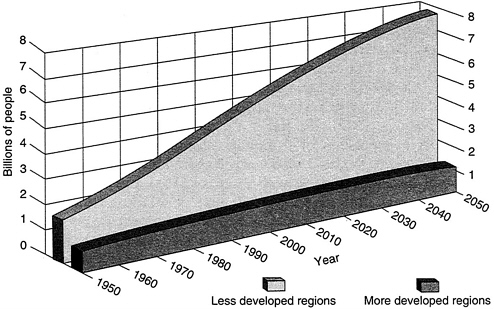
Figure 3.1 Historical and projected human population growth (in billions) for less developed and more developed regions, 1950-2050. SOURCE: United Nations, 1999.
understand land, water, and biological processes and how people affect them.
In light of the pressures of population and consumption, the committee agreed that the key trends likely to shape the future challenges and opportunities facing the USGS would be driven by:
-
changes in the demand for and use of natural resources,
-
emerging environmental issues,
-
issues related to globalization, and
-
issues related to societal expectations for information.
For each of the trends identified, there is a need for science, a significant part of which can be provided by the USGS, to document change and support policy development and implementation.
NATURAL RESOURCES
Natural resources are a major focus of USGS activities. Since its inception, the USGS has been the nation's primary supplier of reliable information on energy and mineral resources (NRC, 1996a, 1999d). For many years, the USGS also has been engaged in analyses of water resources. It is the lead federal science agency responsible for addressing a host of water issues such as water quality, water availability and conservation, and hydrologic hazards (NRC, 1997b, 1999c). When the USGS absorbed the National Biological Service in 1996, the agency augmented its portfolio of natural resources to include biological resources.
In the future, the USGS probably will be called on frequently to provide information on natural resources because pressures on these resources worldwide are likely to increase two- to fourfold by 2050 (NRC, 2000c). Because the world's population will continue to grow, demands for these resources will increase notwithstanding the reuse and recycling of materials, as well as the substitution of information for materials. Even in the United States with its slowly growing population, the patterns of resource consumption are unlikely to change significantly enough to have much effect on reducing demands for minerals, commercial energy, freshwater, and biological resources in the foreseeable future.
Mineral Resources
Americans depend on minerals for their economic well-being. More than 40,000 pounds of new minerals are mined every year for every person in the United States (National Mining Association, 1998). The average new home contains approximately 240,000 pounds of mineral products. Although the United States has less than 5 percent of the world's population and approximately 7 percent of the world's land area, it uses about 30 percent of the world's mineral resources (National Mining Association, 1998). The trend of modern manufacturing is to create products that are lighter and use less raw material, but at the same time, many of the new supermaterials require a greater number of minerals in their fabrication. For example, it takes more than 42 minerals to make a typical telephone (National Mining Association, 1998).
Minerals are also critical in food production. The bounty of American farms depends on mineral resources for fertilizer and soil amendments such as potash, phosphate rock, sulfur, and nitrogen. In addition, farming relies on machinery built from mineral resources, as do food processing and packaging.
By definition, “minerals” are inorganic substances that occur naturally in the earth's crust. Although minerals abound in nature, many of them are insufficiently concentrated to be economically recoverable. Moreover, the richest deposits are distributed unevenly and are being depleted.
The United States is not concerned about the supply of most nonmetallic minerals, which are plentiful and often widespread. In the United States, of the 12 most valuable mineral commodities, all but copper and gold are abundant (Rodenburg, 2000). There is no foreseeable world shortage of sand, gravel, clay, or dimension stone for building purposes (Rodenburg, 2000).
Commodities about which the United States is concerned are the metals—the essential materials for national military and economic security. Of the essential metals, the United States is substantially self-reliant in some, including gold and molybdenum. However, it appears to be running short of domestic sources of most essential materials (e.g., chromium, cobalt, zinc, tin, tungsten, bauxite, manganese) and is increasingly reliant on the good will of source nations. If measured in terms of percentage imported, U.S. dependence on these materials increased from an average of more than 50 percent in 1960 to more than
80 percent in 1995 (Stutz and de Souza, 1998). Thus, there is substantial national benefit to be derived from USGS world assessments of essential minerals and global databases of mineral resources.
The United States could reduce dependence on foreign ores by changing consumption habits, keeping minerals in circulation, and using substitutes. It could also apply emerging technologies to develop domestic sources more intensively. However, mineral extraction in the United States is a contentious issue (NRC, 1999a). Mining activity disturbs the land and can leave degraded environmental conditions.
As a major producer and consumer of minerals, the United States faces important societal decisions about the supply and development of essential minerals. Making informed decisions about the development of mineral deposits depends on having current, reliable, and unbiased information on mineral resources and the environmental implications of their development. The USGS has carried out this function in the past and is respected for the quality and integrity of its information. It has the expertise and experience to provide unbiased information on domestic and foreign mineral resources in the future.
Energy Resources
The services that energy provides include heating and cooling, transporting people and goods, driving industrial processes, and powering the electronic information explosion. In addition, energy is a major driver shaping the environment.
The USGS plays a prominent role in understanding the extent of the nation's energy supplies. Its focus is on onshore energy resources and the geologic controls of resource abundance, quality, and location. In contrast to the work of other federal agencies, the USGS emphasis is primarily on the initial stages in the supply process: the development of resource information that can then be used to make estimates of reserves. (By definition, “resources” are naturally occurring substances of potential profit that may someday be economically viable, whereas “reserves” are known and identified quantities of resources that can be exploited profitably with existing technology under prevailing economic and legal conditions [de Souza, 1990]). Currently, the agency concentrates on domestic and foreign coal, oil, and gas investigations, assessments, and related research.
Coal, oil, and gas are the most important fuels for the present, supplying more than 80 percent of the nation's primary energy needs (Energy Information Administration, 1998) (Figure 3.2), and they will remain important fuels for decades to come (PCAST, 1997). Coal constitutes nearly 70 percent of the nation's fossil fuel resources and 57 percent of the electricity generated for public utilities (PCAST, 1997). Coal releases more pollution than oil or gas, is not as easily exploited as oil or gas, is bulky and expensive to transport, is not a good fuel for mobile energy units, and is not an efficient source of hydrocarbons for non-fuel use. Thus, energy use in the United States will remain heavily oriented toward oil and natural gas. During the course of the next few decades, if less carbon-intensive fuels become more important components of the fuel supply, natural gas may become the transition fuel to a less fossil fuel-based economy.
The United States has a substantial remaining resource base of natural gas, sufficient with a continuing pace of technology and resource accessibility to move the nation into a methane economy. Although the remaining oil resource base is significant, converting it into producible reserves in the face of lower-cost global resources is increasingly difficult. For oil as well as for natural gas where it may be converted to a liquid fuel, the United States will increasingly have an international frame of reference.
Currently, more than 50 percent of oil consumed in the United States is imported, and if predictions are fulfilled, this amount may increase to 60 percent by 2010 (PCAST, 1997). Production from domestic oil fields peaked in 1970 and has declined slowly since then (Figure 3.3). Geopolitical events such as the 1973 oil embargo left an indelible mark on the United States. Energy is no longer an invisible part of American lives. Energy prices are watched closely by industrial and agricultural users. Thus, it is appropriate for the USGS, working with other government agencies, to obtain a clear understanding of world energy resources to enhance U.S. and global energy security. In the background, however, the challenge thus far unmet has been to reduce U.S. dependence on imported oil supplies through energy efficiency options and energy supply options.
Water Resources
Water covers more than 70 percent of the earth's surface. Most of it
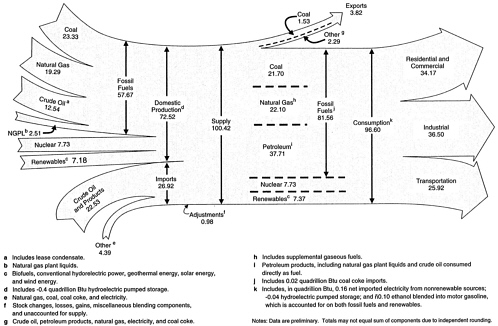
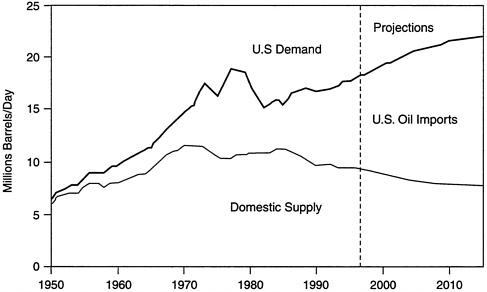
Figure 3.3 Past and projected U.S. oil imports in millions of barrels per day, 1950-2015. SOURCE: PCAST, 1997, pp. 1-8.
(97 percent) consists of the salt water of the oceans. Less than 1 percent is available for the world's biota, animals, and humans because 80 percent of freshwater is locked up in ice caps and glaciers. Nonetheless, the total amount of freshwater is more than enough to meet the world's needs now and in the future. The problem is that this global abundance is unevenly distributed among countries and regions, and local stocks or supplies are finite.
Water is a key determinant of population growth and distribution, economic development, social and political organization, and the quality of life. It is also a cause of war and a catalyst for peace. Thus, information and knowledge about this renewable resource are essential to human welfare everywhere. Because water resource issues in the United States and elsewhere are unlikely to diminish in upcoming decades, it appears probable that USGS information on streamflows and water use, regional water resource studies, and hydrologic research will be more important in the future than in the present.
Although per capita use of water in the United States and worldwide has declined since the mid-1980s (Gaelic, 1998), there is no reason to be
complacent about water resources because of changes in population and consumption. Challenges to be met are numerous and include issues of water availability and accessibility, water quality, and hydrologic hazards. These issues are not new to the USGS. For example, the USGS has collected and analyzed data on water quality for more than 100 years (NRC, 1990).
Nations vulnerable to water scarcity are primarily in the arid or semiarid regions of Africa, Asia, and the Middle East. Altogether about 232 million people in 26 countries are living in regions considered “water scarce” (NRC, 1999b). Yet water availability is also an issue in some regions of the United States, which is a water-rich nation. In recent decades, the arid Southwest and West have begun to face the limits of water availability as a result of burgeoning population and development. Continued growth and development will require some combination of importing water and using and managing it more efficiently. They will also require that a balance be struck between competing uses. As in the case of other water-scarce regions of the world, conflicts among water users (e.g., agriculture, industry, households) and between ecosystems and regions (e.g., uplands, floodplains, cities) may become an increasing problem. In parts of the world, the scarcity of water also could be a source of conflict between nations (e.g., South Asia, Middle East).
Water quality is declining in developing countries, especially in urban areas. Although the degradation of water quality can be arrested and sometimes reversed, the process is slow and costly, as exemplified by the experience of developed countries over the past 30 years. In the United States, passage of the Clean Water Act in 1972 resulted in marked improvement in water quality of streams and rivers that receive discharges from municipal waste treatment plants and industrial facilities (point source pollution). Further efforts to improve the quality of the nation's water will require a reduction of pollution from diffuse (nonpoint) sources that include storm water runoff and runoff from agricultural fields and livestock wastes (NRC, 2000a) (Sidebar 3.1). In most cases, nonpoint sources of pollution are difficult to treat and identify.
Hazardous materials in the hydrologic environment are a problem of substantial national significance (NRC, 1996b) and call for the expertise of scientists. The role of the USGS in this arena is to expand scientific knowledge relevant to the behavior of hazardous materials. The generation and storage of toxic chemical and radioactive wastes will be of increasing
|
SIDEBAR 3.1 Water Contamination On the southeast coast of the United States where tobacco farming is on the decline, a new business, swine production, is flourishing. In the past nine years, North Carolina's small independent pig farms were taken over by large industrial operations, and North Carolina has become the nation's second leading producer of pork. The industry expanded so rapidly that regulations lagged (Pressley, 1999). The first major concern arose from the process of waste management that included land application as fertilizer. The application rates were in excess of crop uptake and consequently increased the levels of nitrogen, phosphorus, and ammonia in soils and surface organic debris, from where they could be leached or eroded into waterways. The second major concern stemmed directly from the waste lagoons. During Hurricanes Bonnie (1998), Dennis (1999), and Floyd (1999), the waste lagoons overflowed or were submerged in flooded rivers. Contaminated water is one of the primary concerns of residents of the southeastern coast of the United States. As animal-waste lagoons flooded, so did wastewater treatment plants and septic systems. Along with the threat of increased nitrates in the water, there were rotting animal carcasses, estimates of 100,000 dead hogs, 500,000 dead turkeys, and 2 million dead chickens, threatening the water supply (USGS, 1999c). Scientists will continue to collect water samples to analyze for nutrients, bacteria, pesticides, and metals before drawing any conclusions about the extent of the damage, possible long-term effects, restoration, and future prevention methods (USGS, 1999c). In all cases, the success of these efforts depends on an understanding of the watershed and groundwater aquifer and on the ability to design workable remediation and operational programs to protect water resources. In the wake of these disasters, as part of the recovery process, an emphasis is being placed on regulations and effective environmental protection. |
concern over the next two decades, particularly as aging stockpiles begin to deteriorate. Modeling and monitoring the surface and subsurface movement of wastes at existing sites will be of particular importance. This modeling is vital when contamination poses threats to human
health, for example, when radioactive and nonradioactive wastes migrate toward surface or groundwater supplies.
Losses of life and property in the United States and worldwide to hydrologic hazards—floods, droughts, and related events (e.g., landslides)— are significant and increasing. Annually, floods in the United States result in 100 fatalities and $2.5 billion in direct damage (NRC, 1996b). The Midwest floods of 1993, which caused extensive damage and interrupted road and rail transportation, enhanced interest in the management of land use in river basins throughout the nation (NRC, 1997b). Droughts can occur anywhere in the country, can last for several years, and may have greater economic consequences than floods. However, floods are often localized events of short duration.
Biological Resources
An important mission of the USGS is to provide the scientific understanding to support the sound conservation of the nation's biological resources. Land use, water use, and nonindigenous species are the three factors that have had the greatest broad-scale effects on biological resources (USGS, 1999d). Urbanization, conversion of lands to agriculture, draining of wetlands, and fragmentation of forests are some of the most important land use changes. Changes in our waterways, due to navigation, irrigation, and hydroelectric power, have altered the biological integrity of aquatic environments. Changes in land and water use have altered habitats so that they are more favorable to nonindigenous species. Environmental contaminants and climate change also have impacts on our biological resources (USGS, 1999d).
Because resource management issues are complex, many of the questions pertaining to biological resources are considered by the USGS in a comprehensive ecological context. The need for USGS information on biological resources and ecosystems may become more important in upcoming decades in light of concerns about the loss of biological diversity and ecosystem services due to increased urban and infrastructure systems, rapidly changing land use patterns, and rising consumption.
We are increasingly aware of how much our well-being depends on biological diversity and the integrity of ecological communities. There is growing realization that the loss of biological diversity would be a great social loss and that a major loss of biological diversity might threaten the
ability of the earth to support human societies. This appreciation has given rise to conservation biology, which makes it clear that people depend on ecosystem services. These services include food, construction materials, medicinal plants, wild genes for domestic plants and animals, crop and plant pollination, absorption and detoxification of pollutants, generation and maintenance of soils, and the regulation of air and water quality as well as climate (Ehrlich and Ehrlich, 1991). In addition, biodiversity is the foundation of biotechnology.
Recognizing the value of its biological resources, the United States has enacted laws and policies to protect plants and animals from extinction. The United States has also demonstrated a strong commitment to the wise, responsible, scientifically based stewardship of its biological resources through regulatory programs, acquisition of public lands, and various preservation efforts (NRC, 1993b). Despite these efforts, the nation's biological diversity is in decline and there are questions about how it should be sustainably managed.
The leading cause of species extinction is habitat destruction (Pimm and Raven, 2000). In assessing the condition of approximately 20,500 species of U.S. plants and animals, the Nature Conservancy found that about one-third were of conservation concern (Stein et al., 2000). Animals that depend on freshwater habitats and flowering plants are in the worst condition. More than 500 U.S. species may have already disappeared. These losses have affected virtually every state, but Hawaii, Alabama, and California have been especially hard hit.
Surveys of many groups of plants and animals indicate global extinction rates at least several hundred times the rate expected based on the geologic record (Pimm and Brooks, 2000). Ten percent of the world 's 10,000 bird species are threatened with extinction (Collar et al., 1994). About 500 of these birds are likely to go extinct in the next 50 years, producing an extinction rate of 1,000 extinctions per million species per year (Pimm and Brooks, 2000).
With the loss of biological diversity and the alteration of ecosystems that support it, many social and economic consequences follow. The decimation of pollinating insects decreases crop yields (Nabhan and Buchanann, 1997). Degradation of wetlands exposes communities to increased flood damage. Land use changes in watersheds impoverish water purification processes at substantial cost to urban communities (e.g., the cost of installing and maintaining water treatment plants) (Chichilnisky and Heal, 1998).
The challenge for the future is sound management of the earth's ecosystems to maintain biodiversity and ecosystem function. Keys to meeting this objective include the following: the reduction of wasteful consumption; the remediation and restoration of damaged or degraded ecological systems (e.g., forests, grasslands, agricultural lands, urban and coastal environments); and the setting aside of protected areas, in which human use is excluded or altered to ensure the survival of biotic communities and wild species. Meeting this objective calls for a greater understanding of how biological systems work, how to stem the continued loss of habitats, and how to restore and manage ecosystems.
ENVIRONMENTAL ISSUES
The USGS supplies scientific information and advice about current environmental issues. This information is used by federal, state, and local agencies in carrying out their regulatory and administrative functions. The USGS is also expected to anticipate emerging environmental issues.
Environmental issues are those that affect human health, natural resources, ecosystems, or the global environment. When Americans perceive that degraded environmental conditions constitute a serious threat to their quality of life, the passage of legislation designed to reduce this threat often follows. Examples include the Clean Air Act and the Clean Water Act. Although most Americans are committed to a clean, healthful environment combined with economic growth, the depth of their commitment changes over time. Recent polls indicate that Americans are less concerned about environmental issues today than they were a decade ago (NRC, 1996c). This view could change suddenly with significant environmental surprises in the future.
Experts have identified an extensive list of environmental issues. (Table 3.1) The list includes narrowly focused, near-term environmental problems (e.g., oil spills) and broad-based ones (e.g., climate change). Historically, much environmental research has been directed at solving immediate problems. However, this problem-specific approach is limited; it misses the opportunity to “use research to create scientific and technological building blocks or core research, which can enhance our future ability to address a wide range of environmental problems ” (NRC, 1996a).
Table 3.1 Identified Environmental Issues
|
Clean Air Automotive emissions Photochemical air pollution Acid deposition Airborne toxic substances Particulate matter Long-range pollutant transport Sudden, accidental releases of hazardous air pollutants Urban and regional-scale tropospheric ozone |
|
Clean Streams, Rivers, Lakes, and Estuaries Industrial discharges Municipal waste discharges Acid mine drainage Agricultural runoff Urban runoff Atmospheric deposition Oil spills Thermal pollution Eutrophication Human-accelerated erosion and turbidity Biochemical oxygen demand Storm overflows Alternations due to floods Storm overflows Stream channelization consequences Effects of Dams Introduced species Competition for water resources |
|
Clean Coasts and Oceans Eutrophication Input from rivers and streams Chemical contamination of estuaries, coastal areas, and oceans Effects of recreational and Commercial uses Changes in biodiversity Contaminated sediments |
|
Clean Aquifers and Soils Superfund and other industrial waste sites Disinfection byproducts Inadequate water delivery systems Point-of-use treatment (home filters, etc.) Old lead and lead-soldered waterpipes Regional scarcity of potable water |
|
Clean Dwellings and Workplaces Indoor air contaminants (including radon) Old lead-based paint Asbestos Outgassing from construction and finishing materials Toxic substances used in homes and workplaces |
|
Safe Food Supply Pesticide residues Plant uptake of contaminants Effect of pollution on crops |
|
Safe Disposal of Human Waste Effective waste isolation/collection Sanitary waste disinfection |
|
Safe Disposal of Household and Industrial Waste Waste reduction and recycling Landfill technology and use Radioactive waste storage, treatment, and disposal Incineration emissions and ash Offshore disposal Industrial wastewater treatment Infrastructure needs |
|
Habitat and Species Conservation Riparian degradation Tropical ecosystem degradation Temperate ecosystem degradation Polar ecosystem degradation Marine ecosystem degradation Wetlands degradation Endangered species Species extinction |
|
Leaking fuel tanks Diffuse-source contamination Salt and heavy metal contamination Salt water inflow |
|
Clean Drinking Water Drinking water pollutants Biological contamination Herbicide and pesticide effects Land use changes |
|
Environmental Restoration Mining and extractive industry reclamation Military base reclamation Industrial site reclamation Effects of engineered watersheds and modified hydrologic flow patterns Ecological function impairment Assessment of “restored” sites, including wetlands |
|
Environmental Impacts on Human Health Cancer Birth defects Genetic susceptibility Endocrine modulators Neurotoxicity Immune dysfunction Asthma and other respiratory dysfunction Cardiovascular disease Effects of multiple exposures Overfishing Pollutant bioaccumulation/bioconcentration Habitat alteration, fragmentation, and Destruction |
|
Overarching Issues |
|
Long-Term Sustainability Climate change Human population growth Ozone depletion Land-use patterns Natural resource allocation Conservation of non-renewable resources Long-term environmental monitoring Economic mechanisms for environmental improvement Industrial ecology |
|
Assessment and Management of Risks Risk assessment methodologies Human exposure pathways Ecosystem exposure pathways Assessment of ecological risk Toxicity and measures of effects Effects of multiple exposures and stressors Psychology and perception of risk |
Undoubtedly, the USGS will be asked to address overarching environmental problems in the future. Solutions of these social problems requires a broad research program that is capable of developing complex system models and using advanced technology.
GLOBALIZATION AND NATIONAL SECURITY
The USGS of the future will operate in a world that is more closely interconnected through markets, transportation, communications, interlinked technologies, and migration. The increasing connectedness of people and their activities, together with market reform and democratization in many areas, is popularly described as “globalization.” Since the nation's well-being in coming years will be more tied to global markets and developments than in the past, it is appropriate for the USGS to become more active at international and global levels as well. By playing a strong role on behalf of the United States in promoting, facilitating, and conducting international and global studies to develop critical science information, the USGS lends support to national security as well as foreign policy and private sector interests as the following examples illustrate:
-
The larger world population of the future will be concentrated in developing countries. Many of these people will be living in low-latitude coastal regions where urban and economic growth is most intense and where the incidence of severe natural disasters— earthquakes, volcanic eruptions, tsunamis, and hurricanes—is more common. Moreover, the interconnectedness that is implicit in globalization means that natural hazards in almost any part of the world will increasingly have profound effects on the well-being of the citizens of the United States. Through precise observations and good understanding of the phenomena involved, the impact of natural hazards on people and property can be mitigated.
-
Environmental threats emerge from the increasing connectedness of world population. The rapid movement of people and goods makes possible biological invasions that destroy native species and crops. For example, the zebra mussels that were first discovered in North America in 1988 can now be found in the waterways of 19 states. It is likely that zebra mussels were introduced into the Great Lakes through ballast water. They block water supply pipes. Densities as high as 700,000/m 2 have been observed at one power plant in Michigan, and the diameter of the pipes has been reduced by two-thirds at water treatment facilities (USGS, 2000c). Most of the biological impacts of zebra mussels are not yet known. However, they are having an impact on the population of native mussels in Europe.
-
Beyond the introduction of plants and animals that may be damaging to the environment, the rise of the global transportation network provides an avenue for the spread of pathogens that may pose threats to human health. For example, in the fall of 1999, the virus responsible for West Nile fever was found to be infecting people in and around New York City, the first known occurrence of this pathogen in the Western Hemisphere. Early indication of this mosquito-borne disease, and its actual identification, came from work on wild birds, which are an intermediate host. The potential for the spread of this disease to a much wider area through infection of migrating birds illustrates the complex ecological interactions involved in such outbreaks. As a major federal science agency, the USGS has an important role to play in conducting studies to reduce the spread and impact of nonnative invasive plants, animals, and pathogens that have been intentionally or accidentally introduced from foreign countries into the United States.
-
Increasing connectedness led to the export of environmental problems associated with manufacturing from developed to some developing countries. These developing countries have weaker or inadequately enforced environmental regulations, employ less expensive labor, and use older technologies that do not incorporate modern advances in energy efficiency or industrial ecology. In the future, the USGS may be called upon to provide geological and biological expertise or advice to assist developing countries with environmental restoration efforts and waste disposal issues.
-
The global transport network has diminished the friction of distance, but has not eliminated access issues. Globalization of the marketplace does mitigate access problems in times of geopolitical stability. A major national security issue for the United States is access to essential minerals and commercial energy that sustain the national economy. The United States depends heavily on imported oil and minerals. In addition, more favorable mineral exploration and mining statutes, as well as better mineral prospects and lower operating and labor costs in foreign countries, have encouraged many mineral companies to increase operations abroad. In upcoming years, the USGS can serve the national interest as well as the aspirations of American companies in the global economy by releasing U.S.-produced maps and information from foreign projects
-
and encouraging foreign governments to release information on energy and mineral deposits.
It is probable that the United States will require more information in the future than in the past on international and global science issues. This information can be obtained through some combination of efforts involving universities, federal agencies, and the private sector. However, independent and reliable science information in the service of national security and foreign policy interests is obtained most appropriately through a federal science agency.
SOCIETAL EXPECTATIONS AND THE DEMAND FOR INFORMATION
The human desire to seek and explore new frontiers is exemplified by a seemingly insatiable appetite for information. Consumers seem compelled to access, visualize, and apply new products that are thought to improve the quality of life. Scientists are driven by intellectual curiosity and societal pressures to develop understandings of problems for the benefit of humanity. These needs, plus such technological miracles as microelectronics, computer software, and technical advances in satellites, sensors, and fiber-optic and wireless telecommunications, promoted the rapid evolution of new tools for human progress— information technologies.
The new information technologies represent the merger of computer technology and communications technology in the 1960s. A major technologic innovation has been global positioning systems such as GPS, Global Navigation Satellite System (GLONASS), etc. The evolution of these new information technologies can be only dimly discerned, but the effect of technologies on human society has already been profound. These remarkable technologies have changed the way knowledge diffuses, making it easier for organizations to coordinate among widely separate units and enterprises. They have also fundamentally changed the way in which individuals live, work, and think about the world.
A computer linked to networks of information is the key to the information technology revolution. Communication networks, such as the Internet, allow people to communicate almost instantaneously with others on the network. Communications linkages can include vicarious
living through petabyte storage systems and highly sophisticated sensor and image presentation systems, to enable scientists to create and simulate models of earth physics, land cover dynamics, and habitation analysis systems to support environmental, demographic and socioeconomic decisions, as well as to provide spectacular public entertainment modes. Twenty years ago, mapping applications of GISs were simply digitized versions of traditional maps. The present phase of GIS development involves the use of aerial and terrestrial data to create real-time three-dimensional virtual models. The new three-dimensional information not only helps scientists to better understand environmental, physical, and social processes, but also helps professionals to solve practical problems quickly (Sidebar 3.2). Advances in spatial data technologies are also influencing how scientists communicate with students and the public; for example, geologists are using animation and simulation to illustrate the evolution of landscapes through geologic time.
These new technologies provide new ways for the USGS to conduct research and reach its customers. The future holds exciting opportunities to use information machines to develop process models, build scenarios, and make projections about resources and complex earth and life systems. The widespread diffusion of the Internet and World Wide Web provides opportunities for the USGS to reach a broader and more diverse customer base with information about earth system processes and resources in the future. However, new technologies and commercial capabilities present challenges to the USGS in terms of the scope of what the agency is able to do and what is appropriate for it to do. For example, the agency's topographic mapping role is being supplanted by private enterprise. The rapidly advancing state of technology may result in substantial changes in the way the USGS conducts its business in the future.
SERVING THE UNDERSERVED POPULATION
The USGS should confront equity issues in providing information and services to the underserved population as well as in hiring its work backgrounds. Based on data provided to the committee by the USGS, as of September 2000, the USGS would have had to hire 621 people from under-represented groups (Figure 3.4and Figure 3.5) to reach parity with the civilian labor force. Significant demographic shifts in the nation's
|
SIDEBAR 3.2 Future Applications of Spatial Data Technologies Advances already under way in information technology, communications infrastructure, microelectronics, and related technologies will provide unprecedented opportunities for information discovery and management and new ways to conduct research. Following are two examples of how spatial information might be used by professionals in the early decades of the twenty-first century.
|
These scenarios may sound like science fiction. Yet much of the technology needed to support them (e.g., high-speed wireless information links, near real-time remote sensing imagery, high-performance computing, and GPS chips) is already under development or available in prototype form (Turner and Bespalko, 1999). |
population are expected and will change the labor pool from which the USGS work force is drawn. The USGS (1998c) recognizes the value of a diverse work force:
Demographic changes among our customers and stakeholder base, including Congress, may also affect their expectations of us and our programs. Different cultures may have different perspectives concerning the value of goods and services provided from our national resources. A representative workforce will help the USGS to interact more effectively with customers and cooperators. To survive and prosper during the coming century, we need the diverse talent of many people— their different ways of thinking, wide-ranging knowledge and experience, unique skills and talents, and varied ethnic and cultural perspective.
As technological disparities increase between communities across the United States, science service providers need to rethink how best to address these disparities. Being responsive to equity concerns should be a part of innovative management approaches designed to communicate and to bringing socially just science to poor and minority communities. Data provided by the USGS do affect land use planning, mineral resource development, and evaluation of sites for major urban and industrial development. A number of studies (Soliman et al., 1993; Anderson et al., 1994; Been, 1994) have shown that a disproportionate number of hazardous waste sites are located in minority and low-income neighborhoods. It is important that USGS employees be perceived as socially growing conscious, preeminent experts especially when collecting and providing data that bear on major urban and industrial development. There is resentment and lack of trust in many African-American and Native
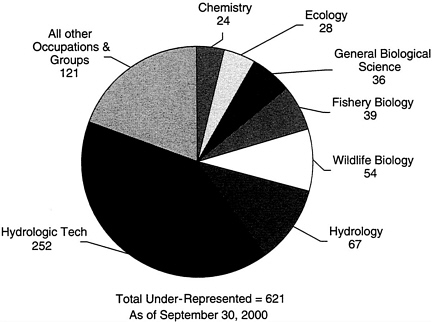
Figure 3.4 Number of hires needed to reach parity with the civilian labor force, categorized by discipline. SOURCE: Data supplied by USGS.
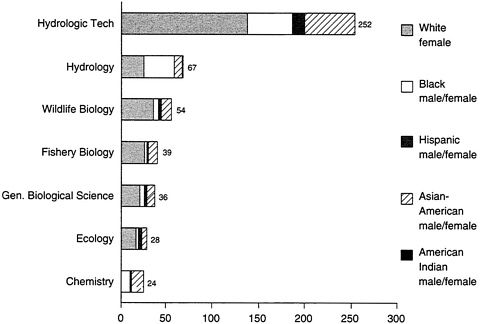
Figure 3.5 Same data shown in Figure 3.4 broken down by race and gender.
American communities for government agencies and researchers who disregard community input and participation in targeting programs at low-income neighborhoods (Bullard and Wright, 1993). With evidence to show that the distributional effects of residual pollution are often borne disproportionately by economically and racially disadvantaged communities (Rios et al., 1993; Perlin et al., 1995; Sheppard et al., 1999), it is important that the USGS be perceived as socially just and operate in a way that meets the needs and wants of all segments of the American population (the clients).
SUMMARY
In coming decades, growth in population and consumption will place greater stress on natural resources and the environment. Consequently, society will face major natural resource and environmental challenges. It will have to make decisions about sources of essential minerals and fossil fuels and will have to plan for mineral and energy transitions. The nation will continue to address issues of water availability and quality, as well as the need to reduce the impacts of floods and droughts. During the early years of this century, it will be necessary for scientists to reach understandings of sustainability, the resilience of natural systems, and environmental change and for policy makers to make wise decisions about resource use and the conservation and preservation of the environment. Finding durable solutions to emerging environmental problems will oblige scientists to work within a broad research program whose results will be applicable to a range of environmental issues. In the more connected world of the twenty-first century, many natural science issues within the purview of the USGS will have an international and global focus, and understanding them will be valuable for national security and public policy reasons. New information technologies are bringing to the fore many new, exciting research opportunities such as the application of real-time three-dimensional geospatial models to help solve complex natural science and resource problems. Societal trends suggest that the demands placed on the USGS in the future will be greater and more varied than in the past. How the USGS might address its mission in the future is considered in Chapter 4.


