Page 203
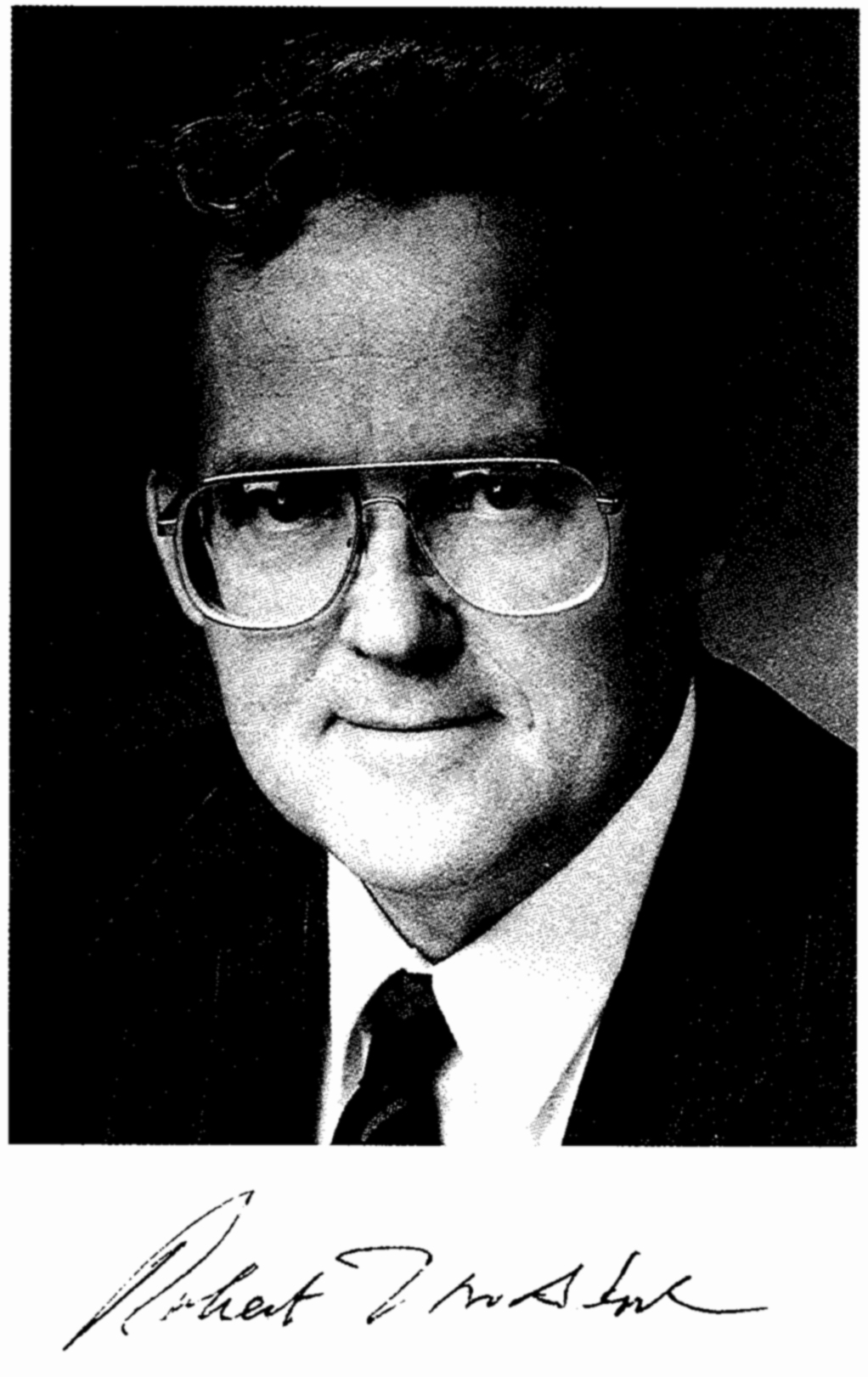
ARTHUR LUBINSKI
1910-1996
BY KENNETH A. BLENKARN
BORN IN ANTWERP, BELGIUM, and educated at the University of Brussels, Arthur Lubinski graduated in 1934 with the degree ingenieur civil mecanicien et electricien. Before World War II he worked on the development of devices generating motor fuel from coal.
Coming to the United States in 1947, he began a long and distinguished career of engineering development in the petroleum industry. He served in both supervisory and individual researcher roles. At the time of his retirement in 1975, he was special research associate at the Tulsa Research Center of Amoco Corporation, now BP-Amoco. He continued an active development and consulting practice, mainly for equipment manufacturers, until shortly before his death in 1996.
In the early 1950s Arthur focused his thorough grounding in applied mechanics on the behavior and performance of oil well tubulars such as well casing and drill pipe. Many of his findings were strikingly counterintuitive and significantly improved the engineering and operating practices of the industry. Early on, Arthur advocated placement of long strings of large diameter, minimal clearance “drill collars” immediately above the drill bit. Critics called this notion a certain guarantee to cause “stuck pipe,” but Arthur's findings eventually formed standard industry practice, with great economic benefits. Lubinski's Law said you can't drill a truly vertical hole, especially in dipping formations. Al-
Page 204
most single-handedly, and against strong opposition, Arthur pioneered the industry practice of horizontal placement of the surface locations of a well away from the bottom hole-drilling target. This permits efficient drilling while the inherent drift of the well path carries the hole toward the target.
Arthur's subsequent extension of analytical work produced methods and equipment for controlling well inclination together with industry specifications for allowable hole curvature related to drill pipe fatigue. In later years, he improved approaches to well casing design and set the basis for design of downhole equipment to counter the effect of internal pressure induced buckling of oil well production tubing.
Because of his early accomplishments, Arthur was called to serve on the drilling panel guiding the planned Mohole Project. Later he served in technical education and advisory roles for the Deep-Sea Drilling Project, which documented plate tectonics. After participation in these national efforts, Arthur played a role guiding the industry in melding the latest advances of naval architecture and physical oceanography with industry operating know-how to evolve drilling vessels and safe drilling practices for subsea wells.
The full scope of Arthur's work, on a wide range of topics, is documented in a long list of publications, many republished in several languages. As a reference book, his collected works have been published as a two-volume set. Some critics with academic viewpoints denigrated Arthur's publications as not being mainly in refereed journals. However, one can observe that his publications passed the ultimate “referee test”—they changed the industry.
Elected to the National Academy of Engineering in 1986, Arthur Lubinski was actve in numerous industry groups and professional societies. Often he was the initiator of collaborative efforts to address common challenges. He was a member of the Society of Naval Architects and Marine Engineers, a fellow of the American Society of Mechanical Engineers (ASME), and distinguished member of the Society of Petroleum Engineers. These and other professional societies jointly sponsor the Offshore Technology Conference (OTC). In 1976 Arthur received
Page 205
the OTC's Distinguished Achievement Award for Individuals. More recently, ASME established the Arthur Lubinski Award for the Best Mechanical Engineering Paper for the best paper presented at OTC.
During World War II Arthur served with the French Resistance Forces. Perhaps this experience spawned the determination and tenacity which he displayed in giving voice to his findings and making a difference in industry technology—all these accomplishments from a thoroughly kind and generous man. He is survived by two of his daughters and a host of devoted friends.