
4
Quarantine Strategy
While the likelihood is small that any of the returned martian samples will contain evidence of past or present martian life, if such evidence were to be found, the intellectual rewards would be profound. For this reason the search for evidence of biological activity in the returned samples must be given a high priority, along with biohazard assessment if life is detected. Yet sample processing during quarantine must achieve other goals as well, primary among them a preliminary analysis and inventory of the soil, rocks, and drill-core specimens returned. To meet all these needs, sample-processing protocols (see Box 4.1) must be developed, to be carried out in the quarantine facility, which will (1) yield a properly documented inventory of the returned samples; (2) assure biological containment of these materials and prevent their contamination with terrestrial microorganisms and other matter, organic or inorganic; and (3) facilitate a rigorous search for evidence of biological activity.
An important part of the protocols will define the manner in which returned martian material is sampled for life-detection experiments. The initial inventory of martian materials should place them in a finite number of sensibly different categories (e.g., individual rock cores and soil samples taken from different locations in the sampling area); an aliquot of material from each of these categories should be tested for evidence of biological activity. The amount of material to be sacrificed for this purpose from each sample category will be specified by the life-detection protocol. Testing should proceed from the largest sample category, of which the smallest fraction of material needs to be devoted to life detection, to the smallest category; if results are consistently negative for the larger sample categories, justification may be found for reducing the amounts of the smaller sample categories used for life detection.
TRIAGE FOR THE MARS SAMPLES
The first step in searching for evidence of biological activity in each category of martian material should be analysis for its content of organic carbon (Chapter 2). Because the laboratory facilities required for precise analysis for total and organic carbon are too large to be included in a minimal BSL-4 quarantine facility, sample aliquots should be sterilized,1 certified, and removed from the quarantine facility for analysis elsewhere. Prelimi-
|
Box 4.1 Protocol Among other meanings of the word, a protocol is a written detailed plan formally specifying each step in a multistep scientific or medical procedure. For samples handled in the Mars Quarantine Facility, protocols must be written for procedures to:
Prior to use of such procedures on martian samples, the efficacy of each protocol must be firmly established by appropriate testing and then formally certified as ensuring the capability to accomplish the intended task. |
nary visual examination of the martian samples, using optical microscopes, can begin within the quarantine facility. In addition, certain life detection studies that cannot be done on sterilized samples, such as biohazard assessment, will have to be conducted in the quarantine facility.
Three possible answers can be foreseen to the question of whether each category of martian samples contains evidence of biological activity: yes, no, or uncertain.
Unequivocal Evidence of Biological Activity (Considered the Least Likely Case)
It is possible, although COMPLEX considers it very unlikely, that the samples returned from Mars will be found to contain an unmistakable biological signature. This could take the form of copious amounts of organic matter and/or abundant evidence of viable or recently dead microbial life. If this turns out to be the case, the prospect of studying a whole new manifestation of life that developed on a planet other than Earth will be so overarchingly important that COMPLEX considers the samples should be dedicated in their entirety to biological studies. COMPLEX is confident that this response will also be supported by the broad scientific community and the public.
The unequivocal discovery of life in Mars samples would demand a far larger research effort than could be carried out by the quarantine personnel projected in Chapter 6, in a much more elaborately constructed physical facility than the kind that chapter recommends. COMPLEX has little doubt that funding would be made available for such a facility and such an effort, to study life on Mars. The present study does not attempt to deal with an eventuality of this sort. COMPLEX considers that planning of such a facility would be premature at this time.
Recommendation. If unmistakable evidence of life as we know it is found in the Mars samples, they should be dedicated to biological studies. Studies of the biosignatures in them should be minimal until an optimal study plan has been developed and an appropriate research facility set up and staffed. In the interim, no
aliquots of the samples should be released from the confines of the Mars Quarantine Facility unless warranted by ongoing biological studies, and the samples are sterilized.
COMPLEX anticipates that even if the martian samples are found to contain viable life, certain types of studies in specialized laboratories outside the quarantine facility will be desirable. Samples should be removed from the quarantine facility for this purpose only after they have been sterilized and effective sterilization has been certified (Chapter 5).
No Evidence of Biological Activity
The samples returned from Mars may be shown to be altogether barren of organic matter, containing no detectable organic carbon compounds and displaying no evidence of metabolic-like activities or potential infectivity, or any other evidence of past or present biologic activity. In this event, certification of unsterilized aliquots of the samples for release and study beyond the confines of the quarantine facility would be justified.
Uncertain Evidence (Considered the Most Likely Case)
The samples returned from Mars may be shown to contain small amounts of organic matter and/or evidence suggestive of viable or recently dead microbial life. Given the difficulties inherent in achieving and maintaining a stringently sterile and organically clean environment, such evidence of biological activity might represent terrestrial contamination, introduced during sample collection and/or processing. But because the nature of martian life (if any) is completely unknown, the source of the biological signal would have to be rigorously ascertained. Until the possibility of martian life is ruled out, unsterilized aliquots of the samples should not be released for study outside the quarantine facility.
This is by far the most likely outcome of the preliminary examination of the Mars samples. In the climate of desire to find life in the samples, researchers examining them will be reluctant to declare them unmistakably barren of viable entities, organic matter, or structures that might be fossils. The samples will be sufficiently complex to contain equivocal evidence of life, even if it is spurious. There will be ample latitude for disagreement among workers as to the biological significance of observations made. It is quite possible that a time will never come when everyone knowledgeable about the samples is satisfied that they do not contain evidence of life. An example of this depressing state of uncertainty is seen in the recent history of study of (Antarctic) Mars meteorite ALH84001: More than 5 years after possible evidence of life in the meteorite was published,2 agreement still has not been reached on the significance of the observations.
The remainder of this chapter describes a strategy designed for the anticipated “uncertain” case: The samples do not contain unequivocal evidence of life, but the possibility of life also cannot be firmly ruled out.
A STRATEGY FOR QUARANTINE AND DISTRIBUTION OF THE MARS SAMPLES
This strategy for quarantine and distribution assumes that the Mars samples are found to be neither manifestly barren of organic matter nor obviously the bearers of live or recently dead organisms. The condition researchers are most likely to find is ambiguity about the evidence or lack of it for life in the samples. Because ambiguity of this sort can persist for a very long time (e.g., the debate about the significance of putative artifacts of life in martian meteorite ALH84001, just referred to), COMPLEX considers it undesirable to delay the release of returned samples in any form from quarantine for a period that will be indefinite but measured in years. Scientists who have prepared their laboratories and staffs to study the samples should be allowed to begin work on them, and the results of their studies will provide important feedback for the planning of later Mars missions. Studies in specialized laboratories outside the quarantine facility will also be essential to the continuing search for evidence
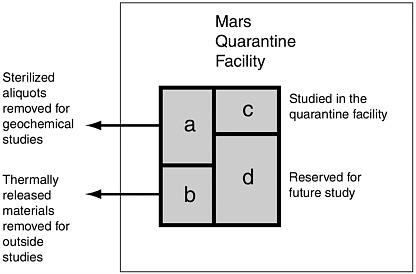
FIGURE 4.1 Recommended uses of Mars samples containing only equivocal evidence of life. Schematic diagram, including the box sizes.
of life in the samples. Suitably sterilized samples should be released promptly from the quarantine facility; these can be used for many types of research, including life-detection studies that are not wholly compromised by sterilization.
There is a conservative and prudent strategy that will permit studies of the samples to begin as soon as their preliminary examination in the quarantine facility has been completed, without danger of terrestrial back contamination or biological contamination of the samples, and without the expense and difficulty of trying to carry out the full range of needed sample studies within a BSL-4 containment facility (see Chapter 6). This strategy is summarized in Figure 4.1. Aliquots of the samples follow several paths, according to plans and following a schedule developed by an oversight committee of highly qualified scientists (Chapter 6). One set of aliquots (a) is sterilized so they can be removed promptly from the quarantine facility and used for geochemical studies. Another set of aliquots (b) is crushed, and any organic compounds they contain are extracted either by thermal desorption or by supercritical fluids.3 These (presumably sterile) extracts are passed out of the quarantine facility for life detection/biomarker studies in outside laboratories (see the section below, “The Study of Extracts”). The crushed residue, which is useful for some geochemical studies, is further sterilized (to address the possibility that life might be harbored inside the crushed mineral grains) and also removed from the quarantine facility.
Some properties of the Mars samples that would be compromised by any sterilization procedure, such as their biohazard potential, will have to be studied in the quarantine facility (c). Finally, a portion of the samples will be reserved in the quarantine facility for undefined future studies (d).
Recommendation. In the likely event that initial examination of the Mars samples can neither prove nor definitively rule out evidence of life in them, plans should be in place to promptly sterilize aliquots of the samples and remove them from the Mars Quarantine Facility for biological and geochemical studies in specialized laboratories elsewhere. This action should not be deferred pending resolution of the question of whether the samples contain life or artifacts of life.
The Study of Extracts
Organic molecules in rocks and sediments are commonly studied after they have been physically separated from their host inorganic matrices. Typically, the rocks or sediments are washed or “extracted” with organic solvents that dissolve the organic molecules. Recovery and evaporation of the solvent leaves the organic molecules as a residue. Further separations of that residue, followed by spectroscopic analyses, can reveal the types and amounts of organic molecules that are present.4 However, these techniques are not appropriate for preliminary analyses of the martian samples. There is a chance that the solvents will react with the inorganic matrix, especially if strong oxidants are present. In addition, the purification of solvents is notoriously difficult, the efficiency with which materials can be recovered is imperfect, and, for precious materials, the process is unacceptably wasteful. Nevertheless, obtaining the best possible information about any organic molecules that are present is clearly required as part of the preliminary analyses.
A significant portion of the organic molecules that would be recovered by extraction with organic solvents can instead be released from milligram-sized aliquots of martian samples by thermal desorption. Samples are placed in a small chamber swept with helium and heated, stepwise, to (for example) 150, 250, and 350 ºC. Compounds volatilized in this way can be readily analyzed by gas chromatography-mass spectrometry (GC-MS; see Box 3.1 in Chapter 3). This procedure would recapitulate the GC-MS experiment used by the Viking landers on Mars. On Earth, 30 years later, the experiment will be far easier and still exceptionally informative. Samples are likely to be sterilized by this analytical procedure but not highly altered. The inorganic residues can be released for geochemical analyses.
More-polar organic compounds, those typically soluble in water and resembling simple cellular metabolites, proteins, and nucleic acids, would not be well characterized by the thermal-desorption plus GC-MS treatment. They can be extracted from samples in aqueous solution, but extremely pure water would be required to rule out very-low-level contamination, and water extraction cannot be expected to sterilize the material leached. Polar organic compounds should be extractable using supercritical fluids, such as liquid carbon dioxide or halocarbons. Such media can be evaporated far more readily than water, and supercritical fluid extraction is probably miniaturized more easily than water extraction. It is even possible that supercritical fluid extracts are demonstrably sterile, and research needs to be done to systematically and critically analyze the effectiveness of these solvents as sterilizing agents. Study of these techniques should be given a high priority in preparation for the preliminary analyses.
A protocol for these procedures is needed that defines how Mars samples are to be ground, prepared, and extracted. With such a protocol in place it will be possible to remove extracted organic compounds from quarantine, which will permit a wide variety of analytical studies of any organic compounds found. These studies can test for terrestrial contamination, differentiate between abiotic and biotic signatures in sets of compounds, search for biomarkers, and provide feedback to life detection experiments. In addition, isotopic studies of bulk extracts, as well as individual organic compounds, will provide evidence to test whether the organic compounds are indigenous and whether they contain evidence of possible biological isotopic fractionation.
Recommendation. It is important that a program of research be conducted to determine the efficacy of supercritical fluids and commonly used organic solvents in killing organisms. It is highly desirable to be able to remove solvent extracts from quarantine without the damage to dissolved biomarker compounds that would be caused by heat or ionizing radiation. Sterilization probably is systematically achieved by the supercritical fluids used in making extracts, but this needs to be verified before extracts can be removed from the Mars Quarantine Facility.
Studies to Be Conducted in the Quarantine Facility
Certain studies of the Mars samples, including biohazard testing, cannot be carried out on sterilized samples. These studies will thus have to be performed within the quarantine facility (category c in Figure 4.1), and it will be
necessary to include the needed equipment and personnel in a design for the facility. Most particularly, these studies will include experiments that seek to demonstrate the presence of microbial life by methods that are conducive to microbial replication with resulting expansion of the numbers of viable organisms, or their genomes (Chapter 2). Examples of these experiments are as follows:
-
Attempts to isolate infectious microbes by providing environmental conditions and substrates for growth, either conditions that resemble those on Mars or terrestrial conditions that the new microbe might find hospitable;
-
Attempts to infect animals, plants, cell cultures derived from terrestrial life forms, or bacteria in which a martian genome could replicate; and
-
Attempts to detect genomes (either RNA or DNA) by polymerase chain reaction (PCR) or similar techniques in which all or part of the genome is amplified by several orders of magnitude.
Because of constraints both on the amount of sample to be returned and on the range of equipment that can be available in the quarantine facility, the experimental protocol should focus on molecular biological techniques (e.g., PCR) and minimize to the extent feasible experiments involving whole organisms.
Use of PCR within the quarantine facility will require special precautions. Because the technique is extremely sensitive it is vulnerable to false positives caused by contamination. PCR experimentation should be carried out by specially certified technicians in a dedicated space within the quarantine facility which is effectively isolated from activities elsewhere in the facility.
In the event that Mars samples contain organic carbon yet are found to be incapable of infecting the limited range of species or ecosystems that can be tested in the BSL-4 quarantine facility, unqualified release of the samples is not justified. Such samples should remain in the “uncertain” category of life detection. However, it may be desirable to downgrade the required level of biocontainment for those samples from BSL-4 to BSL-3 (see Chapter 6), because the less-stringent standards of BSL-3 permit a larger facility in which more complex testing can be conducted (e.g., examination of the impact of martian material on a model of the marine microbial ecosystem). A sufficiently broad range of testing at this level could conceivably justify the release of unsterilized material containing martian organic compounds from quarantine, if any remains after the program of testing.
Release of Samples from the Quarantine Facility
The primary charge to COMPLEX in defining the present study was to consider the question, What are the criteria that must be satisfied before martian samples can be released from the facility? Summarizing the content of this chapter, COMPLEX recommends the following:
Recommendation
-
If the samples returned from Mars contain evidence of life, or if evidence of life is equivocal (e.g., organic matter is present), aliquots that have been treated by the application of heat and/or gamma radiation to levels more than adequate to kill any known terrestrial organism (Chapter 5) should be certified for release from the Mars Quarantine Facility.
-
If the samples contain evidence of life, or if evidence of life is equivocal, removal of untreated aliquots from the Mars Quarantine Facility for transfer to approved containment laboratories elsewhere should not be excluded, on the condition that containers and transfer procedures conform to protocols established by a panel of experts (e.g., from the Centers for Disease Control and Prevention) in containment.
Here “approved containment facilities elsewhere” refers principally to the case where a major international partner in the Mars sample return program wishes to establish an independent BSL-4 facility in which to study untreated samples (see Chapter 6).
-
If the samples are shown to be altogether barren of organic matter, to contain no detectable organic carbon compounds and no other evidence of past or present biological activity, untreated aliquots of the samples should be released for study beyond the confines of the Mars Quarantine Facility.


