




Below is the uncorrected machine-read text of this chapter, intended to provide our own search engines and external engines with highly rich, chapter-representative searchable text of each book. Because it is UNCORRECTED material, please consider the following text as a useful but insufficient proxy for the authoritative book pages.
13 2 The CAFE Standards: An Assessment Twenty-five years after Congress enacted the Corporate Average Fuel Economy (CAFE) standards, petroleum use in light-duty vehicles is at an all-time high. It is appropriate to ask now what CAFE has accomplished, and at what cost. This chapter begins by addressing energy and CAFE: What is the current rationale for fuel economy standards? How have vehicles changed, in particular in regard to fuel economy? What is the impact on oil consumption? The first section addresses a series of questions the committee was asked about the impact of CAFE. The second section ex- plores the impact of CAFE on the automotive industry. The final section reviews the impact on safety. Isolating the effects of CAFE from other factors affecting U.S. light-duty vehicles over the past 25 years is a difficult analytical task. While several studies have tried to estimate the specific impacts of CAFE on fuel economy levels and on highway safety, there is no comprehensive assessment of what would have happened had fuel economy standards not been in effect. Lacking a suitable baseline against which to compare what actually did happen, the committee was fre- quently unable to separate and quantify the impacts of fac- tors such as fuel prices or of policies such as the gas guzzler tax. Much of this report describes what happened before and after the implementation of the CAFE standards, with little or no isolation of their effects from those of other forces affecting passenger cars and light trucks. While this analyti- cal approach is less than ideal, it can provide some sense of whether the impacts were large or small, positive or negative. CAFE AND ENERGY Rationale for Fuel Economy Standards The nationâs dependence on petroleum continues to be an economic and strategic concern. Just as the 1992 committee (the fuel economy committee) cited the conflict in the Per- sian Gulf as evidence of the fragility of the worldâs petro- leum supply, the current committee cites the oil price hikes of 1999 and 2000 as further evidence of the nationâs need to address the problem of oil dependence. The association be- tween oil price shocks and downturns in the U.S. economy (see Figure 2-1) has been documented by numerous studies over the past 20 years (for example, Hamilton, 1983 and 1996; Hickman, 1987; Huntington, 1996; Mork et al., 1994). While the causes of recessions are complex and other fac- tors, such as monetary policy, play important roles, oil price shocks have clearly been a contributing factor (Darby, 1982; Eastwood, 1992; Tatom, 1993). Estimates of the cumulative costs to our economy of oil price shocks and noncompetitive oil pricing over the past 30 years are in the trillions of dollars (see, for example, Greene and Tishchishyna, 2000; EIA, 2000c; DOE, 1991; Greene et al., 1998). Today, oil is a much less important share of the economy (expenditures on oil amount to 2 percent of the gross domes- tic product [GDP]) than it was in the early 1980s but ap- proximately the same as in 1973, the year of the first Arab- OPEC (Organization of Petroleum Exporting Countries) oil embargo. Still, U.S. oil imports now exceed 50 percent of consumption and are projected to increase substantially (EIA, 2000a, table A.11). The U.S. transportation sector re- mains nearly totally dependent on petroleum, and passenger cars and light trucks continue to account for over 60 percent of transportation energy use (Davis, 2000, table 2.6). A second petroleum-related factor, possibly even more important, has emerged since CAFE was enacted: global cli- mate change. Scientific evidence continues to accumulate supporting the assertion that emissions of greenhouse gases from the combustion of fossil fuels are changing Earthâs cli- mate. International concern over the growing emissions of greenhouse gases from human activities has increased sub- stantially since the 1992 assessment of fuel economy by the National Research Council (NRC, 1992, pp. 70â71). The sci- entific evidence suggesting that emissions of CO2 and other greenhouse gases are producing global warming, causing the
14 EFFECTIVENESS AND IMPACT OF CORPORATE AVERAGE FUEL ECONOMY (CAFE) STANDARDS sea level to rise, and increasing the frequency of extreme weather events has grown stronger (IPCC, 2001, pp. 1â17; NRC, 2001). Concern over the potentially negative conse- quences of global climate change has motivated the Euro- pean Union and Japan to take steps to reduce CO2 emissions from passenger cars and light trucks by adopting new fuel economy standards (Plotkin, 2001). The transportation sector accounts for about 31 percent of anthropogenic CO2 emissions in the U.S. economy; CO2 ac- counts for over 80 percent of greenhouse gas emissions from the economy as a whole (EIA, 2000b). Since the United States produces about 25 percent of the worldâs greenhouse gases, fuel economy improvements could have a significant impact on the rate of CO2 accumulation in the atmosphere. However, it should be noted that other sectors, particularly electricity, have far more potential for reducing CO2 emis- sions economically (EIA, 1998). Focusing on transportation alone would accomplish little. New Car and Light Truck Fuel Economy The CAFE standards, together with significant fuel price increases from 1970 to 1982, led to a near doubling of the fuel economy of new passenger cars and a 50 percent in- crease for new light trucks (NRC, 1992, p. 169) (see Figure 2-2). While attempts have been made to estimate the relative contributions of fuel prices and the CAFE standards to this improvement (see, for example, Crandall et al., 1986; Leone and Parkinson, 1990; Greene, 1990; Nivola and Crandall, 1995), the committee does not believe that responsibility can be definitively allocated. Clearly, both were important, as were efforts by carmakers to take weight out of cars as a 15 20 25 30 35 1975 1980 1985 1990 1995 2000 M ile s pe r G al lo n Imported Cars Domestic Cars Car AFES Imp. Trucks Dom. Trucks Lt. Trk. AFES -4% -2% 0% 2% 4% 6% 8% 1970 1975 1980 1985 1990 1995 2000A nn ua l G ro w th R at e $0 $10 $20 $30 $40 $50 $60 19 99 $ p er B ar re l GDP Growth Oil Price FIGURE 2-1 Oil price shocks and economic growth, 1970â1999. SOURCE: Adapted from Greene and Tishchishyna (2000). FIGURE 2-2 Automotive fuel economy standards (AFES) and manufacturersâ CAFE levels. SOURCE: Based on NRC (1992) and EPA (2000).
THE CAFE STANDARDS: AN ASSESSMENT 15 cost-saving measure. CAFE standards have played a leading role in preventing fuel economy levels from dropping as fuel prices declined in the 1990s. The increasing market share of higher fuel economy im- ported vehicles was also a factor in raising the average fuel economy of the U.S. fleet and decreasing its average size and weight. The market share of foreign-designed vehicles increased from 18 percent in 1975 to 29 percent in 1980 and 41 percent in 2000. In 1975, the average foreign-designed vehicle achieved about 50 percent higher fuel economy than the average domestic vehicle. Foreign-designed vehicles also weighed about 40 percent (1,700 lb) less (EPA, 2000, tables 14 and 15). These differences have narrowed considerably over time, as shown below. Figure 2-2 suggests that the CAFE standards were not generally a constraint for imported vehicles, at least until 1995, if then. Domestic manufacturers, on the other hand, made substantial fuel economy gains in line with what was required by the CAFE standards. The fuel economy numbers for new domestic passenger cars and light trucks over the past 25 years closely follow the standards. For foreign manu- facturers, the standards appear to have served more as a floor toward which their fuel economy descended in the 1990s. For the most part, the differing impacts of the CAFE stan- dards on domestic and foreign manufacturers were due to the different types of vehicles they sold, with foreign manu- facturers generally selling much smaller vehicles than do- mestic manufacturers. In 1975, when CAFE was enacted, 46 percent of the cars sold by domestic manufacturers were compacts or smaller, while 95 percent of European imports and 100 percent of Asian imports were small cars. The difference between the product mix of domestic manufacturers and that of foreign manufacturers has dramati- cally narrowed since then. By 2000, small cars represented 39 percent of the market for domestic carmakers (down from 46 percent in 1975) and had plummeted to 60 percent and 50 percent for European and Asian manufacturers, respectively, based on interior volume (EPA, 2000, appendix K). This convergence is also evident when the average weights of domestic and imported vehicles in given market segments are compared (see Figure 2-3). In 1975, the average weight of a domestic passenger car was 4,380 lb. It outweighed its European counterpart by 1,676 lb and its Asian counterpart by 1,805 lb. In 2000, the average domestic passenger car weighed 75 lb less than the average European car and only 245 lb more than the average Asian passenger car. What had been a 70 percent difference between the average weights of domestic and Asian cars decreased to 7.6 percent. There is now little difference in the market positions of domestic and imported manufacturers, as a whole, in the passenger car market. Another factor contributing to the superior fuel economy of imported automobiles in 1975 was technology. Only 1.3 percent of domestic passenger cars used front-wheel drive in 1975, compared with 17 percent of Asian imports and 46 percent of European imports. Similarly, less than 1 percent of domestic cars were equipped with fuel injection that year, while 14 percent of Asian imports and 39 percent of Euro- pean imports used that more efficient technology. Undoubt- edly, higher fuel prices in Europe and Asia were (and still are) a major incentive for rapid implementation of fuel economy technologies. However, the emphasis on small cars in 1975 by foreign manufacturers was clearly the most im- portant reason for their higher fuel economy. The light-truck market has fared differently. While the weights of vans have converged somewhat, domestic pick- ups are still about 13 percent heavier than their imported counterparts. Although the difference in average weight be- tween domestic and imported sport utility vehicles (SUVs) 0 1000 2000 3000 4000 5000 Do me sti c C ar Eu rop ea n C ar As ian C ar Do me sti c V an Im po rte d V an Do me sti c S UV Im po rte d S UV Do me sti c P ick up Im po rte d P ick up W ei gh t ( lb ) 1975 2000 FIGURE 2-3 Average weights of domestic and imported vehicles. SOURCE: EPA (2000).
16 EFFECTIVENESS AND IMPACT OF CORPORATE AVERAGE FUEL ECONOMY (CAFE) STANDARDS seems to have increased, the SUV market, as it is today, did not exist in 1975. Similar differences exist by size class. Only 1.3 percent of domestic light trucks are classified as small, 44 percent as large. By contrast, 36 percent of imported trucks are small and only 6 percent are large (EPA, 2000). Improvements in new vehicle fuel economy have gradually raised the overall fuel economy of the entire operating fleet as new vehicles replace older, less fuel-efficient vehicles.1 DOTâs Federal Highway Administration (FHWA) estimates that the average miles per gallon (mpg) for all passenger cars in useâboth old and newâincreased from 13.9 mpg in 1975 to 21.4 mpg in 1999 (see Figure 2-4) (FHWA, 2000). The estimated on-road fuel economy of light trucks improved from 10.5 to 17.1 mpg over the same period. Since the FHWAâs definitions of passenger car and light truck are not the same as those used for CAFE purposes, it is also useful to consider the trend in combined light-duty vehicle fuel economy. The FHWA estimates that overall light-duty ve- hicle on-road fuel economy increased from 13.2 mpg in 1975 to 19.6 mpg in 1999, a gain of 48 percent. The EPA sales- weighted test numbers indicate that new light-duty vehicle fuel economy increased from 15.3 mpg in 1975 to 24 mpg in 1999, a gain of 57 percent. Given the remaining older ve- hicle stock yet to be retired and the inclusion of some larger two-axle, four-tire trucks in the FHWAâs definition, these numbers are roughly comparable. As Figure 2-4 illustrates, there is a substantial shortfall between fuel economy as measured for CAFE purposes and actual fuel economy achieved on the road. If the EPA ratings accurately reflected new vehicle fuel economy, the operat- ing fleet averages would be approaching those levels. In- stead, they are leveling off well below the ratings. The short- fall, which the EPA estimates at about 15 percent, is the result of a number of factors that differ between actual oper- ating conditions and the EPA test cycle, such as speed, ac- celeration rates, use of air conditioners, and trip lengths (Hellman and Murrell, 1984; Harrison, 1996). A comparison of FHWA on-road and EPA new vehicle fuel economy esti- mates suggests a larger discrepancy for passenger cars than for light trucks. This pattern is contrary to the findings of Mintz et al. (1993), who found a larger shortfall for light trucks of 1978â1985 vintages. The discrepancy may reflect a combination of estimation errors and differences in defini- tions of the vehicle types.2 The EPA estimates that new light- duty vehicles have averaged 24 to 25 mpg since 1981. The FHWA estimates the on-road fuel economy of all light-duty vehicles at 19.6 mpg in 1999, a difference of about 20 per- cent. Some of this discrepancy reflects the fact that a sub- stantial number of pre-1980 vehicles (with lower fuel economy) were still on the road in 1999, but most probably reflects the shortfall between test and on-road fuel economy. Vehicle Attributes and Consumer Satisfaction Significant changes in vehicle attributes related to fuel economy accompanied the fuel economy increases brought about by CAFE standards, fuel price increases, and manu- facturersâ efforts to reduce production costs. Between 1975 0.0 5.0 10.0 15.0 20.0 25.0 30.0 35.0 1965 1971 1977 1983 1989 1995 M ile s pe r G al lo n New Cars On-Road Cars New Lt. Trucks On-Road Trucks FIGURE 2-4 Fleet fuel economy of new and on-road passenger cars and light trucks. SOURCE: FHWA (2000). 1The lag is due to the time required to turn over the vehicle fleet. Recent estimates of expected vehicle lifetimes suggest that an average car will last 14 years and an average light truck 15 years (Davis, 2000, tables 6.9 and 6.10). This means that about half of the vehicles sold 15 years ago are still on the road today. 2The light truck definition used by FHWA for traffic monitoring differs substantially from that used by the National Highway Traffic Safety Ad- ministration (NHTSA) for CAFE purposes. The chief difference is that FHWAâs definition includes larger light trucks not covered under the CAFE law. In addition, the FHWAâs division of fuel use and vehicle miles trav- eled (VMT) between passenger cars and light trucks is generally considered to be only approximately correct. It is probably more accurate to compare combined light-duty vehicle mpg estimates.
THE CAFE STANDARDS: AN ASSESSMENT 17 and 1980, the fuel economy of new passenger cars increased by 50 percent, from 15.1 to 22.6 mpg. At the same time, the size and weight of passenger cars decreased significantly (see Figure 2â5). The average interior volume of a new car shrank from 111 cubic feet in 1975 to 105 cubic feet in 1980. De- creasing interior volume, however, appears to have been part of a trend extending back to the 1960s, at least. Average passenger car wheelbase also declinedâfrom 110 inches in 1977 to 103 in 1980. Curb weight simultaneously decreased by more than 800 lb. This reduction in weight was clearly not part of a previous trend. From 1980 to 1988, passenger car characteristics changed little, while new vehicle fuel economy improved by 19 per- cent, from 24.3 mpg in 1980 to an all-time high of 28.8 mpg in 1988. Since then, new vehicle fuel economy has remained essentially constant, while vehicle performance and weight have increased. For passenger cars, horsepower, accelera- tion (hp/lb), and top speed all continued to increase in line with a trend that began in 1982 (see Figure 2-6). Between 1975 and 1980, in contrast, passenger car weight and horse- power decreased, acceleration and top speed remained nearly constant, and fuel economy increased sharply. Light truck attributes show similar patterns, although nearly all of the increase in light-truck fuel economy was accomplished in the 2 years between 1979 and 1981 (see Figure 2-7). The weight of light trucks did not decline as sharply as the weight of passenger cars, and in recent years it has reached new highs. Weight, horsepower-to-weight ra- tios, and top speeds have all been increasing since 1986. Other engineering and design changes, motivated at least in part by the need to increase fuel economy, probably influ- enced consumersâ satisfaction with new vehicles. For ex- ample, front-wheel drive, which affects handling and im- proves traction, also permits weight reduction owing to the elimination of certain drive train components and repackag- ing. Use of front-wheel drive in passenger cars increased from 6.5 percent in 1975 to 85 percent by 1993, where it more or less remains today. Less than 20 percent of light trucks employ front-wheel drive, but none did in 1975. Seventy-five percent of vans use front-wheel drive. Fuel in- jection, which improves fuel metering for more efficient combustion, is also essential for meeting todayâs pollutant emission standards and improves engine responsiveness as 0.00 0.50 1.00 1.50 2.00 1975 1980 1985 1990 1995 2000 Index: 1975 = 1.0 MPG Hp/lb Hp Top speed Weight FIGURE 2-6 Trends in fuel-economy-related attributes of passen- ger cars, 1975â2000. SOURCE: EPA (2000). 100 105 110 115 120 1951 1961 1971 1981 1991 2001 cu bi c fe et / in ch es 0 500 1000 1500 2000 2500 3000 3500 4000 P ou nd s Interior Volume Wheelbase Curb Weight FIGURE 2-5 Passenger car size and weight. SOURCE: Orrin Kee, National Highway Traffic Safety Administration, production- weighted data from manufacturersâ fuel economy reports, personal communication. FIGURE 2-7 Trends in fuel-economy-related attributes of light trucks, 1975â2000. SOURCE: EPA (2000). 0.00 0.50 1.00 1.50 2.00 1975 1980 1985 1990 1995 2000 Index: 1975 = 1.0 MPG Hp Hp/lb Top speed Weight
18 EFFECTIVENESS AND IMPACT OF CORPORATE AVERAGE FUEL ECONOMY (CAFE) STANDARDS well. Use of fuel injection increased from 5 percent for pas- senger cars and 0 percent for light trucks in 1975 to 100 percent for both categories today. Use of lock-up torque con- verters in automatic transmissions, which reduce slip and thereby increase efficiency, increased from 0 percent in 1975 to 85 percent today for both passenger cars and light trucks. Use of four-valve-per-cylinder engines increased from 0 per- cent before 1985 to 60 percent in passenger cars, 20 percent in vans, 25 percent in SUVs, and only 1 percent in pickup trucks. Four-valve engines offer improved fuel economy and performance over a wide range of speeds. Fuel economy improvements have affected the costs of automobile ownership and operation over the past 25 years. However, the precise impacts on vehicle price and customer satisfaction are not known because of the lack of accurate accounting of the costs of fuel economy improvements and the difficulty of attributing changes in vehicle attributes to fuel economy or to other design goals. How to attribute the costs of numerous technology and design changes to the CAFE standards or to other factors, such as fuel prices, is unclear. Nonetheless, it is possible to examine trends in the overall costs of owning and operating passenger cars, which shed some light on the possible impacts of the CAFE standards. The cost (in constant dollars) of owning and operating automobiles appears to be only slightly higher today than in 1975. The American Automobile Association estimates that the total cost per mile of automobile ownership in 1975 was 55.5 cents, in constant 1998 dollars (Davis, 2000, table 5.12). The estimate for 1999 was 56.7 cents per mile.3 Fixed costs (costs associated with owning or leasing a vehicle that are not directly dependent on the miles driven), which today account for more than 80 percent of total costs, were at least 30 percent higher in 1999 than in 1975. Operating costs have been nearly halved, mostly because of the reduction in gas and oil expenditures. In 1975, expenditures on gas and oil were estimated to be 14.6 cents per mile and constituted 75 percent of variable (or operating) costs (26 percent of total costs). In 1999, gas and oil expenses were only 5.5 cents per mile, just over 50 percent of variable costs and less than 10 percent of total costs. A large part of the change has to do with the lower price of gasoline in 1999, $1.17 per gallon in 1999 versus $1.42 in 1975 (1996 dollars) (Davis, 2000). The rest is the result of improvements in fuel economy. The average price of a new automobile has increased from just under $15,000 in 1975 to over $20,000 today (1998 dol- lars). Virtually all of the price increase came after 1980, by which time most of the increase in passenger car fuel economy had already been accomplished (see Figure 2-8). Furthermore, the average purchase price of imported cars, which were largely unconstrained by the CAFE standards (because most of the vehicles sold by foreign manufacturers were above the standard), has increased far more than that of domestic cars, which were constrained. The average price of large trucks has risen faster than that of passenger cars. The committee heard it said that CAFE may have insti- gated the shift from automobiles to light trucks by allowing manufacturers to evade the stricter standards on automobiles. It is quite possible that CAFE did play a role in the shift, but the committee was unable to discover any convincing evi- dence that it was a very important role. The less stringent CAFE standards for trucks did provide incentives for manu- facturers to invest in minivans and SUVs and to promote them to consumers in place of large cars and station wagons, but other factors appear at least as important. Domestic manufacturers also found light-truck production to be very attractive because there was no foreign competition in the highest-volume truck categories. By shifting their product development and investment focus to trucks, they created more desirable trucks with more carlike features: quiet, luxu- rious interiors with leather upholstery, top-of-the-line audio systems, extra rows of seats, and extra doors. With no Japa- nese competition for large pickup trucks and SUVs, U.S. manufacturers were able to price the vehicles at levels that generated handsome profits. The absence of a gas guzzler tax on trucks and the exemption from CAFE standards for trucks over 8,500 lb also provided incentives. Consumers also found many of these new vehicles very appealing. They offer roomy interiors that accommodate many passengers, ample storage space, towing capacity, good outward visibility, and a sense of safety and security. Midsize SUVs rose from 4.0 percent of all light-duty vehicle sales in MY 1988 to 12.3 percent in 2000. Midsize station 3These costs are not strictly comparable, however, due to a change in the method of estimating depreciation instituted in 1985. Because of this change, fixed costs prior to 1985 are inflated relative to later costs. 0 5000 10000 15000 20000 25000 1970 1980 1990 2000 19 98 $ 0 5 10 15 20 25 30 35 40 45 Price MPG FIGURE 2-8 Average new car price and fuel economy. SOURCE: Based on Davis (2000) and EPA (2000).
THE CAFE STANDARDS: AN ASSESSMENT 19 wagons dropped from 1.9 to 1.4 percent over the same pe- riod. Large SUVs rose from 0.5 percent to 5.5 percent, while large station wagons dropped from 0.5 percent to zero (EPA, 2000). SUVs are far more popular today than station wagons were before CAFE. Furthermore, several wagons, including the Toyota Camry, Honda Accord, and Nissan Maxima, were dropped from production even though the manufacturers were not constrained by CAFE. Therefore, it must be con- cluded that the trend toward trucks probably would have happened without CAFE, though perhaps not to the same degree. The effect of the shift to trucks on fuel economy has been pronounced. As shown in Figures 2-6 and 2-7, the fuel economy of new cars and trucks, considered separately, has been essentially constant for about 15 years. However, the average fuel economy of all new light-duty vehicles slipped, from a peak of 25.9 mpg in 1987 to 24.0 mpg in 2000, as the fraction of trucks increased from 28 to 46 percent (EPA, 2000). Even if trucks and cars maintain their current shares, the average fuel economy of the entire on-road fleet will continue to decline as new vehicles replace older ones with their higher fraction of cars. Impact on Oil Consumption and the Environment Fuel use by passenger cars and light trucks is roughly one-third lower today than it would have been had fuel economy not improved since 1975, as shown in this section. As noted above, the CAFE standards were a major reason for the improvement in fuel economy, but other factors, such as fuel prices, also played important roles. Travel by passenger cars and light trucks has been in- creasing at a robust average annual rate of 3.0 percent since 1970 (see Figure 2-9). Growth has been relatively steady, with declines in vehicle miles traveled (VMT) occurring only during the oil price shocks and ensuing recessions of 1973â 1974, 1979â1980, and 1990â1991. Throughout this period, light-truck travel has been growing much more rapidly than automobile travel. From 1970 to 1985, light-truck VMT grew at an average rate of 7.7 percent/year, while passenger car VMT grew at only 1.8 percent/year. From 1985 to 1999, the rates were similar: 6.1 percent/year for light trucks and 1.7 percent/year for passenger cars. The trend toward light trucks appears to antedate the CAFE standards. From 19664 to 1978, light-truck VMT grew 9.8 percent/year, while pas- senger-car VMT grew at 3.3 percent/year. Prior to 1978, fuel use by passenger cars and light trucks was growing slightly faster than VMT (see Figure 2-9). It then declined from 1978 to 1982 as gasoline prices soared and the first effects of the higher fuel economy of new ve- hicles began to have an impact on the fleet (see Figure 2-7). While it is difficult to say what fuel consumption would have been had there been no CAFE standards, it is clear that if light-duty fuel use had continued to grow at the same rate as light-duty VMT, the United States would be currently con- suming approximately 55 billion more gallons of gasoline each year (equivalent to about 3.6 million barrels per day [mmbd] of gasoline). On the other hand, increased fuel economy also reduces the fuel cost per mile of driving and encourages growth in vehicle travel. Estimates of the significance of this ârebound effectâ suggest that a 10 percent increase in fuel economy is likely to result in roughly a 1 to 2 percent increase in vehicle travel, all else being equal (Greene et al., 1999; Haughton 4The FHWA substantially changed its truck class definitions in 1966, making that the earliest date for which there is a consistent definition of a âlight truck.â 0 500000 1000000 1500000 2000000 2500000 3000000 1966 1972 1978 1984 1990 1996 M ill io ns o f V M T 0 50000 100000 150000 200000 M ill io ns o f G al lo ns VMT Fuel FIGURE 2-9 Passenger car and light-truck travel and fuel use. SOURCE: Based on Davis (2000).
20 EFFECTIVENESS AND IMPACT OF CORPORATE AVERAGE FUEL ECONOMY (CAFE) STANDARDS and Sarker, 1996; Jones, 1993). Applying that to the esti- mated 44 percent increase in on-road, light-duty fuel economy from 1975 to 2000 would reduce the estimated annual fuel savings from 55 billion to 43 billion gallons, equivalent to about 2.8 mmbd of gasoline. Reducing fuel consumption in vehicles also reduces car- bon dioxide emissions. If the nation were using 2.8 mmbd more gasoline, carbon emissions would be more than 100 million metric tons of carbon (mmtc) higher. Thus, improve- ments in light-duty vehicle fuel economy have reduced over- all U.S. emissions by about 7 percent. In 1999, transporta- tion produced 496 mmtc, about one-third of the U.S. total. Passenger cars and light-duty trucks accounted for about 60 percent of the CO2 emissions from the U.S. transportation sector (EPA, 2001), or about 20 percent of total U.S. emis- sions of greenhouse gases. Overall, U.S. light-duty vehicles produce about 5 percent of the entire worldâs greenhouse gases. Impact on Oil Markets and Oil Dependence The fuel economy of U.S. passenger cars and light trucks affects world oil markets because U.S. light-duty vehicles alone account for 10 percent of world petroleum consump- tion. Reducing light-duty vehicle fuel use exerts downward pressure on world oil prices and on U.S. oil imports. To- gether with major increases in non-OPEC oil supply, reduc- tions in petroleum demand in the United States and other countries created the conditions for the collapse of OPEC market power in 1986. Had past fuel economy improvements not occurred, it is likely that the U.S. economy would have imported more oil and paid higher prices than it did over the past 25 years. CAFE standards have contributed to past light- duty vehicle fuel economy improvements, along with past fuel price increases and other factors. Oil price shocks have had serious economic consequences for oil-consuming nations. Higher oil prices damage the U.S. economy by transferring U.S. wealth to oil exporters, reduc- ing real economic output, and creating temporary price and wage dislocations that lead to underemployment of economic resources. While the economic impact of the 1999â2000 oil price shock may have been smaller than the price shocks of the 1970s and 1980s, it was one of several factors causing a decline in U.S. economic growth in 2000 and 2001. By reducing U.S. petroleum demand, greater fuel econ- omy for passenger cars and light trucks ameliorates but does not by itself solve the problem of oil dependence. Because the United States accounts for 25 percent of world petroleum consumption (EIA, 2000c, table 11.9), changes in U.S. oil demand can significantly affect world oil prices. The size of the impact will depend on the price elasticity of net oil sup- ply to the United States (Greene and Tishchishyna, 2000). A reasonable range of estimates of this elasticity is approxi- mately 2.0 to 3.0, which means that a 1 percent decrease in U.S. demand would reduce world oil prices by 0.5 to 0.33 percent. U.S. oil consumption in 2000 was 19.5 mmbd, so that the estimated 2.8-mmbd reduction due to fuel economy im- provements represents a 13 percent reduction in U.S. oil de- mand, using the midpoint formula. Using the above elastic- ity assumptions, this should reduce world oil prices by 4 to 6 percent. The average price of oil in 2000 was just over $28/ bbl, implying a savings of $1.00 to $1.80/bbl on every barrel purchased. Accordingly, the reduction in expenditures realized by the United States due to lower prices for imported oilâ which in turn came from improvements in passenger car and light-truck fuel economyâwould be in the range of $3 bil- lion to $6 billion for the year 2000 alone. This is in addition to the benefit of not having had to purchase those 2.8 mmbd. Assuming that these benefits increased linearly from zero in 1975, cumulative (not present value) oil-market benefits would amount to between $40 billion and $80 billion. This does not take into account benefits accruing from a reduced likelihood and severity of oil market disruptions. These esti- mates are subject to considerable uncertainty, however, be- cause it is difficult to accurately predict OPEC responses to changes in oil demand. The committee emphasizes again that these impacts on oil consumption and oil prices were the result of several fac- tors affecting the fuel economy of the U.S. light-duty vehicle fleet, one of which was CAFE standards. Regulatory Issues In addition to the above issues, the committee was asked in the statement of work to address other aspects of how CAFE has functioned. These included the disparate impact on automotive manufacturers, the distinction between cars and light trucks, and the distinction between domestic and imported vehicle fleets. Disparate Impacts of CAFE Standards Some degree of differential or disparate impacts is inher- ent in a regulatory standard that sets the same performance measure for all manufacturers regardless of the type of ve- hicles they produce. Differences in the sizes and weights of domestically manufactured and imported vehicles in 1975 were described above. As Figure 2-2 illustrates, the domes- tic manufacturers (that is, Chrysler, GM, and Ford) had to improve the fuel economy of their vehicle fleets substan- tially, while foreign manufacturers (for example, Honda, Nissan, and Toyota) were already above the standards. Thus, some companies were affected to a greater extent than oth- ers. There is no doubt that the requirement to focus resources on the task of improving fuel economy called for greater investments and resources diverted from activities the do-
THE CAFE STANDARDS: AN ASSESSMENT 21 mestic manufacturers would otherwise have preferred to pursue. Whether, in the end, this was harmful to U.S. manu- facturers is less clear. Some argue that the fuel economy standards actually put U.S. manufacturers in a better com- petitive position when the oil price shocks hit in 1979 and 1980 than they would have been in had they been allowed to respond to falling gasoline prices between 1974 and 1978. Passenger Cars and Light Trucks The CAFE standards called for very different increases in passenger car and light-truck fuel economy. Passenger-car standards required a 75 percent increase from the new car fleet average of 15.8 mpg in 1975 to 27.5 mpg in 1985. Light- truck standards required only a 50 percent increase: from 13.7 mpg in 1975 to 20.7 mpg in 1987. In part, the difference was intentional, reflecting the be- lief that light trucks function more as utility vehicles and face more demanding load-carrying and towing require- ments. It was also due to the different mechanisms Congress established for setting the standards. Congress itself wrote the 27.5-mpg passenger-car target into law, while light-truck targets were left to the NHTSA to establish via rule-mak- ings. The result of this process was that passenger cars were required to make a significantly greater percentage improve- ment in fuel economy. The Foreign/Domestic Distinction Automotive manufacturing is now a fully global indus- try. In 1980 the United Auto Workers (UAW) had 1,357,141 members, most of whom were employed in the automotive industry. However, by 2000 that number had dropped to 728,510 members, according to the annual report filed by the UAW with the Department of Labor. The loss of market share to foreign manufacturers, including some 35,000 assembly jobs in foreign-owned assembly plants in the United States, improvements in productivity in domestic plants, and a shift of parts production to Mexico as well as to nonunion foreign-owned parts plants in the United States resulted in the loss of unionized automotive jobs in the United States. Workers in this country have proven that they can compete successfully with workers overseas in all seg- ments of the market, from the smallest cars to the largest trucks. The 1992 NRC report found that the provision of the CAFE law that created a distinction between domestic and foreign fleets led to distortions in the locations at which ve- hicles or parts are produced, with no apparent advantage (NRC, 1992, p. 171). NHTSA eliminated the domestic/ import distinction for light trucks after model year 1995. The absence of negative effects of this action on employ- ment in U.S. automobile manufacturing suggests that the same could be done for automobiles without fear of negative consequences. Other Regulations Affecting CAFE The gas guzzler tax, which first took effect in 1980, speci- fies a sliding tax scale for new passenger cars getting very low gas mileage. There is no comparable tax for light trucks. The level at which the tax takes effect increased from 14.5 mpg in 1980 to 22.5 mpg today, and the size of the tax has increased substantially. Today, the tax on a new passenger car achieving between 22 and 22.5 mpg is $1,000, increas- ing to $7,700 for a car with a fuel economy rating under 12.5 mpg. In 1975, 80 percent of new cars sold achieved less than 21 mpg and 10 percent achieved less than 12 mpg. In 2000, only 1 percent of all cars sold achieved less than 21.4 mpg (EPA, 2000). The tax, which applies only to new automo- biles, has undoubtedly reinforced the disincentive to pro- duce inefficient automobiles and probably played a role, as did the CAFE standards, in the downsizing of the passenger car fleet. The absence of a similar tax for light trucks has almost certainly exacerbated the disparities between the two vehicle types. Emissions Since the passage of the CAFE law in 1975, pollutant emissions standards for passenger cars and light trucks have been tightened. For example, hydrocarbon, carbon monox- ide (CO), and nitrogen oxide (NOx) federal standards were 1.5, 15, and 3.1 grams/mile, respectively, in 1975. Under Tier 1 standards, the analogous standards for nonmethane hydrocarbons, CO, and NOx are 0.25, 3.4, and 0.4 grams/ mile (Johnson, 1988; P.L.101-549). Moreover, the period for which new vehicles must be certified to perform effec- tively was doubled. The CAFE standards did not interfere with the implementation of emissions control standards. In- deed, several key fuel economy technologies are also essen- tial for meeting todayâs emissions standards, and fuel economy improvements have been shown to help reduce emissions of hydrocarbons (Greene et al., 1994; Harrington, 1997). However, emissions standards have so far prevented key fuel economy technologies, such as the lean-burn gaso- line engine or the diesel engine, from achieving significant market shares in U.S. light-duty vehicle markets. Safety Since 1975, many new passenger car and light-truck safety regulations have been implemented. It was estimated that these regulations added several hundred pounds to the average vehicle (for example, air bags and improved impact protection). However, the actual number may now be less (there have not been any follow-up studies to determine if improved designs and technological progress have reduced the weight of those components). Nonetheless, the CAFE regulations, have not impeded the implementation of safety
22 EFFECTIVENESS AND IMPACT OF CORPORATE AVERAGE FUEL ECONOMY (CAFE) STANDARDS regulations and safety regulations have not prevented manu- facturers from achieving their CAFE requirements. IMPACTS ON THE AUTOMOBILE INDUSTRY Regulations such as the CAFE standards are intended to direct some of industryâs efforts toward satisfying social goals that transcend individual car buyersâ interests. Inevita- bly, they divert effort from the companiesâ own goals. This section reviews trends in revenues, profits, employment, R&D spending, and capital investment for the domestic au- tomobile industry from 1972 to 1997. Examination of the data shows little evidence of a dramatic impact of fuel economy regulations. General economic conditions, and es- pecially the globalization of the automobile industry, seem to have been far more important than fuel economy regula- tions in determining the profitability and employment shares of the domestic automakers and their competitors. The 1992 NRC report on automobile fuel economy con- cluded, âEmployment in the U.S. automotive industry has declined significantly and the trend is likely to continue dur- ing the 1990s. The world automotive industry, particularly the domestic industry, suffers from over-capacity, and fur- ther plant closings and reductions in employment are inevi- tableâ (NRC, 1992). Fortunately, this gloomy prediction turned out to be largely incorrect, as total employment in automobile manufacturing in the United States reached its highest level ever (more than 1 million) in 1999 (Figure 2-10), thanks largely to foreign companiesâ decisions to move manufacturing to the United States to take advantage of the most profitable market in the world. In 1990 there were eight foreign-owned plants in the United States pro- ducing 1.49 million vehicles annually. By 2000, foreign companies assembled 2.73 million vehicles in 11 U.S. plants; Honda and Nissan will each open another new assembly plant in the next 2 years. Organized labor has lost nearly half of its representation in the automobile industry since 1980. In that year, the United Auto Workers union had 1.4 million members, most of them employed in the auto industry, but by year-end 2000 it reported just over 670,000 members (UAW, 2000). The roots of this shift include the domestic manufacturersâ loss of market share to foreign manufacturers, improved produc- tivity in their own plants, and shifts of parts production over- seas. The job losses have been offset by about 35,000 jobs in foreign-owned, nonunion assembly plants in the United States; growth in white collar employment in foreign com- panies as they expanded distribution; and the establishment of foreign-owned parts and component operations. Like profitability, two measures of productivity show no obvious impact of fuel economy improvements. The number of light-duty vehicles produced per worker (Figure 2-10) has fluctuated with the business cycle (falling during recessions) and since the mid-1990s appears to have trended slightly upward despite increased production of light trucks and more complex cars. The sales value of cars produced per worker (also shown in Figure 2-10) increased substantially during the 1972 to 2000 period, particularly after 1980. Even before the CAFE standards were established, the automotive market was becoming a global one. In the 1960s imported vehicles made significant inroads in the United States. With their small cars and their reputation for superior quality, Japanese producers probably found the CAFE stan- dards only one source of competitive advantage in U.S. mar- kets among others during the 1970s and 1980s. The size of this advantage is difficult to determine, however (NRC, 1992). The industryâs ability to fund R&D and capital invest- ment is a function of its financial strength. The annual net 0 200 400 600 800 1000 1200 1960 1970 1980 1990 2000 E m pl oy ee s (t ho us an ds ) 0 5 10 15 20 25 30 35 Employment Vehicles/Employee $10,000 Sales/Empl FIGURE 2-10 Employment and productivity in the U.S. automo- tive industry. SOURCE: Wards Automotive Report. -25.0 -20.0 -15.0 -10.0 -5.0 0.0 5.0 10.0 15.0 20.0 25.0 19 72 19 74 19 76 19 78 19 80 19 82 19 84 19 86 19 88 19 90 19 92 19 94 19 96 P er ce nt o f N et S al es GM FORD CHRYSLER FIGURE 2-11 Net profit rates of domestic manufacturers, 1972â 1997. SOURCE: Wards Automotive Report.
THE CAFE STANDARDS: AN ASSESSMENT 23 income of GM, Ford, and Chrysler is correlated closely with the business cycle and the competitiveness of each com- panyâs products (Figure 2-11). The industry experienced se- vere losses in 1980 and again in 1992 in response to the drop in vehicle demand, a competitive pricing environment, and loss of market share to foreign producers. After that, the in- dustry enjoyed a powerful rebound in earnings. Between 1994 and 1999, the cumulative net income of GM, Ford, and Chrysler amounted to an all-time record of $93 billion. The most important cause of this rebound was exploding demand for light trucks, a market sector dominated by the Big Three: ⢠In 1984 minivans were introduced and by 1990 were selling nearly a million units annually. ⢠Then came four-door SUVs and pickup trucks with passenger-friendly features such as extra rows of seats. SUV sales increased from fewer than 1 million units in 1990 to 3 million in 2000; large SUVs were the fast- est-growing segment and by 2000 accounted for nearly one-third of all SUVs sold. Sales of large pickup trucks nearly doubled in the 1990s. ⢠Crossover vehicles, which have trucklike bodies on car platforms, offer consumers an alternative to a tra- ditional light truck. These vehicles (for example, the Toyota RAV-4 and the Honda CRV), first introduced by Japanese companies several years ago to serve de- mand for recreational vehicles, also found markets in the United States. U.S. auto companies are now launching models in this category. Light trucks today account for about 50 percent of GM sales, 60 percent of Ford sales, and 73 percent of Daimler- Chrysler sales and even greater shares of the profits of all three companies. In the mid- to late 1990s, the average profit on a light truck was three to four times as great as that on a passenger sedan. Since the second half of 2000, however, GM and Ford have recorded sharply lower profits, and the Chrysler divi- sion of DaimlerChrysler suffered significant losses. A slow- ing economy, which necessitated production cuts as well as purchase incentives (rebates and discounted loan rates, for example) to defend market share, underlies the downturn in industry profitability. With at least 750,000 units of additional capacity of light- truck production coming onstream over the next 3 years, however, margins on these vehicles could remain under pres- sure for the foreseeable future. To recoup their investments in truck capacity, manufacturers will continue to use incen- tives to drive sales, even at the cost of lower unit profits. (Better incentives have made these vehicles more affordable, which probably explains some of their continuing popularity in the face of higher fuel prices.) Two important indicators of the costs of the CAFE stan- dards to industry, regardless of its profitability, are the in- vestments required in changing vehicle technology and de- sign: Investments for retooling and R&D must be recovered over time in the profits from vehicle sales. Too steep an im- position of the standards would be reflected in unusually high rates of both investments. There does appear to have been a sudden increase in retooling investments by all three manufacturers in 1980, but they returned to normal levels within 5 years (see Figure 2-12). These investments may have been prompted as much by changes in U.S. manufac- turersâ market strategies as by the impending CAFE stan- dards (their strategies may, for example, have reflected ex- pectations that fuel prices would continue rising steeply and 0.0 1.0 2.0 3.0 4.0 5.0 6.0 7.0 8.0 1972 1977 1982 1987 1992 1997 P er ce nt o f N et S al es 0 5 10 15 20 25 30 GM FORD CHRYSLER CAR AFES Truck AFES FIGURE 2-12 Investments in retooling by domestic automobile manufacturers, 1972â1997, with automotive fuel economy standards (AFES) for passenger cars and trucks. SOURCE: DOT Docket 98-4405-4. Advanced Air Bag Systems Cost, Weight, and Lead Time Analysis Summary Report, Appendix A (Contract No. DTNH22-96-0-12003, Task Orders-001, 002, and 003).
24 EFFECTIVENESS AND IMPACT OF CORPORATE AVERAGE FUEL ECONOMY (CAFE) STANDARDS the need in general to counter the Japanese competitionâs reputation for quality). Investments in R&D as a percent of net sales were rela- tively low in the years leading up to 1978, the first year in which manufacturers were required to meet the CAFE stan- dards. Since then, they have generally increased, regardless of whether the CAFE requirements were increasing or con- stant (Figure 2-13). This pattern suggests that the R&D de- mands created by the standards did not unduly burden the domestic manufacturers. IMPACT ON SAFETY In estimating the effect of CAFE on safety, the committee relied heavily on the 1992 NRC report Automotive Fuel Economy: How Far Should We Go? (NRC, 1992). That re- port began its discussion of the safety issues by noting, âOf all concerns related to requirements for increasing the fuel economy of vehicles, safety has created the most strident public debateâ (NRC, 1992, p. 47). Principally, this debate has centered on the role of vehicle mass and size in improving fuel economy. For a given power train, transportation fuel requirements depend in part on how much mass is moved over what distance, at what speed, and against what resistance. The mass of the vehicle is critical because it determines the amount of force (that is, power and fuel) necessary to accelerate the vehicle to a given speed or propel it up a hill. Size is important because it influences mass (larger vehicles usually weigh more) and, secondarily, because it can influence the aerodynamics of the vehicle and, therefore, the amount of power necessary to keep it moving at a given speed. As discussed above, fuel economy improved dramatically for cars during the late 1970s and early 1980s, without much change since 1988 (see Figure 2-2 and Figure 2-6). That in- crease in fuel economy was accompanied by a decline in average car weight (see Figure 2-5) and in average wheel- base length (a common measure of car size). Thus, a signifi- cant part of the increased fuel economy of the fleet in 1988 compared with 1975 is attributable to the downsizing of the vehicle fleet. Since 1988, new cars have increased in weight (see Figure 2-5) and the fuel economy has suffered accord- ingly (see Figure 2-4), although increasing mass is not the only reason for this decline in fuel economy. The potential problem for motor vehicle safety is that ve- hicle mass and size vary inversely not only with fuel economy, but also with risk of crash injuries. When a heavy vehicle strikes an object, it is more likely to move or deform the object than is a light vehicle. Therefore the heavier vehicleâs occupants decelerate less rapidly and are less likely to be injured. Decreasing mass means that the downsized vehicleâs occupants experience higher forces in collisions with other vehicles. Vehicle size also is important. Larger crush zones outside the occupant compartment increase the distance over which the vehicle and its restrained occupants are decelerated. Larger interiors mean more space for re- straint systems to effectively prevent hard contact between the occupantsâ bodies and the structures of the vehicle. There is also an empirical relationship, historically, between ve- hicle mass/size and rollover injury likelihood. These basic relationships between vehicle mass, size, and safety are dis- cussed in greater detail in Chapter 4. FIGURE 2-13 R&D investments by domestic automobile manufacturers, 1972â1997, with automotive fuel economy standards (AFES) for passenger cars and trucks. SOURCE: DOT Docket 98-4405-4. Advanced Air Bag Systems Cost, Weight, and Lead Time Analysis Summary Report, Appendix A (Contract No. DTNH22-96-0-12003, Task Orders-001, 002, and 003). 0.0 1.0 2.0 3.0 4.0 5.0 6.0 7.0 8.0 9.0 1972 1977 1982 1987 1992 1997 P er ce nt o f N et S al es 0 5 10 15 20 25 30 GM Ford Chrysler Car AFES Truck AFES
THE CAFE STANDARDS: AN ASSESSMENT 25 What Has Been the Effect of Changes in Vehicle Mass and Size on Motor Vehicle Travel Safety? Given these concerns about vehicle size, mass, and safety, it is imperative to ask about the safety effect of the vehicle downsizing and downweighting that occurred in association with the improvement in fuel economy during the 1970s and 1980s. There are basically two approaches to this question. Some analysts have concluded that the safety effect of fleet downsizing and downweighting has been negligible because the injury and fatality experience per vehicle mile of travel has declined steadily during these changes in the fleet. The General Accounting Office (GAO) championed this view in a 1991 report, arguing that vehicle downweighting and downsizing to that time had resulted in no safety conse- quences, as engineers had been able to offset any potential risks (Chelimsky, 1991). According to this argument, the fact that vehicle downsizing and downweighting have not led to a large increase in real-world crash injuries indicates that there need not be a safety penalty associated with downsizing, despite any theoretical or empirical relation- ships among the size, weight, and safety of vehicles at a given time. As the 1992 NRC report indicated, however, that view has been challenged (NRC, 1992, pp. 54â55). The reduced risk of motor vehicle travel during the past decade is part of a long-term historical trend, going back to at least 1950 (Fig- ure 2-14). Most important, the improving safety picture is the result of various interactingâand, sometimes, conflict- ingâtrends. On the one hand, improved vehicle designs, reduced incidence of alcohol-impaired driving, increased rates of safety belt use, and improved road designs are re- ducing crash injury risk; on the other, higher speed limits, increased horsepower, and increasing licensure of teenagers and other risky drivers, among other factors, are increasing crash injury risk. In short, the historical trend in motor ve- hicle injury and fatality rates is too broad a measure, affected by too many variables, to indicate whether vehicle down- sizing and downweighting have increased or decreased mo- tor vehicle travel safety. Recognizing this general historical trend, the appropriate question is not whether crash injury risk has continued to decline in the face of vehicle downsizing and down- weighting, but rather whether motor vehicle travel in the downsized fleet is less safe than it would have been other- wise. This approach to the question treats the safety charac- 0 100 200 300 400 500 600 700 800 19 50 19 52 19 54 19 56 19 58 19 60 19 62 19 64 19 66 19 68 19 70 19 72 19 74 19 76 19 78 19 80 19 82 19 84 19 86 19 88 19 90 19 92 19 94 19 96 19 98 Year R at e Per Million Vehicles Per 10 Billion Miles Per Million Population FIGURE 2-14 Motor vehicle crash death rates, 1950â1998. SOURCE: National Safety Council (1999).
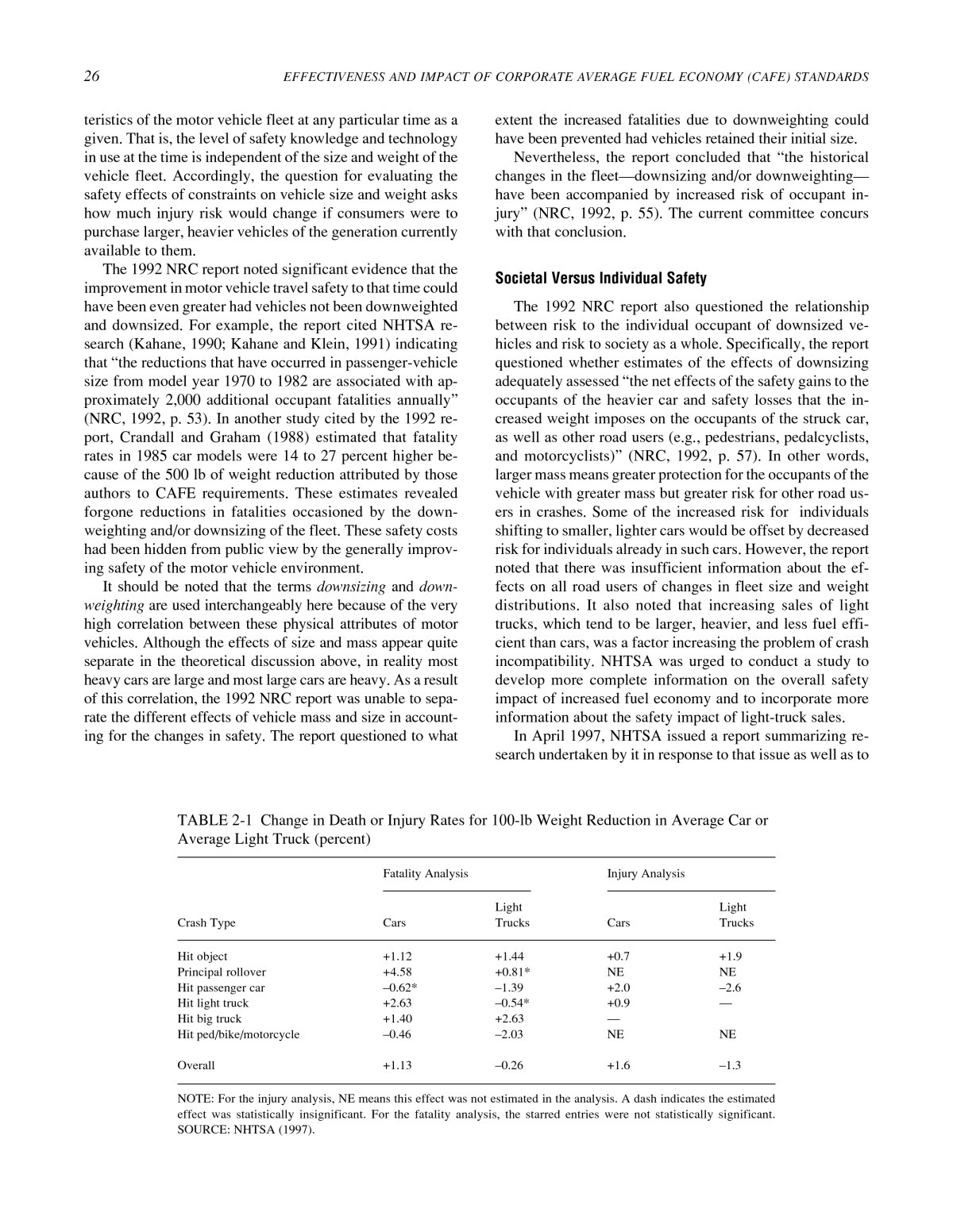
26 EFFECTIVENESS AND IMPACT OF CORPORATE AVERAGE FUEL ECONOMY (CAFE) STANDARDS teristics of the motor vehicle fleet at any particular time as a given. That is, the level of safety knowledge and technology in use at the time is independent of the size and weight of the vehicle fleet. Accordingly, the question for evaluating the safety effects of constraints on vehicle size and weight asks how much injury risk would change if consumers were to purchase larger, heavier vehicles of the generation currently available to them. The 1992 NRC report noted significant evidence that the improvement in motor vehicle travel safety to that time could have been even greater had vehicles not been downweighted and downsized. For example, the report cited NHTSA re- search (Kahane, 1990; Kahane and Klein, 1991) indicating that âthe reductions that have occurred in passenger-vehicle size from model year 1970 to 1982 are associated with ap- proximately 2,000 additional occupant fatalities annuallyâ (NRC, 1992, p. 53). In another study cited by the 1992 re- port, Crandall and Graham (1988) estimated that fatality rates in 1985 car models were 14 to 27 percent higher be- cause of the 500 lb of weight reduction attributed by those authors to CAFE requirements. These estimates revealed forgone reductions in fatalities occasioned by the down- weighting and/or downsizing of the fleet. These safety costs had been hidden from public view by the generally improv- ing safety of the motor vehicle environment. It should be noted that the terms downsizing and down- weighting are used interchangeably here because of the very high correlation between these physical attributes of motor vehicles. Although the effects of size and mass appear quite separate in the theoretical discussion above, in reality most heavy cars are large and most large cars are heavy. As a result of this correlation, the 1992 NRC report was unable to sepa- rate the different effects of vehicle mass and size in account- ing for the changes in safety. The report questioned to what extent the increased fatalities due to downweighting could have been prevented had vehicles retained their initial size. Nevertheless, the report concluded that âthe historical changes in the fleetâdownsizing and/or downweightingâ have been accompanied by increased risk of occupant in- juryâ (NRC, 1992, p. 55). The current committee concurs with that conclusion. Societal Versus Individual Safety The 1992 NRC report also questioned the relationship between risk to the individual occupant of downsized ve- hicles and risk to society as a whole. Specifically, the report questioned whether estimates of the effects of downsizing adequately assessed âthe net effects of the safety gains to the occupants of the heavier car and safety losses that the in- creased weight imposes on the occupants of the struck car, as well as other road users (e.g., pedestrians, pedalcyclists, and motorcyclists)â (NRC, 1992, p. 57). In other words, larger mass means greater protection for the occupants of the vehicle with greater mass but greater risk for other road us- ers in crashes. Some of the increased risk for individuals shifting to smaller, lighter cars would be offset by decreased risk for individuals already in such cars. However, the report noted that there was insufficient information about the ef- fects on all road users of changes in fleet size and weight distributions. It also noted that increasing sales of light trucks, which tend to be larger, heavier, and less fuel effi- cient than cars, was a factor increasing the problem of crash incompatibility. NHTSA was urged to conduct a study to develop more complete information on the overall safety impact of increased fuel economy and to incorporate more information about the safety impact of light-truck sales. In April 1997, NHTSA issued a report summarizing re- search undertaken by it in response to that issue as well as to TABLE 2-1 Change in Death or Injury Rates for 100-lb Weight Reduction in Average Car or Average Light Truck (percent) Fatality Analysis Injury Analysis Light Light Crash Type Cars Trucks Cars Trucks Hit object +1.12 +1.44 +0.7 +1.9 Principal rollover +4.58 +0.81* NE NE Hit passenger car â0.62* â1.39 +2.0 â2.6 Hit light truck +2.63 â0.54* +0.9 â Hit big truck +1.40 +2.63 â Hit ped/bike/motorcycle â0.46 â2.03 NE NE Overall +1.13 â0.26 +1.6 â1.3 NOTE: For the injury analysis, NE means this effect was not estimated in the analysis. A dash indicates the estimated effect was statistically insignificant. For the fatality analysis, the starred entries were not statistically significant. SOURCE: NHTSA (1997).
THE CAFE STANDARDS: AN ASSESSMENT 27 other informational concerns expressed in the 1992 NRC report. In the new NHTSA research, the effect on fatalities and injuries of an average 100-lb reduction in the weight of cars (or in the weight of light trucks) was estimated. Follow- ing the recommendation of the 1992 NRC report, the fatality analysis included fatalities occurring to nearly all road users in crashes of cars and light trucks; excluded were only those fatalities occurring in crashes involving more than two ve- hicles and other rare events. The injury analysis was more limited, including only those injuries occurring to occupants of the cars and light trucks. Table 2-1 summarizes the NHTSA results. NHTSAâs fatality analyses are still the most complete available in that they accounted for all crash types in which vehicles might be involved, for all involved road users, and for changes in crash likelihood as well as crashworthiness. The analyses also included statistical controls for driver age, driver gender, and urban-rural location, as well as other po- tentially confounding factors. The committeeâs discussions focused on the fatality analyses, although the injury analyses yielded similar results to the extent that their limitations per- mitted comparison. The NHTSA fatality analyses indicate that a reduction in mass of the passenger car fleet by 100 lb with no change in the light-truck fleet would be expected to increase fatalities in the crashes of cars by 1.13 percent. That increase in risk would have resulted in about 300 (standard error of 44) addi- tional fatalities in 1993. A comparable reduction in mass of the light-truck fleet, with no change in cars, would result in a net reduction in fatalities of 0.26 percent (or 40 lives saved, with a standard error of 30) in 1993. NHTSA attributed this difference in effect to the fact that the light-truck fleet is on average 900 lb heavier than the passenger car fleet. As a result, the increased risk to light-truck occupants in some crashes as a result of downweighting is offset by the de- creased risk to the occupants of other vehicles involved in collisions with them, most of which are much lighter. The results of the separate hypothetical analyses for cars and light trucks are roughly additive, so that a uniform reduction in mass of 100 lb for both cars and light trucks in 1993 would be estimated to have resulted in about 250 additional fatali- ties. Conversely, a uniform increase in mass of 100 lb for both cars and light trucks would be estimated to result in about 250 lives saved. The April 1997 NHTSA analyses allow the committee to reestimate the approximate effect of downsizing the fleet between the mid-1970s and 1993. In 1976, cars were about 700 lb heavier than in 1993; light trucks were about 300 lb heavier, on average.5 An increase in mass for cars and light- duty trucks on the road in 1993, returning them to the aver- age weight in 1976, would be estimated to have saved about 2,100 lives in car crashes and cost about 100 fatalities in light-truck crashes. The net effect is an estimated 2,000 fewer fatalities in 1993, if cars and light trucks weighed the same as in 1976. The 95 percent confidence interval for this esti- mate suggests that there was only a small chance that the safety cost was smaller than 1,300 lives or greater than 2,600 lives. This figure is comparable to the earlier NHTSA esti- mates of the effect of downsizing since the early 1970s. In short, even after considering effects on all road users and after adjusting the results for a number of factors known to correlate with both fatal crash risk and vehicle usage pat- terns, the downsizing and downweighting of the vehicle fleet that occurred during the 1970s and early 1980s still appear to have imposed a substantial safety penalty in terms of lost lives and additional injuries. The typical statistical relation- ship between injuries and fatalities in the NHTSAâs accident data suggests that these changes in the fleet were responsible for an additional 13,000 to 26,000 incapacitating injuries and 97,000 to 195,000 total injuries in 1993. It must be noted that the application of the 1997 NHTSA analyses to the questions before this committee is not with- out controversy. In 1996, after reviewing a draft of the NHTSA analyses, a committee of the National Research Councilâs Transportation Research Board (NRC-TRB) ex- pressed concerns about the methods used in these analyses and concluded, in part, âthe Committee finds itself unable to endorse the quantitative conclusions in the reports about pro- jected highway fatalities and injuries because of large uncer- tainties associated with the results. . . .â These reservations were principally concerned with the question of whether the NHTSA analyses had adequately controlled for confound- ing factors such as driver age, sex, and aggressiveness. Two members of the current committee are convinced that the concerns raised by the NRC-TRB committee are still valid and question some of the conclusions of the NHTSA analy- ses. Their reservations are detailed in a dissent that forms Appendix A of this report. The majority of the committee shares these concerns to an extent, and the committee is unanimous in its agreement that further study of the relationship between size, weight, and safety is warranted. However, the committee does not agree that these concerns should prevent the use of NHTSAâs careful analyses to provide some understanding of the likely effects of future improvements in fuel economy, if those improvements involve vehicle downsizing. The committee notes that many of the points raised in the dissent (for ex- ample, the dependence of the NHTSA results on specific estimates of age, sex, aggressive driving, and urban vs. rural location) have been explicitly addressed in Kahaneâs re- sponse to the NRC-TRB review and were reflected in the final 1997 report. The estimated relationship between mass and safety were remarkably robust in response to changes in the estimated effects of these parameters. The committee also 5The average weights of cars and light trucks registered for use on the road in 1976 were, respectively, 3,522 lb and 3,770 lb; in 1993, 2,816 lb and 3,461 lb. The Insurance Institute for Highway Safety computed these weights, using R.L. Polk files for vehicle registration in those years and institute files on vehicle weights.
28 EFFECTIVENESS AND IMPACT OF CORPORATE AVERAGE FUEL ECONOMY (CAFE) STANDARDS notes that the most recent NHTSA analyses (1997) yield re- sults that are consistent with the agencyâs own prior esti- mates of the effect of vehicle downsizing (Kahane, 1990; Kahane and Klein, 1991) and with other studies of the likely safety effects of weight and size changes in the vehicle fleet (Lund and Chapline, 1999). This consistency over time and methodology provides further evidence of the robustness of the adverse safety effects of vehicle size and weight reduction. Thus, the majority of this committee believes that the evi- dence is clear that past downweighting and downsizing of the light-duty vehicle fleet, while resulting in significant fuel savings, has also resulted in a safety penalty. In 1993, it would appear that the safety penalty included between 1,300 and 2,600 motor vehicle crash deaths that would not have occurred had vehicles been as large and heavy as in 1976. Changes in the Fleet Since 1993 As noted earlier, vehicle weights have climbed slightly in recent years, with some regressive effects on vehicle fuel economy. The committee sought to estimate the effect of these later changes on motor vehicle safety, as well. However, there is some uncertainty in applying NHTSAâs estimates directly to fatal crash experience in other years. First, it is possible that the safety effects of size and weight will change as vehicle designs change; for example, it is possible that substitution of lighter-weight structural materials could allow vehicles to re- duce weight while maintaining protective size to a greater extent than in the past. Second, the effects of vehicle size and weight vary for different crash types, as noted in Table 2-1, and the frequency distribution of these crash types can vary from year to year for reasons other than vehicle size and weight. Therefore, one needs to know this distribution before one can apply NHTSAâs estimates. Historical Relationships Between Size or Weight and Occupant Protection Whether the safety effects of size and weight change as vehicles are redesigned can ultimately be determined defini- tively only by replication of NHTSA analyses (Kahane, 1997). However, a review of the historical relationship be- tween size, weight, and occupant protection indicates that the risk reduction associated with larger size and weight has been reasonably stable over the past 20 years. For example, Table 2-2 shows occupant death rates in different light-duty vehicle classes for 1979, 1989, and 1999 (the last year for which federal data on fatalities are available). The data show that fatality rates per registered vehicle improved among all vehicle type and size/weight classes between 1979 and 1999, but the ratio of fatality risk in the smallest vehicles of a given type compared with the largest did not change much. The single exception has been among small utility vehicles, where there was dramatic improvement in the rollover fatal- ity risk between 1979 and 1989. In short, although it is pos- sible that the weight, size, and safety relationships in future vehicle fleets could be different from those in the 1993 fleet TABLE 2-2 Occupant Deaths per Million Registered Vehicles 1 to 3 Years Old Year Vehicle Type Vehicle Size 1979 1989 1999 Car Mini 379 269 249 Small 313 207 161 Midsize 213 157 127 Large 191 151 112 Very large 160 138 133 All 244 200 138 Pickup <3,000 lb 384 306 223 3,000â3,999 lb 314 231 180 4,000â4,999 lb 256 153 139 5,000+ lb â 94 115 All 350 258 162 SUV <3,000 lb 1,064 192 195 3,000â3,999 lb 261 193 152 4,000â4,999 lb 204 111 128 5,000+ lb â 149 92 All 425 174 140 All passenger vehicles 265 208 143 NOTE: Cars are categorized by wheelbase length rather than weight. SOURCE: Insurance Institute for Highway Safety, using crash death data from the Fatality Analysis Reporting System (NHTSA) and vehicle registration data from R.L. Polk Company for the relevant years.
THE CAFE STANDARDS: AN ASSESSMENT 29 studied by Kahane (1997), there appears to be no empirical reason to expect those relationships will be different. Thus, the majority of the committee believes that it is reasonable to use the quantitative relationships developed by NHTSA (Kahane, 1997) and shown in Table 2-1 to estimate the safety effects of vehicle size and weight changes in other years. Distribution of Crash Types in the Future While there appears to be some justification for expecting relationships among weight, size, and safety to remain much the same in the future, the committee observed that, between 1993 and 1999, the last year for which complete data on fatal crashes are available, there were several shifts in fatal crash experience, the most notable being an increase in the num- ber of light-duty truck involvements (consistent with their increasing sales) and a decrease in crashes fatal to non- occupants (pedestrians and cyclists; see Table 2-3). The re- sult of these changes in crash distribution is that the esti- mated effect on all crash fatalities of a 100-lb gain in average car weight increased, from â1.13 percent in 1993 (Kahane, 1997) to â1.26 percent in 1999; the estimated effect on crash fatalities of a 100-lb gain in average light-truck weight de- creased from +0.26 percent in 1993 to +0.19 percent in 1999. Between 1993 and 1999, the average weight of new pas- senger cars increased about 100 lb, and that of new light trucks increased about 300 lb.6 The results in the preceding paragraph suggest that the fatality risk from all car crashes has declined as a result of this weight gain by 1.26 percent (or about 320 fewer fatalities), while the net fatality risk from light-truck crashes has increased by 0.57 percent (or about 110 additional fatalities). The net result is an estimated 210 fewer deaths in motor vehicle crashes of cars and light trucks (or between 10 and 400 with 95 percent confidence). Thus, the indications are that recent increases in vehicle weight, though detrimental to fuel economy, have saved lives in return. The preceding discussion has acknowledged some uncer- tainty associated with the safety analyses that were reviewed in the preparation of this chapter. Based on the existing lit- erature, there is no way to apportion precisely the safety impacts, positive or negative, of weight reduction, size re- duction, vehicle redesign, and so on that accompanied the improvements in fuel economy that have occurred since the mid-1970s. But it is clear that there were more injuries and fatalities than otherwise would have occurred had the fleet in recent years been as large and heavy as the fleet of the mid- 1970s. To the extent that the size and weight of the fleet have been constrained by CAFE requirements, the current com- mittee concludes that those requirements have caused more injuries and fatalities on the road than would otherwise have occurred. Recent increases in vehicle weight, while result- ing in some loss of fuel economy, have probably resulted in fewer motor vehicle crash deaths and injuries. REFERENCES Chelimsky, E. 1991. Automobile Weight and Safety. Statement before the Subcommittee on Consumers. Committee on Commerce, Science, and TABLE 2-3 Distribution of Motor Vehicle Crash Fatalities in 1993 and 1999 by Vehicle and Crash Type Year Vehicle Crash Type 1993 1999 Percent Change Car Principal rollover 1,754 1,663 â5 Object 7,456 7,003 â6 Ped/bike/motorcycle 4,206 3,245 â23 Big truck 2,648 2,496 â6 Another car 5,025 4,047 â19 Light truck 5,751 6,881 +20 Light truck Principal rollover 1,860 2,605 +40 Object 3,263 3,974 +22 Ped/bike/motorcycle 2,217 2,432 +10 Big truck 1,111 1,506 +36 Car 5,751 6,881 +20 Another light truck 1,110 1,781 +60 Total/average 36,401 37,633 +3 SOURCE: The programs for counting the relevant crash fatality groups were obtained from Kahane and applied to the 1999 Fatality Analysis Reporting System (FARS) file by the Insurance Institute for Highway Safety. 6In 1999, the average weight of cars registered was 2,916 lb; for trucks, 3,739 lb. See footnote 5 also.
30 EFFECTIVENESS AND IMPACT OF CORPORATE AVERAGE FUEL ECONOMY (CAFE) STANDARDS Transportation. U.S. Senate. GAO/T-PEMD-91-2. Washington, D.C.: U.S. General Accounting Office. Crandall, R.W., and J.D. Graham. 1988. The Effect of Fuel Economy Stan- dards on Automobile Safety. The Brookings Institution and Harvard School of Public Health. NEIPRAC Working Paper Series, No. 9. Cam- bridge, Mass.: New England Injury Prevention Center. Crandall, R.W., H.K. Gruenspecht, T.E. Keeler, and L.B. Lave. 1986. Regu- lating the Automobile. Washington, D.C.: The Brookings Institution. Darby, M.R., 1982. âThe Price of Oil and World Inflation and Recession.â American Economic Review 72:738â751. Davis, S.C. 2000. Transportation Energy Data Book: Edition 20. ORNL- 6959. Oak Ridge, Tenn.: Oak Ridge National Laboratory. DOE (Department of Energy). 1991. National Energy Strategy. DOE/ S-0082P, February. Washington, D.C.: Department of Energy. Eastwood, R.K. 1992. âMacroeconomic Impacts of Oil Price Shocks,â Ox- ford Economic Papers 44: 403â425. EIA (Energy Information Administration). 1998. What Does the Kyoto Pro- tocol Mean to U.S. Energy Markets and the U.S. Economy? SR/OIAF/ 98-03. Washington, D.C. Available online at <http://www.eia.doe.gov/ oiaf/kyoto/kyotobtxt.html>. EIA. 2000a. Annual Energy Outlook 2001. DOE/EIA-0383(2001). Wash- ington, D.C.: EIA. EIA. 2000b. Emissions of Greenhouse Gases in the United States 1999. DOE/EIA-0573(99). Washington, D.C.: EIA. EIA. 2000c. Oil Price Impacts on the U.S. Economy, presentation slides and notes, February 21, 2000. Available online at <ftp://ftp.eia.doe.gov/ pub/pdf/feature/Econ1/sld001.htm>. EPA (Environmental Protection Agency). 2000. Light-duty Automotive Fuel Economy Trends 1975 Through 2000. Office of Air and Radiation. EPA420-00-008. Ann Arbor, Mich.: EPA. EPA. 2001. Inventory of U.S. Greenhouse Gas Emissions and Sinks: 1990â1999. Draft, January 8, 2001. Washington, D.C.: EPA. Avail- able online at <http://www.epa.gov/globalwarming/publications/emis- sions/us2001/index.html>. FHWA (Federal Highway Administration). 2000. Highway Statistics. Washington, D.C.: FWHA, Department of Transportation. Greene, D.L. 1990. âCAFE or Price? An Analysis of the Effects of Federal Fuel Economy Regulations and Gasoline Price on New Car MPG, 1978â 1989.â The Energy Journal 11(3): 37â57. Greene, D.L. 1998. âWhy CAFE Worked.â Energy Policy 26(8): 595â613. Greene, D.L., and N.I. Tishchishyna. 2000. Costs of Oil Dependence: A 2000 Update. ORNL/TM-2000/152 (May). Oak Ridge, Tenn.: Oak Ridge National Laboratory. Greene, D.L., M.A. Delucchi, and M. Wang. 1994. âMotor Vehicle Fuel Economy: The Forgotten Hydrocarbon Control Strategy?â Transporta- tion Research-A 28A(3): 223â244. Greene, D.L., D.W. Jones, and P.N. Leiby. 1998. âThe Outlook for U.S. Oil Dependence. Energy Policy 26(1): 55â69. Greene, D.L., J. Kahn, and R. Gibson. 1999. âFuel Economy Rebound Ef- fect for U.S. Household Vehicles.â The Energy Journal 20(3): 1â31. Hamilton, J.D. 1983. âOil and the Macroeconomy Since World War II.â Journal of Political Economy 91: 228â248. Hamilton, J.D. 1996. Analysis of the Transmission of Oil Price Shocks Through the Economy. Presented at the Symposium on International Energy Security: Economic Vulnerability to Oil Price Shocks, Wash- ington, D.C., October 3â4. Harrington, W. 1997. âFuel Economy and Motor Vehicle Emissions.â Jour- nal of Environmental Economics and Management 33: 240â252. Harrison, I.M. 1996. RTECS Research Fuel Purchase Log Study. Memo- randum. U.S. Department of Energy, Energy Information Administra- tion (May 2), Washington, D.C.: EIA. Haughton, J., and S. Sarker. 1996. âGasoline Tax As a Corrective Tax: Estimates for the United States, 1970â1991.â The Energy Journal 17(2): 103â126. Hellman, K.H., and J.D. Murrell. 1984. Development of Adjustment Fac- tors for the EPA City and Highway MPG Values. SAE Technical Paper Series 840496. Warrendale, Pa.: Society of Automotive Engineers. Hickman, B.G. 1987. âMacroeconomic Impacts of Energy Shocks and Policy Responses: A Structural Comparison of Fourteen Models.â Mac- roeconomic Impacts of Energy Shocks. B. Hickman, H. Huntington, and J. Sweeney, eds. Elsevier Science. Huntington, H.G. 1996. Estimating Macroeconomic Impacts of Oil Price Shocks with Large-Scale Econometrics Models: EMF-7 and Recent Trends. Presented at the Symposium on International Energy Security: Economic Vulnerability to Oil Price Shocks, Washington, D.C., Octo- ber 3â4. IPCC (Intergovernmental Panel on Climate Change). 2001. Climate Change 2001: The Scientific Basis. Cambridge, U.K.: Cambridge University Press. Johnson, J.H. 1988. âAutomotive Emissions.â In Air Pollution, the Auto- mobile, and Public Health. Washington, D.C.: National Academy Press. Jones, C.T. 1993. âAnother Look at U.S. Passenger Vehicle Use and the âReboundâ Effect from Improved Fuel Efficiency.â The Energy Journal 14(4): 99â110. Kahane, C.J. 1990. Effect of Car Size on Frequency and Severity of Rollover Crashes. Washington, D.C.: National Highway Traffic Safety Adminis- tration. Kahane, C.J. 1997. Relationships Between Vehicle Size and Fatality Risk in Model Year 1985â93 Passenger Cars and Light Trucks. NHTSA Technical Report, DOT HS 808 570. Springfield, Va.: National Techni- cal Information Services. Kahane, C.J., and T. Klein. 1991. Effect of Car Size on Fatality and Injury Risk. Washington, D.C.: National Highway Traffic Safety Administration. Leone, R.A., and T.W. Parkinson. 1990. Conserving Energy: Is There a Better Way? A Study of Corporate Average Fuel Economy Regula- tion. Washington, D.C.: Association of International Automobile Manufacturers. Lund, A.K., and J.F. Chapline. 1999. Potential Strategies for Improving Crash Compatibility in the U.S. Vehicle Fleet. SAE 1999-01-0066. Ve- hicle Aggressivity and Compatibility in Automotive Crashes (SP-1442), 33-42. Warrendale, Pa.: Society of Automotive Engineers. Mintz, M., A.D. Vyas, and L.A. Conley. 1993. Differences Between EPA- Test and In-Use Fuel Economy: Are the Correction Factors Correct? Transportation Research Record 1416, Transportation Research Board, National Research Council. Washington, D.C.: National Academy Press. Mork, K.A., O. Olsen, and H.T. Mysen. 1994. âMacroeconomic Responses to Oil Price Increases and Decreases in Seven OECD Countries.â The Energy Journal 15(4): 19â35. National Safety Council. 1999. Injury Facts. Chicago, Ill. NHTSA (National Highway Traffic Safety Administration). 1997. Rela- tionship of Vehicle Weight to Fatality and Injury Risk in Model Year 1985â93 Passenger Cars and Light Trucks. NHTSA Summary Report, DOT HS 808 569. Springfield, Va.: National Technical Information Services. Nivola, P.S., and R.W. Crandall. 1995. The Extra Mile. Washington, D.C.: The Brookings Institution. NRC (National Research Council). 1992. Automotive Fuel Economy: How Far Should We Go? Washington, D.C.: National Academy Press. NRC. 2001. Climate Change Science: An Analysis of Some Key Questions. Washington, D.C.: National Academy Press. Plotkin, S. 2001. European and Japanese Initiatives to Boost Automotive Fuel Economy: What They Are, Their Prospects for Success, Their Use- fulness As a Guide for U.S. Actions. Presentation to the 80th Annual Meeting, Transportation Research Board, National Research Council, Washington, D.C., January 7â11. Tatom, J.A. 1993. âAre There Useful Lessons from the 1990â91 Oil Price Shock?â The Energy Journal 14(4):129â150. United Auto Workers. 2000. Labor Organization. Annual Report for Fiscal Year Ending December 31, 2000. Form LM-2, December.
