
5
Analyzing the Risk to Seafloor Habitats

Seafloor habitats are subjected to a variety of fishery and nonfishery related stresses, and managers need a tool to assess their relative impact. Risk assessment is a flexible concept that has been applied to decision making in many fields, and several models that can be adapted to deal with ecological risk (e.g., National Research Council, 1983, 1993, 1996; Presidential/Congressional Commission on Risk Assessment and Risk Management, 1997). Risk assessment has been used in fisheries management (Fogarty et al., 1992, 1996; Smith et al., 1993) and can be considered as a part of an adaptive management framework (Walters, 1986) because it involves a risk or loss function. Adaptive management goes beyond risk assessment by explicitly including the feedback from policy decisions to the collection of new data and hypothesis testing (Walters, 1986).
FRAMEWORK FOR DECISIONMAKING
Ecological risk assessment is fundamentally a scientific undertaking that is the first step in the decisionmaking process. Risk management is informed both by ecological assessment and by the social, economic, and institutional features that constitute the human dimension of the issue. This should include characterization of the fishery participants and communities, fishery operations and practices, and associated institutions that govern fisheries. In addition to the ecological and social science assessments, risk management incorporates social values and legal mandates. Existing essential fish habitat (EFH) legislation is intended to protect the ecological function of habitat to support fish production. In the longer term, the economic cost of failing to protect fish habitat would be forgone fish catches and related benefits to fishing communities as well as overall societal benefits. There are also economic costs related to other goods and services that marine ecosystems provide. At this stage, it is important to distinguish aesthetic and ethical values that do not have direct material value. In the context of seafloor habitats, there is a widespread drive to conserve marine biodiversity for benefits apart from concerns about fish population.
In the final stage of decisionmaking, a management strategy is chosen and regulations are enacted. The management options that can be used to address the effects of bottom trawling and dredging are described in detail in Chapter 6. At this stage, ecological and social sciences once again become important for developing new approaches to address the problem or to monitor the chosen measures. New research also might be required to clarify uncertainties, especially those about indirect effects on the resource species, on other parts of the ecosystem from which benefits could be derived, and on the response of the fisheries to new regulations as, for example, if disturbance of benthic spawning grounds by trawling led to a subsequent decline in fish recruitment. The slowed recovery of the exploited fish population could secondarily affect populations of prey species, and the continued decline in the catch could change the economic incentives of the fishery. As with aesthetic and ethical arguments, if the effects are considered large enough, new strategies for dealing with the issue and more research may be needed either to determine the best action or to measure
success against objectives. Here again, the decision is outside the realm of science, because it reflects societal valuation, which is the domain of policymakers and stakeholders.
Ecological risk assessment is “the characterization of the adverse ecological effects of environmental exposures to hazards imposed by human activities” (National Research Council, 1993). This chapter describes two approaches to ecological risk assessment and discusses their utility for the management of benthic habitats. The exposure assessment model has been borrowed from the fields of human health and toxicology. It focuses on one risk at a time (National Research Council, 1983, 1993), it is quantitative, and it has been used in the policy arena to set standards and propose controls. The human health risk assessment framework was modified in 1993 for use in ecological risk assessment by the National Research Council’s Committee on Risk Assessment Methodology. A modified model is described below.
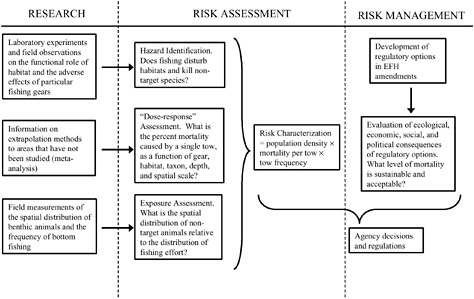
FIGURE 5.1 Elements of risk assessment and risk management (modified from National Research Council, 1993).
The second method described here is comparative risk assessment. This method compares several types of risks and allows evaluation of the effects of a variety of stressors as opposed to a single stressor on seafloor habitat. Comparative assessments are used by policymakers to allocate resources and to set management priorities. In addition to data, they rely on expert judgment, scientific inference, and deliberation.
EXPOSURE ASSESSMENT MODEL
The exposure assessment model has three phases: research, risk assessment, and risk management (Figure 5.1). Policy mandates provide the regulatory framework of scientific research, monitoring, and validation, which provide important input at every stage. EFH provisions within the Sustainable Fisheries Act provide the context for risk management. The act requires the identification and minimization of threats to EFH. Evaluation of regulatory options to meet the
objectives requires not only ecological, but also economic, social, and political considerations. The product and outcomes of the risk assessment are agency decisions and regulations. In an adaptive framework there would be feedback from management decisions to further scientific research and assessment to aid in future decisionmaking (Walters, 1986).
Research
Scientific research provides the basic ecological information that feeds directly into the corresponding elements of risk assessment. Observational studies have documented associations between some fish species and structural components of their habitat. For example, laboratory experiments and field studies have documented the functional role of habitat structure in reducing the predation mortality of juvenile fish. Lindholm et al. (1999) reported that juvenile Atlantic cod in aquaria with simulated epifauna had lower predation mortality than they did in trials with a smooth sand substrate. Unfortunately, it is often impractical to study the functional role of fish habitat because of the difficulties associated with conducting experiments and making observations on the continental shelf and slope. Therefore it is necessary to extrapolate results from limited existing studies to areas that have not been studied (e.g., Lindholm et al., 2001).
One approach is to formulate testable hypotheses about how communities in different habitat types should respond to fishing (International Council for the Exploration of the Sea, 1996, 2000). If these hypotheses are supported, they can be used to extrapolate to unstudied areas. Meta-analysis—the summary of multiple, independent studies—can be used to identify the most important habitat variables and to construct quantitative models to predict fishing effects in unstudied areas (Chapter 3).
To estimate the mortality of nontarget species, it is necessary to know the spatial distribution and frequency of bottom fishing and the spatial distribution of the species of concern. These data must be coupled to assess the effects of trawling at the species and population level. Fishing effort data are being collected in observer programs and with vessel monitoring systems, with increasing spatial resolution (Rjinsdorp et al., 1998). The spatial resolution of benthic animals can be estimated with standardized research surveys, but those surveys generally use the same gear as used to capture the commercially targeted species. As a result, there is often a paucity of data on nontarget benthic species.
Risk Assessment
Hazard identification is the determination of whether the ecological effects of the hazard (e.g., mobile bottom gear) are of sufficient concern to warrant further research or management. Hazards must have a detectable signature of ecological effects.
In the context of bottom-fishing effects, risk can be defined as the percentage mortality of a nontarget species (including structural epifauna that provide habitat for other organisms). This mortality has been measured in many experimental fishing studies and spatial comparisons of fished and unfished areas (see list of studies in Collie et al., 2000b). Most trawl impact studies have used standardized gear to simulate the disturbance caused by commercial trawling (e.g., Gordon et al., 1998); only a few studies have compared the relative effects of a particular gear (e.g., beam trawl) rigged differently (Bergman and van Santbrink, 2000).
Exposure response assessment is an important but poorly documented component of evaluating the effects of bottom trawling. Ideally, we wish to know the percentage mortality of a species caused by the single tow of a particular fishing gear as a function of habitat, depth, and so on. In practice, most trawl impact studies consist of a single treatment of one or more tows that might be more or less overlapping (Auster and Langton, 1999; Collie et al., 2000b). In a few instances controlled depletion studies have been conducted to measure the rate of disappearance of a species per tow (Poiner et al., 1998).
Exposure assessment involves calculating the overlap between the spatial distribution of fishing effort and the nontarget species. At this stage we can distinguish between sensitivity (an organism’s innate ability to withstand physical damage) and susceptibility (the likelihood that an organism will be exposed to bottom fishing). Sensitivity is innate to the organism; susceptibility varies with intensity of impact. Thus, a sensitive organism in a nonimpacted area is not susceptible (International Council for the Exploration of the Sea, 1996).
Risk characterization involves the summary and synthesis of technical studies to describe the nature and severity of the risk. For bottom trawling, it means evaluating the mortality of each nontarget species at
the population level. Risk characterization also addresses scientific uncertainty resulting from the application of experimental assessment studies to the real world (National Research Council, 1993). In some cases, this stage will be limited because of insufficient information to set quantitative reference levels.
Risk Management
It is at the risk management stage that ecological objectives are specified. One approach is to define reference points for mortality of nontarget species, similar to those developed for target fish species. There has been some progress based on the life-history characteristics of nontarget species (International Council for the Exploration of the Sea, 1998). Recognizing the practical impossibility of setting and monitoring compliance of reference points for every nontarget species in a community, the International Council for the Exploration of the Sea Working Group on Ecosystem Effects of Fishing Activities proposed the development of reference points for highly vulnerable indicator species (International Council for the Exploration of the Sea, 2000). That proposal assumes that the documented conservation of a set of highly vulnerable nontarget species gives a high probability of also conserving other, less vulnerable, nontarget species.
The exposure response method takes a species-by-species approach—each species would require its own reference. It would be possible to operate on habitat rather than by species. According to this approach, hazard identification could focus on the effects shown in a physical and biological index of habitat quality. Using this rationale, exposure assessment would tie risk (bottom trawling) to effect as measured on the index. Risk would be characterized by this surrogate for impact to the community in nontarget species. Decisionmakers would use the index of habitat quality rather than population changes of nontarget species. The use of community level indices is appealing, but desirable or acceptable levels for these indices have not been developed.
Box 5.1 explains how such a calculation was made in the Dutch sector of the North Sea. Existing data could preclude a similar risk assessment for other areas, but it still could provide a useful framework for data collection. There are few, if any, examples in the United States where the annual mortality of nontarget species has been estimated. More information is required on extrapolating results to areas that have not
|
Box 5.1 Case Study: Mortality of Megafauna in the Dutch Sector of the North Sea Although it was not presented as such (Bergman and van Santbrink, 2000), this example includes many of the elements of a risk analysis. The authors cite numerous studies of the effect of trawling in the Dutch sector, which collectively constitute the research stage of the risk assessment. The hazard identified is mortality of nontarget invertebrates, either caught and discarded or killed as a result of direct contact with the gear or because of exposure to predators. Most direct mortality took place among animals in the trawl track and not in the bycatch. The exposure–response assessment consisted of estimating the direct mortality of invertebrates caused by the single passage of an otter or beam trawl. Direct mortality, expressed as a percentage of the initial density in the trawl track, ranged between 5 percent to 63 percent for some bivalve species. Exposure assessment was based on the spatial distribution of megafaunal invertebrates (>1 cm) and on the fishing frequency of trawl fleets in the statistical rectangles developed by the International Council for the Exploration of the Sea. In the risk characterization step, annual mortality due to fishing was calculated as the sum of specimens killed by a particular fishery, divided by the sum of actual numbers present in those rectangles. Annual mortality ranged from 5 percent to 39 percent, with half of the species having mortalities >20 percent. The authors’ conclusions can be considered under the risk management heading. They recommend a framework in which ecosystem objectives are integrated with fisheries management. Possible regulatory actions are the same triad discussed in Chapter 6: reduction in fishing effort, more selective fishing gear, and closed areas. However, there is no explicit link between amount of annual mortality and regulatory action. |
been studied. Also, more measurements are needed of the fine-scale distribution of the fishing effort. The potential hazards of bottom fishing have been identified, but more exposure–response assessment is needed. The regulatory options for risk management are well known. What remains unclear is an explicit relationship between the level of risk and the corresponding action. Thus more research is needed to link different levels of risk with particular mitigation strategies.
COMPARATIVE RISK ASSESSMENT
A risk assessment framework can be useful, even when the risks cannot be quantified with available data. Environmental policy is informed both by sound science and by societal values. Natural resources are a public trust, and environmental policy involves the disposition or distribution of those public resources. Thus environmental policymaking is both a social and a scientific venture. Comparative risk assessment is one way to use existing information effectively in managing trawl fisheries. Given finite resources and the amount of scientific uncertainty, it provides policymakers with a framework for setting priorities.
The comparative approach could be used to identify and assess the various sources of risk facing marine bottom habitat, including that posed by different types of gear, pollution, invasive species, and global warming. There are many methods used to structure comparative risk deliberations. They range from those that are data intensive, relying heavily on quantification, to those that rely more on deliberation among stakeholders (Presidential/Congressional Commission on Risk Assessment and Risk Management, 1997).
A relational model that relies on available data, scientific inference, and deliberation is described below. An array of ecological risks is identified by a group of stakeholders drawn from the scientific community, agencies and local governments, the business community, and citizens. After the risks are identified, they are compared with one another against a set of criteria chosen by the stakeholder group. The criteria might include the scale of the disturbance, level of scientific uncertainty, immediacy of threat, irreversibility, and species affected. A scale from highest to lowest is constructed using the criteria. Criteria and measures of impact must be constructed to suit the nature of the risk (Table 5.1).
The method is described below, both with a hypothetical case study for application to bottom trawling using criteria and scales adapted from the Houston Foresight Project and with a real-world example used in the Alaska groundfish environmental impact statement.
TABLE 5.1 Matrix of Criteria and Measures of Impact
|
Criterion |
Highest |
High |
Medium |
Low |
Least |
|
Impact on size/ configuration |
80 to 100 percent of area impacted |
50 to 80 percent area impacted or highly fragmented |
30 to 50 percent impacted or moderate fragmentation |
10 to 30 percent impacted and some fragmentation |
<10 percent impacted |
|
Severity |
Strong contribution to or cause of fully altered communities; degraded ecosystem |
Creating built ecosystems; strong compromise to ecosystem integrity; or significant loss of community types |
Compromise of community dynamics or loss of population resiliency |
Modification of communities |
Not a contributor to significant ecosystem or community modification |
|
Uncertainty |
Hard to imagine |
Anecdotal |
Based on accepted scientific model |
Demonstrated for equivalent ecosystem |
Demonstrated in situ |
|
Immediacy |
Already occurring |
Starting now |
Expected in near future |
Expected sometime |
May never happen |
|
Irreversibility |
Unrecoverable or >10 years |
Recoverable 5 to 10 years |
Recoverable 1 to 5 years |
Recoverable approximately 1 year |
Recoverable <1 year |
|
Loss of human uses |
50 to 100 percent capacity lost |
10 to 50 percent lost |
5 to 10 percent lost |
1 to 5 percent lost |
<1 percent lost |
|
SOURCE: The example matrix above was adapted from the Houston Environmental Foresight Project (modified from Lester, 1995). |
|||||
DESCRIPTION OF CRITERIA
Impact on size/configuration refers to the affected area. Is the risk confined to a small area, or does it extend over a large one? Is more than one type of habitat affected? Severity describes the nature of the effect and depends on the characteristics of both the risk and the habitat or species including: 1) substrate characteristics (sand, gravel, corals) and the seafloor’s response to disturbance; 2) faunal and floral sensitivity to disturbance; 3) faunal and floral life history characteristics (long-lived attached versus mobile species); 4) frequency of fishing and gear characteristics; and 5) geographic range of benthic flora and fauna.
Uncertainty refers to the predictability of a particular result (habitat degradation) from a particular action (bottom trawling). Have the effects of a given risk been demonstrated in the ecosystem or area being assessed? If not, is it possible to make inferences from work conducted in other similar ecosystems?
Immediacy refers to the status of the risk. Is it occurring now? Is it likely to occur as a result of human population growth or other changes? For example, current freshwater inflows to a bay system could be adequate, but if projected increases in population for the next 20 years are expected to cause a concomitant increase in water use, the shortage of freshwater will become problematic.
Irreversibility refers to an ecosystem’s or species’ inability to recover from stress. Returning to the freshwater inflows example, oyster populations that are severely compromised one year because of salinity-induced disease can, with adequate fresh water, recover in a few years. Other species might take longer to recover from a drought or epidemic because of life history differences.
The human use criteria encompass consumptive and nonconsumptive uses of ecosystems and species. Such uses include fishing, scientific research, and recreation (diving, photography). The reduction of freshwater in a bay system will affect various commercial fisheries, but will not affect some kinds of recreation like boating.
Based on those criteria, each risk is assigned a score from highest to lowest. For example, using a comparative risk assessment, a manager could compare the risk to a particular area or ecosystem from trawling with the risks associated with other types of gear or with nonfishery related stresses like non-point source pollution. The example below assesses trawling and non-point source pollution and assumes that both currently occur on a fictional nearshore coral reef (Table 5.2).
TABLE 5.2 Ranking of Impacts on Nearshore Coral Reefs
|
Criterion |
Trawling |
Non-Point Source Pollution |
|
Impacted Area |
Low |
Highest |
|
Severity |
Highest |
Medium |
|
Uncertainty |
Least |
Low |
|
Immediacy |
Highest |
Highest |
|
Irreversibility |
Highest |
High |
|
Loss of human uses |
Medium |
High |
-
Trawling
-
Impact on size. Localized trawling affects about 20 percent of the coral reefs.
-
Severity. However, each trawl inflicts severe damage by breaking corals, thus fully degrading that section of the reef and displacing its inhabitants.
-
Uncertainty. Biologic surveys in the area noted a rise in rubble areas with low biological diversity.
-
Immediacy. Trawling is already occurring, although it is seasonal.
-
Irreversibility. Because corals grow slowly, the recovery time will be long.
-
Loss of human uses. Human users associated with science and tourism avoid areas with damaged coral. Those uses represent 10 percent of the use of the reefs.
-
Non-point source pollution (soil and chemical runoff from nearby agricultural fields)
-
Impact on size. Runoff from spring rains increases the sediment and nutrient load over the entire reef.
-
Severity. Increased sediments and nutrient loads result in reduced light penetration; episodic hypoxia; a change in primary producers from benthic to planktonic organisms, increased incidence of toxic algal blooms, and sediment covering portions of the reefs.
-
Uncertainty. Research on the effects of non-point source pollution has not been conducted on this reef, but there is considerable scientific literature demonstrating the effects of runoff on other coral reefs. In situ, coral mortality is rising from unspecified causes.
-
Irreversibility. Most of the reefs are experiencing stress, low growth, and some mortality. Because most corals are slow growing, recovery time is long.
-
Loss of human uses. The reefs once supported a spear fishery and a large tourism industry. Tourism has declined by 30 percent; water visibility is low for part of the year and the recreational fishery has lower catch.
The stakeholder group uses the matrix to guide a discussion that considers scientific knowledge and data, scientific uncertainty, and social values. After each criterion is discussed and assessed, it is assigned a rank. After more deliberation, each risk receives an overall rank. The various risks are discussed, compared, and ranked by category. More than one risk can receive the same rank (e.g., highest or lowest). Some risks might be removed from consideration after being assigned a “least” ranking. There are no hard-and-fast rules for deciding the level of risk that requires action; that is decided by consensus, and is based upon the ranking.
A report on benthic EFH in Alaska (National Marine Fisheries Service, 2001b) can be considered an example of comparative risk assessment. Several fishery management alternatives were compared according to direct and indirect effects on benthic habitat. Numerical scores were assigned to the effects on habitat, with negative numbers representing greater risk, 0 the status quo management, and positive scores less risk (Table 5.3). Recognizing that ordinal scores are inherently subjective, the authors specified criteria to define moderate or marginal changes from the status quo. The management alternatives were then given scores according to the criteria (Table 5.4). The management alternatives considered for the Alaska groundfish fisheries can be summarized as follows:
-
continue status quo management policies,
-
emphasize protection of marine mammals and seabirds,
-
emphasize protection of target groundfish species,
-
emphasize protection of nontarget and forage species,
-
emphasize protection of habitat, and
-
increase socioeconomic benefits.
The table of scores illustrates the trade-offs in meeting fisheries management objectives (Table 5.4). Measures to protect marine mammals, seabirds (2), and target groundfish (3) would also have positive effects on habitat. Alternative 5 would shift fishing effort and its associated habitat effects from bottom trawl gear to fixed gear. Increasing socioeconomic benefits would increase the risk to benthic habitat because of greater bottom trawling effort. The ordinal scores can be used only to make ordinal comparisons. For example, a score of +2 means less risk than +1, but not necessarily twice as much habitat protection. It is therefore impossible to obtain overall comparisons between management alternatives by adding or averaging the scores (National Marine Fisheries Service, 2001b). This analysis was not meant to serve as a formal risk assessment, but it uses the same concepts to compare risks to benthic habitat associated with alternative fishery management policies.
SUMMARY
This chapter compares two methods used in ecological risk assessment—exposure response and comparative. The exposure response method is quantitative and is a modification of methods used to address toxicological risks. It quantitatively characterizes the response of a species or habitat to a particular stress.
The exposure response method has several limitations. Because it focuses on one risk at a time, other habitat stresses are not necessarily included as part of the context. Moreover, an accurate assessment depends on fairly complete scientific information about the relationship between the stressor (e.g., trawling), the biologic community, and the suite of processes necessary to a functioning habitat. Currently, there are gaps in our knowledge about the relationship between fish populations and their habitat and between specific stressors (e.g., gear) and habitat (Auster, 2001). These are identified more fully in Chapter 7. For now, an accurate exposure response assessment is not possible for all species and all habitats.
Comparative risk assessment is a qualitative method that compares different kinds of risk to each other and ranks them. It can be used when scientific knowledge is incomplete because it relies on a combination of available data, scientific inference, and public values. Additionally, managers get a more complete picture of all risks facing bottom habitats because each assessment addresses more than one risk. Managers also come to understand the public’s view of what constitutes the greatest risks to bottom ecosystems. Com-
TABLE 5.3 Scoring System for Ranking the Effects of the Alternatives on Benthic Essential Fish Habitat
parative risk assessment could be used to help identify the array of risks facing benthic habitat and to begin to prioritize these risks.
There are, however, limitations to this method. It is difficult to integrate various stressors into a single list because they affect ecosystems in different ways on different scales and they often interact. The scientific data that address different risks are often inconsistent or not comparable. Comparative risk assessment also lacks the scientific rigor of quantitative studies. The scoring of risks is inherently subjective; different groups will assign different scores. There is no consistent way to combine categorical scores to obtain an overall rank for each risk.
Risk assessment is valuable for linking scientific knowledge to management and public values, which should be used to identify and prioritize risks. There is, however, no best method that should be applied to all ecological problems. The method chosen depends on the quality and quantity of scientific data available and the policy and social contexts of the problems to be addressed.
TABLE 5.4. Scores for Each Alternative Reflecting Levels of Protection for Benthic Essential Fish Habitat Relative to Alternative 1


