
NATIONAL ACADEMY PRESS
2101 Constitution Avenue, NW Washington, DC 20418
NOTICE: The project that is the subject of this report was approved by the Governing Board of the National Research Council, whose members are drawn from the councils of the National Academy of Sciences, the National Academy of Engineering, and the Institute of Medicine. The members of the committee responsible for this report were chosen for their special competences and with regard for appropriate balance.
Support for this project was provided by the Office of Emergency Preparedness, U.S. Department of Health and Human Services (Contract No. 282-99-0045, TO#5). This support does not constitute endorsement of the views expressed in the report.
Library of Congress Cataloging-in-Publication Data
Institute of Medicine (U.S.). Committee on Evaluation of the Metropolitan Medical Response Program.
Preparing for terrorism : tools for evaluating the Metropolitan Medical Response System program / Frederick J. Manning and Lewis Goldfrank, editors ; Committee on Evaluation of the Metropolitan Medical Response System Program, Board on Health Sciences Policy, Institute of Medicine.
p. ; cm.
Includes bibliographical references.
ISBN 0-309-08428-8 (pbk.)
1. Disaster medicine. 2. Emergency medical services. 3. Terrorism—Health aspects. 4. Weapons of mass destruction—Health aspects. 5. Emergency management. 6. Health planning.
[DNLM: 1. Disaster Planning—organization & administration. 2. Emergency Medical Services—organization & administration. 3. Health Planning. 4. Program Evaluation—methods. 5. Terrorism. WX 185 I59p 2002] I. Manning, Frederick J. II. Goldfrank, Lewis R., 1941- III. Title.
RA645.5 .I54 2002
362.18—dc21
2002007502
Additional copies of this report are available for sale from the
National Academy Press,
2101 Constitution Avenue, NW , Box 285, Washington, DC 20055. Call (800) 624-6242 or (202) 334-3313 (in the Washington metropolitan area), or visit the NAP’s on-line bookstore at www.nap.edu.
The full text of the report is available on-line at www.nap.edu
For more information about the Institute of Medicine, visit the IOM home page at www.iom.edu.
Copyright 2002 by the National Academy of Sciences. All rights reserved.
Printed in the United States of America.
The serpent has been a symbol of long life, healing, and knowledge among almost all cultures and religions since the beginning of recorded history. The serpent adopted as a logotype by the Institute of Medicine is a relief carving from ancient Greece, now held by the Staatliche Museen in Berlin.

THE NATIONAL ACADEMIES
National Academy of Sciences
National Academy of Engineering
Institute of Medicine
National Research Council
The National Academy of Sciences is a private, nonprofit, self-perpetuating society of distinguished scholars engaged in scientific and engineering research, dedicated to the furtherance of science and technology and to their use for the general welfare. Upon the authority of the charter granted to it by the Congress in 1863, the Academy has a mandate that requires it to advise the federal government on scientific and technical matters. Dr. Bruce M. Alberts is president of the National Academy of Sciences.
The National Academy of Engineering was established in 1964, under the charter of the National Academy of Sciences, as a parallel organization of outstanding engineers. It is autonomous in its administration and in the selection of its members, sharing with the National Academy of Sciences the responsibility for advising the federal government. The National Academy of Engineering also sponsors engineering programs aimed at meeting national needs, encourages education and research, and recognizes the superior achievements of engineers. Dr. Wm. A. Wulf is president of the National Academy of Engineering.
The Institute of Medicine was established in 1970 by the National Academy of Sciences to secure the services of eminent members of appropriate professions in the examination of policy matters pertaining to the health of the public. The Institute acts under the responsibility given to the National Academy of Sciences by its congressional charter to be an adviser to the federal government and, upon its own initiative, to identify issues of medical care, research, and education. Dr. Kenneth I. Shine is president of the Institute of Medicine.
The National Research Council was organized by the National Academy of Sciences in 1916 to associate the broad community of science and technology with the Academy’s purposes of furthering knowledge and advising the federal government. Functioning in accordance with general policies determined by the Academy, the Council has become the principal operating agency of both the National Academy of Sciences and the National Academy of Engineering in providing services to the government, the public, and the scientific and engineering communities. The Council is administered jointly by both Academies and the Institute of Medicine. Dr. Bruce M. Alberts and Dr. Wm. A. Wulf are chairman and vice chairman, respectively, of the National Research Council.
COMMITTEE ON EVALUATION OF THE METROPOLITAN MEDICAL RESPONSE SYSTEM PROGRAM
LEWIS GOLDFRANK (Chair), Director,
Emergency Medicine, New York University Medical Center, Bellevue Hospital Center, New York, New York
JOSEPH BARBERA, Director,
Disaster Medicine Program, The George Washington University, Washington, DC
GEORGES C. BENJAMIN, Secretary,
Maryland Department of Health and Mental Hygiene, Baltimore, Maryland
JAMES BENTLEY, Senior Vice President,
Strategic Policy Planning, American Hospital Association, Washington, DC
KENNETH I. BERNS, President and CEO,
Mount Sinai Medical Center, New York, New York
RAYMOND M. DOWNEY, Battalion Chief and Chief of Rescue Operations,
Special Operations Command, Fire Department, City of New York (from November 2000 to September 2001)
FRANCES EDWARDS-WINSLOW, Director,
Office of Emergency Services, San Jose, California
LINDA F. FAIN, Disaster Mental Health Consultant,
Auburn, California
FRED HENRETIG, Director,
Clinical Toxicology, and
Director,
Poison Control Center, Children’s Hospital of Philadelphia, Pennsylvania
DARRELL HIGUCHI, Deputy Chief,
Los Angeles County Fire Department, Los Angeles, California (from November 2001)
ARNOLD HOWITT, Executive Director,
Taubman Center, Kennedy School of Government, Harvard University, Cambridge, Massachusetts
LAURA LEVITON, Senior Program Officer for Research and Evaluation,
Robert Wood Johnson Foundation, Princeton, New Jersey
WILLIAM MYERS, Health Commissioner,
Columbus, Ohio
DENNIS M. PERROTTA, State Epidemiologist and Chief,
Bureau of Epidemiology, Texas Department of Health, Austin, Texas
JEFFREY L. RUBIN, Chief,
Disaster Medical Services Division, Emergency Medical Services Authority, State of California, Sacramento, California
AMY E. SMITHSON, Senior Associate,
Henry L. Stimson Center, Washington, DC (from November 2000 to July 2001)
DARREL STEPHENS, Chief,
Charlotte-Mecklenburg Police Department, Charlotte, North Carolina
Board on Health Sciences Policy Liaison
BERNARD GOLDSTEIN, Dean,
Graduate School of Public Health, University of Pittsburgh, Pittsburgh, Pennsylvania
Study Staff
FREDERICK J. MANNING, Study Director
REBECCA LOEFFLER, Project Assistant
Institute of Medicine Staff
ANDREW POPE, Director,
Board on Health Sciences Policy
ALDEN CHANG II, Administrative Assistant,
Board on Health Sciences Policy
CARLOS GABRIEL, Financial Associate
Consultant
LAUREN SCHIFF, Incident Commander and Operations Officer,
Appalachian Search and Rescue Conference, Charlottesville, Virginia.
Independent Report Reviewers
This report has been reviewed in draft form by individuals chosen for their diverse perspectives and technical expertise, in accordance with procedures approved by the National Research Council’s Report Review Committee. The purpose of this independent review is to provide candid and critical comments that will assist the institution in making its published report as sound as possible and to ensure that the report meets institutional standards for objectivity, evidence, and responsiveness to the study charge. The contents of the review comments and draft manuscript remain confidential to protect the integrity of the deliberative process. We wish to thank the following individuals for their participation in the review of this report:
MARTIN BLASER, Professor of Internal Medicine and Chair, Department of Medicine, New York University
GREGORY M. BOGDAN, Research Director and Medical Toxicology Coordinator, Rocky Mountain Poison Center, Denver, Colorado
BARRY S. COLLER, David Rockefeller Professor of Medicine, Physician-in-Chief, The Rockefeller University Hospital, and Vice President for Medical Affairs, The Rockefeller University, New York, New York
GEORGE R. FLORES, Director of Public Health, San Diego Department of Health, San Diego, California
VINCENT T. FRANCISCO, Associate Director, Work Group on Health Promotion and Community Development, University of Kansas, Lawrence, Kansas
ROBERT MALSON, President, District of Columbia Hospital Association, Washington, D.C.
PAUL M. MANISCALCO, Past President, National Association of Emergency Medical Technicians
PETER ROSEN, Director, Emergency Medicine Residency Program, Department of Emergency Medicine, University of California, San Diego School of Medicine
ROBERT E. SHOPE, Professor of Pathology, University of Texas Medical Branch, Galveston, Texas
Although the reviewers listed above have provided many constructive comments and suggestions, they were not asked to endorse the conclusions or recommendations nor did they see the final draft of the report before its release. The review of this report was overseen by LESTER N. WRIGHT, Chief Medical Officer, New York Department of Correctional Services, Albany, New York, appointed by the Institute of Medicine, and ALEXANDER H. FLAX, Consultant, Potomac, Maryland, appointed by the NRC’s Report Review Committee. These individuals were responsible for making certain that an independent examination of this report was carried out in accordance with institutional procedures and that all review comments were carefully considered. Responsibility for the final content of this report rests entirely with the authoring committee and the institution.
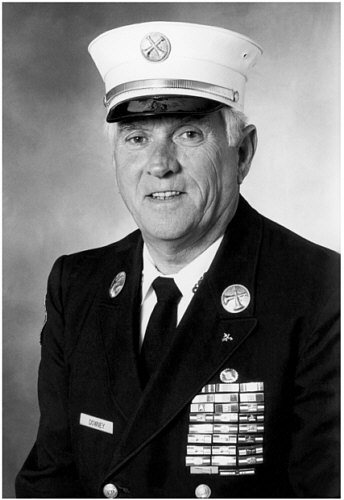
This report is dedicated to Ray Downey, Chief of Rescue Operations, Fire Department, City of New York, our friend and colleague on this Institute of Medicine committee, killed in the line of duty while leading rescue efforts at the World Trade Center after the terrorist attack on September 11, 2001.
Preface
Having a vision, a mission, and a passion are invariably seen as conditions for success. The 1995 U.S. Department of Health and Human Services (DHHS) concept of a Metropolitan Medical Response System (MMRS) demonstrated that the leaders of DHHS had a vision for an effective response to a mass-casualty terrorism incident with a weapon of mass destruction. The mission was to expand the experimental model of the Metropolitan Medical Strike Team (MMST) established in Washington, D.C., and neighboring counties into a national program.
The problem that the Office of Emergency Preparedness (OEP) of DHHS faced was the dilemma of knowing what preparedness is and determining whether preparedness could be recognized if it was achieved. Under these circumstances, OEP requested that the Institute of Medicine determine how effective this MMRS program effort is and how valuable it could become.
A typically diverse Institute of Medicine working group consisting of leaders, strategists, practitioners, and analysts of societal needs in terms of readiness for disasters and terrorism with weapons of mass destruction was established in the autumn of 2000. Over the following 18 months we constructed a diversified analytic program that emphasizes continuous quality improvement to enhance relationships, understanding, and services, and improve equipment and personnel in the pursuit of preparedness. Our approach is based on the belief that all services are valuable, that they must be integrated, and that shared leadership with democratic, open management approaches will effectively be able to use each metro-
politan region’s assets. We have suggested that document and data analysis, site visits by a team of expert peer reviewers, and observations of exercises and drills be used to analyze a region’s accomplishments.
Some committee members’ theoretical approaches to the requirements of this project as well as the limited cooperative spirit seen in some MMRS program efforts were initial concerns for the committee. These limitations to the committee’s potential were dramatically altered by the September 2001 assault that toppled the World Trade Center and paralyzed the U.S. aviation system and by the mailing of anthrax-laden letters in October 2001 that almost toppled the U.S. public health and postal systems. The events led to the tragic death of a fellow committee member, Ray Downey, Chief of Rescue Operations, Fire Department, City of New York, and thousands of other Americans. These terrorist acts led to a disruption of the equanimity not just of New York City but of our entire country. Our committee, recognizing the timeliness and exceptional importance of our task, responded with the necessary passion to complete the tasks of this analytic process.
We believe that this product will allow OEP, state and federal governments, and all who create preparedness teams to offer a more informed, qualified, and integrated approach to preparedness and public health. This report will be an essential tool in analyses of the depth and breadth of governmental performance and interagency collaboration. This effort—and in particular, U.S. society’s recognition of the importance of our goals—will allow us to save lives and property in future biological, chemical, and radiological terrorist events. The vision was of vital importance. We hope that our passion has allowed us to accomplish the mission and that OEP will have the tools that it needs to determine if we in America are ready to protect ourselves from unknown potential assaults and will remain so for the future.
Lewis R. Goldfrank
Chair
Acronyms and Abbreviations
ARC
American Red Cross
CAR
Capability Assessment for Readiness
CBR
chemical, biological, and radiological
CBRDT
Chemical/Biological Rapid Deployment Team
CDC
Centers for Disease Control and Prevention
CDP
Center for Domestic Preparedness (U.S. Department of Justice)
CHER-CAP
Comprehensive HAZMAT Emergency Response-Capability Assessment Program
CSEPP
Chemical Stockpile Emergency Preparedness Program
DHHS
U.S. Department of Health and Human Services
DMAT
Disaster Medical Assistance Team
DMORT
Disaster Mortuary Team
DOD
U.S. Department of Defense
DOE
U.S. Department of Energy
DOJ
U.S. Department of Justice
DVA
U.S. Department of Veterans Affairs
ED
emergency department
EOC
Emergency Operations Center
EOP
emergency operations plan
EMAC
emergency management assistance compact
EMI
Emergency Management Institute
EMS
emergency medical services
EPA
Environmental Protection Agency
ESF
emergency support functions
FBI
Federal Bureau of Investigation
FEMA
Federal Emergency Management Agency
FRP
Federal Response Plan
FY
fiscal year
GAO
General Accounting Office
Hazmat
hazardous materials
HDS
Hazardous Devices School
HMO
health maintenance organization
IOM
Institute of Medicine
JCAHCO
Joint Commission for Accreditation of Healthcare Organizations
LCAR
Local Capability Assessment for Readiness
LEPC
Local Emergency Planning Committee
MEMA
Maryland Emergency Management Agency
MMRS
Metropolitan Medical Response System
MMST
Metropolitan Medical Strike Team
MOU
memorandum of understanding
NAPA
National Academy of Public Administration
NCP
National Contingency Plan or National Oil and Hazardous Substances Contingency Plan
NDMS
National Disaster Medical System
NDPC
National Domestic Preparedness Consortium
NDPO
National Domestic Preparedness Office
NEMA
National Emergency Management Association
NMRT
National Medical Response Team
OCFD
Oklahoma City Fire Department
OCPD
Oklahoma City Police Department
ODP
Office of Domestic Preparedness (U.S. Department of Justice)
OEP
Office of Emergency Preparedness
OES
Office of Emergency Services
OMB
Office of Management and Budget
OSHA
Occupational Safety and Health Administration
OSLDPS
Office of State and Local Domestic Preparedness Support
POC
point of contact
REP
Radiological Emergency Preparedness Program (Federal Emergency Management Agency)
ROC
Regional Operations Center
SOP
standard operating procedure
USAR
U.S. Army Reserve
USNRC
U.S. Nuclear Regulatory Commission
VA
Department of Veterans Affairs
VMI
vendor-managed inventory
WMD
weapons of mass destruction
|
Strategic Uses of Evaluation Data: Implementing the “Layering Strategy”, |
||||
|
|
||||
|
|
APPENDIXES |
|
||
|
Preparedness Indicators for Metropolitan Medical Response System Program Contract Deliverables, |
||||
LIST OF TABLES, FIGURES, AND BOX
Tables
Figures
|
ES-1 |
Relationships among essential capabilities, preparedness indicators, preparedness criteria, and data collection methods, |
|||
|
1-1 |
Flow chart of probable actions in a chemical or overt biological agent incident, |
|||
|
1-2 |
Flow chart of probable actions in a covert biological agent incident, |
|||
|
2-1 |
Key federal consequence management response teams for CBR terrorism, |
|||
|
5-1 |
MMRS program participants, policy instruments, development activities, emergency capacity, and follow-up activities, |
|||
|
5-2 |
Accountability relationships for federal grantees and grant-making agencies, |
Box
|
ES-1 |
Example of Preparedness Indicator for One Essential Capability, First Responder Protection, |


