




Below is the uncorrected machine-read text of this chapter, intended to provide our own search engines and external engines with highly rich, chapter-representative searchable text of each book. Because it is UNCORRECTED material, please consider the following text as a useful but insufficient proxy for the authoritative book pages.
6 Dietary Carbohydrates: Sugars and Starches SUMMARY The primary role of carbohydrates (sugars and starches) is to provide energy to cells in the body, particularly the brain, which is the only carbohydrate-dependent organ in the body. The Recom- mended Dietary Allowance (RDA) for carbohydrate is set at 130 g/d for adults and children based on the average minimum amount of glucose utilized by the brain. This level of intake, however, is typi- cally exceeded to meet energy needs while consuming acceptable intake levels of fat and protein (see Chapter 11). The median intake of carbohydrates is approximately 220 to 330 g/d for men and 180 to 230 g/d for women. Due to a lack of sufficient evidence on the prevention of chronic diseases in generally healthy indi- viduals, no recommendations based on glycemic index are made. BACKGROUND INFORMATION Classification of Dietary Carbohydrates Carbohydrates can be subdivided into several categories based on the number of sugar units present. A monosaccharide consists of one sugar unit such as glucose or fructose. A disaccharide (e.g., sucrose, lactose, and maltose) consists of two sugar units. Oligosaccharides, containing 3 to 10 sugar units, are often breakdown products of polysaccharides, which contain more than 10 sugar units. Oligosaccharides such as raffinose and stachyose are found in small amounts in legumes. Examples of polysaccharides include starch and glycogen, which are the storage forms of carbohydrates in plants and 265
266 DIETARY REFERENCE INTAKES animals, respectively. Finally, sugar alcohols, such as sorbitol and mannitol, are alcohol forms of glucose and fructose, respectively. Definition of Sugars The term âsugarsâ is traditionally used to describe mono- and disac- charides (FAO/WHO, 1998). Sugars are used as sweeteners to improve the palatability of foods and beverages and for food preservation (FAO/ WHO, 1998). In addition, sugars are used to confer certain functional attributes to foods such as viscosity, texture, body, and browning capacity. The monosaccharides include glucose, galactose, and fructose, while the disaccharides include sucrose, lactose, maltose, and trehalose. Some commonly used sweeteners contain trisaccharides and higher saccharides. Corn syrups contain large amounts of these saccharides; for example, only 33 percent or less of the carbohydrates in some corn syrups are mono- and disaccharides; the remaining 67 percent or more are trisaccharides and higher saccharides (Glinsmann et al., 1986). This may lead to an under- estimation of the intake of sugars if the trisaccharides and higher saccharides are not included in an analysis. Extrinsic and Intrinsic Sugars The terms extrinsic and intrinsic sugars originate from the United Kingdom Department of Health. Intrinsic sugars are defined as sugars that are present within the cell walls of plants (i.e., naturally occurring), while extrinsic sugars are those that are typically added to foods. An additional phrase, ânon-milk extrinsic sugars,â was developed due to the lactose in milk also being an extrinsic sugar (FAO/WHO, 1998). The terms were developed to help consumers differentiate sugars inherent to foods from sugars that are not naturally occurring in foods. Added Sugars The U.S. Department of Agriculture (USDA) has defined âadded sugarsâ for the purpose of analyzing the nutrient intake of Americans using nation- wide surveys, as well as for use in the Food Guide Pyramid. The Food Guide Pyramid, which is the food guide for the United States, translates recommendations on nutrient intakes into recommendations for food intakes (Welsh et al., 1992). Added sugars are defined as sugars and syrups that are added to foods during processing or preparation. Major sources of added sugars include soft drinks, cakes, cookies, pies, fruitades, fruit punch, dairy desserts, and candy (USDA/HHS, 2000). Specifically, added sugars include white sugar, brown sugar, raw sugar, corn syrup, corn-syrup
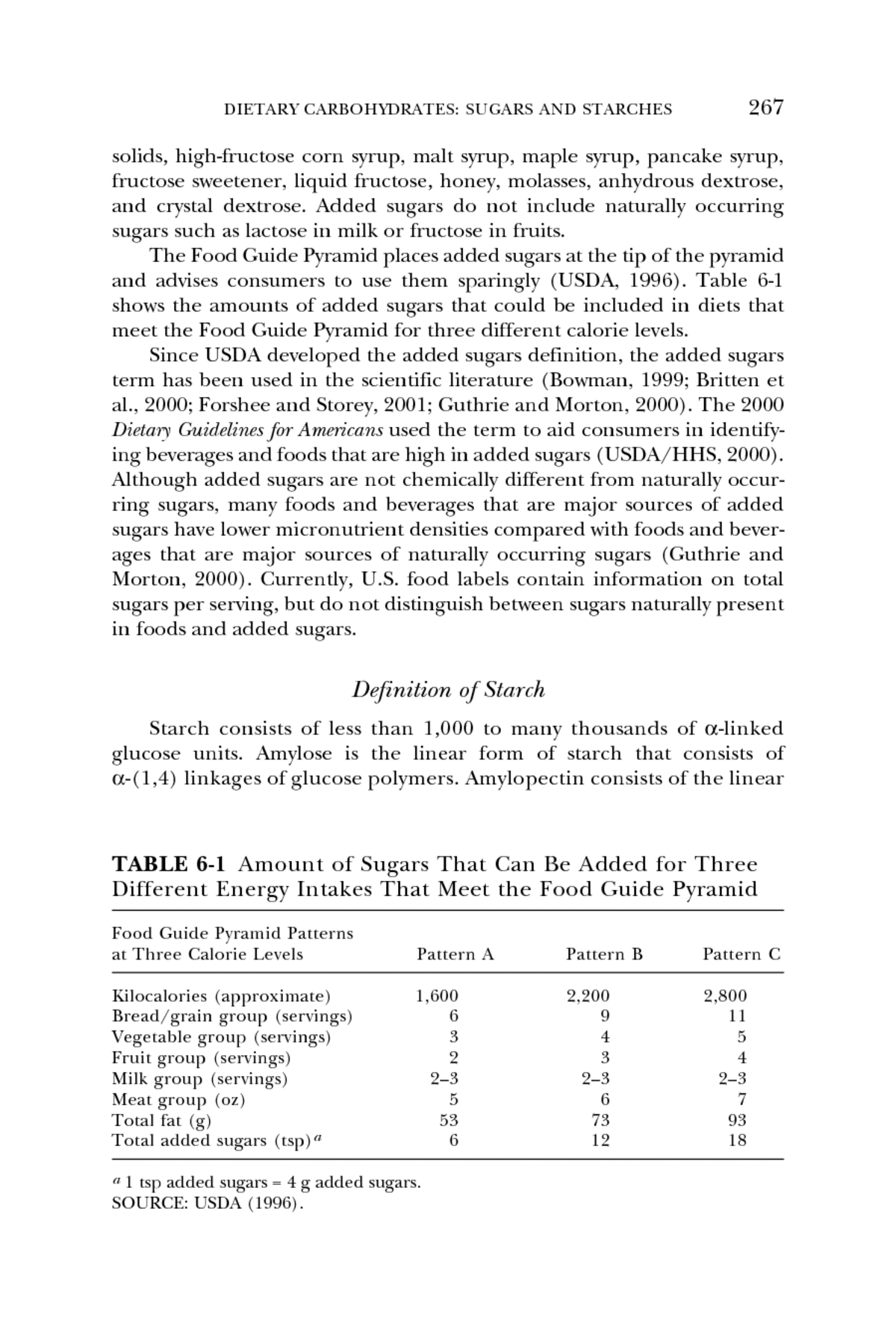
267 D IETARY CARBOHYDRATES: SUGARS AND STARCHES solids, high-fructose corn syrup, malt syrup, maple syrup, pancake syrup, fructose sweetener, liquid fructose, honey, molasses, anhydrous dextrose, and crystal dextrose. Added sugars do not include naturally occurring sugars such as lactose in milk or fructose in fruits. The Food Guide Pyramid places added sugars at the tip of the pyramid and advises consumers to use them sparingly (USDA, 1996). Table 6-1 shows the amounts of added sugars that could be included in diets that meet the Food Guide Pyramid for three different calorie levels. Since USDA developed the added sugars definition, the added sugars term has been used in the scientific literature (Bowman, 1999; Britten et al., 2000; Forshee and Storey, 2001; Guthrie and Morton, 2000). The 2000 Dietary Guidelines for Americans used the term to aid consumers in identify- ing beverages and foods that are high in added sugars (USDA/HHS, 2000). Although added sugars are not chemically different from naturally occur- ring sugars, many foods and beverages that are major sources of added sugars have lower micronutrient densities compared with foods and bever- ages that are major sources of naturally occurring sugars (Guthrie and Morton, 2000). Currently, U.S. food labels contain information on total sugars per serving, but do not distinguish between sugars naturally present in foods and added sugars. Definition of Starch Starch consists of less than 1,000 to many thousands of α-linked glucose units. Amylose is the linear form of starch that consists of α-(1,4) linkages of glucose polymers. Amylopectin consists of the linear TABLE 6-1 Amount of Sugars That Can Be Added for Three Different Energy Intakes That Meet the Food Guide Pyramid Food Guide Pyramid Patterns at Three Calorie Levels Pattern A Pattern B Pattern C Kilocalories (approximate) 1,600 2,200 2,800 Bread/grain group (servings) 6 9 11 Vegetable group (servings) 3 4 5 Fruit group (servings) 2 3 4 Milk group (servings) 2â3 2â3 2â3 Meat group (oz) 5 6 7 Total fat (g) 53 73 93 Total added sugars (tsp)a 6 12 18 a 1 tsp added sugars = 4 g added sugars. SOURCE: USDA (1996).
268 DIETARY REFERENCE INTAKES α-(1,4) glucose polymers, as well as branched 1-6 glucose polymers. The amylose starches are compact, have low solubility, and are less rapidly digested. They are prone to retrogradation (hydrogen bonding between amylose units) to form resistant starches (RS3). The amylopectin starches are digested more rapidly, presumably because of the more effective enzy- matic attack of the more open-branched structure. Definition of Glycemic Response, Glycemic Index, and Glycemic Load Foods containing carbohydrate have a wide range of effects on blood glucose concentration during the time course of digestion (glycemic response), with some resulting in a rapid rise followed by a rapid fall in blood glucose concentration, and others resulting in a slow extended rise and a slow extended fall. Prolonging the time over which glucose is avail- able for absorption in healthy individuals greatly reduces the postprandial glucose response (Jenkins et al., 1990). Holt and coworkers (1997), how- ever, reported that the insulin response to consumption of carbohydrate foods is influenced by the level of the glucose response, but varies among individuals and with the amount of carbohydrate consumed. Adults with type 1 or type 2 diabetes have been shown to have similar glycemic responses to specific foods (Wolever et al., 1987), whereas glycemic responses were shown to vary with severity of diabetes (Gannon and Nuttall, 1987). Individuals with lactose maldigestion have reduced glycemic responses to lactose-containing items (Maxwell et al., 1970). The glycemic index (GI) is a classification proposed to quantify the relative blood glucose response to foods containing carbohydrate (Jenkins et al., 1981). It is defined as the area under the curve for the increase in blood glucose after the ingestion of a set amount of carbohydrate in an individual food (e.g., 50 g) in the 2-hour postingestion period as compared with ingestion of the same amount of carbohydrate from a reference food (white bread or glucose) tested in the same individual, under the same conditions, using the initial blood glucose concentration as a baseline. The average daily dietary GI of a meal is calculated by summing the products of the carbohydrate content per serving for each food, times the average number of servings of that food per day, multiplied by the GI, and all divided by the total amount of carbohydrate (Wolever and Jenkins, 1986). Individual foods have characteristic values for GI (Foster-Powell and Brand Miller, 1995), although within-subject and between-subject vari- ability is relatively large (Wolever et al., 1991). Because GI has been deter- mined by using 50-g carbohydrate portions of food, it is possible that there is a nonlinear response between the amount of food ingested, as is the case for fructose (Nuttall et al., 1992) and the glycemic response.
269 D IETARY CARBOHYDRATES: SUGARS AND STARCHES The average glycemic load is derived the same way as the GI, but without dividing by the total amount of carbohydrate consumed. Thus, glycemic load is an indicator of glucose response or insulin demand that is induced by total carbohydrate intake. GI is referred to throughout this chapter because many studies have used this classification system. This does not imply that it is the best or only system for classifying glycemic responses or other statistical associations. The GI approach does not consider different metabolic responses to the ingestion of sugars versus starches, even though they may have the same GI values (Jenkins et al., 1988b). Utilization of the Glycemic Index Several food characteristics that influence GI are summarized in Table 6-2. Broadly speaking, the two main factors that influence GI are carbohydrate type and physical determinants of the rate of digestion, such as whether grains are intact or ground into flour, food firmness resulting from cooking, ripeness, and soluble fiber content (Wolever, 1990). Intrin- sic factors such as amylose:amylopectin ratio, particle size and degree of gelatinization, as well as extrinsic factors such as enzyme inhibitors and food preparation and processing, affect GI in their ability to interact with digestive enzymes and the consequent production of monosaccharides. With progressive ripeness of foods, there is a decrease in starch and an increase in free sugar content. The ingestion of fat and protein has been shown to decrease the GI of foods by increasing plasma glucose disposal through the increased secretion of insulin and possibly other hormones (Gannon et al., 1993; Nuttall et al., 1984). Significantly high correlations between GI and protein, fat, and total caloric content were observed and TABLE 6-2 Factors That Reduce the Rate of Starch Digestibility and the Glycemic Index Intrinsic Extrinsic High amylose:amylopectin ratio Protective insoluble fiber seed coat as in whole intact grains Intact grain/large particle size Viscous fibers Intact starch granules Enzyme inhibitors Raw, ungelatinized or unhydrated starch Raw foods (vs. cooked foods) Physical interaction with fat or protein Minimal food processing Reduced ripeness in fruit Minimal (compared to extended) storage
270 DIETARY REFERENCE INTAKES explained 87 percent of the variation in glycemic response among foods (Hollenbeck et al., 1986). In addition to these factors, the GI of a meal can affect the glycemic response of the subsequent meal (Ercan et al., 1994; Wolever et al., 1988). Examples of published values for the GI of pure carbohydrates and other food items are shown in Table 6-3. A number of research groups have reported a significant relationship between mixed-meal GI predicted from individual food items and either the GI measured directly (Chew et al., 1988; Collier et al., 1986; Gulliford et al., 1989; Indar-Brown et al., 1992; Järvi et al., 1995; Wolever and Jenkins, 1986; Wolever et al., 1985, 1990) or metabolic parameters such as high TABLE 6-3 Glycemic Index (GI) of Common Foods GI Food Item (White Bread = 100) Rice, white, low-amylose 126 Baked potato 121 Corn flakes 119 Rice cakes 117 Jelly beans 114 Cheerios 106 Carrots 101 White bread 101 Wheat bread 99 Soft drink 97 Angel food cake 95 Sucrose 92 Cheese pizza 86 Spaghetti (boiled) 83 Popcorn 79 Sweet corn 78 Banana 76 Orange juice 74 Rice, Uncle Benâs converted long-grain 72 Green peas 68 Oat bran bread 68 Orange 62 All-Bran cereal 60 Apple juice 58 Pumpernickel bread 58 Apple 52 Chickpeas 47 Skim milk 46 Kidney beans 42 Fructose 32 SOURCE: Foster-Powell and Brand Miller (1995).
271 D IETARY CARBOHYDRATES: SUGARS AND STARCHES density lipoprotein cholesterol concentration that are known to be influ- enced by GI (Liu et al., 2001). Although the glycemic response of diabetics is distinctly higher than that of healthy individuals, the relative response to different types of mixed meals is similar (Indar-Brown et al., 1992; Wolever et al., 1985). The prediction of GI in mixed meals by Wolever and Jenkins (1986) is shown in Figure 6-1. In contrast, some studies reported no such relationship between the calculated and measured GI of mixed meals (Coulston et al., 1984; Hollenbeck et al., 1986; Laine et al., 1987). There are a number of reasons why different groups have reported different findings on the calculation of GI in mixed meals. As previously discussed, there are a number of intrinsic (e.g., particle size) and extrinsic (e.g., ingestion of fat and protein, degree of food preparation) factors that can affect the glycemic response of a meal (Table 6-2), some of which are known to also affect the absorption of other nutrients such as vitamins and minerals. For instance, coingestion of dietary fat and protein can some- times have a significant influence on the glucose response of a carbohydrate- containing food, with a reduction in the glucose response generally seen with increases in fat or protein content (Gulliford et al., 1989; Holt et al., Mixed Meal GI Incremental Plasma Glucose Area (mg/dl-h) FIGURE 6-1 Correlation between calculated glycemic index (GI) of four test meals (â¢) and incremental blood glucose response areas. Based on data from Coulston et al. (1984). Reproduced, with permission, from Wolever and Jenkins (1986). Copy- right 1986 by the American Society for Clinical Nutrition.
272 DIETARY REFERENCE INTAKES 1997). Palatability can have an influence on GI, independent of food type and composition (Sawaya et al., 2001). Furthermore, there are expected inherent biological variations in glucose control and carbohydrate toler- ance that are unrelated to the GI of a meal. Finally, varied experimental design and methods for calculating the area under the blood glucose curve can result in a different glycemic response to meals of a similar predicted GI (Coulston et al., 1984; Wolever and Jenkins, 1986). For instance, it is important that the incremental area, rather than the absolute area, under the blood glucose curve be measured (Wolever and Jenkins, 1986). Taken together, the results from these different studies indicate that the GI of mixed meals can usually be predicted from the GI of individual food components. Physiology of Digestion, Absorption, and Metabolism Digestion Starch. The breakdown of starch begins in the mouth where salivary amylase acts on the interior α-(1,4) linkages of amylose and amylopectin. The digestion of these linkages continues in the intestine where pancre- atic amylase is released. Amylase digestion produces large oligosaccharides (α-limit dextrins) that contain approximately eight glucose units of one or more α-(1,6) linkages. The α-(1,6) linkages are cleaved more easily than the α-(1,4) linkages. Oligosaccharides and Sugars. The microvilli of the small intestine extend into an unstirred water layer phase of the intestinal lumen. When a limit dextrin, trisaccharide, or disaccharide enters the unstirred water layer, it is rapidly hydrolyzed by enzymes bound to the brush border membrane. These limit dextrins, produced from starch digestion, are degraded by glucoamylase, which removes glucose units from the nonreducing end to yield maltose and isomaltose. Maltose and isomaltose are degraded by intestinal brush border disaccharidases (e.g., maltase and sucrase). Maltase, sucrase, and lactase digest sucrose and lactose to monosaccharides prior to absorption. Intestinal Absorption Monosaccharides first diffuse across to the enterocyte surface, followed by movement across the brush border membrane by one of two mecha- nisms: active transport or facilitated diffusion.
273 D IETARY CARBOHYDRATES: SUGARS AND STARCHES Active Transport. The intestine is one of two organs that vectorially transports hexoses across the cell into the bloodstream. The mature enterocytes capture the hexoses directly ingested from food or produced from the digestion of di- and polysaccharides. Active transport of sugars involves sodium dependent glucose transporters (SGLTs) in the brush border membrane (DÃez-Sampedro et al., 2001). Sodium is pumped from the cell to create a gradient between the interior of the cell and the lumen of the intestine, requiring the hydrolysis of adenosine triphosphate (ATP). The resultant gradient results in the cotransport of one molecule each of sodium and glucose. Glucose is then transported across the basolateral membrane of the small intestine by glucose transporter (GLUT) 2. Similar to glucose, galactose utilizes SGLT cotransporters and basolateral GLUT 2. Fructose is not transported by SGLT cotransporters. Facilitated Diffusion. There are also transporters of glucose that require neither sodium nor ATP. The driving force for glucose transport is the glucose gradient and the energy change that occurs when the unstirred water layer is replaced with glucose. In this type of transport, called facili- tated diffusion, glucose is transported down its concentration gradient (from high to low). Fructose is also transported by facilitated diffusion. One facilitated glucose transporter, GLUT 5, has been identified in the small intestine (Levin, 1999). GLUT 5 appears to transport glucose poorly and is the main transporter of fructose. Metabolism Cellular Uptake. Absorbed sugars are transported throughout the body to cells as a source of energy. The concentration of glucose in the blood is highly regulated by the release of insulin. Uptake of glucose by the adipocyte and muscle cell is dependent upon the binding of insulin to a membrane-bound insulin receptor that increases the translocation of intra- cellular glucose transporters (GLUT 4) to the cell membrane surface for uptake of glucose. GLUT 1 is the transporter of the red blood cell; how- ever, it is also present in the plasma membrane of many other tissues (Levin, 1999). Besides its involvement in the small intestine, GLUT 2 is expressed in the liver and can also transport galactose, mannose, and fruc- tose (Levin, 1999). GLUT 3 is important in the transport of glucose into the brain (Levin, 1999). Intracellular Utilization of Galactose. Absorbed galactose is primarily the result of lactose digestion. The majority of galactose is taken up by the liver where it is metabolized to galactose-1-phosphate, which is then con-
274 DIETARY REFERENCE INTAKES verted to glucose-1-phosphate. Most of the glucose-1-phosphate derived from galactose metabolism is converted to glycogen for storage. Intracellular Utilization of Fructose. Absorbed fructose, from either direct ingestion of fructose or digestion of sucrose, is transported to the liver and phosphorylated to fructose-1-phosphate, an intermediate of the glycolytic pathway, which is further cleaved to glyceraldehyde and dihydroxyacetone phosphate (DHAP). DHAP is an intermediary metabolite in both the glycolytic and gluconeogenic pathways. The glyceraldehyde can be con- verted to glycolytic intermediary metabolites that serve as precursors for glycogen synthesis. Glyceraldehyde can also be used for triacylglycerol synthesis, provided that sufficient amounts of malonyl coenzyme A (CoA) (a precursor for fatty acid synthesis) are available. Intracellular Utilization of Glucose. Glucose is a major fuel used by most cells in the body. In muscle, glucose is metabolized anaerobically to lactate via the glycolytic pathway. Pyruvate is decarboxylated to acetyl CoA, which enters the tricarboxylic acid (TCA) cycle. Reduced coenyzmes generated in the TCA cycle pass off their electrons to the electron transport system, where it is completely oxidized to carbon dioxide and water. This results in the production of the high-energy ATP that is needed for many other metabolic reactions. After the consumption of carbohydrates, fat oxida- tion is markedly curtailed, allowing glucose oxidation to provide most of the bodyâs energy needs. In this manner, the bodyâs glucose and glycogen content can be reduced toward more normal concentrations. Gluconeogenesis. Glucose can be synthesized via gluconeogenesis, a metabolic pathway that requires energy. Gluconeogenesis in the liver and renal cortex is inhibited via insulin following the consumption of carbohy- drates and is activated during fasting, allowing the liver to continue to release glucose to maintain adequate blood glucose concentrations. Glycogen Synthesis and Utilization. Glucose can also be converted to glycogen (glycogenesis), which contains α-(1-4) and α-(1-6) linkages of glucose units. Glycogen is present in the muscle for storage and utilization and in the liver for storage, export, and maintenance of blood glucose concentrations. Glycogenesis is activated in skeletal muscle by a rise in insulin concentration following the consumption of carbohydrate. In the liver, glycogenesis is activated directly by an increase in circulating glucose, fructose, galactose, or insulin concentration. Muscle glycogen is mainly used in the muscle. Following glycogenolysis, glucose can be exported from the liver for maintenance of normal blood glucose concentrations and for use by other tissues.
275 D IETARY CARBOHYDRATES: SUGARS AND STARCHES Formation of Amino Acids and Fatty Acids from Carbohydrates. Pyruvate and intermediates of the TCA cycle are precursors of certain nonessential amino acids. A limited amount of carbohydrate is converted to fat because de novo lipogenesis is generally quite minimal (Hellerstein, 1999; Parks and Hellerstein, 2000). This finding is true for those who are obese, indi- cating that the vast majority of deposited fat is not derived from dietary carbohydrate when consumed at moderate levels. Insulin. Based on the metabolic functions of insulin discussed above, the ingestion of carbohydrate produces an immediate increase in plasma insulin concentrations. This immediate rise in plasma insulin concentra- tion minimizes the extent of hyperglycemia after a meal. The effects of insulin deficiency (elevated blood glucose concentration) are exemplified by type 1 diabetes. Individuals who have type 2 diabetes may or may not produce insulin and insulin-dependent muscle and adipose tissue cells may or may not respond to increased insulin concentrations (insulin resis- tant); therefore, circulating glucose is not effectively taken up by these tissues and metabolized. Clinical Effects of Inadequate Intake The lower limit of dietary carbohydrate compatible with life appar- ently is zero, provided that adequate amounts of protein and fat are con- sumed. However, the amount of dietary carbohydrate that provides for optimal health in humans is unknown. There are traditional populations that ingested a high fat, high protein diet containing only a minimal amount of carbohydrate for extended periods of time (Masai), and in some cases for a lifetime after infancy (Alaska and Greenland Natives, Inuits, and Pampas indigenous people) (Du Bois, 1928; Heinbecker, 1928). There was no apparent effect on health or longevity. Caucasians eating an essentially carbohydrate-free diet, resembling that of Greenland natives, for a year tolerated the diet quite well (Du Bois, 1928). However, a detailed modern comparison with populations ingesting the majority of food energy as carbohydrate has never been done. It has been shown that rats and chickens grow and mature success- fully on a carbohydrate-free diet (Brito et al., 1992; Renner and Elcombe, 1964), but only if adequate protein and glycerol from triacylglycerols are provided in the diet as substrates for gluconeogenesis. It has also been shown that rats grow and thrive on a 70 percent protein, carbohydrate-free diet (Gannon et al., 1985). Azar and Bloom (1963) also reported that nitrogen balance in adults ingesting a carbohydrate-free diet required the ingestion of 100 to 150 g of protein daily. This, plus the glycerol obtained from triacylglycerol in the diet, presumably supplied adequate substrate
276 DIETARY REFERENCE INTAKES for gluconeogenesis and thus provided at least a minimal amount of com- pletely oxidizable glucose. The ability of humans to starve for weeks after endogenous glycogen supplies are essentially exhausted is also indicative of the ability of humans to survive without an exogenous supply of glucose or monosaccharides convertible to glucose in the liver (fructose and galactose). However, adaptation to a fat and protein fuel requires considerable metabolic adjustments. The only cells that have an absolute requirement for glucose as an oxidizable fuel are those in the central nervous system (i.e., brain) and those cells that depend upon anaerobic glycolysis (i.e., the partial oxida- tion of glucose to produce lactate and alanine as a source of energy), such as red blood cells, white blood cells, and medulla of the kidney. The central nervous system can adapt to a dietary fat-derived fuel, at least in part (Cahill, 1970; Sokoloff, 1973). Also, the glycolyzing cells can obtain their complete energy needs from the indirect oxidation of fatty acids through the lactate and alanine-glucose cycles. In the absence of dietary carbohydrate, de novo synthesis of glucose requires amino acids derived from the hydrolysis of endogenous or dietary protein or glycerol derived from fat. Therefore, the marginal amount of carbohydrate required in the diet in an energy-balanced state is condi- tional and dependent upon the remaining composition of the diet. Never- theless, there may be subtle and unrecognized, untoward effects of a very low carbohydrate diet that may only be apparent when populations not genetically or traditionally adapted to this diet adopt it. This remains to be determined but is a reasonable expectation. Of particular concern in a Western, urbanized society is the long-term consequences of a diet sufficiently low in carbohydrate such that it creates a chronically increased production of β-hydroxybutyric and acetoacetic acids (i.e., keto acids). The concern is that such a diet, deficient in water- soluble vitamins and some minerals, may result in bone mineral loss, may cause hypercholesterolemia, may increase the risk of urolithiasis (Vining, 1999), and may affect the development and function of the centra1 ner- vous system. It also may adversely affect an individualâs general sense of well being (Bloom and Azar, 1963), although in men starved for an extended period of time, encephalographic tracings remained unchanged and psychometric testing showed no deficits (Owen et al., 1967). It also may not provide for adequate stores of glycogen. The latter is required for hypoglycemic emergencies and for maximal short-term power production by muscles (Hultman et al., 1999).
277 D IETARY CARBOHYDRATES: SUGARS AND STARCHES EVIDENCE CONSIDERED FOR ESTIMATING THE AVERAGE REQUIREMENT FOR CARBOHYDRATE The endogenous glucose production rate, and thus the utilization rate, depends on the duration of starvation. Glucose production has been deter- mined in a number of laboratories using isotopically labeled glucose (Amiel et al., 1991; Arslanian and Kalhan, 1992; Bier et al., 1977; Denne and Kalhan, 1986; Kalhan et al., 1986; King et al., 1982; Patel and Kalhan, 1992). In overnight fasted adults (i.e., postabsorptive state), glucose production is approximately 2 to 2.5 mg/kg/min, or approximately 2.8 to 3.6 g/kg/d. In a 70-kg man, this represents approximately 210 to 270 g/d. In the postabsorptive state, approximately 50 percent of glucose production comes from glycogenolysis in liver and 50 percent from gluconeogenesis in the liver (Chandramouli et al., 1997; Landau et al., 1996). The minimal amount of carbohydrate required, either from endogenous or exogenous sources, is determined by the brainâs requirement for glucose. The brain is the only true carbohydrate-dependent organ in that it oxidizes glucose completely to carbon dioxide and water. Normally, the brain uses glucose almost exclusively for its energy needs. The endogenous glucose production rate in a postabsorptive state correlates very well with the esti- mated size of the brain from birth to adult life. However, not all of the glucose produced is utilized by the brain (Bier et al., 1977; Felig, 1973). The requirement for glucose has been reported to be approximately 110 to 140 g/d in adults (Cahill et al., 1968). Nevertheless, even the brain can adapt to a carbohydrate-free, energy-sufficient diet, or to starvation, by utilizing ketoacids for part of its fuel requirements. When glucose produc- tion or availability decreases below that required for the complete energy requirements for the brain, there is a rise in ketoacid production in the liver in order to provide the brain with an alternative fuel. This has been referred to as âketosis.â Generally, this occurs in a starving person only after glycogen stores in the liver are reduced to a low concentration and the contribution of hepatic glycogenolysis is greatly reduced or absent (Cahill et al., 1968). It is associated with approximately a 20 to 50 percent decrease in circulating glucose and insulin concentration (Carlson et al., 1994; Owen et al., 1998; Streja et al., 1977). These are signals for adipose cells to increase lipolysis and release nonesterified fatty acids and glycerol into the circulation. The signal also is reinforced by an increase in circulat- ing epinephrine, norepinephrine, glucagon, and growth hormone con- centration (Carlson et al., 1994). The nonesterified fatty acids are removed by the liver and converted into ketoacids, which then diffuse out of the liver into the circulation. The increase in nonesterified fatty acids results in a concentration-dependent exponential increase in ketoacids (Hanson et al., 1965); glucagon facilitates this process (Mackrell and Sokal, 1969).
278 DIETARY REFERENCE INTAKES In an overnight fasted person, the circulating ketoacid concentration is very low, but with prolonged starvation the concentration increases dramatically and may exceed the molar concentration of glucose (Cahill, 1970; Streja et al., 1977). In individuals fully adapted to starvation, ketoacid oxidation can account for approximately 80 percent of the brainâs energy requirements (Cahill et al., 1973). Thus, only 22 to 28 g/d of glucose are required to fuel the brain. This is similar to the total glucose oxidation rate integrated over 24 hours determined by isotope-dilution studies in these starving individuals (Carlson et al., 1994; Owen et al., 1998). Overall, the key to the metabolic adaptation to extended starvation is the rise in circulating nonesterified fatty acid concentrations and the large increase in ketoacid production. The glycerol released from the hydrolysis of triacylglycerols stored in fat cells becomes a significant source of sub- strate for gluconeogenesis, but the conversion of amino acids derived from protein catabolism into glucose is also an important source. Interestingly, in people who consumed a protein-free diet, total nitrogen excretion was reported to be in the range of 2.5 to 3.5 g/d (35 to 50 mg/kg), or the equivalent of 16 to 22 g of catabolized protein in a 70-kg man (Raguso et al., 1999). Thus, it is similar to that in starving individuals (3.7 g/d) (Owen et al., 1998). Overall, this represents the minimal amount of protein oxi- dized through gluconeogenic pathways (Du Bois, 1928). This amount of protein is considerably less than the Recommended Dietary Allowance (RDA) of 0.8 g/kg/d for adults with a normal body mass index (Chapter 10). For a 70-kg lean male, this equals 56 g/d of protein, which is greater than the estimated obligate daily loss in body protein from the shedding of cells, secretions, and other miscellaneous functions (approximately 6 to 8 g/d for a 70-kg man; see Chapter 10) and has been assumed to be due to inefficient utilization of amino acids for synthesis of replacement proteins and other amino acid-derived products (Gannon and Nuttall, 1999). In part, it also may represent the technical difficulty in determining a mini- mal daily protein requirement (see Chapter 10). If 56 g/d of dietary protein is required for protein homeostasis, but the actual daily loss of protein is only approximately 7 g, then presumably the remaining difference (49 g) is metabolized and may be utilized for new glucose production. It has been determined that for ingested animal protein, approximately 0.56 g of glucose can be derived from every 1 g of protein ingested (Janney, 1915). Thus, from the 49 g of protein not directly utilized to replace loss of endogenous protein or not used for other synthetic processes, approximately 27 g (0.56 Ã 49) of glucose may be produced. In people on a protein-free diet or who are starving, the 16 to 22 g of catabolized protein could provide 10 to 14 g of glucose. If the starving individualâs energy requirement is 1,800 kcal/d and 95 percent is supplied by fat oxidation either directly or indirectly through
279 D IETARY CARBOHYDRATES: SUGARS AND STARCHES oxidation of ketoacids (Cahill et al., 1973), then fat oxidation represents 1,710 kcal/d, or 190 g based upon approximately 9 kcal/g fat. The glycerol content of a typical triacylglycerol is 10 percent by weight, or in this case 19 g of glycerol, which is equivalent to approximately 19 g of glucose. This, plus the amount of glucose potentially derived from protein, gives a total of approximately 30 to 34 g ([10 to 14] + 19). Thus, a combination of protein and fat utilization is required to supply the small amount of glucose still required by the brain in a person fully adapted to starvation. Presum- ably this also would be the obligatory glucose requirement in people adapted to a carbohydrate-free diet. Thus, the normal metabolic adapta- tion to a lack of dietary protein, as occurs in a starving person in whom the protein metabolized is in excess of that lost daily, is to provide the glucose required by the brain. Nevertheless, utilization of this amount of glucose by the brain is vitally important. Without it, function deteriorates dramati- cally, at least in the brain of rats (Sokoloff, 1973). The required amount of glucose could be derived easily from ingested protein alone if the individual was ingesting a carbohydrate-free, but energy-adequate diet containing protein sufficient for nitrogen balance. However, ingested amounts of protein greater than 30 to 34 g/d would likely stimulate insulin secretion unless ingested in small amounts through- out a 24-hour period. For example, ingestion of 25 to 50 g of protein at a single time stimulates insulin secretion (Krezowski et al., 1986; Westphal et al., 1990), despite a lack of carbohydrate intake. This rise in insulin would result in a diminution in the release of fatty acids from adipose cells and as a consequence, reduce ketoacid formation and fatty acid oxidation. The ultimate effect would be to increase the requirement for glucose of the brain and other organs. Thus, the minimal amount of glucose irreversibly oxidized to carbon dioxide and water requires utilization of a finely bal- anced ratio of dietary fat and protein. Azar and Bloom (1963) reported that 100 to 150 g/d of protein was necessary for maintenance of nitrogen balance. This amount of protein could typically provide amino acid substrate sufficient for the production of 56 to 84 g of glucose daily. However, daily infusion of 90 g of an amino acid mixture over 6 days to both postoperative and nonsurgical starving adults has been reported to reduce urinary nitrogen loss without a sig- nificant change in glucose or insulin concentration, but with a dramatic increase in ketoacids (Hoover et al., 1975). Thus, the issue becomes com- plex in nonstarving people. Glucose utilization by the brain has been determined either by mea- suring arteriovenous gradients of glucose, oxygen, lactate, and ketones across the brain and the respiratory quotient (Kety, 1957; Sokoloff, 1973), or with estimates of brain blood flow determined by different methods (e.g., NO2 diffusion). A major problem with studies based on arteriovenous
280 DIETARY REFERENCE INTAKES differences is the limited accuracy of the blood flow methods used (Settergren et al., 1976, 1980). Using 18F-2-fluoro-2-deoxyglucose and positron emission tomography, the rate of glucose accumulation in the brain also has been determined (Chugani, 1993; Chugani and Phelps, 1986; Chugani et al., 1987; Hatazawa et al., 1987). This is an indirect method for measuring glucose utilization, and also has limitations (Hatazawa et al., 1987). Brain O2 consumption in association with the brain respiratory quotient also has been used as an indirect estimate of glucose utilization (Kalhan and Kiliç, 1999). Only data determined by direct measurement of glucose arteriovenous difference across the brain in association with determination of brain blood flow can be considered for setting an Estimated Average Require- ment (EAR), although the other, indirect methods yield similar results. The glucose consumption by the brain can be used along with informa- tion from Dobbing and Sands (1973) and Dekaban and Sadowsky (1978), which correlated weight of the brain with body weight to calculate glucose utilization. FINDINGS BY LIFE STAGE AND GENDER GROUP Infants Ages 0 Through 12 Months Methods Considered to Set the AI Carbohydrate Utilization by the Brain. In infants, the brain size relative to body size is greater than that in adults. The brain utilizes approximately 60 percent of the infantâs total energy intake (Gibbons, 1998). Therefore, the turnover of glucose per kilogram of body weight can be up to fourfold greater in the infant compared to the adult (Kalhan and Kiliç, 1999). The infant brain is fully capable of using ketoacids as fuel. In species in which the mothersâ milk is very high in fat, such as in rats, the circulat- ing ketoacid concentration is very high in the suckling pups, and the ketoacids are an important source of fuel for the developing brain (Edmond et al., 1985; Sokoloff, 1973). In addition, the gluconeogenic pathway is well developed even in premature human infants (Sunehag et al., 1999). Indeed, provided that adequate lipid and protein substrates are supplied, gluconeogenesis can account for the majority of glucose turn- over. Whether gluconeogenesis can account for the entire glucose require- ment in infants has not been tested. Growth. Studies have been performed using artificial formula feedings and varying the fat and carbohydrate content while keeping the protein
281 D IETARY CARBOHYDRATES: SUGARS AND STARCHES content constant (9 percent) (Fomon et al., 1976). Fomon and coworkers (1976) provided infants with formulas containing either 34 or 62 percent of energy from carbohydrate for 104 days. There were no significant dif- ferences in the length or weight of the infants fed the two formulas. Inter- estingly, it also did not affect the total food energy consumed over the 6 or 12 months of life. From the limited data available, the lowest intake that has been documented to be adequate is 30 percent of total food energy. However, it is likely that infants also may grow and develop normally on a very low or nearly carbohydrate-free diet since their brainsâ enzymatic machinery for oxidizing ketoacids is more efficient than it is in adults (Sokoloff, 1973). Human Milk. The lower limit of dietary carbohydrate compatible with life or for optimal health in infants is unknown. Human milk is recognized as the optimal milk source for infants throughout at least the first year of life and is recommended as the sole nutritional milk source for infants during the first 4 to 6 months of life (IOM, 1991). Carbohydrate in human milk is almost exclusively lactose (Table 6-4). The only source of lactose in the animal kingdom is from the mammary gland and therefore is found only in mammals. Lactose is readily hydrolyzed in the infant intestine. The resulting glucose and galactose also readily pass into the portal venous system. They are carried to the liver where the galactose is converted to glucose and either stored as glycogen or released into the general circula- tion and oxidized. The net result is the provision of two glucose molecules for each lactose molecule ingested. The reason why lactose developed as the carbohydrate fuel produced by the mammary gland is not understood. One reason may be that the provision of a disaccharide compared to a monosaccharide reduces the osmolality of milk. Lactose has also been reported to facilitate calcium absorption from the gut, which otherwise is not readily absorbed from the immature infant intestine (Condon et al., 1970; Ziegler and Fomon, 1983). However, isotopic tracer data have not confirmed this (Kalhan and Kiliç, 1999). The lactose content of human milk is approximately 74 g/L and changes little over the total nursing period (Dewey and Lönnerdal, 1983; Dewey et al., 1984; Lammi-Keefe et al., 1990; Nommsen et al., 1991) (Table 6-4). However, the volume of milk consumed by the infant decreases gradu- ally over the first 12 months of life as other foods are gradually introduced into the feeding regimen. Over the first 6 months of life, the volume con- sumed is about 0.78 L/d (see Chapter 2); therefore approximately 60 g of carbohydrate represents about 37 percent of total food energy (see Chap- ter 5) (Nommsen et al., 1991). This amount of carbohydrate and the ratio of carbohydrate to fat in human milk can be assumed to be optimal for infant growth and development over the first 6 months of life.
282 DIETARY REFERENCE INTAKES TABLE 6-4 Total Carbohydrate Content of Human Milk Total Total Total Reference Stage of Carbohydrate Lactose Glucose Lactation Content (g/L) Content (g/L) Content (g/L) Anderson 3â5 d 51.4 ± 2.2 et al., 1981 8â11 d 59.8 ± 2.3 26â29 d 65.1 ± 2.3 Anderson 3d 62 ± 9 et al., 1983 7d 67 ± 5 14 d 67 ± 6 Dewey and 1 mo 70.5 ± 5.6 Lönnerdal, 2 mo 72.1 ± 6.2 1983 3 mo 71.3 ± 7.9 4 mo 76.1 ± 4.0 5 mo 76.2 ± 3.3 6 mo 77.5 ± 2.7 Dewey et al., 4â6 mo 77.1 ± 3.0 1984 7â11 mo 75.7 ± 3.6 12â20 mo 72.3 ± 4.3 Neville et al., 33â210 d Mid-feed: 72.1 Mid-feed: 0.27 1984 Median 115 d Pooled Pooled pumped: 71.8 pumped: 0.27 Ferris et al., 2 wk 62.5 ± 6.5 1988 6 wk 67.8 ± 6.4 12 wk 68.5 ± 7.3 16 wk 70.0 ± 6.5 Lammi-Keefe 8 wk 76.2 ± 3.2 0.26 ± 0.05 et al., 1990 73.6 ± 3.8 0.31 ± 0.05 77.4 ± 6.7 0.33 ± 0.06 74.2 ± 4.7 0.33 ± 0.08 80.1 ± 4.6 0.33 ± 0.06 Allen et al., 21 d 63.4 ± 0.7 0.27 ± 0.01 1991 45 d 65.6 ± 0.4 0.27 ± 0.01 90 d 67.7 ± 0.7 0.31 ± 0.01 180 d 68.8 ± 1.4 0.32 ± 0.02 Nommsen 3 mo 74.4 ± 1.5 et al., 1991 6 mo 74.4 ± 1.9 9 mo 73.5 ± 2.9 12 mo 74.0 ± 2.7 continued
283 D IETARY CARBOHYDRATES: SUGARS AND STARCHES TABLE 6-4 Continued Total Total Total Reference Stage of Carbohydrate Lactose Glucose Lactation Content (g/L) Content (g/L) Content (g/L) Coppa et al., 4 d 78.1 ± 8.08 56.0 ± 6.06 1993 10 d 83.8 ± 6.45 62.5 ± 5.74 30 d 80.6 ± 6.90 64.1 ± 6.45 60 d 79.8 ± 7.01 66.2 ± 6.88 90 d 79.3 ± 7.03 66.3 ± 7.08 120 d 82.2 ± 10.31 68.9 ± 8.16 The method used to set the Adequate Intake (AI) for older infants is carbohydrate intake from human milk and complementary foods (see Chapter 2). According to the Third National Health and Nutrition Exami- nation Survey, the median carbohydrate intake from weaning food for ages 7 through 12 months was 50.7 ± 5 g/d (standard error of the mean). Based on an average volume of 0.6 L/d of human milk that is secreted (Chapter 2), the carbohydrate intake from human milk is 44 g/d (0.6 L/d à 74 g/L). Therefore, the total intake of carbohydrate from human milk and complementary foods is 95 g/d (44 + 51). Carbohydrate AI Summary, Ages 0 Through 12 Months The AI is based on the average intake of carbohydrate consumed from human milk and complementary foods. AI for Infants 0â6 months 60 g/d of carbohydrate 95 g/d of carbohydrate 7â12 months Special Considerations The carbohydrate content of milk protein-based formulas for term infants is similar to that of human milk (70 to 74 g/L). Whole cow milk contains lower concentrations of carbohydrate than human milk (48 g/L) (Newburg and Neubauer, 1995). In addition to lactose, conventional infant formulas can also contain sucrose or glucose polymers.
284 DIETARY REFERENCE INTAKES Children and Adolescents Ages 1 Through 18 Years Evidence Considered in Estimating the Average Requirement In the newborn, the brain weight is approximately 380 g; by age 1 year this has increased to approximately 1,000 g in boys and approximately 980 g in girls (Dekaban and Sadowsky, 1978; Dobbing and Sands, 1973), with a corresponding increase in energy requirement. After 1 year of age, there is a further increase in brain weight up to 5 years of age (approximately 1,300 g in boys and 1,150 g in girls). Subsequently, the brain size increases only modestly. The consumption of glucose by the brain after age 1 year also remains rather constant or increases modestly and is in the range reported for adults (approximately 31 µmol/100 g of brain/min) (Kennedy and Sokoloff, 1957; Sokoloff et al., 1977). Therefore, the Estimated Average Requirement (EAR) for carbohydrate is set based on information used for adults (see âAdults Ages 19 Years and Olderâ). As for adults, the EAR is the same for both genders since differences in brain glucose utilization are small. The amount of glucose produced from obligatory endogenous protein catabolism in children is not known. Therefore, this information was not considered in the derivation of the EAR for children. Children ages 2 to 9 years have requirements for carbohydrate that are similar to adults. This is based on population data in which animal-derived foods are ingested exclusively (e.g., Alaska and Greenland natives), as well as in children with epilepsy who have been treated with ketogenic diets for extended periods of time (Swink et al., 1997; Vining, 1999). In these children, the ketoacid concentration was in the range of 2 to 3 mmol/L (i.e., similar to that in a starving adult) (Nordli et al., 1992). Carbohydrate EAR and RDA Summary, Ages 1 Through 18 Years EAR for Children 1â3 years 100 g/d of carbohydrate 4â8 years 100 g/d of carbohydrate EAR for Boys 9â13 years 100 g/d of carbohydrate 14â18 years 100 g/d of carbohydrate EAR for Girls 9â13 years 100 g/d of carbohydrate 14â18 years 100 g/d of carbohydrate
285 D IETARY CARBOHYDRATES: SUGARS AND STARCHES The Recommended Dietary Allowance (RDA) for carbohydrate is set by using a coefficient of variation (CV) of 15 percent based on the varia- tion in brain glucose utilization. The RDA is defined as equal to the EAR plus twice the CV to cover the needs of 97 to 98 percent of the individuals in the group (therefore, for carbohydrate the RDA is 130 percent of the EAR). RDA for Children 1â3 years 130 g/d of carbohydrate 4â8 years 130 g/d of carbohydrate RDA for Boys 9â13 years 130 g/d of carbohydrate 14â18 years 130 g/d of carbohydrate RDA for Girls 9â13 years 130 g/d of carbohydrate 14â18 years 130 g/d of carbohydrate Adults Ages 19 Years and Older Evidence Considered in Estimating the Average Requirement Glucose Utilization by the Brain. Long-term data in Westernized popula- tions, which could determine the minimal amount of carbohydrate com- patible with metabolic requirements and for optimization of health, are not available. Therefore, it is provisionally suggested that an EAR for carbohydrate ingestion in the context of overall food energy sufficiency be based on an amount of digestible carbohydrate that would provide the brain (i.e., central nervous system) with an adequate supply of glucose fuel without the requirement for additional glucose production from ingested protein or triacylglycerols. This amount of glucose should be sufficient to supply the brain with fuel in the absence of a rise in circulating aceto- acetate and β-hydroxybutyrate concentrations greater than that observed in an individual after an overnight fast (see âEvidence Considered for Estimating the Average Requirement for Carbohydrateâ). This assumes the consumption of an energy-sufficient diet containing an Acceptable Macronutrient Distribution Range of carbohydrate intake (approximately 45 to 65 percent of energy) (see Chapter 11). Brain glucose utilization based on O2 consumption is summarized in Table 6-5. Only data determined by direct measurement of glucose arterio- venous difference across the brain in association with determination of
286 DIETARY REFERENCE INTAKES TABLE 6-5 Indirect Estimates of Glucose Utilization by Measuring Brain Oxygen (O2 ) Consumption O2 O2 Study Consumption Consumption Reference Population (mL/100 g/min) (L/100 g/d) Kennedy and 2 children, 6.2 8.93 Sokoloff, 1957 3y 5.6 8.06 Kennedy and 5 children, 5.3 7.63 Sokoloff, 1957 4â7 y 4.3 6.19 4.4 6.34 5.7 8.21 4.4 6.34 Kennedy and 2 children, 5.7 8.21 Sokoloff, 1957 10 and 11 y 4.9 7.06 Kennedy and 12 adults 4.18 6.02 Sokoloff, 1957 a For males, based on Dekaban and Sadowsy (1978) and Dobbing and Sands (1973). bO = 4.8 kcal/L = 1.2 g of glucose/L. 2 brain blood flow (Table 6-6) were considered for setting an EAR, although both methods yielded similar results. Data on glucose consumption by the brain for various age groups using information from Dobbing and Sands (1973) and Dekaban and Sadowsky (1978) were also used, which corre- lated weight of the brain with body weight. The average rate of brain glucose utilization in the postabsorptive state of adults based on several studies is approximately 33 µmol/100 g of brain/min (5.5 mg/100 g of brain/min or 8.64 g/100 g of brain/d) (Table 6-6). Based on these data, the brainâs requirement for carbohydrate is in the range of approximately 117 to 142 g/d (Gottstein and Held, 1979; Reinmuth et al., 1965; Scheinberg and Stead, 1949; Sokoloff et al., 1977). Regardless of age and the associated change in brain mass, the glucose utilization rate/100 g of brain tissue remains rather constant, at least up to age 73 years (Reinmuth et al., 1965). In 351 men (aged 21 to 39 years), the average brain weight at autopsy was reported to be 1.45 kg, with a standard deviation of only 0.02 kg. In 201 women of the same age range, the average brain weight was 1.29 kg with a standard deviation of 0.03 kg. There was excellent correlation between body weight and height and brain weight in adults of all ages. The glucose produced from the obligatory turnover of protein plus the glucose produced from glycerol is approximately 30 g/d (see âEvi-
287 D IETARY CARBOHYDRATES: SUGARS AND STARCHES Estimated O2 Glucose Brain Consumption Consumption Weight (g) a (g/d) b (L/d) 1,200 107.1 129 1,200 96.8 116 1,260 96.2 115 1,260 78.0 94 1,300 82.4 99 1,300 109.2 131 1,300 84.3 101 1,360 111.6 134 1,360 96.0 115 1,450 84.3 101 dence Considered for Estimating the Average Requirement for Carbo- hydrateâ). Therefore, the overall dietary carbohydrate requirement in the presence of an energy-adequate diet would be approximately 87 (117 â 30) to 112 (142 â 30) g/d. This amount of carbohydrate is similar to that reported to be required for the prevention of ketosis (50 to 100 g) (Bell et al., 1969; Calloway, 1971; Gamble, 1946; Sapir et al., 1972) and to that reported to have a maximal protein sparing effect when glucose was ingested daily (Gamble, 1946). The carbohydrate requirement is modestly greater than the potential glucose that can be derived from an amount of ingested protein required for nitrogen balance in people ingesting a carbohydrate-free diet (Azar and Bloom, 1963). This amount of carbohydrate will not provide sufficient fuel for those cells that are dependent on anaerobic glycolysis for their energy supply (e.g., red and white blood cells). For glycolyzing cells, approximately 36 g/d are necessary (Cahill, 1970). Glycolyzing cells can obtain energy through the functioning of the Cori cycle (i.e., lactate to glucose to lactate) and the alanine-glucose cycle. That is, the cyclic interconversion of glucose with lactate or alanine occurs without a net loss of carbon. In the absence of carbohydrate in the diet, and in the absence of a rise in ketoacids above the overnight fasting reference range, ingested protein
288 DIETARY REFERENCE INTAKES TABLE 6-6 Direct Estimates of Glucose Utilization by Measuring Brain Glucose Consumption Glucose Glucose Consumption Estimated Consumption Study (µmol/100 g Brain Weight (g)a Reference Population of brain/min) (mg/min) (g/d) Settergren 12 infants, 27 400 19.4 28 et al., 1976 average 5 mo Mehta et al., 10 infants, 66 1,000 118 170 1977 average 11 mo Settergren 42 infants 25 400â 1,450 18 â 65 26 â 94 et al., 1980 and children, 3 wkâ14 y Scheinberg 18 adults, 34 1,450 88 127 and Stead, 18â36 y 1949 Reinmuth 13 adults, 38 1,450 99 142 et al., 1965 21â29 y Sokoloff Adults 31 1,450 81 117 et al., 1977 Gottstein and 24 adults, 31 1,450 81 117 Held, 1979 21â43 y a Based on Dekaban and Sadowsy (1978) and Dobbing and Sands (1973). sufficient to provide the brain with glucose fuel is theoretically possible, but is not likely to be acceptable. The amount of dietary protein required approaches the theoretical maximal rate of gluconeogenesis from amino acids in the liver (135 g of glucose/24 h) (Brosnan, 1999). In summary, the EAR for total carbohydrate is set at 100 g/d. This amount should be sufficient to fuel central nervous system cells without having to rely on a partial replacement of glucose by ketoacids. Although the latter are used by the brain in a concentration-dependent fashion (Sokoloff, 1973), their utilization only becomes quantitatively significant when the supply of glucose is considerably reduced and their circulating concentra- tion has increased several-fold over that present after an overnight fast.
289 D IETARY CARBOHYDRATES: SUGARS AND STARCHES Diets contain a combination of carbohydrate, fat, and protein, and therefore available glucose is not limiting to the brain unless carbohydrate energy intake is insufficient to meet the glucose needs of the brain. Never- theless, it should be recognized that the brain can still receive enough glucose from the metabolism of the glycerol component of fat and from the gluconeogenic amino acids in protein when a very low carbohydrate diet is consumed. Aging. It is well known that the overall rate of energy metabolism decreases with aging (Roberts, 2000a). Also, the total body glucose oxida- tion rate is decreased, but only modestly. In adults 70 years of age or older, the glucose oxidation rate was only about 10 percent less than in young adults between 19 and 29 years of age (Robert et al., 1982). The actual brain mass slowly decreases after age 45 to 55 years. In 76- to 80-year-old men, the average brain mass was 1.33 kg, and for women in the same age range it was 1.19 kg (i.e., a loss of 8 to 9 percent of mass) (Dekaban and Sadawosky, 1978). This decrease is similar to that reported from autopsy data in Japan (mean 1,422 to 1,336 g) (Yamaura et al., 1980). Whether glucose oxidation changes out of proportion to brain mass remains a controversial issue (Gottstein and Held, 1979; Leenders et al., 1990). In any case, the decrease in brain glucose oxidation rate is not likely to be substantially less. Therefore, the EAR is the same for all adults. There is no evidence to indicate that a certain amount of carbohydrate should be provided as starch or sugars. However, most individuals do not choose to eat a diet in which sugars exceed approximately 30 percent of energy (Nuttall and Gannon, 1981). Carbohydrate EAR and RDA Summary, Ages 19 Years and Older EAR for Men 19â30 years 100 g/d of carbohydrate 31â50 years 100 g/d of carbohydrate 51â70 years 100 g/d of carbohydrate > 70 years 100 g/d of carbohydrate EAR for Women 19â30 years 100 g/d of carbohydrate 31â50 years 100 g/d of carbohydrate 51â70 years 100 g/d of carbohydrate > 70 years 100 g/d of carbohydrate The RDA for carbohydrate is set by using a CV of 15 percent based on the variation in brain glucose utilization. The RDA is defined as equal to the
290 DIETARY REFERENCE INTAKES EAR plus twice the CV to cover the needs of 97 to 98 percent of the individuals in the group (therefore, for carbohydrate the RDA is 130 per- cent of the EAR). RDA for Men 19â30 years 130 g/d of carbohydrate 31â50 years 130 g/d of carbohydrate 51â70 years 130 g/d of carbohydrate > 70 years 130 g/d of carbohydrate RDA for Women 19â30 years 130 g/d of carbohydrate 31â50 years 130 g/d of carbohydrate 51â70 years 130 g/d of carbohydrate > 70 years 130 g/d of carbohydrate Pregnancy Evidence Considered in Estimating the Average Requirement Pregnancy results in an increased metabolic rate and thus an increased fuel requirement. This increased fuel requirement is due to the establish- ment of the placentalâfetal unit and an increased energy supply for growth and development of the fetus. It is also necessary for the maternal adapta- tion to the pregnant state and for moving about the increased mass of the pregnant woman. This increased need for metabolic fuel often includes an increased maternal storage of fat early in pregnancy, as well as suffi- cient energy to sustain the growth of the fetus during the last trimester of pregnancy (Knopp et al., 1973). In spite of the recognized need for increased energy-yielding substrates imposed by pregnancy, the magnitude of need, as well as how much of the increased requirement needs to be met from exogenous sources, remains incompletely understood and is highly variable (Tables 5-23 through 5-27). There is general agreement that the additional food energy requirement is relatively small. Several doubly labeled water studies indicate a progres- sive increase in total energy expenditure over the 36 weeks of pregnancy (Forsum et al., 1992; Goldberg et al., 1993; Kopp-Hoolihan et al., 1999) (Table 5-27). The mean difference in energy expenditure between week 0 and 36 in the studies was approximately 460 kcal/d and is proportional to body weight. The developing fetus utilizes glucose as an energy-yielding substrate. However, there is some evidence that the fetus can utilize maternally pro-
291 D IETARY CARBOHYDRATES: SUGARS AND STARCHES vided ketoacids. The fetus does not utilize significant amounts of free fatty acids (Rudolf and Sherwin, 1983). As part of the adaptation to pregnancy, there is a decrease in maternal blood glucose concentration, a development of insulin resistance, and a tendency to develop ketosis (Burt and Davidson, 1974; Cousins et al., 1980; Phelps et al., 1981; Rudolf and Sherwin, 1983; Ryan et al., 1985). A higher mean respiratory quotient for both the basal metabolic rate and total 24-hour energy expenditure has also been reported in pregnant women when compared to the postpartum period. This indicates an increased utilization of glucose by the maternalâfetal unit. The increased glucose utilization rate persists after fasting, indicating an increased endogenous production rate as well (Assel et al., 1993; Kalhan et al., 1997) (see Chapter 5). Thus, irrespective of whether there is an increase in total energy expenditure, these data indicate an increase in glucose utilization. Earlier, it was reported that the glucose turnover in the overnight fasted state based on maternal weight gain remains unchanged from that in the nonpregnant state (Cowett et al., 1983; Kalhan et al., 1979). The fetus reportedly uses approximately 8 ml O2/kg/min or 56 kcal/ kg/d (Sparks et al., 1980). For a 3-kg term fetus, this is equivalent to 168 kcal/d. The transfer of glucose from the mother to the fetus has been estimated to be 17 to 26 g/d in late gestation (Hay, 1994). If this is the case, then glucose can only account for approximately 51 percent of the total oxidizable substrate transferred to the fetus at this stage of gestation. The mean newborn infant brain weight is reported to be approximately 380 g (Dekaban and Sadowsky, 1978). Assuming the glucose consumption rate is the same for infants and adults (approximately 33 µmol/100 g of brain/min or 8.64 g/100 g of brain/d) (see âAdults Ages 19 Years and Olderâ), and that ketoacids do not supply a significant amount of oxidiz- able substrate for the fetal brain in utero, the glucose requirement at the end of pregnancy would be approximately 32.5 g/d. This is greater than the total amount of glucose transferred daily from the mother to the fetus. Data obtained in newborns indicate that glucose oxidation can only account for approximately 70 percent of the brainâs estimated fuel require- ment (Denne and Kalhan, 1986). Whether this is the case in the late-term fetus is not known. However, the fetal brain can clearly utilize ketoacids (Patel et al., 1975). In addition, an increase in circulating ketoacids is common in pregnant women (Homko et al., 1999). Taken together, these data suggest that ketoacids may be utilized by the fetal brain in utero. If nonglucose sources (largely ketoacids) supply 30 percent of the fuel requirement of the fetal brain, then the brain glucose utilization rate would be 23 g/d (32.5 g à 0.70). This is essentially the same as the average maternalâfetal glucose transfer rate (mean 22 g, range 17 to 26 g) (Hay,
292 DIETARY REFERENCE INTAKES 1994). These data also indicate that the fetal brain utilizes essentially all of the glucose derived from the mother. In order to assure provision of glucose to the fetal brain (approxi- mately 33 g/d) as a fuel in the absence of utilization of a lipid-derived fuel, as well as to supply the glucose fuel requirement for the motherâs brain independent of utilization of ketoacids (or other substrates), the EAR for metabolically available dietary carbohydrate is the EAR for nonpregnant women (100 g/d) plus the additional amount required during the last trimester of pregnancy (35 g/d), or 135 g/d. There is no evidence to indicate that a certain portion of the carbohydrate must be consumed as starch or sugars. EAR and RDA Summary, Pregnancy EAR for Pregnancy 14â18 years 135 g/d of carbohydrate 19â30 years 135 g/d of carbohydrate 31â50 years 135 g/d of carbohydrate The RDA for carbohydrate is set by using a CV of 15 percent based on the variation in brain glucose utilization. The RDA is defined as equal to the EAR plus twice the CV to cover the needs of 97 to 98 percent of the individuals in the group (therefore, for carbohydrate the RDA is 130 percent of the EAR). The calculated values for the RDAs have been rounded. RDA for Pregnancy 14â18 years 175 g/d of carbohydrate 19â30 years 175 g/d of carbohydrate 31â50 years 175 g/d of carbohydrate Lactation Evidence Considered in Estimating the Average Requirement The requirement for carbohydrate is increased during lactation. The lactose content of human milk is approximately 74 g/L; this concentration changes very little during the nursing period. Therefore, the amount of precursors necessary for lactose synthesis must increase. Lactose is synthe- sized from glucose and as a consequence, an increased supply of glucose must be obtained from ingested carbohydrate or from an increased supply of amino acids in order to prevent utilization of the lactating womanâs endogenous proteins. Glycerol derived from endogenous or exogenous
293 D IETARY CARBOHYDRATES: SUGARS AND STARCHES fat may contribute to the increased production of glucose through gluco- neogenesis. However, the amount of fat that can be oxidized daily greatly limits the contribution of glycerol to glucose production and thus lactose formation. The EAR during lactation is the sum of the carbohydrate intake neces- sary to replace the carbohydrate secreted in human milk (60 g/d) and the EAR for adolescent girls and women (100 g/d). The EAR for carbohydrate during lactation is set at 160 g/d. EAR and RDA Summary, Lactation EAR for Lactation 14â18 years 160 g/d of carbohydrate 19â30 years 160 g/d of carbohydrate 31â50 years 160 g/d of carbohydrate The RDA for carbohydrate is set by using a CV of 15 percent based on the variation in brain glucose utilization. The RDA is defined as equal to the EAR plus twice the CV to cover the needs of 97 to 98 percent of the individuals in the group (therefore, for carbohydrate the RDA is 130 per- cent of the EAR). The calculated values for the RDAs have been rounded. RDA for Lactation 14â18 years 210 g/d of carbohydrate 19â30 years 210 g/d of carbohydrate 31â50 years 210 g/d of carbohydrate Special Considerations Individuals adapted to a very low carbohydrate diet can perform ade- quately for extended periods of time at power outputs represented by exercise at less than 65 percent O2 max (Miller and Wolfe, 1999). For extended periods of power output exceeding this level, the dependence on carbohydrate as a fuel increases rapidly to near total dependence (Miller and Wolfe, 1999). Therefore, for such individuals there must be a corre- sponding increase in carbohydrate derived directly from carbohydrate- containing foods. Additional consumption of dietary protein may assist in meeting the need through gluconeogenesis, but it is unlikely to be con- sumed in amounts necessary to meet the individualâs need. A requirement for such individuals cannot be determined since the requirement for carbohydrate will depend on the particular energy expenditure for some defined period of time (Brooks and Mercier, 1994).
294 DIETARY REFERENCE INTAKES INTAKE OF CARBOHYDRATES Food Sources White, brown, and raw sugars represent different forms and purifica- tion of sucrose. Corn syrups are the hydrolytic products of starch digestion. They are composed of various proportions of glucose (dextrose), maltose, trisaccharides, and higher molecular-weight products including some starch itself. Another source of carbohydrate, high fructose corn syrup, is often misunderstood. These syrups are also derived from cornstarch through the conversion of a portion of the glucose present in starch into fructose. The fructose content present in corn syrup is 42, 55, or 90 percent. The great majority of the remaining content is glucose. Other sources of sugars include malt syrup, comprised largely of sucrose; honey, which resembles sucrose in its composition but is composed of individual glucose and fruc- tose molecules; and molasses, a by-product of table sugar production. With the introduction of high fructose corn sweeteners in 1967, the amount of âfreeâ fructose in the diet of Americans has increased consider- ably (Hallfrisch, 1990). Nonalcoholic beverages (e.g., soft drinks and fruit- flavored drinks) are the major dietary sources of added fructose; fruits and fruit products are the major dietary sources of naturally occurring fructose (Park and Yetley, 1993). Using 1994â1996 U.S. Department of Agriculture food consumption survey data, nondiet soft drinks were the leading source of added sugars in Americansâ diets, accounting for one-third of added sugars intake (Guthrie and Morton, 2000). This was followed by sugars and sweets (16 percent), sweetened grains (13 percent), fruit ades/drinks (10 percent), sweetened dairy (9 percent), and breakfast cereals and other grains (10 percent). Together, these foods and beverages accounted for 90 percent of Ameri- cansâ added sugars intake. Gibney and colleagues (1995) reported that dairy foods contributed 31 percent of the total sugar intakes in children, and fruits contributed 17 percent of the sugars for all ages. Grains and certain vegetables are the major contributors of starch. The majority of carbohydrate occurs as starch in corn, tapioca, flour, cereals, popcorn, pasta, rice, potatoes, and crackers. Fruits and darkly colored vegetables contain little or no starch. Dietary Intake Data from the 1994â1996, 1998 Continuing Food Survey of Intakes by Individuals (CSFII) indicates that the median intake of carbohydrate was approximately 220 to 330 g/d for men and 180 to 230 g/d for women in the United States (Appendix Table E-2). This represents 49 to 50 percent
295 D IETARY CARBOHYDRATES: SUGARS AND STARCHES of energy intake (Appendix Table E-3). Between 10 and 25 percent of adults consumed less than 45 percent of energy from carbohydrate. Less than 5 percent of adults consumed more than 65 percent of energy from carbohydrate (Appendix Table E-3). Median carbohydrate intakes of Canadian men and women during 1990 to 1997 ranged from approximately 47 to 50 percent of energy intake (Appendix Table F-2). More than 25 percent of men consumed less than 45 percent of energy from carbohydrate, whereas between 10 and 25 per- cent of women consumed below this level. Less than 5 percent of Canadian men and women consumed more than 65 percent of energy from carbo- hydrate. Data from the Third National Health and Nutrition Examination Survey shows that the median intake of added sugars widely ranged from 10 to 30 tsp/d for adults, which is equivalent to 40 to 120 g/d of sugars (1 tsp = 4 g of sugar) (Appendix Table D-1). Based on data from CFSII, the mean intake of added sugars in the U.S. population aged 2 and older was 82 g, accounting for 15.8 percent of the total energy intake (Guthrie and Morton, 2000). ADVERSE EFFECTS OF OVERCONSUMPTION Hazard Identification Sugars such as sucrose (e.g., white sugar), fructose (e.g., high-fructose corn syrup), and dextrose that are present in foods have been associated with various adverse effects. These sugars may be either naturally occur- ring or added to foods. Potential adverse effects from consuming a high carbohydrate diet, including sugars and starches, are discussed in detail in Chapter 11. Behavior The concept that sugars might adversely affect behavior was first reported by Shannon (1922). The notion that intake of sugars is related to hyperactivity, especially in children, is based on two physiological theories: (1) an allergic reaction to refined sugars (Egger et al., 1985; Speer, 1954) and (2) a hypoglycemic response (Cott, 1977). A number of studies have been conducted to find a correlation between intake of sugars and adverse behavior; some have been reviewed by White and Wolraich (1995). Most of the intervention studies looked at the behavior effects of sugars within a few hours after ingestion, and therefore the long-term effects are unclear. The cross-sectional studies are not capable of determining if the sugars caused adverse behavior or adverse behavior resulted in increased sugar
296 DIETARY REFERENCE INTAKES consumption. A meta-analysis of 23 studies conducted over a 12-year period concluded that sugar intake does not affect either behavior or cognitive performance in children (Wolraich et al., 1995) (Figure 6-2). Therefore, altered behavior cannot be used as an adverse effect for setting a Tolerable Upper Intake Level (UL) for sugars. Dental Caries Sugars play a significant role in the development of dental caries (Walker and Cleaton-Jones, 1992), but much less information is known about the role of starch in the development of dental caries (Lingstrom et al., 2000). Early childhood dental caries, also known as baby-bottle tooth decay or nursing caries, affects about 3 to 6 percent of children (Fitzsimons et al., 1998). This is associated with frequent, prolonged use of baby bottles containing fermentable sugars (e.g., cowâs milk, infant formula, fruit juice, soft drinks, and other sweetened drinks), at-will breast-feeding, and con- tinual use of a sweetened pacifier (Fitzsimons et al., 1998). Increased consumption of sugar-containing foods has been associated with a deterio- ration of dental health in 5-year-old children (Holbrook et al., 1995). Chil- dren 5 or 8 years of age who consumed sweet snacks between meals more than five times a day had significantly higher mean decayed and missing teeth and filled scores than children with a lower consumption (Kalsbeek and Verrips, 1994). Root caries in middle-aged and elderly adults was sig- nificantly associated with sucrose consumption (Papas et al., 1995). FIGURE 6-2 Weighted mean effect sizes and 95 percent confidence intervals (CI) by measurement construct following meta-analysis of 23 studies on the effect of sugar intake on behavior and cognition. Reprinted, with permission, from Wolraich et al. (1995). Copyright 1995 by the American Medical Association.
297 D IETARY CARBOHYDRATES: SUGARS AND STARCHES Dental caries is a disorder of multifactorial causation. Hence, it is diffi- cult to rationalize the relationship of sugars and dental caries as simply âcause-and-effectâ (Walker and Cleaton-Jones, 1992). Caries occurrence is influenced by frequency of meals and snacks, oral hygiene (tooth-brushing frequency), water fluoridation, fluoride supplementation, and fluoride toothpaste (Holbrook et al., 1995; Mascarenhas, 1998; McDonagh et al., 2000; Shaw, 1987). Fluoride alters the sugarsâcaries doseâresponse curve. Caries has declined in many industrialized countries and in areas with water fluoridation (McDonagh et al., 2000). Because of the various factors that can contribute to dental caries, it is not possible to determine an intake level of sugars at which increased risk of dental caries can occur. Triacylglycerol, LDL, and HDL Cholesterol Concentration Sugars. Fructose is more lipogenic than glucose or starches (Cohen and Schall, 1988; Reiser and Hallfrisch, 1987); however, the precise bio- chemical basis for this mechanism has not been elucidated (Roche, 1999). There is some evidence that increased intake of sugars is positively associated with plasma triacylglycerol and low density lipoprotein (LDL) cholesterol concentrations (Table 6-7). The data on triacylglycerol concentration is mixed with a number of studies showing an increase in concentration with increased sucrose, glucose, or fructose concentration (Albrink and Ullrich, 1986; Hayford et al., 1979; Kaufmann et al., 1966; Mann et al., 1973, Rath et al., 1974; Reiser et al., 1979a, 1989; Yudkin et al., 1986), whereas other studies have shown no effect (Bossetti et al., 1984; Crapo and Kolterman, 1984; Dunnigan et al., 1970; Hallfrisch et al., 1983; Mann and Truswell, 1972; Surwit et al., 1997; Swanson et al., 1992). Smith and colleagues (1996) demonstrated that hypertriacylglycerolemia could be reduced in some people with the reduction (73 percent) of extrinsic sucrose in the diet. The investigators reported reduced plasma triacylglycerol concentrations in 32 hypertriacylglycerolemic individuals by greater than 20 percent, and the reduction remained significant with the control of weight loss. Parks and Hellerstein (2000) published an exhaus- tive review of carbohydrate-induced hypertriacylglycerolemia and concluded that it is more extreme if the carbohydrate content of a high carbohydrate diet consists primarily of monosaccharides, particularly fructose, rather than oligo- and polysaccharides. Purified diets, whether based on starch or monosaccharides, induce hypertriacylglycerolemia more readily than diets higher in fiber in which most of the carbohydrate is derived from unprocessed whole foods, and possibly result in a lower glycemic index and reduced postprandial insulin response (Jenkins et al., 1987b).
298 DIETARY REFERENCE INTAKES TABLE 6-7 Dietary Sugars and Blood Lipid Concentrations in Healthy Subjects Study Population/ Reference Dietary Intervention Triacylglycerol Concentration (mmol/L) Kaufmann 3 men and 1 woman, 2 males: no difference between diets et al., 1966 10â35 d/diet 1 male (ad lib to sucrose to fructose): 30% starch 0.98â1.98 to 2.76 to 4.50 30% sucrose 1 female (starch to fructose): 30% fructose 1.32â1.78 to 2.30â2.58 Dunnigan et al., 9 men and women, 4-wk 1970 crossover 1.05a 31% sucrose 1.04a sucrose-free Mann and 9 men, 2-wk Truswell, crossover 1.10a 1972 23% sucrose 1.11a 23% starch Mann et al., 9 men, 2-wk 1973 crossover 1.66a 17% sucrose 1.84b 34% sucrose 1.50a 34% sucrose + polyunsaturated fatty acids Rath et al., 6 men, 2- to 5-wk Significant increase with 1974 crossover 52% sucrose 17% sucrose 52% sucrose Hayford et al., 8 men, 10-d 1979 crossover 0.87a 45% sucrose 1.31b 65% sucrose 0.80a 45% glucose 1.33b 65% glucose Reiser et al., 19 men and women, Men Women 1979a 6-wk crossover Baseline 6 wk Baseline 6 wk 1.28a 1.42a 1.06a 0.98a 30% starch 1.54a 1.86b 1.06a 1.23b 30% sucrose Hallfrisch 12 men, 5-wk crossover 0.97a et al., 1983 0% fructose, 15% starch 1.07a 7.5% fructose, 7.5% starch 1.04a 15% fructose, 0% starch Bossetti et al., 8 men and women, 140-d 1984 crossover Baseline 14 d 0.60a 0.63a 11â16% sucrose 0.80a 0.56a 11â16% fructose
299 D IETARY CARBOHYDRATES: SUGARS AND STARCHES Low Density Lipoprotein High Density Lipoprotein Cholesterol Concentration Cholesterol Concentration (mmol/L) (mmol/L) 3.52a 1.01a 3.76b 1.05a 3.70b 1.07a Baseline 14 d Baseline 14 d 2.38a 2.35a 1.42a 1.37a 2.59a 2.48a 1.42a 1.40a continued
300 DIETARY REFERENCE INTAKES TABLE 6-7 Continued Study Population/ Reference Dietary Intervention Triacylglycerol Concentration (mmol/L) Crapo and 11 men and women, 14-d No significant difference Kolterman, crossover 1984 24% sucrose 24% fructose Albrink and 6 men per group, 11 d Significant increase when fed 36% or Ullrich, 1986 0% sucrose 52% sucrose and a diet containing 18% sucrose less than 14 g of fiber 36% sucrose 52% sucrose Yudkin et al., 14 men, 14-d crossover 1.02a 1986 18% sucrose 1.11a 37% sucrose 1.09a 19% sucrose 26 men, 14-d crossover 1.33a 23% sucrose 1.05b 9% sucrose 1.23a 24% sucrose Reiser et al., 11 men, 5-wk crossover 0.84a 1989 20% fructose 0.70b 20% starch Swanson et al., 14 men and women, 4-wk 1992 crossover Baseline 4 wk 1.16a 0.96a 19% fructose, 25% starch 1.02a 0.94a < 3% fructose, 39% starch Surwit et al., 42 women, 6-wk 1997 intervention 1.05a 4% sucrose 1.08a 43% sucrose Marckmann 20 women, 2-wk crossover 0.81a et al., 2000 2.5% sucrose, 59% carbohydrate 0.96b 23.2% sucrose, 59% carbohydrate Saris et al., 390 adults, 6-mo parallel 1.29a 2000 18.8% sugar, 52% carbohydrate 1.46a 29.5% sugar, 56% carbohydrate a,b Different lettered superscripts within each study indicate that values were signifi- cantly different.
301 D IETARY CARBOHYDRATES: SUGARS AND STARCHES Low Density Lipoprotein High Density Lipoprotein Cholesterol Concentration Cholesterol Concentration (mmol/L) (mmol/L) Significant reduction in high density lipoprotein concentration with fructose Significant decline observed for Significantly lower for 18%, 0% and 18% sucrose diets 36%, and 52% sucrose diets 1.27a 1.07b 1.42a 1.30a 1.27a 1.26a 3.06a 1.16a 2.73b 1.11a Baseline 4 wk Baseline 4 wk 2.62a 2.73a 1.28a 1.30a 2.65a 2.46b 1.32a 1.22a 2.38a 1.03a 2.60b 1.06a 2.43a 1.34a 2.72b 1.38a 3.68a 1.20a 3.61a 1.15a
302 DIETARY REFERENCE INTAKES Increases in LDL cholesterol concentration have been observed more consistently with increases in sugar intake (Table 6-7). Increases in LDL cholesterol concentration were reported when 7.5 and 15 percent fructose replaced an equal amount of starch (Hallfrisch et al., 1983), 36 and 52 per- cent sucrose were fed compared with 0 and 18 percent sucrose (Albrink and Ullrich, 1986), 20 percent fructose replaced an equal amount of starch (Reiser et al., 1989), and 19 percent fructose was fed compared with less than 3 percent fructose (Swanson et al., 1992). In general, most epidemiological studies have shown an inverse relation- ship between sugar intake and high density lipoprotein (HDL) cholesterol concentration (Archer et al., 1998; Bolton-Smith et al., 1991; Ernst et al., 1980; Tillotson et al., 1997). Of the nine intervention studies reviewed, five showed no difference in HDL cholesterol concentration with varying intakes of sugars (Bossetti et al., 1984; Hallfrisch et al., 1983; Reiser et al., 1989; Swanson et al., 1992; Surwit et al., 1997). A significant decrease in HDL cholesterol concentration was observed when 24 percent fructose replaced the same amount of sucrose (Crapo and Kolterman, 1984); 37 percent sucrose was fed compared with 18 or 19 percent sucrose (Yudkin et al., 1986); and 18, 36, and 52 percent sucrose was fed compared with 0 per- cent sucrose (Albrink and Ullrich, 1986). Kant (2000) used the Third National Health and Nutrition Examina- tion Survey (NHANES III) survey to examine the association between the consumption of energy-dense, nutrient-poor (EDNP) foods on lipid pro- files. EDNP foods such as visible fats, nutritive sweeteners and sweetened beverages, desserts, and snacks have high fat and/or high carbohydrate and poor micronutrient content. HDL cholesterol concentration was inversely related and serum homocysteine concentration was positively related to EDNP food intake. Both serum homocysteine and HDL cholesterol concentrations are independent risk factors for cardiovascular disease (Aronow and Ahn, 1998; Boushey et al., 1995). GI. In controlled studies, the consumption of high glycemic index (GI) diets has generally resulted in modest increases in circulating con- centrations of hemoglobin A1c, total serum cholesterol, and triacylglycerols, as well as decreased circulating HDL cholesterol and urinary C-peptide concentrations in diabetic and hyperlipidemic individuals (Table 6-8). Furthermore, studies on dyslipidemic individuals show that a low GI diet can reduce cholesterol and triacylglycerol concentrations (Jenkins et al., 1985, 1987b). Data are limited for healthy individuals as only one study has measured the effect of predicted GI on blood lipid concentrations (Jenkins et al., 1987a). This study showed a 15 and 13 percent reduction in total cholesterol and LDL cholesterol concentration, respectively, when the GI was reduced by 41 (Jenkins et al., 1987a).
303 D IETARY CARBOHYDRATES: SUGARS AND STARCHES A significant negative relationship between GI and HDL cholesterol concentration was reported in two epidemiological studies (Ford and Liu, 2001; Frost et al., 1999) (Table 6-9 and Figure 6-3). Only the negative relationship to glycemic load was significant for postmenopausal women (Liu et al., 2001). HDL cholesterol concentrations were more responsive to changes in GI in women than in men (Figure 6-3). In contrast, Ford and Liu (2001) reported a more pronounced response in men than in women. Thus, although there is evidence for an association between high GI and risk factors for cardiovascular disease (Haffner et al., 1988a; Morris and Zemel, 1999), further controlled studies are needed. CHD. Four epidemiological studies have shown no risk of coronary heart disease (CHD) from consuming naturally occurring or added sugars (Bolton-Smith and Woodward, 1994a; Kushi et al., 1985; Liu et al., 1982, 2000; McGee et al., 1984) (see Table 11-7). Two epidemiological studies have been conducted to relate the risk of CHD with GI (Liu et al., 2000; van Dam et al., 2000) (Table 6-9). One study showed increased risk of CHD with increasing GI, but for only those with a body mass index greater than 23 (Liu et al., 2000). van Dam and coworkers (2000) observed no association between GI and risk of CHD in elderly men. Thus, there are insufficient data for setting a UL based on increased risk for CHD. Insulin Sensitivity and Type 2 Diabetes Sugars. Insulin has three major effects on glucose metabolism: it decreases hepatic glucose output, it increases glucose utilization in muscle and adipose tissue, and it enhances glycogen production in the liver and muscle. Insulin sensitivity measures the ability to do these effectively. Indi- viduals vary genetically in their insulin sensitivity, some being much more efficient than others (Reaven, 1999). Obesity is related to decreased insulin sensitivity (Kahn et al., 2001), which can also be influenced by fat intake (see Chapter 11) and exercise. Two prospective cohort studies showed no risk of diabetes from con- suming increased amounts of sugars (Colditz et al., 1992; Meyer et al., 2000). Furthermore, a negative association was observed between increased sucrose intake and risk of diabetes (Meyer et al., 2000). Intervention studies that have evaluated the effect of sugar intakes on insulin concentration and insulin resistance portray mixed results. Dunnigan and coworkers (1970) reported no difference in glucose tolerance and plasma insulin concentration after 0 or 31 percent sucrose was consumed for 4 weeks. Reiser and colleagues (1979b) reported that when 30 percent starch was replaced with 30 percent sucrose, insulin concentration was significantly elevated; however, serum glucose concentration did not differ.
304 DIETARY REFERENCE INTAKES TABLE 6-8 Controlled Studies of Low Glycemic Index (GI) Diets on Carbohydrate and Lipid Metabolism in Healthy, Diabetic, and Hyperlipidemic Subjects Type of Change in Glycated Reference Study Design Diet GI Proteins Healthy subjects Jenkins et al., 6 men, 2 wk â41 Fructosamine 1987a Kiens and Richter, 7 young men, 30 d â24 Not reported 1996 Frost et al., 25 women, 3 wk â18 Not reported 1998 Diabetic subjects Collier et al., 7 type I children, â12 Albumin 1988 6 wk Fontvieille et al., 8 type I men â14 Fructosamine 1988 and women, 3 wk Jenkins et al., 8 type II men â23 HbA1c 1988a and women, 2 wk Fructosamine Brand et al., 16 type II men â14 HbA1c 1991 and women, 12 wk Fontvieille et al., 18 type I and II â26 Fructosamine 1992 men and women, 5 wk Wolever et al., 15 type II men â27 Fructosamine 1992a and women, 2 wk Wolever et al., 6 type II over- â28 Fructosamine 1992b weight men and women, 6 wk
305 D IETARY CARBOHYDRATES: SUGARS AND STARCHES Change in Glycated Change in Blood Lipidsa (%) Commentsb Proteins (%) â7c,d â15 c,d TC â32%c,e urinary C-peptide excretion â13 c,d LDL-C â10%c,e creatinine clearance during the day Not reported Not reported Euglycemic hyperinsulinemic clamp showed no difference in glucose uptake between high and low GI diets at low plasma insulin, but glucose uptake was reduced at high plasma insulin with low GI diet Not reported Not reported Using short insulin tolerance test, in vivo insulin sensitivity improved after low GI diet â19 c,d â14 c,d TC Reduced postprandial glucose response to standard test meal with low GI diet â18.1c,d â5.8c,d TAG â8.9% c,d plasma phospholipids â6.1% c,d daily insulin needs â6.6 c,d â5.8c,d TC â30%c,d fasting blood glucose â6.6 c,d â11 c,e â11%c,e plasma glucose response to Not significant standard meal â12.1c,e â21.1c,e TAG â11%c,e fasting blood glucose â13.3%c,e mean daily blood glucose â3.4c,e â7c,e TC â30%c,e urinary C-peptide excretion â29%c,e postbreakfast blood glucose TAG rose on high GI diet (p = 0.027) and fell on low GI diet, but the difference between the two diets was not significant â8c,e â6.8c,e TC â22.4%c,e TAG for the 5 subjects with TAG > 2.2 mmol/L continued
306 DIETARY REFERENCE INTAKES TABLE 6-8 Continued Type of Change in Glycated Reference Study Design Diet GI Proteins Frost et al., 25 type II men â5 Fructosamine 1994 and women, 12 wk Järvi et al., 20 type II men â26 HbA1c 1999 and women, 2 d Fructosamine Luscombe et al., 21 type II men â20 Fructosamine 1999 and women, 4 wk Hyperlipidemic subjects Jenkins et al., 30 men and â17 Fructosamine 1987b women, 4 wk a TC = total cholesterol, LDL-C = low density lipoprotein cholesterol, TAG = triacylglycerols, HDL-C = high density lipoprotein cholesterol. b PAI-1 = plasminogen activator inhibitor-1. GI. There are well-recognized, short-term effects of high versus low GI carbohydrates on several key hormones and metabolites. In particular, compared to regular consumption of low GI carbohydrates, regular con- sumption of high GI carbohydrates results in high concentrations of circu- lating glucose and insulin (Table 6-8). In healthy individuals, there also appears to be an amplification of glucose and insulin responses to con- sumption of high GI foods with repeated consumption (Liljeberg et al., 1999). Based on associations between these metabolic parameters and risk of disease (DeFronzo et al., 1992; Groop and Eriksson, 1992; Haffner et al., 1988b, 1990; Martin et al., 1992; Rossetti et al., 1990; Warram et al., 1990), further controlled studies on GI and risk factors for diabetes are needed. Furthermore, studies are needed on the extent to which con- sumption of high GI diets might influence the development of diabetes compared to other putative dietary variables that also influence insulin secretion (e.g., dietary fiber). In prospective epidemiological studies, three of the four published studies support an association between GI and the development of type 2 diabetes (Table 6-9). Data from the Nursesâ Health Study illustrated a significant association between the dietary glycemic index and risk of type 2 diabetes that was significant both with and without an adjustment for
307 D IETARY CARBOHYDRATES: SUGARS AND STARCHES Change in Glycated Change in Blood Lipidsa (%) Commentsb Proteins (%) â15.8c,d â11.3c,d TC â21.3%c,d fasting blood glucose â26.3c,d TAG â5.9c,d â5.2c,e TC â31%c,e 9-h blood glucose profile â2.5c,e â8.3c,e LDL-C â53%c,d PAI-1 activity Not significant +5.7c,e HDL-C Fasting plasma glucose did not significantly differ between the diets Not significant When TAG > 2 24-h urinary C-peptide was not significantly mmol/L different â8.8c,e TC Changes in weight loss and fat intake did â9.1c,e LDL-C not explain the lipid effects â19.3c,e TAG c Significant effect (p < 0.05). d Treatment difference (across treatment). e Endpoint difference (between treatment). cereal fiber intake (Salmerón et al., 1997b). In contrast, the Iowa Womenâs Health Study showed no significant relationship between GI and the devel- opment of type 2 diabetes after adjusting for total dietary fiber, although the association was positive in the GI range of 59 to 71 and then declined with GI values greater than 71 (Meyer et al., 2000). The reasons for the discrepancy between studies are not known, but may be related to the accuracy of dietary intake records, the imprecision in calculating GI from reported diets, and the age of individuals entering the investigations. There are currently no intervention trials in which dietary GI is manipulated and development of chronic diseases monitored; such studies are needed. Obesity Sugars. Several studies have been conducted to determine the rela- tionship between total (intrinsic plus added) and added sugars intake and energy intake (Table 6-10). The Department of Health Survey of British School Children showed that as total sugar intake increased from less than 20.7 percent of energy to up to 25.2 percent of energy, intake increased by approximately 100 kcal/d (Gibson, 1993). In contrast, the Bogalusa Heart
308 DIETARY REFERENCE INTAKES TABLE 6-9 Cross-Sectional and Cohort Studies on the Relation of Glycemic Index (GI) to the Risk of Diabetes, Coronary Heart Disease (CHD), and Cancer and Its Association with High Density Lipoprotein Cholesterol (HDL-C) Concentration and Glucated Hemoglobin (HbAlc) in Diabetes References Study Design GI Diabetes Salmerón et al., 42,759 healthy, male Quintile mean 1997a health professionals 65 Cohort, 6-y follow-up 70 73 75 79 Salmerón et al., 65,173 healthy, female Quintile mean 1997b nurses 64 Cohort, 6-y follow-up 68 71 73 77 Meyer et al., 35,988 postmenopausal 2000 women < 58 Cohort, 6-y follow-up 59â65 66â71 72â80 > 80 Buyken et al., 2,810 type I diabetic 2001 men and women 58.2â77.7 Cross-sectional study 79.8â81.5 81.5â85.5 85.5â111.5 Hu et al., 84,941 healthy, female 2001 nurses Cohort, 16-y follow-up CHD and related parameters Frost et al., 1,420 British adults Mean: 86 1999 Cross-sectional study
309 D IETARY CARBOHYDRATES: SUGARS AND STARCHES Main Effecta Commentsb RR of diabetes p for trend = 0.03 after adjustment for 1.00 cereal fiber intake 1.16 For high GL plus low cereal fiber intake, the 1.19 RR of diabetes was 2.17 (1.04â4.54) 1.20 1.37 RR of diabetes p for trend = 0.005 after adjustment for 1.00 cereal fiber intake 1.21 Significant association between glycemic 1.37 load and risk of diabetes (RR = 1.47 1.37 for 5th quintile) 1.37 RR of diabetes GI and GL were not associated with risk 1.00 of diabetes 1.19 1.26 0.96 0.89 HbA1c (%) Using bivariate model, serum HDL-C 6.05 was inversely associated with GI 6.27 (p for trend = 0.0001), and TAG 6.59 was positively associated with GI 6.55 (p for trend = 0.01) Significant association between GL and risk of diabetes (p trend < 0.001); this is an updated analysis from Salmerón et al. (1997b) that includes 3,300 new cases of type 2 diabetes Negative relationship between GI and HDL-C (p < 0.0001) continued
310 DIETARY REFERENCE INTAKES TABLE 6-9 Continued References Study Design GI Liu et al., 75,521 female nurses GI quintile mean 2000 Cohort, 10-y follow-up by GL score 72 75 77 78 80 van Dam et al., 646 elderly Dutch men Tertile median 2000 Prospective analysis 77 82 85 Ford and Liu, 13,907 men and women 2001 Cross-sectional study < 76 76â79 80â83 84â87 > 87 Liu et al., 280 postmenopausal 2001 women Quintile mean Prospective analysis 68 73 75 77 81 Cancer Franceschi Italian men and women et al., 2001 with colon cancer 1,953 cases < 70.8 4,154 controls 70.8â73.8 73.9â76.5 76.6â79.6 > 79.6 a RR = relative risk, OR = odds ratio. b GL = glycemic load, TAG = triacylglycerol, BMI = body mass index. Study reported a significant decrease in energy intake with increased total sugar intake (Nicklas et al., 1996). A negative correlation between total sugar intake and body mass index (BMI) has been consistently reported for children and adults (Bolton-Smith and Woodward, 1994b; Dreon et al., 1988; Dunnigan et al., 1970; Fehily et al., 1984; Gibson, 1993, 1996b; Miller
311 D IETARY CARBOHYDRATES: SUGARS AND STARCHES Main Effecta Commentsb RR of CHD associated with high glycemic RR of CHD load only for those with BMI > 23 1.00 1.01 1.25 1.51 1.98 RR of CHD No association between GI and risk of CHD 1.00 (p for trend = 0.7) 1.12 1.11 Serum HDL-C (mmol/L) p for trend < 0.001 1.36 The decrease in HDL-C was similar for subjects with BMI < 25 and those with BMI ⥠25 1.31 1.30 1.27 1.28 Plasma HDL-C Plasma TAG Nonsignificant negative association (mmol/L) (mmol/L) between GI and HDL-C concentration 1.45 1.16 (p for trend = 0.1) 1.42 1.20 Nonsignificant positive association between 1.42 1.14 GI and TAG concentration 1.40 1.27 (p for trend = 0.03) 1.29 1.37 OR of colon and p for trend < 0.001 rectum cancer Similar findings for glycemic load 1.0 1.3 1.6 1.5 1.7 et al., 1990) (Table 6-11). A study of 42 women compared the effects of a high sucrose (43 percent of total energy) and low sucrose (4 percent of total energy), low fat (11 percent total energy) hypoenergetic diet (Surwit et al., 1997). There were no significant differences between groups in total body weight lost during the intervention. On the other hand, a study using
312 DIETARY REFERENCE INTAKES HDL (Cholesterol Concentration (mmol/L) Glycemic Index (quintiles) FIGURE 6-3 Relation between high density lipoprotein (HDL) cholesterol con- centration and five quintiles of glycemic index in men and women. Reprinted, with permission, from Frost et al. (1999). Copyright 1999 by Elsevier Science (The Lancet). 23 lean men, 23 obese men, 17 lean women, and 15 obese women found that lean and obese individuals of the same gender had similar total sugar intake (Miller et al., 1994). However, the obese individuals derived a greater percentage (38.0 to 47.9 percent) of their sugar intake from added sugars compared with lean individuals (25.2 to 31.4 percent). Increased added sugars intakes have been shown to result in increased energy intakes for children and adults (Bowman, 1999; Gibson 1996a, 1997; Lewis et al., 1992). Despite these observations, a negative correlation between added sugars intake and BMI has been observed (Bolton-Smith and Woodward, 1994b; Gibson, 1996a; Lewis et al., 1992). For adolescents, nonconsumers of soft drinks consumed 1,984 kcal/d in contrast to 2,604 kcal/d for those teens who consumed 26 or more oz of soft drinks per day (Harnack et al., 1999). Using NHANES III data, Troiano and colleagues (2000) found that soft drinks contributed a higher proportion of daily energy intake for overweight than for nonoverweight children and adoles- cents. Kant (2000) demonstrated a positive association between energy- dense, micronutrient-poor food and beverage consumption (visible fats, nutritive sweeteners, sweetened beverages, desserts, and snacks) and energy intake. Ludwig and colleagues (2001) examined the relationship between con- sumption of drinks sweetened with sugars and childhood obesity. They concluded that for each additional serving of the drinks consumed, the
313 D IETARY CARBOHYDRATES: SUGARS AND STARCHES odds of becoming obese increased by 60 percent. Drinks sweetened with sugars, such as soft drinks, have been suggested to promote obesity because compensation at subsequent meals for energy consumed in the form of a liquid could be less complete than for energy consumed as solid food (Mattes, 1996). Published reports disagree about whether a direct link exists between the trend toward increased intakes of sugars and increased rates of obesity. The lack of association in some studies may be partially due to the perva- sive problem of underreporting food intake, which is known to occur with dietary surveys (Johnson, 2000). Underreporting is more prevalent and severe by obese adolescents and adults than by their lean counterparts (Johnson, 2000). In addition, foods high in added sugars are selectively underreported (Krebs-Smith et al., 2000). Thus, it can be difficult to make conclusions about associations between sugars intake and BMI by using self-reported data. Based on the above data, it appears that the effects of increased intakes of total sugars on energy intake are mixed, and the increased intake of added sugars are most often associated with increased energy intake. There is no clear and consistent association between increased intake of added sugars and BMI. Therefore, the above data cannot be used to set a UL for either added or total sugars. GI. Although there have been several short-term studies on the rela- tionship between dietary GI and hunger, satiety, and energy intake at single meals, many of the studies are confounded by differences between test diets in variables other than GI (Roberts, 2000b). Among relatively con- trolled studies (Guss et al., 1994; Holt and Brand Miller, 1995; Ludwig et al., 1999; Rodin, 1991; Spitzer and Rodin, 1987), voluntary energy intake was 29 percent higher following consumption of high GI test meals or preloads compared to those of low GI, as summarized in Figure 6-4 (Roberts, 2000b). These data strongly suggest an effect of GI on short- term energy intake, but there are currently little data on the effect of GI on energy intake from longer-term clinical trials. Such data are necessary before the effects of the GI of carbohydrate-containing foods on energy regulation can be appropriately evaluated because the effects of GI on energy intake might become smaller over time. Obtaining data from clini- cal trials is especially important because although one nonblinded study reported greater weight loss success in obese patients treated with a low GI diet compared with a conventional low fat diet (Spieth et al., 2000), the two epidemiological studies reporting BMI in their evaluations of the rela- tionship between GI and development of chronic diseases observed no significant association between GI and BMI (Liu et al., 2000; Salmerón et al., 1997a, 1997b).
314 DIETARY REFERENCE INTAKES TABLE 6-10 Sugar and Energy Intake Sugar Intake Reference Design and Study (% of Energy) Total sugar Gibson, 1993 2,705 boys and girls Department of Health Survey of British < 20.7 School Children 20.7â25.2 > 25.2 Nicklas et al., 568 boys and girls, 10 y 18.0 1996 Bogalusa Heart Study 22.0 26.4 31.2 Farris et al., 568 boys and girls, 10 y 16.1 1998 Bogalusa Heart Study 23.5 28.2 35.6 Added sugar Lewis et al., Nationwide Food 1992 Consumption Survey (1977â1978) Gibson, 1996a 1,087 men and 1,110 women < 10 Dietary and Nutritional 10â13 Survey of British Adults 14â16 17â20 > 20 Gibson, 1997 1,675 boys and girls, 1.5â4.5 y < 12 U.K. National Diet and 12â16 Nutrition Survey of 16â20 Children 20â25 > 25 Bowman, 1999 Continuing Survey < 10 of Food Intakes by 10â18 Individuals > 18 (1994â1996) a,b,c Different lettered superscripts within each study indicate that values were signifi- cantly different.
315 D IETARY CARBOHYDRATES: SUGARS AND STARCHES Energy Intake (kcal) Boys Girls 10â11 y 14â15 y 10â11 y 14â15 y 1,954a 2,401a 1,753a 1,819a 2,095b 2,526b 1,838b 1,961b 2,066b 2,549b 1,871b 1,901a,b 2,291 2,245 2,274 2,016 2,249 2,286 2,144 2,061 High consumers of added sugars had greater energy intakes than consumers of moderate and low added sugars Men Women 2,219a 1,438a 2,430b 1,681b 2,455b,c 1,738b 2,549b,c 1,773b 2,596c 1,774b Boys Girls 1,129a 1,097a 1,168a,b 1,102a 1,187a,b 1,139a 1,188a,b 1,115a 1,217b 1,116a 1,860a 2,040b 2,049b
316 DIETARY REFERENCE INTAKES TABLE 6-11 Interventional and Epidemiological Data on Sugar Intake and Body Mass Index (BMI) Sugar Intake Reference Study Design (% of energy) Total sugars Dunnigan et al., 9 men and women, 31% sucrose 1970 4-wk crossover sucrose-free Fehily et al., 1984 493 men, 45â59 y 7-d weighed dietary record Dreon et al., 1988 155 obese men, 30â59 y 13.7 ± 8.4 g/1,000 7-d dietary record kcal Miller et al., 1990 107 men and 109 women, 18â71 y 24-h recall and 2-d dietary questionnaire Gibson, 1993 2,705 boys and girls Department of Health Survey of British School Children < 20.7 20.7â25.2 < 25.2 Quintile Bolton-Smith and 11,626 men and women, Woodward, 1994b 25â64 y 1 Scottish Heart Health 2 and MONICA studies 3 4 5 Gibson, 1996b 1,087 men and 1,110 women, Quintile 16â64 y 1 Dietary and Nutritional Survey 2 of British Adults 3 4 5
317 D IETARY CARBOHYDRATES: SUGARS AND STARCHES BMI (kg) 62.4 63.8 Significant negative association between sucrose intake and BMI Significant negative correlation between sucrose intake and BMI Significant negative correlation between sugar intake and percentage of body fat for women; no association for men Boys Girls 10â11 y 14â15 y 10â11 y 14â15 y 18.6a 20.2a 18.2a 21.2a 17.9a,b 20.0a,b 18.1a 20.2b 17.5b 19.2b 17.9a 19.8b Men Women 27.0 26.5 26.4 26.0 26.0 25.5 25.5 25.1 24.7 24.4 Significant negative correlation between sugar intake and BMI Men Women 24.9 25.4 25.3 24.7 25.2 24.5 24.8 23.8 24.4 24.4 Weak negative association between sugar intake and BMI continued
318 DIETARY REFERENCE INTAKES TABLE 6-11 Continued Sugar Intake Reference Study Design (% of energy) Added sugars Lewis et al., 1992 Nationwide Food Consumption Survey (1977â1978) Bolton-Smith and 11,626 men and women, Quintile Woodward, 1994b 25â64 y 1 Scottish Heart Health and 2 MONICA studies 3 4 5 Gibson, 1996a 1,087 men and 1,110 women, 16â64 y < 10 Dietary and Nutritional 10â13 Survey of British Adults 14â16 17â20 > 20 Ludwig et al., 2001 Planet Health intervention and evaluation project a,b,c,d Different lettered superscripts within each study indicate that values were signifi- cantly different. Physical Activity Although consumption of high GI test foods increases glucose oxida- tion and suppresses the availability of free fatty acids (Ritz et al., 1991), for factors that would be predicted to have an adverse effect on the capacity for endurance exercise there are conflicting reports on whether consump- tion of high GI diets prior to exercise results in measurably adverse exer- cise performance. Some studies report a negative effect of consumption of high GI carbohydrates prior to exercise compared with consumption of low GI carbohydrates (DeMarco et al., 1999; Gleeson et al., 1986; Okano et al., 1988; Thomas et al., 1991), while other studies report no effect on exercise performance (Chryssanthopoulos et al., 1994; Décombaz et al., 1985; Febbraio et al., 2000; Hargreaves et al., 1987; Sparks et al., 1998). It is possible that the level and duration of exercise and amount of test food have critical influences on the results obtained in such studies. Since the
319 D IETARY CARBOHYDRATES: SUGARS AND STARCHES BMI (kg) High consumers of added sugars tended to weigh less than moderate consumers Men Women 27.2 26.5 26.4 25.8 26.1 25.6 25.4 25.4 24.5 24.1 Significant negative correlation between added sugar intake and BMI Men Women 25.9a 26.0a 25.5a,b 24.9a,b 24.8b,c 24.2b 24.4c,d 24.1b 24.1c,d 23.8b Significant negative correlation between added sugar intake and BMI For each additional serving of sugar-sweetened drink consumed, BMI and frequency of obesity increased; baseline consumption of sugar-sweetened drinks was independently associated with change in BMI available studies are in considerable conflict, the potential for GI to impact exercise performance at submaximal levels of exercise seems limited. Lung Cancer One case-control study in Uruguay (463 cases and 465 controls) sug- gested that foods rich in sugars, total sucrose intake, sucrose-to-dietary fiber ratio, and GI were associated with increased risk of lung cancer (De Stefani et al., 1998). Breast Cancer The data examining sugars intake and breast cancer have been incon- sistent (World Cancer Research Fund/American Institute for Cancer
320 DIETARY REFERENCE INTAKES Voluntary Energy Intake After Consumption of Test Meal (kcal) or Preload (consumption of low-GI test = 100) Test Meal/Preload FIGURE 6-4 Summary of data from crossover studies examining the effects of the glycemic index (GI) of test meals or preloads on subsequent energy intake. â from Spitzer and Rodin (1987), from Rodin (1991), from Guss et al. (1994), ⢠from Holt and Brand Miller (1995), â« from Ludwig et al. (1999). All published studies that used pairs of diets differing in GI that contained physiologic amounts of ener- gy, were isocaloric, and were approximately matched for all factors are summa- rized (i.e., data from 10% sugar solutions in Guss et al. [1994] and the high and medium GI meals only in Ludwig et al. [1999]). Where energy intake was assessed at more than one time point, data from the longest period were used. Reprinted, with permission, from Roberts (2000b). Copyright 2000 by the International Life Sciences Institute. Research, 1997) and therefore are insufficient to determine a role of sugars in breast cancer (Burley, 1998). There are indications that insulin resis- tance and insulin-like growth factors may play a role in the development of breast cancer (Bruning et al., 1992; Kazer, 1995).
321 D IETARY CARBOHYDRATES: SUGARS AND STARCHES Prostate Cancer The Health Professionals Follow-Up Study (n = 47,781 men) demon- strated a reduced risk of advanced prostate cancer associated with increased fructose intakes. Both fruit intake and nonfruit sources of fructose predicted reduced risk of advanced prostate cancer (Giovannucci et al., 1998), but evidence to suggest a role of sugars in prostate cancer is lacking (Burley, 1998). Colorectal Cancer The World Cancer Research Fund and American Institute for Cancer Research (1997) reviewed the literature linking foods, nutrients, and dietary patterns with the risk of human cancers worldwide. Data from five case-control studies showed an increase in colorectal polyps and colorectal cancer risk across intakes of sugars and foods rich in sugars (Benito et al., 1990; Macquart-Moulin et al., 1986, 1987; Miller et al., 1983; Tuyns et al., 1988). The subgroups studied showed an elevated risk for those consum- ing 30 g or more per day compared with those eating less than 10 g/d. Others have concluded that high consumption of fruits and vegetables, as well as the avoidance of foods containing highly refined sugars, are likely to reduce the risk of colon cancer (Giovannucci and Willett, 1994). In many of the studies, sugars increased the risk of colorectal cancer while fiber and starch had the opposite effect. One investigator suggested that the positive association between high sugars consumption and colorectal cancer reflects a global dietary habit that is generally associated with an increased risk of colorectal cancer and may not indicate a biological effect of sugars on colon carcinogenesis (Macquart-Moulin et al., 1987). Burley (1997) concluded from a review of the available literature that there was insufficient evidence to conclude whether sugars had a role in colon cancer. Concerning a possible relationship between GI and colon cancer, two groups recently reported a case-control study suggesting increased risk of colon cancer among individuals consuming a high versus a low GI diet (Franceschi et al., 2001; Slattery et al., 1997). However, data from other types of investigations are currently unavailable. Summary GI There is a significant body of data suggesting that more slowly absorbed starchy foods that are less processed, or have been processed in traditional ways, may have health advantages over those that are rapidly
322 DIETARY REFERENCE INTAKES digested and absorbed. These foods have been classified as having a low GI and reduce the glycemic load of the diet. Not all studies of low GI or low glycemic load diets have resulted in beneficial effects. However, none have shown negative effects. At a time when populations are increasingly obese, inactive, and prone to insulin resistance, there are theoretical reasons that dietary interventions that reduce insulin demand may have advantages. In this section of the population, it is likely that more slowly absorbed carbohydrate foods and low glycemic load diets will have the greatest advantage. Dietary GI and glycemic load have relatively predicable effects on circulating glucose, hemoglobin A1c, insulin, triacylglycerol, HDL choles- terol, and urinary C-peptide concentrations, particularly in individuals with diabetes and hyperlipidemia. Although the data are lacking in healthy individuals, on theoretical grounds, these effects would be expected to result in reduced risks of type 2 diabetes and cardiovascular disease in individuals consuming low GI versus high GI carbohydrates. However, the results of epidemiological studies are not always consistent, perhaps because of the difficulty of predicting dietary GI precisely from the rela- tively simple dietary assessment tools used in some studies. Thus, although there may be beneficial metabolic and disease prevention effects of con- suming a greater proportion of carbohydrate from low GI sources, further studies are needed before general recommendations on this issue can be made for the general healthy population. Further research is especially needed because recommendations to reduce the GI of carbohydrate consumed by the general healthy popula- tion would have a significant impact on recommended food sources. Currently, recommended healthy carbohydrate sources with a high GI include whole wheat breads, some breakfast cereals, and potatoes. A recommendation to replace bread and potatoes in the U.S. diet with foods of lower GI would involve major changes in current dietary patterns, and thus substantial evidence of significant beneficial effects of GI is needed. Another important practical issue in considering recommendations on GI is that dietary fiber somewhat decreases GI and may have a beneficial role in several chronic diseases, including the prevention of cardiovascular dis- ease (see Chapter 7). Currently, the median intake of Dietary Fiber is only about half the Adequate Intake (AI) for Total Fiber (see Appendix Table E- 4 and Chapter 7), and the question of whether lowering the GI has mea- surable beneficial effects on chronic diseases among individuals consum- ing recommended fiber intakes has received little attention (Luscombe et al., 1999). Concerning obesity, there is limited evidence suggesting an effect of GI on short-term energy intake. Data from long-term clinical trials on the effects on energy intake are lacking and further studies are needed in this area.
323 D IETARY CARBOHYDRATES: SUGARS AND STARCHES In summary, a UL based on GI is not made at the present time because, although several lines of evidence suggest adverse effects of high GI carbo- hydrates, it is difficult to eliminate other contributing factors, and the critical mass of evidence necessary for recommending substantial dietary change is not available. Furthermore, it should be noted that sugars have a lower GI than starch yet are rapidly absorbed. However, the principle of slowing carbohydrate absorption, which may underpin the positive find- ings made in relation to GI, is a potentially important principal with respect to the beneficial health effects of carbohydrate. Further research in this area is needed. Sugars Based on the data available on dental caries, behavior, cancer, risk of obesity, and risk of hyperlipidemia, there is insufficient evidence to set a UL for total or added sugars. Although a UL is not set for sugars, a maxi- mal intake level of 25 percent or less of energy from added sugars is sug- gested based on the decreased intake of some micronutrients of American subpopulations exceeding this level (see Chapter 11 and Appendix J). Because not all micronutrients and other nutrients such as fiber were not examined, the association between added sugars and these nutrients it is not known. While it is recognized that hypertriglyceridemia can occur with increasing intakes of total (intrinsic plus added) sugars, total sugars intake can be limited by minimizing the intake of added sugars and con- suming naturally occurring sugars present in nutrient-rich milk, dairy prod- ucts, and fruits. Intake Assessment Median intakes of added sugars were highest in young adults, particu- larly adolescent males (35.7 tsp or 143 g), and progressively declined with age (Appendix Table D-1). At the 95th percentile of intake, added sugars intakes were as high as 52 tsp (208 g or 832 kcal) for men aged 19 to 50 years. RESEARCH RECOMMENDATIONS ⢠There is a need for more research to elucidate the metabolic and long-term health differences resulting from the ingestion of high versus low glycemic index carbohydrates using larger, diverse sample sizes and whole-food diets. ⢠There is a need for research to determine if the energy density approach to weight reduction is effective in the long-term.
324 DIETARY REFERENCE INTAKES ⢠Experimental studies are needed to determine whether there is a metabolic effect of sugars in enhancing energy expenditure or in sup- pressing fat intake at a fixed level of energy. ⢠Research is needed to determine the effect of low glycemic index foods and low glycemic-load diets on serum lipids and other risk factors for chronic disease and complications, especially in high-risk groups. REFERENCES Albrink MJ, Ullrich IH. 1986. Interaction of dietary sucrose and fiber on serum lipids in healthy young men fed high carbohydrate diets. A m J Clin Nutr 43:419 â 428. Allen JC, Keller RP, Archer P, Neville MC. 1991. Studies in human lactation: Milk composition and daily secretion rates of macronutrients in the first year of lactation. Am J Clin Nutr 54:69â80. Amiel SA, Caprio S, Sherwin RS, Plewe G, Haymond MW, Tamborlane WV. 1991. Insulin resistance of puberty: A defect restricted to peripheral glucose metab- olism. J Clin Endocrinol Metab 72:277â282. Anderson DM, Williams FH, Merkatz RB, Schulman PK, Kerr DS, Pittard WB. 1983. Length of gestation and nutritional composition of human milk. Am J Clin Nutr 37:810â814. Anderson GH, Atkinson SA, Bryan MH. 1981. Energy and macronutrient content of human milk during early lactation from mothers giving birth prematurely and at term. Am J Clin Nutr 34:258â265. Archer SL, Liu K, Dyer AR, Ruth KJ, Jacobs DR, Van Horn L, Hilner JE, Savage PJ. 1998. Relationship between changes in dietary sucrose and high density lipo- protein cholesterol: The CARDIA Study. Ann Epidemiol 8:433â438. Aronow WS, Ahn C. 1998. Risk factors for new coronary events in older African- American men and women. Am J Cardiol 82:902â904. Arslanian S, Kalhan S. 1992. Effects of growth hormone releasing hormone on insulin action and insulin secretion in a hypopituitary patient evaluated by the clamp technique. Acta Endocrinol 127:93â96. Assel B, Rossi K, Kalhan S. 1993. Glucose metabolism during fasting through human pregnancy: Comparison of tracer method with respiratory calorimetry. Am J Physiol 265:E351âE356. Azar GJ, Bloom WL. 1963. Similarities of carbohydrate deficiency and fasting. II. Ketones, nonesterified fatty acids, and nitrogen excretion. Arch Intern Med 112:338â343. Bell JD, Margen S, Calloway DH. 1969. Ketosis, weight loss, uric acid, and nitrogen balance in obese women fed single nutrients at low caloric levels. Metabolism 18:193â208. Benito R, Obrador A, Stiggelbout A, Bosch FX, Mulet M, Muñoz N, Kaldor J. 1990. A population-based case-control study of colorectal cancer in Majorca. I. Dietary factors. Int J Cancer 45:69â76. Bier DM, Leake RD, Haymond MW, Arnold KJ, Gruenke LD, Sperling MA, Kipnis DM. 1977. Measurement of âtrueâ glucose production rates in infancy and childhood with 6,6-dideuteroglucose. Diabetes 26:1016â1023. Bloom WL, Azar GJ. 1963. Similarities of carbohydrate deficiency and fasting. I. Weight loss, electrolyte excretion, and fatigue. Arch Intern Med 112:333â337.
325 D IETARY CARBOHYDRATES: SUGARS AND STARCHES Bolton-Smith C, Woodward M. 1994a. Coronary heart disease: Prevalence and dietary sugars in Scotland. J Epidemiol Community Health 48:119â122. Bolton-Smith C, Woodward M. 1994b. Dietary composition and fat to sugar ratios in relation to obesity. Int J Obes Relat Metab Disord 18:820â828. Bolton-Smith C, Woodward M, Smith WCS, Tunstall-Pedoe H. 1991. Dietary and non-dietary predictors of serum total and HDL-cholesterol in men and women: Results from the Scottish Heart Health Study. Int J Epidemiol 20:95â104. Bossetti BM, Kocher LM, Moranz JF, Falko JM. 1984. The effects of physiologic amounts of simple sugars on lipoprotein, glucose, and insulin levels in normal subjects. Diabetes Care 7:309â312. Boushey CJ, Beresford SA, Omenn GS, Motulsky AG. 1995. A quantitative assess- ment of plasma homocysteine as a risk factor for vascular disease: Probable benefits of increasing folic acid intakes. J Am Med Assoc 274:1049â1057. Bowman SA. 1999. Diets of individuals based on energy intakes from added sugars. Fam Econ Nutr Rev 12:31â38. Brand JC, Colagiuri S, Crossman S, Allen A, Roberts DCK, Truswell AS. 1991. Low- glycemic index foods improve long-term glycemic control in NIDDM. Diabetes Care 14:95â101. Brito MN, Brito NA, Migliorini RH. 1992. Thermogenic capacity of brown adipose tissue is reduced in rats fed a high protein, carbohydrate-free diet. J Nutr 122:2081â2086. Britten P, Basiotis PP, Davis CA, Anand R. 2000. Is intake of added sugars associated with diet quality? Online. Nutrition Insights No 21. USDA Center for Nutrition Policy and Promotion. Available at http://www.usda.gov/cnpp/insights.htm. Accessed June 8, 2001. Brooks GA, Mercier J. 1994. Balance of carbohydrate and lipid utilization during exercise: The âcrossoverâ concept. J Appl Physiol 76:2253â2261. Brosnan JT. 1999. Comments on metabolic needs for glucose and the role of gluconeogenesis. Eur J Clin Nutr 53:S107âS111. Bruning PF, Bonfrèr JMG, van Noord PAH, Hart AAM, de Jong-Bakker M, Nooijen WJ. 1992. Insulin resistance and breast-cancer risk. Int J Cancer 52:511â516. Burley VJ. 1997. Sugar consumption and cancers of the digestive tract. Eur J Cancer Prev 6:422â434. Burley VJ. 1998. Sugar consumption and human cancer in sites other than the digestive tract. Eur J Cancer Prev 7:253â277. Burt RL, Davidson IWF. 1974. Insulin half-life and utilization in normal pregnancy. Obstet Gynecol 43:161â170. Buyken AE, Toeller M, Heitkamp G, Karamanos B, Rottiers R, Muggeo M, Fuller JH. 2001. Glycemic index in the diet of European outpatients with type 1 diabetes: Relations to glycated hemoglobin and serum lipids. Am J Clin Nutr 73:574â581. Cahill GF. 1970. Starvation in man. N Engl J Med 282:668â675. Cahill GF, Owen OE, Morgan AP. 1968. The consumption of fuels during pro- longed starvation. Adv Enzyme Reg 6:143â150. Cahill GF, Aoki TT, Ruderman NB. 1973. Ketosis. Trans Am Clin Climatol Assoc 84:184â202. Calloway DH. 1971. Dietary components that yield energy. E nviron Biol Med 1:175 â 186. Carlson MG, Snead WL, Campbell PJ. 1994. Fuel and energy metabolism in fasting humans. Am J Clin Nutr 60:29â36.
326 DIETARY REFERENCE INTAKES Chandramouli V, Ekberg K, Schumann WC, Kalhan SC, Wahren J, Landau BR. 1997. Quantifying gluconeogenesis during fasting. Am J Physiol 273:E1209âE1215. Chew I, Brand JC, Thornburn AW, Truswell AS. 1988. Application of glycemic index to mixed meals. Am J Clin Nutr 47:53â56. Chryssanthopoulos C, Hennessy LCM, Williams C. 1994. The influence of pre- exercise glucose ingestion on endurance running capacity. Br J Sports Med 28:105â109. Chugani HT. 1993. Positron emission tomography scanning: Applications in new- borns. Clin Perinatol 20:395â409. Chugani HT, Phelps ME. 1986. Maturational changes in cerebral function in infants determined by 18FDG positron emission tomography. Science 231:840â843. Chugani HT, Phelps ME, Mazziotta JC. 1987. Positron emission tomography study of human brain functional development. Ann Neurol 22:487â497. Cohen JC, Schall R. 1988. Reassessing the effects of simple carbohydrates on the serum triglyceride responses to fat meals. Am J Clin Nutr 48:1031â1034. Colditz GA, Manson JE, Stampfer MJ, Rosner B, Willett WC, Speizer FE. 1992. Diet and risk of clinical diabetes in women. Am J Clin Nutr 55:1018â1023. Collier GR, Wolever TMS, Wong GS, Josse RG. 1986. Prediction of glycemic response to mixed meals in noninsulin-dependent diabetic subjects. Am J Clin Nutr 44:349â352. Collier GR, Giudici S, Kalmusky J, Wolever TMS, Helman G, Wesson V, Ehrlich RM, Jenkins DJA. 1988. Low glycaemic index starchy foods improve glucose control and lower serum cholesterol in diabetic children. Diabetes Nutr Metab 1:11â19. Condon JR, Nassim JR, Millard FJC, Hilbe A, Stainthorpe EM. 1970. Calcium and phosphorus metabolism in relation to lactose tolerance. Lancet 1:1027â1029. Coppa GV, Gabrielli O, Pierani P, Catassi C, Carlucci A, Giorgi PL. 1993. Changes in carbohydrate composition in human milk over 4 months of lactation. Pedi- atrics 91:637â641. Cott A. 1977. Treatment of learning disabilities. In: Williams RJ, Kalita DK, eds. A Physicianâs Handbook on Orthomolecular Medicine. New York: Pergamon Press. Pp. 90â94. Coulston AM, Hollenbeck CB, Liu GC, Williams RA, Starich GH, Mazzaferri EL, Reaven GM. 1984. Effect of source of dietary carbohydrate on plasma glucose, insulin, and gastric inhibitory polypeptide responses to test meals in subjects with noninsulin-dependent diabetes mellitus. Am J Clin Nutr 40:965â970. Cousins L, Rigg L, Hollingsworth D, Brink G, Aurand J, Yen SSC. 1980. The 24- hour excursion and diurnal rhythm of glucose, insulin, and C-peptide in normal pregnancy. Am J Obstet Gynecol 136:483â488. Cowett RM, Susa JB, Kahn CB, Giletti B, Oh W, Schwartz R. 1983. Glucose kinetics in nondiabetic and diabetic women during the third trimester of pregnancy. Am J Obstet Gynecol 146:773â780. Crapo PA, Kolterman OG. 1984. The metabolic effects of 2-week fructose feeding in normal subjects. Am J Clin Nutr 39:525â534. Décombaz J, Sartori D, Arnaud M-J, Thélin A-L, Schürch P, Howald H. 1985. Oxi- dation and metabolic effects of fructose or glucose ingested before exercise. Int J Sports Med 6:282â286. DeFronzo RA, Bonadonna RC, Ferrannini E. 1992. Pathogenesis of NIDDM. A balanced overview. Diabetes Care 15:318â368.
327 D IETARY CARBOHYDRATES: SUGARS AND STARCHES Dekaban AS, Sadowsky D. 1978. Changes in brain weights during the span of human life: Relation of brain weights to body heights and body weights. Ann Neurol 4:345â356. DeMarco HM, Sucher KP, Cisar CJ, Butterfield GE. 1999. Pre-exercise carbohydrate meals: Application of glycemic index. Med Sci Sports Exerc 31:164â170. Denne SC, Kalhan SC. 1986. Glucose carbon recycling and oxidation in human newborns. Am J Physiol 251:E71âE77. De Stefani E, Deneo-Pellegrini H, Mendilaharsu M, Ronco A, Carzoglio JC. 1998. Dietary sugar and lung cancer: A case-control study in Uruguay. Nutr Cancer 31:132â137. Dewey KG, Lönnerdal B. 1983. Milk and nutrient intake of breast-fed infants from 1 to 6 months: Relation to growth and fatness. J P ediatr Gastroenterol Nutr 2:497 â 506. Dewey KG, Finley DA, Lönnerdal B. 1984. Breast milk volume and composition during late lactation (7â20 months). J Pediatr Gastroenterol Nutr 3:713â720. D à ez-Sampedro A, Eskandari S, Wright EM, Hirayama BA. 2001. Na+-to-sugar stoichiometry of SGLT3. Am J Physiol Renal Physiol 280:F278âF282. Dobbing J, Sands J. 1973. Quantitative growth and development of human brain. Arch Dis Child 48:757â767. Dreon DM, Frey-Hewitt B, Ellsworth N, Williams PT, Terry RB, Wood PD. 1988. Dietary fat:carbohydrate ratio and obesity in middle-aged men. Am J Clin Nutr 47:995â1000. Du Bois EF. 1928. The control of protein in the diet. J Am Diet Assoc 4:53â76. Dunnigan MG, Fyfe T, McKiddie MT, Crosbie SM. 1970. The effects of isocaloric exchange of dietary starch and sucrose on glucose tolerance, plasma insulin and serum lipids in man. Clin Sci 38:1â9. Edmond J, Austad N, Robbins RA, Bergstrom JD. 1985. Ketone body metabolism in the neonate: Development and effect of diet. Fed Proc 44:2359â2364. Egger J, Carter CM, Graham PJ, Gumley D, Soothill JF. 1985. Controlled trial of oligoantigenic treatment in the hyperkinetic syndrome. Lancet 1:540â545. Ercan N, Gannon MC, Nuttall FQ. 1994. Effect of added fat on the plasma glucose and insulin response to ingested potato given in various combinations as two meals in normal individuals. Diabetes Care 17:1453â1459. Ernst N, Fisher M, Smith W, Gordon T, Rifkind BM, Little JA, Mishkel MA, Williams OD. 1980. The association of plasma high-density lipoprotein cholesterol with dietary intake and alcohol consumption. The Lipid Research Clinics Program Prevalence Study. Circulation 62:IV41âIV52. FAO/WHO (Food and Agriculture Organization/World Health Organization). 1998. Carbohydrates in Human Nutrition. Rome: FAO. Farris RP, Nicklas TA, Myers L, Berenson GS. 1998. Nutrient intake and food group consumption of 10-year-olds by sugar intake level: The Bogalusa Heart Study. J Am Coll Nutr 17:579â585. Febbraio MA, Keenan J, Angus DJ, Campbell SE, Garnham AP. 2000. Preexercise carbohydrate ingestion, glucose kinetics, and muscle glycogen use: Effect of the glycemic index. J Appl Physiol 89:1845â1851. Fehily AM, Phillips KM, Yarnell JWG. 1984. Diet, smoking, social class, and body mass index in the Caerphilly Heart Disease Study. Am J Clin Nutr 40:827â833. Felig P. 1973. The glucose-alanine cycle. Metabolism 22:179â207. Ferris AM, Dotts MA, Clark RM, Ezrin M, Jensen RG. 1988. Macronutrients in human milk at 2, 12, and 16 weeks postpartum. J Am Diet Assoc 88:694â697.
328 DIETARY REFERENCE INTAKES Fitzsimons D, Dwyer JT, Palmer C, Boyd LD. 1998. Nutrition and oral health guide- lines for pregnant women, infants, and children. J Am Diet Assoc 98:182â189. Fomon SJ, Thomas LN, Filer LJ, Anderson TA, Nelson SE. 1976. Influence of fat and carbohydrate content of diet on food intake and growth of male infants. Acta Paediatr Scand 65:136â144. Fontvieille AM, Acosta M, Rizkalla SW, Bornet F, David P, Letanoux M, Tchobroutsky G, Slama G. 1988. A moderate switch from high to low glycaemic-index foods for 3 weeks improves the metabolic control of type I (IDDM) diabetic subjects. Diabetes Nutr Metab 1:139â143. Fontvieille AM, Rizkalla SW, Penfornis A, Acosta M, Bornet FRJ, Slama G. 1992. The use of low glycaemic index foods improves metabolic control of diabetic patients over five weeks. Diabet Med 9:444â450. Ford ES, Liu S. 2001. Glycemic index and serum high-density lipoprotein choles- terol concentration among US adults. Arch Intern Med 161:572â576. Forshee RA, Storey ML. 2001. The role of added sugars in the diet quality of children and adolescents. J Am Coll Nutr 20:32â43. Forsum E, Kabir N, Sadurskis A, Westerterp K. 1992. Total energy expenditure of healthy Swedish women during pregnancy and lactation. A m J Clin Nutr 56:334â342. Foster-Powell K, Brand Miller J. 1995. International tables of glycemic index. Am J Clin Nutr 62:871Sâ890S. Franceschi S, Dal Maso L, Augustin L, Negri E, Parpinel M, Boyle P, Jenkins DJA, La Vecchia C. 2001. Dietary glycemic load and colorectal cancer risk. Ann Oncol 12:173â178. Frost G, Wilding J, Beecham J. 1994. Dietary advice based on the glycaemic index improves dietary profile and metabolic control in type 2 diabetic patients. Diabet Med 11:397â401. Frost G, Leeds A, Trew G, Margara R, Dornhorst A. 1998. Insulin sensitivity in women at risk of coronary heart disease and the effect of a low glycemic diet. Metabolism 47:1245â1251. Frost G, Leeds AA, Doré CJ, Madeiros S, Brading S, Dornhorst A. 1999. Glycaemic index as a determinant of serum HDL-cholesterol concentration. L ancet 353:1045â1048. Gamble JL. 1946. Physiological information gained from studies on the life raft ration. Harvey Lect 42:247â273. Gannon MC, Nuttall FQ. 1987. Factors affecting interpretation of postprandial glucose and insulin areas. Diabetes Care 10:759â763. Gannon MC, Nuttall FQ. 1999. Protein and diabetes. In: Franz MJ, Bantle JP, eds. American Diabetes Association Guide to Medical Nutrition Therapy for Diabetes. Alexandria, VA: American Diabetes Association. Pp. 107â125. Gannon MC, Niewoehner CB, Nuttall FQ. 1985. Effect of insulin administration on cardiac glycogen synthase and synthase phosphatase activity in rats fed diets high in protein, fat or carbohydrate. J Nutr 115:243â251. Gannon MC, Nuttall FQ, Westphal SA, Seaquist ER. 1993. The effect of fat and carbohydrate on plasma glucose, insulin, C-peptide, and triglycerides in normal male subjects. J Am Coll Nutr 12:36â41. Gibbons A. 1998. Solving the brainâs energy crisis. Science 280:1345â1347. Gibney M, Sigman-Grant M, Stanton JL, Keast DR. 1995. Consumption of sugars. Am J Clin Nutr 62:178Sâ194S.
329 D IETARY CARBOHYDRATES: SUGARS AND STARCHES Gibson SA. 1993. Consumption and sources of sugars in the diets of British schoolchildren: Are high-sugar diets nutritionally inferior? J H um Nutr Diet 6 :355 â 371. Gibson SA. 1996a. Are diets high in non-milk extrinsic sugars conducive to obesity? An analysis from the Dietary and Nutritional Survey of British Adults. J Hum Nutr Diet 9:283â292. Gibson SA. 1996b. Are high-fat, high-sugar foods and diets conducive to obesity? Int J Food Sci Nutr 47:405â415. Gibson SA. 1997. Non-milk extrinsic sugars in the diets of pre-school children: Association with intakes of micronutrients, energy, fat and NSP. Br J Nutr 78:367â378. Giovannucci E, Willett WC. 1994. Dietary factors and risk of colon cancer. Ann Med 26:443â452. Giovannucci E, Rimm EB, Wolk A, Ascherio A, Stampfer MJ, Colditz GA, Willett WC. 1998. Calcium and fructose intake in relation to risk of prostate cancer. Cancer Res 58:442â447. Gleeson M, Maughan RJ, Greenhaff PL. 1986. Comparison of the effects of pre- exercise feeding of glucose, glycerol and placebo on endurance and fuel homeostasis in man. Eur J Appl Physiol 55:645â653. Glinsmann WH, Irausquin H, Park YK. 1986. Evaluation of health aspects of sugars contained in carbohydrate sweeteners. Report of Sugars Task Force. J Nutr 116:S1âS216. Goldberg GR, Prentice AM, Coward WA, Davies HL, Murgatroyd PR, Wensing C, Black AE, Harding M, Sawyer M. 1993. Longitudinal assessment of energy expenditure in pregnancy by the doubly labeled water method. Am J Clin Nutr 57:494â505. Gottstein U, Held K. 1979. Effects of aging on cerebral circulation and metabolism in man. Acta Neurologica Scand 60:54â55. Groop LC, Eriksson JG. 1992. The etiology and pathogenesis of non-insulin- dependent diabetes. Ann Med 24:483â489. Gulliford MC, Bicknell EJ, Scarpello JH. 1989. Differential effect of protein and fat ingestion on blood glucose responses to high- and low-glycemic-index carbo- hydrates in noninsulin-dependent diabetic subjects. Am J Clin Nutr 50:773â777. Guss JL, Kissileff HR, Pi-Sunyer FX. 1994. Effects of glucose and fructose solutions on food intake and gastric emptying in nonobese women. A m J Physiol 267:R1537âR1544. Guthrie JF, Morton JF. 2000. Food sources of added sweeteners in the diets of Americans. J Am Diet Assoc 100:43â48, 51. Haffner SM, Fong D, Hazuda HP, Pugh JA, Patterson JK. 1988a. Hyperinsulinemia, upper body adiposity, and cardiovascular risk factors in non-diabetics. Metabo- lism 37:338â345. Haffner SM, Stern MP, Hazuda HP, Mitchell BD, Patterson JK. 1988b. Increased insulin concentrations in nondiabetic offspring of diabetic parents. N Engl J Med 319:1297â1301. Haffner SM, Stern MP, Mitchell BD, Hazuda HP, Patterson JK. 1990. Incidence of type II diabetes in Mexican Americans predicted by fasting insulin and glucose levels, obesity, and body-fat distribution. Diabetes 39:283â288. Hallfrisch J. 1990. Metabolic effects of dietary fructose. FASEB J 4:2652â2660. Hallfrisch J, Reiser S, Prather ES. 1983. Blood lipid distribution of hyperinsulinemic men consuming three levels of fructose. Am J Clin Nutr 37:740â748.
330 DIETARY REFERENCE INTAKES Hanson PG, Johnson RE, Zaharko DS. 1965. Correlation between ketone body and free fatty acid concentrations in the plasma during early starvation in man. Metabolism 14:1037â1040. Hargreaves M, Costill DL, Fink WJ, King DS, Fielding RA. 1987. Effect of pre- exercise carbohydrate feedings on endurance cycling performance. Med Sci Sports Exerc 19:33â36. Harnack L, Stang J, Story M. 1999. Soft drink consumption among US children and adolescents: Nutritional consequences. J Am Diet Assoc 99:436â441. Hatazawa J, Brooks RA, Di Chiro G, Bacharach SL. 1987. Glucose utilization rate versus brain size in humans. Neurology 37:583â588. Hay WW. 1994. Placental supply of energy and protein substrates to the fetus. Acta Paediatr Suppl 405:13â19. Hayford JT, Danney MM, Wiebe D, Roberts S, Thompson RG. 1979. Triglyceride integrated concentrations: Effect of variation of source and amount of dietary carbohydrate. Am J Clin Nutr 32:1670â1678. Heinbecker P. 1928. Studies on the metabolism of Eskimos. J Biol Chem 80:461â475. Hellerstein MK. 1999. De novo lipogenesis in humans: Metabolic and regulatory aspects. Eur J Clin Nutr 53:S53âS65. Holbrook WP, Ãrnadóttir IB, Takazoe E, Birkhed D, Frostell G. 1995. Longitudinal study of caries, cariogenic bacteria and diet in children just before and after starting school. Eur J Oral Sci 103:42â45. Hollenbeck CB, Coulston AM, Reaven GM. 1986. Glycemic effects of carbohy- drates: A different perspective. Diabetes Care 9:641â647. Holt SH, Brand Miller J. 1995. Increased insulin responses to ingested foods are associated with lessened satiety. Appetite 24:43â54. Holt SHA, Brand Miller JC, Petocz P. 1997. An insulin index of foods: The insulin demand generated by 1000-kJ portions of common foods. Am J Clin Nutr 66:1264â1276. Homko CJ, Sivan E, Reece EA, Boden G. 1999. Fuel metabolism during pregnancy. Semin Reprod Endocrinol 17:119â125. Hoover HC, Grant JP, Gorschboth C, Ketcham AS. 1975. Nitrogen-sparing intrave- nous fluids in postoperative patients. N Engl J Med 293:172â175. Hu FB, Manson JE, Stampfer MJ, Colditz G, Liu S, Solomon CG, Willett WC. 2001. Diet, lifestyle, and the risk of type 2 diabetes mellitus in women. N Engl J Med 345:790â797. Hultman E, Harris RC, Spriet LL. 1999. Diet in work and exercise performance. In: Shils ME, Olson JA, Shike M, Ross AC, eds. Modern Nutrition in Health and Disease, 9th ed. Baltimore, MD: Williams and Wilkins. Pp. 761â782. Indar-Brown K, Norenberg C, Madar Z. 1992. Glycemic and insulinemic responses after ingestion of ethnic foods by NIDDM and healthy subjects. Am J Clin Nutr 55:89â95. IOM (Institute of Medicine). 1991. Nutrition During Lactation. Washington, DC: National Academy Press. Janney NW. 1915. The metabolic relationship of the proteins to glucose. J Biol Chem 20:321â350. Järvi AE, Karlström BE, Granfeldt YE, Björk IME, Vessby BOH, Asp N-GL. 1995. The influence of food structure on postprandial metabolism in patients with non-insulin-dependent diabetes mellitus. Am J Clin Nutr 61:837â842. Järvi AE, Karlström BE, Granfeldt YE, Björck IE, Asp N-GL, Vessby BOH. 1999. Improved glycemic control and lipid profile and normalized fibrinolytic activity on a low-glycemic index diet in type 2 diabetic patients. Diabetes Care 22:10â18.
331 D IETARY CARBOHYDRATES: SUGARS AND STARCHES Jenkins DJA, Wolever TMS, Taylor RH, Barker H, Fielden H, Baldwin JM, Bowling AC, Newman HC, Jenkins AL, Goff DV. 1981. Glycemic index of foods: A physiological basis for carbohydrate exchange. Am J Clin Nutr 34:362â366. Jenkins DJA, Wolever TMS, Kalmusky J, Giudici S, Giordano C, Wong GS, Bird JN, Patten R, Hall M, Buckley G, Little JA. 1985. Low glycemic index carbohydrate foods in the management of hyperlipidemia. Am J Clin Nutr 42:604â617. Jenkins DJA, Wolever TMS, Collier GR, Ocana A, Rao AV, Buckley G, Lam Y, Mayer A, Thompson LU. 1987a. Metabolic effects of a low-glycemic-index diet. Am J Clin Nutr 46:968â975. Jenkins DJA, Wolever TMS, Kalmusky J, Guidici S, Girodano C, Patten R, Wong GS, Bird J, Hall M, Buckley G, Csima A, Little JA. 1987b. Low-glycemic index diet in hyperlipidemia: Use of traditional starchy foods. Am J Clin Nutr 46:66â71. Jenkins DJA, Wolever TMS, Buckley G, Lam KY, Giudici S, Kalmusky J, Jenkins AL, Patten RL, Bird J, Wong GS, Josse RG. 1988a. Low-glycemic-index starchy food in the diabetic diet. Am J Clin Nutr 48:248â254. Jenkins DJA, Wolever TMS, Jenkins AL. 1988b. Starchy foods and glycemic index. Diabetes Care 11:149â159. Jenkins DJA, Jenkins AL, Wolever TM, Vuksan V, Brighenti F, Testolin G. 1990. Fiber and physiological and potentially therapeutic effects of slowing carbo- hydrate absorption. Adv Exp Med Biol 270:129â134. Johnson RK. 2000. What are people really eating and why does it matter? Nutr Today 35:40â46. Kahn SE, Prigeon RL, Schwartz RS, Fujimoto WY, Knopp RH, Brunzell JD, Porte D. 2001. Obesity, body fat distribution, insulin sensitivity and islet β-cell function as explanations for metabolic diversity. J Nutr 131:354Sâ360S. Kalhan SC, Kiliç Ã. 1999. Carbohydrate as nutrient in the infant and child: Range of acceptable intake. Eur J Clin Nutr 53:S94âS100. Kalhan SC, DâAngelo LJ, Savin SM, Adam PAJ. 1979. Glucose production in preg- nant women at term gestation. Sources of glucose for human fetus. J Clin Invest 63:388â394. Kalhan SC, Oliven A, King KC, Lucero C. 1986. Role of glucose in the regulation of endogenous glucose production in the human newborn. Pediatr Res 20:49â52. Kalhan S, Rossi K, Gruca L, Burkett E, OâBrien A. 1997. Glucose turnover and gluconeogenesis in human pregnancy. J Clin Invest 100:1775â1781. Kalsbeek H, Verrips GH. 1994. Consumption of sweet snacks and caries experience of primary school children. Caries Res 28:477â483. Kant AK. 2000. Consumption of energy-dense, nutrient-poor foods by adult Amer- icans: Nutritional and health implications. The Third National Health and Nutrition Examination Survey, 1988â1994. Am J Clin Nutr 72:929â936. Kaufmann NA, Poznanski R, Blondheim SH, Stein Y. 1966. Effect of fructose, glucose, sucrose and starch on serum lipids in carbohydrate induced hyper- triglyceridemia and in normal subjects. Israel J Med Sci 2:715â726. Kazer RR. 1995. Insulin resistance, insulin-like growth factor I and breast cancer: A hypothesis. Int J Cancer 62:403â406. Kennedy C, Sokoloff L. 1957. An adaptation of the nitrous oxide method to the study of the cerebral circulation in children: Normal values for cerebral blood flow and cerebral metabolic rate in childhood. J Clin Invest 36:1130â1137. Kety SS. 1957. The general metabolism of the brain in vivo. In: Richter D, ed. Metabolism of the Nervous System. London: Pergamon Press. Pp. 221â237. Kiens B, Richter EA. 1996. Types of carbohydrate in an ordinary diet affect insulin action and muscle substrates in humans. Am J Clin Nutr 63:47â53.
332 DIETARY REFERENCE INTAKES King KC, Tserng K-Y, Kalhan SC. 1982. Regulation of glucose production in new- born infants of diabetic mothers. Pediatr Res 16:608â612. Knopp RH, Saudek CD, Arky RA, OâSullivan JB. 1973. Two phases of adipose tissue metabolism in pregnancy: Maternal adaptations for fetal growth. Endocrinology 92:984â988. Kopp-Hoolihan LE, van Loan MD, Wong WW, King JC. 1999. Longitudinal assess- ment of energy balance in well-nourished, pregnant women. Am J Clin Nutr 69:697â704. Krebs-Smith SM, Graubard BI, Kahle LL, Subar AF, Cleveland LE, Ballard-Barbash R. 2000. Low energy reporters vs. others: A comparison of reported food intakes. Eur J Clin Nutr 54:281â287. Krezowski PA, Nuttall FQ, Gannon MC, Bartosh NH. 1986. The effect of protein ingestion on the metabolic response to oral glucose in normal individuals. Am J Clin Nutr 44:847â856. Kushi LK, Lew RA, Stare FJ, Ellison CR, el Lozy M, Bourke G, Daly L, Graham I, Hickey N, Mulcahy R, Kevaney J. 1985. Diet and 20-year mortality from coronary heart disease. The IrelandâBoston DietâHeart Study. N Engl J Med 312:811â888. Laine DC, Thomas W, Levitt MD, Bantle JP. 1987. Comparison of predictive capa- bilities of diabetic exchange lists and glycemic index of foods. Diabetes Care 10:387â394. Lammi-Keefe CJ, Ferris AM, Jensen RG. 1990. Changes in human milk at 0600, 1000, 1400, 1800, and 2200 h. J Pediatr Gastroenterol Nutr 11:83â88. Landau BR, Wahren J, Chandramouli V, Schumann WC, Ekberg K, Kalhan SC. 1996. Contributions of gluconeogenesis to glucose production in the fasted state. J Clin Invest 98:378â385. Leenders KL, Perani D, Lammertsma AA, Heather JD, Buckingham P, Healy MJR, Gibbs JM, Wise RJS, Hatazawa J, Herold S, Beaney RP, Brooks DJ, Spinks T, Rhodes C, Frackowiak RSJ, Jones T. 1990. Cerebral blood flow, blood volume and oxygen utilization. Normal values and effect of age. Brain 113:27â47. Levin RJ. 1999. Carbohydrates. In: Shils ME, Olson JA, Shike M, Ross AC, eds. Modern Nutrition in Health and Disease, 9th ed. Baltimore, MD: Williams and Wilkins. Pp. 49â65. Lewis CJ, Park YK, Dexter PB, Yetley EA. 1992. Nutrient intakes and body weights of persons consuming high and moderate levels of added sugars. J Am Diet Assoc 92:708â713. Liljeberg HGM, à kerberg AKE, Björck IME. 1999. Effect of the glycemic index and content of indigestible carbohydrates of cereal-based breakfast meals on glu- cose tolerance at lunch in healthy subjects. Am J Clin Nutr 69:647â655. Lingstrom P, van Houte J, Kashket S. 2000. Food starches and dental caries. Crit Rev Oral Biol Med 11:366â380. Liu K, Stamler J, Trevisan M, Moss D. 1982. Dietary lipids, sugar, fiber, and mortality from coronary heart disease. Bivariate analysis of international data. Arterio- sclerosis 2:221â227. Liu S, Willett WC, Stampfer MJ, Hu FB, Franz M, Sampson L, Hennekens CH, Manson JE. 2000. A prospective study of dietary glycemic load, carbohydrate intake, and risk of coronary heart disease in US women. Am J Clin Nutr 71:1455â1461.
333 D IETARY CARBOHYDRATES: SUGARS AND STARCHES Liu S, Manson JE, Stampfer MJ, Holmes MD, Hu FB, Hankinson SE, Willett WC. 2001. Dietary glycemic load assessed by food-frequency questionnaire in relation to plasma high-density-lipoprotein cholesterol and fasting plasma triacylglycerols in postmenopausal women. Am J Clin Nutr 73:560â566. Ludwig DS, Majzoub JA, Al-Zahrani A, Dallal GE, Blanco I, Roberts SB. 1999. High glycemic index foods, overeating, and obesity. Pediatrics 103:E26. Ludwig DS, Peterson KE, Gortmaker SL. 2001. Relation between consumption of sugar-sweetened drinks and childhood obesity: A prospective, observational analysis. Lancet 357:505â508. Luscombe ND, Noakes M, Clifton PM. 1999. Diets high and low in glycemic index versus high monounsaturated fat diets: Effects on glucose and lipid metabo- lism in NIDDM. Eur J Clin Nutr 53:473â478. Mackrell DJ, Sokal JE. 1969. Antagonism between the effects of insulin and glucagon on the isolated liver. Diabetes 18:724â732. Macquart-Moulin G, Riboli E, Cornée J, Charnay B, Berthezène P, Day N. 1986. Case-control study on colorectal cancer and diet in Marseilles. Int J Cancer 38:183â191. Macquart-Moulin G, Riboli E, Cornée J, Kaaks R, Berthezène P. 1987. Colorectal polyps and diet: A case-control study in Marseilles. Int J Cancer 40:179â188. Mann JI, Truswell AS. 1972. Effects of isocaloric exchange of dietary sucrose and starch on fasting serum lipids, postprandial insulin secretion and alimentary lipaemia in human subjects. Br J Nutr 27:395â405. Mann JI, Watermeyer GS, Manning EB, Randles J, Truswell AS. 1973. Effects on serum lipids of different dietary fats associated with a high sucrose diet. Clin Sci 44:601â604. Marckmann P, Raben A, Astrup A. 2000. Ad libitum intake of low-fat diets rich in either starchy foods or sucrose: Effects on blood lipids, factor VII coagulant activity, and fibrinogen. Metabolism 49:731â735. Martin BC, Warram JH, Krolewski AS, Bergman RN, Soeldner JS, Kahn CR. 1992. Role of glucose and insulin resistance in development of type 2 diabetes mellitus: Results of a 25-year follow-up study. Lancet 340:925â929. Mascarenhas AK. 1998. Oral hygiene as a risk indicator of enamel and dentin caries. Community Dent Oral Epidemiol 26:331â339. Mattes RD. 1996. Dietary compensation by humans for supplemental energy pro- vided as ethanol or carbohydrate in fluids. Physiol Behav 59:179â187. Maxwell JD, McKiddie MT, Ferguson A, Buchanan KD. 1970. Plasma insulin response to oral carbohydrate in patients with glucose and lactose malabsorption. Gut 11:962â965. McDonagh MS, Whiting PF, Wilson PM, Sutton AJ, Chestnutt I, Cooper J, Misso K, Bradley M, Treasure E, Kleijnen J. 2000. Systemic review of water fluoridation. Br Med J 321:855â859. McGee DL, Reed DM, Yano K, Kagan A, Tillotson J. 1984. Ten-year incidence of coronary heart disease in the Honolulu Heart Program. Relationship to nutrient intake. Am J Epidemiol 119:667â676. Mehta S, Kalsi HK, Nain CK, Menkes JH. 1977. Energy metabolism of brain in human protein-calorie malnutrition. Pediatr Res 11:290â293. Meyer KA, Kushi LH, Jacobs DR, Slavin J, Sellers TA, Folsom AR. 2000. Carbo- hydrates, dietary fiber, and incident of type 2 diabetes in older women. Am J Clin Nutr 71:921â930.
334 DIETARY REFERENCE INTAKES Miller AB, Howe GR, Jain M, Craib KJP, Harrison L. 1983. Food items and food groups as risk factors in a case-control study of diet and colorectal cancer. Int J Cancer 32:155â161. Miller SL, Wolfe RR. 1999. Physical exercise as a modulator of adaptation to low and high carbohydrate and low and high fat intakes. E ur J Clin Nutr 53:S112 âS119. Miller WC, Lindeman AK, Wallace J, Niederpruem M. 1990. Diet composition, energy intake, and exercise in relation to body fat in men and women. Am J Clin Nutr 52:426â430. Miller WC, Niederpruem MG, Wallace JP, Lindman AK. 1994. Dietary fat, sugar, and fiber predict body fat content. J Am Diet Assoc 94:612â615. Morris KL, Zemel MB. 1999. Glycemic index, cardiovascular disease, and obesity. Nutr Rev 57:273â276. Neville MC, Keller RP, Seacat J, Casey CE, Allen JC, Archer P. 1984. Studies on human lactation. I. Within-feed and between-breast variation in selected com- ponents of human milk. Am J Clin Nutr 40:635â646. Newburg DS, Neubauer SH. 1995. Carbohydrates in milks: Analysis, quantities, and significance. In: Jensen RG, ed. Handbook of Milk Composition. New York: Aca- demic Press. Pp. 273â349. Nicklas TA, Myers L, Farris RP, Srinivasan SR, Berenson GS. 1996. Nutritional quality of a high carbohydrate diet as consumed by children: The Bogalusa Heart Study. J Nutr 126:1382â1388. Nommsen LA, Lovelady CA, Heinig MJ, Lönnerdal B, Dewey KG. 1991. Determi- nants of energy, protein, lipid, and lactose concentrations in human milk during the first 12 mo of lactation: The DARLING Study. Am J Clin Nutr 53:457â465. Nordli DR, Koenigsberger D, Schroeder J, deVivo DC. 1992. Ketogenic diets. In: Resor SR, Kutt H, eds. The Medical Treatment of Epilepsy. New York: Marcel Dekker. Pp. 455â472. Nuttall FQ, Gannon MC. 1981. Sucrose and disease. Diabetes Care 4:305â310. Nuttall FQ, Mooradian AD, Gannon MC, Billington C, Krezowski P. 1984. Effect of protein ingestion on the glucose and insulin response to a standardized oral glucose load. Diabetes Care 7:465â470. Nuttall FQ, Gannon MC, Burmeister LA, Lane JT, Pyzdrowski KL. 1992. The metabolic response to various doses of fructose in type II diabetic subjects. Metabolism 41:510â517. Okano G, Takeda H, Morita I, Katoh M, Mu Z, Miyake S. 1988. Effect of pre- exercise fructose ingestion on endurance performance in fed men. Med Sci Sports Exerc 20:105â109. Owen OE, Morgan AP, Kemp HG, Sullivan JM, Herrera MG, Cahill GF. 1967. Brain metabolism during fasting. J Clin Invest 46:1589â1595. Owen OE, Smalley KJ, DâAlessio DA, Mozzoli MA, Dawson EK. 1998. Protein, fat, and carbohydrate requirements during starvation: Anaplerosis and cataplerosis. Am J Clin Nutr 68:12â34. Papas AS, Joshi A, Palmer CA, Giunta JL, Dwyer JT. 1995. Relationship of diet to root caries. Am J Clin Nutr 61:423Sâ429S. Park YK, Yetley EA. 1993. Intakes and food sources of fructose in the United States. Am J Clin Nutr 58:737Sâ747S. Parks EJ, Hellerstein MK. 2000. Carbohydrate-induced hypertriacylglycerolemia: Historical perspective and review of biological mechanisms. Am J Clin Nutr 71:412â433.
335 D IETARY CARBOHYDRATES: SUGARS AND STARCHES Patel D, Kalhan S. 1992. Glycerol metabolism and triglyceride-fatty acid cycling in the human newborn: Effect of maternal diabetes and intrauterine growth retardation. Pediatr Res 31:52â58. Patel MS, Johnson CA, Rajan R, Owen OE. 1975. The metabolism of ketone bodies in developing human brain: Development of ketone-body-utilizing enzymes and ketone bodies as precursors for lipid synthesis. J Neurochem 25:905â908. Phelps RL, Metzger BE, Freinkel N. 1981. Carbohydrate metabolism in pregnancy. XVII. Diurnal profiles of plasma glucose, insulin, free fatty acids, triglycerides, cholesterol, and individual amino acids in late normal pregnancy. Am J Obstet Gynecol 140:730â736. Raguso CA, Pereira P, Young VR. 1999. A tracer investigation of obligatory oxida- tive amino acid losses in healthy, young adults. Am J Clin Nutr 70:474â483. Rath R, Massek J, Kujalová V, Slabochová Z. 1974. Effect of a high sugar intake on some metabolic and regulatory indicators in young men. Nahrung 18:343â353. Reaven GM. 1999. Insulin resistance: A chicken that has come to roost. Ann N Y Acad Sci 892:45â57. Reinmuth OM, Scheinberg P, Bourne B. 1965. Total cerebral blood flow and metabolism. Arch Neurol 12:49â66. Reiser S, Hallfrisch J. 1987. Metabolic Effects of Dietary Fructose. Boca Raton, FL: CRC Press. Reiser S, Hallfrisch J, Michaelis OE, Lazar FL, Martin RE, Prather ES. 1979a. Iso- caloric exchange of dietary starch and sucrose in humans. I. Effects on levels of fasting blood lipids. Am J Clin Nutr 32:1659â1669. Reiser S, Handler HB, Gardner LB, Hallfrisch JG, Michaelis OE, Prather ES. 1979b. Isocaloric exchange of dietary starch and sucrose in humans. II. Effect on fasting blood insulin, glucose, and glucagon and on insulin and glucose response to a sucrose load. Am J Clin Nutr 32:2206â2216. Reiser S, Powell AS, Scholfield DJ, Panda P, Ellwood KC, Canary JJ. 1989. Blood lipids, lipoproteins, apoproteins, and uric acid in men fed diets containing fructose or high-amylose cornstarch. Am J Clin Nutr 49:832â839. Renner R, Elcombe AM. 1964. Factors affecting the utilization of âcarbohydrate- freeâ diets by the chick. II. Level of glycerol. J Nutr 84:327â330. Ritz P, Krempf M, Cloarec D, Champ M, Charbonnel B. 1991. Comparative continuous-indirect-calorimetry study of two carbohydrates with different glycemic indices. Am J Clin Nutr 54:855â859. Robert J-J, Cummins JC, Wolfe RR, Durkot M, Matthews DE, Zhao XH, Bier DM, Young VR. 1982. Quantitative aspects of glucose production and metabolism in healthy elderly subjects. Diabetes 31:203â211. Roberts SB. 2000a. A review of age-related changes in energy regulation and sug- gested mechanisms. Mech Ageing Dev 116:157â167. Roberts SB. 2000b. High-glycemic index foods, hunger, and obesity: Is there a connection? Nutr Rev 58:163â169. Roche HM. 1999. Dietary carbohydrates and triacylglycerol metabolism. Proc Nutr Soc 58:201â207. Rodin J. 1991. Effects of pure sugar vs. mixed starch fructose loads on food intake. Appetite 17:213â219. Rossetti L, Giaccari A, DeFronzo RA. 1990. Glucose toxicity. Diabetes Care 13:610â630. Rudolf MCJ, Sherwin RS. 1983. Maternal ketosis and its effects on the fetus. Clin Endocrinol Metab 12:413â428. Ryan EA, OâSullivan MJ, Skyler JS. 1985. Insulin action during pregnancy. Studies with the euglycemic clamp technique. Diabetes 34:380â389.
336 DIETARY REFERENCE INTAKES Salmerón J, Ascherio A, Rimm EB, Colditz GA, Spiegelman D, Jenkins DJ, Stampfer MJ, Wing AL, Willett WC. 1997a. Dietary fiber, glycemic load, and risk of NIDDM in men. Diabetes Care 20:545â550. Salmerón J, Manson JE, Stampfer MJ, Colditz GA, Wing AL, Willett WC. 1997b. Dietary fiber, glycemic load, and risk of non-insulin-dependent diabetes mellitus in women. J Am Med Assoc 277:472â477. Sapir DG, Owen OE, Cheng JT, Ginsberg R, Boden G, Walker WG. 1972. The effect of carbohydrates on ammonium and ketoacid excretion during starva- tion. J Clin Invest 51:2093â2102. Saris WH, Astrup A, Prentice AM, Zunft HJ, Formiguera X, Verboeket-van de Venne WP, Raben A, Poppitt SD, Seppelt B, Johnston S, Vasilaras TH, Keogh GF. 2000. Randomized controlled trial of changes in dietary carbohydrate/fat ratio and simple vs. complex carbohydrates on body weight and blood lipids: The CARMEN study. Int J Obes Relat Metab Disord 24:1310â1318. Sawaya AL, Fuss PJ, Dallal GE, Tsay R, McCrory MA, Young V, Roberts SB. 2001. Meal palatability, substrate oxidation and blood glucose in young and older men. Physiol Behav 72:5â12. Scheinberg P, Stead EA. 1949. The cerebral blood flow in male subjects as mea- sured by the nitrous oxide technique. Normal values for blood flow, oxygen utilization, glucose utilization, and peripheral resistance, with observations on the effect of tiliting and anxiety. J Clin Invest 28:1163â1171. Settergren G, Lindblad BS, Persson B. 1976. Cerebral blood flow and exchange of oxygen, glucose, ketone bodies, lactate, pyruvate and amino acids in infants. Acta Paediatr Scand 65:343â353. Settergren G, Lindblad BS, Persson B. 1980. Cerebral blood flow and exchange of oxygen, glucose, ketone bodies, lactate, pyruvate and amino acids in anesthe- tized children. Acta Paediatr Scand 69:457â465. Shannon WR. 1922. Neuropathologic manifestations in infants and children as a result of anaphylactic reaction to foods contained in their diet. Am J Dis Child 24:89â94. Shaw JH. 1987. Causes and control of dental caries. N Engl J Med 317:996â1004. Slattery ML, Benson J, Berry TD, Duncan D, Edwards SL, Caan BJ, Potter JD. 1997. Dietary sugar and colon cancer. Cancer Epidemiol Biomarkers Prev 6:677â685. Smith JB, Niven BE, Mann JI. 1996. The effect of reduced extrinsic sucrose intake on plasma triglyceride levels. Eur J Clin Nutr 50:498â504. Sokoloff L. 1973. Metabolism of ketone bodies by the brain. A nnu Rev Med 24:271 â 280. Sokoloff L, Fitzgerald GG, Kaufman EE. 1977. Cerebral nutrition and energy metabolism. In: Wurtman RJ, Wurtman JJ, eds. Nutrition and the Brain. New York: Raven Press. Pp. 87â139. Sparks JW, Girard JR, Battaglia FC. 1980. An estimate of the caloric requirements of the human fetus. Biol Neonate 38:113â119. Sparks MJ, Selig SS, Febbraio MA. 1998. Pre-exercise carbohydrate ingestion: Effect of the glycemic index on endurance exercise performance. Med Sci Sports Exerc 30:844â849. Speer F. 1954. The allergenic tension-fatigue syndrome. Pediatr Clin North Am 1:1029â1037. Spieth LE, Harnish JD, Lenders CM, Raezer LB, Pereira MA, Hangen SJ, Ludwig DS. 2000. A low-glycemic index diet in the treatment of pediatric obesity. Arch Pediatr Adolesc Med 154:947â951.
337 D IETARY CARBOHYDRATES: SUGARS AND STARCHES Spitzer L, Rodin J. 1987. Effects of fructose and glucose preloads on subsequent food intake. Appetite 8:135â145. Streja DA, Steiner G, Marliss EB, Vranic M. 1977. Turnover and recycling of glucose in man during prolonged fasting. Metabolism 26:1089â1098. Sunehag AL, Haymond MW, Schanler RJ, Reeds PJ, Bier DM. 1999. Gluconeo- genesis in very low birth weight infants receiving total parenteral nutrition. Diabetes 48:791â800. Surwit RS, Feinglos MN, McCaskill CC, Clay SL, Babyak MA, Brownlow BS, Plaisted CS, Lin P-H. 1997. Metabolic and behavioral effects of a high-sucrose diet during weight loss. Am J Clin Nutr 65:908â915. Swanson JE, Laine DC, Thomas W, Bantle JP. 1992. Metabolic effects of dietary fructose in healthy subjects. Am J Clin Nutr 55:851â856. Swink TD, Vining EPG, Freeman JM. 1997. The ketogenic diet: 1997. Adv Pediatr 44:297â329. Thomas DE, Brotherhood JR, Brand JC. 1991. Carbohydrate feeding before exer- cise: Effect of glycemic index. Int J Sports Med 12:180â186. Tillotson JL, Grandits GA, Bartsch GE, Stamler J. 1997. Relation of dietary carbo- hydrates to blood lipids in the special intervention and usual care groups in the Multiple Risk Factor Intervention Trial. Am J Clin Nutr 65:314Sâ326S. Troiano RP, Briefel RR, Carroll MD, Bialostosky K. 2000. Energy and fat intakes of children and adolescents in the United States: Data from the National Health and Nutrition Examination Surveys. Am J Clin Nutr 72:1343Sâ1353S. Tuyns AJ, Kaaks R, Haelterman M. 1988. Colorectal cancer and the consumption of foods: A case-control study in Belgium. Nutr Cancer 11:189â204. USDA (U.S. Department of Agriculture). 1996. The Food Guide Pyramid. Home and Garden Bulletin No. 252. Washington, DC: U.S. Government Printing Office. USDA/HHS (U.S. Department of Agriculture/U.S. Department of Health and Human Services). 2000. Nutrition and Your Health: Dietary Guidelines for Ameri- cans. Home and Garden Bulletin No. 232. Washington, DC: U.S. Government Printing Office. van Dam RM, Visscher AWJ, Feskens EJM, Verhoef P, Kromhout D. 2000. Dietary glycemic index in relation to metabolic risk factors and incidence of coronary heart disease: The Zutphen Elderly Study. Eur J Clin Nutr 54:726â731. Vining EPG. 1999. Clinical efficacy of the ketogenic diet. Epilepsy Res 37:181â190. Walker ARP, Cleaton-Jones PE. 1992. Sugar intake and dental caries. Br Dent J 172:7. Warram JH, Martin BC, Krolewski AS, Soeldner JS, Kahn CR. 1990. Slow glucose removal rate and hyperinsulinemia precede the development of type II diabetes in the offspring of diabetic parents. Ann Intern Med 113:909â915. Welsh S, Davis C, Shaw A. 1992. Development of the Food Guide Pyramid. Nutr Today 27:12â23. Westphal SA, Gannon MC, Nuttall FQ. 1990. Metabolic response to glucose ingest- ed with various amounts of protein. Am J Clin Nutr 52:267â272. White JW, Wolraich M. 1995. Effect of sugar on behavior and mental performance. Am J Clin Nutr 62:242Sâ249S. Wolever TMS. 1990. Relationship between dietary fiber content and composition in foods and the glycemic index. Am J Clin Nutr 51:72â75. Wolever TMS, Jenkins DJA. 1986. The use of the glycemic index in predicting the blood glucose response to mixed meals. Am J Clin Nutr 43:167â172.
338 DIETARY REFERENCE INTAKES Wolever TMS, Nuttal FQ, Lee R, Wong GS, Josse RG, Csima A, Jenkins DJA. 1985. Prediction of the relative blood glucose response of mixed meals using the white bread glycemic index. Diabetes Care 8:418â428. Wolever TMS, Jenkins DJA, Josse RG, Wong GS, Lee R. 1987. The glycemic index: Similarity of values derived in insulin-dependent and non-insulin-dependent diabetic patients. J Am Coll Nutr 6:295â305. Wolever TMS, Jenkins DJA, Ocana AM, Rao VA, Collier GR. 1988. Second-meal effect: Low-glycemic-index foods eaten at dinner improve subsequent break- fast glycemic response. Am J Clin Nutr 48:1041â1047. Wolever TMS, Jenkins DJA, Vuksan V, Josse RG, Wong GS, Jenkins AL. 1990. Glycemic index of foods in individual subjects. Diabetes Care 13:126â132. Wolever TMS, Jenkins DJA, Jenkins AL, Josse RG. 1991. The glycemic index: Methodology and clinical implications. Am J Clin Nutr 54:846â854. Wolever TMS, Jenkins DJA, Vuksan V, Jenkins AL, Buckley GC, Wong GS, Josse RG. 1992a. Beneficial effect of a low glycaemic index diet in type 2 diabetes. Diabet Med 9:451â458. Wolever TMS, Jenkins DJA, Vuksan V, Jenkins AL, Wong GS, Josse RG. 1992b. Beneficial effect of low-glycemic index diet in overweight NIDDM subjects. Diabetes Care 15:562â564. Wolraich ML, Wilson DB, White JW. 1995. The effect of sugar on behavior or cognition in children. A meta-analysis. J Am Med Assoc 274:1617â1621. World Cancer Research Fund/American Institute for Cancer Research. 1997. Food, Nutrition and the Prevention of Cancer: A Global Perspective. Washington, DC: Amer- ican Institute for Cancer Research. Yamaura H, Ito M, Kubota K, Matsuzawa T. 1980. Brain atrophy during aging: A quantitative study with computed tomography. J Gerontol 35:492â498. Yudkin J, Eisa O, Kang SS, Meraji S, Bruckdorfer KR. 1986. Dietary sucrose affects plasma HDL cholesterol concentration in young men. A nn Nutr Metab 30:261 â 266. Ziegler EE, Fomon SJ. 1983. Lactose enhances mineral absorption in infancy. J Pediatr Gastroenterol Nutr 2:288â294.
