
Questions? Call 888-624-8373

PAPERBACK
list:$8.95
Web:$8.05
add to cart

Rights & Permissions

Free PDF Access

topleft topright

Science, Medicine, and Animals (2004)
Institute for Laboratory Animal Research (ILAR)

Page
20
bottomleft bottomright

The following HTML text is provided to enhance online readability. Many aspects of typography translate only awkwardly to HTML. Please use the page image as the authoritative form to ensure accuracy.


Science, Medicine, and Animals

THE CONCEPT OF BASIC RESEARCH

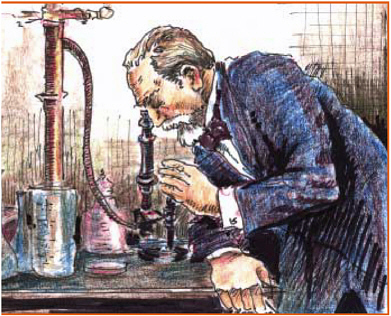
Animal research is also important in another type of research, called basic research. Basic research experiments are performed to further scientific knowledge without an obvious or immediate benefit. The goal of basic research is to understand the function of newly discovered molecules and cells, strange phenomena, or little-understood processes. In spite of the fact that there may be no obvious value when the experiments are performed, many times this new knowledge leads to breakthrough methods and treatments years or decades later. For example, chemists developed a tool called a nuclear magnetic resonance (NMR) machine to determine the structure of chemicals. When it was developed, it had no obvious applications in medicine; however, scientists eventually realized that the NMR machine could be hooked up to a computer to make a magnetic resonance imagery (MRI) machine. The MRI machine takes pictures of the bone and internal tissues of the body without the use of radioactivity. Other examples of basic research that have led to important advances in medicine are the discovery of DNA (leading to cancer treatments) and neurotransmitters (leading to antidepressants and antiseizure medications). However, there are many other instances where basic research, some of which has been done on animals, has not yet resulted in any practical benefit to humans or animals.
NMR (nuclear magnetic resonance)—a machine that measures the vibration of atoms exposed to magnetic fields. Scientists use this machine to study the physical, chemical, and biological properties of matter.

MRI (magnetic resonance imaging)—a machine that produces pictures of the bone and internal tissues of the body.

Page
20

Below are the first 10 and last 10 pages of uncorrected machine-read text (when available) of this chapter, followed by the top 30 algorithmically extracted key phrases from the chapter as a whole.
Intended to provide our own search engines and external engines with highly rich, chapter-representative searchable text on the opening pages of each chapter. Because it is UNCORRECTED material, please consider the following text as a useful but insufficient proxy for the authoritative book pages.

Do not use for reproduction, copying, pasting, or reading; exclusively for search engines.

OCR for page 20
Science, Medicine, and Animals THE CONCEPT OF BASIC RESEARCH Animal research is also important in another type of research, called basic research. Basic research experiments are performed to further scientific knowledge without an obvious or immediate benefit. The goal of basic research is to understand the function of newly discovered molecules and cells, strange phenomena, or little-understood processes. In spite of the fact that there may be no obvious value when the experiments are performed, many times this new knowledge leads to breakthrough methods and treatments years or decades later. For example, chemists developed a tool called a nuclear magnetic resonance (NMR) machine to determine the structure of chemicals. When it was developed, it had no obvious applications in medicine; however, scientists eventually realized that the NMR machine could be hooked up to a computer to make a magnetic resonance imagery (MRI) machine. The MRI machine takes pictures of the bone and internal tissues of the body without the use of radioactivity. Other examples of basic research that have led to important advances in medicine are the discovery of DNA (leading to cancer treatments) and neurotransmitters (leading to antidepressants and antiseizure medications). However, there are many other instances where basic research, some of which has been done on animals, has not yet resulted in any practical benefit to humans or animals. NMR (nuclear magnetic resonance)—a machine that measures the vibration of atoms exposed to magnetic fields. Scientists use this machine to study the physical, chemical, and biological properties of matter. MRI (magnetic resonance imaging)—a machine that produces pictures of the bone and internal tissues of the body.

Representative terms from entire chapter:

strange phenomena