
4
Causes of Water Quality Impairment
Chapter 3 provides an overview of water quality standards and the types of water quality problems in southwestern Pennsylvania. In this chapter the causes of impairments to waters that prevent their designated uses are discussed with an emphasis on those caused by improper human waste disposal methods.
Waters can be impaired for any of their designated uses and by a variety of contaminants. Any waterbody that does not meet ambient water quality standards pertaining to its designated use after elimination of point source pollution through applicable technology is considered impaired. Table 4-1 summarizes designated uses and the parameters used for evaluating impairment in Pennsylvania. It should be noted that some causes of aquatic life use impairment are not susceptible to physical or chemical analysis of water samples, including siltation, other habitat alteration, and flow alteration or variability. When these are the primary causes of water quality degradation, bioassessment protocols (discussed in Chapter 3; see also Box 5-2) must be used in lieu of chemical analyses. For other causes of aquatic life impairment that might be measured by physical or chemical analysis of water samples, no water quality criteria exist (e.g., suspended solids, turbidity, oil and grease). Conversely, some water quality criteria exist for which no related cause of impairment is obvious, including color and alkalinity. Thus, there is rarely a one-to-one correlation between impairments and parameters that can be measured by chemical analyses.
Whereas the list of potential pollutants and conditions that cause impairment for aquatic life use is long, single causes of impairment exist for recreational use and for human health use in Pennsylvania. The recreational use of water is impaired by the presence of microbial pathogens, for which fecal and total coliforms are used as indicators.1 Because surface waters are presumed to be treatable for the production of potable water, the health aspect for human use is not drinking water but rather fish consumption. In other words, waters are not considered “impaired” for use as drinking water sources because of the extensive treatment that is routinely performed on these sources, particularly surface water. It should be noted that private well owners are not required currently by state or federal regulations to monitor for contaminants or to treat their drinking water.
TABLE 4-1 Parameters Found in Water Quality Standards to Measure Impairment of Aquatic Life, Human Health, and Recreational Water Use in Pennsylvania
|
Designated Use |
Impairment Causes in 303(d) Report |
Water Quality Parameter to Determine Impairment |
|
Aquatic life |
Metals |
Iron, manganese |
|
|
Acidity |
pH |
|
Nutrients |
Nitrite plus nitrate |
|
|
Salinity, total dissolved solids, chlorides |
Total dissolved solids, chlorides, osmotic pressure |
|
|
Other inorganics |
Sulfate |
|
|
Organic enrichment |
Dissolved oxygen |
|
|
Thermal modification |
Temperature |
|
|
Toxicity |
Ammonia nitrogen, fluoride, phenolics |
|
|
Excess algae growth |
Not listed |
|
|
Siltation |
Not listed |
|
|
Other habitat alteration |
Not listed |
|
|
Suspended solids |
Not listed |
|
|
Turbidity |
Not listed |
|
|
Flow alteration; water or flow variability |
Not listed |
|
|
Oil and grease |
Not listed |
|
|
Chlorine |
Not listed |
|
|
Pesticides |
Not listed |
|
|
Human health |
Chemicals in fish |
Federal food and drug standards used |
|
Recreation |
Pathogens (surrogate) |
Fecal coliforms, total coliforms |
|
SOURCE: PADEP, 2002. |
||
As explained above, impairment of waters for designated uses can be determined by comparison of water quality to standards for specified uses or by bioassessment protocols. Causes of impairment may be determined by physical, chemical, or biological analysis of water samples; bioassessment protocols; or observation of environmental conditions in a reach of a stream or river. Causes of impairment are identified by descriptors such as siltation, metals, pH, low dissolved oxygen, and nutrients. However, the 2004 Pennsylvania Integrated Water Quality Monitoring and Assessment Report (PADEP, 2004a) does not present data on concentrations of impairment-causing contaminants or data on the degree to which water quality is impaired. Without detailed data for each reach of stream or river, it is not possible to determine how severely surface waters are impaired, even when impairment is caused by one or more pollutants.
According to the most recent assessment of surface water by the Commonwealth of Pennsylvania (PADEP, 2004a), 83,161 miles of streams (82 percent of total) in Pennsylvania have been assessed, and the remaining 15,182 stream-miles (18 percent) are scheduled for assessment. Of those assessed, 57,801 river-miles (82 percent) support their aquatic life and fish use designations, and 10,762 (18 percent of the assessed and 13 percent of the total stream-miles) are classified as impaired. The two largest sources of impairments specified are abandoned mine drainage (4,040 miles impaired) and agriculture (3,903 miles impaired). Three sources related to runoff (urban runoff, road runoff, and small residential runoff) account for an additional 3,007 miles impaired. Four sources related to wastewater handling and treatment (municipal point sources, on-site wastewater, combined sewer overflows, and package plants) account for 744 miles impaired.
Pennsylvania has 215 significant lakes totaling 98,942 acres.2 A total of 75,543 acres have been assessed, with 30,346 (40 percent) supporting their designated aquatic life use and 45,197 (60 percent) showing impairment. Of 28,665 lake-acres assessed for fish consumption use, 99 percent are impaired with unacceptable concentrations of mercury and/or polychlorinated biphenyls (PCBs). A total of 64,588 lake-acres have been assessed for contact recreation, with 98 percent supporting this use. Only 1,237 lake-acres are impaired due to pathogens (1,150) and nutrients (174). Major sources of impairments for lakes were agriculture, “other,” and “unknown.” Human waste-related sources including on-site sewage treatment and disposal systems (OSTDSs or “septic systems”), municipal point sources, and runoff were responsible for smaller areas of lake impairment.
In addition to assessing streams and lakes for specific impairments, Pennsylvania also monitors the concentrations of several toxicants in fish tissue. Nationally, 28 percent of assessed lake-acres and almost 14 percent of river-miles in the United States are under restricted consumption advisories (EPA, 2003a). In Pennsylvania, a statewide advisory for all surface waters was recently issued for mercury in fish.3 Specific fish consumption advisories in southwestern Pennsylvania include an advisory on high PCB levels in fish caught in the region’s three main stem rivers as well as in the Beaver River, Chartiers Creek, Little Chartiers Creek, and the Mahoning and Shenango Rivers. Advisories on the pesticide chlordane were issued for the Monongahela River, Chartiers Creek, Little Chartiers Creek, and the Cheat River.
SOURCES OF POLLUTION
As described above, the major causes of surface water quality impairment within the state of Pennsylvania are (1) acid mine drainage, (2) agriculture, (3) urban and stormwater runoff, and (4) wastewater. Likewise, the U.S. Geological Survey (USGS) National Water Quality Assessment (NAWQA) program (as reported in Anderson et al., 2000; see also Appendix B) identified the following causes of surface water quality impairment in the Allegheny and Monongahela River basins: (1) coal mine discharge, (2) urban runoff, and (3) agricultural runoff. However, the NAWQA study did not include pathogen or indicator organism data collection, which could have implicated wastewater as a major source of surface water contamination. Evaluation of water quality data in the region by this committee (discussed in Chapter 3) indicates that wastewater-related impairment of surface waters is a significant source of microbial loading to surface waters.
HUMAN AND OTHER WASTE DISPOSAL
As discussed in Chapter 2, human waste disposal methods in southwestern Pennsylvania have developed over time to include individual home on-site sewage treatment and disposal systems (OSTDSs), decentralized small systems, and centralized collection sewers and treatment
|
2 |
An additional 146 public waterways are used as lakes but do not have the 14-day retention time required for designation as a “lake.” These are monitored but not included in the totals above. |
|
3 |
For further information, see http://www.dep.state.pa.us/dep/deputate/watermgt/Wqp/WQStandards/FishAdvis/fishadvisory04.htm. |
systems. All of these systems, if not operating or maintained properly, have the potential to adversely affect the region’s water quality. The most critical effect of improperly treated human waste is the release of pathogenic microorganisms to waterways; however, human waste also contains suspended solids, biochemical oxygen demand (BOD), and nutrients that can adversely affect water quality if released improperly. Centralized wastewater treatment plants (WWTPs) are utilized in the region’s urban areas, while OSTDSs are commonly used in more sparsely populated (rural) areas where the cost of conveyance to a centralized treatment plant is often prohibitive. Figure 4-1 shows the distribution of WWTPs and OSTDSs in southwestern Pennsylvania. Of the 1,172,274 households in southwestern Pennsylvania reported in the 1990 U.S. census,4 76 percent were on public sewers connected to WWTPs, while 23 percent were utilizing some sort of on-lot septic systems. Notably, 11,289, or 1 percent, reported neither sewers nor on-lot disposal; these homes may use cesspools or straight pipes that discharge directly to surface water or groundwater, they may be served by older substandard or unknown treatment systems that pre-date permitting programs, or they may simply represent the residents’ lack of knowledge about the treatment system.
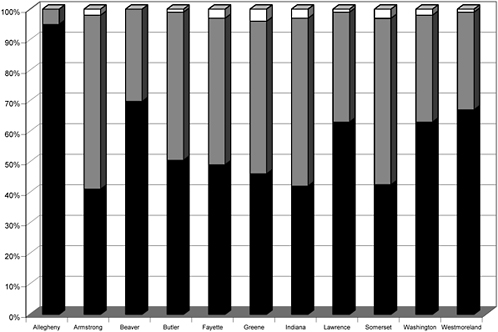
FIGURE 4-1 Human waste disposal methods by county in southwestern Pennsylvania.
NOTE: Black (centralized WWTP); gray (on-site systems); white (“other;” e.g., cesspools, straight pipes). SOURCE: Data from WSIP, 2002.
As shown in Table 4-2, there are more than 1,100 industrial, municipal, and nonmunicipal sanitary sewage dischargers in the area that have been granted National Pollutant Discharge Elimination System (NPDES) permits by the Pennsylvania Department of Environmental Protection (PADEP). Of these, 96 are classified as “major sources,” including 32 industrial sources, 63 municipal sources, and 1 nonmunicipal sanitary sewage source. Industrial sources are classified as major based on a combination of flow and quality criteria as established by the U.S. Environmental Protection Agency (EPA). A nonindustrial source is classified as major if the permitted discharge rate exceeds 1 million gallons per day. About 50 percent of the NPDES permits are for nonmunicipal sanitary sewage wastewater disposal, although only one of these is classified as a major source. How well these systems are operated would require further investigation, but the general problem of operating small wastewater disposal systems in compliance with permit requirements is well known (see, for example, EPA, 2003b).
Wastewater Treatment Plants
Centralized wastewater collection and treatment systems convey wastewater from individual homes and businesses to a wastewater treatment plant where multiple-stage treatment removes total suspended solids (TSS), BOD, nutrients, and pathogenic microorganisms (and their microbial indicators), such that the effluent from wastewater treatment plants is significantly less contaminated than the influent and meets NPDES discharge requirements. Nutrient levels can be further reduced with tertiary biological treatment when necessary. Table 4-3 summarizes influent and effluent parameters for typical domestic sewage through primary (settling) and secondary (biological) treatment.
In addition to indicator organisms (such as fecal coliforms, included in Table 4-3), specific pathogens are common in raw sewage and in wastewater effluents. For example, Chauret et al. (1995) reported an arithmetic mean of 1,730 Cryptosporidium oocysts per 100 L in untreated domestic sewage at Ottawa, Canada. Madore et al. (1987) examined sewage in
TABLE 4-2 Number of Permitted Wastewater Dischargers in Southwestern Pennsylvania by Countya and Classification
|
County |
Industrial |
Municipal |
Nonmunicipal |
Other |
||||
|
All |
Major |
All |
Major |
All |
Major |
All |
Major |
|
|
Allegheny |
97 |
10 |
48 |
21 |
80 |
0 |
225 |
31 |
|
Armstrong |
21 |
2 |
14 |
3 |
35 |
0 |
70 |
5 |
|
Beaver |
51 |
8 |
21 |
14 |
51 |
0 |
123 |
22 |
|
Fayette |
19 |
0 |
28 |
2 |
62 |
0 |
109 |
2 |
|
Greene |
8 |
1 |
11 |
1 |
22 |
0 |
41 |
2 |
|
Indiana |
23 |
3 |
28 |
1 |
46 |
0 |
97 |
4 |
|
Somerset |
17 |
0 |
25 |
1 |
52 |
0 |
94 |
1 |
|
Washington |
32 |
5 |
30 |
9 |
75 |
0 |
137 |
14 |
|
Westmoreland |
53 |
3 |
37 |
11 |
134 |
1 |
224 |
15 |
|
Total |
321 |
32 |
242 |
63 |
557 |
1 |
1,120 |
96 |
|
aDoes not include Butler and Lawrence Counties of southwestern Pennsylvania (see Box 1-2). SOURCE: Compiled from data provided by Renee Larry, PADEP, July 2004. |
||||||||
TABLE 4-3 Influent and effluent Parameters for Typical Domestic Sewage
Arizona and found 85,000 to 1,370,000 oocysts per 100 L in raw sewage. Studies have also demonstrated that although conventional sewage treatment can achieve greater than 90 percent removal of Cryptosporidium oocysts, treated wastewater effluent can still contain measurable concentrations of oocysts (Chauret et al., 1995; Desvousges et al., 1987). Similarly, Giardia cyst removal can be greater than 90 percent in conventional sewage treatment (Caccio et al., 2003; Sykora et al., 1986).
Sewage typically contains a variety of chemical contaminants disposed of by consumers and industries. Toxic chemicals released to the sewage system are believed to be partially removed through wastewater treatment; however, the EPA estimates that 25 percent of these toxic substances pass through sewage treatment to receiving waters (EPA, 1997). More than 1.4 billion pounds of toxic chemicals were sent to sewage treatment plants in the United States between 1992 and 1996—50 percent more than the amount directly released to waterways during that same period (Puchalsky and LaPlante, 1998).
The preceding discussion suggests that although treated wastewater effluent continues to contain indicator microorganisms, pathogens, and chemicals that may escape treatment or removal, the major water quality concern is when downstream drinking water treatment fails or such systems become overloaded. When this occurs, as it did in Mckeesport, Pennsylvania, in 1983-1984 (see Box 3-4), untreated or inadequately treated drinking water can be supplied to consumers, which constitutes a distinct public health threat.
Small Wastewater Treatment Facilities and Failures
Many small wastewater treatment entities in isolated, low-income rural counties in the Central Appalachians struggle to operate and maintain facilities, make necessary repairs, and maintain financial health. In many of these rural areas, water quality problems are in part attributable to these facilities. For example, Kentucky’s PRIDE assessment project5—a coalition of government, academic, and volunteer groups addressing regional water pollution problems in 38 counties in southeastern Kentucky—has identified small municipal wastewater treatment plants and small package treatment plants, in addition to straight pipes and failing septic systems, as major pathogen sources in the area’s watersheds. Many of these facilities have malfunctioned because of improper operation and maintenance. South of southwestern Pennsylvania, the Morgantown (West Virginia) Utility Board is beginning a sewer extension project to serve White’s Run, a tributary to Cheat Lake, a popular recreational waterbody in the area.6 Water quality in White’s Run has been adversely affected not only by failing OSTDSs but also by nine
|
5 |
For further information, see http://pride.uky.edu/pollutionsources.cfm. |
|
6 |
More information on this project is available on-line at http://www.mub.org/eng.htm. |
privately owned package wastewater treatment plants, many of which were failing or overloaded beyond capacity.
Throughout Pennsylvania, many small communities experience problems with antiquated sewage treatment facilities and, particularly in southwestern Pennsylvania, older systems that are overloaded during heavy rainfalls (Strawley, 2002). Within the Redbank Creek watershed in the Allegheny River basin, a package plant was implicated in water quality impairment of Fivemile Run (WRAS, 2003a). The Pennsylvania infrastructure Investment Authority (PENNVEST) lists a number of loans to small communities during 2002 and 2003 to correct these types of problems.7 Even with new or upgraded facilities, communities must be able to support adequate operation and maintenance of their systems, a need that can be difficult for small utilities to meet. For this reason, several programs have been targeted for assisting small wastewater facilities in Pennsylvania.
Section 104(g)(1) of the Clean Water Act (CWA) authorizes funding for the Wastewater Treatment Plant Operator On-Site Assistance Training Program. This program provides on-site operator training, financial management, troubleshooting, and other operation and maintenance assistance to small underserved communities through a network of operator training personnel, peer trainers, EPA regional office coordinators, state and regional training centers, and state programs. The PADEP’s Division of Technical Training and Outreach has administered not only this program but also a Drinking Water and Wastewater Operator Information Center, resources to assist local governments, and a variety of financial assistance programs. Due to budgetary and staffing concerns, PADEP plans to discontinue regularly scheduled basic operator training courses during 2004; instead, these will be offered by approved academic, association, and private sector providers. The division will continue to provide outreach and technical assistance for small community systems.
Several nonprofit organizations help small rural utilities with many of the aforementioned challenges. The Pennsylvania Rural Water Association (PRWA), a member-supported nonprofit organization and state associate of the National Rural Water Association, provides training, technical assistance, and “circuit-rider” assistance in operation, maintenance, and management to its small water and wastewater utility members. The PRWA also assists communities in developing and adopting groundwater protection plans and is a partner in the Pennsylvania Water Well Owner Network. The Rural Community Assistance Program (RCAP) provides guidance, training, and technical assistance for a variety of rural concerns, from community and leadership development to rural housing and health care. Through a partnership agreement with EPA, RCAP supports assistance programs for small water and wastewater facilities through the Small Community Wastewater Project.8
In a study of small, rural Appalachian communities in Tennessee, teams from the University of Tennessee and Tennessee Technological University found that inadequate wastewater treatment was associated with a variety of socioeconomic factors distinctive of isolated communities (MTAS, 1997). Box 4-1 reviews these factors, many of which are commonly found in southwestern Pennsylvania’s rural areas, and thus are important to consider in crafting solutions to the region’s wastewater problems (Ann Bargerstock, Greene County Planning Commission, personal communication, 2002; Barbara McMillen, U.S. Department of Agriculture, Rural Utilities Service, personal communication, 2002, 2003).
|
7 |
See PENNVEST press releases 11/20/02, 05/07/03, 07/23/03, 11/19/03, available on-line at http://www.pennvest.state.pa.us/pennvest/cwp/browse.asp?A=11&BMDRN=2000&BCOB=0&C=43125. |
|
8 |
Further information about this program can be found on-line at http://www.epa.gov/owm/mab/smcomm/1rcap.htm. |
|
BOX 4-1 In an EPA-funded study examining environmental justice issues in wastewater services, research teams from the University of Tennessee’s Municipal Technical Advisory Service and Tennessee Technological University’s Center for Management, Utilization, and Protection of Water Resources conducted an intensive in-field study of socioeconomic factors in 12 small, rural Tennessee communities (including 2 control communities), selected because of one or more negative wastewater impacts of health risks, water quality violations, or aesthetic problems. Results of the study dispel many common myths about isolated rural communities, while documenting in detail the distinctive challenges faced in achieving proper wastewater management in similar communities. Populations in the study communities ranged from 200 to 6,000. Local employment and economic base varied widely: manufacturing, timber, food processing, and commuting to jobs located from 12 to 70 miles away. One community had a high percentage of elderly residents; another had a very high local unemployment rate. Local water supplies included private wells, community wells and springs, a community-owned and operated water treatment plant (surface water), and purchase of water from another utility. Sewage treatment included on-site systems, central activated sludge plants, a central trickling filter plants, central oxidation ditch plant, and central aerated lagoon plants. Lessons learned from this study provide a snapshot of characteristics common to many small rural communities in the Central Appalachians. Residents were mostly white, and only one of the communities had a high school graduation rate that met the state average of 67 percent (most ranged from slightly above 40 percent to slightly more than 50 percent). Seven of the communities had poverty rates above the state average of 15.7 percent (ranges were from 20 to more than 40 percent). All but one of the communities met or exceeded the statewide average (17.1 percent) for population over 60. Researchers found that six of the eight communities with central wastewater treatment systems charged rates below the statewide average. In addition, the state’s Wastewater Financing Board had cited these six communities for failure to adequately fund sewer operations. Communities in the survey used grants to build and upgrade systems, not because of advance planning and budgeting, but because a grant funding source was brought to their attention. Furthermore, centralized wastewater operations were understaffed; in five of the eight plants surveyed, operators worked alone. Three of these five operators were responsible for the water treatment and distribution system, and several also handled lab work and grounds maintenance. Such understaffing may reflect attempts to save money or difficulty in finding and retaining qualified staff to work in isolated rural locations. Operators had few opportunities for adequate training or for sharing ideas with other operators, because they had to travel a long distance for training and often had trouble getting away from the plant to attend training. Because of these factors, some had difficulty completing the training needed to retain certification. However, local operators were often very resourceful in coping with limited budgets, aging facilities, and design oversights; they kept plants functioning by rebuilding parts and devising repairs and improvements from locally available materials. Engineers’ design mistakes and lack of attention to community resources and concerns accounted for many of the problems that communities and operators experienced with their wastewater systems. For example, Inflow/infiltration, overflows, and bypasses were found to be widespread problems. Community residents did not like the government and outsiders telling them what to do, and often felt that outsiders did not bother to understand their needs. Growth and change came slowly to these communities and residents sometimes lived with problems (e.g., odor, sewage on the ground) because they felt helpless to change the situation. Many residents stated that their communities were good places to live and did want to change the community itself—even if wastewater problems presented a documented health threat. These residents did without many common services and amenities; as a result, wastewater-related problems ranked low on their list of concerns, and those affected tended to blame, deny, minimize, or not recognize the problems. In several communities |
|
with failing and improperly operating septic systems, residents stated that “people take care of their septic systems,” that the house was on public sewer, are that they did not know about any problems. The mayor of one of these communities confided that there were many problems with septic systems, but that there were concerns that small lots allowed no room for repairs, that the community lacked the money for centralized treatment, and that even if funds could be obtained for a central system there would be nobody to oversee it. Citizens and local government leaders were uneducated about how to solve their wastewater problems. They did not know how to access help, obtain funding, select an engineer who understands small community issues, select treatment technologies compatible with community resources, and estimate long-term operation and maintenance costs. Many existing wastewater treatment problems have resulted from one or more of these deficiencies in education and preparation for making decisions. Although communities may have learned how to obtain grants, they often do not have the knowledge to target the funding toward correcting the problem. Finally, community leaders, consultants, and technical assistance providers had difficulty obtaining information, at both state and local levels, to identify problems and craft solutions. Records were typically inconsistent, poorly organized and maintained, and not in electronic form. Recommendations related to this study, for policy makers, regulators, educators, and technical assistance providers who work with similar communities, are discussed in Chapter 5 (see also Boxes 5-3 and 5-5). SOURCE: MTAS, 1997. |
Combined Sewer Overflows
While small treatment systems may suffer from maintenance and operational failures, all systems have the potential to suffer from problems associated with excessive flows. When flows exceed the capacity of the collection or treatment system, overflow events are triggered. Seven hundred and seventy-two communities in 32 states throughout in the United States have combined sewer systems or dedicated sanitary sewer systems that are linked hydraulically to combined systems. These systems were designed in the nineteenth and early twentieth centuries to convey wastewater to treatment plants and to convey mixed stormwater and wastewater partially to the treatment plant and partially to nearby waterways (rivers and streams) during significant precipitation events (see also Chapter 2 and 5). Inherent in the design were diversion structures that release mixed rainwater and sewage to surface waters when flows exceed the capacity of the sewer collection or wastewater treatment system (combined sewer overflow structures, or CSOs). When heavy rains lead to high flows in the collection system, a gate or relief system diverts flow away from the sewage treatment plant and to surface waters. This diversion of high flows prevents sewage from backing up in the collection system (e.g., flooding basements or streets) and prevents damage to the wastewater treatment plant from flows that exceed design capacity. Figure 4-2 shows a schematic of combined and separate sewers and how they contribute to wet weather-related surface water pollution.
EPA has estimated that there are CSO discharges of 1,260 billion gallons per year in the United States through 9,471 outfall locations regulated through 859 NPDES permits (EPA, 2001a). Notably, Pennsylvania has the highest number of CSO structures of any state (1,671). Figure 4-3 shows the distribution of CSOs in Pennsylvania and their concentration in
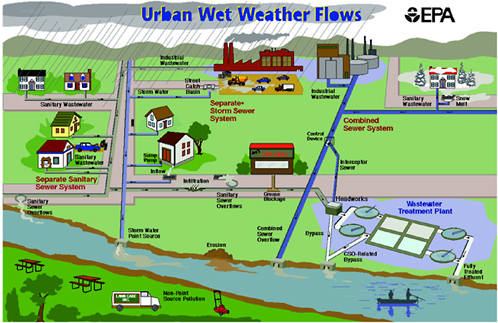
FIGURE 4-2 Illustration of urban wet weather flows, including combined sewer overflows and sanitary sewer overflows.
southwestern Pennsylvania. Tables 4-4 and 4-5 summarize the distribution of CSOs in southwestern Pennsylvania by county and by major authority or agency in the region.
Figure 4-4 shows specific CSO outfall locations and water intake locations for the major drinking water providers in Allegheny County. CSOs are considered point sources of pollution and are subject to NPDES permitting, compliance, and enforcement. In May 1997, PADEP revised its CSO strategy and began implementation following EPA approval in July 1997. As noted previously, water released during CSOs is a mixture of dilute raw sewage and primarily urban surface runoff. The chemical and microbial constituents of CSOs have been studied less than those of stormwater. Initially during a rainfall event (the “first flush”), CSO effluents resemble raw sanitary sewage. When high flows scour the sewer pipes the first flush can contain higher levels of suspended solids and BOD than typical raw sewage (Larsen et al., 1998). After the first flush, stormwater dilutes the raw sewage, and pollutant concentrations in CSO effluents decline.
The major contaminants in CSO discharges include suspended solids, BOD, chlorides (typically in winter months from the application of road salt), nutrients (nitrogen and phosphorus), fecal bacteria and other microorganisms, and various chemicals. A recent study of Canadian waters found stormwater and CSOs to be similar in solids concentrations, but CSOs had higher concentrations of BOD and nutrients and lower concentrations of heavy metals and anthropogenic organic compounds (e.g., pesticides) (Chambers et al., 1997). Table 4-6 compares typical concentrations of several chemical and biological parameters for CSOs and urban runoff. With respect to microorganisms, Burm and Vaughan (1966) found that a combined sewer system
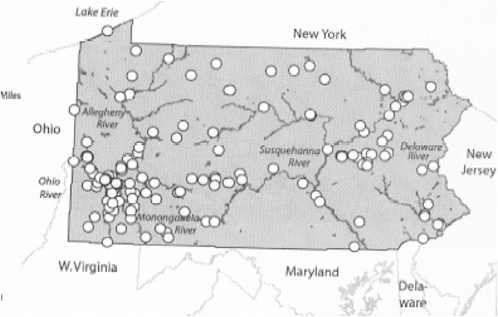
FIGURE 4-3 Distribution of CSOs in Pennsylvania.
NOTE: This figure shows the locations of the agencies that hold the 155 CSO permits.
SOURCE: EPA, 2002a, Appendix B.
TABLE 4-4 Distribution of CSOs in Southwestern Pennsylvania by County
|
County |
CSO Structures/Outfalls |
|
Allegheny |
414 |
|
Armstrong |
18 |
|
Beaver |
14 |
|
Butler |
0 |
|
Fayette |
72 |
|
Greene |
2 |
|
Indiana |
22 |
|
Lawrence |
1 |
|
Somerset |
7 |
|
Washington |
79 |
|
Westmoreland |
126 |
|
Total |
755 |
|
SOURCE: Adapted from PADEP Combined Sewer Overflow Listing, http://www.dep.state.pa.us/eps/docs/extras/TG/Finals/wswm/CSO_LIST.xls. |
|
TABLE 4-5 Distribution of Select CSOs in Southwestern Pennsylvania by Major Authority or Agency
|
Community |
CSO Structures/Outfalls |
|
City of Pittsburgh |
216 |
|
McKeesport City Municipal Authority |
28 |
|
ALCOSAN |
21 |
|
Upper Allegheny Joint Sanitary Authority |
19 |
|
Turtle Creek |
10 |
|
Borough of Wilmerding |
9 |
|
Girty’s Run Joint Sewer Authority |
9 |
|
Braddock |
8 |
|
Etna |
8 |
|
Total |
328 |
|
|
|
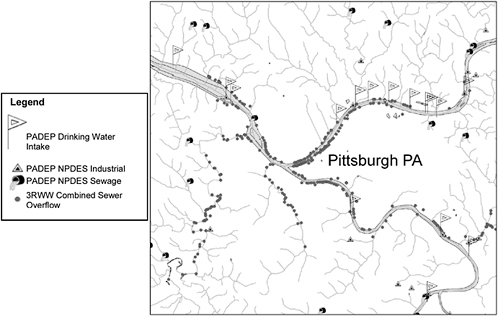
FIGURE 4-4 Illustration of the proximity of public surface water intakes and CSO outfalls in Allegheny County in the vicinity of the City of Pittsburgh. SOURCE: Adapted and reprinted, with permission, from 3 Rivers 2nd Nature. © 3 Rivers 2nd Nature.
contained an order of magnitude more indicator microorganisms than similarly sized stormwater systems. Typical fecal indicator concentrations in CSO discharges are provided in Table 4-7. Because CSOs are characterized by high flows over short time periods during wet weather, the effects of CSO are more pronounced in small streams and lakes than in large rivers with extensive dilution.
The public health impact of CSOs has been difficult to measure directly. Box 4-2 summarizes recent studies that have attempted to correlate waterborne disease outbreaks with precipitation events, which may indicate a role for CSOs. In August 2002, EPA convened an experts workshop (EPA, 2002a) in order to inform a report that it is preparing for Congress on the health impacts of sewer overflows (overdue as of December 15, 2003, as required in P.L. 106-554). Notably, preparation for that workshop yielded very little information linking waterborne diseases to CSOs or SSOs (sanitary sewer overflows) through a literature survey. However, a preliminary list of pathogens expected to be present in sewer overflows was developed and is summarized in Table 4-8. Although EPA’s report to Congress was still pending at the time this report was nearing completion, the results of the workshop indicate the following (EPA, 2002a):
-
CSOs are likely to contain pathogens and chemicals of public health concern.
-
In the majority of cases in waterborne disease outbreaks, the etiologic agent is not identified. Furthermore, many cases are self-medicated and not reported. For these and other reasons, health monitoring data are expected to be significant underestimates.
-
Few waterborne disease outbreaks are known to have resulted from sewer overflows. The largest outbreak (cryptosporidiosis) in the United States took place in Milwaukee, Wisconsin, in 1993 and was associated with sewage in the Lake Michigan source water and a failure at the drinking water treatment plant (see Edwards, 1993 and MacKenzie et al., 1994, for further information).
-
Although elimination of CSOs and SSOs would likely have real public health benefit, it is unlikely under the current measuring and tracking surveillance system for waterborne illness that the corresponding reduction in illness levels would be detectable.
TABLE 4-6 Concentration Ranges of Select Constituents in CSOs and Urban Runoff
|
|
5-Day BOD (mg/L) |
TSS (mg/L) |
Total N (mg/L) |
Total P (mg/L) |
Fecal Coliforms (CFU/100 mL) |
|
CSO |
25-100 |
150-400 |
3-24 |
1-10 |
105-107 |
|
Urban runoff |
10-250 |
67-101 |
0.4-1.0 |
0.7-1.7 |
103-107 |
|
SOURCE: WEF, 1999. |
|||||
TABLE 4-7 Concentration Ranges of Bacterial Indicators During CSOs
|
Indicator Organism(s) |
Concentration Range (CFU/100 mL) |
|
Fecal coliforms |
1.0 x 10⁵ to 3.5 x 10⁷ |
|
Escherichia coli |
3 x 10⁴ to 2.2 x 10⁷ |
|
Enterococci |
2.9 x 10³ to 7.2 x 10⁶ |
|
SOURCE: EPA, 2001a. |
|
|
BOX 4-2 Rose et al. (2000) reviewed U.S. waterborne disease outbreaks from 1971 through 1994 for an association with high total monthly precipitation. The months that were examined for outbreak occurrence were those having total precipitation ranked in the highest 10 percent, the highest 5 percent, and the highest 2.5 percent of monthly totals, or those that followed the months with high precipitation. For systems using surface water sources, it was shown that high amounts of precipitation can affect source water quality and lead to outbreaks. Similarly, Curriero et al. (2001) found a statistically significant association between outbreaks and precipitation events. They reviewed 548 reported waterborne outbreaks between 1948 and 1994 and reported that 51 percent of outbreaks were associated with precipitation events above the 90th percentile (p = .002) and 68 percent were associated with outbreaks above the 80th percentile (p = .001). Surface water outbreaks occurred during the month of the precipitation event, while groundwater outbreaks demonstrated a two-month lag time. |
TABLE 4-8 Pathogenic Microorganisms That Can Be Found in Untreated Domestic Wastewater
|
Pathogen |
Pathogen |
|
Bacteria |
Protozoa |
|
Shigella |
Entamoeba histolytica |
|
Salmonella |
Giardia lamblia |
|
Vibrio |
Balantidium coli |
|
Escherichia coli |
Cryptosporidium parvum |
|
Yersinia enterocolitica |
|
|
Leptospira |
Viruses |
|
Campylobacter jejuni |
Enteroviruses |
|
|
Hepatitis A |
|
Helminths (worms) |
Adenovirus |
|
Ascaris lumbricoides |
Rotavirus |
|
Ancylostoma duodenale |
Parvovirus |
|
Necator americanus |
Norovirus |
|
Strongyloides stercoralis |
Reovirus |
|
Trichuris trichiura |
Astrovirus |
|
Taenia spp. |
Calicivirus |
|
Enterobium vermicularis |
Coronavirus |
|
Echinococcus granulosus |
|
|
SOURCE: EPA, 2002b. |
|
CSOs are specifically implicated as the cause of impairment in 109 of 10,762 miles of streams impaired for aquatic life support in Pennsylvania (PADEP, 2004a). The watershed restoration action strategy (WRAS, 2003b) state water plan for the Upper Youghiogheny River watershed, Laurel Hill Creek, and Indian Creek in Fayette, Somerset, and Westmoreland Counties indicates that CSOs are known contributors to water quality impairment in Deadman Run and three unnamed tributaries to Laurel Hill Creek. The WRAS state water plan for Chartiers Creek watershed (Ohio River; see Figure 6-2) in Washington and Allegheny Counties indicates that combined sewer overflows carry considerable urban runoff into the streams of this watershed. PENNVEST awarded $1.9 million to the City of Washington for a stormwater control project in this watershed. The Chartiers Creek watershed is part of the Allegheny County
Sanitary Authority (ALCOSAN) collection systems and is working in consultation with EPA, PADEP, and ALCOSAN on CSOs in the region (WRAS, 2003c).
In addition to the specific areas described above, there is also some direct evidence for the role of CSOs in degrading water quality in other parts of southwestern Pennsylvania. Several studies that have considered geographical or weather-related differences in pathogen loading suggest that these impairments are related to sewage handling within the region, and their correlation with precipitation events specifically targets CSOs. States et al. (1997) reported on protozoa levels in the Allegheny River, while Gibson et al. (1998) evaluated a tributary. Details of their results are presented in Boxes 4-3 and 4-4 and Tables 4-9 and 4-10, respectively. Both studies found higher levels of protozoa in CSOs and in surface waters downstream of CSOs during wet weather.
|
BOX 4-3 States et al. (1997) surveyed source waters for drinking water in the Pittsburgh area for protozoa in a two-year program of monthly sampling and analysis. They collected monthly samples from the Allegheny River, from a stream flowing through a dairy farm that had about 20 to 25 head of cattle, and from secondary wastewater treatment plant effluent that flowed into the Allegheny River. In addition, they occasionally collected samples from overflowing combined sewer outfalls. Samples were collected from the Youghiogheny River for comparison to water quality in the Allegheny River. Monitoring results indicated similar quality for the two rivers, as shown by the geometric means (see Table 4-9 below). Protozoa were found to be much more abundant in CSO samples than in river water. |
TABLE 4-9 Protozoa Monitoring Results on Main Stem Rivers in the Pittsburgh Area
|
BOX 4-4 Gibson et al. (1998) followed up on the continuing water sampling and analysis program of States et al. (1997) with sampling and testing in the Pittsburgh area at Saw Mill Run, a tributary of the Ohio River in late 1996 and 1997. Saw Mill Run is about 12 miles long, with 26 CSO sites along the stream. The Upper Saw Mill Run site was upstream of the reach of the stream influenced by CSOs. The sampling site for Lower Saw Mill Run was downstream of the CSOs, in a location closest to the Ohio River where the stream water quality was not affected by backwater from the Ohio River. Dry weather sampling was carried out at times when no precipitation had occurred for at least 72 hours. Wet weather sampling conditions occurred when 0.1 inch or more of rainfall had occurred after at least 72 hours without rainfall. During five wet weather events, a total of 11 CSO samples were collected. Pathogens were detected in CSO end pipes at concentrations of 250-40,000/100 L for Cryptosporidium and 9,000-283,000/100 L for Giardia, which suggests a public health risk to recreational water users and for drinking water. Fecal coliform concentrations ranged from 3,000 to 85,000 colony forming units (CFUs) per 100 mL from the end pipe. Summary data from this study are shown in Table 4-10. Gibson et al. (1998) concluded that combined sewer overflows can contribute to the load of protozoa in ambient waters. In another study, total coliform, fecal coliforms, and Eschericia coli were sampled at six locations along Nine Mile Run in 1999. Nine Mile Run is a tributary of the Monongahela in eastern Allegheny County. There are six documented CSO outfalls that discharge directly into Nine Mile Run. The study results indicated that Nine Mile Run is unsafe for human recreational contact during dry and wet weather; it is seriously degraded by sewage. Total coliform counts ranged from 101,036 to 1,311,000 CFU/100 mL, while fecal coliform counts ranged from 125 to 1,051,200 CFU/100 mL. Escherichia coli ranged from 125 to1,009,800 CFU/100 mL. Wet weather values are orders of magnitude higher than dry weather values. The authors concluded that “it appears that dry weather bacteriological data documented mostly the influences of chronic sanitary sewage, while the wet weather data show the overwhelming impacts of CSOs on Nine Mile Run” (USACE, 2000). |
TABLE 4-10 Microbiological Monitoring Results in Vicinity of Saw Mill Run
There are indications that the CSO problem has worsened in the last decade in southwestern Pennsylvania. Table 4-11 provides the total number of advisories and days affected by advisories for the summer recreational season in Allegheny County. River advisories are issued when rainfall in the region is high enough to potentially cause sewer overflows and lead to unsafe bacterial concentrations in the river. When an alert is in effect, marinas and docks fly an orange and black CSO sign to alert recreational users of potentially unsafe conditions. The Allegheny County Health Department (ACHD) recommends restricted recreational exposure during advisories (e.g., anglers are advised to wash their hands after fishing and not to cut fish line with their teeth). As shown in Table 4-11, there has been a steady rise in the number of days that the water is considered impaired and restriction of body contact recreation is recommended by the ACHD. As noted previously, the ACHD is conducting a study of the river quality and human health by evaluating the health status of rowers who use the river for practice and competition (ACHD, 2004). Initial data are expected in October 2004.
One of the reasons for increasing CSOs in Allegheny County is the aging collection system and the problem of infiltration. Although many wet weather stormwater flows are directed into sewer pipes in the combined systems, many additional flows find their way into the system during wet and dry weather. Figure 4-5 shows possible sources of infiltration and inflow (I/I) into a collection system. The source of infiltration and inflow in sewer systems is site specific. In some locations, foundation drains are connected to the sewer lines. In other areas, rain leaders (roof gutter drains and areaway drains) are connected to the sewer lines. In many areas, house laterals (the component of the system owned by individual homeowners) show significant deterioration, allowing groundwater to enter sewer pipes.
Sanitary Sewer Overflows
Unlike combined systems, dedicated sanitary sewer systems were designed to carry only sanitary waste. However, pipe cracks and illegal connection of “French drains” or roof collection systems can add stormwater to sanitary systems. When significant infiltration occurs, sanitary sewer overflows can take place, especially during rain events. SSOs are illegal in the United States under the federal CWA. Since the sanitary system was not designed to overflow into local waterways, SSOs result in groundwater contamination, backups of sewage into basements, and overflows through manhole covers (see Figure 4-6).
TABLE 4-11 Water Quality Advisories in Allegheny County: 1994-2003
|
Year |
No. of Advisories |
No. of Days |
Portion of season with Advisory (percent) |
|
1994 |
11 |
33 |
24 |
|
1995 |
12 |
46 |
33 |
|
1996 |
12 |
62 |
45 |
|
1997 |
12 |
46 |
33 |
|
1998 |
10 |
50 |
36 |
|
1999 |
11 |
33 |
24 |
|
2000 |
13 |
71 |
51 |
|
2001 |
15 |
68 |
49 |
|
2002 |
13 |
83 |
60 |
|
2003 |
8 |
109 |
79 |
|
SOURCE: Charles Vukotich, ACHD, personal communication, 2004. |
|||
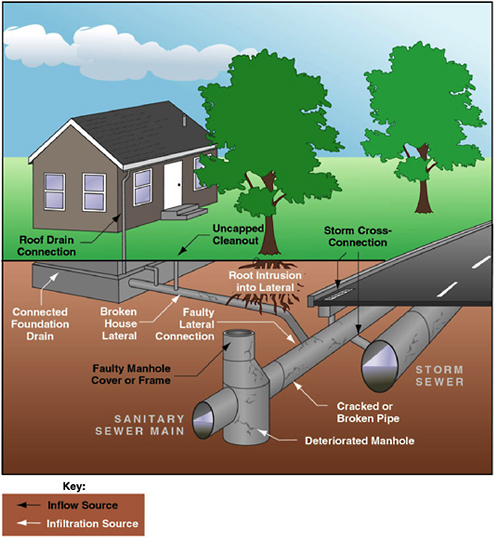
FIGURE 4-5 Infiltration and inflow sources.
SOURCE: Adapted from http://dnr.metrokc.gov/WTD/i-i/whatis.htm.
Nationally, the EPA estimates that there are at least 40,000 overflows of sanitary sewers each year (EPA, 2001b). The WSIP (2002) report estimates more than 600 SSOs a year in southwestern Pennsylvania. Of the 76 percent of homes in southwestern Pennsylvania that are on public sewer systems (see Figures 1-2 and 4-1), 11 percent are served by combined sewer systems and 48 percent are served by separate systems whose pipes connect to combined sewer systems or whose waste is treated at a plant that also serves combined sewer systems. These hydraulic interconnections allow overflows of raw sanitary sewage in regions with separate systems when total flow to the plant receiving both types of sewage exceeds the plant capacity. Some separate sewer systems include overflow structures because they were built before these structures were illegal. Many systems do not have these structures, and when excessive flows cannot be handled, these systems back up in basements, at manholes, or underground. Only one reference to sewage backups in state Watershed Restoration Action Strategy (WRAS) plans
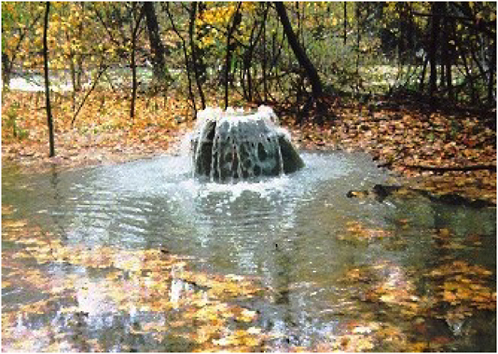
FIGURE 4-6 Sanitary sewer overflow from an elevated manhole in the Pittsburgh. region. SOURCE: Photograph courtesy of 3RWW.
was found (WRAS, 2003d). The Stonycreek River and Little Conemaugh River watersheds report a PENNVEST project in 1998 to Windber Borough to eliminate backup of sewage into basements during wet weather and to replace collection lines. Additional sanitary sewer projects in this watershed were also undertaken.
On-Site Sewage Treatment and Disposal Systems
Individual on-lot septic systems (more accurately referred to as on-site sewage treatment and disposal systems) are frequent alternatives to wastewater treatment plants in sparsely populated areas of the country where the costs of constructing centralized treatment systems are prohibitive. If properly sited and functioning, OSTDSs can receive, treat, and dispose of wastes in a manner that is comparable to wastewater treated in a central facility (EPA, 1980, 1997, 2002c). Table 4-12 provides some ranges for typical contaminants from septic tank effluent and from downgradient in the leach field. Both the tank and the leachfield must operate properly for treatment to be complete. OSTDSs can be designed to provide waste treatment from a single house, business, or groups of structures. The 1997 Response to Congress on Use of Decentralized Wastewater Treatment Systems9 states that “adequately managed decentralized wastewater systems are a cost-effective and long-term option for meeting public health and water quality goals” (EPA, 1997).
|
9 |
This report is a response to the congressional House Appropriations Committee’s request that EPA report on the benefits of decentralized wastewater systems alternatives; the potential savings and/or costs associated with the alternatives; and the ability and any plans of EPA to implement the alternatives during the 1997 fiscal year. The full report is available on-line at http://www.epa.gov/owm/mtb/decent/response/. |
TABLE 4-12 Case Study: Septic Tank Effluent and Soil Water Qualitya
|
Parameter (units) |
Statistics |
Septic Tank Effluent Quality |
Soil Water Qualityb at 0.6 Meter |
Soil Water Qualityb at 1.2 Meters |
|
BOD (mg/L) |
Mean Range No. of samples |
93.5 46-156 11 |
<1 <1 6 |
<1 <1 6 |
|
TOC (mg/L) |
Mean Range No. of samples |
47.4 31-68 11 |
7.8 3.7-17.0 34 |
8.0 3.1-25.0 33 |
|
TKN (mg/L) |
Mean Range No. of samples |
44.2 19-53 11 |
0.77 0.40-1.40 35 |
0.77 0.25-2.10 33 |
|
NO3-N (mg/L) |
Mean Range No. of samples |
0.04 0.01-0.16 11 |
21.6 1.7-39.0 35 |
13.0 2.0-29.0 32 |
|
TP (mg/L) |
Mean Range No. of samples |
8.6 7.2-17.0 11 |
0.40 0.01-3.8 35 |
0.18 0.02-1.80 33 |
|
TDS (mg/L) |
Mean Range No. of samples |
497 354-610 11 |
448 184-620 34 |
355 200-592 32 |
|
CI (mg/L) |
Mean Range No. of samples |
70 37-110 11 |
41 9-65 34 |
29 9-49 31 |
|
Fecal coliforms (log of No. per 100 mL) |
Mean Range # samples |
4.57 3.6-5.4 11 |
NDc <1 24 |
ND <1 21 |
|
Fecal streptococci (log of No. per 100 mL) |
Mean Range # samples |
3.60 1.9-5.3 11 |
ND <1 23 |
ND <1 20 |
|
NOTE: aThe soil matrix consisted of a fine sand; the wastewater loading rate was 3.1 cm per day over 9 months. TDS = total dissolved solids; TKN = total Kjeidahl nitrogen; TOC = total organic carbon. bSoil water quality measured in pan lysimeters at unsaturated soil depths of 2 feet (0.6 m) and 4 feet (1.2 m). c ND = Not detected. SOURCES: Adapted from Anderson et al., 1994; EPA, 2002c. |
||||
The most common OSTDS is the septic tank and drainfield, the former of which is essentially a settling basin in which the suspended solids are separated from the liquid fraction of waste. The solids settle to the bottom of the tank where they are degraded by anaerobic bacteria, while the lighter material, including fats, oils, and grease accumulates at the liquid surface. The liquid portion of the waste flows from the tank through an outlet near the top and is distributed
through perforated pipes into a subsurface drainfield or infiltration system. Within the drainfield, the soil filters out pathogenic microorganisms from the OSTDS effluent before it reaches groundwater. Because aerobic conditions enhance destruction of pathogens, drainfields are placed within the unsaturated portion of the soil profile. Properly designed, sited, and maintained septic tanks and drainfields can remove 90 percent of BOD, 85-95 percent of total phosphorus, 99-99.99 percent of fecal coliforms, but as little as 10-40 percent of total nitrogen (EPA, 2002b).
Other types of OSTDSs vary from older, substandard cesspits (no longer legal under modern codes) to more innovative and efficient sand (and other media) filters and alternative drainfields such as low-pressure pipe systems. Media filters are constructed beds of sand or other suitable granular material usually two to three feet deep. Partially treated wastewater (e.g., from a septic tank) is applied to the filter surface and receives treatment as it slowly trickles through the media; the wastewater then collects in an underdrain and flows to further treatment and/or soil dispersal. Low-pressure pipe (LPP) systems use shallow-placed, pressure-dosed, perforated pipes in narrow trenches for controlled, periodic release of effluent into the soil. LPPs allow more even distribution of effluent and may overcome problems of localized overloading of the soil and anaerobic conditions due to continuous saturation. Because they are small scale, are widely dispersed, and discharge to relatively large subsurface areas, OSTDSs constitute a nonpoint source of pollution within a watershed, unlike centralized WWTPs. A major consequence of this fact is that measuring the impact of OSTDSs on nearby water quality can be extremely difficult. To the committee’s knowledge, environmental monitoring of OSTDS effluent in the southwestern Pennsylvania area has not occurred.
OSTDS Failures
Contamination of groundwater by failing or substandard septic systems is a considerable risk in much of Pennsylvania because of the state’s geology, soils, land development patterns, and large numbers of aging or unknown treatment systems. As of 1990, 1.2 million Pennsylvania homes used on-lot septic systems (Fleeger, 1999). For southwestern Pennsylvania, Figure 4-1 shows the percentage of homes in each county using OSTDSs. A total of 264,408 households were serviced by OSTDSs, or 23 percent of the total households in the 11-county region. The percentage of homes on “other” means declined from 2.5 percent in 1970 to 1.2 percent in 1990. (As noted previously, the 2000 census did not include a question regarding wastewater treatment method.) The percentage of homes utilizing centralized treatment (sewers) increased slightly from 1970 to 1990. The percentage of homes on septic systems changed little during this period (1970-1990).10
National failure rates for OSTDSs are reported at 10 percent annually based on self-reported failures in the three months prior to the housing survey (DOC and HUD, 1997; Knowles, 1998). The EPA (2000) reviewed a series of studies and concluded that failure rates were 10-20 percent; however, failure definitions varied and were not systematically linked to water quality impacts. A survey of on-site treatment in 28 states found failure rates from 0.5 to
|
10 |
Data from SepticStats available on-line at http://www.nesc.wvu.edu/nodp/nodp_index.htm. |
70 percent. Pennsylvania was not surveyed, but nearby states had high failure rates (Ohio, 25-30 percent; West Virginia, 60 percent) (Nelson et al., 1999).
Assuming a 10 percent annual failure rate would suggest 26,000 failing septic tanks in the southwestern Pennsylvania region annually. However, several regional reports (see Appendix B) have estimated much higher failure rates by considering the suitability of soils in the region for on-site treatment systems. In general, soils in southwestern Pennsylvania are not well suited to conventional septic systems. The PADEP reports that less than 5 percent of permits for new systems are for conventional in-ground systems (William Davis, PADEP, personal communication, 2004). There are known areas in southwestern Pennsylvania where most OSTDs are failing (designated “mass malfunction areas”) (see below). The 2004 Pennsylvania Integrated Water Quality Monitoring and Assessment Report (PADEP, 2004) indicates that septic systems are among the eight highest-priority sources of groundwater contamination in the commonwealth. Failed and failing septic systems may be associated with pollution of groundwater by nitrates, microbial indicators and pathogens, and excessive dissolved solids.
In Pennsylvania, an OSTDS is considered failed if a confirmed malfunction is documented in one or more of the following ways: (1) dye testing, (2) lab results, (3) observation by a sewage enforcement officer (SEO) or other experienced professional, and/or (4) seasonally wet adsorption areas, where drainfield soils are saturated by system overload or seasonal high water tables or both. Utilization of best technical guidance (BTG) repair that does not meet the technical standards of the existing code for a new system also leads to classification as a failed system. A failed system requires response by the Pennsylvania Association of Sewage Enforcement Officers (PASEO) and repair by the homeowner. There is no pre-sale inspection protocol in place for on-site systems during property transfers, and regular inspections are not required by the state.11 In reality, many mortgage lenders require inspections as part of the home loan process to protect their own financial interests (Gil Longwell, Pennsylvania Septage Management Association, personal communication, 2003). However, these inspections, many of which are conducted by SEOs or Pennsylvania Septage Management Association-certified inspectors, are not tracked or recorded in the OSTDS and water quality programs.
Nationally, septic systems are reported as major sources of groundwater contamination by 31 of 52 states (EPA, 2002a), including Pennsylvania (PADEP, 2004a). On-site system failures are implicated in 149 impaired stream miles and 6,110 impaired lake-acres in the Commonwealth of Pennsylvania (PADEP, 2004a). Within the study region, many of the WRAS state plans implicate individual sewage systems in water quality impairment. For the Lower Youghiogheny River watershed in Westmoreland and Fayette Counties, 95-99 percent of the soils are not suitable for conventional septic systems and less than one-quarter of the watershed had municipal sewage treatment as of 1994 (WRAS, 2001). A PENNVEST loan within the watershed of $1.4 million to East Huntington Township was used to construct 10 miles of collection sewers and a treatment facility to eliminate raw sewage discharges from on-lot septics. The Chartiers Creek watershed in Washington and Allegheny Counties reported malfunctioning on-lot septic systems and wildcat sewer discharges into yards and streams; a PENNVEST loan of $350,000 was awarded to Midway Sewage Authority to design a new treatment plant, pump station, and collection lines to mitigate this problem. The Center Township Sewer Authority received a PENNVEST loan in 1997 to eliminate malfunctioning OSTDSs and raw sewage
discharges. The Blacklick Creek and Conemaugh River watersheds are impaired by numerous discharges of untreated sanitary wastes from municipalities and private OSTDSs. Significant PENNVEST funding was received by these watersheds, including $22 million to the Jackson and East Taylor Sewer Authority, to construct sewers and pumping stations to eliminate discharges from malfunctioning OSTDSs into tributaries of Hinkston Run. Lastly, the Stonycreek River and Little Conemaugh River watersheds report on the Forest Hills Sewer Project that will connect unsewered communities and eliminate discharges of raw sewage (WRAS, 2003d).
Even though specific monitoring data are not available on the performance of OSTDSs, and not all watersheds have completed WRAS reports summarizing specific problems, documentation of existing OSTDS sewage problems, straight pipes, and wildcat sewers, through Pennsylvania Act 537 needs identification, is required when competing for need-prioritized funding of sewage treatment—for example, PENNVEST or federal Rural Utilities Service (RUS) assistance (PADEP, 2003). Information from PENNVEST12 (Lawrence Gasparato, PENNVEST, personal communication, 2003) indicates that OSTDS failures have been documented extensively in the region and, during 2003 alone, resulted in construction or planned construction of community wastewater treatment systems in 10 of the 11 counties in the study area. For example, two pending PENNVEST projects in Fayette County were planned for communities with OSTDS failure rates of 62 percent and 65 percent. In Armstrong County, a project was pending at the end of 2003 for a community in which OSTDSs had a 77 percent failure rate.
PENNVEST and RUS have also funded community water system projects in areas where pervasive bacterial contamination affects numerous private water well supplies. In some of these cases, failing septic systems have been documented. For example, in 2003, the Bentleyville Municipal Authority in Washington County received a PENNVEST loan to install water lines to 28 homes that were served by shallow wells contaminated by nearby malfunctioning septic systems.13
The complete absence of wastewater treatment facilities of any sort in portions of southwestern Pennsylvania is also indicated by activities in the PENNVEST program (Lawrence Gasparato, PENNVEST, personal communication, 2003). In late 2003, ten projects were completed, under way, or pending to eliminate wildcat sewer systems that served or are serving populations ranging from 200 to 2,000 in six counties in southwestern Pennsylvania. “Wildcat” systems are those that discharge raw sewage directly to nearby streams without treatment (see Appendix C). The extent of wildcat systems within the region is not known precisely, but anecdotal reports to the committee indicate that thousands of homes having no treatment system for human waste still exist throughout the region.
These projects indicate the pervasive and serious nature of the problems associated with wastewater treatment in portions of southwestern Pennsylvania that are not served by effective community wastewater treatment systems or appropriate septic systems.
|
12 |
See PENNVEST press releases 11/20/02, 05/07/03, 07/23/03, 11/19/03, available on-line at http://www.pennvest.state.pa.us/pennvest/cwp/browse.asp?A=11&BMDRN=2000&BCOB=0&C=43125. |
|
13 |
See http://www.pennvest.state.pa.us/pennvest/cwp/view.asp?A=11&Q=175087 for 07/23/03 PENNVEST press release. |
Contamination of Surface and Groundwater by Failing OSTDSs
No studies have been conducted that demonstrate the contribution of failing OSTDSs to pathogen loading in surface waters of southwestern Pennsylvania. As discussed in Chapter 3, fecal coliform bacteria samples were collected and analyzed by the ACHD from 4 stations on Montour Run and the mouths of 14 of its largest tributary streams in September 1996 (USACE, 1997). Fecal coliforms were highest in the western, headwater portion of Montour Run and in the tributaries in the western portion of the watershed. The authors suggest that higher levels are likely caused by improperly operating septic systems discharging partially treated wastewater effluents. Land use in this region was in rapid transition at the time of the study—from agricultural lands and woodlands to suburban housing and retail development. The contribution of common headwaters sources, such as wildlife and/or livestock, to measured bacterial loads cannot be excluded.
No known scientific studies correlating malfunctioning septic systems and fecal contamination of water wells were available for the study area. However, several national studies suggest potential risks of groundwater contamination. In a surveillance summary of incidents in 1989 to 1990, the U.S. Centers for Disease Control and Prevention (CDC) reported that 13 of 26 drinking waterborne disease outbreaks in the United States were due to contaminated groundwater, with viruses as the main agents. In most of these outbreaks, contamination originated from malfunctioning on-lot sewage systems (Herwaldt, 1991). In a surveillance summary of incidents in 1999-2000, CDC stated that 29 of the 39 reported drinking water outbreaks were associated with groundwater, with most of unknown etiology and associated with private or noncommunity wells. In a shift from previous reports, most of the outbreaks were not associated with distribution systems or treatment failure. Rather, most outbreaks were associated with drinking groundwater, suggesting that this is an increasing risk in the United States (NRC, 2004). Although no specific causes were discussed, the need to increase public awareness of the risks of direct consumption of untreated water from any source was discussed in Lee et al. (2002).
Scandura and Sobsey (1997) seasonally seeded four on-site wastewater treatment systems (three conventional drainfields and one LPP system) in sandy soils of the North Carolina coast with known amounts of a model enterovirus (BE-1). They studied the survival and transport of BE-1, fecal coliforms, and other wastewater constituents in groundwater by sampling from drainfield monitoring wells. At one site—a conventional drainfield system in soils with clay content of 15 percent, a vadose (unsaturated) zone of 1 meter or more, and no seasonal submergence of drainfield lines—they observed extensive reduction of viruses, fecal coliforms, and nitrates. However, at the remaining sites, they detected contamination of groundwater by viruses, bacteria, and nutrients under conditions of coarse, sandy soils; shallow water tables; and drainfield lines submerged by seasonal high water tables. One of these latter sites was the LPP system, suggesting that soil absorption system design is a less important factor in contaminant reduction than soil properties and relative location of the water table. Rapid and extensive movement of contaminants in groundwater at one site appeared to be related to the steep hydraulic gradient and land slope at that site.
In the first study in the United States to systematically sample private water wells for human enteric viruses, Borchardt et al. (2003) investigated their incidence in 50 single home wells in Wisconsin, with half in locations near septage land application sites and the others in rural subdivisions served by septic systems. Wells were selected to represent seven of the state’s
hydrogeologic districts and were sampled four times during a year, once each season. All but one well was isolated from surface water influence. In addition to viruses, wells were sampled for several other water quality parameters (total coliforms, Escherichia coli, enterococci, coliphages, nitrate, and chloride). Four wells (8 percent), and 5 of 194 samples (3 percent) were positive for viruses, including hepatitis A, rotovirus, poliovirus, or Norwalk-like virus. None of the wells were virus positive for two successive samplings, suggesting that contamination was transient. All four wells were relatively new and constructed according to Wisconsin state code, with a minimum casing depth of 40 feet. All virus-positive wells were in subdivisions served by septic systems, suggesting that septic systems were more likely to be a contamination source (although the authors cautioned against precluding land application sites as a potential source). Three of the four wells were located in coarse-textured soils. Two of the contaminated wells (drilled and constructed to code and cased to 52-meter depth) were in the Door County Peninsula, in an area of extensively fractured bedrock overlain by shallow soils. (This latter observation suggests the potential for similar risks in the shallow soils and highly fractured bedrock of southwestern Pennsylvania.) Chloride was the only indicator with a comparatively high true-positive rate (i.e., when virus was present, chloride concentration was elevated), suggesting that the virus-positive wells were in a fecal plume. Chloride, however, had low positive predictive value at 15 percent.
Summary
The data examined in the preceding sections suggest that surface water and groundwater in southwestern Pennsylvania experience significant fecal contamination from practices related to treatment of human waste. Fecal pollution of this magnitude has the potential to cause outbreaks of waterborne gastroenteritis or other diseases associated with enteric pathogens when contaminated water is ingested either for drinking or during contact recreation. However, properly maintained drinking water treatment of surface source water appears to be sufficient to prevent waterborne diseases in users of public water supplies (although, as noted previously, many drinking water-related outbreaks go unreported). Limited surveillance data (see Chapter 3) do not suggest that water contaminated by insufficiently treated human waste is causing widespread illness in southwestern Pennsylvania.
URBAN STORMWATER
The main constituents of concern in urban stormwater are suspended solids, nutrients (particularly phosphorus), heavy metals, toxic organic chemicals, and fecal bacteria. A recent review of 140 studies from the United States, Europe, and Canada identified 28 water quality parameters14 in stormwater with the potential to affect aquatic life or human health through drinking water (Chambers et al., 1997; Environment Canada, 1999; Makepeace et al., 1995).
Several other studies have characterized the pollutants present in urban stormwater (Ellis and Wang, 1995; Van Metre and Mahler, 2003; Walker et al., 1999). Urban stormwater
discharges are associated with numerous effects on receiving waters. Flooding, erosion, and sedimentation are amenable to engineering solutions (Marsalek and Chocat, 2002). The physical and chemical composition of urban stormwater may adversely affect aquatic life. Nationwide urban stormwater quality data have been collected for the past 20 years, although few parameters are related to public health (Smullen et al., 1999). While stormwater management has received much attention in recent decades, the impact of stormwater on public health has largely been ignored.
Indicator Organisms and Sources
Concentrations of fecal coliform bacteria in separate urban stormwater systems are frequently in excess of levels considered safe for recreational water contact (Novotny et al., 1985; see also Chapter 3). Anecdotal information about discharges from separate storm sewers in the Pittsburgh region was presented in testimony to the committee late in the study, and this information was consistent with prior experiences of committee members. On this basis, the committee believes there is reason to consider that discharges from separate storm systems represent a potentially significant source of microorganisms that should be anticipated in the design of water quality monitoring programs and the formulation of management options. As described previously, sources of fecal pollution may include failing sanitary sewer lines, OSTDSs, or illegal discharges; however the role of nonpoint source pollution depends largely on the amount of animal (pets, livestock, wildlife) fecal material accumulating between rainfall events (Schiff and Kinney, 2001). In addition, recent development of recreational trails in urban-suburban riverside greenbelts and parks introduces a new relative concentration of a contaminant source directly adjacent to streams (i.e., dog waste) (Hamilton, 2001; Rodricks, 2003).
Nonhuman sources can be major contributors of fecal contamination in urban and suburban watersheds as well (see also Boxes 5-6 and 5-7). In a New York City water supply watershed, Alderiso et al. (1996) found that 95 percent of fecal coliform in urban stormwater was of nonhuman origin. A similar study in the Four Mile Run watershed, in densely developed northern Virginia suburbs of Washington, D.C., found that humans and canines contributed approximately 25 percent, while waterfowl were the source of 37 percent, of E. coli in the watershed. The study also noted that the presence of human Escherichia coli was localized within the watershed (Simmons et al., 2001). The EPA estimated that for watersheds of up to 20 square miles draining to small coastal bays, two to three days of droppings from a population of about 100 dogs could contribute enough bacteria and nutrients to temporarily close a bay to swimming and shellfishing (EPA, 1993). Other documented nonhuman sources of fecal coliform bacteria in urban watersheds include rats, raccoons, deer, and pigeons (Lim and Olivieri, 1982; Simmons et al., 2001).
Fecal indicator bacteria in first flush flows depend upon the accumulation of fecal material on impervious surfaces between rainfall events (Godfrey, 1993; Jeffferies et al., 1990) and indicator loads increase 0.5 to 2 times compared to dry weather flow (Ashley et al., 1993). Analysis of an urban stormwater database developed by the Center for Watershed Protection (2000) indicates that considerable variability can exist in storm-to-storm values for fecal coliforms, with concentrations spanning up to five orders of magnitude in a single sampling location. Discharge flows may resuspend sediments containing fecal indicator bacteria, with the
result that receiving water may experience a tenfold increase in the number of fecal indicator bacteria, compared to low-flow periods (McDonald et al., 1982). Several studies provide evidence that fecal indicator bacteria can survive and even multiply in sediments in various parts of the urban-suburban drainage network (both surface and subsurface), suggesting that this network itself may perpetuate elevated levels of indicator bacteria and may be a major source of bacteria during storms if sediments are resuspended or scoured and flushed into adjacent waterbodies (Burton et al., 1987; Butler et al., 1995; Gannon and Busse, 1989; Marino, and Gannon, 1991; Olivieri et al., 1977; Simmons et al., 2001; Steuer et al., 1997).
Whereas it is assumed that potentially hazardous levels of pathogens are present when bacterial indicator levels exceed surface water quality standards, few studies have sought to identify pathogens or characterize public health risks attributable to surface water exposure following urban stormwater flows. In a study monitoring stormwater in agricultural and urban watersheds of New York City water supply reservoirs, Stern (1996) detected higher levels of Giardia and Cryptosporidium, as well as higher rates of confirmed viability of these protozoan parasites, in the urban watersheds. Jiang et al. (2001) applied polymerase chain reaction methods for detection of adenoviruses in rivers impacting coastal beaches and found them in 4 of 12 samples at levels of 5.3 to 3,332 plaque forming units (PFU) per liter. Bacterial indicators did not correlate with the presence of viruses, although F-specific coliphage (viruses that infect E. coli) were significantly correlated with adenovirus occurrence. Samples for this study were taken from rivers impacted by CSOs, so it was not possible to determine whether the viral pathogens or phages originated in sewage or stormwater. That study suggests that fecal indicator bacteria are not a sufficiently robust indicator to provide public health protection for exposures to recreational surface waters that receive CSOs. Recognizing the paucity of health information related to stormwater and CSO flows, the Water Environment Research Foundation (WERF)15 recently issued a request for proposals for projects to assess the risk to public health posed by these flows.
Stormwater in Southwestern Pennsylvania
Nationally, urban runoff and storm sewers are the third leading source of impairment for lakes, ponds, and reservoirs and the second leading source of impairment for estuaries (EPA, 2002a). Runoff including urban runoff and storm sewers, road runoff, and small residential runoff is implicated in the impairment of 3,007 stream-miles and 6,797 lake-acres in the Commonwealth of Pennsylvania (PADEP, 2004a). Stormwater and urban runoff is listed as a problem that is expected to increase in many of the WRAS state water plans in the region.
ALCOSAN estimates that combined sewers collect sewage and stormwater from more than 60 square miles of its 204 square mile service area (TPRC, 2002). The balance of the area is served by separate sewers, but with the very high per capita flow rates in these sewers, it is clear that a large percentage of that flow is also stormwater. Furthermore, the breakdown of the service area into separate and combined sewer areas understates the magnitude of the problem. Large portions of several watersheds that contribute stormwater to the ALCOSAN service area
|
15 |
WERF is a nonprofit organization that funds and manages water quality research for its subscribers through public-private partnerships between municipal utilities, corporations, academia, industry, and the federal government (see http://www.werf.orgforfurtherinformation). |
lie outside the area. For example, only about one-third of the Turtle Creek watershed is within the ALCOSAN service area, but all of the stormwater from that 200 square mile drainage area flows through the ALCOSAN service area. Likewise, only about one-fourth of the Chartiers Creek watershed lies within the ALCOSAN service area, but all of the stormwater from that 300+ square mile watershed flows through the service area. During large rainfall events, these watersheds contribute huge volumes of water to the service area, a portion of which enters both the separate and the combined sewer systems. A rainfall that results in 1 inch of runoff delivers 232 million cubic feet of water for every 100 square miles of drainage area, and one-day rainfalls of this magnitude are common in the Pittsburgh region. Much of that drainage will be carried in stream channels, bypassing all sewer systems, but it is obvious that large quantities are entering the collection systems.
ACID MINE DRAINAGE
More than 12,000 miles of rivers and streams in the United States are adversely impacted by drainage from abandoned surface and underground mines. The majority of these streams are located in coal mining regions of the eastern United States, particularly Pennsylvania, West Virginia, and Maryland (Kleinmann et al., 2000). Figure 4-7 shows acid mine drainage streams in the Appalachian region.
Acid mine drainage (AMD) forms when sulfide minerals, particularly pyrite (FeS2), have been exposed to oxidizing conditions from underground and surface mining and from other excavation activities such as highway construction. In the presence of oxygen and water, sulfide minerals oxidize to form sulfate-rich and often metal-laden drainage (Skousen, 1995). “Untreated AMD flowing into streams can severely degrade both habitat and water quality, often producing an environment devoid of most aquatic life and unfit for desired uses” (Kimmel, 1983). In addition, AMD can be toxic to vegetation and can reduce the potability of water supplies (Earle and Callaghan, 1998).
The PADEP estimates that cleanup of AMD-impacted watersheds in Pennsylvania will cost from $5 billion to $15 billion16 (PADEP, 2004b).17 Pennsylvania receives about $25 million annually from the federal Abandoned Mine Land (AML) Reclamation Fund to help address and abate abandoned mine problems, including AMD (OSM, 2003). In the first three years of the Growing Greener initiative,18 PADEP distributed more than $130 million in more than 800 grants to local organizations and watershed associations to address problems of abandoned mines (see also Chapter 5). In 1982, the Western Pennsylvania Coalition for Abandoned Mine
|
16 |
See http://pa.water.usgs.gov/projects/amd/forfurtherinformation. |
|
17 |
The U.S. Office of Surface Mining initiated a program called AMDTreat in February 2003 that is designed to allow more accurate predictions of the cost of AMD remediation; for further information, see http://www.tips.osmre.gov/amdtreatPressLink.htm. |
|
18 |
The Growing Greener Program, signed into law in 1999, was established to invest nearly $650 million over a five-year period to preserve farmland and protect open space; eliminate the maintenance backlog in State Parks; clean up abandoned mines and restore watersheds; and provide new and upgraded water and sewer systems. Four different agencies are involved in the program under the Environmental Stewardship and Watershed Protection Act and include PADEP, the Pennsylvania Department of Conservation and Natural Resources, PENNVEST, and the Pennsylvania Department of Agriculture. Further information on the program and the involvement of these agencies can be found at http://www.dep.state.pa.us/growgreen/. |
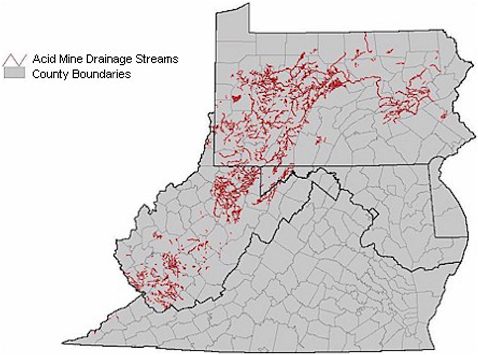
FIGURE 4-7 Acid mine drainage streams in Pennsylvania and West Virginia.
SOURCE: PADEP, as cited at http://www.leo.lehigh.edu/envirosci/enviroissue/amd/links/graphs.html.
Reclamation (WPCAMR)19 was formed with the goal of providing leadership for building local watershed-based support. In 1995, the U.S. Office of Surface Mining and EPA Region III signed an agreement establishing the Appalachian Clean Streams Initiative20 to address AMD water quality problems resulting from abandoned coal mines in Maryland, Ohio, Pennsylvania, and West Virginia. As of 1999, Pennsylvania had received $7.2 million in distributions under this program and it received just over $2 million in 2003 (OSM, 2003). Continued funding for these ongoing programs is essential to future water quality improvement in southwestern Pennsylvania.
Characteristics of Acid Mine Drainage in Southwestern Pennsylvania
The contact of pyrite with large volumes of oxygenated water moving into mine voids yields dissolved ferrous iron (Fe2+) and sulfuric acid (2H+ and SO42-). The ferrous iron subsequently oxidizes to ferric iron (Fe3+), which precipitates as ferric hydroxide, Fe(OH)3. This is the yellow-orange precipitate seen along AMD sluiceways and the bottoms of streams into which AMD discharges. AMD thus is typically a highly acidic solution bearing a large load of iron, either dissolved or precipitated as ferric hydroxide. AMD contact with rock and soil en route to surface discharge results in the dissolution of other metals such as aluminum, manganese, magnesium, and sodium. Mass concentrations of chemical constituents in AMD can
|
19 |
Additional information on the WPCAMR can be found at http://www.amrclearinghouse.org/WPCAMR/. |
|
20 |
Additional information on the Clean Streams Program, formerly called the Appalachian Clean Stream Initiative, can be found at http://www.osmre.gov/acsihome.htm#. Since its inception, the program has expanded (as of 2003) to include cooperative agreements with 12 states (Alabama, Illinois, Indiana, Iowa, Kentucky, Maryland, Missouri, Ohio, Oklahoma, Pennsylvania, Virginia, and West Virginia). |
range from tens to several thousands of milligrams per liter, depending on the local geology and hydrogeology, the flooded state of the mine, and the time since its abandonment (Lambert et al., 2004; Wood et al., 1999; Younger, 2000).
Stiles et al. (2004) characterized water quality types from mine discharges in the Monongahela basin. Data from 1,624 water samples collected from 84 mine discharge sites were compiled and grouped according to chemical, as well as other characteristics of the discharges. This analysis produced four basic clusters. The discharge groupings were governed primarily by three geochemical factors: total dissolved solids (TDS), degree of acid neutralization, and concentrations of metals. Most of the mine discharge sites (84 percent) were classified in a single cluster characterized by variable levels of pH, alkalinity, calcium, aluminum, and chloride and low levels of sodium, magnesium, iron, manganese, and sulfate. The smaller clusters were associated with waters that were high to very high in TDS content. Mine discharges with lower TDS content and positive alkalinity tend to be older discharges from mine voids that are flooded (Lambert et al., 2004; Stiles et al., 2004). Discharges with acidity and high TDS levels tend to be more recently initiated discharges from mine voids that are not completely flooded (Lambert et al., 2004). There are many old abandoned mine discharges in southwestern Pennsylvania, but newer discharges exist as well.
Effects of Acid Mine Drainage
The Monongahela and the Allegheny River basins have been influenced significantly by AMD for many decades. AMD inputs to streams have resulted in no-fishing designations for 1,071 stream-miles in the Monongahela River basin and 1,320 stream-miles in the Allegheny River basin (Sams and Beer, 2000). However, AMD loadings to many streams in the basins have decreased with time. As part of the USGS NAWQA program, the effects of coal mine drainage on stream water quality in the Allegheny and Monongahela River basins were evaluated (Anderson et al., 2000; Sams and Beer, 2000). Historical concentrations of sulfate (SO42-), a relatively nonreactive tracer of AMD inputs, were used to evaluate the long-term trends in AMD impacts on streams in the two basins. Sulfate serves as an indicator of total AMD input. It is toxic itself only when present at very high concentrations. Sams and Beer (2000) found that AMD inputs to the Monongahela River have been much greater than the inputs to the Allegheny. In 1980, for example, the annual sulfate loads transported by the Allegheny and Monongahela Rivers to the Ohio River at Pittsburgh were 1.2 million and 1.35 million tons, respectively. The Monongahela River basin, although smaller in overall drainage area (7,340 square miles versus 11,700 square miles for the Allegheny), contributed 53 percent of the sulfate load. Further, the Monongahela River at Braddock exhibited a median sulfate concentration of 110 mg/L from 1965 to 1995. This is almost twice as high as the median sulfate concentration of 60 mg/L for samples collected over the same time period in the Allegheny River at New Kensington. The difference in the inputs to the Monongahela and Allegheny Rivers is explained by the magnitude of the mining operations that have occurred in each. According to Sams and Beer (2000), approximately 6,600 mines have operated in the Monongahela River basin, compared to 2,500 in the Allegheny River basin.
In areas of the Allegheny and Monongahela River basins where coal production is very low or has ceased altogether, AMD inputs to the streams have decreased, in some cases substantially (Sams and Beer, 2000). For example, in the Loyalhanna Creek, which eventually
discharges to the Allegheny River, sulfate concentrations have decreased steadily since 1950, as shown in Figure 4-8. The decline in AMD chemical inputs to the Loyalhanna Creek and other surface waters in the basins is attributable to significantly reduced coal production, reclamation of abandoned mine lands since the late 1970s, implementation of AMD treatment at active mining operations and some abandoned mine sites, and decrease in the amount of readily available pyrite in the abandoned mine voids (Lambert et al., 2004; Sams and Beer, 2000). Although historical data indicate that the quality of discharges from many abandoned mines improves with time, this is not the case for all mine discharges. For example, discharges from mines that do not flood completely because of mine geometry and local hydrogeological conditions can remain highly acidic many decades after mine abandonment (Lambert et al., 2004). Moreover, as indicated by sulfate concentration data for Loyalhanna Creek in Figure 4-8, the rate of decrease in AMD constituent concentrations slows with time, such that long periods of time will be required for reduction to levels approaching natural background concentrations (Sams and Beer, 2000).
Regional groundwater quality is also affected by AMD. Another NAWQA study (Anderson et al., 2000; see also Appendix B) sampled 45 domestic water supply wells in the high-sulfur coal region of the Appalachian coal fields. Compared to groundwater in unmined areas of the coal-bearing rocks, water in shallow private domestic wells near reclaimed surface coal mines had higher concentrations of sulfate, iron, and manganese. Table 4-13 summarizes
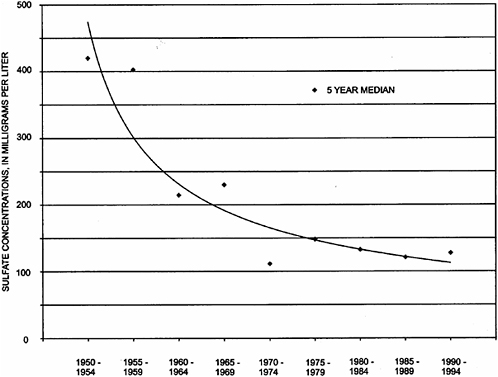
FIGURE 4-8 Median 5-year sulfate concentrations for the Loyalhanna Creek at Loyalhanna Dam, 1950-1995. SOURCE: Sams and Beer, 2000.
TABLE 4-13 Domestic Wells in the Allegheny and Monongahela Watersheds Exceeding Secondary Maximum Contaminant Levels (Data From 1996-1998)
|
Contaminant |
Mined Area (%) |
Unmined Area (%) |
|
Sulfate |
20 |
0 |
|
Fe |
60 |
20 |
|
Mn |
70 |
47 |
|
TDS |
20 |
7 |
|
SOURCE: Adapted from Anderson et al., 2000. |
||
the percentage of tested wells not meeting secondary maximum contaminant levels (MCLs) in both mined and unmined area wells.21
In addition to direct water quality effects due to AMD, mining activities can also affect water quality through changes to the subsurface during mine subsidence. These effects are described in Box 4-5.
AGRICULTURE
Conventional crop production activities entail the application of pesticides and fertilizers to boost crop production. As noted in Chapter 3, these inputs can harm water quality when carried by runoff into surface waters or by leaching into groundwaters. Further, disturbance of soils through tillage and poor livestock management practices can increase erosion, resulting in excess sedimentation of surface waterbodies. Livestock manure applied to crop and pasture lands can be a source of nutrients and pathogens, as can more direct input from livestock with access to streams or from feedlots and loafing lots directly adjacent to streams. In the latter uses, livestock also frequently trample and degrade streamside vegetation, destroying buffers that might otherwise intercept contaminants from the manure. Land application of biosolids on agricultural land is an additional concern, because of potential health risks and water quality. In the steep terrain of the region, erosion and sedimentation from agricultural activities can be considerable, and near-stream livestock activity can generate a combination of sediment and manure entering a stream, with potential for resuspension and possible regrowth of bacteria in the sediments. Accordingly, it is significant that agriculture is the largest land use in the region after forest land (see Figure 4-9).
Land in farms in the study region is presented in Table 4-14. Washington and Somerset Counties are the dominant agricultural counties with 261,139 and 223,323 acres, respectively (see Table 4-14). About 60 percent of the land in farms is cropland, with the remainder allocated to pasture, forest, and other uses. Primary agricultural production in the study region consists of sheep, dairy, hay, and truck farm crops. According to the 1997 U.S. Census of Agriculture, four counties in the region (Beaver, Indiana, Washington, and Westmoreland) rank among the top 100 in the United States in direct sales of farm products to consumers (USDA, 1997).
|
21 |
MCLs are the maximum allowable amounts of contaminants in drinking water and are set by the EPA through the National Primary Drinking Water Regulations. Nonmandatory secondary MCLs are also set for 15 contaminants that affect the aesthetics (taste, smell) of drinking water; see http://www.epa.gov/safewater/mcl.html for further information. |
|
BOX 4-5 Coal mining has helped to shape both southwestern Pennsylvania’s history and its current landscape. For many years, underground mining in this area used a method known as room-and-pillar, in which about 50 percent of the coal seam is left in place as “pillars” for roof support. In Washington and Greene Counties and the adjacent parts of Ohio and West Virginia, modern, active, high-extraction mining removes coal by the longwall method, in which 100 percent of the coal is removed within a large block, or “panel” of coal, using a longwall mining machine. Panels are typically 800 to 1,500 feet wide and several thousand feet to several miles long. Special hydraulic devices that support the roof are advanced as the mining machine progresses. As the coal is mined and the machine moves forward, supports are removed, and the overlying rocks and ground surface subside into the void in the “wake” of the mining. Longwall mining, which became common in Pennsylvania in the early 1980s, operates almost exclusively in the Pittsburgh coal seam, at depths of 300 to 800 feet below the surface. Because this method of mining is faster, requires fewer employees, and extracts virtually all the coal, it is more profitable than the older room-and-pillar technique. In the area’s two coalfield counties, about 20 percent of the land lies above longwall mines, and 60 percent or more may eventually be undermined in the next half century (Hopey, 2003a,b; PADEP, 1999). Although longwall mining subsidence received considerable attention recently in a series of articles in the Pittsburgh Post-Gazette relating the impacts on the area’s historic structures, subsidence has affected local structures and natural features since the 1980s and has been the focus of numerous studies (Kern et al., 2002; Kohli, 2002). Subsidence can cause damage to structures, ranging from small cracks in plaster to sinking, rending, or buckling of foundation support walls and footings. Hydrologic effects on both surface and groundwater are also common and may range from small changes in streamflow or water well levels to profound impacts such as stream diversion and dewatering of aquifers and well supplies (Booth, 1984, 1990; Carver and Rauch, 1994). In some cases, changes in surface slope due to subsidence can disrupt flow in streams, ditches, canals, and water and sewer lines. While some impacts are short term and some may even be positive (increased well yield in some cases), damage from subsidence is commonly long-term or permanent (Rauch, 1989). Final subsidence troughs, at the completion of mining, are roughly elliptical in shape and have a surface extent larger than the area of coal extraction. Ground movements have both horizontal and vertical components, with relative magnitude depending on the location within the subsidence trough. An area of compressive strain develops over the central part of the collapse, and zones of tensile strain make up the surrounding collapse structure and usually extend beyond the collapsed area within the mine. Characteristics and effects of the subsidence in any single longwall operation depend on many factors: topographic and hydrologic setting, hydrologic characteristics of the rock units, presence of existing rock fractures, depth of the mine, relative width and length of the panel, thickness and type of the overlying rock and soil, and thickness of the mined coal. Although subsidence is also found in areas of room-and-pillar mining, the effects of longwall mine subsidence are more immediate, and they follow a dynamic succession as the longwall panel advances underground. As the active face of the underground mining approaches the subsurface beneath a structure or natural feature, the object may at first lie in the zone of tensile strain, As mining advances beneath the object, it may then experience compression forces, and as the longwall |
As noted previously, agriculture is listed as a cause of impairment for a significant portion of waters in southwestern Pennsylvania (PADEP, 2004a). The listings reflect the aforementioned multiple effects of agriculture on receiving waters.
The impact of agricultural activities on water quality depends on the types of agricultural land use (e.g., specific crop types) and the specific agricultural practices utilized. In some cases,
|
face moves beyond the structure, tensile forces may again be in effect. This “dynamic subsidence” is the changing of the ground surface as the longwall passes through the area. As a result of these changes, cracks in structures, pavement, or aquifers may open, close, and even open again (PADEP, 1999). Following the dynamic process, there may be slow, long-term surface movement (Luo and Peng, 2000). Observed effects on structures include buckling of foundations, tilting of walls and supports out of plumb, deformation of door and window frames, cracks in walls and floors, separation of building components, and shifting of foundation walls and floors. On a field tour of Greene County in December 2002, the committee observed cracking and shifting of the foundation of the County Animal Shelter, which had been evacuated and abandoned, and the uneven surface and numerous repairs in the pavement of an immediately adjacent highway. According to Rauch (1989), deep aquifers and subsurface water supplies are partially to totally dewatered in the zones above subsided deep mines and typically have no short-term recovery. Water levels in deep wells following mining are generally below pre-mining levels. Wells that are shallower in the subsidence profile may suffer only partial and temporary dewatering. Subsidence can produce dramatic changes in surface waters, causing shifting of course and ponding (Peng et al., 1994). Carver and Rauch (1994) observed dewatering of streams, reduced discharges, and changes in baseflow conditions, with altered baseflow in recovered streams compared to unaltered streams. In a study in north central West Virginia, Cifelli and Rauch (1986) determined that baseflow streams were significantly affected where at least 10 percent of the watershed had subsided and dried up entirely where at least 25 to 30 percent of the watershed was undermined and subsided. Stout (2003) compared diversity, longevity, and functional organization of benthic communities in first- and second-order headwater streams in longwall undermined areas and in reference streams in southwestern Pennsylvania and northern West Virginia. Of four undermined streams in southwestern Pennsylvania, one stream was completely dry, two were dewatered in mid-reaches, and one stream was apparently unaffected; however, detailed examination of the latter stream revealed that 52 percent of the total length of the headwater stream network in the associated watershed had been lost due to subsidence. Benthic communities in longwall-undermined streams were significantly different from benthic communities of reference streams and retained approximately 50 percent taxa richness. Pennsylvania’s Act 54, the Bituminous Mine Subsidence and Land Conservation Act, requires mine operators to provide water supply replacement and subsidence damage repair to affected properties or to provide compensation as stated in the act. Recent controversies surrounding Act 54 and historic structures have involved a 1994 amendment allowing mining beneath structures built before 1966, as long as the property owner is compensated for structural damage and water loss. Prior to this amendment, coal operators were required to leave pillars of coal in place to support the structures. Differences exist between state law and federal historic preservation requirements. Several state legislators had proposed amendments tightening protections for historic buildings, water supplies, streams, and farms (Hopey, 2003a). A U.S. Office of Surface Mining review conducted in 2001 found that state law and regulations failed to adequately protect water supplies, homes, and surface properties damaged by longwall mining. In response, the state proposed regulatory changes and presented them for public hearings and comments in October 2003. Final adoption of the changes is expected in fall 2004 (Hopey, 2003c). |
such as orchard and tobacco production, former agricultural activities may also be of concern for potential present-day soil and water quality impacts due to intensive use of pesticides having persistent residues. Other important factors include the locations of agricultural activities in relation to streams and recharge areas and the soil features and topography that affect runoff, leaching, and run-in. Box 4-6 describes agricultural water quality problems in the Dunkard Creek watershed on the Pennsylvania-West Virginia border in Greene County. These water quality issues may be of concern in other areas of the study region where livestock are a major
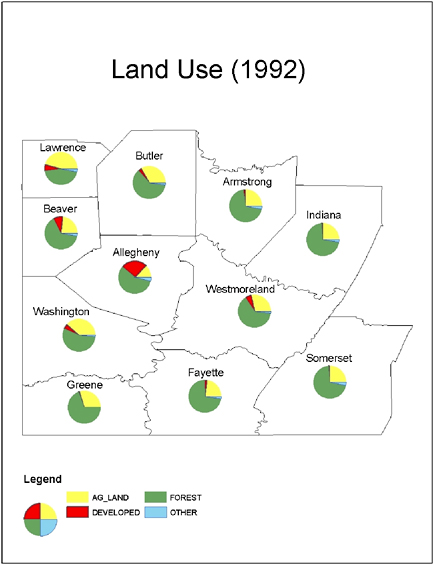
FIGURE 4-9 Major land uses in southwestern Pennsylvania as of 1992. SOURCE: Generated from 1992 USGS National Land Cover Data. Available on-line at http://landcover.usgs.gov/natllandcover.asp.
TABLE 4-14 Farm Acreage in Southwestern Pennsylvania and Percentage Used as Cropland
|
County |
Land in Farms (acres) |
% Cropland |
|
Allegheny |
33,788 |
56.79 |
|
Armstrong |
130,637 |
63.23 |
|
Beaver |
62,801 |
61.52 |
|
Butler |
143,985 |
66.91 |
|
Fayette |
125,034 |
56.63 |
|
Greene |
141,684 |
52.88 |
|
Indiana |
157,286 |
57.88 |
|
Lawrence |
88,987 |
66.34 |
|
Somerset |
223,323 |
60.42 |
|
Washington |
261,139 |
54.89 |
|
Westmoreland |
150,967 |
68.60 |
|
SOURCE: Adapted from USDA, 2002. |
||
part of agricultural production. Depending on the water quality problem (e.g., sediment, pathogens, pesticides), changes in agricultural land use and/or adoption of best management practices (BMPs) for the specific problem can reduce pollution loads from agricultural sources.
Few studies have characterized the public health impact of agricultural runoff. An outbreak of Escherichia coli O157:H7 and Campylobacter jejeuni in May and June 2000 in the rural town of Walkerton, Ontario, resulted in six deaths among the 1,346 reported cases and 65 hospitalizations. Laboratory and field investigations by the Bruce-Grey-Owen Sound Health Unit, Health Canada, and the Ontario Ministry of Health and Long-Term Care determined that the likely source of the outbreak was manure from adjacent farms and that surface water contamination from the farms entered a municipal drinking water well during a period of heavy rainfall and flooding (Clark et al., 2003; Health Canada, 2000). Notably, extreme precipitation events preceded 51 percent of waterborne disease outbreaks occurring between 1948 and 1994 (see discussion of Curriero et al., 2001, in Box 4-2). The potential for Cryptosporidium to contaminate surface water supplies is illustrated by the fact that agricultural runoff may contain oocysts of this parasite (Madore et al., 1987; Ongerth and Stibbs, 1987; Rose et al., 1988), and aperiod of wet weather preceded the well-known 1993 cryptosporidiosis outbreak in Milwaukee, Wisconsin.
Land Application of Biosolids
Biosolids—wastewater solids that have been specially treated to produce fertilizers or soil amendments—are used in agriculture, landscaping, and mine reclamation to promote plant growth and soil regeneration. In Pennsylvania, municipal wastewater treatment plants produce an estimated 400,000 dry tons of solids per year, and OSTDSs an estimated 605 million gallons of residential septage. Biosolids application is a means of recycling this material beneficially, to supply nutrients (N and P), micronutrients (trace metals), and organic amendments to soil and plants.
Biosolids contain several pollutants that can potentially affect water resources, including pathogens, nutrients, and metals. For this reason, federal and state regulations address treatment and quality of biosolids, site criteria, application procedures and rates, and cumulative loading rates (see NRC, 2002). Although the committee is unaware of any data demonstrating that land application of biosolids is adversely affecting regional water quality, this is a relatively common practice on southwest Pennsylvania’s agricultural and reclamation lands. Although the Region V office of PADEP maintains records of biosolids generation and application, these records were not readily available.
The PADEP regulates the treatment facilities and the land application sites, the latter with assistance from many of the county soil conservation districts. Regulations established in 25 PA Code § 271 follow the federal 503 biosolids regulations, with more stringent site requirements for application sites. All land-applied biosolids must meet criteria for “exceptional quality” or “non-exceptional quality.” These quality criteria address metals concentrations, pathogen reduction, and vector attraction reduction, with non-exceptional quality criteria being less stringent than exceptional quality. Biosolids that do not meet the regulatory criteria must be incinerated or landfilled (PADEP, 2001).
Treatment processes for biosolids can include digestion, lime stabilization, pasteurization, and composting to reduce odors, pathogens, and vector attraction. Facilities that produce
|
BOX 4-6 Dunkard Creek watershed, a tributary of the Monongahela River, straddles the Pennsylvania-West Virginia state boundary and lies within Greene County, Pennsylvania, and Monongalia County, West Virginia. The main stem of the creek originates approximately 2.5 miles west of Blacksville, West Virginia, at the confluence of the Pennsylvania Fork and the West Virginia Fork of Dunkard Creek. From there, it flows 17 channel-miles eastward, crossing the state boundary several times and discharging to the Monongahela north of Point Marion, Pennsylvania. The watershed acreage is almost evenly divided between the two states, with 71,350 acres in West Virginia and 75,000 acres in Pennsylvania. Population in the watershed is estimated at 18,000. Blacksville, West Virginia, and Mt. Morris and Bobtown, Pennsylvania, are the major towns, although none have more than about 200 residents. Coal mining has dominated the watershed’s economy, and is responsible for AMD-impaired stream listings in both states, as well as other water quality problems in the watershed. Although diverse and stable employment opportunities in nearby Morgantown, West Virginia, have tempered the effects of downturns in mining and other rural employment, U.S. Census statistics and U.S. Department of Agriculture programs for limited resource farmers indicate that limited incomes and poverty are common in the watershed area. Water quality efforts in the watershed have involved formal interstate cooperation, and collaborative citizens’ watershed groups, the Dunkard Creek Watershed Association (West Virginia) and the East Dunkard Watershed Association (Pennsylvania), are very active in education, remediation, and grant-seeking. During the past several years, these groups have won several awards and more than $1 million in grants, including more than $900,000 for treating AMD and a large EPA Watershed Initiative Grant. A 1999 watershed assessment of the upper watershed by the West Virginia Conservation Partnership (1999) and a Rivers Conservation Plan (Greene County Conservation District, 2000) by the Greene County, Pennsylvania, Soil Conservation District reviewed water quality problems affecting the watershed. Woodlands (60 percent) and grassland (20 percent) are dominant land uses, particularly in the upper West Virginia watershed. Although agricultural land use and water quality problems are found predominantly in this part of the watershed, similar problems have been observed where agriculture is prevalent in the lower watershed. These problems may also be typical of some of the other agricultural lands in the 11-county study area, especially those where livestock agriculture is predominant. Many of the steeply sloping farmlands in the watershed are used as pasture. Pasture and grasslands within the watershed have an average slope of 25-30 percent, even though 20 percent of the floodplain areas exist as grassland. Approximately 75 percent of the grassland is eroding at a rate of T or greater, where T is the soil erosion tolerance factor, or the maximum amount of erosion the soil can sustain and still serve as a medium for plant growth, retain water and plant nutrients, and allow the entry of air and water while protecting the underlying soil from erosion (NRCS, 1999). The soil erosion factor in this area of West Virginia and Pennsylvania is approximately 3 tons per acre (Jeffrey Skousen, West Virginia University, personal communication, 2004). Common management of pasture and grassland in the watershed is continuous grazing and mechanical brush control, with application of lime and fertilizer every 6-10 years. Grassland areas with horses exhibit a lower |
biosolids are required to obtain a permit that specifies quality criteria, management practices, site restrictions, monitoring, and reporting. Biosolids generators and land appliers must also receive approved training.
Land application sites are regulated under a general permitting system based on biosolids quality, with more stringent site restrictions for application of non-exceptional quality biosolids. Regulations mandate management practices and restrictions for application sites, depending on
|
percentage of ground cover due to equine habits of “spot grazing.” These areas are very vulnerable to higher erosion rates. More than half of the area experiences problems with increased sediment and nutrient loads in streams due to winter feeding locations and lack of improved animal watering facilities. A common practice of many agricultural land users is to feed and/or confine cattle to low-lying areas in winter, in close proximity to the farmsteads, which commonly exist near small streams. Most animal waste is stacked nearby or spread on fields throughout the year. There are no large confined animal feeding operations in the watershed, and approximately 90 percent of the cattle operations are part-time farmers with small beef cattle farms. Due to lack of improved watering facilities, cattle commonly have direct access to streams, and in many areas, livestock have denuded streamside vegetation. Cropland is a small portion of the total agricultural acres, with corn as the major crop and small acreages of oats, soybeans, and tobacco. Most cropland is 8-15 percent slope with soils of moderate fertility, and manures and fertilizers are applied at estimated rates. Management is generally crop rotation, both conventional and no-till. Limited water quality sampling by both states during 1996-1997 earned surface water quality designations of “moderate” by West Virginia and “good” by Pennsylvania. Aside from mining impacts, sampling results indicated that the main stem of Dunkard Creek in West Virginia periodically failed to meet the state’s fecal coliform standards. Recent upgrades and installations of sewage treatment plants in Bobtown, Mt. Morris, and Blacksville have eliminated many raw sewage problems. However, there have not been subsequent detailed investigations to determine the relative contributions of problematic livestock practices and faulty septic systems or straight piping of household wastewater. Along with acid mine drainage, stream bank erosion and sedimentation are major concerns among local watershed association members and other citizens. Erosion and sedimentation result from a combination of natural factors (meandering streams, highly erodable soils, steep terrain), agricultural practices, timber management practices on small-scale logging operations, mining, and dirt and gravel roads. Average annual stream bank erosion was estimated to be 24,000 tons per year on the main stem in West Virginia and an additional 20,000 tons on the tributaries. Since 1976, the Pennsylvania Fish and Boat Commission has extensively sampled the fish populations of Dunkard Creek and had documented the stream as one of the highest-density smallmouth bass populations in a warm-water stream in southwestern Pennsylvania. In the stream’s lower reaches, acid mine drainage and metals have severe adverse impacts on the fish and macroinvertebrate populations (including a widespread fish kill in 1998), but even in areas not severely effected by AMD, the local fishery has experienced problems. Declines in the quality of this fishery in the late 1980s to early 1990s were attributed to overfishing, and catch-and-release regulations were implemented in 1995 on a portion of the creek. Studies at a catch-and-release site and a control site with standard regulations indicated trends of continued decline from 1984-2000 at both sites. Researchers suspected habitat and/or water quality deterioration and determined that erosion and sedimentation have deleterious impacts on the fish population (58 PA Code § 65.24). As part of the watershed corrective measures in the Pennsylvania portion of the watershed, the Greene County Conservation District provides technical assistance and cost share funds for agricultural BMPs such as stream bank fencing, stabilized crossings, riparian buffers, rotational grazing, off-stream livestock watering facilities, and barnyard or feedlot area improvements (see http://www.county.greenepa.net/secured/gc/depts/pd/conserv/prog.htm for further information). |
the particular biosolids being applied. Application sites must have an implemented farm conservation plan or erosion-sedimentation control plan. Application rates are established by agronomic rates of crops, and cumulative metals loading at the application site is subject to regulatory limits. Soils must be sampled and analyzed for metals concentrations prior to application of non-exceptional quality biosolids at a site (exceptional quality biosolids have sufficiently low metals concentrations that cumulative loading rates do not apply). Regulations
specify injection and incorporation requirements and site restrictions for food, feed, and fiber crops, as well as turf, animals, and public access (PADEP, 2001; Stehouwer, 1999a).
Research conducted by Pennsylvania State University agronomists found that between 1978 and 1999, biosolids quality, in terms of metals concentrations, greatly improved and that more than 95 percent of Pennsylvania biosolids have metals concentrations well below the state’s most stringent regulatory limits (Stehouwer, 1999b). Because the composition of individual biosolids will vary from values examined in their assessment, that report recommended continuing to monitor cumulative loading whenever biosolids are applied to soil. According to the PADEP Region V biosolids coordinator, some sites in the region have had 20 years of biosolids application with no increases in regulated metals (William Graham, PADEP Region V, personal communication, 2004).
Pennsylvania State University agronomists conducted a three-year assessment of the effects of biosolids utilization on soil and crop quality. The assessment, involving 20 farms in 18 counties, compared land application agricultural sites with control sites having similar soils, crops, and management practices. A site in Beaver County, which received a total biosolids application of 45.3 tons per acre between 1984 and 2001, was the only southwestern Pennsylvania location. Statewide results showed that crop yields, nutrient contents, and trace element contents were similar in the biosolids and control plots, indicating no adverse effects of biosolids on crop quality and no increase of trace elements entering the food chain. At the end of the growing season, soils in the biosolids fields had higher nitrate levels, leading researchers to suggest that winter cover crops be planted to take up excess nitrogen and reduce the potential for nitrate leaching or runoff. Similar to animal manures, repeated application of biosolids led to increased soil phosphorus levels, and researchers recommended that the environmental significance of phosphorus be examined as the state moves to phosphorus-based nutrient management (Stehouwer, 2003).
For reclamation use at active permitted mining sites, the PADEP District Mining Office approves actual land application of biosolids. Biosolids used must come from a publicly owned wastewater treatment facility meeting regulatory biosolids criteria and having a permit issued by the Biosolids Division of the regional office.
SUMMARY
The relative contribution of different sources to microbial loading to surface and groundwaters in southwestern Pennsylvania cannot be determined with available information. However, sufficient information is available to determine that improperly managed wastewaters resulting from human activities are degrading the microbiological water quality in the region. Wet weather biological water quality in the main stem rivers is demonstrably worse than dry weather biological water quality, suggesting that stormwater and sewer overflows may be important contributors. Biological water quality in many tributaries does not meet standards in either wet or dry weather, suggesting that failing on-site treatment and disposal units may be important contributors. The contribution of agriculture to pathogen loading in rural areas of southwestern Pennsylvania could not be determined, but this is a well-known pathogen source in other regions, and many livestock management practices in the study region are likely to contribute pathogens to streams. Relative nonpoint contributions of human and nonhuman pathogen sources in both urban and rural watershed are not known.
Acid mine drainage is a significant cause of water quality impairment in the region, predominately affecting streams and tributaries. This regional water quality issue extends beyond Pennsylvania to encompass much of the Appalachian Range. Presently, this problem is being addressed by multiple jurisdictions including federal and state programs. The continuing flow of financial support to combat this water pollution problem is essential to future environmental water quality improvement.
REFERENCES
ACHD (Allegheny County Health Department). 2004. ACHD/GSPH Study of River Water Quality and Human Health; Ongoing study of rowers in southwestern Pennsylvania. Pittsburgh, PA: ACHD.
Alderiso, K., D. Wait, and M. Sobsey. 1996. Detection and characterization of male-specific RNA coliphages in a New York City reservoir to distinguish between human and nonhuman sources of contamination. In Proceedings of a Symposium on New York City Water Supply Studies, TPS-96-2. Herndon, VA: American Water Resources Association.
Anderson, D., R. Otis, J. McNeillie, and R. Apfel. 1994. In-situ lysimeter investigation of pollutant attenuation in the vadose zone of a fine sand. In On-Site Wastewater Treatment: Proceedings of the Seventh International Symposium on Individual and Small Community Sewage Systems. St. Joseph, MI: American Society of Agricultural Engineers.
Anderson, R., K. Beer, T. Buckwalter, M. Clark, S. McAuley, J. Sams, and D. Williams. 2000. Water Quality in the Allegheny and Monongahela River Basins: Pennsylvania, West Virginia, New York, and Maryland (1996-98). Denver, CO: U.S. Geological Survey.
Ashley, R., D. Wotherspoon, B. Coghlan, and E. Ristenpart. 1993. Cohesive sediment erosion in combined sewers. In Procedures of the 6th International Conference of Urban Storm Drainage, J. Marsalek and H. Torno (eds.). Victoria, Canada: Seapoint Publishing.
Booth, C. 1984. The hydrogeological impact of deep longwall mining: Appalachian Plateau, Pennsylvania. In Proceedings of the National Water Well Association Conference on the Impact of Mining on Ground Water. Dublin, OH: National Water Well Association.
Booth, C. 1990. Hydrogeological significance of subsurface coal mining. In Water Resources in Pennsylvania: Availability, Quality, and Management, S. Majumdar, E. Miller, and R. Parizek (eds.). Harrisburg, PA: Pennsylvania Academy of Science.
Borchardt, M., P. Bertz, S. Spencer, and D. Battigelli. 2003. Incidence of enteric viruses in groundwater from household wells in Wisconsin. Applied and Environmental Microbiology 69(2):1172-1180.
Burm, R., and R. Vaughan. 1966. Bacteriological comparison between combined and separate sewer discharges in southeastern Michigan. Journal of the Water Pollution Control Federation. 38:400-409.
Burton, A., D. Gunnison, and G. Lanza. 1987. Survival of pathogenic bacteria in various freshwater sediments. Applied and Environmental Microbiology 53(4):633-638.
Butler, D., Y. Xiao, S. Karunaratne, and S. Thedchanamoorthy. 1995. The gully pot as a physical, chemical, and biological reactor. Water Science and Technology 31(7):219-228.
Caccio, S., M. Giocomo, F. Aulicino, and E. Pozio. 2003. Giardia cysts in water treatment plants in Italy. Applied and Environmental Microbiology 69(6):3393-3398.
Carver, L., and H. Rauch. 1994. Hydrogeologic effects of subsidence at a longwall mine in the Pittsburgh Coal Seam. In Proceedings of the 13th Conference on Ground Control in Mining. Morgantown, WV: West Virginia University, Department of Mining Engineering.
Center for Watershed Protection. 2000. Microbes and urban watersheds: Concentrations, sources, and pathways. The Practice of Watershed Protection 3(1):554-565.
Chambers, P., M. Allard, S. Walker, J. Marsalek, J. Lawrence, M. Servos, J. Busnarda, K. Munger, K. Adare, C. Jefferson, R. Kent, and M. Wong. 1997. Impacts of municipal wastewater effluents on Canadian waters: A review. Water Quality Research Journal of Canada 32(4):659-713.
Chauret, C., N. Armstrong, J. Fisher, R. Sharma, S. Springthorpe, and S. Sattar. 1995. Correlating Cryptosporidium and Giardia with microbial indicators. Journal of the American Water Works Association 87(11):76-84.
Cifelli, R., and H. Rauch. 1986. Dewatering effects from selected underground coal mines in north-central West Virginia. In Proceedings of the 2nd Workshop on Surface Subsidence Due to Underground Mining. Morgantown, WV: West Virginia University.
Clark C., L. Price, R. Ahmed, D. Woodward, P. Melito, F. Rodgers, F. Jamieson, B. Ciebin, A. Li, and A. Ellis. 2003. Characterization of waterborne outbreak-associated Campylobacter jejuni. Emerging Infectious Diseases. Available on-line at http://www.cdc.gov/ncidod/EID/vol9no10/02-0584.htm. Accessed June 21, 2004.
Curriero, F., J. Patz, J. Rose, and S. Lele. 2001. The association between extreme precipitation and waterborne disease outbreaks in the United States, 1948-1994. American Journal of Public Health 91(8):1194-1199.
Desvousges, W., V. Smith, and A. Fisher. 1987. Option price estimates for water quality improvements: A contingent valuation study for the Monongahela River. Journal of Environmental Economics and Management 14:248-67.
DOC (United States Department of Commerce) and HUD (U.S. Department of Housing and Urban Development). 1997. American Housing Survey for the Pittsburgh Metropolitan Area in 1995. Current Housing Reports H170/95-13. Washington, DC: DOC Bureau of the Census and HUD Office of Policy Development and Research.
Earle, J., and T. Callaghan. 1998. Impacts of mine drainage on aquatic life, water uses and manmade structures. In Coal Mine Drainage Prediction and Pollution Prevention in Pennsylvania. Harrisburg, PA: Pennsylvania Department of Environmental Protection.
Edwards, D. 1993. Troubled waters in Milwaukee. ASM News 59(7):342-345.
Ellis, J. and Y. Wang. 1995. Bacteriology of urban runoff: The combined sewer as a bacterial reactor and generator. Water Science and Technology 31(7):303-310.
Environment Canada. 1999. Summary and Update of the 1997 Science Assessment of the Impacts of Municipal Wastewater Effluents (MWWE) on Canadian Waters and Human Health. Available on-line at http://www.ec.gc.ca/etad/default.asp?lang=En&n=36A7F162-11. Accessed April 27, 2004.
EPA (U.S. Environmental Protection Agency). 1980. Design Manual: Onsite Wastewater Treatment and Disposal System. EPA/625/1-80/012. Cincinnati, OH: Office of Research and Development and Office of Water.
EPA. 1993. Guidance Specifying Management Measures for Sources of Nonpoint Pollution in Coastal Waters. Washington, DC: Office of Water.
EPA 1997. Response to Congress on Use of a Decentralized Wastewater Treatment System. EPA 832-R-97-001b. Available on-line at http://www.epa.gov/owm/mtb/decent/response/. Accessed June 21, 2004.
EPA. 2000. Draft EPA Guidelines for Management of Onsite/Decentralized Wastewater Systems. Federal Register 65(195): 59840-59841. Washington, DC: Office of Wastewater Management.
EPA. 2001a. EPA’s Report to Congress on Implementation and Enforcement of the CSO Control Policy. EPA 833-R-01-003. Available on-line at http://cfpub1.epa.gov/npdes/cso/cpolicy_report.cfm?program_id=5. Accessed June 21, 2004.
EPA. 2001b. Proposed Rule to Protect Communities from Overflowing Sewers. EPA-833-01-F-001. Washington, DC: Office of Water.
EPA. 2002a. Report to Congress on the Impacts and Control of Combined Sewer Overflows and Sanitary Sewer Overflows; Availability of Public Health Experts Workshop Summary. EPA 833-R-02-002. Federal Register 67(248):78802. Available on-line at http://www.epa.gov/fedrgstr/EPA-WATER/2002/December/Day-26/w32566.htm. Accessed June 21, 2004.
EPA. 2002b. Onsite Wastewater Treatment Systems Manual. EPA-625-R-00-008. Washington, DC: EPA Office of Water and Office of Research and Development.
EPA. 2002c. National Water Quality Inventory: 2000 Report. EPA-841-R-02-001. Washington, DC: Office of Water.
EPA. 2003a. Fact Sheet: National Listing of Fish and Wildlife Advisories. EPA 823-F-03-003. Available on-line at http://www.epa.gov/waterscience/fish/advisories/factsheet.pdf. Accessed April 26, 2004.
EPA. 2003b. Voluntary National Guidelines for Management of Onsite and Clustered Wastewater Treatment Systems. EPA-832-B-03-001. Washington, DC: Office of Water.
Fleeger, G. 1999. The Geology of Pennsylvania’s Groundwater, 3rd Edition. Pennsylvania Geological Survey Educational Series 3. Available on-line at http://www.dcnr.state.pa.us/topogeo/education/es3.pdf. Accessed March 31, 2004.
Gannon, J., and M. Busse. 1989. E. coli and enterococci levels in urban stormwater, river water, and chlorinated treatment plant effluent. Water Resources 23(9):1167-1176.
Gibson, C., K. Stadterman, S. States, and J. Sykora. 1998. Combined sewer overflows: A source of Cryptosporidium and Giardia. Water Science and Technology 38(12):67-72.
Godfrey, A. 1993. Sources and fate of microbial contaminants. In Recreational Water Quality Management, D. Kay and R. Hanbury (eds.). London: Ellis Horwood.
Greene County Conservation District. 2000. Rivers Conservation Plan for the Dunkard Creek Watershed. Available on-line at http://www.dcnr.state.pa.us/brc/rivers/riversconservation/registry/18fullplan.pdf. Accessed November 30, 2004.
Hamilton, J. 2001. Man uses GPS to map dog doo. Associated Press, Boulder, CO. November 29.
Health Canada. 2000. Waterborne outbreak of gastroenteritis associated with a contaminated municipal water supply, Walkerton, Ontario, May-June 2000. Canada Communicable Disease Report. Available on-line at http://www.hc-sc.gc.ca/pphb-dgspsp/publicat/ccdr-rmtc/00vol26/dr2620eb.html. Accessed June 21, 2004.
Herwaldt, B., G. Craun, S. Stokes, and D. Juranek. 1991. Surveillance summaries: Waterborne-disease outbreaks, 1989-1990. Morbidity and Mortality Weekly Report 40(SS-3):1-21.
Hopey, D. 2003a. How longwall mining works. Pittsburgh Post-Gazette, November 23.
Hopey, D. 2003b. Sinking history: Longwall mines put holes in the past. Pittsburgh Post-Gazette, November 23.
Hopey, D. 2003c. Some legislators hope to toughen mining law. Pittsburgh Post-Gazette, November 25.
Jefferies, C., K. Young, and I. McGregor. 1990. Microbial aspects of sewage and sewage sludge in Dundee. Water Science and Technology 22(10-11):47-52.
Jiang, S., R. Noble, and C. Weiping. 2001. Human adenoviruses and coliphages in urban runoff-impacted coastal waters of Southern California. Applied and Environmental Microbiology 67(1):179-184.
Kern, J., D. Falkenstern, and R. Stingelin. 2002. Effects of Longwall Mining on Real Property Value and the Tax Base of Greene and Washington Counties, Pennsylvania. Harrisburg, PA: PADEP, Bureau of Mining and Reclamation.
Kimmel, W. 1983. The impact of acid mine drainage on the stream ecosystem. In Pennsylvania Coal: Resources, Technology and Utilization, S. Majundar and W. Miller, (eds.). Harrisburg, PA: Pennsylvania Academy of Science.
Kleinman, R., R. Hornberger, B. Leavitt, and D. Hyman. 2000. Introduction and recommendations. In Prediction of Water Quality at Surface Coal Mines. Morgantown, WV: West Virginia University, National Mine Land Reclamation Center.
Knowles, G. 1998. SepticStats: An Overview. Available on-line at http://www.nesc.wvu.edu/images/SepticStat.pdf. Accessed March 23, 2004.
Kohli, K. 2002. Mitigation measures to minimize subsidence damages caused by longwall mining to historic structures and their effectiveness. SME Paper No 02-052. Littleton, CO: Society for Mining, Metallurgy, and Exploration.
Lambert, D., K. McDonough, and D. Dzombak. 2004. Long-term changes in quality of discharge water from abandoned underground coal mines in Uniontown Syncline, Fayette County, PA, USA. Water Research 38:277-288.
Larsen, T., K. Broch, and M. Anderson. 1998. First flush effects in an urban catchment area in Aalborg. Water Science and Technology 37(1):251-257.
Lee, S., D. Levy, G. Craun, M. Beach, and R. Calderon. 2002. Surveillance for waterborne-disease outbreaks—United States, 1999-2000. Morbidity and Mortality Weekly Report 51(SS-8):1-47.
Lim, S., and V. Olivieri. 1982. Jones Falls Urban Runoff Project: Sources of Microorganisms in Urban Runoff. Baltimore, MD: Johns Hopkins School of Public Health & Hygiene.
Luo, Y., and S. Peng. 2000. Long-term subsidence associated with longwall mining—Its causes, development, and magnitude. Presented at Society of Mining Engineering Annual Meeting, Denver, CO, 1999.
MacKenzie, W., N. Hoxie, M. Proctor, M. Gradus, K. Blair, D. Peterson, J. Kazmierczak, D. Addiss, K. Fox, J. Rose, and J. Davis. 1994. A massive outbreak in Milwaukee of Cryptosporidium infection transmitted through the public water supply. New England Journal of Medicine 331(3):161-167.
Madore, M., J. Rose, C. Gerba, M. Arrowood, and C. Sterling. 1987. Occurrence of Cryptosporidium oocysts in sewage effluents and select surface waters. Journal Parasitology 73:702-705.
Makepeace, D., D. Smith, and S. Stanley. 1995. Urban stormwater quality: Summary of contaminant data. Critical Reviews in Environmental Science and Technology 25:93-139.
Marino, R., and J. Gannon. 1991. Survival of fecal coliforms and fecal Streptococci in storm drain sediments. Water Resources 9:1089-1098.
Marsalek, J., and B. Chocat. 2002. International report: Stormwater management. Water Science and Technology 46(6-7):1-17.
McDonald, A., D. Kay, and A. Jenkins. 1982. Generation of faecal and total coliform surges by storm flow manipulation in the absence of normal hydrometerological stimuli. Applied and Environmental Microbiology 44:292-300.
Metcalf & Eddy, Inc. 1991. Wastewater Engineering: Treatment, Disposal, Reuse, 3rd Edition, G. Tchobanoglous and F. Burton (eds.). New York: McGraw Hill.
MTAS (University of Tennessee Municipal Technical Assistance Service). 1997. Wastewater justice: Its complexion in small places. Doc. R14-1050-36-001-97. Knoxville, TN: University of Tennessee, Municipal Technical Assistance Service.
Nelson, V., S. Dix, and F. Shepard. 1999. Advanced On-Site Wastewater Treatment and Management Scoping Study: Assessment of Short Term Opportunities and Long Run Potential. Prepared for the Electric Power Research Institute, the National Rural Electric Cooperative Association and the Water Environment Research Foundation.
Novotny, V., H. Sung, R. Bannermann, and K. Baum. 1985. Estimating nonpoint pollution from small urban watersheds. Journal of the Water Pollution Control Federation 57(4):339-348.
NRC (National Research Council). 2002. Biosolids Applied to Land: Advancing Standards and Practices. Washington, DC: National Academy Press.
NRC. 2004. Indicators for Waterborne Pathogens. Washington, DC: National Academies Press.
NRCS (Natural Resources Conservation Service). 1999. National Soil Survey Handbook, Title 430-VI. Washington, DC: U.S. Government Printing Office.
Olivieri, V., C. Kruse, K. Kawata, and J. Smith. 1977. Microorganisms in urban stormwater. EPA/600/2/77/087. Washington, DC: Office of Research and Development.
Ongerth, J., and H. Stibbs. 1987. Identification of Cryptosporidium oocysts in river water. Applied and Environmental Microbiology 53:672-676.
OSM (Office of Surface Mining). 2003. Abandoned Mine Land Reclamation: Reclamation of Abandoned Mine Land That Took Place Before the Surface Mining Law was Passed in 1977. Available on-line at http://www.osmre.gov/annualreports/03aml.pdf.
PADEP (Pennsylvania Department of Environmental Protection). 1999. The Effects of Subsidence Resulting From Underground Bituminous Coal Mining on Surface Structures and Features and Water Resources. Harrisburg, PA: Office of Mineral Resources Management.
PADEP. 2001. Understanding Biosolids Land Application in Your Community. Fact Sheet 3800-FS-DEP 2649. Harrisburg, PA: PADEP.
PADEP. 2002. Clean Water Act, Section 303(d) List of Impaired Water Bodies, Draft, Version 5. Harrisburg, PA: PADEP.
PADEP. 2003. Frequently Asked Questions About Private Water Wells in Pennsylvania. Fact Sheet 3800-FS-DEP2657. Available on-line at http://www.dep.state.pa.us/dep/deputate/watermgt/wc/Subjects/SrceProt/well/questions/default.htm.
Accessed March 18, 2004.
PADEP. 2004a. 2004 Pennsylvania Integrated Water Quality Monitoring and Assessment Report. Available on-line at http://www.dep.state.pa.us/dep/deputate/watermgt/Wqp/WQStandards/303d-Report.htm. Accessed June 21, 2004.
PADEP. 2004b. Reclaim PA: Pennsylvania’s Abandoned Mine Reclamation and Well Plugging Program. Available on-line at http://www.dep.state.pa.us/dep/deputate/reclaimpa/reclaimpahome.htm. Accessed June 12, 2004.
Peng, F., Z. Sun, and S. Peng. 1994. Disturbance of surface stream due to longwall mining. In Proceedings of the International Land Reclamation and Mine Drainage Conference, U.S. Bureau of Mines Special Publication SP 06D-94. Available on-line at http://www.ott.wrcc.osmre.gov/library/proceed/intl1994/volume4.pdf.
Puchalsky, R. and A. LaPlante. 1998. Troubled Waters: A Report on Toxic Releases into America’s Waterways. Available on-line at http://uspirg.org/uspirg.asp?id2=7007&id3=USPIRG&. Accessed June 6, 2004.
Rauch, H. 1989. Ground water impacts from surface and underground coal mining. In Proceedings of the Conference on West Virginia Ground Water, 1987, Status and Future Directions. Morgantown, WV: West Virginia University, West Virginia Water Research Institute.
Rodricks, D. 2003. Unleashed dogs spoil a walk—and topsoil. Baltimore Sun, December 7.
Rose, J., H. Darbin, C. Gerba. 1988. Correlations of the protozoa, Cryptosporidium and Giardia with water quality variables in a watershed. Water Science and Technology 20:271-276.
Rose, J., S. Daeschner, D. Easterling, F. Curriero, S. Lele, and J.A. Patz. 2000. Climate and waterborne disease oubreaks. Journal of the American Water Works Association 92(9):77-87.
Sams, J., and K. Beer. 2000. Effects of coal-mine drainage on stream water quality in the Allegheny and Monongahela River basins—Sulfate transport and trends. Water Resources Investigations Report 99-4208. Lemoyne, PA: USGS, National Water Quality Assessment Program.
Scandura, J., and M. Sobsey. 1997. Viral and bacterial contamination of groundwater from on-site sewage treatment systems. Water Science and Technology 35(11-12):141-146.
Schiff, K., and P. Kinney. 2001. Tracking sources of bacterial contamination in stormwater discharges to Mission Bay, California. Water Environment Research 73(5):534-542.
Simmons, G., Jr., D. Waye, S. Herbein, S. Myers, and E. Walker. 2001. Estimating nonpoint fecal coliform sources in Northern Virginia’s Four Mile Run watershed. In Proceedings of the 2000 Virginia Water Resources Research Symposium. Virginia Water Resources Research Center Special Report SR-19-2000. Blacksburg, VA: VWRRC.
Skousen, J. 1995. Acid mine drainage. Green Lands 25(2):52-55.
Smullen J., A. Shallcross, and K. Cave. 1999. Updating the U.S. nationwide urban runoff quality database. Water Science and Technology 39(12):9-12.
States, S., K. Stadterman, L. Ammon, P. Vogel, J. Baldizar, D. Wright, L. Conley, and J. Sykora. 1997. Protozoa in river water: Sources, occurrence, and treatment. Journal of the American Water Works Association 89(9):74-83.
Stehouwer, R. 1999a. Land application of sewage sludge in Pennsylvania: A plain English tour of the regulations. University Park, PA: Penn State College of Agricultural Sciences Cooperative Extension.
Stehouwer, R. 1999b. Land application of sewage sludge in Pennsylvania: Biosolids quality. University Park, PA: Penn State College of Agricultural Sciences Cooperative Extension.
Stehouwer, R. 2003. Land application of sewage sludge in Pennsylvania: Effects of biosolids on soil and crop quality. University Park, PA: Penn State College of Agricultural Sciences Cooperative Extension.
Stern, D. 1996. Initial investigation of the sources and sinks of Cryptosporidium and Giardia within the watersheds of the New York City water supply system. In Proceedings of a Symposium on New York City Water Supply Studies. TPS-96-2. Herndon, VA: American Water Resources Association.
Steuer, J., W. Selbig, N. Hornewer, and J. Prey. 1997. Sources of contamination in an urban basin in Marquette, Michigan, and an analysis of concentrations, loads, and data quality. USGS Water Resources Investigation Report 97-4242. Reston, VA: USGS.
Stiles, J., J. Donovan, D. Dzombak, R. Capo, L. Cook. 2004. Geochemical cluster analysis of mine water quality within the Monongahela basin. Presented at the 2004 National Meeting of the American Society of Mining and Reclamation and the 25th West Virginia Surface Mine Drainage Task Force, Morgantown, WV, April 18-24.
Stout, B. 2003. Impacts of longwall mining on the diversity, longevity, and functionality of benthic macroinvertebrate communities in central Appalachian headwater streams. Presented at North American Benthological Society Annual Meeting, Athens, GA.
Strawley, G. 2002. Pennsylvania Development: Community’s Growth Troubles Start in Its Sewers. Water Infrastructure Network News. Available on-line at www.win-water.org/win_news/053002article.html. Accessed June 21, 2004.
Sykora, J., S. States, W. Bancroft, S. Boutros, M. Shapiro, and L. Conley. 1986. Monitoring of water and wastewater for Giardia. In Proceedings of the American Water Works Association (AWWA) Water Quality Technology Conference. Denver, CO: AWWA.
TPRC (Third Party Review Committee). 2002. Third Party Review of the ALCOSAN Regional Long Term Wet Weather Control Concept Plan. Pittsburgh, PA: ALCOSAN.
USACE (U.S. Army Corps of Engineers). 1997. Montour Run Watershed, Allegheny County, Pennsylvania: Water Quality and Aquatic Life Resources. Pittsburgh, PA: USACE.
USACE. 2000. Nine Mile Run Allegheny County, PA: Aquatic Ecosystem Restoration Water Quality and Aquatic Life Report. Pittsburgh PA: USACE.
USDA (U.S. Department of Agriculture). 1997. U.S. Census of Agriculture. Washington, DC: National Agricultural Statistics Service.
USDA. 2002. U.S. Census of Agriculture. Pennsylvania State and Country Data. Available on-line at http://www.nass.usda.gov/census/census02/volume1/PAVolume104.pdf. Accessed November 16, 2004.
Van Metre, P., and B. Mahler. 2003. The contribution of particles washed from rooftops to contaminant loading to urban streams. Chemosphere 52(10):1727-1741.
Walker, W., R. NcNutt, and C. Maslanka. 1999. The potential contribution of urban runoff to surface sediments of the Passaic River: Source and chemical characteristics. Chemosphere 38(2):363-377.
WEF (Water Environment Federation). 1999. Prevention and Control of Sewer System Overflows. MOP FD-17, 2nd edition. Alexandria, VA: WEF.
West Virginia Conservation Partnership. 1999. Resource Assessment for the Dunkard Creek Watershed. Morgantown, WV: West Virginia Conservation Partnership.
Wood, S., P. Younger, and N. Robins. 1999. Long-term changes in the quality of polluted minewater discharges from abandoned underground coal workings in Scotland. Quarterly Journal of Engineering Geology and Hydrogeology 32(1):69-79.
WRAS. 2001. Watershed Restoration Action Strategy: State Water Plan Subbasin 19D: Lower Youghiogheny River Watershed: Westmoreland and Fayette Counties. Available on-line at http://www.dep.state.pa.us/dep/deputate/watermgt/wc/Subjects/Nonpointsourcepollution/Initiatives/WRASLISTINFO/WrasPlans/WRAS-19D.pdf. Accessed June 21, 2004.
WRAS. 2003a. Watershed Restoration Action Strategy: State Water Plan Subbasin 17C: Redbank Creek Watershed (Allegheny River): Jefferson, Armstrong, Clarion, and Clearfield Counties. Available on-line at http://www.dep.state.pa.us/dep/deputate/watermgt/wc/Subjects/Nonpointsourcepollution/Initiatives/WRASLISTINFO/WrasPlans/WRAS-17C.pdf. Accessed June 21, 2004.
WRAS. 2003b. Watershed Restoration Action Strategy: State Water Plan Subbasin 19E: Upper Youghiogheny River Watershed (Laurel Creek and Indian Creek): Fayette, Somerset, and Wetmoreland Counties. Available on-line at http://www.dep.state.pa.us/dep/deputate/watermgt/wc/Subjects/Nonpointsourcepollution/Initiatives/WRASLISTINFO/WrasPlans/WRAS-19E.pdf. Accessed June 21, 2004.
WRAS. 2003c. Watershed Restoration Action Strategy: State Water Plan Subbasin 20F: Chartiers Creek Watershed (Ohio River): Washington and Allegheny Counties. Available on-line at http://www.dep.state.pa.us/dep/deputate/watermgt/wc/Subjects/Nonpointsourcepollution/Initiatives/WRASLISTINFO/WrasPlans/WRAS-20F.pdf. Accessed June 21, 2004.
WRAS. 2003d. Watershed Restoration Action Strategy: State Water Plan Subbasin 18E: Stonycreek River and Little Conemaugh River Watersheds: Somerset and Cambria Counties. Available on-line at http://www.dep.state.pa.us/dep/deputate/watermgt/wc/Subjects/Nonpointsourcepollution/Initiatives/WRASLISTINFO/WrasPlans/WRAS-18E.pdf. Accessed June 21, 2004.
WSIP (Southwestern Pennsylvania Water and Sewer Infrastructure Project Steering Committee). 2002. Investing in Clean Water: A Report from the Southwestern Pennsylvania Water and Sewer Infrastructure Project Steering Committee. Pittsburgh, PA: Campaign for Clean Water.
Younger, P. 2000. Predicting temporal changes in total iron concentrations in groundwaters flowing from abandoned deep mines: A first approximation. Journal of Contaminant Hydrology 44:47-69.


