
St. Petersburg, Florida, Dual Water System: A Case Study
James Crook
INTRODUCTION
The city of St. Petersburg, Florida, is a largely residential peninsular community located on Florida’s west-central coast. It is bound on the east and south by Tampa Bay and on the west by the Gulf of Mexico. St. Petersburg has a population of approximately 250,000. The Tampa Bay area receives an average of 140 centimeters (cm) (55 inches [in]) of rainfall annually, nearly half of which falls during the months of June, July, and August. Approximately 100 cm (40 in) of the 140 cm (55 in) are lost to evapotranspiration, leaving only 40 cm (15 in) available for potable and other uses. Due to the region’s flat topography, there is little opportunity to impound water as a water supply source. Thus, while some of the rainfall percolates into the underground and enhances the groundwater supply, the majority of the rainfall remaining after evapotranspiration becomes runoff and eventually flows into the sea. The water supply problem is further compounded by a continuing influx of new residents to the area, many of whom choose to live in coastal areas where the groundwater supply is most limited because of seawater intrusion.
St. Petersburg has no significant surface water or groundwater suitable for potable water supplies within its corporate boundaries. As a result, water is obtained from adjacent counties from which several other municipal governments also obtain their water supplies. This situation, coupled with restrictive wastewater discharge requirements, led St. Petersburg to develop one of the largest urban water reuse systems in the world.
The initial portion of the retrofit system went into operation in 1977. Since that time it has grown both in volume of reclaimed water delivered and number
of customers. The dual water system currently serves almost 10,000 customers throughout the city, including more than 9,400 residential customers for landscape irrigation. In 2001, 79,000 cubic meters per day (m3/d) (21 million gallons per day [mgd]) of reclaimed water were used by system customers to irrigate more than 2,500 hectares (ha) (6,200 acres [ac]) of parks, school grounds, golf courses, and commercial and residential property. The reclaimed water also is used for cooling at a resource recovery facility and in air conditioning units at commercial buildings, including a large domed sports stadium.
WATER RESOURCES
By 1900, the municipal wells located in St. Petersburg were being pumped for increasingly longer intervals because of a growing population. By the mid-1920s, chloride in the groundwater began to increase due to seawater intrusion. Realizing that it was facing a potential water crisis, the city entered into a contract with a private company to provide St. Petersburg with a new water supply. The company purchased a section of land in adjacent Hillsborough County, developed a well field, constructed a water treatment plant, and laid approximately 48 kilometers (km) (30 miles [mi]) of 90-centimeter (36 in) water main from the water treatment facility to a water repumping station the company constructed north of the city. In the early 1940s, St. Petersburg purchased the company’s assets, including a second undeveloped section of land in Hillsborough County, as well as Weeki Wachee Springs, located in Hernando County. The water company bought the spring with the intention of utilizing it as a water source at some future date when it would be more cost-effective. The spring is located more than 97 km (60 mi) from St. Petersburg. By the early 1960s, the unused property in Hillsborough County was developed as a groundwater source of supply for the city. In the late 1960s, a third property was purchased and developed as a well field. It was located approximately 64 km (40 mi) north of St. Petersburg in Pasco County.
When St. Petersburg joined with Pinellas County in the early 1970s to develop another well field in Pasco County, Pasco, Hillsborough, and Hernando Counties joined together to have legislation enacted to block any future water development by municipalities outside of their jurisdiction. The counties became alarmed that they might not be able to provide adequate water for their own growing populations because of St. Petersburg’s water withdrawals.
St. Petersburg faced a two-fold problem in the early to mid-1970s. First, it needed additional water, but it was uncertain if permission could be obtained to develop a new supply. Due to costs, ecological concerns, and the possibility of worsening already strained relations with other counties, the development of Weeki Wachee Springs as a water supply source for the city was not considered a workable alternative. One option was to drastically reduce its future water demand. Secondly, because of rapid population growth, the city’s four waste-
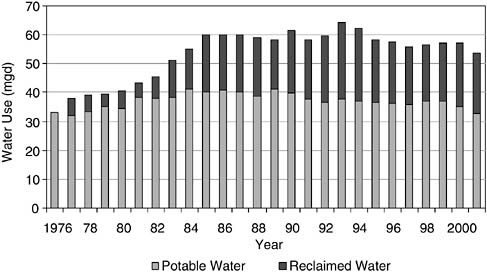
FIGURE 1 Water use in St. Petersburg, Florida.
water treatment plants needed to be enlarged. Concurrently, the Florida Legislature enacted a bill in 1972 that required all communities in the Tampa Bay area to cease discharging to Tampa Bay or to treat their wastewater with advanced wastewater treatment (AWT) processes to reduce biodegradable organic matter and nutrients to very low levels. Wastewater discharged to surface waters could not exceed 5 mg/l biochemical oxygen demand (BOD), 5 mg/l suspended solids, 3 mg/l total nitrogen, and 1 mg/l total phosphorus. The city evaluated the alternatives and, based on the cost of constructing and operating AWT facilities and considering the water supply problems, opted to upgrade the plants to tertiary treatment (i.e., secondary treatment, coagulation, filtration, and disinfection) and implement a water reuse and deep well injection program that would result in a zero discharge to surface waters.
In 2001, the reclaimed water system supplied 79,000 m3/d (21 mgd) of the 204,000 m3/d (54 mgd) total water provided by the city’s Utility Department. Figure 1 indicates the growth of the reclaimed water system from its inception in 1977 to 2000. Because of the lowered demand for potable water, the necessity for a water plant expansion has been postponed and may not be needed at all if current water usage trends continue.
RECLAIMED WATER SYSTEM
St. Petersburg’s reclaimed water system has several component parts, which are described in the following paragraphs.
Water Reclamation Plants
There are four water reclamation plants (WRPs) in St. Petersburg: Albert Whitted (Southeast) WRP; Northeast WRP; Northwest WRP; and Southwest WRP. They all have been upgraded to conform to the current Florida Department of Environmental Protection water reuse regulations. The plants have treatment capacities ranging from 47,000 m3/d (12.4 mgd) to 76,000 m3/d (20 mgd), with a total rated capacity of 260,000 m3/d (68.4 mgd). The treatment process train is essentially the same at all of the four water reclamation plants and consists of grit removal, activated sludge biological treatment, secondary clarification, chemical coagulation, filtration, and disinfection. Covered storage of the reclaimed water is provided at each of the wastewater reclamation plants. The reclaimed water ground storage tanks have a total capacity of 95,000 m3 (25 million gallons).
The initial reclaimed water distribution system was limited to serving irrigation water to golf courses, parks, school grounds, and large commercial areas. In 1981, the city applied for grant funding from the U.S. Environmental Protection Agency to expand the reclaimed water distribution system. A study conducted in support of the grant application identified four areas in the city where groundwater quality was deemed especially poor for irrigation. These areas were located adjacent to the coast and were designated “water quality critical” because the shallow groundwater supplies were either inadequate or contained high concentrations of chlorides or iron. Many of these locations were dredge and fill sites, where expensive waterfront homes were constructed. This study led to expansion of the reclaimed water system into residential areas. From 1977 through 1987, St. Petersburg spent more than $100 million upgrading and expanding the four water reclamation plants and constructing over 320 km (200 mi) of reclaimed water pipelines.
In 2001, the total average daily flow from the four water reclamation plants was approximately 160,000 m3/d (42 mgd). The volume of reclaimed water used amounted to 42 percent of the total water supplied by the St. Petersburg Utilities Department, including about 5,500 m3/d (1.5 mgd) used for in-plant purposes at the reclamation plants. The dual distribution system provided reclaimed water to almost 10,000 customers. Of these, more than 9,300 were individual residences receiving reclaimed water for lawn and ornamental plant irrigation, and 440 were commercial or industrial customers who received reclaimed water for a variety of applications, including irrigation and cooling water. The treated wastewater that was not reused was pumped down deep injection wells for disposal.
Injection Wells
Deep injection wells are used to dispose of excess reclaimed water and inadequately treated wastewater. The city operates a total of 10 injection wells at the four WRPs. There are either two or three wells located at, or adjacent to,
each reclamation plant. The injection wells range in diameter from 50 cm (20 in) to 76 cm (30 in). The wells penetrate to a saltwater aquifer approximately 300 m (1,000 ft) below the land surface. The water in this aquifer contains approximately 22,000 mg/l of chlorides, precluding its use as a water supply. The total injection capacity is about 530,000 m3/d (140 mgd).
Injection well testing indicated that the injection zone formation in St. Petersburg is sensitive to the amount of solids in the reclaimed water. Even though the wastewater is injected into a fractured and highly transmissive dolomite and limestone formation, slight pressure increases have been observed when suspended solids in the wastewater are greater than 10 mg/l. Acidization of the injection wells with concentrated hydrochloric acid restored the injection capacities of the affected wells.
Water quality monitoring via observation wells at the Southwest WRP indicated that the fresh, nonsaline reclaimed water is very buoyant in the saline injection zone. A large amount of mixing was observed in the injection plume as it moved out horizontally away from the injection wells. Even after several years of injection, the onsite injection zone observation wells still show a mixture of reclaimed water and saline water. It was hoped that the injected reclaimed water would form a bubble in the aquifer such that it could be stored in the underground and extracted as needed in the future. However, a significant reclaimed water lens has not been observed to form after prolonged injection.
Distribution System
As previously stated, the reclaimed water dual distribution system served almost 10,000 customers in 2001. Reclaimed water is delivered through more than 160 km (100 mi) of trunk and transmission mains ranging from 25 cm (10 in) to 120 cm (48 in) in diameter. Local service is provided through more than 300 km (190 mi) of small diameter distribution pipe ranging from 5 cm (2 in) to 20 cm (8 in) in diameter. The transmission mains from all four WRPs are interconnected so that reclaimed water flow and pressure can be maintained on the entire distribution network when any one plant is taken out of service. The reclaimed water system incorporates five city owned and operated booster pump stations and four privately owned and operated booster pump stations to provide reclaimed water for all of the applications throughout the city.
One of the early decisions made during development of the dual distribution system involved color-coding all polyvinyl chloride (PVC) pipes, using blue for potable water, green for sewers, and brown for reclaimed water. All buried ductile iron pipe was affixed with a coded brown tape to denote it as part of the reclaimed water distribution piping network. Hydrants installed on the system to flush the lines and serve as a backup to the fire protection system were also color-coded. Reclaimed water is not used as the primary fire protection source because it is considered to be an interruptible source. Reclaimed water valve boxes are square
to differentiate them from potable water valve boxes, which are round. Several years ago purple became the standard color used to color-code reclaimed water pipes, valves, and appurtenances. Hence, St. Petersburg has switched to the purple color as the standard for identifying the reclaimed water system.
Nine monitoring wells are scattered throughout the city, because the entire community is considered to be a reclaimed water irrigation site. Most of the wells are located in the major irrigation areas, such as golf courses and school grounds. Water quality samples are routinely obtained at different locations on the distribution system and analyzed for fecal coliform organisms and chlorine residual. System pressure also is monitored at key locations.
Residential Irrigation
Residential landscape irrigation with reclaimed water is voluntary in St. Petersburg. Reclaimed water lines are brought into an area when at least 50 percent of the residents in that area petition for service and agree to connect to the reclaimed water system. The residents who hook up to the system pay the cost of extending distribution lines to serve them, which typically ranges from $500 to $1,200 per customer. The total connection charge for a 1.6-cm (5/8-in) or 1.9-cm (3/4-in) line is $295, consisting of a $180 tapping fee and $115 for a backflow prevention device on the potable water line. Reclaimed water costs $10.36 for the first 0.4 ha (1 ac) and $5.92 for each additional 0.4 ha (1 ac) or portion thereof.
All potable water services located in areas where reclaimed water service is available are protected with a cross-connection control device. Dual check valves are installed at each potable water meter. The backflow preventers are intended to protect the potable water system from possible illegal or inadvertent cross-connection of the reclaimed water system and potable water system.
A typical residence in St. Petersburg uses as much as 110 m3 (30,000 gallons) per month of reclaimed water for landscape irrigation during peak demand periods, assuming a residential lot size of 650 m2 (7,000 ft2). The average irrigation rate is 4 cm/week (1.5 in/week). The average home discharges approximately 23 cm3 (6,000 gallons) of sewage per month into the sanitary sewer system. Thus, it requires about five sanitary sewer customers in order to provide an adequate supply to one reclaimed water customer during peak demand periods. Reclaimed water reuse for residential irrigation in St. Petersburg is not metered, and surveys have shown that most residential customers use about 20 percent more reclaimed water than necessary for proper irrigation. Irrigation rates in excess of 4 cm/week (1.5 in/week) increase opportunistic weed infestations and the incidence of fungal diseases in many turf grass species.
Use of nutrient-rich reclaimed water has resulted in reduced fertilizer costs for the system’s irrigation customers. Application of approximately 4 cm (1.5 in) of reclaimed water per week has been estimated to provide 50 percent of the
nitrogen, phosphorus, and potassium requirements for horticultural and agricultural purposes.
WATER QUALITY AND HEALTH CONSIDERATIONS
The Florida Department of Environmental Protection has adopted comprehensive water reuse criteria, which were most recently revised in 1999. The criteria are summarized in Table 1. For residential and public access irrigation, the regulations require that wastewater receive secondary treatment, filtration, and disinfection such that the fecal coliform level is below detectable limits in 75 percent of the samples analyzed over a 30-day period and does not exceed 25 fecal coliforms/100 ml at any time. A minimum total chlorine residual of 1.0 mg/l is required after at least 15 minutes contact at peak hour flow. The regulations also specify a maximum BOD limit of 20 mg/l, a total suspended solids limit of 5 mg/l prior to disinfection, and continuous monitoring of turbidity and chlorine residual. The intent of the criteria is to assure that the treated water is essentially free of pathogens.
Several hundred reclaimed water samples have been analyzed for virus since implementation of the dual distribution system. Detectable levels of virus have occasionally been observed, but improvements in treatment reliability at the WRPs throughout the years have greatly reduced the number of samples having detectable levels of virus. The samples that were positive generally contained less than one enteric virus per 100 liters. It is noteworthy that there have not been any reported cases of illness or disease resulting from the use of reclaimed water at St. Petersburg.
SYSTEM PROBLEMS
In the early stages of the reclaimed water program, reclaimed water was stored in an open pond at one of the WRPs prior to pumping it to the distribution system. Unfortunately, the turnover rate of reclaimed water in the pond was low, and nutrients in the water promoted duckweed and algae blooms. In addition, the introduction into the pond of palm tree seeds dropped by birds, and other particulates, caused considerable clogging of irrigation spray nozzles. These problems were corrected by storing the finished reclaimed water in covered ground storage tanks at all four WRPs.
During the first year of operation of the residential reclaimed water system, it was discovered that backflow preventers on potable water lines were constraining the expansion of water within some residential internal water systems. Backflow preventers did not allow water to expand normally when the hot water temperature increased, and safety valves on hot water heaters allowed the excess water to be discharged into homes. Installing separate pressure relief valves on outside potable water hose bibbs at the residences solved the problem.
TABLE 1 Florida Treatment and Quality Criteria for Reclaimed Water
|
Type of Use |
Water Quality Limits |
Treatment Required |
|
200 fecal coli/100 ml 20 mg/l TSSc 20 mg/l CBODd |
Secondary & disinfection |
|
|
Public access area irrigation,e food crop irrigation,f toilet flushing,g fire protection, aesthetic purposes, dust control, commercial laundries, vehicle washing, other usesh |
No detectable fecal coli/100 mli 5.0 mg/l TSS 20 mg/l CBOD |
Secondary, filtration, & disinfection |
|
Rapid infiltration basins, absorption fields |
200 fecal coli/100 ml 20 mg/l TSS 20 mg/l CBOD 12 mg/l NO3 (as N) |
Secondary & disinfection |
|
Rapid infiltration basins in unfavorable geohydrologic conditions |
No detectable fecal coli/100 mli 5.0 mg/l TSS Primary & secondary drinking water standards |
Secondary, filtration, & disinfection |
|
Injection to groundwater |
No detectable fecal coli/100 mli 5.0 mg/l TSS Primary & secondary drinking water standards |
Secondary, filtration, & disinfection |
|
Injection to formations of Floridan or Biscayne Aquifers having TDS <500 mg/lj |
No detectable fecal coli/100 mli 5.0 mg/l TSS 3 mg/l TOCk 0.2 mg/l TOXl Primary & secondary drinking water standards |
Secondary, filtration, disinfection, & activated carbon adsorption |
|
Discharge to Class I surface waters (used for potable supply) |
No detectable fecal coli/100 mli 5 mg/l TSS 20 mg/l CBOD 10 mg/l NO3 (as N) Primary & secondary drinking water standards |
Secondary, filtration, & disinfection |
In about 1985, St. Petersburg began receiving complaints from some residential homeowners claiming damage to ornamental plants and trees caused by irrigation with reclaimed water. Investigation revealed that chloride levels in the reclaimed water were as high as 700 mg/l at times. In response, the city conducted a research study and found that chloride levels above 400 mg/l in irrigation water for an extended time period damages salt-sensitive species of plants. A total of 205 common ornamental plant species was evaluated for tolerance to chloride; it was found that three types of plants (crape myrtle [Lagerstroemia spp.], azaleas [Rhododendron spp.], and Chinese privet [Ligustrum sinense]) have extremely low salt tolerances and should not be irrigated with reclaimed water. The problem was caused by infiltration of seawater into sewers near the coast and was solved by reducing seawater intrusion through an aggressive infiltration/inflow correction program, by mixing high chloride reclaimed water with reclaimed water containing low concentrations of chloride, and by diverting some reclaimed water containing very high chloride levels to the deep wells for disposal. Reclaimed water chloride levels are now kept below 400 mg/l, and complaints have ceased.
Although approximately 60 percent of the effluent is injected into deep wells for disposal on a yearly basis, there are times when the demand for reclaimed water can exceed the supply. Demands increase substantially during the hot, dry spring months when wastewater flows are at a minimum, and single
day consecutive day peak distribution system demands stress the supply. The city addressed this problem by providing additional storage. Other measures currently being considered include: metering the reclaimed water to control overuse; restricting irrigation during critical periods; restricting further expansion of the reclaimed water system; developing an aquifer storage and recovery system to seasonally store reclaimed water and recover it for use during high demand periods; and developing informational programs to further educate the public about proper use techniques and lawn management.
WATER CONSERVATION EFFORTS
While St. Petersburg’s reclaimed water system is the cornerstone of the city’s water conservation program, a variety of conservation efforts has been implemented to reduce potable water consumption. In addition to reclaimed water, the water conservation efforts include operational, regulatory, economic, and education outreach programs.
Operational Programs
In 1995, an indoor retrofit program was initiated that included providing water conserving showerheads, toilet tank banks, faucet aerators, and leak detection tablets. Retrofit kits were distributed to more than 145,000 customers, resulting in a savings of 4,500 m3/d (1.2 mgd) of potable water. A toilet replacement program was begun in 1997, offering financial incentives to replace existing toilets with low flush fixtures. To date, more than 15,000 toilets have been replaced, resulting in a water savings of 1,900 m3/d (0.5 mgd).
Unaccounted water loss is another focus of the water conservation program. Aged meters become less reliable and frequently under-record water usage. A meter replacement program was initiated to replace old and inaccurate meters, resulting in customers now paying for all water used. Each year more than 9,300 meters are taken out of service and replaced. In addition, a program was established to minimize water loss due to leakage. More than $500,000 per year is allocated for repairs and leak detection within the water distribution system. As a result, unaccounted water volume has been reduced from 12 percent of the total water production to 5 percent.
Regulatory Program
In 1994 the Southwest Florida Water Management District (SWFWMD) declared a water shortage in several counties, including Pinellas County (which includes St. Petersburg). In response, St. Petersburg adopted water restrictions for irrigation of lawns and landscapes. Additional restrictions imposed by SWFWMD further limited irrigation with potable water and well water, e.g., irriga-
tion was restricted to one day per week. The city established an enforcement program, which has recorded more than 2,000 outdoor water use violations in the last year alone.
Economic Incentives
An inverted utility rate structure was adopted by the city in 1985 to encourage water conservation. The water volume usage charges, as of January 2000, are shown in Table 2. St. Petersburg’s wastewater volume charge is $0.64/m3 ($2.44/1000 gallons).
Educational Outreach
Adult educational programs include participation in public forums concerning water issues; provision of water conservation books and videos at libraries; weekly taped television broadcasts; booklets on residential xeriscape methods; online water conservation information via a website; annual public recognition awards; and fairs, festivals, and other community events promoting water conservation. In 2000, a youth education position was created to provide water conservation education through public schools and youth resource agencies. Presentations are made at schools, and educational materials are distributed to students. An annual Drop Savers Conservation Poster Contest is held every year; more than 10,000 children participated in the contest in 2000.
TABLE 2 Water Volume Charges for Single-Family and Multi-Family Residences and Commercial Customers
|
Amounts |
1999 Rate |
2000 Rate |
|||
|
Residential |
Commercial |
$/m3 |
$/1000 gal |
$/m3 |
$/1000 gal |
|
First 21 m3 (5600 gal) |
Up to average |
0.39 |
1.49 |
0.42 |
1.61 |
|
Next 9 m3 (2400 gal) |
Avg. to 1.4 times avg. |
0.49 |
1.87 |
0.53 |
2.02 |
|
Next 27 m3 (7000 gal) |
1.4 to 1.8 times avg. |
0.67 |
2.53 |
0.72 |
2.73 |
|
Over 57 m3 (15,000 gal) |
Over 1.8 times avg. |
0.96 |
3.36 |
0.96 |
3.63 |
SUMMARY
The city of St. Petersburg operates one of the largest urban dual water systems of its kind in the world. The extensive use of reclaimed water has stabilized the use of potable water in St. Petersburg and eliminated the need to develop additional water supply sources in the near future. Several design and operational problems have been encountered and solved in this pioneering operation as the reclaimed water distribution system has expanded throughout the years. The reclaimed water has been shown to be safe and acceptable for the intended uses.
REFERENCE
Florida Department of Environmental Protection. 1999. Reuse of Reclaimed Water and Land Application. Chapter 62-610, Florida Administrative Code. Tallahassee: Florida Department of Environmental Protection.


