
Conditions for the Creation of an International Spent Nuclear Fuel Storage Facility near the Priargunsk Mining-Chemical Production Association (City of Krasnokamensk, Chita Oblast)*
Vasily I. Velichkin,† V. A. Petrov,† V. F. Golovin,‡ and V. A. Ovseichuk‡
Ensuring the safe isolation of the previously accumulated and regularly created stores of spent nuclear fuel is one of the serious radioecological problems facing Russia. Unresolved questions regarding the problem of spent fuel isolation also exist in other countries that use electricity produced by atomic power plants.
At present, spent fuel storage facilities at many Russian atomic power plants and nuclear fleet bases in the country’s northwest and east are filled to planned capacity or nearly so. The need to construct new spent fuel storage facilities, specifically those that would facilitate the storage of spent fuel using the most environmentally acceptable methods, is one of the most urgent tasks facing Russia’s Ministry of Atomic Energy (Minatom). An additional stimulus for the acceleration of practical efforts to address this problem also lies in the passage last year of legislative acts allowing the import and storage in Russia of spent nuclear fuel from foreign countries, as well as the significant economic benefits that Russia might gain from accepting and storing foreign spent fuel on its territory.
Located in the eastern Baikal region (southeastern Chita Oblast, Krasnokamensk Region), the Priargunsk Mining-Chemical Production Association (PM-
CPA) is Russia’s only enterprise for the extraction and processing of uranium ores. By virtue of its geographic location, natural and geologic characteristics, and economic and technical capabilities, PMCPA should be considered a promising site for the creation of a spent fuel storage facility that might be given international status. The type of facility and its capacity would be determined when and if the site is selected.
PMCPA processes molybdenum-uranium ores from deposits in the Streltsovskoe ore field. These deposits are concentrated in the Tulukuev volcanotectonic caldera, which dates from the Mesozoic era (approximately 140 million years ago) and has an area of about 150 km2. A total of 19 molybdenum-uranium deposits have been found in close proximity in the caldera, and these deposits contain unique sources of uranium totaling more than 250,000 metric tons.1 About 50 percent of the uranium resources of the Streltsovskoe ore field have been extracted to date.
GEOGRAPHIC SITUATION, NATURAL CONDITIONS, AND GEOLOGIC CHARACTERISTICS OF THE PMCPA REGION
The region where the enterprise is located is in a lightly populated area at a significant distance from major cities, villages, and industrial centers but at the same time is linked to other economically developed regions of Russia by the rail and highway networks.
The climate of the region is arid, with precipitation levels totaling slightly more than 400 mm/yr. Lying in the steppe zone, the landscape surface is very open, with low hills and absolute elevations from 600 to between 900 and 1100 m (see Figure 1). The underground water table lies at 500 to 700 m, and the territory is categorized as slightly seismic.
Another characteristic of the PMCPA region is the fact that it has been the subject of detailed geological studies carried out in the course of many years of large-scale, comprehensive prospecting efforts, which have included geological and geophysical studies, enormous volumes of test drilling and underground mining operations, and other extensive scientific research work. The many years of mining operations that continue to this day represent a significant source of geological information.
Two separate rock formations differing in age and structural and compositional characteristics are found on the territory of the PMCPA complex.2 The upper formation is composed of volcanogenic and terrigenous-carbonate sedimentary rock dating from the Mesozoic. The volcanogenic rocks (rhyolites, dacites, basalts, tuffs, and tuffaceous sandstones) make up the Tulukuev volcanic caldera and surround all of the extractable molybdenum-uranium and uranium deposits. These rocks are intensively tectonically violated, have been affected at various times by hydrothermal processes, and as a result are mechani-
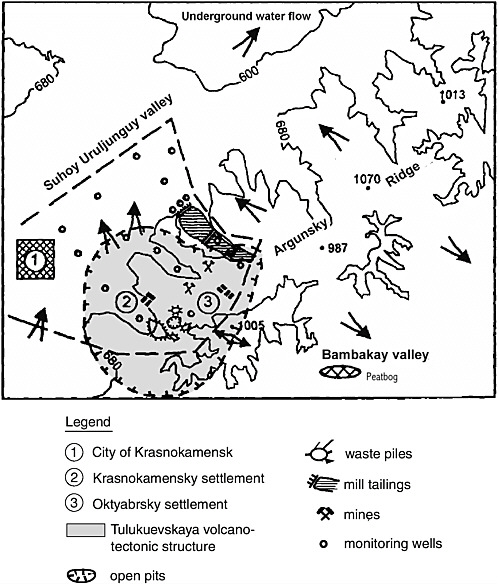
FIGURE 1 Topographic map of the region.
cally weak. For these reasons they are not suitable for underground storage of radioactive materials. The same holds true for Mesozoic sedimentary rocks. Also having insufficient mechanical toughness, they underlie the lower relief elevations and are water saturated.
The lower rock formation is made up of pre-Paleozoic gneisses, crystalline shales and marbles, and Paleozoic gneissose and normal granites. In unviolated
condition these rocks are thick, massive, and poorly permeable with high hardness properties. They generally underlie elevated portions of the landscape. In the overall massif the task is to locate and study weakly violated geological blocks of the required size and then install in the most suitable block all the necessary facilities and support structures for an underground spent fuel storage facility.
DESIGN FEATURES OF THE FUTURE REPOSITORY AND PROMISING SITES FOR ITS CONSTRUCTION
Given the characteristics of the surface landscape and the environmental, technical, and economic conditions as well as security considerations, a gallery-type underground repository appears to be the most suitable for the reliable isolation of spent nuclear fuel under the conditions prevalent at PMCPA. The following conclusions support the construction of this sort of facility in the PMCPA area:
-
The location of the future facility in a rock formation having about 300 m of solid rock covering the site where the nuclear materials will be stored drastically cuts the risk of any uncontrolled outside effects on the stored materials.
-
The high hardness, low permeability, and low degree of violation of the crystalline rocks that will contain the repository sharply minimize the danger of destruction or penetration into underground waters.
-
In comparison with the mineshaft method of storage, the gallery-type repository eliminates the need for building underground installations and water drainage mechanisms while also significantly simplifying ventilation.
Preliminary work done by specialists from PMCPA and the Institute of the Geology of Ore Deposits, Petrography, Mineralogy, and Geochemistry of the Russian Academy of Sciences with regard to possible options for the location of the future repository have made it possible to identify four sites in the lower rock formation (see Figure 2) that occupy a position in the relief that would be suitable for the construction of a gallery-type storage facility. The most acceptable option appears to be Site 1 (see Figure 3), which is composed of weakly violated granitoid gneisses and granites and is located very close to the rail line. Some samples of the stone material have been taken in order to characterize the properties of the geological environment at this site, and these studies are already under way.
The above option for the future construction of a gallery-type spent fuel facility is fairly economical and meets the strictest requirements with regard to security against outside effects. The placement of isolated spent fuel above the underground water level—that is, in the aeration zone, which is characterized by oxidative conditions—is not a favorable factor for long-term (in this case, longer
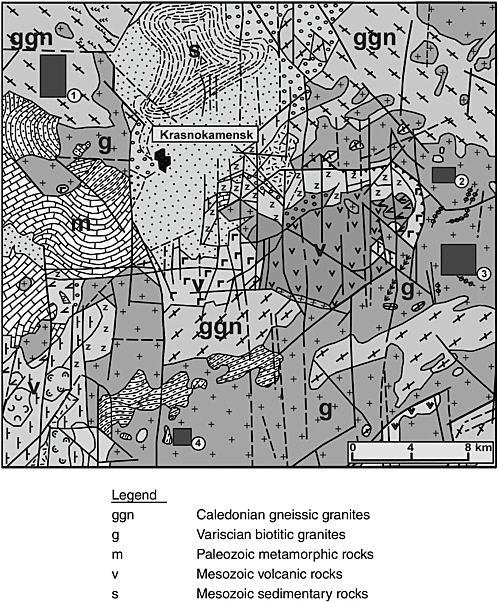
FIGURE 2 Location of the granitic potential sites denoted by numbers.
than 200 years) spent fuel storage. Consequently, the gallery-type facility option could be used only for short-term (in this case, 30–100 years) or at most medium-term (in this case, 100–200 years) storage of spent nuclear fuel.
It is commonly known that the safe long-term storage or burial of nuclear materials is ensured only by means of their complete isolation from the hydrosphere or if the repository is located in a water-saturated zone, by the restorative properties of the underground waters circulating in that zone.
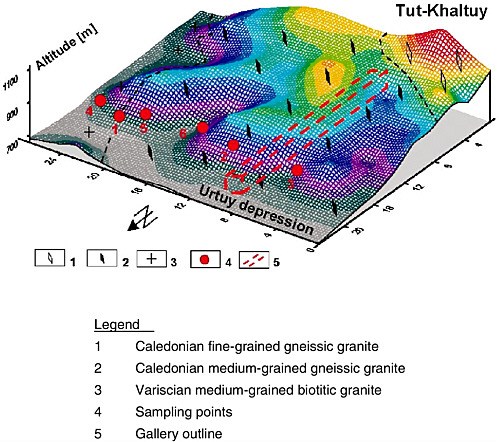
FIGURE 3 Three-dimensional image of Site 1.
Given the specific geological situation and landscape characteristics of the PMCPA region, there is also another option for spent fuel isolation that would make it possible to ensure the environmental security of this material both in the short and medium term and for a very long period, comparable to the duration of the radiobiological toxicity of the spent fuel to be isolated. This option also involves the use of gallery-type facilities, which could be not only outfitted with structural features for the short- and medium-term storage of spent nuclear fuel but also provided with special mechanical equipment for the drilling of a “blind” shaft or a spiral descending tunnel. These structures could be used to create a facility for the long-term storage of spent fuel or the burial of high-level radioactive wastes at a depth necessary to meet safety requirements. The option for a repository with a spiral tunnel has been discussed with U.S. specialists from the National Research Council’s Board on Radioactive Waste Management (Milton Levenson and Charles McCombie), but this option is no longer under consideration.
STAFF, TECHNICAL, AND ECONOMIC CAPABILITIES OF PMCPA AND THE SOCIAL SITUATION IN THE REGION
In its more than 30 years of production activities PMCPA has amassed a great deal of experience in managing radioactive wastes and conducting various types of drilling, tunneling, mine construction, and extraction operations. The enterprise successfully operates special services staffed with highly professional specialists working at the modern standard to handle all matters associated with mining, drilling, and extraction operations. Production activities in these areas as well as efforts to study the geology and uranium content of the Streltsovskoe ore field and specific deposits have always been accompanied by intensive scientific research efforts. Specialists from the leading institutes of the Russian Academy of Sciences and applied research institutes of Minatom and the Russian Ministry for Natural Resources have participated in these efforts, along with enterprise personnel.
The multifaceted research and production activities carried out at PMCPA have given rise to a unified team made up of the leading institute-based scientists and professional production specialists capable of carrying out in a highly qualified and timely fashion any tasks that might arise with regard to the selection of a site for an underground spent fuel repository and its subsequent construction. PMCPA also possesses the equipment necessary for the tunneling and drilling work.
Along with the mines, the quarry, and the uranium processing and sulfuric acid plants, the production infrastructure of the enterprise includes an open-pit coal mine, a coal-fired heating plant used to generate steam and electricity, a mechanical repair and production facility, and a concrete plant (see Figure 4). The energy capacities of the existing power plant fully meet the enterprise’s current electricity needs and are capable of covering additional power requirements that might arise if efforts to build an underground spent fuel repository are launched.
The population in the area around PMCPA—made up of employees of the enterprise, service workers, and their families—lives in the city of Krasnokamensk (with a total of about 60,000 residents) and the villages of Oktyabrsky and Krasnokamensky. According to a survey3 most of the region’s residents are prepared to support a decision to create an international spent fuel repository on the territory belonging to the enterprise.
CONCLUSIONS
-
The problem of safely isolating spent nuclear fuel is an urgent one both for Russia and for other countries that use electricity produced by nuclear power plants.
-
The territory surrounding PMCPA, Russia’s only uranium-processing
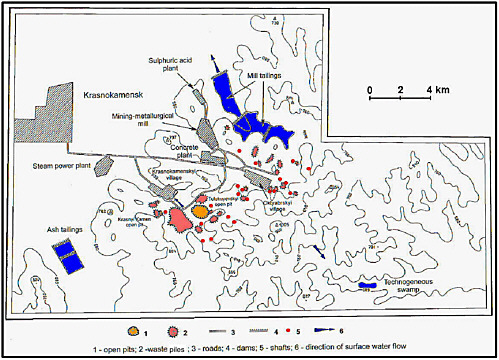
FIGURE 4 Mining and production activity area at PMCPA and main sources of environmental contamination.
-
enterprise, appears to be a promising site for a future international spent fuel storage site. PMCPA is located in a lightly populated area in the eastern Baikal region but is linked by rail to the country’s major industrial regions. The enterprise possesses a comprehensive and diversified industrial and energy infrastructure that allows it to resolve the most complex mine engineering and energy problems on its own.
-
PMCPA has assembled a team of highly professional specialists with enormous experience in managing radioactive substances and conducting various drilling, tunneling, and mine construction operations.
-
All parameters characterizing the natural and geological conditions in the PMCPA region are assessed as favorable for the creation of an underground repository. Four sites viewed as promising for the placement of an underground high-level waste storage facility have already been identified in the thick, hard, and poorly permeable rock formations (granitoid gneisses, granites, shales) adjoining most of the enterprise’s grounds.
-
Taking into account the special characteristics of the environment; ecological, technical, and economic considerations; and the demands of security, an underground storage facility that would be located in gallery-type horizontal
-
underground structures would be the most acceptable option for the reliable isolation of spent nuclear fuel at the PMCPA site.
-
Most of the workforce in the region does not suffer from radiophobia and is prepared to support the decision to create an international spent fuel storage facility on the grounds of the enterprise.
NOTES


