
Space Studies Board Annual Report 2004
NATIONAL RESEARCH COUNCIL OF THE NATIONAL ACADEMIES
The National Academies Press
Washington, D.C.
www.nap.edu
The Space Studies Board is a unit of the National Research Council, which serves as an independent advisor to the federal government on scientific and technical questions of national importance. The National Research Council, jointly administered by the National Academy of Sciences, the National Academy of Engineering, and the Institute of Medicine, brings the resources of the entire scientific and technical community to bear through its volunteer advisory committees.
Support for the work of the Space Studies Board and its committees and task groups was provided by National Aeronautics and Space Administration Contract NASW-01001, National Oceanic and Atmospheric Administration Contract DG133R04CQ0009, and National Science Foundation Grants ATM-0109283 and AST-0075757.
From the Chair
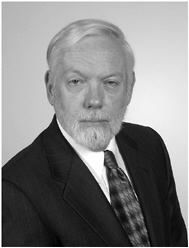
In the foreword for the 2003 Annual Report of the Space Studies Board, we predicted that 2004 would be yet another pivotal year for the space program. Indeed, 2004 saw the release of a new presidential policy for NASA, and for human spaceflight in particular, and the beginning of the implementation of that policy. All the advice given, decisions made, and priorities established as a consequence will determine the direction of the space program for decades to come.
The Space Studies Board and its committees and special task groups have been very active during the year, as is documented in this annual report, attempting to ensure that the perspective of the science community is heard as the new space vision is implemented. The principal issue was identified early in the year. There was a certain excitement that the human spaceflight program would at last be revitalized, but the response was tempered by the view that to make this a true exploration program it would need to be founded on and pursued for science, with attention to optimum choices for the use of humans and robots. Enthusiasm for the vision was tempered also by the recognition that space science and Earth science from space have flourished in recent years, and that this success should not be allowed to diminish. We have, through our reports and our guidance, attempted to encourage NASA to recognize the opportunity that exists to alter forever our understanding of the universe in which we live through a broadly defined exploration program and to continue the inevitable march of this civilization into space.
The same vigilance will be required in 2005, to encourage the nation to develop a space program worthy of the vast opportunities for discovery and for increased knowledge that lie before us.
L.A. Fisk
Chair
Space Studies Board
Contents
Space Studies Board Chairs
Lloyd V. Berkner, Graduate Research Center, Dallas, Texas, 1958–1962
Harry H. Hess, Princeton University, 1962–1969
Charles H. Townes, University of California at Berkeley, 1970–1973
Richard M. Goody, Harvard University, 1974–1976
A.G.W. Cameron, Harvard College Observatory, 1977–1981
Thomas M. Donahue, University of Michigan, 1982–1988
Louis J. Lanzerotti, American Telephone & Telegraph Co., Bell Laboratories, 1989–1994
Claude R. Canizares, Massachusetts Institute of Technology, 1994–2000
John H. McElroy, University of Texas at Arlington (retired), 2000–2003
Lennard A. Fisk, University of Michigan, 2003–


