
RISING ABOVE THE GATHERING STORM
Energizing and Employing America for a Brighter Economic Future
THE NATIONAL ACADEMIES PRESS
Washington, D.C.
www.nap.edu
THE NATIONAL ACADEMIES PRESS
500 Fifth Street, N.W. Washington, DC 20001
NOTICE: The project that is the subject of this report was approved by the Governing Board of the National Research Council, whose members are drawn from the councils of the National Academy of Sciences, the National Academy of Engineering, and the Institute of Medicine. The members of the committee responsible for the report were chosen for their special competences and with regard for appropriate balance.
Support for this project was provided by the National Academies. Any opinions, findings, conclusions, or recommendations expressed in this publication are those of the author(s) and do not necessarily reflect the views of the organizations or agencies that provided support for the project.
Library of Congress Cataloging-in-Publication Data
Rising above the gathering storm : energizing and employing America for a brighter economic future : Committee on Prospering in the Global Economy of the 21st Century : an agenda for American science and technology ; Committee on Science, Engineering, and Public Policy.
p. cm.
Includes bibliographical references and index.
ISBN 978-0-309-10039-7 (hardcover) — ISBN 978-0-309-65442-5 (pdf) 1. United States—Economic conditions—Forecasting. 2. Globalization. 3. United States—Economic policy. I. Committee on Prospering in the Global Economy of the 21st Century (U.S.) II. Committee on Science, Engineering, and Public Policy (U.S.)
HC106.83.R57 2006
331.12’0420973—dc22
2006025998
For more information about the Committee on Science, Engineering, and Public Policy, see http://www.nationalacademies.org/cosepup.
Available from the
National Academies Press,
500 Fifth Street, N.W., Lockbox 285, Washington, DC 20055; (800) 624-6242 or (202) 334-3313 (in the Washington metropolitan area); Internet, http://www.nap.edu.
Copyright 2007 by the National Academy of Sciences. All rights reserved.
Printed in the United States of America
THE NATIONAL ACADEMIES
Advisers to the Nation on Science, Engineering, and Medicine
The National Academy of Sciences is a private, nonprofit, self-perpetuating society of distinguished scholars engaged in scientific and engineering research, dedicated to the furtherance of science and technology and to their use for the general welfare. Upon the authority of the charter granted to it by the Congress in 1863, the Academy has a mandate that requires it to advise the federal government on scientific and technical matters. Dr. Ralph J. Cicerone is president of the National Academy of Sciences.
The National Academy of Engineering was established in 1964, under the charter of the National Academy of Sciences, as a parallel organization of outstanding engineers. It is autonomous in its administration and in the selection of its members, sharing with the National Academy of Sciences the responsibility for advising the federal government. The National Academy of Engineering also sponsors engineering programs aimed at meeting national needs, encourages education and research, and recognizes the superior achievements of engineers. Dr. Wm. A. Wulf is president of the National Academy of Engineering.
The Institute of Medicine was established in 1970 by the National Academy of Sciences to secure the services of eminent members of appropriate professions in the examination of policy matters pertaining to the health of the public. The Institute acts under the responsibility given to the National Academy of Sciences by its congressional charter to be an adviser to the federal government and, upon its own initiative, to identify issues of medical care, research, and education. Dr. Harvey V. Fineberg is president of the Institute of Medicine.
The National Research Council was organized by the National Academy of Sciences in 1916 to associate the broad community of science and technology with the Academy’s purposes of furthering knowledge and advising the federal government. Functioning in accordance with general policies determined by the Academy, the Council has become the principal operating agency of both the National Academy of Sciences and the National Academy of Engineering in providing services to the government, the public, and the scientific and engineering communities. The Council is administered jointly by both Academies and the Institute of Medicine. Dr. Ralph J. Cicerone and Dr. Wm. A. Wulf are chair and vice chair, respectively, of the National Research Council.
COMMITTEE ON PROSPERING IN THE GLOBAL ECONOMY OF THE 21ST CENTURY
NORMAN R. AUGUSTINE (Chair), Retired Chairman and CEO,
Lockheed Martin Corporation, Bethesda, MD
CRAIG R. BARRETT, Chairman of the Board,
Intel Corporation, Chandler, AZ
GAIL CASSELL, Vice President, Scientific Affairs, and Distinguished Lilly Research Scholar for Infectious Diseases,
Eli Lilly and Company, Indianapolis, IN
STEVEN CHU, Director,
E. O. Lawrence Berkeley National Laboratory, Berkeley, CA
ROBERT M. GATES, President,
Texas A&M University, College Station, TX
NANCY S. GRASMICK,
Maryland State Superintendent of Schools, Baltimore, MD
CHARLES O. HOLLIDAY, JR., Chairman of the Board and CEO,
DuPont Company, Wilmington, DE
SHIRLEY ANN JACKSON, President,
Rensselaer Polytechnic Institute, Troy, NY
ANITA K. JONES, Lawrence R. Quarles Professor of Engineering and Applied Science,
University of Virginia, Charlottesville, VA
JOSHUA LEDERBERG,
Sackler Foundation Scholar, Rockefeller University, New York, NY
RICHARD LEVIN, President,
Yale University, New Haven, CT
C. D. (DAN) MOTE, JR., President,
University of Maryland, College Park, MD
CHERRY MURRAY, Deputy Director for Science and Technology,
Lawrence Livermore National Laboratory, Livermore, CA
PETER O’DONNELL, JR., President,
O’Donnell Foundation, Dallas, TX
LEE R. RAYMOND, Chairman and CEO,
Exxon Mobil Corporation, Irving, TX
ROBERT C. RICHARDSON, F. R. Newman Professor of Physics and Vice Provost for Research,
Cornell University, Ithaca, NY
P. ROY VAGELOS, Retired Chairman and CEO,
Merck, Whitehouse Station, NJ
CHARLES M. VEST, President Emeritus,
Massachusetts Institute of Technology, Cambridge, MA
GEORGE M. WHITESIDES, Woodford L. & Ann A. Flowers University Professor,
Harvard University, Cambridge, MA
RICHARD N. ZARE, Marguerite Blake Wilbur Professor in Natural Science,
Stanford University, Stanford, CA
Principal Project Staff
DEBORAH D. STINE, Study Director
PETER HENDERSON, Senior Program Officer
JO L. HUSBANDS, Senior Program Officer
LAUREL L. HAAK, Program Officer
TOM ARRISON, Senior Program Officer
DAVID ATTIS, Policy Consultant
ALAN ANDERSON, Consultant Writer
STEVE OLSON, Consultant Writer
RACHEL COURTLAND, Research Associate
NEERAJ P. GORKHALY, Senior Program Assistant
JOHN B. SLANINA, Christine Mirzayan Science and Technology Policy Graduate Fellow
BENJAMIN A. NOVAK, Christine Mirzayan Science and Technology Policy Graduate Fellow
NORMAN GROSSBLATT, Senior Editor
KATE KELLY, Editor
COMMITTEE ON SCIENCE, ENGINEERING, AND PUBLIC POLICY
GEORGE M. WHITESIDES (Chair), Woodford L. & Ann A. Flowers University Professor,
Harvard University, Cambridge, MA
RALPH J. CICERONE (Ex officio), President,
National Academy of Sciences, Washington, DC
UMA CHOWDHRY, Vice President,
Central Research and Development, DuPont Company, Wilmington, DE
R. JAMES COOK, Interim Dean,
College of Agriculture and Home Economics, Washington State University, Pullman, WA
HAILE DEBAS, Executive Director,
Global Health Sciences, and
Maurice Galante Distinguished Professor of Surgery,
University of California, San Francisco, CA
HARVEY FINEBERG (Ex officio), President,
Institute of Medicine, Washington, DC
MARYE ANNE FOX (Ex officio), Chancellor,
University of California, San Diego, CA
ELSA GARMIRE, Professor,
School of Engineering, Dartmouth College, Hanover, NH
M. R. C. GREENWOOD (Ex officio), Provost and Senior Vice President for Academic Affairs,
University of California, Oakland, CA
NANCY HOPKINS, Amgen Professor of Biology,
Massachusetts Institute of Technology, Cambridge, MA
WILLIAM H. JOYCE (Ex officio), Chairman and CEO,
Nalco, Naperville, IL
MARY-CLAIRE KING, American Cancer Society Professor of Medicine and Genetics,
University of Washington, Seattle, WA
W. CARL LINEBERGER, Professor of Chemistry,
Joint Institute for Laboratory Astrophysics, University of Colorado, Boulder, CO
RICHARD A. MESERVE, President,
Carnegie Institution of Washington, Washington, DC
ROBERT M. NEREM, Parker H. Petit Professor and Director,
Institute for Bioengineering and Bioscience, Georgia Institute of Technology, Atlanta, GA
LAWRENCE T. PAPAY, Retired Sector Vice President for Integrated Solutions,
Science Applications International Corporation, San Diego, CA
ANNE PETERSEN, Senior Vice President,
Programs, W. K. Kellogg Foundation, Battle Creek, MI
CECIL PICKETT, President,
Schering-Plough Research Institute, Kenilworth, NJ
EDWARD H. SHORTLIFFE, Professor and Chair,
Department of Biomedical Informatics, Columbia University Medical Center, New York, NY
HUGO SONNENSCHEIN, Charles L. Hutchinson Distinguished Service Professor,
Department of Economics, University of Chicago, Chicago, IL
SHEILA E. WIDNALL, Abby Rockefeller Mauze Professor of Aeronautics,
Massachusetts Institute of Technology, Cambridge, MA
WM. A. WULF (Ex officio), President,
National Academy of Engineering, Washington, DC
MARY LOU ZOBACK, Senior Research Scientist,
Earthquake Hazards Team, US Geological Survey, Menlo Park, CA
Staff
RICHARD BISSELL, Executive Director
DEBORAH D. STINE, Associate Director
LAUREL L. HAAK, Program Officer
MARION RAMSEY, Administrative Coordinator
CRAIG REED, Financial Associate
Preface
Ninety-nine percent of the discoveries are made by one percent of the scientists.
Julius Axelrod, Nobel Laureate1
The prosperity the United States enjoys today is due in no small part to investments the nation has made in research and development at universities, corporations, and national laboratories over the last 50 years. Recently, however, corporate, government, and national scientific and technical leaders have expressed concern that pressures on the science and technology enterprise could seriously erode this past success and jeopardize future US prosperity. Reflecting this trend is the movement overseas not only of manufacturing jobs but also of jobs in administration, finance, engineering, and research.
The councils of the National Academy of Sciences and the National Academy of Engineering, at their annual joint meeting in February 2005, discussed these tensions and examined the position of the United States in today’s global knowledge-discovery enterprise. Participants expressed concern that a weakening of science and technology in the United States would inevitably degrade its social and economic conditions and in particular erode the ability of its citizens to compete for high-quality jobs.
On the basis of the urgency expressed by the councils, the National Academies’ Committee on Science, Engineering, and Public Policy
(COSEPUP) was charged with organizing a planning meeting, which took place May 11, 2005. One of the speakers at the meeting was Senator Lamar Alexander, the former secretary of education and former president of the University of Tennessee.
Senator Alexander indicated that the Energy Subcommittee of the Senate Energy and Natural Resources Committee, which he chairs, had been given the authority by the full committee’s chair, Senator Pete Domenici, to hold a series of hearings to identify specific steps that the federal government should take to ensure the preeminence of America’s science and technology enterprise. Senator Alexander asked the National Academies to provide assistance in this effort by selecting a committee of experts from the scientific and technical community to assess the current situation and, where appropriate, make recommendations. The committee would be asked to identify urgent challenges and determine specific steps to ensure that the United States maintains its leadership in science and engineering to compete successfully, prosper, and be secure in the 21st century.
On May 12, 2005, the day after the planning meeting, three members of the House of Representatives who have jurisdiction over science and technology policy and funding announced that a conference would be held in fall 2005 on science, technology, innovation, and manufacturing. Appearing at a Capitol Hill press briefing to discuss the conference were representatives Frank Wolf, Sherwood Boehlert, and Vern Ehlers. Representative Boehlert said of the conference: “It can help forge a national consensus on what is needed to retain US leadership in innovation. A summit like this, with the right leaders, under the aegis of the federal government, can bring renewed attention to science and technology concerns so that we can remain the nation that the world looks to for the newest ideas and the most skilled people.”
In describing the rationale for the conference, Representative Wolf recalled meeting with a group of scientists and asking them how well the United States was doing in science and innovation. None of the scientists, he reported, said that the nation was doing “okay.” About 40% said that we were “in a stall,” and the remaining 60% said that we were “in decline.” He asked a similar question of the executive board of a prominent high-technology association, which reported that in its view the United States was “in decline.”
Later, the National Academies received a bipartisan letter addressing the subject of America’s competitiveness from Senators Lamar Alexander and Jeff Bingaman. The letter, dated May 27, 2005, requested that the National Academies conduct a formal study on the issue to assist in congressional deliberations. That was followed by a bipartisan letter from Representatives Sherwood Boehlert and Bart Gordon, of the House Committee on
Science, which expanded on the Senate request. In response, the National Academies initiated a study with its own funds.
To undertake the study, COSEPUP established the Committee on Prospering in the Global Economy of the 21st Century: An Agenda for American Science and Technology. The committee members included presidents of major universities, Nobel laureates, CEOs of Fortune 100 corporations, and former presidential appointees. They were asked to investigate the following questions:
-
What are the top 10 actions, in priority order, that federal policymakers could take to enhance the science and technology enterprise so that the United States can successfully compete, prosper, and be secure in the global community of the 21st century?
-
What implementation strategy, with several concrete steps, could be used to implement each of those actions?
This study and report were carried out with an unusual degree of urgency—only a matter of weeks elapsed from the committee’s initial gathering to release of its report. The process followed the regular procedures for an independent National Research Council study, including review of the report, in this case, by 37 experts. The report relies on customary reference to the scientific literature and on consensus views and judgments of the committee members.
The committee began by assembling the recommendations of 13 issue papers summarizing past studies of topics related to the present study. It then convened five focus groups consisting of 66 experts in K–12 education, higher education, research, innovation and workforce issues, and national and homeland security and asked each group to recommend three actions it considered to be necessary for the nation to compete, prosper, and be secure in the 21st century. The committee used those suggestions and its own judgment to make its recommendations. The key thematic issues underlying these discussions were the nation’s need to create jobs and need for affordable, clean, and reliable energy.
In this report, a description of the key elements of American prosperity in the 21st century is followed by an overview of how science and technology are critical to that prosperity. The report then evaluates how the United States is doing in science and technology and provides recommendations for improving our nation’s prosperity. Finally, it posits the status of prosperity if the United States maintains a narrow lead (the current situation), falls behind, or emerges as the leader in a few selected fields of science and technology.
We strayed from our charge in that we present not 10 actions but 4 recommendations and 20 specific actions to implement them. The committee members deeply believe in the fundamental linkage of all the recommen-
dations and their integrity as a coordinated set of policy actions. To emphasize one or neglect another, the members decided, would substantially weaken what should be viewed as a coherent set of high-priority actions to create jobs and enhance the nation’s energy supply in an era of globalization. For example, there is little benefit in producing more researchers if there are no funds to support their research.
The committee thanks the focus-group members, who took precious personal time in midsummer to donate the expertise that would permit a highly focused, detailed examination of a question of extraordinary complexity and importance. We thank the staff of the National Academies. They quickly mobilized the knowledge resources and practical skills needed to complete this study in a rapid, thorough manner.
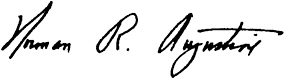
Norman R. Augustine
Chair, Committee on Prospering in the Global Economy of the 21st Century

CRAIG BARRETT
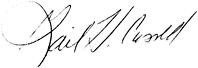
GAIL CASSELL
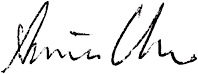
STEVEN CHU
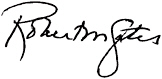
ROBERT GATES
NANCY GRASMICK
CHARLES HOLLIDAY, JR.

SHIRLEY ANN JACKSON

ANITA K. JONES


Acknowledgments
This report is the product of many people. First, we thank all the focus-group members, listed in Appendix C, for contributing their time and knowledge at the focus-group session in August 2005. Second, we would like to thank all the committees and analysts at other organizations who have gone before us, producing reports and analyses on the topics discussed in this report. There are too many to mention here, but they are cited throughout the report and range from individual writers and scholars, such as Thomas Friedman and Richard Freeman, to committees and organizations, such as the Glenn Commission on K–12 education, the Council on Competitiveness, the Center for Strategic and International Studies, the Business Roundtable, the Taskforce on the Future of American Innovation, the President’s Council of Advisors on Science and Technology, the National Science Board, and other National Academies committees. Without their insight and analysis, this report would not have been possible.
This report has been reviewed in draft form by persons chosen for their diverse perspectives and technical expertise in accordance with procedures approved by the National Research Council’s Report Review Committee. The purpose of this independent review is to provide candid and critical comments that will assist the institution in making the published report as sound as possible and to ensure that the report meets institutional standards of objectivity, evidence, and responsiveness to the study charge. The review comments and draft manuscript remain confidential to protect the integrity of the deliberative process.
We wish to thank the following for their review of this report: Miller
Adams, Boeing Phantom Works; John Ahearne, Sigma Xi; Robert Aiken, CISCO Systems, Inc.; Bruce Alberts, University of California, San Francisco; Richard Atkinson, University of California, San Diego; William Badders, Cleveland Municipal School District; Roger Beachy, Ronald Danforth Plant Service Center; George Bugliarello, Polytechnic University; Paul Citron, Medtronic, Inc.; Michael Clegg, University of California, Irvine; W. Dale Compton, Purdue University; Robert Dynes, University of California, San Diego; Joan Ferrini-Mundy, Michigan State University; Richard Freeman, Harvard University; William Friend, Bechtel Group, Inc. (retired); Lynda Goff, University of California, Santa Cruz; William Happer, Princeton University; Robert Hauser, University of Wisconsin; Ron Hira, Rochester Insti-tute of Technology; Dale Jorgenson, Harvard University; Thomas Keller, Medomak Valley High School, Maine; Edward Lazowska, University of Washington; W. Carl Lineberger, University of Colorado, Boulder; James Mongan, Partners Healthcare System; Gilbert Omenn, University of Michigan; Helen Quinn, Stanford Linear Accelerator Center; Mary Ann Rankin, University of Texas; Barbara Schaal, Washington University; Thomas Südhof, Howard Hughes Medical Institute; Michael Teitelbaum, Sloan Foundation; C. Michael Walton, University of Texas; Larry Welch, Institute for Defense Analyses; and Sheila Widnall, Massachusetts Institute of Technology.
Although the reviewers listed above have provided many constructive comments and suggestions, they were not asked to endorse the conclusions or recommendations, nor did they see the final draft of the report before its release. The review of this report was overseen by Floyd Bloom, Robert Frosch, and M. R. C. Greenwood, appointed by the Report Review Committee, who were responsible for making certain that an independent examination of the report was carried out in accordance with institutional procedures and that all review comments were carefully considered. Responsibility for the final content of the report rests entirely with the author committee and the institution.
Finally, we would like to thank the staff who supported this project, including Deborah Stine, study director and associate director of the Committee on Science, Engineering, and Public Policy (COSEPUP), who managed the project; program officers Peter Henderson (higher education), Jo Husbands (national security), Thomas Arrison (innovation), Laurel Haak (K–12 education), and (on loan from the Council on Competitiveness) policy consultant David Attis (research funding and management), who conducted research and analysis; Alan Anderson, Steve Olson, and research associate Rachel Courtland, the science writers and editors for this report; Rita Johnson, the managing editor for reports; Norman Grossblatt and Kate Kelly, editors; Neeraj P. Gorkhaly, senior program assistant, who coordinated and provided support throughout the project with the assistance of
Marion Ramsey and Judy Goss; science and technology policy fellows John Slanina, Benjamin Novak, and Ian Christensen who provided research and analytic support; Brian Schwartz, who compiled the bibliography; and Richard Bissell, executive director of COSEPUP and of Policy and Global Affairs. Additional thanks are extended to Rachel Marcus, Will Mason, Estelle Miller, and Francesca Moghari at the National Academies Press for their work on the production of this book.
Boxes, Figures, and Tables
BOXES
|
1-1 |
Another Point of View: The World Is Not Flat, |
|||
|
2-1 |
Another Point of View: Science, Technology, and Society, |
|||
|
2-2 |
Twenty Great Engineering Achievements of the 20th Century, |
|||
|
3-1 |
Pasteur’s Quadrant, |
|||
|
3-2 |
Another Point of View: US Competitiveness, |
|||
|
5-1 |
Another Point of View: K–12 Education, |
|||
|
6-1 |
Another Point of View: Research Funding, |
|||
|
6-2 |
DARPA, |
|||
|
6-3 |
Another Point of View: ARPA-E, |
|||
|
6-4 |
Energy and the Economy, |
|||
|
6-5 |
The Invention of the Transistor, |
|||
|
6-6 |
Illustration of Energy Technologies, |
|||
|
7-1 |
Another Point of View: Science and Engineering Human Resources, |
|||
|
7-2 |
National Defense Education Act, |
|||
|
7-3 |
The 214b Provision of the Immigration and Nationality Act: Establishing the Intent to Return Home, |
|
8-1 |
Another Point of View: Innovation Incentives, |
|||
|
8-2 |
A Data-Exclusivity Case Study, |
|||
|
8-3 |
Finland, |
|||
|
8-4 |
South Korea, |
|||
|
8-5 |
Ireland, |
|||
|
8-6 |
Singapore, |
|||
|
8-7 |
Canada, |
FIGURES
|
2-1 |
Incidence of selected diseases in the United States throughout the 20th century, |
|||
|
2-2 |
US farm labor productivity from 1800 to 2000, |
|||
|
2-3 |
Gross domestic product during the 20th century, |
|||
|
2-4 |
Number of patents granted by the United States in the 20th century with examples of critical technologies, |
|||
|
2-5 |
Megabyte prices and microprocessor speeds, 1976-2000, |
|||
|
2-6 |
Percentage of children ages 3 to 17 who have access to a home computer and who use the Internet at home, selected years, 1984-2001, |
|||
|
2-7A |
Life expectancy at birth, 1000-2000, |
|||
|
2-7B |
Life expectancy at birth and at 65 years of age, by sex, in the United States, 1901-2002, |
|||
|
2-8A |
Five-year relative cancer survival rates for all ages, 1975-1979, 1985-1989, 1988-2001, and 1995-2001, |
|||
|
2-8B |
Heart disease mortality, 1950-2002, |
|||
|
2-9A |
Infant mortality, 1915-2000, |
|||
|
2-9B |
Maternal mortality, 1915-2000, |
|||
|
2-10 |
Comparison of growth areas and air pollution emissions, 1970-2004, |
|||
|
2-11 |
Improvement in US housing and electrification of US homes during the 20th century, |
|||
|
2-12A |
Ground transportation: horses to horsepower, 1900 and 1997, |
|||
|
2-12B |
Air travel, United States, 1928-2002, |
|||
|
2-13 |
Modern communication, 1900-1998, |
|||
|
2-14 |
US primary energy use, 1950-2000, |
|||
|
3-1 |
R&D expenditures as a percentage of GNP, 1991-2002, |
|||
|
3-2 |
US patent applications, by country of applicant, 1989-2004, |
|||
|
3-3 |
Total science and engineering articles with international coauthors, 1988-2001, |
|||
|
3-4 |
Disciplinary strengths in the United States, the 15 European Union nations in the comparator group (EU15), and the United Kingdom, |
|
3-5 |
United States trade balance for high-technology products, in millions of dollars, 1990-2003, |
|||
|
3-6 |
Science and engineering doctorate production for selected countries, 1975-2001, |
|||
|
3-7 |
Doctorates awarded by US institutions, by field and citizenship status, 1985-2003, |
|||
|
3-8 |
US S&E doctorates, by employment sector, 1973-2001, |
|||
|
3-9A |
US R&D funding, by source of funds, 1953-2003, |
|||
|
3-9B |
R&D shares of US gross domestic product, 1953-2003, |
|||
|
3-10 |
US venture capital disbursements, by stage of financing, 1992-2002, |
|||
|
3-11 |
Offshored services market size, in billions of dollars, 2003, |
|||
|
3-12 |
Department of Defense (DOD) 6.1 expenditures, in millions of constant 2004 dollars, 1994-2005, |
|||
|
3-13 |
Trends in federal research funding by discipline, obligations in billions of constant FY 2004 dollars, FY 1970-FY 2004, |
|||
|
3-14 |
Average scale NAEP scores and achievement-level results in mathematics, grades 4 and 8: various years, 1990-2005, |
|||
|
3-15 |
Percentage of students within and at or above achievement levels in science, grades 4, 8, and 12, 1996 and 2000, |
|||
|
3-16A |
Percentage of 24-year-olds with first university degrees in the natural sciences or engineering, relative to all first university degree recipients, in 2000 or most recent year available, |
|||
|
3-16B |
Percentage of 24-year-olds with first university degrees in the natural sciences or engineering relative to all 24-year-olds, in 2000 or most recent year available, |
|||
|
3-17 |
Science and engineering bachelor’s degrees, by field: selected years, 1997-2000, |
|||
|
5-1 |
UTeach minority enrollment, quality of undergraduate students in the certification recommendations program, student retention, and performance compared with all students in the UT-Austin College of Natural Sciences, |
|||
|
5-2 |
Professional development index relative to percent of students meeting science standards, |
|||
|
5-3 |
The number of AP examinations in mathematics, science, and English taken in APIP schools in the Dallas Independent School District (DISD), |
|||
|
6-1 |
Research and development shares of US gross domestic product, 1953-2003, |
|||
|
6-2 |
Trends in federal research funding by discipline, obligations in billions of constant FY 2004 dollars, FY 1970-FY 2004, |
|
9-1 |
Projected growth of emerging markets for selected countries, in billions of constant 2003 US dollars, 2000-2050, |
|||
|
9-2 |
China and European Union production of science and engineering doctorates compared with US production, 1975-2010, |
TABLES
|
2-1 |
Annual Rate of Return on Public R&D Investment, |
|||
|
2-2 |
Annual Rate of Return on Private R&D Investment, |
|||
|
2-3 |
Sales and Employment in the Information Technology (IT) Industry, 2000, |
|||
|
3-1 |
Publications and Citations in the United States and European Union per Capita and per University Researcher, 1997-2001, |
|||
|
3-2 |
Change in Applications, Admissions, and Enrollment of International Graduate Students, 2003-2005, |
|||
|
3-3 |
R&E Tax Claims and US Corporate Tax Returns, 1990-2001, |
|||
|
3-4 |
Federally and Privately Funded Early-Stage Venture Capital in Millions of Dollars, 1990-2002, |
|||
|
5-1 |
Students in US Public Schools Taught by Teachers with No Major or Certification in the Subject Taught, 1999-2000, |
|||
|
5-2 |
Six-Year Graduation Rate of Students Who Passed AP Examinations and Students Who Did Not Take AP Examinations, |
|||
|
5-3 |
Achievement of US AP Calculus and Physics Students Who Participated in the Trends in |
|||
|
6-1 |
Specific Recommendations for Federal Research Funding, |
|||
|
6-2 |
Annual Number of PECASE Awards, by Agency, 2005, |
|||
|
8-1 |
Overview of R&D Tax Incentives in Other Countries, |


