
3
Concepts and Definitions
This chapter discusses the conceptual issues associated with the concepts and definitions of food insecurity and hunger and their applications for measurement in the monitoring of food insecurity in the United States. The chapter also discusses the labeling of the severity levels of food insecurity.
FOOD INSECURITY, HUNGER, MALNUTRITION, AND UNDERNOURISHMENT1
Food scarcity, with its dangers for survival and serious physical and psychological discomfort, has been part of human experience and human culture from the earliest inception of language and thought. Various concepts have emerged to describe aspects and consequences of food scarcity, although they are often ambiguous in meaning. For example, depending on usage and the user, the concept of hunger covers a spectrum from the short-term physical experience of discomfort to chronic food shortage to severe and life-threatening lack of food.
With the establishment of the modern science of nutrition, the concept of malnutrition as a condition brought about by insufficient intake of nutrients to meet biological requirements became a focal construct. Technically the prefix mal actually refers to both over- and underintake, but the typical
usage—and until recently the bulk of research on malnutrition—has been directed to understanding inadequate intakes of macro- and micronutrients. The measures of central concern are observed through analysis of biological tissues (e.g., serum), observation of well-established physical (e.g., anthropometric) and clinically observable consequences (e.g., blindness), and by inference from data on intake. For example, anthropometric status is commonly used to assess malnutrition of children under age 5 (de Onis, Blösner, Borghi, Frongillo, and Morris, 2004).
As malnutrition acquired a central role in scientific conceptualization, it was often mentioned jointly with the idea of hunger, to the point at which the two often became virtually synonymous. Nutritional scientists as well as social advocates therefore sought to describe the inequalities of access to adequate food and its consumption. One approach was to compare intakes of a nutrient for a given gender and life stage group with an established reference value, such as the Recommended Dietary Allowances (RDAs).
Some problems with using the RDA approach stem, in part, from its conceptual underpinnings. To cover the needs of nearly all of a group, the reference values were set at very high levels. Consequently, a proportion of the population may consume less than the RDAs but still have adequate nutrient intakes. Another problem is purely technical. It is difficult to use a single interview to assess usual nutrient intake in a biologically meaningful fashion. For instance, vitamin A intake varies considerably over time, and only the mean intake over a period of weeks is meaningful nutritionally, because vitamin A is stored and body reserves buffer the variability of intake. Further technical problems relate to the accuracy of reported intake and of the information used to translate food intake into nutrients. As a consequence of these problems, assessment of nutritional adequacy through interviews and analysis of the record in relation to the RDA is no longer considered appropriate (Institute of Medicine, 2000).
The United Nations Food and Agricultural Organization (FAO) took a different biologically based approach to define undernourishment as not ingesting enough food to meet energy needs. Operationally the FAO indicator is calculated from national food energy balance sheets. These balance sheets estimate the total energy available for human consumption nationally by adding total energy produced plus energy imported plus the change in stocks minus energy exported, energy wasted, and energy used for other than human consumption. FAO then creates a synthetic distribution of energy consumption for each country in which the mean is total energy available (from the balance sheets) and the variance is taken from another source, typically an estimate from a nationally representative household expenditure survey that accounts for energy exported and energy used for other than human consumption (Naiken, 2003). The resulting estimated distribution of undernourishment (i.e., food energy consumed) across countries is
highly correlated with the distribution of food energy available for consumption obtained directly from the national food energy balance sheets when national population size is taken into account (Smith, 1998). Thus the two measurements, one from the energy balance sheets and one from the prevalence of undernourishment, are redundant. That is, the FAO method for estimating undernourishment measures only food energy availability, but not consumption of (or access to) food by households.
The discovery that people frequently did not have enough to eat according to accepted cultural norms created a conceptual crisis. Either the food problems of poor people were imaginary, or other concepts were needed to describe and measure them. An intuitively understandable construct was hunger defined as a physical pain. This word has typically and historically been used not only to refer to the physical sensation, but also to a feeling of weakness from not eating. As stated in the previous chapter, beginning in the 1960s, the word hunger began to take on a wider meaning. It was expanded to encompass issues of access to food and socioeconomic deprivation related to food. Perhaps because these expanded referents seemed less compatible with the intuitive meaning of hunger, other constructs were needed. It is in this context that the phrase food insecurity came into use in the United States. Internationally, food insecurity was already current. Originally, it was used to describe the instability of national or regional food supplies over time (Pelletier, Olson, and Frongillo, 2001; Rose, Basiotis, and Klein, 1995). It was then expanded to include a lack of secure provisions at the household and individual levels.
Figure 3-1 depicts the core concepts related to nutritional state that were established at the commencement of the U.S. national nutritional monitoring system (Anderson, 1990).
CONCEPT AND DEFINITION OF FOOD INSECURITY
As described in the previous chapter, the broad conceptual definitions of food security and insecurity developed by the expert panel convened in 1989 by the Life Sciences Research Office (LSRO) have served as the basis for the standardized operational definitions used for estimating food security in the United States. Food security according to the LSRO definition means access to enough food for an active, healthy life. It includes at a minimum (a) the ready availability of nutritionally adequate and safe foods and (b) an assured ability to acquire acceptable foods in socially acceptable ways (e.g., without resorting to emergency food supplies, scavenging, stealing, or other coping strategies). Food insecurity exists whenever the availability of nutritionally adequate and safe foods or the ability to acquire acceptable foods in socially acceptable ways is limited or uncertain.
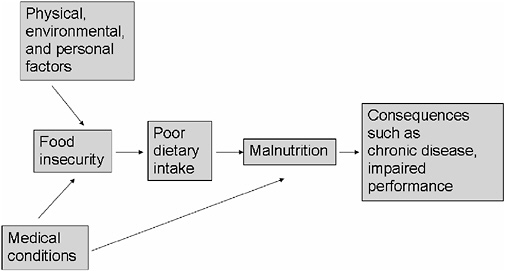
FIGURE 3-1 Core concepts related to nutritional state.
Food insecurity, as measured in the United States, refers to the social and economic problem of lack of food due to resource or other constraints, not voluntary fasting or dieting, or because of illness, or for other reasons. This definition, supported by the ethnographic research conducted by Radimer et al. (1992); Wolfe, Frongillo, and Valois (2003); Hamelin, Habicht, and Beaudry (1999); Hamelin, Beaudry, and Habicht (2002); Quandt and Rao (1999); Quandt, McDonald, Arcury, Bell, and Vitolins (2000); and Quandt, Arcury, McDonald, Bell, and Vitolins (2001), means that food insecurity is experienced when there is (1) uncertainty about future food availability and access, (2) insufficiency in the amount and kind of food required for a healthy lifestyle, or (3) the need to use socially unacceptable ways to acquire food (see Figure 3-2). Although lack of economic resources is the most common constraint, food insecurity can also be experienced when food is available and accessible but cannot be used because of physical or other constraints, such as limited physical functioning by elderly people or those with disabilities (Lee and Frongillo, 2001a, 2001b).
Some closely linked consequences of uncertainty, insufficiency, and social unacceptability are assumed to be part of the experience of food insecurity. Worry and anxiety typically result from uncertainty. Feelings of alienation and deprivation, distress, and adverse changes in family and social interactions also occur (Hamelin et al., 1999, 2002; Frongillo and Horan, 2004). As stated in the previous chapter, hunger and malnutrition are also potential, although not necessary, consequences of food insecurity. Management strategies that people use to prevent or respond to
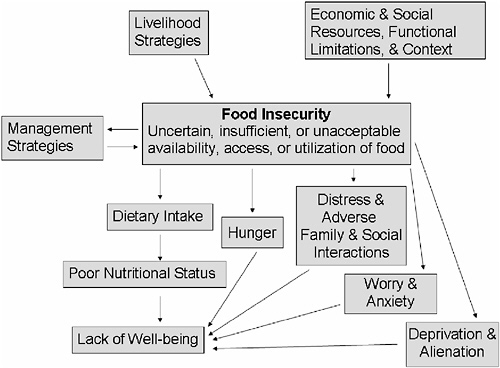
FIGURE 3-2 Food insecurity, and its determinants and consequences (adapted from Habicht et al., 2004).
the experience of food insecurity are conceptually different from food insecurity but are tied to it.
Food insecurity is measured as a household-level concept that refers to uncertain, insufficient, or unacceptable availability, access, or utilization of food. It is experienced along with some closely linked consequences of it. There is a strong rationale for measuring food insecurity at the household level. It is possible for individuals to be food secure in a food-insecure household, just as it is possible for individuals to not be poor in a poor household, depending on the intrahousehold allocation of resources. It means that we can measure and report the number of people who are in food-insecure households (with not all of them necessarily food insecure themselves). When a household contains one or more food-insecure persons, the household is considered food insecure.
Although food is a fundamental need in that each individual must have access to necessary nutrients to survive and to participate actively in society, food is only one of the needs that people must make efforts to meet. Households often make trade-offs among needs to ensure their long-term viability as units. Households manage the stocks and flows of assets and
cash to meet basic needs, offset risk, ease shocks, and meet contingencies (Pelletier et al., 2001; Rose et al., 1995). For example, people in households may consume less food in the present to preserve assets and future ability to make their living, or people may forgo some food to be able to buy medication to treat illness (Wolfe et al., 2003). A full understanding of food insecurity requires incorporation of the time element—both in the sense of the periodicity of occurrence of various needs and events and in the sense of the frequency and duration of episodes (Maxwell and Frankenberger, 1992). Frequency and duration are therefore important elements for the U.S. Department of Agriculture (USDA) to consider in the operational definition and measurement of household food insecurity and individual hunger. (This issue is discussed further in Chapter 4.)
ADVERSE OUTCOMES OF FOOD INSECURITY
Research has shown that food insecurity is associated with adverse health and developmental outcomes in children and adults that are both nutritional and nonnutritional in nature.2 Food insecurity is associated with higher prevalence of inadequate intake of key nutrients (Rose, Habicht, and Devaney, 1998; Casey, Szeto, Lansing, Bogle, and Weber, 2001; Lee and Frongillo, 2001a; Adams, Grummer-Strawn, and Chavez, 2003), risk of overweight in women and some girls (Olson, 1999; Alaimo, Olson, and Frongillo, 2001a; Laitinen, Power, and Javelin, 2001; Townsend, Peerson, Love, Achterberg, and Murphy, 2001), depressive symptoms in adolescents (Alaimo, Olson, and Frongillo, 2002), and academic and social developmental delays in children (Kleinman et al., 1998; Murphy et al., 1998; Alaimo et al., 2001b; Reid, 2001; Stormer and Harrison, 2003; Ashiabi, 2005). Data from a longitudinal study of welfare recipients show that household food insecurity is associated with poor physical and mental health of low-income black and white women (Siefert, Heflin, Corcoran, and Williams, 2004). Food insecurity is also associated with more behavioral problems (Olson, 1999; Shook Slack and Yoo, 2004), poorer school performance (Olson, 1999; Alaimo et al., 2001b; Dunifon and Kowaleski-Jones, 2003), and adverse health outcomes (Alaimo, Olson, Frongillo, and Briefel, 2001c; Cook et al., 2004; Weinreb et al., 2005) in children. Data from the Early Child Longitudinal Study-Kindergarten Class show that reporting at least one indicator of food insecurity was significantly associated with impaired learning in mathematics from fall to spring of the kindergarten year (Winicki and Jemison, 2003) and with impaired learning in reading from kindergarten to third grade (Jyoti, Frongillo, and Jones, 2005).
CONCEPT AND DEFINITION OF HUNGER
The conceptual definition of hunger adopted by the interagency group on the food security is: “The uneasy or painful sensation caused by a lack of food, the recurrent and involuntary lack of food. Hunger may produce malnutrition over time…. Hunger … is a potential, although not necessary, consequence of food insecurity” (Anderson, 1990, pp. 1575, 1576). This language does not provide a clear conceptual basis for what hunger should mean as part of the measurement of food insecurity. The first phrase “the uneasy or painful sensation caused by a lack of food” refers to a possible consequence of food insecurity, as discussed above. The second phrase “the recurrent and involuntary lack of access to food” refers to the whole problem of food insecurity, the social and economic problem of lack of food as defined above.
Holben (2005)3 has enumerated a large number of definitions of hunger from various sources. Taken together, these definitions fall into four groups regarding the concept of hunger: (1) a motivational drive, need, or craving for food; (2) an uneasy sensation felt when one has not eaten for some time; (3) discomfort, illness, weakness, or pain caused by a prolonged, involuntary lack of food; and (4) the prolonged, involuntary lack of food itself. The first and second of these are not the interest of the household food security survey because they refer to a natural phenomenon that all humans experience on a regular basis. The fourth is also not a useful definition or concept of hunger because it refers to the problem of food insecurity itself. The third provides a starting point for consideration as to what is intended for the Household Food Security Survey Module (HFSSM). It refers to the consequence of food insecurity that, because of a prolonged, involuntary lack of food due to lack of economic resources, results in discomfort, illness, weakness, or pain that goes beyond the usual uneasy sensation.
Available evidence from ethnographic work affirms that this definition of hunger is well understood and is reported in similar terms in the United States (Radimer et al., 1992; Wolfe, Frongillo, and Valois, 2003) and Québec (Hamelin, Beaudry, and Habicht, 2002). There is consensus in U.S. society, supported by this empirical research, that an individual’s report that he or she has experienced hunger because of lack of food provides a straightforward indication that the individual has, indeed, experienced hunger in the sense of the third definition (i.e., discomfort, illness, weakness, or
pain caused by a prolonged, involuntary lack of food). But unlike food insecurity, which is a household-level concept, hunger is an individual-level concept. For purposes of the HFSSM included in the Food Security Supplement to the CPS, the term “hunger” should refer to a potential consequence of food insecurity that, because of prolonged, involuntary lack of food, results in discomfort, illness, weakness, or pain that goes beyond the usual uneasy sensation. Two questions therefore arise. First, can the experience of severe food insecurity with hunger by households be measured and its prevalence estimated? Second, can the experience of hunger by individuals be measured and its prevalence estimated?
The HFSSM is measuring food insecurity at the level of the household; it is not measuring hunger at the individual level. The scale does not give special weight to the hunger questions. The HFSSM does include items that are related to being hungry among food-insecure households. The ethnographic and quantitative evidence discussed earlier has shown that the HFSSM items on hunger are probably appropriate in the food insecurity scale, but these items contribute to the measurement of household food insecurity and not specifically to the measurement of hunger at the individual level.
For the purposes of measuring and estimating the prevalence of hunger among individuals in the population, something that the HFSSM does not do, some of these same items might be used in a measure of hunger among individuals, but it would require a measurement process that is based on the conceptual definition of the condition, as well as a battery of items designed to measure it and a reoriented sampling design that includes the individual as the unit of analysis. This work could be based on the information from such sources as up-to-date ethnographic studies of low-income populations, results of experiments and analysis of surveys, analysis of public opinion and perspectives of user groups, expert assessment, and other relevant information.
The panel therefore concludes that hunger is a concept distinct from food insecurity, which is an indicator and possible consequence of food insecurity, that can be useful in characterizing severity of food insecurity. Hunger itself is an important concept, but it should be measured at the individual level distinct from, but in the context of, food insecurity.
To summarize, the panel’s conclusion is based on the fact that, although a strong theoretical and research base exists for the conceptualization and measurement of food insecurity, we do not have a correspondingly strong base for either the conceptualization of hunger or its measurement. That is, there is now ample theoretical, conceptual, ethnographic, and quantitative work done to justify the measurement of the experience of food insecurity using a questionnaire. For the measurement of the experience of hunger to be equally credible, there needs to be a stronger base than we currently have
in developing clear concepts for how we should think about hunger and in tested means to accurately elicit information from survey respondents about whether they have experienced hunger.
Recommendation 3-1: USDA should continue to measure and monitor food insecurity regularly in a household survey. Given that hunger is a separate concept from food insecurity, USDA should undertake a program to measure hunger, which is an important potential consequence of food insecurity.
Recommendation 3-2: To measure hunger, which is an individual and not a household construct, USDA should develop measures for individuals on the basis of a structured research program, and develop and implement a modified or new data gathering mechanism. The first step should be to develop an operationally feasible concept and definition of hunger.
Recommendation 3-3: USDA should examine in its research program ways to measure other potential, closely linked consequences of food insecurity, in addition to hunger, such as feelings of deprivation and alienation, distress, and adverse family and social interaction.
It took a lot of discussion and conferences for the Food Security Measurement Project to reach a working agreement on the operational definition of food security and insecurity. Hunger is a complex concept, and it should be well thought through to ensure agreement among the key users and then to develop and test the appropriate questions and to identify the survey mechanism and sample design for collecting the needed data. Such an effort will take time.
APPLICATION OF THE CONCEPTS AND DEFINITIONS FOR MEASUREMENT
The broad conceptual definition of household food insecurity includes more elements than are included in the current USDA measure of food insecurity. The current measure of prevalence of household food insecurity obtained through the HFSSM focuses on the uncertainty and insufficiency of food availability and access that are limited by resource constraints, and the worry or anxiety and hunger that may result from it. It does not include questions on nutritional adequacy, safety, or social unacceptability of food access, concepts that are part of the broad conceptual definition.
It also does not include questions on use that may be particularly applicable to elderly people and those with disabilities. The HFSSM covers the core ideas of food being available and accessible but not the ability to be used; measurement of food insecurity is tied to economic constraints but not physical constraints that might affect use of food. Wolfe and colleagues (2003) point out that although economic constraint is a major cause of food insecurity, elderly people sometimes have enough money for food but are not able to access it because of transportation or functional limitations, or they are not able to use the food, that is, not able to prepare or eat available food. However, there is currently no epidemiological evidence demonstrating that incorporating items about the ability to use food will alter the prevalence estimates of food insecurity. Furthermore, there is no evidence to suggest that the original decision made when the measure was developed to focus on food insecurity that arises in the context of economic constraints—deemed to be the food insecurity that is policy-relevent—should be altered.
Furthermore, the HFSSM does not attempt to measure management strategies, although questions are asked in the Food Security Supplement (FSS) that do assess management (i.e., augmentation) strategies, such as getting emergency food from a food pantry, eating meals at a soup kitchen, and borrowing money to buy food. “These coping behavior items were tested for inclusion in the food security scale. However, they were found not to meet the statistical test criteria for inclusion with the measurement scale, even though they correlate closely with the scale. Very few households use these copying behaviors that are not also identified as food insecure by the scaled measure” (Bickel, Nord, Price, Hamilton, and Cook, 2000, p. 43).
As stated in the previous chapter, one of the requirements of the National Nutrition Monitoring and Related Research Act is to recommend a standardized mechanism and instrument for defining and obtaining data on prevalence of food insecurity or food insufficiency at the national and state levels. The Food Security Measurement Project working group reached agreement during the 1994 conference to limit the operational definitions and measurement to only those aspects of food security that can be captured in household-level surveys and to further limit the measure to lack of economic resources to obtain food. The definition does not include the supply of food or nutrition. These additional aspects would require developing measures and fielding separate surveys to measure them. The food supply in the United States is generally regarded as safe relative to some other countries. Nutritional adequacy is already assessed by other elements of the nutrition monitoring system, in particular the continuing National Health and Nutrition Examination Survey.
The panel therefore concludes that it is neither required nor necessarily appropriate for USDA to attempt to measure all elements of the conceptual definition of food insecurity as part of the HFSSM.
LABELS OF FOOD INSECURITY
Since food insecurity is conceptualized by USDA as a continuous scale score, attaching labels to various levels of the score to communicate the results in a simpler manner is a natural and common presentation device. As discussed in Chapter 5, it is a common practice to present estimates from scale scores by identifying cut points on the scale and characterizing the units between the cut points by a descriptive label. For example, a person scoring above a cut point might be considered to exhibit proficiency in a specific skill in a certification test, or cut points might be assigned that classify students’ performance in mathematics in an educational assessment (e.g., see Adams and Wu, 2002). One goal of the cut points is to form a classification scheme that categorizes individuals (e.g., in a certification test). A second goal is to describe the distribution of the number of persons or households in each category of the classification scheme over the population (e.g., in the National Assessment of Educational Progress, the children assessed are not labeled individually, but the proportion of children at each level is estimated). Methods for establishing cut points to define a classification scheme are discussed in Chapter 5.
The labels for the categories associated with the units between the cut points are themselves very important because they are the vocabulary used in the discussion of the scores. In fact, the labels are the primary way of identifying the outcomes for many audiences for whom the score itself may be of less interest. For example, journalists, the public, and secondary users of the data typically discuss estimates almost exclusively in terms of the labels. An analogy is the relationship between income, a continuous variable similar to a scale score, and poverty, which is a label, based on a cut point of income (and family size). Many users are almost exclusively interested in the number and characteristics of persons below the “poverty” level.
Because of their importance, the labels should be consistent with the data collected and should communicate a common understanding of what is being measured. The recent report issued by the Committee on Performance Levels for Adult Literacy discusses these as important criteria for labels (National Research Council, 2005). In that report, the committee explicitly recommended not using “proficiency” in any of the labels for the 2003 National Assessment of Adult Literacy (NAAL) assessments, because the test was not intended to measure proficiency, nor can it be revised in a
post hoc manner to do so.4 The committee concluded that labeling adults as proficient based on the NAAL assessments would be inconsistent with the data collected and the common understanding of the term “proficient.” This recommendation points out the importance of the labels and the requirement that they be appropriate.
The labeling used for the classification of food insecurity is at the heart of the criticism of the current measurement system. In particular, the category “food insecurity with hunger” has come under scrutiny because of disagreement over whether hunger is actually measured. For the current discussion, we ignore the distinction between households with and without children and discuss only the labels for households without children—food secure, food insecure, and food insecure with hunger. A key criticism of the current system is that a household may be labeled “food insecure with hunger” even though the household respondent does not explicitly affirm hunger in the interview. This criticism is discussed earlier in this chapter and is further considered in Chapter 5.
The rationale for including hunger in the label for the scale is understandable. Hunger is a politically sensitive and evocative label that conjures images of severe food deprivation, and the HFSSM includes some items that are specifically related to hunger. As discussed here and in Chapter 2, however, the measurement of food insecurity rather than hunger has been the primary focus of the HFSSM since its inception.
A particular concern, which has been raised and discussed earlier in this chapter, is that hunger as experienced by an individual and hunger as experienced by persons in a household may differ. As an indication of the severity of food insecurity, the HFSSM asks the household respondent if in the past 12 months she or he has experienced being hungry because of lack of food due to resource constraints. This is not the same as evaluating all individuals in the household in a survey as to whether or not they have experienced hunger.
A second concern is that, in some households with severe food insecurity, none of the household members may be hungry, while in other households some members will be hungry and some will not. Food insecurity has other consequences, many of which may have effects that are serious and long-lasting.
To illustrate the panel’s concerns, consider the USDA report containing the basic estimates from the 2004 CPS supplement on food security (Nord et al., 2005b). While this report carefully explains the concepts and issues associated with food insecurity and how it is measured, a section (page 7) is
titled “How often were people hungry in households that were food insecure with hunger.” The point of the section is that food insecurity is typically episodic rather than chronic in the United States, and most of the details in the section clearly state that the estimates refer to the classification of households, not hunger in individuals. The title suggests, however, that the survey addresses the question of how often people are hungry, even though the survey does not produce valid estimates of how often people are hungry. Despite careful wording within the section, the title is misleading.
Another example is the USDA report on measuring food security for children (Nord and Bickel, 2002). Again, this report carefully explains the concepts and issues associated with food security and how it is measured and addresses a serious concern about the effect of the classification scheme for a subgroup of great importance, children. Despite the authors’ clear understanding of the key issues and care in presentation, the report discusses the prevalence of hunger among children, even in the abstract. The labeling of the most severe range as food insecure with hunger adds confusion to the reporting.
These two reports are actually among the best in terms of expression of the concepts and using the data appropriately, and yet even they could be easily misinterpreted. Other examples could be cited from documents that are less carefully worded and distort the data from the survey. USDA needs to be more careful in its reports to properly communicate that this third category refers to households with severe food insecurity in which the respondent has either missed meals or was hungry because there wasn’t enough money for food at some time during the year.
With a label that includes the word “hunger,” challenges in communicating an appropriate understanding of food insecurity are inevitable. The challenges are intrinsic, in that the label conveys the idea that severe food insecurity is synonymous with hunger, while this is not necessarily the case. Modifications of the label that still include the word “hunger” do not eliminate the potential for misleading many users, especially the public. Measuring prevalence of household food insecurity with the respondent experiencing hunger is not the same as measuring the prevalence of hunger experienced by individuals. The latter will require a separate research and development process to be implemented in an individual respondent–based survey as opposed to a household respondent–based one.
Alternate labels that may be less problematic could be used. The panel urges USDA to consider alternate labels that may be better and to develop short and appropriate descriptions of the types of households that fall within the cut points associated with the labels. The report of the Committee on Performance Levels for Adult Literacy, referred to above, has given guidance on these types of descriptions that are equally valid for the food insecurity scale.
Recommendation 3-4: USDA should examine alternate labels to convey the severity of food insecurity without the problems inherent in the current labels. Furthermore, USDA should explicitly state in its annual reports that the data presented in the report are estimates of prevalence of household food insecurity and not prevalence of hunger among individuals.


