









Below is the uncorrected machine-read text of this chapter, intended to provide our own search engines and external engines with highly rich, chapter-representative searchable text of each book. Because it is UNCORRECTED material, please consider the following text as a useful but insufficient proxy for the authoritative book pages.
3 Mineral Recommendations for Military Performance This chapter presents the available scientific evidence to support the com- mittee's recommendations on minerals and their required intake levels for mili- tary personnel during garrison training. Garrison training is defined for the pur- pose of this report as situations during which military personnel living on a garrison base are either training or carrying out combat simulations or conduct- ing one-day convoy-type operations. A specific group of known essential miner- als was selected based on the minerals' importance to physical and cognitive performance and maintaining health status. The minerals group was developed after committee deliberations and was founded on results from literature reviews and from information provided by the Department of Defense. Furthermore, in- depth literature reviews on calcium, copper, iron, magnesium, selenium, and zinc were conducted. Following the approach described in this chapter, the com- mittee makes recommendations for soldiers, both men and women, during garri- son training. Also, the committee comments on the adequacy of the estimated levels of those minerals in the current meals, ready to eat (MREs) and first strike rations (FSRs), which are consumed typically during garrison training and sus- tained operations, respectively. Further, the committee comments on the recent Institute of Medicine (IOM) (2006) mineral level recommendations for sustained operations (i.e., FSRs). Finally, a list of priority research questions for each mineral are included. (The research questions are expanded in Chapter 4 to in- clude descriptions of study designs.) THE COMMITTEE'S APPROACH The committee's task was to review and, if necessary, to recommend new levels of dietary intakes for minerals that are of the greatest interest to the mili- 58
MINERAL RECOMMENDATIONS FOR MILITARY PERFORMANCE 59 tary because (1) risk factors during military operations might result in marginal deficiencies among military personnel or (2) higher intakes might be beneficial for optimizing military performance. Based on these two criteria, the committee discussed the relevance of all minerals and decided to focus its task on calcium, copper, iron, magnesium, selenium, and zinc. An in-depth literature review was conducted to gauge the relevance of studies and to evaluate using the studies' results as a basis for recommending mineral intake levels or priority research needs, or both, to answer information gaps related to the committee's task. Subsequently, the committee was able to make recommendations for the fu- ture establishment of new military standards for the specific minerals; specifically, the committee recommended new Estimated Average Requirements (EARs) and Recommended Dietary Allowances (RDAs) or Adequate Intake (AIs) for military garrison training (MGT). The new values are referred to as EARMGT, RDAMGT, and AIMGT. Based on the outcomes of importance to the military, that is, to either maintain or improve both physical or cognitive performance under garrison train- ing, two general types of studies were considered: (1) studies designed to examine requirement increases due to exercise, stress, or other conditions encountered dur- ing military life (e.g., sweat losses or changes in bone resorption rates) and (2) studies designed to evaluate the potential benefits of increasing mineral intakes for cognitive or performance functions. When potential nutrient losses or low intake could put soldiers at risk for deficiencies, the recommended level for a given nutrient was increased--as long as the new level did not exceed the Tolerable Upper Intake Level (UL)--based on data from peer-reviewed scientific literature. However, when making a rec- ommendation based on potential benefits of supplementation, the committee erred on the side of caution and only considered those effects if there was enough clear supporting evidence of the benefits to military performance. The commit- tee cautions that most of the studies were conducted on civilians and under circumstances that might not be able to be extrapolated to military circumstances and garrison training. An effort was made to consider gender differences where the data were available. In addition to the other assumptions formulated by the committee, they considered as worst-case scenario the loss of sweat volumes of up to 10 L/day due to heat and exercise. The committee evaluated the adequacy of the mineral content of rations. Adequacy can be evaluated for the population or for the individual. Because the committee does not know of data on mineral distribution intakes for military garrison training, the mineral content of menus for the population could not be evaluated. Instead, the calculated RDAMGT and AIMGT were used as benchmarks to evaluate mineral content adequacy of various rations for individuals. The mineral compositions of three different MREs and three different FSRs were provided by the United States Army Research Institute of Environmental Medi- cine and used to evaluate the rations' adequacy (see Table 3-1 and Tables C-2 through C-7 in Appendix C).
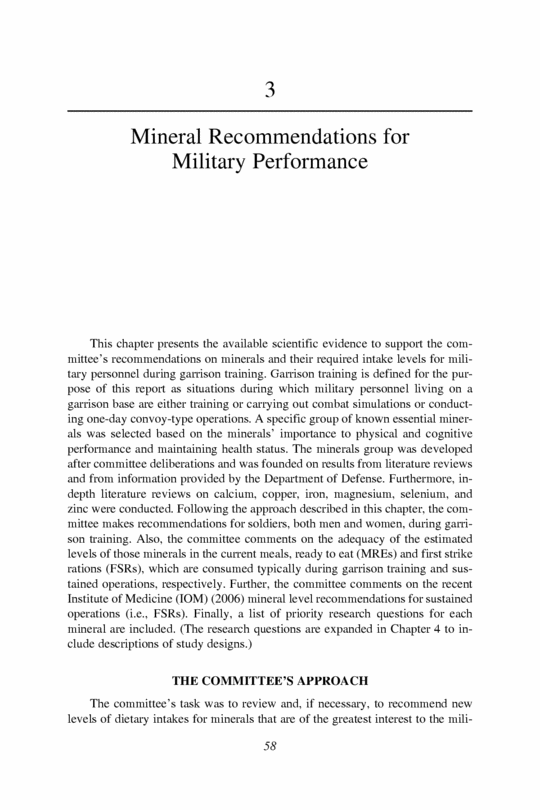
60 MINERAL REQUIREMENTS FOR MILITARY PERSONNEL TABLE 3-1 Summary Table of the Institute of Medicine Dietary Reference Intakes and Military Dietary Reference Intakes for Garrison Training and Combat Operations for 1950 Year Olds and the Mineral Levels in Current Rations IOM Mineral Intake IOM Dietary Reference Recommendations Intakes (civilian population, (military population, ages 1950 years) ages 1950 years) IOM RDA RDAMGT or Nutrient or AI IOM UL MDRI AIMGT FSRs Calcium (mg) M 1,000 2,500 1,000 1,000 750850 F 1,000 2,500 1,000 1,000 Copper (µg) M 900 10,000 ND 1,800 9001,600 F 900 10,000 ND 1,500 Iron (mg) M 8 45 10 14 818 F 18 45 15 22 Magnesium (mg) M 400420* 350 420 420 400550 F 310320* 350 320 320 Selenium (µg) M 55 400 55 55 55230 F 55 400 55 55 Zinc (mg) M 11 40 15 15 1125 F 8 40 12 11 NOTE: AI = Adequate Intake; F = female; FSR = first strike ration; IOM = Institute of Medicine; M = male; MDRI = Military Dietary Reference Intake; MGT = military garrison training; MRE = meals, ready to eat; ND = not determined; RDA = Recommended Dietary Allowance; SUSOPS = sustained operations; UL = Tolerable Upper Intake Level. * Lower requirement for 1930 year olds and higher requirement for 3150 year olds. SOURCE: Baker-Fulco (2005); IOM (1997, 2000, 2001, 2006); U.S. Departments of the Army, Navy, and Air Force (2001).
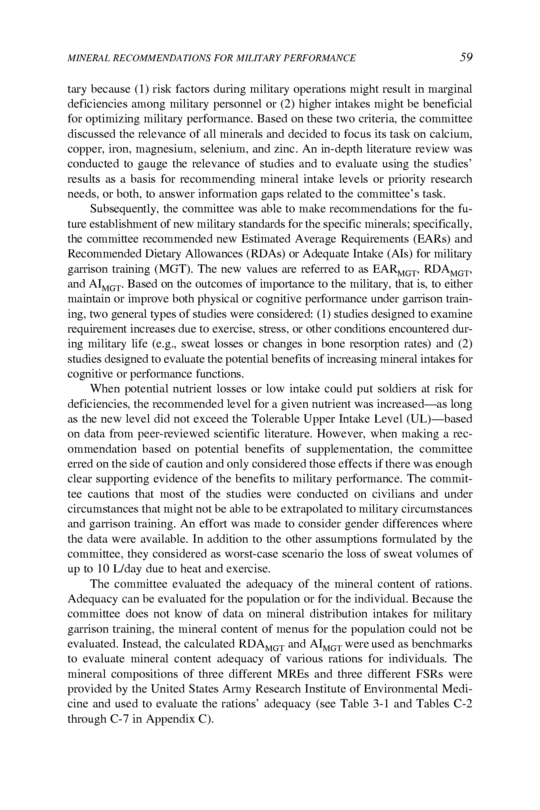
MINERAL RECOMMENDATIONS FOR MILITARY PERFORMANCE 61 Mineral Levels in Current Military Rations MRE XXII MRE XXIV MRE XXIII FSR 2691051 272949 269950 643697 Average: 511 Average: 557.4 Average: 526 Average: 673 (3 rations = 1,533) (3 rations = 1,672) (3 rations = 1,578) ND ND ND ND 519 618 5.7818.39 1518.4 Average: 7.9 Average: 9 Average: 8.6 Average: 17 (3 rations = 24) (3 rations = 27) (3 rations = 26) 60195 78227 69299 375403 Average: 114 Average: 140.5 Average: 177 Average: 86 (3 rations = 342) (3 rations= 421) (3 rations = 531) 0.1234 0.6838 1.3428.3 63160 Average: 9.6 Average: 12.5 Average: 7.8 Average: 100 (3 rations = 30) (3 rations = 37) (3 rations = 23) 1.88.5 28 0.968.14 11.412.2 Average: 4.2 Average: 4.7 Average: 4.2 Average: 11 (3 rations = 13) (3 rations = 14) (3 rations = 13)
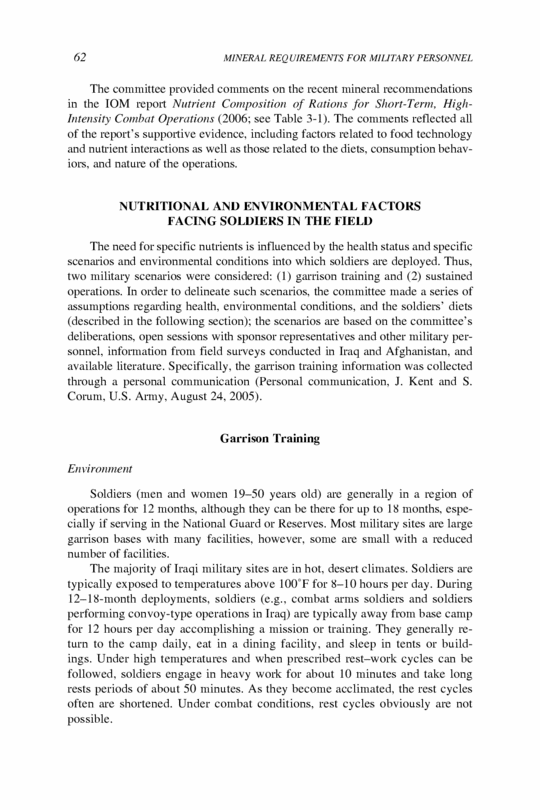
62 MINERAL REQUIREMENTS FOR MILITARY PERSONNEL The committee provided comments on the recent mineral recommendations in the IOM report Nutrient Composition of Rations for Short-Term, High- Intensity Combat Operations (2006; see Table 3-1). The comments reflected all of the report's supportive evidence, including factors related to food technology and nutrient interactions as well as those related to the diets, consumption behav- iors, and nature of the operations. NUTRITIONAL AND ENVIRONMENTAL FACTORS FACING SOLDIERS IN THE FIELD The need for specific nutrients is influenced by the health status and specific scenarios and environmental conditions into which soldiers are deployed. Thus, two military scenarios were considered: (1) garrison training and (2) sustained operations. In order to delineate such scenarios, the committee made a series of assumptions regarding health, environmental conditions, and the soldiers' diets (described in the following section); the scenarios are based on the committee's deliberations, open sessions with sponsor representatives and other military per- sonnel, information from field surveys conducted in Iraq and Afghanistan, and available literature. Specifically, the garrison training information was collected through a personal communication (Personal communication, J. Kent and S. Corum, U.S. Army, August 24, 2005). Garrison Training Environment Soldiers (men and women 1950 years old) are generally in a region of operations for 12 months, although they can be there for up to 18 months, espe- cially if serving in the National Guard or Reserves. Most military sites are large garrison bases with many facilities, however, some are small with a reduced number of facilities. The majority of Iraqi military sites are in hot, desert climates. Soldiers are typically exposed to temperatures above 100°F for 810 hours per day. During 1218-month deployments, soldiers (e.g., combat arms soldiers and soldiers performing convoy-type operations in Iraq) are typically away from base camp for 12 hours per day accomplishing a mission or training. They generally re- turn to the camp daily, eat in a dining facility, and sleep in tents or build- ings. Under high temperatures and when prescribed restwork cycles can be followed, soldiers engage in heavy work for about 10 minutes and take long rests periods of about 50 minutes. As they become acclimated, the rest cycles often are shortened. Under combat conditions, rest cycles obviously are not possible.
MINERAL RECOMMENDATIONS FOR MILITARY PERFORMANCE 63 Exercise and Energy Expenditure There are no data on exercise schedules, and they may vary significantly. There are also no metabolic data and no data on the soldiers' energy expenditure in garrison training. However, past studies reported that male soldiers who en- gaged in various activities expended energy in amounts that ranged from 3,500 kcal/day for combat support and combat service support soldiers involved in moderate exercise while in garrison to 4,500 kcal/day for Ranger training under intense exercise. For female soldiers, energy expenditures may range from 2,300 kcal/day when in basic training to 3,000 kcal/day when running medical opera- tions in the field. The committee assumes that the energy expenditures will be an average of 4,000 and 2,500 kcal/day for men and women, respectively. Diet While in base camp, soldiers have free access to dining facilities, and they typically eat three times a day. There are no recorded data on energy intake. When soldiers go on missions off the base camp they eat MREs during the day (sometimes for several days) as well as personal food items (snack foods) re- ceived through the mail or purchased at local Army and Air Force Exchange Service operations. For the purpose of evaluating the adequacy of rations' min- eral content, the committee assumes that male soldiers will consume three MREs per day and that female soldiers will consume two MREs per day. If consump- tion differs from this assumption (e.g., if male soldiers eat two MREs per day and female soldiers eat one MRE per day, and both sets supplement the MREs with snack foods), then the conclusions regarding mineral adequacy of the ra- tions might be different. Soldiers have access to supplemental food and drink from the local economy, but they are highly discouraged from consuming such products. It is unknown to what extent they eat outside of the base camp. Because weight gain can be a problem, weight-loss diets are as popular as they are with the civilian population. Soldiers have access to supplements, especially weight-loss supplements, pro- tein supplements, creatine, or energy drinks. Soldiers also might ingest calcium supplements. However, there are not enough data on supplement use in the field to make definitive conclusions. Water Consumption In Iraq, soldiers consume up to 3 L/day of mineral water that is produced at eight different sites. Since bottled water is considered a food product, members of the Veterinary Corps from Fort Dietrich, Maryland, inspect it for bacteria, contaminants, and mineral content. In order for the water to be shipped to the soldiers, the mineral content has to be as low as what is found in commercially
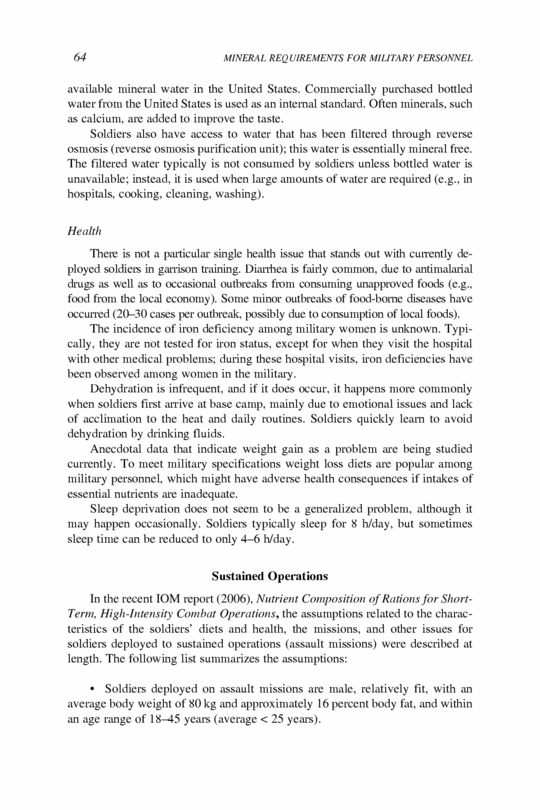
64 MINERAL REQUIREMENTS FOR MILITARY PERSONNEL available mineral water in the United States. Commercially purchased bottled water from the United States is used as an internal standard. Often minerals, such as calcium, are added to improve the taste. Soldiers also have access to water that has been filtered through reverse osmosis (reverse osmosis purification unit); this water is essentially mineral free. The filtered water typically is not consumed by soldiers unless bottled water is unavailable; instead, it is used when large amounts of water are required (e.g., in hospitals, cooking, cleaning, washing). Health There is not a particular single health issue that stands out with currently de- ployed soldiers in garrison training. Diarrhea is fairly common, due to antimalarial drugs as well as to occasional outbreaks from consuming unapproved foods (e.g., food from the local economy). Some minor outbreaks of food-borne diseases have occurred (2030 cases per outbreak, possibly due to consumption of local foods). The incidence of iron deficiency among military women is unknown. Typi- cally, they are not tested for iron status, except for when they visit the hospital with other medical problems; during these hospital visits, iron deficiencies have been observed among women in the military. Dehydration is infrequent, and if it does occur, it happens more commonly when soldiers first arrive at base camp, mainly due to emotional issues and lack of acclimation to the heat and daily routines. Soldiers quickly learn to avoid dehydration by drinking fluids. Anecdotal data that indicate weight gain as a problem are being studied currently. To meet military specifications weight loss diets are popular among military personnel, which might have adverse health consequences if intakes of essential nutrients are inadequate. Sleep deprivation does not seem to be a generalized problem, although it may happen occasionally. Soldiers typically sleep for 8 h/day, but sometimes sleep time can be reduced to only 46 h/day. Sustained Operations In the recent IOM report (2006), Nutrient Composition of Rations for Short- Term, High-Intensity Combat Operations, the assumptions related to the charac- teristics of the soldiers' diets and health, the missions, and other issues for soldiers deployed to sustained operations (assault missions) were described at length. The following list summarizes the assumptions: · Soldiers deployed on assault missions are male, relatively fit, with an average body weight of 80 kg and approximately 16 percent body fat, and within an age range of 1845 years (average < 25 years).
MINERAL RECOMMENDATIONS FOR MILITARY PERFORMANCE 65 · Soldiers may be on a mission for as many as 24 out of 30 days, with each mission lasting three to seven days. · There may be as much as 20 h/day of physical activity, with an average of 4 h/day of sleep. Total daily energy expenditure will be approximately 4,500 kcal. · Soldiers are likely to have an average energy intake of 2,400 kcal/day. · Soldiers are likely to have access to 45 L/day of chlorinated water. · Some soldiers may experience diarrhea, constipation, or kidney stones during assault missions. · The daily ration must fit within 0.12 cubic feet and weigh three pounds (1.4 kg) or less. It will be approximately 1217 percent water (varying greatly from one item to the other); most items will be energy dense and intermediate in moisture. · There will be no liquid foods in the rations, although gels and powders may be provided. · The food available during recovery periods will provide, at a minimum, the nutritional standards for operational rations. The recommended rations (see Table C-1 and Box C-1 in Appendix C) do not meet the MDRIs in AR 40-25 (U.S. Departments of the Army, Navy, and Air Force, 2001), nor do they meet the recommended nutrient intakes for civilians (IOM, 1997, 1998a, 2000, 2001, 2002/2005, 2004a). The assault rations (i.e., FSRs) are meant to be used only for repetitive three- to seven-day missions that last for a maximum total period of one month and that include recovery periods of 2472 hours between missions. With the expected energy expenditures of 4,500 kcal/day during the missions and the possibility of as much as a 10-percent body weight loss, it was recommended that weight loss be measured after one month of use. If weight loss of a soldier is higher than 10 percent for a soldier, he should not be sent on assault missions until weight is regained to within 5 per- cent of the initial weight. CALCIUM RECOMMENDATIONS Calcium is an essential mineral that plays a range of biological roles, from being a major constituent of bones and teeth to affecting nerve conduction, muscle contraction, heartbeat regulation, blood coagulation, energy production, glandular secretion, and the maintenance of immune function. Although many minerals are essential for bone health and function, the risk of calcium inad- equacy in the diet is higher than risks of other deficiencies; moreover, calcium is more abundant in the bone than other minerals. Calcium in the diet offsets obligatory calcium losses, protecting skeletal reserves and maintaining structural integrity. Bone loss might occur from inad- equate caloric intake to meet energy expenditure and calcium dermal losses dur-
66 MINERAL REQUIREMENTS FOR MILITARY PERSONNEL ing exercise and will be exaggerated in females with loss of menstrual function or eating disorders. Micro-fracture repair is also dependent on calcium intake. Thus, ingested calcium prevents the net efflux of calcium from bone and by doing so may help to prevent osteoporosis and stress fractures as a result of military training and combat action (Burr, 1997; IOM, 1997). Basic training appears to first lead to increased resorption (perhaps to compensate for calcium loss due to sweat or negative energy balance), but this is followed by increased formation (stimulated by intense training) and the window between increments in these two processes may be the period of greatest risk of stress fractures. To counteract any excess in bone turnover and meet the demands of the skeleton during intense activity calcium levels higher than current AI of 1,000 mg may be needed with intense exercise. Data on the prevention of stress fractures by cal- cium are limited and not conclusive yet but there is ongoing research that should soon shed more light. More data are clearly needed to understand the role of nutrition in stress fracture occurrence (see Nieves and Hayes in Appendix B). Remarkable changes in bone mineral content (BMC) have been observed in male army infantry recruits 1821 years old who were subjected to very strenu- ous physical training. After 14 weeks of walking, jogging with and without weights, and calisthenics for at least 8 hours a day, 6 days a week, the average bone mineral content of the subjects increased 11 percent in the left leg and 5.2 percent in the right leg (Margulies et al., 1986). Of the 268 recruits, 110 did not complete the training, largely because of incurring stress fractures in the lower limbs. The relationship of calcium intake to bone health and fracture prevention is discussed in more detail in Appendix B (Nieves and Hayes). Monitoring Calcium Status, Its Metabolism, and Related Bone Health Methods for evaluating calcium metabolism and bone health are advanced. Yet simple, inexpensive methods for assessing calcium metabolism and bone health for large numbers of people are still lacking. No biochemical measure can assess calcium status, unless calcium metabolism is grossly abnormal. Measur- ing calcium intake, therefore, is the only approach to evaluating current calcium status in healthy individuals. Approaches for calculating dietary calcium intakes and their limitations have been reviewed by Boushey (2006). A rapid assessment method specific for dietary calcium is given in Weaver and Heaney (2006). However, a dietary assessment tool to evaluate several key nutrients likely to be deficient in diets of military personnel would have broader utility. A detailed description of research methods to measure all parameters of calcium metabolism is given by Weaver (2006). Isotopic calcium tracer method- ology, typically in conjunction with metabolic balance studies, is the gold stan- dard for quantifying complete calcium kinetics including calcium absorption, endogenous secretion, urinary and fecal excretion, bone formation rates, and bone resorption rates. Serum and urinary calcium and serum parathyroid hor-
MINERAL RECOMMENDATIONS FOR MILITARY PERFORMANCE 67 mone (PTH) levels are the best, most readily available assessment tools for evaluating disturbances in calcium metabolism [e.g., those related to premen- strual syndrome (PMS)]. Strategies for monitoring bone health are given in an IOM report (2004b), Monitoring Metabolic Status. Predicting Decrements in Physiological and Cog- nitive Performance. Total body calcium can be determined from total body BMC using bone density, because calcium is a constant fraction of BMC, and repre- sents net cumulative calcium rather than recent dietary calcium intakes. Bone mineral density (BMD), measured by bone densitometry, quantitative computed tomography (QCT), or ultrasound, is a useful measure of bone health because of the strong inverse relationship between BMD and fracture risk (Melton et al., 1993). The large normative databases used by manufacturers of dual energy x-ray absorptiometers (DXA) allow BMD of individuals to be compared to age- matched reference values and fracture risk to be assessed as z-scores. Newer imaging methodologies (e.g., QCT) for assessing bone quality can provide addi- tional useful information about bone geometry. Evaluating interventions by DXA or QCT require years to analyze small changes in bone; however, some interven- tions produce large changes in bone that can be observed in periods as short as six months. Bone is a dynamic tissue that constantly turns over through a remodeling process, during which fatigued bone is resorbed and new bone is formed. In young adults, the two processes are typically coupled to achieve net bone bal- ance. A number of commercial kits are available to estimate bone formation and bone resorption rates. They lack specificity because they do not measure calcium or bone, but rather protein fragments that are released during bone turnover. Moreover, the biochemical markers of bone turnover are typically too variable to reliably predict small changes in bone. Therefore, their use as a primary outcome measure to gauge the effect of stress on bone turnover or to evaluate the effec- tiveness of interventions is not recommended. However, under conditions that have a large impact on bone (e.g., microgravity associated with space flight), biochemical markers have provided useful insights to mechanisms of action (Smith et al., 1999). Calcium Intake Effects on Health and Performance Stress Fractures The rate of stress fractures during basic training has varied depending on the branch of service, methods of detection, and training methods. Navy and Air Force programs consistently report a lower incidence of stress fractures than the Army and Marine Corps programs (Beck et al., 1996; Jones et al., 1989; Kelly et al., 2000; Shaffer, 2001; Shaffer et al., 1999). The fracture rates for females are consistently higher than for males (Almeida et al., 1999; Shaffer, 2001). Pre-
68 MINERAL REQUIREMENTS FOR MILITARY PERSONNEL 1989 studies of the U.S. military indicate male stress fracture rates from 0.9 percent to 3.0 percent and female rates from 2.7 to 8.2 percent (Jones et al., 1989). Since 1995, stress fracture incidence in female Marine recruits and officer cadets has ranged from 5.7 percent to 11.5 percent (Shaffer et al., 1999; Winfield et al., 1997). The female recruit stress fracture rate at the Naval Recruit Training Center Great Lakes in 1995 was reported as 3.9 percent (Shaffer et al., 1999). Stress fractures rates ascertained at the Fort Leonard Wood Army training center between October 2003 and June 2004 were 9.1 percent for males and 17.5 per- cent for females (Personal communication, J. Lappe and R. Ellyson, U.S. Army Training and Doctrine Command, February, 2003). Research on the benefits of calcium supplements in preventing stress fractures in females is currently being conducted and the results from these studies should be considered when devel- oping calcium requirements for the military. See also Nieves and Hayes in Ap- pendix B. Mood and Psychological Performance There is evidence in the literature that inadequate dietary calcium is associ- ated with negative emotional and mental health, which could have implications for performance. The most rigorously studied type of these conditions is PMS. Approximately 5 percent of North American women have PMS symptoms so severe that health and performance are affected (Thys-Jacobs, 2006). The symp- toms--irritability, depression, anxiety, social withdrawal, headache, and abdomi- nal cramps--can be alleviated in most women with increased dietary calcium or calcium supplementation. The supporting evidence consists of two small, single- site trials (Penland and Johnson, 1993; Thys-Jacob et al., 1989) followed by a multisite randomized, controlled trial (Thys-Jacobs et al., 1998). The study by Penland and Johnson (1993) controlled dietary calcium at 587 or 1,336 mg/day by supplementing with calcium lactate after a 13-day equilibra- tion diet containing calcium of 800 mg/day. Higher calcium intakes were associ- ated with improved mood, concentration, and behavior symptoms, as well as with decreased pain. The multisite trial (Thys-Jacobs et al., 1998) randomly provided 720 women who were 1845 years old and suffering from PMS with a placebo or with 1,200 mg/day of calcium as calcium carbonate for a duration of three menstrual cycles. A daily rating scale and diary were used to measure 17 core symptoms and 4 symptom factors (negative affect, water retention, food cravings, and pain). By the third menstrual cycle, an overall 48-percent reduc- tion in total symptom scores was observed. All 4 symptom factors and 15 core symptoms, but not fatigue and insomnia, were reduced significantly by the cal- cium treatment as compared to placebo. Negative affect was reduced by 45 percent. Results from observation studies add more evidence to the effects of cal- cium intake in alleviating PMS symptoms. In the Nurses' Health Study II cohort,
MINERAL RECOMMENDATIONS FOR MILITARY PERFORMANCE 69 1,079 women with PMS and 2,154 controls 2542 years old (on entry into the study) were followed for ten years; data showed that high intakes of calcium (median intake = 1,507 mg/day) and vitamin D (median intake = 567 Interna- tional Units [IU]/day) were associated inversely with PMS. Calcium showed a relative risk (RR) of 0.76 (95 percent coefficient interval [CI], 0.561.04) in the highest quintile of calcium intake compared to the lowest quintile of calcium intake with P = 0.12 for trend (Bertone et al., 2005). Thys-Jacobs (2006) attributes PMS symptoms to estrogen fluctuations dur- ing the ovulation and luteal phases of the menstrual cycle; the fluctuations and phases affect serum calcium concentrations, especially in women with inad- equate dietary calcium. Estrogen inhibits bone resorption and would favor lower serum calcium concentrations. However, the menstrual cyclicity of calciotropic hormones and biochemical markers of bone turnover is controversial. Some re- search has demonstrated a rise in serum PTH, calcium, and 25-hydroxyvitamin D at midcycle in women with PMS (Thys-Jacobs and Alvir, 1995). Other re- search has shown fluctuations in biochemical markers of bone turnover during the menstrual cycle (Nielsen et al., 1990; Schlemmer et al., 1993). And yet, other research has found no appreciable fluctuations in these regulators (Lopez Moreno et al., 1992; Muse et al., 1986). Inadequate calcium status and associated hyperparathyroidism have been associated in patients with depression (Borer and Bhanot, 1985; Cogan et al., 1978; Jimerson et al., 1979). A discussion of general strategies for monitoring cognitive and physical performance outcome measures is given in IOM (2004b), Monitoring Metabolic Status. Predicting Decrements in Physiological and Cognitive Performance. PMS symptoms appear to be uniquely associated with calcium and vitamin D deficiency. An assessment of PMS symptoms can be monitored with a menstrual calendar, a daily rating scale, or a symptom diary (Alvir and Thys-Jacobs, 1991; Thys-Jacobs et al., 1995). The National Institutes of Mental Health uses a crite- rion of a 30-percent change in mean symptoms from the luteal phase to post- menstrual phase for diagnosis of PMS (National Institute of Mental Health, 1983). Another useful manual for diagnosis is the Diagnostic and Statistical Manual of Mental Disorders DSM-IV (American Psychiatric Association, 1994). Risk Factors for Inadequacy During Military Garrison Training Inadequate Intake The mean calcium intake in the general population is 1,013 mg/day for 19 30-year-old males, 913 mg/day for 3150-year-old males, 647 mg/day for 1930-year-old females, and 637 mg/day for 3150-year-old females (IOM, 1997). Thus, on average, men almost achieve their AI whereas only women whose intakes are at the 90th percentile or above achieve their AI (1,000 mg/day).
70 MINERAL REQUIREMENTS FOR MILITARY PERSONNEL Calcium intakes have not been studied for many military groups. A study of 52 combat-support hospital staff consuming MREs showed that virtually all of the men and women were consuming less than their AI (Baker-Fulco, 2005; see Baker-Fulco in Appendix B). A study of 40 Special Forces male soldiers in garrison training for nine days using self-reported food records showed that calcium recommendations were met with an average intake of 1,065 mg/day (Tharion et al., 2004). Vitamin D is important in bone health in that it maintains serum levels of calcium and phosphorus. Vitamin D deficiency might increase requirements for calcium and, therefore, it would be appropriate to assess the vitamin D status of the military population. There is, however, an on-going debate regarding the criterion for vitamin D adequacy, that is, the cutoff serum level of 25 hydroxy vitamin D (25 [OH] D) as an indicator of adequacy is currently a subject of much research. Because of its importance for bone health, this committee suggests that when the optimal cutoff is determined, the military conducts surveys to deter- mine serum levels of 25 (OH) D of military personnel and assesses the risk of inadequacy. Exercise and Environmental Conditions Physical activity and calcium and bone metabolism. Researchers' under- standing of the effect of physical activity on calcium metabolism and bone is incomplete. Physical activity could lead to extra losses through sweat, and thus a need for increased requirements. Alternatively, physical activity could lead to increased bone strength, which could protect against inadequate calcium intakes. But, at high-impact loading, physical activity also could result in stress fractures. In women, high-intensity physical activity also can cause amenorrhea, which can lead to bone loss. Bone responds to changes in mechanical loading beyond habitual levels of loading. In skeletal unloading environments (i.e., environments that minimize loads on bone), such as immobilization or microgravity, bone resorption rates exceed bone formation rates, and bone is lost. Increased skeleton loading, such as the loading that can occur during military training, may lead to bone forma- tion rates exceeding bone resorption rates, and thereby, to increased bone mass. Metaanalyses of controlled trials of exercise and bone in premenopausal women show modest positive effects, averaging about 1 percent per year, of aerobic and resistance training on BMD of the lumbar spine (Singh, 2004). Few studies have been done with male subjects. One study examined 3868-year-old men who had no running experience but spent nine months training for a marathon and found that the men had improved BMC at the heel (Williams et al., 1984). A high-intensity free-weight exercise program resulted in a 1.9 percent gain of lumbar spine BMD after six months in 5060-year-old men (Maddalozzo and Snow, 2000). The effects of exercise on bone are greater in prepubertal children,
MINERAL RECOMMENDATIONS FOR MILITARY PERFORMANCE 71 when bone turnover rates are higher. This also may be related to a synergy between exercise and growth hormone, which is higher during growth (Bass, 2000). Exercise training increases serum IGF-1 (insulin-like growth factor 1) levels--which may be a key regulator of bone--in both young and older adults (Vukovich and Specker, 2006). In order to determine the effects of physical activity on dietary calcium requirements, a factorial design that varies levels of calcium intakes and exercise is required. Few studies have been designed specifically to address whether or not dietary calcium enhances the adaptive bone response to exercise. A one-year trial in which three- to five-year-old children were assigned randomly to receive either 1 g/day of calcium (calcium carbonate supplement) or a placebo and to participate in either gross-motor (weight-bearing) or fine-motor (sitting) exercise resulted in increases in BMC only in the group that both received the calcium and participated in weight-bearing exercise (Specker and Binkley, 2003). How- ever, bone strength was improved in the exerciseplacebo group; the finding was illustrated by an increase in tibia diameter, as assessed by peripheral QCT (see Figure 3-1). Small increases in the diameter of bone have a profound impact on the bone's bending strength because bone strength increases by the squared dis- tance from the axis around which bending occurs. Another randomized trial demonstrated a significant calcium (calcium-fortified foods, 434 mg/day) and exercise interaction in bone mass in prepubertal girls at the femur, but not at the tibia or fibula (Iuliano-Burns et al., 2003). A positive interaction between dietary calcium and exercise on bone density also has been found in other age groups, including in postmenopausal women (Lau et al., 1992; Prince et al., 1991; Specker, 1996). In growing children as well as in postmenopausal women, bone turnover is higher than for the young adults of this report's target age. Lifestyle factors are thought to influence bone conservation but to have less of an impact during the years of reduced bone turnover. Prospective studies in premenopausal women show mixed results; some show a positive interaction of FIGURE 3-1 Exercise increases 20 percent tibia cross-section bone strength and, when combined with calcium supplementation, increases bone mass in a 1-year randomized, controlled trial in 35-year-old children. SOURCE: Specker and Binkley (2003).
72 MINERAL REQUIREMENTS FOR MILITARY PERSONNEL dietary calcium and physical activity (Recker et al., 1992), while others do not find a significant interaction (Valimaki et al., 1994). Unfortunately, the appropri- ate randomized, controlled trials of calcium and exercise on calcium metabolism or on bone mass and strength have not been conducted in young and middle- aged adults, so it is unproven whether or not exercise has an impact on calcium requirements for those age groups. If young adults' bodies react similarly to children's bodies, then exercise may provide increased bone strength and offset inadequate calcium intakes, but benefits may be greater from providing adequate calcium intakes in conjunction with training. From literature on animal models, exercise may up-regulate cal- cium absorption (Yeh et al., 1989) and initially increase then decrease bone resorption (Yeh et al., 1993). From studies in humans, endurance exercise lasting longer than 30 minutes can increase bone serum calcium and PTH levels (Vukovich and Specker, 2006). An increase in circulating PTH could increase calcitriol, which would increase calcium absorption, renal conservation of calcium, and bone resorption. An acute bout of moderate aerobic exercise significantly en- hanced fractional strontium absorption (a surrogate of calcium absorption) in 18 male athletes, 25.2 ± 0.6 (mean ± standard error of the mean) years old and decreased a biochemical markers of bone formation but not bone resorption (Zitterman et al., 2002). Other studies have shown a single bout of exercise decreases bone resorption markers up to three days postexercise while urinary calcium increased on the day of exercise in 14 Asian males 24.5 ± 0.7 years old (Ashizawa et al., 1998). The authors explained the increase in urinary calcium excretion by an increase in renal acid excretion. The type of exercise may influ- ence the effect on bone turnover. Anaerobic training, but not aerobic training, accelerated bone turnover in young males (Woitge et al., 1998). Ingestion of a calcium load (approximately 1,000 mg) in mineral water during endurance cy- cling suppressed the elevation of a biomarker of bone resorption in male athletes (Guillemant et al., 2004). Much of what researchers know about the role of physical activity and cal- cium intake on bone, information that might be relevant to military personnel, is discussed by Nieves (2005; see Nieves and Hayes in Appendix B). Male military cadets in the highest-level exercise group had significantly higher tibial BMC, cortical thickness, and periosteal circumference than cadets in lower-level exer- cise groups. Cadets consuming more than three glasses of milk per day had greater tibial BMD, cortical thickness, and periosteal circumference. There was a significant interaction between milk intake and prior exercise on cortical thick- ness. In another study, training in Marine recruits resulted in significant in- creases in a biochemical marker of bone resorption (Sheehan et al., 2003). Military training has been associated with an increase in stress fractures (IOM, 1998b). The role of calcium and vitamin D supplementation on prevent- ing stress fractures in female naval recruits undergoing basic training is being investigated by Joan Lappe at Creighton University.
MINERAL RECOMMENDATIONS FOR MILITARY PERFORMANCE 73 In summary, physical activity above habitual levels may increase bone strength and, thus, may protect against inadequate calcium intakes; bone strength may benefit further from adequate intakes. Mechanisms for the putative positive interactions of physical activity and dietary calcium may be through enhanced calcium absorption and changes in bone turnover. Suppression of bone turnover as could occur with dietary calcium and exercise has been associated with improved bone quality (Heaney and Weaver, 2005). Excess in bone turnover with high-impact exercise would increase skeletal demands for calcium. Calcium losses through sweat and excreta. According to Charles et al. (1991) normal endogenous fecal calcium excretion is 3.4 mmol/day (136 mg/ day), urinary calcium excretion is 5.5 mmol/day (220 mg/day), and dermal cal- cium loss is 1.6 mmol/day (64 mg/day). In setting the Dietary Reference Intake (DRI) for calcium for young adult males and females, the following basal losses of calcium were estimated: urinary--203 mg/day for women, 162 mg/day for men; endogenous fecal calcium--132 mg/day for women, 156 mg/day for men; sweat--63 mg/day for men and women (IOM, 1997). Whole-body integumen- tary calcium loss in 16 ambulatory men averaged 15.8 mg/day (8.7 mg/m2/day) (Chu et al., 1979). Urinary calcium losses in the Chu study ranged from 51 to 380 mg/day depending on the calcium and protein intake. Palacios et al. (2003) found whole-body dermal calcium loss in six young women averaged 103 ± 22 mg/day. Dermal calcium measured in patches attached to the arms, legs, and back was found to overestimate the whole-body calcium more than threefold. Mitchell and Hamilton (1949) used a whole-body wash-down technique to mea- sure sweat calcium in six men resting in a warm humid environment. Average sweat calcium concentration decreased from 52.6 mg/L during the first 30 min- utes to 31.7 mg/L in the second 30 minutes to 4.0 mg/L during the third hour of exposure. Average dermal calcium loss over 7.5 hours was 20.2 mg/h in the heat compared to 6.2 mg/h while resting in a comfortable environment. Whole-body calcium loss through sweat was measured in four women resting in the heat (Johnston et al., 1950). Mean sweat calcium loss during four 1-h exposures was 8.5 mg/h (33.5 mg/L). Several studies have examined sweat calcium losses during exercise. Con- solazio et al. (1962) used arm bags to measure sweat calcium losses of eight men during 16 days of exposure to 21°C, 29.4°C, and 37.8°C environments for 7.5 hours that included 100 minutes of exercise per day. Calcium intake was 441 mg/day throughout the study. Mean calcium losses in the urine and feces were approximately the same in the three environments and ranged from 183199 mg/ day for urinary calcium and 199226 mg/day for fecal calcium. Excretion of calcium through sweat increased from 111 mg/day at 21°C to 137 mg/day at 29.4°C and 201 mg/day at 37.8°C. These estimates were extrapolated from arm bag collections in environmental chambers for 7.5 hours plus an assumed ratio of loss outside of chambers of 3 mg/h. Sweat calcium loss measured while the
74 MINERAL REQUIREMENTS FOR MILITARY PERSONNEL men were in the environmental chamber increased gradually from 8.1 mg/h at 21°C to 11.6 mg/h at 29.4°C and 20.2 mg/h at 37.8°C. A second experiment involved three men doing 30 minutes of moderate exercise for 16 days. In the heat (37.8°C), sweat calcium loss decreased from 36 mg/h to 17 mg/h by the second week. Mean sweat calcium loss in a neutral environment (23.9°C) was 3 mg/h. These findings suggest that sweat calcium loss decreases with acclimatization to heat. Urinary calcium loss did not change over time in the heat and was approximately the same in the hot and neutral environments. Chu et al. (1979) measured whole-body integumentary calcium losses dur- ing 40 minutes of intense exercise. Integumentary calcium excretion ranged from 18 to 31 mg per 40 minutes of exercise but was unaffected by dietary calcium or protein intake. Urinary calcium loss increased on exercise days when dietary protein (61 to 157 mg/day) or calcium increased (116 to 150 mg/day). Shirreffs and Maughan (1997) also used a whole-body technique during moderate exer- cise to measure sweat calcium in a hot humid environment (34°C, 6070 percent relative humidity). Mean sweat calcium concentration for five men and two women was 52 ± 36 mg/L. Bullen et al. (1999) examined the sweat and urinary calcium losses in 10 men who were running in a hot, humid (32°C, 58 percent relative humidity) environment. Sweat was collected in pads attached to the back. Mean sweat calcium loss was 45 mg within 45 minutes. Urinary calcium excretion was 206 mg/day on the exercise day versus 189 mg/day on the rest day. Sweat collections with pads were used in two other studies. Verde et al. (1982) collected sweat during moderate exercise indoors and outdoors as well as while sitting in a sauna. Sweat calcium concentration was lower during exercise than while resting in the sauna. O'Toole et al. (2000) measured sweat calcium in 42 male recruits undergoing fire-fighting training. Mean sweat calcium concen- tration was 44 mg/L, and sweat loss averaged 2.44 liters during the 34-hour training session for an average sweat calcium loss of 107 mg per session. Sweat samples from male basketball players were collected from their cotton t-shirts over three days of practice by Klesges et al. (1996). Players practiced twice a day with each practice session lasting more than two hours. Average weight loss per session was 2.13 kg, and mean calcium loss during practice was 426.7 mg. Mean sweat calcium concentration decreased significantly over the three days. Urinary calcium concentration averaged 86 mg/L during the practices. Bone Loss in Young Adults Several factors can lead to abnormal bone loss in apparently healthy adults-- oral contraceptive use, weight loss, and amenorrhea. Oral contraceptives (OC). The effect of OC use on bone mass is conflicting-- it has been shown to be protective of spine BMD (Kleerkoper et al., 1991) as
MINERAL RECOMMENDATIONS FOR MILITARY PERFORMANCE 75 well as detrimental to spine BMD (Hartard et al., 1997). OC use also has been associated with a reduction in sex steroid hormones (Bemben et al., 1992); this reduction could result in increased bone turnover. Both exercise and OC use were detrimental to femoral neck bone mass and strength (Burr et al., 2000). A negative interaction between OC use and physical activity on spine and hip BMD was observed in 1830-year-old-women randomized to an exercise pro- gram (Weaver et al., 2001). Three women in the exercise group who used OCs and ingested recommended calcium intakes did not lose bone, suggesting that adequate dietary calcium must be present for bone modeling to occur under the stimulus of mechanical loading. In a one year intervention of 1830 year old women consuming < 800 mg/day of calcium, total hip and spine loss observed in OC users randomized to the control group was prevented in those randomized to a dairy supplementation to achieve > 1,000 mg/day of calcium (Teegarden et al., 2005). Use of Depro-Provera was related inversely (P = 0.007) to hip and spine BMD in U.S. military female cadets (Nieves et al., 2005). Thus, achieving cal- cium recommendations may be particularly important among military women who use OCs and should be investigated. Weight loss. It is unclear whether weight loss results in bone loss in physi- cally active adults who are younger than 45 years old (Shapses and Cifuentes, 2004). Women typically consume less calcium during periods of moderately low energy intake (Ricci et al., 1998). Moderate weight reduction in obese premeno- pausal women did not result in bone loss (Shapses et al., 2001), but rapid weight loss in leaner women might result in bone loss. Bone loss associated with weight loss in women older than 45 years old, who are more likely to be estrogen depleted, has been prevented by calcium intakes of 1,600 mg/day or more (Jensen et al., 2001; Ricci et al., 1998; Riedt et al., 2005), but not by 800 mg/day (Svendsen et al., 1993). Calcium intakes above those currently recommended may protect bone during weight loss regimens. The higher levels of physical activity typical in military personnel that protect against bone loss may offset any need for increased requirements. With the current knowledge, it is important that individuals attempting voluntary weight loss strive to consume at least the recommended levels of calcium, although higher levels might be needed. The committee recommends that individuals engaging in weight loss diets reach cal- cium intakes of 1,200, and maybe even 1,5001,700, mg/day. However, this recommendation should be validated through research (see Chapter 4). Amenorrhea. Amenorrhea also is associated with bone loss. Amenorrhea can result from energy-restricted diets, anorexia nervosa, or extreme exercise. Young women with exercise-induced amenorrhea are at increased risk of frac- tures (De Souza and Williams, 2005). Energy restriction or weight loss, or both, are associated with reduced estro- gen levels and increased glucocorticoids, which can result in decreased calcium absorption and increased serum PTH (Shapses and Cifuentes, 2004). Premeno-
76 MINERAL REQUIREMENTS FOR MILITARY PERSONNEL pausal women with amenorrhea are also hypoestrogenomic (De Souza and Williams, 2005). Losses in spine and hip BMD were observed in female military cadets with subclinical eating disorders and women with fewer than six menstrual cycles per year (Nieves, 2005; see Nieves and Hayes in Appendix B). Requirements for the General U.S. Population An EAR for calcium for 1930-year-olds in the U.S. civilian population could not be calculated, because there are no studies conducted with various intakes and bone accretion and because of the uncertainties regarding calcium endogenous and obligatory losses. However, the results from balance studies that investigated the intakes needed for BMC gains made it possible to estimate an AI of 1,000 mg/day for men and women (IOM, 1997). Daily Intake Recommendations for Military Personnel in Garrison Training Calcium requirements for military personnel in garrison training may be higher than those for civilians because of the stress caused by increased physical activity and potentially extreme environmental conditions and related factors like increased sweat loss or reduced bone mass and calcium loss due to oral contraceptive use or weight loss. Alternatively, the requirements might be lower because additional exercise may compensate for calcium losses by increasing calcium bone deposition and bone diameter. In addition, current research being conducted on the benefits of calcium supplements in preventing stress fractures in females naval recruits should be closely followed and the results from these studies should be considered when developing calcium requirements for the mili- tary. Further research is required before any change (especially a reduction) to the IOM AI is recommended. Therefore, until new data that answer these ques- tions are collected, 1,000 mg/day of calcium is recommended for military per- sonnel in garrison training. RECOMMENDATIONS FOR CALCIUM INTAKE: AIMGT for men 1,000 mg/day AIMGT for women 1,000 mg/day Adequacy of Calcium Military Dietary Reference Intakes and Calcium Levels in Rations The committee concluded that the current Military Dietary Reference Intake (MDRI) of 1,000 mg/day of calcium for men and women is adequate given the number of unanswered research questions.
MINERAL RECOMMENDATIONS FOR MILITARY PERFORMANCE 77 Table 3-1 (and Tables C-2 through C-5 in Appendix C) shows the averages and ranges of calcium content for three different MREs that each include about 25 menus. Even though some of the menus appear very low in calcium (269 mg), for this interpretation it will be assumed that a mix of menus are eaten per day and that the mix is sufficient for meeting the average level of calcium in the menus. However, there is a potential for deficiencies due to not only low food consumption but also selection of MREs low in calcium. The committee recom- mends that the menus at the low end of the range be revised to meet the 1,000 mg/day goal for both men and women. As an example, the average calcium content in MRE XXIII and XXIV menus is 526 and 557 mg, respectively. Assuming that women will consume two MREs and men will consume three MREs, the amount in the ration, if consumed com- pletely, will meet the recommendation of this committee. The extra calcium that men would consume will not reach amounts that would cause any safety con- cerns. A seven-day study of Rangers in the field showed an average calcium intake of only 639 ± 212 mg/day (mean ± standard deviation [SD]) (Baker- Fulco, 2005; see Baker-Fulco in Appendix B). The reasons behind the discrep- ancy between the total amount in three rations (~1,500 mg) and the intake of calcium (639 mg) deserve further investigation; surveys regarding food intake need to be conducted (see Chapter 4). The current FSRs contain an average of 673 mg of calcium (see Table 3-1; see Table C-6 in Appendix C). Although this amount is not grossly inadequate, a minimum amount of 750 mg was recommended in IOM (2006) report Nutrient Composition of Rations for Short-Term, High-Intensity Combat Operations and is endorsed by this committee. Adequacy of IOM Recommendations for First Strike Rations The IOM Committee on Optimization of Nutrient Compositions of Military Rations for Short-Term, High-Stress Situations recommended 750850 mg/day of calcium for soldiers engaged in short-term, high-stress operations (IOM, 2006; see Table C-1 in Appendix C). The lower level of the recommendation was based on needs to replace losses determined by the factorial approach, potential sweat losses during prolonged exercise, and concerns about renal stone forma- tion. The IOM AI (1997) of 1,000 mg/day for 1950-year-olds was determined primarily by estimating the intake for maximal calcium retention. Any extra sweat loss theoretically would increase calcium requirements unless adaptation led to decreased calcium losses by other routes. If sweat calcium losses increase from 111 mg/day at 21°C to 201 mg/day at 37.8°C, as reported by Consolazio at al. (1962), this increase in calcium loss of 90 mg/day would increase calcium requirements by about 300 mg/day, assuming 30 percent absorption efficiency. A better understanding of calcium losses through sweat and adaptive responses
78 MINERAL REQUIREMENTS FOR MILITARY PERSONNEL over time requires more research. Prolonged exercise may have the effect of strengthening bone through changes in geometry to compensate for a negative calcium balance, as explained earlier in this paper. The upper level of the committee's recommendation (850 mg/day) was set to minimize risk of kidney stones. Hypercalciuria is associated with increasing supersaturation of the urine, an environment that increases renal stone risk, and would be aggravated by high salt intakes and reduced fluid intakes. However, dietary calcium's role in the risk of renal stone formation under conditions expe- rienced by the military is unknown. In civilians, higher dietary calcium has been associated with decreased risk of kidney stones, unless calcium supplements were taken separately from the consumption of dietary oxalate from food (Curhan et al., 1993, 1997, 2004). The assumption is that calcium consumed with oxalate- containing foods would bind the oxalate that forms insoluble calcium oxalate, which would be excreted in the stools rather than absorbed to form kidney stones. In the Nurses' Health Study II, 96,245 2744-year-old women were fol- lowed for eight years and experienced 1,223 symptomatic cases of kidney stones. The age-adjusted RR of kidney stones after adjusting for body mass index, fam- ily history of kidney stones, calcium supplementation, dietary calcium, animal protein, potassium, sodium, sucrose, phytate, and fluids is shown for each quintile of calcium intake in Table 3-2 (Curhan et al., 2004). Thus, calcium intake greater than the AI for calcium was associated with reduced risk of stones compared to the lowest quintile of calcium intake. The largest reduction in risk occurred between the first and second quintiles of dietary calcium (< 626 to 627763 mg/ day). Supplemental calcium was not independently associated with risk of kid- ney stones. Other dietary factors showing significant associations with kidney stones between the highest and lowest intake were fluid intake (RR = 0.68, CI = 0.560.83), phytate (RR = 0.63, CI = 0.510.78), and sucrose (RR = 1.31, CI = 1.071.60). Dietary phytate was as protective as dietary calcium in its associa- tion with kidney stones. Dietary sodium, potassium, and magnesium were not associated independently with the risk of kidney-stone formation. The impact of diet on the risk of kidney stones under conditions of inad- equate calorie and fluid intake during periods of stress from heat, physical exer- tion, and combat is unknown. More research is needed to confirm whether or not calcium intake combined with low fluid intake and inadequate caloric intake will increase the risk of kidney stones in military personnel who are engaged in assault missions. The committee finds that short-term calcium intakes below the AI (e.g., 750850 mg/day) recommended by IOM (1997) do not pose long-term risks because the skeleton's calcium reserve is large and requires prolonged periods of dietary inadequacy to disrupt. However, because of lacking evidence on the link between calcium intake and kidney-stone formation, this committee recommends 1,000 mg/day as the calcium-level upper limit for assault rations.
79 0.54 0.73 0.54 0.84 0.63 0.68 939 sodium, 1,129 2,769 II 5 0.450.63 0.590.90 0.450.65 0.681.04 0.530.75 Study potassium, n, 0.69 0.87 0.64 0.84 0.67 0.72 protei Health 0.580.80 0.731.05 0.540.76 0.691.03 0.560.80 0.600.86 798938 animal 9091,128 Nurses' 4 2,2532,768 in calcium, reserved. dietary Intakes 0.72 0.85 0.74 0.85 0.76 0.79 rights .All 0.610.84 0.721.02 0.630.88 0.701.02 0.640.89 764908 698797 calcium, Calcium 3 1,8512,252 to Association supplemental of Medical According 0.74 0.85 0.92 0.97 0.85 0.88 intake American 0.630.87 0.721.01 0.781.08 0.811.16 0.721.00 Stones 627763 596697 stones, 2 1,4321,850 interval. (2004), © kidney Kidney of Confidence Copyright history = 1.00 1.00 1.00 1.00 1.00 1.00 Incident CI (2004). for family risk, al. et 626 596 1,431 BMI, Risk 1,223) Quintile 1 Ref Ref < Ref Ref Ref Ref Relative = age, = Curhan RR fluid. from Relative Cases included and values values values group, 0.007) values values 0.001) values 0.001) 3-2 = < < Adapted phytate, 96,245; (mg/day) CI (P CI (mg/day) CI (P CI (mL/day) CI (P CI *Model Referent = = RR 95% RR* 95% RR 95% RR* 95% RR 95% RR* 95% TABLE (n Mineral Calcium Intake Age-adjusted Multivariate Phytate Intake Age-adjusted Multivariate Fluid Intake Age-adjusted Multivariate NOTE: sucrose, Ref SOURCE:
80 MINERAL REQUIREMENTS FOR MILITARY PERSONNEL RECOMMENDATION FOR CALCIUM IN ASSAULT RATIONS: 7501,000 mg/day Strategies for Achieving Sufficient Calcium Intake Usual Foods During adulthood, calcium intakes offset daily losses and withdrawals from skeletal reserves, and thus prevent loss of bone strength and minimize the bone remodeling needed for optimal bone-structure maintenance (Heaney, 2005). The major sources of calcium in American civilian diets are dairy products, although other foods also contribute. Some vegetables--Chinese cabbage, kale, and broccoli--are relatively high in calcium, although the levels are much lower than in dairy products. The 2005 Dietary Guidelines for Americans recommend 23 servings of milk and milk products for most people to meet their dietary calcium needs (U.S. Department of Health and Human Services [DHHS] and United States Department of Agriculture [USDA], 2005). Following a food guide such as MyPyramid or the DASH diet ensures that most people's calcium intakes will meet IOM's AI levels. Diets that are devoid of dairy foods rarely contain more than 200300 mg of calcium, amounts far below the current AI (Heaney, 2005), and some individuals, particularly older persons, may need to add dietary supplements or fortified foods. Only 30 percent (approximately) of calcium consumed through diet or supplements is absorbed; the remaining calcium is excreted in the feces (IOM, 1997). Fortified Foods There are many calcium-fortified food sources currently available. Fortified foods are helpful alternatives for individuals who are unable or unwilling to consume sufficient amounts of foods that are naturally high in calcium. There is little danger of excessive fortification since so few products actually contain substantial amounts of calcium, even those that are fortified. Numerous fortificants are available, and several calcium-fortified food ve- hicles with stable shelf lives are successful on the market. They include fruit juices, fruit drinks, soy drinks, tofu, and highly fortified cereals, among others. For example, a six-ounce serving of calcium-fortified orange juice provides about 200260 mg of calcium, a fortified instant breakfast drink provides about 105 250 mg, and a fortified ready-to-eat cereal provides 1001,000 mg per serving (Office of Dietary Supplements, 2005). Caramel-like chewable candies fortified with relatively large amounts of calcium and vitamin D are also available and may be an option for certain groups with high needs. Fortified foods help to maximize calcium absorption because the doses are relatively low (so that absorption efficiency is good), and the doses are always consumed with food, slowing release into the duodenum and increasing absorp-
MINERAL RECOMMENDATIONS FOR MILITARY PERFORMANCE 81 tion. However, in developing fortified foods it became apparent that there were interactions between added calcium and many of the constituents in food. Thus, it was necessary to actually ascertain the bioavailability of calcium in the final prod- ucts that were developed. Calcium is poorly absorbed from foods that are rich in oxalic acid (e.g., spinach, sweet potatoes, rhubarb) and that have high levels of phytic acid (e.g., bran-rich cereals). However, soybeans have calcium that is ab- sorbed nearly as well as from milk, even though it is high in phytate (IOM, 1997). For liquid products, it is important to ensure that the calcium is soluble in the beverage and that the suspension is stable; in many products the suspension is not stable and the calcium settles out as a sludge in the bottom of the container (Heaney et al., 2005). Therefore, whenever calcium fortification is considered, it is impor- tant to determine if the fortified food actually delivers the intended calcium dose. Supplementation Supplementation is yet another alternative for those who are unable to obtain sufficient calcium from food sources. The level of elemental calcium in supple- ments varies depending on their salt content. Calcium and phosphate carbonate each contain about 40 percent, calcium citrate about 21 percent, calcium lactate about 13 percent, and calcium gluconate about 9 percent (Levenson and Bockman, 1994). Supplements are absorbed best when they are given as divided doses, be- cause absorption efficiency is inversely proportional to the logarithm of the in- gested load (Heaney et al., 1990). Also, slow delivery of calcium to the absorptive sites in the upper small intestine optimizes absorption, and so it is best to take calcium supplements with meals. Variations in bioavailability, pharmaceutical for- mulation, the matrix, and in the amount of calcium in different supplements are substantial and can vary over a twofold range; therefore, any recommendations for supplementation should be accompanied by studies of actual absorption. The danger of consuming excessive calcium through supplementation is low. The differences between the UL and the recommendations for calcium needs are relatively high--the recommended maximum level of calcium for adults is 1,450 mg/day, and the UL is 2,500 mg/day (IOM, 1997). The UL is based on the risk of the milk-alkali syndrome, which involves a hypercalcemia at the same time that the kidney and the skeleton are hypoperfused (insufficient blood flow) and thus effecting calcium regulation and homeostasis. However, the milk-alkali syndrome--and other adverse effects, such as nephrocalcinosis and renal insufficiency--usually occurs only at very large doses (about 5 g/day of elemental calcium or more than 12 g/day of calcium carbonate) (IOM, 1997). Milk-alkali syndrome can be managed by hydration and by maintaining blood flow to the kidneys and bones. There is little evidence that supplementary calcium causes renal stones, al- though people who are at risk of kidney-stone formation should not take supple- ments. There is some evidence that supplemental calcium taken without food
82 MINERAL REQUIREMENTS FOR MILITARY PERSONNEL may increase the risk of kidney stones in women, and possibly in men, perhaps because doing so decreases the potential for calcium to bind oxalate in foods and subsequently to reduce oxalate kidney stones (Curhan et al., 1997, 2004). Al- though this risk can be avoided by taking calcium supplements with food, people who are prone to kidney stones should not take supplemental calcium at all, especially when there is a risk of dehydration. As calcium intake increases, the efficiency of intestinal calcium falls, so that the urinary calcium levels do not rise greatly (Allen, 1998). Although there has never been a reported case of calcium overdosing from food sources, even at levels as high as 6,000 mg/day, even greater excess is possible from supple- ments. For that reason, intakes of more than 2,500 mg/day are not recommended (Heaney, 2005). People with low levels of stomach acid (achlorhydria) should take calcium with food. People who undergo calcitriol (active vitamin D) therapy and those who suffer from sarcoidosis (which increases calcium absorption) also should use calcium supplements with caution. There is considerable evidence that supplementation works and that people adhere to it. There are a number of calcium supplementation trials reviewed in the literature, and most have shown positive effects on bone health (Elders et al., 1994; Lloyd et al., 1993; Weisman and Matkovic, 2005; Winters-Stone and Snow, 2004). Up to 90 percent of calcium is excreted through feces. The presence of a calcium-rich digesta might have some health-related effects. For example, high calcium intakes (over 1,000 mg/day) cause oxalic acid to be absorbed poorly from plant foods or other sources, and the formation of calcium oxalate in the gut reduces oxalate absorption and the renal oxalate load, thereby reducing the risk of kidney stones (Heaney, 2005). Calcium also complexes with free fatty acids and bile acids in the disgestate, a process that might decrease the irritant quality of the fatty acids. Finally, calcium complexes with dietary phosphorus, blocking the calcium's absorption to some extent. So, calcium salts are used to control hyperphsophatemia; every 500 mg of ingested calcium binds about 165 mg of phosphorus that is ingested at the same time (Heaney, 2005). One of the problems with all mineral supplements is that the tablets or pills are relatively large, so many people find it difficult to swallow them. Chewable calcium products exist and are often acceptable even to those who find the tab- lets too difficult to swallow. Constipation problems related to calcium supple- mentation are poorly documented; in several clinical trials there was little evi- dence that constipation occurred (Clemens and Feinstein, 1977). Many forms of calcium supplements exist, mainly as salts (carbonates, cit- rates, phosphates, lactates, and citrate-malate). Salts of gluconic acid, calcium acetate, and calcium chelates with amino acids are somewhat less common but are also available. The elemental calcium amounts they contain vary from about 40 percent calcium in the carbonate to 21 percent in the calcium citrate (Hendler and Rorvik, 2001). Aside from a slight advantage of calcium citrate malate and the chelates, most of the major salts of calcium are absorbed equally well (Heaney
MINERAL RECOMMENDATIONS FOR MILITARY PERFORMANCE 83 et al., 2001). Other research suggests that the citrate form of calcium is better absorbed (Kenny et al., 2004; Sakhaee et al., 1999). However, although the bioavailability may be similar, some products that are poorly formulated may not disintegrate, and thus, absorption may be decreased. This problem can be avoided by focusing on supplements that meet U.S. Pharmacopoeia Disintegra- tion Standards or by using only products that have been tested for their bio- availability. It is also important to ensure that the supplement is stable under the expected use conditions, which in many missions in the armed forces are likely to involve extremes in temperature and humidity. There are several interactions between calcium and other diet components or pharmaceutical drugs. Calcium supplements bind with tetracycline, and they also may interfere with thyroxin absorption. Calcium salts and foods high in calcium reduce absorption of heme and nonheme iron eaten at the same meal. With regard to drug interactions, calcium may decrease absorption of biphophonates, H2 blockers, l-thyroxin, proton pump inhibitors, quinolones, and tetracyclines. Vita- min D analogues increase calcium absorption (Hendler and Rorvik, 2001). The increased use of calcium supplements and fortified foods has raised con- cerns about high calcium intakes and their influence on producing relative defi- ciencies of several minerals. High calcium intakes have produced relative magne- sium deficiencies in rats (Evans et al., 1990). However, calcium intake does not affect magnesium retention in humans (Andon et al., 1996). Similarly, except for a single report in postmenopausal women (Wood and Zheng, 1997), decreased zinc retention has not been associated with high calcium intakes (Dawson-Hughes et al., 1986; Spencer et al., 1984). The nature of this interaction is unclear and re- quires further study. Iron absorption from nonheme sources is decreased by 30 to 50 percent from radiolabeled test meals in the presence of calcium intakes up to 300 mg/day, after which there is no further reduction. Thus, practically speaking, it is prudent to set iron requirements assuming that individuals are going to ingest 300 mg of calcium at each meal (Gleerup et al., 1995). The inhibition of iron absorption by calcium does not appear to be a gut effect and may involve competi- tion with the transport of iron in the intestinal mucosa (Halberg et al., 1992), possibly at the level of mobilferrin. A period of up to 12 weeks of calcium supple- mentation does not produce changes in iron status (Whiting, 1995). Long-term supplementation also does not reduce total body iron mass accumulation in adoles- cent girls (Ilich-Ernst et al., 1998). Similarly, calcium salts inhibit heme iron ab- sorption in a single meal, but do not affect long-term iron status (Roughead et al., 2005). Single-meal iron absorption studies quite possibly exaggerate inhibitory effects that disappear in the context of the whole diet. Recommendations for Achieving Sufficiency The main consideration when comparing strategies to increase calcium in- take is practicality. The estimated calcium contents of rations suggest that many,
84 MINERAL REQUIREMENTS FOR MILITARY PERSONNEL but not all, MRE menus meet a calcium level for which consumption of two rations will provide the AI of 1,000 mg/day. Ideally, the calcium levels in all operational rations should be increased that the AI is achievable with two ra- tions. The addition of dairy products would appear to be most effective since they are the main source of calcium and other nutrients; however, some situa- tions might not lend themselves to dairy product increases and some individuals may refuse to consume dairy products or may be lactose intolerant. If these are real concerns for soldiers in garrison training, then strategies like fortification or supplementation should be tested for increasing calcium intake. Research Needs Specific Priorities · Quantify calcium losses due to the stressful conditions of garrison train- ing (i.e., heat and physical exertion, psychological stressors). · Assess the current diets and calcium intake of military personnel under the various environments as a practical approach to assess calcium status. This should include calcium intakes from food, beverages, dietary supplements, and calcium-containing mediators like antacids. · Conduct balance and kinetic studies to understand the role of physical activity on calcium metabolism and requirements. · Study the potential adverse effects of weight loss and the interactions with calcium supplementation in bone loss. · Study of the potential role of dietary calcium in counteracting the nega- tive interaction of exercise and OCs on bone in women. · Study the relationship between calcium intakes greater than 850 mg/day and the risk of kidney-stone formation. · Study the relationship of calcium intake and mood, PMS symptoms, de- pression, and other psychological factors that affect performance. Other Research Needs · Assess the effects of calcium on cognitive and psychomotor function and sleep quantity and quality. COPPER RECOMMENDATIONS Need for Copper Copper is an essential trace element required for the functioning of all organ systems. Because of its ubiquitous nature in many oxidationreduction reactions, a severe deficiency of copper could have far reaching effects, in-
MINERAL RECOMMENDATIONS FOR MILITARY PERFORMANCE 85 TABLE 3-3 Copper Values Source Amount Total body content 50120 mg Military Dietary Reference Intakes Not established Estimated Average Requirement (ages > 19 years) 700 µg/day Recommended Dietary Allowance 900 µg/day Urine loss (normal conditions) 20 µg/day Fecal loss 240 µg/day SOURCE: Baker-Fulco et al. (2001); IOM (2001); Turnlund (1999). cluding effects related to adenosine triphosphate (ATP) synthesis, iron trans- port, norepinephrine synthesis, connective tissue synthesis, and dismutation of superoxide anion. Fortunately, copper deficiency in humans has not been documented except in cases of genetic disorders (Menkes disease), in total parenteral solutions (Percival, 1995), in a prolonged jejunostomy feed (Jayakumar et al., 2005), and with high zinc consumption (Willis et al., 2005). A summary of some physiological values as well as established requirements for copper are presented in Table 3-3. Absorption and Metabolism Copper homeostasis is maintained by balancing absorption distribution, stor- age, and excretion. Copper is absorbed in the upper portion of the small intestine (IOM, 2001; Schumann et al., 2002), and the amount of copper absorbed is dependent on the amount consumed. Turnlund et al. (1989) estimated that cop- per absorption in adults has a set point rate of 0.8 to 1.0 mg in 24 hours. Ad- equate hydrochloric acid production facilitates copper absorption presumably by aiding protein digestion and increasing copper availability. Alkaline pH values may reduce copper bioavailability by forming copper-hydroxides. Phytates, even though they may impact zinc and iron absorption, do not impair the absorption of copper. Organic acids increase absorption of copper. For more details see Hunt in Appendix B. Copper absorbed in the small intestine is transported to the liver, and some- times to the kidney, predominately bound to albumin. Uptake of copper by the hepatocytes occurs with a specific copper transport proteins designated hCtr1 (Lee J et al., 2002). Once in the cytosol, copper is bound to peptides known as chaperones. Each chaperone transports copper to a specific protein. Copper is exported from the hepatocytes after incorporation into ceruloplasmin. This is accomplished with a copper binding ATP-ase located in the Golgi. Very little copper is excreted in the urine, thus the regulation of body copper is through bile
86 MINERAL REQUIREMENTS FOR MILITARY PERSONNEL and fecal excretion (Turnlund, 1999). Total body copper is regulated tightly at the level of the intestine. For more details see Hunt in Appendix B. Measuring Copper Status There is no one single measure that sensitively and specifically reflects copper status. Copper status measures have been discussed extensively (IOM, 2001), and no standard has yet been agreed on (Keen, 2005; see Keen and Uriu- Adams in Appendix B). For example, serum copper and serum ceruloplasmin activity are reduced when the deficiency is overt but do not appear to be sensi- tive enough to detect marginal deficiency (Hopkins and Failla, 1995). Other copper dependent enzymes located in peripheral blood cells have been suggested as potential status indicators, but research has not yet progressed to an agreement on any of them. Extracellular superoxide dismutase and ceruloplasmin activity are not particularly sensitive, especially in searching for marginal copper defi- ciency (IOM, 2001). Cytochrome C oxidase and copperzinc superoxide dis- mutase (CuZnSOD) have been measured in erythrocytes, lymphocytes, platelets, and neutrophils; although these enzymes reflect copper status in animal models, rigorous testing in humans has not established any one method as superior over another. Obviously, better balance data are needed on copper and measures of copper status for marginal deficiencies. Newer research on copper transporters and copper chaperones suggests that these are not likely to help with status measurements either. The only chaperone that changes in copper deficiency is the one that delivers copper to CuZnSOD, and it is expressed greater when dietary copper is low (Bertinato and L'Abbe, 2004). Although there is no consensus on biomarkers of copper status, experts agree that more than one index should be used for determining human copper status. The specific activity of ceruloplasmin (the ratio of ceruloplasmin activity to ceruloplasmin protein), copper concentration of platelets or lymphocytes, and cytochrome C oxidase activity in platelets or CuZnSOD activity in erythrocytes, or both, have been used as biomarkers of copper in various studies (Koury et al, 2004; Metin et al., 2003; Milne and Nielsen, 1996; Schumann et al., 2002; Turnlund et al., 1997). Copper Intake Effects on Health and Performance Physical Performance Because copper is required for cytochrome C oxidase and takes part in electron transport, a lack of copper theoretically could result in reduced physical performance due to reduced ATP synthesis. However, even though several stud- ies using animals show a reduction in ATP levels in severe copper deficiency
MINERAL RECOMMENDATIONS FOR MILITARY PERFORMANCE 87 (Davies and Lawrence, 1986; Kopp et al., 1983; Reiser et al., 1983; Rusinko and Prohaska, 1985), other studies show that reduced levels cytochrome C oxidase in copper deficiency do not impair ATP production (Rusinko and Prohaska, 1985). Still other studies show impaired mitochondrial respiratory complexes with cop- per deficiency; increased heme oxygenase-1 expression during copper deficiency in rats results from increased mitochondrial generation of hydrogen peroxide (Johnson and DeMars, 2004). Nevertheless, it is not known how this increase of hydrogen peroxide influences performance. Most of the research on athletes shows no changes in serum copper or ceru- loplasmin (Buchman et al., 1998; Gropper et al., 2003; Koury et al., 2004; Nuviala et al., 1999), whether measured after competition or compared to a sedentary control group. A moderate increase in serum copper was found in professional sportsmen compared to that found in the controls, especially if the sportsmen were involved in anaerobic exercise (Rodriguez Tuya et al., 1996). Anderson et al. (1995) found serum copper was elevated moderately immedi- ately following strenuous exercise in trained (1517 µmol/L) as well as in un- trained (1315 µmol/L) individuals. Metin et al. (2003) found a slight decrease in serum copper and ceruloplasmin in football players (74.9 µg/dL) as compared with the sedentary controls (137.7 µg/dL). These values are within the normal range for plasma copper. Concentration of copper in the sweat was not reported. Physical activity or training does not appear to impact serum copper levels to a great extent, and therefore does not appear to impact copper status. Since exercise generates free radicals, scientists have hypothesized that more copper may be required for optimal CuZnSOD activity during physical activity. Despite the fact that some studies show an increase in CuZnSOD activity (Koury et al., 2004; Lukaski et al., 1990; Metin et al., 2003), some authors suggest that since the study showed no decrease in copper status with physical training (Lukaski et al., 1990) the increase might be due to a biological adaptation to minimize oxidative damage to the tissue rather than to an increase in copper requirement. In summary, there is not a strong body of knowledge that supports increas- ing copper intake for physical performance benefits. Immune System Copper, like all nutrients, is essential for optimal immune function (Percival, 2005; see Percival in Appendix B). Evidence in rats suggests that marginal cop- per deficiency will impair peripheral blood mononuclear cell proliferation with- out reducing conventional markers of copper status (Hopkins and Failla, 1995). Evidence in humans suggests that peripheral blood mononuclear cell prolifera- tion reduction will result only after consuming diets very low copper (0.4 mg/d) for several months (Kelley et al., 1995). In general, alterations in functional immune tests due to copper deficiency are not specific to copper; other nutrient
88 MINERAL REQUIREMENTS FOR MILITARY PERSONNEL deficiencies result in similar alterations in functional immunity. Neutropenia may be the one sign of copper deficiency that is specific to copper, however, neutropenia occurs only after several months of a very copper-deficient diet and may require other factors (such as inflammation) to manifest itself (Percival, 1995). Cognitive Performance Very little data are available on the relationship between copper and cogni- tion. Research in the elderly has examined the effect of copper on cognitive tests and on dementia. Smorgon et al. (2004) and Squitti et al. (2002) showed high serum copper in Alzheimer's dementia and suggested that copper influenced the evolution of cognitive impairment. Squitti et al. (2002) also showed that serum copper levels were higher in subjects with Alzheimer's disease. However, Pajonk et al. (2005) showed that cognitive decline correlated with a low plasma concen- tration of copper in mild to moderate Alzheimer's patients. This same group (Bayer et al., 2003) investigated -amyloid precursor protein (APP), a copper binding protein, and showed that chronic overexpression of APP formation re- duces CuZnSOD activity, which was restored by copper supplementation. Di- etary copper also was able to reduce the amyloid plaque formation in transgenic mice. A supplement (500 mg of vitamin C, 400 IU of vitamin E, 15 mg of -carotene, 80 mg of zinc, and 2 mg of copper) used for prevention of macular degeneration in the Age-Related Eye Disease Study did not show either harmful or beneficial effects on cognition in older adults (Yaffe et al., 2004). Rodent models of severe prenatal copper deficiency show profound effects on brain and motor function (Penland and Prohaska, 2004). There appears to be a critical prenatal window during which copper deficiency can cause permanent damage to the central nervous system. However, postnatal copper deficiency, even if severe, does not cause neurological disorders. Two genetic diseases-- Wilson's disease (copper overload and accumulation in liver, brain, and kidneys) and Menkes disease (copper deficiency)--result in neurological disorders (Schumann et al., 2002). Neurological effects of Wilson's disease take years to develop, however, with Menkes disease, the neurological consequences (severe developmental delay and loss of early development skills) already are present at birth. There are no previous studies that have made direct correlations between soldiers' copper intake or status and their cognitive function or behavior, and only two studies, both from the same laboratory, have been conducted with civilians (Penland, 1988; Penland et al., 2000). In studies on women, restricted dietary copper has been associated with impaired verbal memory, disrupted sleep, and mood states (see Table 3-4). In a double-blind, metabolic study of 23 healthy postmenopausal women (Penland et al., 2000), short-term memory and immedi- ate recall of words presented verbally (i.e., list recall) worsened when women
MINERAL RECOMMENDATIONS FOR MILITARY PERFORMANCE 89 TABLE 3-4 Aspects of Cognitive Changes in Copper Deficiency Source Copper Levels Cognitive Changes* Penland, 1988 1 versus 3 mg Increased sleep time Increased sleep latency Decreased feeling restless Increased depression Increased confusion Penland et al., 2000 1 versus 3 mg Decreased short-term memory Increased distraction *Effect of lower, compared with higher intake. were fed diets low in copper as compared to diets high in copper (1 versus 3 mg/ day) and also zinc (53 mg/day). Low copper intakes also were associated with increased difficulty in discriminating between relevant and irrelevant responses. Plasma copper and ceruloplasmin were associated positively with improved ver- bal memory and long-term memory and with increased clustering of verbal ma- terial (strategy), but fewer intrusions (reduced distractions) during recall (Penland et al., 2000). In depletion-repletion experiments (Penland, 1988), research showed the following when dietary copper was low (< 1 versus > 2 mg/day): increased sleep times, increased sleep latency and feeling less rested on awakening, and increased confusion, depression, and total mood disturbances. In an unpub- lished study, Penland reviewed the medical charts of adult participants in long- term, live-in metabolic studies to examine the incidence of requests for medica- tion to relieve pain unrelated to injury or illness (Penland, 2005; see Penland in Appendix B). The activities of two copper-dependent enzymes may explain at least partially the diverse putative effects of copper intake on memory, mood, and sleep. Dopamine--monooxygenase is required for the synthesis of norepinephrine from dopamine, and CuZnSOD protects catecholamines from oxidation by reactive oxy- gen species (Johnson, 2005). Dysregulation of the locus coeruleus-noradrenergic system, which supplies norepinephrine throughout the central nervous system, may result in cognitive and arousal dysfunction, including sleep and mood problems (Berridge and Waterhouse, 2003). Although copper impacts biological functions as a catalyst of enzyme activity--that is, it regulates iron absorption, neurotrans- mitter metabolism, antioxidant defense, and oxygen use--there is no clear evi- dence that copper status affects cognitive function and behavior. In summary, the cognitive and psychological impairments (e.g., sleep dis- turbances, short-term memory loss, depression, confusion, and distraction) found in civilians with marginal copper deficits are consistent with the same problems reported in soldiers during active training and operations (Reeves et al., 2005;
90 MINERAL REQUIREMENTS FOR MILITARY PERSONNEL Ritchie and Owens, 2004). However, the importance of copper for cognitive function and behavior has received little attention and is largely unknown. Only two studies suggest that low copper intakes may affect sleep and memory perfor- mance. The limited data on copper intake and status of soldiers in various types of training do not provide evidence of overt nutritional deficiencies, however, mild or marginal copper deficiencies in the absence of sensitive biomarkers of copper status cannot be ruled out. Bone Health Copper is essential for proper bone formation and bone health. Severe cop- per deficiency in humans (low-birth weight infants and children in developing countries) is associated with osteoporosis, changes in bone similar to those from scurvy, fractures of the long bones and ribs, and epiphyseal separation (Danks, 1980; IOM, 2001; Velin et al., 1989). Risks Factors for Inadequacy Under Military Garrison Training Inadequate Intake Results from the National Health and Nutrition Examination Survey III (NHANES III) estimate the median copper consumption for 1930-year-old women and men to be 1.1 and 1.6 mg/day, respectively (IOM, 2001). Although copper concentration in military rations has not been calculated, the study by Tharion et al. (2004) on garrison feeding situations for Special Forces soldiers indicates that copper is consumed at an overall average daily intake of 1.7 mg. This intake, in garrison feeding, is presumed to be more than adequate to main- tain copper status. In this study, however, soldiers were allowed to eat food from outside the military dining facilities, so the results are less relevant because soldiers deployed to military bases in foreign countries are discouraged from eating from the local economies. Analysis of copper levels in operational rations and data on food intake are needed in order to assess copper intake adequacy. Exercise and Environment Exercise has been associated with an increased urinary excretion of copper, but not all of the studies show substantial increases. Kikukawa and Kobayashi (2002) studied air rescue trainees during four phases of their curriculum: class- room instruction, daily exercise to build stamina, demanding physical exercise, and simulated mountain rescue. This research was performed in 11 Japanese Air Self-Defense soldiers. Urine was collected in the morning and again in the after- noon for 34 consecutive days in each phase. Diet was not altered during the urine collection, and no supplements were allowed. Urinary copper increased
MINERAL RECOMMENDATIONS FOR MILITARY PERFORMANCE 91 almost twofold during all physical activity phases and remained unchanged for the classroom instruction (assuming urinary copper for normal individuals is 20 µg/day or less [IOM, 2001]). In a study that compared 78 women athletes with 65 sedentary women, urinary excretion of copper was not related to the type of physical activity per- formed (karate, handball, basketball, and running) (Nuviala et al., 1999). An- other study in marathon runners found that copper in the urine was below the level of detection (Buchman et al., 1998). These, and other studies, do not neces- sarily mimic the stress and physical activity of the soldier, however, overall urinary losses due to exercise may be minimal. There is mixed and limited re- search on the urinary excretion of copper due to exercise and its significance requires further research. Copper losses through sweat during exercise have been measured, although none of the studies have been conducted under conditions similar to garrison training; also, methods of sweat collection and copper quantitation varied. The best sweat loss estimates are those calculated from whole-body measurements, because collection from isolated areas (e.g., arm collection) may overestimate losses. The only study to examine copper losses from whole-body measure- ments was published in 1981 and reported an average copper loss of 340 µg/ day (see Table 3-5; Jacob et al., 1981) in individuals at rest. Turnlund et al. (1990) estimated dermal copper loss using arm bags and found copper loss ranged from 0.5 to 5.7 µg/day; as in the study reported by Jacob et al. (1981), the individuals were not exercising. The DRI report estimated 42 µg of surface copper lost per day (IOM, 2001). Omokhodion and Howard (1994) reported an average loss of 486 µg/L in an arm sweat collection during exercise. Consolazio et al. (1964) reported sweat copper losses over three consecutive collections that lasted for 4 days, resulting in reported losses of 1.94, 1.79, and 1.04 mg/ day; these values appear high compared with the other studies. Aruoma et al. (1988) estimated copper losses for four sites on the body during exercise. Although the amount of copper lost from each site varied (see Table 3-5), the average loss was 10.6 µmol/L (675 µg/L). They also reported weight loss dur- ing exercise, thus allowing for an estimate of sweat losses. During 3040 min- utes of intense exercise, the average weight loss was 0.57 kg. Therefore, as- suming a 1-kg weight loss = 1 L sweat, an average of 385 µg of copper were lost during exercise. With these limited data, it appears that at least 300 µg/day of copper may be lost in sweat during exercise. An exception to this is a study by Stauber and Florence (1988) in which sweating was induced in a small area of the forearm skin with pilocarpine iontrophoresis; the artificially stimulated sweat was col- lected from the forearm with filters, and the copper level was analyzed by voltammetry. Males lost 103 µg/L, females lost 29 µg/L, and females who were using OCs lost 94 µg/L. The committee, however, questions the accuracy of these data as it is not clear how the induction of sweat or the method used to
92 al., 1988 and al., et et 1964 1990 1988 Howard, al., al., al., Reference IOM,2001; Milne 1991; Omokhodion and 1994 Stauber Florence, Jacob 1981 Consolazio et Turnlund et Aruoma et males females females contraceptives Loss mg/day mg/L mg/L mg/L mg/L oral µg/day mg/day mg/day mg/day mg/day mg/L mg/L mg/L mg/L Sweat 0.042 0.486 0.103 0.029 0.094 taking 0.34 1.94 1.79 1.04 0.55.7 0.52 0.56 0.89 0.73 over surface surface filters trials collection body exercising body collection collection consecutive day bag Sweat Collection Whole Arm during Forearm Whole Arm three four Arm Arm Back Abdomen Chest atomic absorption stripping absorption atomic absorption Copper Analysis Furnace absorption spectrophotometer Atomic spectrophotometry Anodic voltammetry Atomic spectrophotometry Emission spectrograph Furnace absorption spectrophotometry Atomic spectrophotometer 37°C in Losses with relative cycle h/day. room iontrophoresis environment 50% Sweat 7.5 sweating volunteers, volunteers at exercise minutes exercise hard Copper Comments Sedentary Acclimatized, ergometer, temperature Induced pilocarpine Healthy controlled Healthy chamber humidity, No 3040 of 3-5 male males females males males males males TABLE Subjects Males 15 24 39 13 3 11 12
MINERAL RECOMMENDATIONS FOR MILITARY PERFORMANCE 93 measure copper influenced the results. It is obvious that military personnel in hot climates may lose a significant amount of copper if sweat volumes as high as 710 L/day are secreted. Stress When an individual is stressed, serum copper levels increase due to an in- crease in ceruloplasmin. This stress-induced increase would occur even if the individual was mildly or moderately copper deficient. Inflammation also results in higher ceruloplasmin copper in the serum. The consequences of elevated se- rum copper due to stress or inflammation is unknown (Turnlund, 1999). Bioavailability and Interactions Copper absorption is dependent on other dietary minerals, and it is nega- tively impacted by zinc (2550 mg/day and above) (IOM, 2001). Copper may be absorbed less efficiently from a vegetarian diet as compared to a nonvegetarian diet, but because plant foods are rich in copper more total copper may be ab- sorbed (Agte et al., 2005; Hunt and Vanderpool, 2001). Animal studies have shown that copper absorption is affected by high levels of iron, molybdenum, ascorbate, fiber, sucrose, and fructose; the impact on hu- man copper absorption, however, is probably not significant unless the diet is very unusual or a very high level of the antagonist compound is consumed (Turnlund, 1999). Table 3-6 shows the results from two studies focusing on copper absorption with various dietary intake levels (Turnlund et al., 1989, 1998). An increase in copper intake from 0.8 to 7.5 mg/day only doubled the amount of copper ab- sorbed (Turnlund et al., 1989), and an increase from 0.4 to 2.5 mg/day qua- drupled the amount absorbed (Turnlund et al., 1998). Although a similar method was used in both studies (i.e., quantification of stable isotope65 Cu), true copper absorption in the 1998 study includes in the amount absorbed, not only the copper not excreted in the gastrointestinal tract but also endogenous excretion of TABLE 3-6 Copper Absorption Dietary Copper Absorption True Absorption (mg/day) (mg/day) (mg/day) Reference 0.38 67% (0.26) 77% (0.29) Turnlund et al., 1998 0.66 54% (0.35) 73% (0.48) 2.49 44% (1.08) 66% (1.64) 0.8 56% (0.45) Not available Turnlund et al., 1989 1.7 36% (0.61) 7.5 12% (0.90)
94 MINERAL REQUIREMENTS FOR MILITARY PERSONNEL copper eliminated over 12 days after the infusion. It is therefore a more accurate determination of copper absorption rate. Copper's bioavailability also is dependent on the form in which it is added to foods. Cupric sulfate and cupric chloride are more bioavailable than copper oxide. According to a study that reviewed dietary supplements, infant formulas, and ready-to-eat cereal products, more than 25 percent of the 18 vitamin and mineral supplements examined contained no copper, 40 percent contained cupric oxide (a form that has low absorption), and under 30 percent contained the more bioavailable form (either cupric sulfate or cupric chloride) (Johnson et al., 1998). Requirements for the General U.S. Population The IOM EAR and RDA for copper for 1950-year-old individuals is 700 and 900 µg/day, respectively (IOM, 2001; Table 3-1). Currently, there is no MDRI because there was not an IOM RDA at the time when the MRDI was established. A few human studies on the copper intake and status assessment were used to calculate the EAR (Milne and Nielson, 1996; Milne et al., 1990; Turnlund et al., 1990, 1997). The estimated value of 700 µg/day was confirmed by calculating obligatory losses. Basal copper excretion has been estimated as follows: endogenous fecal copper (240 µg/day); urinary copper (< 20 µg/day); surface copper losses (42 µg/day); and other copper losses, such as through semen or menstruation (42 µg/day) (IOM, 2001). Therefore, total basal copper loss is estimated to be 344 µg/day. The IOM EAR correct for an absorption value of 75 percent and result in a requirement of 460 µg/day. An additional 50 µg were added to account for endogenous fecal losses. This results in 510 µg/day, which is slightly lower that the estimated by obligatory losses (700 µg/day). For copper, two standard deviations are added to the EAR to obtain the IOM RDA (IOM, 2001). Daily Intake Recommendations for Military Personnel in Garrison Training Evidence for changing copper requirements is scant and weak. It is unclear on the significance of copper losses in urine and feces attributable to exercise. Copper losses in sweat have not been very well established but will be consid- ered as the basis for increased requirements by military personnel. Unfortu- nately, as described previously, there are no data from studies to estimate copper losses during exercise beyond an exercise duration of 3040 minutes (Aruoma et al., 1988). Using the mean sweat copper concentrations of 0.52 and 0.56 mg/L from the arm and back, respectively, sweat copper loss would be 300320 µg during 3040 minutes of heavy exercise. Higher copper losses occurred in the abdominal and chest areas, 0.73 to 0.89 mg/L, respectively; thus, estimated sweat
MINERAL RECOMMENDATIONS FOR MILITARY PERFORMANCE 95 copper loss during the 3040 minutes of exercise was 420 to 510 µg. However, such short-time exercise does not provide information regarding potential sweat concentration decreases with time, as happens with iron and zinc. The study by Consolazio et al. (1964), which was conducted under moderate exercise and high temperature for 16 days, shows a decrease in average sweat copper from 1.95 mg/day on days 58 to 1.04 mg/day on days 1316; this de- crease suggests a possible acclimatization to heat effect. However, sweat was collected by an arm bag method, which likely led to overestimation of copper losses as the data suggest. The only study to examine copper losses from whole- body measurements reported an average copper loss of 340 µg/day (see Table 3-5; Jacob et al., 1981); the study used 13 male volunteers who were sitting in the heat. This average is in contrast to the sweat losses estimated in the same study by an arm sweat collection method in which copper losses of 214 µg/L were estimated from six subjects who also were sitting in the heat. Assuming that soldiers may lose up to 10 L/day of sweat when exposed to a hot environ- ment, the total copper loss would be 2 mg/day. Data reported by Consolazio et al. (1964) estimates copper loss on days 1316 of 1.04 mg/day. No study has been conducted to determine copper sweat losses with appro- priate methodology and under conditions of exercise similar to those in garrison training. The studies available suggest that copper levels of at least 300 µg/day and as much as 1,000 µg/day can be secreted under conditions of physical activ- ity in heat and humidity. The committee concluded that it would be prudent to assume sweat losses of 500 µg/day--this is a conservative value that can be used until appropriate data are collected. There is an imminent need to conduct re- search that will determine accurately the level of sweat copper losses under military garrison training. Based on these potential sweat losses, requirements for military garrison feeding in hot conditions might increase by at least 500 µg/day with respect to the current requirements. Assuming a rate of absorption for copper to be ap- proximately 75 percent (Turnlund et al., 1998), then the additional requirement would be 666 µg/day. Although there are no data that demonstrate a gender difference in copper sweat losses, studies conducted to measure zinc and iron reported that women lose 30 percent less of those minerals due to less total sweat volume not to differences in concentration of either of the minerals (DeRuisseau et al., 2002). The committee assumed 30 percent less sweat losses for women. Following the same calculation as for men, total copper losses would be 350 µg/day for women. The EARMGT was calculated by applying a 75 percent rate of absorption and adding these amounts to the IOM EAR (700 µg/day); the levels were rounded to the nearest 100 µg. For males the EARMGT is 1,400 µg/day [500/0.75 + 700] and for females it is 1,200 µg/day [350/0.75) + 700]. The RDAMGT were calculated by adding two times the coefficient of variation of the EARMGT.
96 MINERAL REQUIREMENTS FOR MILITARY PERSONNEL RECOMMENDATIONS FOR COPPER INTAKE: EARMGT for men 1,400 µg/day EARMGT for women 1,200 µg/day RDAMGT for men 1,800 µg/day RDAMGT for women 1,500 µg/day Adequacy of IOM Recommendations for First Strike Rations The assault rations report recommended a copper level range of 9001,600 µg/day in the ration used for short-term, sustained operations (IOM, 2006; Table C-1 in Appendix C). This range is based on the current IOM RDA for adult men and on the potential for sweat losses derived by Consolazio et al. (1964). The committee considered the worst-case scenario, which in the case of this experi- ment meant that the subjects were not heat acclimatized, and concur that sweat loss is the one factor that needs to be considered in the case of copper; until better data on sweat losses are collected, this range is appropriate, although preliminary. Strategies for Achieving Sufficient Copper Intake Usual Foods Dietary copper is usually adequate in the United States, and copper defi- ciency is reported rarely. Food sources do not seem to vary much in copper bioavailability. Phytates do not seem to affect copper absorption. Bioavailability of copper is about 1275 percent, considerably higher than most of the other trace elements. Foods high in copper include legumes, mushrooms, chocolate, nuts and seeds, and liver. Although there are other foods like bread, potatoes, milk, chicken, and tomatoes that are not so high in copper, they are eaten in such high amounts that they contribute substantially to copper intakes (IOM, 2001; Turnlund, 1999). In most food composition tables, the copper content is higher than in chemically analyzed diets. In some studies of pooled intakes from vari- ous studies, the intakes were compared to analyzed diets, and again the analyzed diets clearly had a lower copper content (Gibson and Scythes, 1982; Klevay et al., 1993; Rawson and Medeiros, 1989). Food Fortification Copper has not been used as a fortificant in major foodstuffs, but a few of the newer snacks on the market are now copper fortified. Since there is little experience in use of copper as a fortificant, the efficacy and acceptability of copper fortification is unknown. Some fortificants are available, but there is little
MINERAL RECOMMENDATIONS FOR MILITARY PERFORMANCE 97 information on appropriate vehicles or on interactions between copper and food constituents. Supplementation The danger of excess copper from supplementation cannot be overlooked. The typical supplementation doses are about 1.3 to 2.2 mg/day. The UL for adults is about 10 mg (IOM, 2001). Although this amount includes a 50- to 400- fold safety factor, copper in high amounts (above 1 gram) is extremely toxic. Several copper supplements are available on the market; however, the only supplement listed on the U.S. Pharmacopeia convention for oral use on the mar- ket is copper gluconate and cupric sulfate (http://www.healthtouch.com/bin/ EContent_HT/drugShowLfts.asp?fname=usp0477.htm&title=Cupric+Sulfate& cid=HT). Instead, some research scientists have used copper salts of amino acids. Copper oxide also is present in some vitamin-mineral supplements; it is a poorly absorbed form of the nutrient but commonly used because it has a high elemental copper content per unit weight (Baker, 1999). Drugs and nutrients that can cause interactions with high levels of copper include penicillin and iron (nonheme iron decreases copper status). Excess zinc decreased absorption of copper and vice versa. Vitamin C in very large doses (500 mg or more) can decrease the activity of the copper transport protein ceru- loplasmin (Hendler and Rorvik, 2001). Sugars, including high-fructose corn syrup, also can interfere with copper absorption (Turnlund, 1999). Recommendations for Achieving Sufficiency MREs and FSRs might need to be fortified with bioavailable forms of cop- per (copper sulfate or copper chloride are more bioavailable than copper oxide). Copper may need to be encapsulated due to its capability to oxidize other food macromolecules. Research Needs · Quantify copper losses due to stressful conditions during garrison train- ing (i.e., heat and physical exertion, psychological stressors). · Determine copper concentrations of food items in operational rations, including MREs and FSRs, and dietary intake levels of military personnel. IRON RECOMMENDATIONS Iron functions as a component of a number of proteins, including enzymes and hemoglobin (the latter being important for the transport of oxygen to tissues throughout the body for metabolism).
98 MINERAL REQUIREMENTS FOR MILITARY PERSONNEL Iron can exist in oxidation states ranging from 2 to +6. In biological sys- tems, four major classes of iron-containing proteins exist: iron-containing heme proteins (e.g., hemoglobin, myoglobin, and cytochromes), iron sulfur enzymes (e.g., flavoproteins and heme-flavoproteins), proteins for iron storage and trans- port (e.g., transferrin, lactoferrin, ferritin, and hemosiderin), and other iron- containing or activated enzymes (e.g., non-iron sulfur, nonheme enzymes). He- moglobin, myoglobin, and the cytochromes are key functional proteins essential for the movement of oxygen from the environment to the functioning cells. These proteins, in combination with other cellular iron proteins, function in a broad variety of roles in oxidative metabolism and gene regulation and constitute the essential iron pool (IOM, 2001). The components of iron requirements--which increase during pregnancy and growth (IOM, 2001)--include basal iron losses and menstrual iron losses and may change significantly in environmentally extreme conditions where there are further substantial losses of iron in sweat. Body Content A 75-kg adult man contains about 4 g of iron (50 mg/kg) (Bothwell et al., 1979). A menstruating woman has about 40 mg/kg of iron because of a smaller erythrocyte mass and iron store. Almost two-thirds of the body's iron is found in hemoglobin of circulating erythrocytes. A readily-mobile iron store contains an- other 25 percent in the form of lactoferrin, ferritin, and hemosiderin. Most of the remaining 15 percent is in the myoglobin of muscle tissue and in a variety of enzymes necessary for oxidative metabolism and many other functions in all cells. Absorption The body's iron content is highly conserved and tightly regulated by a num- ber of processes from absorption to the transportation from the enterocyte to the serum. In the absence of bleeding (including menstruation) or pregnancy, only a small quantity is lost each day (Bothwell et al., 1979). The addition of all iron losses predicts that adult men need to absorb only about 1 mg/day to maintain iron balance; although variability is high for women's losses through the menses, the average requirement for menstruating women is somewhat higher, approxi- mately 1.5 mg/day. The two main regulators of the amount of iron absorbed in humans are (1) the total amount and form of iron compounds ingested and (2) the iron status of the individual (Finch and Huebers, 1982). Thus, individuals with an adequate iron status will absorb proportionally less of the dietary iron than will iron- deficient individuals and vice versa. This process of selective absorption is the fundamental mechanism whereby humans regulate iron balance (Bothwell et al., 1979). Although the details of regulation still are not entirely clear, major dis-
MINERAL RECOMMENDATIONS FOR MILITARY PERFORMANCE 99 coveries in the last decade have revealed substantial mechanistic details. At supra-physiological levels (i.e., high-dose iron supplementation), iron apparently can move across the gut by paracellular diffusion following a concentration gra- dient. At physiological concentrations, (i.e., those expected from food consump- tion), iron uptake is mediated by a series of receptors and binding proteins, specific for heme and nonheme iron. Heme iron absorption. Specific transporters exist and have been character- ized for the heme molecule on the surface of enterocytes (Conrad and Umbreit, 2000; Shayeghi et al., 2005). After binding to its receptor; the heme molecule is internalized and acted on by heme oxygenase to release the iron to the soluble cytoplasmic pool (Raffin et al., 1974; Shayeghi et al., 2005). The intestine is far more efficient at heme iron absorption than it is at nonheme iron absorption (Bothwell et al., 1979). In a typical American diet, it is reasonable to expect that overall dietary nonheme iron is absorbed at a rate of approximately 510 per- cent, whereas heme iron is nearly 40 percent absorbed. Nonheme iron absorption. The divalent metal transporter (DMT) 1 and serum transferrin receptor (sTfR) are transmembrane proteins that reside on the luminal membrane and have a strong preference for divalent metals (Aisen et al., 2001; Gunshin et al., 1997). The nonheme iron in the lumen of the gut has variable solubility depending on the various amounts of ferric and ferrous iron and the amount of iron-binding compounds. The rapid conversion of ferric to ferrous iron is accomplished by a membrane-bound member of the cytochrome P450 family, duodenal cytochrome B (Anderson and Frazer, 2005), which is in sufficient abundance as to not be limiting to the transport capacity of DMT1 and the internalization via vesicle endocytosis. The internalized vesicle undergoes further modification and acidification with a resulting release of iron to the cyto- plasmic space. The released iron is then free to be transported to the basolateral membrane for export by an intracellular iron-binding protein(s) or to be incorpo- rated into ferritin (Eisenstein, 2000). Transportation from gastrointestinal cell to plasma. Given the regulation of absorption by iron status, it long has been predicted that a signal in the plasma may communicate to enterocytes, consequently resulting in homeostatic control (Lee P et al., 2002; Nicolas et al., 2001). The signal compound, hepcidin, has been characterized as a low molecular weight protein secreted by hepatocytes in amounts proportional to iron stores (Nicolas et al., 2002). Hepcidin appears to be released from liver in response to both iron accumulation and the cytokines released during inflammation. It appears to have two primary targets--the mac- rophage and the basolateral membrane of the enterocyte. In the macrophage, it regulates the release of iron from ferritin stores into the plasma pool. Hepcidin binds to another transmembrane protein, ferroportin, and results in internaliza- tion and destruction (Nemeth et al., 2006). The newly described iron exporter, ferroportin, contains an iron response element motif in its mRNA sequence of nucleotides that makes it sensitive to the iron status of the cell. Mutant forms of
100 MINERAL REQUIREMENTS FOR MILITARY PERSONNEL this protein are associated with very severe iron overload (Nemeth et al., 2006; Nicolas et al., 2002). External signals, such as hepcidin from the liver, interact with proteins like ferroportin and the hemochromatosis gene product, HFE, to regulate the release of iron from the abluminal side of the enterocyte (Nicolas et al., 2002). Measuring Iron Status A number of biomarkers are accepted widely as indications of iron status in populations [World Health Organization (WHO) and U.S. Centers for Disease Control and Prevention (CDC), 2005]. Laboratory tests can be used in combina- tion to identify the evolution of iron deficiency through iron deficiency stages; the indicators and stages are described in this section and in Table 3-7. The three iron deficiency stages are (1) depleted iron stores, with no limitation in the supply of iron to the functional compartment; (2) early functional iron deficiency (iron-deficient erythropoiesis), when the supply of iron to the functional com- partment is suboptimal but not reduced sufficiently to cause measurable anemia; and (3) iron deficiency anemia, when there is a measurable deficit in the most accessible functional compartment, the erythrocyte (IOM, 2001). Since the current knowledge about iron atatus in the military is limited because of a lack in field data, developing data collection approaches that are practical and feasible in the field would be helpful. As stated previously, iron status cannot be evaluated with one simple measurement; new approaches use blood and sera samples collected on filter paper, which makes more feasible the collection of field samples, their preservation, and their transfer to a central laboratory for analysis. Storage Iron Depletion Storage iron depletion is normally characterized by the measurement of serum ferritin, because no other biomarkers are sensitive to variations in the storage iron pool until it is nearly empty (e.g., total iron binding capacity, see Table 3-7). The ratio of log(ferritin)/(sTfR) is a newly suggested index of body iron status and is sensitive to storage pool depletion as well as to the stages of functional iron deficiency (Cook et al., 2003). See the section below titled Early Iron Deficiency. The biomarker is sensitive to changes in body iron due to acute blood loss as well as changes in body iron status with more gradual increases or decreases in iron balance (WHO and CDC, 2005). However, this biomarker is not widely used yet since an agreement on reference levels related to specific outcomes has not been reached yet. Serum ferritin. The concentration of plasma and serum ferritin is propor-
MINERAL RECOMMENDATIONS FOR MILITARY PERFORMANCE 101 TABLE 3-7 Indicators of Iron Status and Functional Outcomes Indicator Comments Level Outcome Serum ferritin Direct correlation with 15 µg/L Iron stores are iron stores is altered present by inflammation Median iron stores for < 12 µg/L Iron stores totally menstruating women depleted 3640, for men 112 156 µg/L Total iron binding Less precise than serum > 400 µg/dL Storage iron capacity ferritin depletion 3040% of individuals with low iron storage do not have increased binding capacity Serum transferrin Responsive to change in < 16% Early functional iron saturation plasma iron (e.g., deficiency inflammation) as well as fed/fasted and depleted iron delivery to plasma Median transferring Saturation: 2630% (men) 2124% (women) Free erythrocyte Indicator of sufficiency > 70 µg/dL Early functional iron protoporphyrin of iron delivery to deficiency bone marrow Measures severity of iron deficiency Serum transferrin Specific and sensitive to > 8.5 mg/L Early functional iron receptor tissue iron deficiency deficiency Measures severity of iron deficiency erithropoiesis Hemoglobin Not sensitive or specific < 130 g/L (men) Anemia concentration Only 50% positive < 120 g/L (women) predictive value for iron deficiency when used alone Median: 144154 g/L (men) 132135 g/L (women Mean cell volume Not specific < 80 fL (femtoliters) Anemia Body iron log As specific and sensitive Not available NA ([ferritin]/[sTfR]) as components of formula NOTE: sTfR = serum transferrin receptor. NA = Not applicable SOURCE: Cook et al., 2003; IOM (2001); WHO and CDC (2005).
102 MINERAL REQUIREMENTS FOR MILITARY PERSONNEL tional to the size of body iron stores in healthy individuals and those with un- complicated iron deficiencies. In an adult, each 1 µg/L of serum ferritin indicates the presence of approximately 8 mg of storage iron (Bothwell et al., 1979). Based on NHANES III, for adults living in the United States, the median serum ferritin concentrations are 36 to 40 µg/L in menstruating women (approximately 0.36 to 0.4 g of storage iron) and 112 to 156 µg/L in men (slightly greater than 1 g of storage iron) (see Appendix Table G-3 of IOM, 2001). When the serum ferritin concentration falls below 12 µg/L, the iron stores are depleted totally (IOM, 2001). Serum ferritin concentrations are affected by factors other than the size of iron stores: infections, inflammatory disorders, cancers (Valberg, 1980) and liver disease. High serum ferritin concentrations have also been associated with etha- nol consumption (Leggett et al., 1990; Osler et al., 1998), increasing body mass index (IOM, 2001), and elevated plasma glucose concentration (Tuomainen et al., 1997). Dinneen et al. (1992) reported high serum ferritin concentration in association with newly diagnosed diabetes mellitus but in a later study reported that liver iron concentrations were not significantly different in such patients (Dinneen et al., 1994). Despite this limitation, a recent study by the CDC on 10 large intervention trial data sets confirms that serum ferritin remains the single best indicator of storage iron pool size (Mei et al., 2005). Serum transferrin saturation. Transferrin saturation is defined as [serum] iron/TIBC (total iron binding capacity). Transferrin is a metalloprotein with a very high affinity for iron, and virtually all plasma iron is bound to the trans- porter transferrin. Transferrin is normally about 21 to 30 percent saturated with iron (IOM, 2001). Therefore, it is convenient to measure plasma transferrin con- centration and saturation with iron. While the iron-bound iron is highly variable, TIBC is more stable and can be upregulated as the iron status of the individual declines (Garby et al., 1969). As the iron supply decreases, serum iron concen- tration falls and transferring concentration increases so that more iron is avail- able to organs, resulting in a decrease in transferrin saturation. Early Iron Deficiency Early iron deficiency is signaled by evidence indicating that the iron supply to the bone marrow and other tissues is only marginally adequate. A measurable decrease in the hemoglobin concentration is not yet present, and therefore there is no anemia. Serum transferrin saturation. Levels below 16 percent saturation indicate that the rate of iron delivery is not sufficient to maintain the normal rate of hemoglobin synthesis. Low saturation levels are not specific for iron deficiency and are encountered in other conditions such as anemia or chronic diseases, which is associated with the impaired release of iron from stores.
MINERAL RECOMMENDATIONS FOR MILITARY PERFORMANCE 103 Erythrocyte protoporphyrin concentration. The heme molecule is formed in developing erythrocytes by iron's incorporation into protoporphyrin IX by ferrochetalase. If there is insufficient iron for optimal hemoglobin synthesis, then erythrocytes accumulate an excess of protoporphyrin, which remains in the cells for the duration of their life spans (Cook, 1999). An increased erythrocyte protoporphyrin concentration in the blood therefore indicates that the erythro- cytes matured at a time when the iron supply was suboptimal. Erythrocyte proto- porphyrin concentration is not specific for iron deficiency and is also associated with inadequate iron delivery to developing erythrocytes (e.g., due to anemia or chronic disease) or impaired heme synthesis (e.g., due to lead poisoning). In iron deficiency zinc can also incorporate into protoporphyrin. The zinc protopophy- rin:heme ratio is also used as an indicator of impaired heme synthesis and is sensitive to an insufficient iron delivery to the erythrocyte (Braun, 1999). Soluble sTfR concentration. All cells' surfaces express transferrin recep- tors in proportion to their requirement for iron. A truncated form of the receptor's extracellular domain is produced by proteolytic cleavage and released into the plasma in direct proportion to the number of receptors expressed on the surfaces of body tissues. As functional iron depletion occurs, more transferrin receptors appear on cell surfaces and the concentration of sTfR rises in parallel. The mag- nitude of the increase is proportional to the functional iron deficit. The sTfR concentration appears to be a specific and sensitive indicator of early iron defi- ciency (Akesson et al., 1998; Cook et al., 1990). Furthermore, sTfR concentra- tion is not affected by infectious, inflammatory, and neoplastic disorders (Ferguson et al., 1992). The lack of an external standard for sTfR cross-validation has limited its universal acceptance despite the very strong evidence that it can be used in combination with serum ferritin to indicate the point at which there is depletion of the storage iron pool (WHO and CDC, 2005). Because commercial assays for sTfR have been available for 58 years, there is a lack of data relating iron intake to sTfR concentration as well as relating sTfR concentration to func- tional outcomes. Body iron index. The combination of ferritin and sTfR yields a metric called body iron index (log ferritin/sTfR), which is derived from the serial phle- botomy study of Cook et al. (2003). This indicator may prove to be very useful in identifying iron deficiency as the sTfR assay becomes increasingly sensitive to decreasing iron stores at the same time that ferritin measurements become less sensitive. Thus, the iron status marker becomes a continuous variable across the distribution of a population's iron status and allows the computation of dietary intake adequacy to be based less on the proportion of individuals that are defined as "iron deficient anemic" or "iron deficient" and more on the proportion of the population that has positive body iron as defined above (Cook et al., 2003; WHO and CDC, 2005). The marker is specific and sensitive to body iron but has the same limitations with regard to interpreting the ferritin data during inflammation
104 MINERAL REQUIREMENTS FOR MILITARY PERSONNEL as to measuring ferritin by itself. There is, however, a dearth of information regarding functional outcomes related to a certain amount of body iron and, hence, the clear acceptance of this metric for characterizing body iron status remains to happen. Anemia Anemia is the most easily measurable condition to identify functional iron deficiency. Iron deficiency leads to the formation of small erythrocytes and re- duced hematocrit (i.e., mean corpuscular hemoglobin, mean corpuscular vol- ume). Mean corpuscular hemoglobin (MCH) is the amount of hemoglobin in erythrocytes. The mean corpuscular volume (MCV) is the volume of the average erythrocyte. MCH and MCV both are reduced in iron deficiency; however, de- creased MCH and MCV values are not sensitive or specific for mild to moderate iron deficiency. They occur in all conditions that cause impaired hemoglobin synthesis, particularly the thalassemias (IOM, 2001). Therefore, the diagnosis of iron deficiency anemia based solely on the presence of anemia can result in misdiagnosis in many cases (Garby et al., 1967, 1969). Iron Intake Effects on Health and Performance Functional abnormalities historically have been thought to occur only when iron deficiency is severe enough to cause measurable anemia (IOM, 2001). More recent observations, however, suggest that this assumption should be re-examined. Data from animal models support the concept that tissue iron depletion has signifi- cant physiological consequences that are independent of anemia's consequences (Dallman et al., 1982; Davies et al., 1984). Important consequences of iron deficiency with implications for the military are impaired physical work performance, impaired cognitive functioning, poor immune function, and altered emotional states. Once the degree of iron defi- ciency is severe enough to deplete essential pools of body iron (e.g., cytochromes oxidases and oxygen transport proteins), functional disabilities become evident. It is difficult to determine whether any particular functional abnormality is a specific consequence of a particular dysfunction of an iron dependent protein or process. In many situations where people have examined consequences of poor iron status, both anemia and tissue iron depletion were present. Nevertheless, it has been shown that anemia and tissue iron deficiency exert independent effects on skeletal muscle (Davies et al., 1984; Finch et al., 1976). Anemia primarily affects maximal oxygen consumption, whereas endurance in muscle contraction is impaired more markedly by intracellular iron deficiency. From a practical point of view, the distinction may be relatively unimportant since anemia and tissue iron deficiency develop simultaneously in humans who suffer from iron deficiency.
MINERAL RECOMMENDATIONS FOR MILITARY PERFORMANCE 105 Physical Performance and Anemia Various factors may contribute to impaired work performance as a result of iron deficiency. As mentioned above, anemia and tissue iron deficiency have been shown to exert independent effects on organ function (e.g., skeletal muscle) (Davies et al., 1984; Finch et al., 1976). Anemia primarily affects maximal oxy- gen consumption. Mild anemia reduces performance during brief but intense exercise (Viteri and Torun, 1974) because of the impaired capacity of skeletal muscle for oxidative metabolism. On the other hand, iron deficiency in skel- etal muscle cells more markedly impairs endurance exercise (Dallman et al., 1982). Adult men studied in the Harvard Step Test protocol, which involves brief intense exercise, showed a linear positive correlation between performance and hemoglobin concentration over the entire hemoglobin range normally seen in man (Viteri and Torun, 1974). In contrast, the data of Edgerton et al. (1981) clearly demonstrate that the duration (or time to exhaustion) of submaximal exercise has a curvilinear relationship to hemoglobin. The apparent conflict be- tween these two data sets may be explained by results from animal experiments, which suggest that the mechanisms of iron deficiency effects on performance differ. Lower intensity, endurance exercise is correlated tightly with tissue iron deficiency, whereas a brief, intense exercise (like the Harvard Step Test) is cor- related more tightly with severity of anemia, measured as hemoglobin concen- tration (Davies et al., 1982; Finch et al., 1979). Arterial oxygen content, oxygen bound to hemoglobin, and cardiac output are all key determinants of the amount of work that exercising muscle can do. Re- search evaluated the physical work capacity and metabolic stress in iron deficient workers of a tea farm in Sri Lanka (Edgerton et al., 1981). In this study, men and women with hemoglobin levels of 40120 g/L showed that exercise tolerance was reduced dramatically in the anemic subjects, who transported 15 percent less O2 per pulse compared to treated controls. Iron treatment eventually restored cardio- respiratory and work performance variables to normal levels. There is no doubt that anemia with co-existing iron deficiency is associated with dramatic declines in endurance performance as well as maximal aerobic capacity. Physical Performance and Iron Deficiency Without Anemia Three recent iron supplementation trials with iron deficient non-anemic women provide evidence that physical performance is altered in individuals with- out demonstrable anemia (Brutsaert et al., 2003; Hinton et al., 2000; Zhu and Haas, 1998). In the Zhu and Haas study (1998), the metabolic response to exer- cise was measured by assessing VO2max and time to complete a simulated 15-km time trial with a cycle ergometer, an indicator of endurance. The iron- supplemented group (135 mg ferrous sulfate or 50 mg of iron) completed the task at a lower percentage of their VO2max (83 versus 88 percent) and with 5.1
106 MINERAL REQUIREMENTS FOR MILITARY PERSONNEL percent less energy expended than the placebo group. The second study exam- ined energetic efficiency (Hinton et al., 2000). The estimated VO2max did not differ between the groups after iron supplementation, but after six weeks of supplementation the iron-supplemented women (20 mg/day of ferrous sulfate) showed a 5.7 percent lower energy cost to perform the work. A third study of 20 women tested maximal voluntary static contraction using a dynamic knee exten- sion exercise to assess local muscle fatigue (Brutsaert et al., 2003). After six weeks of supplementation the iron-supplemented women (20 mg/day of ferrous sulfate or 7 mg/day of iron) performed the task with significantly less muscle fatigue than the placebo group. The final set of studies examined adaptation to physical training (Brownlie et al., 2002, 2004; Hinton et al., 2000). Some subjects received 1620 mg/day of iron (ferrous sulfate) and others received a placebo. All subjects completed 20 days of significant aerobic training during the final four weeks of the supplementation trial. Both groups benefited from the training by increasing their VO2max (Brownlie et al., 2002, 2004; Hinton et al., 2000) and by reducing their times on a simulated 15-km time trial with a cycle ergometer (Brownlie et al., 2004; Hinton et al., 2000). The iron-supplemented group improved its time by more than twice as much as the nonsupplemented group, showing the additive benefit of iron supplementation. Notably, the greatest improvement in time-trial time and work efficiency was seen in the iron-supplemented women who were most depleted in tissue iron at baseline (Brownlie et al., 2004). From this study, researchers can conclude that tissue iron deficiency reduces the potential benefits of aerobic training in both endurance and VO2max. Cognition, Behavior, and Iron Deficiency The existing scientific literature relating iron status to cognition and behav- ior applies almost exclusively to the civilian population with the exception of several recently published reports (Booth, 2003; Booth et al., 2003) and one in- house military report (Cline et al., 1998). The latter report (by Cline et al., 1998) evaluated cognitive performance and physical performance in 75 female officers going through basic training. At the start of the study, about 33 percent of the officers were iron deficient, and 7 percent were anemic. After training, 64 per- cent of the women had low ferritin levels despite reporting iron intakes of higher than 16 mg/day. The authors collected data on iron status and negative emotions (tension, depression, and anger) and on positive emotion scale (vigor) by using the Profile of Mood States (POMS) battery of tests. The results demonstrated a modest positive correlation between iron status and mood states but, as a group, there were few differences between iron- deficient women and iron-sufficient women in any of the behavioral measures. Neither the cognitive task, a four-choice reaction time paradigm, nor the POMS tests show any significant difference in iron-deficient compared with iron- sufficient subjects. Other reports on the relationship of iron status to cognition or
MINERAL RECOMMENDATIONS FOR MILITARY PERFORMANCE 107 behavior in military personnel are very sparse and inconclusive (Booth, 2003; Booth et al., 2003). In two studies on Australian military personnel who con- sumed either a fresh-food diet or combat ration packs while training during 12 or 23 days, the soldiers had significant declines (approximately 15 percent) in se- rum ferritin and folate as well as a decline in antioxidant status. Poor baseline antioxidant status improved in all of the soldiers, especially in those who con- sumed the combat ration packs; the effect could be due to the vitamin Cfortified food items. An increase in fatigue was reported, but specific relationships to a micronutrient could not be established in either study. The available studies in military personnel do not support specific changes in iron status being related to mood, behavior, or cognitive performance, but, based on civilian data, more research in this area with both men and women should be conducted before definitive conclusions are made. There are a number of studies performed on civilian adults and adolescents that have focused on the relationship between iron status and cognitive or behav- ioral functioning. Several cross-sectional designs examined General Health Ques- tionnaire subscales showing that low ferritin and oral contraceptive use was required to observe a relationship between ferritin and depression (Fordy and Benton, 1994; Rangan et al., 1998). Other work--using the Minnesota Multi- phasic Personality Inventory and fatigue, depression, and anxiety scales--showed no effect of iron status on these emotional states (Hunt and Penland, 1999). One exception is the Verdon et al. (2003) study in which women with serum ferritin concentrations 50 µg/L showed greater benefit of supplementation in terms of fatigue scores compared with women with ferritin concentrations > 50 µg/L. One difference between the two studies is that the Verdon study indicated that it was a blind study design. Studies on iron supplementation of iron deficient individuals have shown positive effects on cognition and behavior domains (see Table 3-8). Groner et al. (1986) used a high-dose iron supplementation trial as ferrous fumarate (180 mg/ TABLE 3-8 Effects of Iron Supplementation on Cognition and Behavioral Outcomes Subjects Study Design Outcome Reference Women +90 mg/day of Attention, Memory Groner et al., 1986 ferrous fumarate Women 60 mg/day of Learning, Memory of Beard and Murray-Kolb iron during women whose iron in Appendix B four months status improved Women 5 versus 15 mg Sleep duration, Penland, 1988 of iron Awakenings Men Not reported Alertness, Tucker et al., 1982, Visual detection 1984
108 MINERAL REQUIREMENTS FOR MILITARY PERSONNEL day for 30 days) to demonstrate an improvement in short-term memory and vigilance with iron treatment. Bruner et al. (1996) conducted a blinded placebo- controlled study in adolescent girls and demonstrated that iron depletion without anemia alters learning and memory tasks. The strength of the intervention trial was the use of a wide variety of functioning tasks and a conservative statistical approach to the data analysis. Verbal learning and memory improved signifi- cantly in the young women, demonstrating an improvement in ferritin with the iron intervention. A study on iron status and cognition in women of reproductive age was com- pleted recently, and the results have been reported (Beard and Murray-Kolb in Appendix B). The strength of association between iron status variables and cogni- tive variables was explored by principal component analysis of data from a 16- week iron intervention trial during which 149 women whose iron status varied from sufficient to iron-deficient anemic consumed iron supplementation of 60 mg/ day. Attention, memory, and learning were related significantly to iron status. That is, the amount of time that it took to complete the memory tasks was significantly longer for the women in the lower quintile iron status than those in the upper quintile. In women whose iron status improved, whether due to iron supplementa- tion or other unknown reasons, attention and learning improved more than five times than in the women whose iron status remained low. This improvement was seven times greater for memory in those whose iron status improved. Ballin et al. (1992) used a double-blind placebo-controlled study to measure lassitude, the ability to concentrate in school, and mood of 1617-year-old girls. The authors noted an improvement in affect and in concentration in the iron- deficient anemic adolescents who were treated with iron (as iron polystyrene sulfonate adsorbate syrup). A recent cross-sectional study in postpartum women revealed a strong inverse relationship between the severity of anemia and de- pression (Corwin et al., 2003). The stronger design of a placebo intervention trial showed iron-deficient anemic women (recent mothers) given iron for 28 weeks had significant declines in depression and anxiety compared to iron-deficient women given the placebo (Beard et al., 2005). The latter study was conducted in a high-stress, complex environment of poverty, poor health care, and other po- tential confounding factors. This finding suggests that even in situations of high stress, treatment of iron deficiency can result in less depression and anxiety. Several other pertinent observations exist that may explain possible bio- logical mechanisms whereby iron deficiency in adults can alter cognitive and behavioral functioning. One such observation is that variations in iron status, as reflected by variations in serum ferritin, are related to electroencephalogram (EEG) asymmetry (i.e., activity recorded with occipital electrodes); in this study, however, specific relationships between regional activity and cognition and brain iron were not tested (Tucker et al., 1982). The biochemical explana- tion for these alterations in electrical activity may very well lie in fundamental alterations in brain energy metabolism with brain iron deficiency (DeUngria et
MINERAL RECOMMENDATIONS FOR MILITARY PERFORMANCE 109 al., 2000) as well as in neurotransmission efficacy and degree of myelination (Beard and Connor, 2003). Researchers measured auditory brainstem-evoked potentials in 6-month-old iron-deficient anemic infants and found absolute and interpeak latency values to be longer in the anemic infants when compared with the nonanemic controls; this finding suggests altered myelination (Roncagliolo et al., 1998). Increased turnover of catecholamines (urine or tissues) in iron deficient individuals also have been reported (Beard, 1987; Webb et al., 1982). These levels returned to normal following iron repletion. Iron may impact cognition through its role in the synthesis and function of these compounds, since they can modulate the capacity for information processing (Izquierdo, 1989). Immune Function In a conceptual model of nutritional immunity, the host must effectively sequester iron away from pathogens to provide an iron supply that is not limiting to its immune system (Hershko, 1996). There is new evidence that unicellular organisms and larger, multicellular organisms, like humans, share a common lineage of metal transporters (Fishbane, 1999). These divalent metal transporters have been identified and cloned in both bacteria and humans and are used to internalize iron from extracellular spaces, suggesting that transport of iron is key to the survival of many pathogens as well as to the host organism. As mentioned in an earlier section, DMT1 (also called divalent cation transporter-1 [DCT-1]) is known now to be able to transport iron, copper, zinc, manganese, and other divalent metals from endosomal vesicles into the cytoplasmic space. Bacterial virulence is associated with the genes that code for iron acquisition by both Escherichia coli and Vibrio (Fishane 1999; Ike et al., 1992). Thus, one route of obtaining essential iron is from biologic fluids by siderophores secreted by bac- teria. Sequestration of iron seems to be an important part of the host response to infection. Administration of a potent iron chelator, desferrioxamine, to humans was examined to explore the potential antimalaria impact (Byrd and Horwitz, 1989; Fahmy and Young, 1993; Lane et al., 1991). However, the human data on the common use of iron by bacteria and humans and its consequences are far less convincing (Damodaran et al., 1979; Murray et al., 1978) and was reviewed by others (Hamer, 2005; see Hamer in Appendix B). Experimental and clinical data suggest that there is an increased risk of infection during iron deficiency. Hershko (1996) urges caution in the interpretation of many studies as the confounding issues of poverty, generalized malnutrition, and multimicronutrient deficiencies often are present in those studies. Nonspecific immunity of human immune systems, as assessed in vitro, is affected by iron deficiency in several ways. Macrophage phagocytosis generally is unaffected by iron deficiency, but bactericidal activity of these macrophages is attenuated (Hallquist et al., 1992). Iron deficiency of the iron-containing enzyme
110 MINERAL REQUIREMENTS FOR MILITARY PERSONNEL myeloperoxidase--which produces reactive oxygen intermediates responsible for intracellular killing of pathogens--reduces activity of neutrophils (Mackler et al., 1984). A decrease in T-lymphocyte number and T-lymphocyte blastogenesis and mitogenesis in iron deficiency in response to a number of different mitogens also has been observed. Interestingly, this alteration is reversed greatly with iron repletion (Kuvibidila et al., 1999). On the other hand, other studies have found that iron deficiency does not affect T-lymphocyte proliferative response to mito- gens (Canonne-Hergaux et al., 1999). Recent studies of T-lymphocytes in iron deficiency note that protein kinase C activity and translocation of both splenic and purified T-cells are altered by iron deficiency (Kuvibidila et al., 1999). Iron deficiency affects humoral immunity less than cellular immunity. In iron-deficient humans, antibody production in response to immunization with most antigens is preserved (Hallquist et al., 1992; Spear and Sherman, 1992). The molecular and cellular defects responsible for immune deficiency are complex since almost every effector of the immune response is limited in num- ber, or action, by experimental iron deficiency. Iron is essential for proper cell differ- entiation and cell growth. In addition, iron is a critical component of peroxide- generating enzymes and nitrous oxidegenerating enzymes that are critical for the proper enzymatic functioning of immune cells. And finally, iron is probably involved in the regulation of cytokine production and mechanism of action through its influence on second messenger systems (Hershko, 1996). In one of few studies on the role of iron nutrition in the development of the immune system, authors noted a delay in the development of cell-mediated immunity (Kochanowski and Sherman, 1985). There are several possible mechanisms that could explain the effects of iron deficiency on the immune system. DNA synthesis, initiated by the iron- containing enzyme ribonucleotide reductase, is a rate-limiting factor in cellular replication and may be limited by iron deficiency. Control of cell differentiation is influenced by the available iron and iron transport into cells via the sTfR. Galan et al. (1992) reported a reduction in interleukin-2 (IL-2) production by activated lymphocytes in iron deficient subjects. The release of IL-2 is fundamental to com- munication between lymphocyte subsets and natural killer cells, but it does not appear to be the only cytokine that is altered by iron status (Sussman, 1974). Conversely, other cytokines such as tumor necrosis factor (TNF-), IL-1, and interferon- are all effectors of iron movement. These cytokines operate in a coordi- nated fashion to reduce the size of the intracellular labile iron pool by a reduction in the amount of TfR on the cell surface, an increased synthesis of ferritin for iron storage, and activation of nitric-oxide systems (Fishbane, 1999; Hallquist et al., 1992; Ike et al., 1992; Kochanowski and Sherman, 1985; Murray et al., 1978). These effects might be regulated by gene transcription. Although with the acute phase response system, there is a well-known decrease in the plasma iron concentration and ferritin concentration, the role of plasma ferritin in the sequestration of plasma iron and the response to infection remain uncertain. It is less apparent, whether the iron status of the individual can modify the acute phase response system.
MINERAL RECOMMENDATIONS FOR MILITARY PERFORMANCE 111 In conclusion, iron deficiency reduces functioning of the immune system in a generalized fashion as well as in certain cell types. Whether this is a specific effect of iron deficiency or a general effect of nutritional deprivation is not clear. Risk Factors for Inadequacy During Military Garrison Training Iron Status and Consumption In the United States, the median iron intake from foods is 17.9 mg/day, and the 95th percentile is 31.1 mg/day for 1950-year-old men (IOM, 2001). Median intakes for 1950-year-old women are 12.1 mg/day, and the 95th percentile is 20 mg/day. The estimates of intakes among military groups are sparse (Baker-Fulco, 2005; see Baker-Fulco in Appendix B) and mostly derived from very small surveys rather than a systematic survey of iron's nutritional status of soldiers joining the military or being deployed to the field. In one such study, it was estimated that male Rangers consuming MREs had an average iron intake of 15 mg/day, about 1.5 times the MDRI for adult males (Baker-Fulco, 2005; see Baker-Fulco in Appendix B). Consumption patterns and choice selections likely change dramatically in field settings, however, and data on food intakes in those situations are lacking. Baker-Fulco reports iron intakes for most participants of these studies that are above the IOM RDA. There are much less data on iron status of servicemen and women. A study, focusing on women, reveals that about 33 percent of 57 subjects were low in serum ferritin while seven percent were anemic at the time of entry in the mili- tary (Cline et al., 1998). After basic training, 64 percent of the women had low ferritin levels. The average reported iron intakes were greater than 16 mg/day, and only eight subjects reported consuming less than 80 percent of the MRDIs. This finding suggests that diet composition and amounts consumed during train- ing should have been adequate for most of the women (Cline et al., 1998). The increased prevalence of iron deficiency at the end of training, however, is sug- gestive evidence that high levels of physical training increased iron requirements substantially and that the MDRI level (15 mg for women; see Table 3-1) was insufficient to meet metabolic requirements in these conditions. Booth et al. (2003) reported underconsumption of rations, compared with a diet of fresh foods, during 12 days of training in hot humid environment and observed signifi- cant reductions in serum ferritin, irrespective of diet, a finding that is suggestive of stress-released cytokines. It is difficult to assess soldiers' iron status only by collecting food intake data, since high amounts of supplement consumption have been reported. For example, when the food choices of females during Officer Training Corps were examined (Arsenault and Cline, 2000), the women often chose food items that were lower in energy density than normal food choices in an apparent attempt to meet military weight requirements. A recent report on Special Forces
112 MINERAL REQUIREMENTS FOR MILITARY PERSONNEL soldiers' garrison feeding during training (Tharion et al., 2004) reported a mean intake of iron of 19 mg/day, which is already above the MDRIs. Two studies reported that during training Rangers (Deuster et al., 2003) and Special Operations candidates (Arsenault and Kennedy, 1999) frequently used supple- ments. This frequent use of supplement might have included iron intakes well above the MRDIs. All of these studies support the idea that soldiers consume large amounts of supplemental iron or other supplements during active training and, possibly, field operations. The contribution of iron supplements to the diet is unknown but could be substantial and requires surveying military personnel (see Chapter 4). Other data regarding either habitual intakes or status are unavailable, but iron deficiency rates may be similar to those of the general population [i.e., estimated to be < 3 percent for males and approximately 1114 percent for reproductive-age females (IOM, 2001)]. Iron Losses Basal urine, feces, and skin loss. Body iron generally is conserved, and in the absence of bleeding (including menstruation) or pregnancy only a small quan- tity of iron is lost each day (Bothwell et al., 1979). Daily iron losses from urine, the gastrointestinal tract, and skin total about 1 mg/day (i.e., approximately 0.08, 0.6, and 0.20.3 mg/day, respectively) but may drop to 0.5 mg/day in iron defi- ciency or may increase as high as 2 mg/day in iron overload (Bothwell et al., 1979). Menstrual loss. Results from menstrual loss have been estimated in many studies (Beaton, 1974; Cole et al., 1971; Hefnawi et al., 1980) and are fairly consistent. A community survey conducted in Sweden (Hallberg et al., 1966) served as the basis for calculating an average blood loss per period of 30.9 ml. Based on this average blood loss, the average hemoglobin concentration (135 g/L) and the concentration of iron in hemoglobin (3.4 mg/g) (Smith and Rios, 1974), the average iron loss in the menses is calculated as 0.51 mg/day. Iron loss in exercise and intense endurance training. Many scientific reviews conclude that iron status is inadequate in a large number of individuals, particularly females, who exercise regularly (Clarkson and Haymes, 1995; Raunikar and Sabio, 1992; Weaver and Rajaram, 1992). Dietary intake patterns of these individuals frequently are suboptimal and include a reduced intake of several micronutrients. Many reports focus on runners and running, but analo- gous changes in iron status also occur in people engaged in swimming, rowing, and other aerobic activities (Beard and Tobin, 2000). In contrast to a whole-body iron loss of approximately 1.08 mg/day in postpubescent males and of 1.4 mg/ day in menstruating females (IOM, 2001), Weaver and Rajaram (1992) esti- mated that with prolonged training daily iron loss of male and female athletes may increase to 1.75 and 2.3 mg/day, respectively. These losses were calculated
MINERAL RECOMMENDATIONS FOR MILITARY PERFORMANCE 113 by a factorial approach analysis using data from various literature sources. In that way, and assuming the athletes were excreting 3 L/day of sweat that con- tained 0.21 mg/L of iron, the authors estimated 0.6 mg/day for sweat iron loss and added that amount to the estimated physically active basal requirements for men and women. Two studies have used whole-body retention of radioactively labeled iron (59Fe) to examine the impact of exercise training on whole-body iron turnover rates (Ehn et al., 1980; Nachtigall et al., 1996). The study by Ehn et al. (1980) demonstrated that eight highly trained long-distance runners have an estimated half-life of body iron of approximately 1,000 days. Although not statistically significant, this value was substantially shorter than the 2,100 and 1,300 days half-life of body iron in trained runners for nonexercising males and females, respectively, derived from another study using the same methodology (Heinrich, 1970). The study by Nachtigall et al. (1996) also studied eight athletes after they received an oral dose of radioactive iron. By whole-body counting, two out of the eight subjects had daily elimination rates within the normal range established by that laboratory. The other six subjects had mean elimination rates slightly increased beyond the normal range. Inclusion of fecal and urine radioactivity losses showed that heavy training was associated with significant increases in fecal iron but not in urine or sweat iron. Intestinal iron loss was approximately 2.43.3 mg/day compared with baseline iron loss of 0.60.9 mg/day. The data, determined by highly sensitivity methods, suggest a strong association between substantial fecal loss and vigorous exercise. Increased fecal loss and perhaps sporadic hematuria contribute to depressed iron stores in athletic segments of the population (Siegel et al., 1979; Stewart et al., 1984). Nonetheless, the nature of the exercise seems to be more extreme in the Nachtigall study than in military garrison training. In addition, neither of these studies directly included control subjects that were provided with radioactive iron, a fact that limits the strength of the evidence. There is also a notable reduction in hematological parameters that could be the result of increased intravascular hemolysis of erythrocytes as many studies have found an increased rate of erythrocyte turnover and fragility in athletes (Lampe et al., 1991; Newhouse and Clement, 1995; Rowland et al., 1991). Thus, several mechanisms by which iron balance could be affected by intense physical exercise have been advanced (Fogelholm, 1995; Magnusson et al., 1984; Weight, 1993), including increased gastrointestinal blood loss after running and hemo- globinuria as a result of erythrocyte rupture within the foot during running. The committee concluded that, all together these studies suggest that fecal and urine losses may increase with heavy exercise but that the data are not decisive yet. Sweat loss. Although the IOM report (2001) Dietary Reference Intakes. Vitamin A, Vitamin K, Arsenic, Boron, Chromium, Copper, Iodine, Iron, Manga- nese, Molybdenum, Nickel, Silicon, Vanadium, and Zinc did not consider sweat as a major contributor to iron requirements, military men and women may have
114 MINERAL REQUIREMENTS FOR MILITARY PERSONNEL sizeable additional requirements due to the sweat loss from exercise in a hot environment. Table 3-9 summarizes this and other studies mentioned below. Many studies have examined the sweat's iron concentration. Green et al. (1968) estimated dermal uptake and loss of iron using 59Fe to be 0.24 mg/day. Slightly higher dermal iron loss (0.33 ± 0.15 mg/day) was found using a whole- body dermal collection method by Jacob et al. (1981). Mean sweat iron con- centration measured using an arm bag was 0.076 mg/L in the same subjects. Wheeler et al. (1973) measured dermal iron loss using a whole-body technique during habitual daily activity and with the addition of two hours of exercise with two different levels of dietary iron; estimated sweat loss was approximately 0.320.38 mg/day. The amount of iron lost per unit time appears to decrease over time whether sweating is due to exercise (DeRuisseau et al., 2002; Paulev et al., 1983; Waller and Haymes, 1996) or exposure to sauna (Brune et al., 1986). Paulev et al. (1983) observed sweat iron on the back decreased from 0.20 mg/L to 0.13 mg/L during 30 minutes of exercise. Waller and Haymes (1996) found arm-bag sweat iron concentrations decreased from 30 to 60 minutes of exercise in warm (from 0.21 mg/L to 0.08 mg/L) and neutral environments (from 0.31 mg/L to 0.14 mg/L). Significant decreases in sweat iron concentration also were found between 30 minutes (0.19 mg/L) and 120 minutes (0.11 mg/L) by DeRuis- seau et al. (2002). As explained by Brune and et al. (1986), this result could be due to cellular debris and external contaminants in the first sweat. In this study, the iron in sweat collected during sequential sauna exposure sessions of 2530 minutes each decreased from 0.213 to 0.119 mg/L of sweat contaminated with cells and from 0.051 to 0.023 mg/L after removal of cellular debris (Brune et al., 1986). These very low sweat iron concentrations were consistent with the mini- mal amounts observed in sweat losses when the radioisotopic tracer 59Fe was employed (Nachtigall et al., 1996), but considerably less than several other re- ports by analytical methods that did not correct for cellular debris. Another source of sweat concentration variation is the location of the sweat collection. Regional sweat iron concentrations vary with higher concentrations found in sweat from the chest (0.50 mg/L) and abdomen (0.49 mg/L) than from the arm (0.28 mg/L) and back (0.20 mg/L) (Aruoma et al., 1988). Although there is wide variability in concentrations from the studies de- scribed here because of differences in methodologies and study designs, overall the studies suggest that iron loss from sweat can be substantial for military personnel under garrison training and hot climates. Requirements for the General U.S. Population The 2001 IOM EAR calculation was based on the need to maintain a nor- mal, functional iron concentration but only a minimal store (serum ferritin con- centration of 15 µg/L) (IOM, 2001). Physiological requirements for absorbed iron were calculated by factorial modeling of the iron requirement components,
115 al., al., 1996 et al., IOM, et al., et al., et et and 2002 et 1968; 2001 1973 1983 1988 Haymes, al., 1986 Reference Green Wheeler Paulev Aruoma Waller DeRuisseau Brune 0.08 60 0.11 120 min 0.13 to values to to 0.119 cellular to 30 30 with exercise with exercise with 30 mg/day of 30 of and higher after at at mg/L without Loss decreased mg/day mg/L mg/L mg/L mg/L decreased decreased 0.213 decreased mg/L minutes mg/L; compared minutes mg/L; compared minutes 0.022 consecutive saunas; of mg/L filtration Sweat 0.24 0.320.34 0.2 0.28 0.20 0.50 0.49 0.21 0.19 0.051 by surface surface iron body body body bag bag plasma turnover Sweat Collection Whole Whole Back Arm Back Chest Abdomen Arm Arm Whole Fe- of 59 of uptake iron after filtered method method method debris absorption dermal Fe method analysis, controlled evaporation samples cellular Iron Analysis 59 Bathophenan-throlinie Ferrozine Atomic Ferrozine Ferrozine Colorimetric at in exercise sauna separated strenuous of exercise Losses exercise of of exercise, of of times of minutes Sweat minutes heat minutes two 15 minutes hours acclimatized minutes exercise minutes the rest, by Iron Comments Sedentary 2 30 3040 60 120 2030 3-9 males males males females males males female males females males females TABLE Subjects 9 8 6 9 1 12 9 9 9 9 11
116 MINERAL REQUIREMENTS FOR MILITARY PERSONNEL that is, basal losses, which refer to the obligatory loss of iron in the feces, urine, sweat, and skin cell exfoliation. The basal iron losses were derived from a single study (Green et al., 1968) that reported an average calculated daily iron loss of 0.91.0 mg/day in three groups of men (from South Africa, the United States, and Venezuela) with normal iron storage status. Since some components are not normally distributed within the U.S. population, simple addition was inappropri- ate and Monte Carlo simulation was used to generate a large theoretical popula- tion with the characteristics described by the component distributions (IOM, 2001, see the Introduction). Next, iron requirement estimates were made directly from this data distribution set; the IOM EAR and the RDA were calculated as the median and the 97.5th percentile of the total requirement. The upper limit of dietary iron absorption was estimated to be 18 percent and was used to set the IOM EAR and the RDA. Basal iron losses for men were computed as 14 µg/kg/ day (Green et al., 1968). The median daily iron loss for American men is (77.4 kg × 0.014 mg/kg/day) = 1.08 mg/day. The 97.5th percentile of the distri- bution of absorbed iron requirements is 1.53 mg/day. After applying an 18 per- cent absorption rate to the median and 97.5th, an IOM EAR and RDA can be estimated as 6 and 8 mg/day, respectively (see Table 3-1) (IOM, 2001). The additional requirements estimated for the female population between ages 1550 years are based on data from Hallberg et al. (1966). Since the distri- bution of menstrual blood loss in the data reported was skewed, it was modeled as a log-normal distribution fitted to the reported percentiles of the blood loss distribution. Using previously described information (see section on menstrual loss), the daily menstrual iron loss (0. 51 mg/day) can be calculated as follows: blood loss/28 days × (hemoglobin) × (iron in hemoglobin). The same rationale as the one above was used to derive a women's IOM EAR and RDA of 8.1 and 18 mg/day, respectively, for menstruating women who were not using OCs. It is important to note that these calculations ignore the fact that men have higher iron stores than women as a consequence of men's higher iron intakes and lower iron needs. There are special considerations for women who use OCs. Approximately 17 percent of women in the United States use OCs (Abma et al., 1997), which are known to reduce menstrual blood loss; a similar or even higher use rate is assumed for military personnel. The IOM (2001) report, Dietary Reference In- takes. Vitamin A, Vitamin K, Arsenic, Boron, Chromium, Copper, Iodine, Iron, Manganese, Molybdenum, Nickel, Silicon, Vanadium, and Zinc suggested that a reasonable estimate of effect would be the equivalent of a 60-percent reduction from expected loss. Therefore, the IOM EAR and the RDA for reproductive-age women taking OCs are 6.4 and 10.9 mg/day, respectively.
MINERAL RECOMMENDATIONS FOR MILITARY PERFORMANCE 117 Daily Intake Recommendations for Military Personnel in Garrison Training The preceding discussions regarding the IOM EAR and the RDA do not consider the effect of exercise and extensive sweating, a possibility for those military personnel in garrison training who could be spending six or more hours each day in a very hot environment and expending considerable amounts of energy in physical activities; these conditions could significantly change iron requirements. The whole-body iron loss data collected by Ehn et al. (1980) and Nachtigall et al. (1996) suggest that the EAR for iron could be as much as 30 percent greater for those who engage in regular intense exercise, such as military garri- son training. The committee members caution that this suggestion is based on data from two studies with design limitations and should not be taken as defini- tive until more research is conducted. For example, neither of the studies in- cluded an appropriate control group. In addition, in the study by Ehn et al. (1980) the difference in iron half-time elimination between controls and runners might be magnified if the variability in iron decay was large. The committee recommends conducting a study that mimics the military situation and includes a sensitive measurement of isotopic tracers. Because such a study has not been conducted yet, the committee used the estimates by Weaver and Rajaram (1992) to base its recommendations on iron requirements for military personnel under garrison training. As mentioned above, Weaver and Rajaram (1992) estimated increased iron losses for men and women athletes to be 1.75 and 2.3 mg/day, respectively, if the sweat losses are assumed to be 0.6 mg/day in 3 L of volume (calculated from Brune et al., 1986 at 0.21 mg/L). Based on new iron sweat loss data, the committee concluded that a recal- culation of the requirements was needed. If sweat losses are subtracted from the Weaver and Rajaram findings (1992), a basal iron requirement of 1.15 mg/day for exercising men and of 1.7 mg/day for exercising women is necessary. Al- though data on iron sweat concentration are somewhat variable and decrease with time, it currently seems reasonable to assume that the concentration is about 0.11 mg/L (DeRuisseau et al., 2002). Although sweat iron concentration of indi- viduals in heavy military gear during garrison training are unavailable, it is un- likely that heat acclimatization results in any significant decrease in iron concen- tration (DeRuisseau et al., 2002). Assuming about 10 L of sweat volume for soldiers under garrison training and high temperatures, the additional iron re- quirements due to sweat losses might be as much as 1 mg/day. As previously discussed, an upper limit of 18 percent iron absorption was used; therefore, EARMGT is 12 mg/day ([1.15 + 1] /0.18 mg/day). Similarly, the EAR for women would need to be adjusted upwards if the duration and level of physical effort were close to that of the men. There is however, a difference in sweat loss rates between women and men in that women
118 MINERAL REQUIREMENTS FOR MILITARY PERSONNEL sweat 30 percent less (DeRuisseau et al., 2002); sweat losses for women will amount to 0.6 mg/day. Based on the suggestive whole-body iron loss data col- lected by Ehn et al. (1980), the EAR for iron will be conservatively 30 percent greater for those who engage in regular intense exercise; therefore, the EARMGT for women is 12.8 mg/day ([1.7 + 0.6]/0.18 mg/day), which was rounded to 13 mg/day. To calculate the RDAMGT the committee assumed that the combination of exercise training and sweat losses are additive to requirements and that the distri- bution of requirements does not change shape. From the distribution of basal losses, the SD for basal losses males and females is estimated to be 0.22 and 0.87 mg/day, respectively (IOM 2001; Tables I-3 and 9-13, respectively). To calculate the SD for requirements, an 18 percent bioavailability rate should be applied, resulting in an SD of 1.22 and 4.66 mg/day for males and females. Therefore, the RDAs for military garrison training (RDAMGT = EARMGT + 2SD) were derived and rounded as 14 and 22 mg/day for men and women, respectively. The committee cautions that even though there is enough evidence to con- clude that additional iron is needed for military personnel under garrison training versus the general population, the actual additional level needs to be confirmed with appropriately design studies. Since there is no data from which to accu- rately estimate true iron loss in soldiers in garrison, the recommendations made by this committee are posited as best estimates of requirements. In addition to these limitations, the committee lacked information regarding the distributions of requirements due to exercise and sweat iron losses. This is an area where more research clearly is warranted. RECOMMENDATIONS FOR IRON INTAKE: EARMGT for men 12 mg/day EARMGT for women 13 mg/day RDAMGT for men 14 mg/day RDAMGT for women 22 mg/day Adequacy of Iron MDRIs and Iron Levels in Rations The MDRIs for iron are 10 and 15 mg/day for men and women, respectively (see Table 3-1). Even though 1718-year-old men typically need a higher level (12 mg/day) of iron, the nutritional standards for operational rations (NSORs) generally follows the highest MDRIs (15 mg/day), and consequently the iron needs for these younger men will be met. The NSOR are based on the IOM RDAs and, therefore, are appropriate for military personnel with a lifestyle simi- lar to the civilian population. These amounts, however, might not meet the needs of exceptionally physically active people, such as military personnel under train- ing or combat (see recommendation section). The committee concluded that, given the higher iron needs for military personnel under garrison training, the
MINERAL RECOMMENDATIONS FOR MILITARY PERFORMANCE 119 RDAMGT, and therefore the corresponding NSOR for garrison training, should be higher. Table 3-1 (and Tables C-2C-5 in Appendix C) shows the averages and ranges of iron for three different MREs that each include approximately 25 menus. Consideration should be given to the fact that some menus seem to be very low in iron (5.78 mg); for this exercise it will be assumed that a mix of menus are eaten per day sufficient to meet the average level of iron in the menus. However, there is a potential for deficiencies due to not only low food consump- tion but also selection of a low-iron MRE. The committee recommends that the menus that are at the low end of the range be revised so that they would meet a minimum of 14 and 22 mg/day of iron for men and women, respectively. As an example, the average iron content in MRE XXIII and XXIV menus is 8.6 and 9 mg, respectively. Assuming that women will consume two MREs and men will consume three MREs, the amount in the ration, if it is consumed com- pletely (approximately 18 or 27 mg, for two or three MREs, respectively), will meet the recommendations of this committee for men (RDAMGT = 14 mg/day), but not for women (RDAMGT = 22 mg/day). Two MREs per day, however, will exceed female soldiers' median requirements for iron of 14 mg/day. The extra iron that men would consume would not amount to any safety concern, except perhaps for those with the genetic disorder of hemochromatosis and especially those with occult hemochromatosis. Most of the food intake surveys have not distinguished the intakes by gen- der. One exception was a study with combat support hospital staff. The results showed that the iron intake was generally adequate for both male and female personnel (Baker-Fulco, 2005; see Baker-Fulco in Appendix B), if IOM RDAs are taken as reference standards. Another study on soldiers in garrison training reached the same conclusions (Tharion et al., 2004). However, this amount might be low for personnel who are in garrison training. The actual iron intake for both men and women needs to be determiened to assess if they meet this committee's recommendations (see Chapter 4). The current FSRs contain an average of 17 mg of iron, an amount that might be adequate for men (see Table 3-1; Table C-6 in Appendix C). In the future, if women are allowed to participate in combat operations, then this recommended amount should be revisited because of women's higher iron needs. Adequacy of IOM Recommendations for First Strike Rations The recommendations presented with regard to the EARMGT for garrison troops might need re-evaluation when military personnel are conducting sus- tained operations. The physical expenditure of energy and stress levels are higher, and sleep deprivation is more common than in garrison training. However, lim- ited data are available with regard to the impact on iron requirements of a high- stress environment with the exception of the substantial work on iron sweat loss
120 MINERAL REQUIREMENTS FOR MILITARY PERSONNEL associated with heavy or prolonged exercise. Both of these bodies of evidence are derived from the exercise physiology and training literature and may not be accurate when the additional stressors of combat are added. The IOM report (2006) Nutrient Composition of Rations for Short-Term, High-Intensity Combat Operations recommends that the daily FSRs (i.e., assault rations) for sustained operations include 818 mg of iron. Assault rations are targeted for men, who have iron reserves in their livers and spleens that could be used in case dietary iron is insufficient. The report also suggests that the level of iron should be closer to 8 mg/day if there are stability or palatability problems. Giving these rations' size limitations and potential stability or palatability prob- lems if levels of iron closer to 18 mg are attempted, this committee supports the recommendations in IOM (2006) until further experimental data (listed in Chap- ter 4) are collected. If higher requirements for these situations are necessary, then strategies to increase intake (e.g., supplementation) might warrant consider- ation. Also, in the event that women are allowed to participate in sustained combat operations, then higher levels of iron might be needed, and those recom- mendations should be revisited. Strategies for Achieving Sufficient Iron Intake Usual Foods The first strategy to employ in trying to meet iron needs is choosing natural dietary sources of heme and nonheme iron and iron-fortified foods. Because of the differences in the type of iron in the diet (heme and nonheme iron), the bioavailability of iron varies greatly. Heme iron is the best absorbed iron, and its bioavailability is less affected than nonheme iron by other dietary components. But, heme iron constitutes about only 10 percent of total dietary iron intake (IOM, 2001). Good sources of heme iron include beef and turkey. Many inhibitors of nonheme iron--including phy- tate, polyphenols, and tannins--occur in food and bind to the iron to make a complex that is unavailable for digestion. Good sources of nonheme iron are beans and lentils. Some garrison personnel are near or complete vegetarians, though the exact proportion of individuals is unknown. The estimate of the iron IOM RDA is based on an assumption that heme iron contributes to the daily iron intake. Iron is more bioavailable from meat than from plant-derived foods, and factors in meat and fish also enhance the absorption of nonheme iron. Therefore, nonheme iron absorption is even lower for people who consume vegetarian diets than for those eating nonvegetarian diets (Hunt and Roughead, 1999). Hunt (2003b) carefully examined individuals' adaptation to low or high bioavailable diets and demonstrated differ- ent relationships between ferritin and absorption efficiency in individuals who habitually consume a low bioavailable diet compared with those consuming a
MINERAL RECOMMENDATIONS FOR MILITARY PERFORMANCE 121 higher bioavailable diet. That is, an individual accustomed to consuming a high bioavailable diet, for instance one with 68 oz/day of meat absorbs 25 percent of dietary iron if the ferritin is 25 µg/L. This increases to an efficiency of 35 percent if the serum ferritin is only 1012 µg/L. In contrast, individuals consuming the low bioavailable diet would have an absorption efficiency of 3 percent at the higher ferritin (25 µg/L) and 5 percent at the low iron status level of a ferritin (10 µg/L). Serum ferritin concentrations have been observed to be markedly lower in vegetar- ian men, women, and children than in those consuming a nonvegetarian diet (Alexander et al.,1994; Dwyer et al., 1982; Shaw et al., 1995). Individuals who typically consume vegetarian diets may have difficulty con- suming bioavailable iron intakes that are sufficient to meet the EARMGT. Cook et al. (1991) compared iron bioavailability from single meals with that of a diet consumed over a two-week period. There was a 4.4-fold difference between maximally enhancing and maximally inhibiting single meals, but the difference was only twofold when measured over the two-week period. It is therefore esti- mated that the bioavailability of iron from a vegetarian diet is approximately 10 percent, instead of the 18 percent, for a mixed Western diet. Many military personnel likely consume diets somewhere in between these two extremes. As- suming an overall efficiency of absorption of 10 percent in semistrict vegetarian adult men and premenopausal women, the EAR MGT is estimated to be 21.5 and 24 mg/day for vegetarian men and women, respectively. It is important to emphasize that even lower bioavailability diets (ap- proaching 5 percent overall absorption) may be encountered with very strict vegetarianism, raising even higher the estimated requirements and recom- mended intakes. Food Fortification Many iron salts are used as food fortificants. The salts vary in solubility and bioavailability, as well as in cost, reactivity with other food substances, and effects on color and taste (reviewed in IOM, 2006). The pH of the food and the presence of other compounds also influences the potential use of an iron fortificant. Fortification has an advantage over supplementation--the risk of toxicity is reduced substantially since the iron comes in a food vehicle. In addition, iron fortification does not seem to affect zinc absorption. On the negative side, indi- viduals with hereditary hemochromatosis (1 in 200400 white adults) who de- velop iron overload should be cautious unless their iron intakes are restricted. Early identification of this problem is essential so that measures can be taken to help individuals avoid problems. Contraindications for iron fortification and supplementation therefore include exclusively to anyone with hemosiderosis, hemochromatosis, sensitivity to iron-containing products, and elevated serum ferritin levels. The most common adverse effects of iron excess are gastrointesti- nal (IOM, 2001).
122 MINERAL REQUIREMENTS FOR MILITARY PERSONNEL Common drug interactions that may suppress some or all forms of iron from being absorbed are acid pump inhibitors, antacids, bisphosphonates, H2 (hista- mine 2 receptor) blockers, penicillamine, and tetracycline (Hendler and Rorvik, 2001). Nutritional supplements that decrease iron absorption include calcium, copper, inositol, cysteine, magnesium, vanadium, and zinc (Hendler and Rorvik, 2001). Vitamin C increase iron absorption as might foods rich in proteins con- taining cysteine (Hendler and Rorvik, 2001). Absorption is decreased when iron is eaten with teas or with foods rich in oxalic or phytic acids. The hedonics of iron fortification are problematic, and taste may be compro- mised if levels are too high. Care must be taken to avoid reactions between the fortificant and other substances in the foods, such as fats, that may form objec- tionable reaction products. Iron salts also may have an undesirable metallic taste (reviewed in IOM, 2006). Among the most popular iron-fortified foods are breakfast cereals, which are highly fortified in nonheme iron and often contain up to 100 percent of the nutrient's Daily Value (DV). Fortified instant oatmeal is also a relatively high source of nonheme iron at about 60 percent of the DV per serving (Office of Dietary Supplements, 2006). The iron-fortified foods contain reduced iron, a finely powdered metallic iron that in general is assimilated poorly since it must be oxidized to ferric iron and then reduced to ferrous iron in the stomach and small intestine before it can be absorbed. There are other forms of iron that are absorbed more easily, but they are more expensive. Supplementation The IOM EAR is based on the need to maintain a normal, functional iron concentration but only a minimal store (serum ferritin concentration of 15 µg/L) (IOM, 2001). Iron supplementation is an option when iron needs cannot be met from food alone or for those with especially high needs. Iron deficiency is un- common among adult men but somewhat more common among women. Candi- dates for iron supplementation are those who have serum ferritin levels less than 15 µg/L. A sign that ferritin may be low is a low hemoglobin level, which often triggers a serum ferritin measurement. There are two forms of supplemental iron--ferrous and ferric. Ferrous iron salts include the fumarate (33 percent elemental iron), the sulfate (32 percent elemental iron), and the ascorbate (14 percent elemental iron); their rate of ab- sorption is the greatest among iron supplements. Chewable tablets, extended- release tablets, enteric-coated tablets, and a variety of liquids are available (Hendler and Rorvik, 2001). The efficiency of iron absorption decreases as dosage increases, and there- fore, iron supplements should be consumed in two or three equally spaced doses. The intermittent iron doses, as compared to daily iron doses, appear to have
MINERAL RECOMMENDATIONS FOR MILITARY PERFORMANCE 123 preventive potential; however, adherence may be poor for multiple pills per day. There is considerable evidence of supplementation efficacy in those who are deficient and adhere to supplements. For example, iron supplements are used extensively in pregnant women, and there is good evidence that efficacy is high for treating iron deficiency anemia. Supplementation also might be a good ap- proach among adults who engage in regular, intense exercise (e.g., soldiers' engaging in combat or simulated combat situations), since it is estimated that they need much higher iron intake levels. It is important to determine if supple- ments will be a useful approach for those who--because of low initial iron status, consumption of reduced-calorie diets, or high rates or extended periods of exercise--show low iron status. Because at least 95 percent of adult males ex- ceed these levels of serum ferritin (IOM, 2001), routine iron supplementation is not recommended for male soldiers, and excess dietary iron may increase the risk of iron storage disorders such as hemochromatosis. Further evaluation is needed to assess the possible advantage for all female soldiers of routine iron supplementation versus iron supplementation only after screening reveals a low serum ferritin. Such research should also assess whether the criterion adequate for iron status should be elevated above 15 µg/L of serum ferritin to meet any extra iron needs associated with intense exercise and stress. As with fortification, interactions exist with various drugs and nutrients. For example, anti-ulcer drugs reduce stomach acid but also reduce iron absorption. Likewise, many antibiotics reduce iron absorption because they chelate the iron (Hendler and Rorvik, 2001). There is a danger of excess from supplementation because iron is a mineral that could accumulate in the body. The window between excess and the recom- mended levels is relatively narrow; the UL for iron is 45 mg/day (IOM, 2001), based on gastroenterological side effects versus the EARMGT of 12 mg/day for males and 14 mg/day for nonpregnant, nonlactating females. Some adverse ef- fects at high doses include nausea; vomiting; constipation; diarrhea; black, tarry stools; and abdominal distress. Small, divided doses and the use of enteric-coated or delayed-release preparations may be helpful although will not be as well absorbed. The fatal amount of elemental iron is estimated to be between 180 and 300 mg per kg of body weight (Proudfoot, 1993) although at doses of 2060 mg/ kg, iron toxicity occurs (IOM 2001). Very high amounts of iron also reduce zinc absorption, but the molar ratios at which the effects are present are very high (about 25 to 1) and decrease if other foods are present (IOM, 2001). Still, it is important to guard against overzealous use of supplements. Recommendations for Achieving Sufficiency Supplementation or fortification programs targeted specifically for women appear to be the only realistic approach for meeting women's iron requirements
124 MINERAL REQUIREMENTS FOR MILITARY PERSONNEL during training periods, and especially in hot environments. Educational ap- proaches used during garrison training should aim to increased meat intake so that heme iron in the diet is maximized. However, it is unlikely that food-choice alternatives can increase iron intakes to the > 20 mg/day range. Supplementation during pregnancy and fortification have been used effectively for decades. Re- search should be conducted to elucidate which approach will best meet women's iron needs during military training (see Chapter 4, Research Needs). Research Needs Specific Priorities · Quantify iron losses due to the stressful conditions of garrison training (i.e., heat, physical exertion, and psychological stressors). · Determine the prevalence of iron deficiency in women at entry, during training, and during deployment to base; perform regular surveys that monitor women's iron status stability. · Determine the relationship between iron status and cognitive and behav- ioral functions within the context of military garrison training. · Determine if supplemental iron or dietary intervention approaches, or both, can alleviate the drop in female soldiers' iron status during garrison train- ing versus iron supplementation only after screening. Other Research Needs · Perform field testing of current filter paper technology to evaluate the feasibility of iron status biomarkers (i.e., ferritin and sTfR) as indicators of iron nutrition during long deployments. · Develop methods to test field-friendly cognitive tasks (e.g., finger tap- ping, memory tasks, etc.) that can assess cognitive functioning as it relates to iron status. MAGNESIUM RECOMMENDATIONS Magnesium is a cofactor in almost all phosphorylation reactions involving ATP. The nutrient can affect neurotransmitters' binding to receptors, stabilize membranes via binding to phospholipids, and modulate Ca2+ and K+ ionic cur- rents through membranes (Berdanier, 1998; Shils, 1999). Total-body magnesium in the average adult (2028 grams) is distributed in the bone (53 percent), skeletal muscle (27 percent), and soft tissue (19 percent). Less than one percent circulates in the bloodstream. The serum concentration is 0.71.0 mmol/L, of which ~65 percent is free ions, 27 percent is bound to albumin, and eight percent is complexed to anions, primarily citrate or phosphate (Shils, 1999).
MINERAL RECOMMENDATIONS FOR MILITARY PERFORMANCE 125 Absorption and Metabolism Magnesium is absorbed primarily from the jejunum and ileum by passive diffusion and active transport, with a typical efficiency of 3040 percent (Berdanier, 1998; Shils, 1999). At a daily ingestion rate of 300 mg/day, 200 mg/day are excreted in the feces, and 100 mg/day are eliminated through urine. Increasing dietary magnesium content reduces the percentage that is absorbed (Berdanier, 1998). Approximately 70 percent of serum magnesium is filtered at the glomerulus, and usually 95 percent of the filtered load is reabsorbed. Urinary output decreases during dietary restriction, and increases during dietary excess. Hormones affect- ing calcium deposition and mobilization have similar effects on magnesium (Shils, 1999). As deficiency and excess both might have dire consequences, tightly regu- lated magnesium absorption and excretion processes have evolved. Seven men who were consuming 657 mg/day of magnesium during a 21-day adaptation pe- riod and 719 mg/day during a 28-day experimental period lost 504 ± 70 mg/day in feces during the adaptation period and 514 ± 88 mg/day during the experimental period (Schwartz et al., 1986). Their urinary magnesium losses were 178 ± 34 and 181 ± 39 mg/day in the adaptation and experimental periods, respectively. Con- versely, ten men who were fed low magnesium diets, 229 and 258 mg/day, aver- aged urinary magnesium losses of 106 ± 21 and 119 ± 25 mg/day, and fecal magnesium losses of 111 ± 14 and 121 ± 32 mg/day (Mahalko et al., 1983). In a study of 21 young women who consumed nonvegetarian (367 mg/day magnesium) and lacto-ovo-vegetarian (260 mg/day) diets for eight weeks each (Hunt et al., 1998), fecal magnesium loss was significantly higher in the nonvegetarian diet (278 versus 169 mg/day), however, urinary magnesium loss was not significantly different (98 versus 89 mg/day) between diets. The results of these and other studies (Beisel et al., 1968; Feillet-Coudray et al., 2002; Lakshmanan et al., 1984) are summarized in Figure 3-2 and show that dietary magnesium supplementation had no influence on serum, blood cell, or skeletal muscle magnesium concentra- tions (Terblanche et al., 1992; Wary et al., 1999; Weller et al., 1998). The data suggest that increased dietary intake (> 250300 mg/day) is counterbalanced by greater urinary and fecal losses. Conversely, decreased dietary intake is compen- sated by higher gastrointestinal absorption efficiency and renal reabsorption. Osmotically-induced diarrhea (through the administration of polyethylene glycol, lactulose, sorbitol, or sodium sulfate) did not affect daily output of mag- nesium. In other words, as daily fecal weight increased, magnesium concentra- tion decreased. In contrast, magnesium hydroxide-induced diarrhea resulted in magnesium losses that were directly proportional to fecal weight (Fine et al., 1991). Thus, excessive dietary magnesium intake can actually cause a diarrhea that can deplete fluids and nutrients, including magnesium. Inadequate dietary magnesium availability is uncommon, but deficiencies can occur as a result of malabsorption syndromes, renal dysfunction, alcoholism,
126 MINERAL REQUIREMENTS FOR MILITARY PERSONNEL Fecal (Women) 1000 Urinary (Women) Fecal (Men) Urinary (Men) (mg/day) loss 100 Mg 100 100 1000 Dietary Mg intake (mg/day) FIGURE 3-2 Magnesium losses with increased dietary intake (> 250300 mg/day). SOURCE: Beisel et al. (1968); Feillet-Coudray et al. (2002); Lakshmanan et al. (1984). or endocrine disorders. Among the endocrine disorders, diabetes mellitus often is accompanied by hypomagnesemia due to the diuresis that accompanies the disorder (Shils, 1999). The data are not clear, but researchers believe that appro- priate magnesium status (i.e., meeting the IOM RDA) improves diabetes control (Hendler and Rorvik, 2001). Magnesium deficiency can lead to reduced parathy- roid hormone secretion, hypokalemia, sodium retention, muscle spasms, and loss of parathyroid hormone receptor responsiveness on osteoclasts. Functions There is some evidence that magnesium is involved in bone metabolism and in bone formation, directly and indirectly, by its interactions with hormones that regulate bone metabolism. In postmenopausal women with osteoporosis, magne- sium intake is reduced along with calcium and phosphorus, compared to non- osteoporotic controls (Tranquilli et al., 1994). One study suggested that magne- sium supplementation increased bone density in postmenopausal osteoporosis (Stendig-Lindberg et al., 1993). Magnesium is suggested sometimes as an adjunctive therapy for patients
MINERAL RECOMMENDATIONS FOR MILITARY PERFORMANCE 127 with acute myocardial infarctions, although the clinical trials do not support this. Likewise, the suggested role of magnesium deficiency in causing diabetes or other chronic diseases is not proven. Epidemiological studies have associated low serum magnesium with increased risk for atherosclerosis (Liao et al., 1998) and type 2 diabetes (Kao et al., 1999). More speculative claims involve using relatively large doses of magnesium supplements (much higher than the IOM RDA) for various purposes. There is some inconsistent evidence that magnesium supplements at levels of 350500 mg/day lower blood pressure (Patki et al., 1990; Sacks et al., 1998), especially among those taking diuretics (Dyckner and Wester, 1983). One study suggested that magnesium (as magnesium hydroxide) had a vasodilating effect and that at doses of 250 mg supplementation increased the walking distance of individuals suffering from intermittent claudication (Neglen et al., 1985). However, these are older studies, and many of them are observational rather than experimental in nature. Some studies claim that PMS is characterized by a magnesium deficiency (Abraham and Lubran, 1981; Sherwood et al., 1986). Some researchers argue that magnesium has the potential for reducing PMS symptoms (Bendich, 2000), and supplementation has been advocated for reducing symptoms (Facchinetti et al., 1991). However, more recent studies have not been so positive; in one such study, magnesium (200 mg of magnesium oxide) seemed to alleviate PMS- related fluid retention only in the second menstrual cycle in which it was given (Walker et al., 1998). Magnesium excess, which can cause serum concentrations to approach 3 mmol/L, causes a drop in blood pressure, nausea, flushing, vomiting, electrocar- diogram irregularities, and mental status changes. As serum concentrations in- crease further, depressed reflexes and respiration, coma, and cardiac arrest can develop (Mordes and Wacker, 1978). Measuring Magnesium Status Plasma or serum concentrations of magnesium are used commonly to assess magnesium nutrition due to the widespread availability of such tests. However, the relative merits of measuring total-body magnesium versus free ionized mag- nesium (which may be more bioavailable) is a point of controversy. In addition, since less than 1 percent of total-body magnesium circulates in the blood, any measures in this compartment may not accurately reflect overall magnesium status. The more reliable methods being sought may include intracellular mea- surements (requiring sophisticated nuclear magnetic resonance techniques) or magnesium loading and retention tests (which are somewhat invasive and time intensive). The advantages and pitfalls of these approaches are reviewed by Keen and Uriu-Adams included in Appendix B.
128 MINERAL REQUIREMENTS FOR MILITARY PERSONNEL Magnesium Intake Effects on Health and Performance Physical Performance Two studies have reported data indicating that magnesium may have a sig- nificant influence on physical performance. In the first, maximal aerobic capac- ity correlated significantly (R = 0.46, P < 0.002) with plasma magnesium con- centration (but not red cell magnesium) in 44 male collegiate athletes (Lukaski et al., 1983). No significant correlations were observed in untrained control sub- jects. In the second study, 12 subjects (their gender was not reported) were supplemented with magnesium oxide to bring their total dietary magnesium in- take to 8 mg/kg/day (an average of 507 mg/day per individual) (Brilla and Haley, 1992). After seven weeks of magnesium supplementation coupled with quadri- ceps strength training, peak torque in the trained muscles increased by 26 per- cent. This was significantly greater than the 11-percent strength gain in the 14 subjects who took a placebo during training. Most other studies appearing in peer-reviewed journals report no significant influence of magnesium on physical performance: In a double-blind, placebo-controlled study, 32 young women were supple- mented with 212 mg/day magnesium oxide or a placebo and then were tested for exercise performance. After a six-week washout and treatment crossover, the women were retested. The magnesium supplementation resulted in a significant eight-percent increase in the ionic magnesium concentration of whole blood, but VO2max, work load, heart rate, and blood pressure during treadmill exercise were unaffected (there was a < 2-percent difference between treatments) (Finstad et al., 2001). Sixteen men and four women were paired according to running velocity and then assigned to magnesium-L-aspartate supplementation (365 mg/day elemental magnesium) or a placebo for four weeks before and six weeks after participation in a marathon (Terblanche et al., 1992). Magnesium supplementation had no signifi- cant effect on serum magnesium, muscle magnesium concentrations measured in biopsies, or marathon-running performance. Magnesium supplementation had no effect on creatine kinase release from muscle following the race, and in contrast to the study by Brilla and Haley (1992), had no influence on quadriceps strength before the marathon or in the rate of strength recovery after the marathon. Athletes (16 men, four women) who had serum magnesium concentrations below 0.8 mmol/L and who reported occasional muscle cramps during exercise were assigned randomly to either a placebo or 500 mg/day of magnesium oxide in a double-blind treatment protocol for three weeks; physiological testing was performed before as well as after the treatment (Weller et al., 1998). Heart rates and oxygen consumption during submaximal and maximal exercise were un- changed in both groups. The magnesium treatment also had no effect on elec- tromyography activity following an ischemiahyperventilation challenge or on the number of muscle cramps reported during the treatment period.
MINERAL RECOMMENDATIONS FOR MILITARY PERFORMANCE 129 Baseline serum magnesium concentrations were not different between run- ners (their genders was not reported) who did or did not experience muscle cramps during or immediately after a 56-km race (Schwellnus et al., 2004). Those who did experience cramps (n = 21) exhibited a 10-percent reduction in serum magnesium by the end of the race, whereas those who did not experience cramps (n = 22) actually exhibited a significantly greater reduction (19 percent) in serum magnesium. A study of 20 female and 12 male physically-active college students sought to determine if fours weeks of dietary supplementation with magnesium oxide that brought total magnesium intake up to eight mg/kg/day (on average, 541 mg/ day) had an influence on perceived exertion, heart rate, or time to exhaustion during treadmill running at 90 percent of VO2max (Brilla and Gunter, 1995). The exercise intensities apparently were different during the placebo testing ver- sus during the magnesium-supplemented conditions because oxygen consump- tion was significantly lower during the latter condition. Nevertheless, no differ- ences in perceived exertion, heart rate, or time to exhaustion were observed. Other studies have suggested a positive effect of magnesium supplementa- tion on exercise performance. As described below, methodological issues--such as nonrandomized supplementation schedules, lack of assessment or control of concurrent physical activity, and unsuccessful standardization of exercise testing conditions between control and magnesium-supplemented trials--make it diffi- cult to determine if any observed performance differences can be ascribed to differences in magnesium status. Nine male subjects performed one hour of rigorously identical exercise on cycle ergometers before and after 14 days of supplementation with 15 mmol/ day of magnesium aspartate (Golf et al., 1984). At a similar work intensity, the subjects' heart rates were nonsignificantly lower and cortisol was 28 percent lower. However, these parameters were lower even before exercise, raising the question of whether familiarization with the procedure may have reduced the stress level in these subjects independent of any influence by magnesium supplementation. Fifteen subjects (their genders were not reported) were supplemented with 20 mmol/day of magnesium aspartate, and 15 subjects were supplemented with 18 mmol/day of magnesium oxide combined with 1,500 IU -tocopherol for 21 days before a marathon (Bertschat et al., 1986). Fifteen additional subjects served as unsupplemented controls. Blood was taken before and immediately after the race and assayed for concentrations of intramuscular proteins that are released into the blood as a result of myocellular stress or damage. After the marathon, myoglobin, creatine kinase, and aspartate aminotransferase concentra- tions increased > 13-fold, > 3-fold, and > 35 percent, respectively, in the control group. The magnesium oxide supplementation had no significant effect on these increases, and the magnesium aspartate supplementation attenuated only the increase in creatine kinase (by ~20 percent). The authors also reported that
130 MINERAL REQUIREMENTS FOR MILITARY PERSONNEL magnesium concentrations were higher in the subjects' urine collected on the day of the marathon, compared to their urine that was collected on previous day. However, it is not possible to determine if magnesium excretion rates or total urinary losses actually changed, because neither creatinine concentrations nor total urine volumes were reported. Fourteen male competitive rowers took a placebo for four weeks and then performed two six-minute trials on a rowing ergometer (Golf et al., 1989). The subjects then took magnesium aspartate (20 mmol/day) for four weeks and were retested on the rowing ergometer. It was not stated if the ergometer trials were intended to be maximal or submaximal, but the work intensity was virtually identi- cal in the supplemented versus unsupplemented trials. The authors reported that maximal oxygen uptake decreased 14.6 percent (p = 0.003) after taking the magne- sium supplement. It seems likely that the authors did not mean to report that maximal oxygen uptake was reduced by magnesium supplementation but instead that an equivalent amount of work was performed with less oxygen consumption after supplementation. However, because the placebo and supplementation phases were not randomized and no information was provided on any training activities during each four-week phase, it is impossible to determine if the magnesium supplementation was the actual cause of any physiological changes. Several cardiorespiratory parameters during 30-minute cycle ergometry ex- ercise at a work load corresponding to 70 percent of maximal heart rate (based on a preliminary maximal effort test) were assessed at baseline and at 7, 14, and 21 days into double-blind dietary supplementation trial of eight male subjects with placebo and of eight male subjects with 4.5 grams of magnesium pidolate (containing 387 mg of magnesium) (Ripari et al., 1989). The authors reported no changes in the placebo group, but significant reductions in minute ventilation, oxygen uptake, and CO2 elimination at seven days compared to baseline in the supplemented group. By 14 days, heart rate and systolic pressure reportedly were decreased in the supplemented group. Although probability values were listed, no actual baseline or postsupplement data, nor the magnitude of the changes, were reported. The maximal effort test did not appear to be standard- ized, in that it was ended by any of three different criteria--dyspnea, muscular exhaustion, or expected heart rate maximum calculated as 220 beats per minute minus the subject's age. Additional factors confounding many of the studies on magnesium supple- mentation have been described in detail in a recent review (Newhouse and Finstad, 2000). Cognition and Behavior As described earlier, magnesium can influence cell membrane stability and ion currents and, thus, have an important influence on neuronal excitability. In the central nervous system, magnesium plays an important role in glutaminergic
MINERAL RECOMMENDATIONS FOR MILITARY PERFORMANCE 131 neurotransmission, inhibiting excitatory N-methyl-D aspartate (NMDA) (Cooper et al., 2003), and affecting monoaminergic and serotonergic systems (Singewald et al., 2004). Magnesium also is involved in regulating the hypothalamus- pituitary-adrenocortical (HPA) system (Murck, 2002). The role of magnesium as an NMDA antagonist and a gamma-aminobutyric acid agonist is a likely mecha- nism responsible for magnesium's effects on sleep (Held et al., 2002). The rela- tionship between magnesium and mood is linked to increased HPA activity, which is frequently observed in depression and anxiety (Holsboer, 2000). There are no previous studies that have directly correlated magnesium in- take or status to soldiers' cognitive function or behavior, and only a few data exist from studies on civilians. Severe magnesium deficiency has been associated with numerous neuro- logical and psychological problems, including convulsions, dizziness, neuromus- cular hyperexcitability (Chvostek and Trousseau signs), hyperemotionality (irri- tability and marked agitation), anxiety, confusion, depression, apathy, loss of appetite, and insomnia (Dubray and Rayssiguier, 1997; Durlach, 1980). Brain function assessed by EEGs has shown increased cortical excitability, character- ized as diffuse, slow-wave activity of the type commonly found in metabolic disorders, and "diffuse irritative tracings" in the absence of focal effects, marked by spiked alpha and increased theta activity (Durlach, 1985). Authors also have reported disrupted normal sleep architecture in magnesium-deficient subjects, including greatly reduced deep, slow-wave sleep and decreased rapid eye move- ment sleep (Popoviciu et al., 1987). Magnesium deficiency leads to reduced offensive and increased defensive behavior in rats (Kantak, 1988) and impaired learning and memory in mice (Bardgett et al., 2005). Magnesium deficiency in rats also leads to increased pain sensitivity (Begon et al., 2001). None of these effects have been investigated in humans. There are few data on neuropsychological effects of marginal magne- sium restriction. In an early study that successfully induced magnesium defi- ciency by dietary restriction in seven subjects (Shils, 1969), visual evaluation revealed no changes in EEGs of subjects fed < 10 mg/day of magnesium for as long as 105 days. However, Shils' study was limited to seven subjects, and EEG analysis was visual rather than quantitative. A study that contrasted quantitative EEGs of athletes (44 male and female kayakers) with low versus normal erythrocyte magnesium, found significantly less relative alpha (7.2512.5 Hz) activity in the low magnesium group, particu- larly in the right occipital region (Delorme et al., 1992). However, magnesium intakes and status were not controlled experimentally in that study. Thirteen healthy postmenopausal women living on a metabolic research unit were fed 115 and 315 mg/day of magnesium for 42 days and had increased EEG activity (i.e., hyperexcitability) following experimentally induced marginal magnesium defi- ciency; the results indicated that relatively short periods of marginal magnesium deprivation can affect brain function (Penland, 1995). Compared with high di-
132 MINERAL REQUIREMENTS FOR MILITARY PERSONNEL etary magnesium, the low magnesium intake increased total EEG activity in the frontal, right temporal, and parietal regions and resulted in frequency-specific increases in left occipital delta activity (13 Hz), theta activity (47 Hz) in all but the left temporal region, alpha activity (812 Hz) in the right frontal and right temporal regions, and beta activity (1318 Hz) in the frontal regions. The proportion of theta activity compared with total activity in the parietal regions also increased with low magnesium intake. Magnesium may play an important role in regulating sleep. Animal studies have shown that magnesium deficiency increases wakefulness and decreases slow-wave sleep (Depoortere et al., 1993) and total sleep time (Poenaru et al., 1984). Intravenous magnesium administration in healthy young men increased EEG activity power in sigma frequencies (1129 Hz) during nonrapid eye move- ment sleep (Murck and Steiger, 1998). Magnesium supplementation (1030 mmol/day) of older subjects (6080 years) increased EEG power in the delta (0.84.5 Hz) and sigma (11.815.2 Hz) frequencies (Held et al., 2002). A recent study found that sleep restriction over a four-week period resulted in a seven- percent reduction of intracellular magnesium in college males (Takase et al., 2004). Magnesium also may be involved in regulating mood states. Many correla- tional studies have shown a positive association between blood magnesium con- centrations and mood, although a few have found either no association or a negative relationship (Imada et al., 2002). However, supplemental and intrave- nous magnesium have been effective in treating symptoms of mania, bipolar disorder, chronic fatigue syndrome, and PMS (Murck, 2002). In summary, the importance of magnesium for cognitive function and be- havior has received little attention and is largely unknown. Available data sug- gest that magnesium is involved in regulating brain electrical activity and that increasing intake may benefit sleep and mood. Immunity In animals, magnesium deficiency has been associated with thymic hyper- plasia and leukocytosis. In early stages of magnesium deficiency in rats, mast cells degranulate, resulting in high blood levels of histamine and increased uri- nary excretion (McCoy and Kenney, 1984). Magnesium-deficient hamsters ex- hibited three times higher plasma concentrations of IL-1, IL-6, and TNF- than the magnesium-sufficient control hamsters, whereas magnesium-deficient rats had 15 times higher concentrations of cytokines than the control rats (Weglicki et al., 1992). In humans, magnesium deficiency seems to have little influence on immune function (Beisel, 1982; Wood and Watson, 1984). Only a few isolated studies have linked increased Candida infection susceptibility (Galland, 1985) and di- minished cell-mediated immune responses to influenza (Henrotte et al., 1985)
MINERAL RECOMMENDATIONS FOR MILITARY PERFORMANCE 133 to a genetically-defined subpopulation (carrying the human leukocyte antigen Bw35+) with low erythrocyte magnesium concentrations. A role for magnesium therapy in asthma has been suggested. Magnesium ions promote bronchodilation and inhibit mast cell degranulation (Chang and Gershwin, 2000). Several randomized, controlled trials have shown that admin- istration of magnesium sulfate in aerosols along with -2 agonists appears to improve pulmonary function during acute asthma attacks (Blitz et al., 2005). An epidemiological study of 2,633 adults found a significant, positive relationship between dietary magnesium intake and 1-sec forced expiratory volume (FEV1) (Britton et al., 1994). However, a 100 mg/day difference in magnesium intake was associated with < 1 percent difference in FEV1. A randomized, double-blind trial in which 99 asthma patients took magnesium supplements (as 450 mg/day of magnesium amino chelate) and 106 patients took a placebo for 16 weeks, found that magnesium had no beneficial influence on a battery of pulmonary function tests, including FEV1 (Fogarty et al., 2003). Although supplementation increased urinary magnesium excretion by 34 percent, serum magnesium con- centrations increased (nonsignificantly) by only 2.5 percent. Risk Factors for Inadequacy During Military Garrison Training Dietary Intake in the U.S. Military and Special Groups A seven-day field study of Army Rangers who consumed MREs estimated a magnesium intake of 265 ± 61 mg/day. A three-day sample of food records on Rangers in garrison training who consumed food primarily from outside sources indicated that approximately 40 percent of the Rangers were consuming less than the IOM EAR for magnesium and approximately 30 percent were achieving or surpassing the IOM RDA. A similar study on Special Forces personnel in garrison training who ate only in military facilities found a similar distribution in magnesium consumption (Baker-Fulco, 2005; see Baker-Fulco in Appendix B). Military personnel may fail to consume adequate amounts of magnesium, but the limited data on magnesium status of soldiers in various types of training do not provide evidence of overt nutritional deficiencies. Given the intakes re- ported in a few studies and the cognitive and psychological impairments, mar- ginal magnesium deficiencies may exist in soldiers during active training and operations. Bioavailability Magnesium bioavailability in the diet or a dietary supplement likely will affect the efficacy of treatment. Magnesium complexed with chloride, citrate, and aspartate has relatively good bioavailability. Sulfates have variable, limited
134 MINERAL REQUIREMENTS FOR MILITARY PERSONNEL bioavailability, whereas carbonates and oxides have extremely low bioavailability (Ranade and Somberg, 2001). Exercise and Environment A comprehensive evidentiary review concluded that the dietary intake and magnesium status of athletes is generally adequate, with the exception of in- dividuals (such as wrestlers and ballerinas) who strive to maintain low body weights (Clarkson and Haymes, 1995). Nevertheless, the potential risk of exces- sive magnesium losses through sweat or urine in situations that military person- nel may experience will be discussed in detail in the following sections. Sweat Loss Reported magnesium concentrations in sweat vary widely, from 0.2 to 1.4 mmol/L (4.8 to 34 mg/L) (Brouns, 1991). Some of the variability may be attrib- uted to collection techniques. For example, six women demonstrated a mean magnesium loss of 35 ± 13 mg/day when the loss was measured by a whole- body collection technique. In contrast, magnesium loss determined with patches (attached to eight body sites on the arms, legs, and back) overestimated whole- body magnesium loss by 3.6-fold when the measurements were extrapolated to total body surface area (Palacios et al., 2003). Acute, short-term sweat collection also can be confounded by transiently elevated magnesium concentrations that exist early after the onset of sweating. Two studies using regional collection methods on six and eight young men found initial sweat magnesium concentra- tions of > 25 mg/L that subsided to < 15 mg/ml as the thermal stress progressed (Mitchell and Hamilton, 1949; Verde et al., 1982). This temporal response was observed for both passive and exercise-induced hyperthermia. Magnesium losses from three men exposed to a hot environment (37.8°C) for 7.5 hours, including 30 minutes spent in moderate exercise, were measured using arm bags over a 16-day period (Consolazio et al., 1963). The magnesium intake was maintained at 343 mg/day throughout the study. Fecal magnesium loss declined from 110 mg/day during the first week to 76 mg/day during the last four days. Urinary magnesium loss remained relatively constant ranging from 25.7 to 21.9 mg/day. Sweat magnesium loss during the heat exposures also re- mained constant throughout the 16 days with a mean loss of 17.0 mg per 7.5- hour exposure. Average total sweat magnesium loss was 46.7 mg/day. When eight men exercised on cycle ergometers in a hot (39.5°C) environ- ment, whole-body sweat magnesium loss gradually declined from 54 mg to 50 mg to 47 mg for each collection period, resulting in a total sweat magnesium loss of 151 mg (Costill et al., 1976). In another study, sweat magnesium was measured from the arms of five
MINERAL RECOMMENDATIONS FOR MILITARY PERFORMANCE 135 men during 90 minutes of exercise in a hot (49°C) environment (Beller et al., 1975). Mean sweat magnesium concentration was 3.4 mg/L, and sweat volume averaged 2 L for a total magnesium loss of 6.8 mg from arm collection. Mean sweat magnesium measured by a whole-body wash-down technique during mod- erate exercise by five men and two women in a warm, humid (34°C, 6070 percent relative humidity) environment was 12.1 mg/L (Shirreffs and Maughan, 1997). Urinary Loss A study by Buchman et al. (1998) compared pre- and postmarathon magne- sium concentration levels in 24 men and two women; magnesium concentrations (normalized to creatinine) collected after the marathon during three six-hour collection period showed a reduction of 36 percent. The runners' serum magne- sium concentrations dropped 15 percent. A second study of postmarathon uri- nary magnesium excretion rate reported an 83-percent reduction in urinary mag- nesium (serum concentration dropped by eight percent, and red cell magnesium levels dropped by five percent) (Lijnen et al., 1988). In the study of progressive two-, four-, and six-percent weight loss cited previously (Costill et al., 1976), urinary magnesium loss decreased substantially from 7.1 mg to 3.5 mg to 2.5 mg in each collection period, for a total urinary magnesium loss of 13.1 mg. Al- though these data suggest that increased urinary reabsorption mechanisms might compensate for magnesium loss via sweat, full 24-hour urine analyses are neces- sary to determine if balance is maintained. Other studies show an increase in urinary magnesium with exercise. Twenty- four hour urinary magnesium excretion actually increased by 21 percent in 13 men on the day of intermittent, high-intensity exercise (90 percent VO2max) to exhaustion (Deuster et al., 1987b). This change in excretion correlated signifi- cantly with blood lactate concentration and was consistent with evidence that acidosis decreases renal magnesium reabsorption (Quamme, 1997). Excretion on the day following exercise returned to baseline but did not exhibit any compen- satory decrease (Deuster et al., 1987b). Measuring passive hyperthermia in eight 2225-year-old men for a full day showed 30 mg/day increases in urinary mag- nesium on the day of and on the day following heat stress (Beisel et al., 1968). Compensatory reductions in magnesium excretion (which were insufficient to restore balance) were not observed until three days after heat exposure. It should be noted that the dietary intakes of these subjects--160 mg/day--were some- what low. In summary, results from urinary loss associated with heat or exercise are inconsistent and might reflect different controlled mechanisms or different di- etary magnesium intakes or study designs.
136 MINERAL REQUIREMENTS FOR MILITARY PERSONNEL Weight Loss Dieting and weight loss may affect magnesium status if caloric restriction is so severe that it results in ketoacidosis. In such a case, the acidosis can cause increased renal excretion of magnesium (Quamme, 1997). On reduced calorie diets, consuming at least the IOM RDA of magnesium (or of other minerals) (see Table 3-1) would be prudent. Infection and Trauma Experimental infections were introduced to 61 healthy 1926-year-old male soldiers (Beisel et al., 1967). Bacterial (Pasteurella tularensis), rickettsial (Cox- iella burnetii), and viral (sandfly fever) infections all caused negative magne- sium balance, which was attributed almost entirely to a reduced dietary intake, with only slight increases in urinary magnesium excretion. Decreases in muscle magnesium also have been reported in one study of severe physical trauma (Bergstrom et al., 1987). Menstrual Cycle and Oral Contraceptives The literature is divided regarding menstrual cycle-related variations in mag- nesium. The magnesium content of plasma, red blood cells, and peripheral blood mononuclear cells was measured 35 day/week through three menstrual cycles in each of five healthy women. Plasma concentrations were highest during menses and significantly lower during the follicular phase (8 percent) and at ovulation (12 percent), the concentrations then rose during the luteal phase (Deuster et al., 1987a). These variations were independent of any changes in plasma albumin concentrations. No significant differences in red cell or mononuclear cell magne- sium content were observed. Several other studies also reported maximal concen- trations of serum ionized magnesium at menses and significantly lower concentra- tions at ovulation (Das and Chowdhury, 1997; Muneyyirci-Delale et al., 1998). In contrast, four studies have reported no menstrual cycle variations in serum magne- sium (Goldsmith and Goldsmith, 1966; M'Buyamba-Kabangu et al., 1985; Pitkin et al., 1978). Free intracellular magnesium in skeletal muscle, measured by nuclear magnetic resonance spectroscopy, was reported to be stable across the menstrual cycles of 16 women (Rosenstein et al., 1995). Using the same analysis technique, two studies have reported that free intramuscular magnesium is significantly higher in women than men (Ryschon et al., 1996; Ward et al., 1996). The influence of OCs on magnesium status is also equivocal, perhaps because sampling times were not standardized with any particular phase of the menstrual (or pill) cycles. Goldsmith and Goldsmith (1966) reported that se- rum magnesium was 15 percent lower, and the rate of urinary magnesium excretion (collected in periods ranging from 0.5 to 5 hours) was 43 percent lower in four women using OCs, compared to five normally cycling women.
MINERAL RECOMMENDATIONS FOR MILITARY PERFORMANCE 137 Lower urinary magnesium concentrations (19 percent, after normalization to creatinine) were reported for 117 OC users, compared to 251 normally cycling controls (Goulding and McChesney, 1977), but the total 24-hour excretion rates were not significantly different between the groups (about eight percent lower for OC users). Likewise, no differences in 24-hour excretion of magne- sium were observed in 13 OC users compared with 12 nonusers (Klein et al., 1995). Fifteen OC users and 15 nonusers were tested once during the baseline period and once during caffeine-induced diuresis (which was separated from the baseline by at least seven days) (Ribeiro-Alves et al., 2003). Although habitual dietary intake of magnesium (assessed by questionnaire) was 26 per- cent higher among the OC users, plasma magnesium and baseline urinary mag- nesium excretion were identical between the two groups. Urinary magnesium loss doubled in nonusers following caffeine loading but only increased by 50 percent in the OC users. Requirements for the General U.S. Population The Third Report on Nutrition Monitoring in the United States concluded that magnesium presented a potential public health issue and required further study because median intakes from food were lower than recommendations for the population (IOM, 1997). More recent surveys also indicate that mean intakes are lower than current IOM RDA levels (see Table 3-1). However, the implica- tions on human health are unclear. The IOM RDA for magnesium is 400 mg/day for 1930-year-old males and 420 mg/day for males older than 30 years; for 1930-year-old females the IOM RDA for magnesium is 310 mg/day and 320 mg/day for women older than 30 years (IOM, 1997). There are no readily mobilized stores of magnesium (other than the skel- eton). The organism activates conservation mechanisms early on in any restric- tions; the deficiency in young organisms (e.g., infants and children) brings about cessation of growth so that demand for the nutrient is reduced. For these reasons, assaying the magnesium content in a body fluid or tissue may not ascertain status of the nutrient. It is not known at what level magnesium deficiency poses a problem, and there are no readily available laboratory tests of biological function that clinicians can use for diagnostic purposes. The true prevalence of hypo- magnesemia is unknown because most hospitals and clinics do not include this ion in routine electrolyte testing. Daily Intake Recommendations for Military Personnel in Garrison Training No changes from the current recommendations are proposed. Magnesium's current MDRI for men is 420 mg/day and for women is 320 mg/day (Baker-
138 MINERAL REQUIREMENTS FOR MILITARY PERSONNEL Fulco et al., 2001). These levels are the same as the IOM RDAs for adults over 30 years of age (IOM, 1997). Although the intakes of military personnel appear to be lower than these recommendations (the same is true for the civilian popula- tion), there appear to be no apparent related adverse health or other effects. Military personnel may be at risk of increased magnesium losses via sweat and possibly urine during both passive and exertional heat stress. However, there is no clear evidence that such losses have an adverse effect on physical perfor- mance. Furthermore, magnesium supplementation has not consistently produced changes in magnesium status, let alone caused significant changes in perfor- mance. The risk of magnesium-induced diarrhea mandates that careful study of the true risks and benefits of increased dietary magnesium intake be conducted under carefully controlled conditions before any changes in the current MDRIs are considered. RECOMMENDATIONS FOR MAGNESIUM INTAKE: EARMGT for men 350 mg/day EARMGT for women 265 mg/day RDAMGT for men 420 mg/day RDAMGT for women 320 mg/day Adequacy of Magnesium MDRIs and Magnesium Levels in Rations The committee concluded that until further data are collected the current magnesium MDRIs of 420 and 320 mg/day for men and women, respectively, are adequate. Table 3-1 (see also Tables C-2 through C-5 in Appendix C) shows the averages and ranges of magnesium for three different MREs that each include approximately 25 menus. The average magnesium content in MRE XXII, XXIII, and XXIV menus and is 114, 177, and 140 mg, respectively. Even though some of the menus seem very low in magnesium (69 mg), for this interpretation it will be assumed that a mix of menus are eaten per day and that the mix is sufficient for meeting the average level of magnesium in the menus. However, there is a potential for deficiencies due to not only low food consumption but also selec- tion of an MRE that is low in magnesium. The committee recommends that the menus at the low end of the range be revised so that they would meet the MDRI of 420 and 320 mg/day for men and women, respectively. An intake of magnesium above the MDRI will not be of concern if it comes from food items. Although magnesium supplementation could be used to supple- ment the low-magnesium menus, to redesign the rations with higher levels of magnesium is a better option. If magnesium supplementation is needed it should not approach the UL of 350 mg/day due to safety concerns (IOM, 1997). Two studies with Rangers and Special Forces engaging in garrison training showed that about 40 percent of individuals were not meeting the IOM EAR for
MINERAL RECOMMENDATIONS FOR MILITARY PERFORMANCE 139 magnesium and that about 60 percent of individuals were not meeting the RDA for magnesium (Baker-Fulco, 2005; see Baker-Fulco in Appendix B). Because magnesium deficiency could affect cognitive functions, the reasons for the low intakes deserve further investigation. The first issue to address would be whether this low intake relates to menus with low-magnesium density or to the selective discarding of food items. The current FSRs contain an average of 386 mg of magnesium (see Table 3-1; Table C-6 in Appendix C). Although this amount is not overtly inadequate, a minimum amount of 400 mg was recommended in IOM (2006) Nutrient Com- position of Rations for Short-Term, High-Intensity Combat Operations and is endorsed by this committee. Adequacy of IOM Recommendations for First Strike Rations The first strike rations (i.e., assault rations) report recommends a 400550 mg magnesium-level range based on the current IOM RDA for adult men and the 95th percentile of intake for adult men. The evidence of potential effects of magnesium on performance was not strong enough to recommend a level higher than the IOM RDA; however, it was recognized that intakes higher than the IOM RDA might be beneficial to prevent kidney stones. Researchers caution against fortificant intakes of more than 350 mg, since gastrointestinal problems might occur. The committee concurs with the recommendations until stronger evidence for different requirements is available (IOM, 2006). Strategies for Achieving Sufficient Magnesium Intake Usual Foods The usual strategy for achieving dietary magnesium adequacy is to urge that individuals follow dietary guidelines (DHHS and USDA, 2005) and food guides such as MyPyramid or the DASH diet, both of which are adequate in magne- sium, and eat plenty of green leafy vegetables, which are especially high in magnesium. Food Fortification Fortifying foods with magnesium is uncommon; however, there are some highly fortified cereals that provide, according to the nutritional label, approxi- mately 10 percent or more of the nutrient. The difference between excess mag- nesium and recommendations for its intake level is relatively large. Even with fortificants, few people obtain very high levels of magnesium from food. The adult IOM RDA is 320 mg for women and 420 mg for men. The IOM UL (350 mg) is only for supplemental magnesium and not from magnesium-providing
140 MINERAL REQUIREMENTS FOR MILITARY PERSONNEL food sources because excessive intakes from food alone have not been reported. However, if magnesium salts are added as the fortificant, then magnesium levels should be limited to no more than 350 mg/day because of concerns about os- motic diarrhea (IOM, 1997). The availability of an appropriate cereal fortification as the delivery vehicle has been successful, and the shelf life has been satisfactory. Although interac- tions between supplementary magnesium and various drugs and nutrients have been reported, they have not been for magnesium-fortified products. Supplementation Magnesium supplements are on the market in various forms, including ox- ides, hydroxides, citrates, chlorides, gluconate, lactates, aspartates, and aspartate hydrochloride as well as the glycinate. Citrates are better absorbed than oxides, but other forms seem to be equally well absorbed (Ranade and Somberg, 2001). The fractional absorption depends not only on the solubility of the compound but also on the amount ingested. Enteric-coated supplements of magnesium chloride are less well absorbed than the magnesium acetate found in ordinary gel capsules (Shils, 1999). A number of other dietary components can inhibit or promote the absorption of magnesium, including high levels of phosohate and zinc (IOM, 1997; Shils, 1999). Nondigestible oligosaccharides, sodium alginate, and inositol hexaphos- phate also may impair magnesium absorption (Hendler and Rorvik, 2001). High levels of calcium (unless they are extremely high) do not seem to affect magne- sium absorption. High doses of magnesium can lead to decreased absorption of various nutrients, for example, manganese and iron (IOM, 2001). Magnesium can also cause interactions that lead to the decreased absorption of a number of drugs, including biphosphonates, quinolones, and tetracyclines. Drinking fluid-replacement beverages that contain magnesium had no sig- nificant effect on acute plasma magnesium concentrations during two hours of running at 6065 percent of VO2max (Deuster and Singh, 1993). Likewise, in- gestion of such beverages during long-duration exercise repeated daily for weeks at a time had no significant effect on magnesium balance (Johnson et al., 1988). Recommendations for Achieving Sufficiency Magnesium rarely is recommended as a fortificant or supplement for indi- viduals in good health who are living under normal conditions, similar to mili- tary personnel in garrison training. Nutrition education efforts should stress food plans such as MyPyramid or other food-based dietary guidelines that provide information on achieving sufficient mineral intake. If rations for combat or field, noncombat are insufficient for magnesium, then using highly fortified cereals is worth consideration. Actual ration levels need to be ascertained since published
MINERAL RECOMMENDATIONS FOR MILITARY PERFORMANCE 141 values may not accurately reflect analytical values. If satisfactory intakes cannot be obtained with usual food sources alone, then a stand-alone supplement or a combination mineral product containing magnesium and calcium should be con- sidered. The amounts of magnesium supplementation should fall substantially below 350 mg (the IOM UL for magnesium), to avoid gastrointestinal distress that may occur with excessive intakes from magnesium in dietary supplements. Research Needs · Quantify magnesium losses due to the stressful conditions of garrison training (i.e., heat, physical exertion, and psychological stressors). · Determine whether increasing magnesium intake will improve sleep, pro- tect against the effects of sleep deprivation, or regulate mood states of soldiers; conduct cognitive tests to assess visual vigilance, reaction time, pattern recogni- tion, and logical reasoning under simulated combat conditions. · Determine the magnesium concentrations of food items in operational rations, including MREs and FSRs, and the dietary intake levels of military personnel. SELENIUM RECOMMENDATIONS Nearly 50 years of research have established that selenium, once known only as a sulfur-like element with toxic potential, is in fact an essential nutrient. In the late 1950s, selenium was found to correct pathologies in vitamin E-deficient rats and chicks. Over the following two decades studies on selenium reported benefits for a range of animal species. In the early 1970s, selenium was found to be an essential cofactor of the antioxidant enzyme glutathione peroxidase, answering the question of how the mineral functions in concert with a fat-soluble vitamin to effect cellular antioxidant protection. In the 1980s, reports of selenium's efficacy in preventing a juvenile cardiomyopathy--Keshan Disease--in parts of rural China where people suffered from severe endemic selenium deficiency drew attention to selenium as a factor in human health. The nutritional essentiality of selenium is now unquestioned, as the element has been recognized as a vital constituent of at least a dozen enzymes, each of which contains the element in the form of seleno- cysteine (Burk and Levander, 1999). The potential anticarcinogenic properties of selenium were suggested in the 1960s and were based on an inverse relationship of cancer mortality rates and forage crop selenium contents in the United States. Subsequent research indeed has shown that selenium can prevent or delay tumorigenesis in animal models, and that selenium can inhibit growth and stimulate programmed cell death in a variety of cell culture systems. The results of a randomized clinical trial with American subjects showed selenium supplementation (as brewer's yeast tablets with high selenium content) to be effective in reducing the subjects' incidence of
142 MINERAL REQUIREMENTS FOR MILITARY PERSONNEL TABLE 3-10 Biologically Important Selenium Compounds Oxidation State Compound Biological Relevance Se2 Hydrogen selenide, H2Se Obligate metabolic precursor to selenoproteins Methyl selenol, CH3SeH Excretory form (lung) shown to be anticarcinogenic Dimethyl selenide, (CH3)2Se Excretory form (lung) Trimethylselenonium, (CH3)3Se+ Excretory form (kidney) Methylseleno-N-acetyl-D- Excretory form (kidney) galactosamine Selenomethionine (SeMet) Common food form; in nonspecific Se-containing proteins (e.g., albumin); metabolized to SeCys Selenocysteine (SeCys) Common food form; in selenoproteins; metabolized to H2Se Se-methylselenomethionine Form found in some foods; metabolized to CH3SeH Se-methylselenocysteine Form found in some foods; metabolized to CH3SeH Selenobetaine Metabolic precursor of CH3SeH Selenotaurine Form found in some foods Se0 Selenodiglutathione Reductive metabolite of selenite and selenate with anti-carcinogenic activity Se+4 Na2SeO3 Commonly used feed supplemental form Se+6 Na2SeO4 Potential food and feed supplement form major cancers (Clark et al., 1996) and consequently stimulated enormous current interest in this area of research. Chemical Forms of Selenium The chemical properties of selenium are similar to those of sulphur; how- ever, unlike sulphur, which tends to be oxidized in biological systems, selenium tends to undergo reduction in the tissues of microbes, plants, and animals. El- emental selenium can be reduced to the 2 (selenide, Se2) oxidation state or oxidized to the 4 (selenite, Se+4) or 6 (selenate, Se+6) oxidation states (NRC, + + 1983). Organic selenides are electron donors and, thus, can be converted to higher oxidation states. The selenium compounds of greatest relevance in biol- ogy are listed in Table 3-10. Absorption and Metabolism Despite the fact that some dietary supplements and fortificants of foods and livestock feeds include selenium compounds of higher oxidation states (e.g.,
MINERAL RECOMMENDATIONS FOR MILITARY PERFORMANCE 143 Se+4, Se+6), the major metabolites are in the fully reduced (Se2) state (NRC, 1983). Selenium is present in foods at very low concentrations and almost exclu- sively bound to proteins, mostly as analogues of the sulphur-containing amino acids selenomethionine (SeMet) and selenocysteine (SeCys). Because each form is absorbed via an active transport mechanism, their bioavailabilities tend to be high (50100 percent) depending on the digestibility of the proteins in which they are contained (Burk and Levander, 1999; IOM, 2000). The principal dietary forms of selenium, SeMet and SeCys, share a common pathway for incorporation into selenoproteins--through the intermediate, hydro- gen selenide (H2Se) (see Figure 3-3). Because SeCys does not carry a transfer- RNA (tRNA), it is not incorporated directly into proteins but instead is catabo- lized by lyases to yield H2Se. In contrast, SeMet has two metabolic options: it can be incorporated into general proteins as methionine mimic because it can carry tRNAMet, and it can also be transselenated to SeCys and then be converted to H2Se. The metabolite H2Se occupies a central role in selenium metabolism; it is the obligate selenium-donor in the biosynthesis of SeCys-proteins. Those proteins currently identified include the following: four glutathione peroxidase (GPX) isoforms, two isoforms of thioredoxine reductase (TR), one or more isoforms of the iodothyronine 5-deiodinases (DI), and selenophosphate synthatase (Allan et al., 1999). In addition, at least four other proteins are recog- Food Se Na2SeO4 (Se -proteins, other Se-compounds) Na 2SeO3 +GSH/NADPH SeMet general proteins GSSeSG SeCys Reductive CH3SeCys Metabolism GSSeH -lyases Seryl-tRNAUGA H Se 2 Synthetic CH3SeH Methylation/ Metabolism SeO 2 Excretion H O 2 , O2- 2 CH3SeCH3 (breath) SeCys-proteins (GPXs, TDIs, TRs, P, W, etc.) (CH3)3Se+ (urine) FIGURE 3-3 Metabolism of inorganic selenium and selenoamino acids. NOTE: selenomethionine = SeMet; selenocysteine = SeCys; selenodiglutathione = GSSeSG; glutathioneselenol = GSSeH; hydrogen selenide = H2Se; selenium dioxide = SeO2; methylselenol = CH3SeH; dimethylselenide = CH3SeCH3; trimethylslenonium = (CH3)3Se+. SOURCE: Material adapted from Raiche et al. (2001).
144 MINERAL REQUIREMENTS FOR MILITARY PERSONNEL nized for specifically incorporating selenium even though their metabolic func- tions remain unclear. The four proteins are plasma selenoprotein P (SeP) (Allan et al., 1999; Hill et al., 1991, 1996), muscle selenoprotein W (Allan et al., 1999; Vendeland et al., 1995), and selenoproteins in the prostate and placenta (Behne et al., 1996; Gladyshev et al., 1998). Genomic analyses have indicated 25 seleno- protein genes, suggesting more, still uncharacterized selenium enzymes (Kryukov et al., 2003). In each of these proteins, selenium (from H2Se) is incorporated into the amino acid SeCys by the co-translational modification of tRNA-bound serinyl residues (see Figure 3-3) at certain loci encoded by UGA codons containing SeCys-insertion sequences in their 3-untranslated regions (Berry et al., 1993; Stadtman, 1996). The nutritional essentiality of selenium, therefore, appears to be due to the functions of SeCys-proteins--antioxidant protection by the GPXs, energy metabolism affected by the DIs, and redox regulation of transcriptional factors and gene expression by the TRs. H2Se also can be methylated to a series of excretory metabolites, including methylselenol, which appears to have anticarcinogenic activity (Ip, 1998). Neve (1995) reviewed several human studies and concluded that the mini- mum concentration of selenium that might be expected in plasma under condi- tions of maximal expression of plasma GPX is at least 70 µg/L. This level corre- sponds roughly to the amount of selenium contained in maximally expressed plasma selenoproteins (Hill et al., 1996). Plasma selenium concentrations at this level appear to be supported by dietary selenium intakes of as little as 40 µg/day (Yang et al., 1989b). Measuring Selenium Status There is no parameter of selenium status that reflects both medium-term (days to weeks) selenium intake and metabolic function. Therefore, the clinical assessment of selenium status has relied on measurements of blood selenium concentration to indicate selenium intake and of blood GPX-3 activity to indi- cate selenium function (IOM, 2000). Each parameter has significant limitations. The selenium contents of blood cells, serum, or plasma are affected not only by the amount but also by the chemical species of dietary selenium. For example, because SeMet (e.g., found in plant foods) can replace methionine in protein synthesis as well as be converted to SeCys, sources of SeMet enter nonspecifi- cally into blood proteins as well as specifically into SeCys-proteins, thus sup- porting greater blood selenium values than sources of SeCys (e.g., found in animal products) could at equivalent selenium intakes. Although almost all of serum and plasma selenium is protein-bound, most is present in two SeCys- proteins, GPX-3 of renal origin and SeP of hepatic origin, plus in more variable amounts (in Se-adequate individuals) of nonspecific SeMet-containing proteins such as albumin of hepatic origin. Hill et al. (1996) calculated that maximal expression of these proteins con-
MINERAL RECOMMENDATIONS FOR MILITARY PERFORMANCE 145 tributed about 80 µg/L to plasma selenium, indicating that those parameters are useful only in populations with relatively low selenium intakes, a condition typi- cal of few, if any, healthy Americans. Neve (1995) reviewed the results of sev- eral clinical trials and noted that subjects with plasma and serum selenium levels above 70 µg/L showed no further GPX responses to selenium supplementation. On the basis of these observations, the plasma and serum level of 80 µg/L would appear to be a useful criterion of nutritional adequacy. Selenium Intake Effects on Health and Performance Selenium Deficiency Diseases in Humans Two diseases have been associated with severe endemic selenium deficiency in humans--a juvenile cardiomyopathy (Keshan disease) and a chondrodystro- phy (Kaschin-Beck disease). Each disease occurs in rural areas of China and Russia (eastern Siberia) in food systems with exceedingly low selenium supplies (IOM, 2000). Keshan disease is a multifocal myocarditis occurring primarily in children and, to a lesser extent, in women of child-bearing age (Keshan Disease Research Group, 1979; Xu et al., 1997). It is manifested as acute or chronic insufficiency of cardiac function, cardiac enlargement, arrhythmias, and electrocardiographic and radiographic abnormalities. Low selenium status is not a general feature of cardiomyopathy patients in most countries. Kashin-Beck disease is an osteoar- thropathy affecting the epiphyseal and articular cartilage and the epiphyseal growth plates of growing bones. The disease is manifested as enlarged joints (especially of the fingers, toes, and knees); shortened fingers, toes, and extremi- ties; and, in severe cases, dwarfism. The few studies on the effects of selenium supplementation in the prevention and therapy of Kashin-Beck disease have yielded encouraging results (Burk and Levander, 1999; IOM, 2000). Infection and Immunity Several studies have demonstrated increased immune function in selenium- supplemented individuals or animals with marginal selenium status prior to the supplementation (Ferencik and Ebringer, 2003). This has been shown for asth- matics (Gazdik et al., 2002), cancer patients (Kiremidjian-Schumacher and Roy, 2001), and elderly patients (Lesourd, 1997). Animal models of selenium defi- ciency generally have shown a decrease in T-cell functioning, including a reduc- tion in cytokine and chemokine production and a decrease in T-cell proliferation against mitogen and specific antigens. Humoral immune function does not ap- pear to be impaired by a deficiency in selenium (Ferencik and Ebringer, 2003). Patients with HIV and AIDS generally have lower circulating levels of sele- nium than healthy people. Taylor et al. (1997, 2000) proposed that this may
146 MINERAL REQUIREMENTS FOR MILITARY PERSONNEL reflect the extremely high turnover of CD4+ cells (billions of new cells are lost and replaced daily) that leads to progressive selenium depletion. Study findings that demonstrate decreased plasma or serum levels as a sensitive marker of dis- ease progression indicate that selenium status may have a direct association to the HIV disease (Baum and Shor-Posner, 1998; Baum et al., 2000). In fact, the studies by Baum et al. (1997) and Campa et al. (1999) indicate that low plasma selenium level increases the relative risk of HIV-related mortality by nearly 20- fold and 6-fold respectively. Burbano et al. (2002) conducted a randomized, double-blind, placebo-controlled study of selenium therapy (200 µg/day) with 186 HIV-positive drug users. They found the selenium treatment group showed a marked decrease in hospital admission rates, particularly admissions due to infection. A nested study within that trial (Shor-Posner et al., 2003) found that selenium-treated subjects reported more vigor and less anxiety than the subjects in the placebo group. Recent research in animal models has found that selenium deficiency results in increased viral mutation rates. A normally benign Coxsackievirus B3 infec- tion of selenium-deficient mice (four weeks on a selenium-deficient diet result- ing in a fivefold decrease in GPX levels) results in the development a severe cardiac disease. This change in viral virulence was due to mutations occurring in the genome of the virus, changing an avirulent virus into a virulent virus (Beck, 1997). Similarly, a mild strain of influenza virus becomes highly pathogenic in selenium-deficient mice due to changes in the influenza virus genome. Once these viral mutations occur, even mice with normal selenium status become susceptible to the newly virulent virus (Beck et al., 2003). In England, marginal selenium status in adults was associated with increased mutations in a poliovirus vaccine strain and decreased immune function, whereas supplementation with selenium resulted in improved immune functions (increased gamma interferon production, increased numbers of helper T-cells) and increased viral clearance (Broome et al., 2004; Jackson et al., 2004). Hence, a deficiency in selenium may lead to viral mutations in a number of viruses and provide a driving force for the emergence of new viral strains or old strains with new pathogenic potential. See also Sheridan and colleagues in Appendix B. Studies on immune function with selenium supplementation generally have been confounded by the addition of other antioxidants to the supplement. In general, selenium supplementation of selenium-adequate animals has not resulted in enhanced immune function (Albers et al., 2003). Cognitive Performance and Behavior It has been suggested that very low selenium intakes (< 40 µg/day) may impair mood states by causing subclinical thyroid hormone deficiency (Beckett et al., 1993, Sait Gonen et al., 2004), but this hypothesis has not been tested in low-selenium subjects. A recent supplementation trial evaluated the efficacy of a combined antioxidant supplement (vitamins E and C, -carotene, selenium, and
MINERAL RECOMMENDATIONS FOR MILITARY PERFORMANCE 147 zinc) on parameters of oxidative stress in young men exposed to hyperbaric hypoxia and found no significant effects (Subudhi et al., 2004). The role of selenium in cognitive function and behavior has received little attention, but available data suggest that increasing the selenium intakes of non- deficient individuals may benefit mood. It has been proposed that selenium- adequate individuals may respond to supplemental selenium through effects on dopamine turnover (Castano et al., 1997) or on brain levels of n-6/n-3 fatty acids (Clausen, 1991), or both; women with relatively low GPX-3 activities but appar- ently adequate selenium intakes have been found to have elevated fasting glu- cose and glucose intolerance (Hawkes et al., 2004), which has been associated with depression. Several studies have shown effects of selenium supplementation on mood states in apparently selenium-adequate subjects. Benton and Cook (1991) ran- domized 50 men and women to 100 µg/day of selenium or to a placebo for five weeks, in a double-blind crossover design with a six-month washout period be- tween treatments. Use of the supplement was associated with less anxiety, less depression, and more energy as reported on POMS-BI. One laboratory (Finley and Penland, 1998; Penland and Finley, 1995) randomized 30 healthy men con- suming for 15 weeks mixed diets that contained either 30 or 230 µg/day of selenium. Men fed the high-selenium diet reported less confusion and depression on the POMS-BI over the course of the study. Although dietary effects were apparent for all mood states, high variability made this apparent difference highly questionable. Within the group fed low selenium, platelet GPX-1 activity was significantly correlated with all six mood states; higher activity was associated with more positive mood states. Hawkes and Hornbostel (1996) fed 11 healthy men living in a metabolic research unit either 13 or 356 µg/day of selenium for 99 days. They found sele- nium intakes to be unrelated to mood states as assessed by the POMS-BI; how- ever, they noted a significant positive relationship between erythrocyte selenium concentration and elated (versus depressed) and agreeable (versus hostile) mood states in the low-selenium group. More recently, Penland et al. (in press) studied 51 male and female New Zealanders with the low selenium intakes typical of their native country. The subjects were randomized to supplements of 0, 10, 20, 30, or 40 µg/day of for a six-month period. As the study progressed, the 33 females showed increased agreeableness, confidence, and energy and fewer total mood disturbances as assessed by the POMS-BI. In contrast, the males showed no dietary effects on mood states, but the sample size (18) was insufficient to yield acceptable statisti- cal power. Physical Performance There have been no studies of the effects of selenium deprivation on physi- cal performance; however, it is expected that vigorous physical activity may
148 MINERAL REQUIREMENTS FOR MILITARY PERSONNEL enhance selenium needs, particularly in individuals with low protein intakes. Because much of the body's selenium is present as SeMet nonspecifically incor- porated into various proteins, it can be expected that factors affecting protein turnover will enhance the mobilization of selenium from these stores and that the turnover of SeMet through the general protein pool will be affected by the level of methionine intake. Thus, it can be expected that periods of methionine-under- nourishment may serve to increase SeMet uptake into proteins, reducing its avail- ability for incorporation into the functional selenoproteins, and that diets provid- ing ample amounts of methionine may serve to enhance the losses of methylated selenium metabolites under conditions of protein catabolism. This prospect has not been investigated. There have been no studies addressing the effects of supranutritional sele- nium supplementation on human physical performance; however, the known biology of selenium offers no reason to expect such an effect. Risk Factors for Inadequacy During Military Garrison Training Dietary Intakes The median dietary intake of selenium was 154 µg/day for 1930-year-old males, and the 95th percentile of dietary intake was 231 µg/day. The median intake of selenium of 1930-year-old females was 99 µg/day, and the 95th per- centile of dietary intake was 159 µg/day (NHANES III, IOM, 2000). These intakes meet the required levels for the U.S. population. There are no data on selenium intakes of military personnel. These data should be collected to ensure that intake levels are appropriate. As with other minerals, meeting adequate sele- nium levels in rations does not always ensure that the actual intake meets the nutrient requirements. Selenium Loss Selenium is excreted from the body after conversion to a number of methy- lated metabolites (see Figure 3-3). These include methylselenol, dimethylsele- nide (which is excreted across the lung), selenium sugars (1-methylseleno- N-acetyl-D-galactosamine] and its deacylated analogue comprising as much as 80 percent of human urinary selenium [Kobayashi et al., 2002; Kuehnelt et al., 2005]), and trimethylselenonium (which is excreted across the kidney). Sele- nium also is excreted through feces, hair, and nails. Changes in dietary intake affect the amount of selenium excreted, with high- selenium diets increasing excretion and low-selenium diets decreasing excretion (Hawkes et al., 2003; Srikumar et al., 1992). A Swedish cohort of nine men and women consuming 36 µg/10 MJ of selenium was shifted from a mixed diet to a lacto-vegetarian one that provided only 60 percent as much selenium (2023 µg/
MINERAL RECOMMENDATIONS FOR MILITARY PERFORMANCE 149 10 MJ of selenium) (Srikumar et al., 1992). This dietary shift resulted in an 19- percent decrease in plasma selenium concentration (from 73 to 59 µg/L) over 12 months. Within three months, comparable decreases were observed in urinary selenium (21 percent, from 19 to 15 µg/day), fecal selenium (35 percent, from 26 to 17 µg/day), and hair selenium (22 percent, from 5.3 to 4.1 µg/g). Hawkes et al. (2003) studied the effects of changing dietary selenium in- takes on the excretion of selenium by 12 subjects whose baseline selenium status (plasma selenium = 113 µg/L) reflected the higher dietary selenium intake typi- cal of the U.S. population. Subjects randomized to a low-selenium diet (14 µg/ day) for 99 days showed decreases in plasma selenium (34 percent, from 118 to 78 µg/L) accompanied by marked reductions in selenium losses in the urine (55 percent, from 33.0 to 14.9 µg/day), and feces (49 percent, from 17.5 to 8.9 µg/ day). In contrast, subjects randomized to a high-selenium diet (297 µg/day) for the same time period showed increases in plasma selenium (+91 percent, from 107 to 204 µg/L) accompanied by high increases in the selenium contents of the urine (+307 percent, from 28 to 114 µg/day) and feces (+290 percent, from 18.7 to 73 µg/day). Hair selenium proved less responsive to these dietary changes, showing a marked reduction (43 percent, from 0.56 to 0.32 µg/g) in response to the low-selenium diet but only a modest increase (+14 percent, from 0.79 to 0.90 µg/g) in response to the high-selenium diet. Although it did not cause an appar- ent problem in either of these studies, some shampoos contain selenium sulfide as an antidandruff agent. Therefore, depending on shampoo selection, hair sele- nium content may not always reflect integumentary selenium content. An earlier study by Levander et al. (1981) measured urinary, plasma, and sweat selenium levels in 6 subjects after 45 days on a low-selenium diet (about 20 µg/day) and then after another 25 days on a high-selenium diet (approximately 200 µg/day). Results from this study are in agreement with the dietary effects seen in urine and plasma in the 2003 study above. It appeared that increasing selenium intake had no effect on sweat losses; however, conclusions on effects selenium dietary levels on sweat losses are not conclusive since sweat rates were not reported and, moreover, there were no details on the method of sweat collection. Only two studies have reported selenium excretion measurements during peri- ods of exercise and prolonged physical stress. The only report of sweat selenium concentrations is that by Consolazio et al. (1964), who measured sweat selenium loss in three men during 7.5-hour exposures in a hot environment (37.8°C) that included 30 minutes of moderate exercise for 16 days. The reported sweat sele- nium losses averaged 0.37 mg/day during days 58, 0.34 mg/day during days 912, and 0.30 mg/day during days 1316. These results, which would suggest sweat losses equivalent to more than five times the DRI, must be considered highly questionable as the analyses were done by a method that was not standard for the time (emission spectroscopy) and no quality control data were presented.
150 MINERAL REQUIREMENTS FOR MILITARY PERSONNEL Stress and Physical Performance Plasma selenium concentrations seem to decrease, at least transiently, in response to stress. Singh et al. (1991) studied 66 Navy SEALS before and imme- diately after five days of Hell Week, which included substantial physical and psychological stress. Although dietary selenium intake increased by 50 percent during Hell Week (from 61.5 ± 5.9 µg/day to 92.5 ± 26.7 µg/day, reflecting an increased protein intake during that time), plasma selenium decreased 12 percent (from 129 ± 4 µg/L to 113 ± 5 µg/L) immediately after Hell Week but returned to pre-Hell Week levels within seven days. Urinary selenium loss did not change (before: 106 ± 23 µg/day versus after: 111 ± 14 µg/day). Singh et al. (1991) suggested that the change in plasma selenium was an acute phase response to tissue damage and the inflammatory effect of prolonged physical exertion. It is reasonable to suggest that low selenium status may compromise physiological function under conditions of oxidative stress, as several SeCys- containing enzymes are involved directly in the antioxidantantinitrosant defense systems. The GPXs catalyze the reduction of H2O2 and organic hydroperoxides (Arthur, 2000), and the TRs maintain a favorable redox balance of two important redox factors--ascorbate (May et al., 1997) and thioredoxin (Powis et al., 1997). The GPXs as well as the TRs also participate in the reduction of peroxynitrate (ONOO) and prevent a number of oxidation and nitration reactions (Arteel et al., 1999; Briviba et al., 1998; Sies et al., 1997). In addition to its role in the direct elimination of reactive oxygen species (ROS) and reactive nitrogen species (RNS), selenium also can regulate oxidative stress-mediated cell signaling. Treatment of cultured cells with selenium has been shown to inhibit nuclear factor (NF)-B (a eukaryotic transcription factor) activation and NF-B- dependent gene expression induced by oxidants or pro-inflammatory cytokines (Makropoulos et al., 1996; Tolando et al., 2000). Selenium deprivation sufficient to decrease GPX and TR expression, therefore, can impair the protective capacity of the antioxidant defense systems resulting in increased sensitivity to ROS and RNS. The consequences of this hypothesis on physical performance are unknown. Requirements for the General U.S. Population The current IOM RDA for selenium, 55 µg/day for both males and female adults (IOM, 2000), is based on two studies, one conducted on young Chinese men (Yang et al., 1987) and one on New Zealand adult men and women (Duffield et al., 1999). Yang et al. (1987) found that providing a selenium supplement of 30 µg/day to subjects with a dietary selenium intake of 11 µg/day seemed to support maximal activities of GPX-3 in plasma. Duffield et al. (1999) found that providing a selenium supplement averaging 15 µg/day to subjects with a dietary selenium intake of 28 µg/day seemed to support maximal activities of GPX activities. In a more recent study that evaluated GPX-3 and SeP in a low-
MINERAL RECOMMENDATIONS FOR MILITARY PERFORMANCE 151 selenium diet that provided 10 µg/day, a Chinese cohort found that a selenium supplement of 37 µg/day as SeMet supported optimal GPX-3 activities; how- ever, within the 20 weeks of observation SeP was not optimized even at a supple- mental level of 61 µg of selenium as SeMet (Xia et al., 2005). While 69 months are required for the establishment of a new equilibrium of plasma selenium level after the commencement of selenium supplementation (Combs et al., 2005), these results suggest that more selenium may be required to support the maximal expression of other selenoproteins, for which SeP may be a proxy. Daily Intake Recommendations for Military Personnel in Garrison Training The committee does not recommend any change to the current MDRIs of 55 µg/day for females and males (see Table 3-1). There is no strong evidence of substantial losses or that an increase intake of selenium will impart any benefit to military personnel in garrison training. However, as there appears to be no data on selenium intake in the field or in garrison training, it is necessary to collect food intake data (intake under garrison training conditions) to assess if these intake levels are reached. RECOMMENDATIONS FOR SELENIUM INTAKE: EARMGT for men 45 µg/day EARMGT for women 45 µg/day RDAMGT for men 55 µg/day RDAMGT for women 55 µg/day Adequacy of Selenium MDRIs and Selenium Levels in Rations As mentioned above, the recent finding that daily selenium intakes of 61 µg (as SeMet) were insufficient to support maximal SeP levels (Xia et al., 2005), raises questions about the adequacy of the MRDI level to support overall seleno- protein expression. That question would take on greater relevance under envi- ronmental or physical performance conditions that might substantially increase excretory losses. Unfortunately, available data are insufficient to address the question, making the current MDRI a reasonable working value. Estimates of the selenium content in MREs have been made from the U.S. Department of Agriculture National Nutrient Database for Standard Reference and mineral content summaries of the MRE menus (See http://www.nal.usda.gov/ fnic/foodcomp/search/). Because of the known variation in the selenium contents of many core foods, particularly grain products, such estimates must be viewed with some reservation. With that caveat, the MREs would appear to average only 7.8-12.5 µg of selenium per meal (see Table 3-1; Tables C-2 through C-5 in
152 MINERAL REQUIREMENTS FOR MILITARY PERSONNEL Appendix C), which is at most only 66 percent of the NSOR (see Table 3-1). The variability (range of estimates = 0.1238 µg of selenium or approximately 1169 percent of NSOR) suggests that a number of menus do not meet the NSOR. Determining whether this is truly the case will require actual analysis of those rations for selenium. Although apparently low in selenium, there is no evidence to suggest that the use of such rations is likely to have physiological impact, particularly in the context of personnel having periodic access to higher selenium meals or dietary supplements of selenium, or both, and presuming that the personnel are not of marginal selenium status. The latter may not always be the case. Nicklas et al. (1993) found that less than 20 percent of military wives consumed selenium at the IOM RDA, suggesting that the self-selected diets of at least some military personnel may be low in selenium. As with MREs, the selenium contents of FSRs have been estimated from data in the U.S. Department of Agriculture National Nutrient Database for Stan- dard Reference; due to the variability of as much as an order of magnitude according to the selenium content and availability of the soils in which those foods were grown, these values should be considered gross estimates. With that caveat, estimated selenium contents of three FSRs averaging 100 µg per meal (see Table C-6 in Appendix C; range: 63160 µg of selenium per meal) are well above the recommended 55230 µg of selenium for FSRs (See Table C-1 in Appendix C). On the basis of this limited evidence, it would appear that FSRs are likely to provide ample selenium. Adequacy of IOM Recommendations for First Strike Rations IOM's report on FSRs (i.e., assault rations) (IOM, 2006) recommended including 55230 µg/day of selenium in the rations based on the IOM RDA and on the 95th percentile intake (see Table 3-1). Based on a lack of evidence to increase the intake for soldiers engaging in combat, this committee agrees with the recommended selenium range for FSRs until more information be- comes available. Strategies for Achieving Sufficient Selenium Intake Usual Foods In most diets, the primary sources of selenium are cereals, meats, and fish; 22 foods provide 80 percent of the total selenium in the American diet, with five (beef, white bread, pork, chicken, and eggs) providing 50 percent of the total selenium in the diet (Schubert et al., 1987). However, the selenium content of foods varies (NRC, 1983). Plant foods vary according to the location of their production, as the selenium contents of their tissues are related directly to the
MINERAL RECOMMENDATIONS FOR MILITARY PERFORMANCE 153 selenium content of the soil in which they were produced. For this reason, the selenium content of American wheat can vary from 0.1 to 3 ppm. Few other foods naturally contain high amounts of selenium, although one example is Brazilian nuts, which can contain selenium in amounts as much as 16.5 ppm (Schubert et al., 1987). Therefore, strategies to increase selenium intakes would address wheat grown in the Northern Plains and meats from selenium-fed live- stock (poultry, pork, and beef). There is a paucity of information concerning the chemical forms of sele- nium in plant and animal tissues. Because plants cannot synthesize SeCys, it is generally believed that SeMet is the predominant form of the element in plant tissues, where it acts as a methionine mimic in general protein metabolism. This is not the case for animals, which can produce SeCys from H2Se in the synthesis of selenoenzymes (NRC, 1983). Therefore, the tissues of selenium-fed animals and humans typically contain SeCys from selenoproteins as well as SeMet de- rived from the diet and used nonspecifically in general protein synthesis. Plant tissues also can contain smaller amounts of certain other selenium metabolites, including selenium-methylselenomethionine, selenium-methylselenocysteine, and low amounts of a number of unidentified selenium metabolites. Food Fortification In Finland, selenium is added to agricultural fertilizers as a strategy to in- crease the selenium contents of foods and, ultimately, of Finnish consumers. This program, which was implemented 20 years ago, has been effective in dou- bling mean plasma selenium levels of the Finnish population (Aro et al., 1995). Selenium has not been used widely as a food or water fortificant, although some selenium-fortified products have been developed in China. It is possible to fortify foods with selenium in several ways--by adding inorganic selenium salts (selenate, selenite) to foods and bottled water, by adding selenium-enriched yeasts to foods, and by using food ingredients (e.g., wheat, oats, beans, buckwheat, and mustard) produced in and distributed from high-selenium production areas. Supplementation Nutritional supplements containing selenium are currently available on the U.S. market. These include products made using high-selenium bakers' yeast (Saccharomyces cerevisiae)--a cultured product typically containing 1,200 ppm selenium mostly in the form of L-selenomethionine--marketed under propri- etary labels and containing 50200 µg of elemental selenium per dose (Hendler and Rorvik, 2001). There is no standard of product identity for high-selenium yeasts, however, such products have been found to be effective in increasing selenium status as measured by plasma selenium concentration in both humans and animals. It is possible to use specific selenium compounds in supplementa-
154 MINERAL REQUIREMENTS FOR MILITARY PERSONNEL tion. L-selenomethionine is currently in use in clinical intervention trials, and selenite and selenate have been used in multivitaminmineral supplements. Such supplements should be relatively well (5090 percent) utilized as sources of selenium. Selenium can be toxic in high doses, but since the difference between the IOM RDA and the UL is large, toxicity is not likely to originate from supple- mentation. When blood selenium concentrations exceed 12.3 µmol/L (IOM, 2000), humans show signs that include the following: gastrointestinal upset, hair loss, blotched nails, garlicky breath odor, fatigue, and irritability. Only a few cases of selenosis due to oral exposure have been reported in the United States; each one has involved misuse (accidental or intentional) of a selenium-rich prod- uct (e.g., gun bluing and antidandruff shampoo) or purified selenium compound. Chronic selenosis of dietary origin was identified in the 1960s among residents of Enshi County, Hubei Province, China, and apparently resulted from exceed- ingly high concentrations of selenium in the local food supplies and, in fact, throughout the local environment (Yang et al., 1989a, b). The IOM (2000), WHO (1996), and Yang et al. (1989a) set the upper safety limit of selenium intake at 400 µg/day for an adult. A review by the U.S. Environmental Protection Agency (Poirier, 1994) set a no-adverse-effect selenium level for adults of 853 µg/day. Recommendations for Achieving Sufficiency In the absence of data describing the selenium status of military personnel, the use of selenium-containing supplements, and the actual selenium contents of field and garrison meals, it is impossible to determine the benefits and risks of available strategies for increasing selenium intakes. Nevertheless, the estimated selenium contents of MREs suggest that MRDI levels may not be met consis- tently. Thus, it may be prudent to increase the selenium contents of many of these rations, particularly if actual analyses confirm the current estimates and if the personnel for whom they are intended include appreciable numbers of low or marginal (< 80 µg /L of plasma) selenium status. Research Needs Specific Priorities · Quantify selenium losses due to the stressful conditions of garrison train- ing (i.e., heat, physical exertion, and psychological stressors). · Determine whether selenium supplementation (of 200 µg/day) of non- deficient subjects improves immune function. · Determine the actual selenium contents of MREs and FSRs as well as the selenium intake, including the frequency of use of supplements containing ap- preciable amounts (> 50 µg/day) by military personnel.
MINERAL RECOMMENDATIONS FOR MILITARY PERFORMANCE 155 · Determine whether increasing selenium intake with a supplementation of 200 µg/day will benefit military personnel's mood states, especially depression. Other Research Needs · Screen major water sources for selenium content. ZINC RECOMMENDATIONS Zinc is an essential nutrient ubiquitously distributed in the body; it serves a variety of catalytic, structural, and regulatory functions. More than 100 enzymes depend on zinc, an electron acceptor, for activity. Severe zinc deficiency results in depressed growth, immune dysfunction, diarrhea, altered cognition, and re- duced appetite. Evaluating the possible effects of marginal deficiencies is diffi- cult since sensitive biochemical criteria for detecting marginal zinc status have not been established. Changes in serum zinc are insensitive and may reflect a temporary redistribution of body pools. Absorption and Metabolism Both zinc absorption and excretion adapt to control total body zinc in ani- mals with zinc intakes from marginal to luxuriant (Hunt et al., 1987; IOM, 2001; Weigand and Kirchgessner, 1976a, b). The vast majority of zinc is absorbed by the small intestine through a transcellular process with the jejunum probably being the site with the greatest transport rate (Cousins, 1989; Lee et al., 1989; Lonnerdal, 1989). Zinc transporters (ZnT) regulate the membrane transfer of zinc to maintain cellular function. ZnT-1 and ZnT-2 are two such transporters expressed in the small intestine that are regulated by zinc intake. Humans absorb zinc more efficiently when dietary zinc is low (Lee et al., 1993; Taylor et al., 1991; Wada et al., 1985), but this at least partly reflects the immediate effect of the amount ingested, rather than a long-term adaptation to changed zinc intake (Sandstrom and Cederblad, 1980; Sandstrom et al., 1980), and suggests satura- tion kinetics. As more zinc is ingested, absorptive efficiency decreases consider- ably, but the absolute amount absorbed increases. Homeostatic regulation of zinc metabolism occurs through control of excre- tion as well as of absorption. Endogenous zinc is excreted primarily in the feces, derived from both pancreatic and intestinal cell secretions. Isotopic tracers can be used to measure endogenous zinc excretion and correct for it to measure true absorption (Taylor et al., 1991). More than 85 percent of total body zinc is found in skeletal muscle and bone (King and Keen, 1999). Plasma zinc represents only 0.1 percent of total body zinc, and its concentration is tightly maintained at about 1015 µmol/L without notable change when zinc intake is restricted or increased, unless the changes in
156 MINERAL REQUIREMENTS FOR MILITARY PERSONNEL intake are severe and prolonged. Plasma zinc consequently provides only an insensitive index of zinc status. Although knowledge of the numerous biochemical and molecular roles of zinc has been developed extensively, mechanistic explanations for the nutritional functions revealed by severe zinc deficiency--evidenced by depressed growth, immune dysfunction, diarrhea, or altered cognition--have not been established conclusively. A factorial calculation that quantifies normal zinc losses and applies knowledge of the efficiency of zinc absorption from common Western diets is used as the basis to estimate zinc requirements because established functional or biochemical markers for the nutritional adequacy of zinc do not exist. Zinc Intake Effects on Health and Performance Physical Performance Two reports describe impaired physical performance of research subjects who were fed zinc-depleted diets for several weeks. Men who consumed con- trolled diets containing 3.7 versus 18.7 mg/day of zinc (supplemented with zinc sulfate) for nine weeks had decreased oxygen consumption and respiratory ex- change ratios under peak and submaximal exercise conditions (Lukaski, 2005). Total muscular work capacity, but not peak muscular force, was impaired in men who consumed controlled diets containing 0.3 versus 12 mg/day of zinc (supple- mented with zinc sulfate) for 3341 days (Van Loan et al., 1999). Although these studies suggest the need for adequate zinc intake to support physical per- formance, the extended low-zinc diets of these depletion studies may not apply to military personnel for extended time periods outside of a research setting. A limited number of studies have evaluated the effects of zinc supplementa- tion, alone or in combination with other nutrients, on physical performance. Zinc supplements in doses substantially greater than the IOM RDA or UL (135 mg/ day for 14 days; the supplement form was not specified) improved dynamic isokinetic strength in a randomized, placebo-controlled, cross-over trial with adult women (Krotkiewski et al., 1982). More moderate supplemental doses, 5 25 mg/day of zinc provided as part of vitamin and mineral supplements, did not affect the blood zinc concentrations (Singh et al., 1992; Telford et al., 1992b; Weight et al., 1988b) or the performance (Telford et al., 1992a; Weight et al., 1988a) of active males or of male and female athletes. Results from a double- blinded, placebo-controlled that examined supplementation with 25 mg of zinc (as zinc picolinate) and 1.5 mg of copper (as copper sulfate) taken twice daily for six days before testing treadmill run time to exhaustion did not show an enhance- ment of the exercise performance of five male runners (Singh et al., 1994). Similar negative results were obtained with 10 trained female runners given the same supplement for four days (Singh et al., 1999).
MINERAL RECOMMENDATIONS FOR MILITARY PERFORMANCE 157 Two studies of zinc supplementation and the oxidative stress associated with physical exertion have yielded mixed results. In the previous Singh et al. study of five male runners (1994), supplementation with 25 mg of zinc (as zinc picolinate) and 1.5 mg of copper (as copper sulfate) blocked an exercise-induced increase in neutrophil production of superoxide anion (when exposed to op- sonized zymosan) in vitro, a possible indicator of respiratory burst activity. In contrast, Subudhi et al. (2004) found no effect of antioxidant supplementation on measures of oxidative stress with exercise under conditions of high altitude and negative energy balance in 18 physically-fit, healthy men. In that placebo- controlled trial, supplemental zinc (30 mg/day, in addition to the 11 mg/day from the diet at high altitude)--in addition to -carotene, -tocopherol, ascorbic acid, and selenium--was consumed for three weeks before, as well as throughout, a 14- day, high-altitude (4,300 meters) intervention characterized by increased energy expenditure (~40 percent), decreased energy intake (3,357 versus 4,270 kcal/day at sea level), and negative energy balance (~1,400 kcal/day). Testing conditions in- cluded standardized, prolonged, submaximal exercise as well as peak aerobic power. Supplementation did not significantly reduce oxidative stress under these conditions, as measured with markers of lipid peroxidation and DNA damage. In conclusion, there is no clear evidence that moderate increases in zinc intake (530 mg/day), in addition to amounts commonly consumed, will im- prove physical performance or reduce the oxidative stress associated with exer- cise (See also Montain and Young, 2003). Cognition and Behavior No studies have investigated directly the relationship between zinc intake or status and cognitive function or behavior in soldiers. Most studies relating zinc intake or status to cognitive function and behavior have been conducted in in- fants and children. Penland (2005; see Penland in Appendix B) has summarized the research related to this topic. There are no peer-reviewed, controlled- intervention trials providing evidence that soldiers in garrison conditions have zinc requirements different than those already established for healthy adults. Immunity and Infection The importance of zinc nutrition for immune function has been emphasized in studies of diarrhea and respiratory morbidity in children in developing countries. In a three-month prospective study of New Delhi children who recently recovered from nondysenteric diarrhea, those with low plasma zinc ( 8.4 µmol/L) had a greater risk of diarrhea (Bahl et al., 1998). Zinc supplementation (in many forms, including acetate, gluconate, and sulfate) protects at-risk children in developing countries against diarrheal disease, acute lower respiratory infection, and possibly
158 MINERAL REQUIREMENTS FOR MILITARY PERSONNEL malaria (Black, 1998; Hamer, 2005; see Hamer in Appendix B). There are no data to suggest that increasing the zinc intake of adults from Western countries would be protective or therapeutic for diarrheal, respiratory, or malarial conditions. Zinc supplements have been evaluated extensively for treatment of the com- mon cold. In a double-blind, placebo-controlled trial, treatment of the common cold with lozenges containing 12.8 mg of zinc acetate, taken every 23 hours that subjects were awake, reduced the duration of cold symptoms from 8.1 to 4.5 days (Prasad et al., 2000). A meta-analysis of eight studies found no consistent effect of zinc supplements (zinc gluconate) on cold signs or symptoms at seven days, and concluded that there is not clear evidence that zinc lozenges reduce the duration of the common cold (Jackson et al., 2000). Studies of zinc supplementation and immune function in elderly subjects have produced a mix of negative, beneficial, and adverse effects (Bogden et al., 1988, 1990). For example, in elderly subjects receiving additional nutrient supplements, 15 or 100 mg/day of zinc (as zinc acetate) suppressed an improvement in delayed skin hypersensitivity that was observed in the elderly subjects who took the pla- cebo (Bogden et al., 1990). Those subjects who took a zinc supplement of 100 mg had a transient improvement in natural killer cell activity. Supplementation with 150 mg of zinc (as zinc sulfate), taken twice daily, adversely affected several measures of immune function in healthy adults (Chandra, 1984). These studies suggest that excessive zinc intake may impair the immune response. Zinc-restricted controlled diets (4.6 mg/day for 10 weeks compared with 9.1 mg/day during a five-week baseline or a five-week repletion) had a minimal effect on several indices of immune function in eight healthy men (Pinna et al., 2002). There is no current evidence that altering the dietary zinc intake of mili- tary troops would benefit immune function. Recovery from Bone or Muscle Injury Zinc deficiency in experimental animals and in humans who rely on total parenteral nutrition has shown that zinc has a role in wound healing. The mecha- nisms for this role have not been elucidated clearly and may include biochemical functions of zinc such as metallothionein induction, superoxide dysmutatase ac- tivity, or influence on cytokines and growth factors (Cannon, 2005; see Cannon in Appendix B). A review of several small studies on the benefits of zinc supple- mentation for the healing of arterial or venous leg ulcers concluded that there is no evidence that oral zinc supplementation is generally useful for healing these ulcers and that there is weak evidence of benefit for people with venous leg ulcers and low serum zinc (Wilkinson and Hawke, 1998a, b).
MINERAL RECOMMENDATIONS FOR MILITARY PERFORMANCE 159 Risk Factors for Inadequacy During Military Garrison Training Dietary Intakes The median intake and the 95th percentile intake in healthy 1930-year-old American men are 14.8 and 23.9 mg/day, respectively. For women, the median intake and the 95th percentile intake are 9.2 and 14.9 mg/day, respectively (IOM, 2001). It appears, therefore, that the majority of the population meets the re- quired zinc levels (11 mg and 8 mg/day for men and women, respectively) (IOM, 2001). Broad surveys of military personnel's intake levels are not available ex- cept for a few studies. A study by Thomas et al. (1995) assessed the nutritional intake of soldiers in a field environment during 30 days when they were provided with either three MREs or two ration-A meals and one MRE. The MRE group ate less, with mineral intakes lower than the MDRI for various minerals, including the 9.3 mg/ day intake for zinc. Zinc serum was not measured. Gender differences regarding energy and nutrient intake where examined during an 11-day field-training exercise (Baker-Fulco et al., 2002). A larger proportion of women did not meet the intake standards for several nutrients, among them zinc. However, when body weight was accounted for, those gender differences were mostly eliminated. From the few studies described, it can be inferred that the zinc intake of soldiers might be marginally compromised, especially if needs are higher due to sweat losses. More studies (ideally ones that would assess men and women separately) are needed to evaluate nutrient intakes. Bioavailability Several dietary factors may influence humans' zinc absorption (Hunt, 2005; Lonnerdal, 2000; see Hunt in Appendix B; see also the following section on Strategies for Achieving Sufficient Zinc Intake); some of the most important factors are the amount of zinc consumed and the phytate-to-zinc molar ratio. Other factors that affect bioavailability are proteins and amino acids (enhancing effect), and calcium, iron, and copper (inhibiting effects). Absorption rates de- crease with higher intake levels of zinc. People who consume vegetarian diets, especially diets with phytate:zinc molar ratios exceeding 15, may require 2050 percent more zinc than people who consume nonvegetarian diets (Hunt, 2003a; IOM, 2001). Sweat Losses The IOM DRI factorial derivation of the EAR for zinc estimates zinc losses from skin, including integumental and sweat losses, as 0.54 mg/day for men and
160 MINERAL REQUIREMENTS FOR MILITARY PERSONNEL 0.46 mg/day for women (IOM, 2001; Johnson et al., 1993). Under controlled diet conditions, sweat and integumental losses of zinc were reduced with a low- zinc intake (< 4 mg/day) but changed little with intakes of 8 mg/day versus 34 mg/day (Milne et al., 1983). Skin-sweat losses of zinc were regarded as constant over a broad range of zinc intakes in deriving the IOM EAR (IOM, 2001; Johnson et al., 1993). It is difficult to measure accurately whole-body sweat losses during exercise since the measurement conditions (e.g., use of full-body absorbent suits) can influence the results. Sweat losses during exercise are usually based on measure- ment of sweat mineral concentrations at regional sites, but this use of regional sweat measurements overestimates whole-body losses (Jacob et al., 1981; Palacios et al., 2003; see Haymes in Appendix B). Exercise results in a greater loss of zinc through the sweat. Consolazio et al. (1964) found very high sweat zinc losses in men during the first four days of heat exposure (37.8°C) for 7.5 hours per day, which included a daily 30-minute pe- riod of moderate exercise. Mean sweat zinc loss was 13.7 mg/day or 1.83 mg/ hour. Sweat zinc losses were much lower during days 512, ranging from 2.16 to 2.41 mg/day (0.290.32 mg/hour), which suggests that heat acclimatization may reduce sweat zinc losses. Tipton et al. (1993) measured sweat zinc loss in men and women during one hour of exercise in neutral (25°C) and hot (35°C) tem- peratures. The rate of sweat zinc loss for men was 0.65 mg/hour and for women was 0.39 mg/hour. Another study required men and women to exercise for two hours at 23°C; estimated whole-body sweat zinc loss for men was 0.50 mg/hour and for women was 0.33 mg/hour (DeRuisseau et al., 2002). Sweat zinc concen- tration was significantly lower during the second hour of exercise. The rate of zinc loss in the second hour for the men was 0.46 mg/hour and for the women was 0.29 mg/hour (DeRuisseau et al., 2002). Using the mean zinc loss for the second hour, estimated daily zinc loss through sweating for eight hours would be 3.68 mg/day for men and 2.34 mg/day for women. Research is needed to determine if sweat zinc loss decreases over time dur- ing exercise lasting more than two hours. There are no data on possible adaptive reductions in such losses beyond 16 days (Consolazio et al., 1964), or on pos- sible adaptive increases in zinc absorptive efficiency and decreases in endog- enous fecal excretion in response to such losses. Table 3-11 summarizes these studies. Other Losses Average urinary zinc excretion is estimated at 0.63 mg/day for men and 0.44 mg/day for women (IOM, 2001). Although urinary zinc increases with zinc in- take (Johnson et al., 1993), urine is a minor route for zinc excretion, and require- ment estimates are based on the conclusion that urinary zinc is not substantially affected by a broad range of zinc intakes (4 to 25 mg/day) (IOM, 2001).
161 al., al., et et al., al., et al., et 2001; et 2002 et 1981 1964 1988 al., 1993 Reference IOM, Johnson 1993; Jacob Consolazio Aruoma DeRuisseau Tipton days for 4 mg/ men; 2 512 first for to mg/hour women mg/hour days hour 0.39 Loss on for 0.65 mg/day mg/day mg/day mg/L mg/L mg/L mg/L mg/hour decreased day 0.29 second Sweat 0.54 0.50 13.7 0.44 0.48 0.42 0.83 0.46 Male: Female: three, surface surface over trials body body bag bag bag 4-day Sweat Collection Whole Whole Arm Arm Back Chest Abdomen Arm Arm coupled plasma spectrograph absorption absorption absorption absorption argon spectroscopy spectrophotometer spectrophotometer spectrophotometer spectrophotometer Zinc Analysis Inductively Atomic Emission Atomic Atomic Atomic 7.5 in 48 for exercise Losses heat of exercise exercise of the of sedentary Sweat volunteers; volunteers in minutes minutes hours; hours/day minutes 30°C Zinc Comments Healthy Healthy Exercise 3040 120 60 3-11 males males males males males females males females TABLE Subjects 11 13 3 12 9 9 9 9
162 MINERAL REQUIREMENTS FOR MILITARY PERSONNEL Data on urinary zinc excretion with exercise are inconsistent. Urinary zinc increased (from 0.4 to 0.7 mg/day) as serum zinc decreased within a normal range (from 114 to 100 µg/dL) during a 34-day training exercise, however the baseline urinary samples were obtained before the training exercise, when zinc intake was likely lower (Miyamura et al., 1987). Urinary zinc excretion of trained distance runners elevated during the 24 hours after a six-mile run, from 0.5 mg/ day compared with 0.7 mg/day on a nonrun day (Anderson et al., 1984). How- ever, the same authors later published that, under controlled-diet conditions, urinary zinc did not change significantly with acute strenuous exercise of short duration (30 seconds) independent of training status for moderately trained and untrained men (Anderson et al., 1995). Van Rij et al. (1986) found increased urinary zinc excretion two hours following a 10-mile road race (0.061 mg/hour) as compared with the excretion before the race (0.036 mg/hour), however, total urinary zinc excretion postrace (0.95 mg/day) was not significantly different from the prerace excretion (0.86 mg/day). Men's urinary zinc losses during 16 days of heat exposure and exercise ranged between 0.57 and 0.75 mg/day (Consolazio et al., 1964). Together, these data do not indicate clearly that there is a relationship between exercise and an increase in urinary zinc. Any such increase appears to be limited to 00.3 mg/day. Fecal zinc excretion is correlated positively with the amount of zinc ab- sorbed (IOM, 2001). Body zinc retention is controlled through regulation of absorption and of intestinal excretion. Intestinal zinc losses are increased in young children with diarrhea (Castillo-Duran et al., 1988; Ruz and Solomons, 1990) and in adult patients with gastrointestinal disorders (Wolman et al., 1979), but chronic diarrhea is not likely to influence zinc requirements of healthy troops. Impact of Weight Loss on Zinc Requirements As with the nonmilitary population, people on low-energy diets for weight loss may need to meet their micronutrient requirements by using supplements. There is little evidence that weight loss changes zinc requirements. Daily Intake Recommendations for Military Personnel in Garrison Training The IOM EAR for zinc--9.4 mg/day for men and 6.8 mg/day for women, both reflecting the 19 and older age range--was based on a factorial calculation of the dietary zinc needed to replace measured endogenous losses (IOM, 2001). Using an assumed coefficient of variation (CV) of 10 percent (based on variation in basal metabolic rates), the IOM RDA to meet the requirement of 97.5 percent of the population has been set at 11 mg/day for men and 8 mg/day for women (see Table 3-1). The IOM UL was established at 40 mg/day for men as well as
MINERAL RECOMMENDATIONS FOR MILITARY PERFORMANCE 163 for women and was based on the possible adverse effects of supplemental zinc on copper status. With limited available data, and with conservative judgment in favor of substantial rather than marginal zinc intake, the estimated requirement for garri- son training (EARMGT) is increased based on increased zinc losses through sweat. Because there are no data on possible adaptation in such losses beyond 16 days (Consolazio et al., 1964) or on adaptive absorption or intestinal excretion changes in response to such losses, this estimate is highly uncertain. The 2001 IOM EAR was based on endogenous zinc losses of 0.54 mg/day (for men) from combined integumental and sweat losses (IOM, 2001). For garrison training, the recom- mendation is increased based on replacement of additional sweat losses of 2.0 mg/day of for men and 1.3 mg/day of for women (due to lower sweat loss). This is based on the data of Consolazio et al. (1964) at days 512 of testing and on the relative differences observed by DeRuisseau et al. (2002) between men and women during the second hour of exercise. Under these conditions of an in- creased requirement, it is estimated that zinc may be absorbed more efficiently or retained, or both (King et al., 2000; Taylor et al., 1991; Wada et al., 1985), and an absorptive efficiency of 60 percent is estimated to replace these increased zinc losses. Accordingly, the recommendations for garrison training conditions are based on the existing EARs for men and women, plus 2.0/0.60, or 3.3 mg for men and 1.3/0.60, or 2.2 mg for women. Studies indicate no effect of zinc supple- mentation on physical performance and therefore, no additional zinc supplemen- tation to improve physical performance was recommended. The RDA for garri- son training (RDAMGT) is set by using a CV of 10 percent (IOM, 2001) to cover the needs of 9798 percent of the individuals in the groups. RECOMMENDATIONS FOR ZINC INTAKE: EARMGT for men 13 mg/day EARMGT for women 9.0 mg/day RDAMGT for men 15 mg/day RDAMGT for women 11 mg/day Adequacy of Zinc MDRIs and Zinc Levels in Rations The MDRIs for zinc are 15 and 12 mg/day for men and women, respec- tively. These are based on the IOM RDAs from 1989 (NRC, 1989) and are higher than the current IOM RDAs (IOM, 2001); for military personnel with a life style similar to that of the civilian population, the current RDAs of 11 and 8 mg/day should be considered. These amounts, however, might not meet the needs of very physically active people, such as military personnel engaged in training or combat (See recommendation section). The committee concluded that, given the higher needs for military personnel under garrison training, the RDAMGT, should be higher as described previously.
164 MINERAL REQUIREMENTS FOR MILITARY PERSONNEL Table 3-1 (see also Tables C-2 through C-5 in Appendix C) show the aver- ages and ranges of zinc for three different MREs that each include about 25 menus. The average zinc content in MRE XXIII and XXIV menus and is 4.2 and 4.7 mg, respectively; some menus seem to be very low in zinc (0.96 mg), so it will be assumed that a mix of menus are eaten a day and are sufficient to meet the average menu level of zinc. However, there is a potential for deficiencies due to not only low food consumption but also selection of an MRE low in zinc. The committee recommends that the menus at the low end of the range be revised so that they would meet 15 and 11 mg/day for men and women, respectively. As- suming that women will consume two MREs and that men will consume three MREs, the amount in the rations, if consumed completely (approximately 9 or 14 mg, for two or three MREs, respectively), will not meet the recommendations of this committee for men (RDAMGT = 15 mg/day) or women (RDAMGT = 11 mg/ day). The zinc density in MREs should be increased; also, the actual zinc intakes for men and women need to be evaluated to see if the recommendations made by this committee are met. The current FSRs contains an average of 11.9 mg of zinc, which is adequate based on the IOM recommendation of 1125 mg/day (IOM, 2006) (see Table 3-1; see also Table C-6 in Appendix C). Adequacy of IOM Recommendations for First Strike Rations For short-term, high-intensity combat operations, a range of 1125 mg/day of zinc in FSRs has been recommended (IOM, 2006; see Table 3-1). This recom- mendation, constructed under the assumption that only men conduct combat operations, was based conservatively on uncertainties in variable sweat losses, difficulties in assessing zinc status, and a possible marginal zinc status of male soldiers and is appropriate for these short-term conditions of underconsumption. Palatability considerations and size limitations were considered and should dic- tate the final level included in the FSRs. Strategies for Achieving Sufficient Zinc Intake Usual Foods As more zinc is ingested, absorptive efficiency decreases, and the absolute amount absorbed increases. Several dietary factors may influence human zinc absorption (Hunt, 2005; Lonnerdal, 2000; see Hunt in Appendix B). The zinc content and phytate content, or phytate-to-zinc molar ratio are primary factors, and the impact of these factors on fractional zinc absorption from adult diets can be estimated by using a dietary algorithm (IZiNCG, 2004). Other dietary factors that may influence bioavailability include the enhancing effect of proteins and amino acids and the inhibiting effects of calcium, iron, and copper, although
MINERAL RECOMMENDATIONS FOR MILITARY PERFORMANCE 165 these do not have as strong an effect on zinc absorption from practical whole diets as do phytic acid and the amount of zinc consumed. Most of the zinc in Western diets is derived from animal foods--including shellfish, red meat, liver, poultry, and dairy products--from which zinc is highly bioavailable. Beef sup- plies almost 25 percent of dietary zinc (Subar et al., 1998). Plant sources such as legumes, whole grains, nuts, and seeds also are rich in zinc, which is less bio- available because these sources are high in phytic acid, a zinc chelator (Harland and Oberleas, 1987). Refined cereals contain less zinc, because zinc is in the outer layers of the kernel and the germ. Although phytic acid in unrefined foods reduces fractional zinc absorption, the higher zinc content may make these foods preferable to more refined products (Sandstrom et al., 1980). Because of lower zinc absorption, people who consume vegetarian diets, especially diets with phytate:zinc molar ratios exceeding 15, may require 20 to 50 percent more zinc than people who consume nonvegetarian diets (Hunt, 2003; IOM, 2001). It is possible as well as desirable to meet the zinc recommendations adjusted for garrison training conditions by using natural food sources. Fortified Foods Zinc sulfate and zinc oxide are the forms used most commonly for food fortification (Hunt, 2005; see Hunt in Appendix B). Food fortification with zinc has been limited but has been successful for the few products that are on the market. The bioavailability of appropriate fortificants is high, although absorp- tive efficiency decreases as the amount of added zinc increases. There is little information about taste or texture concerns relating to fortified foods. Highly fortified breakfast cereal is one appropriate vehicle for fortification, and the stability of the cereal is apparently good. Plans to routinely fortify or supplement military rations with zinc should test for changes in the palatability of the ra- tions. Fortified foods appear to be efficacious and may be helpful in meeting recommended zinc intakes. Supplementation Zinc supplements come in several forms, including zinc gluconate, oxide, aspartate, citrate, methionine, and histidine. The efficiency of absorption (frac- tional absorption) of low doses of zinc salts on an empty stomach is from 40 to 90 percent (Hendler and Rorvik, 2001). Zinc histidine, zinc methionine, and zinc cysteine complexes appear to be absorbed more efficiently than other forms of supplements. The supplements usually come in doses of about 15 mg (as el- emental zinc), either alone or in combination products (Hendler and Rorvik, 2001). All strengths are expressed as total zinc content. Most commonly, supple- ments add about 10 mg to the diet in those who take supplements in addition to
166 MINERAL REQUIREMENTS FOR MILITARY PERSONNEL consuming zinc through food. Zinc supplements are available in tablets, liquid, lozenges, and capsules. The danger of excess from zinc supplementation appears to be slight, and there are very few reports of overdoses. However, with a combination of diets rich in zinc, zinc-fortified foods, and zinc supplements, it is possible to exceed the UL for zinc of 40 mg/day. The difference between excess and the recommendations for needs is great. Evidence of zinc supplementation safety is good, at least up to 30 mg/day. The most common adverse effects at higher doses are nausea, vomit- ing, gastrointestinal discomfort, metallic taste, headache, and drowsiness (Hendler and Rorvik, 2001). Long-term zinc intakes between 140 and 450 mg/day are asso- ciated with decreased copper status, altered iron function, reduced immune func- tion, and reduced levels of high-density lipoproteins. At even higher levels (e.g., 4 g of zinc taken acutely) nausea and vomiting occur; however, there are no reports of lethal overdosing with zinc. Zinc can interact with the following drugs and decrease their bioavailability: biphophonates, quinolones, penicillamine, and tetracyclines. Supplementation or fortification should result in an appropriate dietary balance of trace elements so that the proportion of consumed copper, iron, and zinc is roughly similar to the proportions found in natural food diets or in the current nutrient recommendations. Recommendations for Achieving Sufficiency Studies have shown no beneficial effect of zinc supplementation on physical performance or measures of oxidative stress for military personnel engaged in garrison training. Researchers urge caution in fortifying foods with chemical forms of zinc, so the palatability of the rations is not adversely affected. Zinc sulfate and zinc oxide are the forms most commonly used for food fortification (Hunt, 2005; see Hunt in Appendix B). Fortification or supplementation with zinc should not be implemented without consideration of possible adverse ef- fects on the balance of trace elements such as iron and copper. It is possible as well as desirable to meet the above RDAs adjusted for garrison training condi- tions by using natural food sources. Research Needs · Quantify zinc losses due to the stressful conditions experienced during garrison training (e.g., heat, physical exertion, and psychological stressors). · Evaluate the possible benefits of zinc supplementation on physical performance. · Evaluate the potential benefits of zinc supplementation for enhancing mental function. · Determine zinc concentrations of food items in operational rations, in- cluding MREs and FSRs, and the dietary intake levels of military personnel.
MINERAL RECOMMENDATIONS FOR MILITARY PERFORMANCE 167 REFERENCES Abma JC, Chandra A, Mosher WD, Peterson LS, Piccinino LJ. 1997. Fertility, family planning, and women's health: New data from the 1995 National Survey of Family Growth. Vital Health Stat 23(19). Abraham GE, Lubran MM. 1981. Serum and red cell magnesium levels in patients with premenstrual tension. Am J Clin Nutr 34(11):23642366. Agte V, Jahagirdar M, Chiplonkar S. 2005. Apparent absorption of eight micronutrients and phytic acid from vegetarian meals in ileostomized human volunteers. Nutrition 21(6):678685. Aisen P, Enns C, Wessling-Resnick M. 2001. Chemistry and biology of eukaryotic iron metabolism. Int J Biochem Cell Biol 33(10):940959. Akesson A, Bjellerup P, Berglund M, Bremme K, Vahter M. 1998. Serum transferrin receptor: A specific marker of iron deficiency in pregnancy. Am J Clin Nutr 68(6):12411246. Albers R, Bol M, Bleumink R, Willems AA, Pieters RH. 2003. Effects of supplementation with vitamins A, C, and E, selenium, and zinc on immune function in a murine sensitization model. Nutrition 19(1112):940946. Alexander D, Ball MJ, Mann J. 1994. Nutrient intake and haematological status of vegetarians and age-sex matched omnivores. Eur J Clin Nutr 48(8):538546. Allan CB, Lacourciere GM, Stadtman TC. 1999. Responsiveness of selenoproteins to dietary sele- nium. Annu Rev Nutr 19:116. Allen L. 1998. Calcium. Physiology. In: Sadler MJ, Strain JJ, Caballero B, eds. Encyclopedia of Human Nutrition. San Diego, CA: Academic Press. Pp. 214218. Almeida SA, Williams KM, Shaffer RA, Brodine SK. 1999. Epidemiological patterns of musculosk- eletal injuries and physical training. Med Sci Sports Exerc 31(8):11761182. Alvir JM, Thys-Jacobs S. 1991. Premenstrual and menstrual symptom clusters and response to cal- cium treatment. Psychopharmacol Bull 27(2):145148. American Psychiatric Association. 1994. Diagnostic and Statistical Manual of Mental Disorders: DSM-IV. 4th ed. Washington, DC: American Psychiatric Association. Anderson GJ, Frazer DM. 2005. Recent advances in intestinal iron transport. Curr Gastroenterol Rep 7(5):365372. Anderson RA, Plansky MM, Bryden NA. 1984. Acute effects on chromium, copper, zinc, and se- lected clinical variables in urine and serum of male runners. Biol Trace Elem Res 6:327336. Anderson RA, Bryden NA, Polansky MM, Deuster PA. 1995. Acute exercise effects on urinary losses and serum concentrations of copper and zinc of moderately trained and untrained men consuming a controlled diet. Analyst 120(3):867870. Andon MB, Ilich JZ, Tzagournis MA, Matkovic V. 1996. Magnesium balance in adolescent females consuming a low- or high-calcium diet. Am J Clin Nutr 63(6):950953. Aro A, Alfthan G, Varo P. 1995. Effects of supplementation of fertilizers on human selenium status in Finland. Analyst. 120(3):841843. Arsenault JE, Cline AD. 2000. Nutrient intakes and characteristics of normal weight, female military personnel consuming foods reduced in fat or energy content. Appetite 34(3):227233. Arsenault J, Kennedy J. 1999. Dietary supplement use in U.S. Army Special Operations candidates. Mil Med 164(7):495501. Arteel GE, Mostert V, Oubrahim H, Briviba K, Abel J, Sies H. 1998. Protection by selenoprotein P in human plasma against peroxynitrite-mediated oxidation and nitration. Biol Chem 379 (89):12011205. Arthur JR. 2000. The glutathione peroxidases. Cell Mol Life Sci 57(1314):18251835. Aruoma OI, Reilly T, MacLaren D, Halliwell B. 1988. Iron, copper and zinc concentrations in human sweat and plasma; the effect of exercise. Clin Chim Acta 177(1):8187. Ashizawa N, Ouchi G, Fujimura R, Yoshida Y, Tokuyama K, Suzuki M. 1998. Effects of a single bout of resistance exercise on calcium and bone metabolism in untrained young males. Calcif Tissue Int 62(2):104108.
168 MINERAL REQUIREMENTS FOR MILITARY PERSONNEL Bahl R, Bhandari N, Hambidge KM, Bhan MK. 1998. Plasma zinc as a predictor of diarrheal and respiratory morbidity in children in an urban slum setting. Am J Clin Nutr 68(2 Suppl):414S 417S. Baker DH. 1999. Cupric oxide should not be used as a copper supplement for either animals or humans. J Nutr 129(12): 22782279. Baker-Fulco CJ. 2005 (June 13). Derivation of the Military Dietary Reference Intakesand the Min- eral Content of Military Rations. Paper presented at the Institue of Medicine Workshop on The Mineral Requirements for Cognitive and Physical Performance of Military Personnel, Wash- ington, DC: Institute of Medicine Committee on Mineral Requirements for Cognitive and Physi- cal Performance of Military Personnel. Baker-Fulco CJ, Bathalon GP, Bovill ME, Lieberman HR. 2001. Military Dietary Reference Intakes: Rationale for Tables Values. TN-00/10. Natick, MA: U.S. Army Research Insitute of Environ- mental Medicine. Baker-Fulco CJ, Kramer FM, Lesher LL, Merrill E, Johnson J, DeLany J. 2002. Dietary Intakes of Female and Male Combat Support Hospital Personnel Subsisting on Meal-Focused or Stan- dard Versions of the Meal, Ready-to-Eat. Frederick, MD: U.S. Army Medical Research and Materiel Command. Ballin A, Berar M, Rubinstein U, Kleter Y, Hershkovitz A, Meytes D. 1992. Iron state in female adolescents. Am J Dis Child 146(7):803805. Bardgett ME, Schultheis PJ, McGill DL, Richmond RE, Wagge JR. 2005. Magnesium deficiency impairs fear conditioning in mice. Brain Res 1038(1):100106. Bass SL. 2000. The prepubertal years: A uniquely opportune stage of growth when the skeleton is most responsive to exercise? Sports Med 30(2):7378. Baum MK, Shor-Posner G. 1998. Micronutrient status in relationship to mortality in HIV-1 disease. Nutr Rev 56(1 Pt 2):S135S139. Baum MK, Shor-Posner G, Lai S, Zhang G, Lai H, Fletcher MA, Sauberlich H, Page JB. 1997. High risk of HIV-related mortality is associated with selenium deficiency. J Acquir Immune Defic Syndr Hum Retrovirol 15(5):370374. Baum MK, Miguez-Burbano MJ, Campa A, Shor-Posner G. 2000. Selenium and interleukins in persons infected with human immunodeficiency virus type 1. J Infect Dis (182 Suppl 1): S69S73. Bayer TA, Schafer S, Simons A, Kemmling A, Kamer T, Tepest R, Eckert A, Schussel K, Eikenberg O, Sturchler-Pierrat C, Abramowski D, Staufenbiel M, Multhaup G. 2003. Dietary Cu stabi- lizes brain superoxide dismutase 1 activity and reduces amyloid A production in APP23 transgenic mice. Proc Natl Acad Sci 100(24):1418714192. Beard J. 1987. Feed efficiency and norepinephrine turnover in iron deficiency. Proc Soc Exp Biol Med 184(3):337344. Beard JL, Connor JR. 2003. Iron status and neural functioning. Annu Rev Nutr 23:4158. Beard J, Tobin B. 2000. Iron status and exercise. Am J Clin Nutr 72(2 Suppl):594S597S. Beard JL, Hendricks MK, Perez EM, Murray-Kolb LE, Berg A, Vernon-Feagans L, Irlam J, Isaacs W, Sive A, Tomlinson M. 2005. Maternal iron deficiency anemia affects postpartum emotions and cognition. J Nutr 135(2):267272. Beaton GH. 1974. Epidemiology of iron deficiency. Jacobs A, Worwood M, eds. Iron in Biochemis- try and Medicine. New York: Academic Press. Pp. 477528. Beck MA. 1997. Rapid genomic evolution of a non-virulent coxsackievirus B3 in selenium-deficient mice. Biomed Environ Sci 10(23):307315. Beck MA, Levander OA, Handy J. 2003. Selenium deficiency and viral infection. J Nutr 133(5 Suppl 1):1463S1467S. Beck TJ, Ruff CB, Mourtada FA, Shaffer RA, Maxwell-Williams K, Kao GL, Sartoris DJ, Brodine S. 1996. Dual-energy X-ray absorptiometry derived structural geometry for stress fracture pre- diction in male U.S. Marine Corps recruits. J Bone Miner Res 11(5):645653.
MINERAL RECOMMENDATIONS FOR MILITARY PERFORMANCE 169 Beckett GJ, Nicol F, Rae PW, Beech S, Guo Y, Arthur JR. 1993. Effects of combined iodine and selenium deficiency on thyroid hormone metabolism in rats. Am J Clin Nutr 57(2 Suppl): 240S243S. Begon S, Pickering G, Eschalier A, Mazur A, Rayssiguier Y, Dubray C. 2001. Role of spinal NMDA receptors, protein kinase C and nitric oxide synthase in the hyperalgesia induced by magnesium deficiency in rats. Br J Pharmacol 134(6):12271236. Behne D, Kyriakopoeulos A, Weiss-Nowak C, Kalckloesch M, Westphal C, Gessner H. 1996. Newly found selenium-containing proteins in the tissues of the rat. Biol Trace Elem Res 55(12): 99110. Beisel WR. 1982. Single nutrients and immunity. Am J Clin Nutr 35(2 Suppl):417468. Beisel WR, Sawyer WD, Ryll ED, Crozier D. 1967. Metabolic effects of intracellular infections in man. Ann Intern Med 67(4):744779. Beisel WR, Goldman RF, Joy RJ. 1968. Metabolic balance studies during induced hyperthermia in man. J Appl Physiol 24(1):110. Beller GA, Maher JT, Hartley LH, Bass DE, Wacker WE. 1975. Changes in serum and sweat magnesium levels during work in the heat. Aviat Space Environ Med 46(5):709712. Bemben DA, Boileau RA, Bahr JM, Nelson RA, Misner JE. 1992. Effects of oral contraceptives on hormonal and metabolic responses during exercise. Med Sci Sports Exerc 24(4):434441. Bendich A. 2000. The potential for dietary supplements to reduce premenstrual syndrome (PMS) symptoms. J Am Coll Nutr 19(1):312. Benton D, Cook R. 1991. The impact of selenium supplementation on mood. Biol Psychiatry 29(11): 10921098. Berdanier CD. 1998. Advanced Nutrition. Micronutrients. Boca Raton, FL: CRC Press. Bergstrom JP, Larsson J, Nordstrom H, Vinnars E, Askanazi J, Elwyn DH, Kinney JM, Furst PJ. 1987. Influence of injury and nutrition on muscle water and electrolytes: Effect of severe injury, burns and sepsis. Acta Chir Scand 153(4):261266. Berridge CW, Waterhouse BD. 2003. The locus coeruleus-noradrenergic system: Modulation of behav- ioral state and state-dependent cognitive processes. Brain Res Brain Res Rev 42(1):3384. Berry MJ, Banu L, Harney JW, Larsen PR. 1993. Functional characterization of the eukaryotic SECIS elements which direct selenocysteine insertion at UGA codons. EMBO J 12(8):3315 3322. Bertinato J, L'Abbe MR. 2004. Maintaining copper homeostasis: Regulation of copper-trafficking proteins in response to copper deficiency or overload. J Nutr Biochem 15(6):316322. Bertone ER, Hankinson SE, Bendich A, Manson JE. 2005. Intake of calcium and vitamin D and risk of premenstrual syndrome (abstract). J Womens Health 12:425. Bertschat F, Golf SW, Riediger H, Graef V, Ising H. 1986. Protective effects of magnesium on release of proteins from muscle cells during a marathon run. Magnesium Bull 8:310313. Black RE. 1998. Therapeutic and preventive effects of zinc on serious childhood infectious diseases in developing countries. Am J Clin Nutr 68(2 Suppl):476S479S. Blitz M, Blitz S, Beasely R, Diner BM, Hughes R, Knopp JA, Rowe BH. 2005. Inhaled magnesium sulfate in the treatment of acute asthma. Cochrane Database System Rev (4):CD003898. Bogden JD, Oleske JM, Lavenhar MA, Munves EM, Kemp FW, Bruening KS, Holding KJ, Denny TN, Guarino MA, Krieger LM. 1988. Zinc and immunocompetence in elderly people: Effects of zinc supplementation for 3 months. Am J Clin Nutr 48(3):655663. Bogden JD, Oleske JM, Lavenhar MA, Munves EM, Kemp FW, Bruening KS, Holding KJ, Denny TN, Guarino MA, Holland BK. 1990. Effects of one year of supplementation with zinc and other micronutrients on cellular immunity in the elderly. J Am Coll Nutr 9(3):214225. Booth CK. 2003. Combat rations and military performance--Do soldiers on active service eat enough? Asia Pac J Clin Nutr 12(Suppl):S2.
170 MINERAL REQUIREMENTS FOR MILITARY PERSONNEL Booth CK, Coad RA, Forbes-Ewan CH, Thomson GF, Niro PJ. 2003. The physiological and psycho- logical effects of combat ration feeding during a 12-day training exercise in the tropics. Mil Med 168(1):6370. Borer MS, Bhanot VK. 1985. Hyperparathyroidism: Neuropsychiatric manifestations. Psychosomat- ics 26(7):597601. Bothwell TH, Charlton RW, Cook JD, Finch CA. 1979. Iron Metabolism in Man. Oxford: Blackwell Scientific Publications. Boushey CJ. 2006. Nutritional epidemiology: Dietary assessment methods. In: Weaver CM, Heaney RP, eds. Calcium in Human Health. Totowa, NJ: Humana Press. 2006. Pp. 3963. Braun J. 1999. Erythrocyte zinc protoporphyrin. Kidney Int Suppl 69:S57S60. Brilla LR, Gunter KB. 1995. Effect of magnesium supplementation on exercise time to exhaustion. Med Exerc Nutr Health 4:230233. Brilla LR, Haley TF. 1992. Effect of magnesium supplementation on strength training in humans. J Am Coll Nutr 11(3):326329. Britton J, Pavord I, Richards K, Wisniewski A, Knox A, Lewis S, Tattersfield A, Weiss S. 1994. Dietary magnesium, lung function, wheezing, and airway hyperreactivity in a random adult population sample. Lancet 344(8919):357362. Briviba K, Kissner R, Koppenol WH, Sies H. 1998. Kinetic study of the reaction of glutathione peroxidase with peroxynitrite. Chem Res Toxicol 11(12):13981401. Broome CS, McArdle F, Kyle JA, Andrews F, Lowe NM, Hart CA, Arthur JR, Jackson MJ. 2004. An increase in selenium intake improves immune function and poliovirus handling in adults with marginal selenium status. Am J Clin Nutr 80(1):154162. Brouns F. 1991. Heat--sweat--dehydration--rehydration: A praxis oriented approach. J Sports Sci 9 Spec No:143152. Brownlie T 4th, Utermohlen V, Hinton PS, Giordano C, Haas JD. 2002. Marginal iron deficiency without anemia impairs aerobic adaptation among previously untrained women. Am J Clin Nutr 75(4):734742. Brownlie T 4th, Utermohlen V, Hinton PS, Haas JD. 2004. Tissue iron deficiency without anemia impairs adaptation in endurance capacity after aerobic training in previously untrained women. Am J Clin Nutr 79(3):437443. Brune M, Magnusson B, Persson H, Hallberg L. 1986. Iron losses in sweat. Am J Clin Nutr 43(3): 438443. Bruner AB, Joffe A, Duggan AK, Casella JF, Brandt J. 1996. Randomised study of cognitive effects of iron supplementation in non-anaemic iron-deficient adolescent girls. Lancet 348(9033): 992996. Brutsaert TD, Hernandez-Cordero S, Rivera J, Viola T, Hughes G, Haas JD. 2003. Iron supplementa- tion improves progressive fatigue resistance during dynamic knee extensor exercise in iron- depleted, nonanemic women. Am J Clin Nutr 77(2):441448. Buchman AL, Keen C, Commisso J, Killip D, Ou CN, Rognerud CL, Dennis K, Dunn JK. 1998. The effect of a marathon run on plasma and urine mineral and metal concentrations. J Am Coll Nutr 17(2):124127. Bullen DB, O'Toole ML, Johnson KC. 1999. Calcium losses resulting from an acute bout of moder- ate-intensity exercise. Int J Sport Nutr 9(3):275284. Burbano X, Miguez-Burbano MJ, McCollister K, Zhang G, Rodriguez A, Ruiz P, Lecusay R, Shor- Posner G. 2002. Impact of a selenium chemoprevention clinical trial on hospital admissions of HIV-infected participants. HIV Clin Trials 3(6):483491. Burk RF, Hill KE. 2005. Selenoprotein P: An extracellular protein with unique physical characteris- tics and a role in selenium homeostasis. Annu Rev Nutr 25:215235. Burk RF, Levander OA. 1999. Selenium. In: Shils ME, Olson JA, Shike M, Ross AC, eds. Modern Nutrition in Health and Disease. 9th ed. Baltimore, MD: Williams & Wilkins. Pp. 265276. Burr DB. 1997. Bone, exercise, and stress fractures. Exerc Sport Sci Rev 25:171194.
MINERAL RECOMMENDATIONS FOR MILITARY PERFORMANCE 171 Burr DB, Yoshikawa T, Teegarden D, Lyle R, McCabe G, McCabe LD, Weaver CM. 2000. Exercise and oral contraceptive use suppress the normal age-related increase in bone mass and strength of the femoral neck in women 18-31 years of age. Bone 27(6):855863. Byrd TF, Horwitz MA. 1989. Interferon gamma-activated human monocytes downregulate transfer- rin receptors and inhibit the intracellular multiplication of Legionella pneumophila by limiting the availability of iron. J Clin Invest 83(5):14571465. Campa A, Shor-Posner G, Indacochea F, Zhang G, Lai H, Asthana D, Scott GB, Baum MK. 1999. Mortality risk in selenium-deficient HIV-positive children. J Acquir Immune Defic Syndr Hum Retrovirol 20(5):508513. Cannon JG. 2005 (June 14). The Influence of Minerals on Muscle Injury and Recovery. Paper presented at the Institue of Medicine Workshop on The Mineral Requirements for Cognitive and Physical Performance of Military Personnel, Washington, DC: Institute of Medicine Committee on Mineral Requirements for Cognitive and Physical Performance of Military Personnel. Canonne-Hergaux F, Gruenheid S, Ponka P, Gros P. 1999. Cellular and subcellular localization of the Nramp2 iron transporter in the intestinal brush border and regulation by dietary iron. Blood 93(12):44064417. Castano A, Ayala A, Rodriguez-Gomez JA, Herrera AJ, Cano J, Machado A. 1997. Low selenium diet increases the dopamine turnover in prefrontal cortex of the rat. Neurochem Int 30(6): 549555. Castillo-Duran C, Vial P, Uauy R. 1988. Trace mineral balance during acute diarrhea in infants. J Pediatr 113(3):452457. Chandra RK. 1984. Excessive intake of zinc impairs immune responses. J Am Med Assoc 252(11): 14431446. Chang C, Gershwin ME. 2000. Nutrition and allergy. In: Gershwin ME, German JB, Keen CL, eds. Nutrition and Immunology. Principles and Practice. Totowa, NJ: Humana Press. Pp. 221231. Charles P, Eriksen EF, Hasling C, Sondergard K, Mosekilde L. 1991. Dermal, intestinal, and renal obligatory losses of calcium: Relation to skeletal calcium loss. Am J Clin Nutr 54(1 Suppl): 266S273S. Chu JY, Margen S, Calloway DH, Costa FM. 1979. Integumentary loss of calcium. Am J Clin Nutr 32(8):16991702. Clark LC, Combs GF Jr, Turnbull BW, Slate EH, Chalker DK, Chow J, Davis LS, Glover RA, Graham GF, Gross EG, Krongrad A, Lesher JL Jr, Park HK, Sanders BB Jr, Smith CL, Taylor JR. 1996. Effects of selenium supplementation for cancer prevention in patients with carcinoma of the skin. A randomized controlled trial. Nutritional Prevention of Cancer Study Group. J Am Med Assoc 276(24):19571963. Clarkson PM, Haymes EM. 1995. Exercise and mineral status of athletes: Calcium, magnesium, phosphorus, and iron. Med Sci Sports Exerc 27(6):831843. Clausen. 1991. Uptake and distribution in rat brain of organic and inorganic selenium. Biol Trace Elem Res 28(1):3945. Clemens JD, Feinstein AR. 1977. Calcium carbonate and constipation: A historical review of medi- cal mythopoeia. Gastroenterology 72(5 Pt 1):957961. Cline AD, Patton FJ, Tharion WJ, Strowman SR, Champagne CM, Arsenault J, Reynolds KL, Warber JP, Baker-Fulco C, Rood J, Tulley RT, Lieberman HR. 1998. Assessment of the Relationship Between Iron Status, Dietary Intake, Performance, and Mood State of Female Army Officers in a Basic Training Population. Report No. T-98. Natick, MA: U.S. Army Research Institute of Environmental Medicine. Cogan MG, Covey CM, Arieff AI, Wisniewski A, Clark OH, Lazarowitz V, Leach W. 1978. Central nervous system manifestations of hyperparathyroidism. Am J Med 65(6):963970. Cole SK, Billewicz WZ, Thomson AM. 1971. Sources of variation in menstrual blood loss. J Obstet Gynaecol Br Commonw 78(10):933939.
172 MINERAL REQUIREMENTS FOR MILITARY PERSONNEL Combs G, Patterson B, Brindak M, Midthune D, Taylor P, Patterson K, Levander O. 2005. Thyroid hormone levels in subjects supplemented with oral selenomethionine. FASEB J 19(5):a1016. Conrad ME, Umbreit JN. 2000. Iron absorption and transport-an update. Am J Hematol 64(4): 287298. Consolazio CF, Matoush LO, Nelson RA, Hackler LR, Preseon EE. 1962. Relationship between calcium in sweat, calcium balance, and calcium requirements. J Nutr 78:7888. Consolazio CF, Matoush LO, Nelson RA, Harding RS, Canham JE. 1963. Excretion of sodium, potassium, magnesium and iron in human sweat and the relation of each to balance and require- ments. J Nutr 79:407415. Consolazio CF, Nelson RA, Matoush LO, Hughes RC, Urone P. 1964. The Trace Mineral Losses in Sweat. 284. Denver, CO: U.S. Army Medical Research and Nutrition Laboratory. Cook J. 1999. The nutritional assessment of iron status. Arch Latinoam Nutr 49(3 Suppl 2):11S14S. Cook JD, Dassenko S, Skikne BS. 1990. Serum transferrin receptor as an index of iron absorption. Br J Haematol 75(4):603609. Cook JD, Dassenko SA, Lynch SR. 1991. Assessment of the role of nonheme-iron availability in iron balance. Am J Clin Nutr 54(4):717722. Cook JD, Flowers CH, Skikne BS. 2003. The quantitative assessment of body iron. Blood 101(9): 33593364. Cooper JR, Bloom FE, Roth RH. 2003. The Biochemical Basis of Neuropharmacology. 8th ed. Oxford: Oxford University Press. Corwin EJ, Murray-Kolb LE, Beard JL. 2003. Low hemoglobin level is a risk factor for postpartum depression. J Nutr 133(12):41394142. Costill DL, Cote R, Fink W. 1976. Muscle water and electrolytes following varied levels of dehydra- tion in man. J Appl Physiol 40(1):611. Cousins RJ. 1989. Theoretical and practical aspects of zinc uptake and absorption. Adv Exp Med Biol 249:312. Curhan GC, Willett WC, Rimm EB, Stampfer MJ. 1993. A prospective study of dietary calcium and other nutrients and the risk of symptomatic kidney stones. N Engl J Med 328(12):833838. Curhan GC, Willett WC, Speizer FE, Spiegelman D, Stampfer MJ. 1997. Comparison of dietary calcium with supplemental calcium and other nutrients as factors affecting the risk for kidney stones in women. Ann Intern Med 126(7):497504. Curhan GC, Willett WC, Knight EL, Stampfer MJ. 2004. Dietary factors and the risk of incident kidney stones in younger women: Nurses' Health Study II. Arch Intern Med 164(8):885891. Dallman PR, Refino C, Yland MJ. 1982. Sequence of development of iron deficiency in the rat. Am J Clin Nutr 35(4):671677. Damodaran M, Naidu AN, Sarma KV. 1979. Anaemia and morbidity in rural preschool children. Indian J Med Res 69:448556. Danks DM. 1980. copper deficiency in humans. Ciba Found Symp 79:209225. Das K, Chowdhury AR. 1997. Metallic ion concentration during menstrual cycle in normally men- struating women. Indian J Med Sci 51(2):5254. Davies KJ, Maguire JJ, Brooks GA, Dallman PR, Packer L. 1982. Muscle mitochondrial bioenerget- ics, oxygen supply, and work capacity during dietary iron deficiency and repletion. Am J Physiol 242(6):E418E427. Davies KJ, Donovan CM, Refino CJ, Brooks GA, Packer L, Dallman PR. 1984. Distinguishing effects of anemia and muscle iron deficiency on exercise bioenergetics in the rat. Am J Physiol 246(6 Pt 1):E535E543. Davies NT, Lawrence CB. 1986. Studies on the effect of copper deficiency on rat liver mitochondria. III. Effects on adenine nucleotide translocase. Biochim Biophys Acta 848(3):294304. Dawson-Hughes B, Seligson FH, Hughes VA. 1986. Effects of calcium carbonate and hydroxyapatite on zinc absorption and iron retention in postmenopausal women. Am J Clin Nutr 44(1):8388. De Souza MI, Williams NI. 2005. Beyond hypoestrogenism in amenorrheic athletes: Energy defi- ciency as a contributing factor for bone loss. Curr Sports Med Rep 4(1):3844.
MINERAL RECOMMENDATIONS FOR MILITARY PERFORMANCE 173 Delorme O, Bourdin H, Viel JF, Rigaud ML, Kantelip JP. 1992. Spectral analysis of electroencepha- lography data in athletes with low erythrocyte magnesium. Magnes Res 5(4):261264. Depoortere H, Francon D, Llopis J. 1993. Effects of a magnesium-deficient diet on sleep organiza- tion in rats. Neuropsychobiology 27(4):237245. DeRuisseau KC, Cheuvront SN, Haymes EM, Sharp RG. 2002. Sweat iron and zinc losses during prolonged exercise. Int J Sport Nutr Exerc Metab 12(4):428437. deUngria M, Rao R, Wobken JD, Luciana M, Nelson CA, Georgieff MK. 2000. Perinatal iron deficiency decreases cytochrome c oxidase (CytOx) activity in selected regions of neonatal rat brain. Pediatr Res 48(2):169176. Deuster PA, Singh A. 1993. Responses of plasma magnesium and other cations to fluid replacement during exercise. J Am Coll Nutr 12(3):286293. Deuster PA, Dolev E, Bernier LL, Trostmann UH. 1987a. Magnesium and zinc status during the menstrual cycle. Am J Obstet Gynecol 157(4 Pt 1):964968. Deuster PA, Dolev E, Kyle SB, Anderson RA, Schoomaker EB. 1987b. Magnesium homeostasis during high-intensity anaerobic exercise in men. J Appl Physiol 62(2):545550. Deuster PA, Sridhar A, Becker WJ, Coll R, O'Brien KK, Bathalon G. 2003. Health assessment of U.S. Army Rangers. Mil Med 168(1):5762. DHHS and USDA (U.S. Department of Health and Human Services and U.S. Department of Agri- culture). 2005. Dietary Guidelines for Americans, 2005. 6th ed. Washington, DC: U.S. Govern- ment Printing Office. Dinneen SF, O'Mahony MS, O'Brien T, Cronin CC, Murray DM, O'Sullivan DJ. 1992. Serum ferritin in newly diagnosed and poorly controlled diabetes mellitus. Ir J Med Sci 161(11): 636638. Dinneen SF, Silverberg JD, Batts KP, O'Brien PC, Ballard DJ, Rizza RA. 1994. Liver iron stores in patients with non-insulin-dependent diabetes mellitus. Mayo Clin Proc 69(1):1315. Dubray C, Rayssiguier Y. 1997. Magnesium, inflammation, and pain. In: Theophanides T, Anastasso- poulou J, eds. Magnesium: Current Staus and New Developments. Theoretical, Biological, and Medical Aspects. Boston, MA: Kluwer Academic. Pp. 303311. Duffield AJ, Thomson CD, Hill KE, Williams S. 1999. An estimation of selenium requirements for New Zealanders. Am J Clin Nutr 70(5):896903. Durlach J. 1980. Clinical aspects of chronic magnesium deficiency. In: Cantin M, Seelig MS, eds. Magnesium in Health and Disease. Proceedings of the 2nd International Symposium on Mag- nesium. Montreal, Quebec, May 30June 1, 1976. New York: SP Medical and Scientific Books. Pp. 883909. Durlach J. 1985. Neurological disturbances due to magnesium imbalance. In: Gabay S, Harris J, Ho BT, eds. Metal Ions in Neurology and Psychiatry. New York: Alan R. Liss. Pp. 121128. Dwyer JT, Dietz WH Jr, Andrews EM, Suskind RM. 1982. Nutritional status of vegetarian children. Am J Clin Nutr 35(2):204216. Dyckner T, Wester PO. 1983. Effect of magnesium on blood pressure. Br Med j 286:18471849. Edgerton VR, Ohira Y, Hettiarachchi J, Senewiratne B, Gardner GW, Barnard RJ. 1981. Elevation of hemoglobin and work tolerance in iron-deficient subjects. J Nutr Sci Vitaminol (Tokyo) 27(2): 7786. Ehn L, Carlmark B, Hoglund S. 1980. Iron status in athletes involved in intense physical activity. Med Sci Sports Exerc 12(1):6164. Eisenstein RS. 2000. Iron regulatory proteins and the molecular control of mammalian iron metabo- lism. Annu Rev Nutr 20:627662. Elders PJ, Lips P, Netelenbos JC, van Ginkel FC, Khoe E, van der Vijgh WJ, van der Stelt PF. 1994. Long-term effect of calcium supplementation on bone loss in perimenopausal women. J Bone Miner Res 9(7):963970. Evans GH, Weaver CM, Harrington DD, Babbs CF Jr. 1990. Association of magnesium deficiency with the blood pressure-lowering effects of calcium. J Hypertens 8(4):327337.
174 MINERAL REQUIREMENTS FOR MILITARY PERSONNEL Facchinetti F, Borella P, Sances G, Fioroni L, Nappi RE, Genazzani AR. 1991. Oral magnesium successfully relieves premenstrual mood changes. Obstet Gynecol 78(2):177181. Fahmy M, Young SP. 1993. Modulation of iron metabolism in monocyte cell line U937 by inflam- matory cytokines: Changes in transferrin uptake, iron handling and ferritin mRNA. Biochem J 296 (Pt 1):175181. Feillet-Coudray C, Coudray C, Tressol JC, Pepin D, Mazur A, Abrams SA, Rayssiguier Y. 2002. Exchangeable magnesium pool masses in healthy women: Effects of magnesium supplementa- tion. Am J Clin Nutr 75(1):7278. Ferencik M, Ebringer L. 2003. Modulatory effects of selenium and zinc on the immune system. Folia Microbiol (Praha) 48(3):417426. Ferguson BJ, Skikne BS, Simpson KM, Baynes RD, Cook JD. 1992. Serum transferrin receptor distinguishes the anemia of chronic disease from iron deficiency anemia. J Lab Clin Med 119(4):385390. Finch CA, Huebers H. 1982. Perspectives in iron metabolism. N Engl J Med 306(25):15201528. Finch CA, Miller LR, Inamdar AR, Person R, Seiler K, Mackler B. 1976. Iron deficiency in the rat. Physiological and biochemical studies of muscle dysfunction. J Clin Invest 58(2):447453. Finch CA, Gollnick PD, Hlastala MP, Miller LR, Dillmann E, Mackler B. 1979. Lactic acidosis as a result of iron deficiency. J Clin Invest 64(1):129137. Fine KD, Santa Ana CA, Fordtran JS. 1991. Diagnosis of magnesium-induced diarrhea. N Engl J Med 324(15):10121017. Finley JW, Penland JG. 1998. Adequacy or deprivation of dietary selenium in healthy men: Clinical and psychological findings. J Trace Elem Exp Med 11(1):1127. Finstad EW, Newhouse IJ, Lukaski HC, Mcauliffe JE, Stewart CR. 2001. The effects of magnesium supplementation on exercise performance. Med Sci Sports Exerc 33(3):493498. Fishbane S. 1999. Review of issues relating to iron and infection. Am J Kidney Dis 34(4 Suppl 2):S47S52. Fogarty A, Lewis SA, Scrivener SL, Antoniak M, Pacey S, Pringle M, Britton J. 2003. Oral magne- sium and vitamin C supplements in asthma: A parallel group randomized placebo-controlled trial. Clin Exp Allergy 33(10):13551359. Fogelholm M. 1995. Inadequate iron status in athletes: An exaggerated problem? In: Kies CV, Driskell JA, eds. Sports Nutrition. Mineralsand Electrolytes. Boca Raton, FL: CRC Press. Pp. 8195. Fordy J, Benton D. 1994. Does low iron status influence psychological functioning? J Hum Nutr Diet 7:127133. Galan P, Thibault H, Preziosi P, Hercberg S. 1992. Interleukin 2 production in iron-deficient chil- dren. Biol Trace Elem Res 32:421426. Galland L. 1985. Normocalcemic tetany and candidiasis. Magnesium 4(56):339344. Garby L, Irnell L, Werner I. 1967. Iron deficiency in women of fertile age in a Swedish community. I. Distribution of packed cell volume and the effect of iron supplementation. Acta Soc Med Ups 72(1):91101. Garby L, Irnell L, Werner I. 1969. Iron deficiency in women of fertile age in a Swedish community. II. Efficiency of several laboratory tests to predict the response to iron supplementation. Acta Med Scand 185(12):107111. Gazdik F, Horvathova M, Gazdikova K, Jahnova E. 2002. The influence of selenium supplementa- tion on the immunity of corticoid-dependent asthmatics. Bratisl Lek Listy 103(1):1721. Gibson RS, Scythes CA. 1982. Trace element intakes of women. Br J Nutr 48(2):241248. Gladyshev VN, Jeang KT, Wootton JC, Hatfield DL. 1998. A new human selenium-containing protein. Purification, characterization, and cDNA sequence. J Biol Chem 273(15):89108915. Gleerup A, Rossander-Hulthen L, Gramatkovski E, Hallberg L. 1995. Iron absorption from the whole diet: Comparison of the effect of two different distributions of daily calcium intake. Am J Clin Nutr 61(1):97104.
MINERAL RECOMMENDATIONS FOR MILITARY PERFORMANCE 175 Goldsmith NF, Goldsmith JR. 1966. Epidemiological aspects of magnesium and calcium metabo- lism. Implications of altered magnesium metabolism in women taking drugs for the suppres- sion of ovulation. Arch Environ Health 12(5):607619. Golf SW, Happel O, Graef V, Seim KE. 1984. Plasma aldosterone, cortisol and electrolyte concen- trations in physical exercise after magnesium supplementation. J Clin Chem Clin Biochem 22(11):717721. Golf S Munch J, Graef V, Temme H, Brustle A, Roka L Beuther G, Heinz N, Buhl C, Nowacki PE. 1989. Effect of a 4-week magnesium supplementation on lactate elimination in competitive rowers during exhaustive simulated rowing. Magnesium Res 2:71. Goulding A, McChesney R. 1977. Oestrogen-progestogen oral contraceptives and urinary calcium excretion. Clin Endocrinol (Oxf) 6(6):449454. Green R, Charlton R, Seftel H, Bothwell T, Mayet F, Adams B, Finch C, Layrisse M. 1968. Body iron excretion in man. A collaborative study. Am J Med 45:336353. Groner JA, Holtzman NA, Charney E, Mellits ED. 1986. A randomized trial of oral iron on tests of short-term memory and attention span in young pregnant women. J Adolesc Health Care 7(1):4448. Gropper SS, Sorrels LM, Blessing D. 2003. Copper status of collegiate female athletes involved in different sports. Int J Sport Nutr Exerc Metab 13(3):343357. Guillemant J, Accarie C, Peres G, Guillemant S. 2004. Acute effects of an oral calcium load on markers of bone metabolism during endurance cycling exercise in male athletes. Calcif Tissue Int 74(5):407414. Gunshin H, Mackenzie B, Berger UV, Gunshin Y, Romero MF, Boron WF, Nussberger S, Gollan JL, Hediger MA. 1997. Cloning and characterization of a mammalian proton-coupled metal- ion transporter. Nature 388(6641):482488. Hallberg L, Hogdahl AM, Nilsson L, Rybo G. 1966. Menstrual blood loss and iron deficiency. Acta Med Scand 180(5):639650. Hallberg L, Rossander-Hulten L, Brune M, Gleerup A. 1992. Calcium and iron absorption: Mecha- nism of action and nutritional importance. Eur J Clin Nutr 46(5):317327. Hallquist NA, McNeil LK, Lockwood JF, Sherman AR. 1992. Maternal-iron-deficiency effects on peritoneal macrophage and peritoneal natural-killer-cell cytotoxicity in rat pups. Am J Clin Nutr 55(3):741746. Hamer DH. 2005 (June 14). Mineral Intake Needs and Infection Diseases. Paper presented at the Institue of Medicine Workshop on The Mineral Requirements for Cognitive and Physical Per- formance of Military Personnel, Washington, DC: Institute of Medicine Committee on Mineral Requirements for Cognitive and Physical Performance of Military Personnel. Harland BF, Oberleas D. 1987. Phytate in foods. World Rev Nutr Diet 52:235259. Hartard M, Bottermann P, Bartenstein P, Jeschke D, Schwaiger M. 1997. Effects on bone mineral density of low-dosed oral contraceptives compared to and combined with physical activity. Contraception 55(2):8790. Hawkes WC, Hornbostel L. 1996. Effects of dietary selenium on mood in healthy men living in a metabolic research unit. Biol Psychiatry 39(2):121128. Hawkes WC, Alkan FZ, Oehler L. 2003. Absorption, distribution and excretion of selenium from beef and rice in healthy North American men. J Nutr 133(11):34343442. Hawkes WC, Alkan Z, Lang K, King JC. 2004. Plasma selenium decrease during pregnancy is associated with glucose intolerance. Biol Trace Elem Res 100(1):1929. Heaney RP. 2005. Calcium. In: Coates PM, Blackman MR, Cragg GM, Levine M, Moss J, White JD, eds. Encyclopedia of Dietary Supplements. New York: Marcel Dekker. Pp. 6571. Heaney RP, Weaver CM. 2005. Newer perspectives on calcium nutrition and bone quality. J Am Coll Nutr 24(6 Suppl):574S581S. Heaney RP, Weaver CM, Fitzsimmons ML. 1990. Influence of calcium load on absorption fraction. J Bone Miner Res 5(11):11351138.
176 MINERAL REQUIREMENTS FOR MILITARY PERSONNEL Heaney RP, Dowell MS, Bierman J, Hale CA, Bendich A. 2001. Absorbability and cost effectiveness in calcium supplementation. J Am Coll Nutr 20(3):239246. Heaney RP, Rafferty K, Bierman J. 2005. Not all calcium-fortified beverages are equal. Nutr Today 40(1):3944. Hefnawi F, el-Zayat AF, Yacout MM. 1980. Physiologic studies of menstrual blood loss. II. Physi- ologic variables affecting the magnitude of menstrual blood loss. Int J Gynaecol Obstet 17(4): 348352. Heinrich HC. 1970. Intestinal iron absorption in man--methods of measurement, dose relationship, diagnostic, and therapeutic applications. In: Hallberg L, Harwerth HG, Vannotti A, eds. Iron Deficiency. Pathogenesis, Clnical Aspects, Therapy. New York: Academic Press. Pp. 213296. Held K, Antonijevic IA, Kunzel H, Uhr M, Wetter TC, Golly IC, Steiger A, Murck H. 2002. Oral Mg(2+) supplementation reverses age-related neuroendocrine and sleep EEG changes in hu- mans. Pharmacopsychiatry 35(4):135143. Hendler SS, Rorvik D, eds. 2001. Physicians Desk Reference for Nutritional Supplements. Montvale, NJ: Medical Economics Company. Henrotte JG, Hannoun C, Benech A, Dausset J. 1985. Relationship between postvaccinal anti-influ- enza antibodies, blood magnesium levels, and HLA antigens. Hum Immunol 12(1):18. Hershko C. 1996. Iron and infection. In: Hallberg L, Asp NG, eds. Iron Nutrition in Health and Disease. London, UK: John Libbey and Company. Pp. 231238. Hill KE, Lloyd RS, Yang JG, Read R, Burk RF. 1991. The cDNA for rat selenoprotein P contains 10 TGA codons in the open reading frame. J Biol Chem 266(16):1005010053. Hill KE, Xia Y, Akesson B, Boeglin ME, Burk RF. 1996. Selenoprotein P concentration in plasma is an index of selenium status in selenium-deficient and selenium-supplemented Chinese subjects. J Nutr 126(1):138145. Hinton PS, Giordano C, Brownlie T, Haas JD. 2000. Iron supplementation improves endurance after training in iron-depleted, nonanemic women. J Appl Physiol 88(3):11031111. Holsboer F. 2000. The corticosteroid receptor hypothesis of depression. Neuropsychopharmacology 23(5):477501. Hopkins RG, Failla ML. 1995. Chronic intake of a marginally low copper diet impairs in vitro activities of lymphocytes and neutrophils from male rats despite minimal impact on conven- tional indicators of copper status. J Nutr 125(10):26582668. Hunt JR. 2003a. Bioavailability of iron, zinc, and other trace minerals from vegetarian diets. Am J Clin Nutr 78(3 Suppl):633S639S. Hunt JR. 2003b. High-, but not low-bioavailability diets enable substantial control of women's iron absorption in relation to body iron stores, with minimal adaptation within several weeks. Am J Clin Nutr 78(6):11681177. Hunt JR. 2005 (June 13). Bioavailability of Iron, Zinc, and Copper as Influenced by Host and Dietary Factors. Paper presented at the Institue of Medicine Workshop on The Mineral Re- quirements for Cognitive and Physical Performance of Military Personnel, Washington, DC: Institute of Medicine Committee on Mineral Requirements for Cognitive and Physical Perfor- mance of Military Personnel. Hunt JR, Penland JG. 1999. Iron status and depression in premenopausal women: An MMPI study. Minnesota Multiphasic Personality Inventory. Behav Med 25(2):6268. Hunt JR, Roughead ZK. 1999. Nonheme-iron absorption, fecal ferritin excretion, and blood indexes of iron status in women consuming controlled lactoovovegetarian diets for 8 wk. Am J Clin Nutr 69(5):944952. Hunt JR, Vanderpool RA. 2001. Apparent copper absorption from a vegetarian diet. Am J Clin Nutr 74(6):803807. Hunt JR, Johnson PE, Swan PB. 1987. Influence of usual zinc intake and zinc in a meal on 65Zn retention and turnover in the rat. J Nutr 117(8):14271433. Hunt JR, Matthys LA, Johnson LK. 1998. Zinc absorption, mineral balance, and blood lipids in women consuming controlled lactoovovegetarian and omnivorous diets for 8 wk. Am J Clin Nutr 67(3):421430.
MINERAL RECOMMENDATIONS FOR MILITARY PERFORMANCE 177 Ike K, Kawahara K, Danbara H, Kume K. 1992. Serum resistance and aerobactin iron uptake in avian Escherichia coli mediated by conjugative 100-megadalton plasmid. J Vet Med Sci 54(6): 10911088. Ilich-Ernst JZ, McKenna AA, Badenhop NE, Clairmont AC, Andon MB, Nahhas RW, Goel P, Matkovic V. 1998. Iron status, menarche, and calcium supplementation in adolescent girls. Am J Clin Nutr 68(4):880887. Imada Y, Yoshioka S, Ueda T, Katayama S, Kuno Y, Kawahara R. 2002. Relationships between serum magnesium levels and clinical background factors in patients with mood disorders. Psychiatry Clin Neurosci 56(5):509514. IOM (Institute of Medicine). 1997. Dietary Reference Intakes for Calcium, Phosphorus, Magnesium, Vitamin D, and Fluoride. Washington, DC: National Academy Press. IOM. 1998a. Dietary Reference Intakes. Thiamin, Riboflavin, Niacin, Vitamin B6, Folate, Vitamin B12, Pantothenic Acid, Biotin, and Choline. Washington, DC: National Academy Press. IOM. 1998b. Reducing Stress Fracture in Physically Active Military Women. Washington, DC: National Academy Press. IOM. 2000. Dietary Reference Intakes for Vitamin C, Vitamin E, Selenium, and Carotenoids. Wash- ington, DC: National Academy Press. IOM. 2001. Dietary Reference Intakes. Vitamin A, Vitamin K, Arsenic, Boron, Chromium, Copper, Iodine, Iron, Manganese, Molybdenum, Nickel, Silicon, Vanadium, and Zinc. Washington, DC: National Academy Press. IOM. 2002/2005. Dietary Reference Intakes. Energy, Carbohydrate, Fiber, Fat, Fatty Acids, Choles- terol, Protein, and Amino Acids. Washington, DC: The National Academies Press. IOM. 2004a. Dietary Reference Intakes. Water, Potassium, Sodium, Chloride, and Sulfate. Washing- ton, DC: The National Academies Press. IOM. 2004b. Monitoring Metabolic Status: Predicting Decrements in Physiological and Physical Performance. Washington, DC: The National Academies Press. IOM. 2006. Nutrient Composition of Rations for Short-Term, High-Intensity Combat Operations. Washington, DC: The National Academies Press. Ip C. 1998. Lessons from basic research in selenium and cancer prevention. J Nutr 128(11):1845 1854. Iuliano-Burns S, Saxon L, Naughton G, Gibbons K, Bass SL. 2003. Regional specificity of exercise and calcium during skeletal growth in girls: A randomized controlled trial. J Bone Miner Res 18(1):156162. IZiNCG (International Zinc Nutrition Consultative Group). 2004. Overview of Zinc Nutrition In: Assessment of the Risk of Zinc Deficiency in Populations and Options for its Control. Food Nutr Bull 25(1 Suppl 2):S99S129. Izquierdo I. 1989. Different forms of post-training memory processing. Behav Neural Biol 51(2):171 202. Jackson JL, Lesho E, Peterson C. 2000. Zinc and the common cold: A meta-analysis revisited. J Nutr 130(5S Suppl):1512S1515S. Jackson MJ, Dillon SA, Broome CS, McArdle A, Hart CA, McArdle F. 2004. Are there functional consequences of a reduction in selenium intake in UK subjects? Proc Nutr Soc 63(4): 513517. Jacob RA, Sandstead HH, Munoz JM, Klevay LM, Milne DB. 1981. Whole body surface loss of trace metals in normal males. Am J Clin Nutr 34(7):13791383. Jayakumar S, Micallef-Eynaud PD, Lyon TD, Cramb R, Jilaihawi AN, Prakash D. 2005. Acquired copper deficiency following prolonged jejunostomy feeds. Ann Clin Biochem 42(Pt 3):227 231. Jensen LB, Kollerup G, Quaade F, Sorensen OH. 2001. Bone minerals changes in obese women during a moderate weight loss with and without calcium supplementation. J Bone Miner Res 16(1):141147.
178 MINERAL REQUIREMENTS FOR MILITARY PERSONNEL Jimerson DC, Post RM, Carman JS, van Kammen DP, Wood JH, Goodwin FK, Bunney WE Jr. 1979. CSF calcium: Clinical correlates in affective illness and schizophrenia. Biol Psychiatry 14(1):3751. Johnson HL, Nelson RA, Consolazio CF. 1988. Effects of electrolyte and nutrient solutions on performance and metabolic balance. Med Sci Sports Exerc 20(1):2633. Johnson MA, Smith MM, Edmonds JT. 1998. Copper, iron, zinc, and manganese in dietary supple- ments, infant formulas, and ready-to-eat breakfast cereals. Am J Clin Nutr 67(5 Suppl):1035S 1040S. Johnson PE, Hunt CD, Milne DB, Mullen LK. 1993. Homeostatic control of zinc metabolism in men: Zinc excretion and balance in men fed diets low in zinc. Am J Clin Nutr 57(4):557565. Johnson WT. 2005. Copper and brain function. In: Lieberman HR, Kanarek RB, Prasad C, eds. Nutritional Neuroscience. Boca Raton, FL: Taylor and Francis. Pp. 289305. Johnson WT, DeMars LC. 2004. Increased heme oxygenase-1 expression during copper deficiency in rats results from increased mitochondrial generation of hydrogen peroxide. J Nutr 134(6): 13281333. Johnston FA , McMillan T, Evans ER. 1950. Perspiration as a factor influencing the requirement for calcium and iron. J Nutr 42(2):285296. Jones BH, Harris JM, Vinh TN, Rubin C. 1989. Exercise-induced stress fractures and stress reactions of bone: Epidemiology, etiology, and classification. Exerc Sport Sci Rev 17:379422. Kantak KM. 1988. Magnesium deficiency alters aggressive behavior and catecholamine function. Behav Neurosci 102(2):304311. Kao WH, Folsom AR, Nieto FJ, Mo JP, Watson RL, Brancati FL. 1999. Serum and dietary magne- sium and the risk for type 2 diabetes mellitus: The Atherosclerosis Risk in Communities Study. Arch Intern Med 159(18):21512159. Keen CL. 2005 (June 14). Assessment of Zinc, Copper and Magnesium Status: Current Approaches and Promising New Directions. Paper presented at the Institue of Medicine Workshop on The Mineral Requirements for Cognitive and Physical Performance of Military Personnel, Wash- ington, DC: Institute of Medicine Committee on Mineral Requirements for Cognitive and Physi- cal Performance of Military Personnel. Kelley DS, Daudu PA, Taylor PC, Mackey BE, Turnlund JR. 1995. Effects of low-copper diets on human immune response. Am J Clin Nutr 62(2):412416. Kelly EW, Jonson SR, Cohen ME, Shaffer R. 2000. Stress fractures of the pelvis in female navy recruits: An analysis of possible mechanisms of injury. Mil Med 165(2):142146. Kenny AM, Prestwood KM, Biskup B, Robbins B, Zayas E, Kleppinger A, Burleson JA, Raisz LG. 2004. Comparison of the effects of calcium loading with calcium citrate or calcium carbonate on bone turnover in postmenopausal women. Osteoporos Int 15(4):290294. Keshan Disease Research Group. 1979. Observations on effect of sodium selenite in prevention of Keshan Disease. Chinese Med J 92(7):471476. Kikukawa A, Kobayashi A. 2002. Changes in urinary zinc and copper with strenuous physical exercise. Aviat Space Environ Med 73(10):991995. King JC, Keen CL. 1999. Zinc. In: Shils ME, Olson JA, Shike M, Ross AC, eds. Modern Nutrition in Health and Disease. 9th ed. Baltimore, MD: Williams & Wilkins. Pp. 223239. King JC, Shames DM, Woodhouse LR. 2000. Zinc homeostasis in humans. J Nutr 130(5S Suppl): 1360S1366S. Kiremidjian-Schumacher L, Roy M. 2001. Effect of selenium on the immunocompetence of patients with head and neck cancer and on adoptive immunotherapy of early and established lesions. Biofactors 14(14):161168. Kleerekoper M, Brienza RS, Schultz LR, Johnson CC. 1991. Oral contraceptive use may protect against low bone mass. Henry Ford Hospital Osteoporosis Cooperative Research Group. Arch Intern Med 151(10):19711976
MINERAL RECOMMENDATIONS FOR MILITARY PERFORMANCE 179 Klein CJ, Moser-Veillon PB, Douglass LW, Ruben KA, Trocki O. 1995. A longitudinal study of urinary calcium, magnesium, and zinc excretion in lactating and nonlactating postpartum women. Am J Clin Nutr 61(4):779786. Klesges RC, Ward KD, Shelton ML, Applegate WB, Cantler ED, Palmieri GM, Harmon K, Davis J. 1996. Changes in bone mineral content in male athletes. Mechanisms of action and intervention effects. J Am Med Assoc 276(3):226230. Klevay LM, Buchet JP, Bunker VW, Clayton BE, Gibson RS, Medeiros DM, Moser-Veillon PB, Patterson KY, Taper LJ, Wolf WR. 1993. Copper in the western diet (Belgium Canada, U.K., and USA). In: Anke M, Meissner D, Mills CF, eds. Trace Elements in Man and Animals-- TEMA-8. Proceedings of the Eigth International Symposium on Trace Elements in Man and Animals.Gersdorf, Germany: Verlag Media Touristik. Pp. 207210. Kobayashi Y, Ogra Y, Ishiwata K, Takayama H, Aimi N, Suzuki KT. 2002. Selenosugars are key and urinary metabolites for selenium excretion within the required to low-toxic range. Proc Natl Acad Sci 99(25):1593215936. Kochanowski BA, Sherman AR. 1985. Decreased antibody formation in iron-deficient rat pups-- effect of iron repletion. Am J Clin Nutr 41(2):278284. Kopp SJ, Klevay LM, Feliksik JM. 1983. Physiological and metabolic characterization of a cardi- omyopathy induced by chronic copper deficiency. Am J Physiol 245(5 Pt 1):H855H866. Koury JC, de Olilveria AV Jr, Portella ES, de Olilveria CF, Lopes GC, Donangelo CM. 2004. Zinc and copper biochemical indices of antioxidant status in elite athletes of different modalities. Int J Sport Nutr Exerc Metab 14(3):358372. Krotkiewski M, Gudmundsson M, Backstrom P, Mandroukas K. 1982. Zinc and muscle strength and endurance. Acta Physiol Scand 116(3):309311. Kryukov GV, Castellano S, Novoselov SV, Lobanov AV, Zehtab O, Guigo R, Gladyshev VN. 2003. Characterization of mammalian selenoproteomes. Science 300(5624):14391443. Kuehnelt D, Kienzl N, Traar P, Le NH, Francesconi KA, Ochi T. 2005. Selenium metabolites in human urine after ingestion of selenite, L-selenomethionine, or DL-selenomethionine: A quan- titative case study by HPLC/ICPMS. Anal Bioanal Chem 383(2):235246. Kuvibidila SR, Kitchens D, Baliga BS. 1999. In vivo and in vitro iron deficiency reduces protein kinase C activity and translocation in murine splenic and purified T cells. J Cell Biochem 74(3):468478. Lakshmanan FL, Rao RB, Kim WW, Kelsay JL. 1984. Magnesium intakes, balances, and blood levels of adults consuming self-selected diets. Am J Clin Nutr 40(6 Suppl):13801389. Lampe JW, Slavin JL, Apple FS. 1991. Iron status of active women and the effect of running a marathon on bowel function and gastrointestinal blood loss. Int J Sports Med 12(2):173179. Lane TE, Wu-Hsieh BA, Howard DH. 1991. Iron limitation and the gamma interferon-mediated antihistoplasma state of murine macrophages. Infect Immun 59(7):22742278. Lau EM, Woo J, Leung PC, Swaminathan R, Leung D. 1992. The effects of calcium supplementation and exercise on bone density in elderly Chinese women. Osteoporos Int 2(4):168173. Lee DY, Prasad AS, Hydrick-Adair C, Brewer G, Johnson PE. 1993. Homeostasis of zinc in mar- ginal human zinc deficiency: Role of absorption and endogenous excretion of zinc. J Lab Clin Med 122(5):549556. Lee HH, Prasad AS, Brewer GJ, Owyang C. 1989. Zinc absorption in human small intestine. Am J Physiol 256(1 Pt 1):G87G91. Lee J, Pena MM, Nose Y, Thiele DJ. 2002. Biochemical characterization of the human copper transporter Ctr1. J Biol Chem 277(6):43804387. Lee P, Gelbart T, West C, Halloran C, Beutler E. 2002. Seeking candidate mutations that affect iron homeostasis. Blood Cells Mol Dis 29(3):471487. Leggett BA, Brown NN, Bryant SJ, Duplock L, Powell LW, Halliday JW. 1990. Factors affecting the concentrations of ferritin in serum in a healthy Australian population. Clin Chem 36(7): 13501355.
180 MINERAL REQUIREMENTS FOR MILITARY PERSONNEL Lesourd BM. 1997. Nutrition and immunity in the elderly: Modification of immune responses with nutritional treatments. Am J Clin Nutr 66(2):478S484S. Levander OA, Sutherland B, Morris VC, King JC. 1981. Selenium metabolism in human nutrition. In: Spallholz JE, Martin JL, Ganther HE, eds. Selenium in Biology and Medicine. Westport, CT: AVI. Pp. 256268. Levenson DI, Bockman RS. 1994. A review of calcium preparations. Nutr Rev 52(7):221232. Liao F, Folsom AR, Brancati FL. 1998. Is low magnesium concentration a risk factor for coronary heart disease? The Atherosclerosis Risk in Communities (ARIC) Study. Am Heart J 136(3): 480490. Lijnen P, Hespel P, Fagard R, Lysens R, Vanden Eynde E, Goris M, Goossens W, Amery A. 1988. Erythrocyte 2,3-diphosphoglycerate concentration before and after a marathon in men. Eur J Appl Physiol Occup Physiol 57(4):452455. Lloyd T, Andon MB, Rollings N, Martel JK, Landis JR, Demers LM, Eggli DF, Kieselhorst K, Kulin HE. 1993. Calcium supplementation and bone mineral density in adolescent girls. J Am Med Assoc 270(7):841844. Lonnerdal B. 1989. Intestinal absorption of zinc. In: Mills CF, eds. Zinc in Human Biology. London, Springer-Verlag. Pp. 3355. Lonnerdal B. 2000. Dietary factors influencing zinc absorption. J Nutr 130(5S Suppl):1378S1383S. Lopez Moreno JM, Gonzalez G, Campino C, Salvatierra AM, Croxatto HB. 1992. Serum osteocalcin in normal menstrual cycle. Medicina (B Aires) 52(1):3740. Lukaski HC. 2005. Low dietary zinc decreases erythrocyte carbonic anhydrase activities and impairs cardiorespiratory function in men during exercise. Am J Clin Nutr 81(5):10451051. Lukaski HC, Bolonchuk WW, Klevay LM, Milne DB, Sandstead HH. 1983. Maximal oxygen con- sumption as related to magnesium, copper, and zinc nutriture. Am J Clin Nutr 37(3):407415. Lukaski HC, Hoverson BS, Gallagher SK, Bolonchuk WW. 1990. Physical training and copper, iron, and zinc status of swimmers. Am J Clin Nutr 51(6):10931099. Mackler B, Person R, Ochs H, Finch CA. 1984. Iron deficiency in the rat: Effects on neutrophil activiation and metabolism. Pediatr Res 18(6):549551. Maddalozzo GF, Snow CM. 2000. High intensity resistance training: Effects on bone in older men and women. Calcif Tissue Int 66(6):399404. Magnusson B, Hallberg L, Rossander L, Swolin B. 1984. Iron metabolism and "sports anemia." I. A study of several iron parameters in elite runners with differences in iron status. Acta Med Scand 216(2):149155. Mahalko JR, Sandstead HH, Johnson LK, Milne DB. 1983. Effect of a moderate increase in dietary protein on the retention and excretion of Ca, Cu, Fe, Mg, P, and Zn by adult males. Am J Clin Nutr 37(1):814. Makropoulos V, Bruning T, Schulze-Osthoff K. 1996. Selenium-mediated inhibition of transcription factor NF-kappa B and HIV-1 LTR promoter activity. Arch Toxicol 70(5):277283. Margulies JY, Simkin A, Leichter I, Bivas A, Steinberg R, Giladi M, Stein M, Kashtan H, Milgrom C. 1986. Effect of intense physical activity on the bone-mineral content in the lower limbs of young adults. J Bone Joint Surg Am 68(7):10901093. May JM, Mendiratta S, Hill KE, Burk RF. 1997. Reduction of dehydroascorbate to ascorbate by the selenoenzyme thioredoxin reductase. J Biol Chem 272(36):2260722610. M'Buyamba-Kabangu JR, Lijnen P, Fagard R, Groeseneken D, Koninckx P, Lissens W, Van Assche F, Amery A. 1985. Erythrocyte concentrations and transmembrane fluxes of sodium and potas- sium and biochemical measurements during the menstrual cycle in normal women. Am J Obstet Gynecol 151(5):687693. McCoy JH, Kenney MA. 1984. Magnesium and immunocompetence. In: Watson RR, eds. Nutrition, Disease Resistance, and Immune Function. New York: Marcel Dekker. Pp. 223247. Mei Z, Cogswell ME, Parvanta I, Lynch S, Beard JL, Stoltzfus RJ, Grummer-Strawn LM. 2005. Hemoglobin and ferritin are currently the most efficient indicators of population response to iron interventions: An analysis of nine randomized controlled trials. J Nutr 135(8):19741980.
MINERAL RECOMMENDATIONS FOR MILITARY PERFORMANCE 181 Melton LJ 3rd, Atkinson EJ, O'Fallon WM, Wahner HW, Riggs BL. 1993. Long-term fracture predic- tion by bone mineral assessed at different skeletal sites. J Bone Miner Res 8(10):12271233. Metin G, Atukeren P, Alturfan AA, Gulyasar T, Kaya M, Gumustas MK. 2003. Lipid peroxidation, erythrocyte superoxide-dismutase activity and trace metals in young male footballers. Yonsei Med J 44(6):979986. Milne DB, Nielsen FH. 1996. Effects of a diet low in copper on copper-status indicators in post- menopausal women. Am J Clin Nutr 63(3):358364. Milne DB, Canfield WK, Mahalko JR, Sandstead HH. 1983. Effect of dietary zinc on whole body surface loss of zinc: Impact on estimation of zinc retention by balance method. Am J Clin Nutr 38(2):181186. Milne DB, Johnson PE, Klevay LM, Sandstead HH. 1990. Effect of copper intake on balance, absorption, and status indices of copper in men. Nutr Res 10:975986. Milne DB, Nielsen FH, Lykken GI. 1991. Effects of dietary copper and sulfur amino acids on copper homeostasis and selected indices of copper status in men.. In: Momcilovic B, ed. Trace Elem Man Animals. TEMA-7 Zagreb, Yugoslavia: IMI, 1990. New York: Springer. Pp. 5-125-13. Mitchell HH, Hamilton TS. 1949. The dermal excretion under controlled environmental conditions of nitrogen and mineral sin human subjects with particular reference to calcium and iron. J Biol Chem 178:345361. Miyamura JB, McNutt SW, Wenkam NS. 1987. Altered zinc status of soldiers under field condi- tions. J Am Diet Assoc 87(5):595597. Montain SJ, Young AJ. 2003. Diet and physical performance. Appetite 40(3):255267. Mordes JP, Wacker WEC. 1978. Excess magnesium. Pharmacol Rev 29(4):273300. Muneyyirci-Delale O, Nacharaju VL, Altura BM, Altura BT. 1998. Sex steroid hormones modulate serum ionized magnesium an dcalcium levels throughout the menstrual cycle in women. Fertil- ity Sterility 69(5):958962. Murck H. 2002. Magnesium and affective disorders. Nutr Neurosci 5(6):375389. Murck H, Steiger A. 1998. Mg2+ reduces ACTH secretion and enhances spindle power without changing delta power during sleep in men--possible therapeutic implications. Psychopharma- cology (Berl) 137(3):247252. Murray MJ, Murray AB, Murray MB, Murray CJ. 1978. The adverse effect of iron repletion on the course of certain infections. Br Med J 2(6145):11131115. Muse KN, Manolagas SC, Deftos LJ, Alexander N, Yen SS. 1986. Calcium-regulating hormones across the menstrual cycle. J Clin Endocrinol Metab 62(6):13131316. Nachtigall D, Nielsen P, Fischer R, Engelhardt R, Gabbe EE. 1996. Iron deficiency in distance runners. A reinvestigation using Fe-labelling and non-invasive liver iron quantification. Int J Sports Med 17(7):473479. National Institute of Mental Health. 1983. National Institute of Mental Health Premenstrual Syn- drome Workshop Guidelines. Rockville, MD: National Institute of Mental Health. Pp. 1415. Neglen P, Qvarfordt P, Eklof B. 1985. Peroral magnesium hydroxide therapy and intermittent claudi- cation--a preliminary report. Vasa 14(3):285288. Nemeth E, Preza GC, Jung CL, Kaplan J, Waring AJ, Ganz T. 2006. The N-terminus of hepcidin is essential for its interaction with ferroportin: Structure-function study. Blood 107(1):328333. Neve J. 1995. Human selenium supplementation as assessed by changes in blood selenium concen- tration and glutathione peroxidase activity. J Trace Elem Med Biol 9(2):6573. Newhouse IJ, Clement DB. 1995. The efficacy of iron supplementation in iron depleted women. In: Kies CV, Driskell JA, eds. Sports Nutrition. Minerals and Electrolytes. Boca Raton, FL: CRC Press. Pp. 4857. Newhouse IJ, Finstad EW. 2000. The effects of magnesium supplementation on exercise perfor- mance. Clin J Sport Med 10(3):195200. Nicklas TA, Webber LS, Kern SL, Powers CR, Harsha DW, Berenson GS. 1993. Fort Polk Heart Smart Program. Part III: Assessment of dietary intake of military wives. Mil Med 158(5): 312316.
182 MINERAL REQUIREMENTS FOR MILITARY PERSONNEL Nicolas G, Bennoun M, Devaux I, Beaumont C, Grandchamp B, Kahn A, Vaulont S. 2001. Lack of hepcidin gene expression and severe tissue iron overload in upstream stimulatory factor 2 (USF2) knockout mice. Proc Natl Acad Sci 98(15):87808785. Nicolas G, Bennoun M, Porteu A, Mativet S, Beaumont C, Grandchamp B, Sirito M, Sawadogo M, Kahn A, Vaulont S. 2002. Severe iron deficiency anemia in transgenic mice expressing liver hepcidin. Proc Natl Acad Sci 99(7):45964601. Nielsen HK, Brixen K, Bouillon R, Mosekilde L. 1990. Changes in biochemical markers of osteo- blastic activity during the menstrual cycle. J Clin Endocrinol Metab 70(5):14311437. Nieves JW. 2005 (June 14). Physical Activity and Nutrition: Effects on Bone Turnover, Bone Mass, and Stress Fractures. Paper presented at the Institue of Medicine Workshop on The Mineral Requirements for Cognitive and Physical Performance of Military Personnel, Washington, DC: Institute of Medicine Committee on Mineral Requirements for Cognitive and Physical Perfor- mance of Military Personnel. Nieves J, Zion M, Ruffing J, Garrett P, Lindsay R, Cosman F. 2005. Eating disorders and amenor- rhea are strong predictors of change in bone mass in physically active young females. Abstract presented at the 27th Annual Meeting of the American Society for Bone and Mineral Research Nashville TN. M013. NRC (National Research Council). 1983. Selenium in Nutrition. Washington, DC: National Acad- emy Press. NRC. 1989. Recommended Dietary Allowances. 10th ed. Washington, DC: National Academy Press. Nuviala RJ, Lapieza MG, Bernal E. 1999. Magnesium, zinc, and copper status in women involved in different sports. Int J Sport Nutr 9(3):295309. Office of Dietary Supplements. 2005. Dietary Supplement Fact Sheet: Calcium. [Online]. Office of Dietary Supplements, National Institutes of Health. Available: http://ods.od.nih.gov/factsheets/ calcium.asp [accessed December 12, 2005]. Office of Dietary Supplements. 2006. Dietary Supplement Fact Sheet: Iron. [Online]. Office of Dietary Supplements, National Institutes of Health. Available: http://dietary-supplements.info. nih.gov/factsheets/iron.asp [accessed February 14, 2006]. Omokhodion FO, Howard JM. 1994. Trace elements in the sweat of acclimatized persons. Clin Chim Acta 231(1):2328. Osler M, Milman N, Heitmann BL. 1998. Dietary and non-dietary factors associated with iron status in a cohort of Danish adults followed for six years. Eur J Clin Nutr 52(6):459463. O'Toole ML, Johnson KC, Satterfield S, Bush AJ, Koo WW, Klesges RC, Applegate WB. 2000. Do sweat calcium losses affect bone mass during firefighter training? J Occup Environ Med 42(11):10541059. Pajonk FG, Kessler H, Supprian T, Hamzei P, Bach D, Schweickhardt J, Herrmann W, Obeid R, Simons A, Falkai P, Multhaup G, Bayer TA. 2005. Cognitive decline correlates with low plasma concentrations of copper in patients with mild to moderate Alzheimer's disease. J Alzheimers Dis 8(1):2327. Palacios C, Wigertz K, Weaver CM. 2003. Comparison of 24 hour whole body versus patch tests for estimating body surface electrolyte losses. Int J Sport Nutr Exerc Metab 13(4):479488. Patki PS, Singh J, Gokhale SV, Bulakh PM, Shrotri DS, Patwardhan B. 1990. Efficacy of potassium and magnesium in essential hypertension: A double-blind, placebo controlled, crossover study. Br Med J 301(6751):521523. Paulev PE, Jordal R, Pedersen NS. 1983. Dermal excretion of iron in intensely training athletes. Clin Chim Acta 127(1):1927. Penland JG. 1988. Effects of trace element nutrition on sleep patterns in adult women. 2(4):A434. Penland JG. 1995. Quantitative analysis of EEG effects following experimental marginal magnesium and boron deprivation. Magnes Res 8(4):341358. Penland JG. 2005 (June 15). Zinc and Other Mineral Nutrients Required for Cognitive Function and Behavior in Military Personnel. Paper presented at the Institue of Medicine Workshop on The Mineral Requirements for Cognitive and Physical Performance of Military Personnel, Wash-
MINERAL RECOMMENDATIONS FOR MILITARY PERFORMANCE 183 ington, DC: Institute of Medicine Committee on Mineral Requirements for Cognitive and Physi- cal Performance of Military Personnel. Penland JG, Finley JW. 1995. Dietary selenium and mood states in healthy young men. N Dak Acad Sci Proc 49:26. Penland JG, Johnson PE. 1993. Dietary calcium and manganese effects on menstrual cycle symp- toms. Am J Obstet Gynecol 168(5):14171423. Penland JG, Prohaska JR. 2004. Abnormal motor function persists following recovery from perinatal copper deficiency in rats. J Nutr 134(8):19841988. Penland JG, Milne DB, Davis CW. 2000. Moderately high zinc intake impairs verbal memory of healthy postmenopausal women on a low copper diet. In: Roussel AM, Anderson RA, Favrier AE, eds. Trace Elements in Man and Animals 10. New York: Kluwer Academic/Plenum Pub- lishers. Pp. 10251030. Penland JG, Duffield-Lillico AJ, Tompson CD. in press. Selenium supplementation and mood states of adults with low-selenium status. Br J Nutr. Percival SS. 1995. Neutropenia caused by copper deficiency: Possible mechanisms of action. Nutr Rev 53(3):5966. Percival S. 2005 (June 14). Copper, Zinc, and Immunity. Paper presented at the Institue of Medicine Workshop on The Mineral Requirements for Cognitive and Physical Performance of Military Personnel, Washington, DC: Institute of Medicine Committee on Mineral Requirements for Cognitive and Physical Performance of Military Personnel. Pinna K, Kelley DS, Taylor PC, King JC. 2002. Immune functions are maintained in healthy men with low zinc intake. J Nutr 132(7):20332036. Pitkin RM, Reynolds WA, Williams GA, Hargis GK. 1978. Calcium-regulating hormones during the menstrual cycle. J Clin Endocrinol Metab 47(3):626632. Poenaru S, Rouhani S, Durlach J, Aymard N, Belkahla F, Rayssiguier Y, Iovino M. 1984. Vigilance states and cerebral monoamine metabolism in experimental magnesium deficiency. Magnesium 3(3):145151. Poirier KA. 1994. Summary of the derivation of the reference dose for selenium. In: Mertz W, Abernaty CO, Olin SS, eds. Risk Assessment of Essential Elements. Washington, DC: ILSI Press. Pp. 157166. Popoviciu L, Corfariu O, Fagaraseanu M, Kollo K, Bagathai I. 1987. Polysomnographic research in sleep disorders associated with magnesium deficiency. Neurol Psychiatr (Bucur) 25(2): 8390. Powis G, Gasdaska JR, Gasdaska PY, Berggren M, Kirkpatrick DL, Engman L, Cotgreave IA, Angulo M, Baker A. 1997. Selenium and the thioredoxin redox system: Effects on cell growth and death. Oncol Res 9(67):303312. Prasad AS, Fitzgerald JT, Bao B, Beck FW, Chandrasekar PH. 2000. Duration of symptoms and plasma cytokine levels in patients with the common cold treated with zinc acetate. A random- ized, double-blind, placebo-controlled trial. Ann Intern Med 133(4):245252. Prince RL, Smith M, Dick IM, Price RI, Webb PG, Henderson NK, Harris MM. 1991. Prevention of postmenopausal osteoporosis. A comparative study of exercise, calcium supplementation, and hormone-replacement therapy. N Engl J Med 325(17):11891195. Proudfoot AT. 1993. Acute Poisoning: Diagnosis and Management. 2nd ed. Oxford: Butterworth- Heinemann. Pp. 133137. Quamme GA. 1997. Renal magnesium handling: New insights in understanding old problems. Kid- ney Int 52(5):11801195. Raffin SB, Woo CH, Roost KT, Price DC, Schmid R. 1974. Intestinal absorption of hemoglobin iron-heme cleavage by mucosal heme oxygenase. J Clin Invest 54(6):13441352. Raich PC, Lu J, Thompson HJ, Combs GF Jr. 2001. Selenium in cancer prevention: Clinical issues and implications. Cancer Invest 19(5):540553. Ranade VV, Somberg JC. 2001. Bioavailability and pharmacokinetics of magnesium after adminis- tration of magnesium salts to humans. Am J Ther 8(5):345357.
184 MINERAL REQUIREMENTS FOR MILITARY PERSONNEL Rangan AM, Blight GD, Binns CW. 1998. Iron status and non-specific symptoms of female students. J Am Coll Nutr 17(4):351355. Raunikar RA, Sabio H. 1992. Anemia in the adolescent athlete. Am J Dis Child 146(10):12011205. Rawson JR, Medeiros DM. 1989. Macronutrient, copper, and zinc intakes of young adult males as determined by duplicate food samples and diet records. Nutr Rept Int 39(6):11491159. Recker RR, Davies KM, Hinders SM, Heaney RP, Stegman MR, Kimmel DB. 1992. Bone gain in young adult women. J Am Med Assoc 268(17):24032408. Reeves RR, Parker JD, Konkle-Parker DJ. 2005. War-related mental health of today's veterans. J Psychosoc Nurs Ment Health Serv 43(7):1828. Reiser S, Ferretti RJ, Fields M, Smith JC Jr. 1983. Role of dietary fructose in the enhancement of mortality and bioch emical changes associated with copper deficiency in rats. Am J Clin Nutr 38(2):214222. Ribeiro-Alves MA, Trugo LC, Donangelo CM. 2003. Use of oral contraceptives blunts the calciuric effect of caffeine in young adult women. J Nutr 133(2):393398. Ricci TA, Chowdhury HA, Heymsfield SB, Stahl T, Pierson RN Jr, Shapses SA. 1998. Calcium supplementation suppresses bone turnover during weight reduction in postmenopausal women. J Bone Miner Res 13(6):10451050. Riedt CS, Cifuentes M, Stahl T, Chowdhury HA, Schlussel Y, Shapses SA. 2005. Overweight post- menopausal women lose bone with moderate weight reduction and 1 g/day calcium intake. J Bone Miner Res 20(3):455463. Ripari P, Pieralisi G, Giamberardino MA, Resina A, Vecchiet L. 1989. Effects of magnesium pidolate on some cardiorespiratory submaximal effort parameters. Magnesium Res 2:70. Ritchie EC, Owens M. 2004. Military issues. Psychiatr Clin North Am 27(3):459471. Rodriguez Tuya I, Pinilla Gil E, Maynar Marino M, Garcia-Monco Carra RM, Sanchez Misiego A. 1996. Evaluation of the influence of physical activity on the plasma concentrations of several trace metals. Eur J Appl Physiol Occup Physiol 73(34):299303. Roncagliolo M, Garrido M, Walter T, Peirano P, Lozoff B. 1998. Evidence of altered central nervous system development in infants with iron deficiency anemia at 6 mo: Delayed maturation of auditory brainstem responses. Am J Clin Nutr 68(3):683690. Rosenstein DL, Ryschon TW, Niemela JE, Elin RJ, Balaban RS, Rubinow DR. 1995. Skeletal muscle intracellular ionized magnesium measured by 31P-NMR spectroscopy across the menstrual cycle. J Am Coll Nutr 14(5):486490. Roughead ZK, Zito CA, Hunt JR. 2005. Inhibitory effects of dietary calcium on the initial uptake and subsequent retention of heme and nonheme iron in humans: comparisons using an intestinal lavage method. Am J Clin Nutr 82(3):589597. Rowland TW, Stagg L, Kelleher JF. 1991. Iron deficiency in adolescent girls. Are athletes at in- creased risk? J Adolesc Health 12(1):2225. Rusinko N, Prohaska JR. 1985. Adenine nucleotide and lactate levels in organs from copper- deficient mice and brindled mice. J Nutr 115(7):936943. Ruz M, Solomons NW. 1990. Mineral excretion during acute, dehydrating diarrhea treated with oral rehydration therapy. Pediatr Res 27(2):170175. Ryschon TW, Rosenstein DL, Rubinow DR, Niemela JE, Elin RJ, Balaban RS. 1996. Relationship between skeletal muscle intracellular ionized magnesium and measurements of blood magne- sium. J Lab Clin Med 127(2):207213. Sacks FM, Willett WC, Smith A, Brown LE, Rosner B, Moore TJ. 1998. Effect on blood pressure of potassium, calcium, and magnesium in women with low habitual intake. Hypertension 31(1): 131138. Sait Gonen M, Kisakol G, Savas Cilli A, Dikbas O, Gungor K, Inal A, Kaya A. 2004. Assessment of anxiety in subclinical thyroid disorders. Endocr J 51(3):311315. Sandstrom B, Cederblad A. 1980. Zinc absorption from composite meals. II. Influence of the main protein source. Am J Clin Nutr 33(8):17781783.
MINERAL RECOMMENDATIONS FOR MILITARY PERFORMANCE 185 Sandstrom B, Arvidsson B, Cederblad A, Bjorn-Rasmussen E. 1980. Zinc absorption from compos- ite meals. I. The significance of whest extraction rate, zinc, calcium, and protein content in meals based on bread. Am J Clin Nutr 33(4):739745. Sakhaee K, Bhuket T, Adams-Huet B, Rao DS. 1999. Meta-analysis of calcium bioavailability: A comparison of calcium citrate with calcium carbonate. Am J Ther 6(6):313321. Schlemmer A, Hassager C, Risteli J, Risteli L, Jensen SB, Christiansen C. 1993. Possible variation in bone resorption during the normal menstrual cycle. Acta Endocrinol (Copenh) 129(5):388392. Schubert A, Holden JM, Wolf WR. 1987. Selenium content of a core group of foods based on a critical evaluation of published analytical data. J Am Diet Assoc 87(3):285299. Schumann K, Classen HG, Dieter HH, Konig J, Multhaup G, Rukgauer M, Summer KH, Bernhardt J, Biesalski HK. 2002. Hohenheim consensus workshop: Copper. Eur J Clin Nutr 56(6):469 483. Schwartz R, Apgar BJ, Wien EM. 1986. Apparent absorption and retention of Ca, Cu, Mg, Mn, and Zn from a diet containing bran. Am J Clin Nutr 43(3):444455. Schwellnus MP, Nicol J, Laubscher R, Noakes TD. 2004. Serum electrolyte concentrations and hydration status are not associated with exercise associated muscle cramping (EAMC) in dis- tance runners. Br J Sports Med 38(4):488492. Shaffer RA. 2001. Incidence and prevalence of stress fractures in military and athletic populations. In: Burr D, Milgrom C, eds. Muscoloskeletal Fatigue and Stress Fractures. New York: CRC Press. Pp. 114. Shaffer RA, Brodine SK, Ito SI, Le AT. 1999. Epidemiology of illness and injury among U.S. Navy and Marine Corps female training populations. Mil Med 164(1):1721. Shapses SA, Cifuentes M. 2004. Body weight/composition and weight change. Effects on bone health. In: Holick MF, Dawson-Hughes B, eds. Nutrition and Bone Health. Totowa, NJ: Humana Press. Pp. 549573. Shapses SA, Von Thun NL, Heymsfield SB, Ricci TA, Ospina M, Pierson RN Jr, Stahl T. 2001. Bone turnover and density in obese premenopausal women during moderate weight loss and calcium supplementation. J Bone Miner Res 16(7):13291336. Shaw NS, Chin CJ, Pan WH. 1995. A vegetarian diet rich in soybean products compromises iron status in young students. J Nutr 125(2):212219. Shayeghi M, Latunde-Dada GO, Oakhill JS, Laftah AH, Takeuchi K, Halliday N, Khan Y, Warley A, McCann FE, Hider RC, Frazer DM, Anderson GJ, Vulpe CD, Simpson RJ, McKie AT. 2005. Identification of an intestinal heme transporter. Cell 122(5):789801. Sheehan KM, Murphy MM, Reynolds K, Creedon JF, White J, Kazel M. 2003. The response of a bone resorption marker to marine recruit training. Mil Med 168(10):797801. Sherwood RA, Rocks BF, Stewart A, Saxton RS. 1986. Magnesium and the premenstrual syndrome. Ann Clin Biochem 23(Pt 6):667670. Shils ME. 1969. Experimental human magnesium depletion. Medicine (Baltimore) 48(1):6185. Shils ME. 1999. Magnesium. In: Shils ME, Olson JA, Shike M, Ross AC. Modern Nutrition in Health and Disease. Baltimore, MD: Williams and Wilkins. Pp. 169192. Shirreffs SM, Maughan RJ. 1997. Whole body sweat collection in humans: An improved method with preliminary data on electrolyte content. J Appl Physiol 82(1):336341. Shor-Posner G, Lecusay R, Miguez MJ, Moreno-Black G, Zhang G, Rodriguez N, Burbano X, Baum M, Wilkie F. 2003. Psychological burden in the era of HAART: Impact of selenium therapy. Int J Psychiatry Med 33(1):5569. Siegel AJ, Hennekens CH, Solomon HS, Van Boeckel B. 1979. Exercise-related hematuria. Findings in a group of marathon runners. J Am Med Assoc 241(4):391392. Sies H, Sharov VS, Klotz LO, Briviba K. 1997. Glutathione peroxidase protects against peroxynitrite- mediated oxidations. A new function for selenoproteins as peroxynitrite reductase. J Biol Chem 272(44):2781227817.
186 MINERAL REQUIREMENTS FOR MILITARY PERSONNEL Singewald N, Sinner C, Hetzenauer A, Sartori SB, Murck H. 2004. Magnesium-deficient diet alters depression- and anxiety-related behavior in mice--influence of desipramine and Hypericum perforatum extract. Neuropharmacology 47(8):11891197. Singh A, Smoak BL, Patterson KY, LeMay LG, Veillon C, Deuster PA. 1991. Biochemical indices of selected trace minerals in men: Effect of stress. Am J Clin Nutr 53(1):126131. Singh A, Moses FM, Deuster PA. 1992. Vitamin and mineral status in physically active men: Effects of a high-potency supplement. Am J Clin Nutr 55(1):17. Singh A, Failla ML, Deuster PA. 1994. Exercise-induced changes in immune function: Effects of zinc supplementation. J Appl Physiol 76(6):22982303. Singh A, Papanicolaou DA, Lawrence LL, Howell EA, Chrousos GP, Deuster PA. 1999. Neuroendo- crine responses to running in women after zinc and vitamin E supplementation. Med Sci Sports Exerc 31(4):536542. Singh MAF. 2004. Exercise and bone health. In: Holick MF, Dawson-Hughes B, eds. Nutrition and Bone Health.Totowa, NJ: Humana Press. Pp. 515548. Smith NJ, Rios E. 1974. Iron metabolism and iron deficiency in infancy and childhood. Adv Pediatr 21:239280. Smith SM, Wastney ME, Morukov BV, Larina IM, Nyquist LE, Abrams SA, Taran EN, Shih CY, Nillen JL, Davis-Street JE, Rice BL, Lane HW. 1999. Calcium metabolism before, during, and after a 3-mo spaceflight: Kinetic and biochemical changes. Am J Physiol 277(1 Pt 2): R1R10. Smorgon C, Mari E, Atti AR, Dalla Nora E, Zamboni PF, Calzoni F, Passaro A, Fellin R. 2004. Trace elements and cognitive impairment: An elderly cohort study. Arch Gerontol Geriatr Suppl (9):393402. Spear AT, Sherman AR. 1992. Iron deficiency alters DMBA-induced tumor burden and natural killer cell cytotoxicity in rats. J Nutr 122(1):4655. Specker BL. 1996. Evidence for an interaction between calcium intake and physical activity on changes in bone mineral density. J Bone Miner Res 11(10):15391544. Specker B, Binkley T. 2003. Randomized trial of physical activity and calcium supplementation on bone mineral content in 3- to 5-year-old children. J Bone Miner Res 18(5):885892. Spencer H, Kramer L, Norris C, Osis D. 1984. Effect of calcium and phosphorus on zinc metabolism in man. Am J Clin Nutr 40(6):12131218. Squitti R, Lupoi D, Pasqualetti P, Dal Forno G, Vernieri F, Chiovenda P, Rossi L, Cortesi M, Cassetta E, Rossini PM. 2002. Elevation of serum copper levels in Alzheimer's disease. Neu- rology 59(8):11531161. Srikumar TS, Johansson GK, Ockerman PA, Gustafsson JA, Akesson B. 1992. Trace element status in healthy subjects switching from a mixed to a lactovegetarian diet for 12 mo. Am J Clin Nutr 55(4):885890. Stadtman TC. 1996. Selenocysteine. Annu Rev Biochem 65:83100. Stauber JL, Florence TM. 1988. A comparative study of copper, lead, cadmium and zinc in human sweat and blood. Sci Total Environ 74:235247. Stendig-Lindberg G, Tepper R, Leichter I. 1993. Trabecular bone density in a two year controlled trial of peroral magnesium in osteoporosis. Magnes Res 6(2):155163. Stewart JG, Ahlquist DA, McGill DB, Ilstrup DM, Schwartz S, Owen RA. 1984. Gastrointestinal blood loss and anemia in runners. Ann Intern Med 100(6):843845. Subar AF, Krebs-Smith SM, Cook A, Kahle LL. 1998. Dietary sources of nutrients among U.S. adults, 1989 to 1991. J Am Diet Assoc 98(5):537547. Subudhi AW, Jacobs KA, Hagobian TA, Fattor JA, Fulco CS, Muza SR, Rock PB, Hoffman AR, Cymerman A, Friedlander AL. 2004. Antioxidant supplementation does not attenuate oxidative stress at high altitude. Aviat Space Environ Med 75(10):881888. Sussman M. 1974. Iron and infection. In: Jacobs A, Worwood M, eds. Iron in Biochemistry and Medicine. New York: Academic Press. Pp. 649679.
MINERAL RECOMMENDATIONS FOR MILITARY PERFORMANCE 187 Svendsen OL, Hassager C, Christiansen C. 1993. Effect of an energy-restrictive diet, with or without exercise, on lean tissue mass, resting metabolic rate, cardiovascular risk factors, and bone in overweight postmenopausal women. Am J Med 95(2):131140. Takase B, Akima T, Satomura K, Ohsuzu F, Mastui T, Ishihara M, Kurita A. 2004. Effects of chronic sleep deprivation on autonomic activity by examining heart rate variability, plasma catechola- mine, and intracellular magnesium levels. Biomed Pharmacother 58 (Suppl 1):S35S39 Taylor CM, Bacon JR, Aggett PJ, Bremner I. 1991. Homeostatic regulation of zinc absorption and endogenous losses in zinc-deprived men. Am J Clin Nutr 53(3):755763. Taylor EW, Nadimpalli RG, Ramanathan CS. 1997. Genomic structures of viral agents in relation to the biosynthesis of selenoproteins. Biol Trace Elem Res 56(1):6391. Taylor EW, Cox AG, Zhao L, Ruzicka JA, Bhat AA, Zhang W, Nadimpalli RG, Dean RG. 2000. Nutrition, HIV, and drug abuse: The molecular basis of a unique role for selenium. J Acquir Immune Defic Syndr 25 (Suppl 1):S53S61. Teegarden D, Legowski P, Gunther CW, McCabe GP, Peacock M, Lyle RM. 2005. Dietary calcium intake protects women consuming oral contraceptives from spine and hip bone loss. J Clin Endocrinol Metab 90(9):51275133. Telford RD, Catchpole EA, Deakin V, Hahn AG, Plank AW. 1992a. The effect of 7 to 8 months of vitamin/mineral supplementation on athletic performance. Int J Sport Nutr 2(2):135153. Telford RD, Catchpole EA, Deakin V, McLeay AC, Plank AW. 1992b. The effect of 7 to 8 months of vitamin/mineral supplementation on the vitamin and mineral status of athletes. Int J Sport Nutr 2(2):123134. Terblanche S, Noakes TD, Dennis SC, Marais D, Eckert M. 1992. Failure of magnesium supplemen- tation to influence marathon running performance or recovery in magnesium-replete subjects. Int J Sport Nutr 2(2):154164. Tharion WJ, Baker-Fulco CJ, Bovill ME, Montain SM, DeLany JP, Champagne CM, Hoyt RW, Lieberman HR. 2004. Adequacy of garrison feeding for Special Forces soldiers during training. Mil Med 169(6):483490. Thomas CD, Friedl KE, Mays MZ, Mutter SH, Moore RJ, Jezior DA, Baker-Fulco CJ, Marchitelli LJ, Tulley RT, Askew EW. 1995. Nutrient Intakes and Nutritional Status of Soldiers Consum- ing the Meal, Ready-to-Eat (MRE XII) During a 30-Day Field Training Exercise. Report No. T-95-6. Natick, MA: U.S. Army Research Institute of Environmental Medicine. Thys-Jacobs S. 2006. Premenstrual syndrome. In: Weaver CM, Heaney RP, eds. Calcium in Human Health. Totowa, NJ: Humana Press. Pp. 357369. Thys-Jacobs S, Alvir MJ. 1995. Calcium-regulating hormones across the menstrual cycle: Evidence of a secondary hyperparathyroidism in women with PMS. J Clin Endocrinol Metab 80(7):2227 2232. Thys-Jacobs S, Ceccarelli S, Bierman A, Weisman H, Cohen MA, Alvir J. 1989. Calcium supple- mentation in premenstrual syndrome: A randomized crossover trial. J Gen Intern Med 4(3): 183189. Thys-Jacobs S, Alvir JM, Fratarcangelo P. 1995. Comparative analysis of three PMS assessment instruments--the identification of premenstrual syndrome with core symptoms. Psychophar- macol Bull 31(2):389396. Thys-Jacobs S, Starkey P, Bernstein D, Tian J. 1998. Calcium carbonate and the premenstrual syn- drome: Effects on premenstrual and menstrual symptoms. Premenstrual Syndrome Study Group. Am J Obstet Gynecol 179(2):444452. Tipton K, Green NR, Haymes EM, Waller M. 1993. Zinc loss in sweat of athletes exercising in hot and neutral temperatures. Int J Sport Nutr 3(3):261271. Tolando R, Jovanovic A, Brigelius-Flohe R, Ursini F, Maiorino M. 2000. Reactive oxygen species and proinflammatory cytokine signaling in endothelial cells: Effect of selenium supplementa- tion. Free Radic Biol Med 28(6):979986.
188 MINERAL REQUIREMENTS FOR MILITARY PERSONNEL Tranquilli AL, Lucino E, Garzetti GG, Romanini C. 1994. Calcium, phosphorus and magnesium intakes correlate with bone mineral content in postmenopausal women. Gynecol Endocrinol 8(1):5558. Tucker DM, Sandstead HH, Swenson RA, Sawler BG, Penland JG. 1982. Longitudinal study of brain function and depletion of iron stores in individual subjects. Physiol Behav 29(4):737 740. Tucker DM, Sandstead HH, Penland JG, Dawson SL, Milne DB. 1984. Iron status and brain func- tion: Serum ferritin levels associated with asymmetries of cortical electrophysiology and cogni- tive performance. Am J Clin Nutr 39(1):105113. Tuomainen TP, Nyyssonen K, Salonen R, Tervahauta A, Korpela H, Lakka T, Kaplan GA, Salonen JT. 1997. Body iron stores are associated with serum insulin and blood glucose concentrations. Population study in 1,013 eastern Finnish men. Diabetes Care 20(3):426428. Turnlund JR. 1999. Copper. In: Shils ME, Olson JA, Shike M, Ross AC. Modern Nutrition in Health and Disease. Baltimore, MD: Williams and Wilkins. Pp. 241252. Turnlund JR, Keyes WR, Anderson HL, Acord LL. 1989. Copper absorption and retention in young men at three levels of dietary copper by use of the stable isotope 65Cu. Am J Clin Nutr 49(5):870878. Turnlund JR, Keen CL, Smith RG. 1990. Copper status and urinary and salivary copper in young men at three levels of dietary copper. Am J Clin Nutr 51(4):658664. Turnlund JR, Scott KC, Peiffer GL, Jang AM, Keyes WR, Keen CL, Sakanashi TM. 1997. Copper status of young men consuming a low-copper diet. Am J Clin Nutr 65(1):7278. Turnlund JR, Keyes WR, Peiffer GL, Scott KC. 1998. Copper absorption, excretion, and retention by young men consuming low dietary copper determined by using the stable isotope 65Cu. Am J Clin Nutr 67(6):12191225. U.S. Departments of the Army, Navy, and Air Force. 2001. Nutrition Standards and Education. Ar 40-25/ BUMEDINST 1011.6/AFI 44-141. Washington, DC: U.S. Department of Defense Headquarters. Valberg LS. 1980. Plasma ferritin concentration: Their clinical significance and relevance to patient care. Can Med Assoc 122(11):12401248. Valimaki MJ, Karkkainen M, Lamberg-Allardt C, Laitinen K, Alhava E, Heikkinen J, Impivaara O, Makela P, Palmgren J, Seppanen R, et al. 1994. Exercise, smoking, and calcium intake during adolescence and early adulthood as determinants of peak bone mass. Cardiovascular Risk in Young Finns Study Group. Br Med J 309(6949):230235. Van Loan MD, Sutherland B, Lowe NM, Turnlund JR, King JC. 1999. The effects of zinc depletion on peak force and total work of knee and shoulder extensor and flexor muscles. Int J Sport Nutr 9(2):125135. Van Rij AM, Hall MT, Dohm GL, Bray J, Pories WJ. 1986. Changes in zinc metabolism following exercise in human subjects. Biol Trace Elem Res 10:99105. Velin P, Dupont D, Daoud A. 1989. Nutritional copper deficiency: Apropos of a case. Ann Pediatr (Paris) 36(4):269274. Vendeland SC, Beilstein MA, Yeh JY, Ream W, Whanger PD. 1995. Rat skeletal muscle seleno- protein W: cDNA clone and mRNA modulation by dietary selenium. Proc Natl Acad Sci 92(19):87498753. Verde T, Shephard RJ, Corey P, Moore R. 1982. Sweat composition in exercise and in heat. J Appl Physiol 53(6):15401545. Verdon F, Burnand B, Stubi CL, Bonard C, Graff M, Michaud A, Bischoff T, de Vevey M, Studer JP, Herzig L, Chapuis C, Tissot J, Pecoud A, Favrat B. 2003. Iron supplementation for unex- plained fatigue in non-anaemic women: Double blind randomised placebo controlled trial. Br Med J 326(7399):1124. Viteri FE, Torun B. 1974. Anaemia and physical work capacity. Clin Haematol 3(3):609626. Vukovich M, Specker B. 2006. Influence of physical activity on calcium and bone. In: Weaver CM and Heaney RP, eds. Calcium in Human Health. Totowa, NJ: Humana Press. Pp. 227246.
MINERAL RECOMMENDATIONS FOR MILITARY PERFORMANCE 189 Wada L, Turnlund JR, King JC. 1985. Zinc utilization in young men fed adequate and low zinc intakes. J Nutr 115(10):13451354. Walker AF, De Souza MC, Vickers MF, Abeyasekera S, Collins ML, Trinca LA. 1998. Magnesium supplementation alleviates premenstrual symptoms of fluid retention. J Womens Health 7(9): 11571165. Waller MF, Haymes EM. 1996. The effects of heat and exercise on sweat iron loss. Med Sci Sports Exerc 28(2):197203. Ward KM, Rajan SS, Wysong M, Radulovic D, Clauw DJ. 1996. Phosphorus nuclear magnetic resonance spectroscopy: in vivo magnesium measurements in the skeletal muscle of normal subjects. Magn Reson Med 36(3):475480. Wary C, Brillault-Salvat C, Bloch G, Leroy-Willig A, Roumenov D, Grognet JM, Leclerc JH, Carlier PG. 1999. Effect of chronic magnesium supplementation on magnesium distribution in healthy volunteers evaluated by 31P-NMRS and ion selective electrodes. Br J Clin Pharmacol 48(5): 655662. Weaver CM. 2006. Clinical approaches for studying calcium metabolism and its telationship to disease. In: Weaver, C.M. and Heaney, R.P., eds. Calcium in Human Health. Totowa, NJ: Humana Press. Pp 6581. Weaver CM, Heaney RP. 2006. Appendix 2: Comparing sources for absorbable calcium and Appen- dix 4: Calcium checklist. In: Weaver CM, Heaney RP, eds. Calcium in Human Health. Totowa, NJ: Humana Press. Pp. 434, 436437. Weaver CM, Rajaram S. 1992. Exercise and iron status. J Nutr 122(3 Suppl):782787. Weaver CM, Teegarden D, Lyle RM, McCabe GP, McCabe LD, Proulx W, Kern M, Sedlock D, Anderson DD, Hillberry BM, Peacock M, Johnston CC. 2001. Impact of exercise on bone health and contraindication of oral contraceptive use in young women. Med Sci Sports Exerc 33(6):873880. Webb TE, Krill CE Jr, Oski Fa, Tsou KC. 1982. Relationship of iron status to urinary norepinephrine excretion in children 712 years of age. J Pediatr Gastroenterol Nutr 1(2):207209. Weglicki WB, Phillips TM, Freedman AM, Cassidy MM, Dickens BF. 1992. Magnesium-deficiency elevates circulating levels of inflammatory cytokines and endothelin. Mol Cell Biochem 110(2): 169173. Weigand E, Kirchgessner M. 1976a. Radioisotope dilution technique for determination of zinc ab- sorption in vivo. Nutr Metab 20(5):307313. Weigand E, Kirchgessner M. 1976b. 65Zn-labeled tissue zinc for determination of endogenous fecal zinc excretion in growing rats. Nutr Metab 20(5):314320. Weight LM. 1993. `Sports anaemia.' Does it exist? Sports Med 16(1):14. Weight LM, Myburgh KH, Noakes TD. 1988a. Vitamin and mineral supplementation: Effect on the running performance of trained athletes. Am J Clin Nutr 47(2):192195. Weight LM, Noakes TD, Labadarios D, Graves J, Jacobs P, Berman PA. 1988b. Vitamin and mineral status of trained athletes including the effects of supplementation. Am J Clin Nutr 47(2): 186191. Weisman SM, Matkovic V. 2005. Potential use of biochemical markers of bone turnover for assess- ing the effect of calcium supplementation and predicting fracture risk. Clin Ther 27(3): 299308. Weller E, Bachert P, Meinck HM, Friedmann B, Bartsch P, Mairbaurl H. 1998. Lack of effect of oral Mg-supplementation on Mg in serum, blood cells, and calf muscle. Med Sci Sports Exerc 30(11):15841591. Wheeler EF, el-Neil H, Willson JO, Weiner JS. 1973. The effect of work level and dietary intake on water balance and the excretion of sodium, potassium and iron in a hot climate. Br J Nutr 30(1):127137. Whiting SJ. 1995. The inhibitory effect of dietary calcium on iron bioavailability: A cause for concern? Nutr Rev 53(3):7780.
190 MINERAL REQUIREMENTS FOR MILITARY PERSONNEL WHO (World Health Organization). 1996. Selenium. In: Trace Elements In Human Nutrition and Health. Geneva, Switzerland: WHO. Pp. 105122. WHO and CDC (U.S. Centers for Disease Control and Prevention). 2005. Assessing the Iron Status of Populations. Geneva, Switzerland: WHO. Wilkinson EA, Hawke CI. 1998a. Does oral zinc aid the healing of chronic leg ulcers? A systematic literature review. Arch Dermatol 134(12):15561560. Wilkinson EAJ, Hawke C. 1998b. Oral zinc for arterial and venous leg ulcers. The Cochrane Data- base of Systematic Reviews 4(CD001273):DOI: 10.1002/14651858.CD001273. Williams JA, Wagner J, Wasnich R, Heilbrun L. 1984. The effect of long-distance running upon appendicular bone mineral content. Med Sci Sports Exerc 16(3):223227. Willis MS, Monaghan SA, Miller ML, McKenna RW, Perkins WD, Levinson BS, Bhushan V, Kroft SH. 2005. Zinc-induced copper deficiency: A report of three cases initially recognized on bone marrow examination. Am J Clin Pathol 123(1):125131. Winfield AC, Moore J, Bracker M, Johnson CW. 1997. Risk factors associated with stress reactions in female Marines. Mil Med 162(10):698702. Winters-Stone KM, Snow CM. 2004. One year of oral calcium supplementation maintains cortical bone density in young adult female distance runners. Int J Sport Nutr Exerc Metab 14(1):717. Woitge HW, Friedmann B, Suttner S, Farahmand I, Muller M, Schmidt-Gayk H, Baertsch P, Ziegler R, Seibel MJ. 1998. Changes in bone turnover induced by aerobic and anaerobic exercise in young males. J Bone Miner Res 13(12):17971804. Wolman SL, Anderson GH, Marliss EB, Jeejeebhoy KN. 1979. Zinc in total parenteral nutrition: Requirements and metabolic effects. Gastroenterology 76(3):458467. Wood C, Watson RR. 1984. Interrelationships among nutritional staus, cellular immunity, and can- cer. In: Watson RR, ed. Nutrition, Disease Resistance, and Immune Function. New York: Marcel Dekker. Pp. 5369. Wood RJ, Zheng JJ. 1997. High dietary calcium intakes reduce zinc absorption and balance in humans. Am J Clin Nutr 65(6):18031809. Xia Y, Hill KE, Byrne DW, Xu J, Burk RF. 2005. Effectiveness of selenium supplements in a low- selenium area of China. Am J Clin Nutr 81(4):829834. Xu GL, Wang SC, Gu BQ, Yang YX, Song HB, Xue WL, Liang WS, Zhang PY. 1997. Further investigation on the role of selenium deficiency in the aetiology and pathogenesis of Keshan disease. Biomed Environ Sci 10(23):316326. Yaffe K, Clemons TE, McBee WL, Lindblad AS, Age-Related Eye Disease Study Research Group. 2004. Impact of antioxidants, zinc, and copper on cognition in the elderly: A randomized, controlled trial. Neurology 63(9):17051707. Yang GQ, Zhu LZ, Liu SJ, Gu LZ, Wian PC, Huang JH, Lu MD. 1987. Human selenium require- ments in China. In: Combs GF, Spallholz JE, Levander OA, Oldfield JE, eds. Selenium in Biology and Medicine. New York: Van Nostrand Reinhold. Pp. 589607. Yang G, Yin S, Zhou R, Gu L, Yan B, Liu Y, Liu Y. 1989a. Studies of safe maximal daily dietary Se-intake in a seleniferous area in China. Part II: Relation between Se-intake and the manifesta- tion of clinical signs and certain biochemical alterations in blood and urine. J Trace Elem Electrolytes Health Dis 3(3):123130. Yang G, Zhou R, Yin S, Gu L, Yan B, Liu Y, Liu Y, Li X. 1989b. Studies of safe maximal daily dietary selenium intake in a seleniferous area in China. I. Selenium intake and tissue selenium levels of the inhabitants. J Trace Elem Electrolytes Health Dis 3(2):7787. Yeh JK, Aloia JF, Yasumura S. 1989. Effect of physical activity on calcium and phosphorus metabo- lism in the rat. Am J Physiol 256(1 Pt 1):E1E6. Yeh JK, Liu CC, Aloia JF. 1993. Effects of exercise and immobilization on bone formation and resorption in young rats. Am J Physiol 264(2 Pt 1):E182E189. Zhu YI, Haas JD. 1998. Altered metabolic response of iron-depleted nonanemic women during a 15- km time trial. J Appl Physiol 84(5):17681775. Zittermann A, Sabatschus O, Jantzen S, Platen P, Danz A, Stehle P. 2002. Evidence for an acute rise of intestinal calcium absorption in response to aerobic exercise. Eur J Nutr 41(5):189196.
