
Summary
Recent catastrophic events—in 2005, the earthquake at the borders of Pakistan, India, and Afghanistan as well as Hurricane Katrina along the United States Gulf Coast; in 2004, the Indian Ocean tsunami, and in 2001, the terrorist attacks on New York City and Washington, D.C.—are stark reminders of the global importance and implications of natural, technological, and willful disasters. Response to such events before, when, and after they occur are matters of both hazards and disaster management practice and public policy at national and international levels. Responses to the September 11, 2001 terrorist attacks has led to a wide range of policy changes that may affect all phases of emergency management, including the newly created U.S. Department of Homeland Security (DHS), the U.S. Patriot Act, and the Aviation and Transportation Security Act. The inclusion of the Federal Emergency Management Agency (FEMA) within the DHS may have important implications for U.S. response to major natural disasters such as Hurricane Katrina.
Studies of hazards and disasters by social scientists is the primary focus of this report, particularly research undertaken during the past three decades with support provided by the National Science Foundation through the National Earthquake Hazards Reduction Program (NEHRP). Since the establishment of NEHRP in 1977, a cadre of social science researchers—from such disciplines as geography, sociology, political science, psychology, economics, decision science, regional science and planning, public health, and anthropology—has made continuing contributions to the development of knowledge about societal response to hazards and disasters. Among
other advances, these contributions have helped to dispel myths about crisis related behaviors, led to improvements in early warning and evacuation systems, and facilitated the ways communities and regions prepare for disasters.
Disaster research, which has focused historically on emergency response and recovery, is incomplete without the simultaneous study of the societal hazards and risks associated with disasters, which includes data on the vulnerability of people living in hazard-prone areas. Historically, hazards and disaster research have evolved in parallel, with the former focusing primarily on hazards vulnerability and mitigation, the latter primarily on disaster response and recovery, and the two veins intersecting most directly with common concerns about disaster preparedness. It is vital, however, that future social science research treat hazards and disaster research interchangeably and view the above five core topics of hazards and disaster research within a single overarching framework (see Figure S.1). Such integration also provides the foundation for increased collaborative work by social scientists with natural scientists and engineers.
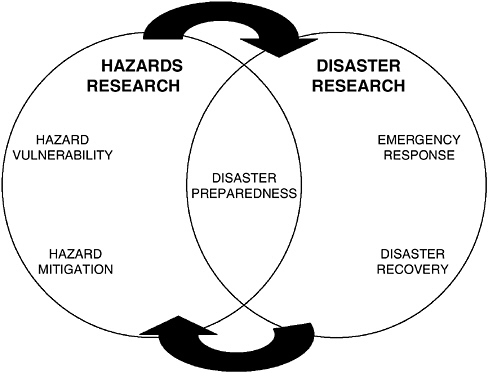
FIGURE S-1 Core topics of hazards and disaster research.
This report, conducted with support from the National Science Foundation, assesses the current state of social science hazards and disaster research and provides a set of recommendations that reflect opportunities and challenges in the field. Although research to date has revealed much about how societies respond to natural and technological disasters of various types, it is clear from the following report that we need to learn more. Among the most needed types of research are studies that compare systematically the unique circumstances of catastrophic events such as major earthquakes, hurricanes, and acts of terrorism. Such comparative studies will allow researchers to examine societal response in relation to variables such as the amount of advanced warning, the magnitude, scope, and duration of impacts, and the special requirements for dealing with chemical, biological, and radiological agents. Among the report’s other recommendations is the need for systematic studies of how societies complement expected and sometimes planned responses with improvised activities. In the September 11, 2001 terrorist attacks, for example, first responders had to work around the loss of New York City’s Emergency Operations Center, which was located in one of the towers.
CHARGE TO THE COMMITTEE
The committee’s primary mission is to provide NSF and other stakeholders with a detailed appraisal of the short- and long-term challenges facing social science hazards and disaster research, and also new and emerging opportunities for advancing knowledge within the social sciences and through interdisciplinary collaborations with the natural sciences and engineering. Of central importance to its statement of task, the committee is charged with examining the contributions and accomplishments of the social sciences since the establishment of NEHRP in 1977, the program that through NSF has provided much of the support for social science research on hazards and disasters for more than 25 years. The committee is also charged with assessing the impact of key societal changes on the way social science hazards and disaster research will be carried out in the future and what should be studied nationally and internationally. Finally, in the context of these societal changes, the committee is charged with considering the special challenges of post-disaster investigations, advancing the application of research findings, and meeting future social science workforce needs in this field. In completing the above mission and tasks, the committee has drawn on the experience and expertise of its 13 members, the voluminous social science research literature on hazards and disasters, and information and insights from two workshops that were held during the course of the study.
STUDY CONCLUSIONS
The committee’s assessment of the current state of social science research can be summarized succinctly in the following conclusions:
Social science hazards and disaster research has advanced in the United States and internationally. Under NEHRP social science knowledge has expanded greatly with respect to exposure and vulnerability (physical and social) to natural hazards in the United States, such that the foundation has been established for developing more precise loss estimation models and related decision support tools for hazards and disasters generally. The contribution of NEHRP to social science knowledge on natural hazards is less developed internationally as is its contribution nationally and internationally on exposure and vulnerability to technological and willful threats.
Social science knowledge about the responses of U.S. households to natural hazards and disasters is well developed. There is a solid knowledge base at the household level of analysis on vulnerability assessment, risk communication, evacuation and other forms of protective action, and expedient disaster mitigation activities—for example, how people in earthquake or flood prone regions communicate about risks and warning messages, and how they respond to warning messages. The knowledge base and related explanatory modeling under NEHRP are skewed toward natural hazards (most notably earthquakes) as opposed to technological and willful hazards, and so far they have been confined primarily to national rather than international contexts.
Far less is known about how the characteristics of different types of hazards affect disaster preparedness and response. There has been little systematic comparative work on the special characteristics of natural, technological, and willful disasters (e.g., predictability and controllability; length of forewarning, magnitude, scope, and duration of impact) and their relationships with physical and social impacts. For example, how does the variation in warning time—little or no warning for an earthquake, short-term warning for tornados, longer-term warnings for hurricanes, and indeterminate warnings for terrorist attacks—affect preparedness and response? Greater understanding of event/impact relationships would directly facilitate the adoption of more effective disaster preparedness and mitigation practices.
More is known about immediate post-disaster responses of groups, organizations, and social networks than about mitigation or disaster recovery policies and practices. While less so than the post-World War II studies that preceded NEHRP’s establishment in 1977, NEHRP-sponsored social science research has still tended to focus more on the immediate aftermath of disasters (post-disaster responses) and related emergency preparedness prac-
tices than on the affects of pre-disaster mitigation policies and practices, disaster recovery preparedness or longer term recovery from specific events. Research over several decades has contradicted myths that during disasters panic will be widespread, that large percentages of those who are expected to respond will simply abandon disaster roles, that local institutions will break down, that crime and other forms of antisocial behavior will be rampant, and that psychological impairment of victims and first responders will be a major problem. The more interesting and important research questions have become how and why communities, regions, and societies leverage expected and improvised post-impact responses in coping with the circumstances of disasters. While much of organizational response to disaster is expected and sometimes planned, improvisation is an absolutely essential complement of predetermined activities.
The circumstances of terrorist threats could alter societal response to disasters. The possibility exists that some future homeland security emergencies could engender responses that are different from those observed in previous post-disaster investigations of natural and technological disasters. Particular attention is being given post-September 11, 2001 to vulnerability assessment of national energy, transportation, and information systems, terrorist threat detection and interdiction, the special requirements of nuclear, biological, and chemical agents, and the organizational requirements of developing multigovernmental preparedness and response systems. Fortunately these concerns are readily subsumed within the historically mainstream topics of hazards and disaster research depicted in Figure S.1 above.
NEHRP has made important contributions to understanding longer-term disaster recovery. Prior to NEHRP relatively little was known about disaster recovery processes and outcomes at different levels of analysis (e.g., households, neighborhoods, firms, communities, and regions). While research on disaster recovery remains somewhat underdeveloped, NEHRP funded projects have refined general conceptions of disaster recovery, made important contributions in understanding the recovery of households (primarily) and firms (more recently), and contributed to the development of statistically based community and regional models of post-disaster losses and recovery processes. Moreover, interest in the relationship between disaster recovery and sustainable development has become sufficiently pronounced in this field that the committee has allocated an entire chapter of the report to its consideration.
The management and accessibility of data needs immediate attention. Thus far social scientists have not confronted systematically issues related to the management and accessibility of data—from its original collection and
analysis, to its longer-term storage and maintenance, and to ensuring its accessibility over time to multiple users. What the committee has termed the “hazards and disaster research informatics problem” is not unique to this research specialty, or to the social sciences, natural sciences, and engineering generally. But the informatics problem demands immediate attention and resolution as a foundation for future research and application of findings.
How research is communicated and applied is not well understood. More systematic research is needed on how hazards and disaster information generated by the social sciences and other disciplines is disseminated and applied. Such research will provide clearer understanding of what can be done within hazards and disaster research to further the dissemination of knowledge, thereby advancing sound mitigation, preparedness, response, and recovery practices.
A more diverse, interdisciplinary, and technologically sophisticated social science workforce is needed in the future. Given the national and international importance of natural, technological, and willful disasters, the next generation of social scientists studying these events should become larger, more diverse, and more conversant with interdisciplinary perspectives and state-of-the-art research methods and technologies than the previous generation.
RECOMMENDATIONS
Grounded in the above conclusions of its assessment, the committee has offered 38 separate recommendations in Chapters 3 through 9 of the report, with the majority relating to the need for comparative studies of societal responses to natural, technological and willful hazards and disasters. No explicit priorities among these recommendations have been established by the committee, primarily because traditional topics within, respectively, hazards and disaster research necessarily are interrelated. The committee also wishes to ensure that NSF and other stakeholders have considerable flexibility in addressing the broad range of research and application issues included in its statement of task from NSF. For purposes of this report summary, the 38 separate recommendations are encapsulated within three global recommendations. In discussing each one, the committee offers guidance to NSF and other stakeholders for their future consideration.
Summary Recommendation 1: Comparative research should be conducted to refine and measure core components of societal vulnerability and resilience to hazards of all types, to address the special requirements of confronting disasters caused by terrorist acts, and to advancing knowledge about miti-
gation, preparedness, response, and recovery related to disasters having catastrophic physical and social impacts.
The recommended comparative research is essential for isolating common from unique aspects of societal response to natural, technological, and willful hazards and disasters. A key contribution of NSF through NEHRP over the years has been that, while necessarily emphasizing earthquakes, since its inception the program has encouraged and supported comparisons of societal responses to earthquakes with other natural as well as technological hazards and even with terrorist-induced events, though less so. This historical emphasis within NEHRP dictates that a rigorous approach should prevail in making generalizations to terrorism and that there is a continuing need for systematic comparisons of all societal hazards and disasters using the conceptual and methodological tools summarized in this report. A comparative perspective should be sustained within NSF and also prevail in the new DHS.
The five core topics of hazards and disaster research depicted in Figure S.1 are referenced explicitly in both the summary recommendation for comparative research as well as the more detailed lists of research recommendations found in the report. These five core topics are deemed by the committee to be equally important to the development and application of social science knowledge. Thus, the committee sees no useful purpose for establishing priorities among what have traditionally been termed disaster research topics, on the one hand, and hazards research topics on the other. On the contrary, a major priority demanded by the conceptual approach adopted by the committee is to capture to every extent possible within specific studies the essential relatedness of these core research topics. Accomplishing this research goal will require research designs that are both comparative and longitudinal.
Summary Recommendation 2: Strategic planning and institution building are needed to address issues related to the management and sharing of data on hazards and disasters (hazards and disaster informatics), sustain the momentum of interdisciplinary research, advance the utilization of social science findings, and sustain the hazards and disaster research workforce.
Of particular importance because of its direct relationship to Summary Recommendation 1 is the call for strategic planning to address issues of data management and data sharing. A Panel on Hazards and Disaster Informatics should be created to guide these efforts. The Panel should be interdisciplinary and include social scientists and engineers from hazards and disaster research as well as experts on informatics issues from cognitive science, computational science, and applied science. The Panel’s mission should be, first, to assess problems of data standardization, data management and archiving, and data sharing as they relate to natural, technological,
and willful hazards and disasters, and second, to develop a formal plan for resolving these problems to every extent possible within the next five years.
Post-disaster investigations inherently have an ad hoc quality because the occurrence and locations of specific events are uncertain. That is why special institutional and often funding arrangements have been made for rapid response field studies and the collection of perishable data. But the ad hoc quality of post-impact investigations does not mean that their research designs must be unstructured or that the data ultimately produced from these investigations cannot become more standardized, machine readable, and stored within data archives. Having learned what to look for after decades of post-disaster investigation by social scientists, the potential for highly structured research designs and replicable data sets across multiple disaster types and events can now be realized. Pre-impact investigations of hazards and their associated risks are no less important than post-impact investigations of disasters, less subject to the uncertainties of specific events, arguably more amenable to highly structured and replicable data sets, and no less in need of data archives that are readily accessible to both researchers and practitioners.
Addressing hazards and disaster informatics issues within the next five years requires interdisciplinary collaboration. This collaboration can build on the momentum of interdisciplinary research that has been achieved at NSF’s three earthquake engineering centers during the past decade and advance the sharing of more highly structured data and findings within the entire hazards and disaster research community. Resolving informatics issues within this community will then lead to greater accessibility of hazards and disaster research to policy makers and practitioners at national and international levels. The assessment of knowledge utilization in this field calls for the continuing role of social scientists because of their special expertise in evaluation research.
The committee’s call for strategic planning on interrelated informatics, interdisciplinary research, and knowledge dissemination logically precedes specific recommendations in the report for interdisciplinary centers and workforce development. One recommended interdisciplinary center could serve as a natural site for implementing a strategic plan on hazards and disaster informatics. Among other functions, such a center could serve as a distributed social science data archives that would be accessible to the entire research community. A second recommended center would promote, also on a distributed basis, the application of state-of-the-art modeling, simulation, and visualization techniques to terrorist events as well as natural and technological disasters.
Workforce development is a continuing issue for social science hazards and disaster research, and an integrated strategy to replenish and expand the current research workforce is needed. The workforce problem will be difficult to resolve in the short term, and it requires more careful assessment
than the resources of the committee have allowed. As an interim step, the committee recommends that a workshop be held to facilitate communication, coordination, and planning among stakeholders from governmental, academic, and professional constituencies. Representatives from NSF and DHS should play key roles in the workshop because of their historical (NSF) and more recent (DHS) shared commitment to foster the next generation of hazards and disaster researchers.
Summary Recommendation 3: NSF and DHS should jointly support the comparative research, strategic planning, and institution building called for in Summary Recommendations 1 and 2.
The proposed leveraging of NSF with DHS support is critical because these two agencies are focal points of federal funding for research on all types of extreme events. The two agencies should take advantage of opportunities to leverage their resources by jointly funding social science hazards and disaster research whenever possible. This could lead to a better understanding of the similarities and differences between natural, technological, and human-induced hazards and disasters. It could also provide the foundation for sound science-based decision making by policy makers and practitioners, whether they are developing measures to counter a major natural disaster like Hurricane Katrina or a terrorist-induced event like the September 11th attacks on the World Trade Center and Pentagon. Social science research on the September 11, 2001 terrorist attacks as well as more limited observations that have been made thus far on Hurricane Katrina indicate, first, that many previous findings about societal response to hazards and disasters remain valid, and second, that there is still much to be learned about responses to truly catastrophic events.
A VISION OF SOCIAL SCIENCE CONTRIBUTIONS TO KNOWLEDGE AND A SAFER WORLD
While NSF social science studies supported through NEHRP are summarized in some detail in the report that follows, the committee’s overall vision of future hazards and disaster research underlies the summary recommendations that have been developed. The committee envisions a future:
-
where the origins, dynamics, and impacts of hazards and disasters become much more prominent mainstream as well as specialty research interests throughout the social sciences;
-
where traditional social science investigations of post-disaster responses become more integrated with no less essential studies of hazard vulnerability, hazard mitigation, disaster preparedness, and post-disaster recovery;
-
where disciplinary studies of the five core topics of hazards and disaster research within the social sciences increasingly become complemented by interdisciplinary collaborations among social scientists themselves and between social scientists and their colleagues in the natural sciences and engineering;
-
where there is continuing attention throughout the hazards and disaster research community on resolving interdisciplinary issues of data standardization, data management and archiving, and data sharing;
-
where there is continuing attention throughout hazards and disaster research on the dissemination of research findings and assessments by social scientists of their impacts on hazards and disaster management practices at local, regional, and national levels;
-
where each generation of hazards and disaster researchers makes every effort to recruit and train the next generation; and
-
where the funding of hazards and disaster research by social scientists, natural scientists, and engineers is a cooperative effort involving the NSF, its partner agencies within NEHRP, the Department of Homeland Security, and other government stakeholders.
With the foundation established by previous basic and applied studies of hazards and disasters, and guided by the committee’s recommendations, the above vision is attainable. Describing and explaining societal response to hazards and disasters is both a continuing challenge and major opportunity for the social sciences. Natural, technological, and willful hazards and disasters faced by humankind are continuous, global in nature, and increasing with demographic expansion, technological change, economic development, and related social and political dynamics of enormous complexity. Considerable progress has been made during the past several decades by social scientists studying different types of hazards and disasters, sometimes working collaboratively with investigators from other disciplines. But the continuing challenge for the social sciences centers on unraveling the complexity of individual and collective action before, during, and after disasters occur, on providing research findings that improve loss reduction decision making, and on assessing hazards and disaster related policies and programs. The major opportunity for the social sciences is to employ state-of-the-art theories, methods, and supporting technologies to further this type of knowledge development, which can in turn further science-based decision making by policy makers and practitioners. The responsibility for attaining the committee’s vision is in no sense the sole responsibility of NSF. That responsibility can and should be shared with the entire hazards and disaster research community, with those who fund hazards and disaster studies, and certainly with those who stand to learn from these studies.


