
6
Earth Perturbations and Public Health Impacts
This chapter considers the crosscutting issues associated with perturbations of the earth’s environment and the public health consequences of such perturbations. Not only are natural disasters considered, such as volcanic eruptions and earthquakes, but also the public health consequences of anthropogenic perturbations such as those caused by the extractive (natural resources) industries.
PUBLIC HEALTH CONSEQUENCES OF NATURAL DISASTERS
Numerous public health issues are caused by natural disasters—extreme geological and geophysical events (see Table 6.1). Approximately 75% of the world’s population lives in areas commonly affected by earthquakes, tropical cyclones, floods, and/or droughts (UNDP, 2004), and these natural events, together with volcanic eruptions, landslides, land subsidence, and coastal inundation, produce profoundly devastating worldwide human health and socio-economic impacts. The United Nations Development Programme report estimates that more than 1.5 million people have died in the past 20 years as a result of natural disasters, mostly in Asia and around the Pacific Rim. Natural disasters can increase the incidence of communicable disease among displaced communities and cause profoundly negative sociological effects.
The health consequences of disasters may be separated into two components—immediate (or direct) and longer term (or indirect). Both are exacerbated by the fact that disasters frequently destroy or damage local
TABLE 6.1 Fatalities (rounded to the nearest hundred) from Selected Natural Hazards, 1960–1987, and the Largest Single Disaster for Each Hazard
medical care facilities and the local public health infrastructure and disrupt and destroy transportation systems, communications facilities, and social services. Food and water supplies may also be destroyed, and even where they are not, disruption of the transportation system may make it difficult to ship adequate food supplies to affected regions, resulting in poor nutritional status and intensifying disease outbreaks. This impedes disaster recovery, and medical treatment during the acute phase of a disaster can be extremely difficult. In many cases, morbidity and mortality from the long-term health consequences may exceed the deaths resulting directly from the disaster (UNDP, 2004).
Although there has been a long tradition of addressing the human responses to natural disasters and hazards at governmental, institutional, and behavioral levels (e.g., Burton et al., 1978; Hewitt, 1997; Platt, 1999; Smith, 2001), far less attention has been paid to the public health consequences of disasters, particularly within what is conventionally considered the “natural hazards” literature in the social and behavioral sciences (Mileti, 1999). Recently, increased attention has been devoted to health issues associated with natural disasters—these include direct mortality from trauma, indirect mortality and morbidity from infectious diseases, and mental health problems such as post-traumatic stress disorder (Benin, 1985; Noji, 1997, 2005; Mileti, 1999).
The public health impacts of natural disasters have resulted in the development of the field of “disaster epidemiology” (e.g., Wasley, 1995).
Epidemiological activities during a disaster include disease control and surveillance as well as injury epidemiology. Geographic Information System (GIS) information is now routinely used, ideally to detect disease clusters in real time. Prior to a disaster, epidemiological information is indispensable for the identification of vulnerable populations, with the use of mathematical and statistical risk models to identify areas that are vulnerable to natural disaster impacts, providing the basis for GIS map production (see Chapter 7). The U.S. Geological Survey already maintains a series of maps that depict earthquake risk as part of the National Seismic Hazard Mapping Project.1 These maps are available down to the zip code level throughout the United States. Population density maps can be overlaid on hazard maps to analyze the spatial concurrence of earthquake risk and population location. Many other countries with high levels of seismic risk have similar programs. Virtually any earthquake that has caused significant damage to human habitat has represented a potential public health problem because of the coincidence of risk and population distribution.
Vulnerability to both short- and long-term health effects is greatest among the impoverished and in the poorer parts of the world. One estimate is that the 66% of the world’s population living in the poorest countries accounts for 95% of the mortality due to disasters (Anderson, 1991). The immediate consequences are usually injuries or deaths due to trauma. Earthquakes cause trauma due to the collapse of structures and other edifices, and can also cause coastal flooding due to tsunamis. The recent 2004 Sumatran earthquake and tsunami caused drowning, traumatic injury, and structural collapse over a huge area around the Indian Ocean. A recent case control study in Taipei, Taiwan, suggests that socioeconomic status, preexisting health status, physical disability, and location were major predictors of mortality in the 1999 Chi-Chi earthquake (Chou et al., 2004).
Mitigation of the adverse impacts of future hazards necessitates their clear recognition, prediction, and early warning; quantification of the processes involved; accurate assessment of associated risks; and hazard avoidance or technological mitigation to reduce vulnerability. The first three steps require scientific and engineering investigations as well as an understanding of the social and population dynamics associated with hazards. The fourth component involves preventative measures such as redesigning and reinforcing buildings, bridges, and dams, and constructing all-weather shelters, dikes, and seawalls. This may also involve strength-
ening the construction of houses, changing building codes, and improving emergency response systems and public health infrastructure. Broad public understanding of the dangers posed by natural hazards is absolutely crucial for hazard avoidance and the technical mitigation process, and collaboration between the earth science and public health communities is a critical component for increasing public knowledge.
Infectious Disease Impacts
Longer term public health threats from natural disasters include infectious diseases, often vectorborne. For example, following flood inundations in tropical areas (either from storms or tsunamis), ecological conditions are frequently optimal for anopheline mosquito reproduction if they are already present in the ecosystem, resulting in an increase in malaria in vulnerable populations (NRC, 2002c; Toole, 1997). In 1963, 75,000 cases of Plasmodium falciparum—a potentially deadly form of malaria— were recorded in Haiti following Hurricane Flora.
Many disasters result in population displacement and migration, frequently to refugee camps with high population densities, and in such environments infectious diseases result from both overcrowding and poor sanitation. Ecological and social conditions are conducive to the spread of enteric diseases that include cholera (Kalipeni and Oppong, 1998). Refugee camps are also associated with the spread of diseases via the respiratory route, including meningitis, tuberculosis, and multiple drug-resistant tuberculosis (Rutta et al., 2001), as well as HIV/AIDS and other sexually transmitted infections (UNAIDS, 2005; Salama and Dondero, 2001). In recent years, vulnerability to HIV/AIDS in sub-Saharan Africa has increased as a result of drought and famine; in turn, the famine has been exacerbated by the loss of agricultural workers who have succumbed to AIDS (UNDP, 2003, 2004).
Noninfectious Disease Impacts
Longer term health effects of disasters are not limited to infectious diseases. Food production may decline due to the agricultural effects of a natural disaster. For example, following the 2004 Indian Ocean tsunami, the incursion of saltwater in parts of Sri Lanka through mangrove swamps into inland rice paddies led to increased salinity. This will probably lead to decreased productivity (IWMI, 2005). Malaysia faces a similar problem, and both countries are seeking saline-tolerant forms of rice to mitigate the impacts.
A growing body of research suggests that there is a notable increase in acute myocardial infarctions (heart attacks) following earthquakes, up
to five times the normal risk (Tsai et al., 2004; Ogawa et al., 2000); putatively, this is due to the extreme stress and fear caused by severe earthquakes. Increased myocardial infarction cases were recorded following the Northridge earthquake in 1994 and the Hanshin (Kobe) earthquake of 1995. The Northridge earthquake also triggered an excess number of out-of-hospital cardiac arrests. Most of these cardiac arrests were due to underlying atherosclerosis, suggesting that the earthquake was a triggering event for deaths that would probably have occurred in the near future (Leor et al., 1996).
Psychosocial Stress Impacts
Disasters have also been linked to psychiatric disorders, most notably to post-traumatic stress disorder (PTSD). This is not surprising, as the etiology of PTSD is usually some sudden, extremely stressful, emotionally disruptive and wrenching event, frequently involving the death of others and the threat of death to oneself. There was evidence of PTSD in 68% of 160 disasters that were sampled in one review of natural disasters occurring between 1981 and 2001 (Norris et al., 2002). The severity was greater in developing countries than in developed countries. In the Mexican floods of 1999 the prevalence of PTSD was a striking 46% in Tezuitlan, and there was significant comorbidity with depressive disorder directly attributable to the personal and property losses associated with the floods (Norris et al., 2004). Similar comorbidity was noted in Turkey following the 2003 Bingol earthquake (Ozen and Sir, 2004). In addition, those affected by the 1999 Chi-Chi earthquake in Taiwan, perhaps compounded by the overall economic stress in Asia, were 1.46 times more likely to commit suicide after the earthquake (Chou et al., 2003). Mental health needs following disasters are significant and are not as well addressed as are the “physical” health needs (although admittedly the biological bases of psychiatric disorders militate against a dichotomy between “mental” and “physical”).
LAND COVER CHANGE AND VECTORBORNE DISEASES
Human-induced land surface changes are the primary drivers of a range of infectious disease outbreaks and also modifiers of the transmission of endemic infections (Patz et al., 2000). Such anthropogenic landsurface changes include (1) deforestation and road construction; (2) agricultural encroachment and water projects (e.g., dam building, irrigation, and wetlands modification); (3) urban sprawl; and (4) extractive industries such as mining, quarrying, and oil drilling. These land surface changes cause a cascade of factors that heighten health threats, including
infectious disease emergence, forest fragmentation, pathogen introduction, pollution, poverty, and human migration. Natural geological determinants of disease primarily relate to the larval stage of vectorborne diseases, when soils and surface water availability factor into insect breeding site availability and quality. These are important but complex issues that are only understood for a few diseases. For example, recent research has shown that forest fragmentation, urban sprawl, and biodiversity loss are linked to increased Lyme disease risk in the northeastern United States (Ostfeld and Keesing, 2000; Schmidt and Ostfeld, 2001). Expansion and changes in agricultural practices are intimately associated with the emergence of Nipah virus in Malaysia (Chua et al., 1999; Lam and Chua, 2002), Cryptosporidiosis in Europe and North America, and a range of foodborne illnesses globally (Rose et al., 2001).
Rates of deforestation have grown exponentially since the beginning of the twentieth century. Driven by rapidly increasing human populations, large swaths of species-rich tropical and temperate forests, as well as prairies, grasslands, and wetlands, have been converted to species-poor agricultural and ranching areas. In parallel with this habitat destruction, there has been an exponential growth in human-wildlife interaction and conflict. This has resulted in exposure to new pathogens for humans, livestock, and wildlife (Wolfe et al., 2000). Deforestation, and the processes that lead to it, have a number of adverse consequences for ecosystems. Deforestation decreases the overall habitat available for wildlife species. It also modifies the structure of environments, for example, by fragmenting habitats into smaller patches separated by agricultural activities or human populations. Increased “edge effect” (from a patchwork of varied land uses) can further promote interaction among pathogens, vectors, and hosts. This edge effect has been well documented in the case of Lyme disease (Glass et al., 1995). Similarly, increased activity in forest habitats (through behavior or occupation) appears to be a major risk factor for contracting leishmaniasis, a disease caused by protozoa and transmitted by sandflies (Weigle et al., 1993). Evidence is mounting that deforestation and ecosystem changes have serious implications for the distribution of many other microorganisms and the health of human, domestic animal, and wildlife populations.
Landscape epidemiology is based on the concept that geology and climate interact to form a characteristic vegetation cover dictated by the available mineral composition of the soil and substrate together with patterns of temperature and precipitation (Fish, 1996). Vegetation, in turn, provides a microclimate (temperature humidity, shade, etc.) and resources (leaves, fruits, nectar, etc.) which determine the species composition and abundance of vertebrates and vectors, which in turn support the natural transmission of specific pathogens. This generalized model is applicable
|
BOX 6.1 Lyme Disease in the United States First discovered in the early 1970s and described as an epidemic of juvenile arthritis confined to the coastal community of Lyme, Connecticut (Steere et al., 1977), Lyme disease is now known to be endemic in 19 states (Nadelman and Wormser, 2005). The force behind this epidemic has been environmental change, which has increased contact between humans and a spirochete bacteria (Borrelia burgdorferi) transmitted by a tick (Ixodes scapularis). Adult ticks feed primarily on white-tailed deer, and new populations of ticks have spread rapidly over the northeastern United States through deer movement. This was assisted by reforestation prompted by farm abandonment in many areas of the northeastern United States during the early twentieth century. Combined with a marked expansion of the human population, this sequence of events has resulted in wider exposure to natural tickborne pathogens, including B. burgdorferi (Falco et al., 1995). This has resulted in a continuous increase of Lyme disease cases reported to the Centers for Disease Control and Prevention (CDC) over the past 20 years, despite enormous efforts to educate the public on prevention measures and the development of a Lyme disease vaccine. Geological factors, particularly sedimentary bedrock and soil type, play a key role in determining tick habitat and the risk of acquiring Lyme disease (Guerra et al., 2002). |
to all pathogens of nonhuman origin (zoonoses), whether vectorborne or directly transmissible. Humans are not required for their maintenance in nature, although zoonotic pathogens may ultimately adapt to direct human-to-human transmission modes.
Microbial agents causing infectious diseases in humans often originate from processes and events occurring in the natural environment. Most of the so-called emerging diseases are caused by infectious agents of wildlife that have either recently adapted to infect humans or are preadapted and have recently come into opportunistic contact with humans (Taylor et al., 2001). These include some of the most important pathogenic agents that have caused major epidemics in humans, such as HIV/AIDS, influenza A, Ebola, West Nile virus, and Lyme disease. The current epidemic of Lyme disease in the United States (see Box 6.1) provides a relevant example of how environmental change can result in epidemic disease in humans. The geographic distribution of the risk of Lyme disease for humans can be predicted based on vegetation and climate characteristics that determine the distribution of the vector, wildlife hosts, and the pathogen (Guerra et al., 2002; Brownstein et al., 2003). The extent of hu-
man exposure to infected ticks in the environment constitutes risk, which determines the distribution and prevalence of Lyme disease (Fish, 1995).
Application of landscape epidemiology to Lyme disease has had a significant impact on our understanding of this epidemic and on the implementation of prevention measures. Early field studies identified the importance of peridomestic risk in the suburban landscape in the north-eastern states (Falco and Fish, 1988a, 1988b), which enabled public health agencies to target high-risk populations for education on preventive measures. The CDC Advisory Committee on Immunization Practices issued guidelines for vaccination against Lyme disease based entirely on a national Lyme disease risk map generated from ecological data on the distribution and prevalence of infection in vector ticks throughout the United States (Fish and Howard, 1999).
The threat of emerging diseases from wildlife and vectors is a continuous, dynamic process, which most likely will accelerate due to human population growth and more extensive environmental change. Therefore, it is imperative that more emphasis be placed on environmental studies of infectious agents in order to balance our overreliance on diagnostics, therapeutics, and vaccines for humans, which at present dominate the biomedical research effort in emerging infectious diseases (Morens et al., 2004).
HEALTH EFFECTS OF RESOURCE EXTRACTION AND PROCESSING
Terrestrial mineral resources include abundant metals, scarce metals, water, soil, building materials, and a wide range of chemicals, including carbon-based fuels and nuclear energy sources. The quarrying of construction materials, the mining of ore deposits and coal, and the drilling for and production of oil and natural gas take place in relatively restricted areas, especially compared with the widespread land surface modifications wrought by agricultural, forestry, urban, and industrial development and the resultant degradation of the air, land, and water environments (Gleick, 1998; Harrison and Pearce, 2000; IPCC, 2001a, 2001b; Wolman, 2002). Over the period of intense resource exploitation activity between 1930 and 1980, less than 1% of the total land area of the United States was directly impacted by coal mining, mineral mining, and petroleum production activities (Johnson and Paone, 1982). However, topographic alteration, groundwater and surface water contamination, and hydrocarbon pollution are far more serious than this small areal percentage might suggest because of the high toxicity of a proportion of the mining waste and petroleum products. The extraction, beneficiation, and usage of earth materials, including fossil fuels, result in deleterious side
effects that include environmental degradation and diminished viability of the biosphere in general and human health in particular. As noted in earlier chapters, such health hazards include airborne dusts and gases, soluble chemical pollutants in both surface water and groundwater, and toxic substances in soils, crops, livestock, and manufactured products.
Modern societies are maintained by the extraction of energy, water, and other earth materials far beyond natural renewal rates, providing limits to future human use of such natural resources. As more intensive usage of earth commodities and energy takes place due to increasing global population, the attendant global demand for a better standard of living will result in an increase in the adverse impacts of resource-related health hazards unless steps are taken to address and ameliorate them (e.g., McMichael, 2002). The biological carrying capacity of the earth is finite— hence humanity eventually must reach a managed steady state with the available terrestrial resources and the life support system provided by the biosphere. Reflecting the intense desires of developing nations for an improved standard of living, our own security dictates the need for a much more equitable consumption of mineral commodities and distribution of wealth. However, to achieve mineral resource sustainability (NRC, 1996, 1999e) global research in science and technology must be increased in order to reach much more efficient levels in the development—and especially the conservation of—earth resources (WCED, 1987; Chesworth, 2002; Doran and Sims, 2002). An overridingly important part of this challenge will be to preserve an intact, healthy, functioning biosphere.
Mineral Exploration, Extraction, and Processing
The process of mining ore deposits and coal contains several steps that can potentially expose humans to toxic materials (e.g., Box 6.2). Although the steps can vary for different types of materials, they generally include some combination of extraction, processing and refining, use, and waste disposal. Although modern extraction technologies are much more efficient, and in many countries more highly regulated, than in the past, retrieval of materials from the earth for human use is one of the most serious sources for contamination of soils, water, and the biosphere (Selinus et al., 2005). In the case of metalliferous ores, the greatest environmental contamination generally comes from the mineral processing that occurs after extraction from the mine (e.g., CDC, 2005). This processing produces mine tailings, often consisting of very fine dust that can contain residual amounts of mineral ore and other harmful trace elements. Frequently left open to the environment, the tailings are subject to transport by both wind and water, resulting in contamination of surrounding soils, surface water, and groundwater.
|
BOX 6.2 Copper and Lead A number of geological regions—the Lake Superior mineral province, Arizona, northern Nevada–eastern Oregon, southwestern Montana, Indonesia, and northern Chile—contain abundant copper deposits where copper is released to the environment either naturally or as a result of mining and smelting. In aqueous solution, this metal becomes bioavailable as the monovalent cation Cu+ in anoxic water and as the divalent cation Cu2+ in oxygenated water (Robbins and Harthill, 2003). Copper is not generally concentrated to dangerous levels in the human body, as excess amounts normally are not retained, but can cause diarrhea and stomach disorders. Where excessive amounts are present, toxicity is manifested as chronic pulmonary or liver damage. Geochemical culminations of lead are commonly associated with zinc in “Mississippi Valley–type” ore deposits. In these occurrences, sulfides of these metals are precipitated from relatively low-temperature hydrothermal solutions passing through, and partly replacing, limestone and dolomite. Other occurrences of lead and zinc sulfides are disseminated in granitic intrusive rocks. Anthropogenic utilization of lead began in earnest with the Romans, but accelerated in the twentieth century with the widespread application as white pigment in paint and as lead additive to gasoline (Mielke et al., 2003; Filippelli et al., 2005). Both usages are now phased out in the United States. However, geochemical concentrations of lead in stream sediments seem to reflect both natural occurrences in mining districts and widespread past utilization by humans. Lead poisoning results in neurological impairment (learning disorders, mental retardation, attention deficit disorder), deafness, cardiovascular disease, and impaired physical development. |
In coal mining, the steps of extraction, combustion, and waste disposal can all pose a threat to human health. On the extraction side, mining operations can generate significant amounts of respirable airborne coal dust. Inhalation of this dust can lead to coal workers’ pneumoconiosis, a disabling and potentially fatal lung disease. Depending on the chemical composition of coal, its combustion can contribute significantly to atmospheric deposition of trace metals such as arsenic, cadmium, copper, fluorine, mercury, nickel, and selenium. The residues from coal combustion, including fly ash, bottom ash, boiler slag, and flue gas desulfurization sludge, pose serious disposal problems (NRC, 2006b). Burning coal concentrates potentially harmful metals and metalloids—including arsenic, cadmium, chromium, and lead—in the residues. Depending on the disposal methods, combustion residues can contaminate drinking water sup-
plies or groundwater at levels dangerous to human health, and residue transport and handling can also produce airborne particulate matter that poses an inhalation risk beyond the mine area (NRC, 2006b).
Petroleum Exploration, Drilling, and Extraction
In areas that have active or historical oil and/or gas development, there are a variety of environmental impacts that directly or indirectly impact human health. These include waste materials and pollutants generated during drilling and production as well as leakage and inadvertent spills during later parts of the petroleum life cycle.
Drilling and production result in the discharge of produced waters,2 drill cuttings, and drilling muds that have the potential for chronic effects on benthic communities, mammals, birds, and humans. Although the petroleum industry is now highly regulated and most of the waste products are recycled on site or disposed of in licensed injection wells, historically this material was abandoned on site in unlined pits or “tanks” (see Figure 6.1) that now require remediation to prevent further groundwater con-
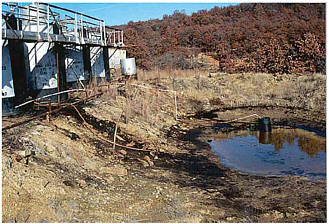
FIGURE 6.1 A tank battery showing produced water discharged to an unlined holding pond in Osage County, Oklahoma.
SOURCE: NETL (2006).
tamination. The pits themselves represent a threat to wildlife drawn to the water, especially in otherwise arid regions, and there is now a widespread legacy of saltwater contamination in the shallow aquifers in these regions. Health effects may also occur where wildlife and livestock consume saline water in surface pits. The health effects of chronic exposure to produced water for humans have not been directly studied, although the individual compounds found in the saline fluids have been investigated out of context with the oil and gas industry. Generally, the taste threshold for humans is sufficiently low that little saline water is consumed by accident, and salinization of drinking water is immediately apparent. However, some produced fluids contain naturally occurring radioactive material, and special disposal procedures are required for this fluid (Rajaretnam and Spitz, 2000).
Petroleum contamination of soil is common in oil-producing states in the United States, and many landowners have inherited old collection lines and both low- and high-pressure pipelines where small oil leaks were commonplace. Although the health impacts of benzene, toluene, ethylbenzene, and xzylene3 (BTEX) have been extensively studied and BTEX pollutant plumes are the subject of ongoing remediation in many parts of the country, the health consequences of contamination of soil and water by the full range of oil components are poorly understood. It is not clear whether health problems are associated with long-term exposure to low concentrations of petroleum in water or air, or if degraded oil poses adverse health effects. The individual components in petroleum in groundwater, particularly the aromatic compounds, are now recognized to rapidly degrade due to the metabolic activity of the native microbial consortium (NRC, 2000a). However, the end product of degradation is not solely carbon dioxide or methane but rather can be a variety of complex, partially degraded, carbon compounds that persist in the water and are transported much farther than the primary BTEX-type compounds. These compounds are generally unresolved by standard analytical techniques and remain largely unidentified, recognized only by the dissolved organic carbon (DOC) plume or after extraction and characterization by advanced analytical techniques (Eganhouse et al., 1993).
OPPORTUNITIES FOR RESEARCH COLLABORATION
The crosscutting issues associated with perturbations of the earth’s environment, and the public health consequences of such perturbations,
provide a broad range of research opportunities for both individual investigators and collaborative groups. High-priority collaborative research activities are:
-
Development of improved scenarios for risk-based hazard mitigation. Integrated multidisciplinary approaches to scenario development as the basis for natural hazard mitigation strategies are in their infancy. Any assessment of population vulnerability is dependent on the merging of earth science information describing the spatial distribution of hazards with public health information describing population characteristics and medical response capabilities. Effective scenarios to form the basis of improved response strategies must be scientifically valid and believable for broad acceptance by those charged with disaster response planning. The scientific validation will require collaborative involvement of a broad range of experts from the earth science, public health, emergency management, and engineering communities. Existing tools (e.g., HAZUS for earthquake loss estimation, EPISIM for epidemic simulation, HRAI for hazard risk assessment for public health) provide an indication of the potential for natural hazard mitigation but also emphasize how much is still required in many parts of the nation for the development of improved response capabilities.
-
Analysis of the effect of geomorphic and hydrological land surface alteration on disease ecology, including emergence/resurgence and transmission of disease. Major changes in land use result in profound habitat fragmentation, ecological compartmentalization edge effects, runoff from impervious man-made surfaces, groundwater and/or surface water degradation, and partial or complete loss of habitat—all of which influence disease incidence. The effects of such land surface modifications on the bioaccessibility of disease vectors responsible for disease outbreaks, deleterious chronic disease levels, and human senescence need to be measured individually and collectively in order to better safeguard public health. This will require a seamless integration of geological, hydrological, and epidemiological research efforts in order to prevent, or at least minimize, the adverse effects of land use change on human populations.
Successful collaboration involving earth and health science researchers will allow development of accurate predictive risk assessment models and thus avoidance—or at least amelioration—of a broad spectrum of environmentally related diseases. Because prevention is more effective than medical treatment of diseases, in the long run such cooperative integrated earth science–public health investigations has the potential to save substantial sums of money as well as markedly enhance the quality of life.


