
8
Encouraging Communication and Collaboration
There is broad understanding that promoting communication and collaboration between disparate disciplines is a difficult but not intractable issue facing the full range of natural science, health science, and engineering disciplines. Similarly, there is general acceptance of the considerable potential for synergies from interdisciplinary interactions to result in innovative and exciting research that can lead to new discoveries and greater knowledge. A number of recent National Research Council (NRC) studies have addressed this issue and the following commentary and suggestions are based in part on these analyses (e.g., NRC, 2004d, 2005). This discussion pays particular attention to the earth science and public health communities.
Emphasizing the importance of bridging the “interdisciplinary divide” will not, by itself, promote communication and collaboration— the following discussion focuses on providing suggestions that can realistically be implemented, particularly in the constrained fiscal environment that is likely to apply. It is emphasized that elucidating as yet unrecognized geo-environmental threats to human health may allow avoidance or substantial amelioration of public health problems, thus in the long run saving more money than would have been required for medical treatment.
Encouraging interdisciplinary research requires attention to both the constraints imposed by cultural factors, particularly but certainly not exclusively apparent in traditional discipline-based academic institutions, and to the potential for funding mechanisms to be used by agencies as “carrot and stick” incentives to break down the barriers. The following
discussion briefly reviews the existing situation, and then provides suggestions for mechanisms that have the greatest potential for encouraging communication and research collaboration at the interface of earth science and public health.
EXISTING RESEARCH ACTIVITY AND COLLABORATIONS
The key research stakeholders and organizations include individual researchers in academic institutions and private industry as well as a range of federal agencies that either undertake research themselves and/ or fund external research. It appears that little research is undertaken by state and local agencies at the intersection of earth science and public health, with these agencies predominantly having a regulatory role with the science base for regulation largely based on federal research activities.
In the course of its discussions and deliberations, the committee received briefings from most of the agencies and organizations involved in research at the interface of earth science and public health. These agencies have far-ranging missions, varying approaches, and differing levels of involvement with research in the earth science/public health arena. The organizations, agencies, and programs described here are not meant to comprise an exhaustive list but rather are intended to identify the major players, both current and potential, in collaborative earth science and public health research.
The Centers for Disease Control and Prevention–National Center for Environmental Health (CDC–NCEH) within the Department of Health and Human Services works toward prevention of illness, disability, and death caused by noninfectious and nonoccupational environmental factors through surveillance, applied research, and outreach. In collaboration with the National Aeronautics and Space Administration (NASA), the NCEH is developing a National Environmental Public Health Tracking Network, to integrate environmental hazard and exposure data with data about diseases that are possibly linked to the environment. The Agency for Toxic Substances and Disease Registry (ATSDR), an agency within the CDC, jointly addresses environmental public health threats with the NCEH. The ATSDR is an advisory, nonregulatory public health agency that provides health information and public health assessments for toxic substance exposures. Among the tools the ATSDR uses to carry out its mission are toxicological profiles and exposure and disease registries. The current collection of toxicological profiles covers over 250 toxic substances, including arsenic, cadmium, and radon. These profiles contain health effects, exposure pathways, and chemical and physical information. Its collaborative efforts include mineralogical characterization of fibrous amphiboles with the U.S. Geological Survey (USGS) and Environ-
mental Protection Agency at the vermiculite (asbestos) mine in Libby, Montana.
The Department of Defense–Armed Forces Institute of Pathology (DOD–AFIP) specializes in pathology consultation, education, and research. The Department of Environmental and Toxicologic Pathology within the AFIP focuses on techniques for tissue analysis and maintains the INTOX Data Center, which includes the Medical Geology Database and Chronic Arseniasis Database. The Medical Geology Database contains information about sources of harmful materials in the environment, including exposure pathways and prediction of the movement of disease-causing agents. The AFIP has collaborated with USGS in the past, examining environmental problems, including arsenic exposure, caused by a 1996 tailings spill from an open-pit copper mine on Marinduque Island in the Philippines (Plumlee et al., 2000).
The Environmental Protection Agency (EPA)undertakes a variety of federal research, monitoring, standards setting, and enforcement activities to ensure environmental protection. Broadly, EPA’s mission is to protect human health and safeguard the natural environment. One collaborative effort currently under way is the Superfund Basic Research Program (SBRP), which is funded by the National Institute of Environmental Health Sciences and coordinated with the EPA. The SBRP funds university-based multidisciplinary research on public health and remediation technologies at hazardous waste sites. The research supported by the program encompasses many fields, including chemistry, ecology, epidemiology, toxicology, molecular biology, hydrogeology, engineering, and soil science. EPA has also provided a list of emerging infectious agents that are of concern for waterborne transmission—the so-called Contaminant Candidate List (EPA, 2003).
The National Aeronautics and Space Administration (NASA) performs a broad range of space-based research on the earth that includes a specific public health component within a broader environmental monitoring program. NASA collects data and funds external research aimed at enhancing decision support tools using observations and modeling of weather, climate and other environmental factors that influence disease vectors and air quality. NASA has partnered with the CDC to enhance the National Environmental Public Health Tracking Network, which uses estimates of ground-level ozone, particulate matter, and/or other atmospheric pollutants to provide warnings of increased risk of respiratory diseases such as asthma and emphysema. Other public health collaborations involve DoD, EPA, NIH, NOAA, and USGS.
The National Institutes of Health (NIH) contains several organizations under its umbrella that conduct and support research at the earth science/public health interface. At the institute level, the National Insti-
tute of Environmental Health Sciences (NIEHS) focuses on basic science, disease-oriented research, global environmental health, and multidisciplinary training for researchers. It both supports and conducts research and training in addition to health information outreach and communication programs. Its internal research programs include the Environmental Diseases and Medicine Program and the Environmental Toxicology Program. The first program focuses on diseases and physiological dysfunctions that have known or suspected environmental components in their etiologies, with an emphasis on cancer, reproductive and developmental dysfunction, and pulmonary diseases; it also plans and conducts epidemiological studies. The latter program supports the National Toxicology Program by providing evaluations of toxic substance of public health concern (e.g., NTP, 2005) and strengthening risk assessment approaches and data. The NIEHS has collaborated with the USGS on the Environmental Mercury Mapping, Modeling, and Analysis program, and with the EPA on the SBRP.
The National Cancer Institute (NCI) is the federal government’s principal agency for cancer research and training. The NCI both supports and conducts research, training, and health information dissemination relevant to the cause, diagnosis, prevention, and treatment of cancer, as well as rehabilitation. Under the premise that most cases of cancer are linked to environmental causes and, in principle, can be prevented, the NCI’s Division of Cancer Epidemiology and Genetics is working with NIEHS to address the contribution of various agents, including exposure to those in air and water, to the nation’s overall cancer burden.
At the center level, the NIH also contains the John E. Fogarty International Center for Advanced Study in the Health Sciences, the international component of the NIH that addresses global health challenges. The center is the primary NIH partner in the joint NIH-NSF Ecology of Infectious Diseases initiative, an excellent example of an existing earth science and public health collaborative research program (see Box 8.1).
The National Science Foundation (NSF) sponsors basic research encompassing the full range of science and engineering disciplines. Both the Geosciences Directorate and the Biological Sciences Directorate support research relevant to earth science and public health, with the goal of describing both the positive and negative connections between the two areas over the full range of scales. Although NSF’s mission specifically excludes the medical sciences, the foundation does support interdisciplinary research with NIH, including the Ecology of Infectious Diseases initiative and the Oceans and Human Health Research Centers (see Box 8.2).
The United States Geological Survey of the Department of the Interior supports applied earth and natural science research by its own researchers and funds external research activities. The USGS currently con-
ducts a number of health-related activities to improve understanding of the links between human health and geological processes, including research on the distribution and health effects of asbestos, cadmium, chromium, lead, mercury, radon, selenium, and uranium; water quality monitoring; hazard forecasting; and bacterial and viral transport in groundwater. The USGS has the mandate to carry out national soil mapping, and a detailed map of the nation’s soil resources could form the geochemical framework for a significant component of the priority research at the interface of earth science and public health noted in this report. The USGS also supports the Human Health Database,1 which provides information about the national distribution of arsenic, radon, and mercury as well as land cover datasets and mineral resources spatial data. In collaboration with NIH–NIEHS, the USGS created the Environmental Mercury Mapping, Modeling, and Analysis website to support environmental and health care researchers as well as land and resource managers. Although this program does not fund research at either the agency or academic level, it provides consolidated information in the form of maps and data for research support.
MODELS FOR ENCOURAGING COLLABORATIVE RESEARCH
The value of interdisciplinary research has been convincingly documented in another NRC report (NRC, 2004d), which provides a comprehensive description of the barriers to collaborative research and suggests strategies for overcoming these barriers. For the specific case of earth science and public health, a variety of activities could be supported to further the implementation of interdisciplinary research agendas including:
-
Funding of new interdisciplinary collaborative centers. One approach with the potential to encourage true collaboration is the “Center-Based Approach” epitomized by the NIEHS Superfund Basic Research Program (SBRP). In this collaborative model, diverse groups of scientists and engineers are mandated to collaborate on different aspects of specific issues. Major funding is provided to approximately 20 universities nationally, with each university focusing on a specific set of issues involving the cleanup or remediation of superfund sites. To be successful, applicants must have both toxicology components and environmental science components. The superfund program has been extremely successful and illustrates that major funding is an effective mechanism to promote true collaboration and innovative approaches to complex issues.
|
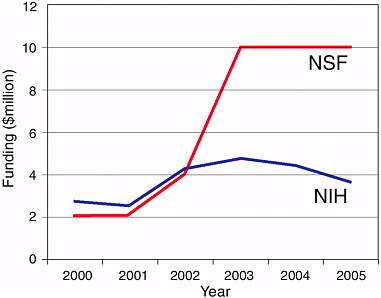
BOX 8.1 Ecology of Infectious Diseases—A Multiagency Initiative The Ecology of Infectious Diseases (EID) is a joint National Institutes of Health (NIH)–National Science Foundation (NSF) initiative to develop predictive models to describe the dynamics of infectious diseases by supporting research that falls outside the current scope of each agency’s mainstream research programs (NIH–NSF, 2005). The EID supports efforts to understand the underlying ecological and biological mechanisms that govern relationships between human-induced environmental changes and the emergence and transmission of infectious diseases. The highly interdisciplinary research projects funded by this program examine how large-scale environmental events—such as habitat destruction, biological invasion, and pollution—alter the risks of emergence of viral, parasitic, and bacterial diseases in humans and other animals. The initiative is administered by the Fogarty International Center (FIC), the National Institute of Allergy and Infectious Diseases, the National Institute of Environmental Health Sciences, and the NSF. Examples of research awards made by the EID program since 1999 included “Microbial Community Ecology of Tick-borne Human Pathogens,” “Impact of Land-Cover Change on Hantavirus Ecology,” and “Environmental Determinants of Malaria in Belize.” Between 1999 and 2005, 42 research awards were made under the EID initiative, with total funding of approximately $60.7 million. In fiscal year 2006, the program’s sixth year of funding, $8 million was available for new awards, made up of $6.5 million provided by NSF and approximately $1.5 million from NIH. Although funding levels have increased since the program’s inception in 1999, the proportion of funding from NIH and NSF has changed (see Figure 8.1); funding amounts from the two agencies were |
-
Resource and infrastructure enhancements (facilities, equipment, databases and other central resource libraries and services, research training through institutional training programs or individual fellowships, etc.), when specifically established to cross disciplinary boundaries.
-
Funding of individual research projects (through awards, grants, cooperative agreements, contracts), when such projects are designed to cross disciplinary boundaries (e.g., the Ecology of Infectious Diseases initiative; see Box 8.1).
Funding Collaborative Research
In an environment of abundant suggestions and ideas for collaborative research but scarce resources, funding mechanisms hold the key to
successful establishment of research collaborations. Many funding agencies issue Requests for Proposals (RFPs) that solicit research within specific areas or issues. Frequently, this results in individual applications by one or several faculty members at a single institution. Although multidisciplinary approaches are often specifically encouraged in such RFPs, true collaboration across disciplines is rare. Research collaborations can be based on co-funding, complementary funding, or single-agency funding. Co-funding involves shared funding of a single project or activity by two or more organizations (e.g., the Microbial Observatories initiative funded by NSF and the U.S. Department of Agriculture); complementary funding involves separate funding by two or more organizations of individual projects or activities that relate to each other (e.g., the EID initiative funded by NSF and NIH–FIC); and single-agency funding is
|
BOX 8.2 Oceans and Human Health Research Centers—A Multiagency Initiative NSF and NIEHS provided funding in 2004 for the establishment of four joint Centers for Oceans and Human Health to facilitate collaborative biomedical and oceanographic research, with the expectation that combined agency funding will be $5 million annually for five years. These centers, and the special programs on which they will focus, are located at the University of Washington (toxic algae and human health effects of contaminated shellfish), the University of Hawaii (microbial pathogens in tropical coastal waters and potential pharmaceutical uses for extracts from tropical microorganisms), Woods Hole Oceanographic Institution (variations in populations of the toxic plankton Alexandrium and its effect on shellfish toxicity), and the University of Miami (harmful algal blooms in subtropical ecosystems and microbial components of coastal water and their effects on human health). |
where multiple collaborative research centers encompassing a variety of disciplines are funded by one agency (e.g., SBRP funded by NIEHS).
Role of Academia in Encouraging Collaborative Research
Traditionally, academic research has been based on the individual efforts of scholars at private and public universities. Throughout the learning process of graduate school, postdoctoral studies, and the ultimate prize of obtaining an assistant professorship, scholars are trained to be unique. As assistant professors struggle to obtain promotion and tenure during their first several years at a university, they seek a niche that distinguishes them and their programs from other faculty. The culture of academia rewards individual scholarship, and as a consequence individual scientists tend to be highly competitive. In addition, even though students take a diverse array of classes during graduate school, they tend to specialize in well-defined and focused disciplines. Because of these characteristics, collaborative research has been neither particularly encouraged nor rewarded. Institutional barriers between different academic departments, and the tendency for academic departments to recruit new staff with traditional disciplinary expertise, work to dissuade faculty from collaborative interdisciplinary research. For faculty to collaborate effectively in multidisciplinary research, specific criteria must be met. First, the faculty members must be personally compatible. Second, the areas of
expertise must be complementary, permitting a symbiotic relationship. And third, funding must be obtained to allow for the collaborative research to be initiated. The first two factors are controlled by faculty themselves, but the third factor is controlled by funding agencies. They, too, are competitive, and institutional and often personality barriers to collaborating with other funding agencies exist.
The distinction between fundamental basic research and applied research has been well documented but perhaps overemphasized. Traditionally, academics have perceived that basic research is more prestigious than applied research, particularly if the applied research has been funded by the private sector. However, in reality, most basic research is ultimately utilized for the solution of applied problems. Therefore, faculty themselves can engage in collaborative research by pursuing the integration of basic and applied research. In many instances, collaboration across scientific disciplines, and in particular between basic scientists and engineers, has proved to be an effective mechanism to provide a holistic solution to particular problems. To encourage this requires both a culture change and the education of a “new breed” of graduate students, trained to not only specialize in a given field but also acquire a broader based background relevant to their field of interest.
For example, microbial activity in soils is heavily influenced by the chemistry and physical matrix of the environment—the fate and transport of viruses through soil is dependent not only on the size and biological properties of the organism itself but also on the physical and chemical properties of the soil. To study the fate and transport of viruses through soil, collaboration between soil physicists and microbiologists is essential. However, there is little incentive to undertake such collaboration. Although it would be appropriate for scientific curiosity and innovation to provide this stimulus, in reality the acquisition of funding for such collaborative research is the real driving force. Therefore, although a broad range of recommendations and suggestions applying to academic institutions can be listed—for example, the range of recommendations included in NRC (2004d)—it is clear that funding agencies must play a critically important role in implementing collaborative research.
Role of Federal Agencies in Encouraging Collaborative Research
The purviews of the many federal agencies with responsibilities related to earth science and public health are reasonably well defined. While a number of these agencies can be considered as having peripheral involvement at the intersection of these fields, it is clear that there are several agencies—specifically the CDC, DoD, EPA, NASA, NCI, NIEHS, NSF, and USGS—that have most of the responsibility for research at this disci-
plinary intersection, and it is these agencies that are the primary focus of this committee’s analysis and recommendations. Ultimately, it is the program managers within these agencies—who support research activities within the organization or fund external research at academic institutions, government laboratories, and state agencies—that must be convinced of the value of promoting collaborative research at the intersection of earth science and public health and be provided with recommendations concerning priority research areas and the optimum means for facilitating collaborative research.
All of the cultural barriers that exist in academic institutions have their parallels in funding agencies. In practice, the peer review systems used by most agencies mean that each additional disciplinary area involved in a particular proposal in effect equates to an additional hurdle that must be surpassed, so that more restricted proposals are widely understood to have the highest chance of success. The metrics for assessing the success of the programs overseen by individual managers are almost always based on individual program funding levels and provide little incentive for valuing the “discounted research” that can result from partial funding of cross-program activities. On the broadest scale, the fact that the appropriation levels for these agencies are determined by a range of congressional appropriations committees—which themselves have no intrinsic incentive to promote cross-committee activity—means that a top-down insistence on interdisciplinary research is unlikely. While there is broad, and even in some agencies a pervasive recognition of the merits of interdisciplinary research, the existence of barriers and the lack of incentives mean that the focus here must be on suggesting practical measures, with incentives, that can be taken by individual program managers and their superiors.
To date, support for collaborative research between the relevant agencies has been limited, although increasing (but still minor) support for collaborative research within specific funding agencies suggests that models for such research are being developed, and experiences gained, that should be applicable to cross-agency collaboration. Existing collaborative research models include NSF-based programs such as the Integrative Graduate Education and Research Traineeship (IGERT) and Biocomplexity in the Environment initiatives, and NIH-based collaborative programs such as the NIH Road Map for Interdisciplinary Research.
The classic risk assessment paradigm (see Box 8.3) provides an illustration of the need for cross-agency research support. Two of the key factors in risk characterization are exposure assessment and dose response. Historically, funding for exposure assessment involving environmental science research came from NSF or EPA, whereas funding for dose-response studies came from NIH. It seems obvious that such risk character-
|
BOX 8.3 The Risk Assessment Paradigm Risk assessment consists of four elements:
|
ization can most effectively be accomplished by linked research using some model that provides pooled resources from all these agencies.
MULTIAGENCY SUPPORT FOR COLLABORATIVE RESEARCH
Despite the absence of existing institutional mechanisms to support research activity at the interface of earth science and public health, a base level of collaborative research exists primarily as a consequence of individual scientists establishing research partnerships and individual program managers in a variety of agencies identifying the strong merits of such research and providing support. It is also clear that there is a considerable amount of existing research activity in both the earth science and public health fields that is being carried out without knowledge or communication of potentially complementary research “across the divide.” the committee suggests that, for there to be substantial and systemic advances in interdisciplinary interaction, a formal multiagency collaboration support system needs to replace the existing ad hoc nature of collaborations. Within this context, and despite wariness about proposing yet another bureaucratic structure, the committee believes that a useful contribution would be to suggest a multitiered hierarchical management and coordination mechanism by which the relevant funding agencies could interact to promote communication and collaboration.
The premise upon which this suggested structure is based is the belief that there are senior managers in most of the relevant agencies who acknowledge the value of collaborative research activity. However, within the context of the existing distributed appropriations mechanisms, it is highly unlikely that direct single-line funding for collaborative activities will be provided. Accordingly, the committee proposes a research support structure (see Figure 8.2) that consists of a policy-oriented direction and coordination council and an implementation-oriented steering committee, with the following roles:
Coordination Council. This should consist of senior managers from each of the primary agencies identified above (CDC, EPA, NASA, NCI, NIEHS, NSF, and USGS). This council would focus on the policy aspects of collaborative activity and would include identifying broad research areas, securing commitments from each agency, and identifying the research gaps that need to be filled. The Committee on Environment and Natural Resources of the National Science and Technology Council, administered within the Office of Science and Technology Policy, might provide an appropriate forum or mechanism for the cross-agency collaboration that is required.
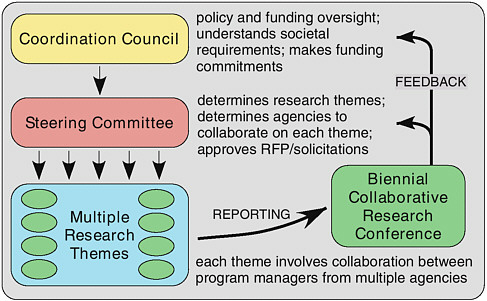
FIGURE 8.2 Proposal for a research support mechanism for interagency collaboration.
Steering Committee. This committee would consist of program managers from the agencies represented on the coordination council and other agencies with related interests. For example, a relevant theme in the earth science/public health arena might focus on trichloroethylene (TCE) contamination of groundwater. RFPs in this area might solicit research designed to (1) evaluate the health effects of TCE on human health; (2) determine human exposure levels based on bioavailable TCE in groundwater at specific sites and consumption of water; and (3) technology to remove TCE from groundwater. Clearly, in this example, program managers from EPA, NIEHS, NIH, NSF, and USGS should be involved. This steering committee would approve specific research themes (not projects) and would also develop specific RFPs. Individual program managers from different agencies would need to interact to approve the funding of multiple projects that together make up a specific research center (which might be located at one institution or distributed among several). In addition, the success of a particular research center would require evaluation by a multiagency group of managers.
Biennial Collaborative Research Conference. An earth science and public health collaborative research conference should be held every two years, attended by the coordination council, steering committee, and representatives of the research themes. The purpose of this meeting would be to evaluate the success of collaborations over the previous two years and also to propose high-priority research collaborations that would be the basis for RFPs for the next four years.
With the understanding that a certain level of commitment is required before a research collaboration can be considered a true collaborative activity, the committee has arbitrarily established a 20% contribution as a minimum (e.g., we do not consider a 95:5 funding split as constituting a real collaboration). A funding system is envisioned wherein more than one agency provides support for multiple individual research projects, with RFPs/solicitations and award reporting coordinated by the steering committee but administered according to each individual agency’s rules.


