
3
What We Breathe
The air we breathe is a heterogeneous mixture, a composite of gases, airborne solids, and liquids. Aerosols (mixtures of liquids and gases, or liquids and various chemical compounds including solids) and particulate matter are present in the air in concentrations that are variable over time and space. This report focuses on airborne natural materials derived from earth sources—the natural mineral, gaseous, and biological constituents of the earth’s surface that occur in the atmosphere and can cause either beneficial or adverse effects to human health and welfare.
Natural contaminants, such as wind-blown dust from arid areas, can carry bacteria and fungi. Such complexes of inorganic and biological particulate matter can travel within the troposphere for long distances (see Figure 3.1), even around the globe, in relatively short times. Other intermittent natural sources of harmful aerosols with obvious and immediate health impacts are emissions from volcanoes, including particulate matter as well as volcanogenic gases such as sulfur dioxide (SO2) and carbon dioxide (CO2). Active volcanoes, with their associated vents and fumaroles, have a long record of affecting populations worldwide; for example, the Icelandic eruption of Laki in 1783–1784 (see Box 3.1) caused many deaths in Europe, particularly of the infirm and the young (Grattan et al., 2005).
This chapter focuses on both direct health effects, such as the inhalation of suspended particulate matter (rock and soil particles) or gases (volcanic and biogenic gases, radon) that pose a health benefit or risk, and indirect effects, such as the inhalation of bacteria attached to soil particles.
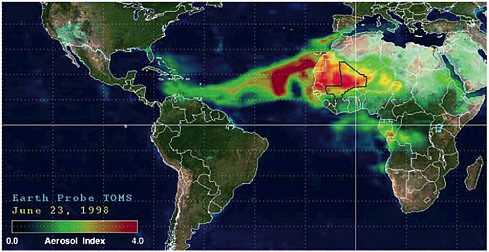
FIGURE 3.1 Satellite image, acquired by NASA’s Earth-Probe TOMS (Total Ozone Mapping Spectrometer) satellite instrument on June 23, 1998, showing an African dust event extending from the western Sahara to the Caribbean and Florida. The TOMS aerosol index is a relative measure of absorbing aerosol particles suspended in the atmosphere; the higher the index (warmer colors), the greater the particle load.
SOURCE: Kellogg et al. (2004).
INHALATION OF PARTICULATE MATERIAL
Only a few natural materials are inherently hazardous, and few are sufficiently accessible or mobile to pose a health risk in unperturbed landscapes. Asthma—a chronic condition consisting of airway inflammation and bronchoconstriction—is an example where earth material particulate matter can have adverse health effects. Current research suggests that asthma is caused by a combination of genetic and environmental factors but that particulate matter inhalation increases the severity of asthma (NASA, 2001).
Humans have a history of using specific elements from the environment, thereby changing the natural surficial distributions of rock material, soil, and botanical ground cover. At many mining sites, for example, this has led to several-fold increases of earth-sourced airborne particulate matter and increased human exposure to potentially hazardous materials. In such environments, ground-based ambient air sample data combined with spatially located health data can demonstrate the impacts of such exposure. Surface measurements of aerosol emissions identify the source and site of origin and, through analyses of the particulate matter, the composition of the potential hazards. On a local scale, integration of
health reactions with surficial sample analyses from multiple sites provides an early warning system. Satellites are increasingly able to detect the initiation of potential hazardous aerosols, and with increased sensitivities these remote sensing data have the potential to be combined with earth process models to provide a global warning system (Torres et al., 1998, 2002).
The reactions of individuals to air pollutants are variable. Low-level concentrations of airborne particulate matter and chemicals may require decades of exposure before the adverse effects are even noticed. In contrast, even brief exposure to an airborne pathogen can result in immediate illness. Although the problem of impure air has beset most societies throughout recorded history, including the ancient Greeks and Romans, it was not until the latter half of the twentieth century that many countries took action to address the problem (Matthias, 2005). For example, in the United States, Congress in 1970 authorized the Environmental Protection Agency (EPA) to establish and enforce national emission standards through the Clean Air Act. National Ambient Air Quality Standards1 have been promulgated and recently updated (see Box 3.2) for solid and liquid particulate matter (PM) of primarily anthropogenic origin, including pollutants such as ozone. Similar standards have been promulgated by Canada and many European nations.
Much of the documentation of specific airborne hazardous substances and disease has come from investigations of high exposure in industrial environments. This is a reflection of dose response—there is an increased likelihood of disease with more concentrated and longer term exposure to a hazardous substance. Further, morbidity as the result of hazardous airborne substances may not necessarily affect every exposed individual. The very young or old, the infirm, or health-compromised individuals in a population are more likely to be at risk.
Natural Sources and Transport of Airborne Particulate Matter
Although in situ soil particles are natural and vital for plant growth, they are considered to be contaminants when they are entrained in air (or water). Desertification, a significant consideration when contemplating future global climate change, occurs when the reduction of water in the environment, aided by winds, results in mobilization of particles into the atmosphere. The hundreds of millions of tons of soil particles in the lower atmosphere (troposphere) can impact sensitive habitats (e.g., coral reefs
|
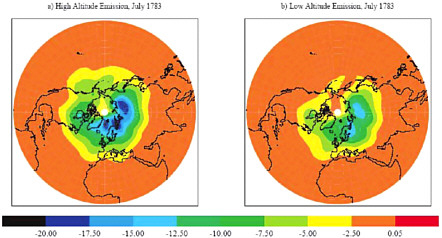
BOX 3.1 Volcanic Gas Inhalation—Laki, 1783 Iceland sits astride the Mid-Atlantic Ridge, a dominantly submarine mountain chain extending roughly north-south along the midline of the ocean floor. It marks the divergent plate boundary—or rift—between the Eurasian and African plates on the east and the North and South American plates on the west. Basaltic magma wells up semicontinuously along this rift and solidifies as new oceanic lithosphere to form the Mid-Atlantic Ridge; a massive accumulation of lava at the ridge produced Iceland. Active volcanoes are scattered along the plate boundary where it bisects Iceland, and in 1783 an enormous fissure eruption took place at one of these volcanoes. Over an eight-month period, nearly 15 km3 of lava issued from the Laki rift, covering 580 km2 in southern Iceland. Concomitantly, volcanic ash, aerosols, and gases were injected into the troposphere and the lowermost stratosphere and were carried by the prevailing westerly winds over Eurasia (see Figure 3.2). The increase in atmospheric albedo resulted in the cooling of northwest Europe by about 1.3ºC during the next two years, causing widespread crop failures and famine. A dry fog was observed for more than five months after the eruption. Volcanologists estimate that noxious gases vented to the atmosphere in this event included 122 million tons of sulfur dioxide (SO2), 7 million tons of hydrochloric acid (HCl), and 15 million tons of hydrofluoric acid (HF). In Iceland itself, 10,000 deaths were attributed to fluorosis, the result of direct inhalation and biouptake of HF in drinking water, crops, and livestock. From August 1783 to May 1784, the death toll above background levels in England and northern France exceeded 20,000 and 16,000, re |
in the Caribbean; see Kellogg et al., 2004) as well as potentially contribute to an increase in asthma (Prospero, 2001).
An important source of airborne particulate matter is loess, a fine-grained clay-silt material typically derived from glacial comminution of the parent rock. Very large accumulations of loess occur in specific areas of the northern hemisphere, particularly in west-central China and in the U.S. Midwest (Derbyshire et al., 1998), and these areas are a major source of atmospheric particulate matter. The farming practices common during the 1930s in the U.S. Midwest and Southwest, combined with a long period of drought, decreased soil moisture sufficiently to allow winds to generate thick clouds of dust and cause the famous dustbowl. Other natural sources of airborne particulate matter include dune fields and volcanic ash (e.g., ash from the 1980 Mount St. Helens eruption). Maps showing
the distribution of bedrock and soil types provide a scientific basis for predicting risk arising from airborne natural particles.
Particle size is important when assessing human health risk because small particles can remain suspended for lengthy periods and thus may be transported great distances, thereby posing a threat to human health through respiratory intake and deposition in nasal and bronchial airways. Sand-sized (0.05–2 mm) and silt-sized particles (2 µm to 0.05 mm), dominated by minerals such as quartz, feldspar, and mica, remain suspended for only short periods of time. In contrast, clay-sized (< 2 µm) particles, which may be any one of the many weathered products of these primary minerals, can remain in air for longer periods of time. In addition, claysized and clay mineral particles are normally negatively charged and can sorb positively charged molecules, thus acting as a carrier of associated
molecules (Walworth, 2005). The size of various solid and biological particles (see Figure 3.3) can be compared with respiratory pathway sizes (Figure 2.4) to illustrate why smaller particles can travel farther into the respiratory system, whereas large particles are likely to be expelled by normal protective mechanisms.
Some of the sources of PM10 in the United States are shown in Table 3.1. These data indicate that the major sources of outdoor particulate air
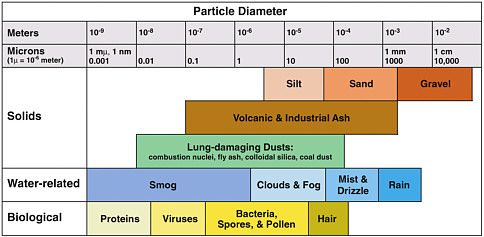
FIGURE 3.3 Comparison of particle size diameters for solids, water particles, and biological airborne materials.
SOURCE: Modified after NIEHS (2006).
TABLE 3.1 Average Annual Emissions of Particulate Matter (PM10) in the United States for 1995–1998 (in millions of tons), from Natural Sources and Human Activities
|
Source |
PM10 |
|
Other Sources |
|
|
Unpaved roads |
11.905 |
|
Wind erosion |
4.267 |
|
Agriculture and forestry |
4.937 |
|
Construction |
3.950 |
|
Paved roads |
2.489 |
|
Fire and other combustion |
1.109 |
|
Industrial Processes |
|
|
Chemical industries |
0.065 |
|
Metals processing |
0.180 |
|
Petroleum industries |
0.034 |
|
Other industries |
0.379 |
|
Solvent utilization |
0.006 |
|
Storage and transport |
0.097 |
|
Waste disposal and recycling |
0.302 |
|
Fuel Combustion |
|
|
Electric utilities |
0.288 |
|
Industrial |
0.263 |
|
On-road vehicles |
0.276 |
|
Nonroad sources |
0.458 |
|
SOURCE: Modified from CEQ (2006), based on EPA (1998). |
|
pollution are unpaved roads, agriculture and forestry, wind erosion of denuded land, and the use of gravel and sand in construction. The large amounts of airborne particulate matter that are initiated through erosion—the complex interaction of the physical, chemical, and biological weathering of rocks at the surface of the earth—are predominantly sourced from soils.
Health Effects of Mineral Inhalation
There are no known health benefits offered by the inhalation of particulate material. Inspired mineral dust does not appear to provide beneficial elements that can be absorbed by humans, and inhalation of dust or soil has not been reported to offer any protection against diseases. Unlike occurrences of geophagia (soil ingestion) in some cultures (see Chapter 5), the committee knows of no records of cultures “sniffing” earth materials for any purpose.
More than 380 naturally occurring minerals have the potential to be inspired because they may become airborne, although most do not occur
in nature in sufficient concentrations to be a health hazard. This section describes three types of earth-sourced particulate material—volcanic, fibrous mineral, and silica dusts—that illustrate the adverse health effects that can be caused by inhaling earth materials.
Volcanic Particles
Dust and aerosol clouds of volcanic origin can dramatically affect human health and welfare. The Mount St. Helens eruption of May 18, 1980, not only illustrated the dramatic power of volcanoes but also the health impacts of volcanogenic particulate matter (see Figure 3.4). Total suspended particulate matter levels downwind of the volcano averaged 33,402µg m−3 and remained above 1,000 µg m−3 for a week, far exceeding the mean ambient level of 80 µg m−3 (Baxter et al., 1983). This caused diminished light over the Pacific Northwest for several days and increased respiratory morbidity in the emergency workers who were exposed to the resuspended ash (Baxter et al., 1983; Bernstein et al., 1986). Deposited particulate matter was mostly PM10, as was also the case for eruptions between 1997 and 1998 at Soufriere Hills, Montserrat, where respirable dust from resuspended materials at 100–500 µg m−3 levels was hazardous to workers (Searl et al., 2002; Horwell et al., 2003). Another devastating volcanic eruption was the Tambora explosion of 1815, in what is now Indonesia. The volcano expelled ash and dust into the stratosphere, where it remained for several months, resulting in reflection of sunlight back to space which caused a 0.7ºC cooling of earth’s climate (Matthias et al., 2006). Some 92,000 deaths resulted from the eruption itself and from crop failures and famine in North America and Northern Europe during 1816, the “year without a summer.”
Fibrous Mineral Particles—Asbestos
The group of fibrous minerals collectively known as asbestos has become a highly publicized example of particulate matter that is considered to be hazardous. Because of their fibrous morphology and stability at high temperatures, several asbestos minerals have been used as insulation and/ or fire retardants, and consequently they have become widely distributed beyond their natural habitats. Excess exposure in occupational environments has led to thousands of studies documenting debilitation, disease, and death.
Although many minerals can occur in a fibrous form, the key factor determining whether fibrous mineral particles are hazardous is their potential to be inhaled. Six naturally occurring minerals—chrysotile, actinolite, amosite, anthophyllite, crocidolite, and tremolite—have been defined
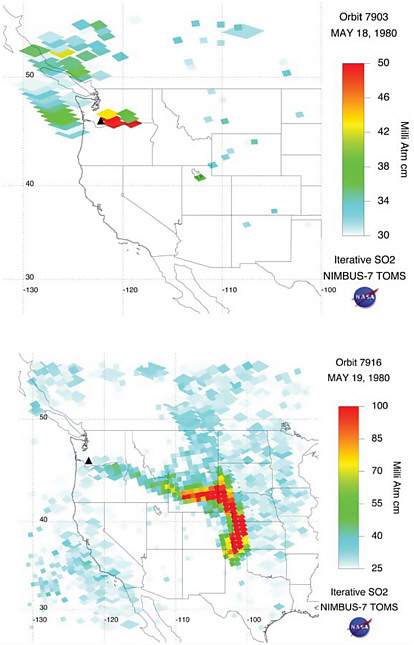
FIGURE 3.4 Satellite imagery showing the spread of sulfur dioxide following the eruption of Mount St. Helens (marked with black triangle) in 1980. The maps display the Sulfur Dioxide Index calculated from data collected by the Earth-Probe TOMS instrument.2
TABLE 3.2 Chemical Compositions of Fibrous Minerals Known to Be Hazardous
|
Mineral Class |
Mineral |
Chemical Composition |
|
Serpentine |
Chrysotile |
Mg3Si2O5(OH)4 |
|
Amphibole |
Actinolite |
Ca2(Mg,Fe)5Si8O22(OH)2 |
|
|
Amosite, var of Grunerite |
(Mg,Fe)7Si8O22 |
|
|
Anthophyllite |
(Mg,Fe)7Si8O22(OH)2 |
|
|
Crocidolite, var of Riebeckite |
NaFe32+Fe23+Si8O22(OH)2 |
|
|
Tremolite |
Ca2Mg5Si8O22(OH)2 |
|
Zeolite |
Erionite |
(K2, Ca, Na2)2Al4Si14O36.15H2O |
|
NOTE: The serpentine and five amphibole minerals are regulated. Erionite, a zeolite mineral, is not regulated but it is recognized as a carcinogen. SOURCE: NTP (2005). |
||
by the EPA and the Occupational Safety and Health Administration as being hazardous when they have particle length equal to or greater than 5 µm and an aspect ratio (length to width ratio) greater than 3:1. Each of these asbestos minerals (see Table 3.2) has a distinct chemical composition and crystal structure and a different dose-response relationship in humans. The five amphibole minerals are common species found in many rocks and soils, where they can occur as tiny particles or, occasionally, as asbestos fibers. The inhalation potential of these minerals is dependent on particle size (Wylie et al., 1993)—larger particles are less likely to remain airborne after disturbance and consequently are less likely to be respired. Knowledge of the precise crystal structure and elemental composition is crucial for distinguishing between the minerals classified as asbestos and the many other fibrous mineral species (e.g., talc) that may occur with the asbestos minerals. Specific mineral identification is essential for determining potentially hazardous exposure (Skinner et al., 1988, Wilson and Spengler, 1996).
Asbestosis is a noncancerous disease that occurs when the lungs fill with scar tissue (fibrosis—abnormal deposition of the fibrous protein collagen) as a result of continual high exposure to asbestos particulate matter. Fibrosis causes diminished ability to respire essential gases (oxygen, carbon dioxide) and thereby compromises many body reactions. Although ferruginous bodies—nodular aggregates of collagen, mucopolysaccharides, and ferritin—seen during histological examination of lung biopsies provides a telltale signature of particle deposition, high-resolution analytical microscopy is required to accurately identify the particular species of asbestos mineral. Lung scarring may continue after asbestos exposure has ceased. Many workers in occupations where asbestos mineral inhala-
tion may occur also smoke, and respiratory trauma from accumulated insults from different sources increases the risks of contracting disease, especially cancers. Another deadly disease linked to asbestos is mesothelioma, a cancer of the pleura rather than the lung tissues. It may take more than 25 years for this disease to appear in populations (NOHSC, 1999). Mesothelioma is a major public health issue in parts of Turkey, where the responsible fibrous mineral is a zeolite—erionite—rather than an asbestos species (Baris et al., 1979).
Based on detailed assessments of the health effects from occupational asbestos exposure, some members of the amphibole group of minerals are considered to carry a high risk of mesothelioma and lung cancer (Skinner et al., 1988; Ross and Nolan, 2003; IOM, 2006). A recent review (IOM, 2006) noted that asbestos is an established human carcinogen and evaluated a broad range of existing studies to determine whether there was a causal association between asbestos (considered generally rather than by specific fiber type) and specific cancers. This study concluded that there is sufficient evidence to infer a causal relationship between asbestos and laryngeal cancer but that the evidence is only suggestive for pharyngeal, stomach, and colorectal cancers and is inadequate to demonstrate a causal relationship for esophageal cancer. This report noted that uncertainties in its conclusions were a result of limitations in available evidence, and suggested that research was needed to address the relevance of physical and chemical characteristics of asbestos fibers to carcinogenicity.
Chrysotile is the dominant asbestos mineral used worldwide as insulation in public buildings and schools over the past century. In Asbestos, Quebec, where the general population has been exposed to piles of chrysotile waste accumulated for over 100 years, the level of lung cancer appears similar to other areas of Canada, especially when smoking is taken into account (Camus et al., 1998). Although exposure to the asbestos group of minerals as a result of mining or industrial activities receives the most publicity, there are also many cases where there is potential for exposure from natural occurrences (see Box 3.3).
Mineral identification is a key component of any understanding of the relationship between mineral exposure and health consequences, and it is likely that contradictory observations reported by healthcare professionals stem from an inadequate understanding of the physical and chemical characteristics of the mineral materials. Although the public health issues related to asbestos have been aired (e.g., Liddell, 1997; Ross and Nolan, 2003), the specific mechanisms of fibrogenesis and carcinogenesis related specifically to asbestos exposure are not fully elucidated despite contributions from lung physiologists, pathologists, cell biologists, and special studies by numerous medical research teams.
|
BOX 3.3 Natural Exposure to Asbestos Serpentinite, an ultramafic metamorphic rock commonly found in California (where it is the state rock), may contain the mineral chrysotile (also known as “white asbestos”). The abundance of serpentinite, and the possibility that the rock may contain asbestos, has prompted concern regarding potential health hazards. The distribution of serpentinite, and thus potential occurrences of chrysotile asbestos, has been documented by the California Geological Survey (Clinkenbeard et al., 2002). Although the report identifies those regions where serpentinites occur, it does not identify whether asbestiform minerals are present nor, if present, the likelihood that asbestos fibers will become airborne and available for inhalation. Although specific long-term occupational exposure to asbestos (e.g., by shipyard workers, plumbers, steamfitters) may cause lung disease, there is no existing evidence that residential proximity to serpentinite rock is hazardous. A large body of serpentinite near Coalinga, California, is one of the best known chrysotile asbestos deposits in the United States. Originally a mercury mine, chrysotile was mined at the Coalinga and Atlas Mines from the 1950s until the mid-1970s because it was easily extracted in virtually pure mineral form. Chrysotile was also milled on site, creating respirable airborne mineral dust. The Coalinga Mine and Atlas Mine sites, together with mine tailings dumps and milling areas, were remediated during the 1990s as part of the Superfund National Priority List process. The Clear Creek Management Area, adjacent to the mines and included within the Atlas Mine Superfund Site because of natural chrysotile occurrences, is popular with off-highway vehicle recreation and racing enthusiasts. The use of off-road vehicles for recreation, especially where there is little plant cover, can result in significant dust pollution for both riders and downwind populations. Precise mineralogical data for any airborne particulate matter is essential for determining whether such dust poses a health hazard. |
Silica Particles
Silica, and the associated disease silicosis, is another example of an intensively studied health effect caused by inhalation of a specific mineral particulate matter. Silicosis, caused by exposure to crystalline silica, is almost exclusively an occupational disease where the key to understanding respiratory problems lies in the size and morphological characteristics of the nonfibrous particles. Construction workers, especially those who sandblast and use jackhammers, are often at great risk for lung disease because silica materials become airborne (Rosner and Markowitz, 1991).
Silicosis can be readily diagnosed radiographically by identification
of focal nodular lesions in the upper lung, a site that distinguishes this disease from asbestosis. In both diseases, lung function may not initially be markedly affected, but with continual exposure the progression of lesions reduces the original pliable lung to stiff fibrotic tissues, and occlusion of the air sacs compromises the transmission of essential gasesby the respiratory system. Silicosis was identified as a major health concern in the 1930s, but few new cases have appeared in recent years because of increased attention to hazardous workplace environments. The identification of silica in volcanic emissions has caused some recent concern (Horwell et al., 2003).
GAS INHALATION HAZARDS
There is a large, and expanding, inventory of gaseous-phase aerosols that can potentially cause harm to the human respiratory system. These can be natural or anthropogenically generated and are found outside and indoors (McElroy, 2002). The primary natural outdoor pollutants are hydrocarbons from plant respiration, biogenic gases such as methane (CH4) and hydrogen sulfide (H2S), and volcanic gases such as sulfur dioxide (SO2), H2S, carbon monoxide (CO), and carbon dioxide (CO2). Radon, a naturally generated gas, is a major indoor air pollutant.
Health Effects of Volcanic Gas Emissions
Volcanic eruptions produce enormous quantities of gas that, in some situations, can have devastating consequences for surrounding plant, animal, and human life. An explosion on August 12, 1986, from Lake Nyos in western Cameroon caused a 100-meter-high jet of water and CO2 gas, coinciding with a 1-m drop in lake level. An approximately 50-m-thick mist of water and CO2 rolled down into the surrounding valley, at speeds of over 50 km per hour, killing 1,700 people through suffocation (Freeth and Kay, 1987). The buildup of CO2 occurred in the lower portions of the lake because the confining pressure of the overlying water mass caused CO2 derived from the underlying volcanic sourceto be dissolved and effectively trapped in the bottom waters. Rainwater displaced some of the bottom waters, leading to reduced confining pressure and explosive gas expulsion. Pipes have been inserted into the bottom of the lakes to allow CO2 to gradually escape and prevent explosive overturning (Evans et al., 1993).
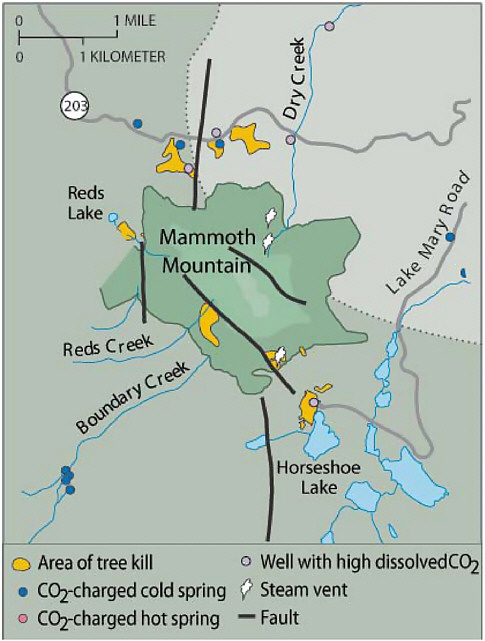
Volcanogenic gas is also being emitted near Mammoth Mountain, California. After an earthquake swarm in 1989 associated with a moving subterranean magma body, U.S. Forest Service personnel noticed an area where the trees appeared to be dying. In 1990, measurements of gas emis-
sions indicated that both CO2 and helium were venting from the soil in several areas around Horseshoe Lake (see Figure 3.5). The likely source of the CO2 was contact heating of limestone-rich rocks by a magmatic intrusion. Peak flow occurred in 1991, with soil gas composition as high as 95% CO2. The current gas flux is approximately stable, with about 100 acres impacted by emission of approximately 110 metric tons of CO2 per day in the Horseshoe Lake area (McGee and Gerlach, 1998). The dangers posed by these gas emissions were tragically reinforced in April 2006 when three Mammoth Mountain ski patrol members were killed when they fell through snow into a CO2-charged pit and were asphyxiated.
Health Effects of Biogenic Gas Emissions
The end result of microbial metabolism is often the generation of gaseous byproducts, including CO2, CH4, H2S, nitrogen (N2), O2, hydrogen (H2), and semivolatile compounds like organic acids (Konikow and Glynn, 2005). Most of these gases occur in the soil zone or in saturated sediments, and soil type, water content, mineralogy, and organic carbon content all directly influence the dominant microbial community and therefore the type of gas produced. In some soil environments the concentrations of CO2 or CH4 gases reach very high levels—CO2 concentrations between 1 and 10% are common in productive soils and CH4 can be over 10% in water-logged soils.
There are examples of very high concentrations of biogenic gases that directly impact human health. In some coal seams, biogenic methane adsorbs on the coal under high confining pressure, and this gas, known as coal-bed methane, is recoverable as an energy resource. The methane is extracted by pumping down the confining aquifer—the decrease in confining pressure results in desorption of the methane, which can then be extracted. Where the coal outcrops at the land surface, however, the methane can vent directly to the surface environment resulting in high methane concentrations in soils. This can result in tree kills and the accumulation of explosive levels of methane in homes. Several areas east of Durango, Colorado, are impacted by methane venting from coal outcrops, with sufficiently high methane concentrations to force several homes to be abandoned.
In anaerobic groundwater that contains dissolved sulfate, the dominant anaerobic microorganism is normally sulfate-reducing bacteria and the metabolic byproduct is gaseous H2S. Although rarely present in soils at high enough concentration to be toxic (Konikow and Glynn, 2005), H2S can reach very high concentrations in water, and gas volatilization is enhanced when heated and discharged in residential showers. Legator et al. (2001) noted a higher incidence of central nervous system and respiratory
effects as a result of chronic low-level exposure to H2S. A statistically significant incidence of neurophysiological abnormalities was recorded in a study of the health effects of working and living near a processing plant for high-sulfide oil (Kilburn and Warshaw, 1995). The health effects posed by the outgassing of biogenic or volcanogenic hydrogen sulfide in residential showers is an area of active research and a topic that is an example of research that requires both earth science (to characterize the source of H2S) and healthcare professionals.
Health Effects of Radon Gas Emissions
Radon is a colorless, tasteless, and odorless gas that is produced by the natural radioactive decay of rocks or soils containing uranium-bearing minerals. Radon is a major contributor to background radiation at the surface of the earth, and 222Rn can be detected in the atmosphere above some geological sites with high radon concentrations. Radon is dangerous because it decays to form radioactive particles that can be inhaled directly or may adhere to dust particles and then be carried into the lungs (Appleton, 2005; Gates and Gundersen, 1992; Graves, 1987). Once inhaled, the short-lived decay products of radon—polonium 218 (218Po), lead 214 (214Pb), bismuth 214 (214Bi), and polonium 214 (214Po)—can become trapped in the lungs and result in lung cancer (Appleton, 2005).
Since 1928, when the International Commission on Radiological Protection advised that low levels of radiation might be harmful, exposure to radioactive elements has been considered a potential carcinogen. Epidemiological studies on humans and experimental studies with animals confirmed the risk associated with high radiation levels from a range of radioactive elements, but not necessarily for low-dose exposures of radon (Friedman, 1988; NRC, 1999a).
High concentrations of uranium (U) and thorium (Th) are present in sedimentary rocks rich in phosphate (phosphorites), in coal beds, and in soils derived from black shales and some relatively reduced granites (Cannon et al., 1978). Geological occurrences of such lithologic units are widespread in the western United States, especially in Montana, Wyoming, and Idaho. Other large deposits occur in Florida, the central Appalachians, and throughout the northeastern part of the country. Locally, gas concentrations are enhanced if the rock mass has fractures or is disturbed by seismic or construction activity. Radon can accumulate in buildings—especially in basements without adequate ventilation—in areas underlain by such rocks. This recently resulted in a radon scare in the northeastern United States which is, in part, underlain by granitic rocks.
The range of radon concentrations in underground mines can be huge, especially when fractured rock permits gas escape. Umhausen, a small
town in the Austrian Tyrol that is built on an alluvial fan of a rock slide, had radon measurements between 2,000 and 250,000 Bq m−3 (Ennemoser et al., 1994). The incidence of lung cancers was statistically higher than expected in the town population.
INHALATION OF BIOLOGICAL CONTAMINANTS
Biological airborne contaminants—bioaerosols—which can be ingested or inhaled by humans include bacteria, viruses, and fungi of geogenic origin as well as airborne toxins (Griffiths and DeCosemo, 1994). Bioaerosol sizes range typically from 0.5 to 30 µm in diameter, and usually particles are surrounded by a thin layer of water (Stetzenbach, 2001). In other instances, the biological particles can be associated with particulate matter such as soil or biosolids (Lighthart and Stetzenbach, 1994). Bioaerosol particles in the lower spectrum of sizes (0.5–5 µm) are typically of most concern, as these particles are more readily inhaled or swallowed (Stetzenbach, 2001).
Bioaerosols generated from the land application of biosolids may be associated with soil or vegetation, depending on the type of land application, and are therefore considered an earth-derived source of pollution. The soil particles or vegetation provide a “raft” for the biological particles contained within the aerosol (Lighthart and Stetzenbach, 1994). However, for soil particles to be aerosolized, the particles need to be fairly dry, and low soil moisture contents are known to promote microbial inactivation (Straub et al., 1992; Zaleski et al., 2005).
Potentially there are three phases to the bioaerosol exposure pathway—launching of bioaerosols, transport, and deposition onto humans or interception by humans. Launching can result directly from human activity (coughing or sneezing) or indirectly from waste handling and loading of sewage, biosolids, or animal wastes. Launching can also occur from natural sources, such as the wind-blown spores released from soil fungi. Transport distances can be short, as in the case of one human sneezing and infecting a nearby person. In other cases, transport can be over hundreds of kilometers. Human interception of bioaerosols, resulting in infection or illness, can be via ingestion or inhalation.
Health Effects of Airborne Pathogens
Table 3.3 illustrates the wide variety of human pathogens that can be aerosolized. Although most of these pathogens do not originate or reside in soils, there are some significant bacterial pathogens found in soils (e.g., Bacillus anthracis, the causative agent of anthrax, although anthrax outbreaks from soil have rarely been documented). Many fungi are found in
TABLE 3.3 Examples of Airborne Pathogens and the Diseases That May Result
|
Pathogens |
Human Diseases |
|
Bacterial Diseases |
|
|
Mycobacterium tuberculosis |
Pulmonary tuberculosis, disseminated tuberculosis |
|
Chlamydia psittaci |
Psittacosis (pneumonia) |
|
Bacillus anthracis |
Pulmonary anthrax |
|
Staphylococcus aureus |
Staphylococcus respiratory infection, sepsis, cutaneous infection |
|
Streptococcus pyogenes |
Streptococcus respiratory infection, sepsis, other streptococcus infections |
|
Legionella spp. |
Legionellosis |
|
Neisseria meningitidis |
Meningococcal infection, meningitis |
|
Yersinia pestis |
Pneumonic plague, bubonic plague |
|
Bordetella pertussis |
Pertussis (whooping cough) |
|
Corynebacterium diptheriae |
Diphtheria |
|
Fungal Diseases |
|
|
Aspergillus fumigatus |
Aspergillosis |
|
Blastomyces dermatiridi |
Blastomycosis |
|
Coccidioides immitis |
Coccidioidomycosis (valley fever) |
|
Cryptococcus neoformans |
Cryptococcosis |
|
Histoplasma capuslatum |
Histoplasmosis |
|
Nocardia asteriodes |
Nocardiosis |
|
Viral Diseases |
|
|
Influenza viruses |
Influenza |
|
Hantavirus |
Hantavirus pulmonary syndrome |
|
Coxsackievirus, Echovirus |
Pleurodynia (chest wall pain), respiratory and other infections |
|
Rubivirus |
Rubella (German measles) |
|
Morbillivurus |
Measles |
|
Rhinoviruses |
Common cold |
|
Protozoan Diseases |
|
|
Pneumocystis carinii |
Pneumocystosis (Pneumocystis Carinii |
|
|
Pneumonia (PCP)) |
|
SOURCE: Adapted from Artiola et al. (2005). |
|
soils, including Coccidiodes immitis—the causative agent of valley fever— which is prevalent in parts of California and Arizona. In addition to soilborne pathogens, pathogens can be added to soils via land application of animal wastes or biosolids. Such pathogens include E. coli 0157:H7, Cryptosporidium parvum, Salmonella, enteroviruses, and Norwalk viruses. Although another study (NRC, 2002a) identified a risk of infection to residents living close to land application sites from bioaerosols, analysis of the annual community risk of infection from Coxsackie virus A21 using the one-hit exponential model (Brooks et al., 2005a, 2005b) indicated that community risks from bioaerosols generated during land application of
biosolids are very low because of the natural attenuation of pathogens due to environmental factors such as dessication and ultraviolet light.
Health Effects of Airborne Toxins
Endotoxin, also known as lipopolysaccharide, is ubiquitous throughout the environment and may be one of the most important human allergens (Sharif et al., 2004). Endotoxin—derived from the cell wall of gram negative bacteria—is continually released during both active cell growth and cell decay (Brooks, 2004). In soils, bacterial concentrations routinely exceed 108 per gram, and soil particles containing sorbed microbes can be aerosolized and act as a source of endotoxin. Farming operations (e.g., driving a tractor across a field) have been shown to cause exposure to high levels of endotoxin. When inhaled, endotoxin can cause a wide variety of health effects, including fever, asthma, and shock (Methel, 2003).
Mycotoxins are secondary metabolites produced by fungal molds. Fungi, such as species of Aspergillus, Alternaria, Fusarium, and Penicillium, are common soilborne fungi capable of producing mycotoxins. Aflatoxin, produced by Aspergillus flavus, is one of the most potent carcinogens known and is linked to a variety of health problems (Williams et al., 2004).
Health Effects of Aeroallergens
Allergic diseases are the sixth leading cause of chronic illness in the United States, affecting roughly 17% of the population. Approximately 40 million Americans suffer from allergic rhinitis (hay fever), largely in response to common aeroallergens, and asthma prevalence and deaths in this country rose substantially from 1984 to the late 1990s (AAAAI, 2000; CDC, 2002, 2004; Mannino et al., 1998; IOM, 2000). Aeroallergens may also contribute to chronic obstructive pulmonary disease and cardiovascular disease (Brunekreef et al., 2000).
OPPORTUNITIES FOR RESEARCH COLLABORATION
The biouptake and coupled interactions of airborne materials—both particulate matter and gaseous components—have important negative impacts on human well-being. In an era when our ability to apply multispectral and hyperspectral satellite data to better understand the nature and characteristics of airborne pollutants continues to increase, our understanding of the sources of airborne pollutants emanating from the surface of the earth, and transported by earth processes, remains inadequate. Even the basic framework for describing the nation’s surface—a detailed and comprehensive map of the geochemical and textural characteristics
of soils throughout the United States—remains an unrealized high-priority requirement for understanding and predicting risk. And although the detrimental health effects from some natural fibrous and asbestiform minerals have received considerable publicity over the past several decades, there is still inadequate understanding of the precise mineral species characteristics that impact human health.
Collaborative research by earth and public health scientists will be required to effectively address a range of important issues associated with airborne mixtures of pathogens and chemicalirritants:
-
Exposure concentrations and dose response arising from particulate matter/microbe/chemical interactions.
-
Dose response of soil microbes and pollen.
-
Long-term risks from low-level concentrations of airborne particulate matter contaminants.
Pollution by wind-blown dusts and volcanic aerosols, gases, and ash is ubiquitous, and most scientists and public health officials predict that the worldwide urbanization phenomenon, combined with the expected effects of global climate change, will generate more potentially hazardous “dusts.” A complicating factor is that in most cases natural and anthropogenic air pollution consists of complex mixtures of chemical and biochemical species as well as pathogens, and the earth-sourced or earth-hosted component can be difficult to assess. Adverse effects arising from the inhalation of these species and mixtures require detailed geologic investigations of earth sources and the identification of atmospheric pathways to sites of bioaccessibility and potential ingestion by human hosts. The anticipation or prevention of air pollution−caused health effects prior to the onset of illness requires quantitative knowledge of the geospatial context of disease vectors. A combination of earth observations, using satellite and ground-based detection systems, and public health surveillance has significant potential to improve human health.


