




Below is the uncorrected machine-read text of this chapter, intended to provide our own search engines and external engines with highly rich, chapter-representative searchable text of each book. Because it is UNCORRECTED material, please consider the following text as a useful but insufficient proxy for the authoritative book pages.
4 Water Quality Considerations INTRODUCTION Water quality is characterized by the chemical (organic and inorganic), physical, and microbiological nature of the water. The monitoring and testing that go along with this characterization must focus on both constituents of con- cern to human health and those that affect operations of the water systems. The development of a system for managed underground storage (MUS) of water involves the testing and characterization of the source water, the aquifer geo- chemistry and native water quality, the stored water, and the recovered water. The subsurface has the capacity to attenuate many chemical constituents and pathogens via physical, chemical, and biological processes. Critical to MUS is an understanding of the mixing of often chemically and microbiologically dif- ferent waters, which may react with each other and with materials comprising the aquifer matrix. The reactions that occur can ultimately improve or diminish the stored water quality chemically and microbiologically. Water quality changes can be variable in both space and time. Furthermore, among the poten- tial suite of reactions are those that can cause clogging or dissolution of the aqui- fer matrix and so affect MUS operation. The consequences of the potential reac- tions during storage underscore the importance of a comprehensive aquifer char- acterization to fully understand the water quality changes that may occur during MUS. An understanding of temporal changes in the quality of water prior to and during storage is critical and is intertwined with the application, treatment requirements, and use of the water after it is recovered. This understanding may also influence the treatment of waters prior to storage. âSuccessfulâ MUS is therefore much more than a function of effective hydrologic engineering; MUS must also consider the broad spectrum of processesâmicrobiologic, hydro- chemical, geochemical, and hydrogeologicâas they influence water quality and performance of the system. The mix of constituents in source waters for MUS varies, depending on the natural purity of the water and constituent inputs and modifications through hu- man activities (e.g., agricultural, industrial, commercial, and residential land use, engineered treatment processes). Public concerns about these constituents may vary depending on whether the classification is âhealth-relatedâ or âaesthetic.â The purposes of this chapter are to describe: (1) the range of constituents in MUS waters; (2) hydrogeochemical and microbiological processes involved as source waters interact with the native ground water and rocks or sediments com- prising the aquifer, and the impact of these processes on MUS performance; and (3) predictive tools for water quality and aquifer changes. 109
110 PROSPECTS FOR MANAGED UNDERGROUND STORAGE OF RECOVERABLE WATER CONSTITUENTS IN WATERS THAT CAN AFFECT PERFORMANCE AND OPERATION OF MUS Constituents Two overlapping sets of water quality parameters are important to MUS performance and so must be considered in designing MUS systems. Constituents regulated in drinking water (as described by the Safe Drinking Water Act [SDWA]) comprise a well-defined list with concentrations that must be met in drinking water supplies for either human health or aesthetic reasons. While the SDWA prescribes the list of both chemicals and microorganisms that have been the primary impetus for water quality goals, this list is not sufficient to evaluate the quality of the various waters (source water, native groundwater, stored wa- ter, etc.) for an MUS system. In order to establish a sustainable MUS system, constituents that lead to aquifer clogging or dissolution, or other reactions that improve or degrade water quality during MUS operations must also be evalu- ated. The constituent concentrations that are important for operations are not embodied in a regulatory list, but emerge from consideration of the reactions that can impact MUS performance and the particular type of MUS system (e.g., type of source water, recharge method, native groundwater characteristics, and aquifer geochemistry). Importantly, the microbial and chemical water quality can improve or degrade during any stage of MUS. The list of contaminants developed under the SDWA includes the list of chemical and microbiological constituents that have established legal enforce- able maximum contaminant levels (MCLs) and/or treatment technology re- quirements and MCLGs (maximum contaminant level goals). Total coliform bacteria are used from a regulatory monitoring perspective to judge drinking water microbiological safety. There is also emerging concern about ânewâ (previously unmonitored) chemicals and constituents that occur in water as a consequence of human activities and are not regulated (e.g., endocrine disrupt- ing chemicals, pharmaceuticals, personal care products). For many of the chemicals in this classification, analytical techniques appropriate for environ- mental samples are relatively new and complex. The World Health Organization also has developed a list of constituents of interest in water for health goals that includes some compounds that are not regulated by the U.S. Environmental Pro- tection Agency (EPA) including, for example, the cyanobacterial toxins that can be found in surface waters. To fully appreciate the broad water quality characteristics found in MUS systems from the ambient groundwater to the source, stored, and recovered wa- ter, the physical, chemical, and microbiological water quality constituents need to be understood and measured. These are described briefly in the following sections, and extended descriptions are available in Appendix A.
WATER QUALITY CONSIDERATION 111 Physical Characteristics The first impressions of water quality are often based on visual observa- tions. Water is expected to be free of particles (turbidity), color, taste, and odor. Turbidity may increase clogging, and these particles can also harbor pathogens and enhance their survival in the presence of a disinfectant. Color is often the result of dissolved organic matter, for example, humic and fulvic acids. Taste is often related to the presence of iron or manganese in the water. It may also be due to high levels of chlorine used as a disinfectant. Odor may be caused by decomposition of organic matter or reduction of dissolved sulfate; the control of odors is among the priority issues with respect to public acceptance of a project. Additional important physicochemical characteristics of MUS waters in- clude dissolved oxygen, pH, oxidation-reduction potential (Eh), specific conduc- tance, and temperature. Dissolved oxygen (DO) is required by any aquatic or- ganisms that respire aerobically (i.e., breathe oxygen). The presence of DO tends to minimize odors, but it may cause oxidation of sulfide minerals or or- ganic matter in aquifers that can lead to the release of arsenic and other metals. The DO content of recharged water is affected by temperature and so can vary significantly with the season. Dissolved oxygen saturation (with respect to at- mospheric oxygen content) is a strong function of temperature within the rele- vant environmental range. For fresh water (< 2000 mg/L of total dissolved solids [TDS]), the oxygen saturation ranges from approximately 7 mg/L at 35oC to 12.8 mg/L at 5oC. Water treatment processes, such as ozonation and chlorina- tion, also affect the DO. The pH is a measure of the hydrogen-ion concentration, or the acidity, of water. It influences everything from the ability of a mineral to adsorb toxic metals to the dissolution of the aquifer materials. Oxidation- reduction potential (ORP or Eh) is another critical parameter because it indi- cates processes such as iron dissolution or precipitation and proportions of vari- ous dissolved nitrogen species such as ammonia. Along with pH, Eh provides a measure useful for gauging conditions that favor the persistence of certain or- ganic contaminants or the survival of certain pathogens. Specific conductance is a measure of how well a given water sample conducts an electrical current and can give a good estimate of the TDS in a solution. Finally, temperature affects the speed (kinetics) of chemical reactions in the subsurface, whether they are mediated by bacteria or not. Organic Constituents Four classes of organic constituents are particularly important to MUS sys- tems: total organic carbon, disinfection by-products, other regulated organics (aside from disinfection by-products), and so-called emerging contaminants. Total organic carbon includes both dissolved organic carbon (DOC) and par- ticulate organic carbon (POC) and is composed primarily of natural organic mat- ter (NOM). DOC can lead to the formation of disinfection by-products. In addi-
112 PROSPECTS FOR MANAGED UNDERGROUND STORAGE OF RECOVERABLE WATER tion, the degradation of labile dissolved and particulate organic carbon in re- charge water can lead to reductions in DO, ORP, and pH and can also cause clogging through stimulation of biomass growth. Disinfection by-products, or DBPs, are formed as a consequence of reactions between disinfection chemicals (chlorine, chloramine, and ozone) used to treat microbial pathogen contaminants and DOC. They are often small, halogenated (e.g. chlorinated, brominated) or nitrogen-containing organic compounds. Because the precursor organic matter is of variable composition, the DBPs produced encompass a spectrum of chemicals including the regulated trihalomethanes (THMs) and haloacetic acids (HAAs). Regulated trace organic contaminants, such as petroleum hydrocarbons, chlorin- ated solvents, and regulated pesticides, are known toxins or carcinogens and are problematic in thousands of contaminated sites around the country. Their behav- ior must be considered for any particular MUS if they are present in either the source water or the groundwater system. Unlike DBPs, these chemicals are not created in situ. Methods to monitor these chemicals in drinking water supplies are well established and routinely available. The fate and transport of these chemicals in groundwater are relatively well understood (compared to emerging contaminants) as a consequence of prior groundwater studies. The behavior of these compounds in standard water treatment facilities is also well known. For these reasons, the discussion of this group of contaminants in this report is lim- ited, and the reader is referred to more comprehensive reviews. Emerging con- taminants are any synthetic or naturally occurring chemicals or microorganisms that are not commonly monitored in the environment but have the potential to enter the environment and cause known or suspected adverse ecological and/or human health effects (http://toxics.usgs.gov/regional/emc/). They are wide- spread and include antibiotics and other pharmaceuticals, personal care prod- ucts, hormones, and many other compounds. Inorganic Constituents Inorganic chemical constituents of concern in MUS source waters can be grouped as nutrients, nonmetals, and metals and metalloids. Nitrogen and phos- phorous species are known as nutrients because they are essential for the growth of microorganisms and plants. However, they can also contribute to deleterious growth of algae or microorganisms in MUS systems. Nitrogen is soluble in sev- eral forms, including nitrate and nitrite. Phosphorus is generally poorly soluble as phosphate. The nonmetals of concern include species such as chloride and sulfate and occasionally borate. Typically, these are part of a larger problem of salinization either in the case of recharge into brackish groundwater or due to evaporation in arid regions. The metals and metalloids of concern are often present at trace concentrations, and many are classified as priority pollutants. Examples of these include arsenic, cadmium, mercury, lead, and chromium. They are associated with a wide variety of problems from developmental delays in children to various cancers, bone disease, and skin problems. Radionuclides
WATER QUALITY CONSIDERATION 113 of greatest concern are uranium and radon, both of which are carcinogens. Iron and manganese, except at very high levels, are primarily of concern because they influence the aesthetic quality of the water. Iron can be related to clogging problems as well. Microbial Constituents Important human pathogens for MUS systems are those microorganisms in- cluding bacteria, parasites, and viruses that come from both human and animal fecal pollution and naturally-occurring microorganisms that reside and grow in the aquatic environment such as cyanobacteria (toxic algae) and Legionella. Often the distinction between human and animal sources using microbial source tracking techniques is advantageous with regard to developing strategies to con- trol the source. In the United States, waterborne outbreaks (common-source epidemics associated with contamination of the drinking water) have occurred in both community and non-community systems. Groundwater was the supply most often associated with these outbreaks (compared to springs, surface water, or contamination of the distribution system) often because disinfection was in- adequate or not used to treat microbially contaminated wells (Liang et al., 2006). From 1989 to 2002, 64 percent of drinking water outbreaks were from a groundwater supply, and more recently from the 2001 to 2002 and 2003 to 2004 reports, groundwater was associated with 92 percent and 52 percent of the drink- ing water outbreaks, respectively (Blackburn et al., 2004;Liang et al., 2006). Bacteria, including fecal bacteria such as Campylobacter (associated with ani- mal and human wastes) and aquatic (nonfecal) bacteria such as Legionella as well as enteric viruses from human fecal wastes, were the most common causes of the illnesses. Native Groundwater and Aquifer Geochemistry Native Groundwater Geochemistry and Associated Aquifer Classification Native groundwater quality in an aquifer is important to consider in plan- ning an MUS system because it provides information about constituents likely to dissolve into stored water as it equilibrates with the aquifer matrix. Knowledge of native groundwater quality is also critical to evaluating the potential for chemical reactions occur as recharged and native waters mix in the transition zone. In addition, native groundwater chemistry provides a useful means for aquifer classification that is related to the aquifer mineral matrix. In uncontaminated groundwaters, major ions typically originate from the weathering of aquifer minerals. Hence, there is a strong association between the major ions identified and the mineral composition of the aquifer. Major cations include Ca2+, K+, Na+, and Mg2+, and major anions include Clâ, HCO3â, SO42â,
114 PROSPECTS FOR MANAGED UNDERGROUND STORAGE OF RECOVERABLE WATER and sometimes NO3â (Table 4-1) (Freeze and Cherry, 1979; Hem, 1985). Concentrations of nitrate sufficiently high to warrant its inclusion as a major anion are generally attributable to anthropogenic influence. The fingerprint of the major cations and anions in groundwaters (e.g., their concentrations and rela- tive proportions) can be used to distinguish among hydrochemical units in the subsurface. For example, aquifers comprised of limestone (mostly calcium and/or calcium-magnesium carbonate minerals) will typically exhibit calcium as the dominant cation and bicarbonate as the dominant anion. Table 4-1 summa- rizes some hydrochemical attributes typical of groundwaters contained within different types of aquifer rocks. This table generalizes compositions typical of potable aquifers that have low (less than 1,000-2,000 mg/L) TDS. Although trace metals and metalloids in groundwater are often associated with contamination, they can also occur naturally in groundwaters as a conse- quence of water-rock interactions. Recent work (Lee and Helsel, 2005) suggests that background (without anthropogenic contamination) trace element concen- trations of barium, chromium, copper, lead, nickel, molybdenum, and selenium have a 1.0 to 1.5 percent likelihood of exceeding federal drinking water stan- dards. The authors report that arsenic is an exception, with a 7 percent likelihood of exceeding the federal drinking water standard. Unlike trace metals, regulated organic contaminants occur in groundwater solely because of human activities. Regulated industrial chemicals occur in groundwater as a consequence of point source discharges via leaks, spills, or historical disposal. In addition, regional contamination of groundwaters can occur from nonpoint or widely distributed sources related to land use. Examples of such chemicals include pesticides and nutrients (Scanlon et al., 2005). TABLE 4-1 Typical Major Ion Chemistry in Groundwaters Associated with Potable Aquifers in Different Types of Rock a b Matrix pH Major dissolved species 2+ 2+ - Carbonate Circumneutral to basic Ca , Mg , HCO3 Unconsolidated and consolidated siliciclastic sediments 2+ + - 2 Siliciclastic; alluvium, Circumneutral to acidic Ca , Na , HCO3 ; SO4 ; mixed glacial cation 2+ 2+ + - Fractured Bedrock Basic Mg , Ca , Na , HCO3 ; SiO2 (igneous, metamorphic, brittle sedimentary) a more acidic near recharge areas. b + 2+ - ions and dissolved chemicals (see glossary for definitions). Na , Mg , Cl are generally - higher proximal to saline water bodies and within deeper âformationâ waters; NO3 in high- recharge areas and unconfined aquifers. SOURCE: Freeze and Cherry (1979); Hem (1985).
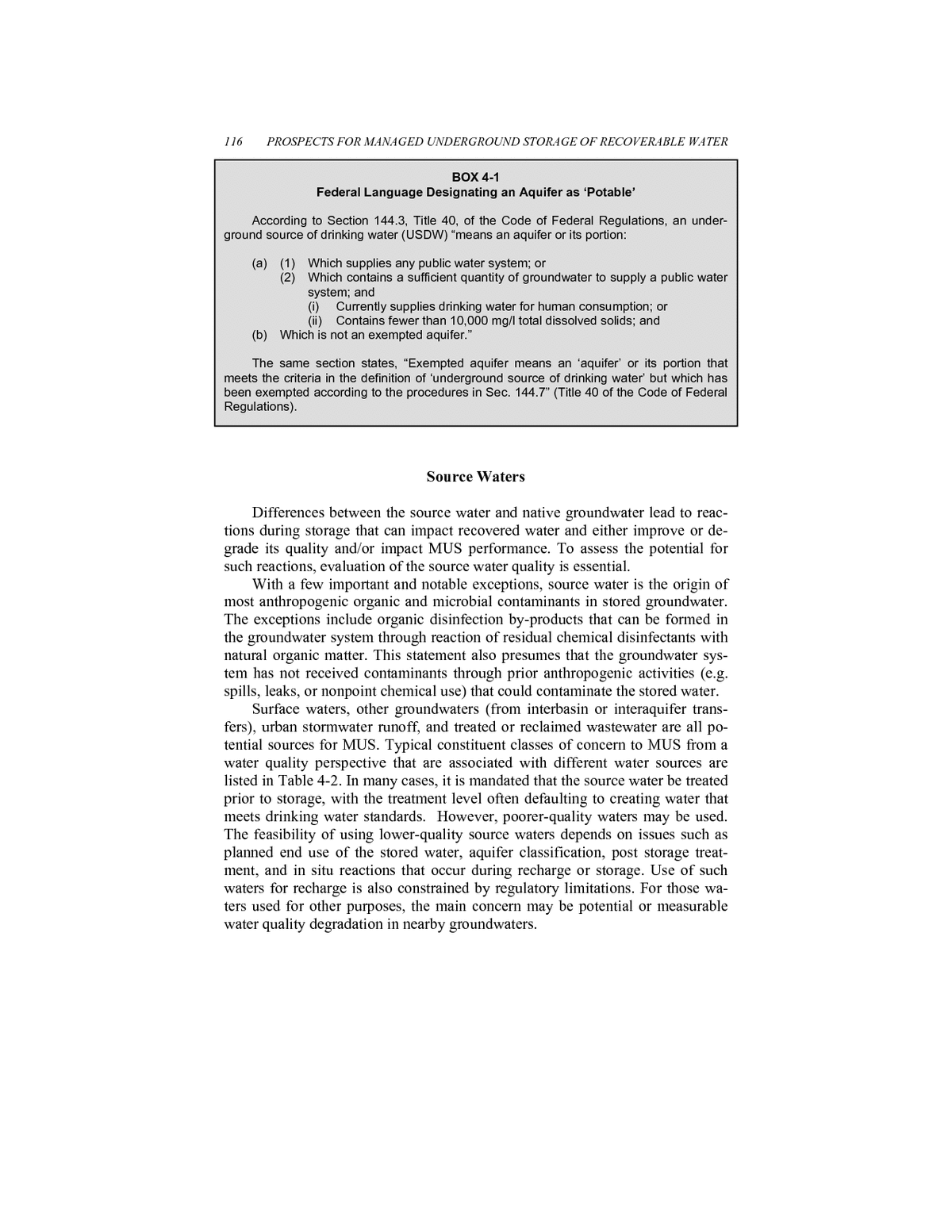
WATER QUALITY CONSIDERATION 115 The microbiological quality associated with bacteria that naturally reside in the system is not well studied. Those involved in biochemical processes or bio- remediation have been the primary focus of in situ studies. Many of the bacteria are anaerobic or facultative aerobes. There is a large emphasis in the literature on groundwaters impacted by microorganisms of surface water or wastewater origin. Regulatory Classification of a Potable Aquifer In addition to the water chemistry-based classification system for aquifers described above, there exist regulatory aquifer classifications that define an aquifer as âpotableâ or ânon-potableâ or describe its relative vulnerability to surface sources of contamination. Although aquifers within either classification can be considered for MUS, the regulatory designation may affect operational requirements, particularly source water quality, for the MUS system. Chapter 5 further describes regulation pertinent to MUS. Most aquifers are protected by generic antidegradation policies such that no anthropogenic activity can lead to a measurable or perceived decline in water quality. This is due partly to the fact that groundwater is more difficult to clean up once contaminated. Protection of a potable aquifer is a key consideration for an MUS system and is addressed through water quality monitoring associated with drinking water applications. Federal regulations classify (or designate) potable aquifers based on the fol- lowing criteria: current use of the groundwater, water availability, and water quality as indicated by total dissolved solids. It is presumed that an aquifer clas- sified as an underground source of drinking water (USDW) will meet the coli- form bacteria regulatory requirement (<1/100 ml), yet the Ground Water Rule (http://www.epa.gov/safewater/disinfection/gwr) now recognizes the need for disinfection of groundwater used for potable purposes. Specific regulatory text describing an underground source of drinking water is provided in Box 4-1. By law, state water quality regulations are at least as stringent as federal regulations. As a result, potable aquifer designations in some states are more detailed or involved than the federal regulation requires. Florida is among the many states that provide examples of additional regulatory classifications for aquifers. The Florida code defines three categories of aquifers for potable use based on the TDS of water in the aquifer and whether the aquifer serves as a single source of drinking water. It also lists two nonpotable use classifications for aquifers with high TDS for which there is no reasonable expectation that the aquifer will serve as a source of future drinking water. Confined aquifers so classified may be used for wastewater injection.
116 PROSPECTS FOR MANAGED UNDERGROUND STORAGE OF RECOVERABLE WATER BOX 4-1 Federal Language Designating an Aquifer as âPotableâ According to Section 144.3, Title 40, of the Code of Federal Regulations, an under- ground source of drinking water (USDW) âmeans an aquifer or its portion: (a) (1) Which supplies any public water system; or (2) Which contains a sufficient quantity of groundwater to supply a public water system; and (i) Currently supplies drinking water for human consumption; or (ii) Contains fewer than 10,000 mg/l total dissolved solids; and (b) Which is not an exempted aquifer.â The same section states, âExempted aquifer means an âaquiferâ or its portion that meets the criteria in the definition of âunderground source of drinking waterâ but which has been exempted according to the procedures in Sec. 144.7â (Title 40 of the Code of Federal Regulations). Source Waters Differences between the source water and native groundwater lead to reac- tions during storage that can impact recovered water and either improve or de- grade its quality and/or impact MUS performance. To assess the potential for such reactions, evaluation of the source water quality is essential. With a few important and notable exceptions, source water is the origin of most anthropogenic organic and microbial contaminants in stored groundwater. The exceptions include organic disinfection by-products that can be formed in the groundwater system through reaction of residual chemical disinfectants with natural organic matter. This statement also presumes that the groundwater sys- tem has not received contaminants through prior anthropogenic activities (e.g. spills, leaks, or nonpoint chemical use) that could contaminate the stored water. Surface waters, other groundwaters (from interbasin or interaquifer trans- fers), urban stormwater runoff, and treated or reclaimed wastewater are all po- tential sources for MUS. Typical constituent classes of concern to MUS from a water quality perspective that are associated with different water sources are listed in Table 4-2. In many cases, it is mandated that the source water be treated prior to storage, with the treatment level often defaulting to creating water that meets drinking water standards. However, poorer-quality waters may be used. The feasibility of using lower-quality source waters depends on issues such as planned end use of the stored water, aquifer classification, post storage treat- ment, and in situ reactions that occur during recharge or storage. Use of such waters for recharge is also constrained by regulatory limitations. For those wa- ters used for other purposes, the main concern may be potential or measurable water quality degradation in nearby groundwaters.
WATER QUALITY CONSIDERATION 117 a TABLE 4-2 Selected Constituents in Source Waters and Relative Concern for MUS Waters Wastewater Treated to Treated for Untreated Urban Drinking Non-potable Ground- Surface Stormwater Water and Indirect Constituents waterb Waters Runoff Standards Potable Use Salinity Low Low or Low to Low High medium medium Nutrients Medium Medium Medium Low High (NO3-, etc.) Metalloids, Low to me- Low Medium to Low Low including dium high arsenic Mn, Mo, Fe, Low to Low Medium Low Low Ni, Co, V, medium Trace Low to Medium High Low Medium organics medium Total organic Low to Medium to Medium Low Medium carbon (TOC) medium high Disinfection Low Medium Low High High by-products Micro- Medium to High Medium Low High organisms high a The relative concerns shown in the table are based on committee consensus. b Assuming source is a potable aquifer. The case study in Box 4-2 illustrates a situation in Florida where stormwa- ter is being used for groundwater resource augmentation. In addition, stormwa- ter runoff has been used for groundwater recharge on Long Island, New York, andâmixed with other water typesâin Orange County, California, for many decades. However, caution is always warranted with stormwater because of its highly variable chemical and microbiological nature. Even in the same location, the quality of stormwater runoff may vary with rainfall quantity and intensity, time since the last runoff event, and time of the year. Stormwater runoff from industrial areas, dry weather storm drainage flow, salt-laden snowmelt flow, construction site runoff, and flow originating from vehicle service areas are par- ticularly problematical for artificial recharge (NRC, 1994). There are promising new techniques to assess the risks posed by the use of stormwater. Page et al. (2006) used a Hazard Analysis and Critical Control Point (HACCP) framework to evaluate the viability of a potential ASTR project (see Chapter 6). They collected data on the number and types of industries in sub- catchments, the likely chemicals used by these industries, stormwater quality, pollutants (and potential pollutants), operational procedures for stormwater management, barriers to hazards entering stormwater and control points for pol- lutant management. While their results generally supported moving forward,
118 PROSPECTS FOR MANAGED UNDERGROUND STORAGE OF RECOVERABLE WATER BOX 4-2 Drainage Wells in Orlando, Florida Since the early 1900s, drainage wells have been utilized for lake-level control and management of urban runoff. These wells are recognized as important components of groundwater resource augmentation and as such are now referred to as aquifer recharge wells. More than 400 of these wells divert approximately 30 million to 50 million gallons per day (Mgal/d) of lake overflow and stormwater runoff to the upper Floridan Aquifer System. The positive aspect of recharge wells is self-evident; however, concerns exist with regard to the introduction of untreated urban runoff (e.g., petroleum by-products, metals, nutrients, pesticides, and microbes) into the aquifer. Pre-recharge treatment strategies can be em- ployed, including first-flush bypass, screens, filters, and disinfection systems. The Central Florida Aquifer Recharge Project (CH2M Hill, 2006) was designed to as- sess these water quality concerns and potential strategies, specifically addressing the fate of bacteria in the Floridan Aquifer System, the effectiveness of passive stormwater treat- ment for reducing bacteria, and the effectiveness and cost feasibility of physically reducing bacteria in lake water recharge. These goals were addressed through (1) installation of monitor wells, (2) completion of groundwater tracer tests to confirm communication be- tween the recharge and monitor wells, and (3) implementation of a comprehensive monitor- ing plan that includes broad-spectrum analyses of organic and inorganic constituents as well as microbes. During wet- and dry-season sampling, attenuation of nearly all constitu- ents was observed. For example, up to a six-order-of-magnitude reduction in microbial concentrations was observed over a lateral distance through the aquifer of up to 450 feet. Arsenic, however, exhibited a statistically significant increase along the flow path between the recharge and monitor wells. A high degree of air entrainment during recharge, con- firmed by borehole video, may have contributed to the release of arsenic from the aquifer matrix. The conclusions of this important and well-designed study were contrary to ex- pected results. Metal mobilization was not anticipated, and initial concerns regarding mi- crobes and synthetic organics were found to be uncorroborated. Based on the results of this study, government agency-sponsored random sampling of private wells is under way to assess elevated levels of arsenic. they concluded that chemicals such as pesticides, herbicides, and endocrine dis- ruptors, which were not monitored in real-time, required further research to validate that they were either absent or being removed effectively by the pre- treatment system. SUBSURFACE PROCESSES THAT AFFECT WATER QUALITY IN MUS SYSTEMS Biogeochemical reactions, including water-rock interactions, that occur dur- ing MUS activities are dynamic in both space and time and are a consequence of mixing recharge water with water quality parameters that differ from the native groundwater in the aquifer. The reactions that occur result from mixing between native and recharged water, interaction between the recharged water and the aquifer media, and changing the environmental conditions of the recharged wa- ter (e.g., storing water underground that resided formerly at the surface and was open to the atmosphere). Departure from thermodynamic equilibrium among the
WATER QUALITY CONSIDERATION 119 recharged water, native groundwater, and aquifer media is the driving force for the changes in water chemistry and/or physical aquifer characteristics (e.g., per- meability) that occur in the recharge zone. Chemical reactions that control or influence concentrations of contaminants during storage include oxidation- reduction (redox) reactions, acid-base reactions, sorption-desorption reactions including ion exchange, mixing (diffusion-dispersion or mechanical dispersion), and precipitation-dissolution reactions. Nearly all of the important reactions are mediated by common soil microorganisms native to the environment. Also, many of the most common (or important) geochemical processes that occur in situ encompass multiple reaction categories (e.g., redox, acid-base). Because of the high importance of redox reactions to water quality and aquifer integrity during underground storage, these are described in greater detail than the other reaction types. Detailed and rigorous discussions of each of these types of reac- tions in aqueous systems can be found in several texts, including (Drever, 1997; Langmuir, 1997; Stumm and Morgan, 1996) Redox Reactions In a redox reaction, electrons are transferred between chemicals with a con- comitant gain or release of energy. Species are termed oxidized if they are elec- tron poor (e.g., nitrate, carbon dioxide, Fe(III) As(V)) and reduced if they are electron rich (e.g., nitrite, carbon in organic matter, Fe(II), As(III)). Only ele- ments that can exist in multiple âelectronâ forms (species), such as carbon, ni- trogen, arsenic, and iron, can participate in redox reactions. In a redox reaction, an oxidation reaction (in which one species loses an electron) must be coupled to a reduction reaction (in which one species gains an electron) because there exist no âfreeâ (e.g., not part of an element) electrons. Although there are no free electrons within a system, the redox condition or potential of the system can be gauged by the dominant forms of redox- sensitive elements in the system and is often reported as the Eh or pε of the system. A lower value of Eh or pε indicates that the system is more reduced. Flowing rivers that are open to the atmosphere generally contain significant dissolved oxygen and are oxidizing. Many (but certainly not all) groundwaters have very low or immeasurable dissolved oxygen concentrations and have relatively high concentrations of more reduced species such as reduced iron (Fe2+) or reduced sulfur (S2â). The redox reactions that occur during groundwater storage are typically exothermic (reactions that release energy). Microorganisms often mediate these reactions, which otherwise occur very slowly, and gain energy for growth. In general, microorganisms oxidize organic matter by utilizing available electron acceptor(s) to gain energy, and therefore, organic matter can serve as a driver of redox potential changes within a system. It can be either in the dissolved phase or as part of the aquifer solids. The energy available from coupling the oxidation of DOC to the reduction of different elements is quite variable (Figure 4-1A). In general, the most energetically favorable coupling available dominates a system.
120 A FIGURE 4-1(A) Oxidation of organic matter coupled to reduction reactions. The greatest energy gain is associated with species toward the top of the figure. Changing availability of the terminal electron acceptors PROSPECTS FOR MANAGED UNDERGROUND STORAGE OF RECOVERABLE WATER can result in dynamic spatial and temporal geochemistry. From Stumm and Morgan (1996) . Reprinted, with permission, Stumm and Morgan (1996). Copyright 1996 by John Wiley & Sons.
WATER QUALITY CONSIDERATION 121 B Figure 4-1(B) Relative changes in water chemistry and pε that occur as a consequence of the sequential use of electron acceptors in an inundated soil. SOURCE: Sposito (1989) as cited by Langmuir (1997). Reprinted, with permission, from Sposito (1989). Copyright 1996 by Oxford University Press. Hence, the redox potential of a system depends on the type and quantity of available degradable organic matter and electron acceptor. For example, if the amount of degradable organic matter exceeds the available dissolved oxygen, which is a common occurrence in groundwater, then the system will become denitrifying if nitrate is available to be used as an electron acceptor. If no nitrate is present, then the next most energy producing reaction is manganese reduction, followed by iron reduction, and so forth, as listed in Figure 4-1A. As electron acceptors are consumed, more or less sequentially according to the energy re- leased, the system becomes more reducing and has a lower pε. These naturally occurring sequential processes are shown in Figure 4-1B for an inundated soil. This figure schematically illustrates the range of redox processes that can occur in MUS systems during storage. For example, when water containing natural DOC is recharged for storage underground, there may be sufficient DOC to cause an aquifer that is otherwise oxidizing to become reducing. Alternatively,
122 PROSPECTS FOR MANAGED UNDERGROUND STORAGE OF RECOVERABLE WATER when oxygenated water is added to an aquifer, it can cause oxidation reactions. There are a number of examples that demonstrate the importance of the re- dox potential to water quality and aquifer integrity in MUS systems. The persis- tence or degradation of many organic contaminants varies with redox potential. In general, organic compounds with greater halogen (Cl, Br, F) content are most readily degraded under reducing conditions and can serve as electron acceptors in the transformation process. In contrast, organic compounds that do not con- tain halogens (or have an insignificant amount), such as the aromatic hydrocar- bons benzene and toluene, tend to be more readily transformed under more oxi- dizing conditions.1 The importance of redox potential to contaminant persis- tence is illustrated in Box 4-3, which describes how different redox conditions during storage in MUS systems lead to variable formation and persistence of trihalomethane compounds (see Figures 4-2 and 4-3). When oxidizing water recharges an aquifer that contains reduced minerals, such as arsenopyrite (re- duced iron sulfide) or other reduced forms of arsenic minerals, the minerals are oxidized and can release arsenic into the stored water. Conversely, when water containing DOC is recharged to an aquifer, reducing conditions that cause the release of iron and other metals and metalloids (including arsenic) into the groundwater can result in these constituents exceeding water quality criteria. Changes in redox potential in an aquifer may have long-term consequences for aquifer integrity by enhancing either dissolution reactions (reactions that dissolve the aquifer media) or precipitation reactions that plug the aquifer. In addition to the redox reactions that directly dissolve or precipitate aquifer min- erals, such as the pyrite oxidation described above that is also a mineral dissolu- tion reaction, redox reactions have indirect consequences. For example, oxida- tion of organic matter creates acid products (partially transformed organic acids or carbonic acid) that chemically weather the aquifer media by dissolving the minerals in the aquifer. These reactions consume the acid and increase the dis- solved salts and hardness of the stored water. Such reactions pose two potential issues for MUS. First, while the increase in dissolved salts may be relatively modest, changes in water quality may require treatment in some cases. Second, the impact of such reactions on water quality depends on the composition of the aquifer media. Knowledge of the aquifer mineral composition combined with geochemical modeling and/or standard bench-scale experiments may be suffi- cient to provide an initial assessment of the impacts of storage on water quality. It must be emphasized that all of the above reactions are driven by the mix- ing of recharged water into an aquifer that creates conditions that are not in thermodynamic equilibrium. 1 Note that determination of the redox state of the carbon in an organic compound allows one to determine the redox conditions under which a compound is mostly likely to be trans- formed, as described in Schwarzenbach, et al. (2003)..
WATER QUALITY CONSIDERATION 123 BOX 4-3 Examples Demonstrating Contaminant Formation or Degradation with Differing Redox Conditions: Trihalomethanes Disinfection by-products include several suites of primarily halogenated organic com- pounds that are formed when residual chlorine from disinfection reacts with natural organic matter. Trihalomethanes are often the predominant contaminant compounds formed as a consequence of these reactions. A few peer-reviewed publications and a much larger num- ber of site reports have demonstrated that disinfection by-products, including THMs, can be formed in injection MUS systems where the injectate contains residual chlorine. However, these compounds can also be transformed during storage, and their persistence depends on redox conditions in the aquifer. The impact of different chemical conditions in the aquifer on contaminant fate is illustrated by the contrasting behavior of THMs in two aquifer stor- age and recovery (ASR) tests conducted with different redox conditions: conditions were dominantly aerobic during recharge and storage in the Yakima, Washington, pilot test, while anaerobic conditions (nitrate reducing to methanogenic) were present during the Bolivar test storage and recovery periods. Each of these pilot experiments is described below. A more detailed discussion of THM reactions and fate and transport can be found later in the discussion of disinfection by-products. THM Formation and Persistence in an Aquifer: Yakima, Washington The aquifer tested in this experiment is located in the Upper Ellensburg Formation, a geologic unit comprised of volcaniclastic sediments. The native groundwater is aerobic to microaerophilic as supported by the following water quality measurements: DO ~ 5 mg/L, 0.4 mg N/L nitrate, very low dissolved iron concentration (~0.018 mg/L), and no detectable manganese. The experiment was conducted with recharge, recovery, and sampling from one ASR well and is described in Golder Associates Inc.(2001). The duration of the experiment was relatively short: water was recharged for 25 days, stored for 55 days, and recovered for 30 days. The total volume of water recharged was 1.7 Ã105 m3 (45.2 Mgal), and approximately twice as much water was extracted. During this test, treated water from the Naches River, which is the primary municipal water supply for the City of Yakima, was used as recharge water. The water was disin- fected using chlorine prior to recharge following the usual drinking water treatment method. Therefore, residual (unreacted) chlorine was present in the recharge water (~0.9 mg/L) along with a comparable amount of organic matter (total organic carbon content of re- charge water was ~0.8 to 1 mg/L). A relatively comprehensive suite of water quality parameters was measured at the ASR well during this test. In addition to the disinfection by-products, the following parame- ters were also monitored: major cations and anions; alumina and silica to allow interpreta- tion of water-rock reactions; redox-sensitive species (such as iron and manganese); and 18 2 environmental tracers, such as the stable isotopes O and H (deuterium) (described fur- ther below). Water quality samples were not collected from observation wells. 18 2 The environmental tracers O and H were present in distinctly different concentra- 18 2 tions in the groundwater reservoir (δ O = â16.4 per thousand and δ H = â133 per thou- sand, both referenced to Vienna Standard Mean Ocean Water) compared to the recharged 18 2 river water (δ O ~ â14.0 to -15.0 per thousand and δ H = â110 to â115 per thousand). No reactions occurred that markedly altered the tracer concentrations during the storage pe- riod. As shown in Figure 4-2B, the tracer concentrations in water extracted during the re- covery period decline linearly from concentrations that indicate water was entirely re- charged to concentrations that are comparable to native groundwater along a smooth âmix- ingâ line (this indicates changing proportions with extraction volume). Continues next page
124 PROSPECTS FOR MANAGED UNDERGROUND STORAGE OF RECOVERABLE WATER BOX 4-3 Continued The recharged water contained low concentrations of total THMs (TTHMs)(5-10 µg/L), comprising dominantly chloroform. During storage, TTHM concentration increased (Figure 4-2C) when residual chlorine residual was present (Figure 4-2B), indicating formation of disinfection by-products in situ, presumably as the residual chlorine reacted with the in- jected organic matter. Increases in THM concentrations did not occur following depletion of the chlorine residual. TTHM concentrations declined linearly during the recovery phase, following a trend similar to the environmental tracers. This trend suggests that the concen- trations declined primarily because the THMs were flushed from the aquifer rather than because they were transformed. It is perhaps noteworthy that the TTHM, chloroform, and dichlorobromomethane concentrations observed in the aquifer during the storage phase were below the existing drinking water standard concentrations for these compounds. However, the latter two compounds exceeded the groundwater quality standard for Wash- ington State. This experiment demonstrated geochemical conditions in which contaminants of concern were formed in the aquifer during storage and were persistent for the duration of this short experiment. (Additional detail about this pilot test is reported in Golder Associates Inc., 2001.) THM Attenuation Associated with Reducing Conditions In contrast to the above experiment, a field ASR trial conducted in an anoxic aquifer at the Bolivar site, near Adelaide, Australia, demonstrated that THMs can be significantly attenuated during storage. The aquifer comprises marine-deposited limestone, and the native groundwater has very low dissolved oxygen (0.1 mg/L) and a redox potential of 42 mV. In this experiment, a total of ~2.5Ã105 m3 (similar to the Yakima experiment) of chlo- rinated reclaimed water was recharged, about 85 percent of this was injected at a relatively continuous rate over eight months. The storage period (~3.5 months) was nearly twice as long as that of the Yakima experiment. The volume extracted was equivalent to approxi- mately 60 percent of the volume injected. The recharged water contained residual chlorine (~0.7 mg/L) along with a much greater organic carbon concentration (average = 18.2 mg/L) than Yakima. This experiment also included comprehensive water quality sampling and analysis (redox indicators, dissolved nutrients, and tracers in addition to contaminants) from several monitoring wells and the ASR well. Chloride ion served as the conservative tracer in this experiment because the recharged water and native groundwater have distinct concentration ranges (recharged water = 430 + 40 mg/L and ambient groundwater = 930 + 90 mg/L). THM formation occurred in the aquifer during recharge when chlorine residual was present. While the THM concentration measured at the 4-m (from the ASR well) observa- tion well was as high as ~140 µg/L, the concentrations declined rapidly during storage (Fig- ure 4-3A and 4-3B), while the chloride tracer concentrations remained constant (behavior consistent with degradation reactions). It was also noted that the THM attenuation occurred more rapidly in the ASR than in the observation well. The difference was consistent with a difference in redox potential in these two locations. More rapid attenuation at the ASR well compared to the observation well was attributed to the more reducing conditions that de- veloped in the ASR well during storage (methanogenic conditions were observed at the ASR well and nitrate reducing conditions were observed at the observation well). The au- thors of this study point out that although DBPs were formed during the first week of aquifer storage, their long-term behavior was controlled by degradation reactions that are reasona- bly fast compared to typical storage cycles. (Additional detail about the Bolivar field trial is available in Pavelic, 2005c.) This Bolivar field trial and the contrasting Yakima pilot experiment demonstrate how differences in geochemical conditions, in this case redox potential, either native to the groundwater system or conditions that develop during recharge and storage can con- trol both the rate and the extent of contaminant formation and attenuation processes.
WATER QUALITY CONSIDERATION 125 A B continues next page
126 PROSPECTS FOR MANAGED UNDERGROUND STORAGE OF RECOVERABLE WATER BOX 4-3 Continued C FIGURE 4-2 (A) Environmental tracers, (B) TOC and residual chlorine, and (C) selected and total THMs in the Yakima, Wash., ASR pilot study. The pilot test is described in the main text Box 4-3. After Golder Associates Inc. (2001). Reprinted, with permission, from Golder Associates (2001). Copyright 2001 by Golder Associates.
WATER QUALITY CONSIDERATION 127 FIGURE 4-3 Declining concentrations of individual and total THMs during storage as measured in the recovery and observation wells compared to the near constant (conserva- - tive) concentration of the chloride ion (Cl ) tracer indicate that the THMs were transformed. Removal of these halogenated compounds was more rapid (shorter half-lives) in the ASR well (a) where the water has the lowest redox potential (methane production observed) compared to the observation well, and (b) where nitrate reducing conditions were observed. Figure taken from Pavelic et al. (2005 b). Reprinted, with permission, from Pavelic (2005). Copyright 2005 by Elsevier Limited.
128 PROSPECTS FOR MANAGED UNDERGROUND STORAGE OF RECOVERABLE WATER Precipitation-Dissolution Reactions Precipitation and dissolution reactions are driven by thermodynamic dis- equilibrium between the dissolved ions and the mineral (solid) phase(s). These reactions are important to aquifer integrity because they can result in either in- creased or decreased aquifer porosity and permeability. The formation of karst landscapes, including caves and sink holes, is a natural example of aquifer disso- lution over a very long time. In MUS systems that cause mineral dissolution reactions, the MUS system accelerates chemical weathering processes in the aquifer and may also alter the spatial distribution of such reactions compared to the natural situation. Furthermore, it should not be assumed that dissolution re- actions occur uniformly in either space or time, but they will occur most readily in preferential zones. Precipitation and dissolution reactions can also signifi- cantly affect water quality and can exert a particularly important impact on the concentrations of some regulated metals and metalloids (described later in this chapter). Dissolution reactions are favored when recharged waters contain relatively low dissolved ion concentrations compared to the native groundwater, which is frequently the case for surface water sources. Such waters are likely undersatu- rated relative to the aquifer minerals resulting in dissolution reactions that trend towards the equilibrium condition. For example, the major minerals of a lime- stone aquifer, comprised of calcite (CaCO3) and/or dolomite (CaMg(CO3)2) in significant proportion, would be dissolved readily by waters that are either acidic or contain low base cation (Ca and Mg in this case) and bicarbonate con- centrations. Dissolution reactions can occur in aquifers comprised of silicate minerals wherein the silicates are also dissolved (chemically weathered) by acidic waters. However, the mass of aquifer solid removed from dissolution of these types of rocks by each pore volume of fluid exchanged is typically small compared to the limestone case. The reasons are twofold: silicate mineral solu- bility is relatively low compared to the solubility of carbonates at circumneutral pH and kinetic constraints may limit dissolution reactions. Therefore, in silicate rocks, the dissolution process of removing the aquifer matrix tends to be much more damped compared to the behavior of limestones. Microbiological activity may also play a role in precipitation and dissolu- tion. For example, iron reducing bacteria can cause reductive dissolution of Fe(III) (hydr)oxides in the presence of labile organic carbon. This process re- leases Fe(II) and other metals associated with the solid phases (e.g., arsenic and nickel) into the water. This process has much less effect on aquifer integrity than it does on water quality. A more complex example of dissolution in carbonate aquifers can arise be- cause carbonate mineral solubility is a strong function of environmental condi- tions (e.g., temperature and carbon dioxide partial pressure). Prior to recharge and mixing due to MUS activities, water in the aquifer is likely in equilibrium with its matrix carbonate minerals. Upon mixing with recharge or source water, however, the ânewâ water may be undersaturated with respect to the host aquifer
WATER QUALITY CONSIDERATION 129 minerals because of a difference in environmental conditions. The mixed water is therefore chemically aggressive. To reestablish equilibrium, the aggressive water will dissolve calcite and dolomite, which results in changes in water com- position. Although only a small proportion of the total aquifer solids is removed by this process by each volume of water to which it is exposed, such reactions could eventually affect aquifer integrity. Moreover, preferential flow paths in the aquifer (see Chapter 3 section on dual porosity) may also develop if the process were to continue for a long period of time. In preexisting dual-porosity storage zones, rapid water quality changes may occur due to mixing in conduits and fractures. Stuyfzand (1998) and Herczeg and colleagues (2004) are among the researchers that provide more detail on the effects of these geochemical proc- esses during aquifer storage and recovery (ASR) activities. In addition, the be- havior of selected contaminations in response to precipitation and dissolution is discussed later in this chapter. Precipitation reactions in MUS systems are most likely to occur as a conse- quence of redox changes. Sulfate reduction, for example, produces hydrogen sulfide and bicarbonate. Under reducing conditions (low ORP or Eh), dissolved sulfide and iron precipitate as reduced iron sulfide minerals that incorporate metal cations (such as zinc and nickel), thus reducing the concentrations of these metals in solution. Another example is that of reduced iron containing water experiencing an increase in Eh (as it would during extraction) leading to precipi- tation of ferrous iron (hydr)oxides. In addition to potentially clogging the aqui- fer, ferrous hydr(oxides) are excellent metal sorbents. They âscavengeâ arsenic and other metals from the dissolved phase through coprecipitation and sorption, thus reducing the dissolved concentrations of the scavenged elements. Sorption of Organic Compounds Sorption is the term used to describe the transfer of a chemical from the aqueous to the solid phase without reference to the mechanism of the com- pound-solid interaction. Desorption is the reverse process. The solid phase may be an inorganic or organic constituent. With regard to inorganics, a change in hydrochemical conditions in the aquifer due to MUS activities may cause de- sorption of metals that are weakly bonded to minerals comprising the aquifer matrix. Sorption-desorption processes are complex and perhaps are best illus- trated in the context of organic compounds. For most low-polarity and apolar organic contaminantsâsuch as many on the regulated chemical list (Appendix A, Table A-1)â the primary sorbent is the natural carbonaceous matter (noncarbonated, carbon-containing material such as humic substances, char, and kerogen) in the aquifer. For these chemical- sorbent combinations, sorption is generally reversible and the forces binding the contaminants to the sorbent are relatively weak (van der Waal forces). In addi- tion to these forces, ionizable and polar organic compounds can also interact with the mineral surfaces of the aquifer solids through dipole and electron do-
130 PROSPECTS FOR MANAGED UNDERGROUND STORAGE OF RECOVERABLE WATER nor-acceptor interactions. These interactions also generally contribute to re- versible sorption. Extensive discussion of the thermodynamics underlying or- ganic compound sorption, as well as the effects of variable compound and aqui- fer solid properties on the magnitude of sorption, are provided in several texts and reviews, including Allen-King et al. (2002); Cornelissen et al. (2004); and Schwarzenbach et al. (2003). Reversible sorption (or desorption) acts as a temporary storage reservoir for contaminants in the aquifer. Once the aquifer solids equilibrate with a particular dissolved contaminant concentration, the sorption-desorption process will not have any further net effect on dissolved concentration. For example, Miller et al. (1993) found that THMs were not appreciably affected by sorption during a field storage and recovery operation in Las Vegas. In the context of an MUS system, reversible sorption-desorption will cause the velocity of organic contaminant transport to be retarded compared to the water velocity when water is added to storage. Over short time scales (prior to equilibration), sorption will attenuate dissolved concentrations. If the source contains a variable concentration of a contaminant, sorption-desorption processes during transport and storage may serve to damp the variability in the dissolved concentration of water extracted from the MUS system. Therefore, reversible sorption does not provide a sustain- able contaminant sink because the compounds are not removed from the MUS system (as they are when contaminants are biodegraded, for example). Although the forces causing sorption are not particularly strong, the mass taken up by the solid phase can be significant. The magnitude of the sorption process and its dependence on concentration are functions of the specific phys- icochemical properties of the carbonaceous matter and organic contaminant. Sorption can be nonlinear in concentration, and co-solutes may compete for more energetically favorable sorption sites, particularly when compounds are present at low concentrations compared to contaminant solubility. The effects of sorption-desorption may be more apparent and of greater im- pact on contaminant recovery during short-duration or small-scale tests (lab and pilot-scale studies) than in full-scale operations. In such tests, the source water and aquifer solids may remain farther from equilibrium than they would be dur- ing full-scale operations. Therefore, such tests must be conducted and inter- preted such that extrapolation to a longer-duration and larger-scale system ap- propriately accounts for sorption/desorption dynamics. Ion Exchange Reactions Another water-rock interaction process that can occur during MUS activi- ties is cation exchange. Positively charged ions with physical and chemical af- finities can be exchanged between the water and the minerals comprising the aquifer matrix. Common examples involve the exchange between Ca2+ or Mg2+ with Na+ or K+. Mineral groups primarily involved in these reactions are clays and zeolites because of their relatively high surface areas compared to others. In
WATER QUALITY CONSIDERATION 131 the case of clay minerals, for example, K+ in the clay may exchange with Ca2+ in the water. This process does not change the total amount of charged species dis- solved in the water. However, it can cause significant changes in the concentra- tions of various ions dissolved in the water. As the aquifer is repeatedly exposed to the recharged water, the composition of exchangeable ions associated with the aquifer solids will change, evolving toward quasi equilibrium with the recharged water. This process can also significantly affect the dissolved concentrations of trace metal cations. Particle and Microorganism Transport The movement and fate of particles and microorganisms that may be in source waters for MUS systems is of interest. Particle composition can include organic matter that can support redox reactions, pathogenic or innocuous micro- organisms, minerals, and aggregates of any combination of these. In addition, several classes of contaminants, such as hydrophobic organics and certain toxic metals, associate with particles. Their movement in the subsurface is influenced by the behavior of the particles, not only by the dissolved phase concentrations. If the extracted water is used for drinking, then effective particle capture is de- sired so that the turbidity falls below the drinking water standard. Microorgan- ism transport and survival in MUS systems is especially important when the microorganisms are pathogenic. The subsurface can be an effective sink for removing pathogens to improve the quality of the extracted water. Finally, the movement of microorganisms and particulate organic matter influences the dis- tribution of microbial activity within an MUS system. This in turn will impact the spatial distribution of microbial activity in the storage zone and the extent and rates of biotransformation reactions. The typical grain sizes that exist in the subsurface and the associated mod- erate to high specific surface area means that effective filtration and particle removal is often possible in MUS systems. The capture and accumulation of microorganisms on surfaces often enhances the potential for biotransformations. Particle and microorganism transport is typically governed by movement of the groundwater coupled with retardation by attachment onto surfaces and straining or trapping in interstitial pores. Attachment is commonly thought of as the main contribution to retardation and removal. Removal by straining is thought to be important only when the diameter of the particle exceeds 5 percent of the mean interstitial pore size (Jenkins and Lion, 1993; McDowell-Boyer et al., 1986). Particle and microorganism transport through the subsurface is influenced by several parameters including properties of the particle and microorganism, solu- tion chemistry, subsurface media characteristics, and interstitial fluid velocity. These factors are briefly described in the following paragraphs. Several reviews of particle and microorganism behavior in porous media are available if the reader desires additional information (McDowell-Boyer et al., 1986; Bouwer et al., 2000; MWH, 2005; Tufenkji, 2007).
132 PROSPECTS FOR MANAGED UNDERGROUND STORAGE OF RECOVERABLE WATER Particle and microorganism size and shape as well as surface charge and hydrophobicity influence transport, retardation, and adhesion to surfaces. The presence of molecules such as proteins or polysaccharides on the cell surface and the presence of pili, as well as motility and chemotaxis, influence microor- ganism behavior in porous media. Many cell properties are influenced by the physiological state of the microorganism and can therefore differ significantly for the same species depending on environmental conditions. The growth state of the microorganism and the presence of nutrients have, for instance, been shown to influence attachment (Cunningham et al., 2007). Starvation is another important physiological state of microorganisms. Short-term starvation of bac- teria can result in an increased tendency to attach to surfaces. Long-term starva- tion (weeks to months) in contrast may enhance microbial transport through porous media. Solute characteristics including ionic strength, pH, temperature, concentra- tions of dissolved organic matter, surfactants, and nutrients have also been shown to influence particle and microorganism transport and adhesion to sur- faces. Increased ionic strength has been correlated widely with increased at- tachment. This effect is usually attributed to the compression of the electrostatic double layer in the presence of high ion concentrations. Changes in solution pH have been shown to either increase or decrease the extent of particle and micro- organism transport and attachment. Consequently, uniform results for the influ- ence of pH have not been observed. Dissolved and sediment organic matter has been shown to increase the travel distance for particles and microorganisms in porous media columns. The addition of surfactants or dispersants can result in decreased attachment and therefore facilitate the transport of particles and mi- croorganisms through porous media; however the activity or viability of the mi- croorganisms may also be altered. Porous media properties that have been reported to influence particle and microorganism transport and adhesion include pore water velocity, hydraulic conductivity, pore size, surface roughness, the presence of iron minerals and other surface coatings, the organic matter content, and grain and pore size distri- bution. The surface charge and surface hydrophobicity of the porous media can also influence particle and microorganism attachment to surfaces. Transport of particles and microorganisms through porous media may be in- fluenced by some combination of the foregoing parameters. Measurements of particle and microorganism attachment and movement under the conditions of interest tend to be much better predictors of movement and fate than attempting to scale-up information from characterization of the particles or cells or the po- rous medium. One approach to predicting particle and microorganism transport through porous media is to perform experiments with the aquifer material of interest as close as possible to the expected conditions in the field. Harvey (1997) provides a good overview on how to design and standardize bacterial transport experiments.
WATER QUALITY CONSIDERATION 133 Microbial Inactivation Inactivation or death is an important mechanism that causes the removal of microorganisms from recharged water during storage in MUS systems. At- tenuation of microbial contaminants of concern, including viruses and parasites, in surface, groundwater and MUS systems has focused on understanding the survival kinetics influenced by environmental conditions. It is known that the inactivation rates can be described by the following: ⢠Type of microbe. Parasites and viruses are more resistant then bacteria; however, bacteria (particularly coliforms) may regrow at higher tem- peratures. ⢠Temperature. Increased temperature typically increases the activity of native microbes and also directly influences inactivation rates of nonna- tive microbes, with higher temperatures leading to greater inactivation rates; for example, between 10 and 200 days are needed to achieve 99 percent inactivation of Cryptosporidium depending on the temperature (Table 4-3). ⢠Redox potential. Greater survival has been reported under anaerobic conditions in several studies. ⢠Native microflora. Influenced by temperature, nutrients, and aerobic conditions, increased activity generally enhances inactivation rates of fecal organisms. Enteric microorganisms of wastewater origin have been the predominant focus of studies on survival in groundwater with temperature the predominant variable studied. A recent review by John and Rose (2005) examined all reports describing microbial inactivation in groundwater and summarized inactivation rates for bacteria and viruses. The analysis showed that only temperature and type of microorganism influenced the inactivation rate (Figure 4-4). The data represented a mixture of studies done under aerobic and anaerobic, sterile and nonsterile conditions, but often there were not enough studies with the same organism under the same temperature to show a statistical difference. Nonsterile conditions more often showed a greater inactivation than did sterile conditions when contrasted. Rates of decline for fecal coliform bacteria in the literature were highly var- ied at 5 ºC (ranging from an inactivation of -0.02 to -0.14 log10 d-1) with the geometric mean of summarized coliform inactivation rates for temperatures less than 10ºC equal to â0.05 log10 d-1. At higher temperatures (21 - 37ºC) coliform inactivation averaged about â0.1 log10 d-1 (geometric mean). This may indicate that regrowth is contributing to the overall inactivation rates. Similarly, re- growth of Enterococci may be occurring in groundwaters at higher tempera- tures, reflected in an overall slower inactivation rate. Pathogens such as Salmo- nella show an increasing rate of inactivation with increasing temperature, where as others such as Shigella exhibit variable rates and reflect the differences in
134 PROSPECTS FOR MANAGED UNDERGROUND STORAGE OF RECOVERABLE WATER TABLE 4-3 First-Order Inactivation Rates of C. parvum in Natural Water Samples at Three Temperatures Linear Inactivation Estimated Water Water Temperature Rate Days to 99% Standard Type Source (°C) (log10dâ1) Decline Deviation Groundwater Avon 5 0.0088 >200 Park Aquifer 22 â0.0010 >200 30 â0.11 18 Groundwater Lake 5 0.00090 >200 Lytal Aquifer 22 â0.042 48 30 â0.12 17 Surface water Bill Evers 5 â0.0017 >200 Reservoir 22 â0.045 45 30 â0.20 10 Surface water Clear Lake 5 â0.0037 >200 Reservoir 22 â0.0066 30 30 â0.18 11 Groundwater Avon 5 >200 0 Park andLake 22 124 107 Lytal Aquifer 30 17.5 0.71 Surface water Bill Evers 5 >200 0 and Clear 22 37.5 10.6 Lake 30 10.5 0.71 Reservoir SOURCE: Ives et al. (2007). Reprinted with permission from Ives et al. (2007). Copyright 2007 by American Society for Microbiology. experimental design associated with aerobic or anaerobic conditions and micro- flora background. It is known that viruses do not regrow in the environment, and inactivation rates in the virus literature show a clear temperature affect. Inactivation rates of coliphage (a fecal bacterial virus indicator) in groundwater were also summa- rized by John and Rose (2005). Below 10ºC the geometric mean rate was -0.03 log10 d-1, however, at a moderately high temperature range of 21 -25 ºC, the summarized coliphage inactivation rates increased tenfold averaging â0.3 log10 d-1 (geometric mean). Enteric viruses were very stable (â0.02 log10 d-1) below 21oC. Some viruses (e.g., hepatitis A virus) were stable at all temperatures. Another potential factor controlling the fate of fecal microorganisms, both in groundwater and in surface water, is the activity of other microorganisms such as bacteriophages, bacterivorous protozoa, and antagonistic autochthonous bacteria. While some studies have demonstrated that the presence of native bac- teria increased inactivation of seeded organisms (Banning et al., 2002; Gordon and Toze, 2003; Janakiraman and Leff, 1999; Kersters et al., 1996; Medema et al., 1997; Sobsey et al., 1986) others have shown inconsistent effects (Yates and
WATER QUALITY CONSIDERATION 135 1.15 Coliforms 0.95 Enterococci Fecal 0.75 streptococci Salmonella 0.55 Shigella 0.35 Clostridium 0.15 Yersina -0.05 0 - 10 11 - 15 16 - 20 21 - 25 26 - 30 (a) 2.5 2 1.5 Poliovirus 1 hepatitis A echovirus 0.5 coliphage 0 0 - 10 11 - 15 16 - 20 21 - 25 26-30 -0.5 (b) FIGURE 4-4 Mean inactivation rates of bacteria (a) and viruses (b) in groundwater by organism type and temperature. Values review by John and Rose (2005). Error bars refer to one standard deviation in log10 per day. Adapted from John and Rose (2005). Copyright 2005 by American Chemical Society.
136 PROSPECTS FOR MANAGED UNDERGROUND STORAGE OF RECOVERABLE WATER Gerba, 1985; Yates et al., 1990) or the opposite (Alvarez et al., 2000). This may have to do with interaction between oxygen levels, temperature, and nutrients. Studies undertaken using Escherichia coli showed inactivation rates of â0.11 log10 d-1 followed by increased rates of -0.35 log10 d-1 under aerobic conditions, while under anaerobic conditions the inactivation was -0.02 log10 d-1 (Roslev et al., 2004). Gordon and Toze (2003) showed that microbial flora in groundwater influenced by oxygen, nutrients, and temperatures influenced survival rates of enteric viruses. Appendix A discusses some of the specific pathogens of concern. Some bacteria are able to regrow, which include the indicator bacteria Arcobacter and Legionella, yet models that can predict regrowth in the water environment are not available as they are for food. Parasites and viruses do not regrow but will survive. There is a need to undertake further research to describe the inactiva- tion rates. Tracer studies with septic tanks show that long-term viral contamina- tion of the soil drain fields with pulses released associated with rainfall events (Nicosia et al., 2001). While initial inactivation may be rapid, often the data show long-term tailing effects that have not been well described. Numerous reports have also suggested that attachment to mineral surfaces reduces viral inactivation rates (Rossi and Aragno, 1999; Ryan et al., 2002; Sa- koda et al., 1997) and stream sediments likely confer protection on fecal bacteria from inactivation in surface water (Buckley et al., 1998; Crabill et al., 1999; Sherer et al., 1992). However, studies on MS-2 and PRD-1 bacteriophage (Blanc and Nasser, 1996) and Enterococcus faecalis (Pavelic et al., 1998) have shown more rapid inactivation in water with solid media present or no differ- ence. Biotransformations The metabolic capabilities of subsurface microorganisms are quite diverse. For growth of microorganisms, electron donors and acceptors, a carbon source, and essential nutrients are required. Either natural or anthropogenic compounds in source or native groundwaters can provide these growth requirements in MUS systems. Chemicals that are electron donors are oxidized during microbial me- tabolism to yield energy for growth. Oxidation can take place aerobically (in the presence of oxygen) or anaerobically (in the absence of oxygen). When molecu- lar oxygen is available, it is generally the preferred terminal electron acceptor of electrons that are released during the oxidation of electron donors. As an elec- tron acceptor, oxygen can be replaced by other oxidized inorganic compounds, such as nitrate, metal ions (e.g., Fe(III), Mn (III), or Mn(IV)), sulfate, or carbon dioxide, although the energy gains to the microorganisms are then smaller. These alternate electron acceptors are reactants in anaerobic microbial proc- esses. Microbial reactions in MUS systems can contribute to changes in redox conditions within the storage zones. These redox changes in turn can influence the water quality in MUS systems.
WATER QUALITY CONSIDERATION 137 Biotransformations of chemicals in the storage zone offer the prospect of improving water quality during MUS. Many classes of organic compounds, such as natural organic matter, petroleum compounds, halogenated compounds, some pesticides, and endocrine disrupting compounds, are known to be biotrans- formed by subsurface microorganisms. In some instances, the compounds are the primary energy and carbon supply for microorganisms. For other com- pounds, the biotransformation occurs as cosubstrate utilization where enzymes involved in the metabolism of one substrate are also able to degrade the con- taminant. Several reviews cover the topic of subsurface contaminant biotrans- formation (Atlas and Philip, 2005; NRC, 1993; 2000; Young and Cerniglia, 1995; ). Examples of compound biotransformations that have been observed in MUS systems are described elsewhere in this chapter. BEHAVIOR OF SELECTED CONTAMINANTS IN MUS SYSTEMS Empirical and experimental evidence from established MUS systems dem- onstrates that water quality objectives can be met consistently by underground storage systems over long periods of timeâdecades. In some of these systems, especially those that use recharge basins, subsurface treatment removes a por- tion of the contaminants in the source water, thus the subsurface recharge and storage system plays an integral role in improving water quality. The following sections draw on available field and laboratory studies to de- scribe the processes that affect the behavior of several contaminant classes that are of particular importance to MUS systems. The contaminants described were selected because they either strongly affect operations (e.g., dissolved organic carbon); are regulated contaminants; are among the more frequently detected or persistent contaminants of concern in MUS; or warrant additional consideration in such storage systems because of lack of complete information. Organics This section focuses on only three groups of organic constituents that are particularly important to MUS systems: total organic carbon (TOC), disinfection by-products, and pharmaceuticals and personal care products (PPCPs) and other emerging contaminants of concern. These compounds either are frequently de- tected in the source waters used for MUS or can be created by in situ subsurface reactions. The fates of other classes of anthropogenic organic chemicals in groundwater, such as chlorinated solvents, regulated pesticides, and petroleum hydrocarbons, must also be considered for any particular MUS if these com- pounds are present in either the source water or the groundwater system. The fate of these contaminants in groundwater is relatively well documented by re- search and literature on groundwater remediation of point source spills of chlo- rinated solvents, hydrocarbons, and other industrial chemicals and by similar
138 PROSPECTS FOR MANAGED UNDERGROUND STORAGE OF RECOVERABLE WATER work on agricultural pesticides that can occur in groundwater through either point or nonpoint discharges. (NRC, 2002, 2004). Organic Carbon Organic compounds are removed during subsurface storage by a combina- tion of filtration, sorption, oxidation-reduction, and biodegradation. Biodegra- dation is the primary -sustainable removal mechanism for organic compounds during subsurface transport. DOC can lead to the formation of DBPs upon addi- tion of a disinfectant. Furthermore, the degradation of labile DOC and particu- late organic carbon in recharge water can also cause clogging because it pro- motes high biomass growth. This topic is addressed elsewhere in the chapter. The concentrations of natural organic matter and soluble microbial products (SMPs) that comprise the bulk of the dissolved and particulate organic carbon are reduced during subsurface transport as high-molecular-weight compounds are hydrolyzed to lower-molecular-weight compounds and the lower-molecular- weight compounds serve as substrates for microorganisms. As the concentra- tions of NOM and SMPs decrease, the disinfection by-product potential associ- ated with these compounds also decreases (AwwaRF, 2001). In addition, syn- thetic organic compounds at concentrations too low to directly support microbial growth may be co-metabolized as NOM and SMPs serve as the primary sub- strate for growth. Given sufficient surface area and contact time, the water used for underground storage may approach the quality of native groundwater with respect to DOC concentration. The transformation of organic compounds during recharge may be divided functionally into two regimes defined as short-term transformations, wherein relatively fast reactions occur, and long-term transformations, wherein recalci- trant compounds transform at slower rates over time. Short-term transforma- tions occur in less than ~30 days and consume the majority of easily biodegrad- able carbon. The easily biodegradable carbon can be assessed by the biodegrad- able dissolved organic carbon test (BDOC). Box 4-4 and Figure 4-5 illustrate both the reduction and the change in composition of DOC in reclaimed water that can occur during recharge using surface spreading. Disinfection By-Products Disinfection by-products (DBPs) are formed as a consequence of reactions between disinfection chemicals (chlorine and chloramine) used to treat micro- bial pathogen contaminants and DOC. They are often small, halogenated (e.g., chlorinated, brominated) or nitrogen-containing organic compounds. Because the precursor NOM is complex and of variable composition, the DBPs produced encompass a spectrum of chemicals including the regulated trihalomethanes and haloacetic acids, and emerging nitrogen and halogen-containing contaminants
WATER QUALITY CONSIDERATION 139 BOX 4-4 DOC Reduction and Change in Composition During Recharge at the Mesa Northwest Water Reclamation Plant (NWWRP) Figure 4-5(a) presents data with nitrified-denitrified reclaimed water at the Mesa NWWRP that illustrate short-term transformation of DOC. This study compared a field re- charge basin site with soil column studies completed under aerobic and anoxic conditions. After 20 days, the final DOC concentration was similar under all conditions (Fox et al., 2001). Under aerobic conditions, the majority of easily biodegradable DOC was removed after several days, while 20 days were required for comparable removal in the anoxic col- umn experiment. Since the time scales used for most groundwater recharge systems might be on the order of months, the removal of BDOC under aerobic conditions or anoxic conditions was similar. The NOM of the drinking water source for these experiments was approximately 2 mg/L, while the persistent SMPs contributed by wastewater treatment amounted to approximately 1 mg/L for a total of 3 mg/L DOC after short-term soil-aquifer treatment during recharge. As water passed through the saturated time zone over longer time scales, long-term transformations of organic carbon continued. These transformations were similar to those that occurred when the natural recharge of surface waters into aquifers resulted in water quality improvements. The DOC concentration as a function of distance at the groundwater recharge basins is presented in Figure 4-5(b). The recharged reclaimed water was anoxic. Each 1,000 feet of travel was equivalent to approximately 6 months of travel time. At the monitoring wells closest to the basin, the DOC concentration was reduced to a concentra- tion lower than the original drinking water DOC concentration. After several years of travel time, the DOC concentrations were less than 1 mg/L as they approached the background concentrations of the aquifer. At this field site, the organic matter was also characterized in detail to allow compari- son between the DOC composition and structure in the final product of a groundwater re- charge system and the NOM present in the original drinking water source, Samples repre- sentative of reclaimed water before groundwater recharge, after short-term subsurface transformations, and after long-term subsurface transformations were analyzed. Spectro- scopic characterization by 13C-nuclear magnetic resonance and Fourier transform infrared did not find any significant differences in the major functional groups (AwwaRF, 2001). Major differences were identified in the organic nitrogen content in the reclaimed water (treated wastewater) compared to NOM because of the contribution of SMPs. This differ- ence was also verified by fluorescence spectroscopy. However, after long-term subsurface transformations, the elemental composition and fluorescence of the groundwater recharge product water resembled NOM. The majority of differences between reclaimed water or- ganic matter and NOM were eliminated by short-term transformations. Based on state-of- the-art techniques used to characterize the DOC, the bulk organic matter in groundwater recharge product water could not be distinguished from NOM. continues next page
140 PROSPECTS FOR MANAGED UNDERGROUND STORAGE OF RECOVERABLE WATER BOX 4-4 Continued 7.0 soil columns aerobic a 6.0 vadose zone (aerobic to 5 ft) soil columns anoxic removed DOC (mg/L) 5.0 4.0 3.0 2.0 1.0 0.0 0 5 10 15 20 25 30 retention time (days) (a) 7.0 b 6.0 5.0 DOC (mg/L) 4.0 3.0 2.0 1.0 0.0 0 2000 4000 6000 8000 10000 12000 14000 16000 Distance downgradient (feet) (b) FIGURE 4-5 Dissolved organic carbon concentrations at the Mesa Northwest Water Rec- lamation Plant as a function of (a) retention time in the vadose zone and in aerobic and anaerobic laboratory column experiments, and (b) travel distance in the groundwater.
WATER QUALITY CONSIDERATION 141 such as N-nitrosodimethylamine (NDMA), 1,1,1-trichloropropanone, and tri- chloroacetonitrile. Nitrogen-containing DBPs are a more frequent product of chloramination. Emerging DPBs are discussed in the next section. Excess (residual) disinfectant is purposefully added to drinking water prior to transmission through distribution systems and may be added prior to recharge to control biological activity during recharge (Fox et al., 1998). Under these conditions of available NOM and residual disinfectant, DBPs are formed during aquifer storage (Pavelic et al., 2006; Thomas et al., 2000), as well as in the treatment process. Because the DBP formation potential is affected by the con- centration and composition of the DOC, DBP formation varies both among aqui- fer storage systems and with source water quality changes for a particular stor- age system (Pavelic et al., 2006). Transformation is the primary process that reduces DBP concentrations dur- ing aquifer storage. Literature supporting this point includes both field studies of storage systems and laboratory studies that determine the conditions under which transformation occurs, the rates and mechanisms of transformation, and the products formed. The reactivity of the DBP (or DBP subgroup, such as THMs) as well as the geochemical conditions of storage also affect the rate, mechanism, and product distribution. Because most DBPs are small, relatively soluble organic molecules, retardation due to sorption in at least low carbon con- tent aquifers is relatively limited. Of the various groups of DBPs, the greatest amount of research into persis- tence is available for the THMs. Field and laboratory studies demonstrate that THM persistence depends strongly on geochemical conditions, including redox state and electron acceptor and donor availability, as well as the compound con- sidered. THMs are transformed in reducing (anaerobic) systems by reductive dehalogenation and persistent in aerobic systems limited in organic matter. In their recent manuscript, Pavelic et al. (2006) compared estimates of total THM persistence (in terms of half-life) during storage at eight different aquifer storage sites that represent a range of geochemical conditions. They showed that THMs are much more persistent in storage zones that remain aerobic (Figure 4-6) com- pared to anaerobic systems. Further, the attenuation rates reported vary by more than two orders of magnitude. Chloroform frequently comprises a significant or dominant fraction of the total THM concentration present in stored water (Pavelic et al., 2006). Several studies have shown that chloroform is resistant to transformation or persistent in nitrate reducing biotic systems and iron reducing abiotic and biotic systems (Chun et al., 2005; Landmeyer et al., 2000; Niemet and Semprini, 2005). How- ever, chloroform biotransformation is well known for methanogenic conditions in both field aquifer storage experiments and laboratory studies (Bouwer and McCarty, 1983; Pavelic et al., 2005). The first-order transformation rates reported for brominated THMs are greater than those of chlorinated compounds for identical redox conditions (Kenneke and Weber, 2003). This finding supports the field observation that
142 PROSPECTS FOR MANAGED UNDERGROUND STORAGE OF RECOVERABLE WATER FIGURE 4-6 The observed transformation rate of THMs estimated during aquifer storage is related to the redox conditions of the system. Rates are very slow in aerobic systems (long half-life), intermediate in nitrate reducing systems, and most rapid in anaerobic (sul- fate reducing or methanogenic) systems. The authors point out that although the Oak Creek site results seem to indicate an exception to the trend, the redox state determined at this site was of "low reliability.â Figure from Pavelic et al., 2006. Reprinted, with permission, from Pavelic et al. (2006). Copyright 2006 by Elsevier Limited. under identical geochemical conditions, brominated THMs are less persistent than their chlorinated counterparts ( Pavelic et al., 2005a, b, 2006). Although limited, the available information suggests that HAAs are not per- sistent during aquifer storage. Monitoring of the aerobic system at the Las Vegas field site showed that although the total HAA concentration increased in sam- ples collected soon after recharge, water recovered after relatively short storage periods of as little as 50 days contained no detectable HAAs (Thomas et al., 2000). Similar results (e.g., detectable HAAs in recharge water or recovered water) were observed at the Bolivar field site, which has very different in situ geochemical conditions (Pavelic et al., 2005c). Also consistent between these two field sites is the observation that the total HAA concentration declined more rapidly than did the total THM concentration. Limited controlled laboratory studies support the interpretation that biotransformation is the primary mecha- nism by which HAA concentrations are attenuated during aquifer storage. Stud- ies using either tri- or monochloroacetic acid showed that HAAs can be used as both a carbon and an energy source by cultured microorganisms (McRae et al., 2004; Torz and Beschkov, 2005). Monochloroacetic acid was mineralized (transformed to CO2) in aquifer microcosms under both aerobic and anaerobic
WATER QUALITY CONSIDERATION 143 conditions, while it was persistent in abiotic control microcosms (Landmeyer et al., 2000). Trichloroacetic acid has also been shown to be persistent in abiotic iron reducing systems (in the presence of iron oxide minerals and Fe(II)) (Chun et al., 2005). Trichloroacetic acid transformation can also produce chloroform (Xiang et al., 2005). Overall, THM and HAA formation and attenuation are observed in aquifer storage systems studied to date in which residual disinfectant is also present. Water quality improvement with respect to these compounds is observed in many cases. The rate and extent of attenuation of DBPs depends on the geo- chemical conditions within the aquifer and on the chemical properties of the compound of concern. Among THMs and HAAs, chloroform is generally the most persistent. Persistence varies not only between aquifer systems, but also in the different redox conditions that are present within a particular storage system and can change in both space and time. For example, in an aquifer storage sys- tem with degradable DOC and solids containing available iron oxide minerals (such that iron reducing conditions are dominant over methanogenic conditions), chloroform persistence is expected while more brominated THMs are likely to be transformed. Outstanding issues for DBP behavior in MUS include the fol- lowing: ⢠Improving predictive capability for DBP degradation rate associated with various geochemical conditions during MUS; ⢠Predicting variable geochemical conditions that will occur in space and time within a particular MUS system; and ⢠Providing a more thorough assessment of the distribution of DBP trans- formation products resulting from storage under different geochemical conditions. Pharmaceuticals, Personal Care Products and Other Emerging (Presently Unregulated) Compounds The occurrence and significance of anthropogenic compounds in surface waters impacted by reclaimed water discharges in the United States is described by Kolpin et al. (2002). These workers (Kolpin et al., 2002) sampled 139 streams in the United States and analyzed the samples for 93 organic waste con- taminants and a wide range of PPCPs. They identified widespread occurrence of many of these compounds at trace levels that resulted in increased concerns about the safety of surface drinking water supplies. The widespread occurrence of these compounds in the United States and Europe was previously discussed by Daughton and Ternes (1999) and Ternes and Joss (2006); their studies sug- gest that while impacts to aquatic life and other environmental impacts are pos- sible, the concentrations of pharmaceuticals observed are too low to have a de- fined impact on human health. Nevertheless, concerns about these emerging contaminants have resulted in active research on the fate and transport of these
144 PROSPECTS FOR MANAGED UNDERGROUND STORAGE OF RECOVERABLE WATER compounds in the environment, including the subsurface environment. Note that the analytical methods for PPCPs often involve the use of high- performance liquid chromatography coupled with mass spectrometry (HPLC- MS) and that a limited number of laboratories equipped to analyze environ- mental samples for concentrations in the nanogram-per-liter range. Further- more, the laboratories must have specific licenses to handle regulated pharma- ceuticals. Research on the fate of PPCPs during subsurface transport in Europe has focused on bank filtration (Heberer et al., 2001). Several monitoring studies carried out in Berlin, Germany, between 1996 and 2000 identified pharmaceuti- cals such as clofibric acid, diclofenac, ibuprofen, propyphenazone, primidone, and carbamazepine at individual concentrations up to the microgram-per-liter level in influent and effluent samples from wastewater treatment plants (WWTPs) and in all surface water samples collected downstream from the WWTPs (Heberer, 2002). Under recharge conditions, several compounds in- cluding primidone and carbamazepine were also found at individual concentra- tions up to 7.3 µg/L in samples collected from the underlying groundwater. A few of the compounds were also identified at the nanogram-per-liter level in tap water samples from Berlin, where bank filtration is used to purify surface water supplies. Common interests in the subsurface persistence and mobility of PPCPs in source waters impacted by treated wastewater led to a cooperative study be- tween European and American Researchers. The research focused on the use of reclaimed water as source water to recharge basins (United States) and the use of sewage-contaminated surface waters in bank filtration systems (Europe). The principal attenuating processes were biological transformation and sorption. The occurrence of these processes differed depending on compound structure, soil, and biogeochemical conditions. Four different classes of pharmaceutical compounds were selected for this study based on analytical and sample volume limitations. Details of the analyti- cal methods and sampling methodology were presented in Drewes and Shore (2002). The study identified that recharge basins in the southwestern United States and bank filtration systems in Europe attenuated synthetic organic com- pounds with almost identical results. The major difference was that the concen- trations were approximately three times higher in Europe, which can be ex- plained by Europeâs more efficient water use, which results in less dilution. Illustrative results from the U.S. study are provided in Box 4-5 and Figure 4-7. The majority of compounds measured were attenuated. Attempts to develop a time-distance relationship for the attenuation processes were successful for spe- cific types of systems such as flow through porous media in sand and gravel aquifers. As a result of this research, certain anthropogenic compounds were determined to be persistent in most underground storage systems; however, the health effects associated with these compounds at nanogram-per-liter concentra- tions were not assessed. The characteristics common to those compounds that
WATER QUALITY CONSIDERATION 145 BOX 4-5 Fate of Selected Trace Organic Compounds During Long-Term Storage at the Mesa Northwest Water Reclamation Plant (NWWRP) Analysis of water samples reflecting long-term subsurface storage following recharge using surface spreading illustrates removal of most trace organic compounds and persis- tence of a few compounds. The behavior of selected trace organics during underground storage was studied to identify and quantify processes that affect organic contaminant attenuation during subsurface transport. Initial research activities focused on the fate of the following compounds at micro- gram-per-liter concentrations in source water: clofibric acid, surfactants such as alkylphe- nolethoxylates, DBPs, nitrilotriacetic acid (NTA), and ethylenediaminetetraacetic acid (EDTA) (Montgomery-Brown et al., 2003). As analytical techniques improved to detect compounds at nanogram-per-liter concentrations, concern about PPCPs and endocrine disrupting compounds (EDCs) led to additional research on these emerging contaminants of concern. Figure 4-7(a) shows that alkylphenol ethoxycarboxylates (APECs) and EDTA were removed to detection limits after approximately one year of travel time. The fates of adsorbable organic halides (AOX) and adsorbable organic iodine (AOI) are also presented in Figure 4-7a (Fox et al., 2001). After long-term treatment, AOX concentrations were at the same level as AOI concentrations, which implies that the adsorbable chlorinated and brominated compounds were removed to background concentrations and that the persis- tent AOX were iodated. This work on total organic halides suggests that the chlorinated DBPs were efficiently attenuated during subsurface transport at this field site. Consistent with other subsurface transport studies, carbamazepine and primidone were persistent at the Mesa site, as shown in Figure 4-7(b). The combined results of this study illustrate how some PPCPs can persist under conditions that are ideal for biotrans- formation of many trace organic chemicals. 100 EDTA 90 Alkylphenol ethoxycarboxylates (APECs) 80 Naphthalene dicarboxylic acid (NDC) 70 AOX Concentration (µg/L) 60 AOI (Organic iodine) 50 40 30 20 10 0 tertiary effluent NW4 NW2 2U 36U 10U (a) continues next page
146 PROSPECTS FOR MANAGED UNDERGROUND STORAGE OF RECOVERABLE WATER BOX 4-5 Continued 250 235 carbamazepine primidone 200 185 160 155 150 145 140 125 ng/L 120 115 100 100 90 85 50 0 Mesa NW 2 NW-4 OW 2 90ft 2U 6U tert.effluent A (b) FIGURE 4-7 The fate of several trace organic compounds during long-term soil-aquifer treatment at the Mesa Northwest Water Reclamation Plant. (a) The adsorbable organic iodine (AOI) persists, while several other compounds (NDC, APECs) are removed. (b) Car- bamazepine and primidone persist. NOTE: HPEC=alkylphenol ethoxycarboxylates; NDC= naphthalene dicarboxylic acid are not attenuated are that they are hydrophilic (polar) and they have structural features that prevent enzymatic attack and render them resistant to biodegrada- tion. Examples of persistent compounds are antidepressant drugs such as car- bamazepine and primodone; the fire retardant tri(2-chloroethyl) phosphate; the mosquito repellant DEET (N, N-diethyl-m-toluamide) and organic iodine, the residual of an X-ray contrast agent (Heberer, 2002; Clara et al., 2004). The per- sistence of carbamazepine has led researchers to suggest using it as a universal indicator of anthropogenic contamination (Clara et al., 2004). Another field example showing attenuation of PPCPs during infiltration and storage is from the Tucson Underground Storage and Recovery Facility. The fate of five analgesics was examined. These analgesics are removed at many wastewater treatment plants, but they were not removed prior to groundwater recharge at the Tucson facility. Figure 4-8 shows that these compounds were present in the effluent source water but were reduced to nondetectable concen-
WATER QUALITY CONSIDERATION 147 trations in water sampled directly below the recharge basin at a point represent- ing a travel time of less than one month. In this recharge system, PPCPs were attenuated during recharge and storage. Concern about endocrine disrupting compounds (EDCs) has led to research on the fate of estrogenic hormones and alkyphenols known to exhibit estrogenic activity. As expected by Heberer (2002), these compounds are efficiently at- tenuated during subsurface transport. These compounds have been demon- strated to accumulate in the upper soil layers of recharge basins; however, the adsorbed compounds are biodegraded and their accumulation levels appear to reach a steady concentration with no risk of breakthrough. 3380 6280 150 diclofenac fenoprofen ibuprofen 120 ketoprofen naproxen 90 80 ng/L 60 45 35 30 20 n.d. n.d. n.d. n.d. n.d. n.d. n.d. n.d. n.d. 0 Tucson secondary effluent WR 199A WR 205 FIGURE 4-8 The fate of analgesics during groundwater recharge at the Tucson Under- ground Storage and Recovery Facility. Sampling point WR199A was located directly below the basin with a travel time of less than one month and WR206 was located downgradient of the recharge basin.
148 PROSPECTS FOR MANAGED UNDERGROUND STORAGE OF RECOVERABLE WATER There is an emerging concern over the disinfection by-product, N- nitrosodimethylamine. It is a particular concern for projects with reclaimed wa- ter supplies. Reclaimed waters contain SMPs with elevated levels of organic nitrogen that may result in greater production of nitrogenous DBPs, such as NDMA, compared to DBPs formed from NOM. Research on recharge basins has demonstrated that NDMA is effectively attenuated by several mechanisms during groundwater recharge. Because NDMA is light- sensitive, sunlight may reduce its concentrations in recharge basins prior to subsurface transport. Both aerobic and anaerobic microbial mineralization of NDMA has been observed in soils obtained from recharge basins, and these mechanisms may be a substantial component of NDMA attenuation in soils underlying groundwater recharge fa- cilities. The presence of NDMA in the product water from indirect potable re- use systems using recharge basins has not been observed, although concentra- tions in excess of 1,000 ng/L have been applied at some sites. The shutdown of two municipal water supply wells in Orange County, Cali- fornia, in response to aquifer NDMA contamination amply illustrated the risks associated with direct aquifer recharge and the need to evaluate the natural at- tenuation capacity of the soil environments that are involved in groundwater recharge and storage operations. While factors including dilution, dispersion, and adsorption are expected to contribute to NDMA attenuation during waste- water reclamation, biodegradation is anticipated to be the primary mechanism of contaminant destruction in surface and vadose zone soils. The breakthrough of NDMA in recharge well systems may occur if the attenuation mechanisms in the aquifer are not effective. When recharge wells are used, there is no exposure to sunlight, eliminating an abiotic destructive mechanism. The Orange County Water District Water Factory 21 uses reverse osmosis for treatment prior to in- jection. Reverse osmosis removes almost all organic carbon with the exception of low-molecular-weight nonpolar compounds such as NDMA and 1,4-dioxane. By removing almost all nutrients and organic carbon prior to recharge, the bio- logical attenuation mechanisms in an aquifer may be limited. Consequently, compounds present at very low (nanogram-per-liter) concentrations incapable of supporting microbial metabolism are unlikely to be removed during subsurface transport. Metals and Metalloids The speciation of metals and metalloids (within the text of this section, the term âmetalsâ is used to mean both metals and metalloids) affects their mobility and toxicity. Unlike organic contaminants that can be mineralized to innocuous products, metals cannot be eliminated from an MUS system although they can be rendered relatively immobile by either strong sorption or precipitation reac- tions that transfer the metal from the mobile dissolved phase to the solid phase. Also, in contrast to most organics, metal contamination of stored water can oc- cur in situ by changes in geochemical conditions. For example, the release of
WATER QUALITY CONSIDERATION 149 arsenic, cobalt, iron, manganese, molybdenum, nickel, vanadium, and uranium from the aquifer solids to the recharged water has been documented at several aquifer storage and recovery facilities in Florida (Arthur et al., 2005). Metals that form cationic dissolved species, including cadmium, copper, lead, and zinc, are mobile in acidic environments. These metals form relatively insoluble carbonate, hydroxide, or sulfide minerals at moderate to high pH. Sorption onto mineral surfaces at circumneutral pH also reduces the mobility of these metals. Because common hydroxide and silicate mineral surfaces carry a negative charge at near-neutral pH conditions, they will strongly sorb many cationic metals. In contrast, in acidic systems, cationic metal ions tend not to sorb and tend to be very mobile. Metals that form anions or oxyanions in solution are often relatively mobile. The sorption behavior of each metal oxyanion is dependent on system condi- tions (e.g., pH, Eh, competing constituent concentrations). Metals that can take on multiple redox states (e.g., iron, arsenic) typically form relatively insoluble mineral precipitates or coprecipitate with iron and sulfide under reducing condi- tions. Arsenic presents a particularly complex example that is relevant to MUS (Boxes 4-6 and 4-7). Arsenic contamination of stored water by release from the aquifer has been associated with artificial recharge in Florida (Box 4-6 and Fig- ure 4-9), Wisconsin and the Netherlands (e.g., Arthur et al., 2001, 2005; Johnson et al., 2004; Roth, 2004; Stuyfzand, 1998). Arsenic exists naturally in the â3, 0, +1, +3, and +5 oxidation states. Arsenic speciation and dissolved concentrations depend on geochemical conditions, including redox conditions, pH, organic mat- ter content, the presence of iron oxides, ions that compete for adsorption sites, solution composition, aquifer mineralogy, and reaction kinetics (Nordstrom, 2002; Smedley and Kinniburgh, 2002; Welch et al., 2000). Dissolved groundwater arsenic is usually present in the inorganic forms ar- senite As(III) and arsenate As(V) (Welch, 2000), which differ in mobility and toxicity. Arsenite (As3+) is more toxic than arsenate (As5+). Arsenate (As(V); HnAsO4n-3), which dominates in aerobic environments, generally adsorbs strongly to iron oxides, clays, or silicates in soils and sediments (i.e., Hounslow, 1980; Lin and Puls, 2003; Meng et al., 2002). Arsenite (As(III), HnAsO3n-3) is the dominant arsenic species in anaerobic waters. Arsenite can also sorb strongly to iron (hydr)oxides and iron sulfide minerals, but it has a narrow adsorption envelope centered around pH 7 and does not partition extensively onto alumi- num hydroxide or aluminosilicate minerals (e.g., kaolinite). Arsenic is mobi- lized under iron reducing conditions, because iron oxides dissolve and release adsorbed arsenic (Smedley and Kinniburgh, 2002). Thus, in nonsulfidic systems where ferric (hydr)oxides are absent or undergoing degradation or where the pH deviates appreciably from neutrality, one can expect arsenic to partition to the solution phase. However if sulfate reduction occurs, the H2S produced can re- sult in the formation of arsenic-bearing minerals including sulfides. In these circumstances, the mobility of arsenic may be reduced by precipitation reac- tions.
150 PROSPECTS FOR MANAGED UNDERGROUND STORAGE OF RECOVERABLE WATER BOX 4-6 Arsenic Release from Aquifer Solids to ASR Recharged Water in the Floridan Aquifer System, Florida In Florida, 17 ASR facilities that recharge source water into an underground source of drinking water (USDW; see Box 4-1 and Chapter 5) have sufficient water quality data to assess arsenic behavior. Arsenic leaches from the limestone aquifer in 13 of these ASR systems at concentrations exceeding the drinking water standard. The release of arsenic and other metals occurs in response to geochemical differences between the source (re- charged) water and in situ native groundwater and interaction with the aquifer matrix. Field testing has elucidated the dynamics of arsenic release from the aquifer, and complemen- tary laboratory work has identified the solid phases containing arsenic (e.g., pyrite; see Box 4-7) and the leachability of arsenic from these phases under varying redox conditions. Contrasts in the patterns of arsenic and calcium concentrations during the recharge and recovery phases of the field tests using a single well confirm that the elevated arsenic in the recovered water was released from the aquifer solids (Figure 4-9). Arsenic in both the native groundwater and the recharged water is below the water quality standard of 10 µg/L. The calcium concentrations in the recharged and native waters differ substantially. The increase in calcium concentration indicates the transition (mixing) between injected and native groundwater in the recovery phase of the field tests shown in Figure 4-8. The peak arsenic concentration observed in the second test cycle is substantially lower than that observed in the first test, demonstrating a decline in arsenic mobilization associated with repeated recharge, storage, and recovery events of comparable size and duration. The observation of damped chemical release behavior with repeated recharge, storage, and recovery tests is known as âconditioningâ and is described further later in the chapter. Ongoing research in Florida suggests that arsenic may not migrate far from the ASR well; however, results are site-specific and depend on the local hydrogeologic and hydro- geochemical setting. For example, of the 13 ASR systems referenced above, arsenic has been detected above 10 µg/L in monitor wells at 3 of these facilities. The Florida regulatory community, recognizing that reasonable assurance of protec- tion of the USDW may be accomplished with appropriate operational practices and moni- toring, has proposed clarifying language to the EPA on the subject of arsenic and ASR in Florida. At present, an EPA workgroup is addressing the issue. In the meantime, several Nitrate may also affect redox geochemistry in groundwater pertinent to ar- senic speciation. Similar to the behavior in the presence of oxygen, nitrate mixed with waters containing reduced arsenic and iron leads to oxidation of As(III) to As(V). Under such conditions, nitrate is also expected to oxidize Fe(II) to Fe(III), reducing arsenic mobility. The TOC, including both dissolved and particulate forms, can also affect the mobility and speciation of some metalloids, such as arsenic and mercury, through the formation of organic complexes or organic species. Organic mer- cury species are particularly important because they are more toxic than inor- ganic forms to both humans and aquatic organisms. Organic mercury is more mobile than the inorganic forms in soils and is known to bioaccumulate in eco- systems. Unlike arsenic and some of the other metals discussed in detail above, mercury contamination is generally derived from anthropogenic activities. It is most likely to be added to an MUS system through recharge of surface waters because of its pervasive distribution in the surficial environment at low concen- trations, usually in the inorganic and less toxic form. Methylation of Mercury
WATER QUALITY CONSIDERATION 151 municipalities that were planning to implement ASR await the regulatory outcome. In southwestern Florida, some facilities are considering water resource alternatives, such as treatment of brackish water with reverse osmosis in order to meet projected demands. FIGURE 4-9 Field injection and recovery tests in a limestone aquifer in Florida showing that arsenic is released to injected water during storage. Calcium serves as a tracer of injected, mixed, and native groundwaters in this example. (conversion from inorganic to organic forms) is known to occur under sulfate reducing geochemical conditions. Therefore, mercury methylation would be favored in a sulfate reducing MUS system that uses injection of water containing trace concentrations of mercury. Preliminary results suggest that such processes may be problematic during storage in Florida MUS systems (Hodo et al., 2004). Case Studies with Microorganisms Recent studies have been undertaken on the resistant protozoan Crypto- sporidium in native surface waters and groundwaters that were being used for aquifer storage and recovery in Florida. Bench-scale survival studies with Cryptosporidium parvum were conducted in representative aquifer and reservoir waters of Florida. C. parvum inactivation rates ranged from 0.0088 log10dâ1 at 5° C to â0.20 log10dâ1at 30°C. Temperature, water type, and the interaction of these factors had statistically significant effects on C. parvum survival.
152 PROSPECTS FOR MANAGED UNDERGROUND STORAGE OF RECOVERABLE WATER The Viable Nonculturable Issue: The Need for Application of Advanced Molecu- lar Techniques The measurement and cultivation of many bacteria collected from environ- mental samples may become difficult due to their entrance into the viable but nonculturable (VBNC) state. It has been known for some time that bacteria may retain viability and can begin to replicate under appropriate conditions but re- main unculturable on routine bacteriological media (Oliver, 2002). This status is influenced by a number of environmental conditions that may stress the or- ganism, including temperature, changes in nutrient availability (Oliver, 2002), and other factors such as increased oxygen tension and exposure to antibiotics. One of the emerging microbial contaminants (on the EPA Contaminant Candi- date List) that has a particular association with groundwater is the bacterium Helicobacter pylori, a known cause of ulcers. Nilsson et al. (2002) reported that H. pylori changed their morphology when exposed to water for prolonged peri- ods of time, transforming to a coccoid form and entering into a viable but non- culturable state. The coccoid form may be responsible for waterborne transmis- sion (Hulten et al., 1998). This must be recognized as an issue for MUS. Noncultivatable techniques should be used in the future for assessment of water quality and risk. Figure 4- 10 shows the decrease in Helicobacter pylori concentrations in groundwater over time at two temperatures by routine cultivation techniques and by a new genetic method (polymerase chain reaction [PCR]; Nayak and Rose, 2007). Many microbial contaminants will not be detectable unless these advanced methods are used. In addition a number of enteric viruses such as norovirus, are not cultivat- able. Thus risks to waters, groundwater, and MUS systems cannot be assessed adequately without application of the new methods. PCR is the most popular molecular technique to date. Any new pathogen can be detected now with PCR once part of its genetic code has been identified. PCR is an enzyme-driven method for amplifying short regions of DNA in vitro. PCR detects live and dead particles, can detect microorganisms that we do not know how to cultivate, is highly specific, and obtains results generally in 24 to 48 hours. Molecular tools for environmental microbial assays are still under development but have promis- ing capabilities for the next generation. Although current water quality standards and guidelines are based on indicator microbes along with a few pathogens for drinking water, there is little effort to apply these new techniques for better as- sessment of surface, ground, and MUS waters. In order to move beyond the use of conventional methods, it will be necessary for scientists in academia, indus- try, and government agencies to collaborate and to mobilize efforts to improve the application of these tools within risk and regulatory frameworks.
WATER QUALITY CONSIDERATION 153 Average results of two experiment 0 0 30 60 90 120 150 180 210 240 270 300 CFU & M PN PCR Log -1 -2 CFU n t/ n o -3 MPN PCR -4 -5 -6 Time in hr at 4 O C Average results of two experiment 0 0 30 60 90 120 150 180 210 240 270 300 CFU & M P N P CR Log -1 -2 CFU n t/n o -3 MPN PCR -4 -5 -6 Time in hr at 15 O C FIGURE 4-10 Use of molecular techniques compared to cultivation for characterization of Helicobacter in groundwaters. Reprinted, with permission, from Nayak and Rose (2007). Copyright 2007 by Blackwell Publishing Ltd.
154 PROSPECTS FOR MANAGED UNDERGROUND STORAGE OF RECOVERABLE WATER EFFECTS OF WATER QUALITY ON MUS PERFORMANCE Aquifer Clogging and Dissolution Clogging, a reduction in permeability caused by physical filling of pore space in the aquifer media, is an important issue with regard to MUS system performance. Although generally interrelated, the processes that contribute to clogging can be divided into three categories: physical, chemical, and biological. Depending on the MUS system, the most dominant process may differ. For ex- ample, in a recharge basin, physical and biological clogging may predominate. In a recharge or ASR well, however, chemical and biological clogging may be the greatest cause for concern. For example, encrusting precipitates or biofilm growth on well screens will reduce system performance. Clogging depends on the interactions among aquifer, source, and receiving water properties and on operational variables, including aquifer matrix properties (e.g., effective poros- ity, lithology, mineralogy, cation exchange capacity), source and native groundwater quality (e.g., redox conditions; dissolved metals, carbon, and other nutrients), microbial activity (e.g., microbial-induced mineral precipitation, biomass production), pumping or infiltration rates, temperature, and light inten- sity (in recharge basins). Physical clogging involves reduction of permeability through buildup of particulate matter or gas entrainment. Sediment (âcakeâ or âsludgeâ) buildup can occur by filtration or straining of suspended solids in water and is hence dependent on the concentration and composition of the suspended solids, re- charge or infiltration rates, and durations. For example, Konikow et al. (2001) showed that physical clogging of the aquifer formation can result from mobiliza- tion of clay particles when a brine aquifer is recharged with fresh water. A more common example of physical clogging is presented by Pavelic et al. (2007) who describe clogging resulting from suspended matter in the recharge water of an ASR system. Clay swelling is yet another contributing factor to physical clog- ging. Gas entrainment, although physical in the context of reducing permeability by decreasing connected water-filled pore space, is caused by either biotic or abiotic chemical reactions. It is noteworthy that the gas is often not air. Bouwer and Rice (1989), for example, report microbially induced denitrification gases as a causative factor in clogging. Temperature and pressure differences may also lead to gas exsolution and clogging. Although pressure is less likely to be an issue with a recharge well, mixing of waters (one being oxygen-rich) of con- trasting temperatures may yield degassing, in which small bubbles may form within the matrix porosity. In addition, gas entrainment can occur due to cas- cading water in a recharge well. Chemical clogging involves hydrogeochemical reactions that result in min- eral or colloid (i.e., gelatinous) precipitation. Some of the more common pre- cipitates include calcite, gypsum, phosphates, and iron and manganese oxides or hydroxides. Moorman et al. (2002), for example, report the following chemical
WATER QUALITY CONSIDERATION 155 clogging constituents during recharge of pre-treated River Rhine water: iron hydroxides, ferric hydroxiphosphates, and secondary deposits of hydroxyapa- tites. They also observed a biological clogging factorâfilamentous iron oxidiz- ing bacteria. Factors involved in chemical clogging include source and native groundwater composition, chemical effects of mixing of these waters, and wa- ter-rock interactions. Redox conditions, acid-base reactions, and biogeochemi- cal reactions are also important. It is noteworthy that geochemical dissolution reactions may also offset the effects of clogging by increasing matrix permeability and porosity. Increased porosity and permeability have been documented during field scale recharge experiments in calcareous (carbonate) aquifers in Australia (Herczeg et al., 2004; Pavelic et al., 2007) and South Carolina (Mirecki, 2004). For example, a mixture of two waters in equilibrium with respect to calcite but with different carbon dioxide concentrations (reflected in part by different pH or acidity) can form a new solution that is undersaturated with respect to calcite and therefore chemically aggressive to carbonate rocks. This âmixing corrosionâ phenomenon also occurs along certain freshwater-saline water interfaces. Calcite mineral dissolution can occur as an acid neutralization reaction in response to elevated acid concentrations created by the source water through either degradation of organic matter in the source water that increases the carbonic acid concentration or oxidation of aquifer sulfide minerals by dissolved oxygen in aerobic source water that produces sulfuric acid. In any of these cases, permeability of the aquifer matrix may increase over time. Microbial growth and accumulation of extracellular polymers lead to biological clogging, which is also referred to as âbiofouling,â âbacterial clog- ging,â or âbioclogging.â Other forms of biomass in source waters that contribute to clogging include algae and diatoms. MUS systems involving the recharge of relatively nutrient-rich waters (e.g., reclaimed or wetland-treated water) containing nitrates, phosphates, and/or dissolved or particulate organic carbon will stimulate microbially mediated redox reactions and biomass growth. Although bioclogging is a well known phenomenon in water filtration, a review of the topic by Baveye and others ( 1998) identifies critical needs for more mechanistic understanding and the capacity for predictive modeling. Microbially mediated redox reactions can have an effect on redox conditions in the MUS storage zone, which may consequently affect aquifer permeability. For example, during ASR recovery where native groundwater may displace recharge or transition water, sulfate reduction creates reducing conditions in the aquifer and produces dissolved H2S. In such conditions, and with sufficient time, dissolved Fe(II) is favored to precipitate as pyrite. Formation of solid products can contribute to clogging. Conditioning Processes Aquifer or storage zone conditioning broadly refers to gradual im-
156 PROSPECTS FOR MANAGED UNDERGROUND STORAGE OF RECOVERABLE WATER provements in performance or water quality characteristics of an MUS sys- tem after successive recharge periods or cycle tests. Recovery efficiency (see Chapter 3) is an example of an MUS performance measure that may exhibit improvement upon repeated ASR cycle testing. Reese (2002) noted recovery efficiency improvements for some, but not all, ASR wells in southern Florida as the number of completed cycle tests increased. In MUS systems, however, conditioning is more widely considered to be associated with water quality improvements. A comprehensive report on water quality improvements during ASR (Dillon and Toze, 2005) demonstrated the abil- ity of certain aquifers to attenuate DBPs, EDCs, and pathogens, depending on various physical, chemical, and biological parameters/processes (e.g., redox conditions, microbial activity). As noted in Box 4-6, there is an indi- cation of conditioning with respect to metal mobilization during ASR. In recognition of the conditioning process, the South Australia Environment Protection Authority (2004) Code of Practice for Aquifer Storage and Re- covery allows for designation of an attenuation zone (see also âTravel Time or Residence Time Criteriaâ Chapter 5). The code strongly recommends that a monitoring program be designed and interpreted by a suitably quali- fied professional hydrogeologist to demonstrate that contaminants are re- duced by physiochemical and microbiological processes in the designated attenuation zone. Although a particular aquifer may exhibit the ability to condition or at- tenuate a chemical constituent, a complete understanding of the processes that contribute to the conditioning effect is important with regard to under- standing the conditioning capacity. For example, if an aquifer has a capac- ity to sorb a particular constituent of concern, the system may reach a threshold above which sorption can no longer occur; therefore, the constitu- ent may become a renewed water quality issue. Moreover, in some MUS systems, especially those with preferential flowpaths, chemically reactive waters may migrate beyond a delineated zone. In such cases, the placement of monitor wells, sampling frequency, and parameter selection becomes even more important. Conditioning processes must also be considered in context of time and scale. In Box 4-6, for example, attenuation of arsenic is indicated based on data collected during cycle testing. These cycle test volumes may not re- flect those anticipated during full-scale operation of the system. As a result, scaling up recharge volumes may yield additional arsenic concentrations due to exposure to previously unaffected aquifer media, and therefore the baseline of conditioning would be reset. Natural attenuation would not likely occur until completion of repeated full-scale cycle testing.
WATER QUALITY CONSIDERATION 157 TOOLS TO PREDICT WATER QUALITY AND AQUIFER CHANGES DURING MUS Multiple approaches can be taken to assess potential or existing groundwa- ter contamination resulting from MUS activities. These approaches begin with characterization of: (1) waters (source, mixed, and native groundwater; chemical and physical parameters); (2) aquifer media (rocks and sediments; lithogeo- chemistry, texture, hydrogeologic properties, mineralogy and mineral chemistry [including trace constituents]); and (3) microbial populations (source, native subsurface; fate and transport) within the MUS system. Laboratory experiments allow assessment of chemical and/or biological reactions under controlled con- ditions. In experiments such as bench-scale and column studies, it is possible to examine the effects of geochemical variables on water-rock reactions and to characterize reaction rates, pathways, and changes in water quality. Through identification of these processes and pathways, improvements in design and im- plementation of MUS systems may be realized. An obvious limitation of laboratory experimental systems is that they pro- vide results limited in applicability to the specific study conditions. Hence, de- tailed understanding of the field system is required to determine the applicability and/or design of complementary laboratory experiments. Field testing, includ- ing detailed analysis of operating field systems, provides essential information on contaminant fate under complex operational conditions. It is difficult, how- ever, to determine basic reaction pathways and/or controlling conditions based on field experiments alone. Geochemical modeling facilitates overall MUS system characterization and enhances the ability to develop predictive tools. These models, which estimate processes and their effects in the natural system, are more accurate when based on or validated with site-specific field data. As a result, a combination of labo- ratory and field-scale assessments,2 coupled with geochemical modeling, yields a more robust and applicable characterization of the overall MUS system in the context of biological, hydrogeological, and hydrochemical processes. Batch and Column Scale Studies Laboratory experiments can identify potential changes in water quality and permeability at the field scale. Not only can the changes be approximated, but in optimal conditions, the results of these studies may be calibrated with field data or geochemical models to become predictive tools. A wide variety of 2 A perception issue exists among many regulatory and municipal agencies with regard to âscientific experimentsâ and âresearch.â At issue is the connotation that research should be completed primarily in an academic environment, despite the fact that this particular type of research is applied and will be used in science-based policy and decision making. The term âassessment,â which can mean the same as applied research, has been found to be more acceptable among the regulatory community.
158 PROSPECTS FOR MANAGED UNDERGROUND STORAGE OF RECOVERABLE WATER methodologies for these laboratory-scale column and batch studies exists. In general terms, a column study is an experimental system designed to allow wa- ter to flow through aquifer media, during which time changes in water quality, injection pressure, or permeability can be monitored. The simplest experimental design includes use of representative recharge water with all physical and chemical variables (i.e., TDS, pH, temperature) held constant. Multiple columns may be used to assess the effects of heterogeneity in the aquifer media or the source water. For example, the source water may have been collected from dif- ferent localities or during different seasons to reflect spatial or temporal variabil- ity. On the other hand, the water may represent a single source, with artificial adjustments made to pH or ORP. Aquifer media samples are generally preferred in the form of a core. Column studies are designed such that flow through the rock-sediment column is intergranular. Changes in column flow rates, reflecting permeability changes, also indicate changes in water chemistry as chemical con- stituents in the source water are either gained (sorption-precipitation) or lost (desorption-dissolution). Intentional changes in the flow-through water chemis- try (i.e., pH adjustments) facilitate assessment of physical, chemical, and bio- logical clogging (see âAquifer Clogging and Dissolutionâ). Results of column studies can be applied toward optimization of full-scale MUS operations. Batch or bench-scale studies are another means of assessing water quality changes due to water-rock-microbial interactions. These experimental designs are not often âflow-throughâ systems, but rather static âclosed-systemâ condi- tions allowing âsnapshotâ assessment of leachability (i.e., one sample after 18 hours) or analyzing a series of samples to assess water quality changes through time. Bench-scale leaching methods may include the EPA synthetic precipita- tion leaching procedure (SPLP; EPA Method 1312) and the U.S. Geological Survey (USGS) Field Leach Test (Hageman and Briggs, 2000). More complex leaching studies include application of different waters as âleaching agents,â again to assess spatial or temporal variability or to simulate MUS operational conditions (e.g., use of native and source water). During ASR, for example, the native aquifer storage zone is often a hydrochemically reducing environment: low dissolved oxygen concentrations and negative oxidation-reduction potential. Source waters often reflect oxidizing conditions and near-DO saturation. Dur- ing recharge of these waters into the native aquifer, disequilibrium occurs when minerals once stable in the reduced environment become unstable, releasing metals into the recharged water through desorption or dissolution. Bench-scale studies can be designed to provide an estimate of these water-rock reactions to changing redox and DO conditions. Box 4-7 and Figures 4-11 through 4-13 illustrate of how a variety of labora- tory tests can be used to evaluate the reaction processes controlling reactions during recharge, storage, or recovery. Not only are column and bench studies useful for characterizing hydrogeo- chemical or even microbiological processes that may affect MUS water quality, these laboratory studies may also be employed to test hypotheses that may miti- gate unfavorable water quality changes. In the pyrite oxidation example, DO
WATER QUALITY CONSIDERATION 159 BOX 4-7 Laboratory Experiments and Aquifer Geochemical Characterization to Understand the Source of Arsenic to Injected Water in Florida ASR Laboratory experiments and geochemical characterization have been used to better understand the processes causing the patterns of arsenic release from aquifer solids dur- ing field experiments (pilot ASR cycles) as illustrated in Box 4-5. A goal is to reduce con- taminant release through improved design and/or operations based on knowledge of the arsenic forms and leachability. The laboratory work summarized here (from Arthur et al., 2007) identified the solid phases containing arsenic, the leachability of arsenic from these phases, and the potential dynamics of arsenic release or storage (sorption) associated with varying redox conditions. Batch reactors containing aquifer solids were used to examine the geochemical condi- tions that control the release of arsenic and other trace metals to injected water. The aqui- fer solids, carbonate rocks from the Floridan Aquifer System, were crushed core segments that were trimmed of their exposed drilling surfaces. Figure 4-11 summarizes results of the bench-scale leaching study that exposed the aquifer solids to native groundwater (phase 1), followed by source water (phase 2) intended for use in an ASR system. Nitrogen gas was used in the sealed reactorsâ head space to achieve low-DO (<0.4 mg/L) conditions during phase 1 and 2a of the experiment; whereas DO was saturated (>7 mg/L) during phase 2b. Despite the relatively low-DO conditions, arsenic mobilization is observed and is attributed to pyrite oxidation (equation) owing to sufficient DO and relatively high ORP: 2+ 2- + FeS2 + 7/2 O2 + H2O â Fe + 2SO4 + 2H . Leaching or dissolution of pyrite oxidation products that formed during core storage may have also influenced initial mobilization in the batch reactors. Arsenic was released with declining Eh (ORP) under low dissolved oxygen (LDO) conditions with either native groundwater (NGW) or treated surface water (SW). However, the arsenic concentration declined rapidly following the introduction of high DO (HDO) conditions in the batch sys- tems (phase 2b in Figure 4-11). The authors posit that during phase 2b, the dissolved ar- senic sorbed to hydrous ferrous oxide (HFO) precipitate. The removal of available iron during the high DO phase of the experiments, as well as follow-up testing, supports this mechanism. During storage and recovery in an ASR system, native reducing conditions are often drawn toward the ASR well. In the event that HFOs have indeed sorbed arsenic as sug- gested in the bench-scale study, reducing conditions during ASR recovery may again release the arsenic into solution through reductive desorption or dissolution of the HFOs (Pieter Stuyfzand, personal communication, 2006; Vanderzalm et al., 2007), similar to a mechanism reported by Gotkowitz et al. (2004) for pumping wells in a confined aquifer. As determined by sequential extraction, leachable arsenic is associated primarily with sulfide minerals and secondarily associated with organic matter and oxide minerals in the Floridan Aquifer System limestones (Figure 4-12). Pyrite (an iron sulfide mineral that can also contain arsenic) occurs as single crystals and framboids less than 15µm in di- ameter that comprise a trace fraction of the aquifer matrix. Analyses of a substantial number of pyrite samples from various lithologic units of the aquifer by electron probe microanalysis (EPMA) suggest that arsenic is incorporated into the pyrite mineral struc- ture (Figure 4-13). It was also determined that the leachable fraction of the total arsenic is only ~2 percent with no correlation between the leachable arsenic concentration and the total arsenic concentration in the aquifer rock. continues next page
160 PROSPECTS FOR MANAGED UNDERGROUND STORAGE OF RECOVERABLE WATER BOX 4-7 Continued FIGURE 4-11 Results of bench-scale leaching study for three carbonate rocks exposed to ASR source water. In summary, a combination of characterization and experimentation in the laboratory has been used to determine that desorption or oxidative dissolution is the most likely mechanism causing arsenic release from the aquifer solids to the stored water following the initial recharge event. Depending on subsequent redox conditions, arsenic is favored to be mobilized or demobilized in association with iron (although not in stoichiometric pro- portions). Therefore, it is hypothesized that the dynamic redox conditions expected in field ASR systems during repeated cycles of recharge, storage, and recovery may recreate conditions favoring intermittent arsenic mobility.
WATER QUALITY CONSIDERATION 161 Figure 4-12 Arsenic concentrations (recalculated to parts per million) obtained from se- quential extraction of four different lithostratigraphic units of the Floridan Aquifer System. SOURCE: Arthur et al. (2007). FIGURE 4-13 Direct image and element analysis demonstrating that arsenic can be asso- ciated with framboidal pyrite in Floridan aquifer limestones: (a) scanning electron micro- scope image (Price and Pichler, 2006); (b) electron probe microanalysis element maps and a corresponding backscatter electron image show elevated arsenic associated with fram- boidal pyrite (iron sulfide) clustered within a foraminifera (Arthur et al., 2007). All scale bars are white and are approximately 10 µm.
162 PROSPECTS FOR MANAGED UNDERGROUND STORAGE OF RECOVERABLE WATER removal via filtration or ORP reduction through the use of chemical additives can be evaluated at the bench scale. Results can then be scaled-up to field appli- cations. Effects of Heterogeneity on Sampling and Prediction In the bench-scale leaching example (Figure 4-11), the effects of sample heterogeneity are evident. An order-of-magnitude difference is observed in the amount of arsenic released from the core material into the leachate, reflecting chemical and mineralogical heterogeneities in the rocks. As noted above, varia- tions exist in source water chemistry as well. If the source of the MUS system is a surface water body, water quality varies in response to numerous factors in- cluding climatic and seasonal changes, rates of nearby pumping, and spatial variations. Whether collecting rock, sediment, or water samples for use in bench or column studies, the sampling protocol should be designed to (1) mini- mize contamination; (2) preserve the natural condition of the sample; and (3) represent âaverageâ conditions as well as end-member (anomalous) conditions. Referring back to the pyrite example, ideally the cores would have been col- lected and stored in an oxygen-depleted environment with native groundwater in the pore space to maintain the stability of pyrite in the matrix and limit potential atmospheric oxidation. There are often times when sample availability, cost, or logistics hinder optimal sample preservation. Samples for the bench study were collected to represent the overall lithology, mineralogy, and texture comprising the proposed ASR storage zone. In an attempt to bracket the full range of het- erogeneity, samples with anomalous characteristics, both âcleanâ carbonates (i.e., free of reduced zones, siliciclastics, pyrite, organic matter) and those sus- pected of high-arsenic-bearing phases were collected. Geophysical logs, petro- graphic or binocular descriptions, and lithogeochemical analyses help identify samples to meet these criteria. With regard to sample size, the larger the sam- ple, the more likely it is to represent the natural system; however, this must be balanced with limitations of working at the bench scale. Hydrogeochemical or microbiological trends and processes observed (or in- ferred) in laboratory experiments are intended to broadly characterize water quality changes in field or operational conditions. Several challenges exist, however, in scaling up laboratory results to field applications. Issues of volume and scale, physical aquifer characteristics (e.g. dual porosity, preferential path- ways), reaction kinetics during fluid flow and storage often preclude direct transfer of bench or column study results to the field. Laboratory studies reflect relative water quality changes that may be observed in field testing or may bracket the range of hydrochemical and microbiological processes during MUS operations. Among the factors that can transfer results from lab-scale studies directly to the field are temperature, pressure, sediment compaction, lack of rep- resentative samples or conditions, redox conditions, water-rock surface area ratio, variability in source water composition, source water-groundwater mixing,
WATER QUALITY CONSIDERATION 163 effects of dual porosity, differences in microbial population diversity, and activ- ity. Many of these limitations are handled readily by appropriate upscaling (in either time or space) approaches. Regardless of these caveats, bench or batch and column studies provide valuable information on potential water-rock- microbial interactions in a generally cost-efficient manner. Results of these studies may be used as inputs or validation for geochemical models and, most importantly, serve as a tool to screen potential water quality issues associated with MUS. Comprehensive Methods for Examining Water and Aquifer Media as a Precursor to Geochemical Modeling Advances in analytical techniques have made it possible to obtain relatively inexpensive broad-spectrum chemical analyses of inorganic constituents in rock, sediment, and water samples. If more than 5-10 constituents are to be analyzed, it is often less expensive to obtain a full-spectrum analysis that utilizes multiple analytical techniques with suitable method detection limits. Among these tech- niques are inductively coupled plasma-mass spectrometry, instrumental neutron activation analysis, and ion chromatography. Different instruments yield opti- mum results depending on the analyte and type of sample, and many commer- cial laboratories offer analytical packages that optimize these combinations for improved accuracy and precision. From a geochemical modeling perspective, the full-spectrum cation and anion analysis of water samples is preferred to as- sess data quality via calculation of charge balance error. Also of importance is determination of redox conditions, which can be measured by an ORP probe or (preferably) by the dominant redox couple, such as sulfate-sulfide or ferric- ferrous iron. Complete inorganic geochemistry and physical parameters provide important context to predict and interpret geochemical reactions involving or- ganic and inorganic constituents. The same approach applies to the analysis of aquifer solids. For example, trace metal concentrations in the parts-per-billion range can affect water quality in an MUS system due to water-rock interactions. Additional considerations with regard to lithogeochemical or hydrogeo- chemical analyses are sample preparation and analytical techniques. These pro- cedures should follow accepted industry standards, such as EPA or American Society for Testing and Materials (ASTM) methods; however, customized methods may be required for specific experiments to test a particular hypothesis. It is often required that a certified laboratory complete the analyses. Certifica- tions include the National Environmental Laboratory Accreditation Conference (NELAC), Standards Council of Canada (SCC), and Canadian Association for Environmental Analytical Laboratories (CAEAL).
164 PROSPECTS FOR MANAGED UNDERGROUND STORAGE OF RECOVERABLE WATER Geochemical Modeling A model is a calculated or constructed representation with inherent uncer- tainty and may reflect a process or an object. With regard to the physical, chemical, and biological aspects of MUS, numerous types of models exist. Models involving water quality changes during MUS, as well as most geo- chemical models, are based on a conceptual model that describes the geochemi- cal and/or hydrologic system. Other aspects of the conceptual model include whether or not it is in equilibrium and what extents are defined for the system. Once the initial system is defined, various models can be employed to reflect equilibrium reactions and reaction paths. Bloetscher and others (2005) describe several objectives and issues that per- tain to the development of an acceptable model involving aspects of groundwa- ter injection. Among the objectives they outline that are most relevant to MUS water quality changes are (1) to predict the concentration of contaminants with time from the source to the observation points, and (2) to determine the effects of retarding factors on contamination concentration (dilution, dispersion, adsorp- tion, time decay). Geochemical modeling objectives (modified from Mirecki, 2006), specifically with regard to ASR include characterization of (1) mixing between native groundwater and recharge water during cycle testing; (2) geo- chemical reactions that occur during all phases of cycle tests in different litholo- gies; (3) controls on fate and transport of mobilized metals during ASR cycle testing; (4) uncertainty due to the use of incomplete water quality data sets; and (5) bracketing rock and water compositions to represent natural system hetero- geneity in the model. Implicit in item 4 above is a larger concern about data quality and quantity. With regard to data quality, considerations exist in terms of sampling protocols, analytical instrumentation, methodologies, accuracy and precision, charge bal- ance, and laboratory certification (see previous section) Data quantity can be discussed in the context of number of samples and number of analytes. Chapter 6 discusses strategies for sample frequency and spatial distribution for MUS water monitoring. The earlier section titled âHet- erogeneity Effects on Sampling and Predictionâ describes the importance of collecting a range of lithologies, including various textures and mineral assem- blages to represent the full range of phases and compositions. With regard to analytes, multielement-multimethod analytical packages are preferred to provide a more robust understanding of the hydrogeochemical system. Whether the samples are water or aquifer solids, sample selection is driven by the modeling objectives. Numerous geochemical models exist, and most have overlapping capabili- ties. These models address the hydrogeochemical and microbiological processes outlined earlier in this chapter. Perhaps the most widely used public domain code is PHREEQC (Parkhurst and Appelo, 1999), version 2.2 of which has the following simulation capabilities: ion exchange equilibria, surface complexa- tion equilibria, fixed-pressure gas-phase equilibria, advective transport, kineti-
WATER QUALITY CONSIDERATION 165 cally controlled reactions, solid-solution equilibria, fixed-volume gas-phase equilibria, variation of the number of exchange or surface sites in proportion to a mineral or kinetic reactant, diffusion or dispersion in 1D transport, 1D reactive transport, 1D transport coupled with diffusion into stagnant zones, and isotope mole balance in inverse modeling. A similarity robust code is the commercial product Geochemistâs Workbench (GWB) Professional Version 6.0 (Bethke, 1996), which additionally includes 2D reactive transport modeling, heat flow, variably spaced grids, and flexible boundary conditions and provides enhanced graphics. Additional examples of MUS-relevant geochemical models include EQ3NR (Wolery, 1992)âa code that calculates geochemical aqueous speciation and solubility, and RETRASO (Saaltink et al., 2004)âa code for modeling reactive transport of dissolved and gaseous species in variably saturated porous media, among other capabilities. These latter two codes, for example, were applied in a study of the hydrogeochemical effects of recharging oxic water into an anoxic pyrite-bearing aquifer (Saaltink et al., 2003). Another reactive transport model, TOUGHREACT (Xu et al., 2004), is a comprehensive simulator that considers numerous subsurface thermophysical-chemical processes under various thermo- hydrological and geochemical conditions of pressure, temperature, water satura- tion, and ionic strength. TOUGHREACT can be applied to one-, two-, or three- dimensional porous and fractured media with physical and chemical heterogene- ity. Mineral dissolution-precipitation can take place subject to either local equi- librium or kinetic controls, with coupling to changes in porosity and permeabil- ity and capillary pressure in unsaturated systems. Chemical components can also be treated by linear adsorption and radioactive decay (Xu et al., 2004). PHT3D is a model that couples three-dimensional transport to a geochemical model; the robust utility of which is described in an aquifer storage transfer and recovery case study (Box 4-8, adapted from Prommer and Stuyfzand, 2005; Figure 4-14) Easy-Leacher® (Stuyfzand, 2002) is a user-friendly 2D reactive transport code programmed within an MS EXCEL® spreadsheet for predicting water qual- ity changes during artificial recharge (basins, recharge wells, or ASR) and river- bank filtration. The modeling code combines physical and chemical principles with empirical rules based on nearly three decades of artificial recharge experi- ments and studies at Kiwa Water Research, Netherlands. Parameter inputs in- clude major water chemistry constituents, trace metals, radionuclides, organic pollutants, and pathogens. Easy-Leacher calculates water quality changes in MUS systems, including recharge basins and changes reflected in hydrochemi- cal fronts due to aquifer matrix leaching. A few examples of processes consid- ered in the calculations are water mixing, sulfide and organic matter oxidation, dissolution of oxide and carbonate minerals, sorption, and radioactive decay. The application also calculates sludge accumulation rates for recharge basins. The aforementioned modeling codes comprise only a subset of those avail- able either commercially or via public domain access. Although mention of these models in this report is not an endorsement thereof, examples are provided to illustrate the broad scope of applications for geochemical models, focusing
166 PROSPECTS FOR MANAGED UNDERGROUND STORAGE OF RECOVERABLE WATER BOX 4-8 Geochemical Modeling of an Aquifer Storage Transfer and Recovery (ASTR) Facility Using PHT3D ⢠Setting: Study of an aquifer storage transfer and recovery (ASTR) project was completed in the Netherlands to assess the technical feasibility of utilizing deep- well direct-aquifer recharge of canal water to offset water table drawdown and restore local wetlands with recovered water. The pilot plant was constructed along the canal bank near Someren, southern Netherlands, and includes an in- take, a pretreatment facility, a recharge well, four monitoring wells and a recovery well. The recovery well is located 98 m west of the recharge well, and two moni- toring wells are located along that flowpath: 8 and 38 m west of the recharge well. The other two monitoring wells are located 12 and 22 m east of the re- charge well. Pretreatment is comprised of flocculation, flotation and sand filtra- tion. Recovered water is discharged to a storage pond and ultimately returns to the canal. The aquifer system is siliciclastic, with clay and fine-sand low- permeability interbeds separating up to four aquifers, labeled A/B, C, D, and E. The screened intervals for the recharge and recovery wells extend approximately from 280 to 310 m below land surface and 278 to 298 m below land surface, re- 3 spectively. Recharge extended 854 days at a rate of 720 m from day 0 to 726, 3 and 960 m /day from day 727 to 854. ⢠Data collected: Sediment cores were collected and preserved for geochemical analysis and sequential extraction. Core preservation included on-site sealing in o liquid paraffin and storage at 4 C in the dark. Samples were pretreated in an an- oxic glove box. Water quality parameters, piezometer readings, and temperature (as depth profiles) were recorded over the 854-day recharge event. ⢠Numerical model: PHT3D is a three-dimensional advective-dispersive multicom- ponent reactive transport model used in this study. The model couples a three- dimensional transport simulator (MT3DMS; Zheng and Wang, 1999) with the geochemical model PHREEQC-2 (Parkhurst and Appelo, 1999). The combined functionality of these models, through PHT3D, allows robust assessment of non- reactive and reactive transport, heat transfer, equilibrium, and kinetic reactions, as well as redox, ion exchange, and precipitation-dissolution processes. ⢠Conceptual model: Regional groundwater flow was a negligible component of the three-dimensional flow field. As such, the symmetrical flow field was repre- sented along the flow path by a half-model of 263 m and 124 m perpendicular to flow and symmetry axis. Boundary conditions were established as no-flow paral- lel to the main flow direction and fixed-head, fixed concentration along the per- pendicular axis. The model was discretized into 12 layers of variable hydraulic conductivities based on a previous study. The hydraulic conductivity distribution was slightly modified during model calibration. ⢠Model domain components and calibration: These components of the model can broadly be described as nonreactive and reactive transport, kinetic controls, and modeled source and groundwater compositions. Owing to its contrast between the source and groundwater, chloride served as a suitable tracer for calibration of the nonreactive transport component of the model. Variability in chloride concen- trations in the injected water was addressed by discretizing the 854-day simula- tion into 39 stress periods. A subset of the temperature-depth profile data con- strained the heat transport model, which not only improved calibration of the hy- draulic conductivity distribution, but allowed for characterization of spatial and temporal variation as it relates to rates of temperature-dependent chemical reac- tions.
WATER QUALITY CONSIDERATION 167 The reaction network, on which reactive transport simulations were based, included the following: ⢠Equilibrium-based speciation and redox reactions of all major ions ⢠Cation exchange and equilibrium for ferrihydrite (an HFO) ⢠Sediment-bound organic matter in its role as a source of dissolved organic car- bon ⢠Kinetic reactions including pyrite oxidation via oxygen and nitrate, and conversion of organic to inorganic carbon (DOC mineralization) via nitrate, oxygen, and sul- fate. Despite mineralogical heterogeneity in the aquifer matrix, ambient groundwater com- positions were found to be fairly homogeneous; thus the initial concentration was based on the hydrochemistry of one representative sample. Temporal variations in source water composition were reflected in the model; and both native groundwater and seasonal re- charge waters were charge-balanced through minimal (<5 percent) adjustment of the chlo- ride concentration. Model calibration was based primarily on equilibrium reactions and DOC mineralization and pyrite oxidation kinetics. Pyrite oxidation was found to account for a large proportion of the oxygen and nitrate removal; cation exchange reactions were found to have only a minor impact on the simulated versus observed breakthrough curves. ⢠Synopsis of results: Observed and calibrated model chloride concentrations and temperature variations at most locations were satisfactorily reproduced. For some parameters, breakthrough curves were substantially affected by reactive processes and others were not, depending on the well from which the observa- tional data were collected. Seasonal variations are clearly observed in the data and are reflected in model results. Observed and simulated oxygen and nitrate concentrations are shown in comparison with model runs that were fixed in time o and space at 8, 14, and 20 C (Figure 4-14). The model run reflecting the simu- lated temperature field for calculation of reaction rates yielded the best match (T = variable). Aquifer physical and chemical heterogeneity also had a significant effect on the location and rate of removal of oxygen and nitrate; simulated and observed breakthrough curves were well matched by the model (not shown). Comparison of simulated results with observational data indicated that despite the heterogeneity of the system, coupled reaction and transport that occurred during the experiment are well characterized. This good agreement is attributed to the detail in which the hydrogeological and hydrochemical aquifer characteri- zation was completed, as well as incorporation of the temperature dependence of reaction rates. continues next page
168 PROSPECTS FOR MANAGED UNDERGROUND STORAGE OF RECOVERABLE WATER BOX 4-8 Continued FIGURE 4-14 Measured and simulated breakthrough curves of oxygen and nitrate at 8-m (WP3) and 12-m (WP2) distances from the recharge well in aquifer zone D (after Prommer and Stuyfzand, 2005). Adapted from Prommer and Stuyfzand (2005). Copyright 2005 by American Chemical Society. SOURCE: From Prommer and Stuyfzand (2005) and supporting documents online at http://pub.acs.org.
WATER QUALITY CONSIDERATION 169 primarily on inorganic constituents. Models for organic and microbiologi- cal processes are also widely available. CONCLUSIONS AND RECOMMENDATIONS Conclusion: There is a substantial body of work documenting improve- ments in water quality that can occur in an MUS system, particularly those that involve surface spreading. The subsurface has, to a greater or lesser extent, the capacity to attenuate many chemical constituents and pathogens via physical (e.g., filtration and sorption), chemical, and biological processes. In places where the groundwater quality is saline or otherwise poor, the implementation of MUS will likely improve overall groundwater quality and provide a benefit to the aquifer. However, the type of source water used for recharge along with subsurface properties and conditions influences the extent of treatment and the effects on native groundwater quality. Therefore, a thorough knowledge of the source wa- ter chemistry and mineralogy of the aquifer is requisite to embarking on any MUS project. It is important to establish whether the mixing of source water and native groundwater, as well as chemical interaction with aquifer materials, yields compatible and acceptable effects on water quality. Recommendation: A thorough program of aquifer and source water sam- pling, combined with geochemical modeling, is needed for any MUS system to understand and predict the medium- and long-term chemical behavior and help determine the safety and reliability of the system. Conclusion: A better understanding of the contaminants that might be pre- sent in each of the potential sources of recharge water is needed, especially for underutilized sources of water for MUS, such as stormwater runoff from resi- dential areas. Limited data exist on the use of urban stormwater for MUS sys- tems. Consistent with an earlier National Research Council report (NRC, 1994), urban stormwater quality is highly variable and caution is needed in determining that the water is of acceptable quality for recharge. Recommendation: Research should be conducted to evaluate the variabil- ity of chemical and microbial constituents in urban stormwater and their behav- ior during infiltration and subsurface storage to establish the suitability of com- bining MUS with stormwater runoff. Conclusion: The presence and behavior of emerging contaminants (e.g., endocrine disrupting compounds, pharmaceuticals, and personal care products) is of concern, especially with reclaimed wastewater. However, the concern about these compounds is not unique to MUS systems. Surface waters and groundwaters around the nation carry the same kinds of chemicals, and surface water treatment systems are not normally designed to address them. Recommendation: Basic and applied research on emerging contaminants
170 PROSPECTS FOR MANAGED UNDERGROUND STORAGE OF RECOVERABLE WATER that has begun at a national scale should be encouraged, and MUS programs will be among the many beneficiaries of such investigations. Conclusion: A better understanding is needed of potential removal proc- esses for microbes and contaminants in the different types of aquifer systems being considered for MUS. These studies need to assess spatial and temporal behavior during operation of an MUS system. This research will reduce the uncertainty regarding the extent of chemical and microbial removal in MUS systems. In addition, this information will help reduce impediments to public acceptance of a wide variety of source waters for MUS. Conclusion: In particular, changes in reduction-oxidation (redox) condi- tions in the subsurface are common and often important outcomes of MUS op- eration. These changes can have both positive and negative influences on the physical properties and the chemical and biological reactivity of aquifer materi- als. For example, the existence of both oxidizing and reducing conditions might enhance the biodegradation of a suite of trace organic compounds of concern or, conversely, lead to accumulation of an intermediate product of concern. Redox changes can cause dissolution-precipitation or sorption-desorption reactions that lead to adverse impacts on water quality or clogging of the aquifer; however, such precipitation reactions can also sequester dissolved contaminants. Recommendation: Additional research should be conducted to understand potential removal processes for various contaminants and microbes and, particu- larly, to determine how changes in redox conditions influence the movement and reactions for many inorganic and organic constituents. Specific areas of re- search that are recommended include (1) bench-scale and pilot studies along with geochemical modeling to address potential changes in water quality with variable physical water conditions (pH, Eh, and DO); and (2) examination of the influence of sequential aerobic and anaerobic conditions or alternating oxidizing and reducing conditions on the behavior of trace organic compounds in MUS systems, especially during storage zone conditioning. Conclusion: Molecular biology methods have the potential for rapid iden- tification of pathogens in water supplies. These noncultivable techniques have not been tested in a meaningful way to address background and significance of the findings. False negatives and false positives remain an issue that needs to be addressed. Recommendation: Research should be conducted to address the ap- proaches and specific applicability of molecular biology methods for pathogen identification, particularly interpretation of results that cannot determine viabil- ity, for the different types of source waters and aquifer systems being considered for MUS. Conclusion: Pathogen removal or disinfection is often required prior to storing water underground. If primary disinfection is achieved via chlorination, disinfection by-products such as trihalomethanes and haloacetic acids are
WATER QUALITY CONSIDERATION 171 formed. These have been observed to persist in some MUS systems. However, chlorine is the most cost-effective agent for control of biofouling in recharge wells; hence, it may not be possible to eliminate entirely the use of chlorine in MUS systems (e.g., periodic pulses of chlorine to maintain injection rates). Recommendation: To minimize formation of halogenated DBPs, alterna- tives to chlorination should be considered to meet primary disinfection require- ments, such as ultraviolet, ozone, or membrane filtration. REFERENCES Allen-King, R. M., P. Grathwohl, and W. P. Ball. 2002. New modeling para- digms for the sorption of hydrophobic organic chemicals to heterogeneous carbonaceous matter in soils, sediments, and rocks. Advances in Water Re- sources 25:985-1016. Alvarez, M. E., M. Aguilar, A. Fountain, N. Gonzalez, O. Rascon, and D. Saenz. 2000. Inactivation of MS-2 phage and poliovirus in groundwater. Canadian Journal of Microbiology 46(2):159-165. Arthur, J. D., A. A. Dabous, and J. B. Cowart. 2005. Water-rock geochemical considerations for aquifer storage and recovery: Florida case studies. Pp. 327-339 in C.F. Tsang, and J. A. Apps (eds.) Underground Injection Sci- ence and Technology, Developments in Water Science. Amsterdam: El- sevier. Arthur, J.D., A. A. Dabous, and C. Fischler. 2007. Aquifer storage and recover in Florida: geochemical assessment of potential storage zones. Tallahassee, FL: Florida Geological Survey. Arthur, J. D., J. B. Cowart, and A. A. Dabous. 2001. Florida Aquifer Storage and Recovery Geochemical Study: Year Three Progress Report, Florida Geological Survey Open File Report 83. Arthur, J. D., A. A. DaBous, and C. Fischler, . 2007. Aquifer storage and recov- ery in Florida: Geochemcial assessment of potential storage zones. Pp. 185- 197 in P. Fox (ed.) Management of Aquifer Recharge for Sustainability. Phoenix, AZ: Acacia Publishing. Atlas, R. M., and J. Philip (eds.) 2005. Bioremediation: Applied Microbial So- lutions for Real-World Environmental Cleanup. Washington, DC: ASM Press. AwwaRF (American Water Works Association Research Foundation). 2001. Soil Aquifer Treatment for Sustainable Water Reuse.Denver, CO: Aw- waRF. Banning, N., S. Toze, and B. J. Mee. 2002. Escherichia coli survival in ground- water and effluent measured using a combination of propidium iodide and the green fluorescent protein. Journal of Applied Microbiology 93(1):69-76. Baveye, P., P. Vandevivere, B. L. Hoyle, P. C. DeLeo, and D. S. de Lozada. 1998. Environmental impact and mechanisms of the biological clogging of saturated soils and aquifer materials. Critical Reviews in Environmental
172 PROSPECTS FOR MANAGED UNDERGROUND STORAGE OF RECOVERABLE WATER Science and Technology, 28(2):123-191. Bethke, C. 1996. Geochemcial Reaction ModelingâConcepts and Applications. New York: Oxford University Press. Blackburn, B.G. G.F. Craun, J.S. Yoder, V. Hill, R.L. Calderon, N. Chen, S.H. Lee, D.A. Levy, and M.J. Beach. 2004. Surveillance for waterborne- disease outbreaks associated with drinking water United States, 2001-2002. MMWR 53(SS08):23-45. Blanc, R., and A. Nasser. 1996. Effect of effluent quality and temperature on the persistence of viruses in soil. Water Science and Technology 33(10- 11):237-242. Bloetscher, F., A. Muniz, and G. M. Witt. 2005. Groundwater Injectionâ Modeling, Risks and Regulations. New York; McGraw-Hill. Bouwer, H. and Rice, R. C. 1989. Effect of water depth in groundwater recharge basins on infiltration. J. Irrig. and Drain. Engr. 115:556-567. Bouwer, E. J., and P. L. McCarty. 1983. Transformations of 1-carbon and 2- carbon halogenated aliphatic organic-compounds under methanogenic con- ditions. Applied and Environmental Microbiology 45(4):1286-1294. Bouwer, E. J., H. H. M. Rijnaarts, A. B. Cunningham, and R. Gerlach. 2000. Biofilms in Porous Media. Pp. 123-158 In Bryers, J. D. (ed.) Biofilms II: Process Analysis and Applications. New York: Wiley-Liss. Buckley, R., E. Clough, W. Warnken, and C. Wild. 1998. Coliform bacteria in streambed sediments in a subtropical rainforest conservation reserve. Water Research 32(6):1852-1856. CH2M Hill. 2006. Central Florida Aquifer Recharge Enhancement Program, Phase 1âArtificial Recharge Well Demonstration Project: St. Johns River Water Management District Special Publication sj2007-sp11. Chun, C. L., R. M. Hozalski, and T. A. Arnold. 2005. Degradation ot drinking water disinfection byproducts by synthetic goethite and magnetite. Envi- ronmental Science and Technology 39(21):8525-8532. Clara, M., B. Strenn, and N. Kreuzinger. 2004. Carbamazepine as a possible anthropogenic marker in the aquatic environment: Investigations on the be- haviour of carbamazepine in wastewater treatment and during groundwater infiltration. Water Research 38(4):947-954. Cornelissen, G., Z. Kukulska, S. Kalaitzidis, K. Christanis, and O. Gustafsson. 2004. Relations between environmental black carbon sorption and geo- chemical sorbent characteristics. Environmental Science & Technology 38(13):3632-3640. Crabill, C., R. Donald, J. Snelling, R. Foust, and G. Southam. 1999. The impact of sediment fecal coliform reservoirs on seasonal water quality in Oak Creek, Arizona. Water Research 33(9):2163-2171. Cunningham, A. B., R. R. Sharp, F. C. Caccavo, Jr., and R. Gerlach. 2007. Ef- fects of starvation on bacterial transport through porous media. Advances in Water Resources 30:1583-1592. Daughton, C., and T. Ternes. 1999. Pharmaceuticals andpersonal care products in the environment: agents of subtle change? Environmental Health Per-
WATER QUALITY CONSIDERATION 173 spectives 107(6):907-937. Dillon, P. and S. Toze (eds). 2005. Water Quality Improvements During Aquifer Storage and Recovery. American Water Works Assoc. Research Foundation Report 91056F. Denver, CO: AwwaRF. Drever, J. I. 1997. The Geochemistry of Natural Waters. New York: Prentice- Hall. Drewes, J. E., and L. Shore. 2002. Pharmaceuticals and personal care products in the environment. ACS Symposium Series 791:206-228. Fox, P., K. Naranaswamy, and J. E. Drewes. 2001. Water Quality Transforma- tions during Soil Aquifer Treatment at the Mesa Northwest Water Reclama- tion Plant, USA, Water Science and Technology 43(10):343-350. Freeze, R. A., and J. A. Cherry. 1979. Groundwater. New York: Prentice-Hall Golder Associates Inc. 2001. Aquifer Storage and Recovery (ASR) Pilot Test Results Yakima, Washington. 983-1085-001.9000, Seattle, WA. Gordon, C. and S. Toze. 2003. Influence of groundwater characteristics on the survival of enteric viruses. Journal of Applied Microbiology 95(3):536-544. Gotkowitz, M. B., M. E. Schreiber, and J. A. Simo. 2004. Effects of water use on arsenic release to a water well in a confined aquifer. Ground Water 42(4):568-575. Hageman, P. L., and P. H. Briggs. 2000. A simple field leach for rapid screen- ing and qualitative characterization of mine-waste material on abandoned mine lands. Pp. 1463-1475in Proceedings from the Fifth International Con- ference on Acid Rock Drainage. Denver, Colorado, May 21â24. Society for Mining, Metallurgy, and Exploration, Inc.. Harvey, R. W. 1997. In situ and laboratory methods to study subsurface micro- bial transport. Pp. 586-599 In C. J. Hurst, G.R. Knudsen, M.J. McInerney, L.D. Stretzenback, and M.V. Walter (eds.) Manual of Environmental Mi- crobiology. Washington, DC: ASM Press. Herczeg, A. L., K. J. Rattray, P. J. Dillon, P. Pavelic, and K. E. Barry. 2004. Geochemical processes during five years of aquifer storage recovery. Ground Water 42(3):438-445. Heberer, Th., I. M. Verstraeten, M. T. Meyer, A. Mechlinski, and K. Reddersen. 2001. Occurrence and fate of pharmaceuticals during bank filtration â Pre- liminary results from investigations in Germany and the United States. Wa- ter Resources Update 120:4-17. Heberer, Th. 2002. Occurrence, fate, and removal of pharmaceutical residues in the aquatic environment: A review of recent research data. Toxicology Letters 131:5-17. Hem, J. D. 1985. Study and Interpretation of the Chemical Characteristics of Natural Water (3rd ed). Water-Supply paper 2254. Reston, VA:US Geo- logical Survey. Hodo, R. M., D. P. Krabbenhoft, and M. P. Anderson. 2004. An assessment of aquifer storage and recovery and mercury methylation in the south Florida everglades ecosystem. Eos Trans. AGU 85(17), Jt. Assem. Suppl., Abstract B23B-02.
174 PROSPECTS FOR MANAGED UNDERGROUND STORAGE OF RECOVERABLE WATER Hounslow, A. W. 1980. Ground-water geochemistry: arsenic in landfills. Ground Water 18(4):331-333. Hulten, K., H. Enroth, T. Nystrom, and L. Engstrand. 1998. Presence of Helicobacter species DNA in Swedish water. J. Appl. Microbiol 85:282- 286. Ives, R. L., A. Kamarainen, D. E. John, and J. B. Rose. In Press. Survival of cryptosporidium in natural ground and surface waters using cell culture. Appl. Environ Microb. Janakiraman, A., and L. G. Leff. 1999. Comparison of survival of different spe- cies of bacteria in freshwater microcosms. Journal of Freshwater Ecology 14(2):233-240. Jenkins, M.B., and L.W. Lion. 1993. Mobile bacteria and transport of polynu- clear aromatic hydrocarbons in porous media. Applied and Environmental Microbiology 50:383-391. John, D. E., and J. B. Rose. 2005. Review of factors affecting microbial survival in groundwater. Environmental Science and Technology 39(19):7345. Johnson, D. M., W. L. Phelps, and R. T. Roth. 2004. Geochemical Reactions during Green Bay ASR Pilot Testing. In Proceedings of the American Wa- ter Resources Association Wisconsin Section 28th Annual Meeting, Under- standing and Managing Water Resources for the Future, March 4 & 5, 2004, Wisconsin Rapids, Wisconsin. Available online at http://www.awra.org/state/wisconsin/2004meeting/2004 AWRA Program and Abstract Book.pdf. Accessed December 2007. Kenneke, J. F. and E. J. Weber. 2003. Reductive dehalogenation of ha- lomethanes in iron- and sulfate-reducing sediments. 1. Reactivity pattern analysis. Environmental Science & Technology 37(4):713-720. Kersters, I. G. Huys, H. Van Duffel, M. Vancanneyt, K. Kersters, and W. Vaerstraete. 1996. Survival potential of Aeromonas hydrophila in fresh- waters and nutrient-poor waters in comparison with other bacteria. Journal of Applied Bacteriology 80(3):266-276. Kolpin, D. W., E. T. Furlong, M. T. Meyer, E. M. Thurman, S. D. Zaugg, L.B. Barber, and H. T. Buxton. 2002. Pharmaceuticals, hormones, and other or- ganic wastewater contaminants in U.S. streams, 1999-2000: a national re- connaissance. Environmental Science and Technology 36:1202-1211. Konikow, L. F., L. L. August, and C. I. Voss. 2001. Effects of clay dispersion on aquifer storage and recovery in coastal aquifers. Transport in Porous Media 43(1):45-64. Landmeyer, J. E., P. M. Bradley, and J. M. Thomas. 2000. Biodegradation of disinfection byproducts as a potential removal process during aquifer stor- age recovery. Journal of the American Water Resources Association 36(4):861-867. Langmuir, D. 1997. Aqueous Environmental Geochemistry. Upper Saddle River, NJ: Prentice-Hall . Lee, L., and D. Helsel. 2005. Baseline models of trace elements in major aqui- fers of the United States. Applied Geochemistry 20(8):1560-1570.
WATER QUALITY CONSIDERATION 175 Liang, J. L., E. J. Dziuban, G. F. Craun, V. Hill, M. R. Moore, R. J. Gelting, R. L. Calderon, M. J. Beach, and S. L. Roy. 2006. Surveillance for waterborne disease and outbreaks associated with drinking water and water not in- tended for drinkingâUnited States, 2003-2004. MMWR Surveill Summ 55:31-65. Lin, Z., and R. W. Puls. 2003. Potential indicators for the assessment of arsenic natural attenuation in the subsurface. Advances in Environmental Research 7:825-834.McDowell-Boyer, L. M., J. R. Hunt, and N. Sitar. 1986. Particle transport through porous media. Water Resources Research 22(3):1901- 1921. McRae, B. M., T. M. LaPara, and R. M. Hozalski. 2004. Biodegradation of haloacetic acids by bacterial enrichment cultures. Chemosphere 55(6):915- 925. Medema, G. J., M. Bahar, and F. M. Schets. 1997. Survival of Cryptosporidium parvum, Escherichia coli, faecal enterococci and Clostridium perfringens in river water: Influence of temperature and autochthonous microorganisms. Water Science and Technology 35(11-12):249-252. Meng, X., G. P. Korfiatis, S. Bang, and K. W. Bang. 2002. Combined effects of anions on arsenic removal by iron hydroxides. Toxicology Letters 133(1):103-111. Miller, C. J. L. G. Wilson, G. L. Amy, and K. Brothers. 1993. Fate of or- ganochlorine compounds during aquifer storage and recovery âthe Las Vegas experience. Ground Water 31 (3):410-416. Mirecki, J. E. 2004. Water-Quality Changes During Cycle Testing at Aquifer Storage Recovery (ASR) Systems of South Florida: ERDC Technical Re- port. Vicksburg, MS: U.S. Army Engineer Research and Development Cen- ter. Mirecki, J. E. 2006. Geochemical Models of Water-Quality Changes During Aquifer Storage Recovery (ASR) Cycle Tests, Phase I: Geochemical Mod- els Using Existing Data. ERDC/EL TR-06-8. Vicksburg, MS: U.S. Army Engineer Research and Development Center. Montgomery-Brown, J. Drewes, P. Fox, and M. Reinhard. 2003. Behavior of Alkylphenol polyethoxylate metabolites during soil aquifer treatment. Wa- ter Research 37(5):3672-3681. Moorman, J. H. N., M. G. Colin, and P. J. Stuyfzand. 2002. Iron precipitation clogging of a recovery well following nearby deep well injection. Pp. 2-9- 214 in P. Dillon (ed.) Management of Aquifer Recharge for Sustainability. Rotterdam, Netherlands: A.A.Balkema. MWH. 2005. Water Treatment Principles and Design. Second Edition. Hobo- ken, NJ: John Wiley & Sons. Nayak, A, and J. B. Rose. 2007. Detection of Helicobacter pylori in sewage and water using a new quantitative PCR method with SYBR green. J. Appl Mi- crobiol. 103(5):1931-1941. Nicosia L.A., J. B. Rose, L. Stark, and M. T. Stewart. 2001. A Field Study of Virus Removal in Septic Tank Drainfields. J. Environ. Quality 30(6):1933-
176 PROSPECTS FOR MANAGED UNDERGROUND STORAGE OF RECOVERABLE WATER 1939. Niemet, M. R., and L. Semprini. 2005. Column studies of anaerobic carbon tet- rachloride biotransformation with Hanford Aquifer material. Ground Water Monitoring and Remediation 25(3):82-92. Nordstrom, D. K. 2002. Worldwide occurrences of arsenic in ground water: Science 296:2143-2144. NRC (National Research Council). 1993. In Situ Bioremediation When Does It Work? Washington, DC: National Academies Press. Nicosia L.A., J.B. Rose, L. Stark, and M.T. Stewart. 2001. A field study of vi- rus removal in septic tank drainfields. J. Environ. Quality 30(6):1933-1939. NRC. 1994. Ground Water Recharge Using Waters of Impaired Quality. Wash- ington, DC: National Academies Press. NRC. 2000. Natural Attenuation for Groundwater Remediation. Washington, DC: National Academy Press. NRC, 2002. Bioavailability of Contaminants in Soils and Sediments: Processes, Tools, and Applications. Washington, DC: National Academies Press. NRC, 2004. Contaminants in the Subsurface: Source Zone Assessment and Remediation. Washington, DC: National Academies Press. Oliver, J. D. 2002. Public health significance of viable but nonculturable bacte- ria. Pp. 277-300 in R.R. Colwell, and D.J. Grimes (ed.) Nonculturable mi- croorganisms in the environment. Washington, DC: American Society for Microbiology. Page, D., P. Dillon, M. Purdie, and S. Rinck-Pfeiffer. 2006. A risk management method for stormwater reuse. Pp. 65-72 in Proceedings of the 4th Interna- tional Conference on Water Sensitive Urban Design, Melbourne, Australia, April 2-7. Victoria, Australia: Monash University Institute for Sustainable Water Resources. Parkhurst, D. L. and C. A. J. Appelo. 1999. User's guide to PHREEQC (Version 2)âA Computer Program for Speciation, Batch-reaction, One-dimensional Transport, and Inverse Geochemical Calculations. Reston, VA: U.S. Geo- logical Survey Water-Resources Investigations Report 99-4259. Pavelic, P., P. Dillon, K. Barry, J. Vanderzalm R. Correll, and S. Rinck-Pfeiffer S. 2007. Water quality effects on clogging rates during reclaimed water ASR in a carbonate aquifer. Journal of Hydrology 334(1-2):1-16. Pavelic, P., B. C. Nicholson, P. J. Dillon, and K. E. Barry. 2005a. Erratum to "fate of disinfection by-products in groundwater during aquifer storage and recovery with reclaimed water" (vol 77, pg 119, 2005). Journal of Contami- nant Hydrology 77(4):349. Pavelic, P., B. C. Nicholson, P. J. Dillon, and K. E. Barry. 2005b. Fate of disin- fection by-products in groundwater during aquifer storage and recovery with reclaimed water. Journal of Contaminant Hydrology 77(1-2):119-141. Pavelic, P., P. Dillon, and N. Robinson. 2005c. Modelling of well-field design and operation for an Aquifer Storage Transfer and Recovery (ASTR) trial. Pp. 133-138 in Proc. ISMAR5, June 2005, Berlin, Germany. UK: Interna- tional Association of Hydrogeologists.
WATER QUALITY CONSIDERATION 177 Pavelic, P., P. J. Dillon, and B. C. Nicholson. 2006. Comparative evaluation of the fate of disinfection byproducts at eight aquifer storage and recovery sites. Environmental Science & Technology 40(2):501-508. Pavelic, P., S. R. Ragusa, R. L. Flower, S. M. Rinck-Pfeiffer, and P. J. Dillon. 1998. Diffusion chamber method for in situ measurement of pathogen inac- tivation in groundwater. Water Research 32(4): 1144-1150. Price, R.E., and T. Pichler. 2006. Abundance and mineralogical association of arsenic in the Suwannee Limestone (Florida): Implications for arsenic re- lease during water-rock interaction. Chemical Geology 228: 44-56. Prommer, H., and P. J. Stuyfzand. 2005. Identification of temperature-dependant water quality changes during a deep well injection experiment in a pyritic aquifer. Environmental Science and Technology 39(7):2200-2209. Reese, R. S. 2002. Inventory and Review of Aquifer Storage and Recovery in Southern Florida, Prepared as part of the U.S. Geological Survey Place- Based Studies Program. The U.S. Geological Survey Water Resources In- vestigation Report 02-4036. Reston, VA: U.S. Geological Survey. Roslev P, L. A. Bjergbaek, and M. Hesselsoe. 2004. Effect of oxygen on sur- vival of faecal pollution indicators in drinking water. J Appl Microbiol. 96(5):938-45. Rossi, P., and M. Aragno. 1999. Analysis of bacteriophage inactivation and its attenuation by adsorption onto colloidal particles by batch agitation tech- niques. Canadian Journal of Microbiology 45(1):9-17. Roth, R. 2004. Regulatory Issues and Solutions: The Wisconsin Story. In Flor- ida Geological Survey Special Publication 54. Available online at http://www.dep.state.fl.us/geology/geologictopics/asr4/main.html. Accessed September, 2007. Ryan, J. N. R. W. Harvey, D. Metge, M. Elimelech, T. Navigato, and A. P. Pieper 2002. Field and laboratory investigations of inactivation of viruses (PRD1 and MS2) attached to iron oxide-coated quartz sand. Environmental Science & Technology 36(11):2403-2413. Saaltink, M. W., C. Ayora, P. J. Stuyfzand, and H. Timmer. 2003. Analysis of a deep well recharge experiment by calibrating a reactive transport model with field data. Journal of Contaminant Hydrology 65 (1-2):1-18. Saaltink, M. W., F. Batlle, C. Ayora, J. Carrera, and S. Olivella. 2004. RETRASO, a code for modeling reactive transport in saturated and unsatu- rated porous media. Geologica Acta 2(3):235-251. Sakoda, A., Y. Sakai, K. Hayakawa, and M. Suzuki. 1997. Adsorption of viruses in water environment onto solid surfaces. Water Science and Technology 35(7):107-114. Scanlon, B. R., R. C. Reedy, D. A. Stonestrom, and D. E. Prudic. 2005. Impact of land use and land cover change on groundwater recharge and quantity in the southwestern USA. Global Change Biology 11:1577â1593. Schwarzenbach, R. P., P. M. Gschwend, and D. M. Imboden. 2003. Environ- mental Organic Chemistry. Hoboken, NJ: John Wiley & Sons. Sherer, B.M., J.R. Miner, J.A. Moore, and J.C. Buckhouse. 1992. Indicator bac-
178 PROSPECTS FOR MANAGED UNDERGROUND STORAGE OF RECOVERABLE WATER terial survival in stream sediments. Journal of Environmental Quality 21(4):591-595. Smedley, P. L., and D. G. Kinniburgh. 2002. A review of the source, behaviour and distribution of arsenic in natural waters: Applied Geochemistry17:517- 568. Sobsey, M. D., P. A. Shields, F. H. Hauchman, R. L. Hazard, and L. W. Caton. 1986. Survival and transport of hepatitis a virus in soils, groundwater and waste-water. Water Science and Technology 18(10):97-106. South Australia Environment Protection Authority. 2004. Code of Practice for Aquifer Storage and Recovery. Available online at: http://www.epa. sa.gov.au/pdfs/cop_aquifer.pdf. Last accessed September 2007. Sposito, G. 1989. Chemistry of Soils. New York: Oxford University Press as cited by Langmuir, D., 1997. Aqueous Environmental Geochemistry. Upper Saddle River, NJ: Prentice-Hall. Stumm, W. and J. J. Morgan. 1996. Aquatic Chemistry, Chemical Equilibria and Rates in Natural Waters. Third Edition. New York: John Wiley & Sons. Stuyfzand, P. J. 1998. Quality changes upon injection into anoxic aquifers in the Netherlands: Evaluation of 11 experiments. Pp. 283-292 in J. H. Peters (ed.) Artificial recharge of groundwater. Rotterdam, Netherlands : AA Balkema. Stuyfzand, P. J. 2002. Modelling the accumulation rate and chemical composi- tion of clogging sludge layers in recharge basins with EasyâLeacher® 4.6. Pp. 221-224 in P. J. Dillon (ed,), Management of Aquifer Recharge for Sus- tainability, Proceedings of the 4th International Symposium on Artificial Recharge. Adelaide, Australia. September 22â26. The Netherlands: A.A. Balkema . Ternes, T. A., and A. Joss (eds.). 2006. Human Pharmaceuticals, Hormones and Fragrances: The Challenge of Micropollutants in Urban Water Manage- ment. London, UK: IWA Publishing. Thomas, J. M., W. A. McKay, E. Cole, J. E. Landmeyer, and P. M. Bradley. 2000. The fate of haloacetic acids and trihalomethanes in an aquifer storage and recovery program, Las Vegas, Nevada. Ground Water 38(4):605-614. Torz, M., and V. Beschkov. 2005. Biodegradation of monochloroacetic acid used as a sole carbon and energy source by Xanthobacter autotrophicus GJ10 strain in batch and continuous culture. Biodegradation 16(5):423-433. Tufenkji, N. 2007. Modeling microbial transport in porous media: Traditional approaches and recent development. Advances in Water Resources30:1455- 1469. Vanderzalm, J. L., P. J. Dillon, and C. L. G. La Salle. 2007. Arsenic mobility under variable redox conditions induced during ASR. Pp. 209-219 in P. Fox (ed.) Management of Aquifer Recharge for Sustainability. Phoenix, AZ: Acacia Publishing. Welch, A. H., D. B. Westjohn, D. R. Helsel, and R. B. Wanty. 2000. Arsenic in ground water of the United States: occurrence and geochemistry. Ground Water38(4):589-604. Wolery, T. J. 1992. A Computer Program for Geochemical Aqueous Speci-
WATER QUALITY CONSIDERATION 179 ation-Solubility Calculations: Theoretical Manual, Userâs Guide and Re- lated Documentation (version 7.0) URCL-MA-110662 PTIII. Livermore, CA: Lawrence Livermore Laboratory. Xiang, W., J. Xiang, J. G. Zhang, F. Wu, and J. H. Tang. 2005. Geochemical transformation of trichloroacetic acid to chloroform in fresh watersâThe results based upon laboratory experiments. Water Air Soil Pollution 168(1- 4):289-312. Xu, T., E. L. Sonnenthal, N. Spycher, and K. Pruess. 2004. TOUGHREACT user's guide: A simulation program for non-isothermal multiphase reactive geochemical transport in variably saturated geologic media. Lawrence Berkeley National Laboratory Report LBNL-55460, Berkeley, California. Available online at: http://www.esd.lbl.gov/TOUGHREACT/Conten_ manual.pdf. Accessed July 12, 2007. Yates, M. V., and C. P. Gerba. 1985. Factors controlling the survival of viruses in groundwater. Water Science and Technology 17(4-5):681-687. Yates, M. V., L. D. Stetzenbach, C. P. Gerba, and N. A. Sinclair. 1990. The ef- fect of indigenous bacteria on virus survival in ground-water. Journal of Environmental Science and Health Part aâEnvironmental Science and En- gineering & Toxic and Hazardous Substance Control 25(1):81-100. Young, L. Y., and C. E. Cerniglia (eds.). 1995. Microbial Transformation and Degradation of Toxic Organic Chemicals. New York: Wiley-Liss. Zheng, C., and P. P. Wang. 1999. MT3DMS: A Modular 3-D Multi-species Transport Model for Simulation of Advection, Dispersion and Chemical Reactions of Contaminants in Groundwater Systems; Documentation and Userâs Guide, Contract Report SERDP-99-1. Vicksburg, MS: U.S. Army Engineer Research and Development Center. Available online at: http://hydro.geo.ua.edu/mt3d. Accessed September 12, 2007.
