




Below is the uncorrected machine-read text of this chapter, intended to provide our own search engines and external engines with highly rich, chapter-representative searchable text of each book. Because it is UNCORRECTED material, please consider the following text as a useful but insufficient proxy for the authoritative book pages.
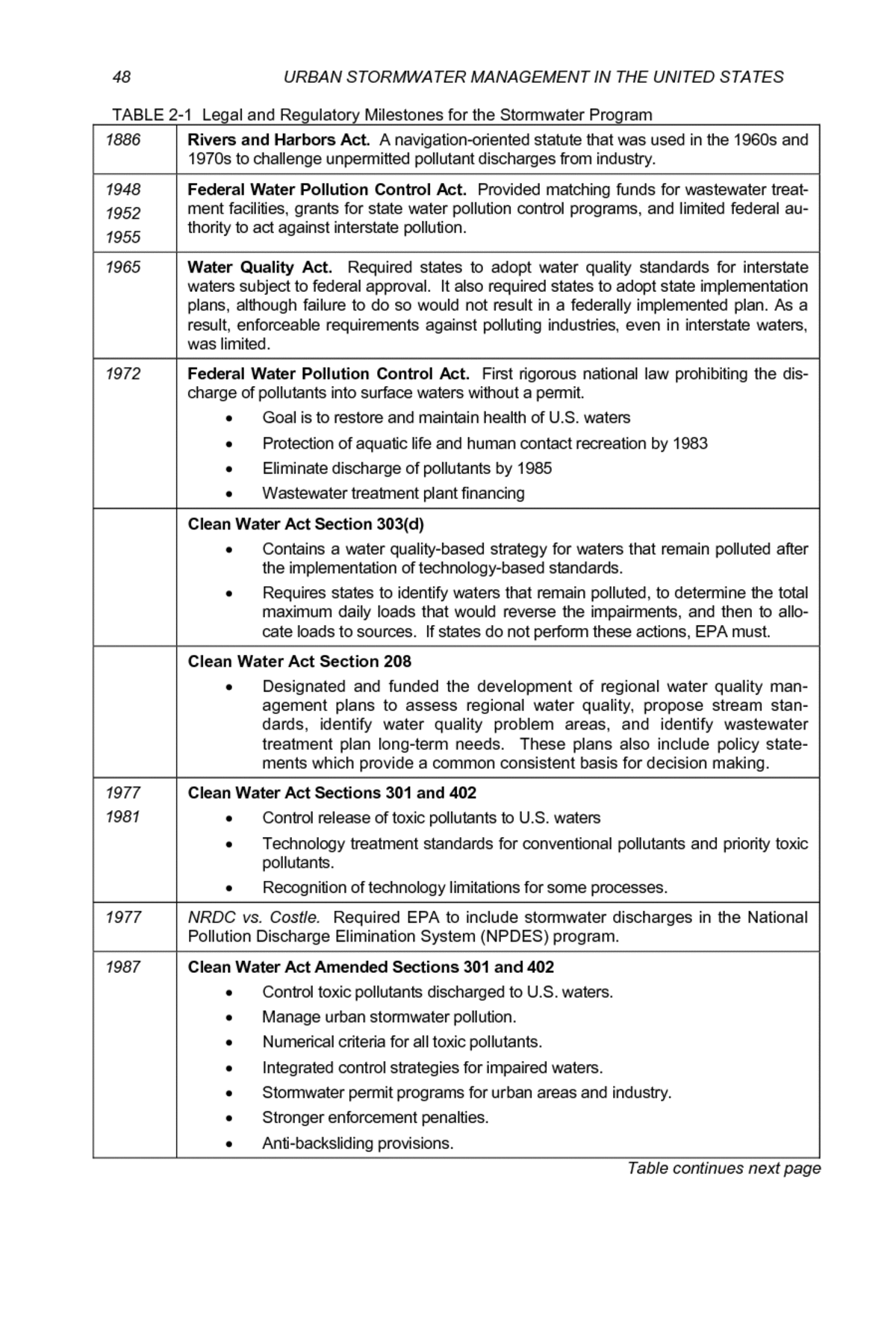
2 The Challenge of Regulating Stormwater Although stormwater has long been regarded as a major culprit in urban flooding, only in the past 30 years have policymakers appreciated the significant role stormwater plays in the impairment of urban watersheds. This recent rise to fame has led to a cacophony of federal, state, and local regulations to deal with stormwater, including the federal Clean Water Act (CWA) implemented by the U.S. Environmental Protection Agency (EPA). Perhaps because this longstand- ing environmental problem is being addressed so late in the development and management of urban watersheds, the laws that mandate better stormwater con- trol are generally incomplete and were often passed for other purposes, like in- dustrial waste control. This chapter discusses the regulatory programs that govern stormwater, par- ticularly the federal program, explaining how these programs manage stormwa- ter only impartially and often inadequately. While progress has been made in the regulation of urban stormwaterâfrom the initial emphasis on simply moving it away from structures and cities as fast as possible to its role in degrading neighboring waterbodiesâa significant number of gaps remain in the existing system. Chapter 6 returns to these gaps and considers the ways that at least some of them may be addressed. FEDERAL REGULATORY FRAMEWORK FOR STORMWATER The Clean Water Act The CWA is a comprehensive piece of U.S. legislation that has a goal of re- storing and maintaining the chemical, physical, and biological integrity of the nationâs waters. Its long-term goal is the elimination of polluted discharges to surface waters (originally by 1985), although much of its current effort focuses on the interim goal of attaining swimmable and fishable waters. Initially en- acted as the Federal Water Pollution Control Act in 1948, it was revised by amendments in 1972 that gave it a stronger regulatory, water chemistry-focused basis to deal with acute industrial and municipal effluents that existed in the 1970s. Amendments in 1987 broadened its focus to deal with more diffuse sources of impairments, including stormwater. Improved monitoring over the past two decades has documented that although discharges have not been elimi- nated, there has been a widespread lessening of the effects of direct municipal and industrial wastewater discharges. A timeline of federal regulatory events over the past 125 years relevant to stormwater, which includes regulatory precursors to the 1972 CWA, is shown in Table 2-1. The table reveals that while there was a flourish of regulatory activ- ity related to stormwater during the mid-1980s to 1990s, there has been much less regulatory activity since that time. 47
48 URBAN STORMWATER MANAGEMENT IN THE UNITED STATES TABLE 2-1 Legal and Regulatory Milestones for the Stormwater Program 1886 Rivers and Harbors Act. A navigation-oriented statute that was used in the 1960s and 1970s to challenge unpermitted pollutant discharges from industry. 1948 Federal Water Pollution Control Act. Provided matching funds for wastewater treat- 1952 ment facilities, grants for state water pollution control programs, and limited federal au- thority to act against interstate pollution. 1955 1965 Water Quality Act. Required states to adopt water quality standards for interstate waters subject to federal approval. It also required states to adopt state implementation plans, although failure to do so would not result in a federally implemented plan. As a result, enforceable requirements against polluting industries, even in interstate waters, was limited. 1972 Federal Water Pollution Control Act. First rigorous national law prohibiting the dis- charge of pollutants into surface waters without a permit. Goal is to restore and maintain health of U.S. waters Protection of aquatic life and human contact recreation by 1983 Eliminate discharge of pollutants by 1985 Wastewater treatment plant financing Clean Water Act Section 303(d) Contains a water quality-based strategy for waters that remain polluted after the implementation of technology-based standards. Requires states to identify waters that remain polluted, to determine the total maximum daily loads that would reverse the impairments, and then to allo- cate loads to sources. If states do not perform these actions, EPA must. Clean Water Act Section 208 Designated and funded the development of regional water quality man- agement plans to assess regional water quality, propose stream stan- dards, identify water quality problem areas, and identify wastewater treatment plan long-term needs. These plans also include policy state- ments which provide a common consistent basis for decision making. 1977 Clean Water Act Sections 301 and 402 1981 Control release of toxic pollutants to U.S. waters Technology treatment standards for conventional pollutants and priority toxic pollutants. Recognition of technology limitations for some processes. 1977 NRDC vs. Costle. Required EPA to include stormwater discharges in the National Pollution Discharge Elimination System (NPDES) program. 1987 Clean Water Act Amended Sections 301 and 402 Control toxic pollutants discharged to U.S. waters. Manage urban stormwater pollution. Numerical criteria for all toxic pollutants. Integrated control strategies for impaired waters. Stormwater permit programs for urban areas and industry. Stronger enforcement penalties. Anti-backsliding provisions. Table continues next page
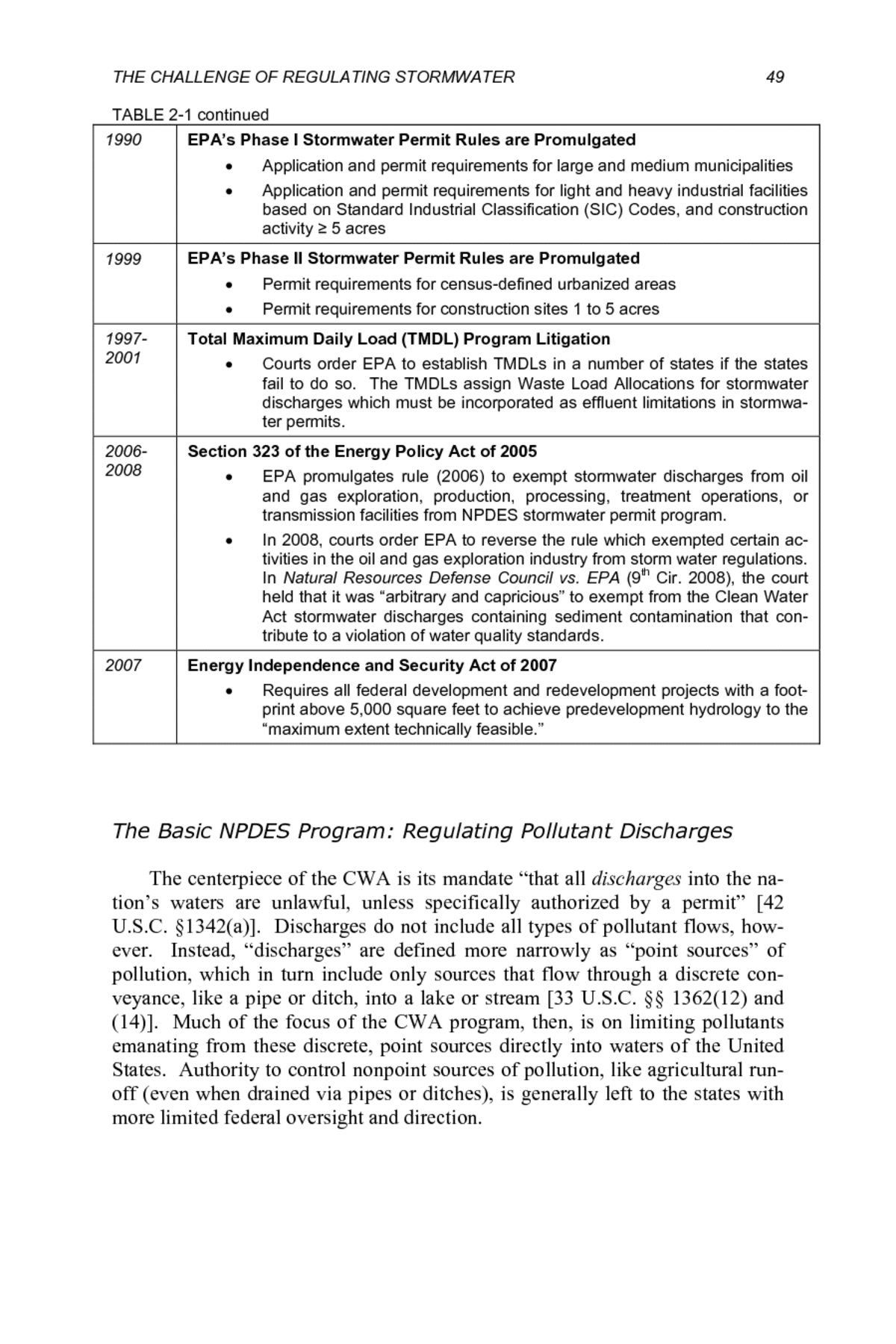
THE CHALLENGE OF REGULATING STORMWATER 49 TABLE 2-1 continued 1990 EPAâs Phase I Stormwater Permit Rules are Promulgated Application and permit requirements for large and medium municipalities Application and permit requirements for light and heavy industrial facilities based on Standard Industrial Classification (SIC) Codes, and construction activity 5 acres 1999 EPAâs Phase II Stormwater Permit Rules are Promulgated Permit requirements for census-defined urbanized areas Permit requirements for construction sites 1 to 5 acres 1997- Total Maximum Daily Load (TMDL) Program Litigation 2001 Courts order EPA to establish TMDLs in a number of states if the states fail to do so. The TMDLs assign Waste Load Allocations for stormwater discharges which must be incorporated as effluent limitations in stormwa- ter permits. 2006- Section 323 of the Energy Policy Act of 2005 2008 EPA promulgates rule (2006) to exempt stormwater discharges from oil and gas exploration, production, processing, treatment operations, or transmission facilities from NPDES stormwater permit program. In 2008, courts order EPA to reverse the rule which exempted certain ac- tivities in the oil and gas exploration industry from storm water regulations. th In Natural Resources Defense Council vs. EPA (9 Cir. 2008), the court held that it was âarbitrary and capriciousâ to exempt from the Clean Water Act stormwater discharges containing sediment contamination that con- tribute to a violation of water quality standards. 2007 Energy Independence and Security Act of 2007 Requires all federal development and redevelopment projects with a foot- print above 5,000 square feet to achieve predevelopment hydrology to the âmaximum extent technically feasible.â The Basic NPDES Program: Regulating Pollutant Discharges The centerpiece of the CWA is its mandate âthat all discharges into the na- tionâs waters are unlawful, unless specifically authorized by a permitâ [42 U.S.C. §1342(a)]. Discharges do not include all types of pollutant flows, how- ever. Instead, âdischargesâ are defined more narrowly as âpoint sourcesâ of pollution, which in turn include only sources that flow through a discrete con- veyance, like a pipe or ditch, into a lake or stream [33 U.S.C. §§ 1362(12) and (14)]. Much of the focus of the CWA program, then, is on limiting pollutants emanating from these discrete, point sources directly into waters of the United States. Authority to control nonpoint sources of pollution, like agricultural run- off (even when drained via pipes or ditches), is generally left to the states with more limited federal oversight and direction.
50 URBAN STORMWATER MANAGEMENT IN THE UNITED STATES All point sources of pollutants are required to obtain a National Pollutant Discharge Elimination System (NPDES) permit and ensure that their pollutant discharges do not exceed specified effluent standards. Congress also com- manded that rather than tie effluent standards to the needs of the receiving wa- terbodyâan exercise that was far too scientifically uncertain and time- consumingâthe effluent standards should first be based on the best available pollution technology or the equivalent. In response to a very ambitious man- date, EPA has promulgated very specific, quantitative discharge limits for the wastewater produced by over 30 industrial categories of sources based on what the best pollution control technology could accomplish, and it requires at least secondary treatment for the effluent produced by most sewage treatment plants. Under the terms of their permits, these large sources are also required to self- monitor their effluent at regular intervals and submit compliance reports to state or federal regulators. EPA quickly realized after passage of the CWA in 1972 that if it were re- quired to develop pollution limits for all point sources, it would need to regulate hundreds of thousands and perhaps even millions of small stormwater ditches and thousands of small municipal stormwater outfalls, all of which met the tech- nical definition of âpoint sourceâ. It attempted to exempt all these sources, only to have the D.C. Circuit Court read the CWA to permit no exemptions [NRDC vs. Costle, 568 F.2d 1369 (D.C. Cir. 1977)]. In response, EPA developed a âgeneralâ permit system (an âumbrellaâ permit that covers multiple permittees) for smaller outfalls of municipal stormwater and similar sources, but it generally did not require these sources to meet effluent limitations or monitor their efflu- ent. It should be noted that, while the purpose of the CWA is to ensure protec- tion of the physical, biological, and chemical integrity of the nationâs waters, the enforceable reach of the Act extends only to the discharges of âpollutantsâ into waters of the United States [33 U.S.C. § 1311(a); cf. PUD No. 1 of Jefferson County v. Washington Department of Ecology, 511 U.S. 700 (1994) (providing states with broad authority under section 401 of the CWA to protect designated uses, not simply limit the discharge of pollutants)]. Even though âpollutantâ is defined broadly in the Act to include virtually every imaginable substance added to surface waters, including heat, it has not traditionally been read to include water volume [33 U.S.C. § 1362(6)]. Thus, the focus of the CWA with respect to its application to stormwater has traditionally been on the water quality of stormwater and not on its quantity, timing, or other hydrologic properties. Nonetheless, because the statutory definition of âpollutantâ includes âindustrial, municipal, and agricultural waste discharged into water,â using transient and substantial increases in flow in urban watersheds as a proxy for pollutant loading seems a reasonable interpretation of the statute. EPA Regions 1 and 3 have con- sidered flow control as a particularly effective way to track sediment loading, and they have used flow in TMDLs as a surrogate for pollutant loading (EPA Region 3, 2003). State trial courts have thus far ruled that municipal separate storm sewer system (MS4) permits issued under delegated federal authority can
THE CHALLENGE OF REGULATING STORMWATER 51 impose restrictions on flow where changes in flow impair the beneficial uses of surface waters (Beckman, 2007). EPA should consider more formally clarifying that significant, transient increases in flow in urban watersheds serve as a legally valid proxy for the loading of pollutants. This clarification will allow regulators to address the problems of stormwater in more diverse ways that include atten- tion to water volume as well as to the concentration of individual pollutants. Stormwater Discharge Program By 1987, Congress became concerned about the significant role that storm- water played in contributing to water pollution, and it commanded EPA to regu- late a number of enumerated stormwater discharges more rigorously. Specifi- cally, Section 402(p), introduced in the 1987 Amendments to the CWA, directs EPA to regulate some of the largest stormwater dischargesâthose that occur at industrial facilities and municipal storm sewers from larger cities and other sig- nificant sources (like large construction sites)âby requiring permits and prom- ulgating discharge standards that require the equivalent of the best available technology [42 U.S.C. § 1342(p)(3)]. Effectively, then, Congress grafted larger stormwater discharges onto the existing NPDES program that was governing discharges from manufacturing and sewage treatment plants. Upon passage of Section 402(p), EPA divided the promulgation of its stormwater program into two phases that encompass increasingly smaller dis- charges. The first phase, finalized in 1990, regulates stormwater discharges from ten types of industrial operations (this includes the entire manufacturing sector), construction occurring on five or more acres, and medium or large storm sewers in areas that serve 100,000 or more people [40 C.F.R. § 122.26(a)(3) (1990); 40 C.F.R. § 122.26 (b)(14) (1990)]. The second phase, finalized in 1995, includes smaller municipal storm sewer systems and smaller construction sites (down to one acre) [60 Fed. Reg. 40,230 (Aug. 7, 1995) (codified at 40 C.F.R. Parts 122, 124 (1995)]. If these covered sources fail to apply for a per- mit, they are in violation of the CWA. Because stormwater is more variable and site specific with regard to its quality and quantity than wastewater, EPA found it necessary to diverge in two important ways from the existing NPDES program governing discharges from industries and sewage treatment plants. First, stormwater discharge limits are not federally specified in advance as they are with discharges from manufactur- ing plants. Even though Congress directed EPA to require stormwater sources to install the equivalent of the best available technology or âbest management practices,â EPA concluded that the choice of these best management practices (referred to in this report as stormwater control measures or SCMs) would need to be source specific. As a result, although EPA provides constraints on the choices available, it generally leaves stormwater sources with responsibility for
52 URBAN STORMWATER MANAGEMENT IN THE UNITED STATES developing a stormwater pollution prevention plan and the state with the author- ity to approve, amend, or reject these plans (EPA, 2006, p. 15). Second, because of the great variability in the nature of stormwater flow, some sources are not required to monitor the pollutants in their stormwater dis- charges. Even when monitoring is required, there is generally a great deal of flexibility for regulated parties to self-monitor as compared with the monitoring requirements applied to industrial waste effluent (not stormwater from indus- tries). More specifically, for a small subset of stormwater sources such as Phase I MS4s, some monitoring of effluent during a select number of storms at a select number of outfalls is required (EPA, 1996a, p. VIII-1). A slightly larger number of identified stormwater dischargers, primarily industrial, are only required to collect grab samples four times during the year and visually sample and report on them (so-called benchmark monitoring). The remaining stormwater sources are not required to monitor their effluent at all (EPA, 1996a). States and locali- ties may still demand more stringent controls and rigorous stormwater monitor- ing, particularly in areas undergoing a Total Maximum Daily Load (TMDL) assessment, as discussed below. Yet, even for degraded waters subject to TMDLs, any added monitoring that might be required will be limited only to the pollutants that cause the degraded condition [40 C.F.R. §§ 420.32-420.36 (2004)]. Water Quality Management Since technology-based regulatory requirements imposed on both stormwa- ter and more traditional types of discharges are not tied to the conditions of the receiving waterâthat is, they require sources only to do their technological best to eliminate pollutionâbasic federal effluent limits are not always adequate to protect water quality. In response to this gap in protection, Congress has devel- oped a number of programs to ensure that waters are not degraded below mini- mal federal and state goals [e.g., 33 U.S.C. §§ 1288, 1313(e), 1329, 1314(l)]. Among these, the TMDL program involves the most rigorous effort to control both point and nonpoint sources to ensure that water quality goals are met [33 U.S.C. § 1313(d)]. Under the TMDL program, states are required to list waterbodies not meet- ing water quality standards and to determine, for each degraded waterbody, the âtotal maximum daily loadâ of the problematic pollutant that can be allowed without violating the applicable water quality standard. The state then deter- mines what types of additional pollutant loading reductions are needed, consid- ering not only point sources but also nonpoint sources. It then promulgates con- trols on these sources to ensure further reductions to achieve applicable water quality goals. The TMDL process has four separate components. The first two compo- nents are already required of the states through other sections of the CWA: (1) identify beneficial uses for all waters in the state and (2) set water quality stan-
THE CHALLENGE OF REGULATING STORMWATER 53 dards that correlate with these various uses. The TMDL program adds two components by requiring that states then (3) identify segments where water quality goals have not been met for one or more pollutants and (4) develop a plan that will ensure added reductions are made by point and/or nonpoint sources to meet water quality goals in the future. Each of these is discussed below. Beneficial Uses. States are required to conduct the equivalent of âzoningâ by identifying, for each water segment in the state, a beneficial use, which con- sists of ensuring that the waters are fit for either recreation, drinking water, aquatic life, or agricultural, industrial, and other purposes [33 U.S.C. § 1313(c)(2)(A)]. All states have derived ânarrative definitionsâ to define the beneficial uses of waterbodies that are components of all water quality standard programs. Many of these narrative criteria are conceptual in nature and tend to define general aspects of the beneficial uses. For categories such as aquatic life uses, most states have a single metric for differentiating uses by type of stream (e.g., coldwater vs. warmwater fisheries). In general, the desired biological characteristics of the waterbody are not well defined in the description of the beneficial use. Some states, such as Ohio, have added important details to their beneficial uses by developing tiered aquatic life uses that recognize a strong gradient of anthropogenic background disturbance that controls whether a wa- terbody can attain a certain water quality and biological functioning (see Box 2- 1; Yoder and Rankin, 1998). Any aquatic life use tier less stringent than the CWA interim goal of âswimmableâfishableâ requires a Use Attainability Analy- sis to support a finding that restoration is not currently feasible and recovery is not likely in a reasonable period of time. This analysis and proposed designa- tion must undergo public comment and review and are always considered tem- porary in nature. More importantly, typically one or more tiers above the opera- tive interim goal of âswimmableâfishableâ are provided. This method typically will protect the highest attainable uses in a state more effectively than having only single uses. The concept of tiered beneficial uses and use attainability is especially im- portant with regard to urban stormwater because of the potential irreversibility of anthropogenic development and the substantial costs that might be incurred in attempting to repair degraded urban watersheds to âswimmableâfishableâ or higher status. Indeed, it is important to consider what public benefits and costs might occur for different designated uses. For example, large public benefits (in terms of aesthetics and safety) might be gained from initial improvements in an urban stream (e.g., restoring base flow) that achieve modest aquatic use and pro- tect secondary human contact. However, achieving designated uses associated with primary human contact or exceptional aquatic habitat may be much more costly, such that the perceived incremental public gains may be much lower than the costs that must be expended to achieve that more ambitious designation.
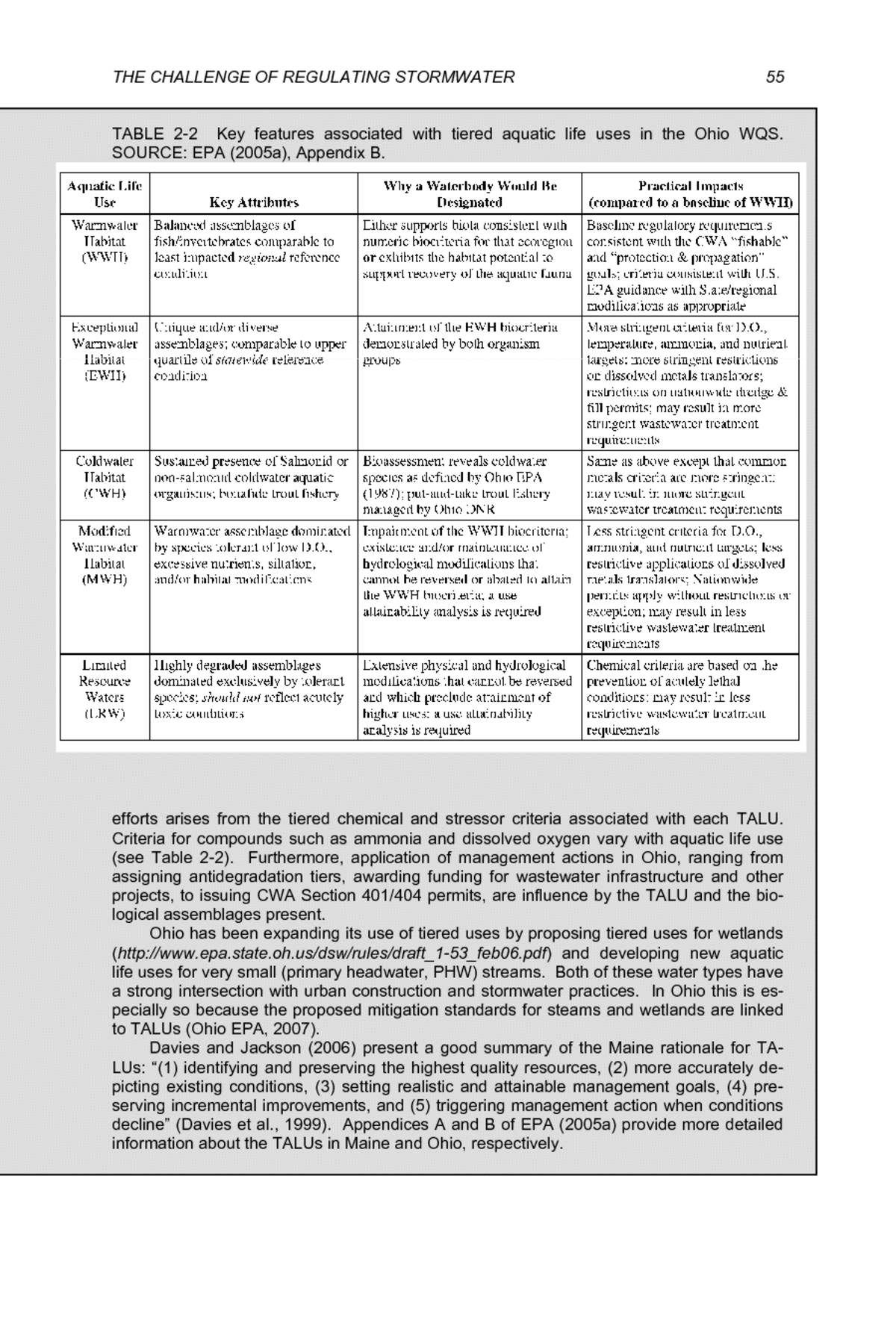
54 URBAN STORMWATER MANAGEMENT IN THE UNITED STATES BOX 2-1 Ohioâs Tiered Aquatic Life Uses âDesignatedâ or âbeneficialâ uses for waterbodies are an important aspect of the CWA because they are the explicit water quality goals or endpoints set for each water or class of waters. Ohio was one of the first states to implement tiered aquatic life uses (TALUs) in 1978 as part of its water quality standards (WQS). Most states have a single aquatic life use for a class of waters based on narrative biological criteria (e.g., warmwater or cold- water fisheries) although many states now collect data that would allow identification of multiple tiers of condition. EPA has recognized the management advantages inherent to tiered aquatic life uses and has developed a technical document on how to develop the scientific basis that would allow States to implement tiered uses (EPA, 2005a; Davies and Jackson, 2006). Ohioâs TALUs reflect the mosaic of natural features across Ohio and over 200 years of human changes to the natural landscape. Widespread information on Ohioâs natural his- tory (e.g., Trautmanâs 1957 Fishes of Ohio) provided strong evidence that the potential fauna of streams was not uniform, but varied geographically. Based on this knowledge, Ohio developed a more protective aquatic life use tier to protect streams of high biological diversity that harbored unique assemblages of rare or sensitive aquatic species (e.g., fish, mussels, invertebrates). In its WQS in 1978, Ohio established a narrative Exceptional Warmwater Habitat (EWH) aquatic life use to supplement its more widespread general or âWarmwater Habitatâ aquatic life use (WWH) (Yoder and Rankin, 1995). The CWA permits states to assign aquatic life uses that do not meet the baseline swimmable-fishable goals of the CWA under specific circumstances after conducting a Use Attainability Analysis (UAA), which documents that higher CWA aquatic life use goals (e.g., WWH and EWH in Ohio) are not feasibly attainable. These alternate aquatic life uses are always considered temporary in case land use changes or technology changes to make restoration feasible. The accrual of more than ten years of biological assessment data by the late 1980s and extensive habitat and stressor data provided a key link between the stressors that limited attainment of a higher aquatic life use in certain areas and reaches of Ohio streams. This assessment formed the basis for several âmodifiedâ (physical) warm- water uses for Ohio waters and a âlimitedâ use (limited resource water, LRW) for mostly small ephemeral or highly artificial waters (Yoder and Rankin, 1995). Table 2-2 summa- rizes the biological and physical characteristics of Ohio TALUs and the management con- sequences of these uses. Channelization typically maintained by county or municipal drainage and flood control efforts, particularly where such changes have been extensive, are the predominant cause of Modified and Limited aquatic life uses. Extensive channel modification in urban watersheds has led to some modified warmwater habitat (MWH) and LRW uses in urban areas. There has been discussion of developing specific âurbanâ aquatic life uses; however the complexity of multiple stressors and the need to find a clear link between the sources limiting aquatic life and feasible remediation is just now being addressed in urban settings (Barbour et al., 2006). The TALUs in Ohio (EWH LRW) reflect a gradient of landscape and direct physical changes, largely related to changes to instream habitat and associated hydrological fea- tures. Aquatic life uses and the classification strata based on ecoregion and stream size (headwater, wadeable, and boatable streams) provide the template for the biocriteria ex- pectations for Ohio streams (see Box 2-2). Identification of the appropriate tiers for streams and UAA are a routine part of watershed monitoring in Ohio and are based on biological, habitat, and other supporting data. Any recommendations for changes in aquatic life uses are subject to public comment when the Ohio WQS are changed. Ohioâs water quality standards contain specific listings by stream or stream reach with notations about the appropriate aquatic life use as well as other applicable uses (e.g., rec- reation). Much of the impact of tiered uses on regulated entities or watershed management
THE CHALLENGE OF REGULATING STORMWATER 55 TABLE 2-2 Key features associated with tiered aquatic life uses in the Ohio WQS. SOURCE: EPA (2005a), Appendix B. efforts arises from the tiered chemical and stressor criteria associated with each TALU. Criteria for compounds such as ammonia and dissolved oxygen vary with aquatic life use (see Table 2-2). Furthermore, application of management actions in Ohio, ranging from assigning antidegradation tiers, awarding funding for wastewater infrastructure and other projects, to issuing CWA Section 401/404 permits, are influence by the TALU and the bio- logical assemblages present. Ohio has been expanding its use of tiered uses by proposing tiered uses for wetlands (http://www.epa.state.oh.us/dsw/rules/draft_1-53_feb06.pdf) and developing new aquatic life uses for very small (primary headwater, PHW) streams. Both of these water types have a strong intersection with urban construction and stormwater practices. In Ohio this is es- pecially so because the proposed mitigation standards for steams and wetlands are linked to TALUs (Ohio EPA, 2007). Davies and Jackson (2006) present a good summary of the Maine rationale for TA- LUs: â(1) identifying and preserving the highest quality resources, (2) more accurately de- picting existing conditions, (3) setting realistic and attainable management goals, (4) pre- serving incremental improvements, and (5) triggering management action when conditions declineâ (Davies et al., 1999). Appendices A and B of EPA (2005a) provide more detailed information about the TALUs in Maine and Ohio, respectively.
56 URBAN STORMWATER MANAGEMENT IN THE UNITED STATES Water Quality Criteria. Once a state has created a list of beneficial uses for its waters, water quality criteria are then determined that correspond with these uses. These criteria can target chemical, biological, or physical parame- ters, and they can be either numeric or narrative. In response to the acute chemical water pollution that existed when the CWA was written, the primary focus of water quality criteria was the control of toxic and conventional pollutants from wastewater treatment plants. EPA de- veloped water quality criteria for a wide range of conventional pollutants and began working on criteria for a list of priority pollutants. These were generally in the form of numeric criteria that are then used by states to set their standards for the range of waterbody types that exist in that state. While states do not have to adopt EPA water quality criteria, they must have a scientific basis for setting their own criteria. In practice, however, states have promulgated numerical wa- ter quality standards that can vary by as much as 1,000-fold for the same con- taminant but are still considered justified by the available science [e.g., the water quality criteria for dioxinâNatural Resources Defense Council, Inc. vs. EPA, 16 F.3d 1395, 1398, 1403-05 (4th Cir. 1993)]. The gradual abatement of point source impairments and increased focus on ambient monitoring and nonpoint source pollutants has led to a gradual, albeit inconsistent, shift by states toward (1) biological and intensive watershed moni- toring and (2) consideration of stressors that are not typical point source pollut- ants including nutrients, bedded sediments, and habitat loss. For these parame- ters, many states have developed narrative criteria (e.g., ânutrients levels that will not result in noxious algal populationsâ), but these can be subjective and hard to enforce. The use of biological criteria (biocriteria) has gained in popularity because traditional water quality monitoring is now perceived as insufficient to answer questions about the wide range of impairments caused by activities other than wastewater point sources, including stormwater (GAO, 2000). As described in Box 2-2, Ohio has defined biocriteria in its water quality standards based on multimetric indices from reference sites that quantify the baseline expectations for each tier of aquatic life use. Antidegradation. The antidegradation provision of the water quality stan- dards deals with waters that already achieve or exceed baseline water quality criteria for a given designated use. Antidegradation provisions must be consid- ered before any regulated activity can be authorized that may result in a lower- ing of water quality which includes biological criteria. These provisions protect the existing beneficial uses of a water and only allow a lowering of water quality (but never lower than the baseline criteria associated with the beneficial use) where necessary to support important social and economic development. It es- sentially asks the question: is the discharge or activity necessary? States with refined designated uses and biological criteria have used these programs to their advantage to craft scientifically sound, protective, yet flexible antidegradation rules (see Ohio and Maine). Antidegradation is not a replacement for tiered
THE CHALLENGE OF REGULATING STORMWATER 57 BOX 2-2 Ohioâs Biocriteria After it implemented tiered aquatic life uses in 1978, Ohio developed numeric biocrite- ria in 1990 (Ohio WQS; Ohio Administrative Code 3745-1) as part of its WQS. Since des- ignated uses were formulated and described in ecological terms, Ohio felt that it was natu- ral that the criteria should be assessed on an ecological basis (Yoder, 1978). Subsequent to the establishment of the EWH tier in its WQS, Ohio expanded its biological monitoring efforts to include both macroinvertebrates and fish (Yoder and Rankin, 1995) and estab- lished consistent and robust monitoring methodologies that have been maintained to the present. This core of consistently collected data has allowed the application of analytical tools, including multimetric indices such as the Index of Biotic Integrity (IBI), the Inverte- brate Community Index (ICI), and other multivariate tools. The development of aquatic ecoregions (Omernik, 1987, 1995; Gallant et al., 1989), a practical definition of biological integrity (Karr and Dudley, 1981), multimetric assessment tools (Karr, 1981; Karr et al., 1986), and reference site concepts (Hughes et al., 1986) provided the basis for developing Ohioâs ecoregion-based numeric criteria. Successful application of biocriteria in Ohio was dependent on the ability to accurately classify aquatic ecosystem changes based on primarily natural abiotic features of the envi- ronment. Ohioâs reference sites, on which the biocriteria are based, reflect spatial differ- ences that were partially explained by aquatic ecoregions and stream size. Biological indi- ces were calibrated and stratified on this basis to arrive at biological criteria that present minimally acceptable baseline ecological index scores (e.g., IBI, ICI). Ohio biocriteria strati- fied by ecoregion aquatic life use and stream size are depicted in Figure 2-1. FIGURE 2-1 Numeric biological criteria adopted by Ohio EPA in 1990, using three biologi- cal indices [IBI, ICI, and the Modified Index of well-being (Mlwb), which is used to assessed fish assemblages] and showing stratification by stream size, ecoregion, and designated use (warmwater habitat, WWH; modified warmwater habitat-channelized, MWH-C; modified warmwater habitat-impounded, MWH-I; and exceptional warmwater habitat, EWH). SOURCE: EPA (2006, Appendix B). The basis for the Ohio biocriteria and sampling meth- ods is found in Ohio EPA (1987, 1989a,b), DeShon (1995), and Yoder and Rankin (1995).
58 URBAN STORMWATER MANAGEMENT IN THE UNITED STATES uses, which provide a permanent floor against lowering water quality protection. Tiered beneficial uses and refined antidegradation rules can have substantial influence on stormwater programs because they influence the goals and levels of protection assigned to each waterbody. Monitoring Programs to Identify Degraded Segments. Monitoring strategies by the states generally follow the regulatory efforts of EPA and seek to identify those waterbodies where water quality standards are not being met. Much of the initial ambient monitoring (i.e., monitoring of receiving waterbod- ies) was chemical based and focused on documenting changes in pollutant con- centrations and exceedances of water quality criteria. Biological monitoring techniques have a long history of use as indicators of water quality impacts. However, it was not until such tools became more widespreadâinitially in states like Maine, North Carolina, and Ohioâthat the extent of stormwater and other stressor effects on waterbodies became better understood. The biological response to common nonpoint stressors has driven the consideration of new wa- ter quality criteria (e.g., for nutrients, bedded sediments) that were not major considerations under an effluent-dominated paradigm of water management. In parallel with the increase in biocriteria has been the development of bio- logical monitoring to measure beneficial use attainment. Integrated biological surveys have revealed impairments of waterbodies that go beyond those caused by typical point sources (EPA, 1996b; Barbour et al., 1999a). The substantial increase in biological assemblage monitoring during the 1980s was enhanced by the development of more standard methods (Davis, 1995; Barbour et al., 1999a,b; Klemm et al., 2003) along with conceptual advances in the develop- ment of assessment tools (Karr, 1981; Karr and Chu, 1999). Development of improved classification tools (e.g., ecoregions, stream types), the reference site concept (Stoddard et al., 2006), and analytical approaches including multivariate (e.g., discriminant analysis) and multimetric indices such as IBI and ICI (see Box 2-3; Karr et al., 1986; DeShon, 1995) resulted in biological criteria being developed for several states. Biological monitoring approaches are becoming a widespread tool for assessing attainment of aquatic life use designation goals inherent to state water quality standards. Development of biocriteria represents a maturation of the use of biological data and provides institutional advantages for states in addressing pollutants without numeric criteria (e.g., nutrients) and non-chemical stressors such as habitat (Yoder and Rankin, 1998). Setting Loads and Restricting Loading. Section 303d of the CWA re- quires that states compare existing water quality data with water quality stan- dards set by the states, territories, and tribes. For those waters found to be in violation of their water quality standards, Section 303d requires that the state develop a TMDL. Currently, approximately 20,000 of monitored U.S. waters are in non-attainment of water quality standards, as evidenced by not meeting at least one specific narrative or numeric physical, chemical, or biological crite- rion, and thus require the development of a TMDL.
THE CHALLENGE OF REGULATING STORMWATER 59 BOX 2-3 Commonly Used Biological Assessment Indices Much of the initial work using biological data to assess the effects of pollution on inland streams and rivers was a response to Chicagoâs routing of sewage effluents into the Illinois River in the late 1800s. Early research focused on the use of indicator species, singly or in aggregate, and how they changed along gradients of effluent concentrations (Davis, 1990, 1995). In the 1950s Ruth Patrick used biological data to assess rivers by observing longitudinal changes in taxonomic groups, and later in the 1950s and 1960s âdiversity indicesâ (e.g., Shannon-Wiener index, Shannon and Weaver, 1949) were used to assess aquatic communities (Washington, 1984; Davis 1990, 1995). These indices were various mathematical constructs that measured attributes such as richness and evenness of species abundance in samples and are still widely used today in ecological studies. Similarity indices are another approach that is used to compare biological assemblages between sites. There are a wide multitude of such indices (e.g., Bray-Curtis, Jaccard) and all use various mathematical constructs to examine species in common and absent be- tween samples. Biotic indices are generally of more recent origin (1970s to the present). Hilsenhoff (1987, 1988) assigned organic pollution tolerances to macroinvertebrate taxa and then combined these ratings in a biotic index that is still widely used for macroinvertebrates. Karr (1981) developed the Index of Biotic Integrity (IBI), a âmultimetricâ index that is com- posed of a series of 12 metrics of a Midwest stream fish community. This approach has been widely adopted and adapted to many types of waterbodies (streams, lakes, rivers, estuaries, wetlands, the Great Lakes, etc.) and organism groups and is probably the most widely used biotic index approach in the United States. Examples include the periphyton IBI (PIBI; Hill et al., 2000) for algal communities, the Invertebrate Community Index (ICI; DeShon, 1995) and benthic IBI (B-IBI, Kerans and Karr, 1994) for macroinvertebrates, a benthic IBI for estuaries (B-IBI; Weisberg et al., 1997), and a vegetative IBI for wetlands (VIBI-E; Mack, 2007). Various multivariate statistical approaches have also been used to assess aquatic as- semblages, often concurrently with multimetric indices. Maine, for example, uses a dis- criminant analysis that assesses stream stations by comparison to reference sites (Davies and Tsomides, 1997). Predictive modeling approaches, incorporating both biotic and envi- ronmental variables, have been widely used in Great Britain and Europe (River Invertebrate Prediction and Classification System, RIVPACS; Wright et al., 1993), Australia (AUS- RIVAS; Simpson and Norris, 2000), and more recently in the United States by Hawkins et al. (2000). All of these approaches now have a wide scientific literature supporting their use and application. EPA (2002a) reports that most states have a biomonitoring program with at least one organism group to assess key waters in their states, although the level of imple- mentation and sophistication varies by state. For example, only four states have numeric biocriteria in their state water quality standards, although 11 more are developing such biocriteria based on one or more of the above monitoring approaches (EPA, 2002a). The key to implementation of any of these approaches is to set appropriate goals for waters that can be accurately measured and then to use this type of information to identify limiting stressors (e.g., EPA Stressor Identification Process; EPA, 2000a).
60 URBAN STORMWATER MANAGEMENT IN THE UNITED STATES The TMDL process includes an enforceable pollution control plan for de- graded waters based on a quantification of the loading of pollutants and an un- derstanding of problem sources within the watershed [33 U.S.C. § 1313(d)(1)(C)]. Both point and nonpoint sources of the problematic pollutants, including runoff from agriculture, are typically considered and their contribu- tions to the problem are assessed. A plan is then developed that may require these sources to reduce their loading to a level (the TMDL) that ensures that the water will ultimately meet its designated use. Most of the TMDL requirements have been developed through regulation. Additional effluent limits for point sources discharging into segments subject to TMDLs are incorporated into the NPDES permit. Total Maximum Daily Load Program and Stormwater The new emphasis on TMDLs and the revelation that impacts are primarily from diffuse sources has increased the attention given to stormwater. If a TMDL assigns waste load allocations to stormwater discharges, these must be incorporated as effluent limitations into stormwater permits. In addition, the TMDL program provides a new opportunity for states to regulate stormwater sources more vigorously. In degraded waterbodies, effluent reductions for point sources are not limited by what is economically feasible but instead include re- quirements that will ensure that the continued degradation of the receiving water is abated. If a permitted stormwater source is contributing pollutants to a de- graded waterbody and the state believes that further reductions in pollution from that source are needed, then more stringent discharge limitations are required. For example, in City of Arcadia vs. State Water Resources Control Board [135 Cal. App. 4th 1392 (Ca. Ct. App. 2006)], the court held in part that Californiaâs zero trash requirements for municipal storm drains, resulting from state TMDLs, were not inconsistent with TMDL requirements or the CWA. Thus, the maxi- mum-extent-practicable standard for MS4s, as well as other technology-based requirements for other stormwater permittees, are a floor, not a ceiling, for per- mit requirements when receiving waters are impaired (Beckman, 2007). Finally, since the TMDL program expects the states to regulate any sourceâpoint or nonpointâthat it considers problematic, any source of stormwater is fair game, regardless of whether it is listed in Section 402p, and regardless of whether it is a âpoint source.â Nonpoint source runoff from agricultural and silvicultural operations is in fact a common target for TMDL-driven restrictions [see, e.g., Pronsolino vs. Nastri, 291 F.3d 1123, 1130 (9th Cir. 2002), upholding restric- tions on nonpoint sources, such as logging, compelled by Stateâs TMDLs)]. Despite the potential for positive interaction between stormwater regulation and the TMDL program, there appears to be little activity occurring at the stormwaterâTMDL interface. This is partly because the TMDL program itself has been slow in developing. In 2000, the National Wildlife Federation applied 36 criteria to the 50 statesâ water quality programs and concluded that 75 per-
THE CHALLENGE OF REGULATING STORMWATER 61 cent of the states had failed to develop meaningful TMDL programs (National Wildlife Federation, 2000, pp. 1â2). The General Accounting Office (GAO, 1989) identified the lack of implementation of TMDLs as a major impediment to attaining the goals of the CWA, which led to a spate of lawsuits filed by envi- ronmental groups to reverse this pattern. The result was numerous settlements with ambitious deadlines for issuing TMDLs. Commentators blame the delays in these TMDL programs on inadequate ambient monitoring data and on the technical and political challenges of caus- ally linking individual sources to problems of impairment. In a 2001 report, for example, the National Research Council (NRC) noted that unjustified and poorly supported water quality standards, a lack of monitoring, uncertainty in the relevant models, and a failure to use biocriteria to assess beneficial uses di- rectly all contributed to the delays in statesâ abilities to bring their waters into attainment through the TMDL program (NRC, 2001). Each of these facets is not only technically complicated but also expensive. The cost of undertaking a rigorous TMDL program in a single state has been estimated to be about $4 bil- lion per state, assuming that each state has 100 watersheds in need of TMDLs (Houck, 1999, p. 10476). As a result, the technical demands of the TMDL program make for a par- ticularly bad fit with the technical impediments already present in monitoring and managing stormwater. As mentioned earlier, the pollutant loadings in stormwater effluent vary dramatically over time and stormwater is notoriously difficult to monitor for pollutants. It is thus difficult to understand how much of a pollutant a stormwater point source contributes to a degraded waterbody, much less determine how best to reduce that loading so that the waterbody will meet its TMDL. As long as the focus in these TMDLs remains on pollutants rather than flow (a point raised earlier that will be considered again), the technical challenges of incorporating stormwater sources in a water quality-based regula- tory program are substantial. Without considerable resources for modeling and monitoring, the regulator has insufficient tools to link stormwater contributions to water quality impairments. These substantial challenges in linking stormwater sources back to TMDLs are reflected by the limited number of reports and guidance documents on the subject. In one recent report, for example, EPA provides 17 case studies in which states and EPA regions incorporated stormwater control measures into TMDL plans, but it is not at all clear from this report that these efforts are wide- spread or indicative of greater statewide activity (EPA, 2007a). Indeed, it al- most appears that these case studies represent the universe of efforts to link TMDLs and stormwater management together. The committeeâs statement of task also appears to underscore, albeit implicitly, EPAâs difficulty in making scientific connections between the TMDL and stormwater programs. This chal- lenge is returned to in Chapter 6, which suggests some ways that the two can be joined together more creatively.
62 URBAN STORMWATER MANAGEMENT IN THE UNITED STATES Other Statutory Authorities that Control Stormwater Although the CWA is by far the most direct statutory authority regulating stormwater discharges, there are other federal regulatory authorities that could lead to added regulation of at least some stormwater sources of pollution. Critical Resources If there is evidence that stormwater flows or pollutants are adversely im- pacting either endangered species habitat or sensitive drinking water sources, federal law may impose more stringent regulatory restrictions on these activities. Under the Endangered Species Act, stormwater that jeopardizes the continued existence of endangered species may need to be reduced to the point that it no longer threatens the endangered or threatened populations in measurable ways, especially if the stormwater discharge results from the activity of a federal agency [16 U.S.C. §§ 1536(a), 1538(a)]. Under the Safe Drinking Water Act, a surface water supply of drinking wa- ter must conduct periodic âsanitary surveysâ to ensure the quality of the supply (see 40 C.F.R. § 142.16). During the course of these surveys, significant stormwater contributions to pollution may be discovered that are out of compli- ance or not regulated under the Clean Water Act because they are outside of an MS4 area. Such a discovery could lead to more rigorous regulation of stormwa- ter discharges. For a groundwater source that supplies 50 percent or more of the drinking water for an area and for which there is no reasonably available alterna- tive source, the aquifer can be designated as a âSole Source Aquiferâ and re- ceive greater protection under the Safe Drinking Water Act [42 U.S.C. § 300(h)- 3(e)]. Stormwater sources that result from federally funded projects are also more closely monitored to ensure they do not cause significant contamination to these sole source aquifers. Some particularly sensitive water supplies are covered by both programs. The Edwards Aquifer underlying parts of Austin and San Antonio, Texas, for example, is identified as a âSole Source Aquifer.â There are also several endan- gered species of fish and salamander in that same area. As a result, both the Safe Drinking Water Act and the Endangered Species Act demand more rigor- ous stormwater management programs to protect this delicate watershed. Stormwater is also regulated indirectly by floodplain control requirements promulgated by the Federal Emergency Management Agency (FEMA). In order for a community to participate in the FEMA National Flood Insurance Program, it must fulfill a number of requirements, including ensuring that projects will not increase flood heights, including flood levels adjacent to the project site [see, e.g., 44 C.F.R. § 60.3(d)].
THE CHALLENGE OF REGULATING STORMWATER 63 Contaminated Sites Continuous discharges of contaminated stormwater and other urban pollut- ants (particularly through combined sewer overflows) have led to highly con- taminated submerged sediments in many urban bays and rivers throughout the United States. In several cases where the sediment contamination was perceived as presenting a risk to human health or has led to substantial natural resource damages, claims have been filed under the federal hazardous waste cleanup stat- ute commonly known as Superfund (42 U.S.C. § 9601 et seq.). This liability under the Comprehensive Environmental Response, Compensation, and Liabil- ity Act (CERCLA) technically applies to any areaâwhether submerged or notâas long as there is a ârelease or a threat of release of a hazardous sub- stanceâ and the hazardous substances have accumulated in such a way as to lead to the âincurrence of response [cleanup] costsâ or to ânatural resource damagesâ [42 U.S.C. §9607(a)]. Although only a few municipalities and sewer systems have been sued, Superfund liability is theoretically of concern for possibly a much larger number of cities or even industries whose stormwater contains haz- ardous substances and when at least some of the discharges were either in viola- tion of a permit or unpermitted. The National Oceanic and Atmospheric Ad- ministration brought suit against the City of Seattle and the Municipality of Met- ropolitan Seattle alleging natural resource damages to Elliott Bay resulting from pollution in stormwater and combined sewer overflows; the case was settled in 1991 (United States vs. City of Seattle, No. C90-395WD, http://www.gc.noaa.gov/natural-office1.html). While some of the elements for liability remain unresolved by the courts, such as whether some or all of the dis- charges are exempted under the âfederally permitted releaseâ defense of CER- CLA [42 U.S.C. § 9601(10)(H)], which exempts surface water discharges that are covered by a general or NPDES permit from liability, the prospect of poten- tial liability is still present. Diversion of Stormwater Underground or into Wetlands In some areas, stormwater is eliminated by discharging it into wetlands. If done through pipes or other types of point sources, these activities require a permit under the CWA. Localities or other sources that attempt to dispense with their stormwater discharges in this fashion must thus first acquire an NPDES permit. Even without a direct discharge into wetlands, stormwater can indirectly en- ter wetland systems and substantially impair their functioning. In a review of more than 50 studies, the Center for Watershed Protection found that increased urbanization and development increased the amount of stormwater to wetlands, which in turn âled to increased ponding, greater water level fluctuation and/or hydrologic drought in urban wetlandsâ (Wright et al., 2006). They found that, in
64 URBAN STORMWATER MANAGEMENT IN THE UNITED STATES some cases, the ability of the wetlands to naturally remove pollutants became overwhelmed by pollutant loadings from stormwater. An even more common method of controlling stormwater is to discharge it underground. Technically, these subsurface discharges of stormwater, including dry wells, bored wells, and infiltration galleries, are considered by EPA to be infiltration or âClass Vâ wells, which require a permit under the CWA as long as they are in proximity to an underground source of drinking water (40 C.F.R. Parts 144, 146). While EPAâs definition excludes surface impoundments and excavated trenches lined with stone (provided they do not include subsurface fluid distribution systems or amount to âimproved sinkholesâ that involve the man-made modification of a naturally occurring karst depression for the purpose of stormwater control), most other types of subsurface drainage systems are covered regardless of the volume discharged (40 C.F.R. § 144.81(4)). Given EPAâs recent description of SCMs considered to be Class V injection wells (EPA, 2008), most SCMs that rely on infiltration are exempted. For ex- ample, if an infiltration trench is wider than it is deep, it is exempted from the Class V well regulations. Residential septic systems are also exempted [see 40 C.F.R. §§ 144.1(g)(1)(ii) and (2)(iii)]. However, those that involve deeper dry wells or infiltration galleries appear to require Class V well permits under the Safe Drinking Water Act. Because the use of these SCMs is likely to involve expensive compliance requirements, dischargers may steer away from them. Air Contaminants Air pollutants from vehicular exhaust and industrial sources that precipitate on roads and parking lots can also be collected in stormwater and increase pol- lutant loading (see Chapter 3 discussion of atmospheric deposition). While the Clean Air Act regulates these sources of air contamination, it does not eliminate them. Stormwater that is contaminated with air pollutants may consist of both âlegalâ releases of air pollutants, as well as âillegalâ releases emitted in violation of a permit, although the distinction between the two groups of pollutants is ef- fectively impossible to make in practice. Pesticides and Other Chemical Products Applied to Land and Road Surfaces EPA regulates the licensing of pesticides as well as chemicals and chemical mixtures, although its actual authority to take action, such as restricting product use or requiring labeling, varies according to the statute and whether the product is new or existing. Although EPA technically is allowed to consider the extent to which a chemical is accumulating in stormwater in determining whether addi- tional restrictions of the chemical are needed, EPA is not aware of any instances in its Toxic Substances Control Act (TSCA) chemical regulatory decision-
THE CHALLENGE OF REGULATING STORMWATER 65 making in which it actually used this authority to advance water quality protec- tion (Jenny Molloy, EPA, personal communication, March 13, 2008). In its pesticide registration program, EPA does routinely consider a pesti- cideâs potential for adverse aquatic effects from stormwater runoff in determin- ing whether the pesticide constitutes an unreasonable risk (Bill Jordan, EPA, personal communication, March 14, 2008). EPA has imposed use restrictions on a number of individual pesticides, such as prohibiting aerial applications, requiring buffer strips, or reducing application amounts. Presumably states and localities are tasked with primary enforcement responsibility for most of these use restrictions. EPA has also required a surface water monitoring program as a condition of the re-registration for atrazine and continues to evaluate available surface water and groundwater data to assess pesticide risks (Bill Jordan, EPA, personal communication, March 14, 2008). EPA STORMWATER PROGRAM Stormwater is defined in federal regulations as âstorm water runoff, snow melt runoff, and surface runoff and drainageâ [40 CFR §122.26(b)(13)]. EPA intended that the term describe runoff from precipitation-related events and not include any type of non-stormwater discharge (55 Fed. Reg. 47995). A brief discussion of the evolution of the EPAâs stormwater program is followed by an explanation of the permitting mechanisms and the various ways in which the program has been implemented by the states. As shown in Figure 2-2, the entire NPDES program has grown by almost an order of magnitude over the past 35 years in terms of the number of regulated entities, which explains the reliance of the program on general rather than individual permits. Both phases of the stormwater program have brought a large number of new entities under regula- tion. Historical Background States like Florida, Washington, Maryland, Wisconsin, and Vermont and some local municipalities such as Austin, Texas, Portland, Oregon, and Belle- vue, Washington, preceded the EPA in implementing programs to mitigate the adverse impacts of stormwater quality and quantity on surface waters. The State of Florida, after a period of experimentation in the late 1970s, adopted a rule that required a state permit for all new stormwater discharges and for modifications to existing discharges if flows or pollutants increased (Florida Administrative Code, Chapter 17-25, 1982). The City of Bellevue, WA, established a munici- pal utility in 1974 to manage stormwater for water quality, hydrologic balance, and flood management purposes using an interconnected system of natural areas and existing drainage features.
66 URBAN STORMWATER MANAGEMENT IN THE UNITED STATES thousands Stormwater Phase II (200,000) 600 500 CAFOs (15,000) 400 Stormwater Phase I (300,000) 300 200 Municipal and Industrial Sources (60,000) 100 0 1972 1977 1982 1987 1992 1997 2002 FIGURE 2-2 The number of permittees under the NPDES program of the Clean Water Act from 1972 to the present. Note that concentrated Animal Feeding Operations (CAFOs) are not considered in this report. SOURCE: Courtesy of Linda Boornazian, EPA. EPA first considered regulating stormwater in 1973. At that time, it ex- empted from NPDES permit coverage conveyances carrying stormwater runoff not contaminated by industrial or commercial activity, unless the discharge was determined by the Administrator to be a significant contributor of pollutants to surface waters (38 Fed. Reg. 13530, May 22, 1973). EPA reasoned that while these stormwater conveyances were point sources, they were not suitable for end-of-pipe, technology-based controls because of the intermittent, variable, and less predictable nature of stormwater discharges. Stormwater pollution would be better managed at the local agency level through nonpoint source controls such as practices that prevent pollutants from entering the runoff. Further, EPA justified its decision by noting that the enormous numbers of individual permits that the Agency would have to issue would be administratively burdensome and divert resources from addressing industrial process wastewater and municipal sewage discharges, which presented more identifiable problems. The Natural Resources Defense Council (NRDC) successfully challenged the EPAâs selective exemption of stormwater point sources from the NPDES regulatory permitting scheme in federal court [NRDC vs. Train, 396 F.Supp. 1393 (D.D.C. 1975), affâd NRDC vs. Costle 568 F.2d. 1369 (D.C. Cir. 1977)]. The court ruled that EPA did not have the authority to exempt point source dis- charges from the NPDES permit program, but recognized the Agencyâs discre- tion to use reasonable procedures to manage the administrative burden and to
THE CHALLENGE OF REGULATING STORMWATER 67 define what constitutes a stormwater point source. Consequently, EPA issued a rule establishing a comprehensive permit program for all stormwater discharges (except rural runoff) including municipal separate storm sewer systems (MS4s), which were to be issued âgeneralâ or area permits after a period of study (41 Fed. Reg. 11307, March 18, 1976). Individual permits were required for storm- water discharges from industrial or commercial activity, or where the stormwa- ter discharge was designated by the permitting authority to be a significant con- tributor of pollutants. Comprehensive revisions to the NPDES regulations were published next, retaining the broad definition of stormwater discharges subject to the NPDES permit program and requiring permit application requirements similar to those for industrial wastewater discharges, including testing for an extended list of pollutants (44 Fed. Reg. 32854, June 7, 1979; 45 Fed. Reg. 33290, May 19, 1980). The new NPDES regulations resulted in lawsuits filed in federal courts by a number of major trade associations, member companies, and environmental groups challenging several aspects of the NPDES program, including the stormwater provisions. The cases were consolidated in the D.C. Circuit Court of Appeals, and EPA reached a settlement with the industry petitioners on July 7, 1982, agreeing to propose changes to the stormwater regulations to balance en- vironmental concerns with the practical limitations of issuing individual NPDES permits and limited resources. The Agency significantly narrowed the definition of stormwater point sources to conveyances contaminated by process wastes, raw materials, toxics, hazardous pollutants, or oil and grease, and it reduced application requirements by dividing stormwater discharges into two groups based on their potential for significant pollution problems (47 Fed. Reg. 52073, November 18, 1982). EPA issued a final rule retaining the broad coverage of stormwater point sources, and a two-tiered classification to administratively regulate these stormwater discharges (49 Fed. Reg. 37998, September 26, 1984). The rule generated considerably controversy; trade associations and indus- try contended that application deadlines would be impossible to meet and that the sampling requirements were excessive, while the environmental community expressed a concern that additional changes or delays would exacerbate the Agencyâs failure to regulate sources of stormwater pollution. On the basis of the post-promulgation comments received, EPA determined that it was necessary to obtain additional data on stormwater discharges to assess their significance, and it conducted meetings with industry groups, who indicated an interest in provid- ing representative data on the quality of stormwater discharges of their member- ship. The Agency determined that the submission of representative data was the most practical and efficient means of determining appropriate permit terms and conditions, as well as priorities for the multitude of stormwater point source discharges that needed to be permitted (50 Fed. Reg. 32548, August 12, 1985). In the mean time, the U.S. House of Representatives and the Senate both passed bills to amend the CWA in mid-1985. The separate bills were reconciled in Conference Committee, and on February 4, 1987, Congress passed the Water
68 URBAN STORMWATER MANAGEMENT IN THE UNITED STATES Quality Act (WQA), which specifically addressed stormwater discharges. The WQA added Section 402(p) to the CWA, which requires stormwater permits to be issued prior to October 1992 for (i) municipal stormwater discharges from large and medium municipalities based on the 1990 census; (ii) discharges asso- ciated with industrial activity; and (iii) a stormwater discharge that the Adminis- trator determines contributes to the violation of a water quality standard or is a significant contributor of pollutants to waters of the United States. MS4s were required to reduce pollutants in stormwater discharges to the âmaximum extent practicableâ (MEP). Industrial and construction stormwater discharges must meet the best conventional technology (BCT) standard for conventional pollut- ants and the best available technology economically achievable (BAT) standard for toxic pollutants. EPA and the NPDES-delegated states were given the flexi- bility to issue municipal stormwater permits on a system-wide or jurisdiction- wide basis. In addition, the WQA amended Section 402(l)(2) of the CWA to not require a permit for stormwater discharges from mining and oil and gas opera- tions if the stormwater discharge is not contaminated by contact, and it amended Section 502(14) of the CWA to exclude agricultural stormwater discharges from the definition of point source. These regulations had been informed by the National Urban Runoff Pro- gram, conducted from 1978 to 1983 to characterize the water quality of storm- water runoff from light industrial, commercial, and residential areas (Athayde et al., 1983). The majority of samples collected were analyzed for eight conven- tional pollutants and three heavy metals, and a subset was analyzed for 120 pri- ority pollutants. The study indicated that on an annual loading basis, some of the conventional pollutants were greater than the pollutant loadings resulting from municipal wastewater treatment plants. In addition, the study found that a significant number of samples exceeded EPAâs water quality criteria for fresh- water. The Federal Highway Administration conducted studies over a ten-year pe- riod ending in 1990 to characterize the water quality of stormwater runoff from roadways (Driscoll et al., 1990). A total of 993 individual stormwater events at 31 highway sites in 11 states were monitored for eight conventional pollutants and three heavy metals. In addition, a subset of samples was analyzed for cer- tain other conventional pollutant parameters. The studies found that urban highways had significantly higher pollutant concentrations and loads than non- urban highway sites. Also, sites in relatively dry semi-arid regions had higher concentrations of many pollutants than sites in humid regions. Final Stormwater Regulations EPA issued final regulations in 1990 establishing a process for stormwater permit application, the required components of municipal stormwater manage- ment plans, and a permitting strategy for stormwater discharges associated with industrial activities (55 Fed. Reg. 222, 47992, November 16, 1990). Stormwater
THE CHALLENGE OF REGULATING STORMWATER 69 discharges associated with industrial activity that discharge to MS4s were re- quired to obtain separate individual or general NPDES permits. Nevertheless, EPA recognized that medium and large MS4s had a significant role to play in source identification and the development of pollution controls for industry, and thus municipalities were obligated to require the implementation of controls under local government authority for stormwater discharges associated with industrial activity in their stormwater management program. The final regula- tions also established minimum sampling requirements during permit applica- tion for medium and large MS4s (serving a population based on the 1990 census of 100,000 to 250,000, and 250,000 or more, respectively). MS4s were required to submit a two-part application over two years with the first part describing the existing program and resources and the second part providing representative stormwater quality discharge data and a description of a proposed stormwater management program, after which individual MS4 NPDES permits would be issued for medium and large MS4s. In addition, the regulations identified ten industry groups and construction activity disturbing land area five acres or greater as being subject to stormwater NPDES permits. These industries were classified as either heavy industry or light industry where industrial activities are exposed to stormwater, based on the Office of Management and Budget Standard Industrial Classifications (SIC). The main industrial sectors subject to the stormwater program are shown in Ta- ble 2-3 and include 11 regulatory categories: (i) facilities with effluent limita- tions, (ii) manufacturing, (iii) mineral, metal, oil and gas, (iv) hazardous waste treatment, storage, or disposal facilities, (v) landfills, (vi) recycling facilities, (vii) steam electric plants, (viii) transportation facilities, (ix) treatment works, (x) construction activity, and (xi) light industrial activity. The second phase of final stormwater regulations promulgated on Decem- ber 8, 1999 (64 Fed. Reg. 68722) required small MS4s to obtain permit coverage for stormwater discharges no later than March 10, 2003. A small MS4 is de- fined as an MS4 not already covered by an MS4 permit as a medium or large MS4, or is located in âurbanized areasâ as defined by the Bureau of the Census (unless waived by the NPDES permitting authority), or is designated by the NPDES permitting authority on a case-by-case basis if situated outside of urban- ized areas. Further, the regulations lowered the construction activities regula- tory threshold for permit coverage for stormwater discharges from five acres to one acre. To give an idea of the administrative burden associated with the stormwater program and the different types of permits, Table 2-4 shows the number of regu- lated entities in the Los Angeles region that fall under either individual or gen- eral permit categories. Industrial and construction greatly outweigh municipal permittees, and stormwater permittees are vastly more numerous that traditional wastewater permittees.
70 URBAN STORMWATER MANAGEMENT IN THE UNITED STATES TABLE 2-3 Sectors of Industrial Activity Covered by the EPA Stormwater Program Category SIC Major Sector Activity Represented (see page 69) Group (i) A 24 Timber products (ii) B 26 Paper and allied products (ii) C 28 and 39 Chemical and allied products (i), (ii) D 29 Asphalt paving and roofing materials and lubricants (i) (ii) E 32 Glass, clay, cement, concrete, and gypsum products (i) (iii) F 33 Primary metals (i), (iii) G 10 Metal mining (ore mining and dressing) (i), (iii) H 12 Coal mines and coal mining-related facilities (i), (iii) I 13 Oil and gas refining (i), (iii) J 14 Mineral mining and dressing (iv) K HZ Hazardous waste, treatment, storage, and disposal (v) L LF Landfills, land application sites, and open dumps (vi) M 50 Automobile salvage yards (vii) N 50 Scrap recycling facilities (vii) O SE Steam electric generating facilities (viii) P 40, 41, 42, Land transportation and warehousing 43, 51 (viii) Q 44 Water transportation (viii) R 37 Ship and boat building or repairing yards (viii) S 45 Air transportation (ix) T TW Treatment works (xi) U 20, 21 Food and kindred products (xi) V 22, 23, 31 Textile mills, apparel, and other fabric product manufacturing, leather and leather products (xi) W 24, 25 Furniture and fixtures (xi) X 27 Printing and publishing (xi) Y 30, 39, 34 Rubber, miscellaneous plastic products, and miscel- laneous manufacturing industries (xi) AB 35, 37 Transportation equipment, industrial or commercial machinery (xi) AC 35, 36, 38 Electronic, electrical, photographic, and optical goods (x) Construction activity AD Non-classified facilities designated by Administrator under 40 CFR §122.26(g)(1)(l) SOURCE: 65 Fed. Reg. 64804, October 30, 2000.
THE CHALLENGE OF REGULATING STORMWATER 71 TABLE 2-4 Number of NPDES Wastewater and Stormwater Entities Regulated by the CalEPA, Los Angeles Regional Water Board, as of May 2007 Waste Type Individual Permittees General Permittees Wastewater and Non-stormwater Industry 103 574 Combined Wastewater and Stormwater 23 0 Stormwater (pre-1990) 45 0 Industrial Stormwater (post-1990) 0 2990 Construction Stormwater (post-1990) 0 2551 Municipal Stormwater (post-1990) 100 0 Total 271 6215 Municipal Permits States with delegated NPDES permit authority (all except Alaska, Arizona, Idaho, Massachusetts, New Hampshire, and New Mexico) issued the first large and medium MS4 permits beginning in 1990, some of which are presently in their fourth permit term. These MS4 permits require large and medium munici- palities to implement programmatic control measures (the six minimum meas- ures) in the areas of (1) public education and outreach, (2) public participation and involvement, (3) illicit discharge detection and elimination, (4) construction site runoff control, (5) post-construction runoff control, and (6) pollution pre- vention and good housekeepingâall to reduce the discharge of pollutants in stormwater to the maximum extent practicable. Efforts to meet the six minimum measures are documented in a stormwater management plan. Non-stormwater discharges to the MS4 are prohibited unless separately permitted under the NPDES, except for certain authorized non-stormwater discharges, such as land- scape irrigation runoff, which are deemed innocuous nuisance flows and not a source of pollutants. MS4 permits generally require analytic monitoring of pol- lutants in stormwater discharges for all Phase I medium and large MS4s from a subset of their outfalls that are 36 inches or greater in diameter or drain 50 acres or more. These data, at the discretion of the permitting authority, may be com- pared with water quality standards and considered (by default) to be effluent limitations, which refer to any restriction, including schedules of compliance, established by a state or the Administrator pursuant to CWA Section 304(b) on quantities, rates, and concentrations of chemical, physical, biological, and other constituents discharged from point sources into navigable waters, the waters of the contiguous zone, or the ocean (40 CFR §401.11). A future exceedance of an effluent limitation constitutes a permit violation. However, permitting authori- ties have so far not taken this approach to interpreting MS4 stormwater dis- charge data. The Phase I stormwater regulations require medium and large MS4s to in- spect âhigh-riskâ industrial facilities and construction sites within their jurisdic- tions. Certain industrial facilities and construction sites of a minimum acreage are also subject to separate EPA/state permitting under the industrial and con-
72 URBAN STORMWATER MANAGEMENT IN THE UNITED STATES struction general permits (see below). While EPA envisioned a partnership with municipalities on these inspections in its Phase I Rule Making, it provided no federal funding to build these partnerships. Both industry and municipalities have argued that the dual inspection responsibilities are duplicative and redun- dant. Municipalities have further contended that the inspection of Phase I indus- trial facilities and construction sites are solely an EPA/state obligation, although state and federal courts have ruled otherwise. In the committeeâs experience, many MS4s do not oversee or regulate industries within their boundaries. As part of the Phase II program, small MS4s are covered under general permits and are required to implement a stormwater management program to meet the six minimum measures mentioned above. Unlike with Phase I, Phase II MS4 stormwater discharge monitoring was made discretionary, and inspection of industrial facilities within the boundary of a Phase II MS4 is not required. Industrial Permits EPA issued the first nationwide multi-sector industrial stormwater general permit (MSGP) on September 29, 1995 (60 Fed. Reg. 50804), which was reis- sued on October 30, 2000 (65 Fed. Reg. 64746). A proposed new MSGP was released for public comment in 2005 (EPA, 2005b). The proposed MSGP re- quires that industrial facility operators prepare a stormwater pollution prevention plan (similar to an MS4âs stormwater management plan) that documents the SCMs that will be implemented to reduce pollutants in stormwater discharges. They must achieve technology-based requirements using BAT or BCT or water quality-based effluent limits, which is the same requirement as for process wastewater permits. All industrial sectors covered under the MSGP must conduct visual moni- toring four times a year. The visual monitoring is performed by collecting a grab sample within the first hour of stormwater discharge and observing its characteristics qualitatively. A subset of MSGP industrial categories is required to perform analytical monitoring for benchmark pollutant parameters four times in Year 2 of permit coverage and again in Year 4 if benchmarks were exceeded in Year 2. The benchmark pollutant parameters, listed in Table 2-5, were se- lected based on the sampling data included with group permit applications sub- mitted after the EPA issued its stormwater regulations in 1990. To comply with the benchmark monitoring requirements, a grab sample must be collected within the first hour of stormwater discharge after a rainfall event of 0.1 inch or greater and with an interceding dry period of at least 72 hours. A benchmark ex- ceedance is not a permit violation, but rather is meant to trigger the facility op- erator to investigate SCMs and make necessary improvements.
THE CHALLENGE OF REGULATING STORMWATER 73 TABLE 2-5 Industry Sectors and Sub-Sectors Subject to Benchmark Monitoring MSGP Required Parameters for Industry Sub-sector Sector Benchmark Monitoring Industry organic chemicals Al, Fe, nitrate and nitrite N Plastics, synthetic resins, etc. Zn C Soaps, detergents, cosmetics, perfumes Zn, nitrate and nitrite N Agricultural chemicals Pb, Fe, Zn, P, nitrate and nitrite N D Asphalt paving and roofing materials TSS Clay products Al E Concrete products TSS and Fe Steel works, blast furnaces, rolling and Al, Zn finishing mills F Iron and steel foundries Al, Cu, Fe, Zn, TSS Non-ferrous rolling and drawing Cu, Zn Non-ferrous foundries (casting) Cu, Zn G Copper ore mining and dressing COD, TSS, nitrate and nitrite N Coal mines and coal mining related H TSS facilities Dimension stone, crushed stone, and non- TSS, Al, Fe J metallic minerals (except fuels) Sand and gravel mining Nitrate and nitrite N, TSS Hazardous waste treatment, storage, or NH3, Mg, COD, Ar, Cd, CN, Pb, K disposal Hg, Se, Ag Landfills, land application sites, and open Fe, TSS L dumps M Automobile salvage yards TSS, Al, Fe, Pb N Scrap recycling Cu, Al, Fe, Pb, Zn, TSS, COD O Steam electric generating facilities Fe Q Water transportation facilities Al, Fe, Pb, Zn S Airports with deicing activities BOD, COD, NH3, pH Grain mill products TSS U Fats and oils BOD, COD, nitrate and nitrite N, TSS Y Rubber products Zn Fabricated metal products except coating Fe, Al, Zn, nitrate and nitrite N AA Fabricated metal coating and engraving Zn, nitrate and nitrite N NOTE: BOD, biological oxygen demand; COD, chemical oxygen demand; TSS, total sus- pended solids. SOURCE: 65 Fed. Reg. 64817, October 30, 2000.
74 URBAN STORMWATER MANAGEMENT IN THE UNITED STATES EPA had already established technology-based effluent limitations for stormwater discharges for eight subcategories of industrial discharges prior to 1987, namely, for cement manufacturing, feedlots, fertilizer manufacturing, pe- troleum refining, phosphate manufacturing, steam electric, coal mining, and ore mining and dressing (see Table 2-6). Most of these facilities were covered un- der individual permits prior to 1987 and are generally required to stay covered under individual stormwater permits. Facilities in these sub-categories that had not been issued a stormwater discharge permit prior to 1992 are allowed to be covered under the MSGP, but they still have analytical monitoring requirements that must be compared to effluent limitation guidelines. An exceedance of the effluent limitation constitutes a permit violation. TABLE 2-6 Select Stormwater Effluent Limitation Guidelines for Illustrative Purposes Discharges Design Pollutant Effluent Limitations Storm Parameters (max per day) Phosphate Fertilizer Not specified Total P 105 mg/L Manufacturing Runoff (40 Fluoride 75 mg/L C.F.R. 418) Petroleum Refining Not specified O&G 15 mg/L (40 C.F.R. 419) TOC 110 mg/L 3 BOD5 48 kg/1000 m flow 3 COD 360 mg/1000 m flow 3 Phenols 0.35 mg/1000 m flow 3 Cr 0.73 mg/1000 m flow 3 Hex Cr 0.062 mg/1000 m flow pH 6â9 3 Asphalt Paving and Roofing Not specified TSS 0.023 kg/m Emulsion Products Runoff O&G 0.015 kg/m 3 (40 C.F.R. 443) pH 6.0â9.0 Cement Manufacturing 10 yr, 24 TSS 50 mg/L Material Storage Piles hour pH 6.0â9.0 Runoff (40 C.F.R. 411) Coal Mining (40 C.F.R. 434 1 yr, 24 hour Fe 7.0 mg/L Subpart B) Mn 4 mg/L TSS 70 mg/L pH 6.0â9.0 Steam Electric Power 10 yr, 24 TSS 50 mg/L Generating (40 C.F.R. 423) hour pH 6.0â9.0 PCBs No discharge NOTE: BOD5, biological oxygen demand; COD, chemical oxygen demand; O&G, oil and grease; PCBs, polychlorinated biphenyls; TOC, total organic carbon; TSS, total suspended solids. SOURCE: 40 C.F.R.
THE CHALLENGE OF REGULATING STORMWATER 75 At the issuance of the Final Storm Water Rule in 1990, EPA envisioned the use of a mix of general permits and individual permits to better manage the ad- ministrative burden associated with permitting thousands of industrial stormwa- ter point sources. In its original permitting strategy for industrial stormwater discharges, EPA articulated a four-tier strategy with the nationwide general permits: Tier 1 was baseline permitting, Tier 2 would incorporate watershed permits, Tier 3 would be industry category-specific permitting, and Tier 4 would encompass facility-specific individual permits. In reality, individual permits, which would allow for the crafting of permit conditions to be better structured to the specific industrial facility based on its higher potential risk to water quality, and could include adequate monitoring for purposes of compliance and en- forcement, have been sparsely used. Similarly, neither the watershed permitting strategy nor the industry category-specific permitting strategy has found favor in the absence of better federal guidance and funding. Industrial stormwater general permits are issued by the State NPDES Per- mitting Authority in NPDES-delegated states, and may be in the form a single statewide permit covering thousands of industrial permittees or sector-specific stormwater general permits covering less than a hundred facilities. EPA Re- gions issue the MSGP in states without NPDES-delegated authority and for fa- cilities on Native Indian and Tribal Lands. EPAâs nationwide 2000 MSGP pres- ently covers 4,102 facilities. Construction Permits EPA issued the first nationwide construction stormwater general permit (CGP) in February 1998 (63 Fed. Reg. 7858). The permits are valid for five- year terms. The most recent CGP was issued in 2005 (68 Fed. Reg. 39087), and the EPA in 2008 administratively continued the CGP until the end of 2009, when it is expected to have developed effluent guidelines for construction activ- ity (73 Fed. Reg. 40338). The EPA is presently under court order to develop effluent limitation guidelines for stormwater discharges from the construction and land development industry. The construction general permit requires the implementation of stormwater pollution prevention plans to prevent erosion, control sediment in stormwater discharges, and manage construction waste ma- terials. Operators of the construction activity are required to perform visual in- spections regularly, but no sampling of stormwater discharge during rainfall events is required. As with the industrial and municipal permittees, an ex- ceedance of an effluent limitation incorporated in a permit would be a violation of the CWA and is subject to penalties. EPAâs CGP covers construction activity in areas where EPA is the permit- ting authority, including Indian lands, Puerto Rico, the District of Columbia, Massachusetts, New Hampshire, New Mexico, Idaho, Arizona, and Alaska. All other states have been delegated the authority to issue NPDES permits, and
76 URBAN STORMWATER MANAGEMENT IN THE UNITED STATES these states issue CGPs based on the EPA model but with subtle variations. For example the California and Georgia CGPs include monitoring requirements for construction sites discharging to sediment-impaired waterbodies. Wisconsin requires weekly inspections and an inspection within 24 hours of a rain event of 0.5 inches or greater. Georgia imposes discharge limits of an increase of no more than 10 Nephelometric Turbidity Units (NTU) above background in trout streams and no more than 25 NTU above background in other types of streams. Permit Creation, Administration, and Requirements For individual permits, the entity seeking coverage submits an application and one permit is issued. The conditions of the permit are based on an analysis of information provided in a rather lengthy permit application by the facility operator about the facility and the discharge. Generally, it takes six to 18 months for the permittee to compile the application information and for the per- mitting authority to finalize the permit. Individual permits are common for me- dium and large MS4s (Phase I), small MS4s in a few states (Phase II), and a few industrial activities. General permits, on the other hand, are issued by the permitting authority, and interested parties then submit an Notice of Intent (NOI) to be covered. This mechanism is used where large numbers of dischargers require permit coverage, such as construction activities, most industrial activities, and most small MS4s (Phase II). The permit must identify the area of coverage, the sources covered, and the process for obtaining coverage. Once the permit is issued, a permittee may submit a NOI and receive coverage either immediately or within a very short time frame (e.g., 30 days). All permits contain âeffluent limitationsâ or âeffluent guidelines,â adher- ence to which is required of the permittee. However, the terms (which are syn- onymous) are agonizingly broad and encompass (1) meeting numeric pollutant limits in the discharge, (2) using certain SCMs, and (3) meeting certain design or performance standards. Effluent limitations may be expressed as SCMs when numeric limits are infeasible or for stormwater discharges where monitoring data are insufficient to carry out the purposes and intent of the CWA [122.44(k)]. If EPA has promulgated numerical âeffluent guidelinesâ for exist- ing and new stormwater sources under CWA Sections 301, 304, or 306, then the permits must incorporate the âeffluent guidelinesâ as permit limits. Effluent limitations can be either technology-based or water quality-based requirements. Technology-based requirements establish pollutant limits for dis- charges on what the best pollution control technology installed for that industry would normally accomplish. Water-quality based requirements, by contrast, look to the receiving waters to determine the level of pollution reduction needed for individual sources. There are national technology-based standards available for many categories of point sources, including many industrial sectors and mu- nicipal wastewater treatment plants. In the absence of national standards, tech-
THE CHALLENGE OF REGULATING STORMWATER 77 nology-based requirements are developed on a case-by-case basis using best professional judgment. In general, BAT is the standard for toxic and non- conventional pollutants, while BCT is the standard for conventional pollutants. Water quality-based effluent limitations are required where technology-based limits are found to be insufficient to achieve applicable water quality standards, including restoring impaired waters, preventing impairments, and protecting high-quality waters. Limitations must control all pollutants or pollutant parame- ters that are or may be discharged at a level which will cause, have reasonable potential to cause, or contribute to an excursion above any applicable water quality standard. To distinguish between technology-based and water quality- based effluent limits, consider that a permittee is required to meet a numeric pollutant limit in their stormwater discharge. A technology-based limit would be based on studies of effluent concentrations coming from that technology, while a water quality-based limit would be based on some assessment of the impact of the discharge on a nearby receiving water (with the applicable water quality standard being the most conservative choice). EPA is presently writing stormwater âeffluent guidelinesâ for airport de- icing operations and construction/development activity, with an estimated final action date of December 2009. Permits Prior to 1990 A limited number of individual stormwater permits (perhaps in the low thousands) were first issued prior to 1990, the period before EPA promulgated regulations specific to stormwater discharges, and before EPA first received the authority to issue general NPDES permits. These individual NPDES permits for industrial stormwater discharges, like traditional individual wastewater NPDES permits, incorporate numerical effluent limits and they impose discharge moni- toring requirements to demonstrate compliance. These facilities were selected for permitting before 1990, presumably because of the risk they presented to causing or contributing to the exceedance of water quality standards. Do Permittees Have to Meet Water Quality Standards in their Effluent? It is unclear as to whether municipal, industrial, and construction stormwa- ter discharges must meet water quality standards. Furthermore, even if such discharges were required to meet water quality standards, the absence of moni- toring found within the permits means that enforcement of the requirement would be difficult at best. Nonetheless, some sources suggest that, with the ex- ception of Phase II MS4 discharges, EPAâs intent is that stormwater discharges comply with water quality standards, especially where a TMDL is in place.
78 URBAN STORMWATER MANAGEMENT IN THE UNITED STATES First, the EPA Office of General Counsel issued a memorandum in 1991 stating that municipal stormwater permits must require that MS4s reduce stormwater pollutant discharges to the maximum extent practicable and must also comply with water quality standards. Recognizing the complexity of stormwater, EPAâs 1996 Interim Permitting Approach for Water Quality-Based Effluent Limitations in Storm Water Permits (61 Fed. Reg. 43761) stated that stormwater permits should use SCMs in first-term stormwater permits and ex- panded or better-tailored SCMs in subsequent term permits to provide for the attainment of water quality standards. However, where adequate information existed to develop more specific conditions or limitations to meet water quality standards, these conditions or limitations are to be incorporated into stormwater permits as necessary and appropriate. As permitting authorities began to develop TMDL waste load allocations to address impaired receiving waters, and waste load allocations were assigned to stormwater discharges, EPA issued a TMDL Stormwater Policy. It stated that stormwater permits must include permit conditions consistent with the assump- tions and requirements of available waste load allocations (EPA, 2002b). Since waste load allocations derive directly from water quality standards, this could be interpreted as saying that stormwater discharges must meet water quality stan- dards. However, EPA expected that most water quality-based effluent limita- tions for NPDES-regulated stormwater discharges that implement TMDL waste load allocations would be expressed as SCMs, and that numeric limits would be used only in rare instances. This is understandable, given that storm events are dynamic and variable and it would be expensive to monitor all storm events and discharge points, particularly for MS4s, to demonstrate compliance with a waste load allocation expressed as a numeric effluent limitation. Effluent limitations expressed as SCMs appear to be the best interim approach to demonstrate com- pliance with TMDLs, provided that these SCMs are reasonably expected to sat- isfy the waste load allocation in the TMDL. As part of the TMDL, the NPDES permit must also specify the monitoring necessary to determine compliance with effluent limitations. Where effluent limits are specified as SCMs, the permit should specify the monitoring necessary to assess if the load reductions expected from SCM implementation are achieved (e.g., SCM performance data). Implementation of the Stormwater Program by States and Municipalities NPDES-delegated states and Indian Tribes generally utilize the CGP and the MSGP as model templates for adopting their respective general permits to regulate stormwater discharges associated with industrial activity, including construction, within their jurisdictions. Nevertheless, some variations exist. For example, the California CGP requires sampling of stormwater at construction sites that discharge to surface waters that are listed as being impaired for sedi- ment. Connecticutâs MSGP regulates stormwater discharges associated with
THE CHALLENGE OF REGULATING STORMWATER 79 commercial activity, in addition to industrial activity. With respect to the mu- nicipal permits, the variability with which the stormwater program is imple- mented reflects the flexibility inherent in the MEP standard. In the absence of a definite description of MEP or nationwide effluent guidelines issued by EPA, states and municipalities have not been very rigorous in determining what con- stitutes an adequate level of compliance. This self-defined compliance threshold has been translated into a wide range of efforts at program implementation. A number of MS4 programs have been leaders in some areas of program implementation. For example, Prince Georgeâs County, Maryland, was a pio- neer in implementing low impact development (LID) techniques. Notable ef- forts have been made by states and municipalities in the Pacific Northwest, such as Oregon and Washington. California and Florida also are in the forefront of implementing comprehensive and progressive stormwater programs. Greater implementation is evident in states that had state stormwater regula- tions in place prior to the advent of the national stormwater program (GAO, 2007). Some states issued early MS4 permits (e.g., California, Florida, Wash- ington, and Wisconsin) prior to the promulgation of the national stormwater program, while a number of MS4s (e.g., Austin, Texas,; Santa Monica, Califor- nia; and Bellevue, Washington) were already implementing comprehensive stormwater management programs. In addition, some MS4s conducted individ- ual stormwater management activities, such as street-sweeping, household haz- ardous waste collection, construction site plan review, and inspections, prior to the national stormwater program. These areas are more likely than areas with- out a stormwater program that predated the EPA program to be successfully meeting the requirements of the current program. One of the obvious differences is the level of interest and effort exercised by coastal communities or communities in close proximity to a water resource that have immediate access to the beneficial uses of those resources but also have an immediate view of the impacts of polluted runoff. That interest may contrast with the less active posture of upstream or further inland communities that may not be as sensitive and willing to implement more stringent stormwater programs. A recent report has found that programs with more specific permit requirements generally result in more comprehensive and progressive stormwa- ter management programs (TetraTech, 2006a). The report concluded that per- mittees should be required to develop measurable goals based on the desired outcomes of the stormwater program. Furthermore, additional stormwater per- mit requirements can be expected as more TMDLs are developed and wasteload allocations must be translated into permit conditions. GAO Report on Current Status of Implementation In 2007, the GAO issued a report to determine the impact of EPAâs Storm- water Program on communities (GAO, 2007). Some of the relevant findings are
80 URBAN STORMWATER MANAGEMENT IN THE UNITED STATES that urban stormwater runoff continues to be a major contributor to the nationâs degraded waters and that stormwater program implementation has been slow for both Phase I and Phase II communities, with almost 11 percent of all communi- ties not yet permitted as of fall 2006. Litigation, among other reasons, delayed the issuance of some permits for years after the application deadlines. As a re- sult, almost all Phase II and some Phase I communities are still in the early stages of program implementation although deadlines for permit applications were years agoâ16 years for Phase I and six years for Phase II. EPA has ac- knowledged that it does not currently have a system in place to measure the suc- cess of the Phase I program on a national scale (EPA, 2000b). Therefore, it is reasonable to conclude that the level of implementation of the stormwater pro- gram ranges widely, from municipalities having completed a third-term permit (such as Los Angeles County MS4 permit) to municipalities not yet covered by a Phase II MS4 permit. The GAO report also indicates that communitiesâ inconsistent reporting of activities makes it difficult to evaluate program implementation nationwide. Based on the reportâs findings it seems that little auditing activity has been per- formed to gauge the status of implementation and effectiveness in achieving water quality improvements. Most often cited is the effort by EPAâs Region 9 and the State of California auditors that recently discovered, among other things, that some MS4s (1) had not developed stormwater management plans, (2) were not properly performing an adequate number of inspections to enforce their stormwater ordinances, and (3) were lax in implementing SCMs at publicly owned construction sites. They also found that some MS4s were not adequately controlling stormwater runoff at municipally owned and operated facilities, such as maintenance yards. In response to these findings, EPA issued in January 2007 an MS4 Program Evaluation Guidance document (EPA, 2007b). In the absence of a nationwide perspective of the implementation of the stormwater program, it is hard to make a determination about the programâs success. There are communities and states that seem to have made great strides in implementing progressive stormwater programs, but it also seems that overall many programs are still in the early stages of implementation, while a number of communities are still waiting to obtain coverage under the MS4 permits. In ad- dition, it appears that there is no national uniform system of tracking success or cost data. All these unknowns make it very difficult to formulate any definite statements about how successful the implementation of the program is on a na- tional perspective. Committee Survey In order to get a better understanding of how the stormwater program is im- plemented by the states, during 2007 the committee conducted two surveys ask- ing states about their monitoring requirements, compliance determination, and other facts for each program (municipal, industrial, and construction). For the
THE CHALLENGE OF REGULATING STORMWATER 81 larger survey, 18 states representing all ten EPA regions responded to the sur- vey. Both surveys and all responses are found in Appendix C. As expected, the responding states reported that Phase I MS4s are required to sample their stormwater discharges for pollutants, although the frequency of sampling and the number of pollutants being sampled tended to vary. No state reported requiring Phase II MS4s to sample stormwater discharges. Monitoring requirements for industrial stormwater varied by state from none in Minnesota, Nebraska, and Maine to benchmark monitoring required under the MSGP in Virginia, New York, and Wyoming. California, Connecticut, and Washington require all industrial facilities to monitor for select chemical pollutants. Con- necticut, additionally, requires sampling for aquatic toxicity. Most of the re- sponding states do not require construction sites to do much more than visual monitoring periodically and after rain events. Georgia and Washington require construction sites to monitor for parameters such as turbidity and pH. California and Oregon require sampling when the discharge is to a waterbody impaired by sediment. As mentioned previously, Phase I MS4s (but not Phase II MS4s) are re- quired to address industrial dischargers within their boundaries. There was con- siderable variability regarding the survey questions of whether MS4s can con- duct inspections of industrial facilities and what industries are considered high risk. In all of the responding states except Virginia, the responders think that MS4s have the authority to inspect industries within their boundaries, although the extent to which this is done is not clear and, in the committeeâs experience, is quite rare. Many of the responding states have not identified âhigh-riskâ fa- cilities and targeted them for compliance scrutiny, although certain categories were felt to be problematic by the state employee responding to the survey, such as metal foundries, auto salvage yards, metal recyclers, cement plants, and saw mills. In California and Washington, however, some of the Phase I MS4 permits have identified high-risk facilities for the municipal permittee to inspect. Georgia, Maine, Minnesota, Nevada, New York, Vermont, and Washington have State Guidance Manuals for MS4 implementation, while in California a coalition of municipalities and the California Department of Transportation have developed MS4 guidance manuals. The rest of the responding states rely on general guidance provided by the EPA. State guidance manuals for the imple- mentation of the industrial stormwater program were less common than guid- ance manuals for construction activity, with only California and Washington having such guidance manuals. In contrast, except for Nebraska and Oklahoma, statewide guidance manuals for erosion and sediment control were available. This may have resulted from the fact that many states had laws in place that re- quired erosion and sediment control practices during land development, timber harvesting, and agricultural farming that predated the EPA stormwater regula- tions. In an attempt to determine the level of oversight that a state provides for in- dustrial and construction operations, the survey asked whether and to whom
82 URBAN STORMWATER MANAGEMENT IN THE UNITED STATES stormwater pollution prevention plans (SWPPPs) are submitted. Most of the responding states require the stormwater pollution prevention plans that indus- trial facilities prepare to be retained at the facility and produced when requested by the state. Only Oregon, Vermont, Washington, and Hawaii required indus- trial SWPPPs to be submitted to the state when seeking coverage under the MSGP. The practice for the submittal of construction SWPPPs was similar, except that some states required that SWPPPs for large construction projects be submitted to the state. Compliance with the MS4 permit in the responding States is mainly deter- mined through the evaluation of annual reports and program audits, although no indication was given of the frequency of audits. Regulators in Maine have monthly meetings with municipalities. The responding states evaluate compli- ance with the MSGP by reviewing annual monitoring reports and conducting inspections of industrial facilities. Connecticut characterized its industrial in- spections as âregular,â Maine inspects industrial facilities twice per five-year permit cycle, while Vermont performs visual inspections four times a year. No other responding states specified the frequency of inspections. Inspections and reviews of the SWPPPs constitute the main ways for responding states to deter- mine the compliance of sites and facilities covered under the CGP. With respect to the extent of actual compliance, few states have such infor- mation, partly because it has not routinely been collected and analyzed. West Virginia has found that, of the 871 permitted industrial facilities in the state, 576 were delinquent in submitting the results of their benchmark monitoring. Sev- eral case studies of compliance rates for municipal, industrial, and construction sites in Southern California are presented in Box 2-4. The data suggest that compliance in all three groups is poor, particularly for industrial sites. This may be partly explained by the preponderance of small businesses covered by the MSGP, whose operators may have financial difficulty in committing funds to SCMs, or lack a recognition and knowledge of the stormwater program and its requirements. Another aspect of compliance is the extent to which industrial facilities have identified themselves and applied for coverage under the state MSGP. Six states responded to the committeeâs survey about that topic; only two of the six (California and Vermont) have made efforts to determine the numbers of non- filers of an NOI to be covered by the MSGP. In both cases, the efforts, which involved mailings, telephone calls, and file review, found that the number of non-filing facilities that should be subject to the MSGP was substantial (see Box 2-5 for Californiaâs data). Duke and Augustenborg (2006) studied this level of compliance (whether industries are filing an NOI for permit coverage) and found incomplete compliance that is variable among states and urbanized areas. Texas and Oklahoma had higher levels of permit coverage than California or Florida.
THE CHALLENGE OF REGULATING STORMWATER 83 BOX 2-4 Compliance with Stormwater Permits in Southern California Construction General Permits In order to determine the compliance of construction sites with the general stormwater permit, data were collected and analyzed from three sources: (1) an audit performed in June 2004 of the development construction program of five cities that are permittees in the Los Angeles County MS4 permit (about 44 sites), (2) an audit performed in February 2002 of the development construction program (among others) of five Ventura County MS4 per- mittees (about 32 sites), and (3) a review and inspection of 24 large construction sites (50 acres or greater of disturbed land). These sites accounted for about 5 percent of all con- struction sites in the region at the time, and they represent both small and large construc- tion sites. The most common violations on construction sites were paper violations, such as incomplete SWPPPs and a lack of record keeping. Forty (40) percent of the sites had some type of paper deficiency. A close second is the absence of erosion and/or sediment control, observed on 30 percent of the sites. SOURCE: TetraTech (2002, 2006b,c). Industrial Multi-Sector General Permit For industrial sites, information was obtained from the following sources: (1) a review of SCM inspections performed in February 2005 which consisted of 38 sites in the transpor- tation sector; (2) a review of inspections and non-filer identification information in the plas- tics sector performed in 2007, which consisted of about 100 permitted sites among a large number of non-filer sites; and (3) a review of 13 area airport inspections and 55 port tenant inspections at the ports of Los Angeles and Long Beach. The sites are about 6 percent of the total number of permittees covered by Californiaâs MSGP and represent some of the major regulated industrial sectors. The most common violations observed at industrial sites were the lack of implementation of SCMs such as overhead cover, secondary containment and/or spill control. Sixty (60) percent of the sites had poor housekeeping problems. This was followed by incomplete stormwater pollution prevention plans (40 percent). (SOURCE: E. Solomon, California EPA, Los Angeles Regional Water Board, personal communication, 2008). In another study, the California Water Boards with the assistance of an EPA contractor conducted inspections of 1,848 industrial stormwater permittees (21 percent of permitted facilities) between 2001 and 2005 (TetraTech, 2006d). Seventy-one (71) percent of the industrial facilities inspected were not in compliance with the MSGP and 18 percent were identified as a threat to water quality. Fifty-six (56) percent of facilities that collected one or more water quality samples reported an exceedance of a benchmark. Facility follow-up inspections indicated that field presence of the California Water Boards inspectors im- proved facility compliance with the MSGP. Municipal Permits An audit similar to the TetraTech study described above was conducted for 84 Phase I and Phase II MS4s in California during the same period (TetraTech, 2006e). The audits found that municipal maintenance facilities were often deficient in implementing SCMs, MS4 permittees did not obtain adequate legal authority to implement the program, they were not inspecting industrial facilities and construction sites or were inspecting them in- adequately, and they were unable to evaluate program effectiveness in improving water quality. Overall, the audits found that programs with more specific permit requirements continues next page
84 URBAN STORMWATER MANAGEMENT IN THE UNITED STATES BOX 2-4 Continued generally resulted in more comprehensive and progressive stormwater management pro- grams. For example, the Los Angeles or San Diego MS4 permits enumerate in detail the permit tasks such as the frequency of inspection, the types of facilities, and the SCMs to be inspected that permittees must perform in implementing their stormwater program. The auditors concluded that the specificity of the provisions enabled the permitting authorities to enforce the MS4 permits and improve the quality of MS4 discharges. Compliance with Industrial Permits within MS4s The EPA and the California EPA Los Angeles Regional Water Board conducted a lim- ited audit of the inspection program requirements of the Los Angeles County MS4 Permit and the City of Long Beach MS4 Permit in conjunction with industrial facilities covered un- der the MSGP within the Ports of Los Angeles and Long Beach (EPA, 2007c). The Port of Long Beach is covered under a single NOI for its 53 tenant facilities that discharge storm- water associated with industrial activity, while 137 industrial facilities within the Port of Los Angeles file independent NOIs. At the Port of Los Angeles, of the 23 facilities that were inspected, 30 percent were judged to pose a significant threat to water quality, 43 percent were determined to have some violations with regard to implementation of SCMs or paper- work requirements, and 26 percent appeared to be in compliance with the MSGP. At the Port of Long Beach, of the 21 tenant facilities that were inspected, 14 percent were judged to pose a significant threat to water quality, 52 percent were determined to have some defi- ciencies with regard to implementation of SCMs or paperwork requirements, and 33 per- cent appeared to be in full compliance with general permit requirements. The Port of Long Beach had a more comprehensive stormwater monitoring program which indicated that several pollutant parameters were above EPA benchmark values. Communication be- tween the MS4 departments and the ports in both programs appeared deficient. The EPA issued 20 compliance orders for violations of the MSGP, but it did not pursue any action against the MS4s overseeing the industries because it was outside the scope of the EPA audit. LOCAL CODES AND ORDINANCES THAT AFFECT STORMWATER MANAGEMENT Zoning and building standards, codes, and ordinances have been the basis for city building in the United States for almost a century. They define how to build to protect the health, safety, and welfare of the public, and to establish a predictable, although often lengthy and cumbersome, process for ensuring that built improvements become a well-integrated part of the larger urban environ- ment. Review processes can be as simple as a walk-through in a local building department for a minor house remodeling project. In other cases, extended re- zoning processes for larger projects can require several years of planning; multi- ple public meetings; multiple reviews by city, state, and federal agencies; and specialized studies to determine impacts on the natural environment and water, sewer, and transportation systems.
THE CHALLENGE OF REGULATING STORMWATER 85 BOX 2-5 Searching for Non-Filers Under the Industrial MSGP in Southern California The California Water Boards conducted an industrial non-filer identification study be- tween 1995 and 1998 (CA SWB, 1999). The study had three components: (1) to develop a mechanism to identify facilities subject to the industrial stormwater general permit that had not filed an NOI, which involved a comparison of commercially available and agency data- bases with that maintained by the California Water Boards; (2) to communicate with opera- tors of these facilities to inform them of their responsibility to comply, which was done using post-mail, telephone calls, and filed verification; and (3) to refer responses to the communi- cation efforts to the Water Boards for any appropriate follow-up. About 9 percent of the potential non-filers submitted an NOI after the initial mail con- tact. About 52 percent of facilities indicated that they were exempt. About 37 percent failed to respond and 16 percent of mailed packages were returned unopened. A follow-up on facilities that claimed they were exempt indicated that 16 percent of them indeed needed to comply. Similarly 33 percent of facilities that failed to respond were determined as needing to file NOIs. The study suggested that only half of facilities considered heavy industrial had filed NOIs through the first five years of the program (Duke and Shaver, 1999). The California EPA Los Angeles Regional Water Board and the City of Los Angeles conducted a study in the City of Los Angeles between January 1998 and June 2000 to identify non-filers and evaluate compliance by door-to-door visits in industrially zoned areas of the city (Swamikannu et al., 2001). The field investigations covered industrial zones totaling about 4.2 square miles, or about 22 percent of the area in the City of Los Angeles zoned for industrial land use. A total of 1,103 of suspected non-filer facilities were subject to detailed on-site facility investigation. Ninety-three (93) were determined to have already have submitted NOIs, and 436 were determined not to be subject to the industrial stormwa- ter general permit. The site visits identified 223 potential non-filers, or industrial facilities where site-visit evidence suggested the facilities probably needed to comply with relevant regulations but that had not filed NOIs or recognized their duty to comply at the time of the visit. Of the facilities identified as potential non-filers, 202 were identified during detailed on-site investigations, or 18 percent of facilities inspected with that methodology; and 21 were identified during the less-detailed non-filer assessment visits, or 6 percent of the 379 facilities inspected with that methodology. In total, 295 of the 1,103 facilities visited under the project (about 27 percent) were known or suspected to be required to file NOIs under the permit, including 93 facilities that had previously filed NOIs and 202 facilities identified as probably required to file NOIs based on visual evidence of industrial activities exposed to stormwater. Thus, prior to the project, only 31 percent of all facilities in the project area needing to comply had submitted an NOI. There is an overlapping and conflicting maze of codes, regulations, ordi- nances, and standards that have a profound influence on the ability to implement stormwater control measures, although they can be loosely categorized into three areas. Land-use zoning is the first type of control. Zoning, which was developed in response to unsanitary and unhealthy living conditions in 19th- century cities, prescribes permitted land uses, building heights, setbacks, and the arrangement of different types of land uses on a given site. Zoning often re- quires improvements that enhance the aesthetic and functional qualities of com- munities. For example, ordinances prescribing landscaping, minimum parking requirements, paving types, and related requirements have been developed to
86 URBAN STORMWATER MANAGEMENT IN THE UNITED STATES improve the livability of cities. These ordinances have a significant impact on both how stormwater affects waterbodies and on attempts to mitigate its im- pacts. The second category involves the design and construction of buildings. Na- tional and international building codes and standards, such as the International Building Code, and Uniform Plumbing, Electrical, and Fire Codes, for example, allow local governments to establish minimum requirements for building con- struction. Because these controls primarily affect building construction, they have less effect on stormwater discharges than zoning. The third category includes engineering and infrastructure standards and practices that govern the design and maintenance of the public realmâstreets, roads, utilities rights-of-way, and urban waterways. Roadway design standards and emergency access requirements have resulted in contemporary cities that are 30 percent or more pavement, just to accommodate the movement and storage of vehicles in the public right-of-way. The standards for the construction of deep utilitiesâwater and sewer lines that are typically located underneath streetsâ are often the reason that streets are wider than necessary to safely carry traffic. Over time, these codes, standards, and practices have become more com- plex, and they may no longer support the latest innovations in planning prac- tices. The past 10 to 20 years have seen a number of innovations in zoning and related building standards. Mixed-use, mixed-density communities that incorpo- rate traditional patterns of community development (often described as âNew Urbanismâ), low impact development (LID), and transit-oriented development are examples of building patterns that challenge traditional zoning and city de- sign standards. With the exception of LID, proposed new patterns of develop- ment and regulations connected with their implementation rarely incorporate specific guidelines for innovations in stormwater management, other than to have general references to environmental responsibility, ecological restoration, and natural area protection. The following sections describe in more detail the codes, ordinances, and standards that affect stormwater and our ability to control it, and alternative ap- proaches to developing new standards and practices that support and encourage effective stormwater management. Zoning The primary, traditional purpose of zoning has been to segregate land uses thought to be incompatible. In practice, zoning is used as a permitting system to prevent new development from harming existing residents or businesses. Zoning is commonly controlled by local governments such as counties or cities, though the specifics of the zoning regime are determined primarily by state planning laws (see Box 2-6 for a discussion of land use acts in Oregon and Washington).
THE CHALLENGE OF REGULATING STORMWATER 87 BOX 2-6 Growth Management in the Pacific Northwest In Oregon, the 1973 Legislative Assembly enacted the Oregon Land Use Act, which recognized that the uncoordinated use of lands threatens orderly development of the envi- ronment, the health, safety, order, convenience, prosperity and welfare of the people of Oregon. The state required all of Oregonâs 214 cities and 36 counties to adopt compre- hensive plans and land-use regulations. It specified planning concerns that had to be ad- dressed, set statewide standards that local plans and ordinances had to meet, and estab- lished a review process to ensure that those standards were met. Aims of the program are to conserve farm land, forest land, coastal resources, and other important natural re- sources; encourage-efficient development; coordinate the planning activities of local gov- ernments and state and federal agencies; enhance the stateâs economy; and reduce the public costs that result from poorly planned development. Setting urban growth boundaries is a major mechanism for implementing the act. The Washington State Legislature followed in 1990 with the Growth Management Act (GMA), adopted on grounds similar to Oregonâs act. The GMA requires state and local governments to manage Washingtonâs growth by identifying and protecting critical areas and natural resource lands, designating urban growth areas, preparing comprehensive plans, and implementing them through capital investments and development regulations. Similar again to Oregon, rather than centralize planning and decision-making at the state level, the GMA established state goals, set deadlines for compliance, offered direction on how to prepare local comprehensive plans and regulations, and set forth requirements for early and continuous public participation. Urban growth areas (UGAs) are those areas, designated by counties pursuant to the GMA, âwithin which urban growth shall be encour- aged and outside of which growth can occur only if it is not urban in nature.â Within these UGAs, growth is encouraged and supported with adequate facilities. Areas outside of the UGAs are reserved for primarily rural and resource uses. Urban growth areas are to be based on population forecasts made by counties, which are required to have a 20-year supply of land for future residential development inside the boundaryâa time frame also pertaining in the Oregon system. In both states urban growth boundaries are reconsidered and sometimes adjusted to meet this criterion. It is important to note that the growth management efforts in the two states have no di- rect relationship to stormwater management. Rather, the laws control development den- sity, which has implications for how stormwater should be managed (see discussion in Chapter 5). The local jurisdictions in Washington have reacted in different ways to link growth management and stormwater management. For example, the King County, Wash- ington, stormwater code requires drainage review to evaluate and deal with stormwater impacts for development that adds 2,000 square feet or more of impervious surface or clears more than 7,000 square feet. For rural residential lots outside the UGA, the impervi- ous threshold is reduced to 500 square feet. Sources: http://bluebook.state.or.us/state/executive/Land_Conservation/land_conservation_history.htm http://www.oregonmetro.gov/index.cfm/go/by.web/id=277 http://www.gmhb.wa.gov/gma/ and http://www.mrsc.org/Subjects/Planning/compfaqs.aspx Zoning involves regulation of the kinds of activities that will be acceptable on particular lots (such as open space, residential, agricultural, commercial or industrial), the densities at which those activities can be performed (from low- density housing such as single-family homes to high-density housing such as high-rise apartment buildings), the height of buildings, the amount of space
88 URBAN STORMWATER MANAGEMENT IN THE UNITED STATES structures may occupy, the location of a building on the lot (setbacks), the proportions of the types of space on a lot (for example, how much landscaped space and how much paved space), and how much parking must be provided. Thus, zoning can have a significant impact on the amount of impervious area in a development and on what constitutes allowable stormwater management. As an example, local parking ordinances are often found within zoning that govern the size, number, and surface material of parking spaces, as well as the overall geometry of the parking lot as a whole. The parking demand require- ments are tied to particular land uses and zoning categories, and can create need- less impervious cover. Most local parking codes are overly generous and have few, if any, provisions to treat stormwater at the source (Wells, 1995). For ex- ample, in a co-housing project under construction in Fresno, California, current city codes require 27-foot-long parking spaces. The developer, in an effort to reduce construction costs, requested that the length of spaces be reduced to 24 feet. The city agreed to the smaller spaces if the developer would sign an in- demnity clause guaranteeing that the local government would not be sued in case of an accident (Wenz, 2008). Similarly, landscaping ordinances apply to certain commercial and institu- tional zoning categories and specify that a fixed percentage of site area be de- voted to landscaping, screening, or similar setbacks. These codes may require as much as 5 to 10 percent of the site area to be landscaped, but seldom refer- ence opportunities to capture and store runoff at the source, despite the fact that the area devoted to landscaping is often large enough to meet some or all of their stormwater treatment needs. Zoning codes have evolved over the years as urban planning theory has changed, legal constraints have fluctuated, and political priorities have shifted. The various approaches to zoning can be divided into four broad categories: Euclidean, performance, planned unit development, and form-based. Euclidean Zoning Named for the type of zoning code adopted in the town of Euclid, Ohio, Euclidean zoning codes are by far the most prevalent in the United States, used extensively in small towns and large cities alike. Euclidean zoning is characterized by the segregation of land uses into specified geographic districts and dimensional standards stipulating limitations on the magnitude of development activity that is allowed to take place on lots within each type of district. Typical land-use districts in Euclidean zoning are residential (single- or multi-family), commercial, and industrial. Uses within each district are usually heavily prescribed to exclude other types of uses (for example, residential districts typically disallow commercial or industrial uses). Some âaccessoryâ or âconditionalâ uses may be allowed in order to accommodate the needs of the primary uses. Dimensional standards apply to any structures built on lots within each zoning district and typically take the form of setbacks, height limits,
THE CHALLENGE OF REGULATING STORMWATER 89 minimum lot sizes, lot coverage limits, and other limitations on the building envelope. Although traditional Euclidean zoning does not include any significant re- quirements for stormwater drainage, there is no reason that it could not. Modern Euclidean ordinances include a broad list of âdevelopment standardsâ that ad- dress topics like signage, lighting, steep slopes, and other topics, and that list could be expanded to included stormwater standards for private development. Euclidean zoning is used almost universally across the country (with rare exceptions) because of its relative effectiveness, ease of implementation (one set of explicit, prescriptive rules), long-established legal precedent, and familiarity to planners and design professionals. However, Euclidean zoning has received heavy criticism for its unnecessary separation of land uses, its lack of flexibility, and its institutionalization of now-outdated planning theory. . In response, variances and other methods have been used to modify Euclidean zoning so that it is better adapted to localized conditions and existing patterns of development. The sections below briefly describe a range of innovations in local zoning regu- lations that have potential for incorporating stormwater controls into existing regulations. Incentive Zoning. Incentive zoning systems are typically an add-on to Euclidean zoning systems. First implemented in Chicago and New York City in 1961, incentive zoning is intended to provide a reward-based system to encourage development that meets established urban development goals. Typically, a base level of prescriptive limitations on development will be established and an extensive list of incentive criteria with an associated reward scale will be established for developers to adopt at their discretion. Common examples include floor-area-ratio bonuses for affordable housing provided on- site and height-limit bonuses for the inclusion of public amenities on-site. With incentive zoning, developers are awarded additional development ca- pacity in exchange for a public benefit, such as a provision for low- or moder- ate-income housing, or an amenity, such as additional open space. Incentive zoning is often used in more highly urbanized areas. Consideration for water quality treatment and innovative SCMs fits well within the incentive zoning model. For example, redevelopment sites in urbanized areas are often required to incorporate stormwater control measures into developments to minimize im- pacts on aging, undersized stormwater systems in that area, and to meet new water quality requirements. An incentive could be to allow greater building height, and therefore higher density, than under existing zoning, freeing up land area for SCMs that could also serve as a passive park area. Another example would be to allow a higher density on the site and to require not an on-site sys- tem but a cash payment to the governing entity to provide for consolidated stormwater management and treatment. Off-site consolidated systems, dis- cussed more extensively in Chapter 5, may require creation of a localized main-
90 URBAN STORMWATER MANAGEMENT IN THE UNITED STATES tenance district or an increase in stormwater maintenance fees to offset long- term maintenance costs. Incentive zoning could be used to preserve natural areas or stream corridors as part of a watershed enhancement strategy. For example, transferrable devel- opment rights (TDR) could be used in the context of the urban or semi-urban interface with rural lands. Many of the formal TDR programs in Colorado (such as Fruita/Mesa County and Aspen/Pitkin) involve cities or counties seeking to preserve sensitive areas in the county, or outlying areas of the city, including the floodplain, in exchange for urban-level density on a more appropriate site (David D. Smith, Garfield & Hecht P.C., personal communication, 2008). Incentive zoning allows for a high degree of flexibility, but it can be complex to administer. The more a proposed development takes advantage of incentive criteria, the more closely it has to be reviewed on a discretionary basis. The initial creation of the incentive structure can also be challenging and often requires extensive ongoing revision to maintain balance between incentive magnitude and value given to developers. Performance Zoning Performance zoning uses performance-based or goal-oriented criteria to establish review parameters for proposed development projects in any area of a municipality. At its heart, performance zoning deemphasizes the specific land uses, minimum setbacks, and maximum heights applicable to a development site and instead requires that the development meet certain performance standards (usually related to noise, glare, traffic generation, or visibility). Performance zoning sometimes utilizes a âpoints-basedâ system whereby a property developer can apply credits toward meeting established zoning goals through selecting from a menu of compliance options (some examples include mitigation of environmental impacts, providing public amenities, and building affordable housing units). Additional discretionary criteria may also be established as part of the review process. The appeal of performance zoning lies in its high level of flexibility, rationality, transparency, and accountability. Because performance zoning is grounded in specific and in many cases quantifiable goals, it better accommodates market principles and private property rights with environmental protection. However, performance zoning can be extremely difficult to implement and can require a high level of discretionary activity on the part of the supervising authority. City staff must often be trained to use specialized equipment to measure the performance of the development, and sometimes those impacts cannot be measured until the building is completed and the activity operating, by which time it may be difficult and expensive to modify a building that turns out not to meet the required performance standards. Because stormwater performance is measurable (especially the amounts of water retained/detained and rates and amounts of water discharge), stormwater
THE CHALLENGE OF REGULATING STORMWATER 91 regulations could be integrated into a performance zoning system. As with other topics, however, it might be time-consuming or require special equipment to measure compliance (particularly before the building is built). Planned Unit Development (Including Cluster Development and Conservation Design) A planned unit development (PUD) is generally a large area of land under unified control that is planned and developed as a whole through a single devel- opment operation or series of development phases, in accord with a master plan. In California, these are known as Specific Plans. More specialized forms of PUDs include clustered subdivisions where density limitations apply to the de- velopment site as a whole but provide flexibility in the lot size, setback, and other standards that apply to individual house lots. These PUDs provide consid- erable flexibility in locating building sites and associated roads and utilities, allowing them to be concentrated in parts of the site, with the remaining land use for agriculture, recreation, preservation of sensitive areas, or other open-space purposes. PUDs are typically, although not exclusively, found in new development areas and have significant open space and park areas that are often 25 percent or more of the total land area. This large amount of open space provides consider- able opportunity for the use of consolidated, multifunctional stormwater con- trols. Form-Based Zoning Form-based zoning relies on rules applied to development sites according to both prescriptive and potentially discretionary criteria. These criteria are typically dependent on lot size, location, proximity, and other various site- and use-specific characteristics. Form-based codes offer considerably more flexibility in building uses than do Euclidean codes, but, as they are comparatively new, may be more challenging to create. When form-based codes do not contain appropriate illustrations and diagrams, they are criticized as being difficult to interpret. One example of a recently adopted code with form-based features is the Land Development Code adopted by Louisville, Kentucky, in 2003. This zoning code creates âform districtsâ for Louisville Metro. Each form district intends to recognize that some areas of the city are more suburban in nature, while others are more urban. Building setbacks, heights, and design features vary according to the form district. As an example, in a âtraditional neighborhoodâ form district, a maximum setback might be 15 feet from the property line, while in a suburban âneighborhoodâ there may be no maximum
92 URBAN STORMWATER MANAGEMENT IN THE UNITED STATES setback. Narrower setbacks allow increased density, requiring less land area for the same number of housing units and resulting in a smaller development footprint. In rural and suburban areas, form-based codes can often reinforce the âopenâ character of development by preserving open site areas, which could be used for on-site stormwater management. In denser, urban areas, however, some form-based ordinances favor shorter, more pedestrian-scale buildings that cover more of the site than taller buildings of the same square footage, on the basis that keeping activity closer to the ground and enclosing street frontages results in a better pedestrian environment and urban form. One result of this preference is that there may be less of the site left potentially available for on- site stormwater detention or infiltration. Integrating stormwater management considerations into form-based codes may require a cash payment system where the developer contributes to financing of a district or regional stormwater treatment facility because on-site solutions are not available. Building Codes Building codes define minimum standards for the construction of virtually all types and scales of structures. With a few exceptions, building codes have limited direct impact on stormwater management. The main example is where structural and geotechnical design standards, which stem from the need to pro- tect buildings and infrastructure from water damage, discourage or prohibit the potential infiltration of water adjacent to building foundations. Such standards can make it difficult to use landscape-based SCMs, such as porous pavement, bioinfiltration, and extended detention. There is a need to examine and redefine structural and geotechnical âstandards of careâ that ensure the structural integ- rity of buildings and other infrastructure like buried utilities, in order for land- scaped areas adjacent to structures to be utilized more effectively for SCMs. For example, a developer building a mixed-use, medium-density infill development in Denver intended to incorporate innovative approaches to stormwater man- agement by infiltrating stormwater in a number of areas around the site. The standard of care for the geotechnical design of building foundations typically requires that positive drainage be maintained a minimum of 5 feet from the building edge. The geotechnical engineer required, when informed that water might be infiltrated in the area of the building and without further study, that the minimum distance to an infiltration area must be at least to 20 feet from the building, greatly limiting the potential for using the building landscape areas as SCMs. The City of Los Angeles is in the process of updating its Building Code, but it is not clear if it will be sufficiently comprehensive to address the use of some LID practices, such as on-site infiltration. The 2002 Building Code now in effect is written to require the builder to convey water away from the building using concrete or some other ânon-erosive device.â
THE CHALLENGE OF REGULATING STORMWATER 93 Engineering and Infrastructure Standards and Practices Engineering standards and practices for public rights-of-way complement building and zoning codes which control development on private property. En- gineering standards and practices typically describe requirements for public utilities such as stormwater and wastewater, roadways, and related basic ser- vices. For example, there are standards for parking and roadway design that typically describe the specific type of roadway and parking surfacing require- ments. Regulations and standards often require minimum gradients for surface drainage, site grading, and drainage pipe size, all of which play an important role in how stormwater is transported. There are also often landscape planting requirements, including the requirement to mound landscape areas to screen cars, which can preclude the opportunity to incorporate SCMs into landscape areas. Unless right-of-way improvements are constructed as part of the subdivi- sion process by private developers, improvements in the right-of-way are typi- cally provided for by city government and public agencies. Because engineering standards are often based on decades of refinement and have evolved regionally and nationally, they are difficult to change. For example, street widths are de- termined more by the ability to maneuver emergency equipment and to accom- modate water and sewer easements than the need for adequate lane widths for vehicles. Street lane-width requirements might be as narrow as 11 feet for each travel lane, resulting in a street width of 22 to 24 feet. This could accommodate emergency vehicle access, which typically can require a minimum of 20 feet of unobstructed street. However, because most streets also include potable water distribution lines and easement requirements for the lines, which are a minimum of 30 feet in width, this results in a minimum roadway width of 30 feet. Local drainage codes govern the disposal of stormwater and essentially dic- tate the nature and capacity of the stormwater infrastructure from the roof to the floodplain. Like many codes, they were developed over time to address prob- lems such as basement flooding, nuisance drainage problems, maintenance of floodplain boundaries, and protection of infrastructure such as bridges and sew- ers from storm damage. Local drainage codes, many of which predate the EPAâs stormwater program, often involve peak discharge control requirements for a series of design storm events ranging from the 2-year storm up to the 100- year event. Traditional drainage codes can often conflict with effective ap- proaches to reducing runoff volume or removing pollutants from stormwater. Examples of such codes include requirements for positive drainage, directly connected roof leaders, curbs and gutters, lined channels, storm-drain inlets, and large-diameter storm-drain pipes discharging to a downstream detention or flood control basins. Often, standards have been tested through legal precedent, and case law has developed around certain standards of care, which can further deter innovation. Changes in design standards could result in unknown legal exposure and liabil-
94 URBAN STORMWATER MANAGEMENT IN THE UNITED STATES ity. Specific types of equipment, maintenance protocols and procedures, and extensive training further discourage changes in established standards and pro- cedures. Innovations in Codes and Regulations to Promote Better Stormwater Management A number of innovations have been developed in the previously described zoning, building codes, and infrastructure and engineering standards that make them more amenable to stormwater management. These are described in detail below. Separate Ordinances for New and Infill Development Redevelopment of existing urban areas is almost universally more difficult and expensive than Greenfield development because of the deconstruction costs of the former, higher costs of designing around existing infrastructure, upgrad- ing existing infrastructure, and higher costs and risks associated with assuming liability of pre-existing problems (contamination, etc). Redevelopment often occurs in areas of medium to high levels of impervious surface (e.g., downtown areas). Such severely space-limited areas with high land costs drive up storm- water management costs. Consequently, holding developers of such areas to the same stormwater standard as for Greenfield developments creates a financial disincentive for redevelopment. Without careful application, stormwater re- quirements may discourage needed redevelopment in existing urban areas. This would be unfortunate because redevelopment can take pressure off of the devel- opment of lands at the urban fringe, it can accommodate growth without intro- ducing new impervious surfaces, and it can bring improvements in stormwater management to areas that had previously had none. Stormwater planning can include the development of separate ordinances for infill and new developments. Wisconsin has administrative rules that estab- lish specific requirements for stormwater management based on whether the site is new development, redevelopment, or infill. Requirements for new develop- ment include reducing total suspended solids (TSS) by 80 percent, maintaining the pre-development peak discharge for the 2-year, 24-hour storm, infiltrating 90 percent of the pre-development infiltration volume for residential areas, and infiltrating 60 percent of the pre-development infiltration volume for non- residential areas. Redevelopment varies from new development only in that the TSS requirement is less at 40 percent reduction. Requirements for existing de- veloped areas in incorporated cities, villages, and towns do not include peak flow reduction or infiltration performance standards, but the municipalities must achieve a 40 percent reduction in their TSS load by 2013. Other requirements unique to developed areas include public education activities, proper application
THE CHALLENGE OF REGULATING STORMWATER 95 of nutrients on municipality property, and elimination of illicit discharges (www.dnr.state.wi.us/org/water/wm/nps/stormwater/post-constr/). Chapter 5 makes recommendations for the specific types of SCMs that should be used for new, low-density residential development as opposed to redevelopment of exist- ing urban and industrial areas. Integrated Stormwater Management and Growth Policies In the city of San Jose, California, an approach was taken to link water quality and development policies that emphasized higher density in-fill devel- opment and performance-based approaches to achieving water quality goals. The cityâs approach encourages stormwater practices such as minimizing imper- vious surface and incorporating swales as the preferred means of conveyance and treatment. In urbanized areas, the policy then goes on to define criteria to determine the practicability of meeting numeric sizing requirements for storm- water control measures, and identifies Equivalent Alternative Compliance Measures for cases where on-site controls are impractical. Equivalent Measures can include regional stormwater treatment and other specific projects that âcountâ as SCMs, including certain affordable and senior housing projects, sig- nificant redevelopment within the urban core, and Brownfield projects. This is similar to in lieu fee programs that are sometimes implemented by municipali- ties to provide additional regulated parties with compliance options (see discus- sion in Chapter 6). This approach is a breakthrough in terms of measuring environmental per- formance, which is now focused only on what happens within the boundaries of a site for a project. This myopic view tends to allow many environmentally un- friendly projects that encourage sprawl and expand the cityâs boundaries to qual- ify as âlow impact,â while more intense projects on a small footprint appear to have a much higher impact because they cover so much of the site. San Jose brought several other layers of review, including location in the watershed (close to other uses or not) as a means of estimating performance. A PowerPoint pres- entation describing their approach in greater detail is linked here (http://www.cmcgc.com/media/handouts/260126/THR-PDF/040-Ketchum.PDF, Lisa Nisenson, Nisenson Consulting, LLC, personal communication, May 8, 2007). Unified Development Codes A unified development code (UDC) consolidates development-related regu- lations into a single code that represents a more consistent, logical, integrated, and efficient means of controlling development. UDCs integrate zoning and subdivision regulations, simplifying development controls that are often con-
96 URBAN STORMWATER MANAGEMENT IN THE UNITED STATES flicting, confusing, and that require multiple layers of review and administration. UDC development standards may include circulation standards that address how vehicles and pedestrians move, including provision for adequate emergency access. Utility standards are described for water distribution and sewage collec- tion, and necessary utility easements are prescribed. Because of the integrated nature of the code, efficiencies in requirements for right-of-way can reduce street widths or the reduction in setbacks, for example, resulting in more com- pact development. Design Review Incentives to Speed Permitting A number of incentives have been put in place to promote innovative stormwater control measures in cities such as Portland and Chicago, where envi- ronmental concerns have been identified as a key goal for development and re- development. Practices such as the waiver or reduction of development fees, preferential treatment and review and approval of innovative plans, reduction in stormwater fees, and related incentives encourage the use of innovative storm- water practices. In Chicago, the Green Permit Program initiated in April 2005 has proven attractive to many developers as it speeds up the permitting process. Under the Green Permit Program, a green building adviser reviews design plans under an aggressive schedule long before a permit application is submitted. There is one point of contact with intimate knowledge about the project to help speed up the permit process. Projects going through the Green Permit Program receive benefits based on their âlevel of green.â Tier I commercial projects are designed to be Leadership in Energy and Environmental Design (LEED) certi- fied (see Box 2-7). Tier II projects must obtain LEED silver rating. At this level, outside consultant review fees, which range from $5,000 to $50,000, are waived. Tier III projects must earn LEED gold. The goal for a Tier III project is to issue a permit in three weeks for a small project such as a 12-unit condo building. Thus, there is both time and money saved. Private developers are interested in the time savings because they can pay less interest on their con- struction loans by completing the building faster. By the end of 2005, 19 green permits were issued. The programâs director estimated that about 50 would be issued in 2006, which exceeds the cityâs goal of 40. In Portland, Oregon, the cityâs Green Building Program is considering insti- tuting a new High-Performance Green Building Policy. Along with goals for reducing global warming pollution, it proposes (1) waiving development fees if goals are exceeded by specified percentages and (2) eligibility for cash rewards and qualification for state and federal financial incentives and tax credits if even higher goals are achieved. Developers can earn credits by incorporating en- hanced stormwater management and water conservation features into their pro- jects, including the use of green roofs (Wenz, 2008). ***
THE CHALLENGE OF REGULATING STORMWATER 97 BOX 2-7 Innovative Building Codes An increased interest in energy conservation and more environmentally friendly build- ing practices in general has led to various methods by which buildings can be evaluated for environmentally friendly construction, in addition to conventional code compliance. The most popular system in the United States is the Leadership in Energy and Environmental Design (LEED) system developed in 2000. The LEED Green Building Rating System is a voluntary, consensus-based national rating system for developing high-performance, sustainable buildings. LEED addresses all building types and emphasizes state-of-the-art strategies in five areas: sustainable site development, water savings, energy efficiency, materials and resources selection, and indoor environmental quality. The U.S. Green Building Council is a 501(c)(3) nonprofit organization that certifies sustainable businesses, homes, hospitals, schools, and neighborhoods. The LEED system encourages progressive stormwater management practices as part of its rating system. The LEED system has identified specific criteria, with points assigned to each of the criteria, to assess the success of stormwater strategies. Generally, the crite- ria are based on LID principles and practices and relate directly to the Better Site Design Handbook of the Center for Watershed Protection (CWP, 1998). The system identifies eight categories by which building sites and site-planning practices are evaluated. Of the 69 points possible to achieve the highest LEED rating, 16 points are directly related to in- novative site design and stormwater management practices. Six of the eight criteria de- scribing sound site-planning practices relate directly to good stormwater practices, includ- ing the following: Erosion and sediment control; Site selection to protect farmland, wetlands, and watercourses; Site design to encourage denser infill development to protect Greenfield sites; Limitations on site disturbance; Specific requirements for the management of stormwater rate and quantity; and Specific requirements for the treatment of stormwater for TSS and phosphorous removal. The LEED rating system has been criticized because it focuses on individual buildings in building sites. A new category, LEED neighborhood development, was developed in response to consider the interrelationship of buildings and building sites and connections to existing urban infrastructure. The category is currently in pilot testing. Evaluation criteria related directly to stormwater include: All requirements of the original site design criteria, A reduced requirement for parking based on access to transit and reduced auto use, and Site planning that emphasizes compact development. There are parallel challenges in the realm of community development and city building that tend to discourage innovative stormwater management policies and practices. Building codes and zoning have evolved to reflect the complex relationship of legal, political, and social processes and frequently do not pro- mote or allow the most innovative stormwater management. Engineering stan- dards and practices that guide the development of roads and utilities present equal and possibly greater challenges, in that legal and technical precedents and
98 URBAN STORMWATER MANAGEMENT IN THE UNITED STATES large investments in public equipment and infrastructure present even more in- tractable reasons to resist change. The difficulty of implementing stormwater control measures cannot be at- tributed to an individual code, standard, or regulation. It is important to unravel the complexities of codes, regulations, ordinances, and standards and practices that discourage innovative stormwater management and target the particular element (or multiple elements) that is a barrier to innovation. Elements that are barriers might not have been considered previously. For example, roadway de- sign is controlled more by access for emergency equipment and utilities rights- of-way than by the need for wide travel lanes; it is the fire marshal and the water department that should be the focus of attention, rather than the transportation engineer. LIMITATIONS OF THE FEDERAL STORMWATER PROGRAM The regulation of stormwater discharges seems an inevitable next step to the CWAâs objective of ârestoring the nationâs waters,â and EPAâs stormwater pro- gram is still evolving. Yet, in its current configuration EPAâs approach seems inadequate to overcome the unique challenges of stormwater and therefore runs the risk of only being partly effective in meeting its goals. A number of regula- tory, institutional, and societal obstacles continue to hamper stormwater man- agement in the United States, as described below. The Poor Fit Between the Clean Water Actâs Regulatory Approach and the Realities of Stormwater Management Controlling stormwater discharges with the CWA introduces a number of obstacles to effective stormwater regulation. Unlike traditional industrial efflu- ent, stormwater introduces not only contaminants but also surges in volume that degrade receiving waterbodies; yet the statute appears focused primarily on the âdischargeâ of âpollutants.â Moreover, unlike traditional effluent streams from manufacturing processes, the pollutant loadings in stormwater vary substantially over time, making effluent monitoring and the development of enforceable con- trol requirements considerably more challenging. Traditional use of end-of-pipe control technologies and automated effluent monitors used for industrial effluent do not work for the episodic and variable loading of pollutants in stormwater unless they account for these eccentricities by adjustments such as flow- weighted measurements. Finally, at the root of the stormwater problem is in- creasingly intensive land use. Yet the CWA contains little authority for regula- tors to directly limit land development, even though the discharges that result from these developments increase stormwater loading at a predictably rapid pace. The CWA thus expects regulators to reduce stormwater loadings, but gives them incomplete tools for effectuating this goal.
THE CHALLENGE OF REGULATING STORMWATER 99 A more straightforward way to regulate stormwater contributions to water- body impairment would be to use flow or a surrogate, like impervious cover, as a measure of stormwater loading (such as in the Barberry Creek TMDL [Maine DEP, 2003, pp. 16â20] or the Eagle Brook TMDL [Connecticut DEP, 2007, pp. 8â10]). Flow from individual stormwater sources is easier to monitor, model, and even approximate as compared to calculating the loadings of individual con- taminants in stormwater effluent. Efforts to reduce stormwater flow will auto- matically achieve reductions in pollutant loading. Moreover, flow is itself re- sponsible for additional erosion and sedimentation that adversely impacts sur- face water quality. Flow provides an inexpensive, convenient, and realistic means of tracking stormwater contributions to surface waters. Congress itself recently underscored the usefulness of flow as a measure for aquatic impair- ments by requiring that all future developments involving a federal facility with a footprint larger than 5,000 square feet ensure that the development achieves predevelopment hydrology to the maximum extent technically feasible âwith regard to the temperature, rate, volume, and duration of flowâ (Energy Inde- pendence and Security Act of 2007, § 438). Several EPA regions have also used flow in modeling stormwater inputs for TMDL purposes (EPA, 2007a, Potash Brook TMDL, pp. 12â13). Permitting and Enforcement For industrial wastewater discharged directly from industrial operations (rather than indirectly through stormwater), the CWA requirements are rela- tively straightforward. In these traditional cases, EPA essentially identifies an average manufacturer within a category of industry, like iron and steel manufac- turers engaged in coke-making, and then quantifies the pollutant concentrations that would result in the effluent if the industry installed the best available pollu- tion control technology. EPA promulgates these effluent standards as national, mandatory limits (e.g., see Table 2-7). TABLE 2-7 Effluent Limits for Best Available Technology Requirements for By-product Coke-making in Iron and Steel Manufacturing 1 1 Regulated Parameter Maximum Daily Maximum Monthly Average Ammonia-N 0.00293 0.00202 Benzo(a)pyrene 0.0000110 0.00000612 Cyanide 0.00297 0.00208 Naphthalene 0.0000111 0.00000616 Phenols (4AAP) 0.0000381 0.000238 1 pounds per thousand pound of product. SOURCE: 40 C.F.R. § 420.13(a).
100 URBAN STORMWATER MANAGEMENT IN THE UNITED STATES By contrast, the uncertainties and variability surrounding both the nature of the stormwater discharges and the capabilities of various pollution controls for any given industrial site, construction site, or municipal storm sewer make it much more difficult to set precise numeric limits in advance for stormwater sources. The quantity and quality of stormwater are quite variable over time and vary substantially from one property to another. Natural causes of variation in the pollutant loads in stormwater runoff include the topography of a site, the soil conditions, and of course, the nature of storm flows in intensity, frequency, and volume. In addition, the manner in which the facility stores and uses materials, the amount of impervious cover, and sometimes even what materials the facility uses can vary and affect pollutant loads in runoff from one site to another. To- gether, these sources of variability, particularly the natural features, make it much more difficult to identify or predict a meaningful âaverageâ pollutant load of stormwater runoff from a facility. As a result, EPA generally leaves it to the regulated facilities, with limited oversight from regulators, to identify the appro- priate SCMs for a site. Unfortunately, this deferential approach makes the per- mit requirements vulnerable to significant ambiguities and difficult to enforce, as discussed below for each permit type. Municipal Stormwater Permits. MS4 permits are difficult to enforce be- cause the permit requirements have not yet been translated into standardized procedures to establish end-of-pipe numerical effluent limits for MS4 stormwa- ter discharges. CWA Section 402(p) requires that pollutants in stormwater dis- charges from the MS4 be reduced to the maximum extent practicable and com- ply with water quality standards (when so required by the permitting authority). However, neither EPA nor NPDES-delegated states have yet expressed these criteria for compliance in numerical form. The EPA has not yet defined MEP in an objective manner that could lead to convergence of MS4 programs to reduce stormwater pollution. Thus, at present MS4 permittees have no more guidance on the level of effort expected other than what is stated in the CWA: [S]hall require controls to reduce the discharge of pollutants to the maximum extent practicable, including management practice, control techniques and system, design and engineering methods, and such other provisions as the Administrator or the State determines appropriate for the control of such pollutants. [CWA Section 402(p)(3)(B)(iii)] A legal opinion issued by the California Water Boardâs Office of Chief Counsel in 1993 stated that MEP would be met if MS4 permittees implemented technically feasible SCMs, considering costs, public acceptance, effectiveness, and regulatory compliance (Memorandum from Elizabeth Miller Jennings, Of- fice of Chief Counsel, to Archie Matthews, Division of Water Quality, Califor- nia Water Board, February 11, 1993). In its promulgation of the Phase II Rule in 1999, the EPA described MEP as a flexible site-specific standard, stating that:
THE CHALLENGE OF REGULATING STORMWATER 101 The pollutant reductions that represent MEP may be different for each [MS4 Permittee] given the unique local hydrological and geologi- cal concerns that may exist and the differing possible pollutant control strategies. (64 Fed. Reg. 68722, 68754) As matters stand today, MS4 programs are free to choose from the EPAâs menu of SCMs, with MEP being left to the discretionary judgment of the im- plementing municipality. Similarly, there are no clear criteria to be met for in- dustrial facilities that discharge to MS4s in order for the MS4s to comply with MEP. The lack of federal guidance for MS4s is understandable. A stormwater expert panel convened by the California EPA State Water Board in 2006 (CA SWB, 2006) concluded that it was not yet feasible to establish strictly enforce- able end-of-pipe numeric effluent limits for MS4 discharges. The principal rea- sons cited were (1) the lack of a design storm (because in any year there are few storms sufficiently large in volume and/or intensity to exceed the design volume capacity or flow rates of most treatment SCMs) and (2) the high variability of stormwater quality influenced by factors such as antecedent dry periods, extent of connected impervious area, geographic location, and land use. Industrial and Construction Stormwater Permits. The industrial and construction stormwater programs suffer from the same kind of deficiencies as the municipal stormwater program. These stormwater discharges are not bound by the MEP criterion, but they are required to comply with either technology- based or, less often, water quality-based effluent limitations. In selecting SCMs to comply with these limitations, the industrial discharger or construction opera- tor similarly selects from a menu of options devised by the EPA or, in some cases, the states or localities for their particular facility (EPA, 2006, p. 15). For example, the regulated party will generally identify structural SCMs, such as fences and impoundments that minimize runoff, and describe how they will be installed. The SWPPP must also include nonstructural SCMs, like good house- keeping practices, that require the discharger to minimize the opportunity for pollutants to be exposed to stormwater. The SWPPP and the accompanying SCMs constitute the compliance requirements for the stormwater discharger and are essentially analogous to the numeric effluent limits listed for industrial efflu- ents in the Code of Federal Regulations. This set of requirements leaves considerable discretion to regulated parties in several important ways. First, the regulations require the discharger to evalu- ate the site for problematic pollutants; but where the regulated party does not have specific knowledge or data, they need only offer âestimatesâ and âpredic- tionsâ of the types of pollutants that might be present at the site (EPA, 1996a, pp. IV-3, V-3). With the exception of visible features, the deferential site inves- tigation requirements allow regulated parties to describe site conditions in ways that may effectively escape accountability unless there is a vigorous regulatory presence.
102 URBAN STORMWATER MANAGEMENT IN THE UNITED STATES Second, dischargers enjoy considerable discretion in drafting the SWPPP (EPA, 1996a, p. IV-3). Despite EPAâs instructions to consider a laundry list of considerations that will help the facility settle on the most effective plan (EPA, 2006, p. 20), rational operators may take advantage of the wiggle room and de- velop ambiguous requirements that leave them with considerable discretion in determining whether they are in compliance (EPA, 2006, pp. 15, 20, 132). In- deed, the federal regulations do little to prevent regulated parties from devising requirements that maximize their discretion. Instead, EPA describes many of the permit requirements in general terms. For example, in its industrial storm- water permit program the EPA commands the regulated party to âimplement any additional SCMs that are economically reasonable and appropriate in light of current industry practice, and are necessary to eliminate or reduce pollutants in . . . stormwater dischargesâ (EPA, 2006, p. 23). EPAâs program provides few rewards or incentives for dischargers to go beyond the federal minimum and embrace rigorous or innovative SCMs. In fact, if the regulated party invests resources to measure pollutant loads on their prop- erty, they are creating a paper trail that puts them at risk of greater regulation. Under the EPAâs regulations, a regulated party âmust provide a summary of existing stormwater discharge sampling data previously taken at [its] facility,â but if there are no data or sampling efforts, then the facility is off the hook (EPA, 2006, p. 20). Quantitative measures can thus be incriminating, particu- larly in a regulatory setting where the regulator is willing to settle for estimates. Dilemma of Self-Monitoring Unlike the wastewater program where there are relatively rigid self- monitoring requirements for the end-of-pipe effluent, self-monitoring is much more difficult to prescribe for stormwater discharges, which are variable over time and space. [For example, compare 33 U.S.C. § 1342(a)(2)-(b)(2) (2000) (outlining requirements for compliance under NPDES) with EPA, 2006, p. 26 (outlining requirements for self-compliance under EPA regulations.)] EPAâs middle ground, in response to these challenges, requires self-monitoring of se- lect chemicals in stormwater for only a subset of regulated partiesâPhase I MS4 permittees and a limited number of industrial facilities (see Table 2-8, EPA, 2006, pp. 93-94). Yet even for these more rigid monitoring requirements, the discharger enjoys some discretion in sampling. The EPAâs sampling guide- lines do prescribe regular intervals for sampling but ultimately must defer to the discharger insofar as requiring only that the samples should be taken within 30 minutes after the storm begins, and only if it is the first storm in three days (EPA, 2006, p. 33).
THE CHALLENGE OF REGULATING STORMWATER 103 TABLE 2-8 Effluent Monitoring Requirements for Various Dischargers of Stormwater Source Category Type of Effluent Monitoring Required by EPA Phase I MS4 Municipality must develop a monitoring plan that provides for rep- resentative data collection. This requires the municipality, at the very least, to select at least 5 to 10 of its most representative out- falls for regular sampling and sample for selected conventional pollutants and heavy metals in its effluent. Phase II MS4 None Small subset of Must conduct compliance monitoring as specified in effluent guide- highest risk indus- lines and ensure compliance with these effluent limits. Must also tries, like hazardous conduct visual monitoring and benchmark monitoring. waste landfills Larger subset of Benchmark monitoring: Must conduct analytic monitoring to deter- higher risk industrial mine whether effluent exceeds numeric benchmark values; com- dischargers pliance with the numeric values is not required, however. Must also conduct visual monitoring. Remaining set of Visual monitoring: Must take four grab samples of stormwater ef- industry except con- fluent each year during first 30 minutes of a storm event and in- struction spect the sample visually for contamination. Construction (larger Visual monitoring: Must take four grab samples of stormwater ef- than 5 acres) fluent each year during first 30 minutes of a storm event and in- spect the sample visually for contamination. Construction (be- Visual monitoring: Must take four grab samples of stormwater ef- tween 1 and 5 acres) fluent each year during first 30 minutes of a storm event and in- spect the sample visually for contamination. Note: State regulators can and sometimes do require moreâsee Appendix C. Moreover, while the monitoring itself is mandatory, the legal consequences of an exceedance of a numerical limit vary and may be quite limited. For a small number of identified industries, exceedances of effluent limits established by EPA are considered permit violations (65 Fed. Reg. 64766). For the other high-risk industries subject to benchmark monitoring requirements (see Table 2- 5), the analytical limits do not lead to violations per se, but only serve to âflagâ the discharger that it should consider amending its SWPPP to address the prob- lematic pollutant (EPA, 2006, pp. 10, 30, 34). Although municipalities are re- quired to do more extensive sampling of stormwater runoff and enjoy less sam- pling discretion, even municipalities are allowed to select what they believe are their most representative outfalls for purposes of monitoring pollutant loads (EPA, 1996a. p. VIII-1). A large subset of dischargersâthe remaining industrial dischargers and construction sitesâare subject to much more limited monitoring requirements. They are not required to sample contaminant levels, but instead are required only to conduct a visual inspection of a grab sample of their stormwater runoff on a quarterly basis and describe the visual appearance of the sample in a docu- ment that is kept on file at the site (EPA, 2006, p. 28). Certainly a visual sample is better than nothing, but the requirement allows the discharger not only some discretion in determining how and when to take the sample (explained below), but also discretion in how to describe the sample.
104 URBAN STORMWATER MANAGEMENT IN THE UNITED STATES A final set of regulated parties, the Phase II MS4s, are not required to per- form any quantitative monitoring of runoff to test the effectiveness of SCMs (EPA, 1996a, p. 3). Making matters worse, in some states there appear to be limited regulatory resources to verify compliance with many of these permit requirements. Thus, even though monitoring plans are subject to review and approval by permitting agencies, there may be insufficient resources to support this level of oversight. As shown in Appendix C, the total number of staff associated with state storm- water programs is usually just a handful, except in cases of larger states (Cali- fornia and Georgia) or those where there is a longer history of stormwater man- agement (Washington and Minnesota). In its survey of state stormwater pro- grams, the committee asked states how they tracked sourcesâ compliance with the stormwater permits. For the 18 states responding to the questionnaire, re- view of (1) monitoring data, (2) annual reports, and (3) SWPPP as well as on- site inspections were the primary mechanisms. However, several states indi- cated that they conduct an inspection only after receiving complaints. West Virginia tracked whether industrial facilities submitted their required samples and followed up with a letter if they failed to comply, but in 2006 it found that over 65 percent of the dischargers were delinquent in their sampling. Although the states were not asked in the survey to estimate the overall compliance rate, Ohio admitted that at least for construction, âthe general sense is that no site is 100 percent in compliance with the Construction General Permitâ (see Appendix C). Even where considerable regulatory resources are dedicated to ensuring that dischargers are in compliance, it is not clear how well regulators can independ- ently assess compliance with the permit requirements. For example, some of the permits will require âgood housekeepingâ practices that should take place daily at the facility. Whether or how well these practices are followed cannot be as- sessed during a single inspection. While a particularly non-compliant facility might be apparent from a brief visual inspection, a facility that is mildly sloppy, or at least has periods during which it is not careful, can escape detection on one of these pre-announced audits. Facilities also know best the pollutants they gen- erate and how or whether those pollutants might make contact with stormwater. Inspectors might be able to notice some of these problems, but because they do not have the same level of information about the operations of the facility, they can be expected to miss some problems. Identifying Potentially Regulatable Parties Evidence suggests that a sizable percentage of industrial and construction stormwater dischargers are also failing to self-identify themselves to regulators, and hence these unreported dischargers remain both unpermitted and unregu- lated (GAO, 2005; Duke and Augustenborg, 2006). In contrast to industrial pipes that carry wastes from factories out to receiving waters, the physical pres-
THE CHALLENGE OF REGULATING STORMWATER 105 ence of stormwater dischargers may be less visible or obvious. Thus, particu- larly for some industries and construction, if a stormwater discharger does not apply for a permit, the probability of detecting it is quite low. In Maine, less than 20 percent of the stormwater dischargers that fall within the regulatory jurisdiction of the federal stormwater program actually applied for permits before 2005âmore than a decade after the federal regulations were promulgated (Richardson, 2005). Yet there is no record of enforcement action taken by Maine against the unpermitted dischargers during that interim period. Indeed, in the one enforcement action brought by citizens in Maine for an un- permitted discharge, the discharger claimed ignorance of the stormwater pro- gram. In Washington, the State Department of Ecology speculates that between 10 and 25 percent of all businesses that should be covered by the federal storm- water permit program are actually permitted (McClure, 2004). In a four-state study, Duke and Augustenborg (2006) found a higher percentage of stormwater dischargersâbetween 50 and 80 percentâhad applied for permits by 2004, but they concluded that this was still âhighly incompleteâ compliance for an estab- lished permit program. In 2007, the committee sent a short survey to each state stormwater program inquiring as to whether and how they tracked non-filing stormwater dischargers, but only six states replied to the questions and only two of the six states had any methods for tracking non-filers or conducting outreach to encourage all covered parties to apply for permits (see Appendix C). While the low response rate can- not be read to mean that the states do not take the stormwater program seriously, the responses that were received lend some support to the possibility that there is substantial noncompliance at the filing stage. In response to this problem of unpermitted discharges, the EPA appears to be targeting enforcement against stormwater dischargers that do not have per- mits. In several cases, the EPA pursued regulated industries that failed to apply for stormwater permits (EPA Region 9, 2005; Kaufman et al., 2005). The EPA has also brought enforcement actions against at least three construction compa- nies for failing to apply for a stormwater permit for their construction runoff (EPA Region 1, 2004). Such enforcement actions help to make the stormwater program more visible and give the appearance of a higher probability of en- forcement associated with non-compliance. Nevertheless, the non-intuitive fea- tures of needing a permit to discharge stormwater, coupled with a rational per- ception of a low probability of being caught, likely encourage some dischargers to fail to enter the regulatory system. Absence of Regulatory Prioritization Many states have been overwhelmed with the sheer numbers of permittees, particularly industry and construction sites, and lack a prioritization strategy to identify high-risk sources in particular need of rigorous and enforceable permit
106 URBAN STORMWATER MANAGEMENT IN THE UNITED STATES conditions. For example, in California major facilities like the Los Angeles In- ternational Airport and the Los Angeles and Long Beach ports are covered under Californiaâs MSGP along with a half-acre metal plating facility in El Segundoâ all subject to the same level of compliance scrutiny even after nearly two dec- ades of implementation! Similarly, a multiphase, 20-year, thousand-acre resi- dential development such as Newhall Land Development in North Los Angeles County is covered by the same California CGP as a one-acre residential home construction project in West Los Angeles, and subject to the same level of com- pliance scrutiny. The lack of an EPA strategy to identify and address high-risk industrial facilities and construction sites (i.e., those that pose the greatest risk of discharging polluted stormwater) remains an enormous deficiency. Phase I MS4s, for example, are left to their own devices to determine how to identify the most significant contributors to their stormwater systems (Duke, 2007). Limited Public Participation Public participation is more limited in the stormwater program in compari- son to the wastewater permit program, providing less citizen-based oversight over stormwater discharges. Typically, during the issuance of an individual NPDES permit (for either wastewater or stormwater) the public has a chance to comment and review the draft permit requirements that are specifically pre- scribed for a certain site and discharge. While the same is true about the public participation during the adoption of a general stormwater permit, those general permits contain only the framework of the requirements and the menu of condi- tions, but do not prescribe specific requirements. Instead, it is up to the permit- tee to tailor the compliance to the specific conditions of the site in the form of a SWPPP. However, at this phase neither the public nor the regulators have ac- cess to the site-specific plan developed by the permittee to comply with the ob- ligations of the permit. In the case of general permits, then, the discharger has enormous flexibility in designing its compliance activities. Citizens also encounter difficulties in enforcing stormwater permit require- ments. Citizens have managed to sue facilities for unpermitted stormwater dis- charges: this is a straightforward process because citizens need only verify that the facility should be covered and lacks a permit (Richardson, 2005). Oversee- ing facility compliance with stormwater permit requirements is a different story, however, and citizens are stymied at this stage of ensuring facility compliance. Citizens can access a facilityâs SWPPP, but only if they request the plan from the facility in writing (EPA, 2006, p. 25). Moreover, the facility is given the authority to make a determinationâapparently without regulator oversightâof whether the plan contains confidential business information and thus cannot be disclosed to citizens (EPA, 2006, p. 26). But, even if the facility sends the plan to the citizens, it will be nearly impossible for them to independently assess whether the facility is in compliance unless the citizens station telescopes,
THE CHALLENGE OF REGULATING STORMWATER 107 conduct air surveillance of the site, or are allowed to access the facilityâs records of its own self-inspections. Moreover, to the extent that the stormwater outfalls are on the facilityâs property, citizens might not be able to conduct their own sampling without trespassing. Not surprisingly, significant progress has nevertheless been made in reduc- ing stormwater pollution when stormwater becomes a visible public issue. This increased visibility is often accomplished with the help of local environmental advocacy groups who call attention to the endangered species, tourism, or drink- ing water supplies that are jeopardized by stormwater contamination. Box 2-8 describes two cases of active public participation in the management of storm- water. BOX 2-8 Citizen Involvement/Education in Stormwater Regulations The federal Clean Water Act, under Section 505, authorizes citizen groups to bring an action in U.S. or state courts if the EPA or a state fails to enforce water quality regulations. Unsurprisingly, the few areas nationally where stormwater quality has become a visible public issue and significant progress has been made in reducing stormwater pollution have prominent local environmental advocacy groups actively involved. Heal the Bay, Santa Monica, California. In Southern California, Santa Monica- based Heal the Bay has utilized research, education, community action, public advocacy, and political activism to improve the quality of stormwater discharges from MS4s in South- ern California. Heal the Bay operates an aquarium to educate the public, conducts stream teams to survey local streams, posts a beach report card on the web to inform swimmers on beach quality, appears before the California Water Boards to comment on NPDES stormwater permits, and works with lawmakers to sponsor legislative bills that protect water quality. In 1998, the organization helped co-author legislation to notify the public when shore- line water samples show that water may be unsafe for swimming. California regulations (AB411) require local health agencies (county or city) to monitor water quality at beaches that are adjacent to a flowing storm drain and have 50,000 visitors annually (from April 1 to October 31). At a minimum, these beaches are tested on a weekly basis for three specific bacteria indicators: total coliform, fecal coliform, and enterococcus. Local health officials are required to post or close the beach, with warning signs, if state standards for bacterial indicators are exceeded. The monitoring data collected are available to the public. In order to better inform and engage the public, Heal the Bay has followed up with a web-based Weekly Beach Report Card (http://healthebay.org/brc/statemap.asp) and the release of an Annual California Beach Report Card assigning an âAâ to âFâ letter grade to more than 500 beaches throughout the state based on their levels of bacterial pollution. Heal the Bay's Annual Beach Report Card is a comprehensive evaluation of California coastal water quality based on daily and weekly samples gathered at beaches from Hum- boldt County to the Mexican border. A poor grade means beachgoers face a higher risk of contracting illnesses such as stomach flu, ear infections, upper respiratory infections, and skin rashes than swimmers at cleaner beaches. Heal the Bay was instrumental in passing Proposition O in the City of Los Angeles which sets aside half a billion dollars to improve the quality of stormwater discharges. In the 2007 term of the California Legislature, the organization has sponsored five legislative bills to address marine debris, including plastic litter transported in stormwater runoff, that continues next page
108 URBAN STORMWATER MANAGEMENT IN THE UNITED STATES Box 2-8 Continued foul global surface waters (Currents, Vol. 21, No. 2, p.8, 2007). Heal the Bay also coordi- nates its actions and partners with other regional and national environmental organizations, such as the WaterKeepers and the NRDC, in advancing water quality protection nationally. Save Our Springs, Austin, Texas. Citizen groups have played a very influential role in the development of a rigorous stormwater control program in the City of Austin, Texas. Catalyzed in 1990 by a proposal for extensive development that threatened the fragile Bar- ton Springs area, a citizens group named Save Our Springs Legal Defense Fund (later renamed Save our Springs Alliance) formed to oppose the development. It orchestrated an infamous all-night council meeting, with 800 citizens registering in opposition to the pro- posed development and ultimately led to the City Councilâs rejection of the 4,000-acre pro- posal and the formulation of a âno degradationâ policy for the Barton Creek watershed. The nonprofit later sponsored the Save Our Springs Ordinance, a citizen initiative supported by 30,000 signatures, which passed by a 2 to 1 margin in 1992 to further strengthen protection of the area. The Save Our Springs Ordinance limits impervious cover in the Barton Springs watershed to a maximum of between 15 and 25 percent, depending on the location of the development in relation to the recharge and contributing zones. The ordinance also man- dates that stormwater runoff be as clean after development as before. The ordinance was subject to a number of legal challenges, all of which were successfully defended by the nonprofit in a string of court battles. Since its initial formation in 1990, the Save Our Springs Alliance has continued to serve a vital role in educating the community about watershed protection and organizing citizens to oppose development that threatens Barton Springs. The organization has also been instrumental in working with a variety of government and nonprofit organizations to set aside large areas of parkland and open spaces within the watershed. Other citizen groups, like the Save Barton Creek Association, also play a very active, complementary role to the Save Our Springs Alliance in protecting the watershed. These other nonprofits are sometimes allied and sometimes diverge to take more moderate stances to develop- ment proposals. The resulting constellation of citizen groups, citizen outreach, and com- munity participation is very high in the Austin area and has unquestionably led to a much more informed citizenry and a more rigorous watershed protection program than would exist without such grassroots leadership. Accounting for Future Land Use One of the challenges of managing stormwater from urban watersheds thus involves anticipating and channeling future urban growth. Currently, the CWA does little to anticipate and control for future sources of stormwater pollution in urban watersheds. Permits are issued individually on a technology-based basis, allowing for uncontrolled cumulative increases in pollutant and volume loads over time as individual sources grow in number. The TMDL process in theory requires states to account for future growth by requiring a âmargin of safetyâ in loading projections. However, it is not clear how frequently future growth is included in individual TMDLs or how vigorous the growth calculations are (for example, see EPA [2007a, pp. 12, 37], mentioning considerations of future land use as a consideration in stormwater related TMDLs for only a fewâPotash Brook and the lower Cuyahoga Riverâof the 17 TMDLs described in the re- port). In any event, as already noted a TMDL is generally triggered only after
THE CHALLENGE OF REGULATING STORMWATER 109 waters have been impaired, which does nothing to anticipate and channel land development before waters become degraded. The fact that stormwater regulation and land-use regulation are largely de- coupled in the federal regulatory system is understandable given the CWAâs industrial and municipal wastewater focus and concerns about federalism, but this limited approach is not a credible approach to stormwater management in the future. Federal incentives must be developed to encourage states and mu- nicipalities to channel growth in a way that acknowledges, estimates, and mini- mizes stormwater problems. Picking up the Slack at the Municipal and State Level Because it involves land use, any stormwater discharge program strikes at a target that is traditionally within the province of state and even more likely local government regulation. Indeed, it is possible that part of the reason for the EPAâs loosely structured permit program is its concern about intruding on the province of state and local governments, particularly given their superior exper- tise in regulating land-use practices through zoning, codes, and ordinances. In theory, it is perfectly plausible that some state and local governments will step into the void and overcome some of the problems that afflict the federal stormwater discharge program. If local or state governments required manda- tory monitoring or more rigorous and less ambiguous SCMs, they would make considerable progress in developing a more successful stormwater control pro- gram. In fact, some states and localities have instituted programs that take these steps. For example, Oregon has established its own benchmarks based on indus- trial stormwater monitoring data, and it uses the benchmark exceedances to deny industries coverage under Oregonâs MSGP. In such cases, the facility operator must file for an individual stormwater discharge NPDES permit. Some munici- palities are also engaging in these problems, such as the City of Austin and its ban on coal tar sealants. Despite these bursts of activity, most state and local governments have not taken the initiative to fill the gaps in the EPAâs federal program (see Tucker [2005] for some exceptions). Because they involve some expense, stormwater discharge requirements can increase resident taxes, anger businesses, and strain already busy regulatory staff. Moreover, if the benefits of stormwater controls are not going to materialize in waters close to or of value to the community in- stituting the controls, then the costs of the program from the localityâs stand- point are likely to outweigh its benefits. Federal financial support for state and local stormwater programs is very limited (see section below). Until serious resources are allocated to match the seriousness and complexity of the problem and the magnitude of the caseload, it seems unlikely that states and local com- munities will step in to fill the gaps in EPAâs program. These impediments help explain why there appear to be so many stormwater sources out of compliance
110 URBAN STORMWATER MANAGEMENT IN THE UNITED STATES with the stormwater discharge permit program as discussed above, at least in the few states that have gone on record. Funding Constraints Without a doubt, the biggest challenge for states, regions, and municipali- ties is having adequate fiscal resources dedicated to implement the stormwater program. Box 2-9 highlights the costs of the program for the State of Wiscon- sin, which has been traditionally strong in stormwater management. Phase I regulations require that a brief description of the annual proposed budget for the following year be included in each annual report, but this requirement has been dispensed with entirely for Phase II. Ever since the promulgation of the stormwater amendments to the CWA and the issuance of the stormwater regulations, the discharger community pointed out that this statutory requirement had the flavor of an unfunded man- date. Unlike the initial CWA that provided significant funding for research, design, and construction of wastewater treatment plants, the stormwater amendments did not provide any funding to support the implementation of the requirements by the municipal operators. The lack of a meaningful level of in- vestment in addressing the more complex and technologically challenging prob- lem of cleaning up stormwater has left states and municipalities in the difficult position of scrambling for financial support in an era of multiple infrastructure funding challenges. While a number of communities have passed stormwater fees linked to wa- ter quality as described below, a significant number of communities still do not have that financial resource. Municipalities that have not formed utility districts or imposed user fees have had to rely on general funds, where stormwater permit compliance must compete with public safety, fire protection, and public librar- ies. This circumstance explains why elected local government officials have been reluctant to embrace the stormwater program. Stormwater quality man- agement is often not regarded as a municipal service, unlike flood control or wastewater conveyance and treatment. A concerted effort will need to be made by all stakeholders to make the practical and legal case that stormwater quality management is truly another municipal service like trash collection, wastewater treatment, flood control, etc. Even in states that do collect fees to finance stormwater permit programs, the programs appear underfunded relative to other types of water pollution initiatives. Table 2-10 shows the water quality budget of the California EPA, Los Angeles Regional Water Board. The amount of money per regulated entity (see Table 2-4) dedicated to the stormwater program pales in comparison to the wastewater portion of the NPDES program, and it has
THE CHALLENGE OF REGULATING STORMWATER 111 BOX 2-9 Preliminary Cost Estimates for Complying with Stormwater Discharge Permits in Wisconsin The Wisconsin Department of Natural Resources (WDNR) was delegated authority un- der the CWA to administer the stormwater permit program under Chapter NR 216. There are 75 municipalities regulated under individual MS4 permits and 141 MS4s regulated under a general permit for a total of 216 municipalities with stormwater discharge permits. As part of the âpollution preventionâ minimum measure the municipalities are required to achieve compliance with the developed urban area performance standards in Chapter NR 151.13. By March 10, 2008, municipalities subject to a municipal stormwater permit under NR 216 must reduce their annual TSS loads by 20 percent. These same permitted municipalities are required to achieve an annual TSS load reduction of 40 percent by March 10, 2013. The reduction in TSS is compared to no controls, and any existing SCMs will be given credit toward achieving the 20 or 40 percent. As part of their compliance with NR151.13 developed area performance standards, the municipalities are preparing stormwater plans describing how they will achieve the 20 and 40 percent TSS reduction. They are required to use an urban runoff model, such as WinSLAMM or P8, to do the pollutant load analysis. As the permitted municipalities comply with the six minimum control measures and sub- mit the stormwater plans for their developed area urban areas, the WDNR is learning how much it is going to cost to achieve the requirements in the stormwater discharge permits. Some cities have already been submitting annual reports that include the cost of the six minimum measures. Nine of the permitted municipalities in the southeast part of Wisconsin have been submitting their annual reports for at least four years. The average population of these nine communities is 17,700 with a range of about 6,000 to 65,000. The average cost of the six minimum measures in 2007 for the nine municipalities is $162,900 with a range of $11,600 to $479,000. These costs have not changed significantly from year to year. The average per capita cost is $9 with a range of $1 to $16 per person. Street cleaning and catch basin cleaning (Figures 2-3 and 2-4) cost are included in the cost for the pollution prevention measure, and most of the cities were probably incurring costs for these two activities before the issuing of the permit. On average the street cleaning and catch basin cleaning represent about 40 percent of the annual cost for the six minimum measures. These two activities will help the cities achieve the 20 and 40 percent TSS performance standards for developed urban areas. Information is available on the preliminary cost of achieving the 40 percent TSS perform- ance standard for selected cities in Wisconsin. The costs were prepared for 15 municipalities by Earth Tech Inc. in Madison, Wisconsin. Areas of the municipality developed after October 2004 are not included in the TSS load analysis. At this point in the preparation of the storm- water plans the costs are just capital cost estimates done at the planning level (Table 2-9). Because the municipalities receive credit for their existing practices, these capital costs represent the additional practices needed to achieve the annual 40 percent TSS reduction. The costs per capita appear to decline for cities with a population over 50,000. All of the costs in Table 2-9 will increase when other costs, such as maintenance and land cost, are included. For most of the 15 municipalities, the capital costs are for retrofitting dry ponds with per- manent pools, installing new wet detention ponds, and improved street cleaning capabilities. Because of their lower cost, the regional type practices have received more attention in the stormwater plans than the source area practices, such as proprietary devices and biofilters. Municipalities with a higher percentage of newer areas will usually have lower cost because the newer developments tend to have stormwater control measures designed to achieve a high level of TSS control, such as wet detention ponds. Older parts of a municipality are usually limited to practices with a lower TSS reduction, such as street cleaning and catch basin cleaning. Of course, retrofitting older areas with higher efficiency practices is expensive, continues next page
112 URBAN STORMWATER MANAGEMENT IN THE UNITED STATES BOX 2-9 Continued and the cost can go higher than expected when unexpected site limitations occur, such as the presence of underground utilities. Over the next five years all of the 15 municipalities must budget the costs in Table 2-9. It is not clear yet how much of a burden these costs represent to the taxpayers in each municipality. All the permits will be reviewed for compliance with the performance stan- dards in 2013. TABLE 2-9 Planning-Level Capital Cost Estimate to Meet 40 Percent TSS Reduction Avg. Cost per Capita Number Average Minimum Maximum Population per Year over 5 of Cities Cost ($) Cost ($) Cost ($) Years ($) 5,000 to 10,000 5 1,380,000 425,000 2,800,000 34 10,000 to 6 4,600,00 2,700,00 9,200,000 35 50,000 50,000 to 100,000 4 9,200,000 7,000,000 12,500,000 26 SOURCE: Reprinted, with permission, from James Bachhuber, Earth Tech Inc., personnel communication (2008). Copyright 2008 by James Bachhuber, Earth Tech Inc. FIGURE 2-3 Catch basin cleaning. SOURCE: Robert Pitt, University of Alabama. FIGURE 2-4 Street cleaning. SOURCE: Courtesy of the U.S. Geological Survey.
THE CHALLENGE OF REGULATING STORMWATER 113 TABLE 2-10 Comparison of Fiscal Year (FY) 02â03 Budget with FY 06â07 Budget for Water Quality Programs at the California EPA, Los Angeles Regional Water Board Program Funding Source 2002â2003 2006â2007 1 NPDES Federal $2.8 million $2.6 million Stormwater State $2.3 million $2.1 million TMDLs Federal $1.47 million $1.38 million Spills, Leaks, Investigation State $1.32 million $2.87 million Cleanup Underground Storage Tanks State $2.78 million $2.74 million Non-Chapter 15 (Septics) State $0.93 million $0.93 million Water Quality Planning Federal $0.2 million $0.21 million Well Investigation State $1.36 million $0.36 million Water Quality Certification Federal $0.2 million $0.23 million Total $17.1 million $15.82 million 1 The NPDES row is entirely wastewater funding, as there is no federal money for imple- menting the stormwater program. Note that the stormwater program in the table is entirely state funded. declined over time. Furthermore, of the more than $5 billion dollars in low- interest loans provided in 2006 for investments in water quality improvements, 96 percent of that total funding went to wastewater treatment (EPA, 2007d). There are a number of potential methods that agencies can use to collect stormwater quality management fees, as described more extensively in Chapter 5. A number of states now levy permit fees, with some permits costing in ex- cess of $10,000, to help defray the costs of implementation and enforcement of their stormwater programs. The State of Colorado, for example, has developed an elaborate fee structure for separate types of general permits for industry and construction, as well as MS4s (see http://www.cdphe.state.co.us/wq/permitsunit/ stormwater/StormwaterFees.pdf). The ability of a state agency to collect fees generally must first be authorized by the state legislatures (see, e.g., Revised Code of Washington 90.48.465, providing the state agency with the authority to âcollect expenses for issuing and administering each class of permitsâ). The lack of state legislative authorization may limit some state agencies from creat- ing such programs on their own. In fact, in those states where fees cannot be levied against permittees, the stormwater programs appear to be both underfi- nanced and understaffed. Some municipalities have even experienced political backlash because of the absence of a strong state or federal program requiring them to engage in rigorous stormwater management (see Box 2-10). Stormwater Management Expertise Historically, engineering curriculum dealt with stormwater management by focusing on the flood control aspects, with little attention given to the water quality aspects. Thus, there has been a significant gap in knowledge and a lack
114 URBAN STORMWATER MANAGEMENT IN THE UNITED STATES BOX 2-10 A Cityâs Ability to Pay for Stormwater, Water, and Sewage Utility Fees With the implementation of the stormwater permit program of the CWA, stormwater utilities are becoming more common as a way to jointly address regional stormwater quality and drain- age issues. One such program is the Jefferson County, Alabama, Storm Water Management Authority (SWMA), formed in 1997 under state legislation that enables local governments to pool their resources in a regional stormwater authority to meet regulations required by the CWA. Jefferson County, the City of Birmingham, and 22 other regional municipalities in Jefferson, part of Shelby and part of St. Clair counties, Alabama, were required to comply with CWA regula- tions. The act gave the stormwater program the ability to develop a funding mechanism for the program and to form a Public Corporation. Over the years, SWMA has been responsible for many activities. One of their first goals was to develop a comprehensive GIS database to map outfalls, land uses, stormwater practices, and many other features that were required as part of the permit program. Another major activity conducted by SWMA was the collection of water samples from about 150 sites in the authorityâs jurisdiction, both during wet and dry weather. SWMA also inspects approximately 4,000 outfalls during dry weather to check for inappropriate connections to the storm drainage system. SWMA coordinates public volunteer efforts with local environmental groups, including the Alabama Water Watch, the Alabama River Alliance, the Black Warrior Riverkeeper, and the Cahaba River Society. SWMA also inspects businesses and industries (including construction sites) within their jurisdictions that are not permitted by the Alabama Department of Environ- mental Management (ADEM). SWMA does not enforce rules or issue fines, although it can report violators to the state. In its most famous case, it reported McWane Inc. for pollution that led to investigations by the state and the federal government, and ultimately a trial and criminal convictions. The Birmingham News (Bouma, 2007) reported that from 1997 to 2005, SWMAâs responsi- bilities under the CWA increased substantially, although their fees did not rise. In late 2005, SWMA proposed that member cities increase their stormwater charges from $5 a year to $12 a year per household for residences and from $15 to $36 per year for businesses. At that point, the Business Alliance for Responsible Development (BARD), a group of large businesses, utilities, mining interests, developers and landowners, began to argue that the group was financially irresponsible, and its attorneys convinced member cities that they could save money by withdrawing from SWMA. Even though SWMA withdrew its fee increase request, many local municipalities have pulled out of SWMA, significantly reducing the agencyâs budget and ability to conduct comprehensive monitoring and reporting. BARD claims the pollution control programs of the ADEM are sufficient. In their countersuit, several environmental groups maintain that ADEM has failed to adequately protect the stateâs waters because the agency is underfunded, understaffed, and ineffective at enforcement. Much of the Cahaba and Black Warrior River systems within Jefferson County have such poor water quality that they frequently violate water quality standards (http://www.southernenvironment.org). SWMA has been significantly impaired in its ability to monitor and report water quality violations with the withdrawal of many of its original member municipalities and the associated reduced budget. At the same time, the sewer bill for a family of four in the region is expected to be about $63 per month in 2008. Domestic water rates have also increased, up to about $32 per month (The Birmingham News, Barnett Wright, December 30, 2007). Domestic water rates have increased in recent years in attempts to upgrade infrastructure in response to widespread and long-lasting droughts and to cover rising fuel costs. It is ironic that stormwater management agency fees are very small compared to these other urban water agency fees per household by orders of magnitude. The $12 per year stormwater fee was used to justify the dismantling of an agency that was doing its job and identifying CWA violators. In order to bring some reasonable- ness to the stormwater management situation and expected fees, it may be possible for the EPA to re-examine its guidelines of 2 percent of the household income for sewer fees to reflect other components of the urban water system, and to ensure adequate enforcement of existing regula- tions, especially by underfunded state environmental agencies.
THE CHALLENGE OF REGULATING STORMWATER 115 of qualified personnel. In areas where SCMs are just beginning to be intro- duced, many municipalities, industrial operators, and construction site operators are not prepared to address water quality issues; the problem is especially diffi- cult for smaller municipalities and operators. The profession and academia are moving to correct this shortfall. Professional associations such as the Water Environment Federation (WEF) and the American Society for Civil Engineers (ASCE) are co-authoring an update of the WEF/ASCE Manual of Practice âDe- sign of Urban Runoff Controlsâ that integrates quality and quantity, after years of issuing separate manuals of design and operation for the water quality and water quantity elements of stormwater management. The split between water quantity and quality is evident in municipal efforts that have focused primarily on flood control issues and design of appropriate appurtenances tailored for this purpose. As discussed earlier, most municipal codes specify practices to collect and move water away as fast as possible from urbanized areas. Very little focus has been put on practices to mitigate the qual- ity of the stormwater runoff. This is especially true in urbanized areas with separate municipal storm sewer systems. Even the designation âsewerâ is bor- rowed from the sanitary sewer conveyance system terminology. In arid or semi- arid areas, these flood control systems have been maximally engineered such that river beds have become concrete channels. A typical example is the Los Angeles River, which most of the year resembles an empty freeway. This analysis does not intend to minimize the engineering feat of designing a robust and reliable flood control system. For example, during the unusually wet 2005 season in Southern California, the Los Angeles area did not have any major flooding incidents. However, based on recent studies (Stein and Ackerman, 2007) up to 80 percent of the annual metals loading from six watersheds in the Los Angeles area was transported by stormwater events. Because of the historical lack of focus on stormwater quality, municipal de- partments in general are not designed to address the issue of pollution in urban runoff. Just recently and due to the stormwater regulations, cities have been adding personnel and creating new sections to deal with the issue. However, because of the complexities of the task, many duties are spread among various municipal departments, and more often than not coordination is still lacking. Perhaps most problematic is the fact that the local governmental entities in charge of stormwater management are often different from those that oversee land-use planning and regulation. This disconnect between land-use planning and stormwater management is especially true for large cities. It is not unusual for program responsibilities to be compartmentalized, with industrial aspects of the program handled by one group, construction by another, and planning and public education by other distinct units. Smaller cities may have one person handling all aspects of the program assisted by a consulting firm. While coordi- nation may be ensured, the task can be overwhelming for a single staff person. Beyond water quality issues, training to better understand the importance of volume control and the role of LID has not yet reached many practitioners.
116 URBAN STORMWATER MANAGEMENT IN THE UNITED STATES Many established practices and industry standards in the fields of civil, geotech- nical, and structural engineering were developed prior to the introduction of the current group of SCMs and can unnecessarily limit their use. Indeed, certain SCMs such as porous landscape detention, extended detention, and vegetated swales require special knowledge about soils and appropriate plant communities to ensure their longevity and ease of maintenance. Supplementing the Clean Water Act with Other Federal Authorities that Can Control Stormwater Pollutants at the Source EPA does have other supplemental authorities that are capable of making significant progress in reducing or even eliminating some of the problematic stormwater pollutants at the national level. Under both the Federal Insecticide, Fungicide, and Rodenticide Act (FIFRA) and the TSCA, for example, EPA could restrict some of the most problematic pollutants at their source by requir- ing labels that alert consumers to the deleterious water quality impacts caused by widely marketed chemical products, restricting their use, or even banning them. This source-based regulation bypasses the need of individual dischargers or governments to be concerned with reducing the individual contaminants in stormwater. The City of Austinâs encounter with coal tar-based asphalt sealants provides an illustration of the types of products contributing toxins to stormwater dis- charges that could be far better controlled at the production or marketing stage. Through detective work, the City of Austin learned that coal tar-based asphalt sealants leach high levels of polycyclic aromatic hydrocarbons (PAHs) into sur- face waters (Mahler et al., 2005; Van Metre et al., 2006). The city discovered this because the PAHs were found in sediments in Barton Springs, which were in turn leading to the decline of the endangered Barton Creek salamander (Richardson, 2006). By tracing upstream, the city was able to find the culpritâ a parking lot at the top of the hill that was recently sealed with coal tar sealant and produced very high PAH readings. Further tests revealed that coal tar seal- ants typically leach very high levels of PAHs, but other types of asphalt sealants that are not created from coal tar are much less toxic to the environment and are no more expensive than the coal tar-based sealants (City of Austin, 2004). As a result of its findings, the City of Austin banned the use of coal tar-based asphalt sealants. Several retailers, including Lowes and Home Depot followed the cityâs lead and refused to carry coal tar sealants. Dane County in the State of Wisconsin has now also banned coal tar sealants1. 1 See, e.g., Coal Tar-based pavement sealants studied, Science Daily, February 12, 2007, available at http://www.sciencedaily.com/upi/index.php?feed=Science&article=UPI-1-2007 0212-10255500-bc-us-sealants.xml; Matthew DeFour, Dane County bans Sealants with Coal Tar, Wisconsin State Journal, April 6, 2007, available at http://www.madison.com/ wsj/home/local/index.php?ntid=128156&ntpid=5.
THE CHALLENGE OF REGULATING STORMWATER 117 For reasons that appear to inure to the perceived impotency of TSCA and the enormous burdens of restricting chemicals under that statute, EPA declined to take regulatory action under TSCA against coal tar sealants (Letter from Brent Fewell, Acting Assisting Administrator, U.S. EPA, to Senator Jeffords, October 16, 2006, p. 3). Yet, it had authority to consider whether this particular chemical mixture presents an âunreasonable riskâ to health and the environment, particularly in comparison to a substitute product that is available at the same or even lower price [15 U.S.C. § 2605(a); Corrosion Proof Fittings vs. EPA, 947 F.2d 1201 (5th Cir. 1991)]. Indeed, if EPA had undertaken such an assessment, it might have even discovered that the coal tar sealants are not as inferior as Austin and others have concluded; alternatively it could reveal that these seal- ants do present an âunreasonable riskâ since there are substantial risks from the sealant without corresponding benefits, given the availability of a less risky sub- stitute. A similar situation holds for other ubiquitous stormwater pollutants, such as the zinc in tires, roof shingles, and downspouts; the copper in brake pads; heavy metals in fertilizers; creosote- and chromated copper arsenate (CCA)-treated wood; and de-icers, including road salt. Each of these sources may be contribut- ing toxins to stormwater in environmentally damaging amounts, and each of these products might have less deleterious and equally cost-effective substitutes available, yet EPA and other federal agencies seem not to be undertaking any analysis of these possibilities. The EPAâs phase-out of lead in gasoline in the 1970s, which led to measurable declines in the concentrations of lead in storm- water by the mid-1980s (see Figure 2-5), may provide a model of the type of gradual regulatory ban EPA could use to reduce contaminants in products that are non-essential. Some states are taking more aggressive forms of product regulation. For example, in the mid-1990s, numerous scientific studies conducted in California by stormwater programs, wastewater treatment plants, the University of Califor- nia, California Water Boards, the U.S. Geological Survey, and EPA showed widespread toxicity in local creeks, stormwater runoff, and wastewater treatment plant effluent from pesticide residues, particularly diazinon and chlopyrifos (which are commonly used organophosphate pesticides available in hundreds of consumer products) (Kuivila and Foe, 1995; MacCoy et al., 1995). As a result, the California Water Boards and EPA listed many waters in urban areas of Cali- fornia as being impaired in accordance with CWA Section 303(d). Many cities and counties were required to implement expensive programs to control the pol- lution under the MS4 NPDES permits to restore the designated beneficial uses of pesticide-impaired waters. Figure 2-6 shows the results of one such actionâ a ban on diazinon. In sum, even though there are a number of sources of pollutantsâfrom roof tiles to asphalt sealants to de-icers to brake liningsâthat could be regulated more restrictively at the product and market stage, EPA currently provides little meaningful regulatory oversight of these sources with regard to their contri-
118 URBAN STORMWATER MANAGEMENT IN THE UNITED STATES FIGURE 2-5 Trend of lead concentrations in stormwater in EPA rain zone 2 from 1980 to 2001. Although the range of lead concentrations for any narrow range of years is quite large, there is a significant and obvious trend in concentration for these 20 years. SOURCE: National Stormwater Quality Database (version 3). FIGURE 2-6 Trend of the organophosphate pesticide diazinon in MS4 discharges that flow into a stormwater basin in Fresno County, California, following a ban on the pesticide. The figure shows the significant drop in the diazinon concentration in just four years to levels where it is no longer toxic to freshwater aquatic life. EPA prohibited the retail sale of diazi- non for crack and crevice and virtually all indoor uses after December 31, 2002, and non- agriculture outdoor use was phased out by December 31, 2004. Restricted use for agricul- tural purposes is still allowed. SOURCE: Reprinted, with permission, from Brosseau (2007). Copyright 2006 by Fresno Metropolitan Flood Control District.
THE CHALLENGE OF REGULATING STORMWATER 119 bution to stormwater pollution. The EPAâs authority to prioritize and target products that increase pollutants in runoff, both for added testing and regulation, seems clear from the broad language of TSCA [15 U.S.C. § 2605(a)]. The un- derutilization of this national authority to regulate environmentally deleterious stormwater pollutants thus seems to be a remediable shortcoming of EPAâs cur- rent stormwater regulatory program. CONCLUSIONS AND RECOMMENDATIONS In an ideal world, stormwater discharges would be regulated through direct controls on land use, strict limits on both the quantity and quality of stormwater runoff into surface waters, and rigorous monitoring of adjacent waterbodies to ensure that they are not degraded by stormwater discharges. Future land-use development would be controlled to prevent increases in stormwater discharges from predevelopment conditions, and impervious cover and volumetric restric- tions would serve as a reliable proxy for stormwater loading from many of these developments. Large construction and industrial areas with significant amounts of impervious cover would face strict regulatory standards and monitoring re- quirements for their stormwater discharges. Products and other sources that contribute significant pollutants through stormwaterâlike de-icing materials, urban fertilizers and pesticides, and vehicular exhaustâwould be regulated at a national level to ensure that the most environmentally benign materials are used when they are likely to end up in surface waters. In the United States, the regulation of stormwater looks quite different from this idealized vision. Since the primary federal statuteâthe CWAâis con- cerned with limiting pollutants into surface waters, the volume of discharges are secondary and are generally not regulated at all. Moreover, given the CWAâs focus on regulating pollutants, there are few if any incentives to anticipate or limit intensive future land uses that generate large quantities of stormwater. Most stormwater discharges are regulated instead on an individualized basis with the demand that existing point sources of stormwater pollutants implement SCMs, without accounting for the cumulative contributions of multiple sources in the same watershed. Moreover, since individual stormwater discharges vary with terrain, rainfall, and use of the land, the restrictions governing regulated parties are generally site-specific, leaving a great deal of discretion to the dis- chargers themselves in developing SWPPPs and self-monitoring to ensure com- pliance. While states and local governments are free to pick up the large slack left by the federal program, there are effectively no resources and very limited infrastructure with which to address the technical and costly challenges faced by the control of stormwater. These problems are exacerbated by the fact that land use and stormwater management responsibilities within local governments are frequently decoupled. The following conclusions and recommendations are made.
120 URBAN STORMWATER MANAGEMENT IN THE UNITED STATES EPAâs current approach to regulating stormwater is unlikely to pro- duce an accurate or complete picture of the extent of the problem, nor is it likely to adequately control stormwaterâs contribution to waterbody im- pairment. The lack of rigorous end-of-pipe monitoring, coupled with EPAâs failure to use flow or alternative measures for regulating stormwater, make it difficult for EPA to develop enforceable requirements for stormwater discharg- ers. Instead, under EPAâs program, the stormwater permits leave a great deal of discretion to the regulated community to set their own standards and self- monitor. Implementation of the federal program has also been incomplete. Current statistics on the statesâ implementation of the stormwater program, discharger compliance with stormwater requirements, and the ability of states and EPA to incorporate stormwater permits with TMDLs are uniformly discouraging. Radi- cal changes to the current regulatory program (see Chapter 6) appear necessary to provide meaningful regulation of stormwater dischargers in the future. Future land development and its potential increases in stormwater must be considered and addressed in a stormwater regulatory program. The NPDES permit program governing stormwater discharges does not provide for explicit consideration of future land use. Although the TMDL program ex- pects states to account for future growth in calculating loadings, even these more limited requirements for degraded waters may not always be implemented in a rigorous way. In the future, EPA stormwater programs should include more direct and explicit consideration of future land developments. For example, stormwater permit programs could be predicated on rigorous projections of fu- ture growth and changes in impervious cover within an MS4. Regulators could also be encouraged to use incentives to lessen the impact of land development (e.g., by reducing needless impervious cover within future developments). Flow and related parameters like impervious cover should be consid- ered for use as proxies for stormwater pollutant loading. These analogs for the traditional focus on the âdischargeâ of âpollutantsâ have great potential as a federal stormwater management tool because they provide specific and measur- able targets, while at the same time they focus regulators on water degradation resulting from the increased volume as well as increased pollutant loadings in stormwater runoff. Without these more easily measured parameters for evaluat- ing the contribution of various stormwater sources, regulators will continue to struggle with enormously expensive and potentially technically impossible at- tempts to determine the pollutant loading from individual dischargers or will rely too heavily on unaudited and largely ineffective self-reporting, self- policing, and paperwork enforcement. Local building and zoning codes, and engineering standards and prac- tices that guide the development of roads and utilities, frequently do not promote or allow the most innovative stormwater management. Fortu-
THE CHALLENGE OF REGULATING STORMWATER 121 nately, a variety of regulatory innovationsâfrom more flexible and thoughtful zoning to using design review incentives to guide building codes to having sepa- rate ordinances for new versus infill development can be used to encourage more effective stormwater management. These are particularly important to promoting redevelopment in existing urban areas, which reduces the creation of new impervious areas and takes pressure off of the development of lands at the urban fringe (i.e., reduces sprawl). EPA should provide more robust regulatory guidelines for state and lo- cal government efforts to regulate stormwater discharges. There are a num- ber of ambiguities in the current federal stormwater program that complicate the ability of state and local governments to rigorously implement the program. EPA should issue clarifying guidance on several key areas. Among the areas most in need of additional federal direction are the identification of industrial dischargers that constitute the highest risk with regard to stormwater pollution and the types of permit requirements that should apply to these high-risk sources. EPA should also issue more detailed guidance on how state and local governments might prioritize monitoring and enforcement of the numerous and diverse stormwater sources within their purview. Finally, EPA should issue guidance on how stormwater permits could be drafted to produce more easily enforced requirements that enable oversight and enforcement not only by gov- ernment officials, but also by citizens. Further detail is found in Chapter 6. EPA should engage in much more vigilant regulatory oversight in the national licensing of products that contribute significantly to stormwater pollution. De-icing chemicals, materials used in brake linings, motor fuels, asphalt sealants, fertilizers, and a variety of other products should be examined for their potential contamination of stormwater. Currently, EPA does not appar- ently utilize its existing licensing authority to regulate these products in a way that minimizes their contribution to stormwater contamination. States can also enact restrictions on or tax the application of pesticides or even ban particular pesticides or other particularly toxic products. Austin, for example, has banned the use of coal-tar sealants within city boundaries. States and localities have also experimented with alternatives to road salt that are less environmentally toxic. These local efforts are important and could ultimately help motivate broader scale, federal restrictions on particular products. The federal government should provide more financial support to state and local efforts to regulate stormwater. State and local governments do not have adequate financial support to implement the stormwater program in a rig- orous way. At the very least, Congress should provide states with financial sup- port for engaging in more meaningful regulation of stormwater discharges. EPA should also reassess its allocation of funds within the NPDES program. The agency has traditionally directed funds to focus on the reissuance of NPDES
122 URBAN STORMWATER MANAGEMENT IN THE UNITED STATES wastewater permits, while the present need is to advance the NPDES stormwater program because NPDES stormwater permittees outnumber wastewater permit- tees more than five fold, and the contribution of diffuse sources of pollution to degradation of the nationâs waterbodies continues to increase. REFERENCES Athayde, D. N., P. E. Shelly, E. D. Driscoll, D. Gaboury, and G. Boyd. 1983. Results of the Nationwide Urban Runoff ProgramâVolume 1, Final report. EPA WH-554. Washington, DC: EPA. Barbour, M. T., J. Diamond, B. Fowler, C. Gerardi, J. Gerritsen, B. Snyder, and G. Webster. 1999a. The status and use of biocriteria in water quality moni- toring. Project 97-IRM-1. Alexandria, VA: Water Environment Research Foundation (WERF). Barbour, M. T., J. Gerritsen, B. D. Snyder, and J. B. Stribling. 1999b. Rapid Bioassessment Protocols for Use in Streams and Wadeable Rivers: Periphy- ton, Benthic Macroinvertebrates, and Fish. Second Edition. EPA/841-B-99- 002. Washington, DC: EPA Office of Water. Barbour, M. T., M. J. Paul, D. W. Bressler, A. H. Purcell, V. H. Resh, and E. Rankin. 2006. Bioassessment: a tool for managing aquatic life uses for ur- ban streams. Research Digest #01-WSM-3 for the WERF. Beckman, D. 2007. Presentation to the NRC Committee on Reducing Storm- water Discharge Contributions to Water Pollution, December 17, 2007. Bouma, K. 2007. Agency may lose 40% of budget. The Birmingham News. January 18, 2007. Brosseau, G. 2007. Presentation to the NRC Committee on Reducing Stormwa- ter Pollution, December 17, 2007, Irvine, CA. Summarizing the Report: Fresno-Clovis Stormwater Quality Monitoring ProgramâEvaluation of Ba- sin EK EffectivenessâFresno Metropolitan Flood Control District, No- vember 2006. CA SWB (California State Water Board). 1999. Storm Water General Indus- trial Permit Non-Filer Identification and Communication Project: Final Re- port. CA SWB. 2006. Storm Water Panel RecommendationsâThe Feasibility of Numeric Effluent Limits Applicable to Discharges of Storm Water Associ- ated with Municipal, Industrial, and Construction Activities. City of Austin. 2004. The Coal Tar Facts, available at http://www.ci.austin. tx.us/watershed/downloads/coaltarfacts.pdf. Last accessed August 20, 2008. Connecticut DEP. 2007. A Total Maximum Daily Load Analysis for Eagleville Brook, Mansfield, CT, Final. 27 pp. CWP (Center for Watershed Protection). 1998. Better Site Design: A Hand- book for Changing Development Rules in Your Community. Ellicott City, MD: CWP.
THE CHALLENGE OF REGULATING STORMWATER 123 Davies, S. P., L. Tsomides, J. L. DiFranco, and D. L. Courtemanch. 1999. Biomonitoring Retrospective: Fifteen Year Summary for Maine Rivers and Streams. Maine DEP (DEP LW1999-26). Davies, S. P., and S. K. Jackson. 2006. The biological condition gradient: a descriptive model for interpreting change in aquatic ecosystems. Ecological Applications 16(4):1251â1266. Davies, S. P., and L. Tsomides. 1997. Methods for Biological Sampling and Analysis of Maine's Inland Waters. MDEP, revised June 1997. Davis, W. S. (ed.). 1990. Proceedings of the 1990 Midwest Pollution Control Biologists Meeting. U. S. Environmental Protection Agency, Chicago, Illi- nois. EPA 905/9-89-007. Davis, W. S. 1995. Biological assessment and criteria: building on the past. Pp. 15â30 In: Biological Assessment and Criteria: Tools for Water Re- source Planning and Decision Making for Rivers and Streams. W. Davis and T. Simon (eds.). Boca Raton, FL: Lewis Publishers. DeShon, J. D. 1995. Development and application of the invertebrate commu- nity index (ICI). Pp. 217â243 In: Biological Assessment and Criteria: Tools for Risk-Based Planning and Decision Making. W. S. Davis and T. Simon (eds.). Boca Raton, FL: Lewis Publishers. Driscoll, E. D., P. E. Shelley, and E. W. Strecker. 1990. Pollutant loadings and impacts from highway stormwater runoff volume III: analytical investiga- tion and research report. Federal Highway Administration Final Report FHWA-RD-88-008, 160 pp. Duke, D. 2007. Industrial Stormwater Runoff Pollution Prevention: Regula- tions and Implementation. Presentation to the NRC Committee on Reduc- ing Stormwater Discharge Contribution to Water Pollution, Seattle, WA, August 22, 2007. Duke, L. D., and C. A. Augustenborg. 2006. Effectiveness of self-identified and self-reported environmental regulations for industry: the case of storm- water runoff in the U.S. Journal of Environmental Planning and Manage- ment 49:385. Duke, L. D., and K. A. Shaver. 1999. Industrial storm water discharger identi- fication and compliance evaluation in the City of Los Angeles. Environ- mental Engineering Science 16:249â263. EPA (U.S. Environmental Protection Agency). 1996a. Overview of the Storm- water Program. EPA 833-R-96-008. Available at http://www.epa.gov/ npdes/pubs/owm0195.pdf. Last accessed August 20, 2008. EPA. 1996b. Biological Criteria: Technical Guidance for Streams and Rivers. EPA 822-B-94-001. Washington, DC: EPA Office of Science and Tech- nology. EPA. 2000a. Stressor Identification Guidance Document. EPA 822-B-00-025. Washington, DC: EPA Offices of Water and Research and Development. EPA. 2000b. Report to Congress on the Phase I Storm Water Regulations. EPA-833-R-00-001. Washington, DC: EPA Office of Water.
124 URBAN STORMWATER MANAGEMENT IN THE UNITED STATES EPA. 2002a. Summary of Biological Assessment Programs and Biocriteria Development for States, Tribes, Territories, and Interstate Commissions: Streams and Wadeable Rivers. EPA-822-R-02-048. Washington, DC: EPA. EPA. 2002b. Establishing Total Maximum Daily Load (TMDL) Wasteload Allocations (WLAs) for Storm Water Sources and NPDES Permit Re- quirements Based on Those WLAs. Memorandum dated November 22, 2002, from R. H. Wayland, Director, Office of Wetlands, Oceans, and Wa- tersheds, and J. A. Hanlon, Director, Office of Wastewater Management, to Water Division Directors. EPA. 2005a. Use of Biological Information to Better Define Designated Aquatic Life Uses in State and Tribal Water Quality Standards: Tiered Aquatic Life Uses. EPA-822-R-05-001. Washington, DC: Health and Eco- logical Criteria Division Office of Science and Technology, Office of Wa- ter. EPA. 2005b. Proposed National Pollutant Discharge Elimination System (NPDES) General Permit for Stormwater Discharges from Industrial Activi- ties, 70 Fed. Reg. 72116. EPA. 2006. National Pollution Discharge Elimination System (NPDES), Pro- posed 2006 MSGP. Available at http://www.epa.gov/npdes/pubs/msgp 2006_all-proposed.pdf. Last accessed August 20, 2008. EPA. 2007a. TMDLs with Stormwater Sources: A Summary of 17 TMDLs. Washington, DC: EPA. EPA. 2007b. MS4 Program Evaluation Guidance Document. EPA-833-R-07- 003. Washington, DC: EPA Office of Wastewater Management. EPA. 2007c. Port of Los Angeles, Port of Long Beach Municipal Separate Storm Sewer System and California Industrial General Storm Water Permit Audit Report. EPA. 2007d. Clean Water State Revolving Fund Programs: 2006 Annual Re- port. EPA-832-R-07-001. Washington, DC: EPA Office of Water. EPA. 2008. Memorandum from Linda Boornazian, Water Permits Division, EPA Headquarters, to Water Division Directors, Regions 1â10. Clarifica- tion on which stormwater infiltration practices/technologies have the poten- tial to be regulated as âClass Vâ wells by the Underground Injection Con- trol Program. June 13, 2008. Washington, DC: EPA Office of Water. EPA Region 1. 2004. Three NH Companies Agree to Pay Fine to Settle EPA Complaint; Case is Part of EPA Push to Improve Compliance with Storm- water Regulations. Press Release 04-08-05. EPA Region 3. 2003. Nutrient and Siltation TMDL Development for Wissa- hickon Creek, Pennsylvania, Final Report. Available at http://www.epa. gov/reg3wapd/tmdl/pa_tmdl/wissahickon/index.htm. Last accessed August 20, 2008.
THE CHALLENGE OF REGULATING STORMWATER 125 EPA Region 9. 2005. Press Release: EPA Orders Oakland Facility to Comply with its Stormwater Permit. Gallant, A. L., T. R. Whittier, D. P. Larson, J. M. Omernik, and R. M. Hughes. 1989. Regionalization as a Tool for Managing Environmental Resources. EPA/600/3089/060. Corvallis, OR: EPA Environmental Research Labora- tory. General Accounting Office (GAO). 1989. EPA Action Needed to Improve the Quality of Heavily Polluted Waters. GAO/RCED 89-38. Washington, DC: GAO. GAO. 2000. Water quality: Key EPA and State Decisions Limited by Inconsis- tent and Incomplete Data. GAO/RCED-00-54. Washington, DC: GAO. GAO. 2005. Storm Water Pollution: Information Needed on the Implications of Permitting Oil and Gas Construction Activities. GAO-05-240. Washing- ton, DC: GAO. Available at http://www.gao.gov/new.items/d05240.pdf. Last accessed August 20, 2008. GAO. 2007. Report to Congressional Requesters, Further Implementation and Better Cost Data Needed to Determine Impact of EPAâs Storm Water Pro- gram on Communities. GAO-07-479. Washington, DC: GAO. Hawkins, C. P., R. H. Norris, J. N. Hogue, and J. W. Feminella. 2000. Devel- opment and evaluation of predictive models for measuring the biological in- tegrity of streams. Ecological Applications 10:1456â1477. Hill, B. H., F. H. McCormick, A. T. Herlihy, P. R. Kaufmann, R. J. Stevenson, and C. Burch Johnson. 2000. Use of periphyton assemblage data as an in- dex of biotic integrity. Journal of the North American Benthological Society 19(1):50â67. Hilsenhoff, W. L. 1987. An improved biotic index of organic stream pollution. Great Lakes Entomology 20:31. Hilsenhoff, W. L. 1988. Rapid field assessment of organic pollution with a family-level biotic index. Journal of the North American Benthological So- ciety 7:65. Houck, O. 1999. TMDLs IV: the final frontier. Environmental Law Reporter 29:10469. Hughes, R. M., D. P. Larsen, and J. M. Omernik. 1986. Regional reference sites: a method for assessing stream potentials. Environmental Manage- ment 10:629â635. Karr, J. R. 1981. Assessment of biotic integrity using fish communities. Fish- eries 6(6):21â27. Karr, J. R., and E. W. Chu. 1999. Restoring Life In Running Waters: Better Biological Monitoring. Washington, DC: Island Press. Karr, J. R., and D. R. Dudley. 1981. Ecological perspective on water quality goals. Environmental Management 5:55â68. Karr, J. R., K. D. Fausch, P. L. Angermeier, P. R. Yant, and I. J. Schlosser. 1986. Assessing biological integrity in running waters: a method and its ra- tionale. Illinois Natural History Survey Special Publication 5.
126 URBAN STORMWATER MANAGEMENT IN THE UNITED STATES Kaufman, B., L. R. Liebesman, and R. Petersoen. 2005. Regulation of Storm- water Pollution: An Area of Increasing Importance to the Construction In- dustry. Mondaq Business Briefing, October 14, 2005. Available at http://www.mondaq.com/article.asp?articleid=35276&lastestnews=1. Last accessed October 31, 2008. Kerans, B. L., and J. R. Karr. 1994. A benthic index of biotic integrity (B-IBI) for rivers of the Tennessee Valley. Ecological Applications 4(4):768â785. Klemm, D. J., K. A. Blocksom, F. A. Fulk, A. T. Herlihy, R. M. Hughes, P. R. Kaufmann, D. V. Peck, J. L. Stoddard, W. T. Thoeny, M. B. Griffith, and W. S. Davis. 2003. Development and evaluation of macroinvertebrate bi- otic integrity index (MBII) for regionally assessing Mid-Atlantic highlands streams. Environ. Mgt. 31(5):656-669. Kuivila, K., and C. Foe. 1995. Concentrations, transport and biological effects of dormant spray pesticides in the San Francisco estuary, California. Envi- ronmental Toxicology and Chemistry 14(7):1141â1150. MacCoy, D., K. L. Crepeau, and K. M. Kuivila. 1995. Dissolved pesticide data for the San Joaquin River at Vemalis and the Sacramento River at Sacra- mento, California, 1991-94. U.S. Geological Survey Report 95-l 10. Mack, J. J. 2007. Developing a wetland IBI with statewide application after multiple testing iterations. Ecological Indicators 7(4):864â881. Mahler, B. J., P.C. Van Metre, T.J.Bashara, J.T. Wilson, and D.A. Johns. 2005. Parking lot sealcoat: an unrecognized source of urban polycyclic aromatic hydrocarbons. Environmental Science and Technology 39:5560. Maine DEP. 2006. Barberry Creek TMDL. 41 pp. McClure, R. 2004. Stormwater Bill Raises Concern, Seattle Post-Intelligencer, February 25, p. B1. National Wildlife Federation. 2000. Pollution Paralysis II: Red Code for Wa- tersheds 1-2. NRC (National Research Council). 2001. Assessing the TMDL Approach to Water Quality Management. Washington, DC: National Academies Press. Ohio EPA (Ohio Environmental Protection Agency). 1987. Biological Criteria for the Protection of Aquatic Life: Volume II. Users Manual for Biological Field Assessment of Ohio Surface Waters. Division of Water Quality Monitoring and Assessment, Surface Water Section, Columbus, OH. Ohio EPA. 1989a. Biological criteria for the protection of aquatic life: Volume III. Standardized biological field sampling and laboratory methods for as- sessing fish and macroinvertebrate communities. Division of Water Quality Monitoring and Assessment, Columbus, Ohio. Ohio EPA. 1989b. Addendum to biological criteria for the protection of aquatic life: Volume II. Users manual for biological field assessment of Ohio sur- face waters. Division of Water Quality Monitoring and Assessment, Sur- face Water Section, Columbus, Ohio. Ohio EPA. 2007. Compensatory mitigation requirements for stream impacts in the State of Ohio and 3745-1-55 Compensatory mitigation requirements for wetlands. Division of Surface Water, Ohio EPA, Columbus, OH.
THE CHALLENGE OF REGULATING STORMWATER 127 Omernik, J. M. 1987. Ecoregions of the conterminous United States. Map (scale 1:7,500,000). Annals of the Association of American Geographers 77(1):118â125. Omernik, J. M. 1995. Ecoregions: a framework for environmental manage- ment. In: Biological Assessment and Criteria: Tools for Water Resource Planning and Decision Making. W. Davis and T. Simon (eds.). Chelsea, MI: Lewis Publishers. Richardson, D. C. 2006. Parking lot sealants. Stormwater May/June:40. Richardson, J. 2005. Maine makes it clear: watch your stormwater; Businesses are being warned about meeting the rules on polluted runoff. Portland Press Herald, November 28, p. A1. Shannon, C. E., and W. Weaver. 1949. The Mathematical Theory of Commu- nication. Urbana, IL: University of Illinois Press. Simpson, J., and R. H. Norris. 2000. Biological assessment of water quality: development of AUSRIVAS models and outputs. Pp. 125â142 In: Assess- ing the Biological Quality of Fresh Waters: RIVPACS and Other Tech- niques. J. F. Wright, D. W. Sutcliffe, and M. T. Furse (eds.). Ambleside, UK: Freshwater Biological Association. Stein, E. D., and D. Ackerman. 2007. Dry weather water quality loadings in arid, urban watersheds of the Los Angeles Basin, California, USA. Journal of the American Water Resources Association 43(2):398â413. Stoddard, J. L., D. P. Larsen, C. P. Hawkins, R. K. Johnson, and R. H. Norris. 2006. Setting expectations for the ecological condition of streams: the con- cept of reference condition. Ecological Applications 16(4):1267â1276. Swamikannu, X., M. Mullin, and L. D. Duke. 2001. Final Report: Industrial Storm Water Discharger Identification and Compliance Evaluation in the City of Los Angeles. California State Water Resources Control Board Con- tract No. 445951-LD-57453. Santa Monica Bay Restoration Project, Los Angeles, CA. 44 pp. TetraTech. 2002. Ventura County Program Evaluation. Prepared for the Cali- fornia Water Board, Los Angeles Region, and EPA. TetraTech. 2006a. Assessment Report on Tetra Techâs Support of Californiaâs MS4 Stormwater Program. Produced for U.S. EPA Region IX California State and Regional Water Quality Control Boards. TetraTech. 2006b. Los Angeles Construction Program Review. Tetra Tech, California Water Board, Los Angeles Region, and EPA, January. TetraTech. 2006c. Review of Best Management Practices at Large Construc- tion Sites. TetraTech, California Water Board Los Angeles Region, and EPA, August. TetraTech. 2006d. Assessment Report of Tetra Techâs Support of Californiaâs Industrial Stormwater Program. TetraTech. 2006e. Assessment Report of Tetra Techâs Support of Californiaâs Municipal Stormwater Program.
128 URBAN STORMWATER MANAGEMENT IN THE UNITED STATES Trautman, M. 1957. The Fishes of Ohio. Columbus, OH: Ohio State Univer- sity Press. Tucker, L. 2005. Oregon and Washington to release tougher standards for stormwater permits. Daily Journal of Commerce (Portland, OR), December 12, p. 2. Van Metre, P. C., B.J. Mahler, T.J. Bashara, J.T. Wilson, and D.A. Johns. 2005. Parking lot sealcoat: a major source of polycyclic aromatic hydrocarbons (PAHs) in urban and suburban environments. Environmental Science & Technology 39: 5560-5566. Washington, H. G. 1984. Diversity, biotic and similarity indices: a review with special relevance to aquatic ecosystems. Water Research 18:653â694. Weisberg, S. B., J. A. Ranasinghe, D. M. Dauer, L. C. Schaffner, R. J. Diaz, and J. B. Frithsen. 1997. An estuarine benthic index of biotic integrity (B-IBI) for Chesapeake Bay estuaries. Estuaries and Coasts 20(1):149â158. Wells, C. 1995. Impervious cover reduction study: final report. City of Olym- pia Public Works Department. Water Resources Program. Olympia, WA. 206 pp. Wenz, P. S. 2008. Greening Codes. Planning Magazine 74(6):12â16. Wright, J. F., M. T. Furse, and P. D. Armitage. 1993. RIVPACSâa technique for evaluating the biological quality of rivers in the UK. European Water Pollution Control 3(4):15â25. Wright, T., J. Tomlinson, T. Schueler, K. Cappiella, A. Kitchell, and D. Hirsch- man. 2006. Direct and Indirect Impacts of Urbanization on Wetland Qual- ity. Wetlands & Watersheds Article #1. Ellicott City, MD: Center for Wa- tershed Protection. Yoder, C. O. 1978. A proposal for the evaluation of water quality conditions in Ohioâs rivers and streams. Division of Industrial Wastewater, Columbus, OH. 43 pp. NR 216, 2004, Storm Water Discharge Permits, Administrative Rules No. 583. Yoder, C. O., and E. T. Rankin. 1995. Biological criteria program development and implementation in Ohio. Pp. 109â152 In: Biological Assessment and Criteria: Tools for Water Resource Planning and Decision Making. W. S. Davis and T. P. Simon (eds.). Boca Raton, FL: CRC Press. Yoder, C. O., and E. T. Rankin. 1998. The role of biological indicators in a state water quality management process. Environmental Monitoring and Assessment 51(1â2):61â88.
