



Below is the uncorrected machine-read text of this chapter, intended to provide our own search engines and external engines with highly rich, chapter-representative searchable text of each book. Because it is UNCORRECTED material, please consider the following text as a useful but insufficient proxy for the authoritative book pages.
B Meeting Agenda Summit on Integrative Medicine and the Health of the Public FEBRUARY 25â27, 2009 NATIONAL ACADEMY OF SCIENCES BUILDING WASHINGTON, DC DAY ONE (February 25) 9:00 a.m. Welcome and opening remarks Harvey Fineberg, Institute of Medicine 9:15 Keynote I. Stage setting: Integrating health and health care Ralph Snyderman, Duke University 10:00 BREAK 10:15 Panel I. Vision: What is needed for an integrative approach to health? Panel moderator: Michael Johns, Emory University William Novelli, AARP George Halvorson, Kaiser Permanente Victor Sierpina, University of Texas Medical Branch Ellen Stovall, National Coalition for Cancer Survivorship Mehmet Oz, New York-Presbyterian Hospital/Columbia University Medical Center 175
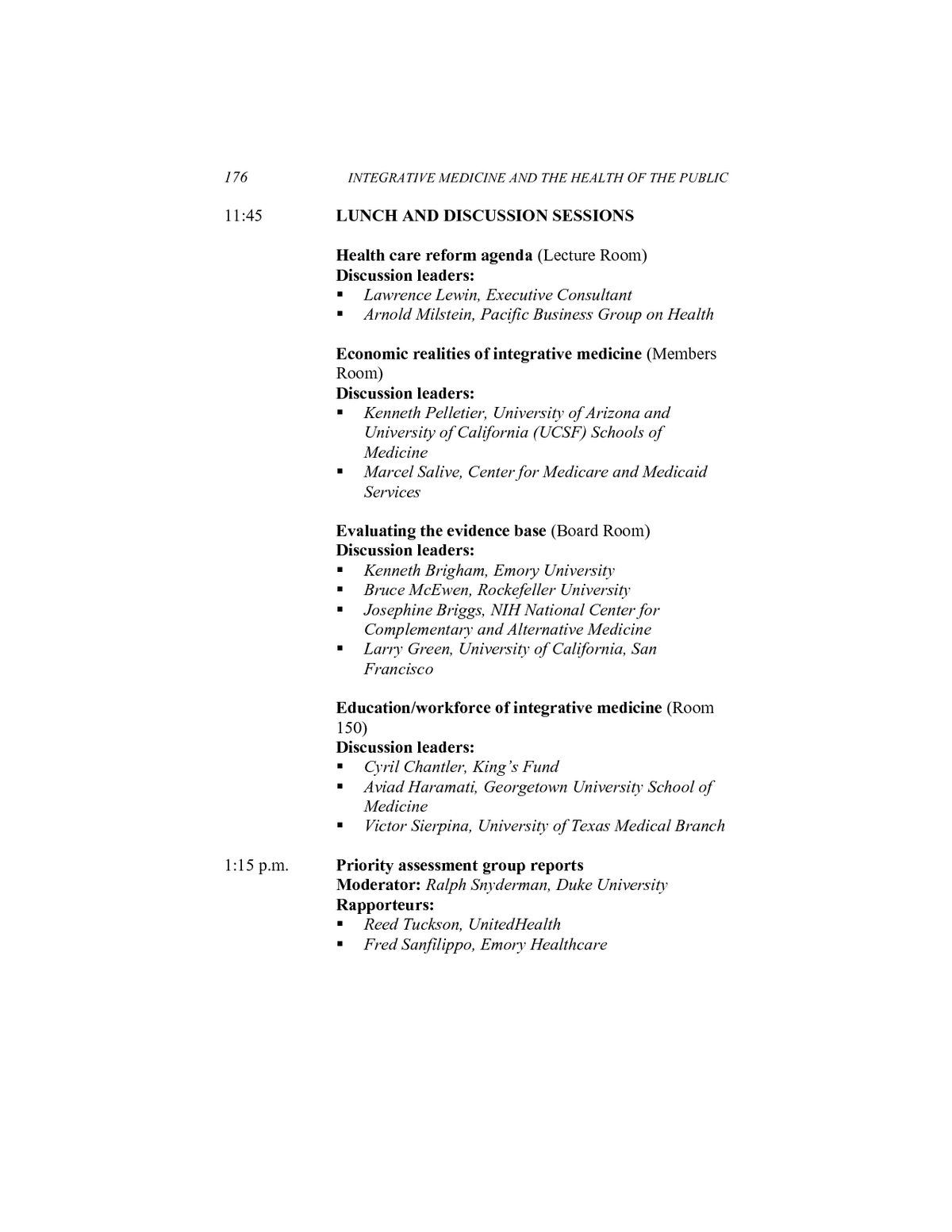
176 INTEGRATIVE MEDICINE AND THE HEALTH OF THE PUBLIC 11:45 LUNCH AND DISCUSSION SESSIONS Health care reform agenda (Lecture Room) Discussion leaders: Lawrence Lewin, Executive Consultant Arnold Milstein, Pacific Business Group on Health Economic realities of integrative medicine (Members Room) Discussion leaders: Kenneth Pelletier, University of Arizona and University of California (UCSF) Schools of Medicine Marcel Salive, Center for Medicare and Medicaid Services Evaluating the evidence base (Board Room) Discussion leaders: Kenneth Brigham, Emory University Bruce McEwen, Rockefeller University Josephine Briggs, NIH National Center for Complementary and Alternative Medicine Larry Green, University of California, San Francisco Education/workforce of integrative medicine (Room 150) Discussion leaders: Cyril Chantler, Kingâs Fund Aviad Haramati, Georgetown University School of Medicine Victor Sierpina, University of Texas Medical Branch 1:15 p.m. Priority assessment group reports Moderator: Ralph Snyderman, Duke University Rapporteurs: Reed Tuckson, UnitedHealth Fred Sanfilippo, Emory Healthcare
APPENDIX B 177 2:15 Panel II. The models Panel moderator: Erminia Guarneri, Scripps Center for Integrative Medicine Models to ensure integrated, continuous care, including chronic disease across caregivers and settings - Edward Wagner, MacColl Institute for Healthcare Innovation at Group Health Center for Health Studies Care models to lower near-term per capita spending responsibly - Arnold Milstein, Mercer Models to promote health and wellness, prevention, management of chronic diseases - David Katz, Yale University Models to optimize health and healing across the lifespan - Tracy Gaudet, Duke University Models to promote primary care (medical home, patient-centered care) - Mike Magee, Center for Aging Services Technologies 3:45 BREAK 4:00 Keynote II. The models Donald Berwick, Institute for Healthcare Improvement 4:45 ADJOURN DAY TWO (February 26) 9:00 a.m. Keynote III. The science Dean Ornish, Preventive Medicine Research Institute 9:45 Panel III. The science Panel moderator: Bruce McEwen, Rockefeller University Social determinants of health - Nancy Adler, University of California, San Francisco
178 INTEGRATIVE MEDICINE AND THE HEALTH OF THE PUBLIC Mindâbody medicine - Esther Sternberg, NIH National Institute of Mental Health Genomic/predictive medicine - Richard Lifton, Yale University Environmental epigenetics - Mitchell Gaynor, Weill-Cornell Medical Center and Gaynor Integrative Oncology Intervention evaluation and outcomes measures - Lawrence Green, University of California, San Francisco CAM modalities - Josephine Briggs, NIH National Center for Complementary and Alternative Medicine 11:30 LUNCH AND DISCUSSION SESSIONS Enhancing wellness (Lecture Room) Discussion leaders: Jon Kabat-Zinn, Center for Mindfulness in Medicine William George, Harvard Business School Mindâbodyâsocietal connections (Members Room) Discussion Leaders: Esther Sternberg, National Institutes of Health James Gordon, Center for Mind-Body Medicine Models of integrative medicine (Board Room) Discussion Leaders: Mike Magee, Center for Aging Services Technologies Tracy Gaudet, Duke Integrative Medicine Public perspective of integrative medicine (Room 150) Discussion Leaders: Ellen Stovall, National Coalition for Cancer Survivorship Judy Miller Jones, National Health Policy Forum Mary Woolley, Research! America
APPENDIX B 179 1:00 p.m. Priority assessment group reports Moderator: Ralph Snyderman, Duke University Rapporteurs: Richard Lifton, Yale University Aviad Haramati, Georgetown University Helen Darling, National Business Group on Health 2:00 Panel IV. Workforce and education Panel moderator: Elizabeth Goldblatt, Council of Colleges of Acupuncture and Oriental Medicine Education curricula - Mary Jo Kreitzer, University of Minnesota Core competencies - Victoria Maizes, University of Arizona Interprofessional education - Adam Perlman, University of Medicine & Dentistry of New Jersey Workforce reorientation - Richard Cooper, University of Pennsylvania Standards, regulation, and patient safety - Cyril Chantler, Kingâs Fund 3:30 BREAK 3:45 Keynote IV. Workforce and education Carol Black, Academy of Medical Royal Colleges 4:30 ADJOURN DAY THREE (February 27) 8:30 a.m. Keynote V. The economics Senator Tom Harkin, U.S. Senate 9:15 Panel V. The economics Panel moderator: Sean Tunis, Center for Medical Technology Policy Economic burden of chronic disease Kenneth Thorpe, Emory University Insurer perspective - Reed Tuckson, UnitedHealth Group
180 INTEGRATIVE MEDICINE AND THE HEALTH OF THE PUBLIC Employer perspective - Tom Donohue, U.S. Chamber of Commerce - William George, Harvard University Behavior change incentives and approaches - Janet Kahn, University of Vermont Rewards of integrative medicine - Kenneth Pelletier, University of Arizona and University of California (UCSF) Schools of Medicine 10:45 BREAK 11:00 Panel VI. Issues, priorities, and strategies: Moving forward Panel moderator: Harvey Fineberg, Institute of Medicine Panelists: Moderators from previous panels Michael Johns, Emory University Erminia Guarneri, Scripps Center for Integrative Medicine Bruce McEwen, Rockefeller University Elizabeth Goldblatt, Council of Colleges of Acupuncture and Oriental Medicine Sean Tunis, Center for Medical Technology Policy 12:20 p.m. Final remarks Ralph Snyderman, Duke University Harvey Fineberg, Institute of Medicine 12:30 ADJOURN
APPENDIX B 181 PLANNING COMMITTEE Ralph Snyderman (Chair), Duke University Carol M. Black, Academy of Medical Royal Colleges Cyril Chantler, The Kingâs Fund Erminia Guarneri, Scripps Center for Integrative Medicine Elizabeth A. Goldblatt, Academic Consortium for Complementary and Alternative Health Care Richard P. Lifton, Yale University Michael M. E. Johns, Emory University Bruce S. McEwen, Rockefeller University Dean Ornish, Preventive Medicine Research Institute and University of California, San Francisco Victor S. Sierpina, University of Texas Medical Branch Esther M. Sternberg, NIH National Institute of Mental Health Ellen L. Stovall, National Coalition for Cancer Survivorship Reed V. Tuckson, UnitedHealth Group Sean Tunis, Center for Medical Technology Policy
