
3
Schoolchildren’s Food and Nutrient Intakes and Related Health Concerns
PRÉCIS
This chapter summarizes key information about schoolchildren’s reported food and nutrient intakes, and it also covers supportive findings that influenced the committee’s decision-making process for developing recommended Nutrient Targets and Meal Requirements for the school meal programs. Several undesirable aspects of children’s intakes were identified. Of special note are low mean daily intakes of fruits, vegetables (especially dark green and orange vegetables and legumes), and whole grains as well as high intakes of discretionary calories (calories mainly from solid fat and added sugars) and sodium. Adolescent females tended to have low reported intakes of nearly all the nutrients investigated by the committee.
BACKGROUND
The committee assessed the dietary intakes of food groups, food subgroups, and nutrients by schoolchildren to identify food and nutrient intakes of concern by age-grade group and provide key information needed to develop recommendations for Nutrient Targets and Meal Requirements. The data sources and methods used by the committee are outlined below. The Phase I report (IOM, 2008) provides a detailed description of the data sources and methods, and Appendix G of this final report includes tables covering new analyses for schoolchildren’s intakes of energy and of magnesium to illustrate the type of data generated for the committee. The two major sources of food and nutrient data used were (1) Diet
Quality of American School-Age Children by School Lunch Participation Status (USDA/FNS, 2008c), hereafter called the 2008 Diet Quality Report, and (2) the third School Nutrition Dietary Assessment study (SNDA-III) (USDA/FNS, 2007a). Both studies present data from nationally representative samples.
The committee recognizes the imprecise nature of dietary intake data and notes that the available data do not take into account contributions from dietary supplements. Because such data may not be reflective of the nutritional status of individuals (IOM, 2008), the committee views the findings as general information about food group and nutrient intakes that are likely to be of concern rather than as strong evidence of definitive problems. When terms such as “the prevalence of inadequacy” are used in reference to reported dietary intakes, the qualifiers “apparent” or “estimated” usually have been omitted for ease of reading. To broaden its perspective on schoolchildren’s diets, the committee also considered selected aspects of health as related to dietary intake.
FOOD GROUP INTAKES
Assessment Method
To assess the food group intakes of schoolchildren, the committee relied on information based on the MyPyramid food guidance system (USDA, 2008). MyPyramid provides specific food-based dietary guidance that is consistent with the recommendations in the 2005 Dietary Guidelines for Americans. It does this by specifying food patterns for 12 calorie levels that range from 1,000 to 3,200 calories per day. To evaluate how well school-aged children’s food group intakes followed Dietary Guidelines for Americans, the committee compared the children’s mean food group intakes for one day with MyPyramid food patterns for three calorie levels as follows:
-
1,600 calories for children ages 5–8 years,
-
2,000 calories for children ages 9–13 years, and
-
2,400 calories for youth ages 14–18 years.
The committee recognizes two important limitations of these data:
-
The calorie levels and age ranges do not exactly match those determined by the committee to be most suitable for developing the Nutrient Targets and Meal Requirements. Because the committee was unable to obtain food group intake data for the 1,800 calorie level (the level selected for children ages 5 through 10 years), it used the data for the 1,600 calorie level from the 2008 Diet Quality Report instead.
-
The data had been collected 8 to 10 years ago (in the National Health and Nutrition Examination Survey 1999–2002).
Nonetheless, they were judged to be the most useful available data on food group intakes by schoolchildren. Findings from less representative studies (e.g., Kranz et al., 2009) and from SNDA-III (USDA/FNS, 2007a) are consistent with findings that appear below.1
Results and Discussion
Food Group Intakes
Figure 3-1 illustrates a number of useful findings about school-aged children’s mean daily food group intake. Table 3-1 provides more specific information, including data on the intake of vegetable oils and discretionary calories.
As shown in Figure 3-1 and Table 3-1:
-
Intake of dark green and orange vegetables, and legumes was very low (less than 20 percent of the MyPyramid amount). Whole grain consumption also was very low. Children in the youngest age group consumed only 24 percent of the MyPyramid whole grain amount, and the older children consumed even smaller percentages of the whole grain amount. Dietary Guidelines for Americans (HHS/USDA, 2005) specifically encourages the intake of a variety of vegetables and three or more ounce-equivalents (or at least half of the grains consumed) as whole grains each day.
-
Total vegetable intake was only about 40 percent of the MyPyramid amount for the children in all three age groups. Data on the percentage of MyPyramid intakes contributed by different food sources indicate that about 29 percent of children’s total vegetable intake came from potatoes (about 22 percent of the total in the form of fried potatoes or chips) (USDA/FNS, 2008c, Table C-22). The other most common food sources of vegetables were salad (greens), pizza, Italian-style pasta dishes, cooked corn, and sandwiches (excluding burgers).
-
Total fruit intake was about 80 percent of the MyPyramid amount for the youngest children, which was nearly twice as high as the percentages for the older two groups of children. Dietary Guidelines for Americans
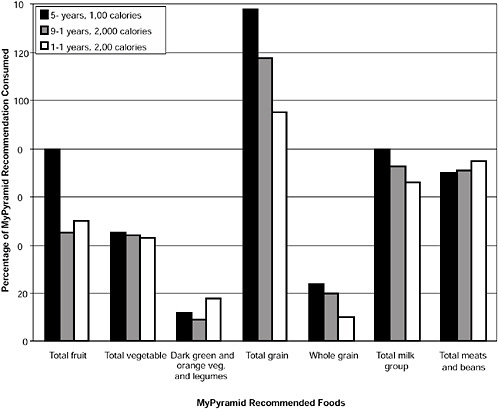
FIGURE 3-1 Percentages of MyPyramid recommendations consumed, by age group, based on the recommended daily amounts of food groups for the specified level of calories. This figure uses 3 cups rather than 2 cups as the MyPyramid recommendation for milk for the 1,600 calorie level.
NOTES: veg = vegetables. See Appendix Table H-1 for a list of foods in the MyPyramid food groups and subgroups.
SOURCE: USDA/FNS, 2008c.
-
recommends intake of a variety of fruits each day and a majority of the fruit intake from whole fruit rather than juice. About 78 percent of the MyPyramid fruits were contributed by a few sources: citrus juice, noncitrus juice, fresh apple, noncarbonated sweetened drink, fresh banana, fresh orange, and fresh watermelon (USDA/FNS, 2008c, Table C-21). Juice accounted for 53 percent of the MyPyramid fruit.
-
Total grain intake was close to or exceeded MyPyramid amounts for all the age groups. Most of the grain products were refined. The food sources that contributed the highest percentages of the grain servings were sandwiches and burgers, pizza, cold cereal, bread, corn-based salty snacks, cookies, popcorn, and pasta dishes (USDA/FNS, 2008c, Table C-23).
TABLE 3-1 Comparison of MyPyramid Food Group Patterns with Mean Daily Amounts of MyPyramid Food Groups Consumed by Children, by Age Group
|
Food Group or Componenta |
1,600 kcal Pattern (5–8 y) |
Mean Intake 5–8 y (n = 578) |
2,000 kcal Pattern (9–13 y) |
Mean Intake 9–13 y (n = 998) |
2,400 kcal Pattern (14–18 y) |
Mean Intake 14–18 y (n = 1,021b) |
|
Total fruit (cup equiv) |
1.5 |
1.2 |
2.0 |
0.9 |
2.0 |
1.0 |
|
Total vegetables (cup equiv) |
2.0 |
0.9 |
2.5 |
1.1 |
3.0 |
1.3 |
|
Dark green and orange vegetables and legumes |
0.86c |
0.1 |
1.14c |
0.1 |
1.14c |
0.2 |
|
Total grains (oz equiv) |
5.0 |
6.9 |
6.0 |
7.1 |
8.0 |
7.6 |
|
Whole grains (oz equiv) |
2.5d |
0.6 |
3.0d |
0.6 |
4.0d |
0.4 |
|
Total milk group (8 fluid oz equiv) |
2.0 |
2.4 |
3.0 |
2.2 |
3.0 |
2.0 |
|
Total meats and beans (oz equiv) |
5.0 |
3.5 |
5.5 |
3.9 |
6.5 |
4.9 |
|
Vegetable oils (g) |
22.0 |
14.1 |
27.0 |
15.4 |
31.0 |
18.5 |
|
Discretionary calories (kcal) |
132 |
719e |
267 |
810e |
362 |
946e |
|
NOTES: Weekday food consumption recalls were obtained during periods when school was in session. Estimates are based on a single 24-hour recall per child. The MyPyramid food intake pattern used is from the Dietary Guidelines for Americans (HHS/USDA, 2005). equiv = equivalent; g = gram; kcal = calories; oz = ounce; y = years. aSee Appendix Table H-1 for a list of foods in the MyPyramid food groups and subgroups. bExcludes pregnant and breastfeeding females. cBased on the recommendation expressed as cup equivalents per week. dBased on the recommendation that half of all grain equivalents be whole grains. eEstimated on the basis of the number of grams of discretionary solid fat and the number of teaspoons (tsp) of added sugars, as follows: (fat g × 9 calories/g) + ( tsp × 4.2 g/tsp × 4 calories/g). SOURCE: Weighted tabulations of data from NHANES 1999–2002, as reported in Diet Quality of American School-Age Children by School Lunch Participation Status (USDA/FNS, 2008c); adapted from Table C-20. |
||||||
-
Total milk group intake by the youngest age group exceeded the recommended intake shown in Table 3-1, but the percentage decreased with age. Data on the percentage of MyPyramid intakes contributed by different food sources indicate that about 17 percent of the total milk intake was from unflavored 2 percent milk, 16 percent from unflavored whole milk, and 9 percent from flavored milk (USDA/FNS, 2008c, Table C-24). Smaller percentages came from other sources, including cheese (either plain or in foods such as sandwiches), and unflavored low-fat and skim (fat-free) milk. A majority of the milk products consumed contained 2 percent or more milk fat, whereas Dietary Guidelines advises “3 cups per day of fat-free or low-fat milk or equivalent milk products”2 for children ages 9 years and older; 2 cups per day for younger children (HHS/USDA, 2005, p. viii).
-
For all three age groups, meat and bean intakes were about 70 to 75 percent of MyPyramid amounts. The food sources that were the biggest contributors to the total meat and bean intakes were sandwiches and burgers (about 31 percent combined), chicken (17 percent), beef (9 percent), and pork (4 percent).
-
For all three age groups, intake of vegetable oils was about 60 percent of MyPyramid amounts. The food sources of the oils appear to be mainly fried foods, various chips, and salad dressing on different foods (USDA/FNS, 2008c, Table C-26).
Discretionary Calorie Intake
Mean daily intakes of discretionary calories from solid fats and sugars were much higher than the amounts specified by MyPyramid for the three age groups. Based on calculations shown in the Phase I report (IOM, 2008, Table 4-5) and summarized in Table 3-1 above, children ages 5–8 years consumed, on average, 587 calories more from solid fats and added sugars than were in the MyPyramid plan. The discretionary calorie excesses were somewhat lower for the older age groups: 543 calories for children ages 9–13 years and 584 calories for children ages 14–18 years. Clearly, children’s intakes of solid fats and added sugars were undesirably high when compared with recommendations in Dietary Guidelines for Americans (HHS/USDA, 2005). Many food sources contributed discretionary solid fat. The highest contributor was sandwiches including burgers (15 percent) (USDA/FNS, 2008c, Table C-27). The next highest contributors were fried potatoes and pizza with meat, which contributed about 6 percent each. By far the largest contributors to the intakes of added sugars (45 percent of the total amount) were regular soda and noncarbonated sweetened drinks.
Summary of Food Group Intakes
Overall, these data indicate that dietary changes to improve consistency with Dietary Guidelines for Americans would feature increased intake of a variety of vegetables, whole fruits, and whole grains; increased emphasis on low-fat or fat-free milk products; increased emphasis on very lean meats and/or beans; and decreased intake of foods high in solid fat, added sugars, or both.
ENERGY AND NUTRIENT INTAKES
As stated in Dietary Reference Intakes: Applications in Dietary Planning:
Dietary planning and assessment are inextricably linked.
(IOM, 2003, p. 27)
Thus, an early step in the committee’s planning process was the assessment of schoolchildren’s estimated dietary intake of energy and nutrients.
The Dietary Reference Intakes (DRIs) provided the reference values used for the dietary intake assessment. DRIs are nutrient reference values developed for the United States and Canada for use in the assessment and planning of diets for healthy people. A complete set of the values appears in Dietary Reference Intakes: The Essential Guide to Nutrient Requirements (IOM, 2006). The DRIs comprise five types of reference values: the Estimated Average Requirement (EAR), Adequate Intake (AI), Recommended Dietary Allowance (RDA), Tolerable Upper Intake Level (UL), and Acceptable Macronutrient Distribution Range (AMDR). Box 3-1 provides definitions for the DRIs that are used to plan and assess group intakes.
To assess intakes, the committee used methods recommended and described by the Institute of Medicine for the assessment of energy and nutrient intakes (IOM, 2000b). These methods make use of the EAR, the AI, and the UL, but not the RDA. The Estimated Energy Requirement, a calculated value, is used in assessing energy intakes. The methods used in applying the different types of reference values are described in the following sections.
SNDA-III (USDA/FNS, 2007a) provided 24-hour dietary intake data on schoolchildren’s intakes of energy and nutrients but no data on intakes from dietary supplements. The assessments were conducted for the age-grade groups identified in Chapter 3: 6–10 years,3 11–13 years, and 14–18 years.
|
BOX 3-1 Definitions of Dietary Reference Intakes Used to Plan and Assess Group Intakes Estimated Average Requirement (EAR): Level of nutrient in a diet that meets the needs of 50 percent of a population. The EAR may be used as a cut-point to estimate the prevalence of inadequate intakes in a group. Adequate Intake (AI): An AI has been set for some nutrients, rather than an EAR. The AI is interpreted as the median intake of a healthy population, although the methods for setting AIs have varied. The AI may be used as the goal for the median intake of a population, although the actual prevalence of inadequacy cannot be estimated. Tolerable Upper Intake Level (UL): The level of intake of a nutrient that is associated with little or no risk of having adverse effects. For a population group, the proportion of usual intakes above the UL is interpreted as the prevalence of excessive intakes. |
Some of the nutrient intake values and other nutrient findings presented in this report differ from those in the Phase I report (IOM, 2008) for the younger two age-grade groups because of differences in the age spans used. New analyses were conducted to examine, by gender, the intakes of schoolchildren in each age-grade group.
Energy
The committee used the SNDA-III data to estimate mean and median energy intake as well as energy expenditure for the children by age-grade group and gender. Energy expenditure was estimated for comparison with reported intake. Each child’s age, weight, and height were entered in the DRI equations (IOM, 2002/2005) for calculating the Estimated Energy Requirement. Because data on physical activity were not collected in SNDA-III, the physical activity level assumptions shown in Table 2-3 in Chapter 2 were used to select the physical activity coefficient in the equations. The mean Estimated Energy Requirement was then calculated for all children in each age-grade-gender group.
Major discrepancies were found between the mean energy intake that was estimated using the SNDA-III data and the mean Estimated Energy Requirement that was calculated as described in Chapter 2. For example, reported usual energy intakes exceeded the mean Estimated Energy Requirement by about 400 calories for the younger children and the energy intakes
were lower than the Estimated Energy Requirement for the adolescents ages 14–18 years. These discrepancies were not unexpected, considering the potential for (1) overreporting total food intake of the younger children and underestimating their physical activity level and (2) underreporting total food intake of the adolescents and overestimating their physical activity level. With regard to physical activity level, SNDA-III assumed a low-active level regardless of age. Although these discrepancies limited the committee’s ability to draw conclusions about the adequacy of energy intake using survey data, data on the prevalence of childhood overweight and obesity provide strong reason for concern about excessive calorie intake (see “Obesity” under “Supportive Findings” in this chapter).
Nutrients with an Estimated Average Requirement
For nutrients that have an EAR, the assessment of intake entails analysis to obtain the prevalence of inadequacy. The committee examined the distribution of usual intake of the 14 nutrients for which the DRI value is an EAR and estimated the prevalence of inadequacy of each by age-grade group and gender. It used the EAR cut-point method (IOM, 2001) for the estimations for all nutrients except iron for the older females. That is, for females ages 11–13 years and 14–18 years, the committee used the probability approach (IOM, 2000b, pp. 205–208) to estimate the prevalence of inadequate iron intake (see Appendix Tables I-2 and I-3 and also “Supportive Findings” in this chapter). Appendix Table I-1 presents data to allow comparison of the EAR for 14 nutrients with the reported usual intakes of those nutrients at the 5th percentile and at the median (50th percentile).
For most of the nutrients, based on the SNDA-III data, the 5th percentile of intake equals or exceeds the EAR, implying a low prevalence of inadequacy. The most obvious exception is vitamin E—even the median intake was below the EAR for all age and gender groups, meaning that the prevalence of inadequacy exceeds 50 percent. The estimated prevalence of usual intakes at or below the EAR is less than 3 percent for many nutrients (the B vitamins especially) (see Table 3-2). Notable exceptions (that is, nutrients with relatively high prevalence of inadequacy) include vitamin A, vitamin E, magnesium, and phosphorus. The estimated prevalence of inadequacy of vitamin E exceeded 80 percent for all age-gender groups. For 14–18-year-old females, the prevalence of inadequacy ranged from 7 to 97 percent across all the nutrients, and it was especially high for vitamins A, C, and E; folate; magnesium; phosphorus; and zinc. The prevalence of inadequacy also tended to be high for females ages 11–13 years, but to a lesser degree. The findings for the older adolescent females are consistent with their very low reported mean energy intakes.
TABLE 3-2 Estimated Prevalence of Inadequacy of Protein and Selected Vitamins and Minerals Among Schoolchildren Based on Usual Nutrient Intakes from SNDA-IIIa
|
Nutrient |
Estimated Prevalence of Inadequate Usual Intakes (%) |
|||||
|
6–10 years |
11–13 years |
14–18 years |
||||
|
Males (n = 295) |
Females (n = 317) |
Males (n = 342) |
Females (n = 342) |
Males (n = 506) |
Females (n = 512) |
|
|
Proteinb |
< 3c |
< 3 |
< 3 |
9 |
< 3 |
16 |
|
Vitamin A |
6 |
6 |
11 |
30 |
49 |
58 |
|
Vitamin C |
6 |
< 3 |
3 |
16 |
27 |
40 |
|
Vitamin E |
84 |
81 |
87 |
87 |
95 |
> 97d |
|
Thiamin |
< 3 |
< 3 |
< 3 |
4 |
3* |
17 |
|
Riboflavin |
< 3 |
< 3 |
< 3 |
< 3 |
< 3 |
7* |
|
Niacin |
< 3 |
< 3 |
< 3 |
< 3 |
< 3 |
9* |
|
Vitamin B6 |
< 3 |
< 3 |
< 3 |
5 |
< 3 |
20 |
|
Folate |
< 3 |
< 3 |
< 3 |
7 |
< 3 |
24 |
|
Vitamin B12 |
< 3 |
< 3 |
< 3 |
< 3 |
< 3 |
13* |
|
Phosphorus |
6 |
6 |
4 |
38 |
9* |
46 |
|
Magnesium |
5 |
8 |
11 |
35 |
72 |
87 |
|
Iron |
< 3 |
< 3 |
< 3 |
11e |
< 3 |
15e |
|
Zinc |
< 3 |
4 |
< 3 |
13 |
7* |
28 |
|
NOTES: n = sample size; SNDA-III = third School Nutrition Dietary Assessment study; y = years; *point estimate may not be reliable because of inadequate cell size or a large coefficient of variation. Bold font indicates values with a prevalence of inadequacy greater than 5 percent. aAll nutrients in this table have an Estimated Average Requirement (EAR). bThe sample sizes for protein data, which are smaller than those for the other nutrients, are as follows: males 6–10 years, 284; females 6–10 years, 306; males 11–13 years, 334; females 11–13 years, 328; males 14–18 years, 494; females 14–18 years, 482. cLess than 3 percent is reported when less than 3 percent of students had usual intakes in this range, but the specific point estimate was statistically unreliable. dMore than 97 percent is reported for common occurrences (more than 97 percent of students have usual intakes in this range, but the specific point estimate was statistically unreliable). eCalculated using the probability approach and, for the 11–13-year-old females, an adjusted EAR value. See Appendix I and also “Iron Status” under “Supportive Findings” in this chapter. SOURCES: Weighted tabulations of data from SNDA-III (USDA/FNS, 2007a); Dietary intake data (24-hour recalls) were collected during the 2004–2005 school year and do not include intakes from dietary supplements (e.g., multivitamin-multimineral preparations). The personal computer version of the Software for Intake Distribution Estimation (PC-SIDE; ISU, 1997) was used to estimate the usual nutrient intake distributions and the percentage of children with usual intakes below the EAR. The EARs used in the analysis were from the Dietary Reference Intake reports (IOM, 1997, 1998, 2000a, 2001, 2002/2005). |
||||||
Nutrients with an Adequate Intake
The committee examined the distribution of intake for five nutrients with an AI, but it focused on mean intake. This approach was used because the prevalence of inadequate usual intakes cannot be estimated for nutrients that have an AI rather than an EAR (IOM, 2000b). Groups with mean intakes at or above the AI, however, can generally be assumed to have a low prevalence of inadequacy. Assumptions about the prevalence of inadequacy of intakes cannot be made when the mean intake is below the AI.
Sodium, another nutrient with an AI, is not included in Table 3-3 and is discussed separately, relative to the UL, because the concern is for excessive rather than inadequate sodium intake. Because SNDA-III provided no data on vitamin D intake and no other reliable data sources provided the type of data needed, the committee did not assess vitamin D intake. The very recent What We Eat in America (NHANES 2005–2006) survey (USDA/ARS, 2009a) includes estimates of vitamin D intakes (for different age groups than those used by the committee) and shows low intakes, especially for adolescent females.
Table 3-3 shows that mean intakes of potassium and fiber were below the AI for all three age-grade groups and that mean intake of calcium was below the AI for the older two age-grade groups. The mean intakes of linoleic and α-linolenic acids were above the AI for all three age-grade groups.
It is important to note that another committee of the Institute of Medicine is conducting a study to assess current relevant data on vitamin D and calcium and, if appropriate, to update the DRIs for those two nutrients. It is possible that the committee’s findings will have implications for the assessment of schoolchildren’s intakes of these two nutrients.
Nutrients with a Tolerable Upper Intake Level
Because no data sources available to the committee provided information about contributions to nutrient intake from supplements, the committee’s assessment of usual nutrient intakes relative to the UL was limited. Eight of the nutrients considered by the committee have ULs. The committee compared the usual nutrient intake distributions of four of these—calcium, iron, phosphorus, and zinc—with the defined ULs for the age-grade groups. The other four were considered differently, as described below. For males and females within each age-grade group, intakes at the 95th percentile of the distribution were well below the ULs for all but zinc. More than 17 percent of children ages 6–10 years had usual zinc intakes that exceeded their UL. Intakes that exceeded the UL were seen mainly among the 6–8-year-old children in this 6–10-year-old group. For the younger children, the
TABLE 3-3 Comparison of Mean Nutrient Intakes with the Adequate Intake (AI), by Age-Grade Group and Gender
UL is 12 mg and their intake at the 75th percentile of the distribution was 12.6 mg (Zlotkin, 2006). For older children, whose UL is much higher, zinc intakes at the 95th percentile of the distribution were well below the UL.
Intakes of folate, niacin, and magnesium appear to exceed the UL for at least some age-gender groups, but the assessment needs to consider the form of the nutrient used in setting the UL. Because the ULs for magnesium represent intake from a pharmacological agent only, they do not apply to dietary intake. The ULs for folate and niacin apply only to the synthetic forms of these vitamins (the forms that are present in certain fortified and enriched foods). Lack of data on the content of the synthetic forms of the vitamins in foods limits the ability to assess the potential for excessive intake of folate and niacin.
Sodium intake clearly was excessive. The SNDA-III study (USDA/FNS, 2007a) found that mean daily sodium intake for all schoolchildren ages 6–18 years was 3,404 mg, and intake at the 95th percentile was 5,270 mg. These values contrast sharply with the ULs for sodium, which are 1,900 mg
for children ages 4–8 years, 2,200 mg for those 11–13 years, and 2,300 mg for children ages 14–18 years. Overall, more than 90 percent of schoolchildren had usual sodium intake that exceeded the UL.
Fats and Cholesterol
Dietary Guidelines for Americans (HHS/USDA, 2005) provides recommendations for total fat, saturated fat, and cholesterol; but DRIs have been established only for total fat (IOM, 2002/2005).4 Therefore, the committee used the Dietary Guidelines recommendations in assessing schoolchildren’s intakes of saturated fat, total fat, and cholesterol. Both the 2008 Diet Quality Report and the SNDA-III provide data on the proportions of children whose usual intakes of saturated fat, total fat, and cholesterol exceeded the maximum intakes recommended and on the proportions of children whose usual intakes of total fat were below the recommended minimum. The values cited below are based on SNDA-III data. Although Dietary Guidelines recommends that intake of trans fat be as low as possible, no reliable data were available for use in assessing schoolchildren’s intake of that food component. For further discussion of trans fats, see Chapter 4.
Saturated Fat
Dietary Guidelines for Americans (HHS/USDA, 2005) specifies that less than 10 percent of total food energy should be provided by saturated fat (regardless of age or gender). Because this recommendation is based on calorie intake, the number of grams of saturated fat set as the maximum differs by age and gender. It is considerably higher for active adolescent males than for sedentary adolescent females, for example. Nearly 80 percent of children in all the age-gender subgroups had usual saturated fat intakes that exceeded the recommended limit.
Total Fat
For school-aged children, Dietary Guidelines for Americans gives a range of 25 to 35 percent of calories for total fat intake, not just a maximum. More than 75 percent of children in all age-grade groups had usual fat intakes that were within this range. About 19 percent of all children had total fat intake that was above 35 percent of calories. Less than 3 percent of schoolchildren had reported usual fat intakes that were below 25 percent
of calories except for females ages 14–18 years (about 9 percent of these adolescents had low reported fat intakes) (USDA/FNS, 2008c).
Cholesterol
Dietary Guidelines recommends 300 mg of cholesterol as the maximum daily intake (for all persons who are at least 2 years of age). Cholesterol intakes were fairly consistent with the recommendation: more than 85 percent of all schoolchildren had usual cholesterol intakes that were not more than 300 mg per day. The prevalence of excessive cholesterol intakes was higher for males than for females and was highest among adolescent males (nearly 20 percent for males ages 11–13 years and nearly 37 percent for males ages 14–18 years), partially reflecting the fact that the recommendation is the same regardless of calorie needs.
Considerations Regarding the Identification of Priority Nutrients
The committee examined its findings on nutrient intakes to determine whether it would be appropriate to focus on a subset of the nutrients in setting Nutrient Targets or Meal Requirements, or both. A subset called key nutrients (calories, protein, vitamins A and C, calcium, iron, total fat, and saturated fat) had been used in developing the existing Nutrition Standards for school meals. A different subset of five nutrients of concern (calcium, potassium, fiber, magnesium, and vitamin E) is identified for children and adolescents in Dietary Guidelines for Americans (HHS/USDA, 2005). Dietary Guidelines also focuses on saturated fat, total fat, trans fat, cholesterol, and sodium. The report Healthy People 2010 Objectives for the Nation (HHS, 2000) lists public health objectives for saturated fat, total fat, calcium, and sodium but no other nutrients.
The committee’s assessment of schoolchildren’s dietary intakes of a set of 23 nutrients5 suggests low intakes of the same nutrients of concern as identified by Dietary Guidelines, but the assessment also points to a relatively high prevalence of inadequacy of vitamin A, vitamin C, and phosphorus for several of the age-grade groups and of most vitamins and minerals for females ages 14–18 years—all of which might be called nutrients of concern or shortfall nutrients at least for some age-grade groups. Sodium intake was excessive for all age-grade groups, and saturated fat intake was excessive for more than 75 percent of the children.
The committee searched the literature but found no convincing evidence that achieving adequate intakes of a small number of nutrients could serve as a valid proxy for achieving adequate intakes of all the nutrients. More-
over, nutrition labeling information is not required for four of the nutrients (potassium, magnesium, vitamin E, and phosphorus) that could be termed shortfall nutrients for at least several age-grade groups. Thus, although subsets of nutrients are useful for various public health purposes, the committee determined that it is valuable to use a more complete set of nutrients when developing Nutrient Targets in the design of the Meal Requirements for school meals. This approach avoids the possibility that a nutrient such as potassium, for example, will be overlooked in developing standards for menu planning. Therefore, the committee considered all 23 nutrients as it developed its method for setting standards for menu planning. The methods used to set targets for the nutrients appear in Chapter 4.
SUPPORTIVE FINDINGS
To complete its assessment of schoolchildren’s food and nutrient intakes, the committee searched for recent physical data that would support the dietary findings. In addition, recent Institute of Medicine reports (IOM, 2007a, 2007b) and targeted literature searches covering the past few years provided a useful perspective on associations of children’s health with weight status and with selected aspects of diet. This section briefly covers overweight and obesity, blood pressure, calcium and vitamin D, iron status, and folate status. The information points to the key role that an appropriate calorie intake and a nutritious diet have in the prevention of many chronic conditions.
Obesity6
The committee turned to physical evidence on weight status and studies of associations of weight status with health to gain perspective on the importance of setting appropriate calorie levels for school meals.
Defining Overweight and Obesity in Children
The terms overweight and obesity are meant to reflect an amount of body fat that is elevated to a level that has clear adverse effects on health. The definitions for overweight and obesity are based on the body mass index (BMI), which is calculated as the weight in kilograms divided by height in meters squared: kg/m2. This index is an expression of body weight (mass) adjusted for height, and it is a good proxy for body fatness at the popula-
tion level. This report uses the age- and gender-specific reference data for BMI for children published by the Centers for Disease Control and Prevention (Kuczmarski et al., 2000). Children and adolescents with a BMI over the 95th percentile are termed obese and those between the 85th and 95th percentiles overweight (CDC, 2009).
Prevalence of Obesity Among U.S. Schoolchildren Has Increased
Much concern has been raised about the increasing prevalence of obesity among U.S. children, as indicated by the age- and gender-specific BMIs at the 95th percentile or higher (CDC, 2008). From 1976 to 2006, striking increases in the percentages of obese children occurred, as shown in Figure 3-2.
Table 3-4 presents recent data on three categories of high BMIs among U.S. children. Notably, nearly one-third of all children are overweight or obese (BMI ≥ 85th percentile). Specifically, close to 17 percent of children are obese (BMI > 95th percentile for age and gender) and 16 percent are overweight. For each age group, the prevalence of obesity and of overweight are higher among males than among females and higher among non-Hispanic blacks and Mexican Americans than among non-Hispanic whites (data not shown) (Ogden et al., 2008).
Health Risks for Children: Obesity Matters
Despite the limitations in the use of BMI as a measure of pediatric obesity (Ebbeling and Ludwig, 2008), the prevalences of obesity shown in Table 3-4 indicate that large numbers of children and adolescents are at increased risk for chronic disease: type II diabetes (Messiah et al., 2008; Weiss and Caprio, 2005), hypertension (Jago et al., 2006), and metabolic syndrome (De Ferranti et al., 2006) in the short term and both diabetes and cardiovascular disease in the long term (Baker et al., 2007). In addition, children who are overweight are at increased risk of becoming overweight adults, with all the attendant risks and compromises to good health that are implied (Ferraro et al., 2003). Moreover, overweight children may experience social stigma and emotional ill health (Anderson et al., 2006; French et al., 1995). In a recent multisite, multiethnic study of adolescents, Wallander et al. (2009) found that psychosocial quality-of-life (but not physical quality-of-life) measures were lower for obese than for nonobese children. A recent Arkansas study documented poorer academic performance among overweight children, mediated largely through weight-related teasing by peers (Krukowski et al., 2009).
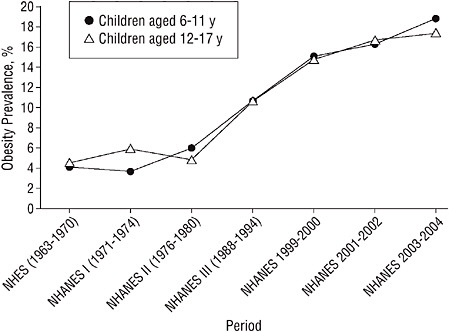
FIGURE 3-2 Trends in obesity prevalence among U.S. children.
NOTES: NHANES = National Health and Nutrition Examination Survey; NHES = National Health Examination Survey; y = years.
SOURCE: Lee, 2008. Reprinted with permission from Archives of Pediatrics and Adolescent Medicine. July 2008. 162(7):683. Copyright © American Medical Association. All rights reserved.
Role of School Breakfast and Lunch Programs in Relation to Childhood Obesity
No definitive studies have been found that provide evidence of how the school meal programs affect children’s weight status. However, a recent analysis of data from SNDA-III indicated that School Breakfast Program participants had significantly lower BMI than did nonparticipants and that there were racial/ethnic differences in the associations of BMI with participation (Gleason and Dodd, 2009). Because of the substantial contribution of school meals to many children’s total calorie and nutrient intake during the school years, revision of the current Nutrition Standards and Meal Requirements might hold potential for reducing any possible contribution of the school meal programs to childhood obesity. The amount of time that children spend at school and the substantial proportion of their dietary intake that can be derived from school meals dictates that school meals be structured in such a way that they do not contribute to childhood obe-
TABLE 3-4 Prevalence of High BMIs Among U.S. Children, by Age, 2003–2006
sity. On the other hand, neither school meals nor the school environment provide appropriate venues for the treatment or clinical management of overweight and obesity among schoolchildren. Because of concerns about children from households with low food security coupled with concerns about childhood obesity, the calorie levels for school meals need to be high enough to meet the needs of the students on average.
Blood Pressure
Using data on children from the third National Health and Nutrition Examination Survey (NHANES III, 1988–1994) and from NHANES 1999–2000, Muntner and colleagues (2004) provided evidence that part of the observed increase in blood pressure over the past decade is attributable to the increase in prevalence of overweight that occurred over the same period. Sodium intake also appears to be related to children’s blood pressure, and high blood pressure responds to a reduction in salt intake in children as in adults (He and MacGregor, 2006; Pappadis and Somers, 2003). A recent, large cross-sectional population study of adolescents in the United Kingdom shows a clear relationship between blood pressure and salt intake, independent of BMI (He et al., 2008). Such studies provide support for efforts to support healthy weight among children and to reduce their intakes of sodium.
Calcium and Vitamin D
Late childhood and the adolescent years provide the window of opportunity to influence lifelong bone health. Approximately 45 percent of the
adult skeleton is acquired between the ages of 9 and 17 years (Weaver and Heaney, 2006). Because the amount of bone accumulated during pubertal growth depends to some extent on the amount of calcium and vitamin D in the diet, an adequate intake of these nutrients during childhood and adolescence is critical to bone health (Greer et al., 2006; Heaney et al., 2000).
Recently, considerable attention has been focused on the requirements for vitamin D, the vitamin D status of the U.S. population, and the potential roles of vitamin D in health. The related discussions and controversies include questions regarding the adequate intake of vitamin D among schoolchildren. Such questions remain unresolved, however. Recently, an Institute of Medicine committee was convened to review available data and, if appropriate, revise the DRIs for vitamin D. Calcium also was included in this study. The report on this activity is scheduled for release in mid-2010. Until the important work of the DRI committee is completed, it would be premature to make conclusions about vitamin D concerns as they may relate to schoolchildren. The topic, however, is relevant to the goals of this committee’s work because school meals may play an important role in helping schoolchildren consume adequate amounts of calcium and vitamin D. Thus, any relevant recommendations from the upcoming Institute of Medicine report should be taken into account by those responsible for ensuring that school meals address children’s nutritional needs.
Iron Status
Laboratory data are available on which to base reliable estimates of iron deficiency. According to NHANES 1999–2000 data (CDC, 2002) for children ages 6–11 years, 4 percent had iron deficiency, defined as having an abnormal value for at least two of the following: serum ferritin, transferrin saturation, and erythrocyte protoporphyrin.7 The prevalence of iron deficiency was 9 percent among females ages 12–15 years, 16 percent among females ages 16–19 years, and lower for the other age-gender groups.
The relatively high prevalence of iron deficiency among adolescent females and the known adverse effects of iron deficiency and anemia led the committee to consider the value to use for the Estimated Average Requirement (EAR) for females ages 11–13 years. The physiological changes that occur during adolescence complicate the setting of the EAR for iron (IOM, 2001), especially for the DRI age range of 9–13 years. The current EAR for girls 9–13 years assumes that girls in this age range do not menstruate. However, the average age of menarche in the United States is about
12.5 years, meaning that more than half of all girls will be menstruating by age 13 years. The accompanying median blood loss is estimated to increase the iron requirement by 0.45 mg of iron per day (IOM, 2001). For some subgroups of the population, the average age of menarche is even earlier (Chumlea et al., 2003). In addition, in girls the growth spurt that accompanies puberty usually begins before menarche. Tanner et al. (1966) showed that growth velocity peaks at 12–13 years among girls, and the growth spurt also requires additional iron (an additional 1.3 mg per day for girls) (IOM, 2001). Therefore it is reasonable to assume that a substantial number of girls ages 11–13 years will be experiencing a growth spurt and will be menstruating. On this basis, the committee concluded that an adjustment is needed for the purpose of setting the iron target for girls in the 11–13-year age-grade group. In particular, the EAR for iron (5.7 mg per day) needs to be increased by 1.8 mg per day (0.5 mg for menstruation and 1.3 mg for the growth spurt) for the middle school girls.
Conclusion: For the purposes of setting Nutrient Targets for school meals, the value used for the EAR for iron for girls ages 11–13 years will be 7.5 mg per day. This is a conservative estimate of the mean iron requirement that will ensure that the Nutrient Target will be applicable to populations of girls who are menstruating and experiencing the adolescent growth spurt.
Folate Status
The measurement of serum folate concentrations of various subgroups confirms findings of changes in folate intake that have occurred since 1998, when the Food and Drug Administration first required the addition of folic acid (a synthetic form of folate) to enrich cereal grains and bakery products. Serum folate values increased between 119 to 161 percent during the first postfortification period (1999–2000) (Briefel and Johnson, 2004). Using the same NHANES data set, the estimated intakes of folate also increased. Although serum folate values have declined slightly from the first postfortification values, they remain well above prefortification values (Pfeiffer et al., 2007). Clearly, the fortification of enriched grain products has contributed important amounts of folate to the dietary intakes of many Americans.
SUMMARY AND CONCLUSIONS
This review of dietary intake data has identified a number of foods and nutrients for which a notable proportion of children had intake levels inconsistent with reference intake levels. All the age-grade groups had mean daily intakes of fruits, vegetables (especially dark green and orange
vegetables and legumes), whole grains, total meat and beans, and milk products that were lower than MyPyramid amounts. Across the entire age range, the prevalence of inadequacy was very high for vitamin E, but no health consequences have been associated with these reported intakes of vitamin E. Mean intakes of potassium and fiber also were low. For both males and females ages 9 years and older, the prevalence of inadequate intakes of magnesium and vitamin A was high. Adolescent females tended to have low reported intakes of nearly all the nutrients investigated by the committee. This finding is consistent with the low reported energy intakes of many adolescent females.
Based on food intake data, children’s mean intake of discretionary calories from solid fats and added sugars was much higher than the amounts shown by the MyPyramid food patterns. For all the age groups, nutrient analysis showed that very high percentages of the children had excessive intakes of sodium and saturated fat,8 and high usual intake of total fat was also common.
Despite limitations of the data on energy intake and energy requirements of the schoolchildren, the finding of energy consumption that exceeds the estimated average energy requirement among the younger children is a concern in the setting of the high prevalence of childhood overweight and obesity. Overweight and obesity are of great concern because of associated health and psychosocial risks, especially if the excess weight is carried into the adult years. Reconsideration of calcium and vitamin D status and needs may be necessary pending the release of an upcoming Institute of Medicine report on these two nutrients. Recent data support the value of reducing sodium intake to help control blood pressure. Evidence is presented to explain the committee’s decision to adjust the iron requirement upward for middle school females. Laboratory data indicate that the folate status of children improved after enactment of the federal requirement for the folic acid fortification of enriched grain products.
Clearly there is room for improvement of children’s dietary intakes. The chapter lends support to the position that attention to nutritious meals in the school meal programs may contribute to children’s current and future health and well-being.


