
1
Acrolein1
Acute Exposure Guideline Levels
PREFACE
Under the authority of the Federal Advisory Committee Act (FACA) P.L. 92-463 of 1972, the National Advisory Committee for Acute Exposure Guideline Levels for Hazardous Substances (NAC/AEGL Committee) has been established to identify, review, and interpret relevant toxicologic and other scientific data and develop AEGLs for high-priority, acutely toxic chemicals.
AEGLs represent threshold exposure limits for the general public and are applicable to emergency exposure periods ranging from 10 minutes (min) to 8 hours (h). Three levels—AEGL-1, AEGL-2, and AEGL-3—are developed for each of five exposure periods (10 and 30 min and 1, 4, and 8 h) and are distinguished by varying degrees of severity of toxic effects. The three AEGLs are defined as follows:
AEGL-1 is the airborne concentration (expressed as parts per million [ppm] or milligrams per cubic meter [mg/m3]) of a substance above which it is predicted that the general population, including susceptible individuals, could experience notable discomfort, irritation, or certain asymptomatic, nonsensory
effects. However, the effects are not disabling and are transient and reversible upon cessation of exposure.
AEGL-2 is the airborne concentration (expressed as ppm or mg/m3) of a substance above which it is predicted that the general population, including susceptible individuals, could experience irreversible or other serious, long-lasting adverse health effects, or an impaired ability to escape.
AEGL-3 is the airborne concentration (expressed as ppm or mg/m3) of a substance above which it is predicted that the general population, including susceptible individuals, could experience life-threatening health effects or death.
Airborne concentrations below the AEGL-1 represent exposure levels that could produce mild and progressively increasing but transient and nondisabling odor, taste, and sensory irritation or certain asymptomatic, nonsensory effects. With increasing airborne concentrations above each AEGL, there is a progressive increase in the likelihood of occurrence and the severity of effects described for each corresponding AEGL. Although the AEGLs represent threshold levels for the general public, including susceptible subpopulations, such as infants, children, the elderly, persons with asthma, and those with other illnesses, it is recognized that individuals, subject to idiosyncratic responses, could experience the effects described at concentrations below the corresponding AEGL.
SUMMARY
Acrolein is a colorless or yellowish liquid at ambient temperature and pressure. It has an acrid, pungent odor and is highly irritating to mucous membranes, especially the upper respiratory tract and eyes. The odor threshold is <0.1 ppm (Beauchamp et al. 1985). It is manufactured by air oxidation of propylene and is used as an intermediate in the production of acrylic acid. It is also used as a herbicide, algicide, and slimicide, in the cross-linking of protein collagen in leather tanning, as a fixative of histologic samples, and in the production of perfumes. Acrolein has also been used in military poison gas mixtures. The largest sources of human exposure to acrolein are from incomplete combustion of organic materials (such as in urban fires and forest fires), tobacco smoke, and the burning of fat-containing foods (Beauchamp et al. 1985).
The AEGL-1 values were based on very slight eye irritation and “annoyance” or discomfort observed in human subjects exposed to acrolein at 0.09 ppm (Weber-Tschopp et al. 1977). An intraspecies uncertainty factor of 3 was applied and is considered sufficient because minor ocular contact irritation is unlikely to vary greatly among humans. The values were held constant across time for the 10-min, 30-min, 1-h, 4-h, and 8-h time points because minor irritancy is generally a threshold effect, and prolonged exposure is not likely to result in a greatly enhanced effect.
The AEGL-2 was based on a 10-15% decrease in respiratory rate in healthy human subjects exposed to acrolein at 0.3 ppm for 1 h (Weber-Tschopp
et al. 1977). According to ASTM (1991), decreases in respiratory rate in the range of 12% to 20% correspond to slight irritation, and decreases in respiratory rate in the range of 20% to 50% correspond to moderate irritation. Thus, the point-of-departure is considered a no-observed-adverse-effect level (NOAEL) for moderate irritation. An intraspecies uncertainty factor of 3 was applied and is considered sufficient because irritation is unlikely to vary greatly among humans. This uncertainty factor is further justified because of the sensitivity of the methods used, the fact that the point-of-departure effect was only a very small detectable decrease in respiration, the lack of evidence of marked variability across the study group, including women; and the fact that at twice the concentration, respiration was still only slightly decreased. Also, application of the default uncertainty factor of 10 would yield AEGL-2 values in the concentration range where only minor irritation was noted in controlled human studies. This value was back-extrapolated to the 10- and 30-min time points using the relationship Cn × t = k (ten Berge et al. 1986), where n = 1.2 (derived from lethality data in rats exposed to acrolein from 1 to 4 h). The 1-h exposure of 0.3 ppm was held constant for the 4- and 8-h AEGL-2 values since irritation is generally a threshold effect, and prolonged exposure is not likely to result in a greatly enhanced effect.
The 10-min, 30-min, and 1-h AEGL-3 values were based on the highest concentration causing no mortality in the rat after a 1-h exposure (14 ppm), and the 4-h and 8-h AEGL-3 values were based on the highest concentration causing no mortality in the rat after a 4-h exposure (4.8 ppm) (Ballantyne et al. 1989). Intraspecies and interspecies uncertainty factors (UFs) of 3 each were applied (total UF = 10) and are considered sufficient because irritation is not expected to vary greatly within or among species. Furthermore, application of either an intra- or interspecies uncertainty factor of 10 (total UF = 30) would yield values that are inconsistent with the total database. (For example, AEGL-3 values for acrolein would range from 2.1 to 0.09 ppm and only ocular, nasal, or throat irritation and decreased respiratory rates were observed in humans exposed to acrolein at concentrations of 0.09 to 0.6 ppm for up to 40 min (Weber-Tschopp, et al. 1977). People exposed to this range of acrolein for 10 min to 8 h probably would experience effects defined by AEGL-3. Values were extrapolated using the relationship Cn × t = k (ten Berge et al. 1986), where n = 1.2 (derived from lethality data in rats exposed to acrolein from 1 to 4 h).
The calculated values are listed in Table 1-1.
1.
INTRODUCTION
Acrolein is a colorless or yellowish liquid at ambient temperature and pressure. It has an acrid, pungent odor and is highly irritating to mucous membranes, especially the upper respiratory tract and eyes. The odor threshold is <0.1 ppm (Beauchamp et al. 1985).
TABLE 1-1 Summary of AEGL Values for Acrolein
|
Classification |
10 min |
30 min |
1 h |
4 h |
8 h |
End Point (Reference) |
|
AEGL-1 (Nondisabling) |
0.030 ppm (0.070 mg/m3) |
0.030 ppm (0.070 mg/m3) |
0.030 ppm (0.070 mg/m3) |
0.030 ppm (0.070 mg/m3) |
0.030 ppm (0.070 mg/m3) |
Very slight eye irritation, “annoyance” and discomfort in humans (Weber-Tschopp et al. 1977) |
|
AEGL-2 (Disabling) |
0.44 ppm (0.92 mg/m3) |
0.18 ppm (0.41 mg/m3) |
0.10 ppm (0.23 mg/m3) |
0.10 ppm (0.23 mg/m3) |
0.10 ppm (0.23 mg/m3) |
10-15% decrease in respiratory rate in humans (Weber-Tschopp et al. 1977) |
|
AEGL-3 (Lethal) |
6.2 ppm (14 mg/m3) |
2.5 ppm (5.7 mg/m3) |
1.4 ppm (3.2 mg/m3) |
0.48 ppm (1.1 mg/m3) |
0.27 ppm (0.62 mg/m3) |
1 h (10-min, 30-min and 1-h values) or 4 h (4-h and 8-h values) no-effect level for death in rats (Ballantyne et al. 1989) |
Acrolein is manufactured by air oxidation of propylene and is used as an intermediate in the production of acrylic acid. It is also used as a herbicide, algicide, and slimicide, in the cross-linking of protein collagen in leather tanning, as a fixative of histologic samples, and in the production of perfumes. Acrolein has also been used in military poison-gas mixtures (ATSDR 2007). The production volume of acrolein in the United States was more than 100-500 million pounds in 1998 (ATSDR 2007).
The largest sources of human exposure to acrolein are from incomplete combustion of organic materials (such as in urban fires and forest fires), tobacco smoke, and the burning of fat-containing foods (Beauchamp et al. 1985).
The chemical structure is depicted below, and the physical and chemical properties of acrolein are presented in Table 1-2.
2.
HUMAN TOXICITY DATA
2.1.
Acute Lethality
Information concerning death in humans following inhalation exposure to acrolein is limited and anecdotal. Henderson and Haggard (1943) reported that exposure to acrolein at 150 ppm is fatal after 10 min. Gosselin et al. (1979) described the case of a 4-year-old boy exposed to smoke containing acrolein from an overheated fryer. Death occurred by “asphyxia” 24 h after the 2-h exposure to smoke. Autopsy indicated massive cellular desquamation of the bronchial lining, miscellaneous debris in the bronchial lumen, and multiple pulmonary infarcts. The boy’s 2-year-old brother also died, but no details were presented concerning his case. No acrolein concentration was reported, and smoke components in addition to the acrolein probably were partially responsible for the observed pathology.

TABLE 1-2 Chemical and Physical Data for Acrolein
|
Parameter |
Data |
Reference |
|
Common Name |
Acrolein |
ATSDR 2007 |
|
Synonyms |
Acraldehyde, acrylaldehyde, allyl aldehyde, 2-propenal, propylene aldehyde |
ATSDR 2007 |
|
CAS registry no. |
107-02-8 |
ATSDR 2007 |
|
Chemical formula |
C3H4O |
ATSDR 2007 |
|
Molecular weight |
56.06 |
O’Neil et al. 2001 |
|
Physical state |
Liquid |
O’Neil et al. 2001 |
|
Odor threshold |
<0.1 ppm |
Beauchamp et al. 1985 |
|
|
0.03-0.034 ppm: acrolein-sensitive persons |
Beauchamp et al. 1985 |
|
|
ATSDR 2007 |
|
|
|
0.16 ppm |
|
|
Melting, boiling, and flash points |
−88°C/52.5°C/−18°C (open cup) |
O’Neil et al. 2001 |
|
Density |
0.8389 g/m3 at 20°C |
O’Neil et al. 2001 |
|
Solubility |
212,000 mg/L in water at 25°C; miscible with lower alcohols, ethers, hydrocarbons, acetone, benzene |
ATSDR 2007 |
|
Vapor pressure |
210 mm Hg at 20°C |
O’Neil et al. 2001 |
|
1 ppm = 2.328 mg/m3 |
ATSDR 2007 |
|
|
|
1 mg/m3 = 0.43 ppm |
|
2.2.
Nonlethal Toxicity
2.2.1.
Case Reports
Champeix et al. (1966) described high fever, dyspnea, cough, foamy ex-pectoration, cyanosis, and pulmonary edema in a 36-year-old man exposed to an undetermined concentration of acrolein in the course of one work day. Eighteen months after exposure, pneumonopathy, bronchitis, and emphysema were still present. Bauer et al. (1977) described similar respiratory effects in a 21-year-old man exposed to smoke from an overheated pan for 6 h. No other details were available, and components of the smoke in addition to acrolein may have contributed to the observed effects.
2.2.2.
Experimental Studies
Lachrymation and marked eye, nose and throat irritation were observed within 20 seconds (s) in individuals exposed to acrolein at 0.81 ppm and within 5 s in those exposed at 1.22 ppm (Sim and Pattle 1957).
The effects of inhalation exposure to acrolein were evaluated in human volunteers in a series of three experiments as follows: (1) a “continuous” exposure at steadily increasing concentrations; (2) several exposures of short duration at continuously increasing concentrations; and (3) a longer exposure period (1 h) at a constant acrolein concentration (Weber-Tschopp et al. 1977). Subjectively perceived irritation and “annoyances” (the closest translation; another term might be “discomfort”) by means of a scaled questionnaire; eye-blinking rate; and respiratory rate via an elastic measurement tape that registered breath movements in the lower rib area were recorded during the exposures.
For the “continuous” exposure, 53 healthy students (31 men and 22 women) were divided into groups of three. Each volunteer was subjected to two experiments, one involving exposure to acrolein and the other without acrolein under identical conditions (control experiment). The duration of the experiments was 40 min, during which the acrolein concentration rose from 0 to 0.60 ppm in the first 35 min and remained constant during the last 5 min of the experiment. Each volunteer had to fill out the questionnaire every 5 min. Immediately after that, the blinking rate was measured for two subjects (of the groups of three). For the third subject, the respiratory rate was monitored continuously during the entire experimental period.
In the second of the series of experiments, 42 healthy students (17 men and 25 women) participated in an interrupted exposure experiment. Groups of four subjects were exposed to acrolein at 0, 0.15, 0.30, 0.45, and 0.60 ppm. Each individual was exposed to each concentration for 1.5 min five times with 8-min recovery periods in between. One minute into each exposure, they received the questionnaire.
Finally in the third of the series of experiments, 46 healthy students (21 men and 25 women) were exposed (in groups of three) to acrolein at 0.3 ppm for 60 min. Eye-blinking rate, respiratory rate, and subjective irritation determined immediately before exposure served as the control. The remainder of the protocol was identical to that for “continuous” exposure.
The acrolein was introduced with a microliter syringe, evaporated, and blown into a 30-m3 climate chamber by means of a carrier gas stream. The acrolein concentrations were measured continually during the experiment with a Technicon air monitor IV system by reaction of acrolein with 4-hexylresorcin in an ethyl alcohol-trichloroacetic acid solution in the presence of mercury chloride. Measured concentrations were within 3.8% of target concentrations.
Annoyance increased with increasing acrolein concentration (from 0 to 0.6 ppm) for both continuous and interrupted exposure regimens. A significant dif-
ference between continuous and interrupted exposure was seen only at 0.15 ppm. Annoyance was significantly higher with the interrupted exposure to acrolein compared with the continuous exposure (p < 0.01 for opinion on air quality; p < 0.05 for wish to leave the room). During the 1-h exposure at 0.3 ppm, annoyance increased during the first 20-30 min and then remained constant. The authors assumed that during the first phase of exposure, an adaptation to the irritant took place, which disappeared at the higher concentrations and/or longer exposure durations.
In the continuous and the interrupted exposure experiments, ocular and nasal irritation increased significantly with increasing acrolein concentration; apparently, the eyes were more sensitive than the nose. Very slight ocular irritation was reported at 0.09 ppm, whereas nasal irritation was reported at 0.15 ppm. Throat irritation in both experiments was found to be a less sensitive criterion. In the continuous experiment, throat irritation increased significantly only at 0.43 ppm; in the interrupted experiment, there was no change. Ocular, nasal, and throat irritation also increased with increasing exposure duration during the 1-h exposure to acrolein at 0.3 ppm. The subjective irritation reached an intensity that remained constant after about 40 min.
When compared with the control experiment without acrolein where no effects on annoyance or irritation were observed, the differences between control and acrolein experiments were significant (p < 0.05).
In the continuous exposure regimen, the eye-blinking rate increased at concentrations from 0.17 ppm and greater in a concentration-dependent manner; the increase became significant (p < 0.01) once the acrolein concentration reached 0.26 ppm. The mean initial value of blinking rate was doubled at about 0.3 ppm. In the 1-h exposure (0.3 ppm), the blinking rate reached this point after only 10 min.
The respiratory rate decreased slightly with increasing acrolein concentration in the continuous exposure experiment. Compared with controls, the decrease was statistically significant at 0.6 ppm, with an average decrease of 25%. There was also a decrease in mean respiratory rate over the course of the 1-h exposure to acrolein at 0.3 ppm. An average decrease of 10-15% was observed after both 10 and 20 min of exposure, and the decrease was significant (p < 0.01) from 40 min on and fluctuated between 2.9 and 3.4 breaths/min (average 20% decrease).
Summarizing data from all the experiments conducted, thresholds for significant changes of the measured parameters are presented in Table 1-3, while effects at constant exposure of 0.3 ppm are presented in Table 1-4.
In another study, 36 students (26 male and 10 female) were exposed to acrolein at 0, 0.06, 1.3-1.6, or 2.0-2.3 ppm through an eye mask for 5 min (Darley et al. 1960). A 16-cubic-foot glass and aluminum fumigation chamber was constructed and operated as a stirred flow reactor. The chamber was set up in a greenhouse to study damage to plants from acrolein exposure. Three eye irrita-
TABLE 1-3 Effect Thresholds in Human Volunteers Exposed to Acrolein
TABLE 1-4 Effects Human in Subjects Exposed to Acrolein at 0.3 ppm
|
Effect |
% of Subjects after 10 min |
% of Subjects after 20 min |
|
Wish to leave room |
50 |
72 |
|
Moderate eye irritation |
18 |
35 |
|
Severe eye irritation |
3 |
18 |
|
Moderate Nose Irritation |
7 |
19 |
|
Severe nose irritation |
1 |
4 |
|
Moderate throat irritation |
1 |
2 |
|
Severe throat irritation |
0 |
1 |
|
Doubling of blinking rate |
66 |
70 |
|
10-15% decrease in respiratory rate |
47 |
60 |
tion booths were constructed adjacent to the plant exposure chamber. The exhaust air from the chamber was run in an all glass system to a manifold and then through three airflow lines, one to each eye exposure booth. The end of each line was connected to a loose-fitting plastic face mask. Acrolein was diluted in water and the mixture dispensed from a syringe into a stream of oxygen. Concentrations were determined by absorbing the vapors in a buffered semi-carbazide-hydrochloride solution and reading the absorbance on a spectrophotometer. During exposure, the subjects wore activated carbon respirators to breath clean air, and only the eyes were exposed to the acrolein. Each student recorded the degree of irritation every 30 s during the 5-min exposure. Irritation was rated as none (score 0), medium (score 1), or severe (score 2). The maximum value recorded by a subject during a test was used as the response for that experimental session. Average maximum irritation scores are as follows: 0 ppm = 0.361, 0.06 ppm = 0.471, 1.3-1.6 ppm = 1.182, and 2.0-2.3 ppm = 1.476. The filtered-air irritation score (0.361) and the 0.06-ppm acrolein score (0.471) are both <0.5, where 0 is defined as “no irritation” and 1 is defined as “medium irritation.”
The conditions of this study did not allow distinguishing between slight irritation caused by other constituents of the greenhouse air, or even air movement in the eye mask, and that caused by acrolein at 0.06 ppm.
2.3.
Developmental and Reproductive Toxicity
Developmental and reproductive studies regarding acute human exposure to acrolein were not available.
2.4.
Genotoxicity
Genotoxic studies regarding acute human exposure to acrolein were not available.
2.5.
Carcinogenicity
Carcinogenicity studies regarding human exposure to acrolein were not available.
2.6.
Summary
Information concerning human mortality from acrolein exposure is limited and anecdotal. Nonlethal case reports and experimental studies with healthy human volunteers suggest that low concentrations of acrolein are irritating to the eyes, nose, and throat and cause a decrease in respiratory rate. At higher concentrations, coughing, pulmonary edema (may be delayed in onset), bronchitis, or tracheobronchitis may occur. No information concerning effects in young, elderly, or asthmatic individuals was available. No information concerning reproductive and developmental toxicity, genotoxicity, or carcinogenicity was located.
3.
ANIMAL TOXICITY DATA
3.1.
Acute Lethality
3.1.1.
Nonhuman Primates
As the result of exposure to acrolein during an escape-performance test, one male baboon died 1.5 h after exposure to 2,780 ppm acrolein and another died 24 h after exposure to 1,025 ppm (Kaplan 1987). Both animals developed severe respiratory effects and died from pulmonary edema. This study is described in detail in section 3.2.1.
3.1.2.
Rats
Ballantyne et al. (1989) exposed groups of five male and five female Sprague-Dawley rats to acrolein at 14, 22, 24, 31, or 81 ppm for 1 h or at 4.8, 7.0, 9.1, or 12.1 ppm for 4 h, followed by a 14-day observation period. Acrolein vapor was dynamically generated by metering pure liquid acrolein from a syringe pump into a heated glass evaporator. Glass beads were added to the evaporator to increase the surface area for vaporization. The vapor was then carried to the exposure chamber by a stream of air passing through the evaporator. The different concentrations of acrolein were obtained by varying the generation temperature, airflow rate through the generator, or airflow rate through the chamber. Chamber atmospheres were sampled four to six times during the 1-h exposures and 10 times during the 4-h exposures and were analyzed by gas chromatography. Lachrymation, perinasal, and periocular wetness, and mouth breathing were observed at all acrolein concentrations during exposure. After exposure, perinasal and perioral wetness and encrustation, mouth and audible breathing, decreased breathing rate, and hypoactivity were observed in all groups. Concentration-dependent signs of respiratory distress and hypoactivity were observed during post-exposure days 1 through 6. Body weights of surviving animals decreased during week 1 and recovered thereafter. Combined maleand female LC50 values (concentration with 50% lethality) of 26 ppm and 8.3 ppm were calculated for 1 h and 4 h, respectively. Necropsy of decedents revealed perinasal and perioral encrustation, mottled discoloration of the lungs and liver, clear fluid in the trachea and thoracic cavity, gas-filled stomach and intestine, and opaque or cloudy corneas. Histologically, pulmonary congestion and intraalveolar hemorrhage, fibrin deposition in the small airways, and necrosis and exfoliation of bronchiolar epithelia were observed in decedents. Mortality data are summarized in Table 1-5.
TABLE 1-5 Mortality of Rats Exposed to Acrolein for 1 or 4 Hours
|
Exposure Time |
Concentration (ppm) Mean ± Standard Deviation |
Mortality |
Time to Death After Exposure |
|
|
Males |
Females |
|||
|
1-h |
81 ± 1 |
5/5 |
5/5 |
3 h- 3 days |
|
|
31 ± 2 |
5/5 |
5/5 |
3 h- 6 days |
|
|
24 ± 1 |
2/5 |
1/5 |
1-3 days |
|
|
22 ± 5 |
0/5 |
1/5 |
2 days |
|
|
14 ± 7 |
0/5 |
0/5 |
— |
|
4-h |
12.1± 0.4 |
5/5 |
3/5 |
1-3 days |
|
|
9.1 ± 1.4 |
3/5 |
4/5 |
1-13 days |
|
|
7.0 ± 0.2 |
3/5 |
0/5 |
1-5 days |
|
|
4.8 ± 0.2 |
0/5 |
0/5 |
— |
|
Source: Ballantyne et al. 1989. Reprinted with permission; copyright 1989, Human & Experimental Toxicology. |
||||
3.1.3.
Guinea Pigs
Male Dunkin-Hartley guinea pigs were exposed to acrolein at 0 or 1.6 ppm for 7.5 h on each of two consecutive days (Turner et al. 1993). There were no deaths in the control group, and 14% of the acrolein-exposed animals died. In another study, guinea pigs died 6 min into an exposure at 1,600 ppm (Davis et al. 1967). These studies and their nonlethal effects are described in section 3.2.4.
3.1.4.
Other Data
Acute lethality data were available for mice, rats, dogs, cats, hamsters, rabbits, and guinea pigs; however experimental details such as animal strains, exposure systems, and concentration-response data were unavailable. These data are summarized in Table 1-6.
3.2.
Nonlethal Toxicity
3.2.1.
Nonhuman Primates
Kaplan (1987) exposed juvenile male baboons (one per concentration) to acrolein at 12, 25, 95, 100, 250, 505 (two animals) 1,025, or 2,780 ppm for 5 min. The animals had been trained to perform an avoidance and escape test. After 5 min of exposure, the escape test was presented to the animal. If the animal did not exit within 10 s, shock was applied to the bars of the cage and maintained for 20 s. If the animal exited within 10 s, the response was designated “avoidance.” If the animal exited after 10 s but within 30 s, the response was designated “escape.” Avoidance and escape responses were both considered successful escape performance. Exposure to acrolein did not prevent the escape task: all acrolein-exposed animals made the avoidance response. Although not statistically significant, test escape times were slightly less during exposure when compared with pre-exposure times. Baboons exposed at 1,025 and 2,780 ppm developed severe respiratory complications and died from severe pulmonary edema 24 h and 1.5 h after exposure, respectively.
3.2.2.
Mice
Kane et al. (1979) exposed groups of four male Swiss-Webster mice to concentrations of aerosolized acrolein ranging from 0.1 to 100 ppm for 10 min to determine a reference dose (RD50). The mice were placed in a glass exposure chamber with the body of each animal in an airtight plethysmograph, and only the head extending into the exposure chamber. Each of the four plethysmographs of the mouse exposure chamber was connected to a pressure transducer to sense pressure changes created during inspiration and expiration. Each
TABLE 1-6 Acute Lethality of Acrolein in Various Animal Species
|
Species |
Concentration (ppm) |
Exposure Duration |
End Point |
Reference |
|
Mouse |
875 |
1 min |
Approximate LC50 |
Albin 1962 |
|
Mouse |
175 |
10 min |
Approximate LC50 |
Albin 1962 |
|
Mouse |
10.5 (only concentration studied) |
6 h |
Approximately 50% died |
Pattle and Cullumbine 1956 |
|
Mouse |
66 |
6 h |
LC50 24-h observation |
Phillippin et al. 1970 |
|
Rat |
375 |
10 min |
LC50 |
Catalina et al. 1966 |
|
Rat |
131 |
30 min |
LC50 21 day observation |
Skog 1950 |
|
Rat |
8 |
4 h |
Approximate LC50 |
Carpenter et al. 1949 |
|
Guinea pig |
10.5 (only concentration studied) |
6 h |
Approximately 50% died |
Pattle and Cullumbine 1956 |
|
Hamster |
25.4 |
4 h |
LC50 |
Kruysse, 1971 |
|
Rabbit |
10.5 (only concentration studied) |
6 h |
Approximately 50% died |
Pattle and Cullumbine 1956 |
|
Cat |
870 |
2.5 h |
Died during exposure |
Iwanoff 1910 |
|
Cat |
650 |
2.25 h |
Died within 18 h |
Iwanoff 1910 |
|
Cat |
600 |
8 h |
Approximate LC50 |
ITII 1975 |
|
Dog |
150 |
30 min |
Approximate LC50 |
Albin 1962 |
|
Source: Adapted from Beauchamp et al. 1985. |
||||
animal served as its own control, with baseline values established by animals breathing room air. An RD50 of 1.68 ppm (95% confidence interval [CI], 1.26-2.24) was determined for acrolein.
To determine if respiratory lesions are produced in mice exposed to acrolein at the RD50 concentration, Buckley et al. (1984) exposed groups of 16-24 male Swiss-Webster mice to 1.7 ppm acrolein 6 h/day (d) for 5 days. Acrolein test atmospheres were generated by delivering a prepared mixture in nitrogen from a Teflon bag via a pump into the chamber air supply where it was diluted to achieve the target concentration. Chamber concentrations were measured at least once per hour by infrared spectrometry. A group of 8-10 mice served as unexposed controls. Half of the control and exposed mice were necropsied immediately after the last exposure, and the remaining mice were necropsied 72 h after the last exposure. Acrolein-exposed mice exhibited moderate inflammation, exfoliation, erosion, ulceration, and necrosis; and severe squamous metaplasia of the respiratory epithelium. Moderate ulceration and necrosis and minimal squamous metaplasia of the olfactory epithelium, and minimal serous exudate were also observed in treated animals. There was minimal to moderate recovery after 72 h. No effects were observed in control animals.
In another report, Steinhagen and Barrow (1984) determined acrolein RD50 values in two strains of mice: B6C3F1 and Swiss-Webster. Groups of three or four male mice were exposed to acrolein in a 2.7-L head-only exposure chamber. The acrolein atmospheres were generated by peristaltic metering of an acrolein-nitrogen mixture from a Teflon bag to the inhalation chamber supply inlet. The Teflon bag was prepared by vaporizing acrolein into the nitrogen stream during filling. Acrolein bag and chamber concentrations were determined calorimetrically. RD50 values of 1.41 ppm (CI, 1.16-1.73) and 1.03 ppm (CI, 0.70-1.52) were determined for B6C3F1 and Swiss-Webster male mice, respectively.
Astry and Jakab (1983) infected female Swiss mice with influenza A/PR8/34 for 45 min by aerosol inhalation. Seven days after virus infection, groups of uninfected and virus-infected mice were challenged by aerosol inhalation of 32P radio-labeled Staphylococcus aureus for 45 min. Immediately after bacterial challenge, groups of the virus-infected and uninfected mice were exposed to acrolein vapors at 3 or 6 ppm for 8 h. Acrolein vapor was generated from a temperature-controlled glass diffusion tube device designed to reach rapid steady state and maintain a constant evolution with time. An air supply delivered the vapor to a premixing chamber for final dilution with room air before entering the stainless steel, horizontal-flow exposure chambers. To assess pulmonary bactericidal activity, mice were killed at time zero (immediately after bacterial challenge) and at 8 h after bacterial challenge. Measurements were made from lung homogenates by both the standard pour plate technique and by liquid scintillation counting. Exposure to acrolein suppressed pulmonary antibacterial defenses in a concentration-dependent manner. In animals exposed to acrolein at 3 ppm, 12.3% of the S. aureus remained viable in the lungs at 8 h, while 33.9% remained viable at 8 h after exposure to acrolein at 6 ppm. Concen-
trations of acrolein greater than 6 ppm (not specified) did not add to the impairment of bacteriocidal activity but greatly increased sensory irritation (details not provided).
Aranyi et al. (1986) also examined the effect of acrolein inhalation on the female mouse host defense system. In this study, five groups of 18-24 female CD-1 mice per group were exposed to acrolein at 0 or 0.1 ppm (the Threshold Limit Value [TLV] concentration) for a single 3-h exposure and for 3 h/d, for 5 days. The mice were simultaneously challenged by exposure to aerosols of either Streptococcus zooepidemicus or 35S Klebsiella pneumonia. Animals challenged with Streptococcus zooepidemicus were observed for mortality for 14 days, and animals challenged with 35S Klebsiella pneumonia were utilized to determine bactericidal activity. No treatment-related effects were observed on mortality or bactericidal activity in mice receiving a single 3-h acrolein exposure or on mortality in the mice receiving the 5-day acrolein exposure. However, a significant (p ≤ 0.01) decrease in bactericidal activity was observed in animals exposed to acrolein for 5 days, with 84.3% of bacteria killed in 3 h in animals receiving 0 ppm and only 76.7% of bacteria killed in animals receiving 0.1 ppm. Results from Astry and Jakab (1983) and Aranyi et al. (1986) suggest that acrolein exposure may depress the immune system, making exposed individuals less able to fight infection.
3.2.3.
Rats
Groups of 20 male Sprague-Dawley rats were exposed to acrolein at concentrations of 0 or 12 ppm for 4 h (Murphy et al. 1964). Concentrated acrolein vapors were produced by passing a stream of air over liquid acrolein held in a diffusion cell in an ice bath. The experimental atmosphere was then produced by metering the concentrated vapors into a dilution stream of clean air. Animals were exposed in 4-cubic-foot, rectangular stainless-steel whole-body exposure chambers. Lung and serum alkaline phosphatase levels were determined in subgroups of five animals at 0, 5, 24, or 48 h after exposure. During and following exposure, animals exhibited eye and respiratory tract irritation, gasping, dyspnea, anorexia, and generalized weakness. Maximum effects on alkaline phosphatase activity were observed at the 24-h time point; average activities were 36% and 72% of control for serum and lung, respectively.
In another experiment reported in the same paper, groups of 20 male Sprague-Dawley rats were exposed similarly to acrolein at 0 or 6.4 ppm for 4 h. Alkaline phosphatase activity was measured in subgroups of five rats at 4, 24, 48, or 96 h after exposure. Maximal effects on alkaline phosphatase were observed 24 h after exposure, with liver alkaline phosphatase activity being approximately 325% of control. Average serum enzyme levels did not vary significantly from controls. Mean adrenal weights of acrolein-exposed rats were 102%, 132%, 123%, and 121% of air controls at the 4-, 24-, 48-, and 96-h time points, respectively. In yet another experiment in the same report, groups of 15
rats were exposed to acrolein at 0 or 4.4 ppm and removed from the exposure chamber in groups of five after 2, 4, or 8 h. All were sacrificed 24 h after the start of the exposure. Lung and kidney alkaline phosphatase activities did not differ from control values. Mean liver activitiy was 35% below control at 2 h, but was twice the control levels at 8 h.
Springall et al. (1990) exposed groups of three Porton Wistar rats to acrolein at 0, 22.2, 81.1, or 248.6 ppm for 10 min. Acrolein vapor was generated by injecting liquid acrolein into the 50-L aluminum and glass exposure chambers at a constant rate from a syringe drive into the chamber inlet through a 27-gauge needle surrounded by a concentric air jet. Vapor concentrations were set by adjusting the syringe drive delivery rate. Chamber concentrations were determined by UV spectrophotometry. Fifteen minutes after exposure, animals were killed and the respiratory tract dissected out. Frozen sections were prepared from upper and lower trachea and lung. Sections were stained with hematoxylin and eosin for morphology and with antisera to the general neuronal marker PGP 9.5, and the neuropeptides calcitonin gene-related peptide (CGRP), substance P (tachykinin), and vasoactive intestinal polypeptide (VIP). Slight edema and occasional small areas of bleeding into the lungs were observed in mid- and high-dose animals, the effect being more marked in the high-dose animals. There was no difference between treated and control animals in PGP 9.5 or VIP immunore-activity. The acrolein -exposed animals showed a progressive concentration-dependent decrease in the number of nerve fibers immunoreactive for both CGRP and substance P, the most marked effect being with substance P. These results suggest that acute acrolein exposure is affecting only the sensory nerves and not autonomic fibers because substance P and CGRP are the two primary neuropeptides in the sensory innervation of the rodent respiratory tract. Also, these data suggest that the apparent adaptation to acrolein exposure observed in human volunteers (Weber-Tschopp et al. 1977) may in part be due to nerve damage.
3.2.4.
Guinea Pigs
Male Dunkin-Hartley guinea pigs (number per group not specified) were exposed to acrolein at 0 or 1.6 ppm for 7.5 h on each of two consecutive days (Turner et al. 1993). Acrolein was aerosolized by passing 100% N2 (5 mL/min) over a solution of 0.25 mL of acrolein dissolved in 9.75 mL of sterile water. The aerosol solution was mixed with air (28.5 L/min) and was directed into a 72-L polyurethane exposure chamber. The concentration of acrolein in the chamber was determined immediately before the animals were placed in the chamber and each time the acrolein solution was replaced (every 4 h) by absorption spectrophotometry. There was no difference in the percentage of lavage fluid recovered between exposed animals (54.6 ± 1.45) and controls (55.8 ± 1.87). The ratio of wet-to-dry lung weight was significantly (p < 0.05) increased after acrolein exposure (6.43 ± 0.21) compared with controls (5.71 ± 0.08). BAL protein was
significantly (p < 0.05) increased in acrolein-exposed animals (144 ± 30.4 μg/mL) compared with controls (69.3 ± 20.0 μg/mL). Acrolein-exposed animals had significantly (p < 0.05) increased BAL red blood cells, BAL white blood cells, BAL neutrophil, and BAL monocyte counts and significantly (p < 0.05) decreased alveolar macrophage counts compared with controls. Epithelial denudation was observed in 17 of 21 of the large airways of acrolein-exposed guinea pigs examined histologically. This effect was not observed in control animals.
Davis et al. (1967) exposed groups of intact or tracheotomized guinea pigs (strain, sex, and number not specified) to acrolein at17 or 1,600 ppm for up to 60 min. Each animal acted as its own control. The test atmosphere was achieved by positive displacement of an equilibrated atmosphere. The displacement was achieved by inflation of a collapsed double-walled plastic bag into a 20-L bottle containing an “appropriate concentration of acrolein.” The desired concentrations were achieved by a diluting flow introduced into the system between the reservoir and the exposure chamber. In intact animals exposed at 17 ppm for 60 min, increased resistance (p < 0.01), decreased respiration rate (p < 0.01), increased tidal volume (p < 0.05), decreased minute volume (p < 0.05), and no change in compliance were observed. In tracheotomized animals, none of these changes were observed at 17 ppm for 60 min. Tracheotomized animals exposed at 1,600 ppm died approximately 6 min into exposure without any increase in resistance. No other details were provided.
Random-bred male guinea pigs were exposed to acrolein at 0 ppm (14 animals) or 0.6 ppm (10 animals) acrolein for 2 h (Murphy et al. 1963). The animals were exposed through face masks attached to an exposure manifold that was continuously flushed with clean or acrolein-contaminated air. The experimental atmosphere was produced by passing a stream of air over liquid acrolein. The concentrated vapors were metered into a stream of filtered air to obtain the desired concentration in an animal-exposure manifold. Acrolein concentration was measured by colorimetry. Acrolein-exposed animals exhibited increased respiratory flow resistance and tidal volume and decreased respiratory rate. The response peaked in 30 to 60 min and remained constant for the remainder of the exposure period. When the animals were returned to clean air, respiratory function rapidly returned to pre-exposure baseline. Air-exposed animals showed no effects.
3.2.5.
Dogs
Anesthetized mongrel dogs were exposed to synthetic smoke consisting of carbon particles (mean diameter 4.3μm) and acrolein at <200 ppm (low concentration, n = 5), 200-300 ppm (mid-concentration, n = 6), or >300 ppm (highconcentration, n = 8) for 10 min (Hales et al. 1988). Physiologic responses were measured for 4-18 h after exposure, depending on early response. Animals were then killed while deeply anesthetized. No significant changes were observed in pulmonary vascular or airway pressures during exposure. Immediately after ex-
posure, blood gases were not different from baseline values. Concentration-related pulmonary edema was observed. Two of five low-concentration dogs developed mild edema at 2 and 4 h, respectively, after smoke exposure. Histologically, edematous animals showed airway mucosal damage, low-level perivascular and intraseptal edema, and low-level patchy intraalveolar edema. Airway damage was limited to the trachea, carina, and large bronchi. Partial pressure of oxygen in arterial blood (PaO2) fell in low-concentration animals that did not develop pulmonary edema. Edema was consistently produced in mid- and high-concentration dogs, with extravascular lung water ranging from 1.5 to 3.5 and 2.2 to 2.6 times baseline, respectively. In the mid-concentration group, the edema was patchy and developed at an average of 147 ± 57 min after smoke exposure with one animal taking 6 h. Edema onset in the high-dose group was 65 ± 16 min. After edema onset, the pulmonary arterial pressure rose, CO fell and Pa02 fell in the mid- and high-concentration groups.
3.3.
Developmental and Reproductive Toxicity
SPF OFA rats were exposed to acrolein at 0 or 0.55 ppm continuously for 4 days (Bouley et al. 1976). Three exposed males were then mated with 21 exposed females and the exposures continued for an additional 22 days, at which time the females were killed. No treatment-related effects were observed on the number of pregnant rats or on the number and mean weight of the fetuses.
In another study, Fischer 344 male rats were exposed to acrolein at 0, 0.14, 1.4, or 4.0 ppm for 6 h/d, 5 d/wk for 62 weeks (Kutzman et al. 1981). The males were then mated with untreated females. No effects on number of viable embryos, resorptions, late deaths, corpora lutea, or sperm morphology were observed.
3.4.
Genotoxicity
Although genotoxic studies regarding animal exposure to acrolein were not available, in vitro mutagenicity data were located. Acrolein was positive in an Escherichia. coli pol A+/pol A− assay in the absence of metabolic activation. It was also mutagenic in Salmonella typhimurium TA104 without activation, and both positive and negative results have been obtained in strains TA 98 and TA 100 under a variety of experimental conditions. Negative results were obtained with strains TA 1535, TA 1537, and TA 1538. A weak positive response was obtained with E. coli WP2 uvrA. Glycidaldehyde, an acrolein metabolite, induced mutations in Klebsiella pneumoniae, Salmonella typhimurium TA 1535 and TA 100, and Saccharomyces cerevisiae and was positive in the mouse lymphoma L5178Y/TK assay. Acrolein did not induce DNA cross-linking or strand breaks in Saccharomyces cerevisiae (Beauchamp et al. 1985). However, Costa et al. (1997) reported significant DNA-protein cross-linking in cultured human lymphoma cells at lethal concentrations (≥0.15 mM).
3.5.
Carcinogenicity
Feron and Kruysse (1977) exposed groups of 18 male and 18 female Syrian golden hamsters to acrolein at 0 or 4.0 ppm for 7 h/d, 5 d/wk for 52 weeks. Abnormal behavior, growth retardation, increased hemoglobin and packed cell volume, increased relative lung weight, decreased relative liver weight, and rhinitis accompanied by hyperplasia and metaplasia of the nasal epithelium were observed in treated hamsters. No increase in tumor incidence was observed; however, the duration of this study may be too short to fully assess carcinogenicity. In another study, Le Bouffant et al. (1980) exposed 20 female Sprague-Dawley rats to acrolein at 8 ppm for 1 h/d, 7 d/wk for 10-18 months. No evidence of carcinogenicity was observed.
3.6.
Summary
Acute lethality data for animal species were abundant; however, experimental details were often not available. Nonlethal animal studies indicate that the respiratory system is the target for acrolein toxicity and that acrolein is a potent irritant at relatively low concentrations and short exposure durations. Irritancy was demonstrated by respiratory rate decreases in rodents, signs of irritation such as gasping and dyspnea, and decreased immunoreactivity of sensory nerve fibers in rodents. At higher concentrations and/or longer exposure times, respiratory system histopathology and pulmonary edema were evident. Data also suggest that exposure to acrolein may suppress pulmonary antibacterial defenses. Genotoxicity data are equivocal. There is no evidence that inhaled acrolein is a reproductiveand developmental toxicant or a carcinogen.
4.
SPECIAL CONSIDERATIONS
4.1.
Metabolism and Disposition
Data regarding the metabolism of acrolein following inhalation exposure were not available; however, Patel et al. (1980) investigated the in vitro metabolism of acrolein in rat liver and lung preparations. Oxidation of acrolein to acrylic acid in liver 9,000 g of supernatant and cytosol required either NAD+ or NADP+ and was inhibited by disulfiram, suggesting the involvement of aldehyde dehydrogenase. Acrolein was also metabolized to acrylic acid when incubated with liver microsomes. In the presence of NADPH and liver or lung microsomes, acrolein was metabolized to glycidaldehyde, a potent mutagen and carcinogen. Hydration of glycidaldehyde to glyceraldehyde was catalyzed by liver and lung epoxide hydrolase. The glycidaldehyde was also a substrate for liver and lung GSH-S transferases. Although glycidaldehyde is formed in vitro, there is no experimental evidence for its formation in vivo. Acrylic acid and glyceraldehyde can be oxidized to carbon dioxide (CO2). The glyceraldehyde is
metabolized to CO2 by glycolytic enzymes, and although the pathway of acrylic acid conversion has not been determined, it is possible that it is metabolized as a short-chain fatty acid.
Egle (1972) exposed anesthetized, male and female mongrel dogs to acrolein concentrations ranging from 172 to 262 ppm for 1 to 3 min. Acrolein retention by the entire respiratory tract averaged 80-85% of the inhaled dose and was independent of respiratory rate. Approximately 20% of the inhaled dose reached the lower respiratory tract. Exposure of only the lower respiratory tract resulted in retention of 65-70% concentration-independent retention; in this case, uptake varied inversely with ventilatory rate.
4.2.
Mechanism of Toxicity
Many of the effects of acrolein are caused by reaction with sulfhydryl groups. Acrolein is the most toxic of the 2-alkenals (including crotonaldehyde, pentenal, and hexenal) and is also the most reactive toward sulfhydryl groups. Deactivation of the cellular protein sulfhydryl groups could result in disruption of intermediary metabolism, inhibition of cell growth or division, and cell death. The respiratory irritancy of acrolein may be due to reactivity toward sulfhydryl groups in receptor proteins in the nasal mucosa (Beauchamp et al. 1985).
Li et al. (1997) investigated the effects of acrolein on isolated human alveolar macrophage function and response in vitro. Acrolein induced dose-dependent cytotoxicity as evidenced by the induction of apoptosis and necrosis. At lower doses, the heme oxygenase 1 protein was induced; however, stress protein 72 was not induced. These data suggest that acrolein caused a dose-dependent selective induction of a stress response, apoptosis, and necrosis. Macrophage function was examined by cytokine release in response to acrolein exposure. Acrolein caused a dose-dependent inhibition of IL-1β, TNF-α, and IL-12 release. The cytotoxicity and inhibited cytokine release may be responsible for the acrolein-induced immunosuppression described by Astry and Jakab (1983) and Aranyi et al. (1986) in section 3.2.2 of this document.
4.3.
Concurrent Exposure Issues
Acrolein forms adducts with glutathione, cysteine, N-acetylcystiene, and other thiols. This reaction may ameliorate the toxicity of acrolein at low concentrations. However, these same adducts may substantially contribute to the toxicity of acrolein (by depletion of important cellular molecules) at high concentrations (ATSDR 2007).
In vitro, acrolein enhances the inhibitory effect of styrene and 1,2-dichloroethane on α1-proteinase inhibitors. Decreased α1-proteinase inhibitor activity may result in an increase in lung neutrophil elastase activity, which in turn may cause emphysema to develop. Acrolein also increases the pentobarbital- and hexobarbital-induced sleeping time in rats, possibly through a covalent
reaction between acrolein and cytochrome P-450. This may lead to an inactivation of the P-450, thereby resulting in lengthened barbiturate action (ATSDR 2007).
Exposure of mice to mixtures of acrolein and sulfur dioxide suggested that either chemical could block the irritancy of the other and that recovery was delayed compared with exposure to individual chemicals. It is postulated that a bisulfite-acrolein adduct is formed, and that when exposure ceases, acrolein is released and slows recovery (ATSDR 2007).
4.4.
Structure Activity Relationships
Steinhagen and Barrow (1984) compared the sensory irritation potential of a series of saturated and unsaturated aliphatic and cyclic aldehydes by determining the 10-min RD50 values in both male B6C3F1 and male Swiss-Webster mice. α,β-unsaturated aliphatic aldehydes (including acrolein) yielded RD50 values between 1 and 5 ppm. Saturated aliphatic aldehydes with two or more carbons yielded RD50 values between 750 and 4,200 ppm, and cyclic aldehydes yielded values between 60 and 400 ppm. No differences were observed between mouse strains.
In another study, Nielsen et al. (1984) determined RD50 values of propene derivatives in trachea cannulated, male Ssc:CF-1 mice. Values were 2.9, 3.9, 5.0, and 2.9 ppm for allyl acetate, allyl alcohol, allyl ether, and acrolein, respecttively. The potency of these chemicals varied little for the concentration in air necessary to produce a 50% decrease in respiration. However, when potency was expressed in terms of thermodynamic activity, acrolein was found to be 10 times more potent than the other chemicals tested. The authors attributed that finding either to a higher reactivity of the carbon-carbon double bond or the involvement of the aldehyde group in a secondary chemical binding with the sensory receptor.
5.
RATIONALE AND AEGL-1
5.1.
Human Data Relevant to AEGL-1
Very slight ocular irritation was reported in healthy human volunteers exposed to acrolein at 0.09 ppm for 5 min (Weber-Tschopp et al. 1977).
5.2.
Animal Data Relevant to AEGL-1
Effects observed from inhalation exposure of experimental animals to acrolein are generally more severe than those defined by AEGL-1. A modification of the mouse RD50 (Kane et al. 1979) could potentially be used to derive AEGL-1 values.
5.3.
Derivation of AEGL-1
Because human data are available, they will be used to derive AEGL-1 values. Very slight eye irritation and annoyance or discomfort were observed in human subjects. The effects were observed at 0.09 ppm, the lowest investigated concentration. An intraspecies uncertainty factor of 3 will be applied and is considered sufficient because minor ocular contact irritation is unlikely to vary greatly among humans (NRC 2001, section 2.5.3.4.4). The values will be held constant across time for the 10-min, 30-min, 1-h, 4-h, and 8-h time points because minor irritancy is generally a threshold effect, and prolonged exposure is not likely to result in a greatly enhanced effect (NRC 2001). The AEGL-1 values for acrolein are presented in Table 1-7, and the calculations for these AEGL-1 values are presented in Appendix A.
These AEGL-1 values are considered protective because the data of Darley et al. (1960) suggested no irritation in humans exposed to acrolein at 0.06 ppm for 5 min.
6.
RATIONALE AND AEGL-2
6.1.
Human Data Relevant to AEGL-2
Moderate to severe ocular and nasal irritation accompanied by a 10-15% decrease in respiratory rate were reported in human volunteers exposed to acrolein at a concentration of 0.3 ppm for 1 h, (Weber-Tschopp et al. 1977).
6.2.
Animal Data Relevant to AEGL-2
Slight edema and bleeding into the lungs were observed in dogs exposed to acrolein at 81.1 ppm for 10 min (Springall et al. 1990). However, extrapolating from 10 min to 8 h is of questionable validity. Severe irritation, increased alkaline phosphatase activity, and increased adrenal weight were observed in rats exposed to acrolein at 6.4 ppm for 4 h (Murphy et al. 1964), and Murphy et al. (1963) observed increased respiratory flow resistance and tidal volume and decreased respiratory rate in guinea pigs exposed for 2 h at 0.6 ppm. Although effects observed in the rat and guinea pig studies are consistent with those defined by AEGL-2, the experimental methods and results are incompletely described. A modification of the mouse RD50 (Kane et al. 1979) could also potentially be used to derive AEGL-2 values.
TABLE 1-7 AEGL-1 Values for Acrolein
|
Classification |
10 min |
30 min |
1 h |
4 h |
8 h |
|
AEGL-1 |
0.030 ppm (0.070 mg/m3) |
0.030 ppm (0.070 mg/m3) |
0.030 ppm (0.070 mg/m3) |
0.030 ppm (0.070 mg/m3) |
0.030 ppm (0.070 mg/m3) |
6.3.
Derivation of AEGL-2
Because human data are available, they will be used to derive AEGL-2 values. A 10-15% decrease in respiratory rate was noted in humans exposed to acrolein at 0.3 ppm for one h; whereas a 25% decrease in respiratory rate was noted in humans exposed at 0.6 ppm (Weber-Tschopp, et al. 1977). According to ASTM (1991), decreases in respiratory rate in the range of 12-20% correspond to slight irritation, and decreases in respiratory rate in the range of 20-50% correspond to moderate irritation. Decreases in respiratory rates after contact of nasal mucosa with irritants (including acrolein) are due to stimulation of nerve endings of the afferent trigeminal nerve in the nasal mucosa. This mechanism has been described for all species tested, including humans (Alarie et al. 1981). The AEGL-2 will be based on the 10-15% decrease in respiratory rate in healthy human subjects exposed to acrolein at 0.3 ppm for 1 h. This is considered a NOAEL for moderate irritation. An intraspecies uncertainty factor of 3 will be applied and is considered sufficient because irritation is not expected to vary greatly between individuals (NRC 2001, section 2.5.3.4.4). This uncertainty factor is further justified because of the sensitivity of the methods used, the fact that the point-of-departure effect was only a very small detectable decrease in respiration, the lack of evidence of marked variability across the study group, including women; and the fact that at twice the concentration, respiration was still only slightly decreased. Also, application of the default uncertainty factor of 10 would yield AEGL-2 values in the concentration range where only minor irritation was noted in controlled human studies. This value will be back-extrapolated to the 10- and 30-min time points using the relationship Cn × t = k (ten Berge et al. 1986), where n = 1.2, (derived from lethality data in rats exposed to acrolein from 1 to 4 h; Ballantyne et al. 1989, Appendix D). Time scaling using the exponent, n, derived from rat lethality data is considered appropriate because the mechanism of lethality (pulmonary congestion resulting from severe irritation) is similar to the critical effect (irritation) used for AEGL-2 derivation. The 1-h exposure of 0.3 ppm will be held constant for the 4- and 8-h AEGL-2 values because irritation is generally a threshold effect, and prolonged exposure is not likely to result in a greatly enhanced effect (NRC 2001). The AEGL-2 values for acrolein are presented in Table 1-8, and the calculations for these AEGL-2 values are presented in Appendix A.
7.
RATIONALE AND AEGL-3
7.1.
Human Data Relevant to AEGL-3
Human lethality data were sparse and anecdotal and were lacking reliable concentration and time parameters and are thus not appropriate for establishing the AEGL-3 values.
TABLE 1-8 AEGL-2 Values for Acrolein
|
Classification |
10 min |
30 min |
1 h |
4 h |
8 h |
|
AEGL-2 |
0.44 ppm (0.92 mg/m3) |
0.18 ppm (0.41 mg/m3) |
0.10 ppm (0.23 mg/m3) |
0.10 ppm (0.23 mg/m3) |
0.10 ppm (0.23 mg/m3) |
7.2.
Animal Data Relevant to AEGL-3
Many lethality data exist in a variety of species (mouse, rat, guinea pig, rabbit, and dog). However, in most cases, experimental parameters are poorly described, and the quality of the data is questionable for AEGL derivation. The rat LC50 study of Ballantyne et al. (1989) is an exception and is appropriate for AEGL-3 derivation.
7.3.
Derivation of AEGL-3
The 10-min, 30-min, and 1-h AEGL-3 values will be based on the highest concentration causing no mortality in the rat after a 1-h exposure (14 ppm), and the 4-h and 8-h AEGL-3 values will be based on the highest concentration causing no mortality in the rat after a 4-h exposure (4.8 ppm) (Ballantyne et al. 1989). Intraspecies and interspecies uncertainty factors of 3 each will be applied (total UF = 10), and are considered sufficient because irritation is not expected to vary greatly within or among species. Furthermore, application of either an intra- or interspecies uncertainty factor of 10 (total UF = 30) would yield values that are inconsistent with the total database. (For example, AEGL-3 values for acrolein would range from 2.1 to 0.09 ppm, and only ocular, nasal, or throat irritation and decreased respiratory rates were observed in humans exposed to acrolein at 0.09 to 0.6 ppm for up to 40 min (Weber-Tschopp, et al. 1977). It is unlikely that people exposed to this range of acrolein for 10 min to 8 h would experience effects defined by AEGL-3. Values were extrapolated using the relationship Cn × t = k (ten Berge et al. 1986), where n = 1.2 (derived from lethality data in rats exposed to acrolein from 1 to 4 h). The AEGL-3 values for acrolein are presented in Table 1-9, and the calculations for these AEGL-3 values are presented in Appendix A.
8.
SUMMARY OF AEGLS
8.1.
AEGL Values and Toxicity End Points
The derived AEGL values for various levels of effect and duration of exposure are summarized in Table 1-10. Decreased respiratory rates and sensory irritation in humans were used as the basis for AEGL-1 and AEGL-2. Concentrations causing no deaths in rats were used for the AEGL-3.
8.2.
Other Exposure Criteria
The exposure criteria for acrolein exposure have been established and are shown in Table 1-11.
TABLE 1-9 AEGL-3 Values for Acrolein
|
Classification |
10 min |
30 min |
1 h |
4 h |
8 h |
|
AEGL-3 |
6.2 ppm (14 mg/m3) |
2.5 ppm (5.7 mg/m3) |
1.4 ppm (3.2 mg/m3) |
0.48 ppm (1.1 mg/m3) |
0.27 ppm (0.62 mg/m3) |
TABLE 1-10 Summary of AEGL Values for Acrolein
|
Classification |
10 min |
30 min |
1 h |
4 h |
8 h |
|
AEGL-1 (Nondisabling) |
0.030 ppm (0.070 mg/m3) |
0.030 ppm (0.070 mg/m3) |
0.030 ppm (0.070 mg/m3) |
0.030 ppm (0.070 mg/m3) |
0.030 ppm (0.070 mg/m3) |
|
AEGL-2 (Disabling) |
0.44 ppm (0.92 mg/m3) |
0.18 ppm (0.41 mg/m3) |
0.10 ppm (0.23 mg/m3) |
0.10 ppm (0.23 mg/m3) |
0.10 ppm (0.23 mg/m3) |
|
AEGL-3 (Lethal) |
6.2 ppm (14 mg/m3) |
2.5 ppm (5.7 mg/m3) |
1.4 ppm (3.2 mg/m3) |
0.48 ppm (1.1 mg/m3) |
0.27 ppm (0.62 mg/m3) |
TABLE 1-11 Extant Standards and Guidelines for Acrolein
|
Guideline |
Exposure Duration |
||||
|
10 min |
30 min |
1 h |
4 h |
8 h |
|
|
AEGL-1 |
0.030 ppm |
0.030 ppm |
0.030 ppm |
0.030 ppm |
0.030 ppm |
|
AEGL-2 |
0.44 ppm |
0.18 ppm |
0.10 ppm |
0.10 ppm |
0.10 ppm |
|
AEGL-3 |
6.2 ppm |
2.5 ppm |
1.4 ppm |
0.48 ppm |
0.27 ppm |
|
ERPG-1 (AIHA)a |
|
|
0.1 ppm |
|
|
|
ERPG-2 (AIHA)a |
|
|
0.5 ppm |
|
|
|
ERPG-3.(AIHA)a |
|
|
3 ppm |
|
|
|
IDLH(NIOSH)b |
|
2 ppm |
|
|
|
|
REL-TWA (NIOSH)c |
|
|
|
|
0.1 ppm |
|
PEL-TWA (OSHA)d |
|
|
|
|
0.1 ppm |
|
TLV-TWA (ACGIH)e |
|
|
|
|
Withdrawn |
|
REL-STEL (NIOSH)f |
0.3 ppm (15 min) |
|
|
|
|
|
PEL-STEL (OSHA)g |
Withdrawn |
|
|
|
|
|
TLV-STEL (ACGIH)h |
0.1 ppm ceiling (15 min) |
|
|
|
|
|
MAC (The Netherlands)i |
|
|
|
|
0.1 ppm |
|
Guideline |
Exposure Duration |
||||
|
10 min |
30 min |
1 h |
4 h |
8 h |
|
|
OELV-LLV (Sweden)j |
|
|
|
|
0.1 ppm |
|
OELV-STV (Sweden)j |
0.3 ppm (15 min) |
|
|
|
|
|
aERPG (emergency response planning guidelines, American Industrial Hygiene Association) (AIHA 2004). The ERPG-1 is the maximum airborne concentration below which it is believed nearly all individuals could be exposed for up to 1 h without experiencing other than mild, transient adverse health effects or without perceiving a clearly defined objectionable odor. The ERPG-1 for acrolein is based on human odor and irritation thresholds. The ERPG-2 is the maximum airborne concentration below which it is believed nearly all individuals could be exposed for up to 1 h without experiencing or developing irreversible or other serious health effects or symptoms that could impair an individual’s ability to take protective action. The ERPG-2 for acrolein is based on eye and respiratory irritation. The ERPG-3 is the maximum airborne concentration below which it is believed nearly all individuals could be exposed for up to 1 h without experiencing or developing life-threatening health effects. The ERPG-3 for acrolein is based on animal lethality data and human experience. bIDLH (immediately dangerous to life and health, National Institute of Occupational Safety and Health) (NIOSH 1996) represents the maximum concentration from which one could escape within 30 min without any escape-impairing symptoms or any irreversible health effects. cREL-TWA (recommended exposure limit–time-weighted average, National Institute of Occupational Safety and Health) (NIOSH 2005) is defined analogous to the ACGIH TLV-TWA. dPEL-TWA (permissible exposure limit–time-weighted average, Occupational Safety and Health Administration) (23 CFR 1910.1000[1999]) is defined analogous to the ACGIH TLV-TWA but is for exposures of no more than 10 h/d, 40 h/wk. eTLV-TWA (Threshold Limit Value–time-weighted average, American Conference of Governmental Industrial Hygienists) (ACGIH 2003) is the time-weighted-average concentration for a normal 8-h workday and a 40-h workweek to which nearly all workers may be repeatedly exposed without adverse effect. fREL-STEL (recommended exposure limit–short-term exposure limit, National Institute of Occupational Safety and Health) (NIOSH 2005)is defined analogous to the ACGIH TLV-TWA. gPEL-STEL (permissible exposure limit–short-term exposure limit, Occupational Safety and Health Administration) (23 CFR 1910.1000[1999]) is defined analogous to the ACGIH TLV-STEL. hTLV-STEL (Threshold Limit Value–short-term exposure limit, American Conference of Governmental Industrial Hygienists) (ACGIH 2003) is for a 15-min. exposure iMAC (maximaal aanvaaarde concentratie [maximal accepted concentration], Dutch Expert Committee for Occupational Standards, The Netherlands) (MSZW 2004) is defined analogous to the ACGIH TLV-TWA. jOEL-LLV (occupational exposure limit–level-limit value ). OEL-STV (occupational exposure limit–short-term value) (Swedish Work Environment Authority 2005) is the maximum acceptable average concentration (time-weighted average) of an air contaminant in respiratory air. An occupational exposure limit value is either a level-limit value (1 working day) or a ceiling-limit value (15 min or some other reference time period), and short-time value. (A recommended value consisting of a time-weighted average for exposure during a reference period of 15 min.) |
|||||
NIOSH immediately dangerous to life and health (IDLH) is defined by the NIOSH/OSHA Standard Completions Program only for the purpose of respirator selection and represents a maximum concentration from which, in the event of respiratory failure, one could escape within 30 min without experiencing any escape-impairing or irreversible health effects.
OSHA permissible exposure level (PEL) is a time-weighted average (8 h/d, 40 h/wk).
8.3.
Data Quality and Research Needs
Human data appropriate for derivation of AEGL-1 and AEGL-2 were available in a well-conducted study. However, no information was available concerning acrolein effects in young, elderly or asthmatic individuals. Animal data were available for derivation of AEGL-3 values. Although there are a plethora of acrolein studies, many are not appropriate for derivation of AEGL values. Well-conducted acute toxicity studies in animal species other than the rat might help support the derived AEGL values.
9.
REFERENCES
ACGIH (American Conference of Governmental Industrial Hygienists). 2003. TLVs and BEIs: Threshold Limit Values for Chemical Substances and Physical Agents and Biological Exposure Indices. American Conference of Governmental Industrial Hygienists, Cincinnati, OH.
AIHA (American Industrial Hygiene Association). 2004. Emergency Response Planning Guidelines and Workplace Environmental Exposure Level Guides Handbook. Fairfax ,VA: AIHA Press.
Alarie, Y., L. Kane, and C. Barrow. 1981. Sensory irritation: The use of an animal model to establish acceptable exposure to airborne chemical irritants. Pp. 48-92 in Toxicology: Principles and Practice, Vol. 1, A.L. Reeves, ed. New York: John Wiley and Sons.
Albin, T.B. 1962. Acrolein handling and toxicity. Pp. 234-239 in Acrolein, C.W. Smith, ed. New York: John Wiley and Sons.
Aranyi, C., W.J. O’Shea, J.A. Graham, and F.J. Miller. 1986. The effects of inhalation of organic chemical air contaminants on murine lung host defenses. Fundam. Appl. Toxicol. 6(4):713-720.
ASTM (American Society for Testing and Materials). 1991. Standard test method for estimating sensory irritancy of airborne chemicals, E981-84 Vol. 11.04. Pp. 610-618 in Annual Book of ASTM Standards, Vol. 11. Philadelphia: American Society for Testing and Materials.
Astry, C.L., and G.J. Jakab. 1983. The effects of acrolein exposure on pulmonary antibacterial defenses. Toxicol. Appl. Pharmacol. 67(1):49-54.
ATSDR (Agency for Toxic Substances and Disease Registry). 2007. Toxicological Profile for Acrolein. U.S. Department of Health and Human Services, Public Health Service, Agency for Toxic Substances and Disease Registry, Atlanta, GA. August
2007[online]. Available: http://www.atsdr.cdc.gov/toxprofiles/tp124.pdf [accessed Oct. 21, 2008].
Ballantyne, B., D.E. Dodd, I.M. Pritts, D.J. Nachreiner, and E.H. Fowler. 1989. Acute vapour inhalation toxicity of acrolein and its influence as a trace contaminant in 2-methoxy-3,4-dihydro-2H-pyran. Hum. Toxicol. 8(3):229-235.
Bauer, K., K. Czech, and A. Porter. 1977. Severe accidental acrolein intoxication in the home [in German]. Wien Klin. Wochhenschr. 89(7):243-244.
Beauchamp, R.O., D.A. Andjelkovich, A.D. Klingerman, K.T. Morgan, and H.D. Heck. 1985. A critical review of the literature on acrolein toxicity. Crit. Rev. Toxicol. 14(4):309-380.
Bouley, G., A. Dubreuil, J. Godin, M. Boisset, and C. Boudène. 1976. Phenomena of adaptation in rats continuously exposed to low concentrations of acrolein. Ann. Occup. Hyg. 19(1):27-32.
Buckley, L.A., X.Z. Jiang, R.A. James, K.T. Morgan, and C.S. Barrow. 1984. Respiratory tract lesions induced by sensory irritants at the RD50 concentration. Toxicol. Appl. Pharmacol. 74(3):417-429.
Carpenter, C.P., H.F. Smyth, and U.C. Pozzani. 1949. The assay of acute vapor toxicity, and the grading and interpretation of results on 96 chemical compounds. J. Ind. Hyg. Toxicol. 31(6):343-346.
Catalina, P., L. Thieblot, and J. Champeix. 1966. Experimental respiratory lesions by inhalation of acrolein in the rat [in French]. Arch. Mal. Prof. 27(12):857-867.
Champeix, J., L. Courtial, E. Perche, and P. Catalina. 1966. Acute broncho-pneumopathy from acrolein vapors [in French]. Arch. Mal. Prof. 27(10):794-796.
Costa, M., A. Zhitkovich, M. Harris, D. Pastenbach, and M. Gargas. 1997. DNA-protein cross-links produced by various chemicals in cultured human lymphoma cells. J. Toxicol. Environ. Health 50(5):433-449.
Darley, E.F., J.T. Middleton, and M.J. Garber. 1960. Plant damage and eye irritation from ozone-hydrocarbon interactions. J. Agr. Food. Chem. 8(6):483-485.
Davis, T.R., S.P. Battista, and C.J. Kensler. 1967. Mechanism of respiratory effects during exposure of guinea pigs to irritants. Arch. Environ. Health 15(4):412-419.
Egle, J.L. 1972. Retention of inhaled formaldehyde, propionaldehyde, and acrolein in the dog. Arch. Environ. Health 25(2):119-124.
Feron, V.J., and A. Kruysse. 1977. Effects of exposure to acrolein vapor in hamsters simultaneously treated with benzo(a)pyrene or diethylnitrosamine. J. Toxicol. Environ. Health 3(3):379-394.
Gosselin, B., F. Wattel, C. Chopin, P. Degand, J.C. Fruchart, D. van der Loo, and O. Crasquin. 1979. A case of acute acrolein poisoning [in French]. Nouv. Presse. Med. 8(30):2469-2472.
Hales, C.A., P.W. Barkin, W. Jung, E. Trautman, D. Lamorghini, N. Herrig, and J. Burke. 1988. Synthetic smoke with acrolein but not HCl produces pulmonary edema. J. Appl. Physiol. 64(3):1121-1133.
Henderson, Y., and H.W. Haggard. 1943. Noxious Gases. New York: Reinhold Publishing Co.
ITII (International Technical Information Institute). 1975. Acrolein. Pp. 13-14 in Toxic and Hazardous Industrial Chemical Safety Manual for Handling and Disposal with Toxicity and Hazard Data. International Technical Information Institute, Tokyo, Japan (as cited in Beauchamp et al. 1985).
Iwanoff, N. 1910. Experimentelle Studien uber den Einfluss technisch und hygienisch wichtiger Gase und Dampfe auf den Organismus. XVI, XVII, XVIII. Uber einige
praktisch wichtige Aldehyde (Formaldehyd, Acetaldehyd, Akrolein). Arch. Hyg. 73:307-340 (as cited in Beauchamp et al. 1985).
Kane, L.E., C.S. Barrow, and Y. Alarie. 1979. A short-term test to predict acceptable levels of exposure to airborne sensory irritants. Am. Ind. Hyg. Assoc. J. 40(3):207-229.
Kaplan, H.L. 1987. Effects of irritant gases on avoidance/escape performance and respiratory response in the baboon. Toxicology 47(1-2):165-179.
Kruysse, A. 1971. Acute Inhalation Toxicity of Acrolein in Hamsters. Report R 3516. Zeist,The Netherlands: Central Institute for Nutrition and Food Research (as cited in Feron and Kruysse 1977).
Kutzman, R.S., E.A. Popenoe, M. Schmaeler, and R.T. Drew. 1981. Changes in rat lung structure and composition as a result of subchronic exposure to acrolein. Toxicology 34(2):139-151.
Le Bouffant, L., J.C. Martin, H. Daniel, J.P. Henin, and C. Normand. 1980. Action of intensive cigarette smoke inhalation on the rat lung. Role of particulate and gaseous cofactors. J. Natl. Cancer Inst. 64(2):273-284.
Li, L., R.F. Hamilton, D.E. Taylor, and A. Holian. 1997. Acrolein-induced cell death in human alveolar macrophages. Toxicol. Appl. Pharmacol. 145(2):331-339.
MSZW (Ministerie van Sociale Zaken en Werkgelegenheid). 2004. Nationale MAC-lijst 2004: Acrylaldehyde. Den Haag: SDU Uitgevers [online]. Available: http://www.lasrook.net/lasrookNL/maclijst2004.htm [accessed Oct. 24, 2008].
Murphy, S.D., D.A. Klingshirn, and C.E. Ulrich. 1963. Respiratory response of guinea pigs during acrolein inhalation and its modification by drugs. J. Pharmacol. Exp. Therap. 141:79-83.
Murphy, S.D., H.V. Davis, and V.L. Zaratzian. 1964. Biochemical effects in rats from irritating air contaminants. Toxicol. Appl. Pharmacol. 6:520-528.
Nielsen, G.D., J.C. Bakbo, and E. Holst. 1984. Sensory irritation and pulmonary irritation by airborne allyl acetate, allyl alcohol, and allyl ether compared to acrolein. Acta Pharmacol. Toxicol. 54(4):292-298.
NIOSH (National Institute of Occupational Safety and Health). 1996. Documentation for Immediately Dangerous to Life or Health Concentrations (IDLH): NIOSH Chemical Listing and Documentation of Revised IDLH Values (as of 3/1/95)-Acrolein. U.S. Department of Health and Human Services, Centers for Disease Control and Prevention, National Institute of Occupational Safety and Health. August 1996 [online]. Available: http://www.cdc.gov/niosh/idlh/107028.html [accessed Oct. 16, 2008].
NIOSH (National Institute of Occupational Safety and Health). 2005. NIOSH Pocket Guide to Chemical Hazards: Acrolein. U.S. Department of Health and Human Services, Centers for Disease Control and Prevention, National Institute of Occupational Safety and Health, Cincinnati, OH. September 2005 [online]. Available: http://www.cdc.gov/niosh/npg/npgd0011.html [accessed Oct. 16, 2008].
NRC (National Research Council). 1993. Guidance for Developing Community Emergency Exposure Levels for Hazardous Substances. Washington, DC: National Academy Press.
NRC (National Research Council). 2001. Standing Operating Procedures for Developing Acute Exposure Guideline Levels for Hazardous Chemicals. Washington, DC: National Academy Press.
O’Neil, M.J., A. Smith, P.E. Heckelman, J.R. Obenchain, Jr., J. Gallipeau, and M.A. D’Arecca. 2001. Acrolein. Pp. 24 in The Merck Index: An Encyclopedia of Chemicals, Drugs, and Biologicals, 13th Ed. Whitehouse Station, NJ: Merck.
Patel, J.M., J.C. Wood, and K.C. Leibman. 1980. The biotransformation of allyl alcohol and acrolein in rat liver and lung preparations. Drug. Metab. Dispos. 8(5):305-308.
Pattle, R.E., and H. Cullumbine. 1956. Toxicity of some atmospheric pollutants. Br. Med. J. 2(4998):913-916.
Phillippin, C., A. Gilgen, and E. Grandjean. 1970. Toxicological and physiological investigation on acrolein inhalation in the mouse. Int. Arch. Arbeitsmed. 26(4):281-305.
Sim, V.M., and R.E. Pattle. 1957. Effect of possible smog irritants on human subjects. JAMA 165(15): 1908-1913.
Skog, E. 1950. A toxicological investigation of lower aliphatic aldehydes. I. Toxicity of formaldehyde, acetaldehyde, propionaldehyde and butyraldehyde, as well as acrolein and crotonaldehyde. Acta Pharmacol. Toxicol. 6(4):299-318.
Springall, D.R., J.A. Edginton, P.N. Price, D.W. Swanston, C. Noel, S.R. Bloom, and J.M. Polak. 1990. Acrolein depletes the neuropeptides CGRP and substance P in sensory nerves in rat respiratory tract. Environ. Health Perspect. 85:151-157.
Steinhagen, W.H., and C.S. Barrow. 1984. Sensory irritation structure-activity study of inhaled aldehydes in B6C3F1 and Swiss-Webster mice. Toxicol. Appl. Pharmacol. 72(3):495-503.
Swedish Work Environment Authority. 2005. Occupational Exposure Limit Value and Measures against Air Contaminants. AFS 2005:17 [online]. Available: http://www.av.se/dokument/inenglish/legislations/eng0517.pdf [accessed Oct. 21, 2008].
ten Berge, W.F., A. Zwart, and L.M. Appelman. 1986. Concentration-time mortality response relationship of irritant and systemically acting vapours and gases. J. Hazard. Mater. 13(3):301-309.
Turner, C.R., R.B. Stow, S.D. Talerico, E.P. Christian, and J.C. Williams. 1993. Protective role for neuropeptides in acute pulmonary response to acrolein in guinea pigs. J. Appl. Physiol. 75(6): 2456-2465.
Weber-Tschopp, A., T. Fischer, R. Gierer, and E. Grandjean. 1977. Experimentally induced irritating effects of acrolein on men [in German]. Int. Arch. Occup. Environ. Health 40(2):117-130.
APPENDIX A
Derivation of AEGL Values for Acrolein
Derivation of AEGL-1
|
Key study: |
Weber-Tschopp et al. 1977 |
|
Toxicity end point: |
Very slight eye irritation and “annoyance” or discomfort in healthy humans. |
|
Scaling: |
None |
|
Uncertainty factor: |
3 for intraspecies variability. |
|
AEGL-1: (all time periods) |
0.09 ppm ÷ 3 = 0.030 ppm |
Derivation of AEGL-2
|
Key study: |
Weber-Tschopp et al. 1977. |
|
Toxicity end point: |
10-15% decrease in respiratory rate in healthy humans |
|
Scaling: |
C1.2 × t = k for extrapolation to 10 and 30 min (0.3 ppm) C1.2 × 1 h = 0.236 ppm-h |
|
|
The 1-h exposure of 0.3 ppm was held constant for the 1-h, 4-h, and 8-h. AEGL-2 values since irritation is generally a threshold effect and a prolonged exposure is not likely to result in a greatly enhanced effect. |
|
Uncertainty factor: |
3 for intraspecies variability. |
|
Calculations: |
|
|
10-min AEGL-2 |
C1.2 × 0.167 h = 0.236 ppm-h C1.2 = 1.41 ppm C = 1.33 ppm 10-min AEGL-2 = 1.33 ÷ 3 = 0.44 ppm |
|
30-min AEGL-2 |
C1.2 × 0.5 h = 0.236 ppm-h C1.2 = 0.472 ppm C = 0.535 ppm 30-min AEGL-2 = 0.535 ÷ 3 = 0.18 ppm |
|
1-, 4-, and 8-h AEGL-2 |
0.3 ppm ÷ 3 = 0.10 ppm |
Derivation of AEGL-3
|
Key study: |
Ballantyne et al. 1989 |
|
Toxicity end points: |
Concentration causing no death in rats for a 1-h exposure (10 min, 30 min, 1 h). |
|
|
Concentration causing no death in rats for a 4-h exposure (4 h, 8 h). |
|
Scaling: |
(14 ppm)1.2 × 1 h = 23.7 ppm-h |
|
|
(4.8 ppm)1.2 × 4 h = 26.27 ppm-h |
|
Uncertainty factors: |
3 for interspecies variability. 3 for intraspecies variability. |
|
Calculations: |
|
|
10-min AEGL-3 |
C1.2 × 0.167 h = 23.7 ppm-h C1.2 = 141.9 ppm C = 62.1 ppm 10-min AEGL-3 = 62.1 ÷ 10 = 6.2 ppm |
|
30-min AEGL-3 |
C1.2 × 0.5 h = 23.7 ppm·h C1.2 = 47.4 ppm C = 24.9 ppm 30-min AEGL-3 = 24.9 ÷ 10 = 2.5 ppm |
|
1-h AEGL-3 |
14 ppm ÷ 10 = 1.4 ppm |
|
4-h AEGL-3 |
C1.2 × 4 h = 26.27 ppm-h C1.2 = 6.57 ppm C = 4.79 ppm 1-h AEGL-3 = 4.79 ÷ 10 = 0.48 ppm |
|
8-h AEGL-3 |
C1.2 × 8 h = 26.27 ppm-h C1.2 = 3.28 ppm C = 2.69 ppm 1-h AEGL-3 = 2.69 ÷ 10 = 0.27 ppm |
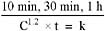

APPENDIX B
Derivation Summary of AEGL Values for Acrolein
AEGL-1 VALUES
|
10 min |
30 min |
1 h |
4 h |
8 h |
|
0.030 ppm |
0.030 ppm |
0.030 ppm |
0.030 ppm |
0.030 ppm |
|
Key Reference: Weber-Tschopp, A., T. Fischer, R. Gierer, et al. 1977. Experimentally induced irritating effects of acrolein on men. Int. Arch. Occup. Environ. Health 40: 117-130. |
||||
|
Test Species/Strain/Number: Human/31 males and 25 females/young adults. |
||||
|
Exposure Route/Concentrations/Durations: Inhalation/0 to 0.6 ppm with concentration increasing for 35 min, then constant at 0.6 ppm for 5 min; 0, 0.15, 0.30, 0.45, and 0.60 ppm for several 1.5-min exposures with a recovery period of 8 min between exposures; or 0.3 ppm for 60 min. |
||||
|
Effects: At 0.09 ppm, “annoyance”/discomfort and very slight eye irritation; at 0.15 ppm, nose irritation; at 0.26 ppm, doubling of blinking rate; at 0.3 ppm, 10% decrease in respiratory rate; at 0.43 ppm, throat irritation; and at 0.6 ppm, 25% decrease in respiratory rate. Effects are reported as threshold effects. (0.09 ppm determinant for AEGL-1). |
||||
|
End Point/Concentration/Rationale: eye irritation, annoyance/discomfort in humans at 0.09-ppm threshold. |
||||
|
Uncertainty Factors/Rationale: Interspecies: 1, subjects were humans. Intraspecies: 3, considered sufficient because minor ocular contact irritation is not likely to vary greatly between individuals; also, derived values are 2-fold below a no-observed-effect level (NOEL) for irritation in another human study (0.06 ppm, 5 min) (Darley et al. 1960). |
||||
|
Modifying Factor: Not applicable. |
||||
|
Animal to Human Dosimetric Adjustment: Not applicable. |
||||
|
Time Scaling: Values were held constant because minor irritation is generally a threshold effect and prolonged exposure is not likely to result in a greatly enhanced effect. |
||||
|
Data Adequacy: Well-conducted human study. |
||||
AEGL-2 VALUES
|
10 min |
30 min |
1 h |
4 h |
8 h |
|
0.44 ppm |
0.18 ppm |
0.10 ppm |
0.10 ppm |
0.10 ppm |
|
Key Reference: Weber-Tschopp, A., Fischer, T., Gierer, R. et al. 1977. Experimentally induced irritating effects of acrolein on men. Int. Arch. Occup. Environ. Health 40:117-130. |
||||
|
Test Species/Strain/Number: Human/31 males and 25 females/young adults. |
||||
|
10 min |
30 min |
1 h |
4 h |
8 h |
|
0.44 ppm |
0.18 ppm |
0.10 ppm |
0.10 ppm |
0.10 ppm |
|
Exposure Route/Concentrations/Durations: Inhalation/0 to 0.6 ppm with concentration increasing for 35 min, then constant at 0.6 ppm for 5 min; 0, 0.15, 0.30, 0.45, and 0.60 ppm for several 1.5-min exposures with a recovery period of 8 min between exposures; or 0.3 ppm for 60 min. |
||||
|
Effects: At 0.09 ppm, annoyance/discomfort and very slight eye irritation; at 0.15 ppm, nose irritation; at 0.26 ppm, doubling of blinking rate; at 0.3 ppm, 10-15% decrease in respiratory rate; at 0.43 ppm, throat irritation; at 0.6 ppm, 25% decrease in respiratory rate. Effects are threshold effects (0.3 ppm determinant for AEGL-2). |
||||
|
End Point/Concentration/Rationale: 10-15% decrease in respiratory rate in humans/0.3 ppm/NOAEL for moderate irritation; decreases in respiratory rate in the range of 12% to 20% correspond to slight irritation, and decreases in respiratory rate in the range of 20% to 50% correspond to moderate irritation (ASTM 1991). Uncertainty Factors/Rationale: Interspecies: 1, subjects were human. Intraspecies: 3, considered sufficient because irritation is unlikely to vary greatly among individuals. This uncertainty factor is further justified because of the sensitivity of the methods used, the fact that the point-of-departure effect was only a very small detectable decrease in respiration, the lack of evidence of marked variability across the study group, including women, and the fact that at twice the concentration, respiration was still only slightly decreased. Also, application of the default uncertainty factor of 10 yields AEGL-2 values in the range of concentrations where only minor irritation was noted in controlled human studies. |
||||
|
Modifying Factor: Not applicable. |
||||
|
Animal to Human Dosimetric Adjustment: Not applicable. |
||||
|
Time Scaling: The 1-h exposure of 0.3 ppm was adjusted by temporal scaling to obtain the 10- and 30-min AEGL-2 values using the relationship Cn × t = k, where n = 1.2 (derived from lethality data in rats exposed to acrolein from 1 to 4 h). The 1-h exposure of 0.3 ppm was held constant for the 4- and 8-h AEGL-2 values because irritation is generally a threshold effect and prolonged exposure is not likely to result in a greatly enhanced effect. |
||||
|
Data Adequacy: A well-conducted study in healthy humans was available. Irritative effects remained constant after approximately 40 min. |
||||
AEGL-3 VALUES
|
10 min |
30 min |
1 h |
4 h |
8 h |
|
6.2 ppm |
2.5 ppm |
1.4 ppm |
0.48 ppm |
0.27 ppm |
|
Key Reference: Ballantyne, B., Dodd, D.E., Pritts, D.J., et al. 1989. Acute vapor inhalation toxicity of acrolein and its influence as a trace contaminant in 2-methoxy-3,4-dihydro-2H-pyran. Human Toxicol. 8:229-235. |
||||
|
Test Species/Strain/Sex/Number: Sprague-Dawley rats/5 males and 5 females per concentration. |
||||
|
10 min |
30 min |
1 h |
4 h |
8 h |
|
6.2 ppm |
2.5 ppm |
1.4 ppm |
0.48 ppm |
0.27 ppm |
|
Exposure Route/Concentrations/Durations: Rats/Inhalation: 14, 22, 24, 31, or 81 ppm for 1 h or 4.8, 7.0, 9.1, or 12.1 ppm for 4 h |
||||
|
End Point/Concentration/Rationale: No deaths in rats/14 ppm/threshold for death for 1-h exposure (determinant for 10-min, 30-min, and 1-h AEGL-3 values); no deaths in rats/4.8 ppm/threshold for death for 4-h exposure in rats (determinant for 4-h and 8-h AEGL-3 values). |
||||
|
Uncertainty Factors/Rationale: Total uncertainty factor: 10 Interspecies: 3 Intraspecies: 3 Intraspecies and interspecies uncertainty factors of 3 each are considered sufficient because irritation is not expected to vary greatly within or among species. Furthermore, application of either an intra- or interspecies uncertainty factor of 10 (total UF = 30) would yield values that are inconsistent with the total database. (For example, AEGL-3 values for acrolein would range from 2.1 to 0.09 ppm, and only ocular, nasal, or throat irritation and decreased respiratory rates were observed in humans exposed to acrolein at 0.09 to 0.6 ppm for up to 40 min (Weber-Tschopp, et al. 1977)). It is unlikely that people exposed to this range of acrolein for 10-min to 8-h would experience effects defined by AEGL-3. |
||||
|
Modifying Factor: Not applicable. |
||||
|
Animal to Human Dosimetric Adjustment: Insufficient data. |
||||
|
Time Scaling: Cn × t = k, where n = 1.2, derived from lethality data in rats exposed to acrolein from 1 to 4 h. Data point used for 10-min, 30-min and 1-h AEGL-3 derivation was 1 h. Data point used for 4-h and 8-h AEGL-3 derivation was 4 h (Appendix D). |
||||
|
Data Adequacy: Well-conducted study with appropriate end point for AEGL-3. |
||||
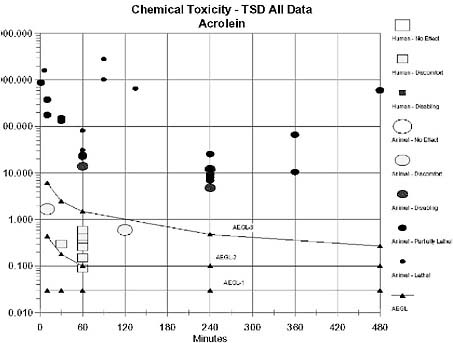
APPENDIX D
Temporal Extrapolation for Acrolein
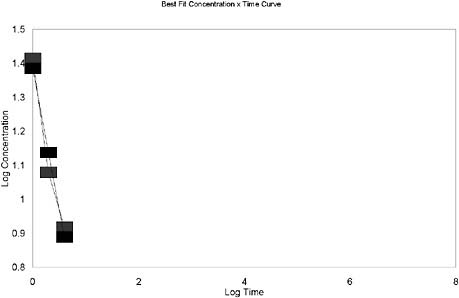
FIGURE D-1 Best fit concentration × time curve.
|
|
|
Log |
Log |
|
|
|
|
Time |
Conc. |
Time |
Conc. |
Regression Output: |
||
|
1 |
26 |
0.0000 |
1.4150 |
Intercept |
1.3857 |
|
|
2 |
12 |
0.3010 |
1.0792 |
Slope |
|
−0.8237 |
|
4 |
8.3 |
0.6021 |
0.9191 |
R Squared |
0.9598 |
|
|
|
|
|
|
Correlation |
−0.9797 |
|
|
|
|
|
|
Degrees of Freedom |
1 |
|
|
|
|
|
|
Observations |
3 |
|
|
n = |
1.21 |
|
|
|
|
|
|
k = |
48.12 |
|
|
|
|
|
|
Minutes |
Conc. |
|
|
Hours |
Conc. |
|
|
30 |
1.48 |
|
|
0.5 |
43.02 |
|
|
60 |
0.83 |
|
|
1.0 |
24.30 |
|
|
240 |
0.27 |
|
|
4.0 |
7.76 |
|
|
480 |
0.15 |
|
|
8.0 |
4.38 |
|


