7
Peracetic Acid1
Acute Exposure Guideline Levels
PREFACE
Under the authority of the Federal Advisory Committee Act (FACA) P. L. 92-463 of 1972, the National Advisory Committee for Acute Exposure Guideline Levels for Hazardous Substances (NAC/AEGL Committee) has been established to identify, review and interpret relevant toxicologic and other scientific data and develop AEGLs for high priority, acutely toxic chemicals.
AEGLs represent threshold exposure limits for the general public and are applicable to emergency exposure periods ranging from 10 min (min) to 8 hs (h). Three levels—AEGL-1, AEGL-2 and AEGL-3—are developed for each of five exposure periods (10 and 30 min, 1 h, 4 h, and 8 h) and are distinguished by varying degrees of severity of toxic effects. The three AEGLs are defined as follows:
AEGL-1 is the airborne concentration (expressed as parts per million or milligrams per cubic meter [ppm or mg/m3]) of a substance above which it is predicted that the general population, including susceptible individuals, could experience notable discomfort, irritation, or certain asymptomatic, non-sensory
effects. However, the effects are not disabling and are transient and reversible upon cessation of exposure.
AEGL-2 is the airborne concentration (expressed as ppm or mg/m3) of a substance above which it is predicted that the general population, including susceptible individuals, could experience irreversible or other serious, long-lasting adverse health effects or an impaired ability to escape.
AEGL-3 is the airborne concentration (expressed as ppm or mg/m3) of a substance above which it is predicted that the general population, including susceptible individuals, could experience life-threatening health effects or death.
Airborne concentrations below the AEGL-1 represent exposure levels that could produce mild and progressively increasing but transient and nondisabling odor, taste, and sensory irritation or certain asymptomatic, non-sensory effects. With increasing airborne concentrations above each AEGL, there is a progressive increase in the likelihood of occurrence and the severity of effects described for each corresponding AEGL. Although the AEGL values represent threshold levels for the general public, including susceptible subpopulations, such as infants, children, the elderly, persons with asthma, and those with other illnesses, it is recognized that individuals, subject to idiosyncratic responses, could experience the effects described at concentrations below the corresponding AEGL.
SUMMARY
Peracetic acid is produced by the catalytic action of sulfuric acid on acetic acid and hydrogen peroxide. Technical or commercial peracetic acid products contain different concentrations of peracetic acid, acetic acid, and hydrogen peroxide, but the concentration of peracetic acid does not exceed 40%. Peracetic acid is unstable; it decomposes to its original constituents under conditions that vary with concentration, temperature, and pH. Peracetic acid is used as a disinfectant against bacteria, fungi, and viruses in the food and medical industry, as a bleaching agent, as a polymerization catalyst or co-catalyst, in the epoxidation of fatty acid esters, as an epoxy resin precursor, and in the synthesis of other chemicals.
Peracetic acid is corrosive/irritating to the eyes, mucous membranes of the respiratory tract, and skin. It causes lacrimation, extreme discomfort, and irritation to the upper respiratory tract in humans after exposure to concentrations as low as 15.6 mg peracetic acid/m3 (5 ppm) for only 3 min. Eye irritation, clinical signs, and pathologic lesions indicative of respiratory tract irritation have been observed in laboratory animals exposed by inhalation to various concentrations of peracetic acid aerosols. Exposure to lethal concentrations of peracetic acid causes hemorrhage, edema, and consolidation of the lungs, whereas nonlethal concentrations cause transient weight loss or reduced weight gain in addition to slight to moderate signs of respiratory tract irritation. Human data were available
for deriving AEGL-1 and -2 values and animal data were available for deriving AEGL-3 values.
The AEGL-1 value is 0.52 mg/m3 (0.17 ppm) for all exposure durations from 10 min to 8 h. This value was derived from an exposure concentration of 1.56 mg/m3 (0.5 ppm), which, according to Fraser and Thorbinson (1986), is expected to cause no discomfort and according to McDonagh (1997) is not immediately irritating but would be unpleasant for an extended period of time. Therefore, 1.56 mg/m3 is considered to be the threshold for irritation to mucous membranes and eyes. An intraspecies uncertainty factor of 3 was applied to 1.56 peracetic acid mg/m3, because peracetic acid is a corrosive/irritant substance and the effects, which are confined to the upper respiratory tract, are expected to be similar for individuals within the population. The rationale for proposing the same value for all time points, is as follows: (1) effects of peracetic acid exposure correlate with concentration more than time, and (2) and peracetic acid is freely soluble in water; therefore, it should be effectively scrubbed in the nasal passages, particularly at the very low AEGL-1 concentration.
The AEGL-2 value is 1.56 mg/m3 (0.5 ppm) for all exposure durations from 10 min to 8 h based on an exposure concentration of 4.7 mg/m3, which, according to Fraser and Thorbinson (1986), is expected to be associated with slight to tolerable discomfort to nasal membranes and eyes for exposure durations up to 20 min. There was no increase in irritation with exposure duration. An intraspecies uncertainty factor of 3 was applied because peracetic acid is a corrosive/irritating substance and the effects, which are confined to the upper respiratory tract, are expected to be similar among individuals in the population. The rationale for proposing the same value for all exposure durations is discussed above for AEGL-1 values.
The AEGL-3 values are derived from the study of Janssen (1989). This study showed that rats exposed to Proxitane 1507 (15% peracetic acid, ~28% acetic acid, 14% hydrogen peroxide, ~1% “stabilizer,” and ~43% water) aerosols at concentrations of 130, 300, or 320 mg/m3 for 30 min had mortality responses of 0/5, 0/5, and 3/5 rats, respectively. Exposures to aerosol concentrations of 150, 390, or 1450 mg/m3 for 60 min resulted in the death of 0/5, 2/5, and 5/5 rats, respectively. Clinical signs indicative of respiratory tract irritation were observed at all concentrations and increased in severity with increased exposure concentration for each exposure duration. Clinical signs suggestive of nervous system effects were also observed, but could have been due to extreme respiratory tract discomfort. The AEGL values were derived from the highest concentration at which no mortality was observed: 300 mg/m3 for a 30-min exposure and 150 mg/m3 for a 60-min exposure. The total uncertainty factor is 10. Interspecies and intraspecies uncertainty factors of 3 were applied because mucous membranes of the respiratory tract are not expected to show significant variation in response to corrosive/irritating substances concentrations that cause physical damage and that approach the threshold for lethality regardless of species or the individuals in the population. The data, however, suggest that humans may be slightly more sensitive than animals to peracetic acid. The rationale for
the intraspecies uncertainty factor of 3 was the same as described for AEGL-1. The intraspecies uncertainty factor of 3 and the interspecies uncertainty factor of 3 were applied to 300 and 150 mg/m3 for the 30- and 60-min exposures, respectively. The equation, Cn × t = k, where n = 1.6 (estimated from 1- and 4-h LC50 data for rat), was used to scale the 60-min exposure to 4- and 8-h values and the 30-min exposure to 10 min.
The AEGL values are summarized in Table 7-1.
1.
INTRODUCTION
Peracetic acid is produced by the catalytic action of sulfuric acid on acetic acid and hydrogen peroxide (Lewis 1993). These constituents are found in the most concentrated commercial grades of peracetic acid at the following approximate concentrations (weight %): 40% peracetic acid, 40%, acetic acid, 5% hydrogen peroxide, 1% sulfuric acid, and 13% water, along with 500 ppm of a “stabilizer” (Bock et al. 1975). The stabilizer was not identified. Peracetic acid decomposes as it is diluted with water, particularly when diluted to 10 or 20% peracetic acid. Sulfuric acid catalyzes the decomposition of peracetic acid and is present in sufficient amounts in 10 to 20% peracetic acid products to catalyze the decomposition of peracetic acid to the individual constituents: acetic acid and hydrogen peroxide. At more dilute concentrations of peracetic acid, decomposition occurs more slowly, because sulfuric acid is no longer present in sufficient quantities to catalyze its decomposition. However, very dilute solutions (0.2%) will decompose more rapidly at elevated temperatures (4 weeks at 4°C vs 1 week at 40 °C). In addition, increasing the pH to 7.0 results in greater than 50% decomposition of peracetic acid after 1 day compared with almost no decomposition after 7 days at pH 2.7 (the natural pH of 0.2% peracetic acid) (Mucke 1977). Peracetic acid is known as a powerful oxidizing agent. It is unstable upon contact with organic materials and it explodes at 110°C (Lewis 1993).
Because of its effectiveness against bacteria, fungi, and viruses, peracetic acid is used as a disinfectant in the food and medical industries (Bock et al. 1975; Fishbein 1979; Lewis 1993). It is also used as a beaching agent in the paper and textile industries, as a polymerization catalyst or co-catalyst, in the epoxidation of fatty acid esters, as an epoxy resin precursor, and in the synthesis of other chemicals (Bock et al. 1975; Fishbein 1979).
The database for peracetic acid is limited; however, limited quantitative human and animal data are available for deriving AEGL values. The animal data for inhalation studies were performed primarily on aerosols of trade name products or diluted grades of peracetic acid referred to as Proxitane 1507 (15% peracetic acid, ~28% acetic acid, and 14% hydrogen peroxide) or Proxitane AHC (~5% peracetic acid, 19% (minimum) hydrogen peroxide, and 10% acetic acid). Measurements of atmospheric concentrations in the inhalation chambers showed
TABLE 7-1 Summary of AEGL Values for Peracetic Acid
|
Classification |
10 min |
30 min |
1 h |
4 h |
8 h |
End Point /Reference |
|
AEGL-1 (Nondisabling) |
0.52 mg/m3 (0.17 ppm) |
0.52 mg/m3 (0.17 ppm) |
0.52 mg/m3 (0.17 ppm) |
0.52 mg/m3 (0.17 ppm) |
0.52 mg/m3 (0.17 ppm) |
Threshold for irritation (Fraser and Thorbinson 1986; McDonagh 1997) |
|
AEGL-2 (Disabling) |
1.6 mg/m3 (0.5 ppm) |
1.6 mg/m3 (0.5 ppm |
1.6 mg/m3 (0.5 ppm) |
1.6 mg/m3 (0.5 ppm) |
1.6 mg/m3 (0.5 ppm) |
Mild irritation (Fraser and Thorbinson 1986) |
|
AEGL-3a (Lethal) |
60 mg/m3 |
30 mg/m3 |
15 mg/m3 |
6.3 mg/m3 |
4.1 mg/m3 |
Highest concentration causing no deaths (Janssen 1989a) |
|
aAEGL-3 values are based on exposure to aerosol; therefore, concentrations are not converted to ppm. |
||||||
that the relative concentrations of peracetic acid, acetic acid, and hydrogen peroxide varied in aerosols generated from the same product, thus demonstrating the instability of peracetic acid in the product or the aerosol. Although a contributing effect of acetic acid and hydrogen peroxide cannot be ruled out in the toxicity studies described in this report, it appears, however, that acetic acid and hydrogen peroxide are considerably less toxic than peracetic acid. Sulfuric acid concentrations were not reported for the products (Proxitane 1507 and Proxitane AHC) used in these studies, but would be expected to account for only a very small fraction since the highest concentration of sulfuric acid in most products was only 1%. The physical and chemical data for peracetic acid are presented in Table 7-2.
2.
HUMAN TOXICITY DATA
2.1.
Acute Lethality
No data on human lethality due to exposure to peracetic acid were found in the literature searched.
2.2.
Nonlethal Toxicity
Bock et al. (1975) reported that peracetic acid was intensely irritating to the human nasal passages. There was no additional information documenting the source of this information. McDonagh (1997) and an associate conducted measurements of airborne peracetic acid concentrations in two caprolactone distillation plants. Peracetic acid, which is used in caprolactone monomer production, was distilled in the distillation houses of the plant. The monitoring took place
over a 3-h period. Peracetic acid vapor was measured at total peroxygen content; hydrogen peroxide was not expected to comprise a large proportion of the measured substance in the vapor. In one area, peracetic acid concentrations ranged from 0.5 to 0.6 ppm (1.56-1.87 mg/m3); these concentrations were not considered to be immediately irritating, but would have been considered “unpleasant for an extended period” of time. Peracetic acid concentrations of 0.13 to 0.17 ppm (0.40-0.53 mg/m3) in another area were considered tolerable and not unpleasant. McDonagh and his associate spent most of their time in an area where the average peracetic acid concentration measured for a 10-min sampling time was 0.17 ppm (0.53 mg/m3). They noted no lacrimation at any time during their 3-h exposure. McDonagh (1997) recommended 0.15 ppm (0.47 mg/m3) as an acceptable 8-h occupational exposure limit for peracetic acid. This concentration would be perceptible, but not irritating or unpleasant.
TABLE 7-2 Physical and Chemical Data for Peracetic Acid
|
Parameter |
Data |
Reference |
|
Chemical Name |
Peracetic acid |
O’Neil et al. 2001 |
|
Synonyms |
Peroxyacetic acid, acetic peroxide, ethaneperoxoic acid, acetyl hydroperoxide, Proxitane 4002, Proxitane 1507, Proxitane AHC |
O’Neil et al. 2001; RTECS 2003 |
|
CAS Registry No. |
79-21-0 |
RTECS 2003 |
|
Chemical Formula |
CH3COOOH |
O’Neil et al. 2001 |
|
Molecular Weight |
76.05 |
O’Neil et al. 2001 |
|
Physical State |
Colorless liquid |
Lewis 1993 |
|
Boiling/Freezing/Flash Point |
105 °C/−30 °C/40.5 °C |
Lewis 1993 |
|
Density |
1.15 at 20 °C |
Lewis 1993 |
|
Solubility |
Freely soluble in H2O, alcohol, ether, H2SO4 |
O’Neil et al. 2001 |
|
Vapor Pressure |
14.5 mm Hg at 25°C |
HSDB 1997 |
|
Explosion point |
110 °C |
Lewis 1993 |
|
Henry’s Law Constant |
2.08 × 10⁻⁶ atmm3/mol at 25 °C |
HSDB 1997 |
|
Conversion factors |
1 ppm= 3.04 mg/m3 at 20 °C and 101kPa 1mg/ m3= 0.33 ppm |
IUCLID 2000 |
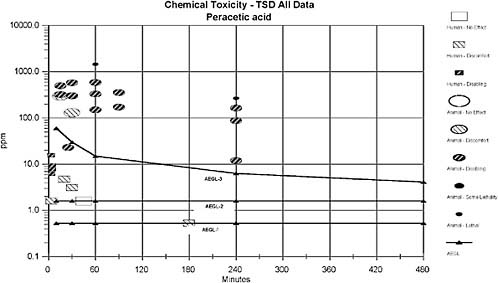
Fraser and Thorbinson (1986) conducted fogging studies in a chicken house using Tenneco Organics’ “Peratol” diluted to 1:20 (5% peracetic acid = 1904 mg/L in the liquid formulation) to determine atmospheric levels of peroxygen and establish safe working practices. Measurements of aerosol concentrations were taken at various distances from the fogging unit to establish the spread and distribution of peracetic acid concentrations. The analytical procedure measured total peroxygen concentration, which was calculated as hydrogen peroxide (H2O2). The details of the analytical method were not presented in the report. The fogging unit was placed about 1 m off the ground, and measurements were taken at various locations (the shed apex, the floor, and sides of the shed). The first half of Table 7-3 presents the concentrations, time of measurements starting at 3:30 (p.m. assumed), and physiological responses to peracetic acid. The authors did not report the number of subjects exposed to the aerosol. Lacrimation was noted at 5 ppm (15.6 mg/m3), extreme discomfort was noted at concentrations ≥2.5 ppm (7.79 mg/m3), and 2.0 ppm (6.23 mg/m3) was considered unbearable in one instance and tolerable for 2 min in another. After 23 min, the fogging unit was turned off and refilled; during this time, the concentration of peracetic acid dropped to <0.5, 0.5- 1.0, and 1.0-1.5 ppm (1.56, 1.56-3.12, and 3.12-4.7 mg/m3) at 0.3, 2, and 4 meters, respectively, above ground; a slight discomfort of nasal and eye membranes was noted during this phase. For the next 1 h and 15 min, the concentrations ranged from 2.0 to 3.0 ppm (6.23 to 9.35 mg/m3); these concentrations were associated with unbearable or extreme discomfort.
At 5:20 p.m., the fogger was turned off and the concentrations of peracetic acid began to decrease. The second half of Table 7-3 describes the concentrations and observed physiological responses after shutoff. After the fogger was turned off, the concentrations on peracetic acid decreased from 2.0 ppm (6.23 mg/m3) to ≤0.5 ppm within 45 min. During this time the physiological responses decreased from extreme discomfort of mucous membranes to mild discomfort at 0.5-1.0 ppm (1.56-3.12 mg/m3) to no discomfort at ≤ 0.5 ppm (1.56 mg/m3). No irritation to the chest occurred at any time during this test.
2.3.
Summary
No data on human lethality caused by exposure to peracetic acid were found in the literature, and the data on nonlethal effects are limited. Peracetic acid is extremely irritating to mucous membranes of the eyes and nasal passages at low concentrations. Exposure to aerosols generated from diluted Peratol was associated with lacrimation at 5 ppm (15.6 mg/m3), extreme discomfort and irritation to mucous membranes at ≥2.0 ppm (6.23 mg/m3); slight or mild discomfort at 0.5-1.5 ppm (1.56-4.67 mg/m3), and no discomfort at <0.5 ppm (1.56 mg/m3) (Fraser and Thorbinson 1986). Exposure to peracetic acid vapor at concentrations of 0.13-0.17 ppm ( 0.40-0.53 mg/m3) for up to 3 h were detectable, tolerable, and not unpleasant (McDonagh 1997). Irritation to the chest did not
occur at concentrations ≥5 ppm (15.6 mg/m3), and no data were available for exposure of humans to concentrations >5 ppm (15.6 mg/m3). In the study by McDonagh (1997), humans were exposed to peracetic acid vapor, and in the study by Fraser and Thorbinson (1986) humans were exposed to the aerosols. There was agreement between exposure to aerosol and vapors at 0.5 ppm (1.56 mg/m3), the highest vapor concentrations reported; both studies reported either no discomfort or only mild or slight discomfort at this concentration. There were no comparable levels between the two studies at the higher exposure concentrations.
TABLE 7-3 Physiologic Response to Low Level Exposure to Peracetic Acid Aerosols Generated by a Fogger
|
Time |
ppm (as total H2O2)a |
Observed Effects |
|
3.30 |
5 (15.6) |
Lacrimation, extreme discomfort, irritation of nasal membranes |
|
3.37 |
5 (15.6) |
Lacrimation, extreme discomfort, irritation of nasal membranes |
|
3.53 |
1 to 1.5 (3.12-4.67) |
Slight discomfort of nasal and eye membranes, decreasing with concentration |
|
|
0.5 to 1.0 (1.56-3.12) |
|
|
|
<0.5 (1.56) |
|
|
4.05 |
2.0 (6.23) |
Irritation considered unbearable |
|
5.00 |
2.5 (7.79) |
Extreme discomfort of nasal membranes |
|
5.10 |
2.5 (7.79) |
Extreme discomfort |
|
|
3.0 (9.35) |
Extreme discomfort |
|
5.15 |
3.0 (9.35) |
Extreme discomfort |
|
5.20 |
2.0 (6.23) |
Irritation tolerable for 2 min |
|
Concentrations and response after the fogger was turned off (minutes) |
||
|
5 - 10 |
2.0 (6.23) |
Extreme discomfort of mucous membranes |
|
15-20 |
1to 1.5 (3.12-4.67) |
Discomfort of mucous membranes |
|
25 |
1.0 (3.12) |
Discomfort tolerable |
|
30 |
0.5 to 1.0 (1.56-3.12) |
Discomfort mild |
|
35- 45 |
≤ 0.5 (1.56) |
No discomfort |
|
aMeasurements taken at different locations relative to fogging unit; numbers in parentheses are concentrations in mg/m3. Source: Fraser and Thorbinson 1986. Reprinted with permission; copyright 1986, Solvay SA. |
||
3.
ANIMAL TOXICITY DATA
3.1.
Acute Lethality
3.1.1.
Rats
Janssen (1989a) conducted a study in which groups of five male CPB-WU Wistar derived rats were exposed to Proxitane 1507 (15% peracetic acid, ~28% acetic acid, 14% hydrogen peroxide, ~1% stabilizer, and ~43% water) aerosol by nose-only inhalation in a 40 L dynamic flow chamber. The chamber was constructed of aluminum, and the inside walls were coated with silver and a thin layer of polytetrafluoroethylene. The test atmospheres were generated with a stainless-steel nebulizer, and test concentrations were analyzed as total peroxygen concentration corrected for the amount of hydrogen peroxide. Chamber concentrations (converted from mg/L to mg/m3) of the constituents in the test material and exposure durations are listed in Table 7-4. The study author did not comment on the greater than zero concentration of constituents in the control atmosphere, but it may be related to the detection limit of the analytical procedure or natural occurrence of hydrogen peroxide in the atmosphere (ATSDR 1998). Respiratory rates were determined during exposure, clinical signs of toxicity were recorded for 14 days after exposure, and body weight was measured on post-exposure days 2, 7, and 14. Postmortem studies included gross examination, measurement of lung weight, and histopathological examination of the lungs. The results are summarized in Table 7-4.
Deaths occurred only in groups exposed to peracetic concentrations ≥320 mg/m3 regardless of exposure duration (320 mg/m3 for 15 or 30 min, 390 mg/m3 for 60 min, and 1450 mg/m3 for 60 min). The LC50 for the 60-min exposure to peracetic acid was 476 mg/m3. Clinical signs of toxicity included effects primarily indicative of extreme respiratory irritation (reduced respiratory rate, respiratory difficulties, blood around the nose and mouth, sneezing, and rubbing the nose) and those that may be indicative of nervous system effects (passivity, decreased alertness and startle response, piloerection, salivation, decreased coordination and muscle tone), but were probably related to extreme discomfort of the animals.
The only effect on the eyes was drooping eye lids. The severity of the clinical signs (slight, moderate, severe) as well as the number of signs observed in each group and time of disappearance of clinical signs increased with concentration of test material and exposure duration. Clinical signs disappeared 1.5 h to 5 days after exposure. Respiratory rates measured during exposure showed maximum depressions to 22 to 41% of preexposure rates in all exposure groups. Body weight measurements showed transient decreases on day 2 after exposure to 320 mg/m3 for 15 or 30 min and 150 mg/m3 or 1450 mg/m3 for 60 min.
TABLE 7-4 Effects of Nose-Only Inhalation Exposure to Proxitane 15077 in Male Rats
|
Group Number |
Exposure Time (min) |
Concentration (mg/m3)a |
Effects |
||||
|
Peracetic Acid |
Acetic Acid |
H2O2 |
Mortality |
Clinical Signs and Body Weighta |
Gross Pathology |
||
|
10 (control) |
60 |
<70 |
<70 |
<50 |
0/5 |
+ |
URT (0/5); LRT (1/5) |
|
8 |
15 |
300 |
767 |
<50 |
0/5 |
+, bw (no effect) |
URT (0/5); LRT (2/5) |
|
3 |
15 |
320 |
2000 |
<70 |
1/5 |
+, ++, wt. loss |
URT (1/5); LRT (1/5) |
|
6 |
30 |
130 |
210 |
10 |
0/5 |
+, bw (no effect) |
URT (0/5); LRT (0/5) |
|
9 |
30 |
300 |
767 |
<50 |
0/5 |
+, ++, bw (no effect) |
URT (0/5); LRT (1/5) |
|
4 |
30 |
320 |
2000 |
<70 |
3/5 |
+, ++, +++, bw (no data) |
URT (2/5); LRT (5/5) |
|
7 |
60 |
150 |
290 |
9 |
0/5 |
+, ++, ↓bw |
URT (0/5); LRT (1/5) |
|
5 |
60 |
390 |
2800 |
4 |
2/5 |
+, ++, +++, bw (no data) |
URT (2/5); LRT (4/5) |
|
2 |
60 |
1450 |
6600 |
450 |
5/5 |
+, ++, +++, bw (no data) |
URT (3/5); LRT (2/5) |
|
a+, ++, +++ refer to slight, moderate, and severe clinical signs, respectively. Abbreviations: bw = body weight; ↓ = decrease; URT = upper respiratory tract; LRT = lower respiratory tract. Source: Janssen 1989a. |
|||||||
Macroscopic examinations showed effects indicative of respiratory irritation (blood around the nose, red nasal and tracheal mucosa, bloody fluid in the trachea, dark red lungs, and red or dark spots on the lungs) particularly in animals that died during the study. The animals surviving to study termination showed only red or dark spots on the lungs. In addition, the stomach and small intestines were distended with gas and the liver was swollen in animals exposed to ≥320 mg/m3. Absolute and relative lung weights were elevated in rats exposed to 320 or 390 mg/m3. Only one animal each exposed to 300, 390, or 1450 mg/m3 showed microscopic effects in the lungs. Although it appeared that the observed effects were caused by exposure to peracetic acid, most effects also showed increased severity with the increased concentrations of measured acetic acid and hydrogen peroxide. Based on lethality data, it is unlikely that acetic caused the effects observed in the rats; however, a contributing effect cannot be ruled out for either constituent. See Section 4.4.4. for a brief discussion of the toxicity of acetic acid and hydrogen peroxide (Janssen 1989a).
Janssen and Van Doorn (1994) conducted a 4-h acute inhalation study in rats with Proxitane AHC. The chemical composition of the test material was as follows: 4.7 to 5.4% (~5%) peracetic acid, 19% (minimum) hydrogen peroxide, 10% acetic acid, water, and 1% surfactant. Groups of five male and five female Wistar derived rats were exposed to aerosols of the test material by nose-only inhalation in an aluminum chamber with the inside walls coated with silver and a thin layer of polytetrafluoroethylene. The test concentrations of peracetic acid in the chamber were analyzed as total peroxygen concentration corrected for the amount of hydrogen peroxide. The concentrations of peracetic acid and other constituents are presented in Table 7-5. Each group was exposed to the test atmospheres for 4 h and surviving animals were observed for 14 days. An unexposed control group was included. The mortality response is summarized in Table 7-5 In Group B exposed to peracetic acid at 267 mg/m3, four of five male rats died by day 3 and all females had died by day 4 (four died before day 2). In Group D exposed to 185 mg/m3, two males died on day 1 and two females had died by day 3. The LC50 for the combined sexes was 204 mg/m3. Numerous clinical signs including apathy, respiratory difficulties, reduced respiratory rate, noisy breathing, cyanosis, lacrimation, salivation, ptosis, twitching, hypothermia, abnormal gait and posture, crusts on nose, and blood under cage were observed in rats of all groups except lacrimation, cyanosis, and salivation were not observed at 87 mg/m3. Fewer clinical signs were observed in the lowest exposure group compared with the highest exposure groups. The clinical signs disappeared after day 1 for males or day 3 for female rats exposed to 87 mg/m3 and after day 3 or 4 for the remaining groups. The clinical signs were considered to be related to the corrosive/irritant properties of the test material. The body weights of rats exposed to the test atmospheres were much less than those of the controls on day 2 after exposure due to pronounced weight losses of 36 to 52 g for males and 19 to 34 g for females (p<0.01 all groups compared with controls). Body weights of all exposed groups showed signs of recovery between day 2
TABLE 7-5 Concentrations of Peracetic Acid, Acetic Acid, and Hydrogen Peroxide During a 4-Hour Exposure and Mortality Effects During the 14-Day Observation Period
|
Parameter |
Concentration (mg/m3) |
|||
|
Group C |
Group A |
Group D |
Group B |
|
|
Peracetic acid |
87 |
163 |
185 |
267 |
|
Acetic acid |
441 |
887 |
1337 |
1598 |
|
Hydrogen peroxide |
200 |
467 |
595 |
1075 |
|
Mortality |
|
|
|
|
|
Males |
0/5 |
0/5 |
2/5 |
4/5 |
|
Females |
0/5 |
0/5 |
2/5 |
5/5 |
|
Combined sexes |
0/10 |
0/10 |
4/10 |
9/10 |
|
LC50 = 204 mg/m3, 95% confidence limits = 186 to 233 mg/m3. Source: Janssen and van Doorn 1994. |
||||
and 7 after exposure. Absolute and relative lung weights were elevated in all groups. Gross examination showed no abnormalities in male or female rats exposed to 87 mg/m3. Red or brown staining or blood around the nose and/or mouth was observed in rats exposed to ≥163 mg/m3. In addition, red spots were observed on the lungs of rats receiving ≥163 mg/m3, and lung consolidation or edema was observed in animals that died due to exposure. It is unlikely that acetic acid or hydrogen peroxide was the cause of mortality in the rats. The lowest lethal concentration for a 4-h exposure of rats to acetic acid (39, 216 mg/m3) is about 30 times greater than the LC50 (1283 mg/m3) calculated from the acetic acid concentrations in Table 7-5. Likewise, the LC50 for hydrogen peroxide reported for rats (1972 mg/m3) is almost 3 times greater that the LC50 (684 mg/m3) calculated from the data in Table 7-5 Therefore, the concentrations of acetic acid and hydrogen peroxide appear too low to have caused the deaths among the rats exposed to peracetic acid.
3.1.2.
Mice
Merka and Urban (1978) conducted a study in which groups of ten mice were exposed in a dynamic chamber to aerosols of Persteril (commercial product containing 40% peracetic acid) or laboratory peracetic acid produced from equimolar concentrations of acetic acid and hydrogen peroxide and using sulfuric acid as the catalyst. In contrast to Persteril, the laboratory product contained no sulfuric acid. The mice were exposed to peracetic acid concentrations at 150, 300, 450, 600, 800, 1000, 1300, or 1600 mg/m3 for 60 min. The animals were observed for 20 days. Animals exposed to peracetic acid (specific concentrations not reported) showed signs of eye and respiratory irritation during exposure (restlessness, bristling fur, half closing of eyelids, and nose rubbing along with
respiratory distress, gasping, and increased respiration, which varied with concentration). The eyelids were red and swollen and a secretion was observed around the eyes and snout within the first 24 h; hair loss occurred later. The LC50 was 524 mg/m3 for laboratory peracetic acid and 512 mg/m3 for Persteril. The similar LC50 values showed that the small amount of sulfuric acid in Persteril had no effect on lethality in the mouse. One or two mice died during exposure; other mice died during the observation period. The study authors did not report lethality data for individual groups. Histological examination of the animals that died and those that survived revealed lesions only in the lungs. None occurred in the heart, liver, spleen, or kidneys. Lung lesions in mice that died within 2 days consisted of extensive foci of hemorrhagic exudative inflammation involving the parenchyma of the entire lungs; foci of alveolar inflammation with serous exudate, red blood cells (RBCs), macrophages with phagocytosed aerosol particles; and desquamated epithelial cells. The severity of the lesions increased with exposure concentration. The lungs of animals that died about day 6 after exposure showed evidence of focal bronchopneumonia characterized by hyperemia of the alveolar septa and serohemorrhagic exudate containing desquamated epithelial cells and macrophages with phagocytosed aerosol particles. The lungs of animals surviving to 20 days showed diffuse inflammatory lesions at concentrations >600 mg/m3 and focal inflammatory lesions at ≤600 mg/m3.
3.2.
Nonlethal Toxicity
3.2.1.
Rat
Janssen (1989b) exposed groups of five CPB-WU Wistar derived male rats by nose-only inhalation to aerosols of Proxitane 1507 (15% peracetic acid, ~28% acetic acid, 14% hydrogen peroxide, ~1% stabilizer, and ~43% water) at concentrations and exposure durations listed in Table 7-6. The test concentrations of peracetic acid were analyzed as total peroxygen corrected for the amount of hydrogen peroxide. The concentrations of acetic acid in the chamber atmospheres were not reported by the study author. The study author also did not comment on the greater than zero concentration of hydrogen peroxide in the control atmosphere. The exposure conditions and chamber were the same as described by Janssen (1989a) (Section 3.1.1). The animals were observed for 7 or 14 days after exposure; body weights were measured on days 2, 7, and 14 (where appropriate). Necropsies were performed on all animals, the lungs were weighed, and the lungs and nasal cavities were processed for microscopic examination. The group exposed to peracetic acid at 589 mg/m3 for 60 min and one control group were necropsied after 14 days; all others were necropsied after 7 days. The results are summarized in Table 7-6. The only clinical signs observed during exposure were “struggling” and irregular or shallow breathing patterns after 5 to 10 min and gasping in the group exposed to 589 mg/m3 for 60
TABLE 7-6 Effects of Nose-only Inhalation Exposure to Proxitane 15077 on Male Rats
|
Group Number |
Exposure Time (min) |
Concentration (mg/m3)a |
Effectsb |
|||
|
Peracetic Acid |
H2O2 |
Clinical Signs and Body Weight Gain |
Pathology |
|||
|
Gross |
Microscopic |
|||||
|
1 (control) |
90 |
<16 |
<16 |
bw, slight ↓ |
0/5 |
0/5 |
|
2 (control) |
90 |
<16 |
<16 |
bw, slight ↓ |
3/5 |
0/5 |
|
3 |
15 |
499 |
172 |
+, ++; bw, no change ↓ |
0/5 |
5/5 |
|
6 |
30 |
304 |
111 |
+, ++; bw, slight ↓ |
1/5 |
4/5 |
|
4 |
30 |
578 |
193 |
+, ++, +++; bw, marked ↓ |
1/5 |
5/5 |
|
7 |
60 |
329 |
115 |
+, ++; bw, moderate ↓ |
2/5 |
5/5 |
|
5 |
60 |
589 |
233 |
+, ++, +++; bw, marked ↓ |
2/5 |
4/5 |
|
9 |
90 |
172 |
63 |
+, ++; bw, moderate ↓ |
0/5 |
5/5 |
|
8 |
90 |
355 |
119 |
+, ++; bw, moderate ↓ |
1/5 |
5/5 |
|
aConcentration reported as mg/L by the study author converted to mg/m3. b+, ++, +++ refer to slight, moderate, and severe clinical signs, respectively; body weight gain: slight ↓ = ≤5 g, moderate ↓ = >5 to 15 g, marked ↓ = >15 g. Abbreviations: bw = body weight; ↓ = decrease. Source: Janssen 1989b. |
||||||
min. Clinical signs observed after exposure were indicative of effects on coordination and muscle tone, extreme discomfort, and respiratory irritation as described by Janssen (1989a) (Section 3.1.1). Rats exposed to 578 or 589 mg/m3 (30 or 60 min) showed slight to severe clinical signs; rats in all other exposure groups showed slight to moderate clinical signs; rats in the control group showed no clinical signs. The study author noted that a twofold increase in exposure time produced a smaller effect on clinical signs than a twofold increase in exposure concentration indicating that effects are due more to exposure concentration than duration. Two rats exposed at 589 mg/m3 for 60 min were killed moribund about 24 h after exposure, and the remaining animals survived to study termination. Absolute body weights were not significantly different from those of controls except for the group exposed to 578 mg/m3 for 30 min. Almost all groups including controls lost weight during the first two days of the study; however, the groups exposed to peracetic acid for 30, 60, and 90 min lost significantly more weight than controls (except for Group 6). There were no treatment-related macroscopic or microscopic findings in the lungs, and lung weights were similar in the treated and control groups. Slight to moderate to severe squamous metaplasia of the nasal turbinates and/or lateral walls and epithelial atrophy of the dorsal meatus were observed in all treated groups. The study author noted that the chamber atmospheres for Groups 3 and 6 did not reach equilibrium during sampling.
In a preliminary study, Janssen (1989c) examined the effect of peracetic acid on the respiratory rate in groups of three CPB-WU Wistar derived male rats exposed by nose-only inhalation for 25 min to aerosols of Proxitane 1507 containing peracetic acid and hydrogen peroxide at the concentrations presented in Table 7-7. The chamber and exposure conditions were the same as described by Janssen (1989a) (Section 3.1.1). The test concentrations of peracetic acid were analyzed as total peroxygen concentration corrected for the amount of hydrogen peroxide. A plethysmograph was used to measure respiratory rates before, during, and after exposure to the test material. The rats were killed and necropsied 24 h after exposure. The lungs were weighed and processed for microscopic examination along with the trachea and nasal cavities. The mean percent of the greatest (extreme) depression in respiratory rates ranged from 31.9-67.1% in groups exposed to peracetic acid concentrations ranging from 8.4 to 36.3 mg/m3 (Table 7-7). The depression in respiratory rates did not show a clear exposure-related trend. The mean RD50 for all groups was 22.7 mg/m3, 21.5 mg/m3 with Group 1 omitted, and 24.1 mg/mg3 with Group 3 omitted. According to the investigator, depression in the respiratory rate was considered biologically significant only if it exceeded 20% of the preexposure rate. After exposure, the respiratory rates of all animals returned to approximately normal rates. The only observed clinical sign of toxicity was a slightly hunched appearance after removal of the plethysmograph. No abnormalities were observed during necropsy, lung weight was not affected, and no treatment-related microscopic findings were observed in the nose, trachea, or lungs.
TABLE 7-7 Effects of Nose-Only Inhalation Exposure to Proxitane 15077 Aerosols for 25 Min on Male Rats
|
|
Concentration (mg/m3) |
||||
|
Group 3 |
Group 1 |
Group 5 |
Group 2 |
Group 4 |
|
|
Peracetic acid |
8.4 mg/m3 |
12.2 mg/m3 |
13.9 mg/m3 |
17.4 mg/m3 |
36.3 mg/m3 |
|
H2O2 |
3.3 |
3.3 |
1.9 |
5.4 |
13.1 |
|
Extreme depression, mean (%) |
46.9 |
32.6 |
31.9 |
44.2 |
67.1 |
|
Source: Janssen 1989c. |
|||||
In a follow-up study, Janssen (1990) examined the effect of higher concentrations of Proxitane 1507 (15% peracetic acid, ~28% acetic acid, 14% hydrogen peroxide, ~1% stabilizer, and ~43% water) aerosols on the respiratory rate in groups of three CPB-WU Wistar derived male rats. The animals were exposed to the test substance by nose-only inhalation for 25 min as described by Janssen (1989c). The test concentration of peracetic acid were analyzed as total peroxygen concentration corrected for the amount of hydrogen peroxide. Respiratory rates were measured using a plethysmograph before, during, immediately after, and 24 h after exposure to the test atmospheres. The concentrations of peracetic acid and hydrogen peroxide in the exposure chambers and the percent depression of respiratory rates are presented in Table 7-8. The respiratory rates were depressed 76-78% during exposure of each group. The respiratory rates improved after exposure and returned to normal in two Group 3 rats exposed to the lowest concentration of peracetic acid. The respiratory rate had returned to normal in Group 1 and 2 animals by 24 h. Necropsy revealed no gross abnormalities; however, microscopic examination showed moderate to severe necrosis in the nasal turbinates of all animals exposed to the test material. Evidence of very slight to slight pulmonary inflammation was observed in one or two animals of each group, but no control group was included for comparison. Therefore, the pulmonary effects should not be considered treatment related.
Benes et al. (1966) showed that rats exposed to peracetic acid at concentrations ranging from 7.2 to 72 mg/m3 aerosol for 4 h exhibited signs of restlessness, lacrimation, and nasal discharge, whereas labored breathing and lung edema were seen at 237 mg/m3. Repeated exposure to 7.2 mg/m3 for 1 h/day for 28 days was without effects, whereas repeated exposure to 22 mg/m3 for the same time period resulted in increased lung and liver weights, depression of body weight gain, and inflammation in the lungs. No additional information was available for this study.
Whitman (1991) conducted a study in which a group of 10 Sprague-Dawley rats (5 males and 5 females) were exposed to an aerosol/vapor mixture generated from a 0.15% use dilution of peracetic acid. A 5% peracetic acid solution was diluted with distilled water to prepare the 0.15% dilution. The study
TABLE 7-8 Effects of Nose-only Inhalation Exposure to Proxitane 15077 Aerosols for 25 Min on Male Rats
|
|
Concentration (mg/m3)a |
||
|
Group 3 |
Group 2 |
Group 1 |
|
|
Peracetic acid |
221.0 mg/m3 |
315.3 mg/m3 |
461.5 mg/m3 |
|
Hydrogen peroxide |
22.4 |
23.1 |
59.8 |
|
% Respiratory depression, meanb |
76.3 |
78.4 |
76.3 |
|
16.0 |
29.6 |
49.2 |
|
|
aAverage of two measurements of atmospheres taken during exposure: just before and during measurement of respiratory rate. bTop row, % of extreme depression during exposure compared with pre-exposure respiratory rate; bottom row, % of depression after exposure compared with pre-exposure respiratory rate. Source: Janssen 1990. |
|||
author did not describe the content of other constituents in the test material. The animals were exposed for 4 h in a dynamic chamber. The theoretical equilibration time was 23 min. The nominal concentration (calculated based on amount of material lost and total air flow through the chamber) was 66.171 mg/L; the analytical concentration of total test material was 7.669 mg/L; and the analytical concentration of peracetic acid was 0.0117 mg/L (11.7 mg/m3). The animals were observed for 14 days and were sacrificed and subjected to gross examination after the observation period. A control group for comparison was not included in this study. A dense fog was formed in the chamber during exposure inhibiting the observation of a few animals. During exposure, the animals closed their eyes, had decreased activity, and had material on their fur. The study author considered these responses normal for aqueous aerosol exposure. After exposure, all animals had wet, matted fur, two had clear ocular discharge, and one had fine tremors attributed to mild hypothermia because of wet fur. Almost all animals had recovered by the second day after exposure except for one that had a clear oral and ocular discharge and wet and matted fur on day 8 post-exposure and a dry red nasal discharge on day 9 postexposure. This animal was normal for the remainder of the observation period. Five rats lost a small amount of weight the day after exposure; otherwise, all rats gained weight during the observation period. At necropsy, one animal had mottled, red to dark red lungs and two rats had dark red foci on the mandibular lymph nodes. All animals survived to study termination.
3.2.2.
Mice
Merka and Urban (1978) conducted a study in which groups of 10 mice were exposed in a dynamic chamber to laboratory peracetic acid aerosols at concentrations of 70 to 140 mg/m3 for 60 min, three times/week for 4 weeks and
observed for an additional 2 weeks. The animals exposed to peracetic acid showed retarded weight gain compared with controls not exposed to the test chemical. Isolated small foci of inflammation were seen in the lungs of mice killed at the end of the 14-day observation period.
Heinze et al. (1979) reported that exposure of mice (no descriptive information provided) to 30 mg peracetic acid (1.2 mL volume of a 6.25% solution of Wofasteril) released in a 20-L room for 45 min had no effect on immune function as tested on animals given an erysipelas vaccine and challenged with erysipelas “germ” (bacteria). Atmospheric peracetic acid concentrations were not quantified by an analytical procedure.
3.2.3.
Other Species
Heinze et al. (1979) examined the effect of daily releases of 2 mL of a 6.15% Wofasteril solution/m3 of air (50 mg peracetic acid/m3) on uninfected and Chlamydia-infected (by intratracheal instillation) calves and pigs . The animals were exposed 1 h/day for an unspecified period of time. The droplet size of the aerosol was 0.5 to 0.6 μm. Peracetic acid-treated animals developed a transient severe irritative cough accompanied by nasal secretion, lacrimation, and salivation. Transient vomiting and labored breathing and weight loss were also observed after day 19 in treated pigs. Increased pulse and breathing rates, decreased erythrocyte count and hemoglobin concentration, and lesions in the lungs, kidneys, and liver were observed after exposure to peracetic acid. There was no evidence that effects of Chlamydia infection were exacerbated by exposure to peracetic acid.
Calves and young pigs exposed daily to peracetic acid at 50 mg/m3 exhibited decreased body weight gain, decreased serum aspartate aminotransferase activity, and histologic evidence of lung irritation (Friebig and Reuter 1975). The duration of exposure was not reported.
According to Uhlemann (1971) guinea pigs and a pig were not affected by a single inhalation exposure to peracetic acid aerosols (50 μm droplet size) at concentrations of 250 or 500 mg/m3, whereas rabbits exhibited labored breathing at the higher concentration but not at the lower concentration.
3.3.
Carcinogenicity
There are no studies on the carcinogenicity of peracetic acid administered by inhalation. Bock et al. (1975) conducted a study in which groups of 30 female ICR Swiss mice (55 to 69 days of age) received repeated topical applications of peracetic acid in water or acetone. In one study, groups of mice received a single topical application of 125 μg of 7,12-dimethylbenz[a] anthracene (DMBA) to the shaved dorsal skin followed by topical applications of 0.2 mL of 0, 0.3, 1.0, or 3.0 % peracetic acid in water 5 days/week for 66 weeks. By the end of the treatment period, 0, 7, 27, and 80% of the mice in each group, respec-
tively, had developed skin tumors; 3% of the mice receiving 1.0% peracetic acid alone and 17% of the mice receiving 3.0% peracetic acid alone developed “skin cancer.” In another experiment, groups of mice received no topical applications of peracetic acid, topical applications of 1.0% peracetic acid in acetone, or topical applications of 2.0% peracetic acid in water (5 days/week) without prior treatment with DMBA. After 52 weeks, 10% of the group receiving peracetic acid in water developed skin tumors; none were skin cancer. Tumors did not develop in mice receiving no peracetic acid or in mice receiving peracetic acid in acetone. Topical application of 2% decomposed peracetic acid in water or 1% decomposed peracetic acid in acetone to DMBA-initiated mice for 58 weeks resulted in a very low incidence of skin tumors (7%); the low incidence was not considered treatment-related. The study authors concluded that peracetic acid is a strong skin tumor promoter and a weak complete carcinogen. Bock et al. (1975) also reported that 4% peracetic acid was “excessively lethal.” They provided no additional information on the number of applications required to cause lethality.
3.4.
Genotoxicity
Agnet et al. (1976) tested peracetic acid in Salmonella typhimurium spot test to detect point, frame-shift, and deletion mutations. Peracetic acid induced deletion but not point or frame-shift mutations. Lai et al. (1996) reported that peracetic acid induced unscheduled DNA synthesis (no additional information was provided). Peracetic acid was negative in the SOS chromotest (Yin et al. 1989).
Koch et al. (1989) conducted an in vivo test in which Wofasteril (40% peracetic acid, 27% acetic acid, and 14% hydrogen peroxide) was injected intraperitoneally into male ICR mice once per day for 5 consecutive days at a concentration of 0.1% or 0.05% in a volume of 0.2 mL/34 g body weight (2.6 or 1.3 mg/kg/day, respectively). Sperm abnormalities, indicative of mutagenic potential, were evaluated 36 days after the first injection. At 2.6 mg/kg/day, Wofasteril induced a twofold increase in abnormal sperm compared with controls receiving 0.2 mL of distilled water. No increase was observed at 1.3 mg/kg/day. A mouse bone marrow test conducted by Paldy et al. (1984) showed an increase in “mutated” chromosomes (17% vs 3% for controls) in mice injected (intraperitoneal) once a day for 5 days with 1.6 mg peracetic acetic/kg/day.
3.5.
Summary
Lethality studies on peracetic acid were conducted with products containing different concentrations (weight %) of peracetic acid, acetic acid, and hydrogen peroxide. Sulfuric acid may have been present at very low concentrations in some products. The LC50 values for inhalation exposure to peracetic acid
aerosols were 476 mg/m3 for rats and 512 to 514 mg/m3 for mice exposed for 1 h and 204 mg/m3 for rats exposed for 4 h. The study in mice showed that the small amount of sulfuric acid that may have been present in the exposure chambers had no effect on lethality of mice, because the LC50 values were similar with or without possible exposure to small amounts of sulfuric acid. Death was caused by severe damage to the lungs (hemorrhage, consolidation, and edema). Respiratory effects were much less severe in survivors, including those in groups where deaths occurred.
Data concerning effects of peracetic acid at nonlethal concentrations are summarized in Table 7-9. These studies showed effects on the respiratory tract and body weight gain. Concentrations of peracetic acid aerosols ranging from 8.4-36.3 mg/m3 caused 28 to 65% decreases in respiratory rate during a 25-min exposure, and the RD50 was 22.7 mg/m3 (Janssen 1989c); concentrations ranging from 71 to 156 ppm caused 71-74% decreases during a similar exposure time (Janssen 1990). In rats, respiratory irritation was slight to moderate, weight loss was moderate, and nasal lesions were slight to moderate after inhaling about 304-329 mg/m3 30 or 60 min, whereas respiratory irritation was slight to severe, weight loss was marked, and nasal lesions were slight to moderate or severe after inhaling about 578-589 mg/m3 for 30 to 60 min (Janssen 1989b). Rats that inhaled 172 or 355 mg/m3 for 90 min had slight to moderate respiratory irritation and moderate weight loss, and slight to severe nasal lesions (Janssen 1989b). Inhalation of 7.2-72 mg/m3 for 240 min caused restlessness, lacrimation, and nasal discharge, and 237 mg/m3 for 240 min caused labored breathing and lung edema (Benes et al. 1966). Rats showed no effects when exposed to 2.3 ppm for 60 min/day for 28 days; however exposure to 7 ppm under similar conditions caused increased lung and liver weight, depressed weight gain, and lung inflammation (Benes et al. 1966). Similar effects were observed in mice that inhaled 70-140 mg/m3, 1 h/day, 3 times per week, for 4 weeks (Merka and Urban 1978). Effects of exposure to peracetic acid were more prevalent and more severe after exposure was terminated than during exposure. In addition, effects were more severe after doubling the exposure concentration than doubling the exposure duration.
4.
SPECIAL CONSIDERATIONS
4.1.
Metabolism, Disposition, and Kinetics
No studies on the uptake, distribution, metabolism, or elimination of inhaled peracetic acid were found in the sources searched. Peracetic acid is freely soluble in water (O’Neil et al. 2001) and should be effectively scrubbed in the upper respiratory tract. Effects on the lower respiratory tract would occur only at concentrations that exceed the scrubbing capacity of the nasal passages.
TABLE 7-9 Summary of Nonlethal Effects of Peracetic Acid in Experimental Animals
|
Species/Stain/Sex |
Exposure Time |
Exposure Concentration (mg/m3) |
Effect |
Reference |
|
Rat/Wistar/M |
15 min |
499 |
Slight to moderate signs of respiratory irritation; no change in body weight |
Janssen 1989b |
|
|
25 min |
8.4 |
47% Depression in respiratory rate |
Janssen 1989c |
|
|
25 min |
12.2-13.9 |
32-33% Depression in respiratory rate |
|
|
|
25 min |
17.4 |
44% Depression in respiratory rate |
|
|
|
25 min |
36.3 |
67% Depression in respiratory rate |
|
|
|
25 min |
221-462 |
76-78% Depression in respiratory rate; moderate to severe necrosis of nasal turbinates |
Janssen 1990 |
|
|
30 min |
304 |
Slight to moderate signs of respiratory irritation, slight transient weight loss, slight to moderate nasal lesions |
Janssen 1989b |
|
|
30 min |
578 |
Slight to severe signs of respiratory irritation, marked transient weight loss, slight to severe nasal lesions |
Janssen 1989b |
|
|
60 min |
329 |
Slight to moderate signs of respiratory irritation, moderate transient weight loss, slight to moderate nasal lesions |
Janssen 1989b |
|
|
60 min |
589 |
Slight to severe signs of respiratory irritation, marked transient weight loss, slight to moderate nasal lesions |
Janssen 1989b |
|
Species/Stain/Sex |
Exposure Time |
Exposure Concentration (mg/m3) |
Effect |
Reference |
|
|
60 min × 28 d |
7.2 |
No effects |
Benes et al. 1966a |
|
|
60 min × 28 d |
22 |
Increased lung and liver weight, depressed weight gain, lung inflammation |
Benes et al. 1966a |
|
|
90 min |
172 |
Slight to moderate signs of respiratory irritation, moderate transient weight loss, slight to severe nasal lesions |
Janssen 1989b |
|
|
90 min |
355 |
Slight to moderate respiratory irritation, moderate transient weight loss, slight to severe nasal lesions |
Janssen 1989b |
|
|
240 min |
7.2-72 |
Restlessness, lacrimation, and nasal discharge |
Benes et al. 1966a |
|
|
240 min |
237 |
Labored breathing and lung edema |
Benes et al. 1966a |
|
|
240 min |
11.7 |
Clear ocular and oral discharge, transient weight loss, gross findings in the lungs |
Whitman 1991 |
|
Mouse |
1 h, 3×/wk, 4 wks |
70-140 |
Retarded weight gain, small foci of inflammation in lungs 14 days after treatment terminated |
Merka and Urban 1978 |
|
aCited from secondary source. |
||||
4.2.
Mechanism of Toxicity
Peracetic acid is a corrosive chemical; therefore, it causes irritation to mucous membranes. Lacrimation and respiratory tract irritation were observed in humans (Fraser and Thorbinson (1986) and rats (Janssen, 1989a,b; Janssen and Van Doorn 1994) and eye and respiratory tract irritation were observed in mice ( Merka and Urban 1978) exposed to peracetic acid. The effects in some cases were delayed. For example, deaths caused by exposure to peracetic acid occurred 1 or more days after exposure depending upon the atmospheric concentration. Exposures to extremely high concentrations are expected to cause deaths during exposure.
4.3.
Structure–Activity Relationship
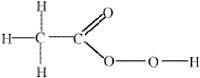
Peracetic acid is a peroxy acid that has the following general structure:
Peroxy acids are irritating to skin, eyes, and mucous membranes of the respiratory tract. Peroxy acids are members of a broader group of chemicals called organic peroxides. Many of these chemicals are also considered to be respiratory irritants (Galvin and Farr 1993).
4.4.
Other Relevant Information
4.4.1.
Species Variability
The LC50 values for 1-h exposures to the rat (476 mg/m3) and mouse (512-524 mg/m3) are similar, indicating a similar species response to inhalation exposure to peracetic acid. Whether the animals died or survived after exposure to peracetic acid, the effects were indicative of respiratory tract irritation in mice and rats. Effects of inhalation exposure on calves and pigs were qualitatively similar to those observed in rodents. Lacrimation occurred in humans exposed to 15.6 mg/m3 for 3.5 min and respiratory tract irritation occurred at concentrations > 1.56 mg/m3 with only mild effects occurred at the lower concentrations (Fraser and Thorbinson 1986); Janssen and van Doorn (1994) reported no lacrimation in rats exposed to 87 mg/m3 for 4 h, but serious respiratory effects were observed. In contrast, Benes et al. (1966) reported lacrimation and upper respira-
tory tract effects in rats exposed to 7.2-72 mg/m3 for 4 h. These results show that similar effects are observed in humans and animals and that humans may be slightly more sensitive to exposure to peracetic acid than animals.
4.4.2.
Susceptible Subpopulations
Peracetic acid is a corrosive and extremely irritating substance that attacks mucous membranes of the respiratory tract and eyes; therefore, very little difference in sensitivity is expected among individuals within the general population. No data were available on the response of asthmatics to inhaled peracetic acid.
4.4.3.
Concentration–Exposure Duration Relationships
The n-value of 1.6 was estimated from the rat lethality data by determining the value of n, which, when applied to the 1-h LC50 of 476 mg/m3 (Janssen 1989a), would closely predict the 4-h LC50 of 204 mg/m3 (Janssen and Van Doorn 1994). Although only two LC50 values were available for estimating the n-value, the estimated value is considered more appropriate than using default values.
4.4.4.
Concurrent Exposure Issues
Two constituents in peracetic acid are acetic acid and hydrogen peroxide, and these may have contributed to the observed toxic effects of peracetic acid. Aerosols or vapors will contain these constituents in addition to peracetic acid. It appears, however, that acetic acid and hydrogen peroxide are considerably less toxic than peracetic acid. The following toxicity information on hydrogen peroxide and acetic acid was cited from secondary sources.
Hydrogen peroxide has a vapor pressure of 5 mm Hg at 30° C, and it is miscible in water (ACGIH 1991). The LC50 value for hydrogen peroxide is 1418 ppm (1972 mg/m3) for a 4-h exposure to rats and the LCLO is 227 ppm (316 mg/m3) for an unknown exposure time to mice (NIOSH 1996a). The LC50 for the rat exposed to hydrogen peroxide is about 10 times greater than the LC50 for rats exposed to peracetic acid. Dogs exposed to 7 ppm (10 mg/m3) vapor concentration of 90% hydrogen peroxide for 6 h/day for 6 months developed skin irritation, sneezing, lacrimation, and bleached hair, and rabbits exposed to 22 ppm (31 mg/m3) (frequency not reported) for 3 months developed bleached hair and skin irritation (Oberst et al. 1954). The carcinogenicity of hydrogen peroxide has been tested by the oral, subcutaneous, intramuscular, and topical routes of exposure, and IARC (1985) considers the evidence for carcinogenicity as limited for experimental animals.
Acetic acid has a vapor pressure of 11.4 mm Hg at 20°C, and it is freely soluble in water (Katz and Guest 1994). Inhalation of acetic acid vapor is re-
ported to cause marked irritation to the eyes, nose, and throat in humans at concentration of 816-1226 ppm (2000-3005 mg/m3) for 3 min, and exposure to 50 ppm (123 mg/m3) is reported to be intolerable because of intense irritation (NIOSH 1996b). Exposure to acetic acid at 10 ppm is reported to be relatively nonirritating (Sterner 1943), 20-30 ppm (49-74 mg/m3) has been reported to be without danger, and occupational exposure to 60 ppm plus 1 h daily exposure to 100-260 ppm (245-637 mg/m3) for 7-12 years caused only slight irritation (Vigliani and Zurlo 1955). The LC50 for acetic acid is 5000-5620 ppm (12,255-13,775 mg/m3) for a 1-h exposure to mice. (NIOSH 1996b) The lowest lethal concentration for a 4-h exposure of rats to acetic acid is 16,000 ppm (39,216 mg/m3)(Katz and Guest 1994), which is about 190 times greater than the LC50 for a 4-h exposure to peracetic acid. The data show that acetic acid and peracetic acid may produce similar effects on the respiratory tract, but peracetic acid is markedly more toxic than acetic acid. The RD50 was reported as 163 ppm (400 mg/m3) for the mouse (NIOSH 1996b). Exposure to concentrations >1000 ppm (2451 mg/m3) produces irritation to the conjunctiva and upper respiratory tract of mice (Katz and Guest 1994).
Sulfuric acid also is found in some commercial grades of peracetic acid. Humans exposed to sulfuric acid at concentrations of 1 mg/m3 for 10-15 min did not detect the substance by odor, taste, or irritation (these data were cited in NRC 1984). The LC50 for inhalation exposure to sulfuric acid aerosols ranged from 19 to 59.8 mg/m3 for guinea pigs (ATSDR 1998). In rats, 2/2 animals died after exposure to 699 mg/m3 for 7 h or after exposure to 1470 mg/m3 for 3.5 h. No rats died after exposure to 461 mg/m3 for 7 h or after exposure to 718 mg/m3 for 3.5 h. In mice, 2/5 animals died after exposure to 699 mg/m3 for 7 h or after exposure to 549 mg/m3 for 3.5 h (secondary citation by ATSDR 1998). LC50 values were not reported for the rat or mouse, but the data indicate that they are much less sensitive to sulfuric acid than are guinea pigs.
4.4.5.
Other Data
Peracetic acid was used at a concentration of 0.2% to disinfect the hands of personnel in a virus laboratory over a 5 year period and caused no adverse effects; a concentration of 0.5%, however, was irritating to the skin (Mucke 1970).
Peracetic acid caused irritation to the skin of guinea pigs following direct contact (Bulnes et al. 1982). Application of 3% peracetic acid to depilitated guinea pig skin for 2, 3, or 5 h caused microscopic lesions characterized by congestion, hemorrhage, edema of the dermis, capillary vasodilation, perivascular effect (neutrophil granulocytes), and gelatinous edema of the dermis. Application of 3% peracetic acid for 1 h or 1% for up to 5 h was without macroscopic or microscopic effects.
5.
DATA ANALYSIS AND AEGL-1
5.1.
Human Data Relevant to AEGL-1
McDonagh (1997) reported that exposure to peracetic acid at 1.56-1.87 mg/m3 was not immediately irritating, but would have been considered “unpleasant for an extended period;” 0.40-0.53 mg/m3 was tolerable and not unpleasant for up to 3 h. According to Fraser and Thorbinson (1986), exposure to 3.12-4.67 mg/m3 for 15-20 min is not expected to cause discomfort to mucous membranes, and 1.56-3.12 mg/m3 for 25-30 min is expected to cause only mild or tolerable discomfort. No discomfort is expected for subjects exposed to ≤1.56 mg/m3 for 35-45 min.
5.2.
Animal Data Relevant to AEGL-1
Rats exposed to peracetic acid at 12.2-13.9 mg/m3 for 25 min showed a reduction of only 32-33% in respiratory rate, whereas rats that inhaled a slightly lower concentration of 8.4 mg/m3 showed a greater reduction of 47% (Janssen 1989c). These data show the inconsistency of the results regarding depression of respiratory rates in rats exposed to peracetic acid. Only mild effects were observed in rats exposed to 11.7 mg/m3 (closed eyes, decreased activity, clear ocular discharge) for 4 h and observed for 14 days (Whitman 1991). The study author did not mention that the rats had redness of the eyes or lacrimation during exposure. In a repeat exposure study using mice exposed to 70-140 mg/m3 for 60 min/day, 3 times/week, for 4 weeks, only small foci of inflammation were observed when the animals were killed 14 days after the last exposure. If damage to the respiratory tract occurred during the exposure period, it was repaired during the post-exposure period.
5.3.
Derivation of AEGL-1
Because decreases in respiratory rate in rats exposed to peracetic showed no clear concentration-response relationship, the human data are considered more appropriate and more relevant for deriving AEGL-1 values. In the study by Fraser and Thorbinson (1986), humans exposed to peracetic acid at ≤1.56 mg/m3 (concentrations reported as hydrogen peroxide) experienced no discomfort, and McDonagh (1997) reported that 1.56 mg peracetic/m3 is not immediately irritating. An intraspecies uncertainty factor of 3 was applied because peracetic acid is a corrosive and irritant substance, the effects are confined to the upper respiratory tract, and the effects are expected to be similar for most individuals within the population. The same value is for all exposure durations from 10 min to 8 h. The rationale for having the same value is as follows: (1) effects of peracetic acid exposure appear to correlate more with concentration than with time, and (2) peracetic acid is freely soluble in water, and therefore, should be effectively
scrubbed by the nasal tissues, particularly at the very low concentration for AEGL-1. The AEGL-1 values are summarized in Table 7-10.
6.
DATA ANALYSIS AND AEGL-2
6.1.
Human Data Relevant to AEGL-2
Fraser and Thorbinson (1986) reported that lacrimation and extreme discomfort occurred after exposure to peracetic acid at 15.6 mg/m3 for only 7 min; extreme discomfort and unbearable irritation, but no lacrimation, was reported for exposures to concentrations ranging from 6.23-9.35 mg peracetic acid/m3 for 1 h and 20-25 min (6.23 mg peracetic acid/m3 for 55 min, 7.79-9.35 mg peracetic acid/m3 for 15 min, and 6.23 mg/m3 for 10-15 min). Exposure to 6.23 mg peracetic acid/m3 was considered tolerable for 2 min. Effects in the lower respiratory tract were not noted even for exposure to 15.6 mg peracetic acid/m3, which is extremely irritating to the upper respiratory tract. Peracetic acid is freely soluble in water (O’Neil et al. 2001) and is expected to be effectively scrubbed in the upper respiratory tract.
6.2.
Animal Data Relevant to AEGL-2
Animal data relevant to deriving AEGL-2 values have been summarized in Table 7-9. Inhalation exposure to peracetic acid causes irritation to the mucous membranes of the respiratory tract and eyes at concentrations below those causing death. Concentrations of peracetic acid aerosols ranging from 8.4-36.3 mg peracetic acid/m3 caused 32 to 67% decreases in respiratory rates during a 25-min exposure, but not in a dose-related manner (Janssen 1989c). Exposure to peracetic acid concentrations ranging from 221-462 mg/m3 for 25 min caused decreases of 76-78% in the respiratory rates (Janssen 1990). Generally, respiratory irritation, weight loss, and nasal lesions in rats were slight to moderate at concentrations ranging from 172-355 mg/m3 for exposure durations ranging from 30 to 90 min (Janssen 1989b). Severe signs of respiratory irritation were observed in rats exposed to 578-589 mg/m3 for 30 or 60 min (Janssen 1989b). Exposure to 7.2-72 mg/m3 for 240 min caused restlessness, lacrimation, and nasal discharge, and 237 mg/m3 for 240 min caused labored breathing and lung edema (Benes et al. 1966). No effects were observed in rats that inhaled 7.2 mg/m3, 1 h/day repeatedly for 28 days, whereas restlessness, lacrimation, and
TABLE 7-10 AEGL-1 Values for Peracetic Acid
|
10 min |
30 min |
1 h |
4 h |
8 h |
|
0.52 mg/m3 ( 0.17 ppm) |
0.52 mg/m3 (0.17 ppm) |
0.52 mg/m3 (0.17 ppm) |
0.52 mg/m3 (0.17 ppm) |
0.52 mg/m3 (0.17 ppm) |
nasal discharge were observed in rats exposed one time to 7.2-72 mg/m3 for 4 h (Benes et al. 1966). Increased lung and liver weights, depressed weight gain, and lung inflammation were reported for rats exposed to 21.8 mg/m3 under similar conditions (Benes et al. 1966). Similar effects were observed in mice exposed to 70-140 mg/m3 1 h/day, 3 times per week, for 4 weeks (Merka and Urban 1978). These studies showed that effects were more severe after doubling the exposure concentration than after doubling the exposure duration.
6.3.
Derivation of AEGL-2
For the most part, animals exposed to low concentrations of peracetic acid displayed the most severe clinical signs after exposure was terminated, whereas humans exposed to low concentrations reported only mucous membrane irritation during exposure. However, the animals were restrained during exposure in some studies. The evidence further suggests that humans may be slightly more sensitive to inhaled peracetic acid than animals. This conclusion is supported by observations of lacrimation in humans exposed to 15.6 mg/m3 for 3.5 min (Fraser and Thorbinson 1986), no lacrimation but serious respiratory effects were observed in animals exposed to 87 mg/m3 for 4 h (Janssen and van Doorn 1994) and lacrimation was observed in animals exposed to 7.2-72 mg/m3 for 4 h (Benes et al. 1966).
AEGL-2 values are derived from human data reported by Fraser and Thorbinson (1986). They reported that exposure to peracetic acid at 6.23 mg/m3 for up to 1 h caused extreme discomfort and unbearable irritation, but exposure to 6.23 mg/m3 for 2 min was also considered tolerable. A slightly lower concentration of 4.67 mg/m3 caused discomfort or slight discomfort for exposure for durations up to 20 min. The effects at 6.23 peracetic acid mg/m3 appear to be more serious than those described by the definition of AEGL-2 and could hinder the ability to escape. Although irritation to the upper respiratory tract was extreme, lower respiratory effects did not occur even at concentrations as high as 15.6 mg/m3. Moreover, peracetic acid is freely soluble in water and should be effectively scrubbed in the nasal passages at the concentrations considered for deriving AEGL-2 values. Although the effects at 4.67 mg/m3 are slightly less severe than those defined by AEGL-2, this level is more appropriate for deriving the AEGL-2 than the higher level of 6.23 mg/m3. An intraspecies uncertainty factor of 3 is applied because peracetic acid is a corrosive/irritant substance and the effects, which are confined to the upper respiratory tract, are expected to be similar and not expected to vary by more than a factor of 3 for most individuals in the population. The same value is for all exposure durations from 10 min to 8 h. The rationale for proposing the same AEGL-2 value for all exposure durations is as follows: (1) effects of peracetic acid exposure correlate with concentration more than time, and (2) peracetic acid is freely soluble in water and at low concentrations should be effectively scrubbed in the nasal passages. The AEGL-2 values are summarized in Table 7-11.
TABLE 7-11 AEGL-2 Values for Peracetic Acid [mg/m3 (ppm)]
|
10 min |
30 min |
1 h |
4 h |
8 h |
|
1.6 mg/m3 (0.5 ppm) |
1.6 mg/m3 (0.5 ppm) |
1.6 mg/m3 (0.5 ppm) |
1.6 mg/m3 (0.5 ppm) |
1.6 mg/m3 (0.5 ppm) |
7.
DATA ANALYSIS AND AEGL-3
7.1.
Human Data Relevant to AEGL-3
No data on human lethality caused by exposure to peracetic acid were found in the literature searched.
7.2.
Animal Data Relevant to AEGL-3
Three animal lethality studies were available for deriving AEGL-3 values. In one study, rats were exposed to peracetic acid aerosol at concentrations 130 to 320 mg/m3 for 30 min, 150 to 1450 mg/m3 for 1 h (Janssen 1989a), and 87 to 267 mg/m3 ppm for 4 h (Janssen and van Doorn 1994). Proxitane 1505 (15% peracetic acid, ~28% acetic acid, and 14% hydrogen peroxide) was used for the 30-min and 1-h studies and Proxitane AHC (~5% peracetic acid, 10% acetic acid, and 19% hydrogen peroxide) was used for the 4-h study. The mortality responses for the studies are presented in Tables 7-4 and 7-5. The LC50 for peracetic acid was 476 mg/m3 for the 1-h exposure and 204 mg/m3 for the 4 h study; the LC50 was not calculated for the 30-min exposure because there were only two relevant concentrations. Clinical signs were primarily related to respiratory tract irritation and adverse effects on body weight gain. Animals that died showed gross or microscopic evidence of pulmonary hemorrhage, edema, or consolidation. Surviving animals showed less severe effects.
7.3.
Derivation of AEGL-3
The AEGL-3 values are derived from the study of Janssen (1989a). This study showed that rats exposed to Proxitane 1507 (15% peracetic acid~28% acetic acid, 14% hydrogen peroxide, ~1% “stabilizer,” and ~43% water) aerosols at peracetic acid concentrations of 130, 300, 320 mg/m3 for 30 min had mortality responses of 0/5, 0/5 and 3/5 rats, respectively. Exposures to aerosol concentrations of 150, 390, and 1450 mg/m3 for 60 min resulted in mortality responses of 0/5, 2/5, and 5/5, respectively. Clinical signs indicative of respiratory irritation were observed at all concentrations and increased in severity with exposure concentration for each exposure duration. The AEGL values were derived from the highest concentration that did not cause death at either exposure duration: 300 mg/m3 for a 30-min exposure duration and 150 mg/m3
for a 60-min exposure duration. An intraspecies uncertainty factor of 3 and an interspecies uncertainty factor of 3 (total uncertainty factor = 10) were applied to 300 mg/m3 and 150 mg/m3 for the 30- and 60-min exposures, respectively. Uncertainty factors of 3 were applied because the mucous membranes of the respiratory tract are not expected to show vast differences in response to corrosive/irritant substances at concentrations that cause severe physical damage or at the threshold for lethality regardless of species or the individuals in the population. The equation, Cn × t =k, where n = 1.6 (estimated from the 1- and 4-h rat lethality data), was used to scale the 60-min exposure to 4- and 8-h values and the 30-min exposure to 10 min. The AEGL-3 values are summarized in Table 7-12.
8.
SUMMARY OF AEGLs
8.1.
AEGL Values
The AEGL-1 value was based on a concentration of peracetic acid that is not expected to be detectable, unpleasant, or cause discomfort (1.56 mg/m3) or no more than mild discomfort (1.56 - 3.12 mg/m3). An uncertainty factor of 3 was applied to 1.56 mg/m3 to account for human variability.
The AEGL-2 value of 1.6 mg/m3 for all exposure durations was based on human data showing slight to mild irritation or discomfort to mucous membranes due to exposure to peracetic acid at a concentration of 4.7 mg mg/m3. The same value is for all exposure durations from 10 min to 8 h. An uncertainty factor of 3 was applied to account for human variability.
The AEGL-3 values were based on NOELs for lethality in rats exposed to Proxitane 1507 (containing 15% peracetic acid) for 30 min and 1 h. Uncertainty factors of 3 for intraspecies variability and 3 for interspecies sensitivity were applied to the NOELs. The equation C1.6 × t = k was used to scale the 30-min exposure to 10 min and the 1-h exposure was used to scale to 4 and 8 h. The value of n was estimated from rat data.
The AEGL values are presented in Table 7-13.
8.2.
Comparison of AEGLs with Other Standards and Criteria
There are no OSHA (Occupational Safety and Health Administration) standards, NIOSH (National Institute for Occupational Safety and Health) recommendations, or ACGIH TLV, AIHA-ERPG, or MAK values for peracetic acid. SOLVAY (1998) (Belgium manufacturer of peracetic acid) derived emergency exposure indexes (EEI) for accidental releases of peracetic acid based on the methodology of the European Chemical Industry Ecology and Toxicology Centre (ECETOC). These values are derived for general population exposures. The values are as follows:
TABLE 7-12 AEGL-3 Values for Peracetic Acid
|
10 min |
30 min |
1 h |
4 h |
8 h |
|
60 mg/m3 |
30 mg/m3 |
15 mg/m3 |
6.3 mg/m3 |
4.1 mg/m3 |
TABLE 7-13 Summary of AEGL Values for Peracetic Acid
|
Classification |
10 min |
30 min |
1 h |
4 h |
8 h |
End Point /Reference |
|
AEGL-1 (Nondisabling) |
0.52 mg/m3 (0.17 ppm) |
0.52 mg/m3 (0.17 ppm) |
0.52 mg/m3 (0.17 ppm) |
0.52 mg/m3 (0.17 ppm) |
0.52 mg/m3 (0.17 ppm) |
Threshold for irritation (Fraser and Thorbinson 1986; McDonagh 1997) |
|
AEGL-2 (Disabling) |
1.6 mg/m3 (0.5 ppm) |
1.6 mg/m3 (0.5 ppm |
1.6 mg/m3 (0.5 ppm) |
1.6 mg/m3 (0.5 ppm) |
1.6 mg/m3 (0.5 ppm) |
Mild irritation (Fraser and Thorbinson 1986) |
|
AEGL-3 (Lethal) |
60 mg/m3 |
30 mg/m3 |
15 mg/m3 |
6.3 mg/m3 |
4.1 mg/m3 |
Highest concentration causing no deaths (Janssen 1989a) |
SLV-EEI-3 (death/permanent incapacity) = 50 ppm (156 mg mg/m3): the threshold above which mortality and/or irreversible effects could be observed for an exposure of up to 60 min.
SLV-EEI-2 (disability) = 3 ppm (9 mg mg/m3): the threshold level above which intense lacrimation, extreme nose discomfort and transient incapacitation (inability of self-protection but without residual consequences) could be observed for an exposure of up to 60 min.
SLV-EEI-1(discomfort) = 0.15 ppm (0.45 mg mg/m3): the threshold level above which discomfort could be observed for an exposure of up to 8 h per day.
8.3.
Data Quality and Research Needs
Human data on exposure to peracetic acid were limited. This substance is corrosive to mucous membranes causing extreme discomfort depending on the concentration. Therefore, additional humans studies would not be feasible except for very low concentrations (below irritation levels in normal subjects) using healthy exercising subjects. The animal studies found in the literature were well conducted considering the circumstances. Peracetic acid occurs in mixtures with acetic acid, hydrogen peroxide, a stabilizer, and sometimes sulfuric acid. Commercial preparations vary in the concentrations of the three components. Because of the instability of peracetic acid, the aerosol or vapor may have different compositions of peracetic acid, acetic acid, and hydrogen peroxide. Variations in the composition of the test material could lead to inconsistencies in the
observed effects. Therefore, acute inhalation studies using the same commercial product to study lethal and nonlethal effects after exposure for 30 min, and 1, 4, and 8 h would aid in the evaluation of the toxicity of peracetic acid.
9.
REFERENCES
ACGIH (American Conference of Governmental Industrial Hygienists, Inc.). 1991. Hydrogen peroxide. Pp. 782-783 in Documentation of the Threshold Limit Values and Biological Exposure Indices, 6th Ed. American Conference of Governmental Industrial Hygienists, Inc., Cincinnati, OH.
ACGIH (American Conference of Governmental Industrial Hygienists, Inc.). 2004. Acetic acid. In Documentation of the Threshold Limit Values and Biological Exposure Indices, 2004 Supplement to the 7th Ed. American Conference of Governmental Industrial Hygienists, Inc., Cincinnati, OH.
Agnet, Y., J.L. Dorange, and P. Dupuy. 1976. Mutagenicity of peracetic acid on Salmonella typhimurium. Mutat. Res. 38(2):119 [Abstract 33].
ATSDR (Agency for Toxic Substances and Disease Registry). 1998. Toxicological Profile for Sulfur Trioxide and Sulfuric Acid. U.S. Department of Health and Human Services, Public Health Service, Agency for Toxic Substances and Disease Registry, Atlanta, GA. December 1998 [online]. Available: http://www.atsdr.cdc.gov/toxprofiles/tp117.pdf [accessed Nov. 12, 2008].
Benes, V., B. Tichacek, and J. Veger. 1966. Toxizizat der Peressigsaure. Pp. 114-124 in Peressigsäure und die Moglichkeit ihrer Verwertung in der Desinfektion, B.Tichacek, ed. Prag: Staatsverlag für Gesundheitswesen der CSSR (as cited in Heinze et al. 1979).
Bock, F.G., H.K. Meyers, and H.W. Fox. 1975. Cocarcinogenic activity of peroxy compounds. J. Natl. Cancer Inst. 55(6):1359-1361.
Bulnes, C., M.G. Garcia, and L. Tablada. 1982. Toxic effects of peracetic acid. II. Morphopathological study following direct contact with guinea pig skin [in Spanish]. Rev. Salud. Anim. 4 (4):59-65.
Fishbein, L. 1979. Peroxides. Pp. 158-161 in Potential Industrial Carcinogens and Mutagens. Studies in Environmental Science 4. New York: Elsevier.
Fraser, J.A.L., and A. Thorbinson. 1986. Fogging Trials with Tenneco Organics Limited (30th June, 1986) at Collards Farm. Solvay Interox, Warrington, UK.
Friebig, U, and G. Reuter. 1975. Anatomisch-pathologische und histopathologische Untersuchungen der Lunge, Leber und Niere sowie Untersuchung der Aktivitat der Serum-Glutamat-Oxalazetat-Transminase im Blutserum von Schweinen und Kabern nach der Desinfektion mit PES-Aerosol. Vet.-med. Diplomarbeit Berlin (as cited in Heinze et al. 1979).
Galvin, J.B., and C. Farr. 1993. Organic peroxides. Pp. 527-597 in Patty’s Industrial Hygiene and Toxicology, Vol. II, Part A Toxicology, 4th Ed., G.D. Clayton, and F.E. Clayton, eds. New York: John Wiley & Sons.
Heinze, W., E. Werner, S. von Krüger, and G. Wilsdorf. 1979. On the tolerance of peracetic acid aerosols with particular attention to impaired defense mechanisms [in German]. Monatsh. Veterinarmed. 34:212-217.
HSDB (Hazardous Substances Data Bank). 1997. Peracetic Acid. TOXNET, Specialized Information Services, U.S. National Library of Medicine, Bethesda, MD [online].
Available: http://toxnet.nlm.nih.gov/cgi-bin/sis/search/f?./temp/~T7RRWD:1 [accessed Nov. 13, 2008].
IARC (International Agency for Research on Cancer). 1985. Hydrogen peroxide. Pp. 285-314 in Allyl Compounds, Aldehydes, Epoxides and Peroxides. IARC Monographs on the Evaluation of the Carcinogenic Risk of Chemicals to Humans Vol. 36. Lyon, France: IARC.
IUCLID (International Uniform Chemical Information Database). 2000. Peracetic Acid (CAS No. 79-21-0). IUCLID Dataset. 2000 CD-room Ed. European Commission, European Chemical Bureau [online]. Available: http://ecb.jrc.it/IUCLID-DataSheets/79210.pdf [accessed Nov. 25, 2008].
Janssen, P.J.M. 1989a. Acute Inhalation Toxicity Studies of Proxitane 1507 in Male Rats (I). Report No. S. 8906, Int. Doc. No. 56645/25/89. Duphar B.V., Weesp, The Netherlands, and Solvay, Brussels, Belgium.
Janssen, P.J.M. 1989b. Acute Inhalation Toxicity Studies of Proxitane 1507 in Male Rats (II). Report No. S. 8908, Int. Doc. No. 56645/34/89. Duphar B.V., Weesp, The Netherlands, and Solvay, Brussels, Belgium.
Janssen, P.J.M. 1989c. Acute Inhalation Study to Investigate the Respiratory Irritating Properties of Proxitane 1507 in Male Rats. Report No. S. 8912, Int. Doc. No. 56645/40/89. Duphar B.V., Weesp, The Netherlands, and Solvay, Brussels, Belgium.
Janssen, P.J.M. 1990. Preliminary Acute Inhalation Study to Investigate the Respiratory Irritating Properties of Proxitane 1507 in Male Rats. Report No. S.9003, Int. Doc. No. 56645/33/90. Duphar B.V., Weesp, The Netherlands, and Solvay, Brussels, Belgium.
Janssen, P.J.M., and W.M. van Doorn. 1994. Acute Inhalation Toxicity Study with Proxitane AHC in Male and Female Rats. Report No. S. 9408, Int. Doc. No. 56345/48/94. Duphar B.V., Weesp, The Netherlands, and Solvay, Brussels, Belgium.
Katz, G.V., and D. Guest. 1994. Aliphatic carboxylic acids. Pp. 3523-3671 in Patty’s Industrial Hygiene and Toxicology, Vol. 2E, 4th ed., G.D. Clayton, and F.E. Clayton, eds. New York: John Wiley & Sons.
Koch, S., A. Kramer, J. Stein, V. Adrian, and W. Weuffen. 1989. Mutagenicity testing in sperm-head test/mouse and mutagenic potency of 2 disinfectants on the basis of peracetic acid and phenolics respectively [in German]. Zentralbl. Hyg. Umweltmed. 188(5):391-403.
Krüger, S., and D. Kruschinski. 1982. On the acute inhalation toxicity of peracetic acid aerosols in mice [in German]. Wiss. Z. Humboldt-Univ. Berlin Mat.-Nat. 31:543-548.
Lai, D.Y., Y.T. Woo, M.F. Argus, and J.C. Arcos. 1996. Carcinogenic potential of organic peroxides: Prediction based on structure-activity relationships (SAR) and mechanism-based short-term tests. J. Environ. Sci. Health C Environ. Carcinog. Ecotoxicol. Rev. 14(1):63-80.
Lewis, R.J., ed. 1993. Pp. 883-884 in Hawley’s Condensed Chemical Dictionary, 12th Ed. New York: Van Nostrand Reinhold.
McDonagh, J. 1997. Atmospheric Monitoring of Peracetic Acid on the Existing Caprolactone Plant Distillation Houses A and B, Assessment of Results. Document No. EE970192.M01. Memorandum to R.A. Haffenden et al., from J. McDonagh, Solvay Interox, Warrington. April 30, 1997.
Merka, V., and R. Urban. 1978. Study of inhalation toxicity of performic, peracetic and perpropionic acid in mice. J. Hyg. Epidemiol. Microbiol. Immunol. 20(1):54-60.
Mücke, H. 1970. The properties of peracetic acid: Excerpts relating to the bactericidal, sporicidal, viricidal and fungicidal effect of peracetic acid [in German]. Zeitschrift der Universität Rostock 3:267-270.
Mücke, H. 1977. Studies on effects on the decomposition of dilute peracetic acid [in German]. Pharmazie. 32(10):613-619.
NIOSH (National Institute of Occupational Safety and Health). 1996a. Documentation for Immediately Dangerous to Life or Health Concentrations (IDLH): NIOSH Chemical Listing and Documentation of Revised IDLH Values (as of 3/1/95)-Hydrogen Peroxide. U.S. Department of Health and Human Services, Centers for Disease Control and Prevention, National Institute of Occupational Safety and Health [online]. Available: http://www.cdc.gov/niosh/idlh/772841.html [accessed Nov. 6, 2008].
NIOSH (National Institute of Occupational Safety and Health). 1996b. Documentation for Immediately Dangerous to Life or Health Concentrations (IDLH): NIOSH Chemical Listing and Documentation of Revised IDLH Values (as of 3/1/95)-Acetic Acid. U.S. Department of Health and Human Services, Centers for Disease Control and Prevention, National Institute of Occupational Safety and Health [online]. Available: http://www.cdc.gov/niosh/idlh/64197.html [accessed Nov. 6, 2008].
NRC (National Resource Council). 2001. Standing Operating Procedures for Developing Acute Exposure Guideline Levels for Hazardous Chemicals. Washington, DC: National Academy Press.
NRC (National Research Council). 1993. Guidelines for Developing Community Emergency Exposure Levels for Hazardous Substances. Washington, DC: National Academy Press.
NRC (National Research Council). 1984. Sulfuric acid. Pp. 107-112 in Emergency and Continuous Exposure Limits for Selected Airborne Contaminants, Vol. 1. Washington, DC: National Academy Press.
Oberst, F.W., C.C. Comstock, and E.B. Hackley. 1954. Inhalation toxicity of ninety percent hydrogen peroxide vapor; acute, subacute, and chronic exposure to laboratory animals. AMA Arch. Ind. Health 10(4):319-327.
O’Neil, M.J., A. Smith, P.E. Heckelman, J.R. Obenchain, Jr., J. Gallipeau, and M.A. D’Arecca. 2001. Peracetic acid. P. 1283 in The Merck Index: An Encyclopedia of Chemicals, Drugs, and Biologicals, 13th Ed. Whitehouse Station, NJ: Merck.
Paldy, A., G. Berensci, A. Kramer, W. Weuffen, and E. Spiegelberger. 1984. Mutagens potency of Wofasteril, Wofasept, formaldehyde, chlorhexidine, and Bronopol in the bone marrow of mice. Pp. 349-352 in Aspects of Prevention and Control of Hospital Infections, A. Kramer, H. Wigert, and B. Kemter, eds. Microbial Environment and Antimicrobial Measures, Vol. 8 [in German]. Leipzig: Barth.
RTECS (Registry of Toxic Effects of Chemical Substances). 2003. Peroxyacetic Acid. RTECS No. SD8750000. National Institute for Occupational Safety and Health [online]. Available: http://www.msdshazcom.com/RTECS/SD8583B0.HTM [accessed Nov. 14, 2008].
SOLVAY. 1998. SOLVAY Emergency Exposure Indices for Accidental Exposure to Peracetic Acid. SOLVAY, Brussels, Belgium.
Sterner, J.H. 1943. Determining margins of safety: criteria for defining a “harmful” exposure. Ind. Med. 12:514-518 (as cited in ACGIH 2004).
Uhlemann, F. 1971. P. 13 in Forschungsabschlußbericht: Aerosldesinfektion in tierproduktionsanlagen. Karl-Marx-Stadt (as cited in Kruger and Kruschinski 1982).
Vigliani, E.C., and N. Zurlo. 1955. Erfahrungen der Clinica del Lavoro mit einigen maximalen Arbeitsplatzkonzentrationen (MAK) von Industriegiften. Arch Gewerbepath. Gewerbehyg. 13(5):528-535. [Abstract in Arch. Ind. Health 13:403 (1956)](as cited in ACGIH 2004).
Whitman, F.T. 1991. Acute Inhalation toxicity study of peracetic acid 0.15 use dilution (MRK-91-004) in the rat. Final Report. Performed by Exxon Biomedical Sciences, Inc, East Millstone NJ, for FMC Corporation, Princeton, NJ.
Yin, M., Y. Chen, and J. Wang. 1989. Studies on the genotoxicity of disinfectants with SOS chromotest. Environ. Mol. Mutagen. 14 (Suppl. 15):225-226.
APPENDIX A
Derivation of AEGL Values for Peracetic Acid
Derivation of AEGL-1
|
Key Study: |
McDonagh 1997; Fraser and Thorbinson 1986 |
|
Toxicity End Point: |
Threshold for irritation |
|
Time Scaling: |
Not applicable. |
|
Uncertainty Factors: |
NA for interspecies sensitivity (AEGL-1 derived from human data). |
|
|
3 for intraspecies variability; peracetic acid is corrosive and response to upper respiratory tract and eyes is expected to be similar among individuals in the population. |
|
Modifying Factor: |
1 |
|
Calculations: |
1.56 mg/m3/3 = 0.52 mg/m3 |
|
|
The same value applied for 10-min to 8-h exposure durations. |
Derivation of AEGL-2
|
Key Study: |
Fraser and Thorbinson 1986 |
|
Toxicity End Point: |
Slight upper respiratory tract irritation. |
|
Uncertainty Factor: |
NA for interspecies sensitivity (AEGL-2 derived from human data). |
|
|
3 for intraspecies variability; peracetic acid is corrosive and effects in the upper respiratory tract are expected to be similar among individuals in the population. |
|
Modifying Factor: |
1 |
|
Calculations: |
4.67 mg/m3 /3 = 1.6 mg/m3 |
|
|
The same value applied to 10-min to 8-h durations. |
Derivation of AEGL-3
|
Key Study: |
Janssen 1989a |
|
Toxicity End Point: |
Highest nonlethal concentration of 96 ppm for a 30-min exposure and 48 ppm for a 60-min exposure in the rat. |
|
Time Scaling: |
Cn × t = k; n = 1.6 based on analysis of rat lethality data. |
|
Uncertainty Factors: |
3, for interspecies sensitivity: mucous membranes of the respiratory tract of humans and animals are not expected to show vast differences in response to corrosive/irritant substances at concentrations that cause severe physical damage or at the threshold for lethality. |
|
|
3, for intraspecies variability: mucous membranes of individuals are not expected to show a great difference in response to a corrosive/irritant substance such as peracetic acid. |
|
Modifying Factor: |
1 |
|
Calculations: |
|
|
10-min AEGL-3 |
C = (k/t)1/1.6 = (6927 mg/m3 min/10 min)1/1.6 C = 59.6 = 60 mg/m3 |
|
30-min AEGL-3 |
300 mg/m3/10 (uncertainty factor) = 30 mg/m3 Cn × t = k; C = 30 mg/m3, t = 30 min, n = 1.6 k = 6927 mg/m3•min C = (k/t)1/1.6 = (6927 mg/m3 min/30 min)1/1.6 C = 30 mg/m3 |
|
1-h AEGL-3 |
150 mg/m3/10 (uncertainty factor) = 15.0 mg/m3 Cn × t = k; C = 15 mg/m3, t = 60 min, n = 1.6 k = 4569.8008 mg/m3•min C = (k/t)1/1.6 = (4570 mg/m3 min/60 min)1/1.6 C = 15 mg/m3 |
|
4-h AEGL-3 |
C = (k/t)1/1.6 = (4570 mg/m3 min/240 min)1/1.6 C = 6.3 mg/m3 |
|
8-h AEGL-3 |
C = (k/t)1/1.6 = (4570 mg/m3 min/480 min)1/1.6 C = 4.1 mg/m3 |
APPENDIX B
Derivation Summary: AEGLs for Peracetic Acid
AEGL-1 VALUES
|
10 min |
30 min |
1 h |
4 h |
8 h |
|
0.52 mg/m3 ( 0.17 ppm) |
0.52 mg/m3 ( 0.17 ppm) |
0.52 mg/m3 ( 0.17 ppm) |
0.52 mg/m3 ( 0.17 ppm) |
0.52 mg/m3 (0.17 ppm) |
|
Key References: (I) McDonagh, J. 1997. Atmospheric Monitoring of Peracetic Acid on the Existing Caprolactone Plant Distillation Houses A and B, Assessment of Results. Document No. EE970192.M01. Memorandum to R.A. Haffenden et al., from J. McDonagh, Solvay Interox, Warrington. April 30, 1997. (II) Fraser, J.A.L., and A. Thorbinson. 1986. Fogging Trials with Tenneco Organics Limited (30th June, 1986) at Collards Farm. Solvay Interox, Warrington, UK. |
||||
|
Test Species/Strain/Number: Humans/two subjects (I); number unknown (II) |
||||
|
Exposure Route/Concentration/Durations: Inhalation, 0.40-0.53 mg/m3 (0.13-0.17 ppm) for up to 3 h (I); 1.56-1.87 mg/m3 (0.5-0.6 ppm) for unknown time (I), <1.56-4.67 mg/m3 for 12 min; ≤1.56 to ≥6.23 mg/m3 for 45 min (II). |
||||
|
Effects: 1.56-3.12 mg/m3: mild discomfort 1.56-1.87 mg/m3: no immediate irritation; may be unpleasant for extended period. ≤1.56 mg/m3: no discomfort. 0.40-0.53 mg/m3: detectable, but tolerable and not unpleasant. |
||||
|
End Point/Concentration/Rationale: Threshold for irritation of 1.56 mg/m3; the effects range from detectable but tolerable and not unpleasant to no discomfort. |
||||
|
Uncertainty Factors/Rationale: Total uncertainty factor: 3 Interspecies: Not applicable. Intraspecies: 3, individuals in the population are expected to respond similarly and by a factor no greater than 3 when exposed to corrosive/irritant agents that affect the upper respiratory tract. |
||||
|
Modifying Factor: 1 |
||||
|
Animal to Human Dosimetric Adjustment: Not applicable. |
||||
|
Time Scaling: Not applicable. |
||||
|
Data Adequacy: Human data were limited but were generally supported by animal data. The human data showed that irritation or discomfort at concentrations≤1.56 mg/m3 is expected to be absent or minimal. Neither study reported the number of subjects exposed to peracetic acid. |
||||
AEGL-2 VALUES
|
10 min |
30 min |
1 h |
4 h |
8 h |
|
1.6 mg/m3 (0.5 ppm) |
1.6 mg/m3 (0.5 ppm) |
1.6 mg/m3 (0.5 ppm) |
1.6 mg/m3 (0.5 ppm) |
1.6 mg/m3 (0.5 ppm) |
|
Key Reference: Fraser, J.A.L., and A. Thorbinson. 1986. Fogging Trials with Tenneco Organics Limited (30th June, 1986) at Collards Farm. Solvay Interox, Warrington, UK. |
||||
|
Test Species/Strain/Number: Humans, number exposed is unknown. |
||||
|
Exposure Route/Concentration/Durations: Inhalation, range of 15.6 mg/m3 for 7 min; <1.56-4.67 mg/m3 for 12 min; 6.23-9.35 mg/m3 for 1 h and 15 min; ≤1.56-6.23 mg/m3 for 45 min. |
||||
|
Effects: All effects were associated with the upper respiratory tract or eyes. 6.23-15.6 mg/m3: lacrimation, extreme upper respiratory discomfort or irritation 6.23 mg/m3: unbearable irritation or extreme discomfort, but tolerable for 2 min 3.13-4.67 mg/m3: slight or tolerable discomfort (upper respiratory tract and eyes) 1.36-3.12 mg/m3: mild discomfort; ≤1.56 mg/m3: no discomfort. |
||||
|
End Point/Concentration/Rationale: Slight upper respiratory tract irritation at 4.7 mg/m3 |
||||
|
Uncertainty Factors/Rationale: Total uncertainty factor: 3 Interspecies: Not applicable. Intraspecies: 3, individuals in the population are expected to respond similarly and by a factor no greater than 3 when exposed to corrosive/irritant agents that affect the upper respiratory tract. |
||||
|
Modifying Factor: 1 |
||||
|
Animal to Human Dosimetric Adjustment: Not applicable. |
||||
|
Time Scaling: Not applicable. |
||||
|
Data Adequacy: The number of subjects exposed to peracetic acid was not reported by the investigators. The AEGL-2 value was based on a concentration that caused discomfort or slight discomfort, which is below the definition for AEGL-2; the next higher concentrations caused unbearable irritation after 2 min. Therefore, the lower concentration was more appropriate for deriving AEGL-2 values. The rationale for selecting the same value for all time points is as follows: (1) effects of peracetic acid exposure correlate with concentration more than time, and (2) peracetic acid is freely soluble in water and should be effectively scrubbed in the nasal passages, particularly at the very low AEGL-2 concentration. |
||||
AEGL-3 VALUES
|
10 min |
30 min |
1 h |
4 h |
8 h |
|
60 mg/m3 |
30 mg/m3 |
15 mg/m3 |
6.3 mg/m3 |
4.1 mg/m3 |
|
Key Reference: Janssen, P.J.M. 1989a. Acute Inhalation Toxicity Studies of Proxitane 1507 in Male Rats (I). Report No. S. 8906, Int. Doc. No. 56645/25/89. Duphar B.V., Weesp, The Netherlands, and Solvay, Brussels, Belgium. |
||||
|
Test Species/Strain/Number: Rat/ CPB-WU Wistar/5 males per group. |
||||
|
Exposure Route/Concentration/Durations: Inhalation: 130, 300, or 320 mg/m3 for 30 min and 150, 390, or 1450 mg/m3 for 60 min. |
||||
|
Effects: Clinical signs: signs of extreme respiratory irritation and discomfort, drooping eyelids, transient weight loss, reduced respiratory rate. Gross pathologic effects: blood around nose, red nasal and tracheal mucosa, bloody fluid in trachea, dark red lungs, red or dark spots on lungs, elevated lung weight Mortality: 0/5 rats at 300 mg/m3 and 3/5 at 320 mg/m3 for 30 min; 0/5 at 150 mg/m3, 2/5 at 390 mg/m3, and 5/5 at 1450 mg/m3 for 60 min. |
||||
|
End Point/Concentration/Rationale: Highest non-lethal concentrations for rats exposed for 30 or 60 min; the concentrations were 300 mg/m3 for 30 min and 150 mg/m3 for 60 min. |
||||
|
Uncertainty Factors/Rationale: Total uncertainty factor: 10 Interspecies: 3, mucous membranes of the respiratory tract of humans and animals are not expected to show vast differences in response to corrosive/irritant substances at concentrations that cause severe physical damage or at the threshold for lethality. Intraspecies: 3, mucous membranes of individuals are not expected to show a great difference in response to a corrosive/irritant substance such as peracetic acid. |
||||
|
Modifying Factor: 1 |
||||
|
Animal to Human Dosimetric Adjustment: 1 |
||||
|
Time Scaling: Cn × t = k, where n = 1.6 based on analysis of rat LC50 data for 1 and 4 h exposures. |
||||
|
Data Adequacy: The animal studies were well conducted; however, the different compositions of peracetic acid probably contributed to the inconsistencies of the results. The animal studies were conducted with aerosols instead of the vapor. |
||||