
CHAPTER TWO
Many Different Decision Makers Are Making Choices to Respond to Climate Change
Our companion America’s Climate Choices (ACC) panel reports have made a number of recommendations regarding climate-related decisions that might be taken, including actions to reduce greenhouse gas emissions, to adapt to the impacts of climate change, and to implement adaptable response strategies and policies. Specific actions to implement these recommendations will require new information, mechanisms, and institutions for providing that information for decision makers. This report describes what types of information will be required and how it might best be delivered. One can get an initial sense of these information requirements by examining actions decision makers are already taking.
Many different people and organizations—from individuals and small companies to communities, state governments, federal agencies, and multinational corporations—have already made decisions and taken actions to respond to climate change (see Table 2.1). Some have decided to reduce their greenhouse gas emissions or to plan for adapting to the impacts of climate change; some have decided not to act; and others have decided to inform themselves and others about the science, costs, and benefits of climate change and potential responses. Understanding the nature, effectiveness, and interactions of all these decisions is an important step in maximizing the effectiveness of America’s response to climate change.
This chapter identifies major groups of decision makers, their motivations, and the kind of actions they take, and identifies what information is missing that may prevent a sustained response. Emphasis is placed on non-federal decision makers, many of whom have acted in advance of federal policy and whose decisions, actions, and successes may be affected by any new choices made at the federal level. The reach of some of these non-federal responses has been considerable. For example, decisions on automobile emissions standards made by the state of California have rippled throughout the U.S. economy. When groups of states set up carbon trading markets, or when major corporations (such as Dupont or Walmart) decide to reduce emissions in their operations and supply chains, the effects can reverberate nationwide or even globally.
TABLE 2.1 A Typology of Decision Makers Responding to Climate Change
The non-federal actors making climate related decisions often have a variety of goals they are trying to achieve. For instance, a state, city, tribe, or business might be pursuing goals such as
-
Reducing their greenhouse gas emissions;
-
Reducing vulnerability to climate change now and in the future;
-
Reducing energy costs and exposure to the volatility of energy costs;
-
Making it easier to respond to future federal or other regulations that would significantly reduce greenhouse gases (or we might phrase this as responding more easily to a future low-carbon economy);
-
Establishing economic leadership, promoting economic development in green technology sectors;
-
Fostering a reputation as an environmental leader; and
-
Aiming to use a leadership role to catalyze
-
Emission reduction efforts by others,
-
Regional, national, and global investments in low-carbon technologies, and
-
Diffusion of best practice measures to adapt to climate change.
-
Ideally, states, cities, and businesses would have information available that would help them evaluate and improve their progress in pursuing each of these goals. Some decisions and actions related to climate change are being informed by a loose confederation of networks and other institutions created to help guide climate choices (Figure 2.1). In general, however, little information is currently available to plan and track any of these actions.
STATES, CITIES, AND LOCAL GOVERNMENTS
State and local governments have unique advantages for implementing policies that are intimately linked with the economy and society because of the familiarity with local circumstances and stakeholders. This section illustrates some of the climate actions being taken at the state and local levels.
Climate Change Actions by U.S. States
Actions by U.S. states to respond to climate change can be significant on the global scale. If the 50 states were treated as nations and compared to other national jurisdictions, they would represent 35 of the world’s top emitters (Marland et al., 2003; Peterson and Rose 2006; see Appendix C). Many states have taken a lead on climate
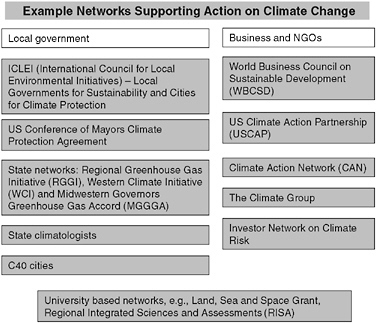
FIGURE 2.1 Example networks supporting action on climate change.
change by passing statewide greenhouse gas emission reduction targets and developing climate action plans guided by advisory boards and commissions (Pew Center, 2009; Rabe, 2008; Table 2.2). Twenty-one states have set emissions targets, albeit with varying stringencies and timelines and using different actions to achieve reduction goals (Pew Center, 2009; Appendix D).
California was the first state to set enforceable statewide greenhouse gas emissions targets (WCI, 2008; Box 2.1). Many other states, however, have coordinated their actions in regional initiatives that include cap–and-trade systems with overall emission reduction targets (Figure 2.2). The Regional Greenhouse Gas Initiative (RGGI) in the northeastern states, for example, capped CO2 emissions for large fossil fuel electric generation plants starting in 2009 with the goal of stabilizing emissions by 2014 and then reducing them by 10 percent by 2018. The Western Climate Initiative (WCI) calls for reducing 90 percent of the region’s greenhouse gas emissions by 15 percent below 2005 levels by 2020. The Midwestern Greenhouse Gas Reduction Accord proposes an economy-wide program to reduce emissions 20 percent below 2005 levels by 2020. These trading schemes have encouraged the inclusion of Canadian and Mexican provincial and state-level governments, as well as allowing some use of international
TABLE 2.2 Summary of State Climate Plans and Greenhouse Gas Reduction Commitments (as of May 2010)
|
BOX 2.1 California and Climate Change In 2006, California passed the California Global Warming Solutions Act (AB-32), committing the state to reduce greenhouse gas emissions to 80 percent below 1990 levels by 2050, and capping emissions at 1990 levels by 2020—an overall reduction of 30 percent from “business as usual” emissions projections. The act is unusually prescriptive in setting out specific policy goals and benchmarks within the legislation. In addition to the emission reduction goals, the act mandates reporting of emissions from large industrial sources; allows a cap-and-trade system; allows adoption of regulations to control greenhouse gases associated with landfills, fuels, ports, and consumer products; creation of a process to credit voluntary reductions; and requirements to evaluate environmental justice and technology options. Meeting the 2020 emissions target will require changes in the energy, transportation, agriculture, and waste sectors. Other climate-related legislation under development in California ranges from promoting alternative fuels to banning incandescent light bulbs. Explanations for California’s extensive actions on climate change include (Corfee-Morlot, 2009; Franco et al., 2008; Mazmanian et al., 2008)
Information critical to the state’s decisions to act on climate change included research on climate change impacts in the state, economic cost-benefit analyses, and documented successes in other countries. Although it is too soon to assess the success of AB-32 in reducing greenhouse gas emissions (and there is some opposition to repeal AB-32), California has already limited emissions growth through earlier regulations and investments. For example, per capita electricity consumption has leveled off to less than 8,000 kWh/person since 1980, while the U.S. average has risen to more than 12,000 kWh/person (Kammen and Pacca, 2004). |
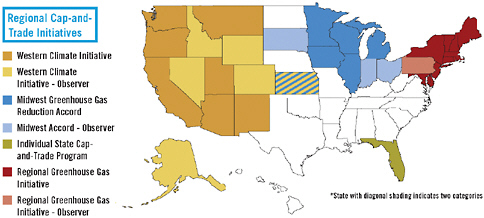
FIGURE 2.2 Regional cap-and-trade initiatives in the United States. SOURCE: Pew Center (2009).
offsets (Blakes, 2009). In addition, California is collaborating with the United Kingdom on emission reductions (California State, 2006).
States have also taken a lead in promoting legislation for other climate-oriented initiatives, such as mandating increases in the percentage of renewables in the energy supply mix, promoting energy efficiency, instituting net-metering and green energy pricing, and setting energy efficiency standards for resources and appliances. Other actions include setting new vehicle emissions standards, promoting alternative fuels such as biodiesel or ethanol, providing incentives to buy low-carbon fuels and vehicles, and creating agricultural plans to promote biomass storage. In addition, some states are funding research and development on clean coal technology and on carbon capture and storage (Pew Center, 2009). Many states are also collecting information and are concerned about changes beyond their boundaries because of the impacts on their own economies and livelihoods. For example, Arizona and Washington pay attention to what may be happening in Mexico and Canada, respectively, and information providers such as the regional assessment centers in the Pacific Northwest (e.g., Climate Impacts Group) and the Southwest (e.g., Climate Assessment of the Southwest) both have important non-U.S. and border components. The reasons for state action on climate change include perceptions of vulnerability, judgments that the costs of inaction are greater than the costs of response, and opportunities for long-term economic advantage (Box 2.1). Decision makers have also responded to climate change for
short-term leadership advantages and because they feel a strong ethical obligation to act on climate change.
Through these actions, U.S. states have acknowledged their decision-making responsibilities for responding to climate change as well as their financial responsibilities for the cost of future climate change impacts. Their steps to limit the magnitude of climate change may accelerate or guide national policy (Peterson and Rose, 2006). Some argue that effective greenhouse gas emission reductions in the United States will only succeed with bottom-up approaches, which can then be complemented by top-down rule (Victor et al., 2005; Wiener et al., 2006).
States (and other jurisdictions such as cities and counties) that have taken action on climate change are concerned that federal actions may undermine or overlook their investments and policies relating to climate change. National policies can be designed to avoid undermining state action. For example, if state emissions reductions are greater than those established under a national cap-and-trade system, the federal emission allowances for state reductions could be retired rather than freed up to be used in other states.
State decision makers have information needs that include detailed data on greenhouse gas emissions down to the local level, regional projections of how climate change may affect their jurisdiction, and information on the distribution of costs and benefits of climate impacts, emission reductions, and adaptation options. They must also understand how climate change and policy will affect other states and countries, especially where they are part of regional carbon markets, where they share vulnerable resources, such as water, or where state economies are closely tied to national and international markets.
Climate Change Actions by City and Local Governments
As locations with a dense amount of buildings, cities are significant producers of greenhouse gas emissions, accounting for as much as 70 percent of global fossil fuel emissions. Cities across North America began to adopt targets and timetables for reducing their greenhouse gas emissions in early 1990s, in large part because of the emergence of transnational municipal networks1 that focused specifically on greenhouse gas reduction (Rabe, 2009; Schroeder and Bulkeley, 2009). For example,
Los Angeles has committed to reduce emissions 35 percent below 1990 levels by 2030 and New York has a major program for both emission reductions, 30 percent below 2005 levels by 2030, and adaptation (see ACC: Adapting to the Impacts of Climate Change, NRC, 2010b). The World Mayors Council on Climate Change also galvanized political action, committing to reduce greenhouse gases by 80 percent below 1990 levels by 2050 in industrialized countries through further collaboration with transnational initiatives (ICLEI, 2007). Domestically, the U.S. Conference of Mayors’ Climate Protection Agreement is a large network of local governments working on climate change with 1,017 mayors.
City-level action on climate change has been driven by opportunities to save money through energy efficiency, creating jobs and generating tax revenues through the development of green technologies, demonstrating leadership, and reducing vulnerability, especially to sea level rise and water shortages. A recent report looked at a sample of U.S. cities and found an extensive array of actions to address climate change, including retrofitting government-owned buildings to become more energy efficient, converting fleets to hybrids, and planning for the long-term impacts of climate change (Figure 2.3; CDP, 2008).2 These cities are moving quickly to adopt the emissions reporting standard developed by ICLEI–Local Governments for Sustainability, the Climate Registry, the California Climate Action Registry, and the California Air Resources Board, illustrating the potential for rapid diffusion of useful information and decision tools. However, considerable opportunities remain for cities to take further action on climate change, but their reach is often limited by what they are actually able to control; emissions (from transport, for example) and adaptation (of water systems, for example) are often influenced by other federal, state, and local jurisdictions.
Counties are also taking action on climate change and may become increasingly important should the Environmental Protection Agency (EPA) choose to regulate carbon emissions as air pollutants. Among counties taking early action on climate change are King County, Washington (see Box 2.2); Fairfax and Arlington counties, Virginia; Nassau County, New York; Miami-Dade, Florida; and Cook County, Illinois; with most pledging to reduce emissions 80 percent by 2050 and with a request to the federal government to raise fuel economy standards to 35 mpg.
As with many cities, county action has been based on information about potential

FIGURE 2.3 Green roofs such as this one on Chicago City Hall are aimed at conserving energy. SOURCE: CCAP (2008).
regional vulnerabilities to climate change and relies on detailed inventories of both county government greenhouse gas emissions as well as those across the county.
The Impact of State and Local Government Action
Many states, cities, and local governments have taken both political and practical action to limit the magnitude of and adapt to climate change, showing leadership nationwide. As a result of these actions, 53 percent of Americans now live in a jurisdiction that has enacted a greenhouse gas emissions cap (Lutsey and Sperling, 2008). Few data exist on the aggregated impacts of city or state action on climate change, but it appears that actual emissions reductions are likely to be influenced most strongly by key competencies, governance structures, and legal frameworks at the local and national levels (Bulkeley and Betsill, 2003; Schroeder and Bulkeley, 2009). There is also some evidence that municipalities seem to give a higher priority to limiting climate change than adapting to its impacts (Granberg and Elander, 2007; Hanak et al., 2008).
|
BOX 2.2 Case Study of Local Government and City Action: King County, Washington King County, Washington, which includes the city of Seattle, provides an example of the vital role of scientific information and political leadership in responding to climate change. As early as 1988, Ron Simms, then a young member of the King County Council, tried and failed to get climate change onto the county agenda. By 2003, as chief executive of King County, Simms was able to create a county inventory of greenhouse gas emissions and to appoint a county program manager for climate change. In 2005, Simms decided to begin planning for adaptation, even though he was ahead of both public opinion and that of the King County Council and its staff. In partnership with the University of Washington’s Climate Impacts Group (CIG), Simms organized a county-wide workshop on projected scenarios of climate change and its likely impacts on the county, state, and region for 20, 50, and 100 years into the future. The workshop drew more than 700 participants and focused on water, agriculture, forest ecosystems, the coastal zone, and fish and shellfish. Background materials, including a climate impacts white paper, sector specific fact sheets, and a climate change primer for non-specialists were provided to help guide discussions.a Participants sought to identify resource and information needs for the sectors being affected by climate change and approaches for improving sector specific adaptation plans, including risk assessments and responses (see Box 2.3 for a sector specific example). Following the workshop, demands for information and assistance grew quickly, and the groundswell of interest within the county fueled opportunities for launching policy innovations. When a white paper by the University of Washington CIGb showed that 10 climate models chosen to project future climate in the Pacific Northwest converged in their predictions up to the year 2050, Simms charged his staff |
Through their relationships and networks, state and local governments have “reached up” to affect national, and even international, climate change issues (Engel, 2006) and can be seen as innovators through “policy entrepreneurship,” playing a role as first movers on climate change (as they have for other environmental issues), functioning as policy innovators, and testing policies that can be then used at federal levels (Litz, 2008).
In general, more research is needed to understand gaps between words and action at both the state and the city levels, to examine concrete changes in policy and progress that result in emissions savings, and to investigate the possibility for scaling up and out from the city level.
|
to use the projections as a benchmark for designing adaptation policies. The projections were used to inform investment decisions relating to flood prevention and wastewater treatment, as well as plans to build, repair, or replace societal infrastructure. By 2007, King County had published and committed itself to a Climate Plan as well as to emissions reductions (King County, 2007). King County and the University of Washington also wrote a guidebook on planning for climate change for local, regional, and state governments, and by June 2009, more than 1,000 hard copies and 1,000 electronic copies of the guide had been distributed to U.S. cities and states, and 17 more to cities overseas. The King County model was scaled up to assist in multi--governmental regional planning processes for issues such as water management. Water suppliers for the cities of Everett, Seattle, and Tacoma, for example, used the climate change projections to evaluate impacts to their own systems and to adjust operations and management plans. The governor and state legislature have asked the University of Washington CIG to perform new assessments every 4 years; they have also required state agencies to create interdepartmental teams for climate policy assessment, planning, and implementation. The King County example demonstrates the importance of political leadership in stepping ahead on issues such as climate change and the value of local government partnering with universities to provide regionally relevant climate projections and impact information from a credible source. |
BUSINESS SECTOR
The business sector can play a powerful role in responding to climate change because it produces a large share of greenhouse gas emissions and possesses substantial financial, technological, political, and organizational resources (Levy and Newell, 2005; Newell, 2000, 2008). Approximately 60 percent of U.S. greenhouse gas emissions in 2007 resulted from electricity generation from fossil fuels and from fossil fuel–based transport, both associated with some of the countries largest corporations, including oil companies, utilities, appliance manufacturers, and the auto industry.3 Whether emissions are assigned to sectors (e.g., energy, agriculture, or industrial processes), electrical utilities, business supply chains, or to consumers, it is clear that corporate America is intricately linked to greenhouse gas emissions and thus to actions and policies to reduce them.
|
BOX 2.3 Information Needs of a Hydroelectric Dam Manager A hydroelectric dam manager is faced with the challenge of balancing environmental protection goals, energy production, water supply, agriculture, stream navigation, and recreation. Managers are often making long-term plans regarding dam maintenance and infrastructure, which requires an understanding of climate variability, and a range of climate impacts and associated adaptation methods, on multiple time and small space scales. Weather and climate influence stream flow, demands for energy and water, watershed, and ecosystems. Specifically, the dam manager needs to understand how projected global- or continental-scale changes in temperature and precipitation relate to local changes in watersheds. Decisions that need to be made may not apply to traditional planning parameters, such as the “100-year flood.” Widespread monitoring of ecosystem changes and the downstream effects of infrastructure as well as improved modeling of projected climate changes are crucial for the dam manager to make effective decisions. Long-term decisions are difficult to make given the uncertainty about future conditions. Particularly with infrastructure, using climate change planning scenarios and robust decision making can help to identify strategies and decrease vulnerability to a range of potential stresses, versus optimizing a single goal (Groves and Lempert, 2007; Groves et al., 2008). |
The business sector is also vulnerable to climate change impacts. Although the insurance and agricultural industries are most clearly affected, a wide range of other sectors face potential damages (or opportunities), depending on how higher temperatures, rainfall extremes, changes in water availability, and sea level rise affect their operations, supply chains, or demand for products. Businesses also risk the possibility of litigation if their activities can be linked to high emissions and damages (Allen, 2003).
Although many American corporations were initially skeptical of or resistant to action on climate change, a large number of companies, including some of the most economically powerful and highest greenhouse gas emitters, are now publicly disclosing their emission profiles, voluntarily reporting and aiming to manage them, and even actively lobbying for a stronger regulatory landscape in which to make new green investments (Hoffman, 2005; Okereke, 2007; O’Riordan, 2000; USCAP, 2009).4 The business response to climate change is enhanced when there is confidence in the continuity of policies such as carbon prices and incentives to invest in low-carbon technologies (Stern et al., 2006).
Business action on climate change can be motivated by concerns for profit and comparative advantage, and also driven by wider societal pressures and concern for the environment. Okereke (2007) suggests that companies implementing climate activities with a genuine sense of societal and ethical responsibility are more likely to make deeper emissions cuts than those whose actions are based purely on economic rationality (even if this does favor some emissions reductions). Market mechanisms to address climate change, such as the clean development mechanism (CDM) or emissions trading, can also motivate corporate action because of the potential profits to be made in the creation, trade, and service industry surrounding emissions reductions and credits (Bumpus and Liverman, 2008). Jones and Levy (2007) suggest that emissions trading can be used by corporations to provide flexibility and defer expensive shifts in resource allocation toward low-emission energy sources. In addition, many businesses are facing pressure from their shareholders to address climate risks and recently the Securities and Exchange Commission (SEC) announced that companies must provide information to investors about the business risks associated with climate change.
Business action on climate change has been fostered and to some extent coordinated by business networks (see Figure 2.1), such as the World Business Council for Sustainable Development (WBCSD), the Climate Group, and the U.S. Climate Action Partnership (USCAP), which promote politically feasible and profitable ways to reduce greenhouse gases. These include the promotion of market mechanisms for emissions reductions (such as emissions trading and offsets), incentives for clean technology investment, and learning-by-doing approaches.
Whereas actions by companies in the fossil fuel, utility, and transport sectors have the largest potential to reduce the risks of climate change, large corporate entities such as Walmart or GE have considerable power to influence consumers through their product offerings or to demand lower emissions from companies in their supply chains (CDP, 2009b). In the financial sector, banks, investors, risk managers, and corporate leaders are driving carbon-conscious investment strategies (see Box 2.4). Other businesses are providing innovative solutions to climate change, from developing low-carbon technologies to creating products such as crops and buildings that are better adapted to a warmer world. Many of these business decisions are long-term strategic investments.
|
BOX 2.4 HSBC: An Example of Business Response HSBC—a global banking and financial services organization with 10,000 offices in 83 countries and territories—recognized early that climate change represents a threat to its business as well as an opportunity for decreasing greenhouse gas emissions. HSBC has been carbon neutral since 2005,a making it the first major bank and first FTSEb 100 Company to do so (Cogan, 2008). Emissions have been lowered by reducing energy consumption, sourcing renewable energy where possible, and offsetting remaining emissions. HSBC’s climate strategy includes the following elements:
HSBC’s decision to become carbon neutral involved a steep learning curve, but it resulted in an additional business opportunity where it can provide advice and potentially source credible carbon offsets for its corporate clients. It should be noted that HSBC’s carbon neutrality program is only for their direct operations; it does not yet cover the carbon footprint of those firms to whom it lends.
|
The Impact of Business Decisions and Actions
It is difficult to quantify the potential contributions of businesses to limiting the magnitude of climate change because of the wide range of corporate responses and the inconsistency, incompleteness, and quality of reporting. Voluntary disclosure of carbon management strategies and emissions to groups such as the Carbon Disclosure Project (CDP) has increased over time, and information is now available for 475 major companies. Although the total emissions of these companies are known (the Global 500
reporting companies are responsible for 11.5 percent of total global emissions; see CDP, 2009a), it is difficult to assess emission reduction successes to date because the data are aggregated in different ways, even within the same corporate entity (Kolk et al., 2008; see Chapter 6). Even experienced analysts find it difficult to assess individual company greenhouse gas profiles, and even harder to examine changes over time due to inconsistencies in data and reporting. Attempts at international standardization, such as those promulgated by the Climate Disclosure Standards Board (CDSB, 2009), aim to ameliorate this problem.
Table 2.3 provides a sample of actions and commitments by major U.S. firms that are aimed at voluntary emission reductions of 10 percent or more. By 2005, as many as 60 U.S. companies had set emission reduction targets, ranging from as little as 1 percent per year for 4 years to a 25 percent reduction from 1990 levels by 2011 (Hoffman, 2005). Jones and Levy (2007) suggest that, although business has been energetic in its reaction to climate change, the results have been ambiguous and dwarfed by the creation of non-climate friendly products and services and by increases in unit sales that offset the energy used to produce a unit. As a result, external evaluations may come to different conclusions when examining firms’ achievements.
The impact of business decisions to respond to climate change should be measured not only in terms of their greenhouse gas emissions reductions but also in terms of their choices about adaptation, energy efficiency, and technology investments and innovations. Although there are some good case studies of business adaptation to climate change—especially in the insurance sector—there are few measures of how well business is adapting to climate change in the United States. Many firms do report improvements in energy efficiency and other energy-saving measures but there is no focused assessment of corporate investment in low-carbon technologies or other relevant technologies such as carbon sequestration.
Major financial and investment firms are now starting to develop indices to evaluate how well firms are managing risks associated with climate change. For example, the Global Framework for Climate Risk Disclosure (CRDI, 2007) proposed by a consortium, including major pension schemes and socially responsible investors, that firms disclose emissions, physical risks of climate change, and efforts to manage greenhouse gases and climate impacts through their financial reports, the CDP, or the Global Reporting Initiative. Investors have explicitly asked for the disclosure of information on direct and indirect emissions since 1990 using the Greenhouse Gas Protocol (see Chapter 6) and information on how climate and weather generally affect their business and its operations, including supply chains. A 2007 study (Gardiner et al., 2007) found that many companies did not have or disclose this information. Only 47 percent
TABLE 2.3 Examples of Greenhouse Gas Reduction Commitments by Business Sectors in the United States
|
Sector |
Company |
Commitment and tangible GHG reductions so far |
Reduction type |
Commitment to future GHG reduction targets |
|
Oil and Gas |
BP |
Achieved 10% reduction from 1990 levels in operational GHG emissions |
Absolute |
- |
|
|
Chevron Corp |
Increased energy efficiency by 27% of output |
Intensity |
Currently setting annual GHG reduction plan and targets |
|
Energy, Power Generation and Utilities |
Exelon Corporation |
Reduced emissions by 38% between 2001 and 2008 |
Absolute |
Aims to reduce >15MM ICO2e by 2020 |
|
|
Public Service Enterprise Group (PSEG), Newark, NJ |
Reducing US GHG emissions by 31% per kilowatt from 2000 to 2008 |
Intensity |
- |
|
|
American Electric Power |
4% reduction of US GHG emissions from 2001 to 2006 |
Absolute |
6% Reduction from 2001 by 2010 |
|
Cement/Industrials |
St. Lawrence Cement |
Global GHG reductions 16% per ton of cementious product from 2000 to 2006 |
Intensity |
Global GHG reduction of 20% per ton of cementious product by 2012 |
|
|
Alcoa |
- |
- |
Reduce total US GHG by 4% from 2008 to 2013 |
|
Chemicals |
3M |
Reduce total US GHG by 60% between 2002 and 2007 |
Absolute |
- |
|
|
Johnson & Johnson |
Cut GHGs by 12.7% from 1990 to 2007 (while sales increased 400%) |
Absolute |
- |
|
|
SC Johnson |
Total US GHG reduction of 17% from 2000 to 2005 |
Absolute |
Total US GHG reduction of 8% from 2005 to 2010 |
|
Auto Industry |
Ford |
Reduced global facility GHGs by 39% between 2000 and 2007 |
Absolute |
Agreed to cut emissions by 60-80% by 2050 |
|
|
General Motors |
Reduced US GHG emissions by 23% from 2000 to 2005 |
Absolute |
Reduce CO2 emissions by 40% from 2000 to 2010 |
|
|
Mack Trucks |
32% GHG reduction per unit from 2003 to 2007 |
Intensity |
12% GHG reduction per unit by 2012 |
|
Pharmaceuticals |
Baxter International Inc. |
27% GHG reduction per unit of production from 2000 to 2005 |
Intensity |
Reduce total US GHG emissions by 5% from 2005 to 2012 |
|
|
Pfizer Inc. |
Reduction of global GHG by 43% per $ million revenue 2002-2008 |
Intensity |
Reduce total US GHG emissions by 20% from 2007 to 2012 |
|
|
Roche and US Affiliates |
Total US GHG reduction 11% from 2001 to 2006 |
Absolute |
Total US GHG reduction of 15% by 2010 |
|
Sector |
Company |
Commitment and tangible GHG reductions so far |
Reduction type |
Commitment to future GHG reduction targets |
|
Technology |
Sun Microsystems Inc. |
Total US GHG reductions of 23% from 2002 to 2007 |
Absolute |
Total global GHG reductions of 20% from 2007 to 2012 |
|
|
United Technologies |
Reducing global GHG emissions by 46% per revenue dollar |
Intensity |
Total global GHG reductions by 12% from 2006 to 2010 |
|
|
Dell Inc. |
- |
- |
Reduce global GHG emissions by 15% per dollar and maintain net global zero emissions to 2010 |
|
Banking |
HSBC North America |
First carbon neutral bank (global) |
Absolute (with offsets) |
Reduce total US GHGs by 10% from 2005 to 2010 |
|
|
Citigroup Inc. |
- |
- |
Total global GHG emissions by 10% from 2005 to 2011 |
|
SOURCES: CDP (2008); EPA (2009a); GM (2009); PRNewsWire (2009). |
||||
of S&P companies responded to a survey compared to 72 percent internationally in the FT500 and many did not want their responses to be public. Few companies were thinking about impacts of climate change and adaptation, and overall only 25 percent were providing the information that investors were looking for. Prototype climate risk rating indices aim to include information on overall carbon footprints, ability to manage climate risk exposure, the rate of change in carbon and climate risk, the ability to benefit from climate-driven opportunities, and risk and costs of climate regulations.5 Ceres and Price Waterhouse have proposed information systems that would link risks of water scarcity to municipal bond investments. In February 2008, Citigroup, JP Morgan, Chase, and Morgan Stanley launched the Carbon Principles, a voluntary framework aimed at addressing climate risks associated with financing carbon-intensive projects in the U.S. power sector. Bank of America, Credit Suisse, and Wells Fargo also endorsed the principles later that year. In December 2008, a second group of global financial institutions—including Credit Agricole, HSBC, Munich Re, Standard Chartered, and Swiss Re—announced their adoption of the Climate Principles, a set of commitments on climate business strategies developed by The Climate Group6 that include developing financial products and services to help clients manage climate risk and opportunity, incorporating climate change issues into research activities, and considering “practical ways to assess the carbon and climate risks” of lending and investment activities.
The choice to consider climate risks in investment decisions has important implications for both private and public information systems and raises the bar for all providers of such information including the federal government to ensure the accuracy, legitimacy, and transparency of information that is being used by the business community and other actors. We discuss how to improve such information in Chapters 5 and 6 of this report.
The panel judges that climate policy at all levels of government can benefit from understanding the motivations, drivers, and barriers to corporate actions. Accurate accounting of business response to climate change can legitimate the actions of responsible firms and expose lack of real action by others. Federal policy needs to acknowledge the variable nature of corporate action on climate change while realizing that, once clear federal policy guidance is provided, business itself has the ability to provide incentives for structural shifts and innovation. For the business community, the decisions and actions of government at all levels are extremely important in enabling and framing the business response to climate change. For some business groups the
|
5 |
An example is Riskmetrics, Carbon Beta (http://www.riskmetrics.com/sites/default/files/Carbon_Beta.pdf). |
|
6 |
See http://www.theclimategroup.org/programs/the-climate-principles/. |
TABLE 2.4 Summary of Action on Climate Change from Environmental NGOs
|
U.S. Environmental NGO |
Climate Policy Objectives |
Research |
|
Conservation Internationala |
“Tackling climate change by conserving nature” / “Climate community and biodiversity conservation” Need for immediate adaptation |
In-house primary scientific and economic research on REDD and adaptation planning and forecasts |
|
Environmental Defense Fund |
Supports market-driven responses to climate change in line with science (80% cut by 2050). Lobbies for strong inclusion of business as agents of solutions |
Uses in-house primary science to define policy goals and influence governmental policy |
|
Greenpeace USA |
Independent global campaigning organization; strong advocacy position, nonviolent direct action, lobbying, diplomacy |
Position based mainly on “bearing witness” to environmental destruction; commissions science reports and has some in-house capabilitiesc carries out research with others such as WRI |
|
National Audubon Society |
Supports mandatory measures to reduce GHGs in the context of supporting ecosystems for birds and other wildlife. Direct lobbying in Congress through public policy office in DC. |
Less research, more focused on direct policy lobbying for federal protection of lands |
|
Partnerships |
Public Education |
Position on Carbon Markets |
Action on Own Operational Emissions |
|
Business, government, scientists, other NGOs Many corporate (mainly U.S.); global NGOs including field operations and projects on REDD in developing countries |
Limited; has carbon calculator |
Supports both market and non-market action on REDD |
|
|
Large-scale corporate engagement to push market-driven policies and prove strategic (not philanthropic) gains for business.b Linked with NRDC for market policies |
Science for public education (especially on climate change); learning displays and exhibits |
Believes “economic incentives = environmental gains”; “weds markets and social goals”; supports cap and trade; international REDD |
|
|
Partners with and supports grassroots movements on climate change, selectively with corporate entities taking leadership on issues |
Website, direct action, high-profile initiatives to highlight current problems and possible solutions |
Pro-deep emissions cuts from industry; unclear exactly on market position |
Not clear |
|
Limited; mainly networked through Audubon’s own community based centers |
Aims to educate members to be more energy efficient (with cost savings) and to lobby government (at different levels) for GHG reductions. |
No policy stance |
Not clear |
|
U.S. Environmental NGO |
Climate Policy Objectives |
Research |
|
Natural Resources Defense Council (NRDC) |
Uses wide support base and over 300 lawyers plus scientists to be effective action group to pushing for new state and federal laws to cap pollution, to partnering with business and industry to boost energy efficiency and championing the widespread use of clean energyd |
Strong ability for litigation and courtroom action backed by in-house science and economic analysis |
|
The Nature Conservancy (TNC) |
Largest eNGO by revenue. Leading conservation organization to protect ecologically important lands. Lobbying through information from project activities. |
Project activities on deforestation and helping adaptation in project areas. |
|
Sierra Club |
Oldest grassroots environmental organization in the U.S. Main position is to lobby and work with Congress to create federal legislation; then to engage at international levele |
Strong roots in environmentalism, less in-house research but bases on scientific analysis of problems, e.g., uses science to refute use of coal-fired power stations |
|
a See http://www.conservation.org/learn/climate/Pages/strategy.aspx (CI 2008). b See http://www.edf.org/page.cfm?tagID=1475; http://www.edf.org/page.cfm?tagID=1746. c See http://www.greenpeace.org/international/about/greenpeace-science-unit-2. |
||
|
Partnerships |
Public Education |
Position on Carbon Markets |
Action on Own Operational Emissions |
|
Partners with business to create green markets, new clean energy choices (e.g., Center for Market Innovation). Pro-new models for green business. Focus on building green, sustainable communities; new energy investment. |
Some public education through website; mainly through illustrative court cases and focus on policy solutions |
Supports “cap-and-Invest” for U.S. climate policy: sale of pollution allowances to bring in new government revenue, allowing funds to be redirected toward infrastructure improvements and incentives for innovation. |
Not clear on organizational emissions reductions |
|
Partners with large corporate entities, IGOs such as World Bank. Part of U.S. Climate Action Partnership (USCAP), alongside major business interests |
Some through membership and website. Most through project implementation and lobbying. Has carbon footprint calculator for people and organizations |
Actively supports mandatory reductions and cap-and-trade system. Fully supports markets for carbon reductions in REDD. Part of World Bank REDD initiatives |
Not clear (although has on-site carbon footprint calculator and provides carbon offsets) |
|
Campaigning and forming partnerships with other eNGOs. Less direct corporate partnerships. |
Large public education aspect considering Sierra Club outings, website, and social media (Twitter etc). |
Not clear policy on carbon markets |
Not clear |
|
d See http://www.nrdc.org/about/priorities.asp; http://www.nrdc.org/globalWarming/cap2.0/default.asp; http://www.marketinnovation.org/. |
|||
uneven policy landscape that has emerged from the decisions of state and local government has become a barrier to effective action and is one reason why some business leaders and networks are calling for clear federal action to provide a more predictable and coherent policy environment. While some businesses would like federal action to support a signal in the form of a carbon price, others see the federal role in terms of support for research and development of low-carbon technologies or setting basic standards and guidelines for reporting emissions, efficiency, and climate risk. For companies with significant international presence, the relationship between U.S. policy and that of other countries and international regimes is also of great interest, especially, for example, the linkages of U.S. to international carbon trading schemes and reporting standards.
NON-GOVERNMENTAL ORGANIZATIONS
Environmental and other non-governmental organizations (NGOs)7 in the United States have been active in the climate change arena for several decades. Their actions have focused more on informing policy makers and the public than on limiting their own direct emissions (which are small) but have also included partnering in the implementation of responses to climate change. Table 2.4 illustrates some of the contributions made by U.S. environmental NGOs to the climate change agenda, such as generating peer-reviewed articles, establishing pilot projects on climate adaptation, or educating the media and the public on climate issues. Some NGOs provide instructions on how to reduce emissions through energy efficiency or offer offsets to their members. Others work closely with both government and private-sector partners in negotiating policies and standards for carbon offsets, forest protection, renewables, and ecosystem protection. Although NGOs may need to be embedded in the policy networks of countries to have substantial effects on issues (e.g., Hall and Taplin, 2007) and necessarily have vested interests and potential accountability problems (Jepson, 2005), they have a strong role in shaping the agenda from various different competencies.
Reasons for NGO action on climate change vary but include the alignment of climate
change responses with their core missions (e.g., ecosystem conservation or vulnerability of the poor), opportunities to attract new members and funds, concern with long-term sustainability, environmental advocacy, and education regarding the impacts caused by climate change (e.g., on human rights). In some cases, concerns have been raised about the source and legitimacy of scientific information provided by NGOs, about political bias and cooptation by government or the private sector, and about the transparency and governance of some organizations. But overall, NGOs have an important role in communicating climate change information and influencing opinions and, ultimately, the choices made as people and decision makers move to respond to climate change.
NGOs rely extensively on information provided by government agencies and on international scientific assessments provided by groups such as the Intergovernmental Panel on Climate Change (IPCC). They also play an important role in informing the public about climate change.
FEDERAL GOVERNMENT
Last but not least, the Federal government has a wide range of agencies with responsibility for making decisions on climate change (Table 2.5). As the scope of the response to climate change expands beyond science and research to implementation of solutions, even more federal agencies will need to be involved. This section describes the climate decision-related activities of the federal government and how they have changed over time.
History of the Federal Role in Climate Change Decision Making
Federal involvement in climate change issues began in earnest in 1978 when the National Climate Program Act was passed to support both climate research and policy recommendations to “assist the Nation and the world to understand and respond to natural and human-induced climate process and their implications” (P.L. 95-367). The resulting interagency program yielded high-quality scientific research, useful information, and increased international participation, but it fell short of its mandate to integrate the growing understanding of climate variability and impacts into national planning efforts (NRC, 1986a). Although the need for management strategies to deal with socioeconomic consequences of climate variation was recognized (NRC, 1985), the executive guidance and funding to address it was absent (GAO, 1990).
By the mid-1980s, global change science had matured into an interdisciplinary field of research (Correll, 1990; CRS, 1990), but little progress had been made in improving
TABLE 2.5 Examples of Federal Departments and Agencies Who Are Affected by or Involved in Decisions about Climate Change
|
Federal Department or Agencya |
Example Climate-Related Decisions |
|
Agency for International Development |
Famine early warning, disaster relief, capacity-building programs in the developing world |
|
Agriculture |
Adapting agriculture and natural resources through Cooperative Extension advice and education, Federal Crop Insurance, forest management (USFS), resource conservation (NRCS). Research on carbon, water, ecosystems and atmospheric chemistry (ARS), greenhouse gas monitoring, methane management |
|
Commerce |
Information provision through National Weather Service; NOAA climate research and information through labs, cooperative institutes and grants, climate observations and monitoring; Post regulation of carbon emissions: may need to consider trades implications of carbon content of imported goods |
|
Congress and Senate |
Development and review of major policy including climate change and energy legislation |
|
Council on Environmental Quality |
Development and coordination of environmental and energy policy. Oversight of October 2009 Executive Order that requires Federal agencies to set a 2020 greenhouse gas emissions reduction target within 90 days |
|
Defense |
Management of defense lands, U.S. Army Corps of Engineers work on water resources management and flood protection. Climate risks to national security |
|
Energy |
Information provision through Energy Information Administration; research through national labs; emissions monitoring; R&D financing for next-generation technologies; climate modeling |
|
Environmental Protection Agency |
Research on impacts of climate change; regulation of air and water quality; coordination of voluntary emission reduction programs |
|
Federal Department or Agencya |
Example Climate-Related Decisions |
|
Health and Human Services |
Disease control (CDC), medical and health research (NIH) |
|
Homeland Security |
Federal emergency management |
|
Housing and Urban Development |
Public investment and regulation of housing, parks, and urban planning |
|
Interior |
Climate impacts and adaptation include land management (BLM), Indian Affairs (BIA), fish and wildlife (FWS), National Parks (NPS), and water (Reclamation, USGS). USGS research on water, land, and ecosystems |
|
National Aeronautics and Space Administration (NASA) |
Earth observations and monitoring, research on earth system including atmospheric composition, carbon, water, land use, and climate variability |
|
National Science Foundation |
Research into atmospheric composition, climate, carbon, water, ecosystems, human dimensions, and education |
|
Office of Science and Technology Policy |
Advice on science and technology policy, assessments |
|
Office of Energy and Climate Change Policy |
Coordinate administration policy on energy and climate change |
|
Securities and Exchange Commission (SEC) |
Consider carbon and climate disclosure requirements for publically traded companies |
|
State |
International treaties |
|
Transportation |
Research on impacts of climate on infrastructure, energy efficiency, emissions; financing alternative mass transit |
|
a Departments of Education, Justice, Labor, Treasury, and Veterans Affairs do not yet have major programs focused on climate change (but may do so in the future). |
|
communication between scientists and public decision makers beyond the Department of Energy’s Carbon Dioxide Research: State-of-the-Art Report Series (DOE, 1985). In 1990, the U.S. Global Change Research Act (P.L. 101-606) was enacted to “advance scientific understanding of global change and provide usable information on which to base policy decisions related to global change.” However, the U.S. Global Change Research Program (USGCRP) established by the act was structured to focus on scientific research and monitoring to reduce uncertainty about the causes and consequences of climate change, not on policy issues (NRC, 1990).
In 1994, Congress added a new program element: scientific assessments of global climate change and its impacts on the environment and on various socioeconomic sectors. Although these assessments were to be produced at least every 4 years, only two comprehensive assessments (2001 and 2009) of the potential consequences of climate change for the United States have been published. The 2001 report was the first to integrate key findings from regional and sectoral analyses and to begin a national process of research, analysis, and discussion about the coming changes in climate, their impacts, and what Americans could do to adapt (NAST, 2001). It was intended to initiate an ongoing course of interaction and reporting that would be improved over time (NRC, 2007c). However, opposition to the report both within and beyond government delayed further assessment until 2009.
As the USGCRP evolved over time, an important area of research was added. In 2002, the interagency program was broadened to include research that could yield results within a few years by improving either decision-making capabilities or public understanding. Although the program remains focused on fundamental research on the physical climate system (NRC, 2009a,b), examples of agency efforts aimed at supporting decision making include
-
NOAA’s National Integrated Drought Information System, which assists local and regional planners in developing drought-resilient communities and the Regional Integrated Sciences and Assessments (RISA) program, which provides climate information to regional stakeholders;
-
NASA’s remote sensing imagery, which shows decision makers the rapid shrinking of ice sheets and other climate effects;
-
NSF’s research centers on decision making under uncertainty;
-
DOE’s integrated assessments;
-
EPA’s research on climate change impacts; and
-
the International Research Institute for Climate and Society, which focuses on enhancing society’s ability to understand, anticipate, and manage the impacts of climate fluctuations.
Informing Congress
Congress has a critical role to play in America’s Climate Choices in framing the climate change issue, providing opportunity for public debate, establishing policy, and requesting information. Over the last two decades Congress has helped set an agenda for climate research and policy and has frequently requested information about a wide array of scientific, technical, and economic information related to climate change and to our nation’s response strategies. For example, Congressional hearings have produced a number of calls for improved information about climate change that illustrate the range of people who need and use such information (Box 2.5).
At the national level, there is a wealth of available information on an array of issues, not just climate change, that are all competing for the attention of policy makers in Congress. What are the major sources of that information and analysis, and what is the quality of the information? In general, the mechanisms for Congressional information and analysis may be divided into two categories: active information gathering (or Congressional “pull” of information), and passive information receipt (or public “push” of information).
Active information gathering and analysis is initiated by members or committees (Congressional “pull”) and may include the following:
-
formal hearings;
-
directed studies or investigations by the Congressional agencies (Congressional Research Service [CRS], Congressional Budget Office [CBO], or Government Accountability Office [GAO]);
-
inquiries to, or studies by, individual federal agencies (such as NOAA, DOI, EPA, DOD, USDA, DOE, etc.);
-
directed studies by Congressionally chartered non-profit organizations;
-
directed studies performed by congressional staff, and legislative fellows; and
-
personal study by members and staff.
Passive information gathering comes to members or committees uninvited (public “push”) and may include the following:
-
briefings,
-
think tank reports,
-
news media reports (TV, internet news sources, newspaper, etc.),
-
publications of various kinds (books and periodicals),
-
constituent or citizen input to individual members through letters (Box 2.6),
-
policy positions advocated by important lobbyists and political donors,
-
national reports (e.g., USGCRP Global Climate Change Impacts report), and
-
internationally coordinated reports (e.g., IPCC).
Within each of the information and analysis categories, the degree of accuracy and objectivity varies widely. The CRS and CBO are agencies of Congress that are directly accountable to Congress for the quality of their information and analysis. They have produced many helpful reports on climate issues. For example, in 2009 the CRS produced reports on cap-and-trade (R49809), ocean acidification (R41043), climate policy (RL34513), climate science (RL34266), the carbon cycle (RL34059), and biochar (R41086). These reports rely heavily on the scientific literature and information from
|
BOX 2.5 Example of Congressional Testimony Calling for Climate Information “Decision-makers at all levels of government and in the private sector need reliable and timely information to understand the possible impacts and corresponding vulnerabilities that are posed by climate change so they can plan and respond accordingly.” Sarah Bittleman, Office of Oregon Governor on behalf of Western Governors Association, May 3, 2007 “Decision makers need information tailored to specific local fisheries and ecosystems” Scott Doney, Woods Hole Oceanographic Institution, May 7, 2007 “To make best use of available information in a changing climate, water management will need to adopt more flexible tools than those that have sufficed in the past.” Christopher Milly, USGS, June 6, 2007 “The RCCs [Regional Climate Centers] have been increasingly called upon for information related to future climate conditions. Users are more aware of variations in climate conditions and require information to assist them in managing year-to-year climate variations and adapting to changing climate conditions.” Arthur T. DeGaetano, Northeast Regional Climate Centers, May 5, 2009 “Given the dynamic nature of managing our water supply system, with our multiple objectives, capricious weather and the need to balance immediate and short term issues with longer term planning horizons, it is critical that we have access to real-time monitoring and forecasting information. Seattle relies on several federal agency monitoring and forecasting services to help inform our decision-making.” Paul Fleming, Manager, Seattle Public Utilities, May 5, 2009 |
federal agencies and usually compare the advantages and disadvantages of different policy options. The CBO focuses on cost estimates and has recently produced reports on the cost of reducing emissions, flood insurance, offsets, and climate impacts. The GAO is an independent non-partisan agency that audits federal spending, reports on government program effectiveness, and conducts policy analysis and in the past year has produced reports on geoengineering (GAO-10-546T), emissions trading (GAO-10-377), adaptation (GAO-10-113) and aviation and climate change including recommendations for federal actions. Their reports are based on the scientific literature, interviews, and surveys of agencies, and they often provide testimony directly to congressional committees.
|
“For the user, we need an accessible go-to entity we can count on to help us sift through the everchanging science, gather the raw data, benchmark against the experience of others, educate our publics, and work with us in assessing our vulnerabilities.” David Behar, San Francisco Public Utilities Commission and Water Utility Climate Alliance, May 5, 2009 “It is critical to communicate information on climate risks and adaptation strategies to the agricultural community. Farmers and local communities will ultimately be responsible for implementing adaptation strategies. While impact studies have been conducted at universities and research centers across the country, in most cases, this information has not been adequately conveyed to farmers. There is a significant gap between top-down analysis and bottom-up implementation. Additional outreach is needed to convey what information is available to farmers so that they can begin developing adaptation strategies.” Heather S. Cooley and Dr. Juliet Christian-Smith, June 18, 2009 “A key requirement for adapting to climate change is the availability of information detailing what those changes are likely to be. In addition, technical support in how to use such information in decision making on adaptation will be critical.” Stephen Seidel, Pew Center on Global Climate Change, October 22, 2009 “We must develop and deploy smart grid technology in a manner that empowers consumers with greater information, tools and choices about how they use electricity, including access to real-time energy information. And energy information should be made available based on open non-proprietary standards to spur the development of products and services to help consumers save energy and money.” Dan W. Reicher, Google, October 28, 2009 |
|
BOX 2.6 A Sampling of Positions Advocated by State and Local Governments to Strengthen the American Clean Energy and Security Acta Increasing Energy Efficiency
Critical Planning
|
Although lobbying organizations are known as advocacy groups and their information may not be impartial or objective, they nevertheless constitute a considerable body of topical experts who provide information to Congress.
The panel judges that poor coordination between the federal agencies is limiting the effectiveness of the national response to climate change. Future synergies between the Executive branch and Congress may help establish clear agency responsibilities as well as ensure regular evaluation and assessment of federal climate change policies. The report Limiting the Magnitude of Climate Change (NRC, 2010a) suggests a “Climate Report of the President,” analogous to the Economic Report of the President, as one such mechanism to inform Congress. The Informing panel judges that this type of mechanism may help in evaluating the effectiveness of our actions.
Federal Role in Responding to Climate Change
Many decision makers and stakeholders have urged the federal government to act more aggressively in responding to climate change. Box 2.6 summarizes suggestions from state and local governments regarding possible federal decisions and investments.
The federal government has the authority and resources to act in a wide range of policy areas relating to climate change, including pollution control, energy supply, energy efficiency, transportation, agriculture and forestry, and waste prevention. Federal investment in energy research and development and standards and regulations for energy efficiency (e.g., Corporate Average Fuel Economy [CAFE] standards) have played an indirect role in reducing the carbon intensity of some sectors of the U.S. economy, although it has not stopped increases in U.S. greenhouse gas emissions. The federal government has also played a significant role in the control of other environmentally significant emissions through regulation (e.g., lead and chlorofluorocarbons) and establishment of environmental markets for sulfur dioxide (SO2).
In 2002, the stated U.S. goal was to reduce the greenhouse gas intensity of the U.S. economy by 18 percent from 2002 to 2012 (U.S. Office of Global Change, 2007) through the following programs:
-
Voluntary Greenhouse Gas reporting program. This Department of Energy (DOE) registry for voluntary reporting of emissions and reductions was established in 1994. In 2005, 221 organizations reported to DOE.
-
Climate Leaders. This is an EPA partnership with industry to develop comprehensive climate change strategies. Industries that reduce greenhouse gas emissions receive government recognition.
-
Climate VISION. This DOE, EPA, Department of Transportation, and U.S. Department of Agriculture (USDA) program was established in 2003 to work with key industrial sectors to voluntarily reduce emissions intensity. In 2007 the program reported an almost 10 percent improvement in intensity and a 1.4 percent reduction in emissions from 2002 to 2006 in 13 power- and energy-intensive sectors.
-
ENERGY STAR®. This EPA voluntary labeling program was created in 1996 to identify and promote energy-efficient products to reduce greenhouse emissions in products, businesses, and public buildings.
-
Save Energy Now. This DOE program created by the Energy Policy Act of 2005 aims to reduce U.S. industrial energy intensity 25 percent by 2017.
-
Voluntary Programs to Reduce High Global Warming Potential Gases. This EPA program aims to reduce emissions of perfluorocarbons (PFCs), hydrofluorocarbons (HFCs), and sulfur hexafluoride (SF6). HCFC-22 production dropped from 36 to 17 tons CO2-eq from 1990 to 2007.
-
Methane voluntary programs. These are EPA partnerships to reduce emissions in the fossil fuel, waste, and agriculture sectors. Methane emissions dropped by 10 percent between 1990 and 2003.
-
Targeted incentives for agricultural greenhouse gas sequestration. This is a 2003 USDA program to reduce greenhouse emissions by 12.4 million metric tons of CO2e by 2012.
-
Tax incentives for greenhouse reductions. These tax incentives help implement the Energy Policy Act of 2005 by providing energy tax incentives for alternative fuel vehicles, residential solar, and alternative energy.
The success of these programs is difficult to quantify because most are voluntary and not comprehensively monitored. However, new mandatory programs are being implemented. For example, EPA recently issued rules that require mandatory annual reporting of greenhouse gases for facilities that emit more than 25,000 tons CO2e per year or entities that supply fossil fuels (EPA, 2009b). A new set of federal initiatives was
launched in 2009, including a commitment to long-term reductions in greenhouse emissions, tighter automobile mileage standards, and incentives for renewable energy and energy efficiency. The American Recovery and Reinvestment Act of 20098 implements several new policies that address, in part, efforts to reduce GHG emissions. Current legislative proposals to introduce a federal cap-and-trade system, a national climate service, and other responses would greatly increase the need for information and the reach of federal policy and actions.
Federal actions responding to climate change include research and monitoring, investments in infrastructure and disaster relief, and the establishment of laws, regulations, and international agreements. All of these decisions require information and decision tools. A GAO survey of agency officials that included questions about information needs for adaptation found that the majority of respondents would find information on state and local climate impacts and vulnerability, regional climate impacts and vulnerability, and best practices very or extremely useful, and many were interested in better tools for accessing and interpreting information and interacting with stakeholders as well as the establishment of the federal climate information service (GAO-10-133, Table 12). At least two-thirds of the 185 respondents said that finding information on local climate impacts, costs and benefits, thresholds, baselines, and certainty was moderately to extremely challenging (GAO-10-133, Table 9).
Perhaps the greatest gap in assessing the federal response to climate change is a comprehensive framework of measures for evaluating the effectiveness of federal choices and actions—whether they be investment in research, efforts to reduce disaster vulnerability, or the costs and benefits of emission reduction and regulations. Evaluating the effectiveness of federal choices and action relies on robust and up-to-date information systems such as monitoring climate impacts and greenhouse gases further addressed in Chapters 5 and 6. For example, there is very little information on the impacts of voluntary energy and emission reduction programs or on the effectiveness of adaptation measures taken to date. The wide range of agencies involved in research, monitoring, and policy formulation on climate change means that coordination is essential in order to avoid duplication, ensure comprehensive and complementary policy, and provide clear contact points for those beyond the federal government. The USGCRP has provided an important coordination role for research and observa-
|
8 |
For example, the American Recovery and Reinvestment Act of 2009 provides $61.3 billion for renewable energy programs including $11.3 billion for smart grid investments, $6.3 billion for state and local governments to modernize buildings, $5 billion for low-income weatherization programs, $3.4 billion for clean coal pilot programs exploring carbon capture and sequestration, $500 million to train workers for green jobs, $2 billion for tax credits to consumers buying plug-in hybrid cars, and $400 million for establishing Advanced Research Projects Agency–Energy within the DOE. |
tions but does not implement practical responses to climate change that involve a much broader range of agencies and may need coordination at a higher level.
THE LAW AND CLIMATE CHANGE
One often overlooked actor in climate change is the legal system. U.S. courts are also decision makers on climate change. In 2003, for instance, EPA determined that it did not have the authority to regulate CO2 emissions, a decision that was challenged in court by Massachusetts and 11 other states. In 2005, the U.S. Court of Appeals in the District of Columbia Circuit supported EPA’s contention. However, the U.S. Supreme Court agreed to hear the case in 2006, and on April 2, 2007, the court ruled in favor of the state plaintiffs by a 5-to-4 margin.
The courts are also involved in class action litigation for liability concerning climate change–related damages. For example, in February 2008 a suit was filed on behalf of the Alaskan village of Kivalina (Figure 2.4),9 alleging that Exxon Mobil and other energy companies have contributed to global warming, which will require an Inupiat village to incur hundreds of millions of dollars in expenses to relocate. Some state attorneys general have filed public nuisance lawsuits against power companies and automobile manufacturers, alleging that greenhouse gas emissions from their activities and products contribute to global warming and harm the states’ environment, economies, and citizens.10 After Hurricane Katrina, Mississippi property owners sued oil, coal, and chemical companies, alleging that their activities contributed to climate change and magnified the effects of the hurricane.11 Enterprising attorneys and interest groups are focusing on securities law as a basis to identify an entity’s greenhouse gas emissions and its actions to limit its potential exposure. Other court cases seek to challenge the regulation of emissions on the basis of cost or jurisdiction.
The courts have specific information needs as they evaluate cases involving climate change. Administrative challenges based on the failure of federal agencies to act on climate change may require careful documentation of the impacts of not acting and detailed understanding of agency responsibilities and actions. Litigation for climate change damages engages highly complex questions of attributing climate change and climate impacts to human caused emissions, and then allocating responsibility for those emissions to potential private emitters (or public agencies that control emissions) who can be sued for damages.
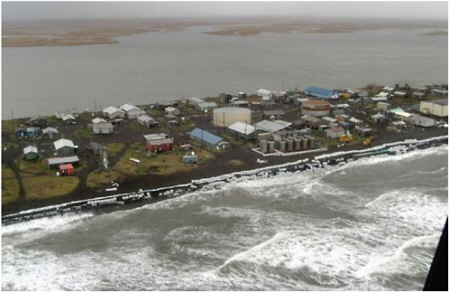
FIGURE 2.4 Alaskan Village of Kivalina. SOURCE: Alaska Army National Guard.
According to an American Bar Association paper (Keteltas et al., 2008):
Even if plaintiffs are able to overcome the political question doctrine that, for the time being, has ended early tort cases, would-be tort plaintiffs must overcome other hurdles, the most significant of which is causation. The plaintiff’s challenge in proving specific harms were caused by climate change—measured against traditional standards of admissibility of scientific evidence in a courtroom—is daunting. To comprehend the scope of this challenge, it is worth considering the types of current and prospective injuries alleged in the tort cases filed to date. These injuries range from heat-related deaths and respiratory illness, to erosion, crop damage, inundation of coastal properties, harm to water supplies from salt water, damage to commercial shipping from reduction in water levels, and prospective harm from impacts of more severe weather events. Given that climate change may involve the cumulative effects of more than a century of emissions, tying one defendant’s emissions (or even an entire industry’s) to a localized climate event that caused any one of these individual harms—or, in other words, establishing specific causation—could well be impossible. Even as national and international bodies improve their cli-
mate change models, none are focused on tying the emissions of an individual corporation, or even an industry, to a specific local event.
Although climate scientists are working on questions of attribution, the ability to link emissions to impacts is an active area of research. There could potentially be opposition to the collection and analysis of climate information by defendants in such cases brought before the courts that could pose a potential barrier to informing effecting decisions in responding to climate change. But as human caused climate change and impacts become clearer, there will be increasing demand for scientific information and scientists as expert witness in the legal system. Avoiding such litigation may be one reason for potential defendants, such as fossil fuel producers, to take action to reduce emissions.
CONCLUSIONS AND RECOMMENDATIONS
A major finding of this chapter is that many different U.S. organizations are making decisions and taking actions in response to the risks of climate change, including a wide range of non-federal actors. Although the federal government shoulders much of the responsibility for making decisions on responding to climate change, state and local governments, business, NGOs, and the courts are all playing an increasingly important role in reducing greenhouse gas emissions, informing citizens, planning for adaptation, and even carrying out scientific research. Their aggregated commitment to greenhouse emission reductions is considerable, with a large number of states responsible for the bulk of U.S. emissions committing to reductions of up to 80 percent by 2050 and many corporations cutting emissions by more than 10 percent over even shorter periods. However, these commitments have not been fully implemented; inconsistent and incomplete reporting makes it difficult to compare the different targets and baselines for emission reductions and to monitor the effectiveness of the response in terms of both emissions and adaptation. Non-federal groups use and demand a wide range of information in deciding to act on climate change, including climate observations and models, impact assessments, cost-benefit analysis, emissions inventories, and simulation of policy options. Access to up-to-date reliable information remains a challenge for a range of decision makers.
The non-federal actors are also a source of innovation and experimentation in the response to climate change. As Gustavsson et al. note: “[t]he sheer magnitude of policy initiatives at the local level, their diversity, and the experimental and practical nature of many local projects, are bound to bring forward genuinely new ideas and solutions that in the end can have an impact on a larger scale” (2009).
In addition to the organizational decision makers from government, business, and NGOs discussed in this chapter, the U.S. public constitutes an important set of individual decisions and choices about how to respond to climate change. People can choose to reduce their own emissions, to begin adapting their lives to climate change, or to influence policy and businesses through their political activities, consumption, and investment choices. Individuals can benefit from the type of information provided to organizations and decision makers but may also have questions and require answers tailored to the ordinary citizen.
Government climate policy can benefit from understanding the motivations and barriers to corporate actions. Private companies in several sectors have taken significant steps to reduce their carbon footprints in pursuit of future business goals, and some business sectors, such as the insurance industry, are planning for the impacts of climate change. The finance sector is also starting to consider the risks of climate change and options to reduce those risks through investment strategies and ratings. Accurate accounting of business response to climate change can legitimize the actions of responsible firms and expose the lack of action by others. However, emission reduction commitments have not necessarily been fully implemented; few data exist on aggregated impacts or on the possibility for scaling up local and state action. Inconsistent and incomplete reporting makes it difficult to compare different targets and baselines for emission reductions to monitor the effectiveness of the response.
The federal government can take advantage of such innovation while also providing leadership to accelerate responses in the face of growing risks, to encourage those who have not acted, to provide consistency, to link to international efforts, and to prevent a patchwork of regulations. The panel finds that evaluating the effectiveness of federal choices and action relies on robust and up-to-date information systems such as monitoring climate impacts and greenhouse gases further addressed in Chapters 5 and 6. Future actions by the federal government can take advantage of the best of existing decisions and structures at the sub-national level, include representatives of these groups in governance arrangements, and evaluate the impact of federal policy on actions of state and local governments, businesses, and civil society. The federal government can also facilitate “knowledge to action” by providing coordination, information, and guidance about climate change impacts (Chapter 5) and greenhouse gas management (Chapter 6). An appropriate federal action can spur greater overall emissions reductions while preserving room for states to continue to act as policy innovators, drivers, and implementers.
Although this report is targeted primarily at government, many of our findings and recommendations are relevant to individual information needs and behavior, includ-
ing, for example, our discussion in Chapter 5 of the need for accessible federal information portals with information on climate impacts, or our discussion in Chapter 6 of consumer information about greenhouse gas emissions and energy use.
As we argue in Chapter 6, the increased use of standardized methodologies for emissions inventories could improve estimates of emissions reductions. To the extent that these actions prove successful, they should ease the task and lower the costs of the federal government.
Recommendation 1:
To improve the response to climate change, the federal government should
-
Improve federal coordination and policy evaluation by establishing clear clear leadership, responsibilities, and coordination at the federal level for climate-related decisions, information systems, and services. information systems, and services.
The roadmap for federal coordination might include leadership and action through executive orders, the Office of Science and Technology Policy, an expanded USGCRP, a new Council on Climate Change, the reorganization of existing agencies, or even the establishment of new organizations, regional centers, or departments within the government.
-
Establish information and reporting systems that allow for regular evaluation and assessment of the effectiveness of both government and non-governmental responses to climate change, including a regular report to Congress or the President as suggested in our companion reports.
This could include aggregating and disseminating “best practices” with a web-based clearinghouse, creating ongoing assessments to enable regular exchange of information, and plans among relevant federal agencies, regional researchers, decision makers, NGOs, and concerned citizens.
Recommendation 2:
To maximize the effectiveness of responses to climate change across the nation, the federal government should
-
Assess, evaluate, and learn from the different approaches to climate related decision making used by non-federal levels of government and the private sector;
-
Enhance non-federal activities that have proven effective in reducing greenhouse gas emissions and adapting to the projected impacts of climate change through incentives, policy frameworks, and information systems; and
-
Ensure that proposed federal policies do not unnecessarily preempt effective measures that have already been taken by states, regions, and the private sector.


