
6
Water Quality and Missouri River Sediment Management
This report has documented how the bank control structures of the BSNP, the dams of the Pick-Sloan Plan, and water projects on Missouri River tributaries have transformed hydrologic and sedimentary processes in the Missouri River. As explained in detail in Chapter 2, these structures have trapped and immobilized large volumes of sediment in the river’s floodplains and behind mainstem dams, greatly reducing sediment concentrations in and volumes of sediment transported by the postregulation Missouri River. These changes have had many consequences, one of which was compromising the natural habitat of some of the river’s native bird, fish, and plant species. As explained in Chapter 4, the federal 2000/03 Biological Opinion issued under the Endangered Species Act has directed ways in which some portion of the river’s preregulation sediment regime and other conditions can be restored to improve prospects for federally listed fish (pallid sturgeon) and birds (least tern and piping plover). In Chapter 5, other alternatives for sediment management on the river were described at a general level, with the caveat that further understanding of their technical and socioeconomic viability would be required as MRRP, MRAPS, and other programs evolve and mature.
The statement of task to this committee also reflected concerns that sediment introduction, with associated phosphorus, may have detrimental effects on water quality within the river and as far away as the northern Gulf of Mexico. As described through this report, high concentrations of sediment were a natural feature of the preregulation river and important to its native species, and also important to land-building processes in parts of the Mississippi River delta. At the same time, in many settings and river
systems across the country, sediment is recognized as a pollutant, with significant federal and state program efforts in place to keep sediment out of streams, rivers, and lakes. Therefore, in considering actions to reintroduce sediment to the Missouri River, it is important to recognize the historic sediment volumes, sources and characteristics when defining water quality criteria and regulations for the Missouri River watershed.
In considering the full range of implications of the Corps of Engineers habitat projects along the Missouri River, it is therefore important to understand not only provisions of the Endangered Species Act, but also provisions of the Clean Water Act—especially setting water quality standards for sediment and phosphorus concentrations.
This chapter responds to two questions in this report’s statement of task:
-
What is the significance of the Missouri River sediments to the Gulf of Mexico Hypoxia problem? (Question 2), and
-
What are the key environmental and economic considerations regarding nutrient loads and/or contaminants in Missouri River sediment? To what extent can such issues be addressed with management strategies? (Question 4)
The first section of this chapter discusses potential effects of enhanced Missouri River sediment transport and associated phosphorus loads on hypoxia in the Gulf of Mexico. The following sections focus on setting water quality criteria for sediments and nutrients that will be protective of designated uses. The historical sediment and phosphorus loads in the basin and prior to the construction of the Pick-Sloan mainstem dams are discussed as context for setting nutrient (phosphorus) and sediment criteria as required by the Clean Water Act. The discussion provides a logic for setting of such criteria in ways that meet the requirements of the Clean Water Act and that can be compatible with ongoing and possible future Missouri River sediment management activities dictated in part by the Endangered Species Act. The chapter concludes with a discussion of the need for improved monitoring of sediments, nutrients, and other chemical constituents in sediments discharged into the river.
POTENTIAL WATER QUALITY EFFECTS IN THE GULF OF MEXICO
Northern Gulf of Mexico Hypoxia
Nitrogen and phosphorus delivered from the Atchafalaya and Mississippi rivers to the northern Gulf of Mexico combine with conditions of tempera-
ture, sunlight, and vertical stratification that are favorable to high rates of photosynthesis and algal growth in the northern Gulf. When these algae, or detritus from their consumers, settle to bottom waters, decomposition of this organic matter consumes dissolved oxygen. Because vertical stratification of the water column creates a barrier between surface and bottom waters, there is little oxygen supply to the bottom layers. Thus, oxygen consumption associated with the decomposing organic matter results in oxygen depletion and concentrations so low that many types of fish and shellfish are unable to survive. This state of low dissolved-oxygen levels (< 2 mg/L) is known as hypoxia.
This northern Gulf of Mexico hypoxic zone (“dead zone” in the popular literature) is a seasonal but perennial feature that covers a portion of the northern Gulf and is roughly the size of Connecticut, New Jersey, and Rhode Island combined (Figure 6-1). This hypoxic zone has been identified as a water quality problem of national significance, and decisions about land use and water and sediment management throughout the entire Mississippi basin are now being considered (USEPA, 2001, 2008).
The areal extent of the hypoxic zone has exhibited an increasing trend since the late 1980s and also has displayed significant interannual variability since then (Figure 6-2). Although routine hypoxia monitoring did not start until 1985, modeling and paleo-ecological studies confirm that large-scale hypoxia was not present until the 1970s.
The zone of hypoxia, and nutrient loadings and water quality across the Mississippi River basin, have been evaluated by many scientists and research teams. Box 6-1 summarizes several recent studies, reports, and initiatives addressing Mississippi River and northern Gulf of Mexico water quality. Box 6-1 does not attempt to provide full coverage of all relevant
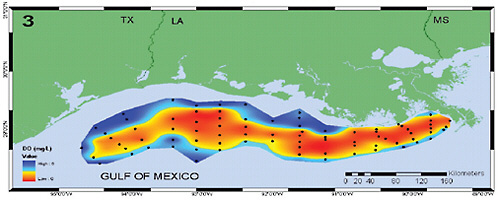
FIGURE 6-1 Bottom water dissolved oxygen levels in Northern Gulf of Mexico.
SOURCE: Reprinted, with permission, from Rabalais and Turner, 2001. © 2001 by American Geophysical Union.
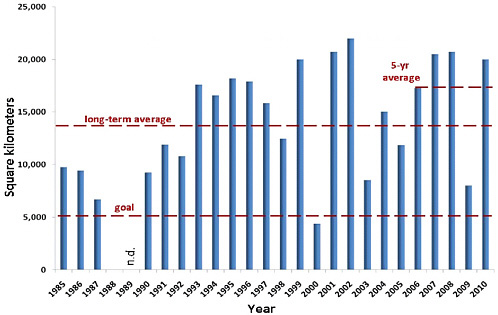
FIGURE 6-2 Area of mid-summer bottom water hypoxia (dissolved oxygen < 2.0 mg/L).
SOURCE: Reprinted, with permission, from N.N. Rabalais, Louisiana Universities Marine Consortium.
studies. The reader interested in additional reports and papers on nutrient loadings across the Mississippi River basin, and northern Gulf of Mexico hypoxia may wish to consult the following: Battaglin (2006), CENR (2000), Rabalais and Turner (2001), Rabalais et al. (2002), Scavia et al. (2003), Scavia and Donnelly (2007), and Turner et al. (2006).
Although excess nitrogen loads are responsible for the long-term increase in hypoxic area, recent reports suggest that phosphorus may also now be contributing to hypoxia, especially near the Mississippi and Atchafalaya river mouths in spring (USEPA, 2007). As a result, federal-led efforts to address the problem have called for simultaneous reduction of nitrogen and phosphorus loads (e.g., USEPA, 2007).
Among several reasons why the northern Gulf hypoxic zone has proven to be a stubborn water quality remediation challenge is that it is affected by factors other than Atchafalaya-Mississippi river nutrient discharges, and that the areal extent varies from year to year. These complications make it difficult to precisely track and verify relationships between nutrient loads and the extent of the hypoxic zone. These issues are described in further detail in a subsequent section of this chapter entitled “Measurements of the Hypoxic Zone.”
|
BOX 6-1 Recent Studies and Initiatives Ongoing work of U.S. Geological Survey SPARROW water quality modeling. A team of USGS scientists has been employing a spatially referenced regression on watershed attributes (SPARROW) water quality model to determine spatial patterns in nutrient yields across the Mississippi River basin (Alexander et al., 2008). Among other findings the SPARROW studies show that a small number of watersheds—several from the Corn Belt region and several from along the lower Mississippi River—contribute a large percentage of the basin’s total nutrient yields. Ongoing work supported by the National Oceanic and Atmospheric Administration’s Center for Sponsored Coastal Ocean Research. This program has supported most of the academic and federal research on the dynamics, causes, and impacts of northern Gulf of Mexico hypoxia since 1990, and continues to support this work. Results from these studies supported most of the oceanographic and ecological findings in the integrated assessments conducted in 2000 and 2007 for the Gulf of Mexico Task Force. Report from the EPA Science Advisory Board report on Gulf Hypoxia. This extensive 2007 report summarizes and evaluates a large body of previous scientific studies of the hypoxic zone. The report confirms the scientific consensus that contemporary changes in the hypoxic zone are driven primarily by nutrient fluxes from the Atchafalaya and Mississippi Rivers (USEPA, 2007). It also concluded that at least a 45 percent reduction in both nitrogen and phosphorus fluxes would be required to reduce the size of the hypoxic zone (ibid.). Gulf of Mexico Task Force and Hypoxia Action Plan. The Mississippi River/Gulf of Mexico Watershed Nutrient Task Force (Task Force) issued a 2001 “action plan” in response to a directive in the 1998 Harmful Algal Bloom and Hypoxia Research Control Act (P.L. 105-383; reauthorized in December 2004 as P.L. 108-456). The Task Force issued a subsequent action plan in 2008. Both reports listed a goal for reducing the size of the Gulf hypoxic zone to a 5-year running average of less than 5,000 square kilometers (USEPA, 2001, 2008). NRC Studies of Mississippi River Water Quality and the Clean Water Act. Two separate NRC committees issued reports in 2008 and 2009 on Mississippi River water quality issues and challenges (NRC, 2008, 2009b). The 2008 NRC report focused on issues of water quality standards, monitoring, and interstate water quality coordination. The 2009 report addressed the topics of initiating pollutant control programs, alternatives for allocating nutrient load reductions, and documenting the effectiveness of pollutant loading reduction strategies. The Mississippi River Basin Healthy Watersheds Initiative sponsored by the U.S. Department of Agriculture. The USDA’s Natural Resources Conservation Service (NRCS) expects to provide $320 million over a four-year period to farmers in select watersheds across the river basin to voluntarily implement conservation practices that control nutrient runoff; improve wildlife habitat; and maintain agricultural productivity. |
Nutrient Sources
Runoff of nutrients from forests, farms, open fields, urban areas, and discharges of nutrients from industrial facilities and publicly owned treatment plants across the Mississippi River basin are delivered eventually to the Gulf of Mexico. The largest source of nitrogen and phosphorus in Mississippi River water that is delivered to the Gulf of Mexico is from agriculture (USEPA, 2007; Alexander et al., 2008). Nitrogen loads to the Gulf increased significantly between the mid-1960s and the early 1980s, and thereafter remained relatively constant with significant interannual variations. The increase in nitrogen loading from the 1960s onward can be attributed primarily, and almost exclusively, to increased use of nitrogen fertilizer by row-crop agriculture (Goolsby et al., 1999). Total phosphorus loads did not change significantly during this period. An increase in phosphorus occurred somewhat earlier—shortly after World War II—with the advent of phosphorus-based detergents.
Figure 6-3 presents modeled estimates of the relative contributions of nitrogen and phosphorus to the northern Gulf of Mexico from various sources. The figure shows that greater than 70 percent of loadings from both nitrogen and phosphorus emanate from agricultural sources (Alexander et al., 2008).
The growth and persistence of the hypoxic zone, the nutrient loadings that contribute to it, and management plans in response to it, are reflected
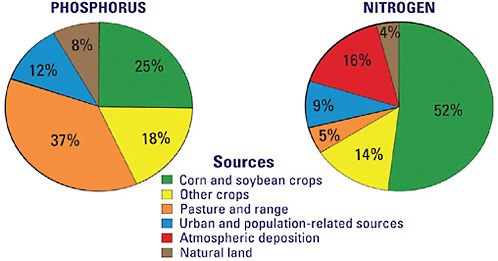
FIGURE 6-3 Sources of nutrients delivered to the Gulf of Mexico. Some other estimates of these relative contributions (e.g., USEPA, 2007) produce somewhat different values.
SOURCE: Data from Alexander et al., 2008.
in several recent reports and initiatives (Box 6-1). These reports reach the general conclusions that
-
Changes in the hypoxic area in the northern Gulf of Mexico are primarily related to nutrient fluxes from the Mississippi and Atchafalaya rivers.
-
Changes in the extent and duration of hypoxia today appear to be more sensitive to inputs of nutrients than in the past.
-
There are early signs of deleterious long-term effects on living resources.
-
Reducing the size of the hypoxic zone and improving water quality in the Mississippi River basin will require considerable reductions in nitrogen and phosphorus loads. One estimate is that each source will need to be reduced by at least 45 percent from the 1980-1996 average (USEPA, 2007).
MISSOURI RIVER SEDIMENT MANAGEMENT ACTIONS AND IMPLICATIONS FOR NUTRIENT LOADINGS
This section discusses two approaches to considering whether the current sediment management practices associated with the Corps of Engineers’ Missouri River shallow water habitat projects, as well as possible future actions, might significantly contribute to Gulf hypoxia. First, potential nutrient load increases from these SWH projects are compared to the current Missouri River nutrient load, and to the overall load delivered by the Mississippi River to the Gulf in order to determine the relative significance of potential load increases.
Describing this relative change in nutrient loadings from these Missouri River projects, in itself, does not address whether there may be an effect on the hypoxic zone. Therefore, a second step draws upon on published scientific literature relating changes in nutrient loads to the areal extent of hypoxia, and evaluates the ultimate potential impact in the northern Gulf.
Corps of Engineers Shallow Water Habitat Projects
The Corps of Engineers Shallow Water Habitat projects will result in releases of both nitrogen and phosphorus to the river because much of the topsoil portion of the sediment disposed of in the river has been heavily fertilized. Phosphorus loadings to the river from these projects, however, are likely to constitute a much greater fraction of the current load than additional nitrogen loadings. For example, the potential nitrogen load from the Jameson Island (Missouri) restoration project (mentioned in Chapter 5) has been estimated as 0.23 percent of the 1994-2006 average loads at
Hermann, Missouri (Jacobson et al., 2009). This is compared to the order-of-magnitude-higher estimate for phosphorus—2.6 percent of the load at Hermann—for the same project. In addition, the Missouri River provides 13 percent of the total nitrogen (TN) loads (9.8 percent of the nitrate load) to the Gulf, compared to 20 percent of the total phosphorus (TP) loads (Aulenbach et al., 2007, as summarized in USEPA, 2007, Table 3). Therefore, because it is unlikely that total nitrogen loads from the SWH projects will be significant compared to current nitrogen loads transported in the Missouri River, the remainder of this discussion will focus on total phosphorus.
Currently, the total phosphorus load to the Gulf is estimated to be 154,300 metric tons per year, with the contribution of the Missouri River to this total load estimated to be between 16.8 and 20 percent (Aulenbach et al., 2007 as summarized in USEPA, 2007, Table 3; Alexander et al., 2008). To compare the potential contribution of phosphorus from the Corps SWH projects, the same estimates of the total sediment volume these projects deliver to the river—34 million metric tons (Mt)/year—are used here as were discussed in Chapter 5 (Jacobson et al., 2009).
The rate at which these sediments, and the associated phosphorus within those sediments, are transported is important in determining their downstream effects. Under most conditions, sediment settling and storage processes in the Missouri and Mississippi River channels will attenuate the load and spread delivery to the Gulf over a long period of time (e.g., years). However, to arrive at an upper-bound estimate of downstream impacts, one could make an assumption that all of this sediment is transported to the Gulf in a single year.
If one makes this upper-bound assumption of all this sediment being transported to the Gulf each year, and if sediment contains an average 443 mg-TP/kg of sediment with a standard deviation of 129 mg (Jacobson et al., 2009; summary of Jameson Island restoration-related sampling identified in CDM Federal Programs Corporation, 2007, Table 4-1), the increased total phosphorus load to the Gulf would range between roughly 10,700 and 19,400 metric tons/year. This represents 6-12 percent of the current phosphorus load from the Mississippi basin.
Again, and for purposes of illustration, this figure represents an upper-bound estimate of additional phosphorus transported downstream from all SWH construction-related sediment released into the Missouri River. Actual values would almost assuredly be less than this estimated, upper-end range.
Potential Sediment Bypass Around Gavins Point Dam
It also is possible to estimate the potential total phosphorus load to the Gulf resulting from moving sediment around Gavins Point Dam—an aggressive, perhaps unlikely—sediment management measure (and described
in Chapter 5). An estimated 6 million tons/year of sediment enter Lewis and Clark Lake behind Gavins Point Dam (see Chapter 5; Coker et al., 2009). Using the same range of phosphorus content as in the sediment from the Jameson Island project, assume that no more than 6 million tons per year will pass the dam, and further assume that that all this sediment moves to the Gulf each year, then between roughly 1,900 and 3,500 metric tons/year of phosphorus (P) would reach the Gulf each year. This represents 1-2 percent of the current load delivered by the Mississippi River to the Gulf (see Table 6-1). Similar to the assumptions for the construction-related sediment releases above, this estimate of added loading represents an upper bound and does not consider the role of the river channel in attenuating the load and spreading its delivery over multiple years. Actual deliveries are highly likely to be less than this upper-bound estimate of 1-2 percent.
To summarize, an upper-bound estimate of the increase in phosphorus loadings to the Gulf as a result of the Corps shallow water habitat (SWH) projects is a 6-12 percent increase (Table 6-1). Similarly, an upper-bound estimate of the downstream deliveries of bypassing sediment around Gavins Point Dam is that phosphorus loadings would increase total phosphorus load by roughly 1-2 percent. Both these estimates represent upper bounds. In reality, sediment deposition processes in the Missouri and Mississippi river channels would reduce loads delivered to the Gulf, and actual downstream deliveries would be less than these values.
TABLE 6-1 Comparisons of Potential Annual Total Phosphorus (TP) Augmentations to the Missouri River and Gulf of Mexico (values in metric tons of TP/yr)
|
CURRENT AVERAGE LOAD TO GULF FROM MISSISSIPPI RIVER BASIN: |
154,000 |
|
CURRENT LOAD FROM MISSOURI RIVER: |
25,536-30,400 |
|
(17-20 percent of total load to Gulf) |
|
|
ESTIMATED UPPER BOUND LOADS FROM CORPS SWH PROJECTS: |
10,700-19,400 |
|
(6-12 percent of total load to Gulf) |
|
|
ESTIMATED UPPER BOUND LOADS FROM GAVINS POINT DAM BYPASS: |
1,900-3,500 |
|
(1-2 percent of total load to Gulf) |
|
|
SOURCES: Data from Alexander et al., 2008; Aulenbach et al., 2007; Coker et al., 2009; Jacobson et al., 2009; USEPA, 2007. See accompanying discussion in text. |
|
Potential Effects on Gulf Hypoxia
In addition to providing estimates of additional phosphorus loadings from the two alternatives discussed above, a second question is whether these increases could have a measureable effect on hypoxia. Conducting the original research and modeling exercises necessary to address this second question was beyond this committee’s resources and project scope. However, there are two articles that summarize research that derived response curves that relate changes in areal extent of hypoxia to delivered phosphorus load (Greene et al., 2009; Scavia and Donnelly, 2007).
Given the considerable year-to-year variability in measured hypoxic area, a significant and sustained change in delivered total phosphorus load would be required to cause a clear and significant change in the size of the hypoxic area. Given this significant interannual variability in measured hypoxia, the confidence envelope model results is used as a measure of a significant change in hypoxia. These error bounds in Figure 6-4 represent a confidence interval of approximately plus or minus 20 percent. This figure is thus used to represent a clear and a significant response to changes in total phosphorus load.
One of these papers (Scavia and Donnelly, 2007) presents results from a biophysical model that relates the areal extent of Gulf hypoxia to April-June total phosphorus loads. The modeled response curve from this study (Figure 6-4) suggests that reducing the areal extent of hypoxia by 20 percent from the 2001-2007 average of 16,500 km2, would require a reduction in the spring total phosphorus load of approximately 200 metric tons/day (ibid.). The curve also suggests that significantly more than 200 metric tons/day of phosphorus would be required if the hypoxic area is to permanently increase by 20 percent. This is because, as shown in Figure 6-4, the hypoxic area increases with increasing P loads, but at a decreasing rate.
A 2009 study developed a regression model relating hypoxic area to February total phosphorus concentration in the Mississippi River (Greene et al., 2009). That regression equation suggests that a 20 percent increase in hypoxic area requires a 20 percent increase in river concentration of TP above the current average of 210 μg-TP/l (Greene et al., 2009, Figure 3b)—or an increase of 42 μg-TP/l. River total phosphorus concentration is fairly constant between February and June so the increase of 42 μg-TP/L can be assumed to occur each of these months.
Average April-June river discharge is 33,000 m3/sec (Greene et al., 2009). Multiplying the required change in river concentration (42 μg-TP/l) by the discharge rate (33,000 m3/sec) results in a required TP load increase of 122 metric tons/day. Thus, based on the models presented in the two papers, an increase of 100-200 metric tons/day in the spring load is needed to produce a measureable change (e.g., 20 percent) in the Gulf hypoxic area.
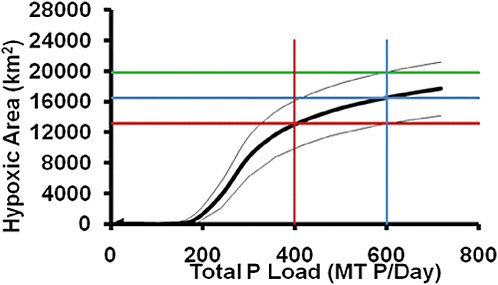
FIGURE 6-4 Modeled relationship between total phosphorus loads to the Gulf of Mexico and changes in areal extent of hypoxic zone. Solid black line represents the response curve, grey lines represent error bands around the curve. The blue lines represent the 2001-2007 average areal extent of the hypoxic area (16,500 km2) and its corresponding spring load. The red lines represent a 20 percent decrease in hypoxic area and its corresponding 200 metric tons/day spring load reduction. The green line represents a 20 percent increase in hypoxic area.
SOURCE: Redrawn, with permission, from Scavia and Donnelly, 2007. © 2007 by American Chemical Society.
These models were calibrated with spring phosphorus loads. Load estimates from the Corps of Engineers Missouri River shallow water habitat projects are annual amounts, so for comparison, spring load values have to be converted to annual load values. Approximately 34 percent of the annual phosphorus load is delivered in April-June (USEPA, 2007, Figure 22, summarizing data from Battaglin, 2006; Aulenbach et al., 2007). Assuming 100-200 metric tons/day applies for the 91 days in spring (April-June) results in a range of 26,765 to 53,530 metric tons/year. The midpoint value in this range is 40,150 metric tons/year. Again, this value represents an estimate of additional total phosphorus that would be required for a substantial (20 percent) increase in the areal extent of Gulf hypoxia.
For purposes of comparison, 40,150 metric tons/year figure is 2.1-3.7 times larger than the upper bound estimated range of 10,658-19,418 metric tons per year of phosphorus estimated from the Corps SWH projects, and 11-21 times the estimated range from moving sediment past Gavins Point Dam. Thus, even the upper-bound estimates of additional total phosphorus
from the shallow water habitat projects and the bypass of sediments around Gavins Point Dam are considerably less than the amounts of additional total phosphorus necessary to result in a distinct increase in the areal extent of the Gulf hypoxic zone.
Measurements of the Hypoxic Zone
In addition to annual variation in nutrient concentrations in rivers that discharge into the northern Gulf of Mexico, year-to-year variation in hypoxic areal extent is controlled by several factors in addition to nutrient concentration in rivers that discharge to the Gulf. One factor is the volume of water discharge from the Mississippi and Atchafalaya rivers; lower flows will result in lower nutrient delivery and a smaller hypoxic zone. The areal extent of the hypoxic zone is measured annually, in late July, by a team of scientists from the Louisiana Universities Marine Consortium (see http://www.lumcon.edu). The timing of this single cruise does not always coincide with the maximum extent of the hypoxic zone in the survey year because the area of hypoxic waters can be affected by several factors that vary from year to year. For example, strong winds will mix the water column and temporarily aerate bottom waters. Therefore, if wind mixing is particularly acute just prior to the monitoring cruise, the measured hypoxic zone can be considerably smaller than just prior to the major wind event, or a few weeks after the event. Weather conditions and responsive oceanographic processes can also alter the physical structure of the hypoxic region. For example, the areal extent of the hypoxic zone measured in 2009 was one of the smallest recorded. However, as explained by the science team conducting the measurements, this areal extent was mainly a function of local weather and wind conditions:
… persistent winds from the west and southwest in the few weeks preceding the mapping cruise likely pushed the low oxygen water mass to the east and “piled” it up along the southeastern Louisiana shelf. The area of hypoxia (less than 2 mg/liter), and often anoxia (no oxygen) on the eastern part of the study area was an unusually thick layer above the bottom and was severely low in oxygen, usually less than 0.5 mg/L. A similar situation was documented in 1998 following persistent winds from the west, that is, a smaller footprint but a larger volume of low oxygen (LUMCON, 2009).
Given the multiple causes of the year-to-year variation in the area of hypoxia in the northern Gulf of Mexico, it is not appropriate to relate discharges from select sites of relatively small nutrient loadings across the river basin with changes in the areal extent of the hypoxic zone in any given year. At the same time, the consensus on the role of nutrient loading from across the river basin as a contributing factor remains, and sustained and substantial reductions in nutrient loads from the major sub-basins are still being recommended (e.g., USEPA, 2008).
Available estimates of total phosphorus loads from the Corps of Engineers Missouri River restoration projects are small compared to current loads from the Missouri River and the Mississippi basin. They thus appear unlikely to influence the areal extent of the hypoxic zone. That being said, the Corps of Engineers Missouri River restoration projects, and any additional future projects, deliver additional nutrients to the river and Gulf at a time that federal and state agencies, and a variety of nongovernmental organizations, are seeking ways to reduce nutrient loadings across the Mississippi River basin.
WATER QUALITY CRITERIA FOR SEDIMENT AND NUTRIENTS
This report does not intend to suggest that load increases of any size or in any location can be ignored in permitting for the discharges of sediment and nutrients into waterbodies. Increases in nutrient loads from any source, including those that associated with sediment discharges from mitigation and restoration projects, may have to be avoided or mitigated if avoidance would be counter to meeting sediment-enrichment objectives for the Missouri River. In fact, under current EPA guidelines for setting nutrient criteria, “downstream” effects may need to be recognized in setting nutrient criteria for discharges to the Missouri River mainstem. This section discusses the setting of water quality criteria for nutrients.
Clean Water Act (CWA) Section 303(c) requires states to develop water quality standards that include designated uses of waterbodies, water quality criteria that are necessary to protect those uses, expressed in either numeric or narrative form, and prevent waterbodies from being degraded with reference to their current condition (antidegradation). States submit their water quality standards to EPA for review and approval. The Missouri Clean Water Commission, and their actions to limit discharges for sediment to the river from Corps’ ESH and SWH restoration activities, maintained that those activities were in violation of Missouri’s water quality standards (see Chapter 3).
In recent years and for the specific case of nutrients, the EPA has offered states guidance for development of numeric nutrient criteria. As of 2008, only one of the ten states in the Missouri River basin (Montana) had adopted numeric criteria for nutrients. The remaining states, including Missouri, had narrative criteria. For example, Kansas says this about total suspended solids: “Suspended solids added to surface waters by artificial sources shall not interfere with the behavior, reproduction, physical habitat or other factors related to the survival and propagation of aquatic or semiaquatic life or terrestrial wildlife” (Section 28-16-28e [Surface Water Quality Criteria] of the Kansas Administrative Regulations).
A recent EPA Inspector General report recommended the need to accelerate the numeric criteria development process and focused especially on states in the Missouri and Mississippi river basins that are large Missouri contributors to hypoxia in the Gulf of Mexico (USEPA, 2009). Within the basin, the EPA Region 7 supported an effort to develop guidance that would assist the basin states in adopting numeric nutrient criteria for the shared mainstem Missouri River. As this effort to develop numeric criteria was underway (with limited resources), EPA actions in Florida gained national attention. The EPA required replacing Florida’s narrative sediment and nutrient criteria with numeric criteria and expected such numeric criteria to be protective of designated uses of the waterbody itself as well as downstream waters. Clearly, the EPA effort to define numeric water quality criteria for the Missouri River is part of an ongoing national agency effort to replace narrative with numeric criteria that protects local and downstream waters.
Nutrient Criteria for the Missouri River
The analytical approach to developing numeric criteria has followed well-established national EPA protocols (see Baker et al., 2008). Although formal nutrient criteria for the Missouri River have not been proposed, the approach being used can be summarized as follows:
-
A database of nutrient chemistry on the mainstem of the Missouri River, including the reservoirs, the channelized, and unchannelized sections, was developed. Within these data the lower 25th percentile of TN and TP concentrations from the general distribution of nutrient concentrations in the water column was identified. This lower 25 percent was one method of selecting a numeric criterion for TN and TP. However, the water column data span a period from 1967 to the present and there are no known nutrient data representing pre-dam conditions prior to 1955 when Gavins Point Dam was closed.
-
A statistical analysis was done to relate metrics characterizing benthic macro-invertebrates and fish communities (such as number of species) and chlorophyll-a concentrations to nutrients present in the water column. Then, water column concentrations of nitrogen and phosphorus that were associated with the ecologically best condition for the metric were identified as possible numeric criteria. However, it is unclear from the available reports what fish species were used for the fish community index and whether those species were native fishes.
-
Literature and modeling sources were used to identify conditions that represent natural background or conditions without excessive algae, represented by chlorophyll a measurements. These are based on the general literature for streams (Dodds et al., 1998, 2002), and on a nationwide
-
estimate of background concentrations of nutrients (Smith et al., 2003). However, the literature does not include information for the mainstem Missouri River.
The three evaluations above offer different approaches to setting nutrient criteria for water quality. Using these multiple lines of evidence, the next step is to define numeric total nitrogen (TN) and total phosphorus (TP) criteria for each major section of the Missouri River (e.g., unchannelized portions of the upper Missouri, mainstem reservoirs, reaches between reservoirs, unchannelized portions below reservoirs, and channelized portions of the river). The report to EPA offered draft numeric criteria for total nitrogen between 0.43 and 1.1 mg/l and total phosphorus between 0.05 and 0.1 mg/l for the different river segments (Missouri River Workgroup, 2008).
The application of this approach is consistent with nutrient criteria guidance for streams in general (USEPA, 2000) and is focused on protecting an aquatic life designated use. However, the process as applied does not take into account the historic sediment and phosphorus conditions on the mainstem of the Missouri river, and does not use the aquatic life that was native to the river as the designated use. This is despite the current and future restoration activities in the Missouri River—many of which seek to increase sediment supply in the river, to better represent pre-dam conditions, and to promote better habitat conditions for native endangered species such as the pallid sturgeon. Given the significance of particulate phases of phosphorus in natural waters—and the strong correlation between phosphorus concentrations and suspended sediment concentrations—neither can be considered in isolation.
There also has been an independent national EPA effort to develop approaches for the setting of numeric sediment criteria (USEPA, 2006), although numeric sediment criteria were not the intent of the Region 7 EPA (headquartered in Kansas City) nutrient criteria development effort described above. The specific term for sediments as a pollutant that can cause impairment is suspended or bedded sediments (SABS) and encompasses suspended sediment, total suspended solids, bedload, and turbidity. The EPA framework document is neutral about the direction of sediment impairment; that is, the sediment numbers in a waterbody can be too low or too high for the designated use. Also, the framework document acknowledges the role of dams in severely reducing sediment supply in many rivers. It states, for example:
Sediment starvation caused by structures such as dams and levees is a problem in some ecosystems, ranging from the loss of native fish species and native riparian ecosystem structure in many dammed western rivers (e.g., Colorado River, Platte River, Missouri River) to the subsidence and loss of wetlands (e.g., Mississippi Delta in Louisiana).
However, the analytical approaches presented in the framework document for future development of numeric SABS criteria are almost entirely focused on situations where excess SABS are a cause of impairment, typically by smothering of benthic habitat or substrate needed for fish spawning. In the case of large rivers that have been dammed, and where there is good evidence of pre- and post-dam sediment loads, the SABS framework does not provide an analytical framework to help define criteria that recognize some level of sediments as necessary for the attainment of the designated uses, such as along the mainstem of the Missouri River where sediment deplention has led to bed degradation and loss of habitat for endangered species.
Water Quality and the Historic Missouri: A Reference Condition
As discussed in previous chapters, the preregulation Missouri River carried a substantial sediment load. And that load, as well as the nutrients (especially phosphorus) that accompanied that load, created the conditions that supported the native flora and fauna that characterized the Missouri and that now are the focus of habitat and species protection and restoration efforts.
Sediments as Water Quality Impairments
Findings of water quality impairment due to sedimentation are commonplace in the U.S. and are the sixth most common cause of impairment in waterbodies (after pathogens, metals other than mercury, mercury, nutrients, and organic enrichment; USEPA, 2010a). In the Missouri River basin, there are several hundred water segments identified as impaired by sediments, most commonly in Montana, South Dakota, and Kansas (Figure 6-5). These waters are typically smaller creeks that drain watersheds on the order of hundreds of square miles are deemed to be impaired based, in most instances, on narrative criteria. Frequent causes of impairment are associated with croplands, livestock-feeding operations, grazing in riparian lands, wastewater treatment plants, and stream bank modification.
The Missouri River basin is the site of waterbodies that are listed as impaired by excess sediment, and of restoration activities along the mainstem that seek to add sediment loads to the river. These very different settings are not necessarily in conflict and they point to the importance of recognizing that not all sediments and all rivers are the same. As was discussed in Chapter 2, excess sediment loadings to historically clear headwater streams can be a cause of impairment, whereas release of large grain-size sediments to the mainstem—often being material that has been trapped by the river control structures of the Bank Stabilization and Navigation Project over
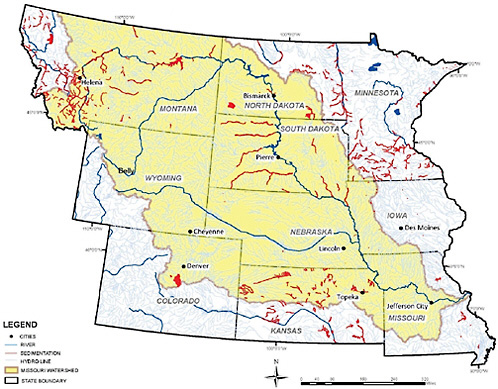
FIGURE 6-5 Missouri River basin streams that are impaired by excess sediments and for which TMDLs have been developed.
SOURCE: USEPA, 2010b.
the years—may be essential to attaining designated uses that support native species.
Nutrients Associated with Sediments as Water Quality Impairments
As previously discussed, phosphorus is a nutrient closely correlated with sediment. As a result, it is likely that there were background concentrations of phosphorus in the Missouri River prior to the construction of the mainstem dams and river control structures that were part of the ecosystem that supported populations of native species. However, those levels of total phosphorus need to be estimated because direct measurements were not conducted prior to the 1960s. No such pre-dam estimates of total phosphorus in the Missouri River have been reported, and are estimated below for the purpose of this discussion.
One approach to estimate historic phosphorus concentrations in the Missouri basin is to use suspended sediment concentrations, which have
been reported for well over a hundred years, and estimates of particulate phosphorus concentrations from other less-developed basins. Prior to the construction of the major dams, median sediment concentrations in the lower Missouri River were approximately 2,000 mg/l (medians range from 1,920 mg/l to 2,330 mg/l at different stations; Blevins, 2006). More recently, median concentrations are approximately 400 mg/l (456 and 378 mg/l at two stations; Blevins, 2006). Predevelopment particulate phosphorus concentrations (mass of phosphorus per unit mass of sediment) can be assumed to range from 200 to 650 mg/kg, at the low end for phosphorus-poor systems and at the high end for a basin like the Amazon (Berner and Rao, 1994). There are reports of even higher particulate phosphorus concentrations in less developed basins (Meybeck, 1982; Melack, 1995), but the 200-650 mg/kg suffices for the present discussion.
In comparison, phosphorus in sediments in the Mississippi River now average 1,085 mg/kg (Sutula et al., 2004). Using a range of 200-650 mg/kg of particulate phosphorus to represent a range of background conditions, predam background water column concentrations of 0.4-1.3 mg/l is a reasonable estimate (assuming that the particulate forms dominate the total phosphorus).
Phosphorus concentrations in the channelized portions of the Missouri River today range between 0.2 and 0.6 mg/l, reflecting more phosphorus-enriched particulates, even though the total quantity of suspended sediments is lower (Baker et al., 2008). Although there is much uncertainty in assuming a range of phosphorus concentrations without the benefit of historic data to calculate historic background levels, the approach employed above suggests that modern-day total phosphorus concentrations in the lower Missouri River are not necessarily higher than the historic background concentrations.
As another approach, a nationwide analysis of background nutrient concentrations estimated median background total phosphorus in the streams of the ecoregions in the Missouri River basin at approximately 0.06 mg/l (Smith et al., 2003). This approach used regressions between land use and concentrations in small undeveloped basins as the underlying method, and may not fully reflect the dramatic changes in sediment transport regime that have occurred in the Missouri River basin. This value is considered too low given the historic range of suspended sediments, and the likely range of particulate phosphorus in undeveloped watersheds presented above, but this difference does illustrate the uncertainty in understanding the background phosphorus load in the system.
The actions of the Missouri Clean Water Commission highlight the need for closer integration of the nutrient criteria development process and water quality management decision making. The federal agencies, work-
ing cooperatively with the states, can reconcile the setting of sediment and nutrient criteria with the Endangered Species Act and congressionally mandated programs to avoid jeopardy to three endangered species and help restore Missouri River ecology. However, recent EPA supported water quality criteria development efforts for the mainstem Missouri were conducted with limited time and funding and not able to fully consider the needs of native species.
Development of numeric criteria for sediment and nutrients should be based on further understanding of the sediment and phosphorus history of the river, and the effects on native species, as that information becomes available through the MRRP and other ongoing studies. The processes of data collection, analysis, and collaboration needed to develop narrative (and possibly numeric) criteria can require significant resources. There may be opportunities to realize greater efficiencies and reduce resource requirements by incorporating the criteria development process within analyses underway under the MRRP. The MRRIC also could help mediate disagreements among federal and state agencies on proposed water quality criteria.
Sediment Releases and Water Quality Compliance
The development of narrative or numeric criteria considers historical nutrient and sediment factors in setting limits on sediment and phosphorus discharges to the mainstem river and as a basis for regulating such discharges. However these criteria are set, regulatory consistency will require that all sources seek to avoid making discharges, or if such discharges cannot be avoided, offset increased loads with reductions in other places or from other actions. Also, if there is a need for such offsets when sediment discharges to the river are made for native species restoration, they can be established only if there is adequate monitoring of the sediment characteristics and the phosphorus in the sediments released. Furthermore, although phosphorus is a key sediment-associated constituent of concern, other chemicals of concern for water quality management are present in Missouri River sediments in some locations. These include trace metals such as lead and mercury, and trace organics such as PCBs and organochlorine pesticides (Echols et al., 2008). In general, however, knowledge of total phosphorus content or knowledge about other chemical constituents at restoration projects is limited. The release of sediments from restoration projects, both the total quantity and chemistry, needs to be better understood through monitoring of construction activities in support of restoration along the Missouri River. Knowledge of the characteristics of the sediment, as well as concentrations of the constituents in sediment released, can be used to judge the suitability of release of sediment into the Missouri River.
SUMMARY
The Corps of Engineers shallow water habitat projects along the Missouri River have prompted concerns about possible water quality impacts downstream and into the northern Gulf of Mexico. As this chapter has explained, these concerns are strongly related to the development of water quality standards and nutrient criteria, historical water quality conditions of the Missouri River, and the monitoring of sediment discharges into the Missouri.
An upper-bound estimate of the increase in phosphorus loadings to the Gulf as a result of the Corps SWH projects is a 6-12 percent increase. Similarly, an upper-bound estimate of the downstream deliveries of bypassing sediment around Gavins Point Dam is that the additional sediment would increase total phosphorus load by roughly 1-2 percent. Both these estimates represent upper bounds. In reality, sediment deposition processes in the Missouri and Mississippi River channels would reduce loads delivered to the Gulf, and actual downstream deliveries would be less than these values.
A comparison of potential phosphorus loads from Corps SWH projects, with load increments required to produce measureable changes in the areal extent of Gulf hypoxia, shows that these projects will not significantly change the extent of the hypoxic area in the Gulf of Mexico. Additional comparisons of other alternatives for reintroducing sediment to the river—namely, bypassing sediment around Gavins Point Dam—yield a similar conclusion that they will not significantly change the areal extent of the hypoxic zone.
There also have been questions raised about the relationship between loadings from the SWH projects in a given year, and possible associated changes in the areal extent of Gulf hypoxia in the same year.
In addition to nutrient loadings, multiple factors—including meteorologic, hydrodynamic, and timing factors—affect the size of the hypoxic zone each year. Given the relatively small volumes of sediment loadings from the Corps’ Missouri River ESH and SWH projects, it is not appropriate to relate changes in the areal extent of the hypoxic zone to sediment and nutrient loadings from Missouri River ESH and SWH projects in any given year.
The sediment that was essential to pre-regulation river morphology and landforms, and to the turbidity that supported the ecosystem of native species, had certain characteristics. Development of narrative or numeric water quality criteria that are sensitive to these historic conditions will consider such factors in setting limits on sediment, as well as phosphorus, discharges to the mainstem river, and as a basis for regulating such discharges. Native species recovery objectives can be reconciled with the requirements of the Clean Water Act by basing waterbody use designation and associated criteria on aquatic life use that recognizes the needs of native species.
The mainstem Missouri River historically carried a large sediment and nutrient load that was important to the evolution and survival of native flora and fauna. These pre-regulation characteristics should be considered in the process of developing water quality standards for the Missouri River.
The federal agencies that are partners in the MRRP, and other major Missouri River ecosystem program and initiatives, should collaborate with ongoing EPA nutrient criteria guidance development process to achieve agreement among themselves and with the states on designated uses for the river, by river segment, to reflect requirements for native species. As a result of this effort, EPA should support states that revise their existing narrative criteria for the mainstem Missouri River in order to reflect requirements for native species, even if such separate narrative sediment and nutrient criteria later are replaced by numeric criteria. As appropriate, downstream considerations (such as Gulf hypoxia) may be considered in the setting of phosphorus criteria.
There has been a good deal of discussion regarding Corps of Engineers habitat restoration actions along the Missouri River that introduce sediment to the main channel. Specifically, some parties have asserted that private entities are held to a higher standard of permitting and monitoring than a federal agency such as the Corps of Engineers. In order to obtain better, more systematic information on sediment dynamics along the river and specific activities that introduce sediment, it is important that all major activities that discharge sediment—whether private sector or governmental—be similarly monitored and evaluated.
All actions by the Corps of Engineers that discharge sediment to the Missouri River either during project construction or through erosion following construction, should be subjected to monitoring requirements for sediment physical and chemical characteristics. This monitoring should be conducted to ensure that sediment or other pollutants discharged to the river comply with applicable water quality criteria.


