
2
Changes in Missouri River Sediment and Related Processes
The Missouri River drains an area of 530,000 square miles and extends over one-sixth of the conterminous United States. The Missouri River originates at the confluence of the Gallatin, Jefferson, and Madison rivers near Three Forks, Montana, and then flows east and south to its confluence with the Mississippi River just upstream of St. Louis. Along its course, tributary streams such as the Yellowstone, Platte, and Kansas rivers flow into mainstem Missouri River. The basin exhibits a great diversity of landforms and terrain. Because of these differences, sediment loadings into the river and its tributaries vary greatly across the basin. Areas in the Rocky Mountains, for example, contribute only a small portion of the river’s total sediment load. The Sand Hills of central Nebraska, the Loess Hills of extreme western Iowa and northeastern Nebraska, and other areas of the northern Great Plains supply disproportionately large amounts of sediments to the Missouri River.
Before construction of mainstem dams and extensive river-training structures in the twentieth century, the Missouri River was a major contributor of sediments to the Mississippi River, which transported portions of these sediments downstream and to the Gulf of Mexico. Before 1900, the Missouri and lower Mississippi river system transported an estimated 400 million metric tons per year of sediment from the interior United States to coastal Louisiana (Meade and Moody, 2009). Approximately 300 million tons were transported by the Missouri River past Hermann, Missouri (Jacobson et al., 2009).
In the mid-twentieth century, six large dams were constructed on the river’s mainstem in Montana, North Dakota, and South Dakota. Hundreds of miles of river training structures also were built along the river between Sioux City, Iowa, and St. Louis. These structures were authorized by the U.S. Congress and were built to jointly facilitate navigation, control flooding, provide water supplies, and meet other social and economic needs. The large dams were built under the 1944 Pick-Sloan Plan, while many of the bank stabilization and channelization projects were built under the 1945 Bank Stabilization and Navigation Project (BSNP). These projects, along with changes to land cover and land use across the basin, had substantial influence on the Missouri River’s form, dynamics, and sediment regime. Current volumes of sediment transported into Louisiana by the Missouri and Mississippi rivers average roughly 145 million metric tons per year, of which only 55 million tons now pass Hermann, Missouri (Meade and Moody, 2009).
This chapter discusses the importance and the roles of sediment in the Missouri River system. It reviews some fundamentals of sediment erosion, transport, and deposition and how these dynamics affected Missouri River landforms and structure. The chapter also reviews prominent sediment-related changes along the Missouri River during the twentieth century. These changes are strongly linked with changes to river hydrology during the same period, but consistent with this report’s statement of task, the emphasis is on sediment and sedimentary processes. The consequences of these major changes in sedimentary processes for ecology, water quality, and infrastructure, also are discussed.
The relevance of sedimentary processes for current and future river management decisions, and the importance of the systematic collection, analysis, and evaluation of sediment data to underpin those decisions, also are examined. In fact, after two to three decades of being underappreciated as compared with Missouri River hydrology and water management, sedimentary processes now are seen as integral to twenty-first-century river basin management and merit wider attention and understanding. This chapter also comments on the value of more systematic, comprehensive, and easily accessible sediment data to support future river management decisions and actions.
In addressing these topics, this chapter addresses two questions from this report’s 7-point statement of task:
-
How and why is sediment a significant variable in the environmental restoration of a river system like the Missouri? (Question 1), and
-
Are there long-term consequences to the lack of sediment in the system to the human environment, either environmentally or economically? (Question 5).
SOURCES OF MISSOURI RIVER SEDIMENTS
The Missouri River has transported large volumes of sediment downstream since at least the last Ice Age, roughly 18,000 years ago. Once the great continental ice sheets had melted and the bulk of their morainal deposits washed downriver, shales and siltstones that lay under portions of the northern Great Plains yielded the largest quantities of fine-grained sediment delivered to the tributary streams of the Missouri River system. A combination of highly erodible soils and low-to-moderate precipitation resulted in large natural yields of fine sediment being delivered to the mainstem Missouri River (Langbein and Schumm, 1958). Meanwhile, the remaining glaciofluvial materials, plus other coarser sediments derived from tributaries draining areas such as the Sand Hills of Nebraska, formed a broad flood plain that in some stretches was several miles wide. This coarser floodplain sediment was gradually being shifted downvalley through a combination of bank erosion and bar deposition.
The Missouri River historically received eroded sediment from several tributary streams including the Yellowstone, Niobrara, James, Platte, and Kansas rivers. Some of these tributaries drain highly erodible areas (e.g., the Sand Hills) and areas of loess (wind-deposited silt) in northeastern Nebraska and western Iowa. In their travels along the Missouri River in 1804-1806, Lewis and Clark were the first to point out that the northern Great Plains, rather than the Rocky Mountains, are the source areas of large sediment loads to the river (Moody et al., 2003). Other tributaries (e.g., the Yellowstone) drain areas of relatively resistant bedrock and thus have historically been characterized by low turbidities and low sediment yields, supporting species and ecosystems adapted to clear water. This is in contrast to native species, such as the pallid sturgeon, which favor the highly turbid conditions in the mainstem Missouri River and some tributaries. Because different sediment grain sizes function differently throughout a river system, the diversity of these source regions plays an important role in shaping sediment fluxes and dynamics along the length of the Missouri River.
Between the last Ice Age and about A.D. 1950, large quantities of sediment were transported into the Mississippi River and eventually to the Mississippi delta at the Gulf of Mexico. The transport processes were episodic, carrying some sediment particles only short distances each runoff season, storing the particles on the channel bed or in the floodplain during falling-water stages, and resuspending stored particles as the river waters rose again during subsequent seasons. More than half of the sedimentary materials that make up the multi-lobed delta that the Mississippi River was deposited on the shores of the Gulf of Mexico during the last 6,000-7,000 years (Blum and Roberts, 2009; Kolb and Van Lopik, 1958; Törnqvist et
al., 1996) were “muds”—mainly silt and clay—derived ultimately from the Missouri River basin.
Sediment yields from land encompassed by the Missouri River drainage basin have undergone dramatic and complex changes through settlement and subsequent development. Cropland agriculture was the first of the large human-caused alterations to this millennial-scale pattern of sediment delivery from the Missouri River basin to the Mississippi River and the Gulf of Mexico. This extensive landscape alteration caused greater soil erosion and an increase in river-borne sediment. The most dramatic of these increases in the Missouri River basin were in southwestern Iowa and northwestern Missouri, where the highly erodible soils developed on the extensive loess deposits were exposed to erosion when their soils were plowed (Piest and Spomer, 1968; Piest and Ziemnicki, 1979). The introduction of modern conservation-oriented farming practices reduced the loss of sediment from cultivated fields, and improved grazing management reduced sediment produced from pasture lands. Beginning in the 1930s, the efforts of the U.S. Soil Conservation Service and the effects of the Taylor Grazing Act of 1934 resulted in reduced contributions of upland sediment to the regional rivers (Branson et al., 1981). The geographic pattern of these sediment sources provides a template for understanding what would constitute a relatively natural and beneficial use reference condition when establishing water quality standards for individual reaches of the river and its tributaries (the topic of reference condition is discussed further in Chapter 6).
SEDIMENT EROSION, TRANSPORT, AND DEPOSITION
Characteristics of Sediment Movement
Sediment transported by large rivers includes a variety of sizes, ranging from clay (particles less than 4 microns in diameter), to silt (4 to 62 micrometers), to sand (62 micrometers to 2 millimeters), and gravel (2 to 64 millimeters). The rate of travel of sediment, its roles in affecting channel behavior and water quality, and the degree to which sediments and associated particles are exchanged with floodplains, depend on the mode of particle transport. These modes, in turn, depend on sediment grain size and the depth and slope of the river. For example, in rivers like Missouri and Mississippi that experience sharp changes in seasonal water temperature, changes in temperature-modulated viscosity of river water also affect the mode of sediment transport. Coarser particles are transported along or close to the channel bed, while fine particles are carried higher in the water column, which allows fine particles to more frequently enter the floodplain, chutes, and other waterbodies off the main channel. Finer particles are also washed downstream relatively rapidly and dominate the formation and
maintenance of coastal wetlands where the Mississippi River sediment load enters the Gulf of Mexico. In contrast, the coarser sedimentary load is more important for shaping channel morphology, including channel bars that are important for native biota, some of them federally listed as threatened or endangered.
Sediment particles on the riverbed are referred to as the bed-material load of the river. Transported particles that are finer than those found on the bed are referred to as washload (left side of Figure 2-1). This distinction varies somewhat as discharge changes throughout the year, but since most sediment is transported in floods, this report is concerned primarily with the flows near and above bankfull stage.
Washload (clay, silt, and some fine sand in the case of the Missouri) is so fine that it travels continually suspended in turbulent flow and is rarely deposited within the active streambed, although it may settle out in overbank flow and shallow water habitats at channel margins. The fraction of washload is the primary determinant of turbidity and of the capacity of the sediment to transport adsorbed chemicals, including phosphate and metals. It is also a large contributor to the formation of floodplain habitats far from the main channel and of coastal deltaic areas. Measured suspended loads (upper right of Figure 2-1) include both washload and larger particles (dominantly sands) that are lifted into suspension from riverbeds during floods. This latter component is called the suspendible bed-material load (center of Figure 2-1) and it settles from suspension onto the channel bed
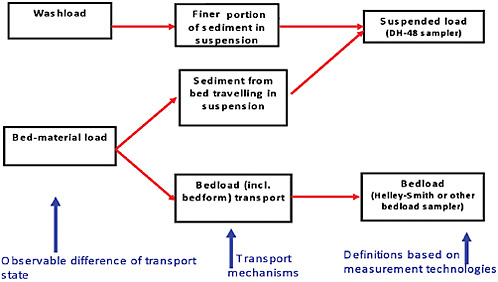
FIGURE 2-1 Grain-size-dependent transport mechanisms and their relationships to measured sediment loads.
and bars, or on the floodplain as flow velocities decline. Bedload particles, consisting of coarser sand and some gravel in the case of the Missouri, move along or at least within centimeters of the channel bed by rolling, sliding, and bouncing. Together, the bedload and the suspendible bed-material load constitute the bed material out of which the channel margin and its assorted bars and habitat features are constructed.
The various modes of sediment transport affect its rate of travel, role in affecting channel form and behavior, habitat formation on bars and flood-plains, turbidity, chemical transport aspects of water quality, and the degree to which sediment and associated chemicals can be exchanged with the floodplain. In most lowland rivers, the bedload constitutes less than 5 percent of the total sedimentary load. However, bedload is a dominant control on channel morphology, navigability, and bar habitat to a degree that is far beyond its volumetric contribution to the total load. The geography of the river basin, and the engineering activities across the basin, create a supply of sediment with a certain grain size composition. The texture-modulated modes of transport are critical links between sediment supply and its roles in water quality and in habitat formation.
Chemical and Nutrient Loads
Streams and rivers also transport a variety of natural and human-affected chemical constituents along with sediment. A river’s chemical characteristics, as well as sediment grain sizes, are influenced by geology and soils, topography, hydrology, ecosystem processes, climate, and anthropogenic influences. As river systems are dammed, channelized, and otherwise affected by human activities, there typically are changes to the stream’s chemical load. Two nutrients of concern in the Missouri and Mississippi river basins today are phosphorus (P) and nitrogen (N). These nutrients are vital for biological growth and are ubiquitous in natural waters and sediment. If other factors, such as light and turbidity, are not limiting, the levels of these nutrients have major effects on aquatic life.
The various chemical forms of phosphorus and nitrogen behave differently in aquatic environments. In particular, nitrogen is more abundant in dissolved forms, whereas phosphorus is largely present in particulate forms (either adsorbed or as a constituent of inorganic and organic particles). Common dissolved forms of nitrogen (such as nitrate) are not particle-reactive; in contrast, dissolved forms of phosphorus (such as phosphate) are particle-reactive and readily adsorbed by sediment. As a result, there is a strong correlation between suspended sediment and total phosphorus concentrations, and changes to the river system that alter the flow of water or sediment in the system are likely to cause a larger
change in the concentration and transport of phosphorus than of nitrogen (Wetzel, 2001).
The delivery of large volumes of nutrients from the Mississippi River basin to the Gulf of Mexico, and associated hypoxia in deeper waters of the Gulf, are prominent national water quality concerns. Analyses of river flows and concentrations have been used to estimate of loads of phosphorus and nitrogen from each of the major tributaries of the Mississippi River (Alexander et al., 2008; USEPA, 2007). Based on what is commonly understood about the sediment association of phosphorus, current and future projects for sediment regime restoration in the Missouri River may increase phosphorus supply to the Mississippi. From a broader historical perspective, since the Missouri River always has carried a tremendous sediment load, and since natural suspended sediments carry a certain amount of phosphorus, the preanthropogenic river thus likely carried significant phosphorus loads into the Mississippi River. However, it is not known what portion of these phosphorus loads reached the Gulf, were trapped in coastal wetlands, or were captured further upstream in the system.
Roles of Sediment in Large River Systems
The Missouri River’s native fish and bird species evolved in environments with high turbidity, large volumes of mobile sediment, and hydrogeomorphic conditions consistent with a sediment-rich river. In contrast, many other rivers and streams nationwide, including some Missouri River tributaries, naturally contain far lower concentrations of sediment. The sediment management challenges posed by varying concentrations of sediment across a river basin were noted in a Geological Society of America compilation of papers on river system management and human impacts:
To many environmental scientists—such as those concerned with total maximum daily loads (TMDLs)—all sediment is treated as a pollutant. This perspective is in conflict with the need to introduce sediment to sediment-starved reaches below impoundments or where coarse sediment needs to be recruited to replenish spawning gravels on riffles and bars (James et al., 2009).
On so-called “clear-water” streams and rivers, excess inputs of sediment—for example from basin land uses such as agriculture or localized activities such as construction—can raise sediment concentrations in the water far higher than natural background or historical levels. In these cases, sediment rightly can be viewed as a pollutant, with potentially severe impacts on species native to that tributary, to aesthetics, and to river form and water quality. In the Missouri River basin, however—in which preanthropogenic concentrations of sediment in reaches of the mainstem and some tributary
streams were greater than those found in the river today—the designation of sediment as a “pollutant” is fraught with ambiguity (Chapter 6 contains further discussion of this topic).
HYDROLOGIC AND GEOMORPHIC CHANGES TO THE MISSOURI RIVER
Over long reaches of the Missouri River, hydrodynamic and geomorphic processes have changed considerably over the past century. Dams, levees, dikes, and revetments have been constructed and now are operated to facilitate services such as transportation of bulk commodities through commercial navigation, flood protection for farms and cities, reliable water supply, hydropower generation, and water-related recreation. This section describes key historical changes to the Missouri River, with an emphasis on changes to or relevance of sedimentary processes for the preregulation Missouri River, the postregulation Missouri River, and changes to Missouri River ecology.
The Preregulation Missouri River
Early accounts of the Missouri River date back to Lewis and Clark and the expedition of their Corps of Discovery in 1804-1806, in which they made numerous entries in their journals about hydrology, turbidity, and river morphology. As the Great Plains were subsequently explored and settled, many observations and written accounts helped to produce an early picture of the river’s morphology and character.1
The preregulation Missouri River assumed different morphologies in different reaches of the river. In many stretches, the preregulation Missouri River was a multichannel system, with a primary channel and often multiple secondary channels (called “chutes” on the Missouri River), widespread bars, islands, and shallow sloughs (Hallberg et al., 1979; Moody et al., 2003). The river also featured natural levees, backwater lakes, large meander loops, oxbow lakes, and sandbars and dunes (Figure 2-2). Width of the main river channel was highly variable, ranging from roughly 1,000 to 10,000 feet during normal flow periods to 25,000 to 35,000 feet during floods (Schneiders, 1999). In some areas during large floods, the river flowed bluff-to-bluff and covered a width up to 17 miles (see NRC, 2002, for additional description of the preregulation Missouri River). Early accounts also described near-ubiquitous woody debris, or “snags” in the channel, present at all times and mobile during floods (Figure 2-3). These
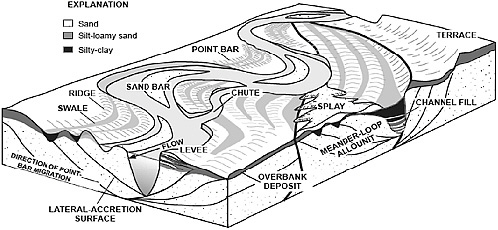
FIGURE 2-2 Idealized cross-section of a large river-floodplain ecosystem. Before extensive twentieth-century regulation, the Missouri River resembled this diagram in some reaches. In other reaches, the Missouri did not have a single, distinct river channel and assumed a more braided, multitributary character.
SOURCE: Jacobson et al., 2007.
snags derived primarily from riverbank erosion, a process that moved trees and other organic material from the floodplain surface into the channel. Vegetation along the Missouri River corridor was dense, with sandy low-water flats along the channel margin, stabilized by thickets of young willows and cottonwood, and large forest trees on islands and the floodplain (Johnson, 1992; Schneiders, 1999).
The processes of river bank erosion and lateral migration of the river channel were prominent in the preregulation Missouri River. In areas where the Missouri River channels migrated back and forth across the floodplain, river banks and sediment were eroded on the outside banks of mobile bends, while sediments were deposited on the bends’ inside edges, or on mid-channel bars where young vegetation slows flow and scavanges sediment (Johnson, 2000). These processes played important ecological roles in the preregulation Missouri (Johnson et al., 1976; Johnson, 1992). The overall sediment regime was one of intermittent transport, with some sediments stored for decades or centuries in bars or the floodplain, then remobilized by flood events (NRC, 2002; Slizeski et al., 1982). As a channel’s location changed through the processes of erosion and sedimentation, diversity developed in the riparian vegetation as distance from the present channel increased (Figure 2-4). Channel migration eroded older, well-established vegetation on the outside of river curves, while new bars on the inside of river curves were suitable for pioneer vegetation communities such as cot-
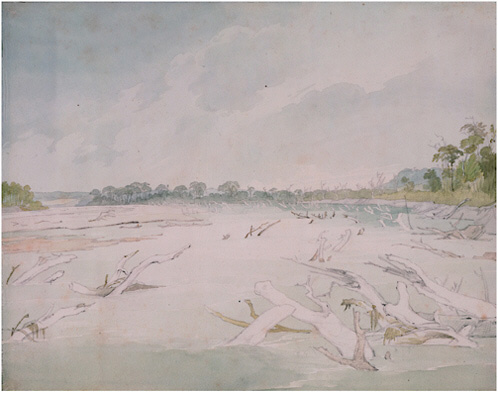
FIGURE 2-3 Numerous “snags” characteristic of the preregulation Missouri River.
SOURCE: Karl Bodmer, Swiss, 1809-1893, Snags on the Missouri, near the mouth of the Nemaha River. Watercolor and pencil on paper. Reprinted, with permission, from Joslyn Art Museum, Omaha, Nebraska: Gift of the Enron Art Foundation, 1986 (JAM 1986.49.150).
tonwood and willow. Channel migration also contributed to floodplain species biodiversity by creating a mix of landforms such as oxbow lakes, sloughs, and backwater swamps with differing soil textures, chemistry, and inundation regimes.
Distribution of riparian vegetation was also heterogeneous because tree species differ in their tolerances to flooding, sedimentation, and physical damage from floodwaters and debris (Hupp, 1988). Channel widening and lateral migration removed both living and dead trees from eroding banks, and many of these collected in the channel after floodwaters receded. This large woody debris (i.e., “snags”) contributed submerged substrate for invertebrates that are consumed by fishes and other vertebrates. Woody debris also provided cover for fish and contributed hydraulic roughness to the riverbed that locally modified channel bed texture, bathymetry, water depth, and organic matter distribution (Gurnell et al., 2002; Sedell and Froggatt, 1984).
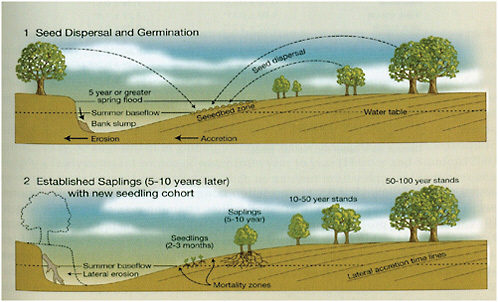
FIGURE 2-4 Model of lateral channel movement; accumulation of sediment on the inside (right side, above) of a channel bend; and seed dispersal, germination, and establishment.
SOURCE: Reprinted, with permission, from Braatne et al., 1996. © 1996 by NRC Research Press.
Riparian vegetation stabilized riverbanks and sandbars and slowed bank erosion and channel migration rates (Gran and Paola, 2001; McKenny et al., 1995). The presence of vegetation exerted a strong physical presence on floodplains by increasing surface roughness, reducing flow velocity, and capturing sediment from flood waters. Early-successional trees established on low sandbars near mean river level trapped and immobilized sediment up to 5 to 6 meters in depth (Johnson et al., 1976; Scott et al., 1997). The river’s sandbars and associated biotic communities are important habitat for many native riparian species whose life cycles and populations depended on the existence of the bars, as well as their continuing movement. Occasional shifting and movement of sandbars and other riparian landforms made long-term colonization by vegetation difficult, and the absence of vegetation made it difficult for predators to prey upon the nests of sandbar-nesting birds (Johnson, 2000; Osterkamp and Hedman, 1982).
Floods were common and widespread on the preregulation Missouri. Floods allowed for the redistribution of sediment between the river’s main channel and its floodplains. As Missouri River flows increased during the spring, the river would erode sediment from its bed and its banks. Overbank flows allowed the main channel to connect to backwater areas, allow-
ing for free exchange of sediment and biota. As discussed above, scouring of the river banks during floods washed trees and other vegetation into the river and redistributed snags already in the channel. Floods also replenished groundwater, a process important for sustaining the growth of floodplain vegetation. As floods receded and water volumes and velocities decreased, the degraded channel would rapidly refill with sediment; secondary channels and meanders would become isolated from the main channel; and fresh substrate material would be deposited for subsequent colonization by plants and animals (also see NRC, 2002). The shifting of the Missouri River’s channel with abundant bank erosion and sediment accretion during floods was legendary (Johnson et al., 1976; Schmulbach et al., 1992). For example, Duncanson (1909) reported the erosion of approximately 30 acres of Missouri River floodplain on a single bend during a 24-hour period. Channel changes were especially dramatic when tight bends (channel necks) were “cut off” and formed oxbow lakes (Shields, 2000; Weaver, 1960).
The Postregulation Missouri River
Many river regulation activities took place on the Missouri River before 1945. For example, dredging, clearing of forests to provide fuel for steamboats, snag removal, and early channelization efforts date back to the nineteenth century. Nevertheless, the most significant changes to river hydrology and sedimentary processes were realized under the Pick-Sloan Plan of 1944 and the Missouri River Bank Stabilization and Navigation Project of 1945.2 These legislative actions clearly are major landmarks in the river’s environmental history.
Bank and Channel Stabilization
The federal Missouri River Bank Stabilization and Navigation Project (BSNP) created an inland waterway transportation system, as well as providing protection for utilities, transportation networks, bridges, and adjacent landowners and farms by preventing river channel migration and reducing the potential for overbank flooding. The project area extends 735 river miles from Sioux City, Iowa, to the mouth of the Missouri River near St. Louis, Missouri. This project replaced an ever-changing riparian landscape with a fixed navigation channel and stable floodplain lands along both shores. Missouri River bank stabilization and river control projects were authorized under Rivers and Harbors Acts of 1912, 1917, 1925,
1930, 1935, and 1945 (USGS, 1998). The project was officially completed in 1981 (ibid.).
The principal mechanism for providing minimum navigation depths on the Missouri River involved channel constriction. Beginning in the late nineteenth century, the navigable portion of the Missouri River channel was narrowed to as little as one-half to one-third of its original width (Funk and Robinson, 1974; Hallberg et al., 1981; Pinter and Heine, 2005) primarily through the emplacement of “wing dikes,” structures built perpendicular to the bankline to trap sediment, stabilize river banks, and produce a single channel (Figure 2-5). Engineering structures built under the BSNP immobilized sediment that formerly was transported downstream and, in so doing, narrowed the channel. Land accreted along the lower Missouri River, downriver of Sioux City:
Land accretion occurred from 1910 to 1981 (Ferrell, 1996), yielding an average deposition rate over these 71 yr of ~45.5 × 10⁶ Mg*yr−1, equivalent to ~14% of the predam (1948-1952) annual suspended-sediment load at Hermann, Missouri. Land-accretion activity was more concentrated from the early 1930s to mid 1960s, so deposition rates may have been as high as 107 × 106 Mg*yr−1, equivalent to almost one-third of the predam annual suspended-sediment load at Hermann…. Accreted land preferentially sequestered coarse sediment sizes from the total suspended load whereas finer sediments were washed downstream (Jacobson et al., 2009).
Bank-protection works slowed the lateral shifting of the river and the associated bank erosion of sediment, derived originally from the uplands, which previously contributed to or maintained the sediment load of the river.
Channelization of the Missouri has conferred social and economic benefits through support of commercial navigation (GAO, 2009). Adjacent lands behind revetments and levees provided areas favorable for agricultural production and sites for river communities and infrastructure. However, the narrow, controlled river channel significantly reduced habitat that was formerly provided from the preregulation channel and migration processes and that was important to the natural riverine system (Hesse, 1987; Hesse and Sheets, 1993; NRC, 2002). It also caused lowering of the bed and consequent (and expensive) damage to infrastructure such as levees, water intakes, and transportation structures extensively along the Missouri River mainstem and the lower reaches of its tributaries (Jacobson and Galat, 2008; Schmulbach et al., 1992).
Mainstem Dams and Reservoirs
Construction of the Missouri River mainstem dams spanned several decades and coincided in part with channelization of the lower river. Fort Peck Dam, constructed in the 1930s under the National Industrial Recov-
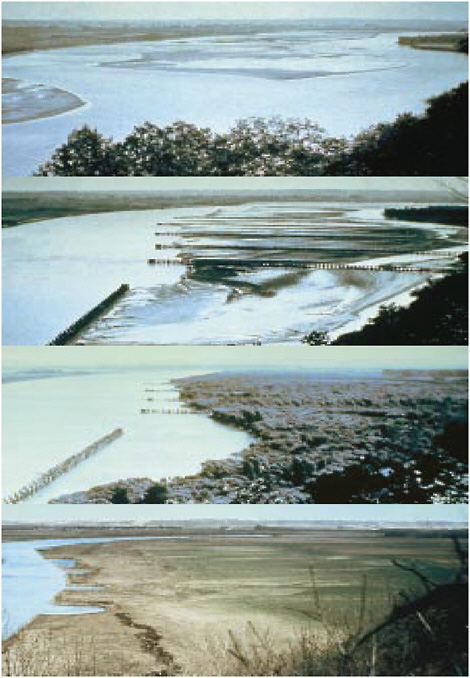
FIGURE 2-5 Photographs taken at Indian Cave Bend on the Missouri River near river mile 517, about 18 miles upstream from Rulo, Nebraska. They illustrate the river before (1934; top photo) and after (1935, 1946, and 1977) the construction of brush dikes that narrowed and channelized the river. View is looking downstream from Nebraska (near bank) into Missouri (far bank). These photos illustrate substantial alteration of riparian and in-channel habitats.
SOURCE: USGS, 1998.
ery Act, was the only large Missouri River dam not part of the Pick-Sloan Plan. Construction of Fort Peck Dam stimulated channelization work on the lower Missouri during that period. The dam was closed in 1937, and construction was completed in 1940. Authorized purposes of Fort Peck Dam included flood control, irrigation, navigation, and power generation.
The five other large Missouri River mainstem dams were authorized under the Flood Control Act of 1944, which represented a fusion of the plans of Col. Lewis A. Pick of the U.S. Army Corps of Engineers and those of William G. Sloan of the Bureau of Reclamation. Construction began first on Fort Randall and Garrison dams in 1946 (see Table 2-1). Oahe Dam followed in 1948, Gavins Point Dam in 1952, and construction commenced on Big Bend Dam in 1959. Each structure required several years for construction and, following closure, time before each reservoir was filled to capacity.
Closure of the Mainstem Dams and Impacts on Sediment Processes
During the mid-twentieth century, the Missouri River was converted from a region-wide conveyor of sediment to a series of impoundments that included some of the largest storage reservoirs in North America (notably Lake Oahe and Lake Sakakawea; see Figure 1-1). This transformation resulted in decreased volumes of transported sediment, sediment deposition in the mainstem reservoirs, and caused channel bed and bank erosion downstream of each dam. Farther downstream, delivery of sediment from the Missouri into the Mississippi River system was reduced greatly following the closure of the Missouri River mainstem dams.
The closure of the two farthest downstream dams on the Missouri River—first Fort Randall Dam (South Dakota) in 1953 and later Gavins
TABLE 2-1 Missouri River Mainstem Dams and Reservoirs
|
Dam |
Location (river mile)a |
Reservoir |
Began |
Closed |
Completed |
Storage (acre-feet) |
|
Fort Peck Dam |
1767 |
Fort Peck Lake |
1933 |
1937 |
1940 |
18,700,000 |
|
Garrison Dam |
1387 |
Lake Sakakawea |
1946 |
1953 |
1954 |
23,000,000 |
|
Oahe Dam |
1071 |
Lake Oahe |
1948 |
1958 |
1962 |
23,500,000 |
|
Big Bend Dam |
987 |
Lake Sharpe |
1959 |
1963 |
1966 |
1,900,000 |
|
Fort Randall Dam |
878 |
Lake Francis Case |
1946 |
1952 |
1953 |
5,500,000 |
|
Gavins Point Dam |
811 |
Lewis and Clark Lake |
1952 |
1955 |
1957 |
492,000 |
|
a Distance from Missouri–Mississippi confluence. SOURCES: Data from Branyan, 1974; Pinter and Heine, 2005. |
||||||
Point Dam (Nebraska-South Dakota border; see Figure 1-1) farther downriver in 1955—contributed to sharp reductions in suspended-sediment discharges. Suspended-sediment discharge at Yankton, South Dakota, decreased from 160 million tons per year in 1952 to 50 million tons per year in 1953 following the closure of Fort Randall Dam (Figure 2-6). This was followed by a smaller reduction to about 10 million tons per year during the two years before the closure of Gavins Point Dam in 1955 (just upriver from Yankton). Since closure of Gavins Point Dam, sediment discharge at Yankton has declined further to 0.25 million tons per year (Jacobson et al., 2009). The closing of the two dams thus resulted in a decrease in suspended-sediment discharge at Yankton of about 160 million tons per year. Similar effects were recorded in sediment records all along the Missouri and downstream on the Mississippi River (Meade and Moody, 2009; Figure 2-6).
While the mainstem Missouri dams were being completed, many dams and reservoirs were being built on the tributaries. For example, twelve dams were constructed across the Kansas River basin from 1952 to 1969, with six of the impoundments having water-storage capacities larger than Lewis and Clark Lake behind Gavins Point Dam on the Missouri mainstem (Perry, 1994). Predam discharges of suspended sediment from the Kansas River (based on only a few years of record: 1929-1930, 1949-1950) averaged 30-40 million metric tons per year (Secretary of War, 1935; USACE, 1957). During the record flood year of 1951, the Kansas River carried 150 million metric tons of sediment into the Missouri River. Following dam construction (data available for 1964-1973), however, annual sediment loads of the Kansas River averaged just 10-12 million metric tons (USACE, 1970, 1972, 1976).
The mainstem Missouri River dams presently store about 3.7 million acre-feet (or approximately 6 trillion tons) of sediment (Table 2-2). These materials reduce the storage capacity of these six mainstem reservoirs. The greatest loss of storage in terms of percentage reduction is Lewis and Clark Lake behind Gavins Point Dam, where reservoir storage loss due to sedimentation is more than 20 percent of total storage.
Channel Incision Downstream of Dams
Decreased sediment loads during the second half of the twentieth century were accompanied by rapid channel incision downstream of the dams (Livesey, 1965; Sayre and Kennedy, 1978; Holly and Karim, 1986). Sediment-poor, or “hungry,” water released from reservoirs caused substantial channel incision and bed degradation. Degradation was greatest, reaching 9 feet or more, just downstream of Gavins Point Dam, with values near 1.3 feet being recorded near Omaha at the confluence with the Platte River
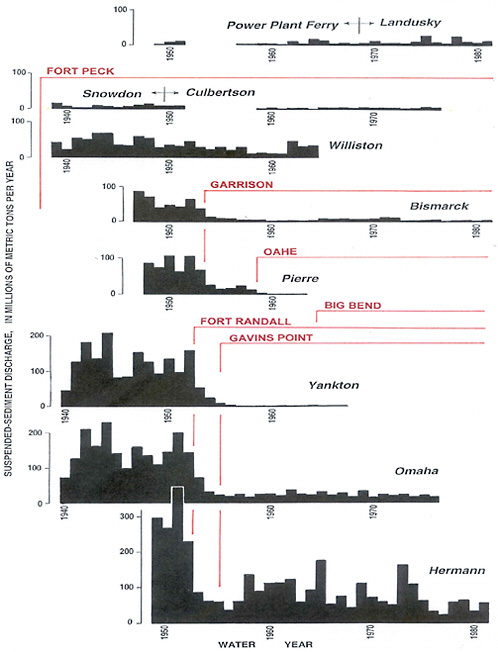
FIGURE 2-6 Annual suspended-sediment discharges from select Missouri River sites in the years before, during, and after the closures of the major mainstem dams. Red lines show the relative locations (horizontal) and closure dates (vertical) of the six major dams.
SOURCES: Sediment data through 1974 from Corps of Engineers (USACE, 1951, 1957, 1965, 1970, 1972, 1976).
Post-1974 data from published USGS records (Landusky, Culbertson, and Bismarck stations) and unpublished data of Corps of Engineers (Alvin Coop, Kansas City District, personal communication to R.H. Meade, 1982).
TABLE 2-2 Missouri River Mainstem Dam Sediment Storage and Capacity
|
Reservoir |
Year (survey) |
Total Storage below Exclusive Flood Control |
Total Storage Loss (acre-feet) |
Total Storage Loss (%) |
Annual Loss (%) |
Expected Life (years) |
|
Fort Peck |
2007 |
18,463,000 |
1,094,000 |
5.6 |
0.08 |
1030 |
|
Garrison |
1988 |
23,821,000 |
907,000 |
3.7 |
0.11 |
920 |
|
Oahe |
1989 |
23,137,000 |
614,000 |
2.6 |
0.08 |
1170 |
|
Big Bend |
1997 |
1,799,000 |
181,000 |
9.1 |
0.27 |
340 |
|
Fort Randall |
1996 |
5,418,000 |
790,000 |
12.7 |
0.30 |
290 |
|
Gavins Point |
2007 |
450,000 |
125,000 |
21.7 |
0.42 |
190 |
|
SOURCES: Data from Boyd et al., 2009; Jacobson et al., 2009; Stark and Pridal, 2009. |
||||||
(Heine and Lant, 2009). Farther downstream, areas of minor aggradation and degradation alternate all the way to the Mississippi confluence. Down-cutting was accompanied by severe bank erosion, channel widening, and landsliding along steepened bluffs (Rahn, 1977). In addition to incision on the mainstem Missouri, downcutting also propagated up many of the Missouri River tributaries, with similar effects to those noted along the Missouri itself (Heine and Lant, 2009). Incision has lowered water tables on adjacent floodplains, thereby draining natural floodplain lakes and reducing tree growth (Reily and Johnson, 1982). It also has reduced channel migration rates and increased average depths within the channel. Incision generally attenuates with distance from the dam, but it is still detectable at Sioux City, Iowa (roughly 60 miles downstream of Gavins Point Dam), and increases again markedly in the vicinity of Kansas City, Missouri. By contrast, in the upper reaches of reservoirs, sediments are deposited where rivers enter the slack water of reservoirs. These are zones of deposition, where the river builds deltas that progressively extend into the reservoirs.
Decreased Sediment Delivery to the Gulf Coast
Closure of the Missouri River dams and the bank stabilization project coincided historically with a net reduction by half in sediment delivered to the Gulf of Mexico (Keown et al., 1986; Meade and Parker, 1985). A recent publication on Mississippi and Missouri river sediment transport volumes, and how they have changed over time, stated:
Before 1900, the Missouri–Mississippi River system transported an estimated 400 million metric tons per year of sediment from the interior of the United States to coastal Louisiana. During the last two decades
(1987–2006), this transport has averaged 145 million metric tons per year (Meade and Moody, 2009).
Figure 2-7 shows the historical predominance of sediments from the Missouri River to the Mississippi River and downstream to Louisiana. Figure 2-8 further illustrates a sharp decline in sediment volumes transported by the Missouri River after construction of dams and bank stabilization projects in the 1940s, 1950s, and 1960s.
In addition to directly trapping sediment, the larger storage dams reduced peak flows that further reduced the river’s ability to transport large volumes of sediment. Meander cutoffs and the construction of river-training
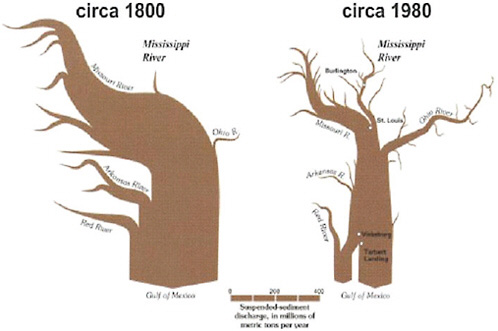
FIGURE 2-7 Schematic diagrams of average annual suspended-sediment discharges in Missouri–Mississippi River basin.
SOURCE: Reprinted, with permission from Meade and Moody, 2009. From Meade and Moody, 2009: “Diagrams were originally published by Meade (1995). Diagram for 1800 is an impressionistic estimate, based on our readings of the Journals of Lewis and Clark (Moody et al., 2003), results of Humphreys and Abbot (1876), observations reported by Mark Twain (1883) and on more recent analyses (Blevins, 2006) that concluded sediment concentrations in the Missouri River have decreased at least 70–80% from predevelopment conditions.” The diagram for 1980 was “compiled mostly from data of Keown et al. (1981, 1986) plus supplemental data on lower Missouri River from Parker (1988) and data on lower Ohio River from Moody and Meade (1992, 1993, 1995).” © 2009 by John Wiley & Sons, Inc.
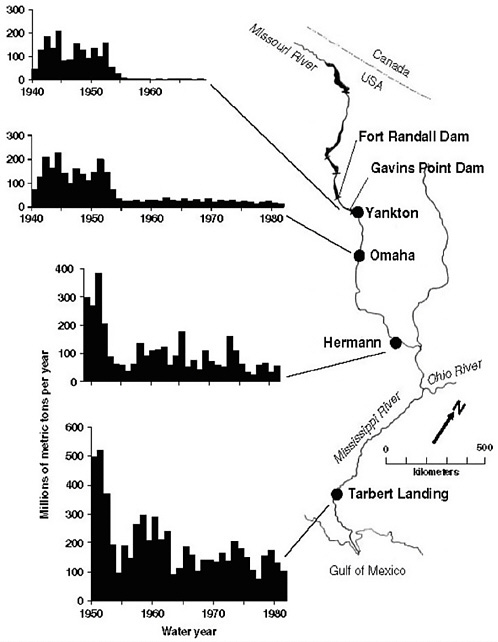
FIGURE 2-8 Suspended-sediment discharges at stations on Missouri River at Yankton, South Dakota; Omaha, Nebraska; and Hermann, Missouri; and on the Mississippi River at Tarbert Landing, Mississippi, 1940–1981. Principal effects on records at Yankton and Omaha, and probably on records at Hermann, were due to the closures of dams at Fort Randall (1953) and Gavins Point (1955).
SOURCE: Reprinted, with permission from Meade and Moody, 2009. From Meade and Moody, 2009: “Diagrams were originally published by Meade (1995). Diagram for 1800 is an impressionistic estimate, based on our readings of the Journals of Lewis and Clark (Moody et al., 2003), results of Humphreys and Abbot (1876), observations reported by Mark Twain (1883) and on more recent analyses (Blevins, 2006) that concluded sediment concentrations in the Missouri River have decreased at least 70-80% from predevelopment conditions.” The diagram for 1980 was “compiled mostly from data of Keown et al. (1981, 1986) plus supplemental data on lower Missouri River from Parker (1988) and data on lower Ohio River from Moody and Meade (1992, 1993, 1995).” © 2009 by John Wiley & Sons, Inc.
structures on the Missouri and lower Mississippi rivers also have immobilized large amounts of sediment throughout the basin and along the Missouri and Mississippi mainstem (Meade and Moody, 2009).
Current Sediment Dynamics on the Lower Missouri River
An extensive and thorough assessment of current data and analyses for developing a sediment budget for the lower Missouri River is presented in a paper jointly authored by U.S. Geological Survey and Corps of Engineers scientists (Jacobson et al., 2009). As its authors explain:
Sediment budgets—an accounting of sediment transport, erosion, and deposition—are fundamental to understanding geomorphic evolution of altered river systems. In a dammed river system, the sediment budget quantifies the flux of materials available for maintaining or creating habitat, therefore strongly constraining the potential for management or restoration (Jacobson et al., 2009).
All numbers and data in the following section on current sediment dynamics in the Missouri River draw from this 2009 paper unless noted otherwise.
The predam (1940-1952) sediment flux past Yankton, South Dakota, in the vicinity of Gavins Point Dam was about 125 million tons per year.3 Sediment transport past Hermann, Missouri, was about 300 (298-326) million tons per year. The difference between these two stations indicates
that about 175 million tons per year was supplied to the Missouri River mainly by large right-bank tributaries such as the Platte and Kansas rivers and, to a lesser extent, by left-bank tributaries (such as the Nishnabotna River) draining loess lands.
Since this period also witnessed continuing engineering projects to sequester sediment within the floodplain and stabilize the channel, tributary streams must have been supplying more than 175 million tons per year, but a more precise figure is unknown without further analysis of volumetric changes in floodplain storage. However, by 1980, when the main period of sediment sequestration was declining, the total amount of sediment stored within the floodplain behind groynes and levees as a result of engineering projects dating back to the early part of the twentieth century was approximately 3.2 gigatons. This volume implies an average accumulation rate of about 45 million tons per year, averaged throughout the 1910-1981 period, or more representatively a rate of about 100 Mt/yr averaged throughout 1930-1960, the period of most intensive engineering activity. On the basis of samples excavated from trenches on the floodplain, the grain-size composition of this stored sediment has been estimated to be 78 percent sand and 22 percent silt-clay (Jacobson et al., 2009).
Given that Lewis and Clark Lake behind Gavins Point Dam captures all free sediment from upstream dams, the post-impoundment Missouri carries essentially no load (0.25 Mt/yr) at Yankton, South Dakota, and then begins to recruit sediment from its bed and tributaries so that the load increases to 7.3 Mt/yr by Sioux City, Iowa, and 58 Mt/yr (~25 percent sand) at Hermann, Missouri. Recruitment of sediment from the bed has resulted in degradation of the average bed elevation by about 10 feet at Yankton, diminishing downstream to approximately zero in the Omaha-Nebraska City reach. Despite additions of sediment from the tributaries, the bed elevation is reduced also by about 2 to 8 feet due to commercial sand dredging in the vicinity of Kansas City. Loads generally have decreased since dam closure, or at least since the 1993 flood, especially beyond Nebraska City downstream of the Platte confluence. Reasons for this decline are probably some combination of gradual stabilization of the degraded channel, intensified flushing of the sediment from the river by the 1993 flood, commercial sand dredging, and especially reduction of sediment eroded from the tributary watersheds as a result of land management (dredged sand amounts to approximately 40 percent of the sand load at Hermann).
CHANGES TO MISSOURI RIVER ECOLOGY
Effects on Missouri River Fishes
Changes in Missouri River hydrology, and the dynamics and volumes of sediment transport, during the twentieth century have had far-reaching effects on river ecology and its assemblage of biota. The Missouri River’s native fish species evolved in environments with high turbidity, swift current, a scarcity of quiet backwaters, and an unstable sand-silt bottom (Pflieger, 1971)—habitat conditions that were altered and diminished substantially during the twentieth century. As a result of marked habitat changes, there have been many effects on the river’s native fishes.
The term “big river” fish was coined to describe the distinctive assemblage of fishes in the Missouri and lower Mississippi river system (Pflieger, 1971). Within the Missouri River, species that are predominately benthic specialists reside and exhibit a diversity of ecomorphological adaptations for high turbidity (Galat et al., 2005). These adaptations include reduced eyes, external taste buds and olfactory receptors on dorsal and pectoral fins, and an array of well-developed electrosensory organs and chemosensory organs to navigate, locate food, and avoid predation in a low-visibility environment. The environmental factors that influenced the anatomy of Missouri River’s fishes are similar to those operating in other largely turbid, dryland rivers like the Colorado (Mueller, 2005) and the Rio Grande (Calamusso et al., 2005).
As sediment concentrations have declined in the Missouri, there has been a corresponding decline of fishes that historically occupied highly turbid main-channel habitats and their replacement by visually feeding species that are competitively superior in less turbid waters (Bonner and Wilde, 2002; Cross and Moss, 1987; Pflieger and Grace, 1987). Decreases in specialized native big river fishes have been attributed to reductions in suspended sediment and turbidity in the lower Missouri River, including the now federally listed as endangered pallid sturgeon, and imperiled paddlefish, blue sucker, and flathead chub (Pflieger and Grace, 1987). More recently, 11 of the Missouri’s 73 big river fishes were identified by two or more mainstem states as imperiled due to a combination of factors including impoundment, changes in flow and temperature regimes, reductions in channel habitat complexity, reduced turbidity, and introduced fishes (Galat et al., 2005). Corresponding increases in abundance have occurred in sight-feeding carnivorous fishes that feed on open-water zooplankton in clear water. In many reaches of the river today, non-native sport fishes are in greater abundance than native species. These non-native species often are more tolerant of altered conditions of temperature, turbidity, and habitat (NRC, 2002).
Much of the attention on Missouri River native fish species today revolves around one species: the pallid sturgeon (Scaphirhynchus albus). The pallid sturgeon was listed as endangered throughout its entire range in September 1990. Some scientists consider the species as being close to extinction (Dryer and Sandvol, 1993). Pallid sturgeon inhabited and utilized the floodplains, backwaters, sloughs, and main channel pools and snags in the preregulation Missouri River. Some scientists have expressed concern that the pallid sturgeon cannot reproduce in the Missouri River’s postregulation channelized and reservoir habitats (Henry and Ruelle, 1992; Ruelle and Henry, 1994). The Corps of Engineers and the U.S. Fish and Wildlife Service today are implementing actions along the Missouri River, downstream of Gavins Point Dam in South Dakota, Nebraska, Iowa, and Missouri, designed to improve habitat conditions for the pallid sturgeon (Chapter 4 provides details on the Corps’ ongoing Missouri River emergent sandbar habitat and shallow water habitat projects). These actions are being taken in accord with a 2000 federal Biological Opinion, and amended in 2003, to avoid jeopardizing the continued existence of the pallid sturgeon. (Chapter 3 provides details of the Fish and Wildlife Service Biological Opinion.)
Effects on Missouri River Birds
Hundreds of native species of birds use the Missouri River ecosystem for nesting. Many of them occupy the successionally diverse forests on the floodplain and riverine islands. Two bird species, the least tern (Sterna antillarum) and the piping plover (Charadrius melodus), are federally listed as endangered and threatened, respectively. Both these birds nest in shallow, inconspicuous depressions in sandy or gravelly patches on sandbars with little or no vegetation. Least tern adults are aerial foragers that hover over shallow water in nearby river channels and floodplain habitats and dive after small fishes to feed their young. In contrast, piping plover chicks are precocious and both adults and young forage on the ground primarily along sparsely vegetated sandbar perimeters.
Spring floods of the preregulation Missouri River provided an annual, replenished supply of emergent sandbar habitat for tern and plover nesting. The high river stages reached during floods left correspondingly high sandbars available for nesting after flood cessation that were safe from being overtopped and destroyed by summer rainstorm pulse flows. Impoundment of the Missouri River behind mainstem dams sharply reduced upstream sources of sediment needed to create and maintain sandbars for tern and plover nesting. These poor nesting conditions resulted in loss of critical nesting and chick-rearing habitat and contributed to the listing of the interior least tern by the U.S. Fish and Wildlife Service in 1985 as endangered and the Great Plains population of the piping plover in 1986 as threatened.
The few sandbars remaining in the postdevelopment river are topographically low because of low spring river stages. This produces an ecological trap for these birds, as sandbars attractive for nesting early in the breeding season are vulnerable to being scoured by high flows. Today, the Corps of Engineers releases small pulses (rises) from Gavins Point Dam during the prenesting season for terns and plovers to encourage them to nest at the highest elevations on remnant and constructed sandbars below Lewis and Clark Lake. Tributary (e.g., James River) or mainstem flow pulses have helped reduce nesting mortality during the nesting season.
Effects on Riparian Floodplain Vegetation
The preregulation Missouri River ecosystem was a storehouse of biological diversity maintained by a highly dynamic flow and sediment regime. The active river channel moving across its broad floodplain created enormous environmental heterogeneity and a complex mosaic of aquatic, riparian, and terrestrial ecosystems, including in-channel islands and sandbars, oxbow lakes, marshes, sand dunes, and riparian forests (see also Figure 2-4). The riparian forests were dominated by cottonwood, a pioneer species whose regeneration is dependent on the creation of sandbars during floods (and by the bar building process illustrated in Figure 2-4). Continual reworking and reforming of sandbars associated with the river channel continually created unvegetated and high sandbars for the successful nesting of least terns, piping plovers, and other riverine bird species. Expansive riparian forests on the upper Missouri River floodplain formed a successional series, with a wide age range from young cottonwood–willow forests a decade or two old occupying low benches, to later successional forests dominated by green ash, box elder, and American elm on high benches old enough to have lost all traces of the cottonwood pioneer element. Cottonwood does not regenerate successfully in its own forests. Maintenance of a wide age range of forests, and hence high biological diversity, was dependent on river channel meandering and periodic widening during floods.
The Missouri River’s riparian forests were greatly altered by colonizing Europeans, beginning with heavy cutting for steamboat fuel during the mid-nineteenth century, clearing for agriculture, and most recently by channelization and alteration of the river’s flow and sediment regime after construction of the large dams and reservoirs (NRC, 2002). A comprehensive survey on the upper Missouri found a surprisingly rich assemblage of 220 vascular plant species growing in the floodplain forests, long after the construction of the large dams and clearing of half or more of the floodplain forest (Johnson et al., 1976; Keammerer et al., 1975).
Changes in the river’s hydrologic and sediment regimes caused by the BSNP and Pick-Sloan projects have important implications for trends in
river and floodplain ecosystems. For example, the cottonwood forests that remain as a legacy of the preregulation Missouri River cannot be sustained by the present low rates of river meandering and widening (Johnson, 1998; Johnson and Nelson-Stastny, 2006). Downstream of the large dams, however, floods still occur where levees have been removed or damaged, and cottonwoods have regenerated on flooded farm lands. In-channel nesting birds face similar prospects because of the absence of floods that historically created sandbar islands in the river that are required for their successful nesting.
DATA FOR EVALUATING MISSOURI RIVER SEDIMENT DYNAMICS
A systemwide understanding of the sources, traps, and modes of transport of sediment through the Missouri River system is important for well-informed sediment-related decisions, including but not limited to endangered species protection. The Missouri River basin historically was the focus of extensive data collection and research, and today’s river managers and scientists are heirs to a remarkable legacy of prior investigations. Over time, however, as experts retired and funding diminished, the institutional memory that developed and participated directly in these programs has faded. Moreover, even though the legacy of these Missouri River sediment studies and data collection efforts is extensive and rich, there have been few efforts devoted to periodically organizing, updating, and systematically archiving this large body of information. Given the recent establishment of multiple and significant sediment-related initiatives for the river system, such as the Missouri River Ecosystem Recovery Plan (MRERP and as discussed in Chapter 3), there is a clear need for a systemwide framework for better quantifying sedimentary processes.
Extensive historical data were collected by the Corps of Engineers’ Missouri River Division offices in Omaha (the Omaha district office today is part of the Corps’ Northwestern Division) and Kansas City. Much information on Missouri River sediment today exists in archives and earlier reports produced or sponsored by the (former) Missouri River Division of the Corps of Engineers. Today, the Corps of Engineers is the primary funding agency for the collection of sediment data in the river, but actual measurements are made by USGS investigators, working with Corps personnel. The USGS today maintains several offices along the Missouri River including Kansas City (Lee’s Summit, Missouri); Columbia, Missouri; and Council Bluffs, Iowa. Important new observations and syntheses are being developed (e.g., Blevins, 2006; Jacobson et al., 2007, 2009; Jacobson and Galat, 2008). Many current efforts toward improved knowledge of the river’s sedimentary processes are being carried out via cooperation be-
tween USGS and Corps of Engineers scientists (e.g., Jacobson et al., 2009). Notwithstanding the vast amount of sediment-related data and analyses, including these ongoing cooperative efforts between the USGS and the Corps of Engineers, there is no single, centralized, sediment database for the Missouri River.
The lack of a centralized, accessible sediment database may be inhibiting better understanding of sediment dynamics of the Missouri River system. Moreover, given plans for future system-wide ecosystem management (see the discussion of the Missouri River Ecosystem Restoration Plan in Chapter 3), there will be a need for a centralized database and sediment budget as a foundation for planning, designing, and monitoring the results of various sediment management activities (see Box 2-1 for discussion of centralized data systems in the Florida Everglades and Colorado River).
An important step toward a more systematic understanding of the river’s sediment dynamics would be to create a sediment budget for the entire Missouri River, from its headwaters to its mouth. The general framework for such a budget is presented in Figure 2-9. Sediment-related data for the Missouri River today are available as maps, aerial photographs and other remotely sensed imagery, hydrologic and sediment measurements, and model-based results. Creation of a centralized data management system may open new perspectives and possibilities for research and management. Such a system of course will not be created immediately; construction of a river-wide sediment budget would be useful first step.
The data in Figure 2-9 are from published reports or public presentations provided by the Corps of Engineers and the USGS. In many cases, and despite productive, useful ongoing Corps–USGS collaboration, data are still being processed and a complete summary reference is not yet available. These circumstances illustrate the need for a consistent and clearly documented database for Missouri River basin sediment. In Figure 2-9, the boxes represent sediment flux in volumes of material per year (with input data mainly from Jacobson et al., 2009).
In the course of constructing this diagram, it became clear that there are gaps regarding the archiving and organization of those data. For example, sediment data for the Missouri River exist in multiple formats (e.g., paper documents, electronic data files) and are physically located in many different offices across the basin. There are no directories listing where the data sources reside or how they might be accessed. Furthermore, the values in Figure 2-9 are products of calculations and estimates from heterogenous sources with unknown reliability. Sediment fluxes into reservoirs, for example, are based on reservoir surveys that measure some combination of coarse bed load and fine suspended load deposited into that reservoir; other boxes are based only on measurements of suspended-sediment flux. The mixing and combining of these data can lead to confusion and may blur
|
BOX 2-1 Data Collection and Ecosystem Management in Large U.S. River Systems Federal and state scientists working in other large U.S. river systems have faced similar data collection challenges that are encountered today in the Missouri River basin. Experiences from other U.S. river and aquatic systems thus may provide useful information and lessons for the Corps of Engineers, the U.S. Geological Survey, other federal agencies, and state-level managers and scientists. In particular, science and data collection programs in the Florida Everglades and the Colorado River through the Grand Canyon—and the interagency cooperation in both river systems—may be useful in informing future similar efforts for the Missouri River. In the case of the Everglades, the Comprehensive Everglades Restoration Plan (CERP) is being executed by the Corps of Engineers and its partner state agency, the South Florida Water Management District. As in the Missouri River, restoration of the “River of Grass” in the Everglades entails huge amounts of historical data with extensive modern measurements covering a broad region. The Everglades restoration program uses a data management system that is largely under the control of the U.S. Geological Survey. The data are available in a Web-based system, the South Florida Information Access system (http://sflwww.er.usgs.gov/), which facilitates sharing of available data, ranging from historical data to up-to-date monitoring data from field collections. The data include measurements, documentary data, historical reports and aerial photography, and information developed from measurements. Scientists, managers, and decision makers have ready access through internet portals to all the data, as does the general public. Stakeholder groups may not always agree on policies or decisions the Everglades restoration process, but they often agree on the basic data. The data generally provide an agreeable starting point for debate, which is lacking along the Missouri River. Data management systems for the Colorado River in the Grand Canyon provide a second instructive example. The U.S. Department of the Interior conducts ecosystem monitoring along the river in Grand Canyon National Park as part of efforts to evaluate and mitigate downstream impacts of the operations of the Glen Canyon Dam. The setting is similar to the Missouri River in that one agency—the U.S. Bureau of Reclamation—is responsible for large dam operations, while another agency—the U.S. Geological Survey—is responsible for downstream ecosystem data collection. Although the data collection and evaluation program for the Grand Canyon was slow to start, and exhibited some of the same problems of diffuse and disparate data (on sediment as well as other ecological variables) that exist today in the Missouri River case, the Bureau of Reclamation made substantial efforts to centralize its data management at the behest of a National Research Council review (NRC, 1987). The effort was so successful that the U.S. Geological Survey developed a special facility for the purpose: the Grand Canyon Monitoring and Research Center (GCMRC) in Flagstaff, Arizona. The GCMRC employs full-time data management personnel within its Information Office, which houses a geographic information system, remotely sensed data, and all data collected by the GCMRC science programs. One Colorado River program especially relevant to the Missouri River is an Integrated Quality of Water Program (IQWP), which includes data collection for sediment mass-balance transport calculations for the canyon. |
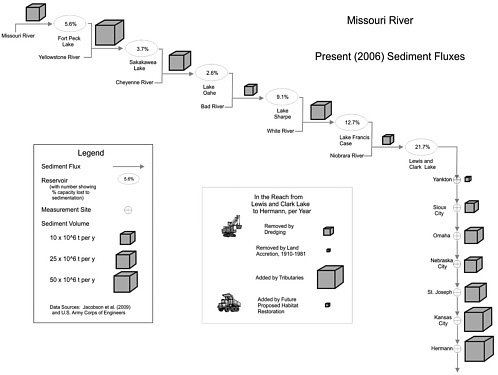
important distinctions regarding differences in sediment sizes. Especially lacking are systematic measurements that distinguish fluxes of coarse bed-material load from finer washload. Detailed understanding of the respective fluxes of coarse sediments and finer sediments is fundamental information for river system managers attempting to create habitat mitigation and restoration projects both on the Missouri River and downstream as far as coastal Louisiana. An explicit and clearly defined sediment budget for the Missouri River would, for example, help inform current debates regarding the significance of sediments deposited from Corps of Engineers habitat creation programs (discussed in further detail in Chapter 4) to the overall nutrient and sediment flux from the Missouri to the Mississippi River.
SUMMARY
Prior to channelization, bank stabilization, and the construction of mainstem dams and reservoirs, the Missouri River transported huge amounts of sediment derived from diverse watersheds throughout its drainage basin. Key source regions of sediment included clay-rich soils developed on the shale beds in the Dakotas, wind-deposited silty loess in northwestern Iowa and eastern Nebraska, the Sand Hills of central Nebraska drained by the Niobrara and Platte rivers, and other sources in the lower Missouri River basin.
This sediment provided the building material for the river’s physical structure of channels, islands, bars, and floodplains. The preregulation Missouri River’s large sediment load and high turbidity were important to the survival and propagation of native plants, fish, and bird species. Sediment delivered to the Mississippi River was significant in building and sustaining coastal wetlands. The preregulation Missouri River carried a natural load of chemicals and nutrients, some of which were dissolved, some of which were attached to sediment. Of special relevance to the context of today’s key Missouri River management decisions is that the river transported a natural level of phosphorus—a nutrient of broad interest today because of its role in hypoxia in the northern Gulf of Mexico. Excess sediment can be a major problem in some instances, such as in clear-water tributaries with low levels of naturally occurring sediment and with species that evolved in less turbid environments.
Question 1 in this report’s statement of task asks, “How and why is sediment a significant variable in the environmental restoration of a river system like the Missouri River?”
-
Most of the historical, preregulation Missouri River was a sediment-rich system. However, not all tributaries of the Missouri River were sediment rich;
-
For many river processes and services, sediment concentrations and transport are as important as the quantity and flow of water. For example, sediment is the basic building material for river landforms that, among other things, support habitats for native riverine flora and fauna;
-
High concentrations of sediment and high turbidity in the preregulation river were important to the evolution and adaptation of native species such as the pallid sturgeon;
-
Sediment delivered from the Missouri River to the Mississippi River was historically significant in sustaining coastal wetlands in the actively accumulating lobes of the Louisiana delta.
The Missouri River system was transformed in fundamental ways during the twentieth century. The BSNP and the Pick-Sloan Plan dams and reservoirs were implemented to gain a greater degree of control over the river’s hydrologic and geomorphic processes. The purposes of these structures included the goals of flood control, hydropower generation, water supply, and commercial navigation, all with far-reaching social and economic benefits. In altering the river’s hydrologic and sedimentary regimes, these projects had major effects on the ecological structure of the river landscape, its vegetation communities, and the habitats for the river system’s native fish and bird species. The dams and reservoirs reduced peak flood discharges, thus reducing the river’s ability to erode and transport sediment downstream. The mainstem dams and reservoirs trapped large amounts of sediments that previously moved through the system and into the Mississippi River and its delta. In addition, vast amounts of sediment that previously moved episodically through the river system have been immobilized behind revetments and river-training structures along the river downstream of Gavins Point Dam.
The reduced volumes of sediment transported by the postregulation Missouri River directly relate to one question in this report’s statement of task. Question 5 in that statement asks, “Are there long-term consequences to the lack of sediment in the system to the human environment, either economically or environmentally?” The answer may be summarized as
-
reduced turbidity;
-
loss of habitat for some native species;
-
bed degradation downstream of dams and extensively along the main channel and the lower reaches of tributaries. This causes problems for infrastructure by undermining levees and bridge foundations and lowering water levels at municipal water intakes; and
-
reduced volumes of sediments transported downstream to the Mississippi River and delivered to the Mississippi River delta region.
The Missouri River basin once was a site of major sediment research. Over time, however, priorities shifted, expertise on Missouri River sediment has dwindled, and there has been a decline in the attention paid to overall data collection, management, analysis, archiving, and access. Historical Missouri River sediment data are extensive, and there are important studies of sediment dynamics being conducted today in the basin, including ongoing collaborative efforts between Corps of Engineers and USGS scientists. In general, however, sediment-related data and studies are diffuse and scattered across the basin in a variety of locations and a variety of formats. A more systematic platform of sediment measurements, data archiving, and systemwide modeling knowledge will be necessary to support efficient decision making for ecosystem management initiatives.
The systems and processes for evaluating, archiving, and retrieving Missouri River sediment are fragmented and not well organized. These gaps are of special concern given plans for future investments in Missouri River ecosystem management and reevaluation of authorized purposes for the Missouri River mainstem dams and the Bank Stabilization and Navigation Project. Effective project implementation, operations, and management requires useable knowledge of sediment dynamics; this includes quantities and fluxes of suspended and coarse bedloads, and changes in sediment storage and resultant changes in channel morphology. More informed future Missouri River resource management decisions would benefit from a comprehensive and accessible Missouri River sediment database and sediment budget.
Corps of Engineers and USGS scientists have been conducting valuable collaborative investigations of Missouri River sedimentary processes that should be used as the foundations for a more detailed and extensive sediment budget. Over time, continued collaboration may lead to a more formal program for data collection and evaluation. The Corps and the USGS should extend their collaborative efforts and develop a detailed Missouri River sediment budget from the headwaters to the river’s mouth, with provisions for continuing revisions and updates as new data become available.


