
5
Implementing a Deep-Time Climate Research Agenda
The present state of scientific knowledge regarding the deep-time record of climate change, summarized in previous chapters, highlights the insights that have been gleaned from studies of past warmings and major climate transitions, including some that are analogues for anticipated future climates. This research status outline provides an indication of the most important enduring issues that will require further research and points to the potential for dramatic scientific discovery in the largely untapped deep-time record. This chapter presents a scientific research agenda designed both to answer the series of major questions posed in Chapter 1 regarding the impact of the projected rise in atmospheric pCO2 and to provide a more refined understanding of the important processes—uniquely present in the deep-time geological record—that will drive the Earth system as it transitions to a warmer world. The chapter also describes the research tools and community effort that will be required to implement this research agenda and provides recommendations for an education and outreach strategy designed to broaden scientific and general community understanding of the contribution that can be derived only from the deep-time record. Finally, the committee stresses the need to bolster existing mechanisms, and design new mechanisms, for bringing together interdisciplinary collaborative scientific teams from diverse fields to focus on the insights that can be gleaned from the deep-time geological record and to ensure the maximum integration and sharing of the diverse databases that will result from this research.
ELEMENTS OF A HIGH-PRIORITY DEEP-TIME CLIMATE RESEARCH AGENDA
The workshop hosted by the committee provided a wealth of information concerning the existing scientific status of deep-time climate research, as well as a very broad range of topics that the community suggested as research foci for an improved understanding of Earth system processes during the transition to a warmer world. The committee assessed these topics and their potential to transform scientific understanding, and identified the following six elements of a deep-time research agenda as having the highest priority to address enduring scientific issues and produce exciting and critically important results over the next decade or longer.
Improved Understanding of Climate Sensitivity and CO2-Climate Coupling
Existing data indicate that climate forcing resulting from increased CO2 will, by the end of this century, rival that experienced during past greenhouse periods prior to the onset of the current glacial state. The paleoclimate record, which captures the climate response to a full range of levels of radiative forcing, can uniquely contribute to a better understanding of how climate feedbacks—both long and short term—and the amplification of climate change have varied with changes in atmospheric CO2 and other greenhouse gases. In the context of the large uncertainty in estimates of climate sensitivity described in Chapters 1 and 2, a high research priority for deep-time paleoclimatology is the determination of equilibrium climate sensitivity on multiple timescales, particularly during periods of greenhouse gas forcing comparable to that anticipated within and beyond this century if emissions are not reduced. Existing records of past warm periods already indicate climate sensitivity well above the estimated short-term range and show that the future temperature increase will most likely be amplified once the longer-term feedbacks that have not operated on human timescales (decades to centuries) during Earth’s current icehouse become relevant under warmer conditions.
Further mining of the deep-time geological archive will require focused efforts to improve the accuracy and precision of existing proxies for past atmospheric pCO2 and surface air and ocean temperatures, and to develop new proxies for other paleo-greenhouse and non-greenhouse gases and aerosols. Data using new and existing proxies could then be synthesized to develop an authoritative global temperature and atmospheric pCO2 history—at various resolutions—for the full span of Earth’s history. Improved constraints on levels of radiative forcing and equilibrium climate sensitivity are needed for past warm periods and major climate transitions. In addition, further study of intervals of possible CO2-climate decoupling
(e.g., mid-Miocene, Late Jurassic, Early Cretaceous) will require careful integration of paleoatmospheric CO2 and paleotemperature time series with improved temporal resolution, precision, and accuracy, as well as data-model comparisons to critically evaluate the veracity of these apparent mismatches. With these improved data, a hierarchy of models can be used to test various forcing mechanisms (e.g., non-CO2 greenhouse gases, solar, aerosols) to determine how well mechanisms other than CO2 can explain anomalously warm and cold periods and to critically evaluate the climate processes and feedbacks that led to particular climate responses characteristic of greenhouse gas-forced climate changes in the past.
Climate Dynamics of Hot Tropics and Warm Poles
Paleoclimate observations provide a conundrum that must be resolved to understand the climate system—the evidence that past temperatures in the tropics and polar regions were periodically much hotter than today. How can the Earth maintain tropical temperatures approaching 40°C, or how can polar temperatures remain above freezing year-round? Yet there is very strong evidence for both conditions during past warm periods. The deep-time paleoclimate evidence suggests that the mechanisms and feedbacks in the modern icehouse climate system that have controlled tropical temperatures and a high pole-to-equator thermal gradient may not apply straightforwardly in warmer worlds. Moreover, the fundamental mismatch between climate model outputs, modern observations, and paleoclimate proxy records discussed in Chapter 2 highlight the degree to which science’s current understanding of how tropical and higher-latitude temperatures respond to increased CO2 forcing remains limited. An improved understanding of these processes, which may drive significant changes in surface temperatures in a future warmer world, is imperative given the potential dire effects of higher temperatures on tropical ecosystems and the domino effect of polar warming on ice sheet stability, the stability of permafrost (which carries a large load of greenhouse gases), and regional climates through atmospheric teleconnections with the tropics and/or polar regions.
Accomplishing this goal requires that the range of deep-time observational data be expanded to include latitudinal transects that span the tropics through mid- to high-latitude regions for targeted intervals of Earth history. Improved constraints on the meridional thermal structure of warm worlds will require increased chronological constraints and more spatially resolved proxy time series than currently exist. New theoretical and modeling approaches are also required to develop a comprehensive understanding of the limits of tropical and polar climate stability, and an understanding of how a weaker thermal gradient is established and main-
tained in warmer climate regimes. Global climate models (GCMs) offer an astounding array of diagnostics for assessing atmospheric dynamics and teleconnections, but these diagnostics need to be employed far more commonly in analyses of paleoclimate simulations, requiring deeper and “real-time” collaborations between the “observationists” and the atmospheric dynamicists. The documented ability to successfully model conditions comparable to those anticipated in the future will provide a test of the efficacy of climate model projections for continued global warming.
Sea Level and Ice Sheet Stability in a Warm World
Large uncertainties in the theoretical understanding of ice sheet dynamics and associated feedbacks currently hamper the ability to predict how the ice sheets currently in the Earth’s polar regions, and sea level, will respond to continued climate forcing. For example, paleoclimate studies of intervals within the current icehouse document variability in ice sheet extent that cannot be reproduced by state-of-the-art coupled climate-ice sheet models. Moreover, studies of past warm periods indicate that equilibrium sea level in response to current warming may be substantially higher than model projections indicate due to the influence of dynamic processes that have not been operative in the recent past. Efforts to address these issues will have to focus on past periods of ice sheet collapse that accompanied transitions from icehouse to greenhouse conditions, to provide context and understanding of the “worst-case” forecasts for the future.
Future studies that probe deeper into Earth history should focus on periods that have the potential to reveal critical threshold levels associated with ice sheet collapse and to elucidate the dynamic processes and feedbacks that have led to deglaciation in the past but are not captured by paleoclimate records of the past few million years. An integral component of such studies should be a focus on improving science’s ability to deconvolve the temperature and seawater signals recorded in biogenic marine proxies, including refinement of existing paleotemperature proxies and the development of new geochemical and biomarker proxies. Modeling the distribution of ice in warm worlds will need to expand beyond the intermediate-complexity models that currently include this component in order to involve the coupling of land ice component models to complex GCMs and include full interaction with the atmospheric hydrological cycle.
Understanding the Hydrology of a Hot World
Studies of past climates and climate models strongly suggest that the greatest impact of continued CO2 forcing will be regional climate
changes, with ensuing modifications to the quantity and quality of water resources—particularly in drought-prone regions—and impacts on ecosystem dynamics (Lunt et al., 2008; Haywood et al., 2009; Shukla et al., 2009). Because of the sensitivity of climate to small changes in high-latitude and tropical temperatures, an improved understanding of the hydrological cycle during periods of increased radiative forcing—comparable to those projected for the future—is imperative. Because of the potential for large feedbacks to the climate system, this in turn requires an improved understanding of the interaction between the global hydrological and carbon cycles over a full spectrum of CO2 levels and climate conditions. The deep-time record uniquely archives the physical and geochemical expressions of the carbon and water cycle dynamics that operated during past warm periods, including the response of low-latitude precipitation to high-latitude unipolar glaciation or ice-free conditions (e.g., Floegel and Wagner, 2006; Poulsen et al., 2007a,b; Ufnar et al., 2008), the stability of continental carbon reservoirs (soils, wetlands, tundra, permafrost) to changing regional climates, and the impacts on—and response of—ecosystems to such changes.
These research objectives require the development of marine-terrestrial transects with spatially resolved proxy records at high temporal resolutions and precisions. In particular, paleoterrestrial reconstructions have long been plagued by sparse and discontinuous outcrop, stratigraphically incomplete successions, and poor chronological constraints. The optimum approach is thus to integrate chronostratigraphically well-constrained marine records with contemporaneous terrestrial records through integration of radiometric, biostratigraphic, and/or magnetostratigraphic data. The implementation of this objective will require transect-focused ocean and continental drilling.
Efforts to improve existing proxies, to develop new proxies, and to develop multiproxy time series in order to provide quantitative estimates of paleoprecipitation, paleoseasonality, paleohumidity, and paleosoil conditions (including paleoproductivity) are a critical component of this research, in particular where the level of precision—and thus the degree of uncertainty in inferred climate parameter estimates—can be significantly reduced. Proxy improvement efforts should include strategies for better constraining the paleogeographic setting of proxy records, including latitude and altitude or bathymetry.
Understanding Tipping Points and Abrupt Transitions to a Warmer World
Studies of past climates and climate models show that Earth’s climate system does not respond linearly to gradual CO2 forcing, but rather
responds by abrupt change as it is driven across climatic thresholds. Modern climate is changing very rapidly, and there is a possibility that Earth will soon pass thresholds that will lead to even more rapid changes in Earth’s environments. It is possible that such thresholds could involve transition into a new climate state that cannot return to pre-CO2 forcing conditions if the prior conditions are reestablished. Thus the proximity of Earth to such a ‘tipping point’ is a critical question. The answer does not reside in the more recent paleoclimate record, but rather is to be found in the dynamics of past transient events where the climate system crossed critical thresholds into climate states more representative of where Earth’s climate may be heading. Because of their proven potential for capturing the dynamics of past abrupt changes, intervals of rapid (millennia or less) climate transitions in the geological record—including past hyperthermals—should be the focus of future fully integrated paleoclimate, paleoecologic, and modeling collaborations. Key insights to be gleaned from such studies include an improved understanding of how various components of the climate system responded to such abrupt transitions, in particular during times when the rates of change were sufficiently large to imperil biotic diversity. There is also a need to understand where to expect thresholds and feedbacks in the climate system—especially in warm worlds and past icehouse-to-greenhouse transitions. Moreover, targeting such intervals for more detailed investigation is a critical requirement for constraining how long any such climate change might persist.
Key requirements for an improved understanding of abrupt climate change are better dynamic models and datasets to resolve the behavior of the environment in transition. On the data side, substantially improved spatial (subkilometers to tens of kilometers over large geographic regions) and temporal (subcentennial scale) resolution of datasets from Earth’s past are required to illustrate the behavior of environmental systems in rapid transition. These include both examples of transition into fundamentally new climate states and examples of transient climate states that ultimately returned to near preperturbation conditions (e.g., the Paleocene-Eocene Thermal Maximum [PETM]). To be most effective, temporal resolution on the level of centuries or less is needed to identify and understand climate and ecosystem changes at rates relevant to human society.
Current predictions of the duration of future greenhouse conditions are based on simplified models of the climate system and carbon cycle, constrained by limited observations of their behavior during analogous times in Earth history. A more convincing answer to the central question of “how long” requires more sophisticated and comprehensive models, and it will be possible to have confidence in the models only if they can be evaluated against observations. Intermediate-complexity models that are capable of running continuous simulations for the 10,000 to 100,000-year
duration of these events are needed, and such models need to treat the ocean and atmosphere as an open system as the basis for spatial and temporal predictions that can be directly compared with observational data of similar temporal resolution. Specifically, it is important that the models calculate variables that are similar to those measured in the field or calculated using proxy methods, so that direct comparisons between paleoecosystem proxies and model results are possible—for example, the inclusion of oxygen and carbon isotopes as tracers in both atmosphere and ocean models or, in the case of models of intermediate complexity, the inclusion of sediment transport modules. The historical record and even the broad expanse of the Pleistocene climate record contain nothing comparable to the anticipated outcomes following the burning of all fossil fuel resources, and thus cannot be considered appropriate analogues from which to refine an understanding of the climate and ecosystem changes that continued warming will cause.
Understanding Ecosystem Thresholds and Resilience in a Warming World
Both ecosystems and human society are highly sensitive to abrupt shifts in climate because such shifts may exceed organism tolerances and consequently have major effects on biotic diversity as well as human investments and societal stability. Modeling future biodiversity losses and biosphere-climate feedbacks, however, is inherently difficult because of nonlinear interactions and the existence of both positive and negative feedbacks that add complexity to the system and increase the uncertainty of the net response to climatic forcing. How rapidly biological and physical systems can adjust to abrupt climate change is a fundamental question accompanying present-day global warming. An important tool to address this question is to describe and understand the outcome of equivalent “natural experiments” in the deep-time geological record, in particular where the magnitude and/or rates of change in the global climate system were sufficiently large to threaten the viability and diversity of species, leading at times to mass extinctions. The paleontological record of the past few million years does not provide such an archive because it does not record catastrophic-scale climate and ecological events.
The deep-time record of past biotic turnovers and mass extinction events associated with warm periods (many associated with massive outgassing of CO2 or methane), transient warmings, and major transitions between climate states offers an undertapped repository from which unique insights can be obtained regarding patterns of ecosystem stress, the potential for ecological collapse, and mechanisms of ecosystem recovery. For example, integrated paleoclimate and paleoecology
studies can uniquely address the fundamental question of how hot the tropics will become, and how much ocean chemistry will be perturbed, under additional CO2 radiative forcing. This is a critical issue because such changes may have dire effects on tropical ecosystems, with the potential for severe declines in diversity over large areas. For example, studies of past greenhouse gas-forced transient warmings provide the only analogue of the future potential for ocean acidification and its effect on calcifying organisms. The penultimate deglaciation of the Late Paleozoic Ice Age is the only archive recording how tropical floral ecosystems might respond to climate change associated with an epic deglaciation. The issue of how Arctic ecosystems will respond if sea ice disappears permanently and/or the Greenland ice sheet retreats significantly can only be addressed through studies of past warm periods, such as the mid to late Cretaceous and the early Cenozoic, when the Arctic was ice-free and supported lush temperate rainforests and associated fauna. As with the other elements of a deep-time research agenda, improved dynamic models, more spatially and temporally resolved paleoclimate and paleontological datasets with high precision and chronological constraint, and data-model comparisons, are all critical components of future research efforts to better understand ecosystem processes and the dynamic interactions with changing climates.
STRATEGIES AND TOOLS TO IMPLEMENT THE RESEARCH AGENDA
The deep-time paleoclimate research agenda described above will require four key infrastructure and analytical elements, each of which is described in greater detail below:
1. Development and evaluation of new mineral and organic proxies and refinement of existing methods through calibration studies in modern systems and laboratories. Such efforts must be coupled with the development of multiproxy paleoclimate time series that are spatially resolved, of high temporal resolution, and of improved precision and accuracy.
2. Substantially increased investment in scientific continental drilling and continued support for scientific ocean drilling. Only recovery of high-quality cores can provide the requisite sample resolution and preservational quality to develop multiproxy archives for key paleoclimate targets across terrestrial-paralic-marine transects and latitudinal or longitudinal transects. The International Continental Drilling Program has a strong record of drilling a range of scientific objectives, including paleoclimate targets, but in contrast to strong support for this program by the European science community and other countries, U.S. support has
been at relatively low levels. Also, although U.S. leadership in scientific ocean drilling has been a major factor in the present understanding of past climates and climate-ocean linkages, recent funding cutbacks have jeopardized the potential for the oceanic component of the deep-time paleoclimate agenda described here to be realized.
3. Development of a new generation of models for paleoclimate studies, capable of focusing on past warm worlds and on extreme and/or abrupt climate events. Such new models will require unprecedented spatial resolution and additional capabilities to permit innovative data-model and model-model intercomparisons that are more consistent with Intergovernmental Program on Climate Change (IPCC) style assessments. This will maximize the potential for paleoclimate modeling studies to inform climate model development in general and for future climate simulations.
4. Substantially increased programmatic and financial support for the cultural and technological infrastructure that is needed for a “sea change” in the deep-time research culture—a shift away from single principal investigator (PI) or small collaborative projects to fully interdisciplinary synergistic research teams. Support for such research efforts will require a serious and committed investment in human and financial resources to establish large-scale, integrative programs for analyzing and archiving stratigraphic, sedimentological, geochemical, and paleontological datasets. A key ingredient will be the formation of deep-time “observatories” to unify researchers of disparate but complementary expertise to target specific processes or intervals of time, dedicated software engineering support and computational resources for model development and deep-time climate simulations, and professional development workshops and summer institutes for student training and early-career scientists.
5. An interdisciplinary collaboration “infrastructure” to foster broad-based collaborations of observation-based scientists and modelers for team-based studies of important paleoclimate time slices, incorporating climate and geochemical models; capabilities for the development, calibration, and testing of highly precise and accurate paleoclimate proxies; and the continued development of digital databases to store proxy data and facilitate multiproxy and record comparisons across all spatial and temporal scales. Making the transition from single researcher or small-group research efforts to a much broader-based interdisciplinary collaboration will be only possible through a modification of scientific research culture and will require substantially increased programmatic and financial support.
Improved Proxies and Multiproxy Records
One of the most important areas of paleoclimatology research is the need for improved constraints on past levels of radiative forcing and better estimates of long-term equilibrium climate sensitivity for previous warm periods and major climate transitions. Estimates of pCO2 (through “paleobarometer” proxies) beyond the ice core records of the past 800,000 years, however, are inherently constrained by sizable uncertainties and the limits of sensitivity of marine or terrestrial proxies and/or of the numerical models of the long-term carbon cycle on which they are based. Furthermore, no proxies exist for greenhouse gases other than CO2, such as methane. Similarly, the precision and accuracy of existing organic and mineral paleotemperature proxies are compromised by their calibrations solely to extant analogues and by incompletely understood biological and environmental controls on stable isotope and trace metal incorporation into mineral proxies and/or their sensitivity to postdepositional alteration. In addition, a broader ensemble of proxies for estimating past terrestrial surface and soil temperatures and seasonality of precipitation is much needed. Therefore, focused efforts to refine and develop proxies for these parameters are a critical element of an enhanced deep-time paleoclimatology initiative.
Improving existing and new proxies will require field and laboratory calibration studies in modern marine and terrestrial systems in order to increase their accuracy and further quantify and constrain uncertainties associated with estimates. Expansion of organic fossil-based CO2 (e.g., plant stomatal indices, alkenones of marine haptophytes) and paleotemperature (biomarker) proxies to extinct taxa that dominate the deep-time record will require laboratory microcosm (growth chambers) studies that can evaluate biotic responses and geochemical feedbacks associated with changing greenhouse gas levels or air-water temperature. For mineral-based paleobarometers and continental paleotemperature proxies, calibration studies are needed in modern soil systems over a spectrum of landscapes and climate regimes in order (1) to better understand the influence of local climate, regional and soil hydrology, and soil productivity on soil CO2 contents, temperature, and moisture—the input parameters for proxy transfer functions and pCO2 calculations, and (2) to assess the sensitivity of proxy pCO2 and temperature estimates to these soil parameters, including their seasonal variability. The Critical Zone Observatories initiative funded by the National Science Foundation (NSF) may offer opportunities to integrate such calibration studies within existing observatories.
Ultimately, comparison studies of plant and mineral proxy estimates that are characterized by differing sensitivities and uncertainties are required to test the accuracy, precision, and sensitivity of each of the proxies. In this broader context, however, several foci require continued
and/or scaled-up research effort. First, studies of the taxonomic effects on mineral and organic biotic proxies are needed, as are collaborations between geochemists and paleobiologists for testing and applying biotic proxies because of the importance of recognizing and evaluating vital effects on proxy values. Second, continued development of biomarker proxies should be a high priority given their high precision and sensitivity and the fact that they appear to be diagenetically robust. Future efforts, however, need to include (1) critical evaluation of the potential to extend various biomarker approaches beyond the temporal range of the taxa for which they were developed (e.g., the alkenone method using marine haptophytes; Freeman and Pagani, 2005); and (2) more rigorous assessment of the sources, distribution, and preservation potential of various biomarkers through the deep-time geological record. Third, further evaluation of the effects of post-depositional alteration on mineral isotopic and geochemical compositions is needed, and this will require the use of emerging submicron imaging and analytical technology (e.g., scanning electron microscopy, nanoscale secondary ion mass spectrometry [Nano-SIMS], laser ablation inductively coupled plasma mass spectrometry coupled to the Australia National University’s sample cell). Fourth, increased efforts for development of emerging paleotemperature proxies that are independent of biological effects and water composition are needed (e.g., Mg isotopes, clumped isotope thermometry). Overall, because of the multidisciplinary nature of calibration and assessment studies and the diversity of natural and man-made laboratories in which they would need to be carried out, these efforts to improve the precision, accuracy, and array of paleoclimate proxies will require broad-based collaboration and long-term monetary and human resource investment.
Ultimately, reconstructions of regional variation in climate parameters and ecosystem changes will require multiproxy, spatially highly resolved, and temporally calibrated datasets that can be compared across marine-paralic-terrestrial and latitudinal-longitudinal gradients as a function of time. Only such databases will notably advance science’s understanding of the marine-terrestrial dynamics of carbon and water cycling in a warmer world and their role in regional hydroclimate and ecosystem variability. Such studies should be undertaken in “real-time” collaboration with deep-time climate modeling efforts using fully integrated terrestrial and marine climate parameters. In turn, collaborative observation-climate model studies are an essential mechanism for refining the interpretive utility of proxies. Continued development of interactive analytical databases that permit the integration of new proxy data about past climate parameters and boundary conditions, within an existing rock-based spatial and temporal framework, is critical to facilitate the integration and comparison of multiple proxy time series along latitudinal-longitudinal
transects or time-specific regional-to-global reconstructions, as well as to provide the best quality and consistent boundary conditions for climate model sensitivity tests and climate simulations.
Deep-Time Drilling Transects
A transect-based deep-time drilling program designed to identify, prioritize, drill, and sample key paleoclimate targets—involving a substantially expanded continental drilling program and additional support for the existing scientific ocean drilling program—constitutes the second component of the recommended deep-time paleoclimate research strategy. Establishment of such a drilling program would fulfill two basic requirements for a successful deep-time paleoclimate initiative. Firstly, such a program would provide a venue for the U.S. scientific community to develop broader synergistic interactions, both national and international, through team-based cross-disciplinary research projects. This model has been particularly successful for scientific ocean drilling in its various iterations—the Deep Sea Drilling Project (DSDP), the Ocean Drilling Program (ODP), and currently the Integrated Ocean Drilling Program (IODP). This would represent a dramatic change in research approach for land-based researchers, as a large component of terrestrial deep-time paleoclimatological studies until now have been single-PI or small-group driven. This proposed deep-time paleoclimate drilling would substantially expand the scope of the existing International Continental Drilling Program and provide a complementary perspective to the oceanic focus of IODP, targeting a much broader and longer swath of Earth history, as well as providing an additional emphasis on the critical—but understudied—paralic zone that holds considerable potential for delineating marine-terrestrial linkages.
Secondly, the proposed deep-time continental drilling program would provide a platform from which to develop multiproxy records with the requisite spatial and temporal resolution and unprecedented continuity and preservation. This program would also offer a chronostratigraphic framework into which outcrop-based data could be integrated, thereby broadening the dimensions of the paleoclimatic record.
Although scientific ocean drilling has provided much of the basis for what is presently known about Neogene climate dynamics and ocean-climate linkages, there is still a pressing need for high-resolution sections that carry clear signals of orbital forcing in older parts of the record, particularly the Paleogene and Cretaceous. Sections representing the greenhouse intervals for climatically sensitive regions are still required, specifically in the Arctic and proximal to Antarctica. Only one core has been taken in deep time in the Arctic, and although recovery was relatively poor it has provided the lone constraint on sea surface temperature for
the basin during the PETM (see Sluijs et al., 2006). Funding support for full IODP operations has recently declined, and many important scientific objectives—including deep-time paleoclimate proposals—have consequently not been able to be undertaken; additional funding sufficient for the type of full operational schedule that applied in the 1990s—when so much of the present knowledge of Neogene climates was obtained from ocean cores—is essential.
Facilities for deep-time continental drilling would ideally consist of two components—a smaller mobile drill for shallow (tens to hundreds of meters) drilling (see Box 5.1) and a dedicated deeper-drilling platform (see Box 5.2). Because of the costliness of deep drilling, it is essential that continental drilling projects broadly integrate scientific expertise and interests and create a research culture analogous to that which has developed for scientific ocean drilling.
The proposed expanded continental and ocean drilling would provide three fundamental elements of the scientific research agenda presented earlier in this chapter:
• Temporal Continuity and Improved Temporal Resolution: The continuity of drill cores—and the proxy time series developed from them—provide superb records, particularly when compared with outcrop-based studies where accessibility has traditionally been limited by erosion and burial, as well as by exposure-related mineralogical and chemical alteration. The continuity and preservational quality of drill cores would maximize the potential for deep-time climate proxy records that are chronostratigraphically resolved at the orbital to seasonal range throughout the geological record.
• Spatial Resolution: Drilling continental successions not only permits sampling where surface outcrops are lacking, but also permits paleoclimate reconstructions at the spatial resolution required by the scientific questions being asked and hypotheses being tested. This would substantially expand the latitudinal and geographic range over which proxy records can be developed and would permit direct comparison of the marine and terrestrial proxy records that record fundamentally different climate responses (e.g., localized orographic effects on continents versus distant and homogenized signals from ocean currents). The lack of such geographically linked proxy time series has perhaps been the most limiting factor in documenting critical intervals that record extreme and/ or abrupt (nonlinear) climate changes. Furthermore, the resulting paleoclimate reconstructions would vastly improve the quality of data-model comparisons and sensitivity analysis of climate models.
• Isochrony of Records: The quality of observation-based paleoclimate reconstructions is ultimately dependent on establishing contem-
BOX 5.1 Orbital Forcing of Tropical Triassic Climate: the Newark Basin Coring Project
From 1990 to 1994, the Newark Basin Coring Project (Figure 5.1) recovered 6.7 km of continuous core of Late Triassic and Early Jurassic lacustrine and fluvial sedimentary deposits and intercalated lava flows from seven sites in the Newark Rift Basin in New Jersey (Kent et al., 1995; Olsen et al., 1996). The sedimentary cycles of climatic origin documented in these cores, when combined with magnetostratigraphic, biostratigraphic, and chemostratigraphic records, now provide a standard reference section for tropical continental climate during the Late Triassic and earliest Jurassic. This reference section has served as the basis for the astronomically tuned Late Triassic-Early Jurassic geomagnetic polarity timescale (Kent et al., 1995; Kent and Olsen, 1999), which in turn has been correlated to the standard marine Tethyan stages and substages (Channell et al., 2003; Muttoni et al., 2003; Ruhl et al., 2010). This unique framework permits the regional and global correlation essential to the understanding of deep-time global climate change and macroevolutionary patterns and the development of models of continental rifting. Notably, coring was the only way to recover a complete section of the basin because of the extremely discontinuous outcrop in the often urbanized and heavily vegetated region.
Key to the success of the project was an offset drilling strategy consisting of a transect of seven 1- to 1.5-km boreholes that took advantage of the tilted strata within the half-graben Newark Basin, with each borehole sampling a different part of the section and with about 25% stratigraphic overlap between stratigraphically adjacent boreholes. This method of producing a composite section significantly reduced costs compared with a single hole and greatly reduced the possibility of encountering faults that would have compromised the continuity of the record. It also avoided penetration into the ~300-m Palisade diabase sill that underlies most of the basin, taking advantage of the fact that the intrusion penetrates different stratigraphic levels in different areas.
The lacustrine portion of the record spans 25 million years and displays a full range of precession-related orbital cycles including ~20, ~100, and 405 thousand year cycles (Olsen and Kent, 1996, 1999) (Figure 5.2). In addition to supplying a metronome for temporal calibration of the geomagnetic polarity timescale derived from the cores, the length of the record allows quantitative calibration of cycles that differ in period from the present due to chaotic diffusion of the gravitational system of the solar system (Olsen and Kent, 1999). Paleomagnetic polarity correlation to other areas with datable ashes strongly corroborates the astrochronology (Furin et al., 2006; Olsen et al., 2010) and is allowing temporal correlations of tectonic and macroevolutionary events, such as the eruption of the CAMP and the end-Triassic extinction at the subprecessional level (Olsen et al., 2002, 2003; Deenen et al., 2010; Whiteside et al., 2010).
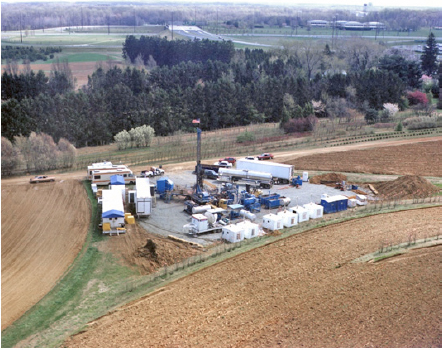
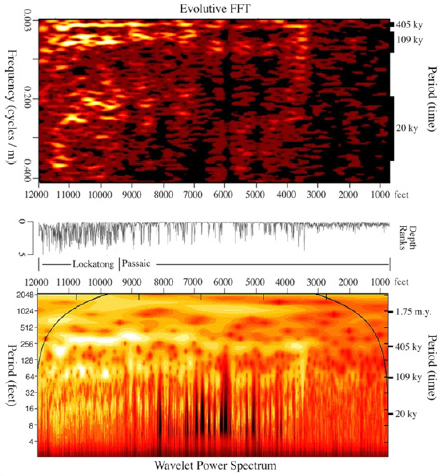
FIGURE 5.2 Color wavelet power spectrums for Neogene and Triassic lacustrine sediments of the Newark Basin showing a full range of precession-related (~20, ~100, 405 kyr) orbital cycles (Olsen and Kent, 1996, 1999). SOURCE: Courtesy of Paul Olsen, Lamont-Doherty Geological Observatory of Columbia University.
BOX 5.2 Paleo-Rainforest Reconstruction Through Continental Drilling
The Denver Basin project (1997-2008) was an endeavor by the Denver Museum of Nature and Science to study the geology and paleontology of Late Cretaceous and Paleogene strata along the eastern flank of the Colorado Front Range. In the early 1990s, construction excavations in Denver and Colorado Springs uncovered diverse fossils that included dinosaurs, mammals, crocodiles, palm forests, and a fully tropical rainforest—apparently, the underpinnings of a major city contained the remains of a Paleogene greenhouse world. Despite the importance of the fossils and their richness, the rarity of natural surface outcrop and the extreme lateral variability of the strata precluded the construction of a useful stratigraphic framework and prevented a complete understanding of the paleoenvironment. To address this problem, the museum proposed to drill and core a 650-m drillhole in the center of the basin and to use magnetostratigraphy, radioisotope dating, palynostratigraphy, and the K-T boundary to construct a geochronological framework for basin interpretation. In 1999, with funding from NSF and the Colorado Water Conservation, the museum drilled the hole over a 7-week period (Figure 5.3), recovering more than 90 percent core from the 660-m well (Raynolds and Johnson, 2002). The cores permitted the precise dating of the fossil tropical rainforest, placing it at 1.4 Ma after the K-T boundary (Johnson and Ellis, 2002). The discovery of additional fossil rainforests revealed a mountain margin belt of high rainfall in which rainforests developed in the warm temperatures of the Paleocene.
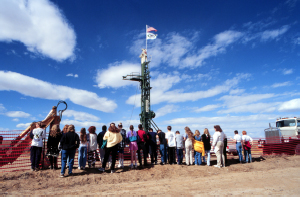
FIGURE 5.3 Drilling rig collecting the 660-m Kiowa core from the Denver Basin project, which enabled the “Castle Rock Rainforest” to be dated at 64 Ma based on recovery of 35 ash layers spanning a 4-million-year section (Raynolds and Johnson, 2002). SOURCE: Courtesy of Kirk Johnson, Denver Museum of Nature & Science.
poraneity in proxy records. Establishing isochrony of climate changes, in particular for past tipping points and abrupt climate change, is a key requirement for analysis of regional climate and ecosystem response to mean climate forcing, including global warming and the delineation of phasing between climate parameters. Additional drilling will greatly expand the potential for radiometric (e.g., EARTHTIME high-resolution istope dilution-thermal ionization mass spectrometry uranium-lead dating) and nonradiometric (e.g., orbital tuning) dating and correlation (e.g., magnetostratigraphy) of deep-time records by maximizing the preservation potential of volcanic ashes (see Box 5.2) and cyclic successions of extended duration that commonly are covered or deeply weathered in outcrop exposures.
To achieve these goals, the following elements will have to be part of the proposed expansion of deep-time continental drilling activities:
• A sustainable program of disciplinary planning workshops that would bring a range of different scientific communities together—including those that might not otherwise be engaged—to develop and plan drilling-based deep-time paleoclimatology projects.
• Creation and support of a database for archiving and sharing of data collected from drill cores and associated outcrop studies.
• Coordination of drilling efforts with existing U.S. and international drilling programs including the U.S. Geological Survey (USGS) and industry partners, with particular focus on predrilling site surveys that are costly but difficult to fund through traditional peer-reviewed proposal solicitations.
Improved Paleoclimate Modules and Models
The community’s confidence in the ability of GCMs to forecast future regional and global climate changes depends in large part on the degree to which these models can simulate climates and feedbacks of deep-time climate systems. Modeling of ancient climates characterized by boundary conditions that may be substantially different from those of the present day (e.g., paleogeography, paleotopography, atmospheric pCO2, solar luminosity parameters), however, presents a substantial challenge to the modeling community. An enhanced effort to model past warm intervals and periods of abrupt climate change across thresholds and possible tipping points is needed to produce models of future climate that can be adjusted to scenarios that include forcings or feedbacks not revealed by nearer-time paleoclimate reconstructions.
High Spatial Resolution
Although existing, more comprehensive Earth system models (ESMs or GCMs) offer many advantages, they are generally less capable at regional to local scales as a result of the coarseness of model resolution and the physical parameterizations, which are designed for larger geographic domains. This limitation is actually magnified for paleoclimate models, where following the lead of modern climate models can be hampered by lack of geographically extensive datasets and/or uncertain boundary conditions. In spite of these limitations, it is critical to run paleoclimate simulations at higher spatial resolutions both to capture high-resolution details required by sparser observational data and to maintain the ability for paleoclimate modeling conclusions to inform and evaluate future climate change simulations. Furthermore, as proxy datasets become increasingly more spatially resolved through additional drilling, an increase in model spatial resolution will be required to capture smaller-scale features. Downscaling techniques using either statistical approaches or nested fine-scale regional models will be required to better compare simulated climate variables to site-specific observational data.
Model Intercomparisons
Assessment of past climate changes also requires the regular comparison of results from a variety of independent climate models, as well as comparisons with proxy data or data-derived interpretations of climate change. The last four IPCC assessment reports have all incorporated multimodel ensemble forecasting techniques—in part, as a means of summarizing the large volume of results, but more importantly because different models, developed independently, do not produce identical results. The Fourth IPCC Assessment Report (IPCC, 2007) included a paleoclimate chapter for the first time, but there was little discussion of multimodel-data intercomparisons. Paleoclimate model intercomparison studies—which so far have been limited to the Last Glacial Maximum and mid-Holocene—do not produce identical results for any given past climate scenario. There is therefore a need for an expanded capability among modeling groups to compare simulations and create ensemble analyses in the same way that future climate change scenarios are examined. Although the first deep-time intercomparison project has recently begun—for the Pliocene—this is a small component of the vast array of possible model-model-data comparisons that are needed to better understand Earth’s long-term climate sensitivity to CO2 and anticipated regional climate changes.
Model-Data Tests
National and international model intercomparisons are particularly important for paleoclimate research because, unlike future climate experiments, there is an ability to evaluate model results using geological data. Deep-time records uniquely offer geological data, characterized by high climate signal-to-noise ratios and a broad spectrum of boundary conditions, to test how the various community models compare in their performance and sensitivities. Model-model-data comparisons, in particular for past warm climates characterized by elevated CO2, provide a means of assessing not only the range of possible climate changes but also the credibility of climate model parameterizations in a way that future climate experiments are incapable of doing.
Recent advances in the capability of models to predict the spatial and temporal distribution of key environmental variables (temperature, precipitation and runoff, marine biological productivity, deep-water oxygen status) and, importantly, their proxies (e.g., water isotopic compositions, carbon isotopic compositions, organic carbon sedimentation rates) provide a more rigorous basis for the evaluation of hypotheses and understanding of drivers of environmental change in the geological past. New tools, however, are required to facilitate model-data comparison:
• Implementation of prognostic modules for proxies (e.g., isotopes) into comprehensive GCMs to facilitate direct comparisons between model and observations.
• Geographic information system (GIS)-based tools to align geological observations (geographically referenced to modern locations) with model simulations conducted with appropriate paleogeographies.
• Synthetic stratigraphic columns from the output of Earth system models run over millennia to millions of years, taking into consideration depositional, diagenetic, and erosional processes and thereby permitting direct comparison to actual stratigraphies. Ideally, these should also account for preservational biases.
• Refined dynamic vegetation models for climate modeling built on more comprehensive compilations of disparate paleobotanical data and improved knowledge of the composition and spatial distribution of vegetation on a global scale, prior to the evolution of angiosperms (Cretaceous) and grasslands (Cenozoic).
• Development of metadata techniques to ensure the utility and access of both model and observational electronically archived data by the larger scientific community involved in deep-time paleoclimatology studies.
Resource Requirements
Additional computational resources, however, will be needed because of the increased complexity, resolution, and length of integration of modeling runs. In addition to increased model spatial resolution, some paleoclimate simulations will have to be run for thousands of years to achieve near steady-state deep-ocean conditions and to assess climate variability at century timescales. This can be most effectively accomplished by the provision of dedicated computational resource for deep-time climate simulations. Such a resource could be created at one or more of the current national supercomputing centers that are already dedicated to the earth sciences (NSF, Department of Energy, National Aeronautics and Space Administration [NASA], or the National Oceanic and Atmospheric Administration [NOAA]), or at some new center. Three specific requirements for such a resource include:
• Dedicated technical support, in particular to incorporate chemical, biogeochemical, and ecological processes. Adaptation of Earth system models to paleoclimate applications has become progressively more challenging and requires sufficient technical support to enable a broader, multidisciplinary group of scientists to access these sophisticated models to address a diverse range of paleoclimate problems. Technical support is also required to reconfigure low-resolution climate models to run more efficiently on massively parallel computer architectures.
• Establishment of paleoclimate modeling archives that are better integrated with paleoclimate data archives, or better populating the growing IPCC-related archives (e.g., the Paleoclimate Modeling Intercomparison Project [PMIP]) with paleoclimate data repositories. This could include establishment of additional PMIP repository sites.
• An increased focus on the development and application of Earth system models of intermediate complexity (EMICs) that involve lower-resolution ocean models and either energy-moisture balance or coarse-resolution atmospheric models. Although the focus of EMIC application has been on the longer-term consequences of fossil fuel burning and the mechanisms of glacial-interglacial climate change (~104-year timescales), they have also been used to successfully simulate much longer events such as the PETM (Panchuk et al., 2008) and the end-Permian extinction (Meyer et al., 2008). Integration of intermediate-complexity models with three-dimensional comprehensive high-resolution Earth system modeling will ease the substantial demand on monetary and computational resources that the more complex three-dimensional models—which are essential for simulating the equilibrium states and short-term (decadal to century) variability in the climate system—currently require. Such an integrated approach will address the existing limitation of run times (less than several thousand
years) that are well below the duration of important climate perturbations in Earth history. To date, the U.S. contribution to the development of EMICs has been through collaboration with European and Canadian colleagues, and continued and expanded international collaboration—perhaps facilitated by the collaboration center proposed below—could yield an EMIC adapted to evaluate the mechanisms of environmental change in deep time (e.g., capable of simulating oceanic biogeochemical cycling under anoxic and euxinic conditions, using relevant paleogeographies). Future model development efforts could target the incorporation of subsystem models, such as EMICs within Earth system models.
Strategies for Fostering Focused Deep-Time Scientific Interaction
While the paleoclimate characteristics of past warm worlds and times of major climate transitions contained in the deep-time geological record constitute a substantially underdeveloped archive offering considerable potential for major scientific discoveries, such discoveries are unlikely to be made through single-PI disciplinary research or small-scale collaborative projects. For the full potential of the deep-time paleoclimate archive to be realized, it is critical to foster broad-based collaborations of observation-based scientists and climate modelers. Making the transition from single researcher or small-group research efforts to the broad-based interdisciplinary collaboration envisioned here will be possible only through a modification of the scientific research culture and will require substantially increased programmatic and financial support. The infrastructure needed to support scientific collaboration, cross-disciplinary syntheses, widespread and open data exchange, and cross-training of scientists and students will include, at a minimum, the following:
• The development of natural observatories—perhaps analogous to the NSF Critical Zone Observatories program—for team-based studies of important paleoclimate time slices or of landscapes that will permit the testing, calibration, and development of highly precise and accurate paleoclimate proxies (e.g., “Deep-Time” Critical Zone Observatory(ies)). Such deep-time observatories would serve to unify researchers of disparate but highly complementary expertise by targeting specific processes or intervals of time (e.g., the DETELON initiative by the paleobiology community). In order to develop the integrated sets of past-Earth boundary conditions critical to the success of GCMs—and currently a major limitation of climate modeling efforts—collaborative, cross-disciplinary teams would have to include software engineers and climate modelers as well as observational-based scientists with varying disciplinary expertise.
• Analytical support for interdisciplinary research through
BOX 5.3 Data Sharing in a Digital Age
The rock record serves as the primary long-term archive for many important physical, chemical, and biological processes, including the tempo and mode of organic evolution, the causes and consequences of global climate change, the rates and styles of crustal deformation and plate tectonics, and the origin and spatial and temporal distribution of mineral and energy resources. Although there exists a formidable body of knowledge on the distribution and character of rocks and the proxy data extracted from them, there is currently no framework for consolidating these data into a larger and interactive context or for analyzing them quantitatively across a range of time and spatial scales. Importantly, no such archive yet exists that can integrate with or accommodate paleoclimate modeling archives—a fundamental necessity for the proposed synergistic and interdisciplinary research approach to deep-time paleoclimatology.
Macrostratigraphy is a novel web-based data-sharing program (Figure 5.4) that uses gap-bound rock packages compiled separately at multiple geographic locations as a framework for integrating diverse geological and paleontological datasets and for analyzing quantitatively disparate data. Currently, this developing macrostratigraphic database consists minimally of the ages, thicknesses, lithologies, and nomenclatural hierarchies of 21,252 rock units from 821 geographic locations in North America, 1,168 rock units from 329 locations in New Zealand, and 7,124 lithologic packages from 132 locations in the deep sea. Macrostrat is fully integrated with the Paleobiology Database, thus serving as the scaffolding upon which to build a large-scale, integrative analytical framework for uniting stratigraphic, sedimentological, geochemical, and paleontological datasets spanning much of geoscience. Macrostrat has been utilized successfully to quantitatively analyze a wide range of geological questions, such as how the relative magnitudes of inorganic and organic carbon burial have fluctuated on a stage-to-stage basis throughout the Phanerozoic. The results of this example reveal the dominant influence of physically forced changes in sedimentation on carbon cycling on relatively short timescales, with implications for the relative cycling rates of terrestrial versus marine systems, for understanding the biological evolution of marine and terrestrial organisms, and for calibrating the link between carbon burial and global climate change. Ultimately, Macrostrat will provide a user-oriented web application that will enable participation of researchers widely throughout the community to facilitate data sharing and integration as well as continued development of new tools.
FIGURE 5.4 Logo for the macrostratigraphy database, Macrostrat. See http://macrostrat.geology.wisc.edu and http://strata.geology.wisc.edu/mibasin. SOURCE: Courtesy of Shanan E. Peters, University of Wisconsin, Madison.
expanded efforts to develop new facilities (e.g., EARTHTIME geochronology laboratories) and enhanced linkages to existing structures (e.g., National Center for Nano-SIMS at the University of Wisconsin). Most importantly, it is critical that such facilities are made available to all interested scientific parties—an effort that will require proactive and strategic planning on the part of the funding agencies involved.
• Increased development efforts for large-scale, integrative analytical models for analyzing and archiving stratigraphic, sedimentological, geochemical, and paleontological datasets (see Box 5.3). Any such effort must incorporate plans to integrate with, or accommodate, paleoclimate model archives that can be fully integrated with geological, proxy, and paleontological data.
• To ensure that the collaborative opportunities offered are available to both researchers and “scientists in training,” and to catalyze the cultural change in established and developing scientists, a structured mechanism for cross-disciplinary training of graduate students and early-career, and established scientists is necessary. Financial resources for professional development workshops and a summer institute(s) (perhaps on a rotating basis) in topics such as a modeling primer, overview and challenges of paleoclimate proxies, chronological techniques—all offered within the context of deep-time paradigms and unresolved problems—should be a high priority. Such institutes could easily be designed to incorporate secondary school teachers, museum specialists, and science journalists (see discussion in “Education and Outreach—Steps Toward a Broader Community Understanding of Climates in Deep Time” below).
• An emphasis on “virtual” collaborations would be cost-effective by removing the need for colocation of researchers, would be more in line with the comfort that younger researchers demonstrate with virtual interactions, and—by encouraging the interaction of widely distributed researchers—would help to emphasize that the issues being addressed are international in scope. Face-to-face meetings involving participants in a particular research endeavor would, of course, still be necessary on occasion, but these could perhaps take the form of annual workshops.
Most importantly, establishment of such a cultural and technological infrastructure will require acceptance and endorsement by both the scientific community and the funding agencies that support deep-time paleoclimatology and paleobiology-paleoecology studies. Without the addition of targeted new resources—in addition to existing programmatic resources—the scientific breakthroughs that can be made by this broad-based research community will be unlikely to come to fruition.
EDUCATION AND OUTREACH— STEPS TOWARD A BROADER COMMUNITY UNDERSTANDING OF CLIMATES IN DEEP TIME
Earth’s deep-time climate history not only provides the context for scientists seeking to understand the Earth system, it also provides compelling opportunities for broad public outreach and education as it addresses details of Earth’s natural long-term climate cycles. To capitalize on this opportunity, scientists and science communicators will have to overcome the challenge that understanding deep-time climate requires some appreciation of the subtleties of both climate science and geological time and an appreciation that Earth’s preindustrial or even prehuman climate sets the baseline from which to evaluate the human contribution to climate change.
The public discussion regarding climate change and global warming is complex and fractious, in part reflecting the lack of adequate scientific literacy among the general public, an active campaign of antiscience disinformation, and insufficient efforts on the part of the scientific community to disseminate complex information in an effective manner. Similar things could be said about the public understanding of geological time, the age of the Earth, radioisotopic dating, and how scientists determine the age of events in Earth history. Despite these challenges, Earth’s history is the source of useful and powerful metaphors and examples that have the potential to help people understand the significance of climate change in their time.
Challenges and Issues
The deep-time climate research community faces a number of challenges in bringing its insights to students, teachers, professors, scientific and media partners, policy makers, and the general public, and the following concepts and approaches are suggested to assist with education and outreach to convey the concepts and recommendations in this report. These are presented for each of the target audiences, with the challenges and issues associated with each audience and suggestions for audience-specific implementation.
Insights gleaned about Earth’s climate system from the experiments of past climate extremes contained in the geological record both complement and expand those derived from climate studies of the more recent past. The study of deep-time paleoclimate integrates a large number of scientific disciplines because of the span of geological time, and as such it is not immediately intuitive to a nonspecialized audience. Although they are central to the practice and understanding of the science of deep-time climate, geological time, paleoclimate proxy analysis, and GCMs—with their attendant disciplinary jargon—have minimal traction with the public. Uncertainties in temporal resolution, patchwork spatial resolution, and
incompletely calibrated climate proxies present challenges for conveying complex messages to the general public with sufficient simplification but without losing accuracy.
Finally, there are the difficulties inherent in any multidisciplinary field—communication between scientists in different fields is imperfect, leading to imperfect interpretations that can be propagated to conversations with policy makers and the public. Successful outreach and education need to be based on better integration of the scientific disciplines involved and improved transfer of data and knowledge between the different groups of scientists. Specifically, the observation and modeling communities need to improve their interdisciplinary communication, as well as broader communications with other scientists, to build a better pan-discipline understanding of what science knows about past climates—only then can these insights be effectively conveyed to broader audiences. Irrespective of these challenges, however, extinct animals and plants, ancient worlds, and natural disasters do resonate with people, and these elements all present good starting points for broader discussions about past climates
Audience-Specific Strategies and Examples
K-12
For elementary and secondary audiences, it is important to be aware of age-specific learning styles and state educational standards. Children are interested in dinosaurs and living animals, and these provide wonderful opportunities to discuss extinction and ecosystems. Extinct animals provide a pathway to discuss extinct landscapes and different biomes, and comparison of modern tropical, temperate, and polar biomes conveys the message that different animals live in places that have different weather.
Concepts of time are often challenging, and geological time is particularly difficult. This is amplified for younger children who are just beginning to understand the concept of time. The EARTHTIME Initiative1 has recently created middle school curricula to address this issue, but the barriers to understanding are significant.
For young students, the excitement of exploring prehistoric worlds is more compelling and less scary than confronting the fear of global climate change. The recent Ice Age movies presented a climate change message in concert with charismatic ice age megafauna, introducing the topic in a fun, rather than threatening, manner. Children’s love of dinosaurs is, in part, facilitated by the fact that they are scary but extinct. Climate change, while more conceptual than dinosaurs, is less threatening when studied
________________________
as history than when presented as a looming threat. As always, creation of tools for teachers that adhere to state standards will result in more usable education assets.
For most states, geosciences are concentrated at the upper middle school level, and there is considerable potential to enhance existing curricula with deep-time climate science. The enhanced communication capabilities of the Joides Resolution drillship2 have presented opportunities for live broadcasts to museums and classrooms. Active scientists should consider presenting simplified versions of their research and findings in classrooms, at teacher professional training sessions, and at national conventions such as the National Science Teachers Association meetings.
For high school audiences, awareness of global warming is high and rapidly increasing. Despite this, most curricula tend to be focused on the core sciences of biology, physics, and chemistry, with little opportunity to integrate the more synthetic earth and atmospheric sciences. Science fairs are arenas in which high school students can reach beyond the finite disciplines of their curricula, and students themselves can experience fieldwork through programs such as the Jason Project,3 which places students in the field with the ability to broadcast back to their classrooms. In addition, a number of NSF-funded projects have generated web-based education tools. One such program that deals specifically with GCMs is the Educational Global Climate Modeling Program,4 a collaboration between Columbia University and NASA’s Goddard Institute for Space Studies, which allows web visitors to download and run simple climate models.
High school teachers can accrue very practical knowledge by participating in special training projects such as the IODP School of Rock Workshops,5 which sends teachers to sea on the Joides Resolution drillship to learn about ocean science and seafloor coring. Museums offer teachers professional development on a variety of topics, such as the Denver Museum of Nature and Science Certification Program in Paleontology.6 Inherent in all of these courses is the premise that high school teachers will be more effective if they have primary field experience.
Colleges and Universities
Colleges and universities provide a host of opportunities for students to understand deep-time climate topics through courses, fieldtrips, internships, visiting lectures and talks, and campus action groups. Earth and
________________________
2 See http://joidesresolution.org/.
3 See http://www.jason.org.
4 See http://edgcm.columbia.edu.
5 See http://www.iodp-usio.org/Education/SOR.html.
6 See http://www.dmns.org.
planetary science departments can expand their ranks of potential majors by offering courses that combine traditional environmental science with paleontological and paleoclimatological content.
• Graduate students can expand their skills and knowledge by participating in interdisciplinary summer schools such as the Urbino Summer School of Paleoclimatology,7 which bring together active scientists and diverse graduate students interested in paleoclimatology and modeling.
• Professional organizations such as the American Association of Petroleum Geologists and IODP support lecture tours by distinguished lecturers, and these can focus on paleoclimate themes.
• University and college faculty can improve their ability to communicate with the media and general public by specific training (e.g., the Aldo Leopold Leadership Program8 at Stanford University).
General Public
The general public is barraged with global warming issues in the form of op-eds, letters to the editor, blogs, popular books, television shows, talk radio commentary, and newspaper and magazine ads from companies promoting green products to oil and gas companies discussing pathways to the future of energy. Despite this media blitz, very few people understand that the Earth’s present climate is anomalously cold relative to the ice-free world of the Cretaceous to Eocene greenhouse. Nor could the typical citizen begin to articulate how tree rings, ice cores, and seafloor drilling relate to climate change. Efforts to explain “how scientists know what they know” are more likely to be received favorably than are proclamations about what will happen in the future.
The topic itself has become so polarized that some hosts consider global warming conversations akin to discussing religion or politics at the dinner table. To counter this, it makes sense to focus on relevant science rather than policy or practice. Efforts that intend to educate rather than advocate are more likely to be heard and understood by a diversity of audiences.
The deep-time observation and modeling communities both need to break into the popular science realm by emphasizing their more compelling and understandable elements. Great opportunities exist for the popularization of ice cap and ocean drilling, both of which occur in dramatic settings that are unfamiliar and interesting to the general public. These activities are great examples of science in action, and they show scientists
________________________
doing interesting activities in the pursuit of knowledge. Pathways to bring these activities to the public eye include television shows and series (e.g., Discovery Channel, National Geographic Channel, The Daily Show, The Colbert Report); enhanced presence on the radio (e.g., a paleoclimate feature on National Public Radio’s (NPR’s) Science Friday, Terry Gross interviews of proxy data analysts and modelers, Talk radio); Web and Web 2.0 tools (e.g., www.Ted.com; www.khanacademy.org/, of www.storystuff.com); Earth system and deep-time blogs using graduate students, scientists, and science writers (e.g., Andrew Revkin’s New York Times Dot Earth blog9); popular books and magazine articles; the development of audience-tested museum exhibits; use of new media (e.g., Podcasts, Twitter, Facebook); and advertisement and amplification of credible climate websites (e.g., NOAA’s climate website10).
Potential Collaborators
Science is now so specialized and complex that most scientists do not venture far from their particular research area. To obtain broader understanding of the potential offered by paleoclimate data and modeling within the larger climate discussion, it is important to create forums where scientists from different disciplines exchange information and perspectives. This is effectively done within disciplines by talks and symposia at national meetings (e.g., those hosted by the American Geophysical Union and the Geological Society of America) and between disciplines at meetings like those hosted by the American Association for the Advancement of Science. Opportunities to engage broader groups exist at venues such as industry conferences (e.g., the American Association of Petroleum Geologists) and environmental conferences (e.g., the Aspen Environment Forum) with the potential to build a broader collective understanding of the nature and reliability of proxy data and modeling.
Policy Makers
Ultimately, policy makers require scientifically credible and actionable data on which to base their policies. Faced with a diversity of opinions, they need credible sources of information. The IPCC made its findings very accessible by creating a simple, but multilingual, website that not only presented the report but also made its images and figures available for download as PowerPoint files. The creation of simple, but clear, collateral resources such as these should be a goal of deep-time research
________________________
9 See http://dotearth.blogs.nytimes.com/.
10 See http://globalchange.gov/; and http://www.realclimate.org.
projects. A good example is the Cenozoic climate curve of Zachos et al. (2001a), showing climate change over the last 70 million years using the proxy of 18O in marine microfossils.
Specific Recommendations
One of the most significant, yet least understood, aspects of the deep-time climate record is the observation that Earth has moved between two major climate states—greenhouse and icehouse. Since the last transition between these two states occurred 34 million years ago at the end of the Eocene epoch, and the last time the Earth saw a transition from icehouse to greenhouse was nearly 300 million years ago, this is clearly a story told only by the deep-time record. This paleoclimate record contains facts that are startling to most people—there have been times when the poles were forested rather than being icebound; there were times when the polar seas were warm; there were times when tropical forests grew at midlatitudes; more of Earth history has been greenhouse than icehouse. Such relatively simple but relevant messages provide a straightforward mechanism for an improved understanding in the broader community of the importance of paleoclimate studies.
This message can be tailored to different audiences. For children, the simple comparison that dinosaurs lived in greenhouse conditions and mammoths lived in ice-house conditions can be an effective way to link a subject in which they are already interested to a phenomenon that should also interest them. With the first-order concept that the Earth’s climate alternates between these two major climate states, it is then possible to find ways to discuss and explain shorter-wavelength variations in climate, such as the orbital parameters that drove the glacial and interglacial shifts of the Pleistocene or the oceanic changes that drive the El Niño cycles. From the perspective of deep time, it is possible to start with the big patterns and work toward the small ones, and this is exactly what does not happen when the story starts from the perspective of daily weather.
The deep-time record also includes examples of extreme climate events and transitions. These examples are very useful as tools to help explain the range of possibilities in the Earth’s climate and to show how certain types of climate events can be abrupt, even when viewed from a human perspective. Examples such as the subdecadal warmings documented in the Greenland ice cores are useful to help people understand that just because something happened a long time ago, does not mean it took a long time to happen. With this realization, the deep-time record becomes a storehouse of useful and relevant examples. Ultimately, the goal of education and outreach from the deep-time perspective should be to help various audiences understand that the Earth has archived its climate
history and that this archive—while not fully understood—is perhaps science’s best tool to understand Earth’s climate future.
Committing to Paleoclimate Education and Outreach
Given the poor state of the public’s understanding of Earth sciences, and climate science in particular, it is time to commit to the ideal that education and outreach (E&O) cannot merely be afterthoughts to scientific research activities. By consigning E&O to a relatively minor role within science institutions and proposals, scientists have inadvertently but effectively cut off the public from understanding scientific research. The result has been that a significant percentage of the U.S. public distrusts or ignores scientific climate change information. Accordingly, rather than promote specific E&O programs, the committee recommends that there be a renewed commitment within every paleoclimate project to the dissemination and communication of results to students, teachers, and the public. The successful E&O activities associated with such programs as ANDRILL, IODP, and the Incorporated Research Institution for Seismology (IRIS) show that with an appropriately funded focal point for scientific interaction—a characteristic of each of these programs—it is possible to effectively convey rather complex scientific issues and scientific accomplishments to a broader audience. This reinforces the call for programmatic and funding support for broad-based interdisciplinary collaborations for deep-time paleoclimate science advanced in this report, because these collaborative focal points could easily include the type of dedicated E&O resources as the successful models noted above. Some existing E&O efforts for deep-time paleoclimatology have been summarized here, but these efforts have to be expanded and more such efforts should be established. In a field that suffers from chronically low resource allocations, education and outreach are suffering far more in the area of paleoclimate than in general climate education. However, students and the public have always had a particular affinity for Earth history and extreme events of the past, and accordingly this is a key area for attracting student and public attention to climate science in general.


