
As part of the preparations for the Seventh Review Conference of the Biological and Toxin Weapons Convention (BWC),1 a group of national and international scientific organizations held a workshop in Beijing, China, in November 2010 to provide independent input from the scientific community about trends in science and technology (S&T) relevant to the convention. The workshop provided an opportunity to discuss the implications of recent developments in S&T in diverse fields such as immunology, neuroscience, synthetic biology, and drug and gene delivery mechanisms that are potentially relevant to new or more deadly biological weapons or bioterrorism, as well as for detection, diagnostics, therapeutics, and vaccines that affect potential prevention and response to biological attacks. The workshop drew on the scientific community’s expertise in identifying the state of research in the life sciences. It did not address the question of policy options to respond to the implications of the identified trends, because the choice of such responses rests with the 164 States Parties to the Convention, who must consider multiple factors beyond the state of the science.
As described below, the workshop is the most recent example of the continuing engagement by national academies, international scientific organizations, and individual scientists and engineers in assessing trends

1 The full name of the agreement is the Convention on the Prohibition of the Development, Production and Stockpiling of Bacteriological (Biological) and Toxin Weapons and on Their Destruction.
in S&T relevant to nonproliferation and disarmament. It also reflects the increasing involvement of the scientific community in addressing the broader implications of continuing advances in the life sciences that, while yielding great benefits for health, the economy, and the environment, are producing knowledge, tools, and techniques with the potential to cause greater physical and psychological damage and loss of life than many natural disasters.2
The workshop was convened under the auspices of IAP—the Global Network of Science Academies, the International Union of Biochemistry and Molecular Biology (IUBMB), the International Union of Microbiological Societies (IUMS), the Chinese Academy of Sciences (CAS), and the National Research Council (NRC) of the U.S. National Academies. The CAS Institute of Biophysics hosted the workshop, and an international steering committee assembled by the NRC organized the workshop in collaboration with the other partners. The steering committee also took responsibility for preparing a final report that would draw on the workshop and other information to reach findings and conclusions about S&T trends and developments and their implications for the BWC (see Box 1.1 for the committee’s statement of task). Brief biographies of the steering group members may be found in Appendix A; information about the convening organizations as well as other important international science bodies may be found in Appendix B. Support for the workshop came from a variety of public and private sources.3
Almost 80 participants from 28 countries and several international organizations took part in the workshop. The participants included practicing scientists from a variety of research institutions as well as technical and policy experts from governments and nongovernmental organizations. The 2.5-day meeting combined plenary sessions featuring talks by researchers about current developments across a range of S&T areas and smaller discussion groups to allow for more in-depth exploration of the implications of these developments for the BWC. Toward the end of the workshop the participants also discussed the impact of improved communication technologies on scientific collaboration and examined options for providing input from the scientific community to the BWC on a more structured and sustained basis. The workshop agenda and a list
2 For further information about this engagement, see the introductory chapters of the reports arising from two earlier international workshops (NRC, 2009a, 2011a). The current benefits and promises of advances in the life sciences are addressed, for example, in A New Biology for the 21st Century (NRC, 2009b) and The Bioeconomy to 2030: Designing a Policy Agenda (OECD, 2009).
3 Support was provided by the Alfred P. Sloan Foundation, IAP, U.S. National Academies, CAS, U.K. Global Partnership Programme, U.S. Defense Threat Reduction Agency, U.S. National Institutes of Health, and U.S. Department of State.
BOX 1.1
Statement of Task
An ad hoc committee with significant international membership will be organized by the NRC to:
• Plan an international workshop to survey key trends in areas of science & technology (S&T) that might be potentially relevant to the development of new or more deadly biological weapons and/or to developments in detection, diagnostics, therapeutics, or vaccines that could affect potential prevention and response to biological attacks. The developments in science discussed at the workshop are likely to be in areas such as immunology, neuroscience, synthetic biology, aerosol and other controlled delivery mechanisms, or others; the specific S&T areas and trends to be discussed during the workshop will be selected by the committee.
• Prepare a report of the workshop that would provide findings, based on the consensus of the committee, about the state of the science in the topics discussed at the workshop. The report will also explore potential implications for the Biological Weapons Convention as an independent input from the scientific community to the treaty’s Seventh Review Conference in 2011. The report would not make recommendations about actions to address any of the potential implications.
• In advance of the final report, a brief, staff-authored summary will be produced as a stand-alone document to provide a factual overview of the technical material presented by the speakers.
of participants may be found in Appendix C. A factual summary of the plenary workshop presentations was published previously (NRC, 2011c) and presented at the meeting of the Preparatory Committee for the Seventh Review Conference in April.4
Given the vast and growing diversity of research in the life sciences and other relevant areas of S&T, the workshop and this report necessarily represents a selection and a snapshot of developments that may be relevant to the future of the BWC. The organizing committee selected the topics and speakers for the workshop by
• Drawing on the committee members’ own expertise;
• Seeking the advice of others in the scientific community; and
• Consulting with experts in government and international organizations with responsibility for the BWC and broader biological and chemical nonproliferation and disarmament.
4 The report is available at http://www.nap.edu/catalog.php?record_id=13113; most of the presentations may be found at http://dels.nas.edu/Past-Events/Trends-Science-Technology-Relevant/DELS-BLS-09-06/4752.
In addition to new and cutting-edge developments, the committee also included updates on a number of the topics addressed in the earlier workshops on S&T relevant to the BWC and the Chemical Weapons Convention (CWC) described below. As noted above, the S&T sessions featured talks on the “state of the science” while the subsequent discussions and breakout sessions were designed to put the developments into context and bring out the implications for the BWC. The report is built on the presentations in Beijing but draws on additional sources.
1.2 THE BIOLOGICAL WEAPONS CONVENTION AND S&T
1.2.1 An Overview of the Biological Weapons Convention
The BWC, which was opened for signature in 1972 and entered into force in 1975, was the first international disarmament agreement to ban an entire class of weapons. It built upon the 1925 Geneva Protocol, which banned the use of chemical and biological weapons.5 Together these agreements embody the international legal norm against the use of disease as a weapon. A short (approximately four-page) document, the BWC’s major articles call upon member states:
• Never under any circumstances to acquire or retain biological weapons (Article I)6
• To destroy or divert to peaceful purposes biological weapons and associated resources prior to joining (Article II)
• Not to transfer, or in any way assist, encourage or induce anyone else to acquire or retain biological weapons (Article III)
• To take any national measures necessary to implement the provisions of the BWC domestically (Article IV)
• To consult bilaterally and multilaterally to solve any problems with the implementation of the BWC (Article V)
• To request the UN Security Council to investigate alleged breaches of the BWC and to comply with its subsequent decisions (Article VI)
5 The Geneva Protocol’s formal title is the Protocol for the Prohibition of the Use in War of Asphyxiating, Poisonous or Other Gases, and of Bacteriological Methods of Warfare. Reservations filed by some States Parties meant that, for them, the Protocol became in effect a no-first-use undertaking.
6 “The Fourth and Sixth Review Conferences reaffirmed that the use by States Parties, in any way and under any circumstances, of microbial or other biological agents or toxins, that is not consistent with prophylactic, protective or other peaceful purposes, is effectively a violation of Article I [VI.I.3, IV.I.3]” (United Nations, 2007:4).
• To assist States which have been exposed to a danger as a result of a violation of the BWC (Article VII)
• To do all of the above in a way that encourages the peaceful uses of biological science and technology (Article X).7 (BWC ISU, 2011)
As of early 2011, 164 nations had become States Parties and an additional 13 countries had signed but not ratified the BWC.8
As with other international agreements related to weapons of mass destruction, conferences are held at regular intervals, in this case every five years, to review the operation of the BWC and to make plans for its future. In addition, for the past decade the BWC has carried out a unique set of activities. After efforts to negotiate a protocol to provide verification of treaty compliance failed in 2001, the States Parties agreed in 2002 to a series of annual meetings before the next full treaty review conference in 2006. Each year’s meeting focused on a different topic and included both a one- or two-week meeting of experts and a one-week meeting of the States Parties. This program of intersessional meetings was continued between 2007 and 2010.9
1.2.2 S&T Reviews and Assessments
Developments in S&T affect the BWC in several important ways. One key issue is the impact of S&T on the treaty’s scope: Could developments yield new or novel biological agents or toxins that are not captured by Article I, which covers “[m]icrobial or other biological agents, or toxins whatever their origin or method of production, of types and in quantities that have no justification for prophylactic, protective or other peaceful purposes”?10 S&T developments can affect the balance between potential offensive and defensive applications of biology for purposes of warfare, and therefore the risks associated with new discoveries. Furthermore, developments can impact all of the major articles of the convention by assisting or complicating the tasks associated with the treaty’s operation, such as the design of national policies and regulatory systems, investigations of alleged use, and the forms and types of international cooperation to promote peaceful applications of biology.
7 The full text of the convention is available at http://www.un.org/disarmament/WMD/Bio/pdf/Text_of_the_Convention.pdf.
8 Another 18 countries have not signed, ratified, or acceded to the treaty.
9 Information about intersessional meeting topics and an extensive collection of materials from the meetings are available at http://www.unog.ch/80256EE600585943/httpPages)/92CFF2CB73D4806DC12572BC00319612?OpenDocument as well as in Millet (2011).
10 The series of understandings reached at various review conferences that the general purpose criterion in Article I does capture all relevant S&T may be found in United Nations (2007).
Article XII of the Convention called for a review conference to assess progress in the treaty’s implementation within five years of its entry into force. The review was to “take into account any new scientific and technological developments relevant to the Convention.” Although the treaty text called for only the initial review, such conferences have been held at regular intervals, with the Sixth Review Conference in 2006 and the Seventh Review Conference to be held in December 2011. Discussions of S&T developments take place primarily as part of the preparations for the review conferences; for example, some States Parties contribute formal background papers related to S&T and the United Nations (UN) secretariat unit assigned to support the treaty may offer other papers and material as well. At the review conference itself, the final documents typically note the papers and the importance of S&T but do not address the question of potential effects of new developments on the treaty’s scope (Article 1).
The range and variety of discussions within the BWC relevant to S&T have grown in recent years. The intersessional meetings are good examples. They have covered topics that touch directly on the interests of the scientific community (e.g., codes of conduct in 2005, education and research oversight in 2008) and topics where advances in S&T are integral to the discussions (e.g., public health and disease surveillance in 2004 and 2009, investigations of alleged use in 2010). Prominent scientists have been invited to address the meetings as guests of the chair, panels have been organized to examine particular S&T topics, either in plenary sessions or as side events, and poster sessions have provided the opportunity to explore topics in greater depth and detail. In addition, an increasing number of countries have included scientific and technical experts from outside government in their delegations. A quick review of the materials from the meetings posted on the BWC’s website underscores the extent of these connections.11 The intersessional meetings have been invaluable in catalyzing discussions within the international scientific community with respect to scientific responsibility—between scientists about their responsibilities under the Convention, between scientists from different countries, and between scientists and their own countries’ policy makers (NRC, 2009a, 2011a).
There is also a sense that the pace and scale of advances in S&T—not only in the life sciences but also in increasingly connected areas of the physical sciences, such as chemistry and engineering—will have a growing impact on the BWC in the future. The reports of the 2006 review conference and the 2008 States Parties meeting, for example, include calls for greater attention by the States Parties to the potential impact of these
11 See http://www.unog.ch/80256EE600585943/(httpPages)/92CFF2CB73D4806DC12572BC00319612?OpenDocument.
developments (BWC, 2006, 2008). In his message to the BWC Meeting of States Parties in December 2010, UN Secretary General Ban Ki-moon emphasized S&T.
Next year, the Seventh Review Conference will consider how to build upon this work [the intersessional process]. Indeed, that meeting offers the best chance in a decade or more to reach significant agreements on the future of the Convention. With the pace of advances in biological science and technology growing ever quicker, there is a pressing need for a structured and regular means of monitoring developments and assessing their implications.
While much is being done to promote assistance and cooperation for the peaceful uses of biological science and technology, more could still be done to improve coordination and communication. I wish you well as you consider various proposals aimed at exploring practical approaches for strengthening the Convention and promoting its full implementation. (Ban, 2010)
1.3 ADVISING ABOUT S&T:
THE GROWING ROLE OF INTERNATIONAL
SCIENTIFIC ORGANIZATIONS
Taking account of the developments in S&T in ways that are useful to the BWC will require an understanding of the details within broad trends, including the forces that drive different aspects at different rates and the inevitable roadblocks that hamper progress. It also requires engaging a range of experts within the scientific community, including academic, industrial, and government experts who can contribute to efforts both to monitor the state of science and technology and to assess the implications of developments for the scope and operations of the BWC.
Over the past decade, a number of national and international scientific organizations have taken an increasing interest in the implications of S&T developments for security. One of their contributions has been a series of workshops designed to provide independent input into the treaty review conferences for the BWC and CWC.
1.3.1 The First IUPAC-OPCW Workshop (2002)
The Organisation for the Prohibition of Chemical Weapons (OPCW) has a formal Scientific Advisory Board (SAB), whose members are appointed by the OPCW Director General based on nominations provided by member states of the Convention. As the First Review Conference for the CWC approached, the SAB and OPCW staff recognized the benefits of engaging the wider chemical sciences community to offer
perspectives on trends in chemical sciences and technology. OPCW approached the International Union for Pure and Applied Chemistry (IUPAC; see Appendix B for further information) to organize a workshop to provide input into the preparations for the review conference. This was the first time an independent scientific organization had been invited to contribute directly to an arms control treaty review conference.
IUPAC had limited experience with arms control and disarmament, but had worked previously with OPCW on CW destruction technologies.12 Because IUPAC did not have the staff to support the workshop, its headquarters was in the United States, and the U.S. National Academy of Sciences (NAS) was the formal U.S. adhering body to IUPAC, the NAS served as the workshop secretariat. Private foundations and the NAS funded the workshop.
The workshop, held in July 2002 in Bergen, Norway, was attended by 79 participants from 34 countries, including several members of the SAB, as well as a number of representatives from National Authorities and other government technical experts.13 The workshop addressed both advances in S&T that could potentially be misused for weapons development and terrorist purposes and advances in areas such as analytical methods that could enhance the implementation of the convention. Later in 2002, a detailed report to OPCW was sent to all States Parties and reprinted, along with papers from the workshop lectures, in the IUPAC journal Pure and Applied Chemistry (IUPAC, 2002).
1.3.2 The IAP-ICSU-Royal Society Workshop (2006)
In anticipation of the Sixth BWC Review Conference, a number of scientific organizations decided to use the model from the IUPAC workshop to undertake an effort to provide independent input. The international
12 See, for example, Pearson and Magee (2002).
13 “To make sure that the CWC is implemented effectively, States Parties are obliged to designate or establish a National Authority. This body escorts OPCW inspections of relevant industrial or military sites; submits initial and annual declarations; assists and protects those States Parties which are threatened by, or have suffered, chemical attack; and fosters the peaceful uses of chemistry. In addition, the National Authority acts as the focal point in the State Party’s interaction with other States Parties and the Technical Secretariat of the OPCW” (OPCW website, http://www.opcw.org/about-opcw/member-states/national-authorities/, accessed February 3, 2011).
partners were the Biosecurity Working Group of IAP14 and the International Council for Science (ICSU), the parent body for IUPAC and the many unions in the life sciences (see Appendix B for further information). The Royal Society served as the workshop’s host and lead organizer, and the NAS took an active part in the workshop planning.
Held at the Royal Society in September 2006, the workshop included 84 people from 23 countries and several international organizations. It provided an opportunity for scientists as well as governmental and nongovernmental technical and policy experts to discuss the potential implications of recent developments in the life sciences. Topics at the meeting included “post-genomic” technologies,15 immunology, drug discovery and delivery, agricultural and environmental biotechnology, diagnosis and surveillance of infectious diseases, and responsible stewardship of scientific research. Among the workshop’s conclusions was the increasing convergence of technological developments relevant to both the BWC and the CWC, complicated by the great difficulty of predicting what technological developments will be and where they will occur. The workshop underscored the need to consider a broader threat spectrum, which requires “thinking beyond bugs” and further blurs the boundaries among areas of emerging technologies. An initial summary of the meeting’s key findings was circulated to all the BWC States Parties (Royal Society, 2006a). A report based on discussions from this workshop was disseminated prior to the Sixth Review Conference and was presented at a lunch seminar during the conference (Royal Society, 2006b).
14 In 2004 IAP had created a Biosecurity Working Group composed of the academies of China, Cuba, the Netherlands (chair until 2009), Nigeria, the United Kingdom, and the United States. (In early 2010 the Polish Academy of Sciences became the chair of the Biosecurity Working Group. Current members of the Working Group also include the academies of Australia, Egypt, and India.) The Working Group has undertaken a number of activities related to security issues in the life sciences, including preparing the 2005 IAP Statement on Biosecurity, which was presented to the 2005 BWC Meeting of Experts and Meeting of States Parties, and organizing two International Forums on Biosecurity, one in 2005 and one in 2008. A more detailed account of the activities of the Working Group may be found in two reports of meetings organized in collaboration with other international scientific organizations (NRC, 2009a, 2011a).
15 Topics included the potential to identify previously uncultured microorganisms using metagenomics approaches; efforts to understand gene regulation, protein synthesis, and biological pathways using transcriptomics, proteomics, bioinfomatics, and systems biology; the potential of synthetic biology to engineer microorganisms with designed properties; and the possibility of employing genetic targeting.
1.3.3 The Second IUPAC-OPCW Workshop (2007)
As the Second CWC Review Conference approached, OPCW again asked IUPAC to organize a workshop on trends in chemical sciences and technologies as an independent contribution. This time the preparations began in late 2006 to ensure that the report would be completed in time to support the preparations for the review conference in 2008, and OPCW provided support for a substantial portion of the workshop costs. The NAS again served as secretariat, which offered an opportunity to continue some of the substantive discussions begun at the IAP-ICSU-Royal Society meeting. The meeting also provided an opportunity to discuss issues and mechanisms for providing scientific advice to international bodies.
The workshop, held in Zagreb, Croatia, in April 2007, in collaboration with the Croatian Academy of Sciences and Arts and under the auspices of the Zagreb city government, was attended by 68 participants from 30 countries, again including members of the SAB, as well as representatives of National Authorities and other government technical experts. Workshop sessions included a wide range of presentations on the context of the CWC; trends in the chemical industry; developments in chemical synthesis, analysis and production technology, including microreactors; and advances in fields such as nanotechnology and decontamination technology. Expert commentary on the presentations helped link the scientific and technical developments to policy issues facing the CWC. The summary report of the meeting was delivered to OPCW in July 2007 and later published in Pure and Applied Chemistry (Balali-Mood et al., 2008).
The 2010 workshop in Beijing follows directly from the experience gained by the international scientific organizations involved in planning these previous workshops on S&T trends. Although IUPAC was not one of the convening organizations, several of the key leaders from the CWC workshops took part in the workshop.
1.4 POTENTIAL POSITIVE AND NEGATIVE
APPLICATIONS OF ADVANCES IN THE LIFE SCIENCES
A starting point for the committee’s report is the longstanding recognition among scientists, policy makers, and civil society that the application of scientific knowledge and skills, which promises enormous benefits, also potentially enables the creation of products that may cause injury or death. This potential extends beyond the security implications addressed in this report to include other effects on human, plant, and animal health, the environment, the economy, and the safety of those conducting scientific and technical work. With regard to security, as depicted in Figure 1.1, there is a hierarchy of increasingly advanced life sciences techniques, beginning with basic laboratory skills and moving toward sophisticated areas of
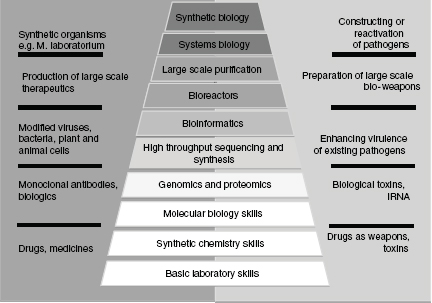
FIGURE 1.1 Dual use in the life sciences.
SOURCE: Flower (2011).
research such as systems and synthetic biology. At each level of increasing sophistication, science could be applied to yield fundamental advances in understanding and create products such as new therapeutics. These advances could also have a “dual use” potential by being directed toward the creation of toxins or pathogens that might serve as bioweapons or of improved ways to deliver them. The pyramid also illustrates the wide range of life sciences research beyond microbiology that is potentially relevant to BWC discussions.
At the pyramid’s base, laboratory and synthetic chemistry skills can be employed to create new medicines and other beneficial drugs. Alternatively, such skills could be directed toward synthesizing chemicals used for weapons. Farther up the pyramid, modern “omics” sciences like genomics and proteomics coupled with molecular biology techniques in areas like recombinant DNA and cell transfection16 can be used to generate beneficial biological products like monoclonal antibodies and therapeutic proteins. Knowledge of these techniques can also be used to
16 Transfection refers to the transfer of genetic material such as DNA into a cell, particularly by nonviral means. When a virus is used to transfer genetic material (for example, for the purpose of viral gene therapy), this process is frequently referred to as transduction.
produce protein toxins derived from pathogens, whose cell-damaging properties can be harnessed to combat cancer (Cimini et al., 2011; Lorberboum-Galski, 2011; Weldon and Pastan, 2011), for example,17 but could also be misapplied as toxin weapons. Advances in the understanding of mechanisms that influence gene expression, such as RNA interference (RNAi), can be employed to silence targeted genes but can potentially be used to manipulate gene expression systems for harm. At the next level of the pyramid, the growth of high throughput sequencing and synthesis and the analysis of the massive amount of data generated by these technologies using bioinformatics tools have formed the basis for more sophisticated biological modification. Life sciences production technologies such as bioreactors also have dual uses—enabling the large-scale production either of therapeutics or of materials for biological weapons in ways that can be hard to detect. Finally, toward the top of the pyramid, rapidly developing fields like systems and synthetic biology integrate knowledge in many of the areas represented on the diagram along with converging areas of chemistry and engineering. Research in these fields holds the promise of greater physiological understanding and, ultimately, the rational design and manipulation of organisms. The current states of development in many of the areas of life sciences and related enabling S&T that form the blocks of the Figure 1.1 pyramid, along with some of their potential implications, are discussed in more detail in the subsequent chapters of the report.
Several additional important points must be kept in mind with regard to Figure 1.1. First, a given scientific technique or field of study is not in itself either beneficial or harmful; rather, scientific knowledge can be applied to more than one purpose. Research that leads to the creation of a modified virus or toxin, or seeks a deeper understanding of its mechanism of action, might have legitimate and beneficial purposes, but might in some cases require additional biosafety and oversight measures.
Over the years, recognition of this potential for benefits and risks has led to the development of a variety of approaches to address the risks while ensuring that scientific and technological progress can continue. The approaches affect:
• whether particular experiments or in some cases particular lines of research are undertaken, e.g., experiments involving aspects of recombinant DNA, stem cells, or gene therapy;
17 A number of experiments with so-called “dual use” potential, that is, to be used for harmful purposes even though the research is intended for beneficial ends, are discussed in NRC (2004) and presented as case studies in online education modules from the Federation of American Scientists (see http://www.fas.org/biosecurity/education/dualuse/index.html).
• how research is carried out, e.g., with regard to biosafety and biosecurity, as well as the treatment of animals and human subjects; and
• what is considered appropriate conduct by the researchers themselves.
Laws, regulations, and guidelines from national, regional, and international sources are all included, as is a significant component of self-governance by the scientific community.18 The approaches evolve over time, for example, in response to factors such as increasing knowledge of relative risks and changing attitudes toward what level of risk is acceptable.
The potential dual use of life sciences knowledge, tools, and techniques reinforces the need for the scientific community to be aware of the norms of responsible and appropriate scientific conduct, as well as international and national legal requirements. Over the past decade, national and international scientific organizations having become increasingly engaged in issues related to the responsibilities of the scientific community to help reduce the risks of misuse of life sciences research (Bowman et al., 2011; IAP, 2005; NRC, 2004, 2006a, 2009a,c, 2011a; OECD, 2004; Royal Society and Wellcome Trust, 2004; WHO, 2005, 2007a). Scientists can also play a useful role in communicating with policy makers and civil society to help them understand the nature, applications, and potential positive and negative implications of developments in their field. Perspectives from the scientific community can contribute to discussions of how to create the best mix of policies and practices to achieve safety and security without unduly hampering global scientific progress for beneficial applications. This is the motivation and foundation for the workshop and the committee’s report.
1.5 ORGANIZATION OF THE REPORT
This report represents the findings and conclusions of the ad hoc international committee organized by the National Research Council of the U.S. NAS under its standard procedures. It draws heavily on the discussions at the Beijing workshop but also on the committee members’ expertise and additional data gathering. Chapters 2–4 discuss three fundamental trends that appear frequently in discussions of how advances in S&T may affect the convention:
• The rapid pace of change in the life sciences and related fields;
• The increasing diffusion of life sciences research capacity and its applications, both internationally and beyond traditional research institutions; and
18 The discussions at the 2008 Meetings of Experts and State Parties highlighted many of the approaches; see BWC (2008) and the materials at http://www.unog.ch/80256EE600585943/(httpPages)/92CFF2CB73D4806DC12572BC00319612?OpenDocument.
• The extent to which additional scientific and technical disciplines beyond biology are increasingly involved in life sciences research.
These themes are discussed in more detail in the following three chapters and illustrated with representative examples. The selection of topics for each chapter is necessarily somewhat arbitrary. Many of the topics could appear in more than one chapter, and cross references are provided where appropriate.
Chapter 5 addresses a number of topics. As an introduction, it provides a discussion of the drivers of S&T development, along with roadblocks to progress, that span the various trends examined in the report and that have important implications for how they will develop in the future. It also reviews some of the ideas about how the BWC might most usefully address continuing S&T developments in the future. The chapter then provides the committee’s overall findings and conclusions about the trends in S&T and their implications. Again reflecting the committee’s charge—and the pattern successfully established in the other trends workshops—the report considers the state of life sciences research but does not make recommendations for national or international policy in response to the identified findings and conclusions.


