
Fundamental Questions of Scientific Discovery
The voyages to Antarctica by Cook, Scott, Amundsen, and others starting in the ate 18th century were fundamentally about discovery. Early explorers wanted o discover whether Terra Australis, predicted as early as the second century, existed. In the late 19th century and early 20th centuries, explorers pressed inward on the Antarctic continent to set foot on the magnetic and geographic South Poles and discover more about the nature of this strange and forbidding place. What was under the ice? How did seals and birds live in such extreme climate and weather? And perhaps most important, was Antarctica a place with a future for humans? The hope for treasure, a major impetus for exploration in the Age of Empire, was dashed early: there was no easy way to explore for, and much less to exploit, mineral and other resources Antarctica might hold.
In the middle of the 20th century, it became clear that the strongest reason to continue to explore Antarctica and the Southern Ocean was the acquisition of scientific knowledge. The trigger was a burst of discovery called the International Geophysical Year (IGY) that ran from July 1957 through December of 1958. The headlines of the IGY may not have been as large as those for the first artificial satellites, Sputnik and Explorer I, launched in October of 1957 and January of 1958, respectively. But Operation Deep Freeze, led by U.S. Navy Admiral George Dufek, effectively reopened Antarctica for scientific exploration just prior to the IGY, creating a U.S. scientific presence that eventually evolved into the U.S. Antarctic Program. The IGY proved that international scientific collaboration was possible, and the full manifestation of that vision was the Antarctic Treaty in 1959. With this treaty Antarctica became a continent free from territorial disputes and reserved for scientific research.
Scientific discoveries have followed ever since. A record of the history of the planet’s atmosphere has been found trapped in tiny air bubbles inside the ice. New life forms in the ocean and on land have been described. New lakes were discovered underneath miles of ice on the Antarctic continent, including Lake Vostok, with as large an area as Lake Ontario. New information about the Antarctic ice sheet and the sea ice surrounding it has been obtained from satellite-based observations. New insights into the nature of the solar system and the universe have been gleaned from looking out into space from Antarctica.
This chapter highlights several areas of science that will be important in discovery-driven scientific research in Antarctica and the Southern Ocean in the next two decades. As in the previous chapter, this is not an exhaustive list, and each area is represented by an overarching question:
• What can records preserved in Antarctica and the Southern Ocean reveal about past and future climates?
• How has life adapted to stress and changes occurring in Antarctica and Southern Ocean environments?
• What can the Antarctic platform reveal about the interactions between the Earth and the space environment?
• How did the universe begin, what is it made of, and what determines its evolution?
3.1 WHAT CAN ANTARCTICA AND THE SOUTHERN OCEAN REVEAL ABOUT PAST CLIMATES?
Global Context
The rocks, sediments, and ice of Antarctica and the Southern Ocean host a trove of information about the past history of Earth. These records have yielded important discoveries about how Earth’s climate has changed in the past. These discoveries have permitted a reconstruction of past climatic conditions and an exploration of their stability and variation across a wide range of temporal and spatial scales. If people are to understand present climate and predict future climate change, then they need to understand how and why climate varied in the past.
These records come from drilling into the rocks, sediments, and ice, as well as from examining the geological features, in Antarctica and the surrounding Southern Ocean. These records reach back to differing points in Earth’s history and contain varying types of information. The fossil records in rocks and sediments show the geographic and historical extent of various organisms. Physical and chemical analyses of sediments, rocks, and organisms retrieved from ocean drilling cores provide additional important records of past climate conditions including ocean temperatures, salinity, circulation, and biological productivity. These cores have been drilled beneath the West and East Antarctic ice sheets, beneath floating ice shelves, and across the continental shelf beneath the Southern Ocean. Ocean sediments are an excellent source of high-resolution, long-duration, spatially distributed paleoclimate information (IODP, 2011).
Many of the most important records of Earth’s past climate come from ice cores. Studying the composition of the ice and the impurities and gases locked up in the large ice sheets of Antarctica (as well as Greenland) has yielded numerous discoveries about Earth’s past climate. Over time, each year’s snowfall gets buried and compressed, turning into ice at depth. This ice provides a unique high-temporal-resolution archive of past climate conditions locally, as well as regionally and globally. Chemical and physical measurements are made on samples from the ice cores extracted from the ice sheets, as well as from the gas trapped in tiny bubbles within and between the ice crystals (see Figures 3.1 and 3.2). Typical measurements include past concentrations
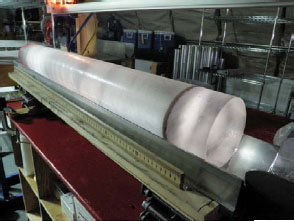
FIGURE 3.1 A 1-m-long section of ice core from the West Antarctic Ice Sheet Divide Ice Core; section contains a dark ash layer.
SOURCE: Photo by Heidi Roop.
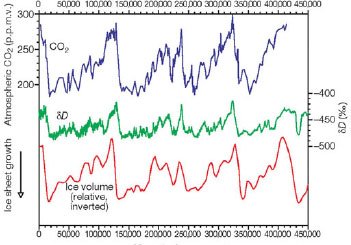
FIGURE 3.2 The history of atmospheric CO2 back to 420 kyr ago as recorded by the gas content in the Vostok ice core from Antarctica. The ratio of deuterium to hydrogen in ice (expressed as the term D) provides a record of air temperature over Antarctica.
SOURCE: Sigman and Boyle, 2000. Reprinted by permission from Macmillan Publishers Ltd.
of greenhouse gases (such as carbon dioxide [CO2] and methane [CH4]), past temperatures (reconstructed from variations in the isotopic composition of water molecules and from englacial temperatures measured in boreholes), and dustiness.
Studying terrestrial glacial geologic features that define glacier boundaries has led to discoveries of the extent of past ice sheets, including limits on ice thickness and the location of the ice sheet margins. These geologic features include trimlines (sharp boundaries on the side of a valley or mountain formed at the upper limit of glacier thickness) and moraines (accumulations of soil and rock formed by glaciers). This research is aided by surface exposure age dating of boulders and exposed rock outcrops. Other terrestrial features such as channels and outwash deposits found in the Dry Valleys provide paleohydrology information. Marine glacial geologic features such as scour and drag marks across the continental shelf indicate the presence of grounded glacial ice and also provide a history of retreat during deglaciation. This information is critical for reconstructing past ice extent and volumes.
What Is Currently Known About Earth’s Past Climate?
The longest ice-core record back in time thus far was collected from Dome C in East Antarctica, where a ~3-km ice core was used to reconstruct the paleoclimate for the past 800,000 years. Through this and other long East Antarctic records, scientists have discovered synchronous changes between the Northern and Southern hemispheres over glacial-interglacial cycles and have developed theories on how the climate responds to changes in Earth’s orbit, as well as the role of greenhouse gases in driving these changes. Deep ice cores (~1-3 km) collected from West Antarctica, where accumulation rates are considerably higher than in East Antarctica, are also important. These cores provide high-temporal-resolution records (albeit of shorter duration) from a region strongly connected to the tropical Pacific, where ocean-atmosphere dynamic processes such as the Southern Oscillation Index/El Niño cycles dominate. Shallow ice cores, collected along internationally supported traverse routes (such as the International Trans-Antarctic Scientific Expedition) provide century- to millenial-length records at much higher spatial scale and thus provide some of the best insight into the physical mechanisms responsible for past climate variation. Overall, these ice-core records are critically important to understanding the past history of the climate all over the globe.
Spatially, reconstructions of past temperatures primarily reflect past local surface conditions, but records of well-mixed gases extracted from tiny bubbles within the ice provide researchers with one of very few measures of past global atmospheric
composition. Given the spatially variable nature of Earth’s climate and this mixture of local and global influences on historical records, it is becoming increasingly clear that a single ice core is insufficient to answer outstanding global climate questions. Shallow ice-coring projects have allowed for a much more spatially representative view of natural climate variability during the recent past, as well as reducing the noise inherent in any single record. These records are critical to understanding atmosphere-ocean-ice interaction and predicting future climate. Additionally, multiple boreholes surrounding any new deep ice cores provide greater spatial context, without the need for retrieving multiple deep ice cores at any one location.
Overall, arrays of ice, rock, and sediment cores are needed to reduce the noise inherent in any single core’s record and to investigate the spatial nature of past climate variability. Ocean sediment cores in the Southern Ocean have been few in number, such that there is still much to be discovered from further ocean drilling near Antarctica.
Questions for the Future
Significant paleoclimate questions remain to be answered, and many of these questions concerning past climate conditions also have important bearing on understanding and predicting future change. The questions include the following:
1. How warm was Antarctica in the past, and what was the role of greenhouse gases in initiating and/or amplifying this warming? Are such conditions expected to recur in the future?
2. What caused East and later West Antarctica to glaciate? Is there evidence for their (potentially rapid) collapse in the past, and under what climate conditions did it occur? How stable are the Antarctic ice sheets, particularly the marine-based portions of the East and West Antarctic ice sheets? Past sea level reconstructions from corals and paleoshorelines suggest that extremely rapid rises and falls of sea level have occurred over very short periods of time, indicating dynamic ice changes.
3. How quickly has Antarctic ice melted in the past? Does this provide any insight into how quickly Antarctica will respond to present and future climate perturbations? Growing scientific evidence points toward a much higher sea level during the previous interglacial period (the Eemian) with recent estimates in the range of 5-6 m above the present sea level. However, the source of this water is unknown. Since 5-6 m is more than the entire amount of ice presently stored in Greenland and in mountain glaciers around the world, this large a quantity suggests a significant component had to have come from melting
somewhere in Antarctica. Sea level was even higher prior to 2.6 million years ago, during the Pliocene, implying an even smaller Antarctic ice sheet at that time. What climate conditions caused the ice sheet to be smaller? Will similar conditions be approached in the future, and should major Antarctic melting be expected in the future? And if so, when?
4. About 800,000 years ago, the mode of climate variations changed from a regularly cycling climate (a glacial and interglacial climate every 40,000 years) to a climate in which larger ice sheets grew and then quite rapidly collapsed over intervals of about 100,000 years. From analysis of Antarctic ice cores, atmospheric CO2 levels are known to closely track the global temperature and ice volume during the past 800,000 years; but why did glaciation vary with a different period earlier? And did atmospheric CO2 levels follow suit? To answer these questions, longer records of atmospheric CO2 are required. This information may be obtainable from older Antarctic ice, if it can be found and measured. Estimates of the oldest ice in Antarctica range from ~100,000 years in much of West Antarctica, to ~1.5 million years deep in the East Antarctic interior, to possibly older ice buried in isolated locations in the Antarctic Dry Valleys and elsewhere.
Required Tools and Actions
Answering these basic questions (and others yet to be posed) will require an ambitious program of ice-sheet and sediment drilling, as well as near-continent sediment sampling by scientists over the next 20 years. For ocean sediments, expanding paleoclimate knowledge will require both shallow and deep coring. For ice cores, a combination of deeper ice cores, multiple arrays of shallow cores, and borehole geophysical logging will be required. This will require a substantial scientific and technical effort supported by complex logistical efforts, including the design and construction of new equipment for both drilling and boring into ice. The isolated position and harsh climate of Antarctica provide compelling reasons for trying to make the novel drill designs lighter, faster, more efficient, and more robust than systems used in the past. Not surprisingly, many other countries are also investing significant time and resources into ice coring with similar goals and constraints. The United States would benefit by evaluating other models of supporting ice-coring activities, as well as supporting more international collaboration in the design and implementation of this new technology moving forward. Site selection for deep ice coring could be improved by first drilling an access borehole in a reconnaissance mode to test expected age-depth profiles and determine whether the base of the ice is wet or frozen. Multiple coring and borehole projects supported simultaneously have the opportunity to make more substantial
scientific progress over the next two decades than the current field research model of supporting a single deep drilling site once every 10-15 years. Gathering more paleoclimate information from ice and sediment cores is crucial for understanding Earth’s past climatic shifts, which is one of the best ways to understand how future shifts could occur.
3.2 HOW HAS LIFE ADAPTED TO ANTARCTICA AND THE SOUTHERN OCEAN ENVIRONMENTS?
Global Context
The Antarctic Ocean and continent pose extreme challenges for organisms to survive there, from bacteria and fungi to plants and vertebrates. In mammals and birds, low air temperatures and high wind speeds make maintaining body temperature challenging. Low seawater temperatures and prey availability at great depths require mammalian and avian species to develop the ability to dive deeply and simultaneously tolerate long-breath-hold dives without getting the bends. Only a small number of mammalian and bird species have been able to adapt and prosper in this harsh environment. The evolutionary adaptations of body shape, composition, cardiovascular adaptations, and metabolism of these vertebrate species have been vital for their survival and are just beginning to be understood. They also hold the keys to the genetic basis for successful biochemical and physiological strategies that allow them to tolerate hypoxia (low oxygen levels), survive hypothermia (low body temperature), and avoid a host of other important pathological problems that plague humans—such as premature and blue babies who are hypoxic, adults with heart attacks and strokes, or drowning victims. How life tolerates these extremes in Antarctica can have important implications for human well-being including treating and preventing human diseases, engineering frost-resistant plants (e.g., making agricultural commodities thermostable and cold tolerant), and developing thermostable products (everything from ice cream to vaccines and organ transplants). See Box 3.1.
In addition to learning about birds and mammals to gain understanding of humans, knowledge of the lifestyles of some seals and penguins that travel long distances and dive to great depths can be used to gather data on ocean variables. For example, Southern Elephant seals, when instrumented with miniaturized sensors, can obtain environmental data at places and depths (>900 m) where ships or submarines have difficulty traveling (see Appendix C). Adélie penguins make daily foraging trips into submarine canyons that are climate-sensitive hotspots of biological activity. By taking advantage of these marine mammals and birds, measurements of salinity, tempera-
BOX 3.1 FISH ANTIFREEZE AND ICE CREAM
An example of adaptation to extreme environments is the Antarctic ice fish, Macropteris maculates, that uses an antifreeze protein in its blood to live in freezing waters. The presence of the protein influences nearby water molecules and prevents potentially harmful ice crystals from growing. By lowering the freezing point of the body fluids and tissues of the fish, the protein enables the fish to survive despite temperatures that would otherwise freeze the blood. Some manufacturers have taken advantage of this unique property and synthesized the protein for use in low-fat ice cream production. The protein is used to enhance the taste and texture of the ice cream while minimizing the fat content. It helps to maintain the structure of the ice cream and inhibits partial thawing by preventing ice crystallization. This process has led to the improvement of taste-test ratings as well as a dramatic increase in sales of light ice cream.
ture, and other variables of oceanographic interest can be recorded and transmitted to polar orbiting satellites when the seal or penguin surfaces. Data from these animals are especially important because they frequent the areas of greatest food productivity. The Antarctic research fleet is inadequate to access regions deep in the winter sea ice and investigate one of Earth’s largest and least-studied ecosystems. These are examples of the potential knowledge to be gained from the many organisms living in this extreme environment.
On the Antarctic continent, there are the many reminders that Antarctica is a polar desert, including the freeze-dried, mummified remains of seals in the Dry Valleys that have been preserved for decades. The fast rates of sublimation, low relative humidity, and high winds make Antarctica the driest desert on earth. Similar to any desert, organisms in Antarctica use many types of survival strategies to conserve water and metabolic activity. A few plant species and a variety of organisms (bryophytes, algae, lichens, microarthropods, nematodes, rotifers, tardigrades, fungi, protozoa, and particularly bacteria and Archaea) experience cold temperatures, long periods of darkness, and additional environmental stresses (climate change, habitat change, etc.) in addition to desiccation. How do they survive in this harsh environment and how will they adapt to new stresses? Analyzing the structural, physiological, biochemical, and genetic aspects of multiple stress tolerance provides a basis for comparative studies and a means to examine the complexity and evolution of ecological communities.
What Is Known About How Living Things Adapt to Life in Antarctica and the Southern Ocean?
Beyond the fundamental biology, physiology, genomics, and evolution of a few remarkable individual organisms, scientists remain surprisingly ignorant about community composition, population interactions, trophic exchanges, and functioning of the many organisms inhabiting sea ice, glaciers, and inland terrestrial and aquatic ecosystems. Antarctica, with relatively simplified species assemblages and ecosystems near the physiological tolerance limits for life, provides an unparalleled opportunity to probe the laws of community assembly, species interactions, and ecosystem responses to climate variability. Exploring the diverse array of ecosystems, ranging from the ultraoligotrophic (extremely deficient in nutrients) subglacial lakes and dry nunatak soils near the Beardmore Glacier to the luxuriant phytoplankton blooms at the sea-ice margins, provides the opportunity for a new understanding of ecosystem ecology and biogeochemistry. For example, bacteria that are actively metabolizing were detected under an inland Antarctic glacier in a permanently cold, dark, oxygen-starved, and sulfate-rich ancient marine brine. These bacteria convert iron compounds, thereby creating energy and food (Mikucki et al., 2009).
Microbes exist in a wide range of environments in both the soil and the water. A systems biology approach, involving the study of systems of biological components such as nucleic acids, proteins, cells, organisms, or entire species, will promote a fully integrated understanding of polar organisms. A systems biology approach is warranted because the behavior of dynamic and complex living systems may be hard to predict from the properties of individual parts. Combining the results of metagenomics, metatranscriptomics, metaproteomics, and metabolomic studies in mathematical and computational models will allow scientists to describe and predict dynamic behavior in polar microbial communities, leading to a fully integrated understanding of polar microbial biology.
What Can Antarctica Reveal About Life in Other Environments on Earth and Beyond?
Not only can the survival mechanisms of life in Antarctica teach us about the world and provide insights for improving the human condition, but also studies of Antarctic life can provide a window from which to search for life elsewhere in the universe, especially the solar system. The McMurdo Dry Valleys have long been considered the best terrestrial analogue for Mars (Doran et al., 2010). The recent Decadal Survey for Planetary Science (National Research Council, 2011f) notes that the Dry Valleys “have many features that make them plausible analogs of a younger, warmer, wetter Mars”
and calls for continued support for such research by the Office of Polar Programs. Continued research in Antarctica will provide important information that could help in the selection of a sampling site on Mars, as well as insight with respect to analysis of Mars samples to identify signatures of life.
Similarly, the discovery that many of the moons of the outer planets have oceans under a shell of ice has raised the possibility that life may exist in those oceans (National Research Council, 2011f). An example is Europa, one of the moons of Jupiter. The National Aeronautics and Space Administration (NASA) and the European Space Agency (ESA) are planning a joint mission, the Europa Jupiter System Mission, with a tentative launch date of 2025 to explore the system. Saturn’s moon Enceladus has sufficient internal heat to drive geysers that have been observed by Cassini (Porco et al., 2006), and the recently released Planetary Science Decadal Survey (National Research Council, 2011f) listed an Enceladus Orbiter as a high-priority mission. Although there is no current plan to land on Europa and sample the subsurface ocean directly, a future mission to do so has been discussed by the scientific community and popular press. Subglacial Antarctic lakes (National Research Council, 2007a), including the 14-million-year-old liquid Lake Vostok that lies beneath about 12,300 ft of ice and may soon be accessible to scientists, represent important analogs and testbeds for a future Europa mission. More to the point, however, sampling subglacial lakes will provide access to early life forms frozen in time. For research and discovery, these remote and unique ecosystems are free from human contact and provide a testbed for determining feasibility, strategy, and instrumentation not only for the Mars mission, but also for knowledge of the life history of planet Earth.
Questions for the Future
Recent advances in nucleic acid sequencing technologies have enabled researchers to embark on the systematic prospecting of genomes for features that helped shape evolutionary divergence and that will advance biomedical and biological science. Taking advantage of these new technologies for Antarctic exploration and for advancing knowledge of the past and future world was detailed in a series of recommendations in the report Frontiers in Polar Biology in the Genomic Era (National Research Council, 2003). The opportunity to discover new knowledge of the biology and ecology of Antarctica at the genomic level over the next two decades is immense. Since the initial sequencing of the human genome a decade ago, the speed of advance in DNA sequencing has increased dramatically, resulting in significant decreases in cost. These advances could eventually permit genomic analysis of all life forms living in Antarctica, especially the microbes. DNA sequencing will provide a foundation from which to
launch studies of proteins and metabolic systems and determine if life in Antarctica requires shared common survival strategies. Is there a unique coding of the genomes of Antarctic-adapted life forms?
In one example, the genome of the Weddell seal, a deep-diving Antarctic seal, is now being sequenced. Information on adaptation strategies can also have implications for humans. For example, how does the Weddell seal genetically code for its enormous blubber layer, to provide insulation from the Antarctic cold? Will this provide clues to the basis of human obesity? How does it stop the production of facial sinuses (the Weddell seal has no sinuses, thereby allowing tolerance to great seawater pressures)? How does the Weddell genetic code allow it to tolerate the prolonged periods of ischemia (restriction of blood flow) and hypoxia in its prolonged dives?
Proteomics, the large-scale study of the structure and function of proteins, will provide vital information about how bacteria, protists, animals (vertebrates and invertebrates), and plants adapt to and function in the extreme climates of Antarctica. Proteomic studies involve mRNA transcript analyses, protein turnover measurements, protein structure determinations, and posttranslational modification catalogs. Understanding how organisms have adapted to the extreme conditions of Antarctica requires defining the structures of their proteins and identifying metabolic specificities. This will require next-generation infrastructure for sequencing, computational analyses, and bioinformatics to decipher similarities and differences in Antarctic species occupying extreme habitats. These investigations will be central to understanding the physiology of metabolic pathways of cells under extreme environmental conditions of Antarctica.
Genomic, proteomic, and metabolomic studies allow scientists to address how changes in temperature and seawater chemistry, associated with rising atmospheric CO2, affect a host of biological processes in individual organisms and communities of protozoans and metazoans. The results of these studies may assist in predicting the effects of rising CO2 levels and temperatures on polar biology and the capacity of polar ecosystems to adapt to future environmental conditions that are driven by climate change (Hofmann and Todgham, 2010). Several mechanisms have been identified in humans that prompt genomic instability, thereby allowing the occurrence of more frequent mutations and genomic plasticity. These mechanisms include the presence of trinucleotide repeats and transposons. Relatively recent data suggest that similar mechanisms are also present in polar organisms. For example, both repetitive elements (NOTO-1) (Parker and Detrich, 1998) and transposon-like elements (LINEs) (Kazazian and Goodier, 2002) were discovered in Antarctic notothenoid fish. Also microbial populations, characterized by large population sizes and short generation times, may respond to CO2 enrichment through genetic change. Whether Arctic- or
Antarctic-adapted organisms have enough genomic plasticity to adapt to future conditions remains to be determined. It is anticipated that the continued effort to apply genome sciences in polar biology will expand knowledge of the genomic plasticity of both Arctic and Antarctic organisms.
Required Tools and Actions
To advance understanding of the fundamental biology of organisms from bacteria to mammals, and how they function in the Antarctic ecosystem, new tools and infrastructure for exploration and discovery will be essential to identify the diversity of life and its functioning in the extreme environment of Antarctic glaciers and oceans. Examples include the following:
• Ice coring and ultraclean sampling technologies for subglacial lakes and other under-ice environments;
• Sensor networks for environmental monitoring and recording animal behavior and migration;
• Remote sensing to monitor vegetation and land expansion;
• Genome surveys and sequencing technology—A Census of Antarctic Life that builds on the Census of Antarctic Marine Life to include life in sea ice, glaciers, permafrost, terrestrial, and aquatic ecosystems; an initial focus on metagenomics would be most fruitful;
• Extensive upgrades of lab facilities to accommodate the newest technologies and advanced analytical facilities for genomics, metagenomics, proteomics, and metabolomics; the volume of sample processing and analysis will demand on-site analyses; on-site analysis becomes necessary to avoid the dissipation of metabolic function or other problems that can occur if samples are frozen and then analyzed weeks after collection;
• Increased communications capability—larger bandwidths for data transfer from sensor networks in real time (for example, for sensors placed temporarily on Antarctic vertebrates transmitting to polar orbiting satellites, and for environmental data and genetic information from instruments in the field);
• Infrastructure to conduct manipulative experiments in the field (see Box 3.2).
The genomic era has only just begun for Antarctic biology. The advent of new tools for exploration into Antarctic ecosystems is both exciting and challenging. Over the next 20 years, many species in Antarctica will have their DNA decoded, which will allow comparison of temperate species with Antarctic species. The genetic information for Antarctic species adaptations can then be analyzed for physiological adaptations to
BOX 3.2 CONTROLLED ECOSYSTEM EXPERIMENTS
A hallmark of modern ecology has been manipulative experiments conducted at the ecosystem scale to identify, in a controlled experimental way, the principal factors causing ecosystem change and to determine impacts of climate and biodiversity change on ecosystem performance and ecosystem services. Famous examples include soil warming experiments at the Harvard and Duke Experimental Forests, biodiversity manipulations in several other research reserves, and iron enrichments at various ocean sites (Melillo et al., 2002; Peterjohn et al., 1993). Because of severe logistic obstacles and prohibitions imposed by the Antarctic Treaty, such approaches at this scale have seldom been performed in Antarctica. In order to gain mechanistic understanding of how global changes will affect Antarctic ecosystems, infrastructure is needed to carry out hypothesis-driven experiments at the scale of a landscape or ecosystem in strategically selected locations such as the Dry Valleys or penguin rookeries. Scientific rationales and potential impacts will have to be carefully described to gain permission under treaty provisions for such large-scale studies. Antarctic Specially Managed Areas such as those near Palmer Station are ideal for such frontier scientific research.
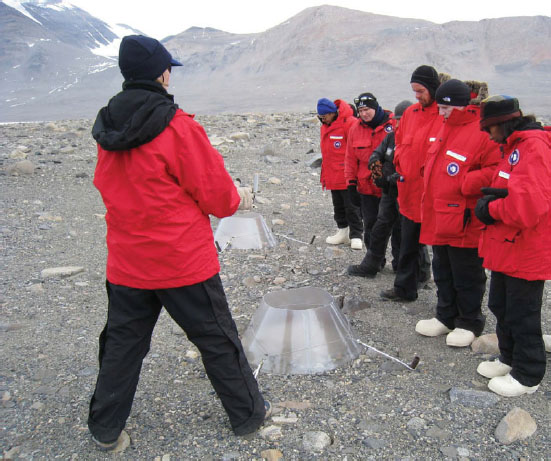
Diana Wall discusses research in the Dry Valleys.
SOURCE: C. Elfring.
hypoxia, hypothermia, and tolerance of the physical effects of deep diving. It will be useful to learn if humans have evolved similar genetic strategies.
Survival strategies that have evolved in Antarctic life forms provide information useful for understanding species diversity and functioning in other ecosystems (deserts, freshwater, oceans, and cold climates), dispersal and distribution of microorganisms when soils erode and ocean circulation changes, and new mechanisms for preservation of perishable food, human organs and tissues for transplantation, and other cryogenic applications. Molecular aspects of desiccation and freezing tolerance have just begun to unfold, and very little genomic data are available on extremophiles. Third-generation sequencing technologies will quickly fulfill the potential to detect in situ changes in the genetic response (functional genes and gene product expression) of biota (short and long term, and across multiple spatial scales) in Antarctica. Over the next 20 years, metagenomics will allow comparison of functional genes and exploration of habitats where life had not been expected to exist.
Global Context
Space weather refers to changes in the space environment and how those changes impact an increasingly technologically dependent civilization. The level of radiation, both electromagnetic (such as x-rays) or particulate (such as energetic protons), can change dramatically on short timescales, and those elevated radiation levels can damage spacecraft systems, pose hazards to astronauts, or even produce changes in the ionosphere that impact radio communications. Earth’s magnetic field can be disturbed by its interaction with the varying solar wind, which is driven in turn by varying solar activity. These magnetic disturbances are known as magnetic storms and can impact critical systems both in space and on Earth (see Figures 3.3 and 3.4).
As society becomes more dependent on space-based technologies, we become more vulnerable to severe space weather events, which now have the possibility of disrupting large parts of society’s infrastructure. A 2008 National Research Council report, Severe Space Weather Events: Understanding Societal and Economic Impacts (National Research Council, 2008), detailed how an event similar to the “Carrington event” of 1859, which caused visible auroras all over the globe, could result in trillions of dollars in damages if it were to happen now. Such an event would damage not only satellites
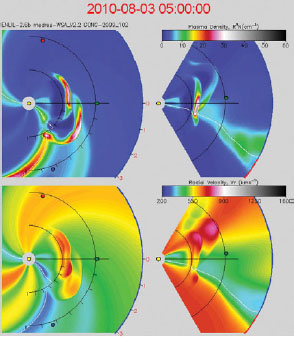
FIGURE 3.3 The solar system display for the solar wind plasma model developed by the Center for Integrated Space Weather Modeling and now in operation at the Space Weather Prediction Center. The figure shows the prediction of coronal mass ejections on their way from the Sun to Earth. The Sun is the yellow dot and Earth is the green one. The left-hand panels show the view looking down on Earth’s orbit; the right-hand panels show the view from behind Earth as it moves away from the observer in its orbit.
SOURCE: National Oceanic and Atmospheric Administration (NOAA).
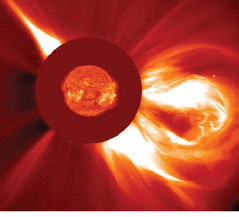
FIGURE 3.4 A composite image from the Solar & Heliospheric Observatory satellite (a joint NASA/ESA mission) showing a coronal mass ejection blasting out into space. Such events produce environmental changes that are termed “space weather.”
SOURCE: NASA.
but also power grids on the surface, possibly leaving many areas of the United States without electric power for months.
In order to predict space weather it must first be understood. Significant progress has been made in the decades since the discovery of the Van Allen radiation belts in the 1950s, fields of high-energy particles (mainly protons and electrons) held in place by the magnetic influence of Earth, but much work needs to be done to be able to create predictive models that produce the information users need, such as being able to pre-
dict when Global Positioning System (GPS) information (see Box 3.3) could be lost. The vision of the space science community is that in 20 years science will have developed the knowledge needed to protect our space-dependent civilization from harm.
Antarctica can play a critical role in realizing that vision, both in scientific research and the application of that research to operational systems for space weather monitoring and prediction. Antarctica provides a unique platform for space weather research and monitoring because, unlike the oceanic Arctic, year-round ground-based observations from areas across the Antarctic continent are possible. From Antarctic vantage points one can sample the footpoints of magnetic field lines that reach out in the solar wind, throughout near-Earth space where satellites fly, and into the distant magnetotail where solar wind energy is episodically stored and released through processes still
BOX 3.3 SPACE WEATHER AND THE GLOBAL POSITIONING SYSTEM
The Global Positioning System, or GPS as it is popularly known, has emerged as a major piece of technological infrastructure that is critical to national security, industry, and commerce. The use of GPS-guided munitions has revolutionized warfare, allowing for much more precise delivery of those munitions to their targets. GPS has also had an enormous impact on a wide variety of industries, from agriculture (tractor guidance, cropduster targeting, tracking livestock, etc.) to oil drilling (precise guidance of drills). GPS is also widely used by ordinary people for navigation, as almost all smart phones have GPS capabilities.
GPS works by using simultaneous radio signals from several near-Earth-orbiting spacecraft to pinpoint the position of the receiver. Each spacecraft broadcasts its position and the time at which the signal is sent. Based on the difference between the time lags to several spacecraft (a minimum of four is needed), the receiver is able to triangulate its position. Because of the large value of the speed of light, small time errors can lead to large spatial errors. As a consequence, GPS requires corrections from general relativity and from the varying speed of light as electromagnetic waves pass through the ionosphere. The ionospheric corrections are calculated based on typical ionospheric conditions. But space weather can produce significant departures from those conditions, leading to significant GPS errors. The ability to predict natural variations in the ionosphere that would lead to significant errors in GPS information is a major objective for the Space Weather Prediction Center.a Reaching this objective will require data assimilative modeling. Antarctic observations will be important both in the basic research needed to create the models, as well as (eventually) providing operational, real-time, ionospheric diagnostic data that the models will require.
________________
not completely understood. Moreover, Antarctica provides a platform for polar satellite communications hardware that will be necessary for real-time operational data delivery.
Questions for the Future
In looking to the next two decades, the two top priorities for space weather prediction are determining the distribution and intensity of geomagnetically induced current that can damage the electrical power grid and predicting the loss of GPS information due to ionospheric disturbances. Antarctica can play an important role in this work by providing the measurement platforms (radar, ionosonde, riometer, magnetometer, all-sky camera) for data collection, which can then be used in model validation and data assimilation modeling. Another space weather objective is to further the understanding of the acceleration processes that create the radiation belts. Characterizing the near-Earth radiation environment is likely to take on increased importance in the next 20 years. NASA’s Radiation Belt Storm Probes (RBSP) will study this problem, and it will have an Antarctic component in the Balloon Array for RBSP Relativistic Electron Losses (BARREL) mission. Looking further ahead, understanding the solar cycle and long-term solar variations is a critical question for a space-based civilization.
Required Tools and Actions
Space weather modeling, following the lead of tropospheric weather prediction, is beginning to incorporate techniques such as ensemble and probabilistic forecasting, and data assimilation.1 The latter requires a high density of observations (such as full coverage of the Antarctic ionosphere from incoherent scatter radars) that expanded instrumentation of Antarctica would provide. Antarctic data would provide a crucial component of a more capable National Weather Service capacity for space weather monitoring and prediction. Incoherent scatter radars can provide a global diagnosis of the southern polar ionosphere, and comparisons between northern and southern polar cap dynamics can provide crucial information for validating simulations. The high polar plateau of Antarctica is the only site where studies of the magnetosphere have the potential to learn how to protect the stability of electronic devices and technology (e.g., GPS and satellite communication) upon which society so heavily now depends.
________________
1See NOAA’s Space Weather Prediction Center (http://www.swpc.noaa.gov/) and the National Science Foundation’s (NSF’s) Center for Integrated Space Weather Modeling (http://www.bu.edu/cism/).
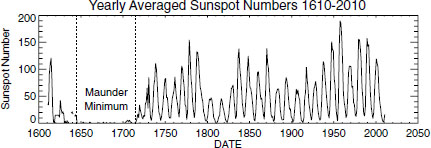
FIGURE 3.5 This figure illustrates the yearly averaged sunspot numbers from 1610 to 2010. The Maunder Minimum is a period of low sunspot activity in the late 17th century.
SOURCE: D. Hathaway, NASA Marshall Space Flight Center.
Finally, there is much that is not understood about the role of solar variability in producing climate variability. The Maunder Minimum (Eddy, 1976) (Figure 3.5) and its role in the Little Ice Age is still a subject of considerable debate. The bulk of the 17th century was a period of very suppressed solar magnetic activity that was coincident with a period of cool temperatures in Europe and elevated cosmic rays; this was due to the weak solar magnetic field that shields the heliosphere from the galactic cosmic ray flux. Long-term cosmic ray and atmospheric observations made in Antarctica can provide important data to study whether there is in fact a link between cosmic ray flux and climate. This will be particularly important in the coming decades given the very weak solar cycle (solar cycle 24) that may signal the end of the Modern Maximum and the beginning of a minimum in sunspot activity. Coupled with an increased understanding of solar behavior and the evolution of the solar cycle, the committee believes that in 20 years this question can be definitively answered.
3.4 HOW DID THE UNIVERSE BEGIN, WHAT IS IT MADE OF, AND WHAT DETERMINES ITS EVOLUTION?
Global Context
Scientists working at the Amundsen-Scott South Pole Station are pursuing answers to the most fundamental questions of our origins—questions that have been asked since the dawn of civilization. How did the universe begin? What is it made of? What determines its evolution and what is its ultimate fate?
Scientists are also pursuing answers to the questions at the frontier of physics and particle astrophysics: How do cosmic accelerators work, and what are they acceler-
ating? What is the dark matter that holds the galaxies together? New instruments have opened up an entirely new window on the universe in the form of neutrino astronomy.
Antarctica plays a unique and pivotal role in the pursuit of these questions by providing exceptional atmospheric conditions—high, cold, dry, and stable—for viewing the fossil light from the Big Bang and the cosmic microwave background radiation, and by providing the large volumes of exceptionally transparent and stable ice for detecting high-energy neutrinos from space (see Box 3.4).
What Is Known Now?
There are many important research directions in astrophysics, but two of the most exciting fields in which Antarctica offers unique opportunities to advance over the next two decades are the understanding of the origin and evolution of the universe through measurements of the cosmic microwave background and the exploration of the high-energy universe through neutrino astronomy. These fields are also highlighted in the recent Astronomy and Astrophysics decadal report (National Research Council, 2010c).
The Cosmic Microwave Background
The cosmic microwave background (CMB) radiation provides a pristine view of the early universe as it was nearly 14 billion years ago, roughly 380,000 years after the Big Bang. The physical processes that shaped the universe, from its first instants to the present day, are imprinted on the intensity and polarization distribution of the background radiation.
The discovery of the CMB in 1965 (Penzias and Wilson, 1965) provided overwhelming evidence that the universe evolved from a hot dense state, the Big Bang. This has had an enormous impact on the understanding of the universe. The importance of the discovery was recognized with the awarding of the physics Nobel Prize in 1978. Remarkably, the intensity of the background is so uniform across the heavens, that it took almost three decades before maps of sufficient sensitivity to detect any spatial variations were obtained. Results from the Cosmic Background Explorer (COBE) satellite in 1992 showed the structure in the background is at a level of only 1 part in 100,000 and its spectrum is that of a thermal blackbody at a temperature of 2.725 ± 0.001 K (Fixsen and Mather, 2002). (The COBE team leaders John Mather and George Smoot received the physics Nobel Prize in 2006.)
BOX 3.4 WHY MAKE ASTRONOMICAL OBSERVATIONS FROM ANTARCTICA?
The high Antarctic plateaus provide exceptional atmospheric conditions—high, cold, dry, and stable—for viewing the cosmos from infrared to millimeter wavelengths (see excellent review of Antarctic atmospheric site testing by Burton, 2010). At these wavelengths the dominant contribution to atmospheric opacity is water vapor. As water vapor is not well mixed in the atmosphere, astrophysical measurements suffer further from the spatial and temporal fluctuations of atmospheric noise. This is referred to as “sky noise” and is often the dominant source of noise in large-scale astrophysical maps made at these wavelengths. Because of the extreme cold and high altitude of the Antarctic plateaus, even if the atmospheric water vapor is saturated the net amount of water, that is, the precipitable water vapor (PWV), is extremely low, leading to consistently good atmospheric transmission (see figure). Furthermore, the extreme cold, the low wind velocities, and the lack of diurnal solar heating lead to extraordinary stable atmospheric conditions that should result in very low sky noise at millimeter wavelengths. In fact the sky noise at the South Pole has been shown to be at least an order of magnitude better than at other established terrestrial sites (Bussmann et al., 2005; Sayers et al., 2010), and it is expected to be better still above the higher domes (e.g., Dome A).
At optical and near-infrared wavelengths, spatial and temporal atmospheric temperature fluctuations lead to degraded resolution or “seeing” due to the distortions to the wave front of the light as it passes through the turbulent air (e.g., the twinkling of stars). Unlike the midlatitude sites with high, fast-moving jet streams overhead, the dominant source of atmospheric turbulence above the Antarctic plateau is near the ground, caused by the katabatic winds and the ground-level inversion layer driven by the radiative cooling of the surface. Above this low layer (only tens of meters at the highest sites; Swain and Gallee, 2006), exceptional “seeing” conditions prevail (Agabi et al., 2006). Furthermore, since the turbulent layer is so close to the telescope, simple tip-tilt adaptive optics systems are able to provide corrections over a large field of view. The extreme cold also leads to an order-of-magnitude reduction in the atmospheric brightness at near-infrared wavelengths compared to good midlatitude sites (Phillips et al., 1999).
Last, the geographical location also leads to unique observing capabilities. For example, astronomical objects viewed from the South Pole never rise or set but remain at the same elevation, allowing exceptionally long, deep, and uniform observations.
Over the past two decades the push has been to obtain increasingly sensitive measurements of the intensity and polarization of the cosmic microwave background. Observations from the Amundsen-Scott South Pole Station (see Figure 3.6) and from the long-duration high-altitude balloons launched from McMurdo Station have been at the forefront.
From measurements of the cosmic background and measurements made at other wavelengths, scientists now have a cosmological model that accounts for the properties of background radiation measurements, as well the vast range of structure
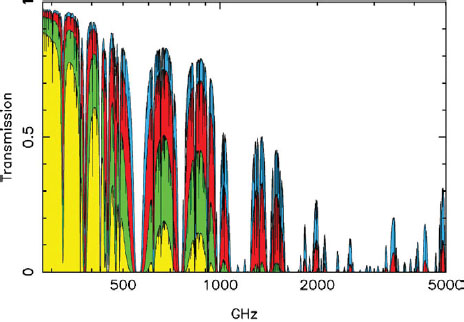
Atmospheric transmission plot from 300 to 5,000 GHz, or 1,000 to 60 µm, for medium winter conditions on Mauna Kea: 270 K, 620 mbar, and 1.5 mm PWV (lowest curve, in yellow); the Atacama plain: 260 K, 525 mbar, and 0.6 mm PWV (green); Dome A: 200 K, 550 mbar, and 0.14 mm PWV (red), and the best 10th percentile conditions at Dome A: 0.07 mm PWV (top curve, in blue). Transmission in Antarctica is significantly better than in other locations.
SOURCE: Yang et al., 2010.
observed in the universe. This cosmological model for the origin and evolution of the universe is beautifully simple and has profound implications for new physics and our place in the universe. A pictorial overview of the model is shown in Figure 3.7.
In this model, the first instants (~10-35 seconds) of the universe began from a subatomic region of space-time at extraordinarily high energy. This space exponentially expanded faster than the speed of light to produce a universe much larger than can be observed currently. This explanation accounts for the isotropy of the background radiation, that is, the fact that background radiation reaches Earth uniformly from all
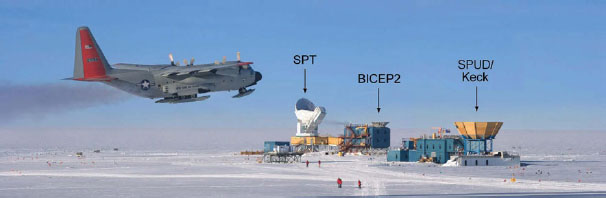
FIGURE 3.6 A C-130 aircraft taking off near the telescopes at the NSF Amundsen-Scott South Pole Station. These telescopes exploit the extraordinary transparent and stable atmosphere at millimeter wavelengths to map the intensity and polarization of the cosmic microwave background radiation to investigate the origin and evolution of the universe.
SOURCE: Photo by Steffen Richter.
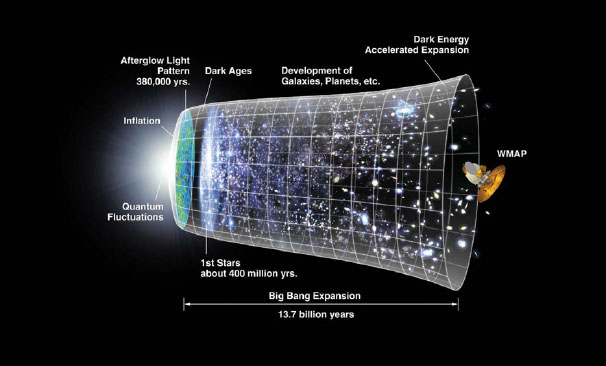
FIGURE 3.7 Pictorial representation and timeline of the standard cosmological model for the origin and evolution of the universe. The horizontal axis represents time and the vertical width represents the change in the rate of the expansion of the universe. After a period of exponential expansion, the epoch of inflation in the first instants of the universe, there is a long period of slowing expansion during which the galaxies and large-scale structures formed through the force of gravity, followed by recent acceleration of the expansion due to dark energy. The figure is from the science team of NASA’s Wilkinson Microwave Anisotropy Probe (WMAP) satellite, which is shown to the right viewing the universe.
SOURCE: NASA.
directions. Overall, this model is based on limited amounts of data and needs much more evidence to prove its validity. Astrophysicists hope to test this theory, known as Inflation, by searching in the polarization of the CMB radiation for the tell-tale signature of gravitational waves generated in the inflationary epoch.
The model also includes the makeup of the universe, as determined from analysis of the cosmic microwave background radiation (see Box 3.5). Ordinary matter—all the material that is described in science textbooks—is found to make up only a small fraction, ~4.5 percent, of the universe. The “dark matter,” the presence of which has been inferred by astronomers to account for the gravity holding galaxies and clusters of galaxies together, makes up 23 percent of the density of the present universe (NASA/ WMAP Science Team, 2010). It is not composed of ordinary matter in some nonluminous form. It is a new, as-yet-unidentified type of matter.
A surprising recent discovery in cosmology, and indeed in physics, is that the majority of the mass-energy density of the present universe is attributed to dark energy. Measurements of distant Type 1a supernovae revealed that the expansion of the universe was not slowing down as expected, but rather that the rate of expansion was accelerating (Perlmutter et al., 1999; Riess et al., 1998). Measurements of the background radiation confirmed the presence of dark energy and are now being used to help understand its nature (e.g., see Sehgal et al., 2011; Vanderlinde et al., 2010).
Neutrino Astronomy: Opening a New Window on the Universe
Light is customarily used to study the cosmos, where photons, the particles of light, act as cosmic messengers. For example, the cosmic microwave background discussed above is studied using light at millimeter wavelengths (low-energy photons with energy ~10-3 eV), while optical astronomy uses light at wavelengths of order 1 µm (~1 eV). High-energy astrophysics is pursued with much shorter wavelength photons, with energies of several 103 eV (x-rays) and at much higher energies extending to 1013 eV (gamma rays). Other elementary particles, such as astronomical cosmic rays made up of energetic protons and other charged nuclei, have been studied for nearly 100 years as cosmic messengers.
A mystery in astrophysics is the mechanism that accelerates cosmic rays to extremely high energies. Cosmic rays have been observed to strike Earth’s atmosphere with energies up to 1021 eV, an energy many orders of magnitude higher than can be produced in man-made accelerators. Because the cosmic rays are charged particles, their trajectories are scrambled by the magnetic field of the galaxy. Therefore, the direction from which they arrive does not point back to their origins. At energies above a few 1013 eV, even the propagation of gamma rays through space is limited by their interaction with
BOX 3.5 COSMIC MICROWAVE BACKGROUND RADIATION
Maps of the cosmic microwave background such as the one shown here (Figure 1) are analyzed by constructing angular power spectra to compare with theoretical predictions of their statistical properties. The most recent angular power spectrum is shown in Figure 2. The figure combines data from the WMAP satellite on large angular scales (Larson et al., 2011) with that from the 10-m South Pole Telescope on small angular scales (Keisler et al., 2011). It shows a stunning harmonic series of features, much like the overtones of a musical instrument. These data aid in the determination of the makeup of the universe.
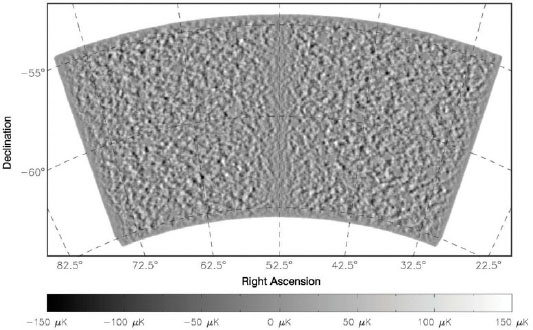
FIGURE 1 Map of 250 square degrees of the sky obtained with the 10-m South Pole Telescope at 2 mm wavelength and a resolution of 1 arc minute, from a survey covering 2,500 square degrees. The map is dominated by features in the cosmic microwave background radiation, the 14 billion-year-old fossil light from the Big Bang. The features are detected at high signal to noise throughout the map (the noise level is ~18 mK). Bright compact features in the map are due to external galaxies (in emission) and the Sunyaev-Zel’dovich effect from clusters of galaxies (in absorption).
SOURCE: Keisler et al., 2011.
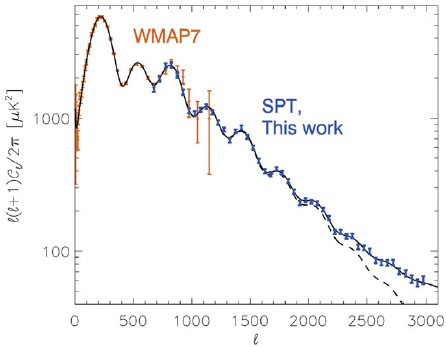
FIGURE 2 The angular power spectrum of the structure from maps of the cosmic microwave background radiation. Much like a graphic equalizer display illustrates the makeup of music as a function of wavelength, i.e., with the bass at long wavelengths (low frequencies) and the treble at short wavelengths (high frequencies), the spectrum above shows the components of the sound waves in the early universe as a function of their wavelength projected across the sky. The index “l” for multipole number is a measure of wavelength with higher multipole numbers corresponding to shorter wavelengths (high frequency). Analysis of the beautiful harmonic series of peaks in the spectrum reveals the makeup of the universe.
SOURCE: Keisler et al., 2011.
the cosmic background photons, producing electron-positron pairs. To answer the question “How do cosmic accelerators work and what are they accelerating?” requires a multipronged approach including cosmic ray observatories, space- and ground-based gamma-ray observatories, and importantly—but only recently possible—high-energy neutrino observatories.
Neutrinos are nearly massless particles that carry no charge, and because they interact only via the weak interaction, that is, not via electromagnetic interactions, they travel from their source unaffected by magnetic fields or interactions with the cosmic microwave background. Neutrinos have a mean free path that exceeds the radius of the observable universe. Although this makes them extremely hard to detect, it also makes them, in principle, incredibly powerful messengers for probing the universe because their paths will point directly back to their origins, whether it is deep within the Sun, a supernova or gamma-ray burst across the observable universe, or the accretion disk or jet associated with a supermassive black hole. Furthermore, neutrinos are a byproduct of proton interactions, making any source of protons also a source of neutrinos. They are therefore perfect messengers for addressing the long-standing mystery of the origin of the ultra-high-energy cosmic rays (Chen and Hoffman, 2009).
A detector with an enormous mass is required to increase the chance of an interaction with an astronomical neutrino. The IceCube experiment was designed to meet this challenge. It exploits the clear Antarctic ice as detector and Earth itself as a telescope. The IceCube neutrino observatory was just completed and is poised to open neutrino astronomy at energies of 1012 to 1015 eV as a new window on the universe (see Box 3.6). IceCube seeks to answer fundamental questions as to the physical conditions in gamma-ray bursts and the workings of nature’s accelerators that produce the remarkably high-energy photons and cosmic rays. As a particle physics detector capable of detecting neutrinos with energies far above those produced in laboratories, IceCube will use the cosmos to complement man-made particle physics accelerator experiments to search for clues of the unification of the fundamental forces at high energies.
Questions for the Future and Required Tools
Did the Universe Start with a Period of Inflation? If So, Then What Are the Physics Underlying Inflation? What Are the Masses of the Neutrinos?
The greatest science opportunity for future Antarctic cosmic microwave observations is to test whether Inflation is the correct model for the origin of the universe. At the extremely high energy state believed to prevail during the inflationary epoch,
space-time would be highly distorted, creating gravitational waves that would lead to unique signals in the polarization of the background radiation that could, in principle, be observable today if the inflationary energy was sufficiently high. An unambiguous detection of this gravitational wave signal would be an astonishing discovery with enormous impact for the understanding of the universe and our place within it. It would provide the “smoking gun” proof that Inflation is the correct theory for the origin of the universe as well as determine the energy scale of inflation.
The observed distribution on the sky of the intensity and polarization of the cosmic microwave background is also affected by gravitational lensing from the structures in the universe encountered by the background photons in their journey through the universe. These distortions, on somewhat smaller angular scales than those caused by inflationary gravitational waves, are a sensitive probe of growth of structure in the universe, which in itself is sensitive to the fraction of the universal mass budget contributed by neutrinos. Future polarization measurements of the cosmic microwave background can therefore be used to constrain the sum of the masses of the neutrinos, an important constraint for developing a full understanding of the physics of the universe.
The current generation of cosmic background experiments and those planned to start in the next few years may find evidence for the long-sought inflationary polarization signal. However, the definitive polarization measurements required to provide a clear unambiguous detection, or to set the most stringent limit possible on the energy scale of inflation, will require a major increase in sensitivity. A goal is to produce polarization maps of the 3 K cosmic background with noise levels of order 10 nK. These maps will also include the contaminating polarized emissions from astronomical sources from the galaxy and external galaxies.
The noise of the superconducting bolometric detectors used for the polarization measurements are already background limited (i.e., the measurement noise is dominated by the variation in the arrival of incident photons and not the noise of the detector itself). Therefore, the only way to improve sensitivity is to develop wide-field telescopes and larger cameras. To separate the desired cosmic background signal from the contaminating sources of polarized emission, the sky will need to be mapped in several wavelength bands and at an angular resolution of a few arc minutes or better, so the unique spectral and spatial signatures of the signal can be observed.
The astrophysics community has begun planning ahead for possible future developments using long-duration Antarctic balloons and enhancements to the observing program at the South Pole to produce these maps. To provide the increased sensitivity and frequency coverage, one possible solution is to deploy an array of several
BOX 3.6 ICECUBE
The IceCube neutrino observatory completed in December 2010 is poised to open high-energy neutrino astronomy as a new window on the universe. The IceCube detectors consist of photodetectors embedded in a cubic kilometer of the clear ice deep below the South Pole Station (see Figure 1). The detector searches for the flash of blue Cherenkov light emitted from the
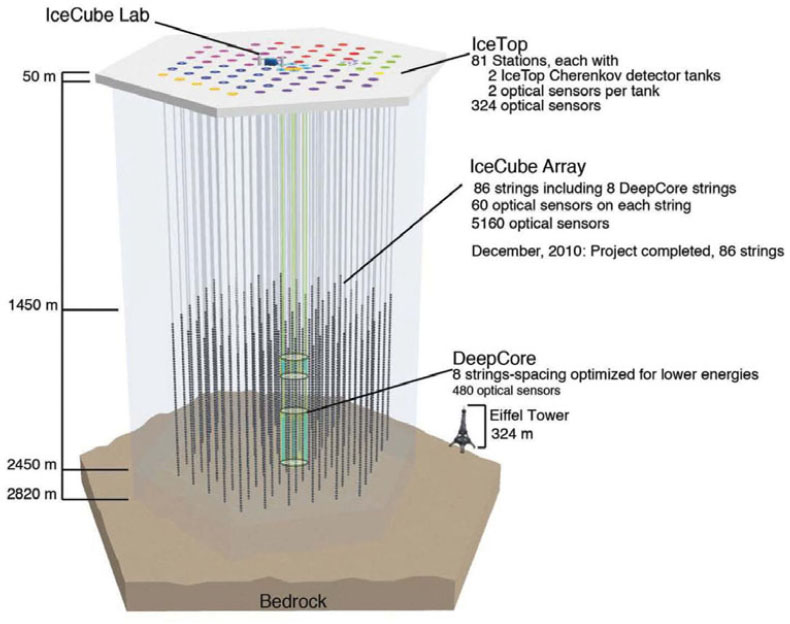
FIGURE 1 Schematic view of the IceCube neutrino observatory at the South Pole. After 7 years of South Pole drilling operations, 86 strings and 162 IceTop tanks were installed and connected to the central data acquisition system to complete IceCube. A total of 5,484 optical sensors were deployed and commissioned. Now more than 250 scientists in 36 institutions worldwide are mining the data for a variety of science goals, such as the search for highest-energy cosmic neutrinos, dark matter, or neutrinos from supernova explosions.
SOURCE: IceCube Collaboration.
secondary particles created in the rare interaction of a high-energy neutrino with a nucleon in the ice (see Figure 2). To discriminate against interactions from other particles, the IceCube team searches for particles coming from the north, as only neutrinos are able to pass through the core of Earth. In this way Earth itself serves as the telescope and the Antarctic ice cap as the detector.
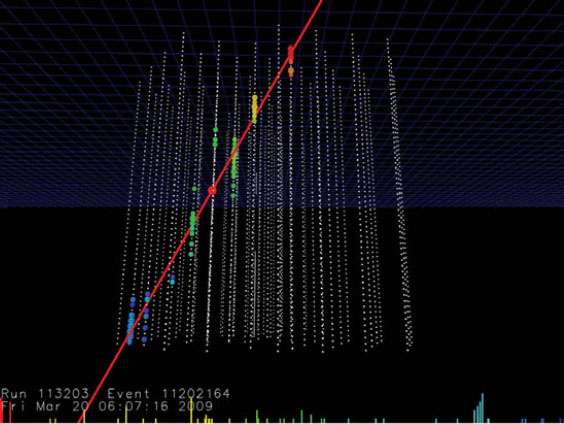
FIGURE 2 Display of a typical muon neutrino event in IceCube.
SOURCE: IceCube Collaboration.
dedicated cosmic background telescopes, each equipped with cameras containing of order 2,000 background-limited dual-polarization pixels. Such a project places demands on the infrastructure of the South Pole Station; a new laboratory building would be required, as well as additional power to cool the detector arrays, and for the data to be transferred to the United States for inspection and analysis, the daily data transmission would have to be increased by an order of magnitude over the current 100 GB/day. This would require a great deal of further planning.
What Is the Origin of the Highest-Energy Cosmic Rays? What Are the Properties of the Neutrinos? What Is the Dark Matter Particle?
The recently completed IceCube instrument will be the leading neutrino observatory for many years into the future. It is poised to make the first discoveries of extragalactic neutrinos from TeV (1012 eV) to PeV (1015 eV) energies. As has been demonstrated over and over again, the opening of each new astronomical window has led to unexpected discoveries. IceCube may well lead to transformational advances in the understanding of the physics of the universe. Now that IceCube is fully operational, its science value and future potential should be clear in roughly 5 years. Future opportunities in Antarctic neutrino astronomy and particle astrophysics will emerge naturally as enhancements to IceCube, either by extending its reach in energy or by using IceCube to monitor particle interactions as a veto in the search for signals from rarer events, such as experiments to directly detect dark matter particles.
After the tremendous value of IceCube is sufficiently demonstrated, a possible future enhancement to IceCube may be to increase its reach at high energies. IceCube is too small to address the origin of the highest-energy cosmic rays, which will require an observatory that is larger by two to three orders of magnitude. A neutrino observatory large enough to collect hundreds of neutrinos that were created by the interaction of ultra-high-energy cosmic rays with the cosmic microwave background (the GZK effect; Greisen, 1966; Zatsepin and Kuzmin, 1966) would provide two unique discovery opportunities. First, the GZK neutrino spectrum and arrival directions are critical observations for determining the sources of the highest-energy particles in the universe. Second, the detections would extend the knowledge of neutrino properties. For example, by measuring the event rate as a function of incident angle, the opacity of Earth can be used to determine neutrino-nucleon cross sections at energies far beyond those probed at particle physics facilities.
A new technology would be required to build a larger array at a feasible cost. A promising technique is based on exploiting the Askaryan effect—the premise that
high-energy electromagnetic showers in dense media give rise to a detectable radio frequency impulse (Askaryan, 1962). An array of antennas embedded in the top of the ice could be used to search for the burst of radio emissions produced by the interaction of an ultra-high-energy cosmogenic neutrino impinging on the ice (Askaryan, 1962). This technology would make it possible to instrument 100 km2 of the South Pole ice cap.
What Is the Life Cycle of the Interstellar Dust and Gas Clouds from Which Stars Form? What Is the Frequency of Occurrence of Planets Around Other Stars? What Is the Star Formation History of the Universe?
These questions represent only a sample of the astrophysics beyond the study of the cosmic microwave background, for which the unique atmospheric properties and geographical location of Antarctica provide opportunities for dramatic advances. They are best pursued using far-infrared and submillimeter-wave observations of the gas and dust involved in the process of star formation, or by near-infrared and optical observations that exploit the possibility of 24/7 observing through the Austral night to conduct time-domain astronomy for exploring transient phenomenon, such as the search for exoplanets through gravitational microlensing events.
These opportunities require observations at wavelengths much shorter than those required for cosmic background studies, and at which the atmospheric opacity is considerably degraded by the residue water vapor. In the case of optical or near-infrared time-domain astronomy, minimal cloud cover and stable “photometric” conditions are required. To fully exploit near-infrared and optical observations, the telescopes need to be above the low-altitude atmospheric turbulent layer, caused by the temperture inversion, which would otherwise seriously degrade the image quality.
For these observations the summits of the high Antarctic domes offer potentially far superior performance than the South Pole (Burton, 2010). For small instruments, the high altitude and long duration of the circumpolar balloon platforms launched from McMurdo Station offer extraordinary observing opportunities. International efforts are under way in site testing for deployment of future astrophysical experiments at Domes A, C, and F. Dome A (4,083 m) is the highest location on the Antarctic plateau. In 2009 China began the construction of Kunlun station, including the installation of autonomous atmospheric site testing equipment. Astrophysics is the primary scientific driver for the station, with a 2.5-m infrared telescope and a 5-m THz telescope being planned. The French and Italian Concordia Station at Dome C (3,268 m) opened in 2005 for winter operation. The European Union-funded ARENA program endorsed a
2-m-class infrared telescope to be the first major astrophysics project at the station (ARENA, 2010). The Japanese Fuji Station at Dome F (3,810 m) was first used for wintering in 1995. Although the primary scientific purpose of the station was ice-core drilling, astrophysics is also now a part of its scientific plans.
These international efforts are testimony to the world-class astrophysics achieved in Antarctica and to the excitement of the future science opportunities in astrophysics there. The United States has much to offer and to gain from participating in the international pursuit of astrophysics from Antarctica. The scientific community has learned how to carry out challenging astrophysics projects from the successful program at the South Pole. Indeed the South Pole station itself would provide valuable testing and staging opportunities for experiments to be deployed at less developed sites, or for remote robotic astrophysical installations. International collaboration will also provide U.S. scientists access to the superb observing conditions available at other stations.
The study of cosmology and astrophysics from Antarctica has led to exciting discoveries over the past few decades. With the ever-increasing sensitivity of scientific instruments and the extraordinary observing conditions available from Antarctica and high-altitude balloons, new surprising discoveries that may point the way to future opportunities to learn about the universe can be expected in the next 20 years.
This page intentionally left blank.
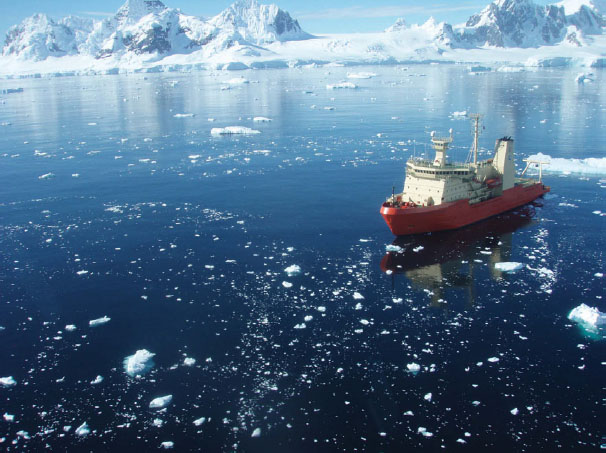
The Research Vessel NATHANIEL B. PALMER in Barilari Bay, Antarctic Peninsula.
SOURCE: Adam Jenkins/NSF.


