
19. The International Treaty on Plant Genetic Resources
– Shakeel Bhatti45
Food and Agriculture Organization
I will be offering the perspective of intergovernmental organizations and processes, with a focus on one intergovernmental process in particular, the International Treaty on Plant Genetic Resources for Food and Agriculture (ITPGRFA). After a short introduction about the international legal architecture that governs genetic resources and, in particular, plant genetic resources, I will describe what has already been achieved in the context of the international treaty, which is the creation of a multilaterally governed gene pool of more than 1 million accessions of plant genetic material and which constitutes a commons for biological materials. Next, I will discuss the steps that the governing body of the treaty decided on in June of this year, which is developing policy for the intangible elements of this global gene pool. Finally, I will end with a few reflections on operationalizing such open knowledge environments as they are foreseen in this treaty.
In the ITPGRFA you already find something resembling an integrated commons linking both material and digital data and databases within a distributed and open access framework. Furthermore, it has a larger framework in its federated network of gene banks and of information portals that is now being established, which is being administered by a governing body made up of the 121 contracting parties of the treaty.
With that in mind, let me begin by locating the treaty within the relevant international legal instruments and institutional frameworks. First, is the Convention on Biological Diversity (CBD). This international treaty creates a multilateral system of access and benefit-sharing and implements those access and benefit-sharing principles on a multilateral basis. As we heard, it takes about one or two years to negotiate a well-done bilateral access agreement, and they must be negotiated on a case-by-case basis.
By contrast, under the ITPGRFA we have more than 600 transfers every day of plant genetic material related to agriculture. It would be impossible to negotiate access and benefit-sharing on a bilateral case-by-case basis for all of these transfers. Instead, the multilateral system laid out by the international treaty provides a low-transaction-cost, pooled commons of genetic material. Other components of the international governance architecture include the 1961 International Union for the Protection of New Varieties of Plants (UPOV); the 1994 Agreement on Trade-Related Aspects of Intellectual Property Rights (TRIPS) and the various intellectual property agreements that are incorporated by reference under the TRIPS standards, such as the Paris Convention; and the 1985 Budapest Treaty on Deposit of Microorganisms for Purposes of Patent Procedure. The Consultative Group on International Agricultural Research (CGIAR) is not a legal instrument, but rather the largest network of agricultural research centers and gene banks of plant genetic resources in agriculture, and it plays an important role in the treaty.
The timeline leading up to the ITPGRFA can be traced back to the CBD, which was adopted in 1992. In 1994, a request was transmitted to the Food and Agricultural Organization (FAO) of the United Nations to revise a preexisting soft law instrument into
_____________
45 Presentation slides available at http://sites.nationalacademies.org/xpedio/idcplg?IdcService=GET_FILE&dDocName=PGA_053725&RevisionSelectionMethod=Latest.
a binding framework that would be in harmony with the access and benefit-sharing principles of the CBD. The negotiations lasted for seven and a half years, and finally, in 2001, the treaty was adopted by the FAO Conference, coming into force in 2004. The first governing body session under the treaty was held two years later, and within three years following that session, 40 instruments of ratification were deposited.
Then, in 2006, two years after the ITPGFRA came into effect, the first session of the governing body adopted the Standard Material Transfer Agreement (SMTA). It was the fastest rate of ratification of an FAO-administered treaty in the history of FAO. The SMTA is the standard contract for transferring genetic material within the multilateral system. The third session of the governing body was held just a few months ago (in June 2009) in Tunisia, and the next session will be held in March 2011 in Bali.
Figure 19–1 offers a very simplified diagram illustrating how the multilateral system of the treaty works.
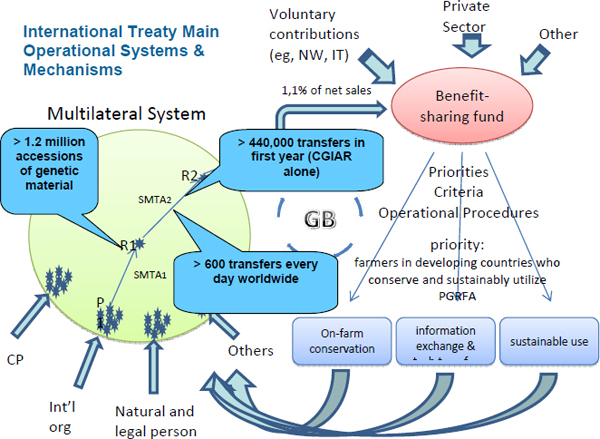
FIGURE 19–1 The main operational systems and mechanisms of the International Treaty on Plant Genetic Resources for Food and Agriculture.
SOURCE: United Nations Food and Agriculture Organization, http://www.planttreaty.org/
In essence, the treaty creates a multilaterally governed gene pool. Genetic material is put into that gene pool by various actors. These include the nations that have ratified the treaty and also international organizations, such as the International Atomic
Energy Agency, which has included its mutant germplasm repository in this gene pool and is now also being governed by the terms of the treaty. Individuals and organizations also contribute genetic material, including private sector entities and indigenous and local communities, such as the Quechua communities from Peru, who deposited their own germplasm into this gene pool. There is a broadening range of stakeholders who are including material. A major contributor is the group of international agricultural research centers of the CGIAR, which have so far deposited the bulk of material that we know of and about which we have solid documentation.
Once material is included in the gene pool, its use is governed by a chain of SMTAs. It begins with the provider of the material transferring it under a standard material transfer agreement, call it SMTA1, to the recipient. This recipient can now become a provider and transfer the material under a second agreement, SMTA2, to a second recipient. By receiving the material under the SMTA, the recipient takes on an obligation to transfer this material to other parties only under the same terms and conditions specified in the original SMTA. This builds a contractual chain which eventually leads—after a long series of transfers that, in plant breeding, often takes 5 to 10 years—to the development of a commercial product.
If that product is not available without restrictions for further research, training, and breeding—for example, if the product is under a patent claim—then the SMTA specifies that the recipient shall pay 1.1 percent minus 30 percent of net sales of that product to the beneficiary fund of the ITPGRFA. This is a multilaterally created, governed, and administered trust fund that receives proceeds from products that incorporate material received from the gene pool. This beneficiary fund also receives funding from a series of other channels, such as voluntary contributions from contracting parties. A number of governments, including Norway, Spain, Italy, and Switzerland, have given voluntary contributions. At the opening of the Svalbard Global Seed Vault in Norway, Prime Minister Stoltenberg along the Minister of Agriculture at that time announced that Norway will each year contribute 0.1 percent of all national seed sales to the beneficiary fund of the treaty. Contributions also come from the private sector, including philanthropic grant-making institutions, foundations, and individual philanthropists.
The accumulated funds are dispersed according to multilaterally agreed-upon funding priorities, selection criteria, and operational procedures. For example, the treaty specifies a priority for funding to farmers in developing countries who conserve and sustainably use plant genetic diversity. At the second session of the governing body, three funding priorities were set by the governing body: on-farm conservation of plant genetic diversity, information exchange and technology transfer, and sustainable use of plant genetic resources, including through characterization, research, and participatory plant breeding. These funding priorities are intended to further the conservation and maintenance of genetic diversity, which in turn feeds the global gene pool that is established by the treaty. In short, the treaty is intended to create a virtuous circle, overseen by the governing body of the treaty. That governing body now includes 121 governments, with additional ratifications being underway at present.
The system started up in 2007, and since that time there have been more than 1.2 million accessions of plant genetic material that we know of. That last qualifier is important because in reality there have certainly been far more accessions, but we do not know of all the material that is included in the system. Getting complete and reliable datasets specifying which material is included in the system is itself a major undertaking
that is now under way. At present, we have data—again, incomplete data—that indicate that in the last 12 months, there were about 440,000 transfers by the CGIAR alone. This does not include transfers of material from regional and national gene banks. There is a total of more than 600 transfers each day worldwide.
On the benefit-sharing side, in June of this year the benefit-sharing fund disbursed half a million dollars in grants for the conservation of crop genetic diversity and the sustainable use of genetic resources. The governing body has adopted an objective of raising $160 million over the next 5 years for the benefit-sharing fund, with a planning target of $50 million. It also adopted a strategic plan, which lays out the mobilization of these resources over the next five years.
Operationally, we have almost completed the first phase of treaty implementation, which consists of putting the multilateral system into operation, developing the Standard Material Transfer Agreement, and starting up the commercial benefit-sharing activity through the trust fund.
To provide a sense of how the commercial benefit-sharing is going, let me offer a few details. The first call for proposals for benefit-sharing projects under the trust fund of the treaty was solicited for one month starting in early December 2008. Within that period, more than 450 applications were received. Keep in mind that this included the Christmas–New Year period. The submissions were from countries around the world.
The treaty specifies three noncommercial benefit-sharing mechanisms: exchange of information, technology transfer, and capacity building. Of these, the first two are particularly relevant.
Concerning the exchange of information, the treaty states that access to plant genetic resources that are protected by intellectual and other property rights shall be consistent with the relevant international agreements and minimum standards for the availability, exercise, and enforcement of intellectual property rights, and shall also be consistent with relevant national laws. The treaty also states, however, that recipients shall not claim any intellectual property rights or other rights that limit free access to plant genetic resources for food and agriculture or to their genetic parts or components in the form received from the multilateral system.
Thus, the treaty is consistent with international intellectual property (IP) standards, but it sets out a particular model for acquisition of IP. Those terms are also reflected, of course, in the Standard Material Transfer Agreement and are passed on contractually to each recipient of genetic material from the gene pool. Then, if a recipient commercializes a product that is itself a plant genetic resource and that incorporates material from the multilateral system, and where such product is not available without restriction to others for further research, training, and breeding, the treaty specifies that the recipient shall pay 1.1 percent minus 30 percent of the sales of the commercialized product into the trust fund established by the governing body for the purpose of benefit-sharing.
There is, consequently, a patent-based, benefit-sharing trigger here. The treaty also calls for the governing body to review the operation of this entire system and the terms, for both access and benefit-sharing, five years after coming into force. It further states that the governing body may review the levels of payment with a view to achieving fair and equitable sharing of benefits and may also assess whether the mandatory payment requirement in the material transfer agreement shall apply also in cases where such commercialized products are available without restriction to others for further
research and breeding. This exercise was originally scheduled to be done this year, but it was postponed to the next session of the governing body.
Research results are also governed by the SMTA, which requires that the recipient of material shall make available to the multilateral system—through a global information system that will be created under the treaty—all non-confidential information that results from research and development carried out on the material. The recipient is also encouraged to share, through the multilateral system, any non-monetary benefits that result from research and development. Finally, the SMTA provides that after the expiration or abandonment of intellectual property rights, the product that incorporates the material should be placed back into one of the collections that are part of the multilateral system.
The next steps in the implementation of the treaty will include the implementation of Article 17, which concerns a global information system for plant genetic resources. This Article foresees that the contracting parties will develop a global information system to facilitate the exchange of information on scientific, technical, and environmental matters related to plant genetic resources, making information on plant genetic resources for food and agriculture available to all contracting parties. Thus, in addition to the material, which is pooled and governed by the terms of the multilateral system, the system will also include an information component to facilitate the exchange of all the data and information that results from the use and the exchange of material within the gene pool.
In June of this year, the governing body requested the secretariat to develop a vision paper that would take stock of existing information systems and outline a process for developing this global information system. So the next phase is moving from the tangible part of the system—the material—to the intangible, information-oriented side. A number of provisions in the treaty will then be operationalized through this process, including the two noncommercial benefit-sharing mechanisms, exchange of information and technology transfer.
Concerning exchange of information, the treaty states that parties agree to make available information that encompasses catalogues and inventories, as well as information on technologies and all results of technical, scientific, and socioeconomic research, including the characterization, evaluation, and utilization of the plant genetic resources within the multilateral system. All this information will be included in this information system.
With regard to technology transfer, the treaty specifies that parties facilitate access to technologies for the use of plant genetic resources, recognizing that some technologies can be transferred only in the form of genetic material itself. Again, the applicable intellectual property standards must be respected.
The treaty then sets out a set of very specific measures for tech transfer implementation, such as the establishment of crop-based thematic groups; the use of plant genetic resources for food and agriculture; and various types of partnerships in research, development, and commercial joint ventures. The transfer of technology must be consistent with IP standards.
Figure 19–2 shows the ratifications and other measures of progress on the international treaty over the past decade. The green line shows that the number of SMTAs has really skyrocketed. Requests for capacity building have also increased sharply. Given that we are working with 121 jurisdictions, which have different legal frameworks, different languages, different institutional settings, different ministries
responsible, different gene bank exchange practices, and different institutional actors, the implementation of a global multilateral system that functions coherently is quite a formidable task.
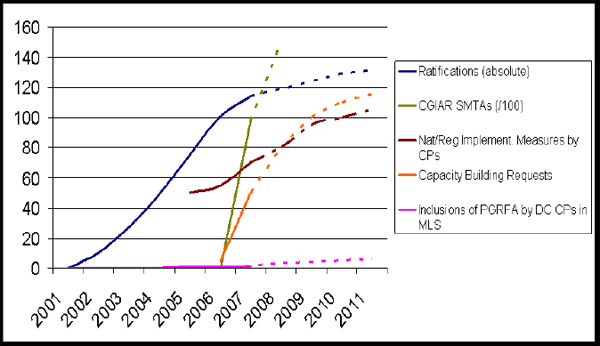
FIGURE 19–2 Progress on the international treaty.
SOURCE: United Nations Food and Agriculture Organization, http://www.planttreaty.org/
Seen from the point of view of open knowledge environments, the treaty has essentially established a global materials commons that is multilaterally managed. This differentiates it from the bilateral access and benefit sharing regime under consideration in the context of the CBD. The materials commons is now fully operational through the globally applied Standard Material Transfer Agreement, and we have recently adopted a dispute resolution procedure for any disagreements that might arise from these SMTAs. There is a four-stage escalating alternative dispute resolution procedure that begins with amicable negotiations and progresses through mediation, arbitration, and, finally, binding arbitration under the International Chamber of Commerce.
By beginning of next year we will also have a global information infrastructure to support the operation of this system consisting of a data store and a PID server, which serves unique permanent identifiers (PIDs) for users of the multilateral system. The treaty then calls for a global information system, a step on the path to an information commons based on noncommercial benefit sharing in which the exchange of information itself is considered to be a noncommercial benefit of the gene pool.
In moving towards that information commons, the treaty now has sustained operational funding by governments plus an existing secretariat based in Rome and housed in the FAO. The treaty’s governing body has become one of the main convening forums of the plant genetic resource community. Furthermore, the treaty is increasingly
being taken as a model by such institutions as the World Health Organization. We are working closely with them to develop virus-sharing and benefit-sharing MTAs that will be based on those provided for in the treaty.
The treaty still faces various challenges. Further operationalizing and stabilizing the multilateral system is one. While the system has been successfully started, it is not yet at the stage where it should be. Significant challenges and problems remain to be addressed. For example, we need to focus on the project cycle for the benefit-sharing fund and orient this towards facilitating scientific research on the plant genetic material in the gene pool.
The treaty has a twofold nature, being both an intergovernmental political process and an operational system. Maintaining policy and operational coherence within a daily operation across so many countries and jurisdictions is a major task and requires a very significant investment of resources.
We are running a capacity building program with Bioversity International, and we are providing a great deal of assistance to countries working on their national implementing legislation. It is also important to facilitate interactions between the contracting parties who govern the system and the users of the system, that is, the gene banks, the researchers, universities, companies, and so forth.
Finally, the treaty addresses access and benefit sharing for genetic resources specifically in the context of agriculture. It is important to have the specificity of agricultural genetic resources recognized in other policy forums, not only the CBD, but also the United Nations Framework Convention on Climate Change and the various food security efforts that are going on in the field.


