Acute Exposure Guideline Levels
PREFACE
Under the authority of the Federal Advisory Committee Act (FACA) P.L. 92-463 of 1972, the National Advisory Committee for Acute Exposure Guideline Levels for Hazardous Substances (NAC/AEGL Committee) has been established to identify, review, and interpret relevant toxicologic and other scientific data and develop AEGLs for high-priority, acutely toxic chemicals.
AEGLs represent threshold exposure limits for the general public and are applicable to emergency exposure periods ranging from 10 minutes (min) to 8 hours (h). Three levels—AEGL-1, AEGL-2, and AEGL-3—are developed for each of five exposure periods (10 and 30 min and 1, 4, and 8 h) and are distinguished by varying degrees of severity of toxic effects. The three AEGLs are defined as follows:
AEGL-1 is the airborne concentration (expressed as parts per million or milligrams per cubic meter [ppm or mg/m3]) of a substance above which it is predicted that the general population, including susceptible individuals, could experience notable discomfort, irritation, or certain asymptomatic, nonsensory
________________________
1This document was prepared by the AEGL Development Team composed of Robert Young (Oak Ridge National Laboratory) and Tom Hornshaw (National Advisory Committee [NAC] on Acute Exposure Guideline Levels for Hazardous Substances). The NAC reviewed and revised the document and AEGLs as deemed necessary. Both the document and the AEGL values were then reviewed by the National Research Council (NRC) Committee on Acute Exposure Guideline Levels. The NRC committee concludes that the AEGLs developed in this document are scientifically valid conclusions based on the data reviewed by the NRC and are consistent with the NRC guidelines reports (NRC 1993, 2001).
effects. However, the effects are not disabling and are transient and reversible upon cessation of exposure.
AEGL-2 is the airborne concentration (expressed as ppm or mg/m3) of a substance above which it is predicted that the general population, including susceptible individuals, could experience irreversible or other serious, long-lasting adverse health effects or an impaired ability to escape.
AEGL-3 is the airborne concentration (expressed as ppm or mg/m3) of a substance above which it is predicted that the general population, including susceptible individuals, could experience life-threatening health effects or death.
Airborne concentrations below the AEGL-1 represent exposure concentrations that could produce mild and progressively increasing but transient and nondisabling odor, taste, and sensory irritation or certain asymptomatic, nonsensory effects. With increasing airborne concentrations above each AEGL, there is a progressive increase in the likelihood of occurrence and the severity of effects described for each corresponding AEGL. Although the AEGL values represent threshold levels for the general public, including susceptible subpopulations, such as infants, children, the elderly, persons with asthma, and those with other illnesses, it is recognized that individuals, subject to idiosyncratic responses, could experience the effects described at concentrations below the corresponding AEGL.
SUMMARY
Phosphorus trichloride (CAS no. 007719-12-2) is a colorless, clear fuming liquid with a pungent, irritating odor. In the presence of water, the chemical decomposes rapidly in a highly exothermic reaction to phosphonic acid, or hydrogen chloride, and pyrophosphonic acids. The primary use of phosphorus trichloride is for the production of phosphonic acid which, in turn, is used in the production of glyphosphate herbicides. Annual domestic production of 294,000 tons has been reported.
No acute lethality data on humans are available. Qualitative data regarding human exposures indicate signs and symptoms of exposure consistent with a highly irritating chemical; ocular and dermal irritation, respiratory tract irritation, shortness of breath, and nausea.
Lethality data are available for rats, cats, and guinea pigs. Cursory studies conducted nearly 100 years ago in Germany provided preliminary data on lethal and nonlethal effects in cats and guinea pigs following various treatment regimens with inhaled phosphorus trichloride. Although results of the studies indicated the respiratory tract to be a critical target, the methods and results of these studies were not verifiable. Weeks et al. (1964) reported 4-h LC50 values of 104.5 ppm and 50.1 ppm for rats and guinea pigs, respectively. An unpublished study by Hazleton Laboratories (1983) identified a no-observed-adverse-effect level (NOAEL) of 3.4 ppm and a lowest-observed-adverse-effect level (LOAEL
(histopathologic changes in the respiratory tract) of 11 ppm following repeated exposure (6 h/day, 5 days/week for 4 weeks) of rats. There are no data regarding reproductive and developmental toxicity, genotoxicity, or carcinogenicity of phosphorus trichloride. Definitive data regarding the mechanism of action of phosphorus trichloride are unavailable. Decomposition products (hydrogen chloride, phosphonic acid, and pyrophosphonic acids) are responsible, at least in part, for the contact irritation reported by humans, and the irritation and tissue damage observed in animal species.
The concentration-time relationship for many irritant and systemically acting vapors and gases may be described by Cn × t = k, where the exponent n ranges from 0.8 to 3.5. Due to the limited toxicity data for this chemical, an empirical derivation of n was not possible. In the absence of an empirically derived exponent (n), and to obtain conservative and protective AEGL values, temporal scaling was performed using n = 3 when extrapolating to shorter time points and n = 1 when extrapolating to longer time points using the Cn × t = k equation. Because phosphorus trichloride is a contact irritant, minor irritation effects are not expected to vary with exposure duration (NRC 2001). Therefore, all AEGL-1 values were set at 0.34 ppm (the 3.4 ppm point-of departure adjusted by a total uncertainty factor of 10). The 10-min AEGL-3 values were set equivalent to the 30-min values due to uncertainties in extrapolating from the experimental exposure durations of 4 h and greater.
Quantitative data consistent with AEGL-1 effects were unavailable. Occupational exposures of humans to 1.8-3.6 ppm for 2-6 h (Sassi 1952) and exposure of rats to 3.4 ppm for 6 h/day, 5 days/week for 4 weeks (Hazleton Laboratories 1983) were without notable effect. The occupational exposure data lacked details regarding pairing of the exposure durations (weeks to months) to exposure concentrations. The 3.4 ppm exposure of rats data was considered a NOAEL for AEGL-1 effects. These data as well as the AEGL-1 values are supported by the human experience. The interspecies uncertainty factor was limited to 3 because of the concordance of the animal data with the human experience and because the most sensitive species tested (guinea pig) was only about 2-fold more sensitive. The intraspecies uncertainty factor was limited to 3 because primary effects of phosphorus trichloride (irritation and subsequent tissue damage) appear to be due, in part, to hydrogen chloride and phosphonic acid resulting from chemical dissociation. Additional reduction of the AEGL-1 values would be inconsistent with available human and animal data.
Information consistent with AEGL-2 effects was limited to an occupational exposure report and a multiple exposure study with rats. For occupational exposures, there was notable irritation following 2-6 h of exposure to approximately 14-27 ppm phosphorus trichloride and more severe but reversible irritation following exposures of 1-8 weeks. Reports providing qualitative information but no exposure terms affirmed the potential for respiratory tract irritation following acute exposures to phosphorus trichloride. Data for rats showed upper respiratory tract involvement following multiple exposures (over 4 weeks) to 11 ppm but not to 3.4 ppm (Hazleton Laboratories 1983). For development of
AEGL-2 values, the 11 ppm exposure in rats was considered a NOAEL for AEGL-2 effects. Uncertainty factor application was the same as for the AEGL-1 tier.
AEGL-3 values were developed based upon a 3-fold reduction of the 4-h LC50 (Weeks et al. 1964) as an estimate of the lethality threshold (104.3 ppm/3 = 34.8 ppm). A total uncertainty factor adjustment of 10 was used to develop the AEGL-3 values. Animal data indicated some variability in the toxic response to phosphorus trichloride with guinea pigs being the more sensitive among the species tested but only about 2-fold compared to the rat. Additionally, further reduction of the AEGL-3 values did not appear warranted based upon the human occupational exposure data. Therefore, uncertainty adjustment regarding interspecies variability was limited to 3. To account for intraspecies variability, a factor of 3 was applied. The uncertainty of intraspecies variability was limited to 3 because primary effects of phosphorus trichloride (irritation and subsequent tissue damage) appear to be due, in part, to hydrogen chloride and phosphonic acid resulting from chemical dissociation. Additionally, these products would likely affect all mucosal surfaces in a similar manner and would do so independent of metabolism processes. The total uncertainty factor of 10 may be justified by human exposure data showing that repeated 2 to 6-h exposures of up to 27 ppm were without life-threatening consequences. Furthermore, the results of the Hazleton Laboratories (1983) study showed no fatalities in rats following multiple 6-h exposures to 11 ppm. The AEGL values for phosphorus trichloride are presented in Table 6-1.
TABLE 6-1 Proposed AEGL Values for Phosphorus Trichloride
| Classification | 10 min | 30 min | 1 h | 4 h | 8 h | End Point (Reference) |
| AEGL-1 (Nondisabling) | 0.34 ppm | 0.34 ppm | 00.34 ppm | 0.34 ppm | 0.34 ppm | NOAEL of 3.4 ppm in rats exposed 6 h/day, 5 days/week for 4 weeks; no time scaling for irritant (Hazleton Laboratories 1983) |
| AEGL-2 (Disabling) | 2.5 ppm | 2.5 ppm | 2.0 ppm | 1.3 ppm | 0.83 ppm | NOAEL for AEGL-2 tier effects; based upon respiratory tract histopathology in rats exposed 6 h/day, 5 days/week for 4 weeks (Hazleton Laboratories 1983) |
| AEGL-3 (Lethal) | 7.0 ppm | 7.0 ppm | 5.6 ppm | 3.5 ppm | 1.8 ppm | Estimated lethality threshold based upon 3-fold reduction of rat 4-h LC50 (104.3 ppm/3 = 34.8 ppm) (Weeks et al. 1964)a |
aBased upon animal data, lethality may be delayed.
1. INTRODUCTION
Phosphorus trichloride (CAS No. 007719-12-2) is a colorless, clear, fuming liquid with a pungent, irritating odor (Fee et al. 1996). Odor threshold information is unavailable for this chemical. Domestic production of approximately 294,000 tons has been reported (SRI 1992). The primary use of phosphorus trichloride is for the production of phosphonic acid which, in turn, is used in the production of the herbicide, glyophosphate. Phosphorus trichloride decomposes rapidly in water in highly exothermic reactions. It may also decompose in moist air to hydrochloric acid and hydrated phosphoric acid. The reaction products include phosphonic acid, hydrogen chloride, or pyrophosphonic acids, depending on the mole ratio of water and phosphorus trichloride (Fee et al. 1996). If the mole ratio of water and phosphorus trichloride is greater than 3, the following reaction will occur.
The chemical and physical data on phosphorus trichloride are presented in Table 6-2.
PCl3 + 3 H2O → H3PO3 + 3 HCl
If the mole ratio is 2.5 to 3, reaction products will be a mixture of phosphonic acid and pyrophosphonic acids.
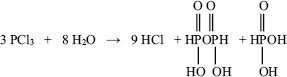
TABLE 6-2 Chemical and Physical Data for Phosphorus Trichloride
| Synonyms | Phosphorus chloride, trichlorophosphine | Fee et al. 1996; NIOSH 2005 RTECS 2009 |
| CAS Registry No. | 007719-12-2 | O’Neil et al. 2001 |
| Chemical formula | PCl3 | O’Neil et al. 2001 |
| Molecular weight | 137.33 | O’Neil et al. 2001 |
| Physical state | Liquid | O’Neil et al. 2001 |
| Boiling and melting point | 76°C/-112°C | O’Neil et al. 2001 |
| Density | 1.574 | O’Neil et al. 2001 |
| Solubility | Decomposes in water and alcohol | Fee et al. 1996 |
| Vapor pressure | 100 mm Hg at 21°C | ACGIH 1991 |
| Conversion factors in air | 1 ppm = 5.6 mg/m3 1 mg/m3 = 0.18 ppm |
Beliles and Beliles 1993 |
2. HUMAN TOXICITY DATA
2.1. Acute Lethality
No acute lethality exposure-response data or case reports are currently available.
2.2. Nonlethal Toxicity
Sassi (1952) summarized twenty cases of acute (2-6 h) or “subacute” (1-8 weeks of work) exposures of workers to phosphorus trichloride. The concentration of phosphorus trichloride in the workrooms ranged from 10-20 mg/m3 (~1.8-3.6 ppm) under normal conditions to 80-150 mg/m3 (~14-27 ppm) during periods when the plant was “out of order.” The method by which the concentrations were determined was not stated in the translated abstract. For the acute exposures, workers experienced a burning sensation in the eyes and throat, photophobia, chest tightness, dry cough, and slight bronchitis which occurred within 2-6 h of exposure. It is unclear, however, if the reported symptoms were associated with the “out of order” condition or were also present to some extent during “normal” operation. For the “subacute” exposures, pharyngeal irritation, coughing, catarrh, dyspnea, and asthmatic bronchitis occurred at 1-8 weeks of exposure. Slight increases in body temperature and moderate leucocytosis with neutrophilia were also reported for both exposures. Signs and symptoms reportedly resolved in 3 to 6 days for the acute exposures and 10-15 days for the subacute exposures.
An abstract by Wason et al. (1982) provided information on an assessment of 27 individuals exposed to phosphorus trichloride released in a railroad accident in 1980. The report indicated that the phosphorus trichloride reacted with water used to disperse the spillage and with air moisture that resulted in the release of phosphoric and hydrochloric acids and phosphorus oxides. No information was provided regarding weather conditions (e.g., wind, temperature, humidity) at the time of the accident. Signs and symptoms were characteristic of exposure to irritants and included burning eyes (86%), shortness of breath (59%), throat irritation (59%), lacrimation (59%), headache (48%), nausea (48%), burning sensation on the skin (44%), and sputum production (41%). Additional effects occurring in 33% or less of the patients included chest pains, wheezing, skin rash, blurred vision, vomiting, and abdominal pain. Lactate dehydrogenase was mildly elevated and serum bilirubin and/or serum transaminases were elevated in three individuals. Results of pulmonary function tests showed greater severity of effect with decreasing distance from the release site. At 2 months, 86% of the individuals who were within 1/16 mile were hypoxemic while only 50% of those 1/16 to 1/8 mile distance were hypoxemic. There were no exposure durations provided (probably >1.5 h as described below) and no exposure concentrations were measured or estimated.
Wason et al. (1984) reported in more detail on the railroad accident involving spillage of phosphorus trichloride. The report focused on 17 individuals (16 men and one woman, ages 21-59 years), seven of whom were requested to return for follow-up study after the initial medical examination. Signs and symptoms of exposure included eye, skin and throat irritation, nausea, vomiting, blurred vision, headache, and various effects associated with respiration and ventilation (e.g., wheezing, cough, chest pain, dyspnea, sputum production). Chest x-rays of all subjects were normal and there was no evidence of hepatic toxicity. Spirometry tests revealed that the subjects (10 of 17) who were closest (within 110 yards) to the accident site had a significant decrease in vital capacity, maximal breathing capacity, FEV1, and maximal ventilatory flow rate at 25% of vital capacity. An improvement in the ventilatory changes was seen 1 month later. Subjects closer to the release site appeared to exhibit signs and symptoms of greater severity. It was also found that patients that were exposed for less than 1 h and 30 min had significantly (p = 0.02) greater maximal expiratory flow rates at 25% of vital capacity than did those individuals exposed for longer periods. Water was used to disperse the spilled phosphorus trichloride and, as noted in the report, the actual exposure most likely involved phosphoric acid and hydrochloric acid more so than phosphorus trichloride. Eight subjects were exposed for less than 1 h and 30 min and nine were exposed longer (duration not specified). Pulmonary function tests in the seven follow-up patients 1 month after the accident revealed significant improvements in vital capacity, FEV1, peak expiratory flow rate, and maximal expiratory flow rate at 50% vital capacity. Although this report provides information regarding the nonlethal effects in humans following exposure to phosphorus trichloride, there were no data on the exposure concentrations and it is uncertain as to the precise chemicals (i.e., phosphorus trichloride and/or its degradation products) to which the people were exposed.
A NIOSH health hazard evaluation of workers at the FMC plant in Nitro, West Virginia revealed that those with known repeated exposures to phosphorus oxychloride and/or phosphorus trichloride experienced a significantly higher (p < 0.001) prevalence (65%) of occasional respiratory symptoms (chest tightness, wheezing, difficulty breathing) compared to unexposed workers (5%) (Tharr and Singal 1980). However, no correlation was found between results of pulmonary function tests on the workers and exposure to these chemicals. The study utilized 37 exposed workers and 22 unexposed workers. Most air samples were below detection limits although one employee (with respiratory protection of a chlorine gas mask) was exposed to 6 mg phosphorus trichloride/m3 (1 ppm) for 1 h during a truck-loading operation (no effects were reported for this individual).
A follow-up study conducted by NIOSH on 26 of the exposed workers and 11 of the unexposed workers from the aforementioned FMC Corp. group revealed that half of the exposed workers reported significantly (p < 0.002) more episodes of respiratory effects (wheezing, breathlessness, and chest tightness) compared to the unexposed workers who reported no such effects (Moody
1981). Results of pulmonary function tests did not reveal significant findings regarding effects of phosphorus trichloride (or phosphorus oxychloride) exposure. No significant difference in pulmonary function (FEV1) was found in the exposed workers vs. the unexposed workers over a 2-year period. The small sample size, however, reduces the power of the study to detect such changes.
Although lacking exposure terms, there is information regarding accidental releases of phosphorus trichloride in Illinois (T. Hornshaw, Office of Chemical Safety, Illinois EPA, personal communication, 2009). Two significant releases of phosphorus trichloride occurred in 1988 from a chemical plant in Sauget, Illinois. The first, on April 17, resulted from overfilling of a railroad tanker, with an estimated 6,000-12,000 pounds released in the railroad yard. The plume caused the evacuation of approximately 22 square blocks, and 417 citizens of neighboring Rush City and East St. Louis, Illinois reported to area hospitals for treatment. Two of these citizens were admitted overnight and subsequently released. Eye and respiratory irritation were the main symptoms reported. The second incident resulted from failure of a rupture disk during start-up procedures at the plant on July 31. It was calculated that no more than 50 pounds of phosphorus trichloride were released from the plant, and the plant’s security and industrial hygiene personnel were able to visually track and bound the plume that moved into Rush City. Their reports indicated that the plume traveled approximately 2 miles before dissipating. This plume caused 244 citizens to report to area hospitals for treatment. Eight of these citizens were admitted; seven were kept overnight and released, while the eighth was kept for 3 days before release. This patient’s history of asthma contributed to the severity of effects, and the asthma was also aggravated by the exposure to the phosphorus trichloride. The main complaints of the citizens were eye, nose, and throat irritation. No measurements of airborne concentrations were made during either incident.
2.3. Epidemiologic Studies
No epidemiologic studies of phosphorus trichloride toxicity are currently available.
2.4. Developmental and Reproductive Toxicity
Data regarding the reproductive and developmental toxicity of phosphorus trichloride in humans are not available.
2.5. Genotoxicity
No human genotoxicity data for phosphorus trichloride are currently available.
2.6. Carcinogenicity
Information regarding the potential carcinogenicity of phosphorus trichloride in humans is not available.
2.7. Summary
There are no data regarding lethal exposures of humans to phosphorus trichloride but some information on nonlethal exposures is available. Workers exposed to phosphorus trichloride following a railroad car spill exhibited signs and symptoms consistent with exposure to a highly irritating chemical. Although the reports of this accident describe qualitatively the effects of exposure, there are no quantitative exposure-response terms. Pulmonary function deficits (e.g., vital capacity, FEV1, peak expiratory flow rate, maximal expiratory flow rate at 50% vital capacity) that correlated with distance from the release showed improvement at 1 month following the exposure. The effects reported could be attributed to phosphorus trichloride decomposition products (phosphonic acid and hydrogen chloride) as well as the parent compound. In an occupational exposure setting, workers experienced a burning sensation in the eyes and throat, photophobia, chest tightness, dry cough, and slight bronchitis following 2-6 h of exposure to approximately 14-27 ppm phosphorus trichloride. Exposure of workers to these levels for 1-8 weeks resulted in pharyngeal irritation, coughing, catarrh, dyspnea, and asthmatic bronchitis. Increases in body temperature and moderate leucocytosis with neutrophilia were also reported for both exposure durations, but all signs and symptoms resolved upon removal from the exposure. The detection of elevated LDH activity in individuals following accidental exposures may imply other organ and tissue damage.
3. ANIMAL TOXICITY DATA
3.1. Acute Lethality
3.1.1. Rats
Weeks et al. (1964) reported on the acute lethality of phosphorus trichloride in female rats exposed for 4 h to an atmosphere of phosphorus trichloride generated by passing nitrogen gas through the liquid test material. Chemical analysis was used to determine the amount of the test material in the exposure chamber. The rats were observed for 14 days after removal from exposure. The rats were restless and exhibited labored breathing during the exposure. During the exposure, the eyes were closed and there was considerable porphyrin secretion around the eyes. Deaths occurred over a period of 10 days indicating, under the conditions of this experiment, a notable latency period in the lethal response. The nostrils and paws of the exposed rats exhibited swelling, edema, discolora-
tion and subsequent sloughing of tissues that was consistent with the activity of a corrosive agent. Microscopic examination revealed necrosis of epithelium and supporting structures in the nostrils but pulmonary damage was considered to be negligible. The investigators noted that the primary site of damage appeared to be the kidneys and was characterized by nephrosis of tubules in the corticomedullary region. A 4-h LC50 of 104.3 ppm was calculated and reported by the investigators. The exposure concentrations tested to obtain this value were not reported and, therefore, there was no information regarding the exposure-response relationship.
3.1.2. Guinea Pigs
Weeks et al. (1964) also examined the lethal effects of phosphorus trichloride on guinea pigs exposed for 4 h. The experimental protocol was as described for the experiments with rats (Section 3.1.1). Based upon the published report, the response of guinea pigs was similar to that of rats; restlessness, signs of ocular and nasopharyngeal irritation, and renal damage. With the exception of the 4-h LC50 of 50.1 ppm, no additional exposure-response data were provided.
Results of early inhalation exposure experiments reported by Butjagin (1904) showed that guinea pigs exposed to 623 ppm phosphorus trichloride died shortly after 3 h of exposure.
3.1.3. Cats
Butjagin (1904) reported that test animals (guinea pigs and cats) died shortly after a 3-h exposure to 623 ppm. In another experiment, one cat exposed to 694 ppm died after 306 min.
3.2. Nonlethal Toxicity
3.2.1. Rats
In an unpublished study conducted for the Monsanto Company (Hazleton Laboratories 1983), groups of 15 Sprague-Dawley rats (15/sex/group) were exposed to phosphorus trichloride vapor/aerosol for 6 h/day, 5 days/week for 4 weeks. Over the 4-week period, nominal exposure concentrations were 0.5, 3.0, or 10.0 ppm and analytical concentrations were 0.49, 3.37, and 10.96 ppm. The test atmosphere was generated by passing air (200-990 cc/min depending upon the test concentration group) over the headspace above a non-specified volume of phosphorus trichloride in a flask. The vapor was then carried to the test chambers via Teflon7 tubing. Sample concentrations were determined three times per day by collecting chamber samples in impingers containing 20 mL of sodium hydroxide. The samples were subsequently analyzed in a chloride meter
and expressed as ppm phosphorus trichloride. Over the 4-week exposure period, concentration excursions deviated from target values by -2.0, + 12.3, and + 9.6% for the low, medium, and high-dose groups, respectively. A control group was exposed to filtered air under the same conditions. No rat died during the exposure period and no treatment-related adverse effects were observed. All rats were sacrificed and necropsied on day 29. Histological alterations in the maxillo- and nasoturbinates and in the lateral wall of the nasal cavity were observed in seven male and four females of the high-dose group; the remaining high-dose rats exhibited no remarkable findings in the nasal cavities and turbinates. Squamous metaplasia of the respiratory epithelium was also present in six males and four females of the high-dose group. There were no treatment-related effects on hematologic or biochemical parameters, and no ophthalmologic effects or body weight/organ weight changes were observed. Under the conditions of this study, 3.4 ppm was considered a NOAEL in rats.
3.2.2. Guinea Pigs
In experiments reported by Butjagin (1904), guinea pigs were exposed to phosphorus trichloride at various concentrations for different durations (1-6 h). Only minor effects (restlessness, salivary and nasal secretions, coughing, and irregular respiration) were observed following 6-h exposure to 0.71 ppm or 1-h exposure to 1.78 to 5.36 ppm. In the report summary, it was also noted that exposures of 50-90 ppm for 1 h produced severe signs of toxicity. The phosphorus trichloride concentrations were determined by measurement of chlorine. It appears that only one to three animals were used for any given exposure and, for some experiments, the same animals were used in multiple tests.
3.2.3. Cats
Butjagin (1904) also conducted experiments with adult cats (2.1- 4.0 kg) exposed to phosphorus trichloride as previously described for guinea pigs. The results were similar to those reported for the guinea pigs; 6-h exposure to 0.71 ppm or 1-h exposure to 1.78 to 5.36 ppm produced signs of restlessness and nasopharyngeal irritation. Six-hour exposures to concentrations of 135 to 303 ppm rapidly produced signs of severe irritation (salivary, nasal, and ocular secretions, breathing through the mouth, irregular and severely labored respiration). Histological examination at 6 to 7 days after exposure revealed severely damaged nasal septum and bronchioles, and pulmonary edema. Inasmuch as these animals were terminated for necropsy, it is likely (based upon the findings) that they might not have survived. In summary, the study author reported that 1-h exposure to 50-90 ppm resulted in severe signs of toxicity. It appears that for at least some of the experiments, the same cats were used.
3.3. Developmental and Reproductive Toxicity
No data are available regarding the developmental and reproductive toxicity of phosphorus trichloride in animals.
3.4. Genotoxicity
No data are currently available regarding the genotoxicity of phosphorus trichloride.
3.5. Carcinogenicity
No data are available regarding the carcinogenic potential of phosphorus trichloride in animals.
3.6. Summary of Toxicity Data in Animals
Definitive quantitative exposure-response toxicity data in animals were limited. Median lethal exposure concentrations for rats and guinea pigs are available and shown in Table 6-3. A report by Weeks et al. (1964) provided an adequate description of experimental protocol and 4-h LC50 value for rats (4-h LC50 = 104.3 ppm) and guinea pigs (4-h LC50 = 50.1 ppm). Additional data obtained from limited numbers of cats and guinea pigs exposed to various concentrations of phosphorus trichloride for varying durations described both lethal and nonlethal responses (Butjagin 1904). An unpublished study by Hazleton Laboratories (1983) showed that multiple 6-h/day exposures of male and female rats to phosphorus trichloride at 11 ppm over 4 weeks produced only histologic changes in the nasal turbinates while exposure to 3.4 ppm failed to produce any notable effects. The available information affirms that exposure to vapors of phosphorus trichloride may produce dermal, ocular, and nasopharyngeal irritation as well as pulmonary and renal damage. Additionally, on the basis of limited data in rats, cats, and guinea pigs, there appears to be a latency period in the lethal response to phosphorus trichloride.
TABLE 6-3 Acute Lethality of Phosphorus Trichloride in Laboratory Species
| Species | Lethality Value | Reference | ||
| Rat | 4-h LC50 : 104.3 ppm | Weeks et al. 1964 | ||
| Cat | lethality at 306 min, 694 ppm | Butjagin 1904 | ||
| Cat | lethality at 3 h, 623 ppm | Butjagin 1904 | ||
| Guinea pig | 4-h LC50 : 50.1 ppm | Weeks et al.1964 | ||
| Guinea pig | lethality at 3 h, 623 ppm | Butjagin 1904 | ||
4. SPECIAL CONSIDERATIONS
4.1. Metabolism and Disposition
Data on the metabolism and disposition of phosphorus trichloride are not currently available.
4.2. Mechanism of Toxicity
The mechanism of toxicity of phosphorus trichloride is currently unknown. The lethal toxicity of phosphorus trichloride does not, however, appear to be explained solely by the activity of the irritant degradation products (hydrogen chloride and phosphonic acid). The rapid exothermic reaction in the presence of water may contribute to localized tissue damage and also explain, in part, the greater toxicity of phosphorus trichloride relative to hydrogen chloride and phosphonic acid.
4.3. Structure-Activity Relationships
Barbee et al. (1995) conducted an acute toxicity study of oxalyl chloride (COCl)2 in which groups of 10 rats were exposed for 1 h to 0, 462, 866, 1,232, 1,694, or 2,233 ppm. The 1-h LC50 was found to be 1,840 ppm.
Phosphorus trichloride produces many of the same signs and symptoms as phosphorus oxychloride does following acute inhalation exposures (Weeks et al. 1964; ACGIH 1991) and also undergoes rapid hydrolysis to phosphonic acid and hydrogen chloride.
4.4. Other Relevant Information
4.4.1. Species Variability
Data are insufficient to reliably describe species variability in the toxic response to inhaled phosphorus trichloride.
4.4.2. Concurrent Exposure Issues
No concurrent exposure issues of special concern have been identified that could be directly incorporated in the development of AEGL values for phosphorus trichloride.
5. DATA ANALYSIS AND PROPOSED AEGL-1
5.1. Summary of Human Data Relevant to AEGL-1
Quantitative human data consistent with AEGL-1 effects were not available. Information regarding human exposures to phosphorus trichloride indicates acute exposures result in dermal and ocular irritation, irritation of the respiratory tract, headache, nausea, and shortness of breath.
5.2. Summary of Animal Data Relevant to AEGL-1
The only animal data available that were consistent with AEGL-1 severity effects were those provided in the report by Butjagin (1904). In this study, cats and guinea pigs exposed to phosphorus trichloride concentrations of 0.71 for 6 h or for 1 h to 1.78-5.36 ppm exhibited restlessness, salivary and nasal secretions, coughing, and irregular respiration. Hazleton Laboratories (1983) reported a NOAEL of 3.4 ppm for rats following multiple 6-h/day exposures. This was bounded by a NOEL of 0.5 ppm and LOAEL (11 ppm).
5.3. Derivation of AEGL-1
Data consistent with AEGL-1 effects come from an older study in cats and guinea pigs (Butjagin 1904). There are no odor threshold data and no quantitative data in humans. Because of the uncertainties regarding exposure atmosphere measurements from a study conducted almost 100 years ago and the fact that individual test animals may have been exposed to multiple exposure regimens, the data from Butjagin (1904) were not used in the development of AEGL-1 values. Data from the Hazleton Laboratories study suggested that an exposure above 0.5 ppm may be consistent with AEGL-1 effects as multiple 6-h exposures to this concentration over a 4-week period were without effect. The Hazleton Laboratories study identified 3.4 ppm as a NOAEL for rats receiving multiple 6-h exposures over a period of 4 weeks. Sassi (1952) reported that occupational exposures of 1.8 to 3.6 ppm for 2-6 h occurred under normal operating conditions of a plant manufacturing phosphorus trichloride. However, it is unclear if these exposures were associated with any health effects and, therefore, can not be assumed to represent no-effect exposures. In lieu of additional data the experimentally determined NOAEL 3.4 ppm was considered a NOAEL for development of AEGL-1 values. Data for humans and animals indicated some variability in the toxic response to phosphorus trichloride. Therefore, uncertainty adjustment regarding interspecies variability was limited to 3. To account for intraspecies variability, a factor of 3 was applied. The uncertainty of intraspecies variability was limited to 3 because primary effects of phosphorus trichloride (irritation and subsequent tissue damage) appear to be due, in part, to hydrogen chloride and phosphonic acid resulting from chemical dissociation. The direct-
contact corrosive effects resulting from these dissociation products would be similar for any mucosal surface and would be independent of biotransformation or other physiological processes. The attenuated uncertainty factors may be justified by the limited human exposure data (Sassi 1952), suggesting that humans could experience 2- to 6-h exposures of up to 3.6 ppm with no apparent effect and that AEGL-1 development is based upon an exposure that was without a discernible effect. The AEGL-1 values for phosphorus trichloride are shown in Table 6-4 and their derivations shown in Appendix A. The AEGL-1 values, based upon the 6-h exposure of rats to 3.4 ppm and a total uncertainty factor of 10, are equivalent because the contact irritation expected from exposure to phosphorus trichloride is not expected to vary over time (NRC 2001).
6. DATA ANALYSIS AND PROPOSED AEGL-2
6.1. Summary of Human Data Relevant to AEGL-2
Quantitative exposure-response data in humans are not available for development of AEGL-2 values for phosphorus trichloride. Information regarding the human experience is limited to qualitative notations regarding signs and symptoms (ocular, dermal, and respiratory tract irritation, and ventilatory effects). The information in these reports suggests that acute exposure to phosphorus trichloride could cause irritation severe enough to impair egress from a contaminated area. Sassi (1952) reported that workers experienced a burning sensation in the eyes and throat, photophobia, chest tightness, dry cough, and slight bronchitis following 2-6 h of exposure to approximately 14-27 ppm phosphorus trichloride. Although these effects could possibly impair escape, thereby qualifying as AEGL-2 tier effects, the method(s) by which the exposure concentrations were determined was not reported. Exposure concentrations were not provided in other reports (with the exception of the anecdotal data by Tharr and Singal 1980) and information on exposure duration was limited.
6.2. Summary of Animal Data Relevant to AEGL-2
Quantitative data in animals regarding effect severity consistent with AEGL-2 were limited to data on guinea pigs and cats reported by Butjagin (1904). The robustness of these data are, however, poor due to the small numbers of animals in each experiment (one to three) and the fact that some of the animals were apparently used in more than one experiment. This becomes a significant concern considering the additive nature of irritation and tissue damage and the possible latency in activity for some adverse effects of phosphorus trichloride (e.g., pulmonary damage and renal toxicity). Consistent with human acute exposure reports, the predominant response by animals is characterized by
TABLE 6-4 AEGL-1 Values for Phosphorus Trichloride
| AEGL Level | 10-min | 30-min | 1-h | 4-h | 8-h |
| AEGL-1 | 0.34 ppm | 0.34 ppm | 0.34 ppm | 0.34 ppm | 0.34 ppm |
ocular, nasopharyngeal, and pulmonary irritation and subsequent tissue damage. Animal data are not sufficient to provide a meaningful exposure-response relationship. The responses of cats and guinea pigs in the Butjagin study were reportedly more severe at higher concentrations and occurred more quickly. In the Butjagin (1904) report, cats and guinea pigs exposed to 5.36 ppm for 1 h exhibited restlessness, signs of nasopharyngeal irritation, and irregular respiration. A 6-h exposure of cats to concentrations of 135 to 303 ppm resulted in signs of severe irritation and respiratory distress. Histological examination of the cats exposed to 135 to 303 ppm revealed perforated nasal septa, bronchial damage, and pulmonary edema. Additionally, Weeks et al. (1964) noted renal damage in rats exposed to lethal concentrations of phosphorus trichloride. However, exposure-response data were not provided regarding this effect. The Hazleton Laboratories study (1983) in rats showed that multiple 6-h exposures to 11 ppm over a 4-week period produced histologic alterations in the nasal turbinates but no effects on ophthalmologic hematologic or biochemical parameters, and no overt signs of toxicity. Because the nasal lesions were the result of multiple exposures (5 days/week) over 4 weeks and not of a severity consistent with the AEGL-2 tier, a threshold for AEGL-2 effects in rats is likely at an undetermined concentration above 11 ppm for a single 6-h exposure.
6.3. Derivation of AEGL-2
Data upon which to base AEGL-2 development are limited. Sassi (1952) reported on occupational exposures of 2-6 h durations to concentrations of 14-27 ppm that produced effects that could be considered only marginally consistent with AEGL-2. As previously noted, the animal data reported by Butjagin (1904) are deficient for the purpose of AEGL development. Although the results from the Hazleton Laboratories (1983) study in rats exposed to phosphorus trichloride for 6 h/day, 5 days/week for 4 weeks did not define a response consistent with AEGL-2 severity, the 11 ppm exposure that resulted in histopathologic alterations in the respiratory tract may be considered a NOAEL for AEGL-2 severity effects. Uncertainty factor application and time scaling were as described for AEGL-1. Data from available reports suggest that humans are not especially sensitive to the effects of phosphorus trichloride when compared to laboratory animals. As such further reduction of AEGL values by the application of greater uncertainty factors dose not appear warranted. The AEGL-2 values for phosphorus trichloride are shown in Table 6-5 and their derivation outlined in Appendix A.
TABLE 6-5 AEGL-2 Values for Phosphorus Trichloride
| AEGL Level | 10 min | 30 min | 1 h | 4 h | 8 h |
| AEGL-2 | 2.5 ppm | 2.5 ppm | 2.0 ppm | 1.3 ppm | 0.83 ppm |
7. DATA ANALYSIS AND PROPOSED AEGL-3
7.1. Summary of Human Data Relevant to AEGL-3
Quantitative data are not available regarding lethality in humans exposed to phosphorus trichloride.
7.2. Summary of Animal Data Relevant to AEGL-3
Weeks et al. (1964) provided 4-h LC50 values of 104.3 ppm and 50.1 ppm, respectively, for rats and guinea pigs. In early experiments by Butjagin (1904), guinea pigs and cats exposed to 623 ppm phosphorus trichloride died within 3 h, and a cat exposed to 694 ppm died after 306 min of exposure. In the absence of any additional quantitative data, the median lethality values derived by Weeks et al. may be considered as a basis for AEGL-3 development and also serve to a limited extent as an index of species variability. Because the exposure-response data used to derive the median lethality values were not provided, it is not possible to determine the exposure-response relationship.
7.3. Derivation of AEGL-3
Because the median lethality values provided by Weeks et al. (1964) represent the only quantitatively determined estimates regarding the lethal response to acute inhalation of phosphorus trichloride, they may be considered as the basis for AEGL-3 development. The 4-h LC50 values for rats (104.3 ppm) and guinea pigs (50.1 ppm) suggest a species variability. In the absence of exposure-response data, the lethality threshold was estimated as a 3-fold reduction of the rat 4-h LC50 (104.3 ppm/3 = 34.8 ppm) and used as the point-of-departure for AEGL-3 derivation. The guinea pig was only about 2-fold more sensitive, but the use of the guinea pig 4-h LC50 of 16.7 ppm (50.1 ppm/3 = 16.7 ppm) to derive AEGL-3 values would be overly conservative and result in AEGL values that are inconsistent with human exposure information.
The concentration-time relationship for many irritant and systemically acting vapors and gases may be described by Cn × t = k, where the exponent n ranges from 0.8 to 3.5. Due to the limited toxicity data for this chemical, an empirical derivation of n was not possible. In the absence of an empirically derived exponent (n), and to obtain conservative and protective AEGL values, temporal scaling was performed using n = 3 when extrapolating to shorter time points and n = 1 when extrapolating to longer time points using the Cn × t = k equation.
Because of the uncertainty in extrapolating from a 4-h exposure to a 10-min exposure, the latter was set equal to the 30-min AEGL-3.
A total uncertainty factor adjustment of 10 was used to develop the AEGL-3 values. Data for humans and animals indicate some variability in the toxic response to phosphorus trichloride with guinea pigs being the more sensitive (~2-fold) among the laboratory animals. Limited data regarding human exposures showed that 2- to 6-h exposures to 14-27 ppm were not life-threatening (Sassi 1952). Therefore, uncertainty adjustment regarding interspecies variability was limited to 3. To account for intraspecies variability, a factor of 3 was applied. The uncertainty of intraspecies variability was limited to 3 because primary effects of phosphorus trichloride (irritation and subsequent tissue damage) appear to be due, in part, to hydrogen chloride and phosphonic acid resulting from chemical dissociation. The activity of these dissociation products would damage any mucosal surface regardless of an individual predisposition to the effects of chemicals with more complex mechanisms of toxicity. The attenuated uncertainty factors may be further justified by limited human exposure data (Sassi 1952) suggesting that humans could experience repeated exposures of up to 27 ppm without life-threatening consequences. The resulting AEGL-3 values are presented in Table 6-6 and their derivation is shown in Appendix A. Because the lethal response in guinea pigs and rats was delayed up to 10 days, note of possible delayed response has been made regarding AEGL-3 values.
8. SUMMARY OF AEGLS
8.1. AEGL Values and Toxicity End Points
The AEGL-1 values are based upon a NOAEL from a laboratory study in which rats received multiple exposures over a period of 4 weeks. Although a conservative assumption, the use of a NOAEL in the development of the AEGL-1 values may be justified by the relative paucity of definitive exposure-response data, and the fact that limited information regarding the human experience indicates that 2- to 6-h exposures to 1.8-3.6 ppm was without effect. The AEGL-2 values were based on histopathologic alterations detected in the respiratory tract of rats following multiple exposures over 4 weeks. The effects on the respiratory tract were consistent with mode of action of phosphorus trichloride and, therefore, were considered a NOAEL for the AEGL-2 tier effect level (i.e., the effects were neither disabling nor irreversible). Information regarding the human experience suggests that 2- to 6-h exposures to 1.8-3.6 ppm were without effect and that exposure to 14-27 ppm resulted in irritation of the eyes and upper respiratory tract, photophobia, chest tightness, and bronchitis. Therefore, further reduction of the AEGL-2 values does not appear to be warranted. The AEGL-3 values were developed based upon lethality data in laboratory species. The AEGL-3 values were developed based upon a 4-h LC50 value for rats provided in a study by Weeks et al. (1964). Data pertaining to the human experience also indicate respiratory involvement as a critical effect.
8.2. Comparison with Other Standards and Criteria
Existing standards and criteria for phosphorus trichloride are presented in Table 6-7.
TABLE 6-6 AEGL-3 Values for Phosphorus Trichloride
| AEGL Level | 10 min | 30 min | 1 h | 4 h | 8 h |
| AEGL-3a | 7.0 ppm | 7.0 ppm | 5.6 ppm | 3.5 ppm | 1.8 ppm |
aBased upon animal data, lethality may be delayed.
TABLE 6-7 Extant Standards and Guidelines for Phosphorus Trichloride
| Guideline | Exposure Duration | ||||
| 10 min | 30 min | 1 h | 4 h | 8 h | |
| AEGL-1 | 0.34 ppm | 0.34 ppm | 0.34 ppm | 0.34 ppm | 0.34 ppm |
| AEGL-2 | 2.5 ppm | 2.5 ppm | 2.0 ppm | 1.3 ppm | 0.83 ppm |
| AEGL-3 | 7.0 ppm | 7.0 ppm | 5.6 ppm | 3.5 ppm | 1.8 ppm |
| ERPG-1 (AIHA)a | _ | _ | 0.5 ppm | _ | _ |
| ERPG-2 (AIHA) | _ | _ | 3 ppm | _ | _ |
| ERPG-3 (AIHA) | _ | _ | 15 ppm | _ | _ |
| EEGL (NRC)b | _ | _ | _ | _ | _ |
| IDLH (NIOSH)c | _ | 25 ppm | _ | _ | _ |
| TLV-TWA (ACGIH)d | 0.2 ppm | ||||
| REL-TWA (NIOSH)e | 0.2 ppm | ||||
| PEL-TWA (OSHA)f | _ | _ | _ | _ | 0.5 ppm |
| TLV-STEL (ACGIH)g | _ | _ | _ | _ | 0.5 ppm |
| REL-STEL (NIOSH)h | _ | _ | _ | _ | 0.5 ppm |
| PEL-STEL(OSHA)i | _ | _ | _ | _ | _ |
| MAK (Germany)j | _ | _ | _ | _ | 0.5 ppm |
| MAK Spitzenbegrenzung (Germany)k | _ | _ | _ | _ | _ |
| Einsaztoleranzwert (Germany)l | _ | _ | _ | _ | _ |
| MAC (The Netherlands)j | _ | _ | _ | _ | 0.2 ppm |
aERPG (emergency response planning guidelines, American Industrial Hygiene Association) (AIHA 2009).
The ERPG-1 is the maximum airborne concentration below which it is believed nearly all individuals could be exposed for up to 1 h without experiencing other than mild, transient adverse health effects or without perceiving a clearly defined objectionable odor.
The ERPG-2 is the maximum airborne concentration below which it is believed nearly all individuals could be exposed for up to 1 h without experiencing or developing irreversible or other serious health effects or symptoms that could impair an individual’s ability to take protective action.
The ERPG-3 is the maximum airborne concentration below which it is believed nearly all individuals could be exposed for up to 1 h without experiencing or developing life-threatening health effects.
bEEGL (emergency exposure guidance levels, National Research Council) (NRC 1984)is the concentration of contaminants that can cause discomfort or other evidence of irritation or intoxication in or around the workplace, but avoids death, other severe acute effects and long-term or chronic injury.
cIDLH (immediately dangerous to life or health, National Institute for Occupational Safety and Health) (NIOSH 1996) represents the maximum concentration from which one could escape within 30 min without any escape-impairing symptoms, or any irreversible health effects.
dTLV-TWA (Threshold Limit Value-time-weighted average, American Conference of Governmental Industrial Hygienists) (ACGIH 2003) is the time-weighted average concentration for a normal 8-h workday and a 40-h work week, to which nearly all workers may be repeatedly exposed, day after day, without adverse effect.
eREL-TWA (recommended exposure limits-time-weighted average, National Institute for Occupational Safety and Health) (NIOSH 2005) is defined analogous to the ACGIH-TLV-TWA.
fPEL-TWA (permissible exposure limits-time-weighted average, Occupational Health and Safety Administration) (OSHA) (29 CFR 1910.1000 [1999]) is defined analogous to the ACGIH TLV-TWA, but is for exposures of no more than 10 h/day, 40 h/week.
gTLV-STEL (threshold limit value—short term exposure limit, American Conference of Governmental Industrial Hygienists) (ACGIH 2003) is defined as a 15-min TWA exposure which should not be exceeded at any time during the workday even if the 8-h TWA is within the TLV-TWA. Exposures above the TLV-TWA up to the STEL should not be longer than 15 min and should not occur more than 4 times per day. There should be at least 60 min between successive exposures in this range.
hREL-STEL (recommended exposure limits-short-term exposure limit, National Institute for Occupational Safety and Health) (NIOSH 2005) is defined analogous to the ACGIH TLV-STEL.
iPEL-STEL (permissible exposure limits-short-term exposure limit, Occupational Health and Safety Administration) (OSHA) (29 CFR 1910.1000 [1999]) is analogous to the ACGIH TLV-STEL.
jMAK (maximale Arbeitsplatzkonzentration [maximum workplace concentration], Deutsche Forschungsgemeinschaft [German Research Association]) (DFG 1999) is analogous to the ACGIH TLV-TWA.
kMAK Spitzenbegrenzung (Kategorie II,2) [maximum workplace concentration (peak limit category II,2] (DFG 2003) constitutes the maximum average concentration to which workers can be exposed for a period up to 30 min, with no more than two exposure periods per work shift; total exposure may not exceed 8-h MAK.
lMAK Einsatztoleranzwert [maximum workplace concentration, action tolerance levels] (Vereinigung zur Förderung des deutschen Brandschutzes e.V. [Federation for the Advancement of German Fire Prevention]) constitutes a concentration to which unprotected firemen and the general population can be exposed to for up to 4 h without any health risks.
jMAC (maximaal aanvaarde concentratie [maximum accepted concentration]). Dutch Expert Committee for Occupational Standards, The Netherlands (MSZW 2004) is analgous to the ACGIH-TLV-TWA.
8.3. Data Adequacy and Research Needs
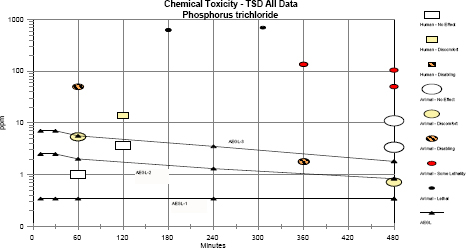
The overall robustness of the data base for phosphorus trichloride toxicity is poor. The lack of data creates substantial uncertainty regarding the exposure-response relationship for the toxic response to this chemical. Although qualitative data are available regarding the acute inhalation toxicity of phosphorus trichloride in humans, quantitative exposure-response data are lacking. Quantitative exposure-response data are severely limited for nonlethal responses in animals. These deficiencies result in an incomplete picture of the exposure concentration-response curve and exposure duration-response for phosphorus trichloride. Additional data are also needed regarding the mechanism of action, possible systemic effects (e.g., renal toxicity), and latency in the toxic responses (e.g., pulmonary damage) following acute inhalation exposure to phosphorus trichloride. The relationship between the AEGL values and available data are shown in the Category Plot in Appendix C.
9. REFERENCES
ACGIH (American Conference of Governmental Hygienists). 1991. Pp. 1261-1262 in Documentation of the Threshold Limit Values and Biological Exposure Indices, Vol. II, 6th Ed. American Conference of Governmental Industrial Hygienists, Cincinnati, OH.
ACGIH (American Conference of Governmental Hygienists). 2003. TLVs and BEIs Based on the Documentation of the Threshold Limit Values for Chemical Substances and Physical Agents and Biological Exposure Indices: Phosphorus Trichloride. American Conference of Governmental Hygienists, Cincinnatti, OH.
AIHA (American Industrial Hygiene Association). 2009. Current AIHA ERPG Values (2009). American Industrial Hygiene Association, Fairfax, VA [online]. Available: http://www.aiha.org/foundations/GuidelineDevelopment/ERPG/Documents/ERPerpglevels.pdf [accessed Dec. 7, 2010].
Barbee, S.J., J.J. Stone, and R.J. Hilaski. 1995. Acute inhalation toxicology of oxalyl chloride. Am. Ind. Hyg. Assoc. J. 56(1):74-76.
Beliles, R.P., and E.M. Beliles. 1993. Phosphorus, selenium, tellurium, and sulfur. Pp. 783-829 in Patty’s Industrial Hygiene and Toxicology, Vol. IIA. Toxicology, 4th Ed., G.D. Clayton, and F.E. Clayton, eds. New York: John Wiley and Sons.
Butjagin, P.W. 1904. Experimentelle Studien über den Einflufs technisch und hygienisch wichtiger Gase und Dämpfe auf den Organismus. Teil XII. Studien über phosphortrichlorid. Arch. Hyg. 49:307-335.
Fee, D.C., D.R. Gard, and C.H. Yang. 1996. Phosphorus compounds. Pp. 761-765 in Kirk-Othmer Encyclopedia of Chemical Technology, Vol. 18. Paper to Pigment Dispersions, 4th Ed., J. Kroschwitz, and M. Howe-Grant, eds. New York: Wiley.
DFG (Deutsche Forschungsgemeinschaft). 1999. List of MAK and BAT Values 1999. Maximum Concentrations and Biological Tolerance Values at the Workplace Report No. 35. Weinheim, Federal Republic of Germany: Wiley VCH.
Hazleton Laboratories. 1983. Subacute Inhalation Toxicity Study in Rats - Phosphorus Trichloride. Final Report. Project No. 241-141. Hazleton Laboratories America, Inc.
HSDB (Hazardous Substances Data Bank). 2007. Phosphorus Trichloride (CASRN 7719-12-2). TOXNET, Specialized Information Services, U.S. National Library of Medicine, Bethesda, MD [online]. Available: http://toxnet.nlm.nih.gov/cgi-bin/sis/htmlgen?HSDB [accessed Dec. 7, 2010].
Moody, P.L. 1981. Health Hazard Evaluation Report: FMC Corporation, Nitro, West Virginia. HETA 81-089-965. U.S. Department of Health and Human Services, Centers for Disease Control, National Institute for Occupational Safety and Health, Cincinnati, OH.
MSZW (Ministerie van Sociale Zaken en Werkgelegenheid). 2004. Nationale MAC-lijst 2004: Fosfor trichloride. Den Haag: SDU Uitgevers [online]. Available: http://www.lasrook.net/lasrookNL/maclijst2004.htm [accessed Dec. 6, 2010].
NIOSH (National Institute for Occupational Safety and Health). 1996. Documentation for Immediately Dangerous to Life or Health Concentrations (IDLH): NIOSH Chemical Listing and Documentation of Revised IDLH Values (as of 3/1/95)-Phosphorus Trichloride. U.S. Department of Health and Human Services, Centers for Disease Control and Prevention, National Institute for Occupational Safety and Health. August 1996 [online]. Available: http://www.cdc.gov/niosh/idlh/7719122.html [accessed Nov. 16, 2010].
NIOSH (National Institute for Occupational Safety and Health). 2005. NIOSH Pocket Guide to Chemical Hazards: Phosphorus Trichloride. U.S. Department of Health and Human Services, Centers for Disease Control and Prevention, National Institute for Occupational Safety and Health, Cincinnati, OH. September 2005 [online]. Available: http://www.cdc.gov/niosh/npg/npgd0511.html [accessed Nov. 23, 2010].
NRC (National Research Council). 1984. Emergency and Continuous Exposure Limits for Selected Airborne Contaminants, Vol. 2. Washington, DC: National Academy Press.
NRC (National Research Council). 1993. Guidelines for Developing Community Emergency Exposure Levels for Hazardous Substances. Washington, DC: National Academy Press.
NRC (National Research Council). 2001. Standing Operating Procedures for Developing Acute Exposure Guideline Levels for Hazardous Chemicals. Washington, DC: National Academy Press.
O’Neil, M.J., A. Smith, and P.E. Heckelman, eds. 2001. Phosphorus trichloride. P. 1319 in The Merck Index: An Encyclopedia of Chemicals and Drugs, 13th Ed. Whitehouse Station, NJ: Merck.
RTECS (Registry of Toxic Effects of Chemical Substances), 2009. Phosphorus Chloride. RTECS No. TH3675000. National Institute for Occupational Safety and Health [online]. Available: http://www.cdc.gov/niosh-rtecs/TH381378.html [accessed Dec. 7, 2010].
Sassi, C. 1952. Occupational poisoning with phosphorus trichloride. Med. Lav. 43(8-9):298-306.
SRI International. 1992. 1992 Directory of Chemical Producers: United States of America. Menlo Park, CA: SRI International, 85:1.
ten Berge, W.F., A. Zwart, and L.M. Appelman. 1986. Concentration-time mortality response relationship of irritant and systemically acting vapours and gases. J. Hazard. Mater. 13(3):301-309.
Tharr, D.G., and M. Singal. 1980. Health Hazard Evaluation Determination Report: FMC Corporation Specialty Chemicals Division: Nitro, WV. HHE-78-90-739. NTIS PB81-170920. National Institute for Occupational Safety and Health, Cincinnati, OH.
Wason, S., I. Gomolin, P. Gross, and F.H. Lovejoy, Jr. 1982. Phosphorus trichloride exposure: A follow-up study of 27 exposed patients. Vet. Human Toxicol. 24(4):275-276[Abstract B-5].
Wason, S., I. Gomolin, P. Gross, S. Mariam, and F.H. Lovejoy. 1984. Phosphorus trichloride toxicity: Preliminary report. Am. J. Med. 77(6):1039-1042.
Weeks, M.H., N.P. Musselman, P.P. Yevich, K.H. Jacobson, and F.W. Oberst. 1964. Acute vapor toxicity of phosphorus oxychloride, phosphorus trichloride and methyl phosphonic dichloride. Am. Ind. Hyg. J. 25:470-475.
APPENDIX A
DERIVATION OF AEGL VALUES
Derivation of AEGL-1 Values
| Key study: | Hazleton Laboratories 1983 |
| Toxicity end point: | NOAEL of 3.4 ppm for rats following multiple exposure at 6 h/day, 5 days/week for 4 weeks. |
| Scaling: | No time scaling was applied for AEGL-1 because the contact irritation expected from exposure to phosphorus trichloride vapors is not expected to vary over time. This approach is consistent with the AEGL Standing Operating Procedures (NRC 2001). |
| Uncertainty factors: | Interspecies UF = 3; the attenuation of this uncertainty factor is justified by the fact that the guinea pig appears to be the most sensitive species tested. |
| Intraspecies UF = 3; contact irritation and subsequent tissue damage appear to be due, in part, to hydrogen chloride and phosphonic acid resulting from chemical dissociaton and direct corrosive action of these components on mucosal surfaces. | |
| Additional application of uncertainty factor adjustment would provide AEGL-1 values that are inconsistent with limited data on human exposures. | |
| All AEGL-1 values were equivalent to the point-of-departure (3.4 ppm for 6 h) adjusted by a total uncertainty factor of 10 (3.4 ppm/10 = 0.34 ppm) because the contact irritation expected from exposure to phosphorus trichloride vapors is not expected to vary over time. This approach is consistent with the AEGL Standing Operating Procedures (NRC 2001). | |
| Derivation of AEGL-2 | |
| Key study: | Hazleton Laboratories 1983 |
| Toxicity end point: | LOAEL of 11 ppm for respiratory tract histopathologic changes in rats following multiple exposures at 6 h/day, 5 days/week for 4 weeks. |
| Scaling: | The concentration-time relationship for many irritant and systemically acting vapors and gases may be described by Cn × t = k, where the exponent n ranges from 0.8 to 3.5 (ten Berge et al. 1986). Due to the limited toxicity data for this chemical, an empirical derivation of n was not possible. In the absence of an empirically derived exponent (n), and to obtain conservative and protective AEGL values, temporal scaling was performed using n = 3 when extrapolating to shorter time points and n = 1 when extrapolating to longer time points using the Cn × t = k equation. |
| (11 ppm)1 × 6 h = 66 ppm-h (n = 1) | |
| (11 ppm)3 × 6 h = 7,986 ppm3-h (n = 3) | |
| Uncertainty factors: | Interspecies UF = 3; the attenuation of this uncertainty factor is justified by the fact that the guinea pig appears to be the most sensitive species tested and because limited human exposure data (Sassi 1952) indicate that humans have experienced routine occupational exposures of up to 3.6 ppm without effect. |
| Intraspecies UF = 3; contact irritation and subsequent tissue damage appear to be due, in part, to hydrogen chloride and phosphoric acid resulting from chemical dissociaton and direct corrosive action of these components on mucosal surfaces. | |
| Adjustments using a greater level of uncertainty would provide AEGL-2 values that are inconsistent with limited data on human exposures. | |
| 10-min AEGL-2 | The 10-min AEGL-2, was set equivalent to the 30-min value (2.5 ppm) due to uncertainties in extrapolating from the 6-h experimental exposure duration to a 10-min duration. |
| 30-min AEGL-2 | C3 × 0.5 h = 7,986 ppm3-h |
| C = 25.2 ppm | |
| 30-min AEGL-2 = 25.2 ppm/10 = 2.5 ppm (14 mg/m3) | |
| 1-h AEGL-2 | C3 × 1 h = 7,986 ppm3-h |
| C = 20.0 ppm | |
| 1-h AEGL-2 = 20.0 ppm/10 = 2.0 ppm (11 mg/m) | |
| 4-h AEGL-2 | C3 × 4 h = 7,986 ppm3-h |
| C = 12.6 ppm | |
| 4-h AEGL-2 = 12.6 ppm/10 = 1.3 ppm (7.3 mg/m3) | |
| 8-h AEGL-2 | C1 × 8 h = 66 ppm-h |
| C = 8 25 ppm | |
| 8-h AEGL-2 = 8.25 ppm/10 = 0.83 ppm (4.6 mg/m3) | |
| Derivation of AEGL-3 | |
| Key study: | Weeks et al. 1964 |
| Toxicity end point: | Lethality threshold estimated as 3-fold reduction in the 4-h LC50 for rats (104.3 ppm/3 = 34.8 ppm); delayed response possible. |
| Scaling: | The concentration-time relationship for many irritant and systemically acting vapors and gases may be described by Cn × t = k, where the exponent n ranges from 0.8 to 3.5 (ten Berge et al. 1986). Due to the limited toxicity data for this chemical, an empirical derivation of n was not possible. In the absence of an empirically derived exponent (n) and to obtain conservative and protective AEGL values, temporal scaling was performed using n = 3 when extrapolating to shorter time points and n = 1 when extrapolating to longer time points using the Cn × t = k equation. |
| (34.8 ppm)1 × 4 h = 139.2 ppm-h (n = 1) | |
| (34.8 ppm)3 × 4 h = 168,576.8 ppm3-h (n = 3) | |
| Uncertainty factors: | Interspecies UF = 3; the attenuation of this uncertainty factor is justified by the fact that the guinea pig appears to be the most sensitive species tested and because limited human exposure data (Sassi 1952) indicate that humans have experienced exposures of up to 27 ppm without life-threatening consequences. |
| Intraspecies UF = 3; contact irritation and subsequent tissue damage appear to be due, in part, to hydrogen chloride and phosphonic acid resulting from chemical dissociaton and direct corrosive action of these components on mucosal surfaces. | |
| Additional application of uncertainty factor adjustment would provide AEGL-3 values that are not consistent with limited data on human exposures or with the results of repeated exposures in rats wherein exposure to 11 ppm 6 h/day, 5 days/week for 4 weeks showed only histologic changes in the upper respiratory tract and no overt signs of toxicity | |
| 10-min AEGL-3 | Due to uncertainties in extrapolating from a 4-h to 10-min exposure, the 10-min AEGL-3 is set equivalent to the 30-min value (7.0 ppm). |
| 30-min AEGL-3 | C3 × 0.5 h = 168,576.8 ppm3-h |
| C = 69.6 ppm | |
| 30-min AEGL-3 = 69.6 ppm/10 = 7.0 ppm | |
| (39 mg/m3) | |
| 1-h AEGL-3 | C3 × 1 h = 168,576.8 ppm3-h |
| C = 55.2 ppm | |
| 1-h AEGL-3 = 55.2 ppm/10 = 5.6 ppm (31 mg/m3) | |
| 4-h AEGL-3 | C3 × 4 h = 168,576.8 ppm3-h |
| C = 34.8 ppm | |
| 4-h AEGL-3 = 34.8 ppm/10 = 3.5 ppm (20 mg/m) | |
| 8-h AEGL-3 | C1 × 8 h = 139.2 ppm-h |
| C = 17.4 ppm | |
| 8-h AEGL-3 = 17.4 ppm/10 = 1.8 ppm (10 mg/m3) | |
APPENDIX B
ACUTE EXPOSURE GUIDELINES FOR FOR PHOSPHORUS TRICHLORIDE
Derivation Summary for Phosphorus Trichloride
AEGL-1 VALUES
| 10 min | 30 min | 1 h | 4 h | 8 h |
| 0.34 ppm | 0.34 ppm | 0.34 ppm | 0.34 ppm | 0.34 ppm |
| Reference: Hazleton Laboratories 1983 | ||||
| Test Species/Strain/Number: Sprague-Dawley rats; 15/sex/group | ||||
| Exposure Route/Concentrations/Durations: Inhalation exposure (whole-body) to 0, 0.5, 3.0, or 10.0 ppm (nominal) for 6 h/day, 5 days/week for 4 weeks | ||||
| Toxicity End Point: No effects noted at 3.4 ppm (analytical) following multiple exposure of rats over 4 weeks | ||||
| Time Scaling: No time scaling was applied for AEGL-1. All AEGL-1 values were equivalent to the point-of-departure (3.4 ppm for 6 h) adjusted by a total uncertainty factor of 10 (3.4 ppm/10 = 0.34 ppm) because the contact irritation expected from exposure to phosphorus trichloride vapors is not expected to vary over time. This approach is consistent with the AEGL Standing Operating Procedures (NRC 2001). | ||||
| Concentration/Time Selection/Rationale: In the absence of exposure-response data specific for AEGL-1 effects, the exposure to 3.4 ppm at 6 h/day, 5 days/week for 4 weeks was selected as a conservative basis for AEGL development. | ||||
| Uncertainty Factors/Rationale: Total uncertainty application of 10 | ||||
| Interspecies UF = 3: The interspecies uncertainty factor was limited to 3 because of the concordance of the animal data with the human experience and because the most sensitive species tested (guinea pig) was only about 2-fold more sensitive. | ||||
| Intraspecies UF= 3: The intraspecies uncertainty factor was limited to 3 because primary effects of phosphorus trichloride (irritation and subsequent tissue damage) appear to be due, in part, to hydrogen chloride and phosphonic acid resulting from chemical dissociation. Furthermore, the AEGL-1 is based upon a conservative assumption and additional reduction of the AEGL-1 values would be inconsistent with available human and animal data. | ||||
| Modifying Factor: Not applicable | ||||
| Animal-to-Human Dosimetric Adjustments: Not applicable | ||||
| Data adequacy: Neither human nor animal quantitative exposure-response data were available regarding effects consistent with AEGL-1 definition.. The 3.4-ppm exposure of rats over 4 weeks was selected as a NOAEL for AEGL-1. Although likely to be a conservative basis for developing AEGL-1 values, it may be justified due to the relative paucity of data on the toxic response to this chemical. | ||||
AEGL-2 VALUES
| 10 min | 30 min | 1 h | 4 h | 8 h |
| 2.5 ppm | 2.5 ppm | 2.0 ppm | 1.3 ppm | 0.83 ppm |
| Reference: Hazleton Laboratories 1983 | ||||
| Test Species/Strain/Number: Sprague-Dawley rats; 15/sex/group | ||||
| Exposure Route/Concentrations/Durations: Inhalation exposure (whole-body) to 0, 0.5, 3.0, or 10.0 ppm (nominal) for 6 h/day, 5 days/week for 4 weeks | ||||
| Toxicity End Point: Histopathologic alterations in respiratory tract in rats exposed to 11 ppm (analytical), 6 h/day, 5 days/week for 4 weeks. There were no concurrent hematologic or biochemical alterations indicative of a toxic response, and there were no ophthalmologic effects. The 11 ppm exposure concentration is considered a NOAEL for AEGL-2 tier effects. | ||||
| Time Scaling: The concentration-time relationship for many irritant and systemically acting vapors and gases may be described by Cn × t = k, where the exponent n ranges from 0.8 to 3.5. Due to the limited toxicity data for this chemical, an empirical derivation of n was not possible. In the absence of an empirically derived exponent (n), and to obtain conservative and protective AEGL values, temporal scaling was performed using n = 3 when extrapolating to shorter time points and n = 1 when extrapolating to longer time points using the Cn × t = k equation. For 10-min AEGL-2, values were set at equivalence to the 30-min values due to uncertainties in extrapolating from the experimental exposure durations of 4 h or greater. | ||||
| Concentration/Time Selection/Rationale: The multiple exposure of rats to 11 ppm over 4 weeks was considered a conservative estimate and NOAEL for AEGL-2 effects (i.e., the effects were neither disabling nor irreversible). | ||||
| Uncertainty Factors/Rationale: Total uncertainty application of 10. | ||||
| Interspecies UF = 3: The interspecies uncertainty factor was limited to 3 because of the concordance of the animal data with the human experience and because the most sensitive species tested (guinea pig) was only about 2-fold more sensitive. | ||||
| Intraspecies UF = 3: The intraspecies uncertainty factor was limited to 3 because primary effects of phosphorus trichloride (irritation and subsequent tissue damage) appear to be due, in part, to hydrogen chloride and phosphonic acid resulting from chemical dissociation. Furthermore, the AEGL-2 is based upon histopathologic changes in the respiratory tract that were not necessarily irreversible or disabling. | ||||
| Additional reduction of the AEGL-2 values would be inconsistent with available human and animal data. | ||||
| Modifying Factor: Not applicable | ||||
| Animal-to-Human Dosimetric Adjustments: Not applicable | ||||
| Data adequacy: Limited information regarding the human experience indicated that 2- to 6-h exposures to 1.8-3.6 ppm were without effect and that exposure to 14-27 ppm irritation of the eyes and upper respiratory tract, photophobia, chest tightness, and bronchitis. Because the effects were neither disabling nor irreversible, the end point used for AEGL-2 development is considered a NOAEL for AEGL-2 effects. | ||||
AEGL-3 VALUES
| 10 min | 30 min | 1 h | 4 h | 8 h |
| 7.0 ppm | 7.0 ppm | 5.6 ppm | 3.5 ppm | 1.8 ppm |
| Reference: Weeks, M.H., N.P. Mussleman, P.P. Yevich, K.H. Jacobson, and F.W. Oberst. 1964. Acute vapor toxicity of phosphorus oxychloride, phosphorus trichloride and methyl phosphonic dichloride. Am. Ind. Hyg. J. 25: 470-475. | ||||
| Test Species/Strain/Number: female rats /strain not specified/20 per group | ||||
| Exposure Route/Concentrations/Durations: inhalation/median lethal concentrations derived but exposure concentrations not specified/4 h | ||||
| Toxicity End Point: estimated lethality threshold by 3-fold reduction of rat 4-h LC50 of 104.3 ppm | ||||
| Time Scaling: The concentration-time relationship for many irritant and systemically acting vapors and gases may be described by Cn × t = k, where the exponent n ranges from 0.8 to 3.5. Due to the limited toxicity data for this chemical, an empirical derivation of n was not possible. In the absence of an empirically derived exponent (n), and to obtain conservative and protective AEGL values, temporal scaling was performed using n = 3 when extrapolating to shorter time points and n = 1 when extrapolating to longer time points using the Cn × t = k equation. | ||||
| (34 8 m)1 × 4 h = 139 2 m-h (n = 1) | ||||
| (34.8 ppm)3 × 4 h = 168,576.8 ppm3-h (n = 3) | ||||
| Concentration/Time Selection/Rationale: a 3-fold reduction of the rat 4-h LC50 (104.3 ppm/3 = 34.8 ppm) was used as an estimate of the lethality threshold. | ||||
| Uncertainty Factors/Rationale: | ||||
| Total Uncertainty: | 10 | |||
| Interspecies UF = 3 | Data for humans and animals indicate some variability in the toxic response to phosphorus trichloride but LC50 values for rodents exhibited approximately a 2-fold difference. | |||
| Intraspecies UF = 3 | The uncertainty for intraspecies variability was limited to 3 because primary effects of phosphorus trichloride (irritation and subsequent tissue damage) appear to be due, in part, to hydrogen chloride and phosphonic acid resulting from chemical dissociation and the direct corrosive action of these on mucosal surfaces. The overall uncertainty factor adjustment of 10 may be justified by limited human exposure data suggesting that humans could experience exposures of up to 27 ppm without life-threatening consequences. Furthermore, the results of a multiple exposure studies in rats (11 ppm 6 h/day, 5 days/week for 4 weeks) showed only histologic changes in the upper respiratory tract and no overt signs of toxicity. | |||
| Modifying Factor: None applied | ||||
| Animal-to-Human Dosimetric Adjustments: Insufficient data | ||||
| Data adequacy: Lethality data are limited to two species and quantitative data for humans are limited. However, comparison of the AEGL-3 values with available data does not support application of uncertainty adjustment greater than that currently applied. Data suitable for determining exposure-time relationships are also lacking and impact on temporal extrapolation efforts. A delayed response is possible as demonstrated in the Weeks et al. (1964) study in which deaths of guinea pigs occurred up to 10 days post exposure. | ||||