
PREDICTING OUTCOMES
OF INVESTMENTS IN
MAINTENANCE AND REPAIR
OF FEDERAL FACILITIES
Committee on Predicting Outcomes of Investments in Maintenance and
Repair for Federal Facilities
Board on Infrastructure and the Constructed Environment
Division on Engineering and Physical Sciences
NATIONAL RESEARCH COUNCIL
OF THE NATIONAL ACADEMIES
THE NATIONAL ACADEMIES PRESS
Washington, D.C.
www.nap.edu
THE NATIONAL ACADEMIES PRESS 500 Fifth Street, N.W. Washington, DC 20001
NOTICE: The project that is the subject of this report was approved by the Governing Board of the National Research Council, whose members are drawn from the councils of the National Academy of Sciences, the National Academy of Engineering, and the Institute of Medicine. The members of the committee responsible for the report were chosen for their special competences and with regard for appropriate balance.
This report was supported by a series of contracts between the National Academy of Sciences and the sponsor agencies of the Federal Facilities Council. Any opinions, findings, conclusions, or recommendations expressed in this publication are those of the authors and do not necessarily reflect the views of the organizations or agencies that provided support for the project.
International Standard Book Number-13: 978-0-309-22186-3
International Standard Book Number-10: 0-309-22186-2
Additional copies of this report are available from The National Academies Press, 500 Fifth Street, N.W., Lockbox 285, Washington, DC 20055; (800) 624-6242 or (202) 334-3313 (in the Washington metropolitan area); Internet, http://www.nap.edu.
Copyright 2012 by the National Academy of Sciences. All rights reserved.
Printed in the United States of America
THE NATIONAL ACADEMIES
Advisers to the Nation on Science, Engineering and Medicine
The National Academy of Sciences is a private, nonprofit, self-perpetuating society of distinguished scholars engaged in scientific and engineering research, dedicated to the furtherance of science and technology and to their use for the general welfare. Upon the authority of the charter granted to it by the Congress in 1863, the Academy has a mandate that requires it to advise the federal government on scientific and technical matters. Dr. Ralph J. Cicerone is president of the National Academy of Sciences.
The National Academy of Engineering was established in 1964, under the charter of the National Academy of Sciences, as a parallel organization of outstanding engineers. It is autonomous in its administration and in the selection of its members, sharing with the National Academy of Sciences the responsibility for advising the federal government. The National Academy of Engineering also sponsors engineering programs aimed at meeting national needs, encourages education and research, and recognizes the superior achievements of engineers. Dr. Charles M. Vest is president of the National Academy of Engineering.
The Institute of Medicine was established in 1970 by the National Academy of Sciences to secure the services of eminent members of appropriate professions in the examination of policy matters pertaining to the health of the public. The Institute acts under the responsibility given to the National Academy of Sciences by its congressional charter to be an adviser to the federal government and, upon its own initiative, to identify issues of medical care, research, and education. Dr. Harvey V. Fineberg is president of the Institute of Medicine.
The National Research Council was organized by the National Academy of Sciences in 1916 to associate the broad community of science and technology with the Academy’s purposes of furthering knowledge and advising the federal government. Functioning in accordance with general policies determined by the Academy, the Council has become the principal operating agency of both the National Academy of Sciences and the National Academy of Engineering in providing services to the government, the public, and the scien-tifc and engineering communities. The Council is administered jointly by both Academies and the Institute of Medicine. Dr. Ralph J. Cicerone and Dr. Charles M. Vest are chair and vice chair, respectively, of the National Research Council.
This page intentionally left blank.
COMMITTEE ON PREDICTING OUTCOMES OF INVESTMENTS IN MAINTENANCE AND REPAIR FOR FEDERAL FACILITIES
DAVID A. SKIVEN, Engineering Society of Detroit Institute, Brighton, Michigan, Chair
GET W. MOY, AECOM, Inc., Arlington, Virginia, Vice Chair
MICHAEL A. AIMONE, Battelle Memorial Institute, Fairfax, Virginia
BURCU AKINCI, Carnegie Mellon University, Pittsburgh, Pennsylvania
ALFREDO H-S. ANG, University of California, Irvine
JOSEPH BIBEAU, Eagle Enterprises of Tennessee LLC, Lebanon
IVAN DAMNJANOVIC, Texas A&M University, College Station
LUCIA E. GARSYS, Hillsborough County, Florida
DANIEL F. GELDERMANN, CALIBRE Systems, Alexandria, Virginia
MICHAEL R. GREENBERG, Rutgers University, New Brunswick, New Jersey
WILLIAM G. STAMPER, CBC Solutions, Inc., Burke, Virginia
ERIC TEICHOLZ, Graphic Systems, Inc., Cambridge, Massachusetts
DONALD R. UZARSKI, University of Illinois, Urbana-Champaign
Staff
LYNDA STANLEY, Study Director
HEATHER LOZOWSKI, Financial Associate
RICKY WASHINGTON, Administrative Coordinator
LAURA TOTH, Program Assistant
BOARD ON INFRASTRUCTURE AND THE CONSTRUCTED ENVIRONMENT
DAVID J. NASH, MELE Associates, Vienna, Virginia, Chair
ADJO A. AMEKUDZI, George Institute of Technology, Atlanta
ALFREDO H-S. ANG, University of California, Irvine
HILLARY BROWN, New Civic Works, Inc., New York, New York
JESUS M. de la GARZA, Virginia Tech, Blacksburg
PETER MARSHALL, U.S. Navy (retired), Norfolk, Virginia
JAMES B. PORTER JR., Sustainable Operations Solutions, LLC, Chadds Ford, Pennsylvania
JAMES RISPOLI, Project Time and Cost, Inc., Raleigh, North Carolina
DAVID A. SKIVEN, Engineering Society of Detroit Institute, Brighton, Michigan
DEBORAH SLATON, Wiss, Janney, Elstner Associates, Northbrook, Illinois
E. SARAH SLAUGHTER, Built Environment Coalition, Cambridge, Massachusetts
JANICE L. TUCHMAN, Engineering News Record, New York, New York
JAMES P. WHITTAKER, Facility Engineering Associates, Fairfax, Virginia
Staff
DENNIS CHAMOT, Acting Director
LYNDA STANLEY, Senior Program Officer
HEATHER LOZOWSKI, Financial Associate
RICKY WASHINGTON, Administrative Coordinator
LAURA TOTH, Program Assistant
Preface
The federal government operates a portfolio of about 429,000 buildings and 482,000 other structures whose core purposes are to support the conduct of public policy, to help to defend the national interest, and to provide services to the U.S. public. Since 1990, studies have been issued, research has been undertaken, and technology has advanced in support of more strategic and more cost-effective management of federal facilities.
However, although progress has been made, major issues persist in regard to the maintenance and repair of federal facilities:
• Federal facilities continue to deteriorate.
• Federal agencies continue to operate and maintain facilities that are excess to their missions.
• Each federal agency approaches reinvestment in maintenance and repair differently
• Federal facilities program managers have been unable to communicate effectively the link between reinvestment in facilities’ maintenance and repair and the core missions of their agencies.
• Federal facilities program managers have been unable to communicate effectively the link between reinvestment in facilities’ maintenance and repair and the core missions of their agencies.
So, what is different now that merits a new look at and a new study about the maintenance and repair of federal facilities? In fact, much has changed in the last 10 years. Recognition of the importance of buildings that protect their occupants in the event of disaster arose in the wake of the 9/11 terrorist attacks. In the aftermath, new security standards, risk assessment and risk mitigation
processes, and new technologies have been developed. Public debate about the reduction of greenhouse gas emissions associated with global climate change has brought the significance of buildings and their operations to the forefront, because the electricity used by buildings accounts for 40 percent of U.S. greenhouse gas emissions. Facilities also use substantial amounts of the nation’s energy, water, and materials, and contribute to air and water pollution. Accordingly, they are an important factor in achieving—or not achieving—public policy goals for energy security and environmental sustainability. Because most of the buildings and other facilities used today will still be in use 30 years from now, better processes for operating and maintaining facilities will be essential if we are to achieve substantial reductions in greenhouse gas emissions, energy use, and water use.
In 2011, the federal operating environment of increasing fiscal constraints and a growing national debt provides an additional impetus to reexamine how investments in federal facilities are made. Operating and maintaining unneeded facilities constitute a drain on the federal budget and result in lost opportunities to strategically invest to improve the condition of those facilities that support current missions, to reduce energy and water use, and to meet other public policy objectives. Strategic investments in maintenance and repair activities can also result in economic benefits when products, supplies, and equipment are purchased and when federal agencies contract out maintenance and repair activities to private-sector firms.
For those reasons and others, the Federal Facilities Council asked the National Research Council to appoint an ad hoc committee of experts to develop methods, strategies, and procedures to predict outcomes of investments in maintenance and repair of federal facilities. The committee appointed to undertake that task, the Committee on Predicting Outcomes of Investments in Maintenance and Repair for Federal Facilities, was composed of experts from public, private, and academic organizations who had a wealth of experience in addressing the complex and diverse issues surrounding facilities management. The committee reviewed previous reports that focused on federal facilities management; held discussions with representatives of private-sector organizations, professional societies, and numerous federal agencies; and conducted research on specific relevant topics to formulate its findings and recommendations.
Based on its work, the committee concluded that new, more proactive, and more transparent approaches to the maintenance and repair of federal facilities are needed. New approaches will have to identify specific outcomes that can result from a given level of maintenance and repair investment and identify the risks— the probability of adverse consequences—associated with a lack of investment. Those approaches will help federal facilities managers and decision-makers to improve their targeting of investments to achieve multiple objectives and help them to manage risk.
Implementation of a more strategic, risk-based approach to investment in federal facilities maintenance and repair will require a continuous-improvement
mind-set at all levels of government. Improvement goals and objectives should focus on the following:
• Ensuring that federal facilities are safe, secure, and in compliance with a host of health, safety, and environmental regulations,
• Disposing of excess facilities that no longer support agencies’ missions and reducing the total federal facilities “footprint,” and
• Operating mission-supportive facilities efficiently and effectively to reduce their overall costs and to support energy efficiency and other public policy objectives.
As a nation, we cannot continue to ignore the risks and potential consequences of under-maintaining federal facilities. During a period of decreasing budgets, downsizing, and increased competition for federal funding, the federal government and its agencies have the opportunity—and the responsibility—to implement new approaches to strategically reinvest in the portfolio of federal facilities. By taking a leadership role, the government can both address the deterioration of the nation’s public assets and also help to achieve other public policy goals, such as energy security and sustainability.
| David A. Skiven, Chair Committee on Predicting Outcomes of Investments in Maintenance and Repair for Federal Facilities |
This page intentionally left blank.
Acknowledgments
The committee acknowledges the substantial contributions of members of the Federal Facilities Council and of Valerie Short of Jacobs Engineering, Michael Telson of the University of California, and Robert Moore of the National Institute of Standards and Technology (retired). The committee also thanks the following, who willingly and enthusiastically volunteered their time and ideas: Al Antelman, Valerie Baldwin, Steven Beattie, William Broglie, Karl Calvo, Douglas Christensen, James J. Dempsey, Andrew Dichter, Terrell Dorn, Maria Edelstein, Douglas Ellsworth, Michael Grussing, Dino Herrera, Jay Janke, Gerald Kokos, Peter Lufkin, Lance Marrano, Peter Marshall, William McNab, Lander Medlin, Joseph Morganti, Patrick Okamura, Peter O’Konski, Carl Rabenaldt, Dominic Savini, Robert St. Thomas, Kim Toufectis, Cynthia Vallina, Alex Willman, Stephen Wooldridge, Richard N. Wright, and John Yates.
This report has been reviewed in draft form by individuals chosen for their diverse perspectives and technical expertise, in accordance with procedures approved by the National Research Council’s Report Review Committee. The purpose of this independent review is to provide candid and critical comments that will assist the institution in making its published report as sound as possible and to ensure that the report meets institutional standards for objectivity, evidence, and responsiveness to the study charge. The review comments and draft manuscript remain confidential to protect the integrity of the deliberative process. We thank the following individuals for their review of the report:
William W. Badger, Arizona State University,
William W. Brubaker, Hill International Inc. (retired),
Donald Coffelt, Carnegie Mellon University,
David G. Cotts, Consultant (retired),
Dennis P. Ferrigno, CAF & Associates, LLC,
Chris Hendrickson, Carnegie Mellon University,
Robert N. Jortberg, U.S. Navy (retired),
Richard G. Little, Keston Institute for Public Finance and Infrastructure Policy,
Judith Passwaters, E.I. du Pont de Nemours and Company,
Kumares C. Sinha, Purdue University,
Michael Vorster, Virginia Tech, and
Alan Washburn, U.S. Naval Postgraduate School.
Although the reviewers listed above have provided many constructive comments and suggestions, they were not asked to endorse the conclusions or recommendations, nor did they see the final draft of the report before its release. The review of this report was overseen by Lloyd Duscha, Department of Defense (retired). Appointed by the National Research Council, he was responsible for making certain that an independent examination of this report was carried out in accordance with institutional procedures and that all review comments were carefully considered. Responsibility for the final content of this report rests entirely with the authoring committee and the institution.
Contents
Characteristics of the Portfolio of Federal Facilities
Long-Standing Investment and Management Issues
Impetus for and Foundation of More Sustainable Practices
2 OUTCOMES AND RISKS ASSOCIATED WITHINVESTMENTS IN MAINTENANCE AND REPAIR
Typical Outcomes of Investments in Maintenance and Repair
Risks Posed by Deteriorating Facilities
3 DATA, TOOLS, AND TECHNOLOGIES TO SUPPORT INVESTMENTS IN MAINTENANCE AND REPAIR
Data Acquisition and Tracking Systems
4 EFFECTIVE PRACTICES FOR INVESTMENT IN MAINTENANCE AND REPAIR
Dispose of Excess and Underutilized Facilities
Pursue a Proactive Strategy to Minimize the Total Facilities “Footprint,”
Correlate the Effects of Failure with the Organization’s Mission
Correlate Repair Delay with Sustainment Cost
Strategically Assess the Condition of Facilities
Conduct a Year-End Budget Review to Evaluate Investment Performance
5 COMMUNICATING OUTCOMES AND RISK
Issues Related to Effective Communication
Communication Strategies Used by Private-Sector Organizations
Communicating the Value of Maintenance and Repair to a Mission
6 FINDINGS AND RECOMMENDATIONS
7 IMPLEMENTING A RISK-BASED STRATEGY FOR INVESTMENTS IN FEDERAL FACILITIES’ MAINTENANCE AND REPAIR
Linking Maintenance and Repair Investments and Outcomes to Mission
Guidelines for Developing an Annual Risk-Based Funding Request
Predicting Outcomes of a Given Level of Investment in Maintenance and Repair
Methods for Identifying Risks Related to Deteriorating Facilities
A Biosketches of Committee Members
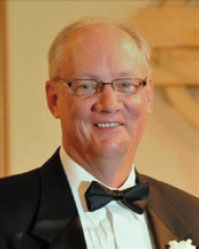
The Committee on Predicting Outcomes of Investments in Maintenance and Repair for Federal Facilities dedicates this report to our chair and valued colleague, David A. Skiven, who provided unwavering leadership and inspiration through all phases of the study process. He was a leader, gifted engineer, manager, mentor, and a tireless volunteer on behalf of the National Research Council, its Board on Infrastructure and the Constructed Environment, and the Engineering Society of Detroit Institute. Dave died shortly after the report was released to the public.


