
The Food Safety and Inspection Service (FSIS) is the regulatory agency in the US Department of Agriculture (USDA) that is responsible for ensuring that meat, poultry, and processed egg products produced domestically or imported into the United States are safe, wholesome, and properly labeled. FSIS’s legal authority to perform its regulatory function is derived from four food-safety statutes, namely the Federal Meat Inspection Act (1906), the Poultry Products Inspection Act (1957), the Egg Products Inspection Act (1970), and voluntary inspection under the Agricultural Marketing Act (1946). Aside from those acts, executive orders, small-business protection laws, and other guidelines that apply to all federal agencies (FSIS, 2010a) allow FSIS to conduct its food safety-related activities.
The agency’s mission is carried out by issuing and enforcing food-safety regulations, conducting facility and product inspections (including sampling and testing), responding to foodborne-disease outbreaks (by requesting the initiation of food recalls and participating in epidemiological investigations), and conducting communication, education, and food-defense activities. FSIS has almost 8,000 front-line employees (inspectors, veterinarians, supervisors, and enforcement investigations and analysis officers) that routinely collect data over the course of their sampling, inspection, and verification activities. Data are collected on all federally regulated processing or slaughter establishments and other facilities that are involved in the supply chain (such as warehouses, transporters, and retail stores).
THE FOOD SAFETY AND INSPECTION SERVICE REGULATORY FRAMEWORK
FSIS establishes and enforces regulations that allow it to implement the federal statutes and laws related to food safety. Regulations are created through a process in which the public is given an opportunity to review and comment on a proposed regulation (it is posted in the Federal Register). Public comments are then considered by FSIS before it publishes a final regulation (also called a final rule). For each regulation, there is an effective date by which members of the regulated industry must be in compliance. Over the course of time, FSIS issues multiple directives that guide inspection staff as to how to implement a regulation, addressing such issues as the mechanisms of inspection, decision-making, documentation, and enforcement. For a newly emergent problem that is not covered by a regulation, FSIS issues directives and notices
whose purpose is to provide an interim means of addressing the problem until a more comprehensive policy can be created (FSIS, 2007).
The statutes underlying FSIS’s responsibility for ensuring compliance with federal food-safety regulations require that FSIS inspection personnel be present on the premises of all facilities that produce meat, poultry, or processed egg products. FSIS inspection personnel must be present at slaughter facilities at all times during their operations. FSIS inspection personnel must be present at processing facilities one time during a day on which meat and poultry products are processed. If an inspector observes noncompliance issues during his or her routine inspection activities, the following enforcement process is followed:
- An inspector-in-charge (IIC) informs the facility of noncompliance with a regulation by issuing a noncompliance report (NR).
- Facility management is notified by the IIC that its products will not be given the “mark of inspection” until inspection personnel can make the determination that the products are not adulterated. Inspection Program Personnel have the authority to retain products at the establishment, or reject equipment for use, until they can make such a determination.
- On a planned basis and when there is an indicated cause, District Offices (DO) assign Enforcement, Investigation, and Analysis Officers (EIAO) to conduct Comprehensive Food Safety Assessments at establishments and document any regulatory or statutory instances of noncompliance found, following which, the DO will initiate appropriate enforcement actions up to the withdrawal of an establishment’s grant of inspection.
Every facility is advised to address an NR promptly through corrective or preventive action or submission of an appeal. Failure of a facility to comply with a regulation despite notice and guidance from FSIS can result in the issuance of a notice of suspension that will apply to the entire facility or parts of the facility in question (FSIS, 1998). Figure 1-1 depicts the FSIS regulatory framework.
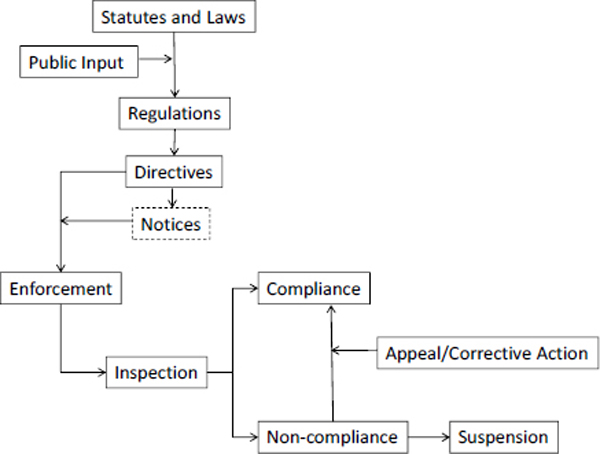
Figure 1-1 The FSIS regulatory framework.
During the course of inspections and followup enforcement actions, FSIS collects a large volume of food-safety–related data, some of which are available to the public via the Internet. The data are usually posted in an aggregated form (for example, by geographic region, pathogen, or product type), but FSIS is considering providing the public with access to the data in a disaggregated form, that is, establishment-specific data. The present report examines important issues for consideration by FSIS as it deliberates on posting establishment-specific data. A detailed description of the statement of task, the study rationale, and the committee’s approach to the study are described in the next sections.
FSIS asked the National Research Council to conduct a study and convene an ad hoc committee to evaluate the effects of making establishment-specific data publicly available on the Internet. The specific statement of task, developed with input from the National Research Council Standing Committee on the Use of Public Health Data in FSIS Food Safety Programs, is as follows:
A study committee will examine the potential food-safety benefits and other consequences of making establishment-specific data sets publicly available on the Internet. For each type of establishment-specific data set provided to the committee, the study will
1. Identify the likely positive and negative impacts or trade-offs of making the data available to the general public, including how factors such as level of aggregation, timing of release, level of completeness, and characterization of the data or context in which the data are presented might affect their utility in improving food safety.
2. Examine potential ways that food-safety benefits and other effects of publicly posting the data might be measured.
The committee will prepare a brief report of its findings.
The Obama administration has implemented an administrationwide focus on increasing accountability, accessibility, and transparency. In early 2009, a Memorandum on Transparency and Open Government2 that expressed the administration’s commitment to ensuring public trust in the government through “a system of transparency, public participation, and collaboration” was issued by President Obama. In the same year, a Memorandum for Heads of Executive Departments and Agencies was issued by the Office of Management and Budget (OMB). That memorandum included a list of steps to be taken by agencies in support of facilitating openness in government, including the requirement that each agency publish information on line in a timely manner and in a form that can be easily retrieved, downloaded, indexed, and searched with tools available on the Internet; use modern technology to share information that can be used by the public without the need for Freedom of Information Act (FOIA) requests; and post high-value data that have not been previously made available to the public via the Internet or in a downloadable format (see Appendix B for the full text of the OMB memorandum).
As a followup to the 2009 memorandum, President Obama in 2011 issued a Memorandum on Regulatory Compliance3 that requires “agencies with broad regulatory compliance and administrative enforcement responsibilities to develop a plan to make public information concerning their regulatory compliance and enforcement activities accessible, downloadable, and searchable online”. The 2011 memorandum also stated that data should be made available on a centralized platform, for example, via www.data.gov.
As first steps toward transparency and following the 2011 presidential mandate, agencies and departments have identified select datasets and shared them with the public and have begun to develop their transparency plans. The secretary of USDA has embraced the administration’s initiative and has developed an Open Government Web site4 and a plan5 for implementing President Obama’s Open Government Initiative; this plan will be updated as decisions are made on how to implement the open government concept effectively.
____________________
2Dated January 21, 2009; published in the Federal Register, Volume 74, No. 15.
3Dated January 18, 2011; published in the Federal Register, Volume 76, No. 14.
4See http://www.usda.gov/open (accessed on July 22, 2011).
5See http://www.usda.gov/open/Blog.nsf/dx/USDA_Open_Government_Plan.pdf/$file/USDA_Open_Government_Plan.pdf (accessed July 22, 2011).
The idea of increased transparency is not completely new to FSIS. Although its mission is regulatory, rather than solely information-gathering, the agency had been making inspection and sampling data publicly available on its Web site6 even before the current administration took office. However, as the committee explains in the next chapter, most of the FSIS data provided to the public through the agency’s Web site are aggregated (for example, by geographic region, production type, establishment size, and pathogen), and in most cases information for linking data to specific establishments is insufficient.7 All of the aggregated and disaggregated data that FSIS collects, with some exceptions (such as corporate proprietary data), can be obtained by the public through FOIA (FSIS, 2010b), but responding to numerous FOIA requests can be time-consuming and expensive for the agency, and initiating a request can be expensive for the requester.
The three memoranda, the creation of www.data.gov and the push to post high-quality data on the Web site, and the constant requests for information through FOIA are the main reasons that FSIS is now considering the feasibility and value of posting establishment-specific data publicly. FSIS first consulted the National Advisory Committee on Meat and Poultry Inspection Subcommittee on Data Collection, Analysis, and Transparency for advice in 2010. That subcommittee was asked to deliberate about which data to share, the primary audiences that might access these data, and the specific periods to include in such data-sharing efforts. In its report, the subcommittee acknowledged that it was unable to address several of the charge questions adequately, given the complexities of the issue and the short turnaround time for issuing its report. Accordingly, the subcommittee recommended that “FSIS obtain guidance from NAS [the National Academy of Sciences], NACMCF [the National Advisory Committee on Microbiological Committee for Foods], or other entities with recognized expertise in data management and analysis to improve data accessibility and usefulness for internal as well as external stakeholders.”8
A 12-member ad hoc committee with expertise in food safety and microbiology, public health, meat and poultry processing, risk assessment, risk communication, statistics, data disclosure, economics, and transparency in governance was convened. The committee met twice (May 11–12 and July 7–8, 2011, in Washington, DC) to gather information and to deliberate on the study topic. At the first meeting, the committee met with representatives of FSIS to obtain background information on the various FSIS regulatory activities and to get clarification of the rationale and scope of the study. At that meeting, the committee also had the opportunity to learn about the US Environmental Protection Agency Toxics Release Inventory Program (as an example of sharing of establishment-specific data with the public), the meat and poultry industry’s perspective on the posting of establishment-specific data, and critical issues associated
____________________
6See http://www.fsis.usda.gov/Science/Data_Collection_&_Reports/index.asp (accessed May 30, 2011).
7It is now widely understood that aggregation does not necessarily prevent identification of individual records. For example, see A. Machanavajjhala, J. Gehrke, D. Kifer, and M. Venkitasubramaniam. l-diversity: Privacy beyond kanonymity. In Proceedings of the 22nd International Conference on Data Engineering Workshops, ICDE, page 24, 2006.
8See http://www.fsis.usda.gov/OPPDE/NACMPI/Sep2010/Data_Subcommittee_Final_Report.pdf (accessed June 13, 2011).
with public risk perception and communication. At the second meeting, the committee met again with an FSIS representative to get clarification on FSIS data types.
The committee recognized that the issue of data-sharing is not peculiar to FSIS and that many agencies have formal data-sharing programs in various stages of maturity. Furthermore, there is a body of scientific literature on the potential effects (both beneficial and adverse) of public data access (see Chapter 3). FSIS collects a large volume of data in support of its regulatory functions (see Chapter 2 for details). Those sorts of data can be categorized as related to inspection and enforcement, to sampling and testing, to consumer complaints, and to company or establishment business information. After consultation with the agency, the committee chose to focus most of its deliberations on the first two categories (inspection and enforcement and sampling and testing) because consumer complaint data are sparse whereas company business information is considered proprietary. FSIS also limited the breadth of the study by listing topics that are outside the scope: origin and collection of data, information-technology systems, types of data that merit collection, and legal aspects of posting the data. In addition, FSIS suggested that the committee provide general guidance for decision-making with regard to providing public access to establishment-specific data.
Because there is no information on the effects of the data now posted by FSIS, the general approach taken by the committee was to review evidence of effects on the basis of the experience of other government agencies in releasing establishment-specific data. To the extent possible, pertinent examples of public data-sharing were identified and studied with respect to the basis of their establishment; their target audiences, the means and level of data aggregation and analysis provided for public access, and, in the case of mature programs, the evolution of public data disclosure. The committee also reviewed the evidence on the effects of public release of establishment-specific data and, on the basis of this analysis, drew some conclusions about the potential effects of releasing FSIS data. The committee briefly discussed specific data-release issues with regard to two of FSIS’s data categories: sampling and testing data and inspection and enforcement data. Considering the nature of FSIS data, the committee then deliberated on the value of giving the public access to establishment-specific data, focusing on effects on food safety and public health. In this report, the committee shares its findings and conclusions about the benefits and potential adverse unintended consequences of releasing FSIS establishment-specific data to the public and identifies key issues for consideration in developing a data-release program.
This report is organized into four chapters. Chapter 2 provides an overview of the concept of transparency and a description of relevant FSIS data that might be posted for open access. Chapter 3 describes pertinent examples of public data-sharing (outside FSIS) and the literature on the effects of releasing establishment-specific data. Chapter 4 synthesizes the materials presented in Chapters 2 and 3 and suggests specific issues for consideration by FSIS as it approaches the public release of establishment-specific data.
FSIS (Food Safety and Inspection Service). 1998. Key Facts: Enforcement of Pathogen Reduction and HACCP Regulations. Available at http://www.fsis.usda.gov/oa/background/keyenfor.htm). Accessed May 30, 2011.
FSIS. 2007. FSIS as a Public Health Regulatory Agency: Regulatory Framework (11/9/07). Available at http://www.fsis.usda.gov/PDF/PHVt-Regulatory_Framework.pdf). Accessed May 30, 2011.
FSIS. 2010a. Rules and Regulations: Acts and Authorizing Statutes. Available at http://www.fsis.usda.gov/regulations_&_policies/acts_&_authorizing_statutes/index.asp). Accessed May 30, 2011.
FSIS. 2010b. Freedom of Information Act. Available at http://www.fsis.usda.gov/foia/Reading_Room_Index/index.asp). Accessed May 30, 2011.


