
Because of the breadth of activities undertaken by the NASA Aeronautics Research Mission Directorate (ARMD) and the size and time limits of this study, the committee selected three case studies for more detailed analysis. These three case studies are NASA’s Integrated Systems Research Program’s Environmentally Responsible Aviation (ERA) project and the Fundamental Aeronautics Program’s Hypersonics and Supersonics projects. The committee believes that the three case studies selected are representative of the breadth of ARMD and of the flight research issues facing the organization. Subsonic aeronautics research programs in aviation safety, airspace systems, and fundamental subsonic aeronautics form the backbone of ARMD and account for a vast majority of the funding. The ERA project was chosen by the committee to represent subsonic flight research because it was formed to integrate a number of promising technologies developed under ARMD subsonic research programs to show how they can improve fuel efficiency and reduce the emissions and noise of subsonic aircraft in flight. While subsonics research supports today’s industrial base, the Fundamental Aeronautics Research Program’s Hypersonics and Supersonics projects were chosen because they represent the emerging near- and farther-term aeronautics and space applications that are important to the nation. In addition, the Supersonics and Hypersonics projects were chosen because of their high reliance on flight research (in comparison to subsonics) because of ground test facility limitations and other factors. For each of these case studies the committee discusses the current state of the program, some of the current flight activities within the projects, and the issues in the committee’s statement of task. There are common themes to each case study that the committee believes illustrate larger issues concerning the challenges that ARMD faces and how ARMD conducts flight research. The committee’s analyses of the common issues are presented at the end of this chapter.
As the committee examined the case studies and reviewed information presented to it by various NASA centers—including during a visit to the Dryden Flight Research Center—a common theme appeared in all of them: lack of a clearly defined “path to flight” for the projects. The committee noted that this tendency was most prevalent for the ERA project but was common to other NASA aeronautics endeavors as well, and it resulted in the following recommendation applicable to all of NASA’s projects:
Recommendation: NASA should ensure that each of its projects has a defined path to in-flight testing in an appropriate environment. These paths must include details of the vehicle to be used for the flight research, be it a modification to an existing testbed or a purpose-designed and built vehicle. The overall program must ensure that funding is available to complete the in-flight research
portion of the project in a timely manner, either by appropriately using a sub-scale test vehicle or by dedicating major funding levels to a “flagship” effort.
THE ENVIRONMENTALLY RESPONSIBLE AVIATION PROJECT
The ERA project is a part of NASA’s Integrated Systems Research Program. The ERA project is an effort to substantially improve the fuel efficiency and environmental performance—and therefore competitiveness—of the U.S. aviation industry. U.S. aircraft must operate not only at a time when fuel prices are increasing but also in areas such as Europe that have been tightening environmental restrictions on noise and emissions. According to NASA, the ERA project was created to “explore and document the feasibility, benefits and technical risk of vehicle concepts and enabling technologies that will reduce the impact of aviation on the environment.” This impact reduction will be accomplished by reducing noise, nitrous oxide (NOx) emissions, and fuel burn. The ERA project’s primary focus is to enable the design of aircraft that can accomplish all three of those goals simultaneously. With air traffic expected to double by 2025, the work of the ERA project will be crucial for reducing the air transportation system’s emission of greenhouse gases and decreasing its susceptibility to volatile aviation fuel prices.1
The ERA project’s 2020 goals, as outlined in the National Aeronautics Research and Development Plan, are to reduce noise by 42 dB, reduce NOx emissions by 75 percent, and reduce aircraft fuel burn by 40 percent.2 To meet these goals the ERA project plans to explore and mature unconventional aircraft designs in the areas of airframe and propulsion technology as well as vehicle systems integration. The project plans to invest in certain technologies for meeting its goals.
One challenge facing almost every aircraft is how to reduce noise. The ERA project will specifically concentrate on mitigating propulsion noise and airframe noise and the interaction between the two, referred to as propulsion airframe aerodynamics. Propulsion noise mostly consists of fan and jet noise, and airframe noise is primarily caused by flaps and landing gear. Engine noise can be reduced by employing ultra-high bypass engines such as a geared turbofan engine, soft vane, over-the-rotor foam metal lines, distortion-tolerant fans with active noise control, variable area fan nozzles, and combination metallic and polyimide foams or aerogel materials. Airframe noise can be reduced with the use of continuous mold-line wing structures, drooped leading edge, active flow control, adaptive and flexible wing structures, smart chevrons, and a toboggan fairing for landing gear noise reduction.
For example, to demonstrate noise reduction, NASA is conducting flight tests with a Gulfstream G550 at NASA’s Wallops Flight Facility. This will be used to demonstrate noise reduction capabilities with a focus on aircraft design as a whole and specifically on landing gear.
Another challenge is to reduce landing and takeoff NOx emissions. There are three current plans to address these types of emissions. One of them, the ERA CMC (ceramic matrix composite) combustor liner, will be able to tolerate high engine temperatures. Another one is active combustion instability control that will focus on trying to reduce combustor instabilities. Finally, the low-NOx, fuel-flexible combustor offers a high bypass ratio and advanced combustion with fuel/air mixtures. An example of this propulsion technology research is the development of fuel injector designs that will meet the emission standards.
NASA’s plan to tackle fuel burn is composed of three parts: reducing drag via laminar flow, reducing weight via advanced structures, and reducing specific fuel consumption via ultra-high bypass ratio engines. Drag reduction can be achieved by using many tools and techniques, such as aircraft design and propulsion (see Figure 2.1). For example, the hybrid laminar flow control will use a suction technique, and the natural laminar flow will consist of a thin wing design that reduces friction drag. The Gulfstream G-III “Gloved Wing” aircraft is being developed by a partnership with Texas A&M University, Gulfstream Aerospace, and the Air Force Research Laboratory. This project will demonstrate drag reduction by using discrete roughness elements. It will also be working on a compliant flap in which changes are made to the curvature of the flap to create more lift. Weight reduction will
________________
1 NASA Aeronautics Research Mission Directorate, “Environmentally Responsible Aviation Project: Integrated Systems Research Program,” available at http://www.aeronautics.nasa.gov/isrp/era/index.htm, last updated February 3, 2011.
2 NASA Aeronautics Research Mission Directorate, “Fundamental Aeronautics Program: Subsonic Fixed Wing,” available at http://www.aeronautics.nasa.gov/fap/sfw_research_overview_feature.html, last updated September 9, 2009.
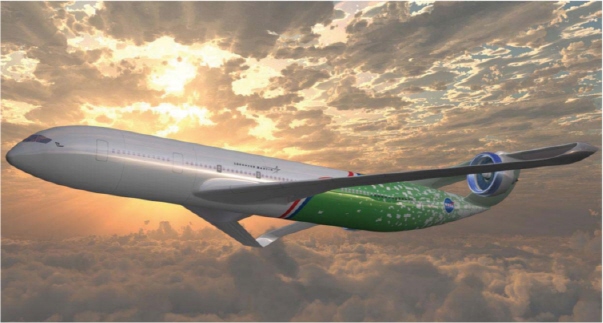
FIGURE 2.1 Artist’s rendering of a possible future subsonic aircraft using boxed-wing configuration to reduce drag and increase fuel efficiency. This is one of many possible configurations for future airliners. SOURCE: NASA/Lockheed Martin; available at http://www.nasa.gov/topics/aeronautics/features/future_airplanes_index.html.
consist of the Protruded Rod Stitched Efficient Unitized Structure (PRSEUS), which will be composed of stitched carbon-epoxy material. Finally, reducing specific fuel consumption will not only help improve fuel efficiency but also suppress noise.
Substantial improvements in fuel efficiency will probably require entirely new aircraft designs that are different from the traditional “tube and wing” design. The ERA project is investigating novel hybrid wing body configurations that integrate airframe and propulsion systems to improve fuel efficiency as well as help meet 2020 noise reduction goals.3 The Boeing/NASA X-48B BWB sub-scale research aircraft is the first step in that process (see Figures 2.2 and 2.3). The X-48B flew its first flight test on July 20, 2007, and recently completed Phase 2 testing.4 The aircraft will resume flight testing in the X-48C configuration, with two turbofan engines instead of three turbojet engines used on the X-48B.
The ERA project’s goals are the N+2 goals, or 2020 technology benefits relative to a large twin-aisle reference configuration, including a 42-dB noise reduction below the stage 4 noise requirements, a 75 percent reduction in landing and takeoff NOx emissions below Committee on Aviation Environmental Protection 6 (CAEP 6) requirements, and a 50 percent reduction in aircraft fuel burn. These final technologies will include airframe technology, propulsion technology, and vehicle systems integration.
In an effort to achieve these goals, the ERA project is investigating 36 different projects, with the goal of reducing them to only 6 in phase 2, which is planned to take place in spring 2012. In the committee’s view, it is important to reduce the projects based on technical merit and not on their expenses to date. NASA had plans to develop a “sub-scale test vehicle” by 2016 to demonstrate a number of the key technologies identified in this
________________
3 NASA Aeronautics Research Mission Directorate, “Fundamental Aeronautics Program: Subsonic Fixed Wing,” available at http://www.aeronautics.nasa.gov/fap/sfw_research_overview_feature.html, last updated September 9, 2009.
4 NASA Dryden Flight Research Center, “Back in the Air: X-48B Resumes Flight Tests at NASA Dryden,” available at http://www.nasa.gov/centers/dryden/status_reports/X-48B_status_09_21_10.html, last updated September 21, 2010.
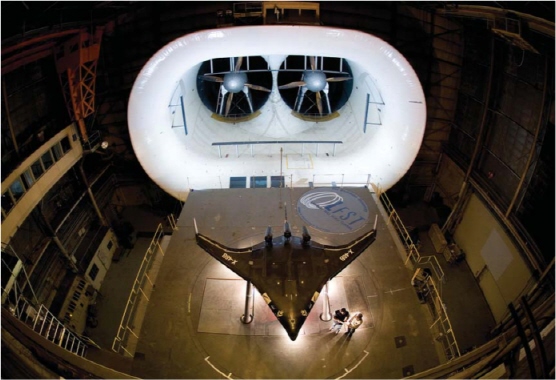
FIGURE 2.2 The X-48B being tested in the Full-Scale Tunnel at NASA’s Langley Research Center in Hampton, Virgina. SOURCE: Courtesy of Boeing/Bob Ferguson. Image ID k63682-03. Copyright © Boeing.
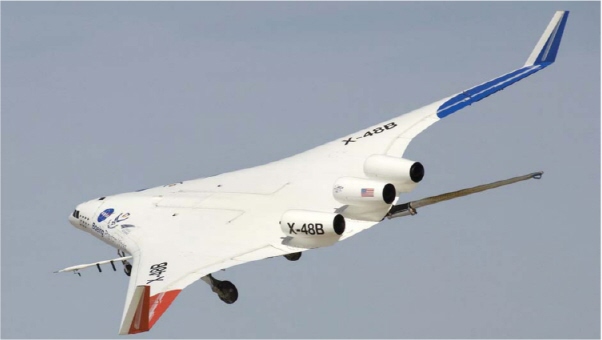
FIGURE 2.3 The X-48B in flight. SOURCE: Courtesy of NASA/Carla Thomas; Photo ED07-0192-03.
phase. However, in January 2012 NASA indicated that because of lack of funding, the agency had backed away from plans for development of this test vehicle.5
All of these goals will be accomplished with the support of academia and industry. To this end, the ERA project created working groups and technical interchange meetings, developed Space Act Agreements for cooperative partnerships, and used the NASA Research Announcement Project to solicit promising research ideas.6 Once the technology is successfully developed, the ERA project will be able to share its knowledge with others, such as the Fundamental Aeronautics Program.
Hurdles and Limitations for the ERA Project
The ERA project faces both technical and procedural obstacles in achieving its goals. The technical obstacles may be resolved by creative engineering, but the procedural obstacles require innovative budgetary and managerial solutions in design and use of facilities.
Certain issues that arise in low-NOx engines, particularly combustion instabilities, are intrinsically system dependent and cannot be evaluated on flame tube or sector facilities. Some full-scale engine testing and flight testing is needed to evaluate how these issues manifest themselves and are influenced by the inherent operational issues that arise in flight.
Flight research is required to evaluate and prove many of the technologies that can dramatically improve fuel efficiency. Few if any wind tunnels are capable of accurately predicting the drag reduction of natural and forced laminar flow, and therefore the reduction in fuel burn, that can be achieved by natural or forced laminar flow. Wind tunnels also do not allow the researcher to discover operational issues that may arise with laminar flow, such as the effect of dirt, icing, or other residue on the wing surface. Wind tunnels are extremely limited in their ability to perform noise level testing. Test facilities do exist that can reproduce the environment accurately enough for the analysis of propulsion system emissions. However, some of these facilities are outside NASA’s control. The use of these ground-based facilities do not allow for the investigation of these technologies as an integrated system with other technologies.
Currently the only non-conventional aircraft configuration being tested is that of the Blended Wing Body Boeing X-48, a sub-scale radio-controlled aircraft that has been tested at the Dryden Flight Research Center. NASA Langley is also performing research using a 5.5 percent scale generic transport aircraft called AirSTAR.7 Other unconventional aircraft configurations are being tested in ground-based facilities, but integration and flight test are a very important part of the process of understanding the new technologies. If the new technologies of ERA are to be realized by 2025, any non-conventional configuration will have to be tested and matured by flight research.
Economical Solutions and Budget Scenarios for the ERA Project
The ERA project tries to address the development and testing of these new technologies in an economical way. The use of sub-scale test vehicles to perform flight research on specific projects, testbed aircraft to evaluate individual concepts, partnerships to cut costs, and decision points to narrow in on the most promising developments are all mechanisms of focusing resources on the ERA project’s most promising new technologies. Even though NASA’s current fleet of aircraft is fairly large and diverse, it will most likely not be able to meet all of the needs of the ERA project. For instance, flight test of open rotor propulsion systems will require an aircraft in the Boeing 717 or 727 class as a testbed.
NASA Langley has used sub-scale flight research in the past. To meet all of the program goals these technologies will have to be simultaneously integrated and flight tested on representative airframes. These aircraft must be
________________
5 S. Trimble, Flight Global, “Funding Cuts Put NASA Commercial X-Plane on Hold,” available at http://www.flightglobal.com/news/articles/funding-cuts-put-nasa-commercial-x-plane-on-hold-366840/, January 12, 2012.
6 NASA Aeronautics Research Mission Directorate, “Environmentally Responsible Aviation Project: Integrated Systems Research Program,” available at http://www.aeronautics.nasa.gov/isrp/era/index.htm, last updated February 3, 2011.
7 T. Jordan, W. Langford, C. Belcastro, J. Foster, G. Shah, G. Howland, and R. Kidd, “Development of a Dynamically Scaled Generic Transport Model Testbed for Flight Research Experiments,” NASA Langley Research Center, Hampton, Va., August 2004.
of the correct configuration and of adequate scale to demonstrate the true effectiveness of the technologies. This is not to say that sub-scale flight test vehicles such as the X-48 and AirSTAR are not extremely valuable. These sub-scale models are very important risk mitigation tools.
Testbed aircraft can also be used to perform research in an economical way. The validation of new propulsion technologies will require full-scale testbeds. The testing of these technologies as an integrated vehicle system will require full-scale flight test vehicles of specific configurations. Either these testbed vehicles can be modified, such as the Gulfstream G-III being used for laminar flow research, or the aircraft can be purpose-built to be reconfigurable like the Air Force Research Laboratory’s Multi-Utility Technology Testbed (MUTT) aircraft, which is designed to determine the boundaries of wing flutter for aircraft. The development of these testbeds can provide experience with the integration of multiple technologies. Testing of airframe technologies, specifically new lightweight structures and the flight dynamics of non-conventional configurations, will require new flight test airframes.
Additional partnerships in programs with other government agencies and industry provide a method to economically perform research. But to make sure that these technologies are readily available to be used by others, NASA will have to partner in a way that does not limit the use of the research and data by others. For instance, collaboration between NASA, the Department of Defense (DOD), or some other agencies on a national subsonic experimental aircraft that would allow for advanced aerodynamic, structural, and engine technologies may provide an avenue to economically achieve the ERA project’s N+2 goals.
If the budget for the ERA project remains unchanged, NASA will have to rely on partnerships if it is to make significant progress toward its N+2 goals. NASA can try to decrease the number of funded research projects in phase 2 of the ERA project to ensure that the most promising of the technologies moves into flight research. The use of sub-scale flight research aircraft would provide some ability to test some airframe technologies, such as structures/materials as well as adaptive/complex interactive systems. However, most of the advances in propulsion technologies will require larger flight vehicles because of the scaling of thrust, mass flow, rotations per minute, and thermodynamics and combustor technologies. Also, the scaling of acoustic energy with mass flow testing of noise reduction technologies using surrogate and sub-scale vehicles can be conducted; however, the applicability of this data may be limited. Some testing of noise reduction technologies using surrogate and sub-scale vehicles can be conducted; however, the applicability of this data may be limited. In the committee’s view, NASA’s plans to develop a sub-scale test vehicle by 2016 represented the next logical step in advancement of this program. The committee believes that the recently announced plans to delay development of such an aircraft are unfortunate and also believes that the ERA project cannot make significant progress unless it actually conducts further flight research.
If the ARMD budget is increased a modest amount and the ERA project receives a share of this budget, the number of flight research opportunities will increase. If this additional budget was directed into scale or sub-scale test vehicles, the integrated research could be performed on at least the airframe technologies and, to a lesser amount, noise reduction. It would remain difficult to perform any propulsion technology research unless full-scale aircraft were to be modified to serve as flying testbeds. Either of these two options would allow for research to be conducted on truly integrated systems and without the limits of many of the ground test facilities. This flight research would still allow for the process of discovery that is so important to the development of new technologies.
If more money becomes available, the NASA ERA project could examine the feasibility of developing a full-scale or nearly full-scale aircraft incorporating numerous projects from the ERA phase 1 portfolio. This flying prototype could be designed to act as a flying testbed for future concepts. This type of project allows the development team to truly develop the technologies through their integration on a new vehicle. This type of project allows for full discovery throughout the program’s life cycle. The concept of competition between designs and collaborative work with other government agencies such as DARPA (Defense Advanced Research Projects Agency) may provide greater opportunity to achieve the goals of the ERA project.
Summary
The ERA project has established N+2 goals relating to the 2020 time frame. To achieve these goals the ERA project has approximately 32 projects being executed within its phase 1. Of these projects only a limited number will be carried forward into phase 2. Current planning is for six projects to move forward. Of these six it is unclear what
planning has been performed to take the technologies into flight research. In some cases there are testbed aircraft; however, in others, such as open rotor propulsion systems, no vehicle has been identified. Without transitioning these technologies into flight they cannot be developed to a technology readiness level (TRL) of 6 or higher. The process of integrating these systems onto an aircraft and performing in-flight research offers the opportunity of discovery, which cannot be realized in the ground testing environment alone.
Finding: If NASA determines that progress in Environmentally Responsible Aviation is a priority, the agency could collaborate with the Department of Defense, the Federal Aviation Administration, other government agencies, and industry on a subsonic experimental aircraft that would integrate multiple advanced aerodynamic, structural, and engine technologies. The most effective approach would be to ensure that the flight test program, while integrating multiple technologies, is also planned so as to test single objectives for each test. With a view to maximizing effectiveness, as these collaborations are carried out the distribution of research results and data cannot be limited to industry and academia and should be understandable, presentable, and accessible to a broad audience.
THE SUPERSONICS RESEARCH PROJECT
NASA’s supersonics research project has evolved from decades of research and technology development into high-speed flight regimes. But the United States has yet to bring civil supersonic flight into commercial service as was done with the now-retired Anglo-French Concorde and short-lived Russian Tu-144.8 While these aircraft did enter service in the 1970s, they suffered high operational costs and tremendous political pressures associated with the same environmental issues that we face today—excessive fuel burn, high-altitude emissions, high carbon footprint, ozone depletion, and objectionable takeoff and landing noise. The United States had rightly removed itself from the commercial supersonic transport race because the advanced technologies were not yet available to achieve both environmental and economic success.9
Today, commercially viable supersonic flight—for smaller aircraft such as business jets—remains a highly desired market for the aviation industry and is within reach, provided that existing research efforts are advanced to their next stage. The Supersonics project, one of four projects managed under NASA Aeronautics’ Fundamental Aeronautics Program, exists today to develop the tools and technologies necessary to achieve this goal. Stating as its objective to “eliminate technology barriers preventing civil supersonic airliners,”10 the supersonics research project contains a broad and diverse portfolio that has been refined through past programs like the United States Supersonic Transport (SST), Supersonic Cruise Aircraft Research (SCAR), High Speed Civil Transport (HSCT), High Speed Research (HSR), and DARPA Quiet Supersonic Platform (QSP),11 each building on the work of previous researchers and engineers. The 1997 NRC review of HSR concluded that flight demonstration to TRL 6 was necessary to prove sustained supersonic performance of integrated aircraft technologies under development.12 In 2001, Commercial Supersonic Technology, The Way Ahead added that public acceptance of the sonic booms generated by commercial aircraft was also a necessary component for technology demonstration and that it would be necessary to stimulate development of regulatory standards for sonic booms.13 HSR successfully defined the feasibility of addressing concerns about high-altitude emissions and airport/community flyover noise, although commercially viable solutions were not yet available at the time.14 The Supersonics project continues to work
________________
8 G. Thomas, G. Norris, C. Forbes Smith, S. Creedy, and R. Pepper, Plane Simple Truth—Clearing the Air on Aviation’s Environmental Impact, Aerospace Technical Publications International, Perth, Western Australia, 2008, pp. 20-21.
9 National Research Council (NRC), Commercial Supersonic Technology: The Way Ahead, National Academy Press, Washington, D.C., 2001.
10 P. Coen and L. Povinelli, NASA, “Fundamental Aeronautics Program: Supersonics Project,” briefing to the National Research Council Committee to Assess NASA’s Aeronautics Flight Research Capabilities, June 13, 2011, Washington, D.C.
11 NRC, Commercial Supersonic Technology, 2001, p. 8.
12 NRC, U.S. Supersonic Commercial Aircraft, The National Academies Press, Washington, D.C., 2006, p. 4.
13 NRC, Commercial Supersonic Technology, 2001.
14 E.M. Conway, High-Speed Dreams—NASA and the Technopolitics of Supersonic Transportation, 1945-1999, John Hopkins University Press, Baltimore, Md., 2005.
multiple areas of research in high-temperature materials, lightweight structures, lean-burn combustion, aeroservoelasticity/controls, instrumentation and automation, efficient airframe/propulsion configuration development, and integration of synthetic cockpit vision systems.15 All aspects of the supersonic system sharing the airspace can benefit from system-level flight research and testing. However, at an annual allocation of $40 million, making up less than one-quarter of the Fundamental Aeronautics Program’s budget,16 the Supersonics project lacks sufficient resources to continue this broad path and solve the critical technology barriers holding back this highly sought after capability.
Narrowing focus during DARPA QSP, researchers agreed that with respect to sonic boom, low-boom flight is more readily achieved using smaller aircraft. For decades, economic and technical viability had been studied for large 300-passenger, >500,000 pound commercial transports.17 As cost-effective utilization of small regional jets and corporate aircraft has grown, scientists and industry engineers have turned their collective interest toward smaller 100,000-pound-class business jets and airliner concepts, significantly improving the chance of success for both economic and technical feasibility.18 The solution to the sonic boom problem now appears within reach and will enable a market for corporate aircraft to advance collective knowledge, opening the door for future small supersonic airliners (see Figure 2.4).19
In the past decade, the Supersonics project has carried its broad portfolio into many areas of flight research. Using existing aircraft and NASA fleet assets at Dryden Flight Research Center, sonic boom shaping has shown much progress in flight projects like the DARPA F-5 Shaped Sonic Boom Demonstrator, NASA/Gulfstream F-15 Quiet Spike, and NASA F-18 low-boom dives (see Figure 2.5).20 Other important flight work includes supersonic laminar flow/boundary layer transition in partnership with Aerion Corporation, airframe/propulsion integration inlet and jet plume studies like LANCETS, and external/synthetic vision systems at Langley and Ames research centers.21 NRA (NASA Research Announcement) studies awarded to Boeing and Lockheed Martin are aimed at N+2 time-frame (i.e., 2020) low-boom airliner configurations for wind tunnel validation,22 seeding a future research opportunity for a low-boom technology flight experimental vehicle.23 Further, human and structural response to low-boom ground acoustic signatures remains ongoing using both flight research at Dryden (e.g., HouseVibes and SonicBOBs24 ) and laboratory studies at Langley’s new interior effects room, which is a sonic boom playback simulator set up to resemble a typical residential living room.25 Researchers can vary signature intensity, frequency of occurrence, and many additional acoustic characteristics like structural transmission, rattle, and source directionality.26 NRAs regarding development and validation of sonic boom focus prediction codes and community response test protocols for future low-boom flight research are under way at the writing of this report.27 Nearly 45 percent of the Supersonics project resources are currently allocated to determining a solution to sonic boom, and
________________
15 NRC, NASA Aeronautics Research: An Assessment, The National Academies Press, Washington, D.C., 2008.
16 B. Esker, “NASA Fundamental Aeronautics Program,” briefing to National Research Council Committee to Assess NASA Aeronautics Flight Research Capabilities, April 20, 2011, Edwards, Calif.
17 NRC, Commercial Supersonic Technology, 2001.
18 P.A. Henne, “Case for Small Supersonic Civil Aircraft,” Journal of Aircraft 42(3), 2005.
19 NRC, Decadal Survey of Civil Aeronautics: Foundation for the Future, The National Academies Press, Washington, D.C., 2006, p. 18.
20 D. McBride, “Dryden Flight Research Center Flight Projects and Perspectives,” briefing to National Research Council Committee to Assess NASA Aeronautics Flight Research Capabilities, April 20, 2011, Edwards, Calif.
21 P. Coen and L. Povinelli, NASA, “Fundamental Aeronautics Program: Supersonics Project,” briefing to the National Research Council Committee to Assess NASA’s Aeronautics Flight Research Capabilities, June 13, 2011, Washington, D.C.
22 P. Coen and L. Povinelli, NASA, “Fundamental Aeronautics Program: Supersonics Project,” briefing to the National Research Council Committee to Assess NASA’s Aeronautics Flight Research Capabilities, June 13, 2011, Washington, D.C.
23 NRC, NASA Aeronautics Research, 2008, p. 25.
24 J. Klos, “Measurement of Low-Amplitude Sonic Booms In and Around Large Buildings,” presentation at the Fundamental Aeronautics Program Technical Conference, March 15-17, 2011.
25 J. Rathsam, A. Loubeau, and J. Klos, “Laboratory Study of Indoor Human Response to Sonic Booms,” presentation at the Fundamental Aeronautics Program Technical Conference, March 15-17, 2011.
26 A. Loubeau, “Sonic Boom Modeling Overview,” presentation at the Fundamental Aeronautics Program Technical Conference, March 15-17, 2011.
27 P. Coen and L. Povinelli, NASA, “Fundamental Aeronautics Program: Supersonics Project,” briefing to the National Research Council Committee to Assess NASA’s Aeronautics Flight Research Capabilities, June 13, 2011, Washington, D.C.
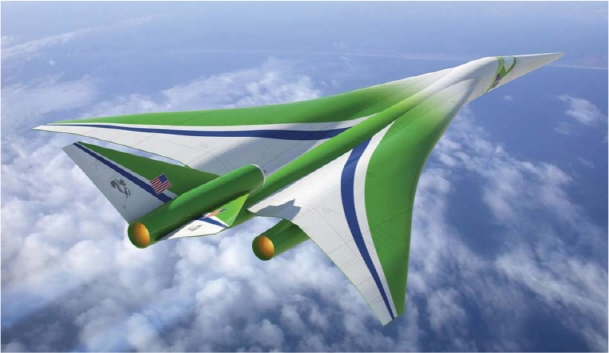
FIGURE 2.4 Artist’s depiction of a possible future civil supersonic transport that is shaped to reduce the sonic shockwave signature and to reduce drag. SOURCE: Courtesy of NASA/Lockheed Martin; available at http://www.nasa.gov/topics/aeronautics/features/future_airplanes_index.html.
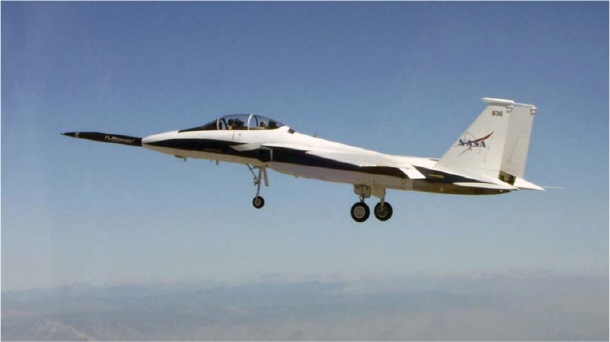
FIGURE 2.5 “Quiet Spike” test on a NASA F-15 research aircraft. This device was used to alter the sonic boom produced by the aircraft. SOURCE: Courtesy of NASA Dryden Flight Research Center/Lori Losey; NASA Photo ED06-0149-23.
approximately 14 percent are devoted to flight research for sonic boom and other technologies.28 The Supersonics project is well positioned in low-boom airframe and engine integration development, sonic boom perception, and human/structural response to make the transition to an integrated flagship program, yet flight assets do not exist and remain to be prioritized within the agency to achieve this goal. In considering the role of experimental aircraft and/or X-planes as they relate to advancing NASA’s mission, the Supersonics project aligns with the need for a cost-effective technology demonstration or flagship X-plane program.
While sonic boom remains the principal challenge preventing commercially sustainable supersonic operations, much work remains in other key research areas to enable future production supersonic aircraft. The NRC 2006 Decadal Survey of Civil Aeronautics identified several areas grouped into well-integrated and efficient propulsion systems.29 These gaps remain today, and while a sonic boom solution may be near, the engines necessary to enable routine efficient and cost-effective supersonic operations do not yet exist. VAATE, or Versatile Affordable Advanced Turbine Engines, is a collaborative research and development program between DOD, NASA, Department of Energy (DOE), Federal Aviation Administration (FAA), academia, and industry.30 Its objective is to advance the state of the art in turbine engine technologies and substantively increase propulsive efficiency and affordability while also reducing overall fuel burn. VAATE’s goals are primarily aimed at meeting the needs of the U.S. military; however, NASA can nurture the breadth of this partnership and leverage its commercial applications as well. A robust and systematic research program is needed to bring flight validated engine technologies,31 along with the necessary airframe integration features needed to maintain progress in green technologies and low-boom development. NASA can nurture partnerships with other agencies such as DOD, FAA, and others, and engine original equipment manufacturers in an endeavor to reach this goal. (Such collaborations are further discussed in Chapter 3.) A variable cycle engine would have advantages for subsonic as well as supersonic vehicles. For example, transport aircraft often involve compromises on cruise performance for reduced takeoff distance; a variable cycle engine can thus have significant advantages for such aircraft. A variable cycle engine testbed could therefore be coupled with a vehicle that explores other technologies.
The committee was asked to consider three budgetary scenarios: (1) funding constrained, (2) moderate increase, and (3) unconstrained. With a flat or reduced budget, large-scale supersonics flight research will be very challenging. To proceed, a vigorous task reprioritization and reduction of project-supported personnel would be necessary to reallocate funding. Labor expenses would have to be significantly reduced to free funding for discretionary spending on flight hardware. In addition, NASA would require partners for significant cost-sharing with other government agencies or industry. Such an approach would not be likely to achieve critical mass to support a flight program inside a decade without significant narrowing of work scope and substantial partner cost-sharing. For a moderate increase, say 120 to 150 percent of the current $40 million annual levels for supersonics work alone, existing personnel and resources would likely be maintained near levels of the broader research portfolio and a large-scale flight program could be developed again if rather significant cost-sharing could be found within agency stakeholders and/or industrial partners. A resulting flight program focused on sonic boom alone could occur over a probable time frame of 5 to 8 years. Finally, if NASA were to consider a nearly unconstrained budget scenario, NASA could pursue a large-scale flight program on the order of $100 million to $300 million (total expenditure) over 4 to 6 years,32 or $25 million to $50 million annually added to FY2010/2012 supersonics budget levels. Using the higher value of a 200 percent increase in funding, it is likely that some advanced propulsion goals might also be moved toward a transition to flight research at 6 to 8 years if these levels could be sustained. The initiation
________________
28 P. Coen and L. Povinelli, NASA, “Fundamental Aeronautics Program: Supersonics Project,” briefing to the National Research Council Committee to Assess NASA’s Aeronautics Flight Research Capabilities, June 13, 2011, Washington, D.C.
29 NRC, Decadal Survey of Civil Aeronautics, 2006.
30 NRC, Improving the Efficiency of Engines for Large Nonfighter Aircraft, The National Academies Press, Washington, D.C., 2007.
31 NRC, NASA Aeronautics Research, 2008.
32 P. Coen and L. Povinelli, NASA, “Fundamental Aeronautics Program: Supersonics Project,” briefing to the National Research Council Committee to Assess NASA’s Aeronautics Flight Research Capabilities, June 13, 2011, Washington, D.C.
of a large-scale flight research program for sonic boom could likely stimulate further industry and government investment to enter a new era of air transportation33 for time-critical cargo and personnel.34
Finding: NASA’s Supersonics project is aligned with technical challenges and research from legacy programs and previous National Research Council studies. Care has been taken to define a balanced portfolio over many technical disciplines while maintaining near-term payoff and long-term research needs.
Finding: NASA’s Supersonics project finds itself, not unlike in generations past, unable to reach critical and sustainable funding levels to simultaneously achieve its fundamental mission objectives and enable the transition to systems-level flight research. The portfolio is broad and diverse but lacks the resources to be fully effective.
Finding: Supersonics research has been prioritized to solve the largest hurdle not achieved in the high-speed research program—sonic boom. Its pathfinder approach to small aircraft configurations (i.e., the size of business-class jets) makes success more probable. There is now demonstrated technology for alteration and reduction of the sonic boom signature. However, the absence of a stated quantitative limit for allowable boom initial overpressure has been an impediment to further development of supersonic aircraft that can fly over land.
Finding: A critical need now exists to integrate low-boom configuration design and human/structural response work into large-scale flight validation. NASA has yet to identify an existing flight vehicle for low-boom validation and is therefore unable to accomplish its objectives related to sonic boom. Having already dedicated significant resources to flight projects, supersonics is positioned for a large-scale integrated flight program, similar to its legacy X-plane programs.
Finding: Much work remains in other challenging areas like variable cycle propulsion, sustainable supersonic cruise efficiency, lightweight and high-temperature materials, and aero-propulso-servo-elasticity. Yet without solving the low-boom overland issue, economic viability for a product vehicle may, as with the Concorde and the High Speed Civil Transport program, again be unattainable.
Finding: The requirement to perform supersonics flight research will dictate a vehicle of a specific size, requiring a program nearing $25 million to $50 million annually (depending on duration). On its current course, NASA cannot enable a program of this size. Program schedule and results are highly dependent on the level of achievable and sustained investment.
These findings led the committee to its final two findings concerning NASA’s supersonics research project:
Finding: If NASA determines that progress in supersonics is a priority, then given the progress in low-boom technology that has been demonstrated over the past decade and in light of this research challenge being the principal remaining barrier to routine supersonic operations, NASA together with the FAA could proceed immediately with an integrated technology experimental aircraft program to validate low-boom acoustic ground signatures and establish a set of quantitative criteria for the sonic boom footprint over land.
Finding: If NASA determines that progress in supersonics is a priority, and recognizing that engine technology and propulsion integration remain the next critical investment barrier to progress in this field, NASA together with DOD could develop a robust technology maturation and flight validation program
________________
33 NRC, Decadal Survey of Civil Aeronautics, 2006.
34 P. Coen, NASA, “Fixing the Sound Barrier, Three Generations of U.S. Research into Sonic Boom Reduction … And What It Means to the Future,” briefing for Federal Aviation Administration Public Meeting on Sonic Boom, July 2011.
with key partners for fielding a product variable cycle engine and the integrated propulsion systems for supersonic flight.
THE HYPERSONICS RESEARCH PROJECT
NASA more than any other U.S. government agency or private concern has a critical need to maintain strong leadership capabilities in hypersonic flight research and technology because all NASA spacecraft must successfully fly through the hypersonic regime in order to perform their missions. In addition NASA is charged with expanding the frontiers of aeronautics, and sustained hypersonic flight is a major aeronautical challenge.35 The ARMD hypersonics research project has done a good job up to this point in maintaining and advancing its modeling and simulation, ground test, and flight research capabilities even though its budget has dropped by a factor of approximately five over the past 5 years. It has achieved this by leveraging partnerships with other NASA mission directorates and other U.S. government agencies such as the Air Force. However, under the current and projected budgets hypersonic project flight research activities are projected to cease within 2 years, and maintenance of the NASA hypersonic modeling and simulation and ground test competencies is under threat of collapse.
The Hypersonics Project and Flight Research
Today, rocket-powered expendable launch vehicles reach hypersonic speeds in the upper atmosphere while transporting payloads to orbit, and low-lift/drag, unpowered hypersonic entry vehicles return to Earth from orbit and other heavenly bodies and transit the atmospheres of other planets to land robotic exploration systems. Although these are extraordinary accomplishments, hypersonic flight is far from routine, and its potential is not fully exploited. Since the early 1950s, hypersonics research has experienced numerous boom and bust cycles. The successful systems developed over this time period (X-15, Apollo, space shuttle, etc.) are products of the boom cycles, but once these systems were developed, most hypersonics foundational research was terminated, requiring regeneration of capabilities when the next vehicle development cycle started. There is a unique opportunity at this point in time to capitalize on a core of hypersonics researchers within NASA, DOD, and industry who were trained in hypersonics during the boom associated with the National Aerospace Plane (NASP), X-33, X-34, and the Next Generation Launch Technology (NGLT) reusable launch vehicle programs, hypersonic flight research programs such as the X-43, X-51, and Hypersonic Technology Vehicle 2 (HTV-2) as well as recent planetary and Earth-entry programs such as Pathfinder, Stardust, Mars Exploration Rover, and Mars Science Laboratory. Today, hypersonics research is at the same crossroads that supersonics was 50 years ago—it is possible but not nearly optimal. A stable, long-term commitment to investment in hypersonics research, including physics-based modeling and simulation, ground test, and flight research, would allow sufficient understanding of the underlying physics to improve design methods to the level of certainty required to fully utilize the possibilities of hypersonic flight and allow it to become routine.
Many advances in design and analysis tools, test techniques, and understanding of the basic physics of hypersonic flow, as well as high-temperature materials and structures, have recently been made because of the work done under the recent hypersonics programs mentioned above, but much is still left to be learned. Some of these advancements have been fully or partially verified through application to the design of successfully flown hypersonic systems (planetary probes, for example) and flight experiments (X-43 and X-51). While the ability to design and build certain hypersonic systems clearly exists, designers often resort to large margins to mitigate uncertainties, which reduce system capabilities and increase costs. Large uncertainties in aerodynamics, aerothermodynamics, material properties, structural response, durability, and integrated system performance often kill the use of new technology, significantly alter mission plans, or result in poor input to risk assessment. In addition to deficiencies in the understanding of some basic physical phenomena and the resulting predictive uncertainties, substantial deficiency also exists in the ability to predict the operational cost, safety, and reliability of these systems, much
________________
35 The National Aeronautics and Space Act, Pubic Law No. 111-314, 124 Stat. 3328, December 18, 2010.
less optimize a system on such metrics. Developing methods and tools that adequately model fundamental physics and allow credible optimization for operational factors will allow highly beneficial hypersonic systems to emerge.
To accomplish its goals, flight testing must work in conjunction with ground testing as well as modeling and simulation as part of a complex process. Flight research is essential for validating the results of ground test experiments and computer models. But flight research poses its own challenges—it is expensive and includes a long lead time for projects. The NASA Hypersonics project does not have the budget to implement the required flight research, so NASA relies on partnerships with other NASA mission directorates or non-NASA partners such as the military services and DARPA. Most often the Hypersonics project provides the partnership with subject matter experts, cutting-edge physics-based modeling and simulation tools, data analysis, and ground test facilities, but it generally relies on partners to pay for or share payload and flight vehicle costs. These partnerships are absolutely critical to the success of the Hypersonics project. NASA often provides key capabilities in modeling and simulation and/or ground test to its partners. Without these partnerships, progress in hypersonics for the United States would likely grind to a halt.
The air-breathing hypersonic flight portion of the Hypersonics project also requires flight research. This is because ground testing alone is not able to fully replicate the hypersonic flight environment. Ground testing alone cannot achieve the same mission duration, flow composition/chemistry, Mach number transience, or in many cases scale, as a flight test can. While flight testing of air-breathing technology is expensive, it is required to investigate hypersonic phenomena in realistic conditions. Well-designed/instrumented flight tests can also provide data to verify computer models and design tools and/or mature the technology readiness levels of key technologies.
Reliance on partners has so far proven to be an effective strategy to obtain hypersonic flight data, but future success requires the continued support of partner organizations such as other NASA mission directorates and DOD (see Figure 2.6). Table 2.1 summarizes the current or recently completed hypersonic flight test programs that the NASA Hypersonics project has been a part of, including an estimate of the total cost of each project and
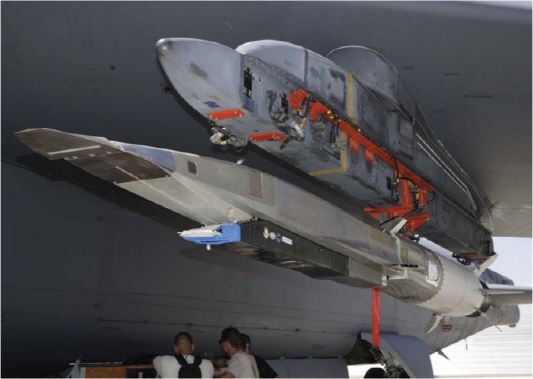
FIGURE 2.6 X-51 test vehicle under the wing of its B-52 mothership. SOURCE: Courtesy of U.S. Air Force, photo by Chad Bellay; Photo 090717-F-0289B-163, available at http://www.af.mil/photos/.
TABLE 2.1 Past and Current Hypersonics Projects
| Flight | Purpose | Partner | Estimated (Unofficial) Cost ($ million) |
Hypersonics Project Cost ($ million) |
|
X-43A |
Vehicle-integrated scramjet demo |
None |
-300 | N/A |
|
X-51A |
Thermally balanced, vehicle-integrated scramjet demo |
AFRL/DARPA |
-260 | 10 |
|
HyBoLT |
Boundary layer research (launch failure) |
ATK |
57 | 17 |
|
Inflatable Reentry Vehicle (IRVE-2) |
Concept demo |
None |
5 | 5 |
|
IRVE-3 |
Concept demo |
NASA Chief Technologist |
17 | 4 |
|
HIFiRE Flight 1 |
Boundary layer research |
AFRL/Australia |
9 | 0.2 |
|
HIFiRE Flight 2 |
Scramjet mode transition, Max March (8+) |
AFRL |
22 | 10 |
|
HIFiRE Flight 5 |
Boundary layer research |
AFRL/Australia |
6 | 0.2 |
|
Mars Science Laboratory (MSL) |
Martian rover |
NASA Science Mission Directorate |
2200 | N/A |
|
MSL EDL Instrumentation (MEDLI) |
Martian entry data |
30 | 9 | |
|
Space shuttle |
Boundary layer research |
NASA Shuttle Office |
20 | 1 |
the contribution made by the NASA Hypersonics project. In all cases, except the X-43A program that occurred prior to the formation of the current NASA Fundamental Aeronautics Program, the Hypersonics project monetary contributions have been quite small compared to the total project cost. However, NASA has provided partners with valuable tools and data and experienced personnel that add value and reduce risk to the projects. NASA in turn receives important flight data at relatively low cost, and hypersonics research and technology development for the nation advances.
These partnership arrangements that have been so valuable to the advancement of hypersonics research and technology advancements between NASA and other agencies are currently under threat of collapse because of continuing budget cuts to the Hypersonics project. The Hypersonics project, funded by NASA aeronautics, has gone from a funding level of $82 million per year in FY2006 to ~$25 million per year requested for FY2012 (not using full cost accounting), while the NASA aeronautics budget was reduced by a much smaller factor.36,37 It is beyond the scope of this study to determine why such a substantial decrease in funding priority has been given to such a vital flight regime that NASA must use to perform its missions and that could enable revolutionary new aeronautical capabilities such as intercontinental hypersonic flight. Although the funding decrease is not due to a lack of technical challenges in hypersonics research, some significant technical challenges still remain in air-breathing hypersonics, which are highlighted in Goal 5 of the current National Aeronautics R&D Plan (“Demonstrate sustained, controlled, hypersonic flight.”).38 The details of Goal 5 are excerpted here in Table 2.2. In addition, the National Aeronautics Research, Development, Test and Evaluation (RDT&E) Infrastructure Plan highlights
________________
36 NASA, “NASA President’s FY2006 Budget Request,” available at http://www.nasa.gov/pdf/107486main_FY06_high.pdf, accessed July 27, 2011.
37 NASA, “FY2012 Aeronautics Research Budget Estimate,” available at http://www.nasa.gov/pdf/516642main_NASA_FY12_Budget_Estimates-Aeronautics.pdf, accessed July 27, 2011. The current hypersonics budget figure is from J.L. Pittman, “Hypersonics Project Flight Research Fundamental Aeronautics Program,” briefing to the National Research Council Committee to Assess NASA’s Aeronautics Flight Research Capabilities, June 13, 2011, Washington, D.C.
38 Executive Office of the President of the United States, National Science and Technology Council, Committee on Technology, Aeronautics Science and Technology Subcommittee, “Biennial Update: National Aeronautics Research and Development Plan,” available at http://www.whitehouse.gov/sites/default/files/microsites/ostp/aero-rdplan-2010.pdf, February 2010.
TABLE 2.2 National Aeronautics Plan Hypersonics Research Goal
| Goal | Near Term (<5 years) | Mid Term (5-10 years) | Far Term (>10 years) |
| Goal 5 Demonstrate sustained, controlled, hypersonic flight | Demonstrate sustained, controlled flight at Mach 5-7 for a duration greater than 5 minutes using an expendable airframe and hydrocarbon fuel | Ground test scramjet propulsion systems to 1Ox airflow of today’s scramjet technology | Demonstrate scramjets operable to Mach 10 on hydrocarbon fuel and to Mach 14 on hydrogen fuel |
| Increase effective heat capacity of endothermically cracked hydrocarbon fuel to extend vehicle thermal balance point beyond Mach 8 | |||
| Ground test hypersonic vehicle component technologies, including high-temperature structures, thermal protection systems, adaptive guidance and control, and health management technologies | Flight test air-breathing vehicle technologies beyond Mach 7 and durations greater than 10 minutes for application to space launch systems and possible reconnaissance/strike systems | Validate an optimum air vehicle solution that demonstrates an efficient thermal management approach to accommodate the combined thermal loads of the aero-thermal environment, integrated engines and internal vehicle subsystems | |
| Demonstrate a lightweight, durable airframe capable of global reach | |||
SOURCE: Executive Office of the President of the United States, National Science and Technology Council, Committee on Technology, Aeronautics Science and Technology Subcommittee, “Biennial Update: National Aeronautics Research and Development Plan,” February 2010, available at http://www.whitehouse.gov/sites/default/files/microsites/ostp/aero-rdplan-2010.pdf, accessed July 27, 2011.
several critical shortfalls in the nation’s infrastructure required to meet the National Aeronautics R&D Plan goals, including the lack of adequate hypersonic test ranges required for hypersonic flight research.39
The milestones to meet Goal 5 of the National Aeronautics R&D Plan require significant ground and flight tests as well as substantial work in modeling and simulation and cannot possibly be met by the NASA Hypersonics project alone. The current budget request and projections for the project make it difficult to see how the project can develop or sustain partnerships to help meet Goal 5. Table 2.3 illustrates the precipitous drop in support of the flight research planned by the project because of the current budgets. Flight research funding is expected to drop to zero within 2 years. This effectively leaves only ground test and modeling and simulation. The low yearly budgets for NASA hypersonics will also significantly curtail these two remaining efforts and make it difficult to maintain the “competencies relied upon by other agencies”40 and attract partners for any type of hypersonics research. This erosion of NASA’s hypersonics competencies will also undermine hypersonics research and development efforts at other NASA mission directorates and other U.S. government agencies. The dire budget situation for hypersonics is somewhat mitigated by the shift of flight test research responsibility for planetary entry, descent, and landing technology from the ARMD Hypersonics project to the NASA Office of Chief Technologist, which arguably can properly shoulder some of the burden for this research.41 But recent failures during flight tests of both the DARPA HTV-2 and the Air Force X-51 indicate the need for more involvement by NASA experts in the nation’s atmospheric hypersonic flight research efforts, contrary to current NASA Hypersonics project budget projections.
In September 2011, NASA Administrator Charles Bolden spoke at the New Horizons in Aviation Forum and stated that NASA was currently working with the Air Force on hypersonics research, specifically scramjet propulsion, trying to extend the operations time of hypersonic vehicles as opposed to simply increasing speeds.
________________
39 Executive Office of the President of the United States, National Science and Technology Council, Committee on Technology, Aeronautics Science and Technology Subcommittee, “National Aeronautics Research, Development, Test and Evaluation (RDT&E) Infrastructure Plan,” available at http://www.whitehouse.gov/sites/default/files/microsites/ostp/NSTC-Approved-IPlan-04Jan2011.pdf, January 2011.
40 “FY2012 Aeronautics Research Budget Estimate,” available at http://www.nasa.gov/pdf/516642main_NASA_FY12_Budget_Estimates-Aeronautics.pdf, accessed July 27, 2011.
41 J. Pittman, “Hypersonics Project Flight Research,” briefing to the National Research Council Committee to Assess NASA’s Aeronautics Flight Research Capabilities, June 13, 2011, Washington, D.C.
TABLE 2.3 NASA Hypersonics Project Projected Support of Flight Research
| PY2011 | FY2012 | FY 2013 | FY2014a | FY2015b | |
| Hypersonic Flight Research Funding | $4.7 million | $2.4 million | $0.7 million | — | — |
| Hypersonic Flight Research Workforce | 21.0 EP | 11.9 EP | 3.0 EP | — | — |
NOTE: EP, equivalent person (civil service employee + contractor); FY, fiscal year.
a No funding or workforce is expected in FY2014.
b No funding or workforce is expected in FY2015.
SOURCE: J. Pittman. “Hypersonics Project Flight Research,” briefing to the National Research Council Committee to Assess NASA’s Aeronautics Flight Research Capabilities, June 13, 2011, Washington, D.C.
As Bolden stated, work was continuing on developing a “practical hypersonic vehicle, with more sophisticated technology flight experiments planned in the next few years.”42 The committee agrees with the administrator’s comments. Although some hypersonics research is currently under way, in the committee’s view it lacks focus. The committee concluded that in order to focus the currently unfocused project, the NASA Hypersonics project could establish the specific goal of development and demonstration of the technologies for a hypersonic vehicle in coordination with other U.S. government agencies. This approach will make better use of available funds and make progress toward the National Aeronautics R&D Plan mid-and far-term hypersonics goals.
It will be up to NASA and its partners to determine the steps necessary to achieve this goal and the funding levels required. The goal does not necessarily require hypersonic “cruise vehicles,” a specific combined-cycle propulsion system, travel at velocities higher than Mach 6, or even air-breathing propulsion. It also does not necessarily mean a vehicle capable of carrying humans and could include trans-atmospheric vehicles that spend part of their flight above the atmosphere. Because these vehicles would still fly hypersonically, they could provide a focus for the research. While there may not be an immediate commercial application, further research might identify one. Such a goal would logically start with simpler flight experiments and move on to testbed-type vehicles to test a variety of technologies, eventually leading to a “flagship”-type vehicle integrating multiple technologies.
The recommended focus on a hypersonic vehicle capable of point-to-point flights from any spot on the globe, rather than a hypersonic reusable vehicle for space access or a reconnaissance/strike vehicle, is chosen because the air vehicle and propulsion system technologies are, in general, common to all three missions. With the appropriate design requirements and constraints, such a vehicle could form the basis for either of the other vehicles, whereas the converse is not as likely. In addition, this choice is more in line with the other ARMD programs that are aimed at expanding and opening new commercial aeronautics markets. This focus eliminates the political questions about NASA aeronautics focusing on DOD missions. (This focus also appears to be in line with recent statements by Jaiwon Shin, NASA Associate Administrator for Aeronautics, and Marion Blakey, Aerospace Industries Association president, advocating development of hypersonic vehicles at a September 15, 2011, meeting of the House Aerospace Caucus.43)
Summary
NASA’s Hypersonics project has until now been able to maintain a strong flight research program in the face of declining budgets through ad hoc cooperation with other U.S. government agencies and NASA mission directorates. However, the current plans show these flight research efforts coming to an end within 2 years because ofsevere budget reductions. This ad hoc approach to flight research through partnering has also resulted in a rather unfocused effort, attacking a number of problems depending more on the interest of the partner than on the needs of a specific long-range mission goal. As several presenters to the committee indicated, contributing to the overall problem in hypersonics research is the lack of a coordinated plan by the various U.S. government agencies charged with implementing the hypersonics research goal outlined in the National Aeronautics R&D Plan. Each agency
________________
42 “Remarks for Administrator Bolden, New Horizons in Aviation Forum,” September 22, 2011, available at http://www.nasa.gov/pdf/595570main_11%200922%20Bolden%20Final%20New%20Horizons%20Forum.pdf.
43 J.A. Tirpak, Advocating hypersonics, Daily Report, Airforce-magazine.com, September 16, 2011, available at http://www.airforcemagazine.com/DRArchive/Pages/2011/September%202011/September%2016%202011/AdvocatingHypersonics.aspx.
has its own plans, and while there is some coordination on specific projects, the current situation leaves little hope that anything beyond the near-term hypersonics goal (see Table 2.2) will be met. In order to meet the mid-term and far-term goals, much more significant coordination between the agencies will be required.
Finding: Better understanding of the hypersonic flight regime is critical to both NASA’s aeronautics and its space missions and can enable new military and civil transport capabilities.
Finding: Because of the limitations of hypersonic ground test facilities and computational tools, flight research is critical to progress in hypersonics research, development, and design.
Finding: The NASA hypersonics budget has fallen from ~$82 million per year in FY2006 to ~$25 million per year in FY2012, significantly threatening the continued viability of hypersonics research and severely limiting the possibility of future development efforts.
Finding: If NASA determines that progress in hypersonics research is a priority, then the agency could reform the hypersonics project with the specific goal of development and demonstration of the technologies for a Hypersonic vehicle within 25 years to enable point-to-point flights from any point on Earth to any other point in a few hours. NASA could coordinate development plans with DARPA and other DOD organizations in order to make the program affordable and enhance its development.
COMMON ISSUES IN THE CASE STUDIES
As the committee noted in Chapter 1, one of the problems facing NASA’s aeronautics program is that it is spread too thin, trying to accomplish numerous objectives with a limited budget. These case studies demonstrate that even within the major projects that NASA aeronautics is pursuing, agency personnel are addressing multiple technologies with small-scale efforts. NASA is undertaking multiple, small flight research projects and failing to focus on a few, achievable goals. In none of these cases is NASA flying a dedicated, system-level (i.e., “flagship”) research aircraft or performing visible, or even moderately ambitious, research. At the moment, the agency has only a single aircraft designated as an “X-plane” (the X-48), and this is a sub-scale vehicle with limited utility. UAVs can offer substantial benefits for flight research, although they are not entirely a substitute for piloted aircraft (see Box 2.1).
One of the consistent themes for these projects is that they rarely resulted from strategic planning. The individual programs were not given guidance to actually consider flight research. Instead, they were given guidance to conduct research, which was parceled into projects too small to actually lead to flight. In the committee’s view, NASA aeronautics was being forced to do more with less, but decentralized the strategic planning that was necessary to actually achieve that goal.
The committee concluded that these projects could make better progress if NASA Headquarters issued stronger strategic direction. By doing so, the small-scale, loosely coordinated efforts can either be eliminated or consolidated in favor of more ambitious and technically challenging efforts, including flagship programs. Major flagship programs capture the public’s imagination and bring multiple centers together to innovate and inspire not only the next generation of aircraft, but also the newest and brightest minds that will make up the U.S. aviation industry’s workforce in the days ahead.44 The committee was expressly requested to consider the role of technology vehicles and/or X-planes as they relate to advancing NASA’s mission. Because existing flight assets cannot achieve sustained supersonic flight or low-boom design goals or demonstrate the systems-level capabilities of a highly fuel-efficient, low-noise aircraft, this type of programmatic approach is necessary if the agency is going to make substantive progress. Without budget increases, performing flagship demonstrations may require more than just changing NASA’s focus from many small research efforts to fewer focused ones; it will likely require substantial cooperative activities with other government agencies, industry, and perhaps other countries.
________________
44 D. McBride, “Dryden Flight Research Center Flight Projects and Perspectives,” briefing to National Research Council Committee to Assess NASA Aeronautics Flight Research Capabilities, April 20, 2011, Edwards, Calif.
BOX 2.1
UAVs—Their Role in Flight Research, Their
Cost-Effectiveness, and Their Complexity
The impressive advances in unmanned aerial vehicles (UAVs, also referred to as unpiloted aerial systems, or UASs) lead to the obvious question of whether such aircraft can be used effectively at both subscale and full-scale for the Environmentally Responsible Aviation (ERA) project and supersonics research (current hypersonics research vehicles do not carry a pilot). NASA is already flying a subscale UAV, the X-48 for ERA research, and uses other UAVs such as Global Hawk and Ikhana for science and other missions. UAVs offer many advantages for research and for NASA’s science missions, and this is currently a highly dynamic aspect of military and civilian aeronautics. But although UAVs offer promise for flight research, they also have limitations.
Small and Geometrically Scaled UAVs
Currently the Department of Defense is the predominant user of UAVs, although many other government agencies and civil groups are looking to UAVs to perform tasks currently done by piloted aircraft. Flight research ultimately will be required for sense-and-avoid and certification of vehicles piloted from the ground as well as autonomous vehicles. The current process for getting authorization to fly a UAV in the National Airspace System from the Federal Aviation Administration is quite difficult. The NASA Aeronautics Research Mission Directorate (ARMD) has recognized this issue and has responded by forming the UAS in the National Airspace System project within the Integrated Systems Research Program. Another use of UAVs, which is now starting to be realized, is in fundamental aeronautics research. UAVs offer the ability of performing high-risk flight test without the need to jeopardize a pilot. They can also greatly reduce the cost of flight research by reducing the size of the research vehicle when the area of research is not dependent on vehicle size constraints.
ARMD is currently active in the flight testing of UAVs for rotorcraft, primarily at the NASA Dryden Flight Research Center and, to a lesser extent, at NASA Langley and NASA Ames. NASA’s Science Mission Directorate also uses UAVs such as the agency’s Global Hawk aircraft for science research. Most of the UAVs that have been or are currently being flight tested by ARMD were designed and built to operate as geometrically scaled (smaller than full-scale) air vehicles. The software that controls the aerodynamic surfaces on these UAVs was designed for the specific vehicle in which the software is applied. Appropriate authorization to flight test these UAVs has been obtained by ARMD.
Lockheed Martin Aeronautics Company in Palmdale (“The Skunk Works”) recently conducted fundamental research on flutter prediction and suppression using a number of small 10-pound, 10-foot-span remotely piloted vehicles. Because the cost of the vehicle structure was less than $20,000 and the on-board electronics could be reused, four of the five original aircraft were flown up to and beyond their structural limits. The research, including the construction and flight test of the five vehicles, cost approximately one-quarter of the amount of a flutter wind tunnel model of a similar configuration. Because the wind tunnel model must be suspended in the tunnel, sources of error are introduced that make the data collected questionable. These sources of error are not present in a free-flight vehicle. The flight test of these vehicles was conducted within the small UAV test area at the NASA Dryden Flight Research Center with support from NASA Dryden personnel.1 (See Figure 2.1.1.)
The initial research using these very small UAVs led to a U.S. Air Force Research Laboratory (AFRL) contract to build and flight test two additional vehicles. Of the seven vehicles built, two remain in flyable condition and have been used for additional research. Because these vehicles are small, realistic aircraft structure and construction techniques were not used in their design (this is typical for small UAVs to reduce costs, although realistic techniques can be used in some cases if they are required for flight research). The size of the vehicle and construction techniques used were specially chosen to reduce the cost of the program; this is sometimes referred to as cost as an independent variable design. With the fundamental understanding from these flight tests, a larger aircraft is being designed and built by Lockheed Martin under contract to AFRL that will have realistic aircraft structure and construction methods. This new vehicle is in the 500-pound class, still too small to carry a pilot but low cost enough to risk at the edge of the envelope.2
Lockheed Martin is not unique in its development of UAVs. All of the major aerospace companies, including Boeing, Northrop Grumman, Aurora Flight Sciences, Aerovironment, General Atomics, and Lockheed Martin, are developing UAVs across all weight classes. Because the cost of the development of a small UAV can be relatively low, many smaller companies are entering the UAV market. These companies are developing UAVs for research, science, and for operational utility.
In this environment of constrained budgets, NASA is considering how it can make greater use of small UAVs for fundamental research. NASA also has the opportunity to be a resource center to industry and other government agencies for the safe flight testing of UAVs within the NASA Dryden range.
Full-Scale UAVs
Several challenges must be addressed for the effective use of full-scale UAVs in flight research. Full-scale, as used in this discussion, refers to a vehicle with energy levels similar to that of a piloted aircraft. This energy may be a result of mass, airspeed, or a combination of the two. Because of the higher energy of these vehicles there is a requirement for greater safety oversight. Therefore, the primary challenges are (1) authorization to use specific airspace, (2) development of control software, and (3) logistical support personnel for remote guidance and control. These three challenges determine the cost profile of full-scale flight research with UAVs and, hence, the cost advantage of full-scale UAVs versus full-scale piloted aircraft in flight-testing.
The demands for safety in testing full-scale UAVs expand the size of the restricted airspace required over that of small UAVs. Because of the substantially greater energy levels of full-scale UAVs, elaborate very-high-reliability flight termination systems are required to ensure that the vehicle does not depart the cleared flight test range and endanger the general public. Remote, government-owned and -operated restricted ranges are likely airspaces for full-scale UAV testing and operation. However, these airspaces are also in demand for the flight test of piloted aircraft. This is the case with NASA Dryden’s airspace within the larger Edwards Air Force Base restricted range, known as the R2515 complex, and the R2505 range operated by the U.S. Navy Western Test Range and China Lake Naval Air Station. The net systems cost for the use of other remote, government-owned and -operated airspaces may be comparable to or less than the cost for airspaces such as Dryden or Edwards.
The cost of developing control software is driven by the unique requirement of the control mechanisms of the full-scale aircraft. For example, control software for a stable, conventional control system is fundamentally different from that for an unstable fly-by-wire feedback control system. The cost advantages of developing modular control software are not present if the full-scale fleet of test aircraft is a mix of different types of control mechanisms. Developing, testing, verifying, and validating software remain a major cost in the development of aircraft systems. A complete hazard analysis must be performed on both the unpiloted aircraft and the piloted aircraft to understand if a reduction in the level of redundancy of the UAV may reduce the hardware cost and software development cost sufficiently to warrant the use of a full-scale UAV. The scale of the vehicle also affects the redundancy levels required and thus the complexity. The larger the vehicle, the greater the amount of energy in the vehicle, and therefore the greater the hazard.
NASA is currently working to develop processes and procedures to allow greater access of UAVs into the National Airspace System; however, greater access will most likely be applicable only to vehicles on operational missions, not vehicles for research flight testing. There is also a considerable amount of work ongoing in government and industry to develop controls software for UAVs that include autonomous capability on top of the vehicle stability control. The final hurdle is cost: Will the use of a full-scale UAV be cost-efficient relative to a piloted aircraft, and what value is assigned to the risk to the pilot of the aircraft as this tradeoff is performed?
_______________
1 E. Burnett, C. Atkinson, J. Beranek, B. Sibbitt, B. Holm-Hansen, and L. Nicolai, NDOF Simulation Model for Flight Control Development with Flight Test Correlation, paper presented at AIAA Modeling and Simulation Technologies Conference, August 2-5, 2010, AIAA 2010-7780, American Institute of Aeronautics and Astronautics, Reston, Va.
2 J. Beranek, L. Nicolai, M. Buonanno, E. Burnett, C. Atkinson, B. Holm-Hansen, and P. Flick, Conceptual Design of a Multiutility Aeroelastic Demonstrator, paper presented at 10th AIAA Aviation Technology, Integration, and Operations Conference, September 13-15, 2010, AIAA-2010-9350, American Institute of Aeronautics and Astronautics, Reston, Va.
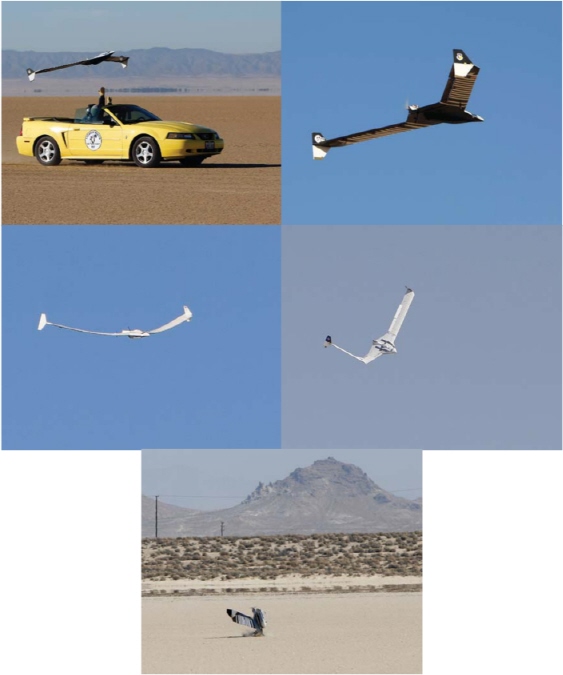
FIGURE 2.1.1 Lockheed Martin/Air Force Research Laboratory’s Body Freedom Flutter aircraft, built by Lockheed Martin. This vehicle was designed to test the limits of aircraft structures, including the point of destructive flutter. The crash is therefore not an accident, but the end result of this test. This kind of flight research cannot be conducted with piloted vehicles and is cost prohibitive with full-scale vehicles. SOURCE: Courtesy of Jeff Beranek, Lockheed Martin.


