
Community Characteristics and Improving Community Resilience
Chapter 1 briefly describes the dam and levee community as the individuals, groups, and institutions affected by the physical impacts of inundation, as well as those that experience indirect consequences such as financial burden or loss of public services. A community includes but is not limited to those who live or work near dam or levee infrastructure (e.g., in a floodplain). Major floods can affect investors and financial institutions, commercial risk managers, the insurance market, and organizations such as the Federal Emergency Management Agency (FEMA) itself, that operate far from the infrastructure or flooding. Community members and other stakeholders are those who bear flood-related risk and can benefit from increased resilience.
FEMA’s National Disaster Recovery Framework describes community as a “network of individuals and families, business, governmental and nongovernmental organizations and other civic organizations that reside or operate within a shared geographical boundary and may be represented by a common political leadership at a regional, county, municipal or neighborhood level” (FEMA, 2011a, p. 79). This definition is incomplete in the context of resilience to dam or levee failure. Floods and their direct and indirect consequences recognize no municipal or political boundaries. A distinctly different definition of a community describes its members as having common interests (e.g., NRC, 2011a)—in this case, the continued safe functioning of dam and levee infrastructure. They may also share broad development goals and their social behavior and relationships governed by common specific social norms (Agrawal and Gibson, 1999).
This chapter expands on the definition of community and defines what makes a community resilient.
CHARACTERISTICS OF A RESILIENT COMMUNITY
The committee identifies three key features of resilient communities. First, a resilient community is able to assess and minimize potential threats. Second, a resilient community uses its social and physical infrastructures and lifeline systems effectively to communicate and coordinate activities to mitigate, prepare for, respond to, and recover from disasters. Third, a resilient community has the capacity to adapt and learn from change and adversity—its own and those of others.
Capacity to Assess and Minimize Potential Threats
A resilient community has the capacity to understand the benefits of dam and levee infrastructure and the ability to assess, anticipate, and minimize potential threats over the short and long terms while retaining its basic structures and functions. Resilient communities are able to assess and manage risks, are generally well informed of threats, are clear about the roles and responsibilities of individuals and organizations in the community with respect to risk, and maintain safety programs and—in this case—water management programs in ways that strengthen the community’s ability to mitigate potential infrastructure failures.
Many solutions may be available to community members and stakeholders to minimize the effects of floods, including risk reduction and mitigation, financial planning, and insurance. Without a clear understanding of the limitations of flood mitigation infrastructure, community members and stakeholders are likely to be ill-prepared for emergencies that might place lives and livelihoods at risk. When a community fails to appreciate its exposure to floods and their consequences, there may be little support for investment in the maintenance and upgrading of infrastructure, such as dams and levees.
When there is limited availability of dam and levee flood hazard and consequence information, as will be discussed in Chapter 3, it is difficult or impossible for communities and stakeholders to identify vulnerable regions, people, or institutions. Many, therefore, are unaware of the community’s exposure to physical (casualties and damage) and social (economic, psychosocial, sociodemographic, and political) risks (e.g., see Lindell et al., 2006, for a description the social impacts of disaster). They may have inadequate means of identifying risk scenarios or quantifying their risk, and have little reason to consider risk in hazard mitigation or emergency planning. Uninformed community members and stakeholders may not fully appreciate the benefits or limits of protection offered by dams and levees, nor will they adequately understand the commitment required to maintain the benefits over the long term.
Understanding personal, financial, and other types of risk associated with the variety of potential dam and levee failure scenarios is a starting point for enhancing community
resilience. In the case of investors and financial institutions, flood-related financial risk may not always be recognized or understood, especially if the institutions are managed from outside the immediate region of the dam or levee infrastructure. A major dam or levee failure in one location can have repercussions for commercial risk managers, and enterprise- and supply-chain risk management anywhere in the world.
The public faces numerous and competing risks related to natural hazards. Focusing public attention on risks that are relatively low from a probability perspective (e.g., the risk of dam failure) is difficult, even if the consequences are very high. It is important that decision makers understand and appreciate the nature of potential flood hazards and the range of potential outcomes so that they can assess the effects on livelihood and the options available to reduce risk through avoidance, mitigation, or risk transfer (such as through insurance).
Effective Communication and Coordination
Disaster preparedness—including efforts to inform the public of risks and of response options—occurs before infrastructure failure. A resilient community is able to communicate and coordinate effectively among those with important roles in community disaster mitigation, emergency preparedness and response, and in recovery, as well as with civic, business, and other community leaders. Resilience is largely dependent on trust—building trusted relationships between community leaders, members, and stakeholders. If community members trust their leaders, they are more likely to be responsive to the information their leaders disseminate. Stakeholders more broadly may not have the same kind of relationship with local community leaders, and therefore communication with them must be purposeful and targeted to build trust. In addition to the ability to prepare for disaster, a resilient community has the ability to respond rapidly when failure occurs; this may involve, for example, arrangements for rapid mobilization of coping resources to facilitate effective and timely restoration of services and a rapid return to normal functioning.
Capacity to Adapt
A resilient community has the ability to learn from disastrous events that occur locally or elsewhere, and is able to institute measures to safeguard the community from future events. A community may learn that the former status quo may not be in its best interest if that way of functioning could be sustained as a result of a disaster. A “new normal” that is resilient to known hazards might be more appropriate. Resilient communities take advantage of opportunities to increase community security and robustness, resulting in even greater resilience.
ENGAGING ALL ELEMENTS OF A COMMUNITY FOR RESILIENCE
Legal authority is the regional or local formal leadership structure, including elected, appointed, and statutory authorities that make up an area’s regulatory framework. Representatives of this group have primary responsibility for ensuring the safety and well-being of citizens (e.g., WMO, 2006) and include local administrative units responsible for emergency planning, risk and emergency management, mayors, governors, and legislators. Decision making, however, is complex and sometimes politically charged, as might be expected in the case of multijurisdictional regions, or where decisions regarding resilience are driven by special districts, the private sector, or citizen interests. In many cases, mayors or city managers may be primary representatives of the authority in communities; in others, it may be emergency management personnel. Authority may overlap or be ill-defined. Decisions related to safety and well-being are also made by many others in the community, including dam and levee professionals and members of the wider economy. In some cases, the framework that drives disaster resilience-related decisions may be in the form of private–public collaboration (see NRC, 2011a).
Community engagement, such as private–public collaboration, is an effective means of enhancing community disaster resilience if all those engaged are equally vested in the outcomes (e.g., NRC, 2011a). However, community-wide resilience will be enhanced only when all elements of the community are considered. Deciding whom to engage requires careful examination of community elements. A community, as broadly defined in this report, can be divided into four major elements:
• Dam and levee professionals
• Persons and property owners at direct risk
• Members of the wider economy
• Social–ecological systems
Those elements, the communication links among them, and their roles in enhancing community resilience are described in the next sections and in Table 2.1. All groups represented in Table 2.1 are functionally interdependent in some way. Resilient communities are able to recognize those interdependences and capitalize on them to increase the capacity to assess and minimize disaster risk; to communicate and coordinate effectively to enhance resilience among all elements of the community; and to develop the capacity to adapt to change as warranted. The committee, however, acknowledges that such interdependences are often better defined for communities influenced by dams than for those influenced by levees.
Dam and Levee Professionals
Dam and levee professionals are the individuals and organizations concerned with the planning, design, construction, maintenance, operation, and regulation of physical modifications of river or coastal systems. This includes what is conventionally considered the “dam safety community” and its counterpart for levees and other flood-protection infrastructure. Members of this sector are defined by their occupation or organizational responsibility, not by proximity to flood control works or exposure to risk. Table 2.1 shows that this element is responsible for a wide variety of activities. Its activities and responsibilities differ substantially between times of normal operations and times of unusual events.
Persons and Property Owners at Direct Risk
People who live, work, or own property in an inundation zone experience a different kind of risk from others in the community: possible loss of life, limb, property, or workplace as a direct result of inundation. The effects are on them or their real or personal property. Potential damages derived from the inundation itself and associated water quality issues exist whether or not people participate in the regional economy or any social–ecological networks. Table 2.1 lists representative losses for this element of the community. Under normal conditions, members of this element are likely to have little flood-risk–related communication with dam and levee professionals or with agents of the wider economy.
Members of the Wider Economy
Many individuals and organizations may experience flood-related consequences as a result of their participation in the area economy, either as producers of goods and services for a region at risk of flooding, or as consumers of goods and services exported from those areas. Small businesses, financial institutions, and any other locally significant business that may be forced to close can affect local economies. Examples of the type of individuals and organizations in this group in the private and public sectors are listed in Table 2.1. Those with input regarding funding for dam and levee infrastructure development, operation, and safety are also members of this category.
Direct effects on private- and public-sector entities can be related to, for example, flood damage of highways, power lines, telecommunication services, pipelines, water services, and other utilities; loss or deterioration of fisheries habitat; and changes in water quality. Firms and government agencies directly affected include ones that suffer physical damage, lose complete or partial capacity to move materials or employees, and are unable to operate because of flood-related labor-force dislocation. Indirect effects can result in lost market for goods and services, supply-chain disruptions, or loss of demand for goods and services.
TABLE 2.1 Elements of the Dam and Levee Safety Community
|
|
|
|
Element |
Example Components |
|
|
|
|
Dam and levee professionals |
Dam and levee owners, operators, and regulators; water-related service agencies and organizations, including |
|
• Federal and state regulatory agencies |
|
|
• Regulation enforcement and oversight agencies |
|
|
• Municipal water supply utilities |
|
|
• Hydropower generating facilities |
|
|
• Agricultural irrigation districts |
|
|
• Water-based recreation providers and suppliers |
|
|
Individuals and organizations activated in the event of failure or threat of failure: |
|
|
• Emergency management agencies |
|
|
• First responders and law enforcement |
|
|
• Key political leaders |
|
|
• Some large employers |
|
|
Persons and property owners at direct risk |
Individuals or organizations at risk, due to flooding or water-quality issues, for direct consequences to themselves or property such as loss of life or limb; damaged or lost real or personal property; costs of short- and long-term evacuation and recovery (including social capital); lost employment or wages due to evacuation, transportation disruption, etc.; closed schools and childcare; and lost government infrastructure (e.g., police, fire, transportation, water, and sewer). |
|
Members of the wider economy |
Individuals and organizations at risk for economic consequences directly or indirectly related to flooding or water quality issues, including |
|
• Private-sector manufacturing, warehousing, and retailing firms |
|
|
• Large and small locally significant businesses |
|
|
• Real estate developers |
|
|
• Utility companies |
|
|
• Shareholders |
|
|
• Banks and other mortgage holders |
|
|
• Insurance companies |
|
|
• Public and private agencies providing services, such as health care, education, personal services, and recreational services |
|
|
• Floodplain management organizations |
|
|
• Land-use planning and zoning agencies |
|
|
• Government officials engaged in economic development and related subjects |
|
|
• Government and private individuals involved in dam and levee infrastructure development and operation funding decisions |
|
|
Social-ecological system |
Institutions and organizations that may serve as advocates, contribute to community involvement and mobilization, and have political influence, including |
|
• Institutions involved in governance (including water quality regulation) |
|
|
• Nongovernment and not-for-profit organizations (e.g., American Red Cross) |
|
|
• Political networks |
|
|
• Social networks, such as indigenous and other populations or groups |
|
|
• Communication networks |
|
|
• Mass media entities that, for example, can raise awareness, communicate risks, expose and cover floods, and disseminate post-disaster performance reviews |
|
|
• Social support networks |
|
|
• Neighborhood or citizen corps networks |
|
|
• Family networks |
|
|
• Religious networks and other faith-based organizations |
|
|
• Environmental organizations and cultural resources |
|
|
• Biodiversity |
|
|
• Natural resources |
|
|
• Cultural heritage sites and resources |
|
|
• Private volunteer organizations |
|
|
• Chambers of commerce |
The firms and agencies that suffer indirect effects are not necessarily in or near the potential inundation area. Recent flooding in Thailand, for example, has highlighted how complex manufacturers’ supply chains can be and how the overall effect of localized flooding can easily be underestimated. According to A.M. Best,1 “given the floods’ impact on manufacturing in Thailand’s industrial estates, one of the major uncertainties will come from the difficulties in calculating contingent business interruption losses” (A.M. Best, 2012, p. 1). If the corporate governance process does not anticipate the effects of flooding, the institutions might not be able to meet financial obligations. Similarly those with decision-making power related to the funding of dam and levee infrastructure itself may not be fully informed of risks and what is necessary to make such infrastructure “safe.” Long-term funding, whether by executive budget management agencies or independent entities, may not be part of dam or levee safety decision processes.
_____________
1The A.M. Best Company is a credit-rating organization that serves the insurance industry.
The Social–Ecological System
Social systems are structures created by interacting individuals and organizations for the purpose of achieving common goals (see, e.g., Parsons, 1951). In dealing with resilience associated with dam and levee infrastructure, social systems noted in this report focus largely on governance issues, such as property rights and access to resources, the dynamics of environment and resource use, and world views and ethics that address human–nature relationships. Ecological systems are self-regulating communities of organisms that interact with each other and their environment. Social and ecological systems are closely linked, and changes in one inevitably have reverberations in the other (e.g., Milestad and Hadatsch, 2003). The concept of a social–ecological system is useful in this report for considering the actions of humans in nature and for human management of surface water and groundwater. Networks of various kinds exist in these systems, including, in the case of this report, aquatic animals and plants, institutions and organizations involved in governance, and networks of people and their values that make up the community. Of concern in current analysis and management is the ability of social–ecological systems to adapt to novel challenges without compromising sustainability (the topic of several papers found in Berkes et al., 2003).
The social–ecological system is complex, dynamic, and subject to continuous evolution and adaptation. A sustainable system requires continuing interactions between nature and people, interactions on multiple scales (local to global) within the social, economic, and governmental domains, and a basic concern with resilience—the capacity of the system to withstand change and disturbances and adapt by incorporating input information and assessing feedback resulting from prior changes. It also includes people and institutions not in the proximate inundation zone. Explicitly addressing risk, uncertainty, equity, ambiguity, ignorance, and surprise by those with a common interest in a specific dam or levee safety situation can help to define affected networks. Of concern in current analysis and management is the ability of the social–ecological system to adapt to novel or emerging challenges without compromising sustainability.
IMPLICATIONS FOR ENHANCING RESILIENCE
Resilient communities are ones that develop long-term strategies with an “all-hazards approach” to disaster management—consideration of all manner of threats to the health, economy, and proper functioning of the community—rather than strategies focused on a single emergency action plan.2 Building and maintaining infrastructure critical for the long
_____________
2An all–hazards approach has long been encouraged for disaster preparation nationwide as reflected and reinforced in such recent documents as the Stafford Act (see www.fema.gov/about/stafact.shtm, accessed December 20, 2011), the Post-Katrina Emergency Management Reform Act (see frwebgate.access.gpo.gov/cgi-bin/getdoc.cgi?dbname=109_cong_bills&docid=f:s3721is.txt.pdf, accessed December 20, 2011), and Homeland Security Presidential Directive 5: Management of Domestic Incidents (see www.dhs.gov/xabout/laws/gc_1214592333605.shtm#1, accessed December 20, 2011).
term prosperity of a region, including dam and levee infrastructure, are elements of those strategies. However, the benefits provided by such infrastructure may be taken for granted, and risks overlooked. The community could suffer for not having recognized potential risks before a disastrous failure.
General Benefits of a Fully Engaged and Informed Community
In the case of community resilience with respect to dam and levee safety, improved communication before, during, and after controlled or uncontrolled flow resulting in flooding is part of holistic planning that makes timely mitigation, preparedness, response, and recovery more successful. In many communities today, dam and levee owners and operators, emergency managers, financial risk managers, and other decision makers are uninformed of the potential risks associated with dam or levee failure. Their decisions, then, will probably not be the most beneficial for themselves or their communities, and may place their communities in grave danger if a dam or levee failure occurs. As part of an engaged community whose elements (as described in Table 2.1) collectively agree to enhance dam and levee safety and community resilience, decision makers—including dam and levee owners and operators—should be informed and aware of the benefits and hazards associated with the dams and levees that support their livelihood. Their decisions may allow communities to
• Obtain sufficient resources to maintain dam and levee infrastructure. Collaborative engagement between dam and levee professionals and the broader community may lead to improvements that minimize risks identified collectively as most consequential. A community’s awareness of flood infrastructure encourages its financial participation in ongoing maintenance and upkeep of dams and levees, which leads to more comprehensive advanced planning for likely floods. Box 2.1 provides an example of how community awareness can facilitate procurement of needed maintenance resources.
• Enhance preparedness. All planning for potential scenarios and emergency response—whether focused on primary life and safety concerns, the preservation of property, or preservation of physical and social infrastructure—require understanding of potential emergency scenarios by all community elements. The community, including dam and levee owners, can collectively identify dam and levee infrastructure and associated flood risks. They can then identify other community risks and resources, and enhance preparedness by collectively prioritizing preparedness goals and choosing appropriate mitigation and preparedness activities.
• Improve regional emergency response. Effective disaster response depends on already having open lines of communication with those in and outside the community able to provide information and resources during times of need (see, e.g., NRC, 2011a), whether local, regional, or federal emergency support personnel or through
BOX 2.1
Building Community Awareness
The Miami Conservancy District in southwest Ohioa (see Figure) is engaged in efforts to build community awareness and improve the understanding of the benefits brought by the locally designed, constructed, operated, and maintained surface-water management system that includes five "dry dams and 55 miles of levees in 11 cities" (Rinehart, 2011) The conservancy was created to manage flood protection in the Great Miami River after the disastrous floods of 1913. It has received no federal or state funding and relies entirely on local funds, assessed annually, from about 48,000 households and businesses—the beneficiaries of the flood protection system. The Conservancy is an example of a comprehensive systems-based holistic approach with a well-established governance process. The key message to stakeholders is the concept of sustainability linking economic, quality-of-life, and environmental benefits of the work of the district.
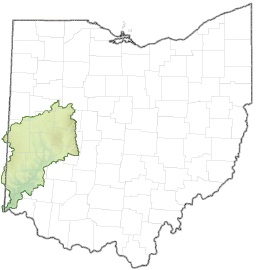
Miami Conservancy District, Ohio. SOURCE: Rinehart (2011). Reprinted with permission from the author, copyright 2011.
____________
aSee www.miamiconservancy.org/ (accessed December 20, 2011).
financial planning. Engagement builds familiarity and trust. If a decision maker trusts the person with whom he or she is engaged, decisions will be made quickly and with more confidence during an emergency situation. Strategies to strengthen community resilience include building and maintaining such relationships with interested parties in and outside the immediate community; all involved need to
be aware of their roles and prepared to respond. This includes early engagement with regional and federal emergency support entities and personnel. For regional emergency response to be effective and sustainable, critical individuals need to be aware of their roles and prepared with adequate resources ranging from personnel, to supplies, to financial support.
With fewer disruptions to community functions, recovery can be expected to occur more quickly. Understanding the interdependencies among community elements promotes recovery of individual elements. Established communication networks will facilitate the difficult tasks of assessing and relaying the status of major and minor community functions following an event, and resources can be directed to restore function where needed. New operational norms can be adopted quickly if necessary. Benefits of engagement are described more fully in Chapter 4, including benefits to dam and levee safety professionals and benefits to other members of the community.
Information-Related Barriers to Effective Resilience-Focused Engagement
There are challenges to effective resilience-focused engagement, many of which are related to access to or understanding of inundation-related data and a community’s flood-risk profile. Incomplete understanding of the benefits, hazards, and risks associated with dams and levees hampers effective community engagement and decision making. Below are some of the major information-related barriers to effective engagement and informed decision making.
• Information regarding the locations of dams and levees and the areas they protect is not consistently available in the public domain. After the events of September 11, 2001, the public is not granted routine access to inundation maps (USACE, 2008; DOI, 2011; see Box 2.2 for response to similar directives abroad), although recent initiatives make some inundations maps more accessible.3 Without the most basic information, communities engaged in resilience-focused collaboration cannot make informed decisions. FEMA itself can be affected by the lack of data, as can, for example, the private insurance industry.4 Resources allocated to support emergency responders may also be affected.
_____________
3For example, see geo.usace.army.mil/egis/cm2.cm26.map?map=mvd_ows (accessed May 21, 2012).
4The private insurance market that provides property insurance to those seeking additional coverage beyond that provided by the National Flood Insurance Program relies on FEMA flood maps to identify flood hazard domains. The amount of coverage provided depends on the size of the entity purchasing insurance—larger institutions and industrial companies may purchase in excess of $100 million of flood insurance. Insurers typically manage their own known flood risk conservatively by applying larger deductibles, by using insurance limits, or by purchasing reinsurance. Where flood maps are unavailable, private insurers rely on historical claims data to make actuarially based decisions; such decision-making occurs without knowledge of potential flood hazard (C. Goodwin, personal communication, February 11, 2011).
BOX 2.2
Response to the 2007 Floods in the United Kingdom: Make Data Available
Countries in different parts of the world have responded to national security threats by withholding information from the public that potentially could be used to plan terrorist attacks against critical infrastructure. There is growing recognition, however, of the advantages of having data regarding flood hazards accessible to the public. An investigation of the 2007 floods in the United Kingdom resulted in the Pitt Review (DEFRA, 2008) and included 92 recommendations for building community resilience to flood hazards. The report describes that “large-scale natural events are more probable and have higher consequences than terror” and it welcomes an approach to risk management that balances the risks of terrorism against natural hazards “in a single plan” (p. 245). The report also includes this statement:
The Government should provide Local Resilience Forums with the inundation maps for both large and small reservoirs to enable them to assess risks and plan for contingency, warning and evacuation and the outline maps be made available to the public online as part of wider flood risk information. (p. 306)
In its response to the Pitt Review (DEFRA, 2008), the government of the United Kingdom indicated that it supported this recommendation, and it began providing basic-level inundation maps to local resilience forums while preparing more detailed maps of higher-risk reservoirs. As of December 2009, the government had completed protocols for sharing the maps developed (DEFRA, 2009). Web-based search tools were also being developed for the public.
• FEMA flood maps are easily misunderstood. FEMA flood maps prepared to support the National Flood Insurance Program5 show the areal extents of flooding for what are termed 100-year flood events,6 and, when information is available, the elevation of the base flood. Those maps often represent the best technical information available to communities. Those who seek flood hazard maps may use FEMA flood insurance rate maps, perhaps mistakenly believing these maps detail a full range of flood hazards. Dams and levees designed to control water flows of magnitudes greater than a 100-year flood event are routinely not shown on FEMA flood maps. Communities may be unaware of the existence of local or upstream dams and levees and their related risks. Because readers uninformed of the intent of the flood insurance maps may draw erroneous conclusions regarding safety, the result may be misinformed personal or community- level decisions.
_____________
5For example, see msc.fema.gov/webapp/wcs/stores/servlet/FemaWelcomeView?storeId=10001&catalogId=10001&langId=-1 (accessed December 21, 2011).
6A 100-year event, also called a once-in-a-100-years event, is one with an annual exceedance probability of 0.01 (1.0%). A 100-year event can occur at any time; the probability of occurrence in any given year is 0.01 (1.0%).
BOX 2.3
An Unwarranted Sense of Safety?
A 2001 study conducted by Pfister (2002) of the evacuation of Grafton, New South Wales, Australia, before a flood event addressed perceptions of flood risk. A local river was expected to rise to a height 0.13 m below the expected height of protection offered by local levees. Because of uncertainties inherent in river-crest predictions, the town was ordered to evacuate, but fewer than 10 percent of the population are estimated to have evacuated (Pfister, 2002). Pfister noted that "the residents of Grafton, having experienced few direct effects of flooding since the construction of the levees, are likely to have developed a relatively low consciousness of the flood threat, and are therefore less ready to act" (Pfister, 2002, p. 24).
• Available data can lead to an unwarranted sense of safety. Those living or working in a region protected by a levee may consider themselves immune to flooding, especially given a lack of data, incorrect data, or misinterpretation of available data. Box 2.3 is an example of a community that largely failed to adhere to a flood evacuation order, apparently because it lacked awareness of the flood threat. Communities behind levees and dams may believe they are “safe,” and may not fully understand the value of the infrastructure, the need to maintain it, or the actions to be taken in the event of failure.
BUILDING SOCIAL CAPITAL FOR COMMUNITY RESILIENCE
Social capital refers to the connections among social networks that can be used, through collaboration, to obtain societal goals—in this case, community resilience. The concept of social capital has been in the sociologic, economic, and political science literature for several decades; one of the earliest uses of the term was by Hanifan (1916). Political scientist Robert Putnam and coauthors developed the concept in Making Democracy Work: Civic Traditions in Modern Italy (Putnam et al., 1993). Putnam et al. explain the dilemmas of collective action and how they can be overcome by a stock of social capital, by the existence of networks of civil engagement, and through norms of reciprocity—the expectation that people will treat or serve others as they themselves have been treated or served. He attributes the emergence of democratic institutions, behavior, and social trust to the growth of participation in voluntary organizations in which people acquire skills and develop expectations with respect to social behaviors. These skills include the ability to negotiate, compromise, work together, and provide leadership. They are assets, sometimes described as moral resources, that may be useful for building community resilience because people learn to cope together to solve
problems and deal with common stressors. Putnam developed the notion of social capital further in his later work, Bowling Alone: The Collapse and Revival of American Community(Putnam, 2000), in which he explores how and why Americans have become disconnected from one another and how social structures and institutions have atrophied. He concludes that social capital is best built by a dense network of voluntary organizations and widespread public participation in them.
The concept of social capital has been broadened by including it in a larger framework that also includes natural capital, human capital, and financial capital. The framework has been used by development agencies, such as the United Kingdom’s Department for International Development, to assess a country’s development potential and its actual or potential vulnerability to stresses and perturbations. Social capital has been described as the foundation for community adaptation (see, e.g., Norris et al., 2008; NRC, 2011a) with “the formation of effective and productive social networks as the key element in [its] development” (NRC, 2011a; p. 106). Social capital and therefore community resilience could be enhanced via
• dense community social networks that build communication and social interactions in a community or among people and organizations that have a common interest;
• widespread voluntary organizations that afford community members opportunities for participation and collaboration;
• development of community members’ skills in negotiation, compromise, and leadership as a result of participation in voluntary organizations and social networks;
• widespread access to and use of social media;
• development of a network of private and public partnerships in the community.
The development of social capital, in turn, fosters higher social trust in the community, unquestionably a valued resource for effective risk management and decision making with respect to dam and levee safety. Chapter 4 provides a comprehensive discussion of how it is applied specifically to the dam and levee safety community.


