
Adolescence is a distinct, yet transient, period of development between childhood and adulthood characterized by increased experimentation and risk taking, heightened sensitivity to peers and other social influences, and the formation of personal identity. Although this developmental period has been recognized for centuries by philosophers and educators (Scott and Steinberg, 2010), the law has embraced this understanding only gradually and imperfectly, especially in relation to offending by juveniles. This report brings a developmental perspective to the century-old confusion about the purposes and proper design of a separate legal court for adolescents and builds on advances in the science of adolescent development. This advancing knowledge provides an empirical basis for a renewal of the juvenile justice system. The framework for reform set forth in this report aims to enable juveniles to make a successful, prosocial transition to adulthood, while holding them accountable for their wrongdoing, treating them fairly, and protecting society from further offending.
The purpose of this chapter is to summarize relevant aspects of the rapidly developing knowledge of adolescent development most pertinent to the purposes, design, and operation of the juvenile justice system and thereby lay the scientific foundation for the proposals for reform set forth in the rest of the report. The first section reviews key cognitive and behavioral features of the normal process of adolescent development, including poor self-control, sensitivity to peer influence, and a tendency to be especially responsive to immediate rewards while failing to take account of long-term consequences. The section then reviews brain imaging findings strongly sug-
gesting that adolescents lack these abilities because of biological immaturity of the brain.
The second section highlights aspects of the adolescent’s social environment (the social context in which ongoing neurobehavioral development occurs) that have been shown to affect the probability that any given youth will offend, will desist during adolescence or young adulthood or will continue offending. It also focuses on the impact of interventions designed to reduce such offending.
THE SCIENCE OF NORMAL ADOLESCENT DEVELOPMENT
By definition, adolescence is a transitional period of normal development, distinct from both childhood—when regulation of behavior is the responsibility of the parents—and adulthood—when regulation of behavior is viewed as the responsibility of the individual (Casey et al., 2010). This definition applies to all adolescents, regardless of ethnicity, culture, or nationality, and it is not special to humans but observed across species as a period for acquiring the basic skills needed to transition from dependence to relative independence from parental care (Spear, 2010).
A key function of adolescence is developing an integrated sense of self, including individuation, separation from parents, and personal identity (Collins and Steinberg, 2006). Age-typical ways in which adolescents form their identities and develop adult skills include experimentation and novelty-seeking behavior that tests limits (Spear, 2010). These behaviors are thought to serve a number of adaptive functions including socialization and procreation. In testing limits and experimenting, however, the adolescent may engage in alcohol and drug use, unsafe sex, and reckless driving (Irwin and Millstein, 1986; Crockett and Pope, 1993; Spear, 2010), despite the risks that this can pose to the individual and others (National Research Council and Institute of Medicine, 2011). Often these actions occur in the presence of peers and are exacerbated by their influence (Gardner and Steinberg, 2005).
Research indicates that, for most youth, the period of risky experimentation does not extend beyond adolescence, ceasing as identity becomes settled with maturity. Only a small percentage of youth who engage in risky experimentation persist in their problem behavior into adulthood (Moffitt, 1993; Snyder, 1998). Thus, it is not possible to predict enduring antisocial traits on the basis of risky behavior during adolescence. Much adolescent involvement in illegal activity is an extension of the kind of risk taking that is part of the developmental process of identity formation, and most adolescents mature out of these tendencies.
Evolutionary theorists (Ellis et al., 2012) have identified adaptive functions of adolescent risky behavior, based on the recognition that the task of
adolescence is to move from a childhood state of dependence on parents to an emerging adult state characterized by acquiring independence and self-identity, enabling procurement of additional resources, increasing the probability of reproductive success, improving life circumstances, and exploring adult liberties (Csikszentmihalyi and Larson, 1987; Daly and Wilson, 1987; Belsky, Steinberg, and Draper, 1991; Meschke and Silbereisen, 1997). Thus, adolescence by definition is a transient period of development that involves disruption of an old, secure state in favor of an uncertain but exciting new state. Antisocial behaviors, such as disobedience and lawbreaking, serve the function of disrupting ties to “old” parents and authority figures. Drug use, driving after drinking, and unprotected sex are exemplars of exciting new states that the adolescent may explore, as he or she seeks the new state of adulthood. The adolescent is primed to embrace exciting risk-taking behaviors and may even need to fail at some of these behaviors in order to succeed eventually at the tasks required of adults. The balance that parents and a justice system must find is how to encourage the transition to adulthood while keeping adolescents, and society as a whole, safe.
Cognitive and Behavioral Adolescent Development
Current empirical evidence from the behavioral sciences suggests that adolescents differ from adults and children in three important ways that lead to differences in behavior. First, adolescents lack mature capacity for self-regulation in emotionally charged contexts, relative to adults and children (Somerville, Fani, and McClure-Tone, 2011a). Second, adolescents have a heightened sensitivity to proximal external influences, such as peer pressure and immediate incentives, relative to adults (Gardner and Steinberg, 2005; Figner et al., 2009). Third, adolescents show less ability to make judgments and decisions that require future orientation (Steinberg, 2009). The combination of these three cognitive patterns accounts for the tendency of adolescents to prefer and to engage in risky behaviors that have a high probability of immediate reward but in parallel can lead to harm to self or to others. The preference for risky behaviors rises by a third of a standard deviation between ages 10 and 16, and then it declines by a half standard deviation by age 26. Figure 4-1 depicts this pattern based on research by Steinberg (2009). One can conclude from the body of behavioral and brain studies that adolescents clearly differ from adults in crucial ways that suggest the need for a different response from the justice system. One can also conclude that age 18 does not suddenly mark complete transition to adulthood. The most recent empirical evidence for each of these three behavioral patterns is provided below, although they are interrelated.
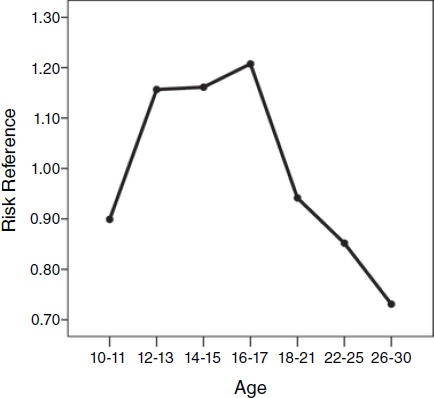
FIGURE 4-1 Age differences in preference for risky behaviors (e.g., unprotected sex, shoplifting, smoking).
SOURCE: Steinberg (2009).
Self-Control
Lack of self-control, that is, the inability to control one’s behavior and emotions in order to optimize future gains, is the central hypothesized psychological process related to criminal behavior, according to some theories of crime (e.g., Gottfredson and Hirshi, 1990). Studies of self-control, measured in a variety of ways, show a gradual but steady increase through adolescence, with gains continuing into late adolescence and young adulthood. Self-control, mainly in boys, has been linked to positive adjustment in several domains (although with varying magnitude of effects), including less aggressive and delinquent behavior (Krueger et al., 1996; de Ridder et al., 2012).
These observations are supported by a wealth of behavioral evidence from laboratory tasks requiring participants to override one response in order to achieve a correct one (Luna et al., 2001; Somerville, Fani, and McClure-Tone, 2011). Similarly, self-report measures of lack of self-control as a general trait of impulsiveness decline linearly between adolescence and adulthood (Galvan et al., 2007; Steinberg et al., 2008). In emotionally charged contexts, the capacity for self-control is challenged, especially in adolescents. For example, in a recent laboratory study that explicitly tested the successful ability to inhibit responses to emotional relative
to nonemotional stimuli, Tottenham and colleagues (2011) showed that emotional control (e.g., suppressing a response to an emotional cue) was slower to develop than other forms of self-control. Moreover, adolescent males showed the greatest difficulty when having to suppress a response to an emotional cue. Self-control in the context of positive social cues (such as happy faces) shows a similar lag in development (Somerville, Fani, and McClure-Tone, 2011a). These data together suggest that adolescent decision making and judgment are compromised when made in emotionally charged situations, especially for young men. The findings are consistent with observations that criminal acts by adolescents often occur in emotionally charged situations, especially by young men.
Sensitivity to Social Influences
Adolescents are particularly sensitive to exogenous stimuli that relate to psychological development in, and in interaction with, the social environment. Two important social influences on adolescent behavior that are relevant to this report are incentives that have come to take on basic reward properties (such as a smiling face and money) and peer influence.
Incentives. Incentives can modulate behavior by enhancing or diminishing the behavior. Rewarding an individual for appropriate behavior can make him or her work harder and perform better than when not rewarded. In contrast, behaviors can be diminished when they require not responding to rewarding cues in the environment. Recent studies of adolescent development show a change in sensitivity to reward-based cues, suggesting that they have a unique influence on cognition during the adolescent years.
Empirical evidence for how adolescent behavior is differentially biased in external motivational contexts comes from several experiments. Using a gambling task in which reward feedback was provided during a decision or held until after the decision, Figner and colleagues (2009) showed that adolescents made disproportionately more risky gambles compared with adults, but only in the immediately rewarded condition. Steinberg and colleagues, using a similar gambling task (Cauffman et al., 2010) and a delay discounting task (Steinberg et al., 2009b), have shown that this sensitivity to rewards and incentives actually peaks during adolescence, with a steady increase from late childhood to adolescence and subsequent decline from late adolescence to adulthood. More recently, Somerville and colleagues (2011a) specifically tested how well adolescents could suppress a response to a rewarding social cue relative to a nonrewarding cue. Adolescents made more commission errors to the rewarding social cue than children or adults. These findings reveal an increasing sensitivity to rewards that peaks between 13 and 17 and then declines. Taken together, these studies suggest
that during adolescence, motivational cues of potential reward are particularly salient and can lead to risk taking and otherwise suboptimal choices.
Incentives can not only impair performance, but can also enhance it. Recent work by Ernst and colleagues (Jazbec et al., 2006; Hardin et al., 2009) suggests that adolescents show improved cognitive performance if an immediate incentive is at stake. They used an impulse control task (antisaccade task) to measure cognitive performance and promised a financial reward for accurate performance on some trials but not others. The results showed that promise of a reward facilitated adolescent performance on the task more than it did for adults. These findings suggest that immediate incentives can alter both desirable and undesirable behavior in adolescents and may be used to positively alter behavior.
Peer Influence. Substantial empirical evidence shows that teens are more oriented toward peers and conforming to peer views than are either adults or younger children (Steinberg and Monahan, 2007). They are more likely than adults to engage in reckless driving (Simons-Morton et al., 2005), substance abuse (Chassin, Hussong, and Beltran, 2009), and criminal offenses (Zimring, 1998) in groups. The strongest experimental evidence of heightened peer influence in early adolescence has come from Costanzo and Shaw (1966), who manipulated “peer” feedback to cognitive judgment tasks and found an inverted U-shaped function of conformity to peers across adolescence, with 13-year-olds demonstrating greater conformity with peers’ judgments than younger and older participants. Costanzo and Shaw (1966) found a complementary U-shaped function for conformity to adult judgments. The decline of adult influence and growth of peer influence during this period of life is consistent with an evolutionary perspective under which individuals depart from parental protection and strive instead for reproductive success and peer integration with puberty.
Peers can influence individual decision making even without direct interaction. To the extent that an adolescent seeks favor with the peer group, she or he may try to emulate peer behavior and attitudes. Prinstein and Wang (2005) found that adolescents tend to overestimate the frequency and seriousness of problem behavior of their peers. Given the high sensation value and salience of deviant talk in peer interactions (Dishion et al., 1996a), these overestimates may be self-perpetuating (Gonzales and Dodge, 2010).
Recent empirical studies (Gardner and Steinberg, 2005; Chein et al., 2011) show that adolescents’ decisions and actions are influenced by the mere presence of peers. Specifically, Gardner and Steinberg (2005) examined risk taking in adolescents and adults during a simulated driving task. Half the subjects performed the task alone, and the other half performed the task in the presence of two friends. The adolescents, but not the adults, took
a substantially greater number of risks when observed by peers. Together, these findings suggest that adolescence is a transient stage of development during which peer psychosocial influences have powerful effects that can contribute to risk taking.
Future Orientation and Reasoning
Adolescents are similar to adults in their reasoning and abstract thinking abilities (Hale, 1990; Overton, 1990; Kail, 1997; Keating, 2004; Kuhn, 2009). However, they lack a mature ability to consider the long-term consequences of actions given a heightened sensitivity to psychosocial influences and a lack of experience-based knowledge for making decisions (Steinberg and Monahan, 2007; Steinberg et al., 2008). A converging literature of studies that use a range of methodologies, from observation to interviews to questionnaires, has shown a lack of mature future orientation abilities in adolescence (Greene, 1986; Nurmi, 1991; Cauffman and Steinberg, 2000; Grisso et al., 2003). More recently, scientists have attempted to measure this ability with controlled laboratory tasks in addition to self-report measures. Steinberg and colleagues (2008) examined age differences in future orientation using both a self-report measure and a delay-discounting paradigm. Delay-discounting tasks assess the preference of an individual to choose between a smaller immediate reward versus a larger delayed reward. The results showed that adolescents were less oriented to the future than adults on both measures.
One possible explanation for less future orientation in adolescents relative to adults is that adolescents have been alive for a shorter amount of time and have had far fewer experiences than adults to inform judgments and decisions about the future (Gardner, 1993). The limited experiences of adolescents may also explain why they are more likely than adults to overestimate their own understanding of a situation, underestimate the probability of negative outcomes, and make judgments based on incorrect or incomplete information (Quadrel, Fischhoff, and Davis, 1993; Zimring, 1998). Together these findings suggest that adolescents are less capable than adults of envisioning the longer term consequences of their decisions and actions.
As youth often make decisions about experimentation with drugs and alcohol, risk taking, and criminal activity in situations involving peer pressure, emotions, and little time to consider a decision thoroughly (Zimring, 1998), it is important to understand how decision making differs across the period of development from childhood to adulthood. Indeed, the deficiencies in adolescent decision making that have been documented so clearly in laboratory experiments are probably magnified in actual social settings in which they cannot be studied directly. A full account of adolescent
decision making must include the examination of social and emotional influences on these cognitive abilities (Scott et al., 1995; Steinberg and Cauffman, 1996; Piquero et al., 2011).
Adolescent Brain Development
The last decade has provided evidence of significant changes in brain structure and function during adolescence with a strong consensus among neuroscientists about the nature of these changes (Steinberg, 2009). Much of this work has resulted from advances in magnetic resonance imaging (MRI) techniques that provide the opportunity to safely track the development of brain structure, brain function, and brain connectivity in humans. Consistent with the previously described behavioral findings that adolescents have poor self-control, are easily influenced by their peers, and do not think through the consequences of some of their actions, the brain imaging findings strongly suggest that adolescents lack these abilities because of biological immaturity of the brain.
Structural Brain Development
Several studies have used MRI to map the developmental time course of the structural changes in the normal brain. Even though the brain reaches approximately 90 percent of its adult size by age 6, the gray and white matter subcomponents of the brain continue to undergo dynamic changes throughout adolescence and well into young adulthood. Data from longitudinal MRI studies indicate that increases in white matter are linear and continue well into young adulthood, whereas gray matter volume shows an inverted U-shaped course, first increasing and then decreasing during adolescence (Sowell et al., 2003, 2004; Giedd, 2004; Gogtay et al., 2004). These changes do not occur uniformly across development, but rather there are regional differences in the brain’s development (Thompson and Nelson, 2001; Amso and Casey, 2006; Casey et al., 2010). In general, regions that involve primary functions, such as motor and sensory systems, mature earliest compared with brain regions that integrate these primary functions for goal-directed behavior (Gogtay et al., 2004; Sowell et al., 2004). Similar to sensorimotor regions, subcortical regions involved in novelty and emotions (e.g., striatum, amygdala) mature before the control region of the brain and show greater changes in males than in females during adolescence (Caviness et al., 1996; Giedd et al., 1996a, 1996b; Reiss et al., 1996; Sowell et al., 1999). These developmental and gender findings are important in the context of this report, given the increase in criminal behavior during the period of adolescence, especially in males (Steffensmeier et al., 2005).
Functional Brain Development
The most influential method for studying human brain development is that of functional magnetic resonance imaging (fMRI). This method allows for seeing what areas of the brain are active when an individual is behaving by indexing changes in blood oxygen levels in the brain. In the last decade, there has been an explosion of fMRI studies examining adolescent brain development (Casey et al., 2008). This work challenges the traditional view that changes in behavior during adolescence are due simply to immature cognitive control capacities and the underlying neural substrates (e.g., prefrontal cortex). Instead, the latest studies suggest that much of what distinguishes adolescents from children and adults is an imbalance among developing brain systems (Casey, Getz, and Galvin, 2008; Steinberg et al., 2008). This imbalance model implies dual systems: one that is involved in cognitive and behavioral control and one that is involved in socioemotional processes. Accordingly, adolescents lack mature capacity for self-regulation because the brain system that influences pleasure-seeking and emotional reactivity develops more rapidly than the brain system that supports self-control.
Empirical evidence to support this view comes from three areas of work. First, prefrontal circuitry implicated in self-regulation and planning behavior continues to develop into young adulthood (Casey et al., 1997, 2002; Luna et al., 2001; Bunge et al., 2002; Klingberg, Forssberg, and Westerberg, 2002; Bitan et al., 2006). This development is slow and linear in nature. Specifically, adolescents tend to recruit prefrontal regions less efficiently than adults, and these areas become more fine-tuned with age and experience (Casey et al., 1995; Brown et al., 2005; Durston et al., 2006). For example, imaging studies using tasks in which children and adolescents are asked to suppress a compelling response or to look away from a target have shown less focal prefrontal recruitment than in adults (Casey et al., 1995; Luna et al., 2001; Durston et al., 2006). These studies provide insights into the role of prefrontal circuitry in behavior regulation across development, but they do not speak to the heightened sensitivity of adolescents to rewards and emotional cues.
Several research teams (May et al., 2004; Ernst et al., 2005; Galvan et al., 2006; Geier et al., 2010; Van Leijenhorst et al., 2010) have examined brain systems involved in reward to address this issue. Their studies (Bjork et al., 2004) have shown enhanced sensitivity to rewards in adolescents, relative to children and adults. For example, Van Leijenhorst and colleagues (2010) showed exaggerated ventral striatal responses in adolescents during the anticipation and receipt of a monetary reward. The magnitude of activity in this region is associated with real-world behavior. Specifically, greater ventral striatal activity to rewards is predictive of risk-taking tendencies (Galvan et al., 2007).
A second form of support for the imbalance model of adolescent development comes from studies that directly examine how brain systems interact when self-control is required in a motivational or emotional context. Incentives can both motivate (Hardin et al., 2009) and interfere with (Somerville, Fani, and McClure-Tone, 2011) cognitive functioning in adolescents. Geier and colleagues (2010) have shown enhancement of behavioral control by adolescents as compared with adults when a financial reward was promised for accurate performance relative to when it was not. Relative to adults, adolescents had exaggerated activation in the ventral striatum when preparing and executing a response that would be reinforced and an increase in prefrontal activity important for controlling the movements, suggesting a reward-related up-regulation in control regions. In contrast, Somerville and colleagues (2011) have shown that adolescents’ performance is worse than both children and adults when having to suppress a response to an alluring social cue relative to a neutral one. This inverted-U pattern of performance is paralleled by a similar inflection in ventral striatal activity and heightened prefrontal activity.
Perhaps the most compelling imaging findings supportive of the imbalance model are those by Chein and colleagues (2011). They examined the neural basis of riskier driving decisions by adolescents relative to adults in the presence of peers during a simulated driving task. Adolescents, but not adults, showed heightened activity in reward-related circuitry, including the ventral striatum, in the presence of peers. This activity was inversely correlated with subjective ratings on resistance to peer influences. Individuals rating themselves low on this scale showed more reward-related brain activity in the presence of peers. Not only are peers influential but also positive exchanges with others may be powerful motivators (Baumeister and Leary, 1995; Steinberg et al., 2008). Asynchronous development of brain systems appears to correspond with a shift from thinking about self to thinking about others from early adolescence to young adulthood (van den Bos et al., 2011). Together these studies suggest that in the heat of the moment, as in the presence of peers or rewards, functionally mature reward centers of the brain may hijack less mature control systems in adolescents.
Brain Connectivity
Although regional changes in brain structure and function are important in understanding how behavior changes during adolescence, development in the connections between brain regions with age and experience are equally important (Casey et al., 2005). There are two relatively new approaches to indexing human brain connectivity. The first is that of diffusion tensor imaging (DTI). DTI detects changes in white matter tracts related to myelination, the process through which nerve fibers become
sheathed in myelin, thereby improving the efficiency of neural signaling. DTI-based connectivity studies of prefrontal white matter tracts suggest an association between connection strength and self-regulation (Liston et al., 2006; Casey et al., 2007; Asato et al., 2010). Combining DTI and fMRI, Casey and colleagues have linked connection strength between prefrontal cortex and subcortical brain regions with the capacity to effectively engage in self-control in both typically and atypically developing individuals (Casey et al., 2007). A similar increase in number and strength of prefrontal connections to cortical and subcortical regions from age 13 to young adulthood has been shown to be associated with improvements in self-control by Hwang and colleagues (2010).
The second method, resting state fMRI, assesses the strength of functional connections within a network by quantifying correlated spontaneous activity between brain regions at rest. Resting state fMRI studies show that brain maturity involves connections between distal brain regions increasing while connections between proximal or local brain regions simultaneously decrease (Fair et al., 2007; Dosenbach et al., 2010). Together, these findings support the claim that cognitive maturation occurs not in unitary structures but in the connectivity and interactions between developing structures (Fair et al., 2007; Thomason et al., 2010; Uddin, Menon, and Supekar, 2010). Thus, the relative immaturity of adolescent abilities will rely on specific immaturity of the circuitry.
Overall the findings suggest that in emotionally charged situations with limited time to react, as may be the case for most juvenile offenses, basic emotional circuits may drive adolescent actions. In more neutral contexts, more top-down cortical circuits may have a greater impact on decisions (Steinberg, 2009; Casey and Jones, 2010; Somerville, Fani, and McClure-Tone, 2011).
Pubertal Influences on Brain and Behavior
Puberty involves physical changes to the body initiated by gonad hormones to which the adolescent must adjust. These hormones also impact brain and behavior by binding to testosterone and estrogen receptors in the brain. These hormonal and brain changes coincide with increased sexual activity and interest (Sisk and Zehr, 2005) and with changes in arousal and the salience of motivational stimuli (Friemel, Spanagel, and Schneider, 2010). Brain changes specifically associated with puberty are consistent with broader brain and behavior patterns that occur during adolescence—that is, poor self-control, heightened sensitivity to peer influence, and heightened responsivity to immediate rewards.
Importantly, individual differences in the timing of puberty affect long-term outcomes. Early puberty has been associated with poor outcomes
in both sexes. These outcomes include earlier use of alcohol and illegal substances, earlier sexual behavior, higher risk for mental health problems, and increased risk for delinquency (Kaltiala-Heino et al., 2003; Waylen and Wolke, 2004; Deardorff et al., 2005; Bratberg et al., 2007).
Early maturation creates particular risks for girls. Early puberty coupled with stressors such as conflict with parents and involvement with delinquent and often older male peers is a risk factor for delinquency unique to girls (Zahn et al., 2010). Using data from the National Study of Adolescent Health, Haynie (2003) found that earlier puberty among girls was associated with higher levels of delinquency and that conflict with parents, exposure to peer deviance, and involvement in romantic relationships strengthened the link between puberty and delinquency. Furthermore, early onset of puberty among girls continued to predict increased risk behavior into adulthood (Zahn et al., 2010). Unfortunately, the limited number of studies specific to girls’ delinquency that include biological factors precludes any definitive conclusions at this time (Zahn et al., 2010).
THE SOCIAL CONTEXT OF ADOLESCENT DEVELOPMENT
From a developmental perspective, adolescent risk taking and delinquent behavior can be understood as resulting from the interaction between the normal developmental attributes of adolescents described above and the environmental influences to which they are exposed during this key stage of development. There are, of course, substantial individual differences among adolescents, not only in their pace of maturation but also in the type and frequency of risky behavior in which they engage. The likelihood of engaging in risky behavior is correlated with brain activity in anticipation of immediate rewards regardless of age, is highest for adolescents as a group, and varies among adolescents as well as among children and adults. To a large extent, the differences within age groups can be linked to variations in social influences.
With specific reference to delinquency, self-reports indicate that most adolescents engage in some form of delinquent behavior. However, many adolescents do not offend and, among those who do offend, most desist and only a small fraction become persistent offenders who commit crimes against persons or property crime as adults. (See Chapter 1 for a review of the research on heterogeneity of juvenile offending.) Based on decades of research, behavioral and social scientists have identified factors affecting the probability that a youth will offend initially and continue offending during adulthood (Loeber and Farrington, 1998). More broadly, the literature also addresses the factors that promote healthy development and forestall continued offending (Howell, 1995a; Hawkins et al., 1998; Loeber and Farrington, 2000). These factors include the biological characteristics
of the individual, the ever-changing environment to which the developing individual is exposed from gestation onward, and the interaction between biology and environment. As noted in Chapter 1, this research suggests that interventions designed to support strong families and otherwise foster a safe and supportive social environment can contribute to healthy psychosocial development in adolescence. These investments can reduce the risk that normal adolescent tendencies will lead to drug or alcohol problems, serious delinquency, or other harmful behaviors.
The committee does not think it necessary to summarize the voluminous literature on early child development and the etiology and prevention of delinquency for purposes of this report. Instead, we focus on factors that bear most directly on adolescent involvement in criminal activity and on the optimal design and operation of the juvenile justice system. With this limited purpose in mind, we focus on the social context of adolescent development, including the influence of families, peers, schools, and organized community activities. This knowledge sheds light on why some youth get involved in crime and others do not (and why most desist but a few become career criminals), and it also has important implications for designing interventions for offenders that will reduce delinquency and facilitate successful transitions to adulthood.
Research on the particular influences that promote desistance from criminal activity in adolescents who continue to offend is less well developed. A range of relevant studies point to the importance of such factors as positive romantic relationships, successful work experiences, psychosocial development, and the achievement of adult roles (Laub and Sampson, 2001; Mulvey et al., 2004; Laub and Boonstoppel, 2012). However, considerable work still needs to be done in this area regarding the mapping of the desistance process and identification of relevant behavioral and psychological factors. (See Chapter 6 for a discussion of the implications of desistance for sanctions and intervention.)
The scientific literature shows that three conditions are critically important to healthy psychological development in adolescence (Steinberg, Chung, and Little, 2004). The first is the presence of a parent or parent figure who is involved with the adolescent and concerned about his or her successful development. This adult relates to the adolescent with a combination of warmth, firmness, and encouragement of individuation—what is known as authoritative parenting. The impact of parents and other adults during adolescence can be powerful and positive. A positive relationship with a prosocial adult during this period is known to act as a protective factor against exposure to external risks and the adverse impact of that exposure. Laird and colleagues (2003a, 2003b) found that a positive parent-adolescent relationship in high school, as reflected by parent and adolescent reports of how much they enjoy being with each other, predicted declines in ado-
lescent antisocial behaviors over time, and that influence operated through increased parent-adolescent time together, increased parental knowledge and monitoring of the adolescent’s whereabouts, and increased acceptance by the adolescent that parental monitoring is appropriate.
Second, healthy development is promoted by inclusion in a peer group that values and models prosocial behavior and academic success (Brown et al., 2008). An antisocial peer group, in contrast, can undermine healthy development; thus, weakening the influence of a delinquent peer group is a major challenge for juvenile justice interventions. Third, activities that contribute to autonomous decision making and critical thinking contribute to healthy development. Schools, extracurricular activities, and work settings can provide opportunities for adolescents to learn to think for themselves, develop self-reliance and self-efficacy, and improve reasoning skills. The absence of these opportunities in these settings will undermine developmental progress.
These three dimensions of the adolescent’s social environment provide the conditions needed to make progress in accomplishing key developmental tasks and to allow the acquirement of skills essential to the transition to conventional adult roles. First, adolescents acquire basic educational and vocational skills that allow them to function in the workplace. Second, they acquire social skills that are the basis of intimate relationships and cooperation in groups. Finally, through normal developmental processes, adolescents begin to set personal goals and to make responsible choices without external supervision. The process of maturation is one of reciprocal interaction between the individual and a social context that provides opportunity structures facilitating normative development. If the adolescent’s social context lacks these opportunity structures, of course, it can undermine healthy development.
Parental Influences1
There is a vast literature on parental and other family influences on child and adolescent development. For purposes of this report, the most important aspect of parental influence relates to parental behavior that can be modified or relied on, as appropriate, in connection with juvenile justice interventions. Parental behavior can affect the occurrence of delinquent behavior in three main ways: hostile and coercive family processes, parent-
____________________________________
1 The material on parental and peer influences was drawn from a paper prepared for the National Research Council and Institute of Medicine’s Board on Children, Youth, and Families, dated April 26, 2010, by a member of this committee, Kenneth Dodge, and Nancy Gonzales, ASU Foundation Professor at Arizona State University. The material itself was edited, reorganized, and integrated into the chapter’s structure and subjected to scientific review. The paper can be found at http://www.BCYF.org/dodge_gonzales_pdf.
ing styles and practices, and family modeling and socialization about risky behaviors. These family factors are not exhaustive of the broad array of family influences that have been implicated in the prediction of adolescent risk taking. Additional family characteristics, such as family psychopathology, parents’ socioeconomic status, maternal age at the birth of the child, ethnicity, and family size and structure (intact versus nonintact) play contributing roles as well.
One of the most replicated findings in developmental research is that early physical maltreatment predicts a range of difficulties for adolescents, including increased risk for delinquent and dysregulated behavior (Smith and Thornberry, 1995; Swanston et al., 2003; Bergen et al., 2004). Maltreatment is associated with earlier initiation of delinquent behaviors (Rivera and Widom, 1990), more violent offenses (Lansford et al., 2002), and higher recidivism (Chang, Chen, and Brownson, 2003). Numerous mechanisms account for the consistent link between early harsh parental behavior and adolescent delinquency. The developmental model of antisocial behavior of Patterson posits that behavioral undercontrol and high negative affectivity of a vulnerable child underlie oppositional behavior. This behavior, in turn, incites negative affective responses and restrictions from parents, producing increasingly aversive parent-child exchanges (Patterson, 1982; Patterson, Reid, and Dishion, 1992). Patterson (1982) coined the term “coercion cycle” to describe the escalation in negativity that occurs between parents and children.
Adolescent delinquency is strongly influenced by the type of caregiving that youth receive prior to and during adolescence. Adolescents who are raised in homes characterized by authoritative parenting (i.e., parenting that is warm but firm) are more mature and less likely to engage in delinquent behavior (Baumrind, 1985; Steinberg, 2001). Dimensions of effective parenting include parental nurturance; active interest and involvement in the life of the child; clear, reasonable expectations and standards for appropriate behavior, with explicit rules and consequences for transgressions; and effective monitoring or supervision of the youth’s activities and peers.
Disengaged parenting raises the risk for adolescent problem behavior due to the absence of emotional bonding or attachment to parents and a lack of supervision and consistent behavioral control. Disengaged parents fail to provide a clear communication of parental values and also undermine motivation for adolescents to attend and comply, thus weakening their internalization of parental values and socialization (Baumrind, 1991; Grusec and Goodnow, 1994). Highly supportive and responsive caregiving, particularly when combined with clear and consistent discipline, also facilitates the gradual increase in youths’ self-regulatory capacities and decision-making abilities (Martin, Martin, and Jacklin, 1981; Shaw, Keenan, and Vondra, 1994; Shaw et al., 1998). Consistent with this view, recent research has shown
that maltreatment that occurs during adolescence also has a pronounced impact on increasing involvement in later delinquency and related problem behaviors (Eckenrode et al., 2001; Stewart, Livingston, and Dennison, 2008; Thornberry et al., 2010).
Evidence suggests that the parenting context begins to shape pathways to adolescent risk taking very early in development. Keenan and Shaw (2003) explain development of antisocial behavior as the result of both individual deficits in the capacity to regulate emotions and behaviors and a caregiving environment that exacerbates these deficits by not providing the appropriate level of developmental guidance in important socialization processes. Contingent and sensitive responding in infancy and early childhood provides a foundation for caregivers to facilitate development of self-regulatory skills (Martin, Maccoby, and Jacklin, 1981; Shaw, Keenan, and Vondra, 1994; Calkins and Johnson, 1998; Shaw et al., 1998), internalization of moral standards (Kochanska, 1995), and the development of empathy (Eisenberg et al., 1996), and it also sets the stage for parents to have greater impact in middle childhood and adolescence.
As youth enter adolescence, parents’ knowledge and supervision of their child’s whereabouts and settings become increasingly important in influencing outcomes. During elementary and middle school, parents can directly manage a child’s behavior by actively steering a child toward desired peers and activities (Parke et al., 1996). In mid- to late adolescence, parents have much less direct influence on peer group affiliation. However, they still exert control by monitoring the whereabouts of an adolescent and ensuring that the adolescent does not spend time in unsupervised settings in which exposure to deviant peers and opportunities for delinquent behavior abound. One of the controversies in the field is whether troublesome adolescents make it difficult for their parents to monitor them—in which case parental monitoring has little causal impact on an adolescent who is destined to engage in delinquent behavior (Kerr and Stattin, 2000)—or parental supervision actually controls behavior. Longitudinal studies provide compelling evidence that parental supervision indeed matters a great deal (Fletcher et al., 2004; Dick et al., 2009).
The family context also provides socialization specific to deviant behaviors through modeling (e.g., parent or sibling involvement with drugs and alcohol), transmission of family attitudes that are favorable or prohibitive of risk taking (Johnson and Pandina, 1991; Ellis, Zucker, and Fitzgerald, 1997), and communication about such topics as adolescent sexuality, drinking, and drug use (Webster, Hunter, and Keats, 1994; Chassin, Fora, and King, 2004).
Peer Influences
By early adolescence, the youth’s growing independence affords access to peers over which the parent has less control. The onset of puberty and other biologically based changes lead early adolescents to direct greater attention toward the peer group; 85 percent of American adolescents report being a member of a peer crowd (Brown, 2004). Not only do peers hold high value and exert strong influence over individual youth during adolescence, but they also spend a great deal of time with each other. Gradually, as adolescents move into adulthood, self-regulatory skills improve and peer conformity declines. General skill in making independent decisions and resisting peer influence increases steadily across the adolescent years (Steinberg and Monahan, 2007), so that the older adolescent becomes cognitively and socially more able to make independent decisions. However, both peers and families continue to exert influence as adolescents mature, and a key developmental task of emerging adulthood becomes balancing peer and family influences through self-regulation (Arnett, 2000).
Positive and Deviant Peer Influences
Although peers are typically cast as solely negative agents in adolescent development, the fact is that the peer group as a context and specific peers as relationship partners exert mostly positive influence on adolescent development (Brown et al., 2008). Peers provide normative regulation (Eder, Evans, and Parker, 1995) that defines, clarifies, maintains, and enforces norms for behavior in dyadic and group settings. For example, peers provide feedback about family rules, curfews, and privileges that help an adolescent understand when his or her behavior has gone beyond normative practice and when parents are acting normatively. Peers also provide a staging ground for the practice of social behaviors, leading to social cognitive competence and experimentation with roles, leading to identity development. Peer friendships offer an adolescent the opportunity to explore intimacy, and groups offer opportunities for leadership, competition, conformity, and rebellion. Peers provide feedback so the adolescent can experience the consequences of trial behaviors and develop a comfortable, stable identity.
Prolonged exposure to peers during adolescence without authoritative adult supervision can also have negative effects on development and behavior. The impact of the peer-centered social context on deviance has been studied in a variety of settings.
Unstructured Settings. When the peer context is unstructured and attracted to risk taking and deviance, the result can be a dramatic increase in offending. High levels of informal contact with peers without adult supervision
during the middle school years have been found to predict growth in antisocial behavior across time, primarily among adolescents who were initially at least slightly antisocial (Osgood et al., 1996; Pettit et al., 1999). The interrelation between peer influence and parental influence suggests, however, that the progression toward deviance often starts even earlier. Dishion and colleagues (1995) found that ineffective parental monitoring and supervision predicted which adolescents would gravitate toward deviant peer groups. Likewise, Oxford and colleagues (2001) reported that parental rules and high levels of monitoring in grade 5 reduced their children’s association with deviant peers in middle school and subsequent drug use. Thus, it appears that unsupervised contact with deviant peers is the catalyst for deviant behavior, but the process starts earlier with a lack of parental supervision.
Structured Interventions. Peer influences operate not only in naturally occurring peer groups but also in groups that are assembled by adults for purposes of intervention. Aggregation of deviant adolescents with other deviant adolescents is the single most common public policy response to deviant behavior in education, juvenile justice, and mental health (Dodge, Lansford, and Dishion, 2006). In juvenile justice, it occurs in detention centers, training schools, boot camps, and wilderness camps. Over the past decade, evidence has emerged that these well-intentioned interventions have adverse effects on participants under some, but not all, conditions. A similar phenomenon occurs in the child welfare field, where it has been shown that foster care youth living in group settings are more likely to “cross over” into juvenile justice than other child welfare youth (Herz, Ryan, and Bilchik, 2010). Adverse effects are most likely to occur when there is enhanced opportunity for deviant peer group exposure, leading to learning and copying of deviant behavior, a pattern that has been characterized as “deviancy training” (Dishion, McCord, and Poulin, 1999).
Deviancy training in intervention groups is relatively likely to occur when (1) participants are of early adolescent age; (2) participants have begun a trajectory toward deviance but are not extremely deviant; (3) participants are exposed to slightly older, slightly more deviant peers; and (4) the setting is unstructured and allows for free interaction without well-trained adult supervision (Dishion, Dodge, and Lansford, 2006; Gottfredson, 2010). This subject is explored further in Chapter 6.
Gangs. Participation in a gang is perhaps the most striking case of exposure to deviant peer influences. Longitudinal studies have revealed convincingly that entering a gang is associated with increases in deviant behavior and exiting a gang is associated with subsequent decreases in deviant behavior (Battin et al., 1998; Thornberry et al., 2003; Gatti et al., 2005). Klein
(2006) has described the gang process as one of peer influence that is fueled by promotion of rivalry with other gangs, group norms of loyalty and commitment to the deviant gang, and cohesiveness and group identity. These processes contribute to criminal activity during gang membership.
Neighborhoods
Numerous studies have examined peer effects in neighborhood settings. Chase-Lansdale and colleagues (1997) found that once family factors are controlled, neighborhood peer effects on behavioral and academic outcomes persist but are modest. Experimental evidence on the impact of peer group exposure in neighborhoods comes from the Moving to Opportunity study, in which economically disadvantaged families were randomly assigned to move to new neighborhoods through housing vouchers (Kling and Liebman, 2004; Sanbonmatsu et al., 2007). As hypothesized by peer influence models, shortly after being assigned to move to less deviant neighborhoods, boys displayed fewer violent and other problem behaviors relative to control boys who stayed in neighborhoods of origin (Katz, Kling, and Liebman, 2001). The long-term findings are perplexing, however. As expected, girls who had been assigned to live in neighborhoods in which they were exposed to fewer deviant peers experienced fewer arrests for violent, property, and other crimes and improvements in well-being on several measures (Kling and Liebman, 2004). However, boys who moved to less deviant neighborhoods experienced more arrests and worse behavior than control boys (Kling, Ludwig, and Katz, 2005). The most persuasive finding and parsimonious explanation of this pattern (but admittedly post hoc by the authors) is one that is consistent with the deviant peer influence hypothesis: girls in less deviant neighborhoods participated more in team sports and structured after-school organizations, whereas boys in less deviant neighborhoods returned to interact with peers from their old neighborhoods and spent time with new peers who used drugs (Orr et al., 2003; Ludwig and Duncan, 2008).
Organized Community Activities
After-school youth development programs bring together peers for ostensibly positive purposes, but they also may expose children to deviant peers (Lansford, 2006). Because a disproportionate number of children who enroll in these programs come from disadvantaged backgrounds and have histories of deviant behavior, these programs offer a test of the hypothesis of deviant peer influences. Evaluation of a randomized controlled trial involving 18 centers (called Community Learning Centers) for elementary school children revealed that program children reported safer after-school
experiences than control children, but school records indicated that program children were suspended more frequently than controls and teachers reported more behavior problems for treatment children. Among middle school students in Community Learning Centers, experimental evidence is lacking, but analyses with statistical controls indicated that participants in these programs later had higher rates of substance use, drug dealing, and property destruction (James-Burdumy et al., 2005). Mahoney and colleagues (2001, 2004, 2005) have reached similar conclusions following analyses of publicly funded after-school programs that aggregate deviant youth: participation in unstructured after-school programs increases antisocial behavior, and the most likely cause is exposure to deviant peer influences.
It is misleading to characterize all peer group activities as harmful, however. Mahoney and Stattin (2000) reported that participation in highly structured activities with peers that are led by an adult and that meet regularly (such as sports, music, scouts, church) is associated with a lower level of antisocial outcomes, although selection effects account for these outcomes as well as participation. But a randomized controlled trial of participation in Boys and Girls Clubs (which meet regularly with trained adult leaders who follow structured curricula in addition to affording structured fun activities) found that participants showed higher levels of social competence than controls (St. Pierre et al., 2001).
School Influences
Adolescents spend more time in school than any other place except home: at least 7 hours a day, 5 days a week, for 180 days a year. Schools are therefore an important context in which the psychosocial capacities discussed earlier in this chapter are developing. School is also the major setting for the development and expression of academic competence and for attainment of the assets needed for a successful transition to young adulthood.
We focus on three specific topics that are important for understanding adolescent development and schooling in relation to juvenile justice: school transitions (to middle school and high school), the academic achievement gap, and school discipline.
School Transitions
Students undergo two, possibly three, school transitions during the adolescent years—from elementary school to middle school, from middle school to high school and, for many, from high school to some form of postsecondary education. At each transition, schools become larger, more bureaucratic, impersonal, competitive, and discipline-oriented, as well as
more focused on public displays of ability. Research on these transitions sheds light on the degree to which there is a match between the developmental needs of adolescents and the opportunities afforded them in school settings (Simmons and Blyth, 1987; Eccles et al., 1993; Eccles and Roeser, 2009). Much of the research suggests that there is more mismatch than match, which partly explains why school transitions can be challenging for many students.
The school transition literature is also compatible with what is known about successful schools from the school effectiveness literature. That literature attempts to identify the features of schools that predict good student achievement over and above students’ background characteristics, as well as the features of schools that are especially effective for low-income and/or poorly performing students (Lee, 2000; Rutter and Maugham, 2002). At the secondary level, the most effective schools have teachers who communicate high academic expectations for students in a supportive and safe environment as well as strong leaders who focus on academic outcomes. Effective schools are also smaller, in part because they allow more opportunities for students to establish close relationships with teachers. Unfortunately, the characteristics of secondary schools often are at odds with the developmental challenges of adolescence, which include the need for close peer relationships, autonomy, support from adults other than one’s parents, identity negotiation, and academic self-efficacy. Stage-environment mismatch during secondary school transitions can undermine students’ self-confidence, feelings of belonging, and motivation to do well in school, factors which can, in turn, contribute to poor school performance (Cook et al., 2008).
Achievement Disparities
About 75 percent of American students graduate from high school in four years (National Research Council and National Academy of Education, 2011); most never become involved with the juvenile justice system. Thus, secondary schools are doing a reasonably good job of providing students with the skills, values, and motivation to successfully transition to adult roles.
What about the 25 percent who fail to achieve on-time high school graduation? Many of these students encountered school failure early in their academic careers, and these difficulties were magnified by the middle school and high school transitions and by attendance at low-performing schools. Many of these students are also ethnic minority members. One of the most consistent findings in the education literature is the achievement gap between different racial/ethnic groups in American schools. On just about every standardized measure of academic achievement and just
about every indicator of educational attainment, African American and Latino students are doing more poorly than their white (and Asian descent) counterparts. For example, at eighth grade, they lag considerably behind whites in mathematics achievement and reading (Vanneman et al., 2009). On average only about 50 percent of African American and Latino youth are graduating from high school on time (National Research Council and National Academy of Education, 2011).
The achievement gap between different racial/ethnic groups is partly explained by differential opportunity and preparation for high school. Among the educational practices widely used by secondary schools to address the achievement gap are academic tracking and high-stakes testing. Although motivated by good intentions, neither of these practices has been successful in reducing the achievement gap, and neither seems to be well informed by the science of adolescent development. Very importantly, both practices also appear to disadvantage ethnic minority adolescents.
Academic Tracking. Academic tracking, also known as ability grouping, describes teaching practices in which students who are similar in ability are grouped together for instruction. By the time students transition to high school, academic tracking in some form is nearly universal (Lucas, 1999). Tracking patterns also mirror the achievement gap, with white and Asian students more likely to be in the high-ability tracks and Latino and African American youth more likely to be placed in the low-ability tracks. Some have argued that tracking frequently operates to perpetuate racial inequality and social stratification in American society (Gamoran, 1992; Oakes, 2005).
Tracking remains controversial as a way to organize instruction because it is clear that the main beneficiaries of tracking are the high-ability youth placed in high-track classes (Oakes, 2005; Eccles and Roeser, 2009). In contrast, being in a low (e.g., vocational) track is often related to decelerated academic growth. Students in low-track streams also experience the stigma of being designated as low ability: diminished self-esteem, lower aspirations, and more negative attitudes about school.
Tracking also has an impact on students’ peer group affiliations. Tracking inhibits the formation of cross-ethnic friendships, an important social competency (Hallinan and Williams, 1989; Moody, 2001; Hamm, Brown, and Heck, 2005). In addition, by restricting peer exposure to same-ability classmates, tracking can also contribute to deviant behavior. As discussed previously, disengaged students in the low tracks are more likely to affiliate with similarly disengaged peers and engage in risky or deviant behavior.
High-stakes Testing. Since its passage in 2001, the No Child Left Behind (NCLB) Act mandates annual testing in reading and mathematics of all
students, with federal funding and other rewards contingent on performing at a certain level. Some states have added other forms of high-stakes testing, such as high school exit exams, which impact individual students more directly.
Requiring schools to regularly assess student progress can help various stakeholders—including parents—put pressure on schools and school districts to do a better job of providing quality education. In practice, however, NCLB and other forms of high-stakes testing have been controversial (National Research Council, 2001b; Posner, 2004; Advancement Project, 2010). Whatever else may be said, however, it is clear that the act’s testing requirements particularly impact low-performing students and students of color. Failure to pass the high school exit exam—a particular challenge for African American and Latino youth—greatly increases the odds of school dropout (Jacob, 2001), a major risk factor for involvement in the juvenile justice system.
School Discipline
Schools have an obligation to maintain a safe and orderly learning environment and to discipline students who undermine these goals. Since the 1990s, one of the main approaches to school discipline has been “zero tolerance.” Zero tolerance is a label given to a collection of school discipline policies that began when Congress passed the Gun-Free Schools Act in 1994. That legislation required states to enact laws mandating expulsion of students found with firearms on school property. Most states and school districts responded to the federal mandate by adopting so-called zero-tolerance policies requiring expulsion or suspension of students not only for possessing firearms but also for possessing other weapons, possessing drugs, or committing any serious violations on or off school. Surveillance of students also increased with the implementation of school resource officer programs; the installation of hardware, such as metal detectors and cameras; and more intrusive searches. Thus far, however, the research on the impact of these practices on school safety has been mixed—ranging from reports that they enhanced school security to findings that they actually led to more school disorder (Theriot, 2009). The connection between school-based arrests and referral to the juvenile justice system is also less established (see Chapter 3).
What is clear is that rates of suspension and expulsion have increased dramatically. For example, the U.S. Department of Education reported that there were 250,000 more students suspended from school in 2006-2007 than there were four years earlier, and the number of expelled students increased by 15 percent (Advancement Project, 2010). In large urban school districts, such as Chicago, Houston, Los Angeles, and New York, increased suspension and expulsion rates greatly exceed the national averages.
Zero-tolerance policies fall disproportionately on racial/ethnic minority youth, particularly African American youth. Across the K-12 spectrum, the American Psychological Association Zero Tolerance Task Force (2008) found that African American students were about three times more likely to be suspended from school than whites, whereas Latinos and Native Americans were about 1.5 times more likely to be suspended than whites. Even after controlling for structural factors, such as poverty, or individual characteristics, such as academic achievement or the severity of school infractions, racial differences in suspensions and expulsions persist (Gregory, Skiba, and Noguera, 2010). More recently, the Department of Education released data based on approximately 85 percent of the nation’s students that showed that African American students are more than 3.5 times more likely to be suspended or expelled than their white peers (U.S Department of Education, 2012), and more than 70 percent of students involved in school-related arrests or referred to law enforcement are Hispanic or African American. Texas data also confirmed the large numbers of students being suspended and expelled (15 percent of nearly 1 million students) and that only a small percentage (3 percent) of these actions were in response to conduct for which state law mandated suspensions and expulsion; the rest were made at the discretion of school officials primarily in response to violations of local schools’ conduct codes (Fabelo et al., 2012). The study also showed that suspension or expulsion greatly increased a student’s risk of being held back a grade, dropping out, or landing in the juvenile justice system (Fabelo et al., 2012).
How effective are zero-tolerance policies in reducing school misbehavior and providing a safer learning environment for students? The American Psychological Association Zero Tolerance Task Force (2008) reviewed the evidence and concluded that zero-tolerance policies were not effective. Mandated punishment for particular offenses—a hallmark of zero tolerance—did not appear to increase the consistency of school discipline policies. There was no evidence that zero tolerance created a school climate more conducive to learning for students who remain, and zero tolerance did not have the intended deterrence effect on individual student behavior.
Zero tolerance as a philosophy of school discipline creates a discipline gap that closely mirrors the racial achievement gap. Suspensions and expulsions increase the disconnection between youth and their schools, causing them to be less invested in school rules and coursework and less motivated to achieve academic success. The disproportionate suspension and expulsion of minority students raises issues of fundamental fairness and increases the likelihood that they will be targets of school-based arrests for even relatively minor offenses. For these reasons, school reformers have called for restoring discipline responsibilities to educators, decreasing reliance on school resource officers, and mandating alternatives to harsh discipline (New York Civil Liberties Union and Annenberg Institute for School Reform, 2009).
Experiences with Racial Discrimination
One of the major challenges faced by racial/ethnic minority groups in the United States is the experience of discrimination. By discrimination, we mean negative or harmful behavior toward a person because of his or her membership in a particular racial/ethnic group (Jones, 1997). Our focus is the perception of bias and harmful treatment because of one’s race rather than actual (documented) discrimination in the legal sense. Despite the economic, political, and social gains of the past 50 years for people of color, experiences with racial discrimination continue to be quite prevalent in contemporary America. Survey data reveal that at least two-thirds of African Americans report that they have been discriminated against in a one-year period (Broman, Mavaddat, and Hsu, 2000; Pager and Shepherd, 2008) and that middle-class samples are just as likely to be targets of racial discrimination as their economically disadvantaged counterparts (Feagin, 1991; Cose, 1993).
Personal interactions experienced as racially discriminatory are part of everyday life for youth of color. Many studies now document that reported discrimination is common among ethnic minority youth in schools and in other public spaces (Kessler, Mickelson, and Williams, 1999; Rosenbloom and Way, 2004). Among the most prevalent kinds of unfair treatment reported by ethnic minority youth are receiving a lower grade than deserved from teachers, being the recipient of unusually harsh discipline from authority figures, such as school administrators and police officers, and being accused of behaving suspiciously in public places (Fisher, Wallace, and Fenton, 2000). In criminology research, a few studies have focused on adolescents’ perception of unfair treatment by police officers in particular. Net of actual police contact, African American youth perceive a high degree of police-instigated discrimination, especially when they live in more racially integrated neighborhoods (Stewart et al., 2009) or attend more racially integrated high schools (Hagan, Shedd, and Payne, 2005). Thus, regular contact with a more privileged racial group (whites) can heighten black youth’s awareness of and sensitivity to perceived police discrimination. More recently, the research has zeroed in on how a youth’s experiences help to shape and form perceptions about the police. Lee and colleagues in two different studies showed that youth with a stronger sense of ethnic identity perceived more police discrimination but also reported more positive beliefs about police legitimacy (Lee, Steinberg, and Piquero, 2010; Lee et al., 2011).
Consequences of Perceived Discrimination
Discrimination can take its toll on the mental, physical, social, and academic well-being of youth. Its adverse effects have been examined in
three different developmental domains: health, academic achievement, and antisocial behavior.
Mental and Physical Health. Adolescents who perceive or experience repeated discrimination report elevated levels of depression, more general psychological distress, and lower self-worth (Simons et al., 2002; Prelow et al., 2004; Huynh and Fuligni, 2010). In addition to these mental health challenges, new programs of research are documenting that these kinds of race-based discrimination experiences are also linked to long-term physical health problems, such as hypertension and heart disease—the very diseases that disproportionately affect African Americans (Mays, Cochran, and Barnes, 2007). If stressful enough, perceived or actual discrimination experiences are thought to set in motion a series of physiological responses (e.g., elevated blood pressure and heart rate) that eventually result in disease.
Academic Achievement. Perceived discrimination also affects academic outcomes. Several studies have now documented that as reports of unfair race-based treatment by teachers increase, adolescents’ grades decline (DeGarmo and Martinez, 2006; Neblett et al., 2006; Berkel et al., 2010). Studies of mediating mechanisms suggest that multiple perceived discrimination experiences undermine the motivation to do well in school (Wong, Eccles, and Sameroff, 2003), and promote the perception of a school climate that is unresponsive to the needs of ethnic minority youth (Benner and Graham, 2011). Low motivation and perceived negative school climate are both known predictors of academic decline. The growing literature on racial disparities in the use of punishment in schools (Losen, 2011) suggests that perceived unfair treatment by teachers is likely to be increasing among ethnic minority youth and contributing to academic disengagement.
Antisocial Behavior. Third, and most germane to the focus of this report, there is a small but growing empirical literature documenting relations among perceived discrimination, externalizing symptoms, and antisocial behavior. For some adolescents of color, repeated experiences with perceived discrimination are correlated with attitudes and behaviors that suggest a weakened commitment to conventional rules and values. For example, in cross-sectional studies, personal experiences with unfair treatment due to race were significantly correlated with teacher reports of externalizing behavior for Latino youth (Vega et al., 1995), substance abuse for American Indian youth (Whitbeck et al., 2001) and delinquent behavior for Chinese American youth (Deng et al., 2010). Among black youth, with whom most of the discrimination research has been conducted, perceived unfair treatment has been linked to anger and a hostile view of relationships (Simons et al., 2003) as well as self-reported delinquency (DuBois et al., 2002b; Prelow
et al., 2004; Simons et al., 2006). In one particularly rigorous analysis of longitudinal data covering five years, reported personal experiences with discrimination predicted increases in self-reported delinquency by black youth (Martin et al., 2011). However, the reverse set of relations (delinquency predicting increases in reported discrimination) was not found.
Why is perceived discrimination predictive of delinquent behavior? Although research on mediating mechanisms is limited, the general belief is that cumulative experiences with perceived discrimination by authority figures in the larger society can lead adolescents to question whether members of their racial/ethnic groups are treated fairly and respectfully by society’s institutions and whether, in fact, outgroup members who represent those institutions can be trusted (Smith, 2010; Benner and Graham, 2011). To the degree that society’s institutions are untrustworthy, aggressive actions may be perceived as both necessary and legitimate to defend oneself.
Although not linked to the developmental literature on perceived discrimination, criminology research indicates that adolescents of color often do not trust the legal system, endorsing the belief that they and members of their racial/ethnic group will not be treated fairly. For example, Woolard and colleagues (2008) studied anticipated legal system injustice in a sample of adolescents from multiple ethnic groups, half of whom had become involved in the juvenile justice system. These researchers reported that black youth were particularly likely to report that they expected to be treated more unfairly than others by the legal system if they were accused of a crime, helped less by their lawyer, more likely to be found guilty, and punished more harshly. The race differences were more striking among youth who had not been involved with the justice system, suggesting that there may be a shared consensus within the African American community that people from their racial group should expect to be treated less fairly in the justice system than members of other racial/ethnic groups, particularly whites. Anticipated legal injustice, we suggest, can be traced back to more widespread experience with perceived discrimination in the larger society.
Racial Identity and Racial Socialization as Buffers
Not all ethnic minority youth who perceive or experience discrimination suffer the negative consequences described above. A strong racial identity and parental socialization about race appear to buffer some of those negative developmental outcomes Regarding racial identity, a number of studies document that feeling connected to one’s racial group (centrality) and awareness of societal views about one’s racial group (public regard) reduces the adverse mental health consequences of perceived discrimination (Sellers and Shelton, 2003; Sellers et al., 2006). As briefly described earlier, a strong ethnic identity can also result in more positive beliefs about police
legitimacy even when there is perceived discrimination (Lee, Steinberg, and Piquero, 2010; Lee et al., 2011). Indeed, the development of a strong racial identity has positive consequences in just about every developmental domain in which it has been studied. Concerning parental socialization, when parents teach their offspring to expect unfair treatment (preparation for bias) and at the same time instill pride in racial group membership, adolescents are able to thrive academically and emotionally despite perceived discrimination (Hughes et al., 2006). Studies of racial identity and racial socialization processes underscore the resilience of ethnic minority youth and the ways in which their unique experiences contribute to healthy development.
These buffers notwithstanding, the literature on perceived discrimination during adolescence shows that efforts must be made to increase awareness among teachers, juvenile justice personnel, police officers, merchants, and other authority figures of the adverse consequences of perceived discrimination. Consciousness-raising about the ways in which adult authority figures contribute to perceptions of unfair treatment is also needed. For example, it is known that racial stereotypes are often precursors of unfair treatment and that these stereotypes can be activated outside conscious awareness. (See Chapter 8 for a description of research by Graham and Lowery [2004] that involved police and juvenile probation officers.) Just because stereotypes are unconscious does not mean that they cannot be changed. This awareness should be part of any long-term strategies aimed at reducing differential treatment of ethnic minority youth that is biased or perceived to be biased, and the well-documented negative consequences of such treatment.
SUMMARY
Although knowledge of behavioral and brain development in adolescence is advancing, it is still an emerging area of investigation. There is clear behavioral evidence that adolescence is characterized by poor self-control, increased risk taking, emotional dysregulation, and susceptibility to peer and environmental influences. In recent years, an impressive body of neuroscience research has identified likely neural correlates of these behavioral phenomena, and the inference that brain immaturity underlies these characteristic features of adolescent behavior is reasonable and intuitive. Nonetheless, it is important to note that research on developmental neuro-science is still in a relatively early stage and has some important limitations. For example, few studies measure both neurobiological immaturity and psychological immaturity concurrently in the same individuals (Somerville, Fani, and McClure-Tone, 2011), across a variety of legally relevant psychological capacities, and across a broad age range (Steinberg, 2009). Many of
the existing studies are speculative and correlative, providing an enticing invitation for further investigation. However, the committee concludes that the basic contribution of the fast-developing body of brain development research is that it has provided plausible and informative neurobiological grounding for well-documented behavioral differences between adolescents and adults, and that these differences are sufficiently well established to provide a sound basis for juvenile justice policy making and for consideration in developing juvenile justice interventions.
The research summarized here has identified the developmental forces and settings through which peers influence adolescent risk taking, suggesting that some risk taking is normative, biologically driven, and, to a certain degree, an inevitable outcome of increased salience and time spent with peers during adolescence. Evidence also shows that two peer conditions, in particular, can serve as a catalyst for risk taking and other forms of deviant behavior—unsupervised peer groups and peer groups constituted by a greater number of deviant peers—the latter often occurring as a result of well-intentioned policies and practices for managing youth. The literature highlights the influence of peers’ behaviors and attitudes on an adolescent, most likely through processes of deviancy training, modeling, and reinforcement. A relative gap in the literature concerns the way in which qualities of adolescent peer relationships (e.g., reciprocation, mutual support) affect development.
Moreover, peer influences do not operate independently but remain interconnected with family and school influences in complex ways. Family and peer influences operate sequentially, competitively, or in a compensatory fashion at different stages of development, and parental factors can contribute to deviant peer involvement (Dick et al., 2009) However, even during adolescence, the family can provide a source of supervision, guidance, and protection. Hawkins and colleagues (1992) have proposed that strong bonds between an adolescent and his or her parents reduce the likelihood of problem behaviors and substance use because they tend to reduce the salience and value of peer influences, and vice versa. Efforts of parents to monitor, structure, and limit peer activities are also important to delay or reduce exposure to risky peer contexts, which may be especially important during early adolescence, when youth are most vulnerable to heightened reward processing coupled with a still immature self-regulatory system.
School transitions, attendance at low-performing schools and school discipline practices are critical contextual factors influencing poor school performance, a major risk factor for involvement in juvenile crime. Schools can promote adaptive student outcomes by adopting best practices of highly functioning schools identified by the school effectiveness literature and giving greater attention to the disparities in school achievement and discipline practices.
Many studies document that interactions perceived as racially discriminatory are common among ethnic minority youth in schools and in other public spaces and that perceived discrimination adversely affects the mental, physical, social, and academic well-being of youth. A strong racial identity and parental socialization about race can buffer the adverse effects that either actual or perceived discrimination can have on a young person. Teachers, juvenile justice personnel, and other authority figures should be part of long-term strategies aimed at reducing interactions with minority youth that are perceived as discriminatory or unfair.
Given the pivotal influences during adolescent development, and particularly those that increase the risk of juvenile offending, it is clear that preventive interventions, including those undertaken by the juvenile justice system, must take into account interactions with peers and adults and attempt to shape them in positive rather than negative ways.
The concordant evidence from both behavioral science and neuro-science research shows that there are changes in both behavior and brain development during adolescence that are transient rather than persistent. Most criminal conduct in adolescence is driven by developmental influences that will change with maturity. Moreover, most adolescent offenders desist during adolescence and many more desist during young adulthood. The sensitivity of adolescents to environmental influences, such as rewards, peers, adversity, and discrimination, has important implications for the design of preventive interventions, including those that occur in the juvenile justice system. Family members, teachers, and other adults aiming to promote healthy and successful adolescent development, including juvenile justice agencies, should focus on rewards and immediate consequences while creating avenues for developing self-control and self-confidence.


