


Below is the uncorrected machine-read text of this chapter, intended to provide our own search engines and external engines with highly rich, chapter-representative searchable text of each book. Because it is UNCORRECTED material, please consider the following text as a useful but insufficient proxy for the authoritative book pages.
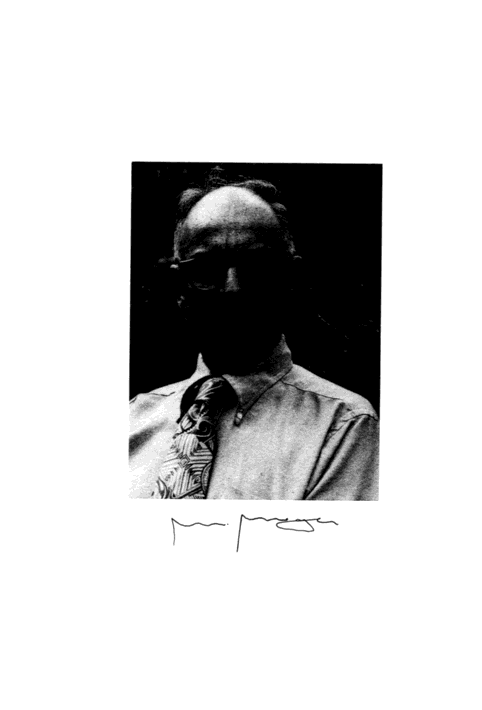
MANFRED MARTIN MAYER June 15, 1916-September 18, 1984 BY K. FRANK AUSTEN \~7HAT IS THE LEGACY of a scientist? A pioneer in the ~ ~ field of-immunochemistry, Manfred Mayer almost singlehandeclly established the discipline of complement. He contributed the one-hit theory of immune hemolysis. He un- covered the first indications of the enzymatic cleavage of one complement protein by another, leading to our eventual understan(ling of the sequential interaction and function of the eighteen proteins of the complement system. He appre- ciatec} that cytolysis by complement is due to the insertion of hydrophobic complement peptides into the lipid bilayer of biomembranes and formation of transmembrane channels. Finally, on a different tack, he and Robert Nelson developed the Triponema pa111lidum immobilization test for syphilis. As a teacher and mentor, his impeccable methodology and the care he lavished on the members of his laboratory pro- clucec! many distinguished intellectual descendants. Finally, Manfred Mayer will always remain the model of a life lived by the highest values, scientific and personal. EDUCATION AND EARLY ElFE Manfrec! was born in Frankfurt-am-Main, Germany, on June 15, 1916, ant! stied in Baltimore, Maryland, on Septem- ber IS, 1984. He received his primary and secondary school- 257
258 BIOGRAPHICAL MEMOIRS ing in Germany but was forced to leave that country in 1933, at the age of seventeen, because of political events. He worked his way through the City College of New York, re- ceiving a B.S. in 193S, then entered a doctoral program at Columbia University. His doctoral thesis was on the chemical and immunologic properties of phosphorylate(1 serum al- bumin. He received the Ph.D. degree in 1946. From 1938 through 1942, Manfred supported himself working as a laboratory assistant to Dr. Michael Heidel- berger a founder of the cliscipline of immunochemistryat Columbia University. His background in physical chemistry fit well with Heiclelberger's organic chemical background and approach, and he was very comfortable in this laboratory that also container! Forest Kendall and had just trained EIvin Ka- bat. During his four years there, Manfrect progressed from laboratory assistant to the role of distinguished graduate stu- clent. He worker! on both the cross-reactions to Type Ill pneumococcal capsular polysaccharides and the fixation of the activity in immune complex reactions known as "comple- ment." By 1946 Manfrecl was an accomplished immunochem- ist with two unique interests of his own that would occupy his subsequent scientific career: quantitative assessment of the complement system and its components, ant! the elucida- tion in biochemical terms of the reaction sequence. The same year that Manfred receive(1 his Ph.D., Thomas B. Turner, chairman of the Department of Bacteriology at the Johns Hopkins School of Medicine, asked Michael Heidelberger to recommenct someone in immunology. Heiclelberger praised Mayer highly, and he was offered the position of assistant professor. With his wife, Elinor, Manfrec! proceeclec] to Baltimore, ant! within two years his contribu- tions as a teacher and investigator had earned him promotion to associate professor. In recognition of the quality of his scholarship and his balances! approach to departmental
MANFRED MARTIN MAYER 259 issues, he was chosen acting head of the Department (though not yet a full professor) when Thomas Turner left to become dean. He served throughout 1957, when Barry Wooc} arrived to take over the chairmanship, and was appointee} full pro- fessor in ~ 960. SCIENTIFIC CONTRIBUTION Working with EIvin Kabat from 1942 to 1945, long before his arrival at Hopkins, Mayer had completed Experimental Immunochemistry ~ ~ 94S, ~ ), though this most important vol- ume clid not appear in print until 1948. During that era, everyone in the field! of immunochemistry hac! been in- structed by Michael Heidelberger, either personally or through his distinguished disciples, EIvin Kabat and Manfred Mayer. The Heidelberger school tract developect techniques for conducting quantitative precipitin reactions and agglutin- ation determinations, and Kabat and Mayer cleciclec! it was critical for the future of research in the field to produce a textbook of quantitative immunochemistry that was both conceptual and practical in content. For a number of years, EIvin Kabat and Manfrect Mayer met virtually every weekend in one another's apartments to react aloucl and revise every word of the proposed text. Heiclelberger also react it and ultimately prepared the introduction to the volume. These were difficult times for the wives of immunochemists, but Elinor supported Manfred throughout while at the same time proceeding with her own substantial interests. By 1945 the unique anc} historically critical volume was complete, only to be delayecl three years by the publishers- allegecIly because of a paper shortage. The authors, however, used the clelay to revise the manuscript extensively anct pro- ducect a volume that went through three printings without revision over the next ten years. In 1958 the authors began work on a second edition in which Mayer's contribution on
260 BIOGRAPHICAL MEMOIRS the complement system was greatly expanded, largely due to the findings of his laboratory. This edition (1961,5) went through four printings before going out of print in 1984. During the late 1940s and early 1950s Manfred had be- gun to assemble an outstanding group committed to immu- nochemistry in general and to complement research in spe- cificwith startling results. During those years Lawrence Levine demonstrated that the introduction of diisopropyl fluorophosphate (DFP) would block enzymatic activity in the first component of complement a critical step in the rec- ognition of the biochemical events in the complement cas- cade. Keith Cowan was studying how carbowax acted as a substitute for specific antibody in mediating the hemolytic action of complement. Al Marucci, with Manfred's guidance, had begun to evaluate the use of radiolabeled antibody as an analytic tool in defining immunochemical events. Finally, Herbert Rapp was analyzing the different functions of rabbit antibodies of different immunoglobulin classes and, with Manfred, was beginning to develop a mathematical basis for the analysis of the reaction sequence. Their work resulted in the conclusion that the "third component of complement" was not a single substance but, based upon its behavioral characteristics as defined in mathematical terms, represented multiple substances a conclusion subsequently substanti- ated by the identification of five component proteins. Manfred's definition of the cofactor functions of calcium and magnesium made possible the singularly important dem- onstration that the functional interactions of the components of the complement system met the "one-hit" model of inter- actions. By preparing, with his students, specific intermedi- ates, he broke the reaction down into sequential events and initially purified the components being analyzed. This "one- hit" analysis permitted the measurement of complement components or proteins in molecular terms with a level
MANFRED MARTIN MAYER 261 of sensitivity that enabled the researchers, working with both guinea pig and human sources, to isolate each individual protein. Effective molecule titration proved useful again some years later when the alternative complement pathway or properdin system- was rediscovered as a non-antibody-de- pendent mechanism for recruiting the terminal capabilities of the complement system. On this occasion, the method's sensitivity and specificity enabled the researchers to isolate and characterize the activating proteins rapidly. The work of Mayer's laboratory on effective molecule ti- tration of the components of the complement system also led to the initial recognition that certain of the components had multiple biologically-active sites. In the case of the second complement component, these studies showed, the bincling site to the fourth component was clearly distinguished from the catalytic site, resulting in the cleavage activation of the third component. Mayer later turned his attention to the mechanism by which the sequentially reacting proteins (at one time termed! "C3") produced "holes" in the membrane of a target cell des- tined to undergo lysis. He established that lysis was causer! by a pentamolecular complex of the terminal five compo- nents, C5-9, which formed a transmembrane channel iden- tified (in earlier studies by English electron microscopists) as discontinuities with an elevated border. In addition to his unique contributions to the unclerstand- ing of the sequential interaction and function of the eighteen proteins of the complement system, Mayer ant! his colleague Robert Nelson developed the Tr~ponema pallidum immobili- zation test for syphilis an important contribution to clinical medicine capable of eliminating false-positive reactions. At that time the conventional test for syphilis yielder! false- positive results in inclividuals with gamma globulin abnor-
262 BIOGRAPHICAL MEMOIRS malities, including those with autoimmune diseases who did not have the antibody specific to the spirochete. Dr. Mayer's contributions to the immunochemistry ant! biochemistry of the complement field were recognized in 1969 by an honorary degree in medical science from the ~o- hannes Gutenberg University of Mainz, Germany; in 1974 by the Karl Lancisteiner Award of the American Association of Blood Banks; in 1979 by election to the presidency of the American Association of Immunologists; and in 1982 by the Gairciner Foundation International Award. In ~ 953 he shared with Robert Nelson the Kimble Award for MethocI- ology for the development of the ~ pallidum immobilization test. He was elected to the National Academy of Sciences in 1979. TEACHER AND MENTOR Most teachers of science provide their students with basic skills and knowledge, but few can instill that additional in- gredient: confidence to meet the challenges of independent research. Manfred Mayer was an inspiring scholar who by example, instruction, ant! wisdom made inclependent re- searchers of many of his students. Well aware that Mayer's own vision had uncovered the immunochemistry of comple- ment Today a significant portion of the discipline of immu- nology), they used his laboratory as the reference point for all aspects of the field! of complement research and the mode! for addressing with technical resourcefulness and appro- priate critical analysis all clifficult scientific questions. Dr. Mayer, politely but firmly, demanded technical mas- tery of all the relevant immunologic methodologies before he would trust a member of his laboratory to clear with critical research questions. Technical competence, he maintained, was the essential prerequisite for personal creativity. He ex- amined each experiment with an open mincl, exploring the
MANFRED MARTIN MAYER 263 established results ant! their implications. Several times a clay he would go with colleagues to the blackboard to discuss which ciata were secure and which required more work. He frequently suggested an alternative hypothesis that required the development of a new methoclology. If the new meth- odology took months but was the only way to obtain an an- swer, that was the direction the research took. Mayer's com- mittec! belief that correct methodology was the prerequisite for meaningful research meant that his laboratory's meth- odologic development was continually in flux. His science was state-of-the-art. After a piece of work tract been completest, the researchers had the remarkable experience of putting their results down on paper for critique by other members of Mayer's labora- tory. Manfred always treater! the literature of his field with integrity, while discussing his own data with great imagina- tion and insight. What more can be sail! of a giant who cleveloped a whole scientific field! not only in his personal research, but also through the training he so generously gave to others? His rocklike personal integrity became a part of his students' eclu- cational environment. Never forgetting his own early years as a refugee from Nazi oppression, he die] all in his power for the displaced of any background. Truth not politics- was his only goal, and in the search for truth he generously shared new hypotheses to be tested with every student, mak- ing sure that each had a part in the joy of discovery. His hypotheses further stimulated those about him, generating ever more definitive experiments. Not surprisingly, Mayer's laboratory procluced a number of distinguishes! colleagues ant! students who carry on his own high standards in a variety of fields (immunochemistry, complement biology, cellular im- munology), among them Teruko Ishizaka, Moon Shin, anc! Hyun Shin.
264 BIOGRAPHICAL MEMOIRS Manfrec! was equally committed to the clevelopment of new knowledge and to the education of those of us who in- teractec! with him. He had no sense of status or rank, and the friendships he formed with colleagues and students were lifelong and meaningful. He felt the opportunity for a life in research a rare privilege that obliged the researcher to strive for the highest possible level of technical competence, re- sourcefuIness, integrity, and commitment, both to research ant! to education ant! he transferred these values to his stu- dents. Manfred was conspicuously more concerned about the development of the discipline of immunology and of com- plement immunochemistry than about his own personal fame. Manfred's nonprofessional interests centered on his wife and four children. Born into a musical family, he maintained interests in music, languages, ant! art throughout his life. Both he and Elinor were accomplished amateur pianists, as well as collectors of art and archaeology. An admirer of beauty in art, music, and science, Manfred Mayer was a true role mode] of the scientist-teacher. He de- veloped a major area of immunology and, with the aid of his concepts and technologies, prepared those inclividuals who now pursue it. He is sorely missed by everyone who trained with him and or was influenced by his work. He will be re- membered always as a scientist, a teacher, and the founder of the cliscipline of complement immunochemistry.
MANFRED MARTIN MAYER HONORS AND DISTINCTIONS PROFESSIONAL AND ACADEMIC POSITIONS 265 1938-1942 Laboratory Assistant in Immunochemistry, Columbia University 1942-1945 Member of the Scientific Staff, Project of the Office of Scientific Research and Development, Columbia University 1946 Instructor in Biochemistry, Columbia University 1946-1947 Assistant Professor of Bacteriology, Johns Hopkins University School of Hygiene and Public Health 1948 1957 1960 LEARNED SOCIETIES Associate Professor of Microbiology, Johns Hopkins University School of Hygiene and Public Health Acting Chairman, Department of Microbiology, Johns Hopkins University School of Hygiene and Public Health Professor of Microbiology, Department of Micro- biology, Johns Hopkins University of Medicine American Association for the Advancement of Science American Association of Immunologists American Chemical Society American Society of Biological Chemists Biochemical Society National Academy of Sciences Society for Experimental Biology and Medicine HONORARY MEMBERSHIPS Phi Beta Kappa Sigma Xi Collegium Internationale Allergologicum OTHER PROFESSIONAL ACTIVITIES Consultant, United States Public Health Service Consultant, National Science Foundation Consultant, Office of Naval Research Consultant, Plum Island Animal Disease Laboratory, Department of Agriculture Associate Editor, Biological Abstracts
266 BIOGRAPHICAL MEMOIRS Associate Editor, Journal of Immunology Associate Editor, Analytical Biochemistry Associate Editor, Immunochemistry President, American Association of Immunologists Editorial Board, journal of Immunology PRIZES AND AWARDS 1945 Citation, Columbia University, for work in the Division of War Research during World War II 1953 Kimble Award for Methodology 1957 Selman Waksman Lectureship Award 1969 Honorary Doctor of Medical Science, tohannes Gutenberg University, Mainz, Germany 1974 Karl Landsteiner Award, American Association of Blood Banks 1976 Albion 0. Bernstein Award, Medical Society of the State of New York 1982 Gairdner Foundation International Award, Toronto, Canada
MANFRED MARTIN MAYER SELECTED BIBLIOGRAPHY 267 1940 With M. Heidelberger and H. P. Treffers. A quantitative theory of the precipitin reaction. VII. The egg albumin-antibody reaction in antisera from the rabbit and horse. I. Exp. Med., 71:271. 1941 With M. Heidelberger and M. Rocha e Silva. Quantitative chemical studies on complement or alexin. III. Uptake of complement nitrogen under varying experimental conditions. J. Exp. Med., 74:359. 1942 With M. Heidelberger and E. A. Kabat. A further study of the cross reaction between the specific polysaccharides of Types III and VIII pneumococci in horse antisera. l. Exp. Med., 75:35. With M. Heidelberger. Quantitative chemical studies on comple- ment or alexin. IV. Addition of human complement to specific precipitates. J. Exp. Med., 75:285. With M. Heidelberger. Velocity of combination of antibody with specific polysaccharides of pneumococcus. J. Biol. Chem., 143:567. 1944 With D. H. Moore. Note on changes in horse serum albumin on aging. I. Biol. Chem., 156:777. With M. Heidelberger. Normal human stromata as antigens for complement fixation in the sera of patients with relapsing vivax malaria. Science, 100:359. 1945 With M. Heidelberger, O. G. Bier, and G. Leyton. Complement titrations in human sera. II. I. Mt. Sinai Hosp., 12:285. With O. G. Bier, G. Leyton, and M. Heidelberger. A comparison of human and guinea pig complements and their component fractions. J. Exp. Med., 81:449.
268 BIOGRAPHICAL MEMOIRS 1946 With M. Heidelberger. Physical, chemical and immunological properties of phosphorylated crystalline horse serum albumin. J. Am. Chem. Soc., 68:18. With M. Heidelberger and C. R. Demarest. Studies in human ma- laria. I. The preparation of vaccines and suspensions contain- ing plasmodia. I. Immunol., 52:325. With B. B. Eaton and M. Heidelberger. Spectrophotometric stan- dardization of complement for fixation tests. I. Immunol., 53:31. With M. Heidelberger and W. A. Coates. Studies in human malaria. II. Attempts to influence relapsing vivax malaria by treatment of patients with vaccine (P1. vivax). I. Immunol., 53:101. With M. Heidelberger, A. A. Alving, B. Craige, Jr., R. ~ones, fir., T. N. Pullman, and M. Whorton. Studies in human malaria. IV. An attempt at vaccination of volunteers against mosquito-borne infection with Pi. vivax. I. Immunol., 53:113. With M. Heidelberger. Studies in human malaria. V. Complement fixation reactions. I. Immunol., 54:89. With A. G. Osler, O. G. Bier, and M. Heidelberger. The activating effect of magnesium and other cations on the hemolytic func- tion of complement. I. Exp. Med., 185: 535. 1947 With A. G. Osler, O. G. Bier, and M. Heidelberger. Quantitative studies of complement fixation. Proc. Soc. Exp. Biol. Med., 65:66. With H. N. Eisen, D. H. Moore, R. Tarr, and H. C. Stoerck. Failure of adrenal cortical activity to influence circulating antibodies and gamma globulin. Proc. Soc. Exp. Biol. Med., 65:301. 1948 With E. A. Kabat. Experimental Immunochemistry. Springfield, Ill.: C. C. Thomas. With A. G. Osler, O. G. Bier, and M. Heidelberger. Quantitative studies on complement fixation. I. A method. J. Immunol., 59:195. With A. G. Osler, O. G. Bier, and M. Heidelberger. Quantitative studies on complement fixation. II. Fixation of complement in
MANFRED MARTIN MAYER 269 the reaction between Type III pneumococcus specific polysac- charide and homologous antibody. l. Immunol., 60:205. With M. Heidelberger. Review on complement. Adv. Enzymol., 3:71. With C. C. Croft and M. Gray. Kinetic studies on immune hemo- lysis. J. Exp. Med., 88:427. 1949 With R. A. Nelson. Immobilization of ~ pallidum in vitro by anti- body produced in syphilis infection. J. Exp. Med., 89:369. 1950 With A. L. Wallace and A. G. Osler. Quantitative studies of com- plement fixation. V. Estimation of complement. Fixing potency of immune sera and its relation to antibody nitrogen content. I. Immunol., 65:661. 1951 With W. Bowman and H. l. Rapp. Kinetic studies on immune he- molysis. II. The reversibility of red cell-antibody combination and the resultant transfer of antibody from cell to cell during hemolysis. I. Exp. Med., 94:87. Immunochemistry. Annul Rev. Biochem., 20:415. 1952 With A. G. Osler and I. H. Strauss. Diagnostic complement fixa- tion. I. A method. Am. l. Syph. Gonorrhea Vener. Dis., 36: 140. 1953 With L. Levine, K. M. Cowan, and A. G. Osler. Studies on the role of Ca++ and Mg++ in complement fixation and immune he- molysis. I. Uptake of complement nitrogen by specific precipi- tates and its inhibition by ethylene diamine tetraacetate. I. Im- munol., 71 :359. The mechanism of hemolysis by antibody and complement. Is im- mune hemolysis a single or multiple-hit process? Atta VI. Congr. Int. Microbio., Rome, September 6-12, 1953, vol. 2, pp. 151-57. With L. Levine, K. M. Cowan, and A. G. Osler. Studies on the role of Ca++ and Mg++ in complement fixation and immune he-
270 BIOGRAPHICAL MEMOIRS molysis. II. The essential role of calcium in complement fixa- tion. I Immunol., 71 :367. With L. Levine and A. G. Osler. Studies on the role of Ca+ + and Mg+ + in complement fixation and immune hemolysis. III. The respective roles of Ca+ + and Mg+ + in immune lysis. I. Immu- nol., 71:374. 1954 With L. Levine. Kinetic studies on immune hemolysis. III. Descrip- tion of a terminal process which follows the Ca+ + and Mg+ + steps in the action of complement on sensitized erythrocytes. l. Immunol., 72:511. With L. Levine. Kinetic studies on immune hemolysis. IV. Rate determination of the Mg+ + and terminal reaction steps. I. Im- munol., 72:516. Studies on the nature of C,y and its hemolytic action. Baskerville Chem. J., (May):12. With L. Levine. Kinetic studies on immune hemolysis. V. Forma- tion of the complex EAC'X and its reactions with C'y ~J Immu- nol., 73:426. With L. Levine and H. I. Rapp. Kinetic studies on immune he- molysis. VI. Resolution of the C,y step into two successive pro- cesses involving C'2 and C'3. ]. Immunol., 73:435. With L. Levine, H. {. Rapp, and A. A. Marucci. Kinetic studies on immune hemolysis. VII. Decay of EAC' 1,4,1, fixation of C'3, and other factors influencing the hemolytic action of comple- ment. I. Immunol., 73:443. 1955 With A. A. Marucci. Quantitative studies on the inhibition of crys- talline urease by rabbit anti-urease. Arch. Biochem. Biophys., 54:330. 1957 With H. J. Rapp., B. Roizman, S. W. Klein, K. M. Cowan, D. Lu- kens, et al. The purification of poliomyelitis virus as studied by complement fixation. l. Immunol., 78:435.
MANFRED MARTIN MAYER 271 1958 Studies on the mechanism of hemolysis by antibody and comple- ment. Prog. Allergy, 5:215. With B. Roizman and W. Hopken. Immunochemical studies of poliovirus. II. Kinetics of the formation of infectious and non- infectious type I poliovirus in three cell strains of human deri- vation. I. Immunol., 80:386. With B. Roizman and H. I. Rapp. Immunochemical studies of poliovirus. III. Further studies on the immunological and phys- ical properties of poliovirus particles produced in tissue culture. I. Immunol., 81:419. 1959 With B. Roizman and P. R. Roane, in Immunochemical studies of poliovirus. IV. Alteration of the immunological specificity of purified poliovirus by heat and ultraviolet light. I. Immunol., 82:119. With L. G. Hoffmann, H. J. Rapp, and J. R. Vinas. A kinetic flow technique for study of immune hemolysis. Proc. Soc. Exp. Biol. Med., 100:211. 1961 Development of the one-hit theory of immune hemolysis. In: Im- munochemical Approaches to Problems in Microbiology. New Bruns- wick, N.~.: Rutgers University Press. With T. Borsos and H. J. Rapp. Studies on the second component of complement. II. The reaction between EAC'1,4 and C'2: Evidence on the single site mechanism of immune hemolysis and determination of C'2 on an absolute molecular basis. I. Immunol., 87:310. With T. Borsos and H. J. Rapp. Studies on the second component of complement. II. The nature of the decay of EAC'1,4,2. I. Immunol., 87:326. On the destruction of erythrocytes and other cells by antibody and complement. Cancer Res., 21:1262. With E. A. Kabat. Experimental Immunochemistry, 2d ed. Springfield, Ill.: C. C. Thomas.
272 BIOGRAPHICAL MEMOIRS 1962 With T. Borsos. Mechanism of action of guinea pig complement. In: Mechanism of Cell and Tissue Damage Produced by Immune Re- actions (Second International Symposium on Immunopathol- ogy, Brook Lodge, Michigan). Basel: Benno Schwabe & Co. 1963 Enzymatic cleavage of C'2 by EAC'la,4: Fixation of C'2a on the cell and release of C'2i. Science, 141 :738. With H. I. Rapp and T. Borsos. Complement. National Cancer Institute Workshop, February 28-March 1, 1963. Bethesda, Maryland. 1965 With W. F. Willoughby. Antibody-complement complexes. Science, 150:907. Mechanism of hemolysis by complement. In: CIBA Foundation Symposium on Complement, eds. G. E. W. Woltsten- holme and l. Knight, London: I. & A. Churchill, Ltd., p. 4. With L. G. Hoffman and A. T. McKenzie. The steady state system in immune hemolysis. Description and analysis; Application to the enumeration of SAC'4. Immunochemistry, 2: 13. With J. A. Miller. Inhibition of guinea pig C'2 by rabbit antibody, quantitative measurement of inhibition, discrimination between immune inhibition and complement fixation, specificity of in- hibition and demonstration of uptake of C'2 by EAC' la,4. Im- munochemistry, 2:71. With R. M. Stroud and K. F. Austen. Catalysis of C'2 fixation by C' la. Reaction kinetics, competitive inhibition by TAMe, and transferase hypothesis of the enzymatic action of C' la on C'2, one of its natural substrates. Immunochemistry, 2:219. 1966 With G. Sitomer and R. M. Stroud. Reversible adsorption of C'2 by EAC'4: role of Mg++, enumeration of competent SAC'4, two-step nature of C'2a fixation and estimation of its efficiency. Immunochemistry, 3:57. With R. M. Stroud, J. A. Miller, and A. T. McKenzie. C'2a&, an inactive derivative of C'2 released during decay of EAC'4,2a. Immunochemistry, 3:163.
MANFRED MARTIN MAYER 273 1967 With H. S. Shin and l. A. Miller. Fragmentation of guinea pig complement components C'2 and C'3c. In: Protides of the Bio- log~cal Fluids ( 1 5th Annual Colloquium), Amsterdam: Elsevier Publishing Co., p. 411. 1968 With H. S. Shin. The third component of the guinea pig comple- ment system. I. Purification and characterization. Biochemistry, 7:2991. With H. S. Shin. The third component of the guinea pig comple- ment system. II. Kinetic study of the reaction of EAC'4,2a with guinea pig C'3. Enzymatic nature of C'3 consumption, multi- phasic character of fixation, and hemolytic titration of C'3. Bio- chemistry, 7:2997. With H. S. Shin. The third component of the guinea pig comple- ment system. III. Effect of inhibitors. Biochemistry, 7:3003. With I. A. Miller. On the cleavage of C'2 by Cla: Immunological and physical comparisons of C'2a~ and C'2a/i. Proc. Soc. Exp. Biol. Med., 129: 127. With H. S. Shin, R. Snyderman, E. B. Friedman, and A. I. Mellors. A chemotactic and anaphylatoxic fragment cleaved from the fifth component of guinea pig complement. Science, 162:361. 1969 With D. I. Hingson and R. K. Massengill. The kinetics of release of 86rubidium and hemoglobin from erythrocytes damaged by antibody and complement. Immunochemistry, 6:295. 1970 With I. A. Miller. Photometric analysis of proteins and peptides at 191-194 m. Analyt. Biochem., 36:91. With F. A. Rommel, M. B. Goldlust, F. C. Bancroft, and A. H. Tashjian, Jr. Synthesis of the ninth component of complement by a clonal strain of rat hepatoma cells. J. Immunol., 105:396. With I. A. Miller and H. S. Shin. A specific method for purification of the second component of guinea pig complement and a chemical evaluation of the one-hit theory. J. Immunol., 105:327.
274 BIOGRAPHICAL MEMOIRS Highlights of complement research during the past twenty-five years. Immunochemistry, 7:485. 1971 With C. T. Cook, H. S. Shin, and K. Laudenslayer. The fifth com- ponent of the guinea pig complement system. I. Purification and characterization. I. Immunol., 106:467. With H. S. Shin and R. l. Pickering. The fifth component of the guinea pig complement system. II. Reaction of C5 with EAC' 1,4,2,3. I. Immunol., 106:473. With H. S. Shin and R. I. Pickering. The fifth component of the guinea pig complement system. III. The properties of EAC 1,4,2,3,5b. I. Immunol., 106:480. With M. B. Goldlust and H. S. Shin. Elution of guinea pig "C5b/6" activity from EAC 1,4,2a,3b,5b,6. J. Immunol (abstract)., 107:318. With R. L. Marcus and H. S. Shin. An alternate pathway: Dem- onstration of C3 cleaving activity, other than C4,2a, on endo- toxic lipopolysaccharide after treatment with guinea pig serum. Relation to the properdin system. Proc. Natl. Acad. Sci. USA, 68:1351. With C. S. Henney. Specific cytolytic activity of lymphocytes: Effect of antibodies against complement components C2, C3, and C5. Cell. Immunol., 2:702. 1972 Mechanism of cytolysis by complement. Proc. Natl. Acad. Sci. USA, 69:2954. With M. K. Gately. The effect of antibodies to comple- ment components C2, C3, and C5 on the production and action of lymphotoxin. J. Immunol., 109:728. With V. Brade, C. T. Cook, and H. S. Shin. Studies on the proper- din system: Isolation of a heat-labile factor from guinea pig serum related to a human glycine-rich beta-glycoprotein (GBC or factor B). I. Immunol., 109: 1174. 1973 With F. A. Rommel. Studies of guinea pig complement component C9: Reaction kinetics and evidence that lysis of EAC1-8 results from a single membrane lesion caused by one molecule of C9. J. Immunol., 110:637.
MANFRED MARTIN MAYER 275 With A. Eden, C. Bianco, and V. Nussenzweig. C3 split products inhibit the binding of antigen-antibody-complement com- plexes to B lymphocytes. J. Immunol., 110: 1452. The complement system. Sci. Am., 229:54. With V. Brade, G. D. Lee, A. Nicholson, and H. S. Shin. The re- action of zymosan with the properdin system in normal and C4- deficient guinea pig serum: Demonstration of C3- and C5- cleaving and multi-unit enzymes, both containing factor B. and acceleration of their formation by the classical complement pathway. I. Immunol., 111: 1389. 1974 With A. Nicholson, V. Brade, G. D. Lee, and H. S. Shin. Kinetic studies of the formation of the properdin system enzymes on zymosan. Evidence that nascent C3b controls the rate of as- sembly. l. Immunol., 112:1115. With M. K. Gately. The molecular dimensions of guinea pig lym- photoxin. I. Immunol., 112: 168. With V. Brade, A. Nicholson, and G. D. Lee. The reaction of zym- osan with the properdin system. Isolation of purified factor D from guinea pig serum and study of its reaction characteristics. I. Immunol., 112: 1845. With M. B. Goldlust, H. S. Shin, and C. H. Hammer. Studies of complement complex C5b,6 eluted from EAC-6: Reaction of C5b,6 with EAC4b,3b and evidence on the role of C2a and C3b in the activation of C5. I. Immunol., 113:998. 1975 Complement. An immunological and pathological mediator sys- tem. Medizin. Prisma, (May):2. With C. L. Gately and M. K. Gately. The molecular dimensions of mitogenic factor from guinea pig lymph node cells. I. Immu- nol., 114:10. With C. H. Hammer and A. Nicholson. On the mechanism of cy- tolysis by complement. Evidence on insertion of the C5b and C7 subunits of the C5b,6,7 complex into the phospholipid bi- layer of the erythrocyte membrane. Proc. Natl. Acad. Sci. USA, 72:5076. The complex complement system. Inflo, 8: 1.
276 BIOGRAPHICAL MEMOIRS 1976 With C. L. Gately and M. K. Gately. Separation of lymphocyte mi- togen from lymphotoxin and experiments on the production of lymphotoxin by lymphoid cells stimulated with the partially purified mitogen: A possible amplification mechanism of cel- lular immunity and allergy. I. Immunol., 116:669. With D. W. Michaels and A. S. Abramovitz. Increased ion perme- ability of planar lipid bilayer membranes after treatment with the C5b-9 cytolytic attack mechanism of complement. Proc. Natl. Acad. Sci. USA, 73:2852. With C. H. Hammer and A. S. Abramovitz. A new activity of com- plement component C3: Cell-bound C3b potentiates lysis of erythrocytes by C5b,6 and terminal components. I. Immunol., 117:830. On the mechanism of cytolysis by complement: Experimental stud- ies of the transmembrane channel hypothesis. In: The Nature and Significance of Complement Activation (An international sym- posium sponsored by Ortho Research Institute of Medical Sci- ence September, 1976, in Raritan, New Jersey). With M. K. Gately and C. S. Henney. Effect of anti-lymphotoxin on cell-mediated cytotoxicity. Evidence for two pathways, one involving lymphotoxin and the other requiring intimate contact between the plasma membranes of killer and target cells. Cell. Immunol., 27:82. 1977 The cytolytic attack mechanism of complement. In: Mediators of the Immediate Type Inflammatory Reaction. Mono. Allergy 12, Basel: S. Karger. With C. H. Hammer, M. L. Shin, and A. S. Abramovitz. On the mechanism of cell membrane damage by complement: Evi- dence on insertion on polypeptide chains from C8 and C9 into the lipid of erythrocytes. l. Immunol., 119: 1. With M. L. Shin, W. A. Paznekas, and A. S. Abramovitz. On the mechanism of cell membrane damage by complement: Expo- sure of hydrophobic sites on activated complement protein. J. Immunol., 119: 1358. On the mechanism of cytolysis by lymphocytes: A comparison with
MANFRED MARTIN MAYER 277 complement. (Presidential address to the American Association of Immunologists, April, 1977.) J. Immunol., 119: 1195. With H. I. Muller-Eberhard and L. G. Hoffmann. Complement. In: Methods in Immunology and Immunochemistry, eds. A. W. Curtis and M.W.Chase,vol.4,p. 1Y7. With S. Cohen, J. David, M. Feldmann, P. R. Glade, J. J. Oppen- heim, et al. Current state of studies of mediators of cellular immunity: A progress report. Cell. Immunol., 33:233. 1978 Complement, past and present. In: The Harvey Lect., 72, 1976- 1977. New York: Academic Press. With M. Okamoto. Studies on the mechanism of action of guinea pig lymphotoxin. I. Membrane active substances prevent target cell lysis by lymphotoxin. J. Immunol., 120:272. With M. Okamoto. Studies on the mechanism of action of guinea pig lymphotoxin. II. Increase of calcium uptake rate in LT- damaged target cells. I. Immunol., 120:279. With M. L. Shin and W. A. Paznekas. On the mechanism of mem- brane damage by complement: The effect of length and unsat- uration of the acyl chains in liposomal bilayers and the effect of cholesterol concentration in sheep erythrocytes and liposomal membranes. I. Immunol., 120: 1996. With M. K. Gately. Purification and characterization of lympho- kines: An approach to the study of molecular mechanisms of cell-mediated immunity. Frog. Allergy, 25:106. With C. H. Hammer, D. W. Michaels, and M. L. Shin. Immunolog- ically mediated membrane damage: The mechanism of com- Dlement action and the similarity of lymphocyte-mediated cy- . ~ ~ totoxicity. Transplant. Prox., ~ u:-/ u-/ . 1979 With C. H. Hammer, D. W. Michaels, and M. L. Shin. Immunolog- ically mediated membrane damage: The mechanism of com- plement action and the similarity of lymphocyte-mediated cy- totoxicity. I mmunochemistry, 15 :813. Complement and lysis. In: Principles of Immunology, eds. N. R. Rose, F. Milgrom, and C. J. Van Oss, New York: Macmillan. With M. K. Gately and M. Okamoto. Biochemical studies of guinea
278 BIOGRAPHICAL MEMOIRS pig lymphotoxi Albini, Basel: S. Karger, p. 301. With M. L. Shin and D. W. Michaels. Membrane damage by a toxin from the sea anemone Stoichactts helianthus. II. Effect of mem- brane lipid composition in a liposome system. Biochim. Bio- phys. Acta, 55:79. With M. K. Gately, M. Okamoto, M. L. Shin, and I. B. Willoughby. Two mechanisms of cell-mediated cytotoxicity: (1) Ca++ trans- port modulation by lymphotoxin, and (2) transmembrane chan- nel formation by antibody and non-adherent spleen cells. Ann. N.Y. Acad. Sci., 332:395. n. In: Immunopathology, eds. F. Milgrom and B. 1980 With L. E. Ramm. Life-span and size of the trans-membrane chan- nels formed by large doses of complement. I. Immunol., 124:2281. With I. B. Willoughby. On the channel hypothesis of antibody- dependent cell-mediated cytotoxicity (ADCC): Evaluation of a liposome model system. In: Biochemical Characterization of Lym- phokines, ed. F. Kristensen, M. Landy, and A. deWeck, New York: Academic Press. Trans-membrane channels produced by complement proteins. Ann. N.Y. Acad. Sci., 358:43. 1981 With M. L. Shin and G. M. Hansch. Effect of agents that produce membrane disorder on the lysis of erythrocytes by complement. Proc. Natl. Acad. Sci. USA, 78:2522. Membrane damage by complement. (The Dean's Lecture.) Johns Hopkins Med. }, 148:243. With G. M. Hansch, C. H. Hammer, and M. L. Shin. Activation of the fifth and sixth component of the complement system: Sim- ilarities between C5b6 and C(56)a with respect to lytic enhance- ment by cell-bound C3b or A2C, and species preferences of target cell. J. Immunol., 127:999. With D. W. Michaels, L. E. Ramm, M. B. Whitlow, J. B. Willoughby, and M. L. Shin. Membrane damage by complement. Crit. Rev. Immunol., 2:133.
MANFRED MARTIN MAYER 279 1982 Membrane attack by complement (with comments on cell-mediated cytotoxicity). In: Mechanisms of Cell-Mediated Cytotoxicity, eds. W. R. Clark and P. Golstein, Adv. Exp. Biol. Med., 146:193. With L. E. Ramm and M. B. Whitlow. Size of the trans-membrane channels produced by complement proteins C5b-8. I. Immu- nol., 129:1143. With L. E. Ramm and M. B. Whitlow. Trans-membrane channel formation by complement. Functional analysis of the number of C5b6, C7, C8, and C9 molecules required for a single chan- nel. Proc. Natl. Acad. Sci. USA, 79:4751. 1983 With L. E. Ramm and M. B. Whitlow. Size distribution and stability of the trans-membrane channels formed by complement com- plex C5b-9. Mol. Immunol., 20: 155. With L. E. Ramm, D. W. Michaels, and M. B. Whitlow. On the size, heterogeneity and molecular composition of the trans- membrane channels produced by complement. In: Biological Response Mediators and Modulators, ed. l. T. August, New York: Academic Press. With C. L. Koski, L. E. Ramm, C. H. Hammer, and M. L. Shin. Cytolysis of nucleated cells by complement: Cell death displays multi-hit characteristics. Proc. Natl. Acad. Sci. USA, 80:3816. With L. E. Ramm, M. B. Whitlow, C. L. Koski, and M. L. Shin. Elimination of complement channels from the plasma mem- branes of U937, a nucleated mammalian cell line: Temperature dependence of the elimination rate. I. Immunol., 121:1411. With D. K. Imagawa, L. E. Ramm, and M. B. Whitlow. Membrane attack by complement and its consequences. In: Progress in Im- munology, eds. Y. Yamamura and T. Tada, Tokyo: Academic Press Japan, p. 427. With D. K. Imagawa, N. E. Osilchin, W. A. Paznekas, and M. L. Shin. Consequences of cell membrane attack by complement: Release of arachidonate and formation of inflammatory deriv- atives. Proc. Natl. Acad. Sci. USA, 80:6647. Complement. Historical perspectives and some current issues. Complement, 1:2.
280 BIOGRAPHICAL MEMOIRS With L. E. Ramm and M. B. Whitlow. Complement lysis of nu- cleated cells: Effect of temperature and puromycin on the number of channels required from cytolysis. Mol. Immunol., 21:1015. With M. B. Whitlow and L. E. Ramm. Penetration of C8 and C9 in the C5~9 complex across the erythrocyte membrane into the cytoplasmic space. I. Biol. Chem., 260:998. With L. E. Ramm and M. B. Whitlow. The relationship between channel size and the number of C9 molecules in the C5~9 complex. I. Immunol., 134:2594. 1987 With D. K.Imagawa, N. E. Osifchin, L. E. Ramm, P. G. Koga, C. H. Hammer, and H. S. Shin. Release of arachidonic acid and formation of oxygenated derivatives following complement at- tack on macrophages: Role of channel formation. }. Immunol.
