


Below is the uncorrected machine-read text of this chapter, intended to provide our own search engines and external engines with highly rich, chapter-representative searchable text of each book. Because it is UNCORRECTED material, please consider the following text as a useful but insufficient proxy for the authoritative book pages.
Vl Organic Solutes INTRODUCTION Selection of Agents . In selecting agents to be included in the organic contaminants section of this report, a number of tabulations of organic contaminants detected in drinking water were examined. From these lists, agents were selected that have been reported to be present in one or more drinking-water supplies at relatively high concentrations and for which there were data to suggest toxicity in man or animals. Also included were several agents that exhibit a structural relationship to other compounds for which toxicity data were available and all of the agents listed in the current interim standards, as well as those specific compounds listed in the Federal Register of December 24, 1975. A total of 298 volatile organic compounds were considered and 74 of these were selected for evaluation. Similar criteria were used to select the organic pesticides for inclusion In this report. Several additional agents were added after examination of the usage patterns for all major types of organic pesticides, as well as a number of agents that were considered to be potential contaminants of drinking-water supplies because of the large quantities produced. A total of 55 organic pesticides were selected for evaluation. 489
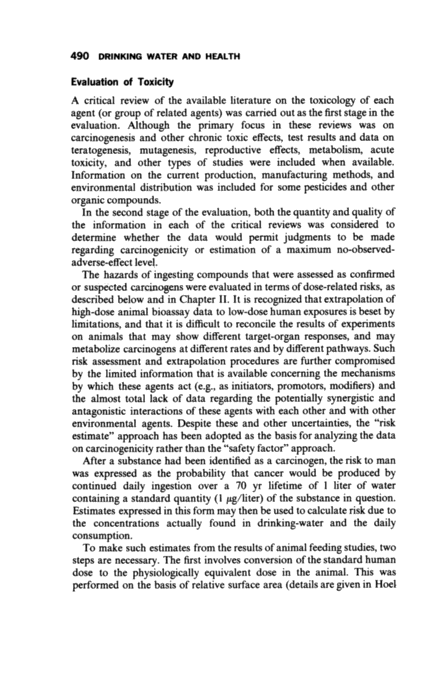
490 DRINKING WATER AND H"LTH Evaluation of Toxicity A critical review of the available literature on the toxicology of each agent (or group of related agents) was carried out as the first stage in the evaluation. Although the primary focus in these reviews was on carcinogenesis and other chronic toxic effects, test results and data on teratogenesis, mutagenesis, reproductive ejects, metabolism, acute toxicity, and other types of studies were included when available. Information on the current production, manufacturing methods, and environmental distribution was included for some pesticides and other organic compounds. In the second stage of the evaluation, both the quantity and quality of the information in each of the critical reviews was considered to determine whether the data would permit judgments to be made regarding carcinogenicity or estimation of a maximum no-observed- adverse-e~ect level. The hazards of ingesting compounds that were assessed as confinned or suspected carcinogens were evaluated in terms of dose-related risks, as described below and in Chapter II. It is recognized that extrapolation of high-dose animal bioassay data to low-dose human exposures is beset by limitations, and that it is difficult to reconcile the results of experiments on animals that may show different target-organ responses, and may metabolize carcinogens at different rates and by different pathways. Such risk assessment and extrapolation procedures are further compromised by the limited information that is available concerning the mechanisms by which these agents act (e.g., as initiators, promoters, modifiers) and the almost total lack of data regarding the potentially synergistic and antagonistic interactions of these agents with each other and with other environmental agents. Despite these and other uncertainties, the "risk estimate" approach has been adopted as the basis for analyzing the data on carcinogenicity rather than the "safety factor" approach. After a substance had been identified as a carcinogen, the risk to man was expressed as the probability that cancer would be produced by continued daily ingestion over a 70 yr lifetime of 1 liter of water containing a standard quantity (1 ,ug/liter) of the substance in question. Estimates expressed in this form may then be used to calculate risk due to the concentrations actually found in drinking-water and the daily consumption. To make such estimates from the results of animal feeding studies, two steps are necessary. The first involves conversion of the standard human dose to the physiologically equivalent dose in the animal. This was performed on the basis of relative surface area (details are given in Hoel
Organic Solutes 491 et al., 1975, Chapter II). The second step requires use of a risk model relating dose to eject. The model used for this purpose is p (~) = I - c,-(A,, + A, ~ + At d' + . . . A'. d') where P(a) is the lifetime probability that dose d (total daily intake) will produce cancer, K = the number of events in the carcinogenic process, and Ao,\~,A2, etc. . . . are nonnegative parameters (see Chapter II). At low doses, the higher-order terms in d2,a~, etc., may be neglected and P (d) ~ I _ {,-(A,, + APO ~ A`, + A, d No representing the background rate. When two or more sets of results of lifetime animal feeding studies were available, experimental values of P(a), the fraction of test animals developing cancer, and d, the total daily dose, were fitted to the equation to determine how many of the terms Ao,A~d,A2d2, etc., were necessary to give the best fit. Corresponding values Of Ao,A,, or X0, Al and \2, etc., were used to calculate Pep for the low-dose of interest, namely the animal dose that was physiologically equivalent to the standard dose for man. If the animal experiments involved only one dose level, the Aid term, alone, was used in the calculation. Upper confidence limits in the estimated low-dose risk were also calculated by use of maximum likelihood theory (Guess and Crump, 1976, Chapter II), and these values were tabulated. Since the animal data were obtained from lifetime feeding studies, the risk estimates calculated from them for the low-doses that were estimated to be physiologically equivalent to the human dose were taken to represent the lifetime risks for man. The background rate, obtained from the cancer incidence in the control groups of experimental animis and represented by the parameter ho, was excluded from the tabulated values of P(a), which therefore represent the incremental risks due to ingestion of the compounds in water. It was felt that predictions that are risk-related provide a more meaningful first approximation of hazard than safety-related predictions. The risk estimate approach may provide unique advantages for other areas of toxicological evaluations, such as mutagenesis, and it is recommended that the usefulness of this procedure be evaluated as a new predictive method in toxicology. For agents that were not considered to be known or suspected carcinogens and for which there were adequate toxicity data from prolonged ingestion studies in man or animals, the more traditional approach was utilized of combining the maximum dose producing no- observed-adverse-e~ects with an uncertainty (risk) factor to calculate an
492 DRINKING WATER AND H"LTH ADI (acceptable daily intake). Several alternative terms, other than ADI, were considered, but it was concluded that the introduction of new terms might well lead to confusion and that the use of a widely recognized and generally acceptable term would be preferable for this report. The ADI has been used previously as an internationally established standard for the toxicologic evaluation of food additives and contaminants and the concept is applicable to other ingestion exposure situations. The ADI represents an empirically derived value that reflects a particular combina- tion of knowledge and uncertainty concerning the relative risk of a chemical. The uncertainty factors used to calculate ADI values in this report represent the level of confidence that was judged to be justified on the basis of the animal and human toxicity data. All calculations for an ADI were based on chronic feeding studies, but other considerations, e.g., mutagenicity, teratogenicity, and lack of sex and strain information, influenced the choice of the uncertainty factor. ADI values were not calculated for agents where the data were considered to be inadequate. Since the calculation of the ADI values is based on the total amount of a chemical that is ingested, the ADI values calculated in this report do not represent a safe level for drinking water. However, a suggested no- anticipated-adverse-e~ect level has been calculated for these chemicals in drinking water using two hypothetical exposures (where water constitutes 1% and 20~o of the total intake of the agent), and similar calculations can readily be made for other exposures. Conclusions The organic contaminants that have been identified in drinking water constitute a small percentage of the total organic matter present in water. Although approximately 9OYo of the volatile organic compounds in drinking water have been identified and quantified, these represent no more than logo of the total organic material. Of the nonvolatile organic compounds comprising the remaining 90~o of the total organic matter in water, only 5 to logo have been identified. From the 74 nonpesticide organic compounds and 55 organic pesticides selected for study, 22 have been identified as known or suspected carcinogens, 46 as having sufficient toxicity data to permit the calculation of an ADI value or a suggested no- adverse-effect level for drinking water, 6 as mutagens and 7 as teratogens. There were 61 agents for which the toxicity data were judged to be inadequate for establishing any recommendations. (See Tables VI-63 and 64 in "Summary of Organic Solutes.") It is evident that this effort constitutes only the beginning of a very large task. However, in preparing these reports and recommendations, an ~_
Organic Solutes 493 attempt has been made to use procedures that will enable efforts in the future to be focused on revisions and additions to the estimates, adding to and updating, rather than on redoing, the task. Also identified are certain priorities for the selection of agents to be studied and the research needs in toxicology and epidemiology to facilitate the evaluation of the potential health hazards associated with organic agents that are or may be present in our drinking-water supplies. PESTICIDES: HERBICIDES Chloropheno~s 2,4D Introduction 2,4-D, or 2,4dichlorophenoxyacetic acid, was introduced as a plant growth-regulator in 1942 (USEPA, 1974b). It is registered in the United States as an herbicide for control of broadleaf plants and as a plant growth-regulator. Domestic use of 2,4-D is estimated at 40-50 million pounds a year, approximately 84% of which is used agriculturally and about 16% nonagriculturally (mainly for forest brush control). 2,4-D is produced commercially by chlorination of phenol to form 2,4 dichlorophenol, which reacts with monochloroacetic acid to form 2,4D (USEPA, 1974b). Commercial 2,4-D formulations are generally com- posed of the salts or esters (ethyl, isopropyl, buty1, amyl, hepty1, octyl, etc.) of the acid. Analysis of 28 samples of technical 2,4-D by gas chromatography showed that hexachlorodioxins were present in only one sample, at less than 10 ppm (Woolson et al., 1972~. The dioxin most likely to be formed, 2,7-dichlorodibenzo-p-dioxin, was not found. The major impurity in technical 2,4-D was identified as bis-~2,4dichIorophenox- y~methane, at 30 ppm (Huston, 1972~. The solubility of 2,4-D in water is 540 ppm at 20°C; its major breakdown product, 2,4-dichlorophenol, is soluble at 4,500 ppm (USEPA, 1974b). The 2,4D salts are in general highly soluble, but the esters are much less soluble. 2,4D is chemically quite stable, but its esters are rapidly hydrolyzed to the free acid. Microbial degradation of 2,4-D contributes to its rapid breakdown (half-time, 1 week) in water (USEPA, 1974b). When exposed to sunlight or ultraviolet irradiation, aqueous 2,4D solutions decompose to 2,4-dichlorophenol, 4chlorocatechol, 2-hydroxy-4chlorophenoxy
494 DRINKING WATER AND H"LTH acetic acid, 1,2,4benzene trial, and polymeric humic acids. The overall breakdown rate of 2,4D in aqueous solution is fairly high, and 2,4- dichlorophenol is even more photolabile. Most 2,4-D residues are retained in the soil, where breakdown usually occurs within 6 weeks. Between 1964 and 1970, only 50 samples of food were found to be contaminated with 2,4-D; the concentrations detected were 0.021~.16 ppm (USEPA, 1974b). Residues were found in 1% or less of dairy products, oils, fats and shortening, and fruit, in 1.9% of leafy vegetables, and in 22.1% of sugar and adjuncts. 2,4D is found in water (Marigold and Schulze, 1969~. Concentrations as high as 70 ppb have been detected in Oregon streams after aerial application to forestland (Hiatt, 1976~. 2,4-D was detected in raw water at 0.05 ,ug/liter, in Lafayette, Indiana (USEPA, 1975j). The EPA has set an interim standard for 2,4-D in finished water of 0.1 mg/liter (USEPA, 1975i). Metabolism When 2,4-D with labeled carbon was administered orally to sheep, 96% of the dose was excreted unchanged in the urine in 72 h, slightly less than 1.4% in the feces (Clark et al., 1964~. When adult sheep and cattle were fed 2,4-D in the diet for 28 days at up to 2,000 ppm, the kidney contained the highest and the liver somewhat lower concentrations of 2,4-D and its breakdown product 2,4-dichlorophenol (Clark et al., 1975~. Withdrawal from treatment for 7 days resulted in almost complete elimination of 2,4- D and its major metabolite from the tissues. In rats that received 1-10 mg of 2,4D, there was almost complete excretion in the urine and feces in 48 h; at higher doses, some accumulation occurred in tissues (Khanna and Fang, 1966~. After subcutaneous injection of 2,4-D and its butyl and isoocty} esters into mice at 100 mg/kg, the esters were eliminated rapidly, and only 5- 10% of the 2,4-D remained after 1 day (USEPA, 1974b). No 2,4 dichlorophenol was detected in extracts of the treated mice. In feeding studies of 2,4-D with dairy cows and steers, unchanged 2,4- D was found only in the urine (Bache et al., 1964a, b; Guteman et al., 1963a, b; Lisk et al., 1963~. Other studies (Burchfield and Storrs, 1961; Klingman et al., 1966) demonstrated that 2,4D was eliminated in the milk of cows maintained in pastures treated with 2,4-D or its butyl or isooctyl ester. The pharmacokinetic profile of 2,4D has been determined in five male human volunteers (Sauerhoff et al., 1976~. After ingestion of a single 5- mg/kg oral dose, 2,4-D was eliminated from plasma in an apparent first
Organic Solutes 495 order process with an average half-life of 11.7 h. All subjects excreted 2,l D in the urine with an average half-life of 17.7 h, mainly as free 2,4-D (82.3~o), with a smaller amount excreted as a 2,~D conjugate (12.8~o). Health Aspects Observations in Man A 46-yr-old male farmer accidentally ingested a 2,4-D formulation; the dose was estimated to contain 2,4-D at 100 mg/kg, S-ethyldipropylthiocarbamate at 230 mg/kg, and epichlorohy- drin at 2.3 mg/kg (Berwick, 1970~. The clinical picture was indicative of 2,4-D poisoning with symptoms including fibrillate twitching and muscular paralysis. Serum glutamic oxalacetic transaminase, glutamic pyruvic transaminase, lactic dehydrogenase, aldolase, and creatine phosphate were increased, and both hemoglobinuria and myoglobinuria were observed. After recovery of the patient, there was also a 4-month loss of sexual potency. In testing 2,4-D for possible use in disseminated coccidiomycosis, 18 intravenous doses were administered to a patient over a 33-day period, with no observed side effect (Seabury, 1963~. The dosage was 15 mg/kg for the last 12 doses, except that the eighteenth was increased to 37 mg/kg. Following the nineteenth and final dose of 67 mg/kg, the patient exhibited fibrillary twitching and general hyporeflexia. The patient later died, apparently owing to the disease. After a 23-yr-old man used 2,4-D in suicide, the lethal dose was estimated to be over 90 mg/kg (Nielsen et al., 1965~. Assouly (1951) is reported to have taken 2,4-D daily at 8 mg/kg for 3 weeks without harmful erects. Data from Dow Chemical Co. (Johnson, 1971) on 220 workers exposed to 2,4-D at 0.43-0.57 mg/kg/day over a period of 0.5-22 yr showed no significant differences from data on an unexposed human population. Observations in Other Species Acute Elects The acute toxicity of 2,4-D is moderate in a number of animal species, with LD50 values of 10~541 mg/kg for rats, mice, guinea pigs, chicks, and dogs (Drill and Hiratzka, 1953; Rowe and Hymas, 1954~. Salts and esters of 2,4-D show an even lower degree of acute toxicity. The acute oral toxicity of the major 2,4-D breakdown product 2,4- dichlorophenol is 580 and 1,625 mg/kg for the rat and the mouse, respectively (Toxic Substances List, 1974~.
496 DRINKING WATER AND H"LTH Subchronic and Chronic Effects Young adult female rats were given oral doses of 2,4-D in olive oil at 0, 3, 10, 30, 100, and 300 mg/kg five times a week for 4 weeks (Rowe and Hymas, 1954~. No adverse effects were noted at 30 mg/kg and below, but depressed growth rates, liver pathology, and gastrointestinal irritation occurred at 300 mg/kg. In another experiment (Rowe and Hymas, 1954), depressed growth, liver pathology, mortalities, and increased liver/body weight ratios were observed in rats fed 1,000 ppm 2,4-D for 113 days. 2,4-D was administered orally to dogs at dosage levels of 0, 2, 5, 10, and 20 mg/kg 5 days a week for 13 weeks (Drill and Hiratzka, 1953~. Three of four animals receiving 20 mg/kg dose died within 49 days. These animals showed a definite decrease in the percentage of lympocytes in the peripheral blood. The surviving animals in all groups did not show any hematological abnormalities. Dietary levels of 0, 5, 25, 125, 625, and 1,250 ppm technical grade 2,4-D were fed to female and male Osborne-Mendel rats for 2 yr (Hansen et al., 1971~. No significant ejects were observed on growth, survival rate, organ weights, or hematologic parameters. There was also no elevated incidence of tumors over that seen in controls. In a parallel study (Hansen et al., 1971), groups of 6-8-month-old beagle dogs received 0, 10, 50, 100 and 500 ppm of technical 2,4-D for 2 years. No 2,4-D related ejects were noted. None of the lesions observed in the 30 dogs were believed related to the treatment. The no-adverse-effect level of 2,4-D in the dog has been established at 8 mg/kg/day (Lehman, 1965~. Mutagenicity 2,4-D was unable to induce point mutations in four microbial systems (Andersen et al., 1971) and showed no activity in Drosophila (Vogel and Chandler, 1974~. Saccharomyces cerevisiae strain D4 (5 x 10⁶) was treated with 2 ml of an aqueous 2,4-D suspension (trade name, U46D-Fluid) (Siebert and Lemperle, 1974~. The mitotic gene conversion frequency of the ade 2 locus was increased fivefold above control values; that of the try 5 locus was increased sixfold above control values. Carcinogenicity Studies on the in vitro and in viva eject of 2,~D on the growth of Ehrlich ascites tumor in BALB/c mice showed that the herbicide was inhibitory at 45 mg/kg or more (Walker et al., 1972~. There was no significant increase in the incidence of tumors in various mouse strains initially given 2,4-D or its esters at 46.4 mg/kg/day orally on days 7-28 followed by dietary feeding up to 323 ppm for 18 months (USEPA, 1974b). In another study, mice that received 2,4-D orally for their life
Organic Solutes 497 span showed no increased incidence of tumor formation (Vettorazzi, 1975b). A study (Arkhipor and Kozlova, 1974) reported that two rats developed fibroadenoma and one hemangioma 27-31 months after receiving one-tenth the LD50 of the amine salt of 2,4-D. Administration of 0.1 the LD50 dose of the amine salt orally or subcutaneously to mice produced no tumors after 33 months. The herbicide, however, had a cocarcinogenic erect in mice when it was applied to the skin with 3- methylcholanthrene. DNA synthesis was increased, and there was a loss of cell differentiation in cultured chicken muscle after treatment with high concentrations of 2,4-D (Haag et al., 1975~. 2~4-Dichlorophenol has not been tested for carcinogenicity alone (USEPA, 1974b), but it is an initiator for skin carcinogenesis (Boutwell and Bosch, 1959~. Reproduction In a three-generation, six-litter Osborne-Mendel rat reproduction study, no deleterious erects due to technical 2,4-D at dietary doses of 100 or 500 ppm were observed (Hansen et al., 1971~. At 1,500 ppm, however, 2,4-D, although affecting neither fertility of either sex nor litter size, sharply reduced the percentage of pups that survived to weaning and the weights of the weanlings. Teratogenicity In studies of CD-1 mice, Courtney (cited in EPA, 1974b) found that 2,4-D at 221 mg/kg per day increased fetal mortality, but produced no cleft palates. Various 2,4-D esters (isopropyl ester at 147 mg/kg/day, n-butyl ester at 155 mg/kg/day, and isooctyl ester at 186 mg/kg/day) had no erect on the incidence of cleft palate or fetal mortality, but did affect fetal weight. A significant increase in cleft palate was found, however, after administration of the propylene glycol butyl ether ester at 195 mg/kg/day. A statistically significant increase in the proportion of abnormal fetuses was reported in mice that received maximally tolerated subcutaneous doses of the isooctyl ester, and two isopropyl esters of 2,4-D (130, 100, and 94 ,ug/kg, respectively), in dimethyl sulfoxide (DMSO) solution (Mrak, 1969~. DMSO itself, however, is a teratogen (Caujolle et al., 1967~. Bage et al. (1973) observed teratogenic and embryotoxic erects in NMRI mice that received 50- or 110-mg/kg injections of 2,4-D on days ~14 of gestation. Pregnant rats were treated orally with 2,4-D at 12.5, 25, 50, 75, and 87.5 mg/kg/day (maximal tolerated dose) or equimolar doses of propylene glycol butyl ether ester of 2,4-D up to 142 mg/kg/day or isooctyl ester of 2,4-D up to 131 mg/kg/day on days ~15 of gestation (Schwetz et al.,
498 c L. _ 3 C) US ~ Ct i_ -4 LO 2 C. O ~ a.) ~ 'C: ~ ~ > cez ~ 3 V, ._ In ~ _ <( _~ 0 3= · O ma ~ Ct PA o 4 - ._ ._ o m O ~ _ 3 Ct ~q o3 `,_ ._ C) C~ ~0N V ~_ ', y^~\ _ ~ ~1 C ~- (~) ~C) x 2 x o o o _ ~ _ C C ~ ~o y E E C ~ E - o.8= ~oo ~ V~ - Ct - _ Cd 0,, - C) ~.O X ~_ ._ o - o ~ _ ~ o o C: C Ct - o ~ r~ - - u) cd - ~ . o - .o~ xct -- o~ d c) v~ - ~L CL ~ (t - ~rC . - o ^ `,, 8^ ~_ os ~ 0 0 0 ~Y ~1 ~o ~ 3 ,, 3 ;^ ~c _ r ~'d 3 Ct ~0 os as os _ _ ·C O O O Ct ~oo ~ C o o C,, 11 ._ ~ ~_ ~o Ct 3 x ._ Ye ._ ._ - - :7 E E E 4° E E ~ ~ e -~ ~6 ~ v) 00- bO-~ OD O o O O O t30 o X - o o - 6 - - Y 0c - o o 11 O . o _ _ V) r~ o 11 os o o C ~d ~o r~ o 3 0 C _ O ~ ~_ ~n O ._ ~o C. _ 4 - C ._ ~ o 11 - O~ _O C(_ ~· ·= C~ ~ .O r~ ~ eD C`' ~ ed t c (~, ~ ~ 3 C ~ (LI) ~ _ a~ ,^ 1 ~o o ~ ~ 11 ~ ~ Ool) _ t,_ ~ ~ o C 3 °c ~c C ~o ~ oo o ~ ~o _ C 3 11 ^-C ~ ~ O ~ ~ 3 ~ c~ c~ ~o 3 ~ C ~ C V) ~ _ ~ ~ ~ Ct U) ~ ~ ;> ~
Organic Solutes 499 1971~. Fetotoxic responses were seen at the high dosages, but teratogenic ejects were not seen at any dosage. The authors suggested that the no- adverse effect dosage of 2,4-D (or the molar equivalent, in the case of the esters) was 25 mg/kg/day. Prenatal studies on 2,4-D in Wistar rats showed that it induced fetotoxic ejects and an increased incidence of skeletal anomalies after single oral doses of 100 150 mg/kg/day on days 6 15 of gestation (Khera and McKinley, 1972~. At the highest dosage of 150 mg/kg/day, the isooctyl ester, and butyl ester, and butoxyethynol and dimethylamine salts of 2,4-D were all associated with significantly increased teratologic incidence. The butyl and isooctyl esters also tended to decrease fetal weight. At a lower dosage, 2,4-D and its salts and esters induced no apparent harmful effects. Pregnant hamsters received technical 2,4-D (three samples) at 20, 40, 60, and 100 mg/kg/day orally on days 6 10 of gestation (Collins and Williams, 1971~. Terata were produced occasionally with 2,4-D, and the fetal viability per litter decreased; but neither eject was clearly dose- related. The lowest dose causing fetal anomalies with the three technical 2,4-D samples was 60 mg/kg/day. Conclusions and Recommendations The acute toxicity of 2,4-D is moderate. No-adverse-effect doses for 2,4- D were up to 62.5 mg/kg/day and 10 mg/kg/day in rats and dogs, respectively. Based on these data, an ADI was calculated at 0.0125 mg/kg/day. The available data on subchronic and chronic toxicity and calculations of ADI are summarized in Table VI- 1. The acceptable daily intake of 2,4-D has been established at 0.3 mg/kg by FAD/WHO. On the basis of electron-capture gas chromatography, the detection limit for 2,4-D in water is 1 ppb. There are substantial disagreements in the results of subchronic and chronic toxicity studies with 2,4-D, perhaps reflecting the use of different formulations or preparations. In view of these deficiencies and the variability of the results, additional, properly constituted toxicity studies should be undertaken. 2,4,5-T AND TCDD Introduction 2,4,5-T, or 2,4,5-trichlorophenoxyacetic acid, was introduced in 1944 as a translocated, selective herbicide; it is applied after emergence and is
500 DRINKING WATER AND HEALTH elective on woody plants (Spencer, 1973; Thomson, 1975; Weed Society of America, 1974~. 2,4,5-T and its salts and esters are registered in the United States for noncrop areas, especially on woody plants, pastures, and rangelands (Thomson, 1975~. It is still used for weed control on rice and sugarcane. The 1971 U.S. production of2,4,5-Tanditsderivativesis estimated at 6 million pounds (NAS, 1975~. 2,4,5-T is produced by interaction of 2,4,5-trichlorophenol with the sodium salt of monochloroacetic acid (Spencer, 1973~. Esters of 2,4,5-T are synthesized by esterification of the acid with the appropriate alkyl alcohol. The solubility of 2,4,5-T in water at 25°C is 278 ppm (Spencer, 1973~; 2,4,5-T salts are water-soluble. but the esters are Generally insoluble. 2,4,5-T is more stable than 2,4-D. The 2,4,5-T esters are rapidly hydrolyzed after spraying, and the 2,4,5-T is then further decomposed by bacterial action. The major product of 2,4,5-T photodecomposition is 2,4,5-trichlorophenol (Crosby and Wong, 1971~. Other products iden- tified including 4,6-dichlororesorcinol, 4-chlororesorcinol, 2,5-dichloro- phenol, 2-hydroxy-4,5-dichlorophenoxyacetic acid, and 2,4,5-trichlo- roanisole. 2,4,5-T is rapidly adsorbed onto particulate matter or broken down in water. Nevertheless, in the period 1965-1968, 2,4,5-T was detected in surface water at concentrations of 0.01-0.07 ppb (Johnson, 1971~. Very little 2,4,5-T was found in food in analyses of raw agricultural products and in the Market Basket Survey samples (Advisory Committee on 2,4,5-T, 1971~. Of about 10,000 food and feed samples examined from 1964 to 1969, only 25 contained trace amounts of 2,4,5-T (less than 0.1 ppm), and only two contained measurable amounts (0.19 and 0.29 ppm). The Advisory Committee on 2,4,5-T (1971) concluded that 2,4,5-T did not accumulate in the biosphere and that the risk of human exposure in food, air, or water was negligible. Technical 2,4,5-T contains traces of the highly toxic compound 2,3,7,8- tetrachlorodibenzo-p-dioxin (TCDD) as an impurity (Advisory Commit- tee on 2,4,5-T, 1971~. In addition, about 0.0002% of 2,4,5-T is converted to TCDD when wood or brush containing 2,4,5-T is burned (Stein] and Lauparski, 1974~. 2,4,5-T preparations formerly contained TCDD at 1-80 ppm, a concentration sufficiently high to cause chloracne in industrial workers and to impart specific toxic properties that were characteristic of TCDD to the 2,4,5-T. It has not been feasible to eliminate TCDD completely from technical 2,4,5-T, but it is now reported to be present in commercial 2,4,5-T at less than 0.1 ppm (Advisory Committee on 2,4,5-T, 1971~. Water transport of TCDD is limited, because it is soluble in water at
Organic Solutes 501 only 0.2 ppb (Advisory Committee on 2,4,5-T, 1971~. TCDD is decom- posed photochemically (Crosby e! al., 1971, 1973~. It is firmly bound to soil, where it tends to persist for more than a year. The Advisory Committee on 2,4,5-T (1971) concluded that there was no indication that TCDD accumulates in air, water, or plants, although it might accumulate in soils after heavy applications of 2,4,5-T. Metabolism 2,4,5-T is readily absorbed and rapidly excreted by animals, including man. Rats and pigs given single 100-mg/kg doses of the amine salt of 2,4,5-T showed plasma half-lives of 3 and 10 h, respectively (Erne, 1966a,b). There was little buildup in tissues, and the compound was excreted mainly in the urine. During the first 24 h, 75% of the radioactivity was excreted in the urine and 8.2% in the feces of female Wistar rats that had been given 0.17, 4.3, and 41 mg/kg orally of ~4C-carbonyl labeled 2,4,5-T (Fang et al., 1973~. No i4C was found in the expired air. Radioactivity was detected in all tissues, with the highest concentration appearing in the kidneys. Radioactivity was detected in the fetuses of pregnant rats, and the average half-life of 2,4,5-T radioactivity in the organs was 3.4 h for the adult rats and 97 h for the newborns. The half-life values for the clearance of carbon-14 activity from the plasma of rats given single oral doses of i4C-carboxyl-labeled 2,4,5-T at 4, 50, 100, and 200 mg/kg were 4.7, 4.2, 19.4, and 25.2 h, respectively (Piper et al., 1973~. Half-lives for elimination from the body were 13.6, 13.1, 19.3, and 28.9 h, respectively. Cumulative excretion over a 144 h period was 82.6, 92.9, 78.3, and 68.4% of the administered dose of S. 50, 100, and 200 mg/kg, respectively. A small amount of an unidentified metabolite was detected in the urine at the two highest dosages. In dogs given ~4C-carboxyl-labeled 2,4,5-T at 5 mg/kg, half-life values for clearance and from the body were 77.0 and 86.6 h, respectively (Piper et al., 1973~. This low rate of clearance may explain why 2,4,5-T is more toxic in dogs than in rats. Some 42% of the dose was eiimated in the urine and 20tYo in the feces over a 9-day period. Three unidentified metabolites were found in the urine. Five human male volunteers ingested a single S-mg/kg dose of 2,4,5-T that contained TCDD at less than O.OS ppm (Gehring et al., 1973~. Clearance of 2,4,5-T from the plasma and its excretion from the body occurred with a half-life of 23.1 h. Essentially all the 2,4,5-T was absorbed and excreted unchanged in the urine. After oral administration of 2,4,5-T to rats and mice, the unchanged
502 DRINKING WATER AND H"LTH herbicide was the main excretion product in the urine (Grunow et al., 1971; Grunow and Bohme, 1974~. Other urinary metabolites were identified as the glycine and taurine conjugates of 2,4,5-T, as well as 2,4,5- trichlorophenol. In addition to 2,4,5-T, 2,4,5-trichlorophenol residues appeared in the tissues of sheep and cattle fed the herbicide (Clark et al., 1975~. After a single oral 1-pa/kg dose of i4C-labeled TCDD in rats, radioactivity was found only in the feces, and the half-life of radioactivity in the body was 30.4 days (Rose et al., 1976~. Liver and fat contained carbon-14 concentrations ten times greater than those in other tissues examined 22 days after ingestion. The carbon-14 activity in the liver was associated with TCDD. TCDD reaches essentially steady-state concen- trations after 90 days of daily exposure, and that period is independent of the administered dose for the range of 0.01-1.0 ,ug/kg/day. TCDD is excreted primarily via the feces; only 4.5% of the radioactivity from an oral dose of labeled TCDD was eliminated in urine during 21 days (Allen et al., 1975~. A large percentage of the radioactivity remaining in the body at the end of this period was in the liver over 90~O within the microsomal fraction. TCDD apparently undergoes little if any metabolism (Fullerton et al., 1974~. Health Aspects Observations in Man Data compiled by Dow Chemical Company showed that 126 manufacturing personnel exposed to 2,4,5-T at an estimated 1.~8.1 mg/day (0.02 0.12 mg/kg/day) for periods of up to 3 yr developed no herbicide-related illness (Advisory Committee on 2,4,5-T, 1971~. The results were entirely different in another plant, where the 2,4,5-T produced contained a high proportion of TCDD (Bleibey et al., 1964; Poland et al., 1971~; 18% of the men suffered moderate to severe chloracne, and several cases of porphyria were found. Chromosomal analysis of 52 workers exposed for various periods up to 960 days to 2,4,5- T (containing TCDD at <1 ppm) at 1.6 8.1 mg/day failed to show any abnormalities (Johnson, 1971~. Observations in Other Species Acute Effects Rowe and Hymas (1954) reviewed the early toxicologic information on 2,4,5-T and concluded that the oral LD50 for male rats, male mice, guinea pigs, and chicks were 500, 389, 381, and 310 mg/kg,
Organic Solutes 503 respectively. They also concluded that the acute toxicity of the butyl, isopropyl, and amyl esters of 2,4,5-T in the rat, guinea pig, and chicken was all greater than that listed above. Johnson (1971) has reported acute oral toxicity studies with commercial 2,4,5-T in which the LD50 were 500 mg/kg in the rat and 380 mg/kg in the guinea pig. The oral LD50 of 2,4,5- T in the dog was greater than 100 mg/kg (Drill and Hiratzka, 1953~. It is not clear, however, how much TCDD contamination was present in the 2,4,5-T used in these studies. TCDD is extremely toxic, as shown by oral LD50 values ranging between 0.6 and 115 ,ug/kg for several animal species (Schwetz, 1973~. In the rat, oral LD50s were 22 and 45 ,ug/kg for males and females, respectively, with death occurring 9-47 days after administration. The guinea pig was much more sensitive, with LD50 values of 0.6 and 2.1 ,ug/kg for males and females, respectively. Limited data showed that dogs were less sensitive to TCDD than rabbits. The LD50 for TCDD was 114 ,ug/kg in 3-month-old male C57B1/6 mice (Vos et al., 1974~. Rats that received a single 100 ,ug/kg dose of TCDD showed 43% mortality, severe liver damage, thymic atrophy, and icterus (Gupta et al., 1973~. Animals given 50 and 25 ,ug/kg showed severe and moderate thymic atrophy and liver damage. In guinea pigs given 3.0 ,ug/kg, there was a 90% mortality, the appearance of hemorrhage, atrophy of adrenal zone glomerulosa, and depletion of lymphoid organs. Female rats given a single oral dose of TCDD of up to 300 ,ug/kg showed delayed mortality over a 90-day period (Greig et al., 1973~. It was not possible to estimate an LD50 value, because of the irregular distribution of deaths in the treatment groups. The mean time to death was 40.4 days for animals that received 200 ,ug/kg. The animals lost weight, and significant changes in liver constitution appeared after 3 days. The liver showed pathologic changes in later periods, particularly the formation of multinucleate parenchymal cells. Gastric hemorrhage and jaundice also were common. Pericardial edema and death in chickens followed a single oral dose of 25-50 ~g/kg . Subchronic and Chronic E~ects In work by Dow Chemical Co. reported in 1961 (Advisory Committee on 2,4,5-T, 1971), the monopropy- lene, dipropylene, and tripropylene glycol butyl ether esters of 2,4,5-T were administered orally to rats over a 90-day period at up to 186 mg of 2,4,5-T/kg/day. At the highest dosage and at 62 mg/kg/day, toxicity was observed, but no deleterious e~ects were seen at dosages of 18.6 and 6.2 mg/kg/day. Ninety-day feeding studies with 2,4,5-T containing TCDD at 0.5 ppm were reported in 1970 by McCollister and Kociba (Advisory Committee
504 DRINKING WATER AND H"LTH on 2,4,5-T, 1971~. The herbicide was administered to rats at 3, 10, 30, and 100 mg/kg/day. No adverse ejects were observed in animals that received 30 mg/kg/day or less, but growth was decreased and changes in serum enzyme concentrations were observed at 100 mg/kg/day. Maternal mice given four to eight doses of a technical preparation containing 97.9% 2,4,5-T at 120 mg/kg/day often developed myocardial lesions, hypocellularity of the bone marrow, and depletion of lympho- cytes in the thymus, spleen, or lymph nodes (Highman and Schumacher, 1974~. To determine whether the previous effects were due to 2,4,5-T alone or to TCDD, further studies were conducted in which female mice received, on nine successive days, either technical 2,4,5-T or a purified preparation of 2,4,5-T orally at 60 and 120 mg/kg/day (Highman et al., 1975~. All mice given 60 mg/kg and some of which given 120 mg/kg appeared normal at sacrifice and showed little or no pathologic change. Mice susceptible to 120 mg/kg became ill or moribund after one to eight doses, and few survived 11 days; 34 of 66 moribund mice given the technical and 23 of 31 given the purified 2,4,5-T had myocardial lesions, and more showed lesions in other organs. These findings support the view that the lesions are due primarily to 2,4,5-T, rather than to dioxins in the technical preparation. Drill and Hiratzka (1953) found no adverse ejects in dogs that were fed 2,4,5-T five times a week for 90 days at 2.5 and 10 mg/kg. Four dogs treated at 20 mg/kg died during the experiment. A study was conducted in which rats received TCDD at 0.001, 0.01, 0.1, or 1.0 ,ug/kg 5 days a week for 13 weeks (Kociba et al., 1976~. No discernible adverse eject occurred in rats that received 0.01 or 0.001 ,ug/kg TCDD, but 0.1,ug/kg caused degenerative changes in the liver and thymus, porphyria, altered serum enzyme concentrations, and loss in body weight. Four-month-old male C57B1/6 mice received TCDD at 0.2, 1.0, 5.0, and 25 ,ug/kg orally once a week for 2 or 6 weeks (Vos et al., 1974~. Some deaths and growth retardation occurred in the 25-,ug/kg group. Sig- nificantly increased liver and decreased thymus weights were found in the 1.0, 5.0, and 25-pa/kg groups. Total neutrophils were increased sig- nificantly, whereas hemoglobin values and mean corpuscular hemoglobin concentrations were decreased significantly after six doses of 25 ,ug/kg. Total serum proteins and globulins also were decreased. TCDD was porphyrogenic, probably as a result of liver damage. At the lowest dosage, 0.2 ,ug/kg, slight but consistent centrilobular fatty changes were observed in the liver. Gross pathologic and histopathologic examinations were performed on rats, guinea pigs, and mice that received daily or weekly treatments with
Organic Solutes 505 TCDD for up to 8 weeks (Gupta et al., 1973~. In rats and guinea pigs, the dose ranged from a no-adverse-effect dose to one that produced death. Lymphoid organs, primarily the thymus, were consistently affected over a wide range of dosage in all species examined. Thymic atrophy is a very sensitive index of TCDD exposure. The severity of liver pathology was quite variable between species, the most severe effects being found in the rat and the degenerative and necrotic changes being markedly lower in the guinea pig and mouse. Surprisingly, no adequate chronic toxicity tests have been conducted with 2,4,5-T. In a long-term exposure study, mice received 21.5 mg/kg daily from the first through the fourth week and thereafter received 60 ppm (equivalent to 9 mg/kg) in the diet until 18 months had elapsed (Innes- et al., 1969~. It is presumed that all animals survived the test period, but this was not stated. Dogs and rats are said to tolerate oral intake of 2,4,5-T at 10 mg/kg/day for long periods (Advisory Committee on 2,4,5-T, 1971~. Mutagenicity 2,4,5-T was unable to induce point mutations in four different microbial systems (Anderson et al., 1972~. Buselmaier et al. (1972) conducted host-mediated assays in NMRI mice with mutants of Salmonella typhimurium and Serratia marcescens and produced no mutagenic effect with 2,4,5-T at 500 mg/kg or the n-butyl ester of 2,4,5-T at 1,000 mg/kg. These investigators also reported on dominant lethal tests in NMRI mice; no adverse eject was noted with 2,4,5-T at 1,000 mg/kg. The herbicide had no mutagenic eject in Drosophila melanogaster (Vogel and Chandler, 1974~. Inhibition of mitosis and the development of abnormalities in plants by 2,4,5-T formulations have been shown to be due to TCDD contamination (Jackson, 1972~. A great number of chromosomal abnormalities were induced in bone marrow cells of gerbils given 2,4,5-T at 150, 250, or 350 mg/kg (Majumdai and Hall, 1973~. ~ Khera and Ruddick (1973) conducted dominant lethal tests in which male Wistar rats received TCDD orally at 4 or 8 ,ug/kg/day for 7 days. Later reproduction studies failed to show any dominant lethal mutations during 35 days after treatment. TCDD is apparently negative in a mutagenicity test with Salmonella typhimurium (Fullerton et al., 1974~. It also appears to have no potential for producing chromosomal aberrations in the bone marrow of male rats (Green and Moreland, 1975~. Although many reports indicate that TCDD is not mutagenic, Hussain et al. (1972) reported that TCDD is strongly mutagenic in various bacterial systems.
506 DRINKING WATER AND H"LTH Carcinogenicity No significant increase in the incidence of tumors was seen in two strains of mice that received 2,4,5-T (containing TCDD at approximately 30 ppm) at 21.5 mg/kg/day from the end of the first week through the fourth week and at 60 ppm in the diet thereafter until the age of 18 months (Innes et al., 1969~. In one experiment, intraperitoneal injections of TCDD at 1 and 10 mg/kg induced liver lesions that "appeared to be malignant" (Buu-Hoi et al., 1972~. The significance of this report is highly questionable, because the lowest TCDD dose was almost 50 times greater than the oral LD~o for female rats (Sparschu et al., 1971~. Intraperitoneal 2,4,5-T at 50 mg/kg/day for 5 days inhibited in vivo development of Ehrlich ascites tumor in mice (Walker et al., 1972~. Teratogenicity The results of a study by Bionetics Research Laboratories released in 1969 indicated that 2,4,5-T was teratogenic in two stocks of mice 113 mg/kg/day when given during organogenesis (Courtney et al., 19701. Cleft palate, cystic kidneys, intestinal hemor- rhage, and fetal mortality occurred in higher percentages of treated than of control mice, although a clear dose-response relation was not evident at low dosages. The 2,4,5-T sample used in this study contained TCDD at 27 + 8 ppm, and TCDD itself is a teratogen. To clarify these results, additional sudies were conducted on rats, mice, hamsters, rabbits, sheep, and rhesus monkeys with samples of 2,4,5-T containing varying concentrations of TCDD. No maternal ejects, no increases in prenatal mortality, and no fetal malformations resulted when Sprague-Dawley rats were given daily oral doses of a 2,4,5-T preparation containing TCDD at 0.5 ppm on days 5-15 of gestation at up to 24 mg/kg (Emerson et al., 1971~. Slight impairment of fetal growth was observed at the highest dosage, i.e., 24 mg/kg/day. In another study by the same group (Johnson, 1971), female rats received were given a 2,4,5-T preparation containing TCDD at 0.5 ppm daily on days ~15 of gestation at 50 and 100 mg/kg or on days 6 10 at 100 mg/kg. The only effects noted at the lower dosage were one case of intestinal hemorrhage and a slight increase in the frequency of delayed ossification of skull bones. Maternal deaths and reabsorptions occurred at 100 mg/kg/day. 2,4,5-T containing TCDD at 0.5 ppm TCDD was teratogenic in Charles River rats at 80 mg/kg/day, but no fetal or maternal effects were found when the animals received 50 mg/kg/day (Courtney and Moore, 1971~. In Wistar rats, 2,4,5-T containing TCDD at less than 0.5 ppm induced fetopathy and increased incidence of skeletal anomalies after daily oral doses of 100 150 mg/kg on days 6 15 of gestation (Khera and McKinley, 19721.
Organic Solutes 507 Rats were given 50 mg/kg/day "pure" 2,4,5-T (probably containing TCDD at 0.05 ppm) to which TCDD was added at 0.01, 0.03, 0.06, 0.125, 0.5, or 1.0 ,ug/kg/day, on days 6-15 of gestation. Cleft palate occurred in some fetuses, mainly the ones that received the 2,4,5-T with TCDD added at 0.5 mg/kg/day (Advisory Committee on 2,4,5-T, 1971~. Teratogenic and embryotoxic ejects were seen when NMRI mice were given 2,4,5-T at 50 and 110 mg/kg/day subcutaneously on days 6-14 of gestation (Bage et al., 1973~. Moore (cited by the Advisory Committee on 2,4,5-T, 1971) found no appreciable difference in teratogenic and embryolethal potency between 2,4,5-T as the free acid and its butyl, isooctyl, and butyl ether esters. Konstantinova (1974) observed embryotoxic ejects and maternal toxicity including CNS and hematologic ejects after feeding 0.1, 0.42, and 4.2 mg/kg/day of 2,4,5-T butyl ester (0.082, 0.34, 3.4 mg 2,4,5-T equivalent/kg/day) to pregnant albino rats during their entire pregnancy. The no-adverse-e~ect level was reported to be 0.01 mg/kg/day (0.0082 mg 2,4,5-T equivalent/kg/day). Studies in CDT, C57B1/6J, and DBA/2J mice strains dosed with 50, 100, 113, 125, or 150 ma/ kg/day of 2,4,5-T containing <1, 0.5, or <0.05 ppm TCDD on days 6-15 of gestation showed some teratogenicity at dosages of 100 mg/kg/day in all three herbicide samples (Courtney and Moore, 1971~. Maternal weight was depressed in the C57B1 strain at 100 mg/kg and increased fetal mortality was observed only in CD1 mice at 150 mg/kg. In another study by the Bionetics Research Laboratories (Advisory Committee on 2,4,5-T, 1971), CD1 mice were given 2,4,5-T from two sources (both containing TCDD at <0.5 ppm) at 100 mg/kg/day subcutaneously on days 6-15 of gestation. Mean fetal weights were slightly reduced, and there was an increased incidence of cleft palate. . The teratogenic eject of technical 2,4,5-T was studied in large numbers of C57B1/6, C3H-He, CALB/C, and A/JAX inbred strains and CL-1 stock mice (Gaines et al., 1975~. The animals were given daily oral doses of 2,4,5-T at 15-120 mg/kg on days 6-14 of gestation. A dosage of 15 mg/kg was teratogenic in A/JAX mice, whereas the other strains and the CD-1 mice showed teratogenicity at 30 mg/kg, the lowest dos'age tested. Significant differences in types and frequencies of malformations were observed between the different mice strains. With the dose-response relationship for the production of cleft palate in mouse fetuses, the ED50 single dose of 2,4,5-T (containing TCDD at <0.02 ppm) for NMRI mice was estimated to be 2,000 mg/kg/day (Neubert et al., 1973~. Golden hamsters were treated orally on days 6-10 of gestation with
508 DRINKING WATER AND H"LTH 2,4,5-T at 20-110 mg/kg/day. The 2,4,5-T had seven sources that contained no detectable TCDD or TCDD at 34, 2.9, 0.5, and 0.1 ppm (Collins and Williams, 1971~. 2,4,5-T was feticidal and teratogenic in the hamsters, with the incidence and severity of effects increasing with TCDD content. Significantly reduced fetal viability was observed with 2,4,5-T at 20 and 40 mg/kg/day and either no detectable TCDD or 0.5 ppm, whereas significantly increased fetal abnormalities were seen with the same 2,4,5-T samples at 80 and 100 mg/kg/day. In studies with rabbits (Emerson et al., 1971), no maternal or fetal effects were seen at 2,4,5-T dosages of 40 mg/kg/day. In a study conducted in Sweden (Advisory Committee on 2,4,5-T, 1971), pregnant rhesus monkeys received 2,4,5-T (containing TCDD at 0.5 ppm) at levels of 5, 10, 20, and 40 mg/kg 3 times a week for 4 weeks between days 20 and 48 of gestation. There were no maternal effects, and all fetuses were apparently normal. Similar effects were seen in rhesus monkeys that received doses of 0.05, 1.0 and 10 mg/kg/day of 2,4,5-T (containing less than 0.05 ppm TCDD) on days 22 through 38 of gestation (Dougherty et al., 1975~. TCDD proved to be a potent fetotoxic agent in various animal species. Fetal weights were slightly decreased and there was a slight increase in intestinal hemorrhage and edema in fetuses from Sprague-Dawley rats that had received TCDD at 0.125 ,ug/kg/day (Sparschu et al., 1971~. The number of fetuses was reduced and fetal death was increased at 0.5 ,ug/kg/day. No teratogenic effects were seen at 0.03 ,ug/kg/day. Fetal kidney malformations were observed when Charles River rats received TCDD subcutaneously at 0.5 ,ug/kg/day on day 9, day 10, or days 13 and 14 of gestation (Courtney and Moore, 1971~. A low frequency of cleft palate and kidney abnormalities was observed in three mouse lines that received TCDD at 1.0 or 3.0 ,ug/kg/day (Courtney and Moore, 1971~. With a dose-response relationship, Neubert et al. 0973) estimated that the ED50 causing cleft palate in fetuses was 40 ,ug/kg/day for NMRI mice. The "just nonteratogenic dose" for days ~15 of gestation was estimated at 2 ,ug/kg/day for this mouse strain. Gastrointestinal hemorrhage was noted in hamster fetuses after administration of TCDD at 0.5 ,ug/kg/day on days ~10 of gestation (Advisory Committee on 2,4,5-T, 1971~. Conclusions and Recommendations Although pure 2,4,5-T is moderately toxic, contamination of the herbicide with TCDD, which is very toxic, greatly increases the toxicity. No-adverse-effect doses were: for 2,4,5-T, 10 mg/kg/day in dogs and
Organic Solutes 509 mice and up to 30 mg/kg/day in rats; and for TCDD, O.Ol ,ug/kg/day in rats. Based on these data ADI's were calculated at 0.1 mg/kg/day for 2,4,5-T and 1O-4 ,ug/kg/day for TCDD. The available data on chronic 2,4,5-T and TCDD toxicity and calculations of ADI's are summarized in Tables VI-2 and VI-3. There are substantial differences in the reported toxicity of 2,4,5-T, probably because of vaporing degrees of contamination with TCDD. A number of the subchronic, carcinogenicity, etc., studies should be repeated with 2,4,5-T of very high purity. Apparently, no adequate 2-yr chronic-toxicity studies have been conducted with 2,4,5-T, and 2-yr feeding studies are needed. The data available are largely from relatively short-term exposure experiments; these data, however, are fairly consis- tent. An exception is the Russian study in rats that reported toxic ejects in mothers and their pups at extremely low maternal doses of 2,4,5-T butyl ester and a no-adverse-e~ect dosage only one-thousandth as high as that found by other investigators. The 2,4,5-T butyl ester used by Konstantinova may have been heavily contaminated with TCDD, but the reason for this large discrepancy is still unexplained and should be resolved. 2,4,5-TP AND MCPA Introduction 2,4,5-TP, or 2,4,5-trichlorophenoxypropionic acid (Silvex), was intro- duced in 1952 as a selective herbicide for both before and after emergence (USEPA, 1975k; Spencer, 1973; Thomson, 1975; Weed Society of America, 1974~. It is available as the amine as well as sodium salts and various esters. The U.S. production is estimated at 3 million pounds per year in 1971 (NAS, 1975) and 3.7-4.1 million pounds per year currently (USEPA, 1975k). MCPA, or 2-methyl-4-chlorophenoxyacetic acid, was introduced in 1945 as a selective, translocated, postemergence herbicide (USEPA, 1975f; Spencer, 1973; Thomson, 1975; Weed Society of America, 1974~. It is formulated as amine salts and low-volatility esters. Estimated domestic use of MCPA in 1973 was 3.5-4.5 million pounds (USEPA, 1975f). 2,4,5-TP is produced by reaction of 2,4,5-trichlorophenol with the sodium salt of a-chloropropionic acid (USEPA, 1975k). Commercial 2,4,5-TP contains TCDD at 0.1 ppm or less. It is soluble in water at 180 ppm at 25°C tweed Science Society of America, 1974~. MCPA is manufactured by chlorination of o-cresol to form 2-methyl-4
510 _ ~ cn Ct o ~ v - C - ~ ~ _ _ ~ ~ _ loon 3~ ~ z Lo ~ LL so Cal Ct Via o ;^ ._ ._ x o Em 5 m - . _ ~t ' 00 P.. · O Cd Z C: O O ~ _ 3 ~ _ a -0 V7 . ~41) ~L] ' _ _ C' _ _ _ _ _ ~ ~ ~ ~E ~ ~ ~ ~ o, - .= ~ ~ :_, ~ _ . ~ ~ ~ ~ ~ 4., O ~ Cal red O ~ O ~ He ~ _ ~ 5 ~ _ ~ O ~ ~ · ~O - - . _ D Cd . - - ~ · . ~. ~c x x - - ~ o o ~o ~ c c o o ~ 'e - y - ~ - oc 04 l- y y r ~ o. o o o - - o~ · - ~cL, 3 ce 3 _ _ 3 t: y c~ C C o,0 C~3 ~ ~.S C _ O r~ O Ct _ ~ O C~ ~, oo os ~ O O C. a a ~ ~Ct Y Y o ~0 y ~0 O _ ~ Ct ~ y 00 _ 1 0 \0 _ ~ o ~ 3 ~ e..o t4 - Y ~ ~ ~ Ct CL ~ ~ 3g ~ os o c~ oo __ ~Ct __ oc ~_ oo o __ V, a)~ oC.
511 ox ~ - o E- ~ r ~ O - - - ~t- _~ ~_ O~ ~: ~o ~0 0£ ~ ~C~ V,X _ C)O C Y~ ~ ~ -O °. 00 ~O _ Ct 04 Y ~ ~ V~ ° o ;>` Ct 0£ _ Y 0c ~ .= C~ o o I -1 o o ~4 Ct o ~_ r' Ct - e" o - C)~ . _. _ XX OO __ OO t~t- 0£ E ~4 E r~ o - a' c,7 . _ L. - Ct 3 os r. . _ ~C: ~._ ~o C: - a' - - ~V, Ct~ Y~ oco C ~D oo __ V) 1~ oos ~n C o ._ _ . Ct ~8 V,. _ ~_ ;~o o=: ~,~ ~o ~ o O C cn < 0= ~ .= _. ~ ~: ~ct ct ~-) pt p~ ·C . . 3 - V' Ct ~a., Ct .- _ Ct o 11 - o x x o - - Ct oe - o 11 olg~l - 3 5 v, . _ C . _ o ?; C a~ CL r~ O - a., ~ _ oe 11 C O ed 11 ~ (4_ E o ~J Ck ~ tV ~7 O Ct ~ ~ C (', ,§ ~ ~ ~ ~ C) c~ t0,= ~ ~ 3 Ct ~ ~C ~ V) _ v, ID ~ ~ <? - C~ - - 3 o . ct C C ~ o ~c (, - a ~ C C C o co) ,, a c u CL CL v) o cd c - c o
512 to t an au _ ~ U. Ct Cd o ~ ~ ~ a ~ U' ~ ~ ~ ~ ~ _ (1) ~ ." O ~ O ~ z - Ct ~ a ' 00 P.4 _] . 3 O O At ~ C o 4 - ._ ._ o EM - m ~ ;~. ._ C. ~ ~0 U. ._ P. U' - - D a, v, ._ Ct O O A o . . 3 _ ~4_ o ~Hacat _ o o CI,X Co ~A c,~ C)to ·m11 so _ o 3X 3, ~.~o y .cX o - -, . - o ~o. 'vo o oo ~^ ~^ ~ - ~ ^ ~c4 o ~ ~ ° ~ E ~ ~ ~ =' - _ 40 _ _ ~ ~V CO g o ~ C ~o o ~ o om ~ ~11 o^ °^ ° 82 o l 8 ~, o l~ o - o ~0 '~y ~C. 3 3 '' ;^ _ ~o L ~ c C. C~ ~o ~.m C36 U) ._ ._ ,3 _ ~ 0 ~a ~v 3 ~ ~V o ;> C' 3 C: ^:a ._ ~ r~ ~ ~11 ~ o `: ~ o 3 c: ~o 'u~ so ~ ~ 3 ~ ~ ~ ~ .~ Q73 ~ ~ o 8 s~ ~st ?
Organic Solutes 513 chlorophenol, and then coupling with monochloroacetic acid (USEPA, 1975f). Technical MCPA has a typical composition of: MCPA, 94-96%; 2-methyl-6-chlorophenoxyacetic acid, 1.5-3.0%; a mixture of 2-methyl- 4,6-dichlorophenoxyacetic acid, 2-methylphenoxyacetic acid, 2-chloro- phenoxyacetic acid, 4chlorophenoxyacetic acid, and 2,6-dimethyI chlorophenoxyacetic 0.5-1.5%; chloro-o-cresol, 0.5%; and water, loo. In the FDA Market Basket Survey during 1965-1968, 2,4,5-TP and MCPA were detected at maximal concentrations of less than 0.1 ppm and 0.4 ppm, respectively (Johnson, 1971~. During the same period, 2,4,5-TP residues in surface waters from 15 western states ranged between 0.01 and 0.21 ppb. 2,4,5-TP was also detected in the finished water (USEPA, 1976d). The EPA has set an interim standard for 2,4,5-TP in finished water of 0.01 mg/liter (USEPA, 1975i). Metabolism The tissue distributions of 2,4,5-TP and its metabolite, 2,4,5-trichlorophe- nol, were determined in adult sheep and cattle fed for 28 days a diet containing 2,4,5-TP at 300, 1,000, and 2,000 ppm (Clark et al., 1975~. Significant residues of both were found only in the liver and kidneys of the treated animals. The metabolism of MCPA has not been studied extensively, but a metabolite, 2-methylfchlorophenol, was detected in milk of dairy cows and in kidneys of sheep and cattle (USEPA, 1975f). Some unaltered MCPA was detected in the milk, liver, and kidneys of dairy cows. Health Aspects Observations in Man No available data. Observations in Other Species Acute Elects The oral LD50 of 2,4,5-TP is reported to be 650 mg/kg and 500 mg/kg in rats Toxic Substances List, 1974; Rowe and Hymas, 1954) and 850 mg/kg in guinea pigs. In rats and rabbits, the oral LD50 of the mixed butyl esters and propylene glycol esters ranged between 500 and 1,000 mg/kg (Rowe and Hymas, 1954~. The oral LD50 of MCPA is 700-1,410 mg/kg in rats, and 560 mg/kg in mice (Toxic Substances List, 1974; Vershunren et al., 1975), 550 mg/kg in female guinea pigs, 813 mg/kg in female rabbits, and 940 mg/kg in
514 DRINKING WATER AND HEALTH female chickens. LD50 values in the rat and mouse by intraperitoneal administration are 400 and 500 mg/kg, respectively. Subchronic and Chronic Elects The propylene glycol butyl ether ester of Silvex (Kuron) was fed to male and female rats in the diet at 10, 30, 100, 300, and 600 mg/kg/day for 90 days (Mullison, 1966; USEPA, 1975k). Mortalities were observed at 600 mg/kg/day, growth decrease at 300 and 600 mg/kg/day, and increased liver weight at 30 mg/kg/day and above. No toxic eject was found in animals receiving 10 mg/kg/day. In another 90-day study (Mullsion, 1966; USEPA, 1975k), male and female rats received the sodium salt of 2,4,5-TP in the diet at 100, 300, 1,000, 3,000, and 10,000 ppm. Growth was decreased at 300 ppm (277 ppm 2,4,5-TP equivalent) and above, and liver weight was increased at 100 ppm (2,4,5-TP equivalent, 92 ppm). Histopathologic examination showed liver and kidney damage at all dietary concentrations, except that the kidneys of females were not affected at 100 ppm. Beagles were fed Kurosol SI (a formulation containing the potassium salt of 2,4,5-TP at 60~o, or the equivalent of 2,4-TP at 53~O) of 100, 300, and 1,000 ppm for 89 days (Mullison, 1966; USEPA, 1975k). No adverse ejects were noted at 100 ppm or 300 ppm (2,4,5-TP equivalents 53 or 160 ppm), but growth decrease occurred at 1,000 ppm in females. In a 90-day feeding study of MCPA in rats, growth retardation and increased kidney: body-weight ratios were observed at 400 ppm or more (Vershuuren et al., 1975~. The 50-ppm dietary content of MCPA was considered to be the no-adverse-effect content for rats by the authors. In another 90-day feeding study in Charles River rats (USEPA, 1975i), significant growth decrease was observed with technical MCPA at 100 ppm, and histopathologic alterations of liver and kidneys were seen in both sexes at 25 ppm or higher. In a later study with the same rat strain, no abnormalities were seen after 90 days in animals fed technical MCPA at 4, 8, and 16 mg/kg/day (note that 4 mg/kg/day is approximately equivalent to a dietary content of 25 ppm). Some dogs that received daily oral doses of technical MCPA over a 13- week period died, and all showed severe weight loss at 50 mg/kg/day, whereas more moderate weight losses but no mortalities occurred at 25 mg/kg/day (USEPA, 1975f). In another 13-week study, decreased testicular weight and histopatholog~c changes of the~testes and prostate were seen in dogs fed technical MCPA at 640 ppm. Male and female rats were fed Kurosol SI at 10, 30, 100, and 300 ppm for 2 yr (Mullison, 1966; USEPA, 1975k). Increased kidney weight was seen in males that received 300 ppm, but there were no adverse ejects at 10, 30, and 100 ppm. The no-adverse-effect concentration was considered
Organic Solutes 515 to be 100 ppm (2,4,5-TP equivalent, 53 ppm) (Mullison, 1966~. The same formulation was fed to beagles 56, 190, and 560 ppm for 2 yr (Mullison, 1966; USEPA, 1975k). Dogs fed 560 ppm showed severe liver pathology after 1 yr. At 190 ppm, liver pathology was seen in females sacrificed after 1 yr, but not in animals sacrificed at 2 yr; in males, no liver pathology was seen at 1 yr, but it was present at 2 yr. The no-adverse-e~ect content thus was 56 ppm (2,4,5-TP equivalent, 30 ppm) for males and 190 ppm (2,4,5- TP equivalent, 101 ppm) for females (Mullison, 1966~. Another report cited 5 mg/kg/day as the no-adverse-effect dosage for 2,4,5-TP in rats and dogs in 2-yr feeding studies (Johnson, 1971~. When technical MCPA was fed to rats for 7 months, some deaths occurred at 2,500 ppm, and a significant reduction in weight occurred at 1,000 and 2,500 ppm (USEPA, 1975f). No apparent toxic effects were noted in animals that received 100 and 400 ppm (66.8 mg/kg/day). Mutagenicity 2,4,5-TP did not cause point mutations in histidine- requiring mutants of Salmonella typhimurium or bacteriophage T (Ander- sonetal., 1972~. MCPA has been found to be a weak mutagen in Drosophila melanogas- ter (Vogel and Chandler, 1974~. Carcinogenicity Young male and female mice of the (C57BL/6xC3H/Anf)F and the (C57BL/6xAKR)F strains received 2,4,5-TP orally at 46.4 mg/kg/day on days 7-28 and thereafter were placed on a diet containing 2,4,5-TP at 121 ppm for approximately 18 months (Innes et al., 1969~. There was no increase in the incidence of tumors above control values for either strain. Teratogenicity Courtney (1975) examined the effect of 2,4,5-TP containing TCDD at less than 0.1 ppm on pregnant CD-1 strain mice and their o~spring. Animals received daily 2,4,5-TP at 398 mg/kg/day orally or subcutaneously on days 12-15 of gestation. Controls had no cleft palates, whereas the herbicide produced 3% (oral) or 7% (subcutaneous) cleft palates in the fetuses. There was also a significant increase in maternal river: body-weight ratios in the treated mice. In a study conducted by Dow (USEPA, 1975k), Sprague-Dawley rats were given 2,4,5-TP at 25, 50, 75, 100, or 175 mg/kg/day on days 6-15 of gestation or 50, 75, or 100 mg/kg/day from day 6 of gestation through lactation. A few maternal deaths occurred at 100 mg/kg/day; the dosage of 75 mg/kg/day produced alopecia and vaginal bleeding. Minor alopecia was seen at 50 mg/kg/day. Terata were seen at 50 mg/kg/day, but were m~nor and related to incomplete ossification of the skull. Mean
516 DRINKING WATER AND HEALTH pup weights were significantly decreased at 50 mg/kg/day and above. The dosage with no-adverse-fetotoxic effects was considered to be 25 mg/kg/day. The teratogenic potential of the propylene glycol butyl ether ester of 2,4,5-TP (containing TCDD at less than 0.05 ppm) was tested in rats (USEPA, 1975k). Significant increases in minor skeletal abnormalities were observed at 50 mg/kg/day; at 35 mg/kg/day of 2,4,5-TP. No overt teratogenicity was seen. Female Wistar rats were fed MCPA (ethyl ester) at 1, 40, 500, 1,000, and 2,000 ppm in the diet on days 8-15 of gestation (USEPA, 1975f). Fetal mortalities occurred at 2,000 ppm, and a dose-dependent decrease in fetal weight and an increase in fetal abnormalities occurred at 1,000 ppm. Female mice were fed technical MCPA at 5, 25, and 100 mg/kg/day on days 6-15 of gestation (USEPA, 1975f). Litter and mean pup weights were reduced at 100 mg/kg/day, but no major malformations were observed. Pregnant Wistar rats were fed with MCPEE (the ethyl ester of MCPA) at 30, 500, 1,000, and 2,000 ppm (about 2.7, 30, 60, and 100 mg/kg/day) on days 8-15 of gestation (Yasuda and Maeda, 1972~. No adverse effects were noted at 30 and 500 ppm, but 1,000 and 2,000 ppm caused a decrease in fetal weight and increased teratogenesis. The highest dosage also caused a reduction in maternal weight. Conclusions and Recommendations In 2-yr feeding studies the no-adverse-effect doses for 2,4,5-TP are at up to 5 mg/kg/day and 6.8 mg/kg/day in dogs and rats, respectively. In 9~ day feeding studies no-adverse-effect doses were reported at up to 10 mg/kg/day for MCPA in rats, but histopathologic changes in livers and kidneys were reported once at 1.25 mg/kg/day. Based on these data ADI's were calculated at 0.00075 mg/kg/day for 2,4,5-TP and 0.00125 mg/kg/day for MCPA. The available chronic toxicity data and calculations of ADI's on 2,4,5- TP and MCPA are summarized in Tables VI-4 and VI-5. There is considerable variation in the no-adverse-e~ect and minimal- toxic-effect dosages found in the various subchronic-toxicity experiments with MCPA. The reasons for these differences are not apparent, and further work is needed to resolve them. There have been no 2-yr chronic- toxicity tests with MCPA, and such studies should be undertaken. Moreover, very little is known about the reproductive, mutagenic, and
517 C) c _ 3 Cd Cd O ~ ~ ~ a ~ at, ~ _ ~ it, - oo O ~ 3 a: Z X V' _' o ;^ ._ ._ x o Em - m U. ~ 2 ' ho lo, o o Cd o _ ~ ho ._ Q Cat ~r ~ ~P4 ~ ~cnAIn~ ~_ _ ~ _ _ UP ~ Cat _ {~\ ~ (~ _ C7s ~ ~ ~ <5~ _ ~ _ _t ~ ~ ~ .~ tS -t ~ ~ ~O 0~ Cd U' _ - ~ - - ~ .~ ~ x ~ x x o ~ o o o o o o ~os y ~ y v) o ~ ~ · o - ~ - ~ ~ - ~ ~ ~ ~ ~ O~ r~ ~- oN . - o v) - ~- au ~ . -. - . - c ~ p4.~: E 8 S~= - 1 1 1 o o o - ._ 3 ~ _ _ _ · ~ ~ C} .> ,~ ~ ~ ~ ~ o ~ ~ ~ ~ ~ o .o .O .Q Cd ~ ~ X X X ~o o o . ~ `: ~ - ._ ._ Ck ~L g r~ C~ i o cn ~ Ct Ct -8 o~ o X Ct Ct ~ s oa oo Y ~X ~ U~ ~ U' ._ 3 c ._ . - .= - ;> - a~ a~ os cd y o os o ~ u, 1 OD o oo u, au ~c o - o o - ~ :^ ~ . c 3 C: e~ e3D r. ._ oa _ ~o _ _ 04 _ o Ct o Ct Cd o Cd ~a ~:~ . . o - o ~O - Cd V) 8. o 11 - o x c o r~ x V~ o - Ct 00 y o 11 08 O _ 11 00 o o c 00 o o 11 U, au _ c: ~ - ~ t4 _ ~ O 00 C ~ C. 4, 3 ° Ck.- ~ t-, ' C. cd 00 U, ·= ~ - ~ ~ ~ _ t4 ~ 11 ~ o ° E 42 ~l o a: O o ~ ~ ~o ~ ~o -.C :3 11 _ ._ - ,= a' "C o 3 .§ ' tt, Fo 3 8 8 ~ 8 ~ ~ I, 6 <: ~ ~
518 o ._ ._ o EM _. m EM - - I: C) Cal Ct Cd O ~ ~ _ · ~ _ U' ~ ' 0,, 4 - °~ o ~ 3 X Z - . _ 00 CL o o o o _ ~ U. ho ._ U. Vi _ ;~ 04 o ~ o .Q ~ O os Yos 04C r~u~ .. _~ __ ~ - ~ ~ Ct cL ~o C~ ~ V~ ax _ _ 6 os _ Ct .. O I_ Cd _ ._ ._ ~O O ._ _ ~ ~g CO - y 04 - - - O4 C. o ._._ ~C: . -. - CLCL ~c ~E 8 8 _r ~0 11 oo Ct~ oo - Ct C~ au 3 - - . _ cn ~C U, ~ ~ o o t4_ o~ Ct ~oCt Cd o ~ ~ ~ ~= ~ ~, - P. 04 os Ct, o Ce sa ~ ~, _ Q ~o o _ . . ~n 3 - o en c ° ,~ _ _ os ~ ._ ~ C) ._ - Ct 3 os ._ c ._ c - - ,. ~L, C~ o ~ ~ 3 , Y ~ Y ~ g _ ~ ~ 1 1 1 °6 o o o ~ C~ _ - o o C) 3 ~ r ~ _ ._ Cd Ct oo .~ 3 - ._ o o o 11 ' - o x - x ~, - 8. o r - ;^ Ct 04 Yoo U~ - o o 11 _ ~ 3 o tn v) o 11 o o c C~ o ~li ~_ C . ~ · - ,~ t_ ~a ~ 0 _ ~ ._ ~o C ~ ~ <,., 3 ° O' ~L, o ;> o 3 ~ . C C C~ 9 ~ ~4 ~ oo · 11 ~ ~ ° E 8 11 11 o ~ ° - ,, ~ o 5), C .= ,# _ .C ~ 11 ·" ^.,c Cn 3 ~ ~ ~ b° "-C 3§ o 3 C y ~ C ~ =, ~ C~
Organic Solutes 519 carcinogenic properties of MCPA. Additional research is needed, particularly in view of the reported weak mutagenic activity of MCPA. Further studies on 2,4,5-TP are also needed to determine whether the observed toxicity and teratogenicity are intrinsic in the herbicide or are due to contamination with TCDD. There appears to be a complete lack of data on human toxicity related to either herbicide. Benzoics AMIBEN Introduction Amiben, or 3-amino-2,5-dichlorobenzoic acid (Chloramben) is used as a selective preemergence herbicide (Spencer, 1973; Thomson, 1975~. It was introduced in 1958. Annual production of amiben in the United States is estimated at 20 million pounds (NAS, 1975~. The herbicide is formulated as the ammonium salt and the methyl ester. Amiben is synthesized by chlorination of benzoic acid, followed by interaction and reduction (Spencer, 1973~. Water solubilityofAmibenis 700 ppm at 25°C (Weed Science Society of America, 1974~. Metabolism No available data. Health Aspects Observations in Man No available data. Observations in Other Species Acute Effects The oral LD50 of Amiben in rats is 3,500-5,620 mg/kg, and the dermal LD50 in rabbits is 3,136 mg/kg (Ben-Dyke et al., 1970~. Chronic Elects Amiben was fed to Charles River rats over a period of 2 years at dietary concentrations of 100, 1,000, and 10,000 ppm (Hazelton et al., 19641. No adverse ejects were found on growth, food consumption, mortality, tumor incidence, hematologic characteristics, or tissue mor- phology.
520 _ _ 3 Ct LL1 ~ Cd O C _ ~ ~ 4- , .°0 o ~ 30 ~ % ED ·e o ;^ ·O ._ X o EM m - in .2 a., ~-O a. . ~ au 0 ° FEZ ~ C ~ C ;~ o ~ ·_ :' {t Vat ~o U) ._ U' .. __ <5~ CC oo 4_~ a' h~ Cd __4 ~, ~C) ._._ XX 4_4_ oo CC . . UO - C. ~o ~.5" U. ._ 3 os C . ~ c - C C. oo oloo~ I I ~ C~ ~ ° o g - o . - os - 11 - o x o x os os ~o y I-ca g ~ c., o ~ oo ~ o o - - r~ eD lc- ~ t Lc o c ·c. c. os t4 , ~. c o ct v) o a - Cd V~ o 11 o c Ct r~ o o 11 3~ 6 U) ._ t ~Ct C . ~ ~o ° Ct C C ~ 3 ° Ck - o, ~ au ,,O, - e5 OD ~ , ;~ C ~ C . ~ ~ o. ~ C ~ ° ,_ ~ ~ 11 _ ° ~ ° o cd ce O 3 c o ~c ,y ~ ~r ~o ~ ~o _ C 5 11 . ~ - .C ,_ 3 ~ ~ ~o o. ~ ~ - 3.§ ce ct o 3 C C ~ C ~ ~ ,8 U,
Organic Solutes 521 Male and female beagles were fed Amiben at concentrations of 100, 1,000, and 10,000 ppm for an unspecified period; there were no dose- related ejects on mortality, growth, hematologic values, biochemical characteristics, or tissue histopathology (Hazelton et al., 1964~. Mutagenicity No mutagenic activity for Amiben was noted in bacteria (Anderson et al., 1972~. Carcinogenicity No available data other than the Hazelton study (Hazelton et al., 1964~. Teratogenicity No available data. Conclusions and Recommendations The available data on Amiben are very sparse. Much additional information is needed regarding its chronic toxicity, teratogenicity, and carcinogenicity before limits can be confidently set. It is possible that many pertinent studies have been conducted by the manufacturer and could be made available for evaluation. No-observed-adverse-e~ect doses for Amiben were at 250 mg/kg/day and 500 mg/kg/day in dogs and rats, respectively, in feeding studies. Based on these data an ADI was calculated at 0.25 mg/kg/day. The limited data available and calculations of the ADI are summarized in Table VI-6. DICAMBA Introduction Dicamba, or 2-methoxy-3,6-dichlorobenzoic acid, is used as a preemer- gence herbicide for control of annual broadleaf and grassy weeds (USEPA, 1975c). Annual production of Dicamba in the United States has been estimated at 6 million pounds (NAS, 1975), but total domestic use was believed to be 1.2 million pounds in 1974 (USEPA, 1975c). Dicamba is synthesized from hexachlorobenzene via 1,2,4-trichloro- benzene to 2,5-dichlorophenol to 2-hydroxy-3,6-dichlorobenzoic acid (USEPA, 1975c). The composition of technical-grade Dicamba is 2- methoxy-3,6-dichlorobenzoic acid, 8~93%; 2-methoxy-3,5-dichloroben- zoic acid, 7-20~o; and 3,6-dichlorosalicylic acid, 0.5-5%. Dicamba formulations usually involve the alkali metal or aLkylamine salts, and it is
522 DRINKING WATER AND H"LTH often formulated in combination with other herbicides (MCPA, 2,4-1?, etc.~. Dicamba is soluble at 4,500 ppm in water. It is chemically resistant to breakdown, and it persists in soils for 7-10 months. It is not strongly adsorbed onto soils, and it is readily leached by runoff waters. Volatilization of Dicamba is low. It is resistant to oxidation and reasonably resistant to hydrolysis, but is degraded by ultraviolet light to 3,6-dichlorosalicylic acid and unidentified compounds. In field tests, runo~-water residues of Dicamba from field plots were found to be 1.6 4.8 ppm after 24 h (Trichell et al., 1968~. Rapid loss occurs, however, in water. No residues of Dicamba have been found in foods in the FDA "total diet" samples (Manske and Johnson, 1975~. Golavan (1970) reported that the smell and taste threshold for Dicamba in water was about 200 ppm. On the basis of various toxicity tests, the USSR recommended maximal permissible concentration of Dicamba in water is 15 ppm. Metabolism When i4Carboxyl-labeled Dicamba was administered orally to male and female Charles River CD rats, 0.8-1.1% of the radioactive dose was recovered in the feces, 92.88-99.1% in the urine, 0.0-0.3% in the gastrointestinal tract, and 0.5-2.1% in the tissues after 72 h (Tye and Engel, 1967~. In a second experiment, groups of Charles River CD rats were fed ~4C-labeled Dicamba in the diet at 10, 100, 1,000, 10,000, or 20,000 ppm over a 24-day period. Fecal excretion averaged 3.8~.4Yo, whereas excretion in the urine was 97.4% of the administered radioactive dose. Approximately two-thirds of the urinary radioactivity was in unchanged Dicamba, and 12-20% was in the glucuronide conjugate of Dicamba. No evidence of the sulfate conjugate or of 3,6-dichlorosalicylic acid was found. Urine contained 73% of the Dicamba fed to a Holstein cow after 7 days (St. John and Lisk, 1969~. Unchanged Dicamba and 2,6-dichlorosalicylic acid have been identified in the urine of a heifer fed Dicamba (USEPA, 1975c). In studies conducted in a model ecosystem (Yu et al., 1975), Dicamba was shown to persist in water in conjugated and in anionic forms. It was slowly transformed to 5-hydroxydicamba in water (about 10% after 32 days) and was slowly decarboxylated. No evidence of food-chain magnification of Dicamba was obtained.
Organic Solutes 523 Health Aspects Observations in Man No available data. Observations in Other Species Acute Effects Reported acute oral LD50 values for technical Dicamba in rats range between 757 and 2,900 mg/kg (Edson and Sanderson, 1965; USEPA, 1975c; Golavan, 1970~. Salts of Dicamba showed similar acute toxicities to rats (oral LD50, 1,000 2,000 mg/kg). The acute LD50 of technical Dicamba in male rats on intraperitoneal injection, however, was only 80 mg/kg. Male rats were more susceptible to orally admin- istered technical dicamba (LD50, 757 mg/kg) than were females (LDso, 1,414 mg/kg). Inasmuch as pure Dicamba had an oral LD50 in female rats of more than 2,560 mg/kg, contaminants of the technical herbicide may be more toxic than the herbicide. The oral LD50 in rats of 3,6- dichlorosalicylic acid, the major Dicamba decomposition product, was 1,440 mg/kg. The oral LD50 of technical Dicamba in mice was 1,189 mg/kg whereas oral LD50's for various Dicamba salts in mice, rabbits, guinea pigs, and chickens were over 4,640, 566, 566, and 673 mg/kg, respectively (Edson and Sanderson, 1965; USEPA, 1975c). Signs of acute Dicamba poisoning in animals include muscle spasms, bradycardia, and inhibited voluntary and involuntary reflexes. Death occurs within 3 days. Subchronic and Chronic Elects Concentrations of Banvel D (Dicam- ba, 41.3%; dimethylamine, 14.6%; and water, 44.1~o) ranging from 658 to 23,500 ppm were fed to weanling Charles River CD strain rats for 3 weeks, with no significant erect (USEPA, 1975c). In another study, male and female Sprague-Dawley rats were fed diets Banvel D at 100, 500, 800, and 1,000 ppm for 13 weeks. Hypersensitivity was noted in the rats fed 1,000 ppm (equivalent to Dicamba at 413 ppm). Moderate necrosis and vacuolization of the liver were seen in rats fed 1,000 ppm (equivalent to Dicamba at 413 ppm), slight liver pathology in rats fed 800 ppm (330 ppm Dicamba), and no adverse erect in rats fed 500 ppm (206 ppm Dicamba) (USEPA, 1975c). In a third study, Wistar rats were fed diets containing Dicamba at 31.6, 100, 316, 1,000, or 3,162ppmfora 15-week period (Edson and Sanderson, 1965~. Liver: body-weight ratios were increased in animals receiving Dicamba at 1,000 and 3,162 ppm, and the no-adverse-e~ect dosage was estimated to be 316 ppm (19.3 mg/kg/day). Purebred beagles of both sexes were fed diets containing Dicamba at
524 DRINKING WATER AND H"LTH 100 or 250 ppm for 90 days (USEPA, 1975c). The only adverse finding was a slight yellowish cast to the liver in two of the four dogs on the 100 ppm diet and one of the four dogs on the 250-ppm diet. Dicamba was administered orally to an unspecified strain of rat for 6 months at 0.075, 0.75, or 7.5 mg/kg/day (Kudzina and Golovan, 1972~. Unspecified toxicity was seen at 7.5 mg/kg/day. In another study, Sprague-Dawley rats of both sexes were fed diets containing technical Dicamba (90% Dicamba) at 5, 50, 100, 250, or 500 ppm for 2 yr (USEPA, 1975c; Velsicol Chemical Corp., 1967~. These diets did not produce differences in survival, body weight, food consumption, organ weights, hematologic values, or histopathologic findings. Purebred beagles of both sexes were fed diets containing technical Dicamba (moo Dicamba) at 5, 25, or 50 ppm for 2 yr (USEPA, 1975c; Velsicol Chemical Corp., 1967~. No major differences were seen between control and treated groups in mortality, growth, feed consumption. organ weights, hematologic values, or histopathology. r ~ Mutagenicity No mutations were noted in the Salmonella/microsome test with Dicamba (USEPA, 1975c), and no mutagenic effects were noted in other systems (Anderson et al., 1972~. Carcinogenicity No evidence of tumor induction by Dicamba has been reported. Reproduction In a three-generation Charles River CD rat reproduc- tion study, no significant effects were observed in animals receiving diets containing Banvel D at up to 500 ppm (206 ppm Dicamba) (USEPA, 1975c; Velsicol Chemical Corp., 1967~. A similar study in Sprague- Dawley rats showed no effect at a dietary Dicamba concentration of 500 ppm. Teratogenicity A 20~o reduction in hatchability was noted in chicken eggs into which Dicamba was injected at 200 ppm (USEPA, 1975c). Conclusions and Recommendations The acute toxicity of Dicamba is relatively low. Dicamba produced no adverse effect when fed to rats at up to 19.3 mg/kg/day and 25 mg/kg/day in subchronic and chronic studies. The no-adverse-effect dose in dogs was 1.25 mg/kg/day in a 2-yr feeding study. Based on these data an ADI was calculated at 0.00125 mg/kg/day. The available data on
Organic Solutes 525 subchronic and chronic toxicity and calculations of ADI are summarized in Table VI-7. A detection limit of 1 ppb for Dicamba by electron-capture gas chromatography has been reported (Norris and Montgomely, 1975~. Additional studies are needed to clarify the finding of toxicity in subchronic experiments on various strains of rats in the absence of adverse effects in rats fed higher Dicamba concentrations over a 2-yr period. Because toxicity was not observed in chronic toxicity studies in dogs, additional chronic studies should be conducted at higher dosages to establish a m~nimal-toxic-effect dosage. Amides ALACHLOR, BUTACHLOR, AND PROPACHLOR Introduction Among the several herbicidal compounds based on N-substituted acetanilide are the compounds Alachlor, or 2-chloro-2',6'-diethyl-N- (methoxymethyl)-acetanilide; Butachlor, or 2-chloro-2',6'-diethyl-N-(bu- toxymethyl)-acetanilide; and Propachlor, or 2-chloro-N-isopropyI-N-ac- etanilide. These are used as preemergence herbicides and, under the trade names of Lasso (Alachlor), Machete (ButachIor), and Ramrod (Propach- lor), are achieving a strong position in that market. Alachlor and Propachlor have major use in corn and soybean producton, and Butachlor is used primarily in rice production. In the United States in 1971, farmers used 14.8 million pounds of Alachlor and 23.7 million pounds of Propachlor (NAS, 1975~. It was estimated that 20 million pounds of AlachIor and 23 million pounds of Propachlor were produced in the United States in 1961 (NAS, 1975~. These compounds are slightly soluble in water: Alachlor at 242 ppm at 25°C, Butachlor at 23 ppm at 24°C, and Propachlor at 580 ppm at 20°C (Weed Science of America, 1974~. They are rated as having good resistance to photodecomposition with no ultraviolet absorption above 280 nm, which lies below the minimal wavelength of solar radiation received at the earth's surface. It has been reported that Alachlor and Propapachlor are labile in an aquatic environment, and there was no evidence to indicate that the metabolites or degradation products were accumulated in the biota (Yu, et al., 1975~. Alachlor and Butachlor have been found in the finished water of New
526 at A, LU ~ Z 5) ~ ~ if, _, ~1 _ ~ .= X Z en Cd a o 4- ._ . x o m c: ~ O V, O an O ~ Ct Cal Cal '} In. ~ Ct ~Ct .=, ~p. CL _ ~, . . . X X X O O =0 0 o 0c ~ Y to 06 C: ct rat O 00· _ _ _ - , O 01~. Ct . C ~i ~ ~ CtS Z C) - ·Z O Ct ,~, ;^ C) C CL, y ._ 3 ~ ''' ° E- o o o == e ._ CL v, . . 3 - (, o .o ~ X - o 4 - ~ o ~ C Ct V, C~ , - ._ - o~ o o 11 ~C - o x o x .,, - o o o - - oc y .,, - Q o o 11 L. a~ O4 3 .~ C _ . _ ~ _ ~ ~ C ,3 ~, ~ \r, ~ a~ 2 ~, ~ C~ Ct c° - aJ Ci.~) G) '. O ~C ~ 8 _ _ q~ _ ._ ~L .= o o°a C. ~ Ct C o ~ I ~ o 3 oo , ~ ct 5 ct ct ~: .,, ~1 o 11 os C ~C o . ~o qJ 11 ca _ C . ~ - ~D t_ ~ ed Co _ ~ . _ ~ Ct C ~ 3 o C) t:L- . ~ o 3 ~ c E ,~ ~ ~ . C U) .- .O Ct ~ ~ ,~ ~ 11 ~o O ~ ~! 11 11 ~ m _ ~ ~ ~ 'O 0~ ~ 5 ~ ~ C ~ Ct ~ 5 . ~0 ~ ,C ~ 11 ." ~ C C~ 3 ~ c ~ ~ .Q ~ os os c - ~ (d 3 & ct cd 0 3 E c ~ ~ c~ u~ u~ ·w u o ° 3 ;^ c ._ ct c c c. oo c ._
Organic Solutes 527 Orleans area at 2.9 ,ug/l for Alachlor and 1.21 ,ug/1 for Butachlor (USEPA, 1975n). Metabolism Rapid excretion of i4C(carbonyl)-Propachlor administered to rats was observed, with 54~4% of the carbon-14 appearing in the urine within 24 h (Lamboureux et al., 1975~. Three major urinary products were found, one of which was identified as the mercapturic acid resulting from glutathione conjugation with Propachlor. The mercapturic acid excreted within 24 h accounted for 20~o of the dose. The other major metabolites were not identified, but were not related to glutathione conjugation. Health Aspects Observations in Man No available data. Observations in Other Species Acute Elects These products are generally well tolerated. Alachlor, as the emulsifiable concentrate, ~ has a rat oral LD50 of 1,800 mg/kg; Butachlor, 3,300 mg/kg; and Propachlor, 710 mg/kg (Weed Science Society ofAmerica, 1974~. Subchronic and Chronic Effects Subchronic toxicities in rats are reported to be over 2,000 ppm in the diet, at least over 2,000 ppm, and over 133.3 mg/kg/day for Alachlor, Butachlor, and Propachlor, respec- tively. With Alachlor, the growth patterns of rats and dogs were normal at 20, 200, and 2,000 ppm for a 90-day period; some growth decrease was observed at a higher rate of feeding. Butachlor administration at those concentrations produced similar results, except for slight growth decrease at 2,000 ppm in rats. Increased liver weight was observed in female rats fed Butachlor at 200 and 2,000 ppm. Propachlor was tolerated, without adverse clinical erects or gross or microscopic pathology, by rats and dogs fed at 1.3-133.3 mg/kg/day for 90 days (Herbicide Handbook, 1974~. However, Propachlor has been reported to cause dystrophic changes in the liver and kidneys of rats, mice, and rabbits when administered at 100 1,800 mg/kg. The erects depended on dosage and were accompanied by decreased activities of various enzyme markers of cellular organelles (Strateva et al., 1974~. No data on long-term toxicity are available.
528 DRINKING WATER AND H"LTH Mutagenicity No available data. Carcinogenicity Teratogenicity No available data. No available data. Conclusions and Recommendations Although the toxicity data on this group of compounds are meager, they appear to be fairly well tolerated by mammals. Propachlor, the most toxic of the group, has received somewhat more attention. Tolerances of 0.2~.75 ppm for peanut, soybean, and other legume forages has been established for Alachlor; it is also tolerated at 0.05 ppm in fresh corn (kernels) and peanuts. A 0.02-ppm (negligible residue) tolerance for Alachlor applies to meat, eggs, and milk. The maximal tolerated dosage of Propachlor without adverse eject is reported as 133.3 mg/kg/day in both rats and dogs. Other workers reported slight organ pathology in rats, mice, and rabbits at 100 mg/kg/day or higher; this agrees approximately with the former data. Both Alachlor and Butachlor are apparently tolerated by rats at up to 100 mg/kg/day in the diet, except for increased liver weight in female rats fed Butachlor. The existing toxicity data for these compounds are largely those produced by the manufacturer for registration purposes. Based on the above available data, ADI's were calculated at 0.1, 0.1, and 0.01 mg/kg/day for Alachlor, Popachlor, and Butachlor, respectively. The available data on subchronic toxicity and calculation of ADI's are summarized in Table VI-8. Apparently, no long-term toxicity studies have been completed that would contribute information on reproductive effects or carcinogenic potential of these acetanilides or their degradation products, which include aniline derivatives. These studies are needed. PROPANIL Introduction Propanil, or 3',4'-dichloropropionanilide, is a preemergence herbicide registered for use in rice to control grasses, sedges, and some broadleaf weeds. Use in the United States has been primarily in the rice-growing regions of Texas, Arkansas, Louisiana, and Mississippi; little has been used in California. Domestic consumption was around 8-9 million
Organic Solutes 529 pounds in 1973 (USEPA, 1975O). Propanil is produced by reaction of 3,4- dichloroaniline with propionic acid at high temperature (Melnikov, 1971~. It is soluble in water at 500 ppm (Weed Science Society of America, 1974~. Metabolism Propanil is hydrolyzed by the action of hepatic acylamidase, forming 3,4- dichloroaniline and propionic acid (Williams et al., 1966~. The enzyme has been shown to be present in the liver of rats, mice, rabbits, and dogs. Other conversions are brought about either on propanil itself or on dichloroaniline, giving rise to at least six metabolites in urine; these metabolites constitute about 95% of the urinary products (Yih et al., 1970~. Little radioactivity from labeled propanil appeared in tissues in short-duration experiments with rats, mice, and dogs; this indicates that the propensity for accumulation of propanil or its metabolites in tissues is slight (USEPA, 1975O). Methemoglobin formation occurs in mice treated with propanil. After a large dose (400 mg/kg), cyanosis becomes apparent, although no other symptoms of toxicity occur (Chow et al., 1975~. The methemoglobin formation is due to the dichloroaniline liberated by acylamidase. Health Aspects Observations in Man No available data. Observations in Other Species Acute Elects Ambrose et al. found oral LD50 values of 1,384 mg/kg for rats and 1,217 mg/kg for dogs (Ambrose, 1972~; these values were observed with technical propanil. Proprietary data summarized by Midwest Research Institute indicated that rats of both sexes tolerated repeated doses of up to 60 mg/kg for 30 days and dietary administration at up to 200 ppm for 90 days without any ejects (USEPA, 1975O). Ambrose et al. (1972) fed technical propanil to Wistar rats for 90 days at 100, 333, 1,000, 3,300, 10,000, and 50,000 ppm in the diet. Mortality was 100% at 50,000 ppm; body weight was depressed at 3,300 and 10,000 ppm, and there was a significant increase in polychromatophilia and other evidence of hemolytic anemia. Dogs were unaffected by propanil fed at 2,000 ppm for 4 weeks, but 10,000 and 50,000 ppm caused decreased food consumption and weight loss (Ambrose et al., 1972~.
530 c L. C40 a' _ ~ ~ C. LL1 ~ o Ct o C. o Ct m So o C. Cat o ._ ._ o 00 m Ct ~a, Cal ~ ~ _ ~ ." O ~ O ~ ~ a ~ ~ Lo - ~ a - , ~ ~ 00 ~ ~ a O adz 0 ~ ~ C. O _ ~ Cd _ V, ~0 . Cal ;^ - ·- At a cr. ~ - . a 3 C. C) · - ~ ~ or a; _ o Cal C~ 3 CtC~ oo oo - - Ct _, o ~o ;^ Ct os ~ Y r ~ . . r~ r~ - r~ r~ - CS C, C. oo E g - ~C. 1 Ce I =~4~-Cd= -Ct ~06 _~ _ ~ ~ ~0 ~ ~8 ~ r~ ~00 ~ D^ ~D __~ _ - ~ _ ~ D _ 3 ~ _ C. g _ C. ~C~ ~;^ C~Ct OO "s: _os _ ~ CtO Cd O ~ 0N - - cr C) 6 Ct C~ _ 3 - au ~4 oc 8 - ~ _ o r~ ._ Ct .= ~ ~ _ o . 8 ~ C~ ~ ~ _ ~ au o Ct o o ;) -
531 1 ,= os . . ~ 2 Lc .> ~7 ~ tV Ct Ll . . 3 o - - Ct - cd ~ ~3 ~o oc o s:: o _ ;~ _ _ ~.C - - Cd ~ =._ Q ~ ~ ~ o^ - i - - C) c 4 - C~ ~o U. Q Q o - o o - C) 4 - .~ ._ ~ O CX ~_ O ,D eD ~ ~ Ct - ° ~ ~ ~ ~ Ct o os O O ~ ^ i~ C\ C os . ~C o 1- 0 1- o 11 o 11 ~11 _ O _ O X O X ~X O X O X - X - o - - X O _ O O _ ~ ~^ ~;~` oc o. 00 C64 88 -~8 88 _ _ _ Cd ._ U' U~ o 11 oo ~o 4) 3 Ct o o .' o ..54 11 (d Ct ._ . ~a ~ 0 o ~ o o ~ CL C 't ~ C) V~ ~ ~ 3 ° O. - ~ ~ ' 8 _ - cd ~ 3 ~o ~ ~ 8 4) C U, - ~ C - t_ ~ ~ 11 _ °, o Ct {~S O ,~ Ct o ~o ~ ~ o _ .C `,, 11 _ . ~ _ ~ Ct 3 ~ C o o. ~- - _ ~ c. E 3 C ~ ~ C U) U u~ u~ ~a
532 DRINKING WATER AND H"LTH Chronic Effects Two-year feeding trials with rats were conducted by Ambrose et al. (1972) with dietary concentrations of 100, 400, and 1,600 ppm. No ejects were observed, except 1,600 ppm (of both sexes). Males experienced increased mortality at 20 months, females had significantly reduced hemoglobin concentrations, and both sexes experienced body- weight decrease and increased spleen: body-weight ratios. No histopatho- logic alternations were found. Dog feeding studies with propanil at 100, 600, and 3,000 ppm (4,000 ppm after week 5) were carried out for 2 yr (Ambrose et al., 1972~. No mortalities occurred, nor were any clinical, gross pathologic or histo- pathologic changes found; the only effect observed was decreased feed efficiency at 4,000 ppm. Mutagenicity Propanil and its degradation products, dichIoroaniline and 3,3',4,4'-tetrachloroazobenzene (TCAB), were tested for back muta- tions of Aspergillus nidular~s (Prasad 1970~. Propanil did not increase the frequency of reversion when added to fungal conidia in concentrations of 5-200 ,ug/ml of medium. However, 3,4-dichloroaniline and TCAB both caused severalfold increases in reversion rates. Propanil has also been found negative in tests of induction of point mutations in three microbial systems (Anderson et al., 1972~. Carcinogenicity No available data. Reproduction A three-generation reproduction study in Wistar rats was reported by Ambrose et al. (1972~. Dietary concentrations of 100, 300, and 1,000 ppm were fed to groups of females for 11 weeks before they mated with males receiving similar diets. No changes in reproductive performance were found in any generation (to the F3) at any dosage, nor were fetal abnormalities observed in fetuses born dead or alive or in rats necropsied with fetuses in utero. Teratogenicity No available data. Conclusions and Recommendations Propanil is well tolerated by experimental animals on a chronic basis, and there is little or no indication of mutagenic or oncogenic properties of the compound. The highest no-adverse-e~ect concentration of propane based on reproduction in the rat and acute, subchronic, and chronic
Organic Solutes 533 studies in rats and dogs is 400 ppm in the diet. Based on these data an ADI was calculated at 0.02 mg/kg/day. The available data on chronic toxicity and calculations of ADI are summarized in Table VI-9. Triazines ATRAZI~, SWINE, PROPOSE, CAY Introduction These four herbicides are all derivatives of cyanuric chlorides and are closely related in environmental properties. Atrazine is 2-chloro-4- ethylamino-6-isopropylamino-S-triazine, Simazine is 2-chloro-4,6-dieth- ylamino-S-triazine, Propazine is 2-chloro-4,6-diisopropylamino-S-tria- zine, and Cyanazine is 2-chloro-441-cyano-1-methylethylamino)-6-ethyl- amino-S-triazine. These herbicides are used largely in preemergence applications for corn, sorghum, and sugarcane, with minor use on pineapple, macadamia orchards, and turf grasses, especially Atrazine. Simazine is also used in citrus, deciduous fruits, pineapple, turf grasses, ornamentals, and nursery plantings (WSSA, 1974~. U.S. production is estimated as: Atrazine, 90 million pounds; Simazine, 5 million pounds; Propazine, 4 million pounds; and Cyanazine, 1 million pounds (NAS, 1975~. Atrazine is the pesticide most heavily used in the United States. The solubilities of the triazine herbicides in water at 25°C are: Atrazine, 70 ppm; Simazine, 5 ppm, Propazine, 8.6 ppm; and Cyanazine, 171 ppm (WSSA, 1974~. Atrazine was found in the New Orleans water supply at 4.7-5.} ppb, and diethylatrazine at 0.27~.51 ppb (USEPA, 1974a). Atrazine was monitored in down surface and ground water in Iowa by Richard et al. (1975~. In the Skunk River residues declined from 12.0 ppb on June 9,1974 to 0.250 ppb on September 12, and in Indian Creek from 42 ppb in June 9 to 0.300 ppb on August 25. The finished water supply of Cedar Rapids contained 0.483 ppb; Davenport, 0.405; Iowa City, 0.20; and Des Moines, 0.03 ppm. These seasonal changes in Atrazine content in water reflect agricultural runoff following spring preemergence application. All the water examined in Iowa contained atrazine. Propazine, Simazine, and Cyanazine were also detected in finished water in the United States (USEPA, 1976d).
534 of ~ _ _ - o L. cat o ._ c' ._ x o _4 m - . _ _ _ C) ~ ~O O O ~D D D v ~3 ~o , ° E E 8 E o o E II ° ' 7 E-. E E_ x x z ~ ~8 8 ~8 ~u ~ ~'A for ,~ , m.= 8 ~ 5 ~ ~= ~ ~ ~ e ~g 3 8 ~ O .° ~ - 6, ~ 3 , ~C ~ ~ ~ Vat
Organic Solutes 535 Metabolism In animals, the dominant metabolic reaction is N-dealkylation, and rats have produced 20 metabolites from Atrazine, including amino-N-ethyl-,4-amino-N-isopropyl-, 4,6-diamino-, 4-amino-N-acetyl-, and 4-amino-N-isopropionyl-2-chloro-S-triazines. Rabbits also excreted N-(chloro-4-amino-S-triazinyl-6~-glucoside (Menzie 1969~. No firtn evi- dence of ring cleavage has been found in degradation studies with bacteria, plants, or animals. Cyanazine degradation proceeds initially by hydrolysis of the nitrite group and slower hydrolysis of the 2-chloro group. 2-Hydroxycyanazine is the major metabolite found in rat feces. The rat also produces the 4-amino derivative and the N-acetylcysteinyl derivative and hydrolyzes; the cyano group to the corresponding amide and carboxv derivatives (Menzies, 1974~. In a laboratory model ecosystem study, with carbon-14 ring-labeled Atrazine, the environmental degradation products were 2-amino4chloro- 6-isopropylamino-S-triazine and 2-amino-4-chloro-6-ethylamino-S-tria- zine. There was only a slight degree of food-chain transfer of Atrazine (ecologic magnification 11 times in fish) or any of its degradation products (Metcalf and Sanborn,1975~. Simazine residues from water treated at 2.5 ppm rose to a maximum of 2.2 ppm in bluegill after 28 days and declined to 0.76 ppm after 60 days; in bass, they rose to 1.50 ppm after 28 days and declined to 0.88 ppm after 60 days (USEPA, 1976c). Health Aspects Observations in Man No case of poisoning in man from Simazine, Atrazine, Propazine, or Cyanazine has been reported, although exposure to Simazine has caused acute and subacute dermatitis in the USSR, characterized by erythema, slight edema, moderate pruritus, and burning lasting (5 days (Elizarov, 1972~. Observations in Other Species Acute Toxicity The acute oral toxicity of Simazine in rats, mice, rabbits, chickens, and pigeons was 5,000 >5,000 mg/kg. The acute dermal toxicity in rabbits was over 8.16 g/kg. For Atrazine, the oral LD50 is 3,080 mg/kg in rats and 1,750 mg/kg in mice. For Propazine, the oral LD50 is over 5,000 mg/kg in rats and mice. For Cyanazine the oral LD50
536 DRINKING WATER AND H"LTH is 334 mg/kg in rats, and the dermal LD50 is over 2,000 mg/kg in rabbits (WSSA, 1974~. Chronic Toxicity Simazine fed to rats for 2 yr at 1.0, 10, and lOO ppm produced no difference between treated and control animals in gross appearance or behavior. The rats fed lOO ppm had approximately twice as many thyroid and mammary tumors as the control animals, but it was stated that these were not attributable to Simazine (USEPA, 1976c). Propazine at 250 mg/kg for 130 days produced no gross signs of toxicity or pathologic changes (WSSA, 1974~. Atrazine, in 2-yr chronic-feeding studies at 100 ppm in the diet of rats, produced no gross or microscopic signs of toxicity (WSSA, 1974~. Cyanazine in 2-yr feeding studies in rats and dogs showed no signs of toxic effects at levels up to 25 ppm (WSSA, 1974~. A 2-yr chronic-feeding study of Simazine in dogs with Simazine 80W fed at 15, 150, and 1,500 ppm showed only a slight thyroid hyperplasia at 1,500 ppm and slight increases in serum alkaline phosphatase and serum glutamic oxalacetic transaminase in several of the dogs fed 1,500 ppm (USEPA, 1976c). Mutagenicity Simazine and Atrazine were inactive in a standard mutagenicity screen with microorganisms, e.g., Simazine was negative with four strains of Salmonella typhimurium (USEPA, 1976c). Plewa and Gentile (1975) demonstrated that extracts of maize seedlings grown on soil treated with Atrazine at recommended rates contain an agent that is highly mutagenic in Saccharomyces cerevisiae (D4~. Further study (Gentile and Plewa, 1976) has shown that the kernels of maize grown on Atrazine-treated plots contain this mutagenic agent, which produces mutation rates up to 30 times that of untreated maize. These data strongly suggest that maize plants can metabolize Atrazine into a mutagenic agent and generate considerable concern about ubiquitous triazine residues in water supplies. Carcinogenicity Atrazine, Propazine, and Simazine were fed to 2 strains of mice at 21.5, 46.4, and 215 mg/kg/day respectively for 80 weeks (Innes et al., 1969~. The incidences of hepatomas were: 4.24% in controls, 5.6% in Atrazine treated, 5.7% in Propazine treated, and 5.6% in Simazine treated. Reproduction Simazine at 50 and 100 ppm in the diet had no adverse effects on reproduction of rats or offspring over three generations (USEPA, 1976c). Similar experiments with chickens and quail showed
Organic Solutes 537 anomalies in the urogenital tracts of male chickens when eggs were sprayed with 0.5, 0.7, 1.0, and 1.5% aqueous solutions of Simazine (Dicier and Lutz-Ostertag,1972~. Teratogenicity No available data. Conclusions and Recommendations Atrazine, Propazine, and Simazine all appear to have low chronic toxicity. The only good carcinogenicity feeding study done on these compounds did not reveal a significant increase in cancer incidence over controls. On the basis of these chronic studies, an ADI was calculated for each of these compounds. The ADI for Atrazine is 0.0215 mg/kg/day, for Propazine 0.0464 mg/kg/day, and for Simazine 0.215 mg/kg/day. The available chronic toxicity data for Atrazine, Simazine, and Propazine are summarized in Table VI- 10. Uracil BROMACIL Introduction Bromacil, or 5-bromo-3-sec-butyl-6-methluracil, is one of several substi- tuted uracils that were introduced as broad-spectrum herbicides in 1972. Trade names include Hyvar, Krovar (Bromacil plus Diuron), and Isocil (Spencer, 1973~. It is estimated that 3 million pounds of this agent was used in the United States in 1972 (von Rumker et al., 1975) and 8 million pounds was produced in 1971 (NAS, 1975~. Bromacil is used primarily for the control of annual and perennial grasses and broadleaf weeds, both nonselectively on noncrop lands and selectively for weed control in a few crops (citrus and pineapple). It appears to act in plants by inhibiting photosynthesis and to be primarily abosrbed through the roots. Bromacil is manufactured by the reaction of phosgene and ammonia with sec-butylamine to produce sec-butylurea, which reacts with ethyl- acetoacetate to produce 3-sec-butyl-6-methyluracil, which is then bromi- nated to produce Bromacil (USEPA, 1975a). Bromacil is soluble in water at 815 ppm at 25°C, and it is stable in water, aqueous bases, and common organic solvents. It decomposes slowly in strong acids (USEPA, 1975a). Bromacil undergoes photochemical decomposition and is degraded in
538 _ u, ct LL1 it: ._ cd o ._ ._ ._ CQ o ._ ._ o Em to - LL1 m ID ~ED cry ~ _ _ _ 6 <^ Pi C ._ ._ ._ 4 - 4 - 4 - ._ ~._ U. ~ U. ~ ;^ ;^ Cd ~ Cd o - ~ o O O O o V) - ' I · ~. ~.~ ~ _ _ Cd Ct Ct ~ ,~ He ~ ~ 0 0 ° ~ ~ 0 8 o 8 0 8 0 0 . . . JO JO JO JO ~ ~ tt ct ct ~ c. o E ,,, _ ~ _ -~ >~ ~ 4- >~ ~_] ~ ~c z i~ 3 i ~V v ~E E E ·t 4° 4° E E ~0 ~ _ O - - - ~ ~. .° ~ 4 - 3 Ct V, ~0 ._ CQ ~S oo oo ~_ ~Ct 06 o
539 ~D - ~s _ _ _ V, V~ W W W C C C _ _ _ . .. CtCt o o o _ _ _ Ct C ~Ct CL W W W X~ ~ ;^ Ct v v .. . V~ ~ CtCt Ct oo o __ ~ Ct~ Ct W W W _ _ _ V ~ - o ~ . . Vi V; V~ 3 3 o o o - o _ ~ V~ Ct w - C. 3 C) Cd V~ ._ w - Cd 3 C ._ · L. .~ v - o ~ o v~ Ct s~ ·4 W W _ _ ~ - 3 E w · C: . _ Ct Ct . _ os - W =. - w 50 w w V~ w Ct ~ oo C oe ~ ~ W - vC ~ 3 v~ 18 - - 1_ 11 -W -~ o~, X - -o o x ~,W _, r~w ._ o_ C) _W a~` -W ~V~ _.~ ~W ;> 00~ C. 0 ~V~ °e~o 113 V~ w ~C - r o r - v~ ~At V _ W W Ct ~3 .. ~ ~ ~V~ ._ W Cd 3 - o 11 - - o x o x - r~ o o - a - Ct v E V) - o o 11 ^.1g ~_ W ~_ . _ o 11 - - o x - W - ~c~ ._ c ._ v c ._ W c r~ C. o o W W - W W W V~ w v o c v W V~ W _ ~_ g - o o o V~V ~V~o°o _ WW W ~ 33 3;^;^~ oo oCCC oooo oo._._._ ~A: ~A. WWW C) ~ CCC ~3 WW ~A~C~A~ O ~ O ~ O 00 00 ~ ~v ~w1 v~ ~4 ~;~ X o o - 6 - Ct v 0£ b~ o o 11 _, 3 o ._ 5) C: . _ o - o c Ck o - Cd A~ ~7 - - r~ 11 C) L. 3 V~ - - ~c o o ~ ~ ,A~ 0c ~ 00 ~ ~C ~ ~ O _ ~C _ C ~ ." ~ ~ ~ ._ ~c 3 3 ~o ~ ~ ,A~ ,A~ V~ 2 r. ~ ~
540 DRINKING WATER AND H"LTH soil. The degradation in soil appears to follow first-order kinetics and to be nonenzymatic. However, Bromacil is subject to microbial decomposi- tion under moist soil conditions (USEPA, 1975a). Metabolism Bromacil is absorbed from the gastrointestinal tract and appears to be excreted primarily in the urine. The major metabolite in rodents and man is 5-bromo-3-sec-butyl-6-hydroxymethyluracil, which can be detected as a glucuronide conjugate. Other minor metabolites include 5-bromo-3-~2- hydroxy-1-methylpropyl)-6-methyluracil, 3-sec-butyl-6-hydroxymethyl- uracil, 5-bromo-3-~3-hydroxy-1-methylpropyl)-6-methyluracil, and an unidentified bromine-containing compound (Gardiner et al., 1969~. 5- Bromouracil was not found in hydrolyzed or nonhydrolyzed urine samples from humans exposed to Bromacil (USEPA, 1975a). Health Aspects Observations in Man No available data. Observations in Other Species Acute Effects The acute oral LD50 of Bromacil in rats is 5,200 mg/kg, and the acute inhalation toxicity is greater than 4.8 mg/liter per 4 h. The acute dermal toxicity of Bromacil was estimated to be at 5,000 mg/kg in rabbits. Application of Bromacil (80% wettable powder) to abraded guinea pig skin produced only mild irritation, without evidence of induced skin sensitization. Because Bromacil causes emesis in dogs, its acute oral toxicity has not been determined in this species, but oral doses of 250 mg/kg produce toxicity (weight loss or abnormal gait) in sheep, chickens, and cattle. Toxic symptoms in poisoned animals also include anorexia, depression, tympanites (in cattle and sheep), and increased respiratory rate (in dogs) (USEPA, 1975a). Subchronic and Chronic Elects Male rats were given Bromacil (as a 15% aqueous solution of the 80% AI wettable powder) for 2 weeks (5 days/week) at 650, 1,035, and 1,500 mg/kg. There were six animals in each dose group; five rats died after 5 doses at the highest dosage level, and one died after 10 doses at the intermediate dosage. There were no deaths in the low-dosage group, but these animals exhibited focal cell hypertrophy and hyperplasia of the liver, which were also seen in the
Organic Solutes 541 higher-dosage groups. In another subchronic study in which 10 male and 10 female rats were fed Bromacil at 50, 500, 2,500, 5,000, 6,000, and 7,500 ppm for 90 days, there were no signs of mortality or toxicity; but microscopic examination of the tissues from these animals revealed increased thyroid activity in rats fed 5,000 ppm higher (Zapp, 1965~. Bromacil (83% AI wettable powder) was also fed to rats for 2 yr at 50, 250, and 1,250 ppm. Additional controls in this study were corn-oil- vehicle groups, and there were initially 36 male and 36 female rats per diet group. Rats from each diet group were sacrificed at the end of 3, 6, and 12 months of feeding; weight loss in the female rats fed 1,250 ppm was the only toxic eject observed. Histopathologic examination of the tissues from these rats revealed hyperplasia in the light and follicular cells of the thyroid, and there was a follicular cell adenoma in one of the females fed 1,250 ppm (Sherman et al., 1963~. A 2-yr feeding study in dogs has also been carried out with Bromacil in which three male and three female dogs were fed 0.005, 0.025, and 0.925% Bromacil. No toxic ejects were observed, although one dog (0.005% diet) died from non- Bromacil effects (Hazelton Labs, 1966~. Mutagenicity The mutagenic potential of Bromacil has been investi- gated in several studies, because 5-bromouracil is mutagenic. However, 5- bromouracil is not a metabolite of Bromacil, and Bromacil was not found to be mutagenic in any of these tests (USEPA, 1975a). Carcirlogenicity No available data. Reproduction No significant reproductive ejects were observed in a two-generation rat study in which indexes of fertility, gestation, viability, and lactation were observed. The dosages for these studies were 50, 250, 1,250 ppm, and there were 12 male and 12 female rats in each group (USEPA, 1975a). No gross manifestations of teratogenic ejects were observed in the fetuses of rabbits fed Bromacil in the diet at 50, 250, 1,250 ppm (USEPA, 1975a). Conclusions and Recommendations Bromacil is low in both acute and chronic toxicity. It appears that 1,250 ppm is a no-adverse-e~ect dietary concentration of Bromacil in dogs. However, rats fed this concentration of Bromacil in the diet exhibited abnormal thyroid pathology. In a 2-yr feeding study the no-adverse-effect dose for rats was 12.5 mg/kg/day. Based on these data an ADI was
542 - c Le _ ~ C) US LL1 ~ Ct ~ ~ C Gil in, in, _., ." Z ~ ~ ~ - Cd o so m o ;^ 4 - ._ ._ x o EM - _4 m Cal Ct . ~ C - ~ - 0 ,' . ~ ~ 0 0 Fez C) 0 C ~ a ~= O ~ _ ~ Cd 4 - :3 ~0 . a Vat ON __ .. ~CL ALCL Cd Ct . .. ~.Q .Q "CX X _C C 0£ ;^ ~ _ _ ~0 CL- ~ gel ^0 lo, ~ \0 ~ Ct - _] C' § Ct ~Q :r . . ~; . x 5 ~_ C _ '.~ - - _r~ C Ct ~, O a~ -, . , C C. E E ~ ~ E ° ~ E ~ ~ Cd ~, ~ ~, ~ ~ cn o o o o os V' 8 - o Ct Ct ;^ ~o { - , ~. ~ . Cd 04 Ct Ct C ~o~ . . 3 =o, ~o ~La Ct ~ .t, ~ . C6.l) Ct ~ C) ~ Cd o o 11 x C . _ r~ o o a - a - ;^ y 04 - o o 11 , a~ ~ O ~0 y ~, o 11 00 - c ~D y o o 11 Ct~ 3c, Ec o~ L.._ _ U)~ ._C a~ YU) CtC, C ._ Ct~ oY _~ CC C.)·- ° ~ ~ {e ~ ed _ Ct, C ~4 3 ~ _ a~ .- . II ~ Y" Y C ~ ~ tCt ' 11 _ ° ,~a cd O cd Cd O ~ c 3 C c E o =~ o~ ~o ~ "o _ .C ~ 11 _ 3 ~ ~ 3 ''~8 ~ C U~ C~ _ U~ ~ ~ Ct u,
Organic Solutes 543 calculated at 0.0125 mg/kg/day. The available data on chronic oral toxicity and calculations of ADI are summarized in Table VI- 1 1. Bipyridl PARAQUAT Introduction Paraquat, or 1,1'-dimethyl-4,4'-dipyridylium, is a general weed-killer of the bipyridyl family of herbicides. It is available either as a dichloride or as a dimethysulfate salt. Both compounds are water-soluble. It is registered as a contact herbicide for noncrop use. During recent years paraquat has been used extensively in California 374,009 lb in 1973, and 272,361 lb in 1974. In 1975, 248,070 lb were used during the first three quarters of the year (University of California Pesticide Data Bank, 1975~. It is used primarily for general weed control and as a desiccant. Paraquat kills plants by acting on the green parts, not on woody stems, and is rapidly inactivated by contact with clay in the soil. Apparently, the molecule itself can penetrate into the crystal lattice of clay minerals, where it is firmly bound by physical bonding (Hayes et al., 1975~. Under these circumstances, paraquat cannot be attacked by soil microorgan- isms, because they cannot penetrate the lattice. In the bound form, paraquat is biologically inert, and it has been demonstrated that it does not cause any harm to either plant or animal life. When paraquat is in an environment that does not have clay particles, it is readily degraded by microorganisms. Under these circumstances, it is generally accepted that paraquat is environmentally safe, because its associated toxicologic hazard presents no major problems. Apparently, paraquat is not extensively metabolized in plants; it has been demonstrated that there is no metabolic breakdown of paraquat in tomato, broad bean, and maize tweeds Science Society of America, 1974~. The herbicidal activity and organic chemical reactions of paraquat formulations depend solely on the paraquat cation and are not influenced by the nature of the associated anion, because the salts are largely dissociated in aqueous solution. Paraquat is readily decomposed by ultraviolet light. Two major decomposition products are 1-methyl-4-carboxypyridinium ion (Funder- burk et al., 1966) and methylamine hydrochloride. Experiments have
544 DRINKING WATER AND HEALTH demonstrated that paraquat solutions degrade rapidly in ultraviolet light, with very little remaining after 48 h of exposure. Health Aspects Observations in Man Paraquat is acutely toxic to man. As a result, many accidental and suicidal deaths have been reported (Kimbrough, 1974; Copland et al., 1974; van Dijk et al., 1975; Carson, 1972; Beebeejaum et al., 1971~. It has been estimated that a lethal dose in man is about 14 ml of a 40% solution of paraquat (Kimbrough, 1974~. The symptoms of poisoning include burning of the mouth and throat, nausea and vomiting, respiratory distress, and transient erects on the kidneys, heart, and nervous system. Death is usually due to progressive fibrosis and epithelial proliferation in the lungs. Dermal exposure to paraquat concentrates may result in severe skin irritation, while nosebleeds may result from exposure of the nasal mucosa, and several severe eye injuries have resulted from eye exposure. Absorption studies have shown that paraquat is readily absorbed through the skin of both humans and animals. There is no elective antidote for paraquat poisoning in man, although a few patients have recovered after ingesting doses thought to be fatal (Jones and Owen-Lloyd, 1973; Galloway and Petrie, 1972~. Observations in Other Species Acute Effects Paraquat is acutely toxic to both man and animals. The oral LD50 reported in rats is 11~173 mg/kg (Mehani, 1972; Murry and Gibson, 1972~. In the mouse, the LD50 is 9~120 mg/kg. The LD50 in monkeys is 50 mg/kg, and in guinea pigs it is 22 mg/kg (Murry and Gibson, 1972~. Animals poisoned by inhalation do not show major damage to the lungs, as is usually found when paraquat is administered orally. Apparently, after ingestion it acts similarly to a powerful irritant, such as phosgene, and the changes in the lung are typical of such erects. Death at sufficiently high doses occurs within a short period, and animals that do not die within this period recover completely; delayed fibrosis does not occur (Conning, 1969~. Chronic Effects Two-year feeding studies with rats have shown that paraquat at up to 170 ppm in the diet does not produce significant abnormalities in any of the several characteristics investigated (Chevron
Organic Solutes 545 Chemical Co., 1975~. Dogs fed paraquat at 7.2 and 34 ppm in the diet over a period of 27 months have not developed significant abnormalities. However, some changes were observed at 85 and 170 ppm. Kimbrough and Gaines (1970) have conducted 90-day feeding studies in rats with dietary paraquat concentrations of 300, 400, 500, 600, and 700 ppm. Clinical signs of acute and chronic poisoning included diarrhea, wheezing, irregular and rapid breathing, and red stains around the snout. All animals that died showed morphologic changes in their lungs. Mutagenicity No available data. Carcinogenicity No available data. Reproduction arid Teratognicity Administration of paraquat to mice, at 1.67 and 3.35 mg/kg intraperitoneally or 20 mg/kg orally, daily on days 8-16 of gestation induced no significant teratogenic effects, although a slight increase in nonossification of sternebrae was observed (Bus et al., 1975~. The same investigators reported that, when paraquat was adminis- tered to rats on single days of gestation, an average of 7.6% of the fetuses were found dead or being resorbed. Radioactivity reaching the mouse embryo after intraperitoneal or oral administration of [~4C]Paraquat on the eleventh day of gestation was low. Conclusions and Recommendations Paraquat is a highly elective, general herbicide that is acutely toxic to man and animals in its concentrated form (20% liquid concentrate). Oral exposure to high doses of paraquat frequently results in death, which is usually due to progressive fibrosis and epithelial proliferation in the lungs. However, in 2-yr feeding studies in rats, paraquat did not produce any significant abnormalities. Paraquat is rapidly inactivated by contact with clay particles in soil and is firmly bound physically. In this form, it is biologically inactive and apparently does not have any immediate or prolonged harmful ejects. Thus, it is unlikely that paraquat would be found in large amounts in drinking water. Based on a 2-yr feeding study in rats, an ADI was calculated at 0.0085 mg/kg/day. The available toxicity data and calculations of ADI are summarized in Table VI-12.
546 - _ , LL1 ~ 1 - ~ ° ~ E ct =\ Tic . 3 ~7 ~ C lo, _ ~ ~ O ~ E ~ ta ~ is ,~.c .t ~ 0 ~ ~ D Cal .~ ~ ~ O 00 jib ~ ° cE: .~c it ~ ~ ~E 4 - c. cd o 4 - ._ cut ._ a _4 m - ~ 2 _ << I ° ~ ~ 0 ° FEZ ~ 0 ~ ~ cd 0 ~ cd _ ~ 0 cat ._ u, . . cat 3 a° No UsL. ct~ ,~. _ ~o.e cd edO 11 ._ . ~- to ~ 3x 00 be ._ via ~ oo ~.= _ ~. ~ ~ ~ - o ~ - - ~> 'e c a & ^ ,_ 8 E E E . ,~, ~ _ o x oo . o - - oo o o ~, o ' ~11 os ~ . o _ - o o ;^ o C. _ C) Cd ~I ~ o ~ ~C: ._ Cd y oe _ , _ ._ ~ct e ~ 3 E o U. . _ cd c . _ Go ~ _ ~ o ~o c 11 ~Ct ~. L. o ~ o C _ ~ o ct cd C ~ 3 o V) _ ~ _ ' o - o _ ~ ~ 11 ~ ~ 11 ~ ~ ~ Ct C 3 c ~o ~C ~o ~ ~ o _ C ~ li oo ~ ~ _ ·_ _ ~ Ct~ 3 ~ ~ ~o ~C E 3~ o :~ v~ _ ~n cn ~ ~ ~ <: ~ ~
Organic Solutes 547 Dinitroanile TRIFL~IN, NIT~IN, AND BENEFIN Introduction The dinitroaniline herbicides are an important group of compounds whose use is expanding. The most prominent member of the group is trifluralin, or a,a,~-trifluoro-2,6-dinitro-N-dipropyl-p-toluidine (Treflan), which was first marketed in 1963 for use on cotton. It is now registered on more than 50 crops. Other members of the group that have been used include nitralin, or 4-(methylsulfonyl)-2,6-dinitro-N,N-dipropylaniline (Planavin), and benefin, or N-butyl-N-ethyl-a,a,~x-trifluoro-2,6-dinitro-p- toluidine (Balan). A summary of dinitroaniline compounds used or under development as herbicides is given by Helling (1976~. These compounds are particularly elective against annual grasses and some broadleaf weeds. It is estimated (N AS, 1975) that 11.4 million pounds oftrifluralin and 2.7 million pounds of nitralin were used in the United States in 1971. Virtually all of this material was used in agriculture. Another estimate (Helling, 1976) indicates the consumption of about 17 million pounds of trifluralin in the United States in 1972. About 60~o of the material is used on soybeans, 30% on cotton, and logo on other crops. Most of the use is in the north-central and south-central states, especially Illinois, Iowa, and Mississippi, which consume about three-fourths of the total production. The dinitroaniline herbicides probably account for 8-lO~o by volume of domestic herbicide use. Because trifluralin is by far the most important member of this group, with respect to total volume of use, this report will concentrate on it, with some supporting information on several others. Trifluralin is synthesized by the reaction of p-chlorobenzotnfluoride with fuming nitric acid to produce 3,5-dinitro-4-chiorobenzotrifluoride, which then reacts with di-n-propylamine to produce trifluralin. The technical material contains the desired product at more than 95%. It is soluble in water at 0.2~.4 ppm at 25°C. The dinitroanilines are strongly adsorbed by soil and moderately persistent in soil. In the annual Market Basket Surveys conducted by the Food and Drug Administration, tr~fluralin residues have never been detected (Cornelius- sen, 1970, 1972; Manske and Corneliussen, 1974~. Triflurain is tolerated at 0.05 ppm by most crops; exceptions are alfalfa hay (0.2 ppm), carrots (! ppm), and mung beans (2 ppm). The FAD/WHO has not established an acceptable daily intake of trifluralin or any other dinitroaniline herbicide.
548 DRINKING WATER AND H"LTH Trifluralin was detected in finished water in the United States (USEPA, 1976d). Metabolism Studies on the metabolism of trifluralin have been rather limited. Emmerson and Anderson (1966) studied the metabolism of trifluralin in rats and dogs. Approximately 80% of the ingested compound was excreted in the feces, the remainder in the urine. Analysis of the feces revealed the parent compound and one metabolite, the amino derivative resulting from reduction of one nitro group. Ten different materials in the urine were separated by thin-layer chromatography. Only three were identified; they were the products of nitro reduction or removal of one or both propyl groups. Several investigators have reported on the behavior of trifluralin in dairy animals (Fisher et al., 1965; Golab et al., 1969; Williams and Fell, 1971~. Trifluralin is deaLkylated in the rumen, losing one or both propyl groups; the nitro groups are reduced to one or two amino groups. The two types of reactions occur simultaneously, leading to a trifluoromethyltriaminobenzene. Unidentified polar products were also produced in rumen fluid. The acute toxicity of some of these metabolites has been determined. Metabolites with free amino groups tend to be somewhat more acutely toxic in test species, although the maximal toxicity is still quite low, at 1,800 mg/kg for the diamino compound in the mouse. Nelson et al. (1976) studied three structurally related dinitroaniline herbicides trifluralin, profluralin, and fluchioralin-in rat hepatic microsomal systems. All three were extensively metabolized by both normal and phenobarbital-induced microsomal systems. Identification of the metabolites extractable with ethylacetate from the aqueous incuba- tion mixtures indicated that aliphatic hydroxylation of the N-aLkyl substituents, N-deaLkylation, reduction of a nitro group, and cyclization to form benzimidazoles (and, in the case of fluchloralin, a quinoxaline) were the predominant metabolic routes for these herbicides in vitro. Of particular interest was the formation of the benzimidazole metabolites. Health Aspects Observations in Man No controlled studies have been conducted with dinitroaniline compounds in humans. Since 1969, 16 episodes of trifluralin poisoning have been reported. There have been no fatalities,
Organic Solutes 549 and only one case required hospitalization. Ten of the 16 cases involved symptoms that appeared to be related to the solvent, rather than trifluralin itself. In general, adverse ejects of dinitroaniline herbicides in humans have been few and minor (Verhulst, 1974~. Observations in Other Species Acute Effects The dinitroaniline herbicides are very low in acute toxicity. The following oral LD50 values have been reported for various dinitroaniline compounds in rats: technical trifluralin, greater than 10,000 mg/kg; benefin, greater than 10,000 mg/kg; nitralin, greater than 6,000 mg/kg (Berg, 1976~. The acute oral LD50 of the trifluralin emulsifiable concentrate formulation in rats is 3,700 mg/kg. The acute oral toxicity of dinitroanilines in other animals is similarly low. The oral LD50 of trifluralin in mice is 5,000 mg/kg; of nitralin, greater than 2,000 mg/kg (Berg, 1976~. The acute oral LDso of trifluralin in dogs, chickens, and rabbits is greater than 2,000 mg/kg. The dermal LD50's of trifluralin and nitralin in rabbits were greater than 2,000 mg/kg after 25 h of exposure (Worth, 1970~. Rabbits exposed to 500 mg of technical trifluralin in a standard Draize skin irritation study had a score of zero, indicating no dermal irritation (Worth, 1970~. Technical trifluralin also caused no damage when tested in rabbit eyes. Subchronic and Chronic Effects Chickens, which are sensitive to the cataractogenic properties of compounds, were exposed to trifluralin. There was no effect in the trifluralin-treated chickens, whereas 14 of the 16 chickens in the positive control had obvious lens opacities by the third day of the study conducted by Worth (1970~. In a 10-day study of cattle, sheep, and chickens orally treated with trifluralin, benefin, and nitralin, the no-adverse-effect dosage was 100 mg/kg/day for trifluralin in cattle, sheep, and chickens. For benefin, poisoning and changes were observed at 25 mg/kg/day in cattle and 50 mg/kg/day in sheep and chickens. For nitralin, poisoning and death were observed at 250 mg/kg/day in cattle and 375 mg/kg/day in sheep; the no-adverse-e~ect dosage was 500 mg/kg/day in chickens (Palmer, 1972~. Harlan rats (six males and six females in each group) were fed technical trifluralin at 20, 200, 2,000, and 20,000 ppm in the diet for 2 yr. At the highest dosage level, rats showed significant growth retardation and bile duct proliferation and survived a maximum of 460 days. In all other groups, there were no significant differences between treated animals and controls in growth, mortality, food intake, efficiency of food utilization, gross pathologic ejects, and microscopic examination of major organs
550 DRINKING WATER AND H"LTH and tissues. The no-adverse-e~ect dosage, therefore, was established as 2,000 ppm, which is equivalent to approximately 100 mg/kg/day, according to Elanco (1967~. However, with the assumptions on food consumption and animal weight of this report, 2,000 ppm is equivalent to 333 mg/kg/day. Another 2-yr study was conducted with 25 male and 25 female Cox rats fed trifluralin at 200, 1,000, and 2,000 ppm trifluralin. Several male rats at the two higher dosages exhibited enlargement of the thyroid. Two male rats at 1,000 ppm and one male at 2,000 ppm had pheochromocytomas. Neither of these responses was dosage-related. Hence, the no-adverse- effect dosage was reported to be 2,000 ppm (Elanco 1967~. Three studies on the chronic toxicity of trifluralin in dogs have been conducted. In one, eight mongrel dogs were given daily oral doses in capsules over a 2-yr period. One male and one female in each group were given 2.5 mg/kg, 5 mg/kg, and 25 mg/kg. Two females were given 10 mg/kg. There were no adverse ejects at any dosage. In another study, beagles were treated at 1, 2.5, 5, and 10 mg/kg. With two animals per group (except for the lowest, which included four animals), no adverse effects were found at any dosage. In a 3-yr study, purebred beagles were given trifluralin orally at 10 and 25 mg/kg. Each treatment group included two animals of each sex, and a control group was established with three animals of each sex. At 25 mg/kg, an increased liver:body- weight ratio was observed. Therefore, the no-adverse-effect dosage was considered to be 10 mg/kg (Worth, 1970~. Two-year feeding studies of nitralin in rats and dogs have been conducted by the Stanford Research Institute (Burdett, 1968a,b). At dietary concentrations of 2.5, 10, 40, 160, and 2,000 ppm in both male and female rats, no adverse ejects were found. Therefore, the no-adverse- e~ect dosage of nitralin is at least 2,000 ppm (333 mg/kg/day). Nitralin was also fed to 30 male and 30 female beagles in the diet at 2.5, 10, 40, 160, and 2,000 ppm for 2 yr. No adverse e~ects were seen at any dosage. Measured were weight gain, hematologic values, serum alkaline phospha- tase levels, blood urea nitrogen, organ weight ratios between experimen- tal animals and controls, and histopathology. Again, the no-adverse- e~ect dosage is at least as high as 2,000 ppm (40 mg/kg/day). Mutagenicity In a large screening study of many herbicides, Ander- son et al. (1972) noted that trifluralin did not induce point mutations in any of three microbial systems. Carcinogenicity There are no reports of carcinogenic or tumorigenic effects of trifluralin or other dinitroaniline herbicides.
Organic Solutes 551 Reproduction Groups of 6 male and 12 female rats were fed trifluralin in the diet at 200 and 2,000 ppm in a four-generation reproduction study. There was a definite decrease in the fertility of the animals at 2,000 ppm in the third generation. There were also adverse effects on viability and lactation in the third generation. This was not the case at 200 ppm. The no-adverse-effect dosage, therefore, was 200 ppm in the diet, equivalent to 20 mg/kg/day (Elanco, 1967~. The dogs used in the chronic 3-yr study were interbred with animals in their same treatment group. Dosages were 10 and 25 mg/kg/day. A number of experimental difficulties in the study complicated interpreta- tion of the results; however, the no-adverse-e~ect dosage was stated to be 10 mg/kg/day. Teratogenicity Rats, dogs, and rabbits revealed no significant terato- genic ejects in offspring (Elanco, 1967~. In the dog study, one runt was produced at the highest dosage, but no other abnormalities or malforma- tions were seen in any of the dogs at any dosage. In rabbits, at 1,000 mg/kg/day there was a significant reduction in weight during pregnancy of the does, which did not occur in the control group. At one of the intermediate dosages two of six fetuses had underdeveloped hind legs and hindquarters. This effect was not seen at higher dosages or in controls. Hence, it is not considered to be due to trifluralin. Conclusions and Recommendations The dinitroanilines are an increasingly important group of herbicides with an extremely low degree of toxicity in mammals. Trifluralin has been used in relatively large amounts in agriculture in the past, and its use is expected to increase. In addition, extensive development of other compounds in this group is under way. The group is likely to include a number of important herbicides in agricultural use for the foreseeable future. The mode of action of the dinitroanilines has not been delineated at the cellular or molecular level in either plants or animals, although inhibition of mitosis has been observed in plants. No specific characteristic of dinitroaniline poisoning is observed in mammals. Hence, the toxicology of these compounds has been studied in laboratory animals with rather nonspecific indicators for the measurement of toxic end points. Adequate studies of mammalian toxicity have been reported only for trifluralin, benefin, and nitralin. Fortunately, studies of the acute toxicity of other representatives of the group indicate that the toxicity of the
552 a: - Ct o ._ ._ o - ~_ m V' Ct Ct O ~ '1) - ~ - v, ~ _ an .= O ~ O :r z - . ~ a: _ <( - 0 CL · O C;, z C3 me O _ ~ ~0 . C) V, ID rat _ _ _ . .. . O O O C: C Cal Cd Cd - - . ~ 0..C0 C) C ~ CdOCt _ ~_ ~5[L1 ~ CtS _~ ~ ~ · ~ ~ D . O a' v ~- as ~ ~ . ~ O 3 ~ ;^ ~ O ~ ° ~ 3 o ~ ~ o o o o o o ~ C ~C C ~C) ~o Ct ~ ~l- . ~o 11 Ct ~ C X Ct Cn Ct == =" ~ ~C O o g E E E E o~ o ~- ~_ _ ~ ~r _ ~ ~ e ~ e l?' :^ c~ ~ t4 ~ :^ ~ ~ e ~ {- ~r~] ~_ _ 0 04 o I 8 ~C g V) 0 0 ~ _ 0 Ct ~S ~S ~S ~S ~ ;^ ~i~ r ~ct a' c ~: o ~os o.e ~. ~ Ct Ct 0 0 0 ~V) ~: ~ 3 ~C. ._ c ._ Ct o r~o CL ~ ~ Ct Ct ~ ~ _ C ~ ~ 3 ;. - ~V _ oo 11 ~ O ed ~ 4.... o ~ t`' o ~ ~o ~ "c ~ 4 ~o ~ ~ ~ ^O ~- - .] ~ ec~ 4- 3 3 4~ ~ ~ S~ ~n ~ ~ ~ <>
Organic Solutes 553 various newer compounds is likely to be about the same. Conclusions on the safety of new compounds can probably be based on studies of trifluralin with some assurance of the reasonableness of extrapolation. The toxicology of the dinitroanilines appears to be straightforward; no reports indicate mutagenic or carcinogenic effects of these compounds. A single report on teratogenicity did not seem to show dose dependence and therefore could not place blame specifically on trifluralin. A no-adverse- effect dosage can thus be set for trifluralin that could be extended without difficulty to include all dinitroaniline herbicides that are structural analogues. The available data on chronic toxicity and a calculated ADI of O.1 mg/kg/day are summarized in Table VI-13. This concentration can be easily detected in water by a number of analytic techniques. In light of the recent report of benzimidazole metabolites from dinitroanilines and the vintage of in viva metabolic studies, there is a need for additional studies on the metabolism of these compounds in mammalian systems. The toxicology of metabolites should be investi- gated. As new compounds are introduced for development, chronic toxicologic studies should be done, to be sure that no anomalous eject will be observed from them that could not have been predicted from previous work with trifluralin, benefin, and nitralin. Additional studies on the possibility of teratogenic effects of dinitroanilines need to be conducted. Aldehyde ACROLEIN Introduction Acrolein, or acrylaldehyde, is a colorless liquid, readily soluble in water. It is extremely volatile, and vapors of the compound are irritating and cause excessive lacrimation. Dilute solutions of Acrolein are elective in killing undesirable plant life in irrigation streams and ditches. Acrolein is reportedly a common air pollutant arising from various manufacturing processes and is also a constituent of cigarette smoke (Sinkuvene, 1970~. Metabolism No available data.
554 DRINKING WATER AND H"LTH Health Aspects Observations in Man No available data. Observations in Other Species Acute Effects The acute oral LD50 of aqueous Acrolein solutions is 42 mg/kg in rats and 28 mg/kg in mice (Newill, 1958~. Water intake of male rats receiving Acrolein at 80 and 160 ppm and female rats receiving 160 ppm was markedly decreased. Dietary consumption of the male rats was decreased slightly at 160 ppm, whereas that of the females was unaffected. Subchronic and Chronic Elects In a subchronic study conducted with male and female rats for 90 days, Acrolein was added to the drinking water at 5, 13, 32, 80, and 200 ppm. No hematologic, organ-weight, or pathologic changes could be attributed to the ingestion of Acrolein. However, water consumption was reduced by one-third at 200 ppm for the first 3 weeks. By the twelfth week, the animals had apparently adapted to the odor and taste of the Acrolein (Newell, 1958~. Three additional groups of male rats were given drinking water containing Acrolein at 600, 1,200, and 1,800 for 60 days. Only one of five animals died at 600 ppm, whereas all the animals died at 1,200 and 1,800 ppm (Newell, 1958~. Death was apparently due to lack of water intake; they would not drink the unpalatable solutions. Tissues from the surviving animals 600 ppm did not show any gross or micropathologic abnormalities. No chronic-toxicity studies are available. Inhalation Toxicity A study by Watanabe and Aviado (1974) has indicated that mice that inhale Acrolein at 0.1 ,ug/ml daily for 5 weeks develop reductions in pulmonary compliance. Because mice that had been exposed to the vapor phase of cigarette smoke do not exhibit reduced pulmonary compliance, it was concluded that the amounts of Acrolein contained in cigarette smoke contribute little to compliance changes. Inhalation studies with mongrel dogs have revealed that total-tract retention of Acrolein is about 8,170 when the animals were exposed to concentrations of 0.4~0.6 ~g/ml (Egle, 1972~. The daily average maximal permissible concentration of Acrolein in the atmosphere has been determined in rats (Gusev, 1966~. For these studies, groups of rats were placed in inhalation chambers containing Acrolein at 0.01, 0.51, and 1.52
Organic Solutes 555 mg/m3 for periods of a few days to several weeks. Various factors were measured, but there was considerable lung damage in the group exposed to 1.52 mg/m3. It was concluded that 0.1 mg/m3 should not be exceeded. In another study, the maximum one-time and daily average permissible concentrations of Acrolein in the atmosphere were recommended to be set at 0.03 mg/m3 (Sinkuvene, 1970~. Other Toxicologic Elects Murphy (1965) demonstrated that Acrolein affects liver alkaline phosphatase and tyrosine-c~-ketoglutarate transami- nase activities in rats 5-12 h after injection (3 mg/kg 20 h before sacrifice) or inhalation of Acrolein. Murphy found that these ejects could be prevented or substantially reduced by prior adrenalectomy or hypophy- sectomy or by pretreatment of the animals with chemicals that inhibit protein synthesis. According to Murphy, the data suggested that the irritant action of Acrolein stimulates the pituitary-adrenal system, leading to hypersecretion of glucocorticoids that act to induce or stimulate the synthesis of increased amounts of the enzyme proteins by the liver. Studies have been conducted on the eject of Acrolein on DNA- dependent DNA polymerase of regenerating rat liver. Munsch et al. (1973) found that an Acrolein-enzyme interaction seems to be fully responsible for the impaired replication in vitro, whereas incubations of the substrates with Acrolein slightly but reproducibly increase the enzyme activity, and incubations of the template with Acrolein do not affect the duplication. When DNA polymerase was preincubated with increasing amounts of Acrolein, the template duplication was either activated at low molarities or inhibited above 8 x 1O-5 M. Acrolein appears to possess indirect sympathomimetic activity. It produced irreversible contractile responses in rat vas deferens that were not blocked by reserpine pretreatment (Beckner et al., 1974~. Acrolein also apparently interacts with tissue norepinephrine stores and affects nonspecific membrane calcium-binding sites. Mutagenicity, Teratogenicity, and Carcinogenicity No available data. Conclusions and Recommendations Acrolein is an herbicide that is used primarily for the control of aquatic weeds. It is highly volatile and apparently does not persist for extended periods in an aqueous environment. Only limited acute- and subchronic- toxicity data are available. In view of the relative paucity of data on the mutagenicity, carcinogenicity, teratogenicity, and long-term oral toxicity
556 DRINKING WATER AND H"LTH of Acrolein, estimates of the ejects of chronic oral exposure at low levels cannot be made with any confidence. It is recommended that studies to produce such information be conducted before limits in drinking water can be established. PESTICIDES: INSECTICIDES Clorinated Hydrocarbons CYCLODIE~S: EDEN, DIELD~, EDEN, CLOWN, ENACTOR, AND HEPTACHLOR EPOXIDE Introduction The cyclodiene insecticides are all derivatives of hexachlorocyclopenta- diene produced by the Diels-Alder, or diene, reaction. Their discovery and development date from the synthesis of chlordane by Julius Hyman in 1944 (U.S. Pats. 2,509,160 and 2,606,910~. Perhaps 600 million pounds of these highly chlorinated, cyclic organic compounds have been dispersed into the soil, air, water, and food of the United States during the last 30 yr. Little is certain about the degradation and fate of these compounds; however, traces of them and their stable epoxide oxidation products are ubiquitous in the environment and are heavily bioconcen- trated in the lipids of terrestrial and aquatic wildlife, humans, and foods, especially animal fats and milk. The cyclodienes have been used principally as preemergence soil insecticides for the control of corn rootworms, wireworms, cutworms, etc.; as seed treatments; as soil poisons for control of termites and ants; and on cotton for the control of the boll weevil and bollworms. Aldrin, or 1,2,3,4,10,10-hexachloro- 1,4,4a,5,8,8a-hexahydro-endo-1,4- exo-5,8-dimethanonaphthalene, is soluble in water at 0.027 ppm at 25°C(Guntheret al., 1968~. Dieldrin, or 6,7-epoxy aldrin, is soluble in water at 0.25 ppm at 25°C (Gunther et al., 1968~. Endrin, or 1,2,3,4,10,10-hexachloro-6,7-epoxy-1,4,4a,5,6,7,8,8a-octahy- dro-endo- 1,4-endo-5,8-dimethanonaphthalene, is soluble in water at 0.25 ppm at 25°C (Gunther et al., 1968~. Endrin is produced by condensing hexachlorocyclopentadiene with vinyl chloride to produce heptachlorbi- cyclo-~2.2.1~-2-heptene. This is condensed with cyclopentadiene to form isodrin and that is oxidized to the 6,7-epoxide with peracetic or perbenzoic acid (Brooks, 1973~.
Organic Solutes 557 Chlordane, or 1,2,4,5,6,7,8,8-octachloro-2,3,3a,4,7,7a-hexahydro-4,7- methanoindene, is a viscous amber liquid soluble in water at about 0.009 ppm at 25°C. Chlordane is manufactured by condensing hexachlorocy- clopendadiene with cyclopentadiene to form chlordene and chlorinating the latter to approximate C~oH6Cl~. The technical material contains about 60-75% of the cis- (m.p. 106.5-108°), and trans- (m.p. 104.5-106°) isomers together with unreacted chlordene and isomers of the C~oH5Cl7 product Heptachlor (Brooks, 1973~. Heptachlor, or 1,4,5,6,7,8,8-heptachloro-3a,4,7,7a-tetrahydro-4,7- methanondene, is soluble in water at about 0.056 ppm at 25°C (Park and Bruce, 1968~. Heptachlor is produced from Chlordene by chlorination with sulfuryl chloride (Brooks, 1973~. Heptachlor epoxide, or 1,4,5,6,7,8,8-heptachioro-2,3-epoxy-3a,4,7,7a- tetrahydro-4,7-methanoindene, is soluble in water at 0.350 ppm (Park and Bruce, 1968~. Domestic production in 1971 estimates are (NAS, 1975~: Chlordane, 25 million pounds; Aldrin, 10 million pounds; Heptachlor, 6 million pounds; Dieldrin, less than 1 million pounds; and Endrin, less than 1 million pounds. Because of their environmental persistence and carcino- genic behavior in laboratory animals, Aldrin and Dieldrin were banned by the EPA on October 1, 1974, and Chlordane and Heptachlor registrations for agricultural crops were suspended on April 1, 1976. Because of their persistence the cyclodienes and their epoxides viz., Dieldrin, Heptachlor epoxide, and probably Oxychlordane-are found in surface waters virtually everywhere. In an extensive 1958-1965 survey of the rivers of the United States, Breidenbach et al. (1967) found the following average concentrations of the cyclodienes: Aldrin, <0.001-0.006 ppb Dieldrin, 0.08-0.122 ppb Endrin, 0.008-0.214 ppb Heptachlor, 0.0-0.0031 ppb Heptachlor epoxide, <0.001~.008 ppb DDT, 0.008~.144 ppb The highest concentrations were generally found in the lower Missis- sippi basin. In 1964, 74% of the grab samples were positive for Dieldrin, 46% for Endrin, 104370 for Aldrin, 17% for Heptachlor, and 25% for Heptachlor epoxide. In comparison, 44% were positive for DDT and 39% for DDE. More than 500 grab samples of finished drinking water and related raw water from the Mississippi and Missouri rivers were analyzed by Schafer
558 DRiNKlNG WATER AND H"LTH et al. (1969~. More than 40% of the finished-water samples contained Dieldrin at up to 0.25 ppb, more than 30% contained Endrin, and 20% contained Chlordane at up to 0.5 ppb. Aldrin and Heptachlor were found occasionally. An extensive investigation of surface, subsurface, and finished water in Iowa (Richard et al., 1974) showed Dieldrin present at the following concentrations: S. Skunk River Indian Creek Des Moines River Raccoon River Red Rock Reservoir Rothbun Reservoir Cedar Rapids (surface) Iowa River Mississippi River Finished Waters Davenport Iowa City Des Moines 2-76 ppt (30 ppt 2-12 ppt 1-12 ppt 3-36 ppt 2-22 ppt .042 ppt 22 ppt <0 5-7 ppt 2ppt Sppt 0.4 2 ppt It was concluded that water-treatment plants were not removing substantial amounts of pesticides from raw water, even by filtration through activated-carbon beds. The New Orleans water supply contained Dieldrin at 0.05 0.07 ppb (5~70 ppt) and Endrin at 0.004 ppb (USEPA, 1974a). The 10-city drinking-water survey (USEPA, 1975j) found Dieldrin at 1-2 ppt in TABLE VI-14 Pesticides in Food Daily Dietary Intake, mg 1965 1966 1967 1968 1969 1970 6-yr Average Aldrin Dieldrin Endrin Heptachlor T Heptachlor epoxide 0.001 0.002 0.001 0.005 0.007 0.001 T T T T T 0.002 0.003 0.001 0.002 0.002 Ta T T 0.004 0.005 0.005 0.001 T T T T T 0.001 0.005 0.001 0.001 0.002 aT= trace.
Organic Solutes 559 drinking water of Miami, Seattle, Ottumwa (Iowa), and Cincinnati. Other cyclodienes identified in U.S. drinking water included Aldrin, Chlordane, Chlordene, Endrin (80 ppt), Heptachlor, and Heptachlor epoxide. Standards have been proposed for the maximal permissible concentra- tions of the cyclodienes in finished water (Schafer et al., 1969~. Concentrations suggested in 1965-1966 and based on those of the Subcommittee on Toxicology in 1965 were: Aldrin, 32 ppb; Dieldrin, 18 ppb; Endrin, 1 ppb; Heptachlor, 78 ppb; Heptachlor epoxide, 18 ppb; and Chlordane, 52 ppb. The suggested DDT-T (DDT, DDE, and DDD combined) concentration was 42 ppb. These were drastically lowered in a 1967 recommendation (Ettinger and Mount, 1967) based on maximal reasonable stream allowances to: Aldrin, 0.25 ppb; Dieldrin, 0.25 ppb; Endrin, 0.1 ppb; Heptachlor, 1.0 ppb; Heptachlor epoxide, 1.0 ppb; and Chlordane, 0.15 ppb. The DDT-T allowance was 0.5 ppb. The U.S. Public Health Service Advisory Committee recommended the following drinking-water standards in 1968 (Mrak, 1969~: Aldrin, 17 ppb; Dieldrin, 17 ppb; Endrin, 1 ppb; Heptachlor, 18 ppb; and Heptachlor epoxide, 18 ppb. The EPA has set an interim standard for Endrin in finished water of 0.0002 mg/liter (USEPA, 1975i). Residues in Food The persistent organochlorine cyclodienes are present everywhere in the environment, are readily biomagnified through food chains, and are common trace contaminants of human food. Market Basket Surveys of the U.S. diet, collected in five major U.S. cities and designed to simulate the diet of a 16 19-yr-old male, have produced results summarized in Table VI-14 (NAS, 1975~. The combined residues for Aldrin and Dieldrin are very close to the FAD/WHO acceptable daily intake (ADI), which is 0.0001 mg/kg/day for Aldrin and Dieldrin vs. 0.00013 mg/kg/day in 1966. For Heptachlor and Heptachlor epoxide, the FAD/WHO ADI is 0.0005 mg/kg/day vs. 0.00005 mg/kg/day in 1966 (Mrak, 1969~. It should be pointed out that recent studies showing increases in mouse hepatomas at the lowest dosages fed i.e., 0.1 ppm demonstrated that no-adverse-e~ect level for Aldrin and Dieldrin has never been determined and that the ADI is therefore too high. Cyclodienes in Milk Residues of the cyclodienes in milk are particu- larly high because of the ingestion of these insecticides with forage. Dieldrin has the highest retention time of all pesticides in milk, approximately 100 days (Mrak, 19691. For example, analogues of 1971 milk samples from 12 grade B dairy farms in an intensive grain-producing
560 DRINKING WATER AND H"LTH TABLE VI-15 Organochlorine Insecticides in Illinois from Cow's Milk, ppm Insecticide 1971 1972 1973 Average Chlordane 0.02 0.04 0.06 0.05 DDT 0.05 0.02 0.03 0.03 Dieldrin 0.08 0.04 0.08 0.07 Heptachlor 0.03 0.03 0.05 0.05 Lindane Ta 0.02 0.03 0.02 ~1 = trace. NOTE: Of 200 samples analyzed, 87% were positive for Chlordane, 92% for DDT, 94% for Dieldr~n, 93% for Heptachlor, and 81% for Lindane (Moore, 1975). area of northwestern Illinois showed combined Aldrin and Dieldrin concentrations in butterfat of 0.1314 0.5560 ppm (average 0.2921~. There was a definite correlation between the overall Dieldrin soil residue on each farm (0.01~0.3859 ppm) and the concentration in the milk (Moore et al., 1973~. Consumption of this milk (composite Dieldrin concentration 0.22 ppm) by a 5-kg infant at 500 g/day would provide a daily Dieldrin intake of approximately 0.75 ,ug/kg, or 7.5 times the FAD/WHO ADI. The general concentrations of organochlorine insecticides in Illinois milk in 1971-1973 are shown in Table VI-15 (Moore, 1975~. Of 200 samples analyzed, 87% were positive for Chlordane, 92% for DDT, 94% for Dieldrin, 93% for Heptachlor, and 81% for Lindane (Moore, 1975~. Food Chain Ejects The cyclodiene insecticides-especially the epoxides Dieldrin, Heptachlor epoxide, and Oxychlordane are very stable, both environmentally and biologically, and have high lipid-water partition coefficients. Thus, they pass through food chains and undergo biologic magnification (Lu et al., 1 975; Metcalf et al., 1 973~. These factors account for the bioaccumulation of these persistent products in human adipose tissue. The values shown in Table VI-16 indicate the average amounts found in fiscal year 197~1974 in over 1,400 bioassays of U.S. human fatty tissues (NAS, 1975~. The presence of Oxychlordane was first discovered in 1972. The decreasing amounts of DDT-T clearly reflect the banning of this compound. The human is at the top of the food pyramid; thus, persistent pesticide residues, such as those of the cyclodienes, are excreted in human milk; [see Table VI-17 (Curley and Kimbrough, 1969~. Recent unpublished studies have also identified oxychlordane in human milk.
Organic Solutes 561 TABLE VI-16 Pesticides in Fatty Tissue Concentration, ppm Insecticide 1970 1971 1972 1973 1974 Dieldrin 0.27 0.29 0.24 0.24 0.20 Heptachlor epoxide 0.17 0.12 0.12 0.12 0.10 Oxychlordane - 0.15 0.15 0. 15 DDT-T 11.65 11.55 9.91 8.91 7.83 Dieldrin provides a graphic example of the propensity to persist in food chains and to accumulate in lipid tissues. Gannon et al. (1959) demonstrated that Dieldrin fed to chickens was stored in body fat to very much higher concentrations than when fed to steers, hogs, and lambs. For example, Dieldrin fed at 0.1 ppm was stored at 4.1 ppm, and that fed at 0.75 ppm was stored at 35.7 ppm. However, it was not until 1974 that it was demonstrated that as many as 20 million chickens in Mississippi fed on waste food stocks of soybean oil that had been processed on soybeans grown in Aldrin-treated soil containing illegal residues of Dieldrin (generally at 0.01~.04 ppm) contained Dieldrin residues in their body fat greatly exceeding the FDA "safe limit" of 0.3 ppm and ranging up to 30 ppm (Moore, 1975~. The chickens had to be destroyed as unfit for human consumption (Pesticide Chemical News, 1974~. Metabolism The breakdown pathways of the cyclodienes are relatively complex (Brooks, 1973) and are still in the process of elucidation. Many of the degradation products are highly active neurotoxins e.g., photodield- rin and present a substantial degree of environmental hazard. The metabolic pathways can only be summarized here. TABLE VI-17 Pesticides in Human Milk Concentration, ppm Insecticide Mean Range Dieldrin 0.0073 0.0029-0.0146 Heptachlor epoxide 0.0027 <0.0001-0.0044 DDT-T 0.0027 0.0404 - 0.1563
562 DRINKING WATER AND H"LTH Aldrin and Dieldrin The dominant reaction of Aldrin is epoxidation at the double bond to form the 6,7-epoxide dieldrin. This is a microsomal oxidation and occurs photochemically and biologically in is, plant tissues, and in all animals studied (Gannon and Decker, 1958). Thus the very stable Dieldrin appears everywhere in the environment as the major contaminant following the use of Aldrin. Further biological or photo- chemical reaction of Dieldrin6produces photodieldrin or 10-oxa-3,6-exo- 4,5, 13, 1 3-hexachloro-~6.3. 1 . 13 . 1 9'} ~ .~37.05, ~ 2~_ tridecane, a cageLke com- pound (Matsumura et al., 1970~. Photodieldrin is about 5 times more acutely toxic to laboratory animals then Dieldrin. Aldrin is also degraded in plants and animals to hexachloro-hexahydro-1,4-endo-methyl-enein- dene-5, 7-dicarboxylic acid (Klein et al., 1973) and to aldrin-trans-diol. In animals 5-hydroxydieldrin, 9-keto-dieldrin, and keto-photodieldrin are also formed as excretory metabolites (Mathews et al., 1971~. The hydroxy degradation products are largely conjugated in animals before excretion. Endrin This cyclodiene exists in the endo~ndo configuration, which is inherently less stable than the endo-exo configuration of its stereoisomer dieldrin. Endrin isomerizes in light to form l`-ketoendrin or 1,8-exo- 9,10,1 1,1 l-hexachloropentacyclo(6.2.1.13 6.02 7.04 ~°-dodecan 5 one. In animals, Endrin is degraded, largely to 9-ketoendrin and 9-hvdroxvend- rin, but also to 5-hydroxyendrin (Baldwin et al., 1970~. , , Heptachlor and Heptachlor Epoxide Heptachlor is rapidly oxidized to the 2,3-heptachlor epoxide (Davidow and Radomski, 1953~. This is a microsomal oxidation and occurs both photochemically and biologically in soils, plant tissues, and all animals studied (Gannon and Decker, 1958~. Thus, the stable Heptachlor epoxide appears everywhere in the environment as the major contaminant after the use of Heptachlor. Heptachlor epoxide is more toxic to animals than heptachlor. Heptachlor diners from Aldrin, in that it is much more easily hydrolyzed, because of the allyclic C=C-CHC1 structure, to form 1-hydroxychlordene or 1- hydroxy-4,5,6,7,8,8-hexachloro-3a,4,7,7a-tetrahydro-4,7-methanoindene, which is converted to the 2,3-epoxide, an excretory metabolite in animals (Lu et al., 1975~. Heptachlor forms a photoproduct, photoheptachlor. Heptachlor epoxide forms photoheptachlor epoxide and slowly hydro- lyzes to the dial (Menzie, 1974). Chlordane Both the cis- and trans-Chlordanes form a single epoxide, Oxychlordane, or 1-exo-2-endo-4,5,6,7,8,8-octachloro-2,3-exoepoxy-2,3,- 3a,4,7,7a-hexahydro-4,7-methanoindene (Schwemmer et al., 1970~. This
Organic Solutes 563 has only recently been recognized as the major terminal residue in animal tissues and milk after ingestion of Chlordane (Barrett and Dorough, 1974~. Oxychlordane is more toxic to animals than either of the Chlordane isomers. There is also evidence of the formation of hydrophilic degradation products, such as chlordanedihydrodiol and 1-hydroxy-2- chlorodihydrochlordene (Korte, 1967~. Other degradation products identified include 1-hydroxychlordane and photochlordane, a cagelike compound (Menzie, 1974~. Health Aspects The erects of the cyclodienes on animal and human health are very subtle and complex. These are the most hazardous of all pesticides, because of their persistence, fat storage, and central nervous system target site. Their erects can be reviewed only briefly here. Observations in Man Human illness and death have been observed after poisoning during the manufacture, spraying, or accidental ingestion of the cyclodienes. Typical symptoms of poisoning result from stimulation of the central nervous system and include headache, blurred vision, dizziness, slight involuntary muscular movements, sweating, insomnia, bad dreams, nausea, and general malaise. More severe illness is characterized by jerking of muscles or groups of muscles and epileptiform convulsions, with loss of consciousness, involuntary incontinence of urine and feces, disorientation, personality changes, psychic disturbances, and loss of memory. Such seizures may recur for 2 - months after cessation of exposure and are marked by abnormal encephalographic patterns. These symptoms of severe poisoning have developed in 10-20% of spraymen working in WHO house-spraying programs (Hayes, 1957, 1959), and such poisoning has not been eliminated in any spray program. Epidemics of Endrin poisoning have occurred after the eating of bread made from flour accidentally contaminated with Endrin; there were 59 illnesses in one episode (Davies and Lewis, 1956) and 874, with 26 deaths, in Saudi Arabia (Weeks, 1967~. At least 97 cases of fatal Endrin poisoning were recorded through 1965 (USEPA, 1973a). It appears that ingestion of Endrin at 0.2-0.25 mg/kg can produce convulsions in humans (Hayes, 1963). Workers in a plant manufacturing and formulating Aldrin, Dieldrin, Isodrin, and Endrin had epileptiform convulsions (3.3~O) and had encephalograms suggesting brain stem injury (20.5~o). The encephalo- grams usually returned to normal within 3-6 months after exposure ceased (Hoogendem et al., 1962~.
564 DRINKING WATER AND H"LTH TABLE VI-18 Acute Toxicity of Cyclodienes Oral ADD, mg/kg Substance Male Dermal ADD, mg/kg Female Male Female Alden Dieldrin Photodieldr~n Andre Chlordane Heptachlor Heptachlor epoxide Endosulfan 39 46 9.6 17.8 335 100 46.5 60 46 7.5 98 98 90 64 15 430 840 690 162 195 250 61.3 43 18 130 74 Observations in Other Species Acute Effects The acute dermal and oral LD50 values of the various cyclodienes and key degradation products in rats, as measured under uniform conditions, were given by Hayes (1963) and are summarized in Table VI- 18. Not only are such compounds as Endrin extraordinarily toxic (it is registered as a rodenticide), but the dermal toxicity is roughly equivalent to the oral toxicity. Chronic Effects The results of chronic feeding of the cyclodienes to laboratory animals are extraordinarily severe, and true no-adverse-e~ect dosages have never been determined for some of the compounds, such as Dieldrin, HeptachIor, and Chlordane (Walker et al., 1972~. Toxicological evaluation is complicated by the in viva conversion of the cyclodienes to epoxides by microsomal oxidation: Aldrin to Dieldrin, Heptachlor to Heptachlor epoxide (Davidow and Radowski, 1953), and Chlordane isomers to Oxychlordane (Schwemmer et al., 1970~. Dieldrin, Heptachlor epoxide, and Oxychlordane are very persistent and fat soluble and are the dominant metabolites stored in human and animal tissues and excreted in milk. The amounts of these cyclodienes found in human adipose tissues in 1970-1974 were: Dieldrin, 0.0~15.2 ppm (mean, 0.18 ppm); Heptachlor epoxide, 0.0~10.62 ppm (mean, 0.17 ppm); and Oxychlor- dane (mean, 0.15 ppm) (NAS, 1975~. Chlordane fed to rats at 2.5 ppm caused slight liver damage (Lehman, 1952~. Heptachlor fed to rats at 0.3-1.0 ppm resulted in the accumulation of Heptachlor epoxide in the body fat. When it was fed to dogs at 1
Organic Solutes 565 mg/kg/day, three of four animals died in 265424 days; at 5 mg/kg/day, death occurred in 21-22 days (Lehman, 1952~. Aldrin fed to rats at 5 ppm produced no adverse effects; fed to dogs at 1 mg/kg/day, it caused death in 21-22 days (Lehman, 1952~. Dieldrin fed to rats at 5 ppm produced no adverse effect. When it was fed to dogs at 0.5 mg/kg/day, two of four animals died, in 14 and 201 days; at 1 mg/kg/day, both animals tested died, in 83 and 300 days; at 2 mg/kg/day, both animals died, in 22 and 35 days (Lehman, 1952~. In recent studies, Dieldrin fed to mice at 2.5 and 5 ppm in the diet shortened the life span; at 0.1-1.0 ppm, it caused a progressive increase in malignant hepatomas (Walker et al., 1972~. Thus, the no-adverse-effect dosage has never been determined. Endrin fed to rats at 1 and 5 ppm in the diet produced no obvious effects over the life span, except for liver enlargement at 5 ppm. When it was fed at 25 ppm, the life span was shortened, and diffuse degeneration was seen in brain, liver, kidneys, and adrenals. Mice fed Endrin at 0.1-4.0 ppm over their life span showed increased liver weights at 2 and 4 ppm and vascular damage of liver cells. Convulsions were observed in dogs fed 2 and 4 ppm, and autopsies revealed pathologic changes in the brain (USEPA, 1973a). Aldrin, Dieldrin, and Endrin at very low dosages affect the central nervous system, producing encephalographic changes and altering behavior. Medved et al. (1964) found that cats fed AIdrin at 1 mg/kg/day or made to inhale 0.1 ,ug/liter of air had marked lowering of conditioned reflexes and of unconditioned food and orientation reflexes, which required up to 8 days to return to normal. Sheep fed Dieldrin at 0.5 and 2.5 mg/kg/day had abnormal encephalographic and behavioral respons- es (Sandier et al., 1968, Van Gelder et al., 1969~. Mutagenicity Dieldrin was not mutagenic in the Salmonella/micro- some test (McCann, 1975~. There is no available information on AIdrin, Endrin, Chlordane, Heptachlor, and Heptachior epoxide. Carcinogenicity The Mrak Commission (Mrak, 1969) judged AIdrin, Dieldrin, and Heptachlor as positive for tumor induction in one or more species of laboratory test animals. Dieldrin fed to mice (CF1) for 2 yr (Walker et al., 1972) produced a dosage-dependent incidence of hepato- mas. In males, the incidences were: controls, 7%; on 0.1-ppm Dieldrin, 21%; on 1-ppm Dieldrin, 28%; and on 10-ppm Dieldrin, 53%. In females, the incidences were: controls, 4%; on 0.1-ppm Dieldrin, 30~O; on 1-ppm Dieldrin, 42%; and on 10-ppm Dieldrin, 62%. Although the malignant nature of these tumors was questioned by the experimenters, they were
566 DRINKING WATER AND H"LTH later declared as true metastatic malignancies by a panel of experts (USEPA, 1974d). Experiments with rats and dogs were less definitive (Walker et al., 1969~. An additional 2-yr feeding study with Dieldrin and Photodieldrin has been reported by Walton et al. (19711. Heptachlor epoxide fed to rats (CFl l) over a 2-yr period at 0.5, 2.5, 5.0, 7.5, and 10 ppm in the diet produced increased numbers of tumors, mostly adrenal, in all groups, compared with controls. Even at 0.5 ppm, there was a 62.5% incidence of tumors in male rats, compared with 34.78% in controls, and 82.61% incidence in female rats, compared with 54.17% in controls. From these apparently unpublished results, Heptach- lor epoxide was judged as a highly potent carcinogen (Kettering Laboratory, 1959~. Chlordane and Heptachlor were evaluated for carcinogenicity by the National Cancer Institute and were found to be carcinogenic in mice (B6C3E1), with a high incidence of hepatocellular carcinomas when fed over an 80-week period, and in rats, in which hepatic nodules and liver hyperplasia were produced. Chlordane fed at 56 ppm produced 88.9% hepatocellular carcinoma in male mice, compared with logo in controls, and fed at 64 ppm produced 69.6% hepatocellular carcinoma in female mice, compared with 0% in controls. Heptachlor fed at 13.8 ppm produced 70.2% hepatocellular carcinoma in male mice, compared with 11.1% in controls, and fed at 18.0 ppm produced 69.0~o hepatocellular carcinoma in female mice, compared with 10% in controls. It was judged that both Chlordane and Heptachlor are potent liver carcinogens in both sexes of mice (NCI, 1975~. Endrin was fed to rats at 2, 6, or 12 ppm in the diet for 2 yr without producing primary malignant hepatic tumors or increasing tumor incidence in any organs (Dieckmann et al., 1970~. Davis and Fitzhugh (1962) fed Aldrin at 10 ppm in the diet to CaHeB/Fe mice for 2 yr. There was a statistically significant increase in the number of benign liver tumors in the Aldrin-fed mice as compared to controls. This study is cited by the Mrak Commission (Mrak, 1969) to be positive evidence for tumor induction for this compound. Aldrin fed to rats at 2.5, 12.5, and 25 ppm in the diet for 2 yr produced non-dosage-dependent tumors which were not significantly different from the tumor incidences in the controls (Cleveland, 1966~. Reproduction Endrin fed to mice at 5 ppm for 30 days produced significantly smaller litters than in controls. However, 7 ppm had no significant effect on mean litter size and litter production frequency when fed to Saskatchewan deer mice (Peromyscus maniculatus) over intermit- tent periods. Rats fed 2 ppm over three generations had no observable
Organic Solutes 567 eject in fertility, gestation, viability, and lactation (cited in USEPA, 1973a). When quail were fed 1 ppm, no eggs were produced during the reproductive period. Endrin fed at 10 ppm reduced egg production in pheasants and reduced survival of the chicks (cited in USEPA, 1973a). Evidence presented at EPA hearings (1974d) indicated substantial ejects of Dieldrin on animal reproduction. For example, raccoons fed Dieldrin at 2 and 6 ppm in the diet produced 20.0 and 20.2%, respectively, as many young as did untreated controls. Litter size was also reduced. In further study, raccoons fed Dieldrin at 2 ppm had abnormal estrous cycle, reduced ovulation rate, reduction of pregnancy to 25-30% of that in controls, increased resorption of embryos, and reduction in litter size. Dieldrin also influenced spermatogenesis, sperm quality, and fertility adversely in male raccoons. Teratogenicity Aldrin, Dieldrin and Endrine were studied by Ottolen- ghi et al. (1974) in hamsters and mice. Single oral doses of approximately one-half the respective LD50 doses were given on days 7, 3, or 9 of gestation in the hamster and on day 9 of gestation in the mouse. A significant number of defects were produced in both species. Chlordane was found not to be teratogenic in rats at 150 to 300 ppm in diet (Ingle, 1952~. Carcinogenic Risk Estimates Dieldrin, Chlordane and Heptachlor have produced dose-related hepato- mas when fed to mice (Walker et al., 1972, and NCI, 1975~. For each compound the available sets of dose-response data were individually considered as described in the risk section in the margin-of-safety chapter. Each set of dose-response data was used to statistically estimate both the lifetime risk and an upper 95% confidence bound on the lifetime risk at the low-dose level. These estimates are of lifetime human risks and have been corrected for species conversion on a dose-per-surface-area basis. The risk estimates are expressed as a probability of cancer after a lifetime consumption of 1 liter of water per day containing Q ppb of the compound of interest. For example a risk of 1 x 10⁻⁶ Q implies a lifetime probability of 2 x 1O-5 of cancer if 2 liters/day were consumed and the concentration of the carcinogen was 10 ppb (i.e., Q= 10~. This means that at a concentration of 10 ppb during a lifetime of exposure this compound would be expected to produce one excess case of cancer for every 50,000 persons exposed. If the population of the United States is taken to be 220 million people, this translates into 4,400 excess lifetime deaths from
568 DRINKING WATER AND H"LTH cancer or 62.8 per year. Since several data sets are typically available the range of the dose risk estimates are reported. For Dieldrin at a concentration of 1 ,ug/liter (Q= 1) the estimated risk for man would fall between 0.8-1.9 x 1O-4 Q. The upper 95% confidence estimate of risk at the same concentration would be between 1.9- 2.4X10⁻⁴Q. For Chlordane at a concentration of 1 Igniter (Q= 1) the upper 95% confidence estimated of risk for man would be between 0.96-1.8 X 10⁻⁵ Q. For Heptachlor at a concentration of 1 Igniter (Q= 1) the upper 95% confidence estimate of risk for man would be from 3.5 to 4.8 X 1O-5 Q. Conclusions and Recommendations The cyclodiene insecticides particularly the persistent epoxides, Dield- rin, Endrin, Heptachlor epoxide, and Oxychlordane-present the greatest hazards of all residual pesticides in water. At low dosages, they are highly active hepatocarcinogens and have a dangerous eject on the central nervous system of man and higher animals, leading to apparently irreversible changes in encephalographic and behavioral patterns. They are highly persistent biologically and can accumulate in animal fats and milk. In light of the above and taking into account the carcinogenic risk projections, it is suggested that very strict criteria be applied when limits for Dieldrin, Heptachlor, and Chlordane in drinking-water are estab- lished. Before limits for Aldrin, Endrin, and Heptachlor epoxide in drinking water can be established, more toxicological data must be gathered and evaluated. The available chronic-toxicity data are summa- r~zed in Tables VI-l9, VI-20, VI-21, and VI-22. DDT AND DDE Introduction DDT, or 2,2-bis-~-chlorophenyl)-1,1,1-trichloroethane, was patented as an insecticide in 1939 by Swiss chemist Paul Muller. After a period of extensive use for the control of malaria, typhus, and other insect- transmitted diseases during World War II, it became the prototype of the synthetic insecticides. At the height of its use in the United States, in 1963, production was 176 million pounds, and DDT was registered for use on 334 agricultural commodities. DDT has been used very extensively all over the world, both in malaria control and in agriculture, and it is estimated that more than 4.4 billion pounds has been used for insect
Organic Solutes 569 control since 1940, about 805Yo in agriculture. Because of the extensive environmental problems resulting from its stability and high lipid-water partitioning, DDT was banned for all but essential public-health use in the United States on January 1, 1973. DDT is produced by condensing chlorobenzene with chloral. The technical product contains about 80-90%p,p'-isomer. DDT is soluble in water at 0.0012 ppm at 25°C. The persistence of DDT, DDE [or 2,2-bis-(D-chlorophenyI)- 1,1-dichlo- roethylene], and DDD tor 2,2-~-chlorophenyl)-1,1-dichloroethane] has made them ubiquitous contaminants of water. The total residues are commonly referred to as "DDT-T." In an extensive 1958-1965 survey of the rivers of the United States, Breidenbach et al. (1967) found DDT in every river surveyed at 0.008~.144 ppb, DDE at 0.002~.011 ppb, and DDD at 0.004 0.080 ppb. The highest concentrations were generally found in the West and South, where 44% of the samples were positive for DDT and 38% for DDE. More than 500 grab samples of finished drinking water and related raw water from the Mississippi and Missouri rivers were analyzed by Schafer et al, (1969~; more than 33% of the finished- water samples contained DDT-T. An EPA study of over 700 water utilities serving airplane, train, and bus terminals showed DDT in six of 106 samples at 1-2 ppt and in 5 of 83 samples of finished water at 6-68 ppt (USEPA, 1975j). In Iowa, Richard et al. (1975) assayed DDE in various surface, subsurface, and finished waters. Water from the South Skunk River near Ames contained DDE at 3-1,820 ppt, with the highest concentrations in June 1974. Similar results were found in Indian Creek (2-3,920 ppt), and in a drainage ditch near Fernald, Iowa (4-1,150 ppt). Surface wafer had DDE at 1-248 ppt (average, 68 ppt) in the Des Moines River, 2-250 ppt (average 59 ppt) in the Raccoon River, 8-350 ppt (average, 212 ppt) in the Red Rock Reservoir, and 5-1,121 ppt (average, 420 ppt) in the Rothbun Reservoir. Other surface-water values found were: Cedar River, 480 ppt; Iowa River, 350 ppt; Des Moines River, 74ppt; end MississippiRiver (near McGregor Iowa), 2 ppt. The Mississippi at New OrIeans had DDE at 48 ppt. Finished water at Cedar Rapids contained DDE at 28 not. but other finished water had less than 0.5 ppt. - rr-, Lake Michigan contains DDT-T at an average of 6 ppt. Most fishes from Lake Michigan contain DDT residues in excess of the 7 ppm FDA "safe limit" and the overall biomagnification from water to fish may exceed a factor of 3 x 10⁶. Water standards have been proposed for DDT in finished water (Schafer et al., 1969~. The DDT-T concentration suggested in 1965-1966 and based on maximal acceptable concentrations of the Subcommittee
570 a o ~ = o o ~ o - ~ a, . . . . - ~ ~ - ~ a. - o E 's ~ t~ ~E E ~ > ~ ~ ~ < ~ ~ ~_ _ ~6~ 3+ . = ~V c 'C - o o a . _ ~ E 3 ~ ~ ~ o o o == ~ ~ - ~ ~ ~ - ~ ~ - - - E E E E ~ - ~ ~ . . . . ~ ~ - ~ - a .O ~ ~ ~o E E E E ~ - ~ ~ . . . . ~ ~ - ~ _ ~ a
571 L. v o ~ _ r~ Ir, O · . _ - C~ {L, L~ L =.C ~ o.e I- - oo Ct . ~ - , ~ 3, - .= - °V L~, V, ', G 3 - ._ 'V -v ~Ct - o 3 - t~ ~ ~o ·- (5, ~_ r`, ,~, _ ~ o _ -, oo ~ LL, ~ LL, ~ 1~ ~ 1f ~ oo ~r oo . . . r~ O r~ G G G CL r, ~O Ct o ~: a~ Ct - - C) ·_ - Ct '. ~ t'. LL, v, ,' ~- . ~ \° - ' 1~ CL `, ~ ~ ~ ~ Q o o ~ U-, o O O '. 0 r~ ~ '. 0 0 O O O - r ~_ _ ~4 o o ~: . _ ._ ~V _ _ E ~ . _ . _ Ct ,, ~> U. ._ ~._ <,.,o o ~°E o ~ut ~~ (u~ o° ~ ~
572 .c LU o 4 - ._ ._ x o E~ o m o - - - a' ~ ~C. e ~. ~ ;~ 0 ~ I _ -_ a ·~ ~ ~ ~i _ ~ ~ _ ~ oC ~ ~ ~ C) ." ~ Z ~ J - a~ U) o o 4 - ~ 8 ~o U' a' . U) r~ - - _ ~ C. ~o . . . _ _ _ ct ct cd ~ .. ~, Cd r C~ ~Ct Le O · S_ O · 1_ 0 =E =s O's O ~ O ~ O ~ {_ ~ ~ _ `_ _ - <~ C C ._ ._ . - ._ ;^ OO __ a)~ ~ O ~ O Ct ~ C. C a_._ e0 ~ ~ ~ O ~ O ~ - ~ - c ~ ~ .= ~ c . U · c ~ .o - o u7 ~ _ Le ;> ~ . - - o - c ~c ~ ~ ~ ~c O ~D ~o - ~O ~ ~ O. O. 0 0 O O - ~1- C cd =: ct e .E cd u, o ~ ~c~ {~] ~.m c - cL ~o ) - ~oo · - ~o o ~ ~a ~
573 Cat c ~ 3 U' C. o E ~ ~ a ~ Cut ~ _~ (~} ~ ." O ~ O ~ A C. in o o 4 - ._ C) ._ x o m In E ._ C ho c,. ~1 . 3 ~ o ° FEZ ~ ° C o Ct 3 co ~ ho ._ C) TIC _ C. C o ·4- Cd Z c - c C o I_ C. z o ~ ° ~ ~ ho E or or E ._ ~ ~ ~ ~ Em .= in 3 ci ~ ~ ~ of _ ~ ~' ~ ~L o x E E E E o o ~ V~ ~ U' 3 o~ r~ .~, m E ~L o - V o o~ _ E E E E E CL CL ~ Pe ~ o _ - , _ t_ o ~ o _ a-> 3 o = o - - c os o c ._ - E ._ c c . ~o o .~ ~C ~r o 3o _ o CO o C o C) . ~ o~ too ~C oo o o - c o o~ . ~ .m ~ a , .m .>
574 ._ x o LU s~ o -5: C) Ct s~ o - C) Ct o 4 ._ C) ._ x E-° a _ LL1 ~ .= o ~ z o ~ _ _ , . C , ~ _ ~ _ ~ _ o~ LL1 i~ C ' ~o cL, . ~ ~ z ° cO 4 - ~ _ U) ~o 4- c - c o 4_ Ct z o o ~ .= ~, , - .O ~ - C~ c s~ c Ct C o · (~N - _ 7 O O Crx _ - sO ~L - ~o X . . . - oo o _ ~X - V o ~o X V) E ~= "= ~ ~ CL ~L _ o oo o o ~o ox ~ oo _ _ y 3 o o ~ c - ~ ~ ~ o - ~ cr~ - v o - L ~ o oo - ~t L LL o oo ~C ~- ~ · ~ - o c r~v~ ~C ~ ~ ~C CL C~ ~ ~ oo C~ . . . . o oo oo - r - - o D 3 o~ c ·= ~ 4- aN a' ~o o ~ oo - ~ [.L, L~ LL, ~ ~ ~o ~ ~ ~ ', ~ o ~ ~o r~ ~ ~ \0 o c o~ o c ._ - C~ ·2 y au 3 o _~ _. _ c E = ~Z ·- ~ k ~ r~ r~ r~ r~ ~ ~ r~ r~ ~ O O ~ r~ r~ r~ r~ ~ ~ r~ ~C ~ ~ ~C Ck ~ Q Q =. ~L V) o ~ O O _ C - ._ C - 3 V' Ct ._ C o ~L o ~> ._ k
Organic Solutes 575 TABLE VI-23 Pesticides in Diet Daily Dietary Intake, mg 6-yr Pesticide 1965 1966 1967 1968 1969 1970 Average DDT 0.031 0.041 0.026 0.019 0.016 0.015 0.025 DDE 0.018 0.028 0.017 0.015 0.011 0.010 0.017 ODD 0.013 0.018 0.013 0.011 0.005 0.004 0.011 DDT-T 0.062 0.087 0.056 0.045 0.032 0.029 0.053 on Toxicology was 42 ppb. This was drastically lowered to 0.5 ppb, by Ettinger and Mount (1969), on the basis of a maximal reasonable stream allowance. DDT and its breakdown products are ubiquitous and, because of biomagnification and persistence, are in virtually every food product. "Market-basket" surveys of the U.S. diet, collected in five major United States cities and designed to represent the diet of a 16- to 19-yr-old male, show the intakes in Table VI-23 (NAS, 1975~. Calculated as human intake in mg/kg/day, the combined DDT-T was about 0.2 that of the FAD/WHO Acceptable Daily Intake of 0.005 mg/kg/day. The dietary intake was 0.0089 mg/kg/day in 1965, 0.0010 in 1966, 0.0008 in 1967, and 0.0007 in 1968 (Mrak, 1969~. DDT in Milk DDT is present in milk, everywhere. Moore (1975) surveyed Illinois milk in 1971-1973 and found DDT at 0.05 ppm in 1971, 0.02 ppm in 1972, and 0.03 ppm in 1973. The human is at the top of the food pyramid, so human milk is especially contaminated. Curley and Kimbrough (1969) found DDT-T residues averaging 0.0784 ppm in U.S. samples (range, 0.0404 0.1563 ppm). Metabolism and Degradation Although DDT is highly stable and persistent, it does undergo a relatively complex series of degradative changes, both biologically and environ- mentally. The dominant reaction is dehydrochlorination to form DDE, which is much less toxic to insects and higher animals, but has about the same solubility in water (0.0013 ppm) and high lipid-water partitioning. DDE is almost nondegradable, both biologically and environmentally. Thus, DDE is the predominant residue stored in tissues, increasing in relative concentration for each trophic level (Woodwell et al., 1967) and
576 DRINKING WATER AND H"LTH reaching about 70% of DDT-T in humans (Durham 1969~. Nothing is certain about the degradation pathway of DDE. DDT is also reductively dechlorinated in biologic systems to form 000. DDD is less stable than DDT or DDE and is the first step on the degradation pathway in animals (Morgan and Roan, 1974) and in the environment (Metcalf, 1973~. DDD is dehydrochlorinated to DDMU, or 2,2-bis-(D-chlorophenyl)-l-chloroethylene; reduced to DDMS, or 2,2-bis-~-chiorophenyl)-1-chloroethane; debydrochlorinated to DDNU, or 2,2-bis-~-chiorophenyl)-ethylene; reduced to 1,1-bis-(D-chlorophenyI)- ethane; and eventually oxidized to DDA, or bis-~-chiorophenyl)-acetic acid. This compound is much more soluble in water than DDT and is the ultimate excretory product of DDT ingestion and storage in higher animals and humans. Environmentally, DDT residues are converted to p,p'- dichlorobenzophenone. DDT is also degraded to a slight extent by microsomal oxidase enzymes by attack at the a-H to form dicofol, or I,l-bis-(D-chlorophenyl)- 2,2,2-trichloroethanol. Very recently, a new anaerobic degradation pathway, found especially in sewage sludge, was discovered in the conversion by bacteria to form DDCN, or bis-(D-chiorophenyl)-acetoni- trile (Metcalf, 1973~. The kinetics of storage and loss of DDT and DDE in humans has been investigated intensively (Durham, 1969; Morgan and Roan, 1974~. In humans, DDT is stored in fat at about 10 times the concentration of intake. The average U.S. inhabitant in 1964 had DDT-T stored in his fat at 10 ppm; about 70~o of this was DDE. Storage can reach very high values; e.g., a DDT formulator stored DDT-T at 1,131 ppm, 43%ofit as DDE (Durham, 1969~. Conversion of DDT to DDE in the human body is very slow, i.e., less than 20~o over 3 yr. DDT is eliminated from the human body through first-order reduction to DDD and conversion to the more water-soluble DDA, with a biologic half-life of about 1 yr. DDE Is eliminated much more slowly, with a biologic half-life of about 8 yr. Its pathway of elimination is unknown; it may be slowly excreted as DDE (Morgan and Roan, 1974~. Health Aspects Observations in Man There are no definite examples of human fatality due to ingestion of DDT, but a dosage of 10 mg/kg has produced illness in some (but not all) subjects, without convulsions. Convulsions have frequently occurred at 16 mg/kg or higher. Human volunteers have consumed 35 mg/day (about 0.5 mg/kg/day) for as long as 25 months
Organic Solutes 577 without ill effects (Hayes, 1963~. These subjects stored 101~66 ppm in their body fat after 12 months and 105~59 ppm after 21 months. DDT-T concentrations found in human fat over fiscal years 197() 1974, in over 1,400 bioassays of U.S. human tissues, were 11.65, 11.5, 9.91, 8.91, and 7.83 ppm in fiscal years 1970, 1971, 1972, 1973, and 1974, respectively(NAS, 1975~. The decline undoubtedly represents the ejects of decreased use and the banning of DDT in 1973. Observations in Other Species Acute Effects The oral LD50 of DDT in rats is 113 mg/kg in males and 118 mg/kg in females. The dermal LD50 in female rats is 2,510 mg/kg (Hayes, 1963~. DDE has an oral LD50 in rats of 880 mg/kg in males and 1,240 mg/kg in females. DDA has an oral LD50 in rats of 740 mg/kg in males and 600 mg/kg in females. The oral LD50 of DDT in dogs is 60-75 mg/kg, in rabbits is 250400 mg/kg, and in mice is 200 mg/kg (Pimentel,1971~. Chronic Elects When rats were fed DDT at 5-10 ppm over the lifetime, microscopic alterations were reported in liver cells, including centrilobular enlargement with increased oxyphilia and peripheral margination of the basophilic granules. These ejects became moderate when DDT was fed at 50 ppm and were pronounced at 400 ppm; however, 50 ppm was tolerated without gross toxicity, and 100 ppm with only slight symptoms of poisoning (Lehman, 1952a). The high lipid-water partition results in pronounced fat storage; when DDT was fed at 1 ppm to rats for 15 weeks, it was stored in fat at 13 ppm in males and 18 ppm in females, and the corresponding values for 50 ppm were 284 and 588 ppm (Lang et al., 1950~. It has been estimated that fat storage occurs at about 20 times the dietary intake. Mice fed DDT at 100 ppm in the diet had a considerably shortened life span, although this was not apparent at 50 ppm (Walker et al., 1972~. Dogs tolerated daily DDT intakes of 10 mg/kg in corn oil for three years without gross effects, but died after a few months at 50 and 80 mg/kg(Lehman, 1952b). Mutagenicity DDT was not mutagenic in the Salmonella/microsome test (McCann et al., 1975~. Carcinogenicity The Mrak Commission (1969) judged DDT to be positive for tumor induction in one or more species of test animals. This,
578 DRINKING WATER AND H"LTH with its high persistence and rate of fat storage, has caused substantial environmental concern. Tarjan and Kemeny (1969) showed a generalized increase in frequency of tumors in five generations of mice after feeding DDT at 3 ppm, and Faur and Kemen (1969) found increased numbers of malignancies when DDT was fed to mice at 0.3~.6 mg/kg of body weight. The WHO has repeated these studies and found that DDT fed to mice at 0.3 mg/kg/day over a lifetime produced a significant increase in liver tumors in males (WHO, 1973~. Teratogenicity Although the thickness of egg shells of birds was reduced by DDT (Hickey and Anderson, 1968), no teratogenic effects have been identified in chicks, mice (Ware and Good, 1967), or in rats (Ottoboni, 1969~. Carcinogenic Risk Estimates Despite the positive results in mice, oral administration of DDT to rats has not provided convincing evidence of carcinogenicity. Feeding studies on dogs and monkeys have also not shown DDT to be carcenogenic, but these studies are of limited value due to small group size and short duration. Studies on human workers occupationally exposed to DDT have not shown an increased incidence of cancer, but these studies are limited by time factors. Terminal cancer patients have been observed to have higher fat concentrations of DDT, but a causal relationship is difficult to prove (IARC, 1974~. Only the data from feeding studies in mice can be statistically treated to provide an estimate of risk for man. Several species of mice have developed hepatomas after oral exposure to DDT. The available sets of dose response data were individually considered as described in the risk section in the margin-of-safety chapter. Each set of dose-response data was used to statistically estimate both the lifetime risk and an upper 95% confidence bound on the lifetime risk at the low- dose level. These estimates are of lifetime human risks and have been corrected for species conversion on a dose-per-surface-area basis. The risk estimates are expressed as a probability of cancer after a lifetime consumption of 1 liter of water/day containing Q ppb of the compound of interest. For example, a risk of 1 x 10⁻⁶ Q implies a lifetime probability of 2 x 1O-5 of cancer if 2 liters/day were consumed and the concentration of the carcinogen was 10 ppb (i.e., Q=10~. This means that at a concentration of 10 ppb during a lifetime of exposure this compound would be expected to produce one excess case of cancer for every 50,000
Organic Solutes 579 persons exposed. If the population of the U.S. is taken to be 220 million people this translates into 4,400 excess lifetime deaths from cancer or 62.8 per year. Since several data sets are typically available the range of the low-dose risk estimates are reported. For DDT at a concentration of 1,ug/liter (Q= 1), there are several risk estimates depending on which feeding study is evaluated. Four studies (Innes et al., 1969; Tomatis et al., 1972; Walker et al., 1972; and Thorpe and Walker, 1973) provide a risk to man of from 0.18-13.0x 10⁻⁶ Q. The upper 95% confidence estimate of risk at the same concentration is from 0.65-20.0x 10⁻⁶ Q. Conclusions and Recommendations DDT is of moderate acute toxicity to man and most other organisms. However, its extremely low solubility in water (0.0012 ppm) and high solubility in fat (100,000 ppm) result in great bioconcentration. Its principal breakdown product, DDE, has very similar properties. Both compounds are also highly persistent in living organisms, so the major concern about DDT toxicity is related to its chronic erects, which are summarized in Table VI-24. In light of the above and taking into account the carcinogenic risk projections, it is suggested that very strict criteria be applied when limits for DDT and DDE in drinking-water are established. METHOXYCHLOR Introduction Methoxychlor, or 2,2-bis-(p-methoxyphenyl)-1,1,1-trichloroethane, was introduced as an insecticide in 1945. It is a close relative of DDT and has been used as an insecticide of very low mammalian toxicity for home and garden, on domestic animals for fly control, for elm bark-beetle vectors of Dutch elm disease, and for blackfly larvae in streams. Methoxychlor is registered for about 87 crops alfalfa; nearly all fruits and vegetables; corn, wheat, rice, and other grains; beef and dairy cattle; and swine, goats, and sheep and for agricultural premises and outdoor fogging. Domestic use of Methoxychlor as a substitute for DDT is increasing and is estimated at 10 million pounds a year (NAS, 1975~. Methoxychlor is produced by condensing anisole with chloral. About 88% of the technical product is thep,p'-isomer, and the principal impurity is the p,p-isomer. The p,p'-isomer is soluble in water atO.26ppmat 25°C (Kapoor et al., 1970~. Its major breakdown product, 2,2-bis-(D-hydroxy
580 - ~ - a ~ 0, 2 ~ 4- ~ ~ ~ I .~° o ~ o FEZ ~J~ a o - ._ ._ x o m C. . ~ e _] 0 CL ~ 0 ° FEZ so me ~ P. en ~ 3 Cal ~0 U. ._ CL Cal , e? ou e ~ c eC ~ ~ E o = - . ~.C. _ _ ~ o ~ ~ ~° E ~ ~ . => m ~_ E ~ E ' E ' ' ~ ~ c C ' _ c. _ E ~ at, c. E-At, cut c d ~a ~ ~ ~ E E ~ r~ CL . . e ovv ~b y ~C Eo ~ ~;^ ~ _ ._ ~.~ , E ~ E E E E E ~i _ ~ ° ~o o - ~- ~oo o 04 8 .o C E C , t<, C v ~ c-) r~ o E ~ o C ~
Organic Solutes 581 phenyl)-l,l,l-trichloroethane, is soluble in water at 76 ppm (Kapoor et al., 1970~. The half-life of Methoxychlor in water is about 46 days. No residues of Methoxychlor were detected in 500 samples of finished drinking-water from the Mississippi and Missouri rivers (Schafer et al., 1969) or in 101 samples from Hawaii. No Methoxychlor was found in the New Orieans drinking-water survey (USEPA, 1974a). The average daily intake of Methoxychlor in the human diet over a 6- yr period (1965-1970) was less than 0.001 mg (NAS, 1975~. The maximal U.S. residues found were: dairy products, 0.006 ppb; grain and cereal, 0.003 ppb; leaf vegetables, 0.033 ppb; and fruits, 0.023 ppb (USEPA, 1976e). Tolerances of Methoxychlor on more than 80 raw agricultural commodities range from 1 to 100 ppm, with most at 14 ppm. The EPA has set an interim standard for Methoxychlor in finished water of 0.1 mg/liter (USEPA, 1975i). Metabolism Unlike DDT, Methoxychlor is not highly bioconcentrated and stored in animal fatty tissue. For example, when Methoxychlor was fed to rats at 25 ppm, no fat storage was detected; at 100 ppm, only 1 ppm was stored; and at 500 ppm, storage in 4 weeks reached 36 ppm in males and 17 ppm in females, but rapidly declined, and no Methoxychlor could be detected in fat 2 weeks after Methoxychlor feeding was stopped (Kunze et al., 1950~. In contrast, DDT fed at 1 ppm under identical conditions was stored at 13 ppm in male and 18 ppm in female rats (Lang et al., 1950~. When green sunfish, Lepomis cyanellus and Tilapia mossambica, were exposed to Methoxychlor in water at 0.01 ppm for 31 days, the body residues were 2.7 and 2 ppm, compared with 40.2 and 106 ppm for DDT at the same concentration (Reinhold et al., 1971~. Methoxychlor is rapidly excreted by animals as the mono-phenol and bis-pheno} derivatives and their conjugates. When radiolabeled Methox- ychlor was administered orally to mice, 98.3% was eliminated in 24 h (Kapoor et al., 1970~. Tilapia mossambica exposed to Methoxychlor at 0.003 ppm in water for 12 days contained X ppm; they were then transferred to clean water and contained only 0.0001 ppm after 15 more days (Reinhold et al., 1971~. Methoxychlor is readily O-demethylated by microsomal oxidase enzymes in mouse liver (Kapoor et al., 1970) to form principally 2-(D- hydroxyphenyl-2-~-methoxyphenyl)- 1,1,1-trichloroethane and 2,2-bis-(D- hydroxyphenyl)-l,l,l-trichloroethane (Kapoor et al., 1970~. These with
582 DRINKING WATER AND H"LTH 2,2-bis-(D-hydroxyphenyl)-l,l-dichloroethane (produced by reductive dechlorination), 4,4'-dihydroxybenzophenone, and 4,4'-dihydroxydiphe- nylacetic acid are the principal excretory products in mice (Kapoor et al., 1970) and fish (Rienbold et al., 1971~. All these were found as degradation products in a laboratory model ecosystem, as well as traces of Methoxychlor ethylene (Kapoor et al., 1970~. In this system, Methox- ychlor had an ecologic magnification of 1,545 compared with 84,500 for DDT and a biodegradability index of 0.94 compared with 0.015 for DDT (Kapoor et al., 1973~. Thus, Methoxychlor differs substantially from DDT in the presence of the methoxy degradophores that make it biologically much more degradable. Health Aspects Observations in Man There is no conclusive evidence of Methoxychlor intoxication in humans. Observations in Other Species Acute Elects Methoxychlor is one of the safest of all insecticides. The oral LD50 in rats is over 6,000 mg/kg; that in mice is 2,900 mg/kg; that in monkeys is over 2,500 mg/kg. The dermal LD50 in rabbits is over 2,800 mg/kg (USEPA, 1976e). The acute oral LD50 of 2,2-bis-~-hydrophenyI)- 1,1,1-trichloroethane, the principal metabolite, in mice is GIN) m~/k~ (don Oettingen and Sharpless, 1946~. ,~. , ~ Chronic Effects Methoxychlor fed to rats at 10,000 ppm was toxic, but fed at 5,000 ppm for 52 weeks produced mortality comparable with that in untreated controls. There was some growth retardation at 2,500 ppm and above, but no gross pathologic changes were found. No tremors were observed at any time (Haag et al., 1950~. Methoxychlor fed to rats for 2 yr at 0.02% produced no abnormal gross pathology or histopathologic changes (Haag et al., 1950~. When fed to beagle dogs at 1, 2, and 4 g/kg/day over 6 months, Methoxychlor produced convulsions at the 2 and 4 g/kg and increased serum alkaline phosphatase and serum transaminase (Tegaris et al., 1966~. However, when fed at 300 mg/kg/day for 1 yr, in another study, it had no observed ejects on body weight, hematology, or histopathology (USEPA, 1976e). Mutagenicity In mutagenic evaluation with Escherichia cold WE 2TRY, Methoxychlor gave negative results (Ashwood-Smith et al., 1972~.
Organic Solutes 583 Carcinogenicity Methoxychlor fed in FDA studies for 2 yr to C3He/FeJ and BALB/cJ mice at 750 ppm in the diet showed no significant difference in incidence of hepatocellular hyperplasia and hepatoma between controls and treated in mice. Testicular tumors were found in BALB/cJ mice, and it was concluded from histologic examina- tion that Methoxychlor caused a significant increase in the incidence of this tumor in BALB/cJ mice, but not in C3He/FeJ mice (USEPA, 1976e). Reproduction Rats fed Methoxychlor at 1,000 ppm in the diet had normal reproduction. At 2,500 ppm, fewer rats mated, and many did not produce litters. At 5,000 ppm, none of the rats had litters or implantation (Harris et al., 1974~. Further studies with 200 ppm through three generations showed no gross or histopathologic changes in any tissues from rats of the F3 generation. Because of the possible resemblance of Methoxychlor detoxication phenols to diethylstilbestrol, additional studies were made to evaluate chronic feeding of Methoxychlor for estrogenic ejects. The results showed both no adverse eject and uterine weight increase. The latter effect was found to be at least partially due to an unidentified contaminant in technical Methoxychlor (Tullner, 1961~. Teratogenicity No available information. Conclusions and Recommendations Methoxychlor, a close relative of DDT, has very low mammalian toxicity. In a 2-yr feeding study no adverse eject was observed at 200 ppm in rats. On the basis of these chronic data an ADI was calculated at 0.1 mg/kg/day. The available data on chronic toxicity and calculations of ADI are summarized in Table VI-25. BENZENE HEXACHLORI DE (B HC) AND LINDANE Introduction "Benzene hexachloride" (BHC) is the common name used to designate the mixed isomers of 1,2,3,4,5,6-hexachlorocyclohexane. "Hexachlorocy- clohexane" is the proper term for this compound; however, because it is more customary, the trivial name, "benzene hexachloride" (or BHC), will be used in this document. BHC (technical grade) is a mixture of the eight possible isomers that constitute the different spatial arrangements of the six chlorine atoms on
584 Id o no ;^ x o - 4 - a~ o ;^ .~ · - x o Ed ~ - m a' A: LO _ 3 U' Cal E ' - .2 - it, A ~ _ ~ ~ _ ~ ~ <~ c~ v - .-o~ of ~ ~ LU ~ ~ - Ct ~ i- ~ do _] 3 · O C', Z C: o O ~ - 3 _ 3 oh ~0 \0 5` Cal 3 ~_ 5, _ - . - ~Cal ~ :~: - ._ L. Ed ~ ~ ~ 3 ~' ' - °~ ~ ~ ~ u, 11 tC ~_ ~X o i,` o E=_ ·c x ~ Cql ·= o 8 ~ ~a, a _ _ __ _ e ,_ O 3' ec, = E E E ~ C~ ~ E E ~, ~ ~tj 0 _ ~ v~ 0 3 V' ~: o o V, O V' ~ C , ~a3 so ·~ _ `: ~3 . ~00 ~O - - o ,C 3 ~C ._ C ._ - o _ ~ O O O c 11 ~d o 4J o d C _ ~ O Ct ~ _ s ~ E ~ 3 co ~ _ ~ _ ~ o ~ _ ~ 11 ~ ~ C _ - , ' t'' o 3 ° ~ '~y ~ ~ ~o ~ ~o - ·- ~ 11 oo ~ 4, _ a' Cd ~ ~ 3 ~ = - so to ~ _ 3 ~ . o 3 ~k C ~ ~ U)
Organic Solutes 585 the trans- (or chair) form of the ring. Its composition approximates 65% ~ isomer, 11% ,B, 13-14% y, 8-9% 8, and 1% c. The lowest-melting-point (112.8°C) isomer, which is also the most reactive known, is that designated as the y isomer. The commercial insecticide Lindane is defined as a product containing at least 99% y isomer (the remainder being other BHC isomers). Technical BHC is prepared by photochlorina- tion of benzene. Production of the y isomer for Lindane is achieved by selective crystallization(Melnikov, 1971~. The different isomers have different solubilities in water and different vapor pressures: a, 10 mg/liter and 0.06 torr; A, 5 mg/liter and 0.17 torr; and y, 10 mg/liter and 0.14 torr (Melnikov, 1971; NAS, 1975~. The relatively high water solubility and vapor pressure of Lindane cause it to have relatively low persistence in the environment. Lindane has been detected in the finished water of Streator, Illinois at 4 ,ug/liter (USEPA, 1975j). The EPA has set an interim standard for Lindane in finished water of 0.004 mg/liter (USEPA, 1975i). The insecticidal properties of BHC were discovered and developed for commercial use in pest control beginning in 1942. When it was found that virtually all the insecticidal activity of BHC resided in the y-isomer, major development of the latter as an insecticide itself was rapid. Lindane has been marketed under a large number of trade names as an insecticide. It has had major use in insect control in domestic and commercial settings, in numerous agricultural and silvicultural applications, and in dips, sprays, and dusts for livestock and pets. Recent U.S. production has been under 1 million pounds a year (NAS, 1975~. Metabolism Mammalian biotransformation of BHC isomers involves the formation of chlorophenols (trichlorophenol, tetrachlorophenol, and pentachlorophe- nol), which are excreted free and as conjugates of sulfuric and glucuronic acids (Grover and Sims, 1965; Freal and Chadwick, 1973~. Freal and Chadwich (1973) hypothesized that Lindane is metabolized in the rat through a pentachlorocyclohexene to a series of trichlorobenzenes and tetrachlorobenzenes en route to the corresponding chlorophenols. In later work, however, Chadwick et al. (1975) established that Lindane is initially metabolized to a hexachlorocyclohexene intermediate, from which two tetrachlorophenols and three trichlorophenols are later derived. This motie of metabolism is apparently peculiar to the y-isomer. Freal and Chadwich (1973) showed that pretreatment of rats with BHC isomers
586 DRINKING WATER AND H"LTH resulted in enhanced metabolism of Lindane to the chlorophenols; the ejects decreased in the order cry> >,B. Metabolism of isomers other than y-BHC leads to trichlorophenols, not all identical with those formed from the y-isomer; but apparently no tetrachlorophenol occurs. Mercapturic acid excretion has also been observed after administration of BHC isomers. This may be due in part to the glutathione-dependent dechlorination of chlorobenzenes otherwise formed during BHC degradation, which then gives rise to the chlorophe- nols (Freal and Chadwick, 1973~. Portig et al. (1973) observed the direct glutathione-dependent conversion of ~x-BHC to a hydrophilic metabolite by a preparation of rat liver cytosol. This is similar to the known biodegradation of y-BHC in insects, which is glutathione-dependent (Ishida and Dahm, 1965~; the insect enzyme acts on a-BHC more-readily than on y-BHC, and the ,B-isomer is nonreactive. The mammalian enzyme activity is increased after pretreatment of the rat with a-BHC (Kraus et al., 1973~. Pentachlorobenzene and pentachlorophenol have so far been observed only as metabolites of Lindane in the rabbit (Karopolly et al., 1973~. The eliminated products, the free and conjugated chlorophe- nols, are much less toxic than the parent isomers, and some are being considered separately as contaminants in water. Health Aspects Observations in Man Surveys of human tissue for organochlorine insecticide residues frequently show the presence of the most persistent, the ,B-isomer of BHC. In a study on the concentration of organochlorine residues in fat and liver of terminal patients, the only BHC isomer noted was the beta. Its concentration in cancer patients did not differ significantly from that in people dying from infectious or other diseases (Radomski et al., 1968~. Chronic liver damage (cirrhosis and chronic hepatitis) has been found, in liver biopsy, in eight workers heavily exposed to BHC, DDT, or both for periods ranging from 5 to 13 yr. As far as was feasible, other conditions, such as alcoholism, were excluded as the cause of the cirrhosis (Schuttmann, 1968~. Over 30 cases of exposure to BHC or Lindane and 21 cases of exposure to BHC and DDT followed by the development of aplastic anemia have been reported in the literature (Loge, 1965; West, 1967; Woodliffet al., 1966~. No satisfactory animal model of that condition has been found and, despite efforts to study the question, a firm causal relationship between Lindane or technical BHC exposure and aplastic anemia cannot be stated. Development of leukemia after Lindane exposure was reported
Organic Solutes 587 for two cases (Jedlicka, 1958~. That causal relationship is also inconclusive in relation to insecticide exposure. Observations in Other Species Acute E.ffects Lindane is the most toxic of the isomers of BHC. It excites the central nervous system, producing hyperirritability, incoordi- nation, convulsions, and death due to respiratory collapse. Its single-dose oral LD50 in rats is 88-300 mg/kg (Gaines, 1969; Riemschneider, 1949; Burkatskaya, 1959; Slade, 1945; Klosa, 1950; Woodward and Hogen, 1947; Copper et al., 1951~. The oral LD50 of technical BHC is 600-1,250 mg/kg; those of the other isomers are about 1,500 mg/kg any, 2,000 mg/kg (id), and 100 mg/kg (id (Riemschneider, 1949; Burkatskaya, 1969; Slade, 1945; Klosa, 1950; Coper, 1951~. The wide range in observed LD50 for Lindane presumably results from differences in rates of absorption of various preparations of the material and variations in rates of detox- ification and excretion under different experimental conditions. Single oral doses of 1~25 mg/kg in corn oil were fatal to beagles (Cited in USEPA, 1973b), and domestic animals were poisoned by similar amounts (Wasserman et al., 1960~. Subchronic and Chronic Effects Klimmer (1955) administered daily doses of Lindane, at 32 mg/kg of body weight, by stomach tube to male and female rats for 6 months. He observed nervous symptoms, fatty degeneration of the liver and renal tubular epithelium, vacuolization of the cerebral cells, and a marked increase in mortality None of these ejects was seen with a daily dose of 10 mg/kg during 17 months. Melis (1955) fed diets containing Lindane at 2, 3, 4, 5, or 10 ppm for 12 months to rats and found no abnormalities in general behavior, body weight, histology, or other characteristics. Beagle dogs were not affected by Lindane in the diet at 7.5 mg/kg/day (Cited in USEPA, 1973b). lIigher dosages produced central nervous system ejects. Under conditions of chronic administration, the y-isomer is considera- bly less toxic than the other principal isomers or technical BHC. Fitzhugh et al. 09503 conducted 2-yr rat-feeding studies with the various isomers of BHC, using diets containing the a, ,B, and y-isomers at 5-1,600 ppm. These experiments clearly showed that the y-isomer was the least toxic, and the ,8-isomer, the most toxic. The organs injured were the liver and, to a lesser extent, the kidneys. In the case of Lindane, the lowest concentration causing significant liver changes was 100 ppm; no effect was noted below 50 ppm. Truhaut (1954) summarized data from 2-yr
588 DRINKING WATER AND H"LTH feeding studies in rats with Lindane in the diet at 25, 50, and 100 ppm. At 25 ppm, no evidence of histologic changes in the liver or kidney or any other toxic ejects were seen. At the higher concentrations, hypertrophy of the liver was observed, and, at 100 ppm, a slight degree of fatty degeneration. These findings and dose relationships were confirmed by other workers (Ortega et al., 1957~. FAD/WHO (1967) accepted 25 ppm in the diet of rats as the maximal concentration causing no adverse ejects. The hypertrophic liver and fatty degenerative changes of liver at higher dosage are similar to those produced by other slowly metabolized organochlorine compounds. As might be expected, Lindane induces hepatic microsomal enzymes (Freal and Chadwick, 1973~. That eject may preceed in time and dosage relationships the liver pathology already described (Hotterer and Schaefer, 1968~. Mutagenicity In a dominant lethal assay, Lindane was administered to male mice as a single intraperitoneal dose of 12.5, 25, or 50 ,ug/kg (corresponding to one-eighth, one-fourth, or one-half of the LD50), and the mice later mated with successive series of females during a 7-day period. No mutations were observed, nor were any reproductive ejects noted (Cited in USEPA, 1973b). Host-mediated testing produced mutagenic rates too low to be considered positive (Cited in USEPA, 1973b). However, it has been claimed that Lindane in cell-culture media at 0.~-10.0 ,ug/ml affected the mitotic activity and the karyotype of human lymphocytes cultivated in vitro (Tsoneva-Manua, et al., 1971~. In general, published reports indicate that Lindane does not have significant mutagenic potential. Carcinogenicity An investigation in rats fed over a lifetime on diets containing technical BHC, a-BHC, ,B-BHC, or y-BHC at 10-800 ppm did not show evidence of increased tumor incidence or carcinogenicity (Fitzhugh, et al., 1950~. In the same study, Lindane was also administered at 5-1,600 ppm as a solution in oil. The average life-span was significantly reduced when aD compounds were given at 800 ppm and more, but the tumor incidence in animals receiving treatment was not greater than that in controls (Fitzhugh et al., 1950~. However, it should be noted that not all animals in the study underwent microscopic examination of organs. In a further experiment in which rats received diets containing y-BHC at 25, 50, or 100 ppm for 2 yr, no significant increase in tumor incidence was observed (Truhant, 1954~. Prompted by epidemiologic evidence, however, and the very high use of BHC in Japanese agriculture, more recent investigations have been
Organic Solutes 589 undertaken that have developed quite a different picture. Nagasaki et al. (1971, 1972a) showed hepatoma formation in all tested mice on diets containing technical BHC at 660 ppm; diets containing either 6.6 or 66 ppm did not produce tumors. No hepatic nodules or tumors occurred in 14 male controls; the spontaneous incidence of liver tumors in this strain of mice is reportedly very low. In a later experiment, groups of male dd mice were fed the a,~B,y, or 8- isomer separately, each at 100, 250, or 500 ppm. The experiment was terminated at 24 weeks. Multiple liver tumors, up to 2.0 cm in diameter, were found in all animals given a-BHC at 500 ppm; whereas smaller nodules were found in 9 of 20 mice given 250 ppm and no lesions were found in mice given 100 ppm. No tumors were produced with any dosage of the other three isomers or in a similar group of 20 control mice (Nagasaki et al., 1972b). Thorpe and WaLker (1973) fed groups of male and female CF1 mice diets containing ,8-BHC at 200 ppm or y-BHC at 400 ppm. The percentages of animals that had liver tumors were 24%, 73% and 93% in males and 23%, 43%, and 69% in females for the controls, 200 ppm ,8- BHC, and 400-ppm y-BHC diets, respectively. Lung metastases were found in some males receiving,B- and y-BHC and in some females receiving y-BHC. The incidence of other tumors was not increased by exposure to either isomer. Coincidentally with the Thorpe and WaLker study, another research group reported results of feeding groups of male CR/JO mice from 5 to 31 weeks old on diets containing technical BHC, pure a, pure ,B, pure y, or a mixture of ~ and ~ at 600 ppm. Liver nodules were found in all groups except the Regroup BHC (Goto, et al., 1972~. The tumors frequently appeared to be malignant in the case of animals administered diets containing a-BHC and the 8- and c-BHC mixture. The findings were interpreted as indicating that a-BHC or its metabolites are most probably carcinogenic. In the same study, three Lindane metabolites, 1,2,~ trichlorobenzene, 2,3,5-trichlorophenol, and 2,4,5-trichlorophenol, were administered for 6 months in the diet at 600 ppm; these treatments produced no hepatic tumors. Further study by the Japanese researchers confirmed the high carcinogenicity of a-BHC and showed that combination of it with either ,6-, y- or 8-BHC had no synergistic or antagonistic eject on the induction of tumors by a-BHC. Related studies showed that technical polychlori- nated biphenyl (Kanechlors) promoted the induction of hepatic tumors by a-BHC and ,6-BHC; mice fed y-BHC with or without PCB's did not show neoplastic changes in the liver (Ito et al., 1973~. The data on induction of liver tumors by y-BHC in mice are seen to be
590 DRINKING WATER AND H"LTH somewhat contradictory. For example, Thorpe and Walker (1973) found y-BHC to be somewhat tumorigenic in CFL mice, but the Japanese workers used other strains and found that they were not susceptible to tumorigenic action by y-BHC (Nagasaki et al., 1971,1972a, 1972b). The acute toxicity of technical BHC and BHC isomers components also differs greatly among various mouse strains; the CF1 strain is particularly susceptible to acute poisoning (Miura et al., 1974~. Such toxicity differences may be related to different rates of metabolism of BHC; if so, the tumorigenic ejects may also be so related. The first report of tumorigenic activity of y-BHC in rats was made by Nagasaki et al. in 1972. Three groups of Wistar rats (seven per group) were fed diets containing each BHC isomer at 250, 500, and 1,000 ppm. In rats sacrificed at 24 weeks, the increased liver weight was recognized only in the 500 and 1,000 ppm groups with absence of hepatoma. At 48 weeks, one of seven rats in the 1,000 ppm y-BHC group showed a hepatoma, which was 1.5 cm in diameter. Three other animals of the same group showed clear hypertrophic nodules without signs of malignant tumor, as did other dosage and isomers groups. On the basis of these findings, it was concluded that y-BHC was carcinogenic in rats, but that rats were less sensitive than mice. A study of hepatocellular carcinoma development in rats treated with various isomers of BHC was recently published (Ito et al., 1975~. Male Wistar-derived rats were administered BHC isomers in the diet for 72 weeks. Each treatment group included 18-24 animals. The dietary treatment levels were: a-BHC, 500, 1,000, and 1,500 ppm; p-BHC,S~ and 1,000 ppm; y-BHC,SOO ppm; b-BHC,S~ and 1,= ppm. No neoplastic changes or other abnormal findings such as oval cell infiltration, fatty changes, fibrosis, or bile duct proliferation of the liver were observed in groups receiving 500 ppm of any isomer, but relative liver weight was increased in all groups receiving 500 ppm of any isomer, except those treated with 500 ppm 8-BHC. Tumors developed only in the livers of rats in groups given a-BHC. In a group treated with 1500 ppm a- BHC for 72 weeks, the liver increased in weight due to tumor growth; in 10 of 13 rats it had a slightly irregular surface with many nodules up to 2 cm in diameter. In groups, 12 out of 16 rats that received 1,000 ppm a- BHC for 72 weeks, and 5 out of 12 that received 1,000 ppm a-BHC for 48 weeks, developed liver tumors. No metastases were seen. No liver tumors developed in other dietary groups, and no tumors were seen in other organs of any experimental animals. Reproduction Charles River C.D. rats receiving Lindane at 25, 50, and 100 ppm continuously in the diet during a three-generation study showed
Organic Solutes 591 normal reproduction, with respect to litter size, breeding rate, and birth weight in all generations. No malformations were found. The only effect observed was the expected liver hypertrophy with hepatocyte enlarge- ment (Cited in USEPA, 1973b). Teratogenicity No available data. Carcinogenic Risk Estimates c'-, ,B-, and y-BHC have produced dose-related liver tumors when given orally to mice and rats (Ito et al., 1973 and 1975, and Thorpe ark Walker, 1973~. For each compound the available sets of dose response data were individually considered as described in the risk section in the margin-of- safety chapter. Each set of dose-response data was used to statistically estimate both the lifetime risk and an upper 95% confidence bound on the lifetime risk and an upper 95% confidence bound on the lifetime risk at the low-dose level. These estimates are of lifetime human risks and have been corrected for species conversion on a dose-per-surface-area basis. The risk estimates are expressed as a probability of cancer after a lifetime consumption of 1 liter of water/day containing Q/ppb of the compound of interest. For example, a risk of 1 x 10⁻⁶ Q implies a lifetime probability of 2 x 1O-5 of cancer if 2 liters/day were consumed and the concentration of the carcinogen was 10 ppb (i.e., Q=101. This means that at a concentration of 10 ppb during a lifetime of exposure this compound would be expected to produce one excess case of cancer for every 50,000 persons exposed. If the population of the United States is taken to be 220 million people, this translates into 4,400 excess lifetime deaths from cancer or 62.8 per year. Since several data sets are typically available the range of the low-dose risk estimates are reported. For a-BHC at a concentration of 1 ,ug/liter (Q= 1) the upper 95% confidence estimate of risk for man would fall between 0.7 to 1.5 x 10⁻⁶ Q. For ,8-BHC at a concentration of 1 1lg/liter (Q= 1) the estimated risk for man would be from 1.1 to 3.5 x 10⁻⁶ Q. The upper 95% confidence estimate of risk at the same concentration would be between 2.5- 5.8xlO-6Q. For Lindane (y-BHC) at a concentration of 1 ,ug/liter (Q= 1) the estimated risk for man would be from 3.3 to 8.1 x 10⁻⁶ Q. The upper 95% confidence estimate of risk at the same concentration would be from 5.6- 13 x 10-6
592 DRINKING WATER AND H"LTH Conclusions and Recommendations The chronic toxicity of the BHC isomers is clearly related to the tumorigenic effects so far observed only in rodents. The a-isomer is the most strongly implicated; its activity is sufficient to account for the degree of hepatoma formation observed with technical BHC administra- tion in mice. Lindane is a weaker tumorigen in mice, and is so far a questionable tumorigen in rats. As of 1972, the FAD/WHO ADI for Lindane was set at 0.0125 mg/kg/day. Later, that value was reduced to 0.001 mg/kg/day and held under temporary status because of the newer data concerning carcinoge- nicity. A full-scale reevaluation of the chronic toxicity of Lindane is scheduled for 1977 by the FAD/WHO. The EPA has recently announced plans to issue a presumptive notice that Lindane is too hazardous for continued registered use, with the intention of reevaluating its adminis- trative position on this insecticide. In light of the above and taking into account the carcinogenic risk projections it is suggested that very strict criteria be applied when limits for BHC isomers are established. The available chronic toxicity data are summarized in Table VI-26. KEPONE Introduction "Kepone" is the trade name of decachlorooctahydro-1,3,4metheno-2H- cyclobutatcd~pentalen-2-one; its common name is "chlordeone," as designated by the International Standards Organization. Kepone was introduced in 1958. More recently it has been produced solely by the Life Science Products Company for Allied Chemical in Hopewell, Virginia, with the total output purchased by Allied Chemical. The HopeweD plant was closed in July 1975, when a number of its workers were found to be seriously ill. In August 1975, the EPA ordered that sales and use of the compound be stopped and prohibited further manufacture. Kepone was registered for the control of rootborers on bananas with a residue tolerance of 0.01 ppm. This constituted the only food or feed use of Kepone. Nonfood uses included wireworm control in tobacco fields and bait to control ants and other insects in indoor and outdoor areas. The U.S. production of Kepone for 1974 and 1975 was approximately 850,000 lb/yr (Anonymous, 1976), and 99.2% of this was exported to Latin America, Europe, and Africa. The remaining 0.8% was used in the United States for ant and roach traps or baits.
Organic Solutes 593 Kepone was made by the dimerization of hexachlorocyclopentadiene in the presence of sulfur trioxide, followed by hydrolysis of the sulfonated intermediate to Kepone (Brooks, 1974~. The technical product (over 90% pure) sublimes at 350°C (Spencer, 1973~; it is relatively soluble in water (0.4% at 100°C), compared with most chlorinated hydrocarbon pesti- cides. Residues of Kepone have not been investigated in Market Basket Studies by the FDA. Kepone was not found in adipose tissue of humans in the monitoring programs of the Technical Services Division, Office of Pesticide Programs, EPA. M etabolism Kepone is very stable in the environment. No degradation products have been reported, although ultraviolet irradiation produced dechlorinated products in a laboratory study (Alley et al., 1974~. No metabolic products have been reported; cows fed 5.0 ppm in the diet for 60 days excreted 90 ppb of Kepone in milk 35 days after cessation of treated feeding (Smith and Arant, 1967~. Health Aspects Observations in Man Kepone came to public attention after Life Science Products Company, which produced Kepone, was closed down when many employees became seriously ill with such afflictions as tremors, nausea, dizziness, impaired vision, and impotence. According to an internal report submitted to the Director of the Center for Disease Control by the Cancer and Birth Defects Division, Bureau of Epidemiol- ogy, Public Health Service, between March 1974 and July 1975, 62 (55~O) of 1 13 workers at the plant had clinical findings that included nervous- ness, weight loss, pleuritic and joint pains, oligospermia, tremor, opsoclonia, and ataxia. Kepone was found in the blood of all 32 current employees, at 0.165-26 ppm. These were the first recorded cases of Kepone poisoning in humans. Illness incidence rates were highest for production workers and foremen and least for employees not working directly in production. The mean latency between start of employment and onset of symptoms was 6 weeks. Symptoms have persisted for as long as 6 months after employment was terminated (USPHS, 19761. Companies using chlordecone have received Occupational Safety and Health Administration (OSHA) notices that this substance is hazardous and that its use should be strictly controlled. The OSHA suggested that
594 c U) L' <_ S_ z ~O ." ~ o U. o Cal m o . ._ o m ~ a ,_1 0 ~ 0 0 ~0 ~ ~ C. O ~0 . O ~ lo, cat ~ a . ~ ~t ~ Ct q) =\ S O ~z a t\S ~TO E E s ~, E R E o s E 8 3 (,, · ~ ~ ~ ~ cd a' a., °~ ~ ~ ~t> 0 ~_ _ _ . _ .= ~ ~ S:L ~CL ~ ~ ~CL ~ 8 8 8 88 8 8 88 =° ^° 8 8 oo oo x -~ _ 0 0 ~.= ·= ·= .= - - ~c ~u, 0 o~ _ ^ ~ _ _o ~ ~ ~ x ~0 ~- ° - ° O. c~, ~_ _ _ E S E° E E E E ° ° o ~- ~ ° E ° . o o o ^ =, ^ o ° o^o^~ ~ ~8 o88 ~8 88 ~ ~ ~) ~] ~ ~} ~,o _ _ _ ;^ ~ ;^ r ~,~ ,y ~ ,~ ~ ~ ~ ~a x x ~o ~o "o ;^ 3 3 3 3 3 3 =, Ql ~oo oo X X ~ ~ ~ ~ ~ ~r~ Cd Cd Cd = ~ $ $ ~ ~ $ ~ = ~ ~ ~ ~ ~ ~ ~ ~ ~ ~ o ~ ~ ~ ~ Q: ~
595 - I_ ~. ~ = ~ ~ ~- ~ o - o - ~ - Fin c: _ o ~ o _ C C ~ C C ~ Cd E ~ E ~ ~ E ~ E ° E ~ ~ ~ ~ C ·- v ·- v-- ~ ·o ~ ·o ~ ~Mom cL TIC an, ~ ~ ~ ~ ~ ~ ~ ~ ~ ~ ~ ~ au ~an ~ ° > > ~° "C ~ rC TIC ~ C ;= ;~; ~C ~ ~ ~ARC ARC ~ Cut 8 8 8§ ~ 8 8 °° \0 r ~- ~ ~ C C C .a .! .! _ _ _ V' ~ ~ ~ ~o ~ _ CL o _ _ C C C C C _ ~V) [,~ CJ ~== ~o oo ~ O cr ~ ~ ~Z ·~-^ ·^ ·^ ~C 0 a, ~ r ~(~4 P4 ° - ° t°~) ° CL ~ ~8 8 8 g g g g ~8 8 o^ o^o sD ~- , ~ ~_ o c .~ c ~n ~: 3 3 o o _ _ - - - 6O ~ c~ 3 3 ~ C~ ~: ~ 3 3 ~o ~C~ 3 3 ~ C ~ 3 3 3 ~a: ~
596 DRINKING WATER AND H"LTH worker exposure to Kepone be kept below 100 1lg/m3 of air fot up to 10 in/day or 40 in/week, over a working lifetime. There is no specific OSHA standard for this chemical. According to a report in the March 1976 issue of the Occupational Health Letter, Kepone is the cause of sterility in exposed human males, in addition to harmful ejects on the nervous system and liver. Philip S. Guzelin, spokesman for a team of researchers at the Medical College of Virginia, reported on studies of 23 former industrial workers heavily exposed to Kepone who exhibited overt signs and symptoms of toxicity. In their investigations, the concentration of Kepone in whole blood has been in parts per million, or thousands of times greater than the minimal detectable concentration, and concentrations measured in biopsies of liver, muscle, and adipose tissue have been several times those in whole blood. Effective therapy for Kepone-associated toxicity is unknown. In the absence of data on the pharmacokinetics of Kepone and the mechanisms of its toxicity, rational treatment of exposed or afflicted people is impossible. Observations in other Species Acute Effects The acute oral LD50, in corn oil solution, is 11~140 mg/kg in rats and 65-77 mg/kg in rabbits. The acute oral LD50 of the formulated product is about 95 mg/kg in male albino rats. The acute dermal LD50 is 345-375 mg/kg in rabbits (Martin, 1972~. The character- istic effect of this compound was the development of DDT-like tremors. Acute rat inhalation studies of 10% Kepone dust with exposures 2 and 10 times as severe as those likely under agricultural conditions produced no pathologic or other outward effects in rats (USEPA, 1976b). Chronic Effects and Carcinogenicity Kepone has been reported to be oncogenic in rats (USEPA, 1961~. Five groups of male and female albino rats were fed Kepone at 2, 5, 10, 25, 50, and 80 ppm for up to 2 yr. Oncogenic ejects appeared only in rats receiving Kepone in their diets for 1-2 yr. None of 23 control rats examined developed hepatocellular carcinomas. Among the seven male rats fed at 25 ppm, liver lesions in one rat were diagnosed as hepatocellular carcinoma by pathologists and "evolving carcinoma" by one pathologist, who also found "evolving carcinoma" in a second male rat at this dosage. Among the 16 female rats that survived at 10 ppm, liver lesions in three were diagnosed as hepatocellular carcinoma by one pathologist. Among the nine female rats that survived at 25 ppm, liver lesions in one were diagnosed as "evolving
Organic Solutes 597 carcinoma" by one pathologist (U.S. Department of Transportation, 1976~. Tremors developed, ranging from slight at 25 ppm to severe at higher dosages. The carcinogenesis bioassay data prepared by NCI (1976) show the oncogenic effects of chlordecone on both sexes of Osborne-Mendel rats and B6C3F1 mice. Chlordecone was administered orally at average dosages ranging from 8 to 26 ppm for rats and from 20 to 40 ppm for mice for 80 weeks. The mice were sacrificed after 90 weeks, and the rats after 112 weeks; moribund animals were sacrificed and necropsied. Clinical signs of toxicity were observed in both species, including generalized tremors and dermatologic changes. None of the 225 control rats developed hepatocellular carcinomas. Fourteen of the 68 male control mice developed hepatocellular carcinomas. Pathologic diagnosis revealed a statistically significant increase (D <0.05) in the incidence of hepatocel- lular carcinomas in rats fed an average of 24 ppm (males) and 26 ppm (females) and in mice fed an average of 20 and 23 ppm (males) and 20 and 40 ppm (females). Extensive hyperplasia of the liver was also reported in both species (NCI, 1976~. Reproduction It has been reported in the literature that the adminis- tration of sublethal dosages of Kepone to male and female mice caused interference with the reproductive process. Hubert (1965) reported that the major physiologic ejects of ingestion of sublethal dosages by laboratory mice, exclusive of the liver and tremor syndrome, involved the reproductive processes. The reproductive capacity of treated animals was inhibited or severely reduced. The females were largely responsible for the reduced reproduction. Data showed that the female hormonal system was disturbed. In a separate and independent mouse reproduction study (Good et al., 1965), authors showed that the reproduction in mice was reduced at all dosages used (10.~37.5 ppm); both the size and the number of litters were decreased. Increased dosage resulted in increased ejects. The reproductive ejects of Kepone in rats have apparently not been tested. Mutagenicity and Teratogenicity There does not appear to be data on the mutagenic and teratogenic properties of Kepone. Carcinogenic Risk Estimates Kepone has produced dose-related hepatomas when fed to mice and rats (NCI, 1976~. The available sets of dose response data were individually
598 Lo 3 en al 3 ~ ~ o ~ ~ _l ~ o ') _ o Z ~ ~ _ ~ ~ a' ~ c .oc ~ .= o - o o ;^ 4 - ._ ._ o m ¢ Cd G., a ~ i_ ~0 ~ cow . 3 O O A ~ Z ele C >` O 3 Cd _ 3 of ~0 U) . _ 1 ~L =~ ~ . Z Z Cd 3 _ ~ ~ Ct O ~ O C =, ·- C C~l O z U~ Ct 04 o~ ~ O CL - 0= C V, O oO ~ O' O ', ~ .o . O _ C O' ~ ~ C`7 - Ct 3 Ct _ E ~ o o . _ oc o~ ~L O ~ - oo '1 - - w o o ·c-} cd L, ~w ~ - c ~cn v, C,7 W W C ~W W W W W W Ct Ct ~ ~c c ~ cd c c c ~ ~c E ~ ~ o ~ ~oo ~o V~ c c E c c c ~ c CL CL ~:L ~ ~ CL ~ ~CL ~CL S L CL CL oo ~oo ~o ~o o ~- ~ ~ ~ w W W 3 3 = Ct o w ._ w c ._ - c ._ c C~ ._ 3 C o k
Organic Solutes 599 considered as described in the risk section in the margin-of-safety chapter. Each set of dose-response data was used to statistically estimate both the lifetime risk at the low dose level. These estimates are of lifetime human risks and have been corrected for species conversion on a dose- per-surface-area basis. The risk estimates are expressed as a probability of cancer after a lifetime consumption of 1 liter of water/day containing Q/ppb of the compound of interest. For example, a risk of 1 X 10 6 Q implies a lifetime probability of 2x 1O-5 of cancer if 2 liters/day were consumed and the concentration of the carcinogen was 10 ppb (i.e., Q= 10~. This means that at a concentration of 10 ppb during a lifetime of exposure this compound would be expected to produce one excess case of cancer for every 50,000 persons exposed. If the population of the United States is taken to be 220 million people, this translates into 4,400 excess lifetime deaths from cancer or 62.8 per year. Since several data sets are typically available the range of the low-dose risk estimates are reported. ,, , _ _~ *~ . , . ~ r ~ ~1 ~ ~ ~ ~ x ^1~ _ 1 ~1_ For Kepone at a concentration ot 1 ,ug/llter At= 1' the estimated risk for man would be between 2.2-6.0x 1O-5 Q. The upper 95% confidence estimate of risk at the same concentration would be from 1.4 to 8.0x 1O-5 Q. Conclusions and Recommendations Kepone is a very toxic compound and is persistent in the environment. Test results clearly suggest that liver lesions, including cancer, were induced in both sexes of rats and mice fed chlordecone. In addition, the time to detection of the first hepatocellular carcinoma observed at death was shorter for treated than for control mice and, in both sexes and both species, it appeared inversely related to the dose. In light of the above and taking into account the carcinogenic risk projections it is suggested that very strict criteria be applied when limits for Kepone in drinking water are established. The available chronic oral toxicity data are summarized in Table VI-27. Apparently, little is known about the pharmacokinetics of Kepone and its mechanisms of toxicity. There is a pressing need for systematic investigation of the absorption, distribution, biotransformation, and excretion of Kepone in humans and experimental animals, to gain an understanding of its toxicity and to provide a basis for rational therapy. There is also very little information on the environmental transport mechanisms of Kepone and its degradation products, its persistence, and its degradation in soil. Kepone residues have been found in food crops grown in rotation with Kepone-treated tobacco.
600 DRINKING WATER AND HEALTH TOXAPHENE Introduction Toxaphene, a complex mixture of largely uncharacterized chlorinated camphene derivatives, is the most heavily used and least understood organochlorine insecticide. The major reason that so little is known about either its structure or its metabolism is its complex nature: it is a mixture of at least 175 compounds, of which the structures of fewer than 10 are known (Casida et al., 1974~. Toxaphene is widely used as a foliage insecticide on a variety of food, feed, and fiber crops (USEPA, 1974c). A tolerance of 7 ppm was established in 1950 for a variety of crops. More recently, tolerances of 5, 3, and 2 ppm have been established for small grains, for cotton seed, and for bananas and soy beans, respectively. In addition, there is a temporary tolerance of 7 ppm for residues in or on sugar beets and sunflower seeds. Similar foreign tolerances have also been established. A tolerance of 7 ppm for residues of Toxaphene in the fat of meat has also been established. Other regulations have established interim tolerances for Toxaphene residues in or on alfalfa at 1 ppm and in milk at 0.05 ppm. Like many organochlorine insecticides, Toxaphene is known to be somewhat persistent in the environment, particularly in soil. The EPA has set an interim standard for Toxaphene in finished water for 0.005 mg/liter (C~OH~OCl~-Technical chlorinated camphene, 67-69% chlorine) (USEPA, 1975i). Metabolism Very little is known about the metabolism of Toxaphene in animals. In the rat, 52.6% of an oral dose of [36Cl]Toxaphene was excreted within 9 days (Crowder and Dindal, 1974~. Approximately 37% was found in the feces, and 15% in the urine. On extraction, most of the radioactivity occurred in the water fractions of urine and feces as ionic chloride. Animals given a second dose on the ninth day excreted Toxaphene in a similar manner, except that chlorine-36 excretion in feces was reduced. Less than 10% of the dose was found in selected tissues and organs 1 day after treatment. Toxaphene has been found in milk of dairy cows given 2~140 ppm in the feed (Clayborn et al., 1963~. At lower concentrations, Zweig et al. (1963) reported that the amount of toxaphene in milk was less than 0.03 ppm. When the animals were removed from the toxaphene diets, the milk became uncontaminated within 2 weeks.
Organic Solutes 601 Health Aspects Observations in Man Although some cases have been reported, acute Toxaphene poisoning in humans is rare. When Toxaphene was intro- duced, four cases of poisoning by ingestion in children under 4 yr old were reported (McGee et al., 1952~. The same study contained a description of severe toxaphene poisoning in adults after its misuse in agriculture. The authors estimated that three patients ingested toxaphene at 9.5-47 mg/kg. Aside from accidental poisoning, human volunteers have participated in Toxaphene toxicity studies. In one study, 50 human volunteers inhaled mist containing Toxaphene at 0.0004 mg/liter for 10 min/day for 15 days; there were no subjective or objective results (USEPA, 1974c). In another study, a mist containing Toxaphene at 0.25 mg/liter of air was inhaled by 25 people for 30 m~n/day for 13 days; there was no evidence of local or systemic toxicity (USEPA, 1974c). Observations in Other Species Acute Effects Acute toxicity studies with Toxaphene have involved oral, dermal, intravenous, intraocular, and inhalation exposure. The toxicity of toxaphene is influenced by the solvent or vehicle used. When administered orally as a solution or emulsion, it is more toxic in a digestible vegetable oil than in an oil like kerosene. Toxicity of Toxaphene by skin absorption is much less from an inert dust than from an oily solution. The acute oral LD50 is 90 mg/kg in male rats and 80 mg/kg in female rats; the acute dermal LD50 is 1,075 mg/kg in male rats and 780 mg/kg in female rats (Gaines, 1960~. Administration of a 20~o solution of Toxaphene in kerosene to the eyes of rabbits and guinea pigs for 14 consecutive days produced mild irritation of the eyelids with loss of hair around the eyelids. The eyes were not injured, and the irritation in the eyelid was abated within 10 days (USEPA, 1974c). In acute inhalation studies, 40~O Toxaphene dust at 3.4 g/liter of air killed approximately half the exposed rats within 1 h. Subchronic and Chronic Elects Ortega et al. (1951) have studied the subchronic toxicity of Toxaphene in small groups of rats fed 50 and 200 ppm in the diet for 9 months. No clinical signs of toxicity or inhibition of food consumption or growth rate were evident. However, only the liver, spleen, and kidneys were examined histologically. There was no apparent damage to the kidneys or spleen, but 3 of the 12 rats that received 50 ppm
602 au L. Cd - t4 aN ~ - o c: oc Ct ~C L~ ~ ~c - V, 3 ~o - , q, _ 3 ,_] ~ o - o ~ C. .) ~ ~ ~ ·C `:: Ct o E~ C~ o ;^ 4 - ._ C) ._ X o E~ oo - m E- C: ~, Ct ~V ·a C~ ~ ~ O cn ~ O ~ z CL ;;~` . 3 C~ C~ ._ ~L C'? Ct - b.0 '' _ _ o 04 ~:: c~ v, ~ - ._ ._ _ ~ _ Cd ·- C ~ ._ ._ _ C~ C ·C _ _ o ~, =: ~C C C O Ct ;^ a~ :~ ~ Ct · _ ,,, ~ - oO 3 ~ D3 ~ _ - ~_ _ _ V ~_ ·- t t C Z C r ~ct ~ _ ~ _ _ CL CL Q o r ~_ c 04 cd ct ~: ~l ~ - d - ~ - teo o ~ z ct . - $: ~ au os ~ - ~ ) ~ ~- ct ~ . - z ~ - ct c) - . - - ~o oG l<d r~ - - ~L r~ c: `:L 8 - ~ ~, ,,, CL - o - C) ~Ct o {_ _ ;^ 4 c c . . V) o - Cd ~ - . oo g o ~ ~11 ~ 3 o E C X ._ C o ·,~ . ~l~, _ r~ ~_ ~g _ o ~a - ;^ ~o 0 C - C~ 0£ C~ x - Q o o 11 r~lg . _ _ g o - c c ._ :~ ~ C!' CL ~ (;, t C ct' 3 ·° o C U) cd 3 c m_ C) _ aJ O r~ _ 4_ to 11 o Ct ~, ~ E ~ oo 11 o ,,, ct _ ~, =, Ct Ct ~ 3 c ~ Cd Ct ~o ~ ~ o _ C ~ 11 oo ~ 4) _ ~ - "C ~ 3 ~ ~c ~o 3 ' ~ 8 ~ E E'k E U) ~ _ U) ~ C~ Ct ~ <~'~
Organic Solutes 603 showed slight liver changes, and 6 of the 12 rats fed 200 ppm showed distinct liver changes. Degenerative changes in the kidney tubules and liver parenchyma have been reported in dogs fed Toxaphene at low dosages (tacky, 1949~; two dogs received 4 mg/kg/day (about 160 ppm) for 44 days, and two others received the same dosage for 106 days. Chronic studies have been done in rats, guinea pigs, dogs, cattle, sheep, and rabbits. In rats fed at 25, 100, and 400 ppm in the diet for the conventional 2-yr period, only the liver showed significant changes, at 100 and 400 ppm (Fitzhugh and Nelson, 1951~. Toxaphene was administered daily to dogs in a dry diet for 2 yr. When it was fed at 40 ppm, there was slight degeneration of the liver; at 200 ppm, there was moderate degeneration of the liver (USEPA, 1974c). Studies have also shown that, when Toxaphene is applied to the skin of many large animals (including cattle, sheep, goats, horses, and swine), adult animals can withstand higher dosages than immature animals. Also, applications of cotton patches treated with Toxaphene to the skin of 200 human subjects caused no primary irritation or sensitization. Reproduction, Teratogenicity, Carcinogenicity, and Mutagenicity A three-generation reproductive study was conducted, according to cur- rently accepted protocol for rats, with Toxaphene at 20 and 100 ppm (Kennedy et al., 1973~. No differences between control and Toxaphene- treated animals were reported, with respect to reproduction, perfor- mance, fertility, lactation, or viability, size, and anatomic structure of progeny. In mutagenicity studies, occurrence of mutagenic effects among the controls and the animals treated with Toxaphene were similar. No evidence of carcinogenic action was reported in any of the chronic- toxicity studies previously undertaken. Conclusions and Recommendations Toxaphene is a widely used organochlorine insecticide that apparently has not caused a great deal of environmental harm, although it has been used in agriculture for many years. Because it is a complex mixture of uncharacterized camphene derivatives, very little is known about its metabolism in plants or other higher organisms. Considerable informa- tion is available, however, on its toxicity in laboratory animals and various aquatic organisms. An ADI of 0.00125 mg/kg/day was calculat- ed on the basis of the chronic toxicity data. The available toxicity data and calculations of ADI are summarized in Table VI-28. A summary of the results of examination of over 100,000 samples of .
604 DRINKING WATER AND HEALTH raw agricultural commodities by the FDA between 1963 and 1969 (Duggan et al., 1971) shows that Toxaphene residues are seldom present. Thus, the possibility that large quantities of Toxaphene residues could be found in drinking water is not great. Organophosphates AZINPHOSMETHYL Introduction Azinphosmethyl, or O. O-dimethyl-S-4-oxo- 1 ,2,3-benzotriazin-3~4H)-me- thylphosphorodithioate (Guthion), is a contact organophosphorus insec- ticide used on a variety of fruit, vegetable, nut, and forage crops. It was first registered for use in 1956, and there are no nonagricultural uses. It is estimated that 2.7 million pounds of azinphosmethyl were used in the United States in 1971 (NAS, 1975), vitrually all applied to crops. This amounted to approximately 2% of the insecticides used in that year. The prime areas for the use of azinphosmethyl were the Northeast and Pacific states, followed by the Midwest. Azinphosmethyl is produced by the reaction of N-bromethylazimido- benzoyl with sodium dimethyldithiophosphoric acid. It is soluble in water at 33 ppm at 25°C. The products of hydrolysis depend on the pH of the medium, but hydrolysis generally results in cleavage of the S-methylaryl bond. At a pH of 5, the half-life is 8.9 h at 70°C and 240 days at 20°C (Melnikov, 1971~. In the only study found on the behavior of azinphos- methyl in water (Weiss and Gakstatter, 1965), its half-life in both laboratory and natural water systems was found to be 30-70 days at a pH of 5.1-8.4. The higher the pH, the less persistent the compound seemed to be. The acceptable daily intake of azinphosmethyl has been established by the WHO/FAD at 0.0025 mg/kg. The tolerance established by the FDA in the United States is 2 ppm. The FDA's Market Basket Surveys for pesticide residues do not include azinphosmethyl, so its possible presence in food has not been studied. Metabolism There is apparently no information in the literature on the metabolism of azinphosmethyl in mammalian systems.
Organic Solutes 605 Health Aspects Observations in Man The anticholinesterase erects of azinphosmethyl were studied in human subjects by administering it at 7, 8, and 9 mg/day for 4 weeks. There were five test subjects per dosage and two controls. Cholinesterase was measured twice a week before and during exposure. None of the dosages produced any significant decrease in red-cell or plasma cholinesterase (Rider et al., 1970~. There are no reported cases of human poisoning by azinphosmethyl in the literature. Observations in Other Species Acute Elects Acute oral LD50's in rats of 7-13 mg/kg (Simson et al., 1969), 10-18 mg/kg (Neumeyer et al., 1969), and 12 mg/kg (Crawford et al., 1970) have been reported. Oral LD50 values of 11 and 13 mg/kg were reported for female and male rats, respectively (Gaines, 1960~. The oral LDso is 20 mg/kg in mice (Crawford et al., 1970) and 80 mg/kg in guinea pigs (DuBois et al., 1957~. The higher LD50 in guinea pigs might be the result of slower conversion of azinphosmethyl to its active oxygen analogue. The toxicity by other routes is about the same as by the oral route. In rats, the subcutaneous LD50 is 9.25 mg/kg (Edery et al., 1970), the intraperitoneal LD50 is 5.7 mg/kg in females and 11.6 mg/kg in males (DuBois et al., 1957), and the dermal LD50 is 280 mg/kg (Simson et al., 1969~. The intraperitoneal and subcutaneous LD50's in mice are similar. Subchronic and Chronic Effects Although there have been a number of studies of the erect of azinphosmethy! on in vitro and in viva cholinesterase activity, none of these were designed to establish a no- adverse-e~ect or m~nimal-effect dosage. DuBois et al. (1957) did establish that azinphosmethyl was a relatively weak in vitro cholinesterase inhibitor, the I50 being 2 X 10⁻⁴M, 7.7 X 10⁻⁴M, and 7.7 X 10⁻⁴M for brain, submaxillary gland, and serum enzyme, respectively. The oxygen analogue of azinphosmethyl, however, would be expected to be far more active in such an in vitro assay. Azinphosmethyl was fed to postweaning Wistar rats at 5, 20, and 50 ppm for 2 yr, with 40 of each sex in each dosage group. Twenty-three weeks after the beginning of the study, dosage of 2.5 ppm was added; after 47 weeks, the 50-ppm dosage was increased to 100 ppm. No adverse erects were observed in the 50-ppm group, but increasing the dosage to
606 DRINKING WATER AND HEALTH 100 ppm resulted in convulsive episodes in several animals and a consistent decrease in plasma and red-cell cholinesterase activity. The no- adverse-e~ect dosage was determined to be 50 ppm (Worden et al., 1973~. The same authors (Worden et al., 1973) conducted a 2-yr feeding study in dogs. Four cocker spaniels of each sex were fed 5, 20, and 50 ppm. Because no adverse ejects were seen in the initial stages of the experiment, the dosage of 20 ppm was increased to 50 ppm, and the 50- oom was increased to 100 prim at 36 weeks. The 100-ppm dosage was err rat ~ 1 ~ increased to 1)U ppm at Hi weeks and to dW ppm al a~ weeks. 1ne dosage of 150 ppm was "well tolerated," but 300 ppm had adverse effects. Slight effects were noted at dosages above 20 ppm, so the no-adverse- e~ect dosage, with cholinesterase decrease as the determining factor, was established as 20 ppm. The WHO/FAD (1969) summarized proprietary data on rats and dogs in 2-yr feeding studies. For rats, probably on the basis of the same study as later published by Worden et al. (1973), the no-adverse-e~ect dosage was established as 2.5 ppm (0.125 mg/kg/day) with plasma cholinesterase as the factor measured. For dogs, 5 ppm (0.125 mg/kg/day) was the no- adverse-effect dosage when dogs were treated at 5, 10, 10, and 50 ppm in the diet. Serum cholinesterase and red-cell cholinesterase were the factors measured. Mutagenicity No reports on mutagenicity testing of azinphosmethyl could be found. Carcinogenicity Although not specifically designed to test carcinoge- nicity, the chronic toxicity studies of Worden et al. (1973) included observations on tumor incidence. There was no evidence that azinphos- methyl induced tumor formation, as the incidence of tumors was highest in the control group and lowest in the highest dosage azinphosmethyl group. Reproduction There are no studies of the eject of azinphosmethyl on reproduction in the open literature. Teratogenicity The chick embroyo test for teratogenic potential was negative for azinphosmethyl (Roger et al., 1969~. No terata were observed at dosages of 1 mg/egg or less. There are no in viva studies reported in the literature designed to test the teratogenic potential of the compound. However, in chronic-toxicity studies, there are no reports of abnormal offspring.
Organic Solutes 607 Conclusions and Recommendations Azinphosmethyl is an organophosphorus insecticide whose principal application is in agriculture. Its mode of action is inhibition of the enzyme acetylcholinesterase. It has high acute toxicity, and its chronic toxicity is moderate. Based on 2-yr feeding studies in rats and dogs, an ADI at 0.0125 mg/kg/day was calculated. The available data and calculations of ADI are summarized in Table VI-29. No specific methods for the analysis of azinphosmethyl in water have been reported. However, methods available for its determination in food materials and soils should be easily adaptable to water samples. Gas- chromatographic and other methods have been developed and are routinely applied for the analysis of azinphosmethyl. The sensitivity of these methods is well below that which would be required for the analysis of water samples with reasonable sample sizes. There is a pressing need for studies on the metabolism of azinphos- methyl in mammalian systems. It is difficult to understand how a compound could have come to be so extensively used when so little is known of its fate in mammalian systems, as well as in soil and the environment. Studies on the potential of azinphosmethyl for mutagenicity, teratogen- icity, and carcinogenicity need to be conducted. There is almost nothing in the literature on the behavior of this compound in these respects. Data on the behavior of azinphosmethyl in water and the likelihood of its appearing in drinking water are needed. Studies on its environmental transport would also be useful in this respect. DIAZINON Introduction Diazinon, or O,O-diethyl 0-~2-isopropyl-4-methyl-6-pyrimidinyl)-phos- phorothioate, is a wide-spectrum organophosphorus insecticide and miticide extensively used in the United States on a wide variety of agricultural crops, ornamentals, domestic animals, lawns and gardens, and household pests. In 1971, 3.2 million pounds of diazinon was used in the United States, accounting for about 2% of insecticide use (NAS, 1975~. Most of this was on crops, with only small amounts used on livestock and for other purposes. The EPA estimates that diazinon use was 4.8-5.6 million pounds in 1974. According to the EPA, the peak of agricultural use of diazinon was in 1966, and it has been declining since. The two sources of
608 _ 3 ~ Ct LL1 ~ - U) ~ 3 ~ ~ o ;. 't: ° ~ - U. TIC .N o 4 - ._ ._ x o EM or _4 m c ~4 ~ E V ~ so o o ~ Z ~ .o ~ _ 3 Cd _ 3 V) O ._ - C ~ rid ~ ~ ~ -O O - O - ~ ~3 cry ~ ~Cry _ _ o o o x 3 - ~ o aJ ~ ~o - ._ _4 - _ __ ~C) ~.. ~ ~ a ~ .. I_ C~ ~3 ;> ;> o _ Ct ~ C ~C ~Cd ~L} ~.- 't E 3 X _ oo O _ _ , Ct C. I! Y Ct ~o E E lib ao cEL cELE~ ~E- E .= x F ~O ~ O ~.0 ~ o o ~. ~_ (,1 ~4 ~o - o a ~O ~a C) ~ E , E E c ~ ~ °' x° ° ~° E oa ~.lo ~o ~o · I_L ~ ~;^ ~3 ~ r ~;^ · C. C: :] ~n ~o ~o ~: o 11 o o c o o 11 · Ct 3 o ,c o o _ ~E U, ._ 3 c~d O O ~ _ ;^ O .O C ~ ~4 e~ ~ ~, E CO ~ 3 ~a u cd C cd ~ ~ _ O _ ~ 11 ~ _ 0e · 11 o C 1I E ~ C _ - , ~ C 3 C o E ~ ~ 11 , 0,, ~ Ct ° C ~ ° _ . _ ,,~ _ b0 ~ 0u b~ ._ _ ~ ._ 3 ~ C 3 ~ ~ tJ ~ 773 ~ Ct Ct o C. E E ~ E
Organic Solutes 609 data do not result in the same figures, but they do indicate the general range for the quantities of diazinon used. Major regions of agricultural use are the Pacific, Southeast, and Appalachian states. Large amounts of diazinon are also used in lawn and turf insect control in urban areas. Diazinon is synthesized by a series of steps starting with isobutyroni- trile, methanol, and methylacetoacetate. Technical diazinon is approxi- mately 97-99% pure. Diazinon is soluble in water at 40 ppm at 20°C. Compared with other organophosphorus insecticides, diazinon is relative- ly stable to base and unstable to acid. The half-life at a pH of 3.14 is 0.5 day and at a pH of 10.9 is 6 days, compared with 185 days at a pH of 7.4 (Menzie, 1969~. A number of studies have indicated that diazinon is relatively nonpersistent in soil. Most diazinon applied is lost from the soil through chemical and biologic degradation within about 2 months of application (Getzin, 1966, 1968~. There is little information available on the behavior of diazinon in an aquatic environment. Paris and Lewis (1973) reported that about 46% of the diazinon added to neutral aqueous solution remained after 2 weeks. The acceptable daily intake of diazinon has been established by the WHO/FAD at 0.002 mg/kg. A large number of tolerances of diazinon in food have been established by the FDA. These generally range from as low as 0.75 ppm in vegetable crops to as high as 40 ppm in alfalfa as a forage crop. FDA Market Basket Surveys have found diazinon in about 2% of the food samples analyzed. In no case did the residue exceed the established tolerance limit (Duggan, 1968; Duggan et al., 1971~. Metabolism The metabolism of diazinon has been reviewed by Fukami and Shishido (1972~. Its metabolism is due principally to four enzyme systems: mixed function oxidases, in which diazinon is converted to its oxygen analogue and the isopropyl moiety and the ring methyl group may be hydroxyl- ated; hydrolases or phosphatases, which cleave the aryl phosphate bond from the aromatic ring, producing phosphoric acids and pyrimidinols; glutathione-dependent transferases, which cleave the aryl phosphate bond and conjugate the resulting pyrimidine moiety with glutathione; and nonspecific esterases, which, again, produce phosphoric acids. Most in viva animal studies have demonstrated the production of diazoxon, hydroxydiazinon (the isopropyl secondary carbon is hydroxyl- ated), isobyroxydiazinon (the ring methyl group is hydroxylated), and a propylenediazinon metabolite. These metabolites must all be considered potentially toxic, because they are neutral phosphorus esters. However,
610 DRINKING WATER AND HEALTH the activity of all has been shown to be lower than that of the parent compound. These metabolites are minor components in the urine and feces of treated animals. Most of the diazinon administered is accounted for in the urine of animals by the various cleavage products, which are not considered to be toxicologically active. In none of the studies of diazinon metabolism has cleavage of the ring been reported. Health Aspects Observations in Man The WHO/FAD (1967) reported that diazinon causes no toxicologic effects in man at 0.02 mg/kg/day. This determina- tion resulted from treatment of human subjects at 0.02, 0.025, and 0.05 mg/kg/day for 37 days. Plasma cholinesterase decrease was measured. Observations in Other Species Acute Elects The oral LD50 of diazinon in rats ranges from 56 to 800 mg/kg. This rather wide range may be accounted for by the use of various grades of purity of the material and different vehicles of administration. Bruce et al. (1955) reported an LD50 of 100-150 mg/kg for the 95% technical compound administered in corn oil. Schafer (1972) reported 150-220 mg/kg. Gaines (1969) reported 250 mg/kg in male and 285 mg/kg in female rats. The value of 800 mg/kg resulted from the use of "high purity" diazinon in a test with female rats (Sanderson and Edson, 1959~. Several studies have demonstrated an erect of diet on the toxicity of diazinon (Boyd and Carsky, 1969; Boyd et al., 1969~. The LD50 ranged from 56 to 466 mg/kg, depending on the nutritional state of the animals used. Studies on the acute oral toxicity of diazinon to mice gave an LD50 of 82 mg/kg in females (Bruce et al., 1955~. Intraperitoneal injection of diazinon in female rats gave an LD50 of 90 mg/kg (DuBois, 1961~. Dermal toxicity in rats and rabbits was also determined. Gaines (1960) reported a dermal LD50 of 34 mg/kg in rats when the purified compound was administered in xylene, but 200 mg/kg in females and 180 mg/kg in males with the impure material (Gaines, 1969~. The dermal LD50 of the 25W formulation was greater than 4,000 mg/kg, expressed as the active ingredient (Bruce et al., 1955~. Subchronic and Chronic Elects Dogs were fed diazinon at 0.25, 0.75, and 75 ppm in the diet for 90 days. Each treatment group consisted of one male and one female; the control group had five dogs. Plasma cholinesterase and red-cell cholinesterase were measured. Red-cell
Organic Solutes 611 cholinesterase was decreased only in the highest-dosage group, and plasma cholinesterase was decreased in the two higher groups. Thus, the no-adverse-effect dosage in this study was 0.25 ppm (Williams et al., 1959~. Dogs were also used for an 8-month study in which diazinon was administered by gelatin capsule daily at 2.5, 5.0, 10.0, and 20.0 mg/kg. Three female and three male beagles were used for each group. Various hematologic factors and blood chemistry were measured monthly during the study and compared with preexposure data. Three of the dogs at the highest dosage died in the first month; one of the dogs at 10.0 mg/kg developed cholinergic symptoms, but recovered. There were no dose- dependent hematologic effects at any dosage. Unfortunately, cholinester- ase decrease was apparently not measured in this study. For the factors measured, however, a no-adverse-e~ect dosage of 5.0 mg/kg could be concluded (Earl et al., 1971~. Female Wistar rats were fed diets containing diazinon at 1, 5, 25, and 125 ppm for 15-16 weeks. There were 10 animals per group. Plasma cholinesterase and red-cell cholinesterase were measured throughout the test, and brain cholinesterase at termination. Red-cell cholinesterase was slightly decreased in the 5-ppm group, and no-adverse-e~ects were observed at any time in the 1-ppm group (Edson and Noakes, 1960~. Other subchronic-toxicity studies were conducted in dogs (Bruce et al., 1955) and miniature swine (Earl et al., 1971), but neither study lends itself to the calculation of a no-adverse-effect dosage. The WHO/FAD summarized proprietary data in the development of an acceptable daily intake in diazinon for rats (WHO/FAD, 1971) and dogs (WHO/FAD, 1965~. A 90-day feeding study with rats at 0.5, 1, 2, and 4 ppm in which plasma cholinesterase decrease was the effect measured gave a no-e~ect dosage of 2 ppm (0.1 mg/kg/day). For dogs treated with 0.02, 0.04, and 0.08 mg/kg/day for 31 days, the no-adverse- e~ect dosage was 0.02 mg/kg, when inhibition of plasma cholinesterase was used as the endpoint. There are no chronic feeding studies with diazinon in the open literature. However, the WHO/FAD (1967) summarized a study in monkeys that resulted in the estimation of a no-adverse-effect dosage of 0.05 mg/kg/day. Monkeys were treated at 0.05, 0.5, and 5 mg/kg for up to 2 yr. Inhibition of red-cell and plasma cholinesterase was measured. No delayed neurotoxicity resulted from treatment of chickens subcuta- neously with diazinon in peanut oil at 5-80 mg/kg (Durham et al., 1956~. Mutagenicity Diazinon has not been extensively tested for its muta- genic properties. One study (Tzoneba-Maneva et al., 1969) on the e~ect
612 DRINKING WATER AND HEALTH of diazinon on mitosis in human lymphocytes reported chromosomal aberrations in 74% of the cells at 0.5 mg/ml. A dosage of 2.5 mg/ml produced a greater eject on mitosis than 0.5 and 5.0 mg/ml. Carcir~ogenicity Data from chronic oral-toxicity studies have not shown any oncogenicity resulting from diazinon. Reproduction No studies on the eject of diazinon on reproduction have been reported. Teratogenicity The 4E formulation of diazinon was administered to pregnant rats by Savage on days 9, 10, 8-12, or 12-15 of gestation. One day before parturition, the pups were delivered by Cesarean section and examined for abnormalities. None were found to be dose-related (Dobbins, 1967~. However, a higher incidence of urinary malformations, hydronephrosis and hydroureter were observed in the multiple-dose animals than in the controls. When diazinon was administered intraperitoneally to rats on day 11 of gestation at dosages sufficient to produce toxicity, it was found to be "slightly teratogenic" (Kimbrough and Gaines, 1968~. Robens (1969) studied the teratogenic ejects of diazinon in hamsters and rabbits. Hamsters were treated at 0.125 and 0.25 mg/kg on day 6, 7, or 8 of gestation, and rabbits received either 7 or 30 mg/kg/day on days 5-15 of gestation. No terata were produced in either case. Studies by Earl et al. (1973) on the eject of diazinon at 1, 2, or 5 mg/kg/day on dogs and 5 and 10 mg/kg/day on miniature pigs revealed a variety of gross abnormalities in some that may have been caused by · · . olazmon. Conclusions and Recommendations Diazinon is a widely used organophosphorus insecticide with applica- tions in agriculture, homes and gardens, and structural pest control. It may well be used in situations that would lead to contamination of drinking-water. The mode of action of diazinon, as with other organo- phosphorus insecticides, is inhibition of the enzyme cholinesterase. Its acute toxicity, however, in comparison with other organophosphates, is only moderate. Its metabolism is straightforward and leads to metabolites that have little toxic potential. Subchronic- and chronic-feeding studies are sufficiently complete and indicate little problem with the use of diazinon. An ADI was calculated at 0.002 mg/kg/day based on these
Organic Solutes 613 data. The available data and calculations of ADI are summarized in Table VI-30. Gas-chromatographic and thin-layer chromatographic methods are available for the analysis of diazinon in water. These methods require extraction of the diazinon from the water before analysis. Sensitivity thus depends on the size of the sample used. The anytical sensitivity of the methods, however, is adequate to detect concentrations lower than the recommended no-adverse-e~ect concentration in samples of reasonable size. The data needed for the toxicologic evaluation of diazinon are fairly complete, and there is no pressing need for research to evaluate its safety. There is little information available on the actual presence or absence of diazinon in drinking-water or in sources of drinking-water. Studies on the environmental transport and persistence of diazinon would be useful in this respect. PHORATE AND DISULFOTON Introduction Phorate, or O,O-diethyl-S-~(ethylthio~methyl~phosphorodithioate phos- phorodithioate (Thimet R), and disulfoton, or O,O-diethyl-S-~2-ethyl- thioJethyI]phosphorodithioate (Di-Syston R), are closely related, systemic organophosphorus insecticides. The compounds diner from each other structurally only in the number of carbon atoms in the aliphatic side chain of the molecules, disulfoton having one more than phorate. Their properties and uses are quite similar. The principal uses for both compounds are in soil applications for the control of sucking insects. There is only one report of the finding of a food containing disulfoton in the FDA's Market Basket Survey of prepared food (Corneliussen, 1970) in a leafy vegetable containing 0.002 ppm, well below the tolerance limit. Phorate has not been found in food. From the standpoint of total volume of use, both phorate and disulfoton must be considered as major insecticides. In 1971, 4.2 million pounds of phorate and 4.1 million pounds of disulfoton were used in the United States (NAS, 1975~. Each represented 2% of the total insecticide used that year. Virtually all the phorate and disulfoton is used on crops, with less than 100,000 pounds (primarily disulfoton) being used for home and garden applications. The use of these compounds is growing steadily, with indications that further increase will occur as a result of DDT cancellation. The use of these compounds is most extensive in the south
614 c ,,. - au 4_ ~ C) Cal _ 3 , ,C, ~ , ~_1 ~ _ ~ Z ' ~ ~ ~ Ct ~ <~ E X LO o ._ Ct ._ o 4- ._ ._ x o to i_ m C ~4 U) - t\ ~ C to to lo, Ct ~ ~ O ~ ~ Z C: .o ~ 3 Ct _ ' U] ~ ,~ . _ AL CQ - If, ~ _ a, ~C tV O O O O - t5' ~O O o O LL L 3 ~3 3 3 3 4- 4_ _ ~ Cal ~C) ~'A ~ ~at at A ~ a ~ ,, ~C, ~c~7 ~r,#ociO ~ou ~a)3 ,= ~D ~0 ct cd ct ~,o c c c °c c c c -0 ._ c' 0 ~0 _ ._ ;~. _ ~x > ~; ~>~( ~_ os ct ce ct;~ E; ~ V, ~ E E E E ~4 C~ - i c {- _ ~ ~ ° ° °. c ~ o ,. _ ~o ° ° - 8 , o _ _ <, a e ~ a ~ ~ I C O ~ O CL O ~O ~O O O O O O O O ~O ~ O ~: ~7 0 ~_ r ~O ~c 3 >, ;^ ~0 ct ~c. ~ct ._ - 0 oo '. 0 - ~ _ ~;^ . ~ c c ce r ~oe ~c ~ a ~p~¢ `:, ~ 3 8 . v - cd o - C ,, £~ o ~ . O4 Ct 3 t: - au ;~ . ~ _ ~ dL} . _ _, ~ 3 ~ 11 ~ ° 11 . - , - - ~ ct ~ C 3 E ~o o ~ ~ _ C ,° b~ ~ ~ 'G} - ,C 3 ~ .~: ~ 4, ~ ,, ~ ~ ,~ ~
Organic Solutes 615 central states, followed by the western and north-central areas. Only small amounts are used in the Southeast and Northeast. Both compounds are synthesized commercially by straightforward procedures that give high yields of relatively pure products. Phorate is prepared by the reaction of O,O-diethylphosphorodithioic acid with formaldehyde and methylmercaptan (Melnikov, 1971~. It is soluble in water at 50 ppm. Disulfoton is prepared by the reaction of 0,0- diethylphosphorodithioic acid with B-chloroethylethylsflfide (Melnikov, 1971~. It is soluble in water at 25 ppm at 23°C. Both compounds are very susceptible to alkaline hydrolysis. Phorate has a half-life of 2 h in an aqueous solution at a pH of 8 and 70°C. It is much more stable in an acid medium (Sutherland et al., 1964~. Disulfoton is more resistant to hydrolysis, its half-life at a pH of 8 and at 70°C being 21.5 h; its half-life at a pH of 9 and at 70°C is 7.2 h (Muhlmann and Schrader, 1957~. The fate and significance of phorate and disulfoton in the environment have not been extensively studied. Both are highly toxic to the fish, crustaceans, and terrestrial wildlife that have been tested. However, there are no reported killings of wildlife, fish, or other aquatic organisms, probably because the use patterns of the compounds do not lead to contamination of the environments of such organisms. Information on the presence and persistence of phorate and disulfoton in water is unavailable. Tolerances for phorate on many raw agricultural commodities have been established. These tolerances range from 0.i to 3 ppm. Tolerances for disulfoton on 54 food and feed commodities have been established. These range from 0.1 to 12 ppm. The FAD/WHO has established a temporary acceptable daily intake for disulfoton at 0.01 mg/kg but not for phorate. Metabolism Because the oxidative metabolites of disulfoton and phorate resemble the parent compounds in toxicity, it is important to consider the extent of their metabolism in mammalian systems and in the environment that would lead to human exposure to them. In studies of phorate in rats, Bowman and Casida (1958) showed that hydrolysis products were the principal urinary components, consisting of diethylphosphorodithioic acid, diethylphosphorothioic acid, and diethyl phosphoric acid. In general, oxidative metabolites are not found as components of excretory products of animals treated with phorate. However, DuBois et al. ( 1950) used rat liver slices to show that phorate is converted by mammalian systems to its oxidative products. The major
616 DRINKING WATER AND HEALTH metabolites of phorate in blood after oral administration to rats have been shown to be phorate sulfoxide and phoratoxon sulfone. Disulfoton follows essentially the same metabolic routes as phorate. Initial rapid conversion to the sulfoxide is followed by oxidation to the sulfone and oxidative desulfuration to the disulfotoxon sulfoxide and sulfone. Hydrolysis competes with the oxidative process to form the various phosphoric acids (Bull, 1965~. Metabolism of disulfoton in plants parallels that in mammals. The oxidative metabolites are formed first, followed by hydrolysis to phosphoric acids. Health Aspects Observations ir' Man EPA accident files contain reports of 21 episodes of poisoning involving phorate for the period 1971-1973. Eleven were classified as agricultural, six as industrial, and four as having other causes. There have been no fatalities from phorate poisoning. There are no controlled studies of phorate in humans from which no-adverse-effect dosages could be derived. Five human subjects were given disulfoton at 0.75 mg/kg for 30 days. Measurement of plasma and red-cell cholinesterase during the adminis- tration period and for 30 days thereafter showed no decrease in cholinesterase (Rider et al., 1972~. Observations in Other Species Acute Effects Both disulfoton and phorate have high acute toxicity in laboratory animals. The oral LD50 of phorate in rats is reported variously as 1.75 mg/kg (Hazleton, 1953~; 2.71-4.11 mg/kg (fusing, 1955~; and 17.7 mg/kg (American Cyanamid, 1966; cited in USEPA, 1974e). The oral LD50 of disulfoton in male rats is reported variously as 12.5 mg/kg (Bombinski and DuBois, 1958; Wysocka-Paruszewska, 1970) and 6.8 mg/kg (Gaines, 1969) and in female rats as 2.6 mg/kg (Wysocka- Paruszewska, 1970; Bombinski and DuBois, 1958), 2.3 mg/kg (Gaines, 1969), and 2.8 mg/kg (McPhillips and Dar, 1967~. Studies on the acute oral toxicity of phorate in other animals were not found. The acute oral LD50 of disulfoton in mice and guinea pigs are about the same as those in rats (Bombinski and DuBois, 1958; Stevens et al., 1972~. Studies to determine the acute dermal LD50 of phorate gave values of 3 mg/kg in rats (Shaffer, 1958), 20 mg/kg in male guinea pigs (American Cyanamid, 1966; cited in USEPA, 1974e), and 71 mg/kg in rabbits
Organic Solutes 617 (American Cyanamid, 1966; cited in USEPA, 1974e). The acute dermal LD50 values of disulfoton are 6.0 mg/kg in females and 15.0 mg/kg in male rats (Gaines, 1969~. The oxidative metabolites of phorate and disulfoton are at least as toxic as the parent compounds. Although specific information is not available in the open literature, the same toxicity relationships hold for disulfoton and its oxidative metabolites. Subchonic and Chronic Effects Subchronic feeding studies have been carried out with phorate and its oxidative metabolites. Four groups of 10 male Carworth Farms rats were given 88% technical phorate in the diet at 1, 5, and 25 ppm for 28 days. Cholinesterase in the 1-ppm group was not decreased (fusing, 1955~. In a second rat study, the no-adverse-effect dosage was 0.66 ppm. Groups of 50 male and female rats each were fed 92% phorate for 13 weeks at 0.22, 0.66, 2.0, 6.0, 12.0, and 18.0 ppm (fusing, 1956~. Groups of three dogs (two females and one male) received 92% phorate at 0.01, 0.05, 0.25, and 1.24 mg/kg 6 days/week for 13-15 weeks. The no- adverse-effect dosage was judged to be 0.01 mg/kg, although very slight decrease in plasma cholinesterase did result even then. Higher dosages caused significant depression of cholinesterase and mortality at the two highest dosages (rousing, 1956~. Rat feeding studies showed higher subchronic toxicities on phorate oxidative metabolites (Rombinski et al., 1958~. Studies of the subchronic toxicity of disulfoton have measured cholinesterase decrease in animals and the effect of repeated administra- tion of the compound on their tolerance of it. However, none of these studies were designed to allow the extrapolation of a no-adverse-effect dosage of disulfoton based on cholinesterase decrease. There are no reports of long-term chronic feeding studies of either phorate or disulfoton. Mutagenicity No available data. Carcinogenicity No chronic feeding studies of phorate or disflfoton in which carcinogenicity could be evaluated have been reported. Reproduction CFI mice from Carworth Farms were fed diets contain- ing 98.7% phorate at 0.6, 1.5, and 3.0 ppm. Pups were weaned directly onto diets that were being fed to the parents for a three-generations reproduction study. Reproductive performance and lactation were evaluated. In addition, a rather complete series of pathology evaluations was done to establish that the no-adverse-e~ect level for reproductive
Organic Solutes 619 performance was 1.5 ppm (American Cyanamid, 1965b; cited in USEPA, 1974e). There are no published studies on the ejects of disulfoton on reproduction. Teratogenicity No teratogenicity studies of phorate have been report- ed. However, in the studies on reproductive performance reported above, no abnormalities, including skeletal changes, could be related to phorate administration. Phorate was also studied in the chick embryo test (Richer" and Prahlad, 1972~. Phorate in peanut oil was injected into eggs on the tenth day of incubation at 1.5 or 2.0 ppm. Controls received peanut oil only. Hatchability of the eggs was decreased in a dose- dependent manner. Malformations were produced, but these did not seem to be dose-related. The relevance of these studies to mammalian teratology is unclear. There are no published reports of teratogenicity studies of disulfoton. Conclusions and Recommendations Phorate and disulfoton are widely used agricultural insecticides. They are organophosphorus compounds whose mode of action, inhibition of acetylcholinesterase, is well understood. Both have high acute toxicity in laboratory animals. Because of this and a known mode of action, studies on the possible chronic toxicity of these compounds have been neglected. There is very little toxicologic research on disulfoton reported in the open literature. There is a single subchronic-toxicity study, in which no adverse ejects were observed after administration of 0.75 mg/kg/day for 30 days; this indicates that disulfoton would pose less hazard than phorate. Based on subchronic toxicity data, an ADI was calculated at 0.0001 mg/kg/day for both phorate and disulfoton. The available data and calculations of ADI are summarized in Table VI-3 1. Phorate and disulfoton are converted in the environment and in mammalian systems to a series of highly toxic oxidative metabolites, which are known to be more potent cholinesterase inhibitors than the parent compounds (Curry et al., 1961~. These materials must be considered when evaluating the toxicity of phorate and disulfoton. Therefore, it is proposed that the derived no-adverse-e~ect dosages of these compounds be considered to include their oxidative metabolites as well. Sensitive methods for analyzing residues of phorate and disulfoton are available. A gas-liquid chromatographic method is available that can detect 0.01 ppm in m~Lk; and a cholinesterase-inhibition method can
620 DRINKING WATER AND H"LTH detect as little as 0.008 ppm in a 5-g crop sample. However, it is clear that the analytic methods available will be barely adequate for the analysis of these materials in drinking water. Particular care will have to be taken to ensure that sample sizes are great enough to allow detection of concentrations as low as 0.0007 ppm. The- most obvious research need for both these compounds is studies on chronic toxicity, including carcinogenicity and teratogenicity. Some of these studies may have been done by the manufacturers; if so, they should be made generally available to assist in the evaluation of toxicology by the scientific community. There is also a need for corroboration of the no-adverse-effect cholinesterase-inhibition dosage in human subjects in a controlled study with at least two dosages. This would allow the extrapolation of a no- adverse-e~ect dosage with a higher degree of confidence and a lower uncertainty factor. MALATHION Introduction Malathion, or 5-l,2-bis~ethoxycarbonyl~ethyl-O, O-dimethy~phosphoro- dithioate, is a wide spectrum, extensively used organophosphorus insecticide. Agricultural, home, and garden uses of malathion accounted for about two-thirds of the domestic use in 1972. The remaining one-third of malathion use was for industrial, commercial, and governmental purposes. Malathion was one of the earliest organophosphorus com- pounds to be developed as an insecticide and is registered for use on more than 130 crops against a wide spectrum of insects and mites. Use of malathion in 1971 is estimated to have been approximately 3.6 million pounds (WAS, 1975~. This amount represented approximately 2% of the total insecticide use in the United States that year. This was a smaller amount than reports indicated for 1964 and 1966, when the use was approximately 5 million pounds. It has been estimated that the use of malathion has increased since 1971 (USEPA, 1975e). The total quantity used in agriculture was distributed fairly evenly throughout ad geograph- ic regions of the United States, except for the northeastern states, where somewhat smaller amounts were used. The production of malathion involves a two-step process: first, O,O-dimethyldithiophosphoric acid is prepared by the reaction of methanol and phosphorus pentasulfide; the acid then reacts with diethylmaleate or diethylfumarate to produce malathion. The currently used process yields 94% malathion. Malathion is soluble in water at approximately 145 ppm at 25°C. The stability of
Organic Solutes 621 malathion in solution is a function of pH (Spiller, 1961~. Its half-life at a pH of 9 is 12, whereas it was hydrolyzed instantaneously at a pH of 12. No hydrolysis took place in 12 days in solutions at a pH of 5-7. Conrad e! al. (1969) found no degradation in 7 days at a pH of 2, 4, or 6. In studies of the persistence of malathion in water, it was determined that the half-life in raw river water was less than 1 week, whereas malathion remained stable in distilled water for 3 weeks (Eichelberger and Lichtenberg, 1971~. This difference may result from biologic activity in the raw river water. These results are confirmed by studies conducted in Czechoslovakia in which malathion at a concentration of 10 ppm degraded almost completely within 10 days in "environmental water" (Jirk et al., 1971~. Lewis and Eddy (1959) applied malathion at I, 3, and 6 pounds/acre to log ponds in Oregon for the control of mosquito larvae. Under these conditions, malathion was effective for 2.5-6 weeks. In studies in the Virgin Islands, where malathion is extensively used for insect control, only 2 of 49 water samples taken from cisterns contained malathion, and there the concentrations were extremely low. However, a malathion metabolite that was not identified was present in all samples (tenon et al., 1972~. In general, malathion is degraded in water more rapidly than other organophosphorus insecticides under the same conditions. However, the question of the production of metabolites and their persistence in water is largely uninvestigated. Malathion tolerances ranging from 0.1 to 8 ppm on food crops and as high as 135 ppm on forage crops have been established in the United States for 127 raw agricultural commodities. The tolerances of malathion on most food crops are 8 ppm. The WHO/FAD has established the acceptable daily intake of malathion at 0.02 mg/kg. Market Basket Surveys conducted by the FDA revealed that most of the organophos- phorus-insecticide residues in food are malathion. The 4yr average (1965-1969) malathion concentration was 0.00013 ppm, whereas the total organophosphate residues were 0.00017 ppm (Duggan et al., 1971~. The largest residues were present in grain and cereal products. None of the residue concentrations found in the Market Basket Surveys exceeded the acceptable daily intake of malathion. Metabolism After ingestion by mammals, malathion is rapidly absorbed from the digestive system. Distribution then is general, and very low concentra- tions of malathion are found in many tissues. The concentrations in liver and bone are generally somewhat higher than those in other tissues (March et al., 1956~.
622 DRINKING WATER AND H"LTH Malathion is a phosphorodithioate insecticide and thus requires activation to the phosphate, if it is to become an active anticholinesterase agent (Metcalf and March, 1953~. It has been shown that the conversion of malathion to malaoxon is a reaction carried out by the liver microsomal monooxygenase system (O'Brien, 1957~. Competing with the activation of malathion are enzymes responsible for its degradation to nontoxic metabolites. These are generally characterized as phosphatases and carboxylesterases or aliesterases. Products of reactions catalyzed by these enzymes are malathion monoester, various phosphoric acids, and the demethylated product (Krueger and O'Brien, 1959; Cohen and Murphy, 1972; Cook and Yip, 1958~. However, it has been shown that the degradation rate of malaoxon exceeds the activation rate of malathion, so there is generally little accumulation of the toxic activation product in mammalian systems (Dahm et al., 1962~. The toxicity of malathion is potentiated by O-ethyl O-para-nitrophenyl phenylphosphorothioate, tri-o-tolylphosphate, and some other organo- phosphorus compounds. It is postulated that this potentiation results from the inhibition of carboxylesterase or aliesterase enzymes responsible for degradation of malathion in mammals. Presumably, this mechanism would lead to increased formation of malaoxon, the activation product, because the enzymes responsible for degradation of malaoxon would be inhibited (DuBois, 19721. Health Aspects Observations in Man Studies with human volunteers have resulted in the conclusion that up to 16 mg of malathion may be ingested daily for up to 47 days with no significant erect on plasma or red-cell cholinesterase activity. One group of five volunteers was fed 16 mg of malathion daily for 88 days (Rider et al., 1959~. During the last 41 days of the treatment, the subjects also received 3 mg of EPN. In a separate study (Moeller and Rider, 1962) 8, 16 and 24 mg/day per person for 47 days yielded the conclusion that the threshold of toxicity appeared to be 24 mg/day. Smaller amounts had no adverse e~ect in human subjects. There are many recorded cases of malathion poisoning in humans, including many attempted suicides. These reports lead to the conclusion that relatively large quantities of malathion can be ingested by humans without mortality if proper therapy is applied after ingestion. Subjects who have ingested as much as 60 g have survived. However, as little as 5 g has resulted in mortality in some adults.
Organic Solutes 623 Observations in Other Species Acute Effects The acute oral LD50 of malathion is 480-2,100 mg/kg in male and 739-1,000 mg/kg in female rats, depending on the vehicle of administration and the purity of the malathion (Hazleton and Holland, 1953; Frawley et al., 1957; Kimmerle and Lorke, 1968; Gaines, 1969~. Mice appear to be less susceptible to malathion poisoning than rats, with males and females being about equally susceptible. LD50 values range between 720 mg/kg for 90YO technical malathion and 3,330 mg/kg for 99% pure material (Hazleton and Holland, 1953; Golz and Shader, 1956~. The acute oral LD50 is 570 mg/kg in guinea pigs (Hagan, 1953) and greater than 900 mg/kg in rabbits (Adkins et al., 1955~. Acute toxicity by routes of administration other than oral is also relatively low. In rats, the intraperitoneal LD50 is 750 mg/kg (Kimmerle and Lorke, 1968; Brodeur and DuBois 1963), the subcutaneous LD50 is 1,000 mg/kg (Spiller, 1961), and the dermal LD50 is greater than 4,444 mg/kg (Gaines, 1969~. The intraperitoneal LD50 of malathion in mice is reported to be 420-474 mg/kg (Hazleton and Holland, 1953) and 815 mg/kg (O'Brien et al., 1958~. The intraperitoneal LD50 in guinea pigs is 500 mg/kg (Spiller, 1961~. The acute intraperitoneal LD50 of a 19% solution of malathion in dogs is reported to be 1.51 ml/kg (Guiti and Sadeghi, 1969~. Subchronic and Chronic Effects Subchronic oral toxicity studies of malathion in rats have been conducted for periods of 33 days (Golz and Sha~er, 1956), 8 weeks (Frawley et al., 1957), 5 months (Kalow and Marton, 1961), and 6 months (Holland et al., 1952~. Malathion concentra- tions in these studies ranged from 100 to 5,000 ppm. At no dose in any study was there an evident effect on food intake, weight gain, or growth. At 100 ppm, no effects were observed, even on red-cell cholinesterase activity. In two studies, 500 ppm for 8 weeks also produced no adverse e~ect on whole-blood cholinesterase activity. At 1,000 ppm and higher, however, red-cell cholinesterase activity was significantly decreased. Intraperitoneal injection of malathion in rats for 60 days resulted in a no-adverse-e~ect level of 100 mg/kg without mortality, but dosages of 200 and 300 mg/kg resulted in mortality rates of 60 and lOO~o, respectively (DuBois et al., 1953~. Other studies on the subchronic toxicity of malathion with other experimental animals did not result in data that could be used to project a no-adverse-e~ect dosage of malathion or that would be useful in evaluating its toxicity and hazard in drinking-water.
624 DRINKING WATER AND H"LTH Two studies on the chronic toxicity of malathion in rats have been reported. Hazleton and Holland (1953) fed malathion at 100, 1,000, and 5,000 ppm as the 65% technical material in 25% wettable powder. There was no mortality during the 2-yr test period, and no gross elects were observed at 100 and 1,000 ppm. At 5,000 ppm, food intake and weight gain were reduced. Significant decreases in plasma, red-cell, and brain cholinesterase were observed at 1,000 and 5,000 ppm, but not at 100 ppm. Hazleton and Holland also fed technical 90~o malathion as a 25% wettable powder at the same dosages for 2 yr. Growth rate and food intake were not influenced, but a significant decrease in cholinesterase activity was observed at all dosages. Golz and Shaffer 0956) administered 99% malathion as a 25% wettable powder in the diet of rats at 500, 1,000, 5,000, and 20,000 ppm for 2 yr. A significant decrease in red-cell cholinesterase activity was observed at all dosages. Reductions in growth and food intake were observed at 20,000 ppm. In view of the chronic feeding studies with rats, the WHO/FAD has established the no-e~ect concentration of malathion at 100 ppm (WHO/FAD, 1965~. Surprisingly, the only other chronic studies of malathion toxicity found in the literature involved chickens. Malathion at 250 and 2,500 ppm in the diet of male and female chickens for 2 yr produced no adverse effect on hatchability. At the higher dosage, plasma cholinesterase activity was decreased (WHO/FAD, 1965~. Chickens fed for 15 weeks at 10.000 Dam all died (Frawley et al., 1956~. . , ~ ~ Mutagenicity No information on the possible mutagenic erects of malathion was found in the literature. Carcinogenicity No information on the possible oncogenic effects of malathion was found in the literature. Reproduction In the studies of Kalow and Marton (1961), in which rats were fed malathion at 4,000 ppm in the diet, significant erects on reproduction were observed. The numbers of newborn rats that were alive at 7 days were 105 for controls and 56 for the treated animals. At weaning in 21 days, there were 75 live controls and 34 live treated animals. At 9 weeks after birth the average body weight of the treated group was significantly lower than that of the controls. When malathion was injected into hen eggs at 25, 100, 200, 300, 400, and 500 ppm in acetone, the hatchability of the eggs was reduced to 85, 87, 62, 71, 42, and 6%, respectively. When malathion in corn oil was injected at 50, 100, and 200 ppm, hatchability was reduced to 84, 9, and
Organic Solutes 625 9% (Dunachie and Fletcher, 1969~. Studies by other authors have confirmed the reduced hatchability of chicken eggs after malathion · . . Injection. Teratogenicity No teratogenic effects were observed when rats were treated intraperitoneally with malathion at 900 mg/kg. This dosage was determined in preliminary studies to be the highest nonfatal dosage. On day 11 after insemination, pregnant rats were given a single intraperitoneal injection of malathion. No significant difference between treated females and controls relative to dead fetuses per litter, resorptions, average weight of fetuses, average weight of placenta, or fetal malformations were observed (Kimbrough and Gaines, 1968~. The authors suggested that feeding studies would have been a more practical and significant approach to the study of teratogenic effects of malathion. A variety of different studies have been conducted with malathion in the avian egg embryotoxicity assay. When malathion was injected on day 4 at 1 mg/eg=, no teratogenic signs were detectable. The length of embryo parts indicated no difference between malathion eons and controls. Embryonic cholinesterase was also not decreased (Upshall et al., 1968~. Roger et al. 0969) reported that malathion injected into the egg at 1 mg reduced hatchability to 70%, compared with control hatchability of 95%. Again, there was no indication of teratogenic effects. Conclusions and Recommendations Malathion is a widely used organophosphorus insecticide with a wide spectrum of activity and many diverse uses in agricultural, home, and garden applications. It is quite likely that malathion could appear as a contaminant of drinking water, although there are no reports of its having been found as yet. The mode of action of malathion is similar to that of other organophosphorus insecticides inhibition of acety~cholinesterase. Its acute toxicity, however, is quite low, compared with that of other members of this class of insecticides, primarily because of its facile metabolism in mammalian systems, by carboxylesterase or aliesterase enzymes, to products of decreased or no toxicity. Its toxic potential, however, is illustrated by the possibility of potentiation when de~radative enzymes are inhibited by other chemicals. The chronic-toxicity information available in malathion is surprisingly sparse for a compound that has been so extensively used in the past. However, the two rat studies that have been reported, the subchronic administration of malathion to human volunteers, and the establishment of no-adverse-effect dosages in rats and humans on the basis of lo
626 DRINKING WATER AND H"LTH anticholinesterase activity allows the establishment of a no-adverse-effect concentration for drinking-water with a high degree of assurance of safety. An ADI was calculated at 0.02 mg/kg/day based on these data. The available toxicity data and calculations of ADI are summarized in Table VI-32. Additional chronic toxicity data are needed for malathion, with particular concentration on long-term feeding studies in which teratogen- icity, mutagenicity, and carcinogenicity are evaluated. Of particular importance would be a good study of the metabolism and persistence of malathion in water. In view of the extent of past use of malathion, continued monitoring for its presence in food materials and water is necessary. PARATHION AND METHYL PARATHION Introduction Parathion, or (O,O-diethyl-O-p-nitrophenylphosphorothioate, and meth- yl parathion, or O,O-dimethyl-O-p-nitrophenylphosphorothioate, are closely related, highly toxic organophosphorus insecticides. Both have a wide spectrum of activity against insects and some mites, and both are registered for use on a large number of crops, including field, forage, and vegetable crops. Essentially all domestic use of both parathion and methyl parathion is in agriculture. Use of these compounds is concentrat- ed in the south-central states, with smaller amounts used in the Southwest and Southeast, and much smaller amounts used in other regions of the country. The EPA estimates that 51 million pounds of methyl parathion and 14 million pounds of parathion were produced in 1973 in the United States (USEPA, 1975g,h). Domestic use that year is estimated at 40 million pounds of methyl parathion and 10 million pounds of parathion. In 1971, parathion and methyl parathion together accounted for more than 22% of all insecticide used in the United States (NAS, 1975~. The current figure is undoubtedly higher, because the prohibition of DDT has changed patterns of use of insecticides. Parathion and methyl parathion are prepared by the reaction of diethyl or dimethyl phosphorothionochloridate with sodiump-nitrophenate. The chemical properties of the resulting insecticides are quite similar. Both are readily oxidized in air to the corresponding oxygen analogue (axon), which is the toxic form of the material. Hydrolysis of the compounds virtually destroys insecticidal activity. Methyl parathion is hydrolyzed considerably faster than parathion in water (USEPA, 1975h). Parathion r
Organic Solutes 627 is soluble in water at 24 ppm at 25°C, and methyl parathion, at 55~0 ppm at 25°C (USEPA, 1975g,h). Relatively little information is available on the persistence and fate of parathion and methyl parathion residues in water, especially under field conditions (Paris and Rewis, 1973~. In general, parathion has been shown to be 2-3 times more persistent than methyl parathion in natural water systems. Although no specific data are available on the possible bioaccumulation or biomagnification of parathion and methyl parathion, their physical, chemical, and biological properties make it unlikely that these phenomena will occur in food chains or food webs. The acceptable daily intake of parathion has been established at 0.0005 mg/kg (FAD/WHO, 1968), and of methyl parathion, 0.001 mg/kg (FAD/WHO, 1969~. The residues of both compounds that have been found in the various Market Basket Surveys and similar studies have been well below the acceptable daily intakes established by the FAD/WHO. Neither substance has been identified in drinking water in the United States. Metabolism The metabolism of both parathion and methyl parathion has been extensively studied in a wide variety of organisms, including microorgan- isms, plants, insects, and mammals. Both compounds depend on oxidative activation by replacement of the thiono sulfur with oxygen for their toxicity. Competing with this intoxication reaction are hydrolysis reactions that result in detoxification. The ring nitro group can also be reduced, particularly in bovine rumen fluid, to an amino group; this results in amino parathion, whose toxicity is much lower. These compounds are readily absorbed through the skin of animals exposed to their residues. They are rapidly transported throughout the system after absorption. Oxidative activation takes place primarily in the liver. A number of workers have shown that, in liver microsomal m~xed- function oxidase systems, presence of reduced nicotinamide adenine dinucleotide phosphate and oxygen are responsible for this reaction. The conversion of parathion to paraoxon has been demonstrated both in viva and in vitro. Degradative reactions that result in detoxification of parathion and methyl parathion involve either demethylation or dearylation. The resulting desmethyl compounds and dimethyl phosphoric acids are essentially nontoxic. Urinary excretion of p-nitrophenol resulting from dearylation has been used as a test for parathion poisoning. The only tissue accumulation of parathion or methyl parathion that
628 aJ At t _ ~ LL1 ~ - _ ~ 3, ~ o - o O Z ' ~ U. ~ C. =: ~ ·E ._ . o .= Cd - o :O o EM _. m C ~ In ~ A,: 00 O 0 0 a z ~ .o ~ 8~ . a a ~_ ~_ ~ to ~ . ~ c - ~ , ~3 ~c ~·o ~a at ct O ~ ~ 3 ~ ° >' ~°-o U' ~ ~ o o ~o C) ~ ~ o ~ o - on - o o _ Z Z Z a) Ct - ._ Ct a TIC ;^ ~En, ~ iSb o '' U~ __ Y PeCL ~b ~c ~Q~ 88 og - ~1 -- =^ ~a.' y~ go.= ~E 88 E8 E 8= 8 °. . 8= ... .. ooo oo ~.c ~C ~3C c~ XV-1 ~0 ___ __ C~C~C ~C~ ~:
629 .... ,~ ~} cc c: ce c _ O~ O ~,,_ ° a · ° ~° (~ C c, ~C ~C ~n O ~O ~0 ~u' ~ c ~ c~ c 3 ~ 0 ~ 0~ 0 _ ~ 2 c a ~ ct O 11 t 0.4 ,0 O ~c , x ct O 0 3 ~ ~ u, x c _ ~r~ - - c 0 c c~ ~ ~c ~ c c- ._ ~ E e O ° ~,1' V, ~V, ~o ~ ~oi ~ - 5 '' ~. O OO _ C~ - o o :^ ~';^ O - r ~l- .~ Cd ~: C: e Ct ~ C Ct 3 .m e ct _ e ~ . ~ ° ~ c tt 5 0 ~ 3 e ~n ' _ _ ~ ~ - O e~ 8 ~ li ~ <,, ~ ;> c c. e~ t!~ 0 ae, 3 e `~` e O ~ :, Ni ~ 88 0 e ~ 1l oo ~ ~ ~ ~ ~a ~e ~ 3 ~ .c ~ 3 Y E E ~ E oo o o
630 DRINKING WATER AND H"LTH has been observed is the irreversible binding to esterase enzymes. The highest concentrations are in the liver and lung. Health Aspects Observations in Man The fatal dosage of parathion in man has been estimated at 1.43 mg/kg in one report (DuBois, 1958), and 2 mg/kg in another (Hayes, 1967~. No information has been found on the lethal dosage of methyl parathion in man. There are many literature citations of acute and subacute poisoning of humans by parathion, usually presented as individual case studies of accidental poisoning. Most of these reports do not lend themselves to calculations of LD50 or the establishment of no-adverse-effect dosages. There are, however, two studies that allow the establishment of a no- adverse-effect dosage of parathion in man. Edson et al. (1964) established that injection at 0.05 mg/kg/day in the diet for 42 days produced no decrease in red-cell cholinesterase; 0.1 mg/kg/day significantly reduced both plasma cholinesterase and red-cell cholinesterase. In another experiment (Rider et al., 1969), prison volunteers were fed parathion at 3.0, 4.5, 6.0, and 7.5 mg/day. Assuming the average weight of a human adult to be 70 kg, these dosages would result in the ingestion of 0.043, 0.064, 0.086, and 0.11 mg/kg/day. At the highest dosage, plasma cholinesterase was decreased in one subject on day 4 and in all subjects by day 16; the decrease was to 28% of the control value. The three lower dosages resulted only in a slight decrease in plasma cholinesterase. In the same series of studies, methyl parathion at dosages as high as 19 mg/day (0.27 mg/kg/day) for 4 weeks produced no significant change in plasma or red-cell cholinesterase. Observations in Other Species Acute Effects Both parathion and methyl parathion are among the most toxic of the organophosphorus insecticides. Acute oral LD50 values have been determined for a number of laboratory animals and other species. The oral LD50 of parathion ranges between 2 and 30 mg/kg in male and 1.75 to 6 mg/kg in female rats; the mean LD50 is 7.6 mg/kg in males and 3.5 mg/kg in females (USEPA, 1975h). Methyl parathion is somewhat less toxic. The oral LD50 is 5.8-16 mg/kg in male and 4.5-24 mg/kg in female rats; the means are 11.1 and 16.0 mg/kg (USEPA, 1975g). The acute oral toxicity of parathion averages 23.0 mg/kg in male mice
Organic Solutes 631 and 12.7 mg/kg in a mixed population (USEPA, 1975h). The acute oral toxicity of methyl parathion averages 18.5 mg/kg in mice (USEPA, 1975g). LD50 values of parathion in other animals are about the same as in rats and mice. LD50 values of 9.3-32.0 mg/kg in guinea pigs have been reported. In rabbits, 68 mg/kg has been reported. Toxicity of methyl parathion in guinea pigs and rabbits is lower than that in rats and mice. The LD50 is 417 mg/kg in guinea pigs and, according to two reports, 420 and 1,270 mg/kg in rabbits. The high toxicity of parathion and methyl parathion is also reflected in the LD50 values determined by routes other than oral. The intraperito- neal LD50 of parathion ranges from 3.6-7 mg/kg in male rats and is 4 mg/kg in female rats. The dermal LD50 is about 21 mg/kg in male and 6.8-100 mg/kg in female rats. Inhalation toxicity is 0.0315 mg/liter for 4 h and 0.115 mg/liter for 1 h. The intraperitoneal LD50 of methyl parathion is 3.5 mg/kg, the dermal LD50 is 67 mg/kg, and inhalation toxicity is 0.2 mg/liter for 1 h in rats. The data reported for other animals for both parathion and methyl parathion are similar to those reported for rats. Acute poisoning from parathion and methyl parathion is related to their inhibiting action on the enzyme acetylcholinesterase. Toxic manifes- tations generally occur only after more than 50~O of the plasma cholinesterase is inhibited. If an animal survives acute poisoning, it takes about 4 weeks for plasma cholinesterase to return to normal. Subchronic and Chronic Elects Edson and Noakes (1960) fed diets containing parathion to rats for 15 and 16 weeks, after which the survivors were sacrificed and examined. Feeding at 15.4 mg/kg/day (125 ppm in the diet) resulted in death of three of the 10 rats in the group. No mortality occurred at 2.4 mg/kg/day (25 ppm) or 0.52 mg/kg/day (5 ppm). Edson et al. (1964) determined the no-adverse-e~ect dosage of parathion in rats to be 0.02 mg/kg/day when the compound was fed over an 84-day period. A minimal e~ect was found at 0.04 and 0.06 mg/kg/day. The criterion of e~ect was decreased in plasma cholinester- ase activity. The subchronic toxicity of parathion in dogs was studied by Frawley and Tuyat (1957~. Parathion was incorporated into the diet of dogs at 1, 2, and 5 ppm, and animals were fed for 24 weeks. At 1 ppm (average, 0.021 mg/kg/day) a minimal but significant reduction in plasma cholinesterase occurred. At the higher dosages (2 ppm, or 0.047 mg/kg/day; 5 ppm, or 0.117 mg/kg/day), plasma cholinesterase was reduced by 60-70~o. Hazleton and Holland (1950) gave 15% parathion wettable powder in
632 DRINKING WATER AND H"LTH gelatin capsules to dogs 6 days/week for 90 days. At 2 mg/kg/day, the dogs lived 3 weeks but exhibited toxic signs continuously. At 1 and 3 mg/kg/day, the animals survived the test period, but were nervous and irritable during the early stages of treatment; later, their behavior seemed normal. No gross pathology was evident, but histopathologic examina- tion after termination of the experiment revealed degenerative changes in the liver. Subchronic toxicity in other domestic animals has been reported. Oral doses as low as 8 mg/kg/day were lethal to a goat in 11 days. Other subchronic doses resulting in mortality ranged from 12 mg/kg for 5 days to 32 mg/kg for 10 days (Wilber et al., 1955~. In sheep, the maximal safe oral dose has been determined to be 10 mg/kg (Radele~, 1958~. In cattle, parathion given by capsule at 0.022 and 0.112 mg/kg/day for 81 days produced no noticeable adverse effects. In another study, 0.11 and 0.89 mg/kg/day had no adverse ejects (Dahm et al., 1950~. Subchronic-toxicity studies of methyl parathion are lacking for rats, mice, and guinea pigs. The only report of a subchronic-toxicity study of methyl parathion was reported by the FAD/WHO in 1969. A 12-week feeding study at 5, 20, and 50 ppm was conducted with dogs. Assuming that the dogs weighed 10 kg and consumed 200 g/day, the dosages were 0.1, 0.4, and 1.0 mg/kg/day. Significant decrease in plasma cholinesterase activity was observed at 50 ppm; no significant decrease was observed at 5 ppm; and decrease was questionable at 20 ppm. Hazleton and Holland (1950) fed male rats for 104 weeks and female rats for 64 weeks parathion at 10, 25, 50, and 100 ppm in the diet. Mortality was 40~O in male controls and 33% in female controls. Mortality in the test groups was not higher than that in the controls, even at the highest dosage. At 100 ppm, female rats did exhibit some evidence of toxicity. All females in the control and 10-ppm groups produced living litters. All but one female in the 50-ppm group bore living litters. No other chronic-toxicity studies of parathion or methyl parathion have been reported. A three-generation study of methyl parathion in rats (USEPA, 1975g) at 10 and 30 ppm showed no consistent eject in number of live or dead births, physical structure of newborn, litter size, weanling weights, or percentage survival to weaning. At the higher dosage, there was decreased reproductive performance in some instances. This was not apparent at 10 ppm, which approximates 0.5 mg/kg/day. A comparable study has not been reported for parathion. A number of studies in avian species have indicated that e~ects of both parathion and methyl parathion are minimal. Shellenberger et al. (1968) reported that egg production in Japanese quail was inhibited and hatchability was reduced by methyl parathion at 60 ppm and parathion at
Organic Solutes 633 27 ppm. Mueller and Lochman (1972) fed subtonic doses of parathion to yearling mallards to observe elects on egg production, fertility, hatcha- bility, shell thickness, and progeny growth. The mallards were fed parathion at 10 ppm in the diet beginning 30 days before egg production and continuing for 90 days afterwards. Parathion had no adverse effect, except a reduction in mean shell thickness. Neill et al. (1971) reported a similar study with gray partridge that received parathion at 8 ppm. There was no adverse erect on egg production, fertility, and hatchability. Mutagenicity The in vivo elects of parathion on guinea pig chromo- somes have been studied (Dikshith, 1973~. Male guinea pigs were given 0.05 mg intertesticularly. The animals were killed after 24 h and examined for chromosomal changes at metaphase. Abnormalities were induced by the treatment, which confirmed that cell division is inhibited by parathion at metaphase. The erect of methyl parathion on chromosomes of cells in vivo was studied with ICR male mice that received intraperitoneal injections (Huang, 1973~. Dosage ranged from 5 to 100 mg/kg. Direct toxicity resulted from the two higher dosages, 50 and 100 mg/kg. At the lower dosages, as seen in examination of bone marrow, methyl parathion caused no increase in the incidence of chromosomal aberrations. Carcinogenicity There are no reports of oncogenic erects in experi- mental animals of either parathion or methyl parathion in long term feeding studies. Teratogenicity Methyl parathion has been studied in both rats and mice to ascertain teratogenic erects (Tanimura et al., 1967~. Animals received intraperitoneal injections on day 12 (rats) and day 10 (mice) of gestation at dosages approaching the LD50. All animals exhibited some symptoms of toxicity. No significant external or internal malfunctions were observed in rats. However, some embryotoxicity was observed in mice at the highest dosage, 60 mg/kg. Because of this, the FAD/WHO has determined that a higher safety factor is necessary for methyl parathion. Another study (Fish, 1966) gave essentially similar results for methyl parathion and parathion. Some embryotoxicity was observed, but no specific teratogenic erects were noted. Conclusions and Recommendations Parathion and methyl parathion are highly toxic organophosphorus insecticides that are widely used in commercial agriculture. Acute
634 o .= cd C. o ;^ ._ .~ Lo m au _ ~ ~ C. LU ~ _ Cat 3 au o ,. ~ ,~ _ o I go ~ =~ to ·- o o An. to 3 - o ._ CL V, o o ~_ ~ ~ - _ C (~it, ~ _C C of Lo ~ ~ .__ ~ ._ .. $, ~c c ~_ ~o E g ~o ~° ~- ;^ >6 Cal Cd X E '¢ ~3 red A: oo d 04 . ~C o . E ~E a E S ~a ' ll, c E ~0 ~0 s~ 1= _ . ,<: 0 =~ct c E b`, ~0 ~, _ ~ ~! ,, _ _ ~ E _ _ ~ ~ ~: <,, ~,, <¢ 0 E O = 3 , ~3 3 ~0 = ~." tO ~ ~ s, c: cd ~ O ct ~ E ~pt ~o o ~c ~ ~ ~
Organic Solutes 635 toxicity of both compounds is very high, but chronic toxicity does not appear to be a major consideration. The mode of action of these compounds is well known to be inhibition of acetylcholinesterase. Subchronic and chronic studies with the compounds have been primarily concerned, therefore, with measuring the decrease in cholinesterase enzymes as a result of oral treatment or incorporation in the diet of a variety of animals. An ADI was calculated at 0.0043 mg/kg/day for both parathion and methyl parathion based on human data on parathion. The available toxicity data and calculation of the ADI are summarized in Tables VI-33 and VI-34. The obvious scarcity of data on the toxicity of methyl parathion indicates a pressing need for research. It appears that the assumption has been made that methyl parathion is toxicologically the same as parathion and that extrapolations have been made from parathion toxicology to methyl parathion. The data on teratogenic ejects of methyl parathion, however, indicate that this is not an acceptable procedure in this case. Furthermore, in the last several years, methyl parathion has greatly surpassed parathion in total volume of use, making the need for specific data on methyl parathion even more pressing. The first priority in developing new information must be on the possibility of teratological effects of methyl parathion. Carbamates ALDICARB AND METHOMYL Introduction Aldicarb [2-methyl-2-(methylthio~propionaldehyde O-(methyl carba- moyl~oxime] and methomyl [1-methylthioacetaldhyde O-(methyl-carba- moyl~oxime] are two representatives of a class of carbamate insecticides known as "oxime carbamates." These materials are systemic insecticides with high toxicity to mammals. There are only a few registered uses for aldicarb on food crops, including potatoes, peanuts, and sugar beets; most of the use of this compound is on cotton. Methomyl, on the other hand, is a broad spectrum insecticide registered on several agricultural crops and commercially grown ornamental plants, for use primarily against lepidopterous insects on Cole crops, tobacco, lettuce, cotton, and tomatoes. Methomyl accounted for about 1% of the insecticides used by farmers on crops, livestock, and for other purposes in 1971 (NAS, 1975~; 1.1
636 c an In ~ Ct _ a' 3 ,. ~ , ~ ~ 4_ o O Z ~ Lo any oe ~ Z ._ ~ . o · _ o _. :o o 5 m ~ O' a' ~ - . ~ _ O TIC C) Ct 0£ E ~4 to 4, C ~ U. 'Z ·< os lo Ct ~ O Le Z V ·o ~ Y ~ con 3 - o 3 o o . _ U' C ~ _ ~ o C) to a, By 3 - U' . _ .. } ~ o C: ·_ C. ~o a~ c ._ C. C.
Organic Solutes 637 million pounds were used on crops. Although the amount of aldicarb used was less than 50,000 lbs in that year, the useage of this compound since then has probably increased. For methomyl, the principal use is in the Pacific states, which accound for over half of the total volume of application, followed by the Southeast, and then scattered use in other parts of the country. Aldicarb is not listed individually in the 1971 report and hence its use pattern is difficult to evaluate. However, it is estimated that most of its use is in the south-central states and the Southwest, where its use on cotton predominates. It is claimed that use of aldicarb has not reached a steady state and is expanding rapidly. Both aldicarb and methomy! are synthesized by reacting the appropri- ate oxime with methyl isocyanate. Methomyl is produced by E. I. DuPont under the trademark Lannate and by Shell under the trademark Nudrin (Buchanan, 1971~. The solubility of aldicarb in water is 0.6%, while methomyl dissolves to the extent of about 6%. Both compounds are very soluble in most organic solvents and both are quite stable in neutral or slightly acidic solutions. Generally, aldicarb persists in soil between 1 and 15 days. One does not expect to find residues of either aldicarb or methomyl in soil beyond the growing season during which it was applied. Very little data on the behavior of aldicarb and methomyl in water are available. In a study of pond and lake water, half-lives of 5 days and 6 days were determined for aldicarb and methomy} (Moorefield, 1974~. Tolerances of aldicarb have been established on about 15 food and feed commodities. These tolerances range from 0.01 ppm in meat by- products to 1 ppm in potatoes and sugar beet tops. Methomy} is registered on a wide variety of forage crops, fruits, vegetables, cotton, and tobacco. Tolerances generally range between 0.1 ppm to 10 ppm. Acceptable daily intake levels have not been established for either aldicarb or methomyl. None of the available data in Market Basket Surveys conducted by the Food and Drug Administration indicate any residues of either aldicarb or methomyl in food. Neither compound is routinely included in the Market Basket analyses, however. Metabolism As is the case with most carbamate insecticides, aldicarb is metabolized by both oxidative pathways and hydrolytic processes. Oxidation results in compounds which are also active cholinesterase inhibitors, while hydrolysis produces compounds of little or no insecticidal activity or toxicity to other organisms. Oxidation of aldicarb results in the sulfoxide and sulfone metabolites, both of which are active anticholinesterase agents (Bull et al., 1967~. Hydrolytic metabolites found include aldicarb
638 DRINKING WATER AND H"LTH oxime, the sulfoxide oxime, and sulfone oxime, indicating the importance of N-demethylation in the metabolism of the compound. Unidentified water-soluble metabolites have also been reported by a number of workers (Andrawes et al., 1967~. Aldicarb is readily absorbed from the gastrointestinal tract of treated animals. Excretion of the radiolabeled compound administered to rats is primarily in the urine, as approximately 80% appears within 24 h, with an additional 1% in the feces. Only traces of the unchanged parent compound were found in the excrete. When aldicarb is labeled on the N- methyl carbon or the carbonyl carbon a large portion of the radioactivity is found in the expired air as SCOT (Ryan, 1971~. Very little aldicarb residues are found in the tissues or carcasses of treated animals. In contrast to aldicarb, the metabolism of methomyl is primarily by the hydrolytic route. The principal metabolites found in the urine following treatment of rats with ~4C-labeled methomyl were the oxime-O-sulfate, the free oxime, the oxime glucuronide, and a trace of the parent compound. The absorption, excretion, and tissue distribution of metho- myl follows a similar pattern to aldicarb. The expired air collected following the administration of methomyl to rats contained labeled COz and acetonitrile (Knaak, 1971~. Health Aspects Observations in Man In a single dose study three groups of 4 adult males each were given doses of aldicarb of 0.1, 0.05, and 0.025 mg/kg. At the high dose the subjects developed mild cholinergic symptoms. At the other doses there appeared to be a nonstatistically significant cholinesterase depression, although by 6 h after treatment cholinesterase levels in all subjects were normal. Inhibition of cholinesterase by aldicarb appears to be rapidly reversible (Union Carbide Corporation, no date; cited in USEPA, 1975m). Although aldicarb is an extremely toxic chemical, there have been relatively few cited examples of accidental poisoning. Furthe~ore, in cases of poisoning, the symptoms appear to be readily reversible and subjects who are poisoned normally recover within a short time, sometimes even a few hours (Sexton, 1966~. Methomyl is a much newer insecticide and there are very few incidents of poisoning in man. There have been reports of occupational exposure poisonings resulting from methomyl when the compound was inhaled by workers in formulating plants. It is difficult, however, to evaluate such poisonings since workers who are occupationally exposed to methomyl
Organic Solutes 639 are usually exposed to other organophosphorus insecticides as well. There have been no controlled studies of the occurrence of methomyl . . polsomngs. Observations in Other Species Acute Effects The acute toxicity of aldicarb is probably the highest of any widely used insecticide. The acute rat oral LD50 of aldicarb is reported to be 0.8 mg/kg for males and 0.65 mg/kg for females in studies using the technical-grade compound suspended in peanut oil (Gaines, 1969~. In corn oil the LD50 to rats was 0.9 mg/kg for males and 1.0 mg/kg for females (Weiden et al., 1965~. The dermal toxicity of aldicarb is also high, as values of 3 mg/kg for males and 2.5 mg/kg for females were reported in 24 h exposures of rats (Gaines, 1969~. The acute oral LD50 of aldicarb to the mouse was 0.3~.5 mg/kg (Black et al., 1973~. The dermal LD50 to rabbits was 4.96 mg/kg in 24 h exposures(Weidenet al., 19651. The rat oral LD50 values for methomyl fall in the range between 15 and 27 mg/kg (Felton, 1968; Neumeyer et al, 1969; Ben-Dyke et al., 1970~. The LD50 values for oral administration of methomyl to mice were 28-49 mg/kg (Felton, 1968~. These data were for technical methomyl in an unspecified solvent. The rat dermal LD50 of technical methomyl was greater than 1,000 mg/kg (Ben-Dyke et al., 1970~. Subchronic and Chronic Effects Aldicarb was incorporated into the diet of CFE male and female rats in a 93 day study. Doses of 0.5, 0.1, 0.02, and 0 mg/kg/day were used. At the highest dose mortality was increased but not at the other levels. Survivors at all levels did not diner from controls with regard to pathology, organ weight, or plasma, erythrocyte, or brain cholinesterase levels. When aldicarb was fed at 3.2 mg/kg/day, the body weight of males and females was depressed. Both sexes experienced depression of plasma cholinesterase activity, whereas only the males experienced a depression of erythrocyte cholinesterase Veil and Carpenter, 1969; cited in USEPA, 1975m). In an effort to ascertain whether tolerance was developed to aldicarb by multiple dosing, cats were treated at 0.5, 1.0, and 1.5 mg/kg with a 7- to 8-day interval between doses. No evidence of tolerance was observed since the LD50 values were approximately the same after the third dose as after the first. Similarly, no sensitizing properties were observed for aldicarb when guinea pigs were treated (Carpenter and Smyth, 1965; Pozzani and Kinead, 1968~. No subchronic studies using methomyl were found in the literature. A
640 DRINKING WATER AND HEALTH 2 yr study of aldicarb in the diet of rats using dosage levels of 0, 0.1, 0.05, 0.025, and 0.005 mg/kg was conducted. Twenty males and 20 females were fed at each level. The following criteria of effect were measured: food consumption, mortality, life span, incidence of infection, liver and kidney weight as percentage of body weight, body weight gain, hemato- crit, incidence of neoplasms, incidence of pathological lesions, and plasma, brain and erythrocyte cholinesterase levels. In no case did aIdicarb-treated animals diner significantly from the controls for any of these parameters (Wei} and Carpenter, 1965; cited in USEPA, 1975m). Well also reported a 2-yr feeding study in rats. Twenty animals of each sex were fed levels of 0.3 and 0.6 mg/kg/day of aldicarb sulfoxide, 0.6 and 2.4 mg/kg/day of aldicarb sulfone and mixtures of the two. No adverse ejects were noted in the positive controls at 0.3 mg/kg/day of aldicarb, but the high dose of the sulfoxide/sulfone mixture caused increased mortality and plasma cholinesterase depression. Some in- creased mortality was observed in females at the high dose of the sulfoxide. No-adverse-e~ect levels in the 2-yr study were estimated to be 0.3 mg/kg/day of aldicarb, 0.3 mg/kg/day of aldicarb sulfoxide, 2.4 mg/kg/day of aldicarb sulfone, and 0.6 mg/kg/day of a 1-to-1 mixture of sulfoxide/sulfone (Weil; cited in USEPA, 1975m). Long-term feeding studies of aldicarb in the diet of beagle dogs have been conducted. Four groups of 6 dogs each, 3 males and 3 females, were dosed at 0, 0.1, 0.05, and 0.025 mg/kg/day day for 2 yr. Criteria of effect included body weight changes, appetite, mortality, histopathology, hematology, biochemistry, and terminal liver and kidney weights. No statistically measurable deleterious ejects were found even at the highest dosage rate. The no-adverse-e~ect level for dogs, therefore, was estab- lished as 0.1 mg/kg/day. This is the same as previously established for rats in 2-yr and 90-day studies (Well and Carpenter, 1966; cited in USEPA, 1975m). No chronic feeding studies using methomyl have been published. Mutagenicity The only mention of mutagenicity studies of aldicarb was in connection with the reproduction study reported above in which a dominant lethal test in rats showed no-adverse effects at 0.7 mg/kg (Well and Carpenter, 1974; cited in USEPA, 1975m). No studies of the mutagenicity of methomyl were found. Reproduction A three-generation study has been conducted in which aldicarb was incorporated in the diet of a parent generation of rats 84 days before mating and into the diets of the subsequent generations at levels of 0.1 and 0.05 mg/kg/day. When the first generation offspring
Organic Solutes 641 were 112 days old they were mated and their offspring collected and used as parents of F3 generation pups. The presence of aldicarb at either dose did not appear to affect the acceptability of the food of any generation. Evaluation of the eject of aldicarb on reproductive performance was made by comparing indices for fertility, gestation, viability, lactation, mean weight of male pups and female pups, micropathology on weanlings of the F3 generation and on 90-day adults of the F3 generation. In none of these measures were any statistically significant differences found between treated and control animals at either dose (Wei! and Carpenter, 1964; cited in USEPA, 1975m). A later report indicated aidicarb in the diet of rats at dosages up to 0.7 mg/kg/day had no effect on fertility, gestation, and survival (Weil and Carpenter, 1974; cited in USEPA, 1975m). A three-generation reproduction study of methomyl was conducted in rats. Males and females were fed dietary levels of 50 and 100 ppm methomyl for three months after which the animals were mated. The Fit generation was continued on the diets for three months after which time they were bred to produce a second generation. The procedure was repeated for a third generation. Each generation was subjected to a complete histopathological examination and various other measures of the possible eject of methomy} on reproductive capacity were evaluated. No adverse ejects upon reproduction were found at either feeding level (Busey, 1968~. Teratogenicity In an evaluation of the teratogenic potential of aldicarb in the diet of the rat (Wei! and Carpenter, 1966; cited in USEPA, 1975m), no eject was found at dosages of 0, 0.04, 0.02, and 1.0 mg/kg. The highest dose level was close to the oral LD50 value but no significant effects were found on fertility, gestation, viability of pups, or lactation. No congenital malformations were found. In studies using New Zealand white rabbits fed 0, 50, and 100 ppm of methomyl in the diet, no teratogenic ejects were found in fetuses and pups after complete evaluations, including skeletal clearing and alizarin staining (Union Carbide Corporation, 1968; cited in USEPA, in preparation). Carcinogenicity Aldicarb was reported to be noncarcinogenic to mice (Well and Carpenter, 1966; cited in USEPA, 1975m). C3H/HeJ male mice were painted with 0.125% aldicarb twice per week until the animals died. The incidence of tumors in this very susceptible strain was not significantly different from controls. No studies on the carcinogenicity of methomyl were found.
642 C) au +., ~ ~ Ct at: ~ - I~ _ ° 3 ~ ~ L' ~ <( o o Z ' V, ~ Ct ~ Q.S ._._ C=t Cal ._ o ;^ ._ .~ o Ct ~ en ~ -ha , ~ to ·= °e JO =. Cal · o o o _ C. ~ JO 5 ~.~ Em v, · To C _ ~ 3 - Lo Ct o Ct ho of Ct ~ _ ~ _ Lc ~ 1 at c: t ~ ,: _ ~_ ~ ~ ~an ~ 3 - C) At Ct Ct on do Ct of of 1~, o ._ 3 V, - au Ct o - - o At Ct . _ o o C ~J ~0 C . O a~ v ._ _ a~ O ~: ;^ Ct 0 - 00 ,,, o o S:~GL Ct >, ~ ~ E CE ' ~ c . o. \c, Ir, C33 Ol ~Ol ~O oo o - Oo o ,` o ;^ r ~ Ct Ct o" ~: ~a . . 3 - _ Ct o . o o 'd 11 _ _ ~° 3 ce x E 3 o C: ~. ~- ~ C: o i~ _ _ -o _ - - - ,~ C~ ~o C. o c - U' OD oe 3 - - _ _ ;^ C 0£ ~o _ ·_ O Ct 11 -18 _ _ Ct , :, C Ct 06 .= _ r~ oo 11 O ~ E 11 - ~_ ~ ~_ "o ~ Ct cd ~ 3 o ~V o _ ,_ . _ ._ _ 4, ._ 3 ~ 4J ,, Cd 4) E E 3 ~ - Ct - - - Ct o o u) ~c ~c . - ~c 3 E o :5
Organic Solutes 643 Conclusions and Recommendations Aldicarb and methomyl are highly toxic, oxime-carbamate insecticides with increasing uses on food crops, cotton, and ornamentals. Both compounds act systemically and are readily metabolized and degraded in organisms and in the environment. It is not likely that either compound will appear as a major contaminant of drinking water. The mode of action of these materials is inhibition of acetylcholinesterase. Acute toxicity is quite high, but because of the rapid breakdown of the compounds in organisms and the environment, chronic ~ox~c~y ~s nor major problem. The chronic toxicity data reported in the literature have not been sufficient as yet for WHO/FAD to establish an acceptable daily intake for either aldicarb or methomyl. An ADI at 0.001 mg/kg/day for aldicarb was calculated based on the available data. The available data on the chronic toxicity of aldicarb and calculations of ADI are summarized in Table VI-35. In view of the relative paucity of data on the mutagenicity, carcinoge- nicity, and long-term oral toxicity of Methomyl, estimates of the elects of chronic oral exposure at low levels cannot be made with any confidence. It is recommended that studies to produce such information be conducted before limits in drinkng water can be established. The behavior of either compound in water and the possibility of their appearing in drinking-water is not understood and should be the subject of high-priority research. Elects in humans have not been well-docu- mented and efforts should be made in this direction. CARBARYL Introduction Carbaryl, or 1-naphthyl-N-methylcarbamate, is a wide-spectrum carba- mate insecticide effective against a variety of insect pests. The first registration was issued in 1959, and more than 1,200 products containing Carbaryl are now registered with the EPA. It is used agriculturally, in homes and gardens, on animals, and in forests. In 1971, 17.8 million pounds of Carbaryl were used in the United States (NAS, 1975~. This represents 10% of all insecticide used during that year and two-thirds of the total use of carbamate insecticides. The present use of Carbaryl is undoubtedly greater, because it is one of the more useful substitutes for DDT. Carbaryl is prepared in the United States by a commercial process
644 DRINKING WATER AND HEALTH involving the conversion of naphthalene by tetralin oxidation to 1- napEthol. Phosgene is prepared from chlorine and carbon monoxide and reacts with 1-naphthol in toluene solution to produce naphthyl chlorofor- mate, which reacts with methylamine to yield 1-naphthyl-N-methylcarba- mate, which crystallizes and is separated by centrifugation. The principal contaminant of the commercial process is 2-naphthy-N-methylcarba- mate. The FAO provisional limit established for this impurity is 0.05%. The tetralin oxidation process produces a material wed within this tolerance. This impurity is of concern, because it adversely affects crop flavor and may be cataractogenic (Fitzhugh and Bushka, 1949~. Carbaryl is soluble in water at 40 ppm at 30°C. Hydrolysis of carbaIy1 is slow in neutral solutions. Little is known about the fate of carbary! in surface water. Laboratory studies with pond water have shown that carbary! is chemically hydrolyzed very rapidly in pond water to 1-naphthol. Enrichment of the pond water with bacterial isolates enhanced the degradation of carbaryl and 1-naphthol (Hughes, 1971~. As would be expected, the persistence of carbaryl in natural water is highly influenced by the pH and temperature of the aquatic environment (Aly and El-Dib, 1971~. A study of the persistence of carbaryl in estuarine water and mud in laboratory aquaria revealed approximately SOLO disappearance of carbaryl in 38 days at 8°C. Most of the decrease was accounted for by the production of 1-naphthol. At 20°C after 17 days, carbar~rl had almost completely disappeared. Hydrolysis was accelerated by increasing temperature and by exposure to sunlight. It is evident from these studies that carbary} is relatively nonpersistent in water. Tolerances of carbaryl range from 5 ppm to 12 ppm on a wide variety of food crops and are generally 100 ppm on forage crops. The acceptable daily intake for carbaryl has been established by WHO/FAD at 0.01 mg/kg/day. Market Basket Surveys conducted by the Food and Drug Administration showed declining residues of carba~1 in composite samples from 1964 1970. The maximum level detected would result in a daily intake of 0.0021 mg/kg. Carbaryl was found in 7.4% of the samples in 1964, the year of its maximum detection. Metabolism The metabolism and degradation of carbaryl have been studied exten- sively in microorganisms, plants, insects, and mammalian systems, including cell cultures, in vitro preparations, and whole animals. The compound is readily metabolized in most systems. The predominant metabolites are 1-naphthol and its conjugates. Other hydroxylated
Organic Solutes 645 metabolites are generally found in relatively minor quantities, depending on the plant or animal system investigated and the circumstances under which the tests are conducted. All the metabolites are less toxic to both insects and mammals than carbaryl. In general, metabolism of carbaryl and the appearance of its metabolites in water systems would create no significant hazard in addition to that of carbaryl itself. Health Aspects Observations in Man Male volunteers ingested carbary! in daily doses of 0.06 and 0.13 mg/kg for a period of 6 weeks (Wilis et al., 1968~. Blood chemistry, urinalysis, stool examination, and electroencephalographic studies showed no substantive changes that were attributed to carbaryI. A slight decrease in ability of the proximal convoluted tubules to reabsorb amino acids was noted in the higher-dose group, but the lower-dose group showed increased absorption, compared with controls. These slight deviations were reversed and absorption became normal after feeding ceased. A number of studies of occupational exposure to carbaryl have been reported. None of these indicate a great hazard in spray applicators that use carbaryl (Hayes, 1971~. Exposure of inhabitants of huts that had been treated with carbaryl resulted in measurable concentrations of 1-naph- tho} in urine (Vandekar, 1965~. The maximal concentrations measured within 24 h after exposure were equivalent to 70~O of that found to be the oral no-adverse-e~ect dosage in dogs. Blood cholinesterase in some of these subjects was decreased by 15%after a week of exposure. In general, fatal human poisoning from exposure to carbary! is extremely rare. Observations in Other Species Acute Effects The acute toxicity of carbaryl in laboratory animals is moderate. The acute oral LD50 of carbaryl suspended in 0.25% agar is 500 mg/kg in male and 610 mg/kg in female rats. The LD50 values were about the same when other media were used as a vehicle (Union Carbide Corp., 1957, 1958a; citedin USEPA, 19751~. Acute toxicity in other animals is about the same as in rats. The acute oral LD50 in guinea pigs is 280 mg/kg when administered in 0.25% agar, and in rabbits under the same conditions, 710 mg/kg (Union Carbide Corp., 1957; cited in USEPA, 19751~.
646 DRINKING WATER AND H"LTH The dermal toxicity of carbaryl is quite low. The dermal LD50 of the wettable powder formulation of carbaryl tested on rabbits was reported to be above 2,500 mg/kg (Union Carbide Corp., 1957; cited in USEPA, 19751). Intravenous injection of carbaryl in female rats (weight, 9~120 g) as a 5% solution in propylene glycol gave an LD50 of 17.8 mg/kg and in male rats, 23.5 mg/kg. Intraperitoneal injection in male rats gave an LD50 of 57-180 mg/kg. The intraperitoneal LD50 of carbaryl in male albino rabbits was 220 mg/kg (Union Carbide Corp., 1958a; cited in USEPA, 19751). , - ~ ~_ , - , ~ Subchronic and Chronic Elects Feeding studies with carbaryl in rats gave a no-adverse-e~ect dosage of 66 mg/kg/day (Union Carbide Corp., 1956; cited in USEPA, 19751~; this dosage was fed over a 90-day period. In a later study, a dosage of 104 mg/kg/day gave no adverse eject in rats, whereas 167 mg/kg/day reduced growth, increased liver weight, and slightly decreased cholinesterase activity (Union Carbide Corp., 1958b; cited in USEPA, 197511. Carbaryl was fed in the diet of rats for 7 days at 50 and 250 mg/kg/day. There was no adverse effect at the lower dosage; the higher dosage reduced growth and decreased plasma, red-cell and brain cholinesterase. After 1 day on a diet free of carbaryl, cholinesterase rose to normal, indicating a high degree of reactivation of the carbamylated enzyme (Union Carbide Corp., 1968; cited in USEPA, 19751~. In 2-yr feeding studies with rats, the no-adverse-e~ect dosage was 8.2 mg/kg/day; 18 mg/kg/day reduced growth and caused transient cloudy swelling of kidney tubules and cloudy swelling of central hepatic cords (Union Carbide Corp., 1958b; cited in USEPA, 19751~. In dogs, no adverse ejects were observed during 1 yr of oral administration by capsule 5 days/week at 7.2 mg/kg/day (Union Carbide Corp., 1958c; cited in USEPA, 19751~. Mutagenicity No studies with mammals as test organisms have been reported to show mutagenicity due to treatment with carbaryl. In this dominant-lethal test, no evidence of mutagenicity was found (Weil et al., 1973~. A similar study with ICR-Ha Swiss mice gave similar results (Epstein etal., 1972~. The bacterial systems Bacillus subtilis (Degiovanni-Donnelly et al., 1968) and Escherichia cold (Ashwood Smith et al., 1972) have been used to assess the mutagenic potential of carbaryl. Both yielded negative results. However, two studies with the fruit fly, Drosophila melanogaster, have
Organic Solutes 647 indicated mutagenicity. A 1% suspension of carbaryl in sugar syrup produced a 0.25% mutation rate within 24 h (Brzheskii, 1972~. Inclusion of 1, 5, and 10 ppm in diets gave black and white-eyed flies at al] concentrations and more males than females at the medium dosage (Hogue, 1972). However, the relevance of these studies to mammalian mutagenesis is questionable. Carcinogenicity Carbaryl has been extensively tested for carcinoge- nicity. All results obtained to date indicate that carbaryl is not a carcinogen. Tests in A/Jax and C3H mice strains that are especially susceptible to lung tumors and mammary tumors, respectively that received subcutaneously injections of 10 mg of carbaryl in 0.25% agar showed no increased incidence of tumors, lung infection, or mortality (Union Carbide Corp., 1958a; cited in USEPA, 19751~. Several 2-yr studies have been conducted with rats and dogs, and an 80-week feeding study with CD-1 mice. In these studies, careful searches were made for tumors, and none attributable to carbaryl were found (Union Carbide Corp., 1958b, 1 958c, 1 963; cited in USEPA, 1 97511. Similar lifetime-exposure studies with carbaryl have been conducted in CF-E rats (Weil and Carpenter, 1965) and unspecified strains of rats and mice (Carpenter et al., 1961; Well and Carpenter, 1962; cited in USEPA, 19751~. All these studies culminated in the Bionetics study of 1969 (Innes et al., 1969), in which over 100 pesticides were administered to mice at maximally tolerated dosages. Carbaryl was fed at a daily dose of 4.64 mg/kg for 18 months and was declared to be one of the compounds that did not increase the incidence of tumors. In addition, the Mrak Commission report listed carbaryl as one of only three pesticides that were judged as "not positive for carcinogenicity by appropriate tests in more than one species of test animal." Reproduction The feeding of carbaryl to rats revealed no effects on reproduction or on growth rate and micropathology of pups. Dosages as high as 200 mg/kg/day were involved in these studies (Union Carbide Corp., 1965; cited in USEPA, 19751~. However, intubation with 100 mg/kg/day did show some decrease in the number of successful matings and the number of pups born alive (Union Carbide Corp., 1972; cited in USEPA, 19751). In the three-generation rat study the male rats that received dosages as high as 200 mg/kg/day by either oral intubation or incorporation into the
648 - cd ID o c 'e ~ o ~ -I Al z ~ - ~ u) ~ all) .oo~ it . - c c id.. a << O · O ~ z ;^ 4 - 0 ,0 ~ ~ 00 - m . au cat 1 c C . c . - . ~. . ~ . ~ ,3 ~ . ~ D ~ ~D . ~ ~D ~ use _ A) Ct · ~ ~ ~ ~ · ~ ~ ~ ~ ~_ O cry ~O ~ ~C X a- ~2- ~2-~ 2- ~- ; ~ ~3 e c O ~ ~ O O ~ ~ D c ~E 2 E C 3 ~ E C`-3 ~ 3 ~ C :~: =, C CL C ot, C D {t Ct ~O ~11 . _ _ ~O E E E =' a ~x ~ ~ ~ ~O ~-_ =- ~° 4-, a _ _ ~1 04 O ~o ~0 11 \° ~C ~X I 8 _ 0 C~0 ~C 0 ~ ;^ 3 ~ 0 0 r~ _ L ~ ~;^ c. c cd 04 o" ~: 3 ._ Ct - o o C C) Ck o - :D _ id C 3 U. _ _ ~ _ · 11 ~ o~ 11 _ t_ ~ .0 c 3 ~c 00 4) o~ ~ os . ~ 3= ~ ~= ~ a, E; E
Organic Solutes 649 diet mated with groups of virgin females. The females were killed midway through their gestation periods to observe the number of viable or dead fetuses and the number of early or late resorption sites (Weil and Carpenter 1965; cited in USEPA, 19751~. . . Teratogenicity Teratogenic ejects were not found in treated pregnant female rats in various schedules at 20, 100, and 500 mg/kg/day. The highest dosage was very close to the single-dose LD50 (Union Carbide Corp., 1965, 1966; cited in USEPA, 19751~. Pregnant guinea pigs were treated by gastric intubation or by incorporation of carbaryl inthe diet in 64 dosage schedules at 50, 100, 200, and 300 mg/kg/day. No teratogenic ejects were found (Union Carbide Corp., 1971; cited in USEPA, 19751~. The observations of Dougherty et al. (1971) of possible reproductive ejects of carbaryl in Rhesus monkeys were statistically analyzed (Weil et al., 1972) and shown to be nonsignificant and not dose-related. No teratogenic effects were found at 20 mg/kg/day. Conclusions and Recommendations Carba~rl is a moderately toxic carbamate insecticide that is widely used in commercial agriculture and in homes and gardens. It was the first of this group of insecticides to be introduced and is still the most heavily used. The mode of action of carbaryl is inhibition of the acetylcholinest- erase, although there is evidence that the inhibition is reversible under some conditions, in contrast with that caused by the organophosphorus insecticides. Hence, chronic studies have been concerned with measuring factors in addition to decrease in cholinesterase activity, to determine a no-adverse-effect dosage. Long-term studies have been conducted in rats and dogs and have led to the establishment of no-adverse-e~ect concentrations for these species. In addition, corroborating studies have been done in rats and man for shorter periods. Carbaryl has a known mode of action, adequate chronic- toxicity studies have been done, and there is no evidence of teratogenici- ty, mutagenicity, or carcinogenicity. An ADI was calculated at 0.082 mg/kg/day based on these data. The available data and calculations of ADI are summarized in Table VI-36. There are no pressing research needs with respect to carbaryl. Continued monitoring of the presence and amounts of carbaryl in food and water will be necessary.
650 DRINKING WATER AND H"LTH PESTICIDES: FUNGICIDES Dithiocarbamates FERBAM, MANEB, ZINEB, NABAM, THIRAM, AND ZI~ (~ Elm Introduction Dithiocarbamate pesticides constitute a group of fungicides useful in seed dressing, as soil treatment, and to control numerous plant diseases. The total U.S. production of dithiocarbamate fungicides is around 40 million pounds a year, sufficient for them to rank as a major pesticide group (NAS, 1975~. The compounds are salts and coordination complexes of N- methyl-, and ethylene-bis-dithiocarbamic acids (EBDC). The disulfide oxidation product (Thiram) of dimethyldithiocarbamic acid is a third important type. Dithiocarbamate fungicides are synthesized by reacting a suitable amine (dimethylamine or ethylenediamine) with carbon disulfide under alkaline conditions to yield the alkali salt of the alkyl dithiocar- bamic acid. Reacting these water-soluble salts with aqueous solutions of salts of zinc, iron, or manganese results in the precipitation of the corresponding highly insoluble metallo-salts which are the major commercial products (Melnikov, 1971~. Alternatively the metallo-salts are produced by reaction of metal oxides with the appropriate amine and carbon disulfide. In addition, certain coordination products are produced such as the ammoniate of zinc EBDC (with EBDC acid and cyclic anhydrosulfide) designated as Polyram and the zincate of manganese EBDC designated as Dithane M-45 (Melnikov, 1971~. The EBDC salts and coordination products are relatively low in toxicity; however, the occurrence of ethylenethiourea (ETU) as a major decomposition product of EBDC presents a potential hazard since it is goitrogenic in laboratory animals and may produce thyroid carcinoma. The zinc (Ziram) and iron (Ferbam) salts of dimethyldithiocarbam~c acid are the major N,N-dimethyldithiocarbamate fungicides. Both have low solubility in water: Ziram, 65 ppm at 25°C; Ferbam, 120 ppm at 20°C. The compounds are widely used because of their relatively great fungicidal activity, simplicity of production, and low cost. The zinc (Zineb), manganese (Maneb), and sodium (Nabam) salts of ethylene-bis-dithiocarbamic acid are the major ethlene-bis-dithiocarba- mate (EBDC) fungicides. Amoben (the diammonium salt) and Nabam (the disodium salt) are sometimes used in preparation of Maneb and Zineb at the site of application, because they can be marketed as stable aqueous solutions. Mixing in the spray tank with zinc sulfate or
Organic Solutes 651 manganese sulfate yields the precipitated Zineb and Maneb. Nabam is also used directly as a fungicide. Polyram (ammoniate of zinc EBDC) and Dithane M-45 (zincate of manganese EBDC) or Mancozeb (zinc complexes of Zineb and Maneb, respectively), and Dithane S-31 (nickel complex of Maneb) are other important market formulations. Except for the sodium and ammonium salts, all are extremely insoluble in water (Zineb, < 1 ppm). These products are relatively low in toxicity; however, the occurrence of ethylene thiourea (ETU) as a major decomposition product of EBDC presents a potential hazard since it is goitrogenic in laboratory animals and may produce thyroid carcinoma. Thiram, or tetramethylthiuramdisulfide, is an oxidation product of dimethyldithiocarbamic acid that has high fungicidal activity and is used particularly as a seed dressing. In addition to its agricultural use, it has important industrial uses, e.g., as a sensitizer in rubber synthesis. It is highly insoluble in water (Melnikov, 1971~. Metabolism N,N-Dimethyldithiocarbamates The acute toxicity of N,N-dimethyldithi- ocarbamates is low. Oral LD50's in rats have been reported as: Ziram, 1,400 mg/kg; and Ferbam, >4,000 mg/kg (Hodge et al., 1956~. When Ferbam labeled with radioactive carbon and sulfur was administered to Charles River male rats, uptake of 40 70% was observed during a 24-h period (Hodgeson et al., 1975~. In rats receiving [35S]Ferbam, 22.7, 18.1, and l.O(Yo of the radioactivity was found in urine, expired air, and bile, respectively. Little sulfur-35 was found in tissues. With [~4C]Ferbam, 42.9 and 1.4% of the carbon-14 was found in the urine and the bile, respectively, and only 0.6% was recovered in expired air. The only expired metabolite was carbon disulfide. The metabolites in urine included inorganic sulfate, a dimethylamine salt, and a glucuronide of dimethyldithiocarbamate. With pregnant rats, [~4C]Ferbam radioactivity was shown to cross the placenta into the fetus in small but significant amounts. In lactating rats, [~4CiFerbam treatment resulted in radioactivi- ty in the milk, its absorption by the pups, and later excretion in the pups' urine. The authors reasoned that the significant metabolism occurs in the stomach, inasmuch as Ferbam is known to decompose to carbon disulfide and dimethylamine under acidic conditions. Ziram metabolism has apparently been studied only by Ismirova and Marinov (1975) in Bulgaria; although their work cannot be adequately interpreted, the appearance of a substantial part of the [35S]Ziram metabolites as
652 DRINKING WATER AND H"LTH chloroform-soluble material indicates that a similar breakdown to carbon disulfide probably occurs. Ethylene-bis-dithiocarbamates The acute toxicity of EBDC is low, except for the soluble salts. Nabam and Amoben have an oral LD50 of 400 mg/kg in rats (Merck Index, 1968; Melnikov, 1971~. In contrast, the LD50 of Zineb, Maneb, Polyram, and Dithane M-45 is about 5 g/kg or greater (Melnikov, 1971~. The toxic ejects observed at very high dosages are probably the result of the metal component. In animal metabolism studies with [~4C]Maneb, Siedler et al. (1970) showed that nearly 55% of the administered dose was excreted as the metabolites ethylenediamine, ethylene-bis-thiuram monosulfide [ETM], and ethylenethiourea (ETU); metabolite excretion was mainly in the feces. Radiocarbon was cleared rapidly and did not accumulate in tissues. Health Aspects Observations in Man No data available. Observations in Other Species Acute Elects N,N-Dimethyldithiocarbamates The rat oral LD50 values are 0.1400 mg/kg for Ziram and >4,000 mg/kg for Ferbam (Hodge et al., 1956~. Ethylene-bis-dithiocarbamates The acute toxicity of these fungicides are low except for the soluble salts. Nabam and Amoben have rat oral LD50 values of 400 mg/kg (Melnikov, 1971; Merck Index, 1968~. In contrast, LD50 values for the Zineb, Maneb, Polyram, and Dithane M-45 are on the order of 5 g/kg or greater (Meinikov, 1971~. The toxic ejects observed at very high dose rates are likely the result of the metal component. Thiram Thiram is considerably more toxic than most of the preceding dithiocarbamates, except Nabam and Amoben. Gaines (1969) reported oral LD50 values of 640 and 620 mg/kg in male and female rats, respectively. Other sources give the oral LD50 in rats as 780 mg/kg and in rabbits as 350 mg/kg (Melnikov, 1971; Merck Index, 1968~.
Organic Solutes 653 Chronic Elects N,N-Dimethyldithiocarbamates Long-term toxicity studies have indicated that Ziram and Ferbam are not tolerated as well as the acute- toxicity values would indicate. Hodge et al. (1956) observed poor growth and development in rats fed Ferbam and Ziram at 0.25% of the diet. Both Ziram and Ferbam produced similar results, but Ziram was the more toxic when fed at 56 mg/kg to chickens (Rasul et al., 1974~. Meloikov (1971) stated that dogs administered Ziram at 5 mg/kg in the diet for 12 months showed no harmful effects. But reproductive abnormalities have been produced in rats and chickens given approxi- mately 50 mg/kg (Chepinoga et al., 1970), and 10 mg/kg produced no adverse ejects (Ryazonava, 1967~. In another case, Ziram pretreatment of female rats at 50 mg/kg for 50 days resulted in marked reduction in fertility and litter size, but had no eject on male fertility in mice (Ghezzo et al., 1972~. Ethylene-bis-dithiocarbamates The ethylene-bis-dithiocarbamates are generally well tolerated by laboratory animals during long-term administration, but it is difficult to define the threshold for toxic response, because the general presence of ethylenethiouea renders such decisions very difficult. ETU has been identified as a minor component of the commercial ethylene-bis-dithiocarbamate formulations (Johnson et al., 1962; Bontoyan et al., 1972) and is also formed metabolically (Seidler et al., 1970) or developed under conditions of environmental degradation (Ludwig et al., 1954; Vonk et al., 1976~. ETU is goitrogenic, like thiourea and thiouracil, which are prototypes of antithyroid drugs. ETU concen- trates principally in the thyroid, which then undergoes hyperplasia in response to inhibition of thyroxin production and the later continual stimulation by TSH from the pituitary. When groups of male rats were fed ETU at 0.50, 100, 500, and 750 ppm for 1-4 months, effects were obtained at 100 ppm or greater. Body weight and food consumption decreased, the thyroid enlarged, and iodide uptake diminished in those animals. Histologic examinations of thyroid from the rats fed 500 and 750 ppm showed characteristic hyperplasia and adenomas, but sections of thyroid glands from rats fed 50 ppm were not different from the controls (Graham and Hansen, 1972~. Weanling rats were fed Maneb or ETU over wide dosage ranges for 60 days, and similar effects were obtained (Sobotka, 1972~. The highest dosage of Maneb used (1,500 ppm) contained ETU as a contaminant at a concentration approximating the
654 DRlNKlNG WATER AND H"LTH lowest dietary dosage of ETU used in the study (5 ppm), indicating that the ETU contaminant concentration was insufficient to account for the ejects of Maneb on the thyroid. However, the metabolic conversion of ethylene-bis-dithiocarbamate to ETU, and perhaps to other antithyroid metabolites, contributes greatly to the thyroid changes. Mutagenicity No available data. Carcinogenicity One report attributed carcinogenic action to Ziram after implanting 15 mg subcutaneously; malignant tumors occurred in seven of 20 rats so treated (Andr~anova et al., 1970~. Because the dimethyldithiocarbamates are tertiary amities, they are candidates for possible nitrosation by reaction with nitrite at a low pH. Eisenbrand et al. (1974) demonstrated the formation of dimethyln~trosam~ne, a known carcinogen, after incubation of Ziram for 15 men in the rat stomach with an excess of nitrate. Ferbam was shown to behave similarly to Ziram during nitrosation. Ethylenethiourea does not arise from the dimethyldi- thiocarbamates, either as a metabolite or as a decomposition product, so it does not contribute to the toxicology of those fungicides. Hence, the goitrogenic and thyroid tumor~gen~c propensities of other dithiocarba- mates are not associated with Ferbam or Ziram. Hodge et al. (1956), however, observed a small incidence of thyroid hyperplasia and tumors in rats given Ziram for 2 yr, but not in those given Ferbam. The authors were cautious in ascribing the hyperplasia to an effect of Ziram. Dogs treated for a year also showed no thyroid pathology (Hodge et al., 1956~. TABLE VI-37 Summary of No-Adverse-Effect Levels Estimated in Rats for Ethylene-bis-dithiocarbamate Fungicides and ETU, with Respect to Thyroid Hyperplasia and Sequelae Highest LevelsLowest Levels with No Adversewith Minimum Compound Effect, ppmEffect, ppm Reference Zineb 5,00010,000 Smith, 1953 Maneb 1001,000 Haskell Lab, 1957 Maneb 1001,000 Larson, 1964 Maneb 100500 Balin, 1969 Dithane M-45 1,0002,510 Rohm and Haas, 1972 Dithane M-45 1001,000 Larson, 1964 Dithane M-45 3001,000 Larson, 1965 ETU 63.1159 Rohm and Haas, 1972 ETU 501OO Graham and Hansen, 1972
Organic Solutes 655 TABLE VI-38 Summary of Chronic Toxic Levels Highest Levels withLowest Level with Compound AnimalNo Adverse Effect, ppmMinimum Effect, ppm Zineb Mice1,298 Rats 500 (thyroid hyperplasia) Dogs2,00010,000 (thyroid hyperplasia) Dithane M-45 Rats1001,000 (thyroid hyperplasia) Dogs1,000 Polyram RatsI 00 Dogs300- Maneb Mice158 Rats25250 (thyroid hyperplasia) Dogs80800 (clinical effects) ETU Mice 646 (hepatoma) Rats 175 (thyroid carcinoma) Rats_5 and 25 (increased vascula~ity of thyroid) Rats 125 (thyroid hyperplasia) Mice-215 (hepatoma) Nabam Mice73 aTaken from USEPA, 1973. The Toxicology and Environmental Hazards of the Ethylene Bisdithio- carbamate Fungicides and Ethylene Thiourea, p. 261. ETU was fed to 2 strains of mice at 215 mg/kg/day for 83 weeks (Innes et al., 1969~. Hepatomas developed in both sexes and strains. The production of thyroid carcinoma and hepatoma by ETU constitutes the ultimate eject of long-term ingestion of ethylene-bis-dithiocarbamates and ETU (Tables VI-37 and VI-38~. Humans occupationally exposed to Thiram have experienced contact dermatitis (Vonk et al., 1970) and ophthalmic disturbances (Sivitskaya, 1974~. Reproduction and Teratogenicity Both Maneb and Zineb were found to be slightly teratogenic in rats given large single doses (1 4 g/kg and 2- 8 g/kg respectively; the maximal no-effect was Maneb at 0.5 mg/kg and Zineb at 1 g/kg (Petrova-Vergieva et al., 197311. Teratogenic e~ects have been demonstrated with ETU administered to rats and rabbits (K'ra, 1973~. Daily doses of 5-80 mg/kg produced dosage-related abnormalities in rats when fed either from before conception to day 15 of pregnancy or from conception to day 15 of pregnancy. Rabbits were less sensitive.
656 DRINKING WATER AND H"LTH ETU was also found to have a small mutagenic index value (Seller, 1974~. Thiram is fairly well tolerated in long-term studies, but has been associated with teratogenic effects in mice (Roll, 1971; Matthiaschk, 1973~; rats have not been shown to be affected (Khera, 1969~. Reproduc- tion abnormalities in rats have been observed, however, that involved disturbed estros cycle and reduced fertility (Davydova, 1973~. Cytogenet- ic and mutagenic effects have been reported by Russian investigators (Kurinnyietal., 1972~. immune System Effects Considerable interest has been shown in ejects of dithiocarbamates on various aspects of the immune defense systems. Ziram administered in the diet of female rats at 2.5 mg~kg for 9 months resulted in decreased antibody formation, decreased phagocytic activity, and decreased complement activity. Lymphatic blastogenic centers in the spleen were also reduced (Shtenberg et al., 1972~. Both Zineb and Maneb produce effects on the immune system similar to those of dimethyldithiocarbamates, but appear to be somewhat less active than Ziram. Zineb administered to rats and rabbits at 10 mg/kg/day produced no effects, but administration at 100 mg/kg led to reduction in antibody titers and phagocytic activity of leukocytes (Perelygin et al., 1971~. Maneb given 5 times a week for 4.5 months at 150 mg/kg resulted in reduced resistance to infection. Chlorine compounds, such as DDT and PCB, are far more active in this respect than Zineb or Maneb (Olefir, 1974~- Carcinogenic Risk Estimates for ETU ETU has produced hepatomas when given orally to mice (Innes et al., 1969~. The available set of dose-response data was considered as described in the risk section in the margin of safety chapter. Each set of dose-response data was used to statistically estimate both the lifetime risk and an upper 95% confidence bound on the lifetime risk at the low dose level. These estimates are of lifetime human risks and have been corrected for species conversion on a dose per surface area basis. The risk estimates are expressed as a probability of cancer after a lifetime consumption of 1 liter of water/day containing Q/ppb of the compound of interest. For example, a risk of 1 x 10⁻⁶ Q implies a lifetime probability of 2 x 1O-5 of cancer if 2 liters/day were consumed and the concentration of the carcinogen was 10 ppb (i.e., Q=10~. This means that at a concentration of 10 ppb during a lifetime of exposure to this compound would be expected to produce one excess case of cancer for every 50,000
Organic Solutes 657 persons exposed. If the population of the United States is taken to be 220 million people this translates into 4,400 excess lifetime deaths from cancer or 62.8 per year. For ETU at a concentration of 1 ~g/liter (Q= 1) the estimated risk for man would be 1.6 x 10⁻⁶ Q. The upper 95% estimate of risk at the same concentration would be 2.2 x 10⁻⁶ Q. Conclusions and Recommendations The dithiocarbamate fungicides are low in acute toxicity and do not present alarming properties during long-term administration to experi- mental animals, except at very high dosages. An acceptable daily intake has been temporarily set by the FAD/WHO (in 1974) at 0.005 mg/kg for both the dimethyldithiocarbamates (including Thiram) and the ethylene-bis-dithiocarbamates (FAD/WHO, 1975~. That value represents a fivefold lowering from the previous value used by FAD/WHO for all dithiocarbamate fungicides. That decision was based, for the dimethyldi- thiocarbamates, on the recent evidence of teratogenic and mutagenic ejects, as well as the possibility of nitrosation to form carcinogenic nitrosamines. For the EBDC compounds, the ETU problem and its associated teratogenic, mutagenic, and carcinogenic ejects prompted the lowered values. It could be held that ETU in water should be considered independently as a contaminant separate from the parent compounds. In light of the above and taking into account the carcinogenic risk projections it is suggested that very strict criteria be applied when limits for ETU in drinking water are established. Based on long-term feeding studies results, ADI's were calculated at 0.005 mg/kg/day for Maneb, Zineb and Dithane M-45; at 0.0125 mg/kg/day for Ziram; and at 0.005 mg/kg/day for Thiram. The toxicity data on these compounds and calculations of ADI's are summarized in Tables VI-37, VI-38, VI-39, and VI-40. Phthalimides CAPTAN AND FOLPET Introduction Captan, or N-trichloromethylthio-4-cyclohexene-1, 2-dicarboximide, and Folpet, or N-trichloromethylthiophthalimide, were introduced in 1949 and 1952, respectively, as contact fungicides. Trade names include, for
658 Mu E- e e ,~ O O e = 5 ~ 4 - cd C. o ._ 4 - ._ ._ ED au an - ;^ o ._ ._ X o ax m . ~.~ ~.= ~.= Cd Cal Ct Ct ^ ~Cd of, D C ~C ~ ~C I_ A3 w 0 >` ] , ~ E g w E g ' E it} . ~E E; E- I E E 3 CQ o Cal w ._ w ILL CQ ~TIC Cal ~W ~O O rat ~3: O 00 ~ rid _ .= Ct W ~ O ~Ct o
659 Cal Ct Ct it: - _ ~ . Ct Cal c - - ;) o C: Do ret E I, ret o - Cal E CL to - o so In of o TIC ~7 x CL to Vie Ct . _ . _ _ ~ o - . . ~30 ,- in - Ct - Ct C~ ._ D ~> ._ a~ ,_ c: 0 Ct D r~ C O O 11 s~ O ~ _ O 3 oo ._ c . _ c ._ - - 4_ c) 1 ;> C. o a' o _ ° ~V o 04 _ ~ 1 c~ rC 4- o o - ~o 0 ~Ct C\3 0 Ct 00 0 0 _ ·Ct 1 c ~C. C~ s: ~4_ 0 . ~C\3 _ x o x o o - 6 C~ . E o o 11 ~o - Ct 3 E ~n . _ s) 44 Ct c . _ - - c CJ _ ~. CL o ~ ~ Ct C _ Cd ~ '~ 5:: _ CL - ~ ~ ~3 ~ 3 Ct ~ C ~ 3 C~ _ ~ _ ~ ~ ~ _ ~ ' 1 o o _ t_, ~ =, Ct Ce Ce o~o c 3 C c o ~ ~o _ ,C C,, ~1 ~ ~ ~ _ ~ ~.~= _ ~ ~ 3 ~ 5) ~ . _ ~ ~ o 3 ,c C~ U cn ~ <: ~ oo r~ o o 11
660 ·.S to C. C. ._ o :^ ._ ._ x o To - m ID lo ~ C O O ~ _~ _ ~tic (t c Oc ~ .^ o ' ~E E ~- ~U ~ ~,< ~AL O ~ ~ ' c to E ~ ~ ~ ~E o x E 3 8 ~0 ~ 0 ~ ° ~° ~E E Z_; E ~E a 3 0 c ' E ~E ~ ~E u , <=U as, ~ c ~E o ~pa 5~) ~ ~, E ~, N ~: t ~D ~·' E U) ._ c ._ ° ('l - , o, ~o C 11 4) CL ~ t_ :, C ~ O .' ~ CE~ 3 ' . _ o ~n ~ ~ .- ~ o r~ i~ o C E _ ~ ~ ou W W C ~ wC 3 ~ W E 5} ~ o _ C ~ 11 ;~. 4, _ . _ _ _ ~ 3 ~ ~ ~ ~ 4.} ~ 3 w w o 3 E E E , . . . U) U) Ct ~ 6 ~ ~ ~
Organic Solutes 661 Captan: Merpan, Orthocide, Vancide 89, Vanguard K, Flit 406, and Amercide; and for Folpet: Phaltan and Folpan (Spencer, 1973~. Domestic production of Captan was estimated at 17 million pounds in 1972 (NAG-NRC Pest Control, 1975~; agricultural use of this agent was estimated at 6.5 million pounds in 1971 (vonRumker et al., 1975~. Folpet production was estimated to be about 1.4 million pounds in 1974 (USEPA, 1975d). Captan and Folpet are both broad-spectrum contact fungicides that are effective against a fairly wide range of fungi that cause plant diseases. They act by inhibiting fungal mycelial growth, but do not eradicate established fungal infection (USEPA, 1975b). Captan is manufactured in a two-step synthesis from tetrahydrophthal- imide and perchloromethylmercaptan. The technical product contains about 92% Captan, with sodium chloride, water, and unreacted tetrahy- drophthalimide constituting the remainder (USEPA, 1975b). Folpet is synthesized commercially by the reaction of perchloromethylmercaptan with sodium phthalimide in a cold aqueous system. The technical product is 9~95% pure, and the major impurities are unreacted phthalimide (4.5~0), water and calcium carbonate (up to 2.5% each), and sulfur (USEPA, 1975d). Technical Captan is soluble in water at less than 0.5 ppm and soluble in chlorinated solvents to the extent of 1-2%. Folpet is insoluble in water at room temperature and only slightly soluble in organic solvents (Spencer, 1973~. Captan is rapidly degraded in natural soil by chemical as well as biologic means (estimated half-life, days to weeks). It has not been reported to be present in water, air, or nontarget plants (USEPA, 1975b). Folpet is stable when dry, but hydrolyzes slowly in water at room temperature. It has been reported to undergo photodegradation on plant surfaces to phthalic acid, chloride, and inorganic sulfur compounds. In the presence of sulfl~dryl compounds, Folpet degrades rapidly to sulfur, phthalimide, and hydrochloric acid (USEPA, 1975d). Metabolism Captan is rapidly absorbed from the gastrointestinal tract and rapidly destroyed in the blood. It does not accumulate in the tissues and reacts readily with thiol-containing compounds. The metabolites of Captan in mammalian systems have been indentified as tetrahydrophthalimide (which is further metabolized to 3-hydroxytetrahydrophthalamic acid, tetrahydrophthalimide epoxide, and 4,5-dihydroxytetrahydrophthali- mide), chloride ions, thiophosgene, carbonyl sulfide, hydrogen sulfide, and a substituted thiazolidinethione (USEPA, 1975b). Folpet is rapidly
662 DRINKING WATER AND H"LTH absorbed in rats after oral administration. The breakdown products of Folpet are tetrahydrophthalimide and phthalimide (USEPA, 1975d). Health Aspects Observations in Man Captan was reported to be the thirty-ninth most frequently cited pesticide (11 cases in 1973) in the EPA Pesticide Accident Surveillance System (PASS), which lists accidents involving humans, animals, and plants (USEPA, 1975b). Folpet was involved in six cases of human poisoning between 1967 and 1975, according to the EPA Pesticide Episode Review System (USEPA, 19751~. Observations in Other Species Acute Effect The acute oral LD50 of Captan in rats is about 10 g/kg of body weight, and it appears that this agent is also relatively nontoxic after acute oral ingestion in other species, although the data in other species are limited (USEPA, 1975b). Sheep appear to be more susceptible to the acute toxic ejects of Captan than rats (Palmer, 1963~. There does not appear to be any sex difference in the susceptibility of rats to Captan, but protein-depleted animals are more susceptible to Captan, as well as to other pesticides (Boyd and Krijnen, 1971~. Folpet is also relatively nontoxic to rodents (oral LD50, 10 g/kg), but an intraperitoneal LD50 of 40 mg/kg in rats has been reported (USEPA, 1975d). The dermal toxicity of Folpet is also low (greater than 22,600 mg/kg in rabbits), and an inhalation exposure of 14 mg/liter for 1 h killed one of 10 rats. Subchronic and Chronic Effects Young male rats fed Captan in the diet at various dosages for 100 days exhibited an oral LD50 of 916 mg/kg/day, but some survivors had weight loss and inhibited spermato- genesis (Boyd and Carsky, 1971~. Weight suppression was also noted in a 13-week study in which rats were fed Captan at a starting dietary dosage of 500 ppm. In this study, the dietary dosage was then increased weekly to reach 5,000 ppm at 4 weeks and 10,000 ppm at 7 weeks (Gray, 1954~. The only toxic eject observed in a 2-yr rat study with Captan (Weir, 1956) was weight reduction in the female rats fed the highest dietary dosage (5,000 ppm). There was some weight loss also during the last 16 weeks of this 2-yr study in the female rats fed Captan at 1,000 ppm. Testicular atrophy was observed in 3 of 24 male rats fed Captan in the diet at 10,000
Organic Solutes 663 ppm for 54 weeks, and growth decrease in both male and female rats (Weir, 1956~. In another 2-yr study, in which rats and mice were fed Captan in the diet at 1,000 and 2,000 ppm, no adverse ejects on growth, mortality, or pathology were reported (Reyna et al., 1973~. Weight loss was observed in one-fourth of dogs fed Captan (50 mg/kg/day) for 66 weeks. In this study, four groups of dogs (two males and two females each) were given Captan at 10, 25, and 50 mg/kg/day by capsule (6 days/week). After 10 weeks of exposure, the highest two dosages were increased to 50 and 100 mg/kg/day. At 18 weeks, these dosages were further increased to 100 and 300 mg/kg/day (Fogelman, 1955~. Enlarged kidneys and livers were observed in dogs fed Captan at 4,000 ppm for 66 weeks in a study that also included dietary dosages of 400 and 12,000 ppm (Fitzhugh, 1963~. Dystrophic changes were seen in the kidneys, lungs, spleen, stomach, and intestinal tract of rabbits given Captan orally at 500 mg/kg/day for 14 days (Szuperski and Grabarska, 1973~. Toxic ejects were not seen in monkeys fed Captan at 25 mg/kg/day for 11 days or in pregnant monkeys fed Captan in the diet at 75 mg/kg/day for 14 days (FAD/WHO, 1975~. However, fetal mortality was seen at 12.5 mg/kg/day in an 84-day study in which monkeys were fed Captan at 6.35, 12.5, and 25 mg/kg/day (Courtney, 1970~. There were no gross lesions or toxic manifestations observed in swine fed Captan-treated corn for 3 months at concentrations equivalent to 540 ppm or in weanling pigs fed diets containing Captan at 420, 840, and 1,680 ppm for 119 days (USEPA, 1975b). Folpet was fed to rats (10 animals at each dosage) in a 12-week subacute study at 1,000, 2,300 and 10,000 ppm, with no reported effects on behavior, mortality, or gross or microscopic pathology, although there was a significant decrease in weight gain in the animals fed the highest dietary dosage (Weir, 1957~. Similar results were obtained in another study in which groups of 30 rats of each sex were fed the same dosages of Folpet in the diet for 1-7 months (Kay and Calandra, 1961~. Male and female dogs were given Folpet daily (5 days/week) at 1, 250, 1,000, and 1,500 mg/kg/day for 17 months. No adverse effects were noted during this study or in dogs sacrificed at the end of 12 and 17 months of exposure (Kay and Calandra, 1961~. Mutagenicity Captan has been shown to be mutagenic in a number of microorganisms and in forward (but not in the reverse) mutation system with the Neurospora crassa test organism system (Malling and deSerres, 1970~. Sex-linked recessive lethal mutations, translocations, and domi- nant lethal mutations were not seen in Drosophila melanogaster. Captan
664 P4 o ;^ · - ·>c - 5 m Em ',) c _ 3 Cal _ ~ 3, <( o ~ .oa ~ .= Cal ~ . 0 3 O O O a z c: .0 ~ a O ._ Cal E _ E o e a O E 3 3 E E L :J L ~cn .~4 Al ~ A: 8 ~8 ', 8 o ~ _ _ Vat - _ _ CL C, 8 8 OF ~ _ t-, _ _ °1 8 8 8 ~ o Us 3 ~ ~ - ~L ~o cd - ~- . u, ~ 3 Y~, 8 ~n - U. s:` Q o U. 3 3 ~Q - ~o 8 - C~ o Q o Ct ._ ~;^ ~ Oo ~ ~ ~ r C) ~ b4 ~ ~ O O O `) ~~ . _ X ~ C. Cd Y Y t~} ~r~ r ~_ 3 ~D ~ ~a ~ U. ~ Ct Cd ;^ ~ O O 06 ~ ~ ·~ 0e ~r 11 . G o e s~. . 'L,3 ~o La_ o `_ U. COC~ Ct - __ ~U' ~._ ~b C\S 3 QQoo _. ~ -.Y .- o~ x· - -~ - a~ ~ - ~ - cd o -~ 1u, o=: - ooo - ~o ;^~ (qo ;^ - c ~: c . - ~7 4 - . - - v~ r~ o 11 - o x o x y o 11 o r~ o o 11 ~ o 3 G E E o ~o ._ o. ~ ~o o ~ . ~ =^ E ~ g ~ ~ t! o ~ 3.os o ~ o" 11 ~ ~ ~o -°lOo y 11 ~g o ~ ~ o _ o~ o ~ L ~ 3 -0 ~ 5~ 1l ~ ·- ~ _ 3] o-0 ii3 o 3 E
Organic Solutes 665 did not produce dominant lethal mutations when injected intraperitone- ally into mice at 3.5 or 7 mg/kg (USEPA, 1975b). Both Captan and Folpet have been reported as positive mutagens in the Salmonella test by McCann et al. (1975~. Carcinogenicity There was no increase in the number of tumors in mice exposed to Captan or Folpet in a carcinogenesis test in which 18 female and 18 male mice (CS7BL/6xAKR) were given the agents by Savage from day 7 to 28 (215 mg/kg) and fed Captan (560 ppm) or Folpet (603 ppm) for the rest of the 17-month exposure period (Innes et al., 1969~. Reproduction Reproductive studies in rats with Captan at dietary dosages of up to 1,000 ppm revealed no damage and no adverse reproductive effects, except for a slightly lowered lactation index in the third generation of the animals fed the diet containing 1,000 ppm (USEPA, 1975b). Teratogenicity Developmental anomalies were observed after single- dose administration of Captan (750 mg/kg) in pregnant hamsters on day 7 of gestation. No such erects were observed with a dosage of 500 mg/kg (USEPA, 1975b). In a three-generation rat study, the feeding of diets containing Captan at 1,000 ppm did not affect fertility, gestation, viability, or lactation index. Daily doses of Captan decreased sperm motility in rats (6-57 mg/kg/day) and in mice (20-25 mg/kg/day). The injection of Captan at 3-20 ppm into eggs resulted in an incidence of 7- 8% malformations in the chick embryos, but later feeding studies in chickens did not reveal any terata (USEPA, 1975b). Conclusions and Recommendations Most of the chronic-oral-toxicity data on Captan and Folpet suggest that the. nn-~riv,~r~f~-~ect or toxicolomcallv safe dosage of these agents is about 1,000 ppm (50 mg/kg/day). However, on the basis of fetal mortality observed in monkeys exposed to Captan (12.5 mg/kg/day), the acceptable daily intake of Captan and Folpet has been established at 0.1 mg/kg of body weight by the FAD/WHO (cited in Vettorazzi, 1975~. Based on long-term feeding studies results in rats and dogs, ADI's were calculated at 0.05 mg/kg/day for Captan and 0.16 mg/kg/day for Folpet. The toxicity data calculations of ADI's are summarized in Table VI-41 for Captan and in Table VI-42 for Folpet. ~,. ~-- ~
666 C ~ Y ~ {U ~ ~ 4 - ~ ~ A, if: ~ au _ 3, o o O~ Z ~ LL1 C,,~l ._ .~ - o o ._ ._ o 5 m C ~ ~ . ~ C ~ - 0 ~ To o 3 z C ;^ o ~ 3 C/, V) ._ au Cat U) _ C C. Cat _ V7 O ._ 3 C) in ~ ·g o o C C of' of o ~ ~_ CL ~} cL ° C o _ (-, _ ret ~ =& ~ g~ g O a O ~: a' 3 _ V) V~ ~.~: _ ~ C ~ 8 lc e ~ ~ - - - ~ - - c c - o ~c - o c - r~ - c c cd cd iD Q o - . . 3 - - o U, Ct _ ._ Cd ~ C) C. V' ._ Ct 3 c ._ c . - c o~ ~: a,, ~ 3 ~ ~o ~ V) V) - r~ V) ~C - c ~C o - o o _ ;^ c ·Ct c c Ct au C o V) 11 - o x o x - o - a - - o 11 ~Is _ . 3 E V, . _ ~ ° o o o 11 C . ~ o CL ~ C o ~ ,o ~ 3 o 4~ o _ o ,~ ;^ G .~ t _ O ,_ `; 3 ~ ~ E~ ~ ot~o s ~ ~3 ~ s o s3 , ~ ~ ~ Ct ~ 0 3 ~ ~ C ~ v~ td v~
Organic Solutes 667 Other Fungicides HEXACHLOROBENZENE Introduction Hexachlorobenzene (HCB, Anticarie, Perchlorobenzene) was introduced as a cereal and seed treatment in 1945 and is registered in the United States as a fungicide for various cereal, vegetable, and other crops (Thomson, 1975~. U.S. production for pest control is estimated at only 700,000 pounds (WAS, 1975), but HCB is encountered in much larger quantities as an intermediate or waste by-product in various chemical syntheses, including that of pentachlorophenol, and as a contaminant of other pesticides, such as technical pentachloronitrobenzene (Borzelleca et al., 1971) and DCPA (Kimbrough and Linder, 1974~. HCB has also been identified as a prominent constituent of the air collected in the vicinity of a plant manufacturing perchloroethylene (Mann et al., 1974~. HCB is produced commercially by exhaustive chlorination of benzene in the presence of a catalyst (Spencer, 1973~. Analysis of three commercial HCB preparations showed that they contained pentachloro- benzene at 100-81,000 ppm (0.02-3. look, octachlorodibenzo-p-dioxin at 0.05-212 ppm, and octachlorodibenzofuran (octa-CDF) at 0.35-58.3 ppm (Villanueva et al., 1974~. HCB has a very low solubility in water: only 6 ppb (Lu and Metcalf, 1975~. HCB is extremely lipophilic and resistant toward degradation. It has been identified in the tissues of marine birds (Gilbertson and Reynolds, 1972), predatory birds (Cromartie et al., 1975; Vos et al., 1968), and starlings (Dickerson and Barbehann, 1975~; surface-water (Herzel, 1972), freshwater (Johnson et al., 1974), and marine (Zitko, 1971) fish; and other aquatic organisms (Koeman et al., 19694. HCB residues in edible freshwater fish reached 0.34 ppm, and in one case carp contained 62 ppm (Johnson et al., 1974~. Marine fish oils contained 0.06-0.38 ppm. HCB residues have also been found in human adipose tissue and blood from different parts of the world (Abbott et al., 1972; Acker and Schutle, 1970; Brady and Ciyali, 1972; Burns and Miller, 1975; Curley et al., 1973; Siyali, 1972), in human milk (Grace et al., 1974; Stacey and Thomas, 1975), and in food products (Manske and Corneliussen, 1974; Manske and Johnson, 1975; Smyth, 1972~. The EPA established interim HCB tolerances of 0.5 ppm in the fat of cattle and other domestic animals and 0.3 ppm in fat or milk and other dairy products. HCB has been detected at 0.010 ppb in raw and 0.006 ppb in finished U.S. drinking water (USEPA, 1975j).
668 DRINKING WATER AND H"LTH Metabolism In studies on the fate of [~4C]HCB in rats after intravenous administra- tion, only 0.7 and 0.1% of the dose was recovered in feces and urine, respectively, over a 48-h period, and there was no conversion of the labeled HCB to [~4Cicarbon monoxide or other volatile radioactive metabolites (Yang and Pittman, 1975~. Fat contained the highest radioactivity. Seven days after a single 5-mg/kg oral dose of t~4C]HCB in adult male rats, approximately 16% of the dose had been excreted in the feces and less than 1% in the urine (Mehendale et al., 1975~; 70SYO of the dose remained in the animal, with fat as the major depot. Metabolites in the urine included pentachlorobenzene, tetrachlorobenzene, pentachlorophe- nol, and four unknown compounds. The half-life of HCB in rats was found to be about 60 days (Morita and Ioshi, 1975~. Storage of dieldrin in the adipose tissue of rats is markedly decreased by HCB in the diet (Avraham~ and Gernert, 1972~. In studies with rhesus monkeys, 17.1 and 1.8% of an intravenous dose of [~4C]HCB was excreted in feces and urine, respectively, over a period of 100 days (Yang and Pittman, 1975~. As in rats, fat retained the highest amount of radioactivity. In another study (Villeneuve, 1975), adult male Sprague-Dawley rats received HCB at 1, 10, and 100 mg/kg for 14 days and the tissues were then analyzed for HCB. Two other groups, after 14 days of HCB feeding, were either fed an HCB-free diet ad libitum for 10 days or fed 25% of their normal food intake over the same period. HCB concentrations in tissues were fat > liver ~ lungs > kidneys ~ brain > spleen ~ heart > muscle > plasma. No appreciable losses of HCB occurred in the tissues over a 10-day period in the animals placed on a diet free of HCB. Animals fed restricted quantities of the HCB-free diet, however, showed a mobiliza- tion of HCB stored within fat depots, which resulted in transfer of the compound into plasma and other tissues. Death occurred in the animals when brain HCB concentration exceeded 300 ppm. Koss et al. (1975, 1976) have recently studied the pharmacokinetics and metabolism of HCB in rats. In vitro conversion of HCB to pentachlorophenol has been demon- strated in rat liver microsomal preparations (Lui and Sweeney, 1975), and a dechlorination system requiring reduced nicotinamide adenine dinu- cleotide phosphate in the liver and other tissues was found by Mehendale et al. (1975~. HCB crosses the placenta and accumulates in the fetus in a dose- dependent manner (Andrews and Cour y, 1976; Courtney et al., 1976; Villeneuve et al., 1974; Villeneuve . Hierlihy, 1975~. In rats, the
Organic Solutes 669 maternal liver had the highest HCB residue, followed by fetal liver, whole fetus, and fetal brain (Villeneuve and Hierlihy, 1975~. This is in contrast with the results in rabbits, in which fetal liver contains HCB at concentrations 2 - times higher than maternal liver. Health Aspects Observations in Man In the period 1955-1959, an outbreak of human poisoning occurred in Turkey as a result of the consumption of HCB- treated wheat (Cam and Nigogosyan, 1963; DeMatteis et al., 1961; Schmid, 1960~. Some deaths resulted, but the major syndrome was cutaneous porphyria, with skin lesions, porphyrinuria, and photosensiti- zation. The estimated dosage was approximately 50-200 mg/day (0.71- 2.9 mg/kg/day) for presumably long periods before toxic manifestations became apparent (Cam and Nigogosyan, 1963; Schmid, 1960~. Observations in Other Species Acute Elects The acute toxicity of HCB is relatively low, as evidenced by oral LD50 values of 3,500 mg/kg in rats, 2,600 mg/kg in rabbits, and 1,700 mg/kg in cats (Christensen et al., 1974~. In another report (Spencer, 1973), the acute oral LD50 in rats was given as 10,000 mg/kg. Subchronic and Chronic Elects HCB is considerably more toxic on prolonged exposure. Mortalities and severe weight loss occurred among Wistar rats and guinea pigs receiving daily 500 mg/kg oral doses of pure HCB over a period of 9-16 days (Villeneuve and Newsome, 1975~. In a study by Hazelton Laboratories (USEPA, 1973c), rats were fed HCB at 5, 25, 125, and 625 ppm for 13 weeks. At 125 ppm, river: body weight ratios were increased, and there were pathologic ejects on the liver. No adverse effects were noted in animals fed 5 and 25 ppm. In a study by Dow Chemical Company, gross and histopathologic alterations occurred in the livers of female weanling rats fed HCB at 30, 65, and 100 mg/kg/day for 30 days (USEPA, 1973c). No adverse changes were observed in rats fed 1,3, or 10 mg/kg/day. In a second study by the same group, rats fed 20 mg/kg/day for 13 days developed neurotoxic symptoms and increased river: body weight ratios; at 6 mg/kg/day, there was only slight skin twitching and nervousness, but a significant increase in river: body weight ratio; no toxic eject was seen at 2 mg/kg/day. Rats and rabbits fed HCB at 5,000 ppm in the diet died in 8-12 weeks, after showing severe necrologic symptoms (DeMatteis et al., 1961~. There
670 DRINKING WATER AND H"LTH was a substantial increase in urinary porphyrin excretion after about 6 weeks; at death, there was substantial tissue porphyrin deposition in the animals. Guinea pigs and mice were much more susceptible to HCB; animals fed 5,000 ppm died after 8-10 days with marked neurologic signs. Before death, the latter animals developed moderate to severe porphyria. Male and female Charles River rats received diets containing HCB at 0.5, 2.0, 8.0, and 32.0 mg/kg/day over a period of 12 weeks (Kuiper- Goodman et al., 1975a). Female rats were more sensitive than males to the toxic ejects of HCB: 26% of the females and none of the males died at the highest dosage. Females also developed more severe porphyria, with high porphyrin concentrations in the liver. Males at the two highest dosages showed a siginificant increase in liver weight, and this was correlated with increased hepatic mixed-function oxidase activity and increases in the smooth endoplasmic reticulum. Additional information (Kuiper-Goodman et al., 1975b), presumably on the same study, indicated that tissue HCB residues had reached a plateau before 1W days. Tissue HCB concentrations were highest in adipose tissue, after which the order was liver > brain > serum. At the two highest dosages 8 and 32 mg/kg/day-river: body weight ratios were increased in both sexes. Pathologic examination showed increased hepatocyte size due to proliferation of smooth endoplasmic reticulum. This was correlated with increased activities of drug-metabolizing enzymes, which persisted long after animals were placed on an HCB-free diet. Females developed porphyria, which persisted after the rats were removed from the HCB diets. Chronic ingestion of HCB at 2,000 ppm in the diet of adult male Sprague-Dawley rats resulted in hepatocellular degeneration and in- creases in the amounts of porphyrin and porphyrin precursors in the liver and excrete (Ocker and Schmid, 1961~. Male and female Sprague-Dawley rats were fed diets containing HCB at 10, 20, 40, 80, and 160 ppm for 9 or 10 months (Grant et al., 1974~. Porphyria developed in rats fed 40 ppm and above, and the prophyria was much more severe in females than in males. Weight gains were reduced in female rats fed 80 and 160 ppm. Rats of both sexes showed increased river: body weight ratios after receiving 80 or 160 ppm. Hepatic mixed-function oxidase activity was increased in male rats fed 40 ppm or more, but was unaltered in females. The pharmacologic activities of pentobarbital and zoxazolamine, however, were shortened in rats of both sexes fed 20 ppm or above. HCB residues in liver were similar in males and females and were dose-dependent. Groups of weanling Sherman rats were fed technical HCB at 100, 500,
Organic Solutes 671 and 1,000 ppm for a 4-month period (Kimbrough and Linder, 1974~. No rats died in the control and 100-ppm groups, 2 of 10 males and 14 of 20 females died at 500 ppm, and 3 of 10 males and 19 of 20 females died at 1,000 ppm. Increased ratios of liver, spleen, adrenal, lung, and kidney weights to body weights were found in weanling Sherman rats fed 500 and 1,000 ppm. Hyperplasia of the adrenal cortex and lung degeneration were observed in all HCB-fed groups, particularly in females. Pathologic ejects on liver and heart were found in rats receiving 500 ppm and above, with females showing the most severe ejects. Hemoglobin and hemato- crit values were significantly decreased in females fed 100 nom or more and in males fed 1,000 ppm. - rr Mixed-Function Oxidase Activity and Porphyria HCB has been shown to be associated with the production of porphyria in humans and experimental animals (Cam and Nigogosyan, 1963; DeMatteis et al., 1961; Ocker and Schmid, 1961~. In HCB-treated animals, there are substantial increases in liver weight, in smooth endoplasmic reticulum, in mixed-function ox~dase activity, and in cytochrome P-450 content (Carlson and Tardily, 1975; Grant et al., 1974; Kuiper-Goodman et al., 1975a,b; Turner and Green, 1974; Wade et al., 1968~. It is noteworthy that HCB apparently induces primarily the hepatic cytochrome P1-450 system, rather than the P-450 system (Turner and Green, 1974~. Porphyria resulting from ingestion of HCB is much more severe in female than in male animals (Grant et al., 1974~. HCB is known to induce increased activity of mitochondrial 5-aminolevulinic acid (ALA) synthe- tase (Myakoshi and Kikuchi, 1963~. The HCB-induced porphyria, however, is not simply related to an increase in ALA synthetase activity, inasmuch as a twofold increase in the activity of that enzyme (the rate- limiting step in heme synthesis) cannot explain the observed massive increase in porphyrins in HCB-treated animals (Wade et al., 1968~. Moreover, although hemin normally exerts a feedback function to suppress ALA synthetase activity HCB oorohvria cannot be suppressed by hemin (Strik, 1973~. Recent evidence (Sweeney, 1976) suggests that a contaminant of technical HCB may be more active than HCB in producing porphyria in experimental animals. Porphyria develops in mice fed technical HCB at 1,000 ppm in about 6 weeks. To produce the same degree of porphyria in 6 weeks in mice with pure HCB, it was necessary to feed 2,500 ppm. Sweeney also presented preliminary evidence that HCB is actually converted by mixed-function oxidase systems in the liver to a reactive metabolite that then covalently binds to tissue macromolecules and that this produces the porphyria. , ~, ~ ~
672 DRINKING WATER AND H"LTH Mutagenicity For dom~nant-lethal tests, 4 groups of 15 male Wistar rats each were given HCB orally at 20, 40, or 60 mg/kg for 10 consecutive days (Khera, 1974~. After mating trials, there were no significant differences between test and control groups. Carcinogenicity HCB is currently being tested for carcinogenicity (IARC, 1974, 1975~. Reproduction HCB at dietary concentrations of 10, 20, 40, 80, 160, 320, and 640 ppm was fed to Sprague-Dawley rats, and four generations of rats were raised (Grant et al., 1975~. The two highest dietary concentrations were toxic to the Fo generation, and 50 and who, respectively, of the females died. The viability index was zero in the Ma and Fib generations for rats fed 320 and 640 ppm and only 55% for the 160-ppm group. The lactation index decreased from 30~o for the Ma and Fib generation pups to 0~O for the F2a and F2b generation pups in the 160-ppm group, from 93% in the Ma generation to 40~O in the F3b generation in the 80-ppm group. Teratogenicity No gross abnormalities were present in rat pups, but weight gain was affected by HCB treatment. Teratogenic studies were carried out in Wistar rats given HCB in single daily doses of 10,20, 40, 60, 80, or 120 mg/kg on days 6-9, 10-13, 6-16, or 6-21 of gestation (Khera, 1974~. The 80- and 120-mg/kg doses caused maternal neurotoxicity and a reduction in fetal weight. In the fetuses, the incidence of unilateral and bilateral fourteenth rib was significantly increased over control values when doses of 20 mg/kg/day or more were administered on days 10-13, 6-16, or ~21 of gestation. Sternal defects in the fetus were observed after 20 mg/kg/day on days 6-21 of gestation. Because these ejects were not reproduced in later trials at up to 80 mg/kg given during the period of organogenesis, however, the teratogenic potential of HCB in the rat is doubtful. Oral administration of pure HCB at 100 mg/kg to CD-1 mice on days 7-16 of gestation, however, produced cleft palates and some kidney malformations (Courtney et al., 1976~. Conclusions and Recommendations The acute toxicity of HCB is relatively low, but subchronic or chronic exposure of laboratory animals or humans to HCB results in the development of severe porphyria, especially in females. An ADI was calculated at 0.001 mg/kg/day based on a 10-month feeding study in rats. The toxicity data and calculations of ADI are summarized in Table VI
Organic Solutes 673 43. A conditional acceptable daily intake of 0.0006 mg/kg/day was derived by the FAD/WHO as the upper limit for residues. The FAD/WHO suggested extreme caution with the compound and indicat- ed that available information is insufficient to establish a firm acceptable intake for HCB. HCB can be readily determined by electron capture gas chromatogra- phy at concentrations as low as 0.0001 ppb. There are a number of puzzling differences in the highest no-e~ect and lowest minimal-toxic-e~ect dosages found for HCB in rats (Table VIAL. These differences may be the results of using different rat strains or different HCB formulations in the various studies. They may also result from the use of HCB of uncertain purity. The source of the observed variations should be established. No subchronic- or chronic-toxicity studies have been conducted with HCB in mammalian species other than rats. It is especially important to conduct 2-yr feeding experiments and carcinogenicity studies with HCB in two species, because HCB has been found to be extremely toxic on long-term exposure and is on the list of suspected carcinogens. PENTACHLORONITROBENZENE Introduction Pentachioronitrobenzene (PCNB, quintozene, terrachlor) was introduced in the United States in 1955 and is currently registered in this country as a soil fungicide treatment (USEPA, 1976a). The 1971 production by the single U.S. manufacturer was estimated at 3 million pounds (USEPA, 1976a; Lawless et al., 1972), 60-70~o of which was consumed domestical- ly. A 41) 50% increase in production capacity has just been completed (USEPA, 1976a). PCNB is produced commercially by exhaustive chlorination of nitrobenzene (USEPA, 1976a). Technical-grade PCNB contains an average of 97.8% PCNB, 1.8% hexachlorobenzene (HCB), 0.4% 2,3,4,5- tetrachloronitrobenzene (TCNB), and less than 0.1% pentachlorobenzene (Borzelleca et al., 1971~. PCNB is only slightly soluble in water (0.44 mg/liter at 20°C). FDA residue studies from 1964 1969 found PCNB residues in 0.7% of the leaf and stem vegetables sampled (USEPA, 1976a). Residues ranged from less than 0.005-0.42 ppm, with an average of 0.01 ppm. A tolerance of 0.1 ppm has been established for a number of vegetable and other crops, except peanuts, for which it is 1.0 ppm.
674 m v o 4 - ._ x o E~ m E~ . ~G e ~ E ~E ~ a, .E .~ ~ ~ 0 _ ~(,) ~ 0 ~·. ~au ~ _ ~: ~ ~3 ~c, ~ ~0 _ 3 X ~X X ~C. ~ ~X4_ O ~_ o o ~ ~ ~O~ C. _ ~_ ~, ' ~8 ~ ~ ~_ ~__~ E e E E E E E . E E E~ E E E a E ~ E ~ E E Z '° 0 0 ~0 0 0 0 c :^ ~E ~, ~3 E t~ 0 1 ~O ~ 0 =\ ~) ;;~. c: u' cd .~ _ t4 ._ 3 ~cx ~tts c~s ~_ ·~ ~ ~: ~ - ._ 8. o 11 ~o - o x o x - 8 o - - e 04 oO - o o 11 - I o - 3 ~C' o U) ._ C ._ O Y ~4 O O O C 11 4) CL" ~ o ~ O C. C ed ~ ·0 ,) C~ C U, ~ 3 Co .- ~ O · 11 C) ~ ~ ~-~ O cd ~C, 4D o 4, _ -, C. O ~ C 3 C C C ~o ~ b~ eC y ~= ~ C ~ 11 ." ^.,C ed 3 ~ ..C~ ~ ~ ·C ~ ._ "o 3 C C ~ C :' ~ ::' _ V, u, ~ cd ~ <<'<
Organic Solutes 675 Metabolism After oral administration of PCNB to rabbits, 62% of the dose was found unchanged in the feces, 12% was excreted as pentachloroaniline (PCA), and 14% was excreted as N-acetyl-5-pentachlorophenylcystine (Bests et al., 1955~. After feeding of technical PCNB for 33 weeks to rats (at up to 500 ppm) and for 2 yr to beagles (at up to 1,080 ppm), no PCNB was found in the tissues, but trace amounts of PCA and methylpentachIorophenyl- sulfide (MPCPS) were detected in various tissues and fat (Borzelleca et al., 1971~. In rats fed PCNB at 500 ppm, the impurity HCB was detected in the greatest quantities, with 29.7, 1.93, and 6.43 ppm in muscle, liver, and kidneys, respectively. HCB was also the major residue found in dogs, with 6.41, 9.48, 7.28, 7.57, 0.65, and 1.37 ppm in kidneys, brain, muscle, liver, fat, and blood of animals fed PCNB at 1,080 ppm. The impurity pentachlorobenzene also was detected, at lower concentrations, in the tissues of the PCNB-fed animals. No PCNB was found in the body fat of rats fed diets containing PCNB at 50 or 500 ppm for 7 months (Kuchar et al., 1969~. Only trace amounts of pentachlorobenzene were found, but HCB appeared at 117 ppm in the fat of rats fed PCNB at 500 ppm. Small amounts of PCA and MPCPS were also detected in the body fat. PCNB was not detected in maternal tissues or 22-day-old fetuses after daily oral administration of doses of 50, 100, and 200 mg/kg to rats on days ~15 of gestation (Villeneuve and Khen, 1975~. Similar doses of pentachlorobenzene, however, accumulated to an appreciable extent in both maternal and fetal tissues. In mice, four daily oral doses of PCNB (500 mg/kg) led to the appearance of PCA and MPCPS metabolites in fatty tissue of pregnant mice and fetuses; this insicated transplacental passage of these metabol- ites (Courtney, 1973; Courtney et al., 1976~. PCNB was found mainly in the maternal tissues. In dogs fed a diet containing PCNB at 5 or 1,080 ppm for 2 yr, no PCNB was detected in muscle, kidneys, fat, or liver, and only trace amounts in the urine at 1,080 ppm (Kucher et al., 1969~. PCNB was present in the feces at both dosages. Pentachlorobenzene and HCB were detected in all samples. The PCNB metabolites PCA and MPCPS were detected in various fractions at both dietary PCNB dosages. The present evidence from metabolic studies indicates that PCNB is rapidly metabolized to 2 major metabolites (PCA and MPCPS) and 2 minor ones (TCNB and pentachlorothiophenol). Two impurities of technical PCNB, HCB and pentachlorobenzene, also are commonly found in tissue, urine, and feces. The major excretary route of PCNB and
676 DRINKING WATER AND H"LTH its metabolites is via the bile, and tissue retention is concentrated in body fat and to a lesser extent in muscle. Health Aspects Observations in Man No available data. Observations in Other Species Acute Elects PCNB is a relatively nontoxic pesticide. Oral LD50 values of 1,200 and 1,650 mg/kg were found in rats for unspecified PCNB dosages and formulations (Christensen et al., 1974~. Technical PCNB dissolved in corn oil yielded oral LD50 values of 1,710 and 1,650 mg/kg in male and female rats, respectively (FAD/WHO, 1970) and 1,743 mg/kg in male rats (Borzelleca et al., 1971~. The oral LD50 of PCNB in dogs is greater than 2,400 mg/kg (Finnegan et al., 1958~. Subchronic and Chronic Elects Male and female weanling albino rats were fed diets containing PCNB for a period of 3 months (Finnegan et al., 1958~. The male rats showed significant loss of body weight at 2,400 ppm, and the females showed a slight weight loss at 5,000 ppm. There was a significant increase in the liver:body weight ratios at 63.5 ppm and above in the males, but only at 635 ppm and above in the females. The kidney: body weight ratios showed a significant increase in the male rats at 1,250 ppm, but no significant changes in the females. In a chronic-toxicity study with rats, diets containing PCNB at 25, 100, 300, 1,000, or 2,500 ppm in a commercial powder (20~o PCNB; 77% Pyrax ABB, a pyrophyllite carrier; and 3% Armour Sticker, an adherence aid) were fed over a 2-yr period (Finnegan et al., 1958~. Deaths during the 2-yr study, however, did not correlate with dietary concentrations of the fungicide. Female rats showed a slight growth suppression at 100 ppm PCNB and above, but no toxic eject at 25 ppm. The fungicide was a growth stimulant for males, especially at 300 ppm. No significant histopathologic or hematologic changes were observed at any dosage. The same PCNB formulation was fed to mongrel dogs over a 1-yr period, but no significant ejects were observed at dietary concentrations up to 1,000 ppm (Finnegan et al., 1958~. In another study (Borzelleca et al., 1971), purebred beagles of both sexes were fed for 2 yr a diet containing technical PCNB at 5, 30, 180, and 1,080 ppm added in corn oil solution. No significant differences in body weight or food consumption
Organic Solutes 677 were observed, although a few males, including controls, had lost weight by the end of the study. Hematocrit values were significantly decreased at 18 months for males fed 30 and 180 ppm, but there was no significant change in males fed 1,080 ppm. No changes were found in the females. Liver: body weight ratios were increased in dogs fed 1,080 ppm. Histologic examination after 1 yr showed no treatment-related lesions; after 2 yr, cholestatic hepatoses with secondary bile nephrosis were found in dogs fed 180 ppm and, to a greater extent, in those fed 1,080 ppm. In a 2-yr feeding study (cited by FAD/WHO, 1970), groups of male and female dogs were fed diets containing PCNB (purity not specified) at 500, 1,000, or 5,000 ppm. Liver changes-including fibrosis, narrowing of hepatic cells, thick leukocyte infiltration, and increased size of the periportal region- occurred in all groups; the degree of damage was dose-related. Because technical PCNB contains 1.8% HCB, it is important to r r ~--I consider the toxicity of this major contaminant. Chronic ingestion of 0.2% HCB in the diet of adult male Sprague-Dawley rats resulted in hepatocellular degeneration and profound increases in the amounts of porphyrin and porphyrin precursors in the liver and excrete (Ocner and Schmid, 1961~. Increased ratios of liver, spleen, adrenal, lung, and kidney weights to body weight were found in weanling Sherman rats fed technical HCB at 500 and 1,000 ppm for a 4-month period (Kimbrough and Linder, 1974~. Hyperplasia of the adrenal cortex, as well as lung pathology, was observed. Female rats developed much more severe porphyria than did males fed HCB at 40 ppm for 274 days (Grant et al., 1974~. Rats of both sexes showed increased river: body weight ratios after the feeding of HCB at 80 and 160 ppm. Liver mixed-function oxidase activity, however, was increased only in males fed 40 ppm and above. Liver pathology and increased river: body weight ratios were found in male and female Charles River rats fed HCB at 8 and 32 mg/kg/day over a 15-week period (Kuiper-Goodman et al., 1975~. Only females developed porphyria. Mutagenicity PCNB produced a positive mutagenic response in host cel1 reactive deficient strain of Escherichia cold B/r ochre at 1~15 mg/kg (Clarke, 1971~. PCNB had a negative mutagenic response, however, at a 2 mg/ml on E. cold Gal (a noninducible galactose-negative mutant of E. cold 343) (Mohn, 1971~. In vitro mutagenic testing with mutant strains of Salmonella typhimurium, Saccharomyces cerevisiae, E. coli, and Bacillus subtilus in the presence of a liver microsomal preparation showed no effect from PCNB (Simmon et al., 1976~. Dom~nant-lethal tests with three concentrations of PCNB in the diets of mice failed to show any evidence
678 DRINKING WATER AND H"LTH of mutagenicity (Jorgenson et al., 1976~. PCNB was negative in the sex- linked lethal test in Drosophila (Vogel and Chandler, 1974~. Carcinogenicity PCNB is listed as a suspected carcinogen (IARC, 1973~. Two mouse hybrid strains, (C57 Bl/6XC3H/Anf) F. and (C47 B1/6 xAKR) Fit, were given a maximal tolerated oral dose of PCNB (464 mg/kg in 0.5% gelatin) daily, from the age of 7 days to the age of 28 days (but the absolute dosage was not corrected for increasing body weight) (Innes et al., 1969~. The animals were then transferred to a diet containing PCNB at 1,206 ppm, which was fed for 17 months. A significantly increased incidence of hepatomas was observed in both strains; 2 of 18 male and 4 of 18 female (C57Bl/6XC3H/Anf) Fat mice developed hepatomas, compared with 8 of 79 and none of 87, respectively, in the controls. Of the (C57Bl/6xAKR) Fit mice, 10 of 17 males and 1 of 17 females developed hepatomas, compared with 5 of 90 and 1 of 82 in the controls. The incidence of other tumors was similar in the treated and control mice. In another study, stock albino mice of each sex were painted twice a week with 0.2 ml of a 0.3% solution of PCNB in acetone for 12 weeks. This was followed by twice-weekly paintings with a 0.5% solution of croton oil in acetone for 20 weeks (Searle, 1966~. A control group was treated with acetone alone and then croton oil. The total numbers of skin tumors at the end of the croton oil treatment were 12 in 9 surviving controls and 50 in 13 survivors of the PCNB group. One tumor in the PCNB group was a squamous-cell carcinoma, and one in the control group was also an infiltrating squamous-cell carcinoma. Rats that received PCNB at 25-2,500 ppm as a commercial powder (containing 20% PCNB) in the diet for 25 months showed no malignant growths or histopathologic changes related to dietary dosages of the fungicide (Finnegan et al., 1958~. No tumors were reported in a 2-yr study in which rats received diets containing PCNB at 25-2,500 ppm. No tumors were observed in mongrel dogs fed PCNB at 25-1,000 ppm for 1 yr (Finnegan et al., 1958) or in purebred beagles fed PCNB at 5- 1,080 ppm for 2 yr (Borzelleca et al., 1971~. The PCNB metabolite TCNB produced a larger number of papillomas than PCNB when applied to the skin and then followed by croton oil treatment (Searle, 1966~. Searle (1966) suggested that tumor production results from formation of a hydroxylamine derivative formed as an intermediate in the metabolic reduction of the nitro groups. The TCNB has a stable nitro group, whereas 36 37% of the absorbed dose of PCNB yields a mercapturic acid by displacement of the nitro group; this perhaps accounting for the higher incidence of tumors with TCNB.
Organic Solutes 679 Reproduction In a three-generation reproductive study in rats, no adverse elects on any factor appeared to result from dietary dosages of PCNB through 500 ppm (Borzelleca et al., 1971~. Teratogenicity When technical PCNB was administered orally at 500 mg/kg to pregnant female C57B1/6 mice on days 7-11 of gestation, renal agenesis and cleft palate were produced with a high frequency in the offspring (Courtney, 1973; Courtney et al., 1976~. The major contami- nant, HCB (11% of the technical PCNB preparation), produced cleft palates and some kidney abnormalities in mice and was probably the major active teratogenic constituent of commercial PCNB. Nevertheless, purified PCNB (HCB at <20 ppm) at 500 mg/kg also produced a significant, but much lower, incidence of cleft palate and an increased fetal mortality. Another impurity of technical PCNB, TCNB, and the PCNB metabolite PCA were not teratogenic in mice or rats. When oral PCNB dosages of 100 1,563 ppm in corn oil were administered to Charles River albino rats on days 6 15 of gestation, no significant differences from controls were noted on examination of the fetuses on day 20 (Jordan and Borzelleca, 1973~. Intubation of PCNB at 50, 100, and 200 mg/kg in rats on days 6 15 of gestation produced no significant ejects in fetuses at day 20 (Khera and Villeneuve, 1975~. No embryolethal or teratogenic ejects were found in Charles River CD rats at dosages up to 125 mg/kg/day (Jordan et al., 1975~. Carcinogenic Risk Estimates PCNB has produced hepatomas when given orally to mice (Innes et al., 1969~. The available sets of dose-response data were individually considered as described in the risk section in the margin of safety chapter. Each set of dose-response data was used to statistically estimate both the lifetime risk and an upper 95% confidence bound on the lifetime risk at the low dose level. These estimates are of lifetime human risks and have been corrected for species conversion on a dose-per-surface-area basis. The risk estimates are expressed as a probability of cancer after a lifetime consumption of 1 liter of water/day containing Q/ppb of the compound of interest. For example a risk of 1 x 10⁻⁶ Q implies a lifetime probability of 2 x 1O-5 of cancer if 2 liters/day were consumed and the concentration of the carcinogen was 10 ppb (i.e., Q=10~. This means that at a concentration of to ppb during a lifetime of exposure this compound would be expected to produce one excess case of cancer for every 50,000 persons exposed. If the population of the United States is taken to be 220
680 at Cal _ ~ ~ Ct m C. ._ ._ o .o c Cal V' C. ._ o V, $ m 3, ~ o Z ~ ~ ~ ~ .E . _ . _ C lo, U) ~ , C Z o o ° ~ Z ~ C A` o 4 - ~ (d Cat U' ._ a) a , ~D _ : . o <5 - _ ~_ ~q_ ~_. Ct C C o d ~ 0,0 oo oa x ~ o ~C - . C - ~C m L ~L ~ _ ~ 0 ~ ~ ~. ~ ~ ~u E. ~ c ,, ~9 ~ ° ~ ~ ~ ~ C .C _ ;^ ;^ 'e }' ~'} o - I - f ~cl. ~ u ~ko ct - ~ g ~ ~- ~ ~ ~r ~ ~ ~ ~ CL, ~ ~ ~ ~ ~ 3 ~ 3 ~ ~ ~ 3 E ~ E E E E =~ ~ e °= e O a Oo ~' g ec ~ ~ O i 0 00 c 00 co . u7 u, - c ~ ;^ ~G0 ~c ' r ~ct - . c o _ _ ~ mm 0 C) C~ ~o C ~C!S o o ~ ~ r~ O 11 O r~ C O O 11 O o . :5 o o .a 4) b~ Ct 4) c r,4, a, Ct . ~ O 11 O C' O 11 00 =: 0e ·4) 3
Organic Solutes 681 million people this translates into 4,400 excess lifetime deaths from cancer or 62.8 per year. For PCNB at a concentration of 1 ,ug/liter (Q= 1) the estimated risk for man would be 9.1 x 10⁻⁸ Q. The upper 95% estimate of risk at the same concentration would be 1.4X 10⁻⁷ Q. Conclusions and Recommendations PCNB has relatively low acute toxicity. Although without eject in the rat and dog, PCNB appears to be carcinogenic in two strains of mice. In light of the above and taking into account the carcinogenic risk projections, it is suggested that very strict criteria be applied when limits for PCNB in drinking water are established. The chronic-toxicity data are summarized in Table VI-44. A lower limit of detection of PCNB by gas chromatography was 0.01 ppm. A temporary acceptable daily intake of PCNB has been established for humans by the WHO at 0.001 mg/kg. Most of the subchronic- and chronic-toxicity studies on PCNB have used technical-grade material, which normally contains about 1.8% HCB, but in some cases as much as 11% HCB. It is therefore not clear whether HCB and other impurities significantly contribute to the observed toxicity of PCNB. Moreover, some of the studies have involved PCNB formulations containing relatively low concentrations of the fungicide. The subchronic and chronic studies, particularly the latter, should be repeated in two species with pure PCNB. Such studies are particularly warranted, because of the suspected carcinogenicity of PCNB. Addition- al long-term oncogenic studies should also be conducted in susceptible strains of mice and other experimental animals. In addition, the FAD/WHO has recommended (Vettorazzi, 1975b) further short-term studies to elucidate the difference in teratogenic activity between rats and mice; studies to explain the effects on the liver and bone marrow of dogs; and further studies on the toxicity of PCNB metabolites. PESTICIDES: FUMIGANT Dichlorobenzene Introduction p-Dichlorobenzene (PDB, Paracide) came into use as an insecticidal fumigant about 1915 (Spencer, 1973;Thomson, 1975~. Because of its high vapor pressure, over 90~0 of PDB's use involves vapor production by
682 DRINKING WATER AND H"LTH sublimation (IARC, 1974~; 50% of its use is as a space deodorant and sanitizer (in toilets and refuse containers), 40% in moth control, and 10970 in other applications (Anon., 1973~. Total U.S. use of PDB in 1972 was estimated at 68 million pounds (IARC, 1974~; production was estimated at 60 million pounds (NAS, 1975) or as high as 100 million pounds (don Rumker et al., 1975~. Uses include 25-30 million pounds per year for moth control (balls, crystals, powders), 25-30 million pounds per year for lavatory-space deodorant, and the remainder for other purposes. PDB is also used as an intermediate in the synthesis of dyes and other chemicals (IARC, 1974~. PDB is produced commercially by chlorination of benzene or chlorobenzene at high temperature in the presence of catalysts (IARC, 1974~. The impurities in technical-grade PDB are m and o isomers. PDB is soluble in water at 80 ppm at 25°C (Spencer, 1973~. o-, m-, and p- Dichlorobenzenes have been detected in U.S. drinking water at concen- trations of 1-3 pbb. Metabolism After oral administration in rabbits, PDB is metabolized to 2,4-dichloro- phenol and 2,5-dichlorocatechol conjugated with glucuronic or sulfuric acid (Azouz et al., 1955~. The same two metabolites of PDB have been identified in man (Hallowell, 1959; Pagnotto and Walkley, 1965), and the amount of 2,4-dichlorophenol in the urine can serve as an index of PDB exposure. The phenolic metabolites are excreted as glucuronide and sulfate conjugates (Hallowell, 1959~. O-Dichlorobenzene is metabolized in the rabbit to 3,4-dichlorophenol and smaller amounts of 2,3-dichlorophenol, 4,5-dichlorophenylmercap- turic acid, 3,4-dichlorocatechol, and 3,4-dichlorocatechol (Azouz et al., 1955~. Both o-dichlorobenzene and PDB bind to cellular constituents, apparently via initial formation of reactive arene oxide intermediates formed by action of liver m~xed-function oxidase systems (Reid and Krishna, 1973~. Although hepatic mixed-function oxidase activities are increased by treatment of rats with the m isomer, o-dichlorobenzene and PDB had no e~ect (Ariyoshi et al., 1975~. Health Aspects Observations in Man There is evidence that accidentally inhaled or ingested PDB is quite toxic to humans. One case of pulmonary granulomatosis (Weller and Crellin, 1953) and two cases of hemolytic
Organic Solutes 683 anemia (Campbell and Davidson, 1970; Hallowell, 1959) have been reported after exposure to PDB. A case of allergic purpura after exposure to PDB has also been described (Nalbandian and Pearce, 1965~. Girad et al. (1969) reported five cases of blood disorders in subjects exposed to o-dichlorobenzene and/or PDB: two cases of chronic lymphoid leukemia, two cases of acute myeloblastic leukemia, and one case of myeloproliferative syndrome. No evidence of toxicity or hematologic changes was found in workers after exposure to air containing o-dichlorobenzene at 1~4 ppm (average, 15 ppm) for many years (Hollingsworth et al., 1958~. The U.S. Occupational Safety and Health Administration health standards for air contaminants require that no employee's exposure to PDB exceed an 8-h time-weighted average of 75 ppm in the workplace during any 8-h work shift (IARC, 1974~. Prolonged inhalation of PDB by two young women reportedly caused development of cataracts (Berliner, 1939~. Attempts to produce cataracts in rats, guinea pigs, and rabbits (Berliner, 1939; Pike, 1944; Zupko and Edwards, 1949) by treatment with PDB, however, were unsuccessful. Human adipose tissue in Japan contained PDB at an average of 2.3 ppm (Morita and Ohi, 1975~. Ambient-air samples collected in Tokyo contained PDB at 2 - ,ug/m3, whereas closets and bedrooms where PDB moth preparations were used contained 105-1,700 ~g/m3. Observations in Other Species Acute Elects The LD50 of PDB in rats after intraperitoneal adminis- tration is 2,500 mg/kg (Hollingsworth et al., 1956~. The acute oral LD50 of PDB is 50(~5,000 mg/kg in rats and 2,950 mg/kg in mice (Spencer, 1973~. An oral LD50 of PDB of 500 mg/kg in rats and a minimal lethal subcutaneous dose of 142 mg/kg in mice have also been reported (Christensen et al., 1974~. The oral LD50 of o-dichlorobenzene is 500 mg/kg in rats, whereas the minimal lethal dose after intravenous administration is 326 mg/kg in rats (Christensen et al., 1974~. Subchronic and Chronic E~ects Rabbits subjected to inhalation exposure to PDB at about 800 ppm for 8-h periods, 5 days/week for as long as 12 weeks, developed tremors, weakness, nystagmus, and revers- ible nonspecific eye changes (Pike, 1944~. Pike (1944) indicated that this concentration of PDB is 5-10 times the concentration that humans would voluntarily tolerate. Rabbits fed PDB at 1,000 mg/kg for 5 days/week developed similar toxicity symptoms after several months (Pike, 1944~. Young adult female rats received oral doses of PDB suspension 5
684 a: an , cd ~ ~ - ~ o ~ ~ ale ~ - ~ z >ffl X" ~ ~ m o ~o ~_ P. .e ~ 00 o° ~ "° ~ . . Cal x o - fib o E ~ ^ .c o O. 04, ._ ._ 3 fib E ~1_ _ ~ o o E ~ E 8 ~ - , _ _ m Em U. . TV ~TV ~=0 ~ _ ~ _ ~:~ _ ~U) > · U) ~7 ~C~0 ~U~ _ _ .~ ~,= ~ ~3 o ~o ~Cd - o ~o ~U. Cd D e ^ > 00 ~ C~ O _ -0 . ~: ;^ y ~b - o , ~ 4 - . x 4o" ;~ ~b y ~b - O O ~, ~7 ie _ ~o 0~ ~o , U) I: ~ ~3 r - D D C. ~: C. :' C. C) U. ._ m o 0 m ~D s" 4 - C. 3 oo ~ Ct C. g ~ ~n ._ ~: c .c .= - C. o CO os o. o - o o .a ~: Ct ._ ;~ a~ 4 - ._ o. o 11 ~o - o x o x - o o - - ~b - y - o o 11 3 U, ._ Y ._ ~o ~o C CL ~ a~ c t36 ~, ·- (V o it - ~ ~ ~ ~ o tt, 3 ~ O~; eC .- ~ oo ~ ~ .- - ,,C 3 ~ ~ ~ ~ .= ~ 3 ,, ~ cd o Em ' U, ~ ~ <t ~
Organic Solutes 685 days/week over a period of 27 weeks (Hollingsworth et al., 1956~. At 376 mg/kg, the liver showed slight cirrhosis and focal necrosis. At 188 mg/kg, slight increases in the average weights of liver and kidneys occurred. Rabbits were given PDB orally at 1,000 mg/kg for 5 days/week for 31 weeks or 500 mg/kg for 5 days/week for 1 yr (Hollingsworth et al., 1956~. Mortalities occurred among animals given the higher dosage; weight loss, tremors, weakness, and liver pathology developed in rabbits at both dosages. No hematologic changes were observed. Young adult female rats received o-dichlorobenzene orally at 18.8, 188, and 376 mg/kg for 5 days/week for 28 weeks (Hollingsworth et al., 1958~. At the highest dosage, liver and kidney weights increased, spleen weight decreased, and liver pathology developed. At 188 mg/kg, slight increases in liver and kidney weight occurred. No adverse eject was detected at the lowest dosage. It is difficult to reconcile these results with those of Varshavskaya (1968), who treated male albino rats orally with o-dichlorobenzene in sunflower oil at 0.1, 0.01, and 0.001 mg/kg daily for a period of 7 months. Serum and tissue enzyme alterations, behavioral abnormalities, and a marked reduction in hemoglobin, red-cell, and leukocyte concentrations occurred in animals receiving 0.1 or 0.01 mg/kg/day. No toxic effect was seen in animals given 0.001 mg/kg/day. Carcinogencity No adequate studies on which to evaluate carcinoge- nicity have been carried out, but an association in man between leukemia and exposure to PDB has been suggested (IARC, 1974, 1975~. PDB and o-dichiorobenzene are listed as suspected carcinogens (IARC, 1974, 1975~. PDB is reported (Parsons, 1942) to have induced a transplantable sarcoma after injection into an irradiated mouse. Mutagenicity and Teratogenicity No available data. Conclusions and Recommendations PDB is used in such a manner that large amounts of it could enter surface water and humans could obtain substantial exposure by inhalation. In spite of its tremendous use in the United States (68 million pounds) and its suspected involvement in human blood dyscrasias, there is very little adequate information on its toxicity. An ADI was calculated at 0.0134 mg/kg/day based on the available data. The available toxicity data and calculations of ADI are summarized in Table VI-45. Gas-chromatographic methods have been developed for PDB with a sensitivity of 380 pa/cm peak height, and PDB concentrations as low as 1~0 ppb in water have been analyzed.
686 DRINKING WATER AND H"LTH Apparently, no chronic-toxicity studies have been performed with PDB. There is no information on the reproductive effects, teratogenicity, mutagenicity, or carcinogenicity of PDB. This lack of information is disturbing, in view of the suspected role of PDB in human leukemia and its apparent ability to undergo metabolic activation and covalent binding to tissue constituents. Particularly disturbing is the very high degree of toxicity in rats that received o-dichlorobenzene at 0.1 or 0.01 mg/kg/day. The no-adverse-e~ect dosage in that study (0.001 mg/kg/day) was 1/13,400 of that found in other similar rat studies. The reason for this marked difference should be established. OTHER ORGANIC CONSTITUENTS Acetaldehyde Introduction Acetaldehyde is used extensively in the manufacture of acetic acid, acetic anhydride, synthetic resins, and various dyes. It is soluble in water and biodegradable in water (Merck Index, 1968; EPA, 1975d). It has been found in 5 of the 10 water supplies surveyed by EPA with the highest concentrations in Philadelphia and Seattle at 0.1 ,ug/liter (EPA, 1975a). Metabolism Acetaldehyde is metabolized in the rat via aldehyde dehydrogenase to acetate, which ultimately breaks down to carbon dioxide (Forsyth et al., 1973~. It has been shown to interfere with mitochondrial oxygen consumption in rat liver and thus to interfere with energy production (Cederbaum et al., 1974~. Health Aspects Observations in Man In a study of the ejects of acetaldehyde inhalation in dogs, Egle (1970) showed that exposure at 134 ppm for 30 min resulted in mild upper-respratory-tract irritation. Higher concentrations de- creased the respiratory rate by inhibition of the central nervous system. Exposure at 50 ppm produced eye irritation; 200 ppm resulted in conjunctivitis (Silverman et al., 1946~. Although there have been no systematic studies bearing directly on the effect of acetaldehyde in man, the effects of ethyl alcohol are indicative of the effects of acetaldehyde,
Organic Solutes 687 because it is the major metabolite of ethyl alcohol. Furthermore, there is extensive human experience with acetaldehyde, as it is the principal metabolic buildup product of disulfiram therapy. Observations in Other Species Acute Effects The oral LD50 is 1,900 mg/kg in rats (Smyth et al., 1951) and 1,232 mg/kg in mice (Amirhanova and Latppova, 1967~. Parenteral LD50's are 560 mg/kg in mice and 640 mg/kg in rats (Skog, 1950~. In studies of the erects of acetaldehyde inhalation in rats, 100% saturated air was shown to be fatal within 2 min of exposure. The lowest lethal concentration proved to be 16,000 ppm in 4 h; concentrations up to 4,000 ppm for 8 h produced no fatalities (Smyth et al., 1951~. The effects of chronic acetaldehyde inhalation have also been examined in hamsters (Kruysee et al., 1975~. Inhalation of acetaldehyde has been shown to affect both blood pressure and heart rate (McCloy et al., 1974; Egle et al., 1973; Egle, 1972~. It has been suggested that these effects are mediated through the release of catecholamines. Mutagenicity No available data. Carcinogenicity Rats showed some focal spindle cell sarcomas when given acetaldehyde subcutaneously approximately 100 times, once or twice a week (Shubik and Hartwell, 1969~. Teratogenicity No available data. Conclusions and Recommendations Human exposure to acetaldehyde probably antedates recorded history, inasmuch as acetaldehyde is the major metabolite of ethyl alcohol. An additional source of widespread human exposure is tobacco smoke. The pharmacology and toxicology of acetaldehyde have been studied most extensively in its relationship to alcohol toxicity and human metabolism. Because of this background of human and laboratory experience, there appears to be no need to establish limits for acetaldehyde in drinking water.
688 DRINKING WATER AND H"LTH Benzene Introduction Benzene is produced by petroleum refining, coal tar distillation, coal processing, and coal coking. The U.S. production of benzene in 1973 was over 10 billion pounds (USITC, 1975~. It is used primarily as a chemical intermediate in the manufacture of styrene, cyclohexane, detergents, and pesticides. It was reported that motor gasoline usually contains less than 5% benzene (Parkinson, 1971~; the concentrations of benzene in the ambient air of gas stations were 0.001~.008 mg/liter. Benzene is slightly soluble in water (0.8 ppm by weight at 20°C). Four of the 10 water supplies surveyed by the EPA contained benzene (USEPA, 1975a,e) at levels between 0.1~.3 ,ug/liter. The highest concentration of benzene reported in finished water was 10 ,ug/liter. Metabolism Benzene is excreted rapidly. The metabolic products in the rat of benzene are phenol, hydroquinone, catechol hydroxyhydroquinone, and phenyl- mercapturic acid. Conjugated phenols have been reported by Williams (1975~. In human retention studies, Nomiyama and Nomiyama (1974) reported 30~O retention in man when exposed to 52-62 ppm for 4 h in air; Hunter and Blair (1972) noted that humans retained 230 mg after exposure to 8~100 ,ug/liter for 6 h. Benzene metabolism has been shown to be inhibited by 3-amino-1,2,4-triazole. Health Aspects Observations in Man A cute Effects Single exposures to benzene at 20,000 ppm have proved to be fatal in man. Industrial air concentrations of benzene have been reported to give rise to nausea, giddiness, headache, unconsciousness, convulsions, and paralysis (Browning, 1965; Eckardt, 1973~. Chronic Elects The chronic exposure of humans to benzene has been reported to produce thrombocytopenia, leukopenia, myelocytic anemia, and leukemia. Despite negative animal toxicity data, the evidence that benzene is a leukemogen for man is convincing. The pathogenesis of
Organic Solutes 689 leukemia is usually preceded by many observed ejects on the hemato- poietic system (Snyder and Koosis, 1975; Mallory et al., 1939; Browning, 1965; Gerarde, 1960~. The NIOSH (1974) recommended the occupation- al exposure to benzene at not in excess of 10 ppm determined as a time- weighted average exposure for up to a 10-h workday. A recent review on the health ejects of benzene (NAS, 1976) concludes that: Most cases of severe benzene intoxication have been reported in workers exposed to rather high concentrations of benzene under somewhat unhygienic working conditions. It is probable that all cases reported as "leukemia associated with benzene exposure" have resulted from exposure to rather high concentrations of benzene and other chemicals. It has been suggested in the literature that "benzene-induced leukemia" may occur only in individuals who are highly sensitive because of genetic constitution or because of synergistic action of other chemical or physical environmental agents. A co-leukemogenic role for benzene would explain the failure to induce leukemia in benzene-exposed animals. The state of the benzene literature makes it very difficult or impossible to reach a firm conclusion on the dose-response relationship in chronic exposure of humans to benzene. The details of the extent of exposures are either inadequate or absent. Even in cases where some concentrations of benzene are reported, the stated concentrations were based on occasional measurements of short durations. The role of benzene metabolism in its toxicity and the significance of benzene- induced chromosome aberrations are currently unclear. It appears that a metabolite of benzene may be responsible for its myelotoxic effects. Based on available literature, it can be concluded that benzene may be associated with leukemia; therefore, benzene must be considered as a suspect leukemogen. More definitive data are required for an accurate assessment of the myelotox~c, leukemogen~c, and chromosome-damag~ng ejects of benzene. Observations in Other Species Acute Elects In an acute study, it was shown that rabbits absorbed benzene through the skin and underwent anesthesia at 35,000~5,000 ppm. Benzene inhaled by mice at 60 mg/liter in air (18,750 ppm) caused lesions on lipoprotein membranes. Chronic Elects In a series of chronic studies, bilateral cataracts were found in 50~O of the rats exposed to benzene at 50 ppm for 600 h; at 6 883 ppm, rats became leukopenic. It has also been found that an inadequate dietary protein intake has some bearing on the development of benzene toxicity. Mutagenicity Some preliminary work suggests that benzene may induce mutagenic chromosomal alterations. Forni et al. (1971) have
690 DRINKING WATER AND H"LTH reported an increased incidence of various kinds of chromosomal breaks or aberrations in workers occupationally exposed to benzene. These observations are complicated by the fact that there were simultaneous exposures to other compounds. Carcinogenicity Although animal experiments have thus far proved negative, with respect to the carcinogenic properties of the compound (Ward et al., 1975), there are some indications that benzene acts as a cocarcinogen (Dubroklotov, 1972; Smolik et al., 1973~. Teratogenicity There is no reported evidence of benzene-induced teratogenicity. Carcinogenic Risk. Estimates On review of the original data from the carcinogenicity study by Ward et al. (1975), it is concluded that the observed increased occurrence of granulocytic leukemia in benzene-treated animals is not statistically significant, even when time to response is incorporated into the analysis. Therefore, statistical extrapolation from these data would be unwarrant- ed. An additional difficulty in extrapolation is posed by the fact that the experimental route of exposure was subcutaneous injection, whereas man's exposure would be through ingestion of drinking water. Occupational studies on human exposure (Aksoy et al., 1972; Ishimaru et al., 1971; Aksoy et al., 1974a,b; Thorpe, 1974) do not contain adequate information on degree of exposure or size of population at risk. In addition, because the workers in benzene-related occupations were probably exposed to other chemicals, extrapolation of benzene-induced cancer risk from such data as these would be tenuous. Conclusions and Recommendations The acute ejects of benzene cover a wide range of signs and symptoms. The ejects are transitory but may lead to more lasting chronic ejects such as anemia; if exposure is continuous and great enough, leukemia is a strong possibility for susceptible members of the population. There are no dose-response data on animals and the data on humans are inadequate to calculate a risk estimate for benzene with mathematical models. In summary, there is no adequate source of data (animal or human) on which to base a statistical extrapolation from high to low exposure. More data are needed on the mutagenicity and teratogenicity of benzene. The cocarcinogenic eject of benzene should be further explored. If data are
Organic Solutes 691 available on industrial benzene exposure, then systematic monitoring should be started with a view to following the population groups at risk. Before limits for benzene in drinking water can be established more extensive toxicological data must be gathered and evaluated. Benzo(a~pyrene Introduction Benzota~pyrene is a ubiquitous polycyclic aromatic hydrocarbon that is produced largely, if not exclusively, in the pyrolysis of naturally occurring hydrocarbons. It was isolated early in pure form from coal tar, one of the so-called industrial carcinogens. Benzota~pyrene is found as a constituent in coal, petroleum, shale, and kerosene. It has been reported that it is present in the combustion products of fuels and cigarette smoke. Benzo~a~pyrene is very persistent in water and is soluble at 0.004 mg/liter at 27°C (Davis, 1942~. It has been detected in finished water (USEPA, 1976~. Metabolism The primary routes of benzo~a~pyrene excretion in mice and rats are the hepatobiliary and gastrointestinal tracts. The dihydroxy-, 3-hydroxy-, and 6-hydroxy- derivatives have been found in the liver, bile, and bowel (Berenblum and Schoenthal, 1943; Falk et al., 1962; Sims, 1967, 1970a,b). Health Aspects Observations in Man There is no firm evidence that benzo~a~pyrene alone produces toxicity, including teratogenicity, mutagenicity, or carcinogenicity in humans. On the other hand, mixtures of compounds which contain benzo~a~pyrene as a constituent have been associated with cancer in man. In such cases the exact role of benzo~a~pyrene is difficult to assess. Observations in Other Species Mutagenicity Although there is no substantive literature on the mutagenic ejects of benzo~a~pyrene, there have been indications that its metabolites bind to DNA. Benzo~a~pyrene is a positive mutagen in the Salmonella/microsome test (McCann et al., 19754.
692 DRINKING WATER AND H"LTH Carcinogenicity The effects of benzota~pyrene have been examined for the most part in relation to carcinogenesis. In mice, a single oral 0.012- mg dose induced forestomach tumors (Pierce, 1961~; in rats a single 100- mg dose (gavage) produced mammary tumors (Hugging and Yang, 1962~. Single subcutaneous and intramuscular doses that induced tumor formation were 0.062 ma, 0.004 ma, and 0.0025 mg in C3II, C57, and CFW Swiss mice, respectively. In rats and hamsters, the parenteral carcinogenic doses were 0.05 mg and 0.01 ma, respectively. In chronic oral studies, carcinogenic ejects were observed in mice after the administration of benzota~pyrene at 40~5 ppm for 110 days (Rigdon and Neal, 1966, 1969~. Donetenwill and Mohr (1962) reported stomach tumors in hamsters after biweekly oral administration of the compound for 1 month. In mice, chronic dermal administration of a 0.001% solution three times a week induced benign and malignant skin tumors (Wynder et al., 1957~. Rats and hamsters were also shown to be sensitive to the induction of skin tumors with benzotalpyrene (Nakano, 1937; Shubik et al., 1960~. ~ ~I ~ In a study of the transplacental carcinogenic effects of benzo~a~pyrene, 2 - mg on days 11, 13, and 15 of pregnancy induced tumors in the offspring of treated mice (Bulay and Wattenberg, 1970; Bulay, 1970~. No other abnormalities were observed. Teratogenicity Rigdon and Rennels (1964) found one malformed fetus out of 7 litters of rats whose mothers had been exposed to benzo~a~pyrene at a level of 1 mg/g of diet during pregnancy. There were also many excess reabsorptions and dead fetuses. Carcinogenic Risk Estimates Numerous carcinogenesis studies have been conducted in rodents with oral administration of benzota~pyrene (IARC, 1973~. Stomach tumors in mice have been observed in several studies, as well as leukemia and lung adenomas. In rats, mammary tumors and papillomas in the esophagus and forestomach have been found. In hamsters, tumors were found in the forestomach, esophagus, and intestine. No satisfactory human data are available. In the above studies, the oral administration of benzo~a~pyrene showed evidence of dose-response relationships. However, it was generally fed for less than 6 months; this is not adequate for estimating lifetime ejects. Thus, without specific biologic assumptions that relate short-term to lifetime ejects, no reasonable risk estimates can be attempted.
Organic Solutes 693 Conclusions and Recommendations The occurrence of upper-gastrointestinal-tract tumors in animals fed benzota~pyrene, skin tumors at sites painted with it, and subcutaneous sarcomas at sites where it was injected demonstrates that benzota~pyrene is a potent contact carcinogen. In light of the above it is suggested that strict criteria be applied when limits for benzo~a~pyrene in drinking-water are established. The available chronic toxicity data are summarized in Table VI-46. Bromobenzene Introduction Bromobenzene (Monobromobenzene) is used as an intermediate in organic synthesis, and as additive in motor of! and fuels. During chlorination water treatment, Bromobenzene can be formed in small quantities (USEPA, 1975d). It is insoluble in water (CRC Handbook of Chemistry and Physics, 197~1971~. Bromobenzene was found in finished water in the lower Mississippi River area (USEPA, 1972~. Metabolism Bromobenzene appears to be metabolized in the rat to an intermediate that can produce tissue damage (Reid, 1973~. This damage is blocked by prior administration of piperonyl butoxide; thus, the damage may be due to a toxic metabolite. The metabolite is apparently produced in the liver and transported to the kidneys by the circulation. Phenobarbital pretreatment increases the liver toxicity of bromobenzene, but has little or no effect on the kidneys (Reid et al., 1971; Sipes et al., 1974~. Bromobenzene may be metabolized to an epoxide (which causes the liver damage), excreted in the bile, reabsorbed through the enterohepatic circulation, and metabolized in several steps to S-P-bromopheny! mercapturic acid, which is then excreted in the urine (Sipes et al., 1947~. Health Aspects Observations in Man Bromobenzene irritates the skin and is a central nervous system depressant in humans. Nothing is known about its chronic ejects.
694 4) 3 ~ Cd it: L~ ~ 3, ~o~ C ~-EC ._ .~ au ;^ _` Ct _' o m v ;^ ._ C) ._ o E~ m E~ C ~, ~L~ ·- 1 C ~ 00 O O o" ~ ~. ·4 ~ Cd (,Q O U' . au V) Ce ~_ ~ c ~ ~3 - ~_ , ~ ~ ~ ° ~ ~ C U) ~ o o . ~ ~C ~V, c c, C o EE ~- ~ o o Ct ~. _. _ - o _ _ o ~ o - ~_o C ~- o~ =, _ C ~V,o o I o° Io ~o oo ._ Cd . ~C~ . C ~C~os C CC D ~ - u Ct C ~3 ~ o I '°,o ~ _ _ _ ~Cd . _ c o E ~.,E ~
Organic Solutes 695 Observations in Other Species Acute Effects In an inhalation study in rats, bromobenzene was administered daily for a 4-h period at 3 ,ug/m3, without toxic effects; 20 ,ug/m3 was a definite-e~ect dosage in similar tests (Shamilov, 1970~. Chronic Effects No available data. Mutagenicity Bromobenzene was not mutagenic in the Salmo- nella/microsome test (McCann et al., 19751. Carcinogenicity There is no evidence that bromobenzene is carcino- genic in animals and man. Teratogenicity No available data. Conclusions and Recommendations In view of the relative paucity of data on the carcinogenicity, teratogenic- ity, and long-term oral toxicity of bromobenzene, estimates of the effects of chronic oral exposure at low levels cannot be made with any confidence. It is recommended that studies to produce such information be conducted before limits in drinking water can be established. Since bromobenzene was negative on the Salmonella/microsome mutagenicity test, there should be less concern than with those substances that are positive. Bromoform Introduction Bromoform (Tribromomethane) is used in pharmaceutical manufactur- ing, as an ingredient in fire-resistant chemicals and gauge fluid, and as a solvent for waxes, greases, and oils (USEPA, 1975d). Bromoform is nonbiodegradable in water. It is soluble at 1 part per 800 parts of water (Merck Index, 19681. Bromoform results from chlorination of precursors in raw water. Of 80 water supplies surveyed, 26 were positive results for Bromoform in finished water, with a concentration range of <0.8-92 ,ug/liter (USEPA, 1975a). Of the 83 Region V water supplies surveyed, 14% contained bromoform, at a mean concentration of
696 DRINKING WATER AND H"LTH less than 1 ,ug/liter; none of the raw water contained bromoform (USEPA,1975b). Metabolism Lucas (1929) demonstrated in rabbits that bromoform administered rectally or by inhalation was biotransformed in the liver and that inorganic bromides were later found in tissues and urine. After rectal anesthesia with bromoform, 0.3-1.2% of the dose was recovered in the urine as sodium bromide. Health Aspects Observations in Man No data are available on the adverse health ejects of bromoform in man. An air exposure limit based on animal studies is listed in the Federal Register (1972) as 0.5 ppm, or 5 mg/m3. Observations in Other Species Acute Elects The subcutaneous LD50 in mice is 1,820 mg/kg (Kutob and Plaa, 19621. In an attempt to assess the liver toxicity of bromoform, Kutob and Plaa (1962) found that a subcutaneous dose of 278 mg/kg was negative in mice, whereas 1,113 mg/kg produced decreased liver function as well as hepatic histopathology. In rats, the maximal single oral dose survived was 6,578 mg/kg at 1 h, 2,099 mg/kg at 8 h, and 658 mg/kg at 24 h. Dykan (1962) reported that injecting 100 200 mg/kg/day into guinea pigs for 10 days resulted in pathologic changes in kidney and liver. Chronic E~ects Inhalation by rats of 0.25 mg/liter of air for 4 in/day for 2 months produced disorders in prothrombin synthesis and glycogen- esis in the liver and reduced renal filtration capacity; the threshold concentration was 0.05 mg/liter (Dykan, 1962~. Mutagenicity Weakly positive in Salmonella test (Simmon and Poole, 1976). Carcinogenicity No available data. Teratogenicity No available data.
Organic Solutes 697 Conclusions and Recommendations In view of the relative paucity of data on the mutagenicity, carcinogenici- ty, teratogenicity and long term toxicity of bromoform, estimates of the effects of chronic oral exposure at low levels cannot be made with any confidence. It is recommended that studies to produce such information be conducted before limits in drinking water can be established. tert-Butyl Alcohol Introduction tert-Butyl alcohol (l-butanol) is used as an alcohol denaturant, a solvent, a dehydration agent, and a chemical intermediate (The Condensed Chemical Dictionary, 1971~. It is miscible in water (CRC Handbook of Chemistry and Physics, 197~1971~. In the Lucite survey, only the finished water of Cincinnati contained tert-butyl alcohol (USEPA, 1975a). Metabolism Gaillard and Derache (1964) found, after administering tert-butyl alcohol orally to rats at 2 g/kg, that there was rapid absorption into the blood; 0.98% was excreted in the urine. After intraperitoneal administration in rats at 0.84 g/kg (Rietbrock and Abshagen, 1971), exponential elimina- tion from the blood occurred, but more slowly than that of other aliphatic alcohols; the blood half-life was 13 h. Transformation by glucuronidation (24%) is the only metabolic pathway known. The possible conjugation is between the hydroxyl group and glucuronic acid. There is potential for one of the methyl groups to be oxidized to B-hydroxyisobutyric acid (Williams, 1959~. Oral administration of tert-butyl alcohol in rats elicited a threefold increase in liver microsomal enzyme activity 24 h later (Bechtel and Cornish, 1972~. Health Aspects Observations in Man A slight erythema has been reported in man after exposure of skin to tert-butyl alcohol (Oettel, 1936), and it has been suggested that the compound is a skin irritant (Swartz and Tulipan, 1939~. The U.S. occupational standard in air is listed in the Federal Register (United States Department of Labor, 1972) at 100 ppm. A
698 DRINKING WATER AND H"LTH threshold limit value (TLV) has been set at 100 ppm, or 300 mg/m3 (ACGIH, 1971~. Observations in Other Species Acute Elects The acute effects of tert-butyl alcohol have been examined in both mice and rats. The oral LD50 in rats is 3,500 mg/kg (Scha~arzick and Brown, 1957~. In mice the subcutaneous LD50 is 5 ml/kg(Harada, 1937~. Chronic Effects No available data. Mutagenicity No available data. Carcinogenicity .Hoshino et al. (1970) conducted a study to determine the carcinogenic activity of t-butyl alcohol. Mice treated with an initiating dose of ~nitroquinoline-l-oxide were examined after 270 applications of t-butanol, and no increase in carcinogenic activity was found. Teratogenicity No available data. Conclusions and Recommendations In view of the relative paucity of data on the mutagenicity, carcinogenici- ty, teratogenicity, and long term oral toxicity of t-butyl alcohol, estimates of the ejects of chronic oral exposure at low levels cannot be made with any confidence. It is recommended that studies to produce such information be conducted before limits in drinking water are established. ~Caprolactam Introduction e-Caprolactam (hexahydro-2H-azepin-2-one) is used in the manufacture of nylon, plastics, bristles, film, coatings, synthetic leather, plasticizers, and paint vehicles; as a cross-linking agent for curing polyurethanes; and in the synthesis of lysine (USEPA, 1975d). The United States production of e-caprolactam in 1973 was over 656 million pounds (USITC,1975~. This compound is soluble in water (CRC Handbook of Chemistry and Physics, 197~1971) and has been found in finished water (USEPA, 1976~.
Organic Solutes 699 Metabolism e-Caprolactam is excreted by rats partly as lactam and partly as e-amino acid. Rabbits metabolize e-caprolactam completely (Goldblatt et al., 1954). Health Aspects Observations in Man Skin contact with caprolactam can cause serious burns if contact is prolonged and confined. Exposure in airborne dust at 5 mg/m3 causes skin irritation in some people but not at 1 mg/m3. Sensitivity has not been related to race, skin pigmentation, or other common indices of sensitivity (Ferguson and Wheeler, 1973~. The prevalence of dermatoses among workers in a caprolactam manufactur- ing plant showed that contact dermatitis and eczema of the hands were most prevalent. Dry erythematous squamous foci on smooth skin was a typical manifestation (Dovzhanskii et al., 1972~. Light sensitivity of the eyes was produced by inhalation of caprolactam at 0.11 mg/m3 and higher. The olfactory threshold was 0.30 mg/m3 (Krichevskaya, 1968~. An oral dose of 3~ g was given daily for 3-5 yr for the treatment of obesity in 90 subjects. No toxic erects were observed. There was no erect on appetite, and only one person developed an allergy to caprolactam (Anonymous, 1964~. Observations in Other Species Acute Elects The acute lethal dosages in laboratory species are 500 900 mg/kg parenterally and over 1,000 mg/kg orally. In dogs an intravenous injection of 0.002 g/kg increased arterial pressure; 0.1 g/kg caused a brief cardiac arrest and a sharp decrease in arterial pressure, and then an increase to a pressure well above normal. Additional results indicated an effect on the peripheral, as well as the central, nervous system (Polushkin, 1964~. Chronic Elects In a behavioral study with rats, ill-defined changes in conditioned-reflex activities were seen at a daily oral dose of 15 mg/kg for 2 months. In another chronic study (Statsek et al., 1974), guinea pigs were exposed to vapors of caprolactam (0.01-0.03 mg/liter) once every 2 days. On day 14 of the experiment, circulatory antibodies to caprolactam appeared. By day 30, serum antibodies were present in lung tissues, this suggested the development of a self-immunizing process.
700 DRINKING WATER AND H"LTH Mutagenicity No available data. Carcinogenicity No available data. Teratogenicity No available data. Reproduction Caprolactam at 12~150 mg/m3 in air reduced rats' fecundity by causing heavy losses of embryos (Khadzhieva, 1969~. Conclusions and Recommendations In view of the relative paucity of data on the mutagenicity, carcinogenici- ty, teratogenicity, and long-term oral toxicity of caprolactam, estimates of the ejects of chronic oral exposure at low levels cannot be made with any confidence. It is recommended that studies to produce such information be conducted before limits in drinking water are established. Carbon Disulfide introduction Carbon disulfide is produced in petroleum and coal tar refining. Its principal uses are in the manufacture of rayon, rubber, chemicals, solvents, and pesticides (USEPA, 1975d). U.S. production in 1973 was over 77 million pounds (USITC, 1975~. It is soluble in water (0.294% at 20°C) (Merck Index, 1968~. Carbon disulfide was detected in 5 of the 10 water supplies surveyed by the EPA (1975a). Metabolism Absorption and elimination of carbon disulfide differs with species and route of administration. Most of the work on absorption and elimination has been related to inhalation toxicity. The little work with cutaneous exposure has shown a change in blood proteins and a change in zinc content (Brieger and Teisinger, 1967~. Carbon disulfide is 90~o metabolized by the mixed-function oxidase enzyme system P-450 to inorganic sulfate (Dalvi et al., 1975~. A portion of the sulfur released by carbon disulfide is thought to react with sulfide groups of cysteine residues in the microsomal protein to form hydro- sulfide (Catignani and Neal, 1975~. Small amounts of the compound (0.5970) are excreted as thiourea, 5-mercaptothioazolidone, and inorganic
Organic Solutes 701 constituents in the urine (Teisinger, 1974~. Some portion of the compound (8-lO~o) is also excreted unchanged in the breath. Inhalation-toxicity studies have shown that 18% of the carbon disulfide inhaled is exhaled unchanged. Of the remaining inhaled dose 70(YO is excreted as free or bound carbon disulfide and urinator sulfates, and 30~O is stored in the body and slowly excreted as carbon disulfide and its metabolites. Large concentrations of both free and bound carbon disulfide are found in the brain (guinea pig studies) and peripheral nerves (rat studies) of exposed animals. The ratio of bound to free carbon disulfide in the brain is 3:1. Blood and fatty tissues contain mainly bound carbon disulfide, while the liver contains mainly free. Carbon disulfide can also chelate trace metals, especially copper and zinc. Health Aspects Observations in Man The ejects of carbon disulfide inhalation have been examined in the light of their central nervous system and vascular ejects on man. The lowest lethal concentration has been reported as 4,000 ppm in 30 mini in the same study, a person subjected to a concentration of 50 mg/m3 for 7 yr had central nervous system ejects (Registry of Toxic Effects of Chemical Substances, 1975~. Moderate chronic exposure at less than 65 mg/m3 for several years has been reported by Cooper (1976) to cause polyneuropathy. In a study by Baranowska et al. (1966), humans have been shown to absorb 8.8-37.2 mg of carbon disulfide from an aqueous solution containing 0.33-1.67 g/liter. This was over a period of 1 h of hand-soaking. The U.S. Occupational standards (TLV) recommend a maximum of 20 ppm. The standards allow a peak concentration of 100 ppm for 30 min in an 8-h period. The USSR has set a standard of 4 ppm as the safe maximum, and the Czechoslovakians maintain 10 ppm as the safe limit (Hamilton and Hardy, 1974~. Observations in Other Species Acute Effects The ejects of acute administration of carbon disulfide have been examined in a variety of animals with a variety of routes of administration. Intraperitoneal injection of 400 mg/kg proved to be the lowest lethal dose in guinea pigs (Davidson and Feinlab, 1972~. An intravenous LD50 of 694 mg/kg in mice was reported by Hylin and Chin (1968~.
702 DRINKING WATER AND H"LTH In studies with subcutaneous injection, the LD50 was 300 mg/kg in rabbits (Merck Index, Christenson and Luginbyhl, 1975~; toxic ejects have been observed at 1.7 mg/kg in rabbits (Okamoto, 19591. An LD50 of 0.1 ml in mice was reported by Yudeles and Bessarabova (1955~. Rats showed toxic subcutaneous effects at 1 mg/kg (Okamoto, 1959~. Oral administration of carbon disulfide in rats produced toxic ejects at 1 mg/kg (Freundt et al., 1974a,b). Vinogradov (1966) showed that 1 ppm in the drinking water was nontoxic to rabbits; 70 ppm proved lethal. Chronic Effects In a chronic study, Paterni et al. (1958) found that 6 mg/kg/day produced toxic ejects in rabbits. The lowest lethal chronic dosage for rabbits was later shown to be 0.1 ml three times a week for 7 months (Michalova et al., 1959~. Both of these studies used intramuscular administration of carbon disulfide. In another study, carbon disulfide applied topically produced a higher incidence of anemia in female than in male rats, and teratogenic ejects were observed (Gut, 1969~. When rats inhaled carbon disulfide at 10 mg/m3, abnormalities of genitourinary and skeletal systems were found. Disturbances of ossification and blood formation and dystrophic changes in the liver and kidney were also noted (Bariliak et al., 1975~. Mutagenicity No available data. Carcinogenicity No available data. Teratogenicity Bariliak et al. (1975) showed that the inhalation of 10 mg/m3 was lethal to embryos before and after implanation. Carbon disulfide at 2.2 g/m3 for 4 in/day proved embyrotoxic if given to female rats during gestation and had no effect on male rats (Sal'nil~ova and Chirkova, 1974~. Inhalation of lower concentrations (0.34 mg/liter for 210 days caused disturbances of estrus (Rozewiski et al., 1973~. In a dominant- lethal test, inhalation of 10 mg/m3 by male rats before copulation proved lethal to embryos (Bariliak et al., 1975~. Conclusions ant! Recommendations Carbon disulfide has been demonstrated to produce distrubances in reproduction as well as teratogenic effects in animals when inhaled. There is no data availale on teratogenicity following oral exposure. In view of the relative paucity of data on the mutagenicity, carcinoge- nicity, and long-term oral toxicity of carbon disulfide, estimates of the ejects of chronic oral exposure at low levels cannot be made with any
Organic Solutes 703 confidence. It is recommended that studies to produce such information be conducted before limits in drinking water are established. Carbon Tetrachloride Introduction Over 1 billion pounds of carbon tetrachloride (tetrachloromethane) was produced in the United States in 1973 (USITC, 1975~. It is used mostly in the manufacture of chlorofluoromethanes, but also in grain fumigants, fire extinguishers, solvents, and cleaning agents. Carbon tetrachloride is highly persistent and insoluble in water. Carbon tetrachloride was identified in District of Columbia drinking water at 5 ~g/liter (Schneiman et al., 1974~. The EPA's 80-city survey showed that it was detected in 10 locations in trace amounts, at 3 ~g/liter or less (USEPA, 1975a). The survey of 10 water utilities showed that it was present in eight supplies. The Region V survey of 83 water supplies indicated that carbon tetrachloride is not formed during chlorination water treatment (USEPA, 1975b). Metabolism Carbon tetrachloride in rats and humans is rapidly absorbed and distributed and is excreted primarily through the lungs. The excretion products are 85% parent compound, 10% carbon dioxide, and smaller quantities of other products, including chloroform. In animal studies, chloroform, hexachloroethane, and two unidentified metabolites were found in rabbits. The mechanism of metabolism is postulated to be a free- radical pathway (Paul and Rubinstein, 1963; Butler, 1961; Fowler, 1969; Hathway, 1974; Recknagel, 19671. Health Aspects Observations in Man Carbon tetrachloride is readily abosrbed from the gastrointestinal tract and by inhalation through the lungs. A fatal dose for children has been reported as low as 3 ml, but there is great variation in individual susceptibility. Intestinal absorption is enhanced by fats, oils, and alcohol (Masoud et al., 19731. Some persons exposed to carbon tetrachloride will develop severe liver damage with little or no evidence of renal involvement, while others will
704 DRINKING WATER AND H"LTH present with renal shutdown and no hepatic disease. The reasons for this are not known (Eckardt, 1965~. In eight instances of either acute or subacute carbon tetrachloride poisoning seven patients suffered renal insufficiency and six of these required dialysis. Two died from heart failure. None of the six survivors showed any evidence of liver damage (Dume et al., 1969~. Following a large acute exposure the primary finding is of centrilobular necrosis. If exposure is not too massive repair may begin after 3 or 4 days and be complete in 3 weeks. Chronic exposure usually results chiefly in symptoms of gastrointestinal upset such as nausea and vomiting, and nervous system symptoms such as headache, drowsiness, and excessive fatigue. It is rare to find jaundice following either acute or chronic exposure (Browning, 1961~. Gastric symptoms have been reported following chronic inhalation of from 45 to 100 ppm carbon tetrachloride. When exposure is from 100 to 300 ppm the symptoms in addition to gastrointestinal upset include apathy or mental confusion and weight loss (Lewis, 1961~. Observations in Other Species Acute Elects Oral LD50 values are 6.4 (5.4-7.6) ml/kg in young male Wistar rats (McLean and McLean, 1966), 4.73 (4.16-5.38) ml/kg in mature male Sprague-Dawley rats (Pound et al., 1973) and 1.5 mI/kg in male and female mongrel dogs (Klaassen and Plaa, 1967~. The intraperitoneal LD50 is 2.23 ml/kg in rats (Mating et al., 1974~. Toxicity indexes have been set up for both animals and man. Signs and symptoms of toxicity include dyspnea, cyanosis, proteinuria, hematuria, jaundice, hepatomegaly, optic neuritis, ventricular fibrillation, eye-nose-throat irritation, headache, dizziness, nausea, vomiting, abdominal cramps, and diarrhea. Chronic Effects Biochemical and biologic lesions include hepatic cirrhosis and necrosis, renal damage, changes in blood enzymes (serum glutamic pyruvic transaminase and alkaline phosphatase), and increased serum bilirubin (Busuttil et al., 1972; Litchfield and Gartland, 1974~. A variety of interactions have been described to relate carbon tetrachloride exposure to metabolic inhibitors and inducers and diet. Many studies have reported reduction or potentiation of toxicity indexes, including liver necrosis-cirrhosis and blood enzyme changes (McLean and McLean, 1966; Maling et al., 1974; Barawill and Gornall, 1952; Cawthorne et al., 1970; Traiger and Plaa, 1971; Litterst et al., 1973~.
Organic Solutes 705 Mutagenicity Carbon tetrachloride was negative in a host-mediated assay using NMRI mice and strains G46 and TA1950 of Salmonella typhimurium his (Braun and Schoneich, 1975~. Carbon tetrachloride was also negative in an in vitro Salmonella/m~crosome mutagenicity assay (McCann et al., 1975~. Carcinogenicity In a series of studies of the carcinogenic potential of carbon tetrachloride, hepatomas were found in mice, hamsters, and rats after administration by several routes, including oral. There was, however, no evidence of tumors in other organs within the time limits of the experiment (usually less than life span). The tumor response depended on both the dosage and the interval between doses. With intermittent exposure, it was found that total dose and duration were more important than the dosage (IARC, 1972; Murphy, 1975~. In a study with mice, oral administration of 0.1 ml twice a week for 2 26 weeks produced hepatomas that were interpreted by the investigators as indicative of focal nodular hyperplasia, not neoplasia (Confer and Stenger, 1965~. Kawasaki (1965) reported that 0.2~.3 ml/100 g injected subcutaneously every 2 weeks produced a low number of hepatomas in Wistar rats. A 1.3-ml/kg oral dose twice a week for 12 weeks in Buffalo rats was reported to cause cholang~ofibrosis from proliferating bile ducts (Ruber and Glover, 1967~. Oral administration to Syrian golden hamsters at 6.25-12.5 ,~1 once a week for 30 weeks followed by 25 additional weeks of observation induced liver-cell carcinomas associated with postnecrotic cirrhosis and regenerative hyperplastic nodules (Della-Porte et al., 1961~. Teratogenicity No teratogenic effects were seen when carbontetra- chloride was administered to rats (Wilson, 1954~. Carcinogenic Risk Estimates Carbon tetrachloride has been given orally in a number of studies with mice, rats, hamsters, and dogs (IARC, 1972~. It has also been used as a positive control in cancer bioassays (NCI, 1976~. In the trichloroethylene study, the carbon tetrachloride positive control produced much higher incidences of hepatocellular carcinomas than did trichloroethylene. The available sets of dose-response data from the NCI trichloroethyI- ene bioassay were individually considered as described in the risk section in the chapter on marg~n of safety. Each set of dose-response data was used to statistically estimate both the lifetime risk and an upper 95% confidence bound on the lifetime risk at the low dose level. These estimates are of lifetime human risks and have been corrected for species
706 If ~ - ' 3 c., V, O ~ ~ TV O >~ Z a' ~ ~ ~ Ha & :a = .e o Ct o ~9 o ._ ~0 Ed 5 m Ed 5= Cal ,3., ge o 0 ~ to ~ ": ~ D C: ~ __ ~ .. __ ZZ O ~'4 i - ~ ~0 O ,Y a' 2 3 ~ 0., 3 ._ ~ 3 ~ - o y ~En 3 Y ~a' ~1 3 O ~ _ _ :~> ~ `~ E ¢~ it, E - _ _` _ 0 0 0 3 ~ ~ ~, oo ;^ E o E v = a~ ~. 0^ 0Oo ~ I ~ . .. O 0\0 3 3 oo X y 3 o oo C ._ Ct a Cd Ct . o ~0 C~ .
Organic Solutes 707 conversion on a dose-per-surface-area basis. The risk estimates are expressed as a probability of cancer after a lifetime consumption of 1 liter of water/day containing Q ppb of the compound of interest. For example, a risk of 1 x 10⁻⁶ Q implies a lifetime probability of 2 x 1O-5 of cancer if 2 liters/day were consumed and the concentration of the carcinogen was 10 ppb (i.e., Q= 101. This means that at a concentration of 10 ppb during a lifetime of exposure this compound would be expected to produce one excess case of cancer for every 50,000 persons exposed. If the population of the United States is taken to be 220 million people, this translates into 4,400 excess lifetime deaths from cancer or 62.8 per year. Since several data sets are typically available the range of the low dose risk estimates are reported. For carbon tetrachloride at a concentration of 1 ~g/liter (Q= 1) the projected risk for man would fall between 4.5- 5.4x 10⁻⁸ Q. The upper 95% confidence estimate of risk at the same concentration would be from 1.0 1.1 x 1O-7 Q. Conclusions ant! Recommendations The acute-toxicity effects of carbon tetrachloride are best characterized as hepatic nodular hyperplasia and cirrhosis and renal dysfunction in both experimental animals and man. It had no mutagenic potential in in vitro and in viva test systems. Its teratogenic potential has not been firmly established. Carcinogenic bioassays have produced hepatomas in mice, rats, and hamsters, associated in most cases with regenerative nodular hype~plasia or postnecrotic cirrhosis. In light of the above and taking into account the risk projections it is suggested that very strict criteria be applied when limits for carbon tetrachloride in drinking water are established. The available chronic toxicity data are summarized in Table VI-47. Chloral Introduction Chloral (trichloroacetaldehyde) is used in spraying and pouring of polyurethanes. Chloral is very soluble in water. It has been identified in SEX of the ten water supplies surveyed by EPA (1975a) at 5 ,ug/liter in the finished water of Philadelphia, 3.5 ,ug/liter in Seattle, and 2 ,ug/liter in Cincinnati (USEPA, 1975a).
708 DRINKING WATER AND H"LTH Metabolism Chloral is metabolized in man by alcohol dehydrogenase to trichloroe- thanol. This NADH-dependent reduction takes place in the liver and is accelerated by ethanol which regenerates NADH. Small amounts of chloral are metabolized to trichloroacetic acid. Trichloroethanol is excreted mainly in the urine as a conjugate of glucuronic acid (Goodman and Gilman, 1975~. Health Aspects Observations in Man Chloral has been used extensively as a hypnotic in its hydrated form, chloral hydrate, which is more stable. It is quite irritating to skin and mucous membranes. A toxic oral dose for adults is approximately 10 g although death has been reported from 4 g. Therapeutic doses (0.5-1.0 g) produce hypnosis through its central depressant activity as well as such unpleasant effects as epigastric distress, nausea, vomiting, light-headedness, malaise, ataxia, and nightmares. An overdose of the compound can cause respiratory and cardiac ejects. Chloral hydrate interacts with ethanol to increase skin temperature and heart rate and to inhibit motor reflexes (Goodman and Gilman, 1975~. Some European reports have set a maximal permissible concentration of O.2 mg/liter (Stoefen, 1973~. Observations in Other Species Acute Effects Acute oral LD50 values of chioral have been established as 285 mg/kg in rats, 1,100 mg/kg in mice, and 1,000 mg/kg in dogs. In an acute inhalation study, chloral hydrate at 0.06 mg/liter of air lowered growth rate in mice; some leukocytosis and decreased albuminobulin ratios were observed (Boitsov et al., 1970~. Chloral given to rats at 1 mg/kg altered concentrations of hemoblobin, serum cholesterol, and transaminases and decreased bromsulphalein retention (Kryatov, 1970~. Chioral has been reported to increase plasma prolactin content in rats. Its metabolite, chloral hydrate, inhibits protein synthesis in vivo and has been shown to block the metaphase in segmenting eggs, with some alteration in chromosomal structure. Chronic Effects No available data. Mutagenicity No available data.
Organic Solutes 709 Carcinogenicity No available data. Teratogenicity No available data. Conclusions and Recommendations In view of the relative paucity of data on the mutagenicity, carcinogenici- ty, teratogenicity, and long-term oral toxicity of chloral, estimates of the ejects of chronic oral exposure at low levels cannot be made with any confidence. It is recommended that studies to produce such information be conducted before limits in drinking water are established. Chlorobenzene introduction Chlorobenzene (M[onochlorobenzene) is used in the manufacture of aniline, insecticides, phenol, and chloronitrobenzene and as an interme- diate in the manufacture of dyestu~s (USEPA, 1975d). The U.S. production of Chlorobenzene in 1973 was over 397 million pounds (USITC, 1975~. During chlorination water treatment, Chlorobenzene may be formed. It is insoluble in water (CRC Handbook of Chemistry and Physics, 197~1971~. Finished water in 9 of the 10 water supplies surveyed by the EPA (1975a) contained chlorobenzene, with 5.6 ,ug/liter in Terrebonne Parrish, Louisianna, and 4.7 ~g/liter in New York City. Metabolism Although many foreign chemicals are metabolized to inactive substances, Chlorobenzene appears to be converted to a metabolite that can produce tissue damage. This damage may be blocked by prior administration of piperonyl butoxide. The metabolite is apparently produced in the liver and transported to the kidneys by the circulation. Pretreatment of rats with phenobarbital increases the liver toxicity of Chlorobenzene (Norton, 1975; Reid, 1973~. Chlorobenzene may be metabolized to S-(D-chiorophe- nyl~mercapturic acid by several steps (Reid et al., 1971~. The hepatotoxic metabolite may be an epoxide (Sipes et al., 1947) excreted in the bile, reabsorbed, and finally excreted by the kidneys.
710 DRINKING WATER AND HEALTH Health Aspects Observations in Man Chlorobenzene is irritating to the respiratory system and is a central nervous system depressant. The USSR has suggested 0.02 mg/liter as the maximal permissible concentration in drinking water (Stoefen, 1973~. This was based on odor and taste. Observations in Other Species Acute Elects Chlorobenzene has an acute oral LD50 of 2,910 mg/kg in rats (Toxic Substances List, 1974~. Chronic Elects The no-e~ect dosage in rats after 7 months of administration was 0.001 mg/kg/day (Varsharskaya, 1968~. Other studies have shown no-e~ect oral dosages of 54.5 mg/kg in dogs and 12.5 mg/kg in rats (Knapp et al., 1971~. Mutagenicity No available data. Carcinogenicity No available data. Teratogenicity No available data. Conclusions and Recommendations In view of the relative paucity of data on the mutagenicity, carcinogenici- ty, teratogenicity, and long-term oral toxicity of chlorobenzene, estimates of the ejects of chronic oral exposure at low levels cannot be made with any confidence. It is recommended that studies to produce such information be conducted before limits in drinking water are established. bi*2-Chloroethylkther Introduction bis(2-Chloroethyl~ether (dichloroethyl ether) is used as a soil fumigant; as an insecticide and acaricide; as a solvent for fats, waxes, greases, and cellulose esters; as a scouring agent for textiles; in paints, varnishes, and lacquers; as a paint remover; in dry cleaning; and in the manufacture of medicinals and pharmaceuticals (USEPA, 1975d). bis(2-Chloroethyl~ether is moderately persistent and insoluble in water.
Organic Solutes 711 It can be formed during chlorination water treatment when ethyl ether is present. bis(2-Chloroethyl~ether has been identified in finished water at 0.5 ,ug/liter in Philadelphia and 0.44 ,ug/liter in New Orleans (USEPA, 1975a,c). Metabolism No data are available on the metabolism, absorption, or excretion of bis(2-chloroethyl~ether. Health Aspects Observations in Man Shrenk et al. (1933) exposed humans to bisf2- chloroethyl~ether and found that a concentration of 550 ppm was intolerable and caused irritation of the eyes and nasal passages. Concentrations of 100 ppm and 260 ppm were irritating, but tolerable; at 35 ppm, there was no irritation, but a nauseous odor persisted. Observations in Other Species Acute Elects The oral LD50 has been given as 75-150 mg/kg in rats (Smyth and Carpenter, 1948; Spector, 1956; Hake and Rowe, 1963) and 136 mg/kg and 126 mg/kg in mice and rabbits, respectively (Spector, 1956~. The cutaneous LD50 was 410 mg/kg (Spector, 1956) and 90 mg/kg (Hake and Rowe, 1963) in rabbits and 0.3 ml/kg in guinea pigs (Smyth and Carpenter, 1948~. Smyth and Carpenter (1948) reported that the material caused moderate to severe irritation to rabbits' eyes, but that apparent healing occurred within 24 h. They also exposed six rats to 1,000 ppm for 45 m. Three of the rats died within 14 days. In another inhalation study in rats (Carpenter et al., 1949), exposure at 250 ppm for 4 h killed some exposed rats. In guinea pigs, 500 1,000 ppm produced immediate severe eye and nasal irritation, and exposure for 1.5-3.0 h caused respiratory disturbances and deaths with pulmonary lesions (Shrenk, 1933). Chronic Effects In chronic studies, rats and guinea pigs were exposed to bis(2-chloroethyl~ether at an average of 414 mg/m3 for 2 in/day, 5 days/week, for 93 exposures during 130 days. No serious injury and only mild physiologic stress were noted (Hake and Rowe, 19631. Mutagenicity No available data.
712 DRINKING WATER AND HEALTH Carcinogenicity Berenblum (1935) painted a l.O4Yo solution in acetone on mice for 15 weeks and found no irritation. Van Duuren et al. (1972) applied bis(2-chloroethyl~ether in benzene once to mouse skin as an initiator and then applied phorbol myristate three times a week for 590 days. The compound did not show tumor-initiating activity. The same authors reported the development of sarcomas at two sites of injection out of 30 mice receiving one 1-mg subcutaneous injection of bis(2- chloroethyl~ether per week for their life spans. Seventy two mice were given oral bis(2-chloroethyl~ether at 100 mg/kg/day from week 7-28 of life. Afterwards, 300 ppm was fed in the diet until the age of 80 weeks. Male mice of two strains and the females of one strain had an increased incidence of hepatomas (Innes et al., 1969~. In another study rats were given 50 mg/kg and 25 mg/kg by intubation three times per week for 18 months and followed for 6 months. The compound was not carcinogenic (Ulland et al., 1973~. Teratogenicity No available data. Carcinogenic Risk Estimates bis(2-Chloroethyl~ether has produced dose-related hepatomas when given orally to mice (Innes et al., 1969~. The female mice of one strain did not develop any hepatomas. The available sets of dose-response data were individually considered as described in the risk section in the chapter on margin of safety. Each set of dose-response data was used to statistically estimate both the lifetime risk and an upper 95% confidence bound on the lifetime risk at the low dose level. These estimates are of lifetime human risks and have been corrected for species conversion on a dose per surface area basis. The risk estimates are expressed as a probability of cancer after a lifetime consumption of 1 liter of water/day containing Q ppb of the compound of interest. For example a risk of 1 X 10 6 Q implies a lifetime probability of 2 x 1O-5 of cancer if 2 liters/day were consumed and the concentration of the carcinogen was 10 ppb (i.e., Q= 10~. This means that at a concentration of 10 ppb during a lifetime of exposure this compound would be expected to produce one excess case of cancer for every 50,000 persons exposed. If the population of the United States is taken to be 220 million people, this translates into 4,400 excess lifetime deaths from cancer or 62.8 per year. For bis(2-chloroethyl~ether at a concentration of 1 ,ug/liter (Q= 1) the estimated risk for both sexes is 8.1 x 1O-7 Q. The upper 95% confidence estimate is 1.2 X 10 6 Q.
Organic Solutes 713 Conclusions and Recommendations Even though the acute and chronic ejects of bis(2-chloroethyl~ether have not been fully established it has been shown to produce dose-related tumors when given orally to mice. In view of this potential in humans and taking the risk estimates into account, it is suggested that very strict criteria be applied when limits for bis(2-chloroethyl~ether in drinking water are established. The available chronic toxicity data are summarized in Table VI-48. Chloroform Introduction The chief uses (96 370) of chloroform, or trichloromethane (after conversion to chlorodifluoromethane), in the United States since 1970 have been as a refrigerant and aerosol propellant and in the synthesis of fluorinated resins. The remainder has been used as an industrial solvent, as a heat- transfer medium in fire extinguishers (with carbon tetrachloride), and as a pesticide (IARC, 1972) and was used directly in pharmaceuticals and toiletries. The FDA has issued final regulations to ban chloroform as an ingredient in any human drugs or cosmetic products elective July 29, 1976 (`Federal Register, vol. 41, no. 126, June 1976~. The U.S. production of chloroform in 1973 was over 250 million pounds (USITC, 1975~. Chlorofo~ is not biodegradable in water. Its solubility is 1 ml/200 ml of water at 25°C (Merck Index, 1968~. Chloroform is produced during chlorination water treatment. The recent EPA water-supply surveys of finished chlorinated drinking water indicated that 95-lOO~o of the finished waters surveyed contained chloroform. The mean concentration was 20 g/liter; the highest was 311 ,ug/liter, in Miami (USEPA, 1975a,b). Metabolism Chloroform is rapidly absorbed, distributed throughout body fat depots and tissues, and excreted rapidly in mice, rats, and humans. It is metabolized in part to carbon dioxide and methylene chloride. Free- radical formation is postulated from enzymatic degradation of the carbon-halogen bond, to account for hepatic damage. Inhibitors and activators of metabolizing enzymes have been found to alter tissue binding and subsequent renal and hepatic necrosis (Van Poznak, 1974; Cascorbi, 1973; Paul and Rubinstein, 1963; Fry et al., 1972; Butler, 1961; Ilett et al., 1973; Brown et al., 1974~.
714 at A? 0, 3 o ~ of o ~ ~ ~ ~ LL1 .~ 2 - _` - o o - cq .~ o ;^ - ._ ·_ o on _. m an Ct Ct. ·C ~0 O 0 0 z i: > O ~ a ~ L. CQ ~ ~0 Cal · Cal V, 3 o 5- ~ _ - 4 - - - V7 au ·;~" o o Arc C: CO ·4_ ._ ;^ Ct to - Ct - o ;^ 8 Q~ on IO Ct - C C. 3~ o Go Ct ._ so ~._ o ~
Organic Solutes 715 Health Aspects Observations in Man In a chronic clinical study, dentifrice containing 3.4% chloroform and mouthwash with 0.43 chloroform were given to subjects for 1-5 yr. The estimated daily ingestion was 0.3~.96 mg/kg; no hepatotoxicity was observed (DeSalva et al., 19751. In a 10-yr clinical study, daily ingestion of 1.~2.6 g of chloroform in a cough suppressant' roughly equivalent to 23-37 mg/kg/day, resulted in some reversible hepatotoxicity (Wallace, 1959~. The NIOSH (1974) recommended the occupational exposure to chloroform at not in excess of 10 ppm determined as time-weighted average exposure for up to a 10-h workday. Observations in Other Species Acute Effects Oral LD50 values have been calculated for a variety of experimental animals: 0.8 (0.7-0.9) 0.9 (0.8-1.1), and 0.3 (0.2-0.5) ml/kg in Sprague-Dawley male rats weighing 300~70 g, males weighing 8~160 g, and males and females weighing 16 50 g, respectively (Kimura et al., 1971~; 0.33 (0.26 0.40), 0.20 (0.16 0.24), and 0.08 (0.07-0.10) ml/kg in male CSB1/6, B6D2Fl/j, and DBA/2J mice, respectively (Hill et al., 1975~; and 1.0 ml/kg in male and female dogs. The intraperitoneal LD50 was 1.2 (1. 1.3) ml/kg in male Swiss-Webster mice weighing 25-35 g (Klaassen and Ploa, 1966~. Mutagenicity No available data. Carcinogenicity The carcinogenic erects of chloroform have been examined in mice and rats. A-strain mice were orally dosed with 0.1-1.6 ml/kg every 4 days for 30 doses. All experimental females survived, but hepatoma associated with liver necrosis was produced at 0.4 ml/kg. Of the five experimental males, three survived. Of the survivors, none had hepatoma or liver necrosis at 0.2 ml/kg, but 0.1 ml/kg induced kidney necrosis in males and not in females (Eschenbrenner, 1945~. In another study, B6C3F~ strain male and female mice were given oral doses of chloroform at 138 or 277 mg/kg and 238 or 477 mg/kg, .. . ~ .. . ~ _~ . . . . . ~ . , respectlvey, rive times a week for Id weeks. Ammals were sacrlnceo al 92-93 weeks; hepatocellular carcinoma was observed in all groups. Nodular hyperplasia was found in low-dosage males without carcinomas. In male and female Osborne-Mendel rats, chloroform at 90 or 180 mg/kg in males and 100 or 200 mg/kg in females five times a week for 78 weeks
716 DRINKING WATER AND HEALTH produced kidney epithelial tumors; 24% occurred in high-dosage males and 8% in low-dosage males. Benign thyroid tumors were seen in the females (NCI, 1976~. Teratogenicity In a study to examine the teratogenicity of oral chloroform in rats and rabbits, subjects were given 20, SO, or 126 mg/kg on days ~18 of gestation. Although there was no evidence of teratogenic- ity, offspring of both species had reduced weights (Thompson et al., 1974~. Carcinogenic Risk Estimates In a recent study conducted by the National Cancer Insitute (NCI) (1976), chloroform was administered to rats and mice orally in corn oil by Savage. Dose-response relationships were found for epithelial tumors of the kidneys and renal pelvis in the rats and hepatocellular carcinomas in the mice. The estimated risks for the mice and the rats were comparable within an order of magnitude. A study by Roe (1976) also reported an increased incidence of hepatocellular carcinoma in female rats and in one strain of male mice when dosed orally with chloroform. When these results and those of the NCI are extrapolated, the risk extimates are remarkably consistent. The available sets of dose-response data (Roe, 1976; NCI, 1976) were individually considered as described in the risk section in the chapter on margin of safety. Each set of dose-response data was used to statisically estimate both the life-time risk and an upper 95% confidence bound on the lifetime risk at the low-dose level. These estimates are of lifetime human risks and have been corrected for species conversion on a dose- per-surface-area basis. The risk estimates are expressed as a probability of cancer after a lifetime consumption of 1 liter of water/day containing Q/ppb of the compound of interest. For example a risk of 1 X 10⁻⁶ Q implies a life-time probability of 2x 10⁻⁵ of cancer if 2 liters/day were consumed and the concentration of the carcinogen was 10 ppb (i.e., Q= 10~. This means that at a concentration of 10 ppb during a lifetime of exposure this compound would be expected to produce one excess case of cancer for every 50,000 persons exposed. If the population of the United States is taken to be 220 million people, this translates into 4,400 excess lifetime deaths from cancer or 62.8 per year. Since several data sets are typically available the range of the low-dose risk estimates are reported. For chloroform at a concentration of 1 ,ug/liter (Q= 1) the estimated risk for man would fall between 1.5-17.0X 10⁻⁷ Q. The upper 95% confidence estimate of risk at the same concentration would fall between 3.0- 22.0X10⁻⁷Q.
Organic Solutes 717 Conclusions and Recommendations Acute toxicity of chloroform to experimental animals and man is characterized by hepatic and renal lesions and damage, including necrosis and cirrhosis. This material, although highly embryotoxic, is apparently not highly teratogenic. Mutagenicity studies were not found in the literature. A carcinogenicity bioassay in mice demonstrated hepatomas in one study that were associated with liver necrosis; the number of animals used in each group was not adequate for statistical analysis. In a recent study with mice and rats, hepatocellular carcinomas and hepatic nodular hyperplasia were observed in both male and female mice, whereas kidney epithelial tumors were seen only in male rats. Data strongly support the contention that chloroform is carcinogenic in at least one strain of mouse and one strain of rat. In light of the above and taking into account the risk-projections, it is suggested that strict criteria be applied when limits for chloroform in drinking water are established. The available chronic toxicity data are summarized in Table VI-49. Cyanogen Chloride Introduction Cyanogen chloride (chlorine cyanide) is used in organic synthesis, tear gas, and fumigant gases. It is soluble in water (CRC Handbook of Chemistry and Physics, 1970-1971) and has been detected in the finished water of 8 of the 10 water supplies surveyed by the EPA (NORS, USEPA 1975a). Metabolism An in vitro study by Aldridge (1951) on cyanogen chloride metabolism in rat blood showed that hemoglobin and glutathione rapidly metabolize cyanogen chloride to cyanide. The glutathione is the key metabolizing agent. Hemoglobin transforms cyanogen chloride to a compound that is later metabolized by glutathione, to liberate cyanide (Aldridge, 1951). Although red cells convert cyanogen chloride to hydrogen cyanide, serum decomposes cyanogen chloride without producing hydrogen cyanide. The toxicity of cyanogen chloride is due to the formation of hydrogen cyanide (Aldridge and Evans, 1946).
718 4 ~ ~ U' ~ 3, ~ _ ~ Z U) .= ~ .> so o so o ._ X ~0 - m id, Ct ~L) · ~ << ~ {_ Ct. 0 ~ O O ~ ~ z ~ a` O ~ Cd ~ ~ ~0 Cal . cn o V} o or ~cr. O o U. O ~;; C`, ~~ ~. - 0 ;^ ;^ 0 ~00 =^ me =~ ~ O ~ O ~ -0 _ ~_ ~O _ ~ 00 a: ^ jib ~ ~ O _' To Cat >` o ;~` o ~ ~ e C ~ C ~ E o E o oo L~, oo "-C °° ·C ~ r ~ V~ ~0= 0 o oo o o C. C ~_ .S 3 33 ~ a ~_ c o o C~ ._ o~ o ~- ~
Organic Solutes 719 Health Aspects Observations in Man The effects of the inhalation of cyanogen chloride in man were examined in two studies by Flury 0931, 1941~. It was found that the lowest lethal concentration (LC50) was 48 ppm, and the lowest irritant concentration, 1 ppm. Observations in Other Species Acute E.f3~ects The ejects of acute cyanogen chloride inhalation have been examined in a series of experimental animals. The LC50's have been reported as follows: in rats, 118 ppm in 30 mini in mice, 177 ppm in 30 mini in guinea pigs, 207 ppm in 30 mini in rabbits, 207 ppm in 30 min (Registry of Toxic Ejects of Chemical Substances, 1975~; in goats, 1.8 ppm in 2 mini in dogs, 48 ppm in 6 h; and in cats, 40 ppm in 18 mitt (Flury and Zernick 1931~. The intravenous administration of cyanogen chloride in rats yielded an LD50 of 4 mg/kg (Leitch and Bauer, 1945~. Subcutaneous administration of the compound in mice, dogs, and rabbits yielded LD50 values of 39, 5, and 20 mg/kg, respectively (Registry of Toxic Ejects of Chemical Substances, 1975~. The oral acute LD50 in rats was 6 mg/kg (Leitch and Bauer, 1945~. Allen et al. (1948) studied the formation of cyanogen chloride by chlorination of sewage effluent; the threshold concentration for toxicity to fish at 17-22°C was 0.08 ppm. The ejects of subchronic, oral administration of cyanogen chloride in drinking water were examined in mice. Although 1 week of exposure produced no weight loss, one death was observed on the first day (National Defense Research Committee, 1943~. Chronic Elects No available data. Mutagenicity No available data. Carcinogenicity No available data. Teratogenicity No available data. Conclusions and Recommendations The acute toxicity of cyanide is well known, but the chronic toxicity has been less studied. In view of the relative paucity of data on the mutagenicity, carcinoge
720 DRINKING WATER AND HEALTH nicity, teratogenicity, and long-term oral toxicity of cyanogen chloride, estimates of the ejects of chronic oral exposure at low levels cannot be made with any confidence. It is recommended that studies to produce such information be conducted before limits in drinking water are established. Di-n-Butylphthalate Introduction Di-n-butylphthalate (DBP) is used in the manufacture of plasticizers, plastics, and in cosmetics, explosives, solid rocket propellant, textile lubricating agents, safety glass, insecticides, printing inks, paper coatings, and adhesive (USEPA, 1975d). The U.S. production of di-n-butylphtha- late in 1973 was about 38 million pounds (USITC, 1975~. This compound is insoluble in water (CRC Handbook of Chemistry and Physics, 197~1971) and very persistent in the environment (USEPA, 1975d). Six of the 10 water supplies surveyed by the EPA (1975a) contained di-n-butylphthalate; the highest concentration was 5 ,ug/liter in Miami. Metabolism Williams (1959) suggested that di-n-butylphthalate is one of the phthalate esters likely to be hydrolyzed in viva, yielding phthalic acid and an alcohol. No accumulation of dibutylphthalate or monobutylphthalate was found by Williams and Blanchfield (1975) in tissues of rats fed di-n- butylphthalate at 1 g/kg of feed for 12 weeks. These authors reported that 80-904%0 of a dose of [~4Cidi-n-butylphthalate was metabolized and excreted in the urine in 48 h. Phthalic acid, monobutylphthalate, mono(3- hydroxybutyl~phthalic acid, and mono (4-hydroxybutyl~phthalate were found in the urine. Smith (1953) found that DBP was hydrolyzed in vitro by pancreatic lipases; this suggested that it is metabolized like fat that is normally in the diet. Health Aspects Observations in Man Fairhall (1957) reviewed a report of an accidental ingestion of 10 g of DBP. Hours after ingestion, the patient was nauseous and giddy. His eyes were inflamed and painful, with photophobia and
Organic Solutes 721 lacrimation. Toxic nephritis occurred, and his urine contained red and white cells and albumin. The patient recovered fully. Observations in Other Species Acute E.f37ects Di-n-butylphthalate has low acute and chronic toxicity. The single-dose oral LD50 in animals is reported to be 9 g/kg (Smith, 1953) and 12.5 g/kg (Nikonorow et al., 1973~. The intraperitoneal LD50 is reported to be 6.76-4.0 g/kg in mice (Hodge et al., 1942; Karel et al., 1947; Calley et al., 1966~. Chronic Elects Smith (1953) fed rats a diet of 1.25% DBP for 1 yr. The dose was 1,600 mg/kg at the start and 525 mg/kg at termination. Half the rats died in the first week; those sacrificed at 1 yr had no specific gross or microscopic pathologic ejects. Nikonorow et al. (1973) fed rats 0.125% of DPB in the diet for 1 yr and recorded six deaths in the 40 rats, compared with four in 40 untreated control rats. Daily intubation of 0.12 g/kg and 1.20 g/kg for 3 months produced only a single death at the high dosage in rats (Piekacz, 1971a). Both dosages were reported, however, to produce enlargement of the liver. Shibko and Blumenthal (1973) reported no ejects in dogs given 18 me/ke/day for 1 yr. Mutagenicity No available data. Carcinogenicity No chronic studies with animals have revealed signs of carcinogenesis at the time of death. Teratogenicity Teratogenic ejects of DBP were identified in a study by Singh et al. (1972a). Rats were given one-tenth, one-fifth, and one- third of the LD50 (3.2 g/kg) intraperitoneally on day 5, 10, or 15 of gestation. Partially dose-related resorption and a 20-30% incidence of skeletal abnormalities were found at the high dosage. Studies by Bower et al. (1970) in chicken eggs showed 79% mortality at 0.1 ml, 67% at 0.05 ml, compared with 47% for the oil controls. Reproduction Reproduction studies reported by Piekacz (1971b) in- cluded treating female rats with DBP at 0.60 and 0.12 mg/kg for 3 months before mating. The low dosage produced two resorptions, the high dosage 22, and the controls four. Piekacz (1971b) also gave rats DBP orally daily at 1% or 5% of the LD50 for 12 weeks. The numbers of fetuses and resorption sites were statistically different in the 5% group as compared to the controls. Other groups of 10 rats were intubated daily with 1% and 5%
722 au c as sit C) ~ ~ C. LO ~ ~ _ ~3 ~ o zm3~ C ~ C C. m, ._ o ._ ._ o To V) m c lo, ;> ~ C 00 C~0 · O O O Le ~ z ~ C ;~` .o ~ et _ ~ O U) . CQ - V' _ _ a~ W UD U. ~L' O O C C 3 o~ o ~^ o C z ~ ,,$ Cd ~ ~o Cd .m II 3 o ~o ~o ~· ~X o ~,C o _ o ~ 4_ _ =~C ~ ~ ~ ~ Z ~ _ ~ a '-, == ~ =|8 ', _ O ~ - O O ~ ~C g C_ o - _ _ C ·Ct c C. 4- ~c - cd 3 ._ Ct c ._ o - o - c C) 3> o ~ e4 cd _ _ _ t', C 3 U) ~ - a, ;, _ ~ r~4 _ · 11 ~ ~ C~ o ~ ~ _ ° ~ ~ cd O C 3 C ~o ~ U' ~o 9 oo ;^ . ~Q ~ ~ 3 ;> ;> ,c ~ Ct o ~ a~ U, U) ~, <: ~ ~
Organic Solutes 723 of the LD50 during pregnancy. The number of fetuses was reduced, and resorptions increased. DBP had a greater adverse eject than di(2- ethylhexyl~phthalate, with which it was compared. Conclusions and Recommendations The major eject of di-n-butylphthalate in animals involves disturbances in reproduction and teratogenicity. There is no data available on mutagenicity, and the chronic feeding studies did not show any evidence of carcinogenicity. An ADI was calculated, on the basis of the chronic toxicity data, to be 0.11 mg/kg/day. The calculations and available chronic toxicity data are summarized in Table VI-50. 1,2-Dichloroethane Introduction 1,2-Dichloroethane (ethylene dichloride) is used in the manufacture of vinyl chloride and tetraethyl lead; as an insecticidal fumigant; in tobacco flavoring; as a constituent of paint, varnish, and finish removers; as a metal degreaser; in soap and scouring compounds; in wetting and penetrating agents; and in chemical synthesis and ore flotation (USEPA, 1975d). The U.S. production was over 9 billion pounds in 1973 (USITC, 1975~. 1,2-Dichloroethane is difficult to degrade biologically. One part is soluble in about 120 parts of water (Merck Index, 1968~. The Region V survey of 83 water supplies concluded that it is not produced during chlorination of water. The survey also indicated that 13% of the finished water contained 1,2-dichloroethane, at a mean concentration of 1,ug/liter (USEPA, 1975b). Of the 80 water supplies surveyed in 1974, 26 contained 1,2-dichloroethane, at less than 0.2 to 6 ~g/liter (USEPA, 1975a). A concentration of 8 ,ug/liter has been reported in New Orleans finished water (USEPA, 1974~. Metabolism 1,2-Dichloroethane is rapidly absorbed after oral or pulmonary exposure (Morgan et al., 1970~. It is metabolized in mice by enzymatic dehalogena- tion and oxidation through the 2-chloroethanol intermediate to the chloroacetic acid excretion product (Yllner, 1971~. Both enzymatic dehalogenation and oxidation appear to take place in the liver (Morgan et
724 DRINKING WATER AND H"LTH al., 1970~. The principle target organs in the mouse are the liver, kidneys, and adrenals (Plea and Larson, 1965~. Health Aspects Observations in Man In man, exposure to high vapor concentrations of 1,2-dichloroethane results in irritation of the eyes, nose, and throat. Continued or repeated exposure to concentrations above the response threshold produce central nervous system depression and injury to the liver, kidneys, and adrenals (American National Standards Institute, 1970; AIHA, 1956, 1965~. The accidental oral ingestion of a single dose of 0.5-1.0 g/kg has been reported to result in death; autopsy revealed liver necrosis and focal adrenal degeneration and necrosis (Wirtschafter and Schwartz, 1939; Yodaiken and Babcock, 1973~. Observations in Other Species Acute Effects The acute oral LD50 of 1,2-dichloroethane has been established at 0.77 (0.67-0.89) ml/kg in rats (Smyth et al., 1969~. LC50 values for vapor inhalation are 12,000 ppm in 0.53 h, 3,000 ppm in 2.75 h, and 1,000 ppm in 7.20 h in rats (Spencer et al., 1951~. In one study with rabbits, the LD50 for skin penetration was determined to be 3.89 (3.4 54.46) ml/kg. The toxic effects of single acute exposures to 1,2-dichloro- ethane were central nervous system depression, lung irritation, and injurer to the liver, kidneys, and adrenals (Gohlke and Schmidt, 1972~. Chronic Effects When animals were exposed to 1,2-dichioroethane vapor for 7 in/day, 5/days/week, for 6 months, the maximal concentra- tions that produced no adverse effect were 400 ppm in rabbits, 200 ppm in rats, and 100 ppm in monkeys and guinea pigs (Heppel et al., 1946; Yllner, 1971~. Significant chronic changes at higher concentrations included hepatic and renal damage. In other chronic studies, 500 ppm was not tolerated by rats, guinea pigs, or rabbits, and significant mortality occurred in the first 2 weeks; more than 90% of the animals were dead by the end of the fourth week. All the animals tolerated 100 ppm for a 17- week period (Yllner et al., 1971; Hofman et al., 1971~. Mutagenicity Brem et al., (1974) have reported a mutagenic effect of 1,2-dichioroethane in S. typhimurium and DNA polymerase-deficient E. coli. It was the weakest, however, of the series of haloalkanes tested.
Organic Solutes 725 Carcinogenicity No available data. Teratogenicity No available data. Conclusions and Recommendations 1,2-Dichloroethane has been shown to be weakly mutagenic in two different mutagenicity screening tests. No data are available on its potential carcinogenicity. In view of the relative paucity of data on teratogenicity, carcinogenici- ty, and long-term oral toxicity of 1,2-dichloroethane, estimates of the ejects of chronic oral exposure at low levels cannot be made with any confidence. It is recommended that studies to produce such information be conducted before final limits in drinking water are established. 2,4-Dichlorophenol Introduction 2,4-Dichlorophenol is used mainly in organic synthesis. In the aquatic environment 2,4-D (2,4-dichlorophenoxyacetic acid) is decomposed to 2,4-dichlorophenol by sunlight and then to simpler compounds. 2,4- Dichlorophenol is slightly soluble in water (CRC Handbook of Chemis- try and Physics, 197~1971) and the highest concentration detected in United States drinking water was 36 ,ug/liter (USEPA, 1975a). Metabolism 2,4-Dichloropheno} is excreted as a conjugate of glucuronic acid. Up to 16% may be excreted as sulfate in the urine of rabbits. Health Aspects Observations in Man No studies have been conducted to determine the ejects of 2,4-dichlorophenol in man. Observations in Other Species Acute Elects The ejects of an acute oral dose of 2,4-dichlorophenol have been examined in a variety of experimental animals; the oral LD50 is 1.63 g/kg in mice and 4.5 g/kg in male rats (Kobayaski et al., 1972~. On
726 DRINKING WATER AND H"LTH acute, subcutaneous administration, the LD50 was 1.73 g/kg in rats (Deichman, 1943~. The intraperitoneal LD50 was 420 mg/kg in rats (Farquharson, et al., 1958~. Chronic Effects In a study of the chronic effects of 2,4-dichlorophe- nol, it was found that the maximum dose-producing no-observed- adverse-e~ect in mice was 100 mg/kg/day (Kobayaski et al., 1972~. Kongiel-Chablo (1968) found that the administration of 0.2-2,000 mg/liter in the drinking water produced no ejects, either on cholinester- ase or on serum glutamic oxaloacetic transaminase (SOOT) in rats. Mutagenicity No available data. Carcinogenicity Boutwell and Bosch (1959) found that the topical application of 0.3% dimethylbenzanthracene in benzene as an initiator and 20% (312 mg/ke) 2,4-dichlorophenol for 39 weeks promoted _ _, papillomas and carcinomas in mice. Teratogenicity No available data. Conclusions and Recommendations There is one report suggesting that topical 1,2-dichlorophenol may act as a cocarcinogen in promoting papillomas and carcinomas in mouse skin. In view of the relative paucity of data on the mutagenicity, carcinoge- nicity, teratogenicity, and long-term oral toxicity of 2,4-dichlorophenol, estimates of the ejects of chronic oral exposure at low levels cannot be made with any confidence. It is recommended that studies to produce such information be conducted before limits in drinking water are established. Di(2-ethylhexyl~phthalate Introduction Di(2-ethylhexyl~phthalate (DEHP) is commercially produced by the reaction of 2-ethylhexyl alcohol and phthalic anhydride. It is used in the manufacture of plasticizer, plastics, and organic pump fluid (USEPA, 1975d). The U.S. production of di(2-ethylhexyl~phthalate in 1973 was over 378 million pounds (USITC,1975~. Di(2-ethylhexyl~phthalate is insoluble (CRC Handbook of Chemistry and Physics, 197~1971) and biologically persistent in water (USEPA,
Organic Solutes 727 1975d). Four of the 10 finished waters analyzed by EPA contained this compound; the highest concentration was 30 ,ug/liter in Miami (USEPA, 1975a). The Region V survey indicated that di(2-ethylhexyl~phthalate was present in 20 of 53 finished-water supplies; the highest concentration was 17 ,ug/liter, in Cincinnati (USEPA, 1975b). Metabolism Shader et al. (1945) studied the metabolism of di(2-ethylhexyl~phthalate in rats, rabbits, dogs, and man, and it was shown to be hydrolyzed in all four. Oral doses were not completely absorbed. Dogs excreted =5% of an oral 2 g/kg dose as phthalate in 3 days, but rabbits excreted 26-65% phthalate in the same period. In man, ~5% of a 10 g dose has been shown to be excreted as phthalate in the urine. Williams and Blanchfield (1974) gave [~4C]DEHP as a single oral dose or in the diet to rats and found only limited retention and accumulation. Virtually all was excreted in urine or feces within 48 h. If the concentration was over 0.2% of the diet, the metabolic products were found in the feces. If only 10 ppm was fed, all excreted metabolic products were in the urine. Intravenous injected [~4CJDEHP in rats at 0.1 mg/kg was almost totally excreted as water-soluble metabolites in 24 h, according to Schulz and Rubin (1973~. Health Aspects Observations in Man A dose of 10 g of DEHP in humans caused mild gastric disturbance and catharsis (Shatter et al., 1945~. Observations in Other Species Acute Effects The single-dose oral LD50 of DEHP is variously reported to be from 26 to 34 g/kg in rats (Hodge, 1943; Shaffer et al., 1945; Fassett, 1963; and Nikonorow et al., 1973~. Others have reported similarly high LD50's by other routes of administration and in other species (Calley et al., 1966; Lawrence et al., 1975~. Chronic Effects Nikonorow et al. (1973) fed DEHP at 0.35% to rats for 12 months and produced 30% mortality. Harris et al. (1956) fed various concentrations in the diet of rats and reported that those fed 0.5% for 2 yr had lower weight gain, and enlarged livers and kidneys, but no
728 c 3 LL1 ~ 4_ U) _ ~ 3, _ o :Z; ~ ~ C ~ E 4 - C. so - - x TIC id: ·= o ._ x Em - EM C _ _ ~ cod ~ Cal ~ -lee ~ to o o ° ~ Z ~ rid ~V)- _ ~_ C U. ~ or ~ _ _ 4_ ~ Cal ~au a, ~ ~Cal ~a., .. , ~' 3 _ o o o o C C C ~ U. = ~o _ cd >, ,cn ~ ~3 _ o ·C X ~· ~ o O ° ~X o O o ._ \o ~i O _ _ 1 Cd ~ ~ & ~ ~ y E =t,, E ~ib E ,, lt o o o o {,0 o o ·° ~ ~ ~ ~o ~- ~ · Cd c Cd c . ~ ~n ._ V' Ct os ._ ~L Ct c ._ C) - Ct 3 e U' . c - o e ~o C'S Ct ~ Ct C ~ . 3 U) _ . _ ~I C) ~ C~ o ~ . _. ° C 3 ° e ~ = ~ C ~ too ~ c 3 ~ ~ c 3 , , e ~ ~ O e e~ U. U. ~ 6 ~
Organic Solutes 729 micropathology. The 0.1% group was found to be comparable with the controls after 2 yr. When DEHP was given to rats at 2,000 mg/kg/day for 21 days, partial hydrolysis to the monoester was associated with the development of hepatomegaly, dilation of the endoplasmic reticulum and mitochondria, and changes in the activity of several enzymes (Lake et al., 1975~. Carpenter et al. (1953) fed DEHP to rats for 2 yr and suggested that the no-adverse-effect dosage was 0.06~.20 g/kg/day. In both guinea pigs and dogs fed for 1 yr, the same authors found the no-adverse-e~ect dosage to be 0.06 g/kg/day. Mutagenicity No available data. Carcinogenicity In subacute and chronic feeding studies with rats, guinea pigs, and dogs by Carpenter et al. (1953), Harris et al. 0956), and Nikonorow et al. (1973) there were no increased instances of tumor formation, compared with controls, in any of the test species. Teratogenicity Nikonorow et al. (1973) studied the eject of DEHP (given before and during gestation) on reproduction in rats and found slightly lower fetal weights at 0.34 and 1.7 g/kg/day and slightly reduced placental weight at 1.7 g/kg/day. Peters and Cook (1973) found adverse ejects on implantation under some conditions. Singh et al. (1972) studied the teratogenic potential of DEHP by intraperitoneal injections in rats on various days of gestation and found some gross fetal abnormalities and resorptions at 10 ml/kg. The chick embryo test reported by Bower et al. (1970) produced no abnormalities. Prehatching death was more common in controls than in test samples. Massive single doses of DEHP (12.78, 19.17, and 25.56 ml/kg) in male mice produced changes in the percent of females impregnated, implants per pregnancy, fetal deaths per pregnancy, and litter size per pregnancy in inseminated females. Half the members of the 25.56 ml/kg group died (Singhetal., 1974~. Conclusions and Recommendations The available data on di(2-ethylhexyl~phthalate do not suggest that it might be a health hazard at the concentrations at which it has been found. An ADI was calculated, on the basis of the chronic toxicity data, to be 0.6 ,ug/kg/day. The calculations and available chronic toxicity data are summarized in Table VI-5 1.
730 DRINKING WATER AND H"LTH 2 ,4- Di methyl phenol Introduction 2,4-Dimethylphenol is one of the five isomers of xylenol (dimethylphe- nol). It is the cresylic acid or tar acid fraction of coal tar. It is used principally in the manufacture of phenolic antioxidants, pharmaceuticals, plastics, resins, solvents, disinfectants, insecticides, fungicides, lubber chemicals, wetting agents, and dyestuff (USEPA, 1975d). It is slightly soluble in water and has been found in finished water (USEPA, 1976~. Metabolism The metabolism of 2,4-dimethylphenol in animals is very similar to that of the cresols. In rabbits the average percentages of metabolites isolated included: 2% as free nonacidic phenol; 13% as ethereal sulfate; 46% as ether glucuronide; and 64% as ether-soluble acid (Bray et al., 1950~. Health Aspects Observations in Man The adverse health effects of 2,4-dimethylphenol in man have not been examined. Observation in Other Species Acute Elects The ejects of acute oral administration of 2,4-dimethyl- phenol have been examined in mice, rats, and rabbits. The oral LD50's are 809 mg/kg in mice (Uzhdovini et al., 1974) and 3,200 mg/kg in rats (Registry of Toxic Ejects of Chemical Substances, 1975; Uzhdovini et al., 1974~. No appreciable toxic effect has been seen at 273-425 mg/kg in rabbits (Uzhdovini et al., 1974~. Topical administration has been shown to be lethal to mice at 5,600 mg/kg; the topical LD50 in mice is 1,040 mg/kg (Registrar of Toxic Ejects of Chemical Substances, 1975; Uzhdovini et al., 1974~. The intraperitoneal LD50 is 150 mg/kg in mice. Chronic Effects No available data. Mutagenicity No available data. Carcinogenicity In a study of the chronic ejects of 2,4-dimethylphe- nol in mice, Boutwell and Bosch (1959) showed that topical application
Organic Solutes 731 after the administration of 337 dimethylbenzanthracene (as an initiator) produced papillomas in 50% and carcinomas in 11% at 15 weeks; by 23 weeks, 18% developed carcinomas. When dimethylbenzanthracene was used as the initiator and 20% 2,4-dimethylphenol in benzene as the promoter, 24 weeks of intermittent topical application produced papillo- mas in 63~o and carcinomas in 5% by 39 weeks, 42% developed carcinomas. When 10% 2,4-dimethylphenol was applied topically for 20 weeks in the absence of an initiator, 31% had papillomas, and no carcinomas were observed. By 24 weeks, 12% had carcinomas. Teratogenicity No available data. Conclusions ant! Recommendations 2,4-Dimethylphenol appears to be a topical cocarcinogen, but its role as a primary cancer-producing agent is uncertain. Its potential role in cancer production warrants consideration of further testing. An in vitro mutaginicity assay should be carried out to further evaluate its mutagenic potential. In view of the relative paucity of data on the mutagenicity, carcinoge- nicity, teratogenicity and long-term oral toxicity of 2,4-dimethylphenol, estimates of the ejects of chronic oral exposure at low levels cannot be made with any confidence. It is recommended that studies to produce such information be conducted before limits in drinking water are established. Diphenylhydrazine Introduction Diphenylhydrazine is an intermediate in the production of benzidine. It is slightly soluble in water and the highest concentration detected in United States drinking water was 1 ~g/liter (USEPA, 1975a). Metabolism No data are available on the metabolism of diphenylhydrazine in man or animals.
732 c: _ 3 ~ Cal Al Cal U. ~ _ ~ ~3 o Z > .= ~ : ·= C. TIC ;^ ILL .o o m EM Hi. Cal _ V - 1 ~ _ ~ - 0 3 5 0 an ~ .o ~ Cd _ a ~ . _ CJ 0N _ O _ _ _ Ct E E ~ ._ ~ - e 3 ;^ Cal 3 o Cd - 3 C. D To 3 ;~ U. ~Cd = O 3 o ~_ oe Ct ~b E t=,o o ~o ~ X ~oo X ~X V ~_ _ _ ~Ct .~ o ~ ~ C`, , ~ c a E 9 0 3 - 3 o c ct 3 _ ~D o _ y Cd ~ 3 os os os oo r~ ~ c o c ._ c' E c Ct U) ._ o E o U, ._
Organic Solutes 733 Health Aspects Observations in Man The adverse health ejects of diphenylhydrazine in man have not been examined. Observations in Other Species Acute Elects The oral LD50 of diphenylhydrazine is 301 mg/kg in rats (Mason Research Institute Report, 1971~. Chronic Elects No available data. Mutagenicity No available data. Carcinogenicity In a study to examine the carcinogenic effects of this compound, 60 mg/kg administered subcutaneously produced a wide variety of benign and malignant tumors in Sherman rats (Spitz et al., 1950~. In a similar study, subcutaneous injection of 40 60 mg/kg/week or ingestion of 30 mg/kg/day for up to 588 days induced uterine, mammary, and liver tumors in rats (Plies, 1974~. An oral dose of 2 mg/day for the entire life span of Wistar rats produced no increase in the incidence of tumors (Marhold et al., 1968~. A subcutaneous dose of 5 mg/kg/week or 2 mg/kg/day for up to 588 days resulted in subcutaneous sarcomas and hepatomas in mice (Plies, 1974~. Teratogenicity No available data. Conclusions and Recommendations Diphenylhydrazine is a suspected carcinogen in humans because of its structural relationship to benzidine, which is an established human bladder carcinogen. Recent studies in rats and mice have shown that diphenylhydrazine produces both benign and malignant tumors when administered subcutaneously. The results of oral ingestion studies are equivocal and not adequate to establish a cancer risk estimate. In view of the relative paucity of data on the mutagenicity, teratogenic- ity and long-term oral toxicity of diphenylhydrazine, estimates of the effects of chronic oral exposure at low levels cannot be made with any confidence. It is recommended that studies to produce such information be conducted before limits in drinking water are established. The available chronic toxicity data are summarized in Table VI-52.
734 DRINKING WATER AND H"LTH Hexachloroethane Introduction Hexachloroethane (LICE) is used in organic synthesis, as a retarding agent in fermentation, as a substitute for camphor in nitrocellulose, in pyrotechnics and smoke devices, and in the manufacture of explosives, solvents, and medicines. It can be formed in small quantities by chlorination (USEPA, 1975~. It is insoluble in water and very persistent. Of the 10 water supplies surveyed by the EPA (1975a), only Miami's finished water contained hexachloroethane, at 0.5 ~g/liter. Metabolism Hexachloroethane was detected as a metabolite of carbon tetrachloride in rabbits following a 1 ml/kg dose in olive oil. Fat contained the highest concentration of HCE, muscle the lowest; tissue concentrations reached a peak at 24 h, but persisted for as long as 44 h (Fowler 1969~. Health Aspects Observations in Man No studies have been conducted to examine the acute, subchronic, or chronic ejects of Hexachloroethane in man. Observations in Other Species Acute Effects The Toxic Substances List (1974) notes that the lowest reported acutely lethal dosages of HCE are 325 mg/kg administered intravenously in dogs and 4,000 mg/kg administered subcutaneously in rabbits. In a study of the subacute ejects of hexachlorethane by Tugarinova et al. (1963), 12 mice received 310 mg/kg orally once a day for 10 days. Macroscopic examination of the animals revealed no cumulative ejects. Chronic Effects Chronic experiments with 19 male rats (weighing 20 240 g) and 12 female and 8 male rabbits weighing (2,10(} 2,800 g) given Hexachloroethane orally at 0.05 mg/kg/day for 5.5 months showed no signs of toxicity measured by body weight, motor reflexes, and blood chemistry. Histopathologic evaluation of brain, heart, liver, kidneys, spleen, stomach, and intestine were negative (Tugarinova et al., 1963~.
Organic Solutes 735 Mutagenicity No available data. Carcinogenicity No available data. Teratogenicity No available data. Conclusions and Recommendations In view of the relative paucity of data on the mutagenicity, carcinogenici- ty, teratogenicity, and long-term oral toxiciy of hexachloroethane, estimates of the ejects of chronic oral exposure at low levels cannot be made with any confidence. It is recommended that studies to produce such information be conducted before limits in drinking water are established. Hexachlorophene Introduction Hexachlorophene (HCP), or 2,2'-methylene-bis(3,4,6-trichlorophenol), has been used as an antibacterial agent in a wide variety of consumer products, including soaps and deodorants (Gump, 1969; Kimbrough, 1976.) It has also been used as an antifungal agent to treat various citrus fruits and vegetables. HCP has been identified in surface water (Buhler et al., 1973; Sims and Pfaender, 1975) at concentrations as high as 48 ppb. HCP in drinking- water at 0.01 ppb has also been reported (Buhler et al., 1973; USEPA, 1975~. HCP is practically insoluble in water (CRC Handbook of Chemistry and Physics, 1970-1971~. Metabolism Studies in rabbits, rats, and cows (Wit and Van Genderen, 1962) with [~4C]HCP showed that it is absorbed orally, that most of what is absorbed is excreted via the feces within 5-7 days, and that in rabbits the half-life is 17.8 h. Gandolfi and Buhler (1974) demonstrated after intraperitoneal injection in rats that the major metabolite is a monoglucuronide and that there is extensive enterohepatic circulation. Absorption through the skin has resulted in mean blood concentrations of 0.2 ~g/ml in adult humans (Feldman and Maibach, 1970; Butcher et al., 1973) and 0.049 ,ug/ml in human infants (Plueckhahn, 1973~.
736 DRINKING WATER AND H"LTH Health Aspects Observations in Man Wear et al. (1962) reported that an oral dose of 2- 10 g (33-166 mg/kg) may be fatal in adults. Lustig (1963) cited the case of a 16-kg child that died after ingesting 20~300 mg (16 mg/kg), and Martinez et al. (1974) described the case of a 17-yr-old boy who ingested 1,350 mg and died 61 h later. In another case, an infant was accidentally given 37 mg/kg/day orally for 7 days; the child developed gastrointesti- nal irritation, dehydration, neuromuscular effects, and shock, but recovered completely (Pilapil, 1966~. Shuman et al. (1974) reported that human neonates weighing less than 1,400 g at birth are very susceptible to central nervous system ejects of the compound. There are many reports in the literature concerning intoxication by HCP following accidental or suicidal ingestion or exposure to prepara- tions containing this antibacterial agent (Kimbrough, 1976~. Children poisoned with HCP develop myelin edema; i.e., status spongiosus (Mullick, 1973; Shuman et al., 1974~. While humans undergo- ing treatment for Clonorchis sinensis tolerated a single 20 mg/kg oral dose of HCP, three successive 20 mg/kg/day doses of the antibacterial produced intoxication in treated patients (Chung et al., 1963; Liu et al., 1963~. Observations in Other Species Acute Elects In acute studies, the oral LD50 in mice was reported to be 187 mg/kg (Gump, 1969), 80 mg/kg (Elorostano, 1949), and 67 mg/kg (Chung et al., 1963~. Oral LD50 values for male and female Wistar rats were 58-87 and 63-87 mg/kg, respectively, (Nakaue et al., 1973) while for Sherman strain rats they were 66 and 56 mg/kg, respectively (Gaines et al., 1973~. Juvenile rats are more resistant to HCP than adults and oral LD50's for 10-day, 32-day and adult rats were 9, 111, and 55 mg/kg, respectively (Nieminen et al., 1973~. Acute toxicity appears to be a function of age and extent of myelination of the central nervous system. Dog pups given 15 mg/kg oral dose of HCP exhibited neurotoxicity and died, whereas an oral dose of 7.5 mg/kg HCP only produced excitability (Edds and Simpson, 1974~. The oral LD50 for young dogs was estimated at 15-30 mg/kg. The loss of pupilla~ response and blindness was found in sheep after receiving a single 20-80 mg/kg oral dose of HCP (Udall and Malone, 1970~. Weanling rats given a single 100 mg/kg oral dose of HCP developed weakness of the hind legs and showed severe vacuolization in
Organic Solutes 737 the myelinated areas of the brain (Kimbrough, 1973~. Severe testicular degeneration and detectable liver changes, including increased mitotic activity, were found in rats given 75 mg/kg HCP (Thorpe, 1967~. Subchronic and Chronic Elects In a study of the subchronic effects of HCP, rats fed 0.02 and 0.04% HCP in the diet for 30 days showed mild toxicity with reduced growth at the lowest dose. At the higher dose, liver and kidney pathology developed (Gump, 1969~. Rats fed 20, 65, and 200 ppm HCP for 90 days showed no evidence of toxicity (VaterIaus and Hostynek, 1972~. A similiar study was recently reported by Kennedy et al. (1976) in which male and female Charles River CD strain rats were fed dietary levels of 0, 20, 65, or 200 ppm commercial grade HCP (G-l l) or received 6.5 mg/kg daily oral doses of HCP over a 90-day period. A moderate degree of vacuolization in the cerebellum was observed in 2 of 20 rats at the 200 ppm HCP level (20 mg/kg/day), but no signs of CNS disorders or other abnormalities were observed in the treated animals. In a second study with the same strain of rats (Kennedy et al., 1976), daily 0, 20, and 40 mg/kg oral doses of HCP were administered for 6 weeks. Growth was depressed at 40 mg/kg/day HCP. Vacuolization of the brain was seen in animals given 40 mg/kg/day and, to a lesser extent, in those receiving 20 mg/kg/day. The histopathologic changes of the brain elicited by HCP were barely detectable after a recovery period of 84 days and hence are reversible. In contrast to these results, considerably greater toxicity was found with HCP in other rat studies. Some Sherman rats fed 500 ppm HCP for 98 days died after developing severe hind limb paralysis with accompany- ing brain edema (Gaines et al., 1973; Kimbrough and Gaines, 1971~. In a chronic study, no paralysis was seen in rats fed 20 and 100 ppm HCP for 258 days, but appreciable vacuolization of the brain occurred at the higher dose (Gaines et al., 1973~. With Wistar strain weanling rats fed for 112 days, 400 ppm (28.9 mg/kg/day) HCP produced paralysis and death (Nakaue et al., 1973~. Rats fed 200 ppm (14.9 mg/kg/day) developed an initial paralysis but recovered after about 2 weeks, while rats fed 100 ppm (7.7 mg/kg/day) appeared normal. Brain edema was seen, however, with decreasing severity in the groups fed 400, 200, and 100 ppm HCP. No adverse e~ects were observed at 50 ppm (3.7 mg/kg/day). Mutagenicity The possible mutagenic e~ects of HCP were evaluated by a dominant lethal study in mice and a host-mediated assay in rats with Salmonella typhimurium (Arnold et al., 1975~. No evidence for mutagenic- ity was seen in mice given single doses of 2.5 or 5 mg/kg HCP (dominant
738 c _ 3 Cal Ct 0,. 3 ~ ;~> ~ _] o o ~ ~ I ;> Lo .bO o o Cal X o ;^ ._ .~ o Em Lo m C ~. _ . 00 O O ho C lo. O ~ 4 ~ Cd a ~ ~0 ~7 . Cal E ~ ~ .' ~ ~ ~ o IS Cd ~C) Ct ~Cal ~o no - ~ ·X ~._ 4_ C C C\, ~ "o g Ct to C) 11 C) _ ~,' o ~, ~3 ~ Y ~E ~- ~c ~o ~ ~8 V c-, O ·_ ~_ E ~ o ~o - _ .C C ~C 8 E, 8 ° 8 E ~- 8 0 1 qO 4, o ~: ~s~ o _ 3 3 3 ,~t , `= ~ _ ~- ;~` c c os _ _ .C Cd C ~C 3 E ._ c ._ - o c a~ o ~ ~ cd _ _ cd C U. 3 ~ _ au _ ~ _ ~ C ~ E a~ 11 ·_ a"., -{_ ,~ = 3 ° o=~ - - s 3 ~ ~ oo s a~ ~ ,, ~C ~ cd o cn Ct
Organic Solutes 739 lethal) or in rats fed 100 or 200 ppm HCP over a 90-day period (host- mediated). Carcinogenicity Twice-weekly application of 1, 5, and 10 mg HCP on the skin of Swiss mice over their lifetime caused local and systematic toxicity, but no evidence of carcinogenicity was seen (Stenback, 1975~. Teratogenicity Kimmel et al. (1974) examined the teratogenic ejects of vaginally administered HCP. Doses of 80 mg/kg (equivalent to about 1,000 ppm in the diet) and above were teratogenic in Charles River rats while a 20 mg/kg dose was without adverse eject. The defects produced at the highest dose (300 mg/kg) included hydrocephaly, microthalmia, wavy ribs, and urogenital defects. CD strain rats received oral doses of 1, 15, or 30 mg/kg/day HCP on days ~15 of gestation while NZW rabbits were given 1, 3 or 6 mg/kg/day HCP on days 6 18 of gestation (Kennedy et al., 1975b). Rat fetuses exposed to 30 mg/kg/day HCP had a low frequency of eye and skeletal defects (10/209 angulated ribs) while skeletal changes (3/175 had rib malformations) appeared in rabbit fetuses exposed to 6 mg/kg/day HCP. There was no increase in prenatal death at any dosage level. Administration of HCP to three successive generations of albino rats at dietary levels of 12.5, 25, and 50 ppm failed to produce any changes with respect to mating, fertility, length of gestation, and number of deliveries (Kennedy et al., 1975a). There was no detectable adverse eject on the mothers or on the progeny. Conclusions and Recommendations The principal eject of hexachlorophene is on the central nervous system, where reversible edematous vacuolation of the myelin sheaths of the white matter occurs if the plasma concentration is maintained over a long period at or above 1.2 ,ug/ml. Newborn humans and laboratory animals are more susceptible to this eject than adults. An ADI was calculated on the basis of the available chronic toxicity data to be 0.0012 mg/kg/day. The calculations and available chronic-toxicity data on animals are summarized in Table VI-53. Hexachlorophene does not appear to be an active carcinogen or teratogen, although long-term chronic-toxicity studies integrating carci- nogenicity and target organ toxicity are recommended, to assemble more data. Since there are no reported 2-yr chronic toxicity studies with HCP,
740 DRINKING WATER AND HEALTH it is suggested that such studies be undertaken before a final assessment of the long term hazards of HCP exposure are made. ~Metho~yphenol Introduction o-Methoxyphenol (guaiacol) is produced in wood processing or by chemical synthesis. It is used in the manufacture of medicines, guaiaco} compounds, and perfumes (Chemistry Dictionary, 1972~. The solubility of o-methoxypheno} is 1 g in 60-70 ml of water (Merck Index, 1968~. It has been detected in finished water in the lower Mississippi River area (USEPA, 1972~. Metabolism Methoxyphenol is largely absorbed from the digestive tract and stored in the blood, kidneys, and respiratory organs (Jurgens, 1920~. It is excreted by rabbits in combined form with sulfate (15~o) and glucuronic acid (72`Yo) (Stefano and Quirico, 1939~. Health Aspects Observations in Mar' There have been no investigations of the adverse health effects of o-methoxyphenol in man. Observations in Other Species Acute Effects The LD50 was shown to be 3.74 mg/kg in rabbits (Stefano and Quirico, 1939~. The minimal lethal injected dose in rats was shown to be 50 mg/kg by Tedschi and DeCicco (1954~. They found that, when o-methoxyphenol was injected into pregnant rats, it was fatal to the fetus; when similar doses were injected into male animals, serious disorders of the testes and destruction of the germinal epithelium were observed. The oral LD50 in rats has been shown to be 725 mg/kg by Taylor et al. (1964~. The lethal oral dose of o-methoxyphenol in mice is 0.4 g/kg (Ono, 1920~. Ono also found that a 0.15% solution caused paralysis of the heart muscle, and a 0.6% solution, paralysis of intestinal smooth muscle. In toxicologic studies with o-methoxyphenol, it was found that the compound exerted a hemolytic action on cattle blood (Stefano and
Organic Solutes 741 Quirico, 1939) and interfered with RNA synthesis, protein synthesis, and, to a small degree, mitochondrial respiration in rats (Taylor et al., 1964~. Vanderhock and Lands (1973) reported the inhibition of fatty acid oxygenase in sheep vesicular gland tissue on exposure to o-methoxyphe- nol and Busacca (1919) found that the compound induced leukopenia that led to leukocytosis in rodents. Chronic Effects No available data. Mutagenicity No avialable data. Carcinogenicity Methoxyphenol has been found to contribute to the carcinogenic eject of tobacco smoke in rats (Wynder and Ho~amn, 1963~. Teratogenicity No available data. Conclusions and Recommendations In view of the relative pauciy of data on the mutagenicity, carcinogenici- ty, teratogenicity, and long-term oral toxicity of o-methoxyphenol, estimates of the ejects of chronic oral exposure at low levels cannot be made with any confidence. It is recommended that studies to produce such information be conducted before limits in drinking water are established. Methyl Chloride Introduction Methyl chloride (chloromethane) is produced commercially by the chlorination of methane or the action of hydrochloric acid on methanol. It is used in the manufacture of silicones, synthetic rubber, tetraethyl lead, methyl cellulose, refrigerants, organic chemicals, and fumigants; as a low-temperature solvent, as a catalyst carrier in polymerization; as a methylating agent; as a propellant; and as an herbicide (USEPA, 19754~. The United States production of methyl chloride in 1973 was 544 million pounds (USITC, 1975~. Methyl chloride is slightly soluble in water (CRC Handbook of Chemistry and Physics, 1970-1971~. Five of the 10 water supplies surveyed by the EPA (1975a) contained methyl chloride.
742 DRINKING WATER AND H"LTH Metabolism ~ ~. ~ ~ ~_~x ~ In breath-analysis studies of some aliphatic halogenated hydrocarbons, Morgan et al. tlY/~) Demonstrated that methylchloride did not have the rate of excretion that would be predicted on the basis of its partition coefficient compared with the other similar compounds studied. It was later postulated that this anomalous behavior of methyl chloride may be due to an enzyme-catalyzed methylation of red-cell sulfhydryl groups. This is in agreement with the findings of Redford-Ellis and Gowenlock (197 la), who showed that [44C]S-methylglutathione (GSMe) and [~4C]S- methylcysteine (S-Me Cys) were formed from the interaction of radioac- tively labeled methyl chloride with human blood and liver, brain, and kidney homogenates. Health Aspects Observations in Man No documented information on the adverse health effects of methyl chloride in man is available. Observations in Other Species Acute Elects The effects of a single inhalation exposure to methyl chloride were examined as functions of time and dose in a variety of experimental animals. A concentration of 150,000 300,000 ppm proved lethal to most animals in a short period; 20,000~0,000 ppm proved dangerous in 3~60 m; 7,000 ppm produced no serious effects in up to 60 m of exposure; and 500 1,000 was ineffective for up to 8 h (Patty, vol. II, 1963~. Chronic Elects . . ~ Smith and von Octtingen (1947a,b) exposed guinea pigs, mice, dogs, rabbits, and rats to methyl chloride at 1,000 ppm for 6 in/day, 6 days/week, for up to 175 days. This concentration was judged toxic on the basis of central nervous system (neuromuscular effects) and decreased survival. At 500 ppm, rats showed no effects; but the other animals, including two monkeys, showed some response. Effects were usually delayed with these lower concentrations and remained for months after exposure. Common signs among most species were loss of leg movement, muscle contractions, tremors, and hyperactive tendon reflexes. Three of 4 dogs died after four weeks or less of exposure, and the two monkeys died after 17 weeks of exposure. At 300 ppm, no effects were observed in any of the animals.
Organic Solutes 743 Evtushenko (1966) indicated that rats exposed to methyl chloride at 120 and 20 ppm showed formaldehyde in the blood and developed anemia and reticulocytosis. There were some undescribed pathologic central nervous system changes and some eye ejects. On the basis of the above work a TLV of 2.5 ppm was suggested in the USSR. Mutagenicity No available data. Carcinogenicity No available data. Teratogenicity No available data. Conclusions and Recommendations In view of the relative paucity of data on the mutagenicity, carcinogenici- ty, teratogenicity, and long-term oral toxicity of methyl chloride, estimates of the ejects of chronic oral exposure at low levels cannot be made with any confidence. It is recommended that studies to produce such information be conducted before final limits in drinking water are established. Methylene Chloride Introduction Methylene chloride (dichloromethane) is used in the manufacture of paint and varnish removers, insecticides and fumigants, solvents, cleaners, pressurized spray products, fire extinguishers, and Christmas tree bubble lights (Chemistry Dictionary, 1972~. It is produced by chlorination of methane or methyl chloride. The United States produc- tion in 1973 was over a half-billion pounds (USITC, 19751. Methylene chloride is soluble at about 1 part to 50 parts of water (Merck Index, 1968~. It is formed during chlorination water treatment. The Region V survey showed that 8% of the finished-water supplies contained methylene chloride, but only 1% of the raw-water supplies. The mean concentration in finished water was <1 ,ug/liter (USEPA, 1975b). Nine of the 10 water supplies surveyed by the EPA (1975a) contained methylene chloride; Lawrence, Massachusetts had the highest concentra- tion, 1.6,ug/liter.
744 DRINKING WATER AND H"LTH Metabolism DiVincenzo and Hamilton (1975) adm inistered [~4C]methylene chloride to Sprague-Dawley rats at 412-930 mg/kg. Methylene chloride was largely eliminated unchanged in the expired air during the first 2 h. After 24 h, only 2% of the original dose remained in the body. This 2% was found mostly in the liver, kidneys, and adrenal glands. It has been shown by DiVincenzo and Hamilton (1975) and Soucek (1961) that some methylene chloride is converted in the body to carbon monoxide; this results in an increase in carboxyhemoglobin concentra- tion. Blood carbon monoxide content is not directly related to the exposure concentration of methylene chloride. A review of the literature shows that there is a wide variation in carboxyhemoglobin concentration in persons exposed to a given concentration of methylene chloride for a given period and a lack of consistent correlation in measurement or calculation of carboxyhemoglobin. Furthermore, the significance of increased blood carboxyhemoglobin has not been satisfactorily deter- mined. Health Aspects Observations in Man Raleigh (1974) reported a study on 562 workers; 103 were reportedly in the highest-exposure group, being exposed to methylene chloride at 50-100 ppm. There was no increase in the incidence of cardiovascular, gastrointestinal (including liver), genitouri- nary, or central nervous system disease in the exposed arouns. compared with a nonexposed worker population. The NIOSH (1976) recommended that occupational exposure to methylene chloride not exceed 75 ppm determined as a time-weighted average exposure for up to a 10-h workday. Observations in Other Species Acute Elects The acute oral LD50 values are 1.6-2.3 ml/kg for rats (Kimura, et al., 1971~. The intraperitoneal LD50 values are 1.50 ml/kg for mice and 0.95 ml/kg for dogs (Klaassen and Plaa, 1967~. Chronic Elects In a chronic study, Bornmann and Loeser (1967) reported no adverse effects in rats maintained on drinking water containing methylene chloride at 2.25 g/18 liters for 91 days. In a study on the effects of methylene chloride inhalation, Heppel et al. (1944)
Organic Solutes 745 showed no adverse ejects on dogs and rabbits in a 6-month exposure to 5,000 ppm; a slight weight reduction was observed, however, in guinea pigs. Some liver injury was found after 7.5 weeks at 10,000 ppm. Mutagenicity Methylene chloride was negative in a Drosophila mutagenicity test (Filippova et al., 1967~. Carcinogenicity No available data. Teratogenicity Methylene chloride vapor was not teratogenic in rats and mice at 1,250 ppm (Schwetz et al., 1975~. Both species were exposed for 7 h daily on days 6 through 15 of gestation. No fetal toxicity or teratogenicity was found. Conclusions and Recommendations Methylene chloride was not teratogenic when inhaled in one species of rats and mice. In view of the relative paucity of data on the mutagenicity, carcinogenicity, and long-term oral toxicity of methylene chloride, estimates of the effects of chronic oral exposure at low levels cannot be made with any confidence. It is recommended that studies to produce such information be conducted before final limits in drinking water are established. Methyl Methacrylate Introduction Methyl methacrylate is the monomer for polymethacrylate resins and used in impregnation of concrete. The U.S. production of it in 1973 was over 706 million pounds (USITC, 1975~. This compound is slightly soluble in water (CRC Handbook of Chemistry and Physics, 197~1971~. The highest concentration of methymethacrylate detected in United States drinking water was less than 1 ,ug/liter (USEPA, 1975a). Metabolism Methyl methacrylate is metabolized in rat liver slices via the citric acid cycle. It undergoes hydroxylation to a primary alcohol followed by oxidation to an aldehyde; finally the compound is deformylated to pyruvic acid (Pantucek, 1969~.
746 DRINKING WATER AND H"LTH Health Aspects Observations in Man In a study by Milkov et al. (1966), small amounts of methyl methacrylate vapor found in casting plants was found to induce functional abnormalities in the nervous system of plant workers. In another series of experiments, exposure to methacrylate glue in the placement of bone protheses was also found to induce severe hypotension and some cases cause death. The studies did not determine, however, whether the adverse reactions were the result of the methacrylate or bone marrow embolism (Newens and Voltz, 1972; Cooper, 1975; Breed, 1974~. Observations in Other Species Acute Effects In acute studies, the oral LD50 of methyl methacrylate has been determined for a variety of experimental animals: guinea pig, 6.3 ml/kg; rat, 8.~10 ml/kg; and dog, 5.0 ml/kg (Spealman et al., 1945; Deichman, 1941~. The intraperitoneal LD50 values have also been calculated: rats, 1.8 ml/kg; mouse 10 ml/kg; and guinea pig, 2.0 ml/kg. The LD50 values for the subcutaneous injection of methacrylate are: rat, 7.5 ml/kg; dog, 4.5 ml/kg; and guinea pig, 6.3 ml/kg (Spealman et al., 1945~. Chronic Elects In chronic studies, rats and dogs were given drinking water containing 6, 60, and 2,000 ppm and 10, 100, and 1,000 ppm methyl methacrylate, respectively, for 2 yr. No clinical, laboratory or pathologi- cal evidence of toxicity was observed in either group of animals (Borzelleca et al., 1964~. Mutagenicity No available data. Carcinogenicity In a study by Lavorgna et al. 0972), subcutaneous implants of freshly polymerized methyl methacrylate for up to 39 months increased the incidence of local fibrosarcoma compared to a glass implant control in rats. In another study, Laskin et al. (1954) found that subcutaneous implants of polymerized methyl methacrylate induced local fibrosarcomas in mice. Teratogenicity Doses of 0.13-0.44 ml/kg methyl methacrylate injected into pregnant rats on days 5, 10, and 15 of gestation were found to affect resorptions, fetal survival and fetal size at all doses. Hemangiomas were
Organic Solutes 747 also observed in some fetuses from the highest dose group. No skeletal abnormalities were observed at any dose (Singh et al., 1972a). Conclusions and Recommendations Chronic toxicity studies in rats and dogs indicate that ingested methyl methacrylate does not pose a serious threat to humans or animals. Teratogenicity studies with rats indicate that it can affect fetal growth and survival when injected during specific days of gestation. An ADI of 0.1 mg/kg/day was calculated on the basis of the available chronic toxicity data. The calculations and available chronic toxicity data are summarized in Table VI-54. Nicotine Introduction Nicotine [ 1-methyl-2~3-pyridyl~pyrrolidine] is commercially produced by distilling tobacco. It is used in some drugs and insecticides, and in tanning. Nicotine is very soluble in water (Chemistry Dictionary, 1972~. Of the 10 water utilities surveyed by the EPA (1975a), only the finished water of Miami contained nicotine at 3 ~g/liter. Metabolism In a study of the metabolism of nicotine in rats, 8-12% of the compound was found to be excreted unchanged; 404YO was excreted in 3 h, with complete excretion in 16 h. The major metabolite of nicotine is cotinine (Bowman et al., 1959~. In mice, dogs, and guinea pigs, exposure to nicotine smoke permits its detection in visceral storage compartments, including liver, kidneys, lungs, and brain (Bennett et al., 1954~. Health Aspects Observations in Man The symptoms of nicotine intoxication are nausea, vomiting, diarrhea, confusion, twitching, and convulsions. A dose of 40 mg of nicotine taken orally is fatal in man. Nicotine has also been shown to induce blood-sugar changes in 24 h; 0.3 mg/kg was the lowest no-e~ect dose (Wilson and DeEds, 1936a). The symptoms of nicotine
748 of so U' - ~ o ;~ ~_1 & o ~ E Ct at: ;^ TIC .a ~ 0 3" O O ~ ~ ZO X C ~ ~ on V, m Cal . C. _ ~ ^ - _ ~ AS O m C. ~ _ _ ~ US 0 ~ m __ 0U Cal .. 2 ~ ' ~O _ Cal ~O OO C ~ Ct C. 3 Cd JO - ~: .= 3 0 04 c: us ._ CL ~ ~ 3" O cd 'a ~ hi ~ as, ~ ~ ~ 0'~ to 3 _ ~ , o o Ct 3 :^ ~ ~a" - ~b E o 11 - o ._ Ct ~: ._ ~ A o - 4 - C) o c - ~ 81: ~: - oS - o o - C) Ct C~ ;^ ~: 3 ~: Ct 00 = C~ - C. 06 ~4 - ~. o 11 - 3 U. ._ c ._ o o . _ os f: o CL" ~=, - C) o C' ._ ~ 3 E o~ E _ ° ' ~ ~ o : ~ 3 ': C. ~ ~ ~ E o o o It S .C ~n - o ;~ ~ .85~- ~ s 3= - ~ ~ s §o ~ ~ 3 E E E ~ ~ C~ ~ ~ ~ ~ ?
Organic Solutes 749 Observations in Other Species Acute Effects lathe acute oral LD50 for mice in 230 mg/kg (Barlow and McLeod, 1969) and 10 mg/kg for rats (Kenaga, 1966~. The acute symptoms include respiratory toxicity and transitory hyperglycemia in rats. A change in blood sugar has been observed after 2 h with doses of nicotine greater than 0.5 mg/kg. Chronic Effects Nicotine has been shown to decrease the growth of rats after 100 days with doses of 12.5 mg/kg and in 200 days with doses of 10 mg/kg (Wilson and De Eds, 1936b). Mutagenicity Nicotine was negative on a Salmonella/microsome mutagenicity assay (McCann et al., 1975~. r 1 Carcinogenicity Nicotine has been found to act as a cocarcinogen when applied to mouse skin with benzo~a~pyrene and 12-0-tetradecano- lylphorbol-13-acetate (Chemical Engineering News, 1976~. Oxidized nicotine applied to the skin of mice resulted in lung adenomas. In another strain of mouse (CBA), commercial nicotine produced no lung tumors. ~ ~I ~ Teratogenicity Nicotine was teratogenic in mice when injected at 25 mg/kg on days 9-11 of gestation. Skeletal defects and occasional cleft palates were produced (Nishimura and Nakai, 1958~. Nicotine was also teratogenic in swine at an oral dose of 1,058 ppm (Merges et al., 1970~. Conclusions and Recommendations At high doses, nicotine is quite toxic and lethal. Nicotine is metabolized readily, principally to cotinine. Nicotine is teratogenic in mice only at high doses. Evidence on carcinogenicity is equivocal, but it is a cocarcmogen. In view of the relative paucity of data on the carcinogenicity and long- term oral toxicity of nicotine, estimates of the ejects of chronic oral exposure at low levels cannot be made with any confidence. It is recommended that studies to produce such information be conducted before limits in drinking water are established.
750 DRINKING WATER AND H"LTH Pentachlorophenol Introduction Pentachlorophenol (PCP) has been used since 1936 for wood preservation (Spencer, 1973~. Domestic production of PCP is estimated at 46 million pounds a year (NAS, 1975~. PCP is produced commercially by the chlorination of phenol (Spencer, 1973~. Commercial-grade PCP contains 88.4% PCP, 4.4% tetrachlorophe- nol, 6.2% higher-chlorinated phenoxyphenols, less than 0.1% trichlorophe- nol, and various dibenzo-p-dioxins and dibenzofurans (Johnson et al., 1973; Schwetz et al., 1974~. The highly toxic tetrachlorodioxins are not found in technical PCP. PCP is soluble in water at 20 ppm at 30°C. It is not very volatile, as evidenced by a vapor pressure of 1.1 x 1O-4 mm Hg at 20°C (Spencer, 1973~. Concentrations of 0.70 and 0.06,ug/liter PCP have been observed in river and treated drinking water, respectively (Buhler et al., 1973~. The highest concentration of PCP reported in U.S. drinking water was 1.4,ug/liter (USEPA, 1975e). Metabolism A pharmacokinetic profile of pentachlorophenol in monkeys and an elimination study with [~4C]pentachlorophenol and its metabolites in rats have been conducted (submitted for publication in Toxicology and Applied Pharmocology). These studies showed that 90% of a 10 mg/kg dose of PCP in rats is eliminated rapidly with a half-life of from 13 to 17 h, depending on sex. PCP is excreted either as tetrachlorohydroquinone (16%) or as a PCP glucuronide conjugate in the urine (RHO) or a free PCP (TWO). The excretion pattern in monkeys was slower than in rats and almost all PCP was excreted unchanged in urine. It was suggested that the monkey may be a better animal model and more closely approximate human pharmacokinetics. Health Aspects Observations in Man Menon (1958) reported loss of appetite, respiratory difficulties, anesthesia, hyperpyrexia, sweating, dyspnea, and rapidly progressive coma in humans exposed to PCP. A number of cases of human poisoning by PCP are reviewed by Armstrong et al. (1969~. The minimum lethal dose for humans is estimated to be 29 mg/kg (The Toxic Substances List, 1974~. Work done
Organic Solutes 751 in the USSR has established a maximum permissible concentration of 40 ng/m3 PCP in the air (Tabakova, 1969~. Observations in Other Species Acute Elects The acute, oral LD50's for PCP are: 12~140 mg/kg for the mouse, 27-100 mg/kg for the rat, 100 mg/kg for the guinea pig, 100 130 mg/kg for the rabbit, and 150-200 mg/kg for the dog (Christensen et al., 1974; Deichmann et al., 1942; Knudsen et al., 1974; McGavack et al., 1941; Stohlman, 1951~. The acute symptoms of intoxication are vomiting, hyperpyrexia, elevated blood pressure, increased respiration rate, and tachycardia. The LD50 after oral administration of PCP to male and female rats was 146 and 175 mg/kg and upon percutaneous exposure 320 and 330 mg/kg, respectively (Gaines, 1969~. Subchronic and Chronic Elects In a study to determine the subchron- ic toxicity of the compound, PCP was fed in the diet to groups of Wistar rats at concentrations of 0, 25, 50, and 200 ppm for a 90-day period (Knudsen et al., 1974~. Female rats receiving 200 ppm (10 mg/kg/day) PCP showed a reduced growth rate while liver weights were increased in male rats ingesting 200 and 50 ppm (2.5 mg/kg/day). After 6 weeks, rats fed 50 and 200 ppm PCP showed elevated hemoglobin and hematocrit values, whereas at 11 weeks hemoglobin and erythrocytes were sig- nificantly reduced in the same groups of animals. No PCP-related effects were seen in animals fed 25 ppm (1.25 mg/kg/day). In another experiment, male rats received 1,000 ppm (50 mg/kg/day) of technical or pure PCP for a 90-day period (Kimbrough and Linder, 1975~. Both PCP samples caused an increase in liver weight. Much more severe histopatho- logical changes occurred in the livers of rats given the technical PCP than in those given the pure PCP. In another 90 day study, Sprague-Dawley rats showed increased liver and kidney weights, elevated serum alkaline phosphatase, and depressed serum albumin levels in animals consuming 3 mg/kg/day of technical PCP (Johnson et al., 1973~. When a sample of improved PCP containing substantially reduced amounts of dioxins was fed to rats, no adverse e~ects were seen at 3 mg/kg/day. In animals receiving chemically pure PCP, kidney and liver weights were elevated at 30 and 10 mg/kg/day, respectively, but 3 mg/kg/day was without adverse toxicologic e~ect. In a chronic study, liver weights were significantly increased in rats ingesting 500 ppm (25 mg/kg/day) technical PCP over an 8-month period (Kimbrough and Linder, 1975~. No toxic e~ects were observed at 100 ppm (5.0 mg/kg/day) PCP.
752 a. o - o 4 - ._ o c c - ~=~ C~ ~~ =, ~e~ ~O ~A ~0 e ,, 3 A ~ ° E ° e ° ° e e e - o E ~ ~ . . 3 ,, ,, ,, r . a z o e ~90 jut ~ ~E E E y 0 c ,,. g C ::^ y ~ sO ~ ~C C ~ - ' .t CL1 at, 4 E , ~._ ce E U3 ._ c o o c C~ o ~ -~a C. `,, 3 ' 4., .- ~ ~ ~ os 11 I, c~ ~ E ~ 11 ~ 4, _ c 3 c E ~C ~ ~ o t. 88 _ C .os 3 ~ ~ a~ 4) c~ !'= ' t', c ~ ~ ~ ?
Organic Solutes 753 When female weanling rats were fed pure or technical PCP for 8 months, increased urinary porphyrin excretion and increased liver porphyrin levels were observed in animals fed 100 (5.0 mg/kg/day) or 500 ppm of the technical product (Goldstein et al., 1976~. None of the rats fed pure PCP became porphyric. Liver weights were increased in rats receiving 500 ppm (25 mg/kg/day) of technical PCP but were unchanged in animals fed 500 ppm of the pure phenol. Thus the porphyrin and other major liver changes induced by technical PCP are apparently due to contaminants, probably the chlorinated dibenzo-p-dioxins, rather than PCP. Mutagenicity PCP proved negative in the sex-linked level test in Drosophila (Vogel and Chandler, 1974~. Carcinogenicity No available data. Teratogenicity In a study to examine the potential teratogenicity of PCP, purified and commercial-grade PCP were administered to Sprague- Dawley rats on days ~15, 3-11, and 12-15 of gestation (Schwetz et al., 1974~. PCP was embryotoxic and fetotoxic at doses of the commercial and pure phenol of 15 mg/kg and above. The no adverse eject dose level was 5 mg/kg for the commercial PCP, but at this same dose level, delayed ossification of the skull was observed after treatment with pure PCP. Oral administration of 0, 1.25, 2.5, 5, 10, and 20 mg/kg PCP to hamsters on days 5-10 of gestation produced fetal death and/or resorptions at 5 mg/kg/day and above (Hinkle, 1973~. Conclusions and Recommendations There are substantial disagreements in the results of several of the subacute and chronic toxicity experiments with PCP (Table VI-55), perhaps because of the use of inadequately characterized PCP prepara- tions in these studies. In addition, 2-yr chronic toxicity experiments in one or more species have not yet been conducted with this extensively used chemical. High doses (>5 mg/kg/day) of PCP have been shown to be teratogenic in rats and hamsters administered during susceptible days of gestation. There is also a need for an adequate determination of the carcinogenic potential of this chemical. On the basis of the available chronic toxicity data an ADI for pentachlorophenol has been calculated to be 0.003 mg/kg/day. The data and calculations are summarized in Table VI-55.
754 DRINKING WATER AND H"LTH Phenylacetic Acid Introduction Phenylacetic acid is derived from benzyl cyanide. It is used in the manufacture of perfume, medicines, penicillin, fungicides, plant hor- mones, and flavorings (Chemistry Dictionary, 1972~. Phenylacetic acid is slightly soluble in cold water. Of the 10 water supplies surveyed by the EPA (1975a), only the finished water of Seattle contained Phenylacetic acid, at 4 ~g/liter (NORS, USEPA, 1975a). Metabolism Phenylacetic acid and aLkyl chloro derivatives are rapidly absorbed from human buccal tissues or membranes. Phenylacetic acid inhibits the activity of coenzyme A. At 0.5-1 mM/kg, it inhibits the acetylation of sulfanilamide (Lisunkin, 1965~. Health Aspects Observations in Man have not been examined in man. Observations in Other Species The adverse health aspects of Phenylacetic acid Acute Elects The oral LD50 of Phenylacetic acid is 1,630 mg/kg in rats. In a study of the acute effects in mice, intraperitoneal injection of 300 mg/kg proved toxic; 11 of the 15 experimental animals died (Anderson et al., 1936~. The time to death varied from 10 minutes to 10 days. Chronic Elects No available data. Mutagenicity No available data. Carcinogenicity Hoshino (1970) reported that Phenylacetic acid did not promote tumor formation when the compound was given to rabbits intravenously and subcutaneously for 40 days. Teratogenicity In a teratogenic study with rats, the administration of Phenylacetic acid on the twelfth day of emb~rogenesis affected body weight, retarded skeletal ossification, and caused embryos to be resorbed
Organic Solutes 755 at twice the rate of controls. The dosage was 0.2% of the LD50, or 3.2 mg/kg (Anderson et al., 1936~. Conclusions and Recommendations In view of the relative paucity of data on the mutagenicity, carcinogenici- ty, teratogenicity, and long-term oral toxicity of phenylacetic acid, estimates of the effects of chronic oral exposure at low levels cannot be made with any confidence. It is recommended that studies to produce such information be conducted before limits in drinking water are established. Phthalic Anhydride Introduction Phthalic anhydride is used in the manufacture of plasticizers, alkyl and polyester resins, synthetic fibers, dyes, pigments, pharmaceuticals, and insecticides (USEPA, 1975d). The U.S. production of this compound in 1973 was over 1 billion pounds (USITC, 1975~. It is soluble at 1 part in 162 parts of water (Merck Index, 1968~. It has been detected in finished water (USEPA, 1976~. Metabolism Phthalic anhydride is apparently excreted largely unchanged by both animals and man. In man and dogs, the unchanged compound can be recovered in urine almost quantitatively (Williams, 1959~. There is no firm evidence that Phthalic anhydride is converted to Phthalic acid in the body; if it is, it should occur as the acid in urine. Health Aspects Observations in Man In man, Phthalic anhydride is an eye, skin, and mucous-membrane irritant (Friebel, 1956; Merlevede and Elskens, 1957; Baader, 1955; Menshick, 1955; Chezzi and Scotti, 1965~. Observations in Other Species Acute Effects Fassett (1963a) recorded the acute oral LD50 as 800 1,600 mg/kg in rats and less than 100 mg/kg in guinea pigs. Vapor
756 DRINKING WATER AND H"LTH exposures, particularly to heated phthalic anhydride, produced conges- tion, irritation, and injury of lung cells (Friebel, 1956~. Jacobs et al. (1940) reported that the compound sensitized the skin of guinea pigs. Freibel (1956) reported a study in which oral doses in rats (starting at 20 mg/kg/day) were doubled weekly; 0.89 g/kg was reached by the ninth week. Rats that died at the high dosage had severe nephrosis, with destruction of the tubular epithelium. Surviving animals had gastric ulceration. Chronic Effects No available data. Mutagenicity No available data. Carcinogenicity No available data. Teratogenicity No available data. Conclusions and Recommendations In view of the relative paucity of data on the mutagenicity, carcinogenici- ty, teratogenicity, and long-term oral toxicity of phthalic anhydride, estimates of the ejects of chronic oral exposure at low levels cannot be made with any confidence. It is recommended that studies to produce such information be conducted before limits in drinking water are established. Polychlorinated Biphenyls Introduction Polychlorinated biphenyls (PCB's) are mixtures of chlorinated biphenyls produced commercially by the chlorination of biphenyl. PCB's are used in the production of capacitors and transformers. PCB's are highly persistent and can accumulate in the environment. They are soluble in water at 0.04 0.2 ppm. Trichlorinated, tetrachiorinat- ed, and pentachlorinated biphenyls have been detected in a few water supplies: at 3.0 ,~g/liter in Winnebago, Illinois, and 0.1 ,ug/liter in Sellersberg, Indiana (USEPA, 1975b).
Organic Solutes 757 Metabolism Oral feeding of a single dose of PCB's to rodents and rhesus monkeys has shown that intestinal absorption is rapid and 90~0 complete (Albro and Fishbein, 1972~; Allen and Norback, 1976; Berlin et al., 1973~. The feces provide the major route of excretion; only traces of PCB's could be found in the urine of the animals. When the analysis of feces is limited to the determination of unchanged PCB's, the recoverer of the administered dose is incomplete (Platonow et al., 1972~. Berlin et a/. (1975a,b) demonstrated in mice that, after a single oral dose of a [~4C]pentachlorbiphenyl, radioactivity rapidly entered the circulation and was distributed in the tissues, particularly~in liver, kidneys, lungs, and adrenals; within 24 h, it had migrated to the fat, which remained the major reservoir of unchanged PCB's in the body, until only traces remained after 32 days. The degradation and elimination of PCB congeners appear to take place via the hepatic microsomal enzyme system. Two possible mechan- isms for biotransformation have been suggested by Ecobichon (1976~. The first and most rapid mechanism involves the formation of an arene oxide intermediate and requires the presence of unsubstituted adjacent carbon atoms in the nucleus. The second and much slower uses a different hydroxylation system for isolated unsubstituted positions, as are found in highly chlorinated biphenyls. Two adjacent unsubstituted carbon atoms appear to be important in metabolism, in that their presence facilitates the formation of arene oxides by the hepatic m~xed- function oxidases. Polychiorinated biphenyls are known to be strong inducers of hepatic mixed-function oxidase enzymes. The potency increases with increasing chlorination of the biphenyl rings. The PCB's are somewhat unique in this regard in that they induce both Type I and Type II P~50, but this may be due in part to contaminants in the PCB's tested (USDHEW, 1976). These elects raise a concern that such induction may increase metabolism of birth control hormones with possible harmful elects. Also fr be considered is the possibility that environmental carcinogens may be activated at a faster rate (USDHEW, 1976~. Health Aspects Observations in Man PCB's are liver toxins and cause chloracne and possibly peripheral neuropathy in man (Mural and Juroiwa, 1971~.
758 DRINKING WATER AND H"LTH There is no information on acute adverse effects on humans. Although Yusho disease (an acute outbreak of disease which occurred in Japan) has generally been ascribed to the ingestion of PCB's in rice oil (0.07 mg/kg/day for at least 50 days), recent evidence provided by Kuratsune et al. (1976) suggests that the rice oil was contaminated with polychlori- nated dibenzofurans (PCDF's). These compounds may have played a significant role in the observed toxicity. Initial measurements of the concentrations of PCDF's in the PCB's suggested that these materials contributed at least as much to the toxicity as the PCB's themselves. Symptoms included excessive fatigue, headache, phymata in articular regions, fever, cough, digestive disturbances, numbness, and menstrual disorders. Physical signs consisted primarily of cutaneomucosal abnor- malities, such as acneiform eruptions and black comedones on face, buttocks, and intertriginous sites; increased pigmentation of face, palpebral conjunctive, gingiva, and nails; ocular signs consisting of swelling and hypersecretion of the meibomian gland and palpebral edema. Recent surveys have indicated that PCB can be found in the milk of nursing mothers. The highest reported level was 10.6 ppm with a mean of 1.8 ppm for all samples (USDHEW, 1976~. This information is especially meaningful in light of Allen's recent work (1975~. Female rhesus monkeys orally exposed to 2.5 and 5.0 ppm of PCB (Aroclor 1248) developed facial acne, erythema, subcutaneous edema conjunctivitis and loss of eyelashes. All infants born to PCB- exposed mothers had PCB's in their tissues at birth. These infants also developed skin lesions as a result of nursing PCB contaminanted milk. Fifty percent of the infants died within 4 months. Observations in Other Species Acute Effects Oral LD50's of Arachlor's (a trade name in which the last two digits indicate the percent chlorination) agents have been determined in rats: Arochlor 1240, 4.25 g/kg (Bruckner et al., 1973~; Arochlor 1254, 1.3-2.5 g/kg (Grant and Philips, 1974~; Arochlor 1254, 4- 10 g/kg in female Sherman rats (Kimbrough et al., 1972~; and Arochlor 1254 and 1260, 1,295 and 1,315 mg/kg, respectively, in weanling rats (Kimbrough, 1974~. Subchronic and Chronic EJects Tucker and Crabtree (1970) reported deaths in rats fed Arochlor at 1 g/kg for 28-53 days. Repeated daily oral administration of 300 mg of Aroclor 1221, 1242, or 1254 in rabbits for 14 weeks produced liver enlargement and damage and one death with
Organic Solutes 759 Aroclor 1254, but only minor changes with Aroclor 1221 (Koller and Zinkl, 1973~. Allen et al. (1974) administered Aroclor 1248 at 25 mg/kg of diet to six female rhesus monkeys for 2 months, with production of facial edema, loss of hair, and acne a month after onset of feeding. Mink on diets containing PCB at 30 mg/kg (Aroclor 1242, 1248, and 1254 at 10 mg/kg each) demonstrated lOO~o mortality within 6 months (Aulerich et al., 1973~. Female mink fed a diet supplemented with Aroclor 1254 at 5 mg/kg for 9 months failed to produce offspring (Ringer et al., 1972~. The oral administration of Aroclor 1242, 1254, and 1260 in rats for 18 months at 1, 10, and 100 mg/kg (Keplinger et al., 1971) produced adverse effects only at 100 mg/kg. With Aroclor 1242 and 1254, there was an increase in liver weight and a reduction in litter survival at 100 mg/kg. Kimbrough et al. (1972) reported experiments in which male rats survived Aroclor 1260 at 1 g/kg for 8 months, but 8 of 10 females died at this dosage. With both Aroclor 1254 and 1260, there was a significant dose- dependent increase in liver weight in male rats down to 20 mg/kg in the diet; in female rats, liver enlargement occurred only at 500 mg/kg and higher. The rhesus monkey is the only animal reported to show signs of poisoning similar to those seen in Yusho patients. Oral administration of Aroclor 1248 at 2.5 and 5.0 mg/kg produced periorbital edema, alopecia, erythema, and acneiform eruptions within 1-2 months. At 25 mg/kg, one of six died; at 100 and 300 mg/kg, the mortality approached lOO~o in 2-3 months. Survivors still showed signs of poisoning 8 months after exposure was discontinued (Allen and Norback, 1973; Allen et al., 1974; Allen, 1975~. Mutagenicity Aroclor 1242 and Aroclor 1254 have not been found to have mutagenic potential when administered to rats as single or repeated large daily doses. Possible mutagenicity was assessed by cytogenetic analysis of bone marrow and spermatogonia (Green et al., 1975~. Carcinogenicity There have been a number of carcinogenicity studies with mice and rats treated with combinations of PCB's. Only the study of Kimbrough et al. ( 1975) provided a true long-term chronic feeding study. They fed Sherman female rats Aroclor 1260 at 100 mg/kg in their diets for 21 months and sacrificed them at 23 months. At this dosage, 26 of 184 in the experimental group and one of 173 in the controls had hepatocellu- lar carcinomas. Teratogenicity One study (Kato et al., 1972) demonstrated that PCB's could cross the placenta but produced no defects. Other studies (Funatsu
760 DRINKING WATER AND H"LTH et al., 1972; Miller, 1971) have linked maternal ingestion of PCB with dark-brown staining of the skin of newborn babies. Carcinogenic Risk Estimates Only the study by Kimbrough et al. (1975) is of sufficient duration to permit a statistical extrapolation of risk to man. The available set of dose-response data was considered as described in the risk section in the chapter on margin of safety. The set of dose-response data was used to statistically estimate both the lifetime risk and an upper 95% confidence bound on the lifetime risk at the low-dose level. These estimates are of lifetime human risks and have been corrected for species conversion on a dose per surface area basis. The risk estimates are expressed as a probability of cancer after a lifetime consumption of 1 liter of water/day containing Q ppb of the compound of interest. For example, a risk of lxlO-6 Q implies a lifetime probability of 2xlO-5 of cancer if 2 liters/day were consumed and the concentration of the carcinogen was 10 ppb (i.e. Q= 10~. This means that at a concentration of 10 ppb during a lifetime of exposure this compound would be expected to produce one excess case of cancer for every 50,000 persons exposed. If the population of the United States is taken to be 220 million people this translates into 4,400 excess lifetime deaths from cancer or 62.8/yr. For the PCB Arochlor 1260 at a concentration of 1 ,ug/liter (Q= 1) the projected risk for man is 2.2 x 10⁻⁶ Q. The upper 95% confidence estimate of risk at the same concentration is 3.1 x 10 6 Q. It should be noted that this extrapolation is based on a one-hit mathematical model which may be invalid for this chemical. In addition, the extrapolation pertains to Arochlor 1260 and not to any of the other polychlorinated biphenyls which make up this class of compounds. It would be impossible from this limited study to single out any one of the PCB's as the carcinogenic agent and it should be kept in mind that they may be acting synergistically. Conclusions and Recommendations Although there are considerable data on toxicity of mixtures of PCB's, there is a paucity of data on the pure congeners present in these mixtures. Whether chronic toxicity is related to the metabolism of the PCB's and their intermediates or to the highly chlorinated stored PCB's remains to be determined. Considerably more attention must be directed to the detection of impurities in PCB's at very low concentrations. Polyclorodi- benzoforan may constitute only one of several significant contaminating
Organic Solutes 761 compounds responsible for PCB toxicity. Populations at special risk both the industrially exposed and those heavily exposed by the ingestion of contaminated foods should be carefully evaluated. Despite the current lack of evidence in the United States that dietary PCB's have any deleterious ejects on health, there is a growing concern with long-range ejects of the contamination of our ecosystem with these chemicals. There is an urgent need for epidemiologic studies of exposed populations, more precise identification of all sources of PCB contamina- tion, and efforts directed at the control of disposal of PCB's. Because of the demonstrated carcinogenic potential, studies on individual congeners, both those metabolized and those stored by man, are urgent. The available chronic toxicity data are summarized in Table VI-56. Propylbenzene Introduction Propylbenzene (l-phenylpropane) is produced in petroleum refining and as a byproduct of cumene manufacture. It is used in the manufacture of methylstyrene and in textile dyeing (USEPA, 1975d). It is insoluble in water (CRC Handbook of Chemistry and Physics, 197~1971~. Two of the 10 water supplies surveyed by the EPA (1975a) contained propylben- zene in the finished water, at 0.05 ,ug/liter in Miami and 0.01 ,llg/liter in Cincinnati. Metabolism Propylbenzene is probably readily absorbed from the gastrointestinal tract and the lungs and excreted mainly in the urine of humans (Thienes and Haley, 1972~. No information on tissue or organ storage was available. Metabolically, Propylbenzene is characterized by high stability of the benzene nucleus (Smirnova and Stepanova, 1969~. In rats, there appears to be a dual metabolic pathway: side-chain oxidation and ring hydroxylation, with the former preferred (Gerarde and Ahlstrom, 1966~. Health Aspects Observations in Man Propylbenzene is irritating to the mucous mem- branes, eyes, nose, throat, and skin. Systemically, it causes depression of the central nervous system, headache, anorexia, muscular weakness, incoordination, nausea, vertigo, paresthesias, mental confusion, and
762 C) c G) as ct 4 - au _ a' , ~ _] ~ o C) Z; ' a · - 4 V' m o ;^ 4 - ._ .~ m a., C: Ct ~7 ~ C ... a O ~ C >` O ~ 4 ~ Cd 4 - rat a -0 . C) ILL TIC .c _ ~ _ ~_ lo ~04 _ G) ~C ~ ON _ C - .= _ ~ o D .S C O ~ ~ ~ ~ S0 ~E ~c ~ _ -, t<, ~ 4 - ._ c 04 to o or ._ c of By on y 8 - 04 os 8 o . ~ ~ ~ Cd _% .C .6 ~ o4 $ o ~ _ ~ 8 ~ ~ - _ _ o g - o - - c c ._ Ct ... oo_ . _ C. ._ - - Cd C. o - o
Organic Solutes 763 unconsciousness. Possible effects on the liver, bone marrow, and heart are not known (Thienes and Haley, 1972~. Observations in Other Species Acute Elects In one study, the LD50 was 7.5 g/kg in rats and 5.2 g/kg in mice (Smirnova and Stepanova, 1969~. In another study, the LD50 in rats was shown to be 6.04 g/kg (Jenner et al., 1964~. Chronic Effects In a 6-month subchronic oral study (Gerarde and Ahlstrom, 1966), groups of 15 rabbits were fed propylbenzene at 0.25 and 2.5 mg/kg/day. The test animals did not differ from the controls in general appearance, body weight, organ weights, and protein function of the liver. There was a 7% decrease in the red-cell count in the high-dosage group that was not significant. Hemosiderin was deposited in the spleens of the high-dosage animals, indicating red-cell destruction. There was a nonsignificant leukocyte increase in both dosage groups. Individual animals exhibited mild protein dystrophy of the liver and kidneys. Mutagenicity No available data. Carcinogenicity No available data. Teratogenicity No available data. Conclusions and Recommendations In view of the relative paucity of data on the mutagenicity, carcinogenici- ty, teratogenicity, and long-term oral toxicity of propylbenzene, estimates of the ejects of chronic oral exposure at low levels cannot be made with any confidence. It is recommended that studies to produce such information be conducted before limits in drinking water are established. styrene Introduction Styrene monomer is synthesized from ethylene and benzene. It is used in the manufacture of polystyrene plastics, resins, insulators, synthetic rubber, and protective coatings (Chemistry Dictionary, 1972~. The United States production of styrene in 1973 was over 2.56 billion pounds (USITC, 1975~. Styrene is insoluble in water. It has been detected in the
764 DRINKING WATER AND H"LTH finished water of three of the 10 water supplies surveyed by the EPA (1975a). Metabolism In a study conducted by E1 Masri et al. 0958), rabbits were given styrene orally, and the metabolites were determined. It was established that the main metabolite of styrene was hippuric acid, which accounted for 3 40% of the oral dose. Lesser metabolites were mandelic acid and phenylglycol, the latter being excreted as a monoglucuronide. Only about 2% of the styrene administered was eliminated unchanged in the expired air. Because phenylglycol itself yields hippuric acid, mandelic acid,' and phenylglycol as metabolites, it is suggested that styrene may undergo perhydroxylation in vivo to its intermediate, phenylglycol. It was noted that the metabolites of styrene were almost completely excreted 1-2 days after administration of the single dose. Health Aspects Observations in Man Wolf et al. (1956), in the course of conducting inhalation studies on animals, exposed human subjects to various concentrations of styrene monomer. They reported very strong odor with eye and nasal irritation at 600 ppm, detectable odor with no irritation at 60 ppm, and no detectable odor at 10 ppm and less. Stewart et al. (1968) exposed human volunteers to styrene vapors at approximately 50, 100, 200, and 375 ppm for periods of 1-7 h. Only at 375 ppm did the subjects experience subjective symptoms and objective signs of transient necrologic impairment. The vapors irritated the eyes and nose and in one subject produced a burning sensation of the facial skin. Neurologic effects were manifested by inability to perform a normal modified Romberg test, a decrease in the Crawford Manual Dexterity color and Pin Test score, and decreased performance on the Flannigan Coordination Test. Stewart et al. (1968) showed that the amount of styrene exhaled after an exposure indicated the extent of exposure. Urine hippuric acid content, however, was not a sensitive indicator. Observations in Other Species Acute E~ects In an acute study, Spencer et al. 0942) exposed rats and guinea pigs to various vapor doses of the compound. At the lowest dose (65~1,300), the animals demonstrated eye and nose irritation. Styrene
Organic Solutes 765 could be tolerated for only 8 h at 1,300-2,000 ppm. The maximum tolerated time without serious adverse ejects was reduced to 1 h at 2,500 ppm; and 10,000 ppm proved lethal in 30~0 m. Chronic Elects In a study of the chronic effects of styrene, Spencer et al. (1942) intubated rats 5 days/week for 28 days at 2.0,1.0, 0.5, and 0.1 g/kg/day. Animals survived 0.5 g/kg, but lost weight, probably owing to gastrointestinal irritation. The no-adverse-e~ect dosage was 0.1 g/kg/day. Wolf et al. (1956) intubated rats daily, 5 days/week, for 185 days (132 doses), at doses of 66.7,133, 400, and 667 mg/kg/day. The no- adverse-e~ect level was 133 mg/kg/day. The only dosage-related ejects at higher dosages were increased liver and kidney weights. In the same study, rats, guinea pigs, rabbits, and monkeys were chronically exposed to styrene by inhalation. The no-observed-adverse-e~ect concentration was 650-1,300 ppm, with some species variability. Mutagenicity No available data. Carcinogenicity No available data. Teratogenicity No available data. Conclusions and Recommendations Styrene at high concentrations is mainly an irritant whether ingested or inhaled. Humans have tolerated acute exposures of 200 ppm with no ill effects. An ADI of 0.133 mg/kg/day was calculated on the basis of the available chronic toxicity data. The available chronic toxicity data and calculations are summarized in Table VI-57. 1,1, 1 ,2-Tetrachloroethane Introduction 1, 1,1,2-Tetrachloroethane is used as a solvent and in the manufacture of insecticides, herbicides, soil fumigants, bleaches, paints, and varnishes (USEPA, 1975d). It is soluble in water at 1 g in 350 ml at 25°C. It is potentially formed during chlorination of water (USEPA, 1975d). It has been reported that the finished water of the District of-Columbia contained tetrachloroethane at 1 ~g/liter (Scheiman et al., 1974) and that of New Orleans, 0.11,ug/liter (USEPA,1974~.
766 t) r: sol at an 4- C) an - en ~ _ 3 ;, is, ~ ~ _ A o ~ ~ (1.) - C 4 - ~Q o ._ ._ o UP I_ m ¢ ~ P" Ct - Cd ~L) ·- 1 ~ _ 00 O O Do ~ zo An. O ~ 4 - 3 Ce _ ~ ~0 U. . _ CQ ~ a' _ V) C) =0 ;^ 04 Y 04 _ rid . rid O _ au ~"D con 3 ~._ ._ ;^ O l O . 4 - - au ~CD ~3 >o ~_ Cto o~ Cal Ct Ct c) Cal ._ =04 ho so to 3 . ~ ._ - > 4_ Cal Cal Ct o au _I os oq - C',~o ~Ct0 00 'l 00~ ~>` ._ C: Cd oc .= CtC~ . _ o~ o 11 - o x o x r~ r~ - o - - ;^ Ct oe r~ - o 11 3 ._ Y ._ cd o o C . CL o ~ e~ ~- ~ Ct ~ ~ ed C: ~ 3 ;> ._ ~ oo11 ~ o C _ ° ~ C`' o C ~ =O C.'' 00 ~ a~ ._ _ ,= ~ ·CtS _ 3 ~ ~ ~ 5) :' <~i: ;> ~o
Organic Solutes 767 Metabolism Truhaut (1973) reported that 1,1,1,2-tetrachloroethane underwent hydro- lytic dehalogenation in rats, guinea pigs, and rabbits; this resulted in the formation of trichloroethanol, which was eliminated primarily in the urine in the form of a conjugated glucuronic derivative (urochloralic acid). Oxidation into trichloroacetic acid was considerable only in rats. The only halogenated compound found in expired air was untransformed 1,1,1, 2 - tetrachloroethane. In a study of the metabolism of 1,1,1,2-tetrachloroethane in mice, Yllner (1971a,b) administered the compound subcutaneously at 1.2-2.0 g/kg and followed the excretion in urine for 3 days. About half the dose (21~2~o) was expired and unchanged. The part metabolized was excreted mainly as trichloroethanol (17~9% of the dose) and to a lesser extent as trichloroacetic acid (1-7~o). It is concluded that the metabolism of tetrachloroethane probably takes place mainly via a staged hydrolytic fission of carbon-chlorine bonds and oxidation to give first dichloroacetic acid and then glyoxylic acid. With part of the tetrachloroethane, a nonenzymic dehydrochlorina- tion occurs, with the formation of trichloroethylene, which is also found in the breath. Trichloroethylene is probably the precursor of the trichloroethanol and trichloroacetic acid found in the urine. Health Aspects Observations in Man Minot and Smith (1921), cited by Parmenter, discovered the high percentage of large mononuclear cells found in the circulating blood of patients suffering from the early stages of tetrachlo- roethane poisoning. These findings were confirmed by Parmenter (1923), who observed that, during the appearance of early tolerance to tetrachloroethane fumes, its toxicity was measured best by the appear- ance of the differential count of the blood, which often went as high as about 30~0% in large mononuclear cells without clinical signs of disease. Parmenter listed the symptoms as occasional complaints of a tired feeling and, more often, gastric symptoms, such as lack of appetite and slight nausea, possibly a slight headache, and intercurrent remissions and exacerbations that caused absenteeism. He stated that a high mononucle- ar-cell count (20% or above) usually indicated poisoning, although this varied with individual tolerance. A large number of broken cells of this type indicated rapid progression of poisoning, in his opinion. McNally's
768 DRINKING WATER AND H"LTH (1937) observations of industrial exposures agreed with the clinical observations of the foregoing authors. In a study of 380 workers employed in the manufacture of bangles in small factories in India, Lobo-Mendonca (1963) tried to determine the degree of inhalation of tetrachloroethane that formed part of the environment of workers engaged in washing and handling bangles and production machinery around or in which tetrachloroethane was used as a cleaning agent. Interest centered on the high percentage of workers with nervous symptoms, such as headache, vertigo, nervousness, numbness, and tremors. Tetrachloroethane at 9-17 ppm induced tremors in 14% of the personnel; at 4~74 ppm, in 33%; at 50 61 ppm, in 41%; and at 65-98 ppm, in 50%. Observations in Other Species Acute Effects The oral LD50 of 1, 1,1,2-tetrachloroethane was 800 mg/kg in rats and 1,500 mg/kg in mice (Truhaut et al., 1974~. Compared with 1,1,2,2-tetrachloroethane, 1, 1,1,2-tetrachloroethane was one-half or one-third as toxic, but had hepatotoxic properties, which were dose- related, in different animal species. It induced microvacuoliation or central lobular necrosis or both in the liver. It also passed through the placental barrier and affected the fetus. Chronic Effects In a study of the effects of chronic action of low concentrations of chlorinated hydrocarbons on the production of various classes of immunoblobulins, Shmuter (1972) used rabbits that inhaled chlorinated hydrocarbons at 2 mg/m3 for 3 in/day for 8-10 months. Tetrachloroethane was found to be more harmful to total antibody formation than its pentachloro- or dichloro- analogues. Mutagenicity No available data. C. . . arclnogenlclty No available data. Teratogenicity No available data. Conclusions and Recommendations In view of the relative paucity of data on the mutagenicity, carcinogenici- ty, teratogenicity, and long-term oral toxicity of 1,1,1,2-tetrachloroeth- ane, estimates of the ejects of chronic oral exposure at low levels cannot be made with any confidence. It is recommended that studies to produce
Organic Solutes 769 such information be conducted before limits in drinking water are established. Tetrach loroethylene Introduction Tetrachloroethylene (perchloroethylene) is used as solvent, heat-transfer medium, and in the manufacture of fluorocarbons (USEPA, 1975d). The U.S. production of this compound in 1973 was over 705 million pounds (USITC, 1975~. It is insoluble in water (CRC Handbook of Chemistry and Physics, 197~1971~. During chlorination water treatment, it can be formed in small quantities (USEPA, 1975d). It has been found in the finished water of the New Orleans area at up to 5,ug/liter (USEPA, 1974~. Eight of the 10 water utilities surveyed by the EPA (1975a) contained tetrachloroethylene, at 0.07~.46 ~g/liter. Metabolism There have been a number of studies pertaining to the metabolism of tetrachloroethylene in mice, rats, and humans (Yllner, 1961; Daniel, 1963; Ogata, 1971~. The consensus appears to be that most of the material is expired unchanged and that veer little (by) is metabolized and later excreted in the urine or feces. However, experience with similar compounds indicates that the portion metabolized may be markedly greater at low doses than at high doses. Up to logo remains in the body (very likely in the fat) after 4 days, but to judge by these reports there is little likelihood of cumulative toxicity. Health Aspects Observations in Man Rowe et al. (1952) showed central nervous system effects in man from single exposures at 200 ppm, but not at 100 ppm. Observations in Other Species Acute Effects In studies of the acute effects of tetrachloroethylene, the oral LD50 was shown to be 4,000 mg/kg in dogs and 5,000 mg/kg in rabbits (Registry of Toxic Effects of Chemical Substances, 1975~.
770 DRINKING WATER AND H"LTH Chronic Elects In a chronic study, Rowe et al. (1952) exposed groups of rats, rabbits, guinea pigs, and monkeys repeatedly to various concentrations of tetrachloroethylene (100 2,500 ppm) for various periods (13-179 exposures in 18-250 days). No adverse ejects were observed at 100 ppm. Mutagenicity No available data. Carcinogenicity No available data. Teratogenicity Schwetz et al. (1975) examined the teratogenic effects of tetrachloroethylene in rats and Swiss Webster mice. The animals were exposed at 300 ppm 7 in/day on days 6 15 of gestation. There was no significant maternal, embryonal, or fetal toxicity, nor was tetrachloro- ethylene teratogenic in either species. Conclusions and Recommendations Tetrachloroethylene is not teratogenic in one strain of rats and mice. In view of the relative paucity of data on the mutagenicity, carinogenicity, and long-term oral toxicity of tetrachloroethylene, estimates of the ejects of chronic oral exposure at low levels cannot be made with any confidence. It is recommended that studies to produce such information be conducted before final limits in drinking water are established. Toluene Introduction Toluene is formed in petroleum refining and coal tar distillation. It is used in the manufacture of benzene derivatives, caprolactam, saccharin, perfumes, dyes, medicines, solvents, ANT, and detergent and as a gasoline component (USEPA, 1975d). The U.S. production of toluene in 1973 was over 6.8 billion pounds (USITC, 1975~. It is insoluble in water (CRC Handbook of Chemistry and Physics, 1970-19711. Six of the 10 water supplies surveyed by the EPA (1975a) contained toluene. It has been reported that the finished water of the New Orleans area contained toluene, at up to 11,ug/liter (USEPA 1975c).
Organic Solutes 771 Metabolism In man and rabbits, Bakke and Scheline (1970) reported that approxi- mately 80% of a dose of toluene was excreted in the urine as hippuric acid (benzoyl glycine), whereas most of the remainder was exhaled ~lilliams, 1959~. These authors also reported that 0.4-1.1% was excreted as o- orp- cresol. In hydrolyzed urine, small amounts of benzyl alcohol were detected; this suggested that this may be an intermediate in the formation of benzoic acid. Pretreatment of rats with phenobarbital increased the rate of disap- pearance of toluene from the blood (Ikeda and Ohtsuji, 1971) and shortened the sleeping time after injection of toluene; thus, induction of the hepatic microsomal enzyme system may stimulate toluene metabo- lism. The reports of Ogata et al. (1970, 1971) tend to show that, at relatively low exposures to toluene, the excretion of hippuric acid is proportional to the exposure. They also demonstrated that, when human volunteers were exposed at up to 200 ppm, 68~o of a calculated dose was excreted as hippuric acid. Health Aspects Observations in Man All the available information on acute human exposure to toluene suggests a narcotic erect. Benzoic acid and hippuric acid, the major metabolites of toluene, are relatively innocuous and have been used as a clinical measure of liver function. In these studies, subjects are given 6 g of sodium benzoate orally, and excretion of hippuric acid is measured over the next 4 h. Excretion over this period accounts for approximately 50% of the ingested dose. Thus, relatively large quantities of the known major metabolites produce no known toxic elects in man. In addition, benzoic acid is approved as an antimicrobial food additive at 1,000 ppm. Many reports on long-term industrial exposure to toluene are avail- able. Capellini and Allessio (1971) reported that 17 workers were exposed for several years to a mean atmospheric toluene concentration of 125 ppm, without any detectable change in blood characteristics or in liver function. Banfer (1961) reported on studies of 889 photogravure printers and helpers exposed for more than 3 yr to variable toluene concentrations (measured on only 1 day, maximal concentration was 400 ppm; generally, it was 200 ppm), with no hematologic abnormalities. Green- burg (1942) reported on 61 workers exposed to toluene at 10~1,100 ppm
772 DRINKING WATER AND H"LTH from 2 weeks to 5 yr. He reported no severe illness, but found some evidence of mild red-cell decrease, enlarged liver, and increased mean corpuscular hemoglobin concentration. Forni et al. (1971) reported that people exposed to toluene (at anoroximatelv 200 prim) for work periods of 3-15 yr showed a somewhat ~ · ~ . ~ . ~ ~ ~ ~ 1 _ 1 _ _ 1 _ _ 1 _ ~ _ ~ higher average rate of unstable chromosomal changes and calculated breaks, but the differences were not statistically significant. The human exposure data suggest that some ejects of narcosis are evident at around 200 ppm. This was the threshold limit value (TLV) suggested for control of industrial exposures from 1947 to 1971. The TLV was then lowered to 100 ppm, on the basis of irritation to eyes and upper respiratory tract. The NIOSH criteria document (1973) for a recommend- ed standard for toluene indicated that a literature search failed to confirm any clinical or laboratory evidence of altered liver function in workers exposed to 80-300 ppm for many years. Observations in Other Species Acute Effects Svirbely et al. (1943) reported the minimal lethal acute inhalation concentration of toluene (containing 0.01% benzene) to be 20 mg/liter (5,300 ppm) in mice for a single 8-h exposure. Chronic Elects Fabre et al. (1955) reported that two dogs chronically exposed for 8 in/day, 6 days/week, for 4 months to toluene (containing 0.1% benzene) at 2,000 ppm (7.5 mg/liter) and an additional 2 months at 2,660 ppm (10 mg/liter) showed signs of nervous system intoxication, incoordination, and paralysis of the hindlegs. Blood and bone marrow studies yielded normal results. Congestive changes were seen in lungs, heart, liver, kidneys, and spleen. Takeuchi (1969) exposed rats to toluene (99.9~O) vapor at 200, 1,000, and 2,000 ppm for 8 in/day for 32 weeks. No significant changes in body weight or hematologic findings were reported. Gerarde (1956) reported that rats given daily injections of toluene at 1 ml/kg in olive oil for 2 weeks showed no abnormalities with respect to peripheral blood, femoral bone marrow, or weight of thymus or spleen. In rabbits given toluene subcutaneously at 300 mg/kg/day for 6 weeks or 700 mg/kg/day for 9 weeks, no decrease in bone marrow function was found, as measured by uptake of tritium-labeled thymidine, nor was there any alteration in the formed elements of the peripheral blood. Mutagenicity No available data. Carcinogenicity No available data.
Organic Solutes 773 Teratogenicity No available data. Conclusions and Recommendations Other than central nervous system depression, the inhalation of toluene at less than 2,000 ppm has produced no adverse erects. In addition, the major metabolite of toluene, benzoic acid, is considered relatively nontoxic and is an approved food additive. In view of the relative paucity of data on the mutagenicity, carc~noge- nicity, teratogenicity and long-term oral toxicity of toluene, estimates of the erects of chronic oral exposure at low levels cannot be made with any confidence. It is recommended that studies to produce such information be conducted before final limits in drinking water are established. . Trichlorobenzene Introduction Trichlorobenzene is produced by chlorination of monochlorobenzene. It is used as a solvent, dielectric fluid, lubricant, and heat-transfer medium; in polyester dyeing; and in termite preparations (USEPA, 1975d). The U.S. production of 1,2,4-trichlorobenzene in 1973 was over 28 million pounds (USITC, 1975~. It is insoluble in water (CRC Handbook of Chemistry and Physics, 197~1971~. Trichlorobenzene can be formed in small quantities during chlorination of drinking water (USEPA, 1975d). Of the 10 water supplies surveyed by the EPA (1975a), trichlorobenzene was only detected in the finished water of Lawrence, Massachusetts. Metabolism In metabolic studies with rabbits using each of the three isomeric trichlorobenzenes at 0.5 g/kg, 1,2,3-trichlorobenzene was the most rapidly metabolized, and 1,3,5-trichIorobenzene was least rapidly metab- olized. In 5 days, 62% of the 1,2,3-trichIoro isomer underwent glucuronic conjugation. The major metabolite was 2,3,4-trichlorophenol; small amounts of 3,4,5-trichlorophenol, 3,4,5-trichlorocatechol, and mercaptu- ric acid were also detected. 1,3,5-Trichlorobenzene formed practically no ethereal sulfate or mercapturic acid, and the only phenol formed was 2,4,6-trichlorophenol (Jondorf et al., 1955~. Along with tests on other halogenated benzenes, 1,3,5-trichIorobenzene was administered orally to rats at 2 mg/kg, and this chemical was found
774 DRINKING WATER AND H"LTH in the fat at greater concentrations than in liver, kidneys, heart, or blood. These studies were designed to show the possible ejects of chlorinated substances from Rhine River water and how they might affect body burden in animal tissues and organs (Jacobs et al., 1974~. Health Aspects Observations in Man In one plant where benzene was chlorinated over a period of 4 yr, there was no apparent serious illness, liver function change, or alteration in blood components. One worker who inhaled a massive amount of trichlorobenzene experienced some hemorrhaging in the lungs (Erlicher, 1968~. Observation in Other Species Acute Effects Acute-toxicity tests have been conducted in rats (CFE strain) and mice (CF No. 1 strain) by oral and percutaneous administra- tion. The single-dose acute oral LD50 was 756 mg/kg in rats. The main signs of intoxication were decrease in activity at a low dose and convulsions at higher doses. Death occurred 5 days after exposure. The single-dose acute oral LD50 was 766 mg/kg in mice. Signs of intoxication were the same as in rats (Brown et al., 1969~. Chronic Effects In chronic-skin-irritation studies with rabbits and guinea pigs, trichlorobenzene was not irritating, although some degreas- ing action took place after prolonged contact. After 3 weeks of exposure, there was some skin inflammation characterized by spongiosis and parakeratosis. Livers of guinea pigs were found to have necrotic foci (Brown et al., 1969~. Trichlorobenzene was also evaluated for its acnegenic potential in rabbits by applying 1,2,4-trichlorobenzene to the ears of rabbits for 13 weeks. There was no typical acneiform dermatitits, but there was some dermal irritation (Powers et al., 1975~. Mutagenicity No available data. Carcinogenicity No available data. Teratogenicity No available data.
Organic Solutes 775 Conclusions ant! Recommendations In view of the relative paucity of data on the mutagenicity, carcinogenici- ty, teratogenicity and long-term oral toxicity of trichlorobenzene, esimates of the effects of chonic oral exposure at low levels cannot be made with any confidence. It is recommended that studies to produce such information be conducted before limits in drinking water are established. 1, 1 ,2-Trichloroethane Introduction 1,1,2-Trichloroethane (vinyl bichloride) is used as solvent for fats, oils, waxes, and resins and in the synthesis of organic chemicals (USEPA, 1975d). It is insoluble in water (CRC Handbook of Chemistry and Physics, 197~1971~. During chlorination water treatment, 1,1,2-trichlo- roethane can be formed in small quantities (USEPA, 1975d). Of the 10 water supplies surveyed by the EPA (1975a), only the finished water of Miami contained 1,1,2-trichloroethane. It has also been found in the finished water of the New Orleans area, at less than 0.1 to 8.5 ,ug/liter (USEPA, 1975c). Metabolism Trichloroethane is excreted primarily by the lungs, with some elimination via the kidneys (Browning, 1965~. The major metabolite in the mouse of this compound is chloroacetic acid; minor metabolites are 2,2-dichloroe- thanol, 2,2,2-trichloroethanol, oxalic acid, and trichoroacetic acid (Yll- ner, 1971a). In vitro, the compound is dechlorinated by a reconstituted rat liver microsomal mixed-function oxidase system (Gandolfi and Van Dyke, 1973~. Health Aspects Observations in Man The adverse health aspects of this compound in man have not been examined. No toxic effects have been recorded in association with its applications in industrial solvents (Browning, 1965~.
776 DRINKING WATER AND H"LTH Observations in Other Species Acute Effects LD50's of 1,1,2-trichloroethane were calculated to be: 0.58 (0.47~.71) and 1.14 g/kg orally in rats (Smyth et al., 1969; Union Carbide Corp., 1968~; 0.35 (0.28~.44) ml/kg and 3.7 (3.~.7) mM/kg intraperitoneally in male and female Swiss-Webster mice, respectively (Klaassen and Plaa, 1966; Gehring, 1968~; and 3.73 (3.30 4.21) ml/kg dermally in rabbits (Smyth et al., 1969; Toxicology Information Bulletin, 1968~. The hepatotoxicity of trichloroethane has been extensively examined in a variety of experimental animals. Cellular infiltration, vacuolation of hepatocytes, increased serum glutamic pruvic transaminase (SGPT) and prolonged retention of BSP (bromsulphalein) have been observed in studies with mice (Klaassen and Plaa, 1966~. SGPT increases and the threshold doses have also been shown to be potentiated by isopropyl alcohol and acetone in mice treated with 1,1,2-trichloroethane at 0.05 0.14 ml/kg (Traiger and Plaa, 1974~. In dogs, mild centrilobular necrosis, slight subcapsular necrosis, and vacuolation of the centrilobular hepato- cytes have been observed, in combination with increased SGPT (Klaas- sen and Plaa, 1967~. In studies that sought to examine the nephrotoxicity of trichloroethane, the presence of hyaline droplets, nuclear pycoosis, hydropic degener- ation, increased eosinophilia, tubular necrosis with karyolysis, and loss of epithelium of convoluted tubules in mice have been reported, in combination with a decrease in p-aminohippuric acid concentration and altered urinary PSP (phenolsulfonphthalein) excretion (Klaassen and Plaa, 1966~. In dogs, tubular necrosis has been observed after exposure to trichloroethane, but it appeared to be less severe than that seen in mice; urinary PSP excretion was also modified in dogs (Klaassen and Plaa, 1967~. Chronic E~ects No available data. Mutagenicity No available data. Carcinogenicity There are some indications that responses to trichlo- roethane are comparable both qualitatively and quantitatively with those to carbon tetrachloride (Browning, 1965~. Teratogenicity No available data.
Organic Solutes 777 Conclusions and Recommendations In view of the relative paucity of data on the mutagenicity, carcinogenici- ty, teratogenicity, and long-term oral toxicity of 1,1,2-trichloroethane, estimates of the ejects of chronic oral exposure at low levels cannot be made with any confidence. It is recommended that studies to produce such information be conducted before limits in drinking water are established. Trichloroethylene Introduction Trichloroethylene (trichloroethene) is used primarily in metal decreasing. It is also used in dry-cleaning operations, as a solvent, in organic synthesis, and in refrigerants and fumigants (Freer, 1969~. The U.S. production of this compound in 1973 was over 451 million pounds (USITC,1975~. Trichloroethylene is slightly soluble in water (CRC Handbook of Chemistry and Physics, 197(}1971~. It can be formed during chlorination of water (USEPA, 1975d). The 10-city survey indicated that finished water of five supplies contained trichloroethylene, at 0.1~.5 ,ug/liter (USEPA, 1975a). Metabolism Butler (1949) indicated that trichloroacetic acid, trichloroethanol, and small amounts of chloroform and monochloroacetic acid were the metabolic products of trichloroethylene. Ikeda and Ohtsuji (1972) reported that rats excrete 5-7 times more trichloroethanol than trichloro- acetic acid after exposure to trichioroethylene. The excretion of trichloro- ethylene and trichloroacetic acid in the urine has been used to some extent to measure trichloroethylene exposure. Health Aspects Observations in Man Exposure to Trichloroethylene results in central nervous system depression, incoordination, and unconsciousness, as evidenced by its use as an anesthetic. Acute human exposures have occurred, but have not always been clear-cut cases of exposure to a single entity. The report of Feldman et al. (1970) concerned a person who was
778 DRINKING WATER AND H"LTH exposed to trichloroethylene vapors from an overheated decreasing unit. He experienced nausea, vomiting, blurred vision, and numbness of the face 1~12 h after exposure. The recovery of sensation in the face and motor function of facial muscles occurred slowly over an 18-month period. Sagawa et al. 0973) reported accidental exposure of a young woman to vapor and mist of trichloroethylene, which resulted in unconsciousness and a permanent residual disability with respect to mobility. In fatal cases of acute trichloroethylene exposure reported by Kleinfeld and Tabershaw (1954), there was no tissue abnormality at autopsy. Based on chronic exposure of human work populations there are no reported problems with respect to hepatotoxicity. Both Stewart et al. (1970) and Ikeda and Imamuru (1973) reported a rather prolonged (2-3 days) biologic half-life for trichloroethylene. The NIOSH (1973) recommended the occupational exposure to trichloroethylene at not in excess of 100 ppm as a time-weighted average exposure for an 8-h work day. Observations in Other Species Acute Elects The acute oral LD50 of trichloroethylene in rats was 4,920 mg/kg (Registry of Toxic Effects of Chemical Substances, 1975~. Com Laxative studies of acute toxicity of halogenated hydrocarbon solvents have also demonstrated that near-lethal doses of trichloroethyl- ene are necessary to produce mild hepatic dysfunction (Klassen and Plaa, 1966~. Baker (1958) reported severe changes in the cerebellum, particularly in the Purkinje cell layers in dogs exposed to 3,000 ppm of trichloroethyl- ene vapor. The dogs were exposed from 2-8 in/day for up to 6 days. Chronic Effects In a study of the chronic ejects of trichloroethylene, a 6-month inhalation exposure to 3,000 ppm resulted in increased liver and kidney weights in mice and rats (Adams et al., 1951~. Mutagenicity No available data. Teratogenicity Schwetz et al. (1975) described the acute exposure of mice and rats to 300 ppm, 7 in/day, on days ~15 of gestation. No embryonal or fetal toxicity was noted, nor were there any teratogenic ejects. Carcinogenicity Trichloroethylene was tested for carcinogenicity by NCI (1976) in a chronic feeding study. Both sexes of Osborne-Mendel rats and B6C3F~ mice were used. Animals were exposed to two doses
Organic Solutes 779 (MTD and 1/2 MTD) by oral Savage 5 times/week for 78 weeks. All animals were then kept until terminal sacrifice at 90 or 110 weeks for mice and rats, respectively. The doses used were as follows: 1,097 and 549 mg/kg for both male and female rats and 2,339 and 1,169 mg/kg for male mice and 1,739 and 869 mg/kg for female mice. Significant dose-related hepatocellular carcinoma was seen in both male and female mice, but the rats were quite resistant to the carcinogenic ejects of trichloroethylene. Carcinogenic Risk Estimates The statistical assessment of human cancer risk associated with trichloro- ethylene in drinking water is based on the results of a carcinogenesis bioassay experiment with animals (NCI, 1976~. Trichloroethylene was dissolved in corn oil and administered by Savage to male and female B6C3F~ mice 5 days/week for 78 weeks. The surviving mice were sacrificed at 90 weeks, and a complete necropsy and microscopic evaluation of all animals were conducted. Highly significant differences in the incidence of hepatocellular carcinomas were found between treated and control mice of both sexes. The available sets of dose-response data were individually considered as described in the risk section in the chapter on margin of safety. Each set of dose-response data was used to statistically estimate both the lifetime risk and an upper 95% confidence bound on the lifetime risk at the low-dose level. These estimates are of lifetime human risks and have been corrected for species conversion on a dose/surface area basis. The risk estimates are expressed as a probability of cancer after a lifetime consumption of 1 liter of water/day containing Q ppb of the compound of interest. For example, a risk of 1 x 10⁻⁶ Q implies a lifetime probability of 2 x 1O-5 of cancer if 2 liters/day were consumed and the concentration of the carcinogen was 10 ppb (i.e., Q= 10~. This means that at a concentration of 10 ppb during a lifetime of exposure this compound would be expected to produce one excess case of cancer for every 50,000 persons exposed. If the population of the United States is taken to be 220 million people this translates into 4,400 excess lifetime deaths from cancer or 62.8/yr. Since several data sets are typically available the range of the low-dose risk estimates are reported. For trichloroethylene at a concentration of 1 ~g/liter (Q= 1) the estimated risk for man would be 0.36-1.1 x 1O-7 Q. The upper 95% confidence estimate ofrisk at the same concentration is 0.55-1.6 x 1O-7 Q. It should be emphasized that these extrapolations are based on a number of unverifiable assumptions: extrapolation from high exposure to low exposure in mice, on the basis of a multistage mathematical model;
780 c au - he: o - o it: C) .c o - ._ ._ o Do m ~0 - - r __ U ZZ Cal~ CdCt O~ CdCt TIC A ' . 'E~ oC;! o Cab JO=" on S.E£,£ c ~ ~tcry ce ~ 7 ~ i. ~ °. Hi,< lo, ,c, ~ FEZ V o o C be of 3 3 C C .m U. ~ ~ ° ._ o ~ _ ~
Organic Solutes 781 extrapolation from mouse to man, on the basis of the surface-area rule; and extrapolation from Savage exposure to oral exposure assumed equal. These estimated human risks should be taken as crude estimates at best. Conclusions and Recommendations It is concluded that trichloroethylene has low toxicity, both acute and chronic. Only after high acute accidental exposures have ejects been reported in humans. These have been related to the depressant eject on the central nervous system. No fetal toxicity or teratogenic ejects have been reported. Carcinogenic bioassay demonstrated hepatocellular carcinoma in one strain of mice. The chronic toxicity data are summarized in Table VI-58. Trichlorofluoromethane introduction Trichlorofluoromethane (Freon 11) is used in the manufacture of aerosol sprays, refrigerants, blowing agents, and cleaning compounds and in fire extinguishers (USEPA, 1975d). The U.S. production of this compound in 1973 was over 333 million pounds (USITC, 1975~. It has been reported that the finished water of Washington, D.C., contained less than 1 ,ug/liter of trichlorofluoromethane (Scheiman et al., 1974~. Metabolism When trichlorofluoromethane was inhaled by humans, recovery of the intact compound in exhaled air was 79-99% and in urine, 0.07-0.09%, and metabolites amounted to 0.2% or less (Mergner et al., 1975~. Terrill (1974) demonstrated that absoprtion of a fluorocarbon, F115, in dogs was 35~8 times greater by inhalation than by oral administration. Charles- worth (1975) indicated that the main factor affecting the fate of fluorocarbons is the body fat, where they are concentrated and slowly released into the blood at concentrations that should not cause any risk of cardiac sensitization. Blake and Mergner (1974) showed that inhalation of i4C-labeled Freon 11 by dogs resulted in complete recovery in exhaled air (101.8~o) in 1 h, recovery from urine of only 0.0095%, and no evidence of biotransformation. However, Niazi and Chiou (1975), who adminis- tered Freon 11 intravenously in dogs, demonstrated that, although the compound is rapidly eliminated from the bloodstream, it is then eliminated via three compartments with half-lives of 3.2, 16, and 93 min.
782 DRINKING WATER AND H"LTH Health Aspects Observations in Man By inhalation, large, acute doses have resulted in cardiac sensitization (arrhythmia) or bronchial constriction leading to death (Dollery et al., 1970~. The threshold limit value (ACGIH, 1967) is 1,000 ppm, or 5,600 mg/m3. Observations in Other Species Acute Elects Slater (1965) gave a single oral dose of 2.5 g/kg to rats and reported no liver pathology. Lester and Greenberg (1950) reported that inhalation by rats of aerosol containing 6% Freon 11 resulted in loss of postural reflex, 8% resulted in loss of righting reflex, 9% resulted in unconsciousness, and 10% was lethal. Mice that inhaled 10% developed cardiac arrhythmia (Aviado and Belej, 1975~; dogs that inhaled 2.5% had decreased myocardial function, including cardiac output (Aviado and Belej, 1975~; and monkeys that inhaled 5% developed tachycardia and hypotension (Belej and Aviado, 1973~. Chronic Effects Kudo et al. (1971) reported that mice given oral doses of 15, 55, and 220 mg/kg/day for a month showed only slight elects on food utilization. Mutagenicity No available data. Carcinogenicity In a study by Epstein et al. (1967) mice given 0.1 ml of 10% solution solution at 1 and 7 days of age and 0.2 ml at 14 and 21 days of age were observed for 1 yr. No evidence of a carcinogenic elect of Freon 11 was found. Teratogenicity Paulet et al. (1974) reported that inhalation at 200,000 ppm of a 9: 1 mixture of Freon 12 and Freon 11 by rats on days ~16 of gestation and rabbits on days 5-20 of gestation did not induce any embryotoxic or teratogenic elects. Conclusions ant! Recommendations In view of the relative paucity of data on the mutagenicity, carcinogenici- ty, and long-term oral toxicity of trichlorofluoromethane, estimates of the elects of chronic oral exposure at low levels cannot be made with any
Organic Solutes 783 confidence. It is recommended that studies to produce such information be conducted before limits in drinking water are established. Vinyl Chloride Introduction Vinyl chloride (chloroethene) monomer is not known to occur in nature. It is commercially synthesized by the halogenation of ethylene. In the United States, the vinyl chloride monomer is used primarily in the production of polyvinyl chloride resins for the building and construction industries. Because it has been confirmed that vinyl chloride monomer is a human and animal carcinogen, the sale of propellants and all aerosols containing it was banned in 1974 (USEPA, 1974; United States Consumer Product Safety Commission, 1974~. The occupational stan- dard for atmospheric vinyl chloride in the United States is 1 ppm (2.56 mg/m3) or less for 8 in/day and 5 days/week. The U.S. production of vinyl chloride in 1973 was 5.35 billion pounds (USITC, 1975~. Vinyl chloride monomer is slightly soluble in water ~ <0.11% by weight at 25°C) (CRC Handbook of Chemistry and Physics, 197~1971~. Results of the 10-city survey (USEPA, 1975a) indicate that vinyl chloride was present in the finished water of Miami, at 5.6 ,ug/liter, and Philadelphia, at 0.27,ug/liter. Metabolism After inhalation of i4C-vinyl chloride by rats, 2-12% of the 10- or 1,000- ppm dose was eliminated as vinyl chloride in the expired air within 72 h. The 10-ppm exposure produced the higher urinary excretion and lower expired amount. Pulmonary excretion was fast and followed first-order kinetics, but the slower urinary excretion of vinyl chloride metabolites followed a biphasic elimination pattern. Three urinary metabolites have been detected: N-acetyl-S-~2-hydroxyethyl~cysteine, thiodiglycolic acid, and an unidentified substance (McGowan et al., 1975~. Oral doses of 0.05-1.0 mg/kg in rats yielded similar information. The pulmonary excretion was monophasic at these doses, and the urinary metabolites are the same. At an oral dose of 100 mg/kg, the pulmonary excretion is biphasic and a greater percentage of the administered dose is expired as vinyl chloride 67%, compared with 1 or 2% at the lower dose. The above data all indicate a dose-dependent fate of vinyl chloride after inhalation or oral administration in rats. The primary mechanism of detoxification of vinyl chloride or its reactive metabolites involves
784 DRINKING WATER AND H"LTH . conjugation with hepatic glutathione. The glutathione conjugates are then subject to hydrolysis, yielding the cysteine conjugates found in the urine. This is consistent with the observed decrease in hepatic nonprotein sulfhydryl groups in rats exposed to vinyl chloride (Hefner et al., 1975~. Health Aspects Observations in Man In studies of the acute effects of viny} chloride in man, it has been shown to produce central nervous system dysfunction, sympathetic-sensory polyneuritis, and organic disorders of the brain (Smirnova and Granik, 1970~. In a series of studies on workers in the polyvinyl chloride industry, scleromalike skin alterations, Raynaud's syndrome, and acroosteolysis were observed (Juehe and Lange, 1972; Juehe et al., 1974; Berk et al., 1975; Martsteller et al., 1975~. To date, 48 cases of hepatic angiosarcoma have been diagnosed in industrial vinyl chloride workers around the world. All authenticated cases were found in workers engaged in closed-in plants handling very large quantities of liquefied vinyl chloride under pressure (Anon., 1974; Make et al., 1976~. Exposure concentrations were high, probably ranging from 1,000 ppm to several thousands ppm. Lesions of the skin, bones, liver, spleen, and lungs have also been reported after chronic exposure to the compound (Popper and Thomas, 1975; Gedigk et al., 1975; Thomas and Popper, 1975~. Observations in Other Species Acute Elects Because of the physical properties of vinyl chloride, the effects of oral exposure to it have not been examined. With respect to inhalation toxicity, vinyl chloride has been shown to produce lung congestion and some hemorrhaging, blood-clotting difficulties, and congestion of liver and kidneys in laboratory animals (Mastromatteo et al., 1960~. After 2 h at 5% vinyl chloride, rats showed moderate intoxication; 2 h at 15% provoked respiratory failure (Lester et al., 1963~. Mutagenicity In a study by Malaveille et al. (1975), exposure of Salmonella typhimurium strains TA1530, TA1535, and G-46 to vinyl chloride increased the number of his +revertants/plate 16, 12 or 5 times over the spontaneous mutation rate. The mutagenic response for TA1530 strain was increased when S-9 liver fractions from humans, rats, or mice were added. Exposure of S. typhimurium to vinyl chloride gas produced no mutagenic effect without microsomal activation (Rannug et al., 1974~.
Organic Solutes 785 Carcinogenicity In a study to determine the carcinogenic ejects of vinyl chloride inhalation, Viola (1970a,b) and Viola et al. (1971) reported that 30,000 ppm, 4 in/day, 5 days/week, for 12 months produced tumors of lungs, skin, and bones in Wistar rats. Along the same lines, 250-10,000 ppm, 4 in/day, 5 days/week, for 12 months was reported by Maltoni and Lefemine (1974a,b) to increase the incidence of cancer in rats. Zymbal gland carcinoma, angiosarcoma, and nephroblastoma were most promi- nent. Latency for the development of these cancers ranged from 59 to 83 weeks. In another study, in which lower concentrations (50 ppm) were used, a marked change in the latency for finding tumors indicated the possibility of a threshold for induction (Maltoni and Lefemine, 1975~. Teratogenicity Vinyl chloride was administered for 7 in/day on days 6-18 of gestation in mice, rats, and rabbits. It was concluded that, although maternal toxicity was observed, vinyl chloride alone did not cause significant embryonal or fetal toxicity and was not teratogenic in any of the species at the concentrations tested (John et al., 1975~. Carcinogenic Risk Estimates In a recent study by Maltoni et al. (1975), rats were given vinyl chloride in olive oil by Savage four or five times per week for 52 weeks and held for their life span. The available set of dose-response data was considered as described in the risk section in the chapter on margin of safety. Each set of dose-response data was used to statistically estimate both the lifetime risk and an upper 95% confidence bound on the lifetime risk at the low dose level. These estimates are of lifetime human risks and have been corrected for species conversion on a dose/surface area basis. The risk estimates are expressed as a probability of cancer after a lifetime consumption of 1 liter/day of water containing Q ppb of the compound of interest. For example a risk of 1 X 10⁻⁶ Q implies a lifetime probability of 2 x 10⁻⁵ of cancer if 2 liters/day were consumed and the concentrator of the carcinogen was 10 ppb (i.e., Q=10~. This means that at a concentration of 10 ppb during a lifetime exposure this compound would be expected to produce one excess case of cancer for every 50,000 persons exposed. If the population of the United States is taken to be 220 million people this translates into 4,400 excess lifetime deaths from cancer or 62.8/yr. For vinyl chloride a concentration of 1 Igniter (Q= 1) the estimated risk for man is 3.0 X 1O-7 Q. The upper 95% confidence estimate at the same concentration is 4.7 x 10⁻⁷ Q.
786 Cal . . ~ no o Ct , ~ _ ~ 3, o o ~ hi: Z ' ~ IT'S . _ -, . _ .c - ._ o ._ ._ ~0 V) 5 Lo m . . . In Cal ~ .S ~ a,: 0,4 00 0 0 IS a z ~ O ~ O lo, O rat at ._ ~ . . a . _ no Cal An ;> O ~ . c o ED CL - O ~ Q ° V-, O rat In ON - - C - ~0 3 _ ~ Ct o Cal V' o ._ 04 a~ bO Ct Ct ~Q - Ct V) - ~: ~ C \0 . _ ~ , 04 r~ · O r~ ') o - C o - ~ 4 - Ct ~ oo o c . . cd c cd e . - o c~ u, ~c
Organic Solutes 787 Conclusions and Recommendations Vinyl chloride has acute and chronic toxic ejects in animals and man. In addition to its chronic toxicity, it has been clearly shown to be a carcinogen in animals and man, with dose- and time-related properties, and to be a mutagen in in vitro systems. Its carcinogenic property has been demonstrated by oral administration. This route is more elective (efficient) in producing the characteristic tumor, angiosarcoma, than is loading the atmosphere with similar amounts of vapor. In animal studies, vinyl chloride has induced a wide variety of tumors, in addition to the characteristic and otherwise rare angiosarcoma. The available chronic toxicity data are summarized in Table VI-59. Xylenes Introduction Xylene (dimethylbenzene) is formed in petroleum, coal tar, and coal gas distillation. It is used in aviation gasolines, in rubber cements, in the manufacture of solvents and protective coatings, and in the synthesis of organic chemicals (USEPA, 1975d). The U.S. production of xylene in 1973 was over 5.94 billion pounds (USITC, 1975~. Xylene is insoluble in water (CRC Handbook of Chemistry and Physics, 197~1971~. The finished water of the New Orleans area (USEPA, 1975c) contained xylene at 4.1 ~g/liter. Metabolism Oxidation of xylene to phenolic metabolites has been reported by a number of investigators, including Bakke and Scheline (1970~. A dosage of 100 mg/kg in rats gave the following results: o-xylene metabolized to 3,4-dimethylphenol (0.1% of dose) and 2,3 dimethylphenol (0.03% of dose); m-xylene metabolized to 2,4-methylphenol (0.9% of dose); p- xylene metabolized to 2,5-dimethylphenol (1.0% of dose). 2-Methylbenzyl alcohol was also reported as a metabolite of o-xylene. In man, Ogata et al. (1970) reported that 72~o of absorbed m-xylene was excreted as m- methylhippuric acid within 18 h.
788 DRINKING WATER AND H"LTH Health Aspects Observations in Man Carpenter et al. 0975) exposed human volunteers to xylene at 460, 1,000, and 2,000 mg/m3 (approximately 100, 225, and 450 ppm) for 15 min. All volunteers detected the odor, and several reported olfactory fatigue and eye irritation at the higher concentrations. Morley et al. (1970) reported an exposure of three painters to xylene at an estimated 10,000 ppm. Two of the three were in this atmosphere for approximately 18 h. One died, with evidence of severe lung congestion and intra-alveolar hemorrhage; the two survivors experienced confusion for some time after recovery, had impairment of renal function with recovery at approximately 2 weeks, and may also have had minimal liver damage. The NIOSH (1975) recommended a time-weighted average exposure not to exceed 100 ppm of xylene for a 10-h workday, 40-h workweek. Observations in Other Species Acute Effects The acute oral LD50 in rats, as reported by Wolf et al. (1956), was 4.3 g/kg. Inhalation studies reported by Lazarev (1929) indicated lethal effects in mice exposed to o-xylene at 30 mg/liter (6,900 ppm), m-xylene at 50 mg/liter (11,500 ppm, orp-xylene at 15-35 mg/liter (3,450-8,050 ppm). Cameron et al. (1938) reported some deaths in mice exposed to the various isomers at 2,000 4,000 ppm. Hine and Zuidema (1970) reported the xylenes to be moderately irritating to the skin of animals. Batchelor (1925) exposed rats to xylene vapor for 18-20 in/day. At 1,600 ppm, two of four rats died within 4 days. Initial signs were incoordination and irritation of the mucous membranes. The white-cell count was decreased after 4 days of exposure. Four rats exposed to 980 ppm for 7 days had hyperplastic bone marrow and spleen, with kidney congestion. One animal had a 32% reduction in white cells. One of eight rats exposed to 620 ppm for 7 days had a 30~O reduction in white-cell count. ~ 1 C7 J ~. . . - . . Subchror~ic and Chronic E~ects Smyth and Smyth (1928) exposed guinea pies to xylene at 300 ppm for 4 in/day, 6 days/week for 2 months. ~ght i~ver ano ~ung effects were reported at necropsy. Speck and Moeschlin 0968) found no adverse effects on the hematopoietic system after subcutaneous administration at 300 mg/kg/day for 6 weeks or 700 mg/kg/day for 9 weeks. The authors suggested that other reports of myelotoxicity of xylene are probably related to benzene contamination.
Organic Solutes 789 Fabre 0960) reported that rabbits exposed to benzene-free xylene (at 5 mg/liter, or 1,150 ppm) for 4~55 days had decreased red- and white-cell counts. Carpenter et al. 0975) exposed rats and dogs to o-xylene at 805, 460, or 175 ppm (3.5, 2.0, or 0.77 mg/liter) for 6 in/day, 5 days/week, for 13 weeks. No gross or microscopic lesions were reported, and all hematologic characteristics were comparable with those of control rats. Mutagenicity No available data. Carcinogenicity No available data. Teratogenicity Xylene has been reported to produce developmental defects in chicken embryos (Kucera, 1968~. Conclusions and Recommendations In view of the relative paucity of data on the mutagenicity, carcinogenici- ty, teratogenicity, and long-term oral toxicity of xylene, estimates of the ejects of chronic oral exposure at low levels cannot be made with any confidence. It is recommended that studies to produce such information be conducted before final limits in drinking water are established. SUMMARY ORGANIC SOLUTES The organic contaminants identified in drinking water make up a small fraction of the total organic matter present. Although approximately 90% of the volatile organics in drinking water have been identified and quantified, these represent no more than logo of the total organic material. Only S-1037o of the nonvolatile organic compounds, which comprise the remaining 90~o of the total organic material in water, have been identified. Considered were 74 nonpesticide organic compounds of the approxi- mately 309 volatile organic compounds so far identified in drinking water, and 55 pesticides. Some of the pesticides studied have not yet been detected in drinking water, but were included because they are or have been used in large quantities. A compound was selected for consideration if any of the following criteria applied: 1. Experimental evidence of toxicity in man or animals including carcinogenicity, mutagenicity, and teratogenicity. 2. Identified in drinking water at relatively high concentrations.
790 DRINKING WATER AND H"LTH 3. Molecular structure closely related to that of another compound of known toxicity. 4. Pesticide in heavy use that could result in contamination of drinking-water supplies. 5. Listed in the Safe Drinking Water Act or National Interim Primary Drinking Water Regulations. Toxicological information about the compounds of interest was variable in quality and quantity and, in some instances, inadequate for a proper assessment of toxicity. Although the carcinogenic eject of these compounds was of primary concern, evidence for other toxic ejects on target organ systems was also considered. Sufficient data were available for less than one-fourth of the nonpesticide organic compounds and three-fourths of the organic pesticides investigated to permit judgement as to either the carcinogenicity of the compound or the establishment of an Acceptable Daily Intake (ADI).* The ADI represents an empirically derived value that reflects a particular combination of both knowledge and uncertainty concerning the relative safety of a chemical. When there is more confidence about data derived from animal experiments or observations on humans the uncertainty factor is smaller than when little is known about the potential toxicity of a chemical. These numbers are not meant to represent a guaranteed safety level, but rather to indicate a level at which exposure to the single chemical in question is not anticipated to produce an observable toxic response in man. The ADI values do not consider interactions (e.g. synergism, antagonism) among the many possible contaminants. Furthermore, the ADI numbers do not represent a safe level-in drinking water, because they do not take into account what fraction of the potential contaminant intake may come from water. Suggested no-adverse-health-e~ects concentrations in water have been calculated based on two sets of assumptions: (1) that 20% of total intake of a material is from water and 80% from other sources, and (2) that 1% of total intake is from water and 99% from other sources (See Table VI-61~. Similar calculations can be made for other materials discussed in this report using such data as may be available with regard to concentration of the contaminant in food or other sources. *The Committee considered several alternative terms, other than ADI, but concluded that the introduction of a substitute for ADI might well lead to confusion. The term 6'Acceptable Daily Intake" is used throughout the discussion because of its adoption by international organizations.
Organic Solutes 791 Because of the lack of consistency in the experimental data on the erects of many substances, "no-adverse-health-e~ect" levels cannot be firmly specified for all organic contaminants. Most of the materials considered have not been studied sufficiently to firmly establish their carcinogenic potential. Interactions such as additive toxicity, synergism, and antagonism have not been considered in development of risk assessments. What ultimately may be most important is the interaction of these compounds with each other and with other material in contributing to the total body burden resulting from multiple sources of contaminant exposure. For these reasons, the ADI is intended to be used only as a guide for assessment of toxicity from chronic exposure. Furthermore, an ADI is not meant to provide a basis for the continuing discharge of a compound into the environment. In the present limited state of our knowledge concerning structure- activity relationships for carcinogenic and other toxic elects, one cannot consistently and accurately extrapolate these properties from one compound to another. Nevertheless, in certain specific instances (for example, the substitution of bromine for chlorine in a halogenated methane) it is presumed that the relationship is sufficiently strong to justify the suspicion that the related compounds may be similarly toxic. The potential for existing concentrations of organic pesticides and other organic contaminants in drinking water to adversely affect health cannot be answered with certainty at this time. The key issue is whether or not certain organic chemicals found in very low concentrations can cause or increase the rate of cancer development in man. Even though several of these chemicals have demonstrated carcinogenicity in labora- tory animals, the extrapolation of such results to man remains difficult for a number of reasons. Because the bioassays that have been used to establish carcinogenicity of certain organic chemicals are conducted at doses that are hundreds to thousands of times greater than the levels at which these chemicals occur in water, the risks at these low levels must be obtained by extrapolation from higher doses. There is no hard evidence that low-level oral exposure to any of these chemicals produces cancer. An argument has been made that the dose levels used to establish carcinogenicity are so high that they overwhelm normal detoxification and/or repair mechanisms and produce cancer by some mechanism which does not occur under low-dose conditions. Experimental animals subjected to such high doses could be considered a population different from those exposed to lower doses that do not produce pathological alterations and changes in pharmacokinetic parameters, or biochemistry.
792 DRINKING WATER AND H"LTH Extrapolating from laboratory animals to man would be more meaningful if comparative metabolic information between the different species were available. Some species do not metabolize a parent compound to its activated form, so that use of these species in toxicological bioassays is inappropriate if the compound undergoes activation in man. The converse is also true. Differences may also occur with respect to other parameters such as rates of biotransformation, absorption, excretion, and biological half-life. Risk assessments based on extrapolations that fail to consider species differences with respect to sensitivity, tissue susceptibility, kinetics, pathology or biotransformation pathways may be inappropriate. This kind of information is not presently available. In light of such uncertainties, a cautious approach must be adopted when dealing with potentially harmful chemicals. Even more uncertainty exists when one considers the possibility that some of these chemicals may also be mutagenic or teratogenic. The methodologies used to establish these effects are even less applicable to man than cancer bioassays. For many of the organic compounds identified in drinking water, virtually no toxicity data are available. Ideally, all of these agents (as well as any new ones) should be subjected to an extensive battery of toxicity tests, including chronic bioassay. In practice, there is a need to determine those agents for which the generation of data is most pressing. The main factors identified in the assignment of priorities are: 1. The relative concentrations of the compounds and the number of people likely to be exposed as well as the identity of defined subpopula- tions exposed. 2. The number of water systems in which they occur. 3. Positive responses to in vitro mutagenic screening systems. 4. Positive responses to in vitro carcinogen prescreens (mammalian cell transformations). 5. Similarity of chemical structure of the test compound to those of other compounds having defined toxic properties {i.e. structure-activity relationships). r r -- ~ 6. Relationship of dose from water to total body burden. A number of assays using bacteria and yeast have shown promise in yielding high correlations between mutagenic activity and known carcinogenic activity for certain classes of materials. These may prove to be useful in establishing a first level screen for potential carcinogens.
Organic Solutes 793 CONCLUSIONS Carcinogenicity Table VI-60 lists those specific organic contaminants for which positive data on carcinogenesis exist. For these compounds, where adequate (lifetime) feeding studies were available, a statistical extrapolation of risk was performed. The statistical methodology is described in detail in the chapter on Margin of Safety and Extrapolation. The numbers in Table VI-60 are upper 95% confidence estimates of cancer risk to man from a lifetime of exposure to a particular compound. These estimates have been corrected (animal dose to human dose) on a dose/surface area basis. Bacterial Mutagenicity In addition to examining data from animal feeding studies for the identification of suspect carcinogens, data for mutagenesis in bacteria, or other test systems were also examined. Available data are summarized as follows: 1. Benzo~a~pyrene, chlorodibromomethane, captan, and Folpet have been found to be mutagenic. 2. Bromoform and vinyl chloride, weakly mutagenic. 3. Carbon tetrachloride, bromobenzene, nicotine, DDE, dieldrin, carbide! and trifluraline, nonmutagenic. Teratogenicity Data on teratogenic potential exist for 24 of the compounds under study. HexachIorophene, nicotine, the phthalate esters, 2,4D, 2,4,5-T, and folpet have been shown to be teratogens, while benzene, benzota~pyrene, carbon tetrachioride, PCB's, Captan, Carbary1, Chiordan, DDT, Kepone, Malathion, Methy~parathion, Mirex, Paraquat, and Parathion have been reported to be non-teratogenic. Nowhere is the paucity of toxicologic data more evident than in the data on teratogenesis. Noncarcinogenic Toxicity For 45 compounds there were sufficient data to calculate ADI's. These are summarized in Table VI-61. Occasionally an ADI was calculated
794 DRINKING WATER AND H"LTH TABLE VI-60 Categories of Known or Suspected Organic Chemical Carcinogens Found in Drinking Water Highest Observed Upper 95~o Confidence Concentrations in Estimate of Lifetime Finished Water, Cancer Risk Per Compound ,ug/liter ,ug/litera Human carcinogen Vinyl chloride 10 4.7 x 10⁻⁷ Suspected human carcinogens Benzene 10 I.D. Benzo (a) pyrene D. I.D. Animal carcinogens Dieldrin 8 2.6 x 10⁻⁴ Kepone N.D. 4.4 x 10⁻⁵ Heptachlor D. 4.2 x 10⁻⁵ Chlordane 0.1 1.8 x 10⁻⁵ DOT D. 1.2 x 10⁻⁵ Lindane (~-BHC) 0.01 9.3 x 10⁻⁶ p-BHC D. 4.2 x 10⁻⁶ PCB (Aroclor 1260) 3 3.1 x 10⁻⁶ ETU N.D 2.2 x 10 6 Chloroform 366 1.7 x 10⁻⁶ CY-BHC D. 1 .5 x 10 -6 PCNB N.D. 1.4 x 10 7 Carbontetrachloride S 1.1 x 10⁻⁷ Trichloroethylene 0.5 1.1 x 10⁻⁷ Diphenylhydrazine 1 I.D. Aldrin D I.D. Suspected animal carcinogens Bis (2-chloroethyl) ether 0.42 1.2 x 10⁻⁶ Endrin 0.08 I.D. Heptachlor epoxide D. I.D. aSee text for details (Introduction and Chapter II). I.D. = insufficient data to permit a statistical extrapolation of risk; N.D. = not detected; D = Detected but not quantified.
Organic Solutes 795 when less than lifetime exposure studies were available. The selection of responses by which toxicity was measured was variable. For 29 organic contaminants and pesticides there were insufficient data to calculate ADI's. The available toxicological data are included in the text and the compounds are listed in Table VI-62. Even a superficial evaluation could not be done on 32 compounds due to inadequacy of toxicological data. These compounds are listed in Table VI-63, together with their reported occurences in drinking waters of the United States. RESEARCH RECOMMENDATIONS 1. Because great uncertainty exists in connection with extrapolation of data from the present cancer bioassays, better premises and methodolo- gies are needed to establish the extent to which humans are at risk from the low-level exposures to organic substances in water. There is a need to know the extent to which low-level exposure to a presumed carcinogen does in fact increase the probability of cancer during the lifetime of an individual. It is recommended that work be done to better characterize current animal models and also develop new ones. Studies of the comparative metabolism of laboratory animals and man are urgently needed. It is necessary to know, for example, if a laboratory animal metabolizes a test compound in the same manner and rate as man. Better mutagenicity bioassays using mammalian cells should be developed. More work is needed in the area of interactions and synergism which these assay systems could more easily accommodate. 2. Organic material in water is thought by many to be responsible for contributing the initial reactants for many potentially harmful contami- nants. To this end total organic carbon (TOC) in drinking water supplies must be better characterized and more extensively determined. Because many halogenated compounds are formed by chlorination of naturally occurring organic substances, research on methods for destruction or removal of organic precursors of halogenated compounds prior to chlorination would lead to reduction in chlorinated products and their accompanying health hazards. 3. Epidemiological studies to obtain quantitative measures of associa- tion between the frequency of malignant disease in humans and exposure to specific organic compounds found in drinking water are needed. In particular, ways are needed to obtain useful data from small populations of individuals occupationally exposed to drinking water contaminants. A major effort now needs to be directed at determining the health status of
796 - - ._ C) ._ x o . - Ct o - Cd 3 os A: is: ._ Cal - a: Ct o ·2 C. of sol O it: Ct ~ C) ·C) ~ _ m. U. , ~ Cal ._ a. on z _ ~ ~o ~ 1 _ _ ~q 1 ou - ._ } ~ o.O _ T E _ C. U~ os o I 8 8 ~ 8 oo-oooo ~ o ~ ~ ~ ~ ~ o ~ o o ~ ~ ~ o · . . . . . · . . . . . . . . v~ ~ O O ~ O ~ r~ ~ ~ O r ~X V) o ~ ~ ~ o~ . . . . . ~ o ~ o o r~ ~r ~} ~} ~} V~ 1 O1 l- o l- O O O O ~ ~ O O 1 · ~ . . . . . · . . . . . . . . - . -8 ~ ~ x 0 00 Oo ~_ Oo ~0~ t_ l- t~ ~-0 ~_ l_ r e :t 4) e c', - ~ x _ ~0 8 0 g ~ . . . . . . O O O O O O g _ _ O c=, O O 8 8 08 8 ° O o r r ~r r r r r r r v~ _ _ ~ O4 0 _ ~ - O O O . . . . O O O O Q 0 0 0 0 O ~ ~ O O _ r 8 ~ c ~ ~ ~ O t~ ~<- ~~ (^ ~l ~ ~0 0 x u,~ `~' ~ r t ~i 0 0 0 _ O ~ Q 0 g 0 0 ~i x 0 0 0 0 0 E 8 ~ e.e tt ~ 0 0 0 ;3N O ~1 O ~ O C D o C ~-D - E o · C - o E E ~ ~E ° e · E a
797 l- ~ V~ O ~ ~ ~ . . . . . . oo ~ ~ ~ o ~ ~_ ~ - o V~ o ~ ~ o ~ o. o. s~ ~, oo - o ~ - - t- - , ~oo .. O O ~ ~ O O ~ ~ O ~ ~ O Q l- o - - - o,o tr, ~ ~ - ) ~ - } ~ ~ ~ O ~ ° O v~ (~) _ - - t', <, t~ r~ 00 aN _ _ ~ ~ ~_ - } ~f ~ '} - ~O '} ~ - ' O O O ~ 8 0 8 0 8 8 0 0 ~ ~ ~D 8 ~ 8 O O O O O O O O O O O O O O O O O O °° 8 8 O8 8 o8 ~ r ~ ~ _ _ _ _ _ oo r~ 0 0 - ~ _ ~) \D _ =8 0 8 =8 0 8 8 0 Oo 8° O ~ r _ _ _ _ _ _ _ _ _ _ _ ~ O O ~ ~ O O ·~ ~) ~ ~O tr - 1 ~ _ r~ O O ~ O ~ r~ _ `0 0 _ _ _ ~ ' · ' D ~ ~ ~C ~ C ~ E C ~ N ~ ~ C ~C _ . o o C ^,_ .- E X _ ~ _ _ ._ ~ 3 o ,~ C ~ ,o (,, ~ 3 - ~ ~ CLOC ~C C - ~ ~C ~ ~ _ Ct ~ 4) 'cd ;> C) D 11 ~ ~ ~ E 3 ,6 ~ E ~a o - G) o ° ~ 3 X._ ~ D C J D ~ ~ 00 ~ ~ O O ~ C <( ~ (', O >` ~ ~ O ~U ~ ~ ~ ~ E-= ~ o ~ ~ ~ ~ td o ~ ~ k ~ o ~ ~ X 3 .° E E 3 ' O O ~ O 41.~ 0 3 ~c tt~ ~,, _ ,,, 6 CO g O o O <_ D C ~C-} o, 4)
798 DRINKING WATER AND H"LTH TABLE VI-62 Organic Pesticides and Other Organic Contaminants Found in Drinking Water, with Insufficient Data on Chronic Toxicity to Calculate an AD! Compound Highest Concentration in Finished Water, ,ug/liter Acetaldehyde Acroleina Bromobenzene Bromoform Carbon disulfide Chloral Chlorobenzene Cyanogen chloride I ,2-Dichloroethane 2,4-Dichlorophenol 2 ,4-Dimethylphenol e-Caprolactam Hexachloroethane c'-Methoxyphenol Methyl chloride Methylene chloride Phenylacetic acid Phthalic anhydride Propylbenzene t-Butyl alcohol Tetrachloroethane Tetrachloroeth ylene Toluene Tr~chlorobenzene 1, I ,2-Tnchloroethane Nicotine Methomyla Cyanazine Xylene 0.1 detectedh detected detected 5.0 5.6 0.1 21.0 36.0 detected detected 4.4 detected detected 7.0 4.0 detected < 5.0 0.01 4.0 c5.0 11.0 1.0 detected 3.0 detected <5.0 aNot detected in finished water. Detected = detected but not quantified. workers in industries where there is occupational exposure to compounds identified as animal carcinogens. More accurate recordkeeping, a national death index, and more reliable analytical methods to monitor environmental exposure are needed. 4. There is a need for more and better toxicological data on compounds that could not be evaluated at this time, especially creosote, methyl parathion, and acrolein, all of which are used in large quantities. Data are needed in the area of low-level, chronic (lifetime) exposures.
Organic Solutes 799 Studies should include exposure to formulated products (i.e., mixtures) as well as pure compounds. 5. There should be a periodic reevaluation by newer, more sensitive and more predictive methodologies of those pesticides used in large volume. TABLE VI-63 Organic Contaminants Found in Drinking Water with No Available Information on Chronic Toxicity Highest Highest Concentration Concentration in Finished in Raw Water, Compound Water, ,ug/liter ,ug/liter 1 ,2-Bis(chloroethoxy) ethane 0.03 Bis(2-chloroisopropyl) ether I .58 Bromochlorobenzenes detected Bromodichloromethane 116 11 Butyl bromide detected Chloroethyl methyl ether detected Chlorodibromomethane 100 1.4 Chlorohydroxybenzophenone detected Chloromethyl ethyl ether detected Chloropropene detected Crotonaldehyde S.O Dibromobenzene detected Dibromodichloroethane 0.63 1,3-Dichlorobenzene <3.0 Dichlorodif~uoroethane detected Dichloroiodomethane 0.5 I, I-Dichloro-2-hexano 1.0 I ,2-Dichloropropane < 1.0 1 ,3-Dichloropropene < 1.0 1,2-Dimethoxybenzene detected 4,6-Dinitro-2-aminophenol detected Dioctyladipate 20.0 Hexachloro- I ,3-butadiene 0.07 Isodecane 5.0 Metachloronitrobenzene detected Methylstearate detected Nonane 4.0 ()ctyl chloride detected Pentachlorophenyl methyl ether 0. 1 I, I,3,3-Tetrachloroacetone 1.0 1.0 2,4,6-Trichlorophenol detected Trimethylbenzene 6.1
800 DRINKING WATER AND H"LTH DEFINITIONS The Safe Drinking Water Committee adopted the following working definitions prior to its review of the scientific literature of organic contaminants. Carcinogen The following definition is from "General Criteria for Assessing the Evidence for Carcinogenicity of Chemical Substances," report of the Subcommittee on Environmental Carcinogensis, NCI, 1976. The term carcinogen is used in its broad sense, because in most of the current human epidemiologic approaches and certain animal bioassays it is not possible to differentiate clearly between initiating agents, promot- ing agents, and certain modifying factors. Any factor or combination of factors which increases the risk of cancer in humans is of concern regardless of its mechanism of action. The criteria listed here apply only to chemical agents. A malignant neoplasm is composed of a population of cells displaying progressive growth and varying degrees of autonomy and cellular atypia. It displays, or it has the capacity for, invasion of normal tissues, metastases, and causing death to the host. Benign neoplasms are a less autonomous population of cells and exhibit little or no cellular atypia or invasion of normal tissues and do not metastasize. In particular cases, however, benign neoplasms may endanger the life of the host by a variety of mechanisms, including hemorrhage, encroachment on a vital organ, or unregulated hormone production. The cytologic and histologic criteria utilized in determining whether a lesion is benign or malignant diner depending upon the tissue in which the neoplasm arises. Evaluation of whether a specific lesion is benign or malignant should, therefore, follow standard criteria used by experimental oncologists and pathologists with the emphasis on correlation of the histopathologic pattern with the biologic behavior of the lesion or type of lesion. In equivocal cases, the diagnosis of a specific lesion may require a pane! of experts, recognizing that they may not always agree. Depending upon the particular case, benign neoplasms may represent a stage in the evolution of a malignant neoplasm and in other cases they may be "end points" that do not readily undergo transition to malignant neoplasms. . ~
Organic Solutes 801 CRITERIA IN HUMAN STUDIES An agent which may comprise a combination of chemicals is carcino- genic in man if it increases the incidence of malignant neoplasms (or a combinaton of benign and malignant neoplasms) in humans to levels that are significantly higher than those in a comparable group not exposed (or exposed at a lower dose) to the same agent. If all of the induced neoplasms are benign, rather than malignant, then, for the reasons given elsewhere in this document, the agent must be considered a possible carcinogen and it should, therefore, be very carefully evaluated as a health hazard. Types of evidence suggesting that an agent is carcinogenic in humans include: neoplastic response directly related to exposure (both duration and dose); incidence and mortality differences related to occupational exposure; incidence and mortality differences between geographic regions related to different exposures rather than genetic differences and/or altered incidence in migrant populations; time trends in incidence or mortality related to either the introduction or removal of a specific agent from the environment; case control studies; and the results of retrospective-prospective and prospective studies of the consequences of human exposure. Clinical case reports may also provide early warning of a potential carcinogen. Negative epidemiologic data may not establish the safety of suspected materials. Negative data on a given agent obtained from extensive epidemiologic studies of sufficient duration are useful for indicating upper limits for the rate at which a specific type of exposure to that agent could affect the incidence and/or mortality of specific human cancers. CRITERL' IN EXPERIMENTAL ANINL\L STUDIES The carcinogenicity of a substance is established when the administration to groups of animals in adequately designed and conducted experiments results in increases in the incidence of one or more types of malignant neoplasms (or a combination of benign and malignant neoplasms) in the treated groups as compared to control groups maintained under identical conditions but not given the test compound. The increased incidence of neoplasms in one or more of the experimental groups should be evaluated statistically for significance, and the only major experimental variable between the control and the experimental group should be the absence or presence of the single test agent. Such increases may be regarded with greater confidence if positive results are observed in more than one group of animals or in different laboratories. The demonstration that the
802 DRINKING WATER AND H"LTH occurrence of neoplasms follows a dose-dependent relationship provides additional evidence of a positive result. The occurrence of benign neoplasms raises the strong possibility that the agent in question is also carcinogenic since compounds that induce benign neoplasms frequently induce malignant neoplasms. In addition, benign neoplasms may be an early stage in a multistep carcinogenic process and they may progress to malignant neoplasms; also, benign neoplasms may themselves jeopardize the health and life of the host. For these reasons, if a substance is found to induce benign neoplasms in experimental animals it should be considered a potential human health hazard which requires further evaluation. In experiments where the increased incidence of malignant neoplasms in the treated group is of questionable significance, a parallel increase in incidence of benign tumors in the same tissue adds weight to the evidence for carcinogenicity of the test substance. Mutagen A chemical that is capable of producing a heritable change in genetic material. These changes may be either point mutations or chromosomal mutations and can occur in either somatic or germ cells. Teratogen An agent which acts during pregnancy to produce a physical or functional defect in the developing offspring. Organoleptic Test The use of odor and taste thresholds to establish permissible levels of exposure to chemicals. Adverse Response "With increasing dosage in the continuum of the dose-response relation- ship, the region is generally entered where the ejects are clearly adverse. Thus, adverse ejects may be defined as changes that: 1. Occur with intermittent or continued exposure and that result in impairment of functional capacity (as determined by anatomical, physiological, and biochemical, or behavioral parameters) or in a decrement of the ability to compensate for additional stress.
Organic Solutes 803 2. Are irreversible during exposure or following cessation of exposure if such changes cause detectable decrements in the ability organism to maintain homeostatis. 3. Enhance the susceptibility of the organisms to the deleterious effects of other environmental influences." (Quoted from Principles for Evaluating Chemicals in the Environment, 1975, National Academy of Sciences, Washington, D.C.) Toxicity The intrinsic quality of a chemical to produce an adverse erect. The term includes capacity to induce teratogenic, mutagenic, and carcinogenic effects. Safety "Safety is the practical certainty that injury will not result from the substance when used in the quantity and in the manner proposed for its use." (Quoted from Evaluating the Safety of Food Chemicals, 1970, National Academy of Sciences, Washington, D.C.~. Evaluation of Safety "An estimation of the potential of the substance to cause injury and review and evaluation of sufficient data to warrant a conclusion that the conditions of proposed use will provide an intake so low in relation to the toxic dose that there is a practical certainty no harm can result." (Quoted from FDA Papers, November 1971~. For the purpose of this study, the proposed use was limited only to exposure from drinking water. Safety Factor or Uncertainty Factor A number that reflects the degree or amount of uncertainty that must be considered when experimental data in animals are extrapolated to man. When the quality and quantity of data are high the uncertainty factor is
804 DRINKING WATER AND H"LTH low and when data are inadequate or equivocal, the uncertainty factor must be larger. The following general guidelines have been adopted in establishing the uncertainty factors. 1. Valid experimental results from studies on prolonged ingestion by man, with no indication of carcinogen~city. Uncertainty Factor = 10 2. Experimental results of studies of human ingestion not available or scanty (e.g., acute exposure only). Valid results of long-term feeding studies on experimental animals or in the absence of human studies, valid animal studies on one or more species. No indication of carcinogen~city. Uncertainty Factor = 100 3. No long-term or acute human data. Scanty results on experimental animals. No indication of carcinogen~city. Uncertainty Factor = 1,000 These uncertainty factors are used in every case as a divisor of the highest reported long-term dose which is observed not to produce any adverse effect. REFERENCES PESTICIDES Abbott, D.C., G.B. Collins, and R. Goulding. 1972. Organochlorine pesticide residues in human fat in the United Kingdom 1969-1971. Br. Med. J. 2:553-556. Acker, L., and E. Schulte. 1970. Appearance of chlorinated biphenyls and hexachloroben- zene along with insecticides in human miLic and fat tissues. Naturwissenschaften 57:497. Adkins, T.R., Jr., W.L. Sowell, and F.S. Arant. 1955. Systemic effect of selected chemicals on the bed bug and lone star tick when administered to rabbits. J. Econ. Entomol. 48:139-141. Advisory Committee on 2,4,5-T. 1971. Report to the Administrator of the Environmental Protection Agency. 76 pp. Allen, J.R., J.P. Van Miller, and D.H. Norback. 1975. Tissue distribution, excretion, and biological effects of [~4C]tetrachlorodibenzop-dioxin in rats. Food Cosmet. Toxicol. 13:501-505. Alley, E.G., B.R. Layton, and J.P. Minyard, Jr. 1974. Identification of the photoproducts of the insecticides Mirex and Kepone. J. Agric. Food Chem. 22:442445. Allied Chemical Corp. General Chemical Division. 1961. Toxicological studies on decachlorooctahydro-1,3,4methano-2H-cyclo-lentalcdipentalen-2-one (Compound No. 1189) (Kepone). U.S. Environmental Protection Agency Document no. 108253. Aly, O.M. and M.A. El-Dib. 1971. Studies on the persistence of some carbamate insecticides in the aquatic environment. 1. Hydrolysis of Sevin, Baygon, Pyrolan, and Dimetilan in waters. Water Res. 5:1 191-1205. Ambrose, A.M., P.S. Larson, J.F. Borzelleca, and G.R. Hennigar, Jr. 1972. Toxicologic studies on 3',4'-dichloropropionanilide. Toxicol. Appl. Pharmacol. 23:650-659.
Organic Solutes 805 American Cyanamid. 1965a. Thimet systemic insecticide: demyelination studies in white leghorn hens. Unpublished report. Cited in U.S. Environmental Protection Agency. 1974e. Initial Scientific and Minieconomic Review of Phorate (Thimet). Office of Pesticides Programs, Washington, D.C. American Cyanamid. 1965b. Thimet systemic insecticide: successive generation studies with mice. Unpublished report. Cited in U.S. Environmental Protection Agency. 1974c. Initial Scientific and Minieconomic Review of Phorate (Tbimet). Office of Pesticides Programs, Washington, D.C. American Cyanamid. 1966. Toxicity data on 15 percent Thimet Granules. Unpublished report. Cited in U.S. Environmental Protection Agency. 1974e. Initial Scientific and Minieconomic Review of Phorate (lbimet). Office of Pesticides Programs, Washington, D.C. Andersen, K.J., E.G. Leighty, and M.T. Takahashi. 1972. Evaluation of herbicides for possible mutagenic properties. J. Agric. Food Chem. 20:649-656. Andrawes, N.R., H.W. Dorough, and D.A. Lindquist. 1967. Degradation and elimination of Temik in rats. J. Econ. Entomol. 60:979-987. Andrews, J.E., and K.D. Courtney. 1976. Inter- and intralitter variation of hexachloroben- zene (HCB) deposition in fetuses. Toxicol. Appl. Pharmacol. 37:128, Abstr. no. 87. Andrianova, M.M., and I.V. Alekseev. 1970. The carcinogenic properties of the pesticides Sevin, Maneb, Ziram and Zineb. Vopr. Pit~n. 29 (6):71-74. Anonymous. 1973. Chemical profile: ~Dichlorobenzene. Aromatic organics. Chem. Mark. Rep. 204:9-11, Oct. 15. Anonymous. 1976. Kepone-fish action level possible. Pestic. Chem. News 4(8):18-22. Anyoshi, T., K. Ideguchi, K. Iwasaki, and M. Arakaki. 1975. Relationship between chemical structure and activity. II. Influences of isomers in dichlorobenzene, trichloro- benzene, and tetrachlorobenzene on the activities of drug-metabolizing enzymes. Chem. Pharmacol. Bull. 23:824830. Arkbipov, G.N., and I.N. Kozlova. 1974. Cancerogenic properties of the herbicide ammonium 2,4D amine salt. Vopr. Pitan. no. 5:83-84. (Chem. Abstr. 82: 69002n 1975.) Ashwood-Smith, M.J., J. Trevino, and R. Ring. 1972. Mutagenicity ofDichlorvos. Nature 240:418-420. Assouly, M. 1951. Desherbants selectifs et substances de croissance. Apercu/technique. Effet pathologique sur l'homme au cours de la fabrication de ['ester de 2,4d. Arch. Mall Prof. 12:26-30. Cited in Food and Agricultural Organization of the United Na- tions/World Health Organization, 1971. 1970 evaluations of some pesticide residues in food FAO/AGP 1970/M/12/1; WHO/Food Add/71.42. p. 69. Avrahami, M. and I.L. Gernert. 1972. Hexachlorobenzene antagonism to dieldrin storage in adipose tissue of female rats. N.Z. J. Agric. Res. 15:783-787. Azouz, W.M., D.V. Parke, and R.T. Williams. 1955. Detoxication. LXII. The metabolism of halogenogenzeness. ortho- and para-dichlorobenzenes. Biochem. J. 59:41~415. Bache, C.A., D.D. Hardee, R.F. Holland, and D.J. Lisk. 1964. Absence of phenoxy acid herbicide residues in the milk of dairy cows at high feeding levels. J. Dairy Sci. 47:298- 299. Bache, C.A., D.J. Lisk, D.G. Wagner, and R.G. Wagner. 1964. Elimination of 2-methyl-4 chlorophenoxyacetic acid and 4(-2-methyl-4chlorophenoxy) butyric acid in the urine from cows. J. Dairy Sci. 47:93-95. Bage, G., E. Cekanova, and K.S. Larsson. 1973. Teratogenic and embryotoxic effects of herbicides di- and trichlorophenoxyacetic acids (2,4D and 2,4,5-T). Acta Pharmacol. Toxicol. 32:408-416.
806 DRINKING WATER AND H"LTH Baldwin, M.K., J. Robinson, and D.V. Parke. 1970. Metabolism of Endrin in the rat. J. Agric. Food Chem. 18: 1117-1123. Balin, P.N. 1969. Pathologicomorphological changes in the organism occurring under the chronic action of the pesticide Maneb. Vrach. Delo 10:95-99. Barnett, J.R. and H.W. Dorough. 1974. Metabolism of Chlordane in rats. J. Agric. Food Chem. 22:612-619. Beckner, J.S ., P. M. Hudgins, and J. L. Egle, Jr. 1974. Effects of acetaldehyde, propionaldeh- yde, formaldehyde and Acrolein on contractility, ~4C-norepinephrine and 45calcium binding in isolated smooth muscle. Res. Comman. Chem. Pathol. Pharmacol 9:471488. Beebeejaun, A.R., G. Beevers, and W.N. Rogers, 1971. Paraquat poisoning-prolonged excretion. Clin. Toxicol. 4:397407. Ben-Dyke, R., D.M. Sanderson, and D.N. Noakes. 1970. Acute toxicity data for pesticides. World Rev. Pest Control 9:119-127. Berliner, M.L. 1939. Cataract following the inhalation of paradichlorobenzene vapor. Arch. Ophthalmol.22: 1023-1034. Berwick, P. 1970. 2,4-Dichlorophenoxyacetic acid poisoning in man. Some interesting clinical and laboratory findings. J. Am. Med. Assoc. 214:111~1117. Betts, J.J., S.P. James, and W.V. Thorpe. 1955. The metabolism of pentachloronitrobenzene and 2,3,4,6-tetrachloronitrobenzene and the formation of mercapturic acid in the rabbit. Biochem. J. 61 :611-617. Black, A.L., Y.C. Chiu, M.A.H. Fahmy, and T.R. Fukuto. 1973. Selective toxicity of N- sulfenylated derivatives of insecticidal methylcarbamate esters. J. Agric. Food Chem. 2 1 :747-75 1. Bleiberg, J., M. Wallen, R. Brodkin, and I.L. Applebaum. 1964. Industrially acquired porphyria. Arch. Dermatol. 89:793-797. Bombinski, T.J., and K.P. DuBois. 1958. Toxicity and mechanism of action of Di-Syston. Arch. Ind. Health 17:192-199. Bontoyan, W.R., J.B. Looker, T.E. Kaiser, P. Giang, and B.M. Olive. 1972. Survey of ethylenethiourea in commercial ethylenebisdithiocarbamate formulations. J. Assoc. Offic. Anal. Chem. 55:923-925. Bontwell, R.K., and D.K. Bosch. 1959. The tumor-promoting action of phenol and related compounds for mouse skin. Cancer Res. 19:413-424. Booth, N.H., and J.R. McDowell. 1975. Toxicity of Hexachlorobenzene and associated residues in edible animal tissues. J. Am. Vet. Med. Assoc. 166:591-595. Borzelleca, J.F., P.S. Larson, E.M. Crawford, G.R. Hennigar, Jr., E.J. Kuchar, and H.H. Klein. 1971. Toxicologic and metabolic studies on pentachloronitrobenzene. Toxicol. Appl. Pharmacol. 18:522-534. Bowman, J.S., and J.E. Casida. 1958. Further studies on the metabolism of Thimet by plants, insects, and mammals. J. Econ. Entomol. 51: 838-843. Boyd, E.M., and E. Carsky. 1969. Kwashiorkorigenic diet and diazinon toxicity. Acta Pharmacol. Toxicol. 27:284294. Boyd, E.M., and C. Krijoen. 1968. Toxicity of Captan and protein-deficient diet. J. Clin. Pharmacol. 8:225-234. Boyd, E.M., and E. Carsky. 1971. The 100 day LD50 index of Captan. Acta Pharmacol. Toxicol. 29:226-240. Boyd, E.M., E. Carsky, and C.J. Krijnen. 1969. The effects of diets containing from Oto81 per cent casein on the acute oral toxicity of Diazinon. Clin. Toxicol. 2:295-302. Brady, M.N., and D.S. Siyali. 1972. Hexachlorobenzene in human body fat. Med. J. Aust. 1:158-161.
Organic Solutes 807 Breidenbach, A.W., C.G. Gunnerson, F.K. Kawahara, J.J. Lichtenberg, and R.S. Green. 1967. Chlorinated hydrocarbon pesticides in major river basins, 1957-65. Public Health Rep. 82: 139-156. Brodeur, J., and K.P. DuBois. 1963. Comparison of acute toxicity of anticholinesterase insecticides to weanling and adult male rats. Proc. Soc. Exp. Med. 114:509-511. Brooks, G.T. 1974. Chlorinated Insecticides. CRC Press, Cleveland, Ohio. Bruce, R.B., J.W. Howard, and J.R. Elsea. 1955. Toxicity of 0,~diethyl ~(2-isopropyl-6- methyl~pyrimidyl) phosphorothioate (Diazinon). J. Agric. Food Chem. 3:1017-1021. Brzheskiy, V.V. 1972. Mutagenic properties of Sevin, a carbamate insecticide. Genetika 8:151-153. Buchanan, J.B. 1971. Pesticidal substituted ~carbamylhydroxymates. U.S. Patent no. 3,576,834 (to E.I. duPont de Nemours and Company). Bull, D.L. 1965. Metabolism of Di-System by insects, isolated cotton leaves, and rats. J. Econ. Entomol. 58:249-254. Bull, D.L., D.A. Lindquist, and J.R. Coppedge. 1967. Metabolism of 2-methyl-2-(methyl- thio) propionaldehyde O-(methylcarbamoyl) oxime (Temik, UC-21149) in insects. J. Agric. Food Chem.15:61~616. Burchfield, H.P., and E.E. Storrs. 1961. Residue analysis of 2,4-D and other chlorine containing herbidices in milk. Abstracts, American Chemical Society Meeting, Chicago, Ill. p. l9A. Burdett, M. 1968a. A two-year toxicological investigation of Shell Compound SD 11831- Rat. Final Report, SRI Project BC 5451, Part I. Burdett, M. 1968b. A two-year toxicological investigation of Shell Compound SD 11831- Dog. Final Report, SRI Project BC 5451, Part II. Burkatskaia, E.N. 1959. On the toxicology of isomers of hexachlorocyclohexane. Farmakol. Toksikol. 22:272. (Chem. Abstr. 53:2251d., 1959.) Burns, J.E., and F.M. Miller. 1975. Hexachlorobenzene contamination: Its effects in a Louisiana population. Arch. Environ. Health 30:41 48. Bus, J.S., M.M. Preache, S.Z. Cagen, H.S. Posner, B.C. Eliason, C.W. Sharp, and J.E. Gibson. 1975. Fetal toxicity and distribution of Paraquat and Diquat in mice and rats. Toxicol. Appl. Pharmacol.33:450460. Buselmaier, W., G. Roehrborn, and P. Propping. 1972. Mutagenitats-Untersuchungen mit Pestiziden im Host-Mediated Assay und mit dem Dominanten Letaltest an der Maus. Biol. Zentralbl. 91 :311 -325. Busey, W.M. 1968. Three generation reproduction study of Lannate methomyl insecticide. Ha~leton Laboratory Report. EPA Pesticide Petition no. 9F0184. Cited in Initial Scientific and Minieconomic Review of Methonyl, U.S. Environmental Protection Agency (In preparation). Buu-Hoi, N.P., P.H. Chanh, G. Sesque, M.C. Azum-Gelade, and G. Saint-Ruf. 1972. Organs as targets of "dioxin" (2,3,7,8-tetrachlorodibenzo-p-dioxin) intoxication. Natur- wissenschaften. 59: 174 175. Cam, C., and G. Nigogosyan. 1963. Acquired toxic porphyria cutanea tarda due to Hexachlorobenzene. Report of 348 cases caused by this fungicide. J. Am. Med. Assoc. 183:88-91. Campbell, D.M., and R.J.L. Davidson. 1970. Toxic haemolytic anemia in pregnancy due to a pica for paradichlorobenzene. J. Obstet. Gynaecol. Br. Commonw. 77:657-659. Carlson, G.P., and R.G. Tardiff. 1976. E~ect of chlorinated benzenes on the metabolism of foreign organic compounds. Toxicol. Appl. Pharmacol.36:383-394.
808 DRINKING WATER AND H"LTH Carpenter, C.P., C.S. Well, P.E. Palm, M.W. Woodside, J.H. Nair III, and H.F. Smyth, Jr. 1961. Mammalian toxicity of l-naphthyl N-methylcarbamate (Sevin insecticide.) J. Agric. Food Chem. 9:30-39. Carson, E.D. 1972. Fatal Paraquat poisoning in Northern Ireland. J. Forensic Sci. Soc. 12:437443. Carter, L.J. 1974. Cancer and the environment (I): A creaky system grinds on. Science 186:239-242. Casida, J.E., R.L. Holmstead, S. Khalifa, J.R. Knox, T. Ohsawa, K. J. Palmer, and R. Y. Wang. 1974. Toxaphene insecticide: A complex biodegradable mixture. Science 183: 520- 521. Caujolle, F.M.E., D.H. Caujolle, S.B. Cros, and M.M.J. Calvet. 1967. Limits of toxic and teratogenic tolerance of dimethyl sulfoxide. Ann. N.Y. Acad. Sci. 141:110-125. Chadwick, R.W., L.T. Chuang, and K. Williams. 1975. Dehydrogenation: A previously unreported pathway of Lindane metabolism in mammals. Pestic. Biochem. Physiol. 5: 575-586. Chepinoga, O.P., O.V. Chernov, L.V. Samosh, P.N. Balin, I.I. Khitsenko, M.A. Pilinskaya, L.V. Martson, N.A. Zadorozhnaya, N.P. Zastavoyuk, and A.I. Kurinnoi. 1970. Possible blastomogenic, mutagenic, and embryotropic effects of some carbamate pesticides. Vop. Gig. Toksikol. Pestits., Tr. Nauch. Sess. Akad. Med. Nauk USSR: 129-134 (Russ.~. Chevron Chemical Company. 1975. Paraquat poisoning; a physician's guide for emergency treatment and medical management. Chevron Environmental Health Center, San Francisco. 16 pp. Chow, A.Y.K. and S.D. Murphy. 1975. Propanil (3,4dichloropropionanilideiinduced methemoglobin formation in relation to its metabolism in vitro. Toxicol. Appl. Pharmacol. 33: 1420. Claborn, H.V., H.D. Mann, M.C. Ivey, R.D. Radeleff, and G.T. Woodard. 1963. Excretion of Toxaphene and Strobane in the milk of dairy cows. J. Agric. Food Chem. 11:286-289. Clark, D.E., J.E. Young, R.L. Younger, L.M. Hunt, and J.K. McLaran. 1964. The fate of 2,4dichlorophenoxyacetic acid in sheep. J. Agric. Food Chem. 12:43-45. Clark, D.E., J.S. Palmer, R.D. Radeleff, H.R. Crookshank, and F.M. Farr. 197S. Residues of chlorophenoxy acid herbicides and their phenolic metabolites in tissues of sheep and cattle. J. Agric. Food Chem. 23:573-578. Clarke, C.H. 1971. The mutagenic specificities of Pentachloronitrobenzene and Captan, two environmental mutagens. Mutat. Res. 11:247-248. Cleveland, F.P. 1966. A summary of work on Aldrin and Dieldrin toxicity at the Kettering laboratory. Arch. Environ. Health 13:195-198. Cohen, S.D., and S.D. Murphy. 1972. Inactivation of malaoxon by mouse liver. Proc. Soc. Exp. Biol. Med. 139:1385-1389. Collins, T.F.X., and C.H. Williams. 1971. Teratogenic studies with 2,4,5-T and 2,4D in the hamster. Bull. Environ. Contam. Toxicol. 6:559-567. Conning, D.M., K. Fletcher, and A.A.B. Swan. 1969. Paraquat and related bipyridyls. Br. Med. Bull. 25:245-249. Cook, J.W. and G. Yip. 1958. Malathionase, II. Identity of a Malathion metabolite. J. Assoc. Offic. Agric. Chem. 41:407411. Coper, H., H. Herken, and J. Klempau. 1951. Pharmacology and toxicology of chlorinated cyclohexanes. Arch. Exp. Pathol. Pharmakol. 212:463471. Copland, G. M., A. Kolin, and H. S. . Shulman. 1974. Fatal pulmonary intra-alveolar fibrosis after Paraquat ingestion. N. Engl. J. Med. 291:290-292. Corneliussen, P.E. 1970. Pesticide residues in total diet samples. V. Pestic. Monit. J. 4:89- 105.
Organic Solutes 809 Corneliussen, P.E. 1972. Pesticide residues in total diet samples. VI. Pestic. Monit. J. 5:313- 330. Courtney, K.D. 1973. The effect of Pentachloronitrobenzene on fetal kidneys. Toxicol. Appl. Pharmacol. 25:455. Courtney, K.D. 1975. Prenatal Development Index: a means of evaluation. Presented at the 15th Annual Meeting of the Teratology Society, May 11-14, Pocono Manor, Pennsylva- nia. Teratology 11: 15A. Courtney, K.D., and J.A. Moore. 1971. Teratology studies with 2,4,5-tnchlorophenoxyacet- ic acid and 2,3,7,8-tetrachlorodibenzo-~dioxin. Toxicol. Appl. Pharmacol. 20:396-403. Courtney, K.D., D.W. Gaylor, M.D. Hogan, H.L. FaLk, R.R. Bates, and I. Mitchell. 1970. Teratogenic evaluation of 2,4,5-T. Science 168:86~866. Courtney, K.D., M.F. Copeland, and A. Robbins. 1976. The effects of Pentachloronitroben- zene, Hexachlorobenzene, and related compounds on fetal development. Toxicol. Appl. Pharmacol. 35:239-256. Crawford, C.R., and J. Doull. 1970. Antagonism of the lethal effects of dipterex and Guthion with atropine and related drugs. Fed. Proc. 29:349. Abstr. no. 589. Cromartie, E., W.L. Reichel, L.N. Locke, A.A. Belisle, T.E. Kaiser, T.G. Lamont, B.M. Mulhern, R.M. Prouty, and D.M. Swineford. 1975. Residues of organochlorine pesticides and polychlorinated biphenyls and autopsy data for bald eagles, 1971-72. Pestic. Monit. J. 9:11-14. Crosby, D.G., and A.S. Wong. 1970. The effects of light on phenoxyherbicides. Abstracts, 160th American Chemical Society Meeting, Chicago, Ill. Pest-022. Crosby, D.G., A.S. Wong, J.R. Plimmer, and E.A. Woolson. 1971. Photodecomposition of chlorinated dibenzo-~dioxins. Science 173:748-749. Crosby, D.G., K.W. Moilanen, and A.S. Wong. 1973. Environmental generation and degradation of dibenzodioxins and dibenzofurans. Environ. Health Perspect. 5:259-266. Crowder, L.A., and E.F. Dindal. 1974. Fate of 36Cl-Toxaphene in rats. Bull. Environ. Contam. Toxicol. 12:320-327. Curley, A., and R. Kimbrough. 1969. Chlorinated hydrocarbon insecticides in plasma and milk of pregnant and lactating women. Arch. Environ. Health 18: 156-164. Curley, A., V.W. Burse, R.W. Jennings, E.C. Villanueva, L. Tomatis, and K. Akazaki. 1973. Chlorinated hydrocarbon pesticides and related compounds in adipose tissue from people of Japan. Nature 242:338-340. Curry, A.N., L. M. Kress, and R.A.L. Paylor. 1961. Determination of residues of phorate and its insecticidally active metabolites by cholinesterase inhibition. J. Agric. Food Chem. 9:469477. Dahm, P.A., B.E. Kopecky, and C.B. Walker. 1962. Activation of organophosphorus insecticides by rat liver microsomes. Toxicol. Appl. Pharmacol. 4:683-696. Dahm, P.A., F.C. Fountaine, J.C. Pankaskie, R.C. Smith, and F.W. Atkeson. 1950. The efl-ects of feeding Parathion to dairy cows. J. Dairy Sci. 33:747-757. Davidow, B., and J.L. Radomski. 1953. Isolation of an epoxide metabolite from fat tissues of dogs fed Heptachlor. J. Pharmacol. Expt. Ther. 107:259-265. Davies, G. M., and I. Lewis. 1956. Outbreak of food-poisoning from bread made of chemically contaminated flour. Br. Med. J. 2:393-398. Davis, K.J., and O.G. Fitzhugh. 1962. Tumorigenic potential of aldrin and dieldrin for mice. Toxicol. Appl. Pharmacol. 4: 187-189. Davydova, T.B. 1973. The effect of tetramethyl thiuram disulfide (Thiram) inhaled on the estrous cycle and the reproductive function of mammals. Gig. Sanit. 39: 108-110. De Matteis, F., B.E. Prior, and C. Rimington. 1961. Nervous and biochemical disturbances following hexachlorobenzene intoxication. Nature 191 :363-366.
810 DRINKING WATER AND HEALTH Deichmann, W. B. ., W. E. MacDonald, J. Radomski, E. B. . Blum, M . Bevilacqua, and M . Keplinger. 1970. The tumorigenicity of aldrin, dieldrin, and endrin in the albino rat. Ind. Med. Surg. 39:314. Devine, J.M., and G. Zweig. 1969. Note on the determination of some chlorophenoxy herbicides and their esters in water. J. Assoc. Offic. Anal. Chem. 52:187-189. DeGiovanni-Donnelly, R., S.M. Kolbye, and P.O. Greeves. 1968. The effects of IPC, CIPC, Sevin and Zectran on Bacillus subtilis. Experientia 24:80-81. Didier, R., and Y. Lutz-Ostertag. 1972. Action de la simazine sur le tractus genital de l'embryon de poulet et de caille in vivo et in vitro. C.R. Soc. Biol. 166:1691-1693. Dikshith, T.S.S. 1973. In vivo effects of Parathion on guinea pig chromosomes. Environ. Physiol. Biochem. 3: 161-168. Dobbins, P.K. 1967. Organic phosphate insecticides as teratogens in the rat. J. Fla. Med. Assoc. 54:452-456. Dougherty, W.J., L. Golberg, and F. Coulston. 1971. The effect of Carbaryl on reproduction in the monkey (Mucacca mulatta). Toxicol. Appl. Pharmacol. 19:365. Abstr. no. 11. Dougherty, W.J., M. Herbst, and F. Coulston. 1975. The non-teratogenicity of 2,4,5- trichlorophenoxyacetic acid in the Rhesus monkey (Macacca mulatta). Bull. Environ. Contam. Toxicol. 13:477-482. Drill, V.A., and T. Hiratzka. 1953. Toxicity of 2,4-dichlorophenoxyacetic acid and 2,4, 5- trichlorophenoxyacetic acid. A report on their acute and chronic toxicity in dogs. Arch. Ind. Hyg. Occup. Med. 7:61-67. Duggan, R.E. 1968. Pesticide residue levels in foods in the United States from July 1, 1963, to June 30, 1967. Pestic. Monit. J. 2:2-46. Duggan, R.E., G.Q. Lipscomb, E.L. Cox, R.E. Heatwole, and R.C. Kling. 1971. Pesticide residue levels in foods in the United States from July 1,1963, to June 30, 1969. Pestic. Monit. J. 5:73-212. Dunachie, J.F., and W.W. Fletcher. 1969. An investigation of the toxicity of insecticides to birds' eggs using the egg-injection technique. Ann. Appl. Biol. 64:409-423. Durham, W.F. 1969. Body burden of pesticides in man. Ann. N.Y. Acad. Sci. 160:183-195. Durham, W.F., T.B. Gaines, and W.J. Hayes, Jr. 1956. Paralytic and related effects of certain organic phosphorus compounds. Am. Med. Assoc. Arch. Ind. Health 13:326-330. DuBois, K.P. 1972. The interaction of environmental chemicals with drugs. Drug Inf. J. 6:53-58. DuBois, K.P. 1958. Insecticides, rodenticides, herbicides, household hazards. Postgrad. Med. J. 24:278-288. DuBois, K.P. 1961. Potentiation of the toxicity of organophosphorus compounds. Adv. Pest Control Res. 4: 117-151. DuBois, K.P., D.R. Thursh, and S.D. Murphy. 1957. Studies on the toxicity and pharmacologic actions of the dimethoxy ester of benzotriazine dithiophosphoric acid (DBD, Guthion). J. Pharmacol. Exp. Ther. 119:208-218. DuBois, K.P., J. Doull, and J.M. Coon. 1950. Studies on the toxicity and pharmacolog~cal action of octamethyl pyrophosphoramide (OMPA: Pestox III). J. Pharmacol. Exp. Ther. 99:376-393. DuBois, K.P., J. Doull, J. Deroin, and O. K. Cumnungs. 1953. Studies on the toxicity and mechanism of action of some new insecticidal thionophosphates. Arch. Ind. Hyg. Occup. Med. 8:35~358. Earl, F.L., B.E., Melveger, J.E. Reinwall, G.W. Bierbower, and J.M. Curtis. 1971. Diazinon toxicity-comparative studies in dogs and miniature swine. Toxicol. Appl. Pharmacol. 1 8:285-295.
Organic Solutes 811 Earl, F.L., E. Miller, and E.J. VanLoon. 1973. Reproductive, teratogenic, and neonatal effects of some pesticides and related compounds in beagle dogs and miniature swine. In W. B. Deichmann, ed. Pesticides and the Environment: A Continuing Controversy, pp. 253-266. Intercontinental Medical Book Corp., New York. Edery, H., D. Soroker, and W. Kuhnberg. 1970. Antidotal action of new oximes in experimental organophosphate intoxication. Israel J. Med. Sci. 6:209-218. Edson, E.F., and D.N. Noakes. 1960. The comparative toxicity of six organophosphorus insecticides in the rat. Toxicol. Appl. Pharmacol. 2:523-539. Edson, E.F. 1964. No-effect levels of three organophosphates in the rat, pig, and man. Food Cosmet. Toxicol. 2:31 1-316. Edson, E.F., and D.M. Sanderson. 1965. Toxicity of the herbicides, 2-methoxy-3,6- dichlorobenzoic acid (Dicamba) and 2-methoxy-3,5,6-trichlorobenzoic acid (Tr~camba). Food Cosmet. Toxicol. 3 :299-304. Edwards, C.A. 1964. Factors affecting the persistence of insecticides in soil. Soils Fertil. 27:45 1454. Egle, J.L., Jr. 1972. Retention of inhaled formaldehyde, propionaldehyde, and acrolein in the dog. Arch. Environ. Health 25:119-124. Eichelberger, J.W., and J.J. Lichtenberg. 1971. Persistence of pesticides in river water. Environ. Sci. Technol. 5:541-544. Eisenbrand, G., O. Ungerer, and R. Preussman. 1974. Rapid formation of carcinogenic N- Nitrosamines by interaction of nitrite with fungicides derived from dithiocarbamic acid in vitro under simulated gastric conditions and in vivo in the rat stomach. Food Cosmet. Toxicol. 12:229-232. Elanco Products Co. 1967. Report on Trifluralin. FDA Pesticide Petition no. 7F0555, Section C. Cited in Initial Scientific and Minieconomic Review of Trifluralin, U.S. Environmental Protection Agency (In preparation). Elizarov, G.P. Vestn. 1972. Professional'nye zabole vaniia kozhi, vyzvannye simaz~nom i protazinom. Dermatol. Venerol. 46:27-9. Emerson, J.L., D.J. Thompson, R.J. Strebing, C.G. Gerbig, and V.B. Robinson. 1971. Teratogenic studies on 2,4,5-trichlorophenoxyacetic acid in the rat and rabbit. Food Cosmet. Toxicol. 9:395~)4. Emmerson, J.L., and R.C. Anderson. 1966. Metabolism of Trifluralin in the rat and dog. Toxicol. Appl. Pharmacol. 9:8497. Engst, R., W. Schnaak, and H.J. Lewerenz. 1971. Studies on the metabolism of the fungicidal ethylene-bis-dithiocarbamates Maneb, Zineb and Nabam. Part V. Toxicology of the degradation products. Z. Lebnsm. Unters. Forsch. 146(2):91-97. Epstein, S.S., E.Arnold, J. Andrea, W. Bass, and Y. Bishop. 1972. Detection of chemical mutagens by the dominant lethal assay in the mouse. Toxicol. Appl. Pharmacol. 23:288- 325. Erne, K. 1966a. Distribution and elimination of chlor~nated phenoxyacetic acids in animals. Acta Vet. Scand. 7:240-256. Erne, K. 1966b. Animal metabolism of phenoxyacetic herbicides. Acta Vet. Scand. 7:264 271. Ettinger, M.B. and D.I. Mount. 1967. A wild fish should be safe to eat. Environ. Sci. Technol. 1:203-205. Fang, S.C., E. Fallin, M.L. Montgomery, and V.H. Freed. 1973. The metabolism and distribution of 2,4,5-trichlorophenoxyacetic acid in female rats. Toxicol. Appl. Pharma- col. 24:555-563. Farm Chemicals Handbook. 1976. Meister Publishing Co., Willoughby, Ohio.
812 DRINKING WATER AND HEALTH Faur, N., and T. Kemeny. 1968. Effects of long-term ingestion of small amounts of DDT on blood picture of mice (BALB/c). Hyg. Sanit. 33~1-3):248-250. (Translation of Gig. Sanit.) Felton, J.C. 1968. Insecticidal activity of some oxime carbamates. J. Sci. Food Agric. Suppl. 32-38. Finnegan, J.K., P.S. Larson, R.B. Smith, Jr., H.B. Haag, and G.R. Hennigar. 1958. Acute and chronic toxicity studies on pentachloronitrobenzene. Arch. Int. Pharmacodyn. 1 14:38-52. Fish, S.A. 1966. Organophosphorus cholinesterase inhibitors and fetal development. Am. J. Obstet. Gynecol. 96:1148-1154. Fishbein, L. 1976. Environmental health aspects of fungicides. I. Dithiocarbamates. J. Toxicol. Environ. Health. 1:713-735. Fisher, D.E., L.E. St. John, Jr., W.H. Gutenmann, D.G. Wagner, and D.J. Lisk. 1965. Fat' of Banvel T. Ioxynil, Tordon, and Trifluralin in the dairy cow. J. Dairy Sci. 48:1711-1715. Fitzhugh, O.G., and W. Buschke. 1949. Production of cataract in rats by,t,-tetralol and other derivatives of naphthalene. Arch. Ophthalmol. 41:572-582. Fitzhugh, O.G., and A.A. Nelson. 1951. Comparison of chronic effects produced in rats by several chlorinated hydrocarbon insecticides. Fed. Proc. 10:295. Fitzhugh, O.G., A.A. Nelson, and J.P. Frawley. 1950. The chronic toxicities of technical Benzenehexachloride and its alpha, beta, and gamma isomers. J. Pharmacol. Exp. Ther. 100:59-66. Fogelman, R. 1954. Report of Hazelton Laboratories on Captan, EPA Pesticide Petition no. 15. Cited in U.S. Environmental Protection Agency. 1975. Initial Scientific and Minieconomic Review of Captan, p. 46. EPA-540/1-75-012. Food and Agriculture Org~niz~tion of the United Nations. 1970. 1969 Evaluations of some pesticides in food. The Monographs. FAO/PL: 1969/M/17/1. WHO/Food Add./70.38. 243 pp. Food and Agriculture Organization of the United Nations Working Party of Experts on Pesticide Residues. 1968. 1967 Evaluations of some Pesticide Residues in Food, the Monographs, issued jointly by FAO and WHO. FAO/PL: 1967/M/11/1. WHO/Food Add./68.30. Food and Agriculture Organiz~tion of the United Nations. 1975. Pesticide Residues in Food. Report of the 1974 Joint FAD/WHO meeting. Technical Report Series 574. FAO Agricultural Studies no. 97. World Health Organization, Geneva. Food and Agriculture Organization of the United Nations. 1967. Evaluation of some pesticide residues in food. FAO. PL:CP/15, WHO/Food Add/67.32. Geneva. Food and Agriculture Organization of the United Nations. Working Party of Experts on Pesticide Residues. 1973. 1972 Evaluations of some pesticide residues in food. The Monographs. World Health Org~ni,~tion, Geneva. Food and Agriculture Organization of the United Nations. 1965. Evaluation of the toxicity of pesticide residues in food. FAO Meeting Report, no. PL: 1965/10/1; WHO/Food Add./27.65. Rome. 194 pp. Food and Agriculture Organization of the United Nations. Working Party of Experts on Pesticide Residues. 1969. 1968 Evaluations of some Pesticide Residues in Food, the Monographs, issued jointly by FAO and WHO, FAO/PL: 1968/m/9/1. WHO/Food Add./69.35. Food and Agriculture Organization of the United Nations/World Health Organization. 1971. 1970 evaluations of some pesticide residues in food. FAO/AGP. 1970/M/12/1; WHO/Food Add./71.42. Frawley, J.P., and H.N. Fuyat. 1957. Effect of low dietary levels of parathion and systox on blood cholinesterase of dogs. J. Agric. Food Chem. 5:346-348.
Organic Solutes 813 Frawley, J.P., H.N. Fuyat, E.C. Hagan, J.R. Blake, and O. G. Fitzhugh. 1957. Marked potentiation in mammalian toxicity from simultaneous administration of two anti cholinesterase compounds. J. Pharmacol. Exp. Ther. 121:96-106. Frawley, J. P., R.E. Zwickey, and H.N . Fuyat. 1956. Myelin degeneration in chickens with subacute administration of organic phosphorus insecticides. Fed. Proc. 15:424. Abstr. no. 1380. Freal, J.J., and R.W. Chadwick. 1973. Metabolism of hexachlorocyclohexane to chlorophe- nols and effect of isomer pretreatment on lindane metabolism in rat. J. Agric. Food Chem. 21: 424-427. Fukami, J., and T. Shishido. 1972. Selective toxicity of Diazinon and other non-systemic insecticides. In A.S. Tahori, ed. Insectidides: Proceedings of the Second International IUPAC Congress of Pesticide Chemistry, Tel-Aviv, 1971, vol. 1. Gordon and Breach Publishers, New York. Fullerton, R.W., M.B. Carlson, and A.R. Nolting. 1974. Final report on the 2,4,5-T Scientific Workshop, Washington, D.C. March 8-9, 1974. U.S. Department of Agricul- ture, Office of the General Counsel, Washington, D.C. 45 pp. Funderburk, H.H. Jr., N.S. Megi, and J.M. Lawrence. 1966. Photochemical decomposition of Diquat and Paraquat. Weeds 14(3~:240-243. Gaines, T.B. 1960. The acute toxicity of pesticides to rats. Toxicol. Appl. Pharmacol. 2:88- 99. Gaines, T.B. 1969. Acute toxicity of pesticides. Toxicol. Appl. Pharmacol. 14:515-534. Gaines, T.B., J.F. Holson, Jr., C.J. Nelson, and H.J. Schumacher. 1975. Analysis of strain differences in sensitivity and reproducibility of results in assessing 2,4,5-Teratogenicity in mice. Toxicol. Appl. Pharmacol. 33:174. Abstr. no. 130. Galloway, D.B., and J.C. Petrie. 1972. Recovery from severe Paraquat poisoning. Postgrad. Med. J. 48:684686. Gannon, N., and G.C. Decker. 1958. The conversion of Aldrin to Dieldrin on plants. J. Econ. Entomol. 51:8-1 1. Gannon, N., R.P. Link, and G.C. Decker. 1959. Storage of Dieldrin in tissues of steers, hogs, lambs, and poultry fed Dieldrin in their diets. J. A~ic. Food Chem. 7:826-828. Gannon, N.H., and J.H. Bigger. 1958. Conversion of Aldrin and Heptachlor to their epoxides in soil. J. Econ. Entomol. 51: 1-2. Gardiner, J.A., R.W. Reiser, and H. Sherman 1969. Identification of the metabolites of Bromacil in rat urine. J. Agric. Food Chem. 17:967-973. Gehring, P.J., C.G. Kramer, B.A. Schwetz, J.Q. Rose, and V.K. Rowe. 1973. The fate of 2,4,5-trichlorophenoxyacetic acid (2,4,5-T) following oral administration to man. Toxicol. Appl. Pharmacol. 26:352-361. Gentile, J., and M. Plewa. 1976. Mutat. Res. (In Press). Gentile, J.M., and J. Plewa. 1975. A big-assay for screening host-mediated proximal mutagens in agriculture. Mutat. Res. 31:317. Abstr. no. 21. Getzin, L.W., and I. Rosefield. 1966. Persistence of Diazinon and Zinophos in soils. J. Econ. Entomol. 59:512-516. Getzin, L.W., and R.K. Chapman. 1960. The fate of Phorate in soils. J. Econ. Entomol. 53:47-5 1. Getzin, L.W. 1968. Persistence of Diazinon and Zinophos in soil: effects of autoclaving, temperature, moisture, and acidity. J. Econ. Entomol. 61: 156~1565. Ghezzo, F.; L. Corradini, C. Guglielmini and V. Ninfo. 1972. Toxic effects of dithiocarba- mates on enym~c systems. Quad. Sclavo Diagn. Clin. Lab. 8(1):485-494.
814 DRINKING WATER AND HEALTH Gilbertson, M., and L.M. Reynolds. 1972. Hexachlorobenzene (HCB) in the eggs of common terns in Hamilton Harbour, ()ntario. Bull. Environ. Contam. Toxicol. 7:371- 373. Girard, R., F. Tolot, P. Martin, and J. Bourret. 1969. Hemopathies graves et exposition a des derives chlores du benzene (a propos de 7 cas). J. Med. Lyon 50:771-773. Golab, T., R. I. Herberg, E.W. Day, A.P. Raun, F.J. Holzer, and G.W. Probst. 1969. Fate of carbon-14 Trifluralin in artificial rumen fluid and in ruminant animals. J. Agric. Food Chem. 17:576-580. Golovan, D.J. 1970. Experimental validation of permissible concentration of dianate (Dicamba) and 2,3,6-trichlorobenzoic acid in water bodies. Hyg. Sanit. 35(10-12):1418. Golz, H.H., and C.B. Shaffer. 1956. Malathion: Summary of Pharmacology and Toxicology. American Cyanamid Co., New York, 2-14. Cited in U.S. Environmental Protection Agency. Initial Scientific and Minieconomic Review of Malathion, p. 66. EPA-540/1-75- 005. Good, E.E., G.W. Ware, and D.F. Miller. 1965. Effects of insecticides on reproduction in the laboratory mouse. I. Kepone. J. Econ. Entomol. 58:754-757. Goto, M., M. Hattori, and T. Miyagawa. 1972. Ecological Chemistry. Toxizitat von a-BHC in mausen. Chemosphere 1(4): 153-154. Graca, I., A.M.S. Silva Fernandes, and H.C. Mourao. 1974. Organochlorine insecticide residues in human milk in Portugal. Pestic. Monit. J. 8:148-156. Graham, S.L., and W.H. Hansen. 1972. E~ects of short-term adm~stration of ethylenethio- urea upon thyroid function of the rat. Bull. Environ. Contam. Toxicol. 7: 19-25. Grant D.L., G.V. Hatina, and W.E.J. Phillips. 1975. Effect of Hexachlorobenzene on rat reproduction. Toxicol. Appl. Pharmacol. 33:167, Abstr. no. 113. Grant, D.L., F. Iverson, G.V. Hatina, and D.C. Villeneuve. 1974. Effects of Hexachloroben- zene on liver porphyrin levels and microsomal enzymes in the rat. Environ. Physiol. Biochem. 4: 159-165. Grant, D.L., F. Iverson, G.V. Hatina, and D.C. Villeneuve. 1974. Effects of Hexachloroben- zene on liver porphyrin levels and microsomal enzymes in the rat. Tox~col. Appl. Pharmacol. 29:101. Abstr. no. 66. Gray, E. 1954. Report of Hazelton Labs on Captan, EPA Pesticide Petition no. 15. Cited in the U.S. Environmental Protection Agency. 1975b. Initial Scientific and Minieconomic Review of Captan, p. 45. EPA-540/1-75-012. Green, S., and F.S. Moreland. 1975. Cytogenetic evaluation of several dioxins in the rat. Toxicol. Appl. Pharmacol. 33:161. Abstr. no. 99. Greig, J.B., G. Jones, W.H. Butler, and J.M. Barnes. 1973. Toxic effects of 2,3,7,8- tetrachlorodibenzo-p-dioxin. Food Cosmet. Toxicol. 11:585-595. Grover, P.L., and P. Sims. 1965. The metabolism of -2,3,4,5,6-pentachlorocyclohex-1-ene and hexachlorocyclohexane in rats. Biochem. J. 96:521-525. Grunow, W., and C. Bohme. 1974. Uber den Stoffwechsel von 2.4.5-T und 2.4D bei Ratten und Mausen. Arch. Toxicol. 32:217-225. Grunow, W., C. Bohme, and B. Budczies. 1971. Renale Ausscheidung von 2,4,5-T bei Ratten. Food Cosmet. Toxicol. 9:667-670. Guiti, N., and D. Sadeghi, 1969. Acute toxicity of Malathion in the mongrel dog. Toxicol. Appl. Pharmacol. 15:244-245. Gunther, F.A., W.E. Westlake, and P.S. Jaglan. 1968. Reported solubilities of 738 pesticide chemicals in water. Residue Rev. 20:1-148. Gupta, B.N., J.G. Vos, J.A. Moore, J.G. Zinkl, and B.C. Bullock. 1973. Pathologic effects of 2,3,7,8-tetrachlorodibenzo-p-dioxin in laboratory animals. Environ. Health Perspect. 5: 125-140.
Organic Solutes 815 Gusev, M.I., A.I. Svechnikova, I.S. Dronov, M.D. Grebenskova, and A.I. Golovina. 1966. Determination of the daily average maximum permissible concentration of Acrolein in the atmosphere. Hyg. Sanit. 31(1-3):8-13. Gutenmann, W.H., D.D. Hardee, R.F. Holland, and D.J. Lisk. 1963. Disappearance of 4 (2,4dichlorophenoxy) butyric acid herbicide in the dairy cow. J. Dairy Sci. 46:991-992. Gutenmann, W.H., D.D. Hardee, R.F. Holland, and D.J. Lisk. 1963. Residue studies with 2,4dichlorophenoxyacetic acid herbicide in the dairy cow and in a natural and artificial rumen. J. Dairy Sci. 46:1287-1288. Haag, D., K. Goerttler, and D. Preiss. 1975. The influence of non-cytotoxic concentrations of the herbicide 2,4dichlorophenoxyacetic acid on the DNA synthesis in cultured vertebrate cells. Arch. Toxicol. 33:91-102. Haag, H.B., J.K. Finnegan, P.S. Larson, W. Riese, and M.L. Dreyfuss. 1950. Comparative chronic toxicity for warm-blooded animals of 2,2-bis-9p-chlorophenyl)-1,1,1-trichloroe- thane (DDT) and 2,2-bis-(p-methoxyphenyl)-1,1,1-trichloroethane (DMDT), methox- ychlor. Arch. Int. Pharmacodyn. 83:491-504. Hagan, E.C. 1953. Acute toxicity of O,~dimethyl dithiophosphate of diethyl mercaptosucci- nate (4049). Fed. Proc. 12:327. Abstr. no. 1079. Hallowell, M. 1959. Acute haemolytic anaemia following the ingestion of para-dichloroben- zene. Arch. Dis. Child. 34:74-75. Hansen, W.H., M.L. Quaife, R.T. Habermann, and O.G. Fitzhugh. 1971. Chronic toxicity of 2,4-dichlorophenoxyacetic acid in rats and dogs. Toxicol. Appl. Pharmacol. 20:122-129. Harris, C.I. 1967. Movement of herbicides in soil. Weeds 15:21~216. Harris, S.J., H.C. Cecil, and J. Bitman. 1974. Effect of several dietary levels of technical Methoxychlor on reproduction in rats. J. Agric. Food Chem. 22:969-973. Haskell Laboratory for Toxicology and Industrial Medicine Report no. 16-57. 1957. The toxicity of manganese ethylenebisdithiocarbamate (Maneb). Private communication to E.I. DuPont deNemours. Quoted from U.S. Environmental Protection agency. Toxicolo- gy and environmental hazards of the ethylenebisdithiocarbamate fungicides and ethylene thiourea. 1973. Hayes, M.H.B., M.E. Pick, and B.A. Toms. 1975. Interactions between clay minerals and bipyridylium herbicides. Residue Rev. 57:1-25. Hayes, W.J. Jr. 1963. Clinical Handbook of Economic Poisons. U.S. Department of Health, Education, and Welfare, Public Health Service Communicable Disease Center, Atlanta, Ga. Public Health Service Publication no. 476. Hayes, W.J., Jr. 1957. Dieldrin poisoning in man. Public Health Rep. 72:1087-1091. Hayes, W.J., Jr. 1959. The toxicity of Dieldrin to man. Report on a survey. Bull. WHO 20:891-912. Hayes, W.J., Jr. 1967. Toxicity of pesticides to man: risks from present levels. Proc. R. Soc. Lond. Ser. B. 167(1007):101-127. Hayes, W.J., Jr. 1971. Studies on exposure during the use of anticholinesterase pesticides. Bull. WHO 44:277-288. Hazelton, L.W., O.K. Paynter, and R.J. Weir. 1964. Safety evaluation studies on 2,5- dichloro-3-aminobenzoic acid (Amiben). Toxicol. Appl. Pharmacol. 6:349, Abstr. no. 26. Hazleton, L.W., and E.G. Holland. 1953. Toxicity of Malathon: summary of mammalian investigations. Arch. Ind. Hyg. Occup. Med. 8:399405. Hazleton, L.W., and E.G. Holland. 1950. Pharmacology, and toxicology of Parathion. Adv. Chem. Series 1(31):31-38. Hazleton, L.W. 1953. Acute oral toxicity of experimental insecticide 391 1. Unpublished report of the American Cyanamid Co. Cited in U.S. Environmental Protection Agency.
816 DRINKING WATER AND HEALTH 1974e. Initial Scientific and Minieconomic Review of Phorate Spinet). Office of Pesticides Programs, Washington, D.C. Helling, C.S. 1976. Dinitroaniline herbicides in soils. J. Environ. Qual. 5:1-15. Herbst, M., I. Weisse, and H. Koellmer. 1975. A contribution to the question of the possible hepatocarcinogenic effects of Lindane. Toxicology 4:91-96 Pestic. Abstr. no. 75-1442. Herzel, F. 1972. Organochlorine insecticides in surface waters in Germany-1970 and 1971. Pestic. Monit. J. 6:179-187. Hiatt, V. 1976. Personal communication. Hickey, J.J., and D.W. Anderson. 1968. Chlorinated hydrocarbons and eggshell changes in raptorial and fish-eating birds. Science 162:271-273. Highman, B., and H.J. Schumacher. 1974. Pathologic effects of a preparation of 2,4,5- trichlorophenoxyacetic acid on maternal mice. Toxicol. Appl. Pharmacol. 29:134, Abstr. no. 152. Highman, B., T.B. Gaines, and H.J. Schumacher. 1975. Sequential histopathologic changes induced in mice by a technical and a purified preparation of 2,4,5-trichlorophenoxyacetic acid. Toxicol. Appl. Pharmacol. 33: 161. Abstr. no. 98. Hodge, H.C., E.A. Maynard, W.L. Downs, R.D. Coye, Jr., and L.T. Steadman. 1956. Chronic oral toxicity of ferric dimethyldithiocarbamate (Ferbam) and zinc dimethyldi- thiocarbamate (Ziram). J. Pharmacol. Exp. Ther. 118:174181. Hodgson, J.R., J.C. Hoch, T.R. Castles, D.O. Helton, and C.C. Lee. 1975. Metabolism and disposition of Ferbam in the rat. Toxicol. Appl. Pharmacol. 33:505-513. Holland, E.G., L.W. Hazleton, and D.L. Hanzal. 1952. Toxicity of Malathon (0,~dimethyl dithiophosphate of diethyl mercaptosuccinate). Fed. Proc. 11:357. Hollingsworth, R.L., V.K. Rowe, F. Oyen, H.R. Hoyle, and H.C. Spencer. 1956. Toxicity of paradichlorobenzene. Arch. Ind. Health 14: 138-147. Hollingsworth, R.L., V.K. Rowe, F. Oyen, T.R. Torkelson, and E.M. Adams. 1958. Toxicity of mdichlorobenzene. Arch. Ind. Health 17:180-187. Hoogendam, I.J., P.J. Versteeg, and M. DeVlieger. 1962. Electroencephalograms in insecticide toxicity. Arch. Environ. Health 4:86-94. Hoque, M.Z. 1972. Carbaryl, a new chemical mutagen. Curr. Sci. 41:855-856. Huang, C.C. 1973. Effect on growth but not on chromosomes of the mammalian cells after treatment with three organophosphorus insecticides. Proc. Soc. Exp. Biol. Med. 142:36- 40. Huber, J.J. 1965. Some physiological effects of the insecticide Kepone in the laboratory mouse. Toxicol. Appl. Pharmacol. 7:516-524. Hughes, L.B. 1971. A study of the fate of Carbaryl insecticide in surface waters. Diss. Abstr. Int. 32(6):3108B. Hussain, S., L. Ehrenberg, G. Lofroth, and T. Gejvall. 1972. Mutagenic effects of TCDD [2,3,7,8-tetrachlorodibenzop-dioxin] on bacterial systems. Ambio 1:32-33. Huston, B.L. 1972. Identification of three neutral contaminants in production grade 2,4D. J. Agric. Food Chem. 20:724-727. Hutterer, F., F. Schaffner., F.M. Klion, and H. Popper. 1968. Hypertrophic hypoactive smooth endoplasmic reticulum: A sensitive indicator of hepatotoxicity exemplified by Dieldrin. Science 161:1017-1019. Ingle, L. 1952. Chronic oral toxicity of C:hlordan to rats. Arch. Ind. Hyg. Occup. Med. 6:357-367. Innes, J. R. M ., B. .M . Ulland, M.G. Valerio, L. Petrucelli, L. Fishbein, E.R. Hart, A.J. Pallotta, R.R. Bates, H.L. FaLk, J.J. Gart, M. Klein, I. Mitchell, and J. Peters. 1969. Bioassay of pesticides and industrial chemicals for tumorigenicity in mice. A preliminary note. J. Nat. Cancer Inst. 42:1101-1114.
Organic Solutes 817 International Agency for Research on Cancer. 1974. IARC Monographs on the Evaluation of Carcinogenic Risk of Chemicals to Man. Vol. 5: Some Organochlorine pesticides. Lyon, France. International Agency for Research on Cancer. 1975. Report on an assessment of the carcinogenic potential of contaminants detected in drinking water in the U.S., including recommendations for further study. Lyon, France. International Agency for Research on Cancer. 1974. IARC Monographs on the Evaluation of Carcinogenic Risk of Chemicals to Man. Vol. 7: pp. 231-244. Lyon, France. Ishida, M. and P. Dahm. 1965. Metabolism of benzene hexachloride isomers and related compounds in vitro. I. Properties and distribution of the enzyme. J. Econ. Entomol. 58: 383-392. Ismirova, N., and V. Marinov. 1972. Distribution, and release of 35S-Ziram 24 furs. after its oral administration in female rats. Eksper. Med. Morf. 11~3~:152-156. Ito, N., H. Nagasaki. M. Arai, A. Masayu~ci, S. Makiura, S. Sugihara, and K. Hirao. 1973. Histopathologic studies on liver tumorigenesis induced in mice by technical polychlori- nated biphenyls and its promoting effect on liver tumors induced by benzene hexachloride. J. Nat. Cancer Inst. 51:1637-1646. Ito, N., H. Nagasaki, H. Aoe, S. Sugihara, Y. Miyata, M. Arai, and T. Shirai. 1975. Development of hepatocellular carcinomas in rats treated with benzene-hexachloride. J. Nat. Cancer Inst. 54:801-805. Ito, N., H. Nagasaki, M. Arai, S. Sug~hara, and S. Makiura. 1973. Histologic and ultrastructural studies on the hepatocarcinogen~city of benzene hexachlor~de in mice. J. Nat. Cancer Inst. 51:817-826. Jackson, W.T. 1972. Regulation of mitosis. III. Cytological effects of 2,4,5-trichlorophenox- yacetic acid and of dioxin contaminants in 2,4,5-T formulations. J. Cell. Sci. 10:15-25. Jedlica, V.L., Z. Hermankaska, I. Smida, and A. Kouba. 1958. Paramyeloblastic leukaemia appearing simultaneously in two blood cousins after simultaneous contact with gammexane (hexachlorocyclohexane). Acta. Med. Scand. 161:447-451. Jirik, V., J. Pokorny, and H. Culikova. 1971. Investigation of the degradation of organos- phosphate insecticide Fosfation in surface water. Cesk. Hyg. 16,177-182. Johnson, E.I., and J.F.C. Tyler. 1962. Occurrence of ethylenethiourea in thiocarbamate ffingicides and its detection in fruitjuice. Chem. Ind. (Lond.), pp. 305-306. Johnson, J.E. 1971. The public health implications of widespread use of the phenoxy herbicides and picloram. BioScience 21:899-905. Johnson, J.L., D.L. Stalling, and J.W. Hogan. 1974. 1974. Hexachlorobenzene (HCB) residues in fish. Bull. Environ. Contam. Toxicol. 11:393-398. Jones, G.R., and P. Owen-Lloyd. 1973. Recovery from poisoning by 20~o Paraquat. Br. J. Clin. Pract. 27:69-70. Jordan, R.L., and J.F. Borzelleca. 1973. Teratogenic studies with Pentachloronitrobenzene in rats. Toxicol. Appl. Pharmacol. 25:454455. Abstr. no. 40. Jordan, R.L., F. Sperling, H.H. Klein, and J.F. Borzelleca. 1975. A study of the potential teratogenic effects of Pentachloronitrobenzene in rats. Toxicol. Appl. Pharmacol. 33:222- 230. Jorgenson, T.A., C.J. Rushbrook, and G.W. Newell. 1976. In vivo mutagenesis investigations of ten commercial pesticides. Abstr. no. 41. Kalow, W., and A. Marton. 1961. Second-generation toxicity of Malathion in rats. Nature 192:464-465. Kapoor, I.P., R.L. Metcalf, A.S. Hirwe, J.R. Coats, and M.S. Khalsa. 1973. Structure activity correlations of biodegradability of DDT analogs. J. Agric. Food Chem. 21:31 315.
818 DRINKING WATER AND HEALTH Kapoor, I.P., R.L. Metcalf, R.F. Nystrom, and G.K. Sangha. 1970. Comparative metabolism of Methoxchlor, Methiochlor, and DDT in mouse, insects, and in a model ecosystem. J. Agric. Food Chem 18:1145-1152. Kaufman, D.D., and P.C. Kearney. 1970. Microbial degradation of 5-triazine herbicides. Pestic. Rev. 32:235-265. Kay, J.H., and J.C. Calandra. 1961. Chronic oral toxicity of Phaltan in albino rats and dogs. Industrial Bio-test Laboratores, Northbrook, Ill. Pesticide Petition no. 283c. Cited in U.S. Environmental Protection Agency. Initial Scientific and Minieconomic Review of Folpet. In preparation. Kenaga, E.E. 1966. Pesticide reference standards of the Entomological Society of America. Entomol. Soc. Bull. 12(2):117-127. Kennedy, G.L., Jr., J.P. Frawley, and J.C. Calandra. 1973. Multigeneration reproductive effects of three pesticides in rats. Toxicol. Appl. Pharmacol. 25:589-596. Kettering Laboratory. 1959. The physiological effects of the introduction of heptachlor epoxide in varying levels of concentration into the diet of CFN rats. University of Cincinnati, Department of Preventive Medicine and Industrial Health, Cincinnati, Ohio. Khanna, S., and S.C. Fang. 1966. Metabolism of C~4-labeled 2,4 -dichlorophenoxyacetic acid in rats. J. Agric. Food Chem. 14:500-503. Khera, K.D., and W.P. McKinley. 1972. Pre- and postnatal studies on 2,4,5-trichlorophe- noxyacetic acid, 2,4-dichlorophenoxyacetic acid, end: their derivatives in rats. Toxicol. Appl. Pharmacol. 22:14-28. Khera, K.S., and D.C. Villeneuve. 1975. Teratagenicity studies on halogenated benzenes (pentachloro-, pentachloronitro-, and hexabromo-) in rats. Toxicology 5:1 17-122. Khera, K.S. 1969. Perinatal toxicity of pesticides. Can. Med. Assoc. J. 100:167-172. Khera, K.S. 1973. Ethylenethiourea: Teratogenicity study in rats and rabbits. Teratology 7:243-252. Khera, K.S. 1974. Teratogenicity and dominant lethal studies on hexachlorobenzene in rats. Food Cosmet. Toxicol. 12:471-477. Khera, K.S., and J.A. Ruddick. 1973. Polychlorodibenzo-p-dioxins: Perinatal effects and the dominant lethal test in Wistar rats. In E.H. Blair, ed. Chlorodioxins-Origin and Fate, pp. 70-84. Advances in Chemistry Series 120, American Chemical Society, Washington, D.C. Kimbrough, R.D., and R.E. Linder. 1974. The toxicity of technical hexachlorobenzene in the Sherman strain rat. A preliminary study. Res. Commun. Chem. Pathol. Pharmacol. 8:653-664. Kimbrough, R.D., and T. B. Gaines. 1970. Toxicity of Paraquat and its effects on rat lungs. Toxicol. Appl. Pharmacol. 17:679-690. Kimbrough, R.D., and T.B. Gaines. 1968. E~ect of organic phosphorus compounds and alkylating agents on the rat fetus. Arch. Environ. Health 16:805-808. Kimbrough, R.D. 1974. Toxic effects of the herbicide Paraquat. Chest, 65, 65s-67s (April 1974 Suppl.). Kimmerle, G., and D. Lorke. 1968. Toxicology of insecticidal organophosphates. Pflanz- Nachr. Bayer 21:111-142. Klimmer, O.R. 1955. Experimentelle Untersuchungen Uber die toxikologie insecticider chlorieter kohlenwasserstoffe. (Experimental studies on the toxicology of insecticidal chlorinated hydrocarbon). I. Arch. Exp. Pathol. Pharmakol. 227:183-195. Klingman, D.L., C.H. Gordon, G. Yip, and H.P. Burchfield. 1966. Residues in the forage and in milk from cows grazing forage treated with esters of 2,4-D. Weeds 14:164-167. Klosa, J. 1950. Diskussions: zur toxikologie der hexachlorocyclohexane. Pharmame 5:615- 616.
Organic Solutes 819 Knaak, J.B. 1971. Biological and nonbiological modifications of carbamates. Bull. WHO 44: 121-131. Kociba, R.J., P.A. Keeler, C.N. Park, and P.J. Gehring. 1976. 2,3,7,8-Tetrachlorodibenzo-p- dioxin (TCDD): Results of a 13-week oral toxicity study in rats. Toxicol. Appl. Pharmacol. 35:553-574. Koeman, J.H., M.C. ten Noever de Brauw, and R.H. deVos. 1969. Chlorinated biphenyls in fish, mussels and birds from the river Rhine and the Netherlands coastal area. Nature 221:1126-1128. Konrad, J.G., G. Chesters, and D.E. Armstrong. 1969. Soil degradation of malathion, a phosphorodithioate insecticide. Soil. Sci. Soc. Am. Proc. 33:259-262. Konstantinova, T.K. 1974. Experiments on the effects of 2,4,5-T butyl ester on pregnant animals and on the development of their offspring. Gig. Sanit. 39(8):101-102. (Pestle. Abstr. 8:37, no. 75-0149, 1975.) Korte, F. 1967. Metabolism of ~4C-labelled insecticides in microorganisms, insects and mammals. Botyu-Kagaku 32:46-59. Koss, G., and W. Koransky. 1975. Studies on the toxicology of hexachlorobenzene. I. Pharmacokinetics Arch. Toxicol. 34:203-212. Koss, G., W. Koransky, and K. Steinbach. 1976. Studies on the toxicology of hexachloro- benzene. II. Identification and determination of metabolites. Arch. Toxicol. 35:107-114. Kraus, P., G. Noack, and J. Protig. 1973. Biodegradation of alpha-hexachloro-cyclohexane. II. Glutathione-mediated conversion to hydrophilic substance by particulate fractions of rat liver and by homogenates of various organs. Naunyn-Schmied's Arch. Pharmacol. 279:199-202. Krueger, H.R., and R.D. O'Brien. 1959. Relationship between metabolism and differential toxicity of Malathion in insects and mice. J. Econ. Entomol. 52:1063-1067. Kuchar, E.J., F.O. Geenty, W.P. Griffith, and R.J. Thomas. 1969. Analytical studies of metabolism of Terraclor in beagle dogs, rats, and plants. J. Agric. Food Chem. 17:1237- 1240. Ku~l~ina, G.D., and D.I. Golovan. 1972. Comparative sanitary-toxicological and cell culture evaluation of the chlorobenzoic acid herbicide group. Vrach. Delo 1:125-128. (Health Aspects Pestic. 5:454, no. 72-1954, 1972.) Kuiper-Goodman, T., D. Grant, G. Korsrud, C.A. Moodie, and I.C. Munro. 1974. Toxic effects of hexachlorobenzene in the rat: Correlations of electron microscopy with other toxic parameters. Toxicol. Appl. Pharmacol. 29:101, Abstr. no. 67. Kunze, F.M., E.P. Laug, and C.S. Prickett. 1950. The storage of Methoxychlor in the fat of the rat. Proc. Soc. Exp. Biol. Med. 75:415416. Kurinnyi, A.I., and T.I. Kondratenko. 1972. Effect of fungicides (dithiocarbamic acid derivatives) on chromosomes of bone marrow cells in m~ce. Tsitol. Genet. 6:225-228. Lackey, R.W. 1949. Observations on the acute and chronic toxicity of Toxaphene in the dog. J. Ind. Hyg. Toxicol. 31 : 1 17- 120. Lamoureux, G.L., and K.L. Davison. 1975. Mercapturic acid formation in the metabolism of Propachlor, CDAA, and Fluordifen in the rat. Pestic. Biochem. Physiol. 5: 497-506. Larson, P.S. 1964. Unpublished data. Toxicologic study on the effect of adding dithane M- 22 and M45 to the diet of rats for a period of three months. Private communication to Rohm and Haas. Quoted from U.S. Environmental Protection Agency. Toxicology and environmental hazards of the ethylenebisdithiocarbamate fungicides and ethylene thiourea. 1973. Larson, P.S., A.M. Ambrose, and J.F. Borzelleca. 1965. Unpublished data. Toxicologic study on the effect of adding dithane M45 to the diet of rats for a period of 90 weeks.
820 DRINKING WATER AND H"LTH Private communication to Rohm and Haas. Quoted from U.S. Environmental Agency. Toxicology and environmental hazards of the ethylenebisdithiocarbamate fungicides and ethylene thiourea. Laug, E.P. A.A. Nelson, O.G. Fitzhugh, and F.M. Kunze. 1950. Liver cell alteration and DDT storage in the fat of the rat induced by dietary levels of 1 to 50 ppm DDT. J. Pharmacol. Exp. Ther. 98:268-273. Lawless, E.W., R. van Rumker, and T.L. Ferguson. 1972. Pollution potential in pesticide manufacturing. Final Report to the Midwest Research Institute on Contract no. 68-01- 0142 for the Environmental Protection Agency, Office of Water Programs. June 1972 (NTIS Nos. PB-213, 782/3). Technical Studies Report: TS-00-72-04. Lehman, A. 1952. Chemicals in foods: A report to the Association of Food and Drug officials on current developments. Part II, Pesticides. Section V: Pathology. U.S. Assoc. Food Drug Offic.Q.Bull. 16:126-132. Lehman, A. 1952. Chemicals in foods: A report to the Association of Food and Drug officials on current developments. Part II. Pesticides. Section III. Subacute and chronic toxicity. U.S. Assoc. Food Drug Offic. Q. Bull. 16:47-53. Lehman, A.J. 1965. Summaries of Pesticide Toxicity, pp. 13-14. Association of Food and Drug Officials of the U.S., Topeka, Kan. Lenon, H., L. Curry, A. Miller, and O. Patulski. 1972. Insecticide residues in water and sediment from cisterns on the U.S. and British Virgin Islands. Pestic. Monit. J. 6:188-193. Lewis, L.F., and G.W. Eddy. 1959. Control of mosquito larvae in log ponds in Oregon. J. Econ. Entomol. 52:259-260. Lisk, D.J., W.H. Gutenmann, C.A. Bache, R.G. Warner, and D.G. Wagner. 1963. Elimination of 2,4D in the urine of steers fed 4-(-2,4DB) or 2,4D. J. Dairy Sci. 46: 1435- 1436. Loge, J.P. 1965. Aplastic anemia following exposure to benzene hexachloride (Lindane). J. Am. Med. Assoc. 193:110-114. Lu, P.-Y., and R.L. Metcalf. 1975. Environmental fate and biodegradability of benzene derivatives as studied in a model aquatic ecosystem. Environ. Health Perspect. 10:269- 284. Lu, P.-Y., R.L. Metcalf, A.S. Hirwe, and J.W. Williams. 1975. Evaluaton of environmental distribution and fate of hexachlorocyclopentadiene, Chlordene, Heptachlor, and Heptachlor epo~cide in a laboratory model ecosystem. J. Agric. Food Chem. 23:967-973. Luczak, J.E., Bruday, Z. Chmielewska, J. Traczynk, J. Jurkiewicz, I. Krzeczkowska, F. Suidak, and M. Lewtah. 1973. Persistent pesticides in waters used for community purposes in the cities of Kralcow and Warsaw and in the provinces of G`l~nsk, Olsztyn, and Lodz. Rocz. Panstw. 7~kl. Hig. 24:101-107. (Polish) Ludwi& R.A., G.D. Thorn, and D.M. Miller. 1954.The mechanism offungicidalaction of disodium ethylenebisdithiocarbamate (Nabam). Can. J. Bot. 32:48-54. Lui, H., and G.D. Sweeney. 1975. Hepatic metabolism of hexachlorobenzene in rats. FEBS Lett. 51 :225-226. Majumdar, S.K., and R.C. Hall. 1973. Cytogenetic effects of 2.4.5-T on ~n vivo bone marrow cells of Mongolian gerbils. J. Hered. 64:213-216. 7 ~ Mallin& H.V., and F.J. deSerres. 1970. Captan-a potent fungicide with mutagenic activity. Environ. Mutagen Soc. Newsl. 3:37. Abstr. no. 15, lstAnnualMeeting, Environmental Mutagen Society. Manigold, D.B., and J.A. Schulze. 1969. Pesticides in selected western streams-A progress report. Pestic. Monit. J. 3:124135.
Organic Solutes 821 Mann, J.B., H.F. Enos, J. Gonzalez, and J.F. Thompson. 1974. Development of sampling and analytical procedure for determining hexachlorobenzene and hexachloro-1,3-butadi- ene in air. Environ. Sci. Technol. 8:584585. Manske, D.D., and P.E. Corneliussen. 1974. Pesticide residues in total diet samples (VII). Pestic. Monit. J. 8:110-124. Manske, D.D., and R.D. Johnson. 1975. Pesticide residues in total diet samples (VIII). Pestic. Monit. J. 9:94-105. March, R.B., T.R. Fukuto, R.L. Metcalf, and M.G. Maxon. 1956. Fate of phosphorous-32- labeled Malathion in the laying hen, white mouse, and American cockroach. J. Econ. Entomol. 49:185-195. Martin, H. 1972. Pesticide Manual. 3rd ed. British Crop Protecton Council, London, England. Matthiaschk, G. 1973. Uber den Einfluss van L-Cystein auf die Teratogenese durch Thiram (TMTD), bei NMRI-Mausen. Arch. Toxikol. 30:251-262. McCann, J., E. Choi, E. Yamasaki, and B.N. Ames. 1975. Detection of carcinogens as mutagens in the Salmonella/microsome test: Assay of 300 chemicals. Proc. Nat. Acad. Sci. 72(12):5135-5139. McGee, L.C., H.L. Reed, and J.P. Fleming. 1952. Accidental poisoning by Toxaphene. J. Am. Med. Assoc. 149: 1124-1126. McPhillips, J.J., and M.S. Dar. 1967. Resistance to the effect of carbachol on the cardiovascular system and on the isolated ileum of rats after subacute administration of an organophosphorus cholinesterase inhibitor. J. Pharmacol. Exp. Ther. 156:507-513. Medved', L.I., E.I. Spyou, and I.S. Kagan. 1964. The method of conditioned reflexes in toxicology and its application for determinng the toxicity of small quantities of pesticides. Residue Rev. 6:42-74. Mehani, S. 1972. The toxic effects of Paraquat in rabbits and rats. Ain Shams Med. J. 23 (6):599-601. Mehendale, H.M., M. Fields, and H.B. Matthews. 1975. Metabolism and effects of hexachlorobenzene on hepatic microsomal enzymes in the rat. J. Agric. Food Chem. 23:261-265. Melis, R. 1955. Tolerance of small doses of lindane by warm-blooded animals. I. Effect of Lindane administered in the diet of albino rats in proportions of 2 to 10 ppm. Nuovi. Ann. Ig. Microbiol. 6(2): 9~104. Meluikov, N.N. 1971. Halogen derivatives of alicyclic hydrocarbons. Residue Rev. 36:42-66. Melaikov, N.N. 1971. Chemistry of pesticides. Translated as Residue Reviews vol. 36. Springer-Verlag. pp. 371-372. Menzie, C.M. 1969. Metabolism of Pesticides. U.S. Department of the Interior, U.S. Bureau of Sport Fisheries and Wildlife. Special Scientif~c Report: Wildlife no. 127. Washington, D.C. Menzie, C.M. 1972. Fate of pesticides in the environment. Ann. Rev. Entomol. 17:199-222. Menzie, C.M. 1974. Metabolism of pesticides, an update. U.S. Department of the Interior, Fish and Wildlife Service. Special Scientif~c Report-Wildlife no. 184. Washington, D.C. Merck Index, 8th ed. 1968. Merck ~ Co., Rahway, N.J. Metcalf, R.L. and J.R. Sanborn. 1975. Pesticides and Env~ronmental Quality in Illinois. Ill. Nat. Hist. Sur. Bull. 31(9):381-436. Metcalf, R.L., and R.B. March. 1953. Further studies on the mode of action of organic thionophosphate insecticides. Ann. Entomol. Soc. Am. 46:63-74. Metcalf, R.L. 1973. A century of DDT. J. Agric. Food Chem. 21:511-519.
822 DRINKING WATER AND H"LTH Metcalf, R.L., I.P. Kapoor, P.Y. Lu, C.K. Schuth, and P. Sherman. 1973. Model ecosystem studies of the environmental fate of six organochlorine pesticides. Environ. Health Perspect. Exp. Issue no. 4:3544. Miura, K., T. Ino, and S. Iizuka. 1974. Comparison of susceptibilities to the acute toxicity of BHC in strains of experimental mice. Jikken Dobutsu 2(3):198. (Pestle. Abstr. 8:255, 75- 0921, Apr. 1975.) Miyakoshi, T., and G. Kikuchi. 1963. Studies on experimental porphyria. I. Increased synthesis of 8-aminolevulinic acid in allyl-isopropylacetamide-induced rat. Tohuku J. Exp. Med. 79:199-208. Moeller, H.C., and J.A. Rider. 1962. Plasma and red blood cell cholinesterase activity as indications of the threshold of incipient toxicity of ethyl-p-nitrophenyl thionobenzene- phosphonate (EPN) and Malathion in human beings. Toxicol. Appl. Pharmacol. 4:123- 130. Mohn, G. 1971. Microorganisms as test systems for mutagenicity. Arch. Toxicol. 28:93-104. Moore, S., III. 1975. Proc. 27th Illinois Custom Spray Operators Training School, p. 217, Urbana, Ill. Jan. 8-9. Moore, S., III, W.N. Bruce, D.E. Kuhlman, and R. Randell. 1973. A study of the sources of insecticide residues in milk on dairy farms in Illinois-1971. Pestic. Monit. J. 6:233-237. Moorefield, H.H. 1974. Data on Temik aldicarb pesticide environmental impact. Cited in U.S. Environmental Protection Agency. 1975m. Initial Scientific and Minieconomic Review of Aldicarb. EPA-540/1-75-013. Morgan, D.P., and C.C. Roan. 1974. The metabolism of DDT in man. Essays Toxicol. 5:39- 97. Morita, M., and G. Ohi. 1975. Para-dichlorobenzene in human tissue and atmosphere in Tokyo metropolitan area. Environ. Pollut. 8:269-274. Morita, M., and S. Oishi. 1975. Clearance and tissue distribution ofhexachlorobenzene in rats. Bull. Environ. Contam. Toxicol. 14:313-318. Mrak, E.M. Chairman. 1969. Report of the Secretary's Commission on Pesticides and Their Relationship to Environmental Health. U.S. Department of Health, Education, and Welfare. Washington, D.C. Muhlmann, R., and G. Schrader. 1957. Hydrolyse der insektiziden phosphorsaureester. Z. Naturforsch. Teil B 12:196-208. Muller, H.D., and D.C. Lockman. 1972. Fecundity, and progeny growth following subacute insecticide ingestion by the mallard. Poult. Sci. 51:239-241. Mullison, W. R. 1966. Some toxicological aspects of Silvex. Southern Weed Conference, Proceedings, 19th Annual Meeting. Jacksonville, Florida, pp. 42~435. Munsch, N., A. deRecondo, and C. Frayssinet. 1973. Effects of Acrolein on DNA synthesis in vitro. FEBS Lett. 30:286-290. Murphy, S.D. 1965. Mechanism of the effect of Acrolein on rat liver enzymes. Toxicol. Appl. Pharmacol. 7:833-843. Murphy, S.D., Chairman. 1975. Report: Assessment of health risk from organics in drinking water, Environmental Protection Agency. Science Advisory Board. April 30, 1975. Murray, R.E. and J.E. Gibson. 1972. A comparative study of Paraquat intoxication in rats, guinea pigs and monkeys. Exp. Mol. Pathol. 17: 317-325. Nagasaki, H., S. Tomii, T. Mega, M. Murugami, and N. Ito. 1971. Development of hepatomas in mice treated with benzene hexochloride. Gann 62:431. Nagasaki, H., S. Tomii, T. Mega, M. Murugami, and N. Ito. 1972a. Carcinogenicity of benzene hexachloride (BHC). In W. Nakahara, S. Takayama, T. Sugimura, and S. Odashima, eds. Topics in Chemical Carcinogenesis, pp. 343-553. Univ. Tokyo Press, Tokyo.
Organic Solutes 823 Nagasaki, H., S. Tomii, T. Mega, M. Murugami and N. Ito. 1972b. Hepatocarcinogenic effect of a-, ,B-, y-, and ~ isomers of benzene hexachloride in mice. Gann 63:393. Nagasaki, H., S. Tomii, T. Tsumashika, M. Marukami, M. Arai, and N. Ito. 1972. On the experimental tumorigenesis of the liver of mice and rats by the induction of BHC isomers, a-, ,l3-, y-, and 8. Nippon Gangakkai Kiji (Poe. Jap. Cancer Assoc.) 31:33; Health Aspects Pestic. 6:388 (73-1720). Naishtein, S.Y., V.A. Zhulinskaya, and E.M. Yurovskaya. 1973. The stability of certain organophosphorus pesticides in the soil. Gig. Sanit. 1973(7):4245. Nalbandian, R.M., and J.R. Pearce. 1965. Allergic purpura induced by exposure to p- dichlorobenzene. Confirmation by indirect basophil degranulation test. J. Am. Med. Assoc. 194:828-829. National Academy of Sciences-National Research Council. Committee on Toxicology. 1976. Health Effects of Benzene: A Review. Washington, D.C. 23 pp. National Academy of Sciences-National Research Council. Environmental Studies Board. 1975. Pest control: An Assessment of Present and Alternative Technologies. Vol I: Contemporary Pest Control Practices and Prospects: The Report of the Executive Committee. Washington, D.C. 506 pp. National Cancer Institute. 1975. Preliminary report on the carcinogenesis bioassay of chlordane and heptachlor. Draft document. Carcinogenesis Program, Division of Cancer Cause and Prevention, National Institutes of Health, Bethesda, Md. National Cancer Institute. 1976. Report on carcinogenesis bioassay of technical grade chlordecone. (Kepone) Carcinogenesis Program, Division of Cancer Cause and Preven- tion, National Institute of Health, Bethesda, Md. National Institute for Occupational Safety and Health. 1973. Criteria for a recommended standard . . . occupational exposure to trichloroethylene, HSM 73-11025. U.S. Govern- ment Printing Office, Washington, D.C. National Institute for Occupaional Safety and Health. 1974. Criteria for a recommended standard . . . occupational exposure to benzene, HEW Publication no. (NIOSH) 74 137. U.S. Government Printing Office, Washington, D.C. National Institute for Occupational Safety and Health. 1974. Criteria for a recommended standard . . . occupational exposure to chloroform, HEW Publication no. (NIOSH) 75- 114. U.S. Government Printing Office, Washington, D.C. National Institute for Occupational Safety and Health, 1975. Criteria for a recommended standard . . . occupational exposure to xylene. HEW Publication no. (NIOSH) 75-168. U.S. Government Printing Office, Washington, D.C. Neill, D.D., H.D. Muller, and J.V. Shutze. 1971. Pesticide effects on the fecundity of the gray partridge. Bull. Environ. Contam. Toxicol. 6:546-551. Nelson, J.O., P.C. Kearney, J.R. Plimmer, and R.E. Menzer. 1976. Metabolism of Trifluralin, Profluralin, and Fluchloralin by rat liver microsomes. Pestic. Biochem. Physiol., in press. Neubert, D., P. Zens, A. Rothenwallner, and H.J. Merker. 1973. A survey of the embryotoxic effects of TCDD in mammalian species. Environ. Health Perspect. 5:67-79. Neumeyer, J., D. Gibbons, and H. Trask. 1969. Pesticides. Chem. Week 104:37-68. Part I, April 12; Part II, April 26, p. 37-68. Newell, G.W. 1958. Report: Acute and subacute toxicity study of Acrolein. Stanford Research Institute. SRI Project no. S-868-2. Nickerson, P.R., and K.R. Barbehenn. 1975. Organochlorine residues in starlings, 1972. Pestic. Monit. J. 8:247-254.
824 DRINKING WATER AND H"LTH Nielsen, K., B. Kaempe, and J. Jensen-Holm. 1965. Fatal poisoning in man by 2,4 dichlorophenoxyacetic acid (2,4D); Determination of the agent in forensic materials. Acta Pharmacol. Toxicol. 22;224234. Norris, L.A., and M.L. Montgomery. 1975. Dicamba residues in streams after forest spraying. Bull. Environ. Contam. Toxicol. 13: 1-8. O'Brien, R.D. 1957. Properties and metabolism in the cockroach and Malathion and Malaoxon. J. Econ. Entomol. 50: 159-164. O'Brien, R.D., G.D. Thorn, and R.W. Fisher. 1958. New organophosphate insecticides developed on rational principles. J. Econ. Entomol. 51 :71471z. Ockner, R.K., and R. Schmid. 1961. Acquired porphyria in man and rat due to hexachlorobenzene intoxication. Nature 189:499. Olefir, A.I. 1973. Effect of chronic carbamate pesticide poisoning on immunologic reactivity and infection resistance. Vrach. Delo. 8: 137-140; Pestic. Abstr. 7:95, Abstr. no. 740429. Ortega, P., W.J. Hayes, Jr., and W.F. Durham. 1957. Pathologic changes in the liver of rats after feeding low levels of various insecticides. Arch. Pathol. 64:614622. Ottoboni, A. 1969. Eject of DDT on reproduction in the rat. Toxicol. Appl. Pharmacol. 14:74-81. Ottolenghi, A.D., J.K. Haseman, and F. Suggs. 1974. Teratogenic e~ects of Aldrin, Dieldrin and Endrin in hamsters and mice. Teratology 9: 11-16. Pagnotto, L.D. and J.E. Walkley. 1965. Urinary dichlorophenol as an index of para- dichlorobenzene exposure. Am. Ind. Hyg. Assoc. J. 26: 137-142. Palmer, J.S. 1963. Tolerance of sheep to Captan. J. Am. Vet. Assoc. 143:513-514. Palmer, J.S. 1972. Toxicity of 45 organic herbicides to cattle, sheep, and chickens. U.S. Department of Agriculture Production Research Report 137, 41 pp. Paris, D.F., and D.L. Lewis. 1973. Chemical and microbial degradation of ten selected pesticides in aquatic systems. Residue Rev. 45:95-124. Park, K.S., and W.N. Bruce. 1968. The determination of water solubility of Aldrin, Dieldrin, Heptachlor, and Heptachlor epoxide. J. Econ. Entomol. 61 :77~774. Parsons, L.D. 1942. On early tumour formation in pure-line mice treated with carcinogenic compounds and the associated blood and tissue changes. J. Pathol. Bacterial. 54:321-330. Payne, L.K., and M.H.J. Weiden. 1965. Mellon Institute Report no. 31-143. EPA Pesticide Petition no. 9F0798. Perelygin, V.M., M.B. Shpirt, O.A. Aripov, and V.I. Ershova. 1971. Effects of some pesticides on immunological reactivity. Gig. Sanit.36(12):29-33. Pesticide Chemical News. 1974. Senate may act next week on indemnity bill for Dieldrin- contaminated chickens. 2: 17, April 3. Petrova-Vergieva, T., and L. Ivanova-Tchemishanska. 1973. Assessment of the teratogenic activity of dithiocarbamate fungicides. Food Cosmet. Toxicol. 11 :239-244. Pike, M.H. 1944. Ocular pathology due to organic compounds. J. Mich. State Med. Soc. 43:581-584. Piper, W.N., J.Q. Rose, M.L. Leng, and P.J. Gehring. 1973. The fate of 2,4,5-trichlorophe- noxyacetic acid (2,4,5-T) following oral a~lministration to rats and dogs. Toxicol. Appl. Pharmacol. 26:339-351. Plewa, M.J., and J.M. Gentile. 1976. Mutagenicity of atra~ne: A maize-microbe bioassay. Mutat. Res. 38:287-292. Poland, A.P., D. Smith, G. Metter, and P. Possick. 1971. A health survey of workers in a 2,4 D and 2,4,5-T plant. Arch. Environ. Health 22:31~327. Pope, J.D., Jr., W.S. Cox III, and A.R. Grzenda. 1966. Determination of Silvex and its low volatile esters in water and muds. In Advances in Chemistry Series no. 60, pp. 200 206. Americn Chemical Society, Washington, D.C.
Organic Solutes 825 Portig, J., P. Kraus, S. Sodomann, and G. Noack. 1973. Biodegradation of alpha- hexachlorocyclohexane. I. Glutathione-dependent conversion to a hydrophilic metabo- lite by rat liver cytosol. Naunyn-Schmied's Arch. Pharmacol. 279:185-198. Pozzani, U.C., and E.R. Kinead. MellonInst. Report no. 31-143. EPA pesticide petition no. 9F0798. Cited in U.S. Environmental Protection Agency. May 1975. p. 29. Initial Scientific and Minieconomic Review of Aldicarb. EPA 540/1-75-013. Prasad, I. 1970. Mutagenic effects of the herbicide 3',4-dichloropropionanilide and its degradation products. Can. J. Microbial. 16:369-372. Radeleff, R.D. 1958. The toxicity of insecticides and herbicides to livestock. Adv. Vet. Sci. 4:265-276. Radomski, J.L., W.B. Deichmann, and E.E. Clizer. 1968. Pesticide concentrations in the liver, brain, and adipose tissue of terminal hospital patients. Food Cosmet. Toxicol. 6:209-220. Rasul, A.R., and J. McC. Howell. 1974. The toxicity of some dithiocarbamate compounds in young and adult domestic fowl. Toxicol. Appl. Pharmacol. 30:63-78. Reinbold, K.A., I.P. Kapoor, W.F. Childers, W.N. Bruce, and R.L. Metcalf. 1971. Comparative uptake and biodegradability of DDT and Methoxychlor by aquatic rganisms. Ill. Nat. Hist.Surv. Bull. 30(6):405-417. Reyna, M., G. Kennedy, and M. Keplinger. 1973. Eighteen-month carcinogenic study with Captan technical in Swiss white mice. Unpublished report, Industrial Bio-Test Labs., Inc., Northbrook, Ill. Cited in U.S. Environmental Protection Agency. Initial Scientific and Minieconomic Review of Captan, p. 78. EPA 54() 1/1-75-012. Richard, J.J., G.A. Junk, M.J. Avery, N.L. Nehring, J.S. Fritz, and H. Svec. 1975. Analysis of various Iowa waters for selected pesticides: Atrazine, DDE, and Dieldrin-1974. Pestic. Monit. J. 9:117-123. Richert, E.P., and K.V. Prahlad. 1972. The effect of the organophosphate O,O-diethyl S- [(ethylthio) methyl] phosphorodithioate on the chick. Poult. Sci. 51:613-619. Rider, J.A., H.C. Moeller, E.J. Puletti, and J.I. Swader. 1969. Toxicity of Parathion, Systox, Octamethyl pyrophosphoramide, and Methyl parathion in man. Toxicol. Appl. Pharma- col. 14:603-611. Rider, J.A., H.C. Moeller, J. Swader, and R.G. Devereaux. 1959. A study of the anticholinesterase properties of EPN and Malathion in human volunteers. Clin. Res. 7:81-82. Rider, J.A., J.I. Swader, and E.J. Puletti. 1970. Methyl parathion and Guthion anticholines- terase effects in human subjects. Fed. Proc. 29:349. Rider, J.A., J.I. Swader, and E.J. Puletti. 1972. Anti-cholinesterase toxicity studies with Guthion, Phosdrin, Di-syston, and Trihion in human subjects. Fed. Proc. 31:520. Abstr. no. 1730. Ried, W.D., and G. Krishna. 1973. Centrolobular hepatic necrosis related to covalent binding of metabolites of halogenated aromatic hydrocarbons. Exp. Mol. Pathol. 18:80- 99. Riemschneider, R. 1949. Ein beitrag zur toxicologic kontakt-insektizider substanzen. Anz. Schaedlingskd. 22:1-3. Robens, J. F. 1969. Teratologic studies of Carbaryl, Diaz~non, Norea, Disulfiram and Thiram in small laboratory animals. Toxicol. Appl. Pharmacol. 15:152-163. Roger, J.C., D.G. Upshall, and J.E. Casida. 1969. Structure-activity and metabolism studies on organophosphate teratogens and their alleviating agents in developing hen eggs with special emphasis on Bidrin. Biochem. Pharmacol. 18:373-392. Rohm and Haas. 1973. Unpublished data, progress report. Dose-response relationships- dithane, M ~15, and ethylenethiourea. Quoted from U.S. Environmental Protection
826 DRINKING WATER AND H"LTH Agency. Toxicology and environmental hazards of the ethylenebisdithiocarbamate fungicides and ethylene thiourea. Rohm and Haas. 1973. Unpublished data. Mutagenic Study, 1972. Quoted from U.S. Environmental Protection Agency. 1973. Toxicology and environmental hazards of the ethylenebisdithiocarbamate fungicides and ethylene thiourea. Roll, R. 1971. Teratologische Untersuchougen mit Thiram (TMTD) an zwei Mausestam- men. Arch. Toxikol. 27:173-186. Rose, J.Q., J.C. Ramsey, T.H. Wentzler, R.A. Hummel, and P.J. Gehring. 1976. The fate of 2,3,7,8-tetrachloro-p-dioxin following single and repeated oral doses to the rat. Toxicol. Appl. Pharmacol. 36:209-226. Rowe, V.K., and T.A. Hymas. 1954. Summary of toxicological information on 2,4-D and 2,4,5-T type herbicides and an evaluation of the hazards to livestock associated with their use. Am. J. Vet. Res. 15:622-629. Ryan, A.J. 1971. The metabolism of pesticidal carbamates. CRC Crit. Rev. Toxicol. 1:33-54. Ryazonova, R.A. 1967. The effect of the toxic chemicals Ziram and Zineb on reproductive function in experimental animals. Hyg. Sanit. 23(1-3):187-192. Sanborn, J.R., B.M. Francis, and R.L. Metcalf. 1976. The degradation of selected pesticides in soil: A review of the published literature. U.S. Environmental Protection Agency, Office of Research and Development Cincinnati, Ohio. Sanderson, D.M., and E.F. Edson. 1959. Oxime therapy in poisoning by six organophospho- rus insecticides in the rat. J. Pharmacol. (London) 1 1:721-728. Sandler, B.E., G.A. Van Gelder, W.B. Buck, and G.G. Karas. 1968. Psych. Rep. 23:451-455. Sauerhoff, M.W., W.H. Braun, G.E. Blau, and J.E. LeBeau. 1976. The fate of 2,4 dichlorophenoxyacetic acid (2,4-D) following oral administration to man. Toxicol. Ann1. Pharmacol. 37:136. Abstr. no. 106. rr Schafer, E.W. 1972. The acute oral toxicity of 369 pesticidal, pharmaceutical, and other chemicals to wild birds. Toxicol. Appl. Pharmacol. 21:3 15-330. Schafer, M.L., J.T. Peeler, W.S. Gardner, and J.E. Campbell. 1969. Pesticides in d~nking water. Waters from the Mississippi and Missouri rivers. Environ. Sci. Technol. 3:1261- 1269. Scheiman, M.A., R.A. Saunders, and F.E. Saallfeld. 1974. Organic contaminants in the District of Columbia water supply. J. Biomed. Mass. Spectrom. 1:209-211. Schmid, R. 1960. Cutaneous porphyria in Turkey. New Engl. J. Med. 263 :397-398. Schuttmann, W. 1968. Chronische Leberer-krankungen nach beruflicher Einwirkung von Dichlorodiphenyltrichlorothan (DDT) und Hexachlorocyclohexan (HCH). Int. Arch. Gewerbepathol. Gewerbehyg. 24:193-210. Schwemmer, B., W.P. Cochrane, and P.B. Polen. 1970. Oxychlordane, animal metabolite of Chlordane: Isolation and synthesis. Science 169:1087. Schwetz, B.A., G.L. Sparschu, and P.J. Gehring. 1971.Thee~ectof2,4dichlorophenoxya- cetic acid (2,4D) and esters of 2,4D on rat embryonal, foetal and neonatal growth and development. Food Cosmet. Toxicol. 9:801-817. Schwetz, B.A., J.M. Norris, G.L. Sparschu, V.K. Rowe, P.J. Gehr~ng, J.L. Emerson, and C.G. Gerbig. 1973. Toxicology of chlorinated dibenzo-p-dioxins. Environ. Health Perspect. 5:87-99. Scott, H.D., and R.E. Phillips. 1972. Diffusion of selected herbicides in soil. Soil Sci. Soc. Am. Proc. 36:714719. Seabury, J.H. 1963. Toxicity of 2,~dichlorophenoxyacetic acid for man and dog. Arch. Environ. Health 7:202-209. Searle, C.E. 1966. Tumor initiatory activity of some chloromononitrobenzenes and other compounds. Cancer Res. 26: 12-17.
Organic Solutes 827 Seidler, H., M. Haertig, W. Schnaak, and R. Engst. 1970. Studies on the metabolism of some insecticides and fungicides in the rat. Part [I: Distribution and decomposition of Ci4- labelled Maneb. Nahrung 14(5):363-373. Seller, J.P. 1974. Ethylenethiourea (ETU), a carcinogenic and mutagenic metabolite of ethylene-bis-dithiocarbamate. Mutat. Res. 26:189-191. Sexton, W.F. 1966. Report on Aldicarb. EPA Pesticide Petition no. 9F0798, Section C. Cited in U.S. Environmental Protection Agency. 1975. Initial Scientific and Minieco- nomic Review of Aldicarb. EPA 540/1-75-013. Shaffer, C.B. 1958. Thimet and formulations, toxicity by skin absorption. Unpublished report of the American Cyanamid Co. Cited in U.S. Environmental Protection Agency. 1974. Initial Scientific and Minieconomic Review of Phorate (Thimet). Office of Pesticides Programs, Washington, D.C. Shellenberger, T.E., B.J. Gough, and L.A. Escuriex. 1968. Comparative toxicity evaluations of organophosphate pesticides with wildlife. Ind. Med. Surg. 37:537. Sherman, H. et al. 1963. Report 12-66, EPA Pesticide Petition no. 6F-499, 1975. Cited in EPA 540. Shmuter, L.M. 1972. The effect of the chronic action of low concentrations of chlorinated hydrocarbons on the production of various classes of immunoglobulins. Gig. Sanit. 37(2):36-40 (Trans.). Shtenberg, A.I., Y.I. Ashmenskas, and I.A. Kusevitskiy. 1972. Immunobiological body reactivity changes under the effect of some pesticides belonging to the group of carbamine and dihiocarbamine compounds. Vop. Pitan. 30(1):55-57. Siebert, D., and E. Lemperle. 1974. Genetic effects of herbicides: Induction of mitotic gene conversion in Saccharomyces cerevisiae. Mutat. Res. 22:111-120. Simmon, V.F., D.C. Poole, and G.W. Newell. 1976. In vitro mutagenic studies of twenty pesticides. Toxicol. Appl. Pharmacol. 37:109. Abstr. no. 42. Simson, R.E., G. R. Simpson, and D.J. Penney. 1969. Poison~ng with monocrotophos, an organophosphorus pesticide. Med. J. Aust. 2: 1013-1016. Sinkuvene, D.S. 1970. Hygienic evaluation of Acrolein as an air pollutant. Hyg. Sanit. 35(1-3):325-329. Sivitskaia, I.I. 1974. State of the organ of vision in persons working in contact mth TMTD. Oftalmol. Zh. 28:286. Siyali, D.S. 1972. Hexachlorobenzene and other organochlorine pesticides in human blood. Med. J. Aust. 2:1063-1066. Slade, R.E. 1945. Specific poisons. Endeavor 4:148-153. Smith, J.C., and F.S. Arant. 1967. Residues of Kepone in milk from cows receiving treated feed. J. Econ. Entomol. 60:925-927. Smith, R.B., Jr., J.K. Finnegan, P.S. Larson, P.F. Sahyoun, M.L. Dreyfuss, and H.B. Hagg. 1953. Toxicologic studies on zinc and disodium ethylene bisdithiocarbamates. J. Pharmacol. Exp. Ther. 109: 159-166. Smyth, R.J. 1972. Detection of Hexachlorobenzene residues in dairy products, meat fat, and eggs. J. Assoc. Offic. Anal. Chem. 55:806-808. Sobotka, T. 1971. Comparative effects of 60 day feeding of Maneb and of ethylenethiourea on thyroid electrophoretic patterns of rats. Food Cosmet. Toxicol. 9:537-540. Sobotka, T.J., R.E. Brodie, and M.P. Cook. 1972. Behavioral and neuroendocrine effects in rats of postnatal exposure to low dietary levels of Maneb. Dev. Phychobiol. 5:137-148. Sparschu, G.L., F.L. Dunn, and V.K. Rowe. 1971. Studies of the teratogenicityof2,3,7,8- tetrachlorodibenzo-p-dioxin in the rat. Food Cosmet. Toxicol. 9:405412. Spencer, E. Y. 1973. Guide to the Chemicals Used in Crop Protection. Publication no. 1093. Research Branch, Agriculture Canada, Ottawa, Canada. 542 pp.
828 DRINKING WATER AND H"LTH Spiller, D. 1961. A digest of available information on the insecticide Malathion. Adv. Pest Control Res. 4:249-335. St. John, L.E., Jr., and D.J. Lisk. 1969. Metabolism of Banvel-D herbicide in a dairy cow. J. Dairy Sci. 52:392-393. Stacey, C.I., and B.W. Thomas. 1975. Organochlorine pesticide residues in human mills, Western Australia-1970-71. Pestic. Monit. J. 9:64 66. Stehl, R.H., and L.L. Lamparski. 1974. Analysis of combustion product of 2,4,5-T for 2,3,7,8-tetrachlorodibenzo-p-dioxin. Dow Chemical Company, Midland, Mich. To be published. Stevens, J.T., R.E. Stitzel, and J.J. McPhillips. 1972. The effects of subacute administration anticholinesterase insecticides on hepatic microsomal metabolism. Life Sci. 11:423-431. Strateva, A., A. Velizarov, and A. Georgiev. 1974. Morphological and enzymohistological studies on some internal organs of experimental animals during the influence of RAMROD under acute experimental conditions. Khig. Zdraveopaz. 17:283-287. (CA 82: 93927p). Strik, J.J.T.W.A. 1973. Chemical porphyria in Japanese quail (Cotur)lix c. japonica). Hoppe- Seylerts Z. Physiol. Chem. 850. Sutherland, G.L., P.A. Giang, and T.E. Archer. 1964. Thimet. In G. Zweig, ed. Analytical Methods for Pesticides, Plant Growth Regulators and Food Additives, vol. 2. Academic Press, New York. Szuperski, T., and A. Grabarska. 1972. Changes in internal organs of rabbits after experimental oral adminiskation of Captan fungicide. Zesz. Nauk. Szk. Roln. Olsztynie., 28:279-284, Cited in U.S. Environmental Protection Agency. 1975. Initial Scientific and Minieconomic Review of Captan, p. 87. EPA-540/1-75-012. Tanimura, T., T. Katsuya, and H. Nishimura. 1967. Embryotoxicity of acute exposure to Methyl parathion in rats and mice. Arch. Environ. Health 15:609-613. Tarjan, R., and T. Kemeny. 1969. Multigeneration studies on DDT in mice. Food Cosmet. Toxicol. 7:215-222. Tegeris, A.S., F.L. Earl, H.E. Smalley, Jr., and J.M. Curtis. 1966. Methoxychlor toxicity. Arch. Environ. Health 13:776-787. Thomson, W.T. 1974. Agricultural Chemicals. Book III. Fumigants, Growth Regulators, Repellants, and Rodenticides. Thomson Publications, Indianapolis, Ind. 164 pp. Thomson, W.T. 1975. Agricultural Chemicals. Book II. Herbicides. Thomson Publishers, Fresno, Calif. 256 pp. Thomson, W.T. 1976. Agricultural Chemicals. Book IV. Fungicides. Thomson Publications, Fresno, Calif. 164 pp. Thorpe, E., and A.I.T. Walker. 1973. The toxicology of Dieldrin (HEOD). II. Comparative long-term oral toxicity studies in mice with dieldrin, DDT, Phenobarbitone, ,B-BHC and y-BHC. Food Cosmet. Toxicol. 11:433-442. Tomatis, L., V. Turusov, N. Day, and R.T. Charles. 1972. Effect of long-term exposure to DDT on CF-1 mice. Int. J. Cancer 10:489-506. Totaro, S. 1961. Le transarn~nasi e l'aldolasi sieriche nella intossicazione sperimentale subacute da paradichlorobenzene. Folia Med. (Napoli) 44:586-594. Toxic Substances List. 1974. Christensen, H.E., T.T. Luginbyhl, and B.S. Carroll, eds. National Institute for Occupational Safety and Health. HEW Publication no. (NIOSH)74134. Government Printing Office, Washington, D.C. 904 pp. Tnchell, D.W., H.L. Morton, and M.G. Merkle. 1968. Loss of herbicides in runoff water. Weed Sci. 16:447449. Truhaut, R. 1954. Communication au symposium international de la prevention du cancer, Sao Paulo. Cited by FAD/WHO Expert Committee on Pesticide Residues. Evaluation of
Organic Solutes 829 some pesticide residues in food; p. 130. WHO/Food Add. 67:32, FAO, PL:CP/15. Geneva, 1967. Tullner, W.W., and J.H. Edgcomb. 1962. Cystic tubular nephropathy and decrease in testicular weight in rats following oral Methoxychlor treatment. J. Pharmacol. Exp. Ther. 138: 126-30. Turner, J.C., and R.S. Green. 1974. Effect of Hexachlorobenzene on microsomal enzyme systems. Biochem. Pharmacol. 23:2387-2390. Tusing, T.W. 1955. Toxicological studies of experimental insecticide 3911. Unpublished report of the American Cyanamid Co. Cited in U.S. Environmental Protection Agency. 1974. Initial Scientific and Minieconomic Review of Phorate (Thimet). Office of Pesticides Programs, Washington, D.C. Tusing, T.W. 1956. 13-Week subacute Thimet feeding study in male and female rats. Unpublished report of the American Cyanamid Co. Cited in U.S. Environmental Protection Agency. 1974. Initial scientific and Minieconomic Review of Phorate (Thimet). Office of Pesticide Programs, Washington, D.C. Tye, R., and D. Engel. 1967. Distribution and excretion of Dicamba by rats as determined by radiotracer technique. J. Agric. Food Chem. 15:837-840. Tsoneva-Maneva, M. T., F. Kaloyanova, and V. Georgieva. 1969. Mutagenic effect of Diazinon on human peripheral blood lymphocytes in vitro. Eksp. Med. Morfol. 8(3):132- 136. (CA 72:89210a, 1970) Tzoneva-Maneva, M.T., E. Kaloyanova, and V. Georgieva. 1971. Influence of Diazinon and Lindane on the mitotic activity and the caryotype of human lymphocytes cultivated in vitro. Bibl. Haematol. 38:34~347. (CA 77:15302). U.S. Department of Transportation. Coast Guard. 1976. Pollution by oil and hazardous substances. Fed. Reg., vol. 41, no. 59, pp. 12628-12634, March 25, 1976. U.S. Department of Health, Education, and Welfare. Survey of compounds which have been tested for carcinogenic activity; 197~1971 volume. DHEW Publication no. (NIH) 73-453. Public Health Service Publication no. 149. U.S.Government Printing Office, Washington, D.C. U.S. Environmental Protection Agency. Final Report in preparation. Initial Scientific and Minieconomic Review of Methomyl. Office of Pesticide Programs. U.S. Environmental Protection Agency. 1961. Kepone. EPA Doc~nent no. 108253. U.S. Environmental Protection Agency. 1972a. An evaluation of DDT and Dieldrin in Lake Michigan. Ecological Research Series EPA-R3-72-003 Aug. U.S. Environmental Protection Agency. 1972b. Region VI. Surveillance and Analysis Division. Industrial Pollution of the Lower Mississippi River in Louisiana. U.S. Environmental Protection Agency. 1973a. Aspects of pesticidal use of Endrin on man and the environment. Office of Toxic Substances, Washington, D.C. U.S. Environmental Protection Agency. 1973b. Unpublished Report. BHC-Lindane. Criteria and Evaluation Division, Office of Pesticide Programs, Washington, D.C. 280 PP U.S. Environmental Protection Agency. 1973c. Environmental contamination from Hexa- chlorobenzene. Office of Pesticide Programs, Washington, D.C. 27 pp. U.S. Environmental Protection Agency. 1973d. The toxicology and environmental hazards of ethylenebisdithiocarbamate fungicides and ethylenethiourea, Report of the Special Pesticide Review Group. (Privileged Document.) U.S. Environmental Protection Agency. 1974a. Draft Analytical Report New Orleans Area Water Supply Study. Prepared and submitted by Lower Mississippi River Facility, Slidell, La. Surveillance and Analysis Division, Region VI, Dallas,Tex. EPA-906/1 74002.
830 DRINKING WATER AND H"LTH U.S. Environmental Protection Agency. 1974b. The herbicide 2,4D. Office of Pesticides Programs, Washington, D.C. 207 pp. U.S. Environmental Protection Agency. 1974c. Report: Aspects of pesticidal use of toxaphene and strobane on man and the environment. In press. U.S. Environmental Protection Agency. 1974d. Respondent's First Proposed Findings of Fact on Environmental Effects of Aldrin and Dieldrin. Office of Pesticide Programs, Washington, D.C. 134 pp. U.S. Environmental Protection Agency. 1974e. Initial Scientific and Minieconomic Review of Phorate (Thimet). Office of Pesticides Programs, Washington, D.C. U.S. Environmental Protection Agency. 1975a. Initial Scientific and Minieconomic Review of Bromacil. EPA-540/1-75-006. Office of Pesticide Programs, Washington, D.C. U.S. Environmental Protection Agency. 1975b. Initial Scientific and Minieconomic Review of Captan. Office of Pesticide Programs. EPA-540/1-75-012. Washington, D.C. U.S. Environmental Protection Agency. 1975c. Initial Scientific and Minieconomic Review of Diacamba. Office of Pesticide Programs, Washington, D.C. U.S. Environmental Protection Agency. 1975d. Draft Report. Initial Scientific and Minieconomic Review of Folpet. Office of Pesticide Programs, Washington, D.C. U.S. Environmental Protection Agency. 1975e. Initial Scientific and Minieconomic Review of Malathion. EPA-540/1-75-005. Office of Pesticide Programs, Washington, D.C. U.S. Environmental Protection Agency. 1975f. Initial Scientific and Minieconomic Review. No. 21, MCPA. Office of Pesticide Programs, Washington, D.C. U.S. Environmental Protection Agency. 1975g. Initial Scientific and Minieconomic Review of Methyl Parathion. EPA-540/ 1-75-004. Office of Pesticide Programs, Washington, D.C. U.S. Environmental Protection Agency. 1975h. Initial Scientific and Minieconomic Review of Parathion. EPA-540/1-75-001. Office of Pesticide Programs, Washington, D.C. U.S. Environmental Protection Agency. 1975i. National interim primary drinking water regulations. Fed. Reg. vol. 40, no.248, pp. 59566-59588, Dec.24, 1975. U.S. Environmental Protection Agency. 1975j. Preliminary assessment of suspected carcino- gens in drinking water. Report to Congress. Office of Toxic Substances, Washington, D.C. EPA-560/~75-005. PB-25096/. U.S. Environmental Protection Agency. 1975k. 2-(2,4,5-Trichlorophenoxy) propionic acid. Silvex. Suspect chemical review. Office of Pesticide Programs, Washington, D.C. U.S. Environmental Protection Agency. 19751. Draft Report. Aspects of pesticidal uses of Carbaryl (Sevin) on man and the environment. Office of Pesticide Programs, Washing- ton, D.C. U.S. Environmental Protection Agency. 1975m. Initial Scientific and Minieconomic Review of Aldicarb. EPA-540/1-775-013. Office of Pesticide Programs, Washington, D.C. U.S. Environmental Protection Agency. 1975n. New Orleans Area Water Supply Study. Analysis of Carbon and Resin Extracts. Prepared and submitted to the Lower Mississippi River Branch, Surveillance and Analysis Division, Region VI, by the Analytical Branch, Southeast Environmental Research Laborato~y, Athens, Ga. U.S. Environmental Protection Agency. 1975O. Initial Scientific and Minieconomic Review no. 19. Propanil. Office of Pesticide Programs, Washington, D.C. U.S. Environmental Protection Agency. 1976a. Initial Scientific Review of PCNB. EPA- 540/1-75-016. Office of Pesticide Programs, Washington, D.C. 65 pp. U.S. Environmental Protection Agency. 1976b. Kepone. A summary prepared by the Criteria and Evaluation Division, Office of Pesticide Programs, Washington, D.C. U.S. Environmental Protection Agency. 1976c. Draft Report. Initial Scientific and Minieconomic Review, Simazine. Office of Pesticide Programs. EPA Contract 68-01- 1904
Organic Solutes 831 U.S. Environmental Protection Agency. 1976d. Organic Compounds Identified in Drinking Water in the U.S. Health Effects Research Laboratory, Cincinnati, Ohio. U.S. Environmental Protection Agency. 1976e. Initial Scientific and Minieconomic Review. No. 24. Methoxychlor. Office of Pesticide Programs, Washington, D.C. J. Agric. Food Chem. 1 1 :70-72. U.S. International Trade Commission. 1975. Syntheic Organic Chemicals U.S. Production and Sales, 1973. ITC Publication 728. U.S. Government Printing Office, Washington, D.C. U.S. Public Health Service. 1976. Kepone poisoning-Virginia. An internal report. Atlanta, Ga. Communicable Disease Center. (Unpublished, for administrative use only.) Union Carbide Corporation. Aldicarb report. EPA Pesticide Petition no. lF1008, Section C. Cited in U.S. Environmental Protection Agency. 1975m. Initial Scientific and Minieco- nomic Review of Aldicarb. EPA 540/1-75-013. p.36. Union Carbide Corporation. 1956. Subacute oral toxicity studies on compound 7744. Internal report no. 19-106. Cited in Aspects of pesticidal uses of Carbaryl (Sevin) on man and the environment. U.S. Environmental Protection Agency. 1975. Office of Pesticide Programs. Draft report. Union Carbide Corporation. 1957. The toxicity of the insecticide Sevin (compound 7744: N- methyl l-naphthyl carbamate). Internal report no. 20-89. Cited in Aspects of pesticidal uses of Carbaryl (Sevin) on man and the environment. U.S. Environmental Protection Agency. 1975. Office of Pesticide Programs. Draft report. Union Carbide Corporation. 1958a. Miscellaneous toxic effects and mechanism of action of insecticide Sevin. Internal Report no. 21-90. Cited in Aspects of pesticidal uses of Carbaryl (Sevin) on man and the environment. U.S. Environmental Protection Agency. 1975. Office of Pesticide Programs. Draft report. Union Carbide Corporation. 1958b. Chronic oral feeding of Sevin to rats. Internal Report no. 21-88. Cited in Aspects of pesticidal uses of Carbaryl (Sevin) on man and the environment. U.S. Environmental Protection Agency. 1975. Office of Pesticide Programs. Draft report. Union Carbide Corporation. 1958c. Chronic toxicity of Sevin for dogs. Internal report no. 21-89. Cited in Aspects of pesticidal uses of Carbaryl (Sevin) on man and the Environment. U.S. Environmental Protection Agency. 1975. Office of Pesticide Programs. Draft report. Union Carbide Corporation. 1963. Results of eighty weeks of inclusion of Sevin in the diet of mice. Internal report no. 26-53. Cited in Aspects of pesticidal uses of Carbaryl (Sevin) on man and the environment. U.S. Environmental Protection Agency. 1975. Office of Pesticide Programs. Draft report. Union Carbide Corporation. 1965. Results of a three generation reproduction study on rats fed Sevin in their diets. Internal report no. 28-53. Cited in Aspects of pesticidal uses of Carbaryl (Sevin) on man and the environment. U.S. Environmental Protection Agency. 1975. Office of Pesticide Programs. Draft report. Union Carbide Corporation. 1966. Evaluation of the teratogenic potential of the insecticide Sevin in rats. Internal report no. 2949. Cited in Aspects of pesticidal uses of Carbaryl (Sevin) on man and the environment. U.S. Environmental Protection Agency. 1975. Office of Pesticide Programs. Draft report. Union Carbide Corporation. 1968. EPA Pesticide Petition no. 9F0814. Cited in Initial Scientific and Minieconomic Review of Methomyl. Union Carbide Corporation. 1968. Sevin: results of feeding in the diet of rats for one week, and for one week plus one day on control diets. Internal Report no. 31-160. Cited in U.S. Environmental Protection
832 DRINKING WATER AND H"LTH Agency. 19751. Aspects of pesticidal uses of Carbaryl (Sevin) on man and the environment. Office of Pesticide Programs. Draft Report. Union Carbide Corporation. 1971. Study of guinea pig teratology of Sevin fed in the diet versus stomach intubation. Internal report no. 34-81. Cited in U.S. Environmental Protection Agency. 19751. Aspects of pesticidal uses of Carbaryl (Sevin) on man and the environment. Office of Pesticide Programs. Draft report. Union Carbide Corporation. 1972. Sevin: Comparative study of dietary inclusion versus stomach intubation on three generations of reproduction, on teratology, and on mutagenesis. Internal report no. 35-65. Cited in U.S. Environmental Protection Agency. 1975. Aspects of pesticidal uses of Carbaryl (Sevin) on man and the environment. Office of Pesticide Programs. Draft report. University of California, Davis. 1975. Pesticide Data Bank, Food Protection and Toxicology Center. Department of Environmental Toxicology. Pesticides use report. Upshall, D.G., J.C. Roger, and J.E. Casida. 1968. Biochemical studies on the teratogenic action of Bidrin and other neuroactive agents in developing hen eggs. Biochem. Pharmacol. 17:1529-1542. Usher, C.D., and G.M. Telling. 1975. Analysis of nitrate and nitrite in foodstuffs: A critical review. J. Sci. Food Agric. 26: 1793-1805. van Dijk, A., R.A.A. Maes, R.H. Drost, J.M.C. Douze, and A.N.P. van Heyst. 1975. Paraquat poisoning in man. Arch. Toxicol. 34:129-136. Van Gelder, G.A., B.E. Sandler, B. Buck, J.B. Maland, and G.G. Karas. 1969. Behavioral and electrophysiological effects of Dieldrin in sheep. Ind. Med. Surg. 38:111- 114. Vandekar, M. 1965. Observations on the toxicity of Carbaryl, Folithion, and 3-isopropyl- phenyl N-methylcarbamate in a village-scale trial in southern Nigeria. Bull. WHO 33: 107-1 15. Varshavskaya, S.P. 1968. Comparative toxicologic characteristics of chlorobenzene and dichlorobenzene (ortho- and pare-isomers) in relation to the sanitary protection of water bodies. Hyg. Sanit. 33:17-23. Verhulst, H. 1974. Personal communication to Eli Lilly and Co. Cited in Initial Scientific and Minieconomic Review of Trifluralin. U.S. Environmental Protection Agency. In preparation. Verschuuren, H. G., R. Kroes, and E. M. den Tonkelaar. 1975. Short-term oral and dermal toxicity of MCPA and MCPP. Toxicology 3:349-359. Vettorazzi, G. 1975. Toxicological decisions and recommendations resulting from the safety assessment of pesticide residues in food. CRC Crit. Rev. Toxicol. 4:125-183. Vettorazzi, G. 1975b. State of the art of the toxicological evaluation carried out by the Joint FAO/\VHO Expert Committee on Pesticide Residues. I. Organohalogenated pesticides used in public health and agriculture. Residue Rev. 56:107-134. Villanueva, E.C., R.W. Jennings, V.W. Burse, and R.D. Kimbrough. 1974. Evidence of chlorodibenzo-p-dioxin and chlorodibenzofuran in hexachlorobenzene. J. Agric. Food Chem. 22:91~917. Villeneuve, D.C., and K.S. Khera. 1975. Placental transfer of halogenated benzenes (pentachloro-, pentachloronitro-, and hexabromo-) in rats. Toxicol. Appl. Pharmacol. 33:146 147. Villeneuve, D.C., and S.L. Hierlihy. 1975. Placental transfer of Hexachlorobenzene in the rat. Bull. Environ. Contam. Toxicol. 13:489-491. Villeneuve, D.C. and W.H. Newsome. 1975. Toxicity and tissue levels in the rat and gu~nea pig following acute Hexachlorobenzene administration. Bull. Environ. Contam. Toxicol. 14:297-300.
Organic Solutes 833 Villeneuve, D.C. 1975. The effect of food restriction on the redistribution of Hexachloroben- zene in the rat. Toxicol. Appl. Pharmacol. 31:313-319. Villeneuve, D.C., L.G. Panopio, and D.L. Grant. 1974. Placental transfer of Hexachloro- benzene in the rabbit. Environ. Physiol. Biochem. 4:112-115. Vogel, E. and J.L.R. Chandler. 1974. Mutagenicity testing of cyclamate and some pesticides in Drosophila melarzagaster. Experientia 30:621-623. Von Oettingen, W.F., and N.E. Sharpless. 1946. The toxicity and toxic manifestations of 2,2-bis-(D-chlorophenylil,l,l-trichloroethane (DDT) as influenced by chemical changes in the molecule. A contribution to the relation betwen chemical constitution and toxicoloical action. J. Pharmacol. Exp. Ther. 88:400-413. Von Rumker, R., E.W. Lawless, and A.F. Meiners. 1975. Production, distribution, use and environmental impact potential of selected pesticides. EPA-540/1-74-001. Environmen- tal Protection Agency, Washington, D.C. 439 pp. Vonk, J.W., and A. Kaars Sijpesteijn. 1970. Fate in plants of ethylenebisdithiocarbamate fungicides and their decomposition products. Ann. Appl. Biol. 65:489496. Vonk, J.W., and A. Kaars Sijpesteijn. 1976. Formation of ethylenethiourea from 5,6- dihydro-3H-imidazo[2,1-c]1,2,4dithiaazole-3-thione by microorganisms and reducing agents. J. Environ. Sci. Health Pestic. Food Contam. Agric. Wastes B11(1):33-47. Vos, J.G., H.A. Breeman, and H. Benschop. 1968. The occurrence of the fung~cide hexachlorobenzene in wild birds and its toxicological importance: A preliminary communication. Meded. Rijksfac. Landbouwwet. Gent 33:1263-1269. Vos, J.G., J.A. Moore, and J.G. Zinkl. 1974. Toxicity of 2,3,7,8-tetrachlorodibenzo-~dioxin (TCDD) in C57B1/6 mice. Toxicol. Appl. Pharmacol. 29:229-241. Vos, J.G., P.F. Botterweg, J.J.T.W.A. Strik, and J.H. Koeman. 1972. Experimental studies with HCB in birds. TNO-Nieuws 27:599-603. Wada, O., Y. Yano, G. Urata, and K. Nakao. 1968. Behavior of hepatic m~crosomal cytochromes after treatment of mice with drugs known to disturb porphyrin metabolism in liver. Biochem. Pharmacol. 17:595-603. WaLker, A.I.T., D.E. Stevenson, J. Robinson, E. Thorpe, and M. Roberts. 1969. The toxicology and pharmacodynamics of Dieldrin (HEOD): Two-year oral exposures of rats and dogs. Toxicol. Appl. Pharmacol. 15:345-373. Walker, A.I.T., E. Thorpe, and D.E. Stevenson. 1973. The toxicology of Dieldrin (HEOD). I. Long-term oral toxiciy studies in mice. Food Cosmet. Toxicol. 11:415432. Walker, E.M., Jr., R.H. Gadsden, L.M. Atkins, and G.R. Gale. 1972. Some e~ects of 2,4D and 2,4,5-T on Ehrlich ascites tumor cells in vivo and in vitro: Ind. Ed. Surg. 41:22-27. Walton, M.S., V.B. Bastone, and R.L. Baron. 1971.Subchronic toxicity ofPhotodieldrin,a photodecomposition product of Dieldrin. Toxicol. Appl. Pharmacol. 20:82-88. Ware, G.W., and E.E. Good. 1967. E~ects of insecticides on reproduction in the laboratory mouse II. Mirex, Telodrin and DDT. Toxicol. Appl. Pharmacol. 10:54-61. Wassermann, M., G. Sandulescu, S. Iliescu, and G. Mandric. 1960. Investigation of the medium conditions and the working pathology of fly insecticides. Chronic poisoning by hexachlorocyclohexane I. Sanitary hygienic conditions in working with fly insecticides. Arch. Mall Prof. Med. Trav. Secur. Soc. 21:195-200. Watanabe, T., and D.M. Aviado. 1974. Functional and biochemical effects on the lung following inhalation of cagarette smoke and constituents. II. Skatole, Acrolein, and acetaldehyde. Toxicol. Appl. Pharmacol. 30:201-209. Weed Science Society of America. 1974. Herbicide Handbook. Weed Science Society of America, Champaign, Ill. 430 pp. Weeks, D.E. 1967. Endrin food-poisoning: A report on four outbreaks caused by two separate shipments of endrin-contaminated flour. Bull. WHO 37:499-512.
834 DRINKING WATER AND H"LTH Weiden, M.H.J., H.H. Moorefield, and L.K. Payne. 1965. O-(Methylcarbamoyl)oximes: A new class of carbamate insecticides-acaracides. J. Econ. Entomol. 58:154155. Weidner, C.W. 1974. Degradation in groundwater and mobility of herbicides. Nat. Tech. Inf. Serv. PB-239 242. 69 p. (M.S. Thesis, University of Nebraska, Lincoln). Weil, C. Mellon Institute Report no. 35-72, Section C, EPA Pesticide Petition no. 3F1414. Cited in U.S. Environmental Protection Agency. 1975m. Initial Scientific and Minieco- nomic Review of Aldicarb. EPA-540/1-75-013. Office of Pesticide Programs, Washing- ton, D.C. Weil, C., and C. Carpenter. 1964. Mellon Institute Report no. 27-158, EPA Pesticide Petition no. OF1008. Cited in U.S. Environmental Protection Agency. 1975m. Initial Scientific and Minieconomic Review of Aldicarb. EPA 540/1-75-013. Weil, C. and C. Carpenter. 1965. Mellon Institute Report 28-123, EPA Pesticide Petition no. 9FO798. Cited in U.S. Environmental Protection Agency. 1975m. Initial Scientific and Minieconomic Review of Aldicarb. EPA 540/1-75-013. Weil, C., and C. Carpenter. 1966. Mellon Institute Report no. 29-5. EPA Pesticide Petition no. 9F0798. Cited in U.S. Environmental Protection Agency. 1975m. Initial Scientific and Minieconomic Review of Aldicarb. EPA 540/1-75-013. Weil, C., and C. Carpenter. 1969. Mellon Institute Report 2647, Section C, EPA Pesticide Petition no. 9FO798. Cited in U.S. Environmental Protection Agency. 1975m. Initial Scientific and Minieconomic Review of Aldicarb. EPA 540/1-75-013. Weil, C., and C. Carpenter. 1974. Three generation reproductive and dominant lethal study in rats. Mellon Institute Rerport no. 37-90. Cited in U.S. Environmental Protection Agency. 1 975m. Initial Scientific and Minieconomic Review of Aldicarb. EPA 540/ 1-75- 013. Weil, C.S, and C.P. Carpenter. 1965. Draft report. Results of a three-generation reproduc- tion study on rats fed Sevin in their diets. Mellon Institute Report no. 38-53. 18 pp. Cited in U.S. Environmental Protection Agency. 19751. Aspects of pesticidal uses of Carbaryl (Sevin) on man and the environment. Office of Pesticide Programs. Weil, C.S., and C.P. Carpenter. 1962. Draft report. Studies on carcinogenesis completed in 1962. Mellon Institute Report no. 25-122. 6 pp. Cited in U.S. Environmental Protection Agency. 19751. Aspects of pesticidal uses of Carbaryl (Sevin) on man and the environment. Offlce of Pesticide Programs. Weil, C.S., M.D. Woodside, C.P. Carpenter, and H.F. Smythe, Jr. 1972. Current status of tests for Carbaryl for reproductive and teratogenic effect. Toxicol. Appl. Pharmacol. 21 :390404. Weil, C.S., M.D. Woodside, J.B. Bernard, N.L. Condra, J.M. King, and C.P. Carpenter. 1973. Comparative effect of Carbaryl on rat reproduction and guinea pig teratology when fed either in the diet or by stomach intubation. Toxicol. Appl. Pharmacol. 26:621-638. Weir, R. 1956. Report of Hazelton Laboratories on Captan. EPA Pesticide Petition no. 15. Cited in U.S. Environmental Protection Agency. 1975. Initial Scientific and Minieco- nomic Review of Captan. EPA-540/1-75-012. p. 46. Weir, R. 1957. Subacute feeding of phthalimide analog of Captan. Hazelton Laboratory EPA Folder File no. TF 464. Cited in EPA C-77353. Weiss, C.M., and J.H. Gakstatter. 1965. The decay of anti-cholinesterase activity of organic phosphorus insecticides on storage in water of different pH. Proc. 2nd-Int. Water Pollut. Res. Conf., Tokyo (1964). Adv. Water Pollut. Res. 1:83-95. Pergamon Press. Weller, R.W., and A.J. Crellin. 1953. Pulmonary granulomatosis following extensive use of paradichlorobenzene. Arch. Int. Med. 91:408413. West, I. 1967. Lindane and hematologic reactions. Arch. Environ. Health. 15:97-101.
Organic Solutes 835 Wiersma, G.B., H. Tai, and P.F. Sand. 1972. Pesticide residue levels in soils, FY 1969- National Soils Monitoring Program. Pestic. Monit. J. 6:194228. Wilber, C.G., and R.A. Morrison. 1955. The physiological action of Parathion in goats. Am. J. Vet. Res. 16:308-313. Williams, C.H., and K.H. Jacobson. 1966. An acylamidase in mammalian liver hydrolyzing the herbicide 3,4-dichloropropionanilide. Toxicol. Appl. Pharmacol. 9:495-500. Williams, M.W., H.N. Fuyat, and O.G. Fitzhugh. 1959. The subacute toxicity of four organic phosphates to dogs. Toxicol. Appl. Pharmacol. 1:1-7. Williams, P.P., and V.J. Fell. 1971. Identification of Trifluralin metabolites from rumen microbial cultures: Effect of Trifluralin on bacteria and protozoa. J. Agric. Food Chem. 19:1 198-1204. Wills, J.H., E. Jameson, and F. Coulston. 1968. Effects of oral doses of Carbaryl on man. Clin.Toxicol. 1:265-271. Woodard, G., and E.L. Hagen. 1947. Toxicological studies on the isomers and mixtures of isomers of benzene hexachloride. Fed. Proc. 6:386. Woodliff, H.J., P.M. Connor, and J. Scopa. 1966. Aplastic anemia associated with insecticides. Med. J. Aust. 1:628-629. Woodwell, G.M., C.F. Wurster, Jr., and P.A. Isaacson. 1967. DDT residues in an east coast estuary: A case of biological concentration of a persistent insecticide. Science 156:821- 824. Woolson, E.A., R.F. Thomas, and P.D.J. Ensor. 1972. Survey of polychlorodibenzo-p- dioxin content in selected pesticides. J. Agric. Food Chem. 20:351-354. Worden, A.N., G. H. Wheldon, P.R.B. Noel, and L.E. Mawdesley-Thomas. 1973. Toxicity of Gusathion for the rat and the dog. Toxicol. Appl. Pharmacol. 24:405412. World Health Organization. 1973. Safe Use of Pesticides. Tech. Rep. Ser. no. 513. Geneva. Worth, H.M. 1970. The toxicological evaluation of Benefin and Trifluralin. Pesticides Symposia 6th Conference, August, 1968, Halos and Assoc., Miami, pp. 263-267. Wysocka-Paruszewska, B. 1970. The urine level of 4-hydroxy-3-methoxymandelic acid in the urine of rats poisoned with phosphorus organic insecticides. Diss. Pharmacol. Pharmacol. 22:485~89. Yang, R.S.H., and K.A. Pittman. 1975. Fate of [~4C]hexachlorobenzene in the rhesus monkey and the rat. Toxicol. Appl. Pharmacol. 33:147. Abstr. no. 63. Yasuda, M., and H. Maeda. 1972. Teratogenic effects of 4-chloro-2-methylphenoxyacetic acid ethylester (MCPEE) in rats. Toxicol. Appl. Pharmacol. 23: 326-333. Yih, R.Y., and D.H. McRae. 1970. Studies on metabolism of 3',4'-dichloropropionoanilide in rats. Unpublished proprietary information reviewed by Midwest Research Institute. Initial scientific and minieconomic review, no. 19. 1975. Yu, C.-C., G.M. Booth, D.J. Hansen, and J.R. Larsen. 1975. Fate of Alachlor and Propachlor in a model ecosystem. J. Agric. Food Chem. 23:877-879. Yu, C-C., D.J. Hansen, and G.M. Booth. 1975. Fate of Dicamba in a model ecosystem. Bull. Environ. Contam. Toxicol. 13:280-283. Zapp, J.A. 1965. Report on Bromacil. EPA Pesticide Petition no. 6F0499, 1975. Cited in EPA 540. Zitko, V. 1971. Polychlorinated biphenyls and organochlorine pesticides in some freshwater and marine fishes. Bull. Environ. Contam. Toxicol. 6:464 470. Zupko, A.G., and L.D. Edwards. 1949. A toxicological study ofp-dichlorobenzene. J. Am. Pharm. Assoc. 38: 124-131. Zweig, G., E.L. Pye, R. Sitlani, and S.A. Peoples. 1963. Residues in miLk from dairy cows fed low levels of Toxaphene in their daily ration. J. Agric. Food Chem. 11:70-72.
836 DRINKING WATER AND H"LTH REFERENCES OTHER ORGANIC CONSTITUENTS Adams, E.M., H.C. Spencer, V.K. Rowe, D.D. McCollister, and D.D. Irish. 1951. Vapor toxicity of trichloroethylene determined by experiments on laboratory animals. Arch. Ind. Hyg. Occup. Med. 4:469481. Aksoy, M., K. Dincol, S. Erdem, and G. Dincol. 1972. Acute leukemia due to chronic exposure to benzene. Am. J. Med. 52:160-166. Aksoy, M., S. Erdem and G. Dincol. 1974a. Leukemia in shoe-workers exposed chronically to benzene. Blood 44:837-841. Aksoy, M., S. Erdem, K. Dincol, T. Hepyuksel, and G. Dincol. 1974b. Chronic exposure to benzene as a possible contributory etiologic factor in Hodgkin's disease. Blut 28:293-298. Aksoy, M., S. Erdem, G. Erdogan, and G. Dincol. 1974c. Acute leukemia in two generations following chronic exposure to benzene. Hum. Hered. 24:7~74. Albro, P.W., and L. Fishbein. 1972. Intestinal absorption of Polychlorinated biphenyls in rats. Bull. Environ. Contam. Toxicol. 8:26-31. Aldridge, W.N., and C.L. Evans. 1946. The physiological effects and fate of cyanogen chloride. Q. J. Exp. Physiol. 33:241-266. Aldridge, W.N. 1951. The conversion of cyanogen chloride to cyanide in the presence of blood proteins and sulphydryl compounds. Biochem. J. 48:271-276. Allen, J.R. 1975. Response of the nonhuman primate to polychlorinated biphenyl exposure. Fed. Proc. 34:1675-1679. Allen, J.R., and D.H. Norback. 1973. Polychlorinated biphenyl- and triphenyl- induced gastric mucosal hyperplasia in primates. Science 179:498-499. Allen, J.R., and D.H. Norback. 1976. Pathobiological response of primates to polychlorinat- ed biphenyl exposure. In Conference Proceedings. National Conference on Polychlori- nated Biphenyls (November 1975, Chicago, Illinois), pp. 43-49. Environmental Protec- tion Agency, Office of Toxic Substances, Washington, D.C. Allen, J.R., L.A. Carstens, and D.A. Barsotti. 1974. Residual effects of short-term, low-level exposure of nonhuman primates to polychlorinated biphenyls. Toxicol. Appl. Pharma- col. 30:44Y}451. Allen, L.A., N. Bli~rd, and A.B. Wheatland. 1948. Formation of cyanogen chlonde during chlorination of certain liquids. Toxicity of such liquids to fish. J. Hyg. 46:184193. American Conference of Governmental Industrial Hygienists. 1971. Documentation of the Threshold Limit Values for Substances in Workroom Air, 3rd ed. Cincinnati, Ohio. American Industrial Hygiene Association. 1956. 1,2-Dichloroethane (Ethylene dichloride), Hygenic Guide Series. Am. Ind. Hyg. Assoc. J. 17:447-448. American Industrial Hygiene Association. 1965. 1,2-Dichloroethane (Ethylene chloride ethylene dichloride, glycol dichloride). Hygienic Guide Series. Am. Ind. Hyg. Assoc. J. 26:435-438. American National Standards Institute. 1970. American national standard: Acceptable concentrations of ethylene dichloride: Approved September 5,1969 (ANSI Z37.21-1969). Amirkhanova, G.F., and Z.V. Latypova. 1967. Toxicity of acetaldehyde during its oral administration to animals. Nauch. Tr. Kazan. Med. Inst. 24:26-27. (CA71:111003 p. 1969.) Anonymous. 1974. How hazardous to health is vinyl chloride? J. Am. Med. Assoc. 228:1355. Anonymous. 1964. How toxic is caprolactam? Food Cosmet. Toxicol. 2:222-223, 1363-1364. Armstrong, R.W., E.R. Eichner, D.E. Klein, W.F. Barthel, J.V. Bennet, V. Jonsson, H. Bruce, and L.E. Loveless. 1969. Pentachlorophenol poisoning in a nursery for newborn infants. II. Epidemiologic and toxicologic studies. J. Pediatr. 75:317-325.
Organic Solutes 837 Arnold, D.W., G.L. Kennedy, Jr., and M.L. Keplinger. 1975. Mutagenic evaluation of hexachlorophene. Toxicol. Appl. Pharmacol. 33: 185. Aulerich, R.J., R.K. Ringer, and S. Iwamoto. 1973. Reproductive failure and mortality in mink fed on Great Lakes fish. J. Reprod. Fertil. Suppl. 19:365-376. Aviado, D.M., and M.A. Belej. 1975. Toxicity of aerosol propellants in the respiratory and circulatory systems. V. Ventricular function in the dog. Toxicology 3: 79-86. Baader, E.W. 1955. Illnesses caused by Phthalic Acid and its Compounds. Arch. Gewerbepath. Gewerbehyg. 13:419453. Abstr. in Arch. Ind. Health. 13:401-402; 1956. Baker, A. 1958. The nervous system in trichloroethylene intoxication: An experimental study. J. Neuropathol. Exp. Neurol. 17:649-655. Bakke O.M., and R.R. Scheline. 1970. Hydroxylation of aromatic hydrocarbons in the rat. Toxicol. Appl. Pharmacol. 16:691-700. Banfer, W. 1961. Studies on the effect of pure toluene on the blood picture of photogravure printers and helper workers. Zentralbl Arbeitsmed. 11:35-40, (in German). Baranowska and Dutkiewicz. 1966. Influence of concentration and temperature of carbon disulfide solutions on its absorption through human skin. Ann. Acad. Med. Lodz. 8:169- 74 (in Polish). Chem. Abs. 70: 31443w, Feb. 24, 1969) Bardawill, C.J., and A.G. Gornall. 1952. The influence of dietary protein on liver injury due to carbon tetrachloride in dogs. Can J. Med. Sci. 30:272-283. Bariliak, I.R., I.A. Vasil'eva, and L.P. Kalinovskaia. 1975. Effect of small concentrations of carbon disulfide and hydrogen disulfide on intrauterine developments in rats. Arkh. Anat. Gistol. Embriol. 68(5):77-81 (in Russian). Barlow, R.G., and L.J. McLeod. 1969. Some studies on cytisine and its methylated derivatives. Br. J. Pharmacol. 35:161-174. Barrett, H.M., J.G. Cunningham, and J.H. Johnston. 1939. A study of the fate in the organism of some chlorinated hydrocarbons. J. Ind. Hyg. Toxicol. 21:479-490. Batchelor, J.J. 1927. The relative toxicity of benzol and its higher homologues. Am. J. Hyg. 7:27~298. Bechtel, D.H. and H.H. Cornish. 1972. Effect of the butyl alcohols on liver microsomal enzymes. Toxicol. Appl. Pharmacol. 22:298-299. Belej, M.A., and D.M. Aviado. 1973. Acute fluorocarbon toxicity in rhesus monkey. Fed. Proc. 32:814. Abstr. no. 3359. Bennett, D.R., Larson, P.L., and Tedeschi, R.C. 1954. Studies on the fate of nicotine in the body. VII. Observations on the excretion of nicotine and its metabolites by the dog. Arch. Int. Pharmacodyn. 98:221-227. Berenblum, I. 1935. Experimental inhibition of tumour induction by mustard gas and other compounds. J. Pathol. Bacterial. 40:549-558. Berenblum, I., and R. Schoental. 1943. The metabolism of 3,4-benzpyrene in mice and rats. 1. The isolation of a hydroxy and a quinone derivative, and a consideration of their biological significance. Cancer Res. 3 :145-150. Berlin M., J.C. Gage, and S. Holm. 1975a. Distribution and metabolism of polychlorobiphe- nyls. Proc. Int. Symp. Recent Adv. Environ. Pollut. Paris, June 2428, 1974, vol. II. Berlin, M., J. Gage, and S. Holm. 1975b. Distribution and metabolism of 2,4,5,2',5'- pentachlorobiphenyl. Arch. Environ. Health 30: 141-147. Berlin, M., J.C. Gage, and S. Holm. 1973. The metabolism and distribution of -2,4,5,2,5- pentachlorobiphenyl in the mouse. In PCB Conference, 2d Wenner-Glenn Center, 1972, National Swedish Env~ronment Protection Board/Publications, 1973-1974E, pp. 101-108. Blake, D.A., and G.W. Mergner. 1974. Inhalation studies on the biotransformation and elimination of [~4C] trichlorofluromethane and [~4C] dichlorodifluoromethane in bea~es. Toxicol. Appl. Pharmacol. 30:396407.
838 DRINKING WATER AND H"LTH Boitsov, A.N., Y.S. Rotenberg, and V.G. Mulenkova. 1970. Toxicological evaluation of chloral in the process of its liberation during spraying and pouring of polyurethane foams. Gig. Tr. Prof. Zabol. 14(6):26-29 (in Russian). Bornmann, G., and A. Loeser. 1967. Chronic toxic effect of dichloromethane. Z. Lebensm. Unters. Forsch. 136: 14-18. Borzelleca, J.F., P.S. Larson, G.R. Hennigar, Jr., E.G. Huf, E.M. Crawford, and R.B. Smith, Jr. 1964. Studies on the chronic oral toxicity of monomeric ethyl acrylate and methyl methacrylate. Toxicol. Appl. Pharmacol. 6:29-36. Boutwell, R.K. and D.K. Bosch. 1959. The tumor-promoting action of phenol and related compounds for mouse skin. Cancer Res. 19:413-424. Bower, R.K., S. Haberman, and P.D. Minton. 1970. Teratogenic effects in the chick embryo caused by esters of phthalic acid. J. Pharmacol. Exp. Ther. 171:314-324. Bowman, E.R., L.B. Turnbull, and H. McKennis, Jr. 1959. Metabolism of nicotine in the human and excretion of pyridine compounds by smokers. J. Pharmacol. Expt. Ther. 127:92-95. Braun, R., and J. Schoneich. 1975. The influence of ethanol and carbon tetrachloride on the mutagenic effectivity of cyclophosphamide in the host-mediated assay with Salmonella typhimurium Mutat. Res. 31:191-194. Bray, H.G., Brenda G. Humphris, and W.V. Thorpe. 1950. Metabolism of derivatives of toluene. V. Fate of the xylenols in the rabbit, with further observations on the metabolism of the xylenes. Biochem. J. 47:395-399. Breed, A.L. 1974. Experimental production of vascular hypotension, and bone marrow and fat embolism with methylmethacrylate cement. Clin. Orthop. Relat. Res. 102:227-244. Brem, H., A.B. Stein, and H.S. Rosenkranz. 1974. The mutagenicity and DNA-modifying effect of haloaLkanes. Cancer Res. 34:2576-2579. Brieger, H., and J. Teisinger, eds. 1967. Toxicology of Carbon Disulphide. Proceedings of the 1st International Symposium. Excerpta Medica Foundation, Amsterdam. pp. 271 Brown, B.R., Jr., I.G. Sipes, and A.M. Sagalyn. 1974. Mechanisms of acute hepatic toxicity: Chloroform, halothane, and glutathione. Anesthesiology 41:554561. Brown, V.K.H., C. Muir, and E. Thorpe. 1969. The acute toxicity and skin irritant properties of 1,24trichlorobenzene. Ann. Occup. Hyg. 12:209-212. Browning, E. 1965. Toxicity and metabolism of industrial solvents. Elsevier Publishing Company, Amsterdam. Browning, E. 1961. Toxicology of organic compounds of industrial importance. Annul Rev. Pharmacol. 1:397-430. Bruckner, J.V., K.L. Khanna, and H.H. Cornish. 1973. Biological responses of the rat to polychlorinated biphenyls. Toxicol. Appl. Pharmacol. 24:434 448. Bryan, W.R., and M.B. Shimkin. 1943. Quantitative analysis of dose-response data obtained with three carcinogenic hydrocarbons in strain C3H male mice. J. Nat. Cancer Inst. 3:503-531. Buhler, D.R., M.E. Rasmusson, and H.S. Nakaue. 1973. Occurrence of hexachlorophene and pentachlorophenol in sewage and water. Environ. Sci. Tech. 7:929-934. Bulay, O.M. 1970. The study of development of lung and skin tumours in mice exposed in utero to polycyclic hydrocarbons. Acta Med. Turc. 7:3-38. Bulay, O.M., and L.W. Wattenberg. 1970. Carcinogenic effects of subcutaneous administra- tion of benzo(a)pyrene during pregnancy on the progeny. Proc. Soc. Exp. Biol. Med. 135: 8~86. Busacca. 1919. Action of phenol and guaiacol on leucocytes. Arch Farm Sper. 28: 139-51.
Organic Solutes 839 Busuttil, A., W.C. Alston, C.H.W. Home, and R.N.M. MacSween. 1972. Effect of experimental cirrhosis in rats on serum aminotransferase levels. Rev. Eur. Etude Clin. Biol. 17:979-982. Butcher, H.R., W.F. Ballinger, D.L. Gravens, N.E. Dewar, E.F. Ledlie, and W.F. Barthel. 1973. Hexachlorophene concentrations in the blood of operating room personnel. Arch. Surg. 107:7~74. Butler, T. 1949. Metabolic transformations of trichloroethylene. J. Pharmacol. Exp. Ther. 97:84-92. Butler, T.C. 1961. Reduction of carbon tetrachloride in viva and reduction of carbon tetrachloride and chloroform in vitro by tissue and tissue constituents. J. Pharmacol. Expt.Ther. 134:311-319. Calley, D., J. Autian, and W.L. Guess. 1966. Toxicology of a series of phthalate esters. J. Pharmaeol. Sci. 55:158-162. Cameron, G.R., J.L.H. Paterson, G.S.W. de Saram, and J.C. Thomas. 1938. The toxicity of some methyl derivatives of benzene with special reference to pseudocumene and heavy coal tar naphtha. J. Pathol. Bacteriol. 46:95-107. Capellini, A., and L. Alessio. 1971. The urinary excretion of hippuric acid in workers exposed to toluene. Med. Lavoro 62:196-201, (in Italian). Carpenter, C.P., C.S. Weil, and H.F. Smyth, Jr. 1953. Chronic oral toxicity of Di(2- Ethylhexyl)Phthalate for rats, guinea pigs and dogs. Arch. Ind. Hyg. Occup. Med. 8:219- 226. Carpenter, C.P., E.R. Kinkead, D.L. Geary, Jr., L.J. Sullivan, and J.M. King. 1975. Petroleum hydrocarbon toxicity studies. V. Animal and human/response to vapors of mixed xylenes. Toxicol. Appl. Pharmacol. 33:543-558. Carpenter, C.P., H.F. Smyth, Jr., and U.C. Poz~ni. 1949. The assay of acute vapor toxicity, and the grading and interpretation of results on 96 chemical compounds. J. Ind. Hyg. Toxicol. 31:343-346. Cascorbi, H.F. 1973. Biotransformation of drugs used in anesthesia. Anesthesiology 39:115 125. Catignani, L., A. Neal. 1975. Evidence for the formation of a protein bound hydrodisulfide resulting from the microsomal mixed function oxidase catalyzed desulfuration of carbon disulfide. Biochem. Biophys. Res. Commun. 65(2):629-636. Cawthorne, M.A., J. Bunyan, M.V. Sennitt, J. Green, and P. Grasso. 1970. Vitamin E and hepatotoxic agents. 3. Vitamin E, synthetic antioxidants and carbon tetrachloride toxicity in the rat. Br. J. Nutr. 24:357-384. Cederbaum, A.I., C.S. Lieber, and E. Rubin. 1974. The effect of acetaldehyde on mitochondrial function. Arch. Biochem. Biophys. 161:26-39. Charlesworth, F.A. 1975. The fate of fluorocarbons inhaled or ingested. Food Cosmet. Toxicol. 13:572-574. Chung, H.L., W.C. Tstao, H.C. Hsu, C.H. Kuo, H.Y. K'o, P.S. Mo, H.Y. Chang, H.T. Chuo, and W.H. Chou. 1963. Hexachlorophene (G-ll) as a new specific drug against Clonorchiasis sinensis. Chinese Med. J. 82:691-701. Confer, D.B. and R.J. Stenger. 1965. Tumors of the liver in C3H mice after long-term carbon tetrachloride administration. A light and electron microscopic study. Am. J. Pathol. 46:19a. Abstr. no. 7. Cooper, P. 1975. Acrylic cement reactions. Food Cosmet. Toxicol. 13 :39~393. Cooper, P. 1976. Carbon disulphide toxicology: the present picture. Food Cosmet. Toxicol. 14:57-59. CRC Handbook of Chemistry and Physics, 197~1971, 51st ed. Chemical Rubber Co., Cleveland, Ohio.
840 DRINKING WATER AND H"LTH Dalvi, R., L. Hunter, and A. Neal. 1975. Toxicological implications of the mixed-function oxidase catalyzed metabolism of carbon dislfide. Chem. Biol. Interact. 10~5):347-361. Daniel, J.W. 1963. The metabolism of 36Cl-labelled trichloroethylene and tetrachloroethy- lene in the rat. Biochem. Pharmacol. 12:795-802. Davidson, M., and M. Feinleib. 1972. Carbon disulfide poisoning: A review. Am. Heart J. 83(1): 10~14. Deichmann, W. 1941. Toxicity of methyl, ethyl, and n-butyl methacrylate. J. Ind. Hyg. Toxicol. 23:343-351. Deichmann, W., W. Machle, K.V. Kitzmiller, and G. Thomas. 1942. Acute and chronic effects of pentachlorophenol and sodium pentachlorophenate upon experimental animals. J. Pharmacol. Exp. Ther. 76:104-117. Deichmann, W. 1943. The toxicity of chlorophenols for rats. Fed. Proc. 2:76-77. Della-Porta, G., B. Terracini, and P. Shubik. 1961. Induction with carbon tetrachloride of liver~ell carcinomas in hamsters. J. Nat. Cancer Inst. 26:855-863. DeSalva, S., A. Volpe, G. Leigh, and T. Regan. 1975. Long-term safety studies of a chloroform-containing dentrifice and mouth rinse in man. Food Cosmet. Toxicol. 13:529-532. DiVincenzo, G.D., and W.J. Krasavage. 1974. Serum ornithine carbamyl transferase as a liver response test for exposure to organic solvents. Am. Ind. Hyg. Assoc. J. 35:21-29. DiVincenzo, G.D. and M.L. Hamilton. 1975. Fate and disposition of [~4C]-methylene chloride in the rat. Toxicol. Appl. Pharmacol. 32:385-393. Dollery, C.T., G.H. Draffan, D.S. Davies, F.M. Williams, and M.E. Connelly. 1970. Blood concentrations in man of fluorinated hydrocarbons after inhalation of pressurized aerosols. Lancet 1164-1166. Dontenwill, W., and U. Mohr. 1962. Experimental studies on the problem of the origin of cancer of the respiratory tract I. Th different effects of benzpyrene on the epithelium of the skin, mouth and trachea in the hamster. Z. Krebsforch. 65:56-61. Dovzhanskii, S.I., A.P. Suvorov, N.N. Ardentov, M.I. Granovskii, L.T. DolzLilcov, and M.B. Khonin. 1972. Dermatoses and their prevention at a chemical fibers combine. Gig. Tr. Prof. Zabol. 16:47-49. Dubrokhotov, V. B. 1972. The mutagenic induence of benzene and toluene under experimental conditions. Gig. Sanit. 37(10~:36-39. Dume, T., W. Herms, E. Schroeder, and E. Wetzels. 1969. Clinical aspects and therapy of carbon tetrachloride poisoning. Dtsch. Med. Wochenschr. 94(33):1646-1651. Dykan, V.A. 1962. Changes in liver and kidney functions due to methylene bromide and bromoform. Nauchn. Tr. Ukr. Nauchn.-Issled. Inst. Gig. Tr. Profzabol. 29:82-90. Dykan, V.A. 1964. Problems on toxicology, clinical practice, and work hygiene in the production of bromine-organic compounds. Gig~ena (Kiev:Zdorov'e) Sb., pp. 10~103. Eckardt, R.E. 1965. Toxic effects of carbon tetrachloride. J. Am. Med. Assoc. 194:1337- 1338. Eckhardt, R.E. 1973. Recent developments in industrial carcinogens. J. Occup. Med. 15:904 907. Ecobichon, D.J. 1976. Enzymatic and other biochemical responses to selected PCP's. In Conference Proceedings, National Conference on Polychlorinated Biphenyls (November 1975, Chicago, Illinois). Environmental Protection Agency, Office of Toxic Substances, Washington, D.C. pp. 57-66. Edds, G.T., and C.F. Simpson. 1974. Hexachlorophene-pHisohex toxicity in pups. Am. J. Vet. Res. 35:1005-1007. Egle, J.L., Jr. 1970. Retention of inhaled acetaldehyde in man. J. Pharmacol. Exp. Ther. 174:1419.
Organic Solutes 841 Egle, J.L., Jr. 1972. Effects of inhaled acetaldehyde and propionaldehyde on blood pressure and heart rate. Toxicol. Appl. Pharmacol. 23:131-135. Egle, J.L., Jr., P.M. Hudgins, and F.M. Lai. 1973. Cardiovascular effects of intravenous acetaldehyde and propionaldehyde in the anesthetized rat. Toxicol. Appl. Pharmacol. 24:636-644. E1 Masri, A.M., J.N. Smith, and R.T. Williams. 1958. Biochem. J. 68:199-204. Epstein, S.S., S. Joshi, J. Andrea, P. Clapp, H. Falk, and N. Mantel. 1967. Synergistic toxicity and carcinogenicity of "Freons" and piperonyl butoxide. Nature 214:526-528. Erlicher, H. 1968. Beobachtungen und erfahrungen in der industrie betreffend die giftigkeit (physiopathologische wirkung) der `1~mpfe gechlorter benzole (mono-bis-hexachlorben- zol) Zentralbl. Arbeitsmed. Arbeitsschultz 18: 20~205. Eschenbrenner, A. 1945. Induction of hepatomas in mice by repeated oral adm~n~stration of chloroform, with observations on sex differences. J. Nat. Cancer Inst. 5:251-255. Evtushenko, G. Yu. 1966. Problems of methyl chloride toxicology. Gig. Tr. Prof. Zabol. 10(10):2~25. Fabre, R., R. Truhaut, and S. Laham. 1960. Toxicological research on replacement solvents for benzene. IV. Study of xylenes. Arch. Mall Prof. 21:301-313. Fabre, R., R. Trnhaut, S. Laham, and M. Peron. 1955. Toxicological research on substitute solvents for benzene II. A study of toluene. Arch Mall Prof. 16:197-215 (in French). Fairhall, L.T. 1957. Industrial Toxicology, 2nd ed. Williams & WiLkins, Baltimore. Falk, H.L., P. Kotin, S.S. Lee, and A. Nathan. 1962. Intermediary metabolism of benzo(a)pyrene in the rat. J. Nat. Cancer. Inst. 28:699-724. Farquharson, M.E., J.C. Gage, and J. Northover. 1958. The biological action of chlorophe- nols. Br. J. Pharmacol. 13: 2~24. Fassett, D.W. 1963. Aldehydes and acetals. In F.A. Patty, ed. Industrial Hygiene and Toxicology, vol. II, pp. 1959-1989. Interscience Publ. New York. Federal Register, vol. 41, no. 126, part V, June 29, 1976. DHEW, FDA, Human drug and cosmetic products; Chloroform as an ingredient. pp. 26842-26846. Feldman, R.G., R.M. Mayer, and A. Taub. 1970. Evidence for peripheral neurotoxic effect of trichloroethylene. Neurology 20:599-606. Feldman, R.J., and H.I. Maibach. 1970. Absorption of some organic compounds through the skin in man. J. Invest. Dermatol. 54:3994{~4. Ferguson, W.S., and D.D. Wheeler. 1973. Caprolactam vapor exposures. Am. Ind. Hyg. Assoc. J. 34:384389. Filippova, L.M., O.A. Pan'shin, and R.G. Kostyanovskii. 1967. Chemical Mutagens. IV. Genetic activity of geminal systems. Genetika (8):134148. Florestano, H.J. 1949. Tuberculocidal activity and toxicity of some diphenylmethane derivatives. J. Pharmacol. Exp. Ther. 96:238-249. Flury, F. 1928. Modern occupational intoxications from the aspect of pharmacology and toxicology. Arch. Exp. Pathol. Pharmakol. 138:65-82. Forni, A., A. Cappellini, E. Pacifico, and E.C. Vigliani. 1971. Chromosome changes and their evolution in subjects with past exposure to benzene. Arch. Environ. Health 23:385- 391. Forni, A., E. Pacifico, and A. Limonta. 1971. Chromosome studies in workers exposed to benzene or toluene or both. Arch Environ. Health 22:373-378. Forsyth, G.W., H.T. Nagasawa, and C.S. Alexander. 1973. Acetaldehyde metabolism by the rat heart. Proc. Soc. Exp. Biol. Med. 144:498-500. Fowler, J.S.L. 1969. Carbon tetrachloride metabolism in the rabbit. Br. J. Pharmacol. 37:733-737.
842 DRINKING WATER AND H"LTH Freundt, K.J., G.P. Liebaldt, and K.H.M. Sieber. 1974a. Effect ofbarbituratesontheliver of rats exposed to carbon disulfide vapour. Int. Arch. Arbeitsmed. 32:297-303. Freundt, K.J., K.J. Schauenburg, and P. Eichhorn. 1974b. Effect of acute exposure to carbon disulfide vapour upon some components of the hepatic microsomal enzyme system in rats. Arch. Toxicol. 32:233-240. Friebel, H., E. Gross, L. Immisch-Seehausen, K.H. Linke, and S. Sommer. 1956. Toxicity of pure and crude phthalic acid anhydride in the industrial production of phthalic acid. Arch. Gewerbepath. Gewerbehyg. 14:465-482. Abstr. Bull. Hyg. 31: 1124. Fry, B.J., T. Taylor, and D.E. Hathway. 1972. Pulmonary elimination of chloroform and its metabolite in man. Arch. Int. Pharmacodyn. 196:98-111. Funatsu, I., F. Yamashita, Y. Ito, S. Tsugawa, T. Funatsu, T. Yoshikane, M. Hayashi, T. Kato, M. Yakushiji, G. Okamoto, S. Yamasaki, T. Arima, T. Kuno, H. Ioe, and I. Ide. 1972. Polychlorbiphenyls (PCB) induced fetopathy. I. Clinical observation. Kurume Med.J. 19:43-51. Gaillard, D., and R. Derache. 1964. Rates of metabolism of various alcohols in the rat. C.R. Soc. Biol. 158:1605-1608. Gaines, T.B. 1969. Acute toxicity of pesticides. Toxicol. Appl. Pharmacol. 14:515-534. Gaines, T.B., R.D. Kimbrough, and R.E. Linder. 1973. The oral and dermal toxicity of hexachlorophene in rats. Toxicol. Appl. Pharmacol. 25:332-343. Gandolfi, A.J., and D.R. Buhler. 1974. Biliary metabolites and enterohepatic circulation of hexachlorophene in the rat. Xenobiotica 4(11):693-704. Gandolfi, A.J., and R.A. Van Dyke. 1973. Dechlorination of chloroethane with a reconstituted liver microsomal enzyme system. Biochem. Biophys. Res. Commum. 53:687-692. Gandolfi, A.J., and D.R. Buhler. 1977. Metabolism of hexachlorophene in the rabbit. J. Ag. Food Chem. 25:21-25. Gehring, P.J. 1968. Hepatotoxic potency of various chlorinated hydrocarbon vapours relative to their narcotic and lethal potencies in mice. Toxicol. Appl. Pharmacol. 13:287- 298. Gerarde H.W. 1956. Toxicological studies on hydrocarbons. II. A comparative study of the effect of benzene and certain mono-n-alkylbenzenes on hemopoiesis and bone marrow metabolism in rats. Arch. Ind. Health 13:468-474. Gerarde, H.W. 1960. Toxicology and Biochemistry ofAromaticHydrocarbons.pp. 97-108. Elsevier Publishing Company, New York. Gohlke, R., and P. Schmidt. 1972. Zur subakuten wirkung geringer konzentrationen chlorierter athane ohne und mit zusatzlicher athanolbelastung auf ratter. II. Histolo- gische, histochemische und morphometrische untersuchungen. Int. Arch. Arbeitsmed. 30:299-3 12. Goldblatt, M.W., M.E. Farquharson, G. Bennett, and B.M. Askew. 1954. e-Caprolactam. Br. J. Ind. Med. 11:1-10. Goldstein, J.A., R.E. Linder, P. Hickman, and H. Bergman. 1976. Effects of pentachloro- phenol on hepatic drug metabolism and porphyria related to contam~nation with chlorinated dibenzo-p-dioxins. Toxicol. Appl. Pharmacol. 37:145-146. Grant, D.L., and W.E.J. Phillips. 1974. The effect of age and sex on the toxicity of Aroclor 1254, a polychlorinated biphenyl, in the rat. Bull. Environ. Contam. Toxicol. 12:145-152. Green, S.G., J.V. Carr, K.A. Palmer, and E.J. Oswald. 1975. Lack ofcytogenetic effects in bone marrow and spermatagonial cells in rats treated with polychlorinated biphenyls (Aroclors 1242 and 1254). Bull. Environ. Contam. Toxicol. 13:14-22. Greenburg, L., M.R. Mayers, H. Heimann, and S. Moskowitz. 1942. The effects of exposure to toluene in industry. J. Am. Med. Assoc. 118:573-578.
Organic Solutes 843 Gump, W.S. 1969. Toxicological properties of hexachlorophene. J. Soc. Cosmet. Chem. 20:173-184. Gut, R. 1969. Sex differences in sensitivity to some chemicals. Prac. Lek. 21(10): 453-458. Hake, C.L., and V.K. Rowe. 1963. Ethers. In F.A. Patty, ed. Industrial Hygiene and Toxicology, vol. II., 2nd ea., pp. 1655-1718. Interscience, New York. Hamilton, A., and L. Hardy. 1974. Industrial Toxicology, 3rd ed. Publishing Sciences Group, Acton, Mass. Harada, M. 1937. Pharmacological and histological studies on amblyopia. Jap. J. Med. Sci. IV Pharmacol. 10:85-89. Harris, R.S., H.C. Hodge, E.A. Maynard, and H.J. Blanchet, Jr. 1956. Chronic oral toxicity of 2-ethylhexyl phthalate in rats and dogs. Arch. Ind. Health 13:259-264. Hathway, D.E. 1964. Chemical, biochemical and toxicological differences between carbon tetrachloride and chloroform. A critical review of recent investigations of these compounds in mammals. Arzneim-Forsch. 24:173-176. Hefner, R.E., Jr., P.G. Watanabe, and P.J. Gehring. 1975. Preliminary studies of the fate of inhaled vinyl chloride monomer in rats. Ann. N.Y. Acad. Sci. 246:135-148. Heppel, L.A., P.A. Neal, T.L. Perrin, K.M. Endicott, and V.T. Porterfield. 1946. The toxicology of 1,2-dichloroethane (ethylene dichloride) V. The effects of daily inhalations. J. Ind. Hyg. Toxicol. 28:113-120. Heppel, L.A., P.A. Neal, T.L. Perrin, M.L. Orr, and V.T. Porterfield. 1944. Toxicology of dichloromethane (methylene chloride). I. Studies on effects of daily inhalation. J. Ind. Hyg. Tox. 26(1):8-16. Hill, R.N., T.L. Clemens, D.K. Liu, E.S. Vesell, and W.D. Johnson. 1975. Genetic control of chloroform toxicity in mice. Science 190:159-161. Hine, C.H., and H.H. Zuidema. 1970. The toxicological properties of hydrocarbon solvents. Ind. Med. Surg. 39:215-220. Hinkle, D.K. 1973. Fetotoxic effects of pentachlorophenol in the golden Syrian hamster. Toxicol. Appl. Pharmacol. 25:455. Hodge, H.C. 1943. Acute toxicity for rats and mice of 2-ethyl hexanol and 2-ethyl hexyl phthalate. Proc. Soc. Exp. Biol. Med. 53:2~23. Hodge, H.C., M.R. Goldstein, and M. Wrightington. 1942. Acute toxicity for mice of phthalic acid and certain derivatives. Proc. Soc. Exp. Biol. Med. 49:471473. Hofmann, H. Th., H. Birnstiel, and P. Jobst. 1971. Zur inhalationstoxicitat von 1,1-und 1,2- dichlorathan. Arch. Toxikol. 27:248-265. Hoshino, H., G. Chihara, and F. Fukuaka. 1970. Detection of potentialweak carcinogens and procarcinogens. II. Carcinogenicity of tertiary butyl hydroperoxide. Gann 61: 121- 124. Horvath, M., and E. Frantik. 1971. Assessment of the relative noxious potency of industrial chemicals. A procedure for the quantitative comparison of their effects in animal experiments. Neurotoxicity threshold limit value. In Helen Peskova, ed. Proceedings of the Scientific Meeting, Medical Faculty of Hy 5th, Prague, 1969, pp. 23-28. Hugg~ns, C., and N.C. Yang. 1962. Induction and extinction of mammary cancer. A striking effect of hydrocarbons permits analysis of mechanisms of causes and cure of breast cancer. Science 137:257-262. Hunter, C.G., and 3. Blair. 1972. Benzene: Pharmacokinetic studies in man. Ann. Occup. Hyg. 15:193-199. Hylin, W., and B.H. Chin. 1968. Volatile metabolites from dimethyldithio carbamate fungicide residues. Bull. Environ. Contam. Toxicol. 3(6):322-332.
844 DRINKING WATER AND HEALTH Ideda, M., and H. Ohtsuji. 1972. A comparative study of the excretion of Fujiwara reaction- positive substances in urine of humans and rodents given trichloro- or tetrachloro- derivatives of ethane and ethylene. Br. J. Ind. Med. 29:99-104. Ikeda, M., and T. Imamura. 1973. Biological half-life of trichloroethylene and ~tetrachloro~ ethylene in human subjects. Int. Arch. Arbeitsmed. 31:209-224. Ikeda, M., and H. Ohtsuji. 1971. Phenobarbital-induced protection against toxicity of toluene and benzene in the rat. Toxicol. Appl. Pharmacol. 20:30-43. Ilett, K.F., W.D. Reid, I.G. Sipes, and G. Krishna. 1973. Chloroform toxicity in mice: Correlation of renal and hepatic necrosis with covalent binding of metabolites to tissue macromolecules. Exp. Mol. Pathol. 19:215-229. Innes, J.R.M., B.M. Ulland, M.G. Valerio, L. Petrucelli, L. Fishbein, E. R. Hart, A.J. Pallotta, R.R. Bates, H.L. Falk, J.J. Gart, M. Klein, I. Mitchell, and J. Peters. 1969. Bioassay of pesticides and industrial chemicals for tumorigenicity in mice: A preliminary note. J. Nat. Cancer Inst. 42:1101-1114. Ishimaru, T., H. Okada, T. Tomiyasu, T. Tsuchimoto, T. Hoshino, and M. Ichimaru. 1971. Occupational factors in the epidemiology of leukemia in Hiroshima and Nagasaki. Am. J. Epidem~ol. 93:157-165. Jacobs, A., M. Blangetti, and E. Hellmund. 1974. Accumulation of noxious chlorinated substances from Rhine River water in the fatty tissue of rats. Vom Wasser 43:259-274. Jacobs, J.L., T.S. Golden, and J.J. Kelley. 1940. Immediate reactions to anhydrides of wheal-and-e~ythema type. Proc. Soc. Exp. Biol Med. 43:74-77. John, J.A., B.A. Schwetz, B.K.J. Leong, F.A. Smith, K.D. Nitschke, H.D. Haberstroh, F.J. Murray, M.F. Balmer, and P.J. Gehring. 1975. The effects of maternally inhaled vinyl chloride on embryonal and fetal development in mice, rats and rabbits. Report, Dow Chemical Company. Johnson, R.L., P.J. Gehring, P.J. Kociba, and B.A. Schwetz. 1973. Chlorinated dibenzodi- oxins and pentachlorophenol. Environ. Health Perspect. 5:171-175. Jondorf, W.R., D.V. Parke, and R.T. Williams. 1955. Studies in detoxication 66: The metabolism of halogenobenzenes. 1:2:3-1:2:4 and I : 3:5-trichlorobenzenes. Biochem. J. 61 :512-521. Juehe, S., and C.E. Lange. 1972. Schleroderma-like skin alterations, Raynaud's syndrome, and acroosteolysis in workers in the polyvinyl chloride industry. Dtsch. Med. Woch enschr. 97: 1922-1923. Juehe, S., C.E. Lange, G. Stein, and G. Veltman. 1974. On the so-called vinyl chloride disease. A new occupational illness. Berufs-Dermatosen, 22, 422. Jurgens, G. 1920. Tissue storage of guaiacol and pyrocatecholacetic acid. Z. Exp. Pathol. Ther. 21 :213-215. Karel, L., B.H. Landing, and T. S. Harvey. 1947. The intraperitoneal toxicity of some glycols, glycol esters, glycol esters and phthalates in mice. Fed. Proc. 6:342. Kato, T., M. Yakushiji, H. Tuda, A. Arima, K. Takahashi, M. Shimomura, M. Miyahara, M. Adachi, Y. Tashiro, M. Matsumoto, I. Funatsu, F. Yamashita, Y. Ito, M. Tsugawa, T. Funatsu, T. Yoshikane, and M. Hayashi. 1972. Polychlorobiphenyls (PCB) induced fetopathy. II. Experimental studies: Possible placental transfer of polychlorobiphenyls in rats. Kurume Med. J. 19:53-59. Kawasaki, H. 1965. Development of tumor in the course of spontaneous restoration of carbon tetrachloride induced cirrhosis of the liver in rats. Kurume Med. J. 12:37-42. Kenaga, E.E. 1966. Entomol. Soc. Am. Bull. 12(2):117-127. Kennedy, G.L., Jr., I.A. Dressler, W.R. Richter, M.L. Keplinger, and J.C. Calandra. 1976. Effects of hexachlorophene in the rat and their reversibility. Toxicol. Appl. Pharmacol. 35: 137-145.
Organic Solutes 845 Kennedy, G.L., Jr., S.H. Smith, M.L. Keplinger, and J.C. Calandra. 1975a. Effect of hexachlorophene on reproduction in rats. J. Agric.. Food Chem. 23:866-868. Kennedy, G.L., Jr., S.H. Smith, M.L. Keplinger, and J.C. Calandra. 1975b. Evaluation of the teratological potential of hexachlorophene in rabbits and rats. Teratology 12:83-88. Keplinger, M.L., O.K. Fancher, and J.C. Calandra. 1971. Toxiologic studies with polychlorinated biphenyls. Toxicol. Appl. Pharmacol. 19:402-403. Khadzhieva, E.D. 1969. Effect of caprolactam on the reproductive functions of albino rats. Hyg. Sanit. 34(7-9):28-32. Kimbrough, R.D. 1974. The toxicity of polychlorinated polycyclic compounds and related chemicals. Crit. Rev. Toxicol. 2:445-498. Kimbrough, R.D. 1973. Review of the toxicity of hexachlorophene, including its neurotoxic- ity. J. Clin. Pharmacol. 13:439444. Kimbrough, R.D. 1976. Hexachlorophene: Toxicity and use as an antibacterial agent. In W.J. Hayes, Jr., ed. Essays in toxicology, vol. 7, pp. 99-120. Academic Press, New York. Kimbrough, R.D., and T.B. Gaines. 1971. Hexachlorophene effects on the rat brain. Study of high doses by light and electron microscopy. Arch. Environ. Health 23:114-118. Kimbrough, R.D., and R.E. Linder. 1975. The effect of technical and 99~O pure pentachlorophenol on the rat liver. Light microscopy and ultrastructure. Toxicol. Appl. Pharmacol. 33: 131-132. Kimbrough, R.D., R.E. Linder, and T.B. Gaines. 1972. Morphological changes in livers of rats fed polychlorinated biphenyls: Light microscopy and ultrastructure. Arch. Environ. Health 25:354364. Kimbrough, R.D., R.A. Squire, R.E. Linder, J.D. Strandberg, R.J. Montali, and V.W. Burse. 1975. Induction of liver tumors in Sherman strain female rats by polychlorinated biphenyl Aroclor 1260. J. Nat. Canc. Inst. 55:1453-1459. Kimmel, C.A., W. Moore, Jr., D.K. Hysell, and J.F. Stara. 1974. Teratogenicity of hexachlorophene in rats. Comparison of uptake following various routes of administra- tion. Arch. Environ. Health 28:4348. Kimura, E.T., D.M. Ebert, and P.W. Dodge. 1971. Acute toxicity and limits of solvent residue for sixteen organic solvents. Toxicol. Appl. Pharmacol. 19:699-704. Klaesen, C.D., and G.L. Plaa. 1966. Relative effects of chlorinated hydrocarbons on liver and kidney function in mice. Toxicol. Appl. Pharmacol. 9:139-151. Klaasen, C.D., and G.L. Plaa. 1967. Relative effects of various chlorinated hydrocarbons on liver and kidney function in dogs. Toxicol. Appl. Pharmacol. 10:119-131. Klaassen, C.D., and G.L. Plaa. 1969. Comparison of the biochemical alterations elicited in livers from rats treated with carbon tetrachloride, chloroform, 1,1,2-trichloroethane, and 1,1,1-trichloroethane. Biochem. Pharmacol. 18:2019-2027. Kleinfeld, M., and Tabershaw, I. 1954. Trichloroethylene toxicity. Arch. Ind. Hyg. Occup. Med. 10:13441. Knapp, W.K., Jr., W.M. Busey, and W. Kundz~ns. 1971. Subacute oral toxicity of monochlorobenzene in dogs and rats. Toxicol. Appl. Pharmacol. 19. Abstr. no. 81. Knudsen, I., H.G. Verschuuren, E.M. Den Tonkelaar, R. Kroes, and P.F.W. Helleman. 1974. Short-term toxicity of pentachlorophenol in rats. Toxicology 2:141-152. Kobayashi, S., S. Toida, H. Kawamura, H. S. Chang, T. Fukuda, and K. Kawaguchi. 1972. Chronic toxicity of 2,4-dichlorophenol in mice. A simple design for the toxicity of residual metabolites of pesticides. Toho Igakkai Zasshi 19(3/4):356-362 (in Japanese). Koller, L.D., and J.G. Zinkl. 1973. Pathology of polychlorinated biphenyls in rabbits. Am. J. Pathol. 70:363-373. Kongiel-Chablo, I. 1968. Effect of chlorophenols in water on some enzymes in animals. Rocz Panstw. Zakl. Hig. 19(5):531-540 (in Polish).
846 DRINKING WATER AND H"LTH Krichevskaya, I.M. 1968. Biological effect of caprolactam and its sanitary-hygienic assessment as an atmospheric pollutant. Hyg. Sanit. 33(1-3):24-30, Kruysse, A., V.J. Feron, and H.P. Till 1975. Repeated exposure to acetaldehyde vapor. Studies in Syrian golden hamsters. Arch. Environ. Health 30:449452. Kryatov, I.A. 1970. Hygienic evaluation of sodiump~chlorobenzene sulfonate and chloral as water pollutant. Hyg. Sanit. (USS 35:333-338. Kucera, J. 1968. Exposure to fat solvents: A possible cause of sacral agenesis in man. J. Pediatr. 72:857-859. Kudo, K. S., Toida, S. Matsuura, T. Sasaki, and H. Kawamura. 1971. Comparison of Freon- 1 IS and Freon-1 1. Acute, subacute toxicity and irritation of mucous membrane. Toho IgakkaiZasshi 18(2):363-367. Kuratsune, M., Y. Masuda, and J. Nagayama. 1976. Some of the recent findings concerning Yusho. In Conference Proceedings. National Conference on Polychlorinated Biphenyls (November 1975, Chicago, Illinois), pp. 1429. Kutob, S.D., and G.L. Plaa. 1962. A procedure for estimating the hepatotoxic potential of certain industrial solvents. Toxicol. Appl. Pharmocol. 4:354-361. Lake, B.G., S.D. Gangolli, P. Grasso, and A.G. Lloyd. 1975. Studies on the hepatic effects of orally administered di-(2-ethylhexyl) phthalate in the rat. Toxicol. Appl. Pharmacol. 32:355-367. Laskin, D.M., I.B. Robinson, and J.P. Weinmann. 1954. Experimental production of sarcomas by methyl methacrylate implants. Proc. Soc. Exp. Bi. Med. 87:329-332. Lavorgna, J.J., N.A. Burstein, A.L. Schiller, and W.H. Harris. 1972. The carcinogenesis of plastics used in orthopedic surgery. An assessment of the incidence in rats and the possible relevance to man. Clin. Orthop. Relat. Res. 88:223-227. Lawrence, W.H., M. Malik, J.E. Turner, A.R. Singh, and J. Autian. 1975. A toxicological investigation of some acute, short-term, and chronic effects of administering di-2- ethylhexyl phthalate (DEHP) and other phthalate esters. Environ. Res. 9:1-11. n,~rev, N.Y. 1929. Toxicity of various hydrocarbon vapors. Arch. Exp. Pathol. Pharmakol. 143:223-233. Leitch, J.L., and V.E. Bauer. 1945. 19. Oral toxicity of cyanogen chloride in water to rats. U.S. Chemical Warfare Service, Edgewood Arsenal, Md. Medical Division Report no. 19. Lester, D., and L. Greenberg. 1950. Acute and chronic toxicity of some halogenated derivatives of methane and ethane. Arch. Ind. Hyg. Occup. Med. 2:335-344. Lester, D., L.A. Greenberg, and W.R. Adams. 1963. Effects of single and repeated exposures of humans and rats to vinyl chloride. Am. Ind. Hyg. Assoc. J. 24:265-275. Lewis, C.E. 1961. The toxicology of carbon tetrachloride. J. Occup. Med. 3: 82-86. Litchfield, M.H. and C. J. Gartland. 1974. Plasma enzyme activity and hepatocellular changes in the beagle dog after single or repeated administration of carbon tetrachloride. Toxicol. Appl. Pharmacol. 30:117-28. Litterst, C.L., T.M. Farber, and E.J. VanLoon. 1973. Potentiation of CCl4-induced hepatotoxicity in the dog by chronic exposure to phenobarbital. Toxicol. Appl. Pharmacol. 25:354-362. Liu, J., C-N. Wang, J-H. Yu, M-N. Wang, C-F. Cang, and S. Cheng. 1963. Hexachloro- phene in the treatment of Clonorchiasis sinensis. Chinese Med. J. 82:702-711. Lobo-Mendonca, R. 1963. Tetrachloroethane-A survey. Br. J. Ind. Med. 20:50-56. Lucas, G.H.W. 1929. A study of the fate and toxicity of bromine and chlorine containing anesthetics. J. Pharmacol. Exp. Ther. 34:223-237. Lustig, F.W. 1963. A fatal case of hexachlorophene ("Phisohex") poisoning. Med. J. Australia 50:737.
Organic Solutes 847 Makk, L., F. Delmore, J.L. Creech, Jr., L.L. Ogden II, E.H. Fadell, C.L. Songster, J. Clanton, M.N. Johnson, and W.M. Christopherson. 1976. Clinical and morphologic features of hepatic angiosarcoma in vinyl chloride workers. Cancer 37(1):149-163. Malaveille, C., H. Bartsch, A. Barbin, A.M. Camus, R. Montesano, A. Croisy, and P. Jacquignon. 1975. Mutagenicity of vinyl chloride, chloroethyleneoxide, chloroacetaldeh- yde and chloroethanol. Biochem. Biophys. Res. Commun. 63(2):363-370. Mating, H.M., B. Highman, M.A. Williams, W. Saul, W.M. Butler, Jr., and B.B. Brodie. 1974. Reduction by pretreatment with dibenamine of hepatotoxicity induced by carbon tetrachloride, thioacetamide, or dimethylnitrosamine. Toxicol. Appl. Pharmacol. 27:38 394. Mallory, T.B., E.A. Gall, and W.J. Brickley. 1939. Chronic exposure to benzene (benzol). III. The pathologic results. J. Ind. Hyg. Toxicol. 21:355-393. Maltoni, C., A. Ciliberti, L. Gianni, and P. Chieco. 1975. The oncogenic effects of vinyl chloride administered by oral route in the rat. Gli Ospedali della Vita 2(6):65-66. Maltoni, C., and G. Lefemine. 1974a. Carcinogenicity bioassays of vinyl chloride. I. Research plan and early results. Environ. Res. 7(3):387405. Maltoni, C., and G. Lefemine. 1974b. The potential of the planned experiment in the prediction of the risk of ambient carcinogens. An example: Vinyl chloride. Atti Accad. Naz. Lincei C1. Scil, Fis., Mat., Nat., Rend. 56:(Series 8, fasc. 3)1-11. Maltoni, C. and G. Lefemine. 1975. Carcinogenicity bioassays of vinyl chloride: Current results. Ann. N.Y. Acad. Sci. 246:195-218. Marhold, J., M. Matrka, M. Hub, and F. Ruffer. 1968. The possible complicity of diphenyline in the origine of tumours in the manufacture of benzidene. Neoplasma 15:3- 10. Martinez, A.J., R. Boehm, and M.G. Hadfield. 1974. Acute hexachlorophene encephalopa- thy: clinico-neuropathological correlation. Acta Neuropathol. (Berl.) 28:93-103. Mason Research Institute. 1971. Progress report, Contract NIH-71-2144. Masoud, A.N., and J.T. Elder, A.L. Czer~vinski. 1973. Chemistry and pharmacology of common acute poisoning in children. Paediatrician 2:2-37. Mastromatteo, E., A.M. Fisher, H. Christie, and H. Danziger. 1960. Acute inhalation toxicity of vinyl chloride to laboratory animals. Am. Ind. Hyg. Assoc. J. 21:394398. McCann, J., E. Choi, E. Yamasaki, and B.N. Ames. 1975. Detection of carcinogens as mutagens in the Salmonella/Microsome Test: Assay of 300 chemicals. Proc. Nat. Acad. Sci. USA 72:5135-5139. McCloy, R.B., Jr., A.V. Prancan, and J. Nakano. 1974. Effects of acetaldehyde on the systematic, pulmonary, and regional circulations. Cardiovasc. Res. 8:216-226. McCollister, D.D., W.H. Beamer, G.J. Atchison, and H.C. Spencer. 1951. The absorption, distribution and elimination of radioactive carbon tetrachloride by monkeys upon exposure to low vapor concentrations. J. Pharmacol. Exp. Ther. 102:112-124. McGavack, T.H., L.J. Boyd, F.V. Piccione, and R. Terranova. 1941. Acute and chronic intoxications w~th sodium pentachlorophenate in rabbits. J. Ind. Hyg. Toxicol. 23:239- 251. McGowan, G.R., P.G. Watanabe, and P.J. Gehring. 1975. Vinyl chloride urinary metabolites. Isolation and identification. In manuscript. McLean, A.E.M., and E.K. McLean. 1966. The effect of diet and 1,1,1-trichloro-2,2-bis-`D- chlorophenyl)ethane (DDT) on microsomal hydroxylating enzymes and on sensitiv~ty of rats to carbon tetrachloride poisoning. Biochem J. 100:564571. McNally, W.D. 1937. Industrial exposures and the worker as affected thereby. Ind. Med. 6:27~283.
848 DRINKING WATER AND H"LTH Menges, R.W., L.A. Selby, C.J. Marienfeld, W.A. Aue, and D.L. Greer. 1970. A tobacco- related epidemic of congenital limb deformities in swine. Environ. Res. 3:285-302. Menon, J.S. 1958. Tropical hazards associated with the use of pentachlorophenol. Br. Med. J. 2:1156-1158. Menschick, H. 1955. Dangers to health in the production of phthalic anhydride. Arch. Gewerbepathol. U. Gewerbebyg. 13:454-475. Abstr. in Arch. Ind. Health. 13:402-404. Merck Index. 1968. 8th ed. Merck ~ Co., Inc., Rahway, N.J. Mergner, G.W., D.A. Blake, and M. Helrick. 1975. Biotransformation and elimination of '4C-trichlorofluromethane (FC-II) and i4C-dichlorofluoromethane (FC-12) in man. Anesthesiology 42:345-351. Merlevede, E., and J. Elskens. 1957. The Toxicity of phthalic anhydride, maleic anhydride and the phthalates. Arch. Belges Med. Sociale. Hyg. Med. Travail Med. Legale 15:445- 457. Abstr. in Bull. Hyg. 33:115. Michalova, C., V. Bartonicek, and V. 7~stava. 1959. Organotoxic effect of carbon disulfide after parenteral poisoning of rabbits. Arch. Gewerbepathol. Ger~verbehyg. 16:653-65. Milkov, L., T.B. Popova, N.I. Ponomareva, E.N. L'vovksaya, K.A. Lopukhova, and A.M. Dzbezhev. 1966. Some data on the health status of workers engaged in the processing of plastics by die casting. Labor Hyg. Occup. Dis. 10:22-27. (Translated). Miller, R.W. 1971. Cola-colored babies. Chlorobiphenyl poisoning in Japan. Teratology 4:21 1-212. Minot, G.R., and L.W. Smith. 1921. The blood in tetrachloroethane poisoning. Arch. Intern. Med. 28:687-902. Morgan, A., A. Black, and D.R. Belcher. 1970. The excretion in breath of some aliphatic halogenated hydrocarbons follow~ng administration by inhalation. Ann. Occup. Hyg. 13:219-233. Morgan, A., A. Black, and D.R. Belcher. 1972. Studies on the absorption of halogenated hydrocarbons and their excretion in breath using 38C1 tracer techniques. Ann. Occup. Hyg. 15:273-283. Morley, R., D.W. Eccleston, C.P. Douglas, W.E.J. Greville, D.J. Scott, and J. Anderson. 1970. Xylene poisoning-A report of one fatal case and two cases of recovery after prolonged unconsciousness. Br. Med. J. 3:442~43. Mullick, F.G. 1973. Hexachlorophene toxicity-Human experience at the Armed Forces Institute of Pathology. Pediatrics 51:395-399. Murai, Y., and Y. Kuroiwa. 1971. Peripheral neuropathy in chlorobiphenyl poisoning. Neurology 21: 1 173-1 176. Nakano, K. 1937. Experimental production of malignant tumors by 3,4benzopyrene and 1,2,5,6-dibenzanthracene. Osaka Igakki Zasshi. 36:483. Nakaue, H.S., F.N. Dost, and D.R. Bubler. 1973. Studies on the toxicity of hexachlorophene in the rat. Toxicol. Appl. Pharmacol. 24:239-249. National Academy of Sciences-National Research Council. Commission on Natural Resources. Environmental Studies Board. Pest Control: An Assessment of Present and Alternate Technologies. Vol. I: Contemporary Pest Control Practices and Prospects: The Report of the Executive Committee. National Academy of Sciences, Washington, D.C. 506 pp. National Cancer Institute. 1976. Carcinogenesis Bioassay of Trichloroethylene. CAS/No.79-01-6 NCI-CG-TR-2, Washington, D.C. XIX. 197pp. National Cancer Institute. 1976. Report on carcinogenesis bioassay of chloroform. National Defense Research Committee of the Office of Scientif~c Research and Develo~ meet, Division 9. 1943. Informal Monthly Progress Report on Toxicity of Chemical
Organic Solutes 849 Warfare Agents. Informal Monthly Report No. 941-6, p. 42. (Available from Library of Congress, Photoduplication Service. Reel 460 of OSRD, Div. 9.) National Institute for Occupational Safety and Health. 1975. Suspected Carcinogens: A subtile of the NIOSH Toxic Substances List. Washington, D.C. National Institute for Occupational Safety and Health 1973. Criteria for a Recommended Standard . . . Occupational Exposure to Trichloroethylene. HSM 73-11025. U.S. Government Printing Office. Washington, D.C. National Institute for Occupational Safety and Health. 1974. Criteria for a Recommended Standard . . . Occupational Exposure to Chloroform, HEW Publication no. (NIOSH) 75-114. U.S. Government Printing Office. Washington, D.C. National Institute for Occupational Safety and Health. 1974. Criteria for a Recommended Standard . . . Occupational Exposure to Benzene. HEW Publication no. (NIOSH) 74 137. U.S. Government Printing Office. Washington, D.C. National Institute for Occupational Safety and Health. 1975. Criteria for a Recommended Standard . . . Occupational Exposure to Xylene. HEW Publication no. (NIOSH) 75- 168. U.S. Government Printing Office. Washington, D.C. Newens, A.F., and R.G. Volz. 1972. Severe hypotension during prosthetic hip surgery with acrylic bone cement. Anesthesiology 36:298-300. Niazi, S., and W.L. C:hiou. 1975. Fluorocarbon aerosol propellants. IV. Pharmacokinetics of trichloromonofluoromethane following single and multiple dosing in dogs. J. Pharm. Sci. 64:763-769. Nieminen, L., K. Bjondahl, and M. Mottonen. 1973. Effect of hexachlorophene on the rat brain during ontogenesis. Food Cosmet. Toxicol. 11(4):635-639. Nikonorow, M., H. Mazur, and H. Piekacz. 1973. Effect of orally administered plasticizers and polyv~nyl chloride stabilizers in the rat. Toxicol. Appl. Pharmacol. 26:253-259. Nishimura, H., and K. Nakai. 1958. Developmental anomalies in offspring of pregnant mice treated with nicotine. Science 127:877-878. Nomiyama, D., and H. Nomiyama. 1974. Respiratory retention, uptake and excretion of organic solvents in man. Benzene, toluene, n-hexane, trichloroethylene, acetone, ethyl acetate and ethyl alcohol. Int. Arch. Arbeitsmed. 32:75-83. Norton, T.R. 1975. Metabolism of toxic substances. In L.J. Casarett and J. Doull, eds. Toxicology: The Basic Science of Poisons, pp. 45-132. Macmillan, New York. Oettel, H. 1936. Einwirkung organischer Flussigkeiten auf die Haut. Arch. Exp. Pathol. Pharmakol. 183:641-696. Ogata, M., Y. Takatsuka, and K. Tomokuni. 1971. Excretion of hippuric acid and m- orp- methylhippuric acid in the urine of persons exposed to vapours of toluene and m- orp- xylene in an exposure chamber and in workshops, with specif~c reference to repeated exposures. Br. J. Ind. Med. 28:382-385. Ogata, M., Y. Takatsuka, and K. Tomokuni. 1971. Excretion of organic chlorine compounds in the urine of persons exposed to vapours of trichloroethylene and tetrachloroethylene. Br. J. Ind. Med. 28:386-391. Ogata, M., K. Tomokuni, and Y. Takatsuka. 1970. Urinary excretion ofhippuric acid end m- and p- methylhippuric acid in the urine of persons exposed to vapours of toluene and m- orp-xylene as a test of exposure. Br. J. Ind. Med. 27:43-50. Okamoto, S. 1959. Metabolism of acetylcholine in the central nervous system in carbon disulfide poisoning. Tokyo Jikeikai Ika Daigaku Zasshi 74:11841191. Ono, J. 1920. The effects of the entrance of the sulfonic group on pharmacological action. Kyoto Igaku Zassi 17:317-319. Pantucek, M. 1969. On the metabolic pathway of methyl methacrylate. Febs Lett. 2:206 Abstr. 1873, cited in Food Cosmet. Toxicol. 8:105, 1970.
\ 850 DRINKING WATER AND H"LTH Parmenter, D.C. 1923. Further observations on the control and prevention of tetrachlore- thane poisoning. J. Ind. Hyg. Toxicol. 5:159-161. Paterni, L., G. Pusic, and S. Teodori. 1958. Slow carbon disulfide poisoning and high cholesterol diet in the rabbit. Folia Med. 41:705-22. Patty, F.A. 1963. Industrial Hygiene and Toxicology, 2nd ed. Interscience, New York. Paul, B.B., and D. Rubinstein. 1963. Metabolism of carbon tetrachloride and chloroform by the rat. J. Pharmacol. Ex. Ther. 141:141-148. Paulet, G., S. Desbrusses, and E. Vidal. 1974. Absence d'effet teratogene des fluorocarbones chez le rat et le lapin. Arch. Mall Prof. 35:658-662. Peirce, W.E. 1961. Tumour promotion by lime oil in the mouse forestomach. Nature 189:497- 498. Peters, J.W., and R.M. Cook. 1973. Effect of phthalate esters on reproduction in rats. Environ. Health Perspect. 3:91-94. Piekacz, H. 1971a. The effect of dioctyl and dibutyl phthalates on rats during oral administration in prolonged experiments. Part II. Investigation of subacute and chronic toxicity. Rocz. Panstw. Zakl. Hig. 22:292-307. Piekacz, H. 1971b. The effect of dibutyl and dicotyl phthalates on rats during oral administration in prolonged experiments. Part III. Influence on reproduction and development of the fetus. Roczn. Panstw. Zakl. Hig. 22:519-526. Pilapil, V.R. 1966. Hexachlorophene toxicity in an infant. Am. J. Dis. Child. 111:333-336. Plaa, G.L., and R.E. Larson. 1965. Relative nephrotoxic properties of chlorinated methane, ethane, and ethylene derivatives in mice. Toxicol. Appl. Pharmacol. 7:3744. Plaa, G.L., E. A. Evans, and C.H. Hine. 1958. Relative hepatotoxicity of seven halogenated hydrocarbons. J. Pharmacol. Exp. Ther. 123:224229. Platonow, N.S., R.M. Liptrap, and H.D. Geissinger. 1972. The distribution and excretion of polychlorinated biphenyls (Aroclor 1254) and their effect on ur~narv annadal steroid levels in the boar. Bull. Environ. Contan. Toxicol. 7:358-365. ~-~ G- Pliss, G.B. 1974. Carcinogenic properties of hydrazabenzene. Vop. Onkol. 20:53-57. (CA 81:46159t). Plueckhahn, V.D. 1973. Infant antiseptic skin care and hexachlorophene. Med. J. Aust. 1:93- 100. Polushkin, B.V. 1964. K toksikologii i farmakologii kaprolaktama. Farmakol. Toksikol. Moskva 2:234. Abstr. in Food Cosmet. Toxicol. 2:754. Pound, A.W., L. Horn, and T. A. Lawson. 1973. Decreased toxicity of dimethyloitrosamine in rats after treatment with carbon tetrachloride. Pathology 5:233-242. Powers, M., W.B. Coate, and T.R. Lewis. 1975. Repeated topical applications of 1,2,4 trichlorobenzene: Effects on rabbit ears. Arch. Environ. Health 30:165-167. Raleigh, R.L. 1974. Conversation and memorandum to Dr. Stanley C. Mazaleski. Rannug, U., A. Johansson, C. Ramel, and C.A. Wachtmeister. 1974. The mutagenicity of vinyl chloride after metabolic activation. Ambio 3(51:19497. Recknagel, R.O. 1967. Carbon tetrachloride hepatotoxicity. Pharmacol. Rev. 19:145-208. Redford-Ellis, M., and A.H. Gowenlock. 1971a. Studies on the reaction of chloromethane with human blood. Acta. Pharmacol. Toxicol. 30:36-48. Redford-Ellis, M., and A.H. Gowenlock. 1971b. Studies on the reaction of chloromethane with preparations of liver, brain and kidney. Acta. Pharmacol. Toxicol. 30:49-58. Reid, W.D., B. Christie, G. Krishna, J.R. Mitchell, J. Moskowitz, and B.B. Brodie. 1971. Bromobenzene metabolism and hepatic necrosis. Pharmacology 6:41-55. Reid, W.D. 1973. Mechanism of renal necrosis induced by bromobenzene or chloroben- zene. Exp. Mol. Pathol. 19:197-214.
Organic Solutes 851 Reuber, M.D., and E.L. Glover. 1967. Cholangiofibrosis in the liver of Buffalo strain rats injected with carbon tetrachtrachloride. Br. J. Exp. Pathol. 48:319-322. Reynolds, E.S., and A.G. Yee. 1968. Liver parenchymal cell injury. VI. Significance of early glucose 6-phosphatase suppression and transient calcium influx following poisoning. Lab. Invest. 19:273-281. Rietbrock, N., and U. Abshagen. 1971. Pharmakokinetik und stoffwechsel aliphatischer alkohole. Arzneim.-Forsch. 21(9):1309-1319. Rigdon, R.H., and E.G. Rennels. 1964. Effect of feeding Benz[a]pyrene on reproduction in the rat. Experientia 20:224226. Rigdon, R.H., and J. Neal. 1966. Gastric carcinomas, and pulmonary adenomas in mice fed benzo(a)pyrene. Tex. Rep. Biol. Med. 24:195-207. Rigdon, R.H., and J. Neal. 1969. Relationship of leukemia to lung and stomach tumors in mice fed benzo(a)pyrene. Proc. Soc. Exp. Bio. Med. 130:146-148. Ringer, R.K., R.J. Aulerich, and M. Zabik. 1972. Effect of dietary polychlorinated biphenyls on growth and reproduction of mink. In Proceedings American Chemical Society Meeting (164th A.C.S. Meeting, New York), vol. 12, pp. 149-154. Roe, F.J.C. 1976. Unpublished report. Preliminary report of long-term tests of chloroform in rats, m~ce and dogs. Rowe, V.K., D.D. McCollister, H.C. Spencer, E.M. Adams, and D.D. Irish. 1952. Vapor toxicity of tetrachloroethylene for laboratory animals and human subjects. Arch. Ind. Hyg. Occup. Med. 5:566-579. Rozewicki, S., S. Stanosz, and L. Samochowiec. 1973. Effect of chronic poisoning w~th carbon disulfide on the hormonal activity in rat ovaries. Med. Pr. 24(2):133-139 (in Polish). Sagawa, K., H. Nishitani, H. Kawai, Y. Kuge, and M. Ikeda. 1973. Transverse lesion of spinal cord after accidental exposure to trichloroethylene. Int. Arch. Arbeitsmed. 31: 257- 264. Saluikova, L.S., and E.M. Chirkova. 1974. Gonadotropic and embryotropic effect of carbon disulphide. Gig. Tr. Prof. Zabol. (12):34-37 (in Russian). Schaffarz~ck, R.W., and B.J. Brown. 1952. Anticonvulsant activity and toxicity of methylparafynol (l~ormison) and some other alcohols. Science 116:663-665. Scheiman, M.A., R.A. Saunders, and F.E. Saafeld. 1974. Organic con~minants in the District of Columbia water supply. J. Biomed. Mass. Spectrom. 1:209-211. Schrenk, H.H., F.A. Patty, and W.P. Yant. 1933. Acute response of guinea pigs to vapors of some new commercial organic compounds. VII. Dichloroethylether. Public Health Rep. 48: 1389-1398. Schulz, C.O., and R.J. Rubin. 1973. Distribution, metabolism and excretion of di-2- ethylhexylphthalate in the rat. Environ. Health Perspect. 3:123-129. Schwetz, B.A., P.A. Keeler, and P.J. Gehring. 1974. The effect ofpurified end commercial grade pentachlorophenol on rat embryonal and fetal development. Toxicol. Appl. Pharmacol. 28: 151-161. Schwetz, B.A., B.K.J. Leong, and P.J. Gehring. 1975. The effect of maternally inhaled trichloroethylene, perchloroethylene, methyl chloroform, and methylene chloride on embryonal and fetal development in mice and rats. Toxicol. Appl. Pharmacol. 32: 84-96. Shaffer, C.B., C.P. Carpenter, and H.F. Smyth, Jr. 1945. Acute and subacute toxicity of di(2- ethylhexyl)pEthalate with note upon its metabolism. J. Ind. Hyg. Toxicol. 27:13~135. Shamilov, T.A. 1970. Toxicity characteristics and hazards of bromobenzene. Gig. Tr. Prof. Zabol. 13~9~:56-8 (abstract only). (CA 72: #35489e, 1970) Shibko, S,I., and H. Blumenthal. 1973. Toxicology of phthalic acid esters used in food- packaging materials. Environ. Health Perspectives 3 :131-137.
852 DRINKING WATER AND H"LTH Shubik, P., and J.L. Hartwell. 1969. Survey of compounds which have been tested for carcinogenic activity. Suppl. no. 2, HEW, Public Health Service. PHS Publ. no. 149. Shubik, P., G. Pietra, and G. Della Portal 1960. Studies of skin carcinogenesis in the Syrian golden hamster. Cancer Res. 20: 10~105. Shuman, R.M., R.W. Leech, and E.C. Alvord, Jr. 1974. Neurotoxicity of hexachlorophene in the human. 1. A clinicopathologic study of 248 children. Pediatrics 54:689-695. Silverman, L., H.F. Schulte, and M.W. First. 1946. Further studies on sensory response to certain industrial solvent vapors. J. Ind. Hyg. Toxicol. 28:262-266. Simmon, V.F. and D.C. Poole. 1976. In vitro microbiological mutagenicity studies of eight compounds. Interim Report, April 1. Sims, P. 1967. The metabolism of benzo(a)pyrene by rat-liver homogenates. Biochem. Pharmacol. 16:613-618. Sims, P. 1970a. Qualitative and quantitative studies on the metabolism of a series of aromatic hydrocarbons by rat river preparations. Biochem. Pharmacol. 19:795-818. Sims, P. 1970b. The metabolism of some aromatic hydrocarbons by mouse embryo cell cultures. Biochem. Pharmacol. 19:285-297. Singh, A.R., W.H. Lawrence, and J. Autian. 1972. Embryonic-fetal toxicity and teratogenic effects of a group of methacrylate esters in rats. J. Dent. Res. 51:1632-1638. Singh, A.R., W.H. Lawrence, and J. Autian 1972a. Teratogenicity of phthalate esters in rats. J. Pharm. Sci. 61:51-55. Singh, A.R., W.H. Lawrence, and J. Autian. 1974. Mutagenic and antifertility sensitivities of mice to di-2-ethylhexyl phthalate (DEHP) and dimethoxyethyl phthalate (DMEP). Toxicol. Appl. Pharmacol. 29:35 46. Sipes, I.G., P.L. Gigon, and G. Krishna. 1974. Biliary excretion of metabolites of bromobenzene. Biochem. Pharmacol. 23(2):451-455. Skag, Erik. 1950. A toxicological investigation of lower aliphatic aldehydes. I. Toxicity of formaldehyde, acetaldebyde, propionaldehyde and butyraldebyde as well as of acrolein and crotonaldehyde. Acta Pharmacol. Toxicol. 6:299-318. Slater, T.F. 1965. A note on the relative toxic activities of tetrachloromethane and trichloro- fluoro-methane on the rat. Biochem. Pharmacol. 14:178-180. Smirnova, R.D., and I.M. Stepanova. 1969. Experimental determinations of the max~mum permissible concentration of propylbenzene in water bodies. USSR Literature on Water Supply and Pollution Control-A Survey, by B. S. Levine. Clearinghouse for Federal Scientific and Technical Information. U.S. Department of Commerce 10:122-128. Smirnova, N.A., and N.P. Granik. 1970. Long-term side effects of acute occupational poisoning by certain hydrocarbons and their derivatives. Gig. Tr. Prof. Zabol. 14(5):50- 51. Smith, C.C. 1953. Toxicity of butyl stearate, dibutyl sebacate, butyl phthalate and methoxyethyl oleate. Arch. Ind. Hyg. Occup. Med. 7:310-318. Smith, W.W., and W.F. von Oettingen. 1947b. The acute and chronic toxicity of methyl chloride. II. Symptomatology of animals poisoned by methyl chloride. J. Ind. Hyg. Toxicol. 29: 123-128. Smith, W.W., and W.F. von Oettingen. 1947a. The acute and chronic toxicity of methyl chloride. I. Mortality resulting resulting from exposures to methyl chloride in concentra- tions of 4,000 to 300 parts per million. J. Ind. Hyg. Toxicol. 29:47-52. Smolik, R., G.K. Grzbek-HIyncewicz, A. Lange, and W. Zatonski. 1973. Serum complement level in workers exposed to benzene, toluene and xylene. Int. Arch. Arbeitsmed. 31:243- 247. Smyth, H.F., and H.F. Smyth, Jr. 1928. Inhalation experiments with certain lacquer solvents. J. Ind. Hyg. 10:261-71.
Organic Solutes 853 Smyth, H.F., Jr., and C.P. Carpenter. 1948. Further experience with the range finding test in the industrial toxicology laboratory. J. Ind. Hyg. Toxicol. 30:63-68. Smyth, H.F., Jr., C.P. Carpenter, and C.S. Weil. 1951. Range finding toxicity data. List IV. Arch. Ind. Hyg. Occup. Med. 4:119-122. Smyth, H.F., Jr., C.P. Carpenter, C.S. Weil, U.C. Pozzani, J.A. Striegel, and J.C. Nycum. 1969. Range-finding toxicity data: VII. Am. Ind. Hyg. Assoc. J. 30:470-476. Snyder, R., and J.J. Kocsis. 1975. Current concepts of chronic benzene toxicity. CRC Crit. Rev. Toxicol. 3:265-288. Soucek, B. 1961. Retention and excretion of methyl chloride and other chlorides of methane in mice. Folia Med. 44:219~226. Spealman, R.J., R.J. Main, H.B. Haag, and P.S. Larson. 1945. Monomeric methyl methacrylate: Studies on toxicity. Ind. Med. 14:292-298. Speck, B., and S. Moeschlin. 1968. The Effect of toluene, xylene, chloramphenicol and thiouracil on bone marrow-Experimental autoradiographic studies with 3H-thymi- dine. Schweiz Med. Wochenschr. 98:16841686. Spector, W.S., ed. 1956. Handbook of Toxicology. Vol. I: Acute Toxicities of Solids, Liquids, and Gases to Laboratory Animals. Saunders, Philadelphia. Spencer, H.C., D.D. Irish, E.M. Adams, and V.K. Rowe. 1942. The response of laboratory animals to monomeric styrene. J. Ind. Hyg. Toxicol. 24:295-301. Spencer, H.C., V.K. Rowe, E.M. Adams, D.D. McCollister, and D.D. Irish. 1951. Vapor toxicity of ethylene dichloride determined by experiments on laboratory animals. Arch. Ind. Hyg. Occup. Med. 4:482-493. Statsek, N.K., S.E. Yalkut, E.F. Gor-achevskaya, and D.V. Zinchenko. 1974. Experimental study of the allergic effect of caprolactam. Gig. Tr. Prof. Zabol. 18:5455. Stefano, B., and P. Quirico. 1939. The pharmacologicalactionofguaiacol.ArchFarmacol. Sper. 67: 19~206. Stenback, F. 1975. Hexachlorophene in mice: Effects after long-term percutaneous applications. Arch. Environ. Health 30:32-35. Stewart, R.D., H.C. Dodd, E.D. Baretta, and A.W. Schaffer. 1968. Human exposure to styrene vapor. Arch. Environ. Health 16:656-662. Stewart, R.D., E.A. Boettner, R.R. Southworth, and J.C. Cerny. 1963. Acute carbon tetrachloride intoxication. J. Am. Med. Assoc. 183:994-997. Stofen, D. 1973. The maximum permissible concentrations in the U.S.S.R. for harmful substances in d~nking water. Toxicology 1:187-195. Stohlman, E.F. 1951. The toxicity of some related halogenated derivatives of phenol. Public Health Rep. 66:1303-1312. Stokinger, H.E., and R.L. Woodward. 1958. Toxicologic methods for establishing drin~ing- water standards. J. Am. Water Works Assoc. 50:515-529. Svirbely, J.L., R.C. Dunn, and W.F. vonOettingen. 1943. The acute toxicity of vapors of certain solvents con~ining appreciable amounts of benzene and toluene. J. Ind. Hyg. Toxicol. 25:366-373. Swartz, L., and L. Tulipan. 1939. A Textbook of Occupational Diseases of the Skin. Lea and Febiger, Philadelphia. Tabakova, S.A. 1969. Experimental data for hygienic standards for dipterex. Hyg. Sanit. 34(10-12): 187-193. Takeuchi, Y. 1969. Experimental studies on the toluene poisoning-chiefly on the f~ndings of peripheral blood and adrenal gland. Ind. Health 7:3145. Taylor, J.M., P.M. Jenner, and W.I. Jones. 1964. A comparison of the toxicity of some allyl, propenyl, and propyl compounds in the rat. Toxicol. Appl. Pharmacol. 6:378-387.
854 DRINKING WATER AND H"LTH Tedeschi, E.G., and A. DeCicco. 1954. The antivitamin E action ofthymol, curvacrol, and guaiacol. Boll. Soc. Ital. Biol. Sper. 30:727-729. Teisinger, J. 1974. New advances in the toxicology of carbon disulfide. Am. Ind. Hyg. Assoc. J. 35(2):55-61. Thiemes, C. H., and T. J. Haley. 1972. Clinical Toxicology. Lea and Febiger, Philadelphia. -p. 126. Thompson, D.J., S.D. Warner, and V.B. Robinson. 1974. Teratology studies on orally administered chloroform in the rat and rabbit. Toxicol. Appl. Pharmacol. 29:348-357. Thorpe, E. 1967. Some pathological effects of hexachlorophene in the rat. J. Comp. Pathol. 77:137-142. Thorpe, J.J. 1974. Epidemiologic survey of leukemia in persons potentially exposed to benzene. J. Occup. Med. 16:375-382. Toxic Substances List. 1974. Christensen, H.E., T.T. Luginbyhl, and B.S. Carroll, eds. National Institute for Occupational Safety and Health. HEW Publication no. (NIOSH)74134. U.S. Government Printing Office, Washington, D.C. Traiger, G.J., and G.L. Plaa. 1974. Chlorinated hydrocarbon toxicity: potentiation by isopropyl alcohol and acetone. Arch. Environ. Health 28:276-278. Traiger, G.J., and G.L. Plaa. 1971. Differences in the potentiation of carbon tetrachloride in rats by ethanol and isopropanol pretreatment. Toxicol. Appl. Pharmacol. 20:105-12. Trout, M.E. 1973. Hexachlorophene in perspective. J. Clin. Pharmacol. 13:451-457. Truhaut, R. 1973. Metabolic transformations of 1,1,1,2-tetrachloroethane in the rat, guinea pig and rabbit. J. Eur. Toxicol. 6:211-217. Truhaut, R., N.P. Lich, H. Duterte-Catella, G. Molas, and V.N. Yuen. 1974. Contribution to the toxicological study oftetrachloro-1,1,1,2-ethane. Arch. Mall Prof. 35:593-608. Tucker, R.K., and D.G. Crabtree. 1970. Handbook of Toxicity of Pesticides to Wildlife. U.S. Department of the Interior, Bureau of Sport Fisheries and Wildlife. Resource Pub. 84, Washington, D.C. Tugarinova, V.I., V.E. Miklashevskii, N.P. Alekseeva, and G.P. Yakovleva. (n.d.). Experimental determination of limits of allowable tetrachlorethane (TCLE) and hexachlorethane (HCLE) concentrations in water. USSR Lit. on Water Supply Pollut. Control. 5:145-154. U.S. Department of Labor. 1972. Occupational Safety and Health Administration. Occupational safety and health standards. Fed. Reg. 37:22101-22356. U.S. International Trade Commission. 1975. Synthetic Organic Chemicals. U.S. Production and Sales. Udall, V., and J.C. Malone. 1970. Optic nerve atrophy after drug treatment. Proc. Eur. Soc. Study Drug Toxicity XI, pp. 24~248. Ulland, B., E.K. Weisburger, and J.H. Weisburger. 1973. Chronic toxicity and carcinogenici- ty of industrial chemicals and pesticides. Abstract of Paper Presented at Twelfth Ar~nual Meeting of the Society of Toxicology. Toxicol. Appl. Pharmacol. 25:446. Uzhdovini, E.R., I.K. Astafteva, and A.A. Mamaeva. 1974. Acute toxicity of lower phenols. Gig. Tr. Prof. Zabol. (2):58-59 (in Russian CA 81 :418q) USEPA. 1972. Region VI Surveillance and Analysis Division, "Industrial Pollution of the Lower Miss. River in Louisiana." USEPA. 1974. Draft Analytical Report New Orleans Area Water Supply Study. Surveil- lance and Analysis Division, Region VI, Dallas, Tex. EPA-906/10-74002. USEPA Advisory Committee. 1975. Report: Assessment of health risk from organics in drinking water. USEPA. 1975a. Preliminary assessment of suspected carcinogens in drinking water. Report to Congress, Washington, D.C. EPA-5601~75-005 PB. 260961.
Organic Solutes 855 USEPA. 1975b. Region V Joint Federal/State Survey of Organics and Inorganics in Selected Drinking Water Supplies. USEPA. 1975c. Analysis of carbon and resin extracts. New Orleans Area Water Supply Study. Analysis of Carbon and Resin Extracts. USEPA. 1975d. Identification of Organic Compounds in Effluents from Industrial Sources. USEPA. 1976. Organic Compounds Identified in Drinking Water in the U.S. Health Effects Research Laboratory, Cincinnati, Ohio. USHEW. 1973. PHS. National Institute for Occupational Safety and Health Criteria for Recommended Standard, Occupational Exposure to Toluene, V. 99 pp. ITS Publ. HSM 73-1 1023. Van Pozoak, A. 1974. Biotransformation of diethyl ether ad chloroform. Int. Anesthesiol. Clin. 12:3540. Vanderhoek, J.Y., and W.E.M. Lands. 1973. The inhibition of the fatty acid oxygenate of sheep vesicular gland by antioxidants. Biochim. Biophys Acta. 296(2~:382-385. VanDuuren, B.L., C. Katz, B.M. Goldschmidt, K. Frenkel, and A. Sivak. 1972. Carcinoge- nicity of halo-ethers. II. Structure-activity relationships of analogs of bis(chloromethyl)ether. J. Nat. Cancer Inst. 48:1431-1439. Varshavskaya, S.P. 1968. Comparative toxicological characteristics of chlorobenzene and dichlorobenzene (ortho-and pare-isomers) in relation to the sanitary protection of water bodies. Hyg. Sanit. 33 (1~12): 17-23. Vaterlaus, B.P., and J.J. Hostynek. 1972. The tolerance of hexachlorophene. Givaudan- Eskolko A.G. Comp., Zurich, Switzerland, p. 17. Vinogradov, P.B. 1966. Experimental determination of the maximum permissible concen- tration of carbon disulfide in reservoirs. Gig. Sanit. 31(1):13-8. Viola, P.A. 1970a. Pathology of vinyl chloride. Med. Lavoro 61:174180. Viola, P.L. 1970b. Cancerogenic effect of vinyl chloride. Abstr. Tenth Int. Cancer Conf., Houston, Tex. 56:742 Abstr. no. 29. Viola, P.L., A. Bigotti, and A. Caputo. 1971. Oncogenic response of rat skin, lungs, and bones to vinyl chloride. Cancer Res. 31 :516-522. Vogel, E., and J.L.R. Chandler. 1974. Mutagenicity testing of cyclamate and some pesticides in Drosphila melanog;aster. Experientia 30:621-623. Wallace, C.J. 1959. Hepatitis and nephrosis due to cough syrup containing chloroform. Calif. Med. 73:442. Wallgren, H. 1960. Relative intoxicating effects on rats of etEvl nronvl and hutvl alcohols Acta Pharmacol. Toxicol. 16:217-22. ~~~ -~ r- -r~ -~ ~ Ward, J.M . , J.H. Weisburger, R.S. Yamamoto, T. Benjamin, C.A. Brown, and E. K. Weisburger. 1975. Long term effect of benzene in C57BL/6N mice. Arch. Environ. Health 30:22-25. Watanabe, P.G., G.R. McGowan, P.J. Gehring. 1976. Fate of [~4C]-vinyl chloride after single oral administration in rats. Toxicol. Appl. Pharmacol. 36:339-352. Watanabe, P.G., G.R. McGowan, E.O. Madrid, and P.J. Gehring. 1976. Fate of [~4]-vinyl chloride following inhalation exposure in rats. Toxicol. Appl. Pharmacol. 37:49-59. Watrous, W.M., and G.L. Plaa. 1972. The nephrotoxicity of single and multiple doses of aliphatic chlorinated hydrocarbon solvents in male mice. Toxicol. Appl. Pharmacol. 23:64~649. Wear, J.B. Jr., R. Shanahan, and R.K. Ratliff. 1962. Toxicity of ingested hexachlorophene. J. Am. Med. Assoc. 181:587-89. Williams, D.T., and B.J. Blanchfield. 1975. The retention, distribution, excretion and metabolism of dibutyl phthalate-7-~4C in the rat. J. Agric. Food Chem. 23:854858.
856 DRINKING WATER AND H"LTH Williams, D.T., and B.J. Blanchfield. 1974. Retention, excretion and metabolism of di(2- ethylhexyl~phthalate administered orally to the rat. Bull. Environ. Contam. Toxicol. 1 1 :371-378. Williams, R.T. 1959. Detoxication Mechanisms. John Wiley ~ Sons, Inc. New York. Wilson, R.H., and F. DeEds. 1936a. Chronic nicotine toxicity. I. Feeding of nicotine sulfate, tannate and bentonite. J. Ind. Hyg. Toxicol. 18:553-564. Wilson, R.H., and F. DeEds. 1936b. II. Effect of nicotine-containing diets on the blood sugar concentration of the albino rat. J. Ind. Hyg. Toxicol. 18:565-570. Wirtschafter, Z.T., and E.D. Schwartz. 1939. Acute ethylene dichloride poisoning. J. Ind. Hyg. Toxicol. 21:126-131. Wit, J.G., and H. van Genderen. 1962. Some aspects of the fate of hexachlorophene (2,2'methylene his (3,4,6-trichlorophenol) in rabbits, rats and dairy cattle. Acta Physiol. Pharmacol. Neer. 11:123-132. Wolf, M.A., V.K. Rowe, D.D. McCollister, ILL. Hollingsworth, and F. Oyen. 1956. Toxicological studies of certain alkylated benzenes and benzene: experiments on laboratory animals. Arch. Ind. Health 14:387-398. World Health Organization. 1973. International Agency for Research on Cancer. IARC Monographs on the Evaluation of Carcinogenic Risk of Chemicals to Man, vol. 3. International Agency for Research on Cancer, Lyon. World Health Organi~tion. 1972. IARC Monograph on the Evaluation of Carcinogenic Risks of Chemicals to Man, vol. I, pp. 53-65. Wynder, E.L., L. Fritz, and N. Furth. 1957. Effect of concentration of benzopyrene in skin carcinogenesis. J. Nat. Cancer Inst. 19:361-370. Yant, W.P., H.W. Shoaf, and J. Chronyak. 1930. Observations on possibility of methyl chloride poisoning by ingestion with food and water. Public Health Rep. 45: 1057-1065. Yllner, S. 1971a. Metabolism of 1,1,1,2-tetrachloroethane in the mouse. Acta. Pharmacol. Toxicol. 29:471-480. Yllner, S. 1971b. Metabolism of 1,1,3,2-tetrachloroethane-~4C in the mouse. Acta. Pharma- col. Toxicol. 29:499-512. Yllner, S. 1971c. Metabolism of 1,1,2-trichloroethane-1,2-34C in the mouse. Acta. Pharmacol. Toxicol. 30:248-256. Yllner, S. 1971d. Metabolism of 1,2-dichloroethane-~4C in the mouse. Acta. Pharmacol. Toxicol. 30:257-265. Yllner, S. 1961. Urinary metabolites of i4C-tetrachloroethylene in mice. Nature 191:820. Yodaiken, R.E., and J.R. Babcock. 1973. 1,2-Dichloroethane poisoning. Arch. Environ. Health 26:281-284. Yudeles, A.L., and R.V. Bessarabova. 1955. Antidote e~ects against experimental carbon disulfide poisoning. Farmikol. Toksikol. 18(3): 5~52.
