
Page 125
5
Evidence Concerning Pertussis Vaccines and Deaths Classified as
Sudden Infant Death Syndrome
CLINICAL DESCRIPTION, DIAGNOSIS, AND PATHOLOGY
Prior to the 1960s, little was known about the epidemiology of the sudden infant death syndrome (SIDS). Deaths that occurred suddenly and unexpectedly were generally certified as being due to another cause of death such as pneumonitis rather than an unknown cause (Peterson, 1980). In an international conference in 1969, SIDS became defined as "the sudden death of any infant or young child, which is unexpected by history, and in which a thorough postmortem examination fails to demonstrate an adequate cause of death" (Bergman et al., 1970, p. 18). The postmortem examination to be performed was specified to include gross examination of the thorax, abdomen, brain, and larynx; histologic examination of the brain, heart, lungs, liver, kidney, and any other organs suspected to be involved by either history or macroscopic findings; and any additional studies (e.g., cultures and toxicology) indicated by any of those findings. In many children who die from SIDS, petechiae are found on the surfaces of the lung, pericardium, and thymus and have been ascribed to nonspecific agonal anoxia. However, there are no pathognomonic findings; the diagnosis therefore is one of exclusion, a process that depends on the training, experience, and judgment of the examiner (Peterson, 1980).
It was not until 1975 that the coding of such deaths was modified, so that these deaths could be classified specifically as SIDS. The use of a standard
Page 126
definition and the specific classification of SIDS as a distinct syndrome has facilitated identification of such cases, permitting the emergence of the descriptive epidemiology of SIDS in the 1970s and 1980s.
DESCRIPTIVE EPIDEMIOLOGY
SIDS occurs almost exclusively in infants between the ages of 2 weeks and 1 year. In industrialized countries, it is the most common diagnosis in infants who die between the ages of 1 month and 1 year (Thach, 1986). The age distribution of cases peaks at age 2 to 3 months and then gradually subsides, with only a small percentage of cases occurring after age 6 months. In the words of Peterson (1980, p. 100), "This [age} pattern has been documented time after time and constitutes the single most consistent, provocative and unique characteristic of SIDS yet identified."
Crude mortality as a result of SIDS reported from throughout the world has ranged from 0.3 to 5.2 per 1,000 live births (Golding et al., 1985). Although these differences in reported rates may be explained partly by differences in classification of deaths caused by SIDS, most of the variation in rates is probably due to real differences in the occurrence of SIDS in diverse populations. The great majority of SIDS deaths occur at home or en route to a hospital (Golding et al., 1985). A number of investigators have reported seasonal variations in SIDS mortality rates, with a relative increase in frequency in winter months (Golding et al., 1985).
Predictors of SIDS include individual characteristics (male sex, low birth weight, multiple births, and black race), maternal characteristics (young age, low education, and cigarette smoking), and low family income (Haglund and Cnattingius, 1990; Hoffman et al., 1987; Kraus et al., 1989). Rates in blacks have consistently been reported to be higher than those in whites; however, in one analysis (Kraus et al., 1989), this difference disappeared after controlling for maternal education and family income.
It has been postulated that apnea during sleep is a mechanism of SIDS, and evidence concerning this hypothesis has recently been reviewed (Sullivan, 1988). Ventilatory patterns during sleep have been studied (Keens et al., 1985), and home apnea monitors have been used for infants thought to be at risk for SIDS (Bryan, 1988). However, it remains uncertain whether there is a relationship between abnormal ventilatory patterns or recurrent apnea episodes and SIDS. In the National Institute of Child Health and Human Development (NICHD) SIDS Cooperative Epidemiologic Study (reviewed below), only 6 of the first 400 SIDS cases (1.5 percent) studied and 1 (0.3 percent) of the matched controls had medically documented apnea (Damus et al., 1988).
Although deaths from SIDS are, by definition, unexpected, children who
Page 127
die of SIDS tend to be in poorer health than their peers in the week or two prior to death. Stanton and colleagues (1978) found that parents reported symptoms considered severe enough to warrant medical attention or close supervision in the 48 hours before death or interview for 69 of 145 (48 percent) children who died of SIDS and only 19 of 154 (12 percent) control children. Gilbert and colleagues (1990), in a similar study found that parents reported major or minor signs of illness in the previous week in 66 of 95 (69 percent) SIDS victims and only 71 of 190 (41 percent) control children matched with cases for age, area of residence, and time of year. In addition, Gilbert and colleagues (1990) found that 17 (18 percent) SIDS victims had been seen by their general practitioner during the week preceding death, whereas 11 (6 percent) control children had been seen by their general practitioner in the corresponding period. Less pronounced differences in the relative frequencies of reported symptoms before death or interview were found in the NICHD SIDS Cooperative Epidemiologic Study (Hoffman et al., 1988). Although parents of children who died from SIDS may be more likely to recall and thus report more symptoms in their children, reporting of doctor's visits over a short time period is likely to be complete for both cases and controls.
It is noteworthy that some of the factors associated with SIDS, such as low birth weight, young maternal age, and black race, are also associated with delaying early childhood immunization past the recommended age (Hoffman et al., 1987; Walker et al., 1987). The influence of such delays on the time of occurrence of SIDS in relation to the time of DPT immunization would depend on the specific ages over which such delays occurred. The effect could be to cause children to be immunized at ages associated with either higher or lower than expected rates of SIDS, and thus produce spurious direct or inverse associations, respectively, between SIDS and DPT immunization. Clearly, all factors associated with delaying immunization should be measured and controlled for as far as possible in studies of SIDS in relation to DPT vaccine administration. The ages of study subjects should be considered as precisely as possible as well. Although the Immunization Practices Advisory Committee advises the deferral of routine DPT immunization only for those with a febrile illness (Centers for Disease Control, 1985), in practice, some clinicians may postpone immunizations because of other minor illnesses (American Academy of Pediatrics, 1986). Since minor illnesses often precede SIDS, the effect of delaying immunization during such illnesses would be to produce a spuriously low rate of SIDS in the immediate postimmunization period. Thus, in addition to age and possible delaying factors, the potential role of minor illnesses in the timing of immunization is important to address in evaluating the studies of SIDS and DPT vaccine administration.
Page 128
HISTORY OF SUSPECTED ASSOCIATION WITH PERTUSSIS VACCINES
In 1933, Madsen reported on two infants who received immunizations against pertussis shortly after birth and died within 2 hours of their second shot at ages 4 and 11 days, respectively. Although there were other isolated case reports of death following DPT immunization, current concern about pertussis and SIDS dates from March 1979, when the Tennessee Department of Health (Hutcheson, 1979a,b) reported that four sudden and unexplained deaths had occurred since November 1978; these infants had all died within 24 hours following their first DPT immunization. All four children had received vaccine from the same lot (lot A), which was the predominant lot in use in Tennessee at that time. A subsequent investigation confirmed a greater than expected temporal relation between lot A DPT vaccine and SIDS. However, the overall incidence of SIDS in Tennessee did not increase during the time period when lot A was in use, samples of lot A were found acceptable with regard to potency and freedom from toxicity when tested, and no other clusters of cases of SIDS associated with lot A (361,000 doses distributed) were reported (Bernier et al., 1982). Therefore, no other evidence was found to support a causal relationship. However, that report as well as other case reports prompted further investigation of the possibility of a relationship between DPT immunization and SIDS.
EVIDENCE FROM STUDIES IN HUMANS
Case Reports and Case Series
In addition to those just cited, case reports of SIDS include the deaths of 5- and 10-month-old twins within 3 and 24 hours, respectively, of DPT immunization (Roberts, 1987; Werne and Garrow, 1946). Episodes of death following administration of DPT vaccine were reported for six additional children, five of whom died within 48 hours of immunization (Coulter and Fisher, 1985). Torch (1986) summarized case reports of more than 150 deaths, post-DPT immunization, which had been reported by 37 authors in 12 countries; approximately 50 percent of these deaths occurred within 24 hours, 75 percent within 72 hours, and 90 percent within 1 week following DPT administration. For most of these events, no specific cause of death could be found, and many of these cases were designated as SIDS. (This summary of case reports was published in abstract form only.)
Since SIDS occurs primarily in the first year of life, and since in the United States most children receive three DPT immunizations during this first year, some cases of SIDS are to be expected in the early postimmunization period. Accordingly, in the United States, approximately 55 cases of SIDS
Page 129
per year would be expected to occur within 24 hours of receipt of DPT vaccine (Stetler et al., 1985). If one member of a twin pair dies of SIDS, the other twin, who is also at higher risk of dying of SIDS, could, by coincidence, die on the same day (Roberts, 1987). Thus, the deaths in twins cited above could be coincidental.
Torch (1982) reported, though only in abstract form, preliminary data on 70 of 200 (35 percent) "randomly reported" cases of SIDS. He reported clustering of cases within the first 2 to 3 weeks following DPT immunization. Autopsy findings in children who died in this early postimmunization interval were no different from those in other children who died from SIDS. Baraff and colleagues (1983) were able to interview parents of 145 of 382 (38 percent) identified cases of SIDS that occurred in Los Angeles County during a 20-month period. Fifty-three cases had received DPT vaccine prior to death, 11 percent within 1 day of death, 32 percent within 1 week of death, and 51 percent within 4 weeks of death. The authors assumed that cases should have occurred with uniform frequency throughout the 28 days following immunization, but noted instead a significant increase in the frequencies of reported cases in both the first day and the first week following DPT vaccination. These investigators also noted a similar clustering of cases of SIDS following physician visits that did not include DPT immunization, a finding that suggests that the prior assumption of uniform frequency was incorrect.
As pointed out by Mortimer and colleagues (1983), such analyses are flawed because they do not take into account the age distribution of cases of SIDS as noted above. Approximately 14 percent of cases of SIDS are age 2 months, 7 percent are age 3 months, and 3 percent are age 6 months at the time of death (Hoffman et al., 1987). After about age 10 weeks, a day-by-day decrease in the risk of SIDS has been observed in diverse populations (Solberg, 1985). If DPT immunization is initiated at about this age, more SIDS cases would be expected to occur in the early postimmunization period than later, contrary to the assumption made by Torch (1982) and Baraff and colleagues (1983). In addition, both of these case series (Baraff et al., 1983; Torch, 1982) were limited by their failure to include all eligible cases; only 35 and 38 percent of SIDS cases, respectively, were included in these analyses, raising the question of whether those cases who had been recently immunized were selectively included in these studies.
Three hundred fifty cases of SIDS (ICD 9 code 798.0) occurring within 28 days of DPT immunization were reported through the Centers for Disease Control's Monitoring System for Adverse Events Following Immunization system for 1978 to 1990, a period in which approximately 80.1 million doses of DPT vaccine were administered through public mechanisms in the United States (J. Mullen, Centers for Disease Control, personal communication, 1990). Of these 350 cases, 332 (94.9 percent) occurred in infants
Page 130
who had received at least one other vaccine at the time when DPT was administered. No follow-ups of the cases were conducted, and a physician's diagnosis was not required.
For the reasons discussed above, reports of single or multiple cases of death within hours, days, or weeks of DPT administration offer limited insight into the possibility of a causal connection between this immunization and the occurrence of SIDS. Therefore, it is important to consider the reports of controlled studies of SIDS, in which the questions of an increased risk in the early postimmunization period can be addressed more adequately.
Controlled Epidemiologic Studies
Seven studies of DPT immunization and SIDS that include age-matched controls have been published (Bouvier-Colle et al., 1989; Griffin et al., 1988; Hoffman et al., 1987; Pollock et al., 1984; Solberg, 1985; Taylor and Emery, 1982; Walker et al., 1987). In general, these studies take one or both of the following two approaches. Some investigators look for an association between DPT immunization status and SIDS in children. This can be done either through cohort studies of children vaccinated and not vaccinated or through case-control studies comparing children who died of SIDS with other children to see whether the SIDS cases were more likely to have received DPT in an interval before the death. These studies are summarized in Table 5-1. The second approach involves comparison of the timing of SIDS deaths relative to DPT vaccination, to see whether SIDS deaths are clustered in the few days following vaccination. Because this approach is limited to exposed cases only, that is, those children who receive DPT vaccination and die of SIDS, the power to detect an elevated risk is lower than in the first approach. On the other hand, potential biases arising from inclusion of unvaccinated children are avoided. The studies of the timing of SIDS cases relative to DPT administration are summarized in Table 5-2.
In a study reported as a letter to the editor (Taylor and Emery, 1982), 26 children who died from SIDS were identified over a 3-year period in Sheffield, England, and 2 age-matched controls were selected for each child who died from SIDS. Five of 26 (19 percent) cases and 19 of 52 (37 percent) controls had had a previous DPT immunization. No significant association of SIDS with DPT immunization was demonstrated, but the study had a small sample. The committee's power calculations suggest, for example, that with a study of this size, a fivefold increase in the risk of SIDS would have less than an 80 percent chance of being detected, and a tripling of the risk would have only slightly more than an even chance of being detected.
Pollock and colleagues (1984) studied a cohort of children attending regional immunization clinics in Hertfordshire, England, of whom 6,004
Page 131
were immunized with DPT vaccine and 4,024 were immunized with DT vaccine. All children were scheduled to receive the primary series of three immunizations starting at age 3 months. Follow-up was conducted by a study nurse within 2 days following each immunization and again 6 to 8 weeks afterward. Combining all doses, 13,917 DPT and 10,601 DT immunizations were administered. Although the ages at the time of immunization were reportedly similar among those receiving DPT and DT vaccines, age was not formally controlled for in the analysis. In addition, other factors that, if distributed differently between the two groups of children, could have influenced the relative risk of SIDS were not addressed in that report.
There were seven cases of SIDS within 6 weeks of immunization, three (2.2 per 10,000 doses) in the DPT group, at 4, 20, and 37 days, and four (3.8 per 10,000 doses) in the DT group, at 2, 5, 37, and 40 days. Treating the children who received DT as a control group, the relative risk of SIDS is 0.6, with a 95 percent confidence interval of 0.1 to 2.3.1 Although this finding indicates an inverse association between DPT vaccine and SIDS, the relative risk is not significantly below 1.0. Because the sample size was very small, however, the study had low power to detect direct (or inverse) associations. For example, the relative risk would have had to be 4.0 to achieve 50 percent power and 7.4 to achieve 80 percent power.
In an investigation of 24 postneonatal deaths in Oslo, Norway, occurring from 1979 through 1982, it was noted that among 12 children who died within 4 weeks of DPT immunization, there was an apparent excess of deaths in the first week. Therefore, a larger study was conducted of 222 deaths from SIDS in five parishes in Norway (including Oslo and the original 12 cases) from 1975 through 1982 (Solberg, 1985). Within 4 weeks of DPT administration, 53 deaths from SIDS occurred. They were distributed as expected on the basis of the age distribution of the occurrence of SIDS in three U.S. populations. Fifteen cases occurred in the first 7 days following DPT vaccination, and 15.2 cases were expected. Thus, no relation was found between DPT vaccine and SIDS. The power of this study was relatively high. A relative risk of 2.0 had an 80 percent chance of being detected, and the study had 50 percent power against a relative risk of 1.6. When the original cluster of cases was examined by this same methodology, an increased rate of SIDS in the first week post-DPT immunization relative to that observed in the later period was evident, a result that tends to validate the author's methods of investigation. Solberg also noted that other areas of Norway in which the same lot of vaccine was used as was used in
1 The relative risk and confidence interval were calculated by the committee from data provided by Pollock et al. (1984).
Page 132
Page 133
|
TABLE 5-1 Summary of Controlled Studies Evaluating Estimated Relative Risk (RR) of SIDS Associated with DPT Immunization |
||||||||
|
Population, |
Percent Immunized with DPT |
Powerb |
||||||
|
Reference |
Design |
Years |
No. Births |
Description |
No. SIDS |
No. Controls |
SIDS |
Controls |
RR (95% CI)a |
50% |
80% |
|
Taylor and Emery, 1982 |
Matched case-control |
1979-1982 |
~30,000 |
Sheffield, England |
26 |
52 age-matched |
19 |
37 |
0.4 (0.1-1.3) |
3.2 |
5.4 |
|
Pollock et al., 1984 |
Cohort |
1978-1980 |
10,028 |
6,004 and 4,024 children who received 13,917 DPT and 10,601 DT immunizations, respectively, in Hertfordshire, England |
7 within 6 weeks of DPT or DT immunization |
Compare number of SIDS per number of DPT (3) versus DT (4) immunizations |
0.6 (0.1-2.3) |
4.0 |
7.4 |
||
|
Hoffman et al., 1987 |
Matched case-control |
1978-1979 |
347,800 |
Six sites that included ~10% of U.S. births |
1. 716 autopsy confirmed |
1. 757 age-matched |
40 |
55 |
0.5 (0.4-0.7) |
1.4 |
1.6 |
|
2. Same |
2. 757 age-, race-, low-birth-weight matched |
40 |
53 |
0.6 (0.5-0.7) |
1.2 |
1.2 |
|||||
|
Walker et al., 1987 |
Matched case-cohort |
1972-1983 |
26,500 |
Members of Group Health Cooperative, Puget Sound |
29 healthy at birth with birth weight g |
262 healthy at birth with birth weight of 2,500 g, random sample age and period-matched (to generate expected number of cases) |
79 |
95 |
0.2 (0.05-0.4) |
2.9 |
4.7 |
|
Bouvier-Colle et al., 1989 |
Matched case-control |
1986 |
Unknown |
322 of 522 (62%) registered deaths in France over 3 months in children ages 85 to 365 days in which physician responded to a questionnaire |
1. 152 of 230 (66%) registered SIDS cases |
1. 173 of 292 (59%) registered other deaths |
40 |
29 |
1.6 (1.0-2.5) |
1.6 |
1.9 |
|
2. 135 of 152 item 1 above |
2. 401 living age-and sex-matched |
40 |
47 |
0.7 (0.5-1.1) |
1.6 |
1.9 |
|||||
|
aRR (95% CI), Estimated relative risk (95 percent confidence interval). RRs and CIs for Pollock et al. (1984), Walker et al. (1987), and Bouvier-Colle et al. (1989) were calculated by the committee using data from these reports (see Appendix D). b"Power" denotes the probability that a statistical test based on a sample of the same size as the one in the study cited would find a statistically significant increased risk (with alpha = 0.05), given that the true RR in the population being studied is the number stated in the table. The numbers tabulated are the RRs such that the powers are 50 and 80 percent, respectively. |
|||||||||||
Page 134
Page 135
|
TABLE 5-2 Summary of Controlled Studies Among Immunized Children Only, Evaluating Estimated Relative Risk (RR) of SIDS in the Time Interval Immediately Following DPT Immunization |
||||||||||
|
Population, |
No. Immunized in Interval |
Powerb |
||||||||
|
Reference |
Design |
Years |
No. Births |
Description |
No. SIDS |
No. Controls |
Interval |
Observed |
Expected |
RR (95% CI)a |
50% |
80% |
|
Solberg, 1985 |
Ecologic |
1975-1982 |
161,379 |
Five parishes that included ~40% of Norway's births |
53 within 28 days of immunization |
Age distribution of observed SIDS cases compared with expected distribution based on three U.S. populations |
days |
15 |
15.2 |
1.0 (0.6-1.6) |
1.6 |
2.0 |
|
Hoffman et al., 1987 |
Matched case-control |
1978-1979 |
347,800 |
Six sites that included ~10% of U.S. births |
1. 285 autopsy-confirmed |
1. 416 age-matched |
<24 hours |
5 |
13.2 |
0.3 (0.1-0.9) |
3.0 |
4.8 |
|
2. Same |
2. 403 age-, race-, low-birth-weight matched |
5 |
8.0 |
0.8 (0.3-2.4) |
3.0 |
4.8 |
||||||
|
Walker et al., 1987 |
Matched case-cohort |
1972-1983 |
26,500 |
Members of Group Health Cooperative, Puget Sound |
23 healthy at birth with birth weight g |
262 healthy at birth with birth weight of g, random sample age and period-matched (to generate expected number of cases) |
=3 days |
4 |
1.4 |
7.3 (1.7-31.0) |
4.2 |
7.9 |
|
Griffin et al., 1988 |
Cohort |
1974-1984 |
129,834 |
Children born in Tennessee and immunized at four county public health clinics |
109 |
Rates of SIDS 0-3 days compared with those days post-DPT, controlling for age |
days |
2 |
7 |
0.2 (0.04-0.8) |
4.4 |
8.4 |
|
aRR (95% CI), Estimated relative risk (95 percent confidence interval). b "Power" denotes the probability that a statistical test based on a sample of the same size as the one in the study cited would find a statistically significant increased risk (with alpha = 0.05), given that the true RR in the population being studied is the number stated in the table. The numbers tabulated are the RRs such that the powers are 50 and 80 percent, respectively. |
||||||||||||
Page 136
Oslo did not have such a clustering of cases of SIDS following vaccination. He concluded that the original cluster was a chance occurrence unrelated to the lot of vaccine used.
The largest study to date is the NICHD SIDS Cooperative Epidemiologic Study (Hoffman et al., 1987). All cases of SIDS were identified in six geographically distinct areas of the United States in which there were altogether nearly 350,000 live births during a 15-month period in 1978 and 1979. Using strict pathologic criteria and including as cases only singleton births with known immunization status, the investigators identified 716 cases of SIDS, of whom 40 percent had received at least one DPT immunization. In two sets of control children, the first set matched only for age and the second for age, race, and birth weight, 55 percent (416 of 757) and 53 percent (403 of 757), respectively, had been immunized. The odds ratio for the risk of SIDS is 0.5 with a 95 percent confidence interval from 0.4 to 0.7 with the first control group and 0.6 with a confidence interval from 0.5 to 0.7 with the second control group. This study also has high power; an increased odds ratio of only 1.6 with the first control group and 1.25 with the second control group would have an 80 percent chance of being detected with a sample of this size; the comparable figures for 50 percent power are 1.4 and 1.2.2 After adjustment for 11 other potential risk factors for SIDS, including maternal age, education, cigarette smoking, and infant low birth weight, the odds ratios were 0.7 for vaccinees versus each of the control groups. This slight decrease in magnitude of the inverse association indicates that some of these factors are also associated with a failure to have children immunized at an appropriate age.
A further analysis of the timing of SIDS relative to DPT vaccination in the Hoffman data was confined to children who had received at least one DPT immunization and their matched controls: 5 of 277 (1.8 percent) cases of SIDS had been immunized within 24 hours of death compared with 21 of 416 (5 percent) age-matched controls (odds ratio, 0.3) and 9 of 403 (2.2 percent) controls matched for age, race, and birth weight (odds ratio, 0.8). Therefore, there was no evidence for an increased risk of SIDS in the early postimmunization period. The power of this analysis, however, is considerably weaker than the one described above because fewer cases are involved. With either control group, the analysis had only 50 percent power against an odds ratio of 3.0 and 80 percent power against an odds ratio of 4.8.
A group of 43 infants identified as possible cases of SIDS but excluded
2 The stated confidence intervals were calculated by the committee, ignoring the matching between cases and controls, because the requisite data were not available to make the proper matched calculation. Assuming a positive correlation between cases and controls, these intervals thus overstate the degree of uncertainty in the estimates by an unknown degree and understate the power to detect an elevated odds ratio.
Page 137
from the previous analyses because they did not meet the strict case definition had a history of immunization indistinguishable from that of the definite cases (37 versus 40 percent, respectively). Thus, no SIDS-like group of deaths was found to be associated with DPT immunization.
Walker and colleagues (1987) linked vital records and the membership files of the Group Health Cooperative of Puget Sound from 1972 to 1983 to identify all deaths at ages from 30 to 365 days among children who had been born at Group Health Cooperative hospitals. Twenty-nine deaths from SIDS occurred among approximately 26,500 children with normal birth weights and no serious medical conditions at birth. Immunization records of cases were compared with those of a sample of 262 other children in the total birth cohort. Cases of SIDS were less likely to have been immunized with DPT (the estimated relative risk in the matched analysis was 0.2 with a 95 percent confidence interval of 0.05 to 0.4) than were controls. Despite this finding of a statistically significant inverse association, the study had relatively low power to detect direct (or inverse) associations. A study of this size has 50 percent power against a relative risk of 2.9 and 80 percent power against a relative risk of 4.7.
Among those who received at least one immunization in this study, the rate of SIDS in the 0 to 3 days following immunization was 7.3 times higher than that in the period beginning 30 days after immunization. Although this ratio is based on only four cases of SIDS in the 0 to 3 days following immunization, the relative risk is significantly increased (the 95 percent confidence interval runs from 1.7 to 31.0). No non-SIDS death occurred in close temporal proximity to an immunization (Walker, 1990).
Griffin and colleagues (1988) linked computerized immunization files from four Tennessee counties with vital records and identified a cohort of 129,834 children born from 1974 through 1984 who received at least one DPT immunization in their first year of life. In this cohort, 204 deaths were identified between the first DPT immunization and 365 days of life; 109 of these were classified as SIDS. The analysis was based on comparing the incidence of SIDS per person-year of exposure by time postimmunization, and the calculations were carried out within six age groups within which the risk of SIDS was relatively homogeneous. Controlling for age, the rates of SIDS in the 0- to 3- and 4- to 7-day intervals postimmunization were about 80 percent lower than those in the reference period more than 30 days postimmunization (odds ratio, 0.2). Similar results were found after controlling for sex, race, year, birth weight, and enrollment in Medicaid (as an indicator of socioeconomic status). Since vital records were used to identify all deaths in the study cohort, it is unlikely that deaths that occurred in the early postimmunization period were missed selectively. The observed decreased risk is unexplained, although the authors speculated that children may be immunized selectively at times when they appear healthier, and may
Page 138
therefore be at decreased risk for SIDS. The authors also examined the 95 deaths from causes other than SIDS. No increase in these deaths in the early postimmunization period was observed.
A study of all deaths from SIDS in France from January through March 1986 (Bouvier-Colle et al., 1989) followed the report of five deaths from SIDS within 1 week of DPT immunization over a 2-week period in March 1986. The investigators compared immunization histories in 152 of 230 (66 percent) children who died of SIDS both to 173 of 292 (59 percent) children who died of other causes and to 3 age- and sex-matched living controls per case. The estimated relative risks (and 95 percent confidence intervals) for these comparisons were 1.6 (1.0 to 2.5) for decedent controls and 0.7 (0.5 to 1.1) for living controls. As reported, these studies had reasonable power for detecting positive (or inverse) associations (approximately 80 percent for an estimated relative risk of 1.9 and 50 percent for an estimated relative risk of 1.6 for the decedent control group and 1.8 and 1.5, respectively, for the living controls), so the absence of a statistically significant increased risk is important. These results are of limited value, however, in view of the loss of large proportions of two study groups because of missing information and the consequent potential for bias in comparing the remaining subjects.
Because of the relatively small size of the samples used in the studies of the timing of SIDS relative to DPT immunization, the committee carried out a meta-analysis of these data, using the methods described in Chapter 3 and Appendix D. Data on the association between SIDS and vaccination status were not combined because of the bias in these studies owing to confounding between vaccination and SIDS because of the socioeconomic and medical factors discussed by Fine and Chen (1991).
Data from three case series studies (Baraff et al., 1983; Bernier et al., 1982; Torch, 1982) were also included in this analysis, once a correction was made for the age pattern of SIDS (see Appendix D). Estimates of the odds ratio of SIDS cases in approximately the first 3 days postvaccination relative to approximately days 8 to 30 postvaccination were estimated from all studies and combined in a meta-analysis by using the model developed by DerSimonian and Laird (1986).
The results depend on a number of statistical assumptions, but the qualitative results are similar regardless of which assumptions are made. The results of this analysis, shown in Figure 5-1, reflect whether (1) data from all seven eligible studies with information on the timing of SIDS relative to DPT vaccination or only data from the four studies with appropriate controls are used; (2) the studies were considered a random sample from all possible studies of the same risk (in statistical terms, a random-effects model) or a closed set of homogeneous estimates of the same relative risk (a fixed-effects model); or (3) two, one, or neither of the results for the two control groups from the study of Hoffman et al. (1987) are included in the meta-
Page 139
analysis. Alternative assumptions were also made about including cases occurring more than 30 days postvaccination and to test the sensitivity of the results to the adjustment for the age pattern of SIDS, but these had negligible effects on the results.
As Figure 5-1 shows, the pooled relative risk estimate is higher if the poorly controlled studies are included and varies somewhat with the treatment of the two control groups from the study of Hoffman et al. (1987). As expected, the confidence intervals are wider under the random-effects model, which seems more reasonable on statistical grounds. None of the calculations, however, leads to a significantly increased risk of SIDS in the early postimmunization period. Indeed, if only the well-controlled studies are
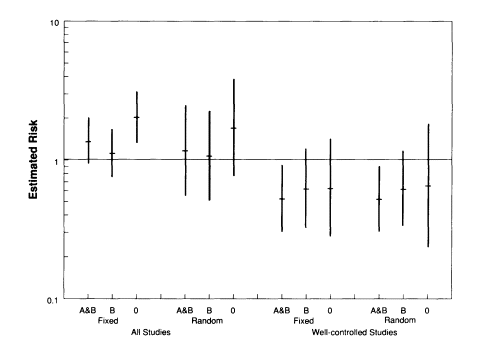
FIGURE 5-1 Meta-analysis results comparing
the estimated risk of SIDS in the
early period postvaccination with that in the late part of the
first month, under
various assumptions: (1) whether all studies or only
well-controlled studies are
included in the meta-analysis, (2) whether a fixed- or a
random-effects model is
assumed, and (3) whether the meta-analysis includes results from
the study of
Hoffman et al. (1987) based on age-matched controls (A) and age-,
race-, and
birth-weight-matched controls (B), on B alone, or on neither (0).
For each set of
assumptions, the mean and 95 percent confidence interval from the
meta-analysis
are shown on a logarithmic scale.
Page 140
included, the protective effect seen in some of the individual studies begins to emerge as significant. Because of questions surrounding the use of meta-analysis in epidemiologic research (Fleiss and Gross, 1991; Spitzer, 1991), these results cannot be viewed as definitive. They do indicate, however, that combining the information from the existing studies of the timing of SIDS and DPT vaccination is not likely to lead to a statistically significant finding of an increased risk.
The meta-analysis results give a rough sense of the power of the pooled data to detect elevated relative risk estimates. The ratio of the upper confidence interval to the average estimated relative risk in the meta-analysis results (Figure 5-1) is about 2. This suggests that a doubling of the risk of SIDS in the period immediately following DPT vaccination would have only about a 50 percent chance of being detected, even with the pooled data. On the basis of the studies at hand, about 10 percent of SIDS deaths that occur within 1 month after DPT vaccination occur within 3 days of vaccination. If half of these, 5 percent, were caused by DPT, there would be only an even chance of detecting it in the pooled analysis. In his paper prepared for the committee, Walker (1990) estimated that about 20 percent of the 5,000 annual U.S. SIDS deaths occur within 2 weeks of immunization, so perhaps 40 percent, or 2,000, occur within 1 month. A 5 percent increase in this number, 100 cases per year, could go undetected in the data available.
SUMMARY
All controlled studies that have compared immunized versus nonimmunized children (Table 5-1) have found either no association (Bouvier-Colle et al., 1989; Pollock et al., 1984; Taylor and Emery, 1982) or a decreased risk (Hoffman et al., 1987; Walker et al., 1987) of SIDS among immunized children. As a group, these studies have good power, most having more than an 80 percent chance of being able to detect a doubling of the risk. Although a protective effect of vaccine cannot be ruled out, it is more plausible that children who are not immunized by the recommended age are at an increased risk for SIDS because of other factors, such as socioeconomic status, that are associated both with delaying immunization and with SIDS (Fine and Chen, 1991). One small controlled study of infants with unexplained apnea, who may be at increased risk for SIDS, demonstrated improvement in ventilatory patterns following DPT immunization (Keens et al., 1985). There are no data that bear on a possible biologic basis for a relation between DPT immunization and SIDS, but neither is there biologic evidence to support a protective effect.
A number of studies offer some information on the timing of SIDS relative to immunization. The controlled studies shown in Table 5-2 (Griffin et
Page 141
al., 1988; Hoffman et al., 1987; Solberg, 1985; Walker et al., 1987) differ substantially in their estimates of the increased risk in the early postimmunization period. These differences may arise because children who are at risk for SIDS because of factors not included in the analyses are immunized on a different schedule than their peers, thus, depending on the comparison population, placing them either farther or closer to an immunization at the time of death. However, the results of three of these four studies indicate either an inverse association or no association between SIDS and DPT immunization. The exception is the study of Walker and colleagues (1987), which showed a significantly elevated risk of SIDS in the 0 to 3 days following immunization. It is possible that adverse events following administration of DPT vaccine are lot-specific. However, the two studies that examined vaccine lot as an etiologic factor in deaths from SIDS (Bernier et al., 1982; Solberg, 1985) found no relation between vaccine lot and deaths from SIDS.
Also worth considering is whether some deaths following immunization are not classified as SIDS and therefore would be missed in studies examining only deaths from SIDS. In three of the studies, deaths from causes other than SIDS were examined (Griffin et al., 1988; Hoffman et al., 1987; Walker, 1990). None of these showed an increased rate of deaths from other causes in the early post-DPT immunization time period.
A meta-analysis of the data on timing of SIDS deaths relative to DPT immunization shows that, although the specific numerical estimates of the relative risk of SIDS depend to some extent on the analytic assumptions that were made (see preceding section and Appendix D), there is no indication of a statistically significant increased risk of SIDS in the early postimmunization period. Even with the pooled data, however, a doubling of the risk of SIDS in the period immediately following vaccination would have only about a 50 percent chance of being found to be statistically significant.
CONCLUSION
The evidence does not indicate a causal relation between DPT vaccine and SIDS. Studies showing a temporal relation between these events are consistent with the expected occurrence of SIDS over the age range in which DPT immunization typically occurs.
REFERENCES
American Academy of Pediatrics. 1986. The Red Book. Report of the Committee on Infectious Diseases, 20th edition. Peter G, ed. Elk Grove, IL: American Academy of Pediatrics.
Baraff LJ, Ablon WJ, Weiss RC. 1983. Possible temporal association between diphtheriatetanus toxoid-pertussis vaccination and sudden infant death syndrome. Pediatric Infectious Disease Journal 2:7-11.
Page 142
Bergman AB, Beckwith JB, Ray CG, eds. 1970. Sudden Infant Death Syndrome: Proceedings of the Second International Conference on Causes of Sudden Death in Infants. Seattle: University of Washington Press.
Bernier RH, Frank JA, Dondero TJ, Turner P. 1982. Diphtheria-tetanus toxoids-pertussis vaccination and sudden infant deaths in Tennessee. Journal of Pediatrics 101:419-421.
Bouvier-Colle MH, Flahaut A, Messiah A, Jougla E, Hatton F. 1989. Sudden infant death and immunization: an extensive epidemiological approach to the problem in France—Winter 1986. International Journal of Epidemiology 18:121-126.
Bryan H. 1988. Home monitoring in infants at risk for SIDS. In: Harper RM, Hoffman HJ, eds. Sudden Infant Death Syndrome Risk Factors and Basic Mechanisms. New York: PMA Publishing Corp.
Centers for Disease Control. 1985. Diphtheria, tetanus, and pertussis: guidelines for vaccine prophylaxis and other preventive measures. Morbidity and Mortality Weekly Report 34:405-414, 419-426.
Coulter HL, Fisher BL. 1985. DPT: A Shot in the Dark. New York: Harcourt Brace Jovanovich.
Damus K, Pakter J, Krongrad E, Standfast SJ, Hoffman HJ. 1988. Postnatal medical and epidemiological risk factors for the sudden infant death syndrome. In: Harper RM, Hoffman HJ, eds. Sudden Infant Death Syndrome Risk Factors and Basic Mechanisms. New York: PMA Publishing Corp.
DerSimonian R, Laird N. 1986. Meta-analysis in clinical trials. Statistics in Medicine 6:351-358.
Fine PEM, Chen RT. 1991. Confounding in studies of adverse reactions to vaccines. Unpublished.
Fleiss JL, Gross AJ. 1991. Meta-analysis in epidemiology, with special reference to studies of the association between exposure to environmental tobacco smoke and lung cancer: a critique. Journal of Clinical Epidemiology 44:127-139.
Gilbert RE, Fleming PJ, Azaz Y, Rudd PT. 1990. Signs of illness preceding sudden unexpected death in infants. British Medical Journal 300:1237-1239.
Golding J, Limerick S, Macfarlane A. 1985. Sudden Infant Death: Patterns, Puzzles and Problems. Seattle: University of Washington Press.
Griffin MR, Ray WA, Livengood JR, Schaffner W. 1988. Risk of sudden infant death syndrome after immunization with the diphtheria-tetanus-pertussis vaccine. New England Journal of Medicine 319:618-623.
Haglund B, Cnattingius S. 1990. Cigarette smoking as a risk factor for sudden infant death syndrome: a population-based study. American Journal of Public Health 80:29-32.
Hoffman HJ, Hunter JC, Damus K, Pakter J, Peterson DR, van Belle G, Hasselmeyer EG. 1987. Diphtheria-tetanus-pertussis immunization and sudden infant death: results of the National Institute of Child Health and Human Development Cooperative Epidemiological Study of Sudden Infant Death Syndrome Risk Factors. Pediatrics 79:598-611.
Hoffman HJ, Damus K, Hillman L, Krongrad E. 1988. Risk factors for SIDS: results of the National Institute of Child Health and Human Development SIDS Cooperative Epidemiologic Study. Annals of New York Academy of Sciences 533:13-30.
Hutcheson R. 1979a. DTP immunization and sudden infant death—Tennessee. Morbidity and Mortality Weekly Report 28:131-132.
Hutcheson R. 1979b. Follow-up on DTP immunization and sudden infant deaths—Tennessee. Morbidity and Mortality Weekly Report 28:134-135.
Keens TG, Davidson Ward SL, Gates EP, Andree DI, Hart LD. 1985. Ventilatory pattern following diphtheria-tetanus-pertussis immunization in infants at risk for sudden infant death syndrome. American Journal of Diseases of Children 139:991-994.
Kraus JF, Greenland S, Bulterys M. 1989. Risk factors for sudden infant death syndrome in the US Collaborative Perinatal Project. International Journal of Epidemiology 18:113-120.
Page 143
Madsen T. 1933. Vaccination against whooping cough. Journal of the American Medical Association 101:187-188.
Mortimer EA, Jones PK, Adelson L. 1983. DTP and SIDS (letter). Pediatric Infectious Diseases 2:492-493.
Peterson DR. 1980. Evolution of the epidemiology of sudden infant death syndrome. Epidemiologic Reviews 2:97-112.
Pollock TM, Mortimer JY, Miller E, Smith G. 1984. Symptoms after primary immunisation with DTP and with DT vaccine. Lancet 2:146-149.
Roberts SC. 1987. Vaccination and cot deaths in perspective. Archives of Disease in Childhood 62:754-759.
Solberg LK. 1985. DPT vaccination, visit to child health center and sudden infant death syndrome (SIDS): evaluation of DPT vaccination. Report to the Oslo Health Council 1985. (Available as NIH Library translation 85-152, Food and Drug Administration, Bethesda, MD.)
Spitzer WO. 1991. Meta-meta-analysis: unanswered questions about aggregating data. Journal of Clinical Epidemiology 44:103-107.
Stanton AN, Downham MAPS, Oakley JR, Emery JL, Knowelden J. 1978. Terminal symptoms in children dying suddenly and unexpectedly at home: preliminary report of the DHSS multicentre study of postneonatal mortality. British Medical Journal 2:1249-1251.
Stetler HC, Mullen JR, Brennan JP, Orenstein WA, Bart KJ, Hinman AR. 1985. Adverse events following immunization with DTP vaccine. Developments in Biological Standardization 61:411-421.
Sullivan CE. 1988. Upper airway function and sleep apnea: relevance for unexpected death in infancy. In: Harper RM, Hoffman HJ, eds. Sudden Infant Death Syndrome Risk Factors and Basic Mechanisms. New York: PMA Publishing Corp.
Taylor EM, Emery JL. 1982. Immunisation and cot deaths (letter). Lancet 2:721.
Thach BT. 1986. Sudden infant death syndrome: old causes rediscovered? (letter). New England Journal of Medicine 315:126-128.
Torch WC. 1982. Diphtheria-pertussis-tetanus (DPT) immunization: a potential cause of the sudden infant death syndrome (SIDS) (abstract). American Academy of Neurology, 34th Annual Meeting, April 25-May 1, 1982. Neurology 32(4, part 2):A169-170.
Torch WC. 1986. Characteristics of diphtheria-pertussis-tetanus (DPT) postvaccinal deaths and DPT-caused sudden infant death syndrome (SIDS): a review (abstract). Neurology 36(Suppl. 1):148.
Walker AM. 1990. Does pertussis vaccine cause sudden infant death? Presentation for Institute of Medicine Workshop on Possible Adverse Consequences of Pertussis and Rubella Vaccines, Washington, DC, May 14, 1990. Unpublished.
Walker AM, Jick H, Perera DR, Thompson RS, Knauss TA. 1987. Diphtheria-tetanus-pertussis immunization and sudden infant death syndrome. American Journal of Public Health 77:945-951.
Werne J, Garrow I. 1946. Fatal anaphylactic shock: occurrence in identical twins following second injection of diphtheria toxoid and pertussis antigen. Journal of the American Medical Association 131:730-735.


