
ARTHUR WEEVER MELTON
August 13, 1906-November 5, 1978
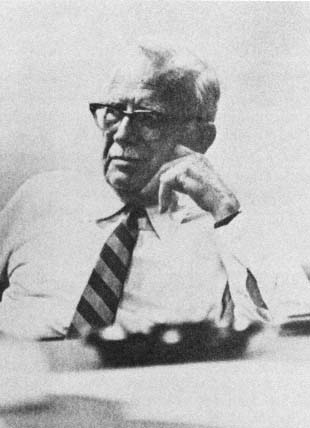
BY MICHAEL I. POSNER
ARTHUR MELTON was already a full professor of psychology, a brigadier general in the Air Force Reserve, and the editor of the Journal of Experimental Psychology when I first met him as a new graduate student at the University of Michigan in 1959. It was only the second year of his return to academia after having served as technical director of the Air Force effort in human personnel for eight years. Of course, as is typical of graduate students, I assumed he had always been at Michigan, although I remember now references to his time at Ohio State. I mention this because I was neither a contemporary nor, still less, in a position equal to Melton's, and thus I could not know him as those who were his close friends did. Rather, I knew him as an imposing force in the field, as a teacher of considerable influence, and as a role model even for those who were not direct students of his.
More personal memoirs of Melton have been written by Benton Underwood, who was Melton's student at Missouri; by Robert Daniel, who also knew Melton at Missouri; by Frank Geldard, who knew Melton during the period of his Air Force work; and by Jim Greeno and Wilbert McKeachie, who were colleagues and coworkers at Michigan. These writers divide Melton's work into his early academic period
at Missouri, his Air Force period, and the later period in which the Human Performance Center was built at Michigan. Perhaps because my daily involvement with Melton was much less extensive than theirs or because fourteen years have passed since his death, it seems possible to view these separate periods more as a whole and see the continuity of his developing ideas about psychology in relation to changes in the field.
Recent histories of experimental psychology have often identified the study of information processing entirely with developments stemming from the efforts to use computers to stimulate higher-level human functions. Indeed, the work of Herbert Simon and Allen Newell, among others, has been very influential in developing cognitive science. The Michigan Human Performance Center, together with the Applied Psychology Unit in Cambridge, Massachusetts, represented a different tradition that also contributed to the view of the human as an information processor. The Michigan approach arose from the functionalist tradition. It emphasized quantitative empirical relationships. These included Fitts' law relating movement speed to its distance and accuracy of termination, the Hick-Hyman law relating reaction time to the number of alternatives, and Melton's own empirical relation between the recallability of an item and the spacing between its repetitions.
Analogies between the human mind and technology change over the years. We are currently undergoing a shift from very strong identification of mental processes with serial computer systems to an emphasis on parallel activation. It is quite interesting to see that these new theoretical proposals are being tested against the quantitative empirical generalizations that were developed in the functional tradition that Melton practiced. The fourteen years that have elapsed between Melton's passing and this memoir make it
possible to apply to his influence the kind of empirical check that was so characteristic of his approach. The 1987 social science citation index listed ten of Melton's publications. His effort to summarize the influence of the second presentation of an item on its memory was the most frequent, with thirteen citations nearly twenty years after its publication. I hope this memoir will provide some background for appreciating the nature of Melton's contribution.
EDUCATION
Arthur Melton came to Washington University in St. Louis, Missouri, in 1924 as an eighteen-year-old undergraduate from Arkansas. He found there then, as he would now, a strong emphasis on the functional analysis of human behavior. Functionalism held that a detailed analysis of the tasks of daily life could help us understand how humans relate to their environment and how the environment might be improved to accommodate human nature. John A. McGeoch, with whom Melton worked as an undergraduate, performed studies exploring how the distribution of practice, rest, and interpolated learning affects the formation and loss of associations. This work led to McGeoch's textbook Psychology of Human Learning. It was largely a compendium of experimental findings of functional relationships between variables that could be manipulated by the experimenter and the changes in performance that they caused. There was, however, the start of a theory of forgetting embedded in this material. Information was not lost merely through a period of disuse, but rather as a function of the amount and type of learning between the original learning and testing. Ten years later Melton would make a substantial experimental contribution to the ''interference theory" of forgetting.
Melton received his B.A. degree in 1928 and went on to graduate study at Yale University. Four years later he took his Ph.D. degree with Edward S. Robinson. Robinson had come to Yale from Chicago and was himself a contributor to the functional tradition of verbal learning.
At the height of the depression, even a psychology degree from Yale University was no guarantee of a scarce academic position. However, Robinson had been involved since 1925 in a project supported by the Carnegie Corporation and the American Association of Museums, and Melton was employed for three years in studies leading to important monographs on the actual behavior of visitors to museums and a comparison of methods of instructing children in science museums.
Two things of great importance for Melton's future work emerged from that assignment. First, he learned that psychology could make contributions to real-life problems. Second, he began to explore what process might produce the functional relationships he observed. Consider as an example Melton's measurement of the time that visitors remained in front of the displayed paintings (dwell time). He plotted the dwell time for each month of museum operation. The dwell time was at a minimum in the summer months and reached a peak in the winter. This was true both for weekday and Sunday visitors. The reason for this, Melton speculated, was not in the behavior of individuals, as would be the case if, during the summer season, each person reduced the time he or she stayed indoors, but rather in the type of visitor attracted to the museum in the winter and summer seasons. While Melton was frustrated in not being able to prove this speculation in the museum setting, he was able to show that the visits of relatively uninterested visitors increased toward summer, presumably because of the ease of getting there, while those of
relatively interested visitors declined, possibly because of competition from other activities. These studies illustrated both the functional approach of looking at consistent generalizations from systematic empirical data and also an effort to go beyond the functional relationship toward the development of a process that might underlie the functional relationship. The scarcity of such process explanations was one reason why the functional approach often seemed so uninteresting. In addition, these studies illustrated that systematic observation of natural behavior could be applied to the actual implementation of museum exhibits.
PRE-WAR RESEARCH
In 1932 Melton's former mentor John McGeoch left the chairmanship of the Psychology Department at the University of Missouri, Columbia. With the strong recommendation of Robinson, Melton assumed the position as head of the Psychology Department at the University of Missouri at the age of 29.
It was the development of the M.A. program at Missouri that ensured Melton's reputation as an administrator. Melton and the four members of the Psychology Department at the University of Missouri produced a small and thriving intellectual home for a number of outstanding psychologists, including Alvin Liberman (a member of the National Academy of Sciences), Benton Underwood (a member of the National Academy of Sciences), Robert Malmo, David C. McClelland, Richard Q. Bell, and Moncrieff Smith.
During this time, Melton also showed how a functional approach to human learning might be combined with process ideas to reveal the operations that take place in the mind of the subject but that are not directly observable. The importance of Melton's paper on the role of interpolated learning can only be understood in light of the ex-
treme inhibition within functionalism of proposing internal states that might lie behind regularities of behavior. Despite the efforts of Donald Hebb and Clark Hull to develop detailed process theories, the accepted approach in studies of human learning was to explore functional relationships between variables and not to postulate hidden processes. Even in 1969 this view was so strong that Lyle Bourne, a contemporary functionalist, in presenting research on the formation of concepts, said, "There might not be anything missing in an account of behavior which fails to mention underlying psychological processes." This led Allen Newell to reply "to believe that we should proceed only with descriptions of regularities and avoid any attempt to see in them the processing that is involved seems to me almost a failure of nerve." If these powerful emotions (since I attended the meeting, I know they were) about the legitimacy of inferring underlying process could be invoked in 1969, how much more controversial was their use by Melton, a scion of the functionalist movement in 1940?
Melton and Irwin had subjects learn two lists of associated word pairs, and then studied the recall of list one associations after varying amounts of list two learning. They plotted the amount of interference on list one memory as a function of the number of trials on list two. All of this was very consistent with the functionalist tradition of relating an independent variable (number of list two trials) to a dependent variable (amount of retroactive interference). Then, however, Melton took a step beyond functionalism into the internal world of process. The standard way to interpret retroactive interference was that when subjects attempted to produce associations to list one, they intruded the new learning developed during the list two trials. Melton and Irwin measured the number of such overt intrusions as a function of the number of list two learning trials.
Then they subtracted overt intrusions from the total amount of retroactive interference they had measured. What was left was a new hidden factor they called factor X. Not only was factor X large, but it also showed a systematic increase with the amount of interpolated learning of list two. At low levels of list one learning, most of the interference was due to overt intrusions, but as list one learning increased, the interference appeared to be caused mainly by the internal process called factor X. Melton tried to identify factor X with the unlearning of an association that had been described by Clark Hull during extinction in classical conditioning. Although the very label factor X indicates the care with which Melton took to identify the theoretical nature of this hidden factor, it is clear that he was using the careful functional approach to make visible a process that was otherwise hidden from view. The use of subtraction methods to reveal underlying process was to become a major part of new studies of short-term memory and cognition that emerged after World War II, but Melton's own research was a clear forerunner of the newer process orientation.
MILITARY PSYCHOLOGY
The combination of Melton's administrative skills as Psychology Department head at Missouri and his encyclopedic knowledge of psychological methods (as revealed by his papers on methodology) and applications (as revealed by his museum studies) must have made him a nearly irresistible attraction to the growing war effort by psychologists. Even before Pearl Harbor he had worked on a battery of psychomotor tests for pilot selection. Those tests were instrumental in the smooth functioning of pilot selection after the war began. Melton wrote a long monograph on those test batteries. The success of those tests was important to the prestige of experimental psychology in the military.
Melton's research operation was successful in performing a valuable function in pilot selection during and following the war. It also served as a training ground for a large number of psychologists who were to become prominent leaders in the field of experimental psychology after the war. Melton worked on military projects from 1941 until 1957, with the exception of a brief period at Ohio (1946-49) that was interrupted for a one-year visit to Stanford in 1948. Melton's administrative leadership helped to create and cement an important role for psychology within the military that has lasted until the present time.
HUMAN PERFORMANCE CENTER
Melton returned to academia at the University of Michigan in 1957. One year later he attracted his close colleague in military psychology, Paul Fitts, from Ohio State University. Together they built a major center for experimental psychology and its applications. Melton and Fitts regarded the field of human performance as the appropriate basic science out of which would flow applications to the design of a wide range of civilian and military technologies. Much current work in the design of technology that can be used by humans flows from the concepts that were developed and the students who were trained at the Human Performance Center. Human performance theory emphasized the development of functional relationships that might be explained in terms of transformations of internal representations. It became a part of the more general cognitive psychology that developed in the 1960s.
Melton's unique research contribution was in the area of short-term memory. This topic allowed Melton to combine his long-standing interest in verbal learning with the newer information processing approach that emphasized memory within the context of cognitive tasks. Melton's
work stressed the continuity between short-term and long-term memory. His 1963 paper on short-term memory was far more consonant with current views of short-term memory as an active state of long-term memory than it was with the then popular buffer models. An example taken from that paper is the improvement in recall of a nine-digit number when its repetitions were separated by two to eight other sequences. Even a single repetition of a nine-digit list was sufficient to improve its second recall after eight intervening lists. This could occur even when subjects had no idea that lists were repeated. Melton concluded that ''the structural memory trace established by a single occurrence of an event must be extraordinarily persistent." The evidence for continuity between short- and long-term memory provided by that paper was influential and remains widely cited as a source of information on the basic characteristics of short-term memory.
Another finding made by Melton (1967) supported the idea of continuity between short- and long-term memory. In studies of successive items within a single list, he found that the more widely spaced two occurrences were, the more likely an item was to be recalled on a subsequent occasion. This effect was similar to the advantage of spaced practice found in long-term memory skills. However, it was possible to demonstrate the advantage of spaced repetition very quickly and reliably within the short-term memory context. This made possible studies of the underlying process that was at work to produce improved recall with increased lag between repetitions (lag effect). One could ask, for example, whether the lag effect depended on the more varied context of presentation as the lag increased, whether there was reduced attention to the second item when it followed immediately after the first, or whether the additional practice involved in reinstating a delay item
helped the subsequent recall. Once again Melton's exploration of a systematic function between two variables opened the way for studies of the underlying psychological and physiological mechanisms that are still continuing.
The Human Performance Center produced many of the major figures in contemporary experimental psychology. Edwin Martin, Robert Bjork, and Judith Goggen were among the younger associates who began their academic careers by working with Melton in the research programs of the center.
A number of very important doctoral dissertations were also developed there. Probably the most influential was Gerald Reicher's demonstration that every letter within a word is seen at a lower duration threshold than the same letter when presented in isolation or within a nonsense string. This finding was at first widely doubted, but it was then replicated innumerable times and later was a major contributor to the development of multilevel parallel processing models of cooperative computation that have been so widely influential in recent years. Robert Crowder's very convincing demonstration that nonverbal interpolated mental effort reduces short-term memory for verbal items was a basic contribution to capacity models of short-term memory. Barbara Tversky's study of picture word matching were among the earlier objective experimental demonstrations of the development of a visual image from a verbal presentation. Harvey Shulman demonstrated the role of semantic codes in short-term retention, thus providing an additional demonstration of the continuity between short-and long-term retention. Richard Pew, Irving Biederman, Edward Smith, and Howard Egeth were among other graduates of the Center's program during Melton's tenure.
Melton's contribution to the field of psychology included twelve years as editor of the Journal of Experimental Psychol-
ogy (1951-63). Melton was a believer in thorough experimental designs that explored multiple levels of a given variable and that used counterbalancing to avoid confounding influences. His years as editor helped to increase the concerns of a generation of young investigators with the importance of a high level of experimental control. He later served as chief editorial adviser to the American Psychological Association. Honors were also numerous, including election to the National Academy of Sciences in 1969 and receipt of the Gold Medal Award of the American Psychological Association in 1976.
These contributions gave Art Melton a level of authority with the experimental psychologists of his era that is difficult to describe. Melton's sense of dedication to psychology was so clear that one felt a greater debt because of it. It was a rare person who could refuse a request from Melton to serve on a committee, review a paper, or perform some other service that Melton felt was needed by the field.
Melton's studies of retroactive interference, spacing, and short-term memory helped to steer the field from the descriptive concerns he learned from the functionalists to an interest in the underlying mental operations that might serve as the empirical basis for a deeper theory of the human mind. Even more than his individual studies, the environment for training that he worked to create at the University of Missouri, in the Air Force, and most of all at the University of Michigan provided several generations of researchers with the methods to assist in the development of this new process-oriented view of human abilities. Among Melton's many awards was recognition for his graduate teaching from students at Michigan for his many contributions to their education. Through their work as well as his own, Melton's ideas and values continue to contribute to our understanding of psychology and to its application.
I WAS GREATLY ASSISTED by three more personal published biographies concerned with Melton's work. One of these was an obituary written by Melton's long-time colleague Benton Underwood (American Psychology 34 [1979]:1171-73). Another was written jointly by Robert S. Daniel, Frank Geldard, James Greeno, and Wilert McKeachie (American Journal of Psychology 95 [1980]:153-58). Another biography appeared in conjunction with his reception of the Gold Medal Award of the American Psychological Association (American Psychologist 32[1977]:98-99). Dr. Irwin Pollack, who has spent many years at the University of Michigan, collected material that was of very substantial aid in developing the bibliography that appears following this memoir, and I am very grateful to him. Mary K. Rothbart helped me to clarify this memoir. Her editorial skill is greatly appreciated.
SELECTED BIBLIOGRAPHY
1929 With J. A. McGeoch. The comparative retention values of maze habits and nonsense syllables J. Exp. Psychol. 12:392-414.
1935 Problems of Installation in Museums of Art. NS No. 14, pp. 1-269. Washington, D.C.: Publications of the American Association of Museums.
1936 With N. G. Feldman, and C. W. Mason. Experimental Studies of the Education of Children in Museums of Science. NS No. 15, pp. 1-106. Washington, D.C.: Publications of the American Association of Museums.
The methodology of experimental studies of human learning and retention. I. The functions of a methodology and the available criteria for evaluating different experimental methods. Psychol. Bull. 33:305-94.
The end-spurt in memorization curves as an artifact of the averaging of individual curves. Psychol. Monogr. 47:119-34.
1940 With J. McQ. Irwin. The influence of degree of interpolated learning on retroactive inhibition and the overt transfer of specific responses. Am. J. Psychol. 53:173-203.
1941 With W. J. VonLackum. Retroactive inhibition and proactive inhibition in retention: Evidence for a two-factor theory of retroactive inhibition. Am. J. Psychol. 54:157-73.
Learning. In Encyclopedia of Educational Research, ed. W. S. Munroe, pp. 667-86. New York: Macmillan.
The logic of modern psychology. I. Psychol. Bull. 38:227-40.
1944 The selection of pilots by means of psychomotor tests. J. Aviat. Med. 15:116-23.
1947 Apparatus Tests. AAF Aviation Psychology Research report no. 4, Washington, D.C.: U.S. Government Printing Office.
1950 Learning. Annu. Rev. Pychol. 1:9-30.
1956 Present accomplishment and future trends in problem-solving and learning theory. Am. Psychol. 11:278-81.
1957 Military psychology in the United States of America. Am. Psychol. 12:740-46.
1959 The science of learning and the technology of educational methods Harv. Ed. Rev. 29:96-106.
1960 With G. E. Briggs. Engineering psychology. Annu. Rev. Psychol. 11:71-89.
1963 Implications of short-term memory for a general theory of memory. J. Verb. Learn. Verb. Behav. 2:1-21.
1964 Categories of Human Learning. New York: Academic Press.
1967 Repetition and retrieval from memory. Science 158:232.
1970 With E. Martin. Meaningfulness and trigram recognition. J. Verb. Learn. Verb. Behav. 9:126-35.
The situation with respect to the spacing of repetitions and memory J. Verb. Learn. Verb. Behav. 9:596-606.
Short and long-term postperceptual memory; dichotomy or continuum? In Biology of Memory, ed. K. H. Pribram, pp. 3-5. New York: Academic Press.
1972 With E. Martin. Coding Processes in Human Memory. Washington, D.C.: V. H. Winston and Sons.


