
5
Description of Five Illustrative Mental Disorders
The diagnosis of mental disorders is made on the basis of signs and symptoms of aberrant thoughts, words, and behaviors. As yet there are no laboratory tests to diagnose these illnesses. Clinical research continues to refine our understanding of the symptomatology, natural course, co-morbidity, and treatment effectiveness for mental disorders. Continuing research on epidemiology provides needed data on incidence, prevalence, prodromal periods, and age of onset. In this chapter, the discussion of this knowledge is organized around five major mental disorders: conduct disorder, depressive disorders, alcohol abuse and dependence, schizophrenia, and Alzheimer's disease. In Chapter 6, the same disorders are examined for risk and protective factors that may eventually offer targets for intervention.
These five disorders were chosen as illustrations—for use in this chapter as well as in the rest of the report—because they are all serious disorders that have enormous emotional and financial costs associated with them. They demonstrate that specific disorders have their onset at varying stages in the life cycle, and that when they do occur, they often are disruptive to further stages of development. In addition, they represent the great diversity of mental illness and reflect a spectrum of causation, arising from clear genetic contributions in Alzheimer's disease to primarily psychosocial factors in conduct disorder. The choice of these five disorders is by no means meant to imply that these are the only disorders that should be targeted for preventive intervention research programs. Anxiety disorders, post-traumatic stress disorder, obsessive-compulsive disorder, and other adult and childhood mental
disorders may also be appropriate for the introduction of preventive research strategies. These five disorders are simply illustrative of the range of factors and approaches that must be considered in designing preventive intervention research programs. The brief descriptions presented here, each highlighting slightly different points, are examples of how the information that is available for a particular disorder should be reviewed. The disorders are presented here in developmental sequence to emphasize the importance of a life course perspective.
DATA SOURCES, CONCEPTS, AND METHODOLOGIES USED IN THE DISORDER DESCRIPTIONS
Epidemiologic Catchment Area Study
The prevalence data for the five disorders are from several sources, including the National Institute of Mental Health's Epidemiologic Catchment Area (ECA) study, which has been discussed in more detail in other reports (various chapters of Robins and Regier, 1991, as cited below). Data on age of onset during the adult years are taken from the prospective one-year follow-up ECA study, designed, in part, to estimate the incidence of specific mental disorders (Eaton, Regier, Locke, and Taube, 1981). The onset data are not widely available elsewhere and so are highlighted here, along with their new application to delineation of prodromes, as well as explanations of the special utility of these concepts in preventive intervention research.
The ECA study consisted of community surveys carried out by five university-based research teams in different locations in the United States. The data presented below are from four sites: Baltimore, Maryland (Johns Hopkins University); St. Louis, Missouri (Washington University); Durham, North Carolina (Duke University); and Los Angeles, California (University of California). At each of these sites, both the prevalence survey and the one-year follow-up were done. For the fifth site, New Haven, Connecticut (Yale University), the longitudinal aspects of the design, and the questionnaire used, were sufficiently different to make pooling of data problematic.
The methods of the ECA study are described elsewhere (Eaton and Kessler, 1985). In brief, area probability samples of households were drawn, and household members 18 years of age or older were selected at random for interview. About 75 to 80 percent of those designated as respondents completed a 90-minute interview that included the Diagnostic Interview Schedule (DIS) (Robins, Helzer, Croughan, Williams, and Spitzer, 1981). At the one-year follow-up, a second interview was
conducted with about 80 percent of those interviewed at the first wave. The DIS portion of the interview consisted of specified questions directly pertinent to diagnostic criteria from the third edition of the Diagnostic and Statistical Manual (DSM-III) of the American Psychiatric Association. The revised DSM-III-R is the best classification system available at the current time (DSM-IV is in press) and is the basis for the definitions used throughout the rest of this report. However, operational definitions of specific mental disorders as given in DSM-III, when major diagnostic criteria changes were made, were used in the ECA study and are used for determining onset in the analyses below. Onset is defined here as the first diagnosis of the disorder. Diagnoses were made from the DIS symptom data by means of computer algorithms that simulated the application of DSM-III criteria (Boyd, Burke, Gruenberg, Holzer, Rae, George et al., 1984). Because the ECA results depended on both the diagnostic criteria chosen and the method of ascertainment, the mental disorders as classified therein are referred to here as “DIS/DSM-III disorders.”
Conceptualization of Onset
The absence of firm data on the validity of the DSM-III system for classifying mental disorders enjoins us to be careful about conceptualizing the process of disease onset. It is particularly difficult to establish the validity of a threshold for the presence versus the absence of disorder, because signs and symptoms of mental disorders are widespread in the population and do not always reflect the presence of a mental disorder. From the clinical standpoint, subtle differences in how behaviors are categorized may suggest quite varied thresholds for making diagnoses; from the epidemiological standpoint, subtle differences in threshold may produce widely varying prevalences.
A disorder that has a complex causal chain, where no particular cause is regarded as sufficient, may be preventable up to the point of onset, when the individual meets full criteria for diagnosis. The concept of attributable risk (see Chapter 4) allows quantitative comparison of risk factors in the population, which helps in selecting risk factors for intervention programs. Risk factors having high attributable risk for a specific disorder, or especially risk factors having high attributable risk for multiple disorders, would be prime targets for preventive interventions. But each risk factor may operate differently, and may be differentially malleable, that is, modifiable, at different times in life. Also, each risk factor may have a sensitive period in which an important contribution to the disorder may occur only at a particular phase of
development, such as infancy, adolescence, or old age. Interventions should be planned before or during sensitive periods. Unfortunately, the sensitive periods of the risk factors are not well known, but they must occur before onset.
The first incidence of a disorder is the first onset of the disorder in the lifetime of the individual. It is usually simply called incidence in referring to age of onset in a population. The numerator for the incidence rate is composed of those individuals who have had an onset for the first time in their lives, and the denominator includes only persons who start the period of study with no history of the disorder. The incidence rate is the best quantitative expression of the force of morbidity in the population at a given age. Onset of first episode is a key concept for prevention because it is assumed that the causal structure producing morbidity changes after that point; that is, the risk factors that initiate the onset of a disorder may not be the same as the risk factors that prolong or exacerbate the disorder once it has occurred. Incidence rate is distinct from attack rate (also sometimes referred to as incidence, especially by those studying acute diseases such as respiratory infections), which is the rate at which episodes of disorder develop in a population not currently in an episode. The denominator for the attack rate is different from that for first incidence in that it may include persons who have had an episode of disorder earlier in their lives, but who do not currently meet the criteria for disorder; that is, it includes remitted cases.
For mental disorders and for many physical disorders, the force of morbidity may be expressed by the rate at which individuals cross a variety of thresholds, including onset, in the process of development of a disorder. These thresholds may be below the current diagnostic criteria or above them. The causal structure is not well understood for either initiation, prolongation, or exacerbation. Therefore the relative value of incidence versus attack rate is an empirical question that has not yet been resolved.
The prodrome is the period prior to onset of a disorder, when some early signs or symptoms are nevertheless present. Given the widespread prevalence of individual signs and symptoms of mental disorders in the general population, it is likely that many individuals with early signs and symptoms of disorder will not go on to develop the full criteria for diagnosis, perhaps because there is a dynamic flux of risk and protective factors over time. In this situation the signs and symptoms are not prodromal, in the strict sense of the word. For a particular individual a prodrome can be known only in retrospect, after he or she has developed the disorder. If he or she never develops it, the early signs were not part of a prodrome. Signs and symptoms from a
diagnostic cluster that precede disorder, but do not predict the onset of disorder with certainty, are referred to here as precursor signs and symptoms. Signs and symptoms from a diagnostic cluster that do precede the development of a disorder in a particular individual are referred to as prodromal signs and symptoms. At the present state of our knowledge of the onset of mental disorders, there are few or no signs and symptoms that predict onset with certainty. Nevertheless, precursor signs and symptoms can be helpful in identifying groups at much higher risk for onset than the general population.
Methods for Analyzing Onset
An important problem in presenting data on age of onset is censoring (Lawless, 1982). In the context of age of onset, censoring occurs when the exact age of onset is known for only a portion of the sample; for the remainder, the age is known only to exceed some given age (right censoring) or to be below some given age (left censoring). Most presentations on age of onset arise from cross-sectional data and are fight censored (e.g., Christie, Burke, Regier, Rae, Boyd, and Locke, 1988). In field surveys, the cross-sectional method is used to determine the presence or absence of disorder over the history of an individual, through retrospective recall, and then to determine age of onset for those with a positive history. In such surveys the vast majority of individuals do not report a history of disorder, and some of the individuals without disorder will develop a disorder after the survey is completed. Therefore the right-censored data from such a survey are inevitably biased in the direction of earlier age of onset. The degree of bias is difficult to know without knowledge of the age of onset, but it can be sizable. For example, imagine ascertaining age of onset for a disorder that typically has a very late onset, such as Huntington's disease, through a cross-sectional survey of the general population. Most persons in the sample would be too young to have had onset; only a handful would have lived through the age of risk for the disorder. Therefore the age of onset would appear younger than it really is. The prospective aspect of the data presented below avoids the problem of right censoring. But because the target population in the ECA surveys was defined as adults 18 years of age or older, onset for earlier years cannot be displayed. Data on psychopathology for population-based samples of children are discussed later in this chapter.
Age of onset is presented here in cumulative form because that form is, for reasons explained below, most relevant to prevention. However, cumulative presentation can obscure important relationships of the force
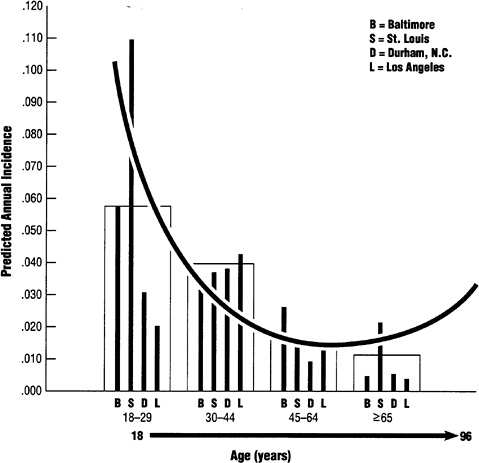
FIGURE 5.1 Annual incidence of DIS/DSM-III Alcohol Abuse/Dependence.
of morbidity to the life course, which may have etiological significance. For example, Figure 5.1 presents data on the incidence of DIS/DSM-III alcohol abuse or dependence among males at four sites of the ECA study (Eaton, Kramer, Anthony, Dryman, Shapiro, and Locke, 1989). The figure shows an upturn in incidence in the later years of life. The upturn is due to only a few individual onsets in a total sample of over 10,000, but a similar pattern in the only other comparable study (Hagnell, Lanke, Rorsman, and Ojesjo, 1982) suggests it is not a statistical artifact. The upturn in late life may indicate causal factors such as a decline in physical functioning or the effects of retirement. In the cumulative form presented in Figure 5.2, however, the upturn in later life is obscured.
Figure 5.1 illustrates other methodological issues. One issue is the considerable statistical volatility of the prospective data, which is based
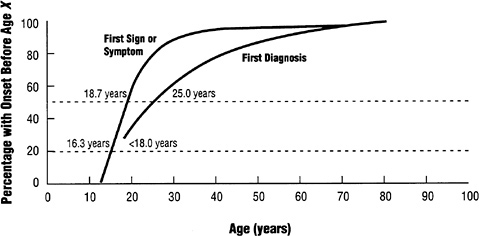
FIGURE 5.2 Age of onset of DIS/DSM-III Alcohol Abuse and Dependence. Population estimates are from 125 new cases (with 20th and 50th percentiles marked). Source: NIMH Epidemiologic Catchment Area Study, Four Sites, 1978 to 1983.
on the occurrence of a handful of new cases among many thousands of persons at risk for developing the disorder over the one-year follow-up. The volatility is best demonstrated by the thin black bars, which represent age-specific rates at each site. The open rectangle is the age-specific rate for all four sites collapsed, and it shows more stability due to pooling of data. The curve itself involves the maximal smoothing of the data, using only two degrees of freedom. The cumulative form of presentation obscures this statistical volatility. The cumulative distributions presented for the five disorders below are weighted statistically to represent a population with age, gender, and race characteristics identical to those of the U.S. population (as in Robins and Regier, 1991).
The cumulative form of presentation, along with the statistical weighting, links the data to the concept of attributable risk. The cumulative form allows one to estimate the proportion of cases in the United States that would be prevented if a 100 percent effective preventive intervention were applied at or before a given age. The attributable risk proportion, which is the percentage effectiveness of the intervention in eliminating the risk factor, and the cumulative percentage drawn from the figures below, can be chain multiplied to estimate the effectiveness of a given intervention program and to compare various intervention strategies. Data on the cost of modifying risk factors could also be incorporated in such calculations in designing a preventive intervention research program.
A variety of malleable risk factors may be available for intervention for any given disorder. Intervention should start as early in life as possible, other things being equal. But in many situations, an intervention later in life may still be effective, even if some will already have the disorder. Combining the cumulative distributions with the attributable risk and with cost and outcome factors can aid policymakers in making decisions on priorities in the use of resources.
Figure 5.2 ,Figure 5.3, Figure 5.4 through 5.5 present two cumulative distributions each. The distribution on the right focuses on the age at which the individual first meets full criteria for the given DIS/DSM-III diagnosis. For this distribution, onset must occur during the one-year prospective period of follow-up. The population being studied includes all those who had never met criteria for diagnosis at the beginning of the follow-up period. It includes those with no symptoms, as well as those with some symptoms of disorder, but not meeting full DSM-III criteria. The distribution on the left focuses on the age at which a prodromal sign or symptom related to that disorder first occurred, as reported by the individuals who had developed the disorder by the end of the follow-up period. Dotted lines mark the twentieth and fiftieth percentiles, and age values for these are recorded on the figure. The area between the two curves gives a rough outline of the prodromal period.
In the text and figures below, data are presented regarding prevalence and prodromal periods in individuals who have experienced the onset of disorder.* During these prodromal periods, precursor signs and symptoms were present, and ideally these individuals could have been identified as being at high risk. The data were, however, subject to the problems of retrospective recall by individuals with a current mental disorder.
ILLUSTRATIVE DISORDERS
Conduct Disorder
The essential feature of conduct disorder, according to DSM-III-R, is a persistent pattern of conduct in which the basic rights of others and major age-appropriate societal norms or rules are violated. This diagnosis is made among children and adolescents under age 18 when at least 3 of 13 possible criteria have been present for at least six months (see Table 5.1). The behavior pattern may be simultaneously present in
|
*These data were prepared in 1992 by William Eaton and Mohamed Badawi, both from The Johns Hopkins University, explicitly for this report. |
TABLE 5.1 DSM-III-R Diagnostic Criteria for Conduct Disorder
Note: The above items are listed in descending order of discriminating power based on data from a national field trial of the DSM-III-R criteria for Disruptive Behavior Disorders.
Criteria for severity of Conduct Disorder: Mild: Few if any conduct problems in excess of those required to make the diagnosis, and conduct problems cause only minor harm to others. Moderate: Number of conduct problems and effect on others intermediate between “mild” and “severe.” Severe: Many conduct problems in excess of those required to make the diagnosis, or conduct problems cause considerable harm to others, e.g., serious physical injury to victims, extensive vandalism or theft, prolonged absence from home. |
|
SOURCE: American Psychiatric Association, 1987, p. 55. |
several settings—home, school, with peers, and in the community—but often it is not. Reports by parents and teachers on a particular child's behavior have shown remarkably little agreement (Loeber, Green, Lahey, and Stouthamer-Loeber, 1989; Offord, Boyle, and Racine, 1989b; Rutter, Tizard, and Whitmore, 1970).
For many years, there has been considerable debate regarding the definition of conduct disorder. Robins (1991) has described the changes in both the ICD and the DSM classification systems and the differences between the systems. Indeed, there are those who question the validity of the disorder itself. For example, F. Earls (personal communication,
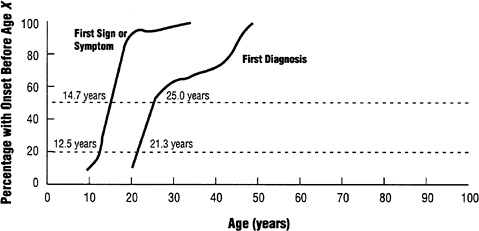
FIGURE 5.3 Age of onset of DIS/DSM-III Antisocial Personality Disorder. Population estimates are from 46 new cases (with 20th and 50th percentiles marked). Source: NIMH Epidemiologic Catchment Area Study, Four Sites, 1978 to 1983.
1992) has suggested that conduct disorder is not a condition, or even a series of conditions, but rather an emotional or behavioral symptom of disorder analogous to fever as a marker of infection. Robins (1991) has suggested, alternatively, that conduct disorder might better be viewed as the middle phase of a chronic mental disorder that typically begins early in life and continues into adulthood but which can abort at any time along the way. DSM recognizes the chronicity of the disorder but labels it differently at each stage. Taylor and colleagues found that children meeting the criteria for conduct disorder were quite heterogeneous in their symptoms (Taylor, Schachar, Thorley, and Wieselberg, 1986). This heterogeneity adds support to the increasingly held view that conduct disorder is really a cluster of disorders or subtypes. All of these variations in conceptualization, including definition and subtyping, affect apparent changes in prevalence, contribute to ethical dilemmas regarding labeling and deciding whom to treat, and complicate both treatment and prevention research.
Conduct disorder is the most common disorder seen in child mental health clinics in North America. Six-month and one-year prevalence rates obtained from general and health care clinic populations in the United States, Canada, and New Zealand range from 1.5 to 11.9 percent, depending on the gender and age range of subjects, but generally boys are diagnosed as having conduct disorder more often than girls and the rate for girls and boys increases with age (Costello, 1989; Offord, Boyle,
Fleming, Blum, and Grant, 1989a; Velez, Johnson, and Cohen, 1989; Bird, Canino, Rubio-Stipec, Gould, Ribera, Sesman et al., 1988; Anderson, Williams, McGee, and Silva, 1987; Offord, Boyle, Szatmari, Rae Grant, Links, Cadman et al., 1987). The costs to society of having such a high prevalence are not known, but obviously they are high, for they include the costs of damage to other people's property, the costs of educational, legal, and social service interventions, and the costs of loss of potential and eventual productivity of these individuals. Conduct disorder is not easily treated. Although many treatments are being applied and some, including problem-solving skills training, parent management training, and functional family therapy, have achieved positive short-term outcomes (Kazdin, 1993), the long-term success of these interventions is not known.
Symptoms of conduct disorder may arise from many different pathways. Loeber and colleagues (Loeber, Wung, Keenan, Giroux, Stouthamer-Loeber, Van Kammen, and Maughan, 1993) have postulated three routes: (1) an aggressive-versatile route with early onset, with symptoms that are already severe in preschool; (2) a nonaggressive, antisocial pathway with onset in late childhood to early adolescence, with conduct problems but no hyperactivity or aggression; and (3) an exclusive substance abuse pathway with onset in middle to late adolescence. There is a marked difference between the early-onset form of conduct disorder in a temperamentally difficult child who has accompanying attention deficit disorder and learning difficulties, and the late-onset form appearing in an adolescent who has previously functioned well but who in response to environmental stress suddenly changes patterns of behavior. Robins's (1980) work has suggested that late-onset conduct disorder is typically predated by early experimentation with sex, drugs, and alcohol. Adolescents who are most likely to be chronically antisocial are those who show early-onset, pervasive disorder, and co-occurrence of early hyperactivity (White, Moffitt, Earls, Robins, and Silva, 1990).
Within the DSM classification system, a majority of children with conduct disorder also have other concomitant psychiatric diagnoses. Conduct disorder often occurs in tandem with attention deficit disorder. Forty percent of children with attention deficit disorder go on to develop symptoms of conduct disorder (Offord, Boyle, Racine, Fleming, Cadman, Blum et al., 1992). The salient difference between those who remain attention deficit disordered but do not develop conduct disorder may lie in the level of family functioning. Families who provide a supportive, consistent environment with clearly defined limits presumably allow these children to develop enough social skills that they can
function reasonably well in school and with their peers (Offord et al., 1992; Weiss and Hechtman, 1986).
Conduct disorder is important not only because of its relatively high frequency and occurrence with other disorders, but also because of its persistence into adolescence and adulthood. In one community study, 6 percent of boys and 1.6 percent of girls aged 6 to 11 and 10.4 percent of boys and 4.1 percent of girls aged 12 to 16 were diagnosed as having conduct disorder (Offord et al., 1989a). Forty percent of children with conduct disorder between ages 8 and 12 still had the disorder at follow-up four years later (Offord et al., 1992). Still other children who had conduct disorder at 8 to 12 years had substance abuse at follow-up four years later, although they did not show other features of conduct disorder. The pattern of conduct disorder symptoms most predictive of later drug abuse or delinquency is a combination of aggression and shyness (Moskowitz and Schwartzman, 1989; McCord, 1988; Kellam, Brown, Rubin, and Einsminger, 1983). Aggression accompanied by peer rejection, rather than aggression alone, predicts later delinquency. Furthermore, 50 percent of adolescents with conduct disorder go on to show persistent antisocial disorders in adult life (Rutter and Giller, 1983). Conduct disorder not only predicts later mental disorders in adulthood but also has wide-ranging poor prognosis in adult life with higher rates of school failure, joblessness, and poor interpersonal skills, especially marital difficulties (Robins, 1970). As adults, males have more externalizing disorders (such as antisocial personality disorders and alcohol and drug abuse) than females, and females have more internalizing disorders (such as mood and anxiety disorders) (Offord, 1989).
The antisocial behavior patterns that form the core of the conduct disorder diagnosis show considerable stability over the life course. When the patterns that had their onset in childhood or adolescence continue into adulthood, the name of the disorder changes, but the diagnostic criteria remain very similar. For the DSM-III-R diagnosis of antisocial personality disorder to be made, the individual must be at least 18 years of age, have a history of conduct disorder beginning before age 15, and demonstrate a pattern of irresponsible and antisocial behavior (meeting at least 4 of 10 diagnostic criteria) since age 15 (see Table 5.2). In adulthood the failure to conform to social norms often takes the form of impulsive and reckless behavior, poor work behavior, irritability and aggressiveness, and illegal activity that may result in incarceration and early death through various forms of violence. In the ECA study, about 0.5 percent of adults met the criteria for DIS/DSM-III antisocial personality disorder at a given point in time (conduct disorder was not studied because the focus in the ECA study was on adults), and
TABLE 5.2 DSM-III-R Diagnostic Criteria for Antisocial Personality
|
|
|
SOURCE: American Psychiatric Association, 1987, pp. 344–346. |
it occurred in about 2.5 percent of the population over the life course up to the point of the interview (Robins and Regier, 1991). For antisocial personality disorder, the diagnostic requirement that some symptoms begin before age 15 ensures that the curve on the left of Figure 5.3 reaches nearly 100 percent prior to the age of 18. The accretion of signs and symptoms over the life course led to individuals at risk meeting the criteria for antisocial personality disorder for the first time over the year of follow-up. Twenty percent of cases first meeting criteria during adulthood had onsets before the age of 26, and 50 percent met criteria for diagnosis for the first time before age 40.
Depressive Disorders
Mood disorders, known as affective disorders in DSM-III, are disturbances of emotion that affect an individual's whole psychic life. There are two types of mood disorders, the first of which, bipolar disorder, is not the focus of this report. The second is depressive disorder, which has two subtypes: major depressive disorder (single episode or recurrent) and dysthymia (a chronic condition). Both types of depressive disorder
are discussed below, with somewhat more detail given on major depressive disorder, which has greater severity. Frequently, they are referred to here jointly as depressive disorders. Both are diagnosed by inclusion and exclusion criteria based on severity of symptoms (see Table 5.3 and Table 5.4). In general, the clinical picture involves a pervasive mood disturbance with feelings of sadness and loss of interest or pleasure in most activities in conjunction with disturbances in sleep, appetite, concentration, libido, and energy.
Depressive disorders are common and are associated with impairment at all levels of functioning. There have been remarkable scientific advances in the understanding of depressive disorders over the last three decades. These have included the development and application of reliable methods to diagnose depressive disorders, to describe their course, outcome, and associated impairments, and to elucidate the underlying biological changes that accompany them.
Some people have only a single major depressive episode in their entire lifetime; following it, they return to their previous level of functioning. However, about 50 percent of those in clinical samples who have one episode will go on to have another (American Psychiatric Association, 1987), thus meeting the criteria for recurrent major depression and underscoring the need to prevent the first episode. Also, women are much more likely than men to have major depressive disorder, with the lifetime prevalence being 8.7 percent for women and 3.6 percent for men (Robins and Regier, 1991). Dysthymia is a milder disorder, but the symptoms are chronic (two years in adults and one year in children).
Depressive disorders have a substantial cost to society. In terms of productivity, they are responsible for more missed days of work than any other health problem with the exception of cardiovascular disorders. They are the most common of all health problems encountered by primary care physicians in their offices. Estimates of the impact of effective interventions for depression can be approached by looking at the savings generated by the use of lithium to reduce recurrent episodes of bipolar mood disorder. Here the best estimate is that over $40 billion has been saved through the use of lithium since its widespread use began in 1970.
Depressive disorders have a high rate of co-morbidity; that is, they are associated with a number of other serious mental disorders, in particular substance abuse, anxiety disorders, and schizophrenia. They frequently accompany severe life stress such as divorce, job loss, or bereavement. They are strongly associated with suicide, one of the leading causes of death. In fact, more individuals in the United States die as a result of
TABLE 5.3 DSM-III-R Diagnostic Criteria for Major Depressive Episode and for Major Depression
|
Major Depressive Episode Note: A “Major Depressive Syndrome” is defined as criterion A below.
Note: Morbid preoccupation with worthlessness, suicidal ideation, marked functional impairment or psychomotor retardation, or prolonged duration suggest bereavement complicated by Major Depression.
Major Depressive Episode codes: fifth-digit code numbers and criteria for severity of current state of Bipolar Disorder, Depressed, or Major Depression: 1-Mild: Few, if any, symptoms in excess of those required to make the diagnosis, and symptoms result in only minor impairment in occupational functioning or in usual social activities or relationships with others. |
|
2-Moderate: Symptoms or functional impairment between “mild” and “severe.” 3-Severe, without Psychotic Features: Several symptoms in excess of those required to make the diagnosis, and symptoms markedly interfere with occupational functioning or with usual social activities or relationships with others. 4-With Psychotic Features: Delusions or hallucinations. If possible, specify whether the psychotic features are mood-congruent or mood-incongruent. Mood-congruent psychotic features: Delusions or hallucinations whose content is entirely consistent with the typical depressive themes of personal inadequacy, guilt, disease, death, nihilism, or deserved punishment. Mood-incongruent psychotic features: Delusions or hallucinations whose content does not involve typical depressive themes of personal inadequacy, guilt, disease, death, nihilism, or deserved punishment. Included here are such symptoms as persecutory delusions (not directly related to depressive themes), thought insertion, thought broadcasting, and delusions of control. 5-In Partial Remission: Intermediate between “In Full Remission” and “Mild,” and no previous Dysthymia. (If Major Depressive Episode was superimposed on Dysthymia, the diagnosis of Dysthymia alone is given once the full criteria for a Major Depressive Episode are no longer met.) 6-In Full Remission: During the past six months no significant signs or symptoms of the disturbance. 0-Unspecified. Specify chronic if current episode has lasted two consecutive years without a period of two months or longer during which there were no significant depressive symptoms. Specify if current episode is Melancholic Type. Major Depression 296.2x Major Depression, Single Episode For fifth digit, use the Major Depressive Episode codes (p. 223) to describe current state.
Specify if seasonal pattern (p. 224). 296.3x Major Depression, Recurrent For fifth digit, use the Major Depressive Episode codes (p. 223) to describe current state.
Specify if seasonal pattern (see p. 224). |
|
SOURCE: American Psychiatric Association, 1987, pp. 222–224 and 229–230. |
TABLE 5.4 DSM-III-R Diagnostic Criteria for Dysthymia
Specify primary or secondary type: Primary type: the mood disturbance is not related to a preexisting, chronic, nonmood, Axis I or Axis III disorder, e.g., Anorexia Nervosa, Somatization Disorder, a Psychoactive Substance Dependence Disorder, an Anxiety Disorder, or rheumatoid arthritis. Secondary type: the mood disturbance is apparently related to a preexisting, chronic, nonmood Axis I or Axis III disorder. Specify early onset or late onset: Early onset: onset of the disturbance before age 21. Late onset: onset of the disturbance at age 21 or later. |
|
SOURCE: American Psychiatric Association, 1987, pp. 194–195. |
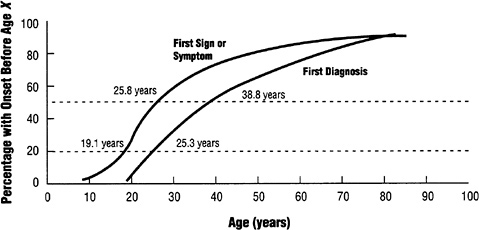
FIGURE 5.4 Age of onset of DIS/DSM-III Major Depressive Disorder. Population estimates are from 148 new cases (with 20th and 50th percentiles marked). Source: NIMH Epidemiologic Catchment Area Study, Four Sites, 1978 to 1983.
suicide than as a result of homicide (National Center for Health Statistics, 1993). Although the definitions of depression have varied, many studies link depression and suicide. More than half of suicides occur in adults suffering from depression (Barraclough, Bunch, Nelson, and Sainsbury, 1974). The lifetime risk of suicide in persons suffering from depression is 15 percent (IOM, 1990a). The risk of suicide among depressed persons of all ages is 30 times higher than in the general population (Guze and Robins, 1970). Twenty percent of all suicides occur in persons over 65 (Vital Statistics of the United States, 1975). Rates are strikingly higher for elderly white men than for other groups.
Both pharmacological and psychological treatment methods for depression have shown considerable success (Klerman, 1988; Weissman, 1988). There is also evidence that high-quality maintenance therapy substantially increases the likelihood of a good outcome for depressive disorders (Frank, Kupfer, Perel, Cornes, Jarrett, Mallinger et al., 1990). Thus clinical depression is unusual among the major mental illnesses in having good treatments available. It is therefore particularly important for clinicians to recognize the signs and symptoms of depressive disorders as well as note the existence of risk factors in susceptible patients' lives, because much suffering can be eliminated by the effective treatments available. Depressive disorders, especially if untreated, have profound effects on families, in particular on the children and spouses of those who are afflicted (Beardslee and Wheelock, in press; Keitner and Miller, 1991; Downey and Coyne, 1990).
However, there is strong evidence that clinical depression in adults is underrecognized and undertreated in medical practice (Pérez-Stable, Miranda, Muñoz, and Ying, 1990; Cleary, Goldberg, Kessler, and Nyez, 1982) and that treatment is often suboptimal (Keller, Lavori, Rice, Coryell, and Hirschfeld, 1986). It is evident that adults with depressive disorders, if they are treated at all, are often treated by internists and general practitioners, not mental health specialists (Regier, Goldberg, and Taube, 1978). This has prompted the Agency for Health Care Policy and Research to publish clinical practice guidelines on depression in primary care (Depression Guideline Panel, 1993a,b,c). Evidence has also accumulated that children with serious mental disorders in general and clinical depression in particular (Beardslee, Keller, Lavori, Staley, and Sacks, 1993; Keller, Lavori, Beardslee, Wunder, and Ryan, 1991) are also undertreated. In addition, Mexican-Americans and probably other minorities as well, significantly underutilize mental health services when in need of treatment for mental disorders in general. In the UCLA ECA study, utilization rates were low for the general population, at 22 percent, but for Mexican-Americans rates were only half that, or 11 percent (Hough, Landsverk, Karno, Burnam, Timbers, Escobar, and Regier, 1987).
A developmental perspective is necessary in the understanding of depressive disorders because the nature of clinical depression changes across the life span. Estimates of the rate of depressive disorders also vary depending on the instruments and diagnostic systems employed and on the samples studied. A useful technique is a structured interview scored according to standard diagnostic criteria, such as the DIS/DSM-III system used in the ECA study. ECA data suggest an overall lifetime disorder rate of 7.8 percent for all affective disorders (now classified as mood disorders in DSM-III-R), with major depression as the most common affective disorder, followed by dysthymia (with lifetime rates of 4.9 and 3.2, respectively) (Weissman, Bruce, Lief, Florio, and Holzer, 1991). Higher rates of depressive disorders have been reported when slightly broader diagnostic nomenclatures and semistructured interview schedules are used. For example, data collected from community samples using the Schedule of Affective Disorders and Schizophrenia suggest rates as high as 8 to 12 percent for men and 20 to 26 percent for women (Boyd and Weissman, 1981).
According to ECA data, the prevalence of major depression among the elderly living in the community is less than 3 percent. However, depressive symptoms occur in approximately 15 percent of community residents over 65 years of age. Thus clinical depression may have a different form in the elderly. The rates of major or minor depression
among elderly people in nursing homes range from 15 to 25 percent (NIH Consensus Development Panel on Depression in Late Life, 1992). Major depressive disorder among children is rarer than among adults, as reviewed in more detail below.
There appears to be a cohort effect in the prevalence of depressive disorder. Birth cohorts born in successive decades in this century show higher prevalence of depression (Klerman, Lavori, Rice, Reich, Endicott, Andreason et al., 1985; Hagnell et al., 1982). The increase in depression, to some extent, parallels the increase in suicide. Recent evidence has shown that for the United States and several other nations, the more recent birth cohorts are at increased risk for major depression (Cross-National Collaborative Group, 1992).
In the ECA study, which included only persons age 18 and older and did not assess childhood or adolescent depression, major depressive disorder was shown to have its onset in young adulthood (Figure 5.4). Twenty percent of cases met criteria for diagnosis for the first time before the age of 25.3 years, and 50 percent before age 39. The prodromal period appeared to be about 6 years long for those with earlier onset, and more than 10 years long for those with later onset.
Alcohol Abuse and Dependence
Drinking problems generally are viewed as a continuum, ranging from occasional misuse by social drinkers to alcohol abuse and dependence. In DSM-III-R, alcohol is one of nine classes of psychoactive substances associated with abuse and dependence. Alcohol abuse is a maladaptive use pattern, demonstrated by either continued use despite knowledge of harmful effects or recurrent use in situations when use is physically hazardous, as well as symptoms that have persisted for at least one month or have occurred repeatedly over a longer period of time. Abuse of alcohol progresses to alcohol dependence, frequently referred to as “alcoholism,” when three of nine possible diagnostic criteria related to quantity and length of use and effects are met (see Table 5.5).
According to the National Institute on Alcohol Abuse and Alcoholism (NIAAA), dependence is now recognized as a disease characterized by four main clinical features: craving, impaired control over drinking, physical dependence, and tolerance (NIAAA, 1991) (see Table 5.5). Whereas craving is a hunger for alcohol before drinking begins, impaired control over drinking refers to the difficulty that alcoholics experience in stopping once drinking has started. Unlike nonproblem drinkers, alcoholics may lack internal signals that would allow them to
TABLE 5.5 DSM-III-R Diagnostic Criteria for Psychoactive Substance Abuse and Psychoactive Substance Dependence
|
Psychoactive Substance Abuse
Psychoactive Substance Dependence
Criteria for Severity of Psychoactive Substance Dependence: Mild: Few, if any, symptoms in excess of those required to make the diagnosis, and the symptoms result in no more than mild impairment in occupational functioning or in usual social activities or relationships with others. Moderate: Symptoms or functional impairment between “mild” and “severe.” Severe: Many symptoms in excess of those required to make the diagnosis, and the symptoms markedly interfere with occupational functioning or with usual social activities or relationships with others.a In Partial Remission: During the past six months, either no use of the substance and some symptoms of dependence. In Full Remission: During the past six months, either no use of the substance, or use of the substance and no symptoms of dependence. |
|
aBecause of the availability of cigarettes and other nicotine-containing substances and the absence of a clinically significant nicotine intoxication syndrome, impairment in occupational or social functioning is not necessary for a rating of severe Nicotine Dependence. SOURCE: American Psychiatric Association, 1987, pp. 167–169. |
regulate alcohol intake. Physical dependence is an adaptive state manifested by intense physical disturbances that occur when drinking is discontinued. Dependence results from the adaptation of central nervous system structures and functions (and probably those of other organs as well) to the presence of alcohol. Tolerance refers to the diminished effect of a given amount of alcohol that tends to develop with regular use. In spite of this diminished effect, however, many aspects of brain functioning are impaired, and vital organs may be damaged.
Alcohol is involved in over 100,000 deaths annually in the United States (from motor vehicle crashes, unintentional injuries, suicides, and the medical effects of alcohol dependence) and plays a major role in numerous medical and social problems (NIAAA, 1991; IOM, 1989a). Motor vehicle crashes are the nation's leading cause of injury deaths, and approximately half of all crash fatalities are alcohol related (DHHS, 1990; IOM, 1985). Such crashes, of course, leave many others with permanent disabilities, including head injuries. About half of all fire deaths are associated with alcohol use, 20 to 77 percent of fatal falls involve alcohol, and 25 to 50 percent of drowning deaths may be the result of drinking (IOM, 1989a). Alcohol is estimated to be involved in approximately 30 percent of all suicides and plays a particularly significant role in adolescent suicide and in suicide with the use of firearms, and it is also highly associated with homicides (NIAAA, 1991).
Because of the heterogeneity of age of onset and behaviors related to maladaptive use of alcohol, Cloninger and colleagues (Cloninger, Sigvardsson, Gilligan, von Knorring, Reich, and Bohman, 1989) have postulated two different forms of alcoholism: Type I and Type II (see Chapter 6).
Alcohol has effects on virtually every organ system in the body. The liver, the primary site of alcohol metabolism, is susceptible to injury of three major types: fatty liver, alcoholic hepatitis, and cirrhosis. Chronic alcohol abusers also may develop clinical signs of cardiac dysfunction. Heavy alcohol consumption is a well-documented cause of brain damage. Damage can result from alcohol's toxic effects; alcohol-related damage to other organs can impair proper brain functioning; and the poor dietary habits that frequently accompany chronic drinking can lead to nutritional imbalances that, in turn, can impair the nervous system. Neurological complications include dementia, blackouts, seizures, hallucinations, and peripheral neuropathy. Alcohol-related dementia accounts for nearly 20 percent of all admissions to state mental hospitals. Moreover, heavy drinking can seriously impair a person's ability to remember and to perform intellectual tasks. The recent development of imaging techniques has enabled researchers to identify certain structural abnormalities in the brain—possibly resulting from alcohol abuse—that may account for the impaired intellectual and memory functions. In addition, autopsy studies have shown that alcoholics have general brain atrophy as well as specific cell loss in at least two structures of the brain that control memory (DHHS, 1990). Alcohol also can affect the immune, endocrine, and reproductive systems and may be associated with increased risk of certain kinds of cancers, especially those of the liver, mouth, esophagus, and larynx.
Alcohol even reaches across generations by causing fetal alcohol syndrome (FAS), a cluster of permanent physical deformities and mental retardation in the newborn child that results from the mother's drinking heavily during pregnancy. There are approximately one to three FAS babies for every 1,000 live births in the United States; among known alcoholic mothers, this rate increases to a range of 23 to 29 for every 1,000 live births (IOM, 1989a). Alcohol abuse and dependence can cause various other psychiatric conditions or increase their severity, or the abuse of alcohol may be a response to other psychiatric problems. Data from the ECA study indicate that alcoholics are 21 times more likely than nonalcoholics to also have a diagnosis of antisocial personality disorder, 6.2 times more likely to have mania, 4 times more likely to have schizophrenia, and 1.7 times more likely to have a diagnosis of major depressive disorder. Other studies indicate that approximately 10
to 30 percent of alcoholics have panic disorder, and about 20 percent of persons with anxiety disorders abuse alcohol (DHHS, 1991). ECA data also indicate that persons dependent on alcohol are more likely to abuse drugs. The increased odds ratios are as follows: cocaine (35 times); sedatives (17 times); opioids (13 times); hallucinogens (12 times); stimulants (11 times); and marijuana or related drugs (6 times). Surveys of both clinical and nonclinical populations indicate that at least 90 percent of alcohol-dependent persons are also nicotine dependent (DHHS, 1991).
Despite the national downward trend in alcohol consumption, projections for 1995 suggest that 11.2 million adults will exhibit symptoms of alcohol dependence, while the number of alcohol abusers will remain at current levels (DHHS, 1990). More men than women are heavy drinkers. For both men and women, drinking problems are especially common among younger age groups. In a 1984 national survey, for example, the proportion of male drinkers reporting at least a moderate level of drinking problems was highest among those aged 18 to 29 for both dependence symptoms (14 percent) and drinking-related consequences (20 percent). The proportions dropped with increasing age, reaching respective lows of 5 and 7 percent among men aged 60 and older. Among female drinkers, the proportion reporting at least a moderate level of dependence symptoms remained stable at 5 to 6 percent from age 18 to age 49 and then dropped to 1 percent. For drinking-related consequences, the proportion reporting at least a moderate level of problems was relatively high in the 18-to-29 age group (12 percent), but dropped to 6 percent for women in their thirties and forties and was negligible for those aged 60 and older (Hilton, 1987).
There are characteristics other than gender and age that are related to patterns of alcohol consumption; one of these is homelessness. People who are homeless have higher levels of alcohol abuse and dependence than the general population, with prevalence estimates ranging from 20 to 45 percent and estimates of lifetime prevalence as high as 63 percent (DHHS, 1990). Unlike the pattern in the general population, the incidence of problem drinking among the homeless appears to be highest in the middle years, and is substantially lower among both the young and the old. This finding lends some support to the thesis that many homeless people continue to drink heavily as a means of coping with the physical and emotional stresses associated with homelessness, although it is probably also true that alcoholism itself puts middle-aged alcoholics at relatively high risk for becoming homeless.
Overall drinking levels are lower among African-Americans than among the majority white population, but there are notable differences within age-group categories and African-Americans suffer to a greater
extent from alcohol-related problems. A survey conducted in 1984 found that while white males were at highest risk for alcohol use problems in the 18-to-29 age group, African-American males of similar age were at a much lower risk. For men in their thirties, however, problem rates increased sharply for African-Americans and decreased sharply for whites. Problem rates remained higher for African-Americans than for whites throughout middle and old age. African-American males also reported higher rates of drinking-related problems (medical, personal, and social) than white males (Herd, 1989). One possible explanation for the high level of health problems among African-Americans may be the later onset of heavy drinking. This late onset may be associated with more sustained patterns of high consumption, in contrast to patterns among whites, for whom heavy drinking is more likely to be a short-term phenomenon at a younger age.
Hispanics have a higher prevalence of drinking-related problems than other racial and ethnic groups, despite the fact that more Hispanics abstain from drinking. A representative national sample of Hispanics in 1984 revealed marked differences in alcohol consumption between men and women. Approximately 70 percent of Hispanic men reported drinking more than once a month, whereas almost the same percentage of Hispanic women drank either less than once a month or not at all (Caetano, 1989). Rates of heavier drinking increased sharply among Hispanic men in their thirties but declined thereafter. About 18 percent of the men experienced at least one alcohol-related problem during the year preceding the survey. Problem rates varied by national origin; much higher proportions of Mexican-American men reported problems than did Puerto Ricans or Cubans.
Native American and Native Alaskan groups vary widely in alcohol use, but as a whole they have very high mortality rates from alcohol-related causes. The 1985 age-adjusted rate for alcohol-related deaths among Native Americans and Native Alaskans was 26.1 deaths per 100,000 population, a significant decline from the 1973 high of 66.1 deaths, but still four times higher than the rate for the general population (Indian Health Service, 1988). Alcoholism death rates were twice as high for men as for women and, among age groups, ranged as high as 96.8 deaths per 100,000 for men between the ages of 45 and 54.
There have been significant efforts focused on treatment strategies, particularly to ameliorate alcohol abuse and dependence. Advances and research needs in treatment have been reviewed extensively elsewhere (IOM, 1990b; IOM, 1989a). Researchers have demonstrated that treatment can contribute to prolonged abstinence in some patients. During the past decade alone, several hundred new studies have been pub-
lished reporting outcome data on various treatment methods. Some of the areas covered include pharmacotherapies, aversion therapies, psychotherapy and counseling, mutual-help groups such as Alcoholics Anonymous, behavioral self-control training, and relapse prevention procedures. Typically, alcohol treatment programs offer a combination of modalities, ranging from detoxification and health care to occupational therapy and after-care group meetings. Even though treatment can be effective, however, many alcohol-dependent individuals either do not seek help or resist treatment, and most patients experience at least one relapse to drinking following treatment.
To better understand the benefits of treatment and to improve the percentage of patients who experience those benefits, researchers are working to define the active ingredients of various treatment strategies and to determine which patient factors influence treatment outcome (NIAAA, 1991). Related efforts include refining diagnostic classifications; developing improved tools for screening, diagnosis, and assessment; and improving treatment outcome evaluation.
Researchers also are working to provide information that will help to ensure that treatment services reach the populations in need. It has been well established that general medical expenditures by alcoholics and their families are reduced substantially following treatment—and the benefits derived from treating alcoholics offset costs to the general health care system (IOM, 1990b; IOM, 1989a). In light of these findings, increasing efforts will focus on expanding information about the capacities, quality, availability, utilization, and costs of alcoholism treatment services in relation to the need and the demand for those services.
Alcohol abuse and dependence is present in about 3 percent of the adult population at any given time (point prevalence), and occurs in about 14 percent of the population over the life course (lifetime prevalence) (Heizer, Burnam, and McEvoy, 1991). It begins early in adolescence (Figure 5.2). The twentieth percentile for age of diagnosis occurred during the earliest age of respondents in the ECA sample (18 years old), and 50 percent of the cases had their onset before age 25. For those cases that began in adulthood, the prodromal period was short: the difference between the twentieth percentile for diagnosis versus the twentieth percentile for first problem was less than two years.
Schizophrenia
Schizophrenia in DSM-III-R is an illness defined by inclusion and exclusion criteria with regard to psychotic symptoms, deterioration in functioning, and duration (see Table 5.6). The criteria for diagnosis have
TABLE 5.6 DSM-III-R Diagnostic Criteria for Schizophrenia
Prodromal phase: A clear deterioration in functioning before the active phase of the disturbance that is not due to a disturbance in mood or to a Psychoactive Substance Use Disorder and that involves at least two of the symptoms listed below. Residual phase: Following the active phase of the disturbance, persistence of at least two of the symptoms noted below, these not being due to a disturbance in mood or to a Psychoactive Substance Use Disorder. Prodromal or Residual Symptoms:
|
Examples: Six months of prodromal symptoms with one week of symptoms from A; no prodromal symptoms with six months of symptoms from A; no prodromal symptoms with one week of symptoms from A and six months of residual symptoms.
Classification of course. The course of the disturbance is coded in the fifth digit: 1-Subchronic. The time from the beginning of the disturbance, when the person first began to show signs of the disturbance (including prodromal, active, and residual phases) more or less continuously, is less than two years, but at least six months. 2-Chronic. Same as above, but more than two years. 3-Subchronic with Acute Exacerbation. Reemergence of prominent psychotic symptoms in a person with a subchronic course who has been in the residual phase of the disturbance. 4-Chronic with Acute Exacerbation. Reemergence of prominent psychotic symptoms in a person with a chronic course who has been in the residual phase of the disturbance. 5-In Remission. When a person with a history of Schizophrenia is free of all signs of the disturbance (whether or not on medication), “in Remission” should be coded. Differentiating Schizophrenia in Remission from No Mental Disorder requires consideration of overall level of functioning, length of time since the last episode of disturbance, total duration of the disturbance, and whether prophylactic treatment is being given. 0-Unspecified. |
|
SOURCE: American Psychiatric Association, 1987, pp. 194–195. |
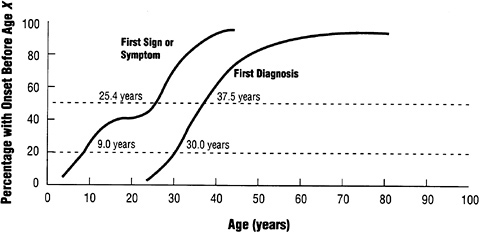
FIGURE 5.5 Age of onset of DIS/DSM-III Schizophrenia. Population estimates are from 35 new cases (with 20th and 50th percentiles marked). Source: NIMH Epidemiologic Catchment Area Study, Four Sites, 1978 to 1983.
changed somewhat from DSM-III and are likely to change again in DSM-IV. Also, the definition in the U.S. classification system differs somewhat from that in the diagnostic system used in Europe (ICD-10). The establishment of criteria has been complicated by the fact that schizophrenia has been considered by some to be a “group of schizophrenias” (Bleuler, 1950). From the time of Kraepelin, phenomenology and course have been used to group illnesses under the schizophrenic label, but valid subtyping of these illnesses has not yet been achieved because etiological factors are not yet clear. In general, schizophrenia is characterized by delusions and hallucinations, disorganized speech and behavior, deficits in social, emotional, expressive, and initiating behaviors, and a lack of motivation leading to decreased social and occupational functioning.
Schizophrenia is a major mental illness that drastically alters the life course of many individuals (Harding, 1988; Harding, Brooks, Ashikaga, Strauss, and Breier, 1987), causes enormous family suffering, and results in an immense economic burden to families and to the nation. The burden of the disease increases because it afflicts adolescents and young adults and lasts throughout the lifetime of most individuals. In follow-up studies, about one third of schizophrenic patients have a relatively unremitting course requiring constant or intermittent institutional care, one third function minimally in the community and require continuous support, and one third function semiautonomously in the community but rarely reach the level of functioning expected before the
onset of schizophrenia. The course of the disorder is usually most malignant during its first 5 to 10 years; it then tends to stabilize and can even improve somewhat. The course also depends on the quality and quantity of available treatment and rehabilitation (Harding, 1988).
Keith, Regier, and Rae (1991, p. 34) have described these social and economic costs:
Patients with the disorder occupy over 30 percent of the nation's mental hospital beds—more than 100,000 beds on any given day (Manderscheid and Barrett, 1987). Treatment costs alone exceed $7 billion annually, and indirect costs—for example, of social services, loss of productivity, and premature mortality—account for at least double that figure, making the financial burden of schizophrenia in the United States approximately equal to that of all cancers combined (Hall, Goldstein, Andrews, Lapsley, Bartel, and Silove, 1985; Gunderson and Mosher, 1975). The demoralizing effects of this devastating illness are partly revealed by the exceptionally high suicide attempt and completion rate of its victims. Past clinical studies have estimated that one in four patients with schizophrenia will attempt suicide and one in ten will succeed in the first ten years of the illness (Roy, 1986; Winokur and Tsuang, 1975). Further, compared to the general population, persons with schizophrenia have a twofold increase in overall mortality, with excess mortality particularly likely to be caused by “unnatural death” (Allebeck and Wistedt, 1986). Schizophrenic patients at the greatest risk for premature death are those younger than 40 years (Black and Winokur, 1988).
The co-morbidity of schizophrenia with substance abuse is a major problem and can complicate the initial diagnosis. For patients with chronic schizophrenia who are in either state or Department of Veterans Affairs hospitals, alcohol and drug abuse appear to dominate as coexisting conditions, with some 20 to 50 percent of such hospitalized patients having drug and alcohol problems (Shaner, Khalsa, Roberts, Wilkins, Anglin, and Hsieh, 1993). The lower rates are often biased by invalid reports given by the patients themselves. Shaner et al. (1993) found rates of higher than 50 percent when based on toxicological data. Substance abuse combined with schizophrenia can undermine the treatment of both disorders.
The widely reported data from the ECA study deserve special comment because this study reports on coexistence of symptoms, without invoking the hierarchy implicit in the DSM and ICD classification systems. When symptoms can be part of two disorders and a hierarchial system is used, the more severe disorder becomes the diagnosis. The ECA type of analysis, which relied on symptoms only, concluded that over 90 percent of schizophrenic patients have at least one concurrent mental disorder at some time. These data indicate that at some point the
schizophrenic patient exhibits symptoms consistent with either affective disorders (60 percent) or anxiety disorders (60 percent) (Robins and Regier, 1991). However, a careful analysis of these results suggests that the symptoms that give rise to the second diagnosis may well be part of the original illness. In other words, depressive or anxiety symptoms may exist in the normal course of schizophrenia, not as separate diseases. Nevertheless, when such symptoms do coexist, they need to be identified and targeted for treatment.
Significant progress has been made in the reduction of the adverse outcomes of schizophrenia. Structural, educational, and behaviorally based treatments, such as skills training, and interventions that promote family coping and support, when combined with antipsychotic medication have substantially improved the course of psychosis and reduced the relapse rate (Falloon and Fadden, 1993; Liberman, 1992; Wyatt, 1991). The favorable impact of continuous and comprehensive treatment is readily observed in one- and two-year controlled clinical trials, but it has only begun to be established for longer periods. The efficacy of treatment for primary negative symptoms and for the subset of patients with persistent psychosis has improved with the use of new antipsychotic medications and social learning programs (Glynn and Mueser, 1992; Kuehnel, Liberman, Marshall, and Bowen, 1992; Meltzer, 1992; Brenner, Dencker, Goldstein, Hubbard, Keegan, Kruger et al., 1990).
The estimated annual incidence of schizophrenia across the world appears to range between 0.1 and 0.5 per 1,000 (Eaton, 1991). The lifetime prevalence of schizophrenia is roughly the same for men and women, although women have a later onset. The lifetime risk of schizophrenia in the general population in the United States is 1.0 percent. That is, 1 out of 100 people born today will develop schizophrenia by the time they are 55. But of course, not everyone's risk is equal because some have a strong family history of schizophrenia and other risk factors that can multiply the risk for onset of the disorder by tenfold or greater.
Schizophrenia usually appears after puberty, with the peak age of onset at about 20 to 24 years for males and 25 to 29 years for females (Lewine, 1988). These figures are somewhat misleading because onset is only the point in time that characteristic and florid psychotic symptoms bring the individual to psychiatric attention. A broader description of onset suggests a range of about 17 to 28 for males and about 20 to 40 for females. First-episode studies suggest that psychotic symptoms have been present for about two years (Mintz, Mintz, and Goldstein, 1987; Goldberg and Huxley, 1980) at the time of initial diagnostic and
treatment services (Lieberman, Jody, Geisler, Alvir, Loeber, Szymanski et al., 1993). However, there are obvious problems in using mental health service contacts to determine age of onset. It seems likely that aspects of cognitive dysfunction and prodromal symptoms are present in many patients much earlier in life, and some features may be present from birth. About 10 percent of schizophrenics have their first hospital admission after age 45 (Gottesman, 1991); therefore a criterion in DSM-III that age of onset be before age 45 was dropped in DSM-III-R.
The prodrome for schizophrenia may be surprisingly long, according to ECA data. The first symptoms obtained by questions asking about the onset of hallucinations and delusions suggest that those patients with early onset may have had over-20-year histories of symptoms, whereas those with late onset may have had symptoms for about 12 years. The ECA data confirm that schizophrenia has its onset in young adulthood (Figure 5.5). The twentieth percentile is 30 years of age, and 50 percent of onsets occur prior to age 37.5.
Alzheimer's Disease
Alzheimer's disease (AD) is the most common cause of deteriorating cognitive function (dementia) in adults. AD accounts for 60 to 70 percent of dementia cases in most studies (Katzman, Lasker, and Bernstein, 1986), although one survey, the East Boston study, found a higher proportion; that is, 91 percent of those with moderate or severe dementia had AD (Evans, Funkenstein, Albert, Scherr, Cook, Chown et al., 1989). The onset of AD is typically heralded by a deterioration in recent memory with relative preservation of reference, or long-term, memory (see Figure 5.6 and Table 5.7 for DSM-III-R diagnostic criteria). The course is insidiously downward, with the progressive loss of the ability to read and write and increasing disability in speaking, learning, and planning of complex actions. The speed of cognitive deterioration varies markedly, and periods of decline are often punctuated by periods of slight recovery or plateaus during which symptoms remain stable for months. At end-stage, the affected person becomes mute, incontinent, and bedridden.
The annual costs of severe dementia have proved difficult to quantify precisely. Two studies of overall costs estimated $38 billion in 1983 dollars, and $24 billion to $48 billion in 1985 dollars (Huang and Hu, 1986; Battelle Memorial Institute, 1984). Diagnostic costs were estimated at between $500 million and $1 billion in 1987 (OTA, 1987), and direct costs of treatment at $10 billion in 1983 (Huang and Hu, 1986).
A recent study of costs, the most rigorous empirical study to date, was
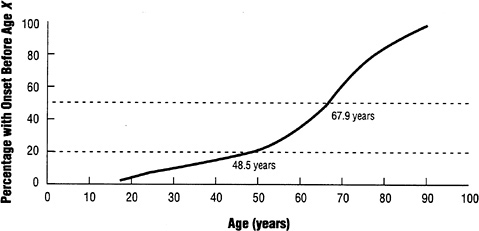
FIGURE 5.6 Age of onset of DIS/DSM-III Cognitive Impairment. Population estimates are from 187 new cases (with 20th and 50th percentiles marked). Source: NIMH Epidemiologic Catchment Area Study, Four Sites, 1978 to 1983.
reported by Rice and colleagues (Rice, Fox, Hanck, Max, Webber, Lindeman, and Segura, 1991). The study directly estimated costs for a cohort of dementia patients from the San Francisco Bay area, both institutionalized and residing in the community. This study suggested that previous cost estimates may well have been far too low. The study assessed the costs of formal care (including costs for nursing homes, physician services, hospitals, paid social services, and medications) and informal care (using cost estimates for services provided by family members or others based on the cost of the same services if performed by paid substitutes) for dementia patients. The costs per patient in a nursing home were remarkably similar to the costs per patient in the community, approximately $47,000 in 1990, but the fraction of costs due to formal services was predictably much higher for those in nursing homes. Three quarters of the costs among community-dwelling patients were for informal care. Among nursing home residents, 88 percent of the costs were for formal services, with 81 percent for nursing home charges alone. The $47,000 cost per patient cannot be generalized nationally, but it is more than double the per capita cost estimated in the previous studies.
The largest cost component is long-term care. Historical data on dementia prevalence in nursing homes are notoriously unreliable, but the data make clear that dementia is a serious problem among nursing home residents. National surveys show that at least half of those residing in nursing homes, and perhaps a much higher fraction, suffer
TABLE 5.7 DSM-III-R Diagnostic Criteria for Primary Degenerative Dementia of the Alzheimer Type and Dementia
|
Primary Degenerative Dementia of the Alzheimer Type
Note: Code 331.00 Alzheimer's disease on Axis III. Dementia
Criteria for severity of Dementia: Mild: Although work or social activities are significantly impaired, the capacity for independent living remains, with adequate personal hygiene and relatively intact judgment. Moderate: Independent living is hazardous, and some degree of supervision is necessary. Severe: Activities of daily living are so impaired that continual supervision is required, e.g., unable to maintain minimal personal hygiene; largely incoherent or mute. |
|
SOURCE: American Psychiatric Association, 1987, pp. 107 and 121. |
from a dementing disorder (OTA, 1992). The Office of Technology Assessment estimated that of the $53.1 billion paid for nursing home care in 1990, $11 billion was dementia-related government expenditure, roughly matched by dementia-related out-of-pocket payments from individuals and families or other private sources (OTA, 1992). The costs of respite care, day care, and informal care through relatives and friends are also significant and were estimated at $27 billion in 1983 (Hu, Huang, and Cartwright, 1986; Huang and Hu, 1986). Here again, the more recent study by Rice, although it did not project a national cost figure, suggests that this estimate is probably low by a factor of two or more (Rice et al., 1991).
Data on use and costs of day care, respite care, and other services increasingly available to assist families dealing with a dementing illness are extremely sparse. Many new services have been created over the past half decade, and most have been created for private payment, at times supplemented by contracts with local or state government, but with limited federal participation (and thus minimal national data reporting). The few studies that have been done to assess the use of community services have generally been in service-rich environments with access to case management, and so these studies do not represent the national norm. As uncertain as these cost estimates are, they are certain to escalate rapidly as the expected prevalence of AD triples over the next four decades, owing to the aging of the population.
The certain diagnosis of AD requires microscopic examination of brain tissue to look for the distinctive pathological stigmata: neurofibrillary tangles (accumulations of biochemically altered fibrous proteins inside nerve cells) and senile plaques (accumulations of fibrillar proteins between nerve cells, concentrated near points of cell-to-cell contact). Contrary to previous assumptions that AD represented a rather non-specific age-related deterioration of nerve cells throughout the brain, especially in the cerebral cortex, more recent studies have indicated a selective pattern of neuronal vulnerability among clusters of cells (Coyle, Price, and DeLong, 1983). Nerve cells in a cluster, called the nucleus basalis of Meynert, preferentially die off (Whitehouse, Price, Struble, Clark, Coyle, and DeLong, 1982; Whitehouse, Price, Clark, Coyle, and DeLong, 1981). These nerve cells communicate with those in the cortex by releasing the transmitter molecule acetylcholine, a phenomenon that has led to treatment attempts based on replacing the loss of this transmitter. Other neuronal cell clusters in different parts of the brain are also lost selectively, including neurons that use other transmitters, such as norepinephrine and several short protein molecules (peptides), somatostatin, and corticotropin releasing factor (CRF) (Coyle
et al., 1983). Recent studies have suggested that a loss of synapses in specific brain regions, specifically the hippocampus and association cortex, may be associated with the loss of cognitive abilities in AD (R. Katzman, personal communication, 1993; Terry, Masliah, Salmon, Butters, DeTeresa, Hill et al., 1991; DeKosky and Scheft, 1990; Hamos, DeGennaro, and Drachman, 1989). The clinical and anatomic pattern of neuronal loss is thus more selective than once believed, but nonetheless involves multiple neuronal clusters and transmitter systems. Basic neuroscience as well as clinical studies suggest that the degeneration of these neuronal systems accounts for the cognitive and emotional symptoms of AD (Koo and Price, 1993).
Treatment of AD is confined currently to treating its behavioral and emotional symptoms. Only a small fraction, perhaps 3 to 5 percent, of all dementia cases are truly reversible (Katzman et al., 1986). Although the reversible cases of dementia are not AD, a careful diagnostic assessment is important to identify such cases, so they can be appropriately treated. Treatment of behavioral and emotional symptoms is nonetheless important, as is treatment of any other medical condition the patient may have, to keep the overall level of disability to a minimum (Katzman and Jackson, 1991). Because the overall level of disability, including the agitation, depressive symptoms, behavioral problems, and psychotic symptoms often associated with AD, contributes to family burden— and family burden is the strongest predictor of transfer to a nursing home or other formal care—antidepressants, antipsychotics, antianxiety agents, and other medications to diminish psychosis and behavioral problems are the most commonly used drugs with Alzheimer's patients.
Although the management of behavioral symptoms is important in the daily lives of those with dementia and those who care for them, the research literature on the effectiveness of these management techniques and on the frequency with which AD is co-morbid with other psychiatric symptoms and disorders is sparse (Deutsch and Rovner, 1991). A recent review of AD and depression, for example, found only a single controlled clinical trial (Teri and Wagner, 1992). Despite the weak research base, the use of medications intended to address psychiatric symptoms is common among those with AD. Various surveys suggest that one half to three fourths of those admitted to nursing homes with AD and other dementias are receiving psychotropic medications (OTA, 1992). Indeed, concern about the possible misuse of psychotropic medications has led to regulations in the Omnibus Budget and Reconciliation Act of 1987 intended to thwart misuse. This large gap in the clinical literature has obvious implications for the treatment of those with dementia, and
direct relevance also to preventing sequelae among those who care for them, such as depression in caregivers.
Improved management of psychiatric symptoms associated with AD has strong implications for reducing the expression of some of the most troublesome aspects of AD. Improved care of AD patients—in homes, respite care centers, day care centers, clinics, nursing homes, hospitals, and special care units—offers the hope of reducing the load of excess disability, although research to validate this promise is only preliminary.
Research advances have been substantial, however, in the area of pathophysiology and genetics of AD. We now have reasonable evidence that several genetic forms of the illness exist with linkage to at least three different chromosomes. This finding suggests that there may be a collection of specific diseases with a single common pathway. One hope is that as we understand the nature of the final common pathway leading to cell death and discover a marker that will identify individuals at high risk for developing AD, ways can be found to inhibit a crucial step such as amyloid formation and prevent the emergence the illness. This might lead to indicated preventive interventions for high-risk individuals.
Conservative estimates suggest that severe dementia afflicts 5 to 7 percent of those over age 65 (Cross and Gurland, 1986), and such cases are expected to number 2.4 million by the year 2000. A community survey that included mild to moderate symptoms of AD found that 10.8 percent of those over age 65 had probable AD (Evans et al., 1989). In the ECA study, prevalence estimates for severe cognitive impairment were highly influenced by the age distribution of the population: in adults, the prevalence was less than 1 percent; in those over age 55, the prevalence was greater than 2 percent (George, Landerman, Blazer, and Anthony, 1991). The prevalence of AD escalates rapidly after age 65. The East Boston study showed that the prevalence of probable AD rose from 3 percent among those aged 65 to 74, to 18.7 percent among those 75 to 84, to 47.2 percent among those over 85 (Evans et al., 1989). As mentioned above, the prevalence of AD is expected to increase more than threefold during the next four decades, in large part because the oldest segments of the U.S. population, those most at risk for AD, are growing the most rapidly (Evans, Scherr, Cook, Albert, Funkenstein, Smith et al., 1990).
Projecting future AD prevalence hinges critically on assumptions about the growth of the over-85 population and the prevalence of AD in this group, both of which are well-known weak points in the epidemiological data. The projected prevalence among those aged 65 to 74 would increase only modestly from 1980 to 2050 in one recent projec-
tion, for example, but would increase sevenfold among those over 85 (Evans et al., 1990). Past census projections have been particularly inaccurate regarding expansion of the oldest age groups, and the anticipated rise of AD over the next four decades is especially sensitive to such uncertainty.
International epidemiological studies have shown relatively little variation among populations in the incidence or prevalence of dementia, when adjusted for late age of onset (Rocca, Hofman, Brayne, Breteler, Clarke, Copeland et al., 1991). Earlier reports had suggested a low incidence and prevalence of AD among Asian populations. More systematic recent studies have found prevalence among Asians within the range of Western surveys (Zhang, Katzman, Kashani, Salmon, Jin, Cai et al., 1990), although the ratio of AD to other causes of dementia may differ between predominantly Caucasian populations, in North America and Europe, and populations in Japan and China (Jorm, 1991). The consistency of findings suggests that AD is found among all geographic areas and population groups. Differences in prevalence from exposure to different risk factors, if they can ultimately be found, are too small to be detected consistently in population surveys.
The onset of severe cognitive impairment in the ECA study is shown in Figure 5.6. In the ECA study, AD was not separated out from other forms of severe cognitive impairment. The operational measure was the Minimental Status Exam. The Mini-mental Status Exam is used as a screening tool for dementia, but it also identifies those with cognitive impairments from other causes, such as delirium, substance-induced hallucinosis, and mental retardation. The at-risk population for onset consists of those with a Mini-mental score of 17 or more, and, among these, the new cases are those whose score at the second wave was 17 or less. The respondents' ability to recall the age of onset was limited because of their cognitive impairment. Hence it was not possible to inquire about the age of occurrence of the first prodromal sign or symptom, for those with cognitive impairment at the second wave, and therefore the figure shows only one distribution. Twenty percent of the onsets occurred before the age of 48, and 50 percent occurred before the age of 68.
GAPS IN OUR KNOWLEDGE
Age-Specific Prevalence in Children
The most important limitation of the ECA data presented above for the illustrative mental disorders is the truncation at age 18. Although the bias of censorship is avoided, there may be significant numbers of
incident cases before the age of 18. If the cumulative age of onset were to include those under 18, that is, the total population, the curves would move to the left by an amount equal to the proportion of cases having incidence before the age of 18. Unfortunately, the data necessary to estimate age of onset correctly for the total population do not exist. Available data are either retrospective or do not use standard diagnostic nomenclature.
Lack of prospective data is less important at the level of diagnosis than for the occurrence of the first precursor sign or symptom, because diagnosis occurs later. Prospective data are less crucial for schizophrenia, alcohol abuse or dependence, and cognitive impairment, which begin later, than for depressive and conduct disorders, which arise earlier in life. Prevalence data on major depressive disorder from published sources are presented in Table 5.8 to give the reader some indication of how early in life prevention efforts might have to start. The standard assessment of depression in children and adolescents has involved the application of diagnostic interview schedules scored according to criteria for adults, with no modification for children. Using these techniques, the prevalence of depression in youngsters under six years of age is extremely low, as shown in Table 5.8 (Kashani and Carlson, 1987). The rate of depression increases by at least severalfold during adolescence. Major depressive disorder is present in less than 3 percent of children before the age of puberty, as shown in the first five rows of Table 5.8. The lower seven rows show the prevalence in adolescents to be 2 to 8 percent, with one low outlier estimate of 1 percent (McGee, Feehan, Williams, Partridge, Silva, and Kelly, 1990). Because the DSM-III diagnosis is required for entry into this table, these results are constrained to have been produced after the introduction of the DSM-III in 1980. But with the exception of one study (Kashani, McGee, Clarkson, Anderson, Walton, Williams et al., 1983), the findings in Table 5.8 have all been published within the past five years and represent a recent ballooning of information about psychopathology in children. For both prepubertal and postpubertal ages, the findings display a relatively large range, with the highest reported prevalence being about three times the lowest reported prevalence. The exact age distribution, the locale and culture, and methodological differences all presumably contribute to the range of rates shown in Table 5.8. At some time during late adolescence, the prevalence of major depressive disorder approaches that found in the adult population.
Table 5.8 presents point prevalence data, which are useful for estimation of need. But incidence data are required to estimate age of onset and to guide the timing of prevention efforts. Incidence data require a
TABLE 5.8 Prevalence Data on DSM-III Major Depressive Disorder in the General Population by Age: A Review of Selected Studies of Children and Adolescents
|
Age Range |
Current Prevalencea |
Reference |
|
2–6 |
0.9 |
Kashani and Carlson, 1987 |
|
9 |
1.8 |
Kashani et al., 1983 |
|
6–11 |
2.7b |
Fleming et al., 1989 |
|
11 |
0.5 |
Anderson et al., 1987 |
|
9–12 |
2.5 |
Velez et al., 1989 |
|
11–14 |
2.5 |
Velez et al., 1989 |
|
15 |
1.2 |
McGee et al., 1990 |
|
12–16 |
7.8b |
Fleming et al., 1989 |
|
14–16 |
4.7 |
Kashani et al., 1987 |
|
13–18 |
3.7 |
Velez et al., 1989 |
|
14–18 |
2.6 |
Lewinsohn et al., 1993 |
|
15–20 |
3.1 |
Velez et al., 1989 |
|
aCurrent prevalence includes point prevalence and one-year or six-month prevalence. b“DMS-III-like” major depressive syndrome; high and medium levels of diagnostic certainty. NOTE: Studies selected had the following characteristics: they were published in English; they used DSM-III criteria for major depressive disorder; and the general population sample was larger than 100. |
||
prospective design in which lifetime prevalence data are gathered at the baseline, so that an at-risk population can be defined. Only two of the point prevalence estimates in Table 5.8 were accompanied in the original studies by lifetime prevalence data or data that allowed for inference of estimation of lifetime prevalence (Lewinsohn, Hops, Roberts, Seeley, and Andrews, 1993; Kashani et al., 1983). Only one study estimated incidence (Lewinsohn et al., 1993).
The data presented in Table 5.8 display what is known about the epidemiology of major depressive disorder in childhood. Considerable good work has been done for this disorder in particular. The data nevertheless reveal many gaps in knowledge, which present opportunities for further study, discussed in more detail below. Data (not shown) on conduct disorder, would reveal a similarly wide range in estimates and similar gaps in definitive epidemiological knowledge.
Child Psychiatric Nosology
A series of studies have shown that between 12 and 20 percent of all children suffer from emotional and/or behavioral disorders at some
point in their childhood and that the vast majority are untreated (Offord et al., 1989a,b; also see Chapter 1). There is compelling evidence of the need for much more systematic investigation of the course and natural history of these disorders as well as of preventive intervention studies, as was recommended in an IOM report (1989b).
The incidence figures given earlier in this chapter are for adult disorders. Large-scale epidemiological studies are needed to provide compatible data about disorders in children. But even more urgent is the recognition of the need for a developmental perspective. Even though signs and symptom patterns of serious disturbance vary over the age span of childhood, it is possible at each developmental stage to identify individuals who are seriously disturbed. The use of semistructured diagnostic interviews for mental disorders in children under 8 or 9 years has only limited value because the validity of applying standard diagnostic criteria is not well-established. Also, impairments in cognitive and social functioning are more important in children, both as outcomes and as targets for preventive interventions. Finally, the notion of what constitutes a case of mental disorder in childhood is less well established—hence the need for broad-based assessment of child functioning in addition to a diagnostic assessment.
Limited knowledge about the development of psychopathology in children constrains our ability to engage in preventive intervention efforts. More epidemiological research in the area of developmental psychopathology is needed (Rutter, 1989). The range of prevalence figures for major depressive disorder in children, presented in Table 5.8, is quite broad, and there is no consensus in these data on the age at which major depressive disorder can first manifest itself. Even though it is possible to operationally define major depression using the DSM-III criteria, it is not clear that the disorder is the same in children below the age of puberty, because important features of the disorder, such as the gender ratio, differ in prepubertal versus postpubertal depression. It is difficult to define a population “at risk” for onset of disorder and therefore difficult to estimate the age of onset, except in adults, as is done in Figure 5.2 ,Figure 5.3 Figure 5.4, Figure 5.5 through 5.6 above. Ideally, prevention efforts ought to be directed to specific age periods during which the causal events underlying the disorder are taking place: if the preventive intervention occurs too early, its positive effects may be washed out before onset; if it occurs too late, the disorder may already have begun. There is no consensus on exactly how signs and symptoms should be configured into disorders at various ages. Therefore epidemiological research on children should gather and retain data on a wide range of signs and symptoms, as well as disorders, to ensure that maturational changes or
changes in the diagnostic classification system do not hamper the ability to study the development of psychopathology over time.
Empirical Search for Prodromes
The study of precursor signs and symptoms, and prodromal periods, might prove useful in prevention efforts, but there is little knowledge from prospective and population-based data. The precursor signs and symptoms that are most predictive of disorder should be identified in epidemiological surveys, because they might suggest particular indicated preventions. For example, using the same base of data as in Figure 5.4, it is estimated that persons at risk for the first incidence of major depressive disorder, who have in the prior year experienced two weeks or more of sad mood, are 5.5 times more likely to have a first onset of major depressive disorder during the next year as those who have not had this precursor symptom. Individuals who have had the two-week period and symptoms in two or more symptom groups in the diagnostic criterion level B in DSM-III (sometimes called “depression syndrome”) have 5.7 times the risk of having a first onset. Estimated relative risks for the criterion B symptom groups are available elsewhere (Dryman and Eaton, 1991).
The formula for estimating attributable risk can be usefully applied to these relative risks if the prevalence of the precursor is known (Eaton, Badawi, and Melton, 1993). For example, the one-year prevalence of a two-week period of sad mood is about 5 percent, but the one-year prevalence of the depression syndrome is only about 0.5 percent. Applying the attributable risk formula to these data yields an estimate of 18.4 percent for sad mood and 2.4 percent for depression syndrome. Therefore, if an efficient screening device could be found, the two-week period of sad mood is a much more logical choice for locating a population for indicated preventive intervention than is the depression syndrome. The yield from application of the formula is not the same as for other risk factors, because precursors that prove to be prodromal are part of the disorder that eventually occurs. But the exercise is useful in quantifying precursors and searching for prodromes. Converting what is known about precursors into true prodromes is an important topic of research for epidemiologists interested in prevention.
Co-morbidity
The notion of precursor signs and symptoms can usefully be extended to co-morbidity (Kessler and Price, in press). Over the life span, the
mental disorders overlap to a large degree (Regier, Farmer, Rae, Locke, Keith, Judd, and Goodwin, 1990; Boyd et al., 1984). The study of epidemiological data on age of onset for co-morbid disorders (to determine which of two disorders came first) has begun only recently (e.g., Merikangas, Eaton, Angst, Kraemer, Canino, Rubio-Stipec et al., 1993). The relative risks for symptoms of one disorder, or for the disorder itself, in predicting first onset of a second disorder, are probably not as high as for the precursor signs and symptoms that specifically belong within the diagnostic cluster of the second disorder; but these relative risks may be higher than other risk factors, and sufficiently high to warrant use in screening in some situations. For example, the relative risk for first onset of major depressive disorder for those with a panic attack is 3.4, as estimated in a time-dependent proportional hazards model (Andrade, Chilcoat, and Eaton, 1993). The prevalence of panic attack is about 10 percent (Eaton, Dryman, and Weissman, 1991). Applying the formula for attributable risk yields an estimate of 19 percent. The distinction between indicated preventive interventions and treatment interventions can be further clarified as the precursor symptoms of coexisting disorders become more understood.
Transition to Adulthood
The transition to adulthood is poorly understood, in spite of the fact that it is probably the age period when most adult disorders have their peak rates of incidence. There are prevalence surveys of mental disorders in adults, such as the ECA study, and in children, such as those reviewed in Table 5.8. The ECA study is the only one in the United States that estimates incidence of specific disorders in adults, and there is only one study estimating incidence rates for a DSM-III disorder in a population under age 18 (Lewinsohn et al., 1993). There are no studies that estimate incidence of specific disorders during the age period of the transition to adulthood, that is, from about age 15 to about age 25. Studies under way using synthetic cohort designs (in which the effects of aging can be studied by using a cross-sectional design that includes a range of ages but requires strong assumptions about the effects of birth cohort and historical period [Beltes, Cornelius, and Nesselroade, 1979]) have the capacity to yield estimates of incidence, and to study the effects of risk factors that are relatively close to the time of the beginning of the study. But synthetic cohort designs will not be able to study the effects of combinations of these risk factors and ones that occur later. Because these combinations may be very important in the transition to adult
hood, this is a stark gap in our epidemiological knowledge relevant to the prevention of mental disorders.
FINDINGS AND LEADS
-
A disorder may be preventable up to the point of onset of first episode. Although onset can rarely be accurately pinpointed, the time at which an individual meets full criteria for diagnosis can be used as an approximation. As more becomes known about precursors and prodromes, the age of onset will become more accurately known.
-
Epidemiological research on children and adults should gather and retain data on a wide range of signs and symptoms, as well as disorders, to help ensure that maturational changes and changes in the diagnostic classification system do not interfere with the study of the development of psychopathology over time.
-
Prospective epidemiological studies that estimate incidence of specific risk factors and disorders in childhood, adolescence, and during the transition to adulthood, from age 15 to 25, are greatly needed for prevention research. Such studies could help clarify the mechanisms linking risk factors to the first occurrence of disorders.
-
For a particular disorder, a review of what is known about prodrome, age of onset, diagnostic criteria, course, co-morbidity, incidence and prevalence, effectiveness of treatment, and costs to society can help the investigator determine if the knowledge base is sufficient to consider designing a preventive intervention. For example, the incidence of a disorder will help determine the necessary size of the sample so that statistical analyses are meaningful (Muñoz and Ying, 1993); the demographics of a disorder will help determine who is at highest risk and what population groups should be targeted; and if a specific treatment is known to be effective, it could be considered for use before onset. Such a review could in turn help policymakers set priorities for preventive intervention programs.
-
Many mental disorders, including conduct disorder, depressive disorders, alcohol abuse and dependence, schizophrenia, and Alzheimer's disease, are thought to be a cluster of several different illnesses or to have subtypes. Identification of these groups and clearer delineation of their etiologies may clarify which individuals may be most amenable to preventive interventions.
-
Risk factors that have a role in the etiology of a mental disorder may be differentially malleable at different phases of the life course. More research regarding the sensitive periods of risk factors, that is, when they contribute most to etiology, could lead to more strategic
-
timing of preventive interventions, that is, before or during those sensitive periods.
-
From a clinical perspective, the prodromal periods for some of the illustrative mental disorders may seem unusually lengthy. Because the prodromal data presented here were subject to retrospective recall by individuals who currently had a disorder, the time of the first sign or symptom may not be accurate. Also, the signs and symptoms may not have been sufficiently specific to differentiate them from a range of normal behavior. The only way of determining true prodromal periods is through prospective studies with cutoff points for carefully defined signs and symptoms. However, if through such studies prodromal periods are indeed found to be quite lengthy, the timing of preventive interventions may be adjusted accordingly.
-
Prospective epidemiological studies could identify precursor signs and symptoms that are below the criterion level for the diagnosis of a mental disorder, as well as the age of the first occurrence of these precursor symptoms. Thus it may be possible to identify individuals at heightened risk for developing the full-blown disorder, who would then become candidates for indicated preventive interventions. For example, populations could be screened for precursors, such as a two-week period of sad mood.
-
Research advances in understanding of the cause of Alzheimer's disease (AD) have been substantial. Genetic evidence suggests that AD may be a collection of specific diseases with a single common pathway. If this pathway can be clarified and a marker found to identify individuals at high risk for developing AD, an intervention may eventually be found that could inhibit a crucial step, such as amyloid formation, and prevent emergence of the disease or at least delay its onset.
REFERENCES
Alleback, P.; Wistedt, B.( 1986) Mortality in schizophrenia. Archives of General Psychiatry; 43: 650–653.
American Psychiatric Association.( 1987) Diagnostic and Statistical Manual of Mental Disorders (Third Edition —Revised). Washington, DC: American Psychiatric Association.
Anderson, J. C.; Williams, S.; McGee, R.; Silva, P. A.( 1987) DSM-III Disorders in Preadolescent Children. Archives of General Psychiatry; 44: 69–76.
Andrade, L.; Chilcoat, H.; Eaton, W. W.( 1993) Comorbidity of panic and depression: Age of onset. Unpublished manuscript.
Barraclough, B.; Bunch, J.; Nelson, B.; Sainsbury, P.( 1974) A hundred cases of suicide: Clinical observations. British Journal of Psychiatry; 125: 355–373.
Battelle Memorial Institute.( 1984) The Economics of Dementia. Contract report prepared for the Office of Technology Assessment. Washington, DC: U.S. Congress.
Beardslee, W. R.; Keller, M. B.; Lavori, P. W.; Staley, J.; Sacks, N.( 1993) The impact of parental affective disorder on depression in offspring: A longitudinal follow-up in a non-referred sample. Journal of the American Academy of Child and Adolescent Psychiatry ; 32(4): 723–730.
Beardslee, W. R.; Wheelock, I. (in press) Children of parents with affective disorders: Empirical findings and clinical implications. In: W. R. Reynolds and H. F. Johnston, Eds. Handbook of Depression in Children and Adolescents. New York, NY: Plenum Publishers.
Beltes, P. B.; Cornelius, S. W.; Nesselroade, J. R.( 1979) Cohort effects in developmental psychology. In: J. R. Nesselroade and P. B. Beltes, Eds. Longitudinal Research in the Study of Behavior and Development. New York, NY: Academic Press; 61–84.
Bird, H. R.; Canino, G.; Rubio-Stipec, M.; Gould, M. S.; Ribera, J.; Sesman, M.; Woodbury, M.; Huertas-Goldman, S.; Pagan, A.; Sanchez-Lacay, A.; Moscoso, M.( 1988) Estimates of the Prevalence of Childhood Maladjustment in a Community Survey in Puerto Rico. Archives of General Psychiatry; 45: 1120–1126.
Black, D. W.; Winokur, G.( 1988) Age, mortality and chronic schizophrenia. Schizophrenia Research; 1:267–272.
Bleuler, E.( 1950) Dementia praecox or the group of schizophrenias (J. Zinkin, Trans.) . New York, NY: International Universities Press. (Original work published 1911.)
Boyd, J. H.; Burke, J. D.; Gruenberg, E. M.; Holzer, C. E., III; Rae, D. S.; George, L. K.; Karno, M.; Stoltzman, R.; McEvoy, L.; Hestadt, G.( 1984) Exclusion criteria of DSM-III: A study of co-occurence of hierarchy-free syndromes. Archives of General Psychiatry; 41: 983–989.
Boyd, J. H.; Weissman, M. M.( 1981) Epidemiology of affective disorders: A reexamination and future directions . Archives of General Psychiatry; 38(9): 1039–1046.
Brenner, H. D.; Dencker, S. J.; Goldstein, M. J.; Hubbard, J. W.; Keegan, D. L.; Kruger, G.; Kulhanek, F.; Liberman, R. P.; Malm, U.; Midha, K. K.( 1990) Defining treatment refractoriness in schizophrenia. Schizophrenia Bulletin; 16: 551–561.
Caetano, R.( 1989) Drinking patterns and alcohol problems in a national sample of U.S. Hispanics. The Epidemiology of Alcohol Use and Abuse among U.S. Minorities. NIAAA Monograph No. 18. Rockville, MD: DHHS Pub. No. (ADM) 89–1435.
Christie, K. A.; Burke, J. D., Jr.; Regier, D. A.; Rae, D. S.; Boyd, J. H.; Locke, B. Z.( 1988) Epidemiologic evidence for early onset of mental disorders and higher risk of drug-use in young-adults. American Journal of Psychiatry; 145: 971–975.
Cleary, P. D.; Goldberg, I. D.; Kessler, L. G.; Nyez, G. R.( 1982) Screening for mental disorders among primary care patients. Archives of General Psychiatry; 39: 837–840.
Cloninger, C. R.; Sigvardsson, S.; Gilligan, S. B.; von Knorring, A. F.; Reich, T.; Bohman, M.( 1989) Genetic heterogeneity and the classifications of alcoholism. In: E. Gordis, B. Tabakoff, and M. Linnoila, Eds. Alcohol Research from Bench to Bedside. New York, NY: The Haworth Press; 3–16.
Costello, E.( 1989) Child psychiatric disorders and their correlates: A primary care pediatric sample. Journal of the American Academy of Child and Adolescent Psychiatry ; 28: 851–855.
Coyle, J. T.; Price, D. L.; DeLong, M. R.( 1983) Alzheimer's disease: A disorder of cortical cholinergic innervation. Science; 219(4589): 1184–1190.
Cross, P. S.; Gurland, B. J.( 1986) The epidemiology of dementing disorders. Contract report for the Office of Technology Assessment. Washington, DC: U.S. Congress.
Cross-National Collaborative Group.( 1992) The changing rate of major depression. Journal of the American Medical Association; 268(21): 3098–3105.
DeKosky, S. T.; Scheff, S. W.( 1990)Synapse loss in frontal cortex biopsies in Alzheimer's disease: correlation with cognitive severity. Annals of Neurology; 27: 457–464.
Depression Guideline Panel.( 1993a) Depression in Primary Care: Vol. 1, Diagnosis and Detection. Clinical Practice Guideline, No. 5. Rockville, MD: Department of Health and Human Services, Public Health Service, Agency for Health Care Policy and Research. AHCPR Pub. No. 93–0550.
Depression Guideline Panel.( 1993b) Depression in Primary Care: Vol. 2, Treatment of Major Depression . Clinical Practice Guideline, No. 5. Rockville, MD: Department of Health and Human Services, Public Health Service, Agency for Health Care Policy and Research. AHCPR Pub. No.93–0551.
Depression Guideline Panel.( 1993c) Depression in Primary Care: Detection, Diagnosis and Treatment. Quick Reference Guide for Clinicians, No. 5. Rockville, MD: Department of Health and Human Services, Public Health Service, Agency for Health Care Policy and Research. AHCPR Pub. No. 93–0552.
Deutsch, L. H.; Rovner, B. W.( 1991) Agitation and other noncognitive abnormalities in Alzheimer's disease. The Psychiatric Clinics of North America; 14(2): 341–351.
DHHS (Department of Health and Human Services).( 1991) Alcoholism and Co-occurring Disorders. Alcohol Alert. Rockville, MD: NIAAA; No. 14; PH 302.
DHHS (Department of Health and Human Services).( 1990) Seventh Special Report to the U.S. Congress on Alcohol and Health . Rockville, MD: DHHS Pub. No. (ADM) 90–1656.
Downey, G.; Coyne, J. C.( 1990) Children of depressed parents: An integrative review. Psychological Bulletin; 108: 50–76.
Dryman, A.; Eaton, W. W.( 1991) Affective symptoms associated with the onset of major depression in the community: Findings from the U.S. National Institute of Mental Health Epidemiologic Catchment Area Program. Acta Psychiatrica Scandinavica; 84(1): 1–5.
Eaton, W. W.( 1991) Update on the epidemiology of schizophrenia. Epidemiologic Reviews; 13: 320–328.
Eaton, W. W.; Badawi, M.; Melton, B.( 1993) Prodromes and precursors for four DIS/DSM-III disorders: Epidemiologic data for prevention of disorders with slow onset. Unpublished manuscript.
Eaton, W. W.; Dryman, A.; Weissman, M. M.( 1991) Panic and phobia. In: L. N. Robins and D. A. Regier, Eds. Psychiatric Disorders in America: The Epidemiologic Catchment Area Study. New York, NY: The Free Press; 155–179.
Eaton, W. W.; Kessler, L. G.( 1985) Epidemiologic Field Methods in Psychiatry: The NIMH Epidemiologic Catchment Area Program. New York, NY: Academic Press.
Eaton, W. W.; Kramer, M.; Anthony, J. C.; Dryman, A.; Shapiro, S.; Locke, B. Z.( 1989) The incidence of specific DIS/DSM-III mental disorders: Data from the NIMH Epidemiological Catchment Area program. Acta Psychiatrica Scandinavica; 79: 163–178.
Eaton, W. W.; Regier, D. A.; Locke, B. Z.; Taube, C. A.( 1981) The Epidemiologic Catchment Area Program of the NIMH. Public Health Reports; 96: 319–325.
Evans, D. A.; Funkenstein, H. H.; Albert, M. S.; Scherr, P. A.; Cook, N. R.; Chown, M. J.; Hebert, L. E.; Hennekens, C. H.; Taylor, J. O.( 1989) Prevalence of Alzheimer's disease in a community population of older persons. Journal of the American Medical Association; 262(18): 2551–2556.
Evans, D. A.; Scherr, P. A.; Cook, N. R.; Albert, M. S.; Funkenstein, H. H.; Smith, L. A.; Hebert, L. E.; Wetle, T. T.; Branch, L. G.; Chown, M.; Hennekens, C. H.; Taylor, J. O.( 1990) Estimated prevalence of Alzheimer's disease in the United States. Milbank Quarterly; 68: 267–289.
Falloon, I. R. H.; Fadden, G.( 1993) Integrated Mental Health Care. London, England: Cambridge University Press.
Fleming, J. E.; Offord, D. R.; Boyle, M. H.( 1989) Prevalence of childhood and adolescent depression in the community: Ontario Child Health Study. British Journal of Psychiatry; 155: 647–654.
Frank, E.; Kupfer, D. J.; Perel, J. M.; Cornes, C.; Jarrett, D. B.; Mallinger, A. G.; Thase, M. E.; McEachran, A. B.; Grochocinski, V. J.( 1990) Three year outcomes for maintenance therapies in recurrent depression . Archives of General Psychiatry; 47:1093–1099.
George, L. K.; Landerman, R.; Blazer, D. G.; Anthony, J. C.( 1991) Cognitive impairment. In: L. N. Robins and D. A. Regier, Eds. Psychiatric Disorders in America: The Epidemiologic Catchment Area Study. New York, NY: The Free Press; 291–327.
Glynn, S.; Mueser, K. T.( 1992) Social learning programs. In: R. P. Liberman, Ed. Handbook of Psychiatric Rehabilitation. New York, NY: Academic Press.
Goldberg, D. P.; Huxley, P.( 1980) Mental Illness in the Community: Pathway to Psychiatric Care. London, England: Tavistock.
Gottesman, I. I.( 1991) Schizophrenia Genesis: The Origins of Madness. New York, NY: W. H. Freeman and Company.
Gunderson, J. G.; Mosher, L. R.( 1975) The cost of schizophrenia. American Journal of Psychiatry; 132: 901–906.
Guze, S.; Robins, E.( 1970) Suicide and primary affective disorders. British Journal of Psychiatry; 117: 437–438.
Hagnell, O.; Lanke, J.; Rorsman, B.; Ojesjo, L.( 1982) Are we entering an age of melancholy? Depressive illnesses in a prospective epidemiological study over 25 years: The Lundby Study, Sweden. Psychological Medicine; 12: 279–289.
Hall, W.; Goldstein, G.; Andrews, G.; Lapsley, H.; Bartel, R.; Silove, D.( 1985) Estimating the economic costs of schizophrenia. Schizophrenia Bulletin; 11: 598–611.
Hamos, J. E.; DeGennaro, L. J.; Drachman, D. A.( 1989) Synaptic loss in Alzheimer's disease and other dementias. Neurology; 39: 355–361.
Harding, C. M.( 1988) Course types in schizophrenia: An analysis of European and American studies. Schizophrenia Bulletin; 14(4): 633–643.
Harding, C. M.; Brooks, G. W.; Ashikaga, T.; Strauss, J. S.; Breier, A.( 1987) The Vermont longitudinal study of persons with severe mental illness . American Journal of Psychiatry; 144: 718–735.
Helzer, J. E.; Burnam, A.; McEvoy, L. T.( 1991) Alcohol abuse and dependence. In: L. N. Robins and D. A. Regier, Eds. Psychiatric Disorders in America: The Epidemiologic Catchment Area Study. New York, NY: The Free Press; 81–115.
Herd, D.( 1989) The epidemiology of drinking patterns and alcohol-related problems among U.S. blacks. The Epidemiology of Alcohol Use and Abuse Among U.S. Minorities. NIAAA Monograph No. 18: DHHS Pub. No. (ADM) 89–1435.
Hilton, M. E.( 1987) Drinking patterns and drinking problems in 1984: Results from a general population survey. Alcoholism; 11: 167–175.
Hough, R. L.; Landsverk, J. A.; Karno, M.; Burnam, M. A.; Timbers, D. M.; Escobar, J. I.; Regier, D. A.( 1987) Utilization of health and mental health services by Los Angeles Mexican Americans and non-Hispanic whites. Archives of General Psychiatry; 44: 702–709.
Hu, T. W.; Huang, L. F.; Cartwright, W. S.( 1986) Evaluation of the costs of caring for the senile demented elderly: A pilot study. The Gerontologist; 26: 158–163.
Huang, L. F.; Hu, T. W.( 1986) The Economic Cost of Senile Dementia in the United States, 1983. Contract report prepared for the National Institute on Aging; No. 1-AG-3–2123.
Indian Health Service.( 1988) Indian Health Service Chart Series Book. DHHS Pub. No. 0–218–547:QL3 ed.
IOM (Institute of Medicine).( 1990a) Depression. In: The Second Fifty Years: Promoting Health and Preventing Disability . Washington, DC: National Academy Press; 202–223.
IOM (Institute of Medicine).( 1990b) Broadening the Base of Treatment for Alcohol Problems. Washington, DC: National Academy Press.
IOM (Institute of Medicine).( 1989a) Community approaches and perspectives from other health fields. In: Prevention and Treatment of Alcohol Problems: Research Opportunities . Washington, DC: National Academy Press; 109–127.
IOM (Institute of Medicine).( 1989b) Research on Children and Adolescents with Mental, Behavioral, and Developmental Disorders. Washington, DC: National Academy Press.
IOM (Institute of Medicine).( 1985) Injury in America: A Continuing Public Health Problem. Washington, DC: National Academy Press.
Jorm, A. F.( 1991) Cross-national comparisons of the occurrence of Alzheimer's and vascular dementias. European Archives of Psychiatry and Clinical Neuroscience; 240: 218–222.
Kashani, J. H.; Carlson, G. A.( 1987) Seriously depressed preschoolers. American Journal of Psychiatry; 144(3): 348–350.
Kashani, J. H.; Carlson, G. A.; Beck, N. C.; Hoeper, E. W.; Corcoran, C. M.; McAllister, J. A.; Fallahi, C.; Rosenberg, T. K.; Reid, J. C.( 1987) Depression, depressive symptoms, and depressed mood among a community sample of adolescents. American Journal of Psychiatry; 144(7): 931–934.
Kashani, J. H.; McGee, R. O.; Clarkson, S. E.; Anderson, J. C.; Walton, L. A.; Williams, S.; Silva, P. A.; Robins, J.; Cytryn, L.; McKnew, D. H.( 1983) Depression in a sample of 9-year-old children. Archives of General Psychiatry; 40: 1217–1223.
Katzman, R.; Jackson, J. E.( 1991) Alzheimer disease: Basic and clinical advances. Journal of the American Geriatric Society; 39: 516–525.
Katzman, R.; Lasker, B.; Bernstein, N.( 1986) Accuracy of diagnosis and consequences of misdiagnosis of disorders causing dementia. Contract report prepared for the Office of Technology Assessment. Washington, DC: U.S. Congress.
Kazdin, A. E.( 1993) Treatment of conduct disorder: Progress and directions in psychotherapy research. Development and Psychopathology; 5: 277–310.
Keith, S. J.; Regier, D. A.; Rae, D. S.( 1991) Schizophrenic disorders. In: L. N. Robins and D. A. Regier, Eds. Psychiatric Disorders in America: The Epidemiologic Catchment Area Study. New York, NY: The Free Press; 33–52.
Keitner, G. I.; Miller, I. W.( 1991) Family functioning and major depression: An overview. American Journal of Psychiatry; 147: 1128–1137.
Kellam, S. G.; Brown, C. H.; Rubin, B. R.; Einsminger, M. E.( 1983) Paths leading to teenage psychiatric symptoms and substance use: Developmental epidemiologic studies in Woodlawn. In: S. B. Guze, F. J. Earls, and J. E. Barratt, Eds. Childhood Psychopathology and Development. New York, NY: Raven Press; 17–51.
Keller, M. B.; Lavori, P. W.; Beardslee, W. R.; Wunder, J.; Ryan, N.( 1991) Depression in children and adolescents: New data on “undertreatment” and a literature review on the efficacy of available treatments. Journal of Affective Disorders; 21(3): 163–171.
Keller, M. B.; Lavori, P. W.; Rice, J.; Coryell, W.; Hirschfeld, R. M. A.( 1986) The persistent risk of chronicity in recurrent episodes of nonbipolar major depressive disorder: A prospective follow-up. American Journal of Psychiatry; 143: 24–28.
Kessler, R. C.; Price, R. H. (in press) Primary prevention of secondary disorders: A proposal and an agenda . American Journal of Community Psychology.
Klerman, G. L.( 1988) Introduction. In: W. H. Reid, Ed. Treatment of Psychiatric Disorders: Revised for the DSM IIIR. New York, NY: Brunner-Mazel.
Klerman, G. L.; Lavori, P. W.; Rice, J.; Reich, T.; Endicott, J.; Andreason, N. C.; Keller, M. B.; Hirschfield, R.( 1985) Birth-cohort trends in rates of major depressive disorder among relatives of patients with affective disorder. Archives of General Psychiatry; 42: 689–693.
Koo, E. H.; Price, D. L.( 1993) The neurobiology of dementia. In: P. J. Whitehouse, Ed. Dementia. Philadelphia, PA: F. A. Davis; 55–91.
Kuehnel, T. G.; Liberman, R. P.; Marshall, B. D.; Bowen, L.( 1992) Optimal drug and behavior therapy for treatment refractory, institutionalized schizophrenics. In: R. P. Liberman, Ed. Effective Psychiatric Rehabilitation: New Directions for Mental Health Services. No. 53. San Francisco, CA: Jossey-Bass Publications.
Lawless, J. F.( 1982) Statistical models and methods for lifetime data. In: Wiley Series in Probability and Mathematical Statistics. New York, NY: John Wiley and Sons.
Lewine, R.( 1988) Gender and schizophrenia. In: Handbook of Schizophrenia. New York, NY: Elsevier Science Publishers; 379–397.
Lewinsohn, P. M.; Hops, H.; Roberts, R. E.; Seeley, J. R.; Andrews, J. A.( 1993) Adolescent psychopathology: I. Prevalence and incidence of depression and other DSM-III-R disorders in high school students. Journal of Abnormal Psychology; 1993; 102(1): 133–144.
Liberman, R. P.( 1992) Handbook of Psychiatric Rehabilitation. New York, NY: Macmillan.
Lieberman, J.; Jody, D.; Geisler, S.; Alvir, J.; Loeber, A.; Szymanski, S.; Woerner, M.; Borenstein, M.( 1993) Time course and biologic correlates of treatment response in first-episode schizophrenics. Archives of General Psychiatry; 50: 369–377.
Loeber, R.; Green, S. M.; Lahey, B. B.; Stouthamer-Loeber, M.( 1989) Optimal informants on childhood disruptive behaviors. Development and Psychopathology; 1(4): 317–337.
Loeber, R.; Wung, P.; Keenan, K.; Giroux, B.; Stouthamer-Loeber, M.; Van Kammen, W. B.; Maughan, B.( 1993) Developmental pathways in disruptive child behavior. Development and Psychopathology; 5: 103–133.
Manderscheid, R. W.; Barrett, S. A., Eds.( 1987) Mental Health, United States. Washington, DC: Government Printing Office; DHHS Publication No. (ADM) 87–1518: 79.
McCord, J.( 1988) Identifying developmental paradigms leading to alcoholism. Journal of Studies on Alcohol; 49(4): 357–362.
McGee, R.; Feehan, M.; Williams, S.; Partridge, F.; Silva, P. A.; Kelly, J.( 1990) DSM-III disorders in a large sample of adolescents. Journal of the American Academy of Child and Adolescent Psychiatry ; 29: 611–619.
Meltzer, H. Y.( 1992) Treatment of the neuroleptic-nonresponsive schizophrenic patients . Schizophrenia Bulletin; 18: 515–542.
Merikangas, K. R.; Eaton, W. W.; Angst, J.; Kraemer, H. C.; Canino, G.; Rubio-Stipec, M.; Wittchen, H. U.; Wacker, H. C.; Heizer, J. E.; Andrade, L.; Kupfer, D.( 1993) Comorbidity in the affective disorders: Results from an international task force. Unpublished manuscript.
Mintz, J.; Mintz, L.; Goldstein, M. G.( 1987) Expressed emotion and relapse in first episodes of schizophrenia. British Journal of Psychiatry; 151: 314–320.
Moskowitz, D. S.; Schwartzman, A. E.( 1989) Painting group portraits: Studying life outcomes for aggressive and withdrawn children. Journal of Personality; 57(4): 723–746.
Muñoz, R. F.; Ying, Y. W.( 1993) The Prevention of Depression: Research and Practice. Baltimore, MD: Johns Hopkins University Press.
National Center for Health Statistics.( 1993) Advance Report of Final Mortality Statistics, 1990: Monthly Vital Statistics Report; 41(7) Suppl.: 1–52.
NIAAA (National Institute on Alcohol Abuse and Alcoholism).( 1991) Alcohol Research: Promise for the Decade: DHHS.
NIH Consensus Development Panel on Depression in Late Life.( 1992) Diagnosis and treatment of depression in late life. Journal of the American Medical Association; 268(8): 1018–1024.
Offord, D. R.( 1989) Conduct disorder: Risk factors and prevention. In: Prevention of Mental Disorders, Alcohol and other Drug Use in Children and Adolescents. OSAP Prevention Monograph—2.: DHHS Pub. No. (ADM) 89–1646: 273–307.
Offord, D. R.; Boyle, M. H.; Fleming, J. E.; Blum, H. M.; Grant, N. I.( 1989a) Ontario Child Health Study. Summary of selected results. Canadian Journal of Psychiatry; 34(6): 483–491.
Offord, D. R.; Boyle, M. H.; Racine, Y.( 1989b) Ontario Child Health Study: Correlates of disorder. Journal of the American Academy of Child and Adolescent Psychiatry ; 28: 856–860.
Offord, D. R.; Boyle, M. H.; Racine, Y. A.; Fleming, J. E.; Cadman, D. T.; Blum, H. M.; Byrne, C.; Links, P. S.; Lipman, E. L.; Macmillan, H. L.( 1992) Outcome, prognosis and risk in a longitudinal follow-up study. Journal of the American Academy of Child and Adolescent Psychiatry ; 31(5): 916–923.
Offord, D. R.; Boyle, M. H.; Szatmari, P.; Rae Grant, N. I.; Links, P. S.; Cadman, D. T.; Byles, J. A.; Crawford, J. W.; Blum, H. M.; Byrne, C.; Thomas, H.; Woodward, C. A.( 1987) Ontario Child Health Study: Six month prevalence of disorder and rates of service utilization. Archives of General Psychiatry; 44: 832–836.
OTA (Office of Technology Assessment). U.S. Congress.( 1992) Special Care Units for People with Alzheimer's and Other Dementias: Consumer Education, Research, Regulatory, and Reimbursement Issues. Washington, DC: Government Printing Office; OTA-H-543.
OTA (Office of Technology Assessment). U.S. Congress.( 1987) Losing a Million Minds: Confronting the Tragedy of Alzheimer's Disease and Other Dementias. Washington, DC: Government Printing Office; OTA-BA-323.
Pérez-Stable, E. J.; Miranda, J.; Muñoz, R. F.; Ying, Y. W.( 1990) Depression in medical outpatients: Underrecognition and misdiagnosis . Archives of General Internal Medicine; 150: 1083–1088.
Regier, D. A.; Farmer, M. E.; Rae, D. S.; Locke, B. Z.; Keith, S. J.; Judd, L. L.; Goodwin, F. K.( 1990) Comorbidity of mental disorders with alcohol and other drug abuse: Results from the Epidemiologic Catchment Area study. Journal of the American Medical Association; 264: 2511–2518.
Regier, D. A.; Goldberg, I. D.; Taube, C. A.( 1978) The defacto U.S. mental health service system: A public health perspective . Archives of General Psychiatry; 35: 685–696.
Rice, D. P.; Fox, P. J.; Hanck, W. W.; Max, W.; Webber, P.; Lindeman, D. W.; Segura, T.( 1991) The burden of caring for Alzheimer's disease patients. Paper presented at the NCHS Public Health Conference on Records and Statistics; July 15–17.
Robins, L. N.( 1991) Conduct disorder. Journal of Child and Adolescent Psychiatry; 32(1): 193–212.
Robins, L. N.( 1980) The natural history of drug abuse. Acta Psychiatrica Scandinavica; 62(Suppl. 284): 7–20.
Robins, L. N.( 1970) Follow-up studies investigating childhood disorders. In: E. H. Hare
and J. K. Wing, Eds. Psychiatric Epidemiology. London, England: Oxford University Press.
Robins, L. N.; Heizer, J. E.; Croughan, J.; Williams, J. B. W.; Spitzer, R. L.( 1981) National Institute of Mental Health Diagnostic Interview Schedule: Version III. Rockville, MD: National Institute of Mental Health.
Robins, L. N.; Regier, D. A.( 1991) Psychiatric Disorders in America: The Epidemiologic Catchment Area Study. New York, NY: The Free Press.
Rocca, W. A.; Hofman, A.; Brayne, C.; Breteler, M. M. B.; Clarke, M.; Copeland, J. R. M.; Dartigues, J. F.; Engedal, K.; Hagnell, O.; Heeren, T. J.; Jonker, C.; Lindesay, J.; Lobo, A.; Mann, A. H.; Molsa, P. K.; Morgan, K.; O'Connor, D. W.; da Silva Droux, A.; Sulkava, R.; Kay, D. W. K.; Amaducci, L.( 1991) Frequency and distribution of Alzheimer's disease in Europe: A collaborative study of 1980–1990 prevalence rates. Annals of Neurology; 30: 381–390.
Roy, A.( 1986) Depression, attempted suicide, and suicide in patients with chronic schizophrenia. Psychiatric Clinics of North America; 9: 193–206.
Rutter, M.( 1989) Pathways from childhood to adult life. Journal of Child Psychology and Psychiatry; 30(1): 23–51.
Rutter, M.; Giller, H.( 1983) Juvenile Delinquency: Trends and Perspectives. New York, NY: Penguin Books.
Rutter, M.; Tizard, J.; Whitmore, K.( 1970) Education, Health and Behaviour. London, England: Longman.
Shaner, A.; Khalsa, M. E.; Roberts, L.; Wilkins, J.; Anglin, D.; Hsieh, S. C.( 1993) Unrecognized cocaine use among schizophrenic patients. American Journal of Psychiatry; 150: 758–762.
Taylor, E. A.; Schachar, R.; Thorley, G.; Wieselberg, M.( 1986) Conduct disorder and hyperactivity: I. Separation of hyperactivity and antisocial conduct in British child psychiatric patients. British Journal of Psychiatry; 149: 760–767.
Teri, L.; Wagner, A.( 1992) Alzheimer's disease and depression. Journal of Consulting and Clinical Psychology; 60(3): 379–391.
Terry, R. D.; Masliah, E.; Salmon, D. P.; Butters, N.; DeTeresa, R.; Hill, R.; Hansen, L. A.; Katzman, R.( 1991) Physical basis of cognitive alterations in Alzheimer's disease: Synapse loss is the major correlate of cognitive impairment . Annals of Neurology; 30: 572–580.
Velez, C. N.; Johnson, J.; Cohen, P.( 1989) A longitudinal analysis of selected risk factors for childhood psychopathology . Journal of the American Academy of Child and Adolescent Psychiatry ; 28(5): 861–864.
Vital Statistics of the United States.( 1975) Suicide rates in the United States by age, sex, and color. Washington, DC: Mortality Statistics Branch.
Weiss, C.; Hechtman, L.( 1986) Hyperactive Children Grown Up. New York, NY: The Guilford Press.
Weissman, M. M.( 1988) Psychotherapy in the treatment of depression: New technologies and efficacy. In: W. H. Reid, Ed. Treatment of Psychiatric Disorders: Revised for the DSM-III-R. New York, NY: Brunner-Mazel; 1814–1823.
Weissman, M. M.; Bruce, M. L.; Lief, P. J.; Florio, L. P.; Holzer, C., III.( 1991) Affective disorders. In: L. N. Robins and D. A. Regier, Eds. Psychiatric Disorders in America: The Epidemiological Catchment Area Study. New York, NY: The Free Press.
White, J. L.; Moffitt, T. E.; Earls, F.; Robins, L.; Silva, P. A.( 1990) How early can we tell? Predictors of childhood conduct disorder and adolescent delinquency. Criminology; 24(4): 507–533.
Whitehouse, P. J.; Price, D. L.; Clark, A. W.; Coyle, J. T.; DeLong, M. R.( 1981) Alzheimer
disease: Evidence for selective loss of cholinergic neurons in the nucleus basalis. Annals of Neurology; 10: 122–126.
Whitehouse, P. J.; Price, D. L.; Struble, R. G.; Clark, A. W.; Coyle, J. T.; Delong, M. R.( 1982) Alzheimer's disease and senile dementia: Loss of neurons in the basal forebrain . Science; 215: 1237–1239.
Winokur, G.; Tsuang, M.( 1975) The Iowa 500: Suicide in mania, depression, and schizophrenia. American Journal of Psychiatry; 132: 650–651.
Wyatt, R. J.( 1991) Neuroleptics and the natural course of schizophrenia. Schizophrenia Bulletin; 17: 325–351.
Zhang, M. ; Katzman, R. ; Kashani, J. H.; Salmon, D.; Jin, H.; Cai, G.; Wang, Z.; Qu, G.; Grant, I.; Yu, E.; Levy, P.; Klauber, M. R.; Liu, W. T.( 1990) The prevalence of dementia and Alzheimer's disease in Shanghai, China: Impact of age, gender, and education . Annals of Neurology; 27: 428–437.


