
4
Criteria and Indicators of Rangeland Health
Rangeland ecosystems are continually responding to temporary changes in the physical and biotic environments. A system that assesses rangeland health must be able to distinguish between changes that result in the crossing of a threshold from those that are temporary because of normal fluctuations in physical or biotic factors. Some of these changes, that is, threshold shifts, may be difficult to reverse, but they do not necessarily entail a loss of the capacity to produce commodities and satisfy values. The process of rangeland degradation is complex and involves the interaction of changes in the physical, chemical, and biological properties of soils, as well as changes in plant vigor, species composition, litter accumulation and distribution, seed germination and seedling recruitment, total biomass production, and other ecological functions. Tueller (1973) reviewed the process of rangeland degradation and suggested 16 factors that operate at different stages of the degradation process. The process of rangeland improvement is just as complex. Multiple criteria and indicators will be needed to assess whether rangelands are healthy, at risk, or unhealthy.
It is also clear that the evaluation of rangeland health is a judgment, not a measurement. Rangeland health, like range condition (SCS) or ecological status (USFS and BLM), is not a physical characteristic of rangelands that can be measured directly. The indicators of rangeland health, range condition (SCS), or ecological status (USFS and BLM) can, however, be measured. The evaluation of rangeland health will require judgments on the significance and meaning of the indicators that are measured. Evaluation of the preponderance of evidence from the evaluation of multiple indicators will be required for a meaningful assessment of rangeland health.
The determination of whether a rangeland is healthy, at risk, or unhealthy should be based on the evaluation of three criteria: degree of soil stability and
watershed function, integrity of nutrient cycles and energy flow, and presence of functioning recovery mechanisms.
The process of rangeland change is complex, and multiple criteria should be used to determine whether rangelands are healthy, at risk, or unhealthy. No single criterion alone will be a sufficient basis for this determination. The committee recommends a three-phase approach for assessing rangeland health. Phase 1 is an evaluation of soft stability and watershed function. Phase 2 is an evaluation of the functioning of nutrient cycles and energy flows. Phase 3 is an evaluation of the probability that recovery mechanisms will occur on the rangeland being assessed.
SOIL STABILITY AND WATERSHED FUNCTION
The physical, chemical, and biological processes that occur in rangeland soils supply plants with nutrients and water. Microorganisms in the soil break down plant litter, releasing nitrogen, phosphorus, and other nutrients essential to plant growth. The texture, structure, and porosity of soil determine how much rain is captured and how much runs off during a storm. Soils are storehouses of water and nutrients for plants to draw on when they need them. The soft is a living system that is inextricably linked to nutrient cycles, energy flows, and other ecological processes of rangeland ecosystems.
Soil Degradation
There are three principal processes involved in soil degradation: physical, chemical, and biological. These processes are closely linked, and modification of one unavoidably alters the others. Physical degradation results in the deterioration of the physical properties of soils through compaction, wind or water erosion, deposition of sediments, and loss of soil structure. Biological degradation occurs when there is a reduction in the organic matter content of the soil, a decline in the amount of carbon stored as biomass, and a depression in the activity and diversity of the organisms living in the soft. Chemical degradation includes nutrient depletion, shifts toward extremes in the pH of the soft, increases in salt concentration, and contamination by toxic substances such as heavy metals (Lal and Stewart, 1990). Summaries of these phenomena and interactions can be found in basic soils texts (for example, Brady [1990], Foth [1990], Miller and Donahue [1990], and Singer and Munns [1987]).
SOIL EROSION BY WIND AND WATER
Soft erosion by wind and water is a major factor in the process of soft degradation on rangelands and has been recognized as such for a long
time. It affects the physical, chemical, and biological properties of soils. Lincoln Ellison wrote: ''we know that range condition ceases to be satisfactory when accelerated soil erosion sets in, when destructive processes clearly exceed constructive processes. Hence a basic criterion of range condition is degree of soft erosion, and a minimal requirement for satisfactory condition is normal soil stability" (Ellison, 1949:790).
Ellison considered the soft to be an index of the extent to which soft, plants, animals, and climate are knit together into an integrated whole. To Ellison, the presence of a well-developed soil was evidence of successful integration of climate and topography, vegetation, and animal life over a long time period. Ellison indicated, however, that accelerated soil erosion is evidence of disintegration and of a relatively recent change in the relationship between components of the range complex that were formerly well integrated. It is also an indication that a change of drastic proportions, over and above the normal amplitude of environmental stress, has taken place.
EFFECTS OF SOIL DEGRADATION
Soil degradation has profound effects on rangeland ecosystems. Smith (1989) concluded that site deterioration occurs mainly through deterioration of the soil's capacity to capture and store water, loss of the ability of the soil to supply nutrients, or the accumulation of salts or other toxic substances in the soil. Erosion and deposition of eroded sediments are, according to Smith (1989), major processes of site degradation; but degradation of the soil's structure, losses of nutrients to the atmosphere by gasification, movement of dissolved nutrients beyond the reach of plant roots by water percolation through the soft, or changes in the depths to water tables also cause rangeland degradation.
Wilson and Tupper (1982) suggested that there are four classes of rangelands based on whether the soil is stable or unstable and whether vegetative productivity is good or diminished. Friedel (1991) wrote that site deterioration is best indicated by irreversible changes in the soft, and concluded that assessment of the soil surface is a critical element in the identification of thresholds of change on rangelands. Similarly, Pisser (1989) and Wilson (1989) emphasized the importance of soft erosion in rangeland assessments and recommended that soft criteria be incorporated into current assessments of range condition (SCS) and ecological status (USFS and BLM). Most recently, the Society for Range Management's Task Group on Unity in Concepts and Terminology (1991) recommended that the effectiveness of present vegetation in protecting a site against accelerated erosion by water should be assessed independent of the use of the site and that any site determined to be suffering accelerated erosion should be considered in unsatisfactory condition.
OTHER EFFECTS OF SOIL DEGRADATION
Soil degradation affects not only soil attributes but can also degrade other ecological processes. Loss of organic matter in the soil reduces nutrient stores and interrupts nutrient cycles. Accelerated soil erosion reduces the total organic matter and total nitrogen contents of soils and the capacity of rangeland soils to hold moisture (Croft et al., 1943). The formation of soil crusts and the development of erosion pavement (a hard, impermeable soil surface caused by erosion) can impede germination and growth of seedlings (Blaisdell and Holmgren, 1984; Troeh et al., 1991). Reduced water infiltration and water storage can reduce total vegetative biomass production and can result in shifts in species composition (Archer, 1989).
SOIL STABILITY AND THE ENVIRONMENT
Given the importance of soil stability, it is important to recognize that rangelands are often located in arid or other extreme environments where the processes of soil development are slow or impeded (Hugie et al., 1964; Passey et al., 1982; Wooldridge, 1963). Destructive processes such as wind and water erosion can easily exceed constructive process such as the accumulation of soil organic matter. Naturally destructive processes are thus highly probable on many rangelands (Friedel, 1991).
Managers of rangelands must minimize the consequences of processes that destroy the soil if rangeland health is to be conserved. There are some arid, steeply sloping, or other sites in extreme environments, however, where destructive processes dominate and render even good management inconsequential. On such sites soil instability is manifest in the lack of soil horizons (the presence of a soil horizon is a characteristic of developed soil), little organic matter accumulation, and limited development of plant communities. Such sites have been unstable for millennia and will continue to be unstable long into the future. They are the result of processes that occur over geological time scales (tens of thousands of years) and can be considered naturally unhealthy or at risk. Management options that conserve or encourage the development of rangeland health on such sites are limited (see discussions by Retzer [1974] and Birkeland [1984]). These sites will require careful management to ensure improper use does not accelerate the destructive processes already operating on the site.
Rangelands in less severe environments are exposed to varying degrees of soil degradation. Animal hooves may cause mild compaction of the soil in some locations. Prolonged wheeled vehicular traffic causes significant compaction on most soils. Abusive overgrazing not only may
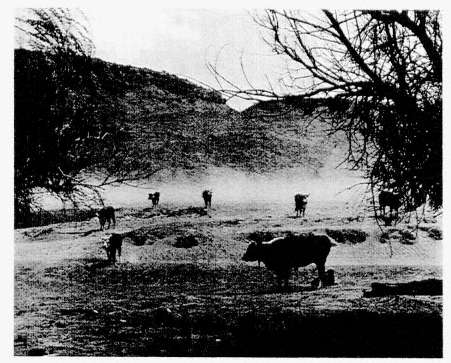
Overgrazing of livestock is an important factor in deterioration. Wind erosion takes a heavy toll on soil in this condition. Credit: U.S. Department of Agriculture.
cause compaction but may remove plant cover and open the way for destructive erosion as well (Dormaar and Williams, 1990). Little research has been done to determine whether grazing causes loss of soil organic matter, but some studies have shown that wild and domestic grazing animals can influence soil processes (Pastor et al., 1988; Whicker and Defling, 1988). However, any factor that severely reduces soil cover opens the way for removal of organic matter via erosional events.
EFFECTS OF SOIL DEGRADATION ON WATERSHEDS
Soil degradation directly influences watershed function on rangelands. Precipitation that falls on rangelands ultimately infiltrates into the soil, evaporates, or becomes part of the overland flow and runoff to surface water (Branson et al., 1981). Figure 4-1 describes the pathways taken by rainfall on rangelands. The proportion of precipitation captured de-
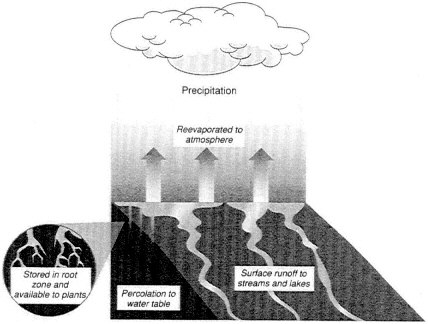
FIGURE 4-1 The pathways taken by rain falling on vegetated land. Source: Derived from R. Brewer. 1989. The Science of Ecology. Philadelphia: Saunders College Publishing.
pends on the energy, time of year, and total volume of precipitation during a particular rainfall event and by the properties of the soil on which it falls (Branson et al., 1981). Texture, structure, moisture content, vegetative or litter cover, and organic matter content are the most important properties of soil that influence infiltration (Satterlund, 1972).
Degradation of watershed f-unction has direct effects on rangelands. Grazing, gathering of fuelwood and harvesting of woody and herbaceous vegetation, and fires all may have dramatic and direct effects on the infiltration of water into the soil. Standing vegetation, litter and duff (partly decayed organic matter), and organic matter incorporated into the soil all improve the ability of water to infiltrate the soil through various processes (Figure 4-2). A site that has lost its vegetation, litter, and ultimately, the organic matter incorporated into its soil tends to seal its surface and encourage water to run off as overland flow rather than be absorbed into the soil profile. As less water infiltrates the soil, less plant growth is possible, and therefore, soil cover and the amount of organic matter in the soil are reduced, leading to less infiltration. This process can lead to a self-rein-
forcing cycle of watershed degradation as increased volumes of runoff accelerate soil erosion, which, in turn, reduces the infiltration of water into the soil and increases runoff (Shaxon et al., 1989). Loss of the nutrients that are attached to soil particles can lead to further degradation through the loss of soil fertility (Logan, 1990).
Soil degradation, primarily through accelerated wind and water erosion, causes the direct and often irreversible loss of rangeland health. Soil degradation not only damages the soil itself but also disrupts nutrient cycling, seed germination, seedling development, and other ecological processes that are central to rangeland health. In addition, soil degradation can degrade watersheds, leading to the further loss of rangeland health as well as off-site damages to water quality.
Criteria and Indicators of Soil Stability and Watershed Function
The criteria and indicators that are selected to assess soil stability and watershed function must relate to two fundamental processes: soil erosion by wind and water and infiltration or capture of precipitation. These
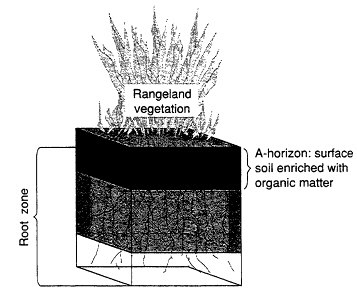
FIGURE 4-2 Diagram of a soil profile. Rangeland vegetation helps to create a layer of surface soil rich in organic matter, which serves as a basis for an extensive root system. In such a profile, water is better able to infiltrate the soil, limiting the effects of erosion.
two processes interact with each other, and measurable indicators of their activities can provide data that can be used to evaluate the stability of soils and interpret whether watershed functions are adequate.
The degree of soil movement by wind and water should be the criterion used to assess soil stability and watershed function; evaluation of soil movement should be based on multiple indicators of the condition of the soil surface.
Soil erosion by wind and water is the most important form of soil degradation on rangelands, and erosion damage is often irreversible. The degree of soil movement by wind and water should be fundamental to the assessment of rangeland health.
The use of soil surface characteristics such as rills and gullies, scours (bare soil caused by the scouring action of wind or water) and dunes, litter cover, flow patterns, and pedestaling (erosion of soil from around the base of a plant such that it appears to be on a pedestal) have long been used as indicators of soil stability. Table 4-1, which was developed by the Bureau of Land Management, is an example of the use of soil surface characteristics to assess soil stability.
Table 4-2 lists the general surface soil characteristics that are useful indicators of the degree of the soil stability and watershed function. The development of rills and gullies, the degree of pedestaling, evidence of scouring by wind or sheet erosion (erosion caused by thin sheets of water running off unprotected soil), and deposition of eroded material in fans or dunes are all evidence of soil erosion and runoff. The presence and distribution of an organically enriched A-horizon (the uppermost layer of soil in which organic matter is deposited and the decay process occurs) is evidence of the balance between soil development and degradation. All of these indicators have been used in the past, and many are currently used by federal agencies to evaluate the stability of rangeland soils.
Estimates of erosion rates on rangelands have been impeded by the lack of models that are well adapted to rangelands. New models that will better simulate rangeland conditions are being developed. Estimates of erosion rates by wind or water alone, however, will not be sufficient unless researchers can determine erosion rates that are acceptable for main taming rangeland health. In addition, estimation of erosion rates does not necessarily yield estimates of the proportion of precipitation that is effectively captured—an important criterion for the evaluation of water shed function. Development of soil crusts, for example, may simultaneously reduce soil loss and increase runoff.
Development of predictive models that estimate rates of soil loss and infiltration, coupled with the establishment of natural rates of soil loss, could help to quantify the evaluation of soil stability and watershed function as part of rangeland assessments. Soil surface characteristics will
continue to provide the best available information with which to evaluate soil stability.
THE A-HORIZON
The A-horizon is the soil layer where organic matter from plant litter, animal manures and other sources begins to decompose and becomes incorporated into the soft. The condition of this organically enriched A horizon has important effects on soil stability, nutrient cycling, energy flows, and recovery mechanisms. The condition of the A-horizon, for example, greatly influences how rapidly water can infiltrate into the soil or safely be stored at the surface of the soil. The nutrients released through the biological activity that occurs in the A-horizon are critically important to the productivity of the site.
The A-horizon may not be evenly distributed across the landscape, and it may occur as a thin layer and only in association with living plants in some desert situations. In most rangelands, the presence and distribution of an organically enriched A-horizon can serve as a useful indicator of soil development on a site. The absence or fragmented distribution of an A-horizon indicates that soil is not developing or accumulating on the site. On the other hand, it may indicate that soil formation occurs only in relation to a few prominent grasses or shrubs.
RILLS AND GULLIES
Rills and gullies provide channels for the rapid flow of water from the site. This water may contain soil and organic matter as well as nutrients in solution. Evidence of the development and activity of rills and gullies is a useful indicator of the degree of soil erosion and water infiltration on a site. The physical features of rills and gullies—including their depths, distributions, or degree or the development of a dendritic pattern (branching), which is evidence of active erosion—can be used as indicators of the seriousness of erosion and runoff.
SHEET AND SCOUR EROSION
Sheet erosion by water and scour erosion by wind can remove or reduce the depth of the A-horizon from large areas of rangelands. Continued erosion by these processes results in the loss of subsoil layers beneath the A-horizon as well. Scour erosion by wind may result in abrasive damage to plants as the soil and organic particles blow across the land surface. Sheet and scour erosion can occur without the development of rills or gullies. The degree of development of patches of bare soil as a
Table 4-1 Surface Soil Characteristics of the Bureau of Land Management
|
Characteristic |
Class 1 |
Class 2 |
Class 3 |
Class 4 |
Class 5 |
|
Soil movement |
Subsoil exposed over much of area; may have embryonic dunes and wind-scoured depressions |
Soil and debris deposited against minor obstructions |
Moderated movement of soil is visible and recent; slight terracing |
Some movement of soil particles |
No visual evidence of movement |
|
Surface rock and/or litter |
Very little remaining (use care on low-productivity sites); if present, surface rock or fragments exhibit some movement and accumulation of smaller fragments behind obstacles |
Extreme movement is apparent; large and numerous deposits against obstacle; if present, surface rock or fragments exhibit some movement and accumulation of smaller fragments behind obstacles |
Moderate movement is apparent and fragments are deposited against obstacles; if present, fragments have a poorly developed distribution pattern |
May show slight movement; if present, coarse fragments have a truncated appearance or spotty distribution caused by wind or water |
Accumulation in place; if present, the distribution of fragments shows no movement caused by wind or water |
|
Pedestaling |
Most rocks and plants are pedestaled and roots are exposed |
Rocks and plants on pedestals are generally evident; plant roots are exposed |
Small rock and plant pedestals occurring in flow patterns |
Slight pedestaling, in flow patterns |
No visual evidence of pedestaling |
|
Characteristic |
Class 1 |
Class 2 |
Class 3 |
Class 4 |
Class 5 |
|
Flow patterns |
Flow patterns are numerous and readily noticeable; may have large barren fan deposits |
Flow patterns contain silt, sand deposits, and alluvial fans |
Well defined, small, and few with intermittent deposits |
Deposition of particles may be in evidence |
No visual evidence of low patterns |
|
Rills and gullies |
May be present at depths of 8 to 15 cm (3 to 6 inches) and at intervals of less than 13 cm (15 inches); sharply incised gullies cover most of the area, and 50 percent are actively eroding |
Rills at depths of 1 to 15 cm (0.5 to 6 inches) occur in exposed areas at intervals of 150 cm (t feet); gullies are numerous and well developed, with active erosion along 10 to 50 percent of their lengths or a few well developed gullies with active erosion along more than 50 percent of their length |
Rills at depths of 1 to 15 cm (0.5 to 6 inches) occur in exposed places at approximately 300-cm (10-foot) intervals; gullies are well developed, with active erosion along less than 10 percent of their length; some vegetation may be present |
Some rills in evidence at infrequent intervals of over 300 cm (10 feet); evidence of gullies that show little bed or slope erosion; some vegetation is present on slopes |
No visual evidence of rills; may be present in stable condition; vegetation on channel bed and side slopes |
|
SOURCE: Adapted from U.S. Department of the Interior, Bureau of Land Management. 1973. Determination of Erosion Condition Class, Form 7310-12. May. Washington, D.C.: U.S. Department of the Interior. |
|||||
Table 4-2 Criteria and Indicators of Rangeland Health
|
Phase |
Criteria |
Indicators |
|
Soil stability and watershed function |
Soil movement by wind and water |
A-horizon present Rills and gullies Pedestaling Scour or sheet erosion Sedimentation or dunes |
|
Distribution of nutrients and energy |
Spatial distribution of nutrients and energy |
Distribution of plants Litter distribution and incorporation |
|
|
Temporal distribution of nutrients and energy |
Rooting depth Photosynthetic period |
|
Recovery mechanisms |
Plant demographics |
Age class distribution Plant vigor Germination and presence of microsites |
result of scouring or sheet erosion gives evidence of the seriousness of sheet or scour erosion on a site.
PEDESTALS
The occurrence of plants or rocks on pedestals means that the soil has eroded away from the base of the plant or rock and it has become slightly elevated above the eroded surface of the soil. The height of the pedestals and the degree of root exposure can serve as indicators of the degree of soil loss.
DEPOSITION OF ERODED MATERIAL
Finally, the accumulation of eroded materials around plants or in small basins; as sediment in alluvial fans, gullies, streams, or lakes; or as dunes is a good indicator of erosion. The distribution and abundance of deposits indicate the degree of soil movement. Deposits can range from small accumulations around the base of plants or other obstructions to large fan-shaped deposits.
Multiple Indicators of Soil Surface Condition Needed
The presence and distribution of the A-horizon, rills, and gullies; areas scoured by wind or water; and pedestals under rocks and plants are
all indicators that are observable on the landscape. These and other soil surface indicators have commonly been used to assess the degree and severity of erosion on rangelands. Interpretation and judgment are needed to determine whether the problems are large or small or whether the problem occurs on some or most of an area being studied. No single indicator alone is sufficient for an assessment of soil stability and water shed function. The assessment of rangeland health using the criteria de scribed above and summarized in Table 4-2 must be based on the preponderance of evidence obtained from the site.
The Soil Conservation Service (SCS), the U.S. Forest Service (USFS), and the Bureau of Land Management (BLM) should cooperatively develop and implement a system that evaluates multiple soil surface indicators to assess the degree of soil stability on rangelands. An evaluation of soil stability and watershed function, as determined by the use of measurable indicators of the condition of the soil surface, should become a fundamental component of all inventorying and monitoring programs for federal and nonfederal rangelands.
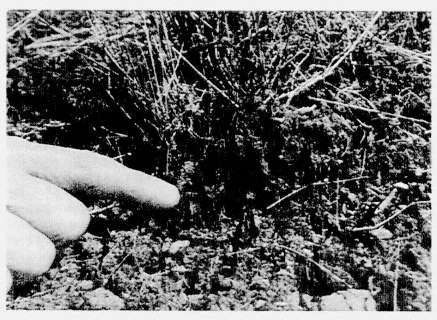
An example of pedestal formation at an early stage. The soil has eroded away from the base of the plant leaving the plant slightly elevated above the eroded surface of the soil. Credit: Kirk Gadzia and Stephen Williams.
Better Soil Survey Needed
Soil mapping units need to be identified taxonomically to a level sufficient for site classification. In some cases, this may require identification to the level of the soil series and phase.
More data on soil properties related to soil stability and important ecological processes need to be included in soil surveys. Table 4-3 indicates possible soil characteristics that could be included in soil surveys related to plant growth. Of those characteristics listed in Table 4-3, the soil's organic carbon content and available water-holding capacity may be the most important. The amount of organic carbon in the soil affects the rate at which rainfall is captured, the amount of nutrients stored in the soil, and many other processes important to rangeland ecosystems. Since water is normally the most limiting factor on rangelands, the capacity of the soil to store and supply water to plants determines the mix of plants and total biomass production that can be expected. The percentage of organic carbon (or soil organic matter) should be given, as should the depth to which these accumulations occur.
Many of the data in soil surveys are estimated from previous studies. Actual measurement of data would improve the value of surveys for rangeland health assessments. Such data should include morphological data as well as information on the physical, chemical, and biological properties of soil (see Table 4-3).
Many Rangelands Need Soil Surveys
SCS, USFS, and BLM should accelerate efforts to complete standard soil surveys on all federal and nonfederal rangelands.
Modem soil surveys can be an important source of information for assessing rangeland health. Modem soil surveys, however, have not been done for significant areas of federal and nonfederal rangelands. This lack of basic soil information for rangelands will impede efforts to assess rangelands.
Table 4-4 shows the land areas in 13 western U.S. states for which soil surveys have been completed. The total land area mapped varies between 55 and 100 percent. Not all of these unmapped lands are rangelands; however, these data suggest that for large areas of rangelands, soil survey data are not available for use in rangeland assessments. Soil surveys need to be completed on these lands to expedite assessments.
DISTRIBUTION OF NUTRIENTS AND ENERGY
The ability of plants to grow and develop depends on their capture of nutrients from the soil and energy from the sun. Nutrients stored in the
Table 4-3 Characteristics Important for Rangeland Health from Representative Soil Surveys
Table 4-4 Land Areas Covered by Soil Surveys in 13 Western States (thousands of acres)
|
State |
Total Surface Areaa |
Total Area of Rangelandsb |
Total of All Lands Mappedc |
Percentage of Total Surface Area Mapped |
|
Arizona |
72,960 |
45,168 |
46,210 |
63 |
|
California |
101,571 |
43,039 |
72,017 |
71 |
|
Colorado |
66,618 |
27,821 |
60,766 |
91 |
|
Idaho |
53,481 |
23,598 |
34,487 |
64 |
|
Montana |
94,109 |
53,334 |
72,161 |
77 |
|
Nevada |
70,758 |
56,887 |
55,417 |
77 |
|
Nwe Mexico |
77,819 |
48,725 |
68,634 |
88 |
|
North Dakota |
45,249 |
12,295 |
42,970 |
95 |
|
Oregon |
62,126 |
22,322 |
34,169 |
55 |
|
South Dakota |
49,354 |
23,397 |
49,335 |
100 |
|
Utah |
54,335 |
29,701 |
46,058 |
85 |
|
Washington |
43,608 |
7,895 |
35,779 |
82 |
|
Wyoming |
62,598 |
46,896 |
39,371 |
63 |
|
a Total surface area includes lands managed by USFS, BLM, and other federal agencies as well as nonfederal lands. b Total surface area does not include areas of open water (U.S. Department of Agriculture, U.S. Forest Service, 1980). c Soil Conservation Service compilation 1991. SCS Office, P.O. Box 2890, Washington, DC 20013. Acres reported include those covered by published surveys as well as surveys in progress. |
||||
Soil are used and reused by plants, animals, and microorganisms. The amount of nutrients available and the speed with which nutrients cycle between plants and the soil are ecological processes fundamental to rangelands. Similarly, the total amount and time of year during which photosynthesis occurs are important indicators of how well rangeland ecosystems are functioning.
Nutrient Cycling
Nutrients follow cyclical patterns as they are used and reused by living organisms. Although the majority of available nutrients for plant growth is found in the soil (Brady, 1990), carbon, oxygen, and some of the nitrogen needed by plants are extracted from the atmosphere.
Nutrient cycling is closely related to the soil-water relationship on rangelands. Wind and water erosion strips away the nutrients stored in the topsoil (Logan, 1990). On most rangelands in the western United States, water is the most limiting factor for plant production. Generally,
the greater the amount of precipitation that falls and that is captured and stored for later use by plants, the greater the total production of plant biomass on a particular rangeland site (Rauzi and Fly, 1968). Sites with high levels of biomass production more effectively capture and cycle the available nutrients compared with sites with lower levels of biomass production.
The total quantity of biomass produced, and hence, the total quantity of nutrients being cycled, also depends on the duration of the growing season. The longer the portion of the year in which plants are growing, the greater the total amount of biomass that can be produced. The length of the effective growing season is primarily determined by the amount and distribution of precipitation and temperature, but it can also be influenced by the particular composition of plants on a site. A plant that is photosynthetically active throughout the growing season, or a mixture of plants with various seasonal growth patterns, for example, may more effectively cycle the available nutrients as compared to a plant that is or a mixture of plants that are photosynthetically active for only a part of the growing season. The presence of actively growing plants during the en tire growing season may indicate more complete capture and utilization of available nutrients.
Similarly, the degree to which the available root zone is occupied by plant roots may suggest the degree to which nutrients are. utilized and cycled. Nutrient cycling entails the extraction of nutrients from the soil by plant roots. Rangelands may support individual plants with root systems that occupy much of the soil profile or a mixture of different plants that have various root depths (Figure 4-3), thus resulting in more complete utilization of the water and nutrients available throughout the entire soil profile (Table 4-5) (Weaver, 1954).
The organic materials, such as plant litter or animal feces, deposited on the soil surface are decomposed and reincorporated into the soil, and through nutrient cycling processes, they again become available to plants and other organisms. This decomposition and reincorporation of organic materials can be accomplished in a number of ways. Microorganisms (such as fungi and bacteria) and microinvertebrates (such as arthropods and nematodes) facilitate most of the decomposition of organic material as well as the formation of soil organic matter from partially decomposed organic residues (Paul and Clark, 1989).
Physical processes such as the action of wind, water, and sunlight are nonbiological means whereby plant parts are decomposed. These processes, combined with cycles of freezing and thawing or wetting and drying, leach or physically remove the nutrients in plant materials (Laycock and Price, 1970). Fire can rapidly release the nutrients immobilized in plant tissues. These nutrients may be carried away in smoke and ash or
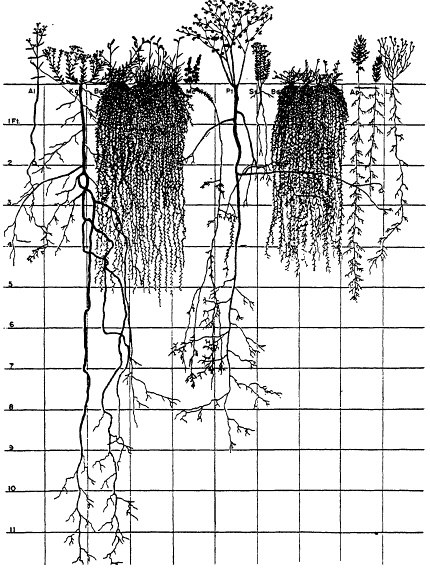
FIGURE 4-3 Roots of different grassland plants draw their moisture from different soil layers. Roots of some native plants extend to depths of 20 or more feet. A1, narrow-leafed 4-o'clock (Allionia linearis); Kg, prairie false boneset (Kuhnia gultinosa); Bg, blue grama (Bouteloua gracilis); Mc, globemallow (Malvastrum coccineum); Pt, a legume (Psoralea tenuiflora); Ss, Sideranthus spinulosis; Bd, buffalo grass (Buch- loe dactyloides); Ap, western ragweed (Ambrosia psilostachya); and Li, skeleton weed (Lygodesmia juncea). Source: A. Stefferud, ed. 1948. Grass: The Yearbook of Agriculture 1948. Washington, D.C.: U.S. Department of Agriculture.
Table 4-5 Rooting Depth in Prairie Soils
|
Layer |
Depth (m) |
Percentage of Species |
Examples |
|
Shallow |
0.6 |
14 |
Blue grama (Bouteloua gracilis), Prairie June grass (Koelaria cristata ) |
|
Medium |
0.6-1.5 |
21 |
Needlegrass (Stipa spartea), Buffalo grass (Buchloe dactyloides), Many-flowered aster (Aster ericoides) |
|
Deep |
1.5-6.0 |
65 |
Big bluestem (Andropogon gerardi), Slough grass (Spartina pectinata ), Compass plant ( Silphium laciniatum) |
|
SOURCE: R Brewer. 1989. The Science of Ecology. Philadelphia: Saunders College Publishing. Data are based. on J. E. Weaver and F. E. Clements. 1938. Plant Ecology, 2nd ed. New York: McGraw-Hill, and other publications by J. E. Weaver. |
|||
may be deposited on the soil surface as readily available nutrients (Christensen et al., 1989).
The rate at which nutrients are cycled and the total volume of nutrients in a state of transition (flux) are important processes of rangeland ecosystems. The capacity of rangelands to produce resources and satisfy values depends on the buildup and storage of nutrients over time. Interruption or slowing of nutrient cycling can lead to site degradation as a rangeland becomes increasingly deficient in the nutrients required by plants. An evaluation of the degree to which nutrients are conserved and the degree to which nutrient cycles operate should be important elements of a system of assessing rangeland health.
Energy Flow
Nearly all living things depend on the process of photosynthesis, by which green plants capture energy and convert it to chemical energy, which is then stored in the plant. The amount and timing of the sunlight that reaches any point on the ground are influenced by a number of factors, including latitude, elevation, and weather. Green plants trap and process the solar energy. The capture of energy; however, requires the expenditure of energy; which is in turn lost to the ecosystem as heat. Thus, energy flows rather than cycles through the ecosystem, and the ecosystem is dependent on green plants to continually capture the suns energy.
On rangelands, grasses, forbs (an herb other than a grass), shrubs, and trees are the primary converters of sunlight energy. The energy is converted by these plants and is stored primarily as carbohydrates. This
energy supports most other life-forms. Herbivores harvest the plant material, and through the process of digestion, they gain the energy stored in the plant tissues (Holechek et al., 1989). The energy that is captured and converted by green plants moves through the ecosystem in a process that can be described as an energy pyramid (Figure 4-4). The base is the energy from photosynthesis stored in plants. At each level, organisms use some energy for maintenance, and this energy is given off in respiration and heat, resulting in a highly inefficient process (Brewer, 1989).
The total volume of sunlight energy that is captured is an important determinant of the resources and values produced by rangelands. Rates of energy flow can vary on rangelands in both space and time. Indicators of change in the spatial and temporal distributions of energy flows should be an important component of a comprehensive system of evaluating rangeland health.
DISTRIBUTION OF ENERGY FLOW OVER TIME
Energy flow can be affected in a number of ways. Since energy can be converted by plants only when they are actively green and growing, any thing that affects this amount of time will affect the energy flow. Plant life-forms and species compositions determine the ability of the plant community to process sunlight energy under a variety of environmental conditions. Plant interactions with the physical environment also influence energy flow. For example, as plant cover increases, the effectiveness
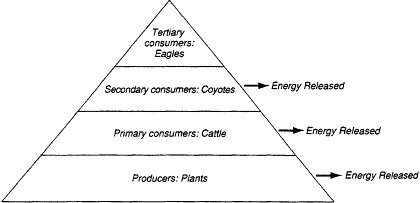
FIGURE 4-4 The loss of energy as it moves through trophic levels. Source: Derived from B. J. Nebel. 1981. P. 33 in Environmental Science: The Way the World Works. Englewood Cliffs, N.J.: Prentice-Hall. Reprinted, with permission, from Bernard J. Nebel (1981). © 1981 by Prentice-Hall, Englewood Cliffs, N.J.
of rangelands in capturing and storing precipitation often increases. In creased plant cover, however, may reduce soil temperatures, thereby reducing the effective length of the growing season.
Many different physiological adaptations and life history strategies of different plant species influence the amount of energy that is captured. A plant that possesses a Ca photosynthetic pathway (warm season) uses water more efficiently than does a plant with a C3 photosynthetic path way (cool season) (Fitter and Hay, 1987). Rangelands with both warm and cool-season plants can effectively extend the period during which photosynthetic activity occurs.
SPATIAL DISTRIBUTION OF ENERGY FLOW
The energy flow within an ecosystem also varies spatially at the level of an individual plant and at the level of the community. Individual plants have different growth forms (the shape and arrangement of leaves, stems, and branches), and solar energy capture is influenced by these growth forms. The vertical structure of plant growth creates layers in the plant canopy, with plants adapted to the different quantities of light avail able within each layer.
Criteria and Indicators of Nutrient Cycling and Energy Flows
Nutrient cycling and energy flow have been studied as part of efforts to understand the functioning of rangelands. An evaluation of nutrient cycles and energy flows, however, has not been part of traditional assessments of rangelands. Therefore, experience with useful criteria and indicators of nutrient cycles and energy flow on rangelands is much less than that with indicators of soil stability and watershed function. Current knowledge can be used as a starting point for the development of useful criteria and indicators of nutrient cycling and energy flow.
The distributions of nutrients and energy in space and time should be the criteria used to evaluate the integrity of nutrient cycles and energy flow.
Plants depend on the nutrients in the soil and energy captured from the sun. Nutrients stored in the soil are used and reused by plants, animals, and microorganisms. The amount of nutrients available and the speed with which nutrients cycle between plants, animals, and the soil are fundamental processes of rangelands. Similarly, the amount, timing, and distribution of energy captured through photosynthesis are fundamental to the function of rangeland ecosystems. Indicators that can be used to evaluate the spatial and temporal distributions of nutrients and energy should be part of a comprehensive evaluation of rangeland health.
COMMUNITY STRUCTURE
The structure of plant communities—that is, the growth habits, life forms, and distribution of species—may be a useful indicator of nutrient cycling and energy flow. The suggested indicators summarized in Table 4-2 emphasize the importance of a community structure in which the available niches are filled on both a spatial and a temporal basis. The proportion of the growing season during which plants are photosynthesizing may prove a useful indicator of the of the amount of available energy captured by rangeland ecosystems. Since the growing season is determined by both temperature and rainfall, the total growing season in arid rangelands may be the sum of periods following episodic rainfall when moisture is available for plant growth. Data on species composition could be used to assess whether photosynthesis occurs during all or only a part of the growing season. Similarly, data on plant composition could be used to assess whether all or only a fraction of the available soil profile is occupied by plant roots. Change in a community structure that results in shortening of the period during which photosynthesis occurs or in utilization of a smaller volume of the soil profile for extraction of nutri-
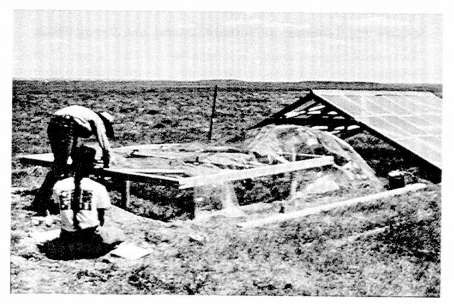
Researchers study root production plots labeled with 14C, providing important new insights into below-ground processes. Credit: Long-Term Ecological Research Network, University of Washington.
ents and water could be interpreted as indicating a decrease in the total amount of nutrients cycled and in energy flow through the community. Most undegraded rangelands include a mix of plants that, in total, are capable of effectively utilizing nutrients and carrying out photosynthesis during the growing season. Examples of rangelands with such a mix of plants are the sagebrush-grass ecosystems in Wyoming and the prairies of the Great Plains. There are, however, rangelands such as the blue grams grasslands of the western Great Plains and alkali sacaton grass lands in moist, saline sites, where a single species dominates the plant community, yet the available nutrients and growing season are still effectively utilized. In other cases, the domination of the plant community by a single species indicates that some niches are not filled and the available nutrients and growing season are not being effectively utilized. Rangelands dominated by cheatgrass, a shallow-rooted plant that grows for only a short period of time in the spring and fall, are one example. Sage brush-grass ecosystems that have lost most of the grass component be cause of overgrazing are another example.
DISTRIBUTION OF LITTER AND PLANTS
The degree of fragmentation of nutrient cycles and energy flows as indicated by the pattern in which litter and plants are distributed across the site may also serve as a useful indicator of rangeland health. A fragmented distribution of litter and plants in which there are large bare areas interspersed between patches of litter and rooted plants seems to indicate unfilled niches and provides opportunities for erosion to occur. Unfilled niches suggest that opportunities for plants to capture sunlight through photosynthesis and contribute to the biomass production of the site have been lost. Erosion from bare areas represents a loss of nutrients from part of the site. Such nutrients may move only a short distance before they are trapped by vegetation and other obstacles, but such movement may represent the increasing vulnerability of a site's nutrient cycles to interruption.
The secretaries of the U.S. Department of Agriculture (USDA) and of the U.S. Department of the Interior (DOI) should initiate a coordinated research effort, drawing on federal agency and other scientists to develop, test, and implement indicators of the spatial and temporal distributions of nutrients and energy for use in rangeland health assessments.
The lack of experience with and testing of specific indicators of nutrient cycling and energy flow is an important impediment to the development of a comprehensive system of determining whether rangelands are healthy) at risk, or unhealthy. There is an urgent need for basic and applied research to develop useful indicators and the understanding needed
to interpret the significance of changes in those indicators. The development of criteria and indicators that can be used to evaluate nutrient cycling and energy flow in rangeland ecosystems is essential for evaluating rangeland health and for proper rangeland management.
JUDGMENT REQUIRED
Until measurable indicators of nutrient cycling and energy flow are developed, evaluation of what constitutes a healthy, at-risk, or unhealthy distribution of plants, bare areas, rooting depths, and growth periods will depend primarily on informed judgments. The healthy end of the continuum consists of an unfragmented distribution of plants and litter with few bare areas, plants that fill the soil profile with roots, and plants that are capable of photosynthesis throughout the growing season. The unhealthy end of the continuum probably consists of a fragmented plant cover with many large bare areas, plants that fill only a small portion of the soil profile with roots, and plants that are capable of photosynthesis during only a short portion of the growing season.
RECOVERY MECHANISMS
For a rangeland to maintain a healthy state or naturally evolve to ward a more healthy state, mechanisms that allow such an evolution on the site must be in place and they must be working. Recovery mechanisms generally involve extension of biotic control over the abiotic environment through the processes of soil and plant community development.
Functioning recovery mechanisms that lead to capture and cycling of nutrients, capture of energy, conservation of nutrients, energy, and water within the site and to development of resistance and resilience to extreme events such as drought, fire, or rainstorms are fundamental to rangeland ecosystems. Indicators of change in the operation of recovery mechanisms should be an important component of a comprehensive system of evaluating rangeland health.
Criteria and Indicators of Recovery Mechanisms
Changes in plant demographics should be the criterion used to evaluate recovery mechanism activities.
Experience with and testing of indicators of the functioning of recovery mechanisms are limited. Various indicators of plant demographics, however, have been commonly used as measures of apparent trend (SCS). Indicators of age class distribution, plant vigor, and the presence and
distribution of microsites for seed germination and seedling development would be useful starting points for the development of more systematic indicators of the function of recovery mechanisms on rangelands.
AGE-CLASS DISTRIBUTION
A measure of the age-class distribution of the plant species present on a rangeland site has been used in past rangeland evaluations. Such evaluations attempt to show whether the plant species are replacing them selves and whether a plant community is expected to maintain control of the site. Interpretation of age-class data can be difficult in some situations. In arid lands, for example, seedling establishment is often episodic—a large number of seedlings are established following episodic rain fall events, while few seedlings are established during the long periods when no rainfall occurs. Lack of young plants may reflect the vagaries of climate more than the health of the rangeland. In many cases, however, the lack of plants of certain age classes or a predominance of old or deteriorating plants may indicate a change in the plant community's structure and function. Range managers have previously used this concept to judge apparent trend (SCS). However, an upward trend in range condition (SCS) was almost always based on whether seedlings of plants that are part of the climax plant community (SCS) were present. In assessing rangeland health, when judgments are used to place a higher value on one plant than another, emphasis should be placed on species that reduce soil erosion or fill nutrient cycling or energy flow niches. Such decisions must be made on a site-by-site basis.
PLANT VIGOR
The vigor of the vegetation present has also been used in the past to assess the dynamics of plant communities. Indices that have been used to judge plant vigor are color, seed and rhizome production, size of plants, and annual amount of biomass produced. To the extent that vigor can be detected and defined, it is a useful tool because a decline in plant vigor precedes changes in plant species composition, the development of bare areas that are susceptible to soil erosion, and the development of open niches. Determination of vigor is largely subjective, however, since there are no precise determinants. The following indicators, for example, were suggested by Stoddart and Smith (1955) to assess the effect of grazing on plant vigor:
Class 1. Palatable plants are vigorous. Grasses are robust with numerous leaves, seedstalks are tall and numerous, and leaves are dark
green. There are no hedged or high-lined browse (tender shoots, twigs, and leaves of trees and shrubs used by animals for food). Forage plants reproduce. Rating = 10 points.
Class 2. Palatable plants lack vigor. Forage grasses are shorter, and there are fewer seedstalks than in class 1. Seedlings may be present. Few forage plants of younger age classes are represented. Less-palatable weeds and grasses are generally vigorous. Rating = 7 points.
Class 3. Palatable plants lack vigor. Grasses are weak. Forage plants do not reproduce. Rating = 5 points.
Class 4. Palatable plants are sickly and weak. Grasses may be pale or yellowish, seedstalks are few and short, and there are no seedlings. Palatable plants do not reproduce, and sod is thinning. Rating = 1 point.
Evaluation of plant vigor may be a useful indicator of changes in the function of recovery mechanisms on rangelands. It is important, however, that an evaluation of rangeland health not be confused with determination of whether a rangeland is valuable for a particular use. The rangeland health criteria suggested for plant vigor, therefore, should not emphasize palatable forage plants or reflect implicit judgments on the relative value of grass, browse, or weed species. Evaluation of plant vigor requires knowledge of plants, rangeland ecology, and site characteristics. Characteristics such as a mix of plants with normal growth on the basis of height, color, seed production, rhizome and stolon production (rhizomes and stolons are modified stems that help a plant spread laterally from a parent plant), and annual biomass production may prove useful indicators.
MICROSITES FOR SEED GERMINATION AND SEEDLING ESTABLISHMENT
Finally, maintenance of biotic control over the abiotic environment (the nonliving part of the environment) through self-induced changes in plant community dynamics requires the presence of microsites (the area immediately surrounding a seed, which may be as small as a few millimeters in diameter) that are favorable for seed germination and seedling establishment because of increased moisture, nutrients, and protection from herbivory (Harper, 1977). Competition from existing plants, soil erosion by wind or water, and the development of soil crusts are important processes that affect germination and seedling establishment on microsites. Indicators of the availability of microsites should be developed to serve as useful indicators of changes in the function of recovery mechanisms.
RESEARCH NEEDED
The secretaries of USDA and DOI should initiate a coordinated research effort, drawing on federal agency and other scientists to develop, test, and implement indicators of recovery mechanisms for use in rangeland health assessments.
Explicit evaluations of recovery mechanisms have not been part of rangeland assessments to date. The lack of development and testing of measurable indicators of change in recovery mechanisms is an important impediment to a comprehensive evaluation of rangeland health. There is an urgent need to develop measurable indicators and methods of evaluation that can be incorporated into routine assessments of rangelands. The indicators discussed here are embryonic and are suggested by the committee to stimulate research, development, and refinement of useful indicators of self-induced recovery mechanisms.
MEASUREMENT AND EVALUATION OF INDICATORS OF RANGELAND HEALTH
The indicators of rangeland health for each of the criteria listed in Table 4-2 are only a subset of those that the committee could suggest. Past investigators have used all of the indicators as part of rangeland assessments. In many cases, the data currently collected as part of range condition (SCS), ecological status (USFS and BLM), and apparent trend (SCS) evaluations can be reinterpreted as indicators of rangeland health. The overlap between the indicators of rangeland health investigated by the committee and currently used indicators is given in Table 4-6.
Identification of Boundaries
A fundamental problem with assessing rangeland health involves identification of the boundaries between healthy, at-risk, and unhealthy rangelands. Table 4-7 illustrates one way these boundaries could be identified using indicators of soil stability and watershed function, distribution of nutrients and energy, and recovery mechanisms—the three-phase approach recommended by the committee. The illustration in Table 4-7 and the discussions that follow are offered as a useful starting point. These distinctions will have to be refined and validated through research.
SOIL STABILITY AND WATERSHED FUNCTION
Healthy rangelands, in this example, exhibit no evidence of accelerated soil erosion by wind or water. There is no evidence of the formation of rills and gullies, pedestals, or sheet or scour erosion, and there is no evi-
Table 4-6 Indicators of Rangeland Health Currently Used as Indicators of Range Condition (SCS), Ecological Status (USFS and BLM), or Apparent Trend (SCS) Same or Similar Indicator Used for
dence that water or wind-eroded materials have been deposited on the site. The A-horizon of the soil appears to be stable and is present uniformly over the site.
At-risk rangelands show evidence of soil movement, but such movement is primarily within the site itself. Rills and gullies may be forming, but they are not yet well developed or integrated into a dendritic pattern. If pedestaling is present, it is not so severe that the roots are exposed. Similarly, scours and dunes are small and not well developed, if they are present, and there is little evidence of sediment deposits on the site. Soil particles, organic matter, nutrients, and water are redistributed on the site, but they are not yet lost from the site.
Evidence of soil movement off the site, however, indicates an unhealthy state. Rills and gullies are well developed and active, and they display a developed dendritic pattern. Pedestaling is severe enough that roots are exposed, scours and dunes may be active and widespread, and large areas may be devoid of the A-horizon of soil. There is clear evidence of soil degradation and transport of nutrients, water, and organic matter off the site.
DISTRIBUTION OF NUTRIENTS AND ENERGY
In Table 4-7, the nutrients stored in litter, plant, and root biomass are well distributed and litter is being decomposed and incorporated into the soil throughout the rangeland considered to be healthy. Photosynthetic activity, which is represented by actively growing plants, is also well distributed across the site. The rangeland considered at risk, however, shows evidence that the spatial and temporal distribution of nutrients and energy is becoming fragmented across the site. Litter may be present, but it tends to accumulate in depressions or around prominent grasses or shrubs. The plant and root biomass is beginning to show a fragmented pattern, and barren areas develop between patches. In the rangeland considered unhealthy, this fragmented distribution of nutrients and energy is pronounced. Litter is sparse, accumulating and being incorporated
Table 4-7 Relationship between Health Criteria and Thresholds
|
Phase |
Healthy |
At Risk |
Unhealthy |
|
1. Soil stability and watershed function |
No evidence of soil movement |
Soil is moving, but remains on site |
Soil is moving off site |
|
2. Distribution of nutrients and energy |
Plant and litter distribution unfragmented |
Fragmented distribution developing |
Fragmented distribution developed, with large barren areas between fragments |
|
|
Photosynthetic activity occurs throughout the period suitable for plant growth |
Photosynthetic activity restricted during one or more seasons |
Photosynthetic activity restricted to one season only |
|
|
Rooting throughout the available soil profile |
Roots absent from portions of the available soil profile |
Rooting in only one portion of the available soil profile |
|
3. Recovery mechanisms |
Diverse age-class distribution |
Seedlings and young plants are missing |
Decadent plants predominate Plant vigor is poor |
|
|
plants are vigorous |
Plant vigor is reduced |
Plant vigor is poor |
|
|
Germination microsites are present and well distributed |
Developing crusts or soil movement degrade microsites |
Soil movement or crusting inhibit most germination |
into the soil only in depressions or around prominent grasses or shrubs. Plant and root biomass is restricted to patches, and there are large barren areas between the patches.
The distribution of nutrients and energy over time is also used to distinguish between states in Table 4-7. Photosynthetic activity occurs during most of the period when temperature and moisture make photo synthesis possible in rangelands defined as healthy. The diversity of plants with different growing periods is sufficient to ensure that at least some plants are actively photosynthesizing during most of the period when the temperature and moisture are at levels such that photosynthesis can occur. Similarly, the plant community structure supports a diversity of rooting depths, so that plants use the nutrients and water available throughout the soil profile. In the at-risk category, the period of time when photosynthesis occurs is reduced, and the portion of the soil profile occupied by the roots of the plants that are present is restricted. In the unhealthy category, photosynthesis is restricted to a portion of the period when moisture is available, and the plant roots occupy only one layer in the soil profile.
RECOVERY MECHANISMS
In Table 4-7, rangelands that show evidence that plant community dynamics are sufficient to at least maintain the current community structure and function are classified as healthy. There is a diverse species com position and age-class distribution, microsites in which seeds can germinate are available, and seedlings are becoming established. Plants are vigorous and show no signs of deformed growth patterns. At-risk rangelands are distinguished by missing age classes, reduced plant vigor, and restricted seedling recruitment. Rangelands in the unhealthy category are characterized by the predominance of old or deteriorating plants, the loss of microsites for seed germination, and the absence of seedlings.
Preponderance of Evidence from Measured Indicators
The decision to classify a rangeland as healthy, at risk, or unhealthy should be a judgment based on the preponderance of evidence from an evaluation of multiple and measurable indicators. Data must be collected and reported for all the measurable indicators to allow for independent analyses of the final classification decision. Consistently reported data on measurable indicators will be more valuable than a final judgment.
It is unreasonable to expect that all indicators will simultaneously fall into the healthy, at-risk, or unhealthy category. It is more likely, for example, that the soil of a particular rangeland may show no evidence of move-
ment by wind and water, suggesting that the site is healthy, while the distribution of litter, plants, and roots across the site may be becoming patchy, suggesting that the site is moving toward the at-risk category. In such cases a judgment must be made. The development of a patchy distribution of litter and plants suggests a reduction in the effective soil cover, which may lead to accelerated erosion or increased vulnerability to serious soil erosion during an intense rainstorm, and so the site is best considered at risk. Alternatively, seed germination and seedling recruitment may indicate that the patchy distribution will be short-lived, and so the site is best considered healthy. Each indicator represents an important piece of the puzzle. Taken together they provide the information needed to assess rangeland health.
New Models of Rangeland Change Needed
The secretaries of USDA and DOI should initiate a coordinated research effort, drawing on federal agency and other scientists to develop, test, and implement new models of rangeland change that incorporate the potential for difficult to-reverse shirts across ecological thresholds.
A theory is accepted until unexplained anomalies overwhelm the proponents of the current theory or until an alternative theory is proposed to explain the anomalies. Recent findings in the field of community ecology have questioned the applicability of climax theory to all rangelands. Lay cock (1989), Westoby (1980), Westoby and colleagues (1989), and others have reviewed the anomalies that are not well explained by successional theory. It still appears, however, that the area in the United States containing anomalous grassland vegetation is smaller than the area where successional theory can be used to model plant community dynamics.
New models are being proposed to better explain the dynamics of rangeland vegetation. Researchers in arid areas, notably, in Australia and South Africa, are advancing new theories to explain the responses of plants to grazing and other environmental factors. Concepts of population dynamics that are derived from the field of animal ecology are being applied to rangeland vegetation, and concepts of alternating stable communities are challenging the Clementsian model of successional change (Clements, 1916). A state and transition model proposed by Westoby and colleagues (1989) seems well adapted to rangelands where episodic events may well be the primary factors responsible for determining vegetation composition.
Despite these advances, there does not appear to be a single coherent theory that can explain all of the current anomalies or that has been sufficiently tested to replace current successional concepts. The facts that cur rent successional theory apparently adequately explains vegetation dy-
namics on a significant portion of rangelands and that no new comprehensive theory has yet emerged have restrained efforts to replace the successional models currently used to rate range condition (SCS) or ecological status (USFS and BLM).
The development of new models and theories of rangeland change requires research. There is a need to fund such research at an interdisciplinary level, integrating range science theories with theories from the other ecologies. The drive to specialize is not unique to range science or ecological research; however, this does impede the transfer of new and possibly helpful ideas between specialized fields. In addition, current ecological research is oriented toward the development of new ideas rather than the testing of new ideas for a variety of rangeland types. This' testing of new ideas is essential to determine which new ideas might hold promise as a theoretical foundation for rangeland management. The lack of a single, coherent theory of community structure and development that can replace current climax, succession, and retrogression models is the result of the fact that such potential theories cannot be sufficiently tested on a sufficiently large number of sites and, in so doing, allow re searchers to gain confidence that such theories could replace the currently held ones.
There is a need for inexpensive inventory, classification, and monitoring methods with links to current ecological theory. These links must be robust so that as ecological theories change, the data can still be interpreted using new theories. This will involve a multiple-attribute approach to the design of the inventory.
The development of such methods will require funding of interdisciplinary research that links all branches of ecological research. Further more, research to demonstrate the applicability of newly developed models over a variety of rangeland types is required. This area of research must be the testing ground for models that might hold promise as an improved theoretical framework for classifying, inventorying, and monitoring rangelands.
Better Understanding of Rangeland Soils Needed
The secretaries of USDA and DOI should initiate a coordinated research effort, drawing on federal agency and other scientists to increase understanding of the relationship between soil properties and rangeland health.
Knowledge of soils has been used in assessments of rangelands primarily as an aid in the classification of rangelands. A range site (SCS), ecological site (BLM), or ecological type (USFS) is often defined by the presence of one or more characteristic soil types.
While much research and experience supports the relationship of soil
surface characteristics to rangeland health, basic knowledge of the effects of other soil properties such as organic matter content or water-holding capacity on nutrient cycling, energy flow, recovery mechanisms, and other elements of rangeland health is limited. The effects of grazing management and other management practices on soil properties are also not well understood. Basic and applied research is needed to increase understand Lug of how changes in soil properties affect rangeland health.
Research on cropland soils has attempted to identify those soil properties that are most important in determining crop yield and vulnerability to degradation. Much research has also been devoted to determining the impact of tillage, crop sequence, residue management, organic amendments, fertilizers, cover crops, and other elements of farming systems on soil properties.
Research pertaining to the coupling of rangeland soils with rangeland vegetation and disturbance of the rangeland ecosystem is needed. Although recent work has addressed the influence of soil organic matter on rangeland productivity (Burke et al., 1989), additional research detail Lug soil organic matter at specific sites is necessary to more closely de scribe the nutrient dynamics of range sites.
Study of the relationships of other soil properties to plant growth and species composition is limited in the literature on rangeland soils. Some reports have addressed this area (Passey et al., 1982), but many questions remain. For example, at what level do plant types (species, community, landscape) and soil types (series, family, subgroup) most closely correlate?
The influence of soil degradation on plant parameters (for example, yield, species composition, and regenerative power) is not well researched for rangeland soils. The influences of plowing or soil removal, grazing intensity, and climatic degradative factors (water and wind erosion) have not been determined for rangelands. All of these questions have a direct bearing on rangeland health.
Field Evaluation of Proposed Indicators
To explore the usefulness of the criteria and indicators discussed above, the committee developed a three-phase matrix as a workable approach to implementing its recommended three-phase concept of rangeland health evaluation. The matrix is presented in Table 4-8. The committee attempted to develop measures of the indicators that involve simple and, in many cases, visual estimates. The committee conducted limited field tests of a three-phase evaluation of rangeland health using the matrix.
Eighteen limited field tests were carried out by six members of the
TABLE 4-8 Rangeland Health Evaluation Matrix
|
Indicator |
Healthy |
At Risk |
Unhealthy |
|
Phase 1: Soil stability and watershed function |
|||
|
A-horizon |
Present and distribution unfragmented |
Present but fragmented distribution developing |
Absent, or present only in association prominent plants or with other obstructions |
|
Pedestaling |
No Pedestaling of plants or rocks |
Pedestals present, but on mature plants only; no roots exposed |
Most plants and rocks pedestaled; roots exposed |
|
Rills and gullies |
Absent, or with blunted and muted features |
Small, embryonic, and not connected into a dendritic pattern |
Well defined, actively expanding, dendritic pattern established |
|
Scouring or sheet erosion |
No visible scouring or sheet erosion |
Patches of bare soil or scours developing |
Bare areas and scours well developed and contiguous |
|
Sedimentation or dunes |
No visible soil deposition |
Soil accumulating around plants or small obstructions |
Soil accumulating in large barren deposits or dunes or behind large obstructions |
|
Phase 2: Distribution of nutrient cycling and energy flow |
|||
|
Distribution of plants |
Plants well distributed across site |
Plant distribution becoming fragmented |
Plants clumped, often in association with prominent individuals; large bare areas between clumps |
|
Indicator |
Healthy |
At Risk |
Unhealthy |
|
Litter distribution and incorporation |
Uniform across site |
Becoming associated with prominent plants or other obstructions |
Litter largely absent |
|
Root distribution |
Community structure results in rooting through out the available soil profile |
Community structure results in absence of roots from portions of the available soil profile |
Community structure results in rooting in only one portion of the available soil profile |
|
Distribution of photosynthesis |
Photosynthetic activity occurs throughout the period suitable for plant growth |
Most photosynthetic activity occurs during one portion of the period suitable for plant growth |
Little or no photosynthetic activity on location during most of the period suitable for plant growth |
|
Phase 3: Recovery mechanisms |
|||
|
Age-class distribution |
Distribution reflects all species |
Seedlings and young plants missing |
Primarily old or deteriorating plants present |
|
Plant vigor |
Plants display normal growth form |
Plants developing abnormal growth form |
Most Plants in abnormal growth form |
|
Germination |
Microsites present and distributed across the site |
Developing crusts, soil movement, or other factors degrading microsites; developing crusts are fragile |
Soil movement or crusting sufficient to inhibit most germination and seedling establishment |
committee in Arizona, New Mexico, Colorado, Wyoming, Montana, and Nebraska between April and July 1991. An analysis of the results revealed three important points in evaluating rangeland health by the approach proposed by the committee.
SOIL STABILITY AND WATERSHED FUNCTION ARE THE MOST IMPORTANT CRITERIA
Soil stability and watershed function should have greater weight than other criteria in the determination of rangeland health; soil movement off site should mean the rangeland is unhealthy.
The degradation of soil and watershed function that accompanies movement of soil by wind and water can lead to irreversible changes in productivity and site potential, at least within a practical time scale and within the realm of economically feasible reclamation efforts. The irreversibility of such erosion losses has been repeatedly cited as a major concern in croplands, and forests as well as rangelands (Bormann and Likens, 1979; Ellison, 1949; Klock, 1982; Larson et al., 1983; Pierce, 1991; Sheridan, 1981; Wight and Siddoway, 1982).
Because of the danger of irreversible effects from soil and watershed degradation, the evaluation of soil stability and watershed function should have greater weight in the final evaluation of rangeland health than do the other two phases of evaluation. The result of the phase 1 evaluation should be the maximum rating a rangeland can receive. That is, if an evaluation of phase 1 results in an unhealthy rating, evaluation of the other components should not result in a final rating of at risk or healthy.
Uncertainty in Interpreting Indicators
The precise placement of the boundaries between healthy, at risk, and unhealthy, however, is not clear. Placement of rangelands into healthy, at risk, or unhealthy classes will require judgment. As in any classification scheme, there will be borderline cases that are difficult to place into one class or another.
The scientific understanding required to develop and interpret changes in indicators of rangeland health is currently better developed for phase 1 than it is for phases 2 and 3. There is substantial experience in using soil surface characteristics as indicators of soil stability, and new models of soil erosion on rangelands are being developed. The addition of currently used evaluations of soil surface characteristics, as described in this report, to all current and ongoing range condition (SCS), ecological status (USFS and BLM), and apparent trend (SCS) assessments would be
a useful first step toward an assessment of rangeland health—a step that could be taken immediately.
The scientific understanding needed to develop and interpret measurable indicators of changes in nutrient cycling, energy flow, and self induced recovery mechanisms is less well developed—an effort to develop and test such is urgently required.
Finally, the difficulty in standardizing the boundaries between states of rangeland health must not impede efforts to expand the data collected during rangeland inventorying and monitoring. Standardizing rangeland health assessments will require systematically assembled data on measurable indicators. Collection of such data will allow tests of the utility of such measures in identifying healthy, at-risk, and unhealthy rangelands.


