
JOHN HOWARD NORTHROP
July 5, 1891–May 27, 1987
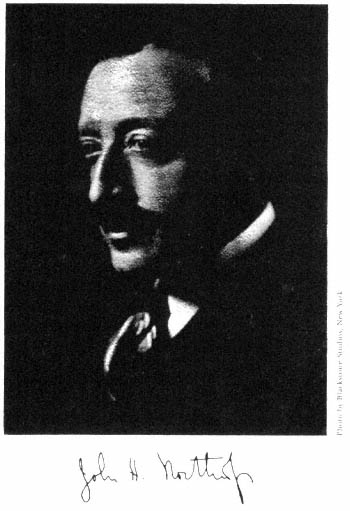
BY ROGER M. HERRIOTT
JOHN HOWARD NORTHROP, trained in chemistry and introduced to general physiology by Jacques Loeb, proved that the enzymes pepsin and trypsin are proteins. The pattern of investigation that he used in this work was followed by his associates in isolating and examining other enzymes. The success of these studies led to the general acceptance of the view that enzymes are proteins. The importance of this work earned Northrop a share in the Nobel Prize in chemistry in 1946.
John H. Northrop was an eighth-generation Yankee, a descendant of Joseph Northrop, who arrived in Milford, Connecticut, in 1630. His forebears included men of influence and accomplishment. Three of them were the Reverend Thomas Hooper 1631; the Reverend Jonathan Edwards, president of Princeton College in 1738; and Frederick C. Havemeyer, founder of the American Sugar Refining Company. The Havemeyer family provided Columbia University with a huge chemistry building in his name.
John's parents were Alice Rich Northrop and John Isaiah Northrop. His father received a Ph.D. from Columbia's School of Mines in 1888 and was appointed "tutor" in the new Zoology Department under Professor Henry Fairfield
Osborne. His mother had been an instructor in the Normal (later Hunter) College of New York City.
A tragic explosion and fire in the Zoology Museum took the life of John Isaiah Northrop just two weeks before his son was born in Yonkers, New York. Despite this devastating accident to her husband, Mrs. Northrop maintained a close association with both Columbia's Zoology Department and Hunter College while rearing her son. She was a botanist and naturalist and helped introduce nature studies into the curriculum of the New York City schools. She also prepared most of the manuscript of a book entitled Through Field and Woodland, which was later edited by Oliver P. Medsger and published in 1925 after her untimely death in 1922 when her car was struck by a train.
Young John's earliest recollection1 of his mother is of her sitting at her desk correcting proof of "A Naturalist in the Bahamas,"2 a report of a collecting trip his mother and father had made in 1889.
With a devoted mother interested in nature, it is not surprising that John was reared with a deep understanding of the natural world. Both John and his mother took long walks, going with ease over rough terrain for long distances.
John was educated in the public schools of Yonkers, New York, and recalled excellent teachers of mathematics (Mr. Graves) and chemistry (Dr. Metzger). The latter aroused an interest in chemistry that continued throughout his life. John attended Columbia College, where he was an outstanding member of the championship rifle and revolver team and the intercollegiate championship fencing teams. He received his B.S. in 1912 and proceeded directly to Columbia's graduate program in chemistry, earning a master's degree in 1913. He thought the following were exceptional teachers: F. C. Chandler, J. M. Nelson, and M. T.
Bogart in chemistry; T. H. Morgan, E. B. Wilson, and Calkins in zoology; and Carlton Curtiss in botany. Student associates were Michael Heidelberger, George Scatchard, Herman Muller, A. H. Sturtevant, and Calvin Bridges—quite a galaxy of future scientists.
John's doctoral studies were supervised by Professor John M. Nelson, a man of broad interests. The subject of John's thesis was "The Essentiality of Phosphorus in Starch." In 1915 the award of his Ph.D. was accompanied by the W. Bayard Cutting Travelling Fellowship, but the turmoil in Europe and Jacques Loeb's acceptance of John to work at the Rockefeller Institute for Medical Research led him to forego the fellowship. This was an important decision because John retained an association with the Rockefeller Institute (later University) for 70 years.
On June 26, 1917, John Northrop and Louise Walker were married. Louise was a graduate of Barnard College, where she was elected president of her freshman class. She earned a master's degree in zoology at Columbia University and was working on her doctorate. This work took her to Woods Hole in the summer for studies at the Marine Biological Laboratory. It was there she met John. They lived in Mt. Vernon, New York until about 1925, when John, who strongly disliked commuting into New York City, became interested in offers from other institutions. He was persuaded by W. J. V. Osterhout to try working at the Rockefeller Institute's Animal Pathology Laboratory outside of Princeton, New Jersey, where he could walk to the laboratories. John's Princeton house looked out on Lake Carnegie, a great improvement over conditions in New York. He also became a member of several sporting clubs in New Jersey.
Mrs. Northrop gave up her professional studies and de-
voted herself to John's interests and the rearing of their two children, Alice Havemeyer and John. She did manage to maintain an interest in music and art in Princeton.
During the hot and humid Princeton summers, the family went to Maine and later to their house near Cotuit, Massachusetts. In the latter place, Northrop could maintain laboratory work in nearby Woods Hole and they all could enjoy playing tennis and the cool sea breezes.
Alice married Dr. Frederick C. Robbins in 1948. They presently live near Cleveland, Ohio, where Robbins is university professor emeritus of Case Western Reserve University. He has had a most distinguished career. In 1954 he shared with Drs. John F. Enders and Thomas H. Weller of Harvard the 1954 Nobel Prize in physiology and medicine for discovering and developing the growth of the polio virus in tissue culture, which led to the vaccines that have been so effective since 1955. He was elected to the National Academy of Sciences and was president of the Academy's Institute of Medicine from 1981–85. He also was dean of Case Western Medical School from 1966 to 1980. The Robbins have two daughters, Alice Christine Robbins Hamlin and Louise Enders Robbins.
Alice's brother John obtained his collegiate education at Princeton and his doctorate at Hawaii and is a program manager at the Naval Ocean Systems Center in San Diego. He married Barbara Mason, and they have three grown children, John H. Northrop II, Geoffrey Mason Northrop, and Helen Haskel Northrop. John H. Northrop II has a daughter, Emma Louise Northrop.
Throughout most of his life Northrop was a strong individual physically. Paul de Kruif admired Northrop's ability to pole a canoe up fast-flowing streams to favorite fishing areas in New Brunswick and Newfoundland. He excelled
in sailing, hunting, marksmanship, and even horseback riding. He trained bird dogs and loved using them in his fall excursions after pheasants, quail, and partridge, yet he avoided research involving animals for he found that distasteful.
A double mastoid operation following an infection during his undergraduate days made Northrop sensitive to certain climatic conditions. He attributed his deafness to exposure to low levels of mustard gas that he worked with during World War II. He avoided scientific meetings in part because of this.
Although he devoted virtually his entire career to laboratory research, Northrop had his moments of interest in other endeavors. He so enjoyed hunting and fishing that he sought ventures that would allow him time for these pleasures. In 1913 he and a friend tried farming near Newburgh, New York, which ended when a fire destroyed their buildings. He next turned to prospecting for gold along the Colorado River where today is Lake Mead. World War I put a stop to that. For seven years after moving to Princeton he joined with a plant pathologist in raising seed potatoes, in the summer months in Aroostook County, Maine. His work was selecting varieties or sources of potatoes that were not infected with disease agents, as judged by whether they produced lesions on tobacco plants. This work also allowed him time to fish for salmon in the Miramachi, Tobrique, or Serpentine rivers of New Brunswick. He reported that the Miramachi River drops 2,000 feet in 80 miles and that he and friend Cheney ran the rapids several summers. "It always afforded us plenty of excitement and plenty of salmon."
Northrop's influence on his associates was by example or casual comment. He was liberal in his acceptance of manuscripts as long as the evidence warranted the conclu-
sions. He was associated with the Journal of General Physiology for nearly 70 years as contributor, editor, and honorary editor.
EARLY RESEARCH, 1915-25
Jacques Loeb soon found John Northrop a responsive worker, thoroughly grounded in physical principles and unprejudiced about biological processes. The two quickly developed a strong regard for each other. John recognized and often commented to me later about Loeb's ingenious design of experiments to obtain answers to specific questions. Stimulated by the work on fruit flies of T. H. Morgan at Columbia, Dr. Loeb and John examined some of the effects of environmental factors on heredity. John grew Drosophila aseptically by freeing the eggs of contaminating organisms and cultivating them on a sterile mixture of yeast extract and banana. These may well have been the first animals grown free of microorganisms. With such fruit flies, Loeb and Northrop showed that there was a temperature coefficient for the duration of life and suggested several mechanisms for such control. John undermined the existing theory of life duration being fixed by an energy limit , for he found that carbon dioxide output, a measure of energy expended, was greater at 15°C than at 22°C, yet at 15°C the flies lived longer than at the higher temperature. John also found that inbreeding of aseptic drosophila for 230 generations in the dark had no discernable effect on their life duration, fecundity, or resistance to harmful bacteria.
John's work with Loeb was halted by America's entry into World War I in Europe. Many important chemicals were found to be in short supply, and assistance was requested of many laboratories in developing methods of
producing these chemicals. John had remembered an acetone odor emanating from flasks containing potato discs. He investigated this with the production of acetone in mind and found an organism that yielded acetone in appreciable quantities. He was commissioned a captain in the U.S. Army Chemical Warfare Service and carried the process through the first stage of plant development for Commercial Solvents Corporation of Terra Haute, Indiana. He succeeded in converting 8 percent of "black strap" sugar to acetone and 22 percent to ethanol.
In this connection Northrop recalled that in England the basic explosive "cordite" manufacture depended on the use of acetone, which was in very short supply. Weizman developed an effective means of preparing acetone and saved the day for England. The British government in turn rewarded Weizman by establishing Israel as he wished.
After the war Northrop returned to the Rockefeller Institute and studied a variety of phenomena. These included heliotropism in which he and Loeb found that the horseshoe crab Limulus responded to light like a photo cell. Exposed to multiple light sources, the crabs oriented themselves so the product of the intensity of the light, the time of exposure, and the cosine of the angle of incidence at the surface of the photosensitive organ were equal for each light source. In other work he studied Donnan equilibria; the kinetics of osmosis; the swelling of cells; and, with Moses Kunitz, the micellar nature of gelatin. With Paul de Kruif and Jules Freund, he studied the agglutination of bacteria and red cells. Northrop also devoted considerable effort to kinetic studies of the action of pepsin and trypsin and the inhibitor effect of some digestion products. In a paper he published with R. B. Hussey is a comment so characteristic of Northrop's reasoning that I must quote it. In com-
menting on the adsorption theories of enzymes held by some European enzymologists, they noted, "In as much as it is possible to account for enzyme reactions on the basis of the laws of general chemistry, there seems to be no theoretical reason to disregard this fact and seek explanations in adsorption theories."
Northrop found that "living cells have a peculiar membrane which is very selective about passage of material through it. The selective process is destroyed once the cell is dead. I found that neither pepsin nor trypsin are taken up by living organisms, whereas as soon as the organisms die, the enzyme rapidly digests them. Live fish or worms may live in the presence of pepsin or trypsin strong enough to digest the dead organism in a few hours."
Jacques Loeb's sudden death in 1924 brought to a close an important period in Northrop's life. For nearly a decade Northrop had been nurtured by one of the great experimentalists and given the freedom to explore a variety of systems. Promotion of Northrop to member of the Rockefeller Institute soon followed. After his move to the Rockefeller Institute laboratory in Princeton, where the Department of Animal Pathology was directed by Theobald Smith, Northrop gathered a small group beginning with Moses Kunitz, who had been on Loeb's staff and with whom Northrop had collaborated. The respect each member of the group had of the others' qualities led to a highly productive relationship. Mortimer L. Anson joined them and initially developed with Northrop the simple but useful cintered glass disc cell for measuring diffusion constants of substances. In 1929 Albert Krueger, joined the group and studied the bacteriophage infection of Staphylococcus aureus. Krueger's return to California in 1931 left an opening that I was privileged to fill from 1932 to 1948.3
PROOF THAT PEPSIN IS A PROTEIN
Northrop had isolated swine pepsin in 1920 using a method described earlier by Pekelharing, but when the enzyme failed to crystallize he put the problem to one side. Professor James B. Sumner's success in crystallizing urease in 1926 stimulated Northrop to return to pepsin, especially since the European enzymologists took exception to Sumner's conclusion that urease is a protein. By 1929 Northrop had crystallized swine pepsin from crude commercial preparations, and his paper with the extensive evidence of its protein nature was published a year later. His evidence consisted of a number of attempts to separate the enzymic activity from the protein, all of which failed. He fractionated crystalline pepsin by recrystallization, salt fractionation, pH, heat, or radiation inactivation in which initial and final fractions were assayed for their enzymic activity per milligram of protein. In no case was there a significant change in this measure, a result expected if the enzyme is a protein.
The solubility studies that Northrop and Kunitz developed especially to detect inhomogeneity in pepsin were probably his strongest evidence. S. P. L. Sørensen, the Danish chemist who first used the term pH, showed how to measure it, and who had also made earlier solubility studies of crystalline proteins, was unable to find a crystalline protein that was homogeneous by this test.
The solubility method is relatively simple and is applicable to any substance. It has a solid theoretical basis in the Gibbs Phase Rule. Briefly, it predicts that the quantity of a pure compound dissolved in a given volume of solvent increases until a saturation concentration is reached. Further addition of the solid compound will not alter the concentration of the dissolved material. When the starting
material is made up of two or more substances, the results will deviate from those of an ideal single substance. An early solid phase may persist before saturation is near, or the soluble phase may increase after the quantity of added material is in excess.
Northrop made a number of solubility studies of crystalline pepsin, varying the pH and/or the nature of the salt used in the solvent. In general, these solubility curves were close to that of a pure single substance. He also examined all fractions for shifts in enzyme activity per milligram of protein which would indicate the possible separation of the enzyme from the protein. He found no change in this measure in any of the fractions. In his cautious manner he acknowledged that his studies could not rule out the case of pepsin being two closely related proteins but then he noted, "It seems reasonable to conclude from these experiments that the possibility of a mixture must be limited to a mixture of proteins, so that the conclusion seems justified that pepsin itself is a protein."
In 1933 workers in two European laboratories reported adsorbing peptic activity onto melon seed proteins. One writer interpreted this as a transfer of the "active group" of pepsin to the seed protein, as expected from their view of enzymes. Although this interpretation was in conflict with his experiments, Northrop recognized that he could not exclude such an interpretation. He therefore carefully repeated their protocols and found that crystals of mellon seed proteins mixed with pepsin under their conditions did bind some peptic activity. However, he carried the study one step further. He dissolved the crystalline seed protein carrying peptic activity in dilute acid. The seed protein was quickly digested by the pepsin, and Northrop crystallized the pepsin out in its usual bipyrimidal form.
This pepsin had the same chemical and catalytic properties as all his pepsin preparations. This proved that the so-called "active group" of pepsin had not been shifted to the seed protein but rather that the pepsin protein had formed a weak link with the melon protein, an inconsequential observation as it related to the chemical nature of pepsin.
While Northrop was studying pepsin, Kunitz was struggling with the isolation of trypsin in the adjoining room. Daily discussions with Northrop finally led to its isolation in crystalline form. Similar fractionation and solubility studies failed to separate the tryptic activity from the protein. Northrop investigated the reversible heat denaturation of crystalline pure trypsin and showed that the level of tryptic activity throughout the heating and restoration paralleled the level of native protein, strong evidence that trypsin is a protein. As reported elsewhere, Kunitz4 later isolated a number of enzymes and precursors and applied the same criteria as used for pepsin and trypsin. In all instances the enzymes proved to be proteins.5
Northrop suggested that earlier workers failed to find protein in their purified preparations because they frequently diluted the preparations back to the same level as initially found and as the impurities were removed the tests for protein were not sensitive enough.
Northrop's influence on associates was by example or casual comment. He seldom worked directly in the laboratory with us. The exception was in the fractionation of pepsin in 1939, when Victor Desreux and I found active fractions of differing solubility. Northrop saw this clearly as a case of solid solutions and carried out experiments showing this.
Northrop was generous in helping others when help was sought. He would correct one if a principle was in viola-
tion, but otherwise he seldom intruded into one's work. He had known Kunitz so long, trusted him implicitly, and gave him free rein. I doubt it they ever had important differences. They both were tolerant and respected the opinions of the other.
Northrop's son John reported to me that his father had strong prejudices. They must have been reserved for the family's ears, for he did not reveal them to me in our long and, at times, close contact. I never heard him speak ill of anyone.
In one of his few talks, via radio, to the general public, Northrop described with great clarity the difference in approach of some chemists and biologists to the solution of a few key biological problems. In that talk he applied "Occam's razor"6 to remove nonessential features (evidence). It was an insight into the nature and depth of the reasoning that guided him for over half a century.
John H. Northrop was highly effective in designing a variety of instruments and methods of considerable importance. In addition to the diffusion cell and the solubility diagram procedures, he designed electrical panels for close temperature control of incubators and water baths. He produced micro and macro cataphoresis equipment. During World War II he developed excellent portable equipment for sampling and assaying airborne toxic agents. He also developed a chemostat for continuous growth of cell cultures.
John H. Northrop was a loner in many respects. He kept to himself and yet he had friends in many fields of endeavor. His sporting friends called him "Jack" as did a few scientists, but those of us who worked in his group for many years never spoke of him, let alone addressed him, in that familiar manner. This was not by arrangement or
request. It just did not seem to fit our relationship. After he moved to California and I to Johns Hopkins, we corresponded frequently and his letters were always signed "Jack." I felt honored.
John H. Northrop was elected to the National Academy of Sciences in 1934.
VIRUSES
Northrop's interest in viruses began early in his career. Perhaps it was when André Gratia, one of the early bacteriophage investigators from Bordet's laboratory, worked for a period at the Rockefeller Institute from 1919 to 1922 and developed a lasting friendship with Northrop. Northrop published a paper on potato mosaic virus with Peter Olitsky in 1925. He also built a greenhouse in Princeton to study tobacco mosaic virus, but he relinquished his plan upon learning that a department of plant pathology was to be added in 1932, with the isolation of tobacco virus as one of its areas of investigation.
Between 1929 and 1931 Albert Krueger and Northrop made kinetic analyses of the action of bacteriophage infections of Staphylococcus cultures, and they developed a dynamic method of assaying the phage.
Upon Krueger's return to California in 1931 and Northrop's concentration on pepsin, the phage work lagged. However, in an environment in which his colleague R. E. Shope was demonstrating the viral nature of the cause of swine influenza and Wendall Stanley was crystallizing tobacco mosaic virus, Northrop returned to study the chemical nature of Staphylococcus bacteriophage in 1936. He precipitated the phage from 200 liter quantities of lysate, followed by salt fractionation and solubility studies of the phage. Northrop found nucleic acid in his purest phage preparations, a finding
also made by M. Schlesinger only a year or two earlier on centrifuged coli phage. These independent observations of nucleic acid in phages and Bawden and Pirie's discovery of RNA in tobacco mosaic virus were only highly suggestive at the time, since the function of nucleic acids was not understood then. This gap in the knowledge of the function of nucleic acids led Northrop, unfortunately, to suggest that phage, like pepsin and trypsin, may be derived from precursor protein in the host cells.
CRYSTALLINE ANTIBODIES
After his arduous task of purifying phage, Northrop turned to antibodies. They had not been isolated, and, like enzymes, they had high specificity for the antigen with which they reacted. Northrop chose diphtheria antitoxin, for there were large supplies of it in a nearby pharmaceutical company. He precipitated the antitoxin by the addition of the toxin, and after recovery of the precipitate he digested away the toxin with the protease trypsin under special conditions of pH. This liberated the antitoxin. Solubility studies of the released antitoxin indicated that further salt fractionation was needed. Eventually he obtained protein crystals derived from the crude antitoxin that were more than 90 percent precipitated by the toxin and that had at least 700 units per milligram of protein nitrogen by both floculation and protection tests. Northrop recognized from sedimentation measurements that his crystalline material was a partially degraded antitoxin.
Some seven years later Northrop and W. Goebel at Rockefeller purified Type I pneumococcal polysaccharide antibody. Although this crystalline product was homogeneous by centrifuge and electrophoresis studies, there was
more than a single component by the solubility test. In this paper it was again noted that tryptic digestion had split diphtheria antitoxin in their earlier study but that pneumococcal antibody was not split by trypsin.
WORLD WAR II
Northrop's services for research on problems of interest to the Defense Department were sought before Pearl Harbor. He responded by giving the request his full attention. He developed highly sensitive chemical and animal methods of detecting toxic chemicals. In 1948 he was awarded a presidential citation for these contributions to the Defense Department. Northrop reported what may have been a coincidence but was a very important development. Even before our entrance into the war, Northrop conceived the notion that in place of combating enemy bombers with antiaircraft guns, the use of small explosives suspended from small parachutes might be more effective. He passed this notion on to Dr. J. A. V. Butler, an English scientist in his laboratory, who later became the British scientific representative in Washington. This was passed to the British defense which in due time replied with a polite "thank you for your valuable suggestion" and nothing more. After the war Northrop read in one of Churchill's books, "There will be no more mass bombing raids, since a defense has been found: small explosive charges suspended from small parachutes."
POSTWAR ACTIVITIES
In the years following World War II a number of events were to influence John H. Northrop. In the fall of 1946 recognition of his contributions to the field of enzymology was made by awarding him a share in the Nobel Prize in
chemistry along with James B. Sumner of Cornell University and Wendall M. Stanley of Rockefeller. This was the first Nobel award for work done, in part, at the Rockefeller Institute.
Research had resumed in Northrop's laboratory after this well-deserved recognition, when the decision was announced to close the Rockefeller laboratory in Princeton in 1951. No explanation for the closing was offered to the staff, but in George Corner's History of the Rockefeller Institute, financial exigency was given as the reason.7 This surprising turn of events broke up a highly productive group. Northrop and Kunitz had worked together for over twenty-five years and Anson had been with Northrop for about twenty years. I was approaching my sixteenth year with him. Northrop did not wish to return to New York City, nor did I. He was offered a professorship in the Bacteriology and Biophysics Department at the University of California at Berkeley without relinquishing his association with the Rockefeller Institute. He accepted this arrangement and moved to California in 1949.
In California, Northrop's interest returned to bacteriophage. By 1949 the field had developed far beyond that which he had left in 1940 to help the war effort. He became intrigued with the nature of the cellular changes in lysogenic B. megatherium that induced phage production. He found that phosphate in the medium inhibited induction and magnesium ion promoted it. He also confirmed de Jong's 1931 report that spores of this organism heated to 100°C for five minutes still yielded cells upon germination that were lysogenic, that is that carried the phage gene. I am surprised that Northrop did not make more of de Jong's experiment. However, in the closing sentence of one of his late papers, Northrop correctly suggested the nature
of bacteriophage, a nature later proved by Alfred Hershey. He wrote, "The nucleic acid may be the autocatalytic part of the molecule, as in the case of the transforming principle of pneumococcus, and the protein portion may be necessary only to allow entrance to the host cell."
In the last years of his scientific career, Northrop with the technical assistance of Marie King, examined the origin of bacterial viruses. It was known that uninfected (lysosensitive) cells could be infected with phage and, depending on conditions, a fraction of the cells would survive and carry the virus in a silent noninfectious (lysogenic) form. It was also known from Lwoff's work that mutagenic agents such as radiation or certain chemicals induced phage development in these lysogenic cells. Northrop devoted many months of research to showing that the rate of induction of lysogenic cells to form phage was comparable to the rates of mutation of these cells to antibiotic or phage resistance. He and Kunitz found that his data conformed to the theoretical expression developed for the formation of mutants. I wonder why he did not examine the formation of mutant cells in the system in which he had found that phosphate-inhibited phage induction and magnesium ions promoted it, for these agents were not known to affect mutagenesis.
Little attention has been given to this work of Northrop, perhaps because it merely quantified Lwoff's earlier finding or because it did not establish the origin of phage. The problem of the origin of phage is a bit like the chicken and the egg: which came first? Recombination as the origin was not considered.
RETIREMENT
Officially, retirement came in 1962, but Northrop con-
tinued his laboratory work and publications until 1968. In this period Mrs. Northrop became ill, and he cared for her for several years. However, the Berkeley climate was not kind to his sensitive respiratory system, like the dry climate of the desert was. In 1971 Mrs. Northrop went to live with the Robbins in Ohio. She died April 21, 1975.
Dr. Northrop moved to a house a mile outside of Wickenberg, Arizona, where he walked his dog, practiced his shooting, gardened, fed birds, and read books. Until 1980 he made annual fishing trips with his son, John, to the interior of Wyoming or Montana. I visited him just before his ninetieth birthday and found him active and mentally alert. He complained that his legs were getting weaker. As he approached his ninety-sixth birthday, he must have viewed his future with concern. He presumably felt that he was becoming an unfortunate burden to his family and friends and decided to avoid such a future. He took his life on May 27, 1987. To me his action was quite in keeping with his character.
CONCLUSION
John H. Northrop was a clear-thinking scientist who made significant contributions in several different fields, but his best-known study was in the field of enzymes. As John Edsall wrote "John Northrop probably did more than any one other individual to establish that pure enzymes are indeed proteins." In view of the involvement of enzymes in virtually all biological reactions, establishing their chemical nature was a scientific contribution of the first magnitude. The power of Northrop's reasoning and experiments combined with his quiet, modest presentation attracted the attention and admiration of investigators everywhere.
I am indebted to Mrs. Frederick Robbins and Dr. John Northrop for information about the family. Special thanks go to Dr. John T. Edsall for his careful review and suggestions about the manuscript, which vastly improved it. To Marie King goes my appreciation for volunteering to loan me one of the very few copies of Northrop's unpublished autobiography.
NOTES
HONORS
1931
The Stevens Prize of the College of Physicians and Surgeons of Columbia
1932
Walter C. Alvarez Lecture, American Society of Gastroenterologists
1934
Election to the National Academy of Sciences
1936
The Charles Frederick Chandler Medal
1936
Honorary Sc.D. degree, Harvard University
1937
Honorary Sc.D. degree, Columbia University
1937
Honorary Sc.D. degree, Yale University
1937
De La Mar Lecture, Johns Hopkins School of Hygiene and Public Health
1938
Jessup Lecture, Columbia University
1939
The Daniel Giraud Elliot Medal of the National Academy of Sciences
1939
The Hitchcock Lectures, University of California (Berkeley)
1939
Honorary LL.D. degree, University of California
1940
Honorary Sc.D. degree, Princeton University
1941
Honorary Sc.D. degree, Rutgers University
1946
Nobel Prize in Chemistry, shared with James B. Sumner and Wendell M. Stanley
1948
The President's Certificate of Merit
1949
Columbia University Lion Award Alumni Club of Essex County
1961
The Alexander Hamilton Award, Columbia University
SELECTED BIBLIOGRAPHY
1916 With J. M. Nelson. The phosphoric acid in starch. J. Am. Chem. Soc. 38:472–79.
With J. Loeb. Is there a temperature coefficient for the duration of life? Proc. Natl. Acad. Sci. USA 2:456–57.
1917 The role of yeast in the nutrition of an insect (Drosophila). J. Biol. Chem. 30:181–87.
With J. Loeb. What determines the duration of life in metazoa? Proc. Natl. Acad. Sci. USA 3:382–86.
1919 The effect of the concentration of enzyme on the rate of digestion of proteins by pepsin. J. Gen. Physiol. 2:471–98.
With L. H. Ashe and R. R. Morgan. The fermentation process for the production of acetone and ethyl alcohol. J. Ind. Eng. Chem. 11:723–27.
1920 A device for regulating the temperature of incubators either above or below room temperature. J. Gen. Physiol. 2:309–11.
Concerning the hereditary adaptation of organisms to higher temperature. J. Gen. Physiol. 2:313–18.
1921 The mechanism of an enzyme reaction as exemplified by pepsin digestion. Science 53:391–93.
1922 With G. E. Cullen. An apparatus for macroscopic cataphoresis experiments. J. Gen. Physiol. 4:635–38.
With P. H. DeKruif. The stability of bacterial suspensions. II. The agglutination of the bacillus of rabbit septicemia and of Bacillus typhosus by electrolytes. J. Gen. Physiol. 4:639–54.
With P. H. DeKruif. The stability of bacterial suspension. IV. The combination of antigen and antibody from sensitized organisms. J. Gen. Physiol. 5:127–38.
With P. H. DeKruif. The stability of bacterial suspension. V. The removal of antibody from sensitized organisms. J. Gen. Physiol. 5:139–42.
The mechanism of the influence of acids and alkalies on the digestion of proteins by pepsin or trypsin. J. Gen. Physiol. 5:263–74.
The mechanism of the effect of acids and alkalies on the digestion of proteins by pepsin or trypsin. J. Gen. Physiol. 5:415.
1923 With P. H. DeKruif. The agglutination of bacteria. Science 57:224.
With J. Loeb. The photochemical basis of animal heliotropism. J. Gen. Physiol. 5:581–95.
The stability of bacterial suspensions. VI. The influence of the concentration of the suspension on the concentration of salt required to cause complete agglutination. J. Gen. Physiol. 5:605–9.
1924 The kinetics of trypsin digestion. II. Conditions under which the reaction is monomolecular. J. Gen. Physiol. 6:417–28.
With J. Freund. The agglutination of red blood cells. J. Gen. Physiol. 6:603–13.
The kinetics of trypsin digestion. V. Schutz's rule. J. Gen. Physiol. 6:723–29.
With M. Kunitz. The combination of salts and proteins. J. Gen. Physiol. 7:25–38.
1925 With M. Kunitz. An improved type of microscopic electrocataphoresis cell. J. Gen. Physiol. 7:729–30.
The dynamics of pepsin and trypsin. Harvey Lectures, 1925–26, 21:36–76.
With P. K. Olitsky. The inoculation of tomato and tobacco plants with potato mosaic virus. Science 61:544–45.
1926 Carbon dioxide production and duration of life of Drosophila cultures. J. Gen. Physiol. 9:319–24.
With M. Kunitz. The combination of salts and proteins. II. A method for the determination of the concentration of combined ions
from membrane-potential measurements. J. Gen. Physiol. 9:351–60.
The resistance of living organisms to digestion by pepsin or trypsin. J. Gen. Physiol. 9:497–502.
A convenient method for the formol titration. J. Gen. Physiol. 9:767–69.
1927 The kinetics of osmosis. J. Gen. Physiol. 10:883–92.
With M. Kunitz. The swelling of isoelectric gelatin in water. II. Kinetics. J. Gen. Physiol. 10, 905–26.
1929 With M. L. Anson. A method for the determination of diffusion constants and the calculation of the radius and weight of the hemoglobin molecule. J. Gen. Physiol. 12:543–54.
Viscosity. Bull. Natl. Res. Council 69:142–45.
Crystalline pepsin. Science 69:580.
1930 Crystalline pepsin. I. Isolation and tests of purity. J. Gen. Physiol. 13:739–66.
Crystalline pepsin. II. General properties and experimental methods. J. Gen. Physiol. 13:767–80.
With M. Kunitz. Solubility curves of mixtures and solid solutions. J. Gen. Physiol. 13:781–91.
With A. P. Krueger. The kinetics of the bacterium-bacteriophage reaction. J. Gen. Physiol. 14:223–54.
1931 Crystalline pepsin. III. Preparation of active crystalline pepsin from inactive denatured pepsin. J. Gen. Physiol. 14:713–24.
With M. Kunitz. Isolation of protein crystals possessing tryptic activity. Science 73:262–63.
With M. Kunitz. Crystalline trypsin. I. Isolation and tests of purity. J. Gen. Physiol. 16:267–94.
With M. Kunitz. Crystalline trypsin. II. General properties. J. Gen. Physiol. 16:295–311.
Crystalline trypsin. IV. Reversibility of the inactivation and denaturation of trypsin by heat. J. Gen. Physiol. 16:323–27.
1933 Crystalline pepsin. V. Isolation of crystalline pepsin from bovine gastric juice. J. Gen. Physiol. 16:615–23.
Absorption of pepsin by crystalline proteins. J. Gen. Physiol. 17:165–94.
With M. Kunitz. Isolation of a crystalline protein from pancreas and its conversion into a new crystalline proteolytic enzyme by trypsin. Science 78:558–59.
1934 Crystalline pepsin. VI. Inactivation by beta and gamma rays from radium and by ultra-violet light. J. Gen. Physiol. 17:359–63.
With Roger M. Herriott. Crystalline acetyl derivatives of pepsin. J. Gen. Physiol. 18:35–67.
With M. Kunitz. Autocatalytic activation of trypsinogen in the presence of concentrated ammonium or magnesium sulfate. Science 80:190.
With M. Kunitz. The isolation of crystalline trypsinogen and its conversion into crystalline trypsin. Science 80:505–6.
1935 With M. Kunitz. Isolation from pancreas of a substance which inhibits trypsin digestion and its effect on the activation of trypsin. Science 81:418.
1936 With M. Kunitz. Isolation from beef pancreas of crystalline trypsinogen, trypsin, a trypsin inhibitor and an inhibitor-trypsin compound. J. Gen. Physiol. 19:991–1007.
With R. M. Herriott. Isolation of crystalline pepsinogen from swine gastric mucosae and its autocatalytic conversion into pepsin. Science 83:469–70.
Concentration and partial purification of bacteriophage. Science 84:90.
With M. L. Anson. The calibration of diffusion membranes and the
calculation of molecular volumes from diffusion coefficients. J. Gen. Physiol. 20:575–88.
1937 With M. Kunitz. Solubility of proteins as a test of purity: The solubility of chymo-trypsin and chymotrypsinogen. C. R. Trav. Lab. Carlsberg 22:288–94.
Chemical nature and mode of formation of pepsin, trypsin and bacteriophage. Science 86:479–83.
1938 With R. M. Herriott and Q. R. Bartz. Transformation of swine pepsinogen into swine pepsin by chicken pepsin. J. Gen. Physiol. 21:575–82.
Concentration and purification of bacteriophage. J. Gen. Physiol. 21:335–66.
1939 The Chemistry of Pepsin, Trypsin and Bacteriophage. In Crystalline Enzymes. Columbia Biological Series, No. 12. New York: Columbia University Press.
1940 With R. M. Herriott and V. Desreux. Fractionation of pepsin. I. Isolation of crystalline pepsin of constant activity and solubility from pepsinogen or commercial pepsin preparations. II. Preparation of a less soluble fraction. II. Solubility curves of mixtures of the soluble and insoluble fractions. IV. Preparation of highly active pepsin from pepsinogen. J. Gen. Physiol. 24:213–46.
1942 Purification and crystallization of diphtheria antitoxin. J. Gen. Physiol. 25:465–85.
1946 "The Quick and the Dead," Radio talk on New York Philharmonic Symphony Program, sponsored by United States Rubber Co.
The preparation of pure enzymes and virus proteins. Nobel Lectures, Chemistry 3:124–34.
1947 Plastein from pepsin and trypsin. J. Gen. Physiol. 30:377–78.
Detection of mustard gas, Lewisite, ethyldichloroarsine, and phenyldichloroarsine with trained dogs and rats. J. Gen. Physiol. 30:475–78.
1948 Convenient method for potentiometric titration of chloride ions. J. Gen. Physiol. 31:213–15.
With M. Kunitz and R. M. Herriott. Crystalline Enzymes, 2nd. ed. New York, Columbia University Press.
1949 With W. F. Goebel. Crystalline pneumococcus antibody. J. Gen. Physiol. 32:705–24.
1951 Growth and phage production of lysogenic B. megatherium. J. Gen. Physiol. 34:715–35.
1952 The effect of various culture media on infection, growth, lysis, and phage production of B. megatherium. J. Gen. Physiol. 35:471–81.
1954 Apparatus for maintaining bacterial cultures in the steady state. J. Gen. Physiol. 38:105–15.
1955 Inactivation and reactivation of Bacillus megatherium phage. J. Gen. Physiol. 39:225–49.
1956 With J. S. Murphy. Appearance of new phage types and new lysogenic strains after adaptation of lysogenic Bacillus megatherium to ammonium sulfate culture medium. J. Gen. Physiol. 39:607–24.
Apparatus for microdetermination of physiologically harmful agents in air. U. S. patent no. 2,757,132 to United States by Secretary of War.
1957 The effect of ultraviolet and white light on growth rate, lysis, and phage production of Bacillus megatherium. J. Gen. Physiol. 40:653–61.
With M. Kunitz, The proportion of mutants in bacterial cultures. J. Gen. Physiol. 41:119–29.
Optically active compounds from racemic mixtures by means of random distribution. Proc. Natl. Acad. Sci. USA 43:304–5.
1958 Concerning the origin of bacterial viruses. Proc. Natl. Acad. Sci. USA 44:229–35.
1960 Studies of the origin of bacterial viruses. VI. Effect of manganese on the proportion of phage-producing, terramycin-resistant, streptomycin-resistant, and phage resistant cells in lysogenic megatherium cultures. J. Gen. Physiol. 43:541–50.
Apparatus for the maintenance of bacterial cultures in the steady state. II. Improved turbidity control and culture cells. J. Gen. Physiol. 43:551–54.
1961 Factors controlling the production of lysogenic cultures of B. megatherium. J. Gen. Physiol. 44:859–67.
Biochemists, biologists, and William of Occam. Ann. Rev. Biochem. 30:1–10.
1962 Studies of the origin of bacterial viruses. VII. The effect of various mutagens (urethane, ethyl urethane, hydrogen peroxide, desoxycholate, maleic hydrazide, butadiene dioxide, triethylene melamine, versene, and acriflavine) on the proportion of virus-
producing and streptomycin-resistant cells in culture of B. megatherium. J. Gen. Physiol. 46:971–81.
1965 Production of a new bacterial virus by prolonged growth of lysogenic E. coli cultures in the presence of triethylene melamine. Proc. Natl. Acad. Sci. USA 54:1632–35.
1966 Increased mutation rate of Escherichia coli K12λ, cultures maintained in continuous logarithmic growth. J. Gen. Physiol. 50:369–77.
1968 Appearance of virulent bacteriophage in lysogenic E. coli cultures after prolonged growth in the presence of triethylene melamine. J. Gen. Physiol. 52:136–43.


