
The Industrial Green Game. 1997. Pp. 225–233.
Washington, DC: National Academy Press.
A Critique of Life Cycle Analysis: Paper Products
ROBERT JOHNSTON
Life cycle analysis (LCA) is a method for quantifying the environmental impact of an industrial process or product. Like some recent energy and greenhouse studies, LCA attempts to quantify or describe the environmental or energy burden of a product, process, or activity—from the extraction of raw materials, through manufacturing and recycling, to the final disposal process. The quantitative aspect of the analysis is essential in evaluating complex systems with many recycling streams, such as those encountered in the paper industry. More recently, LCAs have attempted to include an assessment or impact analysis, which presents data from the analysis as a comparative index. These results are thus more subjective and require that relative weightings or importance scales be established. Assies (1991) presents a useful introduction to the topic and highlights some general difficulties.
In Europe, the LCA movement has grown in importance, and the Society for Environmental Toxicology and Chemistry (SETAC) has set up working parties in Europe and the United States to standardize methodologies. Key SETAC workshops on the topic have taken place in Leiden, Denmark, in 1991, and Smugglers Notch, United States, in 1990 and at Gatwick, United Kingdom, in 1992.
The Gatwick conference, a European Community meeting on ecolabeling and LCA, raised the stakes for quantifying environmental impacts and seemingly connected LCA with ecolabeling. Since then, further working papers from the European Economic Community Working Group 1993 on ecolabeling indicate that the rush to complete the assessment or impact stage is proceeding despite the difficulties associated with accurately analyzing the numbers in the first place. One could interpret this as impatience on behalf of the bureaucrats with LCA,
which has proved difficult and time consuming. This paper attempts to outline some of the difficulties and uncertainties that still exist.
LIFE CYCLE ANALYSIS IN THE PULP AND PAPER INDUSTRY
Several fields contribute data relevant to LCA in the pulp and paper industry. These include forestry (e.g., carbon studies of balance and sustainability), pulp and paper, and recycling (e.g., studies of fiber balance and energy-carbon dioxide); and economics (e.g., supply-demand and import-export studies). In preparing this brief review, several publications in these fields and on LCA were consulted in forestry (Adger et al., 1992; Alban and Perala, 1992; Dewar, 1990; Harmon et al., 1990; Nilsson, 1992; Sedjo, 1989; Squire et al., 1991; and Sullivan, 1992), economics ( Australian Industry Commission, 1991; James and O'Neill, 1992; Pease, 1992; Wiseman, 1993; and Westernbarger et al., 1991), and in life cycle analysis (Assies, 1991; Boustead, 1990; Boustead and Hancock, 1981; Fecker, 1992; Grant, 1992; Kirkpatrick, 1992; and Lübkert et al., 1991).
THE DEVIL IS IN THE DETAILS
One factor governing the acceptability of LCAs is how much the individual industry market sectors are detailed in the study. Too much detail tends to obscure the major issues, whereas too much aggregation will produce a meaningless result. For instance, an overall model of the paper industry, such as that used by Hamm and Göttsching in their German study (1993), is unlikely to satisfy many of the specific environmental questions. Similarly, Wiseman's (1993) model of recycling in the United States fails to distinguish sufficient market sectors for it to be anything more than a crude economic tool.
Different sectoral recycling scenarios and major cross-sectoral flows in the recycling streams define minimum levels of disaggregation. The pulp and paper industry is realizing that sectoral LCA differences allow sectors to be isolated and targeted by its opponents. Hence for technical, commercial, and political reasons, there is an urgent need to ensure that the level of disaggregation is just sufficient to answer the potential queries. Studies from the international literature have varied from treating paper as a single product (Figure 1) (Hamm and Göttsching, 1993; Wiseman, 1993) to having 34 product classifications (Table 1) (Clifford et al., 1978). In Australia, there is some basic information on intersectoral fiber flows based on a five-product model that includes packaging and industrial papers, newsprint, printing and writing paper (mechanical pulp base), printing and writing paper (chemical pulp base), and tissues (B. La Fontaine, personal communication, 1992).
Some CO2-energy studies have also been carried out on a four-product sector basis (B. La Fontaine, personal communication, 1992). Individual companies may have developed predictive models for commercial purposes that analyze
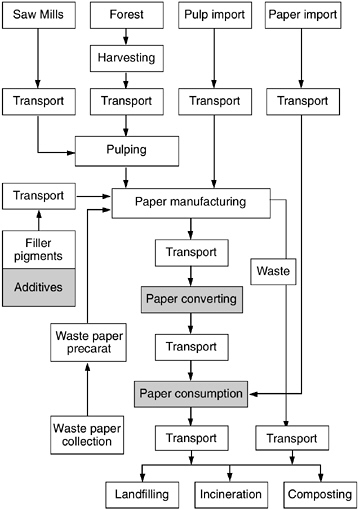
FIGURE 1 Modeling paper as a single product. Source: Hamm and Göttsching, 1993.
more detailed flows of recycled fibers into their own and competitor input streams, but if these models exist, they have not been made available for environmental analyses. The urgency of refining data is highlighted by potential environmental and commercial issues involving specific products such as liquid paper board and recycle-based copy paper. In Australia, both products have interesting histories and currently face predicaments. Liquid paper board is a difficult product to collect and recycle. In addition, it is not produced in Australia and must be imported. Thus, it is a sitting target both commercially and environmentally for attack by the local producers of plastic containers. However, the situation is not all bad—liquid paper board provides fully bleached long fiber, which is in short supply in Australia. Without the detailed data necessary for quantitative comparisons, it is difficult to move arguments away from initial superficial responses.
TABLE 1 Thirty-Four Classifications of Paper
|
Mineral |
Stationery |
|
Chemical wood pulp |
Tissues products |
|
Mechanical pulp |
Packaging |
|
Semichemical pulp |
Corrugated board |
|
Newsprint |
Destroyed |
|
Mechanical printings |
Retained long-term |
|
Woodfree printings |
Dustbin waste |
|
Fluting |
Crude mixed waste |
|
Liner |
Crude news waste |
|
Tissue |
Crude container waste |
|
Food wrap |
Crude office waste |
|
Wrapping paper |
Crude factory waste |
|
Other paper and board |
Crude printers waste |
|
Packaging board |
Group 1-4 waste |
|
Woodfree card and board |
Container waste |
|
Newspapers and magazines |
Mixed waste |
|
Books |
News waste |
RECYCLING CREDITS
Credits for recycling is a major issue that has arisen in all of these analyses. Recycling can be seen as waste processing of the original product or as raw material processing for the secondary product. When recycling is carried out without intersectoral flows, there is no difference in the two viewpoints. When one product is recycled into another, however, the allocation of credits (or debits) becomes crucial. One recommendation is for a 50:50 allocation based on economic value (Assies, 1991). Recent draft papers from the European Economic Community (1993) on ecolabeling appear to completely ignore this issue.
The potential ''green" advantages of recycle credits have, however, been included in business discussions within Australian and New Zealand paper companies, but no formal analysis has been published. A preliminary CO2-energy study gave renewable energy credits to the initial product, but this appears to be an isolated occurrence (B. La Fontaine, personal communication, 1992).
RECYCLING DEGRADATION
It is surprising that no analysis appears to have considered the degradation of fibers from the wood source through pulping, paper making, and recycling operations. The concept of treating mature wood as having a (renewable) energy value plus fibers with an inherent paper making value would generate interesting results as the value is tracked through the life cycle. More careful analysis would be required for the technical factors involved in recycling papers containing fibers
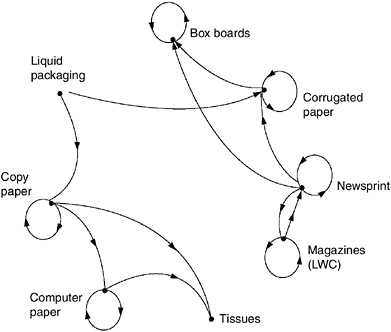
FIGURE 2 Recycling and intersectoral ecology in the paper industry.
with specific histories of pulping, recycling, de-inking, and so on. This is exemplified in the interconnecting recycling and reuse options in the major sectors of the industry (Figure 2).
ENERGY AND CO2GENERATION IN THE LIFE CYCLE
The history of LCA can be traced back to the early work of Boustead and Hancock (1981), which was primarily directed toward cradle-to-grave energy considerations. Environmental factors were added as the potential of the analytical method became obvious. More recently, the energy studies, such as by Hamm and Göttsching (1993), have been extended to include the life cycle effects of CO2 generation or sequestering. The net CO2 effect of all pulp and paper activities, including forestry, pulping, collection of waste paper, production of the energy used in all processes, disposal of waste, and incineration (if any), must be calculated.
One of the controversial factors common to these studies has been the consistent use of two categories of energy: renewable and nonrenewable. The major issue here is whether it is legitimate to consider some energy types to be superior to others. In older studies, for instance, hydroelectricity is generally classed as renewable and hence somewhat less critical than a nonrenewable energy source. The danger in this classification is that although an energy source may be renewable,
it may not be unlimited. When all the capacity for hydroelectricity has been used, the next kilowatt-hour must be generated from nonrenewable (and CO2-generating) resources.
Most business analysts would agree that in this case, the true marginal costs should be used: If an energy source is limited, it should not be distinguished from nonrenewable sources. Under this condition, a country's approach to nuclear energy can influence the analysis. If nuclear energy is available and programmed for expansion, one could argue (as in Hamm and Göttsching, 1993), that this source is not only renewable but also unlimited. At the margins, in this case, the next kilowatt-hour will come from renewable energy that does not produce CO2. This situation relates directly to the boundaries of the problem—a topic referred to later in this paper.
CO2NEUTRALITY AND FOREST SUSTAINABILITY
The simplest summary of the carbon cycle affecting and being affected by the paper industry is shown in Figure 3 (Hamm and Göttsching, 1993). The analysis assumes CO2 neutrality of the forestry-paper industry (i.e., that the CO2 released by burning, composting or disposal of paper is taken up again by managed forests) and that sustainable forest management maintains a constant bank of carbon without land degradation.
The first assumption appears to be consistent with much of the literature, if long-term balance is considered. However, over a shorter term, there is undoubtedly a very real departure from balance. Certainly, composting and incineration release CO2 on completely different time scales.
The second assumption extends outside the realm of pulp and paper and is a

FIGURE 3 Cycle of organic carbon from wood to paper including its disposal and reuse. CO2, carbon dioxide. SOURCE: Hamm and Göttsching, 1993.
question best left to the foresters. Nevertheless, the literature seems to indicate that factors such as rotation times and other silviculture practices can affect this assumption.
The studies referred to in this discussion vary widely in their conclusions, but all involve only northern hemisphere forests. (See particularly, Adger et al., 1992; Alban and Perala, 1992; Dewar, 1990; and Harmon et al., 1990.) In addition, these studies are primarily concerned with forests managed for timber products, with pulp wood being a by-product. The dynamics of carbon release from logged trees in this case differ widely from those of a system managed solely for pulp wood.
Even though empirical evidence suggests that overall forest stands are increasing in developed countries due to forestry management, a lack of critical data permits the assumptions noted above. In particular, specific local data are lacking (Squire et al., 1991).
An issue related to sustainability that has not been addressed in LCA studies has been the modeling of diversity over the life cycle. Once again, the forester is best qualified to quantify management policies that are conducive to maintenance of species diversity. Given that green movements such as Greenpeace have made biodiversity a high priority, it would be short-sighted for the pulp and paper industry to omit this issue.
Although it appears obvious that the industry should define the boundaries of LCA analyses so that the analysis is defensible, much of the reported work is severely limited by fuzziness around the edges. For instance, Hamm and Göttsching (1993) disregard energy requirements and CO2 generation related to the imports required for the German industry. Göttsching (1993) appears to recognize at least the recycling interactions with Germany's major trading partners. These analyses are continuing to improve but are a long way from being definitive.
Perhaps we should not be surprised by this tendency. With limited time and limited data, it is very tempting to simply model that part of the system of most immediate concern and about which we know the most. The real danger, however, is that decision-makers using such models will be lured into making decisions that are at best suboptimal and at worst contrary to the community objectives of interest. The typical case is where legislation is introduced that, although appearing to encourage environmentally appropriate activities locally, actually causes severe problems on a more global scale. The art of modeling is, therefore, to determine just how far to extend the boundaries without creating an unnecessarily cumbersome global model.
The difficulties associated with marginal costing (discussed in the section on energy) are also related to boundary effects. Problems of this type would largely be overcome by developing the models in a linear-programming framework, such as that adopted by Clifford et al. (1978). This very innovative work, although only directed at demand and supply of waste paper, has gone largely unnoticed.
SENSITIVITY OF DATA
It would be foolish to underestimate the difficulty of obtaining adequate information for LCAs. Some of the reluctance on the part of companies to provide such information may be because much of it is basic economic process data, which have a certain business intelligence value. Recently, however, awareness of the potential power of environmental issues in market control has also been growing. Thus, individual companies are tempted to use legislation or public perceptions to gain commercial advantage. Perhaps more importantly, individual states have realized that so-called environmental legislation can provide powerful and seemingly innocent nontariff trade barriers.
This environment encourages looking at available data and closely reviewing LCA or impact-analysis reports. Getting firms to provide sufficient, accurate data will require either legislated mandates or strict neutrality on the part of the modeler.
REFERENCES
Adger, W.N., K. Brown, R. S. Shiel, and M. C. Whitby. 1992. Carbon dynamics of land use in Great Britain. J. Env. Man. 36:117.
Alban, D. H., and D. A. Perala. 1992. Carbon storage in lake states aspen ecosystems. Canadian Journal of Forest Research 22:1107.
Assies, J. A. 1991. Introductory paper to SETAC-EUROPE Workshop on Environmental Life Cycle Analysis of Products, Leiden, Netherlands, December 1991.
Australian Industry Commission. 1991. Recycling in Australia, Volumes 1 and 2. Canberra: Australian Government Publication Service.
Boustead, I. 1990. Ecobalances. Presented at the Workshop on Automotive Materials and the Environment, Stein am Rhein, Germany, November 1990.
Boustead, I., and G. F. Hancock. 1981. Energy and packaging. Chicester: Ellis.
Clifford, J. S., M. A. Laughton, T. S. McRoberts, and P. V. Slee. 1978. LP modeling in the paper industry as an aid to recycling decisions. Conservation and Recycling 2(2):97.
Dewar, R. C. 1990. A model of carbon storage in forests and forest products. Tree Physiology 6:417.
European Economic Community Adhoc Working Group. 1993. Criteria document for ecolabeling of copying paper.
Fecker, I. 1992. How to calculate an ecological balance? Report No. 22. Swiss Federal Laboratories for Material Testing and Research.
Göttsching, L. 1993. Modeling age distribution and physical characteristics of waste paper. Presented at TAPPI 1993 Recycling Symposium, New Orleans, February 1993.
Grant, R. 1992. Report on European Community Ecolabeling & Life Cycle Analysis Conference, Gatwick Omni Continental, Vancouver.
Hamm, U., and L. Göttsching. 1993. The CO2 balance sheet—How is it affected by the German pulp and paper industry? Das Papier 46:10A.
Harmon, M. E., W. K. Ferrell, and J. F. Franklin. 1990. Effects on carbon storage of conversion of old-growth forests to young forests. Science 247:699.
Jones, D. W., and R. V. O'Neill. 1992. Land use with endogenous environmental degradation and conservation. Resources and Energy 14:381.
Kirkpatrick, N. 1992. Life cycle assessment and environmental management systems. Report No. PK/M441. Leatherhead: PIRA International.
Lübkert, B., Y. Virtanen, M. Mühlberger, J. Ingman, B. Vallance, and S. Alber. 1991. IDEA, an International Database for Ecoprofile Analysis. Working Paper 91-30. Laxenburg: IIASA.
Nilsson, S. 1992. Recommended policies for sustainability of European forest resources. Environmental Conservation 19(2):178.
Pease, D. A. 1992. Recycling new products will help cut fiber use. Forest Industries (March):29.
Sedjo, R. A. 1989. Forests to offset the greenhouse effect. Journal of Forestry 87(7):12.
Squire, R. O., D. W. Flinn, and R. G. Campbell. 1991. Silvicultural research for sustained wood production and biosphere conservation in the pine plantations and native eucalypt forests of S.E. Australia . Australian Forestry 54(3):120.
Sullivan, F. 1992. Are forests a renewable and permanent source of supply? Journal of the Institute of Wood Science 12(5):263.
Westernbarger, D., R. Boyd, and C. Jung. 1991. Welfare gains from aluminum recycling in the USA. Resources Policy 17:332.
Wiseman, C. 1993. Increased U.S. wastepaper recycling: The effect on timber demand. Resources, Conservation and Recycling 8:103.


