
5
Interim and Long-Term Technologies and Controls
INTRODUCTION
When characterization of a site determines that contaminated sediment poses unacceptable risks to humans and/or ecosystems, the next step is the evaluation and selection of control measures. This chapter assesses the state of practice and the research and development (R&D) needs for both interim controls, which can be used to reduce high-risk levels quickly, and engineered technologies for longer term, more complete remediation. Costs, which often dictate the selection of technologies, are examined as well.
Numerous technologies and practices are available for managing contaminated sediments (NRC, 1989; Sukol and McNelly, 1990; EPA, 1991, 1993a,b), but few have been tested in marine environments. Although considerable experience with contaminated sediments in fresh water has been accumulated, and some of it may apply to marine systems, such extensions should be approached with caution. The high salt concentration in marine waters influences the surface chemistry of clays, their ion-exchange capacity for metals, and the resulting physical structure of the sediment. More important, perhaps, is the influence of high salt concentrations, particularly sulfate, on microbial processes.1 Applicability to marine sediments is just one of many considerations in selecting a technology.
Harbor managers, state and federal authorities, city mayors, industrial plant managers, and military base commanders are often overwhelmed by the complexities of the technical issues as well as questions about costs, benefits, and the potential for hazard reduction, among other factors. This chapter attempts to sort through these issues to provide constructive guidance (see Box 5-1).
Much of the experience managing contaminated sediments, and hence the basis for much of the analysis in this chapter, comes from the Great Lakes, where the search for solutions began more than 20 years ago. A very high proportion of material dredged from the Great Lakes is contaminated, and open-water disposal became impossible by the early 1970s. Therefore, technology development and community-based debate and selection mechanisms are generally at later stages of development there than on the other coasts. The 1987 Amendments to the CWA authorized the EPA, in conjunction with other federal agencies, to conduct a five-year study of treatment processes for toxic pollutants in Great Lakes sediments. The resulting assessment and remediation of contaminated sediments (ARCS) research and planning program has provided much of the data on remediation technologies. The program and the overall results to date have been summarized by Garbaciak (1994) and EPA (1994a,b). Although the committee relied heavily on reports generated by the ARCS program, it must be emphasized that this data comes from freshwater systems. Furthermore, the reports are not readily available, have not been peer reviewed, and are based partly on anecdotal information.
|
BOX 5-1 Importance of Cost in Technology Assessment Remediation technologies are costly, with costs escalating based on the number of stops. The cost of treatment, for example, is in addition to the costs of dredging and sediment placement or reuse. The most effective technologies for eliminating contamination-that is, treatment or decontamination technologies--are the most difficult to implement, the most equipment intensive, and usually cost the most. Although the costs of many technologies can be estimated, comparative data on costs of methods actually used in the field are limited and unreliable. The effectiveness of remediation technologies in reducing risk has not been measured, so cost effectiveness can only be estimated. |
The committee has emphasized throughout this report that a risk-based approach to the management of contaminated sediments is both logical and essential. Currently, however, controls and technologies are not assessed with regard to their risk reduction capability. The end-points now used (see Chapter 2) are not intended to determine whether remediation technologies actually meet the project goals. But post-project evaluations are conducted in some cases. For example, now that the Superfund site at Waukegan Harbor has been cleaned up to the standards set for the project (the removal of PCB concentrations above 50 parts per million [ppm]), the EPA plans to determine whether fish in the area are still contaminated (S. Garbaciak, EPA, personal communication to Marine Board staff, November 30, 1995). But so few contaminated sediment sites have been cleaned up that there is no consistent standard for post-project evaluations (S. Garbaciak, EPA, personal communication to Marine Board staff, November 30, 1995).
The overall goal in the remediation of contaminated sediments, therefore, remains the removal or isolation of contamination to meet human and ecosystem exposure limits. Achieving this goal at an affordable cost requires a systems approach to the evaluation of possible solutions, including natural recovery and other in situ approaches; sediment removal and transportation technologies; and ex situ controls, including treatment or decontamination. However, the range of choices in any given situation is limited by site conditions. High-unit-cost treatments are precluded, for example, for large volumes of sediments with relatively low levels of contamination. Similarly, the selection and sequence of ex situ treatment technologies are constrained by the characteristics of marine sediments, which, as long-term integrators of contaminants in aquatic environments, typically contain a complex matrix of organic and inorganic compounds that are both nonvolatile and relatively insoluble in water. If risks are high enough to be judged imminently hazardous, then interim controls must be used to reduce risk levels quickly.
Interim and long-term control technologies are a subsystem of the overall remediation system. Figure 5-1 is a schematic diagram of this subsystem and the various components that must be considered. The four major sections in this chapter address the four components of the subsystem interim control technologies; in situ management technologies; sediment removal and transportation; and ex situ management.
The first section examines interim controls, including administrative and technology-based measures, which may be used to reduce imminent hazards. The second major section deals with in situ management, including natural recovery processes that reduce contaminant bioavailability through either destruction or isolation; in-place contaminant isolation by capping; and active treatment through thermal, chemical, or biological processes. The third section addresses sediment removal and transportation by dredges, pipelines, and barges for environmental, as opposed to navigation, purposes. (Land-based transportation by truck or rail is not addressed in this report.) The assessment focuses on criteria for selecting
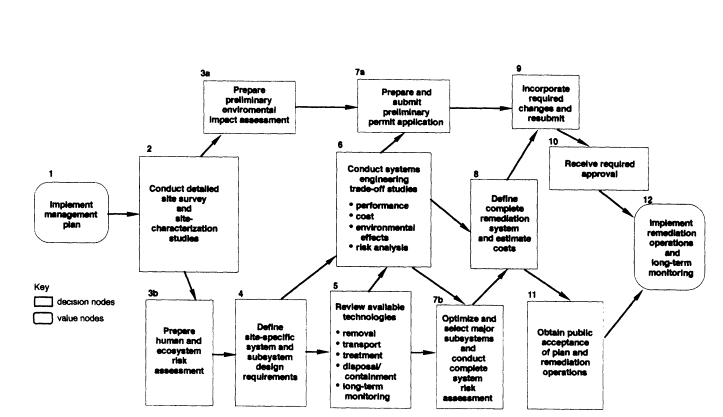
equipment and on environmental impact. The last section assesses ex situ treatment and containment management, which encompasses dozens of technologies.
The chapter concludes with three sections that integrate information on the four components. One section examines how the performance of technologies and controls is evaluated through monitoring, estimates of cost-effectiveness, and other activities. Another section summarizes needs for R&D, testing, and demonstrations. The final section presents a qualitative comparison and overall assessment of the various categories of technology.
The use of remediation technologies and controls in the management of contaminated marine sediments is still emerging. For the most part, the field has been dominated by tools developed for navigation dredging, and few full-scale treatment systems have been implemented. Therefore, the committee's analysis focuses on the general classes of treatment technologies that are applicable to treating contaminants found in sediments. The discussion is not very detailed, and the cost estimates are uncertain.
Technical developments worldwide are considered. All technologies are examined with respect to scientific and engineering feasibility, practicality, cost, efficiency, and effectiveness. Key attributes of each technology are noted in summary tables; the text does not reiterate each point in the tables but addresses only those issues that require analysis. It is important to note that performance can be evaluated only in a qualitative sense, because the available data on cost and effectiveness are inadequate for making reliable comparisons of technologies based on cost effectiveness or any other meaningful quantitative basis.
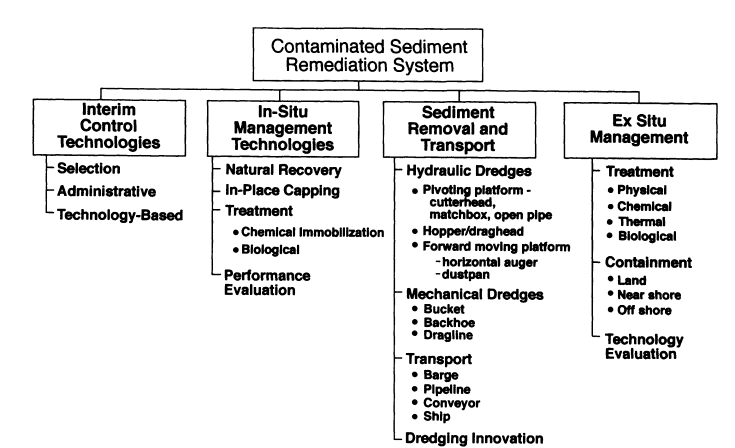
To achieve optimal results, decision makers must understand the role of technology assessment in the overall remediation system, which includes the elements discussed in earlier chapters, regulatory issues, stakeholder interests, and site-specific considerations. A simplified description of the remediation system is shown in Figure 5-2 and described briefly in Box 5-2. The system includes many of the elements found in the conceptual management approach presented in Chapter 2 (Figure 2-1). However, in the present context, the focus is on defining, integrating, and optimizing the various components of the remediation system. Only the most significant tasks are shown; the physical orientation among the tasks is based on the relative timing between tasks and the dependency on the completion of earlier tasks. The direction of data flow between tasks, both with respect to input data and the output of results, is shown by the arrows. For example, task 8 requires input from tasks 6 and 7. When it has been received and task 8 has been completed, the results of task 8 are used in tasks 11 and 12 as input data. The timing of the management schedule and technical risks affects costs directly and is an important consideration in the design of the remediation system.
|
BOX 5-2 Process of Defining a Remediation System The discipline and structured thought process inherent in systems engineering provides a logical approach to the development of acceptable and workable strategies for managing contaminated sediments. Before technologies and controls can be evaluated, the system boundaries must be defined (see Figure 5-1). In addition to establishing the physical boundary for the horizontal and vertical extent of contamination, the contaminants of concern, political institutions, applicable laws and regulations, regulatory bodies, stakeholder interests, planning-time horizon, and desirable end-points must also be bound. Without boundaries, the extent of the system is poorly defined, and, reaching a near-optimum solution will be difficult. The various elements of the system must be determined. Defining the geographical extent of contaminated marine sediment (task 2) presents great difficulties. In many engineering processes, the physical boundary has controllable, or at least measurable, inputs and outputs. In the case of contaminated sediments, the boundary is less defined, and there is exchange of water, sediment, air, and aquatic organisms. Legal and regulatory constraints must also be recognized. Environmental laws and regulations at the local, regional, state, federal, and international levels constrain the management of contaminated sediments through environmental impact assessments and the permitting process (tasks 3 and 6). These limitations can delay the development of a solution and increase costs. Only at this stage can appropriate technologies be assessed (task 5). Once the objective functions have been quantified along with constraints, the optimal solution can be studied. These studies (task 6) address the interrelationships of the subsystems, considering performance, costs, and environmental effects. These studies permit definition of the optimal approach (task 7) to the selection of the appropriate removal, transport, treatment, and disposal subsystems of an integrated total system, designed within the available and proven component technologies. Other elements of the process include public acceptance of the proposed remediation plan (task 11). |
INTERIM CONTROLS
A previous report by the NRC (1989) found that sediment contamination issues at Superfund sites were often not addressed effectively because of the time lapse between the identification of the problem and the initiation of remedial action. In the dynamic underwater environment, a long wait often means that the contamination has spread, making it much more difficult and costly to clean up than it would have been when it was concentrated in a small area The 1989
report, therefore, recognized the value of using interim control measures soon after discovery of the problem to prevent the situation from deteriorating or to avert excessive damage over the prolonged period required to choose a long-term course of action and secure all necessary regulatory approvals.
For purposes of the present report, interim control technologies are defined as temporary measures that can be implemented quickly to meet an immediate need to control exposure to contaminants and reduce risk to humans and the environment. It is appropriate to consider interim measures in all cases where an imminent hazard has been identified by risk analysis (discussed in Chapter 2) and reasoned judgment.2 Permanent solutions typically take 3 to 15 years to implement, according to the committee's case histories (see Table 1-1). By definition, interim controls must be less expensive than long-term controls and must be suited to faster implementation. Interim controls include a broad spectrum of administrative and technology-based approaches based principally on isolation or avoidance techniques. Controls considered by the committee range from issuing public warnings or health advisories to constructing barriers blocking access to contaminated areas by humans or other biota. Slow processes, such as natural recovery and bioremediation, are not included in this category (these approaches are examined as long-term solutions).
Experience with interim controls has been limited. The committee identified only a handful of cases in which such measures have been used, just two of which involved technology-based control. Nevertheless, there is some evidence that these measures are at least partly effective in the short term, and, equally important, they may offer the only hope of rapid risk reduction in highly contaminated areas. Indeed, interim controls are likely to be used more in the future because the costs of treating large volumes of sediment in ''permanent" ways are generally very high. Interim controls require special attention in the planning process, however, because the importance of quickly reducing exposures and controlling the scale of the problem are often overlooked in the rush to find a more permanent response. The effective use of interim controls could be enhanced by monitoring and evaluating their effectiveness where they are being used.
Selection of Interim Controls
A decision to proceed with interim controls can be made at any point in the decision process after preliminary site data have been obtained. But inexpensive, fast-acting methods cannot be expected to provide permanent solutions. Decision makers who implement an interim strategy to address an imminent hazard must anticipate taking further, more elaborate action later to meet long-term cleanup criteria. It is possible, however, that interim actions or intervening events
may reduce the risk sufficiently to obviate the need for long-term measures. This phenomenon occurred at the James River, where commercial fisheries were closed in 1975 to reduce the health risk of Kepone contamination while decision makers considered permanent solutions (see Appendix C). Active remediation eventually was rejected as both too costly and environmentally unwise; in the meantime, Kepone manufacturing had been forbidden, and the contaminated sediments were covered over by clean sediments, a natural process that was effective enough to permit lifting of the fishing restrictions in 1988. Thus, the combination of an interim control and a passive, long-term solution (natural recovery) largely solved the problem (although maintenance dredging is still restricted, which is a problem because ships can navigate only at high tide). Post-project monitoring ensured that the risk was reduced indicating that no further action was necessary.
It is desirable, but not necessary, that interim control measures be compatible with, and possibly even complement, the ultimate solution. Interim measures that hamper long-term remediation can increase overall project costs. In some cases, the use of an interim control may reduce the overall project costs, but in the committee's view this is a side benefit rather than a selection criterion. Cost control is a consideration, however, in that an ill-conceived interim control might interfere with, or require expensive removal prior to, the implementation of a permanent solution. For example, a temporary sand cap might render dredging impractical, but extensive or armored capping is appropriate as a permanent solution and is not considered to be an interim control.
Administrative Interim Controls
Restrictions on catching or marketing high-risk fish and shellfish species can reduce the risks to human health in areas where unconfined contaminated sediments must remain in place for long periods of time (i.e., where natural restoration is planned or the selection and implementation of a remediation strategy drags on for years). Such restrictions can take various forms. In the James River case, commercial fisheries were shut down, which was a drastic step.
In areas frequented by recreational fishermen, other approaches may be necessary. For example, in the mid-1970s, the South Carolina Department of Health and Environmental Control and the EPA discovered that fish from certain areas of Lake Hartwell were contaminated with PCBs at levels above the Food and Drug Administration (FDA) tolerance limit of 5 milligrams per kilogram (mg/kg). To prevent or minimize exposure to fish with PCB contamination above a target risk level, the South Carolina Department of Health and Environmental Control issued a health advisory in 1976 warning the public against eating fish from the Seneca River arm of Lake Hartwell (EPA, 1994c; Hahnenberg, 1995). In 1984, the FDA lowered the PCB tolerance level to 2 mg/kg, and, as a result, the original health advisory was modified to specify that no fish taken in the highly contaminated areas should be eaten, nor should any fish larger than three pounds
taken from the general area be eaten (Hahnenberg, 1995). Fishing was not prohibited, but signs warning against eating fish have been posted at most public boat launch areas and recreation areas at Lake Hartwell since 1987 (Hahnenberg, 1995). In addition, education programs designed to increase public awareness of the health advisory and methods of preparing and cooking fish were implemented to reduce further the quantity of contaminants consumed (see EPA, 1994c).
A health advisory is a temporary palliative because it obviously does nothing to minimize the exposure of, or risk to, fish-eating birds and mammals. But fishing restrictions can be left in place for years, even decades. The New Bedford Harbor Superfund site was closed to all fishing in 1979; in 1990, a number of studies culminated in a decision to remove and incinerate the sediments in hot spots (EPA, 1990). In some cases, fishing restrictions have been in place for so long that they have become de facto permanent solutions. For instance, PCB-contaminated fish and sediments were found in the upper Hudson River in the early 1970s. Health advisories against fish consumption from the lower river and a complete ban on fishing in the upper river have been in effect since the mid-1970s (Harkness et al., 1993).
Although complete bans on fishing can reduce risk to humans, the effectiveness of public advisories about contaminated sediments is an open question. The committee was unable to find enough information to document or analyze the risk reduction of either fishing bans or advisories. The compliance problems involved are illustrated by Belton et al. (1985) in a study that addressed a potential 60-fold increase in the risk of human cancer associated with the lifetime consumption of PCB-contaminated fish from the Hudson-Raritan estuary area. The effectiveness of public health advisories as risk reduction measures was evaluated by a careful, multidisciplinary study of recreational fishermen. Approximately 59 percent of those surveyed fished for the purpose of catching food. More than 50 percent of the respondents were aware of the warnings, and those who did not consume the fish generally were persuaded by a perception of unacceptable risks. But 31 percent of those who ate their catch did so despite believing it was contaminated. The researchers concluded that the broad-scale rejection of the health advisories was due to a combination of factors: the way the media were used, the nature and delivery of the health advisory, and personal predispositions that tended to reduce the credibility or usefulness of the communication.
Technology-Based Interim Controls
The committee could identify only two instances in which a technology-based interim control was implemented to control the dispersion of contaminated sediments. The use of technology-based measures may be impeded by concerns that, because of the cost associated with implementation or removal, they will narrow the choice of long-term solutions or become de facto, second-rate permanent solutions. There is also some question about how to monitor the
effectiveness of interim controls. Nevertheless, in cases where a quick, inexpensive risk reduction is needed, a strong argument can be made for considering interim structural controls, preferably immediately after a high-risk site has been discovered.
Contaminated sediments can be covered with a layer of cleaner sediment or placed within a temporary containment structure, with the intention of removing them later for extensive or permanent treatment or disposal. This approach was demonstrated in 1995 when sediments were contained temporarily in Manistique Harbor in Michigan to prevent the resuspension and transport of PCB-contaminated sediments into Lake Michigan (Hahnenberg, 1995). A high-density polyethylene plastic liner (110 feet by 240 feet) was placed over the hot spot with the highest surficial PCB concentration at a cost of approximately $300,000. One-way gas valves and more than 40 2,000-pound concrete blocks were installed to keep the liner in place. This measure was used until a permanent cap could be installed The effectiveness of the temporary cap was evaluated by monitoring the liner placement to ensure that the hot spot remained covered. It is not known, however, if the cap actually reduced the risk posed by the PCB contamination.
The second case of a structural interim control known to the committee was at New Bedford Harbor, where limited dredging of a hot spot was combined with the temporary storage of sediments for later treatment (Otis, 1994). The dredging of hot spots is analogous to short-term Superfund "removal"3 prior to more extensive "remedial response." When contaminated sediments must be moved out of a navigation channel, it may be cost effective to remove and store the sediments until final treatment and disposal methods can be selected. In such cases, removal and storage not only reduce the immediate risk but also serve as necessary components of the ultimate solution. Sediments can be stored, for example, in a CDF. Although CDFs are generally not used in rapid response to imminent hazards, it is possible to recover and reuse CDFs by following a series of steps, including solids separation, dewatering, and removal of the sediments to a permanent disposal site or for beneficial use. In the New Bedford case, a CDF was to be used for both a pilot study and the hot-spot remediation. Eventually, it was capped (Otis, 1994). Management guidelines are available for the reuse of dredged material disposal areas (Montgomery et al., 1978). Dredged contaminated sediments have also been placed temporarily in multicelled settling basins for treatment (as in the Marathon Battery case history) and in confined aquatic sites (as in the Port of Tacoma case history).
Another interim approach involves the installation of sediment traps and bypass systems, which can redirect the deposition of new contaminated sediments to a controlled location or can isolate "clean" natural sediments from highly
contaminated sites or sources. In the context of navigation dredging, these measures can help control the accumulation of contaminants in the intervals between routine maintenance dredging or during the lengthy process required to secure authorization and funding for new-construction dredging. Sediment traps were used on a long-term basis in Indiana Harbor to control sediments entering a contaminated zone and thereby reduce the volume that had to be dredged. Construction of a sediment trap has been proposed for the same reason in Michigan City, Indiana (Miller, 1995). The use of sediment traps downstream from a hot spot could be useful, on an interim basis, to keep contamination from spreading.
TECHNOLOGIES FOR IN SITU MANAGEMENT
In situ management involves one or more processes that do not require removing sediment from its original location. The contaminants are either destroyed in place, isolated, or immobilized to prevent significant releases into the ecosystem. In situ management includes natural recovery, in-place capping, and in situ chemical and biological treatment. In North America, these practices have been used at fewer than 20 sites. These processes may not be feasible in navigation channels, which require periodic dredging. In situ management processes require a commitment to long-term monitoring.
Natural Recovery
Natural recovery involves leaving the contaminated sediments in place and allowing the ongoing aquatic processes to contain, destroy, or otherwise reduce the bioavailability of the contaminants. Although no action is required to initiate or continue the process, natural recovery is considered the result of a deliberate, thoughtful decision. The same process may occur by default or as an interim approach at Superfund and other sites when cleanup is delayed by legal, technological, economic, or other barriers. Natural recovery is a viable approach if the contaminants are being buried by cleaner sediments or if ongoing processes destroy the contaminants so that contaminant transport into the overlying water column is minimal and decreases with time. Some natural recovery processes are obviously very effective, as has been shown by profiles of contaminant concentrations preserved in Canadian sediment beds since the 1940s (Wong et al., 1995).
Natural recovery has been a strategy of choice at two sites, including the James River in Virginia (Huggett and Bender, 1980). where natural sedimentation buried sediment contaminated by Kepone (see Appendix C), and Lake Hartwell, South Carolina (Hahnenberg, 1995). In general, natural recovery is not considered a deliberate choice but is viewed as the "no action" alternative in the context of the National Environmental Policy Act (NEPA) of 1969 (P.L. 91-190), which requires a complete assessment of all alternatives to proposed federal actions. Natural recovery is always a possibility if there is no need to dredge or
otherwise disturb the site for the maintenance of navigation channels or for port development. A major advantage of natural recovery is low cost; the primary expenses are associated with the initial evaluation, the long-term monitoring, and indirect costs, such as the loss of commercial or recreational uses of the area. Summaries of the costs and other considerations are included in Table 5-1.
Among the limitations of natural recovery are that burial occurs only in depositional areas, and even these areas can be subject to erosion from anthropogenic processes or severe storms. A PCB hot spot identified in Saginaw Bay in 1989 was dispersed by a major storm in 1990, an unfortunate circumstance given that the contamination is now distributed throughout the bay and, although reduced in concentration, cannot be removed (S. Garbaciak, EPA, personal communication to Marine Board staff, December 1, 1995).
Other disadvantages are that the science of natural recovery is poorly understood. The in-bed processes that govern chemical containment or destruction, for example, are not well understood, and measurement can be difficult because of the complexity and variability of natural processes. To determine in situ chemical fluxes from the sediment bed to the water column, not only must the diffusion flux be measured at the sediment-water interface, but estimates must also be made of sediment erosion, advective flows within the sediment, and the dynamics of sediment reworking by the complete benthic community. At most sites, the relative contributions of these mechanisms are not known. The current lack of the capability of quantifying chemical movements accurately precludes a definite determination of the risk posed at a site being considered for remediation by natural recovery. It is seldom known, for example, the percentages of in-bed contaminants that undergo intrinsic degradation, are buried deep within the bed, are released to the water column by passive processes, such as diffusion or active biological processes, are extracted by organisms migrating and feeding, or are moved by erosion and resuspension.
The monitoring strategy at a site undergoing natural recovery must test the claim that the numerous relevant processes are indeed operating to isolate or eliminate the offending chemicals. If site conditions indicate the need for intervention, then a more active approach can be applied that better controls the risk to humans and the ecosystem. A sound strategy for monitoring natural recovery would include measurements of processes that can be measured, such as sediment accumulation rates, contaminant levels in the sediment by depth, bioaccumulation by benthic organisms, and the migration or harvesting of contaminated organisms. It would also be useful to know the chemical release rates from the bed and in-bed chemical transformation rates, but these processes are difficult, if not impossible, to measure. The monitoring strategy for natural recovery must be more carefully planned and implemented than for other technologies because it is assumed that there will be some chemical release—although at a low, and therefore tolerable, rate.
TABLE 5-1 Natural Recovery
|
State of Practice (system maturity, known pilot studies, etc.) |
Applicability |
Advantages/ Effectiveness |
Limitations |
Research Needs |
|
Selected for James River Kepone contamination and considered at Port of Tacoma site. |
(a) Bed is stable or depositional; (b) chemical release rates are low; (c) interim controls can maintain safety to health and environment; (d) contamination level at active surface is low, but a real extent is large; (e) most of the contamination is below the bioturbed zone; (f) contaminants are underlain by low-permeability strata; (g) site is not subject to dredging or other disturbance; (h) source of contamination has been abated. |
(a) There may be less environmental risk to await natural capping than to attempt sediment removal; (b) removal may cause physical harm to bottom communities as well as suspend and disperse contaminants; (c) cleanup cost may be prohibitive because of large area and low level of contamination; (d) low cost. |
(a) Effectiveness of in-bed processes that govern chemical containment and/or destruction is poorly known; (b) bed remains subject to resuspension by storms or anthropogenic processes; (c) should only rarely be used in beds of flowing streams; (d) not appropriate if dredging is required or bulk quantities of chemicals, such as nonaqueous liquids or solids, are present. |
(a) Develop scientific principles to describe the process of natural recovery; (b) based on a literature survey, document the success, failure, effectiveness, etc. of sites that have undergone natural recovery either by design or default; (c) develop accepted measuring protocols to determine in situ chemical flux from bed sediment to the overlying water column; (d) develop protocols for assessing the relative contribution of the five or more mechanisms for chemical release or movement from bed sediments. |
Natural recovery is an attractive strategy. However, the scientific and engineering understanding needs to be improved through the development of a theoretical foundation to describe the process and verification by a comprehensive study of available data at sites where natural recovery has occurred. Long-term monitoring is needed to provide assurance that the process is effective. Identification of the critical issues requiring R&D at the laboratory and field scales could then be undertaken. The results of R&D would lead to the development of guidelines and criteria.
In-Place Capping
In-place capping is the controlled, accurate placement of a clean, isolating material cover, or cap. Over contaminated sediments without relocating or causing a major disruption to the original bed. Caps usually consist of natural, granular materials, such as sand, although uncontaminated mud, geosynthetic materials, and armor stone have also been used. Capping is intended to stabilize the original bed against erosion and isolate the contaminants from contact with the benthic community, thereby reducing long-term environmental damage. Capping is an engineered procedure that can be used at appropriate sites, and its success depends on the careful design, construction, and long-term maintenance of the cap (Palermo, 1991a).
Capping is considered an appropriate measure for preventing benthic effects in the USACE dredging regulations (33 CFR §335 to §338; USACE and EPA, 1992) and is recognized by the International Convention on the Prevention of Marine Pollution by Dumping of Wastes and Other Matter (commonly known as the London Convention of 1972) as a management technique that rapidly renders unsuitable materials harmless (Edgar and Engler, 1984). A review of the literature conducted by Zeman et al. (1992) determined that at least 20 major capping projects have been conducted worldwide, including more than 10 in situ projects in North America. Evaluation of these projects has led to development of a preliminary understanding of the data, equipment, and procedures needed for successful capping. Palermo (1991a) presents a concise guide for all capping projects, and Shields and Montgomery (1984) provide an overview of engineering considerations for capping projects. Guidelines for in situ capping are in preparation (Palermo et al., in press).
Capping can be considered where discharges of contaminants have been halted substantially but natural recovery is too slow to solve the problem. Capping can also be considered where the costs and environmental effects of moving contaminated sediments are very high. However, capping may not be appropriate where the cap may be disrupted or scoured (e.g., from high-energy conditions, ice scouring, or heavy boat traffic) or where navigation dredging is a priority. Suitable capping materials need to be available in the requisite type and quantity to
create the cap, and suitable hydraulic conditions must exist so the cap is not compromised. In addition, the original bed must be able to support the cap, and the capping material must be compatible with the existing aquatic environment. As with other in situ strategies, long-term monitoring is required to determine the effectiveness of capping.
The costs of complete capping projects have not been well documented, but numerous feasibility studies reporting cost estimates (Krahn, 1990; West Harbor Operable Unit, 1992) indicate that, except for natural recovery, capping is the least expensive in situ or ex situ remediation technology (also see Averett et al, 1990; EPA, 1994b). The reason for the low cost is that the contaminated sediments do not have to be moved or treated. If the cost of long-term monitoring is not included, then capping at some sites can be as inexpensive as open-water disposal, although more elaborate, costly capping technologies could be required at other sites. Table 5-2 summarizes key considerations with regard to capping.
Among the major benefits of in situ capping are that it eliminates the need to move the contaminated sediments and that it promotes the in situ isolation of the contaminants by significantly retarding their release to the benthic community. For example, an estimated 99 percent reduction in release rates of Aroclor- 1254 and Aroclor-1242 (PCBs) to the overlying water column is predicted with a 0.45-m-thick sand cap in New Bedford Harbor (Thibodeaux et al., 1990). However, these calculations have not been verified, and they are based on the assumption that the cap has not been damaged by erosion or shipping If the design of the cap is simple, capping material can be replaced, augmented, or repaired easily.
Capping may have some drawbacks, however. If caps are made of different materials than the ambient bottom sediment, they may alter the benthic community. Capping is not likely to be economical if the area of contamination is large. Capping is not suitable for use with highly contaminated bottom material consisting of organic sludges, hazardous solid waste, or other substances with characteristics different from the natural bottom sediment.
Another significant issue affecting the use of capping is the regulatory framework for sediment management. Under Superfund (§121[b]), a strong preference is given to treatments that "permanently and significantly reduce the . . . toxicity or mobility" of contaminants. Capping is not currently considered a permanent solution, even though it capitalizes on the natural tendency of contaminants to remain bound to sediments in low-energy sinks. The committee identified several ways to overcome this problem.
There is a precedent for viewing containment measures as the presumptive remedy for municipal landfills that have become Superfund sites. In the same way, it may be possible to secure a "preferred" remedy status for physical containment strategies, such as capping, by making them more permanent and geared more to reducing toxicity. For example, capping could be augmented by promoting in-place biodegradation, perhaps by injecting micronutrients or microorganisms (an untested approach that may be particularly useful for persistent
TABLE 5-2 In-Place Capping
|
State of Practice (system maturity, known pilot studies, etc ) |
Applicability |
Advantages/ Effectiveness |
Limitations |
Research Needs |
|
Less than 10 major in situ capping projects in North America have been completed (more than 20 worldwide). Reviews exist concerning (a) necessary data, equipment, and procedures; (b) engineering considerations; (c) guide lines for design of cap armor; and (d) predicting effectiveness of chemical containment. |
(a) Contaminant sources have been substantially abated; (b) natural recovery is too slow; (c) costs and environmental effectiveness of relocation are too high; (d) suitable types and quantities of cap material are available; (e) hydrologic conditions will not compromise the cap; (f) cap can be supported by original bed; (g) appropriate for sites where excavation is problematic or removal efficiency is low. |
(a) Eliminates need to remove contaminated sediments; (b) effective in containing contaminants by reducing bioaccessibility; (c) promotes in situ chemical or biological degradation; (d) maintains stable geochemical and geohydraulic conditions, minimizing contaminant release to surface water, groundwater and air; (e) relatively easy to implement; (f) eliminates bioturbation and resuspension; (g) reduces contaminant release to water column; (h) easily replaced or repaired; (i) in shallow water, creates wetlands, dry lands, or reduces water column depth. |
(a) Cap incompatible with bottom material can alter benthic community; (b) subject to erosion by strong currents and wave action; (c) subject to penetration, destruction by deep burrowing organisms; (d) destroys, changes benthic communities, ecological niches; (e) requires ongoing monitoring for cap integrity; (f) dilutes contaminants in original bed if subsequent removal, remediation is required. |
(a) Analysis of data from existing and ongoing field demonstrations to support capping effectiveness; (b) controls for chemical release during bed placement and consolidation; (c) test to simulate and evaluate consequences of episodic mixing, such as anchor penetration, propeller wash, and/or mechanical penetration. |
chemicals such as PCBs), or by adding activated carbon to the physical cap to adsorb certain contaminants. The ultimate solution would be to change Superfund regulations to allow and encourage capping where it is deemed appropriate.
The purpose of monitoring a capped site is to ensure that adequate cap thickness is maintained and that chemical penetrations into the clean cap material proceed at the projected design rate. Monitoring must also verify that biological penetrations from above are effectively limited by the cap. In essence, the philosophy behind the monitoring is that the cap is an engineered structure, similar to a bridge or a road, the performance of which must be verified and which must be maintained over time. If monitoring indicates thinning of the cap in some spots due to erosion, then fresh material or armoring would be required.
In sum, capping is one of the few accepted in situ techniques in use today, and the knowledge base for this technology is larger than for most other in situ technologies examined in this chapter. However, the knowledge base for capping is still incomplete because of a dearth of monitoring data. The precision of the cap placement could also be improved. Theoretical models and laboratory procedures are being developed that can be applied directly to the design and analysis of sediment caps. But monitoring methods must be developed for evaluating, on a case-by-case basis, the effectiveness of caps in preventing sediment erosion and minimizing the exposure of benthic organisms, measuring chemical fluxes into the overlying water column, and establishing that the level of risk is reduced to an acceptable level. Few data are available on long-term chemical fluxes through or out of caps; tidal and wave pumping and ship wakes are among the factors that may affect chemical fluxes. In addition, bottom profiling instruments are needed to verify cap thickness and to provide ongoing monitoring of cap integrity.
In Situ Treatment
In situ treatment involves adding unconfined chemicals or agents to the environment to immobilize or break down contaminants. In situ treatment poses numerous technical problems and has been used at very few contaminated sites, including several small sites in North America. Nevertheless, attention must be given to several in situ treatments, including immobilization, chemical treatment, and biological treatment.
Immobilization and Chemical Treatment
The goal of in situ immobilization is to isolate sediment contaminants from the benthic and aquatic ecosystem. The immobilization techniques considered most often are solidification and stabilization. The state of the art is summarized in Table 5-3. Solidification implies the conversion of sediments into a solid block with a structural integrity that physically binds the contaminants. Stabilization or chemical immobilization usually involves the addition of chemical reagents that
TABLE 5-3 Immobilization (solidification/stabilization)
|
State of Practice (system maturity, known pilot studies, etc.) |
Applicability |
Advantages/ Effectiveness |
Limitations |
Research Needs |
|
Manitowoc Harbor, Wisconsin, and Japan. |
Limited |
Not known |
Not tested nor is in situ implementation likely |
Extensive if technology is to be evaluated |
TABLE 5-4 In Situ Chemical Treatment
|
State of Practice (system maturity, known pilot studies, etc.) |
Applicability |
Advantages/ Effectiveness |
Limitations |
Research Needs |
|
Unknown |
Limited because of interference with other contaminants; possibly of mobilizing metals in the process of oxidizing organics. |
Unknown |
(a) Sediment would have to be isolated during mixing with reagents; (b) likely to bind with natural organic matter, oil, grease, and sulfide precipitates; (c) metals present in the sediments might be mobilized. |
Extensive, if it is proposed, but probably not justified |
reduce the solubility or mobility of the contaminants, with or without changing the physical characteristics of the treated material (EPA, 1989). An example of this treatment for industrial waste involves the addition of sulfides or elemental sulfur to promote the formation of metal sulfides, which have low solubility in water and therefore tend to form precipitates. However, because marine sediments of even moderate organic content are likely to be rich in sulfides, which naturally limit the mobility of metals, the addition of sulfides is not likely to be an appropriate treatment.
The in situ immobilization of sediments is likely to be based on the concepts of solidification and stabilization and to involve the addition of Portland cement. fly ash, or other binding agents to keep contaminated sediments in place and to reduce contaminant mobility. Immobilization reduces contamination through a combination of chemical bonding, encapsulation in a solid, reduction of permeability to reduce fluid flow, and reduction of pore space for diffusion. The applicability of the process to fine-grained sediments with a high water content has yet to be demonstrated. For this type of treatment to be efficient, the contaminated sediments need to be temporarily isolated to allow the mixing of reagents. Other potential problems could include inaccuracies in reagent placement, erosion, temperature increases during curing, and increases in sediment volume. Experience with immobilization techniques is not extensive enough to provide reliable estimates of the costs of large-scale treatments, their effectiveness, or possible toxic by-products.
Immobilization has been used on a small scale at Manitowoc Harbor in Wisconsin, where a cement and fly ash slurry was added to the sediment using a proprietary mixing tool and slurry injector (EPA, 1994b). The in situ mixing of cement with sediments for the primary purpose of enhancing compressive strength has not been proved or accepted for treatment of contaminated marine sediments in the United States (EPA, 1993a). Costs are estimated at $15/yd3 to $160/yd3 based on proposed applications (EPA, 1994b).
In situ chemical treatment involves the addition of chemical reagents to sediments to destroy organic contaminants. Theoretically, oxidants, such as ozone, hydrogen peroxide, and permanganate, could destroy PCBs and polyaromatic hydrocarbons. Chemical treatments would be difficult to implement because they require isolation during sediment mixing, and natural organic matter, oil and grease, and metal sulfide precipitates has very high oxygen demand. Furthermore, metals present in the sediments might be dissolved into the pore water after sulfide oxidation. Chemical dechlorination under ambient temperatures and typical water contents is not likely to occur or to be controllable.
Researchers at the Canadian National Water Research Institute have developed and demonstrated equipment capable of injecting chemical solutions into sediments at a controlled rate (EPA, 1994b). Chemical treatment of lake sediments to control eutrophication or to oxidize organic matter has also been
demonstrated (EPA, 1994b). However, neither has been applied to the treatment of in situ contaminated marine sediments (see Table 5-4).
Other technologies can be mentioned here but quickly dismissed. In situ soil-water freezing on a permanent basis requires the presence of a refrigeration plant on site. Freezing by injection of molten sulfur, which has a melting point of 120°C, has the same limitations as in situ solidification (in addition to being unstable in marine systems because of its solubility and other reactions with dissolved salts). In situ vitrification has been demonstrated to isolate metals in soils, but high-water-content sediments with organic contaminants would require local site dewatering and vapor recovery.
Biological Treatment
In situ bioremediation4 is used to hasten the natural restoration of the environment. The process involves fostering microbial biodegradation by providing needed but absent materials, such as oxygen, nutrients, or inoculants containing microbes known to be effective degraders of specific contaminants. The microbiologically mediated biodegradation of contaminants, both with and without intervention, has been observed al sites contaminated by a variety of organic compounds, such as crude and diesel oils; petroleum products; the aromatic hydrocarbons benzene, toluene, and xylene; PCBs; polyaromatic hydrocarbons; chlorinated phenolics; and many pesticides.
Numerous factors characteristics limit the use of biodegradative processes (see Table 5-5). The complexity of the sediment-water ecosystem, the difficulty of controlling the processes (physical, chemical, and biological) in the sediment, and the need to adjust environmental conditions for various stages of biodegradative processes limit the effectiveness of in situ bioremediation (EPA, 1994a). Although considerable research on in situ bioremediation has been carried out for a decade or more with soil systems, future R&D to overcome some of the difficulties and limitations with sediments may be costly. The best current alternative is in situ bioremediation using an engineered treatment system containing a portion of the bed sediment in cells, which allow reaction conditions to be controlled (see discussion of ex situ bioremediation later in this chapter).
In situ bioremediation was carried out on a rocky, petroleum-coated shoreline in 1989. A two-year study indicated that biodegradation of the oil could be stimulated by the addition of nitrate and phosphate, and that the rate of oil removal from beaches could be hastened (Pritchard and Costa, 1991; Bragg et al.,
TABLE 5-5 In Situ Bioremediation
|
State of Practice (system maturity, known pilot studies, etc ) |
Applicability |
Advantages/ Effectiveness |
Limitations |
Research Needs |
|
(a) None documented for marine sediments; (b) examples from freshwater sediment are limited to special cases on pilot scale, e.g., chemical stimulation of dehalogenation (but no degradation) of PCBs in the Housatonic River, Connecticut; (c) stimulation of degradation with addition of active microbes in Hudson River. |
(a) Contaminant is biologically available; (b) concentration of contaminant appropriate for bioactivity, e g., sufficiently high to serve as substrate or not high enough to be toxic; (c) limited number or classes of contaminants that are biodegradable; less known for complex mixtures; (d) site is reasonably accessible for management and monitoring; (e) rapid solution is not required. |
Based on experience from soil systems, it offers the potential for (a) complete degradation and elimination of organic contaminants; (b) reduced toxicity of sediment from partial biotransformation; (c) less materials handling, which can result in substantially lower costs; (d) no need for placement sites; (e) favorable public response and acceptability. |
(a) Not a proven technology for sediments (freshwater or marine); (b) likely to require manipulation and disturbance of sediment; (c) can require containment which limits volume that is treatable; (d) can require long time periods, especially in temperate waters; (e) ineffective for low level contamination; (f) not applicable to areas of high turbulence or sheer; (g) not applicable for high molecular weight polyaromatic hydrocarbons. |
(a) Fundamental understanding of biodegradation principles in marine environments; (b) bioavailability of sorbed contaminants and the effect of aging; (c) exploration of anaerobic degradation processes for the largely impacted near-shore anoxic sediments; (d) laboratory, pilot, and field demonstration of effectiveness for marine sediments; (e) interaction of physical, chemical, and microbiological processes on biodegradation, e.g., sediment composition, hydrodynamics; (f) analysis of cost effectiveness; (g) exploration of combining in situ bioremediation with capping. |
1994) Biodegradation of the contamination occurred even without intervention, but the rate was slower.
In situ bioremediation technologies are used in land-based soils to degrade many, but not all, contaminants. With respect to marine sediments, however, bioremediation technologies are experimental. Soil and groundwater bioremediation technologies cannot be transferred directly to in situ marine sediments for a number of reasons. Three major barriers are noted here.
First, because little is known about the degradative potential of marine microbial consortia, it is not known how well lessons learned in land-based systems will translate to marine systems. It is clear, however, that the geochemistry and hydrogeology of marine sediments differ from those of land-based systems, and that these differences are likely to affect the behavior and fate of the contaminants. In other words, fundamental research is needed to address the microbial, geochemical, and hydrological issues affecting bioremediation processes. Even if such research were pursued, it would be unlikely to lead to useable technology soon. Experimental and bench-scale tests have yet to be translated to the pilot scale and demonstration level.
Second, the introduction of nutrients and an oxidant source (e.g., oxygen, iron, manganese, nitrate) to in-place contaminants is a major challenge in a marine environment. Although the hydrodynamics of some groundwater systems allow for the pumping of enriched waters through the aquifer to the contaminated site, this technique cannot be used with marine sediments in a harbor or bay because of dilution and the lack of containment. Proposed scenarios for treating sediments have not been demonstrated widely and can pose difficulties. A demonstration project at Hamilton Harbor, Ontario, involving the injection of calcium nitrate into sediments, achieved a 79 percent reduction in low-molecular-weight compounds but only a 25 percent reduction in polyaromatic hydrocarbons (EPA, 1994b). The reduction was attributed to biodegradation. One concern is that the use of rakes and other injection and mixing equipment may resuspend materials and cause adverse environmental effects. Another unproven scenario involves depositing nutrient-rich pellets onto the sediments and relying on benthic bioturbators to move the materials down into the sediments.
Third, unlike subsurface aquifers and soils, marine sediment biota are linked intimately to the benthic food chain. Hence, any augmentation intended to make contaminants more bioavailable to beneficial microbes may affect the complex food chain community in unknown ways.
Even if these hurdles can be overcome, conditions at most contaminated sediment sites pose additional challenges. Because marine sediments typically are contaminated with more than one class of toxic chemical, the selection of a treatment process is complicated, and the efficacy of the process will be lower than for the treatment of simpler wastes. When combined, contaminants such as toxic metals, polyaromatic hydrocarbons, and PCBs can have inhibitory effects on or can interact with each other. The combination of multiple contaminant classes
also tends to rule out a single treatment technology. Selection of a treatment regime that includes in situ bioremediation may be precluded by elevated levels of toxic metals that could constrain microbial growth or by the limited biological and chemical availability of contaminants.
Pilot studies for the in situ biological treatment of sediments are limited to a few examples in which the sediment volumes were small and the contaminant composition limited. The committee was told of four projects, two involving PCBs and two involving polyaromatic hydrocarbons (Thoma, 1994).
The in situ bioremediation of PCBs has been carried out in freshwater sediments in the Housatonic River in Massachusetts and the Hudson River in New York (Harkness et al., 1993). The volumes involved were less than a few cubic yards; only small portions of the contaminated sites were studied. The Massachusetts field studies were carried out based on laboratory data indicating that bromobiphenyls stimulate anaerobic microbial attack on PCBs and that highly chlorinated congeners are dechlorinated to produce molecules with fewer chlorine atoms. The pilot studies were successful in showing that after 373 days, the concentration of highly chlorinated congeners (containing 6 to 9 chlorine atoms per molecule) declined from 68 to 18 percent of all PCB molecules, with a corresponding increase in the species with fewer chlorine atoms. Although total PCB levels did not change, the data suggest that toxicity was reduced because the most toxic congeners with "dioxin-like" properties were preferentially dechlorinated. Whether this result constitutes remediation depends on regulatory requirements. Given the current regulations, which are based on total PCB content, the novel capability of stimulating anaerobic PCB transformation may have limited practical use, and further treatment would be needed.
Field studies in the Hudson River showed that in situ aerobic biodegradation is limited by physical and chemical factors unrelated to the microbial community. These factors include, for example, the sorption of contaminants into the sediment matrix and the consequent reduction in contaminant biogeochemical and biological availability, oxygen and nutrient availability, mixing, and the survival of externally amended active organisms.
In sum, the in situ bioremediation of PCB-contaminated sediment has only recently been recognized as a potential alternative. Although the technology looks promising, given the current level of application and the regulatory focus on total PCBs, it is unclear whether in situ bioremediation can achieve the cleanup levels required at a reasonable cost. If additional nutrients are needed, the sheer volume of and contaminant mixtures of most marine sediments will present difficulties for handling and monitoring.
Available evidence suggests that PCB dechlorination and biodegradation occur more slowly in marine sediments than in land-based systems, but the in situ degradation rates of sediments have not been measured with any reliability. Furthermore, bioremediation rates would be affected by site-specific characteristics, such as sediment composition, hydrodynamics, pore water composition, and
benthic biology. So far, there are no reliable cost data, although figures from the small experiments are available. The total cost of the field demonstration in the Hudson River was $2.5 million, excluding the costs of manpower, for the treatment of approximately 3 m3 of sediment. Estimates of the cost of encapsulation technology range from $50 to $60/yd3 of contaminated sediment. The inoculum cost alone was estimated to be $30 to $40/yd3 (Harkness et al., 1993).
The feasibility of in situ biodegradation of polyaromatic hydrocarbons has been considered at the laboratory scale (Thoma, 1994). Initial experiments found that microbial degradation of polyaromatic hydrocarbons could be stimulated in harbor sediments, but the approach was difficult to monitor and the effectiveness could not be evaluated.5 Research is now under way on ex situ processes for the removal of polyaromatic hydrocarbons and metals.
SEDIMENT REMOVAL AND TRANSPORT TECHNOLOGIES
In some cases, contaminated sediments must be moved for ex situ remediation or confinement. Efficient hydraulic and mechanical methods—dredges, pipelines, and barges—for removing and transporting sediments are available but may have to be modified to mitigate additional risks to the ecosystem and to facilitate remediation. This section discusses these modifications and how they can be made.
Environmental Dredging
Some dredging operations are primarily for environmental cleanup, and some are primarily for the improvement and maintenance of navigation facilities. This does not mean that routine dredging operations are not, or cannot be, environmentally friendly. However, navigation dredging, which is usually designed to remove large volumes of subaqueous sediments as efficiently as possible, is not addressed here. Environmental dredging, by contrast, is designed to remove contaminated sedi ments in such a way that the spread of contaminants to the surrounding environment is minimized.
Contracts for most dredging projects in the United States are based on the volume of sediment removed, and contractors bid in unit prices (in dollars per cubic yard) for the removal, transport, and placement of sediments, with lump-sum costs for the mobilization and demobilization of equipment. With few exceptions, the lowest qualified bidder is selected for the dredging job. This approach encourages the removal of as much material as possible as quickly as possible. If the sediment is "clean," this emphasis is appropriate.
However, in a systems approach to environmental dredging, the dredging is often carefully integrated with subsequent treatment and disposal. If the lowest-cost, maximum-volume approach is used for removing contaminated sediments, then substantial amounts of water and uncontaminated sediments can be captured along with the contaminated portion, necessitating the handling of large volumes of sediment and increasing treatment and disposal costs. In 1995, navigation dredging costs ranged from less than $1/yd3 (in situ volume) to little more than $5/yd3 (more for small jobs or remote sites).
Because of the precautions necessary for environmental dredging, the cost would certainly be higher. But committee members experienced in dredging estimate that total costs for removal and transport would not exceed $15 to $20/yd3. Even these costs are relatively low compared with the cost of many treatment processes, which can be more than $100/yd3. In a systems approach, the cost of the treatment or placement method is a consideration in deciding how precise site assessment and dredging need to be. Adjustments in the dredging process to minimize the capture of water and uncontaminated sediments can reduce the costs of treatment and placement and hence reduce overall project costs. This section examines three topics: the criteria for equipment selection, the environmental risks associated with dredging, and recent dredging innovations.
Equipment Evaluation and Selection
Dredging contaminated sediments for cleanup involves many of the same considerations as dredging for navigation. The available guidelines on the selection of dredging equipment and the advantages and limitations of various types of dredges (USACE, 1993) are generally applicable to environmental dredging. Evaluation criteria for specific equipment can be found in other publications (NRC, 1989; Averett et al., 1990), which provide extensive discussions of available equipment and their operating characteristics.
When contaminants are not a concern, equipment is evaluated for its capability to operate under the anticipated site conditions, its compatibility with available sediment placement options, and costs. For example, hydraulic dredges, which employ centrifugal pumps to draw up sediment in a liquid slurry form and then transfer it to a pipeline, are generally used when large volumes of sediment must be removed, when the placement site is within pumping distance, and when the pipeline is not a major traffic obstacle. Mechanical dredges, which scoop up material with bucket-like equipment using mechanical force, are generally used to minimize sediment dispersion and to limit the effects of the dredge on sediment properties. These dredges are appropriate when sediment volume is relatively small or the placement site is not within pumping distance. Trailing hopper dredges (specialized hydraulic dredges), which operate from floating platforms that double as repositories for excavated sediments, are used primarily when site conditions include high waves, heavy traffic, and remote disposal areas. These
site conditions often preclude the use of mechanical or hydraulic pipeline dredges, which are mounted on platforms that are less stable in waves than the platforms used with hopper dredges.
For environmental dredging, the equipment evaluation and selection process must be integrated with removal and transport technologies into an overall remediation plan. The precise removal of contaminated sediment, as well as the resuspension of sediment and the associated release of contaminants, are key concerns in the removal of contaminated sediments. Some dredges that can accomplish environmental objectives are already available. For example, a state-of-the-art backhoe dredge was designed specifically to remove creosote-contaminated sediments at the Bayou Bonfouca Superfund site in Louisiana. Significant elements of this dredging system include an array of position sensors installed on the backhoe arm and excavator; a computer-based monitoring system that enabled the operator to monitor turret rotation, arm angle, and bucket angle and depth relative to the vessel, and a topographic map of the bottom; and a slurry processing unit that greatly reduced the water content of the dredged material (Taylor, 1995). The dredge had a reach of up to 40 ft, adequate for many contaminated sediment sites.
The following sections discuss how to optimize an integrated remediation system, from sediment removal to the placement of residuals. Three evaluation criteria are discussed: site compatibility, precision and accuracy of removal, and the characteristics of delivered material.
Site Compatibility
The characteristics of, and access to, a site sometimes limit the kind of equipment that can be used in a specific project, unless equipment is specially adapted. Land-based equipment can be used to reach sediment within its operating radius or where the site can be dewatered and the sediment can support the equipment. Most projects require a floating dredge plant, which may be mounted permanently, mounted temporarily on a barge, or attached to a seaworthy vessel. Many contaminated sediments, however, are in backwater areas too shallow for some vessels, particularly during low tide. Access to these areas may also be restricted by low bridges and shallow channels, which limit the choice of vessels to those transportable by rail or truck.
Loading rates and material characteristics must match the capabilities of the treatment facilities. Therefore, removal and transport equipment must be capable of delivering sediments in the appropriate form. The automated system used in the Bayou Bonfouca Superfund project, for example, made use of sensors to control slurry density and velocity to meet the requirements of the processing facility (Taylor, 1995). Except in rare circumstances, temporary storage needs to be provided to accommodate fluctuations in sediment loading rates. Because many treatment operations also require pretreatment, it may be economical to combine pretreatment and temporary storage.
Precision and Accuracy of Removal
The requirements and objectives of routine maintenance dredging differ somewhat from those of environmental dredging. The differences in the precision and accuracy of sediment removal are striking. The cost of conventional dredging operations is usually based on the amount of sediment removed from a defined volume called the prism. Because the contractor bears the costs of dredging outside the pay prism, excessive dredging is seldom a problem, assuming the additional placement costs are minimal. But the removal of contaminated sediments very often requires special handling, treatment, and placement, and unit costs may be much higher than routine dredging costs. Therefore, overdredging of contaminated sediments should generally be avoided if at all possible.
It is important to realize, however, that precision sediment removal must be appropriate for the degree of site definition; conversely, the characterization of the site must match the precision of the available dredging equipment. Time and money are often wasted in the precise mapping of layers of contaminated sediment to the centimeter when the dredging equipment removes layers tens of centimeters thick. Conversely, there is no reason to remove sediments with a precision of a few centimeters if the contaminated layers have not been defined to a similar level of precision. Although precise removal may lower the cost of treatment, it also raises the cost of site assessment, principally because of the high cost of the chemical testing of sediment samples. If contaminated and uncontaminated sediments exhibit distinctively different physical properties, acoustic profiling systems (discussed in Chapter 4) may increase the precision of site assessment at a reasonable cost, thereby helping to reduce the volume of uncontaminated sediments removed. The degree of precision that is cost effective must be determined on a site-specific basis.
Most of the equipment in the U.S. dredging fleet is capable of removing sediments with a horizontal precision of a few inches in relatively shallow water under calm conditions. But horizontal precision may decline to around 2 ft in deeper water or heavy seas. The horizontal accuracy of the dredge cut depends largely on the system used to position the dredge. For the past decade or more, microwave positioning systems have provided horizontal accuracies of ±5 to 10 ft and have often been used to position dredges. Recently, the satellite-based global positioning system (GPS) has provided similar horizontal accuracies when the differential mode is used (U.S. Department of the Army and USACE, 1995). By 1995, GPS technology had advanced to the point that differential GPS could provide three-dimensional accuracies of ±0.3 ft or better (Frodge et al., 1994). Thus, differential GPS. when routinely applied, should allow horizontal positioning in the 0.5-to 1-ft range required for moderately to highly contaminated sediments when overlap between successive passes of the dredge is critical.
Laser-based positioning systems can easily provide horizontal positioning of less than 0.2 ft (Clausner et al., 1986). For example, the closed-bucket dredge
used at Bayou Bonfouca used laser-based positioning systems to achieve accuracies of 0.1 ft (Thoma, 1994). But the accuracy of laser-based positioning systems degrades with distance from the reference station. The system was designed for use in relatively low-energy environments in water depths of less than 40 ft.
Vertical precision is generally greater than 0.5 ft for most conventional, fixed-arm dredging equipment. Conventional bucket dredges, however, operate by drop- ping the bucket into the bottom sediments, with minimal control over the depth of penetration. The actual depth of penetration depends on the strength of the bottom sediments. This problem can be overcome with some new bucket designs, such as the cable arm clamshell (see Recent Dredging Innovations below), which can leave a relatively smooth, flat bottom by monitoring vertical penetration with pressure sensors and depth sounders.
The most critical aspect of positioning for the removal of contaminated sediments is the vertical accuracy of the dredge-head. In many cases, contaminated sediments are concentrated in thin layers measuring in the tens of centimeters (van der Veen, 1995). To remove the thin layers of contaminated sediment with a minimum of additional clean sediments requires precise control of the elevation of the dredge-head relative to a fixed datum. For floating platforms, the reference datum is the water surface. Because the elevation of the water surface can vary, often considerably over a short period of time when the area is influenced by tides, accurate knowledge of the water surface is critical. Fortunately, most areas with significant contamination are in rivers, estuaries, and harbors, where surveyed ground elevations and accurate tide gauges can provide the necessary information.
Bottom-crawling platforms with hydraulic dredging systems, similar in concept to those developed for deep-ocean mining, can be positioned precisely. Because these platforms contact the bottom sediments directly, they are not subject to waves or traffic, which can complicate the positioning of surface platforms. Although bottom-crawling systems have not been used in the United States, they have been used in Europe. They are also readily available, moderately priced, and usable for dredging contaminated sediments. Some concern has been expressed that soft sediments may not be able to support bottom-crawling equipment; however, this problem can be overcome by replacing the standard track mobility system with Archimedes screws for traversing soft sediments and slopes (Wenzel, 1994a). Bottom-crawling systems are sensitive to the relief of the bottom topography. There are also concerns that the propulsion tracks could cause mixing of spilled contaminated sediments with clean sediments (van der Veen, 1995), but this problem can be overcome by adjusting the cutter width to greater than the track width.
In the future, the depth of cut might be automatically controlled with sensors, such as highly accurate acoustic sensors (discussed in Chapter 4) that can measure the thickness of contaminated sediments (Caulfield et al., 1995; McGee et al., 1995). The use of acoustic sensors would require that contaminated and
uncontaminated sediments have significantly different physical properties; such differences were demonstrated in the Trenton Channel of the Detroit River (Caulfield et al., 1995). Acoustic sensors could also be used for dredge-heads deployed from surface platforms.
Characteristics of Delivered Material
In practice, uncertainties about the character of a site, the treatment approach, and the availability of appropriate dredging equipment make it difficult to find the right match between the requisite precision of the site assessment and the dredging technology. Therefore, the cost and magnitude of treatment must be calculated based on characteristics of the material as delivered, as opposed to characteristics in situ. The mechanical action of removing sediment and the imprecision of current dredging technology raise concerns about contaminated upper layers mixing with cleaner lower layers. Mixing dilutes the contamination in the dredged sediment and increases the volume that has to be dredged.
Volume reduction requires the removal of only those sediments requiring treatment and the entrainment of as little water as possible during the removal process. Mechanical dredging tends to keep water content low. But there are other alternatives. The dredge developed for the Bayou Bonfouca project (described above) included a patented processing unit to control the density of the hydraulically transported slurry within limits acceptable to the sediment treatment facility. Some foreign technologies are said to be capable of removing sediments at very high, even near-in-situ, densities, but definitive data are not readily available to validate these claims, probably because the information is proprietary. There is a significant need for the demonstration of operational hardware developed overseas as well as a need for more U.S. R&D focused on improving dredging precision and accuracy, methods of delivering undiluted contaminated sediments to treatment facilities, and the use of acoustic sensors for site characterization and dredging control.
Environmental Risks
The disturbances created by removing and transporting contaminated sediments may increase the risk of contaminant release to the environment. This section summarizes the results of recent research into the extent of these releases and discusses ongoing technology developments in this area.
Contaminant Release Associated with Dredging
Most contaminants associated with sediments tend to remain tightly bound to fine-grained particles and controlling their resuspension is a key consideration in controlling contaminant releases from dredging. The strong hydrophobic
nature of most contaminants associated with sediments suggests that releases of dissolved contaminants into the water column are minimal (Digiano et al., 1993). Resuspensions of contaminants from dredging are generally local, and the acceptable level of resuspension is a site-specific issue. To determine whether a predicted level of resuspension is acceptable, the dredging operation must be viewed as part of a whole that includes existing site conditions (e.g., the level of resuspension from ambient currents, storms, flood flows, etc.), the location and nature of resources of concern, and potential releases from other pathways associated with the disposal alternatives under consideration (Palermo et al., 1993).
In the NRC report (1989), field and laboratory studies quantifying the extent and mechanisms of sediment resuspension were summarized. The studies show that resuspended sediment concentrations are generally less than 100 mg/L except in the immediate vicinity of the dredging operation. In most of the field studies, resuspended sediment concentrations were less than 10 mg/L at distances on the order of 100 m from the dredge. These results contrast sharply with some early assertions of resuspended sediment concentrations of more than 1,000 mg/L. Very high concentrations were observed in some laboratory studies (Herbich and DeVries, 1986), but they probably reflect scaling difficulties between hydraulic parameters and sediment settling rates. None of the field studies conducted in the United States has revealed such high suspended sediment concentrations (McLellan et al., 1989; Collins, 1995).
Field studies conducted to date provide valuable site-specific information, but the results are difficult to apply to other sites or to equipment being used under different conditions. Many of the studies involved monitoring resuspension generated by a single dredge type operating at a specific site. However, several of the studies involved comparisons of the sediment resuspension from two or more dredges of different designs operating at the same site (Hayes et al., 1988; Otis, 1992). A few attempts have been made to develop generalized predictive tools from field data so that a priori estimates of concentrations of resuspended sediment can be developed systematically (Bohlen, 1978; Cundy and Bohlen, 1982; Herbich and DeVries, 1986; Crockett, 1993; Collins, 1995). Collins (1995) developed mathematical models for predicting rates of sediment resuspension for conventional bucket and cutter-head dredges for a limited range of conditions at a few sites. Designing models is difficult because the vast number of operational choices for each dredging operation and the disparity in conditions among field studies mean that very sparse data are available for evaluating a large array of possible combinations. The models that have been developed are mostly unverified (Collins, 1995).
Based on the available data, it appears that the total amount of sediment ''lost" to resuspension is 2 to 5 percent of the in situ volume. However, this small percentage does not necessarily mean that sediment resuspension is not a concern: 1 percent of certain contaminants could be a substantial problem. The presence of debris, ranging from household garbage to logs and automobiles, in the
sediments can increase resuspension by interfering with the dredging process. The backhoe dredge used at Bayou Bonfouca was particularly well suited to working in sediments mixed with large wood fragments, which were separated out prior to sediment processing.
No unusual problems were associated with the dredging of highly contaminated sediments from the New Bedford Harbor Superfund site. Otis (1992) ran a pilot study using three types of dredges. Regarding the dredging of the PCB-contaminated hot spot, Otis (1994) reported "no problems with sediment resuspension or contaminant release in the water column" using an extremely slow production rate. This result was upheld by laboratory studies (Digiano et al., 1993, 1995) examining the partitioning of contaminants to estimate the potential release of PCBs during dredging operations and comparing the results of the pilot study. Monitoring during the New Bedford pilot study verified that releases of dissolved contaminants were rather small (Otis, 1992).
Specialty dredges have been designed to reduce resuspension during dredging operations, and many are effective in removing sediment with a minimum of resuspension. However, field tests indicate that conventional dredges, if operated with care, can also remove sediment with low levels of resuspension (Hayes et al., 1988; Otis, 1992).
Contaminant Losses during Transport
Some contaminants may be lost during certain phases of sediment transport. For purposes of the following discussion, the transport system includes all operations between sediment removal and delivery, up to the point of ex situ treatment or placement. Hydraulic-based delivery systems are essentially "closed" systems with no significant opportunities for contaminant losses, except at the point of discharge (assuming there are no leaks or breaks in the pipeline).
Mechanical dredging systems and some hydraulic systems use a hopper barge or vessel to deliver sediments for ex situ treatment or disposal. Once sediments are placed in the hopper, they settle to a considerable degree, resulting in a dense sediment load near the bottom and free water on the top. In conventional dredging operations, it is common practice to continue loading the hopper until much of the free water has been displaced by sediment. This practice is known as "increasing the economic load." The free water overflows the hopper and is discharged directly into the water column. But even with sediments containing low levels of contamination, the carryover of fine-grained material can be a problem because there is seldom time to permit settling. Overflow is a source of water column turbidity and potential contaminant loss. Although the amount of water column turbidity attributable to overflow has not been quantified directly, some researchers have estimated that the amount is comparable to the amount from the dredging operation itself (Hayes, 1993). Overflow is avoidable but requires more hopper loads. If sediment resuspension must be reduced, then hopper overflow can be minimized.
When sediments are transported by hoppers, they must be mobilized again at the point of ex situ treatment or placement, with some potential for contaminant loss. One mechanism for loss, vaporization of contaminants, is seldom a concern because very few volatile contaminants are likely to be associated with sediments. However, at the New Bedford site, volatilization of PCBs from the placement facility has been a concern during the dredging operations (Thibodeaux, 1989; Otis, 1994); and if this material had been transported by barge, then PCB emissions would have been an issue. Sediments with the potential to release free sulfides during transport and handling may be a nuisance if not a contamination concern.
On-Site Controls
Regardless of the control measures, some contaminated sediments will escape from the dredging operation. Fine sediment particles can be transported from the dredging area by even relatively slow currents, and fine particles have the highest affinity for hydrophobic contaminants. Concern about the environmental impact of in-place contaminated sediments is often exceeded by anxiety over the potential spread of contamination to down-current areas. A risk-based assessment may be one way to put these concerns in the proper perspective. The monitoring of dredging operations has shown that such concerns are usually exaggerated and that, in general, the amount of sediment transported off site is very small. Nonetheless, transport can be minimized by using good engineering practices.
The most common method of isolating a dredging area involves the use of silt curtains, but they require such special conditions for successful operation that they are rarely effective. Silt curtains are made of geosynthetic fabric and are hung vertically from a floating support. The fabric may be either impermeable or porous (often referred to as a silt screen). Provisions must be made to ensure that impermeable curtains permit currents or tidal flows to pass underneath them, around them, or through windows in the curtain. Silt screens are intended to filter sediment particles as the water passes through the openings, even though the pores in the fabric are typically much larger than the particles of concern. Silt screens can be effective when secured well enough to force water to flow through the small openings, but this is usually possible only in areas with very low currents and low winds or areas where the curtains can be fastened securely to bulkheads or piers. Even at low flow rates, water will pass underneath the curtain unless the fabric is anchored securely; in modest currents, it is almost impossible to anchor the curtains sufficiently.
An alternative, three-step approach that also has very limited application involves the physical isolation of the dredging area by using sheet piles or cofferdams. Dredging can be performed inside the cofferdam, or the area can be dewatered and the dry sediment excavated. A sheet-pile wall was used at a cleanup site on the Saint Lawrence River to isolate a dredging area along the shore. The sheet-pile wall was used because the current precluded effective deployment of silt curtains.
Dry excavation is a precise but expensive method that is warranted only when small hot spots have to be removed for extensive treatment. In these instances, the high set-up and removal costs might be partly offset by reductions in dredging and treatment costs. At a Superfund site in Cedarburg, Wisconsin, the flow in Cedar Creek was diverted into pipelines, and a 1,000-ft segment of the riverbed was drained so that 25,000 yd3 of PCB-contaminated sediments could be excavated with conventional earth-moving equipment (J. Miller, USACE, personal communication to Marine Board staff, June 7, 1996). The advantages of this method are twofold. First, removal equipment can be operated with great precision when the operator actually can see the sediment being removed. Second, after dewatering sediment can be removed with far less water entrained than with routine dredging. A disadvantage is the increased potential for contaminant volatilization because the sediment is exposed to the air.
A pneumatic barrier, consisting of bubbles from a submerged pipe, has been used to contain oil spills and has been proposed for use in managing contaminated sediments in Boston Harbor. The system can be deployed and maintained easily, and the absence of near-surface physical structures, such as floating booms, permits the free passage of vessels; the pneumatic barrier may also cost less than silt curtains. However, an air barrier was used with poor results during dredging at Indiana Harbor in the late 1960s (J. Miller, USACE, personal communication to Marine Board staff, June 7, 1996). It is not clear how aeration affects contaminant release from resuspended material.
Recent Dredging Innovations
Fundamental dredging equipment and methods for efficiently moving large quantities of sediments have not changed substantially in several decades. However, a number of equipment enhancements and specialized dredges have been developed specifically for dredging contaminated sediments (NRC, 1989; Herbich and Brahme, 1991; Zappi and Hayes, 1991; EPA, 1994b). This section updates the 1989 NRC report. Detailed comparisons of various dredge types are available elsewhere (Herbich, 1995; van der Veen, 1995).
Many of the technologies described in the 1989 NRC report were of Dutch and Japanese origin. Despite the prohibition on using foreign-flag dredges in U.S. waters, (Jones Act, 46 CFR §292), the committee does not view this as a major problem because most foreign innovations are in the dredge-head rather than the platform. But access to foreign technologies is not the primary barrier to improved sediment handling because, although Dutch and Japanese development has continued, many of the advances described in this section were developed in the United States. The momentum probably shifted to North America simply because of the demand for the equipment created by several contaminated sediment dredging projects, notably around the Great Lakes (both the U.S. and
Canadian sides).6 It is important to note that, although numerous articles have reported field observations related to new equipment (Otis, 1992; Buchberger, 1993; Kenna et al., 1994; Pelletier, 1995), dredging projects seldom monitor or document operating conditions or sediment characteristics, perhaps because of the expense involved. Thus, a number of commercial dredging innovations must be considered unproven until additional data become available.
One recent innovation is the cable arm environmental clamshell, which is used for sediment removal by bucket dredges. The distinguishing feature of the cable arm is its capability of removing sediment and leaving a horizontal bottom prism rather the cratered prism left by most dredge buckets, which tend to overdredge. The cable arm was modified recently with a vertical side plate to prevent the lateral flow of contaminated material from the bucket during the environmental dredging of contaminated sediments. The cable arm has been used for a number of projects in the United States and Canada. Buchberger (1992, 1993) described the use of the cable arm clamshell in Toronto's Inner Harbor. Water quality studies conducted during the Toronto study did not indicate any unusual environmental problems from the use of the cable arm clamshell compared with traditional clamshell buckets (Buchberger, 1993).
Concern about the precision of sediment removal and dredge-head positioning in water much deeper than is usually encountered in navigation dredging led Wenzel (1994b) to recommend the use of a bottom-crawling dredge for the cleanup of contaminated sediments on the Palos Verdes shelf and slope. The contaminated sediments were spread in a thin layer (30 to 60 centimeters [cm]) over a large area (approximately 16 square kilometers [km2]) in waters 30 to 500 m deep. Cost considerations required precise vertical dredging control, raising concerns that surface dredges would have difficulty accurately removing the sediments from such deep water. A bottom-crawling dredging system was selected that had been used to clear contaminated sediments from around oil field platforms in the North Sea (Alluvial Mining Group, Ltd., 1993) and had been effective in placer mining in the shallow waters of Alaska. Although this technology has not been demonstrated at contaminated sediment sites in the United States, there are no known impediments to using it in this context. To determine whether it offers benefits that justify additional costs, a side-by-side comparison with dredges currently available in the United States would be useful (M. Palermo, USACE, personal communication to Marine Board staff, December 15, 1995).
In 1992, van Oostrum described a conceptual approach to dredging in which sensors were used to determine the horizontal and vertical location of contaminated sediments and to guide the dredge to remove only those sediments. This approach was termed "digital dredging." Although the approach remains conceptual, recent
success in sensor development (see Chapter 4) suggests that digital dredging may eventually become an implementable system. A digital system could control the quantity of uncontaminated sediments removed and thereby reduce overall remediation costs (van Oostrum, 1992). Sensors have also been proposed for use with bottom-crawling systems to ensure, and provide legal verification of, the removal of contaminated layers in a single dredging pass (Wenzel, 1994b).
Van Oostrum (1992), Kato (1993), and Keillor (1993) discuss the importance of limiting water entrainment during the dredging process. Some foreign hydraulic dredging technologies have been touted as being capable of removing and transporting sediments at near-in-situ density. However, none of these technologies has been proved thus far to accomplish this under normal circumstances (McLellan et al., 1989). Kato (1993) describes two dredge models based on a conveyor design that attempts to increase solids content in the delivered slurry. Although laboratory tests of these models seem promising, the designs have not yet been tested in larger-scale units.
Another fairly recent innovation is diver-assisted dredging, which is being used at two Great Lakes sites to minimize the resuspension of contaminated sediments. Divers holding small-diameter pipelines connected to a suction pump are removing approximately 100,000 yd 3 of sediments from a water intake flume in Indiana Harbor (J. Miller, USACE, personal communication to Marine Board staff, June 7, 1996). At the Manistique Harbor Superfund site, diver-assisted dredging is being used to remove approximately 1,900 yd3 of PCB-contaminated sediments.
A useful summary of equipment developed (as of 1991) for dredging contaminated sediments can be found in a report commissioned by the Directorate General for Public Works (Rijkswaterstaat) of the Dutch government (van der Veen, 1995). The report examined primarily Dutch dredges but also included some equipment developed in the United States and Japan. More than 40 dredges were rated with respect to the concentration and density of the supplied slurry, the accuracy of vertical selectivity, the accuracy of horizontal overlap, dispersal (turbidity generated by the dredge), the mixing of contaminated material with subsoil, the clearing of spillage, and crew safety. The overall conclusion was that a number of dredges can be used for the environmentally effective removal of contaminated dredged material. The best systems combined mechanical methods to loosen the sediments with hydraulics to transport the sediment to the surface. These dredges include auger dredges with screens, disc cutters with screens, shoveling suction silt plows, conventional auger dredges, and cutter suction dredges with Otter heads.
The report found that specialized equipment is required for the removal of thin layers (0.5 m or less), whereas carefully operated conventional equipment can be used for thicker layers, if resuspension is not a problem. The report recommended the continued development of systems that can deliver highly concentrated sediments and that incorporate advanced process control by environmentally aware operators.
Industry experts suggest that continued advances in equipment or operational approaches would be promoted if innovation were encouraged in the contractor selection process for contaminated sediment removal (A. Taylor, Bean Dredging, personal communication to Marine Board staff, December 12, 1995). Some recent dredging contracts have specified the equipment and approach in an effort to streamline the permitting and approval process by local or state environmental agencies. This practice is perceived to discourage private-sector innovation. Both the contractors and their clients might be better served if the site-specific problems were well defined and procurement was based on a performance specification allowing the contractor to investigate, develop, and offer scientifically proven solutions based on experience and testing.
The dredge developed for use at Bayou Bonfouca is an example of a dredge system tailored to project specifications, which, in this case, required sediment removal from the defined prism with a tolerance of only -0.5 ft. The dredge was outfitted with sensors that allowed bucket positioning and sediment removal with an even higher level of precision than was required. The environmental characteristics of the dredge have not been evaluated independently, but monitoring during the sediment removal process and follow-up surveys indicate that the project was accomplished within the criteria set forth by the EPA (Taylor, 1995).
TECHNOLOGIES FOR EX SITU MANAGEMENT
If dredged and transported sediment is too contaminated for open-water disposal, it may require treatment or containment. Treatment processes attempt to physically, chemically, thermally, or biologically alter contaminants through concentration, isolation, destruction, degradation, or transformation. Containment systems are designed to remove the residuals from contact with the biologically accessible environment and to minimize contaminant losses from their boundaries. The following practical appraisal of general approaches is intended to serve as a guide in the evaluation of management options (See Box 5-3, Selecting Ex Situ Controls.). Approximate cost data are provided where available.
In a systems approach to remediation, ex situ management costs must be added to the costs of dredging, transport, and disposal. Costs can be increased further by the need for interim storage facilities. This need is driven by two factors. First, the optimal processing rates of dredging, treatment, and disposal technologies may not be compatible. To be economical, dredging operations are done at a high rate and nearly continuously. The slurry is usually produced at a flow rate and with a water content that are not suitable for immediate input into a treatment process. Thus, interim storage facilities are needed to accommodate the production rates of the treatment facility, which are usually much slower than the dredging rates. Treatment processes are best operated on a steady-state basis with nearly uniform feed characteristics, but the process(es) must be flexible so that
|
BOX 5-3 Selecting Ex Situ Controls Many ex situ technologies have been investigated, and rankings are available (e.g., Averett and Francingues, 1994). The key issues are cost and economy of scale; the challenge is to select the technology appropriate to the job at hand. Because dredged materials often contain multiple contaminants, a combination of treatments may be required, which will add to the cost. All treatment technologies involve complex chemistry, so case-by-case treatability studies are required. Management plans that incorporate treatment technologies need to account for the proper disposition of all waste streams, including aqueous and gaseous releases, cleaned solids, solvents, and concentrated residuals. |
changes can be made in response to operational problems. The second driving factor for using interim storage is the frequent need that different treatment processes be carried out sequentially. (Additional information on treatment technologies applicable to contaminated sediments can be found elsewhere [Averett et al., 1990; EPA, 1993a, 1994b; Tetra Tech and Averett, 1994].)
Treatment Systems
Although considerable research has been done on the treatment of contaminants, particularly in soil, the ex situ treatment of contaminated sediments is still very expensive and has been used only at a dozen or so sites in North America (Averett and Francingues, 1994).
In the design of treatment systems for complex wastes, particularly when large sediment volumes are involved, the standard approach is to perform the simpler, easier, and less-expensive processes (e.g., particle size separation) first and the more difficult or more energy-intensive processes later. Because organic contaminants tend to associate with fine-grained sediments, particle separation by size could be carried out first to reduce the volume to be treated, provided the grain size distribution and contaminant distribution favor separation. Treatment processes requiring changes in temperature or additions of reagents work most efficiently on low volumes of highly concentrated materials.
After any sediment treatment process, placement sites must be found for large volumes of sediment and water. Small sediment volumes with highly concentrated contaminants can be isolated or destroyed using expensive processes, such as landfilling or incineration. Cleaner sediment can be put to beneficial use and may even have a market value (as discussed in Chapter 3), or can be placed in open water.
Residues remaining after treatment must be evaluated against regulatory standards to determine suitable placement alternatives, which may include hazardous waste landfills. Landfill costs vary, ranging from $20 to $24/yd3 for nonhazardous solid waste to $120/yd3 for waste classified as hazardous (EPA, 1994b). The USACE is investigating whether treatment residues can be put to beneficial uses as components of soil, bricks, or road aggregates (C.R. Lee, U.S. Army Engineer, Waterways Experiment Station, personal communication to Marine Board staff, December 18, 1995).
Five general ex situ treatment processes are described below: pretreatment and solids-water separation; physical separation; chemical separation, thermal desorption, and immobilization; thermal and chemical destruction; and biological treatment.
Pretreatment and Solids-Water Separation
The separation of solids from water is the simplest treatment process. The solids content of sediments varies with the technology used to recover them. Hydraulic dredges remove sediments in a liquid slurry that usually requires dewatering. Mechanical and pneumatic dredges remove sediment with solids contents at or near in situ levels. The dewatering of dredged material typically is accomplished in ponds or CDFs, which rely on seepage, drainage, consolidation, and evaporation (USACE, 1987). Dewatering is generally effective and economical, but slow, and the water generated, which usually contains contaminants, may also require treatment. Common industrial methods of dewatering slurries or sludges include centrifugation, filtration and filter presses, and gravity thickening. But these approaches are of limited value for sediments that contain silt- and clay-sized particles (EPA, 1993b).
Physical Separation
Soil washing and particle separation techniques are adaptations of mineral processing techniques used in the mining industry (see Galloway and Snitz, 1994). Soil washing is a general term for extraction processes that use a water-based fluid as a solvent; many soil washing processes rely on particle separation (EPA, 1994b and references therein). The state of the art is summarized in Table 5-6.
Particle classification separates sediment particles based on one or more physical properties, such as size, density, or surface chemistry. In both freshwater
TABLE 5-6 Soil Washing and Physical Separation
|
State of Practice (system maturity, known pilot studies, etc.) |
Applicability |
Advantages/ Effectiveness |
Limitations |
Research Needs |
|
Well developed by mining industry and frequently used for sediments. |
Where contaminant is predominantly associated with fine-grained material that is a small fraction of the total solids. |
(a) Mature technology that can reduce volumes of contaminated material requiring subsequent treatment; (b) soil washing can be used to recover CDF space for later reuse. |
Original sediments must have a significant proportion of sand for the process to be cost effective. |
None identified. |
and marine sediments, contaminants are associated mainly with the silt- and clay-sized fractions rather than with sandy material (Gibbs, 1973; Moore et al., 1989). For example, in samples of sediment from the Saginaw River, 80 percent of the PCBs were associated with the finest-grained 20 percent of the sediment (Allen, in press). Sand separation from silt and clay-sized material is achieved with hydrocyclones, in which particles exposed to a centrifugal field settle at size-dependent rates. In principle, particles larger than 0.0062 mm in size can be separated from dredged sediments by screening, but in practice separations are easier for particles larger than approximately 1 mm in diameter. At Manistique Harbor, screens were used to separate dredged sediments from wood chips, which contained a high concentration of PCBs. Sometimes schemes are combined. An example of multistage physical separation is the process used at the largest particle separation system for dredged material in the world at the Port of Hamburg in Germany, where all dredged sediments from the highly contaminated Elbe River are pretreated. The system uses screens, hydrocyclones, and belt filters to separate sand from silts and clays (Detzner, 1993).
Soil washing techniques can be used to recover storage space, which can be a useful sediment management strategy (see section on interim controls, above). This approach was demonstrated at a CDF in Michigan, where sediments from the Saginaw River contaminated with PCBs and metals were separated into a large volume of fairly clean sand and a small volume of fine sediments containing the bulk of the contaminants (U.S. Army Engineer Detroit District, 1994). Soil washing has been used routinely at a CDF in Duluth, Minnesota, to reduce the volume of dredged sediments requiring confined disposal (Miller, 1995). Soil washing results in a large volume of ''clean" material, which can be put to use, and a small, concentrated amount of highly contaminated material, which must be disposed of. Clean, sandy sediment can have a wide range of uses in urbanized coastal environments and may be more readily available than other sources of sand. Unfortunately, the sand fraction for most contaminated marine sediments is a small percentage of the total.
Physical separation can be facilitated by differences in surface chemistry. The minerals processing industry routinely separates desirable minerals from crushed rocks by adsorbing surfactants on the minerals of interest and selectively recovering the ore by flotation. Surfactants also have been used to solubilize more than 95 percent of the oil from contaminated sediments and to remove a comparable percentage of PCBs because the PCBs were strongly partitioned within the oil phase (Allen, in press).
The cost of physical separation depends on the number of steps and the volume of sediment. For a sediment containing 75 percent clean sand and 25 percent contaminated silts and clays, the costs of physical separation using a system of screens, trommels, hydrocyclones, attribution scrubbers, and other equipment are estimated at $23 to $54/yd3 for a volume of 10,000 to 100,000 yd3 (U.S. Army Engineer Detroit District, 1994). In general, physical separation is worth the
expense only if the contaminated sediment is at least 25 percent sand7 (D. Averett, USACE, personal communication to Marine Board staff, January 2, 1996).
It is important to emphasize that separation is not an effective treatment for all sediments and does not destroy the contaminants but concentrates them into a smaller volume, leaving a large volume of only slightly contaminated sediment. The reduced volume of concentrated waste may be suitable for high-energy chemical, thermal, or biological treatment, if the benefits outweigh the costs. Reductions in volume also lower handling and disposal costs.
Chemical Separation, Thermal Desorption, and Immobilization
The contaminants accumulating in bottom sediments preferentially associate with fine particles rather than dissolving in the water. Chemical separation and thermal desorption processes attempt to mobilize these contaminants into a fluid or gas phase where the contaminants can be concentrated, isolated, or destroyed. Key considerations of these processes are summarized in Table 5-7.
For the removal of metals, the fluid phase can be a leaching solution composed of an acid, a base, or a metal chelator. Acid leaching is a convenient method of dissolving basic metal salts, such as hydroxides, oxides, and carbonates. (Basic solutions are also usable for releasing certain metals adsorbed to mineral surfaces.) The leached sediments require neutralization following metal dissolution, and the aqueous solution typically must be clarified to remove the suspended particles. The extracted metal-rich solution can then be concentrated by precipitation or ion exchange. Overall cost estimates for metal leaching are on the order of $120 to $200 per ton (EPA, 1993b). The efficiency of this process during bench-scale testing was, at most, 75 percent from a sandy sediment (Wardlaw, 1994). Leaching sediments containing metals present as sulfide precipitates would be ineffective, however, given the low solubility of the precipitates.
The separation of organic contaminants requires a nonpolar phase, such as hexane, chlorofluorocarbon, triethylamine, or supercritical carbon dioxide and propane. The extraction liquid must be mixed vigorously with the sediment to achieve equilibrium, and then the liquid and sediment are separated. Repeated washings are needed to remove contaminants efficiently. These sediment washing processes are done in batch reactors, with 50 to 75 percent contaminant removal during each cycle (efficiency rates are limited by fluid carryover during solid-fluid separation). To achieve 99 percent contaminant removal, four or more sequential washes are required. The process is cost effective only if the contaminants can be separated from the extracting liquid, and the extracting liquid can be reused. Particularly useful in this regard are supercritical fluids, which can be
TABLE 5-7 Chemical Separation and Thermal Desorption
|
State of Practice (system maturity, known pilot studies, etc.) |
Applicability |
Advantages/ Effectiveness |
Limitations |
Research Needs |
|
(a) Pilot plant studies conducted on metal desorption by acid-leaching solutions and at least one full-scale implementation, (b) pilot and full-scale application of organics separation by liquid solvents and supercritical fluids, (c) organic chemical thermal desorption also has had full-scale demonstration, (d) thermal desorption used at Waukegan Harbor |
Suitable for weakly bound organics and metals. |
Contaminant is removed and concentrated. |
(a) Batch extraction during separation requires multiple cycles to achieve high removal; (b) fluid-solid separation is difficult for fine-grained materials; (c) a separate reactor is needed to remove the contaminant from the extracting fluid so that the extracting fluid can be reused; (d) thermal desorption requires temperatures that will vaporize water, and sediment particles must be eliminated from gaseous discharge; (e) contaminant removal from the gas phase following thermal desorption is another treatment process that is required. |
Systems integration for complete contaminant isolation or destruction. |
used to extract organic contaminants at high pressures and can then be separated out easily for reuse later by restoration of atmospheric pressure, at which the supercritical compound is a gas. This approach was used at pilot scale in New Bedford (EPA, 1990, 1994b). Costs are estimated at $140 to $360/yd3 (EPA, 1994b).
Volatile and semivolatile organic contaminants also can he vaporized from sediments at temperatures of 200°C to 300°C using any of a number of proprietary thermal desorption technologies. The resulting off-gases are first treated to eliminate the dust and then cooled. This is followed by condensation, which produces water and an organic vapor phase. The two liquid streams, in addition to the remaining gas stream, require further treatment and disposal. Energy costs depend on initial moisture content, which must be less than 70 percent to ensure cost effectiveness. Pilot testing with this technology revealed problems with materials handling, and costs were estimated at $270 to $540/yd3 (U.S. Army Engineer Buffalo District, 1993, 1994). At the Waukegan Harbor Superfund site, thermal desorption was used to reduce PCB concentrations in excess of 500 ppm to less than 2 ppm in the residual sediments at a cost of approximately $250/yd3, plus fixed costs of $150/yd3 (see Appendix C).
An alternative process is chemical immobilization, which involves chemically isolating contaminants from the biologically accessible environment. The state of the art is summarized in Table 5-8. Chemical immobilization by solidification converts sediments into solid blocks by the addition of cement, silicates, and proprietary reagents. Some stabilization processes adsorb or react with free water in the sediment to form a relatively dry material without hardening into a monolith. The stabilization process used at the Marathon Battery Superfund site produced a soil-like material that reportedly immobilized the metals in the sediment. Water contents below 50 percent are probably desirable to make the process cost effective. Solidified volumes can be up to 30 percent larger than the initial sediment volume. Estimated costs for solidification and immobilization range from $50 to $150/yd3 for total containment of metals.
Whether this approach is effective for treatment of organics is unclear (Averett et al., 1990; EPA, 1993a). Laboratory experiments with New Bedford sediments showed that solidification successfully reduced the mobility of metals (Myers and Zappi, 1992). This approach has several benefits, including simplicity, a history of use with sludge, and the capability of improving handling of sediments. However, the solidified material must still be disposed of.
Thermal and Chemical Destruction
Heat or chemical reactions can be used to break down organic molecules into less hazardous forms. Thermal destruction is the most widely used destruction technology for organics and has achieved very high removal efficiencies-but at high costs. These and other considerations are summarized in Table 5-9.
TABLE 5-8 Immobilization
|
State of Practice (system maturity, known pilot studies, etc.) |
Applicability |
Advantages/ Effectiveness |
Limitations |
Research Needs |
|
Extensive knowledge based on inorganic immobilization within solid wastes and dry soils. |
Chemical fixation and immobilization of trace metals simple and there is a history. |
(a) Chemical isolation from biologically accessible environment; (b) process is volumes can be 30 percent of use for sludge. (b) limited applicability to organic contaminants; (c) high organic contaminant levels may interfere with treatment for metals immobilization; (d) need for placement of solidified sediments. |
(a) Sediment should have moisture content of less than 50 percent, and solidified sediment placement options, greater than starting material; |
(a) Studies of long-term effectiveness for contaminant isolation; (b) develop especially for beneficial uses. |
Sediment incineration requires temperatures in excess of 900°C with gaseous contact times of a few seconds and solids with a contact time of minutes to hours, depending on the specific configuration. Treatment technologies are based on combustion in an oxidizing environment or reduction in a nonflame reactor. In combustion systems, the sediments are in contact with an oxidizing flame, and organic materials are oxidized to carbon dioxide and water vapor; if chlorinated materials are present, hydrogen chloride is produced as well. Fuel must be added for the incineration of sediments, given their low energy content, even if they have been dewatered. Post-combustion treatment systems include a secondary combustion chamber, gas quenching, particle-gas separation, and gas scrubbing for acid removal. These processes are followed by gas discharge, scrubber effluent treatment, and particle concentration and disposal.
In nonflame systems, such as pyrolysis and reductive dechlorination, heat is applied to the waste so that temperatures of 1000°C are approached to decompose the organic pollutants to carbon, carbon monoxide, hydrogen, dehalogenated organics, and hydrogen chloride. Following particle-gas separation, the gases undergo further treatment prior to venting to the atmosphere.
Thermal destruction technologies can achieve destruction and removal efficiencies of 99.99 percent for polyaromatic hydrocarbons and PCBs, but at costs ranging from $500 to $1,350/yd3, depending on volume (EPA, 1993a,b). These removal efficiencies are upper limits because they are based on an analysis of stack gases only, rather than all residuals. When sediments are contaminated by metals, metal volatilization in combustion reactors results in metal condensation on fine particles. In these cases, further treatment is needed, and particle disposal options are more limited.
A number of chemical destruction technologies are under development for organic contaminants dissolved in water at ambient or elevated temperatures. Advanced oxidation processes based on ultraviolet light, ozone, hydrogen peroxide, and ultrasonics have achieved some success in treating halogenated organics present in water, but not on solid surfaces (Hoigné, 1988; Sedlak and Andren, 1994; Hua et al., 1995). Application of these technologies to the treatment of contaminated sediments presents many challenges related to ultraviolet penetration into slurries, oxidant demand by natural organic matter, the influence of metals and sulfides, process sequencing, and residuals management.
In experiments, PCBs have been destroyed by the nucleophilic substitution of chlorine by polyethylene glycol. The reaction is carried out at temperatures of 120°C to 180°C. A water content of less than 7 percent is required, along with a nitrogen atmosphere to keep the reagents from oxidizing. Residence time in the reactor ranges from 30 minutes to 2 hours, depending on contaminant characteristics and desired destruction efficiency. Problems that must be addressed prior to the large-scale application to dredged material include mixing of reagents, solids separation, reagent recovery and disposal, solids disposal, and treatment of the
TABLE 5-9 Thermal and Chemical Destruction
|
State of Practice (system maturity, known pilot studies, etc.) |
Applicability |
Advantages/ Effectiveness |
Limitations |
Research Needs |
|
Thermal oxidation in flame and thermal reduction in nonflame reactors have been extensively tested and demonstrated. |
Process destroys organic contaminants in sediment samples at efficiencies of greater than 99 99 percent but at very high costs. |
Very effective. |
(a) Very expensive; (b) metals mobilized into the gas phase require gas phase scrubbing; (c) water content of sediment increases energy costs. |
(a) process control to prevent upsets and effluent gas treatment for metals containment; (b) facility design to control the destruction process. |
products of the organic reaction. Costs for nucleophilic substitution range from $200 to 500/yd3 (EPA, 1993a,b).
Biological Treatment
Biological processes can be used in a number of ways to destroy or immobilize contaminants in dredged material. The simplest approach is land farming, where sediments are partially dewatered and occasionally tilled on the land surface to promote aerobic degradation. This approach is low in cost and has been used widely for treating soils contaminated by petroleum hydrocarbons. However, the process can take weeks or months and is not suitable for other contaminants, such as metals. Also available are more complex reactors containing slurried growth systems. Costs for all ex situ biological treatments are likely to be higher than costs for in situ alternatives because the sediments and other materials must be handled and greater energy is required for mixing. Ex situ treatment is also complicated by a number of other issues: large volumes of sediment must usually be treated; the sediments usually contain mixtures of organic and inorganic pollutants; the contaminant concentration is often relatively low; and aged polyaromatic hydrocarbons and PCBs are often less bioavailable than more recently sorbed compounds. Table 5-10 summarizes the relevant issues.
Some information on ex situ biological treatment is available from studies conducted on Zeebrugge Harbor, Belgium, at the bench, pilot, and demonstration scales (Thoma, 1994). The overall approach involved organic acid leaching for metals removal, followed by microbiological treatment for the degradation of polyaromatic hydrocarbons. Biotreatment consisted of land farming with the addition of nutrients, oxygen, surfactants, and degradative microorganisms. The result was a one-month half-life for contaminants and a suggested treatment time of six months at summer temperatures. Limitations of this approach, according to the researchers, include the need for site-specific feasibility studies and the limited volumes of sediments that can be handled.
Bioslurry reactors are a relatively new technology that has been used to treat contaminated solids (EPA, 1994b). There have been a number of pilot-scale applications in freshwater systems but few full-scale installations or demonstrations with marine sediments. For example, the degradation of PCBs using bioslurry reactor technology has been investigated for Hudson River sediments (Abramowicz et al., 1992) and tested in pilot-scale reactors for polyaromatic hydrocarbons (Toronto Harbor Commission, 1993). The results suggest that oil and grease are degraded within several weeks, with partial degradation of polyaromatic hydrocarbons.
At a Sheboygan River Superfund site contaminated with PCBs, ex situ bioremediation was demonstrated (on a pilot scale) in a CDF, which was constructed using large sheet-pile containment structures. A CDF is an ideal treatment facility for the bioremediation of sediments because it can be engineered to have controlled
TABLE 5-10 Ex Situ Bioremediation
|
State of Practice (system maturity, known pilot studies, etc.) |
Applicability |
Advantages/ Effectiveness |
Limitations |
Research Needs |
|
(a) Limited experience; (b) transfer of soil-based technologies to marine sediments is not proved and may not be directly applicable because of the different biogeochemistry of marine sediments; (c) but general trends should translate; (d) examples from freshwater sediment have been carried out at the pilot scale in the assessment and remediation of contaminated sediments program, as well as in Europe; (e) PCBs were treated ex situ at the Sheboygan River site. |
(a) Contaminant is biologically available; (b) concentration of contaminant appropriate for bioactivity (e.g., sufficiently high to serve as substrate, not high enough to be toxic); (c) limited number or classes of contaminants are biodegradable, less known for complex mixtures; (d) site is reasonably accessible for management and monitoring; (e) rapid solution is not required. |
Based on experience from freshwater systems, it offers the potential for (a) degradation (as opposed to mass transfer) of some organic contaminants; (b) possible reduction of toxicity from biotransformation in those cases in which complete mineralization does not occur; (c) containment of contaminated material allowing for an engineered system and enhanced rates, when compared to in situ biotransformations; (d) public acceptability. |
(a) Far from a proven technology-all work with marine sediments is at the bench-scale; (b) requires handling of contaminated sediments; (c) slow compared to chemical treatment; (d) ineffective for low levels of contamination, and does not remove 100 percent of contaminants; (e) not applicable for very complex organics, such as high-molecular-weight compounds; (f) susceptible to matrix effects on bioavailability. |
(a) Fundamental understanding of biodegradation principles in engineered systems; (b) exploration of aerobic/anaerobic combinations or comparisons; (c) laboratory, pilot, and field demonstrations; (d) analysis of cost effectiveness; (e) exploration of bioremediation as part of more extensive treatment trains. |
conditions. The Sheboygan CDF was operated alternately as an anaerobic and then an aerobic digester to exploit the two-stage destruction of PCBs (EPA, 1994a) (outlined in the section on in situ bioremediation). The demonstration confirmed that the PCBs had undergone substantial anaerobic dechlorination before active treatment. Questions remain, however, about how to engineer a system that will deliver adequate amounts of oxygen to the sediments to break down the remaining, partially dechlorinated PCB molecules. Realistic cost estimates for this type of bioremediation cannot be made until the remaining questions concerning the design of a full-scale system have been answered (EPA, 1994a,b).
Treatment by composting8 has been somewhat successful in a pilot project by Environment Canada's Clean Up Fund at a freshwater site in Burlington, Ontario. Approximately 150 tons of polyaromatic hydrocarbon-contaminated sediment from Hamilton Harbor were placed in a temporary shelter and tilled periodically with additions of organic matter (EPA, 1994b, and references therein). After an 11-month period, polyaromatic hydrocarbons were reduced by more than 90 percent in amended tillage, whereas controls (tilled but not amended) showed reductions of only 51 percent (EPA, 1994b, and references therein). However, controls with no tillage or amendment showed reductions of 73 percent. Research is needed to determine the mechanisms that led to these results.
Ex situ bioremediation, although not well developed, is considered to be more manageable than in situ bioremediation because it can be carried out in a contained environment, which, like a bioreactor, can be engineered to maintain controlled conditions. Indeed, ex situ bioremediation has many potential applications for the cleanup of contaminated environments and the treatment of hazardous wastes. It is generally recognized, however, that long-term programs and unusual efforts would be required to resolve the relevant R&D issues before treatment would be cost effective for contaminated sediments.
Effective bioremediation can reduce hydrocarbon concentrations in soil to levels that no longer pose an unacceptable risk to the environment or human health (Nakles and Linz, in press). Nevertheless, hydrocarbons that remain in treated sediment might not meet stringent regulatory levels, even if they represented site-specific, environmentally acceptable end-points. The availability of the remaining hydrocarbons is an unresolved issue that may influence the environmental acceptability of treated marine sediments. The development of standardized methods for assessing the availability for specific combinations of exposure routes and receptors will require joint efforts of the science, engineering,
and regulatory communities because of the complexity of environmental systems and the interdisciplinary nature of bioremediation research.
Perhaps the most fundamental long-term issue to be confronted in bioremediation is the lack of understanding of contaminant-sediment interactions and their effect on the toxicity of contaminated sediments. Little is known about the mechanisms of chemical sequestration and contaminant aging in sediments and the resulting effects on chemical and biological availability. Long-term field studies of contaminated sites, with and without active bioremediation, are needed to evaluate the reductions in contaminant concentrations over time and to correlate these with reductions in availability, mobility, and toxicity. It is still not clear if reduced availability, biodegradability, and extractability correlate with reduced toxicity. Methods and protocols for measuring contaminant availability need to be designed in concept and then developed, validated, and standardized. The establishment of dedicated, well characterized field test sites and the establishment of postremediation monitoring requirements are subjects of ongoing debate.
Containment
Containment is a common approach to the ex situ management of contaminated sediments that have been dredged and transported. Ex situ containment has been widely used, at perhaps several hundred sites in North America. Containment technologies can be implemented in various ways. Figure 5-3 is an illustration depicting containment technologies, in situ capping, and deep-ocean dumping. The illustration highlights the distinctions among the different types of containment structures, particularly in terms of transport and isolating barriers. The subsections that follow assess CDFs, contained aquatic disposal (CAD), and landfills.
Confined Disposal
Confined disposal involves the placement of dredged material within diked near-shore, island, or land-based CDFs. Confinement or retention dikes or structures in a CDF enclose the disposal area above any adjacent water surface, isolating the dredged material from adjacent waters during placement. The enclosed disposal area of CDFs distinguish this disposal method from other disposal methods, such as disposal on unconfined land or placement on wetland or CAD, which is a form of subaqueous capping (USACE and EPA, 1992). The placement of dredged material in CDFs differs from the placement of waste materials in licensed solid-waste landfills (addressed in a forthcoming section).
The two objectives in the design and operation of CDFs that are used for contaminated sediments are to provide adequate storage capacity to meet dredging requirements and to maximize efficiency in controlling contaminant releases.
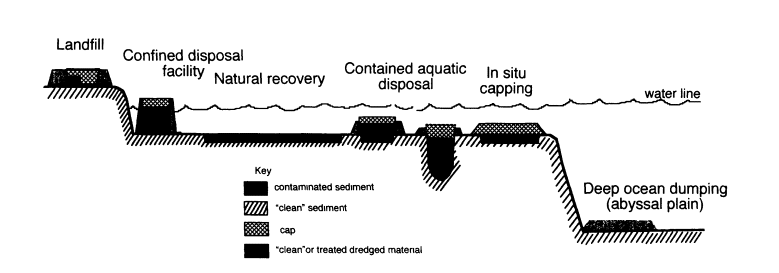
Possible migration pathways of contaminants from CDFs include effluent discharges to surface water during filling operations and subsequent settling and dewatering, rainfall-generated runoff, leaching into groundwater, volatilization to the atmosphere, and direct uptake. Direct uptake includes plant uptake, subsequent cycling through food chains, and direct uptake by animals. Effects on surface water quality, groundwater quality, air quality, plants, and animals depend on the characteristics of the dredged material, the management and operation of the site during and after filling, and the proximity of the CDF to potential receptors of the contaminants. If evaluations of contaminant pathways indicate that impacts will be unacceptable, special or additional management and contaminant control measures can be considered, including modification to the dredging operation or site; treatment of effluent, runoff, or leachate, treatment of dredged material solids; and site controls, such as surface covers or liners (USACE and EPA, 1992). Techniques for evaluating pathways have been developed (USACE and EPA, 1992; Myers et al., in press). Key considerations are summarized in Table 5-11.
The cost of using CDFs to contain contaminated sediments ranges from $15 to $50/yd3, plus the operation and maintenance costs associated with closed CDFs (EPA, 1993a). Thus, storage in a CDF can be less expensive than landfill disposal, which can cost $20 to $120/yd3 (EPA, 1994b). The design, construction, and operation of CDFs require conventional engineering approaches that have been used successfully for numerous other projects (USACE, 1987). A CDF can foster harbor development in urban areas; however, near-shore space may be difficult to find if wetlands must be consumed. In some cases it may be difficult to find an area and construct dikes in deep water to accommodate large volumes of material. If a freshwater CDF is located above an aquifer, controls may be required to prevent groundwater contamination or oxygenation of the sediment by rainfall, because the acids formed may cause the release of metals to groundwater.
Ex situ treatment usually requires a containment facility where the sediment is stored, dewatered, and pretreated (EPA, 1994a). Therefore, CDFs are often used in combination with pretreatment or more permanent treatment methods, a hybrid approach that offers the advantages of reducing, rather than simply transferring, contamination and fostering the reuse of storage space. Various processes are used to treat materials in CDFs. The pilot demonstration of bioremediation in a contained facility at Sheboygan River (cited earlier) is an example. A CDF can be similar to a bioreactor, which can be engineered to provide the conditions for stimulating microbial activity. CDFs can also be repositories for the natural degradation of contaminants. In studies of CDFs in Wisconsin and New York state, the USACE found that polyaromatic hydrocarbons appear to degrade in sunlight, suggesting that CDFs might be designed to advance natural processes by, for example, arranging for managed cycling of thin layers of sediments (T. Myers, USACE, personal communication to Marine Board staff, December 15, 1995).
TABLE 5-11 Confined Disposal Facility
|
State of Practice (system maturity, known pilot studies, etc.) |
Applicability |
Advantages/ Effectiveness |
Limitations |
Research Needs |
|
(a) The most commonly used placement alternative for contaminated sediments; (b) hundreds of sites nationwide for navigation dredging projects; (c) often used for pretreatment prior to final placement or as final sediment placement site for remediation projects. |
Applicable to a wide variety of sediment types and project conditions. |
(a) Low cost compared to ex situ treatment; (b) compatible with a variety of dredging techniques, especially direct placement by hydraulic pipeline; (c) proper design results in high retention of suspended sediments and associated contaminants; (d) engineering for basic containment normally involves conventional technology; (e) controls for containment pathways usually can be incorporated into site design and management; (f) conventional monitoring approaches can be used; (g) site can be used for beneficial purposes following closure, with proper safeguards. |
(a) Does not destroy or detoxify contaminants unless combined with treatment; (b) control of some contaminant-loss pathways may be expensive. |
(a) Design approaches, such as covers and liners, needed for low-cost contaminant controls; (b) design criteria for treatment of releases or control strategies for high-profile contaminants; (c) methods for site management to allow restoration of site capacity and potential use of treated materials. |
The recovery of CDF space is practical for navigation dredging, and management guidelines are available (Montgomery et al., 1978). In some parts of the country, reusing CDF space may be more cost effective than constructing new facilities now that soil washing costs have dropped to approximately $20/yd3 (J. Miller, USACE, personal communication to Marine Board staff, December 1, 1995). Reuse of the space may become increasingly common in both navigation and environmental dredging projects given rising construction costs and the difficulty of obtaining sites for new facilities. However, CDFs built in the 1970s were inexpensive (about $5/yd3), and local officials must be convinced that reusing them can be more cost effective than expanding them.
Contained Aquatic Disposal
CAD involves the controlled placement of contaminated material at an open-water location, followed by covering with clean material. This method is similar in many respects to in situ capping except the CAD method involves relocating and containing the contaminated material laterally to minimize the spread of contamination across the bottom. With lateral containment, the volume of sediment needed for capping material is also minimized. Strategic placement can involve taking advantage of bottom depressions (either natural or excavated) or of target areas behind subaqueous dikes. Covered sediment can also form low-level mounds, with clean material spread above and beyond the edges of the contaminated pile. Figure 5-3 is an illustration of CAD. Key considerations are summarized in Table 5-12.
The CAD approach is particularly useful for disposing of contaminated dredged material. It is also applicable to contaminated sites in waters that are too shallow to permit in situ capping. The technique has been used in the Duwamish Waterway in Seattle (Sumeri, 1984; Truitt, 1986), in other countries (Averett and Francingues, 1994), and is planned for use in Boston Harbor (see Appendix C). To the committee's knowledge, CAD has not been used in any environmental cleanup projects.
The state of practice of CAD for restoring bottom sediment is not well advanced. Like in situ capping, a successful CAD operation requires only that the cap that isolates the contaminated material be accurately placed and well maintained. It is important that CAD be carried out in areas where erosion is minimal or controllable. The USACE has developed guidelines for planning CAD projects (Truitt, 1987a,b), determining the required capping thickness (Sturgis and Gunnison, 1988), determining design requirements (Palermo, 1991a), selecting sites (Palermo, 1991b), evaluating equipment and placement techniques (Palermo, 1991c), and evaluating monitoring systems (Palermo et al., 1992). In cooperation with the EPA, the USACE has also developed guidelines for in-place capping for restoration purposes (Palermo and Miller, 1995). A joint USACE and EPA technical
TABLE 5-12 Contained Aquatic Disposal
|
State of Practice (system maturity, known pilot studies, etc.) |
Applicability |
Advantages/ Effectiveness |
Limitations |
Research Needs |
|
Limited application Reviews exist concerning (a) necessary data, equipment, and procedures; (b) engineering considerations; (c) guidelines for cap armoring design; (d) predicting chemical containment effectiveness. |
(a) Costs and environmental effects of relocation are factors; (b) suitable types and quantities of cap material are available; (c) hydrologic conditions will not compromise the cap; (d) cap can be supported by original bed; (e) appropriate for sites where excavation is problematic or removal efficiency is low; (f) cap material is compatible with existing aquatic environment. |
(a) Eliminates need to remove contaminated sediments; (b) cost effective for sites with large surface areas; (c) effective in containing contaminants by reducing bioaccessibility; (d) promotes in situ chemical or biological degradation, (e) maintain stable geochemical and geohydraulic conditions, minimizing contaminant release to surface water, groundwater, and air. |
(a) Laboratory and field validation of capping procedures and tools; (b) analysis of data from existing and ongoing field demonstrations to support capping effectiveness; (c) test for chemical release during evaluate bed placement and consolidation; (d) test to evaluate and stimulate the effect of cap penetration by deep burrowing organisms; (e) simulate and evaluate consequences of mixing; (f) potential loss of contaminants to the water column may require controls during placement. |
(a) Design criteria for treatment of releases or control strategies for high-profile contaminants; (b) improved methods for evaluation of potential contaminant release pathways; (c) develop reliable cost estimate. |
document for the subaqueous capping of dredged material is also in preparation (Palermo et al., in press).
A major advantage of CAD is that it can be performed with conventional dredging equipment, although the equipment may have to be operated in special ways. Also, unlike the CDF option, the chemical environment surrounding the contaminated material remains virtually unchanged because the sediment remains in the waters of its origin. A major consideration is the potential loss of contaminated sediments during placement operations. Controls comparable to the ones used with CDF technology must be applied to minimize such losses. Research is needed to improve control capabilities and to determine the effects of losses on the ecosystem and to assess the associated risks. Research on the long-term effectiveness of various types of capping, including CAD, is also needed. Resolution of these issues would probably enhance the acceptability of this technology for restoring contaminated sediment sites. The committee could not locate any useful data on the actual costs of CAD.
Another possible approach to subaqueous offshore containment, at least for small volumes of material, might be to encase contaminated sediments in woven or nonwoven permeable synthetic fabrics. The casings could be expected to eliminate losses during placement and to contain the contaminated sediment on the seafloor. Fabric has been used for some 30 years to make various types of receptacles, such as sandbags, geotextile tubing, and geotextile containers (see Fowler et al., 1994; Pilarczyk, 1994, and references therein). This approach was demonstrated with contaminated materials dredged from Marina del Ray in California, where the use of geotextile containers added more than $50/yd3 to the cost of the project (Clausner, 1996). Because most contaminants are sorbed to sediments and would not seep through the fabric, placement of filled geotextile bags in the water might be environmentally safe and would eliminate the need for land-based disposal sites. However, no data are available about the environmental effects of this approach (Clausner, 1996). A collection of bags could be capped, if necessary.
In addition to their utility in civil engineering projects and in the dewatering of dredged sediments, geotextile containers could provide a unique system for demonstrating emerging ex situ bioremediation technologies for certain contaminants. As disposal sites become increasingly difficult to find, the treatment of contaminated sediments in constructed cells, CDFs, or geotextile containers could be ways of reusing scarce sites.
Another idea that has received some attention is the placement of contained wastes on the abyssal plain (roughly 4,500 m deep) in the ocean. This idea was recently examined in a U.S. Department of Defense-sponsored study of ways to place and monitor clean dredged material, sewage sludge, and combustion fly ash (Valent and Young. 1995). The most attractive technique involves the use of fabric-like containers to isolate wastes from the water column during deployment from the transport ship or barge. Although this proposal has technical merit, legal
barriers (dumping of contaminated sediments in the open ocean is not allowed) and environmental uncertainties must still be investigated. And because of the expense of the long-distance ocean transport of contaminated sediment, the cost-effectiveness of this idea needs to be closely examined.
Landfill Disposal
Contaminated dredged material sometimes is placed in licensed solid-waste landfills. Dredged material has also been used on a limited basis as solid-waste landfill cover. Placement in landfills may be an affordable and timely disposal option, especially for small volumes of contaminated material. Treated dredged material from remediation projects has been placed in landfills for nonhazardous solid waste, sometimes at great distances from the remediation site. For example, treated sediment from the Marathon Battery Superfund site in New York was transported to a landfill in Michigan (see Appendix C), and the Record of Decision (ROD) for the United Heckathorn Superfund site in California calls for placing sediment in a landfill in Utah (Palermo, 1995). Key considerations are summarized in Table 5-13.
In some ways, landfill disposal and the containment of contaminated sediments are similar to the methods used for handling municipal and conventional hazardous waste. However, handling sediment differs dramatically from conventional landfill operations because the contaminated sediments usually have a high water content or are in slurry form. Solid-waste landfills cannot accept free liquids so the sediments must be dewatered. Use of a CDF as a pretreatment facility for dewatering sediments, or mechanical dewatering and possibly stabilization, are steps that can be taken prior to transporting sediment to a landfill. Another factor limiting landfill placement is that licensed landfills in most regions of the country do not have the capacity to accommodate large volumes of additional material.
EVALUATING THE PERFORMANCE OF TECHNOLOGIES AND CONTROLS
The performance of sediment management technologies and controls must be evaluated for every project, not only to determine if specific objectives have been met but also to gather data for improving the state of the art. Monitoring is the principal method of evaluating performance. The subject of monitoring sites targeted for remediation was addressed previously by the NRC (1990). However, the committee wishes to emphasize the importance of performance evaluation and to point out several ways current approaches might be improved. Three topics are discussed: interim controls, long-term monitoring, and cost-benefit analysis.
TABLE 5-13 Landfills
|
State of Practice (system maturity, known pilot studies, etc.) |
Applicability |
Advantages/ Effectiveness |
Limitations |
Research Needs |
|
Used for several dredged material and Superfund projects involving contaminated sediments. |
(a) Small volumes; (b) where no other alternatives or sites are available. |
(a) Does not require acquisition of permanent placement site; (b) may be most cost effective for small volumes; (c) effectiveness is inherent in the site license. |
(a) Lack of landfill capacity in most regions of the country; (b) requires handling and transport to the landfill; (c) restriction on free liquids requires dewatering as a pretreatment step. |
Improved methods for rehandling, dewatering, and transporting dredged sediments. |
Evaluation of Interim Controls
Little is known about the effectiveness of interim controls. Administrative measures, such as the surveys cited earlier that focused on fishermen's attitudes (Belton et al., 1985), would be helpful. The direct observation of structural controls, such as the approach used at Manistique Harbor in Michigan (a project discussed earlier in this chapter), would not only provide physical evidence of performance but could also be designed to evaluate risk reduction. To be most useful, monitoring should be done with an eye toward improving the future application of interim controls.
Long-Term Monitoring
Monitoring can involve physical, chemical, biological, or toxicological processes, or combinations thereof. Monitoring needs to have a specific purpose and must be tailored to the specific remediation process or technology.
For example, monitoring in situ and ex situ containment systems needs to include physical assessment of the barrier, chemical analysis of contaminant mobility, and, perhaps, measurement of biological characteristics. Monitoring during treatment must take place at appropriate intervals. Systems for monitoring incinerator performance, for example, respond to upsets in minutes. Given the expense and time required to measure metal, PCB, and polyaromatic hydrocarbon concentrations, monitoring systems usually measure other aspects of process performance, such as measuring for the presence of carbon monoxide in effluent gases as an indicator of incomplete combustion. The monitoring of treatments that involve the repeated washing of sediments in batches may require chemical analysis of each batch of sediment.
Because the utility of predictions provided by numerical models is limited by uncertainties and gaps in the scientific and technical knowledge, field monitoring of contaminated sites is needed before, during, and after remediation. Monitoring may provide surprising results, so the site management structure must be sufficiently flexible to respond to new information or unexpected events.
The committee's major concern about monitoring is the apparent asymmetry in the current state of practice. Initial site assessments to define contamination levels and distribution are carried out with great precision. But post-project monitoring tends to be more qualitative than quantitative. In most cases, no effort is made to examine directly whether specific, risk-based objectives were actually met. Risk-based monitoring could not only improve the rigor of project evaluation but could also provide data for the calibration of methods for predicting success.
Cost-Effectiveness Analysis
It is extremely difficult to evaluate the costs associated with remediation technologies because the data are not collected in a uniform manner. Available data are inconsistent with respect to both the types of costs included and the units of measure (e.g., cubic yards, tons, hectares). Geographical variations are not usually considered. The problem stems partly from the lack of a formal structure for reporting cost data. Even if good cost data were available, improved methods of measuring effectiveness would be needed for reliable comparative analyses of technologies on the basis of cost effectiveness. But post-project monitoring tends to be qualitative rather than quantitative.
Although the available cost data are limited, they are sufficient for estimating cost ranges for various remediation technologies. The costs of removing and transporting contaminated sediments (generally less than $15 to $20/yd3) tend to be higher than the costs of conventional dredging (seldom more than $5/yd3) but much lower than the costs of ex situ treatment (which can cost well over $1 00/yd3 and sometimes more than $1,000/yd3). For systems involving precision dredging technology, there is a potential for reducing costs still further. Volume reduction (i.e., removing only those sediments that require treatment and entraining as little water as possible) can mean greater cost savings than increased dredging rates. When the volume of contaminated sediment exceeds 10,000 yd3, total treatment costs can be appreciable, but economy of scale reduces the unit cost.
Treatment costs can also be reduced through pretreatment to separate contaminated silt- and clay-sized particles from generally cleaner sand; however, the cost of this process ($20 to $50/yd3) is generally justified only if there is a large proportion of sand. The costs of in situ treatments could be less than $100/yd3, but in situ approaches have not been demonstrated. Given the chemical complexity of the waste mixtures, it is likely that a sequence of treatment processes will be required.
It is important to emphasize that the absence of detailed, reliable cost data for many remediation technologies does not pose a major barrier to project planning because the unique conditions (geographical and otherwise) of each situation demand that costs always be estimated individually for each case. However, improved reporting of cost information for full-scale remediation systems would permit fair, overall comparisons and would provide benchmarks for future R&D and systems design. The collection of reliable, standardized cost data would help decision makers quickly choose technologies that could be effective at a particular site within a given budget. The need for standardized cost data for environmental cleanup projects in general has been recognized by some government9
and industrial leaders, who are collaborating to develop a uniform approach (Rubin, 1995).
RESEARCH, DEVELOPMENT, TESTING, AND DEMONSTRATION
Needs for R&D, testing, and demonstration programs have been identified throughout this chapter. Specifically:
- Few data are available on the use or effectiveness of interim control technologies, and some promising approaches, such as using CDFs for the temporary storage and treatment of contaminated sediments, have yet to be developed fully.
- The use of in situ technologies is limited by a lack of understanding of the fundamental processes of the transport, degradation, and biological accumulation of contaminants under both natural and engineered conditions, coupled with the difficulty of implementation and process control in extremely variable and complex natural environments.
- The United States has little experience with environmental dredging because the approach is fairly new. Some specialized sediment removal systems are available for unusual site conditions and, through demonstration programs, they could be applied in a wider range of circumstances. But the advantages of specialized equipment as compared with conventional dredges must be documented through direct field comparisons. Advances in the precision and accuracy of dredging can be applied widely and make sense as long as they are consistent with the level of definition of the vertical and horizontal extent of contamination.
- The implementation of CDFs and CAD could be improved. Design criteria for the control of contaminant release pathways, low-cost treatment options, and management approaches to permit the reuse of storage capacity are needed, as is the development of potential beneficial uses for treated material. The use of CAD requires improved tools for the designing and monitoring of sediment caps and armor layers and for evaluating cap placement and the long-term stability of caps and their effectiveness in isolating contaminants.
- Ex situ treatment technologies are still at an early stage of development. The costs of these processes need to be reduced. In addition, these technologies need to be evaluated with respect to their effectiveness in reducing environmental exposures from contaminants released to air and water, as well as from contaminants that remain in the sediments.
The importance of attending to each stage of the technology development process cannot be overemphasized. The process spans five phases: concept, bench scale, pilot scale, demonstration (field scale), and commercialization. Very little
work with marine sediments has gone beyond the bench-scale stage, where theories and empirical experience are tested in the laboratory. Because of the unique characteristics of any site and the lack of experience with many sediment handling and remediation technologies, bench-scale and pilot-scale tests, as well as demonstration projects, are needed prior to the full-scale implementation of innovative approaches. The success of the ARCS research and planning program in the Great Lakes can be attributed, in part, to the emphasis on technology demonstration, as well as to the scientific rigor imposed by peer review of proposed methods. Another program is under way for remediating New York Harbor sediments that will bench test, pilot test, and demonstrate treatment technologies (Stern et al., 1994), but more work is needed.
There is a particular need for side-by-side comparisons of innovative and conventional dredging and remediation technologies so that developers' claims can be evaluated and verified. At present, there is no formal, unbiased mechanism for identifying and evaluating emerging technologies, and new ideas are transferred to the field very slowly. In the United States, detailed demonstrations and comparisons of sediment-handling and remediation technologies have been limited to the ARCS program and the EPA's Superfund Innovative Technology Evaluations (SITE) program, in which manufacturers pay for the demonstration of new technologies for the cleanup of toxic and hazardous waste sites. Following the SITE program model, a mechanism could be established for making unbiased technical evaluations of innovative sediment-handling and remediation technologies based on real-time, realistic project conditions. The program could arrange for side-by-side demonstrations of innovative and conventional technologies at suitable sites under strict protocols for technical and economic evaluations.
COMPARATIVE ANALYSIS OF TECHNOLOGY CATEGORIES
The committee considered various ways of summarizing its evaluation of remediation technologies and ultimately settled on a qualitative comparison based on key attributes. Table 5-14 provides the foundation for the comparison by summarizing the state of practice for the general technology categories, using information provided in this chapter. Building on this information, Table 5-15 displays the committee's overall assessment using the criteria identified in the statement of task. This section discusses Table 5-15, which was developed by the committee based on the analysis in this report and the experience and expertise of individual committee members.
The column on effectiveness is an order-of-magnitude estimate of contaminant reduction or isolation and removal efficiency; the score is roughly equivalent to the total number of 9s in the removal efficiency (e.g., a score of 3 is three 9s or 99.9 percent removal efficiency). The feasibility column represents the extent of technology development. The lowest score means a concept has not been verified experimentally; the next-lowest score means a technology has been
TABLE 5-14 Qualitative Comparison of the State of the Art in Remediation Technologiesa
|
Feature technology |
State-of-design Guidance |
Number of Times Used |
Scale of Application |
Cost (per cubic yard) |
Limitationsb |
|
Natural recovery |
Nonexistent |
2 |
Full scale |
Low |
Source control |
|
Sedimentation |
|||||
|
Storms |
|||||
|
In-place containment |
Developing rapidly |
< 10 |
Full scale |
< $20 |
Limited technical guidance |
|
Legal/regulation uncertainty |
|||||
|
In-place treatment |
Nonexistent |
≈2 |
Pilot scale |
Unknown |
Technical problems |
|
Few proponents |
|||||
|
Need to treat entire volume |
|||||
|
Excavation and containment |
Substantial and well developed |
Several hundred |
Full scale |
$20 to $100 |
Site availability |
|
Public assistance |
|||||
|
Excavation and treatment |
Limited and extrapolated from soil |
< 10 |
Full scale |
$50 to $1,000 |
High cost |
|
Inefficient for low concentration |
|||||
|
Residue toxic |
|||||
|
Need for treatment train |
|||||
|
a Estimates for North America. b See Table 5-15 for further details. |
|||||
TABLE 5-15 Comparative Analysis of Technology Categories
|
Approach |
Feasibility |
Effective |
Practicality |
Cost |
|
INTERIM CONTROL |
|
|
|
|
|
Administrative |
0 |
4 |
2 |
4 |
|
Technological |
1 |
3 |
1 |
3 |
|
LONG-TERM CONTROL |
|
|
|
|
|
In Situ |
|
|
|
|
|
Natural recovery |
0 |
4 |
1 |
4 |
|
Capping |
2 |
3 |
3 |
3 |
|
Treatment |
1 |
1 |
2 |
2 |
|
Sediment Removal and Transport |
2 |
4 |
3 |
2 |
|
Ex Situ Treatment |
|
|
|
|
|
Physical |
1 |
4 |
4 |
1 |
|
Chemical |
1 |
2 |
4 |
1 |
|
Thermal |
4 |
4 |
3 |
0 |
|
Biological |
0 |
1 |
4 |
1 |
|
Ex Situ Containment |
2 |
4 |
2 |
2 |
|
SCORING |
|
|
|
|
|
0 |
< 90% |
Concept |
Not acceptable, very uncertain |
$1,000/yd3 |
|
1 |
90% |
Bench |
|
$100/yd3 |
|
2 |
99% |
Pilot |
|
$10/yd3 |
|
3 |
99 9% |
Field |
|
$l/yd3 |
|
4 |
99 99% |
Commercial |
Acceptable, certain |
< $1/yd3 |
demonstrated at the bench level in a small (typically a batch) reactor. Higher scores represent, in ascending order, a pilot-scale demonstration using contaminated sediments in a volume on the order of a few cubic yards, a field-scale demonstration using tens of cubic yards, and finally, a commercial operation. The practicality ranking reflects public acceptance; a score of 0 means the public would not tolerate such an activity, and a score of 4 means a technology would be viewed favorably. The practicality ranking also includes some qualitative measure of uncertainty, which can be a deciding factor to a risk-averse regulatory community and public. Finally, the cost score is inversely related to the treatment cost, with incineration being the most expensive and thus assigned the lowest score. Costs do not include expenses associated with monitoring, environmental resource damages, or the costs imposed on the public by closure of a commercial fishery or loss of subsistence fishing.
In the category of interim controls, two approaches were considered: administrative controls that provide warnings and structural controls that isolate contaminated sediments from humans and ecosystems. Administrative controls, such as the controls used during the natural restoration of the James River estuary, are probably less than 90 percent effective in limiting human consumption of finfish and shellfish contaminated by sediments. Administrative controls would be most effective in restricting commercial operations and least effective in limiting subsistence fishing, particularly fishing by individuals unable to read posted signs. Administrative controls do not limit ecosystem exposures unless measures are taken to exclude wildlife from contaminated areas. Administrative controls appear to be practical although the public perceives that the responsible parties are doing nothing besides posting signs. The costs of administrative interim controls are very low, but there is some uncertainty as to the type and level of monitoring program that would be required.
Technology-based interim controls have the potential to effectively limit contaminant releases to the ecosystem, although there has been little experience with this approach. The practicality score is low because of concerns that the contamination will not be remediated completely. The cost is relatively low, but it can rise if extensive monitoring, which may last indefinitely, is required. The potential exists for cost savings if the interim control becomes the long-term control, but there is an alternative risk of increasing costs in the future if the interim control has to be removed. In the latter case (e.g., if removal of a cap resulted in the mixing of clean and contaminated sediment), the project might entail the removal and treatment of larger volumes of diluted, contaminated sediments than were present originally.
Although in situ controls are attractive in some ways, there is considerable doubt about their effectiveness and practicality. Natural recovery is of limited effectiveness in preventing contaminant release into the ecosystem, because this approach depends on natural processes of burial by sedimentation and contaminant destruction or sequestration by physical, chemical, or microbial processes. Natural recovery was demonstrated at the James River. The cost borne by the responsible party and the regulatory community is low.
In situ control by in-place capping involves a number of trade-offs compared with natural recovery. Laboratory experiments and calculations based on chemical and physical principles indicate that capping should be at least 99 percent effective in reducing contaminant release over the long term. The technology has been demonstrated at the field scale, although long-term performance has not been verified. Some stakeholders view capping as a temporary solution and thus of less-than-optimum practicality. Costs, including monitoring, are moderate.
In situ treatment using physical, chemical, and biological approaches is at an early stage of development and testing. Limited information is available on the effectiveness of these processes because most studies have not gone beyond the
bench scale. Given the limited experience and the uncertainties about effectiveness and cost, in situ treatment may seldom be acceptable to risk-averse decision makers and stakeholders.
The next category, sediment removal and transport, is the first step in ex situ remediation. There is an extensive U.S. commercial experience base for this technology with navigation dredging and the placement of dredged material. Sediments can be recovered and isolated with contaminant losses of approximately 2 to 5 percent. Experience with clean sediments provides reasonable certainty regarding the feasibility and cost, although the practicality of dredging is often not completely accepted by the public, particularly when contaminated sediments are involved. Costs are moderate for environmental dredging and for transport.
A wide array of ex situ technologies has been considered. Four general treatment categories and one containment technology are listed in Table 5-15. These approaches are feasible and practical although they are costly, and few have been demonstrated at pilot or full scale. Physical treatment methods separate sediments based on size and density. The approach is commercially feasible in large-scale mining operations and has been used in the management of contaminated sediments. The effectiveness of physical separation can be on the order of 90 percent if the contaminants selectively associate with a small mass fraction of the sediments that can be isolated; further treatment of the concentrated contaminants is then required. Costs are moderate.
Ex situ chemical treatments are less well developed than physical separation technologies. The effectiveness rating is low because results to date at the bench and pilot scales show only 90 percent recovery of contaminants. For sediments contaminated by both organics and metals, even lower recoveries can be expected, and multiple treatment processes need to be sequenced. Because full-scale experience with contaminated sediments is limited, the feasibility score of chemical treatments is also low.
Thermal technologies have the highest effectiveness of any remediation technology, with the capability of destroying more than 99.99 percent of organic contaminants, including PCBs. There has been considerable commercial experience in destroying hazardous waste by incineration, and the regulatory community and most stakeholders understand the principles of this approach. But there is still some skepticism about the technology. The major drawback to thermal destruction is high cost, which can reach $1,000/yd3 at low processing rates.
Ex situ biological treatment approaches have some potential, and the concept is supported by most stakeholders. However, few data are available on effectiveness, and studies have been limited to the bench scale. Much of the expertise evolving with the biological remediation of soils and groundwater can be applied to sediments, but additional research is needed to adapt to the unique contaminant mixtures, the saltwater content, and the fined-grained nature of marine sediments. In addition, knowledge is limited concerning the effects of contaminant mixtures, particularly mixtures of organics and metals, on biological processes.
The containment of residues in a facility above or under the water is a common sediment management technique, so there is a record of performance. Containment systems are effective in containing at least 99 percent of the contaminants initially and can provide long-term isolation if the physical integrity of the container is maintained. The major downside to this approach is the difficulty of finding sites for the facilities and gaining public acceptance of a landfill for sediments. The costs are low to moderate.
Of most interest to the committee is the obvious need to make trade-offs in the selection of technologies. Interim controls and in situ approaches are both feasible and relatively inexpensive but limited in terms of effectiveness, practicality, and uncertainty. Ex situ approaches require sediment removal and transport, which receive high scores, combined with treatment and containment approaches, which receive good scores for feasibility and practicality but low scores for effectiveness and cost. Thus, the decision maker is left in the uncomfortable position of trading off low-cost, less-effective, less-practical, yet feasible interim controls and in situ approaches, as compared with the most practical ex situ approaches, which can be effective but tend to be expensive and complex. The magnitude of the contamination problem and site-specific considerations can guide the decision maker in analyzing these alternatives. One solution to this dilemma can be found through cost-benefit analysis (see Chapter 2), a decision tool that uses remediation technologies as one of several inputs.
In comparing the results of the qualitative assessment with the history of use (Table 5-14), it appears that feasibility and practicality are the most important considerations in the implementation of technologies or controls and that high cost is a serious disincentive.
REFERENCES
Abramowicz, D.A., M.R. Harkness, J.B. McDermott, and J.J. Salvo 1992. 1991 In situ Hudson River Research Study: A Field Study on Biodegradation of PCBs in Hudson River sediments. Schenectady, New York: General Electric Corporation Research and Development.
Allen, J.P. In press. Mineral Processing Pre-treatment of Contaminated Sediment. Great Lakes National Program Office. Chicago: EPA.
Alluvial Mining Group, Ltd. 1993. Tramrod with Environmental Dredging Tools. Operations Manual. Document No. RBW-AM-931. Sudbury, Suffolk, United Kingdom: Alluvial Mining Group, Ltd.
Averett, D.E. and N.R. Francingues. 1994. Sediment remediation: An international review. Pp. 596-605 in Dredging '94: Proceedings of the 2nd International Conference on Dredging and Dredged Material Placement. E.C. McNair, Jr, ed. New York: American Society of Civil Engineers.
Averett, D.E., B.D. Perry, E.J. Torrey, and J.A. Miller. 1990. Review of removal, containment and treatment technologies for remediation of contaminated sediment in the Great Lakes. Miscellaneous Paper EL-90-25. Vicksburg, Mississippi: U.S. Army Engineer Waterways Experiment Station.
Belton, T., B. Ruppel, K. Lockwood, S. Shiboski, G. Bukowski, R. Roundy. N. Weinstein, D. Wilson, and H. Whelan. 1985. A Study of Toxic Hazards to Urban Recreational Fishermen and Crabbers. New Jersey Department of Environmental Protection, Office of Science and Research, and Cook College-Rutgers University, Department of Human Ecology. September 15.
Bohlen, W.F. 1978. Factors governing the distribution of dredge resuspended sediments. Pp. 2001-2019 in Proceedings of the 16th Coastal Engineering Research Conference held August 17-September 3, 1978, in Hamburg, Germany. New York: American Society of Civil Engineers.
Bragg J.R., R.C. Prince, E.J. Hamer, and R.M. Atlas. 1994. Effectiveness of bioremediation for the Exxon Valdez oil spill. Nature 368 413-418.
Buchberger, C. 1992. Environment Canada tests cable arm bucket on contaminated sediment in Toronto. International Dredging Review 11(5): 6-7.
Buchberger, C. 1993. Environment Canada demonstrations: remediation technologies for the removal of contaminated sediments in the Great Lakes. Terra et Aqua, International Journal on Public Works, Ports, and Waterways Developments (50): 3-13.
Caulfield, D.D., A. Ostaszewski, and J. Filkens. 1995. Precision Digital Hydroacoustic Sediment Characterization: Analysis in the Trenton Channel of the Detroit River. Paper presented at the 1995 Conference on Great Lakes Research. East Lansing: Michigan State University.
Clausner, J.E. 1996. Potential Application of Geosynthetic Fabric Containers for Open Water Placement of Contaminated Dredged Material. Technical Note EEDP-01-39. Vicksburg, Mississippi: U.S. Army Engineer Waterways Experiment Station.
Clausner, J.E., W.A. Birkemeier, and G.R. Clark. 1986. Field Comparison for Four Nearshore Survey Systems. Miscellaneous Paper CERC-86-6. Vicksburg, Mississippi: U.S. Army Engineer Waterways Experiment Station.
Collins, M.A. 1995. Dredging-Induced Near-Field Resuspended Sediment Concentrations and Source Strengths. Miscellaneous Paper D-95-2. Vicksburg, Mississippi: U.S. Army Engineer Waterways Experiment Station.
Crockett, T.R. 1993. Modeling Near Field Sediment Resuspension in Cutterhead Suction Dredging Operations. Master's thesis. Lincoln: University of Nebraska.
Cundy, D.F., and W.F. Bohlen. 1982. A numerical simulation of the dispersion of sediments suspended by estuarne dredging operations. Pp. 339-352 in Estuanne and Wetlands Processes. P. Hamilton and K.B. MacDonald, eds. New York: Plenum.
Detzner, H.D. 1993. Mechanical treatment of the dredged material from Hamburg Harbor. Pp. 3.25-3.28 in Proceedings of the CATS II Congress 1993. Antwerp, Belgium: Technological Institute of the Royal Flemish Society of Engineers.
Digiano, F.A., C.T. Miller, and J. Yoon. 1993. Predicting release of PCBs at point of dredging. Journal of Environmental Engineering 119(1): 72-89.
Digiano, F.A., C.T. Miller, and J. Yoon. 1995. Dredging Elutriate Test (DRET) Development Contract Report D-95-1. Vicksburg, Mississippi: U.S. Army Engineer Waterways Experiment Station.
Edgar, C.E., and R.M. Engler. 1984. The London Dumping Convention and its role in regulating dredged material: An update. Pp. 240-249 in Dredging and Dredged Material Disposal, ASCE Specialty Conference Dredging 1984, vol. 1. New York: American Society of Civil Engineers.
Environmental Protection Agency (EPA). 1989. Solidification and stabilization of CERCLA and RCRA wastes. Washington, D.C.: EPA.
EPA. 1990. Record of Decision, New Bedford Harbor Pilot Dredging Project. Boston: EPA, Region 1.
EPA. 1991. Handbook—Remediation of Contaminated Sediments. EPA-625/6-91-028. Center for Environmental Research Information, Office of Research and Development. Cincinatti: EPA.
EPA. 1993a. Selecting Remediation Techniques for Contaminated Sediment. Office of Water. EPA-823-B93-001. Washington, D.C.: EPA.
EPA. 1993b. Remediation Technologies Screening Matrix and Reference Guide. Office of Solid Waste and Emergency Response. EPA-542-B-93-005. Washington, D.C.: EPA.
EPA. 1994a. Assessment and Remediation of Contaminated Sediments (ARCS) Program, Final Summary Report. Great Lakes National Program Office. EPA-905-S-94-001. Chicago: EPA.
EPA. 1994b. Assessment and Remediation of Contaminated Sediments (ARCS) Program. Remediation Guidance Document. Great Lakes National Program Office. EPA 905-R94-003. Chicago: EPA.
EPA. 1994c. Superfund Record of Decision: Sangamo Weston/Twelve-Mile Creek/Lake Hartwell Site, Pickens, Georgia. Office of Emergency and Remedial Response. EPA/ROD/R04-94/178. Washington D.C.: EPA.
Fowler, J., D.J. Sprague, and D. Toups. 1994. Dredged Material-Filled Geotextile Containers, Environmental Effects of Dredging. Technical Notes. Vicksburg, Mississippi: U.S. Army Engineer Waterways Experiment Station.
Frodge, S.L., B.W. Remondi, and D. Lapucha. 1994. Dredging Research Technical Notes, Real-Time Testing and Demonstration of the U.S. Army Corps of Engineers' Real-Time On-The-Fly Positioning System. DRP-4-10. Vicksburg, Mississippi: U.S. Army Engineer Waterways Experiment Station.
Galloway, J.E., and F.L. Snitz. 1994. Pilot-scale demonstration of sediment washings. Pp. 981-990 in Dredging '94: Proceedings of the 2nd International Conference on Dredging and Dredged Material Placement. E.C. McNair, Jr., ed. New York: American Society of Civil Engineers.
Garbaciak, S. 1994. Laboratory and field demonstrations of sediment technologies by the U.S. EPA's Assessment and Remediation of Contaminated Sediments (ARCS) Program. Pp. 567-578 in Dredging '94: Proceedings of the 2nd International Conference on Dredging and Dredged Material Placement. E.C. McNair, Jr., ed. New York: American Society of Civil Engineers.
Gibbs, R.J. 1973. Mechanisms of trace metal transport in rivers. Science 180: 71-73.
Hahnenberg, J. 1995. Presentation at the Workshop on Interim Controls held July 31, 1995. Committee on Contaminated Sediments, National Research Council. Chicago: EPA Headquarters.
Harkness, M.R., J.B. McDermott, D.A. Abramowicz, J.J. Salvo, W.P. Flanagan, M.L. Stephens, F.J. Mondello, R.J. May, and J.H. Lobos. 1993. In situ stimulation of aerobic PCB biodegradation in Hudson River sediments, Science 259: 503-507.
Hayes, D.F. 1993. Assessing impacts of environmental dredging operations. Pp. 161-172 in Proceedings of the 16th U.S./Japan Experts Meeting on Management of Bottom Sediments Containing Toxic Substances held October 12-14, 1993, in Kitakyushu, Japan. Unpublished.
Hayes, D.F., N. McLellan, and C.L. Truitt. 1988. Demonstrations of Innovative and Conventional Dredging Equipment at Calumet Harbor, Illinois. Miscellaneous Paper EL-88-1. Vicksburg, Mississippi: U.S. Army Engineer Waterways Experiment Station.
Herbich, J.B. 1995. Removal of contaminated sediments: Equipment and recent field studies. Pp. 77-111 In Dredging, Remediation, and Containment of Contaminated Sediments. K.R. Demars, G.N. Richardson, R.N. Yong, and R.C. Chaney, eds. ASTM STP 1293. Philadelphia: American Society of Testing and Materials.
Herbich, J.B., and J. DeVnes. 1986. An Evaluation of the Effects of Operational Parameters on Sediment Resuspension Dunng Cutterhead Dredging Using a Laboratory Model Dredge System. Report No. CDS 286. College Station: Texas A&M University.
Herbich, J.B., and S.B. Brahme. 1991. Literature Review and Technical Evaluation of Sediment Resuspension Dunng Dredging . Contract Report HL-91-1. Prepared for the U.S. Army Engineer Waterways Experiment Station, Vicksburg, Mississippi.
Holgné, J. 1988. The chemistry of ozone in water. Pp. 121-143 in Process Technologies for Water Treatment. S. Stucki, ed. New York: Plenum.
Hua, I., R.H. Hochemer, and M.R. Hoffmann. 1995. Sonochemical degradation of p-nitrophenol in a parallel-plate near-field acoustical processor. Environmental Science and Technology 29(11): 2790-2796.
Huggett, R.J., and M.E. Bender. 1980. Kepone in the James River. Environmental Science and Technology 14(8): 918-923.
Kato, H.1993. Development of thin-layer dredging equipment with belt conveyor. Pp. 173-190 in Proceedings of the 16th U.S./Japan Experts Meeting on Management of Bottom Sediments Containing Toxic Substances held October 12-14, 1993, in Kitakyushu, Japan. Unpublished.
Keillor, J.P. 1993. Obstacles to the remediation of contaminated soils and sediments in North America at reasonable cost. In Proceedings of the CATS II Congress: Characterization and Treatment of
Contaminated Dredged Material. Antwerp, Belgium: Technological Institute of the Royal Flemish Society of Engineers.
Kenna, B.T., S.M. Yaksich, D.E. Averett, and M.A. Zappi. 1994. Demonstration of equipment for dredging contaminated sediments at Buffalo River, Buffalo, New York. Pp. 885-895 in Dredging '94: Proceedings of the 2nd International Conference on Dredging and Material Placement. E.C. McNair, Jr., ed. New York: American Society of Civil Engineers.
Krahn, H.P. 1990. Feasibility Study of Estuary and Lower Harbor Bay, New Bedford, Massachusetts, vol. 2. EBASCO Services, Inc.
McGee, R.G., R.F. Ballard, Jr., and D.D. Caulfield. 1995. A Technique to Assess the Characteristics of Bottom and Subbottom Manne Sediments. Technical Report DRP-95-3. Vicksburg, Mississippi: U.S. Army Engineer Waterways Experiment Station.
McLellan, T.N., R.N. Havis, D.F. Hayes, and G.L. Raymond. 1989. Field Studies of Sediment Resuspension Characteristic of Selected Dredges. Technical Report HL-89-9. Vicksburg, Mississippi: U.S. Army Engineer Waterways Experiment Station.
Miller, J.1995. Presentation at the Workshop on Interim Controls held July 31, 1995. Committee on Contaminated Sediments, National Research Council. Chicago: EPA Headquarters.
Montgomery, R.L., A.W. Ford, M.E. Poindexter, and M.J. Bartos. 1978. Guidelines for Dredged Material Disposal Area Reuse Management. Technical Report DS-78-12. Vicksburg, Mississippi: U.S. Army Engineer Waterways Experiment Station.
Moore, J.N., E.J. Brook, and C. Johns. 1989. Grain size partitioning of metals in contaminated coarse-grained river flood plain sediment, Clark Fork River, Montana, USA. Environmental Geology and Water Science 14(2): 107-115.
Myers, T.E., and M.E. Zappi. 1992. Laboratory evaluation of stabilization/solidification technology for reducing the mobility of heavy metals in New Bedford Harbor Superfund site sediment. Pp. 304-319 in Stabilization and Solidification of Hazardous, Radioactive, and Mixed Wastes, vol. 2. T.M. Gilliam and C.C. Wiles, eds. ASTM STP 1123. Philadelphia: American Society of Testing and Materials.
Myers, T.E., M.R. Palermo, T.J. Olin, D.E. Averett, D.D. Relble, J.L. Martin, and S.C. McCutcheon. In press. Estimating Contaminant Losses from Components of Remediation Alternatives for Contaminated Sediments. Great Lakes National Program Office. Report prepared for U.S. Environmental Protection Agency, Chicago, Illinois.
Nakles, D.V., and D.G. Linz, eds. In press. Environmentally Acceptable Endpoints in Soil. Annapolis, Maryland: American Academy of Environmental Engineers.
National Research Council (NRC). 1989. Contaminated Marine Sediments: Assessment and Remediation, Washington, D.C.: National Academy Press.
NRC. 1990. Managing Troubled Waters: The Role of Marine Environmental Monitoring. Washington, D.C.: National Academy Press.
Otis, M.J. 1992. A pilot study of dredging and disposal alternatives for the New Bedford Harbor, Massachusetts, Superfund site. In Proceedings of the 14th U.S./Japan Experts Meeting on Management of Bottom Sediments Containing Toxic Substances in Yokohama, Japan. T.R. Patin, ed. Vicksburg, Mississippi: U.S. Army Engineer Waterways Experiment Station.
Otis, M.J. 1994. New Bedford Harbor. Massachusetts, dredging/disposal of PCB-contaminated sediments. Pp. 579-595 in Dredging '94: Proceedings of the 2nd International Conference on Dredging and Material Placement. E.C. McNair, Jr., ed. New York: American Society of Civil Engineers.
Palermo, M.R. 1991a. Design Requirements for Capping. Dredging Research Technical Notes, DRP-05-03. Vicksburg, Mississippi: U.S. Army Engineer Waterways Experiment Station.
Palermo, M.R. 1991b. Site Selection Considerations for Capping. Dredging Research Technical Notes, DRP-5-04. Vicksburg, Mississippi: U.S. Army Engineer Waterways Experiment Station.
Palermo, M.R. 1991c. Equipment and Placement Techniques for Capping. Dredging Research Technical Notes, DRP-5-05. Vicksburg, Mississippi: U.S. Army Engineer Waterways Experiment Station.
Palermo, M.R. 1995. Considerations for disposal of dredged sediments in solid waste landfills. Paper prepared for the 16th Technical Conference of the Western Dredging Association and the 28th Annual Texas A&M Dredging Seminar and University of Wisconsin Sea Grant Dredging Workshop held May 23-26, 1995, in Minneapolis, Minnesota. Available from M. R. Palermo, U.S. Army Engineer Waterways Experiment Station, Vicksburg, Mississippi.
Palermo, M.R., and J. Miller. 1995. Strategies for management of contaminated sediments. Pp. 289-296 in Dredging, Remediation, and Containment of Contaminated Sediments. K.R. Demars, G.N. Richardson, R.N. Yong, and R.C. Chaney, eds. ASTM STP 1293. Philadelphia: American Society of Testing and Materials.
Palermo, M.R., T.J. Fredette, and R.E. Randall. 1992. Monitoring Considerations for Capping. Dredging Research Technical Notes, DRP-05-07. Vicksburg, Mississippi: U.S. Army Engineer Waterways Experiment Station.
Palermo, M.R., R.M. Engler, and N.R. Francingues. 1993. The U.S. Army Corps of Engineers perspective on environmental dredging. Buffalo Environmental Law Journal 1(2): 243-253.
Palermo, M.R., R.E. Randall, T. Fredfette, and J. Clausner. In press. Technical Guidance for Subaqueous Dredged Material Capping. Vicksburg, Mississippi: U.S. Army Engineer Waterways Experiment Station.
Pelletier, J.P. 1995. Demonstrations and commercial applications of innovative sediment removal technologies. Pp. 112-127 in Dredging, Remediation, and Containment of Contaminated Sediments. ASTM STP 1293. Philadelphia: American Society of Testing and Materials.
Pilarczyk, K.W. 1994. Novel Systems in Coastal Engineering, Geotextile System and Other Methods: An Overview. Rijkswaterstaat, Road and Hydraulic Engineering Division, Delft, The Netherlands.
Pritchard, P.H., and C.F. Costa. 1991. EPA's Alaska oil spill bioremediation project. Environmental Science and Technology 25(3):372-379.
Rubin, Debra K. 1995. Estimating: Cleanup costing seeks order. Engineering News-Record 235(13): 46.
Sedlak, D.L., and A.W. Andren. 1994. The effect of sorption on the oxidation of polychlorinated biphenyls (PCBs) by hydroxyl radical. Water Research 28(5): 1207-1215.
Shields, F., and R. Montgomery. 1984. Fundamentals of capping contaminated dredged material. Pp. 446-460 in Dredging '94: Proceedings of the 2nd International Conference on Dredging and Material Placement. E.C. McNair, Jr., ed. New York: American Society of Civil Engineers.
Stern, E., J. Olha, A.A. Massa, and B. Wisemiller. 1994. Recent assessment and decontamination studies of contaminated sediments in the New York/New Jersey Harbor. Pp. 458-467 in Dredging '94: Proceedings of the 2nd International Conference on Dredging and Material Placement. E.C. McNair, Jr., ed. New York: American Society of Civil Engineers.
Sturgis. T., and D. Gunnison. 1988. A Procedure for Determining the Cap Thickness for Capping Subaqueous Dredged Material Deposits. Technical Note EEDP-0109 Vicksburg, Mississippi: U.S. Army Engineer Waterways Experiment Station.
Sukol, R.B., and G.D. McNelly. 1990. Workshop on Innovative Technologies for Treatment of Contaminated Sediments: Summary Report. EPA-600/2-90-054. Risk Reduction Engineering Laboratory, Office of Research and Development. Cincinnati: U.S. Environmental Protection Agency.
Sumeri, A. 1984. Capped in-water disposal of contaminated dredged material. Pp. 644-653 in Dredging '84: Proceedings of the 1st International Conference on Dredging and Material Disposal. R.L. Montgomery and J.W. Leach, eds. New York: American Society of Civil Engineers.
Taylor, A. 1995. Bayou Bonfouca Superfund cleanup project mission completed. World Dredging, Mining, and Construction 31(8): 16-17.
Tetra Tech, Inc., and D. Averett, 1994. Options for Treatment and Disposal of Contaminated Sediments from New York/New Jersey Harbor. Miscellaneous Paper EL-94-1. Vicksburg, Mississippi: U.S. Army Engineer Waterways Experiment Station.
Thibodeaux, L.J. 1989. Theoretical Models for Evaluation of Volatile Emissions to Air During Dredged Material Disposal with Application to New Bedford Harbor, Massachusetts. Miscella-
neous Paper EL-89-3. Vicksburg, Mississippi: U.S. Army Engineer Waterways Experiment Station.
Thibodeaux, L.J., D.D. Reible, W. Bosworth, and L. Sarapas. 1990. A Theoretical Evaluation of the Effectiveness of Capping PCB Contaminated New Bedford Harbor Sediment. Hazardous Waste Research Center. Baton Rouge: Louisiana State University.
Thoma, G. 1994. Summary of the Workshop on Contaminated Sediment Handling, Treatment Technologies, and Associated Costs held April 21-22, 1994. Background paper prepared for the Committee on Contaminated Sediments, Marine Board, National Research Council, Washington, D.C.
Toronto Harbor Commission. 1993. Report on the Treatment of the Toronto Harbour Sediments at the THC Soil Recycling Plant. Toronto, Ontario, Canada: Wastewater Technology Centre.
Truitt, C.L. 1986. The Duwamish Waterway Capping Demonstration Project: Engineering Analysis and Results of Physical Monitoring. Technical Report D-86-2. Long-Term Effects of Dredging Operations Program. Vicksburg, Mississippi: U.S. Army Engineer Waterways Experiment Station.
Truitt, C.L. 1987a. Engineering Considerations for Capping Subaqueous Dredged Material Deposits—Background and Preliminary Planning Environmental Effects of Dredging. Technical Note EEDP-01-3. Vicksburg, Mississippi: U.S. Army Engineer Waterways Experiment Station.
Truitt, C.L. 1987b. Engineering Considerations for Capping Subaqueous Dredged Material Deposits—Design Concepts and Placement Techniques. Environmental Effects of Dredging. Technical Note EEDP-01-4. Vicksburg, Mississippi: U.S. Army Engineer Waterways Experiment Station.
U.S. Army Corps of Engineers (USACE). 1987. Confined Disposal of Dredged Material—Engineering Manual. EM-I 110-2-5027. Washington, D.C.: USACE.
USACE. 1993. Dredging and Dredged Material Disposal. Engineer Manual. 1110-2-5025. Washington, D.C.: USACE.
USACE and EPA. 1992. Evaluating Environmental Effects of Dredged Material Management Alternatives—A Technical Framework . EPA 842-B-92-008. Washington, D.C.: USACE and EPA.
U.S. Department of the Army and USACE. 1995. Navstar Global Positioning System Surveying. Engineer Manual. EM 1110-1-1003. Washington, D.C.: USACE.
U.S. Army Engineer Buffalo District. 1993. Pilot-Scale Demonstrations of Thermal Desorption for the Treatment of Buffalo River Sediments, Assessment and Remediation of Contaminated Sediments (ARCS) Program: Great Lakes National Program Office. EPA 905-R93-005. Chicago: EPA.
U.S. Army Engineer Buffalo District. 1994. Pilot-Scale Demonstrations of Thermal Desorption for the Treatment of Ashtabula River Sediments, Assessment and Remediation of Contaminated Sediments (ARCS) Program. Great Lakes National Program Office. EPA 905-R94-021. Chicago: EPA.
U.S. Army Engineer Detroit District. 1994. Assessment and Remediation of Contaminated Sediments (ARCS) Program: Pilot-Scale Demonstration of Sediment Washing for the Treatment of Saginaw River Sediments. Great Lakes National Program Office. EPA 905-R94-019. Chicago: EPA.
Valent, P.J., and D.K. Young. 1995. Technical and Economic Assessment of Storage of Industrial Waste on Abyssal Plains. Paper Presented to the Marine Board, John C. Stennis Space Center, Mississippi, June 21–23, 1995.
van der Veen, R. 1995. Contaminated Sediment Remediation: Dredging Polluted Bed Materials: A Study of Environmentally Effective Dredging Methods. Directorate General for Public Works and Water Management (Rijkswaterstaat). North Sea Directorate, P.O. Box 5807, 2280 HV Rijswijk, The Netherlands. April.
van Oostrum, R.W. 1992. Dredging Contaminated Sediments in the Netherlands. Proceedings from the International Symposium on Environmental Dredging . Buffalo, New York: Erie County Environmental Education Institute, Inc.
Wardlaw, C. 1994. Interim results of Canada's Contaminated Sediment Treatment Technology Program. Background material provided for the Committee on Contaminated Marine Sediments. Workshop on Handling and Treatment Technologies and Associated Costs held April 21–22, 1994, in Chicago, Illinois.
Wenzel, J.G. 1994a. Feasibility and Availability of Equipment for Dredging Contaminated Sediments from the Palos Verdes Shelf and Slope Saratoga, California: Marine Development Associates, Inc.
Wenzel J.G. 1994b. Dredging Equipment and Controls for Palos Verdes Shelf and Slope. MDA 93-001. Saratoga, California: Marine Development Associates, Inc.
West Harbor Operable Unit. 1992. Wyckoff/Eagle Harbor Superfund Site Record of Decision. Seattle, Washington: EPA, Region 10.
Wong, C.S., G. Sanders, D.R. Engstrom, D.T. Long, D.L. Swackhammer, and S.J. Eisenreich. 1995. Accumulation, inventory, and diagenesis of chlorinated hydrocarbons in Lake Ontario sediments. Environmental Science and Technology 29(10): 2661-2672.
Zappi, M.E., and D.F. Hayes. 1991. Innovative Technologies for Dredging Contaminated Sediments. Miscellaneous Paper EL-91-20. Vicksburg, Mississippi: U.S. Army Engineer Waterways Experiment Station.
Zeman, A.J., S. Sills, J.E. Graham, and K.A. Klein. 1992. Subaqueous Capping of Contaminated Sediments: Annotated Bibliography. Burlington, Ontario, Canada: National Water Research Institute, Environment Canada.


