
4
Airframe
This chapter discusses the process the HSR Program is using to select and develop candidate materials, to characterize and improve the service life of materials in an HSCT environment, to identify and resolve manufacturing issues associated with new materials, to develop and validate low-weight structural designs, and to develop a feasible aerodynamic design that will enable the TCA to meet its weight and range goals.
BACKGROUND
The goals of the HSR Program require development of an advanced airframe structure that significantly outperforms conventional aluminum skin-stringer designs (i.e., designs consisting of discretely stiffened, monolithic structures). For 300-passenger subsonic airframes, structural weight fractions of 25 percent are common. In other words, the airframe structure typically weighs 25 percent of MTOW (maximum takeoff weight). The HSR Program, however, has established a goal of less than 20 percent for structural weight fraction. This goal—along with the additional design requirements and conditions encountered in the supersonic flight regime—is driving the selection of material and structural concepts toward high risk, high payoff designs (Velicki, 1995). These designs must have simultaneous improvements in material properties at elevated temperatures and in structural design efficiencies. These improvements will be especially difficult to accomplish given other program objectives related to affordability, risk reduction, and service life. In fact, the committee believes that the primary airframe structural design will have more impact on HSCT affordability than any other technological area. Economically feasible materials, structural designs, and manufacturing processes are essential.
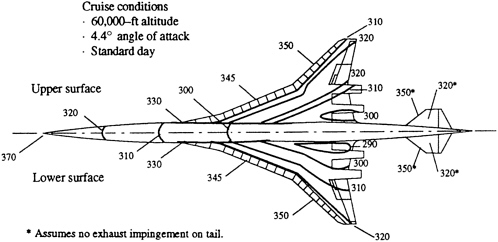
FIGURE 4-1 Predicted equilibrium skin temperatures for a Mach 2.4 HSCT. Source: Johnson, 1994.
The skin of a high-speed aircraft is heated during flight by friction with the atmosphere. However, the relationship between temperature and cruise speed is not linear; skin temperature increases more rapidly at higher speeds. Figure 4-1 shows predicted equilibrium skin temperatures for a Mach 2.4 HSCT configuration. Except for the nose (radome) and leading edge structures on the wing and tail, the maximum effective skin temperatures estimated for the primary airframe structure on the fuselage, wing, and tail are 320°F. (The radome will use special radar transmitting materials, and leading edges will use titanium alloys.) Skin temperatures are somewhat lower at lower cruise speeds: 250°F at Mach 2.2 and 210°F at Mach 2.0 (NRC, 1996; Johnson, 1994).
Two types of materials are generally available for airframe structures: composites, such as polymeric matrix composite (PMC) resin systems using carbon fibers; and metals. The estimated thermal stability of potential HSCT structural metals and polymeric matrix composite (PMC) resin systems is shown in Figure 4-2 (Smith, 1996).1 As indicated, the basic polymer systems available for HSCT applications above 250°F are more limited than at lower temperatures. The availability of suitable adhesives, sealants, and paints follows the same pattern (Smith, 1996). Thus, the goal of developing technologies compatible with a cruise speed of Mach 2.4 critically affects development related to airframe materials, structures, and
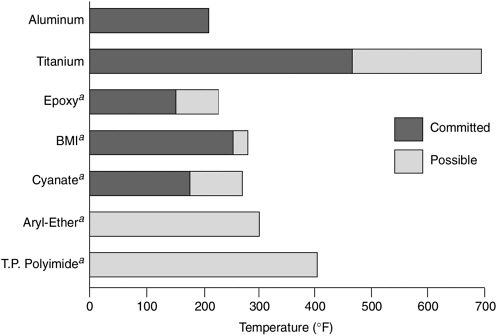
FIGURE 4-2 Estimated thermal stability of potential HSCT structural materials (20-year service life). Source: Smith, 1996.
a The potential for using these materials at the upper end of the indicated temperature band is based on short-term experimental data.
processes. This is not the case with regard to airframe aerodynamics, the propulsion system, or integrated aircraft systems. Although those areas also face extremely difficult technical challenges, the level of risk is essentially the same for cruise speeds between Mach 2.0 and 2.4.
SELECTION OF MATERIALS
This section discusses the HSR Program's approach to developing advanced materials, followed by comments on aluminum alloys, titanium alloys, PMCs, structural adhesives, sealants, coatings and finishes, and the supplier base.
Development Approach
Materials and processes currently used by the aerospace industry cannot satisfy the performance and cost requirements of a Mach 2.4 HSCT. Materials and processes for an economically feasible Mach 2.0 to Mach 2.2 HSCT would also require significant technology development, but developing lower speed materials (such as aluminum alloys and polymer materials) would involve lower risks and costs.
Operating temperature and structural weight are key variables that will determine the viability of an HSCT. The Mach 2.4 materials under development by the HSR Program must perform adequately at temperatures from-65°F to 320°F (350° for leading edge structures), for a minimum of 60,000 hours at maximum temperature. The nose structure, which will encounter maximum temperatures of 370°F, will be designed for in-service replacement and is exempt from this lifetime requirement.
The objective of the HSR Program's materials effort is to develop (1) key technologies for metallics, composites, adhesives, and sealants and (2) associated fabrication processes to provide a technological foundation for the production of a commercially viable Mach 2.4 HSCT. Environmental compliance, worker safety, and acceptable cost for the final structure are also important considerations. The specific goals are very aggressive. For example, one goal is to improve critical mechanical properties of candidate materials by 20 percent over baseline metals (such as Ti-6 Al-4 V titanium alloy) and composites (such as composite material AS4/5250).
Specified deliverables in the area of materials, processes, and structures are as follows:
-
database of material properties, durability, fabrication processes, etc.
-
finite element models of airframe structures
-
test data on wing and fuselage components
The HSR Program will use these deliverables to evaluate the feasibility of meeting the weight and performance goals of the TCA and to support development of a refined aircraft configuration (the TCn).
The materials development effort assessed the applicability of existing and experimental materials with potential applicability to an HSCT. However, work on coatings, finishes, hydraulic fluids, and other enabling materials is not included in the HSR Program. As discussed below, this significantly increases the overall program risk. The key finding and recommendation related to the development of materials follow. Additional justification for this finding and recommendation appear in subsequent sections.
Finding 4-1. Different families of materials (e.g., resins, adhesives, sealants, coatings, and finishes) are required for use at sustained temperatures above 250°F (i.e., for aircraft designs with cruising speeds above Mach 2.2) than for use at temperatures below 250°F. Therefore, the focus of the HSR Program on a speed of Mach 2.4 critically influences materials technology development. General classes of polymeric materials and manufacturing processes suitable for a Mach 2.0 to 2.2 HSCT are available but have not demonstrated the life requirement and require significant technology development.
Recommendation 4-1. The HSR Program should retain a cruise speed of Mach 2.4 as an important baseline objective to encourage development of advanced
materials and to develop a fundamental understanding of high temperature material responses and degradation mechanisms. However, the HSR Program, with appropriate support from the airframe manufacturers and material suppliers, should also identify and develop critical enabling technologies to protect the viability of developing a Mach 2.0 to Mach 2.2 HSCT. This effort should start during Phase II and continue until risks associated with a Mach 2.4 design are substantially reduced.
As with any backup program, resources devoted to the backup reduce the resources available for pursuing the primary approach. Resources devoted to development of the backup approach should be balanced against the risk that the primary approach will fall short. In the case of the HSR Program, the committee believes the backup effort should be enhanced to achieve appropriate balance.
Aluminum Alloys
Aluminum alloys, such as 2618, operate at temperatures up to 220°F and are used in the Concorde. Alcoa and Reynolds are developing stronger and tougher aluminum alloys, but fracture toughness and creep resistance are continuing challenges. Also, improved alloys will still be limited to a maximum operating temperature of about 220°F. Thus, the HSR Program is interested in aluminum alloys primarily as a backup material in case the speed requirement is reduced from Mach 2.4 to about Mach 2.0. However, the HSR Program discontinued funding for the development of aluminum technology in December 1996. As a result, Alcoa and Reynolds anticipate stopping or greatly curtailing efforts to develop advanced aluminum technology applicable to an HSCT.
Titanium Alloys
Titanium is an attractive material for a Mach 2.4 HSCT because of its thermal stability at the 350°F maximum skin temperature. In addition, titanium and its alloys are not susceptible to degradation in the environment of a Mach 2.4 HSCT. In spite of the high strength-to-weight ratio of current titanium alloys, however, an all-titanium HSCT would not be economically viable because of excessive weight. Even so, titanium alloys are the prime candidates for wing and tail leading edge structures, the main wing box, foil for honeycomb sandwich core structures, and, perhaps, higher temperature fuselage structures. Therefore, the HSR Program includes a significant effort to develop titanium alloys with a 15 to 20 percent improvement in strength and other key properties. Achieving these improved properties would probably result in more complex and costly processing, such as hot forming (for higher strength alloys) and heat treatment after processing. Thus, the HSR Program is studying the effects of complex thermomechanical processing and how to optimize alloy composition and
manufacturing processes to reduce processing costs and risks. The cost reduction effort is exploring innovative fabrication technologies, such as forming, machining, joining, net-shape extrusions, metallurgical and adhesive bonding, laminated titanium alloy structures, and superplastic forming and diffusion bonding of structural honeycomb sandwich.
The committee believes that the HSR Program's titanium alloy and process development plan is properly scoped and does a good job of integrating work by NASA and the airframe manufacturers with work by materials suppliers and academia.
Polymer Matrix Composites
The effective application of PMCs using carbon fibers has long been recognized as the key to producing an economically viable HSCT. Currently, the leading candidates for Mach 2.4 applications are thermoplastic polyimide resin systems, such as Dupont's Avimid-K and NASA's PETI-5. Testing of carbon-fiber-reinforced PMCs using these systems has shown favorable performance (in terms of thermal resistance, open-hole compression strength, and compression-after-impact strength), even compared with the toughened PMC systems currently used on subsonic aircraft. However, manufacturing components from the proposed new materials can involve complex fabrication processes for long periods of time (up to 24 hours) at high temperatures (up to 700°F) and high pressure (up to 200 psi). In addition, solvents added to provide ''tack'' for wet-layup fabrication processes must be volatilized, removed, trapped, and recovered for reuse and recycling. (Volatile contents can be as high as 20 percent weight fraction.) Automated lamination processes (e.g., advanced tow placement) may be applicable if a solvent-free, "dry" PMC layup material can be developed to eliminate the solvent-removal challenge. However, constraints imposed by the stringent processing requirements (i.e., long time, high temperature, and high pressure) preclude using potentially more affordable manufacturing methods, such as resin transfer molding, pultrusion, resin film infusion, and nonautoclave processing. Further, the processes currently proposed will likely require expensive tooling, increasing the risk that they may not be compatible with the manufacture of an affordable HSCT.
PETI-5, which was developed and patented by NASA, is currently the HSR Program's primary composite matrix baseline. PETI-5 is a lightly cross-linked thermoplastic polyimide that offers potential improvements in solvent resistance and mechanical properties over earlier thermoplastic polyimides. The HSR Program is also evaluating modifications of the PETI-5 system, such as PTPEI-1.
In limited testing to date, PETI-5 composites appear to have reasonable properties and durability, but they are difficult to process, and devolatization of large, complex parts presents a major challenge. Thus, the HSR Program plans to develop a "dry" PETI-5 material form to simplify processing. PETI-5 coupon testing has accumulated more than 5,500 hours of isothermal aging at elevated temperature without degradation in mechanical performance.
The focus of the HSR Program on a single, high-risk PMC material system (PETI-5) optimized for Mach 2.4 (as opposed to lower speeds) increases overall program risk, as does the ambitious schedule. In fact, NASA and industry participants in the HSR Program understand that the airframe materials and structures being developed by the HSR Program involve significant cost and risk and may not be optimal for a lower-speed HSCT design. Nonetheless, the HSR Program is not pursuing the development of alternate materials technology for lower speeds.
The rationale for maintaining the technical focus of the materials effort on Mach 2.4 is based on the desire to push the state of the art as far as possible and the presumption that the materials and structures for a Mach 2.4 design could be used for a lower-speed design, if necessary. Materials for a Mach 2.4 aircraft, if successfully developed, would certainly satisfy the less-stressing requirements of a Mach 2.0 or Mach 2.2 design. However, several factors would probably favor the selection of other materials for lower-speed applications. A lower design speed would allow consideration of PMC resins, adhesives, sealants, and paints that have substantially lower developmental risks; are generally easier to manufacture, repair, and maintain; cost less; and have a larger supplier base. For example, some thermoset and thermoplastic material systems are currently used in subsonic aircraft, and it may be possible to modify them for use on an HSCT operating between Mach 2.0 and Mach 2.2. These materials can be processed at moderate temperature (350°F to 400°F) and pressure (approximately 80 psi), and they would be more compatible with lower-cost manufacturing methods, such as lamination, resin transfer molding, and nonautoclave processing.
In summary, the HSR Program's focused effort to develop Mach 2.4 PMC materials, if successful, would produce high performance materials that could be used at temperatures from 200°F to 350°F. However, even if the HSR Program can overcome the high developmental risks for these materials in a timely fashion, high manufacturing costs and a limited supplier base may create economic limits on their use. Furthermore, the nearly exclusive focus of the HSR Program on Mach 2.4 does not seem to be justified based on Finding 2-2, which concludes that a Mach 2.0 HSCT is likely to have productivity similar to a Mach 2.4 HSCT. The committee believes additional efforts during Phase II to develop alternative materials for Mach 2.0 to 2.2 designs are crucial. Funding could be obtained by reducing funding for full-scale components, as suggested in Recommendation 4-7.
Finding 4-2. The focus of the HSR Program on a single basic PMC system (PETI-5) is a major program risk that could have a catastrophic effect on the HSR Program if the development effort falls short in critical areas, such as processing, properties, or durability. This risk underscores the importance of developing alternative materials technologies for Mach 2.0 to Mach 2.2.2
Structural Adhesives
The development of structural adhesives and surface preparation and bonding processes are critical for effective manufacture of composite and metallic components for the TCA. The primary research conducted by the HSR Program for honeycomb sandwich skin-to-core bonding, laminated hybrid composites, and metal bonding is a supported-film adhesive based on the chemistry of NASA's PETI-5. The most crucial technical issues are related to processing (e.g., surface preparation and secondary bonding).
Consistent and reliable surface preparation processes for adhesive bonding and repair of titanium and composite substrates are critical to the development of durable bonded structural components. Historically, the key to the structural bonding of titanium has been the development of a stable oxide surface layer. However, the processes used by the HSR Program to achieve these surface conditions with titanium alloys have proven to be unacceptable under production conditions for commercial airplanes and involve environmentally harmful etching and conversion solutions. Therefore, the HSR Program is currently investigating more complex processes, such as silicate coatings and chromium sputtering surface treatments. Chromium sputtering results to date are promising, although this process requires an enclosed chamber, which is a major concern for the manufacture of large, complex parts.
During secondary operations and bonding repairs, the high temperatures and pressures required to process PETI-5-type adhesives could damage or degrade previously cured laminates. This could be a major challenge during secondary processing or component repair procedures. It should be noted that adhesive bonding of primary structure on subsonic commercial aircraft continues to be a processing challenge.
The committee believes the development of structural adhesives is well scoped and is technically well directed. However, there is high risk associated with achieving the desired level of technology readiness within the current schedule, particularly with regard to titanium surface preparation.3
Sealants
The HSR Program has accepted the difficult challenge of developing sealants (especially fuel tank sealants) that can survive environmental conditions associated with a Mach 2.4 aircraft. The combinations of critical performance characteristics, such as elongation at low temperatures (down to-65°F) and high-temperature oxidation resistance, have proven extremely difficult to achieve.
Fluoroelastomer systems, such as fluorosilicones, have been the leading candidates for Mach 2.4 applications. However, condensation-cured fluorosilicones
do not have sufficient thermal stability for long-term applications at Mach 2.4 conditions. Addition-cured fluorosilicones have performed better but tend to degrade after long times at elevated temperatures. New materials and blends are being developed and evaluated.
Fuel tank sealants have additional requirements for low-temperature elongation and long-term exposure to jet fuel at elevated temperatures. The development of fuel tank sealants for the SST and SR-71 in the 1960s and 1970s was only marginally successful, and potential suppliers have expended little effort since then because of the difficulty of meeting these performance requirements, high development costs, and the small potential market.
Using an HSCT design speed between Mach 2.0 and 2.2 would significantly improve the ability of fluoroelastomer systems to meet sealant performance requirements. A design speed of Mach 2.0 would also allow using modified nonfluorinated polymers (e.g., high-temperature polysulfides), which would significantly reduce sealant cost and weight. Additional testing, however, would be required to validate specific formulations of polysulfide sealants for use at the elevated temperatures associated with Mach 2.0 and above.
The HSR Program had no sealants suitable for Mach 2.4 available for testing in 1996. The best technology in this area appears to reside with foreign suppliers, who are not eligible to participate in the HSR Program. Therefore, U.S. airframe manufacturers must use their own funds to collaborate with foreign suppliers on the development of advanced sealants. Overall, the prospects for success remain uncertain. 4
Coatings and Finishes
PMCs require surface coatings for protection from the environment, including ultraviolet radiation from the sun. In addition, estimates of HSCT equilibrium skin temperature are dependent on specific surface emittance and absorptance properties. However, it is extremely difficult to develop satisfactory coatings and finishes that can withstand the high skin temperature of a Mach 2.4 HSCT. Currently available coating technology would not be economical for commercial applications at speeds above Mach 2.0. Thus, material and structural design decisions are currently being made based on a temperature profile that may not be achievable with the coatings and finishes that will be available.
Efforts to develop improved coatings and finishes must carefully consider microcracking that can be caused by environmental cycles related to temperature or moisture. Microcracks can begin in coatings, such as paints, primers, and fillers, and propagate into the PMC substrate. This has occurred periodically in the PMC structures of the existing fleet of commercial subsonic aircraft.
The HSR Program views the development of advanced coatings and finishes as a low priority and is not funding any research in this area. However, the challenge and risk of developing coatings and finishes increase significantly for long-term applications above Mach 2.2.5
Recommendation 4-2. The HSR Program should make development of PMC-compatible coatings and finishes an integral part of its PMC development effort.
Supplier Base
Development of an HSCT will be a major commercial endeavor. Commercial programs of this type typically attract a significant level of direct funding and technical commitment by suppliers of key materials, such as resins, adhesives, sealants, coatings, and finishes. This support reduces the research burden that the airframe manufacturers must carry and helps ensure that required materials will be available in production quantities when needed. However, material suppliers do not appear yet to have made a substantial investment in the development of materials needed for an HSCT, and it is not clear when or if such a commitment will be forthcoming. This increases the challenge faced by the HSR Program as it attempts to develop materials that meet technical performance requirements and are likely to be commercially available.
The HSR Program has selected a PMC and adhesive baseline material (PETI-5) that is patented by NASA. This discourages the materials industry from developing its own materials for HSCT applications because the HSR Program has already indicated a preference for PETI-5. Furthermore, by retaining the patent rights for PETI-5, NASA discourages industry investments in the development of PETI-5 because industry may be disinclined to invest its own funds in improving someone else's materials. The Mach 2.4 polymeric materials are also likely to have a more limited supplier base than alternate materials for lower-speed designs.
The ability to create and manufacture new materials is inherently a global resource, one that is not confined to the United States. For a high-risk technology development effort, such as the HSR Program, involving foreign technology in selected areas could make an important contribution to the success of the total program. However, as noted previously, foreign companies are not eligible to participate in the HSR Program. Thus, it is up to the airframe manufacturers—as part of their internally funded HSCT research—to involve foreign technology in situations where it is more advanced than U.S. technology.
Finding 4-3. The adequacy of the materials supplier base could become a critical issue when industry considers whether to make an HSCT program launch decision. Factors that interfere with establishing the necessary supplier base include
restrictions on the involvement of foreign industry and NASA's ownership of a major structural material (PETI-5). These factors lower the incentive for large suppliers of aerospace materials to develop materials on their own.
Recommendation 4-3. HSR Program managers and airframe industry executive managers should meet with material suppliers to solicit financial and technical commitments to participate in the overall effort to develop materials needed for an HSCT. The HSR Program should also ensure that the ability of foreign industry to reduce risk in critical areas is adequately considered, either through the independent actions of industry participants in the HSR Program or through direct action by the HSR Program (after obtaining necessary exemptions to NASA policy restrictions on the involvement of foreign industry). This is especially important for the cost-effective development of required sealants.
SERVICE LIFE
A major technical issue in the selection and evaluation of structural materials for the HSCT is the characterization of long-term thermomechanical durability to verify a minimum service life of 20 years. Currently, there are no methods for predicting 20-year end-of-life behavior for PMC materials.
The results of the committee's QFD analysis (see Figure 2-1) indicate that a strong adverse relationship exists between airframe service life and the downstream processes of "manufacturing and producibility" and "certification." This adverse relationship exists because advanced, new materials and structures necessary to increase service life typically are—at least initially—more difficult and expensive to manufacture and certify than existing, proven materials.
The key service life technology areas being investigated by the HSR Program are (1) long-term real-time testing, (2) accelerated testing, and (3) life prediction methodologies. Currently, predictions of end-of-life properties for developmental materials are based on accelerated test techniques. Real-life testing to date has been limited and will not be able to validate end-of-life properties until many years after the HSR Program has selected the materials and structural design of airframe test articles.
The durability of candidate PMC materials is being defined by ongoing thermomechanical fatigue tests of material element and specimen forms. These tests simulate the mechanical and thermal cycles that materials will experience in operation. Various materials are being tested in a variety of test conditions, but not all materials are being tested in all test conditions. For example, as development of new material resins progresses, the use of new resin formulations in the design of test articles depends largely on predictive methods that can correlate the results of modeling and accelerated testing with long-term durability.
Some multiyear service life tests are being conducted in real time, and some are being accelerated. When the current Phase II program is completed in 2002, it
will have conducted about half-a-lifetime of isothermal testing, but those tests will not address durability in the total environment. Real-time tests are being used to supplement and measure the accuracy of accelerated tests. However, accelerated testing is not yet a proven tool for screening candidate HSR materials and structures; more real-time tests must be completed and correlated with accelerated tests.
The history of high-temperature PMC components indicates that matrix microcracking is a more severe problem than creep or thermal oxidation. Accelerated Aging of Materials and Structures (NRC, 1996) points out that matrix cracking accelerates most PMC degradation mechanisms, especially oxidation. This could create problems for both thermoplastic polyimides, such as PETI-5 (because of the high residual stresses from high processing temperatures) and even moderate temperature thermosets (because of their lower strengths and elongation). The hygrothermal (i.e., cyclic moisture and temperature) sensitivity of thermoset and thermoplastic polyimides is of particular concern with regard to microcracking. In addition, each parameter traditionally used to accelerate testing (such as temperature, pressure, and moisture) is also a degradation mechanism for PMCs. Therefore, acceleration strategies may be material specific.
Ongoing test programs at Lawrence Livermore National Laboratory are studying accelerated thermomechanical degradation and its relationship to real-time testing. Results of that test program are currently being produced for K3B thermoplastic polyimide and 5260 bismaleimide thermoset materials. However, differences between those materials and the PMC materials being developed by the HSR Program make it difficult to apply the results of those tests to the HSR Program.
Life prediction methodology involves correlating long-term PMC behavior with postmortems on tested specimens and specific property data (e.g., viscoelastic creep behavior) to develop predictive analyses. The ability of the HSR Program to develop accurate life prediction methodologies is limited because no actual service life data are available. Specific challenges include the following:
-
accounting for hygrothermal effects
-
interpreting the results of PMC durability tests of materials (K3B and bismaleimide) that may not accurately model the baseline PMC materials selected by the HSR Program (PETI-5)
-
applying the results of PMC durability testing of specific laminates to HSCT components that are designed with laminates with a different layup orientation
Finding 4-4. The HSR Program's materials specimen and element testing is well planned. The testing schedule, however, extends beyond the end of the current program and is generally limited to thermomechanical testing of the PMC material being developed by the HSR Program (PETI-5) and thermoset materials that are commercially available. Risk associated with the selection of structural
concepts is increased by the need to rely on (1) predicted end-of-lifetime material properties based on less than one lifetime of real-time test data and (2) accelerated durability test methods that have not been validated by adequate real-life tests. An improved scientific understanding of individual composite degradation mechanisms is needed to reliably predict lifetime performance and to design accelerated tests.
Recommendation 4-4. During Phase II, the HSR Program should conduct a focused, critical, detailed, technical assessment of alternatives for including new PMC materials in the durability testing of specimens and elements. This assessment should include personnel from inside and outside the HSR Program, and it should use the findings and recommendations of Accelerated Aging of Materials and Structures (NRC, 1996) as a guide. The assessment should include the results of ongoing real-time testing, and it should be oriented toward understanding aging characteristics and accelerated testing techniques suitable for a broad class of materials applicable to HSCT development.
MANUFACTURING
Industry has assumed responsibility for the development of manufacturing technology needed to address producibility issues specific to their HSCT designs. Even so, it is incumbent upon the HSR Program to ensure that the materials technologies it is developing are compatible with affordable manufacturing processes.
As noted earlier, airframe structural design, including economically feasible materials and manufacturing processes, will have more impact on HSCT affordability than any other technological area. As discussed in more detail below, a NASA-sponsored study (Marx et al., 1996) examined the effect of alternate structural concepts for an HSCT wing on vehicle life cycle cost. That study emphasized the importance of considering airframe manufacturing and economic issues concurrently with technology development. For example, the effort to meet HSR Program goals for MTOW, range, payload, and cruise speed will tend to favor a highly specialized airframe design that would be difficult—and expensive—to manufacture.
Processing Polymeric Matrix Composites
Manufacturing costs are the single largest contributor to the cost of composite components (JTEC, 1994). Manufacturing costs include processing costs (e.g., cure cycle) and nonrecurring costs for factory tooling, computerized controls, and other equipment, such as autoclaves. Costs can rapidly escalate if complex tools, large production rates, or complicated processes are required.
For subsonic aircraft, only 8 to 10 percent of the cost of composite components is attributable to the materials from which they are manufactured (DeVault,
1993). Similarly, the material costs for HSCT structural components are expected to be significantly less than manufacturing costs. Thus, widespread use of composites in an HSCT will be contingent upon the maturation of innovative, affordable composite manufacturing processes, such as advanced tow placement, resin transfer molding, resin film infusion, pultrusion, and nonautoclave processing (NRC, 1995).
Twenty years of experience with carbon-fiber PMCs indicates that the successful use of PMCs in commercial aircraft very much depends upon industry's ability to integrate PMCs efficiently into the aircraft design philosophy. For example, for both subsonic and supersonic commercial aircraft, the materials technology should be low risk and cost effective. Thus, PMC systems with little or no in-flight service testing and no proven manufacturability are unlikely to be adopted by manufacturers or accepted by airlines (Seferis and Condit, 1995). This supports the committee's conclusion that Right testing a full-scale technology demonstrator is necessary to reduce risk enough to enable industry to make an HSCT program launch decision (see Chapters 1 and 6).
A successful materials development program is best supported by a philosophy that combines basic science (e.g., microstructures, processing, and properties) and basic economics (e.g., design, performance, and manufacturing) (Seferis, 1988). Applying this philosophy to evaluation of PMCs that could be developed for a near-term HSCT clearly shows that new PMC systems that incorporate unproven chemistries will have a difficult time competing as a low-risk, affordable alternative to systems and composite manufacturing schemes that can be connected to an existing database (Miller, Lovell, and Seferis, 1993; Seferis and Carrega, 1991).
PMC processing and manufacturing methods are crucial because they drive manufacturing costs and affect the structural integrity of the finished component. The committee shares the concerns of some HSR Program engineers that manufacturing demonstrations of small (3-foot by 3-foot) flat panels will not be able to identify and resolve manufacturing problems that could arise during production of actual wing and fuselage structures. Production experience with subsonic commercial airplanes has repeatedly demonstrated that the lessons learned from manufacturing small test articles often do not apply to the manufacture of full-size production parts. The committee believes that new materials and structures technologies developed for the HSR Program are likely to experience the same problems. Thus, the committee recommends reallocating HSR Program funds to develop more robust producibility demonstrations (see Recommendation 4-5).
The high temperature processing required for PMCs, such as PETI-5 and other thermoplastic polyimides, may preclude the use of more affordable processing. Further, stringent processing requirements (in terms of time, temperature, and pressure) are likely to create a need for expensive and complex tooling systems. Overcoming the processing limitations of PETI-5, particularly for large components, is a major challenge and involves considerable risk.
Hybrid Structure
New hybrid titanium-composite materials may have significant promise for HSCT applications. One candidate uses alternating layers of titanium foil and carbon fiber composites. The titanium provides excellent compressive strength, while carbon-fiber composites provide stiffness, tensile strength, and fatigue resistance. Potential advantages include light weight and increased damage tolerance. In addition, a titanium laminate with a high modulus boron fiber is under consideration. However, from a materials technology standpoint, applying either of these materials to the TCA design must overcome major problems associated with (1) reliably bonding titanium-PMC surfaces over large areas (2) complex laminate processing, (3) industry and airline inspectability and maintainability, and (4) repairability.
Structural Sandwich Construction
The HSR Program has made a major effort to develop a honeycomb-core sandwich structure tailored for application to a Mach 2.4 HSCT. Structural honeycomb sandwich (metallurgically and adhesively bonded) will be used to fabricate major components of the HSCT wing and possibly the fuselage structure (see Figure 4-3).
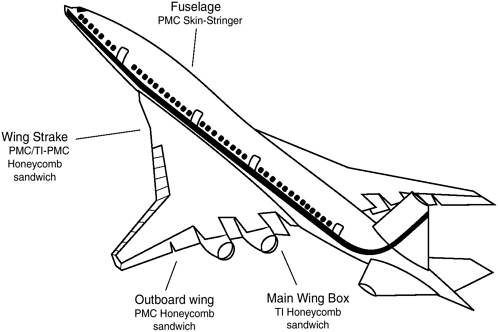
FIGURE 4-3 Materials and structures baselines for the TCA. Source: Boeing.
Adhesively bonded titanium-sandwich structure with a titanium-alloy core is a primary design concept for the HSR main wing box. As previously mentioned, current surface preparation techniques for adhesive bonding of titanium alloys are not acceptable. Surface preparation processes need to be developed to ensure the long-term durability of the adhesive bonds for Mach 2.4 applications.
Fabrication methods for titanium-sandwich structure that use metallurgical bonding also have the potential to provide lightweight, high-performance airframe structures. The high thermal conductivity of aluminum-brazed honeycomb panels limits their application on thermally sensitive wing fuel-tank structures where it is not feasible to install additional thermal insulation. However, these panels could be used for other fuselage applications where it is feasible to install additional insulation. The high temperature brazing-diffusion process and ''Stresskin'' concepts (which are based on resistance-welding of titanium core to titanium skin) can provide metallurgically bonded honeycomb-sandwich structure as well, although further heat treating in a vacuum furnace or retort would be needed to meet the high mechanical-property requirements of HSCT airframe structures. Substantially more work is needed to demonstrate these high-temperature processes on subscale components compatible with TCA requirements.
In the past 20 years, superplastic forming and diffusion bonding processes have been developed for fabricating titanium sandwich structures, primarily for military airplanes (NRC, 1995). These processes, however, need to be validated for new titanium alloys. Processes for adhesively bonded structural honeycomb structure with titanium core and PMC laminates also require extensive work with regard to development of filler, paste, and film adhesives; scale-up; and characterization.
Conclusions on Manufacturing
As discussed in the following section, the HSR Program intends to fabricate and test full-size components (viz., a fuselage barrel section and an inboard wing box) to validate the fuselage and wing structural designs, respectively. These components will be constructed using hand layup fabrication processes (which would be uneconomical for a production aircraft) instead of automated manufacturing processes. As a consequence, the results may not indicate how components manufactured using commercial processes would behave. In other words, the committee does not believe the proposed testing will determine if the structural designs are compatible with the manufacturing processes that will ultimately be used to build an HSCT.
High temperature composites are notoriously hard to process, and industry has no experience using automated manufacturing processes with the candidate materials. The HSR Program currently plans to use automated manufacturing processes to construct small (3-foot by 3-foot) sections of the airframe structure. However, fabrication of such small sections is not adequate for manufacturing
validation. Producibility demonstrations are generally conducted using full-scale test articles in order to accurately assess the effects of outgasing, viscosity variability, resin flow, porosity, etc. Although large, these test articles need not have the complexity of parts intended for assembly into a structural component like a wing box. In other words, full-scale manufacturing test articles may be simpler in design than parts for full-scale component tests, even though they would be about the same size. Therefore, the manufacturing test results would accurately characterize the effect of interactions between candidate materials and the proposed, automated manufacturing processes.
Finding 4-5. In the areas of manufacturing, processing, and producibility, the HSR Program is focused on developing processing methods for the fabrication of small numbers of subscale and full-scale components to support the materials testing program. However, this will not resolve issues associated with how to affordably manufacture components in production quantities. In addition, manufacturing processes for PMCs required for a Mach 2.4 HSCT, such as PETI-5, will be complex and costly because of handling characteristics, high volatile content, and high temperatures and pressures (up to 700°F and 200 psi).
Recommendation 4-5. The NASA and industry participants in the HSR Program should jointly place greater emphasis on the development of manufacturing technology and producibility demonstrations so the HSR Program can properly support the HSCT product launch decision. NASA and industry should develop an integrated manufacturing technology plan that enables the HSR Program's materials technology development efforts, which currently seem to be focused on near-term component fabrication, to adequately consider overall, long-term manufacturing issues. Development of this plan should be closely coordinated with the wing and fuselage design teams. The HSR Program should also review and incorporate the integrated design and manufacturing approach described by Marx et al. (1996), which is based on a combined performance and economic perspective. Implementation of this recommendation will require changes to the Phase II program and approval of the recommended technology maturation phase.
STRUCTURAL DESIGN
The structures challenge is shown graphically in Figure 4-4. The HSR Program goal of reducing vehicle weight by one-third compared to a comparable Concorde-type aircraft requires a structural weight fraction of less than 20 percent. By comparison, the structural weight fraction of typical 300-passenger subsonic transports is 25 percent or more, and the B-2 bomber, which contains the highest percentage of advanced composite primary structure in flight today, has only achieved a weight fraction of 23.9 percent (Hargrave, 1996). Thus, the effort to achieve a goal of 20 percent must be viewed as high risk, even with the planned
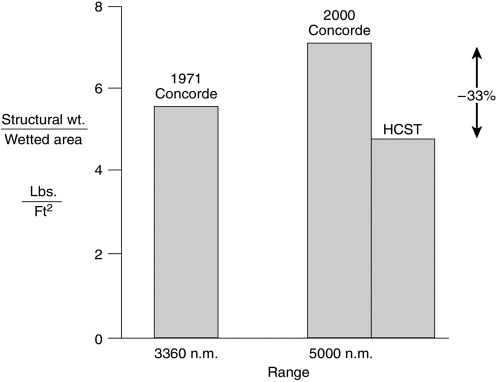
FIGURE 4-4 Structures challenge. Source: Boeing.
use of advanced materials and improved structural design efficiencies. Also, the structures technology issues, which are discussed below, cannot be effectively addressed without considering the materials issues identified in the previous section.
As mentioned in Chapter 2, structural weight alone is not an adequate metric for determining economic viability, which also depends on the affordability of materials, structural designs, and manufacturing processes. This lesson was demonstrated in a recent NASA-sponsored study (Marx et al., 1996), in which several wing structural arrangements for a 1970s Lockheed SST design were compared for total system fly-away costs using two cost models: a weight-based model and a process-based model. The differences between the results produced by these two models become increasingly acute as structural concepts become more dependent on advanced materials and manufacturing processes.
The specific goal of HSR structures technology development is to develop and validate structural designs for the TCA. Specifications for the TCA include an MTOW of about 740,000 pounds and a minimum service life of 20 years. The strategy to accomplish this task involves identifying aspects of current subsonic structural design concepts that can be improved and developing new, lighter-weight design concepts. The process includes the following:
-
design trade studies to develop preliminary weights for new and existing concepts
-
a building-block test approach that reduces technology maturation risk by sequentially testing coupons, elements, subcomponents, and components
-
selection criteria to reduce the number of concepts carried forward at each step
The current materials and structures baselines for the TCA are shown in Figure 4-3. Critical material and structural issues considered during the selection process include the durability of PMCs, adhesives, and sealants; the ability of sandwich structures to contain damage; the residual strength of damaged structures; the availability of nondestructive evaluation methods; and repairability. The committee believes that this overall strategy is sound and well planned. The committee identified some areas of concern as well as some innovative solutions. Findings and recommendations are detailed below.
Dependence on Materials Development
Weight management techniques evident in the structural concepts being developed by the HSR Program include the use of advanced lightweight composite materials; the aggressive use of sandwich structure for large areas in the wing and, perhaps, in the fuselage; and the elimination of structural joints and fasteners through bonded integral construction. These innovative structural concepts are strongly dependent on the maturity and success of materials development. The use of advanced composite materials, especially the baseline PETI-5 structural composite, is key to achieving areal weight goals for structures in the fuselage, outer wing box, and strake. However, success of the structural assembly is equally dependent on the concurrent availability of adhesives, cores, caulks, fillers, potting compounds, and compatible tooling materials. In terms of TRL (Technology Readiness Level) these materials are not at a comparable level of maturity (see Figure 4-5). As discussed in the earlier sections of this chapter and in Chapter 6, developing these materials is a high risk endeavor because of the technical challenges and time constraints imposed by the current program schedule.
Honeycomb sandwich structure can provide a very efficient, lightweight method for supporting large structural loads and is considered a candidate for the main wing box and fuselage. Concerns about damage tolerance have restricted the use of sandwich structure over very large area, because it does not have the crack arrestment features inherent in skin-stringer designs. Some innovative sandwich tear strip concepts have been developed by the HSR Program to address this concern.
A more fundamental issue in sandwich construction is joining the core to the facesheet. Skin-to-core integrity for the titanium sandwich depends on the development of reliable preparation methods for titanium surfaces. Skin-to-core integrity for PMC sandwich depends on the availability of compatible adhesives.
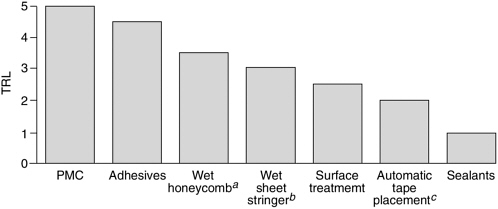
FIGURE 4-5 Current levels of technology readiness of composite materials are unequal, jeopardizing development of structural concepts.
a Honeycomb is a method of hand fabricating composite structures that produces a sandwich-type construction.
b Sheet stringer is a method of hand fabricating composite structures that produces panels with reinforcing stiffeners.
c Automatic tape placement (also known as automatic tape laying) is a machine method of laying up composite structures. Robotics automatically place either a tape or a rope (tow) of fiber.
Both technologies are currently under development in the HSR Program, as discussed above.
Unitized construction of large integral structural components reduces total part count, eliminates structural joints and fasteners, and reduces assembly costs. The success of this construction approach is strongly dependent on PMC processing characteristics, the availability of compatible tooling and materials for cobonding, and the availability of adhesives and shimming materials.
Finding 4-6. The performance of innovative structural concepts depends on successful development of the materials upon which they are based. It is virtually impossible to separate the structures design effort from the materials and manufacturing development effort. The materials development program and the structural concept development program are both well planned. However, the current schedule of the HSR Program does not facilitate a sequential approach that would reduce overall risk by validating the performance of proposed new materials before they are incorporated into new structural concepts.
Design Analysis Methodology
Design trade studies are important for managing technology maturation, resource allocation, and risk reduction. Currently, the HSR Program uses weight as
the key metric in design trade studies to guide its evaluation of competing concepts. But the objectivity and outcome of design trade studies also depend on the maturity of the design tools and design database.
Early on, the HSR Program identified a problem with design analysis methodologies. The FY 1994 HSR Planform Study concluded that there were significant differences between the design practices and assessment methods used by McDonnell Douglas and Boeing. For example, one assessment method might predict that a given design change would increase MTOW, whereas another method would predict a decrease in MTOW. In order to understand and resolve these differences, the HSR Program developed the TCA (Technology Concept Aircraft), a notional aircraft configuration that is used as a common base for technology assessments, integrated system-level trade studies, vehicle-level tracking, and technology cost-benefit prioritization. The TCA is intended to provide an appropriate balance between risk, performance (payload, range, and speed), and environmental compliance (noise and emissions). Although Boeing and McDonnell Douglas are continuing to develop and refine their own proprietary aircraft designs, industry participation on the HSR Program management and technology teams ensures that technology developed to support the TCA configuration will also be applicable to the industry designs. Assigning responsibility for maintaining the TCA finite element master model to one company (Boeing) further reduced the differences between the design analysis methodologies. Thus, even though differences will persist in the structural optimization codes for some detailed models, this problem has largely been solved.
During the course of the program, many different teams have estimated weights using numerous methods, and it is not clear if all of the teams have cooperated very well. There is still some residual uncertainty in tracking component, system, and total aircraft weights. Overall vehicle weight targets were established using a parametric weights method called ATLAS. Weights of competing design concepts were calculated using both Boeing (ELFINI) and McDonnell Douglas (non-optimum) methodologies. Weight estimates have also been generated using structural finite element models. The uncertain relationships between some of these methods have hampered the evolution of a precise vehicle weight assessment. Also, the relationship of MTOW to the fuselage and wing areal weight metrics is unclear.
Finding 4-7. The use of multiple weight estimation methods has confounded weight tracking and obscured HSR Program successes in using innovative structural concepts to reduce vehicle weight. There is no longer a clear relationship between structure areal weights and MTOW, which are both top-level audit metrics used by the HSR Program.
As noted previously, the HSR Program has attached great importance to a design speed of Mach 2.4. This speed requirement has dictated the structural temperature profile of the vehicle, which in turn has driven the aggressive materials
development effort and the equally aggressive test program for characterizing high temperature materials. However, the ability to predict the thermomechanical response of new structural concepts accurately is just as important to the overall success of the HSR Program. Based on past experience, the committee believes that the lack of accurate thermal structural analysis is often a stumbling block in major aircraft development programs. There was a notable lack of information on this topic in HSR documents reviewed by the committee and in discussions with HSR Program personnel. Also, during individual discussions at Boeing, McDonnell Douglas, and Northrop Grumman, structural engineers involved in the HSR Program identified thermal structural analysis as an area of concern.
Structural engineers involved in the HSR Program also identified long design cycle time (i.e., the inability to evaluate new configurations in a timely manner) as an issue. Using current design tools, it takes a full year to go through a complete vehicle-level analysis, from external loads to finite element modeling to static and dynamic structural analysis. This long cycle time jeopardizes the schedule for evaluating alternate structural designs and selecting a single configuration. An iterative, feature-based, preliminary sizing tool is needed to permit quicker evaluations of the details of various structural concepts in a small portion of the structure (for example, going from honeycomb sandwich structure to skin-stringer structure in the wing box) within an overall vehicle master model.
Finding 4-8. Structural design and analysis tools vary from company to company. Improvements are needed in these tools, including life prediction tools, weight estimation tools, thermal stress analysis tools, and rapid preliminary sizing tools. These improvements would give the U.S. aerospace industry a distinct competitive advantage.
Structural sizing is dependent on the accuracy of the structural design allowables as well as the fidelity of the finite element model. 6 As shown in the HSR Program schedule (see Figure 1–2), validation of materials databases will not occur until 2001, long after structural concepts have been downselected and committed to full-scale testing. Thus, the structural analysis properties on which the selection process will be based must be developed from incomplete databases of material characteristics. This will affect the accuracy of service life and weight estimates. For example, overestimating the durability allowable for an experimental titanium alloy and underestimating the durability allowance for an equally experimental PMC material could, in an extreme case, lead to selection of the wrong design concept.
Recommendation 4-6. During Phase II, the HSR Program should concentrate more resources on developing structural design tools tailored for HSCT applications.
These tools should include validated materials databases, rapid preliminary sizing tools, validated thermal stress analysis tools, and validated analytical life prediction tools. Resources could be reallocated to this task from full-scale component tests.7
Structural Concept Selection
The HSR Program is using the results of ongoing research to evaluate the TCA in preparation for defining the follow-on design configuration (the TCn) in 1998 and conducting large component fabrication and testing around the year 2000.
The TCA evaluation includes separate analyses using vehicle-level models for four structural concepts in the fuselage, three in the main wing box, two in the strake, plus additional analyses, as required by updates to the materials databases and non-optimum factors. In addition to these vehicle-level models, detailed analyses of finite element models of the fuselage and wing box structural test components are also planned. These analyses are prerequisites for selecting preferred designs for the structural test components.
Finding 4-9. The large amount of work needed to carry forward and analyze the many design concepts still under consideration increases the risk of not meeting the program schedule.
Structural Test Program
The airframe materials and structures effort currently plans full-scale component tests of a fuselage barrel section and the inboard wing box to validate the fuselage and wing structural designs, respectively (see Figure 4-6). These tests are intended to develop confidence in proceeding from technology development to engineering and manufacturing development. This emphasis on large-scale component fabrication and testing leads to the perception that the design and testing of a commercially viable airplane is overwhelming the development of enabling technology.
Structural issues that would be addressed by full-scale component tests include major load paths, thermal-structural interactions, failure loads and modes, fuselage pressurization, large-scale durability and damage tolerance, limited fabrication scale-up, and major structural repairs. However, these issues are vehicle specific. Design drivers, such as minimum gage, damage tolerance, compression and tension strength, and deflection, will vary from location to location for each vehicle design. Full-scale testing of the notional TCA components will not negate
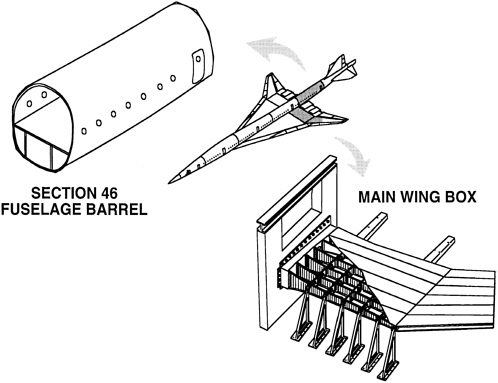
FIGURE 4-6 Full-scale large component test articles. Source: NASA.
the need, cost, schedule, or risk for industry to perform full-scale tests of their design for a commercial vehicle.
The full-scale component tests that are planned will not eliminate the need for real-time tests to measure long-term durability and end-of-life strength and stiffness. In addition, the thermal compatibility of the wing-fuselage joint and the joint in the outboard wing crank, which involve dissimilar materials and extremely high loads, will not be tested. Thus, the most critical structural issues for the full-scale vehicle will not be addressed. Furthermore, cost considerations seem likely to limit the full-scale tests to static loading only, with no thermal or durability testing. Even with these simplifications, the estimated cost of testing full-scale fuselage components is nearly $38 million.
Finding 4-10. Full-scale testing of large components, because of the cost and time involved, is more appropriate to the final structural validation of a specific vehicle point design. Large component tests, as currently planned, would not address critical structural issues for the full-scale vehicle or major structural joints. Nor would they validate that fabrication methods used for component tests would be representative of the manufacturing methods that will be used during production.
Thus, full-scale testing of large components during Phase II would probably add little value to the technology development process.
The HSR Program intends to construct component test articles using materials, tooling, and fabrication processes that may not be representative of the production components. Even though test materials will be from the same family as those planned for the TCn and test article fabrication processes are expected to have a known relationship to production processes, the committee views this as a notable risk. As indicated previously, the structural integrity and quality of a structural article cannot be separated from the material product forms or the processes and fabrication methods used in its construction. PMC layup material and automated tape laying (which are expected to be used for production) yield structures with inherently different properties than structures formed using wet layup hand fabrication processes (which are proposed for test components). In addition, there is currently a nationwide shortage of carbon fibers. For example, current production of IM7 fibers, which are used in the HSR Program's baseline PMC (PETI-5), is dedicated to the F-22 and C-17 programs. This could mean that HSR test components will have to be manufactured from a different PMC material system.
Finding 4-11. Using surrogate materials and fabrication processes for components in large-scale tests could significantly reduce the ability of those tests to assess objectively the economic viability of the proposed design approaches. Correlation of component test results with analytical predictions would be complicated by inherent differences between the "as-designed" and the "as-tested" materials and fabrication processes.
For the reasons stated above, the committee believes that full-scale component tests of a point design from the notional TCA configuration would be premature. Subcomponent tests would be a compromise in terms of cost and structural complexity. Subcomponents would be quicker and less costly to fabricate and test, thus allowing more tests for more in-depth investigations of fundamental issues, such as damage tolerance, repair, load interaction, environmental exposure, material variability, process repeatability, fabrication defects, etc. Subcomponent test articles are large enough to incorporate key structural concepts, address fabrication and handling issues, investigate some load interactions, and calibrate analytical models. For example, testing the outboard wing splice joint would investigate substantive issues, such as dissimilar material joining, highly loaded joints, static strength, thermal-structural interaction, and durability. Because the analytical model for subcomponents is greatly simplified compared to the model required for full-scale structural assemblies, the model would not cloud discovery of fundamental science and would facilitate the often difficult task of correlating the results of analytical predictions with actual structural responses.
The more fundamental investigation afforded by structural tests of elements and subcomponents would provide an opportunity to achieve higher levels of maturity in the key enabling technologies (which is the key objective of Phase II) rather than validating a single point design for a structural concept that, in the end, may not even be applicable to the ultimate commercial product.
Finding 4-12. Structural issues should be resolved in a cost-effective manner, which means using the smallest and simplest tests that can provide the required information. Addressing materials and structures issues using tests at the coupon, element, and subcomponent levels during Phase II may offer a higher payoff than testing full-scale components.
Recommendation 4-7. Testing of full-scale components should be deferred to the recommended technology maturation phase. Funds allocated for testing full-scale components during Phase II should be reallocated to achieve higher levels of technology readiness in the critical enabling materials and structures technologies, including the following:
-
materials characterization and life prediction methodologies
-
rapid, efficient design and analysis tools
-
robust structural concepts
-
technical criteria related to dynamic interactions among the airframe, propulsion, and flight control systems (APSE effects) and the relationship of these criteria to structural concepts
This redirection of the Phase II test program would go a long way toward banishing the perception that the development of hardware is leading technology development.
AERODYNAMIC DESIGN
The HSR Program has pursued the systematic development of an aerodynamic design by a combination of linear theory, nonlinear computational simulations, and wind-tunnel testing. This has culminated in the current TCA configuration, which represents a compromise between the requirements of (1) maximizing L/D (lift-to-drag ratio) during supersonic cruise, (2) achieving sufficient L/D for reasonably efficient subsonic cruise for overland route segments, and (3) achieving takeoff and climb performance compatible with noise requirements.
The range achievable in long-range cruise at constant speed is proportional to
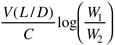
where V is the cruising speed, C is the specific fuel consumption, and W1/W2 is the ratio of the initial weight (at takeoff) to the final weight (at landing). Achieving the HSR Program's performance goals requires a combination of low specific fuel consumption, very low structure weight fraction (on the order of 20 percent), and an improvement in L/D on the order of 10 percent relative to the L/D of the current TCA baseline configuration.
The committee conducted a careful review of the HSR Program's aerodynamic design, details of which are not included in this report because of restrictions on the release of this information. Based on that assessment, the committee believes that there is little prospect of achieving specific fuel consumption or weight fractions beyond the current goals of the HSR Program. Consequently, a shortfall in the L/D ratio would seriously compromise the projected 5,000 n.m. range of the aircraft. This would, in turn, degrade economic viability.
The committee believes that the aerodynamic research being conducted by the HSR Program is well planned and managed. The results of wind-tunnel tests are in close agreement with computational simulations. However, scaling factors and other corrections necessary to project wind-tunnel test data to the flight conditions of a full-scale aircraft total about 40 percent. This large correction factor raises some uncertainty about the accuracy of the projected L/D.
A separate analysis based on fundamental considerations of minimum wave drag (which is associated with the shock waves generated during supersonic flight), minimum drag due to lift, and minimum skin friction also suggests that the aerodynamic performance goals are within the range of possibility, but close to the attainable limit. Successful use of nonlinear optimization techniques should bring the performance within 3 to 4 percent of the goal. Other improvements are predicted in detailed refinements, but there is still some risk of a shortfall of several percent.8
Ongoing research on supersonic laminar flow control (SLFC), including flight testing, has shown promising results. If successful, SLFC offers the prospect of significantly improving the L/D ratio, on the order of 10 to 15 percent. This would provide a margin against shortfalls in the specific fuel consumption or weight fraction. It would, however, require a complete aerodynamic redesign of the proposed configuration.
Even if SLFC research is not successful in the time frame needed to benefit initial production of an HSCT, development of practical SLFC technology could benefit a variety of supersonic aircraft, including future-generation HSCTs, and continued SLFC research is consistent with NASA's mission to develop advanced aeronautical technologies.
Finding 4-13. The current estimate of drag for the TCA is reasonable. However, there remains some uncertainty (on the order of 3 to 5 percent) about the actual drag of an HSCT in flight.
Finding 4-14. The projected 10 percent improvement in L/D (relative to the L/D of the current TCA design) is optimistic. Design optimization can be expected to yield about 5 to 6 percent. Some of the other projected improvements may be offset by drag increments on the real production aircraft.
Finding 4-15. SLFC has the potential to improve L/D by 10 to 15 percent, which could offset shortfalls in the attainment of predicted L/D, specific fuel consumption, or structural weight fraction, and would provide a margin for attaining performance goals in terms of aircraft range.
Recommendation 4-8. NASA should continue to conduct SLFC research as part of a long-term commitment to HSR technology. This research could also have significant payoffs for other aeronautical projects. Long-term planning by the HSR Program should provide for the possible incorporation of SLFC in future configurations, including the full-scale technology demonstrator the committee recommends flight testing during the advanced technology demonstration phase.
AIRFRAME SUMMARY
Development of material and process technologies by the HSR Program is well managed, but very aggressive. Also, the program as currently scoped faces high risks with regard to meeting performance and schedule goals. This is particularly true for the baseline material technologies, including PMCs, adhesives, sealants, coatings, and finishes. The committee recommends retaining the Mach 2.4 performance goal to drive material and process technologies. However, to protect the goal of commercial viability, additional funding should be devoted to development of alternative technologies for lower-speed (Mach 2.0 to 2.2) HSCT designs. This is necessary in case the aggressive Mach 2.4 materials technology does not result in levels of risk, cost, and performance that satisfy HSR Program goals and schedules. In addition, airline economic factors do not seem to support the tight focus on a speed of Mach 2.4 (see Finding 2-2).
The materials supplier base, including foreign suppliers, should be critically assessed with regard to prospects for establishing crucial financial and technical commitments in partnership with airframe manufacturers, parts suppliers, NASA, and academia. Such a partnership is needed to ensure appropriate materials, technical expertise, and fundamental data are available to support an HSCT program launch decision.
The ability to develop materials, particularly PMCs and adhesives, that can meet the long-term thermomechanical durability requirements for an HSCT is a major concern. The ability to produce reliable life prediction analyses within the
existing HSR schedule is another. More time for technology maturation, as described in Chapters 1 and 6, could significantly reduce these risks.
Airframe manufacturability will be the major factor in determining HSCT affordability. The committee recommends placing greater emphasis on plans for developing basic manufacturing technology. These plans should be coordinated with ongoing development of material technologies, and they should be structured to help identify how decisions involving concurrent manufacturing, materials, and structural design efforts affect the critical issues of producibility, performance, and affordability.
Efforts to achieve the HSR Program's structural design goals are high risk, even with advanced materials and improved structural design efficiencies. The structural integrity of innovative concepts depends on the success of material and process technology development. In addition, using weight as the key structural selection criterion ignores the equally important effect of manufacturing feasibility and affordability on the economic viability of the selected design.
The committee recommends that the HSR Program defer plans to produce full-scale components and provide additional funding during Phase II to mature enabling technologies for material and process development; structural design; validation of accelerated durability tests; and modeling tools for rapid preliminary sizing, thermal analysis, and analytical life prediction.
Additional funding is also needed to investigate real-time, long-term durability, end-of-life properties, robust structural concepts, and fabrication techniques that could be used for full-scale production—before full-scale test components are designed, fabricated, and tested. The committee believes that this approach would shift the focus to technology development and away from validation of point design concepts that may have limited applicability to the final design of an HSCT.
In summary, the committee is concerned about the tight schedule of the current program, which encourages the research program to focus prematurely on unproven materials while simultaneously developing and testing structural concepts. A more appropriate focus for the Phase II materials and structures effort would be technology development to provide an understanding of materials behavior, processing science, material characterization, and structural analysis methods to aid suppliers and airframe manufacturers in their development of materials and processes for an HSCT. This approach would also defer the need to focus on a discrete speed and configuration.
The aerodynamic research being conducted by the HSR Program has resulted in systematic development of an aerodynamic design and aerodynamic goals that are within the range of possibility. Optimization techniques should result in aerodynamic performance within 3 to 4 percent of the goal. However, a shortfall in L/D would seriously compromise airplane performance. The committee recommends the HSR Program and NASA continue long-term SLFC research because of its significant potential and broad applicability to the aerospace industry.
REFERENCES
DeVault, J. 1993. The Future of the Advanced Composite Industry. Paper presented at the Annual Research Symposium of the Center for Composite Materials, University of Delaware, Newark, September 29–30, 1993.
Hargrave, J, 1996. Personal communication from John Hargrave to Dr. Dianne Wiley, November 1996.
Johnson, B. 1994. Temperature Issues for a Mach 2.4 High Speed Civil Transport, SAE Technical Paper 942160. Presented at AEROTECH '94, the Annual Aerospace Technology Conference and Exposition, Los Angeles, California, October 3–6, 1994. Available from: SAE International. Warrendale, Pennsylvania.
JTEC (Japanese Technical Evaluation Center). 1994. JTEC Panel Report on Advanced Manufacturing Technology for Polymer Composite Structure in Japan. NTIS Report PB94-161403. Baltimore, Maryland: JTEC.
Marx, W., D. Mavris, N. Dimitri, and D. Schrage. 1996. Effects of Alternative Wing Structural Design Concepts on HSCT Life Cycle Costs, AIAA Paper 96-1381. Paper presented at the American Institute of Aeronautics and Astronautics/American Society of Mechanical Engineers Structures, Structural Dynamics, and Materials Conference and Exhibit, Salt Lake City, Utah, April 15–17, 1996. Available from: AIAA. Reston, Virginia.
Miller, A.G., D.T. Lovell, and J.C. Seferis. 1994. The Evolution of an Aerospace Material: Influence of Design, Manufacturing, and In-Service Performance, Composite Structures, 1994. Boeing Commercial Airplane Group: Seattle, Washington.
NRC (National Research Council). 1995. New Materials for Next-Generation Transports. NMAB-476. National Materials Advisory Board, National Research Council. Washington, D.C.: National Academy Press.
NRC. 1996. Accelerated Aging of Materials and Structures. NMAB-479. National Materials Advisory Board, National Research Council. Washington, D.C.: National Academy Press.
Seferis, J.C. 1988. Scaling Concepts for Composite Material Developments. Journal of the Society for the Advancement of Material and Process Engineering. 24:6.
Seferis, J.C., and M.E. Carrega. 1991. Functional Requirements of Polymers as Matrices in High Performance Composites. Materials: Present and Future. Paris, France: Rhone-Poulence.
Seferis, J.C., and P.M. Condit, co-chairs. 1995. Risk Assessment for New Technology: A Study on the In-Service Evaluation of High Temperature Composite Materials in an Engine Environment. Team A Final Report 95:268, Team Certificate Program. Seattle, Washington: University of Washington.
Smith, B.W. 1996. National Educators' Workshop 1997 Preview—Boeing. Presentation given at the 11th Annual National Educators' Workshop, Los Alamos, New Mexico, October 27–30, 1996.
Velicki, A. 1995. Materials and Structures for the HSCT. Aerospace Engineering. 15(April 4):17–19.


