
The Concept of National Economic Strategy
Bruce R. Scott
Harvard Business School
National economic strategy, as used in this paper, comprises a vision of a desired future state of the economy, a time frame within which that state is to be achieved, and a set of policies and institutions for influencing the mobilization and allocation of resources and for promoting their efficient utilization. As with firm strategy, the vision provides the frame of reference for establishing priorities for the mobilization of resources as well as the fractions to be allocated across various product markets. Also like firm strategy, national economic strategies are articulated and implemented through institutions. The structure and culture of these institutions determine in considerable measure how the strategy will be implemented as well as its potential effectiveness.
Economic strategies can influence economic performance by influencing the volume and structure of resources (supply), the volume and structure of demand, and/or the distribution of incomes. With governments around the world consuming from 10 to 30 percent of gross domestic product (GDP), and spending additional amounts as transfer payments, it is hard to imagine a circumstance in which governments do not have an important influence on the mobilization of resources. Recognizing that this involvement is inevitable, a baseline strategy might be one in which government aimed to raise and spend those funds so as to have the minimum impact on private decisions, whether on resource mobilization or allocation. This would mean, for example, that there would be no ''targeted" tax breaks for any industries or groups of people. The economic rationale for this strategy would be that the market knows best. If, on the other hand, one recognizes that markets are imperfect, an economic strategy can conceivably enhance economic performance by promoting
-
more (or less) resource mobilization,
-
more effective allocation of those resources across sectors of the economy and among economic actors, and/or
-
more efficient utilization of resources by the various economic actors.
A vision helps establish goals that in turn animate an economic strategy. A vision of achieving economic and/or political equality with other nations is fundamentally different from one of achieving maximum consumer purchasing power today, let alone increased equality or increased security of incomes. The former is likely to justify "exceptional" levels of resource mobilization and personal responsibility, whereas the latter typically would not. Government intervention to promote increased security of incomes is apt to involve transfers that promote consumption while at the same time relieving individuals of a measure of responsibility for their own welfare. Thus, economic strategies are based on differing roles and responsibilities for the economic actors as well as differing notions of resource mobilization and allocation.
Economic strategies can employ more or less direct means to influence the mobilization and disposition of resources and the incomes they generate. Within a given economic structure the efficiency of resource utilization seems best promoted indirectly, as suggested long ago by Adam Smith and others, by ensuring that markets work effectively. High levels of resource mobilization, in contrast, typically require more direct government intervention, such as "forced" saving or higher standards of admission for university entrance, a point that is central to the analysis of the producer orientation described below. High levels of resource mobilization can achieve increased growth rates, but often because seemingly high levels of labor productivity are offset by low level of return to capital. High-growth, based at least in part on high total factor productivity, seems to require shifting the structure of an economy from current advantages and opportunities toward those of the future, for nations as it does for firms. It is no accident that the high-performing Asian countries have experienced export-led growth, the exports have been led by manufactures, and, beginning with Japan, several seem to have had remarkable success in moving their manufactured exports upscale to higher-technology, higher-growth sectors.
One of the central issues in this paper is to consider how and why some countries have been more successful in shifting their economic structures toward future opportunities and why others, such as the OPEC countries with their great natural advantages, have been conspicuously unsuccessful in doing so. A related issue is the role of these opportunities in creating a rationale for enhanced resource mobilization. High levels of resource mobilization in the absence of appropriate market opportunities can lead rapidly to low rates of return, at least in terms of the domestic currency, or to capital outflows. Japan, for example, has saved and invested about as much of its GDP during this decade as it did in the 1960s, but the returns (at least in yen) have dropped from approximately 10 per-
cent economic growth to approximately two percent. Japan's rising exchange rate has reduced domestic opportunities in a way that has negated much of the effect of its massive investments in human as well as physical capital. Its private sector, and notably its large manufacturing firms, are technically and financially stronger than ever, but they are not able to develop opportunities at home the way they did in previous decades. Thus, the notion of structural shifts, toward or away from future opportunities, and the role of public policy in those shifts is of central concern.
Economic strategies are not just a matter of economics; the vision, the goals, and the directness of intervention all have important political implications. An ambitious growth strategy may assume a consistency of purpose and personnel that is difficult to achieve in a democratic context except, perhaps, in war time. In addition, economic strategies can be implemented only through institutions. Mobilization and allocation of resources through institutions involve fundamental issues of governance. Direct intervention is associated typically with authoritarian government, indirect intervention with democracy. At a minimum there are strong ideological differences between the two. Indeed, strong political and/ or ideological differences may rule out some strategic options. We must recognize at the outset that it is not possible to discuss economic strategies without taking account of political considerations and differing ideologies. At the same time we must also recognize that differences in economic theory can also influence a nation's perceived strategic options.
An example of the rise and fall of an economic strategy can illustrate the argument thus far. A distinction between the rise and fall of a particular variant of economic strategy and generic propositions about economic strategies per se needs to be drawn.
KEYNESIAN ECONOMICS AS ECONOMIC STRATEGY
The "Keynesian revolution," which dominated economic thought from the end of World War II until approximately 1980, was, at heart, a concept of how governments could "manage" aggregate demand to achieve full employment of a nation' s human resources. Keynes' ideas were considered revolutionary, both as a reconceptualization of economic strategies of governments and because they opened a new avenue for the economic strategies of governments based on the management of aggregate demand. The intellectual origins of this strategy owe much to the economic circumstances of Britain as well as the insights of Keynes.1
Beginning in the 1920s, Britain experienced an apparent excess of supply, and notably an excess supply of labor, a problem experienced by most other developed nations during the Depression of the 1930s. It was Keynes' insight that this problem could be solved in the sense of achieving full employment by in-
creasing aggregate demand, which in turn could be achieved through increased government spending, financed by fiscal deficits if necessary. With the "new economics," government could reduce economic and social inequalities by eliminating their "root cause" (i.e., unemployment). The Keynesian vision was one of growth, stability, and increased equality, all led by government. It had the particular merit that good economics seemed to be good politics as well.
Ironically, by the time conservative political leaders such as Richard Nixon could claim that "we are all Keynesians," the Keynesian concept of economic strategy was largely obsolete. Inflation of demand to end the 1970 recession aggravated the U.S. balance of payments deficits that had emerged in the early 1960s. Rather than restrain demand to reestablish the balance of payments, on August 15, 1971, President Nixon "temporarily" suspended convertibility of the dollar. Early in 1973, dollar convertibility was suspended altogether. The Keynesian model was incompatible with an increasingly open economy and a fixed exchange rate.
Keynes' strategy of sustained growth through government-led demand management was conceived when rising trade barriers around the world had reduced world trade to record lows relative to gross national product (GNP). World War II caused further disruptions, as did the "dollar shortage" in the following decade (1945-1955). In these circumstances, supply was largely domestic supply. If government promoted demand, as suggested by the Keynesian model, this led to increases in domestic supply and eventually to full employment of resources.
However, in an economy open to world trade, nations that tried to promote growth and full employment by way of promoting aggregate demand found that more and more of the demand was met by imports instead of domestic sources of supply. Increased imports led to persistent balance of trade and payments deficits. At the same time they were likely to lead to persistent government budget deficits and often to inflation as well. Unemployment, which had been reduced to record lows in the developed countries in the 1960s, returned in the 1970s and continued to increase in the 1980s.
Some countries, such as France, seemed to make Keynesian economics work remarkably well by a strategy of "inflate and devalue." Deficit-financed government spending sustained full employment, and above average inflation was offset with periodic devaluations.2 However, in the slower growth and more open world economy after 1973, devaluations gave little respite; rising import prices and rising wages soon offset the devaluations. The French experiment with reflating demand in 1981 lasted only 18 months. Brazil's attempts to offset the effects of continuous devaluation by way of indexation of prices and wages met a similar fate; an ever-increasing rate of inflation causes ever-larger distortions, shifting attention from the production of real good and services to how to delay accounts payable and accelerate the collection of receivables.
The limitations of the Keynesian model in a progressively more open world economy are now widely recognized and accepted. Indeed it has become fashionable to generalize from this and other failures to conclude that there is little that government can do by way of economic strategy other than to get certain "basics" right. Although it is indeed true that governmental capabilities are all too often sorely tested just to minimize distortions that might cause the misallocation of resources and to maintain overall stability and an environment conducive to risk taking, this is a problem with the practice of government more that with economic strategies per se.
It is important to recognize the limitations of the Keynesian model while at the same time recognizing that it was an ingenious response to a particular set of circumstances. Keynes's breakthrough came from recognizing that, contrary to the accepted theory of the time, supply did not beget its own demand. There was no necessary connection (ex ante) between the desire to save, which reduces demand, and the desire to invest, which reestablishes that demand. Inadequate demand was both possible and curable.
In an open economy the strategic challenge is how to maintain external balance while promoting growth at home. As an economy grows, incomes rise, and a rising fraction of those incomes go for intermediate inputs and capital goods. Although the coefficients relating imports and GDP will vary from country to country, the general trend of trade (including imports) is to grow more rapidly than GDP. In a regime of fixed exchange rates the trade balance becomes a governing force on the growth rate. Floating rates have often been associated with weak economic policies, including low rates of saving. The consequences are likely to include above-average levels of inflation and the inevitable distortions that accompany that inflation.
Broadly speaking, governments have four alternatives to deal with trade or current account restraint; they can (1) promote domestic sources of supply while restricting imports; (2) promote exports to match the rising imports; (3) keep hands off and, if necessary, accept a lower rate of growth; and (4) finance a trade gap temporarily through capital imports, whether debt or equity. The first two of these options require direct government intervention in the structure and functioning of the economy; although they differ sharply in content they are the underlying rationale for the developmental strategies explored in this paper. The third option presumes that government avoids direct intervention in favor of a facilitating role in the economy. This leaves the direction and speed of growth to market forces.
The fourth option can be used as a supplement to any of the first three, but it cannot be used for very long unless the capital inflows support high-return investments that yield returns adequate to meet future payments of dividends, interest, and, at some point, perhaps principal as well. Canada, in the first half of this century, was an extreme—and apparently successful—case of this fourth option, with capital inflows financing more than 25 percent of domestic investment for
more than 40 years.3 With the cessation of net capital inflows in the 1970s Canada has also become an example of the illusions that this strategy can support. In any event it is not treated as a separate case.
If Keynes were still alive he probably would have refocused his attention in light of changing world conditions. Indeed he might well have ceased being a "Keynesian" about the time Richard Nixon decided to become one. In any event, it is not unreasonable to imagine him exploring one or both of the developmental strategies as a preferred alternative to laissez faire.
The central questions to be addressed in considering the development strategies are (1) whether either can improve upon market outcomes in promoting economic growth and, if so, under what conditions; and (2) whether they are indefinitely sustainable or, on the contrary, one or both contains the seeds of its own demise. A third question, also central to this analysis, is whether all the highincome countries face a more or less new challenge of how to satisfactorily employ their low-skilled citizens. The Keynesian model cannot shed much light on any of these questions, but we need some theory to guide us nonetheless.
ECONOMIC STRATEGY AND ECONOMIC THEORY
Economic strategy does not exist independent of a theory or model of economic development, however, explicit or implicit they each may be. Theory establishes connections between cause and effect. Whether the desired effect or result is high-growth, high-efficiency, or high-income security, theory is indispensable to a strategy for its successful achievement. However, economics is not a science like biology let alone chemistry or physics. Controlled experiments are the exception, not the rule, and replicating results is usually impossible. "Proof" is to some degree in the eye of the beholder; a conservative analyst may arrive at one interpretation while a liberal arrives at another.
In these circumstances a mix of ideology and theory can be said to drive economic strategy, and competing versions or interpretations of theory are often to be found behind competing economic strategies. For example, neoclassical theory follows the analytic insights of Adam Smith and others that efficiency and equity are the real concerns of policy; the mobilization and allocation of resources is best left to market signals. This theory presumes that competitive forces, working through markets, will mobilize resources to the point where the present value of prospective returns equals the present value of those resources for current consumption. Arrow and Debreu won a Nobel prize for showing that, in equilibrium conditions, these same competitive forces will reallocate resources until prospective marginal returns are equal across sectors, at which point they will be achieving their more effective use. In these hypothesized circumstances (equilibrium) it is impossible, by definition, for government to improve on the allocation of resources.
In an open economy competition will create continuous pressure for organizational innovations to make efficient use of a given flow of resources, thereby ensuring efficient usage as well as effective allocation. Thus in an open, laissez-faire economy it is the job of government to maintain economic stability while minimizing distortions in various markets. There is little government can do to improve on market outcomes, and there are many things it can do that will reduce those outcomes.
This neoclassical notion of market superiority creates something of a dilemma for developing nations. How are the latter to achieve economic and/or political equality with more "advanced" nations? Their circumstances, including their desire to catch up, strongly suggest the need for an economic strategy to promote rapid growth. Because they can hardly expect to be more efficient than advanced nations, their options lie in higher levels of resource mobilization and/ or more rapid sectoral reallocation, either of which is likely to require a strong role for government. At the same time, experts from advanced countries have a tendency to rely on theory that has little if any room for such a strategy. Their political and/or ideological views seem to have little if any room for a strategy that might entail extraordinary measures to mobilize resources for productive purposes if that required some sacrifice in current levels of consumption (to finance additional investment), let alone some curtailment of individual liberties.5
The key theoretical issue, however, is whether governments can improve on market outcomes if they attempt a reallocation of resources from a structure that maximizes present returns toward one "targeted" on future opportunities. How can subsidized investments (industrial policy) be justified in targeted sectors if they are at below-market returns? It is important to consider this question in theoretical terms before introducing the not irrelevant question of governmental competence.
Chenery et al. point out that there are two competing theoretical positions:
There are two contrasting views of the way economic growth occurs. In the neoclassical tradition, GNP rises as the result of long-term effects of capital formation, labor force expansion, and technological change, which are assumed to take place under conditions of competitive equilibrium. . . . Movement of resources from one sector to another is considered relatively unimportant because labor and capital produce equal marginal returns in all uses.5
In the equilibrium model there is little or no constructive role for trade or industrial policies because, by definition, if returns by sector are equal at the margin, then prospective returns from additions to one sector would be less than the returns lost from the sectors that were deprived of those same resources. Reallocation in the equilibrium context occurs gradually and spontaneously, driven
by relative rates of return. A trade regime or other industrial policy intervention by government would by definition reallocate resources in such a way as to "overinvest" at below market rates in the targeted sectors, while reducing investments (at market rates) in others. The equilibrium view holds that the optimal role of government is to limit its interventions to those that level the playing field by correcting market imperfections; it should not attempt to tilt the playing field for policy-based reasons. But Chenery et al. suggest a broader policy view in which:
economic growth is regarded as one aspect of the transformation of the structure of production that is required to meet changing demands and to make more productive use of technology. Given imperfect foresight and limits to factor mobility, structural changes are most likely to occur under conditions of disequilibrium. . . . Thus a shift of labor and capital from less productive to more productive sectors can accelerate growth.6
Disequilibrium may be an essential condition for a strategy of above-average growth, for a nation as for a firm. But markets in disequilibrium do not necessarily work smoothly, returns should not be assumed to be equal across sectors, and market imperfections may be the rule instead of the exception. Key opportunities may entail excessive risks for entrepreneurs and/or their potential backers. In these circumstances government can play a positive role.
Accelerating the movement of labor out of agriculture has been one of the prime forces for growth in developed nations. Acceleration of the growth of the manufacturing sector is a second. Promotion of information-based services may soon be recognized as another. In addition, governments can play a key role, through purchases and subsidies, in helping firms achieve advantages in specific industries that promise above-average rates of growth and/or technological progress, such as commercial aircraft, computer chips, or certain biotechnologies. Returns to society as a whole may exceed returns to the firms in question, in part through opportunities for technical achievement at schools and universities as well as at work, in part through import reduction or export development, and perhaps through additional tax revenues as well.
Obviously, social returns are more difficult to measure than those to a firm. These complexities, plus the fact that a society may have a greater tolerance for risk than its private firms, open a door not only for developmental strategies but for waste and fraud, a point that can hardly be overemphasized in light of the experience of nations of various sizes and governments of various types and inclinations. Nonetheless, Chenery et al.'s notion of developmental strategy has very important implications, notably when it comes to trade regimes. For example, the International Bank for Reconstruction and Development (the World Bank) and others have identified an outward orientation as one where domestic prices are aligned with the equilibrium model. The disequilibrium view would suggest domestic prices either higher or lower than those in the world market,
(i.e. an over-or undervalued exchange rate). Both regimes have been tried, and each with some success.
A development model based on deliberate disequilibrium is particularly important in understanding the strategy of East Asian countries, beginning with Japan and most recently China. Equilibrium versus disequilibrium is not the only important theoretical issue. Douglas North, in accepting his Nobel Prize in "economic sciences" in 1993, underlined some additional theoretical issues by drawing a distinction between an economic analysis of how markets function at a point in time and the corresponding analysis of how economies develop over time.
There is no mystery why the field of development has failed to develop during these five decades since the end of World War II. Neoclassical theory is simply an inappropriate tool to analyze and prescribe policies that will induce development. It is concerned with the operation of markets, not how markets develop. . . . The very methods employed by neoclassical economists have dictated the subject matter and militated against such a development. That theory in the pristine form that gave it mathematical elegance modeled a frictionless and static world. . . . When applied to economic history and development it focused on technological development and more recently human-capital investment but ignored the incentive structure embodied in the institutions that determined the extent of societal investment in those factors. In the analysis of economic performance through time it contained two erroneous assumptions: (1) that institutions do not matter and (2) that time does not matter.7
Institutions and time are key instruments of economic strategy; specific goals help clarify direction and priorities. An economic strategy aimed at rapid growth and/or catching up with leading countries justifies a high level of resource mobilization. All of the high-performing countries have had high levels of resource mobilization (e.g., savings and investment in excess of thirty percent of GDP) as an essential element in their strategies. These high levels of resource mobilization obviously entail short-term sacrifices in consumption and thus in standard of living. It is as though these countries have rejected Smith's basic axiom that "the only purpose of production is consumption" in favor of one to the effect that "the first and foremost purpose of production is the achievement of political equality through economic power." They have rejected an essentially consumer-oriented notion of economic strategy in favor of one that is producer oriented.
If a nation is guided by a producer-oriented vision of achieving political equality through economic power, then it is open to consider some produceroriented propositions that might be the backbone of a producer-oriented theory of development. Economic power is to be found in productive firms in growth industries. The economic power of firms can be enhanced through preferential access to low-cost capital, below-market wage levels, and high rates of profit
retention. Reallocation of resources into high-growth areas where firms do not, at the time, have obvious advantages can be accelerated by tying preferential access to subsidized resources to just such performance, that is by an industrial policy.
Increased levels of resource mobilization are less a theoretical issue than one of politics and ideology. There is no magic involved, no claims of gains in total factor productivity. It is largely a matter of increased mobilization leading to increased capacity for growth. At the same time, however, industrial policies to promote a "faster than market" reallocation of resources can be greatly facilitated by the availability of resources at below-market cost. A subsidy is involved. In general, consumers will subsidize producers. Thus, Chenery et al.'s notion of accelerated restructuring as a strategy of growth is much more compatible with the high levels of resource mobilization associated with producer orientation than with the lower levels associated with the more familiar consumer variant. Economic strategy is a matter of mobilization as well as allocation.
Increased resource mobilization is typically part of a catch-up strategy. It may justify forced savings, a longer work week, restrictions on wage increases and/or union activities, or other similar interventions. The Soviet Union did this for decades, and more recent examples would include Japan, Korea, and Singapore.
The context is quite different for high-income countries, however. They are likely to see themselves as fully "competitive," and thus see the role of government as promoting higher levels of current consumption, perhaps by taxing saving and subsidizing consumer borrowing, even if this means a significantly lower level of resource mobilization and consequently a lower rate of economic growth. Keynesian economics was a central part of many such strategies.
As incomes rise, priorities may well shift, as though there were a hierarchy of social needs. Producer-oriented countries may become more consumer oriented and may decide to modify their economic strategies accordingly. Consumer-oriented nations may also shift their priorities, from raising their levels of consumption to ensuring the security of that level. John Kenneth Galbraith has identified the rationale for such a change:
" In the industrial countries most people, when employed, are not primarily occupied with the size of their income. . . . Their principal worry is the danger of losing all or most of their income—of losing employment and the consequent loss of all or most of their livelihood. . . . In consequence, the factors affecting the security of employment are now socially far more important than those determining the level of reward."8
Governments of high-income or "industrial" countries have responded to this change in priorities by shifting their focus from promoting economic growth to promoting economic security. Increased emphasis on economic security is surely
the number one cause of the growth of government spending in the industrial countries in the twentieth century. Beginning in the late 1980s, first in Europe and then in the United States, governments accepted responsibility to ensure against illness and accidental injury, either of which might result in loss of income if not loss of employment. With the Great Depression, many governments accepted responsibility for unemployment insurance, and then for countercyclical fiscal policies intended to maintain a level of aggregate demand consistent with full employment. With the prosperity of the 1950s and 1960s many governments accepted added responsibility to ensure against poverty or low incomes. These added responsibilities required institutional innovations, while at the same time the added spending meant that government's economic strategy had an increased impact on the performance of the economy.
Governmental responsibility for redistribution of income means that economic strategies can be analyzed in terms of their effect on the distribution of income as well as its level. Although a focus on incomes inevitably overlaps somewhat the previous discussion of the mobilization and allocation of resources, it helps clarify government's strategic options in a dimension that seems sure to receive increased attention as competitive pressures intensify in world markets and especially as these pressures lead to increased inequalities of incomes. Because it may be easier to visualize strategic options with respect to incomes, a framework based on income distribution is presented first before proceeding to a second approach based on the mobilization and allocation of resources in product markets.
STRATEGIC CHOICE IN AN INCOME FRAMEWORK
Strategies for reallocating resources by way of trade regimes (e.g., import substitution) have been much studied, notably by economists associated with the World Bank. We can also learn from an additional approach in which a population is arrayed by skill and/or income level. If we assume there is some connection between skill level and income then we can array a population from low to high, as shown in Figure 1. In this framework, government has three broad options for promoting ''competitiveness": it can promote a rise in average incomes; it can favor those at the high end of the income curve, thereby increasing inequalities; or it can favor those at the low end of the curve, thereby reducing inequalities. Although it is somewhat arbitrary to divide the income curve into three segments, the concepts are quite distinct as are the methods used to promote incomes.
As incomes have risen, particularly in the industrial nations, governments have played an active role in increasing the security of all incomes while at the same time trying to boost the incomes of the least fortunate. Each of these activities has a social rationale: the promotion of a more humane and/or egalitarian society. At the same time it can be argued that each neglects, if indeed it does not
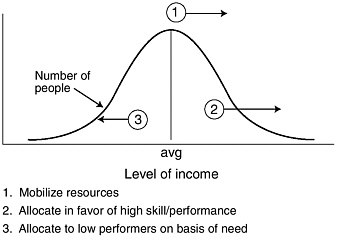
FIGURE 1 Alternative concepts of intervention by level of income.
run flatly against, market forces. Thus, as we look at economic strategies in a skill/income framework, we may find government working at cross-purposes, promoting competitiveness in some of its actions and reducing it in others. Because the primary concern is with the strategic options of high-income countries, this framework plays a significant role in the analysis as we shift from examining the strategies of the challengers to considering those of the current leaders.
Average incomes can be promoted through increased resource mobilization and/or the promotion of increased efficiency in the use of resources, as symbolized by arrow 1 in Figure 1. Obviously, a higher level of resource mobilization to promote future income requires either a reduction in income available for consumption, or the importation of foreign capital, or both. Increased resource mobilization puts more of society's resources in the hands of producers and, correspondingly, less in the hands of consumers. Additional resources, even if used at rates slightly below current "market rates," will yield more rapid income growth, albeit at the cost of a lower level of consumption for a time.
Government can also attempt to increase the security of all incomes—high, middle, or low. Insurance against accident, illness, disability, unemployment, and old age all fall in this category. Keynesian economics aimed to assure a level of aggregate demand that more or less provides employment security or "full employment." Creating a minimum wage and raising it is a way to ensure those with a job against low incomes. Transfer payments such as "the dole" do much the same for the long-term unemployed.
Each of these types of intervention is subject to errors, abuse, and/or the creation of unintended distortions. Mobilization of additional resources may lead to significant inefficiencies if they are misallocated, for example by state-owned enterprises. In particular, forced mobilization of savings can be a recipe for gross abuse if the savings are to be placed in the hands of dishonest, not to mention,
incompetent public officials (e.g., in state-owned banks or trust funds). Even policies to promote full employment have risks. If they succeed, they are likely to enhance the bargaining power of labor relative to capital. If this results in reduced returns to capital, as seems to have been the case in several countries, it may reduce the rate of investment and thus the rate of growth. Therefore, there may be trade-offs between economic security and economic growth as there are between efficiency and equity. At the least, one must recognize that none of these policy options is without its downside risks.
Government intervention to promote the front or higher-income end of the curve (arrow 2 in Figure 1) is still more controversial. Shifting additional resources to high-growth and/or high-technology sectors is at the heart of industrial policy. One argument for such interventions is that society may stand to gain more than the specific firms (i.e., there are positive externalities). Employees will learn skills they may then take to other firms or for starting a firm on their own. Development at the front edge of the curve requires continuous adaptation and learning, and thus numerous institutions progressing together such as secondary schools, universities, research institutes, and firms. Government has a role in seeing that this happens and in supporting the various institutions in appropriate ways.9The important judgmental issue is how important such externalities may be, and thus how much of an effort should be made to see that they are developed.
Whatever their potential advantages, industrial policies entail obvious risks. First there is the much observed problem that government will target a lagging sector for political reasons while claiming that it is nonetheless "strategic" (i.e., at the front end of the curve). In addition, many economists doubt that there is any prospect that government officials can, through selective intervention, improve on market-directed investments except in very obvious and therefore very limited cases of "market failures."
Industrial policies may be more appropriate for low-, middle-, or highincome countries. Middle-and low-income countries can look about them and see the frontiers; they do not have to accept the inevitable risks associated with attempting to push those frontiers back. At the same time, they may have a good deal less to work with than richer countries. High-income countries, and particularly those at the technical frontiers, face higher risks of betting on the wrong technologies if not necessarily the wrong fields altogether. However, they have more resources to work with, including more-skilled human resources and more sophisticated human institutions. Regardless of income level, the basic question seems to be one of governance or, in business language, of the quality of management, and notably the quality of government itself.
If government cannot get the so-called "basics" right, does it really have much business attempting the far more challenging task of selective targeting?
To date there are not many nations that have a clear track record of successful industrial policies; one would be pushed to identify a dozen. On the other hand, it is clear that industrial policies have played an important part in all of the remarkable successes to date, with the possible exception of Hong Kong.10 There is opportunity, but there is also great risk.
Some of the more radical innovations of the postwar era have been in the area of raising and/or protecting low incomes (arrow 3 in Figure 1). Minimum wage legislation was designed to cut off the extreme low end of the curve, perhaps thereby shifting much of the curve to the right. The enactment of "means tested" programs, or those based on "need" and not performance, represents a far more radical innovation. Familiar U.S. examples would include food stamps, access to subsidized housing, aid for families with dependent children, and Medicaid for the poor. These programs were reserved for those in or near poverty as a way to enhance their incomes. Because those with low incomes contribute little in terms of tax revenues, this spending is largely a matter of transferring income from the more successful segments of the population to those that are less successful. The experience of the last 30 years suggests that transfers based on need are not an adequate way to address the circumstances of low-skilled and/or low-income people.
Even this simplified, stylized picture is enough to suggest some major issues for economic strategists. Additional mobilization has merit not because it requires "sacrifice" and may thus perhaps "build character," but because it enhances the productivity of labor and raises average incomes. However, it has a cost in terms of current consumption. On what basis can government claim to make better judgments about the present value of future income than individuals exercising their judgment through the market place? The same question may be raised with respect to tilting resources towards areas with above-average prospective (not actual) incomes and/or growth prospects, that is, toward industries, services, or technologies at the front end of the curve. Does government have a better vantage point for assessing potential returns than the world's most sophisticated capital markets?
Government can take quite different approaches toward promoting the front end of the curve. Tax expenditures, such as a R&D tax credit, have a broad impact, tend to favor manufacturing, but also tend to be nonselective as to industry. Support for infrastructure may favor some industries or regions somewhat more than others. More selective interventions to promote critical technologies or industries are more problematic; they require far more than a reallocation of resources. They are almost sure to require skillful institution building and steady, long-term commitment, neither of which is an obvious comparative advantage of most governments.
|
10 |
For a comparison of the industrial policies of Hong Kong, Singapore, and Taiwan, see Haque, op. cit., Chapter 6. |
Promoting economic security raises different, but not necessarily less challenging problems. Promotion of full employment was plausible in the 1950s and 1960s when the industrial nations were much less open to foreign trade. With the opening of the world market, government efforts to enhance domestic demand through fiscal deficits are likely to lead to rapidly increased imports and thus trade and current account deficits. Such deficits are not likely to be sustainable for long periods, except for nations with exceptionally strong credit ratings. Efforts to provide security through minimum wages and/or barriers against layoffs are likely to lead to reduced levels of job creation and thus to rising levels of unemployment.
Tilting resources toward those with low incomes on the basis of need appears to raise even more significant problems. It provides added income without a corresponding requirement for performance. In so doing it creates a problem of moral hazard: The more generous such programs become, the greater the temptation to show "need." Someone who quits a job or who fails and is discharged can potentially qualify for income on the basis of need. As a result, poverty programs, if they are generous enough, can be expected to promote failure rather than improved performance. Thus, a rich country is potentially at risk to create and/or sustain poverty by some of the very programs designed to reduce or eradicate it.
Conceptualizing economic strategies in terms of their impact on various income segments of the population does not have an obvious parallel in the strategic planning of the firm. It is used as an introductory framework because it is a way to illustrate how governments can respond to a problem that has emerged clearly in a number of high-income nations in recent decades, and particularly in the United States. Increased inequality seems likely to become more acute as the world economy continues to open and as competitive pressures intensify, as suggested by Stolper and Samuelson almost half a century ago.
Already there is evidence of a clear shift in the economic strategy of the U.S. government, as suggested by Figure 2. Government spending for means-tested programs, for those with low incomes, has increased tenfold in constant dollars since 1960. Roughly two-thirds of this spending has been by the federal government, the remainder by state and local governments. In spite of the tenfold increase in spending targeted towards those with low incomes, income inequalities have continued to increase.
A similar situation is found in most of the high-income nations in western Europe. Spending for various forms of economic security now dominates the budgets of all. In general they have been more successful in avoiding increased inequalities than has the United States, but most have done so at the cost of large budget deficits or rising unemployment or both.
Identification of strategic options according to their potential influence on incomes by segment helps us consider the impact of economic strategies on the stakeholders in society. It does not help much, however, when it comes to the
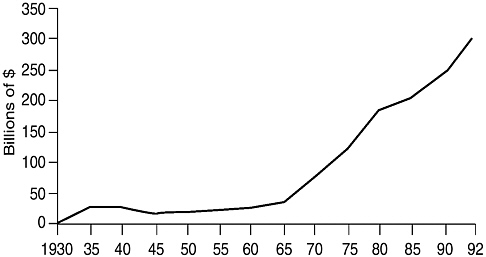
FIGURE 2 The rise in means-tested spending in the United States.
issue of how to increase the productivity and competitiveness of an economy. Here there is reason to draw upon ideas that have been developed for thinking about the strategies of firms.
STRATEGIC CHOICE IN A PRODUCT MARKET FRAMEWORK
There are well-recognized generic orientations for firms, such as low-cost producer versus producer of differentiated goods; niche verses full-line producer; and single-industry business enterprise versus one that is diversified (in either related or unrelated areas). Firms combine these orientations in different ways, together with choices about degree of financial leverage, dividend policies, and so forth, to arrive at an economic strategy. These combinations are oriented by a vision of the firm at a future time (perhaps with projected sales or earnings growth rate and marketshare target) and a strategy for achieving that vision over time through the mobilization, allocation, and utilization of available resources.
It is both possible and useful to describe the strategies of nations in a similar fashion. Nations can be characterized as inward oriented, outward oriented, or neutral, depending on whether their trade regimes favor the home market, export markets, or are neutral between the two. In addition, nations can be characterized as producer or consumer oriented depending on the degree to which they mobilize their resources to promote future income versus consuming today. These generic orientations can be combined to yield generic economic strategies, a point returned to later in the paper.
Inward versus Outward Investment
The inward-outward dimension refers to "trade regimes," which include not only exchange rates and varying types and rates of import protection and export incentives, but also associated policies that often reach deep into the fabric of the economy. In this framework there are three distinctive trade regimes: inward oriented, outward oriented, and neutral. The first two are interventionist, although very different in purpose and design, while neutrality is meant to indicate that domestic prices are approximately in line with those in the world marketplace. Although the framework builds on a long line of research associated with the World Bank, it differs in important ways.
The World Bank differentiates trade regimes according to whether they discriminate against exports or are neutral between home and export markets. Government policy that favors production for the home market is termed inward looking or import substituting. The inward-looking economic strategy is clearly defined and well established in the economic literature, and it is adopted here without modification. However, what the Bank calls an "outward-looking" strategy is not outward oriented in the sense of deliberately favoring exports. It described its "strongly outward-oriented" strategy in the following terms:
Trade controls are either non-existent or very low in the sense that any disincentives to export resulting from imports are more or less counterbalanced by export incentives. There is little or no use of direct controls and licensing arrangements, and the exchange rates for imports and exports are roughly equal.
This is a description of neutrality, not one of true outward orientation. It does not speak of export incentives as such, but only of incentives to counterbalance any disincentives to export (which typically arise from import protection measures). In addition, the Bank does not speak of an undervalued exchange rate but only of equality in the rate used for imports and exports.
This essay takes a different point of view, characterizing the outward orientation as export promotion, not market neutrality. The essential characteristics of outward orientation are an undervalued exchange rate and the use of additional incentives to promote selected exports. 11 Import restrictions that create a protected market with prices above those that would otherwise prevail can be part of such an export promotion regime. They create a "profit sanctuary" that can help finance exports if continued protection is tied to export performance. In addition, one would expect the "band of protection" and/or export subsidies to move upscale technologically, since typically that is where higher rates of growth in productivity and in volume are to be found.
This approach enables us to recognize the existence of economic strategies that "go beyond neutrality" to favor exports. Because the nations with the highest economic performance seem to have availed themselves of undervalued currencies and deliberate export promotion schemes, these differences with respect to outward orientation are very significant to all that follows.
In this framework, both inward and outward orientations are developmental strategies. They presuppose the visible hand of a strategist. Market neutrality relies instead on the invisible hand of market forces.
Recognizing a strategy of neutrality as distinct from export promotion is important for another reason as well. Neutrality is presumed to be the norm for the trading system. It is the strategy nations are expected to adopt once they understand their "best interests" or, failing that, once they are rich enough to accept their share of responsibility for the successful functioning of the trading system. In fact, rough neutrality now characterizes the strategies of most of the industrial nations. Japan has been the notable exception.
Producer versus Consumer Orientation
Producer orientation is built on the notion of increased resource mobilization so as to have, in Keynes' words, "more jam tomorrow." Producer-oriented nations favor saving and investment, technology acquisition, and skills upgrading through education and training, all of which imply less jam today as well as more tomorrow. In addition to increased resource mobilization, producer-oriented societies are characterized by market structures—capital, product, and labor—that permit producer institutions, firms, and associations to hold a great deal of power, while restricting that allowed to labor as well as to consumers. Individuals gain through enhanced productivity and rising wages, not necessarily through low prices.
Consumer orientation is built on the notion of "more jam today." Policies that favor consumption, consumer borrowing, and leisure are components of a consumer orientation. Public provision of enhanced economic security is also a consumer-oriented notion; it allows consumers to take less responsibility for themselves, and thus to leverage a given level of income with additional debt. In addition, a guaranteed minimum income may well remove an important incentive for low-skilled people to commit energy to develop those skills and abilities they possess, including skills and abilities for forming families to parent the children they bring into the world.
There is middle ground between these two orientations, termed here "mixed" to distinguish it from neutrality in the inward-outward dimension. A mixed (or neutral) position in this dimension can be characterized by the notion of providing security against accidental misfortune but not against low income, and by the attempt to create a level playing field between today and tomorrow, as well as across industries and/or sectors of the economy. One could imagine Adam Smith as an advocate of the mixed position, placing heavy reliance on individuals to see their own self-interest and act accordingly.
TABLE 1 Income Levels and Savings Ratesa for Selected Nations, Based on 1989 Comparisons
Orientations are multidimensional; there is no single dimension (such as savings or investment or social spending) that is key. At the same time, however, there are clear differences among nations, for example, in the mobilization of capital resources, which can be shown with familiar quantitative indicators, as can be seen in Table 1. Among low-income nations, China and Indonesia have saved far more of their incomes than Pakistan and Tanzania. China and Indonesia have also dramatically increased their savings rates since the 1960s. India's savings rate has increased over time, but remains far behind China or Indonesia. In contrast, Pakistan, Tanzania, and Zambia mobilized much smaller fractions of their incomes in 1989 than in 1965. Very high rates of saving do not necessarily result from high or low levels of income; they are in significant measure the result of policies of forced saving. Singapore, Malaysia, and more recently Chile, are extreme examples in which public policy has mandated savings by way of payroll deduction while limiting access to these funds prior to retirement.
Most of the high-growth nations have financed high rates of investment from domestic savings (i.e., savings rates of at least 30 percent of GDP). Korea appears to be an exception in that its national savings rate was 2 percent in 1960, on the eve of its rapid growth era, and only 17 percent a decade later. Korea is a conspicuous example of successful use of foreign borrowing; which at 10 percent of GDP was enough to finance more than one-third of total investment. It was only in 1985 that Korea achieved a 30 percent savings rate.12
In the developed world, Britain and the United States are competing with Japan while mobilizing less than half the fraction of income for savings and investment that Japan does. Germany occupies something of a middle ground. These differences reflect implicit differences in economic strategies; Britain and the United States tilt their incomes toward consumption, supplemented by subsidized consumer credit in the U.S. case, whereas Japan tilts its income towards savings, investment, and production.
Saving and investment rates are obvious indicators of the producer or consumer orientation but are not the only ones. Countries vary in their rate of expenditures for education and for research and development. Countries also vary in the fraction of the population mobilized for work in the length of the work week. Japanese save more, invest more, spend more of their income for civilian research, and work longer hours than any of their closest rivals among industrial nations, as suggested in Table 2. By the same token, Britons and Americans save less and consume more of their incomes than their leading industrial competitors.
For a nation, resource mobilization is fundamentally a matter of public policy, not industry structure. Public policies promote saving and influence the development of institutions to receive the savings. A relatively stable macroeconomic environment is more conducive to long-term planning and long-term investment than one that is unstable. A stable economy tilts resources toward investment for future gains and away from current consumption or exit from the country. At a still more basic level the establishment of property rights and the rule of law to protect these rights also favors investment for the future. We in the United States take these "basics" for granted, but creation of market economies in the former communist countries requires the establishment of property rights, corporate law, an independent judiciary, and, more generally, limiting the arbitrary powers of the state, which roughly parallels changes made in Britain at the end of the seventeenth century and in other west European nations and North America in the eighteenth century.
Paradoxically, producer-oriented countries seem to achieve more equal distribution of incomes than consumer-oriented countries, and they seem to achieve
TABLE 2 Resource Mobilization, Selected Countries, 1990
|
|
Investment/GDP (%) |
Civilian R&D/GDP |
Hours Worked |
|
France |
22 |
1.9 |
1533 |
|
Germany |
22 |
2.6 |
1630 |
|
Japan |
33 |
3.0 |
2129 |
|
U.K. |
19 |
1.8 |
1511 |
|
U.S. |
16 |
1.9 |
1609 |
|
Sources: The World Bank, World Development Report, 1992; The National Science Foundation; hours worked from Angus Maddison, The World Economy in the Twentieth Century. |
|||
TABLE 3 Public expenditure on Social Protection as a Percentage of GDP
|
|
1960 |
1965 |
1970 |
1975 |
1980 |
|
Belgium |
|
16 |
19.3 |
26.7 |
30.4 |
|
France |
13.4 |
16.5 |
16.7 |
17.7 |
22.6 |
|
Germany |
18.1 |
18.9 |
19.5 |
26.2 |
25.7 |
|
Japan |
4 |
5.5 |
5.7 |
9.3 |
11.9 |
|
Sweden |
10.8 |
13.2 |
16.8 |
21.2 |
25.9 |
|
U.K. |
10.2 |
11.7 |
13.2 |
15.6 |
16.4 |
|
U.S. |
7.3 |
7.9 |
10.4 |
14.5 |
13.4 |
|
Source: OECD, New Orientations for Social Policy, 1994, pp. 57-58. (Figures include health care.) |
|||||
this result through earned incomes and presumably productive activity, not through unearned transfer payments awarded by government on the basis of need. Consumer-oriented societies not only consume a higher fraction of their income and save less to build future incomes, they transfer more—through government—from rich to poor.
As a result of increasing enfranchisement, political struggle, and the vast rise in real income, the nature of the state has been transformed. The major change was the emergence of ''welfare state" expenditures. From the 1880s onwards there was a steady expansion in public provision for education and health, and over the past seventy years there has been a huge growth of pensions, sickness, and unemployment benefits, and family allowances.13
Education and health care can be seen as part of the producer orientation; they are likely to add to productive capabilities as much or more than they add to consumption. Pensions, unemployment benefits, and family allowances would seem to be in quite a different category, particularly where they involve significant transfers from one group to another.
Acceptance of new responsibilities explains most of the rise in government spending for six of the richest nations, from 27 percent of GDP in 1950 to 37 percent in 1973 to 46 percent in 1987.14 Obviously, taxes could not be far behind. Social spending accounted for the biggest increases in government spending, and most of the increases occurred during the 1960s and 1970s. Table 3 shows OECD data for a sample of nations for the period.
All the west European countries experienced large increases, with Belgium the leader and the United Kingdom the laggard. The United States appears to lag, in part because, in contrast with the other nations, much of its health care spending takes place in the private sector. In Japan, health care expenditures by government exceed those in the United States, but those for social protection are
lower, at least as measured by budgetary expenditures. The practice of lifetime employment for those who work for large companies provides a partial explanation for this difference.
Japan is clearly distinct from other OECD countries in according higher priority to resource mobilization (see Table 2). It is also much lower than most in public spending for social protection, and would be in a class by itself if all health care spending (most of which is private in the United States) were included. These differences are attributable to Japan's producer orientation; with incomes like the typical west European nation, its economic strategy is quite distinct.
The Economic Strategy Matrix
It is useful to classify economic strategies in a two-dimensional framework as shown in Figure 3. First, it sorts nations in a producer-consumer dimension, with an intermediate position labeled "mixed" to distinguish it from the neutral position in the other dimension. Second, it sorts nations based on their trade regimes, but this dimension is characterized by discontinuity, not smooth transition from one end to the other.
For years, it seemed logical to organize this second dimension from inward through neutral to outward in recognition of the considerable importance of the exchange rate.15 This inward orientation is characterized by overvaluation; neutrality (or Chenery's balance) is characterized by an "appropriate" exchange rate or one that will yield approximate balance on the trade or current account; while undervaluation is key to the outward orientation as defined here.
More recently, it seems more useful to distinguish between intervention, whether inward or outward oriented, and neutrality. The strategic question facing all but the very high-income nations is how to accelerate economic growth in a sustainable way. In practice this means moving from an economy dominated by raw materials to one led by industry, and eventually, to one led by industry and high-value services. At the outset this requires intervention, if only to help infant industries get started. In many nations, but especially those with significant natural wealth, there are significant generic problems to overcome to establish infant industries on a competitive footing. But if it is clear that intervention is called for at the beginning, there are sharp differences of opinion on what types of intervention are most appropriate and for what periods of time.
The development of infant industries almost always begins with an inwardlooking, or import-substitution, strategy. Subsequent change reflects a choice between outward orientation (intervention to promote the development of specialized exporters) and neutrality or nonintervention. This suggests a sequence of orientations, first inward and then either outward or neutral. It seems no nation
|
RESOURCE MOBILIZATION |
TRADE REGIME |
||
|
Producer oriented (high) |
|
|
|
|
Mixed |
|
|
|
|
Consumer oriented (low) |
|
|
|
|
|
Inward oriented |
Outward oriented |
Neutral |
FIGURE 3 The economic strategy matrix.
has moved from neutrality to an outward orientation; to do so would require an ideological shift from neutrality to intervention. Inward and outward orientations are thus closer to one another in a strategic sense, and also in the role played by government, than either is to market neutrality. Hence, the second dimension is defined as inward—outward neutral, in spite of the fact that it makes this dimension discontinuous in terms of the exchange rate.
Characterizing economic orientations as producer or consumer and inward, outward, or neutral enables us to compare them along two broad, multifactor dimensions. It also accommodates consideration of changes over time. Figure 3 combines the two dimensions into an economic strategy matrix. We plot on the x axis the extent to which a society mobilizes and allocates its resources for productive purposes, and on the y axis its trade regime for influencing the allocation of resources in favor of home versus external markets. Inward and outward orientations reflect explicit government attempts to tilt market forces; neutrality means attempting to level the playing field instead of tilting it in any particular direction.
Using these definitions, most countries are in fact inward oriented, though in varying degrees. In addition, inward orientation is compatible with either the producer or consumer orientation as well as with the mixed orientation in between. Since the mid-1970s the inward orientation has been increasingly recognized as a low-performing strategy regardless of where a country is located on the producer-consumer dimension. This has two important implications. First, there are many nations that need to change their economic strategy—specifically to abandon their inward orientation in whatever form it has been practiced. Second, these nations do in fact have a choice between outward orientation and neutrality. This fact is quite important and in sharp contrast with the implications of the framework used to date by the World Bank. In the Bank's framework an inward orientation is recognized as low performing, but only one option is recognized as a way out of that strategy. Although the Bank calls that option outward oriented, it is in fact neutrality.
The Outward-Producer Strategy
Most of the older industrial countries are characterized here as neutral/consumer oriented and most of the high-performing East Asian nations as outward/ producer oriented. The outward/producer strategy has played a vital role in the superior performance of those nations. Classifying the high-performing Asian economies as outward/producer oriented has four implications:
-
First, the economic strategy associated with the highest levels of economic performance is not based on the neoclassical equilibrium model. To the contrary, it is based on the deliberate introduction of disequilibrium (outward) to promote structural change.
-
Second, the highest performing strategy is not the norm for the trading system. Outward orientation means government is promoting exports. It is interested in outcomes, not just the rules of the trade regime and their proper enforcement.
-
Third, the highest performing nations have vested more power in the hands of producer institutions than is the norm among industrial nations, as well as mobilizing a higher fraction of their incomes for productive purposes. In addition, they have enhanced the power of their producer organizations, notably their large firms, by institutional arrangements that force their consumers to subsidize their producers. Although perhaps not at variance with the norms of the trading system, this orientation adds greatly to the export promotion capabilities of nations that have chosen an outward orientation.
-
A fourth and overarching implication is that competition between the North Atlantic area and East Asia is not simply a matter of reallocating activities on the basis of shifting comparative advantage. To a degree it is competition between differing economic strategies. East Asian economic strategies, with their outward-producer orientation, are focused on achieving higher growth as a way to enhance their economic and political power, not their short-term standard of living. Global economic competition is, therefore, in part between neoclassical strategies focused on short-term consumer welfare and neomercantilist strategies focused on development of economic power.
An outward/producer orientation builds on opportunities. To pursue opportunities, producer-oriented nations mobilize additional resources for a period of time. In addition, they accelerate reallocation of their resources from low-performing areas to high. This strategy is particularly important to a nation trying to catch up. Like a firm that draws resources from existing product lines to support the launch of a new product (i.e., "milks" one or more established businesses so as to subsidize one or more newer activities), a producer-oriented nation can shift resources to areas of opportunity. Typically, some of these resources are made
available at below-market cost; this requires that consumers subsidize producers or, in some cases, that some producers subsidize others. Later, the increased productivity and profits associated with exploited opportunities are shared with workers, who are, in turn, consumers. The analogy is to a firm that keeps wages low to build business, then returns part of the proceeds to workers as higher wages, bonuses, or long-term employment, in contrast to allocating most or all of the opportunistic gains to shareholders. In the producer orientation, government is more active on the producer side but less active on the consumer side, and notably less active in providing safety nets and income transfers unrelated to productive performance.
Outward/producer strategies seek to capitalize on opportunities in the world market. This is a crucial difference between the inward-and outward-producer-oriented strategies. Inward orientation prevented a number of socialist and communist countries from capitalizing on their increased levels of resource mobilization. By limiting their focus to their home markets, they, like many of the smaller nations of Africa and Latin America, were unable to continue to achieve economies of scale and thus exploit world market opportunities.
In a world characterized by economies of scale and learning, participation in the world market is of fundamental importance. Particularly as goods become more knowledge intensive, close races among firms depend on human endeavor and continuous learning more than natural endowments. Increases in marketshare translate into increased volume and experience, which in turn translates into increased advantage. Short-term sacrifice to build marketshare can occasion reversals in market position; firms and nations can come from behind to usurp a leadership position. Market position and cost advantages at any given time thus reflect strategies and the skill with which they are implemented, not just a preordained, natural order of advantages. This suggests that the nations following neomercantilist strategies may well take increased share of high-growth areas in part at the expense of nations following less aggressive neoclassical, market-driven, and consumer-oriented strategies.
Implications for developing nations: This analysis has significant implications for developing nations. The economic strategies of the high-growth countries have not been based on the neutral/consumer orientation officially favored by the World Bank. At the same time, high-growth strategies cannot be adopted wholesale; they require a combination of political and administrative conditions that are not present in many developing nations. Effective adoption of the neomercantilist strategy is beyond their current or immediately foreseeable capabilities. In addition to the visible hand of a strategist, it requires capable, trained hands and a considerable period of continuity and stability, as well as moderate levels of consumption, by government as well as consumers. These are not easy conditions to meet, and to meet most or all of them is surely beyond the capabilities of most governments.
De facto strategies: Perhaps the most basic implication is that all nations
need to be aware that they have an economic strategy. Some government leaders have trouble with "the vision thing," and some business executives have trouble accepting any but the most rudimentary role for government in the economy. But government needs a vision of where it is heading. When government is responsible for taxing and spending from thirty to fifty percent of GNP—as is the case in the industrial nations, Britain, and the United States included—its influence is significant and constitutes a strategy no matter how implicit, incoherent, or shortsighted it may be.
Explicitly identifying and comparing these economic strategies will facilitate their evaluation in terms of relative competitiveness. Figure 4 places a small sample of nations in the matrix. Of the nearly 200 nations currently recognized, most of the older industrial nations have adopted strategies that are neutral between home and export markets and favor consumers over producers. This neutral-consumer strategy is illustrated by the placement of Britain and the United States. If the framework permitted, we could show consumer orientation increasing in a number of countries with the passage of time, including in the United Kingdom and the United States. The strategies of Japan and Korea are classed here as outward and producer oriented; Singapore, Taiwan and, more recently, a number of other nations would also be placed in this category.
This matrix opens up "space" and thus choice for developing nations. At the same time one must emphasize that it does not imply a priori a "best choice" for developing nations. Some strategies are clearly more difficult to implement than others. Not all developing nations have the institutional competence let alone the political will to implement the outward/producer-oriented strategy effectively. There is no "one size that fits all."
Suppose a number of developing nations were to attempt to adopt strategies similar to those carried out by Korea and Taiwan. How many could expect to implement such a strategy successfully? Clearly some of the protectionist measures adopted by Japan and then Korea would not be accepted in today's world trading context. Are there other means for accomplishing similar resource shifts? Is China attempting much the same strategy with a massively undervalued cur-
|
Producer |
India |
Japan Korea |
|
|
Mixed |
Mexico |
|
|
|
Consumer |
Australia |
|
Britain USA |
|
|
Inward |
Outward |
Neutral |
FIGURE 4 Economic strategy matrix (circa 1980).
rency as a way to protect home industry and promote exports at the same time? hat would it mean if they were able to, with more than one billion people? What if, in addition, India were to achieve sustained high-growth, perhaps without quite reaching East Asian levels of performance? Should the industrial countries be still more concerned about the implications of factor-price equalization and the growth of a less and less employable underclass?
Questions
The economic strategy matrix is also helpful in thinking about the challenges that the two most influential strategies may be facing in the years ahead. Japan's trade surpluses have forced its exchange rate from undervaluation in the high-growth years to a level currently approximating double its purchasing power parity. Clearly it can no longer remain strongly outward oriented in any public policy sense. Japanese firms are transferring activities to lower-wage countries, as U.S. firms have done for several decades, thus contributing to a "hollowing out" of Japan, as well as to reduced growth.
Is it time for Japan to move away from its producer orientation? If so, is it likely to adopt consumerism on the British-American model or some European variant? This seems to be the expectation of some observers when they refer to Japan's inevitable transition to a "normal country." What if the Japanese choose a neutral/mixed orientation? Can they deregulate their producer markets, for example, while still sharply limiting government's role in providing economic security? Specifically, can they deregulate wholesale and retail trade within a very high-wage economy without creating high unemployment among the lowskilled workers? If they deregulate their financial markets, will they maintain a very limited market for corporate control?
In a similar vein we might also ask whether it is time for at least some of the consumer-oriented nations to reverse direction and become less consumer oriented. Under what circumstances might they reestablish something like market neutrality in the producer-consumer dimension? Alternatively, if a reversal of direction seems close to impossible, whether for economic or political reasons, what does this imply with respect to competition in an increasingly open world economy?
In this framework, a nation's strategic options should take account of opportunities in the world market as well as resources and/or advantages at its disposal. Korea moved upscale in terms of technological complexity as it gained skills and resources. But to catch up in a high-technology, high-growth market such as semiconductors requires long periods of investment and subnormal returns. Such a strategy incurs a cost in terms of standard of living; part of the formula for superior performance is short-term sacrifice for longer-term gain. Some societies are more capable of sacrifice than others.
Where nations stand in the economic "pecking order" also influences their
strategic options. Some countries began industrialization long before others. Some have been more successful than others. Some are at or near the leading edge; others lag far behind. What is appropriate for one nation may not be appropriate for another. Other things being equal, one would expect a country at or near the leading edge of development to earn high incomes from differentiated products, and a less-developed country to earn much lower incomes from less specialized, labor-intensive goods. But the development and proliferation of digital technologies and global communications networks is enabling low-income nations such as China, India, and the Philippines to compete in sophisticated engineering services and software development. At the same time, the increasing mobility of capital has abetted the transfer of sophisticated manufacturing facilities to low-income countries. These developments threaten to exacerbate income inequalities in both high-and low-wage nations.
Dealing with inequalities of income will be a strategic challenge for more and more nations, but especially for those with the highest incomes. With high incomes it is tempting if not incumbent to have a safety net for the least fortunate. Is it possible to have a safety net that catches all? Is it desirable? Does this require providing incomes based on "need," regardless of skill or effort? If so, how are such safety nets to be distinguished from that well-known "vision" of Karl Marx: from each according to ability, to each according to need? Is such an axiom any more appropriate in Western Europe or North America than it was in Eastern Europe or the Soviet Union?
High-income nations seem destined for profound challenges to their economic strategies in the years ahead. These challenges are of central concern.


