







Below is the uncorrected machine-read text of this chapter, intended to provide our own search engines and external engines with highly rich, chapter-representative searchable text of each book. Because it is UNCORRECTED material, please consider the following text as a useful but insufficient proxy for the authoritative book pages.
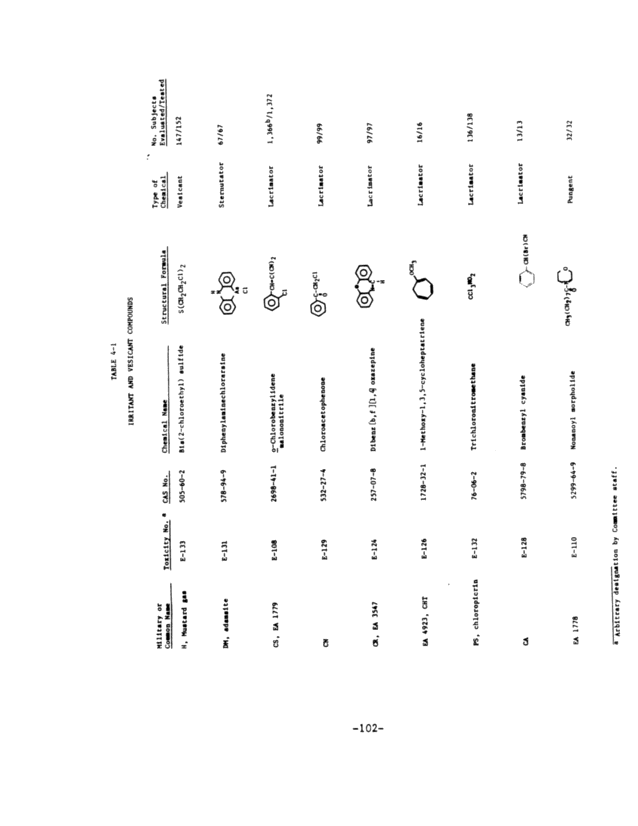
4 IRRITANTS ANT) ~JESICANTS BACKGROU?~O The compounds discussed in this chapter ( see Table 4-1 ) are mustard gas (H), chloroacetophenone (CN) ~ dibenz [b ~ f ] [ 1~4] oxazepine (CR) ~ o-chlorobenzylidene malononitrile (CS)' brombenzyl cyanide (CA), diphenylaminochlorarsine (DM), chloropicrin (PS), nonanoyl morpholide (EA 1778), a cycloheptatriene (EA 4923), ant 123 com- pounds involved in 1 imitet test ing . H is a ves icant, pulmonary irri- tant, and systemic poison, depending on dose ant route of entry into the body. The other compounds are irritants. Of the irritants, DM is a sternutator (a substance that causes sneezing), whereas the others are lacrimators. All are called gases in warfare use, although they may be administered as vapors, liquid droplets, smokes, or mixtures thereof. Mustard gas and irritant chemical agents, the latter often called harassing agents, were introduced to the battle- field in World War I to confuse, harass, and disable enemy troops. Since the 1920s, irritants have been used as riot-control agents by civil authorities. Of these, CN came into widespread use ant is now commonly supplied in a formulation under the name Mace. Although CS was synthesized in 192S, it became known as a riot-control agent only in the 1960s, when it appeared safer than CN. For military use, harassing agents are intended to reduce or destroy the ef feet iveness of enemy troops . For this purpose, rapid onset of effects is usually, but not always, desired. Rapid recovery facilitates the handling of prisoners, whereas men injured by mustard gas require intensive care ant weeks for recovery. There were no plans for studying long-term effects of World War I-harase- ing agents. Riot-control agents are also designed to have a rapid onset of effects, produce a high degree of immediate disability, and require a short recovery time as soon as the rioters are dispersed from the area. With the increasing use of such agents as CN and CA in recent years, their possible long-term effects have aroused concern. At the end of World War I, medical thought was turning to the possibility thee soldiers who had been gassed with mustard, chlorine, pho~gene, and other agents would develop tuberculosis. In the early postwar years, publications described efforts to identify cases of tuberculosis among gas casualties. The expected epidemic failed to appear, and attention subsided. More extensive studies, such as that of Beebe, were initiated. 1 Gradually, mustard gas became the -101-
L, - ~ ~ - ~ . r4 rat At - 0 rat ~ cr. ~ lo ~ ~ ~ ~ or cr. ~ _ rat _ ~ _ _ _ \0 fir lo O ~ ~ ~ ~ Lit ~ a o o o o o ~ c ~ ~ 3 ~ ~ ~ ~ U. ~ ~ ~ ~ ~ - c so c ~ ~ ~ =~ U ~ ~ .~-5 ~ ~ (~1 ~ C ~ O V ' ~ ~ a, e o. U. ~ I: ~ ~ ~ ~ ~ 815 ~ _' ~ e ~. ~~ :~. . -4 0 ~ ~ 0 ·1 o c ^- c ~ ~ ~ ~ 0 0 '- ~ ~ I ~ ~ _ ~ U :^ ~ O ~ ~ O O C :^ (J I P o c 0 N ~C t ~ O U ~ O ~ ~ ~ ~ ~ C a ~ ~ ~ ~ 0 .2 ~ U aO ~ a ol. ~ ~ I ~ ~ z I S I ~ ~ ' ~ ~ ' O O ~ ~ ~ ~ ~ 1 1` \0 ~ Z \0 Cn 1 ~J O 1 10 1 1 40 1 1 ~ 1 1 ~ O ct. u~ CO ~ ~ ~ ~4 1 0` <: O r~ ~ ~ ~ ~ ~ ~ ~ U Zl ~ ~ ~ ~ O ~ ~ \0 {~~ 0 0 ~ ol ~ ~ I I `~ `~: ~,: e ~ I V 0` ~ :~: b | 0 Y ~ ~ r~ ~ ~ 0 ~Z ~ ~ ~ ~ ~ O ~ ~ 1 _ ~ ;5 o~ e ~ 1= x~ ^ ~ ~ ~ ~ ~ ~ S -102-
center of interest; the discovery of its mutagenic properties stimu- lated further he search . Suf f ic lent ~ ime has now passed for long-term effects to become clear. Mustard gas has become the subject of a large body of reports, which have disclosed a multifaceted problem. On the other agents discussed here, there is no such volume of informal ion. Their e f fects have generally been regarded as tran- sient, ant only in the Himsworeh reports on the use of CS in the Lontonderry riots of 1969 is there even a proposal to study the long- te.- effects of the riot-control agents . Indeed, on several com- pounts, practically no useful information is available, except with regird to chemistry, acute toxicology, and pathology. Because information on possible long-term ef fects of the other irritant chemicals used in the Edgewood tests is sparse, this chapter focuses on the effects of mustard gas and two lacrimators, CS and CN. Information on the potential long-term adverse effects of these chemicals is derived from several sources: first, observation of long-ter~ disabilities in soldiers who were exposed to a single ~ in most cases) toxic concentration of irritant during World War I and in persons exposed in peaces ime ace idents or riot-control procedures; second, studies of morbidity in workers chronically exposed to chemi- cal irritants during their manufacture; and third, studies in which experimental laboratory animals were exposed to selected chemicals by topical application, injection, or aerosol inhalation. A review of the literature on experiments to assess possible chronic effects, especially mutagenic activity and carcinogenicity, of the irritant and vesicant agents reveals that these ef fects have not been studied systematically by current standards and techniques. The current view is that a carefully selected battery of tests involving prokaryotic and eukaryotic organisms can be used to assess the mutagenic ity or care inogenic ity of a chemical . Mutagenic ity tests should include asesys for gene mutations and chromosomal aber- rations. No such systematic investigation has been conducted of any of the agents reviewed in this chapter, except possibly mustard gas. In the case of any agent for which a risk assessment is desires with respect to past human exposure or that continues to be used for riot control or relates purposes, it seems desirable to use a battery of tents, such as those recommended in the National Research Council report on chemical environmental mutagens.4 Under the sponsorship of the National Cancer Institute and the National T Toxicology Program, two chronic tests of CN and CS adminis- tered by inhalation are unter way. 5,6 Preliminary data obtained in the subehronic studies preparatory to the definitive inhalation car- cinogenicity tests are presented in the sections of this chapter dealing with CS and CN. One probable adverse effect, to judge from -103-
observation of the subehronic Bests, is irritation of the upper res- piratory tract and tunas. A potential consequence of inhalation of these chemicals by humans is pulmonary damage that might readily develop into pneumonia. Prediction of any other chronic effecte, including carcinogenesi~, awaits the generation of appropriate data, including in vitro and in viva bioassays. REFERENCE S 1 . Beebe, G. Lung cancer in World War I veterans: Poss ible rela- tion to mustard-gas injury and 1918 influenza epidemic. J. Natl. Cancer Ins t . 25: 1231-1252, 1960. 2. Himsworth, H. Chairman. Report of the Enquiry into the Medical and Toxicological aspects of CS (Orthochlorobenzyl itine Malono- nitrile) Part I, Enquiry into the Medical Situation Following the Use of CS in Londonderry on 13th and 14th August, 1969. London : Her Ha je~ty's Stationery Office. Command 4173. 1969. 13 p. 3. Himsworth, H., Chairman. Report of the Enquiry into the Medical and Toxicological Aspects of CS (Orthochiorobenzylidene Malono- nitrile). Part II. Enquiry into Toxicological Aspects of CS and its Use for Civil Purposes. London: Her Ma jesty' ~ Stationery Off ice. Command 4775. 1971. 82 p. 4. National Research Council, Committee -on Chemical Environmental Mutagens. Identifying and Estimating the Genetic Impact of Chem- ical Mutagens. Washington, D.C.: National Academy Press. 1983. 5. Tracor Jitco, Inc. Subchronic study report on CS2. Rockville, Md.: Tracor Jitco, Inc., 1982. 286 p. 6. Tracor Jitco, Inc . Study Report on alpha-Chloroacetophenone . Rock~ille, Md.: Tracor Jieco, Inc., 1982. 177 p. MUSTARD GAS CHARACTERI STICS Mustard gas (H)--also known as yellow cross, yperite, sul fur mustard, Schwefellost, bis(2-chloroethyl) sulfide, and dichlor- diethylaul f item-is a chemical-warfare agent with both ~resicant and systemic effects. H is colorless and almost odorless and is an oily 1 iquid at 14-215°C with a molecular weight of 159.08. Except in extremely colt weather, the low vapor pressure (0.072 mm Hg at 20°C) and low~olatility of H are sufficient to make contaminated surfaces a source of danger to anyone nearby. H is slightly soluble -104-
in water and soluble in oils, fats, and organic solvents. It pene- trates clothing readily. Moist skin of armpits, groin, and inner surfaces of thighs is especially vu' nerable. i5 ~ 7 ~ 77 Its garlicky odor, faint at first, is soon imperceptible. E2po- sure to H does not cause immediate discomfort; rather, the onset of effects is delayed and -insidious. Troops have been known to remain in contaminated areas until their eyes, skin, and respiratory organs were affected. Exposure of skin produces erythema, then blisters that are painful and slow to heal. Such eye injuries as conjunc- tivitis, keratitis, and corneal ulcers cause temporary or permanent blindness. The respiratory effects of H include rhinitis, larya- gitis, bronchitis, and, in severe cases, destruction of mucous men branes. The bone marrow and digestive system are affected by sys- temlc administration of H. The multiple effects of this insidious agent make it among the most potent used on the battlefield. TOXICOLOGY Mutagenicity Mutations are heritable changes in genes or chromosomes. Although mutations occur spontaneously as rare events in all organ ems, their rates of occurrence can be markedly increased by exposure to mutagenic agents. Geneticists generally agree that the effects of human exposure to mutagens are deleterious and that such exposure should be minimized. 54 ~ 53 The basis for concern about hen exposure to mutagens is that increases in the rates of muta- tion in human germ cells and somatic cells may lead to art increased incidence of genetic diseases and cancer, respectively. After H. J. Mum er showed in 1927 that Tic rays induce sex-linked recessive lethal mutations in the fruit fly Drosophila me~ano- gas~cer,5\ efforts were made to determine whether chemicals can also be mutagenic. Unequivocal evidence of chemical mutagenesis was not obtained unt i' the 1940~. Among the first demonstrations of chemical mutagenesis was a report by Auerbach and Robson6 that mustard gas induces mutations in Drosophila. Over several years, Auerbach and her colleagues found that mustard gas causes genetic alterations ranging from gene mutations to chromosomal breaks asked rearrange- ments. ~ lDhe mechanism of mutagenesis by sulfur mustard (and other mus- tarda) involves the alkylatlon of DNA. As a bifunctional alkylating agent, sulfur mustard. causes cross-linkage of DNA strands, as well as monofunctional alkyla~cion producta.~9 Sulfur mustard and nitrogen mustard have been used in mutation studies in a variety of organisms, but data on the relative frequencies of induction of dif fe rent alky- 105
ration products in DNA by the two agents are limited. Nevertheless, sulfur mustard seems to exhibit greater SN1 character50 as an alkylating agent than does nitrogen mustard.l9 Because agents involved in SNI reactions attack oxygen sites in DNA more readily than do agents whose reactions are almost exclusively of the SN2 type, sulfur mustard may differ substantially from nitrogen mustard in the spectrum of alkylation products formed in UNA. Such dif fe- rences in mechanisms of alkylat ion and in alkylat ion products can feat to considerable differences in mutagenicity.30~7t Therefore, although nitrogen mustard and sul fur mustard are both alkylating agents, one must be caut ious in assuming they are comparably muea- genic . A comprehens ive review of the mutagenic ity of sul fur mustard and nitrogen mustard has been publishes by Fox and Scoet.l9 The muta- genicity data base on nitrogen mustard is more extensive than that on sulfur mustard. Nevertheless, results have been reported regarding the genetic activity of sulfur mustard in tests for forward mutations and reversions in bacteria; 12 differential killing of DNA-repair- deficient strains of microorganisms and their repair-proficient counterparts; 34 ~ 38 revere ions in fungi; 38, 68 chlorophyl 1 mutations in vascular plants 19 gene mutations and chromosomal aberrations in Drosophila;5, t9 reversions in cultured L517BY mouse lymphoma cells ;7Z~st-mediated assays involving bacteria or mammal fan cells in mice; 12 and dominant lethal mutations in mice .62 Clastogenic ef fects of sul fur mustard have been studied in plant root tips and microsporocytesl9 and in cultured mammalian cells.65 Data from a mouse dominant-lethal test suggest that sulfur mustard reaches germinal tissue ant induces dominant lethal mutations.62 However, the data are inadequate for prediction of genetic risk to human germ cello. Uncertainties stem from the lack of data on defined genetic events induced by sulfur mustard in mam- mal fan spermatogonia or oocytes and from the variat ion in mutagenic potency that has been observed for the mustards in various assay sys- teme. Nevertheless, the possibility that sulfur mustard is a human ge.,u cell mutagen cannot be disregarded, part icularly because it is mutagenic in diverse assays, including tests for germ cell mutations in Drosophila and dominant lethals in mice; moreover, other direct- acting alkylating agents are known to induce mutations63 ant chro- mosomal alterations 1 in mammalian germ cells. Pathogen IS iS of Skin bee ions Vogt et al.72 recently studied the pathogenesis of lesions caused by the appl ices ion of H to the skin of guinea pigs and rabbi to; their methods inc luded l ight and e lee tron microscopy, h i s to- -106-
chemistry, ant the use of contrast ing Evans blue dye. Cutaneous applications of H at 25-250 ~g/cm2 caused severe injury to the skin of both species and resulted in nonve~icating, necrotic, encrusted inf lavatory lesions . Cutaneous response to H had immediate and delayed phases. Within the first hour of exposure, injury to superficial capillaries and venules, vascular leakage, and infiltration by granulocytes with a high percentage of basophile were obeemed. The delayed phase was evident after ~ h; was manifested by nuclear pyknosis, an increase in lysosomal enzymes, and autophagic vacuoles in basal epideneal cells; and was accompanied by diffuse vascular leakage, infiltration by polymorphonuclear leukocytes, and ulceration. After the peak of inflammatory reaction at 24-72 h, the superficial, encrusted ulcers healed in about 10 d. Topical and systemic administrat ion of gluco- cort icosteroids decreased the extent of edema during the immediate phase, but d id not af feet the rate of heal ing. Care inc,~eni~ i tv Because of the corre let ion between mutagenic ity ant care inogeni- city, one would expect sulfur mustard to be carcinogenic on the basis of mutagenicity data alone. This expectation in borne out by carcin- ogenicity tests in experimental animals and by data from human expo- sures. The International Agency for Research on Cancer classifies sulfur mustard a. one of relatively few chemical agents on which the data are adequate to show an association with the induction of cancer in humans. 7 H-induced carcinogenic effects have been demonstrated in mammals. Heston26 reported that in two experiments the intravenous injection of aqueous H into strain A mice resulted in pulmonary tumors in 93X and 68Z of the surviving mice. In 1953, Heston27 documented the appearance of a variety of tumors in strain A, C3H, and C3Hf mice after the subcutaneous injection of H in olive oil. At the injec- tion site (middorsal area), there were sarcomas. At other sites, there were mammary and pulmonary tumors and hepatomss, and one mouse developed lymphocytic leukemia. Heston28 found significant increases in tuna eumore of ter inhalat ion exposure of mice . Heston26~28 reported many separate experiments, some of which were performed with nitrogen mustard. Heston concluded that both mustard compounds were mutagenic and care inogenic . Chrc nic exposure of rats to H ( at 1 or 100 ug/m3, 6.5 in/d, S d/wk) at Edgewoot produced an increase in epithelial cell tumors, but no evidence of systemic injury.45 107
The investigations discusses above show a clear progression from the d~isco~rery of a mutagenic action of H in Drosophila' through the studies of alkylation reactions of H with TUNA, to the experimental production of tumors in mammals, including humans. INDUSTRIAL AND MILITARY EXPOSURE S A few clinical observations may be instructive before discussion of the major studies of H carcinogenicity in humans. Jackson and Adamo31 studied 33 cases of extensive basal cell carcinoma, two of which involved mustard-gas burns sustained during World War ~ ~ One of those deve loped 35 yr at ter the burn, but 2 yr after irradiation with cobalt-60. In the other, basal cell carcinoma developed at the site of three separate burns, 3 yr after exposure. Some of the mustard burns did not lead to basal eel 1 cancer. I'lig _ al.35 treated nineteen patients suffering from peo- riasis vulgaris once or twice with 50 g of 0. 005X H in petrolaeum. They cone luded that whole-body inunct ion with H presents a low car- cinogenic risk. That is likely to be erroneous, in view of the low dose and brie f treatment used . When examining reports of exposures to chemical agents, one should note the different conditions involved. After July 1917, during World War I, H was used often by both Germany and the Allies. Some areas of French battler ield. became so badly contaminated that they were abandoned by both ~ides. 13 Thorpe69 estimated atmos- pheric concentrations of H during gas shelling as averaging 3 ppm, with a maximum of 5 ppm (about 19 and 32 mg/m ~ respectively). Prentiss estimated thee exposure at 23 ppm ~ 150 mg/m3) for 10 min. giving a Ct ~ product of concentration and duration of exposure) of about 1, 500 ma. minims, would be lethal for an unprotected man. 60 In military and riot-control situations, exposure to agents is acute, but relatively brief. the clinical cases citedl7.40 involved "Iong-eerm" exposure, meaning a few months to a few years. Nakamura,53 in a 1956 paper, reported working conditions in a Japanese mustard-gas factory operated secretly in Hiroshima from 1930 to 1945. Workers alternately worked 1 h in gas product ion and 2 h in a gas-free env ironment over a 10-h workday. They wore gasmasks and complete protective clothing, including rubber boots, and were often rotated. Nevertheless, many workers showed a darkening of skin; some developed ulcers ~ diarrhea, ant jaundice and later coughed blood and developed tuberculosis. The concentration of mustard gas78 may have reached 50-70 mg/m3, as determined by bioassay. The bioassay involved exposure of unprotected birds in the work areas that resul- -108
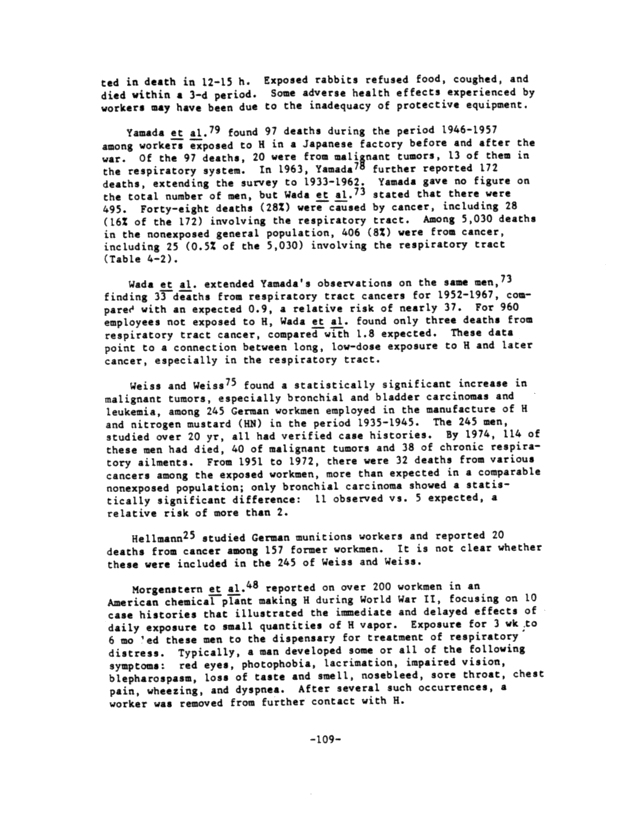
ted in death in 12-15 he Exposed rabbits refused food, coughed, and tied within a 3-d period. Some adverse health effects experienced by workers may have been due to the inadequacy of protective equipment. Yamada et al.79 found 97 deaths during the period 1946-1957 among worker. exposed to H in a Japanese factory before and after the war. Of the 97 deaths, 20 were from malignant tumors, 13 of them in the respiratory system. In 1963, Yamada78 further reported 172 deaths, extending the survey to 1933-1962. Yamada gave no figure on the total number of men, but Wade et al .73 seated that there were 495. Forty-eight deaths (2BX) were caused by cancer, including 28 (161 of the 172) involving the respiratory tract. Among 5,030 deaths in the nonexposed general population, 406 (81) were from cancer, including 25 (0.5X of the S,030) involving the respiratory tract (Table 4-21. Wad a et al. extended Yamata' ~ observations on the same men, 73 f inding 33 deaths from respiratory tract cancers for 1952-1967, com- pared with an expected 0.9, a relative risk of nearly 37. For 960 employees not exposed to H. Wada et al. found only three deaths from respiratory tract cancer, compared with 1. ~ expected. These data point to a connection between long, low-dose exposure to H and later cancer, especially in the respiratory tract. Weiss ant Weiss75 found a statistically signif Leant increase in malignant tumors, especially bronchial and bladder carcinomas and leukemia, among 245 German workmen employed in the manufacture of H ant nitrogen mustard (HN) in the period 1935-1945. The 245 men, studied over 20 ye, all had verified case histories. By 1974, 114 of these men hat died, 40 of malignant tumors ant 38 of chronic respira- tory ailments. From 1951 to 1972, there were 32 deaths from various cancers among the exposed workmen, more than expected in a comparable nonexposed population; only bronchial carcinoma showed a statis- tically significant difference:- 11 observed vet 5 expected, a re let ive risk of more than 2 . Hellmann25 studied German munitions workers and reported 20 deaths from cancer among 157 former workmen. It is not clear whether these were included in the 245 of Weiss and Weiss. Morgenstern et al.48 reported on over 200 workmen in an American chemical plant making H during World War II, focusing on 10 case histories that illustrated the immediate and delayed ef fects of daily exposure to small quantities of H vapor. Exposure for 3 wk.to 6 ma 'ed these men to the tispeneary for treatment of respiratory distress . Typically, a man developed some or all of the following symptoms: ret eyes, photophobia, lacrimation, impaired vision, blepharospasm, loss of taste ant smell, nosebleed, sore throat, chest pain, wheezing, and dyspnea. After several such occurrences, a worker was removed from further contact with H. -1 09-
TABLE 4-2 Characteristics of Male Mustard-Gas Workers Who Died from Cancer (1955-1967)a Case ___ Interval f ram Exposure Employment Age at Durat ion, to Death, Death, Site of yr ma ~ ma yr Neoplasm Histolo~ Type 3 7 2 22 4 62 Pharynx Undif ferent iated 4 5 3 22 0 40 Pharynx Squamou ~ ce 1 ~ 5 8 0 24 5 57 Paranasal ~ inus Squamous ce 11 6 4 11 23 2 44 Paranasal sinus Squamous cell 7 7 5 28 1 65 Paranasal ~ inus Squamous ce 11 10 ~ 0 16 10 62 Larynx Squamous cell 11 10 0 19 2 52 Larynx Squamous cell 12 12 10 22 11 58 Larynx Squamous cell 13 7 11 20 10 58 Larynx Squamous ce 11 15 8 0 25 5 48 Larynx Squamous cell 16 7 0 23 4 59 Trachea Squamous ce 11 18 1 4 10 1 1 30 Bronchu ~ Squamou ~ c e 11 21 6 1 23 1 62 Bronchus Squamous ce 11 22 ~ 1 17 4 62 Lung Squamous cell 23 2 0 33 0 54 Bronchus Undifferentiated 24 17 0 27 0 54 Bronchus Undifferentiated 26 16 4 27 10 61 Bronchus Undifferentiated 27 4 10 17 9 61 Bronchus Squamous cell 29 2 2 19 3 58 Bronchus Undifferentiated 30 ~ 5 22 5 63 Bronchus Undif ferent fated 32 5 ~ 20 ~ 50 Bronchus Undifferentiated 38 7 11 27 7 74 Lung Squamous cell 40 2 0 27 6 55 Bronchus Squamous ce 11 43 0 3 26 1 47 Lung Undif ferent iated 44 7 3 29 0 63 Bronchus Squamous ce 11 __ ^ a Data from Wada _ alms -1 10-
Buscher,ll MorgensterD et al.~48 and others emphasized the lingering bronchitis, bronchial asthma, hoarseness, aphonia, and hypersensitivity to "oke ~ dust, and fumes that develop especially in men working in ludustri~ situations tat expose them to mustard at constant low concentrations. Even after discontinuing such work, they may be subject to continuing respiratory and systemic disablli- ties with a general deterioration of health that leaves them partial or complete invalids . These men recovered partially af ter leaving the mustard plant, but were sub ject to bronchitis, were susceptible to respiratory infections, and were like By to develop bronchlectasis. Many men were partially or completely disabled by 1945, when these observations ended. The implication of the observed disabilities is that complete recovery would probably not occur. It should be empha- sized that the sequelae outlined here resulted from the chronic, long-term exposure to H in the working environment. Most important, these long-ter~ sequel ae ~ except the malignancies ~ generally const i- tuted extensions or continuations of acute probe ems experienced during exposure to H; they did not sudden1 y appear years af ter exposure. MEDICAL EFFECTS Immediate Ef fects An unprotected person exposed to H vapor will suffer simultane- ously from skin burns, eye injury, and irritation of the respiratory tract. 20 The acute effects of H depend on the concentration of the gas, the duration of exposure, the ambient temperature, the extent of protection, and the susceptibi~ ity of the person. 23 Clothing will be contaminated and become a secondary source of poisoning even af ter a gas cloud has blown away. Onset of action may occur within several hours of exposure or after a ~ atent period of up to 24 h. The immediate effects of H within 0.5-3 h of espo sure include sneezing, acute conjunctivitis, lacrimation, rhinorrhea or nasal bleeding, soreness and burning of the the throat, hoarseness and dry, hacking cough, and erythema of exposed skin. Within 4-16 h of exposure, the effects of H include eye pain with acute conjunctivitis, corneal edema, lacri~tion, photophobia, blepharospasm, and edematous erythema of the eyelids; nausea, vomiting, diarrhea, and epigastric pain; and erythema and vesication of the skin with coalescence of vesicles to form bul- lee. 2~47~77 Between 24 and 48 h, effects on the eyes and skin pro- gress and are manifested by eyelid pain and edema with blepharospasm, lacrimati=, photophobia, and blludness; erythema, vesication, and edema of the skin; persistent cough and hoarseness or aphonia due to membranous laryagotracheobronchi~cis; increased temperature, pulse, and respiratory rate, as well as granulocytosis resulting from sec- 111
ondary infection or bronchopne~onla; persistent nausea and vomiting; and marked apathy, depression, and despair.~,l5~23~24~47~77 If death occurs, it is usually after 48 h and as the result of the sys- temlc effects of H with evidence of shock or from secondary infec- tion, depletion of hemopoietic cells in the bone marrow, aDd leuko- penia.2, 7 The acute pathologic effects of H on the eye include edematous clouding of the cornea and necrosis of corneal stroma. About 5 h later, infiltration by segmented leukocytes is noted at the sclero- corneal junction and in the corneal stroma. Healing usually occurs in several weeks, but the injury may result in persistent or recur- rent corneal ulceration and blindness.33 Burns of the skin by H may range from erythematous subvesicating injuries to large annular blisters. Experimental studies6] of humans exposed to H have shown the following pathologic effects between 12-18 h: epiderma' nuclear pykno~is, lysis of cytoplasm, liquefactive necrosis in the malpighian layer above the dermal papillae, and hyperemia, edema, and perivascular mononuclear infil- tration of the dermal papillae. After 12 h, the foci of liquefactive necrosis may coale ace and enlarge to form vesic' es, and there the dermis is lafiltrated by mononuclear cells and polymorphonuclear leukocytes . By 72 h, there is ingrowth of epithelium at the margin of vesicles with coagulation necrosis of the coring. Healing is com- plete in 4-5 wk. died as a result of expo- cell~ in the spleen, thyme, and other lymphatic organs; depletion of hematopoietic cells of the bone marrow; necrosis and desquamation of epithellum in the small intestine; acute ulceration of the duodenum; membranous ~ aryn- gotracheobronchitis; and pulmonary edema , congestion, and patchy emphysema that may be complicated by bronchopneumonia or other evi- dence of pulmonary infection. 2, 7 Postmortem examinations of persons who sure to H have shown depletion of lymphoid - and The acute effects of H were observed ire three children, as well as in the rescuer and attending medical and nursing personnel, after they were injured by the accidental explosion of a 40-yr-old mustard- gas shell.29 Two children died within 4 h after experiencing con- gestion and swelling of the eyes, continuous vomiting, edema of the skin, pulmonary edema, pain, and shock. The older child survived, but full recovery took 5 wk. Vomiting, patchy erythema of the skin, and edema of the face were noted for 3.5 h after injury. At 5.5 h, there were vesicles on the face, puffy eyelids, irritated conjunc- t ivae, and evidence of photophobia. Coma add agitat ion occurred bet- ween 6 h and 5 d. The rescuer and attending personnel had delayed onset of symptoms, including drowsiness, coughing, nausea, vomiting, hoarseness, ocular pain, photophobia, lacrimation, blepharospasm, conjunctivitis, headache, dyspnea, and burns of the skin. Il2
~ German text on noxious gases t~ updates approximate exposure conditions that may result in injury from mustard gas (Table 4-3~. Injury to Skin - Except with high concentrations of H, the initial vesicating reaction may take hours, so that more of the agent is absorbed before its presence is recognized. Cullumbine, 15 describing the action of an experimental droplet on human skin, said, "The first macroscopic sign of the action of mustard gas appears under temperate climatic conditions about two hours later" (after application). Pen- etrat ion of the skin is rapid, but only about 12: remains in the skin, the rest moving into the circulatory system. 15 In 1919, vast quantities of German chemical munitions were stored in the Luneburg Heath, awaiting destruction. On October 24, an explosion destroyed buildings, tank cars of chemicals, stacked artillery shell., and other material. When workmen began the task of cleaning up, chemical burns were inevitable. Hermann Buscher, 11 a young physician just out of the German Army, practiced only a few kilometers away in Mu'nster. At first a few, then a flood of injured workmen were sent to Butcher. Knowing almost nothing about the chemicals and their effects, he worked empirically, gradually deve- loping systematic therapies for the results of exposure to mustard, Lewisite, and other agent ~ . Eventually, Buscher experimented on human volunteers. Like Cul lumbine, he found that, when a drop of H is placed on skin ~ the initial react ion appears in about 2 h. Vesication begins in about 24 h, but healing does not begin until after about 4 wk. and later for severe burns . Buscher wrote: "There are al so irreparable, permanent injuries.... Cicatricial contractures are very frequent sequelae. . . . Following severe wounds this scarring is very extensive so that there can be no question of complete recovery." In all cases of extensive burns from mustard gas, careful and extended treatment is required to prevent infection ant other complications. Eye Inj urie ~ Of the tong-term complicat ions of wart ime exposure to mustard gas, perhaps the best documented and one of the most serious is recurring corneal ulcers, with eventual opacification and blind- nese.32 No exact figures are available for predicting the even- tual deve lopment of such long-term corneal les ions, but it has been reported that a Ct of 100 mg min/m3 will cause acute blindness for 24-48 h . 20 Permanent blindness typical ly occurred about 14 yr -113-
TABLE 4-3 Effects of Various Concentrat ions of Mustard Gas on Humansa Concent rat ion . ., . . _ mglm3 l ppm Dura t ion (approx. ) of Exposure Effects 0.5 0.08 10-25 min Eye and skin damage 1.0 0.15 1-2 h No serious damage 1.0 0.15 B-10 h Incapable of combat 1.2 0.1B 45 min Damage to eyes after 1 2 h; damage to skin of ter 2 d 2.5-5.0 0.4-0.8 30-60 min Slight irritation of sens i t ire skin 6 . 5 1.0 60 min Occas tonal serious lung inj ury 70 11 30 min Apparent ly lethal 100-200 15-31 Few seconds Itching of sensitive skin for many weeks a Data from Flury and Zernick.~d IN -114-
after acute necrotizing in jury to the Cornell epithet ium and basement membra32 ~ with but little loss of visual acuity in the intervening years . The human eye is sensitive to H vapor, and liquid drops will pro- duce severe burns leading to blindness. Inflammation, conjunc- tivitis, iritis, and keratiti~ are terms used to describe eye in ju- ___ ries. Temporary or permanent blindness results from light to mod- erate exposures to the vapor. Efforts to measure the effects of H vapor on animal eyes have yielded values cited by Hughes.32 The human eye has been estimated to be 4 times as sensitive as the rabbit eye :20 a Ct of 100 mg min/m3 causes impairment of vision for 24- 48 h, and it is est imated that a Ct of 200 mg ~min/m3 would produce b ~ inane ~ s f or a week or more ~ Tab 1 e 4-4 ~ . Buscher encountered re let ive ly few cases of 1 iquid mustard in workmen' ~ eyes, because ga~ma~ks were usually worn. Of men exposed to H vapor, he wrote, "Even in cases of severe keratitis in which there are various opacities of the corneal epithelium, the disease usually terminated fairly favorably, without leaving too much pe~a- nent damage. " This was written in 1931 before the delayed and relapsing keratitis recorded by later writers occurred. Mann43 examined the records of 84 men described as suf fering from "delayed mustard gas keratitis." This group had been created at the Contact Lenses Clinic at Moorfields, England. The eye in ju- ries were described as "typical mustard gas scars with corneal degen- erat ion. '' Mann found a low inc idence of onset of trouble in the early postwar years, with a sharp rise in 1931 and peaks in 1934 and 1937 (Figure 4-1) . Most, 19-23 yr old when gassed, were about 33-37 when the eye trouble peaked. The onset of symptoms was commonly pro- voked by minor eye in juries and fol lowed by ulcers that tended to recur spontaneously and cause ~ teady d iminut ion in v isual acuity. These men were all fitted with contact lenses. About half were able to wear them with improved vis ion; ache others varied from part ial success to total failure. Even those helped most, however, suffered slow deterioration of visual acuity. Scholz and Woods66 reviewed 136 cases of mustard injuries of the eye, including the 84 described by Mann. They found no essential difference between "chronic" and "recurring" cares. Although a number of injured men retained "fair visual acuity" after the initial burn, vision degenerated later; the average loos of vision (excluding five minor injuries) was about 88%. The only effective treatment for these patients was contact lenses. -115-
c ~ o ~ ~ - o o ~ c i ~: c ·~ - · ~. ~ - ~ c o c o . - 'J o I,. o o cL o 0 c) cl ~ o c ~ o ~ c ~ 1 ~ o o ~ ~ o 3 '= . _ ~ C O O C) o. ; 0 ~c .) 3 ~ C~ ~ 1 411 ~ O 3 C ~ ~ ~ C S L ~ ~ ~._ 3 C . - . ~ ~ C ~ t&~ "S o .o so~ ~ 0 C C ~ · - ~ ~ s o o o ~ ~ ~ S :~: 3 ~ Cd · - u L ~ ~_ 1 1 1 1 _ ~ 1 1 1 1 1 t-1 _ _ _ _ ~ _ _ 1 1 1 1 1 ~ t~ 1 1 - .," _ ~a r_ 1 l _ _ .,.. L. :^ ~ _ ~ ~ _ C _ ~ ~ _ · o,, C c x . - ~ ~ ~ e ~ ~ - o. 0 C _ ~ ~ ~o 0 C a-- . - ~ ~ _ ~ . - ~ ~ _ ~ C 0 ~ 0 · - ~ ~ ^ 0 C 0 · - ~ ^= ~ e ~ ~ ~ ^= ~ c ~ ~ so c ~ ~ ~ · - ~ c ~ ~ ~ · - ~ 0 oo ~ ~ ~ ~ e ~ ~ ~ ~ ~ ~ c ~ c ~ c L ~ O · ~ ~d ~ 30 L~ ~ ~ L. c ~ s · - ~ ~ c ~ C Ic · - . - 0 :,: ~ ° ~ n .] .c _ - - - .d 0 ~ _ 0 0 ~ 0 - 0 0 0 0 ~ 0 ~ 0 _ _ ~ 0 0 0 0 0 ~ 0 0 0 0 _ _ ~ .,~ 0 ~ o. C ~C 0 ~ 0 c e t~ o z o o o o o r~ 0 0 ~ C 0 L. . -116
'10 ,, 8 6 : - ,. 4 o '- 2 a is 1 :~ ~ I-~ , ,.- .,. ~ . __~ I_ ~ ~ . . . 1920 1924 1928 1932 1936 1940 1946 FIGURE 4-1 Distribu~cion of onset of delayed keratitis in 82 of 84 cases. Two of the 84 did not remember the date of the first onset of trouble after apparent cure. Four stated that they had had continuous trouble from the time of gassing, and four had had a alight breakdown within a year. Redrawn from Mann.28 Hughes32 reviewed mainly British and European reports and cited official British data estimating that 75-90: of mustard gas canual- ties had some degree of ocular injury. A rough estimate, based on information reported by Case and Lea, 13 indicates a little over 100, 000 cases of eye injury. Hughes stated that about 10% of these injuries resulted in corneal erosion, which he considered predictive of visual degenerate on. Corneal transplants or contact lenses could be expected to help many patients. Hughes33 cited scheme 608e8 of H found by various experimenters to produce eye lesions: o Destructive corneal lesions (rabbit?~--0.0004 mi. O Ocular lesion (rabbit)--70 mg/m3 (as vapor) for 30 min. O Conjunctivitis (dog)--l mg/m3 (as vapor) for 2 h. O Visible reaction (man)--0.5 mg/m3 (as vapor) for ~ h. Atkinson4 provided details on two of his patients who had suffered mustard poisoning from the vapor; both eyes and lungs were affected. He found no decrease in visual acuity (both men being practically perfect in acuity) between prewar and 20-yr-postwar exam- inations. Both had some corneal haziness, which proved the precursor of progressive deterioration of vision. ~17
j~ the R s~atory System Studies of fatal and near-fatal human exposures to mustard gas, with animal studies, provide compelling evidence in the aggregate that exposure to H can cause injury to the respiratory system, par- t icularly to the bronchial tree, and that lethal doses can be associated with a superimposed bronchopneumonia with abscess forma- tion (reviewed by Gitchrist and Matz231. Moreover, as many as 19, 000 British soldiers, or approximately 121 of those exposed to mustard gas in combat, were pens toned during 1920 for disabit ity be 1 tiered to be caused by gas exposure during combat . 22 The predom- inant type of pulmonary injury reported is acute and chronic bron- chiLis. A factual basis for such injury is provided by repeated demonstrations in both man and experimental animals that high expo- ~ures to mustard gas cause necrosis of airway epithelium, often with peeudomembrane formation ant secondary bacterial infection. 23 Berghoff9 noted that, whereas a single exposure to mustard gas primarily affects the respiratory tree acutely, long-term (5 mo) effects of such exposure most notably involved the skin ant eyes, although as many as 30% of gas victims also appeared to manifest chronic bronchitis. Similarly, Gilchrist and Matz23 reported that gas victims could develop chronic bronchitis, emphysema, ant asthma-- again, as long-term ( 10 yr) consequences of mustard exposure. Lees clear, however, is the exact incidence of pulmonary sequelae after exposure to mustard gas, because it was often difficult to document whether a person had been exposed to mustard alone, to mu~- tard in combination with another agent, or to an entirely different agent, 22, 42 In yet other cases, inf luenza or other respiratory diseases were misdiagnosed as mustard-gas injury. ~ .22 It was par- ticularly difficult to determine with any accuracy the dosage or extent of exposure under wart ime condit ions, particularly where peo- ple received multiple exposures. Finally, early long-term studies of chronic pulmonary effects often failed to control or correct ade- quately for other causes of chronic pulmonary disease ~ particularly bronchitis), such as cigaretee-smoking and long-term exposure to pol- luted urban environments. In summary, although there is compelling reason to believe that high-dose exposure to mustard 8a. can result in acute and chronic injury to the respiratory airways (bronchitis ), the data do not permit one to calculate the dose-response relet ion- ships or the incidence of pulmonary sequelae with any degree of certainty. Injury to the Nervous System_d Other_rgan Systeme In jury to the nervous system, although often reported, is some- what more sub jective, and the reports do not appear to have been based on objective data gathered in a scientific fashion. lThe gen- eral malaise, apathy, depression (reviewed by Lohs4~), 1088 of -I 18-
1 ibido, 74 and other paychopatholog it e f fects are d if f icul e to interpret in the absence of carefully controlled studies. Other reported effects include brain abecesses, periodontal disease, osteo- porosis, and liver damage, but, again, substantive epidemiologic data are lacking. Systemic E f fees ~ Lohe4t reviewed the literature ant came to highly disputed con- clusions. The panel felt that information was misquoted, distorted, scientifically inaccurate, or politically flavored, because authors hold strong personal views opposing chemical warfare. Cullumbinel5 postulated the production of a "capillary perme- ability factor" caused by the reaction of H with tissues. Experi- ments that he ant co-workers performed supported the appearance of such a factor. Figure 4-2 shows what he suggested occurs after H contaminates the skin. In severe poisoning, shock, vomiting, and diarrhea develop. Cullumbine's estimate of 12% retention of mustard in the skin means that nearly '11 the agent attacks the body general ly . Cit ing contra- dictory results obtained by others, he came to no conclusions as to precisely how the mustard is carried in the circulation, opining that both formed elements and plasma are carriers and that the circulating mustard is taken up rapidly by the body tissues. Leukopenia occurred in World War ~ gas casualties, facilitating secondary infections and delay ing recovery . In discussing the effect of mustard on the intestinal tract, Cullumbine pointed out that severely poisoned men suffered lose of water ant electrolytes because of vomiting, diarrhea, and vesication. Oligemia and irreversible circulatory failure follow, much as in thermal burns. He showed the importance of the toss of water and electrolytes by experiments in which the mortal ity rate of poisoned rats and rabbits we. greatly reduced by the administration of physi- ologic saline solution either by mouth or by injection. Lonz-Term Morbidity The long-term morbidity associated with exposure of soldiers to H at toxic concentrations i. we 11 establ ished. Although it was not possible, in most cases, to determine the Ct for each individual exposure, it has been estimated that battlefield concentrations ranges from 19 to 32 mg/m3.69 This estimate seems reasonable, inasmuch as approximately 1% of exposures proved fatal23 and short -1 19
Mustard ~ ~ 1 gas on Rap id skin absorpt ion ~ 2 "Free" mus tard gas in skin "Fixed" mus Card · , . gas In bacon (3) Mustard gas in c irculat ion 1 Body gene ra 1 ly Shock Leukopenia Gastrointestinal ef fects Nervous e f fee ts - ~ Increased Rapidly capi 1 lary permeabil ity or Some de lay Epithe 1 ial loosening 1 Ve 8 icat ion FIGURE 4-2 Phys iologic processes that occur af ter mustard-gas contaminat ion o f skin. exposures at 150 mg/m3 are generally lethal for man. 60 Long- term sequelae can be further evaluated from the fact that approxi- mately 20,000 of 150,000 British gas victims were pensioned after the war; these f igures inc lude al 1 forms of gas used, and the proport ions for mus tarn gas are 1 ike ly to be larger. WORLD WAR I CASUALT IES: SEQUELAE Tube rcu los i s During the latter hat f of World War I and the early postwar years, there was serious concern that men poisoned by inhalation of chlorine, pho~gene, and mustard ~ the three most common and deadly agents ~ would develop tuberculosis and cancer. Limited studies were begun, but it proved cliff icult to produce evidence to support the idea. Achard, ~ Wilson and Mackintosh, 76 Sergent and Haas, 67 Dennis, 16 Cowen, 14 Morris ,49 Meade,46 Atkins and Klotz, 3 Berghoff,9 Sandall,64 Hueper,31 Gilchrist,22 Gilchrist and Matz, 23 and the U.S. War Department70 all reported on this. No increased incidence of tuberculosis was found. About 10 yr after men hat been gassed, Gilchrist and Matz23 found residual disabilities, such as chronic bronchitis (usually accompanied by emphysema), bronchial asthma, chronic conjunctivitis, blepharitis, keratitis, and corneal opacities. Beebe, ~ in a later study mainly on cancer, inc luded some data on tuberculosis. These data (Table 4-5), although suggestive of a residual effect from mustard-gas exposures, were not statistically igni f leant . -120
Cancer The work of Boyland and Homing, TO Heston,26-28 and others 8t imulated interest in the mutagenic and carcinogenic potential of mustard gas. This was followed by the work of Case and Lea, 13 who examined the possible carcinogenic effects of R on exposed British soldiers. They cited total British gas casualties as 160,970, 80Z of whom were estimated to have been H casualties. As of January 1, 1930, ~ ~ 267 men in England and Wales were receiv ing pens ions for the effects of H in 1917-1918. Almost all were suffering from bronchi- tis. This group was studied. A group of 1,421 men who were pen- sioned because of bronchitis but had not served overseas af Per the first use of mustard gas were controls. A second control group of 1,114 was selected at random from men not exposed to mustard gas and pensioned because of single-leg amputation. The results of this study, summarized in Table 4-6, showed unusually high mortality in both the mustard and bronchitis series. In the mustard series, the high mortality involved excessive deaths from bronchitis and, to a lesser extent, excessive deaths from cancer of the lung and pleura. In both series, deaths from cancer of the lung and pleura occurred at twice the rate for the general populat ion. The amputat ion series d id not dev late from the rate of the general populat ion. Case and Leal3 concluded that chronic bronchitis 'rom H led to cancer of the lung ant pleura, but thee H was not a d irect care inogen. Beebe, 8 like Cane and Lea, set up three groups: mustard gas casualties, pneumonia cases, and those with leg wounded the latter two series excluded any who might possibly have had contact with H. Sample size was see at 2, 500 each, but the restrictions left Beebe with groups of 2, 718 H casualties, I, 855 cases of pneumonia, and 2, 578 men with leg wounds. All in the H group had evidence of H in jury to skin, eyes, and respiratory tract. All were born between 1888 and 1893 and were alive on January 1, 1919. Records in the Veterans' Administration files enabled Beebe to follow the men up to Janua ~ 1956. In a followup study of lung-cancer mortality, Norman 6 extended Beebe' ~ work to 1965. Because Norman studied the same men, his data are presented here in combinat ion with Beebe' s. Table 4-7 shows observed deaths in the three categories compared with age-specific expected numbers based on mortality data on U.S. white mates born in IS91. In general, the observed:expected ratios are tower than 1, apparently because the preinduction medical exami- nations excluded men not in good health. Deaths did increase sharply in the mustard-ga~ roster for 1930-1939. During the last 7 yr of the Norman study (except 1956-1958), all three roster. showed mortality lower than the standard values for all U.S. white males. Mortality from cancer of the respiratory system -121-
a, - u, - c) :^ c L - CL ~ C Cat ~ C o _6 $,, O CL 'A ~ V C of O ,~ - o D e at C ~ ~ _ ~ ~ ~ 0 == 0 ~ C A: a J a, ~ ~ 0 0 ~ 0 ~ Z ~ Zl In ~ no ~ ~ _ An =~ - 0 US ~ ~ ~ ~ ~ _ ~ ~ ..... ~ so 0 ~ C 0 0 0 0 ~ ~ 0 C C ~ ~ ~ Ul U-\-C~ ·4VU 04~~ Q ~ ~ _ ~ ~ ~ ~ C ~ O 3 Z ICY =)~ Z to C ~ ~ CC C ~ ~ Cat C, C ~ O ~ -`a`~0 J ~ L.- Y - O C O O ec 4~} 18 0 e ~ eq c ~ a 0 0 ~ ~ ~'=' ~ ~ Z E ~ ~ _ _ ~ O C~ ~ ~V ~ 00 -` ~e Z . _ ~ 00 ~ ~ _ CJ 0 _ _ ~ +~0~ - ~ ~ ~ O C ~ ~ _ · O O O ~ _ ~ ''ICI - ~-~ ~ C: ~ ~ ~ ~ ~ _ ~ O _~0` ~ Z :~: Z 0 1 ~ t_ · =0 = ~ 8 mo ~ _ _ _ ~ 0 O 1 1 1 1 _ ~ o' ~ ~ ~ ro _ _ ~ ~ ~ ~ `: o ~ ~ ~ ~ o ~ _ _ _ ~ ~ ~ U. -1 22- · o o ~ ~ . ~ ~r ~ ce u~ . U~ ~ _ ~ _ 0 ~n 0 tn 0 u, . = · Z ~ _ ~ _ o ~ o ~ · . r' ~ _ . _ ~ o · o o _ ~ ,` o . ^ to _ L. C o o o C _ tJ ~ - - ~ o ~ · ~ o o - ~ c ~ c ~ o - 4,7 c Go b _ D ca tD ~ O 00 ~ - ct~ _ · O o O ~ C ^ · ~ O O V O ~ ~' _. C - ~C C U - C ~0 - ~0 U, Z · · ~ r~ cr ~o ~ ~ C) ~ Cd C ~ C ~ ~ ~ O ~ O K O K t" ~ t" ~: 00 _ O _ _ "C U C 0 0 z: n C~ = 0 o o c 0 s: ~ C 0 ~ C,) . _ ~ 0 C L. oo ~ a' oo L. ~n :^
TABLE 4-7 Observed and Expected Deaths, by Roster and Times Series ant No. Deaths Period Observed Expec ted Mortal ity Rat lo Mus lard-gas 1919-1929 122 163 - O. 75 1930-1939 248 190 1.31 1940- 1949 314 323 O. 9 7 1950-1959 519 534 0.97 1960-1965 413 426 O. 97 Total 1,616 1,636 0.99 Pneumoni a 1919- 1929 1930- 1939 1940-1949 1950- 1959 19 60- 1965 Total 97 121 224 346 269 112 130 221 372 300 0.87 0.93 1.01 0.93 0.90 1~057 1 ~ 135 0.93 Co nero 1 ~ Wounded ~ 1919-1929 99 15S 0.64 1 930- 1939 169 180 0.94 1940-1949 305 307 O. 99 1950-1959 507 527 0.96 1960~1965 383 421 0.91 Total 1,463 1,590 0.92 a Data from Norman. )b Expected deaths based on U. S. white age-specif ic male mortality data for 1919-1965. - 123 -
was greater among men exposed to mustard gas than among the pneumonia or wounded cohorts (Table 4-~. These data suggest that gassed men experienced a 40% excess of lung-cancer mortality. The risk relet ive to controls , I.4 (95% confidence limits , 0. 9-~. 9), was less than that required for statistical significance. Beebe and Norman discussed the possible influence of cigarette-amoking as an additional risk of lung cancer. Statistically, the differences were insight ficant. However, direct observations on smoking were not generally available. Furthermore mortality among men in the mustard roster was generally greater than that in the other rostera--escept for ~ 959-1960, but these exceptions were not great. Although Case and Leai3 concluded that exposure to H tended to increase the development of bronchitis and might therefore be a cause of respiratory cancer, even indirectly, Beebe and Norman56 failed deco find a significant association between bronchitis and cancer . In contrasting the lack of a statistically signif icant proof of military H exposure as a cause of respiratory cancer with the highI,- significant excess of lung-cancer mortality in Japanese H factory workers, Norman suggested that the usual single exposure in military service was insufficient to be carcinogenic. lithe carcino- genicity of prolonged exposure to H was convincingly shown by the Japanese data. Experimental and epidemiologic support for the carcinogenic potential of mustard gas has been confirmed by a World Health Organ- ization review of data from al' sources asked periods of time and not me re ly Word d War I . 36 EFFECTS ON HUMAN SUBJECTS AT EDGEWOOD Between 1955 and 1965, 147 human subjects underwent exposure to H at Edgewoo~i. One hundred sixteen masked subjects had aerosol cham- ber exposures to test the ef festiveness of various protective gar- ments. Equipment was tested for leaks with chloropicrin exposures before H exposures. Subjects underwent up to 14 exposures to H on different days and were removed from the tests when dermal erythema indicated garment leakage. Some tests simulated tropical or windy conditions, aM others simulated battler ield functions. Thirty-one sub jects had cutaneous exposures to test the ef fec~civeness of anti- dotes or treated clothe or f or sene1 tizat ion. In 1955, Il subjects underwent up to 10 aerosol exposures lasting 17-22 Irtn each. The maximal cumulative Ct was 6,000 mg ~in/m3. Fire subjects sustained derma' effects and discontinued the test after three to eight exposures. Erythema occurred on the upper chest and flexor surfaces of the arms. Eight subjects had normal post- exposure blood counts and urinalyses .44 -124 -
so a: :^ ~ o 0 - o - ~ ~~ 1 L. - - p. w~ 0 ~ - c. 0 o a: 0 a id ~ - 0 : lo v K D O A 3 8 0 x: V Cal 0 D o C) Cal K I5 o ~ ~ ~ lo ~ ~ to ~ ~ ~ to ~ ~ ~ ~ ~ ~ to to ~ · · · · · · · · · ~ 0 0 0 ~ ~ 0 0 ~ ~ ret Too - Alp - ~ ~ ~ ~ to ~7 ~ ~ ~ to 0 ~ ~ to as ~ ~ 0 ~ co ···~···~ ~ to to to to ~ ~ ~ ~ to ~ to -~- u~ o o o o ~ ~ ~ ~ ~ ~ ~ ~ ~ ~ ~ lo l o o ~ ~ ~ lo ~ ~ ~ css ·········- o o o o ~ c~ ~ ~ ~ o~ ~ o o o o ~ ~ ~ o ~ ~ ~ ~ ~o ~ 0 cr' ~o 0 ~ ~ ~ ~ a: · ~ ~ ~ ~ · · · · ~ o o o o ~ ~ ~ ~ ~ ~ 0 0 0 ~ ~ ~ ~ ~ ~ ~ C. o v v 1 ~o C~ C~ U, . g 0 ~ 0 o o' ~ ~ ~ ~ ~ o~ ~ C~ ~ ~ U~ ~ ~o ~ ~ 0 1 1 1 1 1 1 1 1 1 1 ~oO - 0 ~0 U~o ~o ~o -125- V C ~ - o ~o Z 1 o ~o C:: o
In 1955, 12 sub jects underwent up to 14 aerosol exposures of 45 min each. The maximal cumulat ive Ct was 30, 800 mg ·min/m3 . Ten subjects sustained dental effect. ant discontinued the test after eight to twelve exposures. Erythema occurred on trunks and extre- mities. Three sub jects had blisters. One sub ject, whose total Ct was 17, 700 mg min/m3, was hospital ized 5 d after his last exposure because of diffuse Erythema and bullae.44 In 1957, two sub jects hat three daily aerosol exposures of 499, 1, 000, and 2, 031 mg minims . No leak. occurred. In 1963, 18 sub jects underwent up to 10 exposures of 14-60 min each. The maximal cumulative Ct was 9, 504 mg min/m3. Five sub- jects sustained dermal effects and discontinued the tests after six to eight exposures . Erythema occurred on backs and extremis ies. One subject developed marked vesication of his extremities 7 d after the last exposure. His total Ct was 5,898 ma. minim .57 In another 1963 experiment, 13 sub jects underwent up to 10 aero- sol exposures of 15-60 min each. The maximal cumulative Ct was 16,000 mg min/m3. There were no in juries. In 1964, 12 sub ject. underwent up to 10 aerosol exposures of 15- 60 min each. The maximal cumulative Ct was 10,800 ma. minims. Eight subjects had dental effects, and three discontinued the test after six to eight exposures. Erythema occurred on backs and flexor surfaces of the extremities.52 In another 1964 experiment, 10 sub jects hat two applications of 4 mg of H on their forearms. Each drop was treated with an experimen- tal decontaminant (I)econ 10 and M-5 ointment). All exposure sites Deere loped Erythema and f ive ve ~ icated . In another 1964 experiment, 12 sub jects underwent up to 10 aero- sol exposures of 15-60 min each. The maximal cumulative Ct was 10,400 mg min/m3. Nine sub jects developed derma1 effects, and seven discontinued tests after four to eight exposures. Erythema occurred on anterior trunks , genital ia , and groin. One sub ject deve- loped a ves icle. 58 In another 1964 experiment, 10 sub ject~ had H at 2 g/10 cm2 on three separate swatches of protective cloth taped to their arms. The protocol notes that the cloth was protective in nine subjects. One subject was hospitalized when the exposed area vesicated with later e schar format ion. In 1965, 36 sub jects underwent up to 10 exposures of 15-60 min each. The maximal cumulative Ct was 10,300 mg min/m3e Thirty-four subjects had dental effects and discontinued the tests after two to -1 26-
nine exposures. There was mild to moderate erythema on the necks. 59 In another 1965 experiment, 11 sub jects had percutaneous H expo- sures to test for skin sensitivity. Ten of these subjects had pre- vious aerosol H exposures. Each subject had seven daily exposures of moving H vapor at the same site for a total Ct of 1,100 mg~min/m3. There were then three daily exposures, at a different site, to static H vapor with a Ct of 200 mg min/m3 each day. Two sub jects had mild erythema on the latter sites at the completion of the tests. In 1966, 10 sub ject~ underwent up to 10 aerosol exposures of 15- 60 min each. The maximal cumulative Ct was 10, 250 me minims . Four sub jects developed burns, ant two discontinued tests after 6 and 7 d. Erythema occurred on necks.39 In Hungary, the records of the 147 men who part ic mated in tests involving H were reviewed. Many subjects sustained dermal injuries. No reactions to exposures were observed in 59 men. An additional 77 men experienced erythema without skin blistering. Blistering was seen in 11 men, two of whom were hospitalized, one for 5 d. None of these subjects sustained ocular or respiratory tract injury. This indicates that the ocular and respiratory systems were adequately protected during these tests. A few of the skin injuries might have been severe enough to cause permanent scarring. Although subjects entered the H vapor several times, they were protected by special garments, and exposures were discontinued after dermal in juries indi- cated equipment fai lure ~ leaks ~ . Sub jects ' actual exposures to H were therefore limited, and there was no evidence of acute pulmonary or ocular injuries. Given the absence of followup data, it is not possible to predict long-Berm health effects, except scarring from · . . acute Injuries. SUlMARY Mustard gas is mutagenic in various organisms and test systems. One cannot readily predict the degree of genetic risk that it poses for man, however, because data on its mutagenicity in mammalian germ cells are very limited, ant the mutagenic potency of mustards varies considerably among assay systems. Nevertheless, the available evi- dence suggests that the possibility of mutagenic effects of mustard gas in human germ cells should not be disregarded. The clear muta- genicity of mustard gas in various assays is consistent with its car- c inogenic potent ial . Mustard gas is not only a vesicant, but also a systemic poison. Its a :ute effects have been demonstrated in bone marrow, intestinal tract, and respiratory tract. It can cause blindness and permanent -127-
skin scarring with a potential for skin tumors. It probably can also cause acute and chronic bronchi" is. Other no=tal ignant chronic effects have not been adequately documented. Single exposures, even if severe, as in military service, are not associated with statistically verifiable increases in mortality from tuberculosis and cancer; but repeated small exposures, such as occur in industrial operations, do increase cancer deaths significantly. REFERENCES 1. Achard, C. Les sequelles des intoxications par les gaz de combat. Bull. Acad. Natl. Med. Paris 81: 135, 1919. 2. Anslow, W.P., and Houck, C.R. Systemic pharmacology and path- ology of sulfur and nitrogen mustards. IN Chemical Warfare Agents, - and Related Chemical Problems, 2 vol. ~ Summary Technical Report of Division 9, National Defense Research Committee) Washington, D.C.: Office of Scientific Research ant Deve lopment . 1946. p . 440-478. 3. Atkins, J.L. and Klotz, W.C. Permanent pulmonary effects in war- fare. Am. Rear . Tuber. 6: 571-574, 1922. Atkinson, W.S. Delayed keratitis due to mustard gas (dichloro- diethyl sulfide burns) . Arch. Ophthalmol. 40: 291-301, 1948. Auerbach, C. Mutation Research: Problems, Results and Peropec- tives. London: Chapman and Hall; New York: Wiley. 1976. 504 p. Auerbach, C., and Robson, J.M. Chemical production of mutations. Nature 157:302, 1946. 7. Bartsch, H., Tomatis, L. and Mataveille, C. Qualitative and quantitative comparisons between mutagenic and carcinogenic activities of chemicals. IN Heddle, J.A., ed. Mutagenicity: New Horizons in Genet ic Toxico logy . New York: Academic Pre ~ ~ . 1982. p. 35-72. 8. Beebe, G. Lung cancer in World War I veterans: Possible relation to museard-gas injury and 1918 influenza epidemic. J. Nat I. Cancer Inst. 25 :1231-1252, 1960. Berghoff, R. S. The more colon gases; Their effect on the respirat ory tract . Obeervat ion on two thousand cases . Arch . Intern. Med. 24: 678-684 ~ 1919 10. Boyland, E. and Horning, E. S . The Induct ion of Tumors with Nitrogen Mustard.. Brie. J. Cancer. 3: 118-123. 1949. -128-
11. Biiechet, H. Green and Yellow Cro88. Translated by N. Conway. Cincinnati: University of Cincinnati, Kettering Laboratory of Appl fed Phys iology. 1944. ( original ly publ ished in German in 1932 ) . 12. Capizzi, R.L., Papirmeister, B., Mullins, Jam, and Cheng, E. The detect ion of chemical mutagens us ing the L51 7BY/Asn~murine leukemia in vitro and in a host-mediated assay. Cancer Res. 34: 3073-3082, 1974. 13. Case, R.A.M. and Lea, A.J. Mustard gas poisoning, chronic bronchi" is, and lung cancer. An invest igat ion into the pos- sibility that poisoning by mustard gas in the 1914-18 war might be a factor in the product ion of neoplasia. Br. J. Prev. Soc . Med. 9: 62-72, 1955. 14. Cowen, S.O. The After-effects of Gas-Poi~oning, with Special Reference to Lung Lea ions. Hed. J. Australia 2: 369-372, 1919. 15. Cullur~bine, H.H. Mustard Gas: Its Mod. of Action and the Treatment of Its Local ant General Effects. Poreon, Wiltshire, England: Chemical Defence Experimental Station. 1944. 269 p. 16. Dennis, C.E. Pulmonary fibrosis after gassing, as shown by X-ray . Med. J . Austral ia 2: 372-373, 1919. 17. DuVivier, A., Vonderheid, E.C., Van Scott, E.J., and Urbach, F. Mycos is fungoides, nitrogen mustard and skin cancer. grit. J. Dermatol. 99:61-63, 1978. 18. Flury, F., and Zernick, F. Schadliche Gate, Dampfe, Nebel, Rauch- und Staubarten. Bert in: Springer. 1931. p . 366. 19. Fox, M. and Scott, D. The genetic toxicology of nitrogen and sulphur mustard. Mutat. Res. 75: 131-16S, 1980. 20. Gates, M. and Moore, S. Mustard gas and other sul fur mus- tards. IN Chemical Warfare Agents, and Related Chemical Pro- blems, 2 vol. ~ Summary Technical Report of Division 9, National Defense Research Committee) Washington, D.C.: Office of Scien- tif ic Research and Development . 1946. p. 30-58. 21. Generoso, W.M., Bishop, J.B., Gosslee, D.G., Newell, Go., Sheu, C., and Ron Halle, E. Heritable translocation test in mice. Mutat. Res. 76 :191-215, 1980. 22. Gilchris~c, H.L. A Comparative Study of World War Casualties from Gas and Other Weapons. Edgewood Arsenal , Md.: U. S. Chemical Warfare School. 1928. 51 p. -1 29-
23 ~ Gilchrist, H.L. and Mate, P.B. The Residual Effects of Warfare Gases. Washington, D. C .: U. S . Government Print ing of f ice. 1933. 2 vole. 24. Grant, W.M. Toxicology of the Eye, 2nd ed. Springf ie Id, Charles C. Thomas. 1974. p. 724-728. 25. Hellmann, U. 1970. Katamnestische Studien an kampfstoffgescha- digten Personen unter besonderer Berucksichtigung psychiatrischer Spat- und Dauerschaden. Doctoral dissertation, IJ . o f Marbur~ . 26. Heston, W.E. Carc inogenic action of the mustards. J. Natl . Cancer Inst. 1L: 415-423, l9SO. 27. Heston, W.E. Occurrence of tumors in mice injected subcu- taneously with sulfur mustard and nitrogen mustard. J. Natl. Cancer Ins t . 14:131-140, 1953. 28. Heston, W.E. mustard gas. Pulmonary tumors in Strait. A mice exposed to Proc . Soc. Exp. 8iol . Med. 82: 457-460, 1953. 29. Heullv, F., Gruninger, R.~., and Duroch, F. Collective intoxi cation caused by the explosion of a mustard gas shell. Trans let ion o f Ann. >fed . Leo . Crimino l . 36 :19 S-204 , 19 5f' . 30. Hoffmann, G.R. Genetic effects of dimethyl sulfate, diethyl sul fate, and re lated compounds . Mutat . Res . 75: 63-129, 1980. 31. FIueper, W.C. Occupational and Environmental Cancers of the Res- piratory System. (Recent Results in Cancer Research, it. 3) New York: Springer-Veriag. 1966. p. 103-105. 32. Hughes, W.F. Importance of mustard burns of the eve as judged by WW I statistics and recent accidents. IN National Research Counc i l, D iv i s ion o f Fled ic a l Sc fence s, Commi ~ e ee on Tre atment 0 f Ga s Ca sue 1 e ie s . Fasc ic u lu s on Chemic a 1 Via r f are Hed ic ine, Vo fume I--Eye . Prepared for the Committee on bled ical Research of the Off ice of Scientific Research and Development. 'Washington, D.C.: National Academy of Sciences. 1945. p. 79-90. 33. Hughes, W.F., Jr. Mustard gas in juries to the eyes. Arch. Ophthalmol. 27: 582-601, 1942. 34. Ichinotsubo, D., Mower, H.F., Setliff, J. and Handel, M. The use of ~ec-baceeria for testing of carcinogenic substances. Mueat. Res. 46: 53-62, 1977 ~ - 1 30-
35. Illig, L., Paul, E., Eyer, P., Weger, N., and Born, W. Die Behandiong der Psoriasis vulgaris mlt Schwefel-Lost extern unter besonderer Berucksicht igung ihres mogl ichen Care inogenese- Risikos. II. Mitteilung. Klinisch-experimentelle Unter- suchungen uber das Ausmass der percutanen und inhalativen Aufnahme von Schwefel-Lost. Z. Hautkr. 54: 941-951, 1979. 36.- International Agency for Research on Cancer. IARC Monographs on the Evaluation of Carc inogenic Risk of Chemicals to Man. 9: 181-192 . Lyon, France: Internat tonal Agency for Research on Cancer. 1975. 37. Jackson, R., and Adams, R.H. Horrifying basal cell carcinoma: A study of 33 cases and a comparison with 435 non-horror cases and a report on four metastatic cases. J. Surg. Oncol. 5 :431-463, 1973. 38. Kircher, M., Fleer, R., Ruhland, A. and Brendel, M. Biological and chemical effects of mustard gas in yeast. Mutat. Res. 63: 273-289, 1979. 39. Koon, W. S., Swan, D.J., Sin~onds , J. S., and Oberst, F.W. The protective effectivene~s of the E13R16 protective mask with the E33R4 hood worn by men in mustard vapor. With an addendum on the human fac tors eve luat ion by S . S . Jackson . U . S . Army ~tedical Research Laboratory. Edgewood Arsenal, Md. Technical Memorandum EATM 113-3. 1966. 40. Kravitz, P.H., and McDonald, C.J. Topical nitrogen mustard induced carcinogenesis. Acta Derm. Venereol. S8 :421-425, 1978. 41. Loh., K. 1975. Delayed Toxic Efects of Chemical Warfare A8ents . Stockholm: Stockholm Internat tonal Peace Research Institute and Almqvist and Wilksell International. 1975. 60 p. 42. Macpherson, W.G., ed. Medical Services: Diseases of the War. London: H.M. Stationery Office. 1923. Volume 2, p. 517. 43. Mann, I. Study of eighty-four case~ of delayed mustard gas keratitis fitted with contact lenses. 8rit. J. Ophthalmol. 28: 441-447, 1944. 44. McGrath, F.P., Koon, W. S., Billups , N. B., and Barry, M.C. Pro- eection afforded against museard vapor during wearing trials of permeable protective clothing. U. S. Army Chemical Corps Research and De~re lopment Co~and. Chemical Warfare Labora- tories. Army Chemical Center, Hd. Technical Report CWLR 2173. 1957. 15 p. 131-
45. McHamara, B.P., Owens, E.J., Christensen, M.K., Vocci, F.J., Ford, D.F., and Rozimarek, H. Toxicological basis for con- troll ing levels of mustard in the environment. U. S . Army Arma- ment Command. Edgewood Arsenal Biomedical Laboratory, Aberdeen Proving Ground, Md. Edgewood Arsenal Special Publication EB-SP-74030. 1975. 61 p. . 46. Meade, R.H. The late ef feces of war gas on the lungs and its relation to tuberculosis. J. Missouri State Med. Assoc. 19: 385-387, 1922. 47. Medical Manual of Chemical Warfare: Symposium, 4th ed. New York: Chemical Publishing Co. 1956. 86 p. - 48. Morgenstern, P., Koss, F.R., and Alexander, W.W. Residual mustard gas bronchitis: Effects of prolonged exposure to low concentrations of mustard gas. Ann. Intern. Hed. 26: 27-40, 1947 49. Morris, R.S. Clinical observations on the late pulmonary effects of gassing. IN Contributions to Medical and Biological Research Dedicated to Sir William Osler, Dart., M.~., F.R.S., in Honour of His Seventieth Birthday, July 12, 1919. New York: P.B. Hoeber. 1919. Vol. 2, p. 1138. 50. Morrison, R.T., and Boyd, R.N. Organic Chemistry. Boston: Allyn and Bacon. 1966. 51. Muller, H.J. Artificial transmutation of the gene. Science 66:84-87, 1927. 52. Musselman, N.P., Fencel, R.M., Koon, W.S., and Oberst, F.W. Protection afforded by combination of sateen fatigues with chloramite-treated protective liner worn by men exposed to mustard vapor. U. S . Army Chemical Research and Development Laboratories. Edgewood Arsenal, Md. Technical Report CRDLR 3225. 1964. 14 p. 53. Nakamura, T. Studies on the warfare gas in jury in Japan. Report I. On the general condition of the poison gas islant. Gencho Hiroshima Igaku "Hiroshima Med. J. ~ 4:1141-1149, 1956. 54. Nat tonal Academy of Sc fences-Nat tonal Research Council . Identifying and Estimating the Genetic Impact of Chemical Mutagens. Washington, D . C .: Nat tonal Academy Press . 1983 . 316 p. 55. National Academy of Sciences-National Research Council. The Effects on Populations of Exposure to Low levels of Ionizing Radiation. Washington, D.C.: National Academy press. 1980. 524 p. -132-
56. Norman, J.E.t Jr. Lung cancer mortality in World War I veterans with mustard gas in jury: 1919-1965. J. Natl. Cancer Inst. 54: 311-317, 1975. 57. Oboist, F.W., Koon, W.S., Musselman, N.P., Wilinski, F.T., and Fencet, R.M. Mustard-vapor tests on several chioramide-treated clothing materials worn by men in chamber tests. U.S. A.-y Chemical Research ant Development Laboratories, Edgewood Arsenal, Md. Technical report CRDLR 3210. 1964. 26 p. 58. Oberst, F.W., Musselman, N.P., Graf, C.H., Trapp, G.A., ant Dawson, P.B. Protection afforded by experimental XXCC3- impregnated Navy work/combat clothing worn by men exposed to mustard vapor. U.S. Army Chemical Research and Development Laboratories, Edgewoot Arsenal, Md. Technical Report CRDLR 3254. 1965. 23 p. 59. Oberst, F.W., Swan, D.J., Koon, W.S., Musselman, N.P., Billups, N.B., Drew, D.A., Simmonds, J.S., and '.'ancit, M.E. Protection afforded by an experimental zippered hood (E33R4) and the stand- ard M6A1 hood worn by men in mustard vapor. U.S. Army Medical Research Laboratory. Edgewood Arsenal, Md. Technical Report EATR 4031. 1966. 26 p. 60. Prentiss, A.M. Chemicals in War. New York: McGraw-Hill. 1931. 61. Renshaw, B. Mechanisms in production of cutaneous injuries by sulfur and nitrogen mustards. IN Chemical Warfare Agents, and Re lated Chemical Problems, 2 vol . ~ Summary Technical Report of Division 9, National Defense Research Committee. ~ Washington, D.C.: U. S. Off ice of Scientif ic Research and Development . 1946. p. 479-51B. 62. Rozmiarek, H., Capizzi , R.L., Papirmeister, 8., Fuhrman, W.H., and Smith, W.J. Mutagenic acting ity in somatic and genus cells following chronic inhalation of sulfur mustard. Mutat. Res. 21 :13-14, 1973. (abstract) 63. Russell, L.B., Selby, P.B., van Halle, E., Sheridan, W. and Valcovic, L. The mouse specific-locus test with agents other than radiations: Interpretation of data and recommendations for future work. Mutat. Res. B6: 329-354, 19B1. 64. Sandal., T.E. The later effects of gas poisoning. Lancer 2:851-B59, 1922. 65. Savage, J.R.K. and Woods, A.C. Differential effects of sulphur mustard on S-phase cells of primary fibroblast cultures from Syrian hamsters. Mutse. Res. 84: 375-387, 1981. -133-
66. Scho~z, R.O. and Woods, A.C. Relapsing and chronic mustard gas lesions of the eyes. IN National Research Council, Division of Medical Sciences, Committee on Treatment of Gas Casualties. Fasciculus on Chemical Warfare Medic ine, Volume I--Eye. Prepared for the Committee on Medical Research of the Office of Sc lent i f ic Research and Deere lopment . Wash ington, D . C .: National Academy of Sc fences . 1945. p. 260-278 . 67. Sergent, E. and Haas, J. La Tuberculose Pulmonaire et tee Sequelles des Intoxications par Lee Gaz. Medecine Paris 1:466, 1920. 68. Stevens, C.M., and Mylroie, A. Biological action of "mustard gas ' compounds . Nature 166: 1019, 1950. 69. Thorpe, E., ed. Dictionary of Applied Chemistry, 4th ed. London: Longman, 19 74 . Vo l . 3, p . 8 . 70. U. S war Department. The Medical Dept of the U. S. Army in the World War, Sol. XIV. Medical Aspects of Gas Warfare. Washington, D.C.: U. S. Government Printing Office. 1926. 71. Vogel, E. and Natara jan, A.T. T'ne relation between reaction kine t ic s and mat agenic ac t ion o f mono f unc t ions 1 a 1 ky 1 at ing agents in higher eukaryotic systems: Interspecies comparisons. IN: deserves, F.J. and Hollaender, A., eds. Chemical Mutagens: Principles and Methods for Their Detection, Volume 7. New York: Plenum Press. 1982. p. 295-336. 72. Vogt, R.F., Dannenberg, A.}., Jr., Schofield, B.H., and Papirmeister, B. Pathogenesi~ of skin lesions caused by sulfur mustard. Fundamental and Appl fed Toxicology, in press . 73. Dada, S., Hishimoto, Y., ltiyanishi, M., Kambe, S., and Miller, R.~. Mustard gas as a cause of respiratory neoplasia in man. Lancet 1:1161-~163, 1968. 74. Weiss, A. Kampfatoffe als carcinogens Substances. Conf. Nordwesedeutschen Gesell. Inn. Hed., [Proc. i, 51st, 1958. Lubeck: Han~isches Verlagskontor H. Scheffler. 1959. [Cited in Lohs, 1975 ~ . Weiss, A. and Weiss, B. Karzinogenese durch Lost-Exposition bei Menschen, ein wicht iger Hinweis fur d ie Alkylant ien- Therapie. Dtech. Med. Wochenschr. 100: 919-923, 1975. 16. Wilson, C.!t., and Mackintosh, J.M. Mustard gas poisoning. Q. J. Med. 13: 201, 1920. -134-
77. World health Organization. Health Aspects of Chemical and Biological Weapons: Report of a WHO Group of Consultants. Geneva: WHO. 1970. 132 p. 78. Yamada, A. On the late in juries fol lowing occupat tonal inhalation of mustard gas, with special references to carcinoma of the respiratory tract. Acts Pathol. Jpn. 13 131-L55, 1963. 79. Yamada, A., Hirose, F., Nagai, M., and Nakamurs, T. Five cases of cancer of the larynx found in persons who suffered from occupational mustard gas poisoning. Gann, 48: 366-36S, 1957. o-CHLORO BENZYL IRENE MALONONI TR ILK CHARACTE RI ST ICS __ _________ o-Chlorobenzyl idene malononitrile (CS)--also called o-chloroben- zalmalon" nitri le and o-chlorobenzyl id ine malononitrile ~ see Tab le 4 - 10) is a white, crystalline solid that melts at 95°C, boils at 310-315°C, and has a faint, peppery odor. It is almost insoluble in water, but breaks down rapidly in water and body fluids, forming less active compounds. At a pH of 7.4 inwater, the half-time for breakdown i. 14 min. 3 CS is moderately soluble in alcohol and sol- uble in acetone, dioxane, methylene dichloride, ethyl acetate, and benzene. 32 CS, first prepared by Corson and Stoughtonl2 in 192S, is a strong sensory irritant. When it came into use in the 1960s as a riot-control agent, the long chemical name was replaced with the ini t ial ~ of the chemis t ~ . CS is a lacrimator that is more effective, less toxic, and 10 times more potent than CN.3~42 The vapors of CS are extremely irritating to the eyes and respiratory tract. For these reasons, it has largely replaced Mace (CN) a. a riot-control agent. It is dis- seminated by spraying in powder form, sometimes mixed with an anti- caking silicate (Cab-o-Sil), spraying in a liquid carrier, or incor- porating in various types of grenades as a pyrotechnic mixture. BIOCHEMISTRY ANI) PHYSIOLOGY CS causes alkylation of sul fhydryl-containing enzymes ant inhi- bies lactic dehydrogenase, glueamic dehydrogenase, ~yruvic decarboxy- lase, and alpha-glycerophosphate dehydrogenase. 24 ,4 I&c reacts with a number of nucleophilic compounds, such as glutathione, plasma protein, and lipoic acid. 24 E st imates of the incapac itat ing and lethal concentrat ion-t ime products ~ {Ctso and LCe50) of CS in man are 0. 1-10.0 and 52 ,000- 61,000 mg min/m3, respectively.28 As an aerosol, it has a toxic -135-
concentration (ICED) for the eye of 4 x 10~3 mg/m3 and an ICED of 3.6 mg/~3.3 A concentration of 4 mg/m3 is effective in riot-conerol conditions for harasoment,3~20 but 10 mg/m3 may be used in field conditions to disperse troop~.20 Small particles of CS are more effective than large particles to produce rapid ocular and respiratory irritation, as well as rapid recovery after expo- sure.3~16 The minimal detectable irritant concentration of CS is 0.004 mg/m3,20 and lacrimation occurs at 1 mg/m3.49 Although the human lethal dose of CS by inhalation is estimated as 25,000- 150,000 mg~min/m3, no deaths from use of CS aerosols have been documented.3 Cucinell et al.13 reversed the CS inhibition of lactic dehydro- genase in dogs by injecting sodium thiosulfate. Rate poisoned by CS at 80 mg/kg (more than the LD,o) were saves by injections of thio- sulfate. Cucinell et al. speculated that the toxic effects of CS were caused by inhibition of sulf~ydryl-conesining enzymes. Cuc.nell _ al . examined some physic! ogic reactions to CS in the dog. A spray containing CS at 25 ~g/L caused an increase in blood pressure, tachycardia, and changes in respiratory pattern. The dogs yelped and might have been in pain. Release of bradykinin in rabbles tested with CS may have been related to the pain caused by CS. 13 TOXICOLOGY IN IN VITRO AND ANIMAL STUDIES Mutagenic ity __ ___ CS has been tested for its capac ity to induce mutations in bac- teria and in the fruit fly Dros_E'h~la met nogaster and for its capa- city to cause chromosomal damage, a. measured by a micronucleus test, in mice. Its capacity to bind to DNA in mammalian liver and kidney has also been studied. The results have been predominantly negative. ilon Daniken et al.47 tested CS for mutagenicity in the Salmonella/microsome test in the standard tester strains TA153S, TA1537, TA153S, TABS, and TA100 of Salmonella ty.~himurium. Tests were conducted both with and without an in vitro metabolic activation system and were performed both by the standard Salmonella/microsome plate-te~t procedure and by a preincubation modification of that pro- cedure. Only strain TA100 showed evidence of mutagenicity, and its response was weak. The maximal increase in numbers of revertants per plate was by a factor of about 2, and that increase occurred at the high chemical concentration of 1 mg/plate. In two recent studies of CS, the weak mutagenicity reported by van Daniken et al.47 has not been confirmed. Rieeveld et al.37 ( 1983) described CS as nonmutagenic in S. ty~himurium strain TA100 -136-
both in the presence and in the absence of a rat 1 iver metabol ic act ivation system. The compound was tested at concentrat ions up to 1 mgtplate; at higher concentrations, bacterial toxicity was observed. Unfor~cunatelst ~ no data were presented to support the conctus ion of nonmutagenicity, and an independent evaluation of the results is therefore not possible. Wi Id et al .48 also reported CS to be nonmutagenic in the Sal- monella/m~crosome test. Tests were conducted in strains TA1535, TAlS37, TA153S, TA9B, and TAlOO both with ant without a rat liver metabolic activation System. Concentrations up to 1.5 mg/plate were tested, ant toxic ity was noted at the high concentrat ions . Data were presented only on strain TA100 in the absence of metabolic activa- tion; the data on a negative control, a positive control, and eight concentrat ions of CS supported the authors ' conclusion of nonautagen- icity. Although the result would be more convincing if data were available on all strains and on tests with metabolic activation, it is noteworthy that the negative data presented were on the same strait. in which van Daniken_ al. reported a weak positive response. Van Daniken en al.47 ( 1981~ also Bested CS for its ability to bind to DNA and protein in rat 1 iver and kidney. When CS lobe led w i th t4C wa ~ admini ~ t ered to ra t ~ by int raper i toneal in j ec t ion, i t bound readily to liver and kidney nuclear protein, but not to DNA in these organs. From these results, von Daniken et al. concluded that mutagenesis and carcinogenesis from CS exposures would be unlikely in humans. It should be noted that binding studies do not measure defined genetic event. ant therefore do not provide a strong basis for regarding a substance as nonmutagenic. Because other tests for genetic damage have been negative, however, the failure to detect b ind ing to DNA can be regarded as cons i ~ tent wi th the negat ive results. In a test for sex-linked recessive lethal mutations in Droso- phi la, Wi Id et al .48 found no evidence of mutagenic ity of CS. More than 9, 000 chromosomes were tested, and the frequent ies of mutat ions in the treated groups did not differ from those in the concurrent negative controls or the historical negative controls. The available information on the toxicity of CS under the treatment conditions in minimal. The actual dosages received by the fl ies are also uncer- tain, particularly because CS break. down rapidly in water. Never- theless, the available data give no indication of mutagenicity of CS in Drosophi la. CS has been testes for its ability to cause chromosomal damage in a micronucleus test in mice. Micronucleus tests detect small nuclei that arise from chromosomal fragments or chromosomes that fait to be incorporated into normal daughter nuclei when cells divide. An increased frequency of micronuclei is evidence of chromosomal break- -137-
age or tose. No increase in the frequency of micronuclei was observed in polychromat ic erythrocytes in the bone marrow of mice treated wi th CS . Treatment ~ we re g iven e i ther by ore 1 atmini ~ t ra- tion or by intraperitoneal injection, and they included appropriately toxic dosage ~ . Taken in their total ity, the tests of CS for gene mutations and chromosomal damage in several organisms prov ide no c tear ev idence of mutagenicity. In fact, most of the evidence is consistent with non- mutagenicity. The available data are not sufficient to preclude mutagenicity absolutely. However, in the Committee's judgment, it is unl ikely that CS poses a mutagenic hazard to humans . Teratogenic ity In 1973, Up~hall46 reported tents of CS for teratogenicity in female Porton strain rats and New Zealand White rabbits. He attempted to simulate conditions that exist in riot-control situa- tions, looking for teratogenesi~ and changes in numbers of offspring in response to aerosol exposure of both species. Control rats were subjected to handling stress and aerosols without CS. Aerosol exposures were at 6, 20, and 60 mg/m3 for 5 min on days 6-15 of pregnancy in rats and days 6-~8 of pregnancy in rabbits. Control aerosols consisted of water or suspensions of Neosil ~ silica dust), ant the experiments were conducted with 12-24 animals. The adults were killed a day before parturition; rat fetuses were exam- ined for 18 abnormal it ies and rabbit fetuses for eight abnormal it ies . In addition, rats were studied for teratogenic effects after exposure to CS by intraperitoneal in Section at 20 mg/kg on day 6, 8, 10, 12, or 14 of pregnancy. lathe results led Upshal ~ to conclude that CS is neither terato- genic nor lethal to embryos. No significant increases in numbers of abnormal fetuses or in resorptions were noted. No dose-related ef facts were obeesved, except in one experiment in which rats had marginally tower fetal weighes. ~ high incidence of abnormalities occurred in two control groups of rats. There is no evidence of developmental toxicity of CS in the Upshall study, but the exposure condit ions were 1 imired. The short (5 min/d) exposures and seemingly low dosages did not fully test the potential teratogenicity of CS. In riot-control situations, humans may oe exposed to CS at 4-10 mg/~3,46 and the absolute concen- trat ions used in this study were 6, 20, and 60 mg/m3. Without considering time of exposure, the sixfold difference in concentra- tions (chive. 10 mg/m3) between humans and test animals may not constitute a sufficient margin for an adequate assessment of terato- -138-
genie risk. No data were presented on maternal systemic toxicity or mortality at those dosages. Teratology studies are routinely per- formed at dosages up to those which cause maternal mortal ity, so that the relative sensitivity of the pups and mothers can be compared. A possible source of misinterpretation in the study is that the expo- ~ures appear to have been whole-body exposures, rather than "nose- only"; this means that an animal court bury its eyes and nose in its fur to minimize irritation and thereby lower the effective exposure during the 5-min exposure period. Although those problem. do not apply to the injection study, the lack of toxicity data makes it impossible to conclude definitively that CS would not be teratogenic under other exposuure condit ions. On balance, one can conclude only that under the candle ions of this study CS did not exhibit eerato- genic or fetotoxic activity. Care Erogenic Sty The National Toxicology Program in the United States performed a subchronic study of CS to generate data on the maximal ly tolerated dose (~) of this agent preparatory to launching a ful l-ecale chro- nic toxicity and carcinogenicity bioassay.45 These tests were con- ducted in Fischer 344 male and female rats ant in B6C3~1 hybrid male and female mice. Six groups of 20 rats and mice divided equally between sexes were exposed to an aerosol of CS by inhalation at con- centrations of 0 (control), 0.40, 0.75, t.5, 3.0, and 6.0 mg/m3 for 6 in/d, 5 d/wk, for 13 wk. for a total of 65 exposures of 6 h each. In both species, exposure. at the two highest doses (3.0 and 6.0 mg/m3) led to listlessness and mouth breathing. The clinical signs included a hunched appearance, squinting, ant closure of eyes at all concentrations of CS. However, at the end of 13 wk. there were no gross lesions that could be definitely attributed to exposure to CS. Microscopically, in both species there was extensive inflam- mation with erosions of the nasal epithelium in animals exposed at 0.75 mg/m3 or higher. Rats exposed at i. 5 mg!m3 or higher had epi the 1 ial hyperplas is and squamous metaplasia of the naso lacrimal duct ant squamous metapla~ia of the trachea and larynx. Females exhibited the same picture as males, but somewhat lest severe. On the teas is of the combined data, it was recommended that the chronic study could be conducted at 1.5 mg/m3. McNamara et al .29 Bested CS for care inogenic ity in mice ant rats. Groups of 100 ~ 50 male and 50 female) A/J strain ~ tumor- sensitive) mice and Sprague-Dawley-Wistar rats were exposed to CS at hit h ant low doses in methylene chloride, to methylene chlorite alone, and to urethane in methylene chlorite. Controls were unex- posed mice and rate in the same numbers. During the 24-mo experi- ment, groups of animals were killed and examined for tumors (Table 4-91. All groups gained weight with no significant differences for -139-
the first 12 wk' after which weighes were not checked. During the exposure period (5 d/wk for 4 wk.), one control and 14 experimental mice died; one control rat and 10 exposed rats died. Urethane was used as a positive control, because it induces tumors under some con- ditione. In this experiment, urethane caused a significantly greater incidence of tumors than the methylene chloride controls ~ 38% vet 2211. No tumorigenic effects were found in the CS-exposed animals. There were no statistically significant differences among the other groups. It was cone luded that, because the high Ct ' ~ uset were not significantly tumorigenic, the Ct' ~ to be expected in a riot- control situation ( 1.0-10.0 mg min/m3) would not be dangerous. Data on small-animal toxicity have been collected by Ballantyne3 (Table 4-10~. Lethal E ffects The Himeworth report 19 ~ 20 recommended that any chemical agent that might be used a-. a riot-control agent be Scud fed in the same way as a new therapeutic drug. To a considerable extent, this has been done - with CS. Cucinell et al.l3 reported an Lets of 57,000 me min/m3 for the anesthetized dog. McNamara et al. compared LCt50 values for six animal spec ie. exposes to aerosols of CS generated by me It ing and spraying the agent with smokes from M7A3 grenades (Table 4-11~. Striker43 exposes 32 immature Macaca mulat ta monkeys to CS aerosols in a chamber at four concentrations in groups of eight (Table~ 4-12 and 4-131. At 80,000 mg.min/m3, the highest Ct. five monkey. died soon after exposure. The others, including controls, were killed for examination at 12 h, 72 h, 1 wk. ant 30 d. Only mild symptoms of pulmonary congestion were seen at Ct's of 2,700 and 8,S00 mg.min/m3. At a Ct of 2S, 500 mg.min/m3, severe symptoms deve- loped and pneumonia occurred. At a Ct of 80,000, mg~min~m3, three survivors hat important lesions (edema, emphysema, and bronchiolitis) at autopsy. Seriker44 similarly exposed monkeys to lower Ct's, with five animals at each (Table 4-131. Only mild coughing and nasal d ischarges were observed of ter these exposures . No les ions were fount on necropsy. They cone luded that no cumulat ive or systemic injuries follow long exposures at low concentrations. . . . ~ -140-
0 - · - c~ ~ ~ ol o ~ c~ ~ ~ ~ ~ .~- ~ ~ - - - - - L ~ _ ~ O O O ~ . _ ~ c :s c: . ~ a, 0 cn 8 ~ ~ ~ ~ ~ ~ ~ ~ ~ ~ C~ C~ ~ ~ · ~ ~ o 0 ~ ~ _ _ _ _ _ _ o 0 ~ o _ ~ .- · - C) - ~ ~ ~ _ o o ~ ~ ~ ~ ~ o ~ 0 ~ ~ ~ ~ ~ ~ ~ ~ o X t_ _ X >. ~o o o o o o e I e ~ c ·- 0 C C~ ·- ·- ¢ e . _ _ ~ _ ~ ~ ~ e -, _ O ~ ~ ~ ~ a, ~ · - a ~ Z ~ _ ,,~ ,= _ O =. c, _ `, ao C ~ I: ~ ~ _ _ ~ ~ ~ 0 . 0 s" c: ~ ^ e ~ 0 ~ ~ ~ ~ 0 ~ ~ ~ ~ ~ e~ ~ O ~ e _ =~- 0 0 ~ ~ ~ ~ - - - - - ~ 0 ~ ~ ~ ~ ~ ~ ~ ~ ~ 0 ~ 0 e ~ .~l 0 x ~ 0 '~ ~ ~ 0 C a, 6 ~ ~ 1 _ O _ _ O ~ ~ ~ ~ U~ ~ M~ · ~ ~ <: e ~ ~ ~ ~ ~ ~ ~ ~ ~ ·F~ ~ ~ ~ ~? \= ^;t _ r_ ~ _ ~ ~ ~ c ~ _ _ _ _ _ 0 e ~ <: ~ .. C L' O O ... C 3 ~ C ~ C .- O ~ ~ U~ ~ U~ ~ ~ o ~ · ~ e ~ ~ ~ ~ ~ ^0 ~ ~ . ~ _ ~ E! ~ oO 0 ~ _ 0 e _ ~ -~- ~ ~ ~ ·- ~ v C 0 ~ ~ ·e ·- C ~ a' C 0 ~ ~ ~ ~ ~ ~- 0 ~ 0 . ~ ~ ~ ~ ~ ~ ~ ~ e o ~ O ~ ~ ~ ~ ~ ~ ~ ~ e ~ e _ Z ~ e~ ~ ~ O ~ ~ ~ ~ ~ ~ ~ C O O ~ _ ~ ~ ~ ~ t_ ~ ~ · ~ O 00 ^ - ~ ~ ~ .. e_ ~ C ~ O_ . C~ C 1 0 0 0 0 .. i,, ~ ~ .- a^- 'I O O ~ O a~ ~ O e 0 ~ ~ ~ ~ ~ ~ ~ ~ ~ .e tJ e" . ~ O ~ ~ ~ D ~ ~ ~ ~ ~ ~ ~ ~ _~- ·- O .¢ ~ ~ ~ ~ ~ ~ ~ ..- ~ ~ C ~ C ~ Z ~ ·. t~~ { O ~ ~ so ~ e _ ~ 0 0 0 ~ ~ ~ ~ 0g e 0 ~ _ ~ . _ ~ ~ ~ ~ . - C _ ~ C ~ ~ ~ 0 0 _ . - ~ >% "C ~ ~ ~ ~ ~ ~ ~ ~ ~ ~ e I: ~ ~ CI C~ ~ 0 ~ 0 0 o ~ C} C~ C) C~ ~ ~ ~ ~ I ~o ~ ~ ~ o, ~ o, o o C~ o 8 ~ o _ C~ _ o o -141-
TABLE 4- 10 Comparative Acute Ma~alian Toxicity of lO~Chloro-S, lO-dihydrophenereezine (DM), Chloroacetophenone (CN), 2-Chlorobenzylidene Malononitrile (CS), and Dibenz~b, f] [1,4Joxazepine (CR)a L050 ~ mg/kg, or LCt 50. ma. min/m3C - Route Species 1,M CN (;S CR Intravenous Rabbit 6-26 20-31 23-27 47 Rat 26 35-41 28-35 ~d In traper i toneal . Ra t 164 36-5 6 48-6 6 7 6~-d 1 Oral Rat 563 52-258 178-1,366 Rabbit 1L8 142-401 1, 75() Inhalationb Rat 3,700~12,710 3,700~18,800 88,480 425,~)00 (pure material) Mouse 22,400-46,245 18,200-73,500 67,200 169,St)V Guinea pig 6,599-7,900 3,500~13,140 50,000 169, 500 Rabbit 5,842-11,480 54, 100 l69,SOO Inhalationb Rat 48,217 23,330 68,000 139,000 (smoke) Mouse 76,000 203,~)00 Guinea pig 29,888 15,41~)0 35,000 169,000 Rabbit 46, 959 15, 800 63, 000 169, 000 l a Derived from Bal lantyne. 3 Range ~ c over re su 1 ts f rom var i ous au thor ~ . b LCtso, values for exposures at high concentration for short duration. C LCtso for inhalation, LDso for other routes. TABLE 4-11 Le thal Ef fects of CS in Animale Exposed by Inhalationa Molten CS - LCt5 0 J S pec i e g No . An ima I s mg · min/m3 M 7A3 Grenade LCt50 ~ No . An ima ~ s ma. mi n/ m3 Mouse 120 41, 790 Rae 70 32, 293 160 94, 378 Guinea pig 70 8,410 220 65,573 Ra bbi t 20 17, 452 6b 37, 683 Dog 36 33,S51 42 29, 748 .~lonkey 31 50,089 30 123,195 a Data from McNamara _ a1.28 142
TABLE 4-12 Exposures of Monkeys to CS at High ce ~ sa 3 10 32 Average Duration of Concentration, Ct. Exposure, min mg/m3 m~:min/m3 . a Data from Striker.43 900 1,700 2,850 2,500 TABLE 4-13 2,700 8,500 28,500 80,000 Exposures of Monkeys to CS at Low ce ~ sa Duration of Exposure, min 5 53 265 10 55 550 30 50 1,500 5 305 1,525 10 307 3,070 30 304 9,120 a Data from Striker.44 - 143 - Average Concentration, Ct. mg/m3 mg.min/m3
8allantyne and Callaway4 exposed four Species of animals to CS smoke generated from a standard grenade. In the first experiment, groups of animate were exposed for 5, 10, 15, and 20 min at a mean concentration of 4 g/m3. LCtso values were estimated as follows: LCtso, me min/m3 R Spec ie ~ Mean ante Guinea pig 35 x l~ 25-45 x 10- Rabb i ~ 63 x 103 50-80 x 10- Rat 68 x 103 61-77 x 10- Mouse 76 x 103 61-119 x 103 The experiment was repeated, but with a mean CS concentrat ion of about 38.3 mg/m3 and longer exposure times ~ 5-35 h) . The corres- ponding LCL,o values were as follows: LC t , m · min. /m3 S ecies_ _ Mean Ran e Guinea pig 48.6 x 1~ 22.4-98.4 x ~ Rabbi ~ 54. 1 x 10³ 18. 8-243 .0 x 103 Rat 25.2 x 10³ 8. 7-52.9 x 10³ Mouse 36.1 x 10³ 20.9-61.0 x 10³ No animals died during exposure. Deaths occurred later, and examinat ion revealed mainly damage to the pulmonary system. Sur- vivors showed no residual pathologic effects when sacrificed and examined 14 d later. The authors commented that, although guinea pigs and rabbits seem to be equally susceptible to CS under both sets of conditions, rats and mice are more susceptible to long exposures at low concentrat ions . A second series of experiments compared rats and hamsters under three exposure conditions: 150 mg/m3 for 2 h (Ct. 18,000 mg minim ), 480 mg/m3 for 1 h (Ct. 28,800 mg~min/m3), and 750 mg/m3 for 30 min (Ct. 22, 500 ma. min/~3) . At the lowest Ct. two animals died, but surv ivory hat only negl igible ef fects . At a Ct of 22, 500, there were no deaths; five survivors had minor lesions in lungs and kid- neys . At a Ct of IS, 800, 40 deaths were caused by extens ive damage to lungs and kidneys; among survivors, 13 of 70 had minor lesions in lunge, kidneys, and liver. In a third series, 56 rats were exposed to pure CS at 1-2 g/m3 for 5 min on 5 successive days. Another 50 rats were exposed to CS at 12-15 mg/m3, 80 min/d for 9 successive says. There were no deaths among animals exposes at the high concentrat ion; a few sur- vivors had minor lesions. Fire rats examined 2-3 wk later had deve- loped bronchopneumonia. There were five deaths from bronchopneumon~a among the low-concentration animals and nine similar infections among the survivors. It was concluded that animals exposed repeatedly to CS may become susceptible to pulmonary infections. 1 44
Care must be taken in comparing LCtso valuers, as was shown by Ballantyne and Swanston, 8 who described toxic it ies of CS and CN given by various routes. The CS was pure, thermally generated, rather than from grenades. They measured LCtso values for the inhales agent. In comparison with the values of the first experiment of Ballantyne ant Callaway (above), they estimated the following: Spec ies Guinea pig Rabbit Rat Mouse Mean LCt 50, ma. min/m3 - 67 e 2 x 10³ 54~l x 103 88 e 5 x 10 50 ~ O x 103 lithe chie f variable appears to have been the change from grenade- generated CS to pure CS, but there were also differences in exposure times and concentrations. It is assumed that the general procedures and equipment we re the same . Ocular E ~ feet s Owens and Punte30 tested CS solut ions in rabbits and monkeys by dropping 0. 2 ml of 1X CS in d ipropylene glycol into one eye of each rabbit or monkey, the other eye serving as a control. Six animals were used in each test. Conjunctival redness and swelling lasted for 1-3 d. The experiment was repeated, but with appl ications of O .2 and 0.05 ml on 5 succe ss ive days . The O . 2~m1 appl icat ions pro- tuced conjunctivitis, iritis, severe chemosis, and corneal ulcer- ation. The 005-ml applications resulted in conjunctivitis, moderate chemosis, and iritis. These conditions had all cleared 7-10 d after the lest dose. Rabbits and monkeys had qualitatively similar symp- toms, but they were less severe in the monkeys. Aqueous sprays of 0. ~ and 0. 25Z CS into the human eye caused no histologic ocular changes.35 Spray of 0.5: into the rabbit eye caused bans itory corneal changes . 6 Ballantyne et al.6 examined the ocular effects of CS in poly- ethylene glycol~PEG) solutions, as a; powder, and as smokes. Test solutions were made up in concentrations of 0.5, 1, 2, 5, and lob CS in PEG. Each was tested on 10 rabbits with 01-ml drops instilled into one eye. Four groups of 20 rabbits were tested at 0.5 ~ 1, 2, ant 5 mg of CS as a powder. Ten rabbits were exposed to CS grenade smoke for 15 mini the average CS concentration was 6 g/m3. The e f f ect ~ 0 f the hydra lys is product ~ of CS were al so examined . Ten animals ware tested with o-chlorobenzaldehyde and 10 with malono- nitri le. The amounts of the two compounds were determined as the rat io obtained by the hydrolys is of a 5X solut ion of CS . his was a -14 5
3,72X solution of o-chlorobenzaldehyde and a 1.75: solution of malon- onitrile. Again, O. ~ ml was instilled into a rabbit eye. The effects of the CS solutions ranged from mild, transient lacrimation, blepharitis, chemo~is, and congestion at 0.5Z, which cleared in 24 h, to iritis lasting up to 7 d and keratitis lasting over 45 d, at lOX. Powdered CS had milder effects than solutions. Lacrimation was mild and lasted 24 h at all doses. Blepharitis ranged from just detectable to mild a. the amount of CS increased; it cleared in a week. A just-detectable iritis and keratitis lasting 24 h occurred in two of 10 rabbits given 5 ma; all showed mild chemosis. Exposure to 6-g/m3 smoke for 15 min caused transient lacrimation and just-noticeable blephariti. lasting 24 h. The breakdown products of CS, which were estimated to be equivalent to the hydrolysis of a 5% solution of CS, caused mild lacrimation, blepharitis, and chemo~is of short duration. The authors concluded that direct application of CS-PEG solutions over the surface of the eye caused increased absorption. Ocular con- tact with CS powder or smoke may have permitted removal of the agent by excessive lacrimal ion. Damage to the eye can occur with CS solu- tions of 1Z or more. Smokes ant powders do little harm, even in re let ively high amount s . Rengstorff33 measured the effects of CS in a wind tunnel on vis- ual acuity of 10 young human volunteers with 20-20 vi~ion--six with CS at 0. 1 min/m3, one at 1. 3 ma. min/m3, two at ~ .6 ma. min/m3, and one at 1. 7 long. minima. Rengstorf f also exposes 34 men to CS in a cham- ber, seven at 0.4, 17 at 0.6, six at 0.9, and four at 1.0 mg~min/~3. The men were free to leave the chamber at will; a few left in less than 1 min. but half stayed for a full 10 min. Reng~torff and Hershon35 testes 10 men by instilling one drop of 0.1X CS ~ five men) or 0. 25% CS ~ five men) . The water contained 0. 5X polysorbate 20 as a carrier. A second group of men received the same CS mixture as a 2-s spray. Four men received the 0. 1X CS and two the 0. 25% CS . Rengstorf f and Mershon34 studies the safety of trioctyl phosphate (TOF) as a vehicle for CS. As in the preceding experiment, some men received CS in TOF by the ins t i! lee ion of a drop into one eye; two men each were tested with O. O. 05, O. I, 0. 25, O. 5, and 1. OF CS . Eight other men were sprayed in one eye with various concentrations of CS: two at O. I%, one at O . 25X, one at O . 5Z, and four at 1. OX . In all these tests, the men were asked to read Snellen chart num- bers a. soon as possible after opening their eyes. In the chamber test with CS aerosols, an Orthorater (Bausch and Lomb vision tester) was used to measure near and far visual acuity. All the treated eyes were then examined by ultraviolet and stielamp procedures to detect corneal injury. The results of all three experiments may be sum- marized as follows: There were fairly wide variations in the times -146 -
after exposure to eye-opening, but normal vision was restored in all sub jects a few minutes a f ter the eyes were opened . Postexposure corneal inspections revealed no injuries either immediately or later. CS aerosols, CS in water with polysorbate 20, and CS in TOF presented no harmful effects on visual acuity. Bal lantyne ant Swanston9 deve loped a laboratory procedure to measure the threshold concentrat ions of CS that produced sensat ion in the human eye and tongue, to compare various irritant agents. Threshold concentrations of CS were also measured in the rabbit sod guinea pig with blepharospasm as the criterion o f ocular response. CS at various concentrations was dispensed into the eyes and onto the tongue in O.Ol-ml droplets. The effective concentrations for 50Z of the subjects (EC,os) for blepharospasm were as follows: guinea pig, 2.2 x 10 5 M; rabbit, 5.9 x 10⁻⁵ H; and man, 3.2 x 10⁻⁶ M. The human eye ~ just-noticeable) sensation threshold was 7.3 x 10⁻⁷ M ~ 0.14 mg/L), ant that for the tongue , 6. ~ x 10-6 M. On the basis of comparison of their figure for CS in solution with an ECso for CS aerosols (unpublished) of 4.0 x 10⁻³ mg/m3 of air, the human eye was much more sens:ti~re to CS aerosol than to CS in solut ion. This can be explained by the great di lut ion of mole- cular CS in solution compared with the concentrated action on a sen- sory nerve ending of a micrometer-~ized particle in an aerosol. Humans are more sensitive than the test animals, so caution is required in extrapolating animal data to humans. The authors esti- mated a 6, 650-fold safety factor between the EC so for these thresh- o Id values and the CS concentrat ion 1 Ike ly to cause the least teeec t- able corneal damage in the human eye. Cutaneous E f feats Single applications of 1.0 ml of 1: CS solution were administered to the clipped backs of rabbits. 29 they developed mild to moderate erythema that cleared in 3 d. Monkeys showed no signs of irritation. A 5-t test of the 1% solution caused only moderate erythema that cleared in ~ d. A 0. 2~mI application caused only moderate irritation in the rabbits. In monkeys, I-ml and 0.2~m1 applications caused no irritation. Patch tests on rabbits and monkeys with similar doses causes somewhat more skin irritation, but generally the lesions were reversible; no systemic toxicity was demonstrated. 30 One study7 prompted by the Himeworth report examined the extent of burns inflicted by pellets from CS grenade. and the possibility of their interference with the heal ing of wounds suf fered by rioters . Anesthetized guinea pigs were sub jected to 1 ight skin abrasions, deeper skin wounds, skin burns, and ef facts produced by allowing an ignited CS grenade pellet to burn on the skin ~10-15 s) . Controls 147_
were provited. Wounds and burns not inflicted by pellets were con- taminatet by CS, both dry and dissolved in diethyl ether. Heal ing of CS-contaminated animals and controls did not differ significantly. Tests of CS-Loaded Pen Guns _ a. _ . _ Ayers and StahI1 studied the ballistics of pen guns loafed with CS. When the gun was fired from a distance of 7. S cm, no damage to the skin or underlying tissues of rabbits occured. At a distance of 2.5 cm, contusions and small lacerations of the skin were. observed. On direct contact, one test resulted in a fractured femur. In another, over the chest, the rabbit was killed. The wad in the car- t r idge was the cau se o f the damage . In a second experiment, Ayers and Stahl2 studied the effects of discharging a CS pen-gun cartridge into a rabbit eye at a distance of 20 cm. At that distance, the wad caused lese damage than the blast and the particles of CS. Only three of 10 animals suffered severe eye Ins ions, which appeared to combine mechanical damage ~ lacera- tions ~ from the wad and con junct ivitis, intraocular hemorrhage, kera- titi~, ant corneal edema probably from the blast and CS particles driven into the eye. The other animals showed only mild conjunc- ti~ritis, which cleared after 3 d. TOXICOLOGY IN HUMANS Immediate Effects lathe effects of CS are immediate and self-limiting. Recovery usually occurs within 30 min after exposure ceases.3 The effects inc lude a burning, pricking, or peppery seneat ion in the eyes, nose, mouth, throat, and skin; lacrimation, rhinorrhea, and salivation; blepharospa~m and injection of the conjunctival and margins of the eye- 1 ice; photophobia lasting up to ~ h in 10X of sub jects; tightness of the chest assoc fated with gripping pain, breathholding, dyspnea, coughing, and sneezing; erythema ant occasionally vesiculation of exposed skin; and nausea, Toni t ing, headache, and apprehen- sion.3, 19~20~28 Moisture worsens the skin effects. tt ,22 Tolerance to CS may develop from repeated exposures at low con- centrations, 20 but it is reduces by hyperventilation, as well as by increased environmental temperature and humid ity. 3 Whole-body exposure to CS solutions may result in a bans lent increase in blood pressure, but not to the extent obsessed with CR. 3.20 CS is a hap- ten and may cause allergic contact dermatitis, with erythema, edema, ant vesication, which is less severe than the effects of CN. -148_
The effects of CS on persons exposed in confined spaces are simi- lar to those described above, and recovery occurs quickly after expo- sure ceases. luring the Londonderry riots, exposure of a child in a bedroom resulted in crying, gasping for breath, pallor, and lacrima- eion, but the child recovered promptly. 19 A causal relationship between exposure to CS and asthmas ic attacks has not been establ ished, but irritant CS smoke may pre- dispose susceptible persons to asthmatic attacks.3, 19, 20 Similarly, persons with pre-exi~ting chronic bronchitis may have superimposed acute bronchi" is or bronchopneumonia after exposure to CS.3,20 Expe r imene al Human Echo sure ~ In some experiments, volunteers were exposed to CS aerosols through gasmasks arranged for air-agent passage in and out. Typi- cally, men were exposed in a large wind tunnel in which CS concen- trat;.on, air ~peed, and temperature were controlled. Table 4-14 shows test cond it ions . The e st imat ion of the incapac itat ing dose for humans is usual ly for a 1-min period, so the ICtso is the concentration at which half the exposed population is affected.28 Typically, men leave the exposure with tears, nasal secretions, and sat iva pouring out, and towels rather than handkerchiefs are needed to cone with the fluids. In 5-15 min. the irritat ion ceases . Punte et al . 2 noted that men with a history of sinusitis felt such relief that, after the effects of CS subs ided, they asked to take part in further tests . One man c la imed to have improved hearing af ter exposure to CS . Determining the ICtSo for humans entails some difficulty due to differences in motivation and tolerance. Me official ICtso for humans was therefore estimated by the Research Laboratories at Edge- wood as a range: 0. 1-10. 0 ma. minims. The LCe 50 for humans we. derived from extensive animal data and was expressed for two c and ~ t tons: LCt50. mg minims SafetY Factor Molten CS 52,000 5,200-520,000 M743 grenade 61,000 6,100-610,000 The ~ afety factor is obtained from the ratio LCtso:lCtso.27 Table 4-15 shows animal data on which these values were based. -149-
cm on O 00 1 In e ~ o o ~ x c A: Ant o ~ 0 · - C ~ 0 · - lo C ~ . - ·.~4 · - o Cal ~ 0 ~ C o .^ so .. $_ . - D 30 ~ O 8 ~ O Us 1 0 1 _ 1 1 C C · - ·" O C 3 C o .~4 - o 0 C o C) I~ or In I· o ~ .` Z 3: o . r~ o · · a · ~ ~ O 0 \0 0 _ ~ I_ · · ~ · ~ O O O ~ _ - o 0` · ~ U~ O 1 1 1 O · · ~ O O O .1 .,- ~ O 1 40 1 1 1 ·^~ e ~ ~ 0 ~- - e a" $> 1 ~ - 1 ~ ~ _ 0 _ ~ c ~ 0 c · - ·^ · - c ~ _ . - c c 3~4 0 O ~ O ' - C ~ .y ~ O tJ · - C O C .,4 ~ ~ O ~ 1 ~ ~ ~ · - ~ O C · - O ~ X == e ~ ~ ~ ~ - o . 0 o u~ . o ~o _ 0 0 e ~ o. a ·. ~ ·. ~ ^" ~ e .- C ~ 0 . 0 ~ ~ 0 ~ ~ C~ ~ 0 ~ ~ ~ oo ~ o. _ ·. ~ ~ ·^ o. - · - ~ ~ ~ 1 13 ~ 1 1 ~ 1 0 0 1 ~ ~ 1 ~ 0 0 aC ~ · - tJ ~ ~ C) 0 ~ 0 ~ ~ 0 o. - ~ o 1 CL ~ 1 == ~ O X Q O X -: ~ ~ ~ ~ ~ 0 ~_ . ~ ~0 . ~ O ~ o . - - C . ~ C . - _ _ C N _ · - 0 e ·- ·~4 ~ - - · - ~' ~ ~ tv ~ ~, E 0 ~ C ~ ~ C O O ~ ~ · - .- .- ~a 0 ~ 0 e ~ ~c . - ~ . ~ ~ ~ c ~ c 0 _ _ _ 0 · - 0 · - 0 0 0 _ _ ~ c c~ ~c ~ ~ 0 0 · - C~ · - 0- t. e c ~ ~ ~ c~ ~ ·- ~ 0 0 0 0 ~ ~ C t" C ~ C ~ O C} t) IV ILl CL ~t ~ 0 _ ~ ~ _ O ~ O ~ ~ cn eJ "~ - ~ · - ~ ~ ~ 1 . ~ O ~t ~ ~ ~ ~ ~ ~ _ . - T t~e ~ I ~ t CL ~ ~ _ ~a ~ c,~ 0 ~ ~ O "1 ~ e ~ t" · - ,_ Z C) tJ C ~n r~ ~ ~ ~ ~ ~ ~ C~ \0 `0 \0 ~0 0` 0` 0\ 0` 0` _ _ _ _ O U~ 1- 0 0 0 ~ cD tn cI ~D -150 o ~:
TABLE 4-15 Munition (M7A3) Inhalation Toxicitya Exposure Ct. Concen., Time, Species Ieg~min/m3 mg/m3 min Mortality Monkey 246,400 4,265 62 6/6 149,425 3,558 42 4/6 119,600 3,739 32 2/6 62,400 1,950 32 1/6 55,950 3,730 15 0/6 Dog 72,160 2,488 29 6/6 62,400 1,950 32 6/6 50,050 1,925 26 3/6 33,760 1,688 20 2/6 27,880 1,991 14 1/6 12,975 2,595 5 376 4,216 1,054 4 0/6 Swine 72,160 2,488 29 6/6 67,300 1,819 37 6/6 34,070 3,786 9 5/6 21,660 3,094 7 5/5 13,975 2,595 5 1/6 4,216 1,054 4 0/6 Goat 82,930 2,592 32 6/6 67,300 1,819 37 4/6 62,400 1,950 32 4/6 43,900 2,927 IS 1/6 34,070 3,786 9 2/6 21,660 3,094 7 1/5 17,400 2,486 7 0/6 Rabbit lOO,950 2,148 47 6/6 86,360 1,661 52 6/6 80,260 2,508 32 6/6 76,800 1,829 42 4/6 62,400 1,950 32 6/6 55,950 3,730 15 6/6 S2,080 3,472 15 6/6 50,050 1,925 26 5/6 34,070 3,786 9 0/6 21,660 3,094 7 1/6 4,216 1,054 4 0/6 Rat 165,000 3,173 52 20/20 123,200 1,987 62 16/20 100,950 2,148 47 10/20 86,360 1,661 52 7/20 79,250 991 80 7/20 76,800 1,829 42 4/20 62,400 1,950 32 3/20 21,660 3,094 7 0/20 a Data from McNamare et al.28 -151-
Punte et al.32 exposed volunteers to aerosol particles of 0. 5-1.0 ~m. The windspeed was 5 mph. Figure 4-3 shows the varia- bility in response times, especially at low concentrations. These experiments were continued with exposures at various temperatures, with exercise, and with repeated exposures and long low-concentration exposures to develop tolerance. High temperatures and humidity reduce the response t ime, as does exe rc ire . After tolerance was deve loped, men given s imple problems required more time to complete them, but accuracy was not impaired. Airway resistance did not increase during exposure to CS. One group exposed 10 t imes over 2 wk at; up to 13 mg/m3 had normal blood electrolytes. Only minor adverse effects were observed in 75 men exposed in these experiments. Owens and Punte30 testes six of 50 volunteer subjects best able to tolerate CS, to compare the effects of small and large CS par- t icles on the eye and respiratory system. The mass-median diameter of small particles was 0.9 um, and that of large particles, 60 Am. Tolerance was defined as the time thee the subject court remain in a wind tunne 1 spray ~ 2X CS in methylene dichloride ~ . Recovery was the tine after exposure when they could sort 24 playing carts from which the corner numbers were removed ~ Small part ic les produced eye and re sp i ra t 0 ry i rr i t a t ion more rap id ly . Large par t ic le ~ had longe r- la~ting eye effects. Small particles had a predominantly respiratory e f feet, whereas large part ic les had predominant ly ocular e f fects (Tables 4-16 ant 4-17~. Gutentag _ al.17 showed that CS, either dry or in solution, produced erythema and vesicles in the skin of human subjects. Cover- ing the CS-treated area increased severity, and airt ight compresses were more damaging than gauze pats. Hellreich _ al. 18 studied simulated tropical exposure con- ditions. CS aerosols were generated in an aerosol chamber (97°F, 100% relative humility, windspeed of 5 mph) so as to expose the right forearm and hand of each sub jeer. As controls, the left arms were exposed similarly, but without CS. Four subjects were exposed in each group, as follows: Time, Beg. Concentration, Ct. G - BE! min mg/m3 ma. minima I 15 296 ~ 4, 440 11 30 3 16 9, 480 III 45 312 14, 040 It, 60 295 17,700 -152-
60. 50- 40. ~ 30 - 20 3 - ~, ~ O ~ ·: I ~ ·~' I~e . __ ~ 10 20 30 40 SO 60 10 80 m/3 FIGURE 4-3 Response (tolerance time) of subjects exposed to CS. Reprinted with permission from Punte et al.32 - 1 90 100 Subjects in Groups I and II immediately developed erythema, which persisted up to 30 min after exposure and left no after-effecta; all subjects reported a stinging sensation soon after the exposure began. In Groups Ill and IV, the immediate erythematous reaction was more severe, but subsided in 3 h; over the next 12-24 h, all subjects developed moderate to severe first-degree burns. One subject in Group Ill and three in Group IV progressed to second-degree burns. Medical care was provided, and the bums healed with no after- ef facts . (Effective medical care would not always be available in field situations . ~ Holland aM Whi~ce2i applied measured quantities of CS to the forearms of subjects under 4-cm~iameter sealed glass covers. The dry powder produced erythema in 30 min when 20 me or more was used. When 2 drops of saline solution was added, the amount required was 10 ma. Erythema was transient, fading out in ~ or 2 days with no af ter-ef facts . -153-
The indlecri~inate effects of CS smokes in riot-control use prompted conalderatlon of whole-body CS water spray as a more accurate way of dellverlag CS to desires targets.5 Subjects were drenches in cubicles like shower Stal18, recei~log 15 L of spray ID 15 8 , with CS concentrations of 0.001, 0.002, 0.003, and 0.0051. Groups of l2 were sprayed outdoors for a Pollute. During the spray- ing, the subjects exercised in various ways; some were kept in wet clothing for an hour deco investigate the effects of protracted contact with the solution. The subjects reported that stinging of the eyes was followed by stinging of the skin, first of the face, then the neck, the back, and the lower body. Irritation was mild and dis- appeared in about 10 min. Before and after the drenches, blood pres- sure was measured. The control drenches with water alone caused a ~cransitory rise in blood pressure, but the effect of the 0.005: CS spray was a mean rise of 31 + 2.7 ~ He systolic and 19 + 2 ~ Hg diastolic. It took an average of about 6.3 min for the pressure to decrease to nearly normal --close to the time it took for skin sensa- tion to end. When the CS drench was followed by exercise, the systo- lic pressure rose as before, but the diastolic pressure decreased. The authors concluded that, although a cold-water drench alone prom yoked a brief rise in pressure, it was only partly responsible for the rise seen during the CS drench. A direct hypertensive effect of CS was ruled out, lrmsmuch as the rise in blood pressure came too rapidly to be accounted for by the absorption of a subetantial amount of the agent. The rise must therefore have been caused by the intense irritant effect of CS. Tolerance In an atmosphere containing CS at low concentrations, men can remail without discomfort for long periods. Pucte et at.32 ~ _ _ reported that men can tolerate CS at I.5 mg/m~ for at least 90 mini men can tolerate 6.6 '~g/m3 if the concentration is built up over 30 min. In an atmosphere of 6 mg/m3, built up in 10 min. three men were forced to leave the chamber in Id, 20, and 29 mini the fourth stayed in for 40 ~in, at which time the test was ended. The Hime- worth committee reported a similar experiment in which 35 men were exposed to CS gradually built up to 2.30 mg/~3 over an hour; an but two remained. Such tolerance is lost quickly. An adjusted person who leaves the chamber for a short time is strongly affected on retuning. The ability to remain in a contaminated atmosphere depends on will powe and motivation, as well as the dosage tested. McNamara et al.28 measured ICtSos for men in a variety of coctitlons. Subjects were lastructed to remain in a cried tunnel facing a CS spray (5: in acetone) until they could co longer tolerate it, at which time -154-
TABLE 4-1 6 Abit ~ ty of Sub jects to Tolerate Exposures to I-~m and 60-~m Particles of CS Aerosolsa Percentage of Subjects Tolerating CS for 1 sin E:cpo sure of: Small Particles Large Particles Eyes 40 100 Respiratory system 0 67 en a Data from Owens and Punte mu . TABLE 4-17 Mean Recovery Time of Subjects after Exposure to 1-pm and 60-pm Particles of CS Aerosolsa Mean Recovery Time, 8 Exposure of: Eyes Respiratory system a Data from Owens and Punt. Small Particles 91 51 Large Particles 280 9 they emerged. Incapacitating concentrations recorded for two experi- ments were as follows: a. 78 men, merely asked to remain in the wind tunnel as long as possible b. 35 men, no motivation 30 men, same as a -1 55- ICts3, mg/m 3.0, 4.7 0~1, 0~07 0~3, 0~2
d. 21 glen, Bane as b 0.7, 0.6 e. 130 men, motivated by special paychologlc techniques 12.4, 6. 9 f. 30 men, same as a I.4, 0.5 Money can be effective motivation. At the British Chemical Def ense Establishment at Porton Down, Wilts . volunteers were told that a 5-pound note could be found in a hut.~° A CS cartridge was exploded in the hut and the men were allowed to enter to look for the money. The men could tolerate concentrations of agent probably in the range of several hundred milligrams per cubic meter. With suf fi- cient motivation, then, men can endure exposure to CS at high concen- trations. No harmful after-effects occurred in the tests described or in rioters who may heve been exposed long enough to accumulate rather high doses of CS. Besw~ck et al.~° exposed 35 men in small groups to already and increasing concentrations of CS to study tolerance. In two trials, there were eight men in the chamber. Four wore masks until the last 5 win of the hour and then unasked to demonstrate the difference between their reactions and those of the four who had become accus- tomed to the agent. In 10 trials, only two men were forced to leave the chamber because of nausea. After about 5 min. men reported that symptoms were Fore bearable; some were able to play carafe. When the CS concentration was locreased, most reported a temporary increase in symptoms. The highest exposures (Ct's between 60 and 90 me min/m3) were higher than would be experienced by rioters. Sensit ization Guinea pig tests indicated that CS had a potent ial for produc ins hymn skin irritation and sensitizatlon.38~39 Fisher,l4 discussing tear gases and their effect on human skin, remarked that CS is a sensitizer and a primary irritant capable of causing first- and second-degree burns and even ulcers if not washed off the skin. In experimentally sensitized sub jects, CS elicited a akin response in one of Ale when tested at O.IX, but none reacted at 0. 01%. 27 Concentration is a factor in the elicitation of a skin response to a sensitizer, as well as an irritant. Thus, it is not surprising that munitions plant workers in both England and the United States developed rashes, dermatitis, and blisters from contact with CS powder.~41 Protection of these workmen was achieved by the use of air-supplied suits and rigorous attention to bathing and changing of clothing after work. Bowers et -156-
al.~i noted that no one seemed immune to the effects of CS, although some appeared more sensitive than others. Bowers et al. reported case histories of Il men who developed contact dermatitis after exposures to CS from 2 ~ to 2 mot There appeared to be a wide range of sensitization potential, greater in white then in black workers. Five men developed hypersensitivity after repeated espo- sures. Others suffered various degrees of dermatitis, pruritus, and vesiculation in proportion to exposure. High heat and relative humi- dity intensified these effects. Shmunes and Taylor4i reported contact dermatitis in a plant manufacturing CS. Of 28 workmen, 25 (89%) had de.-atitls of some degree in one or several episodes . Nearly all began to suf fer f ram dermatitis 2 wk to 6 ma after the original exposure to CS. Although protective clothing was worry, carelessness in sealing neck and wrist junctions and in changing clothing at the end of the workday seemed to cause the dermatitis. Mast of the lesions were on the neck and wrists. Patch tests to detect allergic sensitizLion to CS showed that only to of the 25 sub] ec to reac ted . Accidental Exposures Park and Gi~mmona3i reported the effects of a 2- to 3-h expo- sure to CS on a 4-mo-old child. The infant was in a house into which police fired several canisters of CS. No estimate of concentration was available. On admisalon to the hospital, the child was suffering from severe respiratory distress and first-degree burns on the cheeks. Despite a week of treatment, pneumonia developed. The child was released after 28 ~ of hospital care. USE IN NORTHERN IREI~ND Him~worth Report, Part I On August 13 and 14, 1969, extensive rioting broke out in London- derry, Northern Ireland. CS was used in large quantities (a total of some 14 kg). -An official laquiry into the medical hazards of such riot-control measures was instituted. The findings of the committee were published in September 1969~9 and September 1971.20 Part I of the "Himaworth report" is devoted to an account of a 3-d in~resti- gation (September I-3, 1969) in the area of the riots. A three- member committee, later expanded to eight members, interviewed the local public-health authorities, hospital officials, physicians, and many inhabitants of the district. Given the chaotic situation, no exact information on exposure conditions or immediate after-effects could be expected. A decision was made to gather information on two groups of exposed people: those who had previously appeared healthy -157-
and tho se who had some illness that had been exacerbated by the exposure to CS. Part ~ concluded: The conclusions that we have been able to reach in respect of the effects of CS in the circumstances, and under the conditions existing in Londonderry dur- ing the incidents of the 13th and 14th August 1969, necessarily vary in their firmness. We feel reason- ably confident in the conclusions that we have drawn in regard to ef fee ts of exposure to CS in previ ously healthy persons. We fee' that our conclusions in regard to the ef fects on persons who had certain precariously established illness are more open to question, although we believe that they could be rated as strong possibilities. Our conclusions in respect of the future course of illnesses that had been present before exposure are necessarily more tentative. With these provisos we summarise our main conclusions below. We have found no evidence even among those most heavily exposed to CS of incapacitation as a result of expo sure such as to prevent the ir moving away to a clearer atmosphere where the acute symptoms rapidly abet ed . We have similarly found no evidence in previously healthy persons that, following exposure, any ill ness developed in the following three weeks that could clearly be attributed to the effects of CS. The most common compl sent was of mild diarrhea but there are certain features about the incidence of this that make us hesitate to ascribe it to the ef fects of CS . In respect of persons who were in ill health pre- vious to exposure, we have paid particular attention to cases of asthma, chronic bronchitis and emphysema. We believe that it must be accepted in principle that exposure to CS may precipitate an acute asthmatic attack, but we found no evidence that such attacks differed in kind or degrees from those attributable to natural causes and-, in the cases that we either saw or heard of, we were unable to exclude the possibility that the attacks in mid-August were due to such causes. We must accept the possibility that exposure to CS of a patient with chronic bronchitis and emphysema may result in an acute bronchitis being superimposed on the chronic condition. Again this does not appear to differ from the situation when such an acute exa- -158-
cerbatiac occurs from natural causes. In reaching an assessment of the possible effects of the present acute episodes of illness associated with exposure to CS upon the future course of the previously established chroni c disease, we feel, therefore, that it would be reasonable to suggest that these are not likely to differ from the effects of com- parable acute episodes produced by natural causes. Finally, we would express a general opinion to which we have come in respect of chemical agents that might be used for civil purposes. In our opinion, the point of view from which the effects of any such agent should be studied should be more akin to that from which we regard the effects of a new drug than to that from which we might regard a weapon. We are aware that over recent years opinion has tended increael~gly towards this view and that investigations have been made with such safeguards in mind. But we feel that this view should now graduate from the status of a tacit understanding to that of an explicit requirement. To that end, the effects of any such agent should be appropriately invest igated, not only in respect of the healthy persons against whom it may be directed, but also in relation to the possible effects on the young, the elderly and those with impaired health, who may inadvertently be exposed to the agent in question. It is primarily for this reason that we have recommended and it has already been agreed by the Home Secretary that our membership should be expanded and the evidence in regard to CS assessed in the widest possible way. Himaworth Report, Part II Part II of the Himeworth report dealt with the toxicity of CS in healthy subjects and with regard to pre-existing disease. Because exposures to CS in riot-control situations, as in Londonderry, are brief but often intense, special attention was given to such exposures. The lowest concentration detectable by man is about 0.004 mg/m3. The concentration that would disperse a crowd of rioters was estimated at about 4.0 mg/m3, and the amount to deter trained trooped at 10 mg/m3. Above the latter concentration, no increase in the severity of symptoms was detectable. - 1 59-
Ani~s are less sensitive than hens. When exposed to CS, arrays pass through an excitatory phase, after which they usually lie passively. ADlDI&~8 espo8ed to CS 8 how severe congestion of the blood Ve88el8 in the 1UD86. With concentrations approaching those that might occur in riots, neither illness nor lung damage is demon- st rable . " The report on the effects of CS on healthy people considered ordinarily healthy persons (ouch as would most likely join in riots) and special groups. No indication had been found during the visit to Londonderry that rioters had suf fe red marked af ter-ef fects, on the basis of interview with area residents and medical authorities. To obtain reliable information on CS effects, a test was arranged in which 34 human volunteers were exposed to CS for an hour, accumulat- ing a total dose of "90 me mln/m3," which is interpreted as I.5 mg/m3 for 60 min. Blood samples were taken before and immediately after the exposure and 24 h later, so that hematologic and blochemi- ca' postexposure values could be compared with the normal. Some changes were reglatered in the hematologlc and biochemical values, but they were not regarded as deleterious to the sub Sects. Among the special categories of healthy persons were the young and the aged. No cases of llinese attributable to CS were found among infants, erred among those who were mildly exposed by accident. Similarly, old age as such seemed not to be predisposing. Effects on pregnancy were sought by examining statlatics for abortions, stillbirths, and congenital abnormalities. These sta- tistics gave no indication of any increase in abortions, still- births, or congenital abnormalities . The Himsworth committee visited Londonderry in July 1970 and investigated the health of those known to have been suffering from various lllnes~es before the riots, who might have been affected by exposure to CS. A primary concern was for adverse reactions in peo- ple with respiratory diseases, such as chronic bronchitis and asthma. Although exposure to CS had exacerbated effects in patients with chronic bronchitis, a follownp visit showed that they had returned to their preriot health status. Much the same results were found witch asthma patients. No increase in the frequency of attacks had been noticed. The committee examined other diseases that might have been increased by espo sure to CS. Most remarkable were the data on new tuberculosis cases for the year after the riots: the rate had increased for all Londonderry districts except the Bogaide, where the riots had occurred. -160-
Although composure to CS causes a temporary rise in blood pres- suse,l7 no increase in cases of stroke or heart conditions was reported. The committee speculated that this might have been because exposure to CS does not increase airway resistance32-- increased airway resistance lacreases the strain on the heart--and because people with known heart problems were unlikely to take part in rioting. For a short time after the riots, men who had been sufferlag from epilepsy and were being controlled by treatment began to have attacks. The committee speculated that, in the excitement of the riots, epileptics had neglected to maintain their medication. No unusual occurrences of psychiatric or other mental disorders seem to have been recorded ~ see the following section, on sequelae of the Belfast riots ~ . The committee devoted much ef fort to the likelihood of deaths in riots as a result of high local concentrations of CS either outdoors during combat or indoors by accidental penetration of a house window. It concluded that in the open air it would be impossible for a healthy human to receive a lethal dose, because even light grinds dis- peree CS and the burning time is short for cartilages ~10-15 s) and grenades (25 a). The exposure concentra~cion for a man at whose feet a missile exploded was estimated as 100-300 mg/m3. Indoors, in a 20-m3 room, the explosion of a standard cartridge (12.5 g of CS) produced a concentration of 500 mg/m3 when ache room was closed. Assumlog a broken window or art open door, the concentration would diminish rapidly, so that even someone unable to leave the room would not be exposed to a dangerous amount of CS. Jones, 23 in a critique of the Himsworth report, recommended abandonment of CS as a riot-contro ~ agent, because lethal amounts could be inhaled under "the most exceptional circumstanced. FIen~cal Ef fects of Riots Fraseri5 studied institutional admission rates and outpatient referral rates for Belfast during the Blocs of 1969 and. compared the rates for psychoses and neuroses with those of the pre~rlous year. The city was divided into three areas: Area ~ was the district in which the rioting had occurred; Area 2 was the adjacent territory, in which little violence occurred, but which exhibited signs of tension, such as boarded-up wind owe and barricades; and Area 3 had been free of disturbance and was appall relative to the rest of Belfast. Ine data are remarkable. The rates for Area ~ remained almost constant, but the rates for male psychotics and for male and female neurotics locreased in Area 2. Statistically, the changes were ~ar- -1 61-
ginal, bloc Fraser beret tot late referrals might have lucreased the differences. He suggested that the anticipation of violence in Area 2 provided 8tre88 tat caused increases. He compared this with slower data compiled for wartlele England, in which adl~llsslon rates rose in the provincial areas, but not tn London under the bombing. Fraser examined the numbers of preacriptions for tranquilizers issued in Belfast. Increases were noted in Area I, but not in the other areas. Lyons25 studied the psychiatric sequelae of the Belfast riots, focusing on the period August 15-September 30, 1969. He concentrated on 257 patients from three general medical practices in the riot area of West Belfast and on patients referred to psychiatrists from these general practitioners. He concluded that during civil disturbances: . There is no increase in acute psychiatric illness. · Very young and very old people are less likely to develop mental symptoms than young to middle-aged adults. Unemployed people are at more risk than working people. Women predominate (about 75X) among the patients. People li~rlag alone are at less risk than others. Neither Fraser nor I"yone correlated his study with exposure to CS, but the widespread use of CS and the public clamor resultlag from this new aspect of riot control must have been an impor~cant factor in the stress that operated on the inhabitants of Belfast, both within and outside the combat zone. It seems worth while, therefore, to include ache record of psychiatric effects, even without a direct con- nection to the use of CS. LONG-1~ERM FOLLOWUP Mar rs _ a1~26 exposed 300 mice, 200 rats, and 200 guinea pig89 all males, to CS at high, medium, ami low concentrations in aerosol form 1 in/d, S d/^ for 120 Be The aerosols were generated from pure CS and had a mass median diameter of 3-4 use Mice were exposed 55 times (ll wish, lance and guinea pigs, 120 times (24 wk). The high- dose animals began to die after a few exposures, so that series was terminated. All survivors in other groups were kilted at the end of a year and necropoied. Because of deaths at the high concentration, the middle-dose animals received higher- total doses, and there was no significant mortality. Lowe and medium-dose animate showed no greater mortality -162-
than controls. No indications of a do8e-response relation between tumors in any particular site and the total dose of CS were found. Marrs et 81e concluded that CS below 30 mg/~3 i8 not harmful to mice, rats, and guinea pigs. This is more than 8 times the concen- tration (ICso) intolerable to 50% of an exposed humps population in 1 min. Little is known about possible long-term effects of CS inha- lation. This is due in part to the fact that short-term experiments with experimental animals, carried out for from several days to a month and using much higher (in some cases, nearly lethal) conces~- tratio" of CS, showed that ocular, respiratory, and cutaneous alte- rations were mild and readily reversible, whereas necropsy findings failed to reveal any evidence of systemic alterations. Retrospective studies pert armed by the Himeworth co~lttee at the request of the British Parliament after the extensive use of CS in North- Ireland showed that no adverse effects of CS use were observed, with respect to eye burns, residual respiratory tract injury, increased death rate in the elderly, exacerbations of mental ilinese, increased incidence of strokes or heart attacks, or incidence of tuberculosis. At espo- sure concentrations reported by the Himaworth committee (about 90 mg~mln/m3), no persistent or notably adverse health effects were observed. Experiments studies carried out in animals and human volunteers exposed to CS aerosols revealed no lasting changes in hematologic or biochemical measures. CS exacerbates symptoms of pre-existing chro- nic bronchitis and bronchial asthma, but these rapidly return to a pre-esposure state after removal of CS. Two lnatances of accidental massive exposure have been recorded, one of a healthy 43-yr-old man, and another of a 4-mo-old child. 80th experienced severe respiratory symptoms (pulmonary edema in the first, and later pneumonia in the second), but they reportedly recovered. No long-term followup data are available. EFFECTS ON ~ SUBJECTS AT STOOD From 1958 to 1973, at least 1,366 human subjects underwent exper- imental exposures to CS at Edgewood. For 1,073 subjects, there was some type of aerosol CS exposure, IS0 subjects had skin applications, 82 Subjects had both skin applications and aerosol exposures, and 31 underwent CS application to their eyes. Earlier subjects underwent up to 10 CS exposures in the wind tun- nel on different days, but later experiments involved a maximum of three exposures. Most of the CS exposures involved tests of equip- ment or of subjects' abilities to perform military tasks during expo- -163-
sure. Other protocols combined effects of Stre88, moeivatlon, and other subs~cances and used tests of effectiveness of samples of CS. There Was a tilde range of exposure Ct'8--from 0.03 to 345 me mln/m3, lithe hlgheat Ct's were used in equipment studies. (Protocol and Ct infoneation is not available on all subjecta.) Complete experiment records are available on 105 CS sub] ec to (Table 4-~; a sugary is available on an additional 86 subjects who participated in CS skin-sensitization experiments in 1972. The records represent a crose-section of many of the CS protocols. The amount of information in each record varies with the protocol. Ct's, where mentioned in ache 105 records, ranged from 7 to 345 mg min/m3. Exposure times, where mentioned in the 105 records, raged from IS to 10 min. In motivation experiments, subjects attempted to remain in CS for up to 200 a, but many left before test completion. Dosages in skin tests were 0.01 or 0.025 m] of I: CS applied to bare or clothed ares. Among the 105 sub jects, signs and s~ptome due to CS exposure were most marked in the eyes ami respiratory tract. All effects were te~,~orary. Frequent symptoms, all temporary, were lacrimation, eye irritation, upper respiratory passage irritation, chest constriction, and dyspnea. The main objective findings mentioned were conJunc- tivitis and rhinorrhea. Pulmonary examinations were generally not mentioned. Other symptoms included headache, nausea, and diarrhea. The eight skin applications on which records are available reportedly caused no ef fee ts . Postesposure (generally ~ wk) laboratory analyses (complete blood count, complete urinanalysis, blood urea nitrogen, alkaline phospha- tase, and serum glutamic osalacetic trans~inase) are available on 50 of the 105 subjects. Art additional 22 earlier subjects' records con- tain results from a less complete series of postesposure laboratory analyses. Pre-exposure laboratory analyses were used for comparison on subjects with abnormal poseesposure laboratory results. Eleven subjects had laboratory abnormalities thee were not seen before espo- sure to CS. There were seared subjects with urinary sediment con- tainin8 2-10 white cells per high-power field. There are so report of a lower urinary tract source of white cells in these seven sub- Jecte. Results of their other postesposure renal-function tests were normal. Three subjects had abnormally high serum glutamic-oxalacetlc tranea~inase (~12, 3S, and 31 lU). Leukocytosis accompanied the marked increase in ~craneaminase in one subject. One subject had leu- kope~a (2,800 cells with a normal differential count). None of the subjects with abnor~l postesposure laboratory results had earlier experimental exposures at Edgewood, although some participated in later experiments. -1 64-
In 1969, 31 subjects hat ocular 1~8tillatioO8 of either 0.1% or O .251 CS in water AL th 0. 51 polysorbate 20 or 0. 05- 1. 0: CS in tri- ocLyl phosphate in their right eyes. The subjects experienced intense OCUlar irritation and lacrio~ation. Acute conjunctival indec- tlon lasted 1 h. No fluoreacein stalling of the cornea was seen under ultraviolet lllualuation. In one subject, corneal stainlog, visualized with the slit lamp, resolved in 24 h.34~35 In 1972, skin applications of 0.011 and 0.1% CS were used to determine the ef fecto of skin pigment on susceptibility to senal- tization, sensitizing and irri~cating concentrations of CS, and cross- sensitization with CN. Eighty-ais tests were summarized, and results are available on 45 cases. Seven of 15 subjects were sensitized in skin-pigment esperlmenta; subjects with lighter skin seemed more sus- cep tible to sensi t izat ion . Twenty previously CS-sensi t ire sub j ec to showed no cross-reactivity to CH, although IB developed primary irri- tation dermatitis when exposed to 0. 2% CN. Four of 20 sub jects de~re- loped primary irtltation dermatitis when exposed to 0.~% CS, but not to 0.01: CS. There are no data to suggest that the low dose CS-exposure of 105 subjects at Edgewood would give rise to long-term health effects in the primary target organs, the eyes and resplra~cory tree t. CS is a known skin sensitizer, causing allergic contact derma~citis after repeated exposures in a high percentage of subjects. Many Edgewood CS exposed subjects were probably sensitized to CS; in fact, many knows sensitized persons were chosen for some protocols. Sensitiz- ing effects of CS on ocher organs are not known, but the risk of allergic pneumonitis on espo sure of a sensitized person to CS is a possibility. Hepatic dysfunction and urinary abnormalities were seen in some sub jects after CS exposure at Edgewood. Little is known of the ef fee ts of CS on the kidneys and liver. The small proportion of sub- fects who had abnormal url"lysis (7 of 50; 14%) and high transami- nase (3 of- 50; 63) indicates idiosyncratic reactions, if the abnor- mali~cies were indeed due to CS exposure. The most likely course of idiosyncratic drug-induced, nonfulminant hepatitis is complete recovery after removal of the agent. Recurrence of hepatic reactions would be expected on re-exposure to CS if the original tra~aminase increases were due to CS. In spry, the a~rallable data on Edgewood CS-exposed subjects lead to speculation about several possible health effects. Repeat exposures to CS may cause allergic contact dermatitis in many of the Edgewood; objects. One could speculate that repeat exposures to CS may also induce idiosyncratic hepatitis or allergic pne~o~tis tn some persons, although no e~rldence of this exists with the Edgewood sub] ec to . 165
SUGARY CS has been widely adopted, especially in the United Klogdom, as a replacement for CN for use as a tear gas or riot-control agent. This has come about because careful investigation has shown that CS to lese toxic than CN, acts faster, ad has after-effecto of shorter duration and less severity. Both humans and annals have been sub- jected to extensive investigation. There is a wide safety margin between the lowest concentration that is effective in disabling rioters and the concentration that could cause life-threatening harm to the exposed. There is virtually no evidence that CS poses a muta- genic or carcinogenic hazard. There are no reports of death from CS exposure, as there have been for CN. Thousands of men have been esposed to CS in the course of military tralolog, with few after- ef fects . The Himaworth committee was unable to locate anyone espose d deco ache effects of CS during the Londonderry riots who suffered impor- tant sequelae, except for temporary exacerbation of chronic bronchi- tis or asthma. CS has one lasting effect: In addition to being a pcl~ary skin irritant capable of causing first- and second-degree burps, i`- is a skin sensitizer; once espo. ed to CS, many develop allergic reactions on later contact. This is a problem particularly for industrial workers who are in contact with CS dally. REFERENCES 1. Ayers ~ K.M. and Stahl, C.J. Ballistic characteristics and wounding effects of a tear gas pen gun loaded with o-chlorobenzalmalono~trile. J. Forensic Sci . 17: 292-297, 1972. 2 . Ayers, K. M. and Stahl, C.J . Experimental injuries of the eye caused by a tear gas pen gun loaded with ortho-chlorobenzal- malononitrile . J. Forenalc Sci. 17: S47-554, 1972. 3. Ballantyne, B. 1977. Riot control agents . Biomedical and health aspects of the use of chemicals in civil disturbances. IN Scott, R.B., and Fraser, J., eds. Medical Annual 1977. Bristol, England: John Wright. 1977. p. 7-41. 4. Ballantyne, B. and Callaway, S . Inhalation toxicology and pathology of animals exposed to o-chlorobenzylidene ~lononitrlle (CS). Med. Sci. Law ~ 2:43-65, 1972. 5. Ballantyne, B., Gall, D., and Roboon, D.C. Effects on man of drenching with dilute solutions of o-chlorobenzylidene malono- nitrile (CS) and dibenz~b.f)-~:4-oxazeplne (CR). Med. Sci. Law 16:159-170, 1976. -166
7e Ballantyce, 8., Gazzard , M. F ., Swanston, D. W., and Williams , P. The ophthalmic toxicology of o-chlorobenzylidene malono~ t rife (CS) . Arch. Tosicol . 32: 149-168, 1974. Ballantine, B. and Johnston, W. G. o~Chlorobenzylidene malono- ~t rile ~ CS ~ and the healing of cutaneous in juries . Hed. Scl. Law 17:93-97, 1974. 8. Bellant~e, B. and Swanston, D.W. The comparative acute mammalian toxicology of I-chioroacetophenone (CN) and 2-chiorobenzylidene malononi t rile ~ CS ~ . Arch. Toxicol . 40: 75-95, 1978. 9. Ballantyce, B. and Swanston, D.W. The irritant potential of dilute solutions of o-chiorobenzylidene malononitrlle ~ CS ~ on the eye and tongue. Acta Pharmacol. Tosicol . 32: 266-277, 1973. 10. Beswick, F.W., Holland, P., and Kemp, K.H. Acute effects of exposure to orthochlorobertzylidene maloononitrile (CS) and the development of tolerance. Br. J. Ind. Med. 29: 298-306, 1972. 11. Bowers, M.B., Owens, E.J., and Punte, C.L. Interim Report of CS Exposures in Plant Workers. [J.S. Army Chemical Warfare Laboratories, Army Chemical Center, Md. CAL Technical Memo randum 24-50 . 1960. 15 p . 12. Corson, B.B. and Stoughton, R.W. Reactions of alpha, beta-unsatura~ced dinitriles. J. Am. Chem. Soc. 50: 2825-2837, 1-928. Cucinell, S.A., Swentzel, K.C., Biskup, R., Snodgrass, H., Loire , S ., Stark, W., Feinsilver, I`., and Cocci , F . Biochemi Cal interactions and metabolic fate of riot control agents. Fed. AD. Soc. Esp. Blol . 30: 86-91, 1971. 14. Fisher, A.~. Dermatitis due to tear gases (lacrimators). Int . J . Dere. 9: 91-9 5 , 1970. Fraser, R. M. The cost of commot ion: An an lysis of the psychiatric sequelae of the 1969 Belfast riots. Br. J. Psychiatry 118: 257-264, 1971. 16. Grant, W.M. Toxicology of the Eye, ad ed. Springileld, ill .: Charles C. Those ~ . 1974. p. 263-264 . 17. Gutentag, P . J., Hart , J., Owens , E . J., and Punte , C. L. The evaluation of CS aerosol as a riot control agent tn oral. 167
U.S. Any Chemical Warfare Laboratories, Army Chemical Center, Md. Technical report CWLR 2365. 1960. I8. Hellretch, A., Goldman, R.H., Bottiglieri, N.G., and Weiner, J.T. The effective of ther~ally-generated CS aerosols on human skin. U.S. Army Medical Research {abora~cory, Edgewood Arsenal, Md. Technical Report EAIR 4075. 1967. 40 p. 19. Himaworth, H., Chairman. Report of the Enquiry into the Medical and Toxicological Aspects of CS ~ Or~chochiorobenzylidene Malononitrile ~ . Part I . Enquiry into the Medical Situation Following the use of CS in Londonderry on 13th and 14th August, 1969. London: Her MaJesty's Stationery Office. Combed 4173. 1969. 13 p. 20. Himeworth, H., Chaired. Report of the Enquiry into the Medical and Toxicological Aspects of CS ~ Orthochlorobenzlidene Malononitrlle ~ . Part II . Enquiry into Toxicological Aspects of CS and its Use for Ct~rll Purposes. London: Her Majesty's Stationery Office. Command 4775. 1971. 82 p. 21. Holland, P. and White, R.G. The cutaneous reactions produced by o-chlorobenzylidene malononitrlle and w~chloroacetophenone when applied directly to the skin of human subjects. Br. J. De.~atol .86: 150-154, 1972 . 22. Jones, G.R.N. CS and its chemical relatives. Nature 235: 257- 261, 1972. 23. Jones, R. Verdict on CS . New Sci. Sci. J . 51: 663-664, 1971. 24. Lovre, S . C., Jr., and Cucinell, S .A. Some biological reactions of riot control agents. U.S. Army Medical Research Laboratory, Edgewood Arsenal, Md. Technical Report EAIR 4399. 1970. 23 p. 25. Lyons, H.A. Psychiatric sequelae of the Belfast Clots. Br. J. Psychiatry ll8: 265-273, 1971. 26. Marrs , T . C ., Colgra~re , H . ~ ., Cross , N . L ., Gazzard , M. F ., and Brown, R.F.R. A repeated dose study of the toxicity of inhaled 2-chiorobenzylidene malononitrile (CS) aerosol in three species of laboratory animal. Arch. Tosicol. 52: IS3-19S, 1983. 27. Marsulli, F.N., and Maibach, H. I. The use of graded concen- t rations in studying skin sensitizers: Experimental contact sensitizatiac in ~an. Food Comet. Tosicol. 12:219-227, 1974. -168
28 . McNaaara , B . P ., Owene , E . J ., We~er , J . T ., Ballard , T . A ., and V=ci, P.J. To2icology of riot control chemicals - CS, CN, and DM. U.S. Ar~y Metlcal Research Laboratory, Etgewood" Arse~l, Mt. Technical Report EAIR 4309. 1969. 79 p. 29 . McNamara , ~ . P. ., Renne , R. A ., Rozaiarek , H ., Fort , D . F ., ant Owens, E.J. CS: A stuty of carcinogenicity. U.S. Ar~y Bio- medical Laboratory, Aberteen Proving Ground, Mt. Tec}mical Report E8-TR-73027; E~R 4760. 197 3 . 24 p. 30. OWeDe8, E.J. and Punt e, C. Human respiratory ant ocular irritation studies utilislog o-chlorobenzylldene malononitclle aerosola. Am. Ind. Hyg. Assoc. J. 24: 262-264, 1963. 31. Park, S. and Gi~ona, S.T. Toslc Effects of tear gas on an infant followlag prolonged exposure. Am. J. Dis. Chlld. 12 245-246, 1972. 32. Punt e, C.~., Owens , E.~. and Guteatag, P.~. Esposures to ortho-chlorobenzylid~ene ~alononitrlle. Arch. En~rlron. Health 6: 366-374, 1963. 33. Rengstorff, R.H. The effects of the riot control agent CS on visual acuity. Mill Hed. 134: 219-221, 1969. 34 . Rengatorf f, R. H . and Mershon , M . M. CS in trioctyl phosphate: Ef fects on h~an eyes . Mil . Med. 136 :152-153, 1971. 33: 35. Rengstorff, R.H. and Mershon, M.M. CS 1n water: II. Effeces on human eyes . Mi] . Med. 136 :149-151, 1971. 36. Rengstorff, R., Sia, V.M., and Petrali, J.P. CS in water: I. Effects of ~assi~re doses sprayed into the eyes of rabbita. Mill Med. 136: 146-14B, 1971 . 37. Riet~eld, E.C., Delbreselne, L.P.C., Waegemaekers, T.H.~.M., and Seuetter-Beriage, F . 2~Chlorobenzylmercapturic acid, a metabolite of the riot control agent 2-chlorobenzylidene malononit rife (CS) in the rat. Arch. Tosicol. 54:139-144, 1983. 38. RothLerg, S. Skin senaltistion potential of the rio~c control agents BBC, DM, CN and CS in guinea plga. Mill Med. 135:552- ~56, 1970. 39. Rothberg, S. Skln sensltlzation potential of the riot control agents CA, DM, CN, and CS in guinea pig8. U. S . Army -169-
Medical Research Laboratory, Etgewood Arsenal, Md. Technical Report EAIR 4219. 1969. 19 p. 40. Sacktor, B. and Dick, A.R. Inhibition of alpha-glycerophosphate dehydrogenAse by cinnamlc acids and benz~lidene aalonoDitriles. U.S. user Chemdcal Research and Development Laboratories, Edgewood Arsenal, Md. Technical Report CRDLR 3302. 1965. 25 p. 41. Shmunes, E. and Taylor, J.S. Industrial contact dermatitis. Effect of the riot control agent ortho-chiorobenzylidene malononitrile. Arch. Der~atol. 107:212-216, 1973. 42. Slm, V.M. Chemicals used as weapons in war. IN Diploma, J.R., ed. Drill's Pharmacology in Medicine, 4th ed. N.Y. McGraw-Hill, 1971, p. 1232-1248. 43. Striker, G.E. A clinicopathologic study of the effects of riot control agents on monkeys. IV. o-Chlorobenzylidene malonoDitrile(CS) grenade. U.S. Army Medical Research Laboratory, Edgewood Arsenal, Md. Technical Report 4071. 1967. 27 p. 44. Striker, G.E. A clinicopathologic study of the effects of riot control agents on monkeys. V. Low Concentrations of diphenylaminochloroarsine (DM) or o-chlorobenzylidene malononitrile (CS) for extended periods. U.S. Army Medlcal Research Laboratory, Edgewood Arsenal, Md. Technical Report 4072. 1967. 31 p. 45. Tracor Jitco, Inc. Subehronic Study Report on CS2. Rock~llte, Md.: Tracor Jitco, Inc. 1982. 286 p. 46. Upshall, D.G. Effects of o-chiorobenzylidene malononitrile ( CS ) and the stress of aerosol inhalation upon rat and rabbit embryonic development. Toxicol . Appl. Pharmacol . 24: 45-59, 1973. 47. von Darken, A., Fri~erich, U., Lutz, W.K., ant Schiatter, C. Tests for mutagenicity in Salmonella and covalent binding to DNA ami protein in the rat of the riot control agent o-chlorobenzylitene malononitrile ( CS ) . Arch. Tosicol . 49: 15-27, 1981. 48. Wild, D., Eckhardt, K., Harnasch, D., and King, M.T. Geno- toxicity occupy of CS (ortho-chlorobenzylidenema'ononierile) in Salmonella, Drosophila, and mice. Arch. Tosicol. 54:167-170, 1983. 49. World Health Organization. Health Aspects of Chemical and 81010gicai Weapons: Report of a We Group of Consultants. Geneva: WHO. 1970. 132 p. 170
CHLOROACETOPHENONE , CHARACTELIS'TICS Chioroacetophenone (Mace, l-chloroacetophenone, o-chloroaceto- phenone, CAP, phenyl chloromethyl ketone), a lacrimator, is a white volatile crystalline solid with an odor like that of apple blossoms It is commonly referred to as ON. It melts at 54°C, boils at 245°C, is slightly soluble in water, and is soluble in ethanol, benzene, acetone, and benzyl chloride.30 Its vapors are extreme' y irritating to the eyes and skin and may cause permanen~c injury to eyes . CN causes a~kylation of sulfhydryI-containing enzymes, acts as an enzyme inhibitor, and has a denaturing effect on tissue pro- teins.~0~20~22 It is an alkylatlug agent of the SN2 type (sub- stitution nucleophillc, second order). G' is generally considered to be moderately toxic, and more toxic than CS. It is used in much the same way as CS--sprayed in a liquid carrier, as a ~lcropuiverized poller, or in pyrotechnical grenades. In recent years, pen guns and small pistols carrying ON cartridges have become popular as personal def ense weapons . In juries have resulted f rom their careless use . As of June I, 1975, pen guns were classified as firearms and placed under the controls and restric- tions of the Gun Control Act of 1968 by the Bureau of Alcohol, Tobacco, and Firearms, Department of the Treasury. TOXICOLOGY IN IN VITRO ~ HIM STWIES Lee and Webberi9 treated HeLa cells with ON and studied effects on cell morphology. ON at concentrations of I.5 ~ 10~5, 3.8 ~ 10~5, an 7.6 s 10~4 mol/L was added to HeI`a eel' cultures for 1.75 and 3.5 h and then washed out. The cultures were incubated for 7 d. Growth was measured in terms of total purines and pyrimi- dines, and the concentration required to cause inhibition of growth by 50Z was estimated as 10~5 mol/L. Variations from the normal cell form, as well as early degenerative changes, were found. Lee and Webber attributed these effects to inhibition of cellular enzymes through interactions with sulfhydryl groups. Lakshmii7 ~ i~ studied the ef fee to of CN on chick embryos . Embryos at ache primitive-streak stage (18 h) and at the head-process stage :22 h) were treated with CN at 5 s 10~4 M for 15 min and examined after further incubation for 21 h. Primitl~re-atreak embryos had malformations of the brain (~.4X) arid of the neural tube (48. 7%) . Those treated at the head-process stage were unaffected by the CN treatment. Lakshmi attributed the injuries to inhibition of _l 71_
sulfhydryl-con~calsing protelas during aorphogenesis. Apparently, no injury resulted from ON treatment in the head-process stage, because the ln~ragluatlon of the chorda-mesodene and induction of the nervous system had taken place. Lakshm1 treated pri~itive-streak stage embryos with CN to study the effect on Hensen's node (related to the organization of the embryo). The embryos were incubated for 3 h after treatment; the nodes were then excised. washed, and grafted to host chick embryos at the same stage. The results showed an inverse relation between the capacity for induction of Hensen' ~ node an exposure to CN. McNamara et al . 25 s~A rized the LCtsos for three an gal species exposed to CN as a dry duse and in sprayed solutions (Table 4-19~. For a comparison of single and repeated exposures, 20 guinea pigs and eight monkeys were exposed to CN at a Ct of 2, 300-4, 000 mg min/m3 on each of 10 consecutive daye. The cumulative Ct was 31, 445 mg~min/~3. In a single exposure, this Ct would have kited most of the ani~ala. Only fire guinea pigs died. Eight dogs were ex,osed to CN at a Ct of 3,000-7,000 ~-Dlin/DI3 on each of 10 conse- cu~cive days. The cumulative Ct was 60,000 ~g.min/m3, enough to kin all the dogs if it had been a single exposure. Only one died. In another test, 20 guinea pigs, eight dogs, and eight monkeys were given a cumulative Ct of 88,000 fig min/m3 in 10 daily exposures; few animals died. These tests showed that CN le detoxified rapidly and has little cumulative toxicity. TABLE 4-19 Lethal Effects of CN in Three Animal Species Species LCt 50 No. Armada fig min/mg . Rats 190 8,878 Guinea pigs 106 7, 984 Dog e 62 7, 033 Total 358 6,189 a Data from McNamara et al.25 LDso data for several species of animals and several irritant are in Table 4-10. -172
Striker et al.36 esposed 30 Macaca mulatto monkeys to CN, lO at each of three exposure conditions, as shown in Table 4-20. Two mon- keys at each Ct were killed and autopoled at 12 h, 24 h, 72 h, 7 d and 30 d. At the low dose, pathologic changes were greatest from 24 to 72 h; aDlmals autopoied at 30 d had no lesions. The middle dose, however, caused increased pulmonary edema; the high dose resulted in hemorrhages. Permanent damage was caused at the two higher doses; three 8pontaneous deaths occurred 24 h after exposure at the high dose. These doses were far higher than would be encountered in an open-air situation, such as a riot; but they sight be approached in a closed space if several grenades were exploded. BallantyDe and Swanston4 examined the acute toxicity of CN administered by several routes in mice, rats, guinea pigs, and rab- bits. Tables 4-21 and 4-22 present the results for oral, intra- venous, intraperitoneal, and inhalation exposures. The animals thee died from oral administration usually did so 2-~8 h after dosing. They showed congestion of the lungs, stomach, and intestine (with erosion of the ~ucosa) and congestion and hemorrhages of the thymus. Kidney and liver necrosis was seen i~ nanny animals. Intravenous administration resulted in congestion of Liver, kidneys, lungs, spleen, thymus, and eyes. Surviving animals recovered in about 3 wk and showed no abnormalities when autopaied. Intraperitoneal ON was more toxic in guinea pigs, but about as toxic as intravenous CN in rats. Congestion in the viscera was much the same as that caused by other routes of administration. Animals that died after inhalation of ON had congestion of the alveolar capillaries and intrapu~monAry veins, alveolar hemorrhages, and excessive secretion in the bronchi and bronchioles. There were areas of patchy acute inflammatory cell infiltration of the trachea, bronchi, and bronchioles. In skin-irritation tests, Ballantyne and Swanston found that guinea pigs were more sensitive than rats with regard to erythema, but less so for edema. Rabbits were more affected in both categories. Bat lantyce et al. 3 examined the ocular effects of ON on rab- bits. Results of tests trith CN at l-10% tn polyethylene glycol (PEG) showed that severity ami duration of effects were concen~cration- related. Lacrimation, che~osis, and iritls were more severe and per- sistent when the vehicle for CN was com oil and PEG than when it was trichloroethane (TCE) or ~criocty~phosphate (TOP). Blepharitis was most severe when CN was dissolved in core oil. CN dissolved in corn oil or PEG caused a greater degree of keratitis than that dissolved in ICE or TOP. Gaskins et al.8 investigated" the acute toxicity of CN given by stomach tube in various solvents in male ant female rats. Moderate to severe gastroecteritis was observed, often followed by death -173-
~ol I I I I l ' I I I I I I I I I I 1 1 1 1 _ ,. ~ ~ I I I i I I I I a ~| ~| I ~ ~ ~ I ~ I I I ~ ~4 1 1 1 ~ ·1 4 | ° a~ I I ~ I ~ _ I ~ I I I I 1 --1 ~1 1 1 _ 1 ~ 1 _ 1 _ _ ~ 1 1 ', 1 1 Z ~ - 1 1 1 1 1 1 1 ~ ~ I I I I I I I I ~ ~ _ | ~ _ I I _ _ I _ _ _ | N I | ~ .~ | ~ ° I 1 ~ 1 %, I I I I I ~ ~ I I I I I I I _ ~ ~ - ~ ~ I I ~ ~ ~ ~ I _ ~ ~ .. o ~ - -1 ~ 1 1 ~ ~ _ _ _ 1 1 1 1 1 1 1 ~ Zl ol I I I I I I I I I I I I I I I I -~ 3 1 1 21 1 1 1 1 1 1_ t~~ 1 1 1 1 1 1 1 1 oe ., I ~1 - I i ~ I I I I I I I I '~I v I 71 r1 1 1 i I _ _ I _ _ I I I I I I om 1 ~,-1~1 1 1 1 1 _ 1 , 1 ,~ 1 ~ 1 1 1 1 1 ~ _ _ o . ~ o '| i I ' ' ~ '~ | ~ · '~ , · , . . c~ , ~ ~ , -174-
TAbLE 4-2 1 LD,o ~talues of CN Administered Orally, Intraperi in Rats, Rabbits, Mice, and Guines Pige. . tones 1 ly, and Intravenous ly Doaege, LD,o ( 5Z conf idence Route Species mg/kg limite), mg/kg Ineravenous Rabbit (male) 25-100 31 (25-3S) Rabbit ( fe~le) 24~48 30 ( 16-39) Mouse (~le) 40-113 81 ( 66-109) Rat (fe~le) 25-63 41 (3609) Intraperitonea1 Rat (male) 30-50 36 (26-47) Guines pig ( female) 1400 17 ( 5-22) Oral R~t (male) 100-400 127 (113-144) Rabbit (femele) 78-200 [~8 (69-143} a Ds ta from Be 1 lantyne and Swanston. 4 TABLE 4-22 ~lortality in Rabbits, Mice, and Guines Pige after Inhalation of CN~ Duration of A`rerage Expocure, Concentration, Ct. No. 14-Day Species min mg/~3 ~g ~min/m3 Exposed Desthe . , , Rabbit (male) 15 417 6, 255 20 11 15 S93 8, 895 20 6 20 559 1 1, 180 20 10 25 651 16, 2 75 20 16 30 742 22, 260 t5 14 37 749 27, 713 20 19 Rabbit ( fe~le) 20 46j 9, 300 ~ 3 [S 638 9, 5 70 10 0 15 66S 9, 975 10 2 1S 720 10, 800 10 4 30 423 12, b90 10 7 30 6S2 19, S60 5 j 30 742 22, 260 5 5 60 SS1 33,060 10 10 Mouse (fe~le) 15 600 9,000 50 7 15 640 9, 600 50 6 30 592 17, 160 S2 1 1 30 652 19, 560 22 5 37 719 26, 603 51 20 Gu ines p ig 15 243 3, 64S 20 0 ( fe~le) 20 465 9,300 10 0 30 490 14, 700 20 16 30 667 20, 010 20 - 18 30 764 22,920 20 20 60 627 37,620 20 20 Ds ts f rom Be 1 1 an tyne and Swans ton. 4 175
(Table 4-23). They tested rabbits for eye and skin irritation. A i: W/V 80iUtion of ~ in ICE caused a reddening of the eyes for 48 h. Washing of the eyes 10 min or ie88 after treatment a~ost eliminated chemosis. Because the aim of these experiments was to estimate the harmful effects of commercial formulations (Mace, etc.), 25 formula- ~cions were tested. Only one, which contained 4.3: w/,r of ON, pro- duced permanent eye injury in rabbits . Others, contatning 0. 04-2X, produced solo permanent eye or skin injury. Testing for skin irritancy was performed by applying 0.5 ml of Parlous commercial CN-containing preparations on either intact or abraded rabbit skin, with patches covering the areas for 24 h. This usually produced a necrotic eachar 5-6 ~ after treatment. Washing of the skin did not prevent further in jury, even if done 10 min af ter application. Skin recovery took 3-5 wk. McNAm~ra _ al.25 tested com oil dilutions of CN in topical applications of 0.05 ml to rabbit eyes and skin. The results were as follows: Eyes: O . 5 mg--no ef fee t 1.0 mg--transitory conjunctivitis 5.0 mg--cor~eal opacity Skin: 5.0 mg--erythema and necrosis Rothberg33 studied sensitization to CN in guinea pigs. Using the Landstelner technique, he applied acetone solutions of CN both topically and by intrader~al injection. Twelve induction doses were given to eight aulmals by each route. After a hawk rest period, challenge was made topically at a fresh skin area. There were seven positive reactions in each group of eight article. Sensitization to CN also occurs in humans . 24, 29 Gwynn and Salaman ii tested a number of compounds, including CN, as possible promoters of skin carcinogenesis when 9, lO - imethyl- i,2-benzanthracene (DMBA) was used as an lo tiator. Treatment con- sisted of 0.3 m] of a 0.~% or 0.151 acetone solution of DMBA on the clipped backs of mice, followed after a delay of 21 ~ by application of CN at a maximal tolerated concentration once or twice a week for 12-15 wk. There was a significant increase in tumors 22 wk after the start of secondary treatment. Although CN may be a promoter, the absence of data from thorough carcinogenicity teats or from short-ters~ mutagenicity tests makes it impossible to reach ~ conclusion regardlag its carcinogenicity. The National Toxicology Program performed a subehronic occupy of CN to generate data on the maximally tolerated dose (MTD3 of this agent preparatory to launching a full-acale chronic-toxicity and car- cinogenlcity bioassay.38 The test was conducted in Pischer 344 -176
TABLE 4-2 3 Acute Oral Toxicity of CN and CS in Rats Mean LD50 9 5: Conf idence limits ), mg/kgb Concent rat ion LD50 of CN or CS, Rat lo, Solvent ~ w/v CS CN CS: CN ICE Carboxymethylcellulose sodium, 0.5: w/v 2C Propylene glycol in water, 65'o v/v 1 Corn oil Dimethyl sulfoxide 4 4 102 (78-134) 260 ( 210-322) 71 ( 59-86) 358 ( 219-440) 2.5 ~ , . 0 82( 73-90) 178 ( 144-221) 2.2 2c 2 2 4 ( 184-973) 264 (~34-298) 1. 2 52 ( 47-80 ) 318 ( 250-400 ) ~ . 1 TOF 2 258d 3 :8d 1.4 a Data f rom Gaskins et al. ° b Deaths occurred within 48 h of dosing, regardless of solvent. Gross abnormalities consisted of moderate to severe gastroenteritis. c Suspensi ons . d Est imat ed. male and female rats and in B6C3F1 hybrid male and female mice. Six groups of 20 rats and mice divided equally tee ' weed sexes were exposed to a CN aerosol by inhalation at concentrations of O (control), 0.25, 0.5, I.0, 2.0, and 4.0 mg/m3 for 6 in/d, 5 .i/wk for 13 wk. for a total of 65 exposures of 6 h each. In rats, reduced weight gains were seen in males at 4.0 mg/m3 and in females at ().95, 0.5, I.0, and 4.0 mg/m3. In mice, weight gain appeared normal at all concentrations, except at the last weighing. There appeared to be a slight increase in liver:body weight ratio in mice and rats at most concentrations. However, there were no gross clinical signs in rats or in mice, except those related to irritation of the eye involving opacity. Micro- scopically, no lesions were observed, compared with controls. On the -177
ba8i8 of these results, it was recommended that the chronic study be conducted at I. O and 2.0 mg/m3 for male and female mice and rats . TOXICOLOGY IN HUMAN STUDIES - Immediat e Ef fec ts Exposure to CN causes an immediate burning sensat ion or st inging in the eyes, Dose, throat, and exposed skin. Lacrimation, sali- ~ration, rhinorrhea, ad dyspuea or a constricting sensation in the chest follow. The lacrimatory action persists for about 20 min after exposure, but con junctivitis and blepharospasm may last for 24 ho CN is more toxic than CS or CR. High concentrations of CN may result in chemical in jury to the eye, with corneal and con junctival edema, loss of corneal epithelium, and chemosis. 2,20 Acute injuries of the eyes, primarily from ef fects of blast and missiles, may occur from tear-gas weapons, such as pen guns. The intestate ef fects of these in juries te..lude swelling and edema of the lids, with penetration of skin, conjunctive, cornea, aclera, or globe by gunpowder and CN ; conjunctival ischemia and chemosis; corneal edema, erosion, inflammation, or ulceration; and focal hemor- rhage.13, 20 In; uri es in Conf ined S paces The use of CN in open spaces, as in riot control, causes copious lac rimation, rhinorrhea, and a burning sensation in exposed skin. These effects pass quickly in fresh air. A report of Thorburn37, however, showed that results of exposure in conf ined spaces can be severe. In the incident described by Thorbum, 44 prison cells, each with an occupant, were sprayed with a CN aerosol, some more than once. The exhaust system did not remove the CN; some lingered in the cells as long as 4 d. After the spraying, inmates took showers while still clothed, and clothing was not changed. Twenty-eight men required medical attention; eight were hospitalized. Besides dysp- nea, conjunctivitis, Prompting, allergic reactions, fainting, and pharyogit1s, four men had facial burns and three developed blisters around the ankles, apparently from drainage of CN- contaminated water in clothing. One man had first- and ~econd-degree burns over 25X of his body, and lO men not admitted to the hospital suffered first- and second-degree skin burns. There was no serious eye injury. Many of the serious ef fects on these prisoners were caused or exacerbated by a delay in treatment. It is likely that the initial spraying would have produced. serious casualties even if they had not been kept in wet crouches impregnated With CIl. The immediate effects 178
of CN observed af ter an incident in confined spaces include lacrl~- tion, con junctivitis, con junctival edema, sore throat and pharyugeal erythema, dyspnea, cough, and skin burns.37 CN may cause death in confined spaces from which escape is not possible. If death occurs f rom high concept rations of CN, the postmortem examination may reveal pulmonary edema and congestion, intra-alveolar hemorrhage, necrosis of respi ratory mucosa and formation of pseudomembranes, and broncho- pneumorria.6,9,25,3S Wind-Tunnel Aerosol Tests in Man Punt e et al. 3i tested volunteers in a wind tunnel at an air- speed of 5 mph to establish CN tolerance time--the length of time a sub j ec t could remain in the CN-containing airst ream. The tolerance time varied with the subject. CN aerosols were generated from acet- one solutions and had a mass median diameter of about 0.6 ~m. Such particles can reach and remain in the deep region of the respiratory tract. The immediate effects of such exposures were tingling of the nose and rhinorrhea, burning of throat and eyes, lacrimation, and blurred Derision. Some subjects suffered dyspnea. Mild conjunctivitis was observed, but this and the other symptoms passed rapidly when the sub j ec t lef t the Rind tunne 1. Ef fectiveness, Lethality, and Tolerance Time ~ . The ICtso and LCtso of CN are 20-213 and 7, 000-14, 000 mg min/~3, respectively. 25 As an aerosol, it has a IC50 for the eye of 0.3 mg/m3 and an IC50 of 20-50 mg/m3. 2 In field conditions, lacrimation occurs at 10 mg/m3. The human LCt is 8, 500-25, 000 me min/m3. 2 The tentative maximal safe inhaled Ct for humans is 350 me. min/m3. 31 The estimated ICtso of CN for man is 80 ma. min/m3, on the basis of a 1-min exposure. 25 This value is not valid for all con- ditions the authors cited incapacitating concent rations of 20 and 40 mg/m) for 1 min under other conditions. Est imates of the LD,o for humans have been based on animal data, such as shown in Table 4-23. From these and other data, of fi cial estimates of LD,o and safety factors have been made. A few deaths from CN poisoning have been reported, as discussed later. -179
TEAR~S WEAPONS Forensic Aspects The most popular weapon for personal protection against assaults and robberies over ache last 20 yr i8 the tear-gas pen gun, a simple' inexpensive, inconspicuous device resembling a pen that carries a cartridge loaded with Mace. The load is a 1:1 mixture of CN and silicic anhydrlde; the propellant is smokeless powder. The cartridge is sealed with a foam rubber wad and acrylic coating.34 The numer- ous laduries, especially eye indurles, inflicted by these cartridges have prompted the development of a spray with a charge of CN in 1,1,1-trlchloro-2, 2, 2-trifluoroethane and petroleum ethers or other vehicles.29 Experimental Studies Stahl et al.34 scented the ef fects of closeup and contact shots . When ~ standard cartridge (with 0.26 g of CN) was fired 12 in. from the asilla of a dog, the wad caused abrasions, edema, and erythema, but did not penetrate the skin. A shot fired in contact with the skin caused a penetrating wound of the skin and Alicia. Exploration of the wound 30 d lancer disclosed an encapsulated wad and necrosis of the axillary tissues, but no major injury to the neurovascular tissues. Another test was made by firing a magnum cartridge (with 0.7 g of CN) 6 in. from the flank of a conanesthetized dog. This caused a nonpenetrating wound with ecchymosis of 2 cm2. A second magnum cartridge fired in contact with ache chest wall caused a large wound and almost immediate death. Muscles and pericardium were perforated, and a rib was broken . Adams et al.l tested the effects of tear-gas cartridges fired 4 in . f row the exposed sciatic nerves of six rabbits. Animals were kited for examination at intermurals up to 32 d. Loss of nerve func- tion was noted at 3-4 d. The odor of CN in the wound was noted for up to 6 d. In ad orals examined at 15 and 32 4, heavy scar tissue surrounded ache nerves and nearby muscle. A second group of rabbits was treated by espoalug the nerves and dusting them with 0.2 g of the CN mixture from a cartridge. foss of nerve function occurred, as in ache first group. All animals showed the beginning of es on breakdown on the seventh day. Adams et al. concluded that ON is a toxin when in contact with nerves; thus, particles of it driven into tissue by the force of a closeup shot can inflict serious injury. -180
Accidental Injuries Adams_ a1.1 reported three hand injuries that resulted from accidental discharges of tear-gas gems at close range. Surgery was required in all three to alleviate pain and in two to remove wadding and other foreign material. All three patients suffered continuing pain and some loss of sensat ion, apparently f row the toxic ac tlon of CN on nerves. Levine and StahI2i examined files of the Armed Forces Institute of Pathology and fouM records of 13 men who had lost eyes because of accidental or intentional discharges of tear-gas weapons close to the face. They emphasized the multiple nature of such wounds from the agent, Adding, and other debris. In old cartridges, the charge of CN may be clumped and thus increase entry of CN into tissue. Mall other reports of eye injuries have been published. Hof fman 3 recommended out' awing all tear-gas weapons. Okeala and Salminen27 reported six cases, Hoeppingi2 reported 20 cases of kera~ltis and other ocular injuries from pen guns, and Iaiboon and Oconorl6 treated five cases of eye injury. Oaks et al. 26 urged that police officers be instructed to handle tear-gas guns properly and, when prisoners are in pain Pricer gassing, to get medical atten- tion promptly. One patient shot in the face at close range with a tear-gas gun was imprisoned ~ chout medical treatment for 44 h; his sight took a month to recoverer. SENSITIZATION IN HUMPS Go is a skin sensitizer. Rothberg's demons~cration of this in guinea pigs has ample confirmation in cii~cai reports of sensitiza- tion in man.33 Penneys et al.29 reported treatlog two patients for allergic contact dermatitis, each having had two or more espo- sures to the agent. In the course of treatment, one patient was given a patch test with Mace (a formulation containing CN), the other a patch test with CN. A patch test with Mace was applied deco one investigator' ~ skin, and one with CN to the skin of another. All four tese subjects had poslti~re reactions. Penneys et al. applied 0.0091 CN (0.01 the concentration found in Mace) to 30 nonesposed volunteers. Eight of these subjects were then given patch tents with 0.25 ~ of 0.9% CN for 24 h. Five of the eight developed allergic contact sensitivity to the agent. They were challenged with 0.009% CN 2 and 3 wk later. Eryth~a, edema, and vesiculation developed at the test area. Using these subjects, Penneys et al. demonatrated cross sensitization deco I, I - ichloroacetophenone, but not to I-bromo- acetophenone, ~chloroacetophenone, or acetophenone. Flalbach and Marzulli23 showed that CN is a potent contact sensitizer with a capacity for produclug cross-reactions with CS. _~_
Henrys et al. 29 tested the speed of action of CN on skin. They applied Mace to the forearms of three sensitized subjects in flue spots. The Mace was then washed off with soap and water at 30 or I, 2, 3, or 4 min. There were no reactions to a 30-8 exposure, one at 1 min. two at 2 min. and three at 4 min. In a riot, when CN is used, no rioters would be expected to remove the agent quickly by washing, and any who had a previous exposure to Mace or CN might suf fer dermatitis . CH may cause primary irritant dermatitis or allergic contact der- matitis by delayed hypersensitivity. After sensitization, acute exposure to CN causes itching, erythema, edema, vesicula~cion, pur- pura, and necrosis. 28 Jolly and Carpenterl4 reported that an accidental discharge of a pen gun resulted in erythema and edema 24 h let er; the pat lent had been expo sed to CN 5 ye earlier . Queen and StaMer32 reported severe reactions to CN 17 yr af ter a first expo- sure to the agent. LONG-TERM EFFECTS Acute eye burns caused by discharge of tear-gas weapons at close range have been reported. In these instances, the charge and sea1, as well as the CN, penetrated the tissues, thereby causing mechanical damage.~3 However, gross contamination of the eyes with CN can also result in severe and permanent corneal injury.~° CN is thought to act on the eye by two distinct mechanisms. In one, it exerts a lacrimatory, reversible, and essentially nonin jurious effect on corneal nerve endings at low concentrations; in the other, it causes an injurious, denaturing reaction on the nerve endings (reversible only with difficulty), probably with other components of cornea and conjunctive affected at high concentrations. in CN induces contact dermatitls,28 but it is not known whether this leads to persistent skin or respiratory problems as reported in animals for toluene diisocyanate.~5 EFFECTS ON HUMAN SUBJECTS AT EDGEWOOD .. . Between 1958 and 1972, 99 Herman subjects underwent experimental exposures to CN at Edgewood Arsenal. SSkyline subjects had aero- sol exposures in a chamber that they entered masked; they removed the masks after the agent concentration had equilibrated. Thirty sub- Jects had direct skin appilcations of CN. Exposure data are avail able on 68 of the 99 nub Sects: 16 had one to five aerosol exposures in 195B, 44 had one to three aerosol espo- sures in 1965, and eight had one dermal application in 1968. No exposure data are available on the other 31 subjects: nine had one IS2
aerosol exposure and performed simulated battlefield functions in 1966, five had one dermal application in 1967, and 17 had one dermal application in 1972. The only dosage information on the sixteen 1958 aerosol-exposure subjects is exposure time, which was recorded on seared of the sub- jects and ranged from 0.32 to 3.63 min. The 44 subjects who under- went aerosol exposures in 1965 experienced Ct's of 6-315 mg ·mln/m3 and exposure time of 0.15-3 min. The eight derail- exposure subjects in 1968 had 0. 01-0.025 ml of ON applied to their bare or clothed arms. The effects on the aerosol-exposure subjects were transient, generally resolving within minutes of removal of the agent. There also seemed to be tolerance in experienced subjects, often increased by closing the eyes. Predominant effects of aerosol espo sure were ocular: lacrimation, blepharospasm, condunctivitls, and, rarely, palpebral edema. Respiratory effects of aerosol exposure were naso- pharyugeal irritation, rhinorrhea, and, - arely, dyspnea. Skin lrri- tation was prominent on shaved areas. Other rare effects of aerosol exposure were headaches and dizz iness . No laboratory analyses were recorded for aerosol exposure. Only one of the eight 1968 der~al-esposure sub jects had erythema at the exposure site, which lasted for 7 h. The CN was applied to his skin. Five of the ~ 968 dermal-exposure sub jects had normal results of laboratory analyses including urinalysis, complete blood count , blood urea nitrogen, alkaline phosphatase, and serum glutamic oxalotransferase--7 d after exposure. In summary, among the 68 subjects from Edgewood on whom there are data, there were probably no permanent ocular or pulmonary indu- ries. These were short, low~dose exposures, and effects on the eyes and respiratory system were transient; symptomatic recovery was com- plete within minutes. Information on the dermal effects of CN expo- sure is minimal. Sensitlzation to CN is likely, causing allergic contact dermatitis and possible systemic allergic reaction (e.g., pulmonary fibrosis) on re-exposure, although there is no evidence that this occurred among the Edgewood subjects. DISCUSSION It has been suggested that reactions of CN with sulfhydryl groups may be involved in the toxic effects of CN.2~7,\i Reaction with nucleophilic centers (e.g., sulfhydryl grouped at the binding or catalytic sites of enzymes may lead to enzyme inhibition. lB3
Cast ro5 investigated the inhibitory actlona of several aLky- lating asentJ on cholinesterase (ChE) and found that CN was "an instactamous. a" noncoapetitl~re inhibitor. The lahibitlon of ChE was re~rerelble by dilution or dialysis. Castro concluded that lahl- bition of ChE by CN does not ln~rolve the sulfhydryl group, Halt pO8- sibly the histldlne or methionlne groups of the enzyme. He suggested that the rapid and reversible ChE inblbi~clon by CN might explain the rapid onset of lacr~ation ant the correspondlagly quick recovery when the subject moored to clean air. SUMMARY · CN is moderately toxic (more so than CS), but nonlethal, except at high dosage. There appear to be co lasting effects on eyes or skin of Edgewood subjects after single or multiple aerosol exposures. · CN was found to be active as a promoter in one study. "e- quate te sts have cot been conducted, however, to permit conclusions about the carcinogenicity of CN itself. Similarly, the available infoneaelon permits no conclusions with regard to mutagenicity. Seu- dies now being conducted by the National Toxicology Program should provide more information on these subjects. ~ CN is a strong sensitizing agent, often producing allergic contact dermatitis after a single exposure. Edgewood subjects exposed to aerosollzed CN eight now be skin-sensitized and at greater risk of hg~persensitlvity to inhaled CN, if ef facts on CN paraded those of toluene diisocyanate on arousals in this regard. · The use of CN-loaded (Mace-loaded) pen guns and pistols presents severe hazards, of ten Doe caused by the agent itself, because of improper hantllog and accidental dlocharge. REFERENCES 1. Adams, JaPe, Fee, No, and Ke~ore, P.Ia Tear gas injuries. J. Bone it. Surg. 484:436042, 1966. 2. Ballantyce, B. Riot control agents. Biomedical and health aspects of the use of chemicals in civil disturbances. IN Scott, R.B., and Fraser, J., ede. Medical Annual 1977. Bristol England: John Wright. 1977.. p. 7-41. 3. Ballartyce, B., Gazzard, M.~., Swanston, D.W., and Willi"s, P. The comparative ophthalmic eoslcology of l-chioroacetophenone -~84-
( CN) and Dlbenz( b. f )-1: 4-osezepine ( CR) . Arch. Toxicol . 34: 183- 201, 1975. . . Ballant~e , B., aM Swanston , D.W. The comparati~re acuee m~lian toslcity of 1-chloroacetophenone (CN) and 2-chloro- benzylidene malonor~trlle (CS). Arch. Toxicol. 40: 75-95, 1978. 5. Castro, J.A. Effects of alkylating agen~cs on h''man plasma cho- linesterase. Biochem. Pharmacol. 17: 295-303, 1968. 6. Chapman, A.~., and W~ite, C. Death resulting from lacrlmatory agents . J. Forsenic Sci. 23: 527-530, 1978. 7. Cuclnell , S .~., Swentzel, K. C., 8iskup, R., Snodgrass , H., Lo~re , S ., Stark , W., Feinsilver, L., and Vocci, F . Biochemi cal Inter- actions and Metabolic Fate of Riot Control Agenta. Fed. Proc. Fed. Am. Soc. Exp. Biol. 30: 86-91, 1971. Gaskins, J.R., Hehlr, R.M., McCaulley, D.F., and Ligon, E.W., Lacrlmating agents (CS and CN) in rats and rabblte. Arch. Environ. Health 24:449-454, 1972. 9. Gonzales, T.A., Vance, M., Helperin, M. and Umberger, C.J. Legal Mediclue, Pathology and Toxicology, 2~d ed. New York: Appleton-Century-Crofts, Inc. 1954. p. 518. 10. Grant, W.~. Tosicology of the Eye, 2~d ed. Sprlngfield, Il, Charles C. Thomas. 1974. 11. Gwynn, R.H., and Salaman, M.H. Studies on co-carcinogenesis : SlI-reactors and other subetances tested for co-carcinogenic action in mouse skin. Br. J. Cancer 8:482-489, 1953. 12. Hoepping, W. Lesions caused by close-range shots f rom gas pistols. Klin. Mor~a~ceb} . Augenheilkd. ~ 35: 270-272, 1959. 13. Hof f~n, D. H. Eye burrs caused by tear gas. Br. J. Ophthalmol . 51: 265-26B, 1967. 14. Jol' y, H . W., Jr., and Carpenter, C . L., Jr . Tear gas dermat it ts . J. Am. Med. Assoc . 203: 808, 1968. 15. Karol, M.H., Hauth, B.A., Riley, E.J., and Magreni, C.M. Deneal contact with toluene diisocyanate (TDI) produces respiratory tract hypersensitivity tn guinea pigs. Tosicol. Appl. Pharmacol. 58:221-230, 1981. 16. Laibson, P .R . and Oconor, J . Esplosi~re tear gas in juries of the eye. Trans. Am. Acad. Ophthalmol. Otolar~gol. 74: 811-~19, 1970. -185
17. Lakshel, M.S. The effect of chloroacetophenone on chick embryos cultured in vitro. J. Embryol. Esp. blorphol. 10:373-382, 1962. 18. T~bel, M.S. The effects of chloroacetophenone on the induclug capacity of Hensent ~ note. J. Embryol. Esp. Morpho 10: 383-38B, 1962. 19. Lee, C.G., and Webber, T.D. A prelimluary report on the toxicity of CN and CR on cells in vitro. Technical Note No. 254. Porton DowD, Sa~isbury, England: Chemical Defence Establishment. 1975. 35 p. 20. Leopold, I .H. and Lieberman, T.W. Chemical in juries of the cornea. Fed. Proc. Fed. Am. Soc. Esp. Biol . 30: 92-9 5, 1971. 21. Levine , R.A., and. Stahl, C.*J. Eye indury caused by tear-gas weapons . Am. J. Ophtha~ol . 65: 497-50B, 1968. 22. Lovre, S.C. and Cucinell, S.A. Some biological reac~cions of riot control agents. U.S. Army Medical Research Laboratory, Edgewood Arsenal, Md. Technical Report EATR 4399. 1970. 23 p. . Maibach, H.I., and Marzulil, F.N. Allergic sensitization potential of riot control lacrl~nts: H~an Draize test. EDA By-Line ~ ~ ~ 4 ): I8S, 19 71. 24. Marzulli, F.bl., and Maibach, H.I. The use of graded concen- t rations in studying skin sensitizers: Esperimental contact sensitization in man. Food Coamet. Toxicol. 12: 219-227, 1974. McNamara, B.P., Owens , E.J., Welmer, J.T., Ballard, T.A., and Vocci, F.J. To~lcology of Riot Contro' Chee~icals - CS, CN, and D}l. U.S. Army Medical Research Laboratory, Edgewood Arsenal, Md. Technical Report EATR 4309. 1969. 79 p. 26. Oaks, L.W., Doman, ~J.E., and Petty, R.W. Tear gas burce of the eye. AMA Arch. Ophthalmol. 63:698-706, 1960. 27. Okeala, A. and Salminen, L. Eye injuries caused by tear-gas hand weapons. Acta Ophtha~ol. 53:908-913, 1975. 28. Penneys, N. S . Contact dermatitis to chloroacetophenone.^ Fed . Proc. Fed. Am. Soc. Esp. Biol. 30: 96-99, 1971. 29. Penneys , N. S ., Iarael, R.M., and Indgin, S .M. Contact derma- title due to 1-chloroacetophenone and Chemical Hace. New Eng. J. Med. 281: 413-415, 1969. -186
30. Punte, C.L., Ballard, T.A., and Weimer, J.T. Inhalation studies with chloroacetophenone, diphenylaminochloroarsine, and pelar- gonic aorpholideI. Ani~al exposures. Am. Ind. Hyg. A880C. J. 23: 194-19S, 1962. 31 . Punt e , C . L ., Gutentag , P . J ., Owens , E . J ., and Gongwe r , ~ . E . Inhalation s~cudles with chloroacetophenone, diphenylamino- chioroarsine, and pelargonic morpholide--II. Human exposures. Am. Ind. Hyg. Assoc. J. 23 :199-202, 1962. 32. Queen, F.B. and Stander, T. Allerglc de~atitis followIng es- posure to tear gas ~ chloroacetophenone, CN) . J. Am. Med. Assoc . l' 7: IB79, 1941. 33. Rothberg, S. Skin sensitization potential of the riot control agents BBC, DM, CN, and CS in guinea plga . Mil . Med. 135: 552- 556, 1970. 34. Stahl, C.~., Young, B.C., Brown, R.~., and Ainsworth, C.A., III. Forensic aspects of tear-gas pen guns. J. Forensic Scl. 13:442- 469 1968. 35. Stein, A.A. and }tlrwan, W. E. Chloroacetophenone ( ~cear gas) poisoning: A cllaicopathologlc report. J. Forensic Sci. 9: 374- 382, 1964. 36. Striker, G.E., Streett, C.S., Ford, D.F., Herman, L.H., and Helland, D.R. A clialcopathologic study of the effecto of riot control agents on monkeys. I.Diphenylaminochloroarsine-chloro- acetophenone (DM-CN) grenade. U.S. Army Medical Research Labora- tory, Edgewood Arsenal, Md. Techs~ical Report EAIR 4068. 1967. 19 p. 37. Thorburn, K.M. InJuries after use of the lacrimatory agent chloroacetophenone in a confined. space. Arch. Environ. Health 37: iB2-~86, 1982. 38. Tracor Jitco, Inc. Subchronic Study Report on alpha~Chloroace- tophenone. Tracor Jltco, Inc,: Rock~ille , Md. 1982. 177 p. DIBENZ[b,f] 11, 4]0XAZEPINE CHARACTERISTICS Dibenz~b,f]~1,4]osezepine (CR) is a pale yellow solid, with a molecular weight of 195.2 and a melting point of 72.5°C (Table 4-~. It ts alightly soluble in water (3.5 ~ 10~4 mol/L at 20°C), but freely soluble in most orga~c solvenes.2 -187-
Ban~so and Sa~rateyev~ and Chote and Landisi° published recent retries on CR. CYTOTOXICITY , Lee and Webberi4 studied the toxicity of CR in HeLa cells in culture. In rite experiments had disclosed only negilgible effects on tissue cells, except for the sensory elements of the nervous sys- tem. Lee and Webber believed that suitable cell cultures might react to compounds of moderate toslcity, thus constituting sensitive tests that would indicate which cellular elements were attacked by compounds like CR. CR was added to cell cultures at various concentrations. The agent was washed out, cultures were incubated for 7 4, and effects of CR were judged in terms of changes in the morphology of the cells. After exposure at 4 ~ 10-5 mol/L for 3.5 h, there was no charge in cell morphology. After exposure at I.4 ~ 10~4 mol/L for 1.75 h, there was cytoplasmlc shrinkage and increased staining of cell mem- branes . Cells with aggregations of heavily stained blebs, usually surrounding the nucleus, were about 20% of the popul ation. After exposure at I.4 s 10~4 mol /L for 3.5 h, the same alterations were seen, but in greater numbers . In the growth inhibition test, ranging tests yielded a GIDso (inhibition of growth for 50Z of the popula- clot) of 10~4 mol/L for CR. A second series of tests with a narrow range of concentrations gave a fine] value of B. 7 s 10~5 mol/L. The authors speculated that results with lacrimators are based on interference with sulfhydryI-containlag enzymes. Upshall21 exposed pregnant rats and rabbits to CR at several doses and by several routes of administration to test for terato- geni c or embryolethal effects. Inhalation exposure times were 5-7 min for rats and rabbits. Other conditions were as follows: Rats and rabbits were exposed to aerosolized CR at Ct's 10,000 and 1,000 on days 6-15 or 6-IS of pregnancy, respectively. Other rats were exposed to CR by intragastric administration at 2, 20, and 100 mg/kg on days 6, 8, 10, 12, and 14 of pregnancy. Other rats were exposed at 400 mg/kg CR intragastrlcally on day 7, 10, or 13 of pregnancy. Rabbits were exposed to CR by intragastric administration at 0.2, 2, and 20 mgtkg on days 6, 8, 20, 12, 14, 16, and 18 of pregnancy or int ravenously at 14. 1, 15. 8, or 17. 8 mg/kg on selected days of preg- nancy. Recorded results included number of litters, number of live fetuses, litter size aM weight, placental weight, increase in pla- cental weight, and number of abno~l litters. High inhala~clon and in~cragas~cric doses of CR were not show to be teratogenic, but the selected exposure concentrations did not reach maternally toxic values. Intravenous administration to rabbits at a dose close to the maternal LDso caused fetal deaths. The author concluded that CR is _~_
neither teratogenlc nor embryolethal to rats and rabbits when gi`ren by in~laelon or intragastric incubation. He did not offer a satis- factory resolution of the rabbit-injection studies. TOXICITY IN ANIMALS Acute Effects ~ . CR is a potent peripheral sensory irritant of low tosiclty by the usual routes of administration. 3 It appears safer then CS, which replaced CN and DM in turn as riot-control agent because of greater effectiveness and lower toxicity. Table 4-20 shows comparative tosi- cities of these compounds in several species .2 Ba'lantyne 3 studied the toxicity of CR in several species of laboratory anions (Table 4-24~. CR was more toxic to rabbits and rats than to mice by single-dose lotravenous injections. There were no sex-related differences for rats and mice. Signs of poisoning developed in seconds. Sure rors appeared normal in ~ h. Animals that died did so in 4-10 min. with congestion of alveolar capilla- ries and liver sinusoids on autopsy examination. Survivors, sacrl- flced for autopsy 15 ~ later, exhibited no abnormalities. Toxic signs appeared in 2-5 min after single-dose intraperitoneal inJec- tion, with deaths l-4 ~ after injection. Survivors recovered in about 24 h. Animals that do ed showed congestion of alveolar capil- laries, some hemorrhage, and congestion of liver, kidneys, and small intestine. Survivors, examined 14 ~ later, showed no abnormalities. Survivors of orally administered CR showed a~casla and weakness for i-2 4, then appeared normal. Animals that died did so in l-6 6, with congestion of gastric and intestinal mucosa, liver, and lungs and renal tubular necrosis. Survivors were normal when sacrificed for nec ropsy. Tables 4-25, 4-26, and 4-27 a~arlze results of inhala- tion experiments. Few deaths occurred, even at the highest expo- sures. Rats, rabbits, guinea pigs, and mice were exposed to smokes from grenades, both with and without CR. CR contributed very little to the toxic effects of grenade smokes. The toxicities of CR, CS, and CN are compared in Table 4-28. Owens _ al.~7 and Biskup et al. 9 studied the effects of I% solut ions of ca in propylene glycol, dipropylene glycol, dle~chylene glycol monomethyl ether, and propylene glycol/water solutions. These 80iUtioD8 were tested in guinea plg8, rats, rabbits, dogs, and mon keys. foses were administered to the eyes (0.2 ml) and skin (1.0 ml) and by tntratrache~ lasufflatlon (0.5 m1). No test revered resi- dual damage. The intent of these studies was to assess the effects of the solvents as carriers of CR. -189
TABLE 4-24 Acute Oral and Parenteral Lethal Toxicity of Solutions of CR in Various Small MasD`alea LD,o ~ 95: Conf idence Route Species Sex Limite), mg/kg Intravenous Mouse Male 130 ( 101-167) Mouse Female 112 ( 103-121) Rat Male 68 (60-77) Rat Female 68 ~ 61-76) Rabbit Female 47 (42-68) Intraperitoneal Rat Male 817 ~ 747-1, 007) Rat Female 766 (719-818) Guinea pig Female 463 (337_~601) Ore I Mouse Female 4 ~ 000 Rat Male 7,500 (6,400~12,100) Rat Female S. 900 ~ 5, 100-8, 500) Rabbit Female I, 760 (1,350~ 2,400) Guinea pig Fema le 629 ~'5 5-712) Percutaneous Rabbit Female 450 (in corn oil) Rabbi t Fema le 400 ~ in pe tro latum past e Rabbit Female 1, 500 ~ in DMSO) a Data from Ballantyne3 TABLE 4-2 5 Exposure of Rats to CR Aerosolea Duration of CR Concentration, mg/m3 Exposure, - ~ Mean Ct. 14-Day Mortality, no. min At erage Range mg min/m3 deathe/no. exposed 15 870 780-965 1~3, 050 0/5 30 960 900~1,140 28,800 O/S 60 970 860- 1, 050 58, 200 0/5 60 1, 370 1,220-1,570 82,200 0/5 70 1,360 1,070-1,500 95,2~)0 0/5 84 1, 230 910-1, 740 103,320 0/5 80 1,470 1, 120-1,680 117,600 0/5 120 1,650 1,200~2,060 198,000 0/5 123 2,030 1,770-2,200 249,690 0/5 18 0 2, 380 2, 300-2, 5 20 428, 400 0/5 a Data from Ballantyne3 -190-
- ~ ~ to to to to to ~ ~ ~ ~ ~ ~ ~ go ·,4 - - - - - o 3: oooo~ ~ ~ x :^ - o ~ - o . ~ c ~ ~ .- >~. ~ to moo ·- · _ t~ o I c 1 0 0 ~ ~ ~ 1~ (v to to to to by ~ . ~ - - - - - ~ o ~ o ~ to to to to a: 0 o ~ - b ~ C ~ ~ c' c 1 0 0 0 0 0 A: a ; ~ ·e, ~ 0 0 ~ O ~ 0 . - ~ =1 mm - ~m _ ~ tact ~ ~ hi! a ~ ~ ~ s 3 ma ~ O me o c | ~ · ~ ° ~ ° ° ~ 3 ^ o ~ ~: ~ ~ ~ ~ ~ ~ .~ el °~°°° 1! ~,L, ~ ~ ~ ~ ~'tr/~\ tt~ 1~ at ~ ~ 3 o o · - o C ~oo - - X · - ~ ~ ~ ~ =m e ___~ ooo 0 0 0 0 0 C~ 0 0 0 _ 0 0 0 0 _ 0 \0 0 ~ ~ ~ 1 1 1 1 0 ~ 0 0 _ 0 _ \0 0 _ 0 0 0 0 _ ~ ~ U~ r~ ~ _ 0 0 0 ~ ·- ~ U ~ 0 ~ ~ 0 a ~ ~ c: ·- C) -191- oo o o ~o ~ o _ c :^ t_ _ a: o ;
- ~ - OO :) oo ~ ~ - r~ ~ _ 1 1 1 ~ ~ o ~ ~ ~ ~ ~ o o o o ~ o ~ - ~ ~ ~ ~ ~ ~ o ~ - ~ . ^ ~ ~ ~ ~ - ~ - -r (~ ~ <e ~ ~ ~ ~ ~ ~ o~ ~ ~ %~ c~ (U Z ~ _ o0 ~ ~ O ~ 0\ ~ _ 1 1 C) _ _# _ _ _ I_ _ ~ ~ ~ _ ~1 1 1 1 1 1 1 1 1 1 ~J _ o 0 0 0 ~ 0 0 ~D ~ ~ _ 1 ~ 0 0 ~o ~ ~ ~ a, _ _ _ #) ~ ~ - - " ^ ^ ~ ^ ~ ~ ~ :o r~ u~ ~ ~ _ 1 1 ~ ~ ~ 1 r~ 1 ~ 1 ~ ~ c~ _ _ _ ~ 1 1 ~ ~ ~ 1 1 ~ _ O - ~ ^^^^ ~ o o ~ o o ~ ~ o ~ : ~ o o ~ ~ ~ ~ ~ ~ - ~ ~ ^ ^ ~ o, ^ c - ~ o ~ - ~ ~ o ~ *= e ~ ~ ~ - ~ ~ ~ ~ - ~ =) 1 1 1 1 1 1' 1 1 - - ~ ~ o o o o o ~ o ~ ~ o '= ~ O O O O ~ ~ O I _ _~ ;q O O O O ~ ~ C~ ~ 1 _ ~ ~ J ^ ~ ~ ~ ~ ^ ~ ~ C0 ~ ~ ~ h ~ O O U~ _ '` ~ ~ ~ _ Z ~o ~ ~ ~ r~ ~ ~ ~ ~ O O ~ ~ ^ ~ ~ 1 `: _ _ _ _ _ _ _ _ ~o ~ ~ ~ r~ _ _ 1 0 1 1 1 1 1 _ _ ~ L~ O O O O O ~ O O _ ~ U~ ~ C~ ~ _ O ~ O O 0 ~0 0O ~ C~ ~ ~ ~ ~ ~ _ _ :^ O O O O ~ l O ~ ~1 C0 .. ~ ~ ^ ^ ^ ^ 1 1 ~ ~ ~ c~ oo ~ t'~ ~ ~ `, O t_ ~ 1 1 Z1 r o0 1 ~ 1 ~ ^ ~ _ ~ ~ ~ t a:~ U~ ~ ~ ~ ~ ~J ~ 1 ~ 1 .Q ~ ~ .- ~ _, _ ' C 0 5 O O ~ ~ 3, 1 ~ ·- ~ O O O >, _ ~ ~ O O O V r~ a'; ~ _ ~ O ~ O__ C ~ ~ ~ ~ _ ~ ~ ~ g O ~ O O O ~ ~ ~ I., ,.' ~ O O O . ~ ^ ^ O O O O O r~ _ ~ ~ ^ ^ ^ ^ ^~ O^^ 1 1 1 ~ o o, ~ Ct' ~ ~ O ~ ~ _ ~ ~ C~ ~ O O O ~ ~ . ~0 (~ ~` ~D <0 ~ _ o O O ~ Y _ _ _ _ _ _ r_ ~ ~o ~ ~0 ~ ~ ~ ~ ~ _ o~ _ _ _ _ 1 1 1 1 1 1 1 1 ^ ~ ^ 1 - ~r', _ ~ O _ ~ ~ ~ ~ ~ ~ - ~ e ~ <~` aooo oooo oo=~ 4_ - __' C _ O O O O ~ O O O _ _ -~ -_- _ r~ ~ ~ ~ C U) O 0 0 0 0 ~ ~ ~ ~ _ _ _ _ _ 0 0 0 0 _ .- o~ ~ ~ o~ ~ ~ 0 ~ ~ ~ ~ ~ ~ ~ 0 ~ ~ ~ o~ ·^ _ ~ ~ ~ _ ~ ~ ~ ~ ~ ~ ~ ~ ~ . ~ ~ _ _ _ C~ ~ ~ ~ ~ ~ ~ 0 U 0 L O _ ~ ~ ~ _ ~ _ ~ 0 X ~_ ~ ~ ~ _ ~ ~ ~ e ', ~ ~ ~ ~ ~ ~ ~ ~ _ .,,, ~ oo _ e ~- ~ ~- oo^ 8^- ~v oo~ ,~ _ ·~- ·~- ~ ~ ~ ~ ~ ~ ~ · ~ ~ ~ C~ ~ · ~ ~ ~ ~. ~ ~ _ E'-- _ ~ CL- ~ - e=- ~ ~ ~ __ ~ ~ ~ ~ ~ _ ~ ~ ~ ~ ~ ~ ~ . ~ ~ e a ~ ~ a a ~ 8 ~ ~ .. - ., - ~ ~ . - ~ ~ ~ ~ _ _ · - _'~ ~ ~ ~ _ _ . - c~ 13 C ~ ~ C 411 0 ~ ~ C ~ ce ~ ~ ~ .," ~ ~ ~ . - ~ ~ ~ ~ ~ ~ ~ ~ . - _ ~ ~ ~ ~ ~ _ ~ O c~ ~ ~ ~ 0 ~ ~ ~ 0 0 0 ~ ~ 0 ~o ~ ~ ~ e e cn ~ ~: ~ x: a: ~ ~ x: ~ Z: ~ ~ ~: ~ ~ C~ 5 C L. O a, _ 0 _ _ ~ ~ ~ ~ ~ _ 0 C ~ 0 0 ~ C C ~ _ 0 0 0 0 · - .,- . - ~ C 0 40 _ _ ~ ~ ~o ~ _ 10 ~ `, ~4 ~ C ~ ~ S ~ ~ ~ ~ ~ _ 0 ~ C C C ~ 4 0 (ll ~ rJ -192-
Ocular Effects Rengotorf f et al. i9, 20 supplemented the ocular exposures of Owens et al. i7 by test ing the ef fee ts of a 51 solut ion of CR ire propylene glycol in the rabbit eye. Owens et al. had instilled 0. 2 ml of i: solutions of CR in propylene glycol, dipropylene glycol and diethylene glycol, monomethyl ether in single doses and on 5 suc- cessi~re days. Neither rabbits nor monkeys suffered more than mild and transitory eye effects. Rengstorf f et al. 20 applied 0. 025 ml of a 5: solut ion of CR 5 d/wk for 4 wk. The animals were kept under obeer~ration for 60 d. Inat illat ion of the daily doses was followed by a brief period of blepharospasm (about 15 min.), after which the eyes appeared to be normal. During the test period, superficial and slit-lamp esamina- tion did not retreat any injury to the eyes. At the end of the experimental period, the eyes were examined by light and electron microscopy. No abnormalities were found. Ballantyne et al. 6 conducted extensive investigations of the effects of CR on the eyes of rabbits. Similar tests were applied with CN. Eye ef fee to were as follows: · Lacri~tion: very mild at ~ and 2X for ~ h, mild at 5 and lOX for 2-3 d. · Blepharitis: mild at 2: for 24 h, up to 2 ~ at 5 and lOX. . Chemosis: mild to moderate at 5 and lob for 2 d. · Hype remia: omits at ~ and 2: for 48 h, moderate at 5 and lOX for up to 3 d. Iritis: mild in 2 of 10 rabbits at 5X, in 3 of 10 at 101. · Keratitis: o~ild at 10% for 21 &, at 5% for 3 d. · Effects of solvents: lese severe than with CN for al sol- ~rents. ~ Sold CR: 5 me dropped into the eye caused minor lacrimation, blepharitis, and chemosia, clearlog in ~ h. · CR aerosols: 30-min exposures at 10,200 mg~min~m3 and 17,130 mg~mln~m3 resulted in only mild lacrlmation and cond''nc- ~cival injection, clearing in ~ h. -193-
· Conleal thickness: increase to thickness was dose-dependent, and cornea returned to normal in 2 d after CR at up to 2I, in 13 after CR at lOX. · Intraocular tension: CR at 0.5-5: caused increases of 6-40X, which subsided in ~ h. Ballantine _ al. concluded that these experiments demonstrated a much greater degree of safety for CR a" less (almost nonexistent) damage to the eye than CN. Colgrave et al. t} examined the fine structure of exposed rat lungs by optical and electron microscopy after exposure to CR aerosols at high concentratlon;s, as follows: ct,xio3, Concentration, g/m3 'rime, min m~.min/~3 1.15 1.22 1.02 68 78 115.5 141 158 161 No animals died from these exposures. Examinations of the lung tissues showed mild congestion, some capillary damage in the fone of endothe ~ al ballooning, and some endothelial swelling and thickening. These ef fee ts were judged reversible. Lung Ef fee ts Pat tie et al.~8 exposed 10 rats to a CR aerosol, generated pyrotechnically, at 115,000 ~g~min/m3 for ~ h. The lung surfactant and organelles from which it appears to be derived showed no changes up to 15 d after exposure, when examined by light and electron microscopy. Metabolism ami Physiology Balfour, ~ using tritium-labeled CEt to invest igate uptake aM metabolism, found that both intact cornea of the guinea pig and corneal homogena~ces take up CR readily and metabolize it to a lactam derivative. The metabolic process appeared to take place in the coraeal cells. Homogenization of the conceal supported this idea: after homogenization, the metabolic activity was found in supernatant fluid. 'the author speculated that the lac tam derivative of CR is not involved in the process of irritation, but that methyl derivatives are involved. Lundy and" McKayi5 studied the of facts of intravenous CR on car- d1Ovascular activity in anesthetized cats. Dose-dependene stlmula- -194-
tion of heart rate and blood pressure of short duration was seen, with increased arterial catecholamine content. Blood pressure locreased by about 5: after a 608e of ~ at 25 mg/kg and about 60Z after 200 mg/Xg. The brevity of the locrease was attributed to rapid metabolism of CR. Pretreatment with phentolamine completely blocked the increase in blood pressure. Pretreatment with propranolol almost completely blocked the tachyeardia. Cats pretreated with 6-hydrosy- dopamlne did not show cardiovascular stimulation. Bilateral adrena- lectomy did not alter the cardiovascular response to CR. The pre~- sor effect of CR was attributed to release of norepinephrine from adrenergic nerve endings. Additional studies of Lundy and McKayi6 suggested that the CR- luduced increases in heart rate and blood pressure in the cat are deflated by the sympathetic nervous System. Lundy and McKay were aware of the report of Bal~antyne et al.5 describing the cardiovascular change. (decrease in heart rate and increase in blood pressure) that follow "splash contamloation" of the human face (no details given). The results of their experiments on the cat heart suggested to Lundy and McKay that the cardiovascular ef fects described by Ballantine et al. could be exp, ained by the aboorptlon of enough CR to produce a systemic of feet on the heart via the sympathetic nervous system. The second paper of Lund y and McKay, discussing the splash effect appeared in 1977. However, in the 1976 report of Ballantyne et al.,§ the posaibility of systemic effects of absorption was rejected, because the authors concluded that, even with a whole-body "drench," not nearly enough CR could be absorbed fast enough to cause the immediate increase in blood pressure observed in their experiments. They did not refer to work of LuDdy and McKay, which appeared around the same t "e . Leadbeat er and Maidmenti3 studied the absorption of CR given to rats as an aerosol, by gavage, or by intravenous injection. Absorption from the aerosol was measured by scintillation counting of the 3H-labeled CR. Both 3H and i4C labels were used for other experiments. Absorption and metabolism were rapid. Radioactivity derived from the CR aerosols was detected tn the blood within 15 ~ of the beginning of exposure. The plasma half-life of CR given intra- venously was about 5 An; the half-life of the CR absorbed through the lunge was about the same. CR and its metabolites were found in the blood within 10 a1n af ter intragastric administration. The immediate metabolic products were not identified, but glucuronides were identifiable later. Leadbeater and Maidment, like I`UD4Y and McKay, believed that the rapid absorption of CR may imply a systemic involvement in its physiologic ef fects . 195
TOXICITY IN HU}IANS . Ocular Ef fee to Ballantyne and. Swanston,7 applying procedures developed with CS, measured threshold concentrations of CR in saline solution for produclag blepharospasm: in the rabbit, 7.9 s 10~5 M; in the guinea pig, 3.5 ~ 10~5 M; and in man, 8.6 ~ 10~7 M. Threshold concentrations for sensation were 4.9 s '0~7 M in the human eye and 2.l s lo-6 }1 in the human tongue. The authors cited data from which a CR threshold concentration of 4 ~ 10~3 mg/m3 of air was calculated. The threshold concentration of solutions in the eye is 4.9 s 10-7 M, or 4. ~ x lo-2 mg/L of so, ution. The corresponding value for aerosols is 4 ~ lO~ mg/L of air, 80 the human eye 18 much more sensitive to CR aerosols than to solutions. From the data in Table 4-29, it can be seen that, for the rabbit and guinea pig, CS is more potent than CR at the threshold concentration. For the human e-e and tongue, however, CR is more potent. Caution must be used in extrapolating data from animals to humans. The authors calculated a safety factor of several thousand between the highest concentration used in these threshold-concentration Bests and the 5% (O. 256 M) con- centration that is the lowest likely to produce just-detectable damage to the eye. a., Cutane ous Ef fee to _ - Weigand and Mershon22 tested 39 subjects for skin reactions to CR, using l-cm2 patches soaked with CR-propylene glycol solutions. Each patch was wetted with 0.l ml of 0.01, 0.05, 0.10, 0.25, 0.50, or 1. OF CR. Exposure times were 5 and 30 min. and tests were made at 18.3 and 25. 6°C. The concentration of CR did not affect the time of onset of sensation; higher temperature decreased onset times. Sub- jects differed widely, both in time of onset and termination of irri- tation and in reported intensity of sensation. Intensity was not related to concentration of CR, exposure time, or temperature. The degree of erythema was variable, but it disappeared in 2-4 h. All CR concentrations Ampere Judged to be relatively harmless. Hollandi2 tested Skip reactions to CR by putting measured amounts of CR powder on the skin sealed under 4-cm-diameter watch -196-
glasses. Some were dry, others wetted with 2 drops of saline 801u- tion. After a 1-h exposure, the CR Was removed and ache Skin was washed. Results are presented in Table 4-30. Erythema appeared in 10 min ami faded out by 30 min af ter removal of the CR. No swelling or vesicatlon developed, and no residual skin changes were seen. In comparing the results with those of simi lar tests of CS arid ON, Holland commented that ~ ~ reactions to CR are transient and mild, whereas CS causes ~ onger-lasting scythe and CN causes bilatering. Ballantyce et al.4 have given a general description of the effects on hare of dilute solutions of CR in a water-polyethylene glycol mixture as a whole-body spray. Their report was intended mainly as a compendium of symptoms with recommended procedures for treatment, if needed. A detailed report on the effects of these "drenches" was published by Ballantyne et al.5 They examined the ef fects of CR and CS when subjects were given either showers or sprays from a hose, as might be experienced by rioters if a water canon were used. CR solutions for the drenches were made up with 3.3Z (~/v) dipropylene glycol monomethyl ether as a cosol~rent. Con- trol tests were run with weeer alone and water plus dipropylene gly- col monomethyl ether. The control drenches, like other cold showers, caused a mild shock aM a transient increase in blood pressure. CR-contaialog drenches were tested at 0.001: and 0.00251 for both indi~rlduals an groups. Within a minute af ter these drenches, the sub jects felt an intense stinging of the eyes, with blepharospasm. Then the facial skin began to sting; this increased to a strong burn- ing sensation. Lacrimation, rhinorrhea, and salivation also occurred. In another minute, the stinging and burning spread to the neck, shoulders, back, and geoltalla. Other parts of the body were less strongly affected. After 15-20 ala, sensation deceased to a mild tingling. A mild erythema of the skin, lasting I-2 h, developed. Physiologic Studies All the subjects in the studies of Ballanty~e et al.4 were monitored for changes in blood pressure. CR drenches caused an lm~ediate increase in blood pressure. A mean lacrease in systolic pressure of 45 me Hg was obeer~red after drenches with 0.0031 CR, and a mean of 59 mm Hg after drenches with 0.0025% CR. Corresponding increases in diastolic pressure were 23 and 29 ~ Hg. Increases abjure control values were highly significant, but the mean peak increases for the two concentrations did not differ significantly. Increases in blood pressure lasted about as long as the sensory irrl- tation. Concomitant with the increase in blood pressure, BallantyDe et al. observed nonuniform changes in heart rate. The float report4 stated that "heart rate in the majority of subjects i -197-
41 I-~ L~t O ~: "C . . - · - · - t: J a0 C~ . - C · - C C .,~ O O - C o ·.- 0 C ~ O C CL O - ~J O C ~ 0 ·0 I t I I I O O O O O _ _ _ _ _ · - ~ C o _l · _ _ 0 0 e e e c ~ 0 0 0 C~ ~ ~ ~ . ~ 0 ~ C C 5: ~ 0 0 0 0 0 0 0 ~ ~ ~ - 0 ~ ~ ~ ~ ~ 0 ~ ~ ~ dV 1V ~ C C e: ~ ~ _ _ _ 0 ~ ~ ~ ~ u, cn ~ ~4 · - 0 ~ g ~t E 60 t~ 'O C l,, ~ O O · - U. oo O ~'t r x o CL e :^ C) ~o ~ ~e O 0 1 ~ ~ O a: ~C U, 0 C) U, o 0 -198- 3 a ~ ~ ~ ~0 ~8 ~0 ~t ~t 1 aC _ _ _ _ _ _ _ _ ~ ~ ~ $ $ $ U C b ~ . ~ ~ ~ `0 ~ ~ ~ ~ _ _ _ _ _ _ _ _ 10 `0 + + + + + ~ + . ~ + : ~ 0 5 ~ a: ~ ~. - ~ - ~C 1 1 ______ ,!' 1 1 ~ ~ ~ ~ t~ _ :^ + ~ + + + + o C~ ~ ~t 1. 1 1 ____ _' E Il°l+~+++ ~ ~ ~ ~ ; o o o o o o o .. .. ~ ... o ~ ~ ~ o ~ o ~ e 0 -~~ . ~- o s a o 0
usually I. The second reports noted that "pulse rates increased in all subjects but with marked individual variations." "afire subjects out of the 13 had a relative bradycardla durlag the first few minutes after drenching, after which pulse rates increased. Ballantyne et al. appear to have considered the changes in blood pressure as much more important than the rate changes. Exercise after the drenches did not affect the increase in systolic blood pressure, but the diastolic pressure decreased. The authors belle - d that the increase in blood pressure was brought about by the irritant effect of the agent, and not by a cold presser effect or by absorption of CR to produce a pharmacologic action. Because exercise after the drench did not add to the increase in blood pres- sure, it was concluded that the CR drench presented no more of a hazard than exercise alone. EFFECTS ON HUMAN SUBJECTS AT EDGEWOOD From 1963 to 1972, 97 subjects underwent experimental exposures to CR at Edgewood: 33 had aerosol exposures in a chamber, and 64 had cutaneous exposures . In 1963, four subjects had aerosol exposures of 4.~-34 mg~min/m3 (duration, 17. 5 ~ to ~ min) . In 1967, 29 sub jects had aerosol espo- sures of 0.01-1.7 mg~min/m3 (duration, 1 ~ to 6.75 min.); one had two exposures. In 1969, 24 sub jects had open patch tes~cs with 0. ~ or 0. 25-~. 0: CR applied to their foreheads, faces, necks, and hands for 5 or 30 min. and 20 had closed patch tests with 0. 0l, 0. I, or 0. 25-~. 0% CR applied to their foreheads for 5 or 30 min. In ~ 972, Il subjects wearing protective goggles in the wind tun- nel had CR sprayed on their faces from 3 or 12 f t for 10 s. The exposed areas were then washed. Concentrations of the CR sprays are not available. Also in 1972, nine subjects had cutaneous exposures to CR and CN on the same day; other data on these subjects are not available. Several CR subjects exposed in the aerosol chamber commented that CR was milder than "tear gas." The effects of exposure to CR aerosol were transient and predominantly respiratory and ocular. All sub- jects with aerosol exposures had upper respiratory tract irritation with choking. Many sub jects had dyspnea; some were tach~rpneic . Ocu- lar irritation from aerosol exposure was common, often causing bl1nk- ing, closing of the eyes, and lacrimation and interfering with the sublect's ability to carry out simulated battlefield functions. The effects of CR in the open and closed patch applications were s~cinglog and erythema at the exposure sites, which resolved by 24 h -199-
after exposure. Applylog the CR under a Telfa patch did not worsen the ef fee ts . The ef fects of skin sprays in the wind tunnel included skin irri- tation at the exposure site, sometimes accompanied by erythe~a; lacri~tion an conjunctivitis; upper respiratory tract irrltatlon; and, rarely, n.~buess at the exposure site . the ef fects generally began after the exposure and worsened initlal~y. Two wlnd-tu~el subjects said the effects of CR were similar to or worse than those of CS. Many of the aerosol and wind-tunnel sub jec ts had laboratory analyses 7 ~ after exposure. There were no abnor~alitles in the results that had not been present in pre-exposure a - lyses. Given the available data on short-tene exposures of Edgewood sub- jects to CR, as well as literature data, it is not possible to pre- dict whether long-ter~ health effects will result from the CR exposures. SUGARY CR has been studied as a possible replacement for CS. CR has a lower mammalian toxicity than either CtJ or CS. Its effects are in general the same as those of CS, but they could be achieved with substantially lower quantities of agent. Not only is the acute toxicity of CR extremely low, with an esti- mated h''-=n LC&c50 over 100,000 ma. min/m3, but the overt signs of exposure are even more tra~i~cory than those of CS. Eye irritation passes in 15-30 min. and skin irritation in 15-20 min. Erythema, which develops only on contaminated skin, passes in about an hour and does not lead to Predication or to contact sensitization. The abrupt increase in blood pressure, which has been observed after whole-body drenches of CR in solution, subsides rapidly. Although available results show no long-term health effects of exposure to CR, there are no avatiable data on the mutagenicity and carcinogenicity of this compound, and the data on teratology are lifted. REFERENCES i. Balfour, D.~.~. Studies on the uptake and metabolism of 3H- CR by guinea pig cornea. Porton Down, Wiltshire, England: Chemical Defence Establishments Technical Paper No. 191. 1975. 25 p. -200-
2. Ballantine, B. Riot control agents. Biomedical and health aspects of the use of chemicals in ci^l disturbances. IN Scott, R.B., and Frazer, J., eds. Medical Annual 1977. Bristol, England: John Wright. 1977. p. 7-41.. 3. Ballantyne, B . The acute me lien toxicology of dibenz~b,f)-l,4-osezepine. Toxicology 8: 347-379, 1977. 4. Ballantyne, B., Beswick, Fib., and Thomas, D.P. The pre- sentation and management of indlvidua3s contaminated with solu- tions of dibenzoxazeplne (CR). Med. Sci. Law 13: 265-26B, 1973. 5. Ballantyne, B., Gall, D., and Robson, D.C. Effects on man of drenching with dilute solutions of o-chlorobenzylidene ~alono- nitrile and dibenz~b.f)-~:4-osazepine (CR). Med. Sci. Law 16: 159-170, 1976. 6. b.~lantyne, B., Gazzard, M.F., Swa.~ston, D.W., and Williams, P. The comparative ophthalmic toslcology of I-chioroacetophenone (CN) and Dibenz~b. f)-~:4-oxazeplne (CR) . Arch. Tosicol. 34: 183-20' , 1975. Ballan~cyne , B., and Swanston, D.W. The irritant effects of dilute solutions of d~ibenzoxazepine (CR) on the eye and tongue. Acta Phar~col. Tosicol. 35: 412-423, 1974. 8. Band-en, A.L., and Savateyev, N.V. Toxicology of CR. Voen. Med. Zh. Number 3: 84-86, 1977. 9. Biskup, R.R., Swentzel,, R.C., I`ochner, M.A., and Fairchild, D.G. Toxicity of I% CR in propylene glycol/water (80/20~. U.S. Army Biomedical Laboratory, Aberdeen Proving Ground, Md. Technical Report EB~TR-75009. 1975. 15 p. 10. Choie, D.D., and Landis, W.G. A review of toxicologic studies on dibenz-1,4-osezepine (CR). U.S. Army Chemical Systems Labo- ratory, Edgewood Arsenal, Md. 1982. 16 p. 11. Colgrave, H.F., Brown, R.F.R., and Cox, R.A. Ultrastructural study of rat lungs following inhalation of high concentrations of dibenzosezepine (CR) aerosol. Porton Down, Wiltshlre, England: Chemical Defence Establishment. Technical Paper No. 203. 1976. 28 p. 12. Holland, P. The cutaneous reactions produced by dlbenzosezeplne (CR). Br. J. Dermatol. 90:657-659, 1974. 13. Leadbeater, L., and Maidment, M.P. The respiratory absorption of CR in the rat. Porton Down, Wiltshire, England: Chemical Defence Establishment. Technical Paper No. 130. 1973. lS p. -201-
14. Lee, C.G., and Webber, T.D. A preliminary report on the toxi- city of CN and CR on cells in vitro. Technical Note. No. 254. - Porton Dowa, Wiltshire, England: Che~cal Defence Establishment. 1975. 34 p. 15. Lundy, P.M. and McKay, D.H. Mechanic sm of the cardiovascular activity of dibenz~b.f~ ~I,41osezepine (CR) in cats. Suffield, Ral ston, Alberta, Canada: Defence Research Establishment. Suffield Technical Paper No. 438. 1975. 27 p. 16. Lund y, P.M. amd McKay, D.H. The site of action and further observations concerning the cardiovascular ef fects of dibenzosa- zepine ~ CR) in cats . Suf field, Ralston, Alberta, Canada: Defence Research Establishment. Suffield Technical Paper No. 465. 1977. 26 p. 17. Owens, E.~., Weiner, J.T., Ballard, T.A., Ford, D.F., Samuel, J.B., Hopcus, M.W., Merkey, R.P., and 0180D, 3.S. Ocular, cutaneous, respiratory and intratracheal toxicity of solutions of CS and EA 3547 in glycol and glycol ether in animals. U.S. Army Medical Research Laboratory, Edgewood Arsenal, Md. Technical Report EAIR 4446. 1970. 75 p. IB . Pat tie , R . E ., Schock, C ., Dirnhuber , P. ., and Creasey , ~ . M. Lung surfactant and organelles after an exposure to dibenzosa- zepine (CR) . Br. J. Exp. Pa~chol. 55: 213-220, 1974. 19. Rengstorff, R.H., Petrali, J.P., Mershon, M.M., and Sim, V.M. EA 3547 in rabbit eyes: A clinical and histological study. U.S. Army Medical Research Laboratory, Edgewood Arsenal, Md. Technical Report EATR 4455. 1970. 27 p. 20. Rengatorff, R.H., Pe~crali, J.P., Mershon, M.M., and Sim, V.M. The effect of the riot control agent dibenz~b,f)-l,4-osezepine ~ CR) in the Rabbit eye . To~cicol . Appl . Pharmacol . 34: 45-48, 1975. 21. Upshall, D.G. The effects of dibenz~b,f] [1,4]osazepine (CR) Upon rat and rabbit embryonic development. Toxicol. Appl. Pharmacol. 29: 301-311, 1974. 22. Weigand, D.A. and Mershon, M.M. Cutaneous reac~cion deco EA 3547 in propylene glycol. U.S. Army Medical Research Laboratory, Edgewood Arsenal, Md. Technical report EATR 4413. 1970. 29 r -202-
D IPHEhmAMINOCHLORAR SINE CHARACTERISTICS Diphenylamluochlorarsine (DM) is ~ ca~ry-yellow crystalline solid (see Table 4-~. It is insoluble in water, but soluble in organic solvents; it melts at 195°C and boils at 4100C.5 It was first prepared by Weilami in Germany (1915) and independently (1918) by ARABS in the Udited States. During and after World War I, it was known as Adameite.l Simi° described its odor as thee of burning fireworks. DM can be disseminated as an aerosol, either from pyrotechnic matures in grenades or bombs, sprayed as a solution, or dispersed as a dust. It has been described as an irritant smoke, a sternutator, and a "sneeze gas." TOXIC CITY IN ANIMALS No reports were found that provide information on whether DM is mutagenic, carcinogenic, or teratogenic. Owens_ al.5 conducted extensive investigations of the incapa- citating ef fects of DM in harms and its toxicity in several species of laboratory animals. McNamara et al.4 summarized this work in 1969. The information given here is based on both these reports, which were the outcome of a request from the President's Science Advisory Committee. It was apparently belle~red that precious research on DM, done mainly soon after World War I, was insufficient and unset iefactory because of the varlabllity in the methods used and in agent purity. Furtheneore, because all the early work had been done with DM dispersed in laboratory tents, it was decided to test the results of dispersion from munitions. The immediate responses of various species of an male to DM are as follows: · Hlce , rats, and guinea pigs: The animals become hyperac tine at once. In a few minutes, lacrimatlon and salivation begin. Hyper- activity gives way to lethargy, with labored breathing. This state may peralat for i-2 h after removal from the exposure chamber. Sur- vivore retune to normal in about 2 wk. O Rabbits: The animals exhibit ocular and nasal irritation, yperacti~rity, dyspnea, and con~ulalons. · Dogs: Hyperactivity, dw~plag, and barking are the first signs; they are followed by salivation, retching, and vomiting. The dote become atactic and, after removal frog' the chamber, hypoac~cive. Gagging and moating persist for 24 h. Little food or water is con- sumed for a week, after which survivors retune to normal. -203-
· Monkeys: During exposure, sallvatlon, rhluorrhea, dyspnea, ~ro~lting, and stable are seen. After exposure, lethargy, coughing, ami vo~itlag peralat for 24-48 h. O Goats: During exposure, the animals are hyperactive, shaking their heads, rearing up, frothlug at the mouth, then becoming atac- tiC. Sure Fore are hypoactive aM gag an vomit for a week. · Swine: During exposure, the animals have dyspnea, sall~ratlon, , f nothing at the mouth, and acacia. Sur~rl~rors have dyspnea, loss of weight, and dehydration. Mctlamara et al. 4 reported LCtsos in seven species of an gals exposed to DM dispersed in 10% acetone solutions. The combined LCtso was 12, 305 me min/m3 ~ range, lO, 283-14, 726 ~ (Table 4-31) . Owens et al. 5 esposed monkeys, dogs, and guinea pigs on lO con- secutlve days to DM aerosols from a lo. Il3 grenade. The mean daily exposures were at about the LCts in one set of animals and at the LCt20 to LCt2s in another set. In both sets, the accumulated uptake should have killed all the animals if given in a single espo- sure. The low concentration killed five of eight monkeys. At the high concentration, slightly more monkeys and guinea pigs and fewer dogs than would have been expected died from a single exposure. There was little indication of cumulative toxicity. Espo sure s an mortality are in Table 4-32. Punte_ al.7 summarized their observations on mice, ranch, an guinea pigs and stated that animals killed (or dying) after exposure deco OM aerosol at Ct's greater than 500 mg~min/m3 showed hype remia of the trachea, pulmonary congestion, edema, and pneumonia. At less than 500 mg min/m3, no pathologic changes were observed. Striker_ al.~2 conducted a study of the effects of DM dis- persed from No. 113 grenades. Thirty Macaca mulatto monkeys in groups of 10 were exposed as follows: Acre rage DM Duration of Concentrat ion, Exposure, mg/m3 min 855 3 1,708 5 2,615 11 Ct. me ~ minlm3 2,565 8, 540 28,765 The animals were killed and examined at 12 and 24 h and 3, 7, and 30 d. At the low exposure, one animal examined 12 h after exposure had superficial tracheitia, edema of the tracheal and bronchial mucosa, and beginning bronchorrhca. AJ1 others were free of lesions related -204
TABLE 4-31 Acute Ichalation ToxiCity of DM Di.~.inated frole · 10: Acetone So lution~ Blise-Calculated Dureeion LCt50. Concentration, of Exposure, btortality Time to Species mg.min/~3 '1~/~3 min Frection Liea~h, ~b !tonkay 40,000 296 135 6/6 28, 43, L49, 190(2),* 248 25,085 216 ll1 6/6 43, 47, 67, 148, 235, 3U7 20,800 219 95 4/6 42, 65, 238, 286 16, 720 209 80 3/6 192, 218, 350 l2, 555 279 46 0/6 -- 5, 040 297 20 Ol6 -- Dog lfi, 720 209 ~ 10 6/6 10, 16, 17, 3S( 3) t2,;;, 27, ~' 4/6 18, 20, 42, 116 9,060 206 44 5/,, 63, 86, 218, 136, 356 5, 940 297 20 1/6 305 2,960 212 14 0/6 -- Coat 41,600 210 198 616 4, 16(2), 72, 77, 113 30,()00 227 132 6/6 22(2), 71, 95, 240, 552 19 J 540 216 91 4/6 18, 90, 198, ? 9, 800 233 42 3/6 20( 2), 239 5,062 230 22 0/6 -- Swine 61,()~)() 223 213 3/6 5. 5, 20, 167 41, 600 210 198 216 4, 33' 10, 000 227 t32 2/6 41( 2) 19, 640 216 91 t/6 42 9, 900 206 48 0/6 -- R.~t 6t, 000 223 273 20/20 4, 8, 20(4), 47(5), 7t, 95(2), tL8(2), 126., 147(2), t68 4(), 000 296 135 20/20 1( 2), 47( 2), 120( t0), 190( 4), 2lb( 2) 25,085 214 ~ 117 18/20 29, 110(12), 134, 158, 211(3) 19,640 216 91 14/20 68(3), 140(3), 146, ·~d, L66(6) 16, 720 209 80 1/20 11 2,555 i7] ~j t/ `u ;~t 5, 940 297 20 0/20 -- Guinea pi,~ 16,720 2no 80 17/20 kl(6), l7, 3~(~), 42, o4, ~o 12, S55 279 "S [g/20 t9( t4), 26t 2), 528t 0, ~ 52 5,940 297 20 1~/20 l6(a}, 21(2), 4() 2,960 212 14 8/20 14, 16, 38(S), 70 1, 100 220 5 i/20 230 R;`hbit 40,000 296 [35 6/6 2.25(6) 34, 560 300 [15 6/6 2(5), 24 29, 140 lO7 95 6/6 2(4), 2. 5, 24 20,90/' 279 t5 6/b 1.5, 2, 24(3), 48 11,070 246 45 4/6 t. 2, 2, 24, 48 8,050 268 30 4/6 24(2), 4d, 72 4,290 286 15 S/6 24, 12(2), 216, 240 Dats froa McNamars et a1.4 b Numbers in parentheses are numbere of dasthe at states ti - , if other than 1. -205-
TABLE 4-32 Mortality in AMma18 Esposed for 20 Consecutive Days at at Dosages Below LC~c~o Mortality af ter Obeer~red Mortality Species Single Exposure, % Fraction Group I--Average daily exposure, 1l, 609 me min/m3: Monkey 3-13 5/8 Dog 1-6 1/8 Guinea pig 1. 2-6 6/20 Group 2--Average daily exposure, 17,302 mg min/m3 Monkey 16-46 8/8 Dog 8-28 2/8 Guinea pig 8-26 18/20 a Data from Owens. et al. ~ to the expo sure . At the middle expo sure, all superf icial signs of exposure disappeared in 24 h. Two monkeys examined at 12 h showed bronchorrhea, focal pulmonary edema, and pulmonary conges- tion. At 24 h, edema and congestion were more pronounced. One monkey had membranous trachei~cis and focal areas of hemorrhage into the parenchyma of the lung. At 72 h, edema and congestion had largely cleared. At 7 d, one aM mal appeared healthy, and the other had areas of emphysema and atelectasis . Af ter 30 d, one Morley showed emphysema and atelectasis, and the other had extensive, early pneumonia. At the high exposure, eight monkeys died within 24 h. One animal killed for examination at 24 h showed early bronchopnemonia, pulmonary edema, emphysema, uicera- tion of the tracheobronchial tree, and some visceral congestion. The last monkey died at 29 ~ with the same array of lesions. No abnormalities in serologic or hematologic values were found in any of these animals . In Gary, the most important health pro- blem resulting from exposure to DM was pulmonary edema. This seemed to reach a peak at 24 h. If the animals survived beyond that time, they had little residual damage. Strike' et al.~\ considered that, at high exposures, animals may have held their breath. They may also have diluted or washed out some of the agent by coughing, gagging, etc. Lower exposures were studied in which seven groups of five monkeys were -206-
exposed to DM generated from an M6~1 grenade as follows Duration of Concentration, Exposure, mg/m3 min 291 291 272 330 99 108 12 77 60 Ct. mg min/~3 582 10 2,910 20 5~440 40 13,200 198 1,296 4,620 _1 ~ At 582 mg min/~3, the first three pairs of monkeys showed only alight pulmonary congestion; at 1 wk and 30 6, congestion and edema were greater. At 2~910 me ml/3, focal pulmonary edema add bron- chorrhea were present at 12 h; the edema cleared by 24 h, but bron- chorrhea and bronchitis persisted to 30 d. At 5,440 and 13,200 me minima, lesions were similar, but lacreasingly severe. When the concentration of DM was reduced to about 100 mg/m3, the ester- nal signs of in~cosication were mild. At 198 me min/m3, edema, con- gestion, ami bronchorrhea were evident when the lungs were examined; at 72 h, the edema and congestion had cleared, and the bronchorrhea was likewise clear by ~ wit; these lesions persisted at 30 d. At 1,296 mg min/D`3, ache lesions were somewhat intensified, persisting up to 30 d. Surprisingly, in animals exposed to 4,620 fig o~in/m3, signs of labored breathing and edema were marked, but edema, conges- tion, and bronchorrhea, present up to 72 h, were not found at autopsy at 7 and 30 d. These results seem to bear out the original hypothe- sis of the authors e hat exposures to DM at fairly low Ct but for long periods produce relet ively more severe ef fects than short exposures at high Ct. Roberts et al. ~ examined ache effects of DM on the gastrointes- tinal tract as a possible factor in poisoning. Using both 1ntraven- ous and oral lethal doses in dogs, they monitored central venous pressure, right ventricular pressure, cortical electric activity, alveolar C02, respiratory rate, heart rate, electrocardiogram, and gastric activity. Both amplitude and rate of gastric activity were greatly increased by the 1ntroductlon of DM, lasting for 15-20 sin before decreasing to cored. Pretreatment with trimethobenzemide HCI, which prevents vomiting in dogs given peripherally or centrally acting emetics, did not counteract the DM-induced gastric activity, but chlorpromazine was effective, probably because of its atropine- like action. Blocking the nervous supply to the stomach did not cancel the DM effect. The authors concluded that DM affects the stomach directly and that the primary cause of death is its effect on the lungs, as seers in the experiments of Striker et al. -207-
Owe na et al.5 tested the effects of DM suspensions in core oil on rabbit eyes. DM was instilled in the eye in doses of 0.1, 0.2, 0.5, 1.0, and 5.0 ma. At 0.1 ma, there was no effect. Mild conjunc- tlviti8 was seen at 0.2 ma; at 0.5 ma, mild blepharitis was also seen. Coraeal opacity peralstin8 over the 14-d observation period resulted from I.0 and 5.0 ma. Corn oil suspenalons of DM (100 mg/ml) were applied to the clipped backs of rabbits in groups of six in doses of I, lo, 50, 75, and 100 ma. At 10 mg and higher, necrosis of the skin was observed. Rothberg9 tested DM for skin sensitization in guinea pigs; the findings were negative. TOXICITY IN HUMANS - Ballantynei deacribed the effects of human inhalation exposures to DM as begloning with acute pain in the nose and sinuses. Palo in the throat and chest follow, with aneez'.~g and violent coughlog. Next there is eye pale, lacrimation, blepharospase, rhinorrhea, sali- vation, nausea, and vomiting. Recovery is usually complete l-2 h after exposure. The onset of symptoms is, however, delayed for several minutes, in contrast with the onset of symptoms after expo- sure to CS and ON, which have very short latent periode--this permits the absorption of much more DM before a warning is perceived. Owens _ al.5\ estln~ated thee threshold doses of DM for 1rrita- tior~ of the throat, irritation of the lower respiratory tract, and initiation of the cough reflex are O . 3B, O. 5, and 0. 75 mg/m3, re specs ively . Incapacitating or riot-control agents are used to put persons out of action. DM is less effective in this regard than CS and CN. fIcNamara et al.4 and Owens et al.5 conjectured that there may be _ _ _ _ greater differences among persons in their susceptibility to DM than in their susceptibility to other agents. Although Owens et al. claimed that thousands of people were exposed to DM too details given), few reports involved controlled tests. Recent tests of the ICtso for humans were probably more relia- ble than tests soon after World War I, but information is limited. McHamara et al.4 summarized the results of two testo3~6 by saying that "human exposures . . . indicated that men could tolerate concentratio ~ of 22 to 92 mg/m3 for ~ min or more"; "a concentra- tion range of 22 to 220 mg/m3 would appear to be intolerable to 50% of a population for ~ min"; and "these values are applicable to experimental situations." -208-
In 1959, toxicity data for mice, guinea pigs, and dogs were com- bined to give an estimated LCtso for humane of 14,000 mg m1~/m3 for a single exposure. More recent est [mates for three means of dis- persion,4 based on seven animal species combined, are as follows: ICt50, ICt50, Form of Dispersion mg min/m3 mg min/m3 Safety Factor - Laboratory dispersions 1l, 000 22 or 220 50-500 M6A1 grenade 44, 000 22 or 220 200-2, 000 Commercial grenade 35, 000 22 or 220 160-l, 600 McN~mara et al. 4 reported the accidental death of a man exposed for an uncertain time (5-30 mind to DM at a concentra- t lon e st imated at I, 130-2, 26 0 mg/m3 . No invest igat ions of long-ter~ ef fee ts of DM on humans or animals appear to have been undertaken. EF FECT S ON HUMAN SUBJECT S AT EDGEWOOD Sixty-seven human subjects underwent experimental exposure to DM: 29 in 1958 and 38 in 1966-196B, of whom exposure data are available on 23 and 31, respectively. Sub jects were exposed in an aerosol chamber; they wore masks when they entered-, and the masks were often removed after some intervals in the chambe r . The subjects tested in 1958 underwent one to fire exposures on ~ or 2 d. Ct's, available for at least one exposure of 14 of the 1958 subjects, ranged from 7.' to 100 me min/m3; exposure times, avail able for eight sub Sects, ranged from 1 min to 4 min 28 s. Subjects tested in 1966-1968 underwent only one exposure each; Ct's and exposure times, available for 31 sub jects, were 7.1-236 mg min/~3 and 45 s to 10 min. respectively. Some subjects were transiently sickened by their exposures. Effects lasted up to several hours after removal from the agent. Predominant symptoms were related to respiratory tract irrita- tion: burning sensat ions of the respiratory passages, choking sensations, dysphasia, dyspoea, coughing, and sneezing. Nausea was common. Other, less frequent ef fects were retching, ano- rexia, headache, dizziness, lacrimation, salivation, and urinary frequency. Objective signs of DM exposure were infrequent and included rhinorrhea, wheezing, conjunctivitis, and diaphoresi s. Laboratory results from 7 ~ af ter exposure are available for 31 of the 1966-1968 subjects. No abnor~alitles in routine -209-
clinical blood dif ferential counts and urine analyses not seen before exposure were seen 7 ~ after. Although DM hale greater acute toxicity to the respiratory tract than CS and CN, Edgewood subjects appeared to recoverer shortly after exposure. Given the available information on DM and the short lo~dose exposures, it is impossible to predict whether Edgewood subjects exposed to DM drill suffer any long- term effects of the exposure. SU+ARY DM is a moderately toxic riot-control agent that produces symptoms of slightly delayed onset and a relatively long recovery period. Because they cause symptoms of more rapid onset and recovery and are lese toxic, CS and CN may be said to be more effective riot-control agents and to make DM obsolete as a riot-cont rol agent. Castro2 found DN and CS to be active inhibitors of choD- nesterase and suggested that this characteristic might explain their lacrimatory effect. Roberts et al.8 demonstrated a direct effect of DM on gastric acti~lty and, like Striker et al. ,\~2 found solids evidence that its lethal effects are of respiratory origin. REFERENCES I. Ballantyne, 8. Riot control agents. Biomedical and health aspects of the use of chemicals in civil disturbances. IN Scott, R. B., and Frazer, J., ede. Medical Annual. 1977. Bristol, England: John Wright. 1977. p. 7-41. 2. Castro, J.A. Effects of alkylating agents on human plasma cholinesterase: The role of sulfhydry] groups in its active center. Blochea. Pharmacol. 17: 295-303, 1968. 3. Goslguer, L.E., Ballard, T.A., Gutentag, P.J., Punte, em., Owens , E.~., Wilding, J.L., and Hart , ~J.W. The comparative effectiveness of four riot control agents. U.S. Army Chemi- cal Warfare Laboratories, Army Chemical Center, Hd. Techni- ca1 Memorandum 24-18. 1958. 6 p. McNa~-ra , 8. P., OWeD8 , E.J., Weimer, J.T., Ballard, Tat., and Vocci, F.J. Toxicology of riot control chemicals - CS, CIl, and DM. U.S. Army Medical Research Laboratory, Edgewood Arsenal, Md. Technical Report EAIR 4309. 1969. 79 p. -210-
Owens, E.J., McNaaara, B.P., We~er, J.T., Ballard, 'T.~., ThOll~a8 , W. U ., Hess , T . L ., Farrand , R . L ., Ryan , S . G ., Merkey , R. P., 0180n, J. S ., and Vocc i , F . J. The toxicology of DM. U . S . Army Medical Research Laboratory, Edgewood Arsenal, Md. Technical Report 4108. 1967. 131 p. 6. Punt e, C.L., Ballard, T.A., and Weimer, J.T. Inhalation studie~ with chloroacetophenone, diphenylaminochloroarsine, and pelargonic morpholide-I. Artimal exposures. Am. Ind. Hyg. Assoc. J . 23 :194-19S, 1962. 7. Punt e, C.L., Gutentag, P.J., Owens, E.J., and Gongwer, L.E. Inhalation studies with chioroacetophenone, dlphenylamino- chloroarsine, and pelargonic morpholide-II. H''man exposures. Am. Ind. Hyg. Assoc. J . 23 :199-202, 1962. B. Roberts , C.R., Vick, J.A., Taylor, P.L., DeGreaf , R.M., and Moutanarell i, N. Ef fec ~cs of letha1 doses of DM on vital phyalo- logical parameters and gastric activity. U.S. Army Medical Research Laboratory. Edgewood Arsena1, Md. Technical Report 4107. 1967. 31 p. 9. Rothberg, S. Skin sensitization potential of the riot control agent~ CA, DM, CN, and CS in guinea pigs. U.S. Army Medical Research Laboratory, Edgewood Arsenal, Md. Technical Report 4219. 1969. 19 p. Sim, V.M. Chemicals used as weapons in war. IN DiPa~a, J.R., ed. Drill's Pharmacology in Medicine, 4th ed. New York: McGraw~Hill. 1971. p. 1232-1248. Striker, G.E., Streeet, C.S., Ford, D.F., Herman, L.H., and Hel'and, D.R. A clinicopathological study of the effects of riot control agents on monkeys. IlI. Diphenylaminochloroarsine (DM) grenade. U.S. Ar~y Medical Reasearch Laboratory, Edgewood, Arsenal, Md. Technical report 4070. 1967. 17 p. 12. Striker, G.E., Streett, C.S., Ford, D.F., Herman, L.H., and Helland, D.R. A clinicopathological study of the effects of riot control agents on monkeys. V. Low concentrations of diphenylaminochloroarsine (DM) or o-chlorobenzylidene malono- nitrlle (CS) for extended periods. U.S. Army Medical Research Laboratory, Edgewood Arsenal, Md. Technical Report 4072. 196.. 31 p. -211-
BROMBENZYL CYANIDE CHARACTERISTICS Brombenzyl cyanide ( CA)--al80 called a-bromobenzyl cyan] de, a-bromotolunit rile, bromo benzylait rile, and ~-bromophenylaceto- nitrlle-~was the most powerful lacri~tor used in World War I (see Table 4-~. It was introduced by the French army and adopted as the standard U.S. lacrimator in 1918. It was temporarily abandoned because of its reactions with metal and instability in storage.3~0 Interest in it revived when a need arose for a chemical that was more persistent than CS and CN in enclosed areas, such as rooms and earthen tunnele.1 In this connection, vapors of CA from ground contamination are lacrimatory for 15-30 d. 6 CA is a yello~white solid, Hitch a molecular weight of 195.97, a melting point of 25°C, a boiling point of 225°CiO and. the odor of Bond fruit. Sim described its activity as immediate in onset and causing eye and respiratory irritation. Rapid recovery (2-10 mind from its effects is produced by moving to fresh air. It is low in skin irrltancy. 93 Wi~cteni° reported that tolerance to CA develops more easily than tolerance to CS. In an atmosphere containing CA at 0.44 mg/m3, subjects lacrima~ce freely in 30 8. While still in the CA. atmosphere they 810p lacrimating in 7-15 min. Exposure at a Ct of 5 me minim] is incapacitating, 7 but Oberst et al. reported that men exposed in a chamber tolerated 30 mg/m] for 10 min.5 A comparison of some other characterlatics of CA, CH, and chloropicrin ~ PS ~ follows: 6 Volatility at 20°C, Substance mg/D~3 CA 130 0.15 CN 106 10.30 PS 165,000 2.00 TOXICITY IN ANIMALS Threshold Lacrimatory Concentration, mg/m3 Oberst et al. 3 questioned the red ability of LCtsos for CA in early reports. They then tented eight species of animals at "high" concentrations (105-168 mg/m3 for 12-120 min.) in an espo- sure chamber, using CA of 90: purity. Table 4-33 shows the concen- trations, exposure times, mortality f Factions, and times to death, and Table 4-34 s~ rises the LCtsos . -213-
TABLE 4-33 Mortality of kliseals Exposet to CA Vapor ·t High Concentrations ( 10-day Obeervatioc)e Ourat ion of Ct CoQCeQtr~tioQ, ~sure, Mortality Ti" to Specice oU minje3 ~81m3 mic Praction Death, hb Mouse 6,120 136 4S 1/10 168 8,400 140 60 5/10 144( 5) 10,500 140 75 10/10 16.5, 40.5, 64.9(3), 88.5(3), 136. S. 216 Rat 5,850 130 45 0/8 -- 6, 120 136 45 016 -- 8, 040 134 60 0/ 7 -- 8,400 140 6() 0/6 -- 10, 500 140 75 0/6 -- 11,880 132 90 1/6 96 1S, 960 133 120 4/7 24( 2) 120( 2) 17, 8S0 1 19 150 2/8 22, 120 21,420 119 180 5/8 it(5) Gui - s pig 5, 850 130 45 1/8 120 6, 120 136 45 [/6 114.5 8, 040 134 60 0/7 -- 8,400 140 60 2/5 151(2) 10,500 140 7S 4/6 64, 136(2), 161.5 tt,880 132 90 5/6 [, 40, 88(2), 94 15,960 133 120 617 41.5, 137.S(5) 17,850 119 150 6J8 18.8, 118.8(4), 138.8 21,420 119 180 8/8 3(2), 1S.8(3), 111.~(3) Rabbit 5 850 130 ~S [/8 368 8 040 134 60 4/7 20.6, 53.3, 140.9(2) 10, 500 140 75 4/6 140. 9( 2) 10, 500 140 lS 4/6 20, 22. t, 88, 336 11 880 132 90 6/6 16, 40, 64, 88(3J 15 960 133 120 7/7 1, 2, 17.5, 41.5(2), 45, 65.S Monkey 8,400 140 60 ()/3 -- 12, 690 141 90 2/7 7;2, 144 11,040 142 120 4/d 24, 72, 77, 78 22,050 147 150 5/6 30(2), 71, 144, 312 Dog 8, 400 [40 60 0/2 -- 10, 200 136 75 1/4 48 13 320 148 90 6/8 - 23(2), 25, 36, 46, 120 17 340 145 120 5/6 28, 3t, 47( 2), 168 Pig 1 548 129 12 0/6 -- 1 932 161 12 1/6 16.] 2,340 . 117 20 0/4 -- 3, 150 105 30 116 21.9 4,680 156 30 2/6 16.5~2) 5 640 141 40 3/6 5.5(2), 20.9 6, i20 136 45 3/3 48, 7 2(2) 10,500 140 75 3/3 1. 3, 16(2) Gost 3, 990 133 30 0/6 -- 6, 160 154 40 0/6 -- 6,840 t52 45 2/6 18. 5, 120 6,943 131 53 0/6 -- 10, 080 168 60 5/6 16( 2), 18. S. 23. 5, 96 Dats from Oberat _ a1.3 b Numbere ic parentheses ~r. nu - ere of destine at stated ti~, if other than -2L4-
All species except rats and guinea pigs responded to CA. vapor rapidly. All had lacrl~ation and sallvatlon, with various kinds of eye-rubbl~g, blinklog, llcklag, and vomiting. Goats were the least responsive. Dogs, rabbits, and monkeys seemed most SUQ- ceptlble to eye damage. Condunctivitls, blepharospa - , and corrleal ulcers were colon. The rhesus monkey appeared most susceptible to cutaneous irritation; dogs and pigs seemed non-susceptible in this regard. Respiratory damage was common and appeared to be the cause of death in animate that did not urine. The data from all species were combined for an LCtso value of Il. 095 mg~min/m3. This was considered a ten~cati~re Prague for humans. Oberst et al.4 also examined the toxicity of CA at lower _ _ ~ concentrations. In this series of tests (at B-29 mg/md for up to 168 h) ~ five species were used. Table 4-35 shows the morta- lity fractions; relatively few animals died. Dogs were most likely to die, possibly because, being mongrels, they were in poor health to begin with. Signs of CA irritation were similar-to those seen at high concentrations, but less severe. Corneal damage seen in monkeys and rabbits early during exposure disappeared while the animals were still in the test chambers. Survivors showed no apparent after-effects. No estimates of ICtsos or LCtsos were made from these data . LCtsos for CA disseminated from the M6 oil candle were obtained by Ballard et al. ~ These experiments were performed in generally the same way as those done by Oberst et al., but this method of agent dispersion produced both vapor and aerosol in widely varying proportions; the concentration of CA also varied widely (255-1,707 mg/~3~. The LCtsos for the four species used are therefore not reliable. A comparison of these values with those reported by Oberst et al.3 suggests that combustion products from the candle may have been partly responsible for the deaths. LCtsos, mg min/m3 Species Ballard et al. Oberst et al. Monkey 10, 831 16, 287 Dog 4,675 12,037 Rat Il. 740 i8~859 Guinea pig 4, 785 10, 214 -215-
Bezahler _ a1.2 performed pathologic e2~1natlons on 207 animals of various species that died during or after the pre~rl- ously described exposures. Controls were not available. I`esions were not dletinguishable from those produced by common laboratory animal diseases, and an arbitrary decision was Bade that CA was responsible for death if it occurred within 6 h of exposure. Laryngeal edema was commonly seen, and respiratory lesions were generally the cause of death. A second arbitrary group was established for armada that died 6-24 h after exposure. Tracheobronchitis and bronchopneumonia appeared to be the causes of death, except that in half the ret o and two-thirds of the guinea pigs the lesions were insufficient to explain their deaths. After 24 h, nearly all the aMmals that event- ually died had severe respiratory lesions. In the absence of con- trols, the investigators were reluctant to say that CA caused the lesions found in survivors. Tests of guinea pigs for skin sensitization potential witch CA yield negative results; CN and CS were positive. TOXICITY IN HUMANS Although the human LCtso was arbitrarily set by combining values for eight animal species (Table 4-34), neither ICtso for humans nor long-ter~ effects in humans or animals have been reported. EFFECTS ON HUMAN SUBJECTS AT EDGEWOOD . In 1966, 13 human subjects underwent experimental exposures to CA at Edgewood. The subjects wore masks when they entered an aero- sol chamber aDd removed ache masks after equilibration of the chamber CA concentration. Each subject had only one CA exposure. The espo sure Ct'a ranged from 0.9 to 204 me min/m . Exposure times, available for Il sub- jects, ranged from50 ~ to lO mint Effects of CA exposure were tranelent. Ocular irritation, often accompanied by conjunctivitis, was predominant. Upper respiratory tract irritation with rhinorrhea also occurred. Routine blood differential counts and urinalyses analyses obtained 7 ~ after CA exposure are available on 12 subjects. One subject had minimal leukocytosis (WBC, 12,800) that was not seen in his pre-espo sure laboratory analyses . -216
Exposure Was for a short term and at a low dose, however, given the absenec of data on chronic effects it is not possible to estimate long term health effects of the CA exposure. SU2MARY CA, the most powerful lacrl~tor used in World War I, WEB ~iS- carded in favor of CN because of storage stability problems result- ing from its reactivity with steel and iron containers. A resurgence of interest during the 1960s led to its use to clear persons out of tunnels in Vietnam. The LCtso for humans has been estimated at 1l, 095 me min/m3 on the basis of and me ~ data . CA is not a skin irritant or skin senaltizer in animals. 217
TABLE 4-34 CA Vapor LC&csos for Eight Arrival Speciesa LCtSo, b Species my oin/m3 957: Conf idence Limits Mouse 7,968 7,100 - 8,942 Rat IS, 859 15,151 -23,474 Guinea pig 10,214 8,580 -12,160 Rabbit 8,021 6,714 - 9,582 Monkey 16,287 13,132 -20,201 D°8 12,037 9,161 -15,815 Pig 4,852 3,580 - 6,576 Goat 8,401 7,043 -10,020 All species 11,095 9,661 -12,741 Monkeys--Monkeys usually were blinking and nabbing their eyes within 1 min. They kept their eyes partially closed most of the time. As early as 26 min. most monkeys appeared to be distressed; they were salivating sod breathing through their mouths. In 80 min. some were gasping and making choking sounds. Do~--Immediately af ter the dogs were placed in the chamber, they began to blink and lick their mouths. Occasionally, choking was observed at 30 s. They were salivating within 2.5 min. Rhinor- rhea, partially closed eyes, and vigorous scratching at the window to escape usually were noted in 5 min. By 23 min. salivation was profuse, and headshaking, retching, and corDeal opacity were present. Vomiting ad phonation occurred in ~ h, dyspnea and coughing in 2 h. Pigs--Usually, pigs were active, salivating, blinking, and shak- ing their heads in 30 a. Difficult breathing (mouth breathlag) was observed in 15 min. At appro~lmately 18 min. they fought, squealed, and either closed or partially closed their eyes. Occasionally, vomiting was observed in 30 min. Am_ ~7 b Concentration, 105-168 mg/m3 . -;218-
Io ~ O 1 1 _ 1 1 _ 1 1 _ 1 1 1 1 _ ;:, 0 1 1 1 1 0 1 1 ~ 1 1 1 ~ O · - 04 ~0 1 1 `0 ~ I ~ I ~ O I I I I ~0 ~ . - _ ~ ~ _ ~ 1 _ 1 1 _ 1 1 1 1 C' ~ o o o o =-1 g ·,.. c c C, J ..O4 .~ - _ ~ 5 ° C~ - .= c so ~ ..4 o f. _ ° ~ o o ~ · - o ~ ~ x: ~o o c o . - em _ C oo C~ o. - ~ ~D 1 1 %0 1 1 ~ ~ 1 ~0 1 1 1 1 \0 C _ 1 1 _ 1 1 _ 1 1 _ ~ 1 1 1 _ 0 ~ 0 ~ ~ 0 z: .. - ~o C ~ ~D 1 1 \0 1 1 ~Oo 1 1 ~ 1 1 1 1 ~1 ~ . - _ 1 1 _ 1 1 _ 1 1 _ 1 1 1 1 _ C, ~ 0 0 0 ~ _ ~ I I ~ 1 1 ~ 1 1 ~ 1 1 1 1 ~ _ 1 1 _ 1 1 _ 1 1 _ 1 1 1 1 _ 0 _ 0 . _ I_. ~ 1 1 ~ I I %0 1 _ 1 1 _ 1 1 _ 1 o o o o _ I I ~ 1 ~ _' 1 1 _ 1 o o o ~: 1 0 1 1 0 1 1 _ 1 1 1 1 ~ 1 1 1 1 I _ 1 1 1 1 ~o . o o c ~C 0 - . - c o o qJ - ~o . - .,4 o ~ ~ 1 1 1 _ ~ tJ ~ 1 1 1 _ C · - _ 0 ~ ~ Y ~ o~ ~ ~ ~ 0 ~ 0 ~ 0 ~ ~ ~o 0 0 _ a, ,_ ~ ~ ~ _ . - ~ 0 ~ ~ ~ ~ ~ ~ 0 C~ 0 _ 0 ~ _ ~ ~ ~ ~o ~ ~o ~ ~ ~ ~ ~ ~ ~ ~ ~ ~ ^ ^ ~ ^ ~ ~ ~ ~ C~ 0 ~ ~ 0 ~ _ ~ ~ ~ ~ ~ a, _ _ ~ . . ~0~ - mm ~ ~o=~ 0 o. _ _ _ _ ~ C~ ~ ~ ~ ~ o, 0 _ _ 1 1 1 1 1 1 1 1 1 1 1 1 1 1 1 IC . o ~ ~o :~ -219 o o . - c v o v ~s -1 ~1 l. ·r4 : o LO. s - L. 0 o x o. c · - . · - . - ~ oo o ~ o. ~ · ~ c - · - 0 ~ ~ o c, ~ c o ~ . - ao e ~ · - C ~ C o 0 _ ~o 0 0 _ U · - K
REFERENCES - 1. Ballard, T.A. ~ Owerts, E.J. ~ Weimer, J.~., Thomas~ W.U. ~ and Hess, T.L. The inhalation toxicity of CA disseminated from the M6 oil candle . U. S . Army Medical Research Laboratory, Edgewood Arsenal, Md. EA:rR 4131. 1967. 42 p. 2 . Bezahler, G . H. ., Ferrell , J . ~ ., Charipar , D ., Ford , D. F ., Slaughter, L., Herman, L.H., Sparschu, G., and Martin, J.E. The pathology of CA in mult iple species . U. S . Army Medical Research Laboratory, Edgewood Arsenal, Md. EACH 116-2. 1967 . 44 p. Oberst, F.W., Crook, J.W., Swaim, S.F., Ward, F.P.E., Koon, W.S., Musselman, N.P., Swan, D.J., and Smith, H.A. Toxic effects of high concentrations of bromobenzylni bile (CA) vapor in various animal species. U . S . Army Medical Research Laboratory, Edgewood Arsenal, Md. EATR 4078. 1967. 32 p. Oberst, F.~., Crook, J.W., Ward, F.P.E., Swaim, S.F., Musselman, N . P ., and Koon, W. S . The inhalat ion toxicity of low concentra- tions of bromobenzyinitrile (CA) vapor in various animal species. U.S. Army Medical Research Laboratory, Edgewood Arsenal, Md. EATR 4095. 1967. 47 p. Obers t , F . W., Musse Iman , N . P ., Koon , W. S ., and Billups , N . B. . The persistency of brombenzylcyanide vapor in a dugout. U. S . Army Medical Research Laboratory, Edgewood Arse"l, Md. EAIR 4065-R1. 1967. 28 p. 6. Prentiss, A.M. Chemicals in War. New York: McGraw-Hill. 1937. 739 p. 7. Robinson, J.P. Chemical warfare. Sci. J. 4: 33-40, 1967. 8. Rothberg, S. Skin sensitization potential of the riot-control; agents CA, DM, CN, and CS in guinea pigs. U. S . Army MedlcalOResearch Laboratory, Edgewood Arsenal, Md. EAIR 4219. 1969. 25 p. Sin, V.M. 1971. Chemicals used as weapons in war. IN DiPalma, J.R., ed. Drillts Pharmacology in Medicine, 4th ed. New York: McGraw~Hill. 1971. p. 1232-1248. lO. Witten, B. The Search for Toxic Chemical Agents. U. S . Army Chemical Research Laboratory, Edgewood Arsenal, Md. EATR 4210. 196°. [Confid~ential Report] -220
CHLOROPICRIN CHARACTERISTICS Chloropicrin (PS)--trichloronitromethane, CC13NO2, Green Cross, Klop--is a colorless, volatile, slightly oily liquid with an intense odor (see Table 4-1). It is very slightly soluble in water, soluble in ether, ad miscible with benzene, absolute alcohol, and carbon disulfide.l°,li It boils at about 112°C. Used extensively as a harassing agent in World War I, PS is a lacrimator and a lung irritant with a tendency to cause nausea and vomiting. In acute toxicity, it is intermediate between chlorine and phosgene ;10 unlike phosgene, it has SIO latent period. During Oorld War I, it was known in Germany as Green Cross, because artil- Oery shells were so marked, 2 and Klop, because it was made at the Klopper Werke at Breloh in the Luneberg Heath. Buscher2 described PS as a fairly volatile liquid, resisting decomposition by water; it was often combined in a ratio of 35:65 with diphoagene as a charge for shell s. Sim9 said that it was no longer of interest as a mIli- tary chemical . PS is used as an insecticide and sterilizing agent, mainly for cereal grain in storage or in ships' holds. As a soil fumigant, it is used to control nematodes, microorganisms, and weed seeds. Treated soil must be lef t unplanted for about 2 wk. because PS damages seeds. It is also a warning agent in fumigants, such as methyl bromide, because of its strong odor. is ~ is At ~ ppm in air, it causes lacrimation and smarting pain.3 TOXICITY IN ANIMALS Toxicity data on PS are scanty. Short-term studies have been extremely limited, and long-term studies are lacking . t5, i6 The 1980 Registry of Toxic Effects of Chemical Substances6 listed the following animal-eosicity data: Oral: rat LDso, 250 mg/kg. O In~craperitoneal: mouse LD,o, 25 mg/kg. O Inhalation: mouse LC,o, 1,600 mg/m3 for 10 min. Inhalation: cat LCLo, 800 mg/m3 for 20 min. Inhalation: rabbit LCLo, 800 mg/m3 for 20 min. Inhalation: guinea pig LCLo, 800 mg/m3 for 20 min. -221-
Silver et al.8 reported a median lethal concentration of 1,500 mg/~by inhalation, for Loomis exposure of mice. Because the 11 separate ~8 of 20 mice varied widely in their LC values 10 t after exposure, Silver et al. noted that physlo- logic variations were caused by differences in age, nutri~clon, etc. The United States Testlog Co. performed tests to measure the toxicity of PS admlaistered by inhalation, by mouth, and cutane- ously.4 Conditlons and results were as follows: o Inhalation toxicity: The LCso was the concentration that would kill 50% of the population wlthln 14 d when admini- stered by continuous inhalation ~ over 90Z of particles under 10 us) for ~ h. Five mal e and five female Sherman adult rats were used at each dose. LCso: 25.5 ppm. · Oral toxicity: ADimal8 used were as above. The LD,oOwas t he dose that would kill 50: of the animals within 14 d when given orally by intubation. LDso: 37.5 mg/kg. · Skin absorption: The LDso was the dose that would kill 50: of the Be se animals within 14 d af ter continuous con- tact with the skin of rabbits for 24 h. No data or numbers of animal ~ were given. LDso: 100.0 mg/kg. · Skin corrosion: The dose sought was the dose that would. cause visible destruction or irreversible alteration in skin tissue, such as ulceration or necrosis, after 4 h of contact with the skin of rabbits. Six albino rabbits with clipped backs were used for each dose. Corrosive dose: 0.5 ml (the only dose listed) . TOXICITY IN HUMANS PS may enter the body through the skin, respiratory tree t, or gastrointestinal tract. It has a pungent odor and its effects are evident several hours after exposure. The acute ef facts of PS include burning eye discomfort, lacrimation, head- ache, photophobia, burning sensat lon in the nose and throat, coughing, nausea ad vomiting with colicky abdominal pain, diar- rhea, and occasionally pulmonary edema. 5 The concentration necessary to cause fatal pulmonary edema is 2 .4 g/m3, and met hemogloblnemia has been associated with PS -intoxication/15 . Although PS has lost status as a chemical-warfare agent, Inca toxic potential makes it an industrial and agricultural hazard. The Occupational Health Guidelinei4 described it as a severe -222-
irritant of the eyes, skin, and respiratory tract. Exposure of h.'m~ns at 119 ppm for 30 mln results in pulmonary edema and death. The Guideline gave an extreme tolerance time of 1 mlo at 15 ppm, but added that a few seconds at 4 ppm is disabling. Concentrations of 0.3-0.37 ppm result in painful eye irritation in 3-30 s. The permissible concentration in the workplace is 0.1 ppm (0.7 mg/m3), averaged over an 8-h day.~4 The Guide- t_ stated that, eared though PS is not a skin sensitizer, per- sons exposed to it once show reduced tolerance to other toxic ef fee ts . A Center for Disease Control publicationi2 described the effects of a PS-containing mixture of methyl bromide used to fumigate a 15-acre field near suburban housing. Although the field was covered with plastic sheeting after fumigation, 35 ~ 26X) of 133 nearby residents developed eye irritation, nausea, coughing, vomiting, or other typical symptoms of exposure to PS a few hours later. A similar public-health problem was reported from Japan by Okada et al. 7 PS was used as a fumigant for leaf tobacco. Large numbers of farm workers reported symptoms. Of 760 workers and nearby residents surveyed, five required medical attention and 72% reported one or more symptoms. The fire workers, evaluated more extensively, experienced lacrimation, vertigo, headache, fatigue, and orthostatic hypotension for several hours after exposure to PS. The other persons surveyed had lacrimation, headache, coughing, nausea, and anorexia for 1-3 d af ter exposure; and 30 had symptoms for over ~ Ho af ter exposure. Age and symptoms were positively correl ated. MUTAGENICITY Like many other irritants, PS has not been tested thoroughly for mutagenicity. However, tn one early study, Auerbachi tested its capacity to induce ses-linked recessive lethal mutations in the fruit fly, Drosophila me'anogaster. In all broods of flies derived from PS-treated males, the mutation frequencies were consistent with those of untreated laboratory stocks. A total of 4, 454 chromosomes were tested, and the muta- tion frequency was 0.2%. In contrast, flies treated with mus- tard gas had a frequency of 5.2%. The ses-linked rece8si~re-lethal test in Drosophila con- tinues to be highly regarded in modern genetic toxicology. In current mutagenicity testing, however, it is generally recom- mended that tests be conducted in more than one experimental organism and that more than one genetic end point be a~cudied. -223-
Because we have found no e~ldence in the scientific literature that PS has been studied in other mutagenicity tests, some uncertainty remains in categorlzlag it as no~utagenic. CARCINOG=ICITY The National Cancer Instieutel3 studied the carcinogeni- city of PS. Osborne Mendel rats and B6C3~1 mice were given PS in corn oil by Savage. Rats of both Deices were initially given 46 and 23 mg/kg per day, but the dosage for males was increased to 56 and 28 mg/kg per day at week 5, because males appeared to tolerance the agent better than females. Some early deaths caused periodic suspensions of the doolog, so the overall pat- tern was intermittent. Dosing was terminated at 78 wk. but observation continued for an additional 32 wk. Mice were given 50 and 25 mg/kg per day. At week 34, ache dosage was increased to 70 and 35 mg/kg per day for a total of 78 wk. Controls were treated with corn of' . Animals were necropoied, and slides pre- pared f row 29 different tissues . Sur~rlval curves for rats and mice are shown in Figures 4-6 and 4-5. No statistically significant differences in tumor incidence were found in rats or mice. It was concluded Wheat, because of high early mortality, too few rats Ilved long enough to develop late-appearing tumors. EFFECI S ON HUMAN SUBJECTS AT EDGEWOOD From 1955 to 1971, 136 subj ec to underwent one or two esperi- mental exposures to PS in equipment tests. The subjects remained in a test chamber for up to 4 h with gas masks in place and sometimes simulated battlefield functions. Espo sure records are available on 46 subjects exposed to PS vapor in 1955 and 12 subjects exposed in 1967. No dosages are listed. Data are not available on 17 subjects exposed to PS irk 1955, 23 in 1956, ntne in 1960, Il in 1965, nine in 1967, three in 1969, and sis in 1971. Apparently, there was minimal gas-mask leakage during the experiments involving the 58 subjects on whom there are records, and the PS had no acute effects on these subjects. No labora- tory analyses are recorded. Some experimental information on PS indicates a posalbi~ity of ski, absorption. During the Edgewood. experiments, ef fec~ci~re masks seemed to pretreat acute inhalation toxicity, but subjects exposed to PS vapor for 4 h might have absorbed small amounts through their skin. -224-
~ 06 O ,- - ~ 0 ~ _ I;..... _ ...... -r^t.~Io C - t.OL ~; a--.; an_ ___ . ' - .C ~ f CO - BOON 0 2 ~ ·~-.eee.~e `0 - Oo5' 1 ~ -Ic" 0051 am_ n A_ 1. ·. L i- ~ ·. ~ he AJAR ._%, _ ~ _ _ ~0.4 0 1 s 30 ·. 10 ~la! 0~ tEST {WEt~S) n '0 1. 130. __.... `_ a.eeeaeee' --L--. ~ ~ · · - - - .| -" .2~` ace - . I i ~ ~ ~ ~ ~ ~ ~ ~ ~ ~ ~ ~ ~ ~ ~ ~ _ .~_1 _. . ·~ ·t a_. - __ - e. w' - Icky =~.Ot _ ~ I ~%~ let Q 2 ~ e.ee.~.eeee. t~ 0055 -.G. ~t FE - ALE RA" 00~ 1 ' [-- 5 ~ 46 ~ t5 ~ tog 1 - Il - . ON TE" - ~KS. to _o. _ o.e of _ o~ FIGt~E 4-4 Sur~rival of raes esposed tO3PS. Data from U.S. National Cancer Instltute. -22 5-
l o - ~ o-~- - oil - i-- ~.~-~e~ Into 0.2- ,,_,_,. ve-tCt.C - 0.0 - I eats ------e t~ 0~ "C. 00 - _T~ O ' 1. FIGURE 4-5 LLt, me_ _ _ ~ ~ o ON 3 o. , o.. ~= "ese-~-@eeeeeeeee. _ _~_~-e~ unarm coara Cat coarsen. L~ 408' -.C. ~. ~~! MICE _'O O. O ~ ~ O.. :02 AL 1 0.0 ~ , ~ r | I 1 ~ ~ I ~ t. 30 45 60 '' 90 tO1. 120 race of rest (waft s) t Liz LO. I 04 ma: r FEMALE 141C! rl - . oN TIeST tWliltO Sur~rival of mice esposed to PS. National Cancer Institute . i3 -22 6- n ~o '. ,zo Data from U.S.
PS ts acutely quite toxic to he, but little is know of its long-term health ef fee to . DISCUSSION Despite widespread use as an insecticide, nematocide, and intermediate in chemical processes, the toxic potential of PS has not been fully evaluated. Absence of lethal effects may well be explained by its powerful odor, which alerts workers to its presence in contaminated areas . Ar~io~al-toxicity data suf fer from variations in the methods used. One long-term study of carcinogenicity in rats was unsatisfactory because of high early mortality SU+ARY PS is acutely toxic, with a variety of effective on animals. PS has not been tested thoroughly for mutagenicity. A test for ses-linked recessive lethal mutat ions in Drosophila was nega- tlve . However, because we have found no evidence that PS has been studied in other mutagenicity tests, uncertainty remains in categorizing it as nonmutagenic. A single carcinogenicity test in rats and mice yielded no evidence of carcinogenicity, but the te at wa s flawed by the occurrence of deaths among experimental animals. Because of its widespread use in agriculture, transporta- tion, and industrial chemistry, further studies of its chronic toxicity and long-term effects are needed. -227-
REFERENCES 1. Auerbach, C. SH poison ng and mutation. Experientia 6: 17-18, 1950. 2. Buscher, H. Green and Yellow Cross. Translated by N. Conway. Cincinati: university of Cincinnati, Kettering Laboratory of Applied Physiology. 1944 . ( Originally published in German in 1932) . 3. Fairhall, L.T. Industrial Toxicology, Ad ed. Baltimore, aft.: Williams and Wilkins. 1957. p. 196-198. 4. Harton, E.E., Jr., and Rawl, R.R., comps. Toxicological and Skin Corrosion Te st ing of Selected Hazardous Materials . Per- formed by the Unit ted States Testing Company, Inc., Hoboken, N.J. ,, for the U . S . Department of Transportation, Washington, D. C. (Available from the National Technical Information Service, Springfield, Va., as PB-264 975) . 19t6. 28 p. 5. Koenig, W. Chemical Warfare Agents. Washington, D.C.: U.S. Department of Commerce, Clearginghouse for Federal Scientif ic and Technical Informat ion, Joint Publications Research Service . 1964. 6. Lewis, R.J., Sr., and Tatken, R.L., eds. 1980 Registry of Toxic Ef facts of Chemical Substances . 2 vol . Cincinnati: U.S. National Institute for Occupational Safety and Health. 1982. p. 65. Okada, E., Takahashi, K., and Nakamura, H. A study of chioro- picrln intoxication. Nippon Nalka Gakka; Zasshi 59: 1214-1221, 1970. B. Silver, S.D., Ferguson, R.I`., McGrath, F.P., and Saldick, J. Chloropicrin. Median lethal concentration for mice: 10-min exposure. U.S. War Department, Chemical Warfare Service, Edge- wood Arsenal, Md. 1942. ~ p. 9. Sin, V.M. Chemicals used as weapons in war. IN DiPa~ma, J.R., ed. Drlll's Pharmacology in Medicine, 4th ed. New York: McGraw Hill. 1971. p. 1232-1248. 10. Sut ton, W. L . Trichloronit romethane ~ Chloropicrin) . IN: Pat by, F.A., ed. Industrial Hygiene and Toxicology. Vol. 2, Toxico- logy, D.W. Fassett, and D.D. Irish, ede. New York: Interacience Publishers/John Wiley and Sons. 1963. p. 2082-2083. -228
11. The Merek Indes, 9th ed. Rahway, N.J.: Merck and Co., Inc. 1976. p. 275. 12. U. S. Center for Disease Control. Illness associated with soil fumigation: California. Morb. Mortal. Wkly. Rep. 23: 217-21B, 1974. 13. U. S. National Cancer Institute. Bioassay of Chloropicrin for Possible Carcinogenicity. CAS No. 76-06-2. NCI - G-TR-65. 1978. 40 p. 14. U. S . Nat tonal Institute for Occupational Safety and Health/ U.S. Occupational Safety and Health Administration. Occupa- tional Health Guideline for Chloropicrln, September 1978. IN NIOSH/OSHA Occupational Health Guidelines for Chemical Hazards. DENS (NIOSH) Publication No. 81-123. 1981. ~ unpages ~ 15. Vettorazzi, G. State of the art of the toxicological evaluation carried out by the Joint FAD/WHO Expert Committee on Pest icicle Residues . II! . Miscellaneous pesti- cides used in agriculture and public health. Resi due Revi ewe 66 :137-184 , 1977 . 16. WHO/ FAD. Evaluat ion of the Hazards to Consumers Reault ing from the Use of Fumigants tn the Protection of Food. FAD Meeting Report No. PL/1965/10/2; WHO/Food Add. /28. 65. 1965. p. 31-35. -229-
NONANOYL MORPHOLI DE CHARACTERISTICS Nonanoy1 morpholide--pelargonic morpholide or EA 1778--is a fatty acid amide with a molecular weight of 227 and a boiling point of 120-130°C at 0.5 mm Hg (see Table 4-~. Classed as a pungent, because of i ts pungent odor, it is chemically related to alkaloids found in black pepper. ~ ~ 3 ~ 4 Its synthesis has been described by Rice et al . 3 TOXI CITY IN ANIMALS - The a~railable data on this compound are aparse. Two reports were obtained, one on animal, the other on human exposures. Punt e _ al.1 compared the eo~lcities of CN, DM, and nonanoyl morpholide in rabbits, rats, mice, and guinea pigs. Results are given be ~ ow. · Intravenous toxicity: The acute LDso in rabbits is about 21 mg/kg, making it comparable with ON and somewhat less toxic than DM by this route (Table 4-36~. · Ocular toxicity: Instillation of 0.5 or I. 0 mg into the rabbit conjunctival sac produced mild to moderate conjunctivitis that lasted a week. If the eyes were washed out with water a few minutes after dosing, the con junctivitis lasted 24 h. · Inhalation toxicity: Aerosol exposure (mass median diameter, 1.8 ~~) produced similar toxic sigr`s in rats, mice, and guinea pigs. A brief period of hyperactivity was followed by sall~ration and lacri- mation. Lethargy and labored breathing began after 5-15 min and last ed l-2 h. Other toxic Signs subsided within minutes of removal to fresh air. Table 4-37 presents data on inhalation toxicity, and Table 4-38 compares nonanoyl morpholide with CN and DM for lethal effects. The animals that died or were sacrificed for autopsy examination after exposure deco nonanoyl morpholide showed hemorrhagic edema of the lounge. Their intestines showed hemorrhages, did ation, and degeneration of the ~rllli and lose of epithelium in some areas. Results on animals were used to estimate a maximal safe inhala- tion Ct of 500 mg~min/m3 for head exposures. -23 1-
TABLE 4-36 Intravenous Toxicity of CN, DM, and Nonanoyl Morpholide in Rabb i ts. Compound No. Tested LD,o, mg/kg CN 20 20 D.M 32 6 Nonanoy 1 morpho l ide 18 21 a Data from Punte TABLE 4-3 7 Computet Inhalation LCtsos of CN, DM, and tJonanoyl Morphol ide in Various Anima 1 Spec iesa Rats Mice Guinea Pigs . . _ No. LCtso ~b No. LCt,(),b No. LCtso )b Compound Te sted mg~min m3 Tested mg.min/m3 Tested mg men/m CN 80 3. ~ 80 78. ~ 70 3.-6 D.`t 24 3.7 42 22.4 Sb 7.9 Nonanoyl morpholide 60 58 60 130C 60 19.0 , a Data from Punte et al. ~ tl .~lultiply values by 1,000 to obtain LCtso. c Es timated by extension of dosage-mortality curve. TABLE 4-38 Computet Inhalation LD,os for CN, OM, ant Nonanoyl Morphol idea LD,o mg/kgb 5~ R~ts Mice Guinea Pige CN 14.1 58.8 1.1 DN 14.1 17.9 2.4 Nonanoyl morpholide 23.2 104 5. 7 a Dac~ frc~ Punte et al. ~ b 8aseG v~l mit~ute volume, ret~ntion, and body weight. -232-
'rOXICI'TY IN HUMANS Using results on animals as a basis, Punte et al.2 exposed heal thy sub jects to nonanoyl morpholide at several concentrations. Response times are shown in Figure 4-6. Table 4-39 compares ECtsos of nonanoyl morpoholide, DM, and CN. The human responses to exposure sometimes provoked comments that compared nonanoy] mor- pholide with pepper. The symptoms after 3-min exposure at a Ct of 20-40 mg~min/m3 were ~acrimation, coughing, and a burning senea- tion of the nose, throat, and eyes . Nausea somet imes followed, but only if the sub] ec t had recent ly eat en a large meal. Symptoms were relieved in 10-15 min by exposure to fresh air.4 EFFECT S ON HUMAN SUBJECTS AT EDGEWOOD , Ire 1958 ~ 32 sub jects underwent experimental exposure deco nonanoyl morpholide in an aerosol chamber at Edgewood. At least some subjects wore mask.; during exposure. Exposure dance are available on 30 sub- j ecus . Subj ec ts had one to four exposures on ~ or 2 d. Exposure durations, available for 15 subjects, ranged from 10 ~ to ~ min. No Ct' s are avi ~ able. The effects of nonanoyl morpholide exposure on the subjects were generally transient. The principal effects were due to respiratory tract irritation and included rhinorrhea, cough, substernal pain, and dyspnea . Nausea was also common, and ~romlting occurred if the sub- ject had eaten before the test. Headache sometimes occurred 1 h after exposure; in one sub ject, headache lasted for a week. Lacri- mation, sometimes associated with conjunctivitis, occurred less fre- quently than other effects. No laboratory analyses are available. DISCUS SION Although they are not extensive' the data of Punte et al.1~2 suggest that nonanoyl morpholide is less toxic than ON or DM. Non- anoy] morpholide appears more irritating than CN or DM, but may have less persistent effects. No definitive information is available on the possibility of long-ter~ effects of exposure to nonanoyl morpho- lide. However, given the available information on nonanoyl morpho- lide and the short-term low-dose exposures of Edgewood subjects to it, the Committee believes that long-term health effects on the sub- jects are unlikely. -233
~o c-} ~o~ e - "`o. ~o. - 0 00oo 0 .o 0 0 8 Oo 0 4. _ Jo ~ ~ ~ 00 ,rc~ FIGURE 4-5 Response ~ tolerance time) of 26 subJects esposed ~co nonanoyl morpholide for IS0 s. Reprinted with permlsaion f rom Punte et al . 2 TABLE 4-3 9 Es e imated Airborne Ct Needed to Produce Response (Acute Irritat ion) in 50Z of Sub jeces for Various Exposure Times t 0 CN, DM, and Nonanoy 1 Morpho 1 idea Compound l~in ECt50 ~ ma. min/m3 2~Min ECts(), ma. min/m3 3-Min ECt50, ma. min/m3 CN 213b 119 93 DM c 38b 19 Nonanoyl morpholoide 39 29 21 a Da ta f ~c~m Pu nte e t a 1. ~ .` b Estimatet on basis of limited data. c Too few responses to make estimate. 234-
REFERENCES 1. Punt e, C.L., Ballard, T.., and Weimer, J.T. Inhalation studies with chioracetophenone, dipheny'aminochioroarsine and pelargonic morpholide-I. Animal exposures. Am. Ind. Hyg. Assoc. J. 23:194-19B, 1962. 2. Punte, C.L., Gutentag, P.J., Owens, E.J., and Gongwer, L.E. Inhalation studies with chloracetophenone, diphenylaminochloroarsine and pelargonic morpholide- II . Human exposures . Am. Ind. Hyg. Assoc. J. 23 :199-202, 1962 . 3 . Rice , L . M., Grogan, C . H ., Armbrecht , B. H ., and Reid , E . E . Pungents. Fatty Acid Amides. J. Am. Chem. Soc. 76:3730-3731, 1954. Witten, B. The Search for Toxic Chemi Cal Agents. U. S. Army Chemical Research Laboratory, Edgewood Arsenal, Md. Technical Report EAT R 4210. 1969. ~ Confidential Report 1-~tETHOXY-l, 3, 5-CYCLOHEPTATRIENE CHARACTERISTICS Riot-control agents--such as CS, CN, and CR--are solids . Edge- wood scientists9 felt that dissemination and decontamination would be simpler with a volatile liquid agent. Research led to the produc- tion and testing of 1-methoxy-1,3,5-cycloheptatriene (CHT, EA 4923), a liquid substance of high ~rolatility (Table 4-40) with physiologic ef fec ts t~rpical of riot-control agents ( e . g ., lacrimal ion , skin irri- tation, and mucous membrane irritation). CH'r, known as tropilidene in England, 2 is pale ye~low, with a molecular weight of 92, a boiling polut of 117°C at 749 mm Hg, and a freezing point of -79. 5°C. It is unstable when exposed to air or light. Early Edgewood samples were difficult to produce in a pure state, ranging from 78 to 39X, with EA 4922 (a relatively inert isomer) forming most of the remair~der. CHT is less lrritat ing than CS and CR to humans . It is roughly as toxic as CR and less toxic than CS by inhalation in animals, and it has the capacity to penetrate skin or rubber. 9 235-
TOXICITY IN ANIMALS . . .. Brown et al. 2 evaluated the safe handling of CHT, using out y four males and four females per test. They used 96% pure CHT. In garage studies, the LD,o of CHT in rats and mice was 57 and 171 mg/kg, respect ive ~ y. Clonic convulsions suggested CNS involvement as a mechanism of toxic effects. Undiluted CHT applied to clipped back skin of rats under an impermeable bandage for 24 h produced an LD,o of 442-~84 mg/kg. When 1 ml of CHT was applied to a 2 x 2-in. patch that was then placed on the clipped back skin of rabbits under an impermeable cover, and this procedure was repeated daily for 3 d for 6 h at a time, severe damage was caused, with necrosis and ulcera- tion. Application of ~ ml of CHT to the clipped, uncovered backs of two rabbi ts and 10 guinea pigs daily for 23 d, produced gross skin irritation, with spongiosis, acanthosis, and necrosis. Attempts to sensitize guinea pigs yielded negative results. Undiluted CHT applied to rabbit eyes caused severe conjunctivitis that cleared in 24 h; there was swelling Of lids, but no corDeal involvement. Early studies at Edgewood were conducted on dogs.9 Severe neu- rologic damage was observed in one aMmal dosed with degraded agent (a dark mixture with a nonvol atile component) . This observation led to further studies, including the use of CHT stabilized with antioxi- dants. Percutaneous toxicity was tested by applying CHT to the backs of clipped dogs and covering the area with a Saran plastic sheet held in place with a cloth jacket. Jackets were removed after 24 h, and the dogs' skins were then decontaminated. Results (Table 4-41) showed that ataxia, tremors, and death can be produced by these pro- cedures . Other tests involved topical applications of CHT at 0. 5 and 1.0 ml/kg (86. 7 mold pure) on two sets of dogs; stabilized and non- stabilized material was used. Eight dogs (two per test) were tethered outdoors and exposed uncovered for 4 h at 75°F. A second group of eight dogs was similarly tested at 1 00°F. No dogs died, but one showed transitory mild tremors after application of the stabilized agent at l.O ml/kg. The percutaneous LD,o in dogs ~ occluded skin) was estimated at about 500 mg/kg. Results were simi- lar for stabilized and nonstabilized CHT. Ocular instillation of 5 l (2 d), 10 ~ (l d) and 50 1 (4 d) of freshly distilled, about 90% pure agent caused mild erythema, inflammation, and iritis in rabbits, which cleared in 4-6 d. Other samples and degraded fractions given in single instillations of 10-50 1 produced varied but increased eye injury, including permanent corneal opacity, and in some cases injury to skin. 9 The combined effects of inhaled and topically applied CHT were tested on eight dogs on which stabl~ized and nonstabilized CHT was applied at l.0 and 0.5 mI/kg.4 The dogs were placed in an unventi- lated 441-ft3 room whose atmosphere was saturated with CHT and exposed twice, once for 1.5 h and a second time for 6 h. Effects of 236
1. 5-h exposures were long-lasting ~ but not lethal. Deaths occurred from the 6-h exposures, however (Table 4-42~. The effects of inhaled CHT were studied in dogs by allowing CHT equivalent to 0.5 and 1.0 mI/kg to evaporate from absorbent cotton in a closed cubic' e. No ill effects were seen after exposure for 1.5 h. The effectiveness of decontamination procedures with bleach or soap solution was tested (Table 4-43). McNamara et al. 7 used several species of animals and several routes of administration. Various samples of CHT were used, both control ed (relatively pure and stabilized) and uncontrolled (con- taining degradation products ~ . They stated that toxic signs asso- ciated with controlled and uncontrolled Samples were often the same. The intravenous LDsos of neat agent (uncontrolled samples) were 9 9, Be, and about 20 mg/kg in the mouse, rabbi t, and dog, respec- ti~rely. The percutaneous ~ covered-patch) LD,os in rabbits varied from 480 to ~ ,000 mg/kg for different samples. The acute inhalation LCtsos Icons roiled samples) were 184, 000, 176,000, and 63,000 in the rat, guinea pig, and dog, respectively. Death usually occurred within 24 h of exposure to lethal doses. Neuromuscular weakness persisted for several months in some dogs after the cutaneous covered) application of CHT at 500 mg/kg or intravenous adminis- tration at 10 mg/kg. Persistent weakness was Been in rabbits after cutaneous exposure. Some samples of CHT produced corneal lesions in rabbits. Necropsies showed no lesions after CHT was given intraperi- toneally, intratracheally, oculars y, or cutaneously. Pulmonary lesions were found af ter intravenous administration to dogs and af ter inhalation by dogs, rats, and guinea pigs. In surviving dogs and guinea pigs, but not always in rats, the lesions were reversible. Biskup et al. ,1 also at Edgewood, compared the parenteral to~ci- cities of six agents, including CHT. LD,os in the mouse, rat, and rabbit are shown in Table 4-44. Toxicity studies were conducted at Stanford Research Inst impute (SRI) with CHT under contracts with Edgewood. The first part of the SRI work was concerned with the pulmonary sod neurologic lesions caused by CHT in dogs and monkeys. Monkeys tolerated high concentra- tions of CHT for short times and low concentrations for periods up to 100 min without adverse, irreversible effects. Ct's of 985-105,100 mg min/m3 were tested. No significant changes tn blood pressure, heart rate, or respiration rate were observed . A comparison with CS indicated that CS can produce lung lesions at a Ct of 47,000 mg min/m3 in dogs and 20,000 me min/m3 in moneys. These are much lower than Ct's of CHT that produced no significant lesions. Neurologic lesions were produced by intravenous administra- tion of CHT in dogs, but not in monkeys. This confines the early resul ts at Edgewood arid suggests that dogs may be peculiarly suscep- tible to this type of treatment.4 i4C-labeled CHT was used to 2 37
study distribution and excretion. No indication of retention in any organ was observed.4 A a',ntmary of percutaneous toxicity of CHT in dogs witch occluded dressings is in Table 4-45.3 In a later study, the inhalat ion of CHT in goats was studied at SRI . Eighteen goats were tested: six were controls, six were given a low dose (Ct. 3,000 me min/m3), and Disc were given a high dose (30,000 me mind. Three of the six goat ~ in the high-dose test died bef ore the expo- sure ended, so useful data were not obtained. All exposures, how- ever, lowered the white-cel1 count and the hematocrit. No change in blood-gas contents was seen. No signif icant changes in biochemical or pathologic factors were found. 10 TOXICITY IN HUMANS During the chemical synthetic work that ~ ed to the development of CHT, several men were exposed to its vapors. The resulting lacrimation and irritation of the mucous membranes passed quickly with no after-effects. The compound was therefore judged to be a potent irritant, but relatively harmiese.9 Because of these obser- vations, human volunteers and animals were tested simultaneously at Edgewood. Fourteen men were exposed to various concentrations of CHT to establish an ICtso. Nine of these men withstood exposures of 28-64 mg~min/m3. These tests were terminated before an ICtso could be established, because some animal tests suggested that the compound might be toxic at higher concentratlon.7 Eventually, it was found that CHT had been degraded by exposure to air and light. Purified and stabilized agent was then prepared for further toxicity testing, but no further human tests were conducted at Edgewood. Accidental exposures reported by SRI involved ocular, cutaneous, and inhalation routes. Irritant effects developed at once and disappeared 15-30 min after remove, of the agent. No after-effects were reported. 3 MUTAGENICITY CHT has not been tested thoroughly for mutagenicity. On the basis of unpublished studies conducted by Edgewood, it has been suggested that CHT is nonmutagenic in the Salmonella reverse-mutation test, the micronucleus test in mice,\l and a dominant-lethal test in rats.6 Liml Cations in the available data base, however, make it lepossible to reach clear conclusions regarding the genotoxi- city of CHT. The Salmonella reverse-mutation test reported for CHT does not . seem to have been an adequate negative test. In strains TA1538 and TA100 with metabolic acti~ra~cion, the range of dosages was too 238
limited, and there was no suitable positive control for strain TA1537. Moreover, the data on strain TA98 could suggest a positive response, in that there was a fourfold increase in numbers of revertants per plate. If this increase were reproducible, one could conclude that CHT is po~itlve, rather than negative. The available luformation on the size of the experiments, their reproducibiD ty, and the variability of the data is also too limited to support the general conclusion that CHT is nonmutagenic in bacteria. It was reported that CHT was nonmutagenic in a test for dominant lethal mutations in rata . i} Treatment was by inhalation at concen- trations of 100 and 4,000 pl/m3; treatment involved single Vermin exposures or five 20-min exposures on consecutive days. Not having reviewed the dominant-lethal test data, we can neither accept nor refute the claim that CH1: was negative in this test. However, a negative result in-dominant-lethal tests is not genera Uy regarded as strong evidence of lack of genotoxicity. ~ CHT was tested for its capacity to cause an increase in the frequency of micronuclei in polychromatic erythrocytes in mouse bone marrow. Micronucleus formation is an indicator of chromosomal dam- age, and CHT had no apparent effect irk the test. It should be noted, however, that the procedures used may not have conformed to current standards for a sensitive micronucleus test. For esA'nple, Heddle et ~ _ a1.3 recommended examining at least 500 po1ychromatic erythrocytes from each of at least eight animals for every dosage and time for which results were analyzed; they also recommended that sampling be extended to at least 72 h after treatment and that the highest pos- sible dosages (e. g., BOX of the 7-d LDso) be used. If the test is conducted by a less sensitive procedure, some mutagens may not be detected. In the teats conducted at Edgewood, the highest dosage was about 25X of the LDso. Three mice were treated per group by single intraperitoneal injection, and they were ki1 leaf to determine results after only 24 h. In our view, it is premature to reach a conclusion regarding the genetic toxicity of CHT. Although the mutagenicity tests conducted at Edgewood provided no evidence that CHT is mutagenic, they were not adequate to support the general conclusion that it is nonmutagenic. One can therefore make no statement about the possibility that CHT could pose a mutagenic hazard for man. For a thorough dlacusaion of bases for determinlog the likelihood that a given chemical is muta- genic in humans, see the recent report of the National Research Council Committee on Chemical Environmental Mutagens. -239-
EFFECTS ON HUMAN SUBJECTS AT EDCEWOOD - In late 1969 and early 1970, ~ 6 sub jects each underwent one experimental exposure to CHT in an aerosol chamber at Edgewood. The duration of exposure among the 16 subjects ranged from 30 ~ to 5 min. Ct's ranged from 15.4 to 64 me min/m3. The effects of exposure on the sub jects were transient, with com- plete resolution by 15 min after leaving the chamber. The predominant ef fects were lacrimatory, causing incapacitation due to eye closure and blurred vision lasting several minutes after exposure. Dermal irrita- tion and rhinorrhea occurred. One subject had "cheat congestion." Laboratory analyses were performed 9 d after exposure to ClIT. Two sub] ec ts had slight lacreases in SCOT af ter exposure ~ 31. 5 and 44. 5 IU), representing slightly leas than a doubling of their preexposure control values. SCOT was normal in both ~ ma later. One subject had a slight persistent increase in alkaline phosphatase 9 and 15 ~ after exposure (13.7, 14.3 KA), representing an increase to approximately 1.5 times his pre-exposure control value. Other tests of liver func- tion performed on the subject with increased alkaline phoaphatase 21 d after exposure had no ~ ~ results. One subject had a decrease in hemo- globin content, from 16.8 g before exposure to as low as 13 g after exposure. ~ decrease in hematocrit from 48% to 44: accompanied the decrease in hemoglobin, and reticulocytes were 0.~% after exposure. Results of hemoglobin analyses from 9 to 20 ~ after exposure ranged from 13 to 14.2 g in the subject whose hemoglobin decreased, but his white-cell count was normal. These subjects were exposed to no other chemicals at Edgewood before the postexposure laboratory analysis. The slight abnormalities in SCOT after exposure to CHT might have represented idiosyncratic hepatic reactions to the chemical. Complete recovery is likely. The increase in al kaline phosphatase and the decrease in hemoglobin after CHT exposure are difficult to relate to the exposure. Gi~ren- the available information on CHT and on the Edgewood sub- jects exposed to the chemical, long-term health effects of the expo- sure on the sub] ects are dif ficult to predict. SUGARY CHT appears to be a powerful lacrimator and irritant with a high safety factor and a Echoic recovery time. It is highly volatile and dissipates rapidly in open air or in vent)' ated enclosures. CHT appears safer than CR or ON. Neuromuscular damage in one dog from degraded CHT led to further studies, which demonstrated severe -240-
eye and skin damage from some of the degraded products, including necrologic 8igO8, but no permanent damage in surviving animals. Data are insuf f icient to support a conclusion regarding the muta- genicity or carcinogenicity of CHT. TABLE 4-40 Comparative Data on CS, CR, and CHTa Characteristic CS CR CHT Volatility at 20°C, 0.36 0.63 8,484b mg/m3 ICtso for man, 6.9 0.15 cat 50 ma. min/md LCt50 ~ ma. min/m3: Guinea pig 36, 439 169, 000 176, 000 Dog 29, 748 57, ~ 71 63, 322 Percutaneous LD,o No data available No data available for dogs, mg/kg a Data f ram Simmons et a' . 9 D Volatility measured at TIC. c Animals held in room approaching saturation for 6 h. 241 708-1, GOOD
TABLE 4-41 Effects of CHT Administered Cutaneously in Nourestrained, Clipped Beagles Decontaminated at 24 hours with Bleach and Watera Sample Compo si t ion, b Dosage mol% Condition ml/kg Results "Control"-- Occluded 0.125 2/2 normal at 24 h f raction 5 0.25 2/2 normal at 24 h Age. 2% EA 4923, O. 50 1/2 dead at 2-3 d; 1/2 9.4% EA 4922, sacrif iced at 5 d by NMR) Nonvolatile Occluded 0.25 2/2 normal at 24 h residue from 0.50 2/2 normal at 24 h 3lAS in DMSO ~ .0 2/2 atactic at 2-3 4, but normal at 5 d 31AS Occluded sample (77.6% EA 4923, 11.7% EA 4922) 0.125 0.25 0.50 1/2 2/2 normal at 24 h 1/2 normal at 24 h; 1/2 unable to stand, convulsing at 24 h, and sacrif iced at 2 d dead at 30-46 h; 1/2 with eat Ovation, tremors, postural instability, but normal at 13 "Control"-- Occluded 0.25 1/2 dead at 2-3 d; 1/2 with fraction 9 tremors, emesis, postural (85.1% EA 4923, instability, but normal at 7 d 10. 3% EA 4922), O. 50 t /2 dead at 4-5 d; 1/2 with stabilized with tremors, weakness, emesis, 1X antioxidant postural instability, but normal at 7 1.0 2/2 dead at 1-3 d "Control"-- Nonoccluded 0. 25 fraction ~ 0.50 (89.4% EA 4923, 1.0 8.4X EA 4922) cam a Data from Simmons _ al. 2/2 tremors ~ but normal at 2 d 2/2 tremors ~ but normal at 2 d 1/2 tremors ~ salivation, weakness but nodal at 5 d b EA 4923 ~ CHT. EA 4922 ~ relet ively inert isomer of CHT 24 2
TABLE 4-42 Toxicity of CHT Administered to Skin without Occlusion in Nonrestrained Beagles Held in Saturated Environmenta Mortality Survivor Recovery Time in Environment Dose mI/kg fraction Time,b d . _ 1.5 h: 6 h: Nonatabilized 0.5 0/2 6, 6 I.0 0/2 N.E., 28 Stablllzed 0.5 0/2 N.E., 6 I.0 0/2 6, 20 Nonstabllized 0.5 I/4 6, 7, 23 1.0 3/4 5 Stabilized 0.5 0/4 N.E., 2, 7, 13 I.0 2/4 4, 19 a Data from Simmons _ al.9 b N.E.~neuromuscular effect such as tremors, weakness or atasia noted. -243-
T"~E 4-43 Effect of Deconteeination with Bleach ·nd Water or with Soap Solution ·s~d Water ·t Verious Inter~JlJ after Skin ApplicJtion of CHT ce 1.0 m1/lc to Nonrestrained Bcagles. Deconteminat ion Semple Deconteminant Tiae, min Resul es "Conerot"-- fraction 4 (87.5 molX) Bleach followed 5 by water 30 60 "Control"-- Sosp solution 5 free t ion 4 fol lowed by water 30 60 "Control "-- Bleach fol lowed 45 free tion 4 by water 60 "Con tro 1 " -- Sosp co lu tion 45 fraction 4 followed by water 60 "Conerol"-- frection 9, tab i ~ ised ~iLh t: ·nt ioxid~t "Contro t"- free t ion a Data fom Simmons ee al..9 B leach fot to~d 75 by weeer Sosp solution 75 folloved by water _244- t/ ~ no toxic ~ ig,ns noteu t/l alig,ht tremors se 3-22 h, but nor~1 se 4 d t/t dead st 30-72 ~ t/l co toxic si - s noted 1/ 1 ~ I ight tremors, bue nor~1 ·t 4 d 1/1 dead ·t 23 d 1/1 tremors, veeknese at 1-19 d, but conea1 at 19 d 1/1 tremors, veaknese, pos t ura 1 ine tab i 1 i ty ~ t 3-25 d, but nor~1 st 28 ~ 1/! fount drowned in water pan on day 4 1/1 tremors, weeknes a, pos eure1 ine tab i 1 ity a t 3-25 d, bu t corme 1 ~ t 2 5 d ~ / ~ dead st 22 d 1/1 tremors, wes~ese st 2 hell d, but no~1 st 11 d
T4BLE 4-44 P ~ r c n t e r ~ 1 Tox i c i t y 0 f CHT in Rat, Mouse, and Rabb it Spec ies Roueeb LD,o, mg/kg . Mou Oral 78 (412-555) M o u I n t r ~ p e r i e o n e a l ~ 3 ~ ~ 2 - 1 5 ~ Rae Intreperitoneal 21 ~16-27) Re: Intrevenous 13 ( 11-15) Rabb i t Intrevenous ~ ~ 1-9 ~ Data from Biskup et ·~. 1 b Administered in polyethylene glycol 200. TABLE 4-4 5 Toxicity of CHT Atministeret Cutaneoualy to Doge~ Amount Appt ied, b Time, Acutc Acute mI/kg h _ Signs Mortality 1.0 (O) I 1/8 (neurologic) 0/8 0.5 (O) 16 or 24 Noe recorded 8/8 0.5 (O) 2 No to%ic signeC -- 0.5 (O) 4-6 Toxic signeC ~~ 0.5 (O) 1 ever, 4 d 1/3 (neurologic) 0/3 for 4 doses 0.25 (O) 1 every 4 d 0/3 -- for 4 doses 0.125 (0) 1 ever~r 4 d 0/3 -- for 4 doses 0.5 (N) 24 0/4 0/4 ~ Dats froa Dilley ee a1. 3 b 0 ~ occluded, ~ ~ nonoccluded. c Number of aniaele not stated. 245-
REFERE:tJCES l 1. Blskup, R.K. ~ Loire, S.C. ~ Jr. ~ and Snodgrass, H.L. ~ Jr. Parenteral toxicity of riot control agents in mice ~ rats ~ and rabbits. U.S. Army Medical Research Laboratory, Edgewood Arsenal, Md. EATM 100-22. 1971. 11 p. 8. Brown , ~ . K. H ., Ferrigan, L . W., and S te~renson , D . E . The acute toxicity and skin irritant properties of tropilidene ~ cyclo- hepta-1, 3, 5-triene ~ . Ann. Occup . Hyg. 10: 123-126, 1967 . 3. Dilley, J. V., Newell , G.W., and Sasmore , D . P. The pharmacologic and toxicologic properties of CHT in dogs and monkeys. Flaal report, Contract No. 03-4772. Stanford Research Institute, Metro Park, Ca. January 17, 1977. 79 p. Dll fey, J.V., Newell, G.W., and Sasmore, D.P. The pharmacologic and toxicologic properties of CHT in dogs and monkeys. Final report, Contract No. 03-4771. Stanford Research Instltute, 'enio Park, Ca. May 1978. 35 p. Heddle , J.A., Hite, M., KIrkhart, B., Mavournin, K., MacGregor ~ J.T., Newell, G.W., and Salamone, M.~. The induction of micro- nuclei as a measure of genotosicity: A Report of the U.S. Envi- ronmental Protection Agency Gene-Tos Program. Mutat. Res. 123: 61-~8, 1983. 6. Jorgenson, T.A., and Rushbrook, C.~. Study of the mutagenic ef fects of CHT by the dominant lethal tent in rats. Final report, Contract No. DAAK-~-77~-0029. Stanford Research Institute, Menio Park, Ca. April 1978. 22 p. McNamara , B. . P ., Weimer , J . T ., Biskup , R . IC., Thomas , W . IJ ., Hopcus, M.W., Stude, H., Jr., Merkey, R.P., and Clark de Wal, A., Jr. Status report of the toxicity of EA 4923. U. S. Army Bio~ medical Laboratory, Aberdeen Proving Ground, Md. EAIR 4697. 1973. 55 p. Na~clonal Academy of Sciences-National Research Council. Identifying and Estimating the Genetic Impact of Chemical Muta- gens. Washington, D.C.: National Academy Press. 1983. 316 p. 9 . S inmost , T . C ., S inger , A ., Koviak , T . A., Shuely , W. ~ ., Sultan , W. E., and -King, J.W. Studies of potential irritant agents . I . A comprehensive investigation of EA 4923. U.S. Army Chemical Laboratory, Aberdeen Proving Ground, Md. EC-TR-76018. 1976. 139 p. -246
10. Stanford Research Institute. Excerpts from Monthly Progress Reports, #15 (dated 1 Sept. 1978), #14 (dated 1 Aug. 1978), SRI Project t6465, Contract DAAR-11-77-C-0029. Menlo Park, Ca. And. ] 11 p. 11. U. S. Army Biomedical Laboratory. Evaluation of EA 4923 for mutagenicity and chromosome damaging potential. IN EA 4923 - A volat ile Sensory Irritant , Part 2 - Source Documents . Edgewood Arsenal, Md. November 8, 1977. p. 217-223. - 247-
EFFECTS OF ~ ~S~S IRRITANT CHEMICALS AT . . . EDGEWOOD IN l-WO-MAN TESTS RL SOP No. 70-3, dated June I, 1967, describes methods used at Edgewood for searching for and selecting toxic chemicals. Some of the details in connection with exposure of hen volunteere to experimental irritant chemicals are described. Human volunteers were exposed to compounds after review of animal screening data and appro- val by committees based on a conclusion that the experimental chemi- c~s were safe for human use. Generally, two volunteers were esposed to each substance. Subjects were exposed in a wind tunnel at an alr- speed of 5 mph and were asked to resist leaving the test atmosphere (up to ~ mind until exposure was unbearable. During 1962-1972, 123 irritant chemicals were tested. Further details on the chemicals are available from the MRC repository of Edgewood data. The substances were classified as irritants on the basis of the preliminary animal studies. Except where noted below, exposures were for ~ min or less in an aerosol chamber; each subject was exposed to a chemi Cal on' y once. AGENTS THAT CAUSED SLIGHT: OR NO EFFECI S Of the 123 irritant chemicals, 64 caused might or no effects on the exposed subjects. Two subjects were exposed to each of the 64 chemicals, except CS 40806, to which only one subject was exposed. The following 64 irritant chemicals caused slight or no effects: 301021 CS1086 CS4659 CS15442 CS20409 CS23653 CS27474 CS29780 CS30800 CS36650 CS36667 CS36722 CS3.~149 CS37200 CS38355 CS38731 CS39241 CS39242 CS39666 CS39715 CS40320 CS40325 CS40332 CS40679 CS40683 CS40686 CS40781 CS40785 CS40804 CS40805 CS40806 CS40841 CS40850 CS41462 CS41468 CS41592 CS41623 CS41725 CS42055 CS42057 CS42213 CS42216 CS42740 CS42824 CS43000 CS43001 CS43013 CS43014 CS43166 CS43168 CS43169 CS43945 CS43974 CS43988 CS43989 CS44854 CS45514 CS45659 CS46345 CS47137 CS47148 CS47563 CS48418 CS61804 -248- -
CS38731 might have been contaminated with doodle. Despite a lack of complete toxicity data, it 8eem8 unlikely that the short, single exposures to the 64 irritant chemicals that caused slight or no acute effects on the exposed subjects will cause long-term health effects. LACRIMATORY AGENTS The predomloant ef facts of 42 of the 123 irritant chemicals were ocular, including eye irritation, eye closing, lacrimation, and con- junctivitis . Of the 42 lacrimatory agents, 34 caused very mild effected generally eye irritation, sometimes associated with dermal and upper respiratory passage irritation. The 34 mild lacrimatory agent o were tested on two subjects each, except ll 9135 (four subjects), CS46398 (one subject), EA 2542 (17 subjected, EA 3365 (17 subjects), EN 4922 (sis subjecta), and CSS15799 (ylidinea~ine, 21 subjects). The mild lacrim~eory agents include: 118055 CS30749 119135 CS30785 302049 CS30799 CS2127 CS31979 CS5146 CS37270 CS5616 CS38756 CS18692 CS40331 CS30747 CS40849 CS30748 CS41377 EA 2305 CS41722 EA 2329 CS43331 EA 2413 CS43981 EA 2433 CS46398 EA 2542 CS48861 EA 3176 EA 2284 EA 3365 EA 2302 EA 4922 CS815799 CS38756 and CS40849 might have been contaminated with dioxin. Addltional details are available on EA 2542 and CS815799. In 1963, two subjects underwent one espo sure each to EA 2542 at Ct's of 39 and 57 mg min/m3. No effects were described. In 1969, EA 2542 was tested further on 15 subjects who had one exposure each. Ct's ranged from 29.S to 65.S mg.D~in/~5, but no exposure durations are available. The subjects experienced irritation of eyes, nose, throat, and periorbital sites. Results of postesposure laboratory analyses were normal. In 1972, 21 subjects underwent exposure to CS815799. Seven subj- ec~cs had aerosol exposures at a Ct of 50 mg min/m3; one was exposed twice. CSSI5799 exposure caused mild ocular and respiratory irrita- tion. 'aboratory analyses 7 ~ after exposure retreated increased SCOT (43.8 and 42.7 lU) in two subjects, both of whom had normal pre-espo- sure SOOT. One of these two subjects also had 6-10 white cells in urinary sediment--a finding not seen in preexposure urlaalysis. -249_
Fourteen CS815799 subjects were exposed cutaneously with 1: solu- tion, which caused mild irritation. One subject was exposed talcs. Glared the absence of followup data, it is not possible to pre- dict whether short exposures to the 34 mild lacrimatory agents will have long-term health effects among the esposed subjects. The increase in SCOT in CS815799-exposed subjects might have represented hepatic reactions to the chemical, but recovery was probably complet e. Eight of the 42 t acrimatory agents caused more severe ef facts than the other 34, namely more prolonged incapacitation in asso- ciation with lacrimation asked eye closing: llB539, 123175, 126312, CS encapsulated in gelatin, CS36579, FOGOlLCS, EA 2366, and CS-DM mixtures . The CS-~H mixtures were tested on 88 subjects. The CS:DM ratio in the mixture was ~ :10. Thirty-eight CS-DM exposures occurred in 195B, and half the 1958 subjects had two exposures each. Fifty of the CS-DM exposures occurred in 1966. Ct's were 0.5-40 me min/~3. Exposure durations, when recorded-, were 16 s to 2 min. The principal effects were ocular irritation, lacrimation, and conjunctivitis, sometimes associated with upper respiratory tract irritation and cough. One Subject required analgesic therapy after exposure because of severe discomfort. Results of laboratory analyses 7 ~ after exposure, were available for all the 1966 CS-DM sub Sects, as weU as some of the earlier subjects. One subject had an increase in SCOT (to 60 IU) in postesposure laboratory analysis, but his pre-esposure SCOT had also been slightly high ~ 33. 6 IU) . In 1963, two subjects underwent short, single exposures to 118539, which caused lacrimation and severe conjunctivitis, sali- vation, nasal irritation, chest constriction, and cough. In 1965 eight sub] ecus underwent single exposures to 123175, which caused lacrimatlon and eye closing for several minutes after cessation of exposure. Ir1 1966, 12 subjects underwent single exposures to CS36579, which caused eye pain, profuse lacrimatlon, eye closing and incapacitation that lasted several minutes after cessation of espo- sllre, nasal irritation, and. dyspnea. In 1963, two subjects underwent short, single exposures to EA 2366, which caused lacrimation and con- junctivitis, respiratory tract irritation and dyspnea, and nausea. Given the available information on subjects exposed to 118539, 123175, 126312, CS36579, and EA 2366 and their short, low~dose exposures, one carrot predict long-term health effects of these agent'. The discomfort associated with the exposures was marked, but exposures were short and recovery appeared complete. -250-
RESPIRATORY IRRITANTS Seventeen of the 123 irritant chemicals caused predominantly respiratory effects, which were generally mild and transient. Ten caused nasal and throat irritation, including cough. These upper respiratory irritants were tested on two subjects each, except CS5635, CS42818, and EA 2129, which were tested on four subjects each. Other upper respiratory irritants were CS24302, CS41458, CS42822, CS42984, CS43010, CS43109, ant EA 3437. Seven respiratory irritants caused primarily a sensation of chest constriction and dyspnea. EA 2097 (CS14632) was tested on 19 sub- jects, 15 of whom had two exposures each, and EA 2214 was tested on four subjects. Other lower respiratory irritants were tested on two subjects each: IlB609, 119400, CS36273, CS42985, and CS43329. Giver the lack of followup information on the primary respira- tory irritant chemicals, it is not possible to predict whether they will have long-term health effects. Because these were short, low- dos~ exposures in which the acute effects were generally mild, with complete recovery, the Committee believes that Iong-term health ef fects are unlike ~ y. CONCLUST ONS The Committee analyzed published studies describing the in vitro and in vitro properties of the agents used and reviewed short-term data collected by the U.S. Army on volunteers. The ability to pro- vide definitive answers to the questions raised by ache charge to the Committee was limited by the absence of long-term followup studies of the sold iers and by the sparsene ss of chronic studies of these compounds in animals or in humans after industrial exposure. In general, the Committee found insufficient evidence deco eYal- ua~ce these chemicals, except mustard gas. Mustard gas is an esperi- mental mutagen asps human carcinogen at high doses. Data on the other irritants are insufficient to evaluate their mutagenicity, carcino- geniclty, or other long-te~ effects. Tests of all scheme chemicals involved few exposures and low doses. MUSTARD GAS (H) . Mustard gas is highly reactive and has vesicant and systemic toxic effects. It is an alkylating agent that is mutagenic in various laboratory test systems, including mammalian germ cells, but data are inadequate to predict the extent of its genetic risk in human. Mustard gas is also carcinogenic in experimental animals -251-
and hours . Other possible long-tem ef fee to of mustard gas are related to its systemic toxicity; 8peclfically, it can cause blind- 11e88, permanent scarring of the skin. (which may lead deco skin tumors), and chronic bronchitis. Reported instances of long-term injury such as carcinogenesis in workers in a Japanese mustard production plant, were associated with exposure at high, long-term dosages. Infor- mation is insufficient to project risks associated with smaller exposures to mustard gas; however, serious long-term adverse effects in the small number of soldiers who received one or a few low-dose exposures at Edgewood seem unlikely (except for some cases of perma- nent scarring). Some of those exposed at Edgewood suffered skin injuries that took several weeks to resolve. However, in view of the small number of persons tested (about 150 healthy men) and the very low dosages involved, it is unlikely that a statistically significant increase in the risk of cancer or other chronic disease can be detected in those exposed to mustard gas at Edgewood. When exposed, the Edgewood subjects were wearing gasmasks and impregnated clothing--an ensemble being tested for efficacy against toxic contamination. o-CHLOROBENZ TRIDENT MALONONITRIr~ (CS) Results of experimental studies in microorganisms and short-term experiments in laboratory animals suggest that long-ter~ medical abnormalities in soldiers exposed to CS are unlikely. Acute tissue changes produced in animals and humans seem re~reraible and not likely to become chroni c in the absence of recurrent exposures. Follownp information on the long-term state of health of exposed soldiers is not yet available, but no reports have indicated that Edgewood sub- jects have experienced any long-term sequelae. CHLOROACETOPHENONE (CN) ON, a moderately toxic irritant, h88 immediate effects on the eyes, skin, and respiratory tract. ON is a strong skin-sensitizlug agent, but is rarely lethal. The Committee found no evidence of lasting ocular or respiratory effects in 99 volunteers esposed experimentally at Edgewood between 1958 and 1972 when subjects evaluated 2 wk after cutaneous administration or inhalation of sol. Alleraic contact dermatitis or hypersensitivity in these were aero- vo lun , . - teers on re-exposure to CN is possible. There ha8 been no systematic study of the possible mutagenic and neoplasm-promoting ef facts of CN with current scientific methods. -2 52 -
DIBENZ[b f] [1 4]0"ZEPINE (CR) . . CR, a alla lacrisetory irritant, manifests less acute toxicity than EN and CS. At low doses, it causes transient effects. There are a few studies on long-tene health effects, including potential mutagenicity and teratogenicity. The available data are insuffi- cient to predict long-tem health effects. The small number of espo- sures and the small number of subjects exposed to CR at low doses at Edgewood make the occurrence of demonstrable ef facts in these sub- jec to unlikely. CHLOROPICRIN ~ PS ~ PS is acutely toxic and has a variety of sensory ef facts tn animal. It has not been evaluated thoroughly for mutagenicity or carcinogenicity. Like those exposed to mustard gas, the subjects exposed to PS were wearlog gasmasks, and small numbers of soldiers were e Spored to small doses. PS is urn ikely to have produced detect- able long-term health ef fects in volunteers exposed at Edgewood. BROMBENZYL CYANIDE ( CA), DIPHENY~NOCHLORARSINE ( DM), and 1-METHOXY-1, 3, 5-CYCLOHEPTATRIENE ( CHT ) CA, DM, and CHT are unlikely to have produced measurable long- term health effects in volunteers exposed at Edgewood. But there are no specific toxicologic data on the mutagenicity and carcino- genicity of these compounds. CHT is less toxic than CN or DM when admini stered acutely. NONAbJOYL MORPHOLIDE The Committee does not expect long-term health effects in volun- teers tested with nonanoyl morpholide at the dosages used at Edge- wood. As with C&, DM, and CHT, specific~tosicologic data regarding its potential in this regard are not avaliable. 123 IRRITANT CHEMICALS A total of 123 irritant chemicals were generally tested on only two subjects each. There are no data on their mutagenicity, carcino- genicit,r, or other loDg-term health effects. However, because the exposures were small, detectable adverse effects seem unlikely. -253-
APPENDIX A Part 1 ~ Reproduced from Volume I, Anticholinesterases and Ant icholinergics HISTORY OF THE EDGEWOOD TESTING PROGRAM INTRODUCTION Human experimentation appears to have been an integral part of the history of the U.S. Army chemical warfare (COO) research efforts until its suspension in 1975. On June 2B, 1918, the President directed the establishment of the Chemical Warfare Service (CWS). Four years ~ ater, in October 1922, the CWS created a Medical Research Division to conduct research directed at providing a defense against chemical agents. No matter how exhaustively an agent was tested in snimaiS, it was felt that its efficacy in humane alto had to be Studied. In early 1941, the threat of war increased the urgency of the development of protection against CW agents and, consequently, engendered a need for a larger source of volunteers. Formal autho- rity to recruit and use volunteer subjects in CW experiments was initiated in 1942. The Secretary of War was asked to rule on the permissibility of using enlisted men for testing agents of the mus- tard-gas type. In Jul y 1943, the CWS was assigned responsibility for all medical research related to CW. This extension of the CWS mission included toxicological research and the study of hazards to the health of personnel in the COOS. The issue of the use of human volunteers was considered by the Armed Forces Medical Policy Council during the early 1950's. The Council concluded that es sent ial data could not be obtained unless Huron volunteers were used, and the use of hears ire medical research was authorized. By 1954, the Chemical Corps (formerly COOS) had estab- lished a framework within which to conduct human experimentation, but it lacked an adequate pool of vol''r~teers. In t955, it was decided that the most practical source of volunteers would be enlisted men stationed at Army installations in the vicinity of Edgewood Arsenal. It was emphasized that voluntary consent of each human subject was absolutely essential. It was also stated that, in all experiments involving volunteer subjects, the subjects would be thoroughly informed of all procedures and of what might be expected as a result of each test. Furthermore, each volunteer would be free to determine whether he desired to participate in a given experiment. In October 1959, approval was granted for the conduct of research on volunteers to investigate defense against incapacitating CW agents. -254-
The search for incapacitating agents intensified when the Kennedy administration took office. The involvement with incapacitating agents represented a departure from an earlier period, begun in 1946, when interest in highly toxic (acute) anticholinesterase chemicals resulted from their development in Germany during World War II. The basic purpose of a military incapacitating agent is to produce tem- porary ineffectiveness without permanent injury or death. Incapaci- tating agents (anticholinergic chemicala) and highly toxic (acute) anticholinesterase chemicals produce functional and at Nctura' effects on the nervous system which cause rapid or delayed effects on an individual's performance and behavior. PROCEDURES USED AT THE EDGEWOOD CHEMICAL TESTING PROGRAM _ ~ A fairly extensive discussion of the procedures used is provided in the Inspector General's report, Use of Volunteers in Chemical Agent Research, prepared by Colonel James R. Taylor and Major William H. Johnson and dated March 1976 (listed in Appendixes C,D). RECRUITMENT OF VOLUNTEERS Recruiting teams (initially administrative officers, but later often including military physicians from the Edgewood laboratory) visited Army installations where a briefing, usually with a film and handouts, was presented to a large number of enlisted men. Gener- ally 10 to 20 percent of the audience expressed interest and these men were asked to complete a personal history, which included medical and psychologic items and the Minnesota Multiphasic Personality Inventory (MMPI). It was not unusual for 400-600 men to request assignment in the course of a tour of seven to ten installations. Of these, no more than 100 were selected and eventually assigned for a 1-to 2-month period of temporary duty at Edgewood Arsenal. The "incentives" for volunteering consisted of a small monetary allowance (approximately $lO50 a day for temporary duty), the assign- ment of only light duties while at Edgewood, and a ~ oat every weekend free. Some volunteers were genuinely interested in the scientific and experimental aspects; however, if curiosity or the desire to "test one ' a self " seemed too strong, the applicant was usually not accepted. As a group, the volunteers were above average in physical and mental qualifications, with a mean IQ near 110, good behavior records, deviations of the population mean on all scales. -255-
